

Braided ponytails for kids with bangs solve a very specific problem: hair that looks sweet at breakfast and falls into the eyes by lunch. That mix of a tidy braid at the back and soft fringe in front gives you control without making the style feel stiff. And for kids, that balance matters more than people think.
The best versions are not pulled tight. That sounds neat in theory, but tight hair at the temples can make a child fidget, scratch, or flat-out refuse the style next time. A good kids’ braided ponytail should stay put through school, playground time, dance class, or a long car ride, while the bangs still look soft and intentional instead of swept into a helmet.
What I like about this category is how flexible it is. A braid can be sporty, dressy, playful, polished, or messy in the right way, and bangs change the whole mood of the style. Blunt bangs feel crisp. Side-swept bangs feel easy. Curtain bangs soften everything. Curly bangs bring a little life to the front so the ponytail doesn’t have to do all the work.
1. High Braided Ponytail With Blunt Bangs
A high braided ponytail with blunt bangs is the cleanest “hair out of the face” option in the bunch. It keeps the crown neat, lifts the ponytail up where it can move, and lets the bangs do their one job: frame the forehead without getting in the way.
I like this style for busy mornings because it looks finished even when you do not spend forever on it. A quick three-strand braid from the top section into a high ponytail gives the style enough texture to feel special, while blunt bangs keep the front bold and tidy. If the bangs are trimmed just above the lashes, they sit better and don’t need constant brushing.
Use a fine-tooth comb for the part and a small snag-free elastic at the base. A tiny mist of water or leave-in spray helps the bangs lie flat without turning them greasy.
2. Dutch Braided Ponytail With Side-Swept Bangs
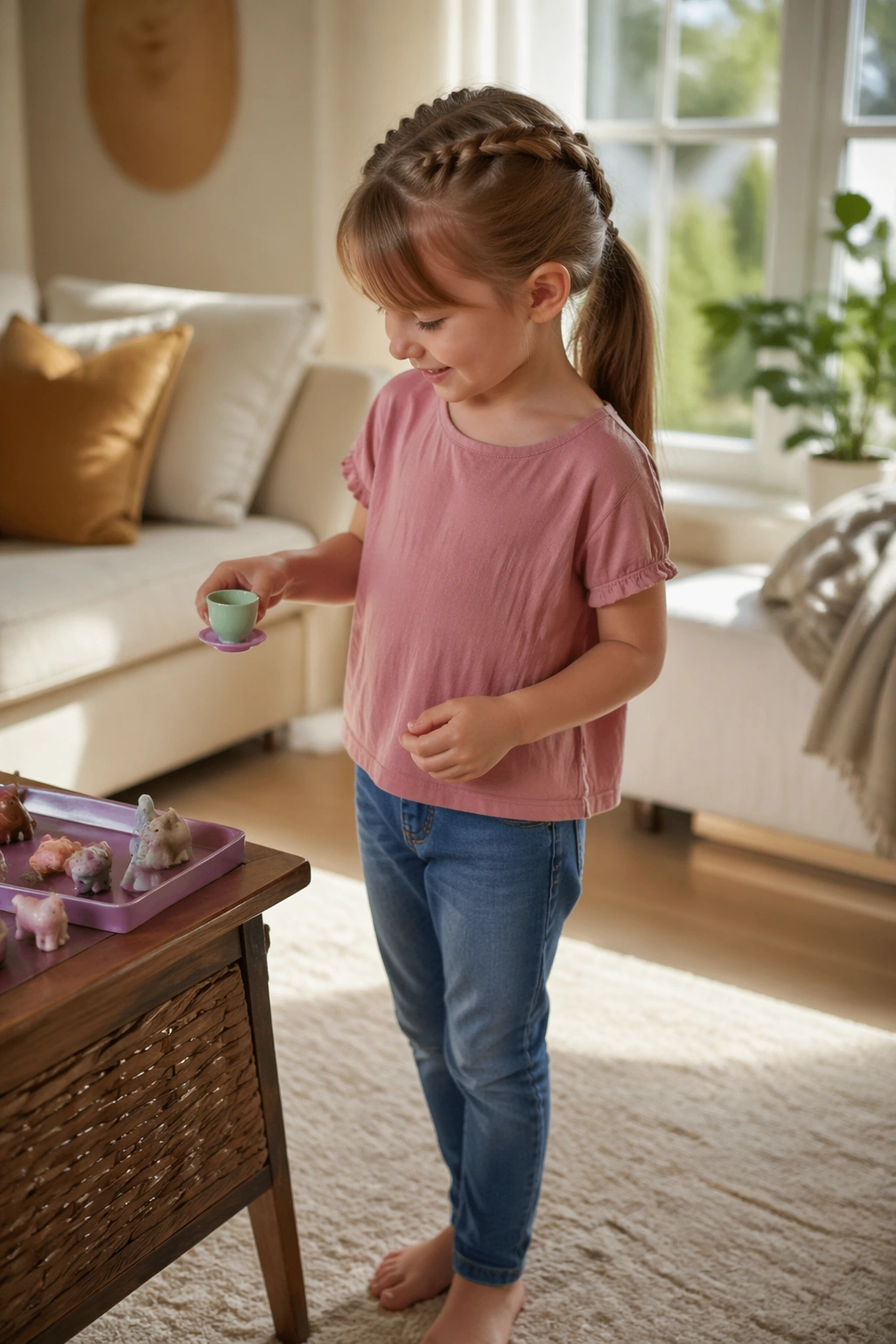
Why does this one work so well on active kids? Because the Dutch braid sits on top of the scalp instead of sinking into it, so the braid reads clearly even after a few hours of wear. Side-swept bangs soften that structure and keep the front from feeling too severe.
This style is a smart pick for kids with medium to thick hair. Start the Dutch braid at the hairline, braid back along one side or both sides, then gather everything into a ponytail at the nape or crown. The side bangs can fall across the forehead or tuck just behind one ear if the child wants the hair even more out of the way.
It looks polished, but it still moves. That matters.
3. Low Bubble-Braid Ponytail With Wispy Bangs
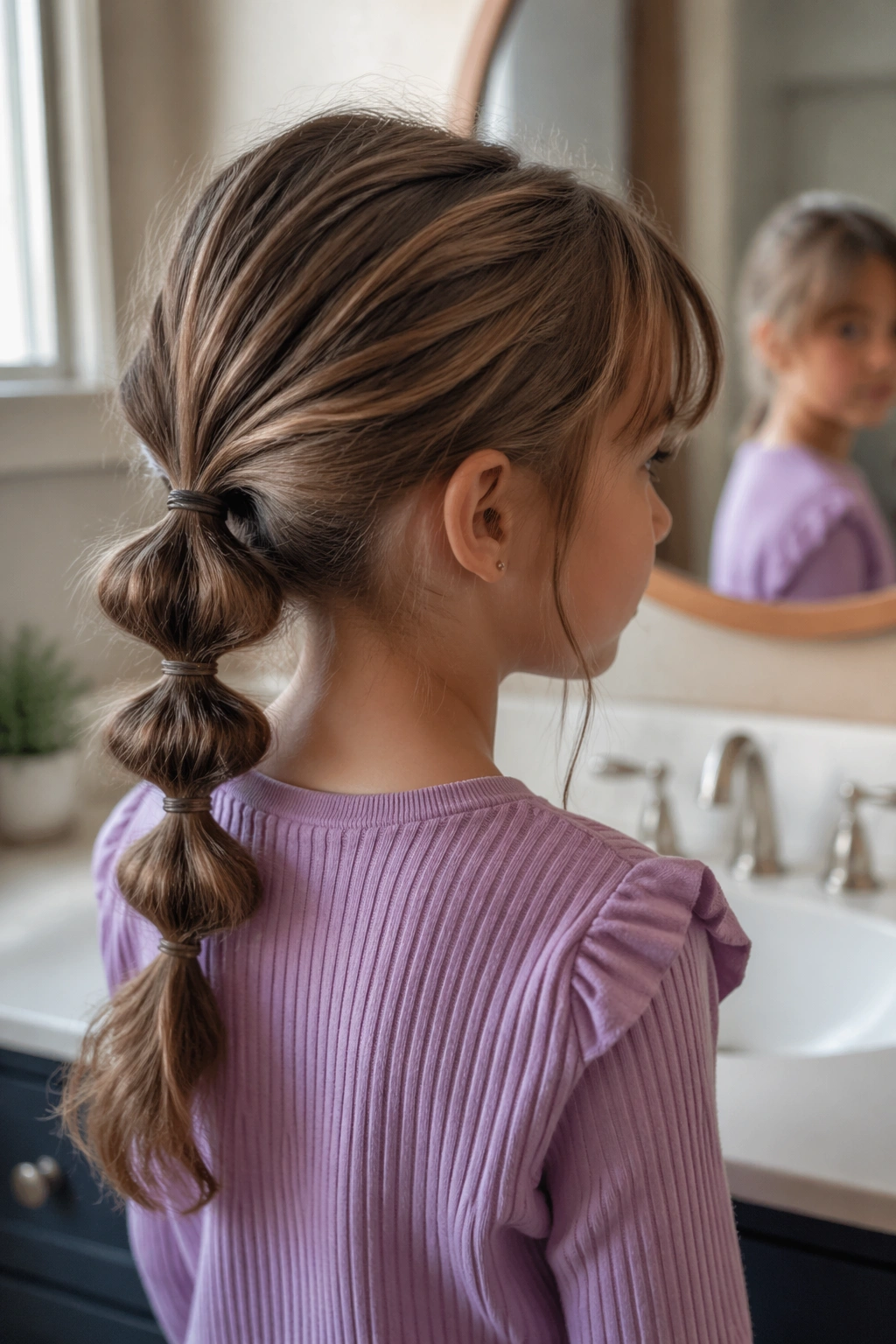
Why the bubble shape helps
The bubble braid is one of those styles that looks fancier than it really is. You tie the ponytail off every few inches with clear elastics, then gently puff each section so it rounds out like little bubbles. Wispy bangs keep the front light, which stops the whole look from getting too heavy.
I reach for this style when a child wants something playful, not precious. It works especially well on fine hair, because the bubbles create the look of fullness without needing a lot of length. If the ponytail is too slippery, a touch of texturizing spray or a little mousse at the roots helps the elastics stay in place.
Quick details that matter
- Space the elastics about 2 to 3 inches apart.
- Gently tug each section outward after tying it.
- Keep the bangs soft and airy, not stiff.
- Use small clear elastics so the bubbles stay the main feature.
Do not over-puff the sections; you want round, not frizzy.
4. Half-Up Braided Ponytail With Curtain Bangs
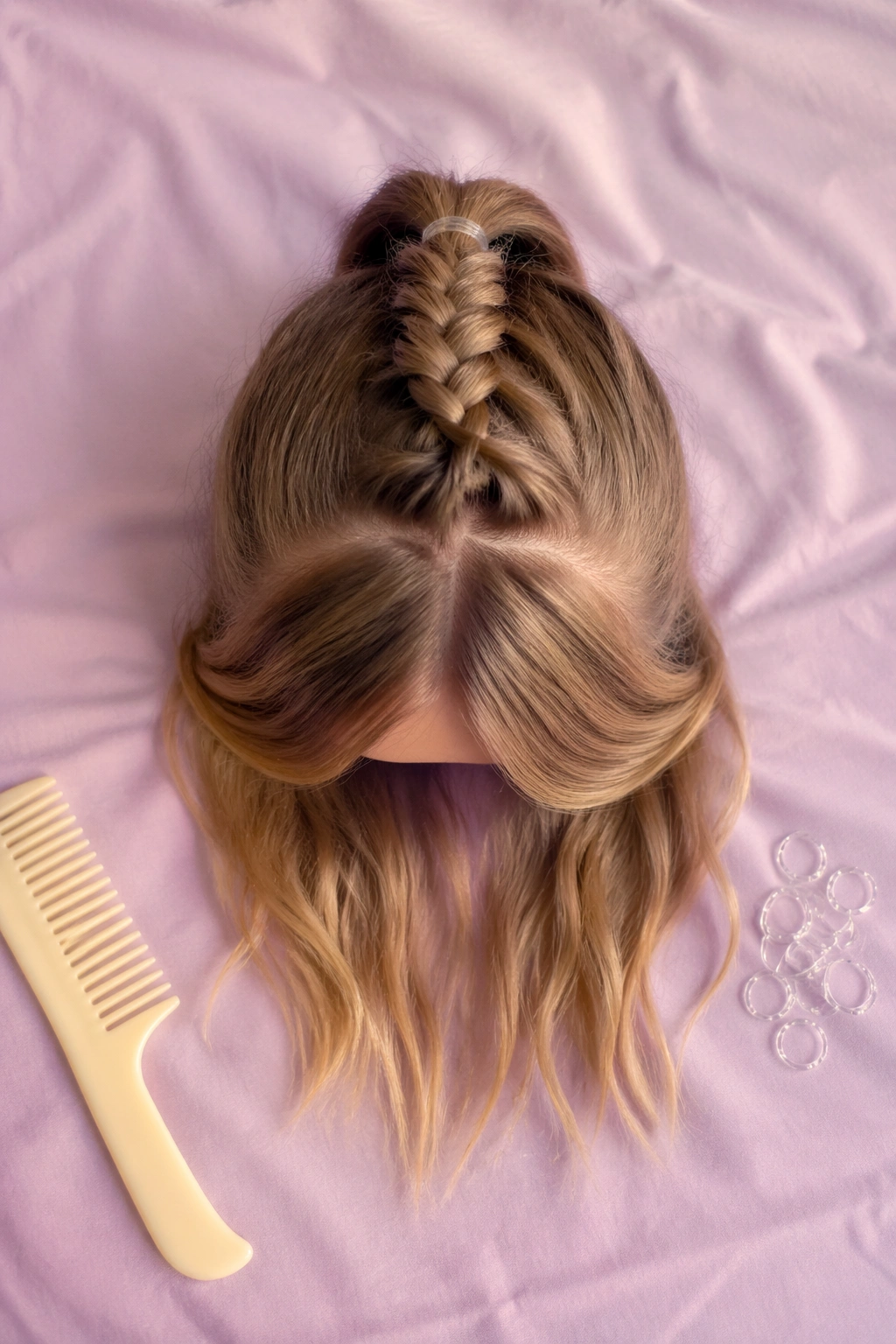
A half-up braided ponytail is the answer when a child wants hair down but still needs the front controlled. The braid only takes the top section, so the length stays loose and swingy, while curtain bangs split softly on either side of the forehead. That shape works beautifully with hair that is growing out, because the bangs blend instead of shouting for attention.
This one feels a little gentler than a full ponytail. It’s also useful when the hair is thick enough that a complete ponytail starts to feel heavy at the end of the day. Braid the top half into a short plait or two small braids, secure it into a ponytail, and let the bottom layer fall naturally.
If the child has a center part, the curtain bangs already fall where they want to. If not, a soft diagonal part helps.
5. Side Cornrow Into Ponytail With Curly Bangs
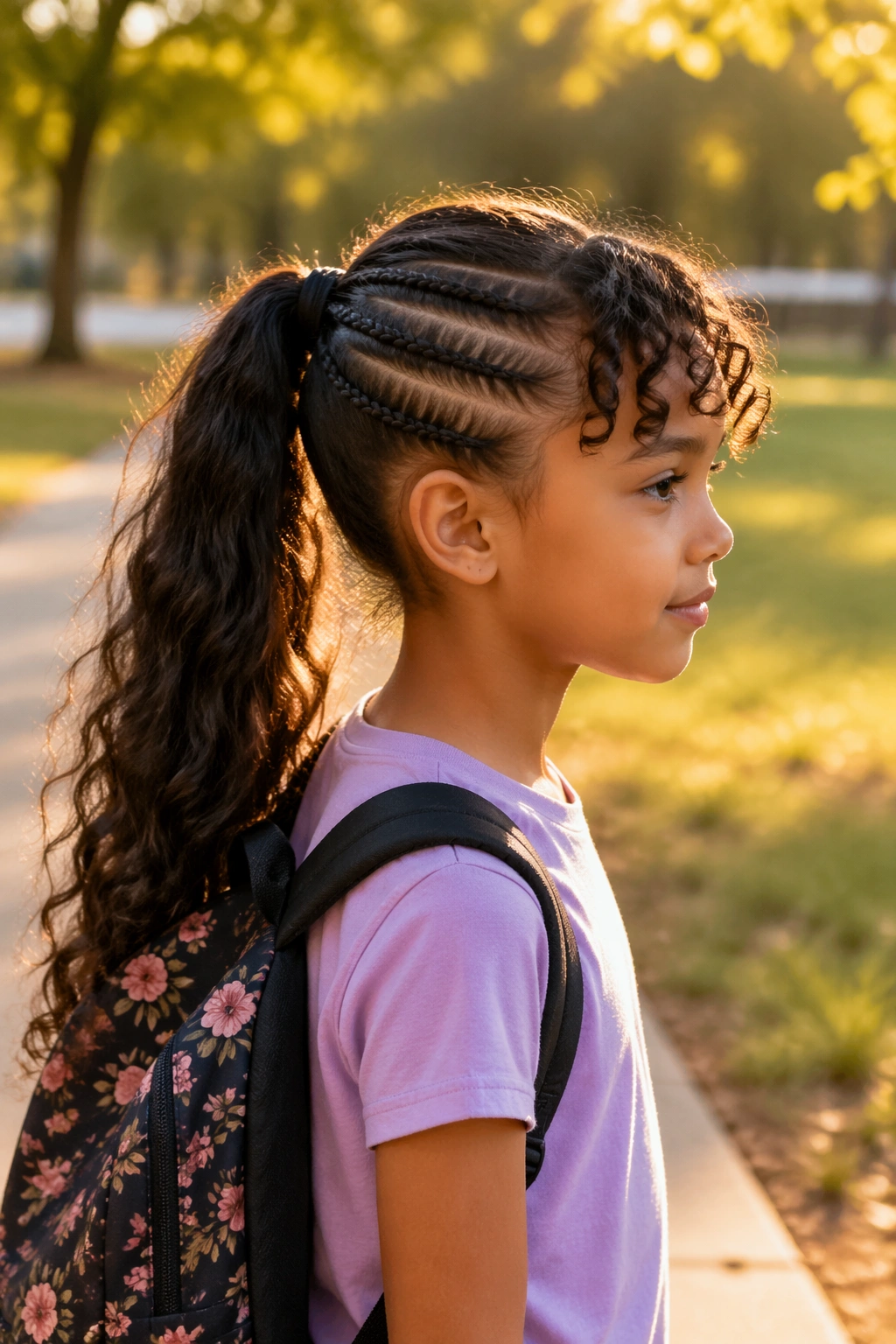
I’ve always liked this style because it has backbone. The side cornrow keeps the hairline neat, the ponytail gives the style movement, and curly bangs keep the front from looking too tight or too flat. On textured hair, that balance is a gift.
Start with one or two clean cornrows along the side, feeding them back into a ponytail at the back or slightly off-center. Leave the curly bangs free so they keep their shape. A little curl cream at the front helps the bangs stay springy instead of drying out or puffing up.
This is one of the stronger choices for school days, sports, and long outings. It holds well, and it looks good even when the curls loosen a little. That’s the part I trust.
6. French Braid Ponytail With Straight-Across Bangs
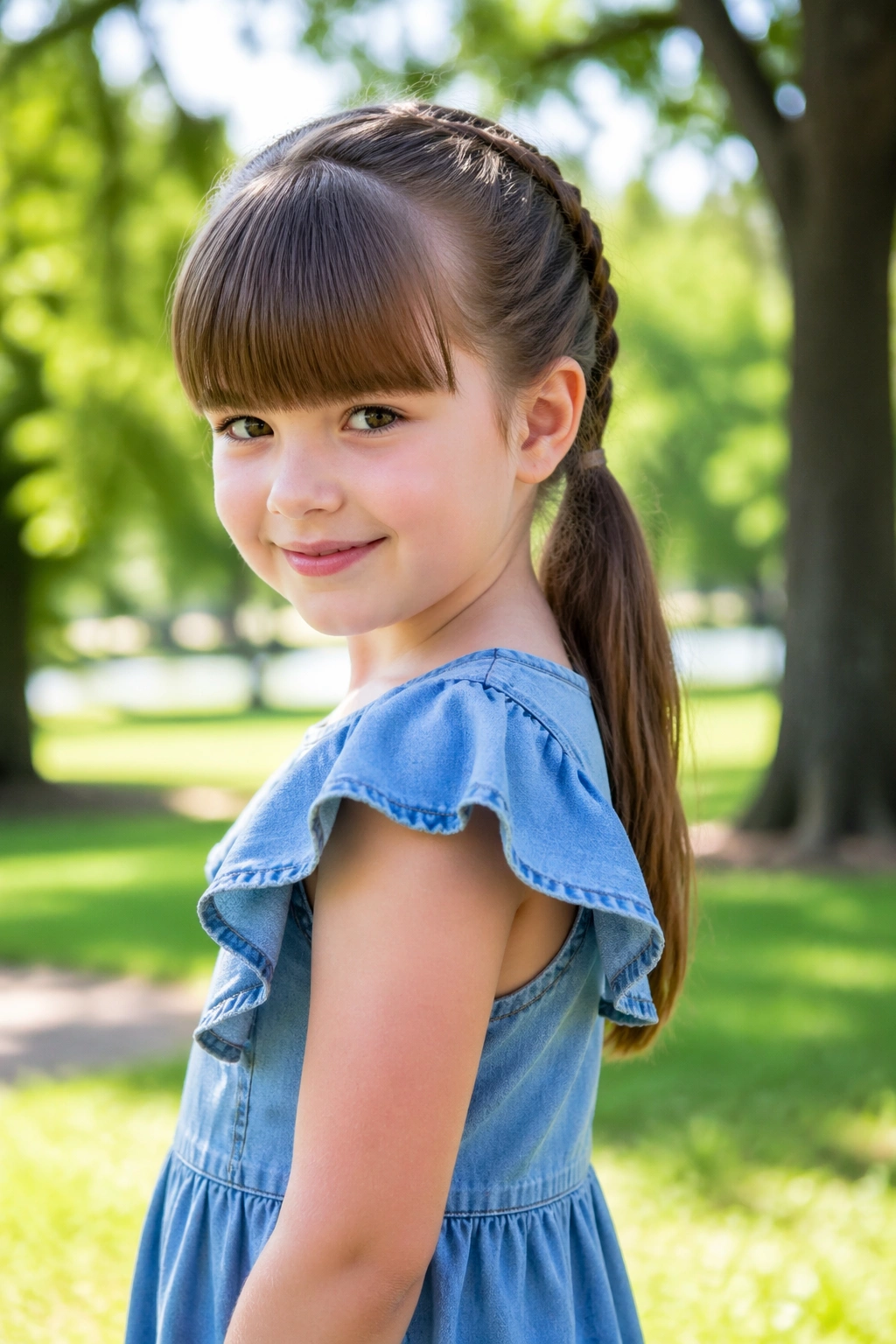
The French braid ponytail is old-school in the best way. It starts neat at the crown, gathers hair as it moves back, and lands in a ponytail that feels secure without looking severe. Straight-across bangs give the style a tidy frame, almost like a little built-in border for the face.
What makes it work for kids is the balance of order and softness. The braid keeps shorter layers from slipping out, which can be a problem on younger heads, while the bangs prevent the style from feeling pulled too far back. If the hair is slippery, braid on slightly damp hair rather than dry hair, because the sections hold better and the flyaways stay calmer.
This is the style I’d pick for a school photo, a recital, or any day when you want clean lines without a hard finish.
7. Double Dutch Braided Ponytail With Bangs
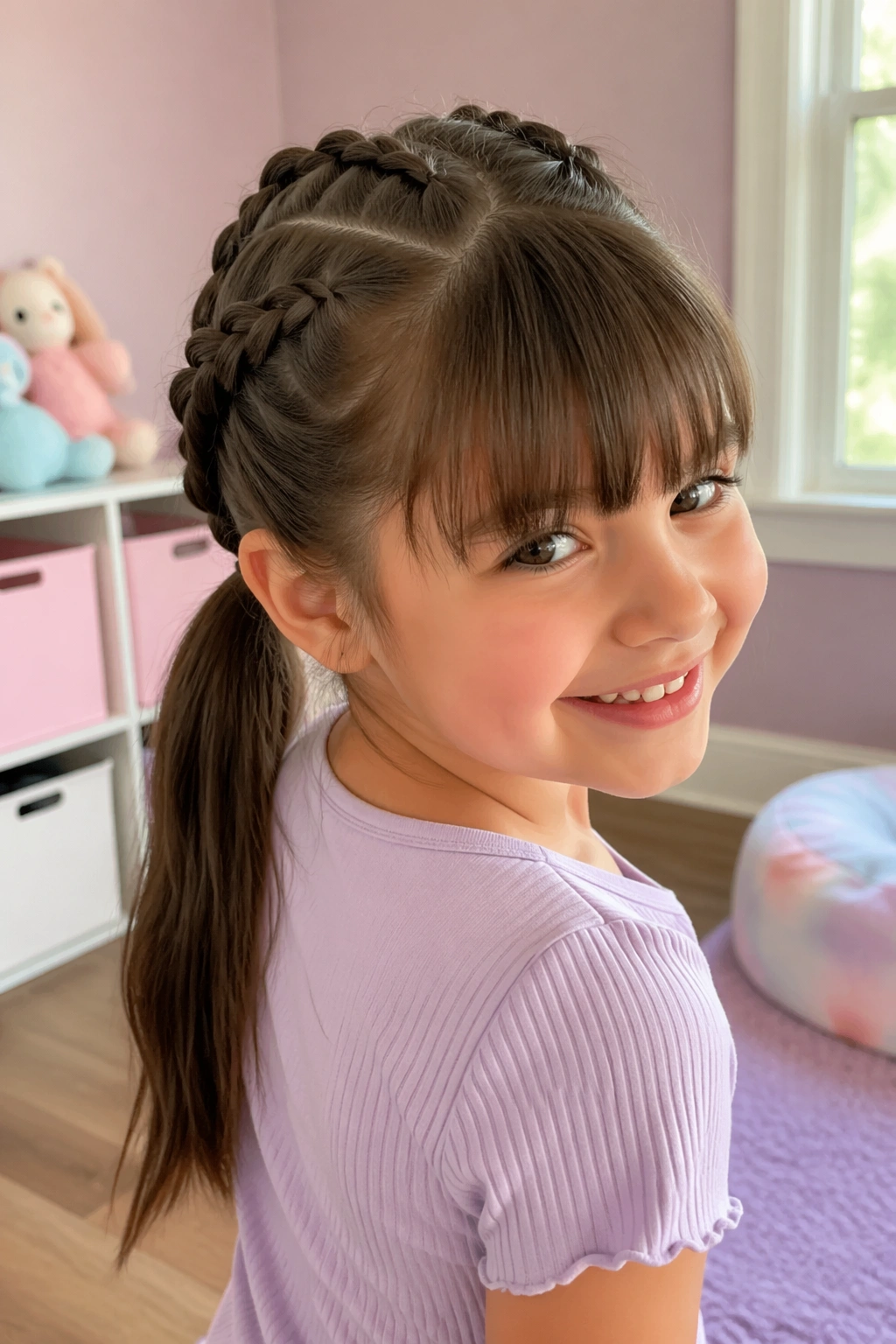
Double Dutch braids are the sporty version of a braided ponytail, and they have a lot of staying power. Two raised braids start near the hairline and feed into one ponytail at the back, which makes the whole style feel locked in.
Kids who run a lot tend to do well with this one. The braids sit close to the scalp, so they are less likely to loosen at the sides, and the ponytail keeps the end from bouncing around too much. Bangs can stay blunt, side-swept, or lightly textured, depending on how much forehead coverage the child likes.
If the hair is thick, part it cleanly down the middle before braiding. If it is fine, a little powder at the roots can give the braids more grip. Either way, this style holds its shape.
8. Fishtail Low Ponytail With Side Bangs
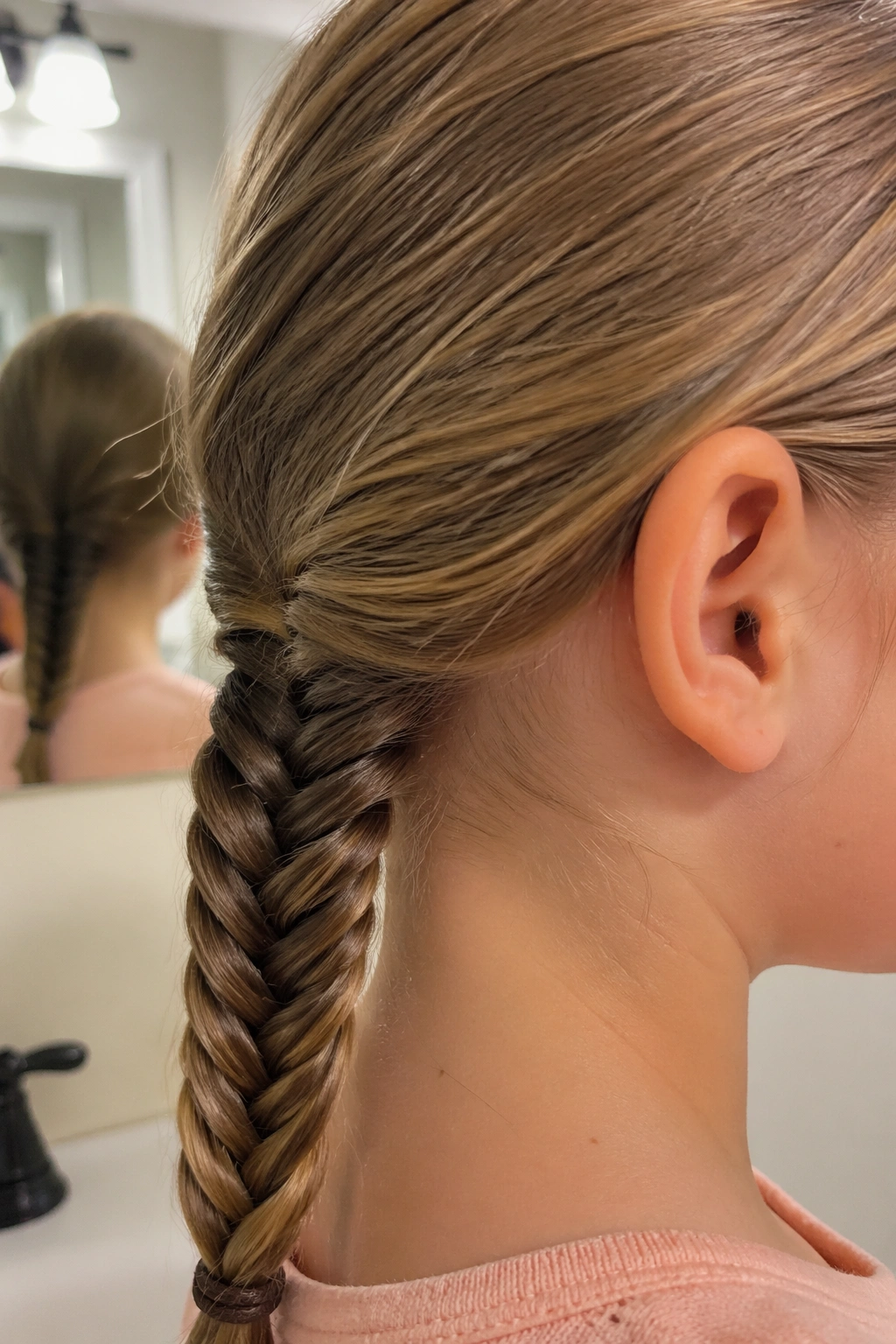
Why does a fishtail braid always look a little dressier than a standard braid? Because the tiny crossovers create a woven pattern that catches the eye without needing extra accessories. Put that pattern in a low ponytail, add side bangs, and the style feels finished in a quiet, pretty way.
This is a good choice for older kids who want something more detailed but still comfortable. It works best when the ponytail starts low, near the nape, so the fishtail can hang neatly instead of sticking out. Side bangs soften the front and keep the braid from looking too serious.
How to get the most from it
- Use smaller sections for a tighter fishtail.
- Pull gently on the edges if you want more width.
- Keep the bangs light so the face stays open.
- Finish with a small ribbon or elastic if the child likes a little color.
9. Rope-Twist Braided Ponytail With Fringe Bangs
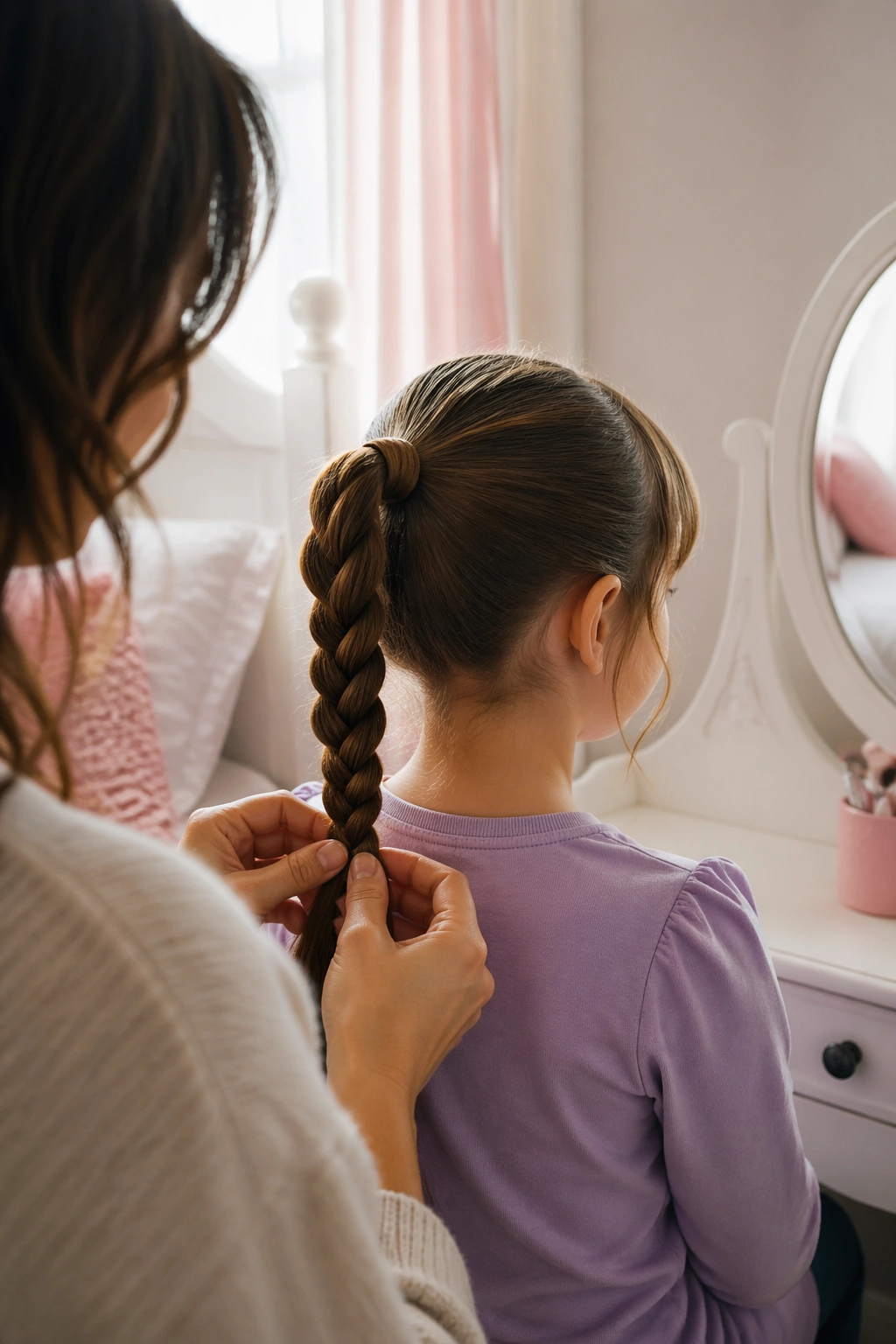
A rope-twist is the style for mornings when you want braid-like texture without wrestling with three separate strands. You divide the hair into two sections, twist each one, then wrap them around each other until the ponytail takes on a spiral look. Fringe bangs keep the front soft and a little playful.
This braid works especially well on fine hair because twisting often gives better grip than a loose three-strand braid. It also holds up well if the child likes to touch their hair. The texture gives your fingers something to grab, so the ponytail does not flatten out as quickly.
If the bangs are short, keep them dry and brushed downward before you finish the style. If they are longer, a gentle side sweep can make the whole look feel lighter.
10. Pull-Through Braided Ponytail With Micro Bangs
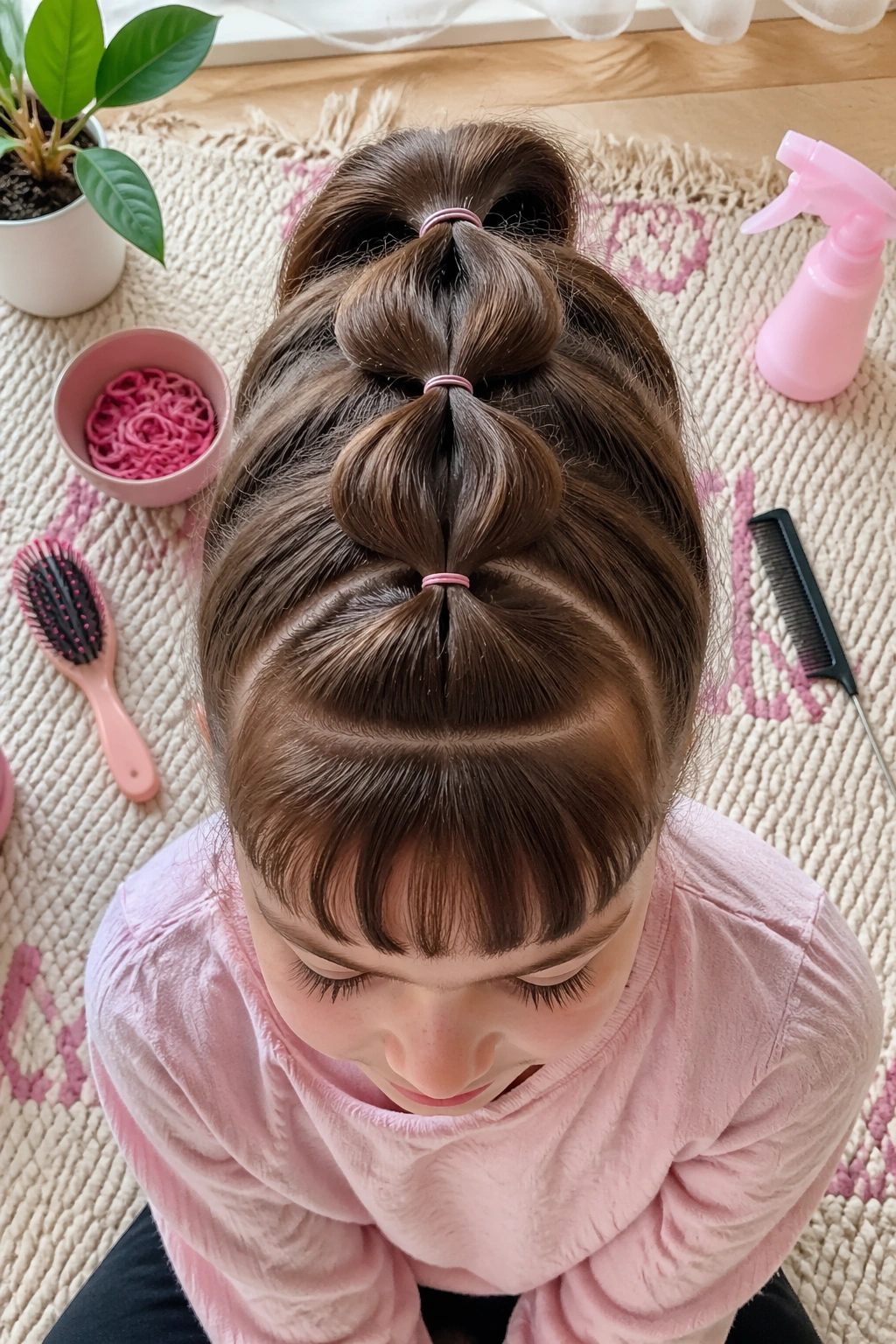
A pull-through braid is not technically a braid, and that is exactly why I like it. It creates the look of a full, thick braid by stacking ponytail sections over each other, which is handy when a child has fine hair or wants a bigger style for a party. Micro bangs give the front a tiny, modern edge.
This one looks best when you keep the sections even and use small elastics that match the hair color. The pull-through method can be done in 4 to 6 stacked ponytails, depending on length. Once the braid is built, gently loosen each bubble so the shape opens up.
The result is plush, a little bouncy, and more dramatic than a plain ponytail. It is one of the few styles here that feels special without asking for perfect precision.
11. Ribbon-Woven Braided Ponytail With Blunt Bangs
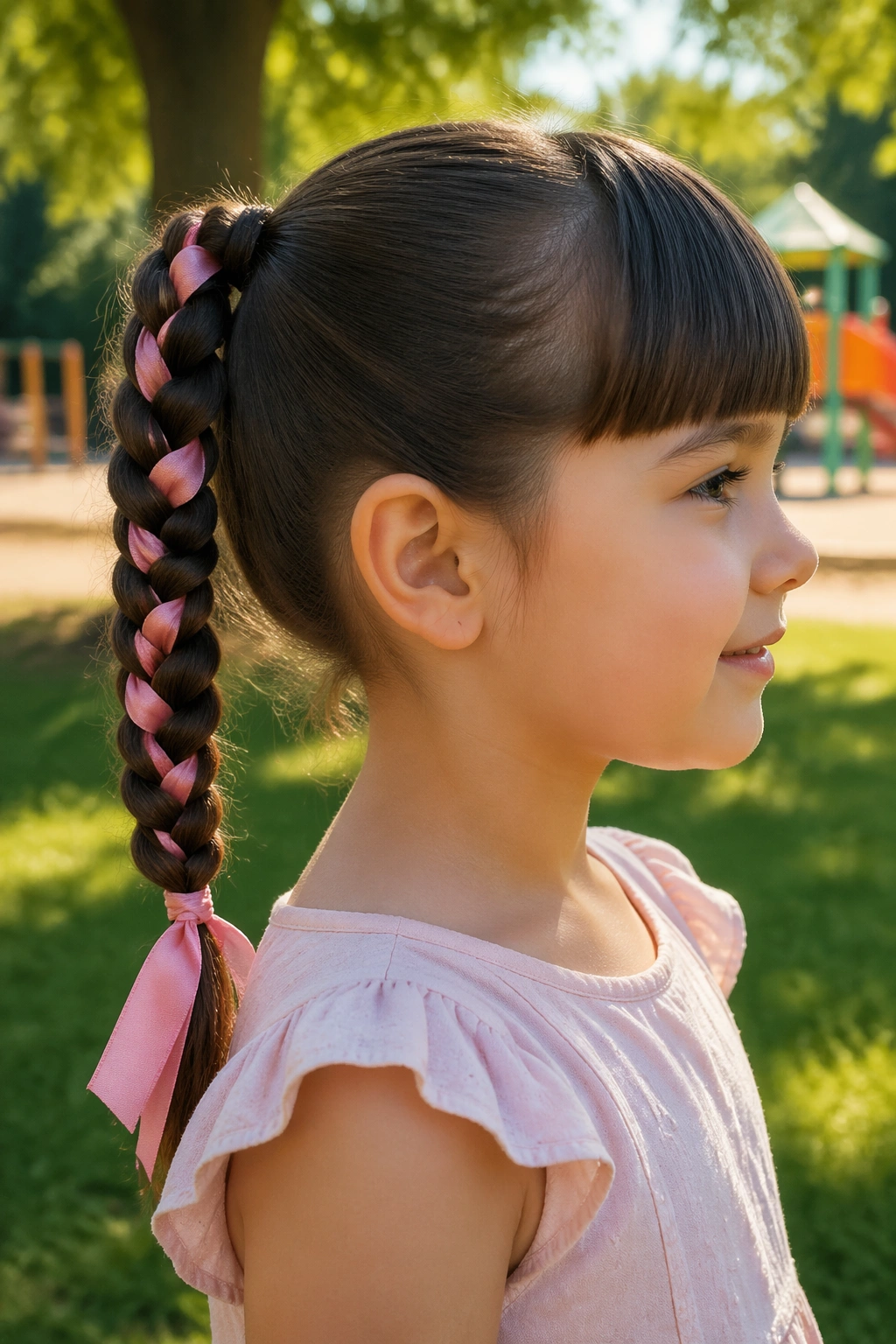
A ribbon-woven braid is the sort of thing that makes a child grin when they see it in the mirror. The ribbon threads through the braid, so the ponytail gets a stripe of color running through it, and blunt bangs keep the front crisp and balanced.
Choose a ribbon that is soft and not too slippery. Grosgrain tends to stay put better than satin, and a ribbon that is about half an inch wide is easier to manage in little hands and on little heads. A narrow braid works fine here; the ribbon does the decorating.
This style is especially nice for birthdays, picture day, or any moment when a child wants hair that feels a little more dressed up. It does not need glitter or clips to feel finished. The ribbon does the work.
12. Accent Braid Ponytail With Curly Bangs
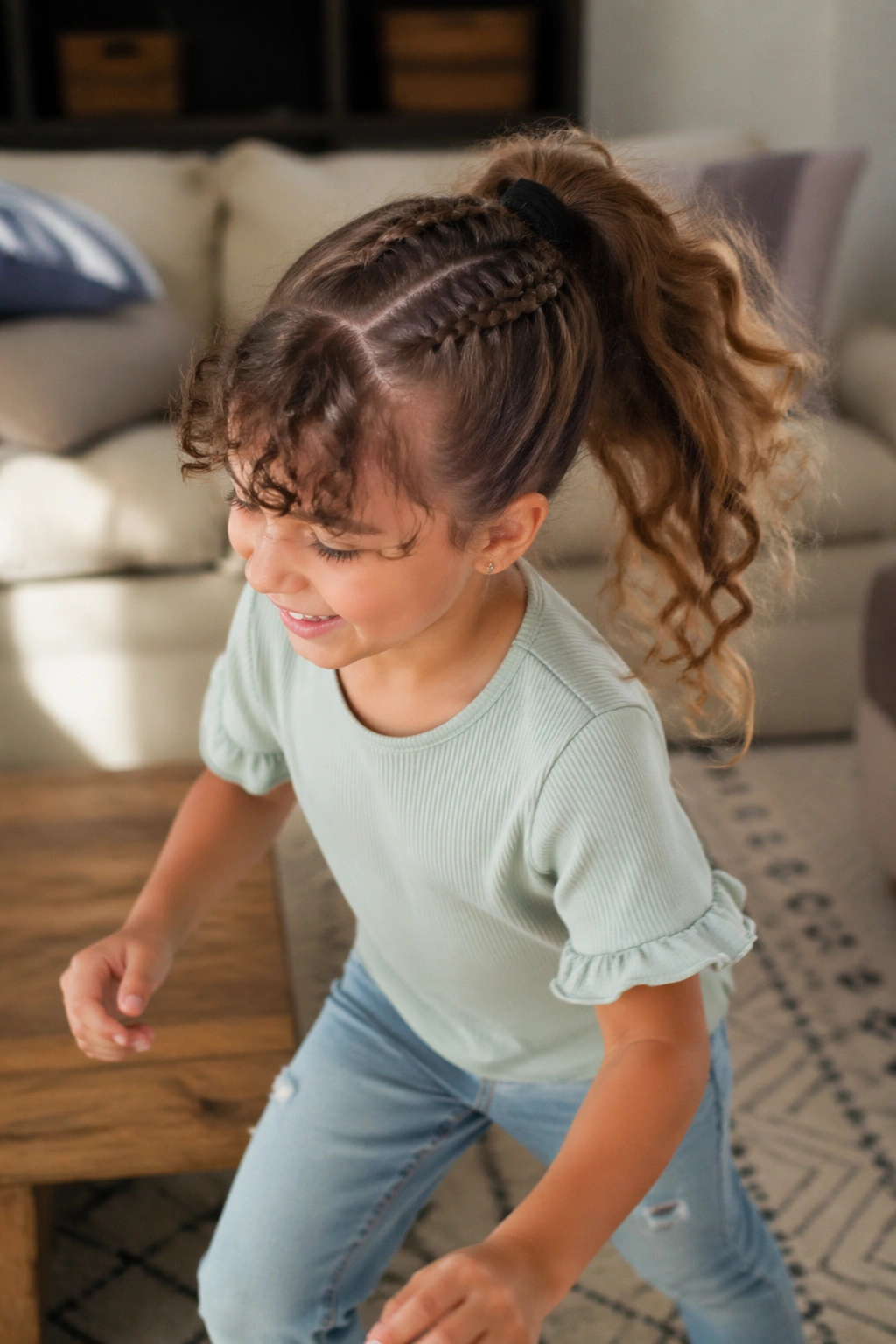
An accent braid is the quiet one in the group, and I mean that as a compliment. You braid just a small section near the front or side, then pull it into the ponytail so the rest of the hair stays loose, textured, or curly. Curly bangs keep the front lively and stop the style from looking too flat.
This is a nice option for kids whose hair has a natural curl pattern and who do not want every strand stretched into submission. The braid adds order, but it does not fight the texture. That can make a huge difference for comfort, because the child still sees their own hair in the mirror.
A light curl cream near the bangs and a soft elastic at the base usually do the trick. Leave the accent braid a little loose if you want it to blend better.
13. Braided Wrap Ponytail With Layered Bangs
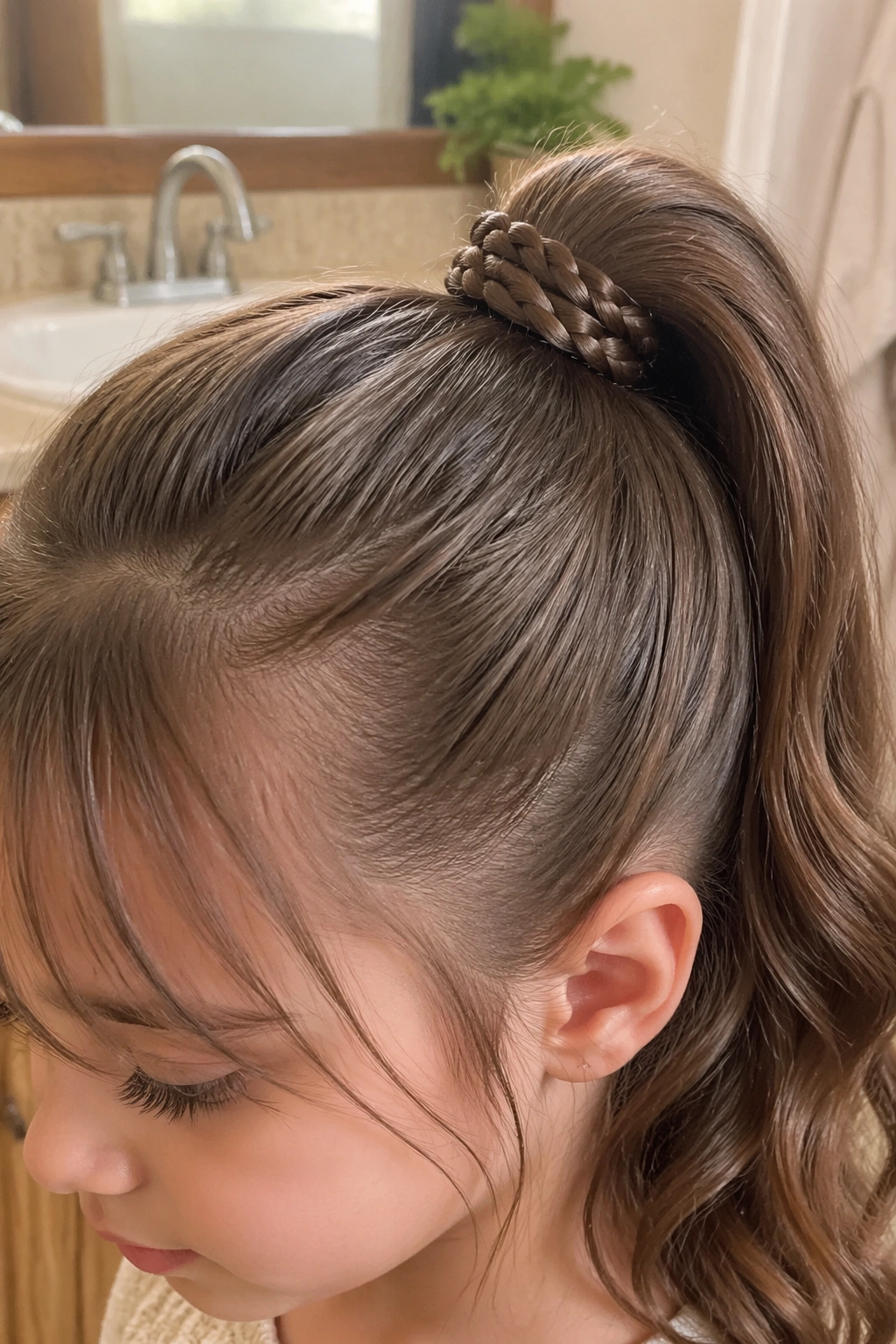
The braid wrap is one of my favorite detail tricks. After you make the ponytail, a small braid circles the base and hides the elastic, which makes the style look polished without adding much time. Layered bangs soften the forehead and keep the front from feeling boxed in.
This one is great when a child has face-framing layers that tend to escape plain ponytails. The wrap gives those pieces a place to belong. You can braid the wrap from a small side section or from the underside of the ponytail, then wind it around the elastic and pin it underneath.
The style works on straight, wavy, or lightly curly hair. If the layers are short, use two tiny bobby pins to secure the wrap instead of forcing too much hair into the braid. That keeps everything neat.
14. Zigzag Part Braided Ponytail With Side Bangs
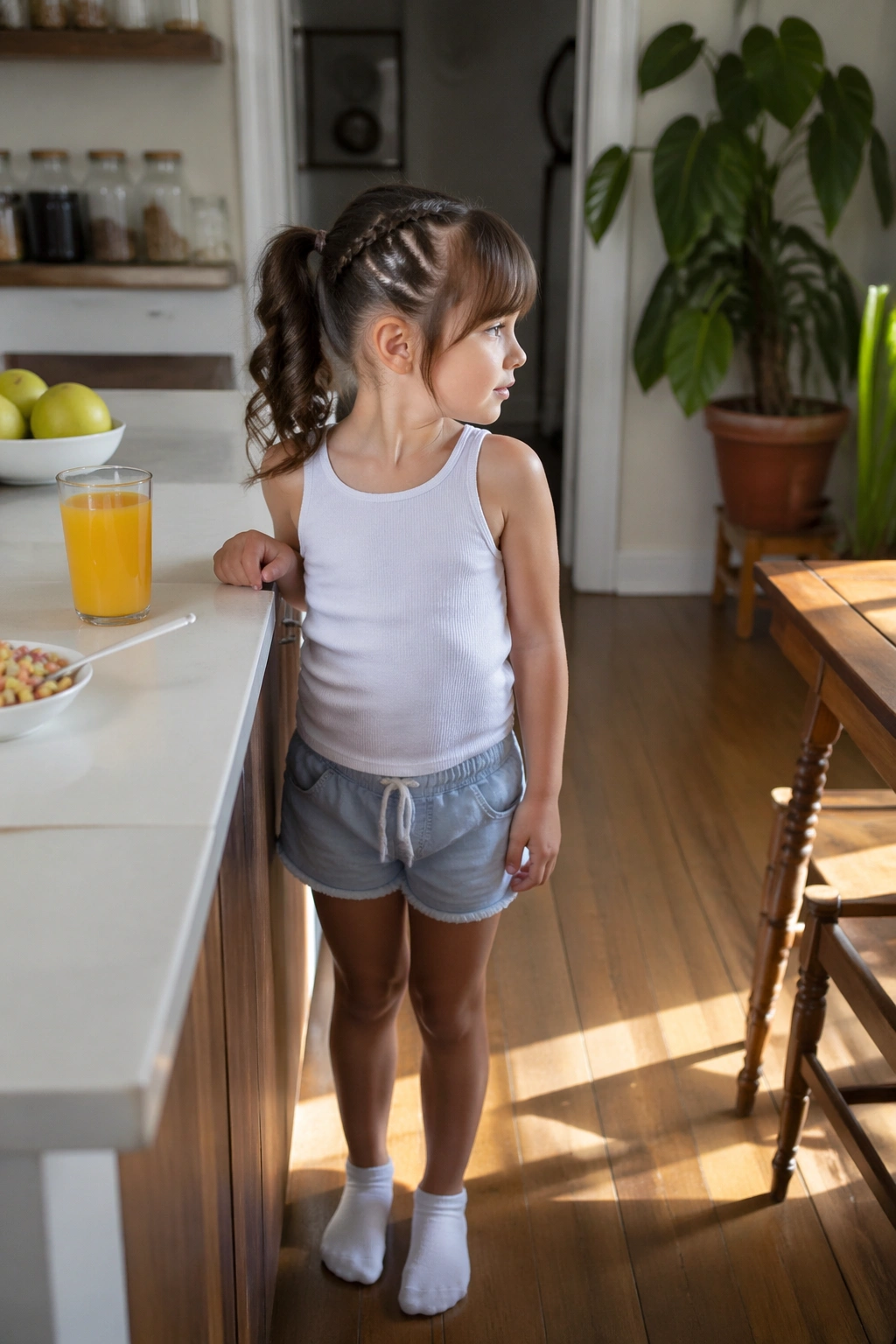
A zigzag part changes the whole mood of a braid. It turns a basic ponytail into something playful before the braid even starts. Side bangs soften the look, so the parting detail does not become too sharp or too fancy for everyday wear.
This style is a favorite for kids who like a little visual drama but still want to move around without thinking about their hair. The zigzag part gives the braid more personality, especially if you are pulling the hair into a ponytail at the back or slightly to one side. It is not hard to do; it just takes a rat-tail comb and a steady hand.
If the child has a sensitive scalp, keep the part neat but not tiny. Wider zigzags are easier to make and easier to wear.
15. Heart-Part Braided Ponytail With Straight Bangs
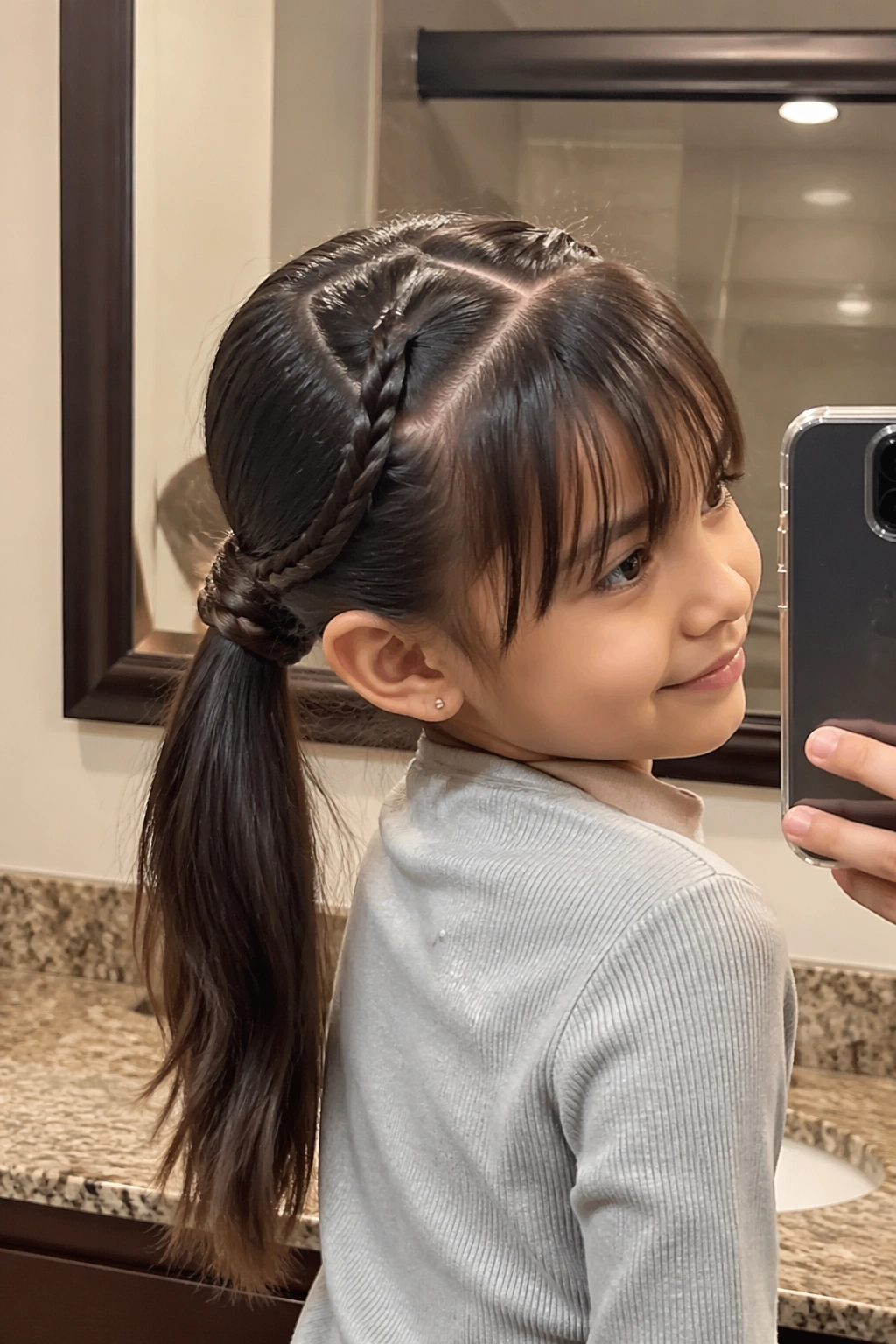
A heart part sounds ambitious, but on a child’s head it can be surprisingly sweet rather than over the top. Two curved sections meet in the middle to form the shape, and the braid or ponytail sits underneath like the base of the design. Straight bangs keep the front balanced so the parting pattern stays visible.
How to keep the heart shape visible
The trick is to make the part large enough to read from a few feet away. Tiny hearts look clever up close and disappear everywhere else. Once the part is drawn, braid or ponytail the hair as normal, keeping the crown smooth so the shape does not get buried.
This is a good style for celebrations, class parties, or photo days. It is decorative, but not fussy. A little shine spray on the parted sections can help the lines stay clean.
16. Box Braid Ponytail With Baby Bangs
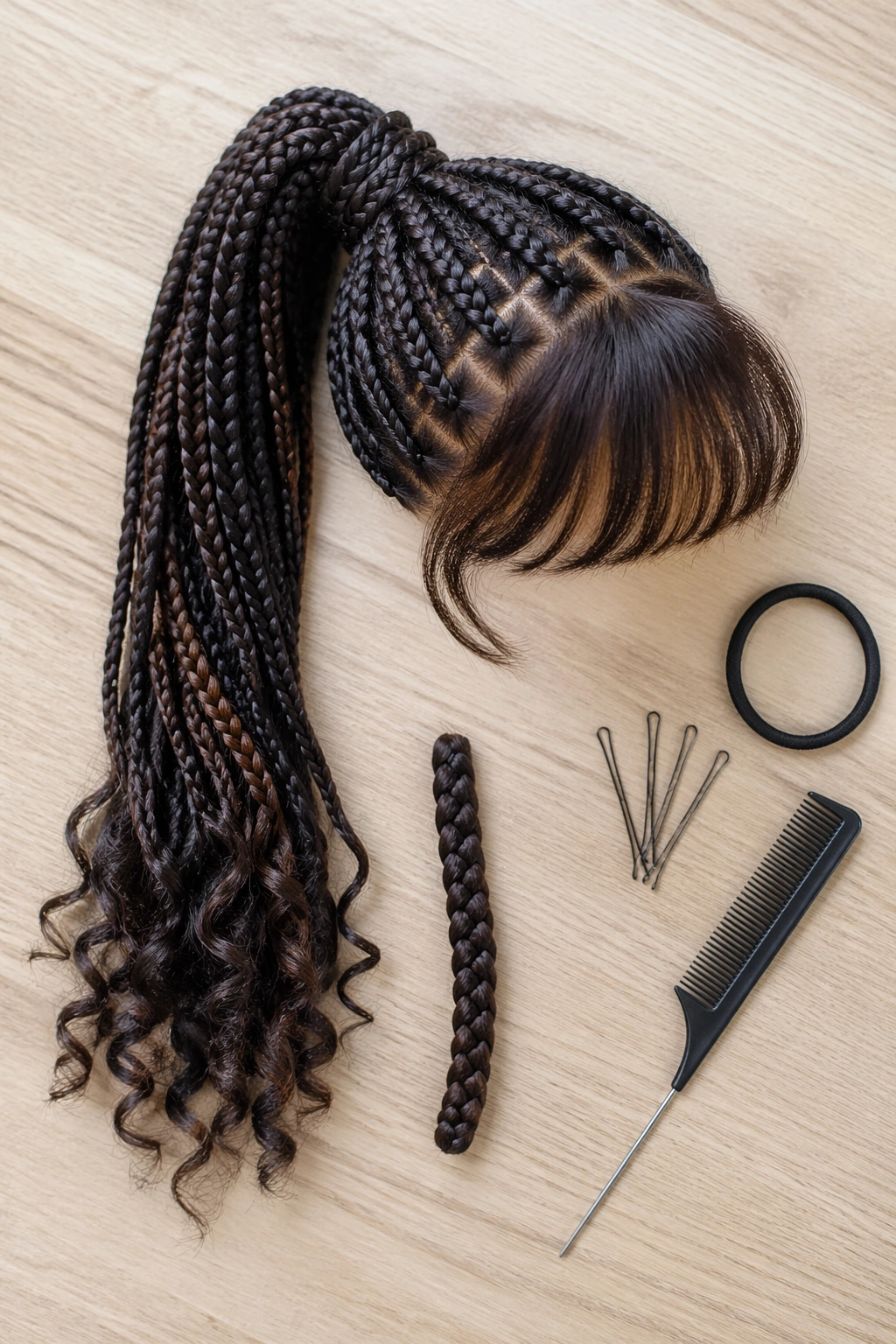
Box braids pulled into a ponytail have a certain weight and rhythm to them. They move with a little swing, and the shape stays neat for a long stretch of wear. Baby bangs give the front a short, defined edge that makes the style feel intentional from top to bottom.
Because box braids are a protective style, the scalp should never feel sore or tight. That’s the rule. If the base tugs when the child moves their head, the style needs loosening. A high ponytail gives the braids a lifted look, while a low ponytail feels calmer and sits closer to the neck.
This is one of the most practical braided ponytails for kids with bangs because it lasts and keeps the hair tucked away. It also handles sleeping, riding in the car, and general kid chaos better than a style that relies on a lot of perfect smoothing.
17. Feed-In Braid Ponytail With Curtain Bangs
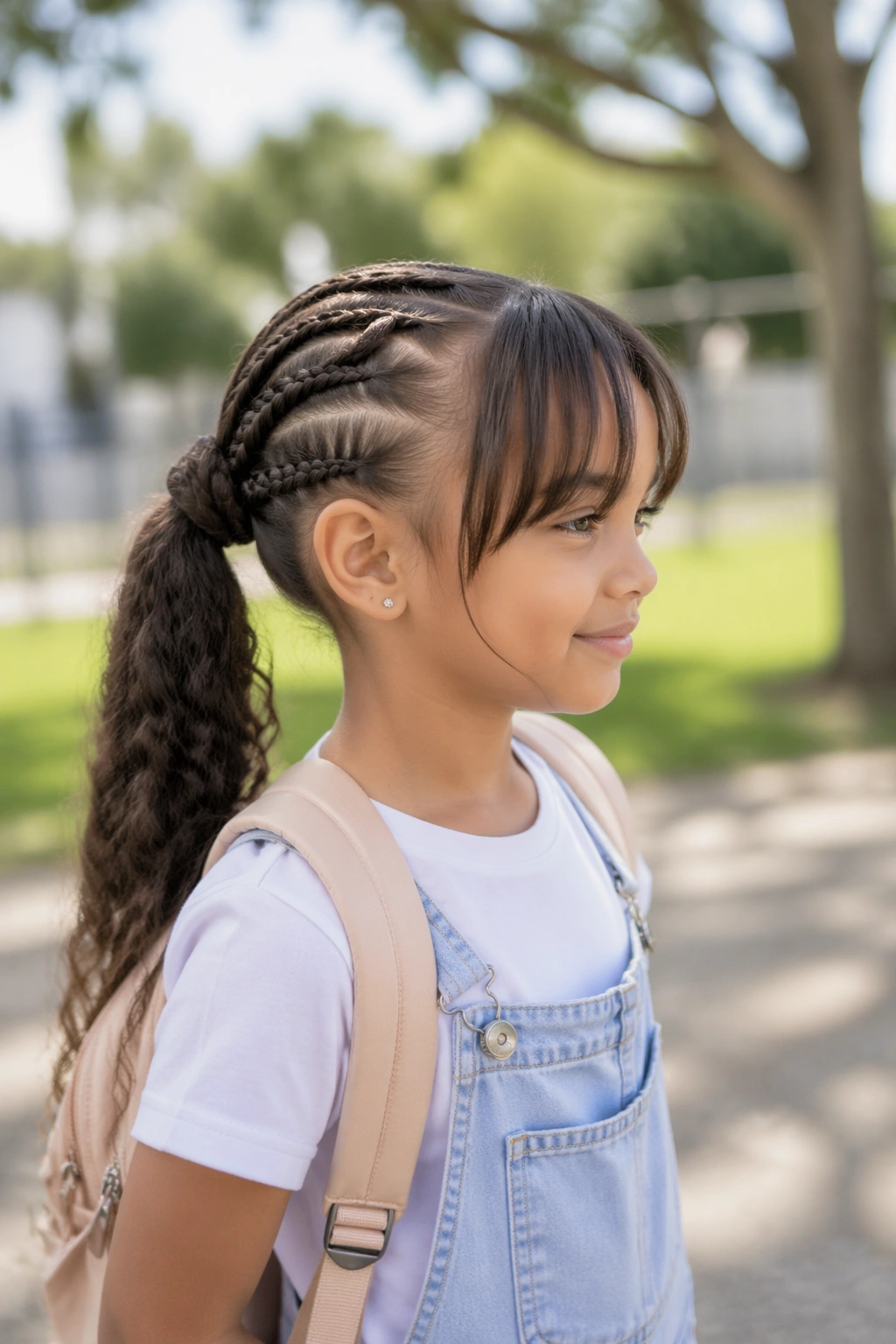
Feed-in braids are neat in a way that feels almost architectural. The braid starts small at the scalp, then hair is added gradually, so the base looks smooth instead of bulky. Curtain bangs soften the front and keep the braid from feeling too crisp.
This style works well when a child’s hair needs to stay controlled for a while. The feed-in method creates a tidy line from the hairline to the ponytail, and the gradual build keeps the braid from looking stiff. If the bangs are long enough to split in the middle, they frame the face beautifully without needing much extra fuss.
Where this style shines
- Long school days
- Dance rehearsals
- Family photos
- Hair that needs smooth roots and a secure finish
A clean scalp section matters more here than fancy accessories. If the parting is neat, the whole style looks better.
18. Crown Braid Into Ponytail With Wispy Bangs
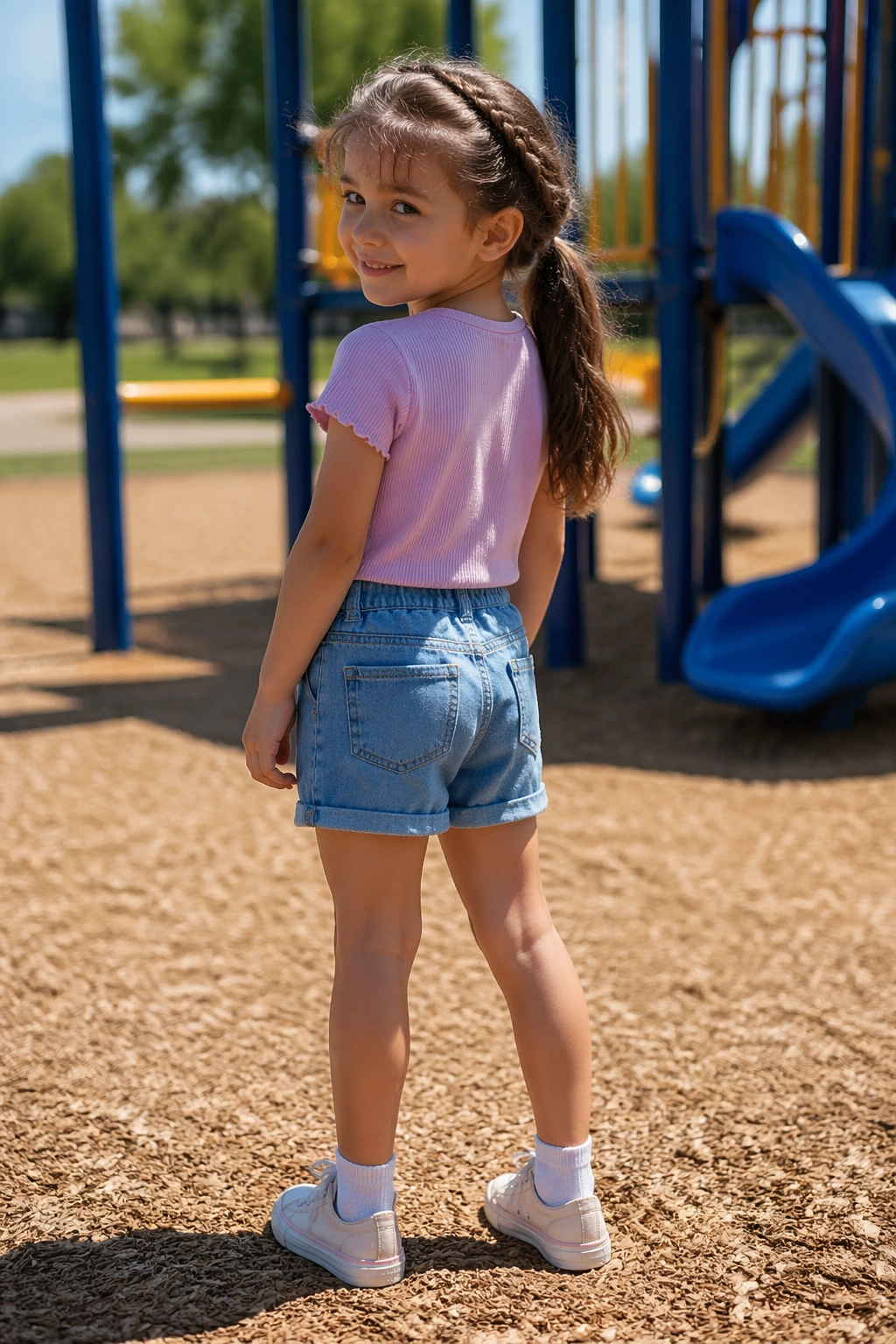
A crown braid wrapping around the head gives the style a soft halo effect, and then the ponytail at the back keeps it practical. Wispy bangs stop the crown from feeling too formal, which is useful for a child. Nobody wants a hairstyle that looks like it needs a velvet chair.
This style is lovely for dress-up days, but it can also work for regular wear if you keep the braid loose enough. The crown should sit flat against the head without digging in. A braid that is too tight around the hairline gets uncomfortable fast, especially behind the ears.
I like this on medium-length hair because it gives a tidy silhouette without needing a huge amount of length. If you want it to last longer, tuck the braid end under the ponytail and pin it twice. Once is rarely enough.
19. Cross-Over Braid Ponytail With Long Bangs
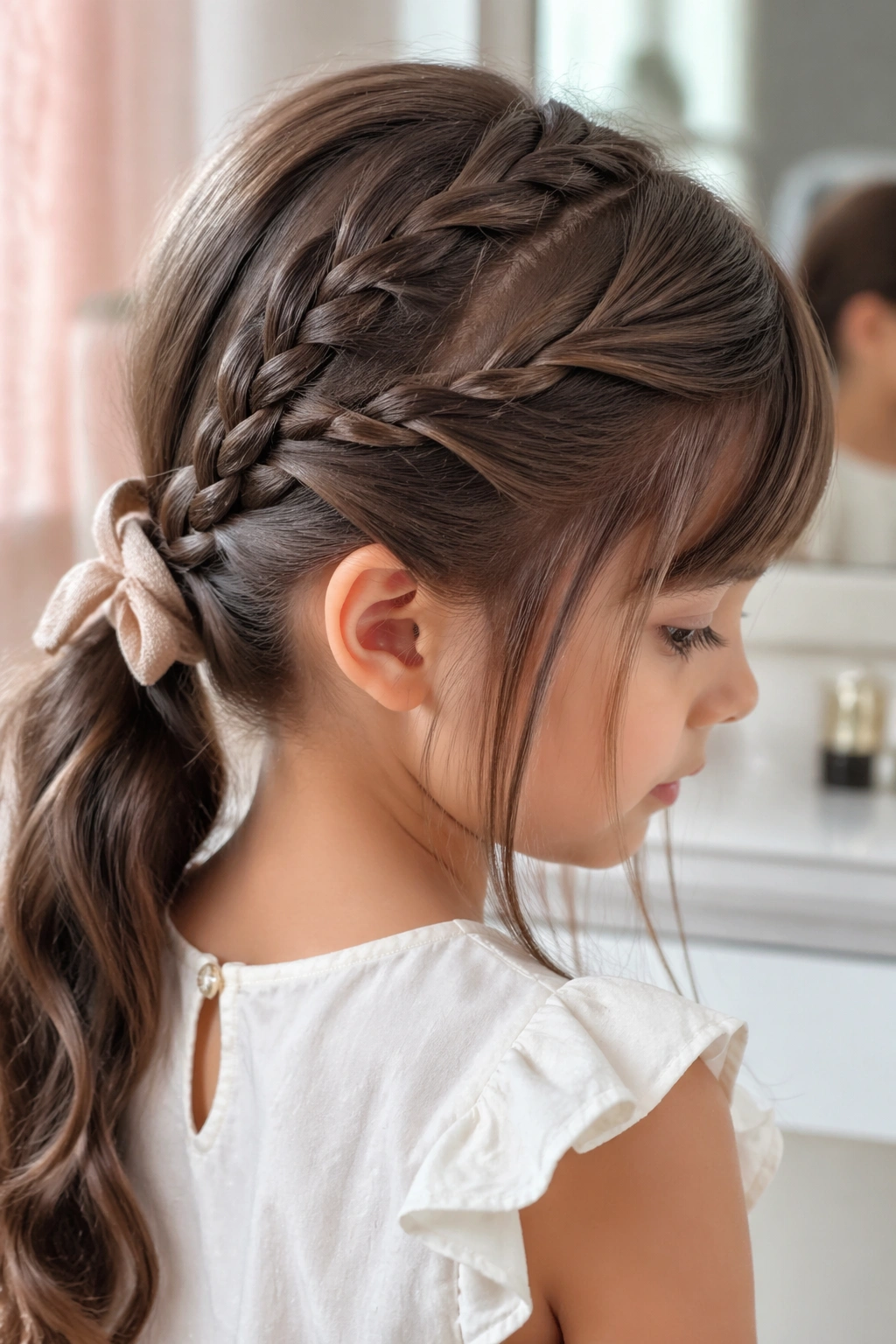
The cross-over braid has a geometric feel that makes it stand out from standard braids. Sections cross over one another in a pattern that looks crisp and deliberate, almost like woven ribbon. Long bangs soften the front and keep the whole style from getting too hard-edged.
This is a strong option for kids with longer fringe because the bangs can blend into the braid line if needed. The style works best when the sections are even and the ponytail sits low enough to show off the crossover detail. If the hair is thick, smaller sections make the pattern easier to see.
What to watch for
- Keep the parting clean at the top.
- Use small elastic bands if the hair slips.
- Let the bangs fall naturally unless the child wants them pinned back.
- Do not pull the crossover pieces too tight; the pattern reads better with a little softness.
20. Mohawk Braid Ponytail With Soft Fringe
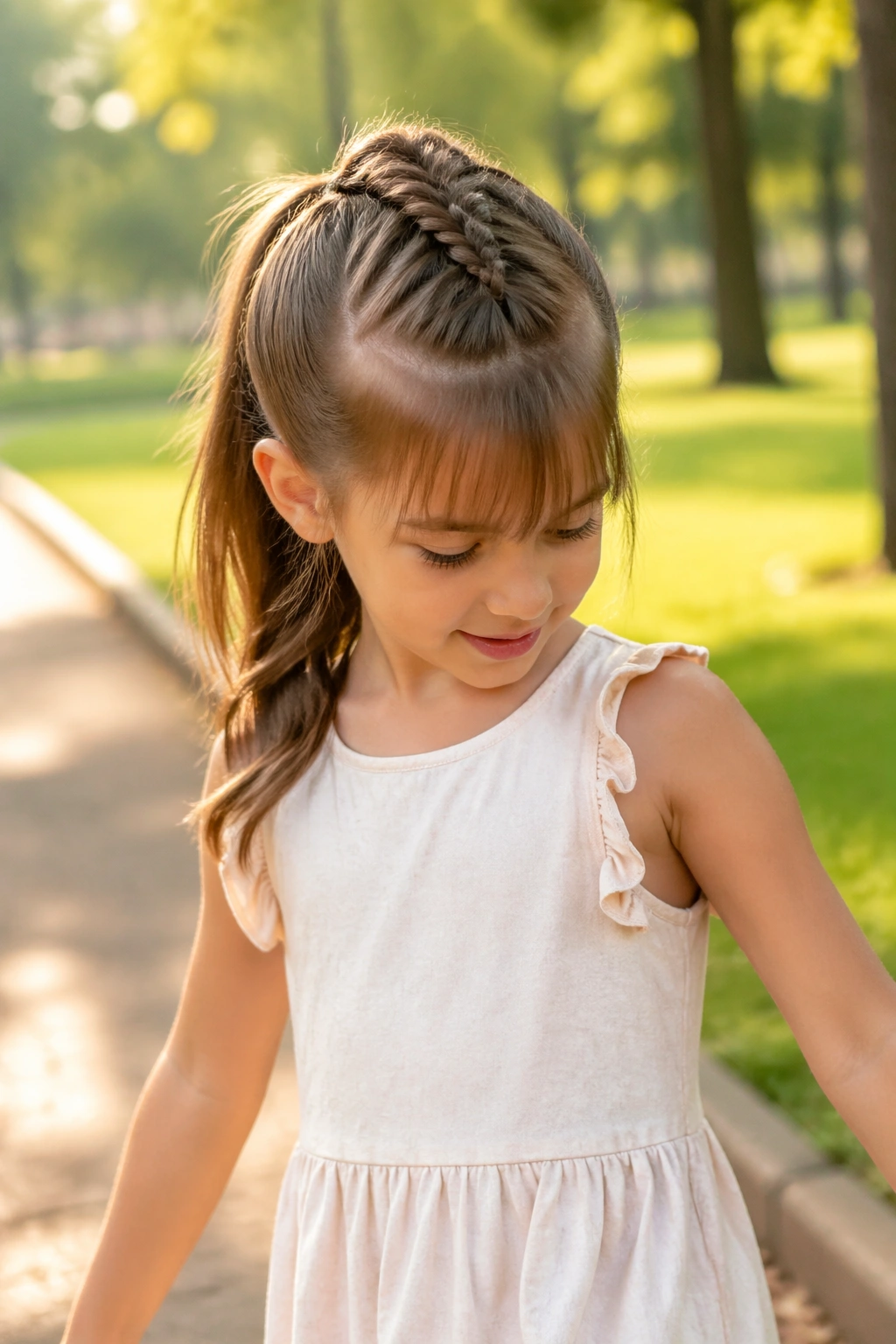
This one has a little attitude, and kids usually love that. The mohawk braid runs down the center of the head, leaving the sides smooth or lightly brushed back, then the braid ends in a ponytail. Soft fringe keeps the front friendly instead of severe.
A mohawk braid is a nice choice for kids who want something different but not complicated. It looks strong on thick hair and surprisingly good on medium hair too, because the raised center braid gives the style shape. If the sides are sensitive, keep the braid centered and avoid over-tightening the front sections.
It reads sporty, cool, and a little bold. That is its charm.
21. Braided Pigtail Ponytail Hybrid With Bangs
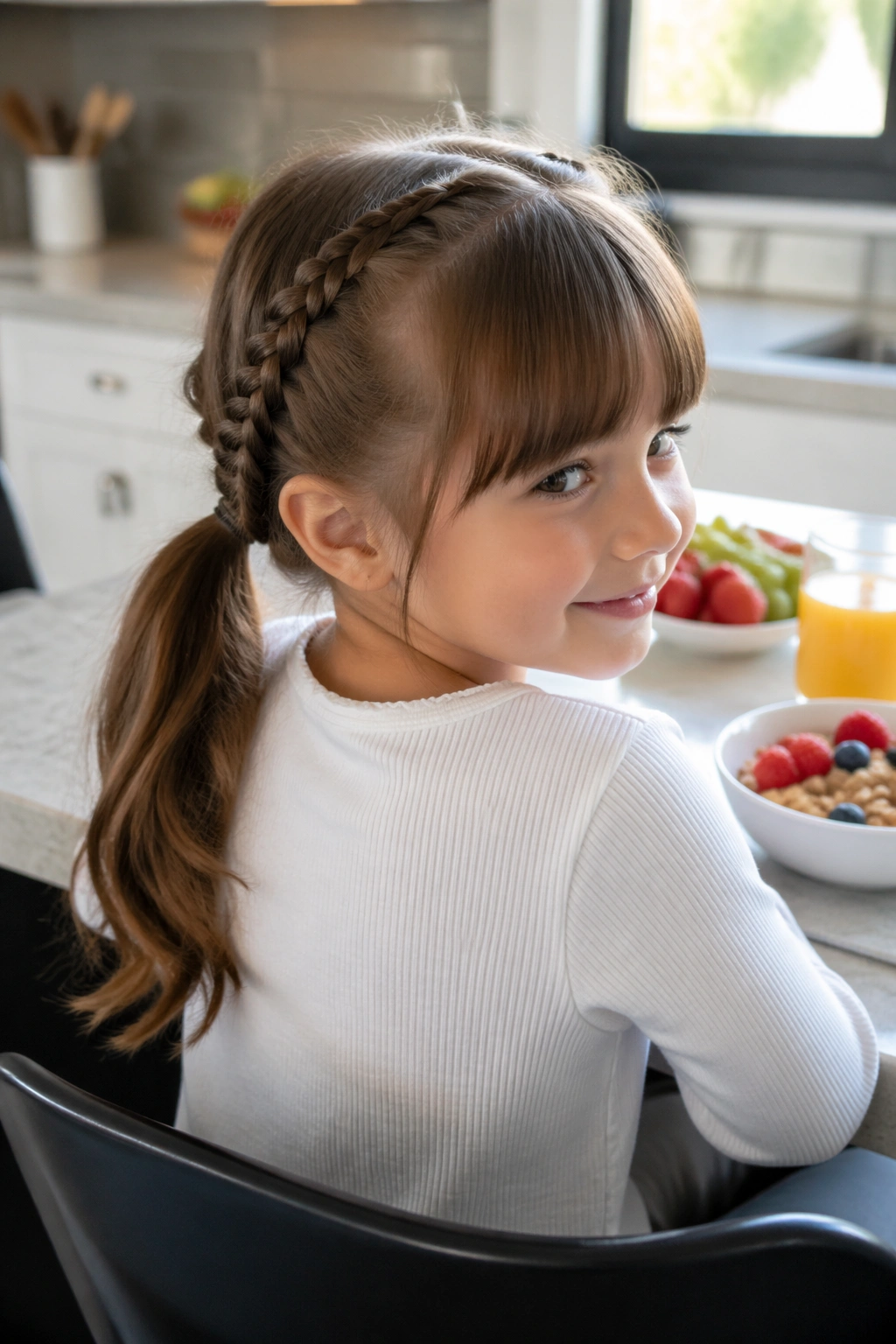
A braided pigtail hybrid sounds fussy, but it is actually a smart middle ground. You start with two small braids or twists on each side, then join them into one ponytail at the back. Bangs keep the front soft, so the back can do the more structured work.
I like this on younger kids because the style feels playful without locking the whole head into one shape. The two braids balance the face, and the ponytail keeps the length from tangling too much during the day. If the child has a lot of fine baby hairs, a light mist and a soft brush can keep the front clean without making it stiff.
This is also one of those styles that looks more complicated than it really is. That can be handy when you want the hair to look thoughtful without spending forever on it.
22. Waterfall Braid Ponytail With Side Bangs
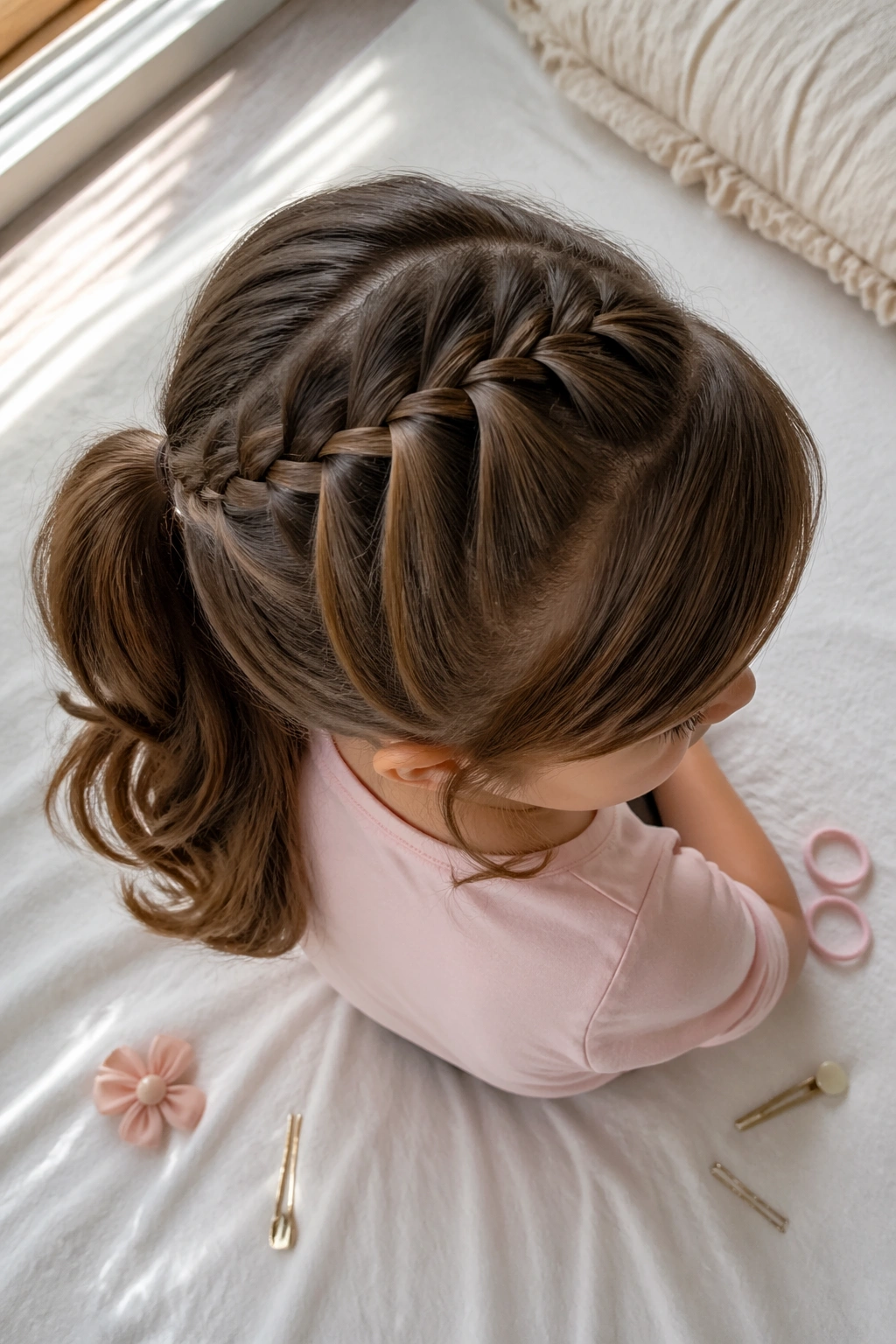
The waterfall braid drops little sections through the braid so the rest of the hair can flow down, which makes the style feel airy and decorative. Side bangs match that softness well. They keep the front moving in the same direction as the braid instead of fighting it.
This is a pretty choice for kids who want long hair visible, not hidden. It is less about locking everything down and more about creating a soft frame. The waterfall braid works best when the ponytail sits just below it, so the braid becomes the focal point and the tail adds length behind it.
If the hair is layered, this style can be a little tricky, because shorter pieces escape faster. A few discreet pins behind the braid usually solve that.
23. Twisted Halo Ponytail With Blunt Bangs
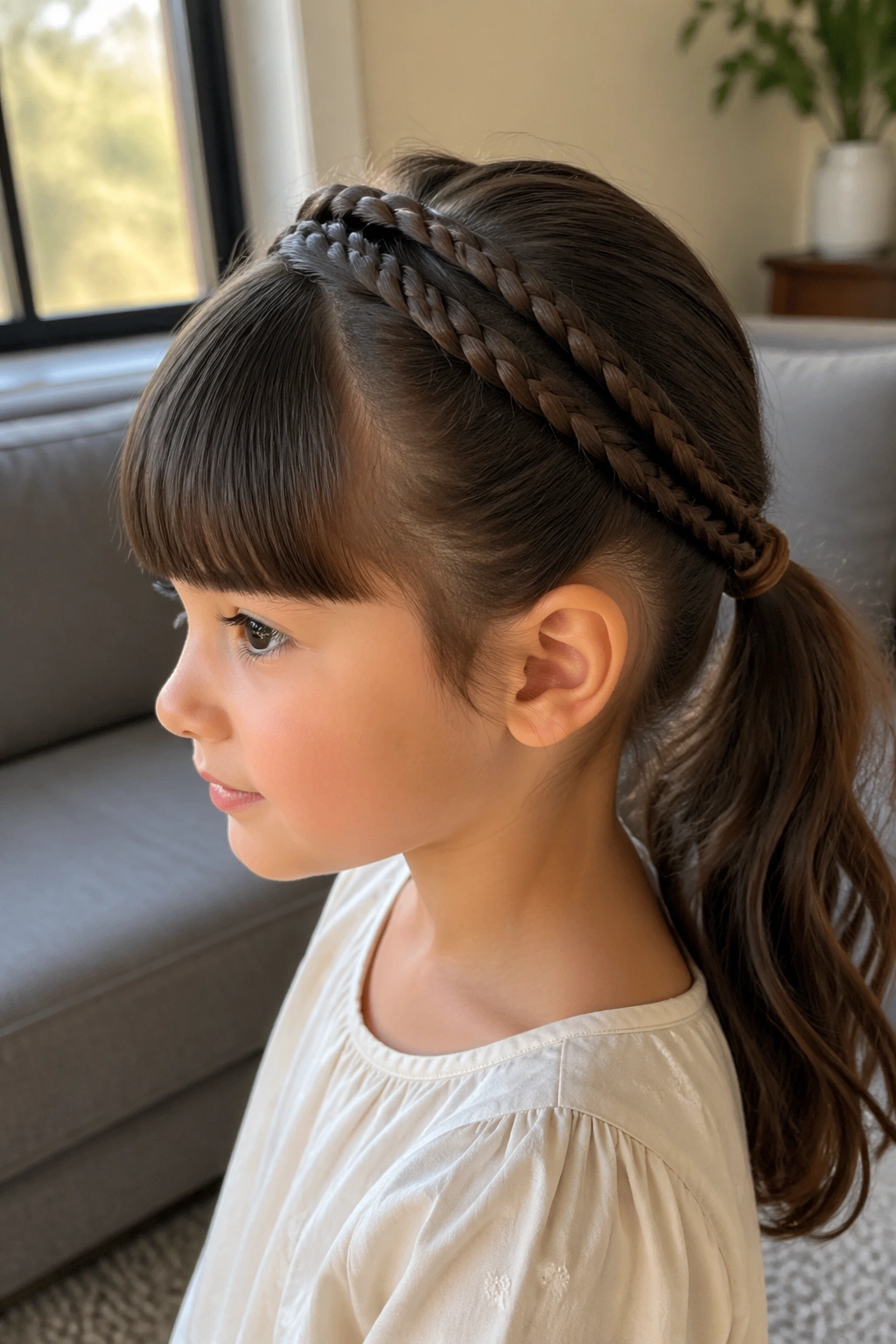
Two flat twists wrapping around the crown create a halo effect that feels calm and neat. The ponytail at the back keeps the style practical, while blunt bangs give the front a sharper line that balances out all that softness.
This style is one of the more comfortable ones for a child who doesn’t like hair hanging near the cheeks. The twists sit flat, so there’s less bulk at the sides, and the bangs stay front and center. It works on straight hair, wavy hair, and many textures in between, though very slippery hair may need a touch of cream or mousse for grip.
The halo shape is pretty on its own. You really do not need much else.
24. Braided Low Ponytail With Face-Framing Bangs
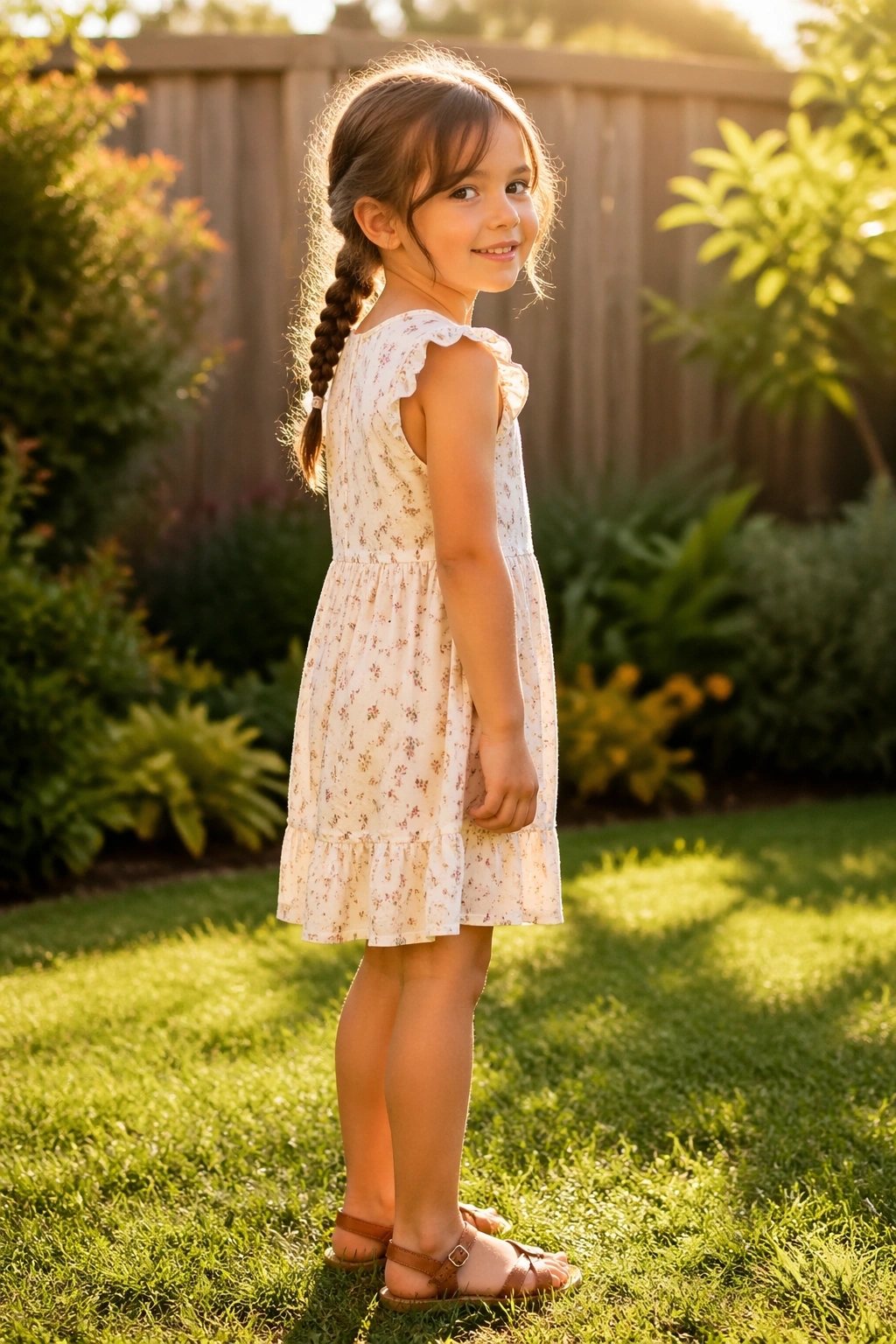
A low braided ponytail is one of the least demanding styles here, and that’s part of its appeal. It stays close to the neck, so it feels comfortable for long wear, and face-framing bangs keep the front soft instead of flat. If the hair is a little tired by the end of the week, this style still looks decent.
Best when mornings are rushed
If you’re short on time, this is the style to keep in your back pocket. A low three-strand braid, a secure elastic, and bangs brushed into place can be enough. You can also add a tiny braid near one temple if you want the look to feel more finished.
This is the style I’d choose for car rides, school days, or any time a child wants to forget about their hair and get on with the day. That has value.
25. Everyday Loose Braided Ponytail With Wispy Bangs
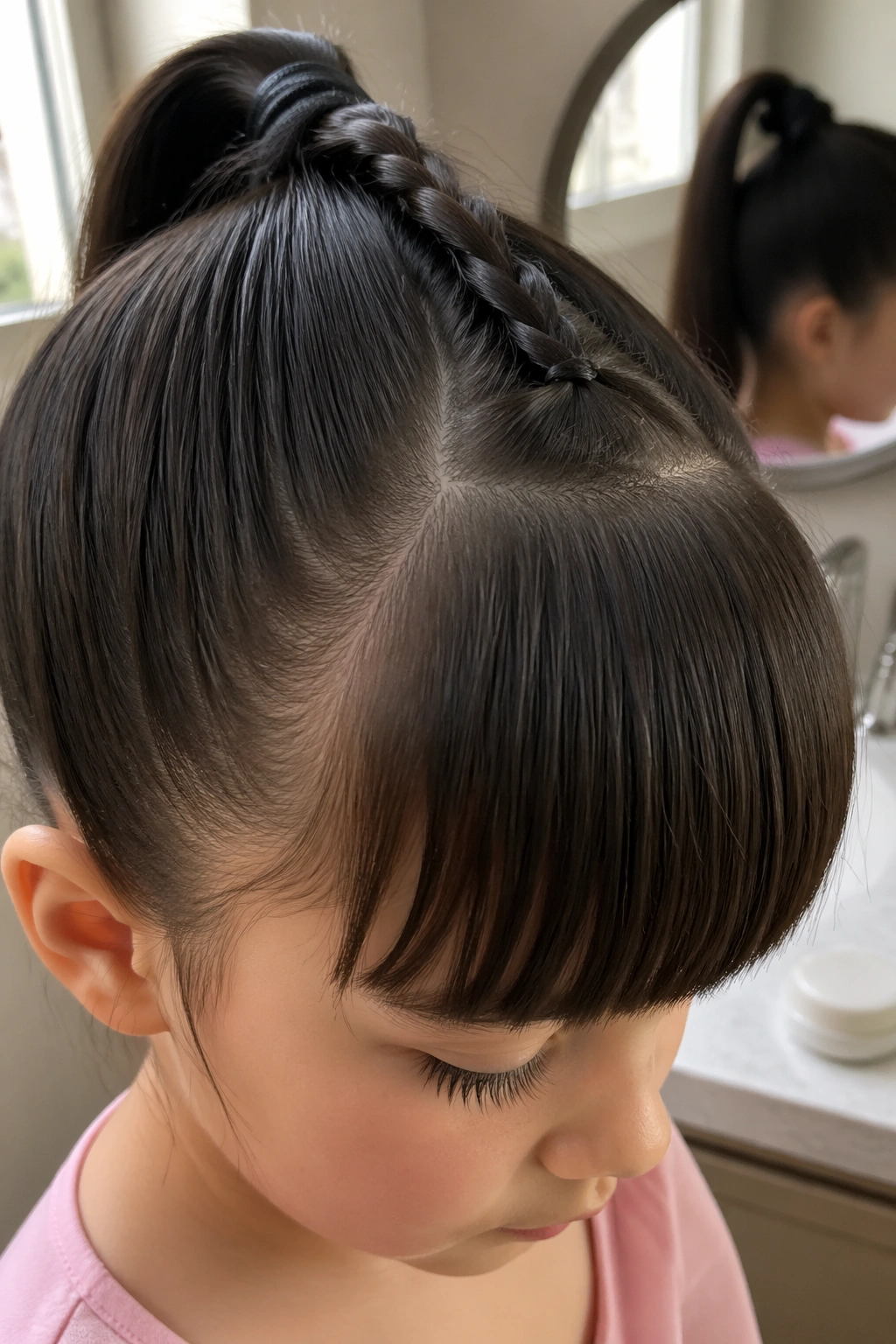
A loose braided ponytail with wispy bangs is the kind of style that earns its place by being dependable. It does not need a perfect part, a stack of accessories, or a dozen pins. It just needs a neat braid, a secure tie, and bangs that fall softly across the forehead.
That modesty is the point. Some days call for a hairstyle that can survive recess, snacks, backpacks, and a nap without turning into a battle. This one does that. If the hair is a little slippery, a touch of dry texture spray near the roots helps. If it is frizzy, smooth the bangs with a small brush and leave the braid slightly loose so it does not look stiff.
For me, this is the style that proves braided ponytails for kids with bangs do not have to be elaborate to be good. Sometimes the calmest choice is the one that gets worn the longest.