



Some hairstyles fall apart before you’ve even found your keys. A good updo ponytail does the opposite. It looks deliberate, takes the pressure off clean-wash day, and gives you a little lift at the crown without turning your bathroom into a styling studio.
The trick is not perfection. It’s structure. A clean part, the right amount of grip, and one or two well-placed elastics can change everything. If your hair is silky, a touch of dry shampoo at the roots helps. If it’s thick, a stronger elastic and a few hidden pins will save you from that slow slide that happens right around the halfway point of the day.
I’ve always liked ponytail hairstyles that look a bit more finished than a plain tie-back, but still feel fast enough for a school run, a work morning, or a dinner where you don’t want to fuss. The best ones hide the elastic, use the hair you already have, and don’t ask for much more than a comb and a steady hand.
If you want styles that feel polished without eating your whole morning, start with the first few. They’re fast, they hold, and they make a plain ponytail look like you meant it.
1. The Sleek Wrapped Low Ponytail
A sleek wrapped low ponytail is the hairstyle I reach for when I want to look put together in under five minutes. It’s clean, it stays flat at the sides, and that little wrapped section around the elastic does a lot of heavy lifting. Suddenly the style stops looking like a fallback and starts looking intentional.
Why it works
The whole point is contrast. The smooth crown keeps things sharp, while the wrapped base hides the hair tie and gives the style a finished edge. If you’ve got fine hair, this is a smart choice because it makes the ponytail look neater and longer at the same time.
- Brush hair straight back with a paddle brush.
- Smooth a pea-sized amount of cream or serum over the top.
- Tie the ponytail low, then wrap a small strand around the elastic.
- Pin the wrap underneath with one bobby pin.
Pro tip: keep the wrap strand narrow. Too thick, and it starts looking bulky instead of polished.
2. The High Bubble Ponytail
A high bubble ponytail is one of those styles that looks more complicated than it is. It takes a basic high ponytail and turns it into a chain of soft, rounded sections that feel playful without getting messy. The whole thing depends on small elastics spaced a few inches apart.
The key is tension, not pulling hard. Once the first ponytail is secured, add another elastic about 2 to 3 inches down, then gently tug the sides of that section until it puffs out. Repeat. That’s it. If your hair is layered, lightly mist each section with hairspray before you shape the bubbles so the shorter pieces stay in place.
This works especially well on medium to long hair. It gives you height, movement, and a little drama without requiring a braid or a curling iron. Fast. Honestly, that’s why people keep coming back to it.
3. The Side-Twist Low Ponytail
Picture this: one side of your hair is softly twisted back, the other side follows, and everything ends in a low ponytail that sits just behind one ear. That’s the side-twist low ponytail, and it’s a lovely fix for hair that won’t sit flat but also doesn’t want to be fully up.
How to get the shape
Take a section from each temple, twist them toward the back, and pin or join them at the nape. Then gather the rest into a low ponytail. If you want it smoother, use a fine-tooth comb; if you want it a little looser, use your fingers and let a few pieces fall free.
This style is kind to growing-out layers. It tucks the awkward bits away without forcing everything into one severe line. And because the twist does the visual work, the ponytail itself can stay simple.
4. The Rope-Braid Ponytail
A rope-braid ponytail is the easiest way to fake a braid when your hands are busy and your patience is short. You split the ponytail into two sections, twist each one in the same direction, then twist them around each other in the opposite direction. The result looks neat, almost glossy, and it takes less effort than a three-strand braid.
That opposite-direction rule matters. Twist both sections one way first, then wrap them together the other way or the braid will loosen fast. If your hair slips, damp hands or a touch of styling cream helps the strands hold their shape.
This is a good style for straight hair that tends to look too flat in a regular ponytail. It adds texture without teasing, and the finish is cleaner than a messy braid. Quietly useful. That’s the best kind of style.
5. The Half-Up Loop Ponytail
A half-up loop ponytail gives you a little lift at the crown and keeps the back from feeling heavy. It’s a nice middle ground for days when you want some hair off your face but don’t want a full updo. The looped section adds shape fast, and it works well on hair that has a bit of natural wave.
After tying the top half into a small ponytail, make a tiny opening above the elastic and pull the tail through once, like a loose topsy tail. Don’t yank it tight. You want that soft folded shape sitting at the back of the head, not a hard twist that pulls the whole style down.
A few face-framing pieces make this look softer. So does a little texture spray at the roots. If your hair is very fine, this is one of the quickest ways to make it look fuller without piling on product.
6. The Faux French Twist Ponytail
The faux French twist ponytail is the style I’d point to if someone wants the look of a classic twist without the pressure of making it perfect. You gather the hair at the back, roll or twist it upward, and secure it loosely so the ends can fall into a ponytail shape. It’s part French twist, part ponytail, and that combination is useful.
Unlike a formal twist, this one doesn’t have to be rigid. A few pins hidden along the seam are enough. Leave the ends soft and slightly undone, and the whole thing reads as relaxed rather than fussy.
It suits medium-length hair especially well because the length gives you enough tail to play with. Shorter layers can slip, so use a light mist of hairspray before you pin. If you’ve ever wanted something tidy that doesn’t look overworked, this is a strong answer.
7. The Teased Crown Ponytail
A teased crown ponytail adds height where it matters most: right at the front of the head. That lift changes the whole balance of the style. Even a basic low ponytail looks more finished when the crown has a little volume.
What to do
Backcomb a section about 2 inches deep at the crown using a teasing brush or a fine comb. Smooth only the top layer over it so you keep the bump without making it look fuzzy. Then gather the rest of the hair into a ponytail, low or mid-height depending on your mood.
This is especially useful if your hair falls flat by lunch. The teasing gives you a visual lift that holds better than a lot of curling or fluffing. A small warning: don’t overdo the backcombing. You want height, not a tangled nest.
Best for: fine hair, long bangs, and anyone who likes a little shape at the roots.
8. The Braided Ribbon Ponytail
A braided ribbon ponytail is one of those styles that looks sweet in person without feeling childish. The ribbon gives you color, movement, and a softer finish than an elastic alone. Choose a narrow satin or grosgrain ribbon if you want the braid to stay neat.
Thread the ribbon into the base of the ponytail or tie it around the elastic and use the tails as part of the braid. Keep the braid snug enough that the ribbon shows at even intervals, but not so tight that it bunches. A simple three-strand braid works fine here.
The style is easy to dress up or down. A black ribbon reads sharper. A cream or navy ribbon feels softer. Either way, the texture is the point. It catches the eye, and it hides the fact that you probably did your hair in a rush.
9. The Double-Knot Ponytail
The double-knot ponytail is exactly what it sounds like: you divide the hair into two sections, knot them once, then secure the base underneath. It gives you a soft, modern shape that looks more styled than a simple tie-back. And yes, it really can be done fast.
The trick is to keep the knot low and loose. If you pull too hard, the knot flattens and the whole thing loses its charm. Leave the ends smooth, or curl the last few inches if you want the knot to feel more dressed up.
This is one of the better ponytail hairstyles for medium to long hair because the length helps the knot sit naturally. On shorter hair, the effect can be cute but a little fragile. Use two pins underneath if your hair likes to escape.
10. The Inverted Tuck Ponytail
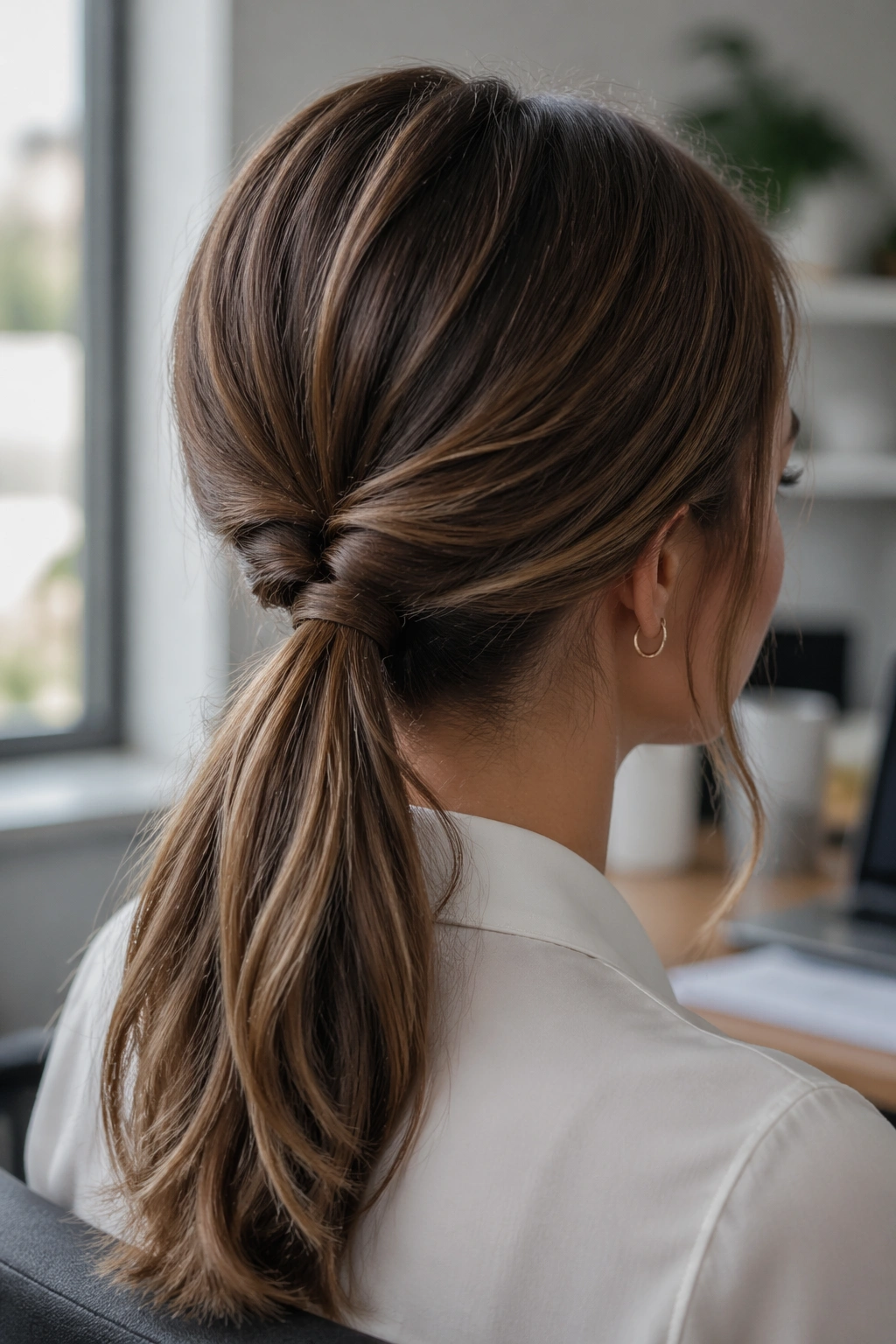
An inverted tuck ponytail gives you that neat, tucked-in look people assume took longer than it did. Start with a low ponytail, make a gap above the elastic, and flip the tail through once. That simple move creates a soft roll at the back of the head and makes the ponytail look more finished.
You can leave it there or repeat the tuck if your hair is long enough. One tuck looks clean. Two gives you a little more body. If the hair around your neck tends to slip, a tiny bit of texturizing spray near the roots helps the base stay put.
This style is great when you want polish without height. It sits close to the head, feels comfortable, and works for office days, errands, or any moment where you need your hair out of the way and off your mind.
11. The Dutch-Braid Ponytail
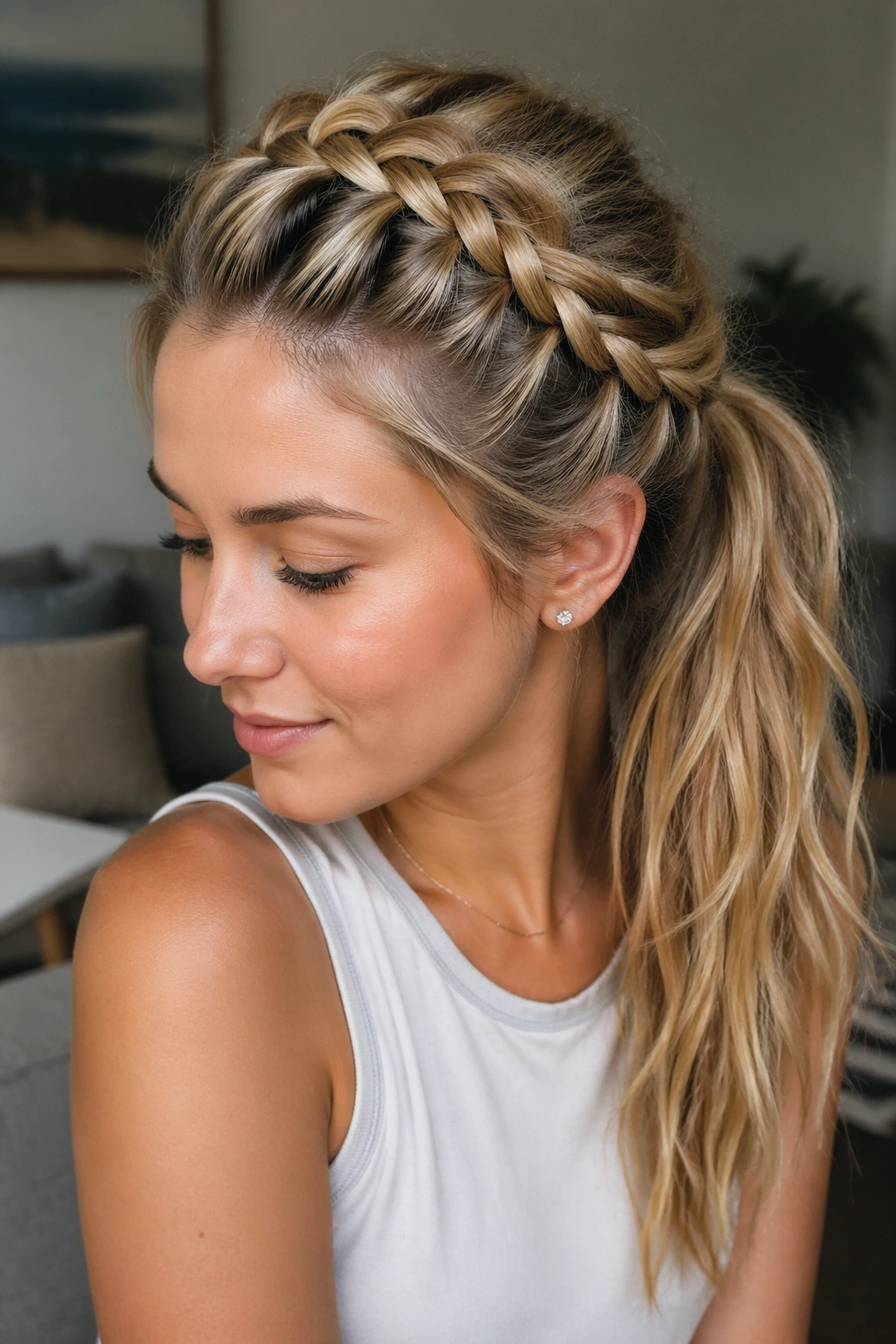
A Dutch-braid ponytail gives you structure right from the front hairline. Instead of braiding over the strands, you braid them under, which makes the braid stand out a little more. After the braid reaches the crown, the rest of the hair drops into a ponytail.
The braid doesn’t need to be perfect. In fact, a slightly looser Dutch braid looks better once it meets the ponytail because the contrast keeps the style from feeling too rigid. If your arms get tired halfway through, stop the braid at the top of the head and tie the rest back cleanly. That still counts.
This is a good pick for thicker hair because it controls volume at the top while leaving the tail easy and movable. It also works well on second-day hair. A little grip makes braiding easier, and that saves time.
12. The Scarf-Wrapped Ponytail
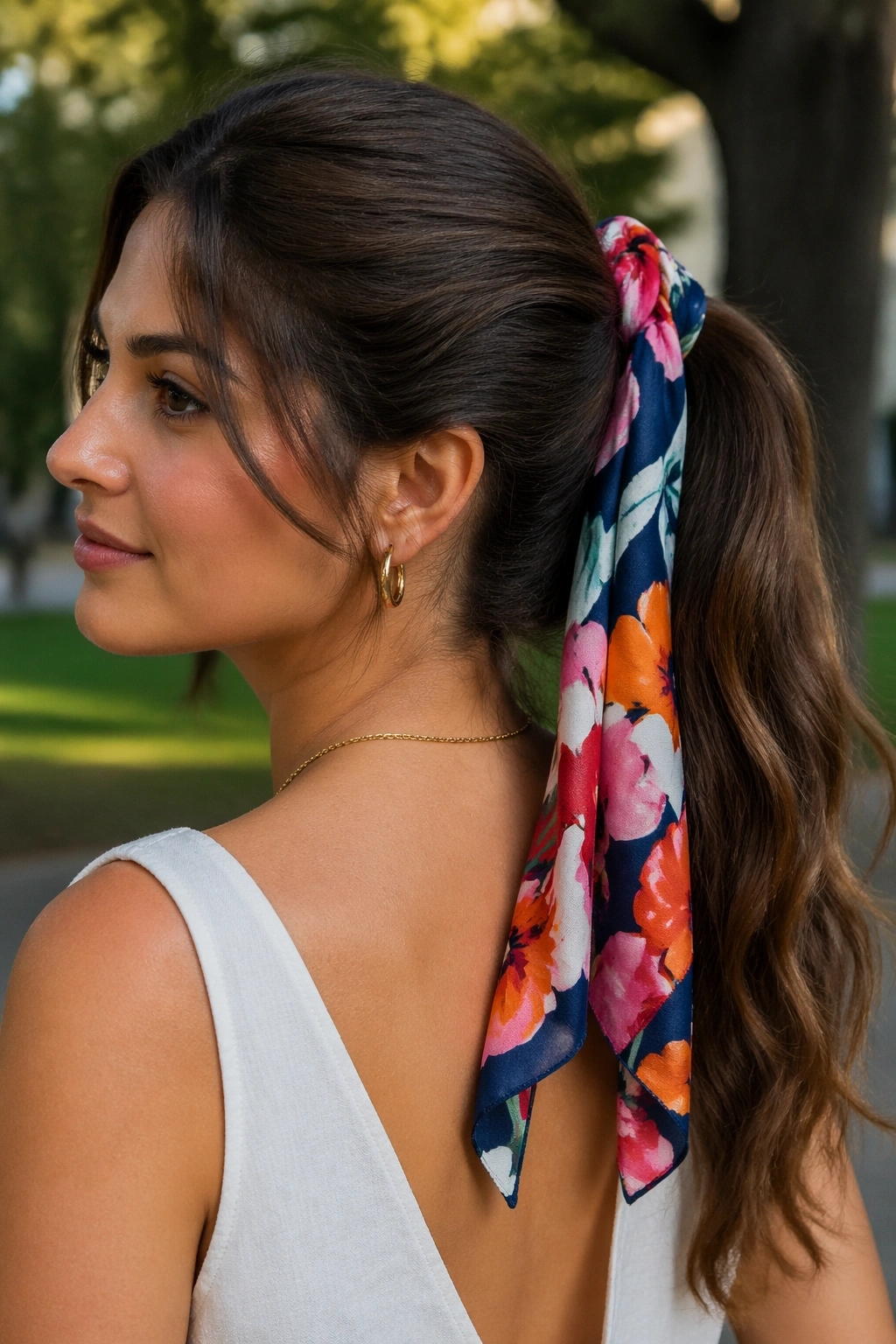
A scarf-wrapped ponytail is the fastest way to make a simple ponytail feel deliberate. Tie a silk or cotton scarf around the base, let the ends fall, and you’ve got instant color and movement. It’s a small change, but it changes the whole mood.
If the scarf is wide, fold it into a narrower band first. That keeps the base from looking bulky and helps the knot sit flatter. For long hair, you can braid the ponytail first and then wrap the scarf around the elastic, which gives the style a slightly more finished look.
This one is excellent on days when your hair isn’t cooperating. You don’t need a flawless blowout. You just need a secure ponytail and a scarf that works with your outfit. That’s the whole thing.
13. The Messy Textured Ponytail
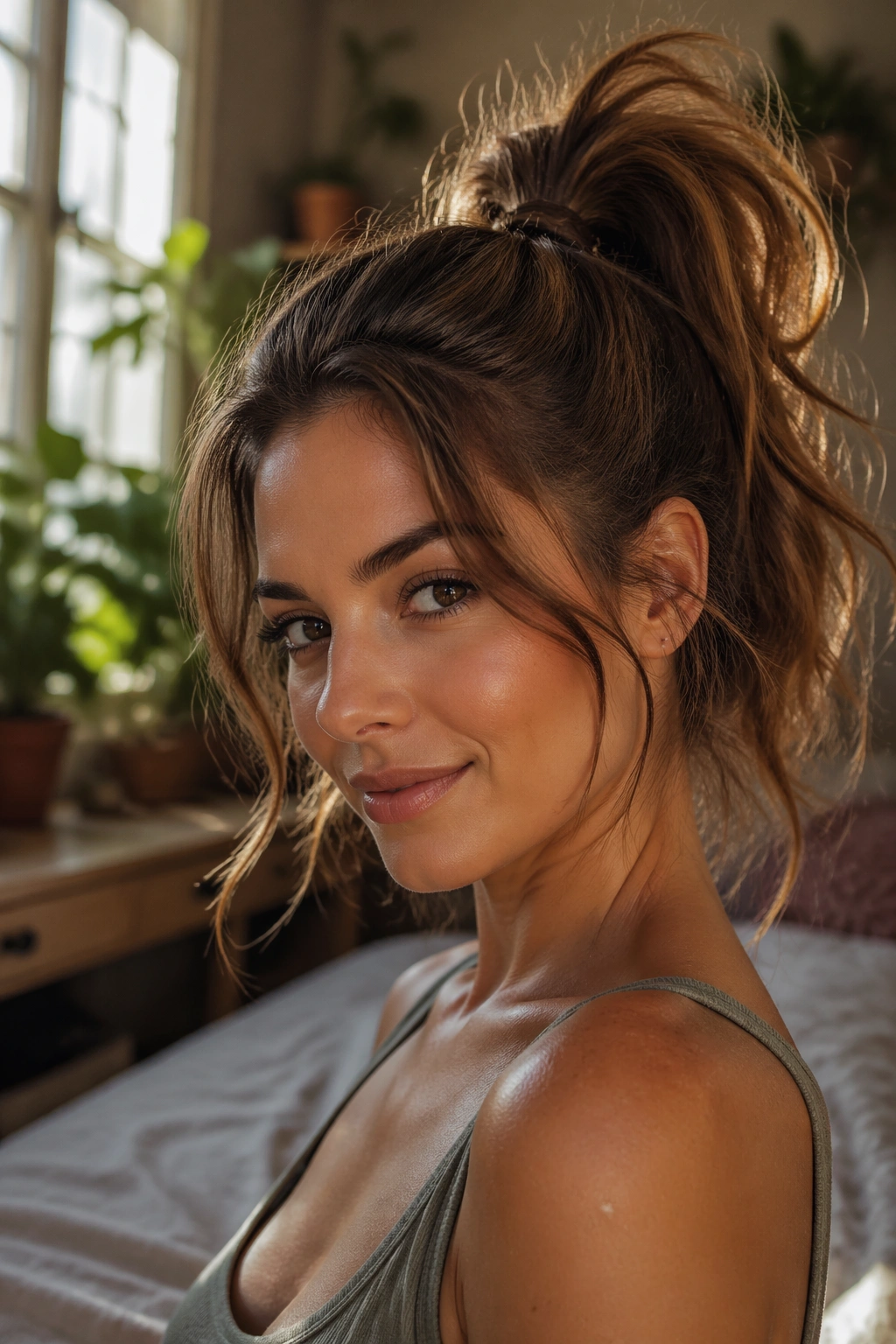
A messy textured ponytail is not an excuse to ignore the mirror. It’s a choice. The difference is that you’re shaping volume instead of trying to smooth every strand into place. A little wave, a little bend, and a few loose pieces around the face make the style feel easy in the best way.
Start by rough-drying the roots or adding texture spray to dry hair. Scrunch the mids lightly, then gather the hair where it naturally wants to sit. Pull a few pieces free around the temples and at the nape. Don’t overthink those pieces. If they look too perfect, they stop doing their job.
This is one of the most forgiving ponytail hairstyles on the list. It works on hair that’s a day old, and it doesn’t punish you for skipping a curling iron. In fact, it looks better when it isn’t overly polished.
14. The Pull-Through Bubble Ponytail
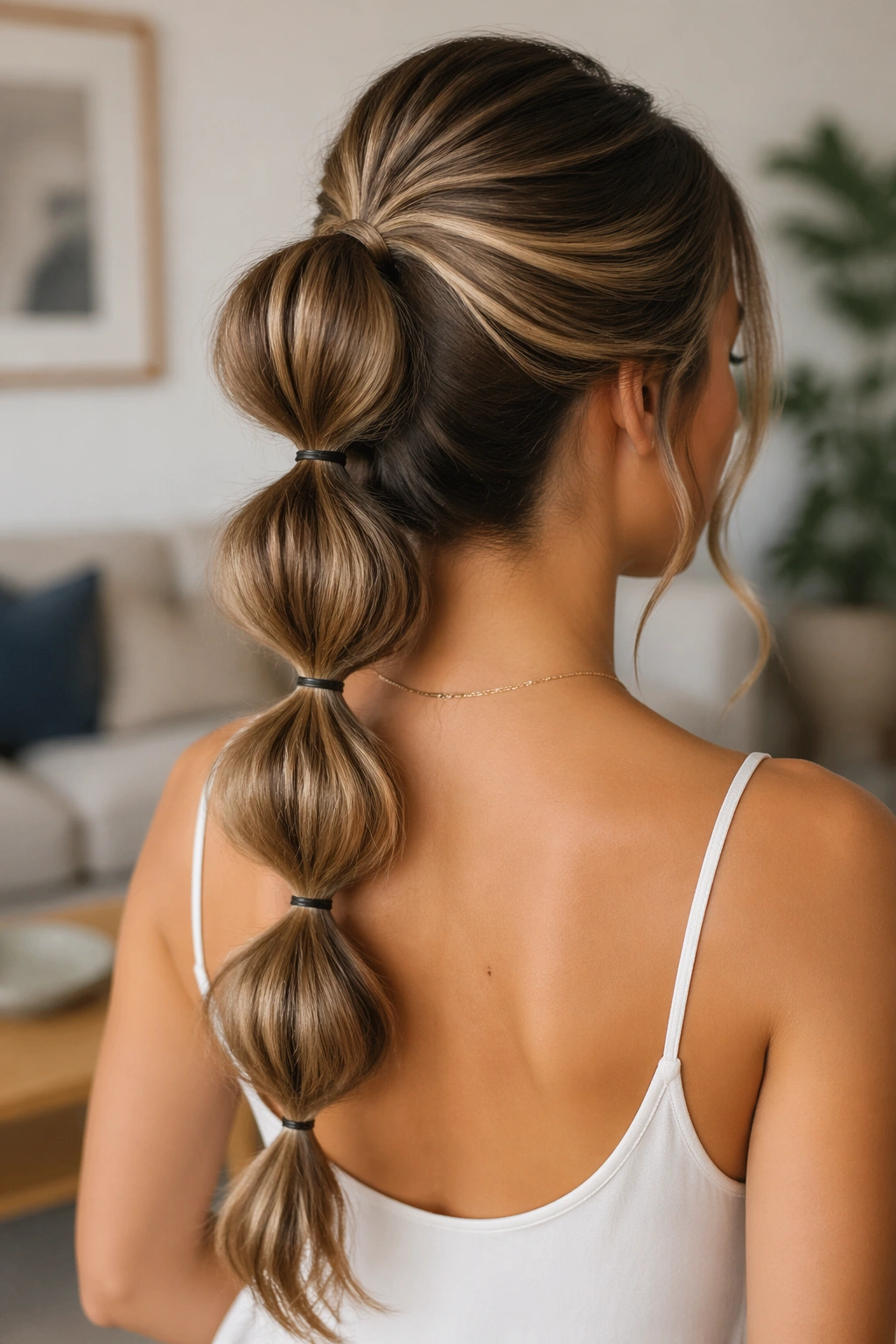
The pull-through bubble ponytail gives you a fuller look than a regular braid, and it’s easier than it appears. You make a series of small ponytails down the length of the hair, then pull each section apart to create rounded bubbles. Hidden elastics do the real work.
What makes it different
Unlike a standard braid, this style creates body without weaving strands together. That means it can look thicker than it really is, which is useful if your hair is fine or mid-length. The shape also stays a bit more playful and modern.
A few details help a lot:
- Space elastics evenly, about 2 to 3 inches apart.
- Gently pull each bubble sideways, not straight out.
- Keep the top section smooth so the style doesn’t lose its shape.
Best for: medium to long hair that can handle several elastics without getting tangled.
15. The Center-Part Sleek Ponytail
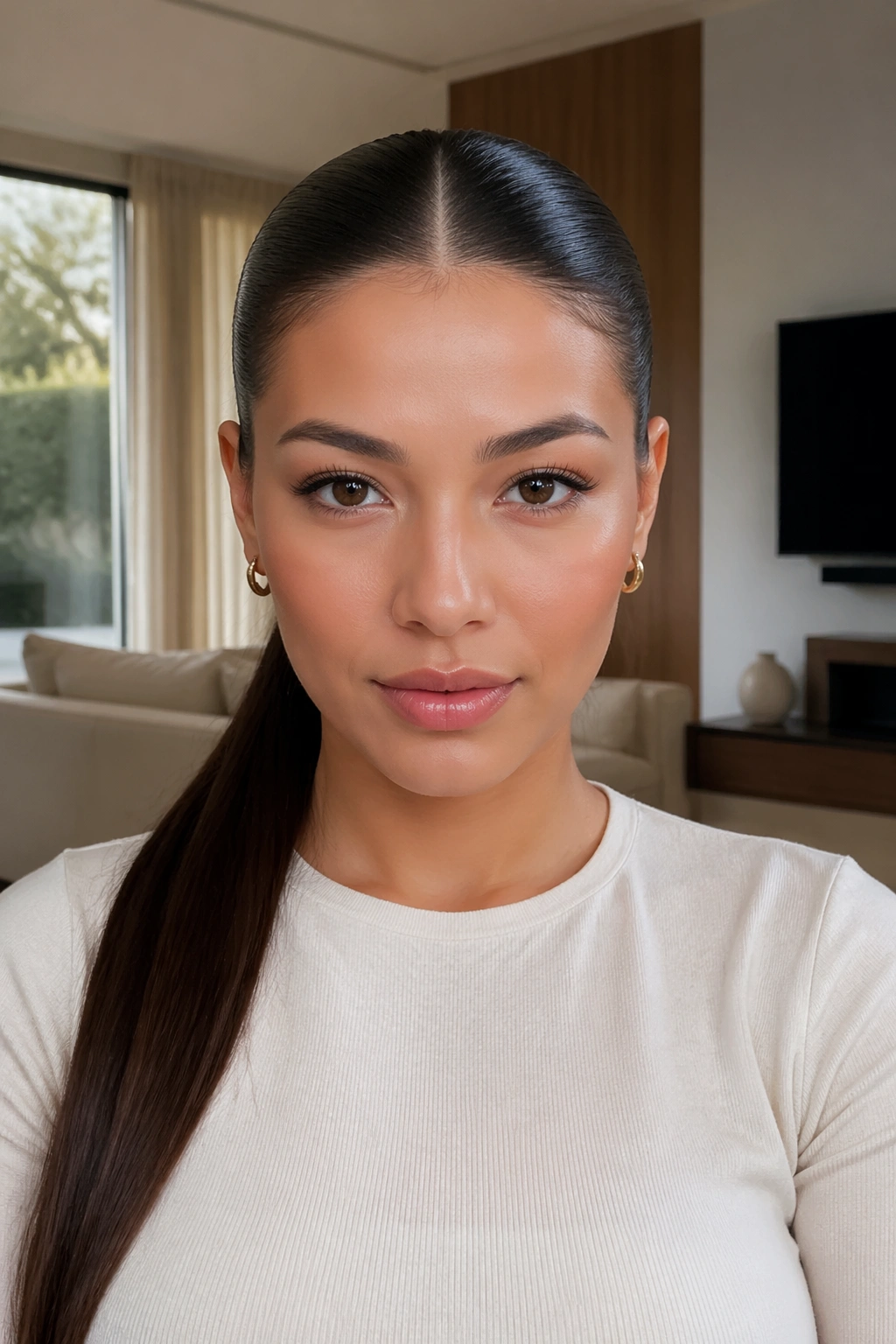
The center-part sleek ponytail is sharp in the quietest way. No extra decoration, no texture, no puff. Just a clean line down the middle and a ponytail secured low or mid-height. The appeal is in the restraint.
Use a tail comb to draw the part straight back, then smooth each side with a light gel or cream. A boar-bristle brush helps press the surface flat without leaving it greasy. Once the ponytail is tied, take a tiny strand from underneath and wrap the base if you want the finish to feel more refined.
This style works especially well with straight hair, but it can look lovely on wavy hair too if you control the top and leave the tail soft. It’s one of those styles that makes earrings and necklines do some of the work.
16. The Crown-Braid Ponytail
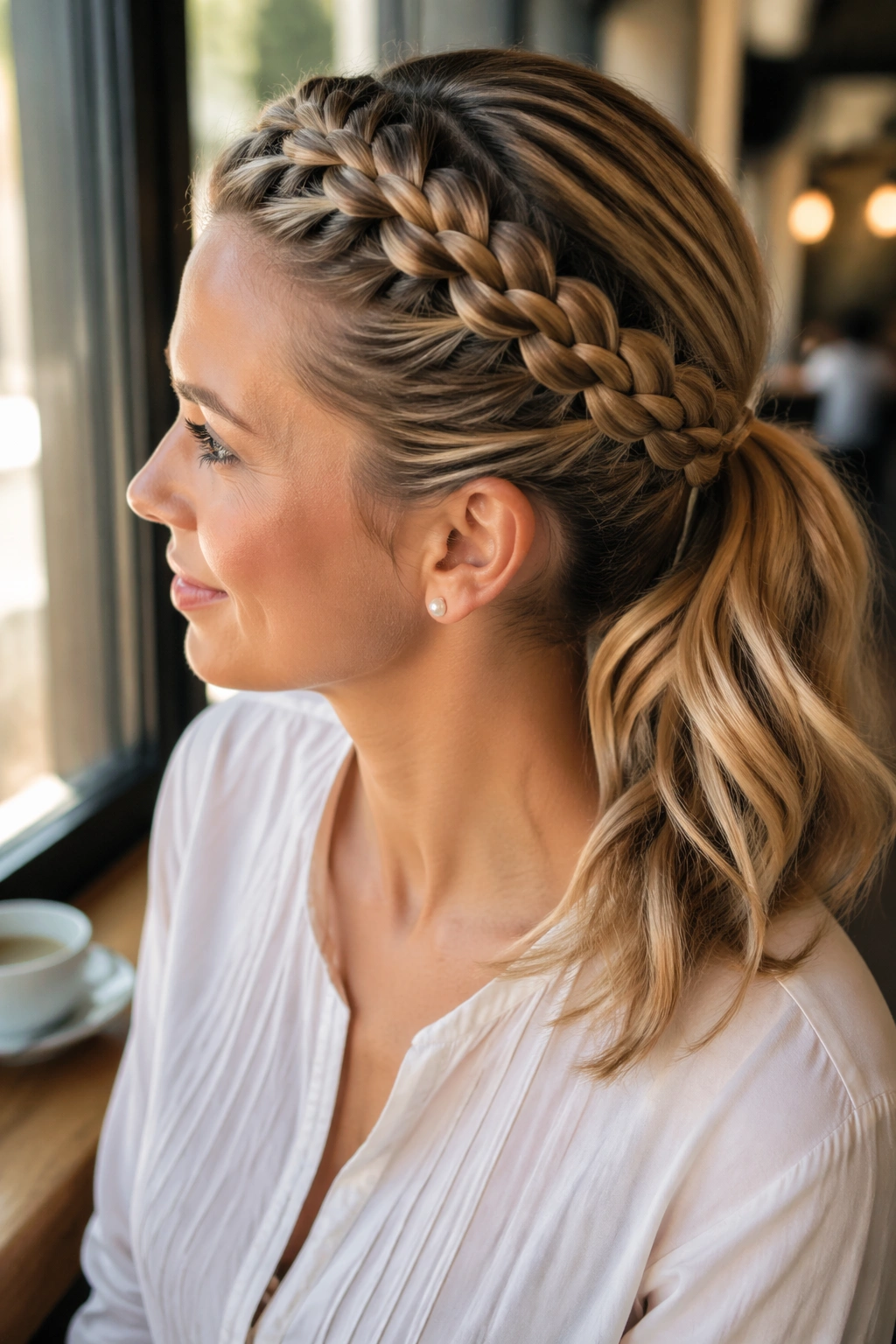
A crown-braid ponytail has a little romance in it, but it’s still fast enough for real life. Braid a section from one temple across the top of the head, then continue toward the other side or stop at the crown and gather the rest into a ponytail. It gives the top half of the hair a frame, which is useful when you want the style to feel a little special.
The braid should sit close to the scalp. If it lifts too high, the crown starts to look bulky. Pin the braid behind the ear or near the crown, then let the ponytail fall loose and soft.
This is a good style for medium-length hair that needs help staying off the face. It also plays nicely with second-day texture, because the braid gives structure even when the rest of the hair has gone a little flat.
17. The Fishtail Ponytail
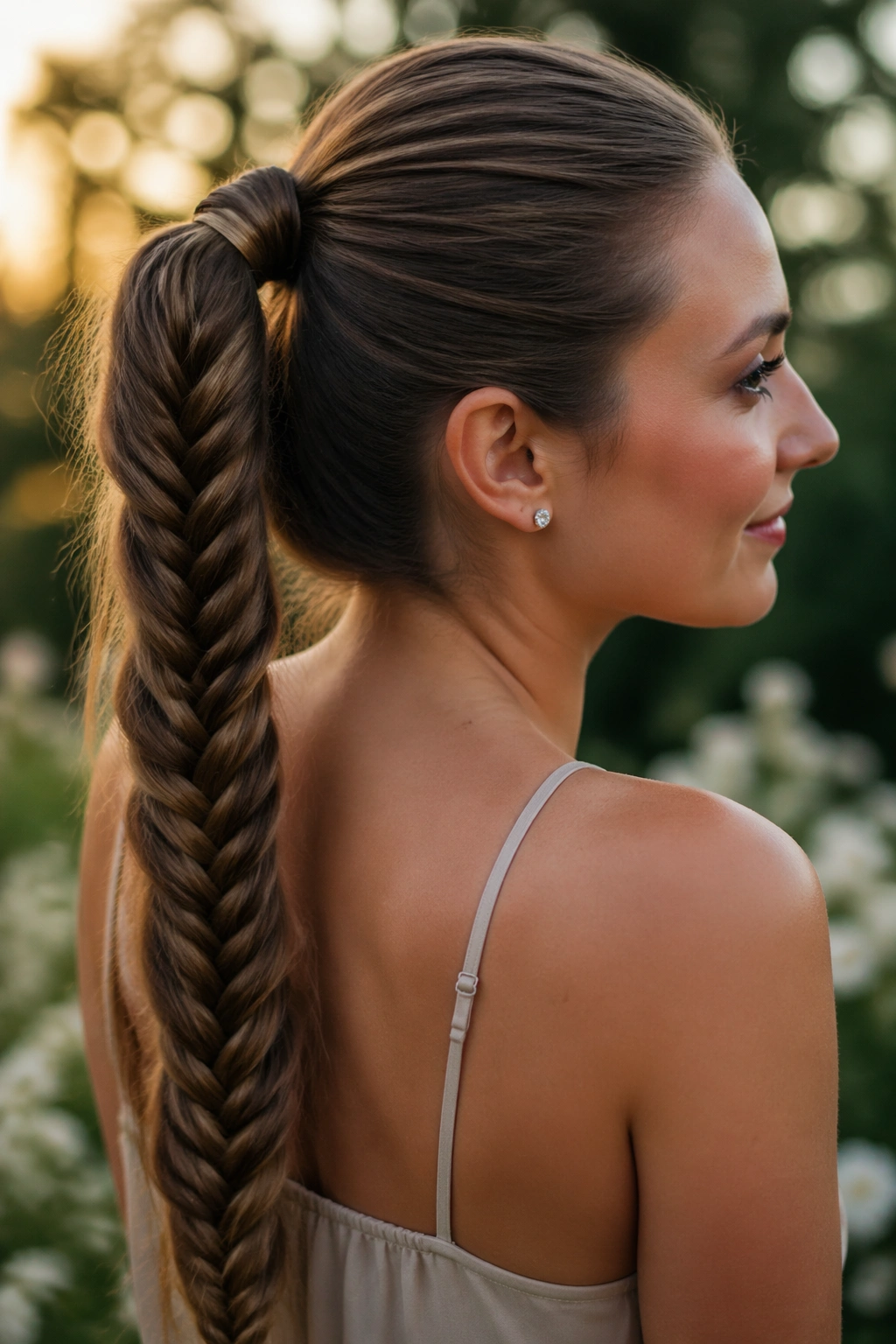
A fishtail ponytail looks intricate, but once the tail is gathered, the braid itself moves quickly. Split the ponytail into two sections and pass tiny pieces from one side to the other. Keep the pieces small. That’s what gives the braid its detailed look.
If your hands are new to fishtailing, start with a low ponytail. It’s easier to see what you’re doing, and the braid has a more relaxed hang. Once you finish, tug the edges gently so the braid opens up and looks fuller. Don’t pull too hard or the whole thing starts to fray.
This style is a favorite for long hair because the braid pattern shows best when there’s length to work with. It’s neat, a little bohemian, and surprisingly wearable with a plain T-shirt or a dress. Good range. That matters.
18. The Side-Braid Ponytail
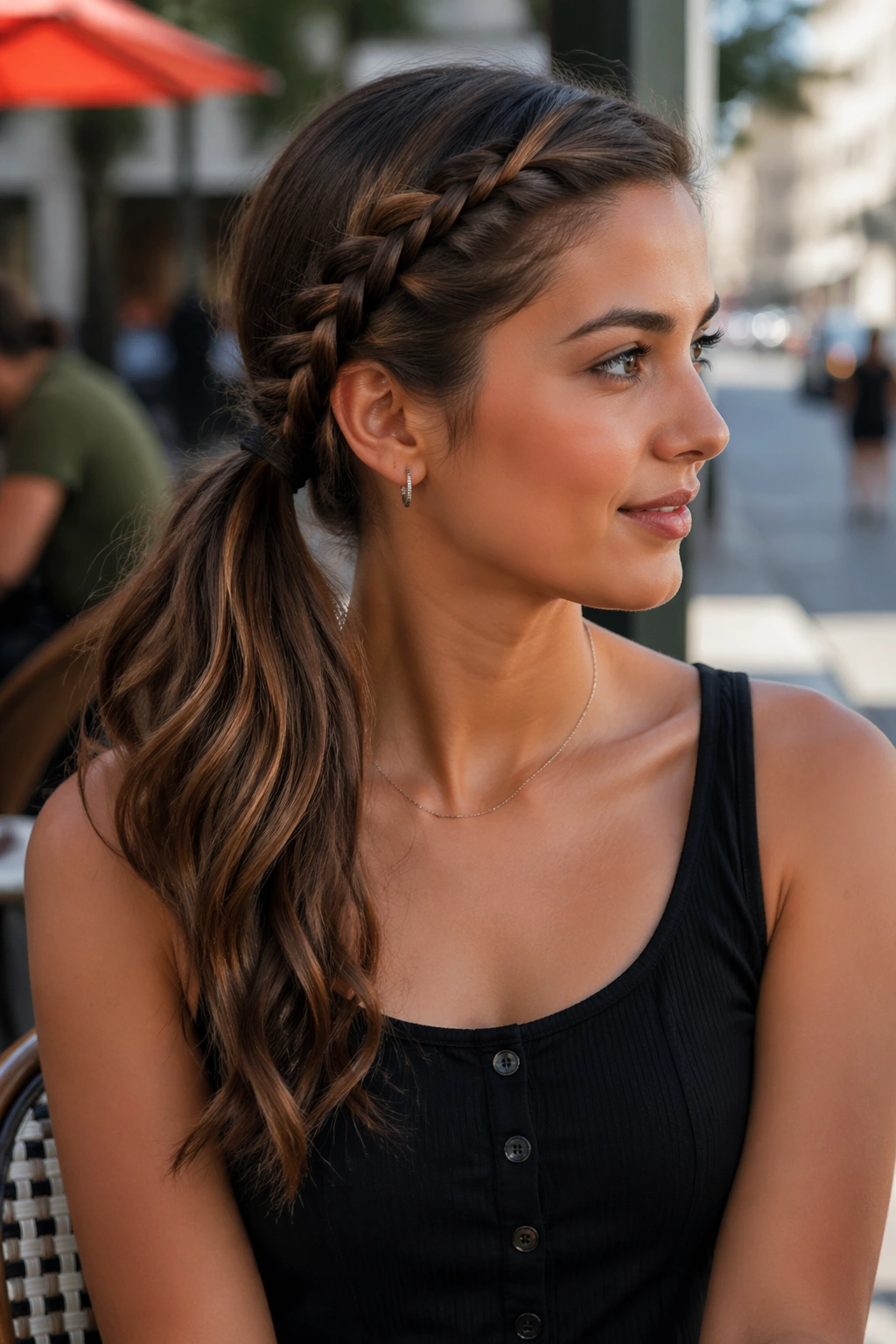
A side-braid ponytail solves a real problem: what to do with hair that’s too short for a dramatic braid but long enough to want some shape. Braid one side from the temple or just behind the ear, then gather everything into a ponytail on the opposite side or at the nape.
The asymmetry is the point. It keeps the style from feeling too severe and gives your face a softer frame. If you like a bit of movement, leave the braid slightly loose and tease the ponytail with your fingers after tying it.
This style is also handy for layers. The braid catches shorter pieces and helps them stay in place. You do not need symmetry here. A little unevenness makes it look more natural, which is usually where this style shines anyway.
19. The Bouffant Ponytail
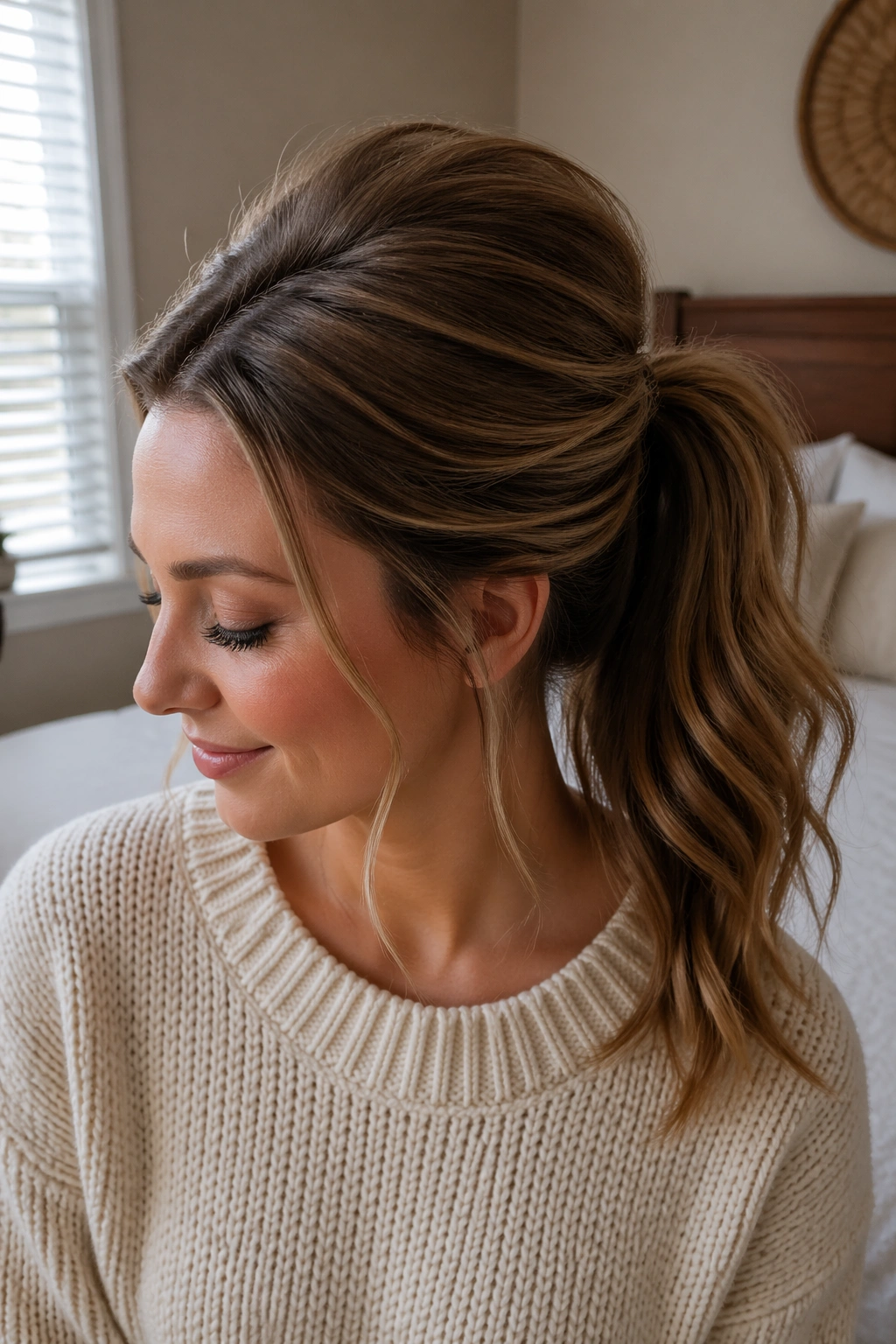
The bouffant ponytail brings back volume at the crown without asking you to curl the whole head. Lift the top section, tease it lightly underneath, and smooth the top layer over it. Then tie the ponytail low or mid-height, depending on how much lift you want.
There’s a fine line between volume and fuss, so stop before the crown looks puffy. A soft bump is enough. If your hair is slippery, spray the roots lightly before you tease. That gives the shape more staying power and keeps it from sinking flat by noon.
This style suits hair that lies close to the head and needs a little height. It also pairs well with side bangs or long face-framing layers. The shape does the talking, so you don’t need much else.
20. The Twisted Low Chignon Ponytail
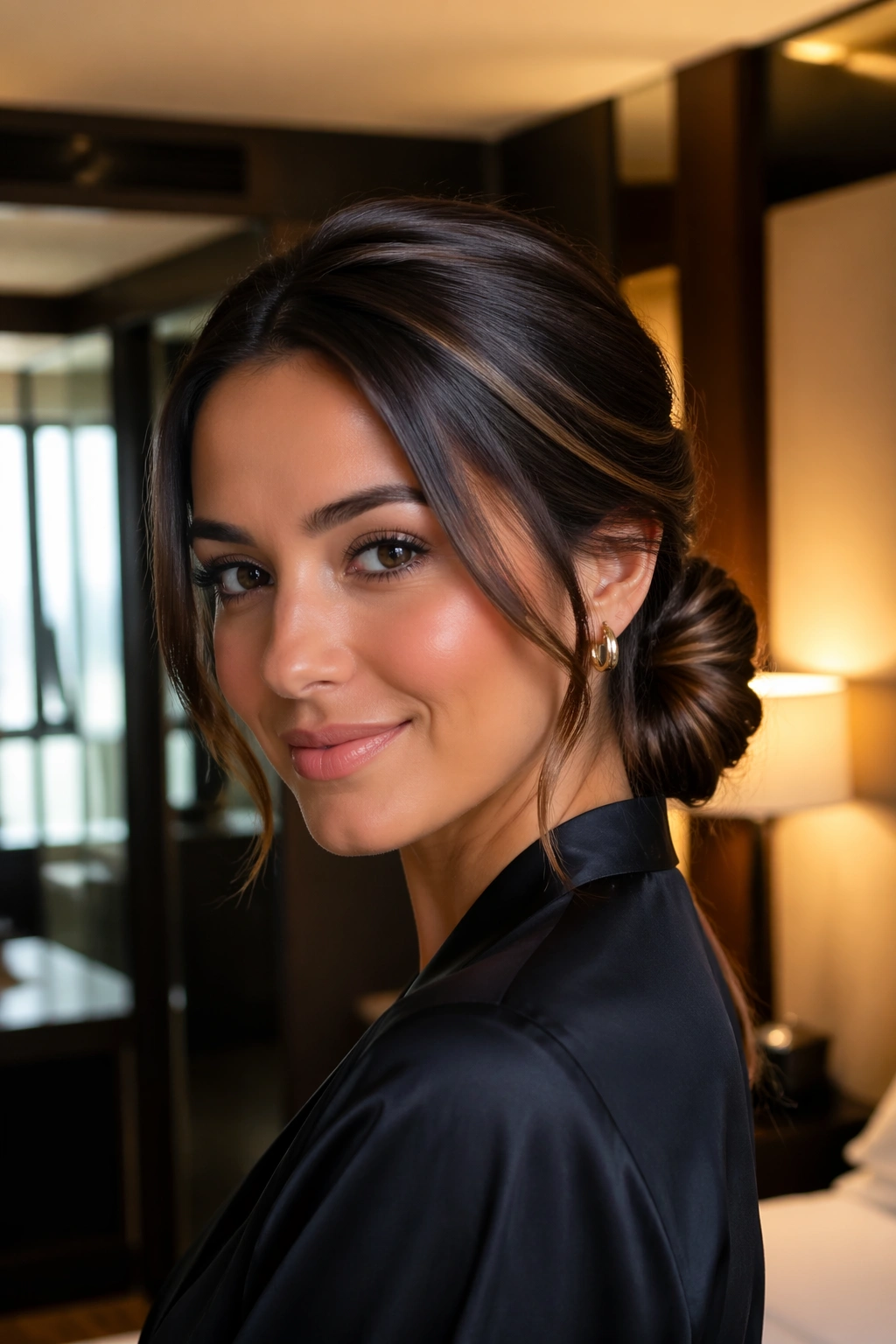
A twisted low chignon ponytail sits in that useful space between a ponytail and a bun. You gather the hair low, twist the length, then coil it into a compact shape while letting a small tail or folded end remain visible. It feels neat, but not stiff.
The key is to pin the twist as you build it, not after everything is already collapsing. One pin at the center, one at the bottom, and maybe one hidden on the side is often enough. If the ends are long, let them sweep under the twist instead of forcing them flat.
This style is excellent for formal settings where you still want something easy. It keeps the neck clear and looks better than a rushed bun because the twist adds shape. The whole thing takes less time than people assume.
21. The Claw-Clip Ponytail
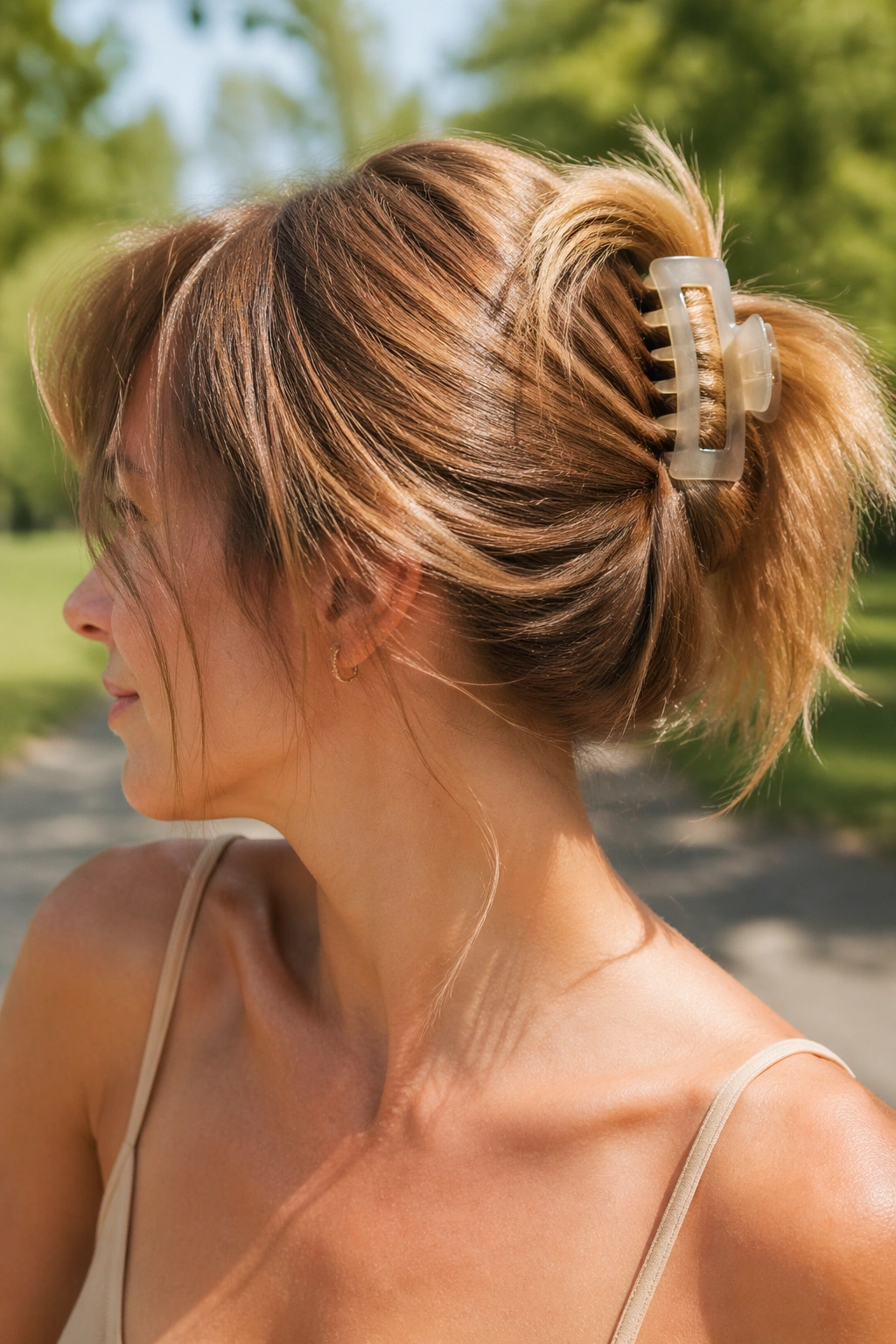
A claw-clip ponytail is the speediest style on this list, and I mean that in the best way. You gather the hair, fold it upward or halfway, and clip it with a medium or large claw clip so the ends spill out in a controlled way. It’s casual, secure enough for daily wear, and kind to hair that’s already tired from elastics.
The shape depends on the clip size. Too small, and it will slide. Too large, and it swallows the hairstyle. Find the one that grips the base without crushing it. If your hair is very thick, clip the lower half first, then tuck the upper section over it.
This one works when you need hair off your neck fast. It’s not fussy, and that’s the charm. Clean enough for errands. Loose enough to feel easy.
22. The High Ponytail with Face-Framing Pieces
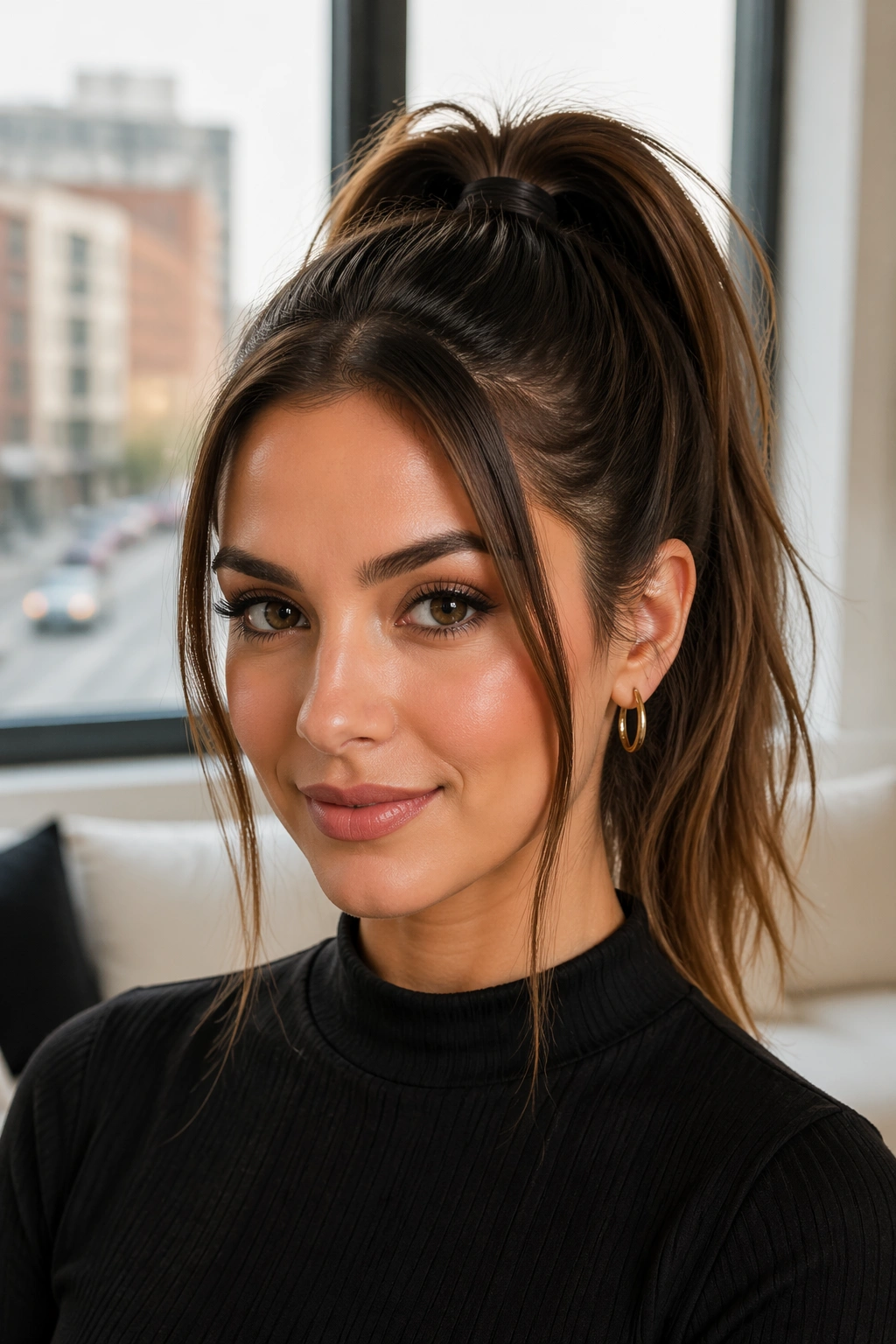
A high ponytail with face-framing pieces is a classic for a reason: it lifts the face, opens the neck, and still feels easy to wear. Pull the ponytail high, then leave two slim sections out at the front before you tie everything back. Those front pieces soften the edges and keep the style from looking harsh.
If you want the ponytail to sit really high, tilt your head back while tying it. That helps the base land where you want it instead of sagging. A small amount of gel or edge cream near the hairline keeps flyaways under control, but don’t overdo it. A little texture around the temples is usually better than a hard shell.
This is a strong choice for straight or wavy hair. It’s athletic, clean, and easy to dress up with earrings or a bold lip. Simple. That’s part of the appeal.
23. The Rope-Twist Ponytail
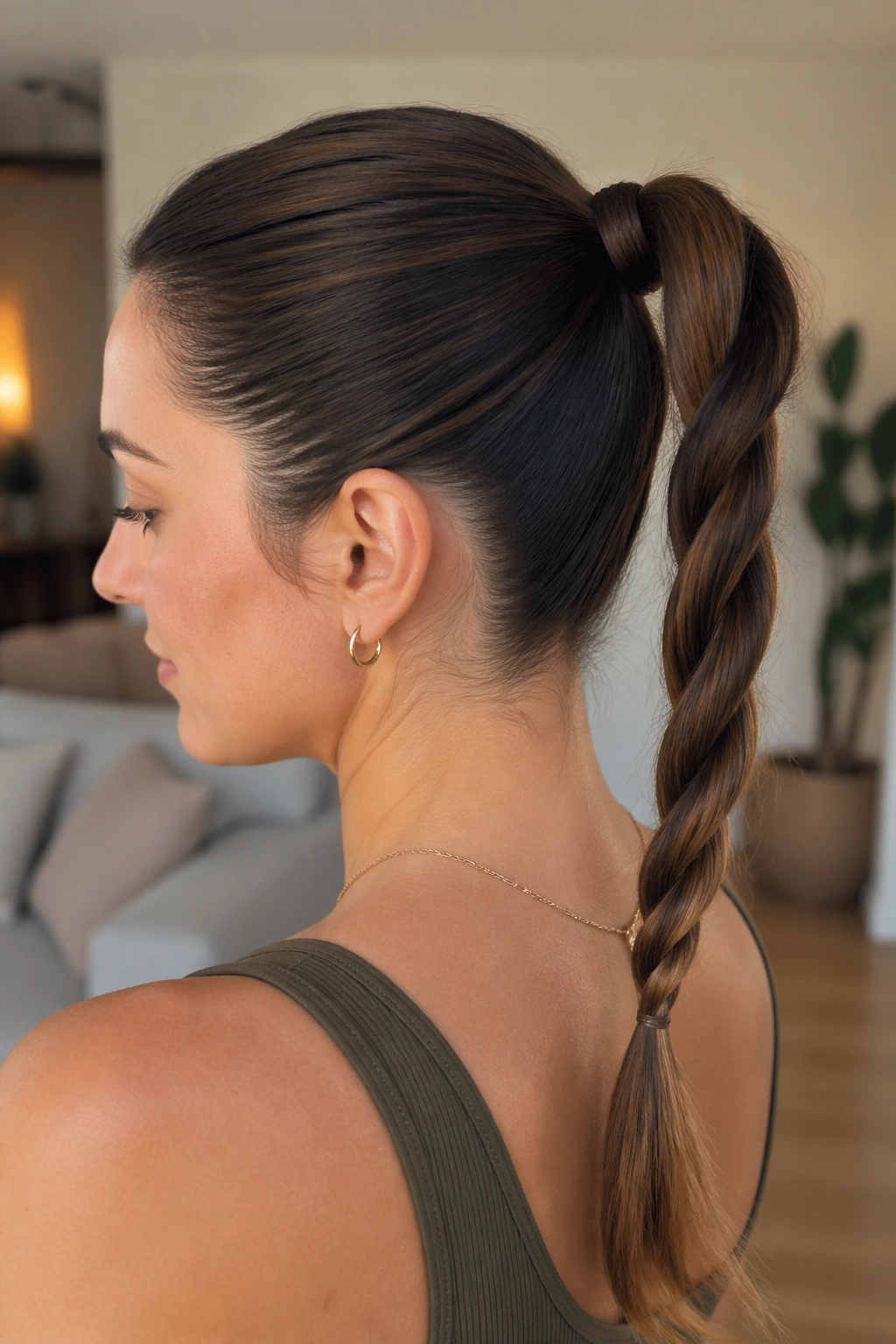
The rope-twist ponytail is a close cousin to the rope braid, but it leans more polished and less woven. Twist the ponytail into two ropes, wrap them around each other, and let the shape hang in a smooth spiral. It’s quick, and it has a nice, tidy line.
What matters here is even tension. If one side is tighter than the other, the twist starts to lean. Hold both sections firmly while you work, and finish with a clear elastic at the end so the twist doesn’t unwind. If your hair is layered, a little wax on the ends helps everything stay together.
This style is lovely on medium-length hair because the twist shows without becoming too heavy. It’s also a smart choice when you want movement but don’t want actual loose hair falling in your face. Calm, neat, done.
24. The Wrapped Bubble Ponytail
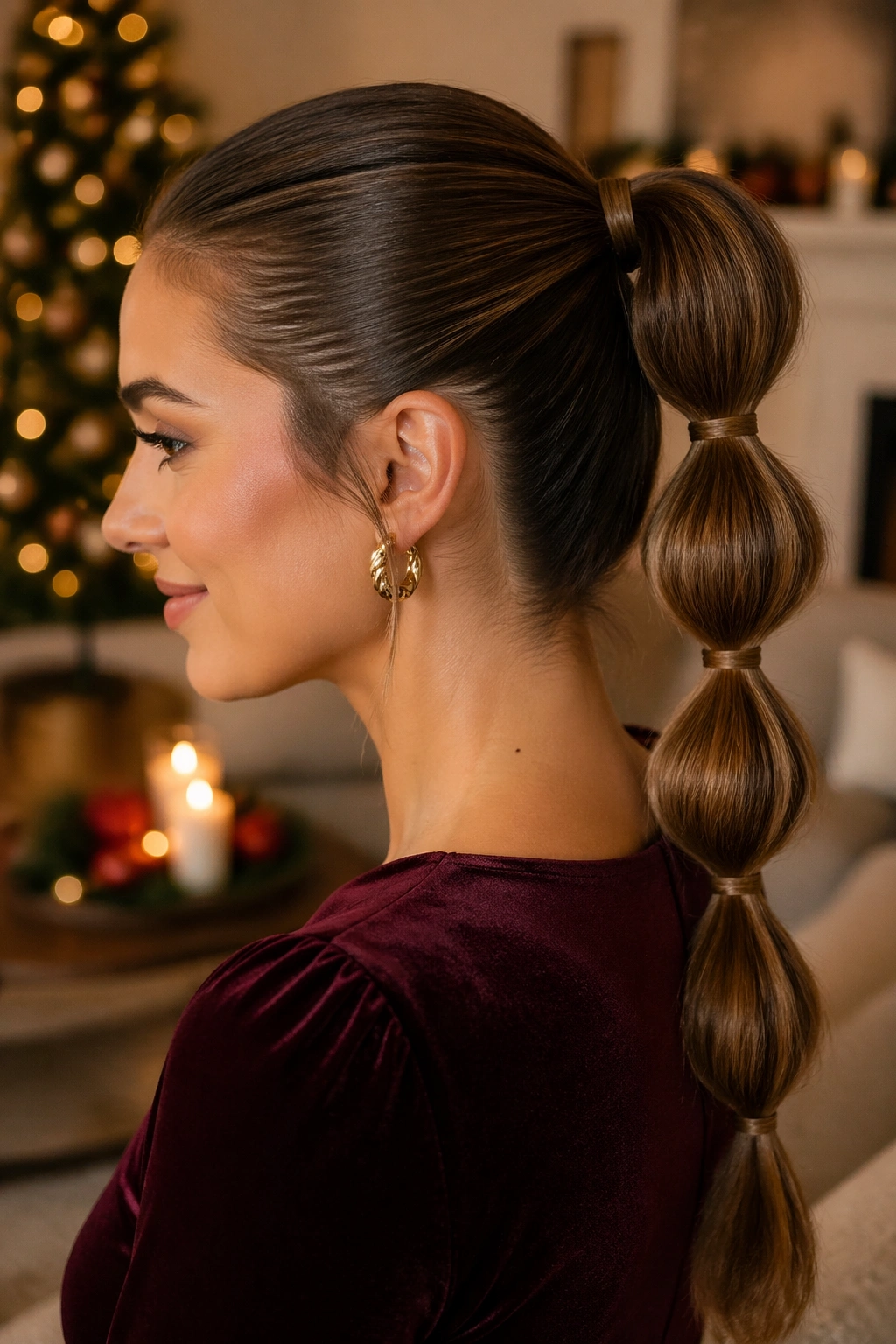
A wrapped bubble ponytail takes the playful shape of a bubble ponytail and makes each section feel a bit more finished. After creating the bubbles, take a tiny strand of hair and wrap it around each elastic so the ties disappear. It’s a small detail, but it gives the style a cleaner look.
This version takes a little more time than a plain bubble ponytail, but not much. The important part is to keep the sections even before you wrap them. If one bubble is tiny and the next one is huge, the whole look goes lopsided. Gentle tugging after each wrap helps the shape stay round.
It’s a nice style for parties, school events, or any day when you want a more styled ponytail without using heat. The shape does the work. The wrap just makes it look finished.
25. The Double Ponytail for Volume
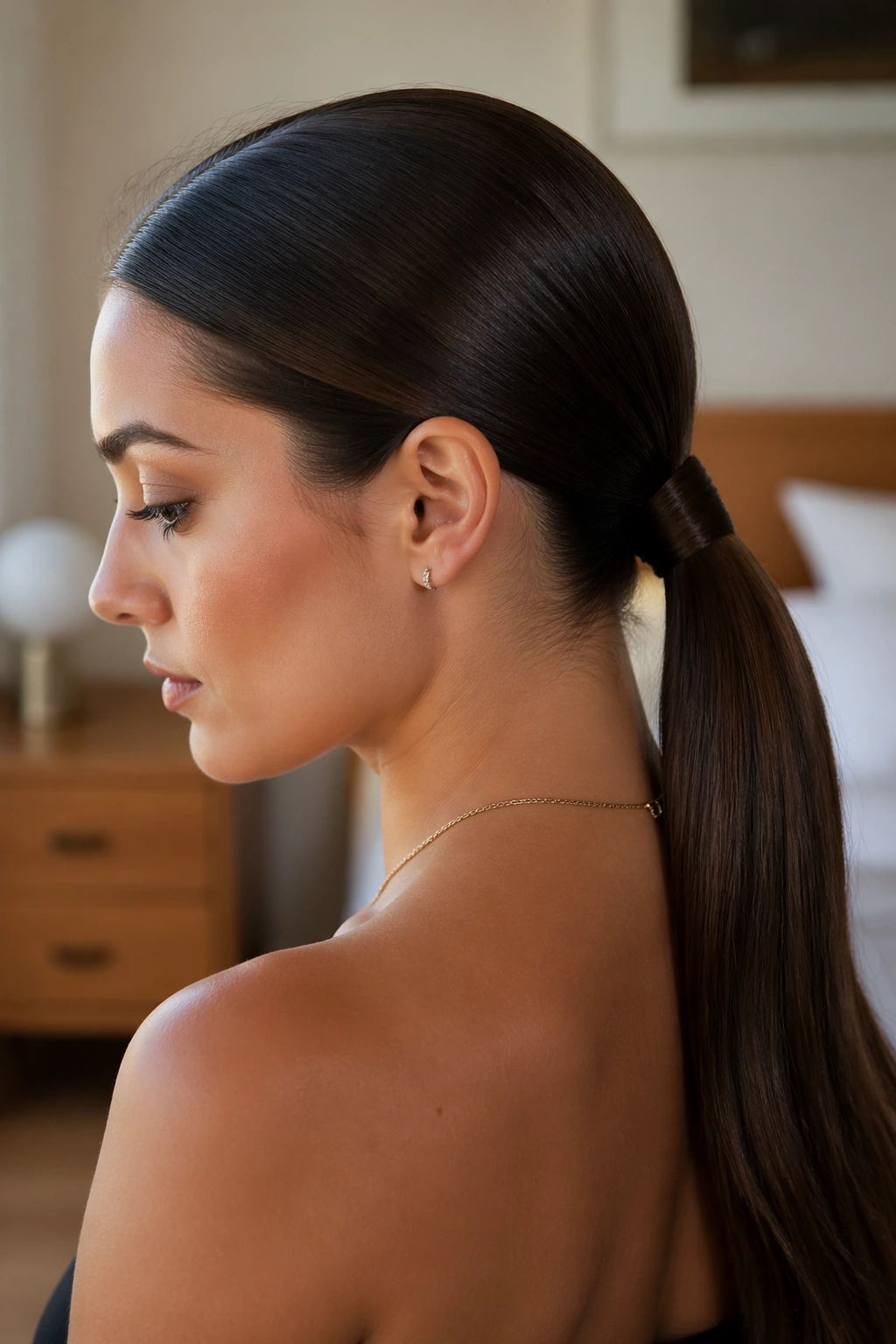
A double ponytail for volume is one of the easiest cheats in hairstyling, and I wish more people used it. You make one ponytail on the top half of the hair, then a second one just beneath it. When the two are hidden from a certain angle, the result looks like one longer, fuller ponytail.
This is especially useful for medium-length hair or for anyone whose ponytail falls a little flat in the back. The top ponytail gives lift, while the lower one adds length and body. If the separation shows, cover it with a small section of hair or leave the top slightly puffed so the blend looks natural.
No need to make it fancy. This trick works because it changes the shape, not because it adds extra decoration. Efficient. That’s what makes it worth keeping around.
26. The Braided Mohawk Ponytail
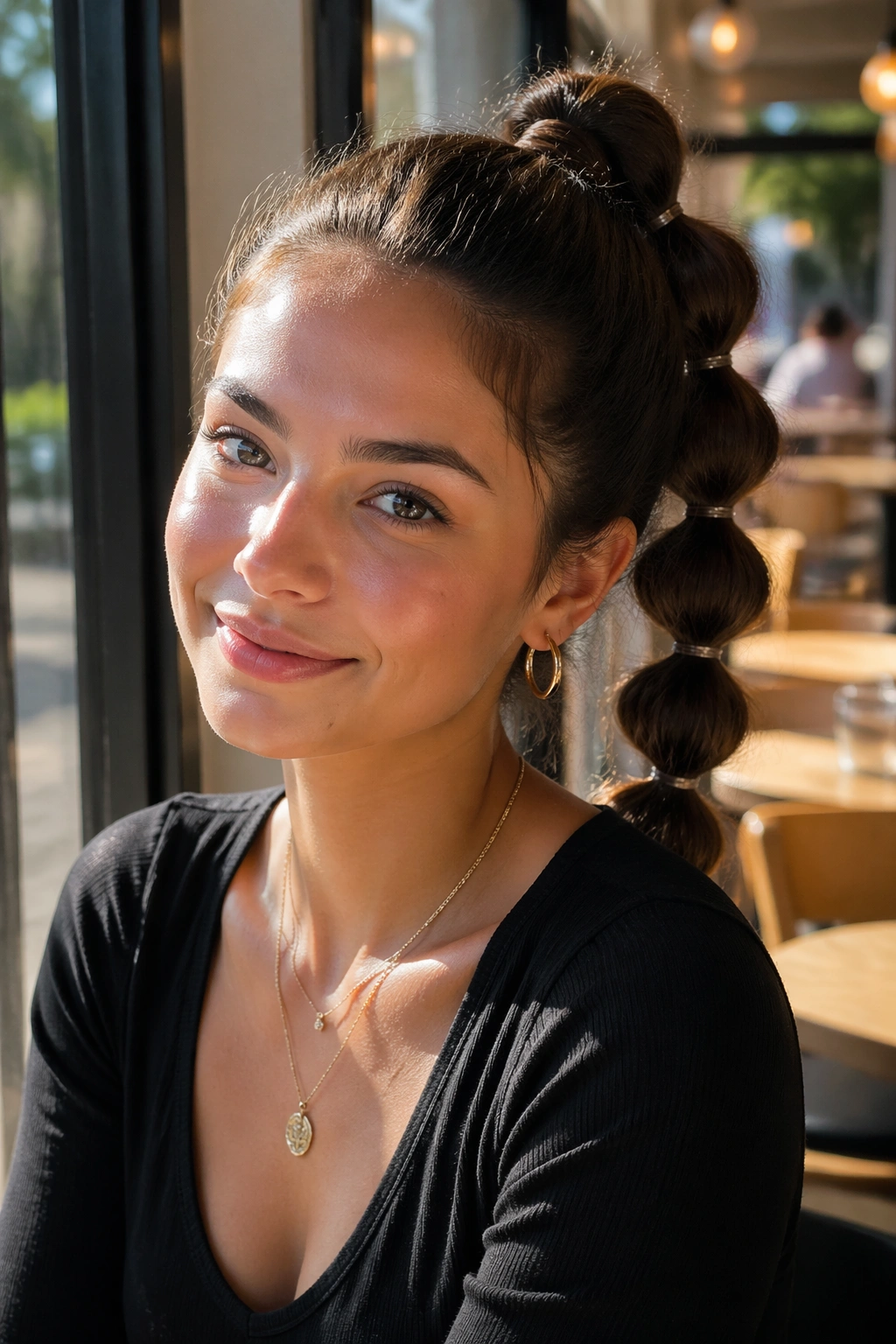
A braided mohawk ponytail has a bit more edge, but it’s still easy if you keep the braid narrow. Braid a strip down the center of the head, from the hairline toward the crown, then gather the rest into a ponytail behind it. The braid gives you a raised line through the middle, which makes the whole style feel stronger.
You can keep the sides smooth or let them stay a little loose. Either choice works. If the braid wants to puff up, pin it flat at the top before you tie the ponytail. That keeps the style from getting bulky in the wrong places.
This is a good option when you want your ponytail to read a little bolder than usual. It still takes only minutes, but it has more personality than a plain tie-back. Some mornings call for that.
27. The Low Side Knot Ponytail
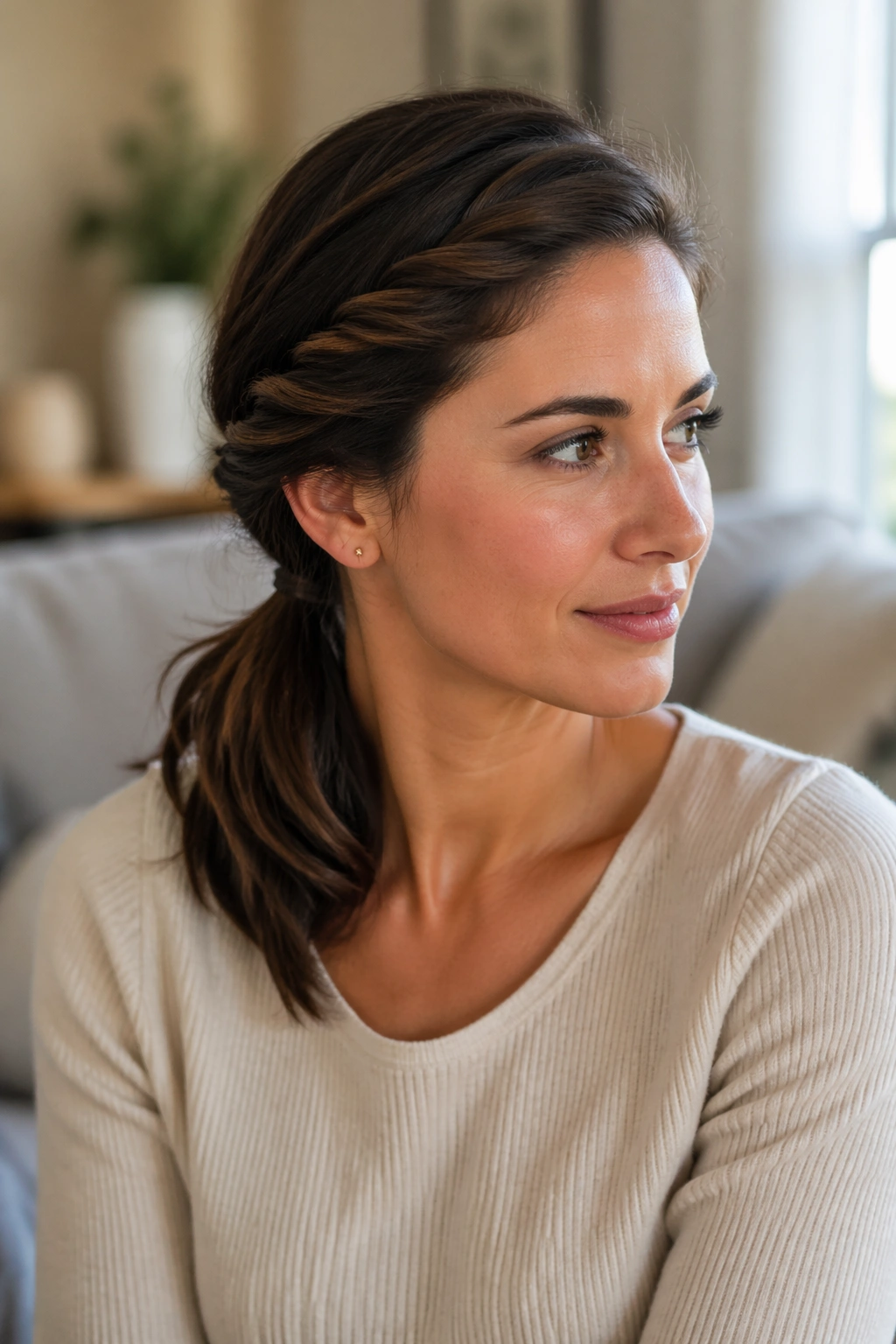
The low side knot ponytail sits off to one side at the nape, which gives it a softer, more casual feel. You gather the hair low and slightly to one side, knot it once, then secure the end with an elastic or pin it in place. It’s relaxed, but not sloppy.
The placement matters more than precision. If it sits too far back, the style loses the side angle that makes it interesting. Keep the knot compact and let the tail hang with a little curve. A side part helps, but it’s not required.
This one works well on hair that has natural bend or a little wave. Straight hair can wear it too, though it benefits from a touch of texture spray so the knot doesn’t slide. It’s an easy answer for low-effort days that still need shape.
28. The Flip-Through Ponytail
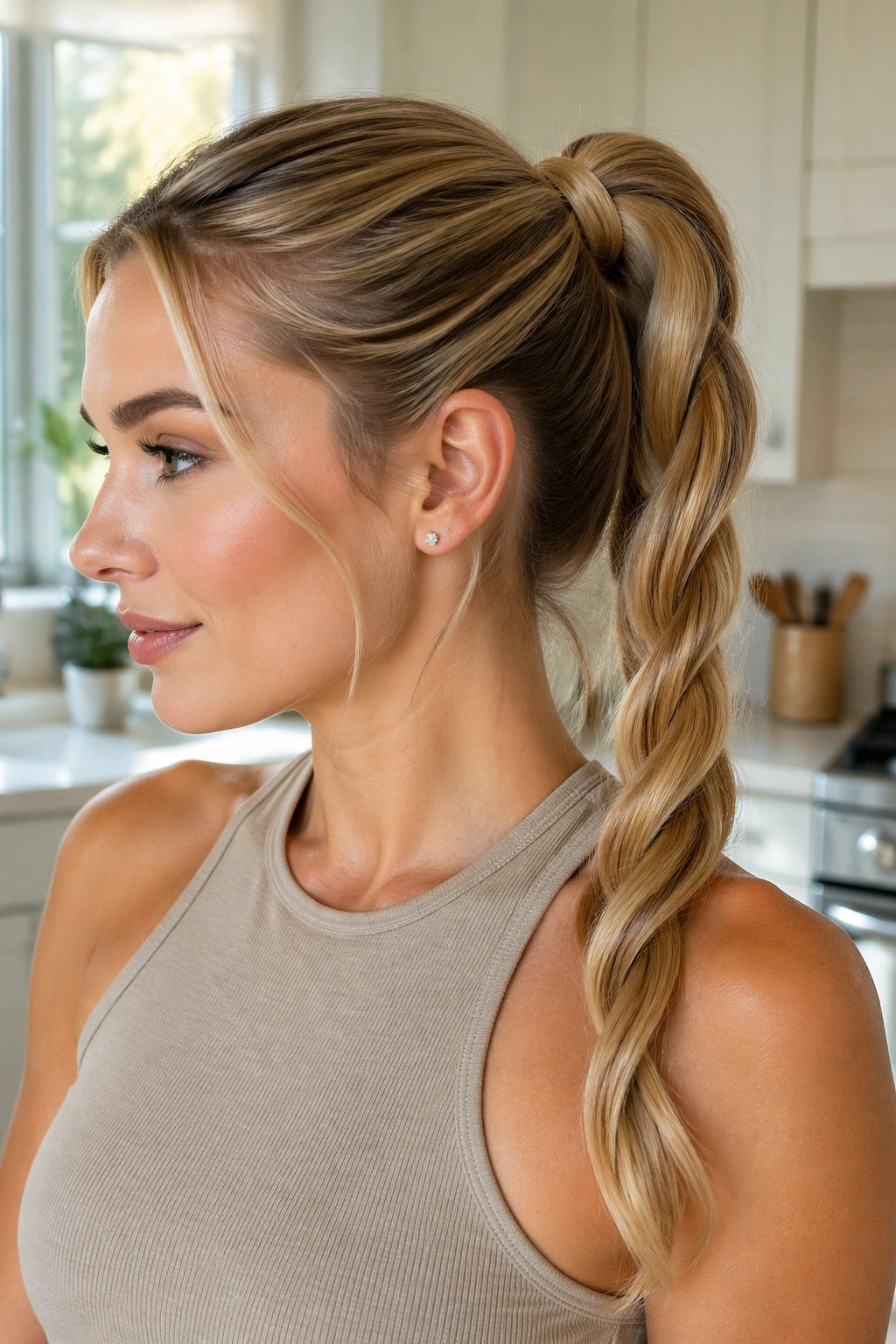
The flip-through ponytail is a smarter cousin of the basic ponytail, and once you learn it, you’ll probably use it more than you expect. Tie the ponytail, split the hair just above the elastic, and flip the tail through the gap. That one move creates a neat twist at the base and a little lift around it.
You can stop after one flip or repeat the move with a second elastic lower down. The style stays tidy because the hair is anchored around itself rather than hanging from a single point. If you have a slick texture, a tiny bit of dry shampoo at the roots gives the base more hold.
This is one of those styles that looks clean on camera and in person. It doesn’t need extra decoration. The twist is the decoration.
29. The Ponytail with a Hair Cuff
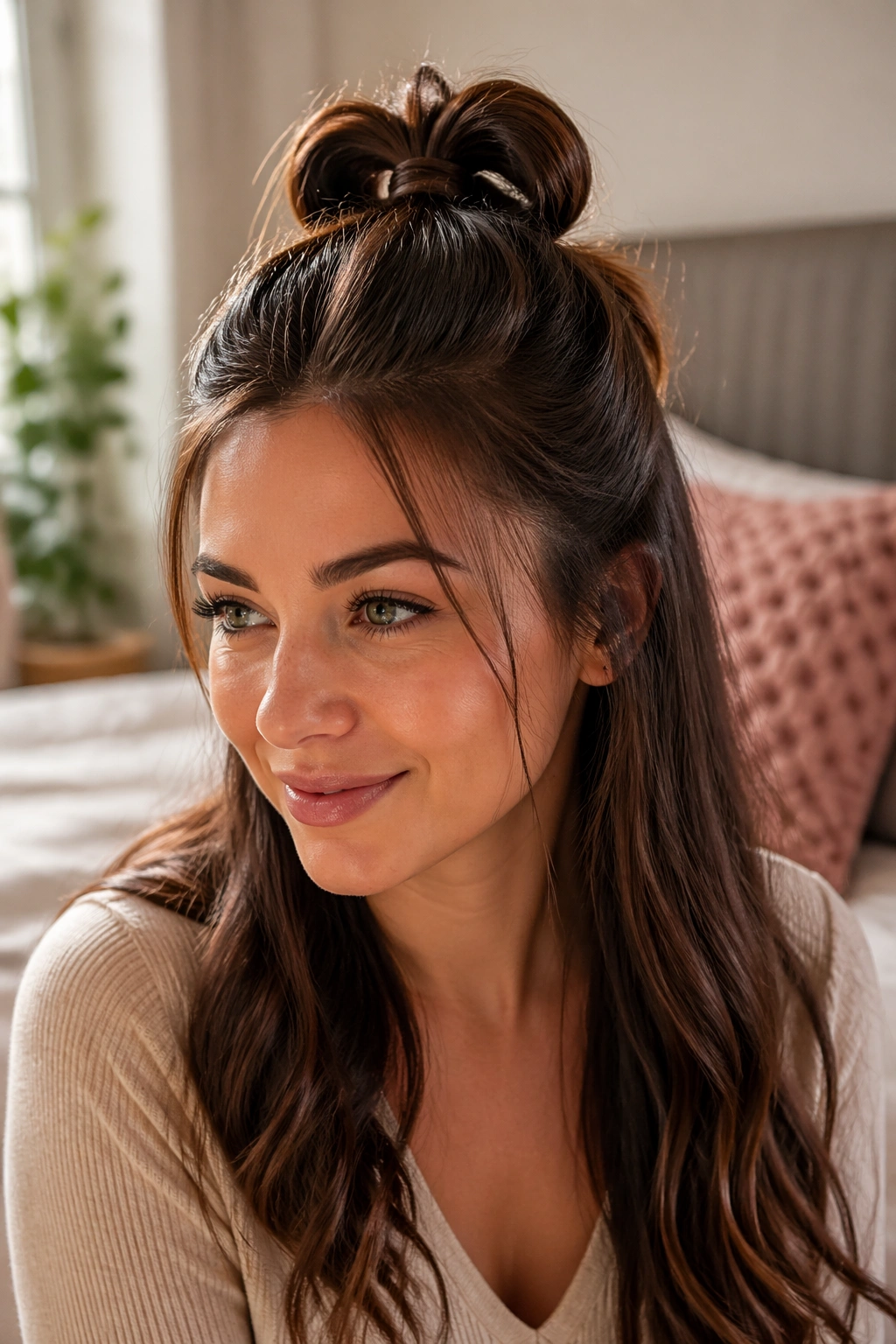
A ponytail with a hair cuff is the easiest way to make a plain tie-back look sharper. Slide the cuff around the base of a low or mid ponytail, and it instantly looks more finished. No braiding required. No curling. Just a metal or resin cuff doing its job.
Choose a cuff that fits snugly. If it’s too loose, it rotates and exposes the elastic. If it’s too tight, it can distort the hair. A smooth ponytail works best here because the cuff shows off the shape without competing with texture.
This style is especially handy when you’re short on time and still want something that feels intentional. It pairs well with straight hair, but it can also sit nicely on waves if the base is tidy. Minimal, but not plain. There’s a difference.
30. The Messy French Ponytail
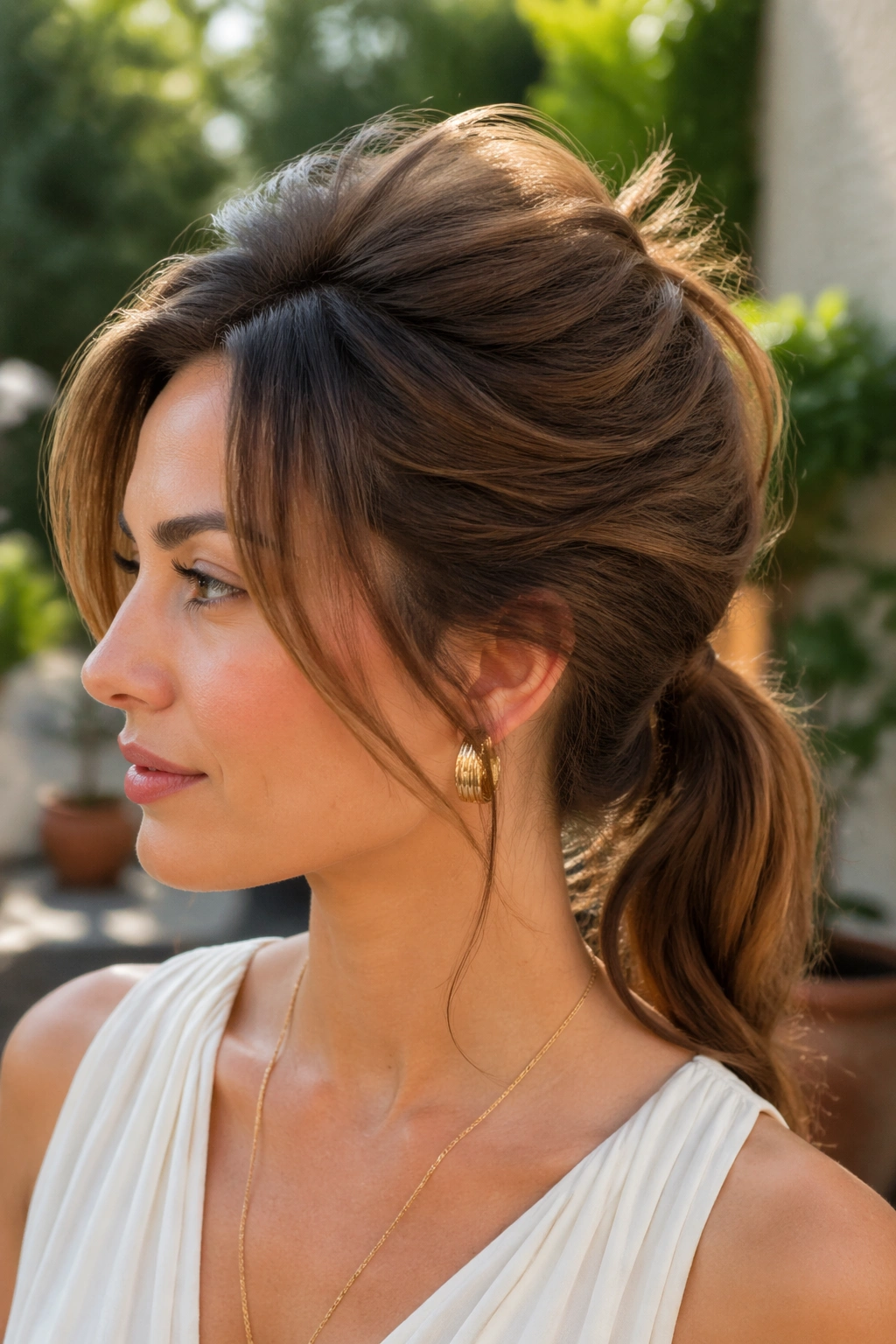
A messy French ponytail borrows the soft lift of a French twist and keeps the ends loose enough to fall into a ponytail. It sounds fancier than it is. You roll the hair upward in the back, pin along the seam, and leave the tail free or tucked loosely beneath the fold.
The charm here is in the looseness. You do not want a tight shell. You want a bit of texture at the back, a few soft pieces around the face, and enough structure that the style holds shape without feeling severe. If the top wants to collapse, tease the crown lightly before you start.
This is a favorite for hair that has some body already. It makes use of that body instead of fighting it. The result sits somewhere between casual and dressy, which is a useful place to be.
31. The Braided Low Ponytail Bun Hybrid
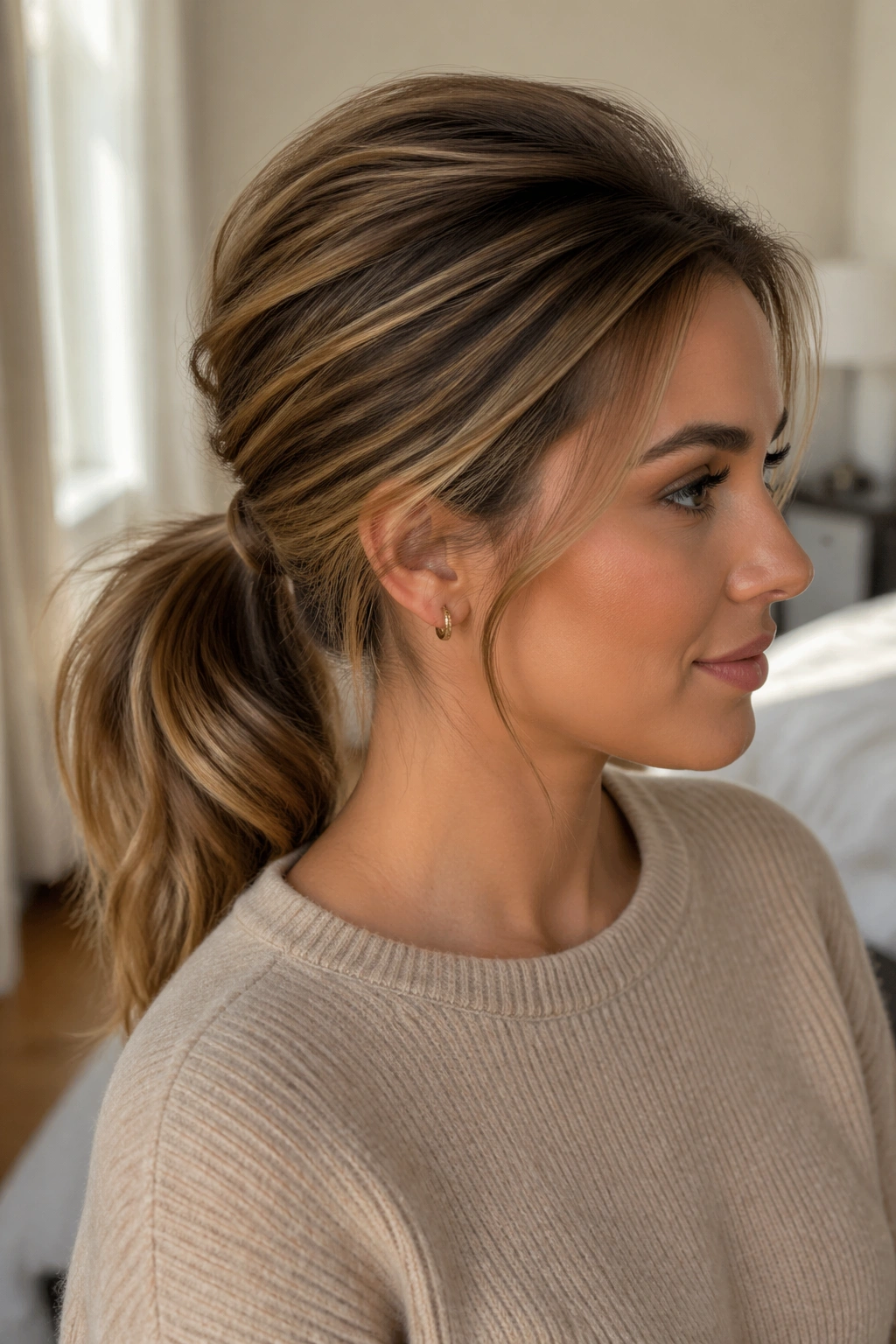
A braided low ponytail bun hybrid is a good choice when you want your hair up, but not all the way tucked away. Start with a low ponytail, braid the length halfway, then coil the remaining section into a small bun or knot at the base. The braid gives texture, and the bun keeps the shape compact.
This style works because it mixes two familiar shapes. The braid keeps the tail from looking limp, while the bun stops the whole thing from dragging down. If your hair is thick, pin the bun firmly from underneath. If it’s fine, a small donut-shaped coil made with the tail itself usually holds better.
It’s neat enough for work and relaxed enough for a weekend. That balance is probably why it gets worn so often. It doesn’t fight the hair you already have.
32. The Topsy Tail Ponytail
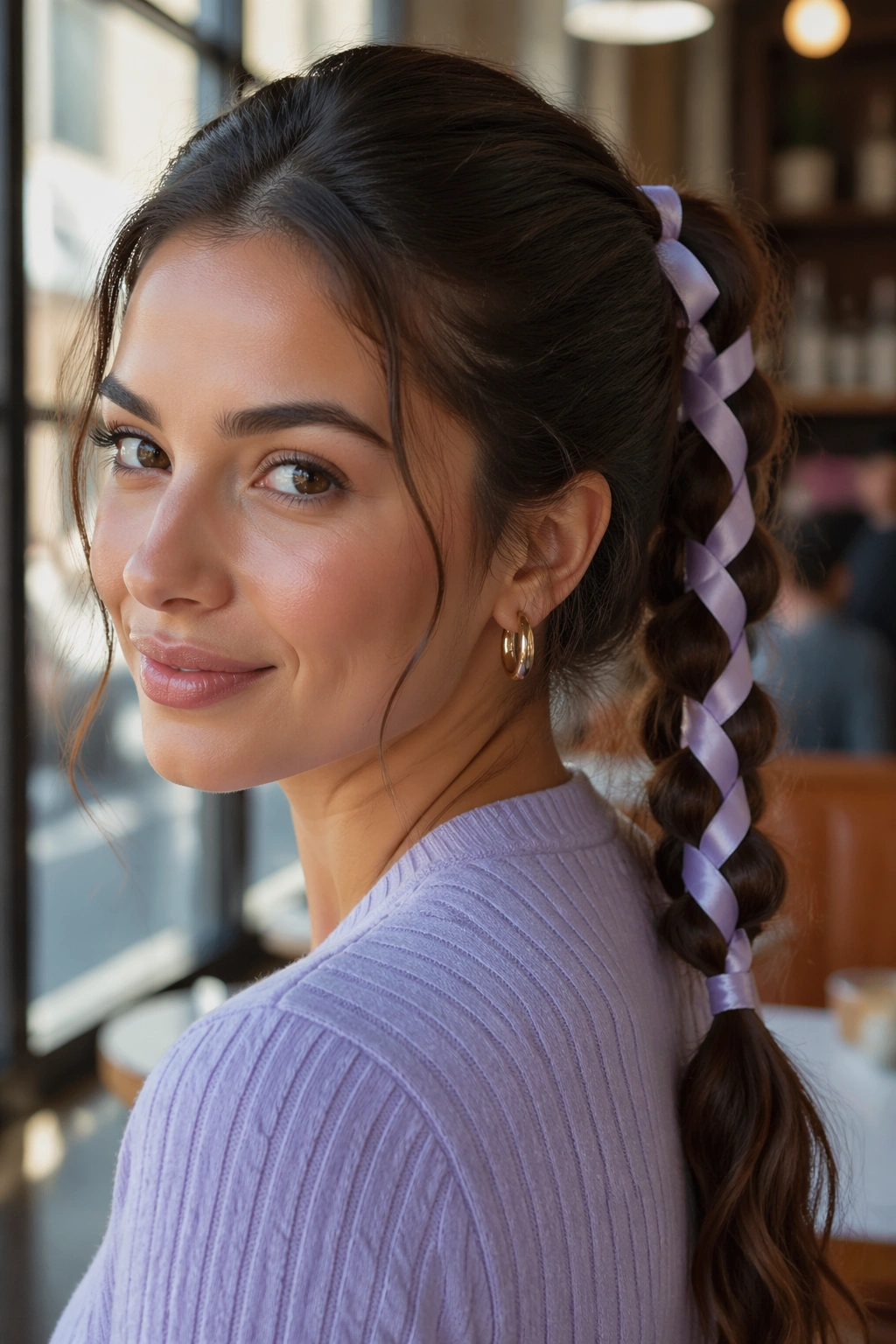
The topsy tail ponytail is one of those classics that never really leaves the rotation because it’s fast and reliable. Tie the hair back, make a gap above the elastic, and pull the tail through. You can leave it as one flip or repeat the motion farther down for a longer, rope-like effect.
The style works best when the section above the elastic is slightly loosened after the flip. That softens the shape and keeps it from looking too tight. If the tail is very long, a second flip halfway down helps distribute the length so it doesn’t just hang straight.
This is a simple style, but simple does not mean dull. It has enough structure to look planned, and it’s quick enough for the mornings when you want to spend your energy somewhere else.
33. The Wrapped Knot Ponytail
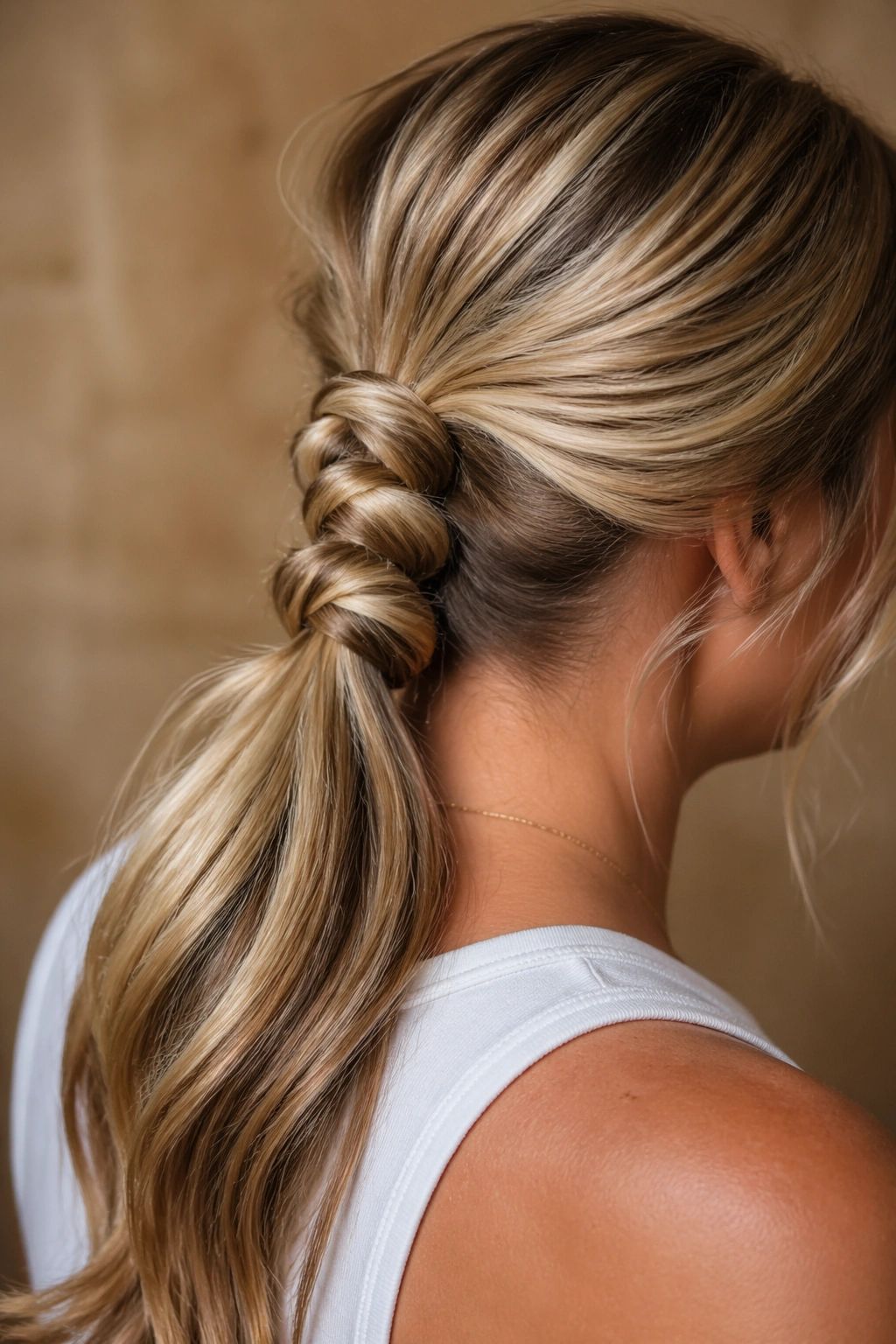
A wrapped knot ponytail is the one I’d keep if I had to choose only a single style from this whole list. Tie a low or mid ponytail, knot a small section around the base, and pin the wrap underneath so the elastic disappears. Then let the tail fall straight, wavy, or softly bent depending on your hair.
It looks polished without feeling stiff, which is a useful sweet spot. If the ponytail itself is smooth, the knot stands out more. If the tail has texture, the whole style reads a little softer and more relaxed. Either way, it gives you that finished look that plain ponytails often miss.
No need to make it complicated. A good ponytail does not need a lot of ingredients, and it does not need an hour in the mirror. It just needs the right shape, a clean base, and one small detail that makes it feel like yours.
