



Messy updo ponytails have a useful little trick up their sleeve: they look intentional even when they’re not perfect. A few loose pieces, a lifted crown, and a wrapped base can turn second-day hair into something that looks done on purpose, not rushed out the door.
That’s why this style keeps hanging around. It works on straight hair that needs grit, on wavy hair that already has some movement, and on curls that need a shape before they go wild in every direction. The sweet spot is somewhere between polished and undone. Too neat, and you lose the charm. Too sloppy, and it looks like you gave up halfway.
A good messy updo ponytail usually needs only a few things: dry shampoo or texture spray, a handful of bobby pins, and a hair tie that doesn’t scream for attention. The details matter more than people think. A tiny bend near the front, a slight lift at the crown, or a piece wrapped around the elastic can change the whole mood.
1. Low Knot Ponytail
A low knot ponytail is one of the easiest places to start because it looks calm even when the texture is a little rough. Pull the hair into a low ponytail at the nape, then fold the length into a loose knot and pin it where it wants to sit. Don’t drag it tight.
Why It Works
The shape stays close to the head, so the messy parts read as soft, not messy-messy. A few face-framing pieces help a lot. If your hair is fine, mist the roots with dry shampoo first so the knot has some grip instead of sliding flat by noon.
2. Crown-Lift Ponytail
Want height without making your hair look teased within an inch of its life? Go for crown lift. Push a little volume into the front and top section with your fingers, then gather the rest into a mid or high ponytail. Leave the top loose enough to move.
That extra lift keeps the whole style from looking plain. It works especially well on straight hair, which can go a little too smooth if you skip the prep. A light texturizing spray at the roots gives the hair something to hold onto, and a soft bend through the tail keeps it from looking like a gym ponytail.
3. Braided Base Ponytail
A braid at the base changes everything fast. Braid the first few inches near the crown or along one side, then let it feed into a ponytail with the rest left loose and tousled. It gives structure without turning the style stiff.
What Makes It Different
The braid acts like built-in detail, so you do not need much else. Keep the braid slightly loose and pancake the edges with your fingers for a fuller look. It’s a smart move when your hair is freshly washed and a little slippery, because the braid helps the style stay put.
4. Twisted Nape Ponytail
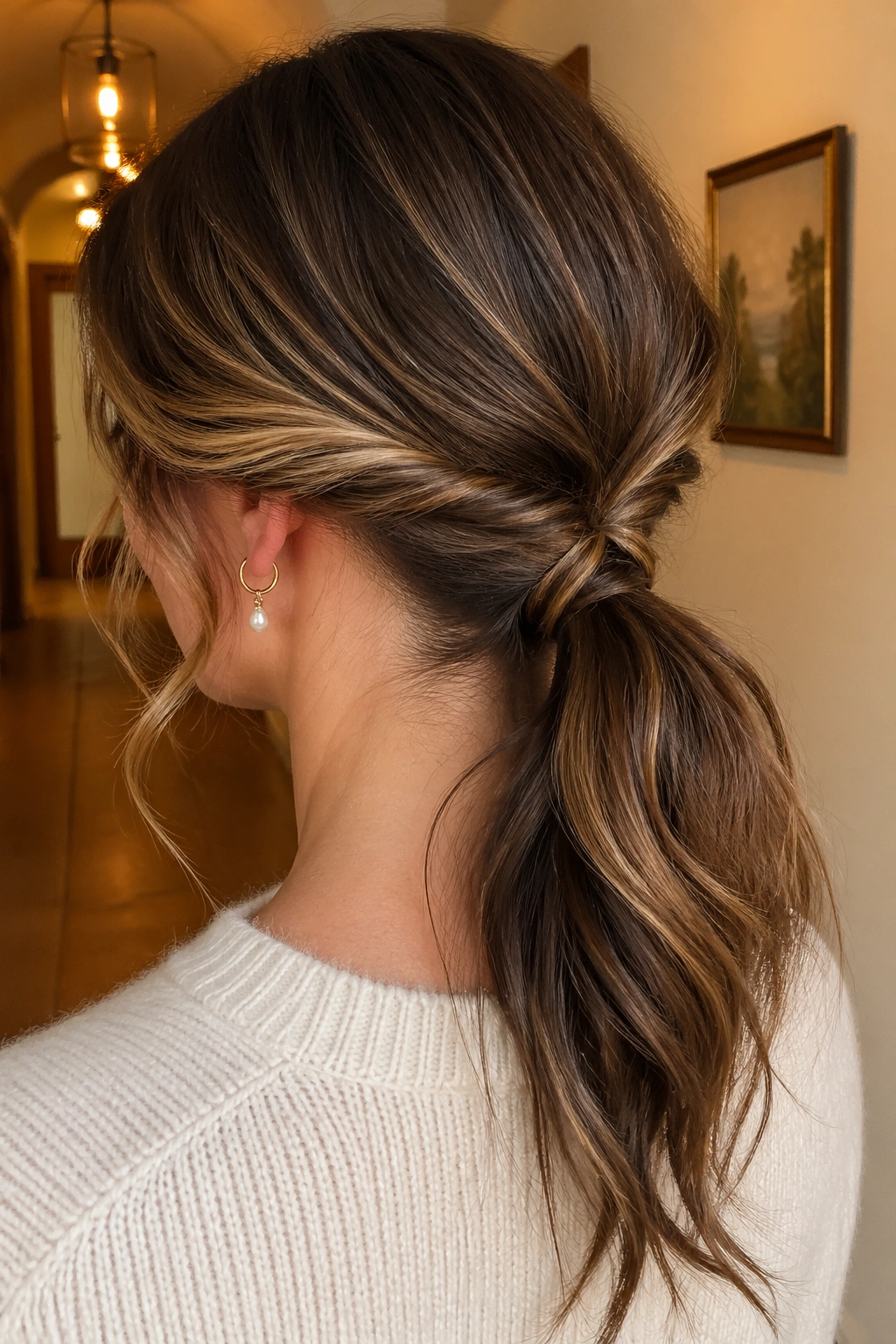
A twisted nape ponytail feels romantic without getting precious about it. Divide the front sections, twist each side back toward the nape, and secure them into a low ponytail. The twists should be soft, not tight ropes.
This style sits nicely on medium-length hair because the ends can spill out a little and still look deliberate. If you want it to hold, pin the twists before tying the ponytail. One or two pins hidden under the base is usually enough. More than that and the style starts to feel overworked.
5. Bubble Ponytail
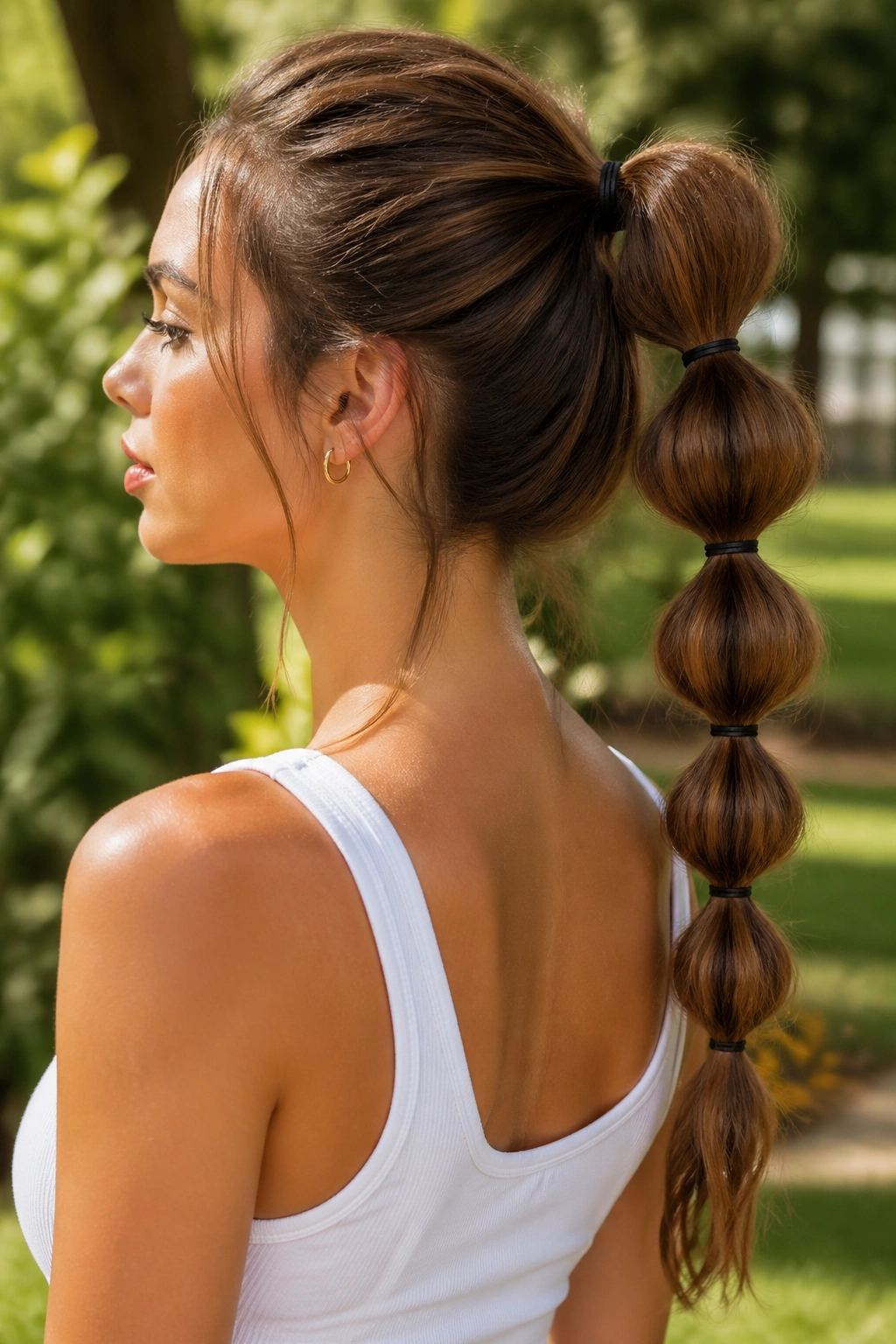
Bubble ponytails bring shape to hair that needs a little help standing out. Tie the hair into a ponytail, then add elastics every 2 to 3 inches down the length. Gently pull at each section to puff it out into rounded bubbles.
The look is playful, but it still reads polished if the bubbles are even. Use small clear elastics or ones close to your hair color. A tiny face-framing wave keeps the front from looking too rigid. This one is especially kind to long hair because the shape shows off the length without needing perfect smoothness.
6. Side-Part Low Ponytail
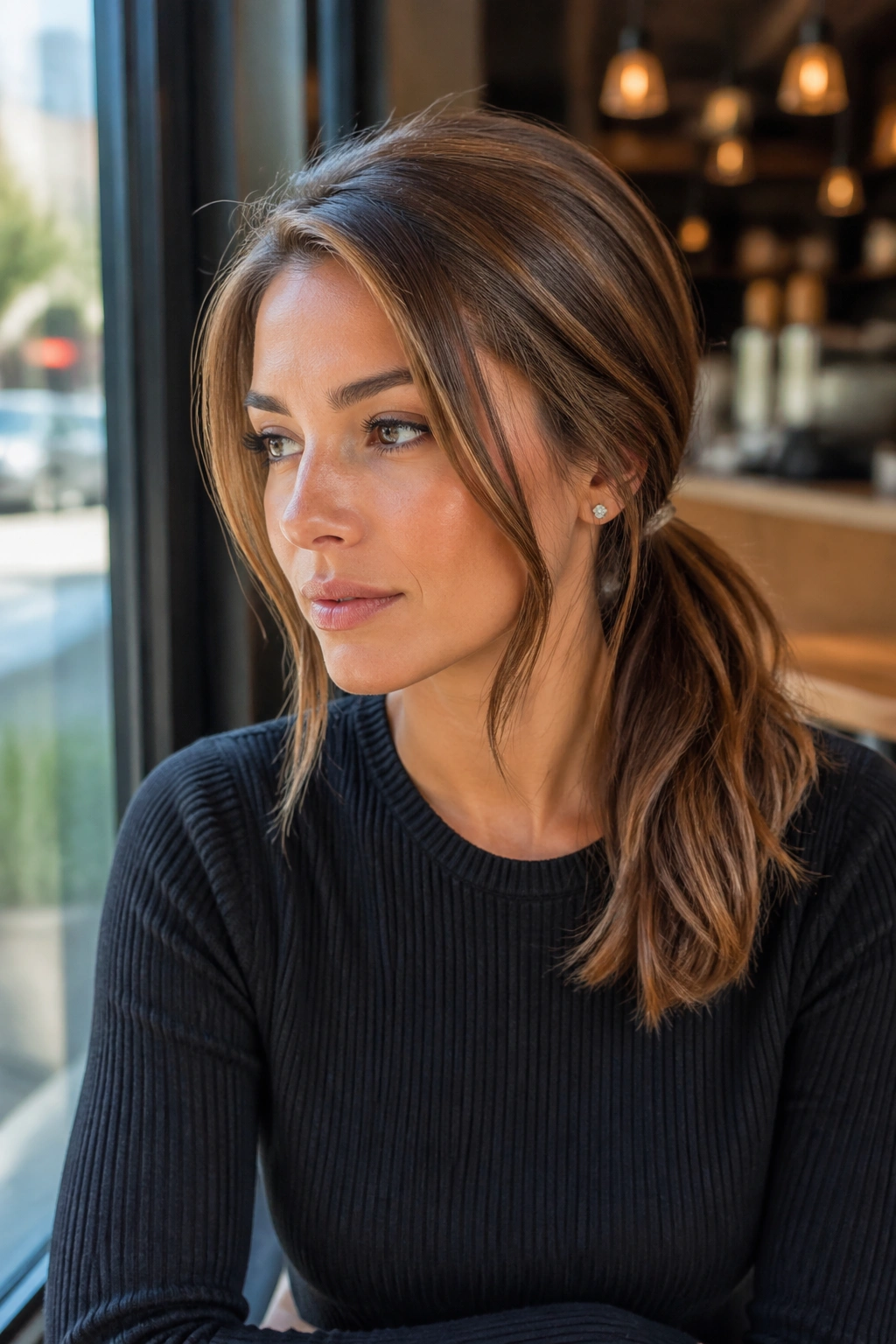
A deep side part can make a low ponytail feel instantly more styled. Sweep the hair to one side, smooth the top lightly, and tie the ponytail low and off-center. Then tug a few pieces loose around the cheekbones and ears.
The off-balance shape is the whole point. It softens strong jawlines and works well when hair has a little wave. If your part keeps collapsing, press it in place with the tail of a comb and a touch of hairspray. Not much. Too much spray kills the loose feel.
7. Wrapped-Base Ponytail

A wrapped base is the fastest way to make a ponytail look finished. Take a thin strand from underneath the ponytail, wind it around the elastic, and secure the end with a pin underneath. That one small move hides the hair tie and tidies the whole style.
Keep the crown slightly lifted and the tail a little bent. If everything is too smooth, the wrapped base looks formal in a bad way. A wrapped ponytail works for office days, dinners, and events where you want to look put together without looking stiff.
8. Fishtail Accent Ponytail
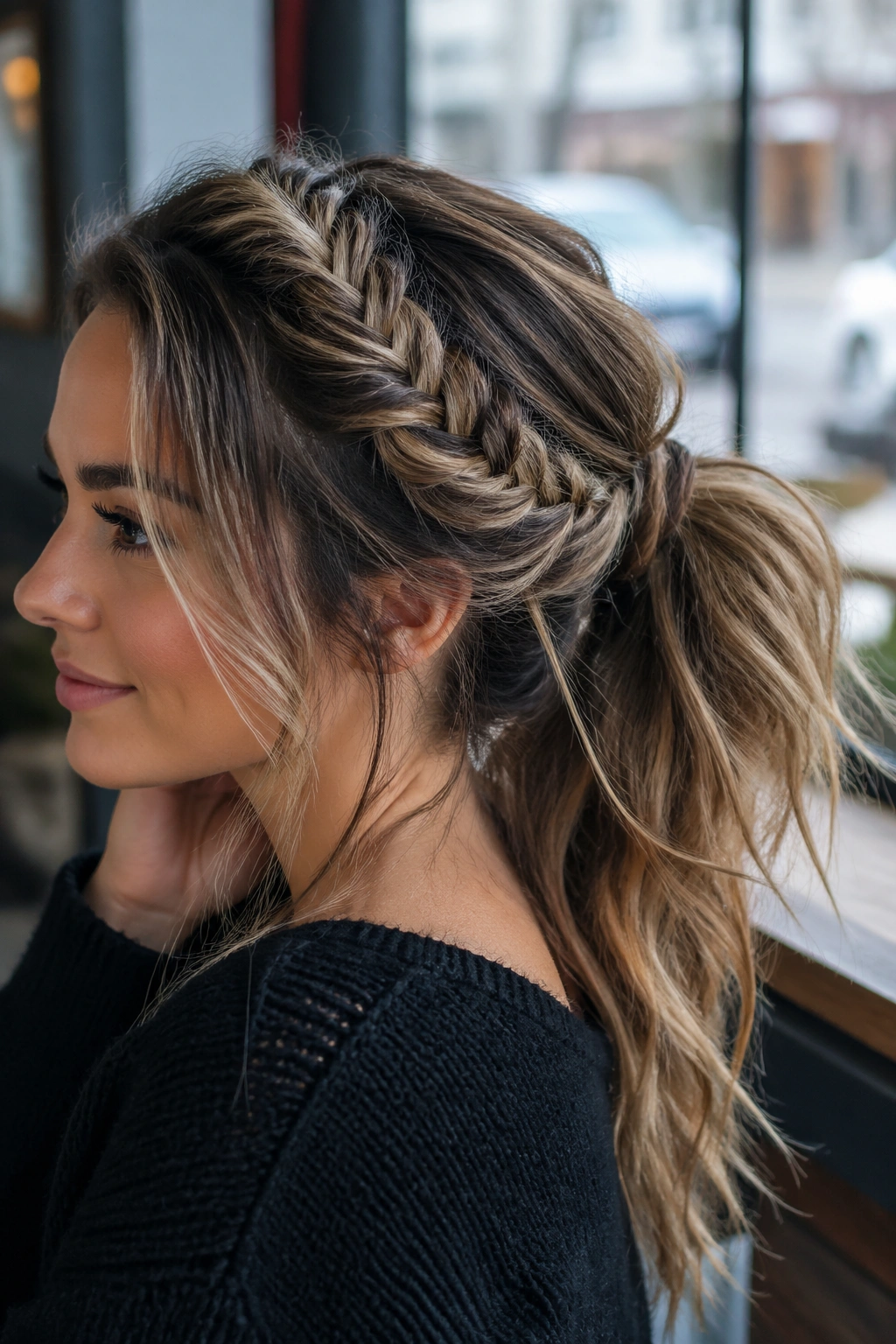
A fishtail accent gives texture without swallowing the whole style. Braid a small section from the side or crown in a loose fishtail, then blend it into a ponytail that’s left messy and soft. The contrast is what makes it interesting.
The braid should look a little imperfect. That’s the charm. Pull the edges apart after you tie it so it feels wider and less precious. This style is especially good when you want detail in the front but don’t want a full braid taking over your head.
9. Curly Puff Ponytail
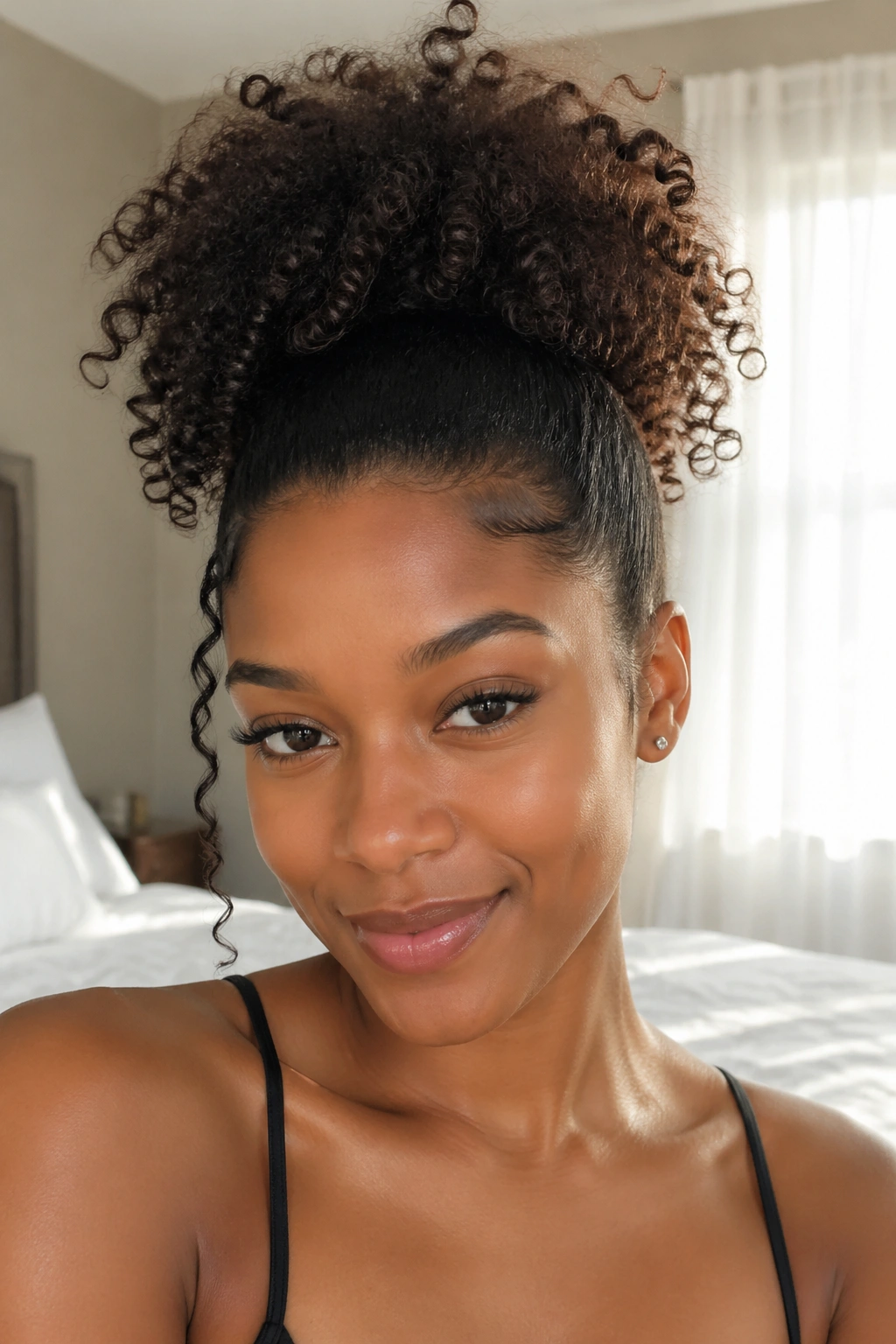
Curly hair loves a ponytail with a little room to breathe. Gather the curls high or low, keep the roots smooth enough to show shape, and let the puff sit full and airy. Do not crush the curls into a tiny elastic circle.
A curl cream or leave-in product helps the ends hold their shape, but the trick is not to over-handle them. Pick the ponytail up with your hands, let it fall, and stop fussing once the form looks balanced. One loose curl near the face can do more than ten pins ever will.
10. Half-Up Messy Ponytail
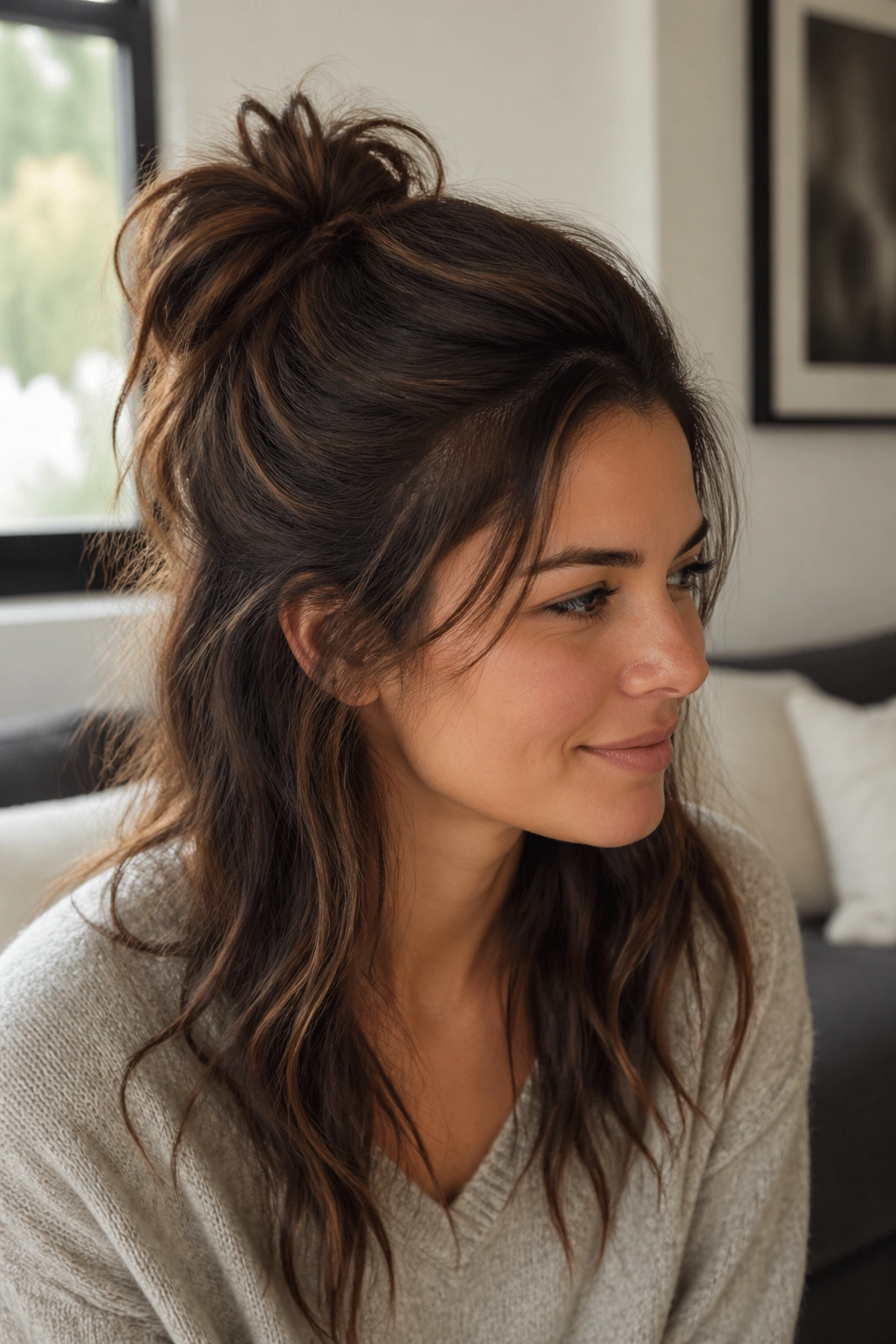
A half-up messy ponytail feels easy in the best way. Pull the top half of the hair into a ponytail or mini updo at the crown, then leave the rest loose and textured underneath. It gives the shape of an updo without fully committing.
This is a smart option for hair that starts to collapse when it’s all pulled back. The lower section adds softness around the neck and shoulders, while the top gives you lift. Use a small claw clip or a soft elastic if you want a more relaxed finish. It should look like a nice accident.
11. Scarf-Tied Ponytail
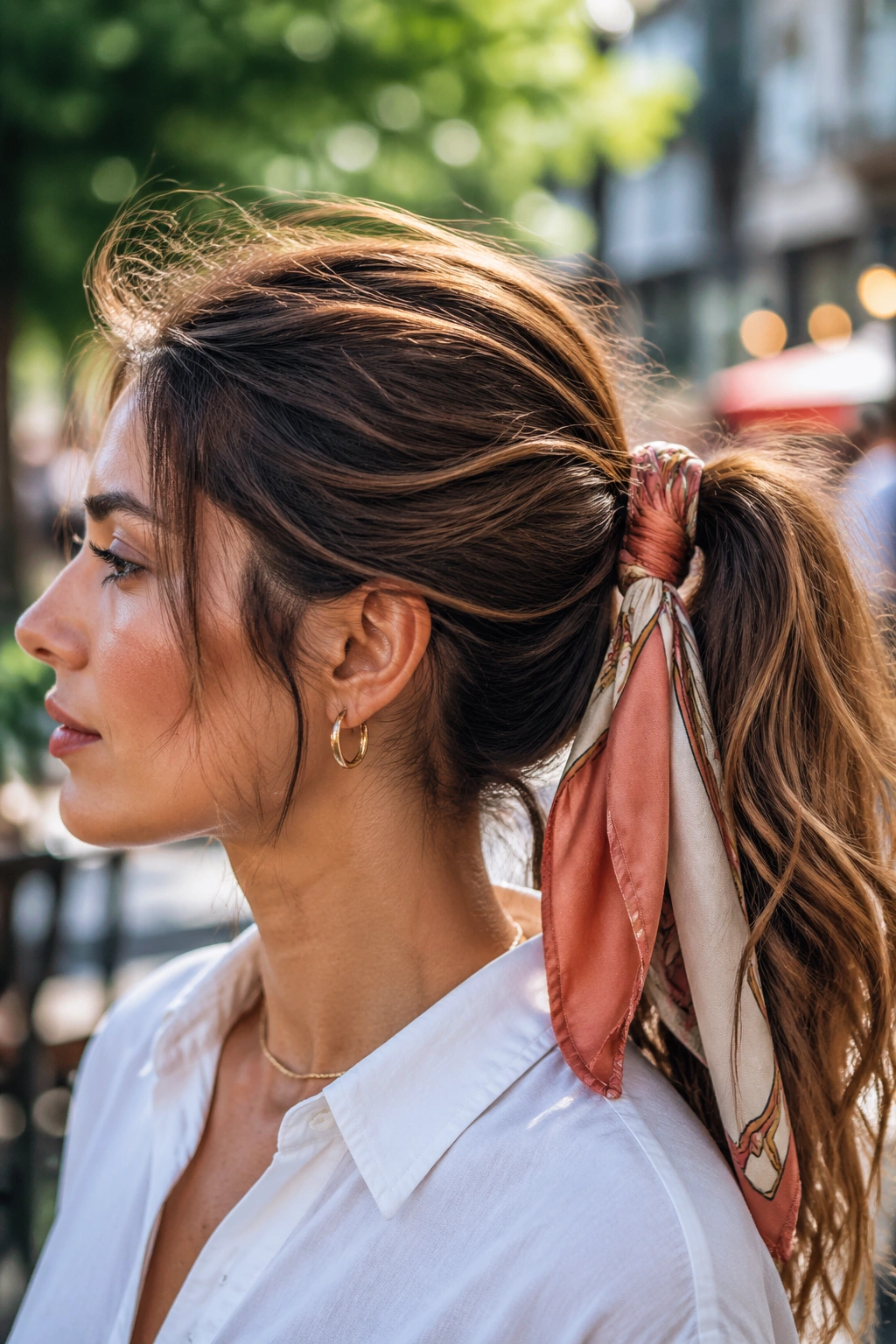
A scarf tied around a ponytail does half the styling work for you. Tie the hair back, then knot a silk or cotton scarf around the base and let the ends hang. It hides unevenness and adds color without needing extra skill.
Choose a scarf that’s narrow enough to sit neatly but not so thin that it disappears. I like this move on slightly messy ponytails because it keeps the style from looking unfinished. If the hair is particularly slippery, pin the scarf knot underneath so it doesn’t slide around.
12. Knotted Loop Ponytail
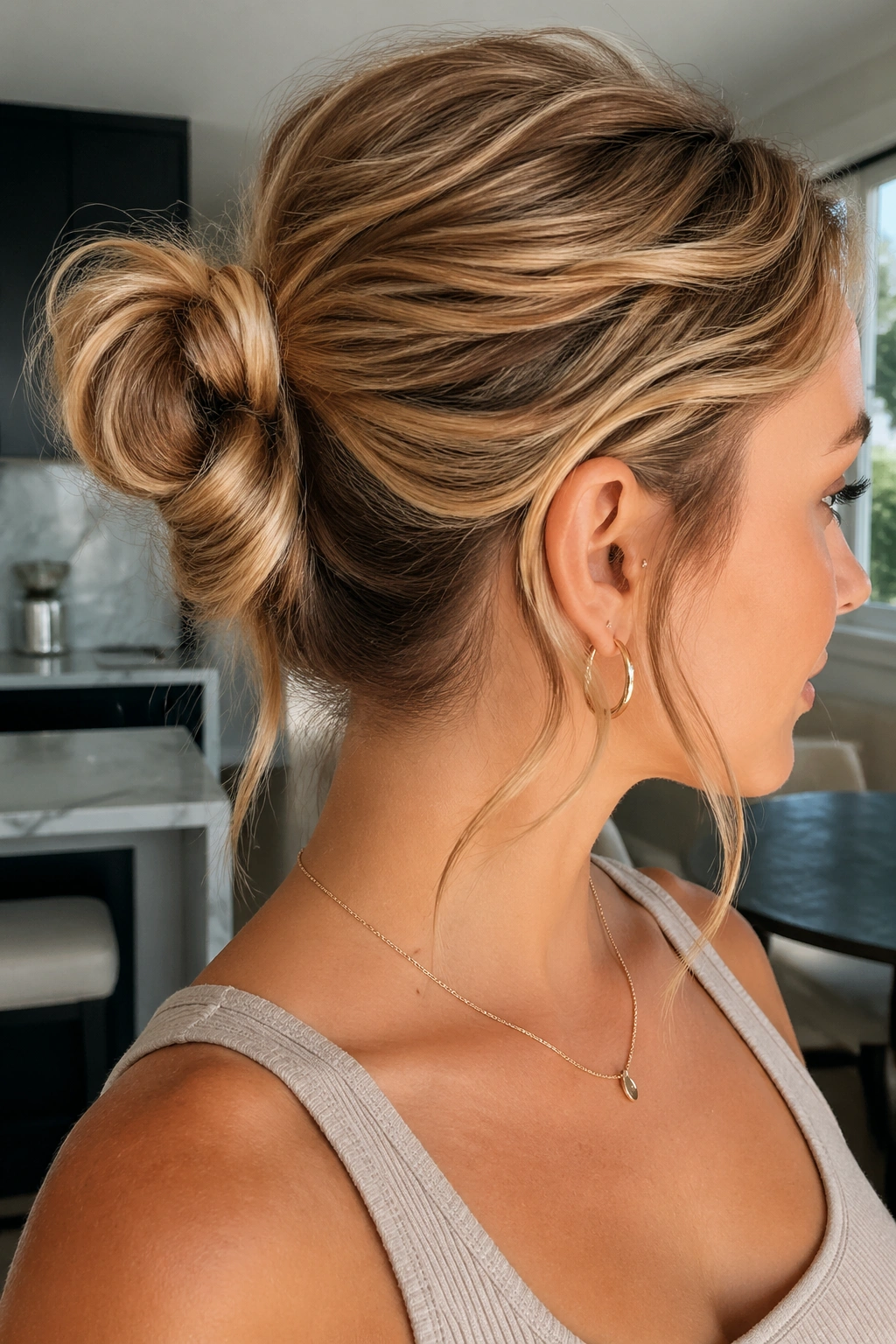
A knotted loop ponytail has a casual, almost undone elegance to it. Split the ponytail into two sections, knot them once or twice, then pin the ends under the knot so they form a looped shape. It looks more complicated than it is.
The key is to leave the knot a little loose. Tight knots can pull the whole style flat and make your scalp feel tugged. With a little softness, the shape stays airy and wearable. This one works nicely when you want something different but not fussy.
13. Rope-Braid High Ponytail
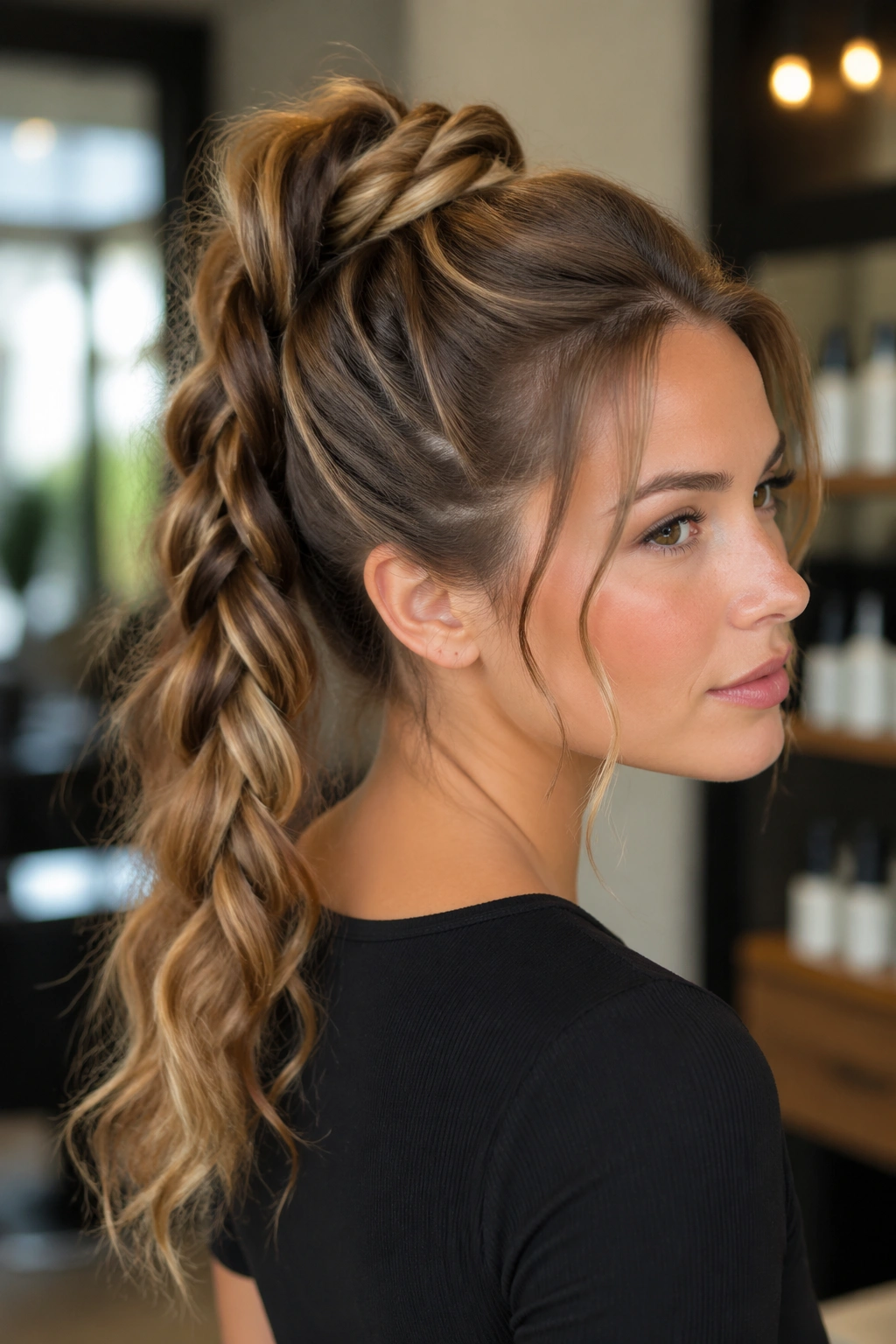
A rope-braid high ponytail brings movement to long hair fast. After making a high ponytail, divide the tail into two sections, twist each section in the same direction, then wrap them around each other in the opposite direction. That crosswise twist is what creates the rope effect.
Keep the crown lifted and don’t over-polish the roots. The braid looks better when it has a bit of texture. If your hair is layered, the shorter pieces may slip out a little, and honestly, that can look good here. The style likes a bit of roughness.
14. Crisscross Pin Ponytail
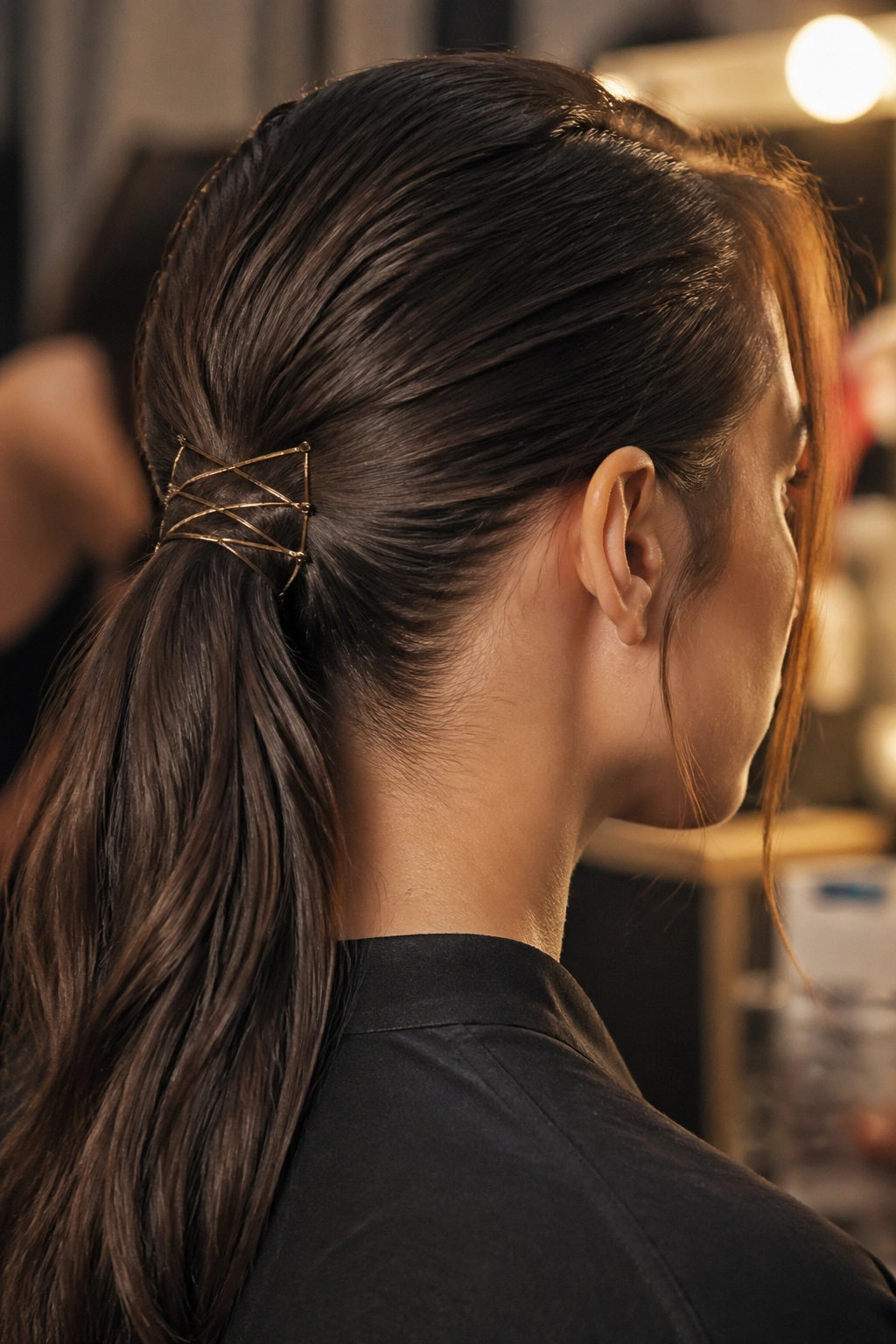
Crisscross pins turn a plain ponytail into a detail-heavy style without adding bulk. Gather the hair back, then use bobby pins in crossing lines above or around the base. They can be hidden or visible, depending on the look you want.
This works especially well on medium to thick hair because the pins have something to anchor into. A matte pin finish usually looks nicer than shiny metal if you’re keeping the rest of the style soft. The result feels a little editorial, but not in a try-hard way.
15. Side-Swept Low Ponytail
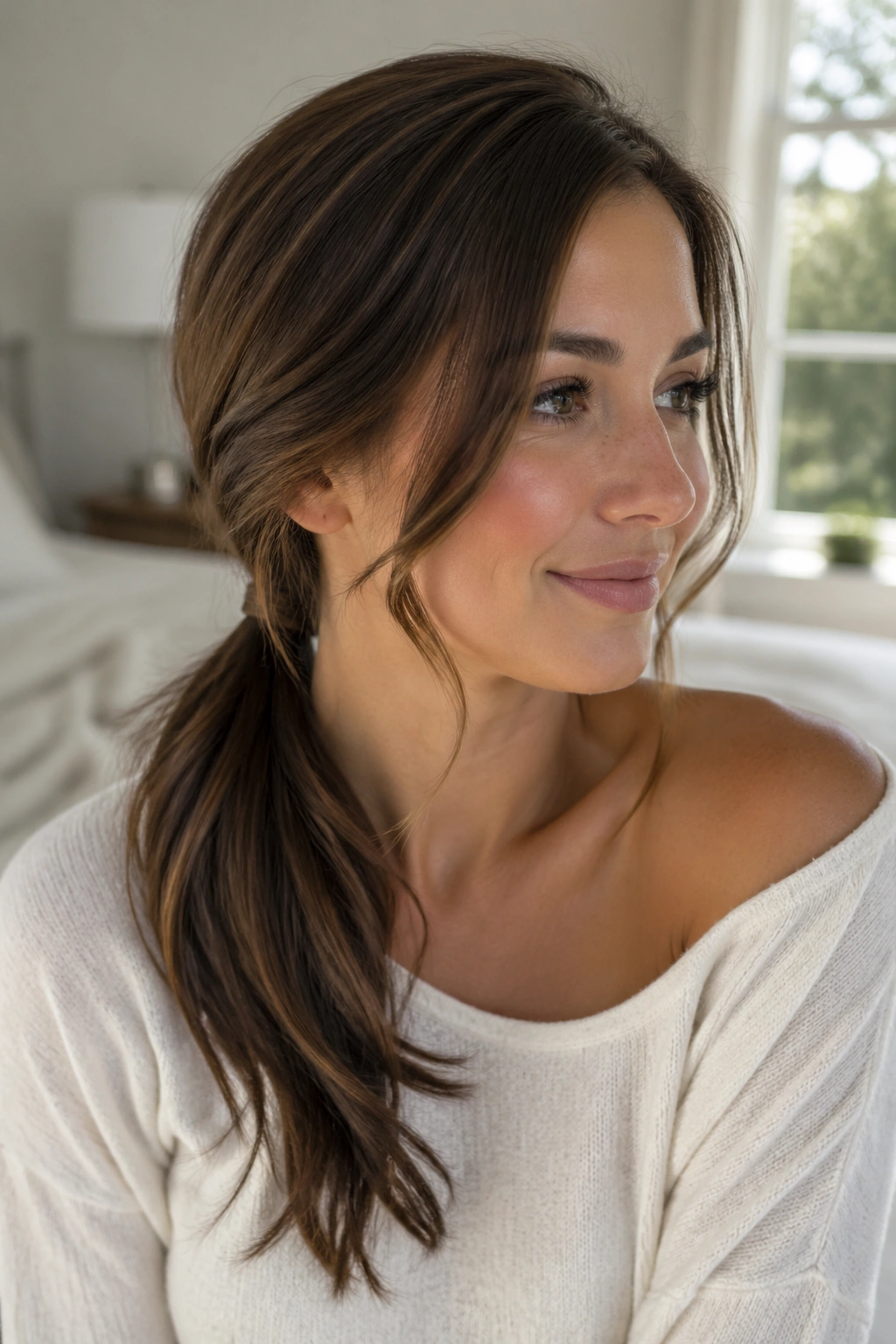
A side-swept low ponytail is one of those styles that looks gentle right away. Sweep the hair over one shoulder, gather it low at the base of the neck, and leave the front pieces loose and curved. It’s simple, but not boring.
The side placement makes it feel less formal than a straight-back ponytail. If you have long layers, this style shows them off instead of hiding them. A quick pass with a large curling iron on the front sections can make the ends bend softly instead of hanging flat.
16. Double-Bubble Ponytail
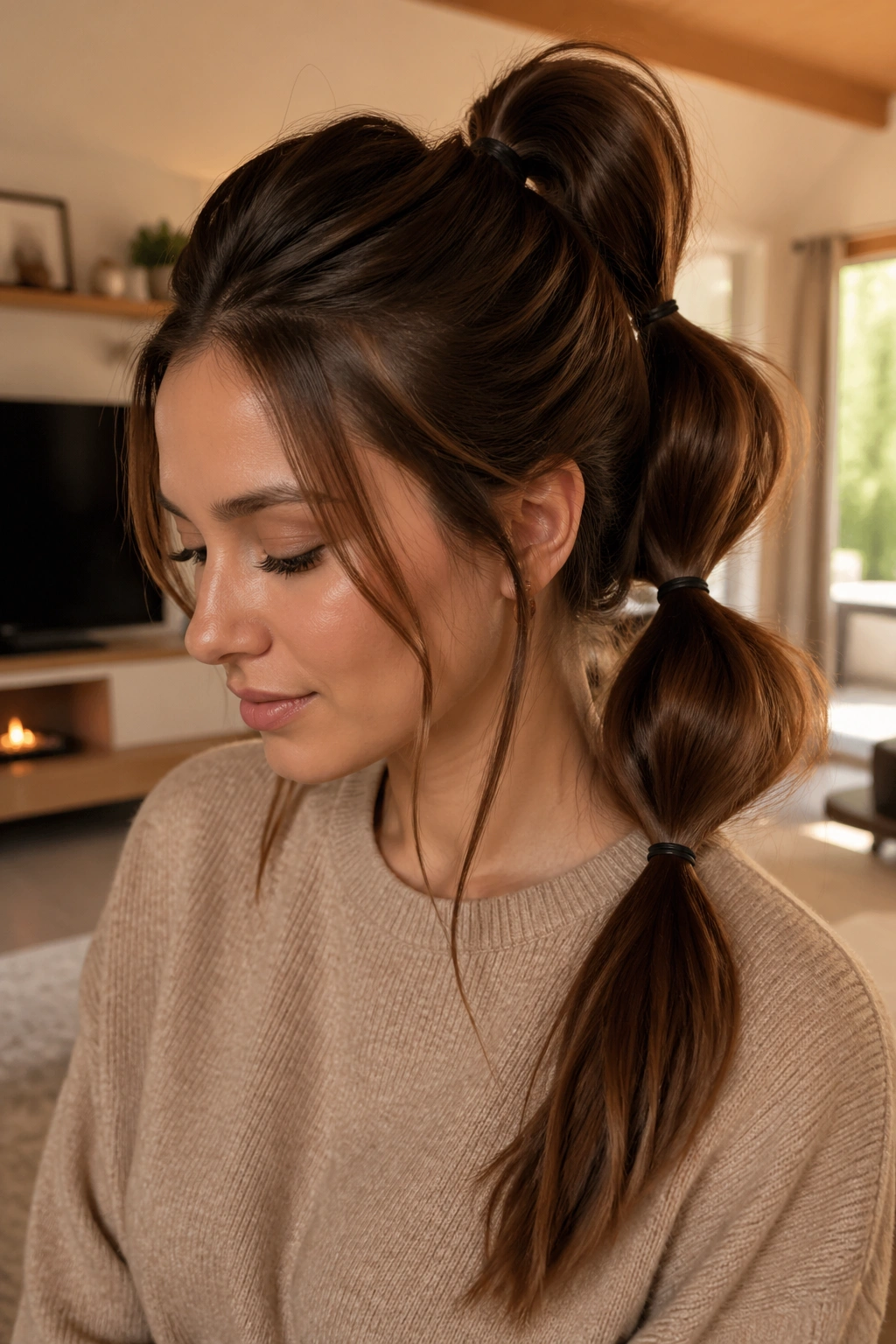
A double-bubble ponytail takes the bubble idea and gives it a second beat. Make one ponytail, add an elastic a few inches down, puff that section, then repeat once more. Two bubbles. No need to overcomplicate it.
This shape is good when you want the hair to feel playful but still controlled. It also helps longer hair stay off the shoulders without looking too severe. Pull gently at each bubble until it feels balanced. If one section gets bigger than the other, leave it. A little unevenness keeps it human.
17. Tousled Ponytail With Barrettes
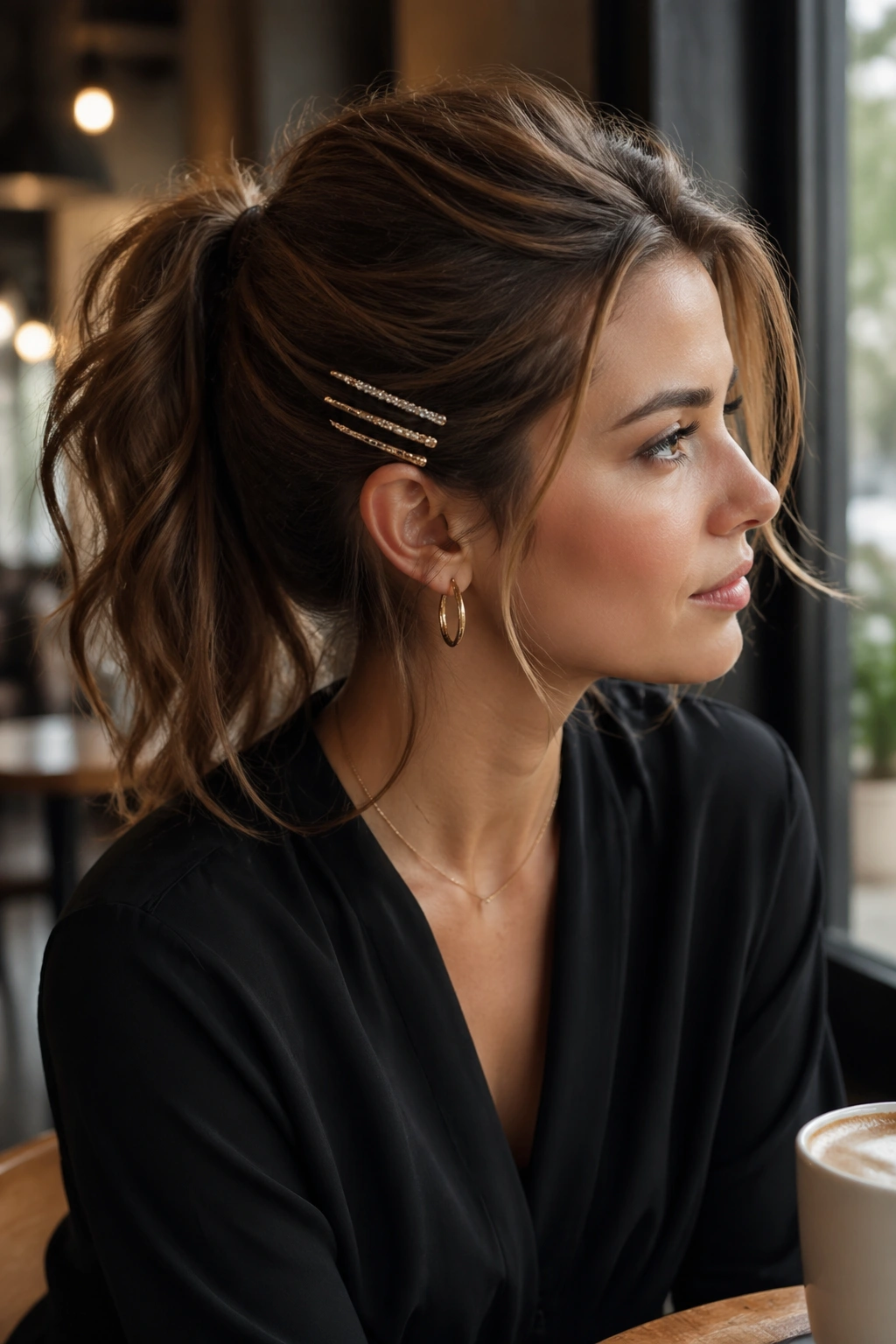
Barrettes can rescue a ponytail that feels a little too plain. Sweep the hair back loosely, clip a few decorative barrettes along one side or above the ear, and let the rest fall into a tousled ponytail. The hair itself can stay imperfect as long as the clips feel intentional.
Styling Tip
Use barrettes with a bit of grip. Tiny slide-in clips often disappear, while larger ones hold the style in place and add a visible line of detail. This ponytail is especially nice if you like the front to stay soft but want the whole look to feel finished.
18. Crown Braid Into Ponytail
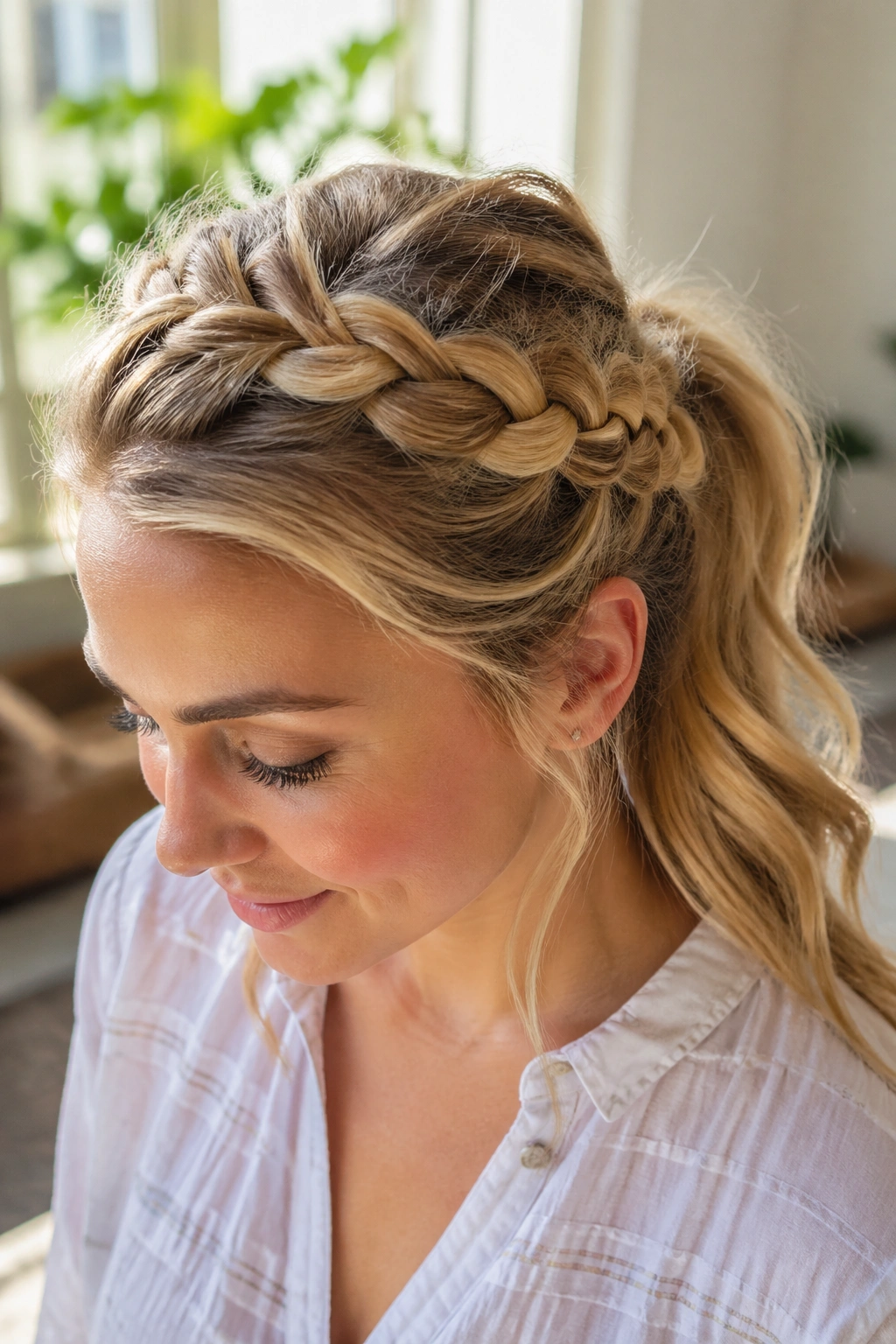
A crown braid into ponytail gives you structure right where you need it. Braid along the hairline or across the top section, then gather the rest into a ponytail below it. The braid becomes the frame.
That frame matters. It keeps flyaways from looking random and gives the style some backbone. Leave the braid slightly loose so it doesn’t feel severe. A few wisps near the temples can soften the whole thing, especially if your hair is thick and tends to sit heavy around the head.
19. Slick Roots, Fluffy Tail
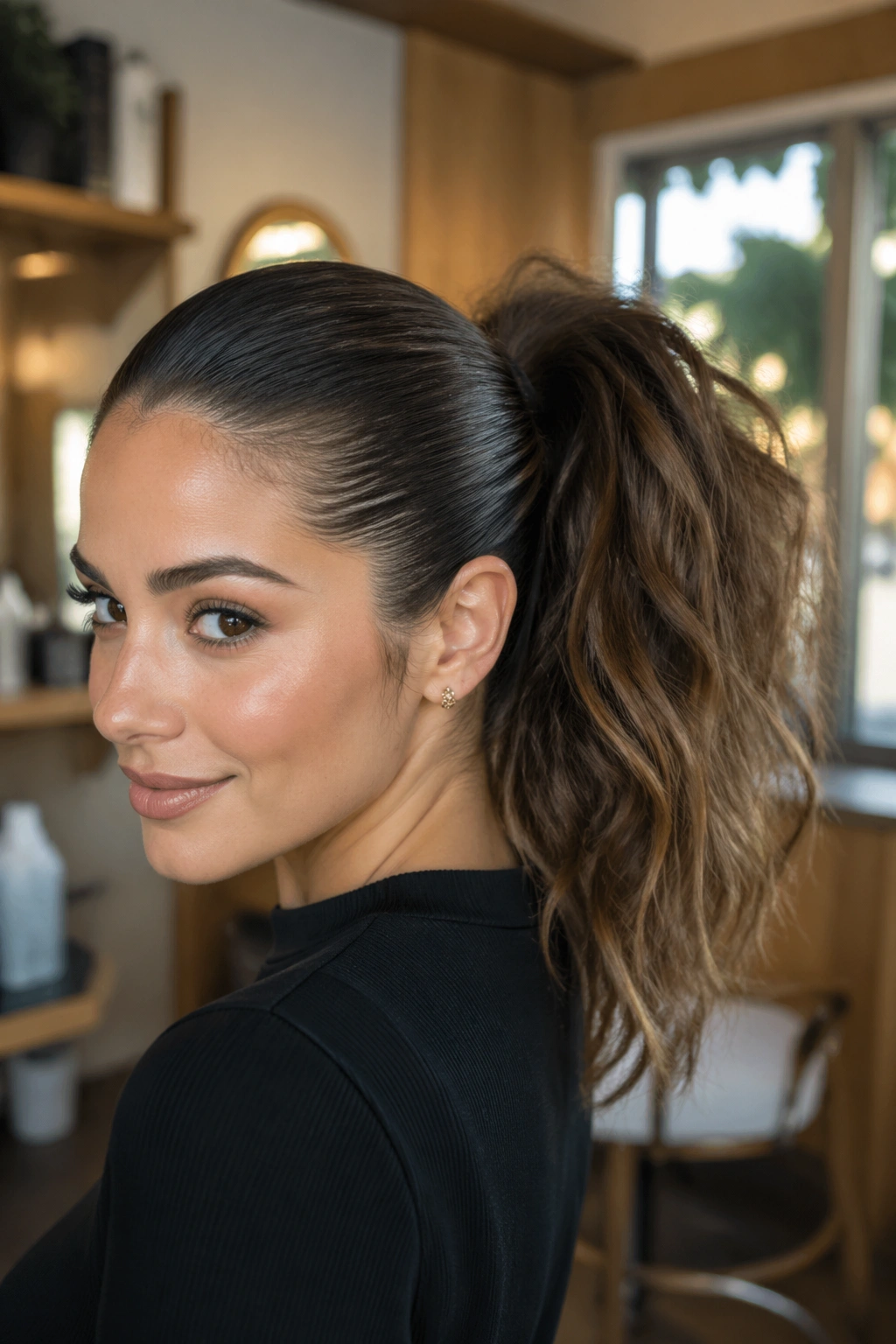
Slick roots with a fluffy tail is a smart contrast, and the contrast is the reason it works. Smooth the top with a comb and a little styling cream, then keep the ponytail itself full, bent, and touchable. The top says “controlled.” The tail says “I stopped caring in a good way.”
This style looks best when the line between neat and messy is obvious. It suits straight hair, wavy hair, and extensions especially well because the polished root lifts the face while the tail adds softness. Try not to flatten the tail with too much brushing. A wide paddle brush can help, but only at the roots.
20. Mini Topknot Ponytail
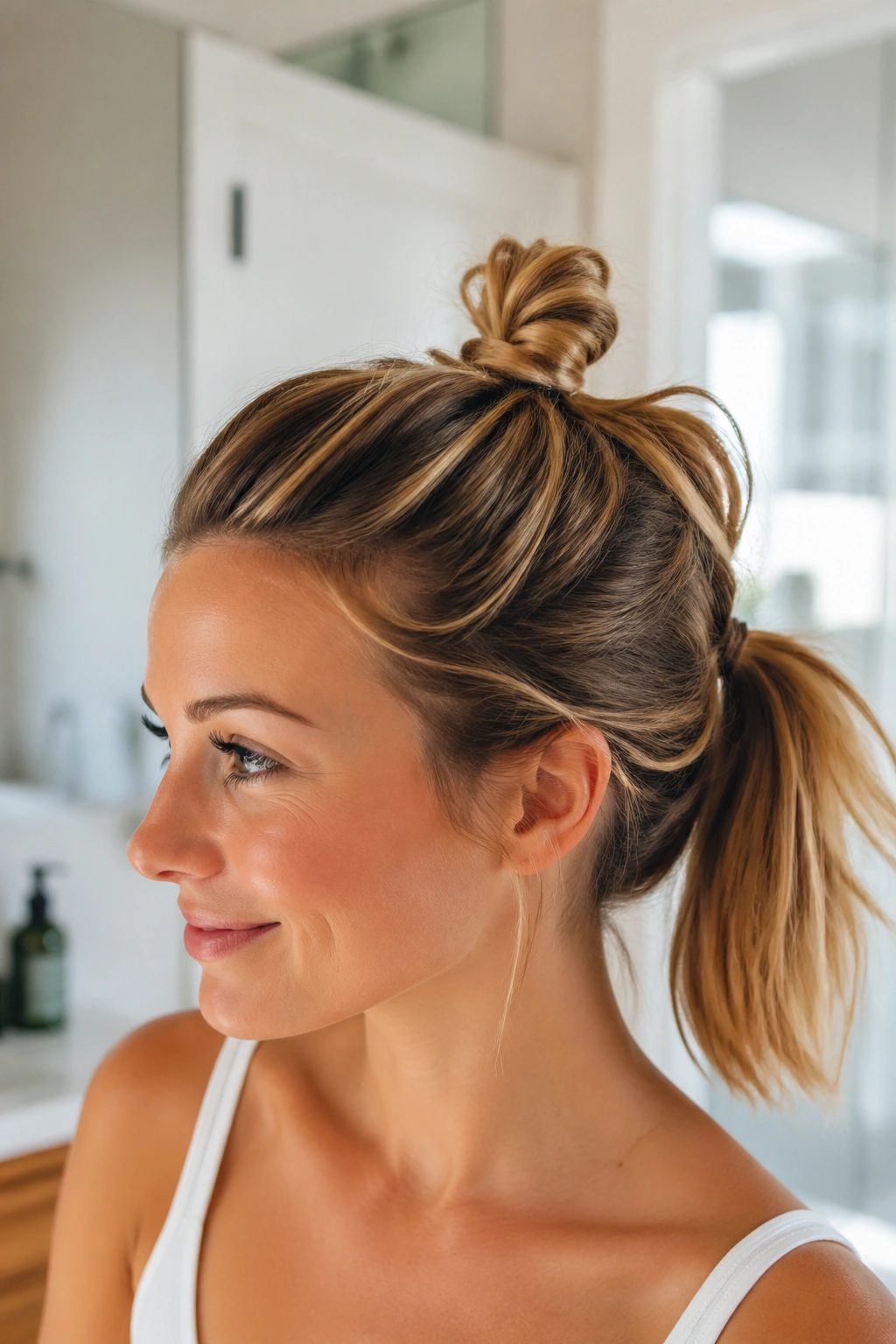
A mini topknot ponytail gives you a lifted point at the crown without making the whole style a bun. Tie the top section into a tiny knot, then let the rest of the hair fall into a ponytail or short tail below it. The shape feels playful and a little offbeat.
This is a useful option for shorter hair or layers that never want to stay in a regular ponytail. Keep the knot small and secure it with pins instead of over-tightening the elastic. If the topknot is too large, the balance goes weird fast. Small is better here.
21. Romantic Nape Ponytail
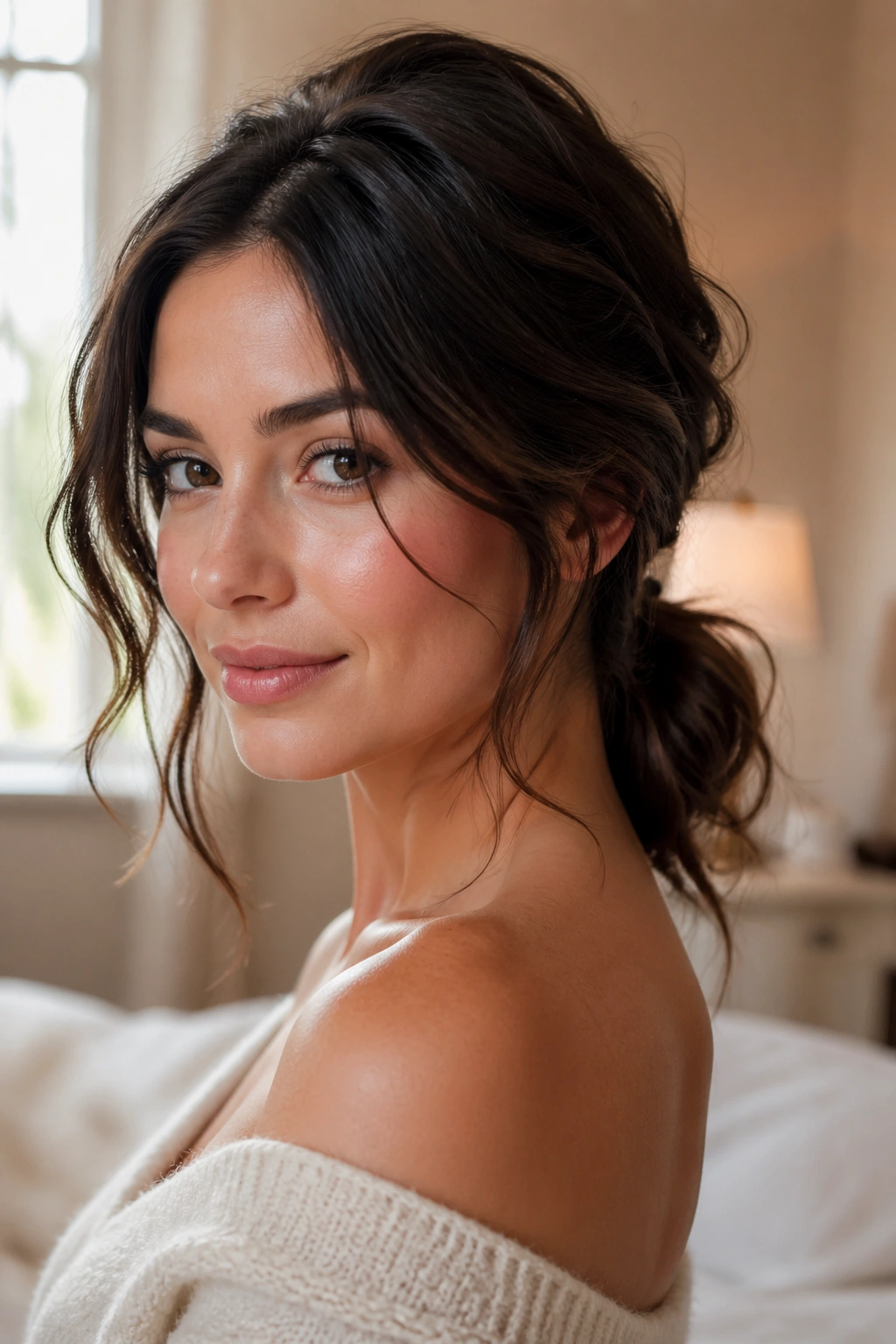
A romantic nape ponytail sits low, soft, and a little loose around the edges. Start with a gentle center or off-center part, gather the hair at the nape, and let a few strands slip free near the ears and temples. It should feel like you meant to keep it relaxed.
The trick is to avoid a hard line. Instead of pulling every hair back, use your fingers and let some texture stay visible. A small twist at the base can make it feel more dressed up. This one works well with soft waves and shoulder-length layers that need somewhere nice to land.
22. Pin-Curl Ponytail
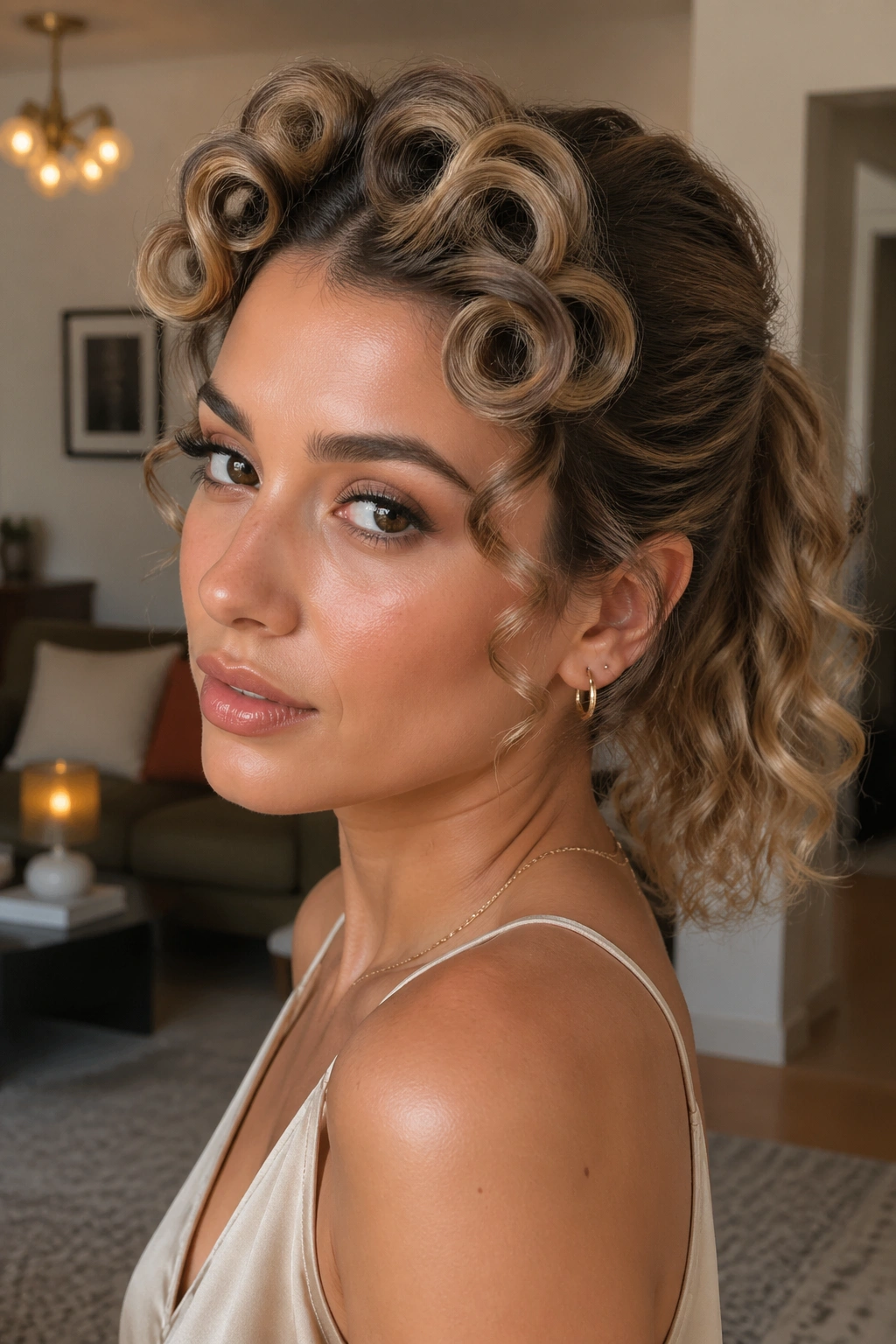
Pin-curl ponytails bring a bit of vintage shape to messy updos. Set a few front pieces into loose pin curls or bend them with a curling iron, then gather the rest into a ponytail. The front gets structure while the tail stays loose.
This style has a nice tension to it. The curls near the face make the whole look feel deliberate, even if the back is only lightly styled. It’s a clever move for events when you want softness around the face and a ponytail that holds up through movement. A little hairspray on the curls helps, but not enough to make them crunchy.
23. Braided Underlayer Ponytail
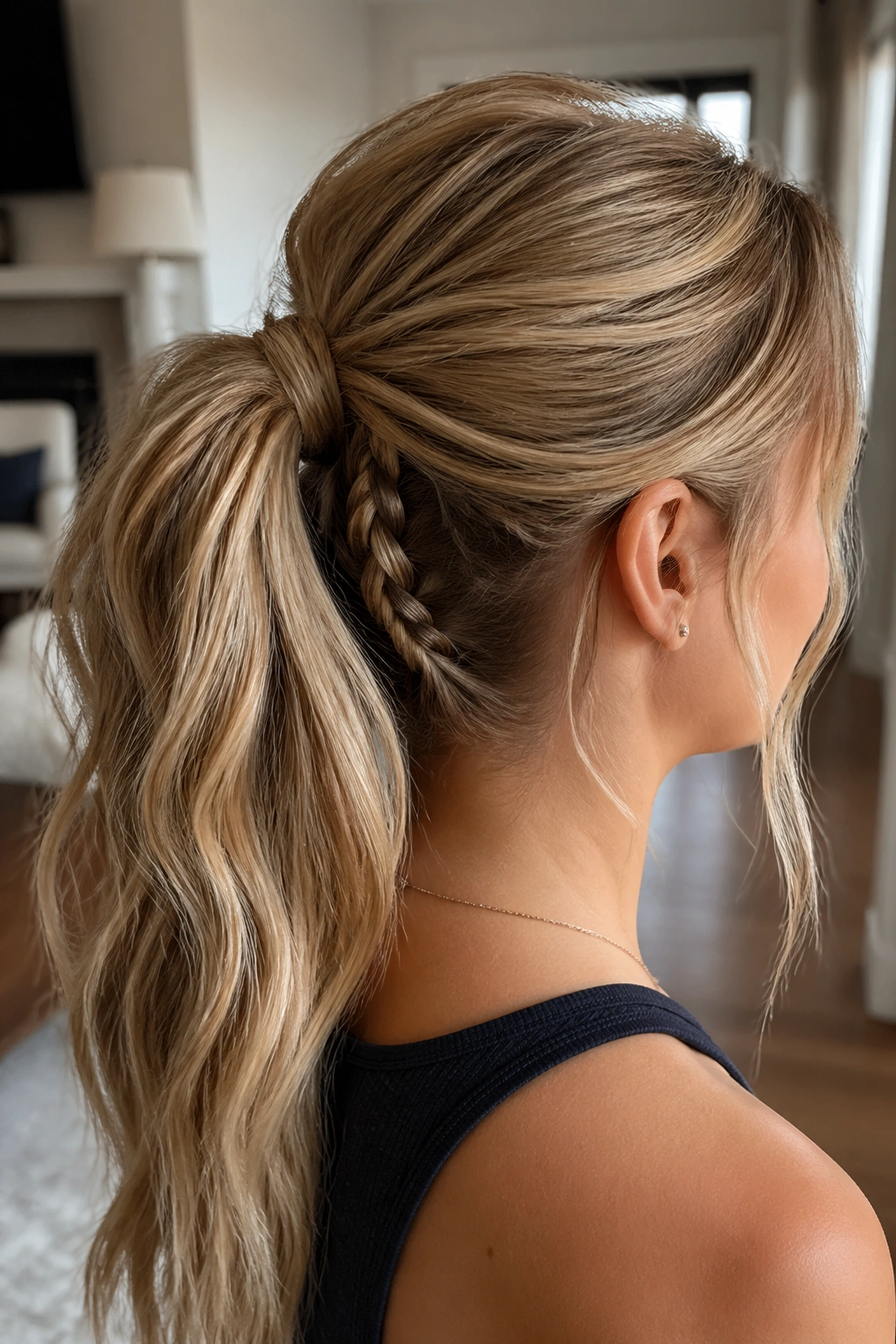
A braided underlayer is one of those small details people notice only after a second glance. Braid the lower section at the back or one side underneath the visible layer of hair, then gather everything into a ponytail so the braid peeks through.
The hidden braid gives the style a bit of depth. It’s especially useful on thicker hair because it helps manage volume without making the finished ponytail bulky. Keep the braid loose and flat against the head. If it sticks out too much, pin it down before tying the tail.
24. Retro Flip Ponytail
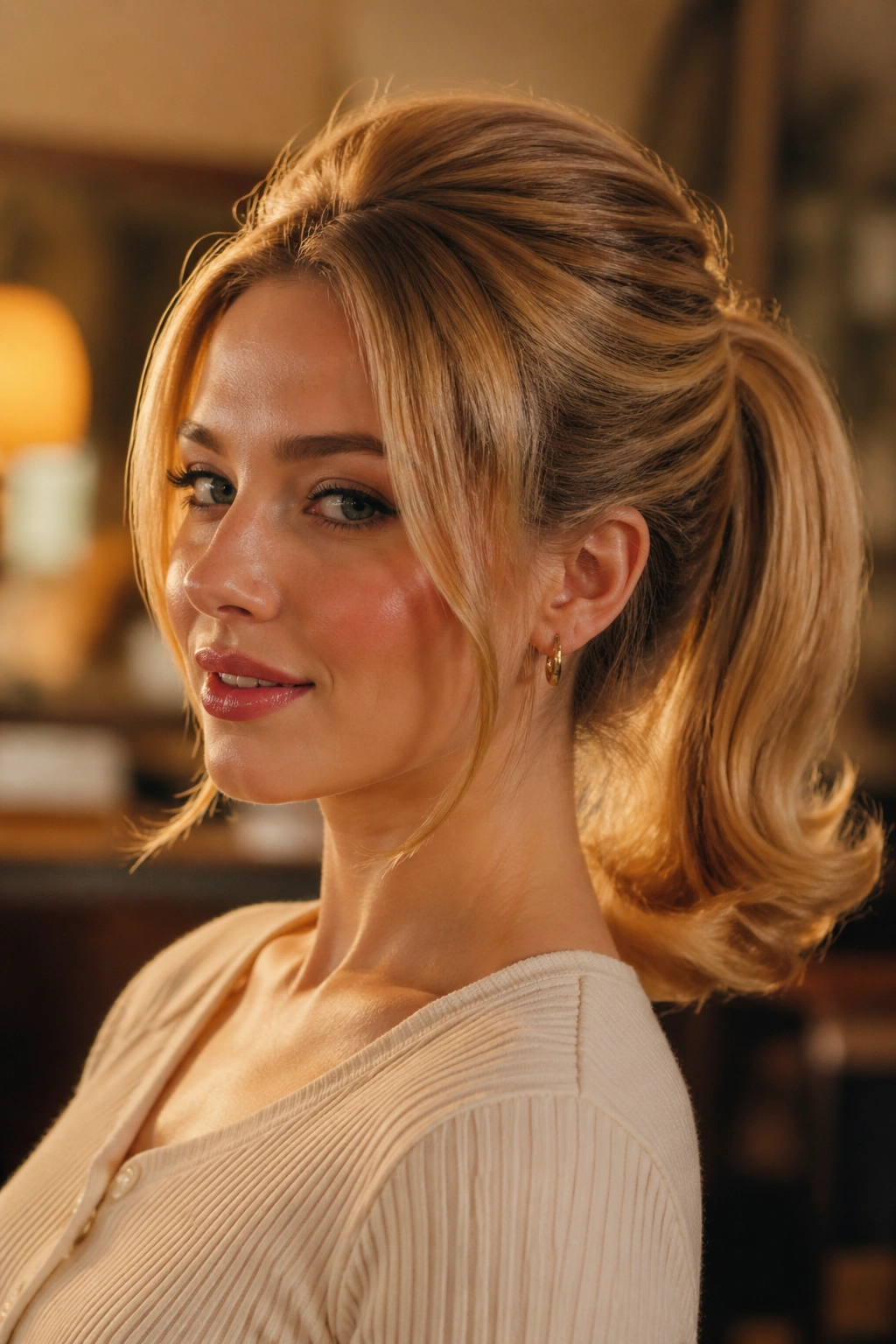
A retro flip ponytail brings that lifted, curved end people associate with old-school blowouts. Tie the hair into a ponytail, then curl or flip the ends outward with a round brush or large iron. Leave the roots soft and the crown slightly airy.
It feels neat but not severe, which is why it sits well in this list. The flipped end keeps the style from sinking into the shoulders. If your hair is naturally straight, a little bend at the ends makes all the difference. If it’s wavy already, even better. Let it work with you.
25. Messy Chignon Ponytail
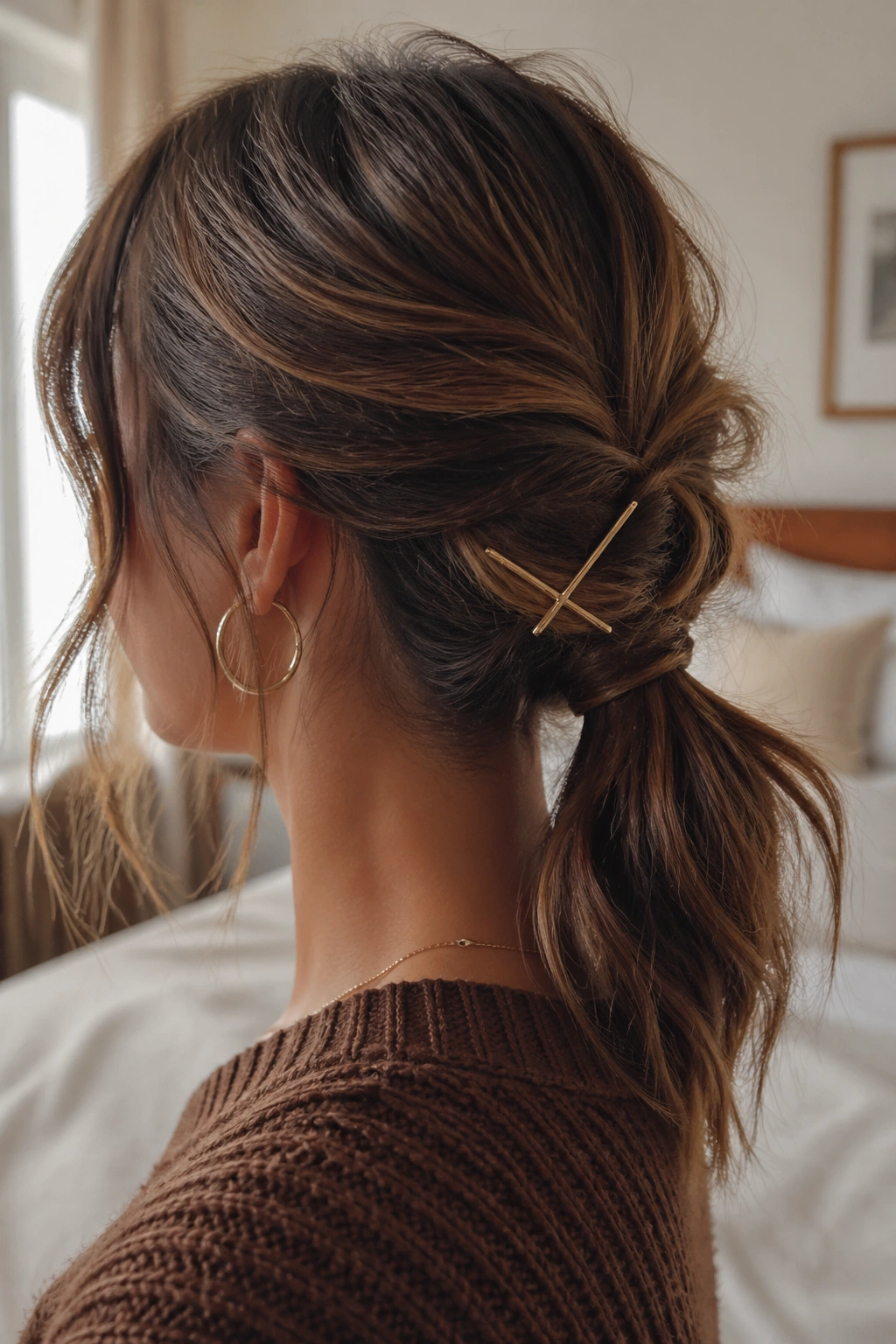
A messy chignon ponytail sits between a knot and a ponytail, and that in-between space is where it shines. Gather the hair low, fold the length under itself loosely, and pin it so the ends stay partially visible. Don’t hide every last strand.
The looseness makes it feel softer than a strict updo. This one is good when you want the neck clear but still want some hair showing. It also holds up better than people expect, especially if you anchor the fold with two pins crossed in an X. Simple. Reliable.
26. Loop-Through Ponytail
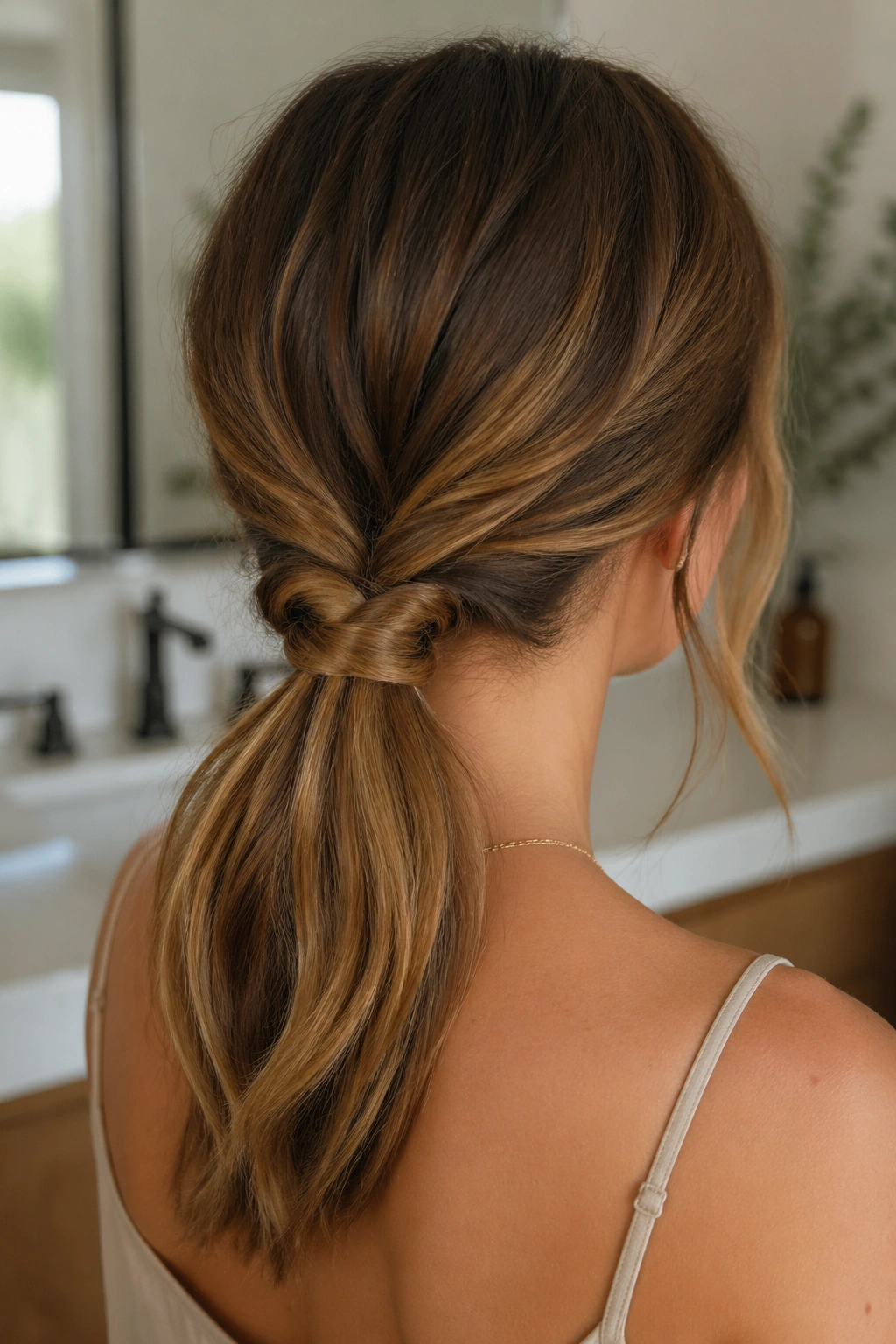
A loop-through ponytail gives you a little shape at the back without a lot of work. Tie the hair low or mid-height, split the hair just above the elastic, and thread the tail through that gap once. It creates a soft twist that looks tidier than a plain tie.
The finish should stay slightly loose. If you pull every strand tight, the loop disappears and the style turns flat. Leave a little width at the top of the loop and tug the sides gently after it’s in place. That small puff is what makes the style look like you knew what you were doing.
27. Halo-Twist Ponytail
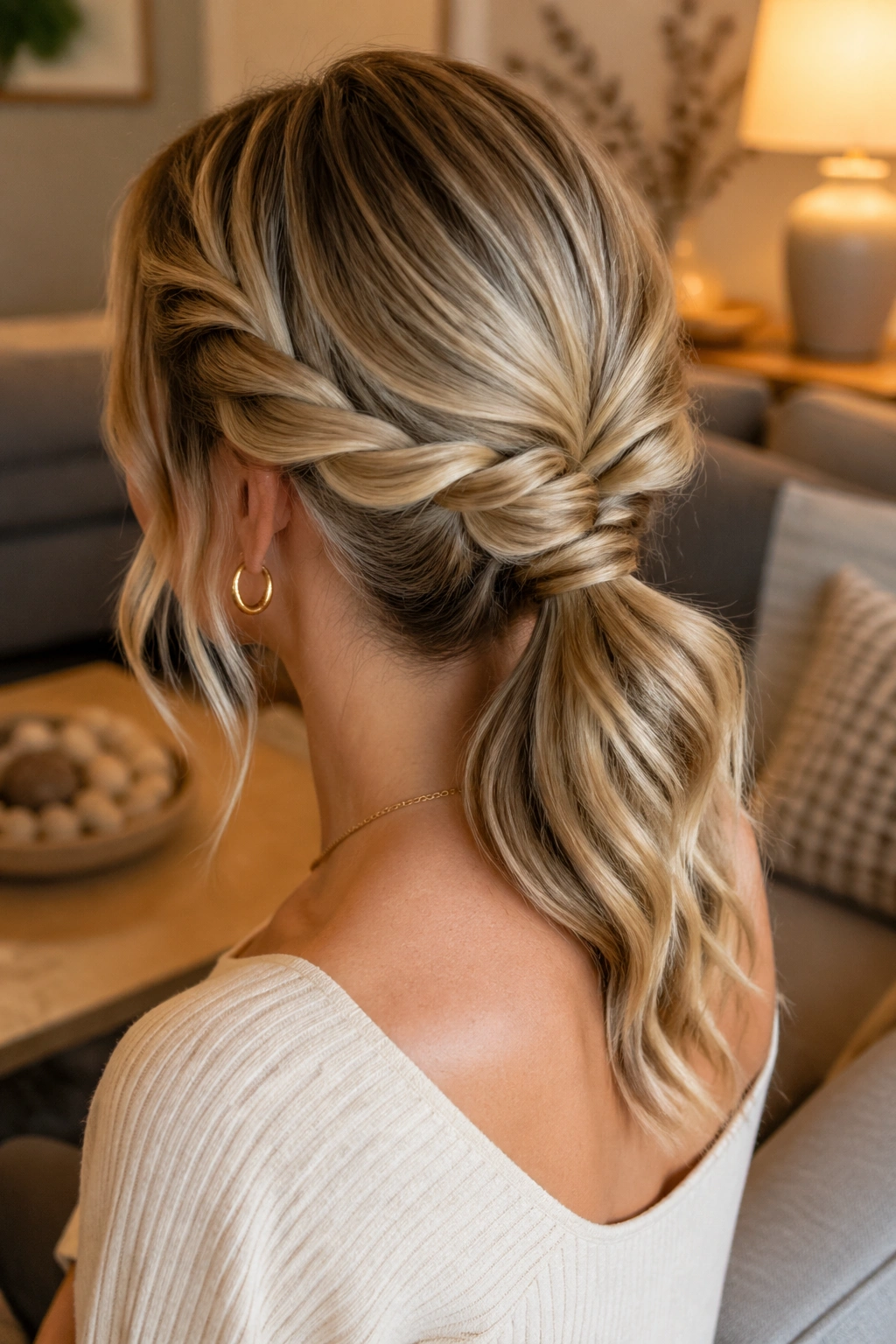
A halo-twist ponytail wraps the head in soft lines before the ponytail begins. Take two sections from the front, twist them back around the head, and secure them into a ponytail at the nape or mid-back. It feels graceful without being precious.
This style is handy when your hair is a little frizzy around the hairline. The twists control the front while the ponytail stays relaxed. Keep the twists loose enough to show texture, and don’t worry if a few ends stick out. That’s not a flaw here. It’s the point.
28. Beachy Waved Ponytail
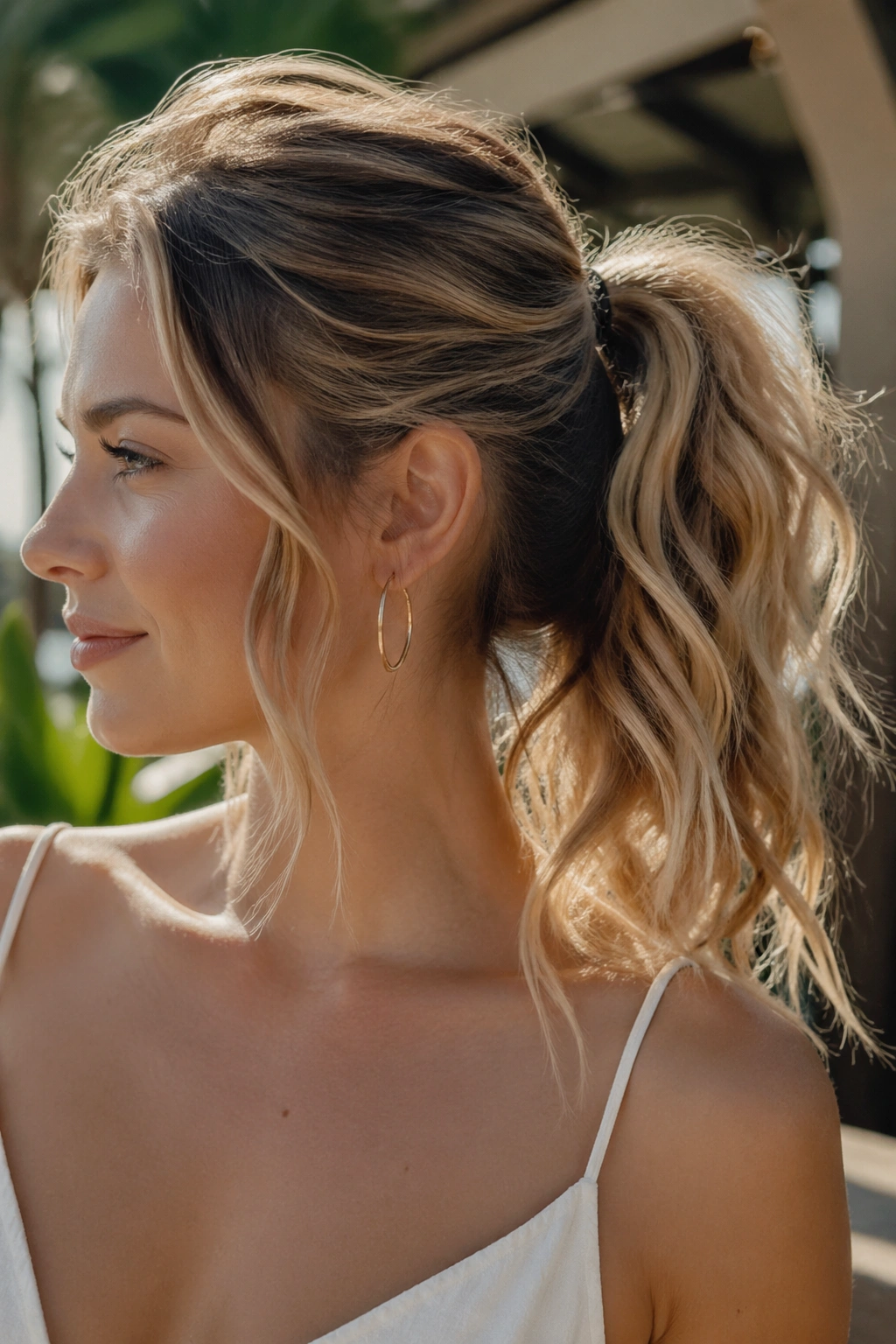
Beachy waves give a ponytail that easy, lived-in shape people keep trying to fake. Curl the hair in alternating directions, brush it out lightly, then gather it into a ponytail and let the waves fall in soft bends. The movement does the work.
A little salt spray or texture mist helps the wave hold its shape. You do not need uniform curls. In fact, too much uniformity kills the look. Bend the front pieces away from the face, leave the tail a little imperfect, and stop fiddling once the texture looks relaxed.
29. Side Rope Ponytail
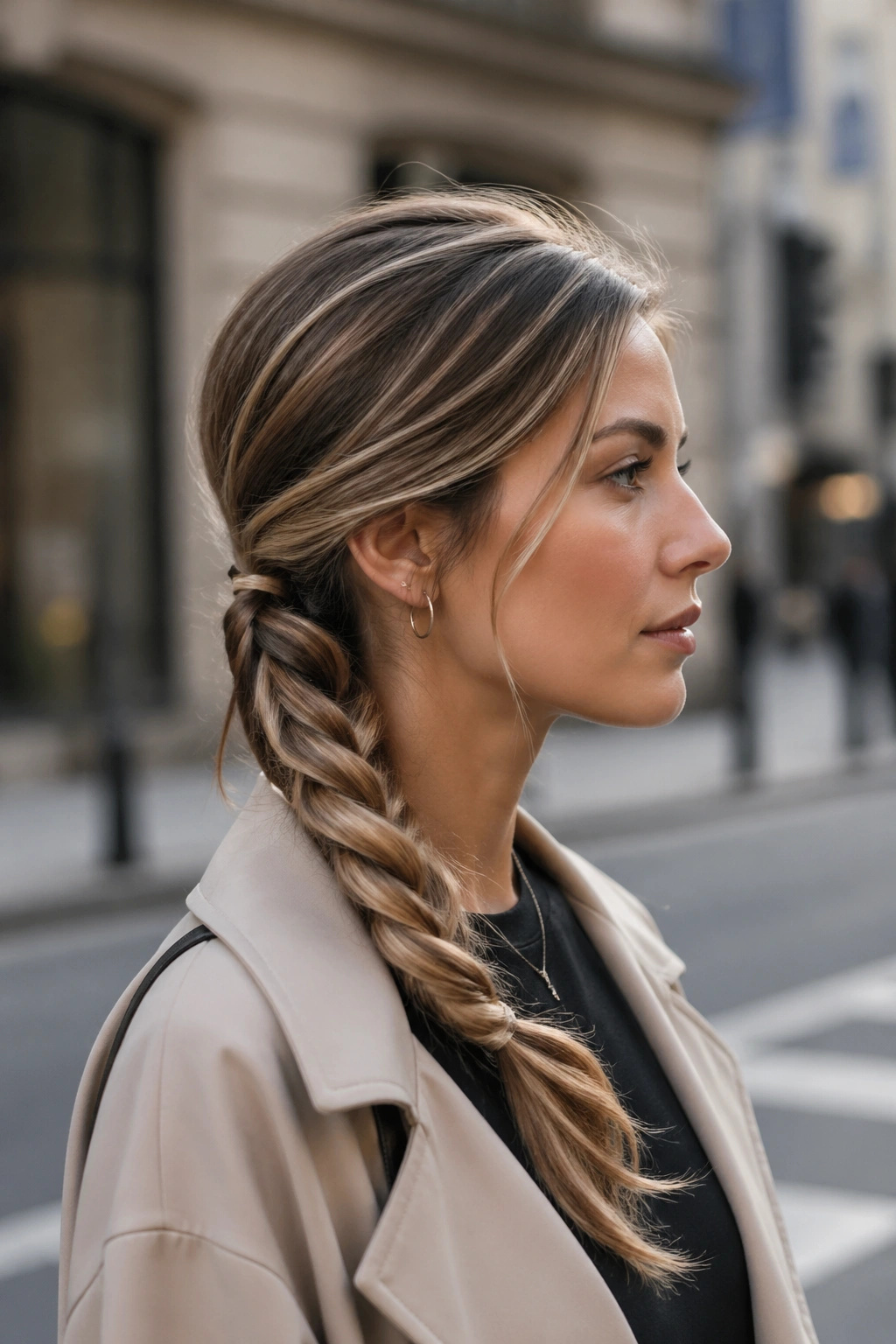
A side rope ponytail is a cleaner cousin to the side-swept style. Pull the hair to one side, twist the lengths into a rope effect, and secure it low or just below the ear. The angled line makes it feel softer than a center-back ponytail.
It’s a good choice when you want something that looks styled but doesn’t need a lot of pinning. The side placement keeps the length visible, and the rope twist adds enough detail to keep it from looking plain. A little shine serum on the ends can help the twist show up more clearly.
30. Wrapped Bubble Ponytail
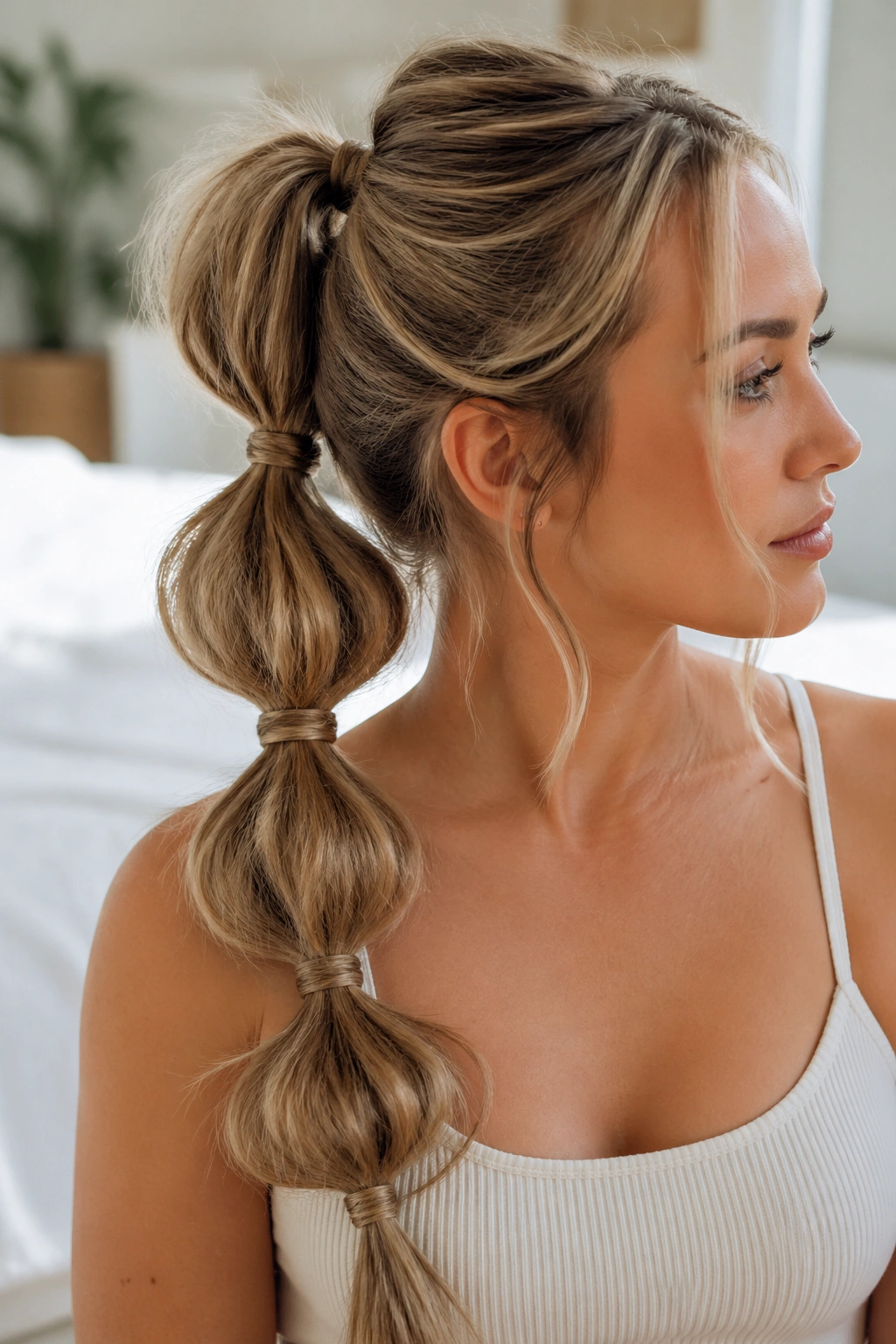
Wrapping a bubble ponytail with a small strand or ribbon gives the style more polish without killing the texture. Build the bubbles first, then wind a thin section of hair or a ribbon around one or two elastics to hide them. It’s a neat little upgrade.
The bubbles should stay soft, not puffed into perfect spheres. That balance matters. If the sections are too tight, the style turns fussy. A wrapped bubble ponytail works well for thicker hair because it adds structure while still letting the length look fun and full.
31. Two-Tier Ponytail
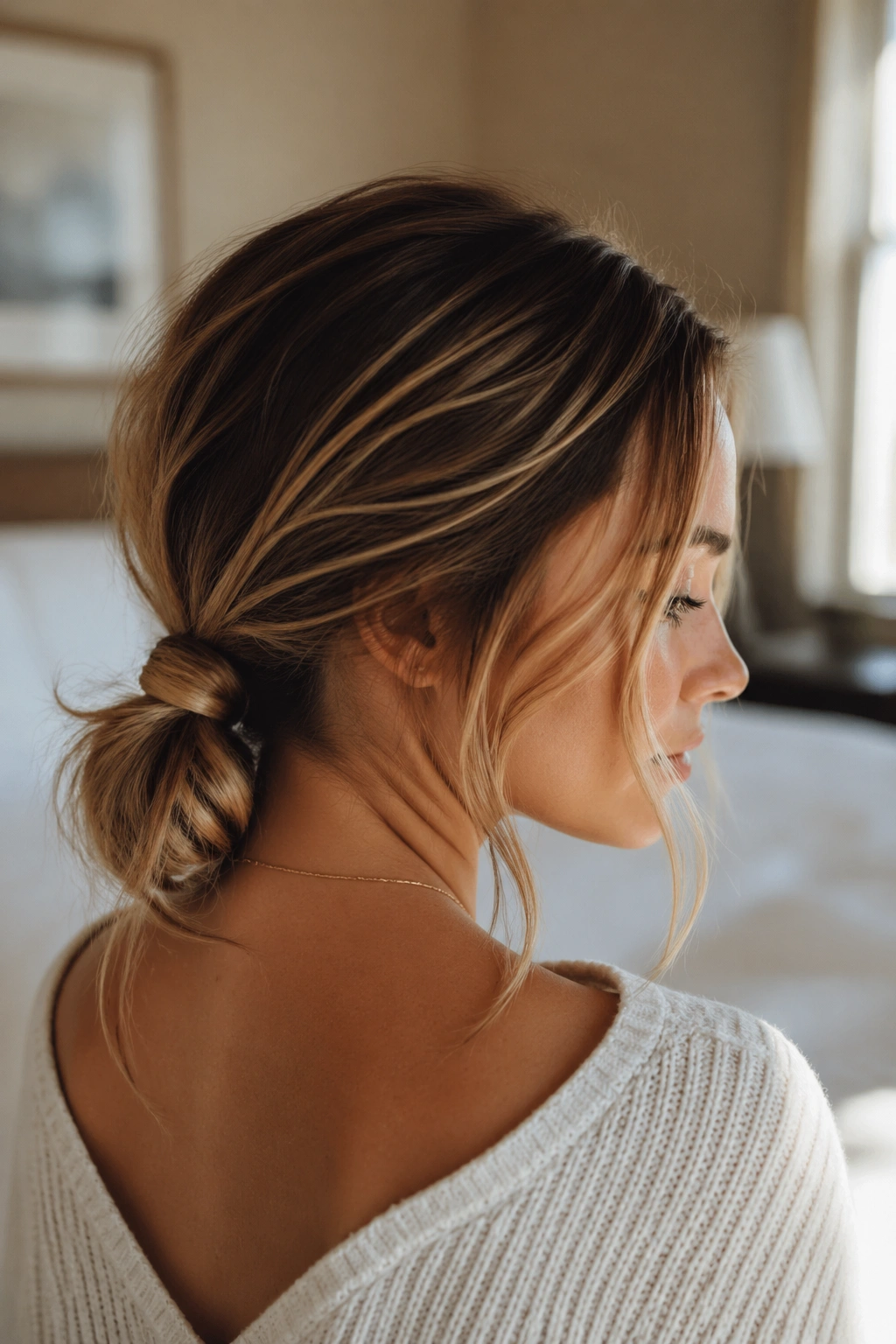
A two-tier ponytail is useful when you want volume without stuffing all the hair into one elastic. Split the hair into an upper and lower ponytail, then let the top section cover the lower one. The result looks fuller than a standard tie.
It also keeps layered hair from collapsing. The hidden lower ponytail lifts the shape, while the upper ponytail hides the trick. If your hair is fine, tease the crown a touch before gathering the top section. Not much. Just enough to make the shape hold its own.
32. Wind-Swept High Ponytail
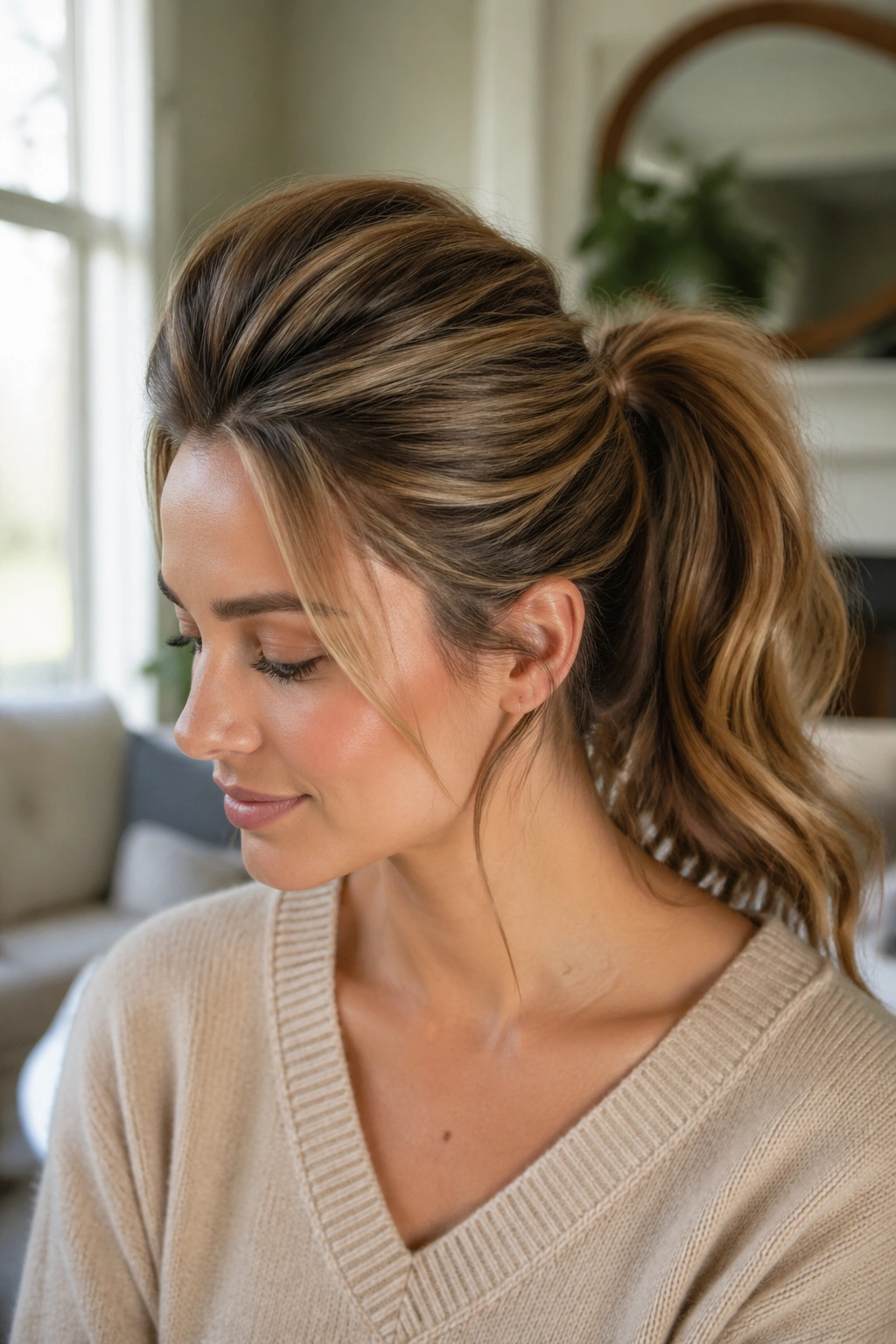
A wind-swept high ponytail has a little drama baked into it. Pull the hair high, leave some front pieces loose, and bend the tail so it moves instead of hanging straight down. The aim is motion, not perfection.
This style looks especially good when the crown has some height and the tail has texture from waves or a curling iron. Keep the face-framing pieces soft and uneven. That slight mess keeps the ponytail from feeling like a cheer style. It should look like you caught yourself in a flattering breeze.
33. Soft Sweep Ponytail
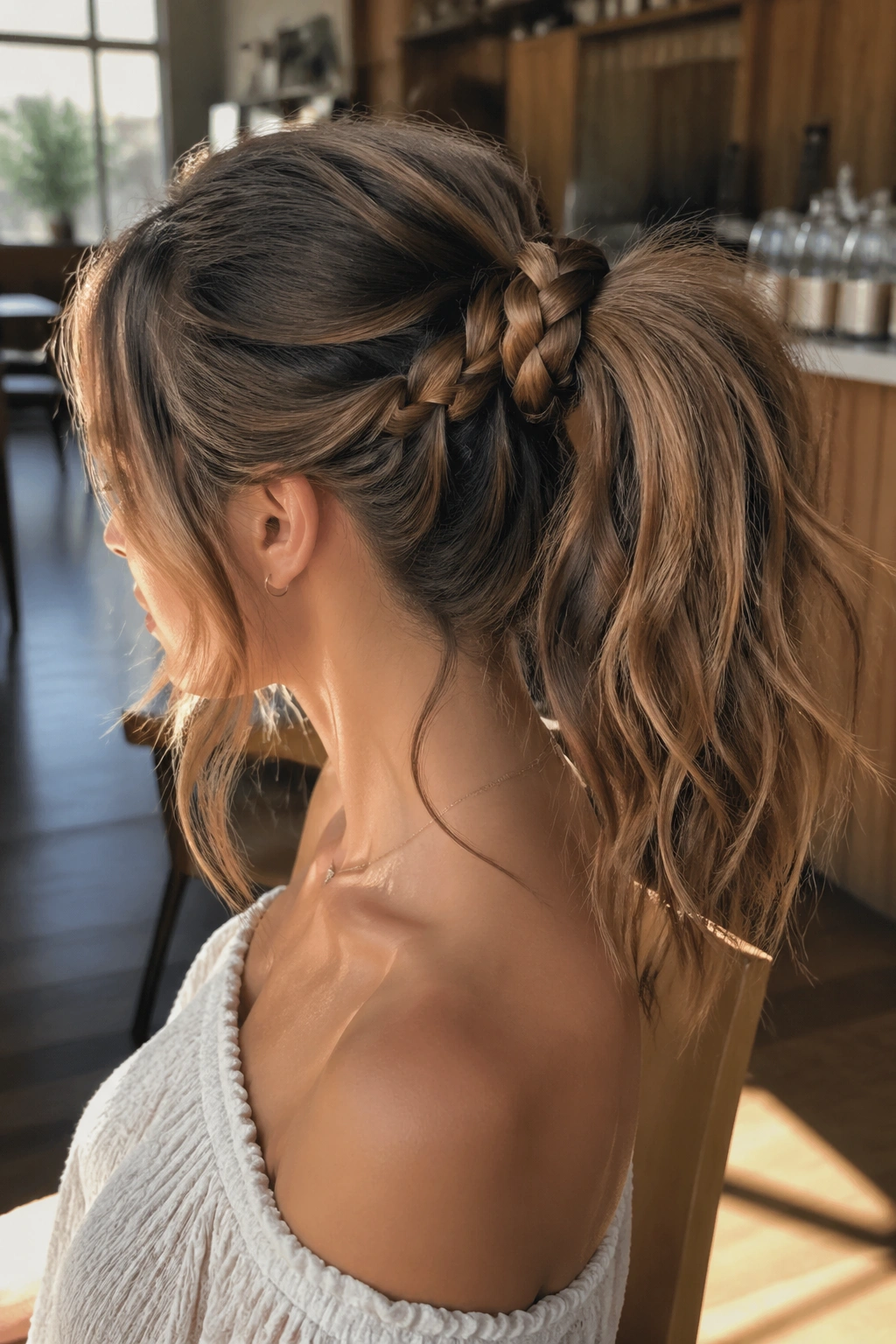
A soft sweep ponytail is the one I’d hand to someone who wants the safest bet without looking boring. Sweep the hair back gently from one side, anchor it low or mid-height, and let the front pieces fall in loose arcs around the face. The whole thing feels easy, but not careless.
It works because nothing is trying too hard. The sweep gives direction, the looseness keeps it human, and the ponytail itself can be as textured or as smooth as you like. If you only have time for one styling move, make it the front pieces. That’s where the style gets its charm.
