



A low cornrow ponytail has a kind of built-in calm to it. The hair is pulled back, the scalp pattern does the talking, and the finish sits close to the neck, which is exactly why it reads so clean from the front and the side.
Messy roots can ruin it fast. So can braids that are too bulky at the crown, or a ponytail base that looks like an afterthought. The sleek look comes from three things working together: sharp parting, smooth tension, and a tail that feels deliberate rather than thrown on at the last minute.
That part matters more than people think. A low ponytail can look plain if the cornrows are random, but the same style turns polished when the rows are even, the sections are neat, and the nape is tucked close. If you like styles that feel neat without trying too hard, this is one of the easiest shapes to keep coming back to.
The fun part is how much room there is to play. You can go middle-part, side-part, zigzag, feed-in, stitched, wrapped, curly, beaded, or bone-straight. Same basic idea. Completely different mood.
1. Classic Middle-Part Low Cornrow Ponytail
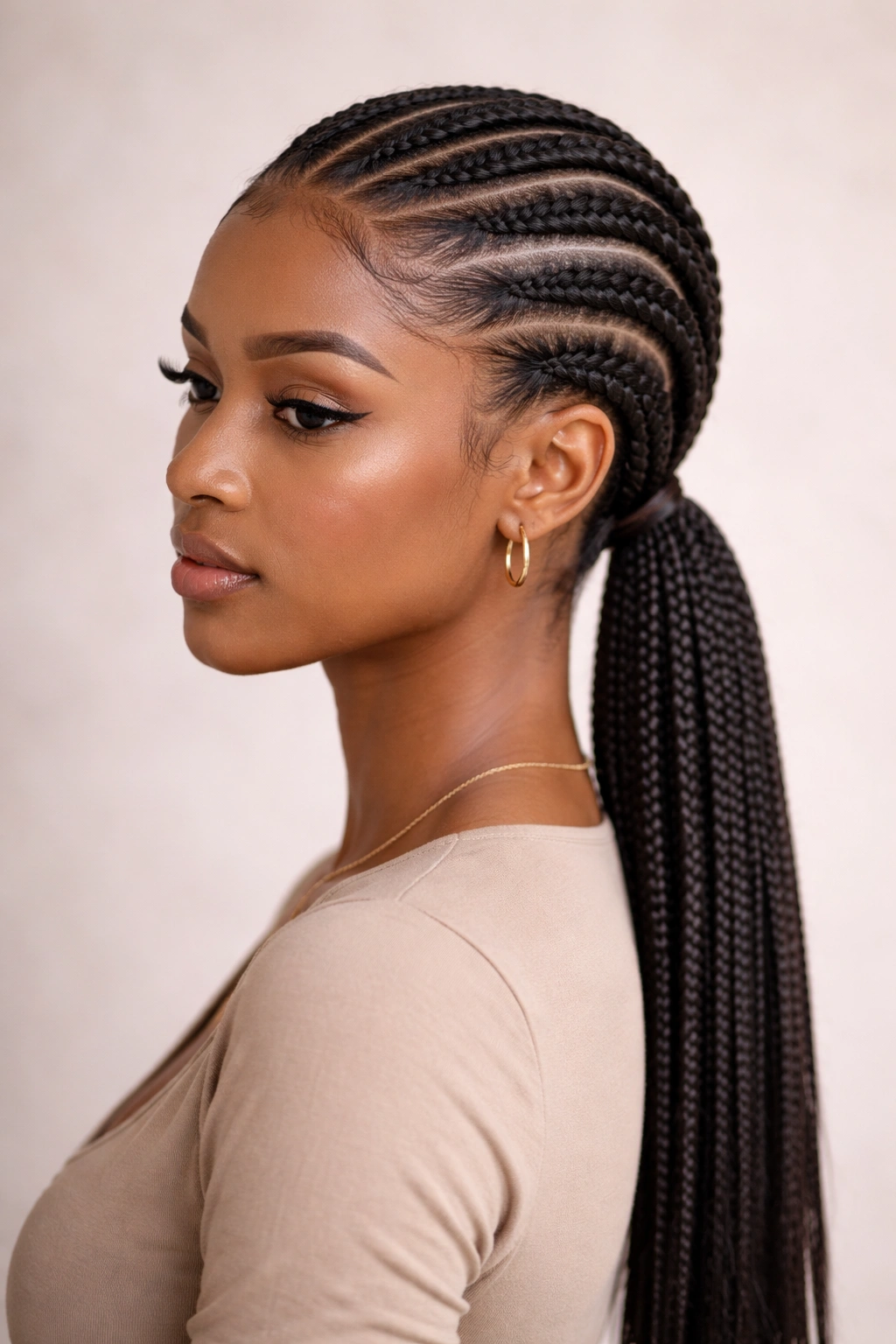
The classic middle part is the one that never looks out of place. It gives the face a clean frame and keeps the whole style symmetrical, which is a big reason it works on so many people.
Why It Holds Up So Well
A middle-part low cornrow ponytail is the style I’d hand to someone who wants the safest strong choice. The part runs straight down the center, the cornrows usually move back in even rows, and the ponytail sits right at the nape. That clean line does a lot of heavy lifting.
If your face is oval, heart-shaped, or round, this shape tends to sit nicely because it balances both sides. It also makes a good base for either a straight tail or a curly one. A small braid wrap around the base keeps it sharp.
- Best for: everyday wear, office looks, dressier outfits
- Braids to ask for: 4 to 8 neat rows, depending on density
- Finish option: sleek straight tail or soft curled ends
Tip: keep the part narrow and straight. A wavy middle part looks casual fast.
2. Deep Side-Part Low Cornrow Ponytail
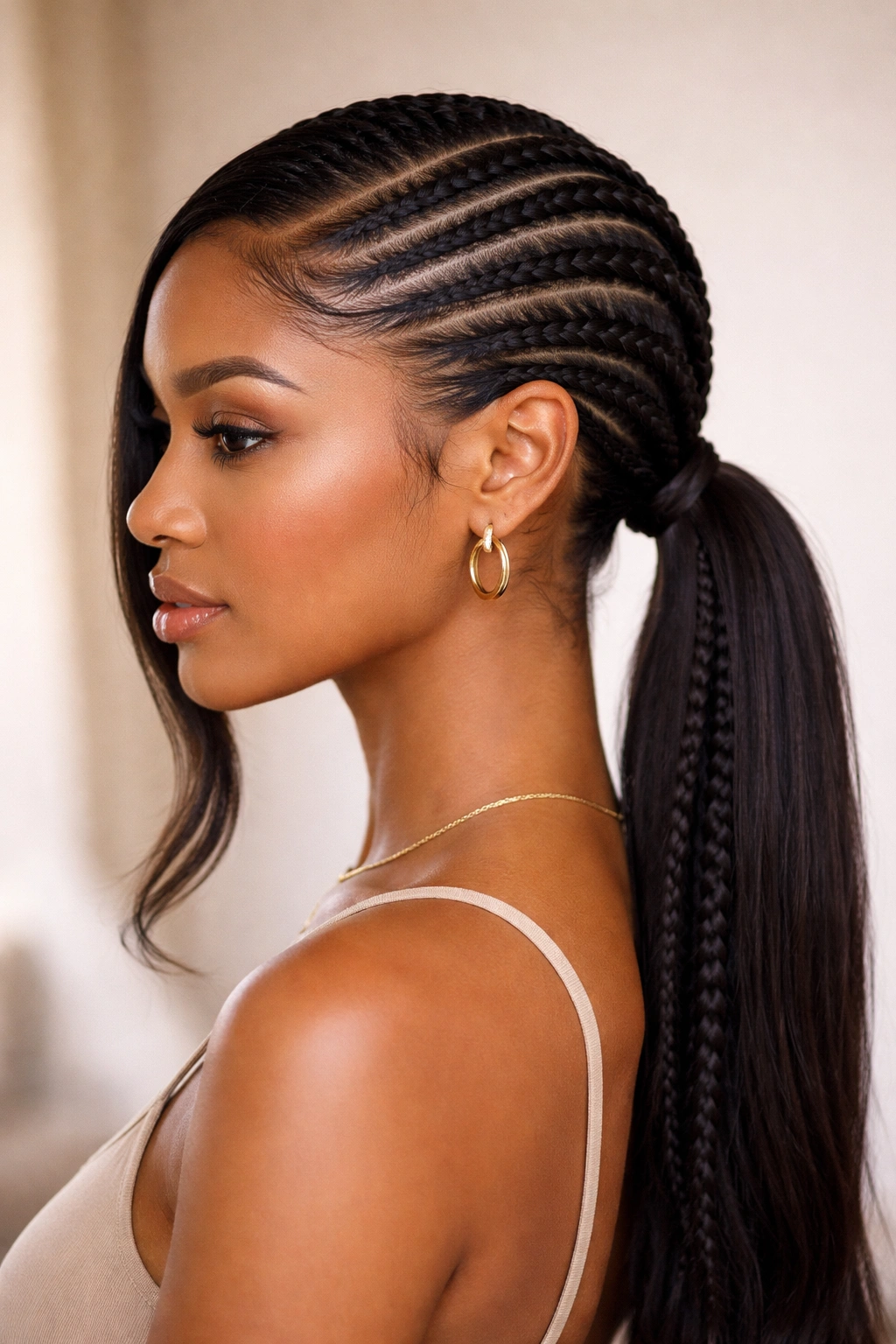
A deep side part changes the whole mood in one move. It softens the face and gives the style a little swing, which is useful if you do not want the hair to feel too строг? too rigid. Let’s avoid Russian. “too strict.” good.
The braid pattern usually starts from one side of the crown and travels back in a gentle slope. That diagonal line creates shape before the ponytail even starts. I like this version when a center part feels too formal or too centered on the face.
It’s also a smart option if you want to draw attention away from a wider forehead or add more shape near one temple. Keep the ponytail low and close to the nape so the side part stays the star. If the tail sits too high, the whole effect gets lost.
3. Straight-Back Feed-In Low Ponytail
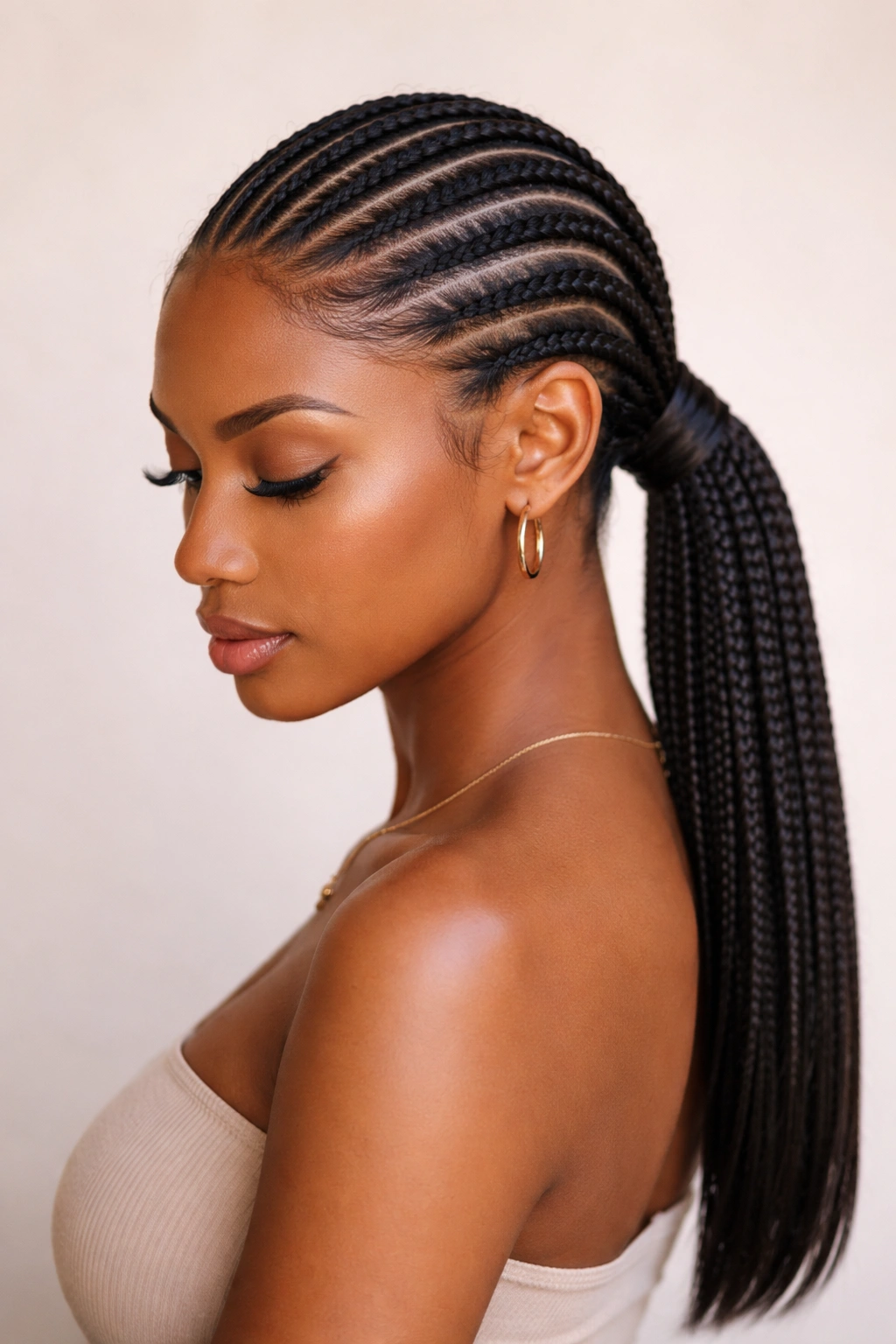
Feed-in braids are the quiet workhorses of low cornrow ponytails. They start slim at the hairline and build gradually, which keeps the front neat and avoids that chunky first-inch look some cornrows get.
The style usually uses several straight-back rows, often six to ten, all feeding into one low ponytail. That gradual build gives the scalp a smooth line and makes the braids look like they’re coming out of the head naturally instead of sitting on top of it. It’s a small detail, but it changes the finish.
What to Ask For
- A soft feed-in at the front so the roots lie flat
- A low ponytail base wrapped with a braid or elastic cover
- A tail length that matches your daily life — shoulder length if you want easy wear, longer if you want drama
Best use: when you want a clean, sporty shape that still looks polished enough for an event.
4. Zigzag-Part Low Cornrow Ponytail
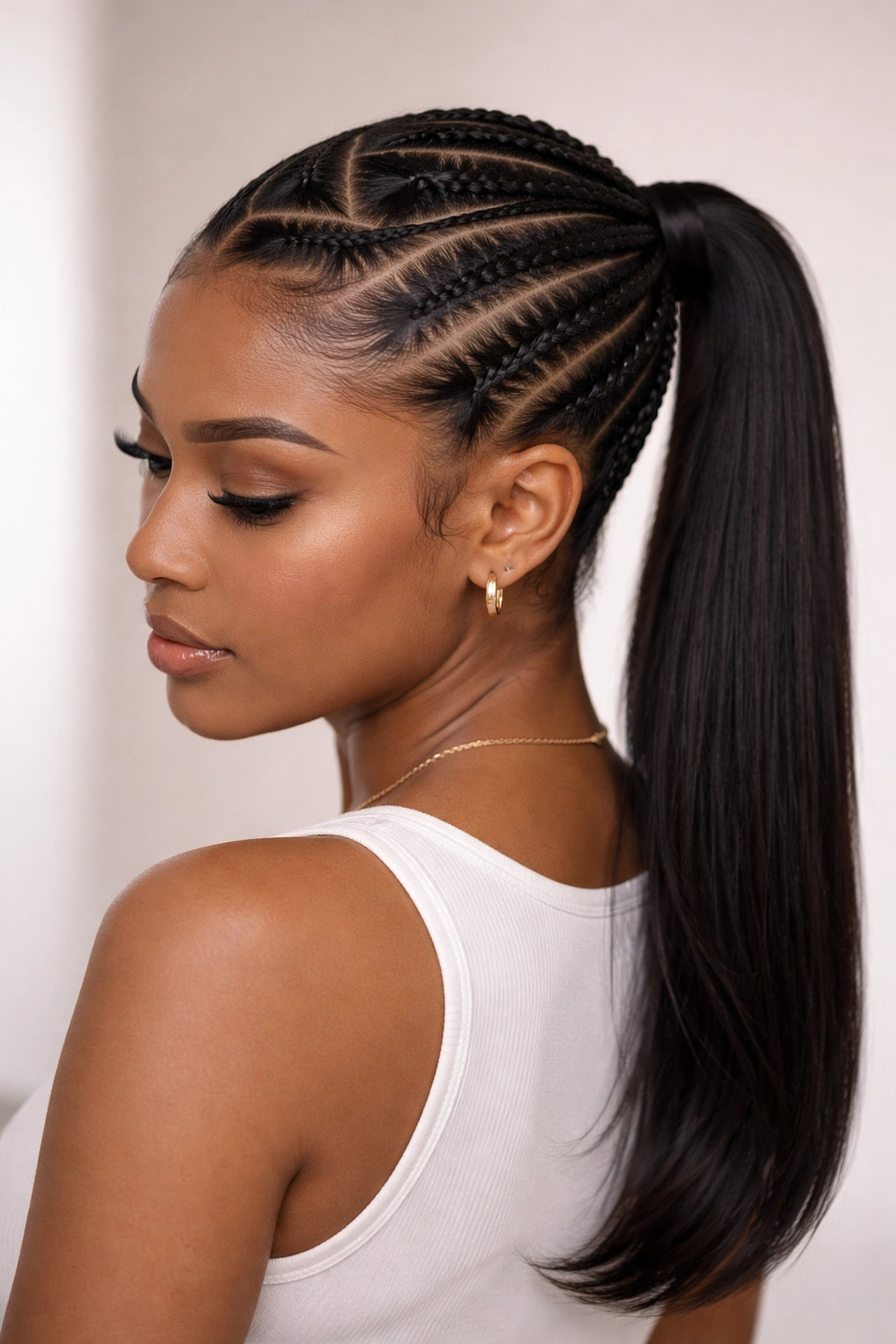
Why does a zigzag part work so well here? Because it looks intentional from the first glance. The part itself becomes the design, so the ponytail does not have to do all the styling.
The trick is to keep the zigzag sharp, not messy. Wobbly zigzags read as rushed. Clean angles read as a choice. I prefer this look when the rest of the outfit is simple and the hair needs one interesting detail to carry the whole thing.
How to Keep It From Looking Busy
A zigzag part already brings energy, so the rest should stay controlled. Ask for narrow rows and a plain low ponytail base. If you add accessories, keep them light — one cuff or a thin wrap is enough.
This is one of those styles that looks more expensive when it is restrained. Too many extras spoil the line.
5. Stitch Braid Low Ponytail
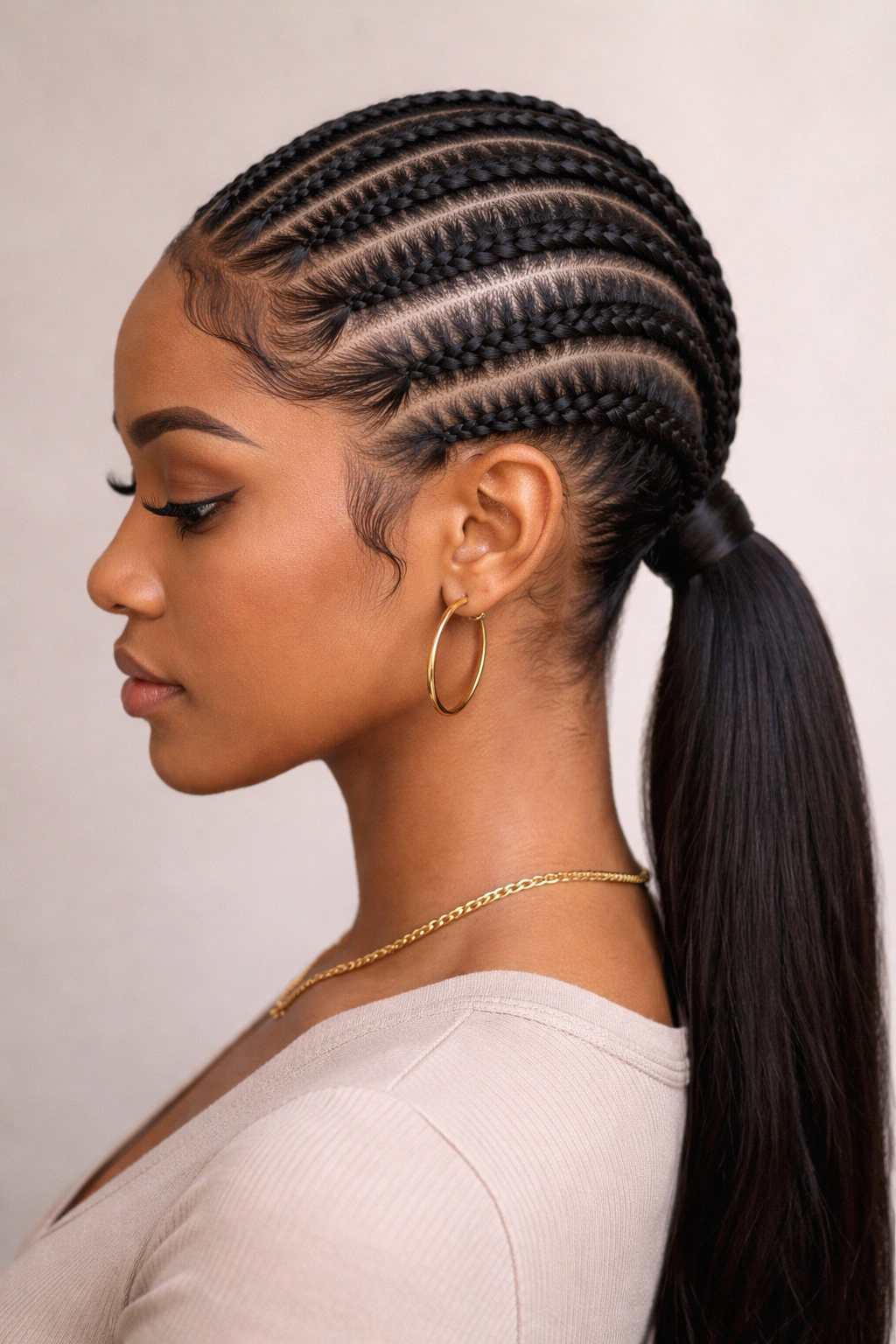
A stitch braid low ponytail has that crisp, lined-up feel people notice even from across a room. The raised, segmented pattern gives the scalp a stitched look, which is neat without being loud.
The sections are usually tighter and more defined than in a standard cornrow, so this style needs a braider who can keep the spacing even. When it’s done well, the rows look almost architectural. That’s a big reason it reads so clean in photos and in person.
It works especially well if you want the braids to be the design, not just the way to get to the ponytail. Keep the tail simple. A smooth, straight ponytail lets the stitch pattern stay front and center.
6. Double-Jumbo Cornrow Low Ponytail
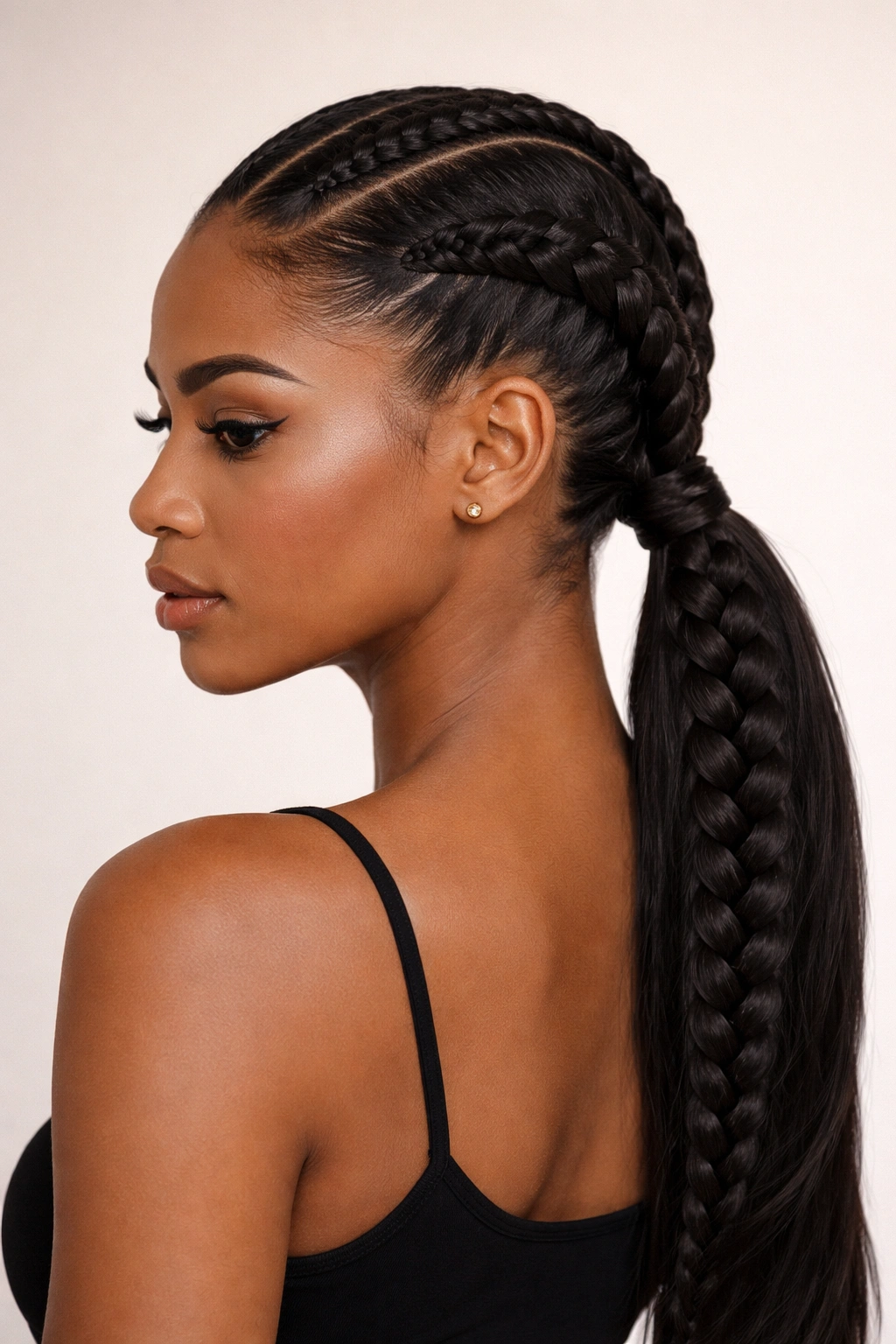
Two jumbo cornrows can be surprisingly sharp. Less braid work means more scalp showing, and that negative space makes the style bold, not bare.
This version is good when you want a cleaner, faster install or when your hair is thick enough that a handful of larger rows makes sense. The ponytail base stays low and the overall shape looks strong, almost like a statement version of the classic style. It’s also easier to keep tidy if you don’t like too many tiny rows.
The downside is simple: jumbo braids leave less room for detail. If you want a lot of pattern, this is not the one. If you want clean lines and a low-maintenance feel, it’s a very good pick.
7. Six-Slant Cornrow Ponytail With a Wrapped Base
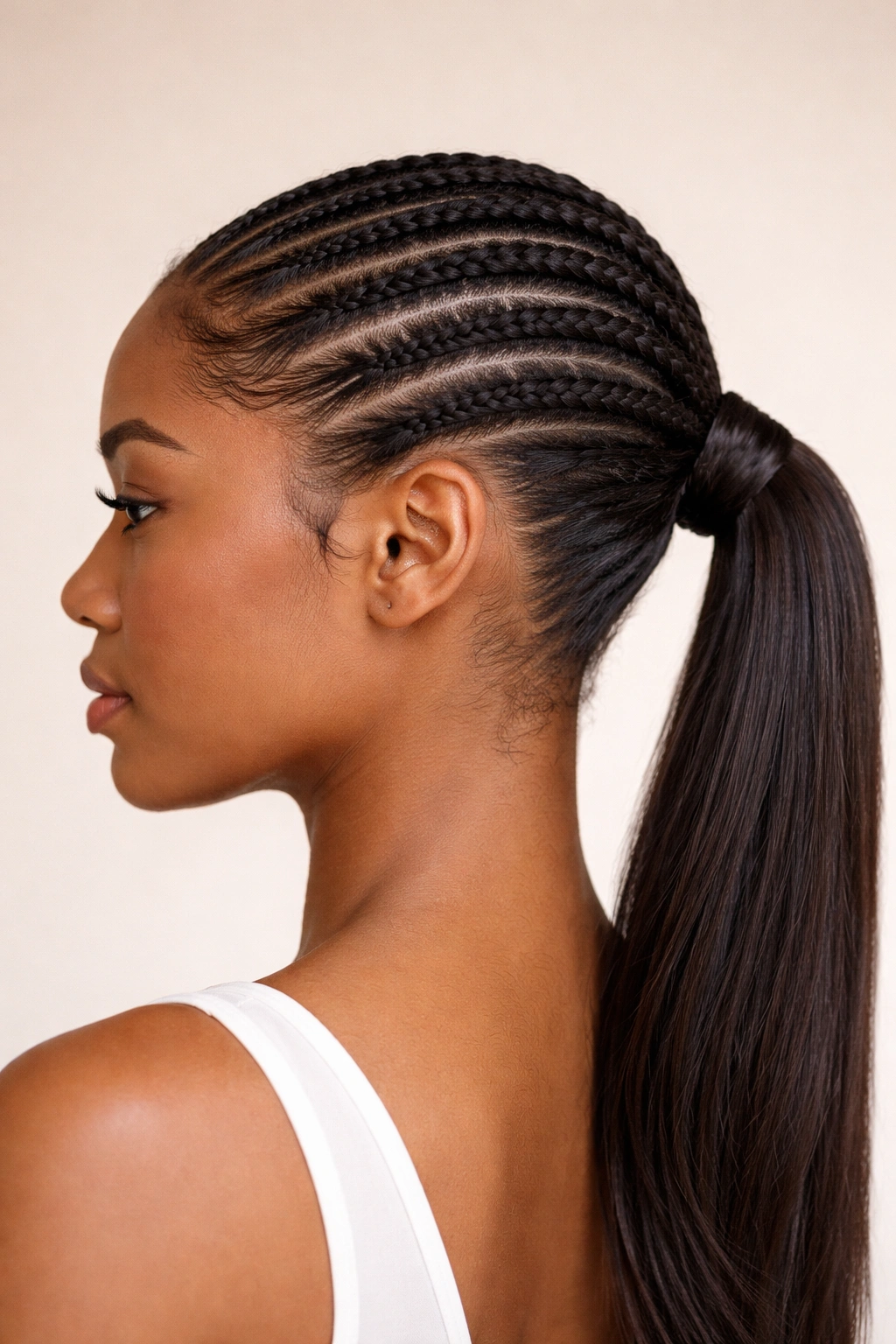
A slanted pattern gives the low ponytail some movement before the tail even starts. The braids angle back instead of going straight, which makes the style feel less rigid and a little more polished at the same time.
I like this one for someone who wants structure but does not want the hair to look severe. Six slanted rows are enough to create shape without making the scalp crowded. The wrapped base matters here, too, because it hides the elastic and keeps the ponytail looking finished.
Best Details to Ask Your Braider For
- Even slanting on both sides so the look stays balanced
- A wrapped base instead of a plain band
- Light edge work around the front, not heavy swoops
It’s a nice bridge between everyday and dressed-up. Not fussy. Not boring.
8. Low Cornrow Ponytail With Curly Ends
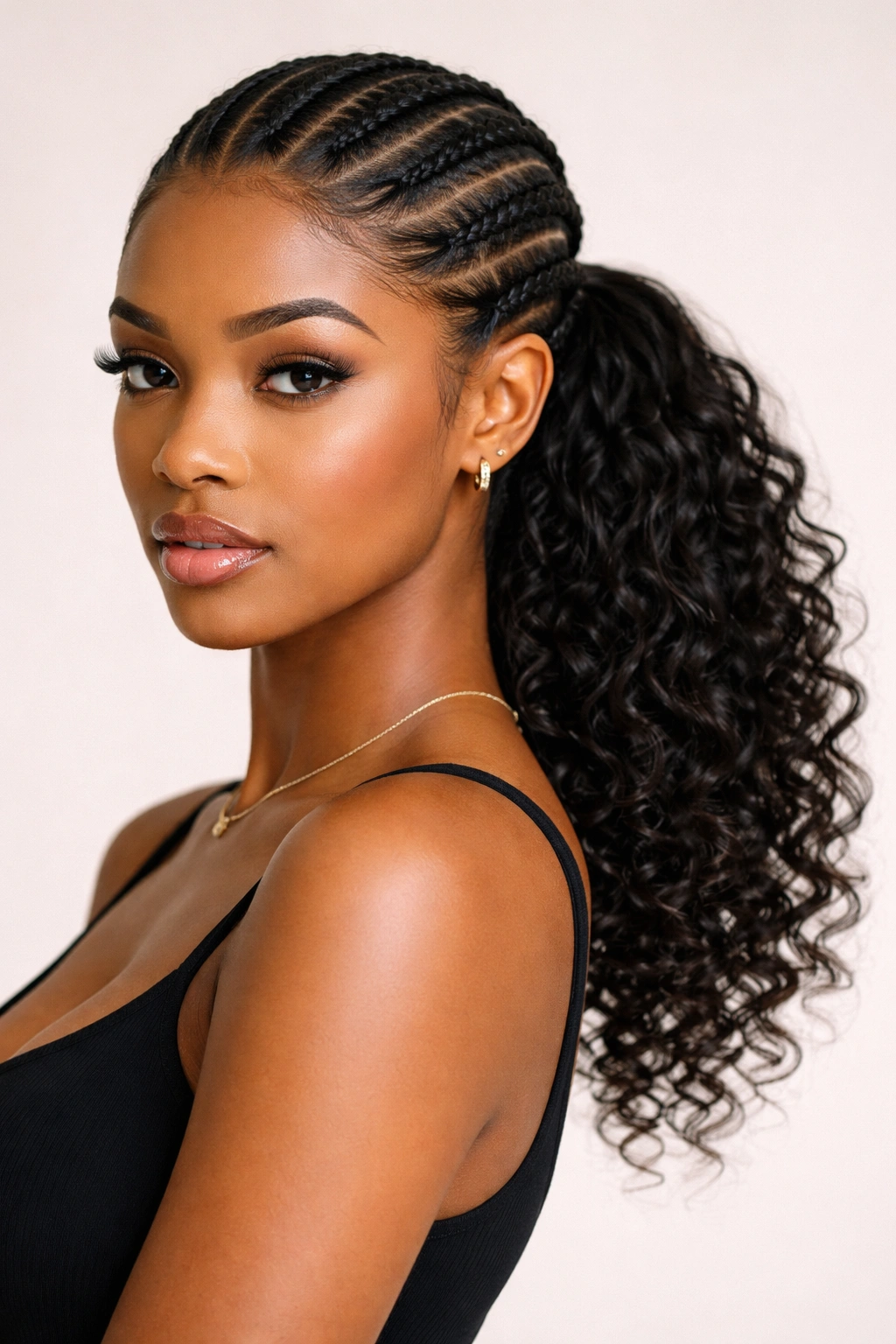
Straight roots and curly ends are a good match. The contrast keeps the top sleek while the bottom feels softer and more alive, which is why this version gets worn so often.
The best part is the texture shift. The cornrows hold the scalp flat, then the ponytail opens into coils, spirals, or loose curls. That movement makes the style feel less severe, especially if you wear braids a lot and want something with a little bounce.
If you use added hair, choose curls that match the density of your braids. A tiny puff of curls on thick cornrows can look skimpy. Too much curl on small braids can feel heavy. The sweet spot is a tail that still moves when you turn your head.
9. Low Cornrow Ponytail With Swooped Baby Hairs
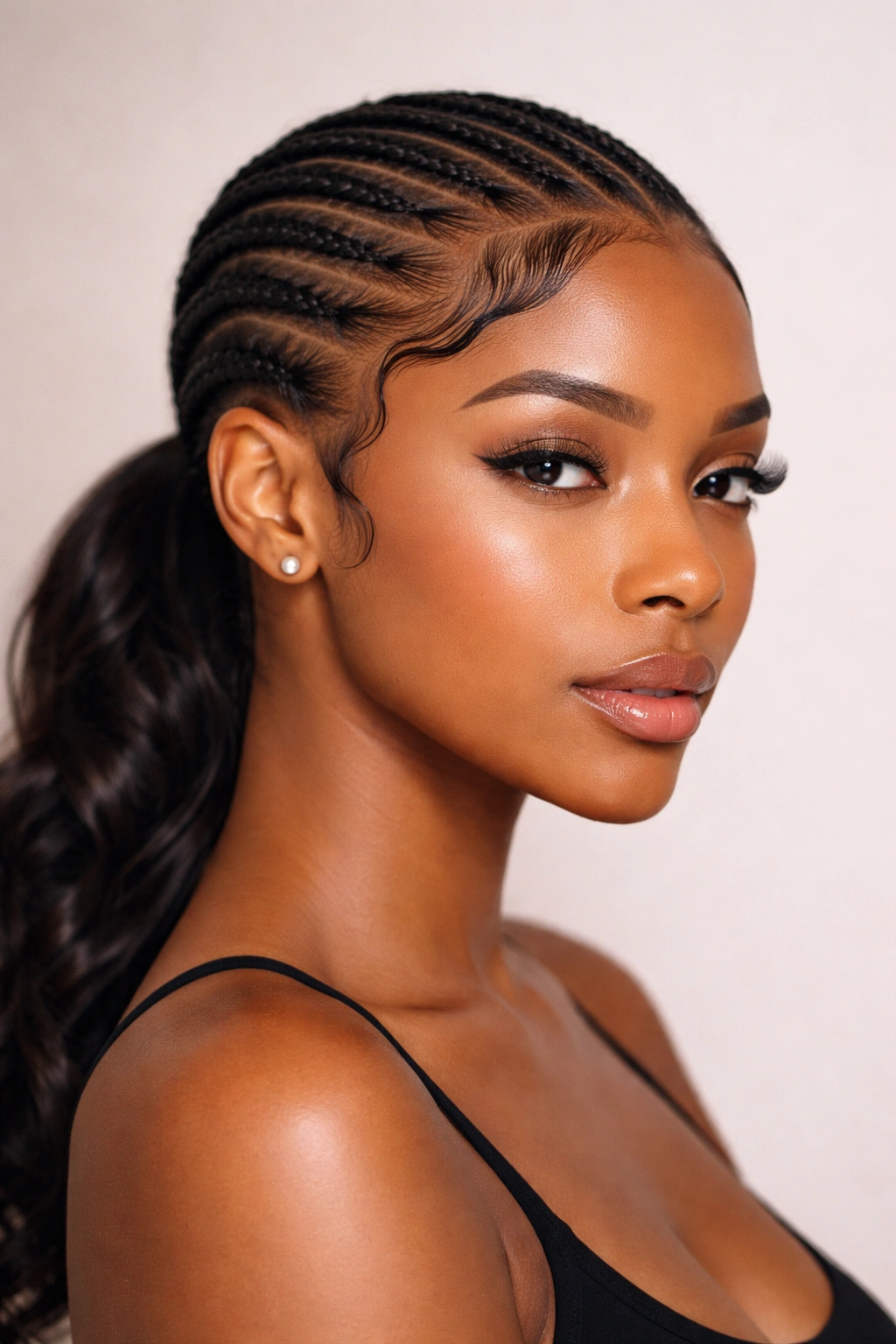
Edges change the whole face frame. A few soft swoops can make a low cornrow ponytail look finished instead of simply tied back.
The point is restraint. You do not need dramatic baby hairs running all the way to the temple unless that’s the look you want. One or two careful swoops near the front can soften a sharp middle part or side part and keep the hairline from looking too severe.
Keep the Edge Work Light
- Use a small amount of edge control so the hair stays smooth, not crunchy
- Brush in short strokes with a soft brush or toothbrush
- Stop while the lines still look soft
Too much gel can leave the front stiff and flaky by the end of the day. A little goes farther than people think.
10. Low Cornrow Ponytail With a Gold Cuff
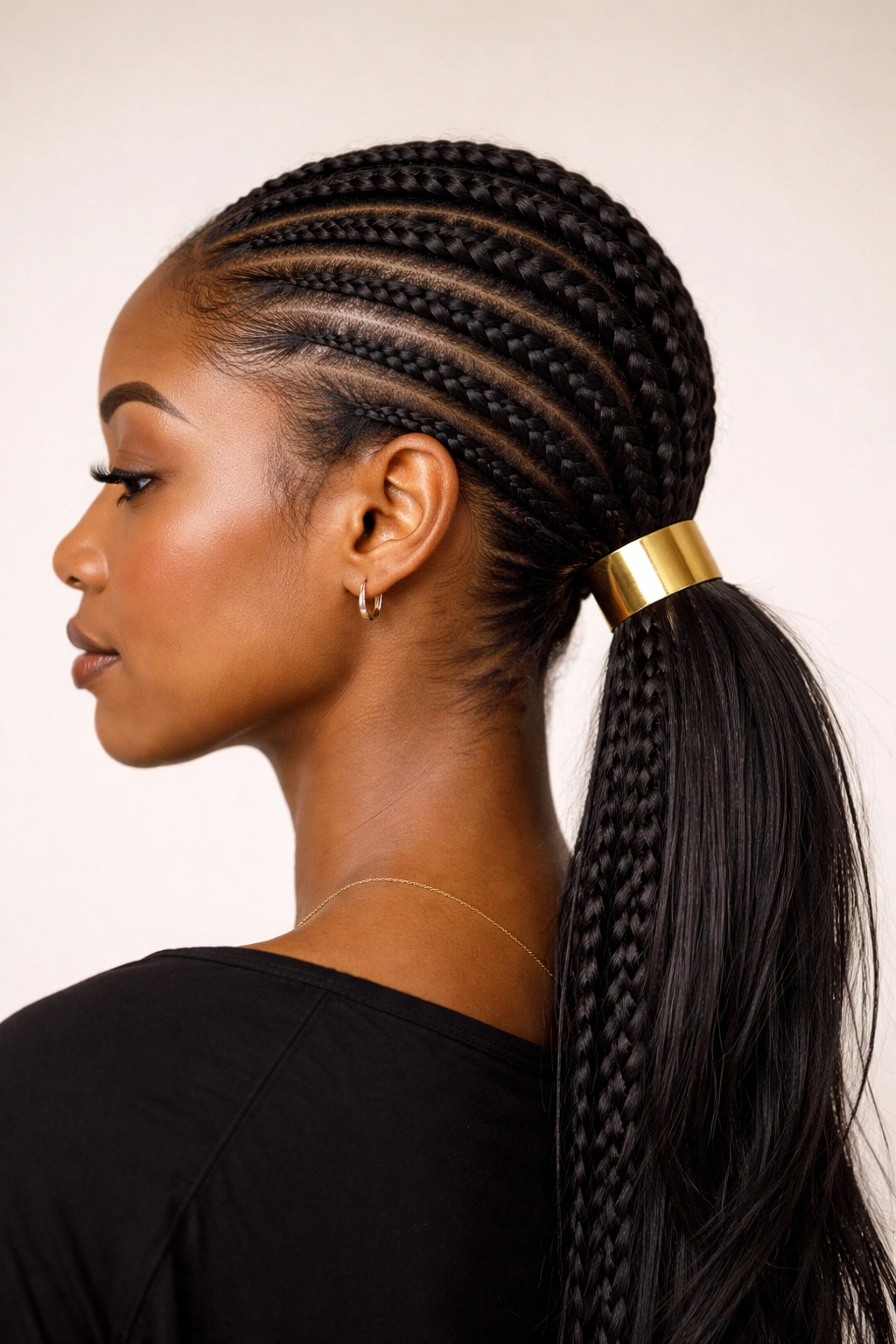
A gold cuff at the base can do more than extra braids sometimes. One clean accessory turns a simple low ponytail into a finished look without changing the braid pattern itself.
This is the style I like when the hair needs polish but not more structure. The cornrows stay plain, the ponytail stays low, and the metal detail gives the eye one place to land. Gold works especially well on deep brown or black hair because the contrast is sharp and easy to read.
Keep it to one strong piece or a very small pair. Too many cuffs start to look noisy. One good accent is usually enough.
11. Low Cornrow Ponytail With One Center Braid Accent
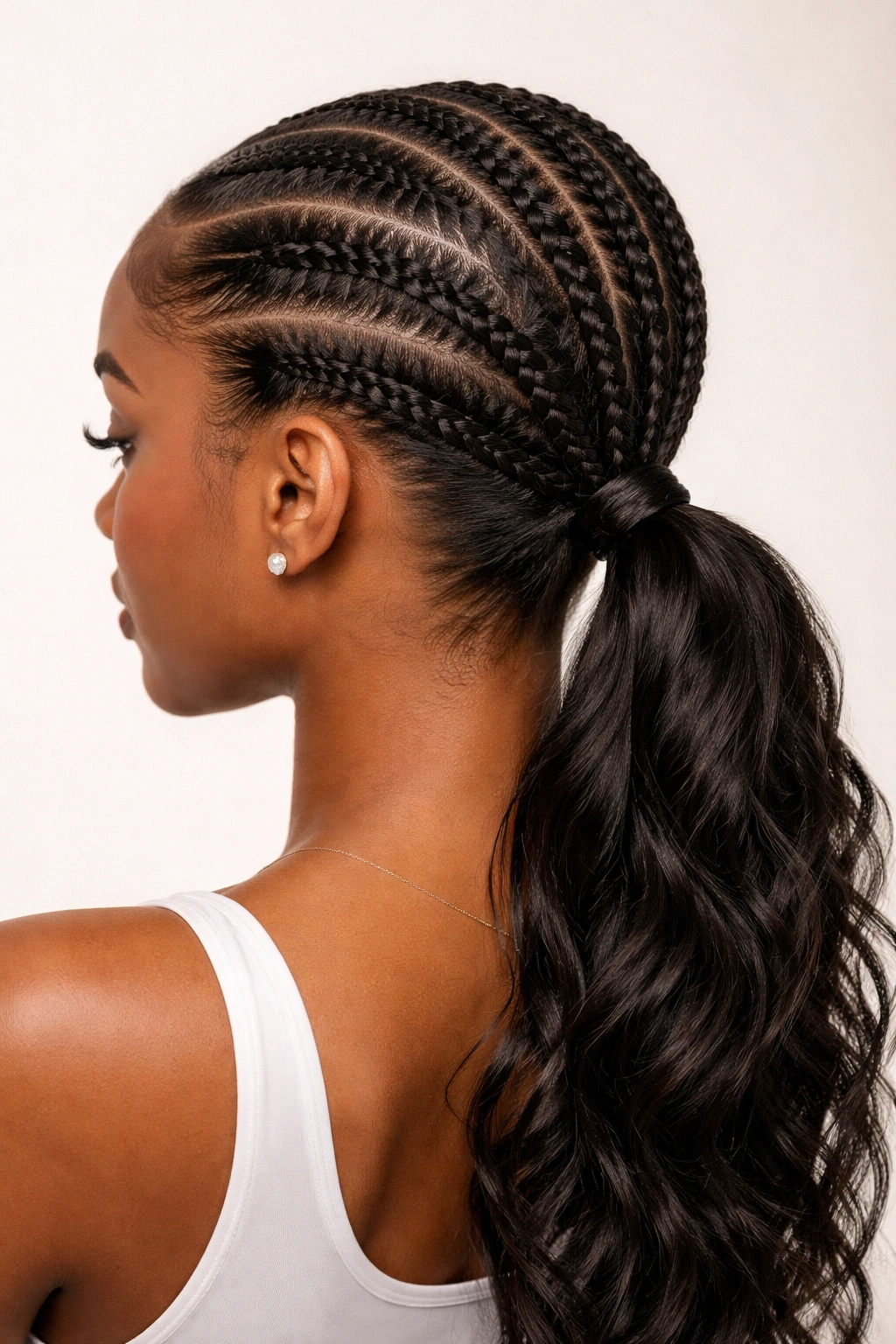
A single accent braid can change the whole read of the style. It gives the middle part or crown line a focal point, which makes the ponytail feel more considered.
This works nicely when you want something different but do not want a full pattern of extras. The accent braid can run down the center, sit just off the part, or wrap into the base. Small move. Big effect. It’s the braid version of a clean necklace with a plain shirt.
I like this best for people who want detail without extra weight. One accent braid keeps the style neat and lets the ponytail stay sleek, not crowded.
12. Curved-Part Low Cornrow Ponytail
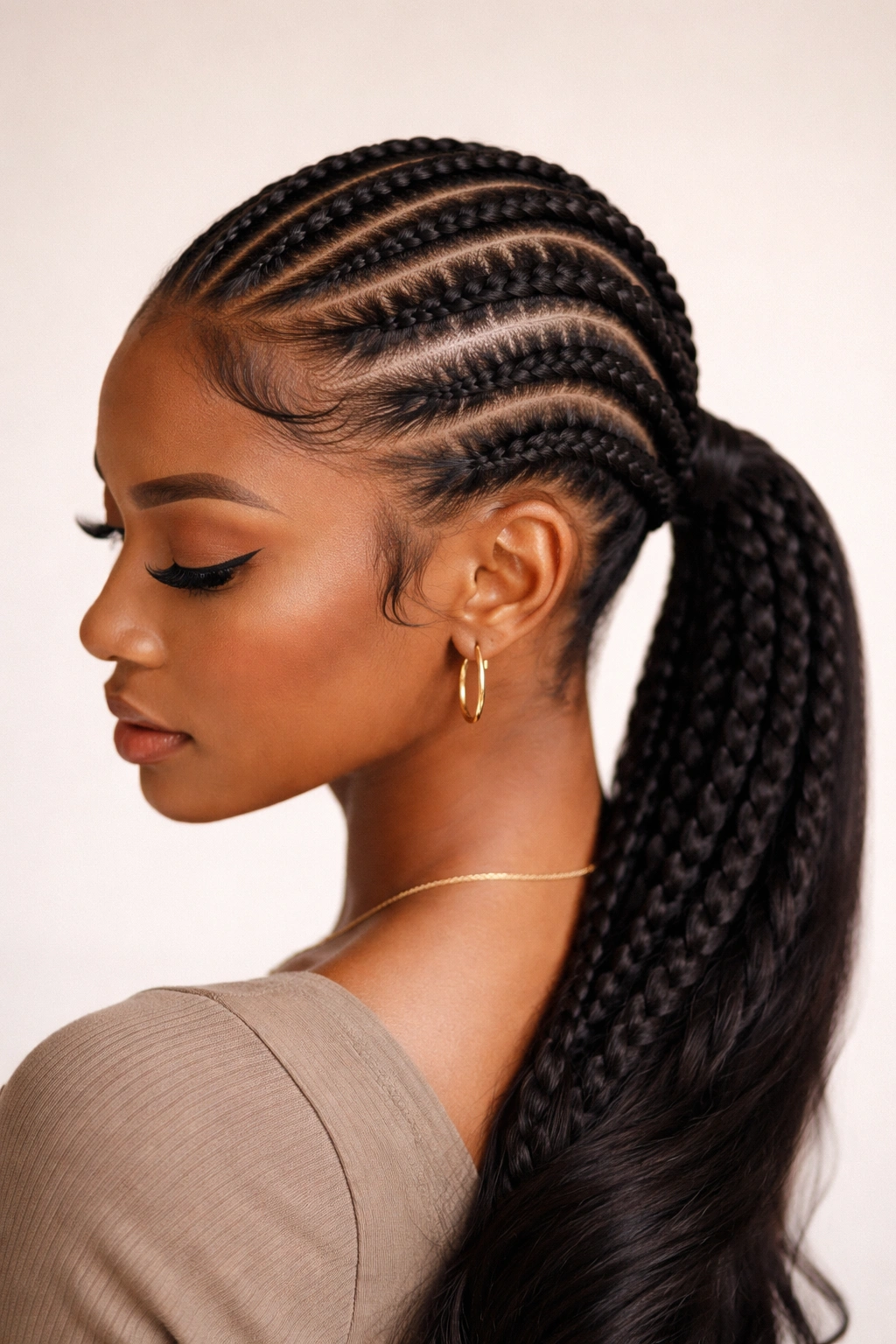
Why do curved parts feel softer than straight ones? Because the eye follows the arc. The shape moves around the head instead of cutting across it, so the whole style feels more rounded.
Curved parts work well if you want the ponytail to sit low but still have a little flair at the crown. The cornrows can fan out from the curve, then gather into the nape. That creates a shape that is neat without looking stiff. I especially like it on people who wear a lot of center parts and want a break from the usual line.
Where It Looks Best
- On medium to thick hair, where the curve can show clearly
- With a straight ponytail tail, so the top pattern stays the focus
- With minimal accessories, since the part already carries the style
It is one of those details that looks subtle up close and smarter from a few feet away.
13. Low Cornrow Ponytail With Beaded Ends
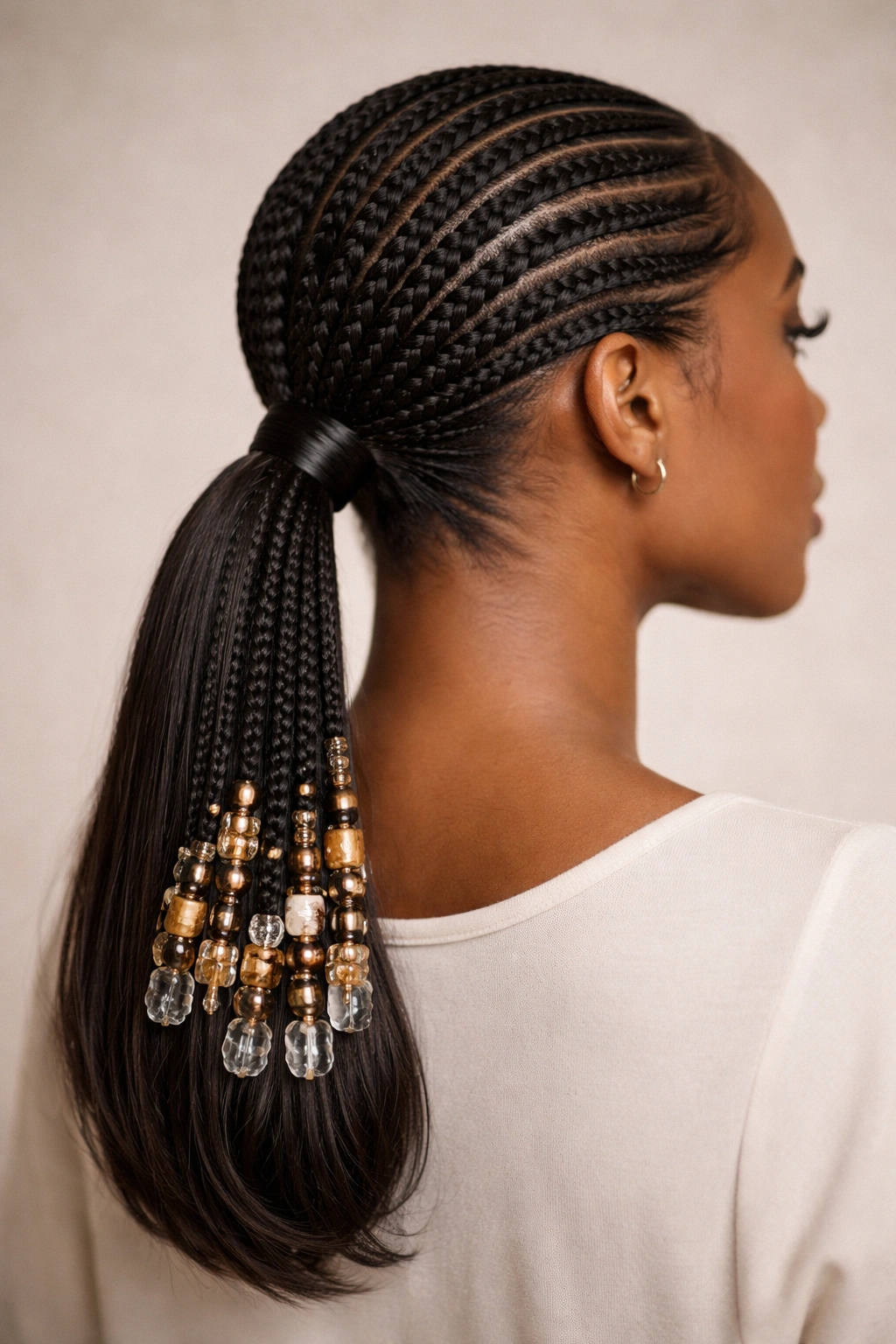
Beads give the ponytail a little sound, a little movement, and a lot of personality. The key is keeping the base sleek so the beads do not take over the whole style.
This version suits someone who wants the low cornrow ponytail to feel personal, not plain. You can use wood beads, clear beads, gold accents, or a single cluster near the ends. The sound is part of the appeal, sure, but the visual weight matters too. A few beads at the tail can look sharp. A full head of them can get heavy fast.
Make sure the ends are secured properly before adding anything. Loose beads slide and tangle, and that is never cute halfway through the day.
14. Low Cornrow Ponytail With a Scarf Wrap
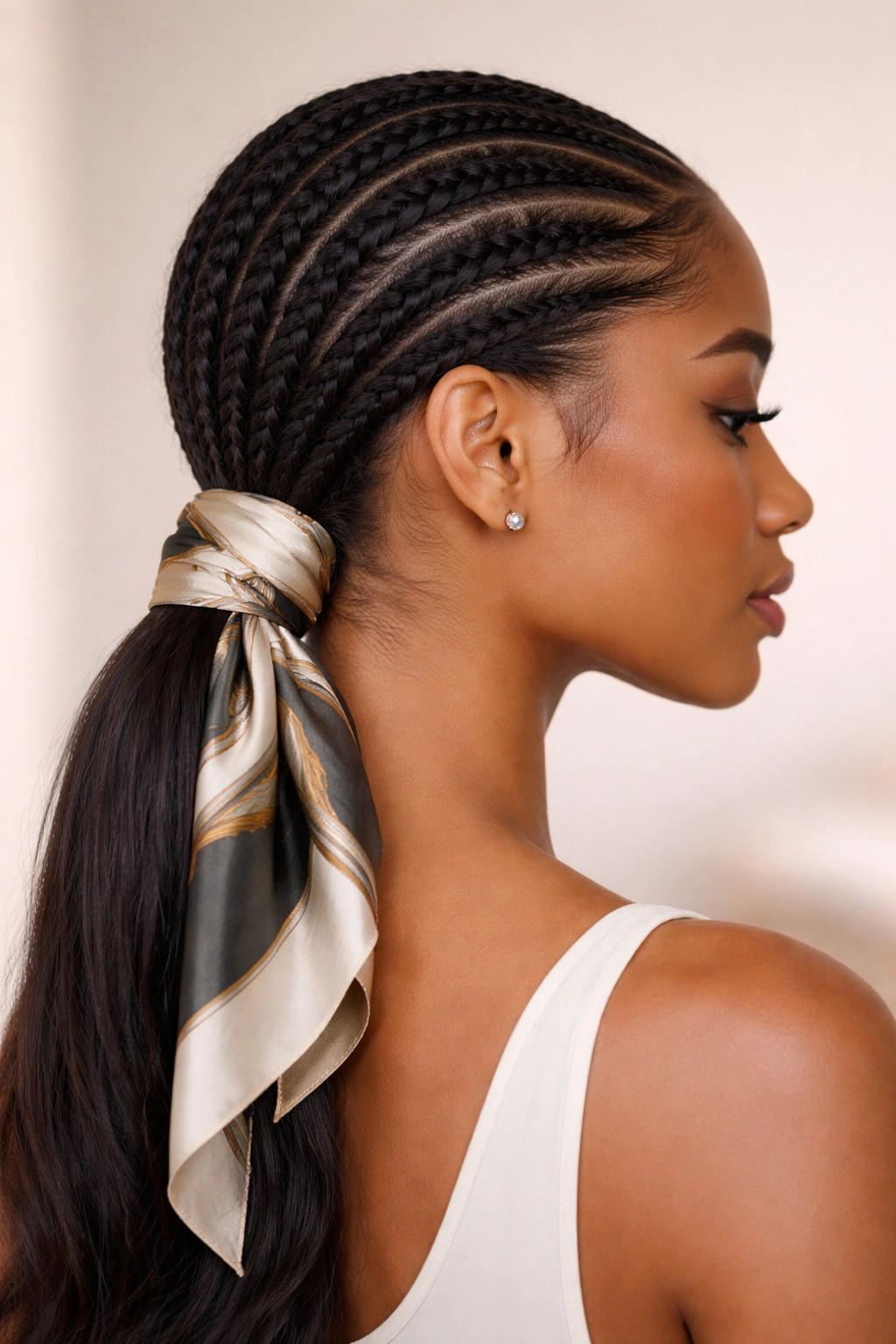
A scarf wrap is one of the easiest ways to make a low ponytail feel intentional. It hides the hair tie, adds color or texture, and gives the style a softer finish.
Silk and satin scarves work well because they sit smoothly at the nape. Cotton can be fine too, but it tends to hold a bit more bulk. The trick is to tie it close enough that the knot looks neat, then tuck the ends so they do not flap around. I like this on second-day hair, when the scalp still looks fresh but you want something extra.
This is not the style to overcomplicate. One scarf, one clean knot, one low ponytail. That’s enough.
15. Low Cornrow Ponytail With a Braided Bun Wrap
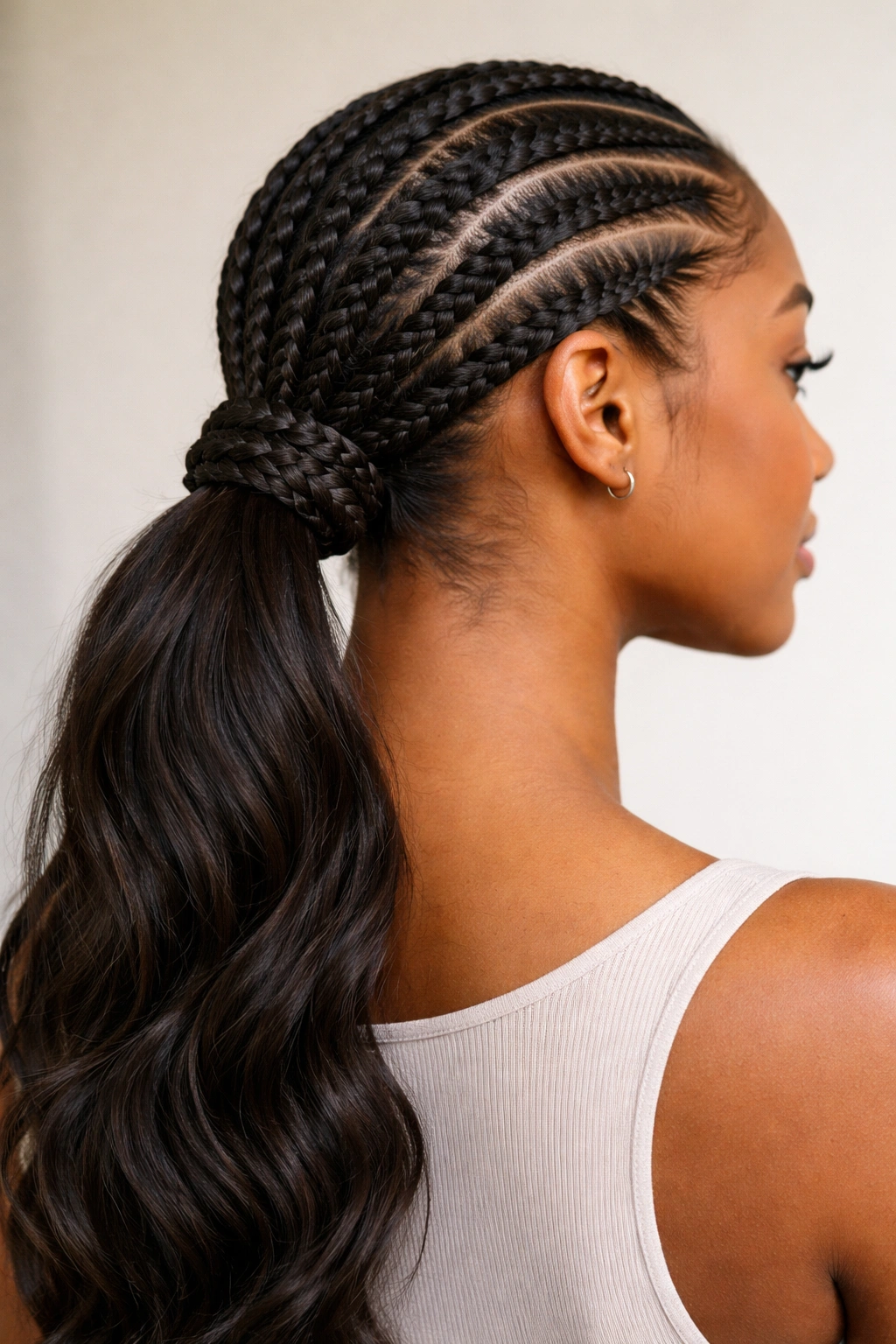
A braided bun wrap gives the low ponytail a more structured finish than a scarf does. Instead of fabric, the braid itself loops around the base, which makes the whole shape look tighter and more formal.
This one works well for weddings, dinners, or any event where you want the hair to look dressed up without adding a full updo. The bun wrap also hides the elastic better than most accessories. That matters. A visible band can make an otherwise polished style look half-done.
Unlike a scarf wrap, this finish stays in the same mood as the braids. No soft contrast. Just a stronger, neater line. If you like the hair to look tidy from every angle, this is a solid choice.
16. Low Cornrow Ponytail With Goddess Curls
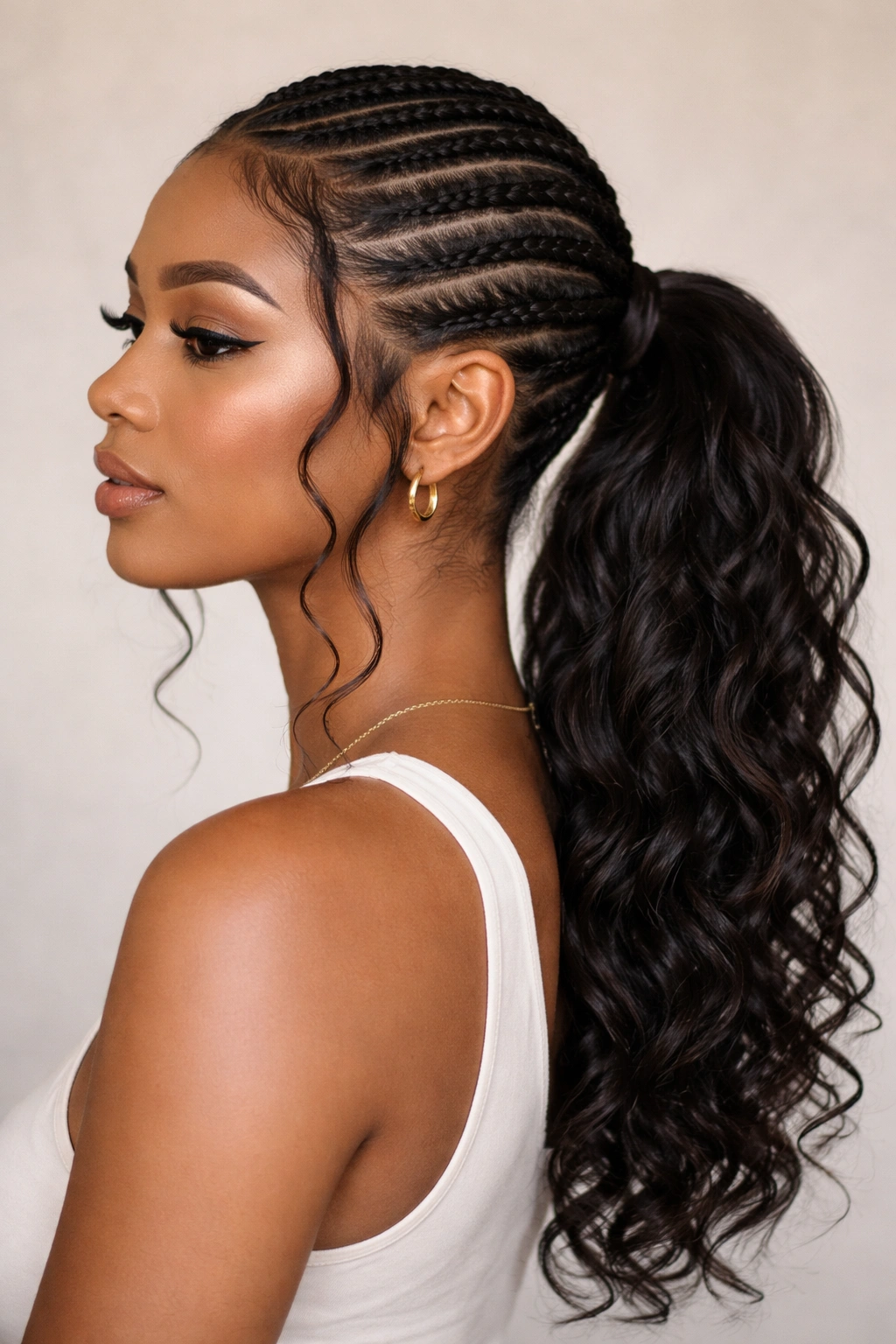
A few loose curls woven in among the cornrows can change the feel of the entire style. The roots stay controlled, but the ends and face-framing pieces soften everything.
This is the version for someone who likes movement. The curls can hang near the face, spill from the ponytail, or sit just at the ends. The style reads less severe than a tight straight-back look, but it still keeps that sleek low base. That balance is why it keeps showing up in polished, dressy looks.
Where the Softness Belongs
The curls work best when they are placed with intention. Around the face, they soften the line of the jaw. In the ponytail, they break up the weight of the braids. Too many curls near the crown, though, can make the style look busy.
Keep the crown smooth. Let the curls do the rest.
17. Crisscross-Part Low Cornrow Ponytail
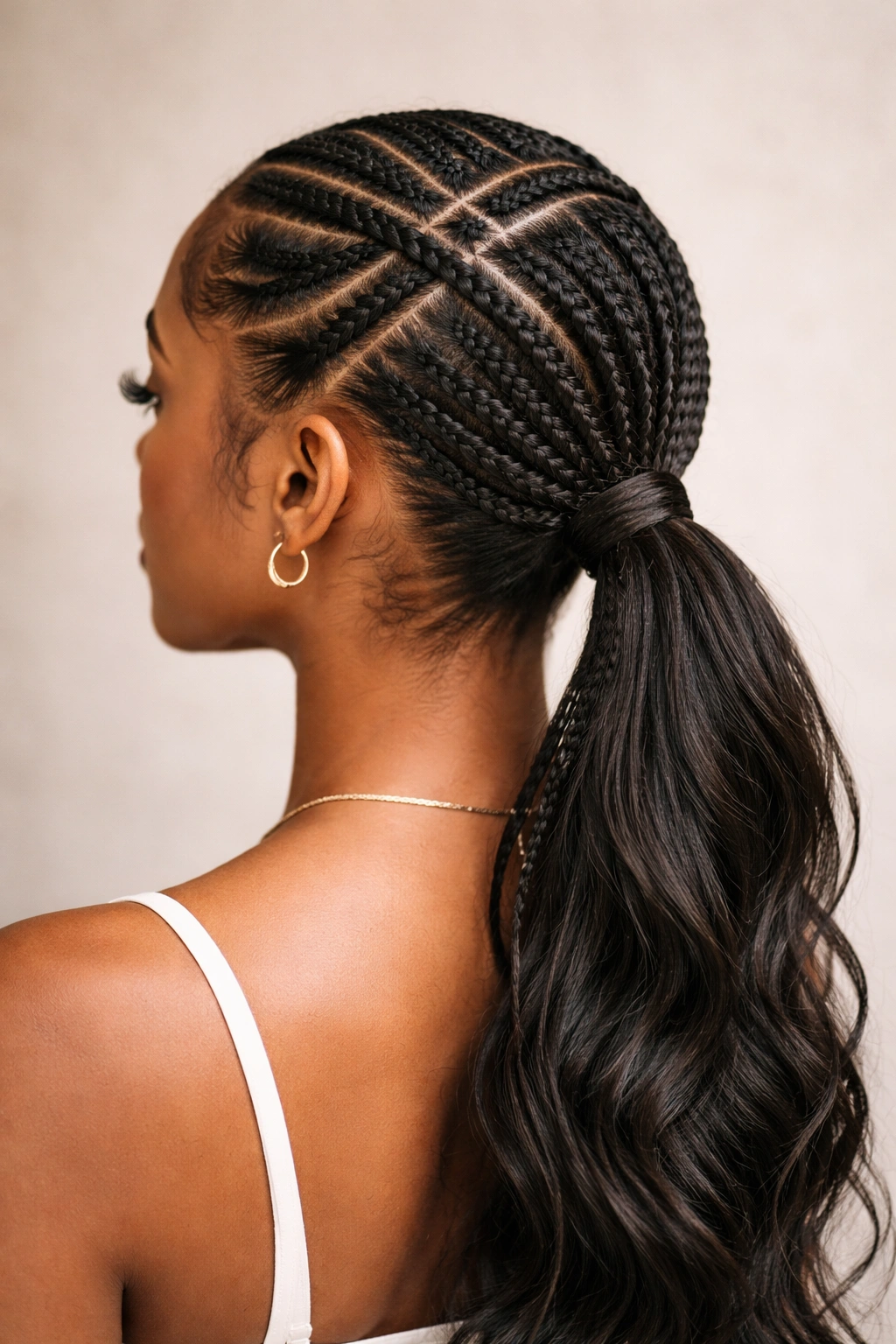
The first thing you notice about a crisscross-part ponytail is the geometry. The lines intersect, then settle into the low ponytail, and that pattern gives the whole style a built-in finish.
This look takes more patience than a straight part, but the payoff is strong. The crisscross pattern makes the scalp look styled from every angle, not just the front. It also works nicely for people who want something different without turning the hair into a full braid sculpture.
The key is clean spacing. If the sections are uneven, the crisscross reads messy instead of clever. Keep the shapes deliberate and let the pattern stay visible near the crown.
18. Side-Swept Feed-In Low Cornrow Ponytail
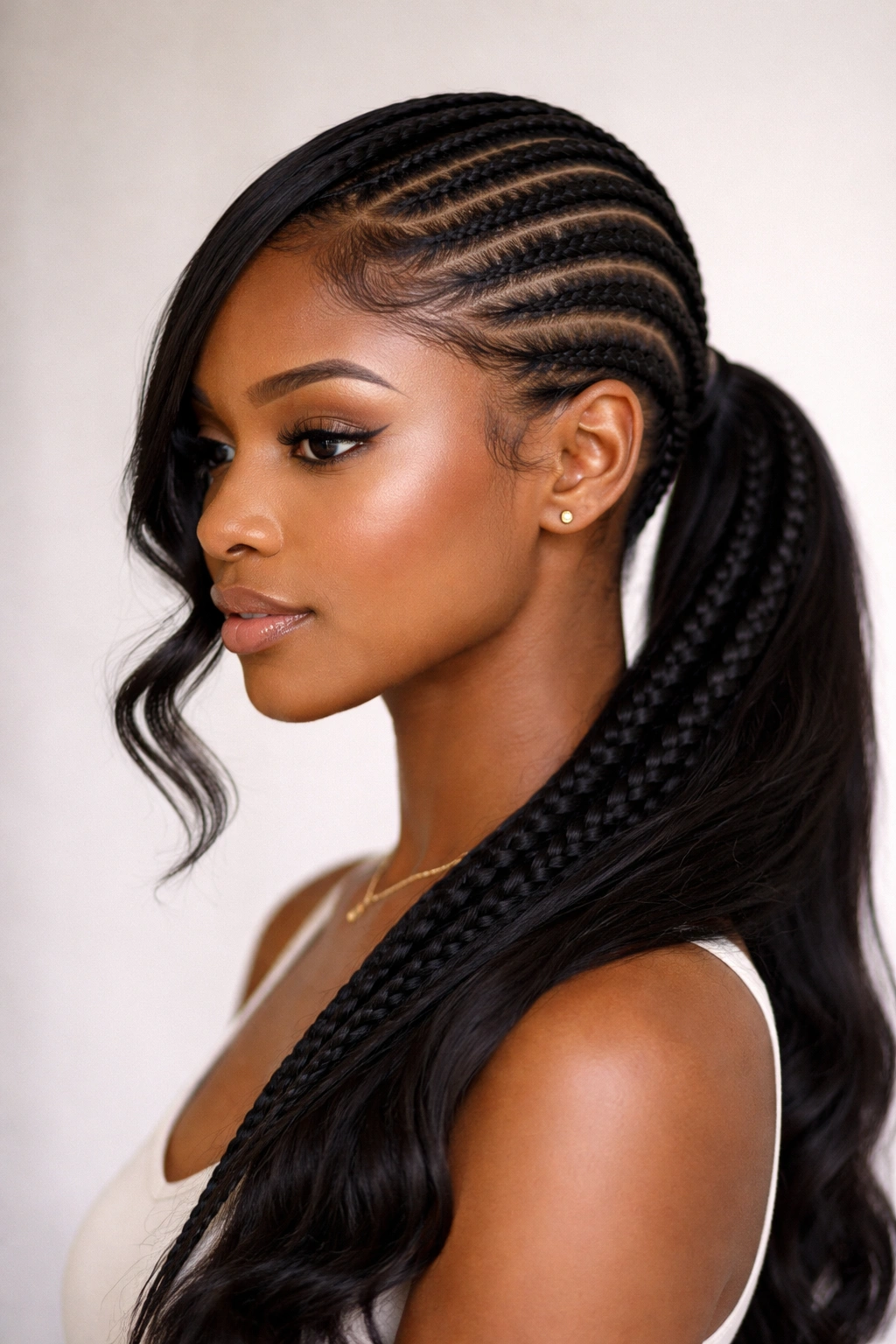
A side-swept feed-in ponytail is a good answer for anyone who does not love a middle part. It brings the eye across the face instead of down the center, which can feel softer and a little more flattering.
The feed-in part helps the braids sit flat at the start, and the side sweep gives the crown some motion before everything drops into the nape. I like this especially with long earrings or a one-shoulder top, because the hair and outfit can work together without fighting for attention.
It is one of the easiest ways to make a low ponytail feel less expected. Same basic shape. New angle.
19. Sculpted Swoop Cornrow Ponytail
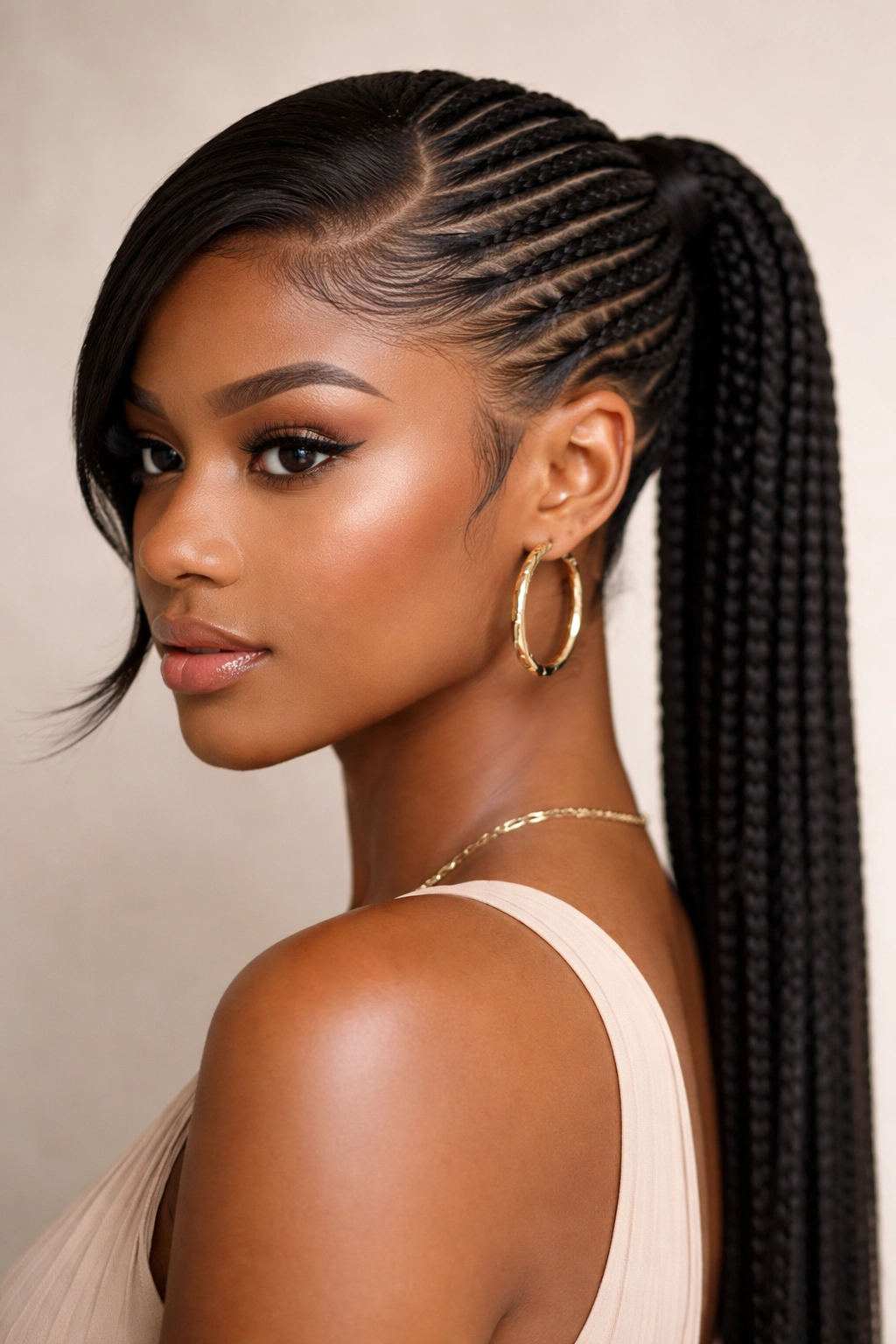
What makes a sculpted swoop stand out? The front hairline becomes part of the design instead of just being tucked away.
This style usually has a smooth, curved front section that sweeps across the forehead or temple before joining the rest of the cornrows. It looks especially good when the rest of the braids stay tight and low. The swoop softens the face, but it also creates a strong line that feels polished.
Best Way to Wear It
- Keep the swoop smooth but not too thin
- Use gel sparingly so the front does not get hard or flaky
- Let the ponytail stay simple so the front detail stands out
This is a strong choice if you want the hairline to do more of the styling work. Clean, not crowded.
20. Sleek Braided Tail Low Cornrow Ponytail
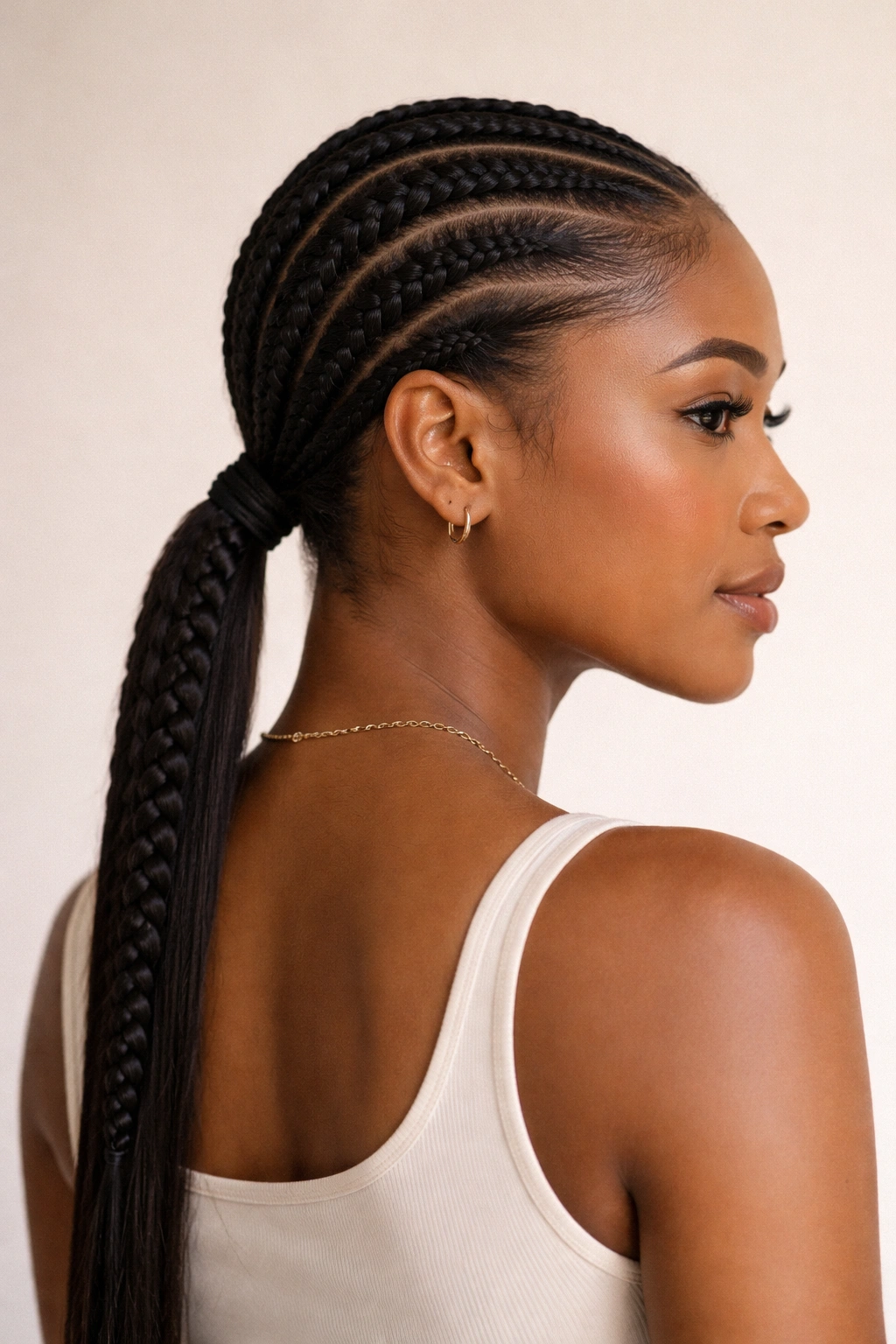
A braided tail keeps the low ponytail tidy for longer than loose hair does. The braid holds the length together, reduces tangling, and gives the style a sharper end point.
This is a smart choice when you know the ponytail will be touched, tossed, or tucked into a coat. A loose tail can frizz faster. A braided tail stays neater. It also gives the whole style a little more structure, especially if the cornrows at the top are simple.
I like this version for travel, long days, or any situation where maintenance needs to be low. It is practical in the best way.
21. Low Cornrow Ponytail With Gold Thread
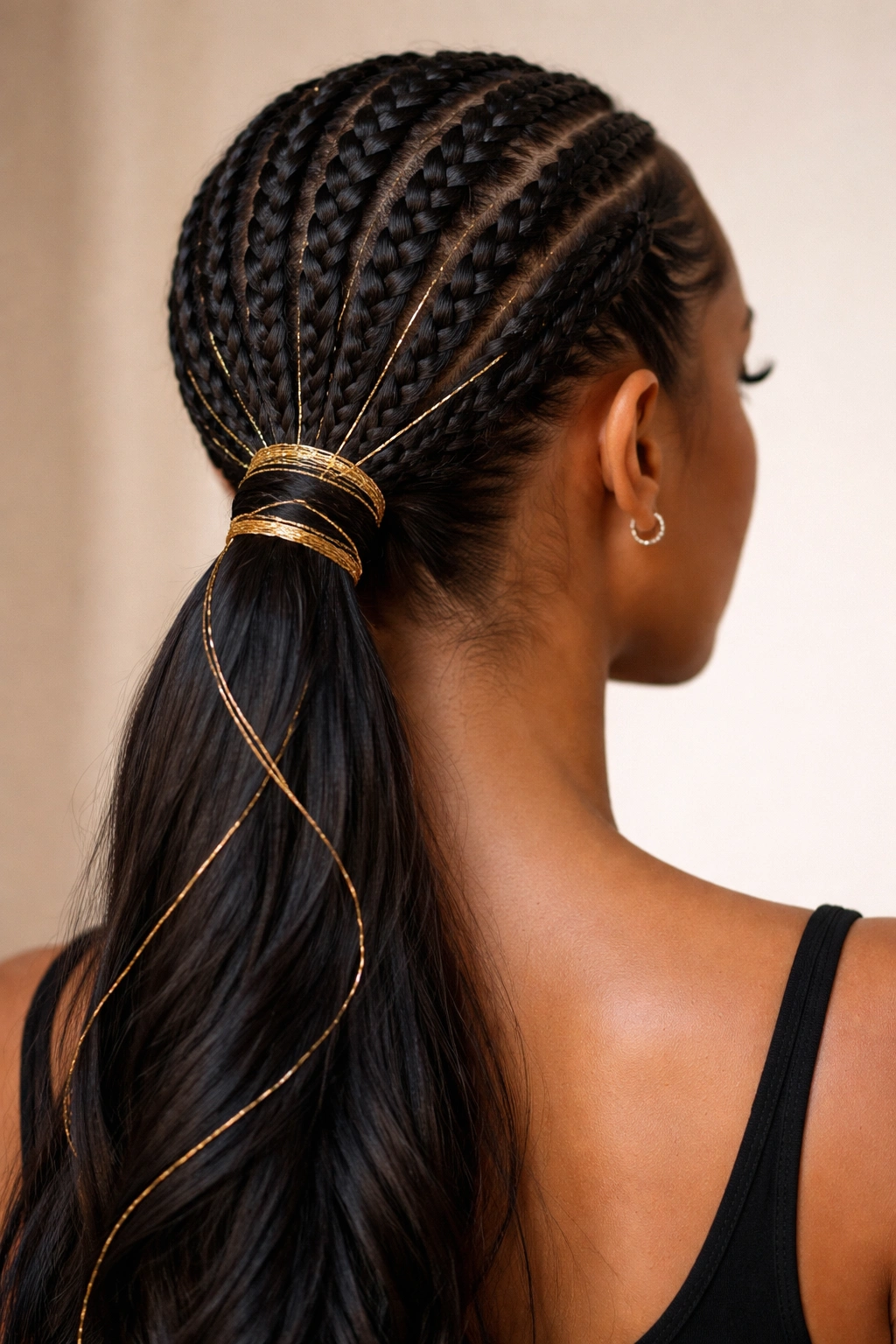
Gold thread gives a softer shine than a metal cuff. It can run through a braid, wrap around the base, or trace one row, which makes it feel more integrated than a single accessory.
This works well on dark hair because the thread stands out without stealing the whole look. I prefer it over bigger accessories when the braid pattern is already detailed. Thread adds just enough light and movement to make the style feel special.
Compared with cuffs, thread is quieter. Compared with a scarf, it is cleaner. If you want the hair itself to stay the focus, this is a good place to start.
22. No-Extension Low Cornrow Ponytail
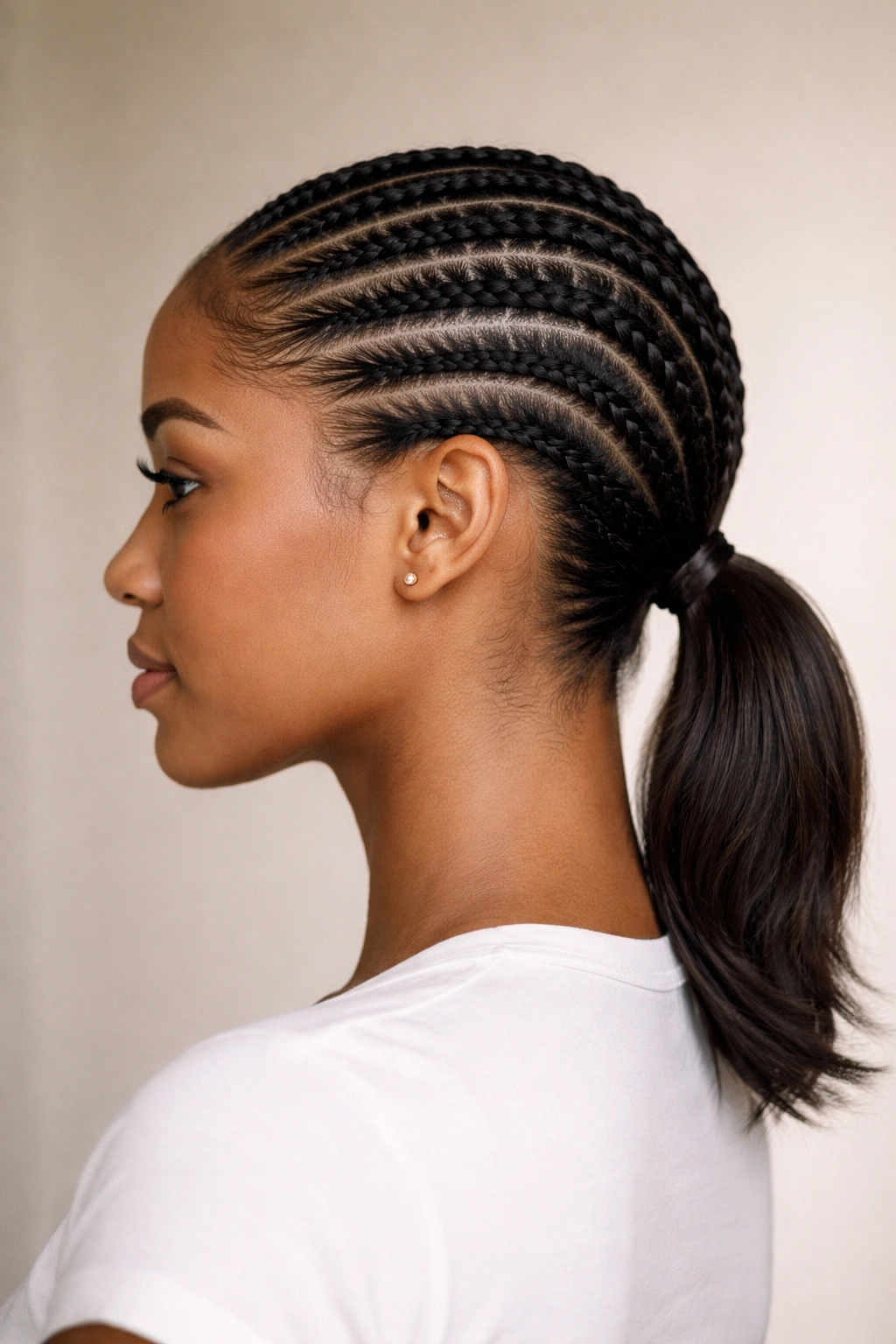
Sometimes the cleanest version uses no added hair at all. A no-extension low cornrow ponytail can look lighter, sit flatter, and feel easier on the scalp.
This is the one I point people toward when they want less bulk or when their hair already has enough length for a proper ponytail. It also tends to be easier to sleep in. Less weight means less pulling, and that matters if you wear braids often.
What to Ask For
- Short, neat rows that follow the head shape
- A ponytail base that stays close to the nape
- Minimal product at the roots so the finish stays soft, not greasy
If you want the style to feel clean from the side and back, this is a very good place to land.
23. Long Extension Low Cornrow Ponytail
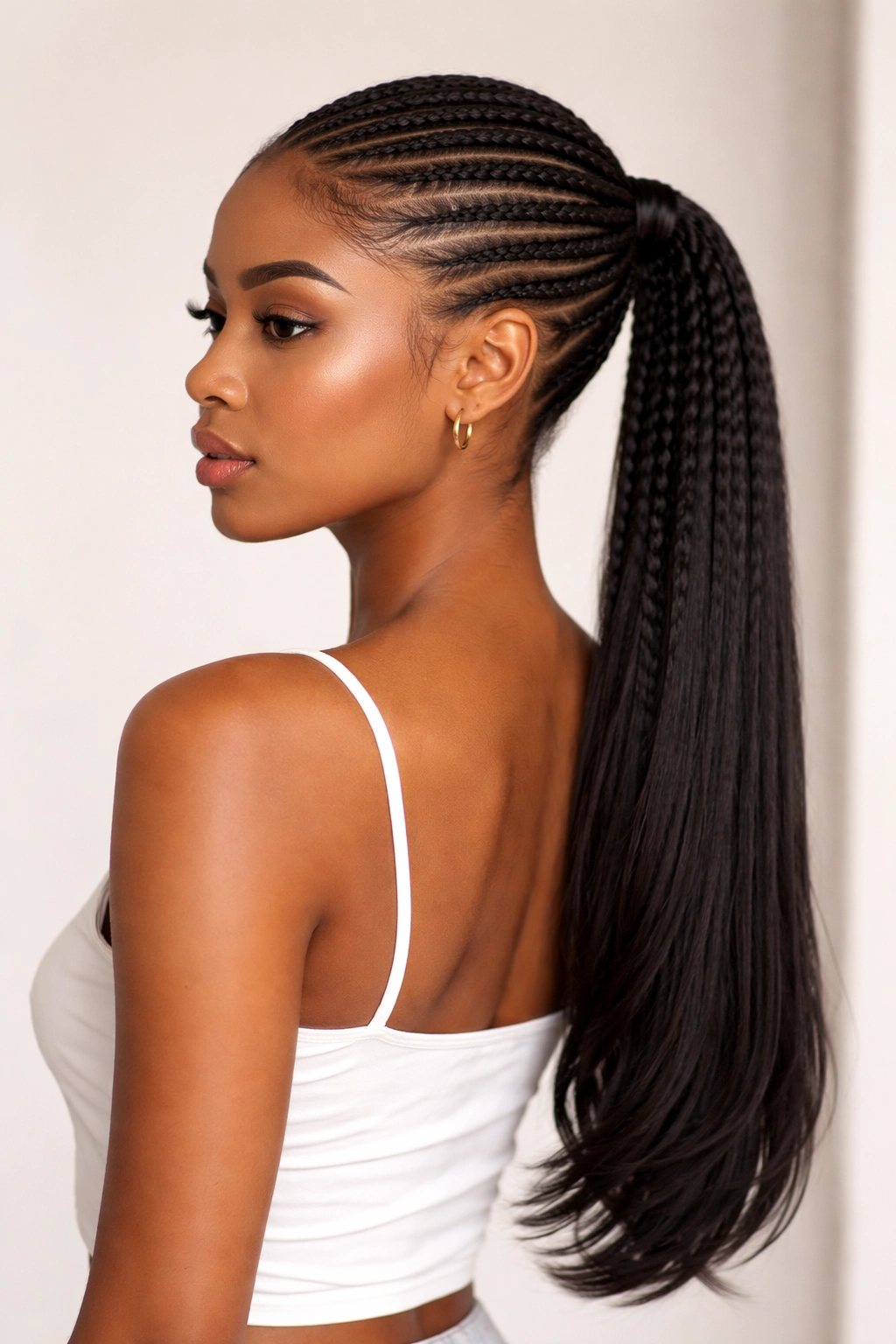
A long extension ponytail changes the whole mood of the style. The cornrows give the scalp that crisp, polished base, then the length brings drama right where you want it.
The important part is weight. Too much added hair can drag at the roots and make the style feel heavy by the end of the day. A smart install uses enough length to look dramatic, but not so much that the ponytail swings like it has its own address. Mid-back length or longer can look beautiful; it just needs a secure base and a braider who knows how to distribute the tension.
I also like a slight taper near the ends. A blunt, huge tail can overwhelm a low cornrow style fast. Let the top stay sleek and the length do the talking.
24. Layered Part Pattern Low Cornrow Ponytail
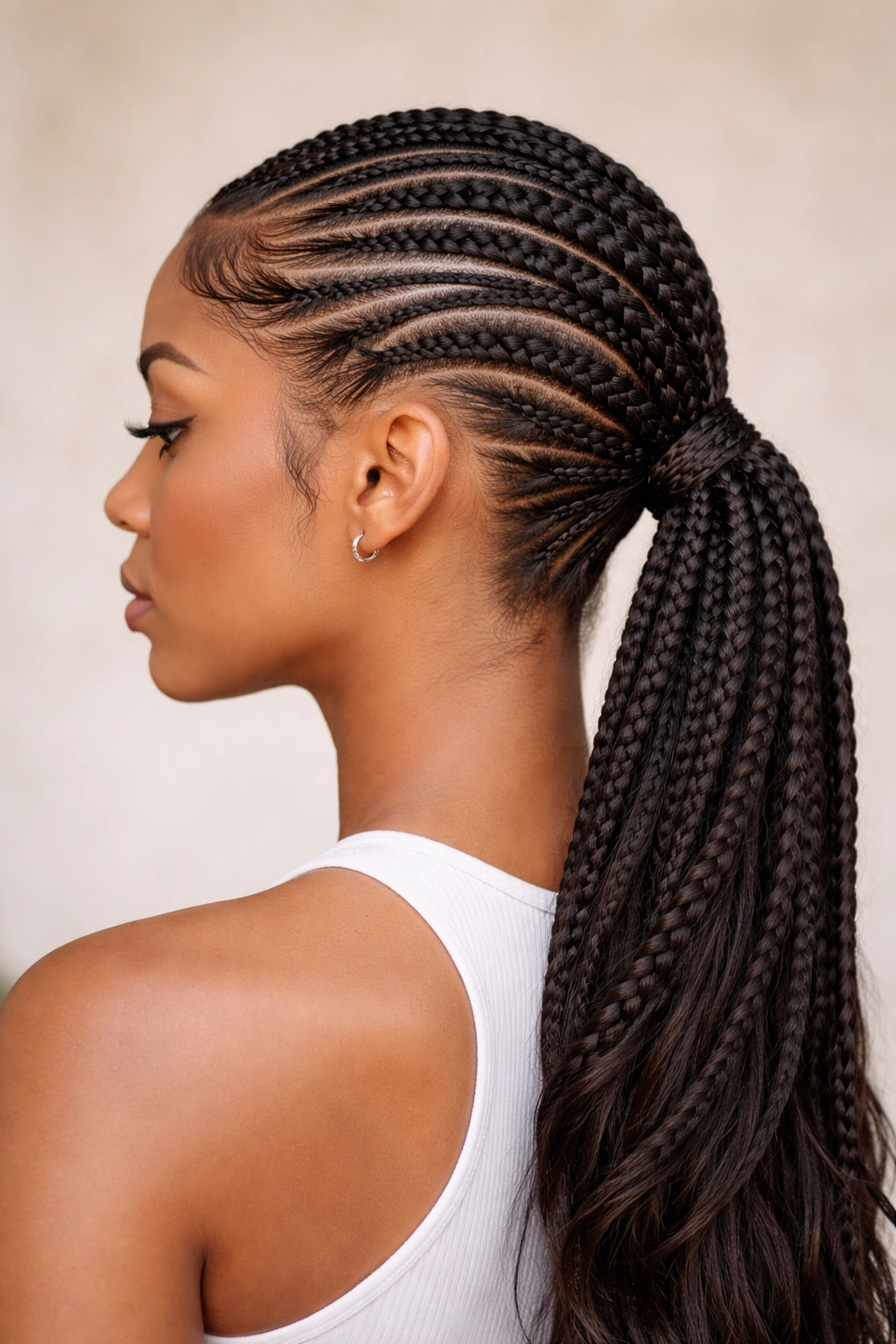
Layered parts make the style look more intricate without turning it into a full braid showpiece. The rows stack at slightly different heights, so the head shape gets more depth from root to nape.
This is a good choice if a plain straight-back pattern feels too expected. The layered layout can start with smaller rows near the hairline, then widen or shift as they travel back. It gives the ponytail base a sense of motion even before you add accessories or curls.
What Makes It Work
- Clear sectioning so the layers don’t blur together
- Consistent braid size within each layer
- A simple ponytail finish so the pattern stays readable
It looks especially nice on medium to thick hair, where the layers have enough room to show.
25. Clean Minimalist Low Cornrow Ponytail
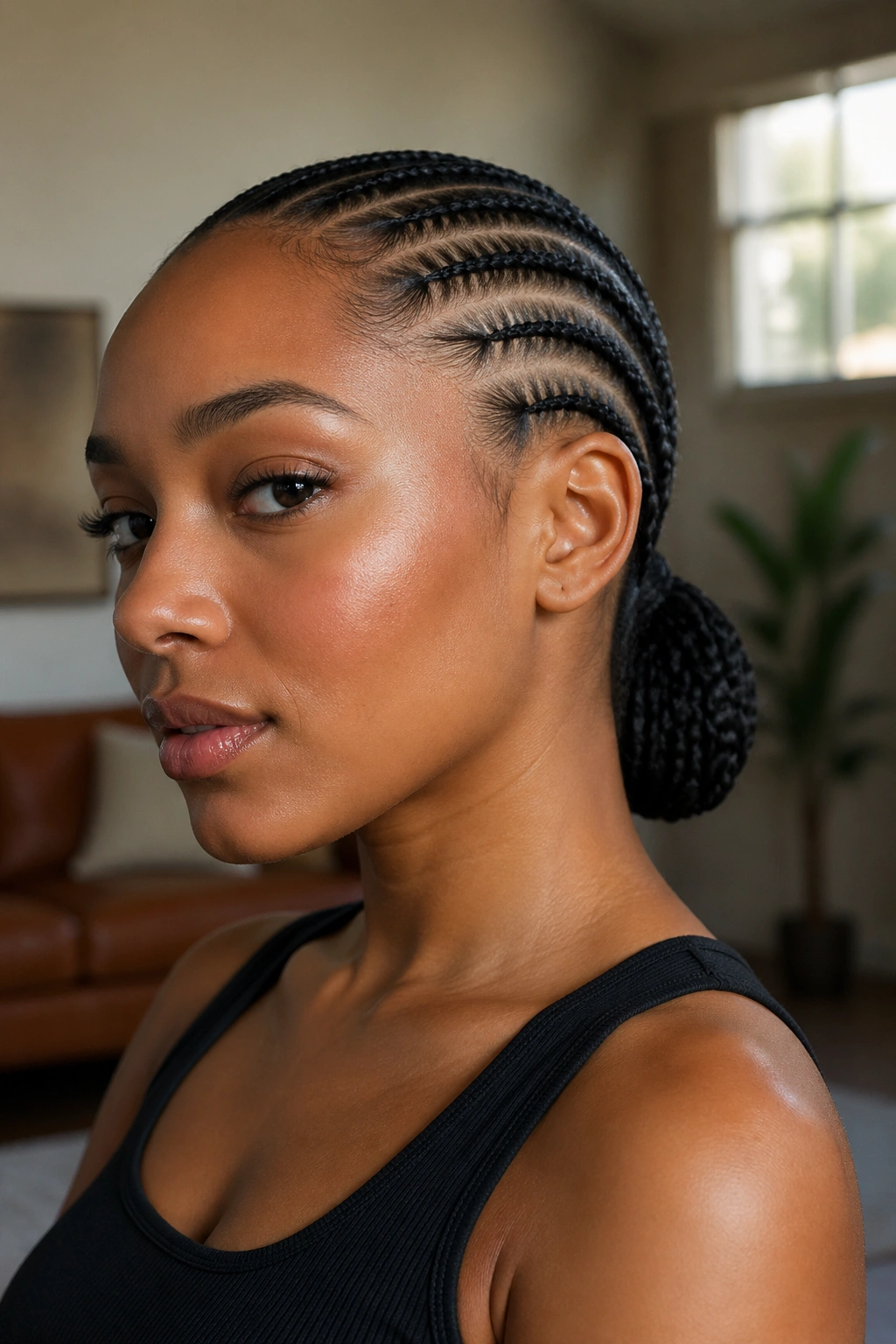
If you want the sleekest version, this is the one I would keep near the top of the list. A clean minimalist low cornrow ponytail uses tight rows, a low base, and almost no extras, which makes every line feel sharper.
The appeal is in the restraint. No extra cuffs. No scarf. No beads. No overworked edges. Just smooth braids, a neat nape, and a tail that sits exactly where it should. That kind of simplicity can look stronger than a more decorated style, especially when the parts are straight and the finish is glossy.
And honestly, that’s the charm of the whole look. You can dress it up or strip it back, but the shape still holds. When you want the hair to look clean, controlled, and easy to wear, this is the one that keeps making sense.
