



Red braided ponytails for Black women can look soft, sharp, rich, or loud, and the color you pick changes the whole mood before the braid pattern even gets a chance to speak. Cherry red reads bright and a little daring. Burgundy leans deep and expensive. Copper brings warmth that feels almost lit from within, even when the style itself is simple.
The funny part is that the ponytail placement matters just as much as the shade. A high crown ponytail feels sporty and bold. A low nape ponytail feels polished. A side-swept version can soften the face in a way that straight-back braids never quite do. And once you add braid size, parting style, curls at the ends, or a scarf wrap, the same red hair can land in a totally different place.
That is why this style family keeps pulling people back. Red does not need much help, but it does reward good structure. Tight parts, clean feed-ins, neat knotless bases, and the right length all make the color look more intentional. Start with the high-feed-in version, because it shows off the shape fast and sets the tone for everything that follows.
1. Cherry Red High Feed-In Ponytail
A high feed-in ponytail is one of those styles that looks more complicated than it is, and cherry red makes every braid line pop. The style sits high at the crown, so the eye goes straight up first, then follows the length of the ponytail down the back. That height gives the face a little lift. It also makes the red look brighter than it would in a lower style.
Why the Color Hits at the Crown
Feed-in braids start slim and build gradually, which keeps the front from looking bulky. That matters with bright red hair, because chunky roots can turn loud in a way that feels heavy. Keep the front braids a touch thinner than the back ones, and the whole style settles better.
- Best for medium to long stretched hair or added braiding hair
- Looks strongest with 6 to 10 feed-in braids feeding into one ponytail
- Place the ponytail at the crown, not halfway down the head
- Finish the base with one wrapped braid so the elastic disappears
Tip: keep the parts straight and the first inch of each braid snug. That little bit of neatness makes the red read clean instead of messy.
2. Burgundy Knotless Braided Ponytail with Curved Parts
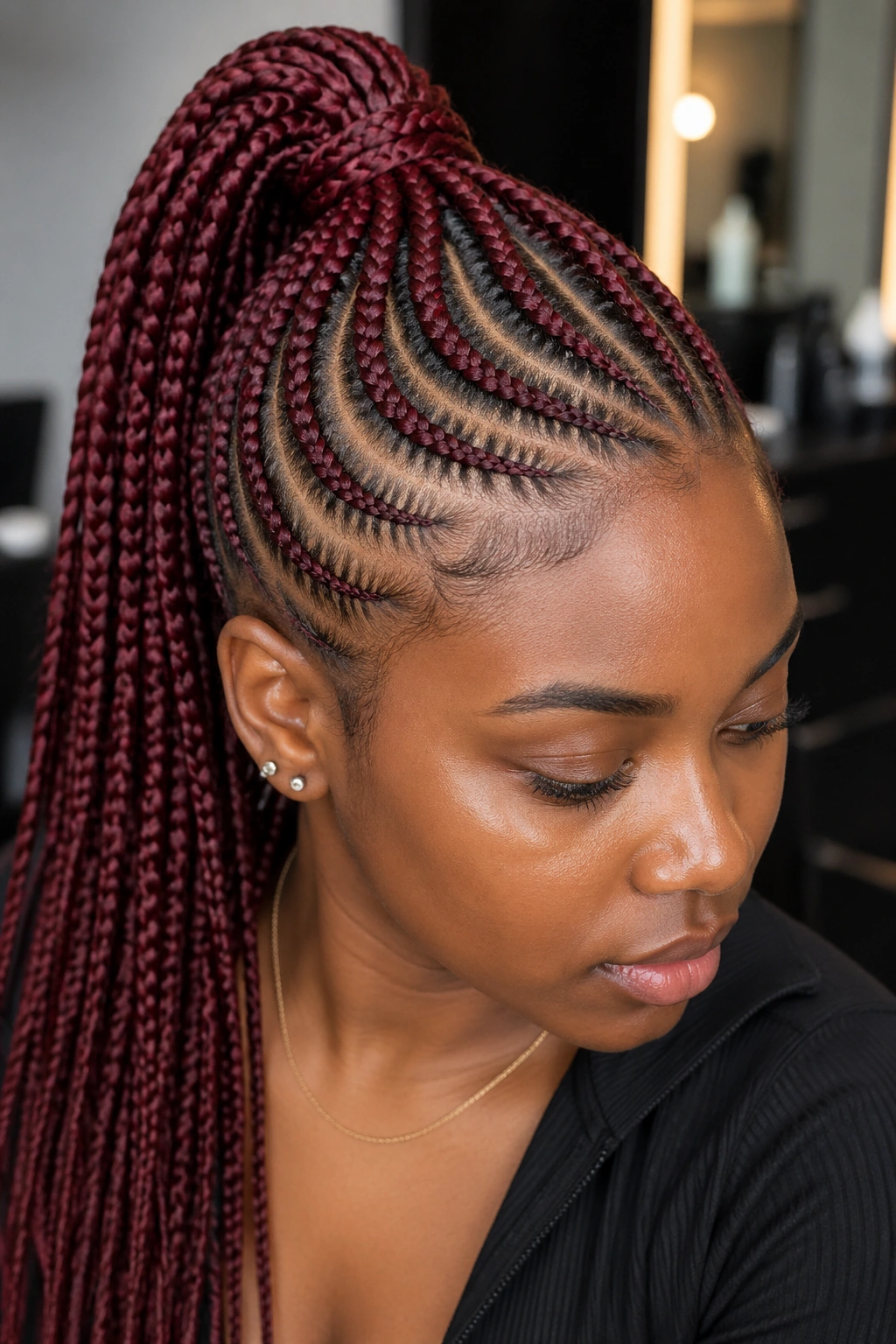
Burgundy is the smartest red for anyone who wants color without shouting. It has that deeper wine tone that sits beautifully against dark skin, and knotless braids let the color show without a hard start at the scalp. The result feels smooth, light, and easy to wear for days without looking overdone.
Curved parts give the style a softer line across the top of the head. Straight rows can be sharp and beautiful, but curved parting has more movement. It makes the ponytail feel less rigid and a little more tailored, almost like the braids were drawn to follow the face instead of forcing it into a grid.
This works especially well with medium-sized knotless braids gathered into a mid or high ponytail. If you want a style that can move from casual to dressed up without a change, this is a strong pick. Burgundy does a lot of the heavy lifting here. The curved parts keep it from feeling too severe.
3. Copper Braided Ponytail with Curly Ends
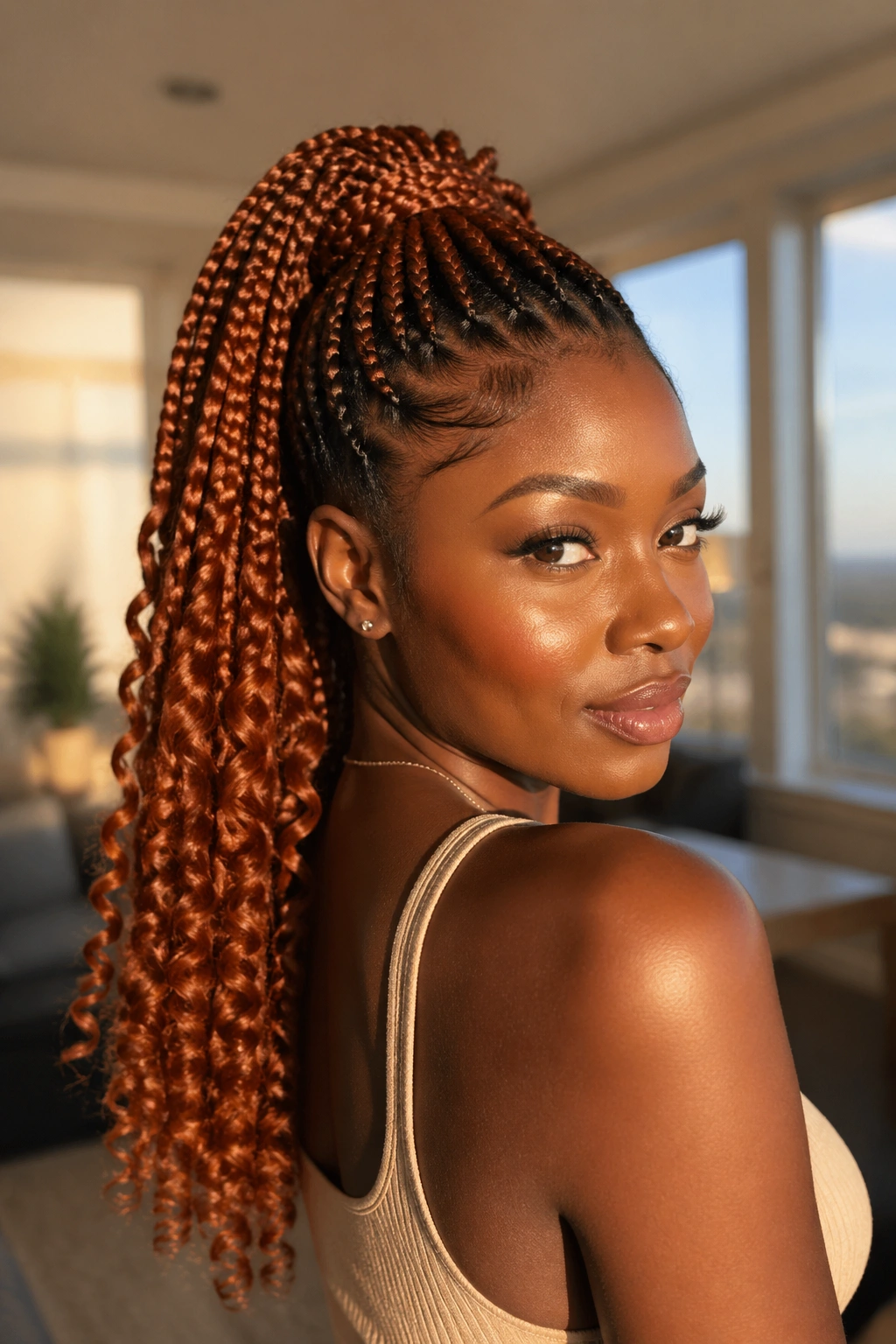
Why does copper look so good on braided hair? Because it gives the whole style warmth, and warmth is one of the easiest ways to make red feel rich instead of flat. On Black women, copper braids often read like a glow rather than a neon burst. They work especially well when the ponytail has some height and the ends are left loose enough to bend.
How to Wear the Ends
The curly ends matter here. If the braid body is sleek and the last 2 or 3 inches fall into soft spirals, the whole look feels lighter. Flexi rods or perm rods can set the ends, and a light dip in hot water keeps synthetic braids from unraveling.
A copper ponytail also works well with fewer, larger braids. Too many tiny pieces can make the color look busy. Fewer braids let the warm tone breathe.
If you want the red to feel bright but not harsh, copper is the sweet spot. It has energy. It also has depth. That combination does a lot.
4. Side-Swept Red Stitch Braid Ponytail
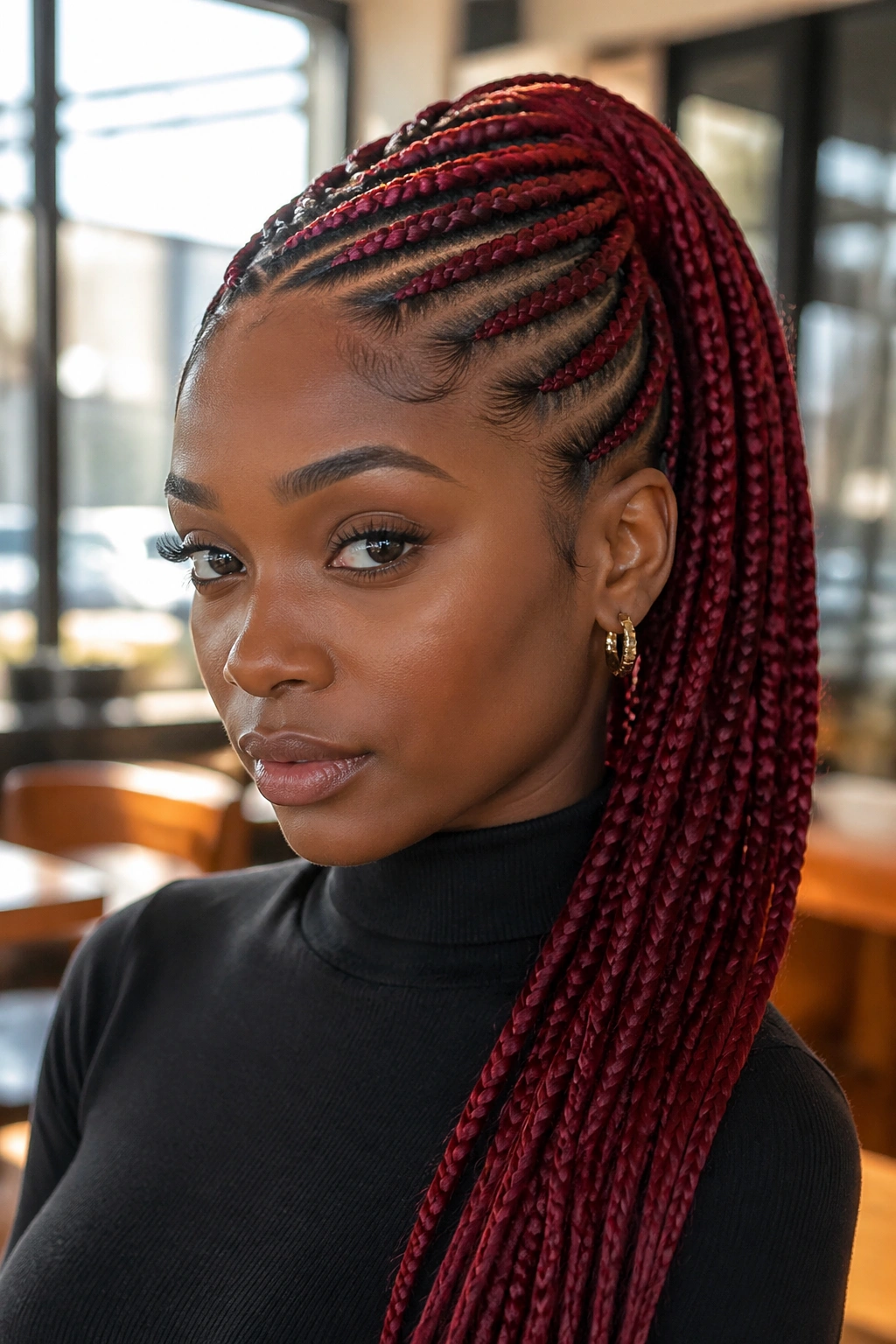
A side-swept stitch braid ponytail gives red hair a little swagger. The diagonal parting draws the eye across the face first, then the braids pull everything toward one side, which feels softer than a straight-back look. On Black hair, stitch braids also give a crisp, lined finish that makes bold red extensions look even cleaner.
Key Details to Ask For
- Use stitch braids at the front so the parting line looks neat and defined
- Sweep the ponytail slightly to one side instead of centering it
- Keep the braids medium-sized so the side angle still shows
- Wrap the base with a single braid for a smooth finish
This style works well when you want shape without a huge amount of length. The side sweep is doing a lot of the visual work, so you do not need braids all the way to your waist for it to land. That makes it a smart choice for anyone who likes structure but wants the ponytail to feel easy.
5. Waist-Length Ombre Red Box Braid Ponytail
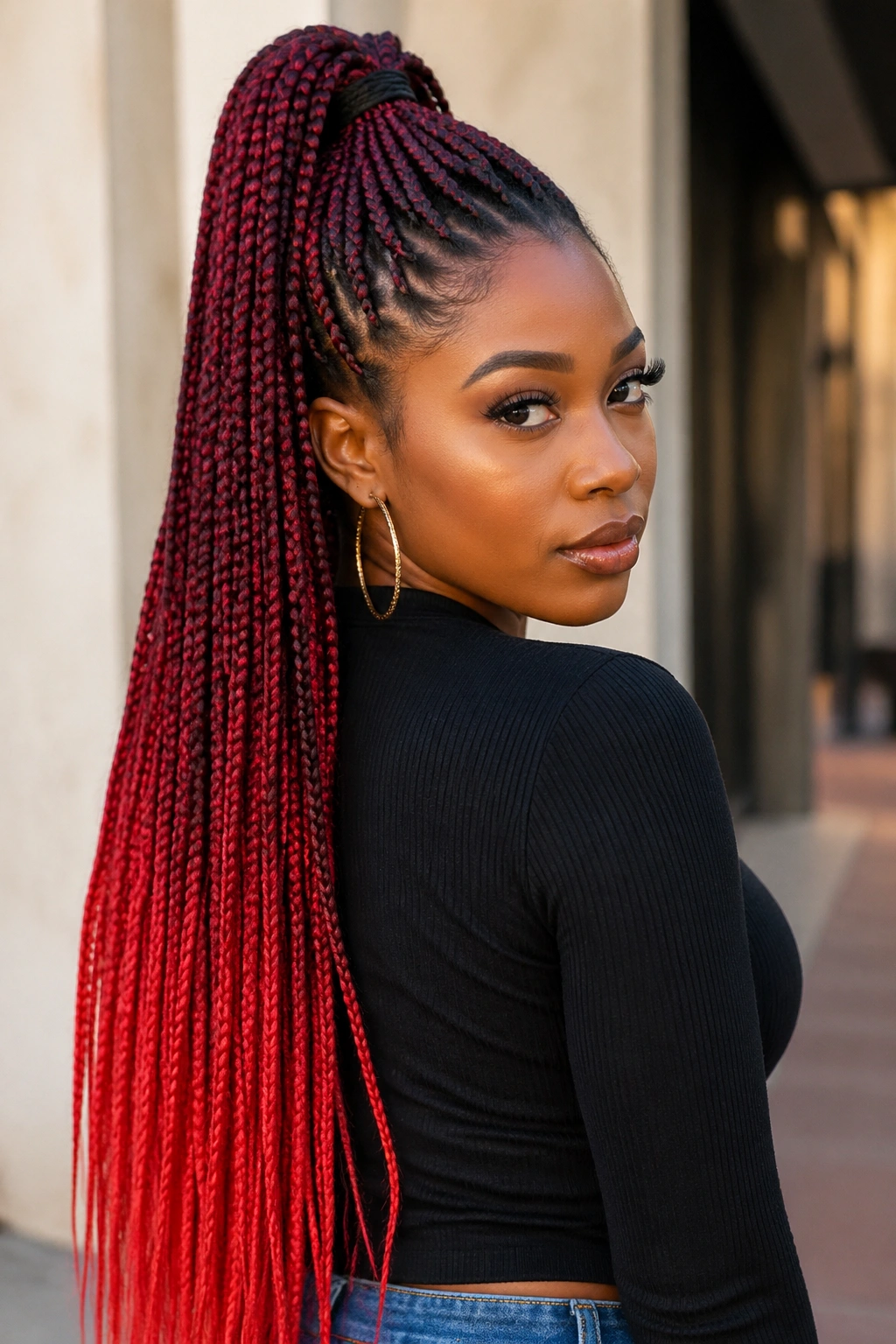
Ombre is where red gets interesting. A dark root melting into burgundy, cherry, or copper changes the whole feel of box braids, especially when the lengths are long enough to brush the waist. The eye moves through the color instead of stopping at one flat shade, and that gives the ponytail more depth than a single-tone install.
The length matters here, too. Waist-length braids swing with movement, which makes the ombre show up in layers. The lighter ends flick first; the darker roots stay close and grounded. That contrast is what keeps the style from looking one-note.
I like this version best when the ponytail sits high enough to show length but not so high that it turns heavy at the scalp. A mid-high ponytail is usually the sweet spot. Too high, and the weight starts to fight you. Too low, and the ombre loses some of its drama.
6. Red Fulani Braids Gathered into a Ponytail
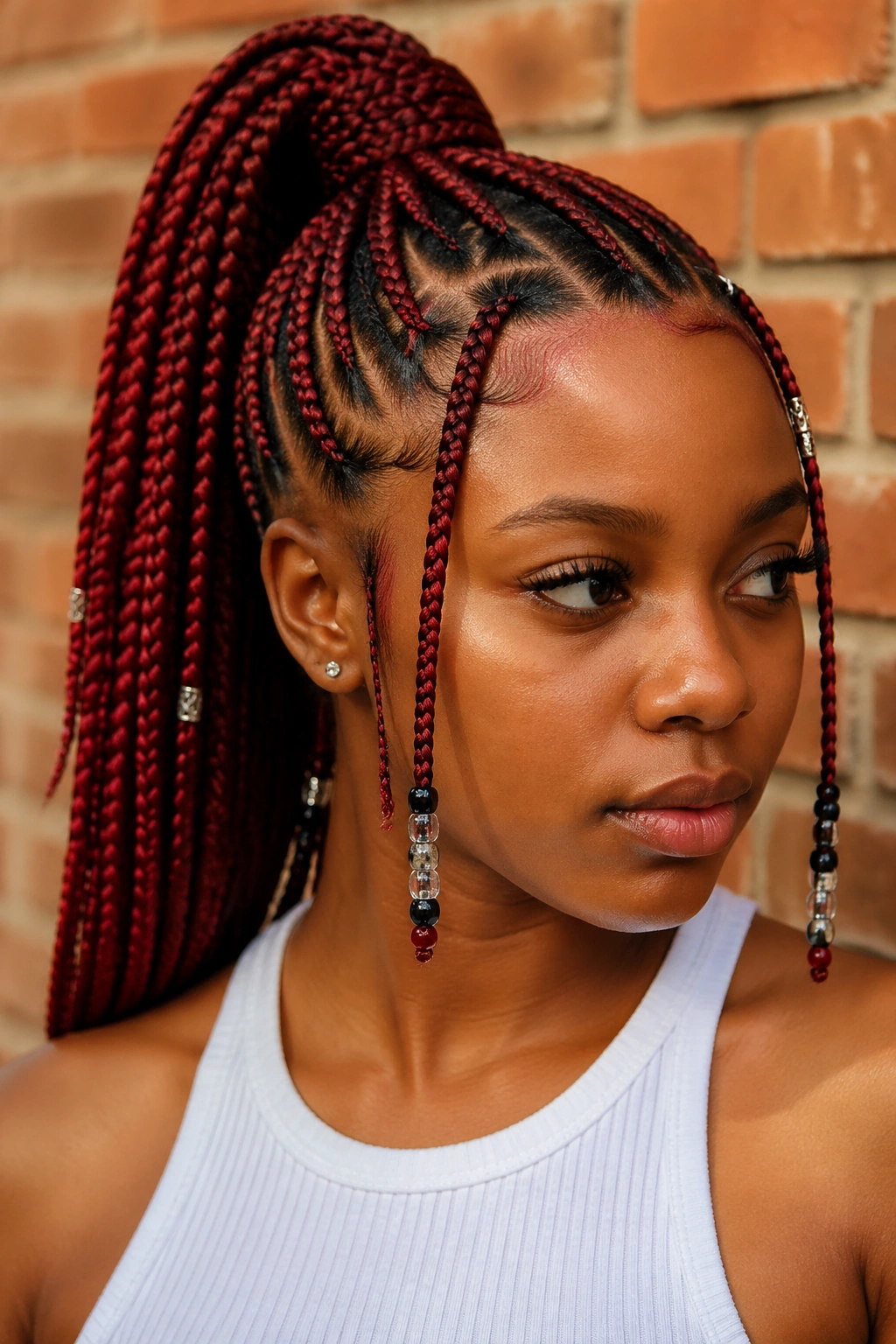
Fulani braids worn loose have a face-framing charm, but pulled into a ponytail they turn more graphic. The center braid, the side pieces, and the neat rows all become part of the shape instead of sitting around it. That makes the red color feel like part of the architecture, not just decoration.
This version is best for someone who wants pattern and movement in the same style. Leave a few thin braids in front if you want the original Fulani look to stay visible. Gather the rest into a ponytail at the back or slightly off-center. That small shift keeps the style from feeling stiff.
Beads can work here, but I would keep them focused on just a few braids. Too many accents and the style starts competing with itself. The real strength is the layout. The red just makes the layout louder.
7. Sleek Low Ponytail with Wine-Red Braids
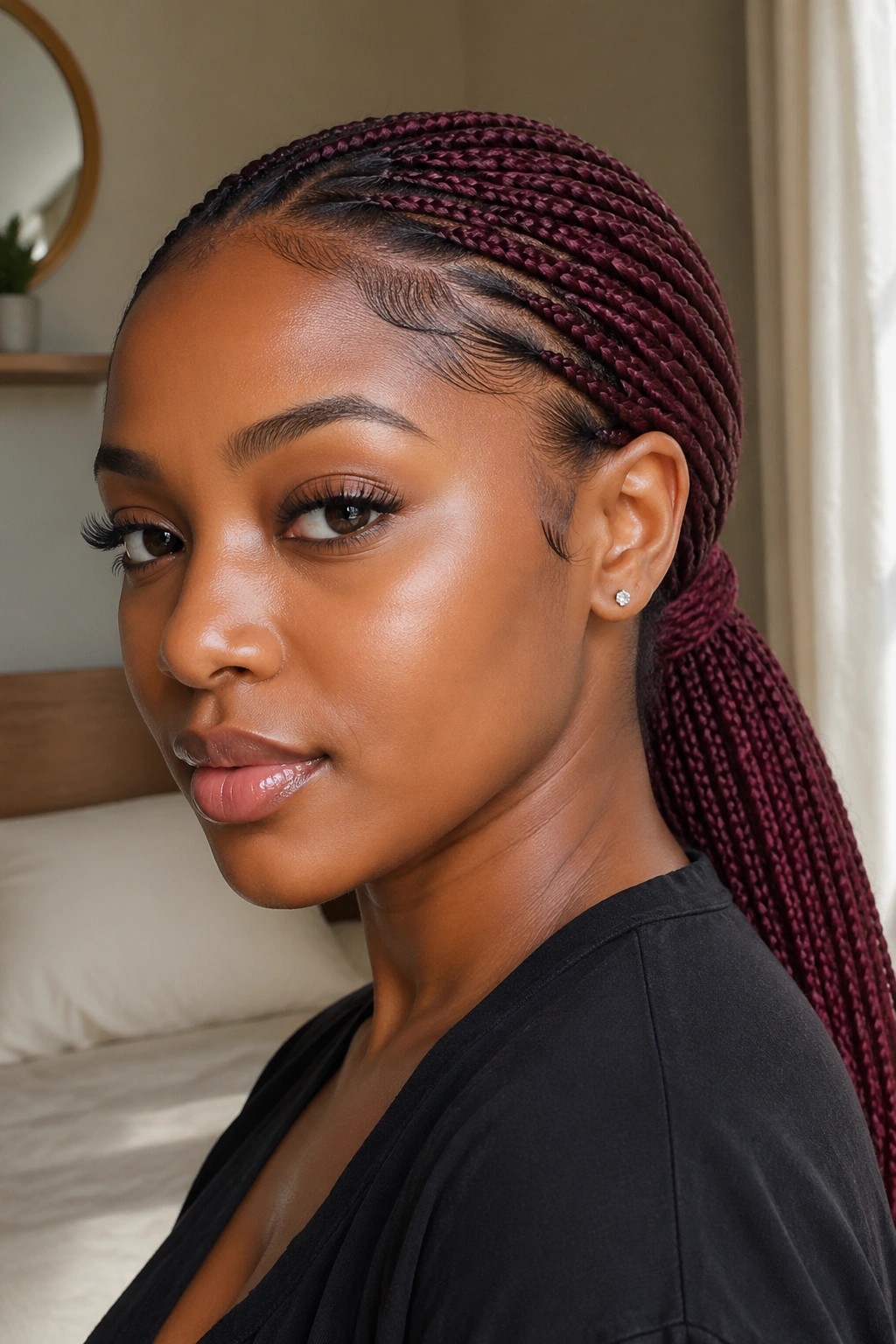
Low ponytails are underrated. They can look calm, but they can also look expensive in a way that high styles sometimes miss. With wine-red braids, the low placement gives the color a deeper, richer feel. It sits close to the neck, which makes the style look grounded and neat.
Why the Low Placement Works
A low ponytail puts all the attention on the braid texture and the color blend. That is handy if you want the red to feel refined instead of flashy. It also keeps the style comfortable for longer wear, especially if the braid length is heavy.
The front usually looks best with a clean middle part or a soft side part. Then the ponytail starts at the nape, and one braid wraps around the base to hide the elastic. That tiny move changes everything.
- Best with long knotless or box braids
- Looks sharp when the edges are laid but not overworked
- Feels balanced with medium-thick braids
- Pairs well with simple earrings and a clean neckline
Tip: if the ponytail sits too low, it can feel sleepy. Keep it tight at the nape, not sagging.
8. Half-Up Red Braided Ponytail with Loose Ends
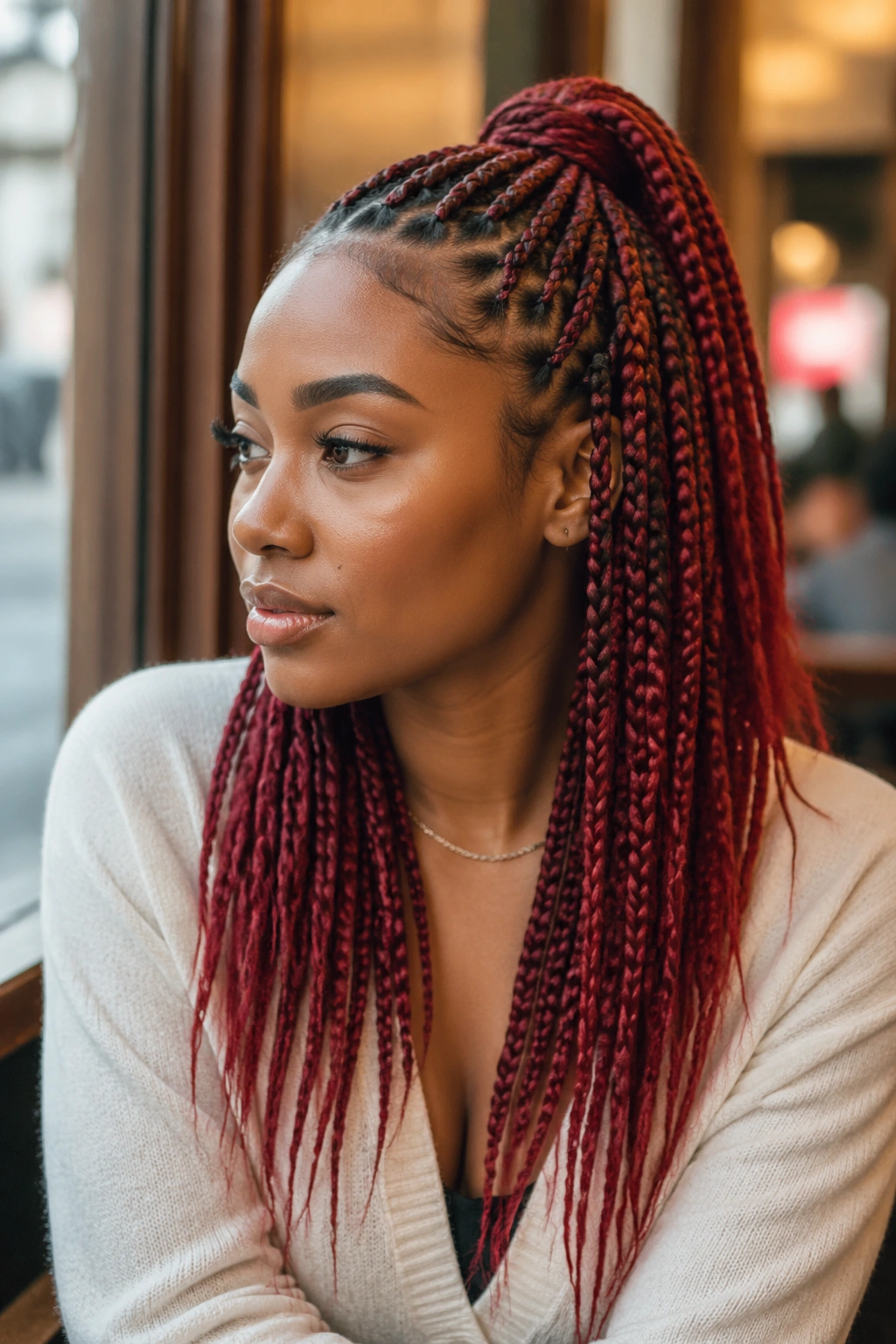
What if you want the lift of a ponytail without losing all the length? A half-up red braided ponytail solves that problem fast. The upper section gets pulled up and back, while the lower half stays loose, so you get shape near the crown and movement through the rest of the hair.
What to Leave Down
The trick is to leave enough braids down that the style still feels full. Four to six braids around the back and sides usually do the job. If the braids are very long, even a small lower section makes a difference because the length gives it weight.
This style works well in cherry red because the top section frames the face first. It also works in burgundy if you want the color to stay softer. The half-up section shows the braid pattern cleanly, and the loose section keeps it from feeling too tight or formal.
It is one of the easiest ways to make braids feel more playful without adding extra hair or extra parts. Sometimes the shape is enough.
9. Braided Mohawk Ponytail with Red Extensions
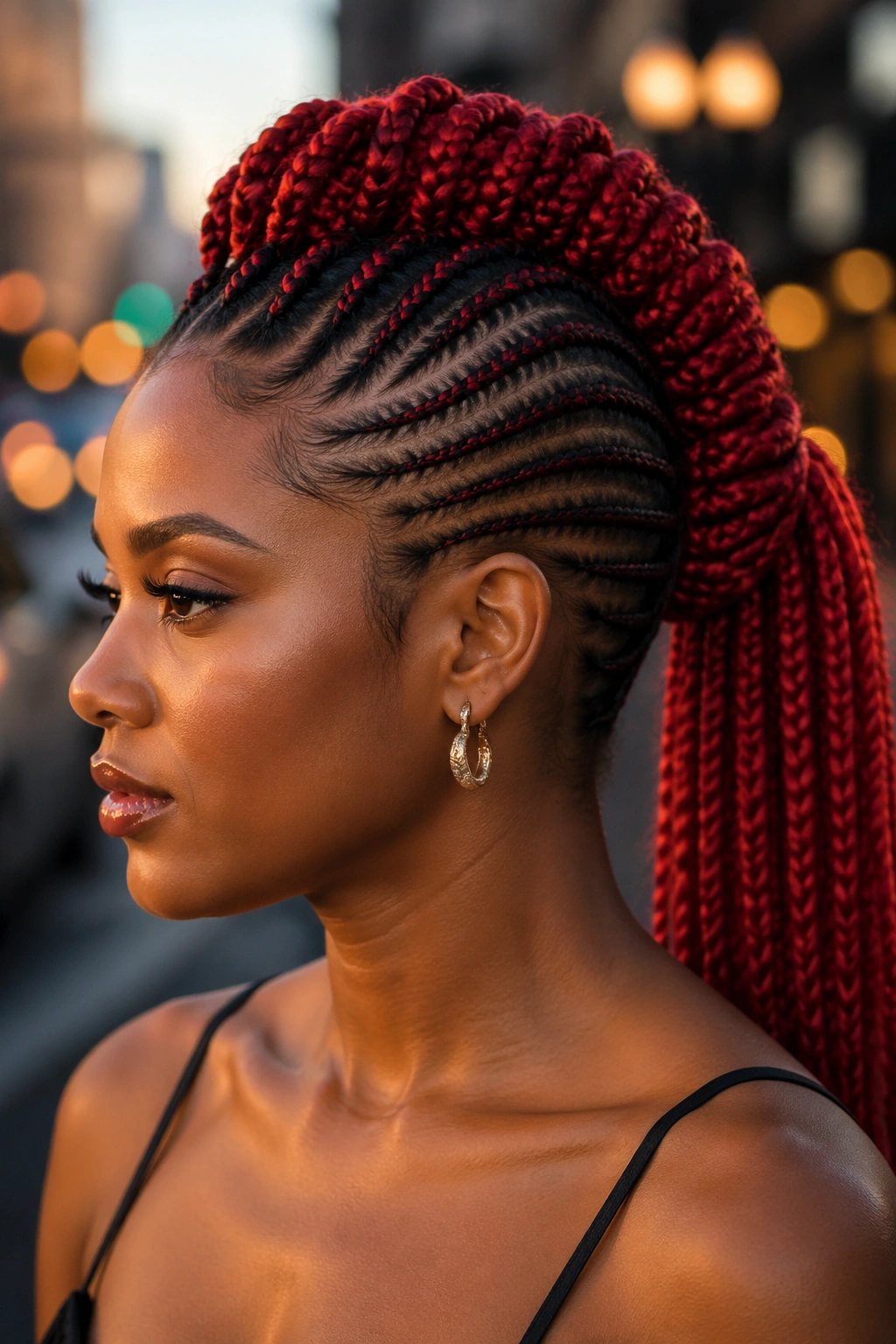
On days when flat styles feel boring, a braided mohawk ponytail gives the whole look some attitude. The sides are kept sleek or braided close, and the middle ridge rises toward the crown before dropping into a ponytail. Red extensions make the shape even more obvious, which is part of the fun.
The style does not need an actual undercut to work. It only needs contrast. A tight side section next to a lifted center strip gives the illusion of a mohawk without shaving anything. That makes it a flexible choice for people who want edge without a permanent cut.
- Works best with 8 to 12 braids in the center ridge
- Keeps the profile clean when the side sections lie flat
- Looks strongest in cherry or fire red
- Needs a secure base so the ponytail does not droop by the end of the day
If you like shape, this is one of the boldest red braided ponytails in the bunch.
10. Fire-Red Bubble Braid Ponytail
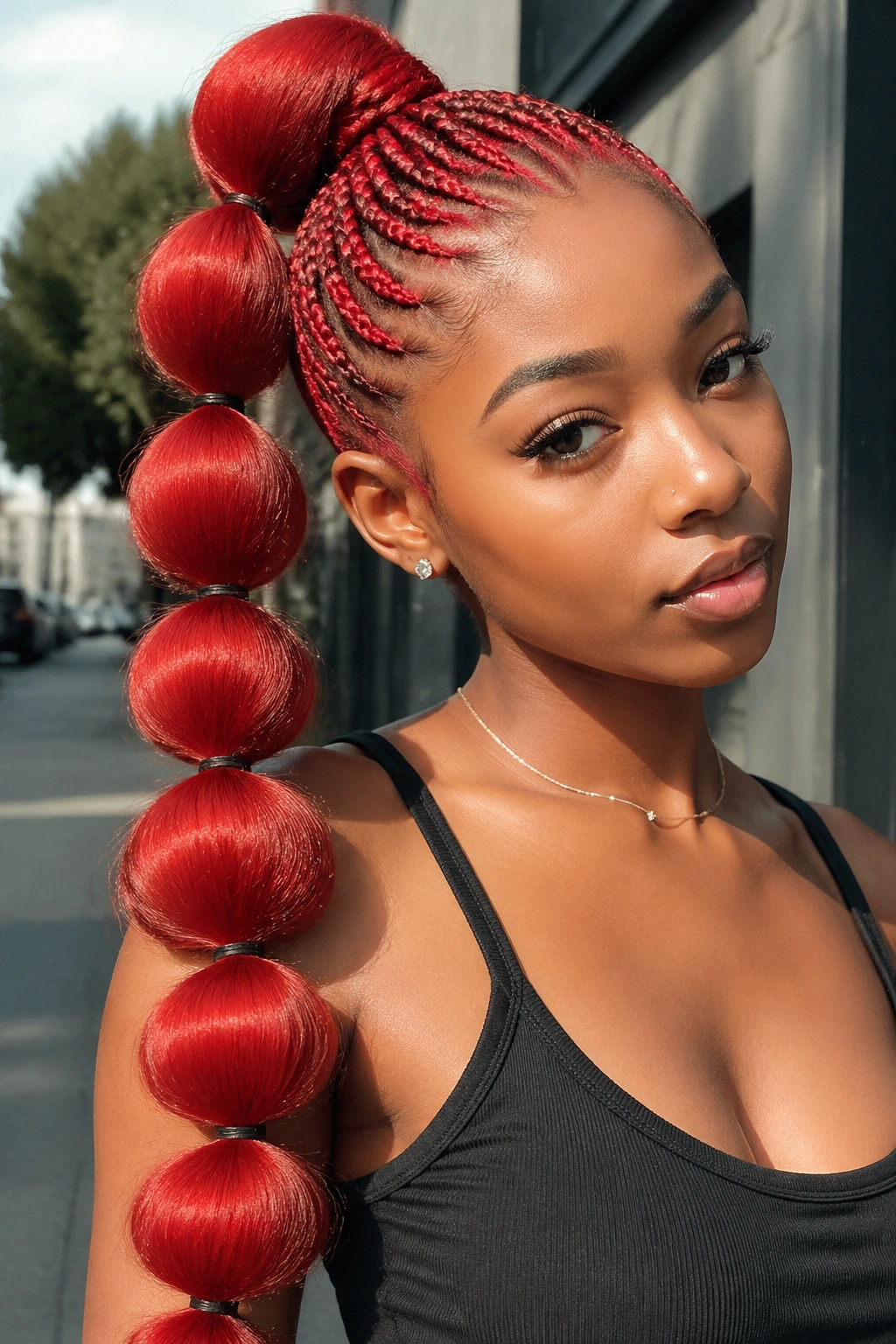
A bubble braid ponytail has a graphic look that regular braids just do not have. Add fire-red extensions, and the style turns into something that feels loud in the best way. The bubbles break up the length into sections, which gives the eye places to rest. That makes the color feel controlled, not chaotic.
This style works especially well when the braid is already long. You do not need to pile on more length; the bubbles create the shape. Elastic ties spaced every 2 to 3 inches are usually enough to build that rounded look. Tug each section gently after tying so the braid fills out.
One thing I like here is how direct the style feels. It has no pretending. The braid is the feature, the red is the feature, and the shape announces itself from across the room. If you want a ponytail that reads bold in photos and in person, this one delivers.
11. Red Goddess Braids into a Ponytail
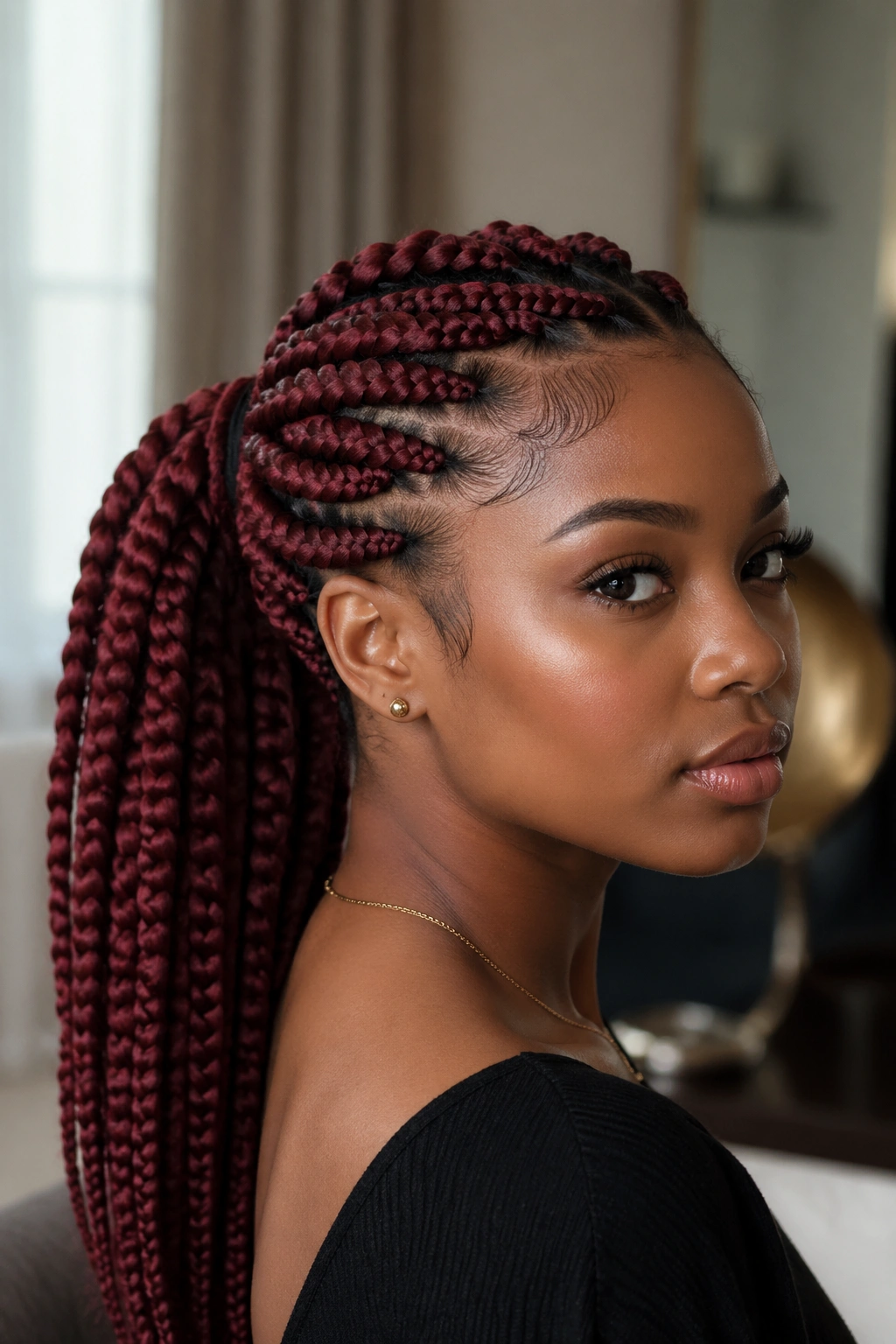
Goddess braids are the softer cousin of box braids, and that difference matters when you are working with red. The braids are thicker, flatter, and usually a little more sculpted, so the ponytail has a broader shape at the base. Burgundy or auburn works especially well here because the style already has a calm, full look.
This is a smart option if you want a ponytail that feels elegant without becoming fussy. The braids can be gathered high or low, but they look best when the front parting stays clean and the braid lines stay smooth. Because goddess braids are larger, you do not need many of them to make the style read clearly.
It is a good middle ground for anyone who likes red but does not want the color to take over. The braid pattern stays visible. The shade just deepens it.
12. Braided Ponytail with Crisscross Cornrow Base
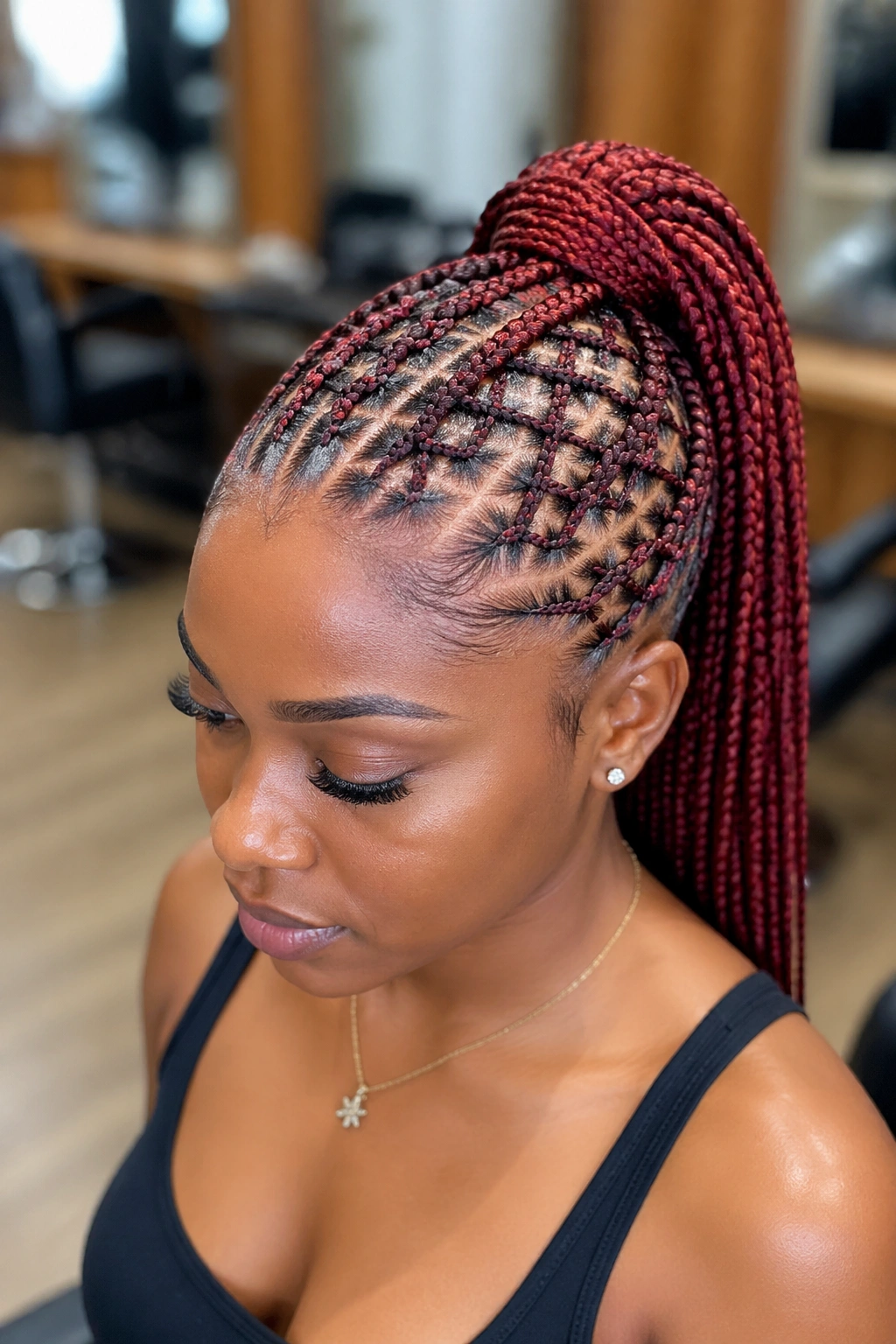
The base is the whole story here. A crisscross cornrow pattern turns the scalp into part of the design, and red braiding hair makes every line stand out more. Once the pattern is built, the ponytail itself becomes the payoff at the back.
Why the Crisscross Matters
A crisscross base gives the top of the head movement without needing extra accessories. The intersecting braids form a lattice, which looks sharp against the smoother tail. If the red is bright, the pattern becomes even more visible. If the red is deep, the pattern feels subtle and rich.
- Use 6 to 8 cornrows for a clean crisscross base
- Keep the ponytail at the midpoint or slightly above
- Choose a red shade with enough contrast to show the pattern
- Finish with shine mousse so the sections stay crisp
Tip: this style looks best when the parts are very clean. Messy crisscrosses do not look carefree here. They just look unfinished.
13. Auburn Jumbo Braided Ponytail
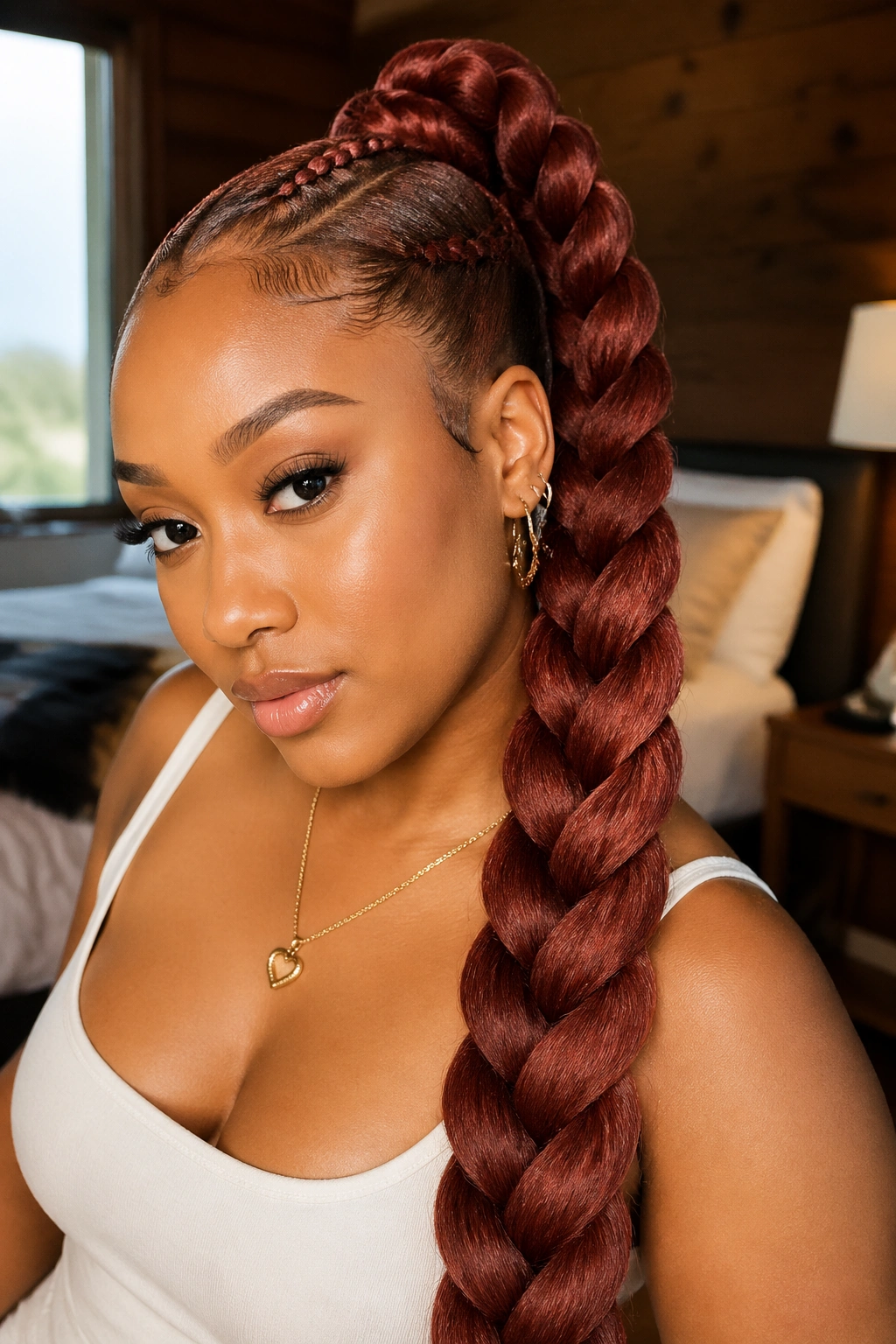
Auburn looks expensive when the braid itself is huge. The larger braid gives the color room to show its brown-red depth, and the ponytail becomes almost rope-like in the best way. Instead of reading delicate, the style reads solid and strong.
That makes it a good fit for people who want less fuss. One jumbo braid takes less time to install than a dozen smaller ones, and the ponytail still has presence. It also sits well with thick hair because the shape feels balanced from scalp to end. If the braid is long, keep the base tight and the wrap neat so the weight does not pull forward.
I like this one with a low or mid-high ponytail. Too high and the braid can look like it is reaching for the ceiling. Mid placement lets the auburn shade settle and show its depth. It is simple. It is bold. No extra tricks needed.
14. Red Ponytail with Beaded Braided Accents
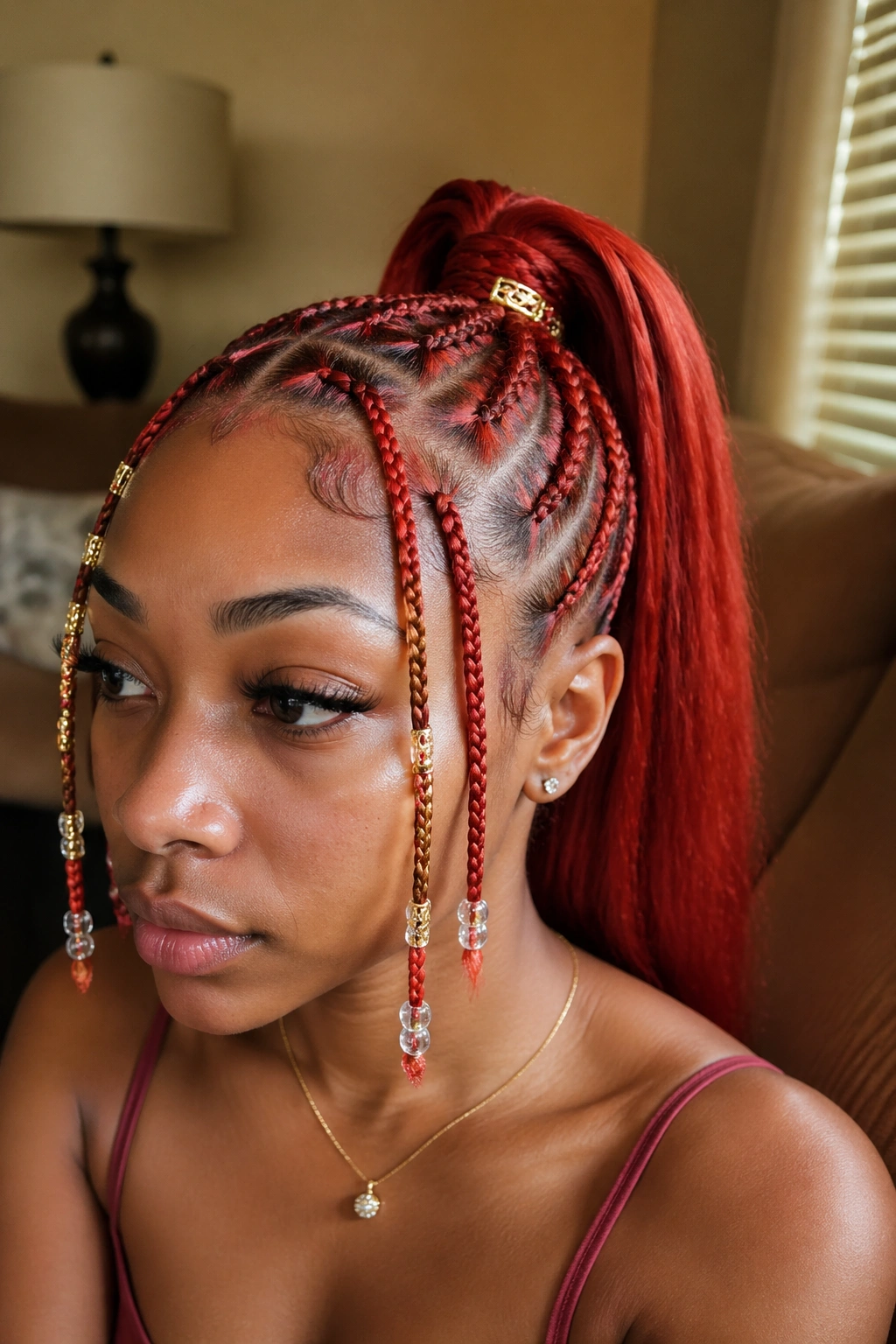
Want to make a simple red ponytail feel finished? Add beads to a few accent braids and stop there. The accents give the style movement and a little sound, but they do not need to cover the whole head. A few braids near the face or at the side are enough.
Where to Place the Beads
The best spot is usually on one or two thin braids in front, or on the last few loose braids near the ponytail base. That way the beads frame the face or draw the eye toward the tail without making the whole style feel crowded. Gold, wood, or clear beads all work, depending on how soft or sharp you want the result.
- Use 3 to 5 accent braids, not a full head of beads
- Choose beads with enough hole size for your braid width
- Keep the rest of the ponytail clean so the accents stand out
- Match bead weight to the braid size so they do not drag
Beads are small, but they change the mood fast. In red hair, that matters.
15. Curved-Part Red Braided Ponytail
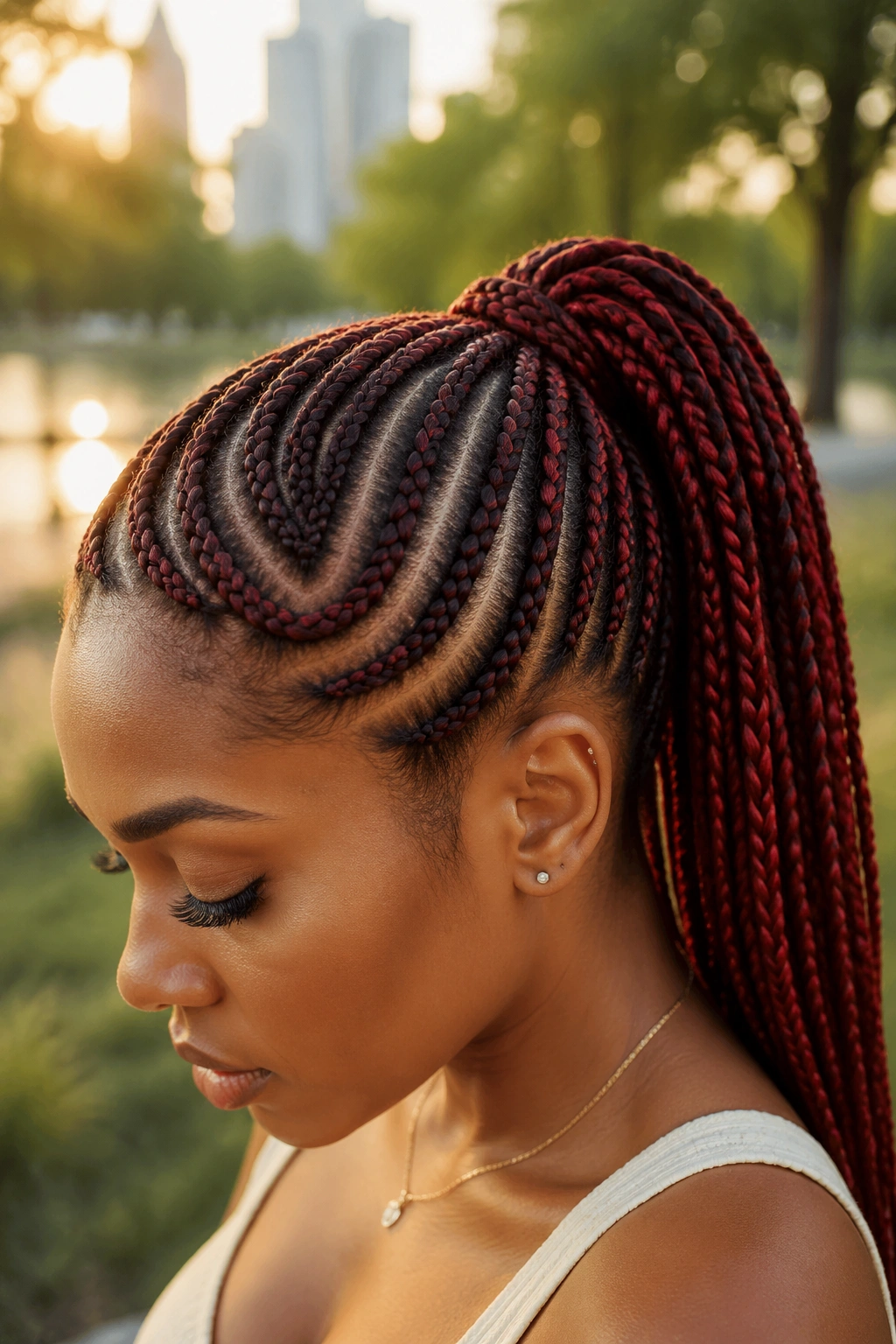
Straight parts are clean; curved parts have motion. That is the whole appeal of this style. The parting sweeps in soft arcs before the braids gather into a ponytail, and the red shade makes those curves easier to see. The effect feels less strict than a grid and less busy than a full freestyle pattern.
This version works well when you want the top to feel designed. It is especially pretty with medium braids because the curves remain visible. Tiny braids can make the pattern look too fussy, while jumbo braids can hide the shape. Medium size is the sweet spot.
A curved-part ponytail can sit high, mid, or low, but I think it looks best when the ponytail starts just behind the crown. That keeps the sweep visible. It gives the style a little movement before the length takes over.
16. Maroon Braided Ponytail with Cuffed Ends
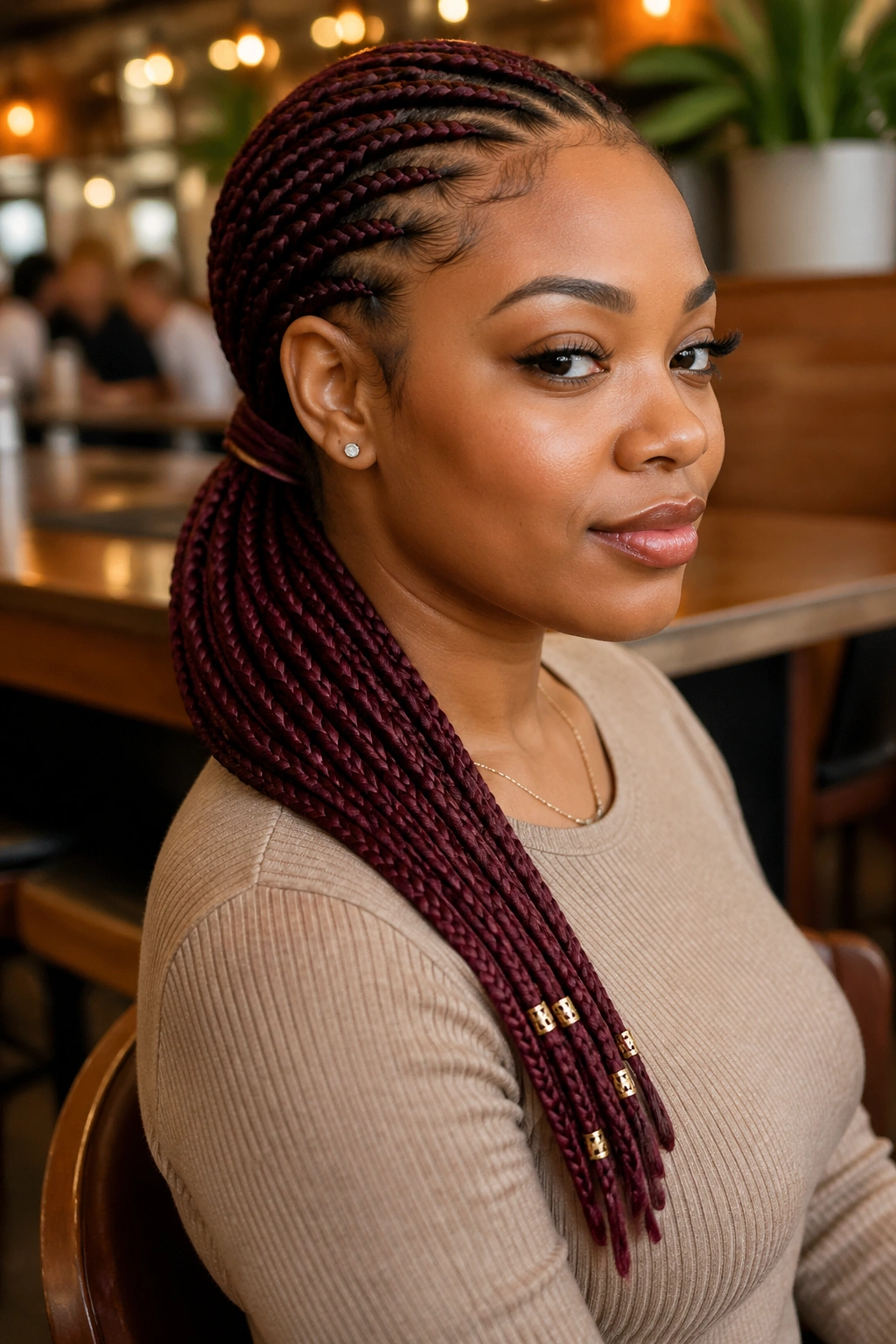
Maroon has a quieter voice than cherry red, and that is exactly why it works. It feels deep, a little moody, and easy to wear with almost anything that does not need the hair to shout. Add small metal cuffs at a few braid ends, and the whole look picks up some edge without losing that dark richness.
The cuffs should be used sparingly. Three or four is enough. More than that and the style starts looking busy. The goal is not to cover the braids in hardware; it is to break up the ends and give the ponytail a finish that feels deliberate.
This style looks especially good in a low or side ponytail. The darker red settles near the neck, and the cuffs give the movement a small point of shine. It is one of the most wearable red braided ponytails on the list because it has texture, but it does not demand attention every second.
17. Long Red Box-Braid Ponytail with Wrapped Base
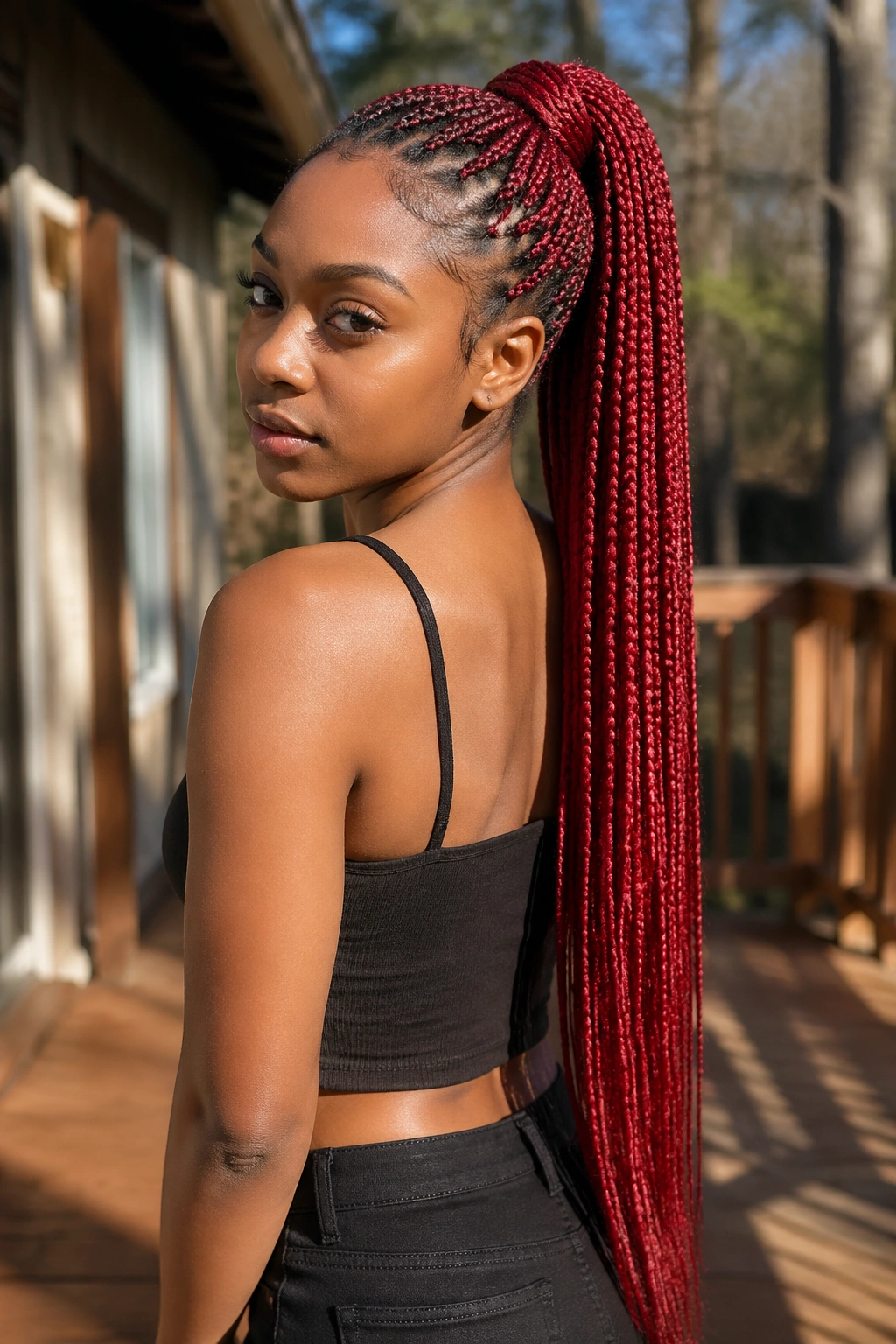
If you like length but hate hair in your face, the ponytail version solves the problem fast. A long box-braid ponytail gives you the sweep of the full install without the loose ends hanging everywhere. The wrapped base keeps the top neat, and the tail hangs in one strong line down the back.
This style makes a lot of sense in cherry or burgundy because box braids already have a clean shape. Pulling them into a ponytail just tightens the look. A mid-high placement usually works better than a full crown lift if the braids are very long, since the weight can tug. One or two braids wrapped around the elastic clean up the finish.
It is a good choice for people who want their red braids to feel bold but practical. You still get the length. You just get to control where it lands.
18. Side-Part Red Knotless Ponytail with Face-Framing Braids
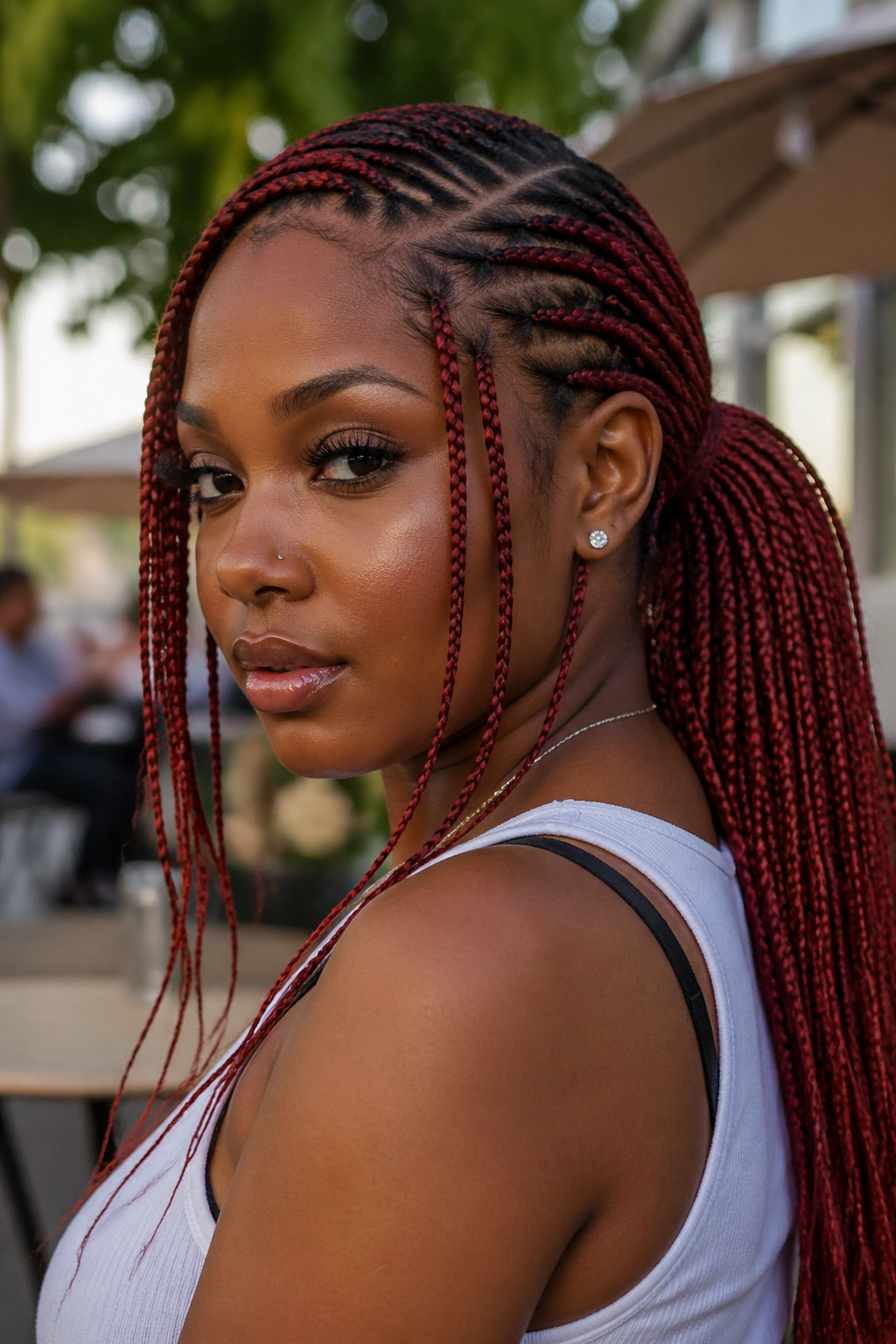
A deep side part changes how red reads. It breaks up the symmetry, softens the top, and gives the ponytail a little attitude without needing extra accessories. Knotless braids make the scalp look smooth, and the face-framing pieces keep the front from feeling too pulled back.
What Makes It Softer
The face-framing braids should be thinner than the rest and left loose enough to move a little. That small detail makes the style feel lighter around the cheeks and jaw. If the red shade is burgundy or wine, the softness gets even stronger.
- Best for oval, round, or heart-shaped faces
- Use 2 to 4 face-framing braids at the front
- Place the ponytail slightly behind the ear line or at the crown
- Choose knotless braids if you want the front to lie flatter
Tip: keep the side part deep enough that it is obvious. A tiny shift barely counts.
19. Red Braided Ponytail with Soft Spiral Ends
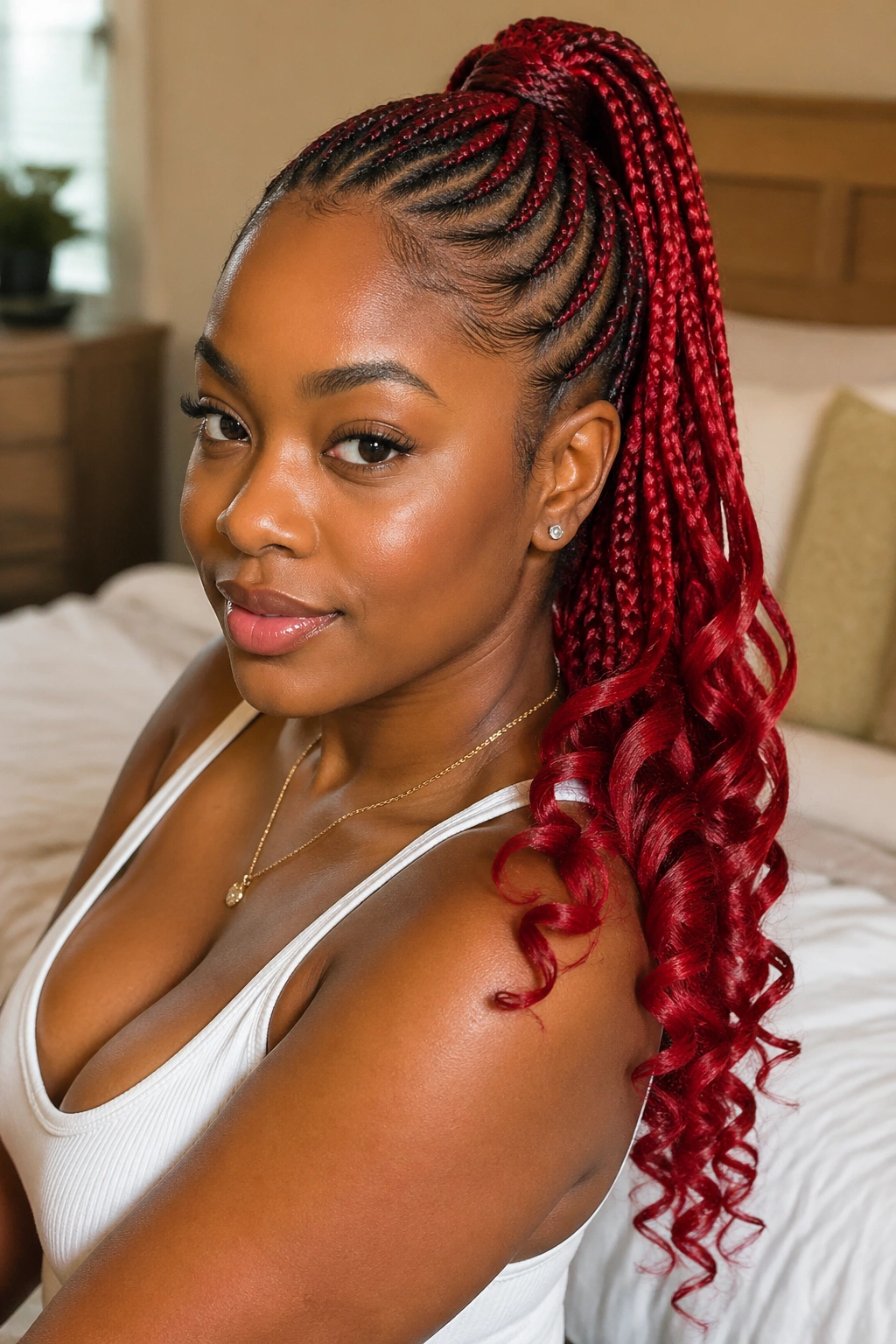
Curled ends make braid styles feel less rigid. They soften the line of the ponytail and give the last few inches a bit of bounce, which is especially nice when the red shade is bright. Cherry and copper both look good with this finish because the spiral shape breaks up the solid color at the bottom.
The curl does not need to be huge. A soft bend at the end of each braid, or even just the lower half of the ponytail, is enough. If you are using synthetic hair, check that the fiber can handle hot water or heat before you set it. If not, use rods and cool water instead. That tiny bit of care keeps the ends from frizzing too soon.
This style works well when the rest of the ponytail is kept sleek. The contrast between the tight braid body and the soft ends is what makes it appealing. One shape supports the other. Simple, but smart.
20. Red Braided Ponytail with Silk Scarf Wrap
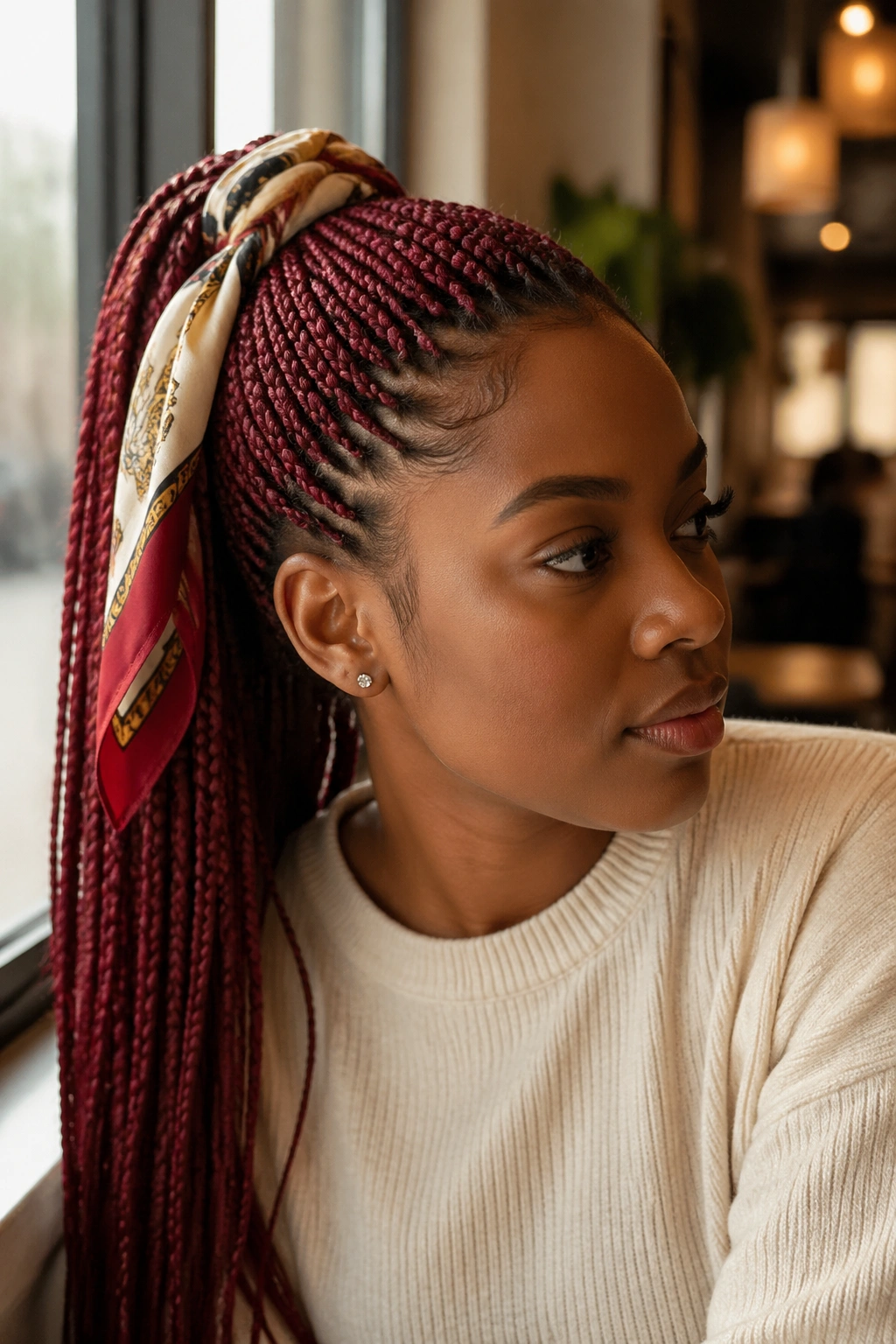
Why do some ponytails look finished even before the outfit is on? Because the base has a clean wrap, and a silk scarf does that job better than almost anything else. It hides the elastic, adds a little color contrast, and keeps the style from looking too plain. In red braids, the scarf can either echo the shade or cut against it with a sharp neutral.
How to Tie It
A 22-inch square scarf folded into a band works well for most ponytails. Wrap it around the base once, knot it under the ponytail or slightly to the side, and let the tails hang if you want a softer finish. If you want a cleaner look, tuck the ends into the wrap itself.
This style is also practical. A scarf can cushion the base a bit and keep the ponytail looking neat longer. It is one of those details that seems small until you try it and realize the whole style looks more done.
21. Two-Tone Cherry and Burgundy Braided Ponytail
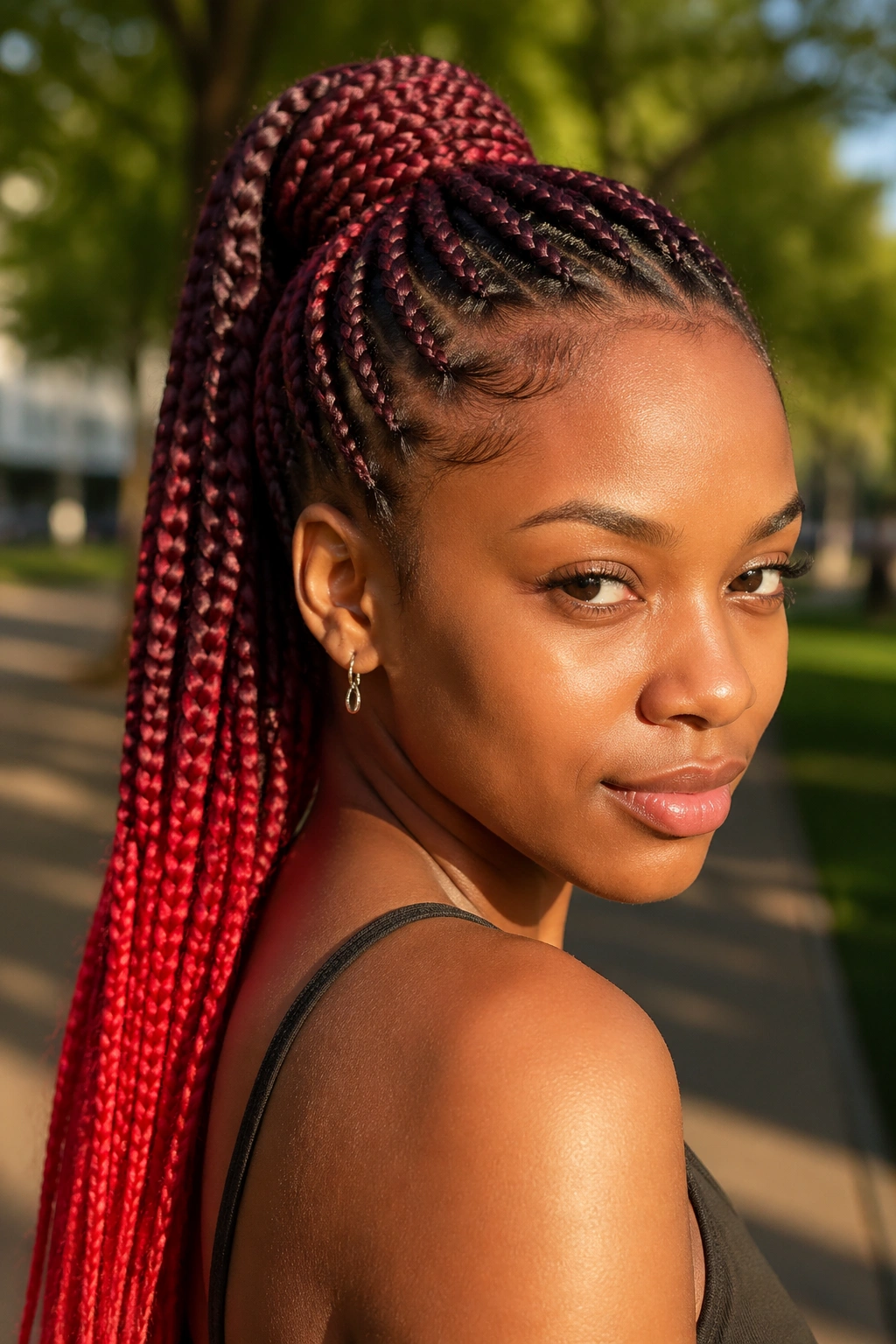
If one red shade feels flat, mixing two reds fixes that fast. Cherry and burgundy together give the ponytail depth, movement, and a little surprise when the braids shift in the light. The brighter red wakes the darker one up. The darker red keeps the brighter one from looking too loud.
This works especially well in feed-in braids or box braids, where the color placement can be intentional. You can alternate shades braid by braid, or keep burgundy near the roots and let cherry show more at the tail. Either way, the result feels layered without needing extra accessories.
A two-tone ponytail is a nice choice for Black women who want red but do not want one flat block of color. It has more shape, and shape always helps a ponytail look better. The eye keeps moving. That is the point.
Final Thoughts
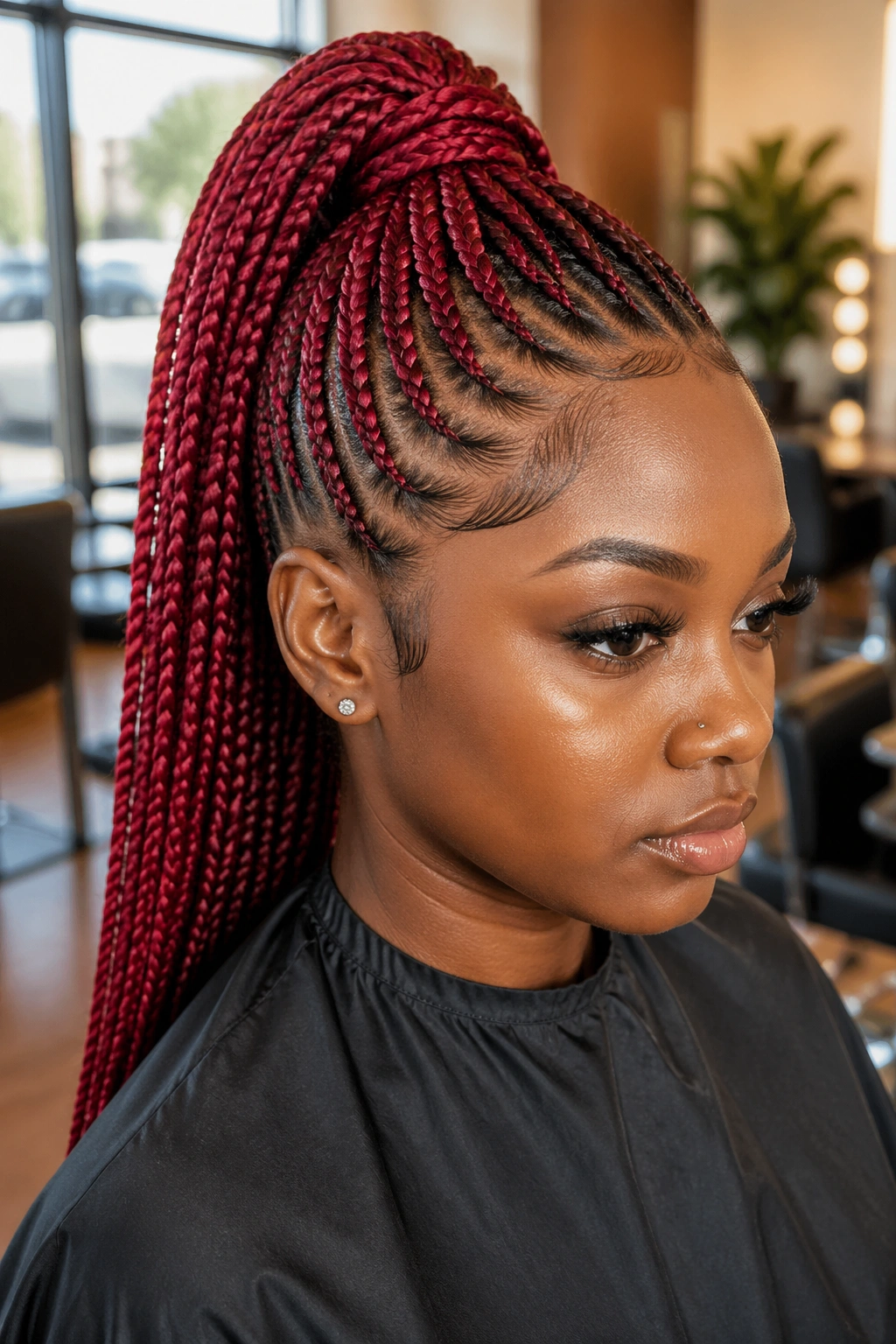
The red braided ponytail that works best is the one that matches the shape you want at the crown. A high feed-in ponytail gives lift. A low nape ponytail gives polish. A side-swept or curved-part version softens the whole face in a way that straight-back braids never quite do.
Shade matters, too. Cherry brings heat, burgundy brings depth, copper brings warmth, and maroon sits somewhere quieter and richer. If you are torn between two colors, hold the braid hair near your face in daylight and look at it next to the clothes you wear most. That tiny step tells you more than a dozen photos ever will.
A good red braid style does not need extra noise. Clean parting, the right braid size, and a ponytail placed with intention do most of the work.
