



Stitch braid ponytails for curly hair work because they solve the same old tug-of-war most curl patterns know well: the roots want structure, the lengths want room, and the finished style has to survive movement without turning frizzy by lunch. A clean stitch at the scalp gives you those crisp, mapped-out parts, while the ponytail keeps the texture alive instead of flattening it into something stiff and overworked.
That’s the part I always like. Curly hair does not need to be erased to look polished. It needs a frame. When the braid pattern is neat and the tension stays controlled, the whole style reads sharper right away — especially around the hairline, where even a few millimeters of parting can change the mood from messy to intentional.
My bias leans toward styles that leave the curls loose at the ends. Curly ends are the point. Hiding them under too much braid work is usually a waste, and it can make the hair feel heavier than it needs to.
The trick is choosing the right shape for your density, shrinkage, and face shape, then keeping the stitch rows clean enough to hold their line while the ponytail moves. Some versions are sleek and formal. Others are bold, chunky, or a little playful. The good ones all do the same basic job: they make curly hair look controlled without making it look caged.
1. High Stitch Braid Ponytail for Curly Hair
A high stitch braid ponytail for curly hair gives you instant lift. The hairline looks tidy, the crown sits higher, and the curls at the back bounce with more energy because they’re not dragged downward by a low base.
Why the height matters
The higher placement changes the whole shape of the face. It lifts the eye line, shows off cheekbones, and keeps thick curls from bunching around the neck. If your hair is dense, this style also helps distribute weight a little better than a low ponytail, which matters more than people think once the style has been in for a while.
A clean high base works especially well when the stitch sections are even and the ponytail is wrapped with a small braid or a narrow strip of hair. That tiny finishing move makes the style look deliberate instead of thrown together.
- Best for medium to thick curly hair
- Looks sharp with defined edges and a strong middle or side part
- Holds shape well when the curls are stretched first
- Works well with a 1- to 2-inch ponytail wrap for a cleaner base
Tip: Keep the ponytail high enough to lift the style, but not so high that it pulls on the front hairline. That line should feel snug, not strained.
2. Low Stitch Braid Ponytail for Curly Hair
Why does a low stitch braid ponytail feel so much calmer than a high one? Because it sits where the head naturally bends, which makes it easier on the scalp and easier to wear for long stretches.
The low placement also lets the curls fall in a heavier, softer shape. I like this one for thick coils and dense curl patterns because it keeps the top smooth while letting the length do its thing. There’s less drama at the crown, which sounds boring until you realize how much easier that is to keep neat.
A low ponytail is also the one I’d choose for a more dressed-up look. It sits well under a jacket collar, pairs cleanly with earrings, and tends to stay neater if you’re moving around a lot.
One small thing: keep the stitch rows tight enough to look clean, but not so flat that the scalp starts to feel exposed. That balance is the whole game.
3. Side-Part Stitch Braid Ponytail With Loose Curl Volume
If your hair never settles happily in the middle, a side part can save you a lot of time. It gives the stitch braid ponytail a softer angle and keeps the top from looking too severe.
This version works because the braid pattern follows the curve of the head instead of fighting it. The ponytail itself can stay full and fluffy, which is where curly hair tends to look its best anyway. I’ve always thought side parts were underrated on curlier textures; they break up the shape just enough to make the style feel less rigid.
What to watch for
- Place the part above the arch of the eyebrow for a clean sweep
- Keep the larger side a little fuller if your face is rounder
- Use a light mousse at the roots before braiding if frizz shows up fast
- Let the curls in the ponytail stay slightly separated, not brushed into one lump
A side-part stitch braid ponytail is a nice middle ground. It feels polished, but not stiff.
4. Center-Part Stitch Braid Ponytail With Face-Framing Pieces
A center part is unforgiving, which is exactly why it looks so good when it’s done well. Every stitch has to be even, and the result is crisp enough to make the curls in the ponytail stand out more.
This style is strongest when you leave a small amount of face-framing hair out near the temples or keep the front braid sections thin. That little softness stops the style from looking too square. With curly hair, a center part can go straight from sharp to harsh if you overdo the tension. Don’t.
How to keep the middle clean
Use the tail of a rat-tail comb to set the part before the braiding starts, then smooth each side with a light gel or edge control. Work in short sections. Long, rushed strokes usually leave the part jagged, and jagged parts show up fast once the braid starts.
The final ponytail can be high or mid-level. I prefer mid-level on tighter curl patterns because it lets the length fall naturally without stretching the root area too much.
5. Curved Stitch Braid Ponytail That Follows the Hairline
Unlike straight-back cornrow patterns, curved stitch braids bend with the head. That small shift makes the style feel more sculpted, almost like the braid is tracing the shape of your skull instead of drawing a hard grid over it.
Curved rows are especially good when you want the ponytail to look fuller from the front. The angle of the braid creates movement before the ponytail even starts, which helps if your curls tend to shrink close to the neck or puff at the sides. The result feels softer, but not loose.
This version takes a steadier hand, though. If the curves are uneven, the whole style looks off by the second day. The payoff is worth it, especially on curly hair that has a lot of natural volume. Straight-back styles can feel too blunt on some faces. Curves fix that.
6. Zigzag Part Stitch Braid Ponytail
A zigzag part brings a little personality to the style without making it hard to wear. It’s the kind of detail people notice up close, then keep looking at because it changes how the light moves across the scalp.
Why it works on curly hair
Curly textures can hide small parting mistakes better than straight hair, and the zigzag pattern uses that to its advantage. It breaks up the line of the part, which can be handy if your hairline has cowlicks, uneven density, or a few stubborn areas that never sit perfectly flat.
The ponytail itself can stay simple. That’s the nice thing about a detailed part pattern: the braid does the talking, so the tail doesn’t have to. Keep the curls defined, use a small amount of styling cream or mousse near the root, and let the ends keep their shape.
- Good choice for playful everyday wear
- Works well on medium-length curls
- Adds interest without adding extra bulk
- Looks neat when the zigzags are shallow and even
A zigzag stitch braid ponytail feels lively. Not loud. Just lively.
7. Half-Up Stitch Braid Ponytail With Free Curls
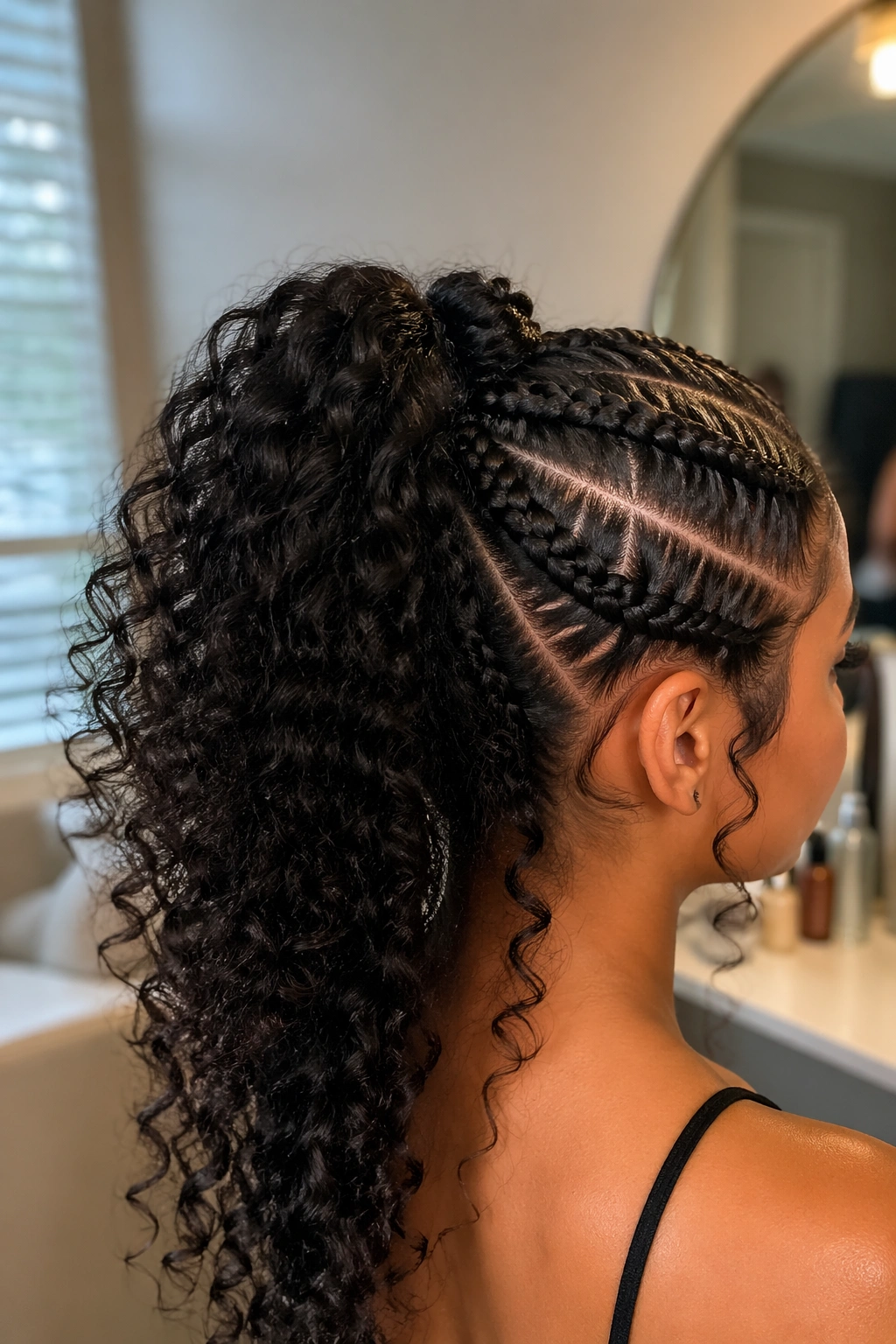
The half-up version is the one I reach for when I want the top to stay controlled but I still want to see most of the length. It works especially well on curly hair that has a lot of shrinkage, because the free section keeps the style from looking too short.
You can keep the stitch braids tight in the front and gather only the crown and upper sides into the ponytail. The remaining hair falls loose at the back, which gives you movement and takes some weight off the scalp. That matters if you wear protective styles often and want a break from full-tension updos.
It’s also a nice fix for layered curls. The shorter pieces in the back stay visible, and the whole style reads softer than a full ponytail. I like that balance. It feels considered, not overworked.
8. Mohawk Stitch Braid Ponytail
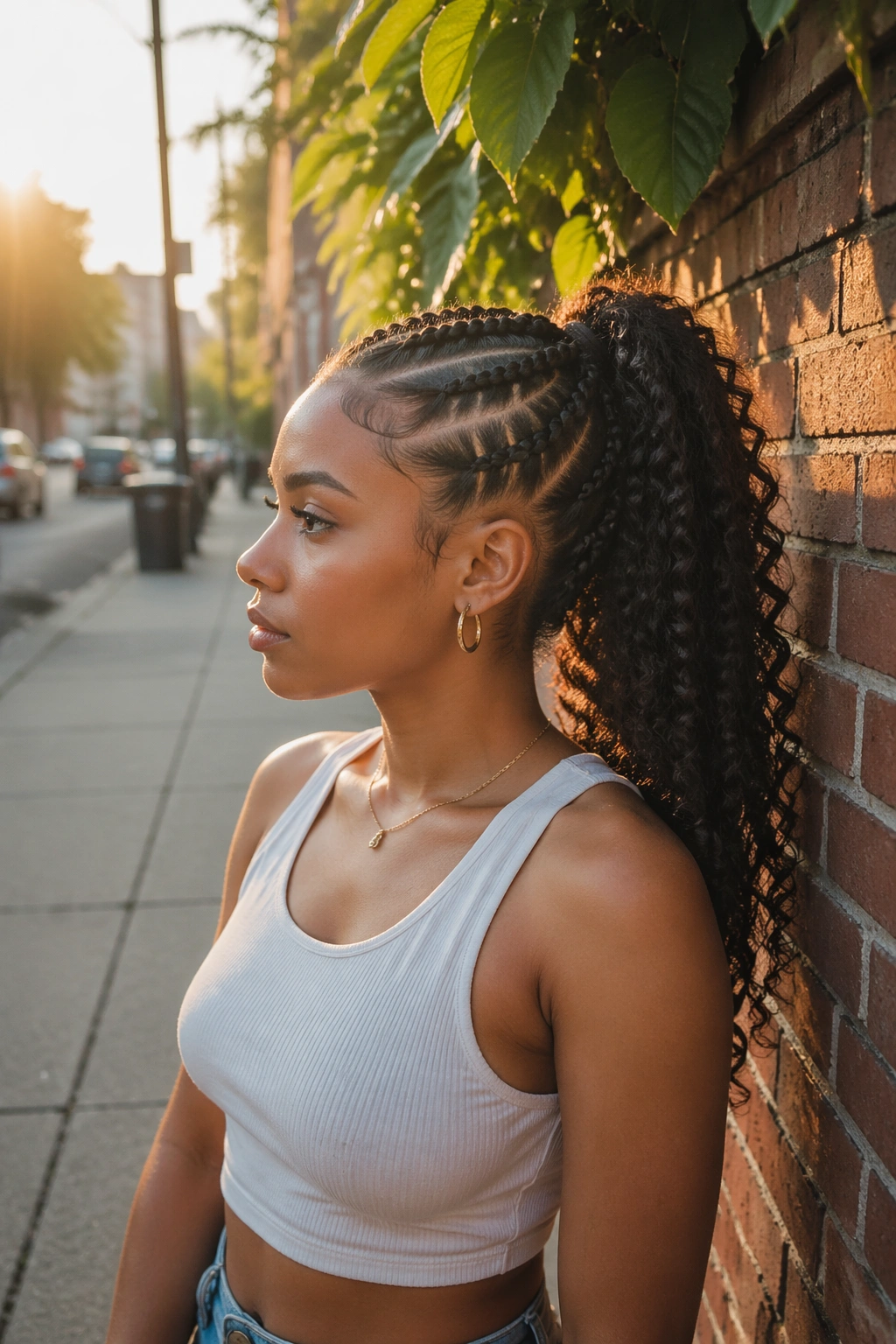
Why does the Mohawk shape look so strong on curly hair? Because it uses contrast. The sides stay tight, the center rises, and the ponytail sits on a ridge that gives the style real shape.
This style is not shy. The middle strip can be built with one wide stitch braid or several slim ones feeding into a single ponytail at the crown or upper back. Either way, the side sections stay flat enough to sharpen the outline, which makes the curls in the ponytail look even fuller by comparison.
How to soften the look
If you want the style to feel less severe, leave the edges slightly rounded instead of razor-flat. A soft edge line can keep the Mohawk from looking too hard. Curly hair helps here because the ponytail brings back some movement at the top, so the final result reads bold rather than boxy.
This one suits people who like a little edge. It’s structured, but it still moves.
9. Crisscross Stitch Braid Ponytail
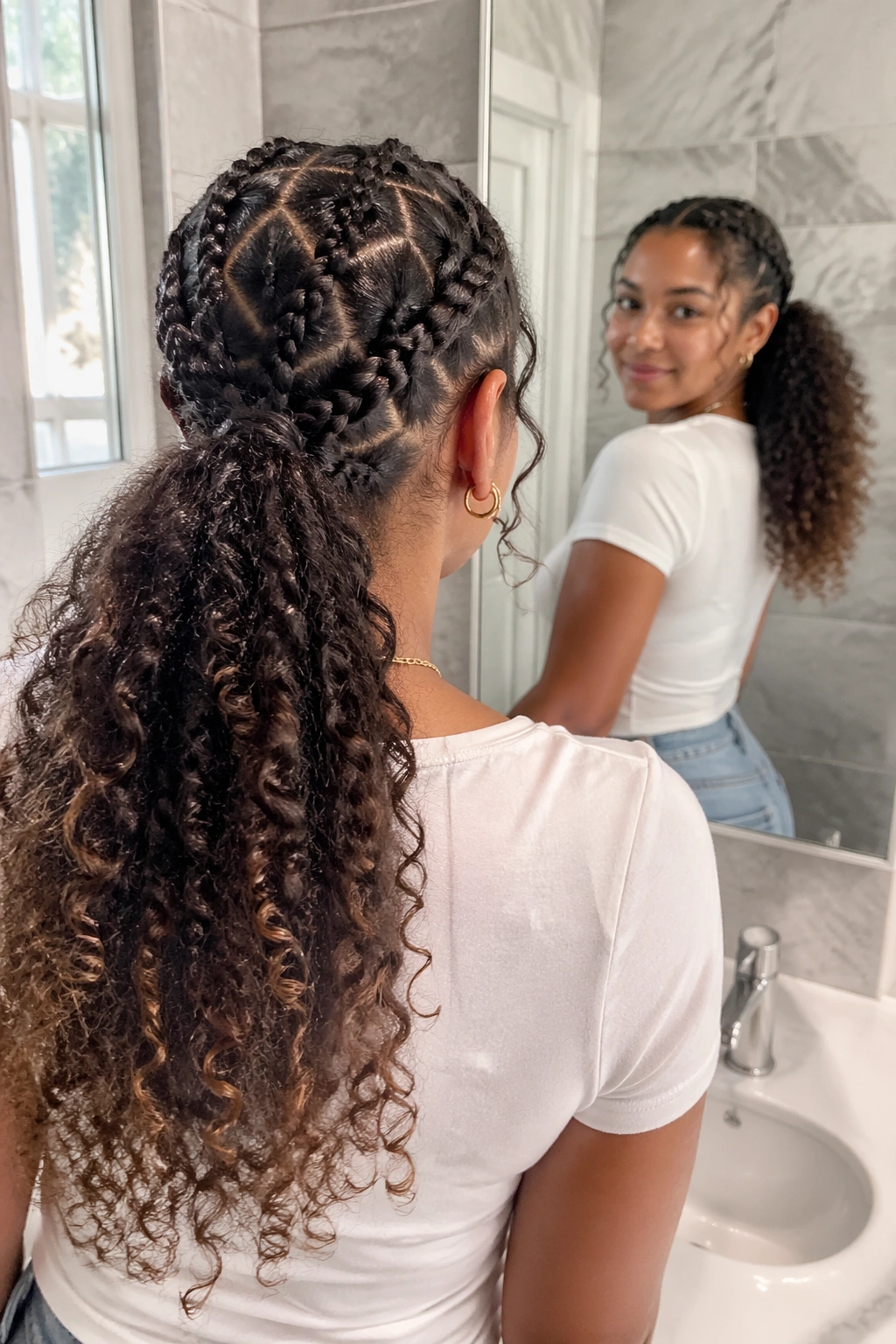
Crisscross stitch braids make the scalp pattern the star. The overlapping rows create a woven look that feels more detailed than plain straight-back braids, and the ponytail becomes the clean ending to all that motion.
The key is keeping the crossings even. If one side dips lower than the other, the pattern starts to wobble, and the whole style loses that sharp, deliberate feel. On curly hair, a neat crisscross layout gives the roots a polished frame while the ponytail stays soft and full.
- Best on hair that parts cleanly
- Looks stronger with medium-to-thick density
- Needs consistent section sizes at the crossing points
- Works well with a wrapped ponytail base
Small warning: don’t make the crossings too tight. The style should sit flat, not tug.
10. Bubble Stitch Braid Ponytail
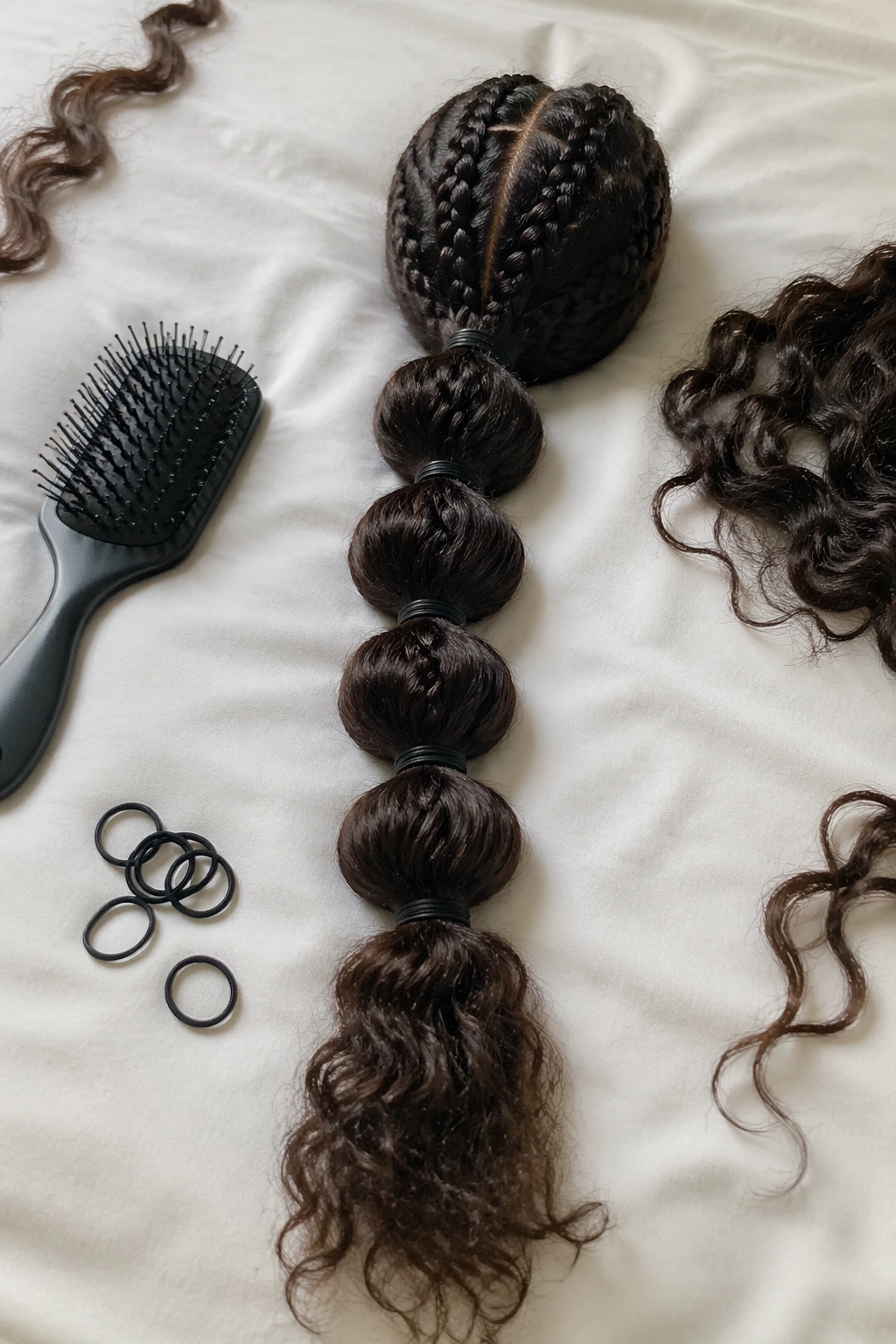
A bubble ponytail changes the rhythm of the style fast. Instead of one long fall of curls, you get rounded sections separated by bands, and that breaks up thick curly hair in a way that feels playful without being childish.
The stitch braid base gives the top enough structure to make the bubbles look intentional. From there, you can add clear elastics or covered bands every few inches, depending on the length and density of the ponytail. On longer curls, I’d space the bubbles farther apart. Too many bands can make the tail look chopped up.
The nice thing here is that curly texture already does half the work. Each bubble has body. Each section keeps its own shape. That means you don’t need much styling product in the lengths, just enough to reduce frizz at the roots and keep the braid base neat.
11. Feed-In Stitch Braid Ponytail With Curly Tail
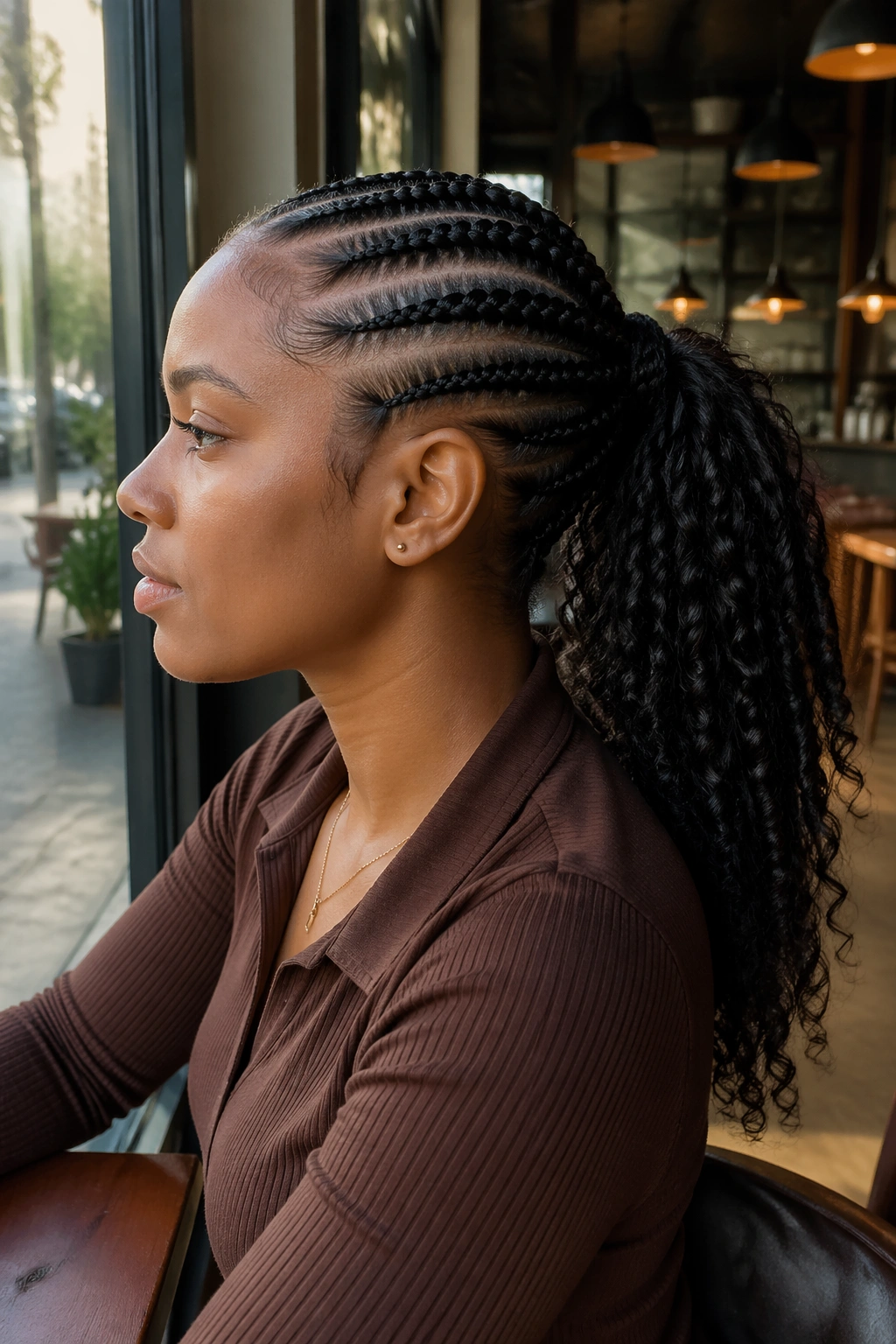
Feed-in braiding makes this style look smoother from the start. Instead of jumping straight into a thick braid, the stylist adds hair gradually, so the base stays sleek and the ponytail doesn’t feel bulky too early.
Why feed-ins suit curly hair
Curly hair often has a lot of natural density near the root, but not always in the same places. Feed-ins help even that out. They let the braid build at a controlled pace, which is useful if one section is tighter than another or if your crown has different textures in different spots.
The ponytail tail can stay curly and loose, which is the whole charm here. The braid carries the polish; the tail carries the movement. That split gives the style a good balance, and it works especially well when you want something that lasts but still feels soft.
A light shine mist on the braid and a little curl cream on the tail is usually enough. Don’t drown it. Curly hair likes shape more than slickness.
12. Jumbo Stitch Braid Ponytail for Curly Hair
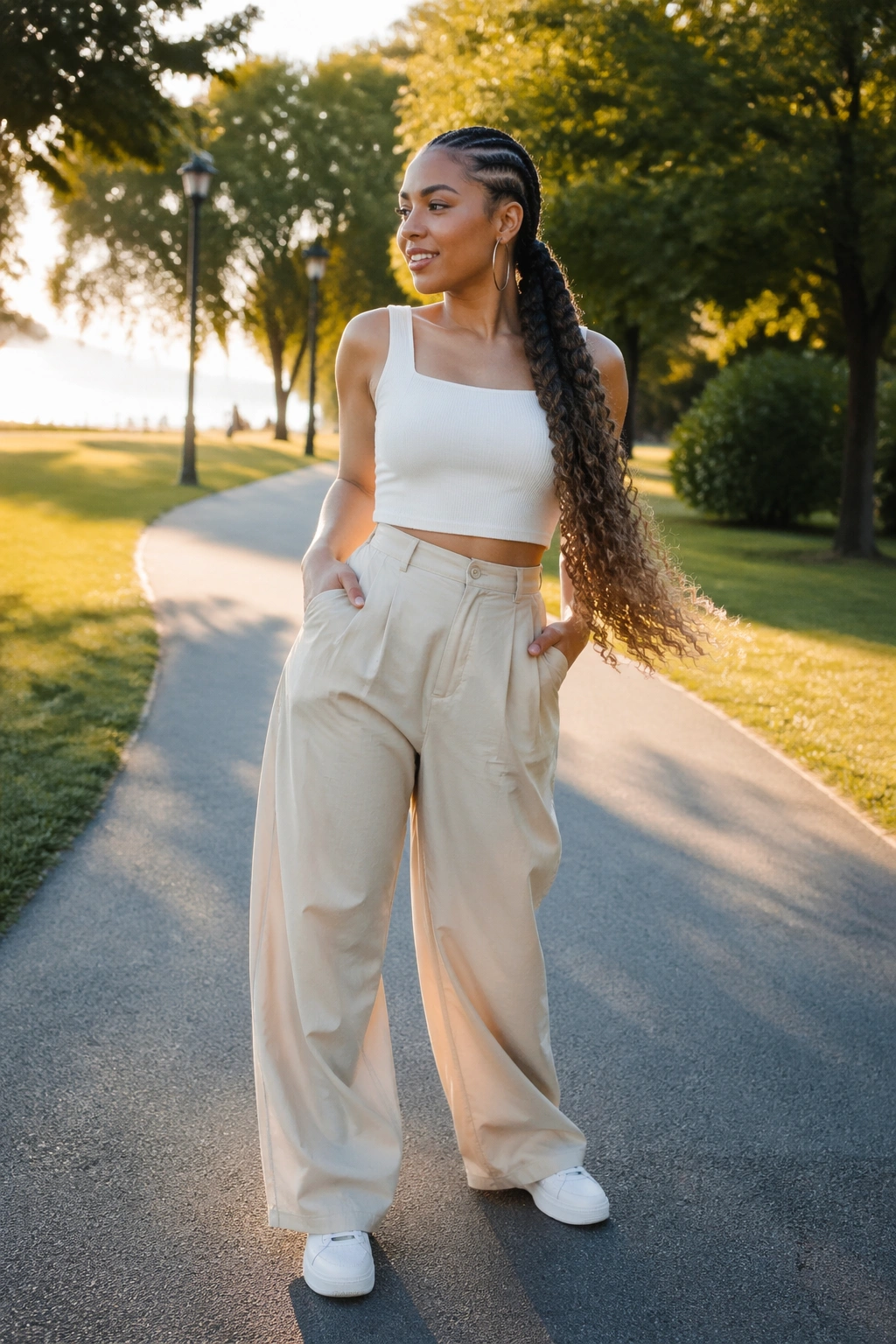
I like a jumbo stitch braid ponytail when I want the braid pattern to read from across the room. The sections are larger, the lines are bolder, and the whole style comes together faster than a tiny, intricate set of rows.
That doesn’t mean it looks lazy. Quite the opposite. Jumbo stitch braids put the shape front and center, which can be a relief if your curls are dense and you do not want to sit through dozens of tiny parts. The ponytail still gives you movement, but the base carries more visual weight.
This style is smart for thick curl patterns because it reduces the number of individual anchors pulling on the scalp. Fewer rows. Fewer tiny tension points. That can make a long wear day feel easier.
A strong elastic and a clean wrap at the base matter here. Big braids need a clean finish or they start looking bulky in the wrong places.
13. Micro Stitch Braids Pulled Into One Ponytail
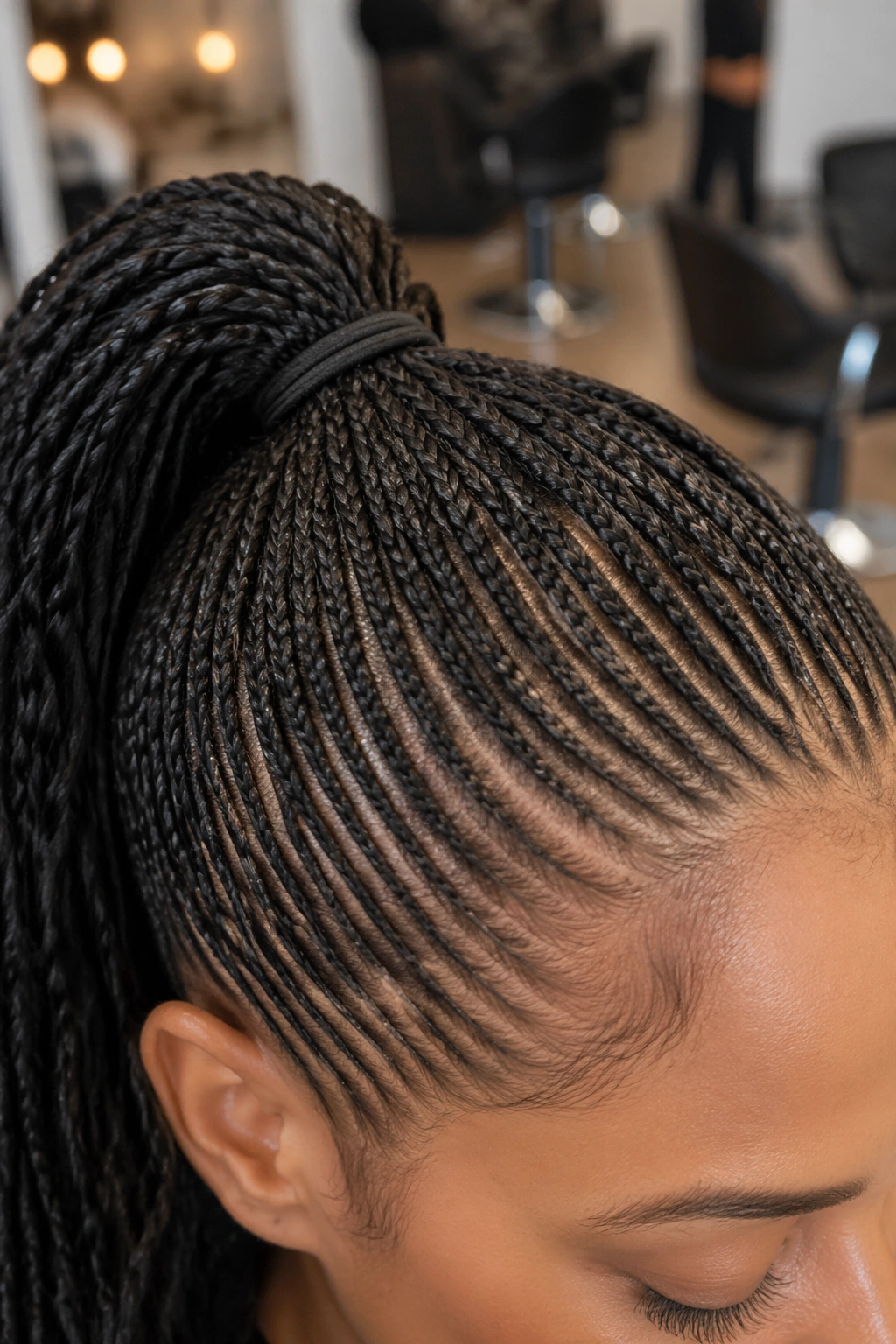
Tiny stitch braids give you a different kind of detail. Instead of a few bold rows, you get a tighter pattern that feels neat from every angle, almost like fabric laid across the scalp.
What makes it different
The smaller the braids, the more exact the parts have to be. That’s the tradeoff. You spend more time in the chair, but the finish can look incredibly clean on curly hair because the tiny sections control frizz near the root better than larger braids do.
- Strong choice for finer curls or mixed textures
- Holds a neat profile around the hairline
- Works well when you want a polished, close-knit look
- Needs careful parting or the whole pattern gets messy fast
I’d skip this if you hate maintenance. Micro stitch braids are not the easiest to redo. They shine when you want detail and you’re willing to protect it at night with a scarf or bonnet.
14. Wrapped-Base Stitch Braid Ponytail
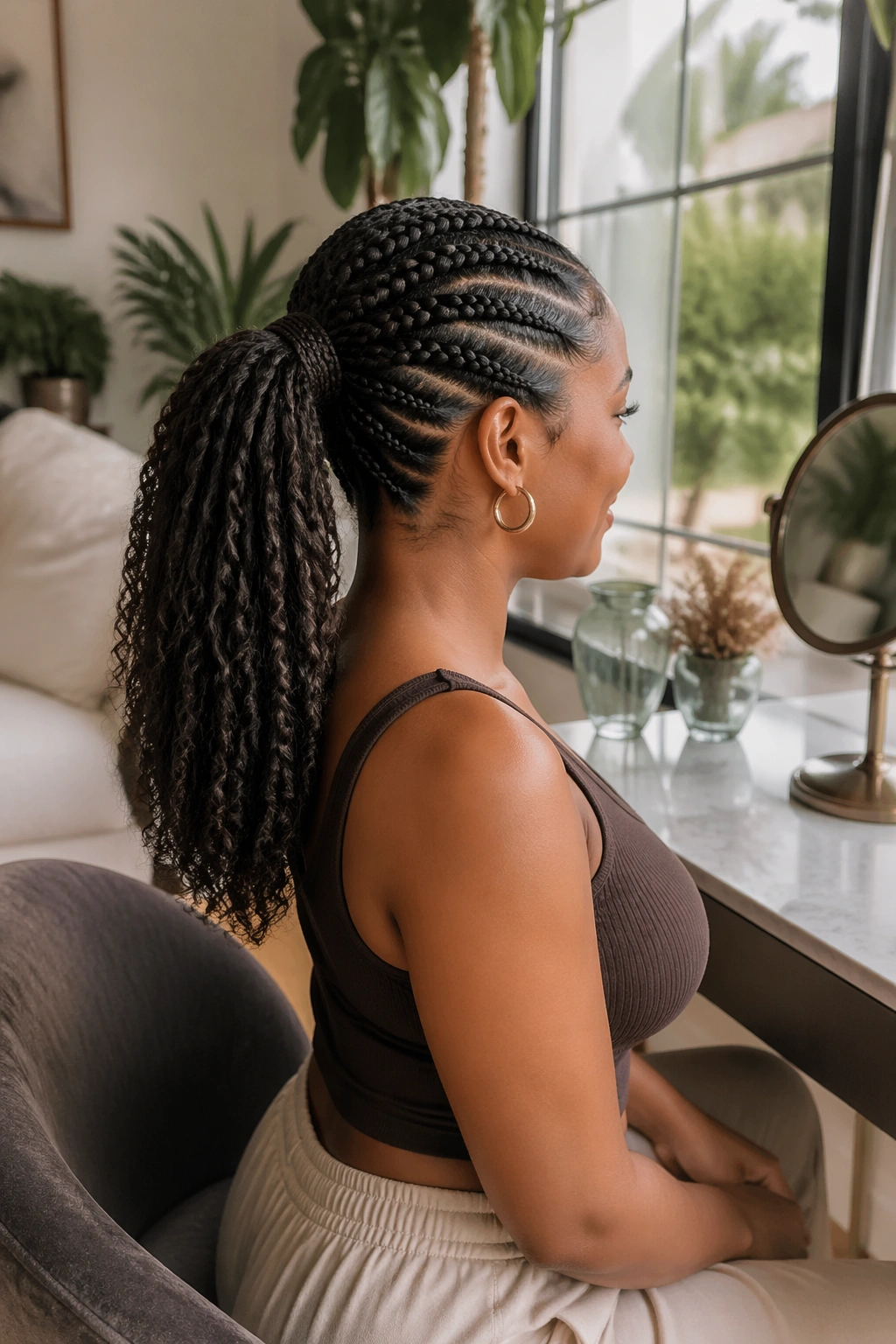
A wrapped base is the small finishing move that makes the whole ponytail look cleaner. Instead of leaving a visible elastic staring out from the middle of the style, you hide it with a braid or a strip of hair wound around the base.
That sounds tiny. It isn’t. On curly hair, especially when the ponytail is thick, the wrap can make the style look more finished and keep the braid base from getting lost under all that texture.
How to keep the wrap neat
Use enough length to cover the band once or twice, then tuck the end tightly under the wrap. If the wrap is too loose, it puffs out and starts to look like an afterthought. If it’s too thick, it adds lumpiness right where you want a clean line.
This version is especially good when you want a dressier result. Not formal in a stiff way — just cleaner, sharper, and a little more deliberate.
15. Braided Bang Stitch Ponytail
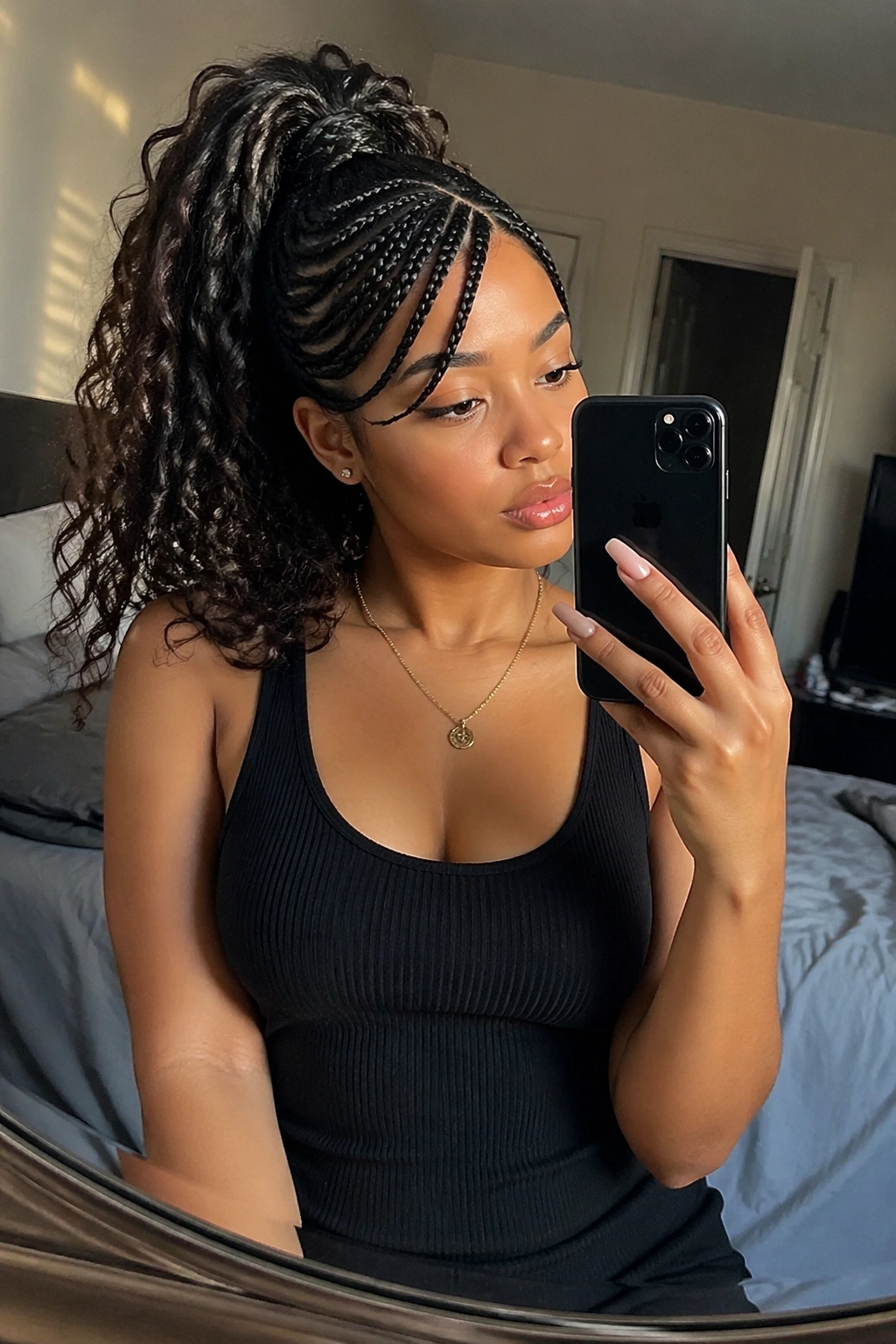
Braided bangs soften a ponytail fast. They break up the front line, bring attention to the eyes, and make the style feel less severe, which matters when the stitch braids are otherwise very smooth.
The front can be styled as thin braid bangs that sweep across the forehead or as short stitch sections that curve into the ponytail base. Either way, the effect is the same: you get a little framing at the front, not a solid wall of pulled-back hair.
A style like this suits curly hair that naturally wants volume at the front. Instead of fighting it, the braided bang works with it. That’s the smarter move. Curlier textures usually look better when a bit of front softness stays in play.
- Good for softening a long forehead
- Works with both high and mid ponytails
- Can be tucked behind one ear for a cleaner side profile
- Looks especially good with defined curls at the ends
16. Side-Swept Stitch Braid Ponytail
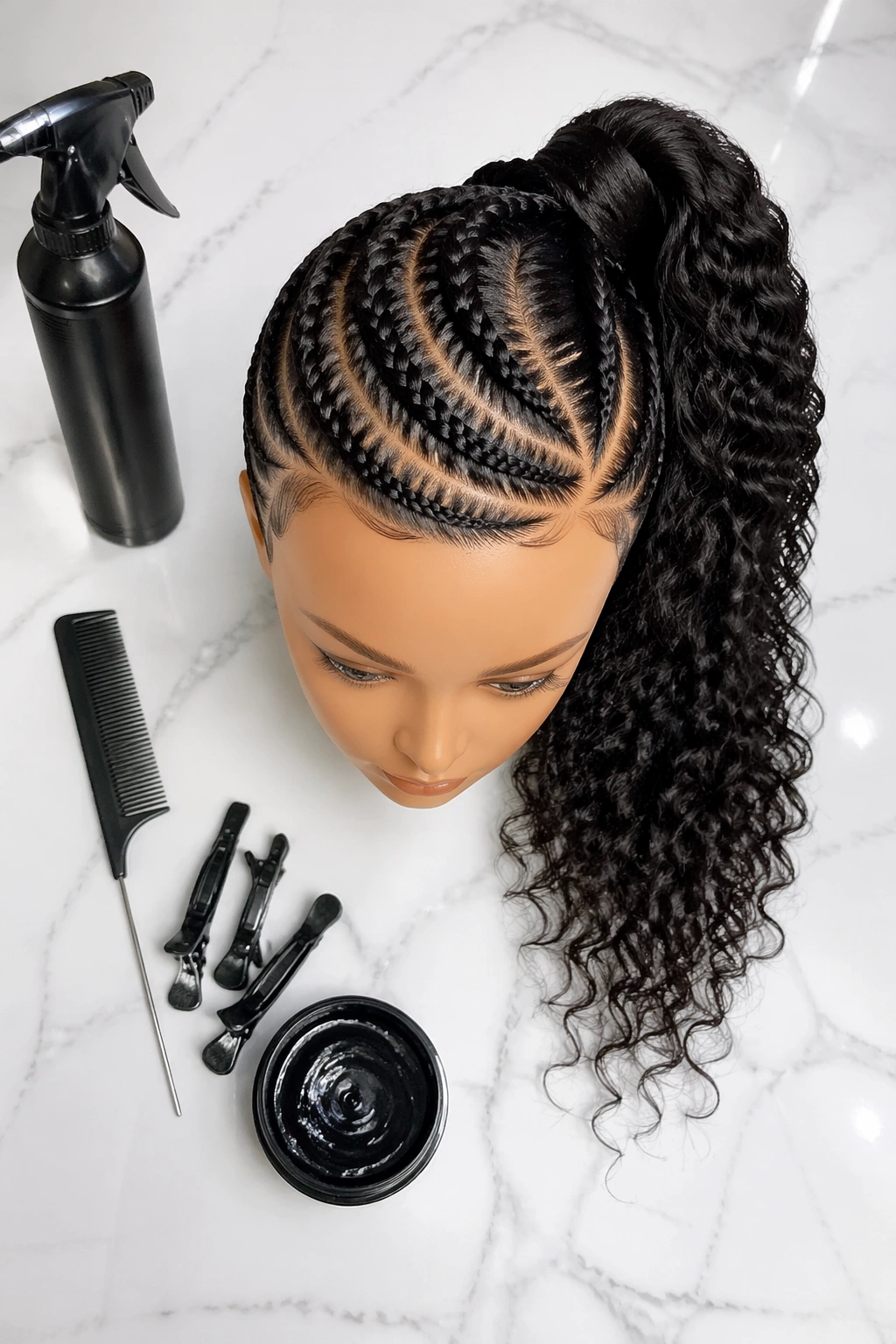
A side-swept ponytail changes the weight of the style. The braid pattern and the ponytail both lean in one direction, which makes the whole look feel longer and a little more relaxed.
This one is useful when your curls have a lot of spring and you don’t want all that volume stacked directly behind your head. Sweeping the ponytail to one side lets the length hang over the shoulder, where it feels lighter and more visible. The shoulder line also breaks up the shape in a flattering way.
I’m partial to this version on days when a straight-back ponytail feels too rigid. It’s still neat. It just has more movement. That small angle can make thicker curls feel less heavy, especially if the front stitch braids are kept narrow and clean.
17. Crown Stitch Braid Ponytail
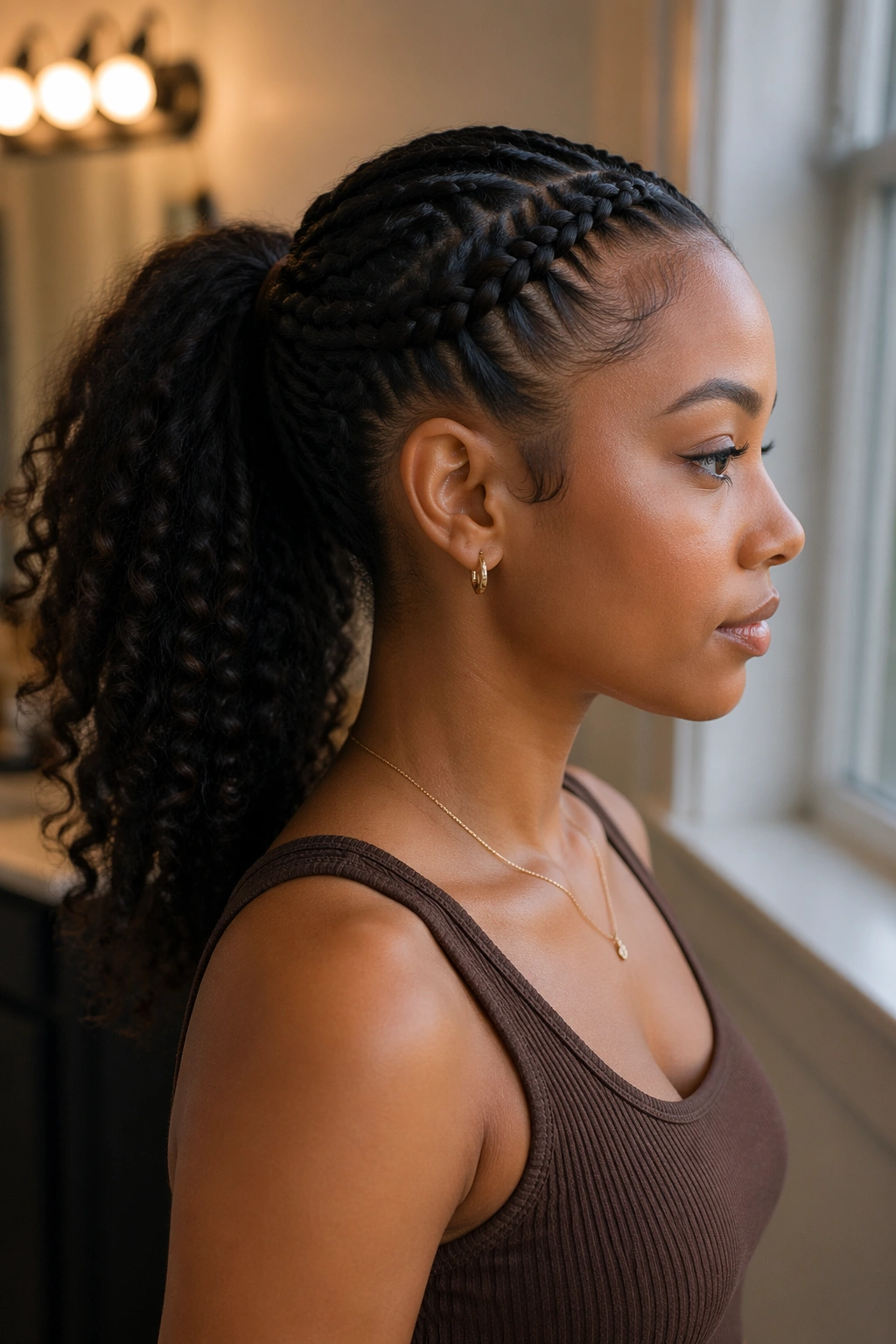
A crown stitch braid ponytail looks expensive in the plainest sense of the word: the braid line wraps the hairline like a frame, and the ponytail drops from the back with almost no visual clutter.
What gives it that crown effect
The braid has to sit evenly around the front and temples. If one side rides higher than the other, the whole shape loses its balance. When it’s done right, though, the braid line traces the head so neatly that the ponytail feels almost secondary. Almost.
Curly hair helps because the ponytail adds softness after the polished front. You get a structured outline near the face, then texture at the back. That contrast is the reason the style works. It keeps the hairline tidy while leaving room for real curl movement.
A crown style also behaves well with accessories. Small cuffs, pins, or a narrow ribbon at the base can work, but don’t pile on too many extras. The braid already has enough presence.
18. Double Stitch Braid Ponytail
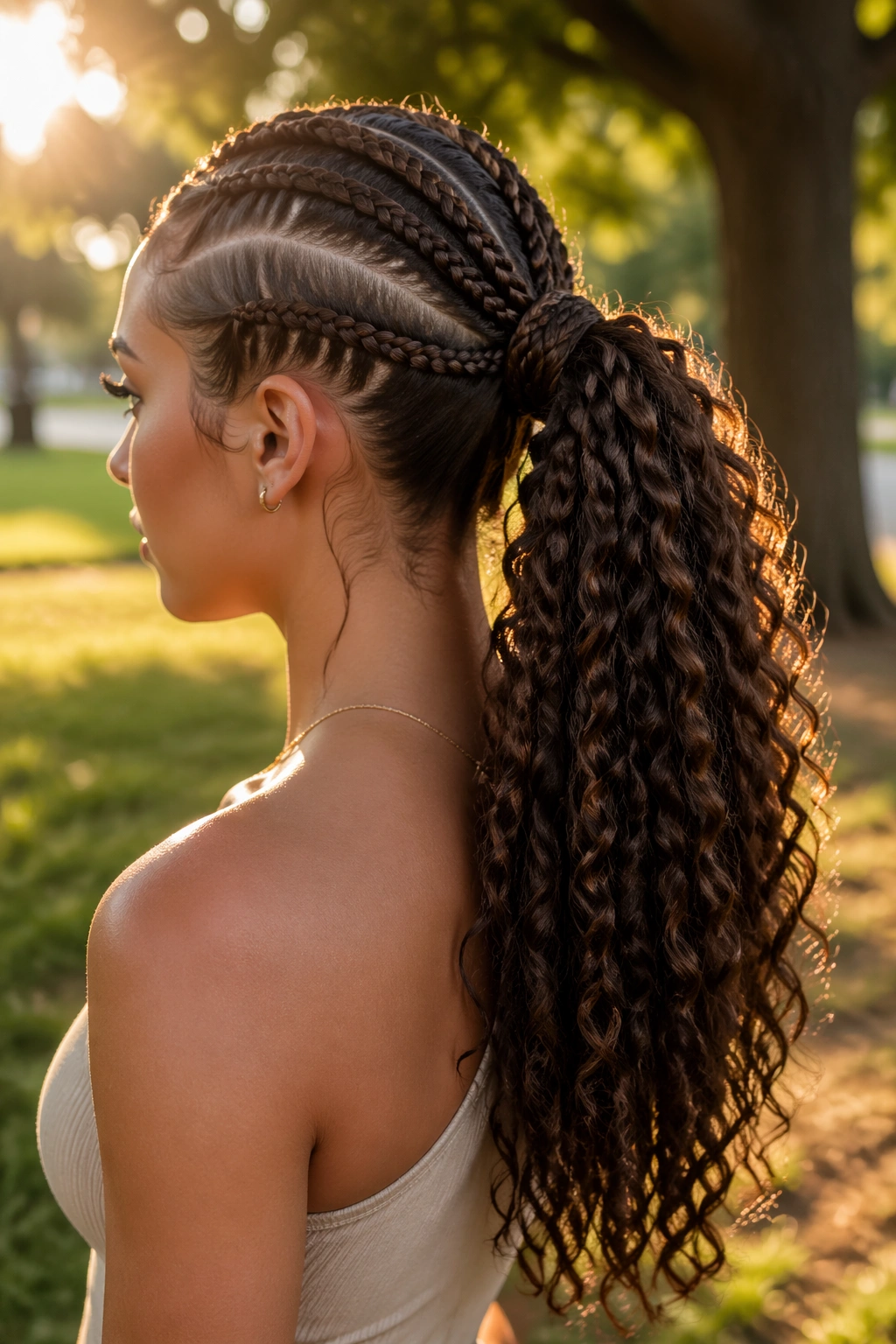
Two stitched sections joining into one ponytail can look richer than a single wide braid. The style has more movement at the scalp and more shape in the base, which makes it useful when you want the ponytail to feel anchored but not stiff.
It’s a good choice for curly hair that has a little uneven density on the left and right sides. Two separate stitched rows can balance the head better than one central braid, and the joined ponytail gives the lengths room to fall together at the back.
Where this one wins
- Helps distribute volume across the head
- Keeps the top from looking flat
- Works well when the ponytail itself is thick
- Makes the braid-to-pony transition look intentional
The only thing to watch is symmetry at the join. If one side is much tighter, the ponytail sits crooked. A small adjustment at the base usually fixes it.
19. Asymmetrical Stitch Braid Ponytail
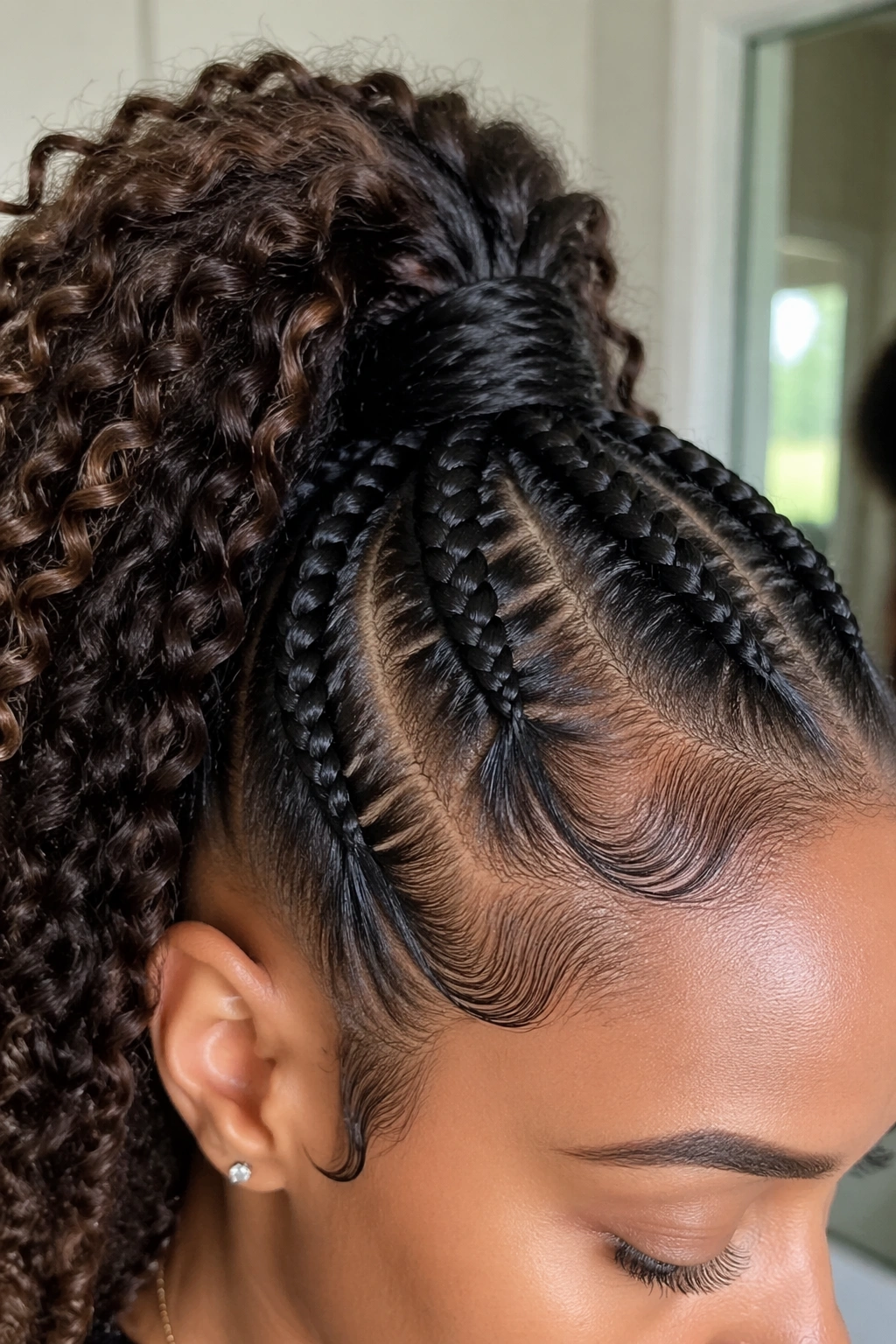
Do you need both sides to match? Not always. An asymmetrical stitch braid ponytail leans into imbalance on purpose, and that can look sharper than a perfectly centered style if your face has strong lines or one side carries more natural volume.
This version can have more braid work on one side, a deeper part, or a ponytail that sits just off-center instead of directly behind the crown. The trick is to make the offset feel chosen, not accidental. That’s a fine line, but curly hair helps because texture softens the shift.
I like asymmetry when the outfit or face shape needs a little motion. It pulls the eye sideways in a controlled way, which is often more interesting than a straight line. The style still reads clean. It just doesn’t insist on perfect balance, and that’s refreshing.
20. Faux-Hawk Stitch Ponytail
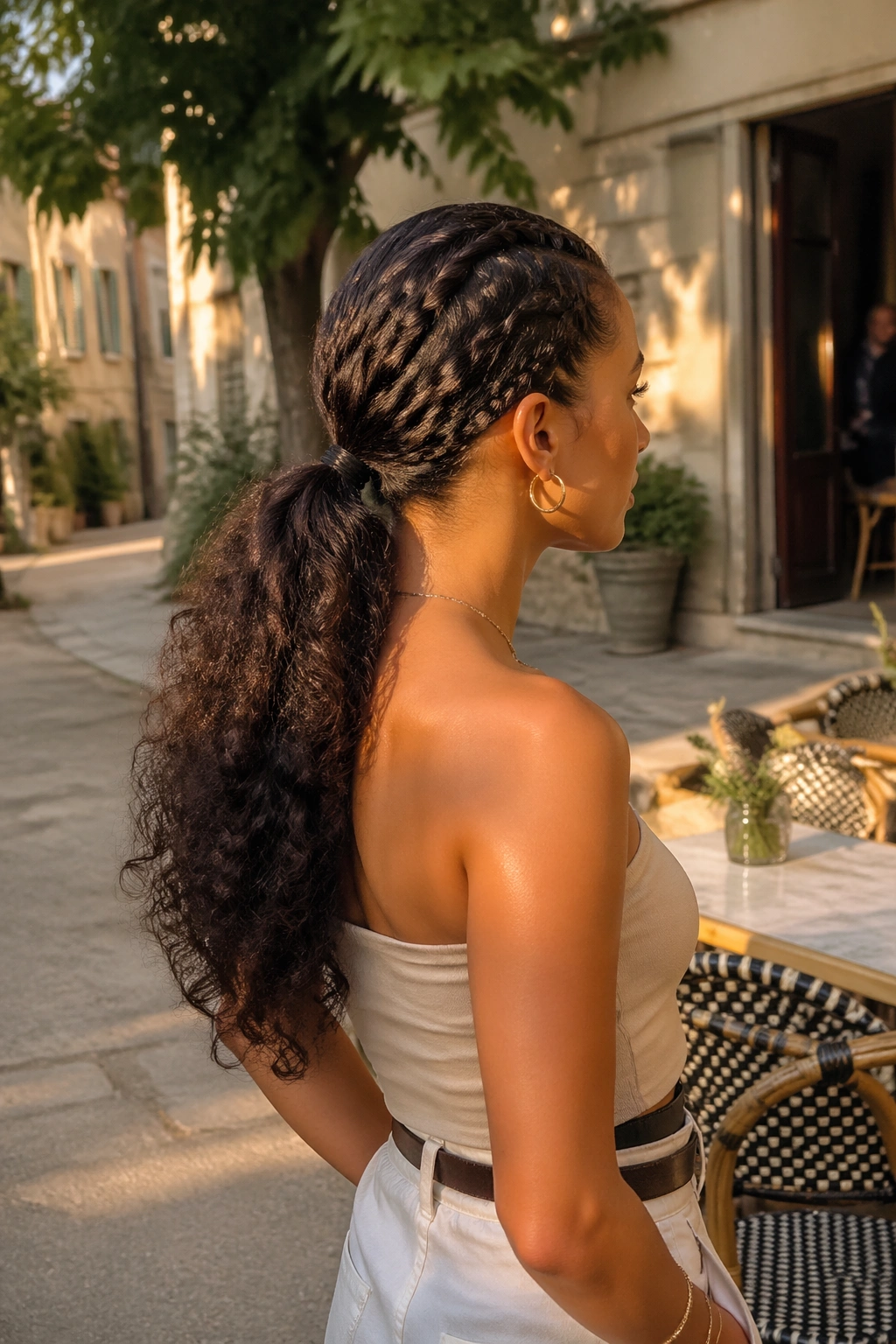
A faux-hawk stitch ponytail is for the days when you want height, edge, and a little attitude. The sides stay close to the head, the center section rises, and the ponytail concentrates the curls along that middle line.
How to keep it wearable
Use a firm stitch pattern on the sides, but leave enough fullness in the center so the ponytail doesn’t collapse into the scalp. If the middle is too tight, the style loses the faux-hawk shape and starts looking like a plain pulled-back braid set.
- Strong shape for thick, springy curls
- Good when you want the neck and temples clear
- Needs a secure base so the center doesn’t sag
- Works well with a bit of mousse for grip at the top
This one reads bold without needing a lot of extra detail. The shape does the work. The curls finish it.
21. Curly Puff With Stitch Braided Base
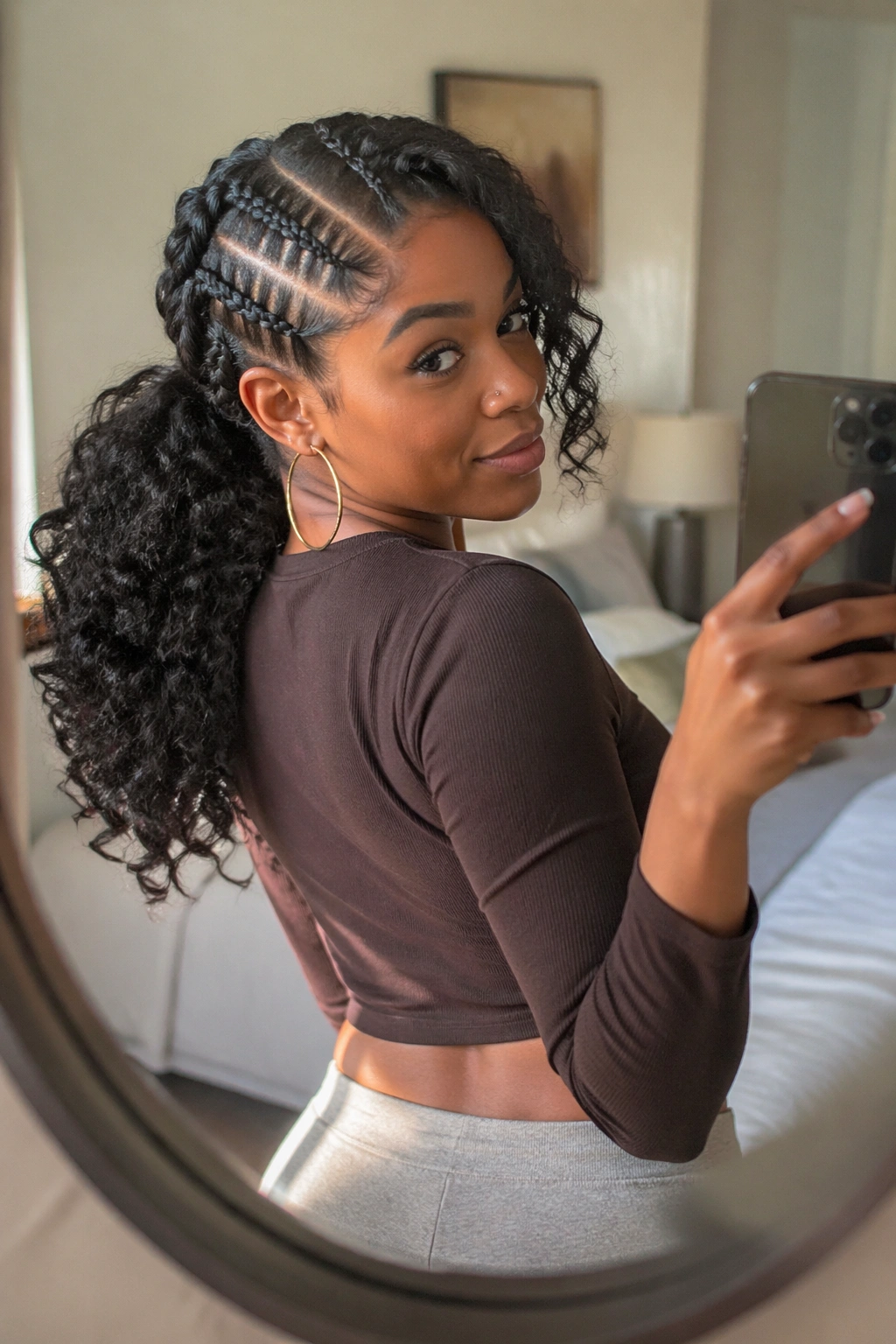
A curly puff with a stitch braided base is one of the smartest ways to keep the front clean while letting the texture stay fully visible. The stitched braids control the hairline and sides, then the rest of the hair gathers into a puff instead of a tight ponytail.
That matters for shorter curls, stretched natural hair, or lengths that would look tiny if they were pulled into a regular tail. The puff gives the style height and softness. It also avoids the flat, squeezed look some ponytails get when the hair is too dense to sit neatly in one band.
This style is especially kind to coils that shrink hard. You get shape without fighting the texture. If the puff is dry and frizzy, though, the whole look falls apart, so a little leave-in or curl cream in the free section helps a lot.
22. Long Cascade Stitch Braid Ponytail
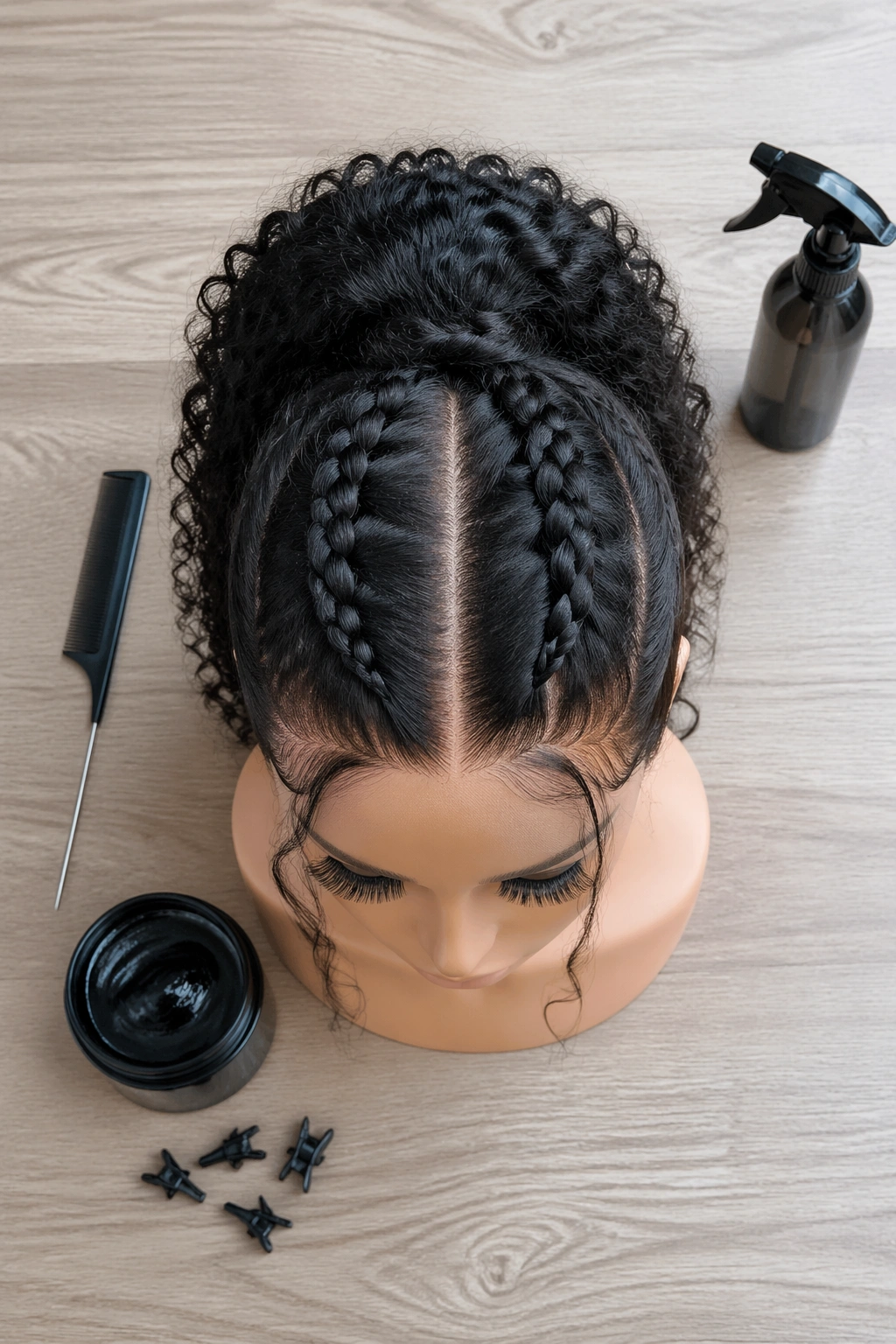
A long cascade ponytail is the dramatic one. The stitched base holds the scalp neat, then the length spills down in a long line that shows every bend, coil, and wave in the curl pattern.
This style works best when the ponytail has enough length to move. If it’s too short, the cascade effect disappears and you’re left with a thick bundle that never quite settles. That’s why extension hair gets used here sometimes — not for volume alone, but for flow.
The braid base should stay snug and anchored, because long hair pulls harder than people expect. One elastic is rarely enough on a heavy ponytail. Two small anchors are safer, especially if the hair is dense or the length is added on.
If you like styles that look strongest in motion, this one is hard to beat. It’s clean at the top and loose at the bottom, which is a nice split.
23. Protective Stitch Braid Ponytail With Tucked Ends
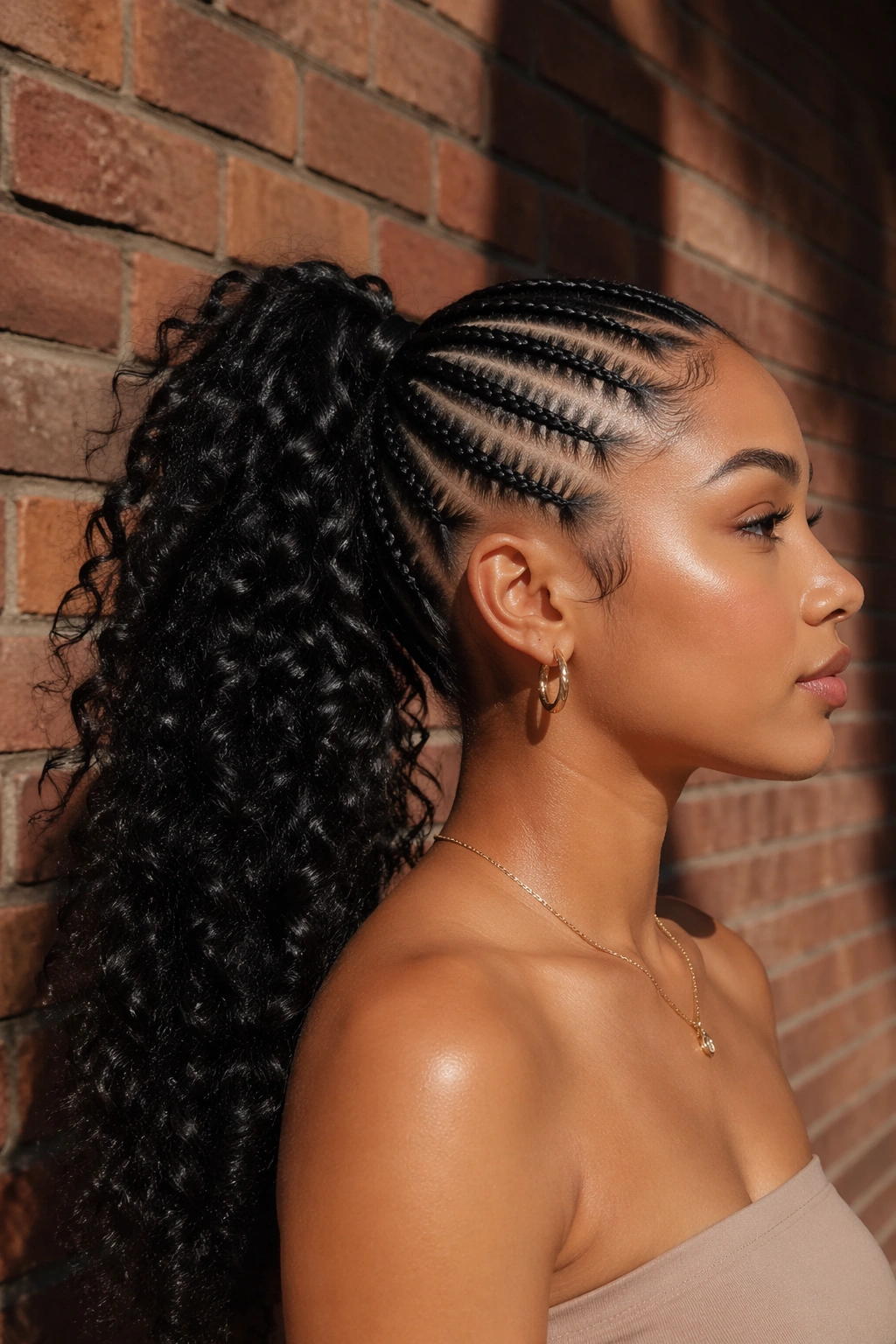
A protective stitch braid ponytail with tucked ends is the practical one. It keeps the front neat, keeps the ends from rubbing, and gives the hair a break from constant loose handling.
Why tucked ends matter
Curly hair can fray fast when it gets caught on clothes, chair backs, or pillow seams. Tucking the ends into a compact ponytail or folding the tail under itself cuts down on that wear. It also makes the style easier to sleep in if you’re stretching wear between wash days.
- Good for travel, workouts, and low-manipulation weeks
- Helps reduce tangling at the ends
- Works well with satin care at night
- Keeps the style looking cleaner for longer
This one is not the flashiest look in the group. It is the one I’d trust when the goal is to keep the hair tidy and leave it alone. Sometimes that’s the whole point.
Final Thoughts
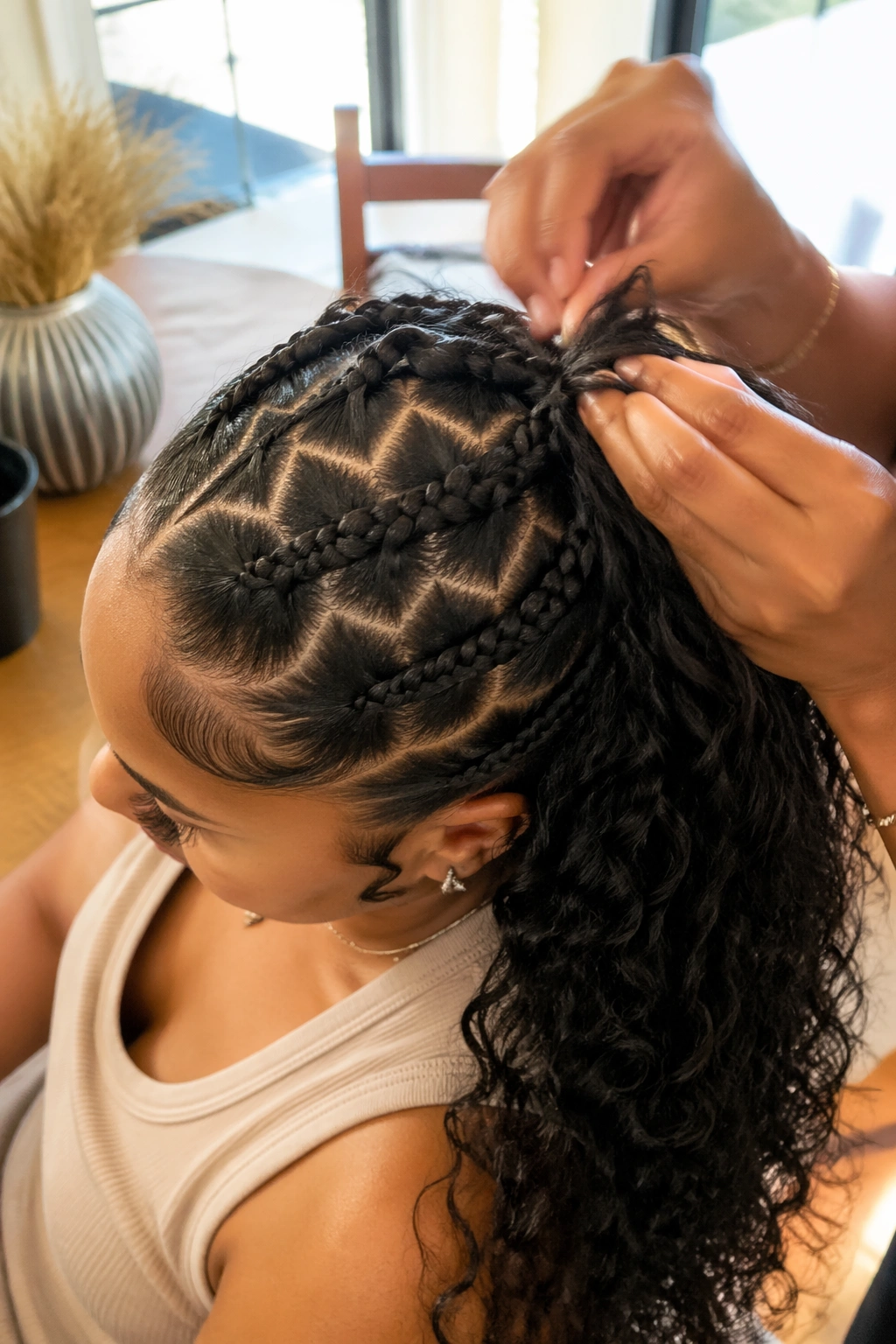
The strongest stitch braid ponytail styles for curly hair do two things at once: they keep the roots controlled, and they let the curls stay visible. If a style flattens the texture so much that the ponytail loses its life, it has missed the point.
I also think people overdo tension in the name of neatness. They do not need to. A clean part and a steady hand matter more than a painful braid. The style should sit firmly, not leave your scalp complaining by the end of the day.
Pick the version that fits your curl density, your routine, and your patience level. The good ones will hold shape, move well, and still look like your hair.
