



A mid ponytail does something a high ponytail never quite manages: it stays polished without pulling the face into that overworked, too-tight look. Add a braid, and the whole style gets cleaner fast — the crown lies flatter, the length feels intentional, and the finish reads crisp instead of casual.
That is why sleek mid braided ponytails work so well on straight hair, stretched curls, relaxed waves, and braid extensions. The trick is placement. Mid height keeps the ponytail balanced at the back of the head, and the braid gives the eye a neat line to follow, which is exactly why these styles still look tidy when the hair has a little texture.
Product choice matters more than people think. A fine-tooth comb, a soft brush, a light gel or mousse, and a handful of snag-free elastics can turn a rushed pony into something that looks deliberate. You do not need a drawer full of tools, but you do need a clean part and a plan.
Some versions are barely fussy at all. Others lean into detail — a fishtail tail, a braided base, a wrapped strand hiding the elastic. The 25 ideas below stay in that clean lane, but each one has its own mood, its own texture, and its own reason to work.
1. Center-Part Three-Strand Mid Braided Ponytail
A center part gives this style its sharpest edge. When the hair is smoothed straight back and gathered at the middle of the head, the braid in the tail becomes the main feature, not a messy afterthought. It looks especially clean when the pony sits just below the crown, not too high, not sagging low.
What makes it work is the contrast. The front stays flat and glossy, while the length gets a little woven detail. That balance is what keeps the style from feeling plain.
A clear elastic at the base helps, but the real trick is wrapping a thin strand of hair around it and pinning it underneath. That tiny move makes the whole style look finished. If your hair has flyaways, tap a little styling wax along the part with your fingertips instead of loading on heavy gel. Too much product can make the braid feel stiff.
2. Side-Swept Fishtail Mid Ponytail
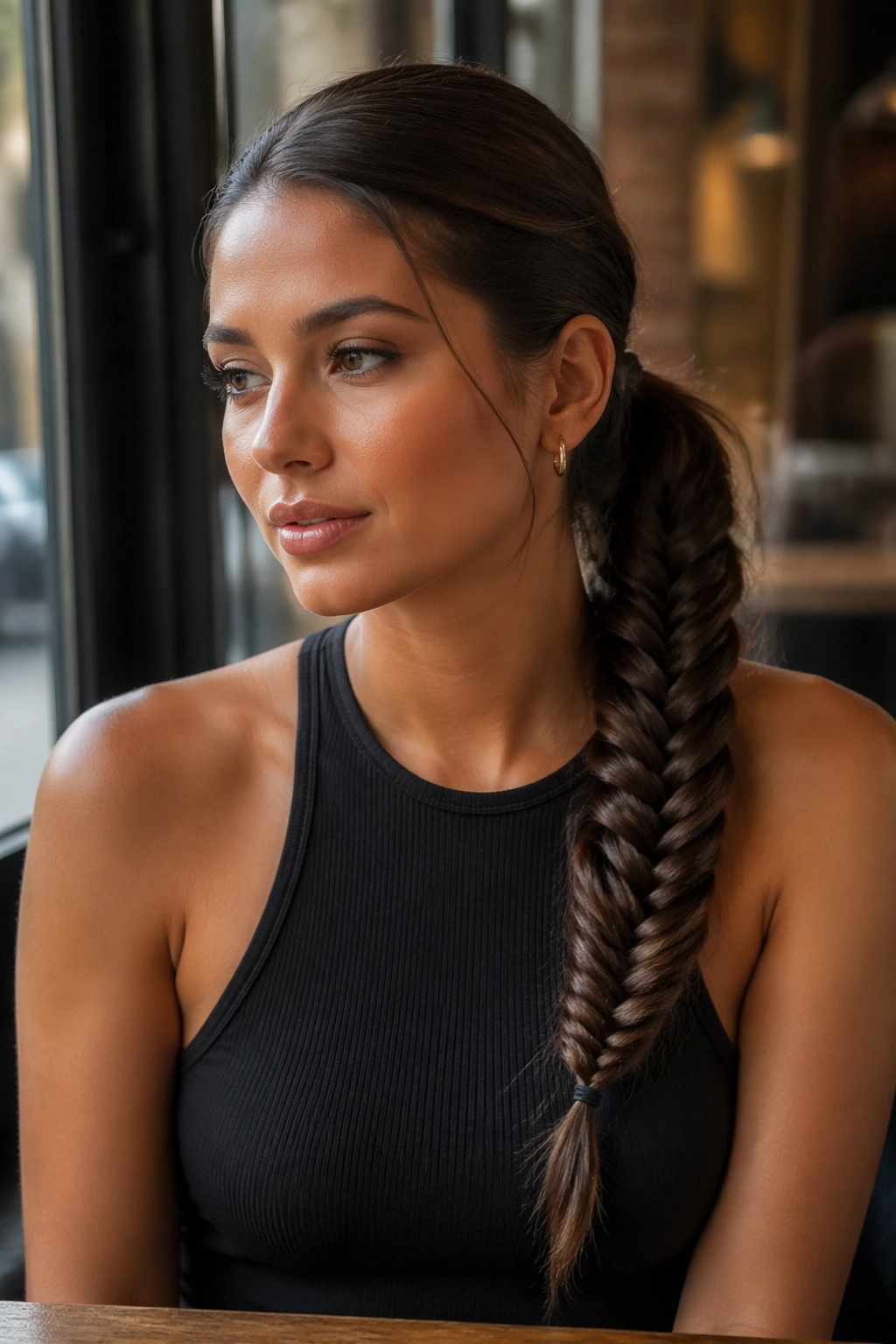
Why does a side-swept fishtail look so polished? Because the diagonal line softens the face while the braid itself stays tight and neat. This version works best when the ponytail starts a touch off-center and the braid hangs over one shoulder or sits just behind it.
A fishtail always looks more intricate than it is. Two sections, small alternating pieces, and a firm finish give you that woven look without a bulky braid. Keep the sections even and pinch the braid flatter as you go if you want a cleaner silhouette.
- Best on hair that has been lightly smoothed with serum
- Works well with medium to long hair
- Looks sharper when the ends are secured with a tiny clear elastic
- A mist of shine spray at the tail adds a glossy finish
Do not loosen the fishtail too much. The whole point here is neatness, not softness.
3. Dutch Braid Base Mid Ponytail
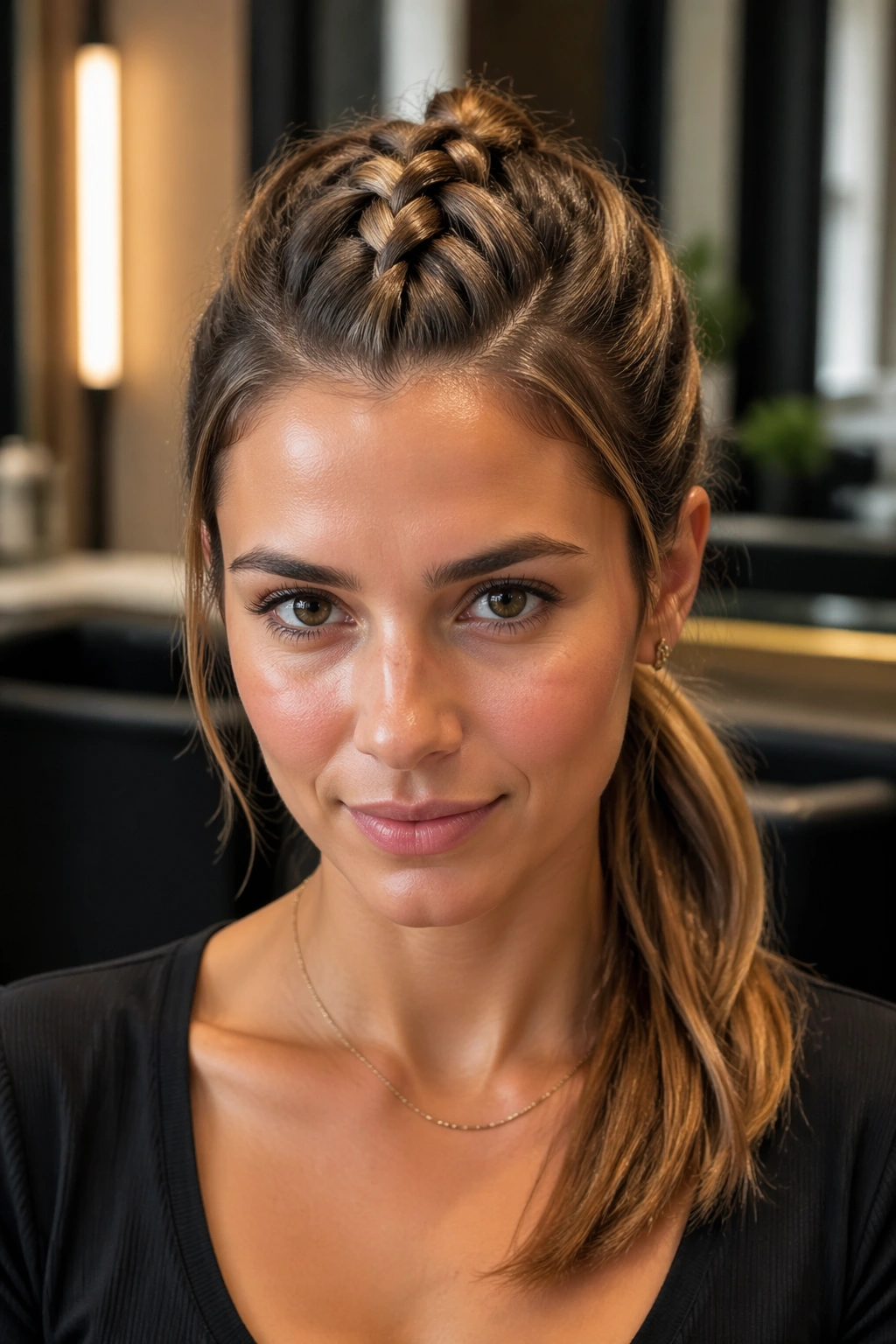
A Dutch braid at the crown gives this ponytail a strong, structured start. Instead of melting into the hair, the braid sits on top of it, which creates a clean ridge down the center or along one side before the rest is pulled into a mid ponytail.
That raised braid line is a small thing, but it changes the whole mood. It makes the style look more detailed from the front, even before anyone sees the tail. I like this one for days when the hair needs to stay controlled but not flat in a boring way.
If you have fine hair, tug the braid edges very gently after securing it so it looks fuller. If your hair is thick, keep the braid snug and close to the scalp. Either way, finish the ponytail with one smooth wrap around the elastic. That keeps the back from looking rushed.
4. Rope-Twist Length Mid Ponytail
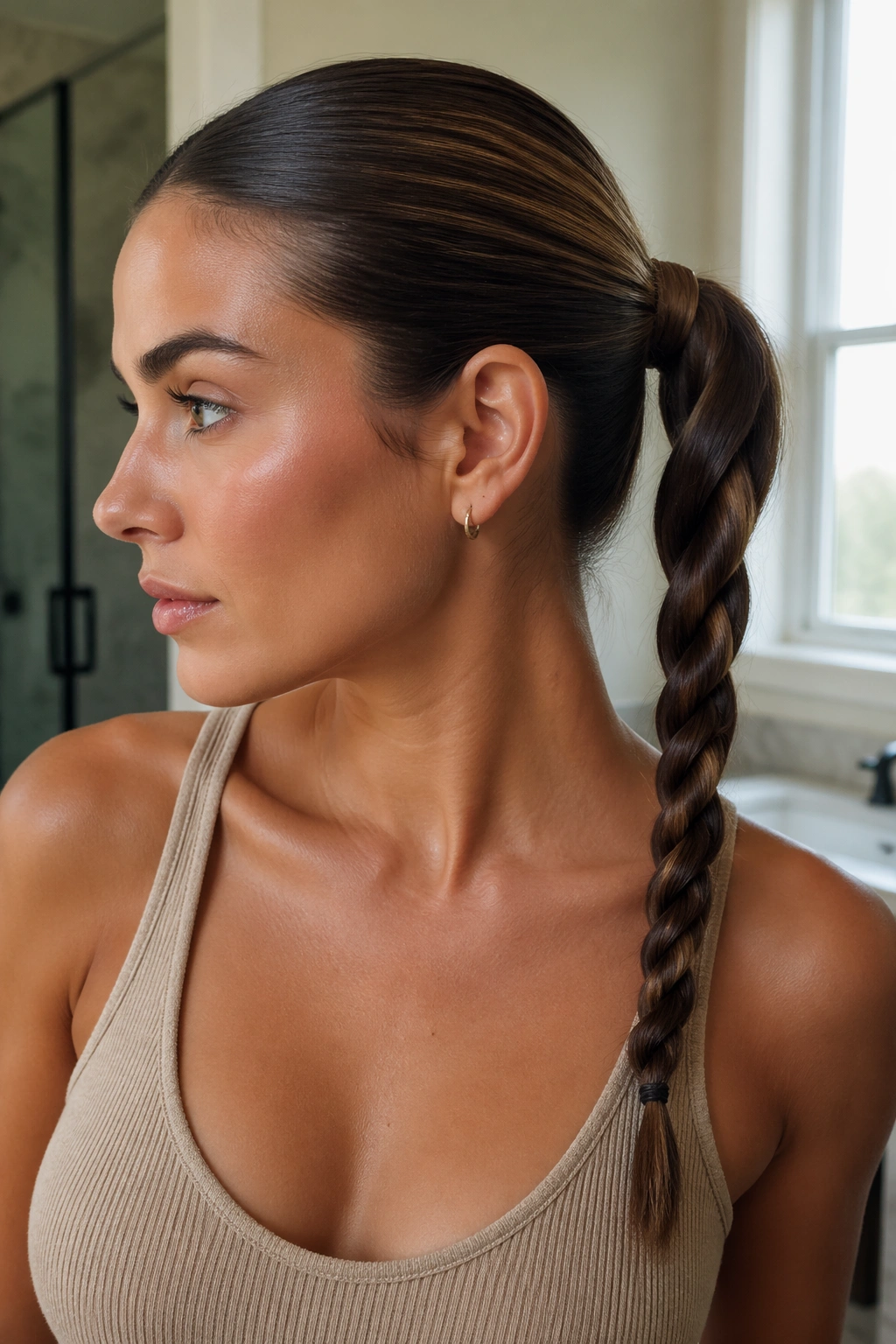
The rope twist is the neat freak of braids. It is simple, fast, and clean, and it has a kind of tidy shine that works beautifully when you want the ponytail itself to look long and smooth rather than heavily woven.
Pull the hair into a mid ponytail first, then split the length into two sections and twist each one in the same direction before wrapping them around each other in the opposite direction. That reverse motion is what holds the twist together. If you twist both sections the same way, the shape starts to unravel.
This style looks especially good on hair that has been lightly stretched or blow-dried. The smoother the length, the tighter the twist reads. A small amount of serum on the palms keeps the finished rope from puffing up, but go easy. Too much shine product and the braid starts to slide apart.
5. Bubble Braid Mid Ponytail With a Braided Crown
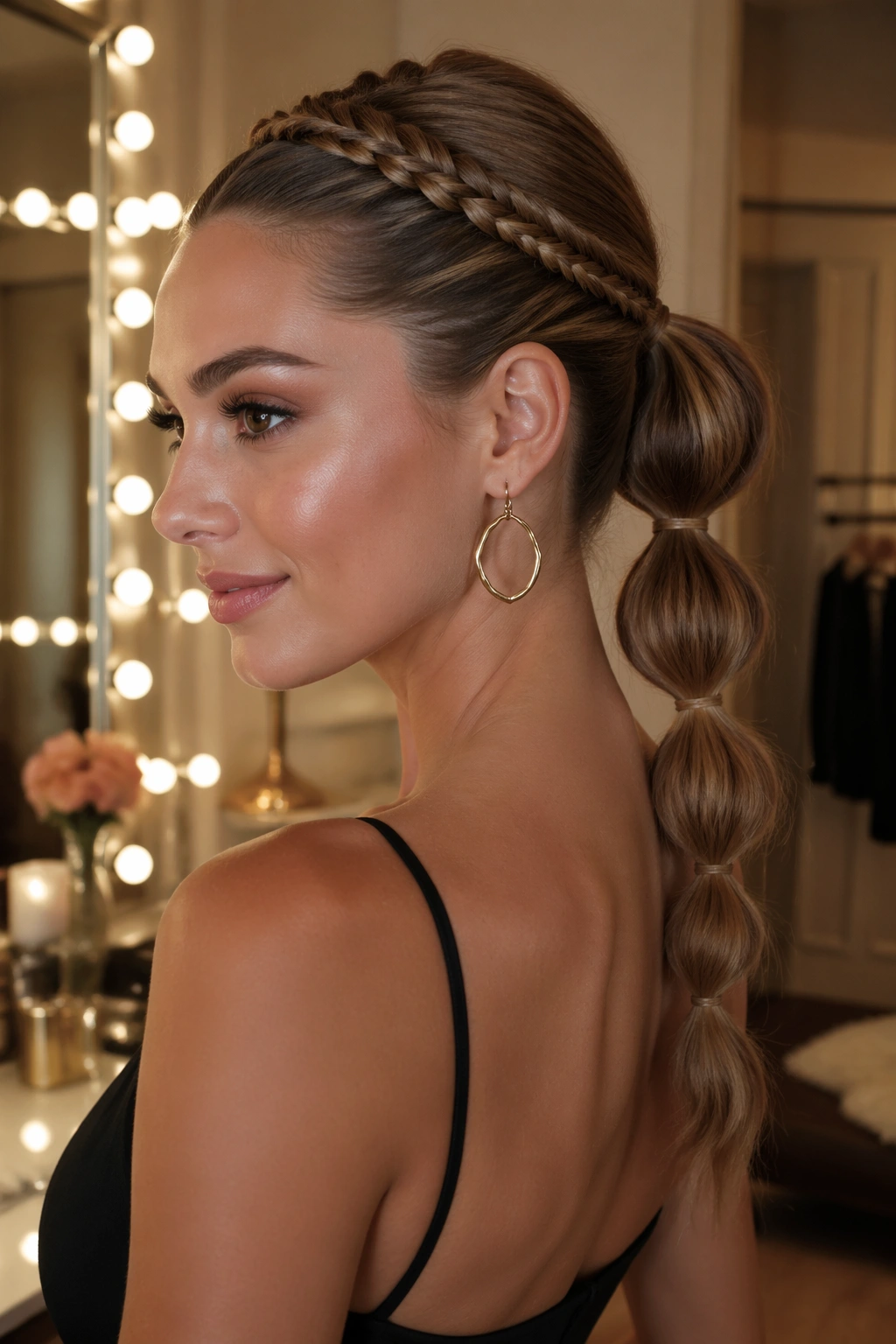
This one has a little drama, but it stays clean. Start with a braided section near the front — a narrow Dutch braid or cornrow works well — then gather the rest into a mid ponytail and build bubble sections down the length with small elastics spaced about 2 to 3 inches apart.
The bubbles create shape without making the style look busy. That is the sweet spot. The braid at the top gives structure, and the rounded sections down the tail keep the silhouette playful but still neat.
How to keep the bubbles looking even
Pull each section out gently after tying it, then stop. If you stretch them too hard, the bubbles turn floppy and uneven. Use a comb tail to separate the ponytail into equal pieces before you start tying. That tiny bit of measuring saves the whole look.
This is one of the best styles for medium-thick hair. The texture fills the bubbles naturally.
6. French Braid Into Mid Ponytail
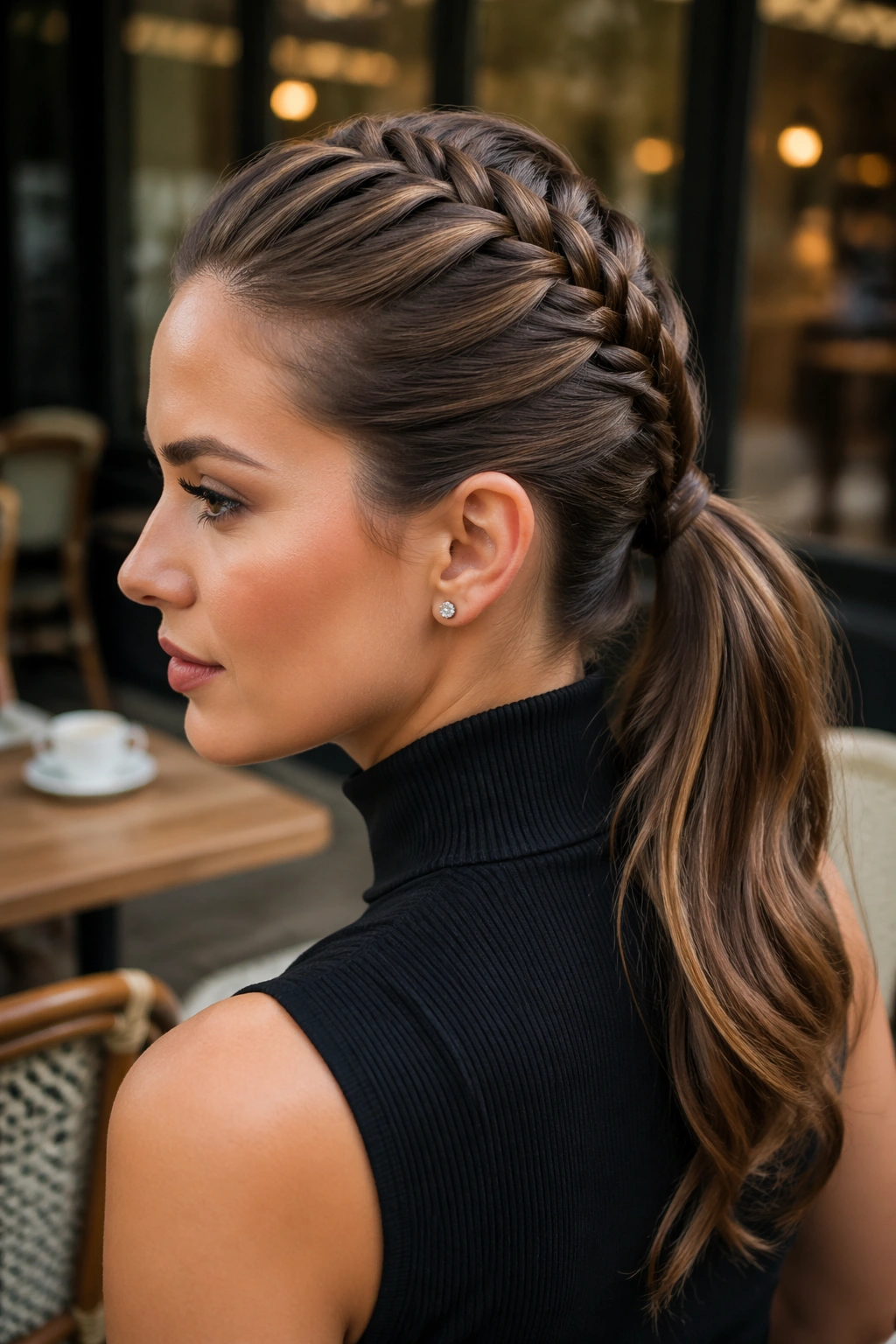
A French braid into a mid ponytail is one of those styles that just makes sense. The braid starts at the hairline and feeds downward, so the top stays flat and secure while the tail opens into a cleaner, more relaxed shape at the nape.
It is a strong choice if you want the front to stay off your face without resorting to a full-updo. The braid can run straight back or sit slightly off-center, depending on your face shape and how much asymmetry you like.
The neatest version comes from keeping the braid close to the scalp and using a dab of gel on the part before you start. That small prep step matters. Loose roots make the whole style look fuzzier than it needs to. Once the braid reaches the mid-head area, tie it into the ponytail and cover the elastic with a thin strand of hair or a braid tail if you have one.
7. Sleek Cornrow Feed-In Mid Ponytail
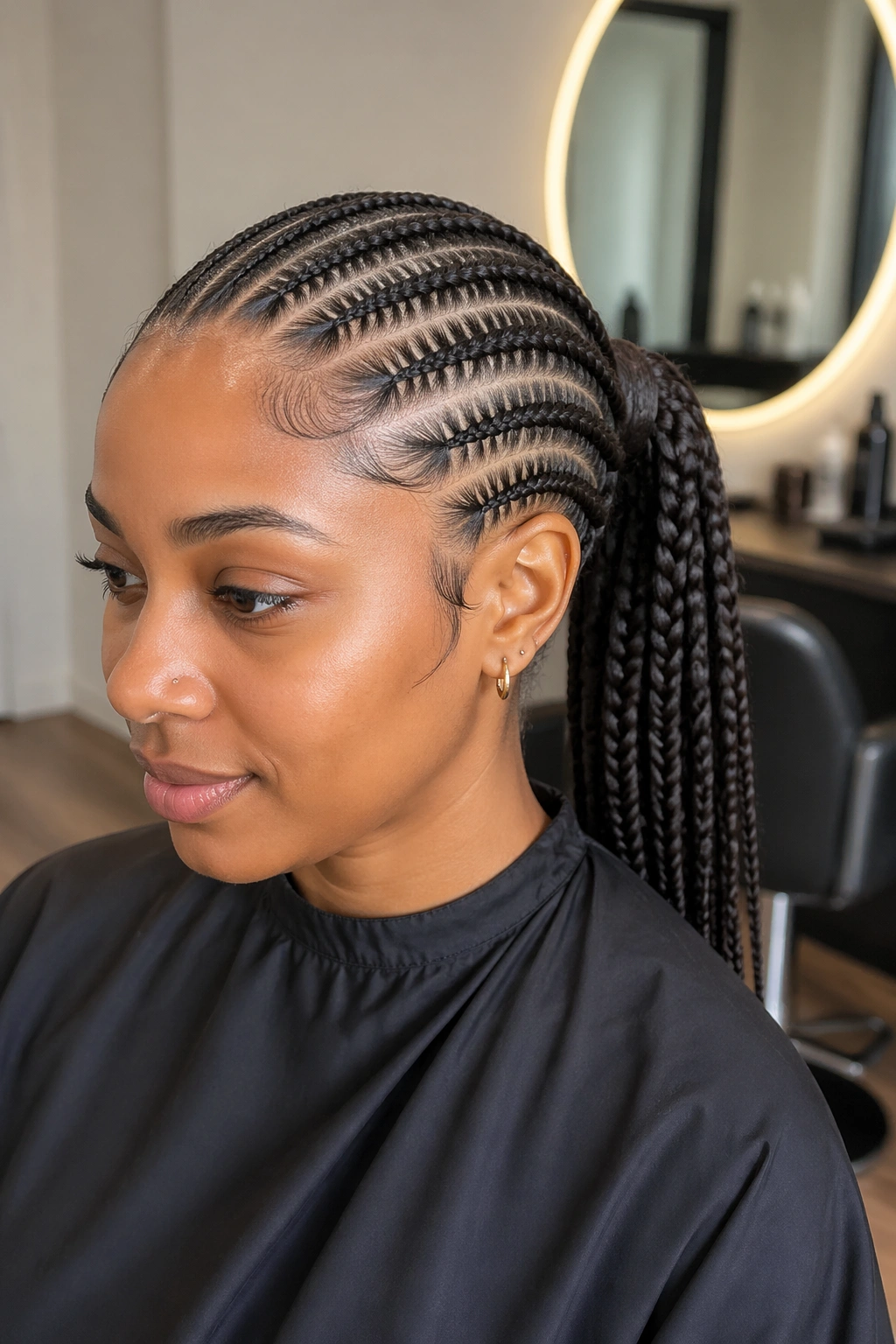
Cornrows give the cleanest possible base. A few narrow feed-in braids running back toward the center create a smooth, controlled surface, and the ponytail that follows feels sharp from every angle.
This style is especially good when you want the scalp to look neat for more than one day. The cornrow pattern does most of the visual work, so the ponytail itself can stay simple — just long, straight, and tucked at mid height. If the braids are even and the parting is crisp, the style almost takes care of itself.
A light edge control around the hairline can help, but the biggest mistake is overloading the roots with product. Keep the scalp clean-looking, not shiny in a sticky way. Feed-in braids shine when the parts are precise. That is where the clean look comes from.
8. Braided Crown Sweep Mid Ponytail
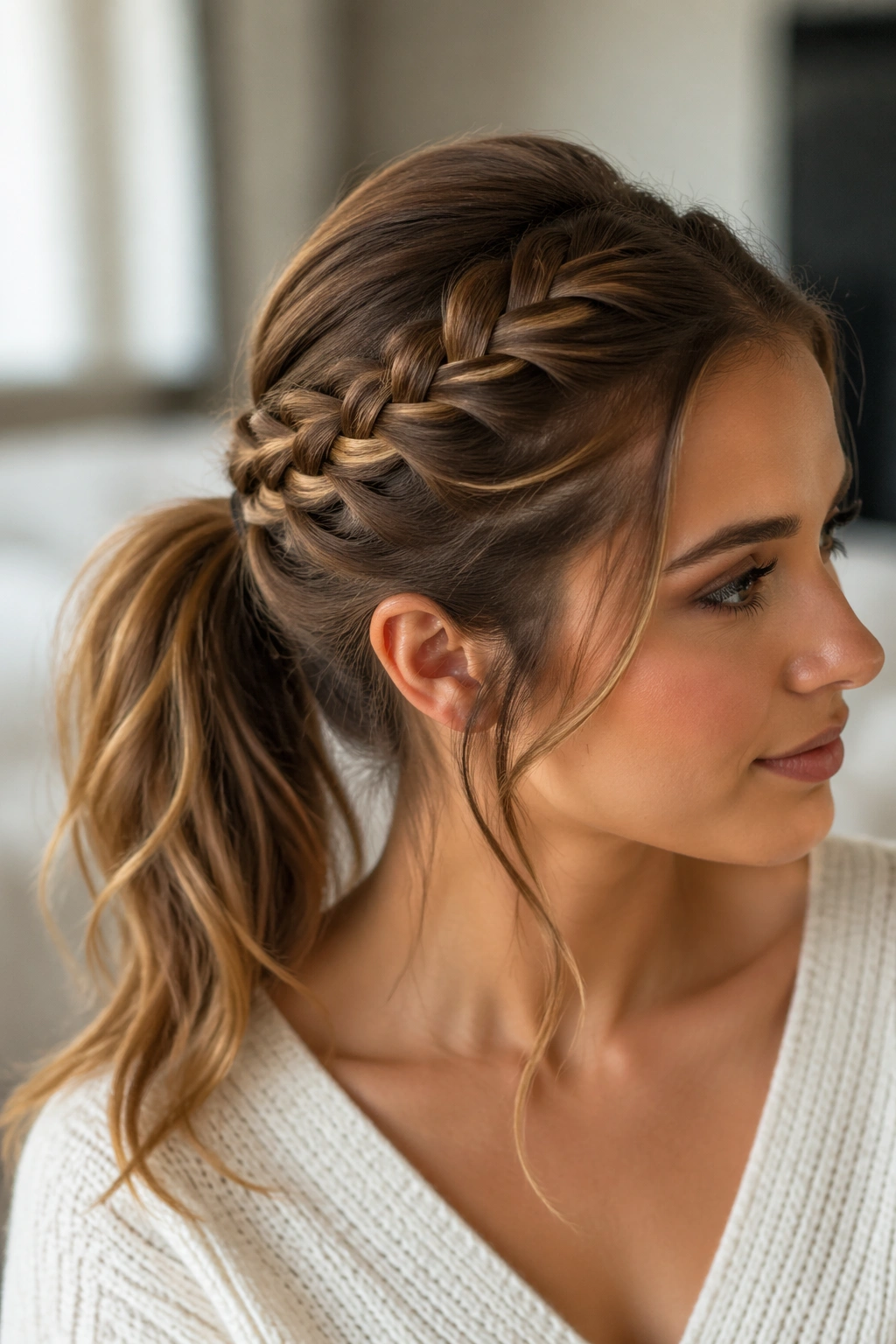
What if you want softness without losing polish? A braided crown sweep does that well. The braid curves across the top of the head like a narrow crown, then feeds into a ponytail that sits in the middle of the back of the head.
The curve is the point. It draws the eye across the head instead of straight back, which makes the style feel finished but not severe. I find this especially flattering on hair with a side part, because the braid can start where the part naturally wants to fall.
Keep the braid close to the scalp at the start, then let it broaden slightly as it moves toward the ponytail. That change in width keeps the sweep from looking too stiff. A light mist of flexible-hold spray is enough. You want the braid to move a little when you turn your head.
9. Four-Strand Mid Braided Ponytail
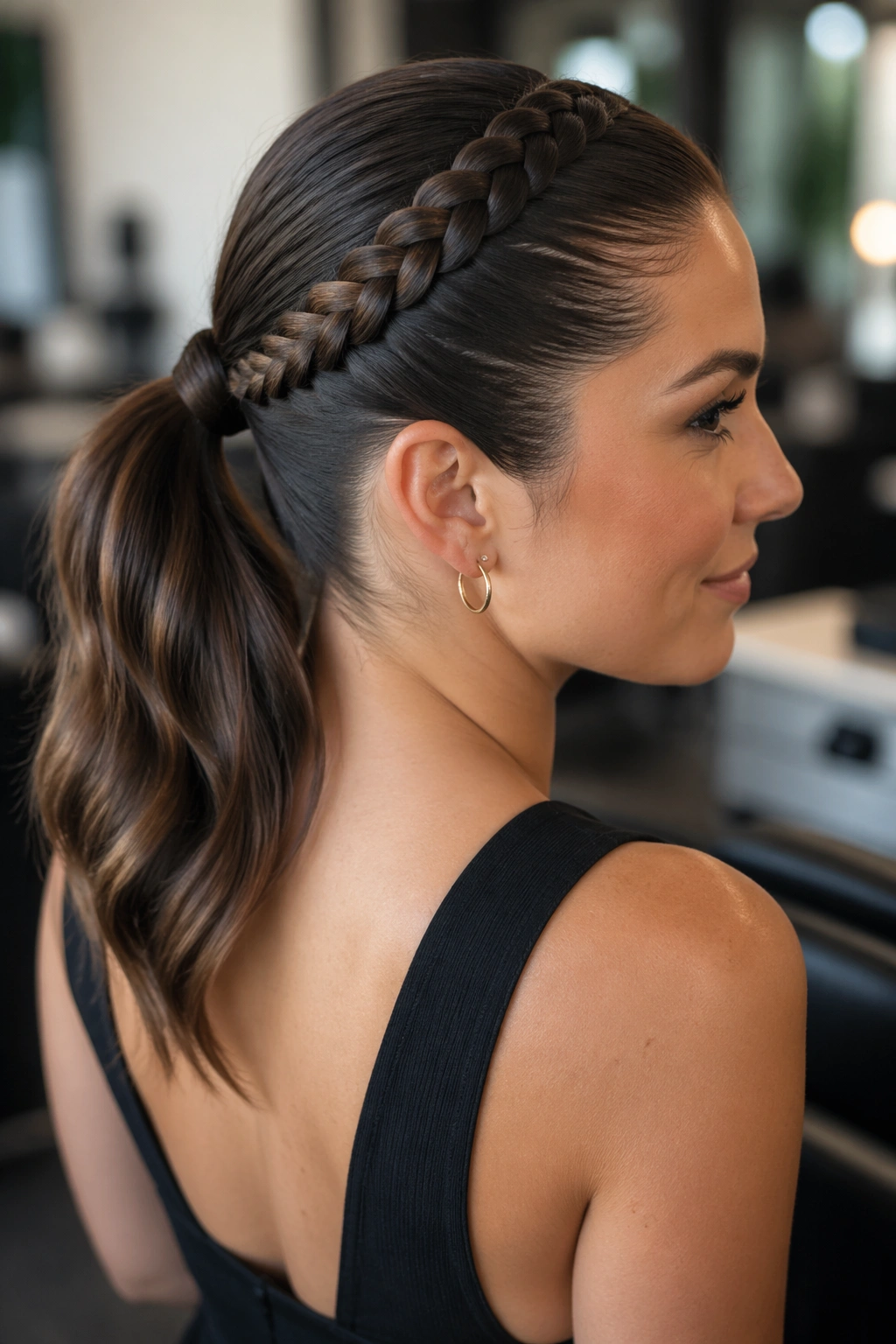
Four strands sound more complicated than they are. The braid has a flat, woven look that reads polished and deliberate, and it adds a little depth without feeling bulky or decorative in the wrong way.
The reason I like it for a mid ponytail is that the braid itself becomes the detail. You do not need extra wraps, extra accessories, or much else. A clean base, a smooth tail, and a four-strand plait are enough.
Quick styling notes
- Works best on medium to long hair
- Looks sharp when each strand is combed before braiding
- Benefits from a small clear elastic at the end
- A thin ribbon can be woven through if you want a softer finish
If your hands are new to four-strand braiding, practice on damp hair first. It grips a little better and helps the sections stay separate. Once you get the rhythm, this one feels less fussy than it sounds.
10. Side-Braid Wrap Mid Ponytail
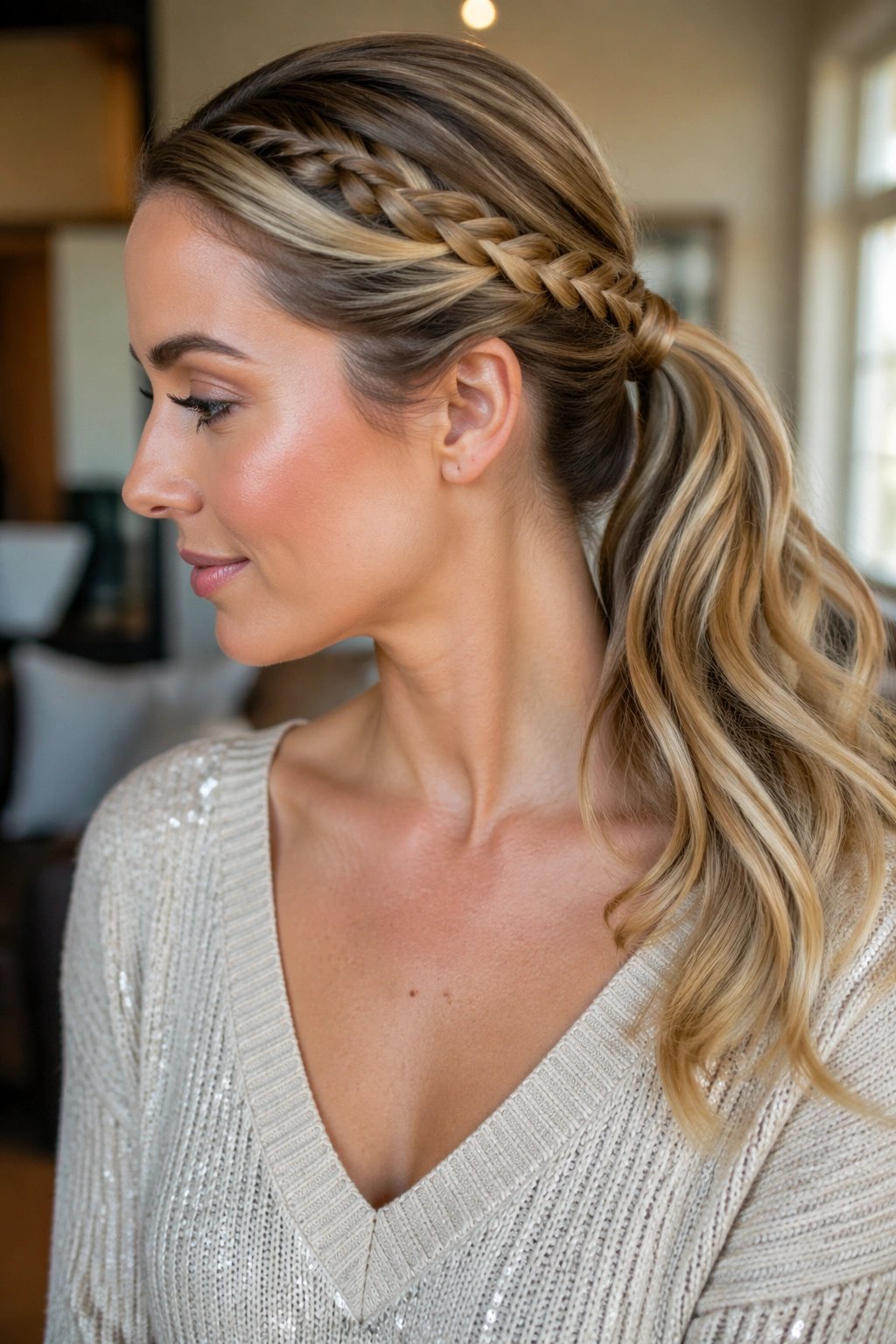
A side braid wrap is one of the easiest ways to make a ponytail look more expensive without doing much. The braid starts at one temple or just above the ear, sweeps back, and wraps around the base of the ponytail like a neat band.
That little wrapped detail hides the elastic and adds visual texture right where the style needs it most. It also keeps the side of the head from looking too bare, which can happen with a very tight mid ponytail.
This style is friendly to straight hair, but it also works on stretched curls if you smooth the front first. The braid should lie flat and clean, not puff out. Secure it underneath the ponytail with a pin so the end disappears. One pin. Not five. If you need five, the braid was not tight enough to begin with.
11. Box-Braid Mid Ponytail
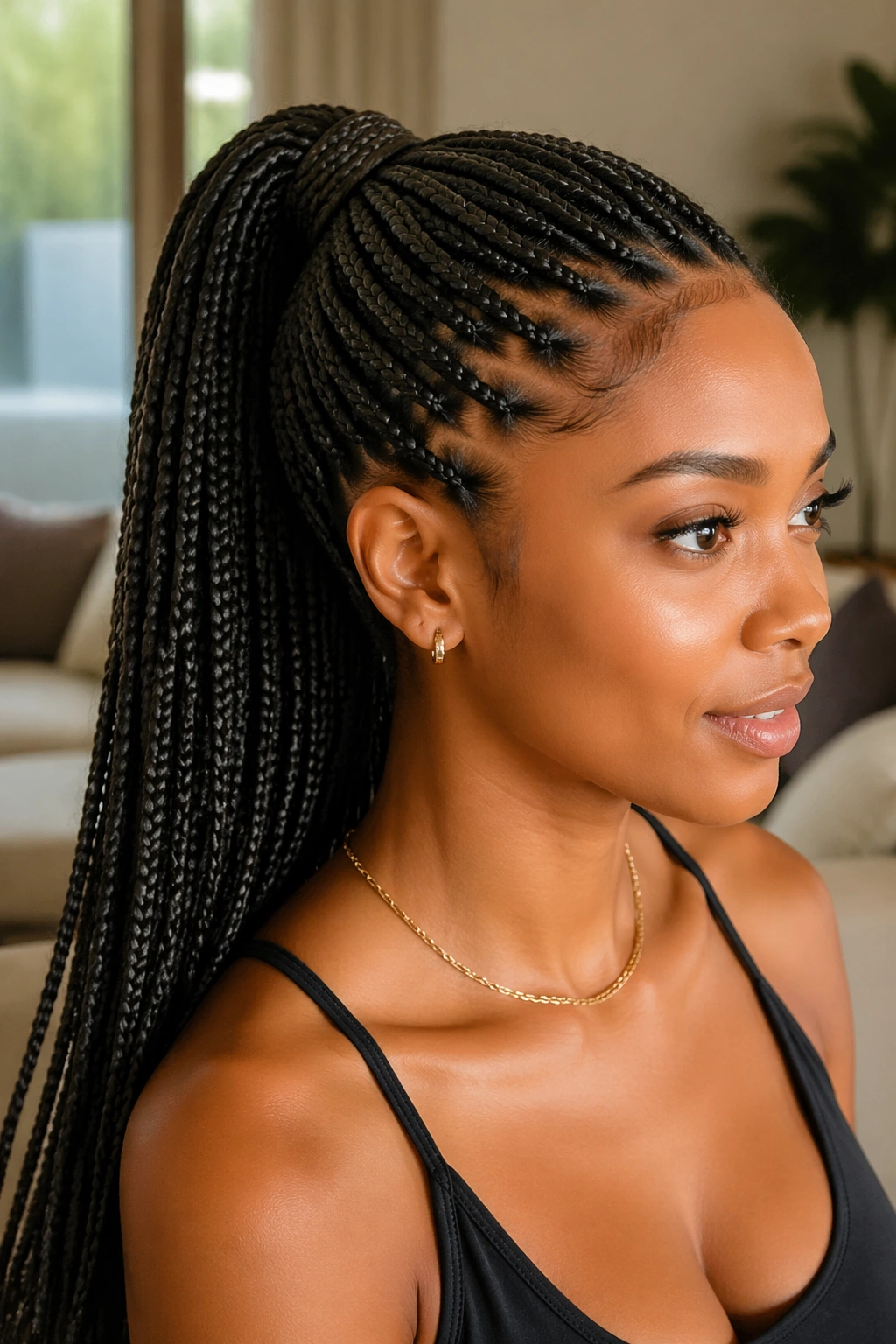
Box braids pulled into a mid ponytail are all about balance. The hair already has structure, so the ponytail just needs a clean lift to the middle of the head and a secure wrap around the base.
What makes this version look clean is spacing. If the braids are gathered evenly and the crown stays smooth, the shape looks strong rather than heavy. A ponytail that sits too high can pull the style out of proportion; one that sits too low can make the whole thing drag. Mid height is the sweet spot.
- Best when the braids are freshly separated and not tangled at the roots
- Use a thick, snag-free band to hold the weight
- Wrap one braid around the base to hide the elastic
- Smooth the hairline with a small brush, not a heavy hand
This is a style that rewards neat parting from the start. Messy roots show fast.
12. Knotless Braid Mid Ponytail
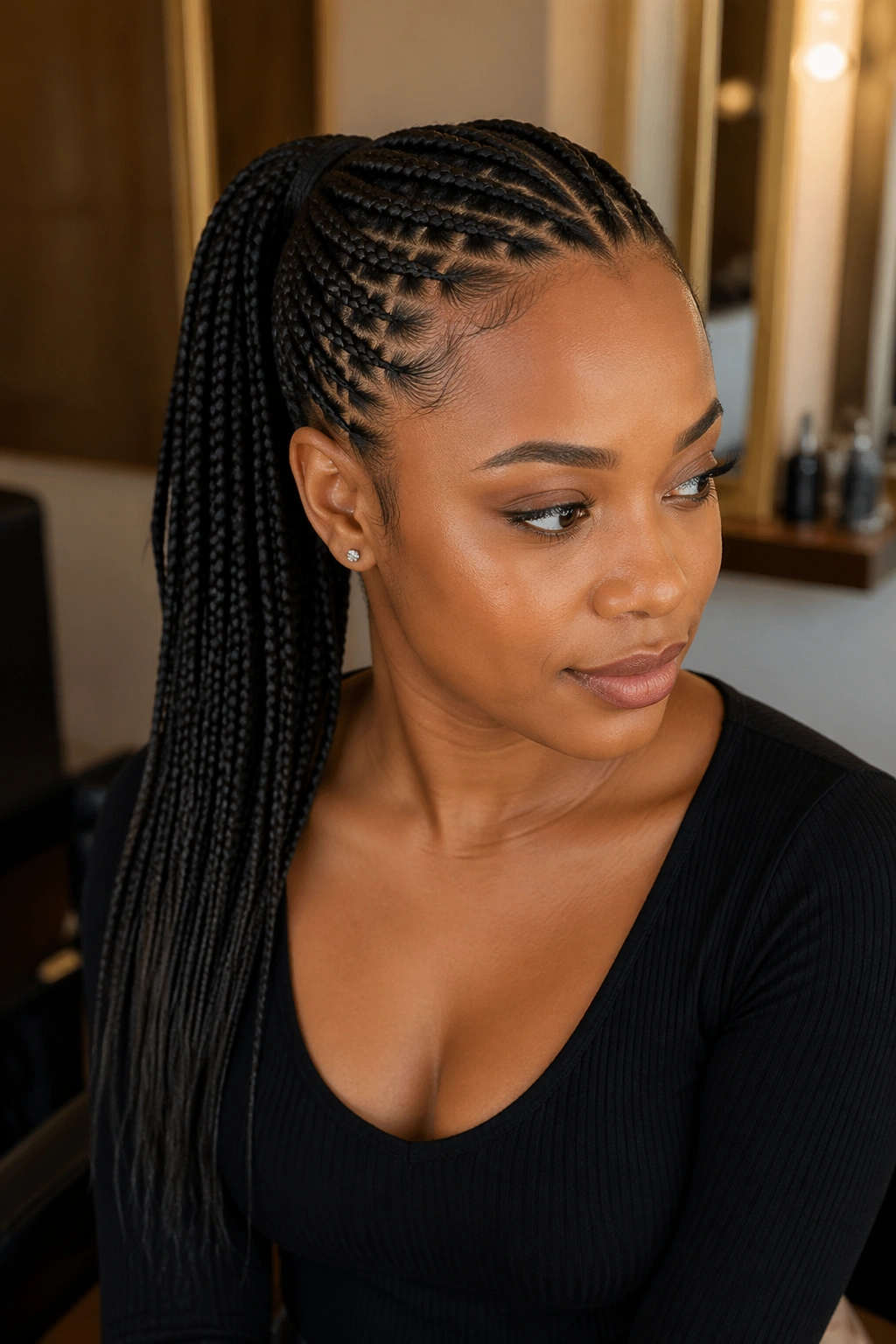
Knotless braids give the ponytail a softer start at the scalp, which is useful when you want the style to look clean but not rigid. The braid pulls back smoothly because there is no bulky knot at the root, and that makes the whole ponytail sit flatter.
The shape is tidy, but not harsh. That matters. A mid ponytail with knotless braids has a cleaner drape than a style that starts with a thick knot cluster, especially if you want to keep the ponytail comfortable for a full day.
Choose a center or soft side part if you want the cleanest line. Then gather the braids at the middle of the head and let the tails fall evenly. A little mousse rubbed over the braids can tame fuzz without making the hair sticky. If the ends are sealed well, the ponytail keeps its shape longer.
13. Feed-In Braided Mid Ponytail
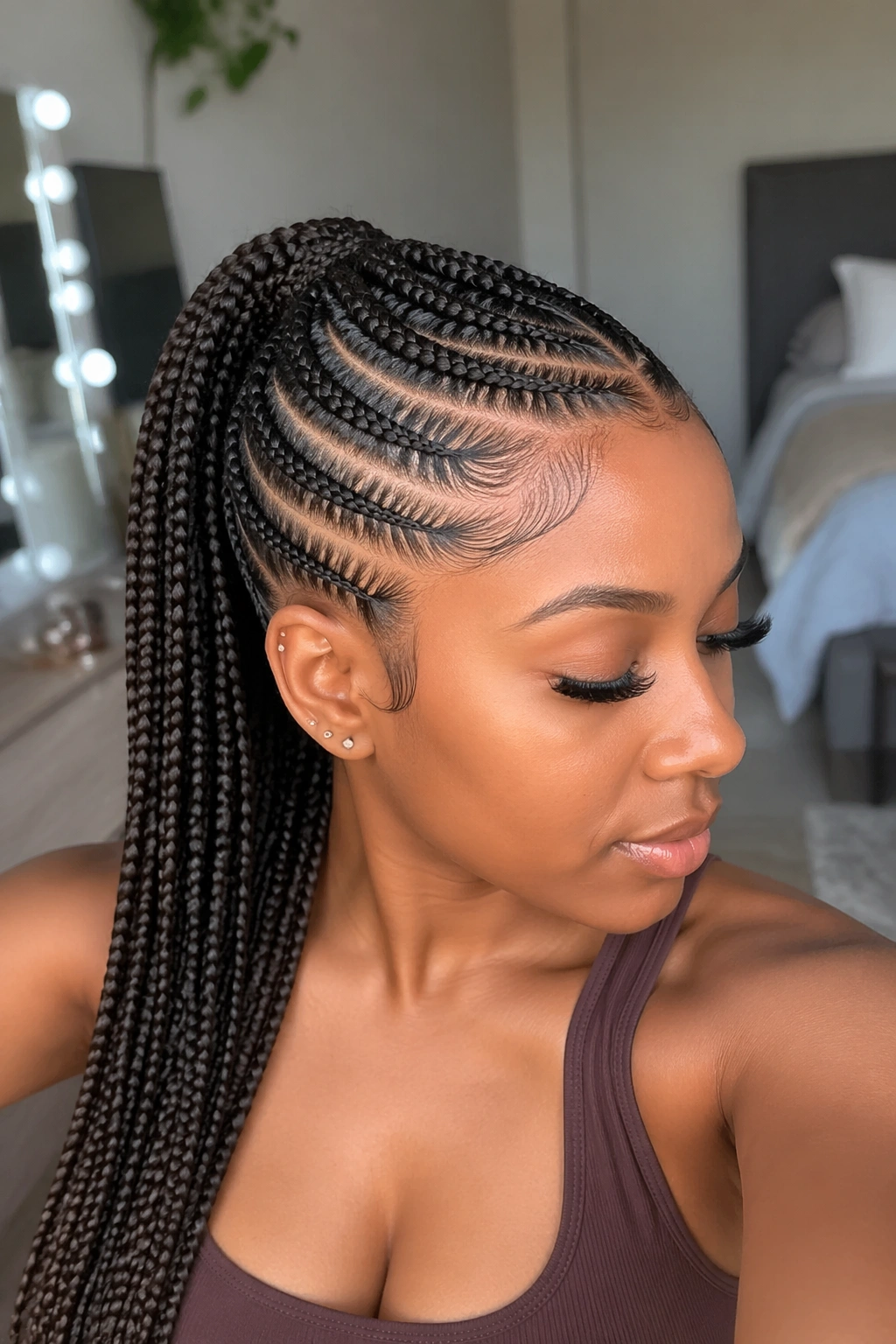
Feed-in braids look crisp because they build gradually from tiny sections at the scalp into fuller braids farther back. That gradual start is what keeps the style from looking chunky at the front. It is clean in the way a good tailored jacket is clean — everything is deliberate.
The ponytail part can be simple or long, but the front is where the style earns its sharpness. If the parts are straight and the braids are the same width, the finish looks precise. If one braid is thicker than the others, your eye goes straight to it. That is the part people usually miss.
What to watch for
Keep tension even as you braid. Uneven pull leads to bumps, especially around the temple. Use a rat-tail comb for parts and clip the sections out of the way so the base stays organized. Precision at the scalp is the whole point here.
14. Double Dutch Merge Mid Ponytail
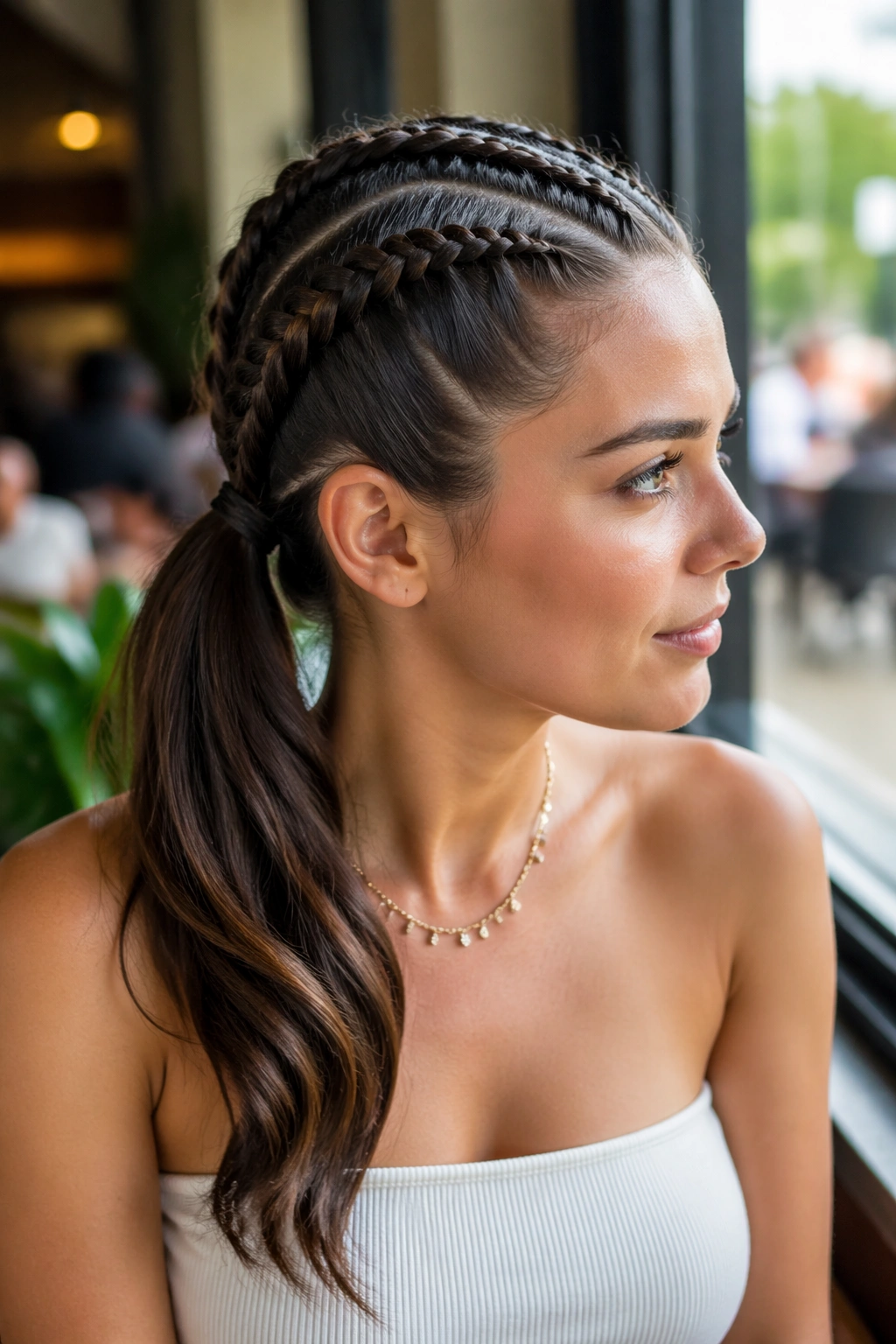
Two Dutch braids merging into one mid ponytail make a strong, clean shape from the front and the back. The braids sit raised on the head, then meet at the center and disappear into a smooth tail.
This style looks best when the braids are kept close to the scalp and the part down the middle is sharp. The result is symmetrical and a little sporty, but still polished enough for a dressier outfit. It has structure without feeling stiff.
A tiny detail helps a lot: braid both sides with the same tension and merge them at exactly the same point. If one side sits lower, the whole look tilts. That little mismatch shows more than people expect. Finish the ponytail with straightened lengths or softly stretched curls, depending on the texture you want to show off.
15. Mermaid Braid Mid Ponytail
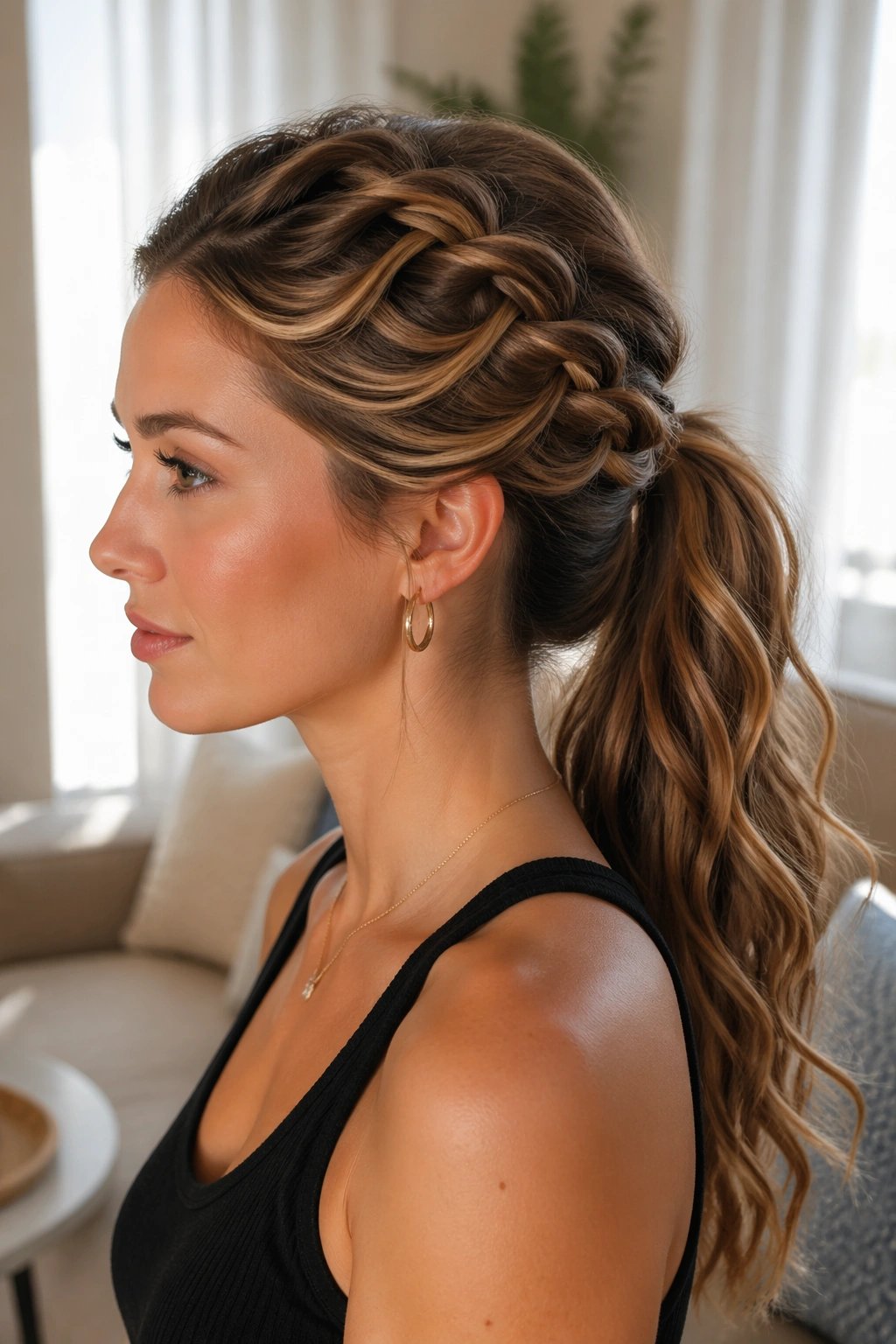
A mermaid braid gives the length a soft, rippled pattern that still reads neat. It is looser than a classic three-strand braid, but if you keep the crown sleek and the sections even, the style stays in the clean zone.
I like this version when the ponytail needs a little visual movement. The braid catches the eye without looking overworked. It also works well on longer hair because the structure of the mermaid braid shows up better when there is enough length for the pattern to repeat.
Use small, even sections and keep the braid snug at the base of the ponytail. Then gently widen the loops only after the braid is secure. If you pull them apart too early, the whole pattern goes loose before you are done. A satin scrunchie at the base can help the ponytail stay smooth if you are planning to wear it all day.
16. Micro-Braid Accent Mid Ponytail
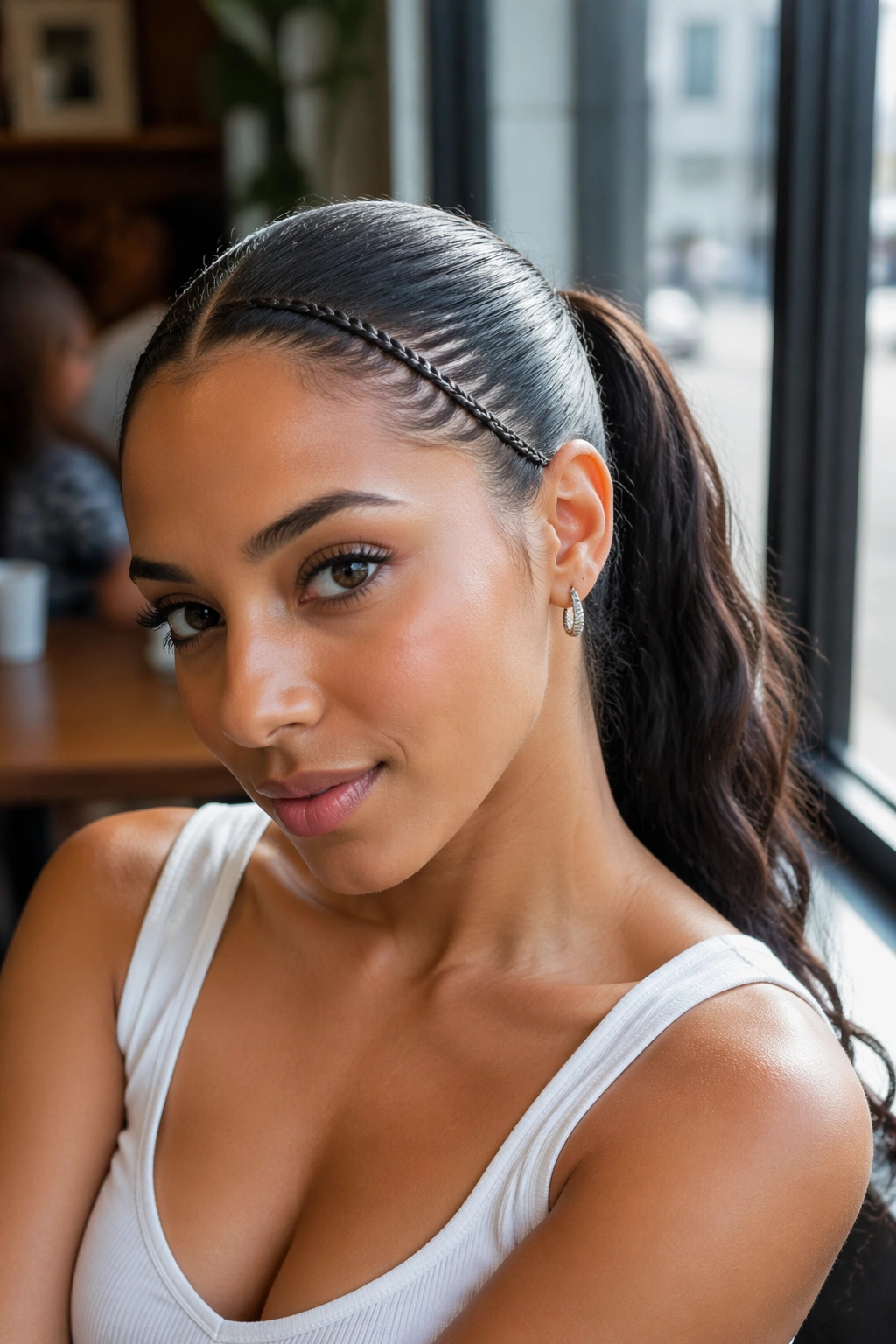
A micro-braid accent is the quietest style on this list, and that is its charm. The ponytail stays sleek and simple, but one or two tiny braids near the front or along the part line add just enough detail to make the style feel finished.
This is a good choice when you want to keep the hair mostly straight and controlled. The micro braids frame the face a little, break up a flat surface, and make the ponytail look more intentional without turning it into a full braided style.
A small braid placed just above the ear can be tucked into the ponytail, or you can run a thin braid along one side of the part and let it disappear into the base. Either way, keep the rest of the hair smooth. The beauty of this look is restraint. If you add too many accents, the clean line disappears.
17. Crisscross Base Mid Ponytail
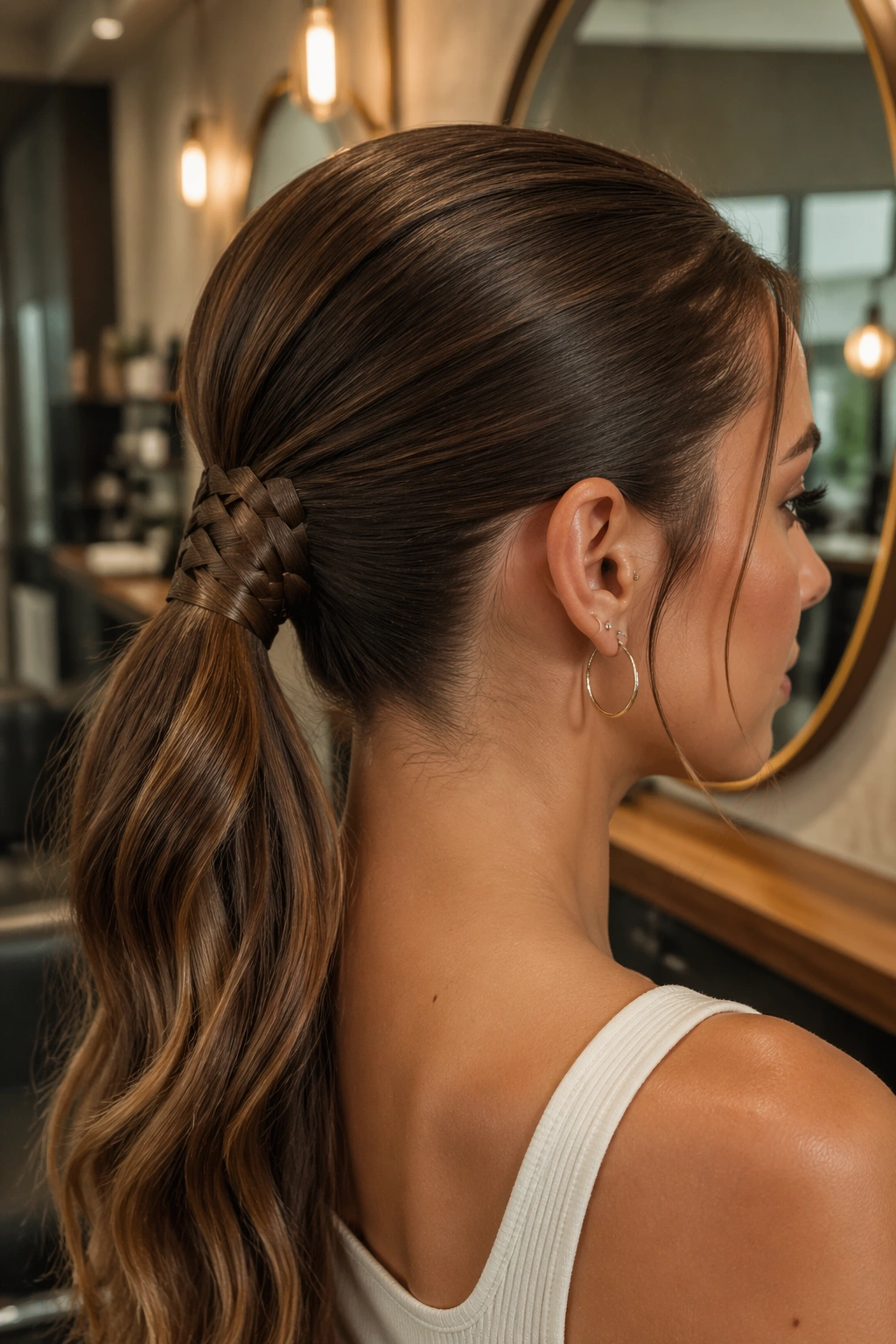
A crisscross base is one of those details that looks much harder than it is. Small sections from each side of the head are crossed over one another and pinned before the ponytail is gathered, creating a woven panel at the back.
The result is tidy and a little architectural. It gives the ponytail a more finished base, especially if the hair is very straight and could otherwise look plain. The crisscross pattern adds a bit of structure without needing a full braid down the length.
How to keep it neat
- Use slim sections, about 1/2 inch wide
- Pin each cross flat against the head
- Keep the crossing point centered below the crown
- Finish with a smooth ponytail and a concealed elastic
This style is easiest on hair that is freshly brushed and lightly coated with serum. If the strands are too slippery, the pins can slide.
18. Ribbon-Woven Mid Ponytail
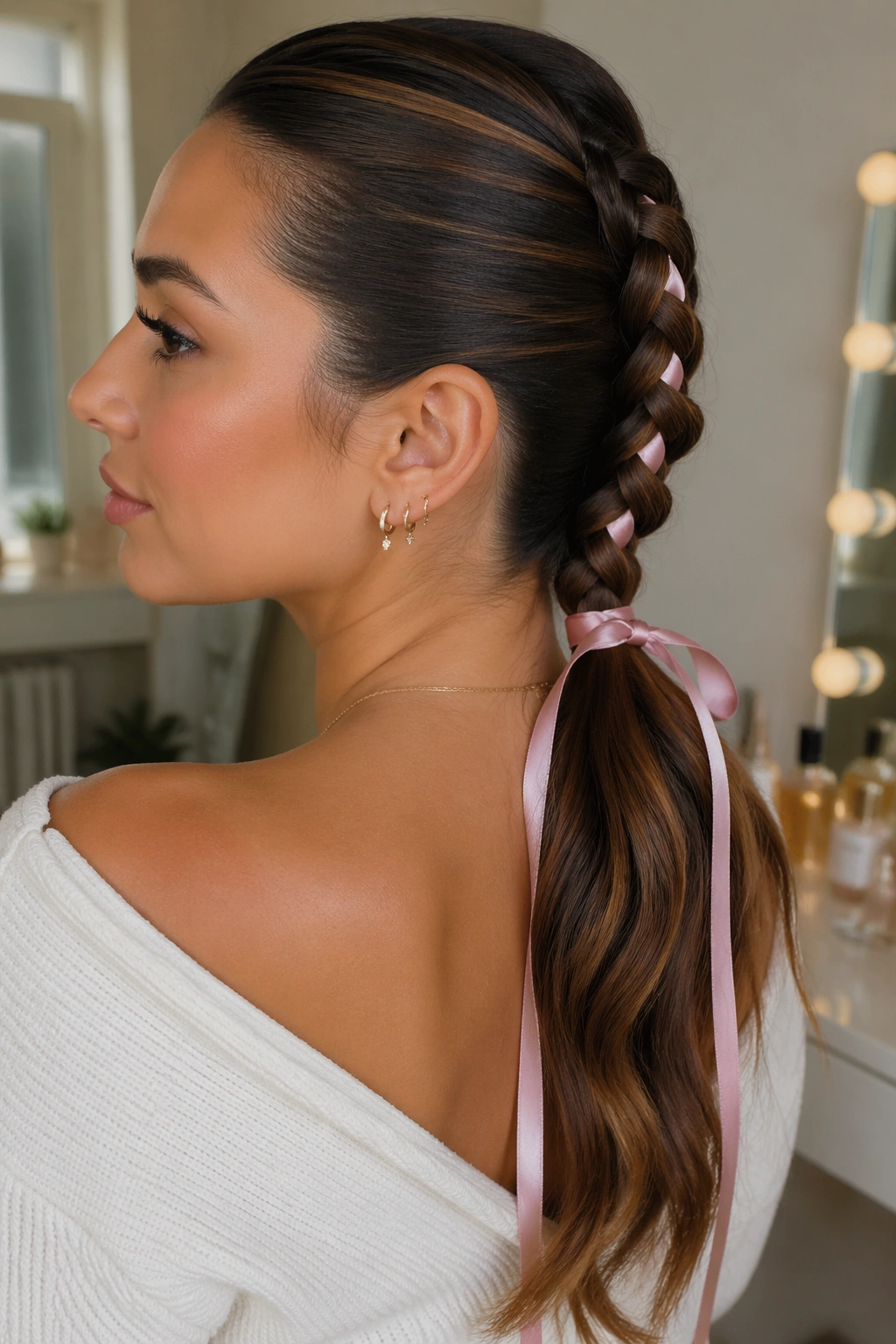
A ribbon woven through a braid changes the whole mood without breaking the clean look. The braid itself stays the same, but the ribbon gives it a controlled line of color or shine that sits neatly between the strands.
The best part is that you can keep the rest of the ponytail very plain. Smooth the crown, tie the mid ponytail, then weave a narrow satin ribbon through a three-strand or fishtail braid down the length. The ribbon should lie flat, not puff up between sections.
This works well for events, but it is not only for dressy moments. A matte black ribbon makes the braid look more tailored. A tonal ribbon — close to the hair color — keeps the style subtle. A wide ribbon is usually too much. Stay narrow, usually under 1/2 inch, and the braid will still read sharp instead of costume-like.
19. Chunky Side Braid Mid Ponytail
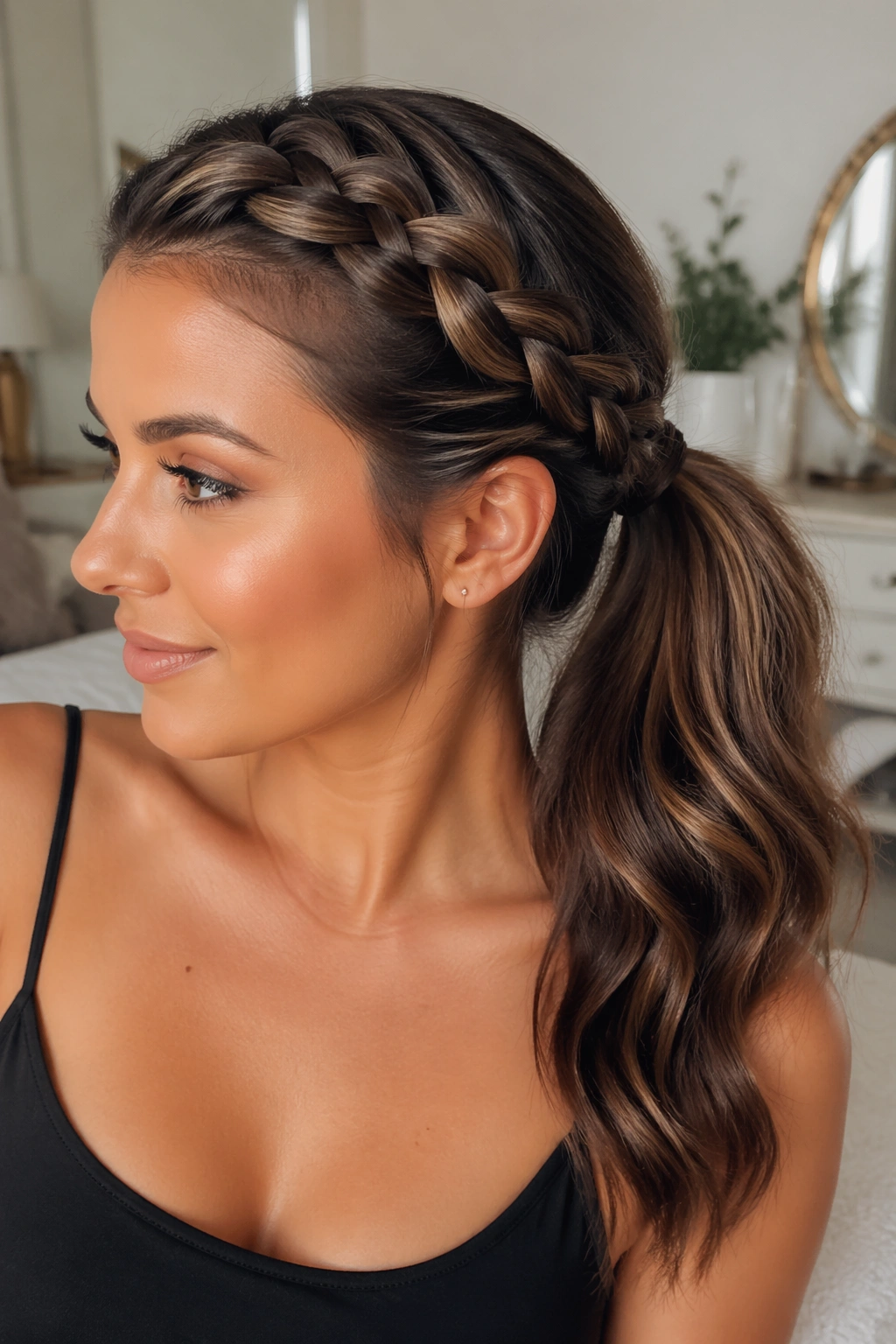
Sometimes the cleanest look is not the smallest braid. A chunky side braid can still look sleek if the hair at the roots is smoothed tight and the braid itself is held close together. The larger shape actually makes the style easier to read.
This version starts with a strong side part or a braid that sweeps in from one side of the head, then drops into a mid ponytail with a fuller tail. It is a good pick for thicker hair, because the braid has enough density to hold its shape without looking stringy.
Keep the crown neat and let the braid be the statement. Once it reaches the ponytail, secure it with a matching elastic and smooth any loose ends under the tail. A thin mist of flexible-hold spray helps the braid keep its chunky shape without getting crunchy. That detail matters more than people think.
20. Zigzag-Part Braided Mid Ponytail
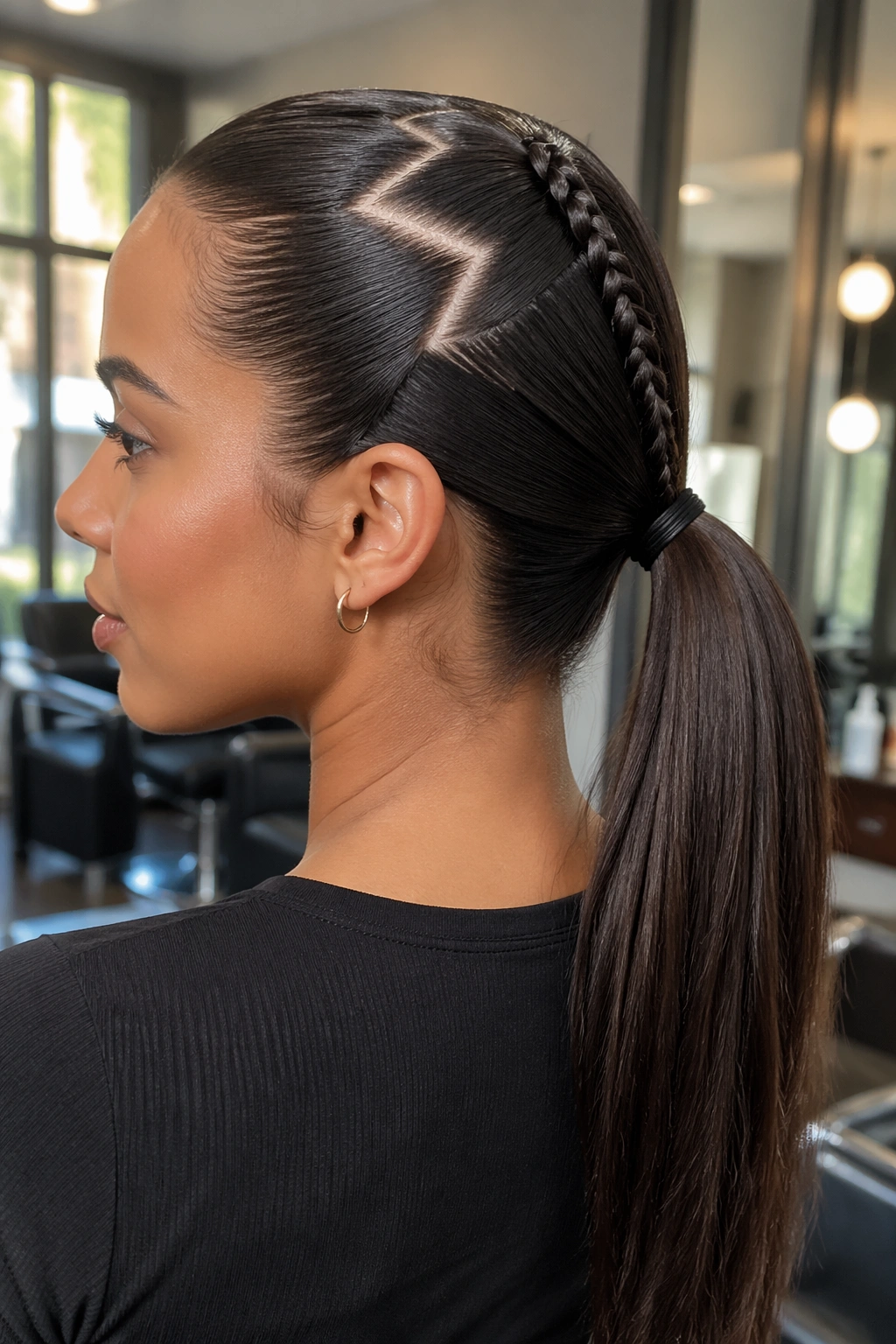
A zigzag part gives the style a sharper edge before the braid even starts. It is a small move, but it changes the whole look, especially if you want something clean that still has personality.
The zigzag works well with a mid ponytail because it keeps the top from looking flat or too predictable. The hair sections feel deliberate, and the braid trailing from the part line echoes that same sense of order. You can keep the braid simple — even a three-strand braid works — because the part is doing some of the visual work.
I like this with straightened hair and a little glossing cream along the part. Not much. Just enough to keep the zigzag crisp. If the sectioning is shaky, the design gets muddy fast, so take the extra minute and redraw the part before you start braiding.
21. Rope-Braid Combo Mid Ponytail
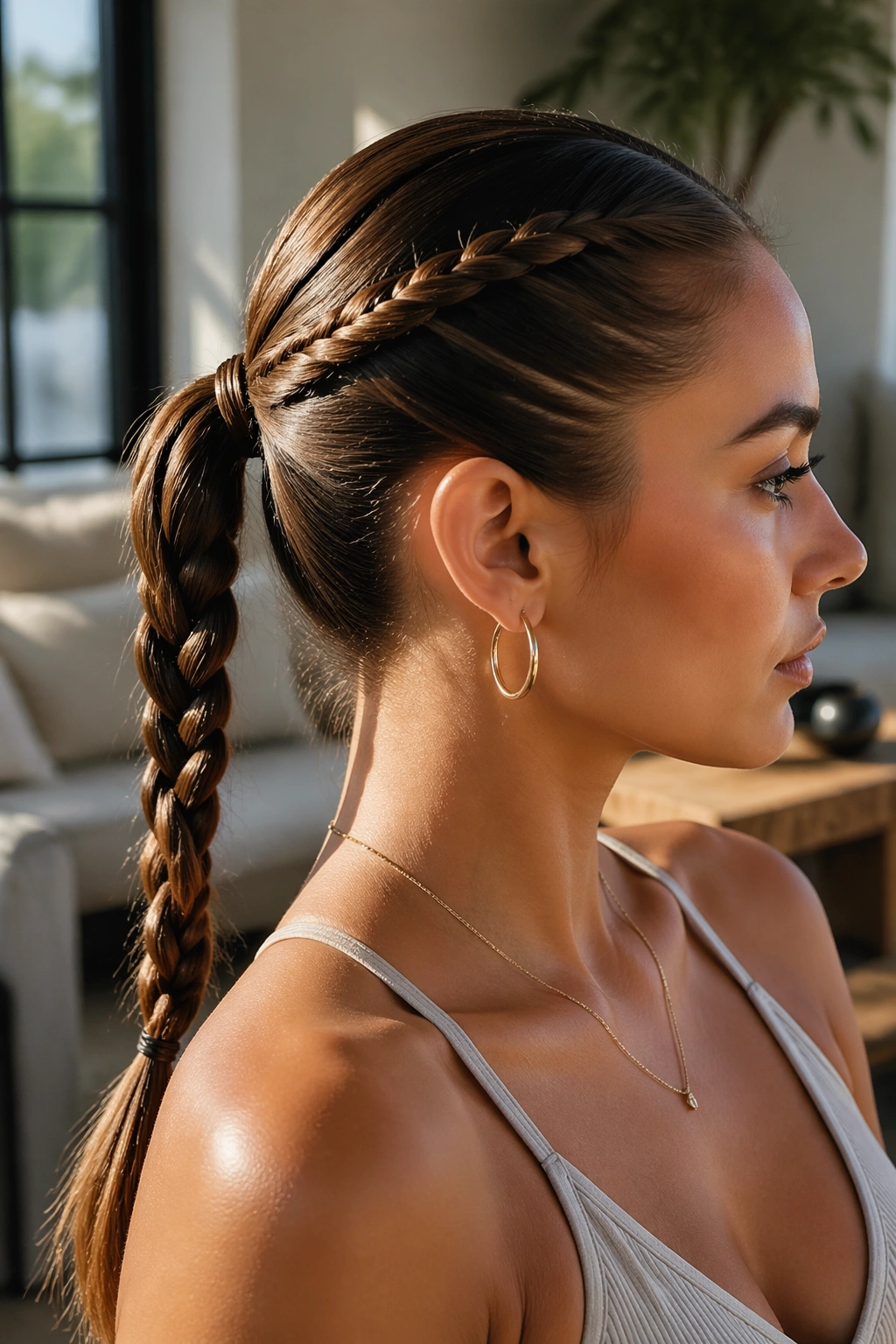
A rope-braid combo gives you two textures in one ponytail, which sounds busy but usually reads clean if the base is smooth. Start with a small rope twist near the front or around the temple, then feed it into a longer braid at the back.
The contrast between the twist and the braid keeps the style interesting without adding bulk. It also works nicely when you want the ponytail to feel tailored rather than soft. The rope section stays tight and polished, while the braid at the tail gives the length a little more movement.
The best way to keep it from unraveling
Twist each side section in the same direction before crossing them the opposite way. That is the part people skip, and it matters. Secure the switch point with a small pin under the ponytail so the change in texture looks seamless from the outside. Clean transitions are what make this style look expensive.
22. Halo Braid to Mid Ponytail
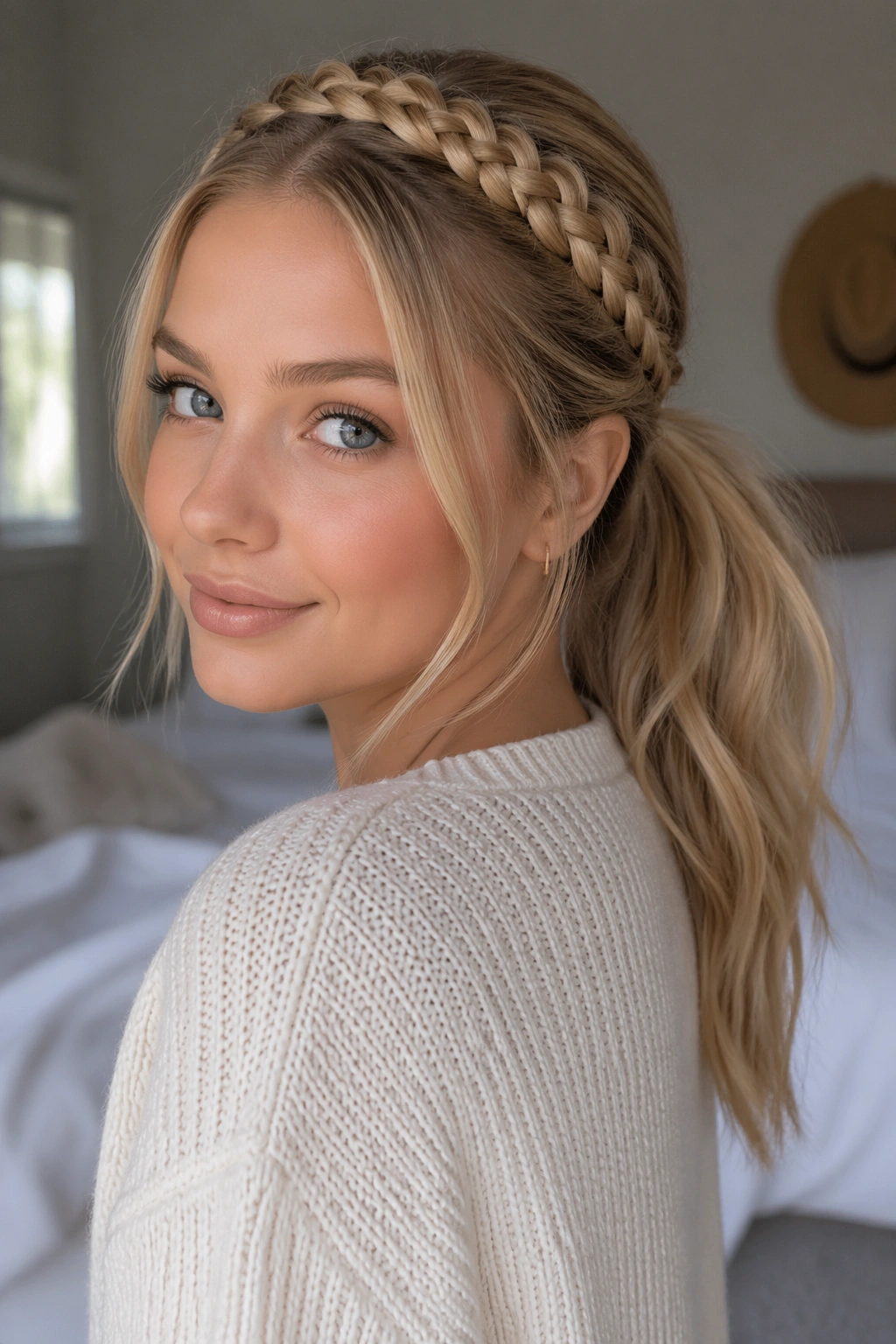
A halo braid around the hairline is one of the neatest ways to frame a mid ponytail. The braid circles part of the head like a band, then opens into the ponytail at the back, leaving the face polished and the crown flat.
It has a calm, controlled shape. Not stiff. Just tidy. The halo keeps stray hairs from breaking up the front, which is especially useful if your hairline tends to puff up after a few hours. When the braid is kept narrow and even, the whole style feels balanced.
This one works best when the braid ends at the point where the ponytail begins, rather than trying to continue too far down. That keeps the shape from getting crowded. Finish with a soft serum on the tail and a little edge control around the temples if needed. The result is clean without looking severe.
23. Twisted Braided Wrap Mid Ponytail
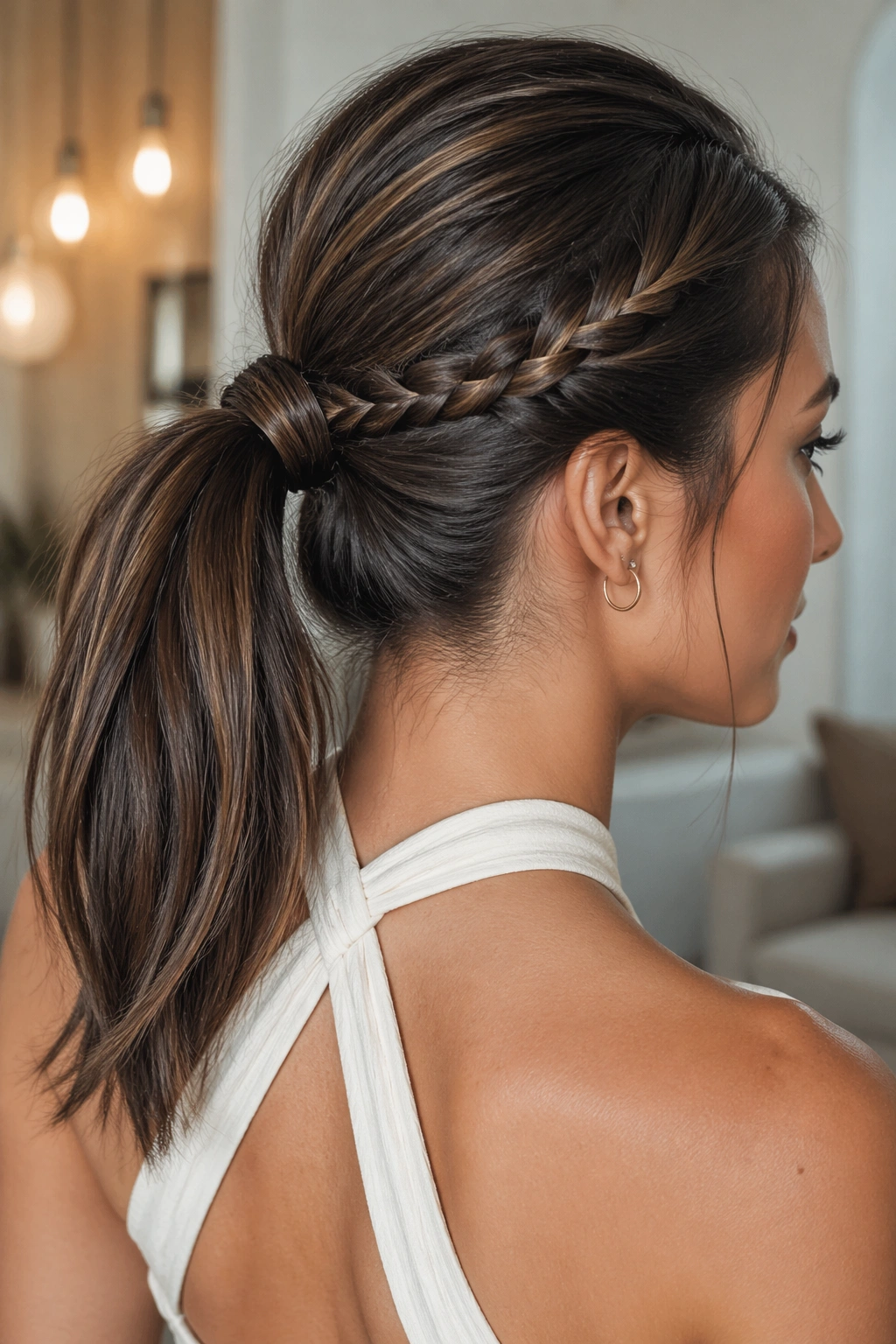
A twisted braided wrap is the kind of detail that makes people look twice, but it is not loud. Start with a small twist on one side, braid it for a few inches, then wrap it around the base of the ponytail so it hides the elastic completely.
The value here is in the finish. A plain elastic can break the line of a sleek ponytail, and this wrap fixes that. It also gives the back of the style a neat, layered look without making the tail itself heavier.
Keep the twist close to the scalp and secure it underneath with a flat pin. If you use a bulky bobby pin, it can poke out and ruin the clean effect. Flat hardware matters. That is one of those boring details that makes all the difference once you are wearing the style for more than ten minutes.
24. Side-Cornrow and Loose Tail Mid Ponytail
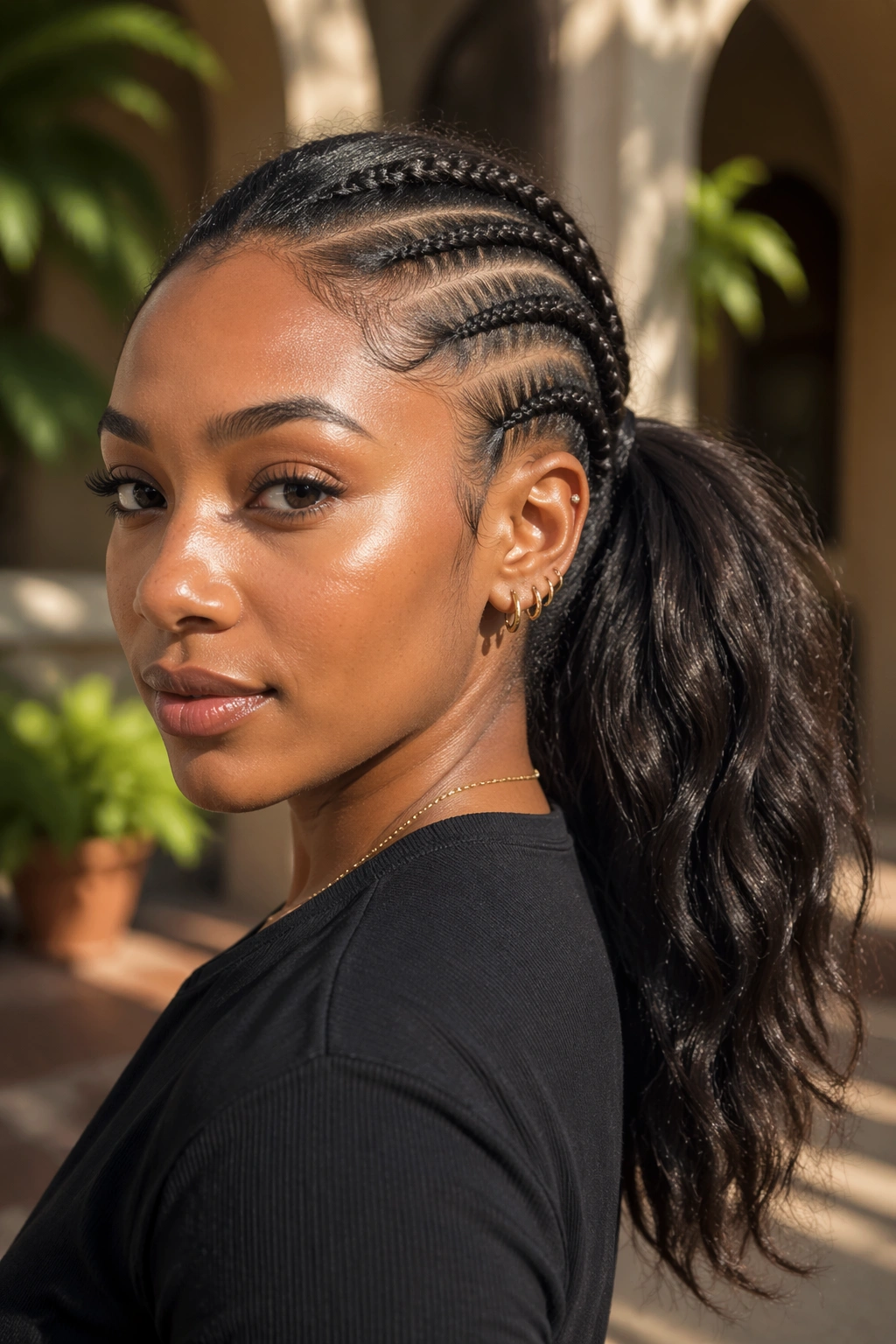
A side cornrow paired with a loose braided tail has a nice contrast: tight at the scalp, relaxed at the ends. That contrast makes the style feel clean instead of flat, which is harder to do than it sounds.
This is a strong choice if you want to keep one side tucked and controlled while letting the ponytail length stay visible. The cornrow can run from the temple toward the middle of the head, then feed into a simple braid or a wrapped ponytail base. The structure stays neat, but the overall look does not feel severe.
The key is making the cornrow narrow and the transition point smooth. If the braid suddenly changes width, the eye catches it right away. Keep the loose tail brushed out and even. A smooth tail is what keeps the side detail from looking too busy.
25. One-Statement-Braid Mid Ponytail
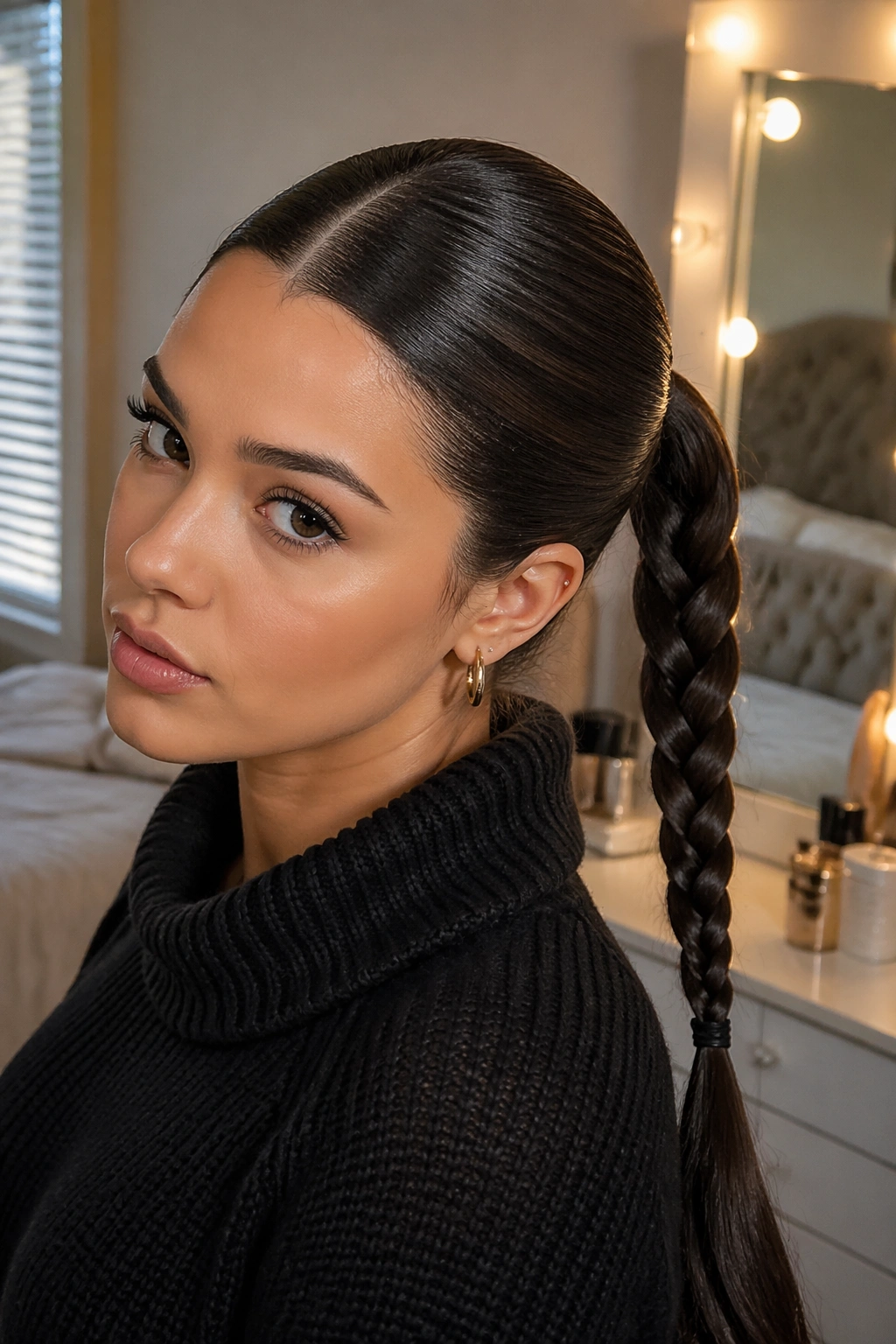
A single statement braid is the most direct version of the whole idea, and honestly, that simplicity is why it works. The crown stays sleek, the ponytail sits right in the middle, and one bold braid down the length gives the style enough detail to feel finished.
You do not need anything extra here. No multiple braid layers, no heavy accessories, no complicated parting. A clean brush-back, a secure mid ponytail, and one thick braid are enough when the braid itself has good tension and a smooth surface. If the braid starts at the base and runs all the way to the ends, it gives the hair a strong vertical line that looks tidy from every angle.
This is the style I would pick when the goal is clean, not fussy. It holds up well, it photographs nicely without being precious, and it still feels wearable with a plain tee or a structured blazer. Keep the finish smooth, keep the braid even, and stop there.
A clean braided ponytail does not need a lot of decoration to feel complete. The best ones are the ones that look controlled at the root, balanced in the middle, and intentional at the ends.
