



Round faces do not need to avoid bangs. They need bangs that give the face a little length, a little angle, and a place for the eye to move instead of stopping at the widest point of the cheeks.
Medium wavy hair makes that easier than people expect. Waves soften the edge of a fringe, and softness matters here because a hard, heavy line can make a round shape read even rounder. A good cut works with the bend in your hair, not against it.
The trick is balance. You want fringe that opens at the center, drops past the cheekbones, or sweeps diagonally across the forehead so the face looks a touch longer and leaner.
Some of the strongest medium wavy bang styles for round faces are barely bangs at all. Others lean shaggy, lived-in, and a little undone. That range is the fun part.
1. Long Curtain Bangs That Split at the Cheekbones
Long curtain bangs are the easiest place to start if you want movement without a dramatic commitment. The center part opens the forehead, then the pieces slide down toward the cheekbones, which gives a round face that small vertical stretch it needs.
What matters most is length. Ask for the shortest point to land around the brow or just below it, then let the outer edges drift lower, closer to the tops of the cheeks. That slope keeps the fringe from sitting like a straight bar across the face.
The styling part is simple, but it does need a little care. Blow-dry the bangs forward first, then wrap each side away from the face with a round brush or even a velcro roller while they cool. A dab of lightweight cream is enough. Too much product, and the whole thing collapses into your forehead.
2. Bottleneck Bangs That Narrow at the Center
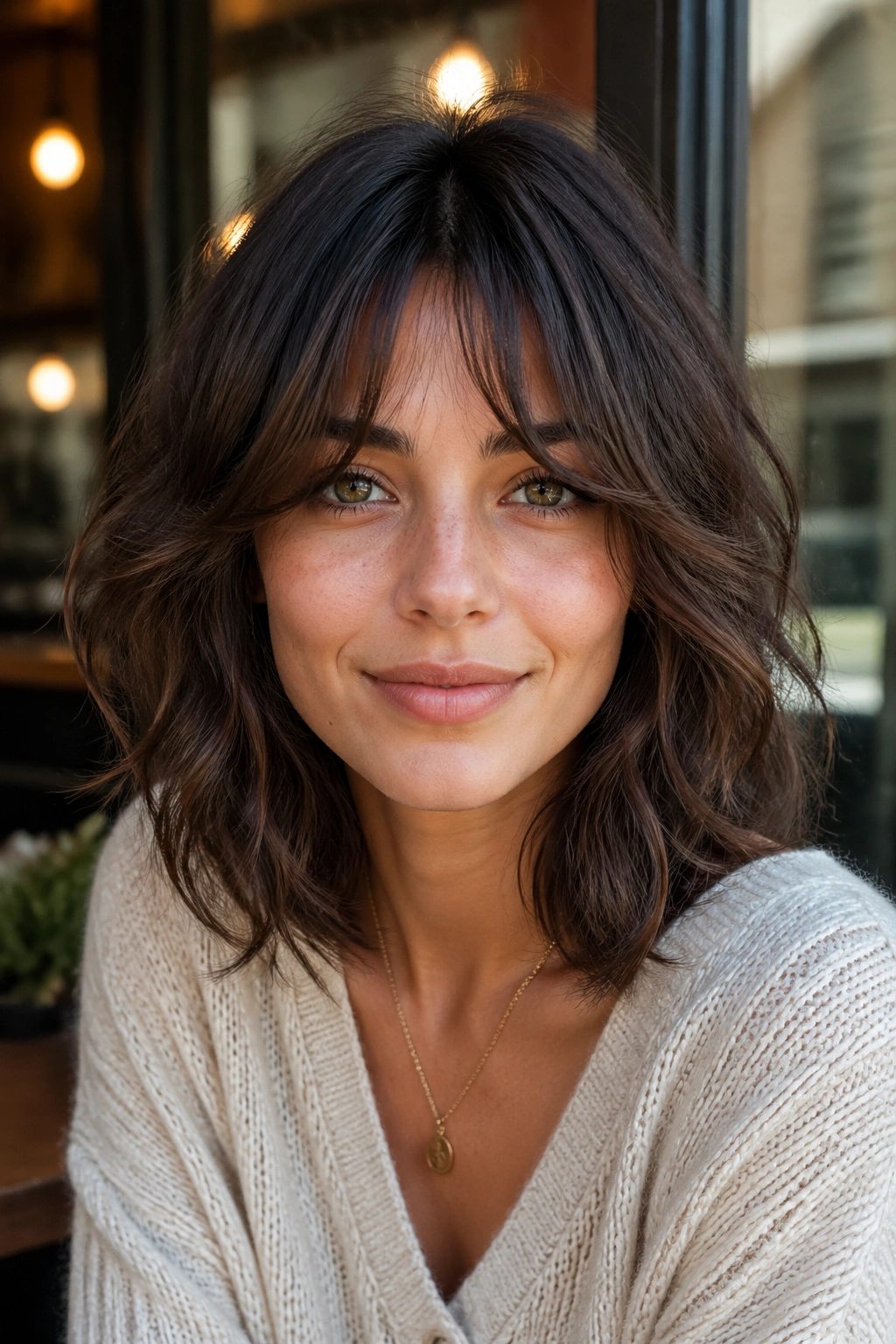
Bottleneck bangs are one of the smartest shapes for a round face because they begin narrow and then open out softly, almost like the neck of a bottle widening into the shoulders. That shape pulls the eye upward first, then outward, which is exactly the kind of movement you want.
Ask your stylist for a short center section that sits near the brow line, with longer side pieces grazing the cheekbones. The middle should not look heavy or boxed in. It should feel light enough to separate with your fingers.
- Keep the center a little shorter than the sides.
- Use a round brush only at the ends.
- Let the fringe dry partly on its own before shaping it.
- Finish with a tiny bit of texture spray, not a stiff hairspray helmet.
A round face can handle a little softness here. The whole point is to keep the bang shape curved, not square.
3. Side-Swept Bangs With a Deep Side Part
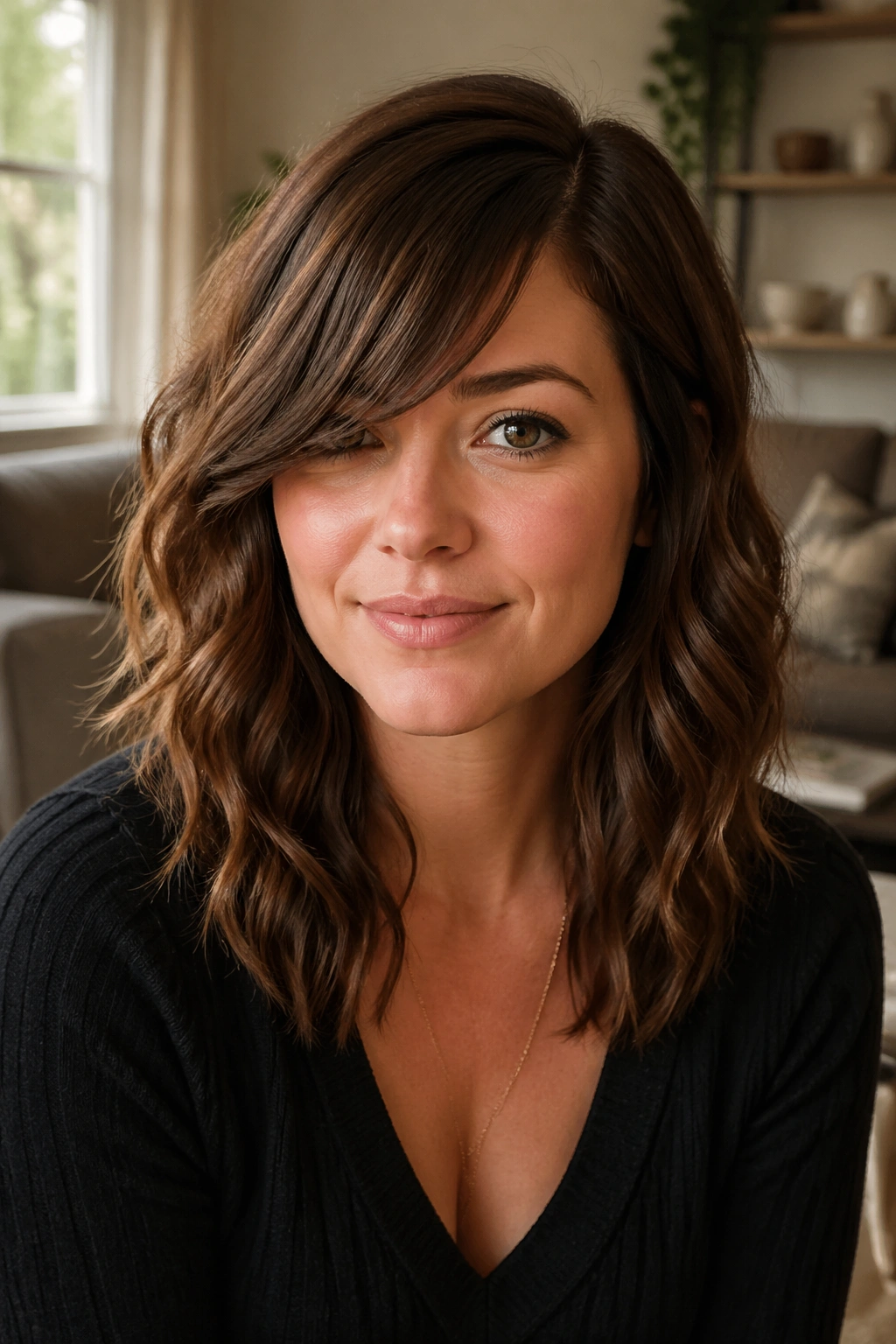
Want a fringe that gives shape without making you feel fully “in bangs”? Side-swept bangs do that job well, especially on medium waves. The diagonal line across the forehead creates length, and length is your friend when the face has a fuller curve.
How to Keep the Sweep Lifted
The best version of this cut starts with a deep side part and enough length for the bangs to skim past the outer corner of one eye. Blow-dry the fringe in the opposite direction first, then sweep it over once it cools. That little trick keeps the root from flattening.
A round face benefits from the asymmetry. One side opens the forehead, the other side falls lower and gives a longer line down the face. It feels relaxed, but it also does a lot of visual work.
If your waves tend to spring up, ask for the front pieces to be cut a touch longer than you think you need. Wavy hair shrinks when it dries. It always does.
4. Shag Fringe With Choppy Layers
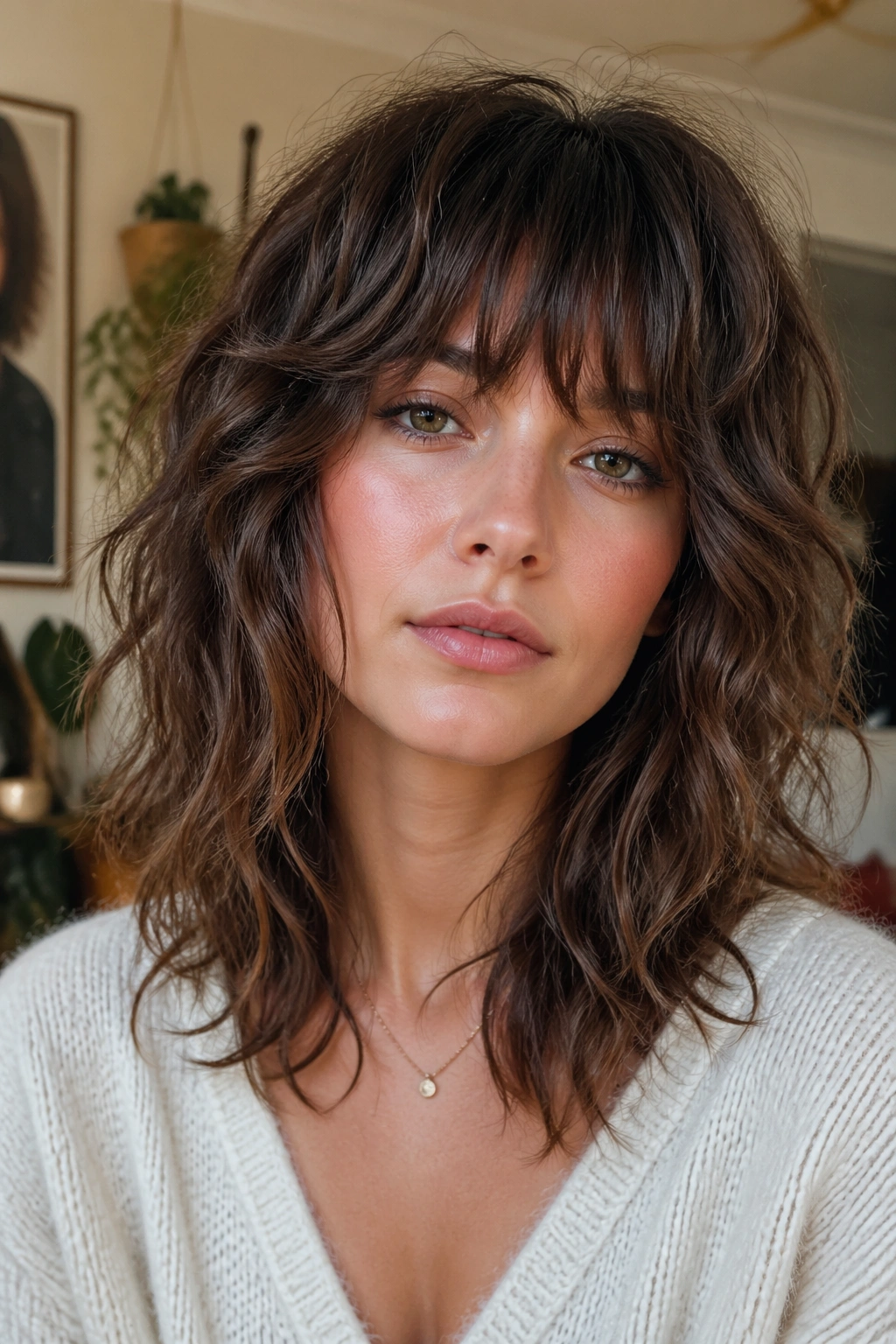
If your hair turns puffy the second you add a heavy fringe, a shaggy bang is the fix. The choppy texture breaks up the outline, which keeps a round face from looking boxed in. It also works with medium waves instead of fighting them.
This style looks best when the bang is not too neat. The edges should feel feathered, a little irregular, and full of movement. That broken line is what keeps the cut light around the cheeks.
A stylist should remove weight in the right places, not thin the fringe until it looks stringy. That’s a bad trade. The better version keeps enough density to show shape, while the ends stay soft enough to move.
5. Wispy Brow-Skimming Bangs
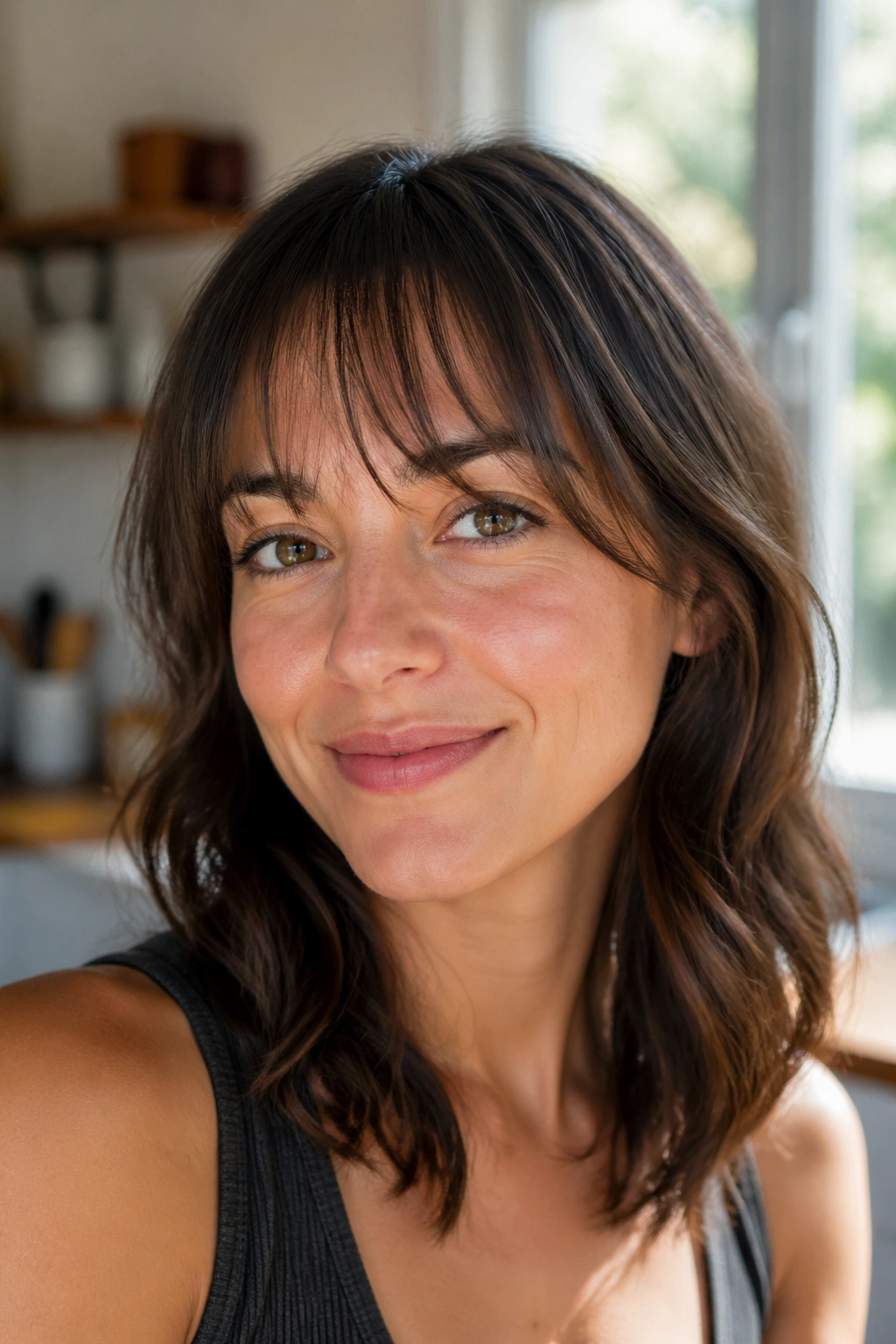
Wispy bangs are for anyone who wants a fringe that reads soft first and bold second. On a round face, that airiness matters because it leaves some forehead visible, which helps the face look longer.
These bangs should skim the brows, not sit on top of them like a thick curtain. If the hairline is naturally sparse or your waves are loose, this style can look especially easy and flattering. It gives the front of the haircut some lift without crowding the face.
Keep the styling light. A small round brush, a low-heat blow-dryer, and a pinch of texture spray are enough. Heavy cream will make wispy bangs clump together, and clumpy bangs are the opposite of what this cut wants.
6. Cheekbone-Grazing Face-Framing Bangs
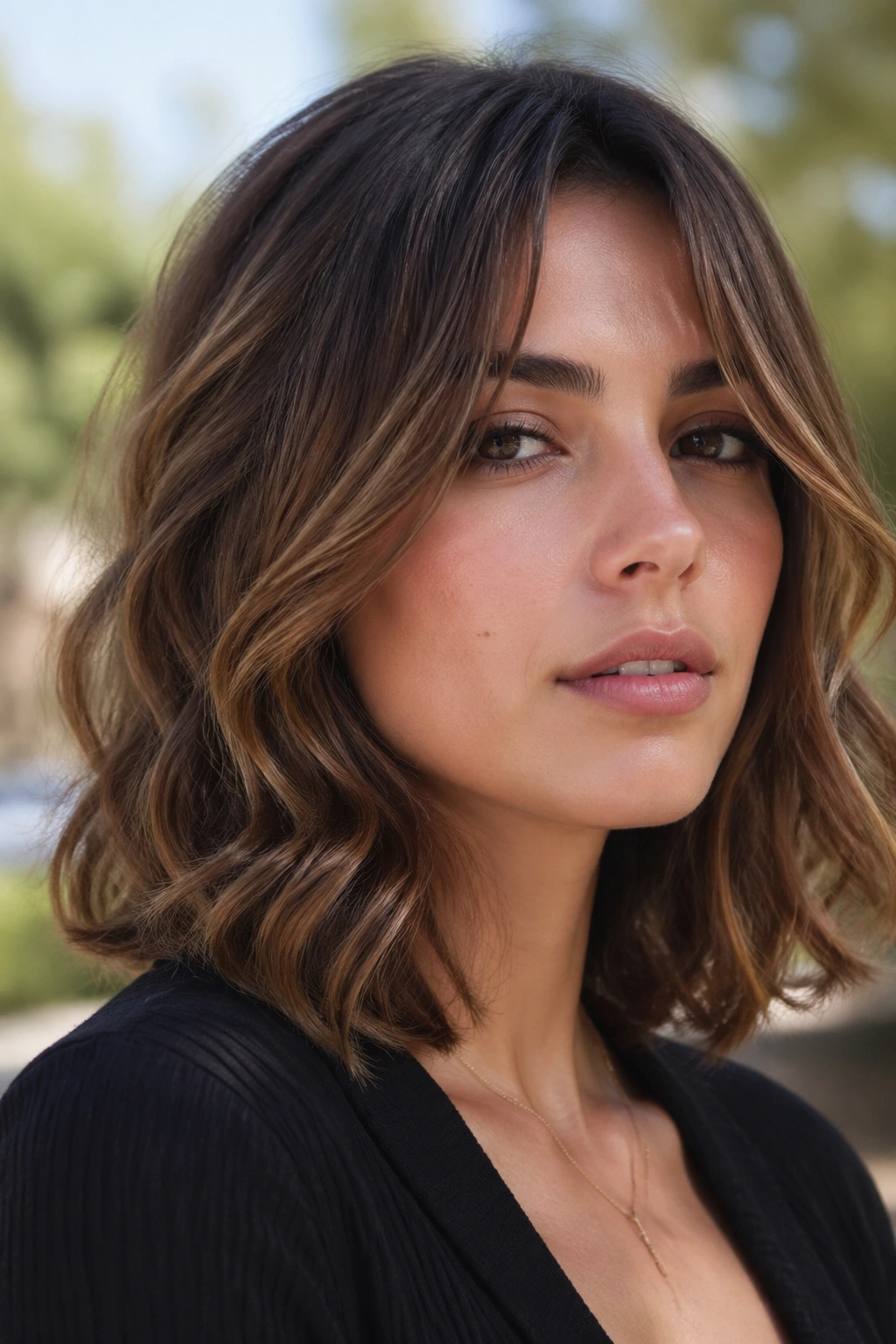
Unlike a full fringe, cheekbone-grazing bangs behave a little like movable contour. They start high near the temples, then sweep down where the face is widest, which helps soften the roundness without hiding the forehead.
This cut is useful if you like to tuck hair behind one ear or wear soft waves that fall around the collarbone. The front pieces become part of the shape instead of sitting on top of it. That makes the whole haircut feel more balanced.
What Makes It Different
The key is that these pieces are longer than curtain bangs and usually more side-focused. They do not split as cleanly in the center. They bend, drift, and blend into the rest of the waves.
Best of all, they grow out gracefully. You are not stuck with a hard line if you miss a trim by a few weeks.
7. Soft Crescent Bangs
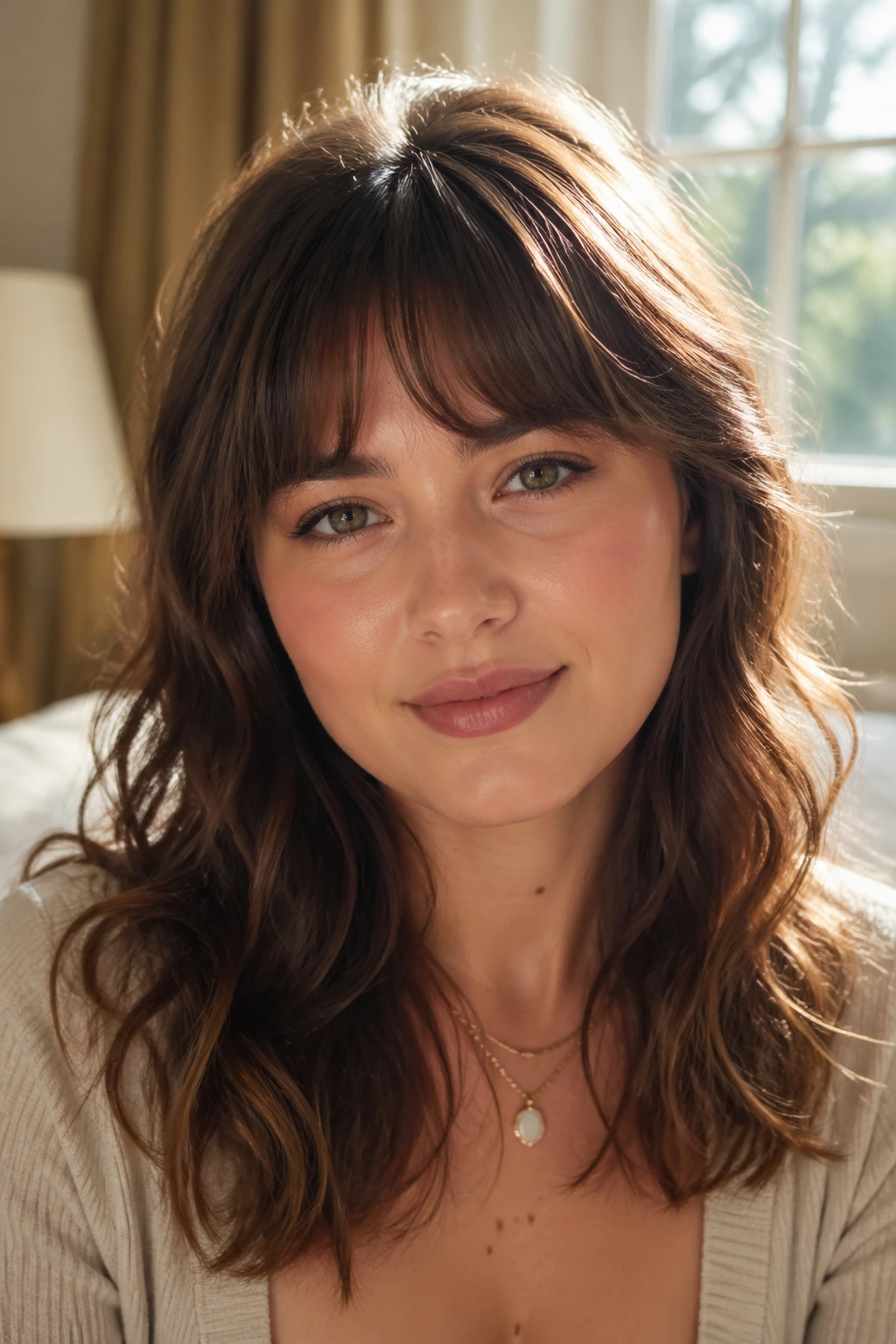
A soft crescent fringe gives a round face a little lift without turning the hair into a blunt block. The center sits a touch shorter, then the length curves longer at the sides, almost like a gentle smile across the forehead.
That curve matters. A hard U-shape can feel too obvious, but a softened crescent guides the eye upward and outward in a way that flatters medium waves. The hair never looks stuck in place.
Ask for a round, shallow arch rather than a dramatic dip. If the shortest point is too high, the fringe can look severed from the rest of the cut. If it’s too low, it loses the lift that makes the style work.
8. Piecey Curtain Bangs With Micro Layers
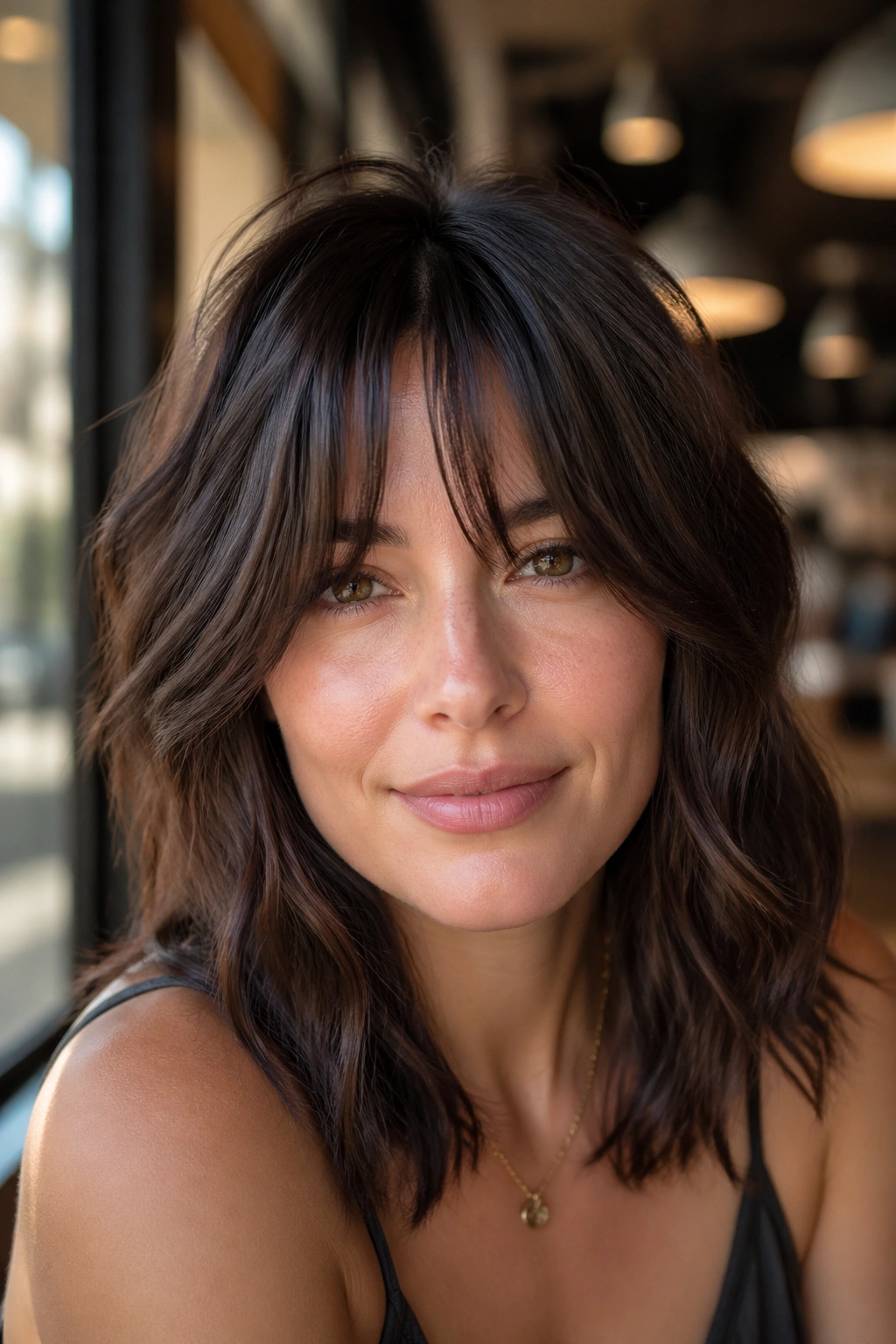
Piecey curtain bangs are for people who want visible separation. The strands stay distinct, the ends stay light, and the whole fringe has a touch of movement that keeps a round face from looking overly full.
Micro layers help here. They remove just enough bulk to let the bangs fall in small, soft sections instead of one solid sheet. That’s especially useful on medium wavy hair, because the wave pattern already creates texture. You do not need more weight.
A few quick styling rules help:
- Use your fingers to set the separation.
- Work in a pea-sized amount of styling paste, not more.
- Dry the roots first so the fringe does not split too low.
- Keep the outer edges longer than the center.
It’s a good cut if you want the front of your hair to look a little undone on purpose.
9. Arched Bangs That Follow the Brow Line
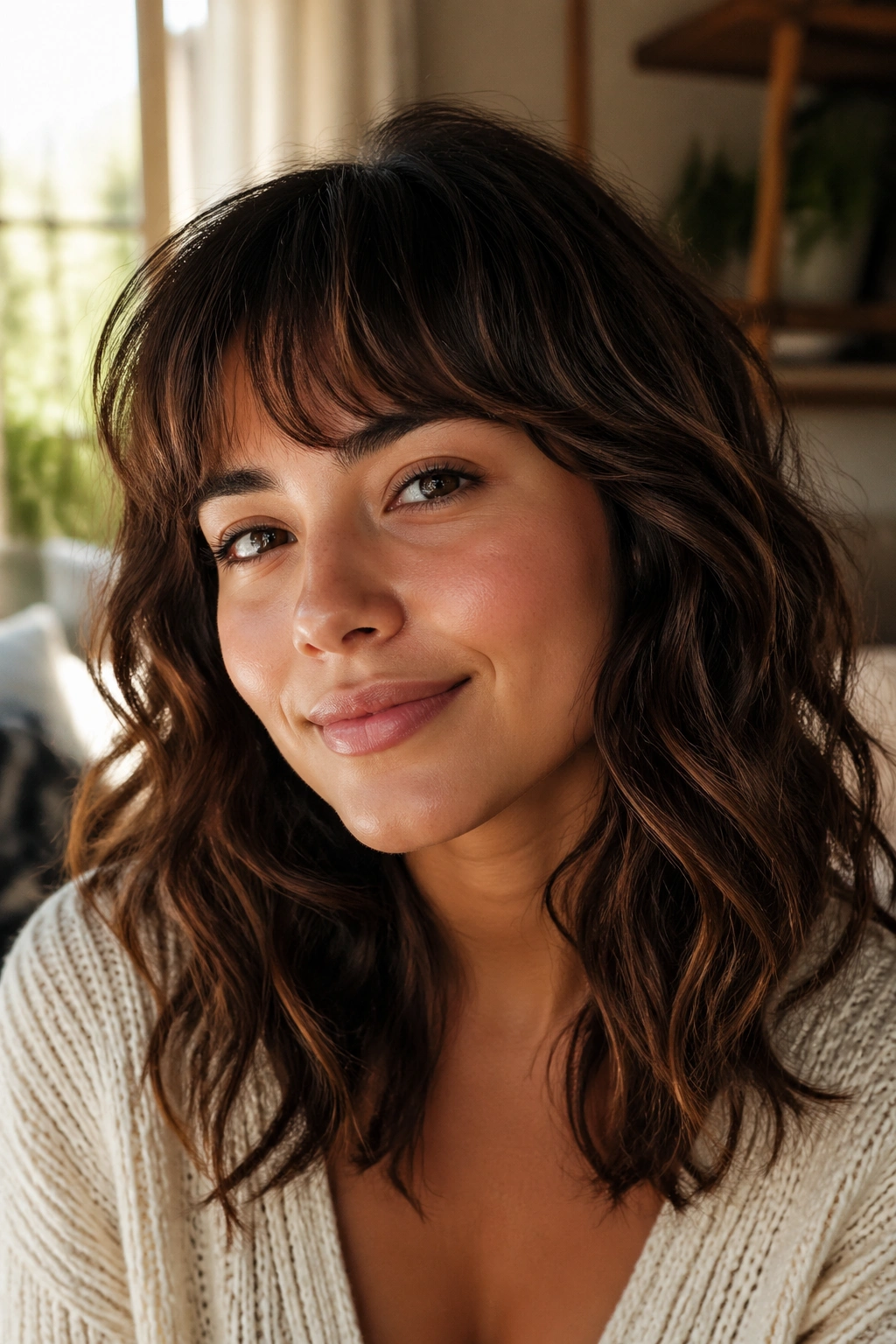
Arched bangs can flatter a round face when the curve is soft, not severe. The shape echoes the brow line, which makes the forehead area look neat and lifted without adding bulk to the sides.
The danger here is overdoing the arch. A hard, high curve can feel dated fast and can make the face seem narrower in a strange way, which is not the goal. What you want is a light arc that sits cleanly above the brows and then melts into the sides.
This style works well with medium waves because the waves keep the arch from reading too rigid. A tiny bend at the ends, made with a flat iron or a round brush, is usually enough. Think polished, not stiff.
10. Split Bangs Over a Wavy Lob
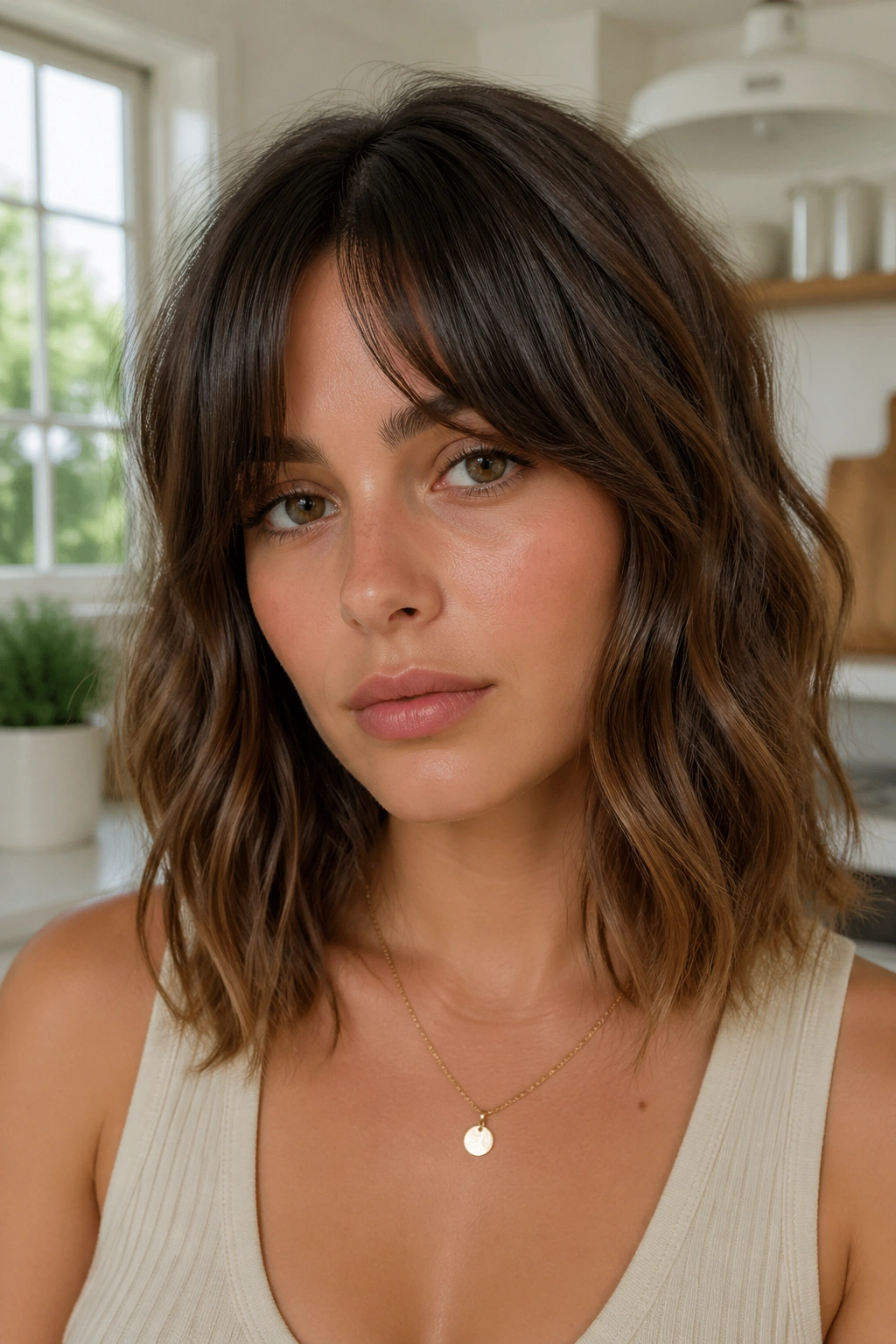
What if you want bangs that disappear on lazy days? Split bangs are a smart answer. They part softly near the center, but the pieces stay loose enough to blend into a medium wavy lob without looking overstyled.
Why the Split Helps
The middle opening keeps the forehead from feeling boxed in, and that is useful on a round face. It also gives you a shorter-looking bang without committing to a full fringe. That makes the style feel forgiving.
Ask for the front to start a little longer than you think, then have the stylist carve in the center split by hand. When you style it, let the waves air-dry halfway before you shape the bangs. If they’re still too wet, they’ll shrink into a much shorter line than you planned.
This is the kind of fringe that works on busy mornings. It looks intentional even when you do not spend much time on it.
11. Feathered Bangs With a 70s Flip
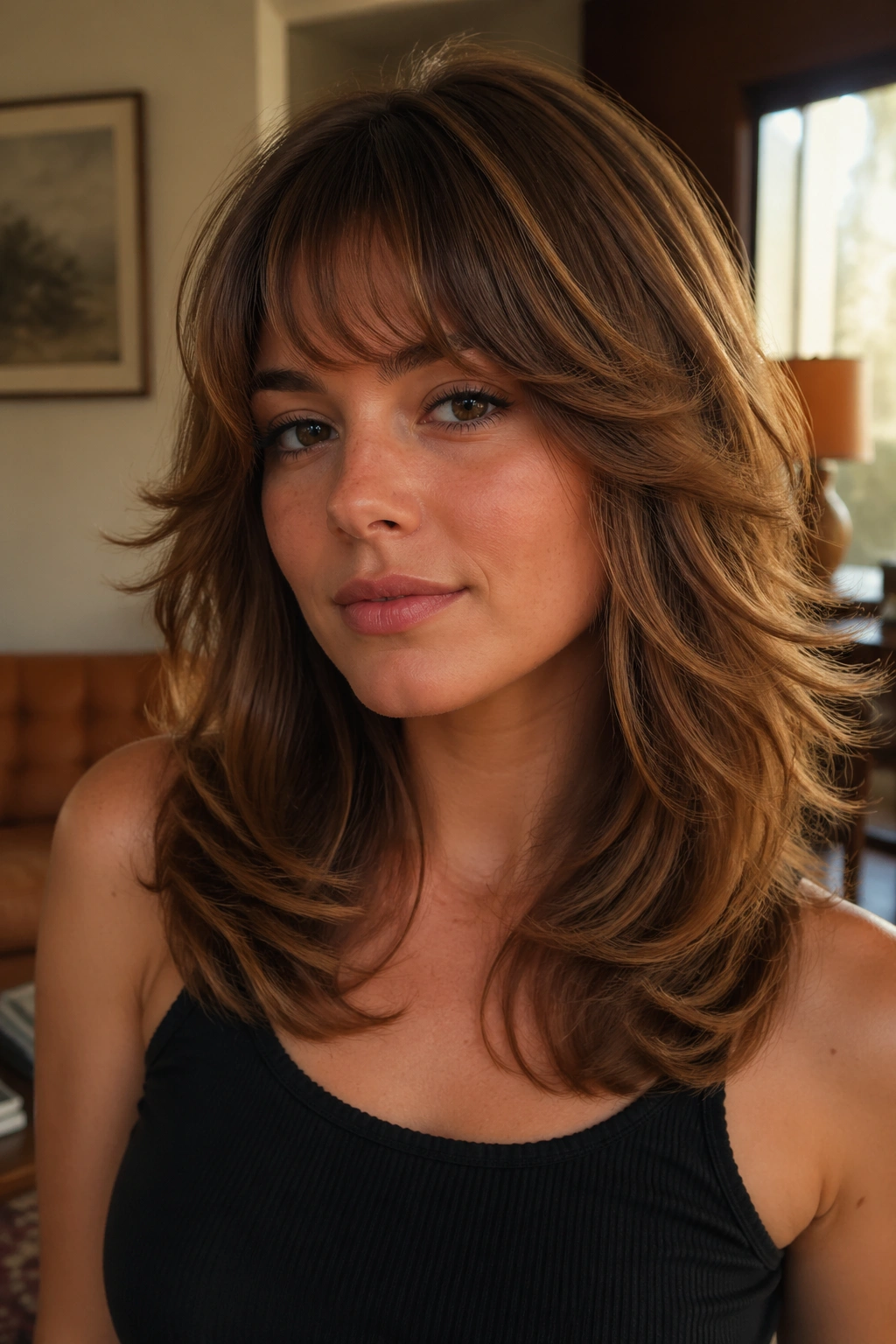
Feathered bangs bring movement, and movement is where medium wavy hair gets interesting. The ends are thinned and softened so they flick away from the face instead of sitting in one heavy curtain.
That outward flip helps a round face because it draws attention to the eyes and cheekbones without filling in the width of the cheeks. The line is open, not closed. You can see skin, hair, and shape all at once.
- Blow-dry with a 1-inch or 1.25-inch round brush.
- Roll the ends away from the face.
- Finish with cool air to lock in the bend.
- Keep the layers soft; a sharp flip looks too set.
This style has a little retro attitude, but it does not need to look costume-y. The best version feels light and touchable.
12. Soft Blunt Bangs With Broken Texture
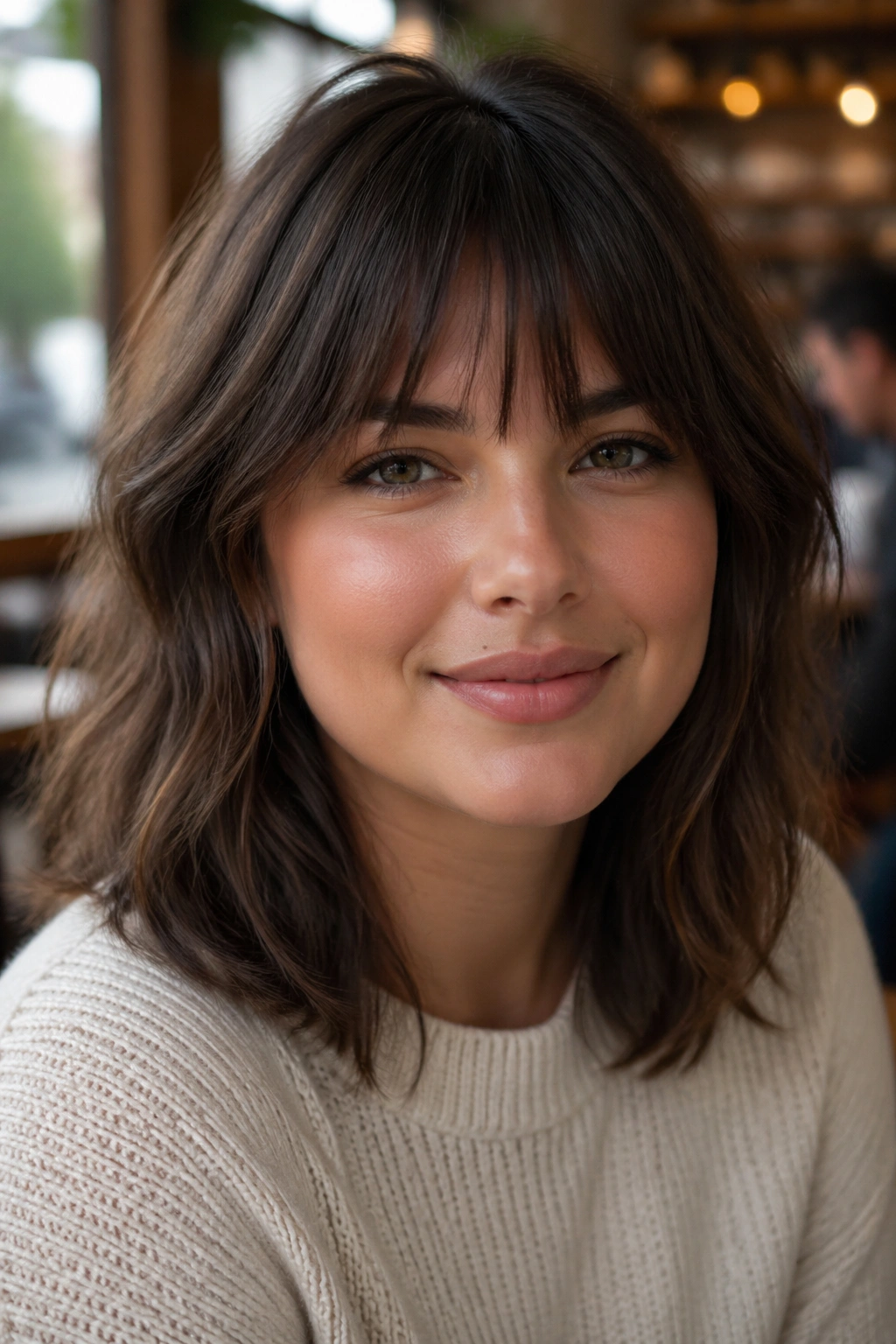
A blunt bang is not off-limits for a round face. It just needs softer edges and a touch of air so it does not form one flat line across the forehead. That broken texture is what makes the style wearable.
The cut should sit around the brows or just under them, with the corners softened by point cutting. On medium wavy hair, the wave adds enough movement to keep the fringe from looking too rigid. The result is more relaxed than a straight-across bang on poker-straight hair.
This version suits people who like clear shape but do not want a heavy block. It is especially good if your hair density is medium to thick. Very fine hair can lose the softness and start to look sparse at the ends.
13. Grown-Out Bangs Parted Down the Middle
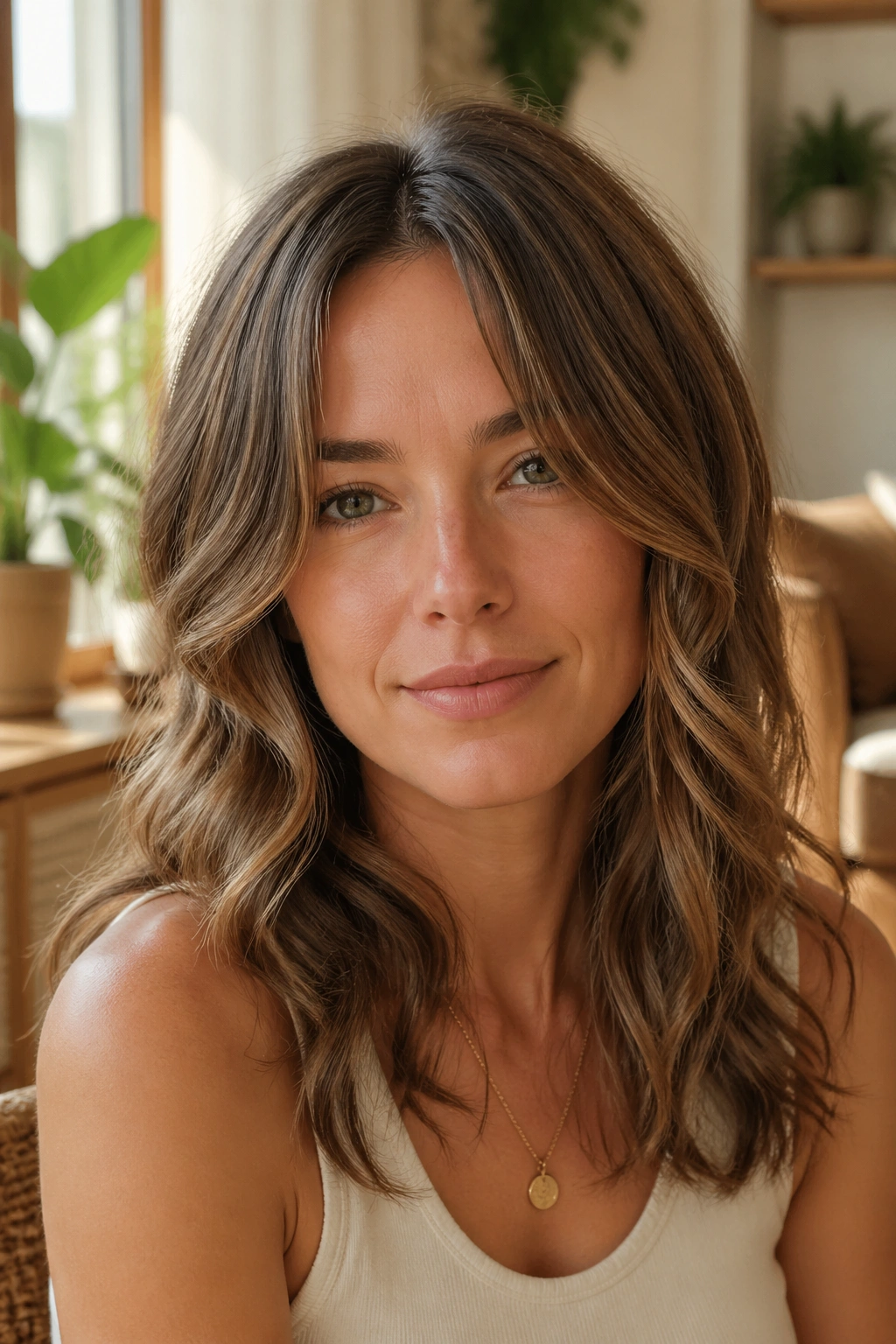
Grown-out bangs can look surprisingly good on a round face, especially when the center part is clean and the side pieces fall into the waves. The longer length creates a vertical line down the middle of the face, which gives a little extra length visually.
This is also the low-drama option. If you are between cuts or you’ve decided to let your fringe grow, this shape still looks deliberate. It doesn’t read as “I forgot to trim my bangs.” It reads as soft and lived-in.
The trick is to keep the front pieces shaped, not forgotten. A light bend around the cheekbone keeps them from collapsing into the jaw. Medium waves make that easier, because the motion in the hair hides the grow-out and keeps the front pieces from hanging straight.
14. Curved Side Bangs That Brush the Jaw
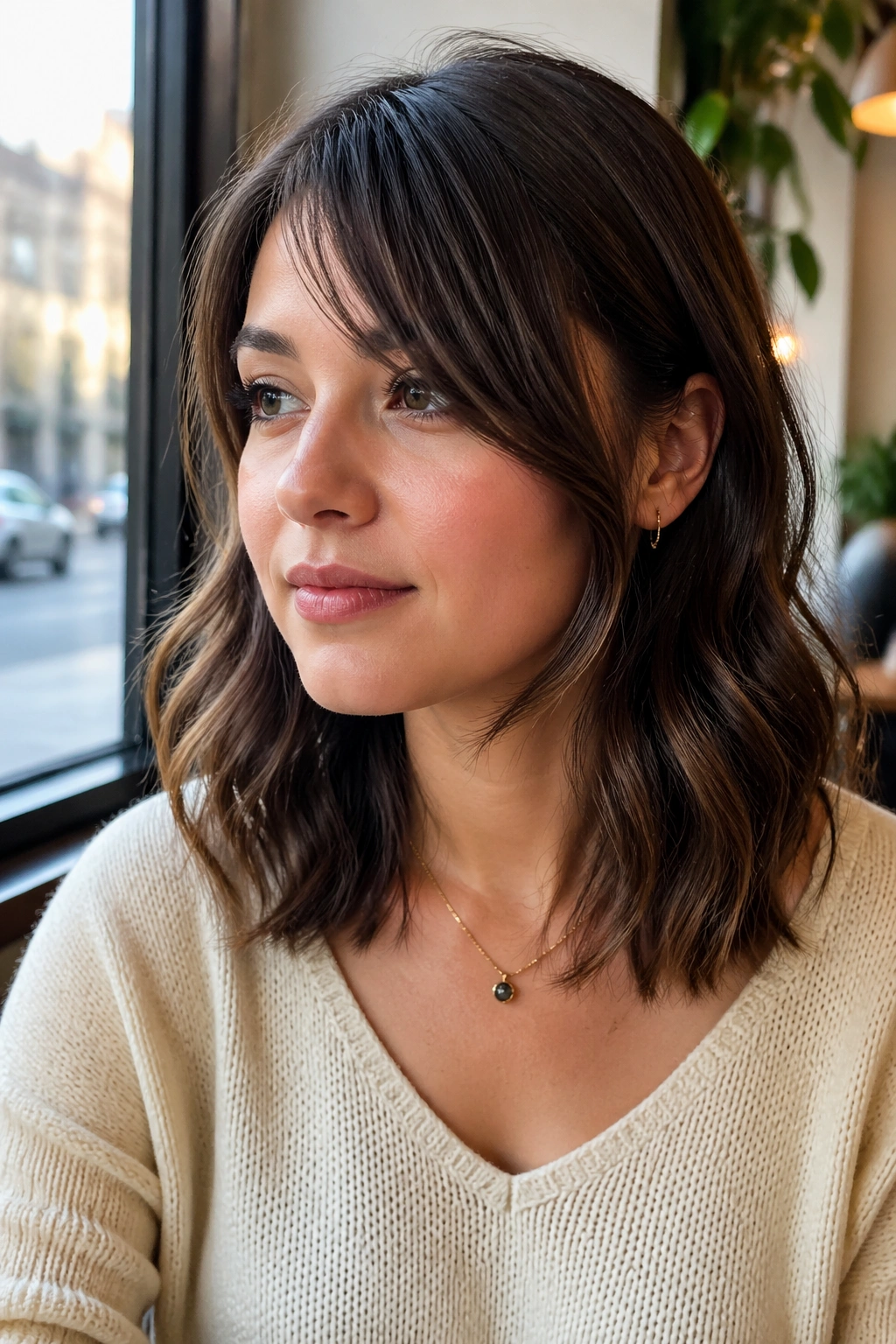
If one side of your face always feels wider in photos, a curved side bang can balance that quickly. The front line arcs from the part, across the forehead, and down toward the jaw, which creates a long diagonal and a little visual lift.
This style is gentler than a blunt side bang. It bends, then fades into the rest of the cut. That softness matters on round faces because it keeps the front from looking like a single heavy chunk of hair.
It’s also easy to wear with collarbone-length waves. You can tuck one side behind the ear, let the bangs fall forward on the other side, and suddenly the whole cut feels more shaped. A small barrel iron is enough to reset the curve if the hair dries flat.
15. Choppy Fringe With Internal Layers
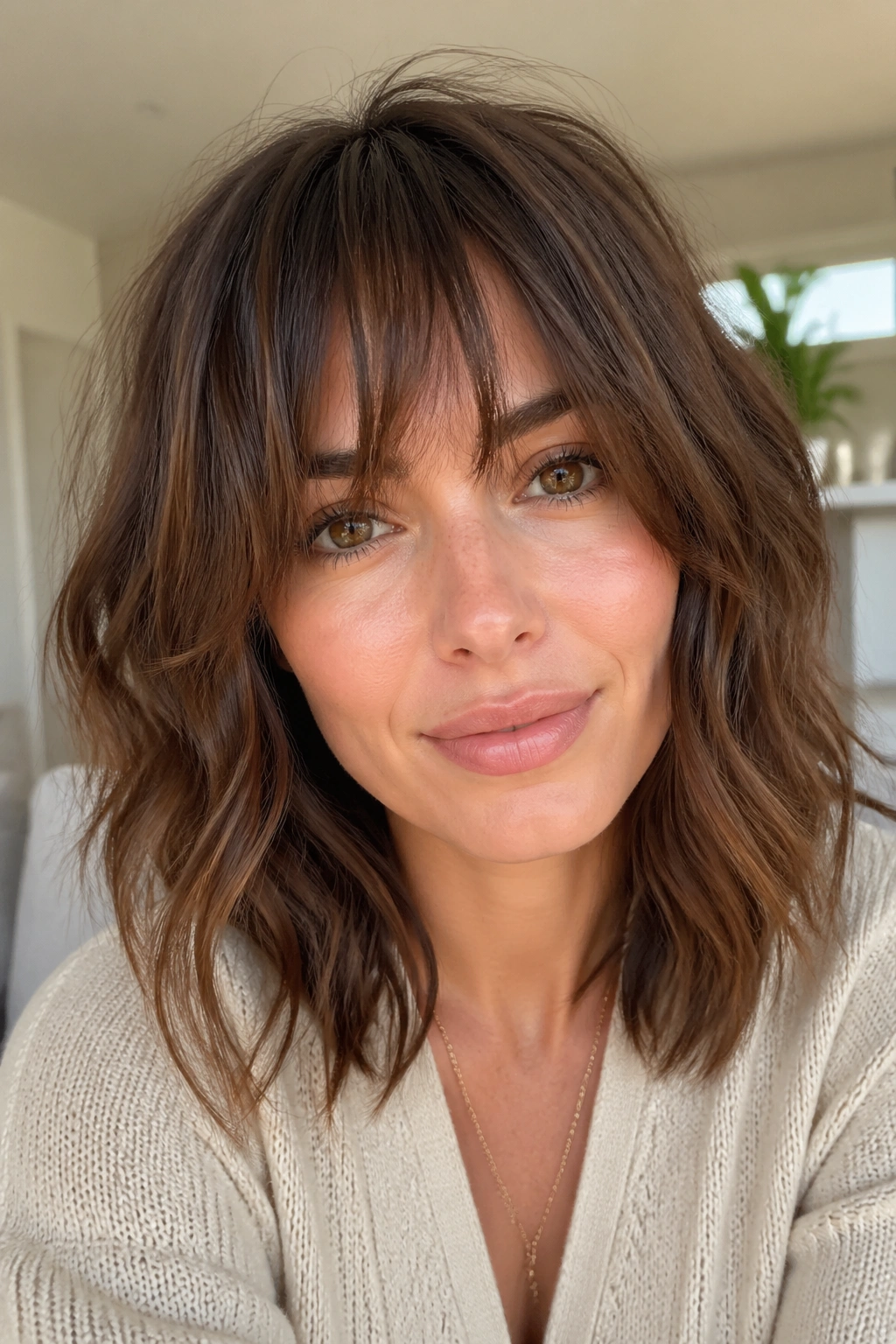
Choppy fringe with internal layers works best when the hair is dense and the bang area feels too heavy on its own. The internal layers remove bulk from inside the section, so the outer edge stays visible without becoming thick and boxy.
Ask for These Details
Tell the stylist you want the bang to keep movement, not just lose weight. That usually means point cutting, some internal texturizing, and a front section that blends into the face frame instead of dropping in one straight block.
On a round face, this helps the fringe sit lightly over the forehead while the sides stay soft. That blend keeps the haircut from widening the face. It also makes the front much easier to style with a quick blow-dry and a touch of texture spray.
Be careful with over-thinning. Too much removal at the front leaves the bang weak, and weak bangs separate in odd places.
16. Airy See-Through Bangs
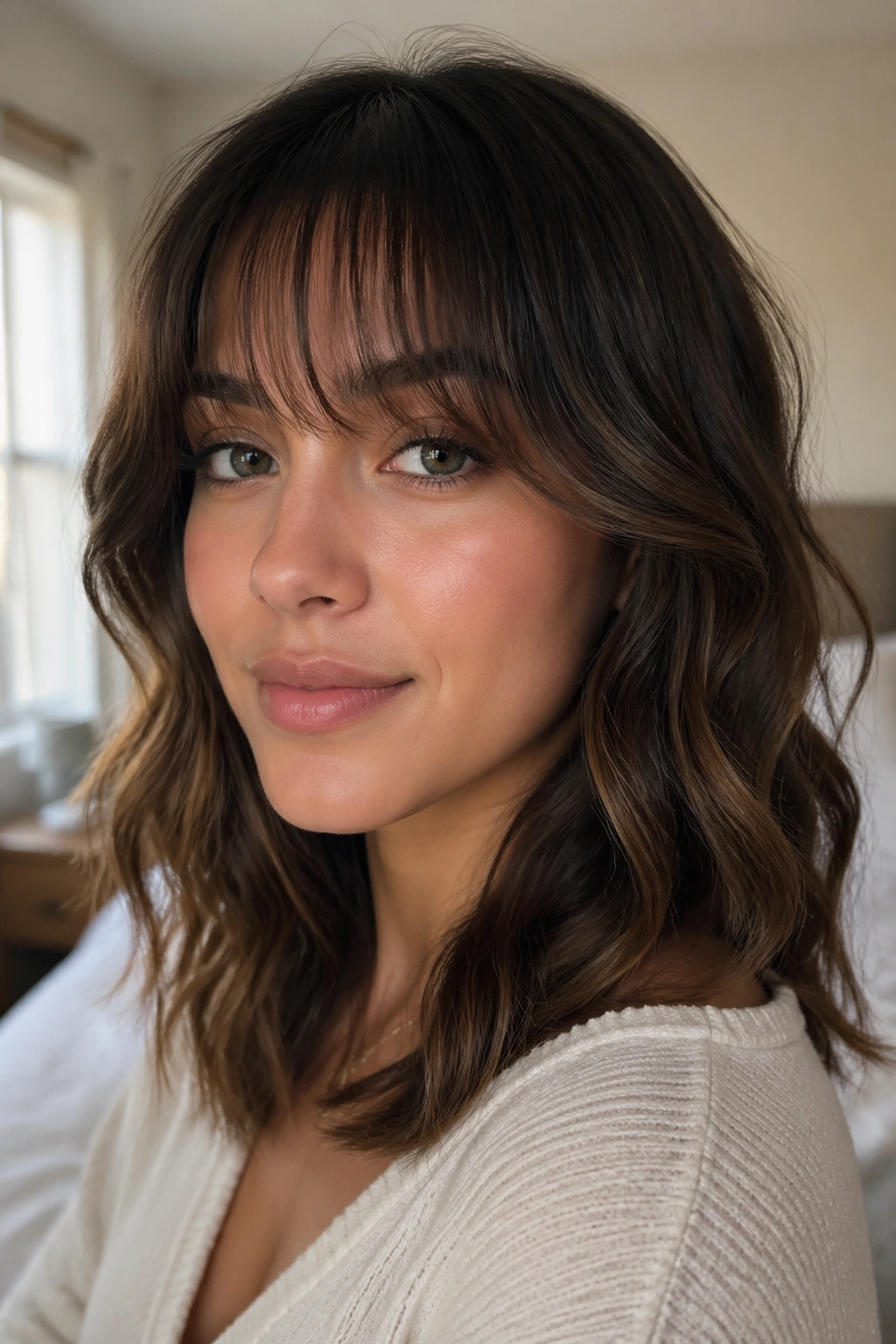
Can bangs stay light and still count as bangs? Absolutely. Airy see-through bangs keep enough forehead visible to open the face, which is one reason they suit round features so well.
How to Keep Them Airy, Not Stringy
The density should be soft, not sparse in a sad way. You want a whisper of fringe, with enough hair to form a shape at the brow line. The waves in medium hair help because they create a little bend and body without much work.
This style needs restraint. Use a light mist of heat protectant, a quick dry with the nozzle pointed downward, and almost no cream. If the fringe gets too coated, the transparent effect disappears and the bangs look flat.
It’s a calm, easy style. Not flashy. That’s part of why it works.
17. U-Shaped Curtain Bangs With Cheekbone Sweep
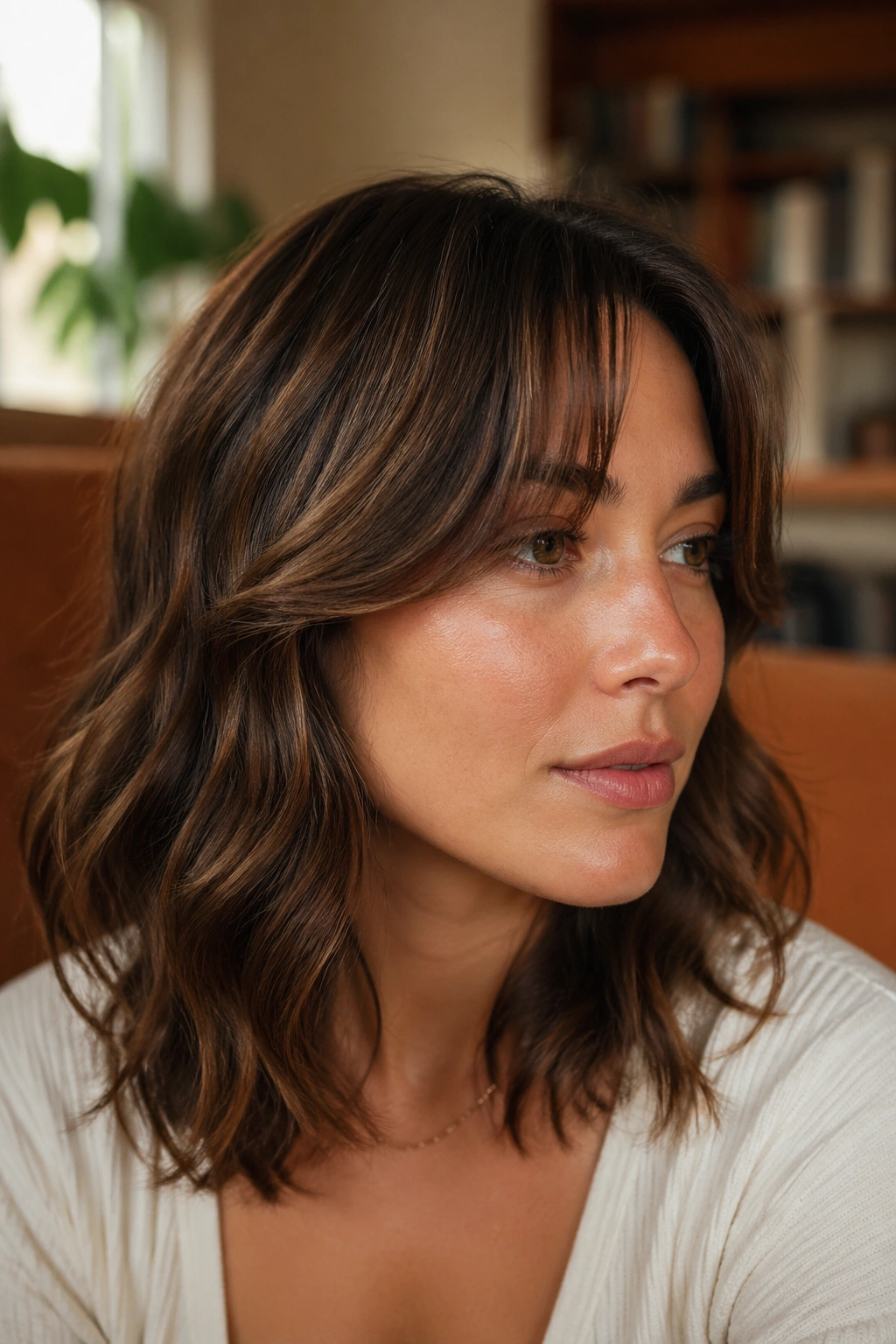
U-shaped curtain bangs are a subtle twist on the usual curtain cut. The center stays slightly shorter, but the sides curve down in a smoother U rather than a sharp split. On a round face, that gentle curve gives structure without cutting the face into hard sections.
The shape is useful if you want a softer, more blended line around the forehead. Medium waves help the U shape settle naturally, especially when the hair is air-dried with a little movement at the roots. It feels less styled than a sharp curtain fringe, which is a plus if you do not want to fight your hair every morning.
Keep the shortest section just above or at the brows. Too short, and the curve can exaggerate the roundness of the face. Too long, and it loses the lift that makes the cut feel fresh.
18. Textured French Fringe
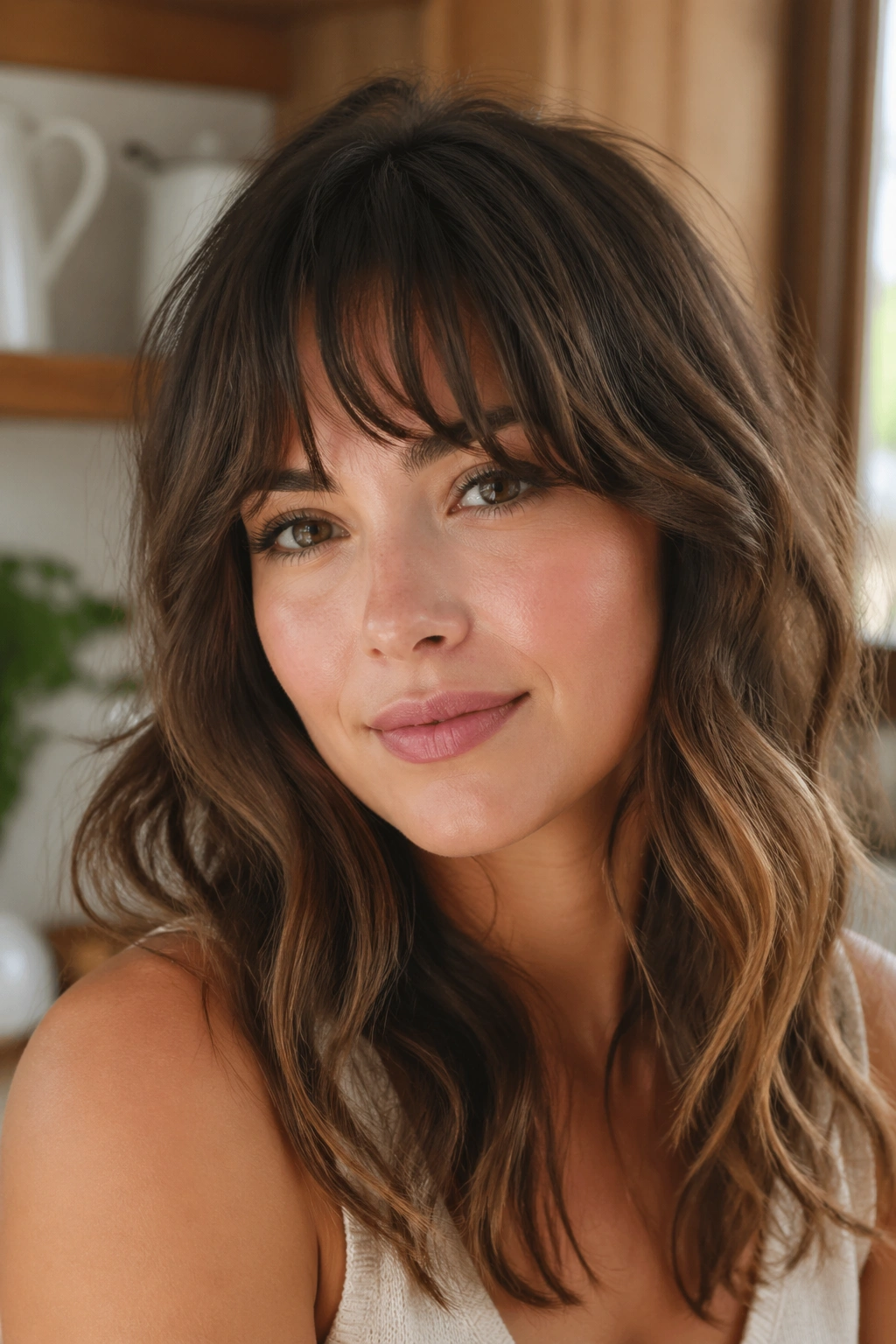
Textured French fringe is for someone who likes a little imperfection. The line is soft, the ends are broken, and the whole thing has a casual shape that works well with medium waves. It’s not neat. That is the point.
A round face benefits from that softness because the fringe does not create a straight visual barrier across the forehead. Instead, it leaves tiny gaps and bends that let the face breathe. The haircut looks lighter, even when the hair itself is medium to thick.
This style is not for people who want a perfectly polished front every day. It looks best when the texture is left alone and touched up only at the roots. A bit of dry shampoo can help keep it lifted, especially if your bangs fall flatter than the rest of the hair.
19. Softly Angled Bangs
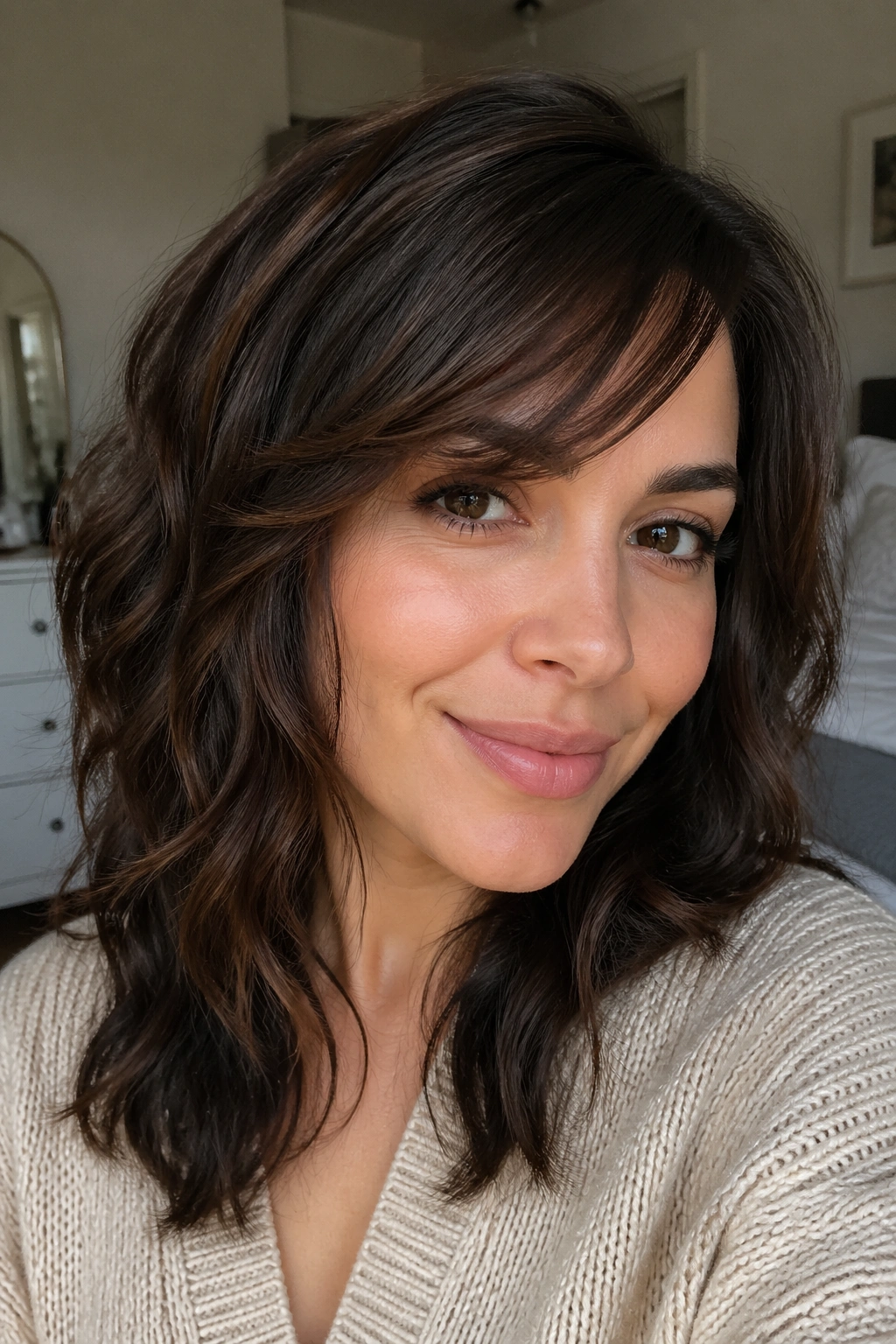
Sometimes the smallest diagonal cut changes everything. Softly angled bangs start a touch shorter on one side and lengthen as they move across the forehead, which gives a round face a longer line and a less symmetrical feel.
That asymmetry is useful if your face reads very full in the cheeks. A straight fringe can emphasize the widest part. A soft diagonal points the eye elsewhere. It’s a small shift, but it matters.
- Keep the angle gradual, not dramatic.
- Ask for the longest side to blend into the cheekbone area.
- Style with a side part or a soft off-center part.
- Use a flat brush if you want less curl at the roots.
This cut feels controlled without looking severe. That balance is hard to beat.
20. Temple-Starting Face-Frame Bangs
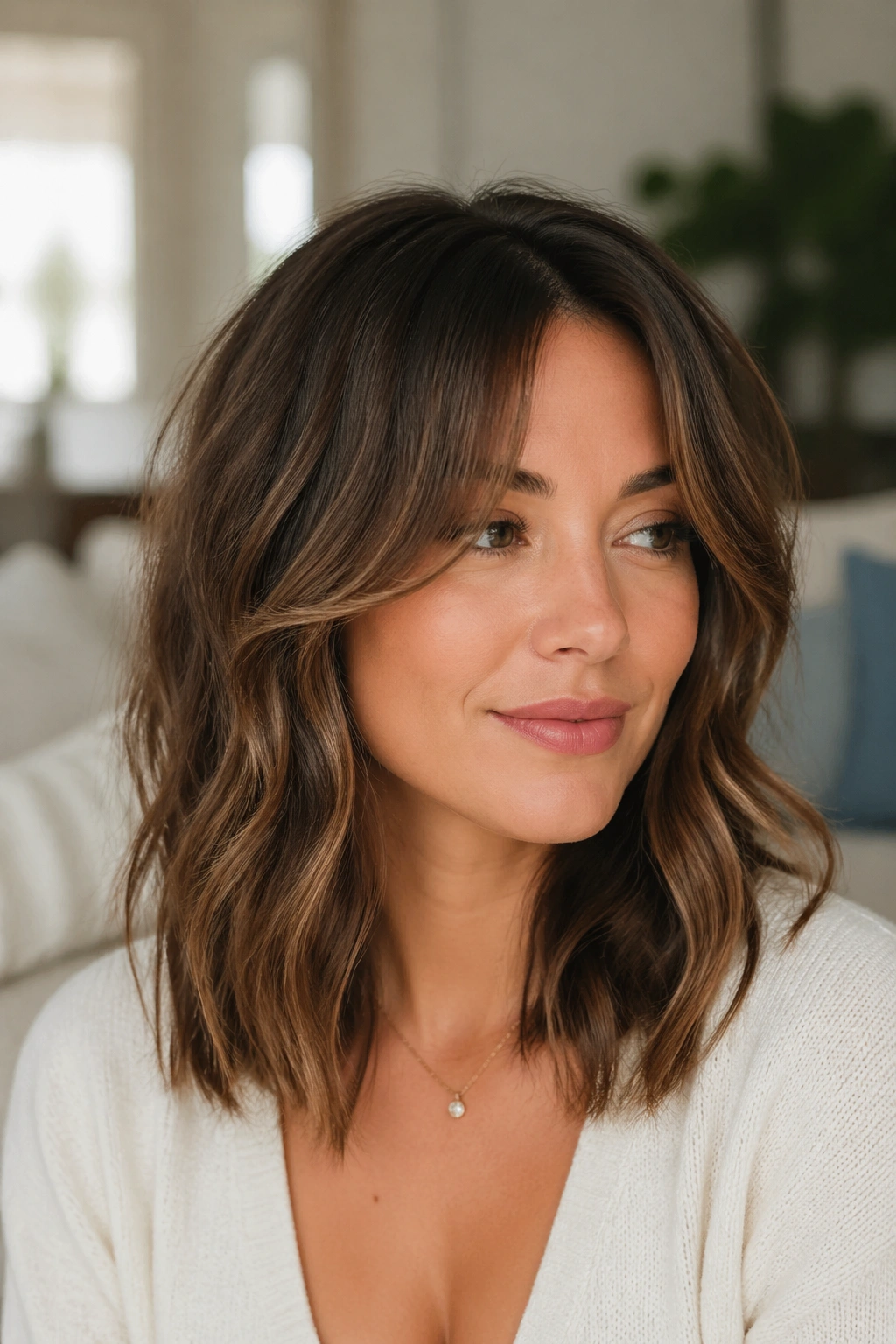
Temple-starting face-framing pieces are the no-pressure version of bangs. They do not land as a full fringe, which is why they feel safe for anyone nervous about changing the front of the haircut. On a round face, they still create the lengthening effect you want.
The pieces begin near the temples, then sweep forward and down around the cheekbones. That keeps the forehead open while guiding attention downward. The shape also works beautifully with medium waves because the wave pattern makes the face frame look soft instead of carved.
This is a smart first step if you are not ready for a full bang commitment. You get the shape, the movement, and the softness, but not the daily maintenance of a dense fringe. Sometimes that is the better trade.
21. Wavy Shag With Curtain Fringe
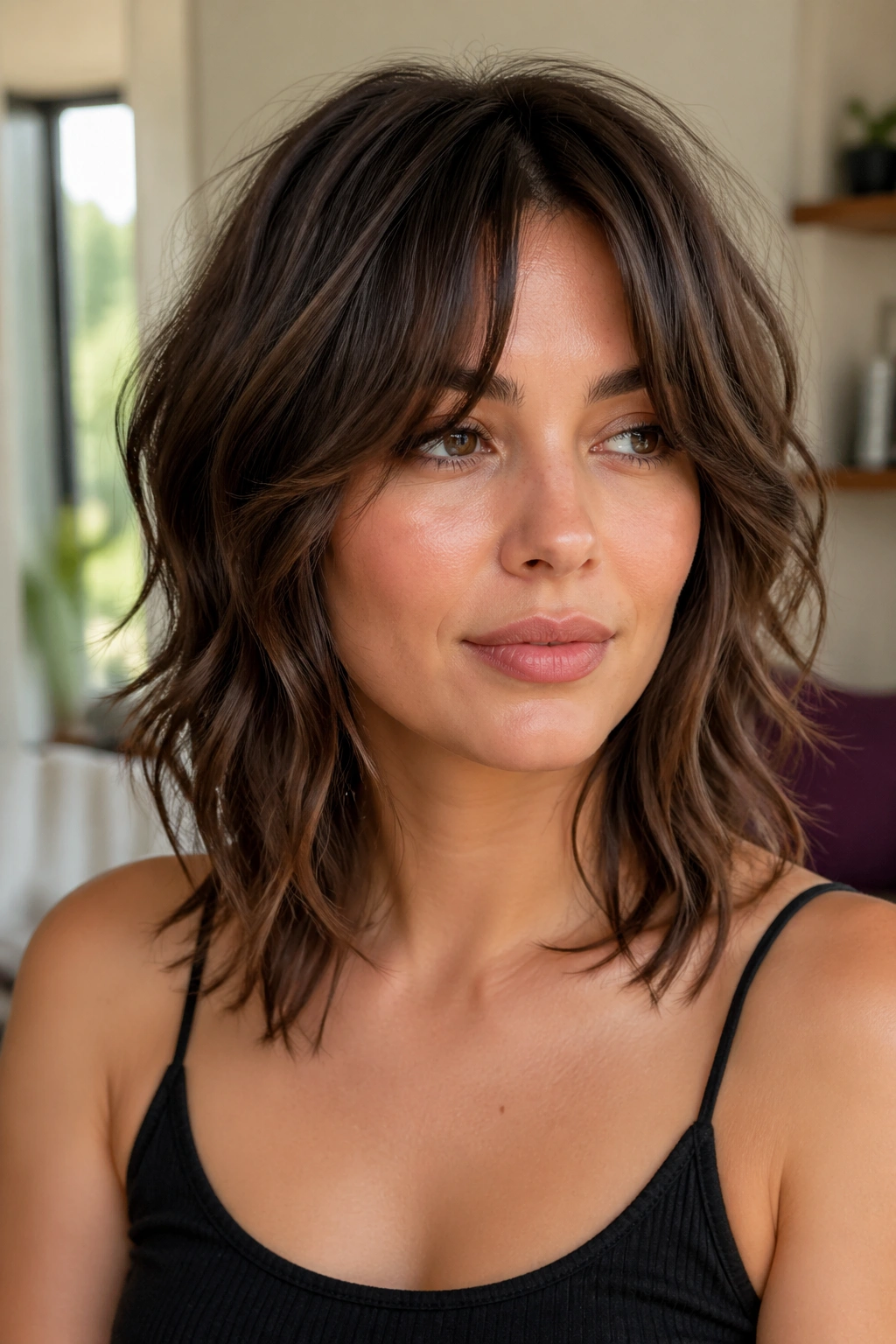
Do you want bangs that still look right when your hair air-dries a little messy? A wavy shag with curtain fringe is built for that. The layers and fringe feed off each other, so the whole cut feels relaxed instead of exact.
What the Cut Needs
The fringe should open in the middle and blend into layers that start around the cheek or jaw. If the layers are too high or too short, the head can start to look wide. Keep the perimeter around the collarbone or a little above it, and let the top pieces move.
A round face gains shape from the broken lines in this cut. Nothing is too solid. Nothing sits in one place. That keeps the width from building up around the cheeks.
This style likes mousse more than cream. Scrunch a small amount into damp hair, then let the front pieces fall where they want before you touch them too much.
22. Brow-Graze Bangs With Soft Bends
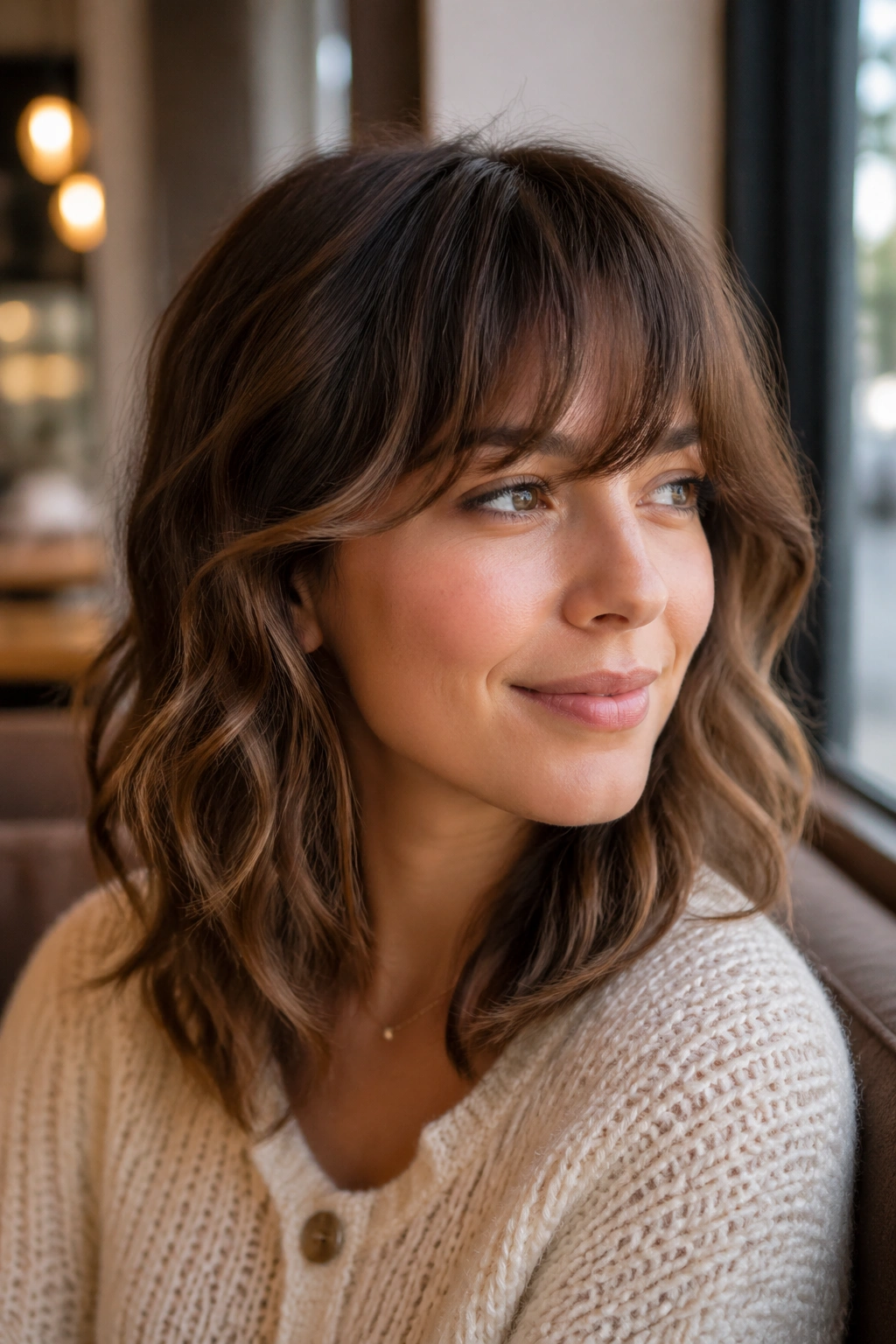
Bangs that sit right at the brow can flatter a round face more than longer ones, if the ends are bent. The bend keeps the fringe from turning into a flat shelf, and that shelf shape is what tends to widen the face.
This cut works best when the center is full enough to show shape but soft enough to separate at the ends. The bends should curve slightly away from the face at the temples, not curl into the cheeks. That small difference matters more than people think.
A quick pass with a medium round brush or a flat iron is enough. Keep the line clean, but not stiff. The goal is a fringe that feels deliberate and light at the same time.
23. Long Diagonal Bangs
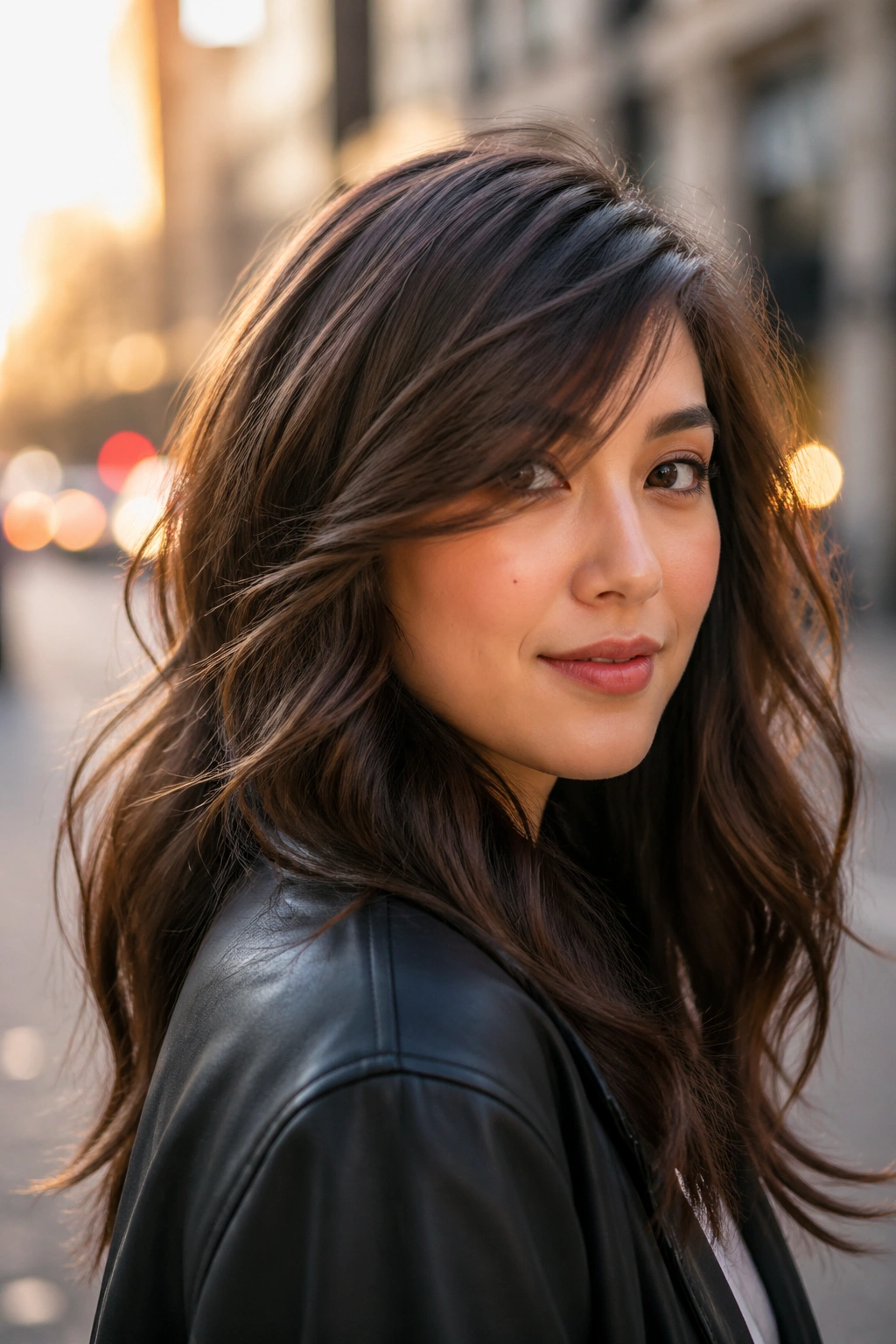
Long diagonal bangs are the dramatic cousin of side-swept fringe. The difference is angle: these are more obvious, more directional, and more useful if you want a strong line that stretches the face.
They’re especially good with thick medium waves, because the bulk of the hair supports the sweep. Ask for the shortest point near the part and the longest point grazing the cheekbone or even the jaw. That long line gives the face an elongated shape and keeps the front from feeling boxy.
What to Ask for at the Salon
- A deep side part.
- A long front section that can be tucked.
- Soft point cutting at the ends.
- Enough length to bend away from the face.
If you like one side pinned back or tucked behind the ear, this is a very easy style to live with.
24. Outward-Flip Bangs That Skim the Jaw
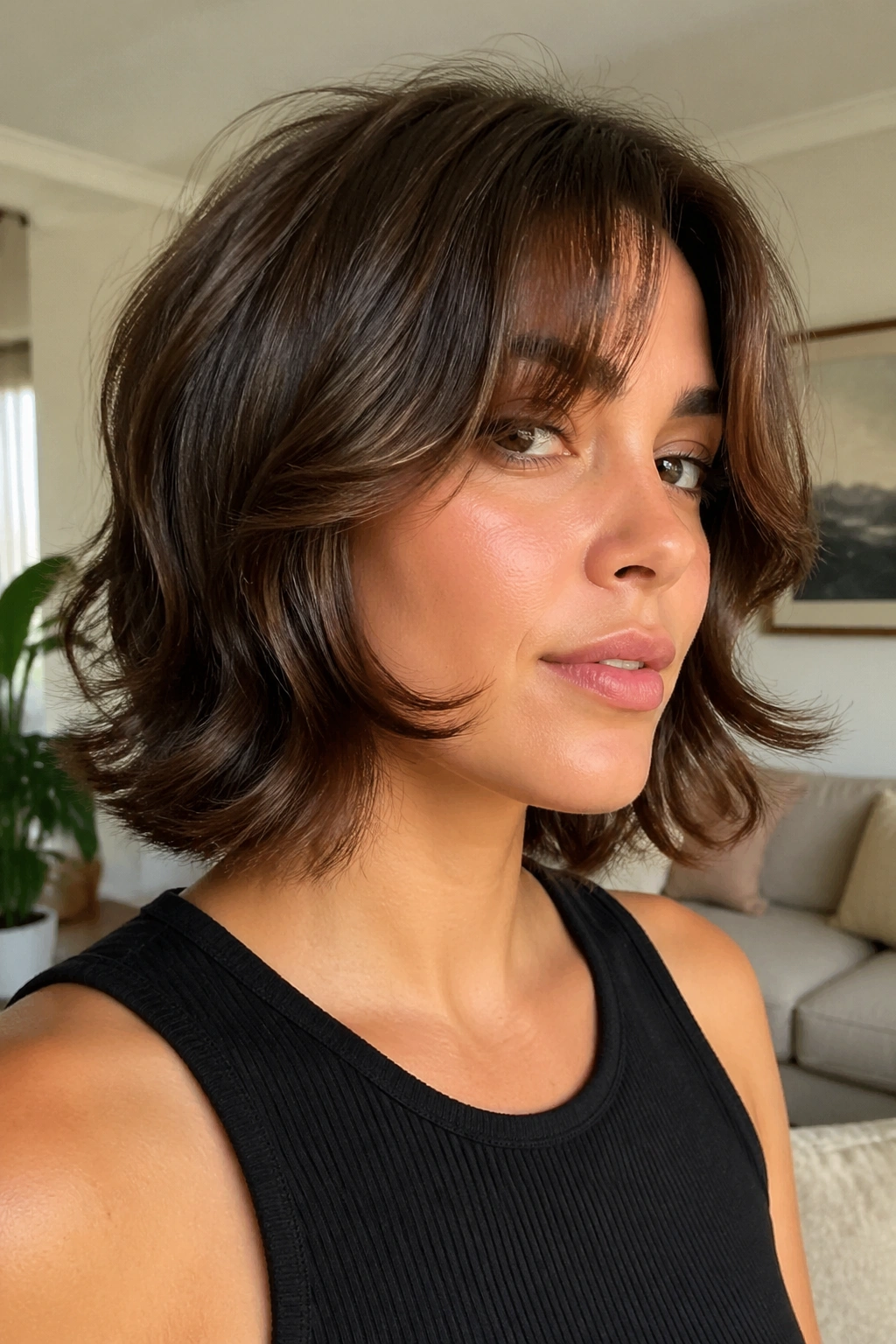
Outward-flip bangs give a round face a little lift at the edges, which helps the front of the haircut feel open. Instead of curving inward toward the cheeks, the ends flip away from the face and skim the jawline.
That outward motion keeps the bangs from sitting heavy over the center of the face. It also pairs well with medium waves, because the rest of the hair already has movement. The bangs just echo it.
This is a good choice if you like a bit of shape but don’t want the softness of a full curtain fringe. A round brush and a one-inch iron both work here. Turn the last inch of the hair away from the face, then let it cool before touching it. If you grab it too soon, the flip falls flat.
25. Blended Bangs With Soft S-Curls
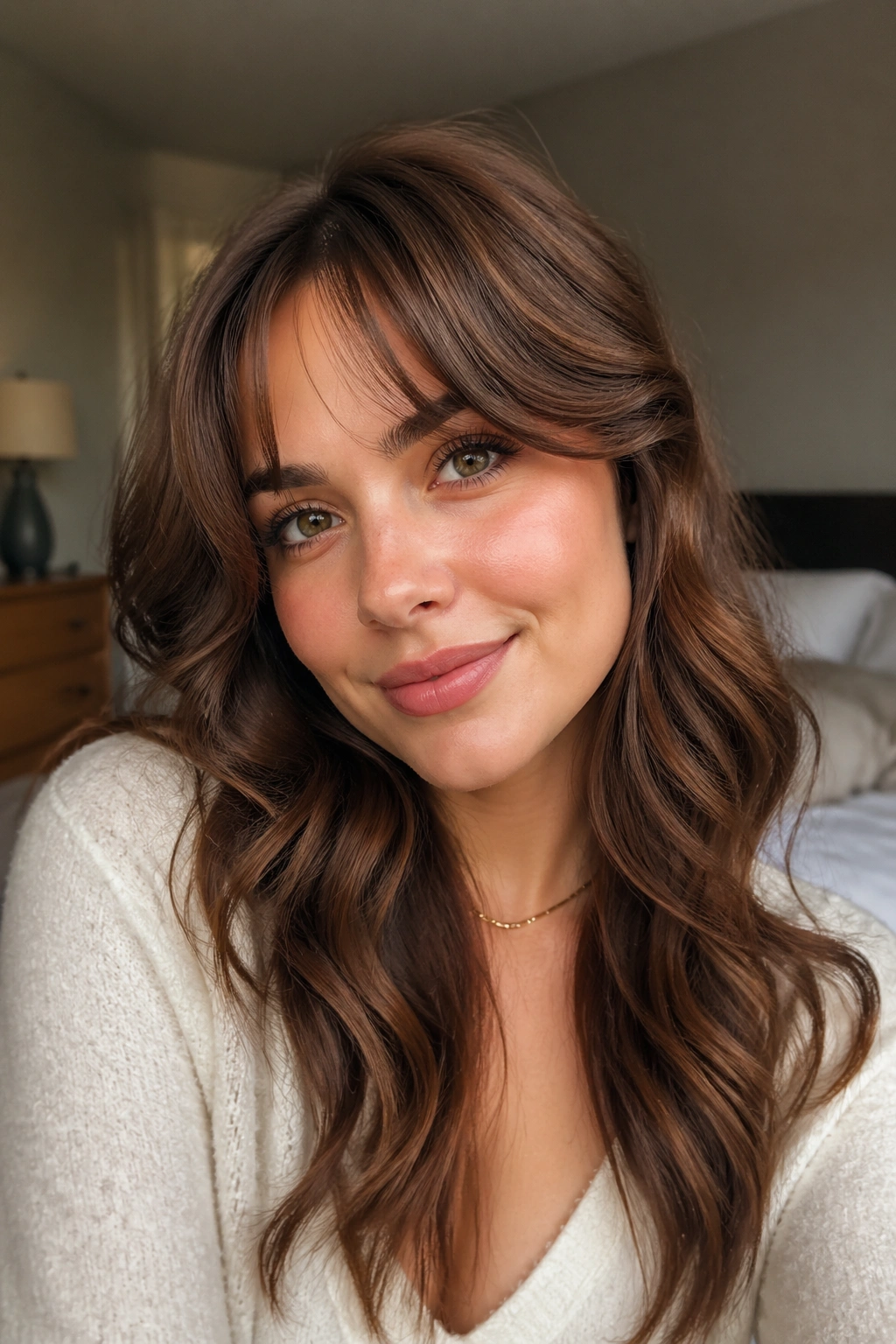
Blended bangs with soft S-curls are for people who want the fringe to melt into the rest of the hair. The front pieces do not shout “bangs.” They slide into the waves, making the whole cut feel fluid and easy.
A round face benefits from that softness because there is no hard line cutting across the forehead. Instead, the hair moves in small curves that point the eye down and out. That gentle motion is enough to make the face look a bit longer.
This style works especially well when the wave pattern is already loose and consistent. If you air-dry, twist the front sections once or twice while they are damp. If you blow-dry, use a diffuser on low heat and avoid flattening the roots. The shape should look like it belongs there, not like it was forced into place.
Final Thoughts
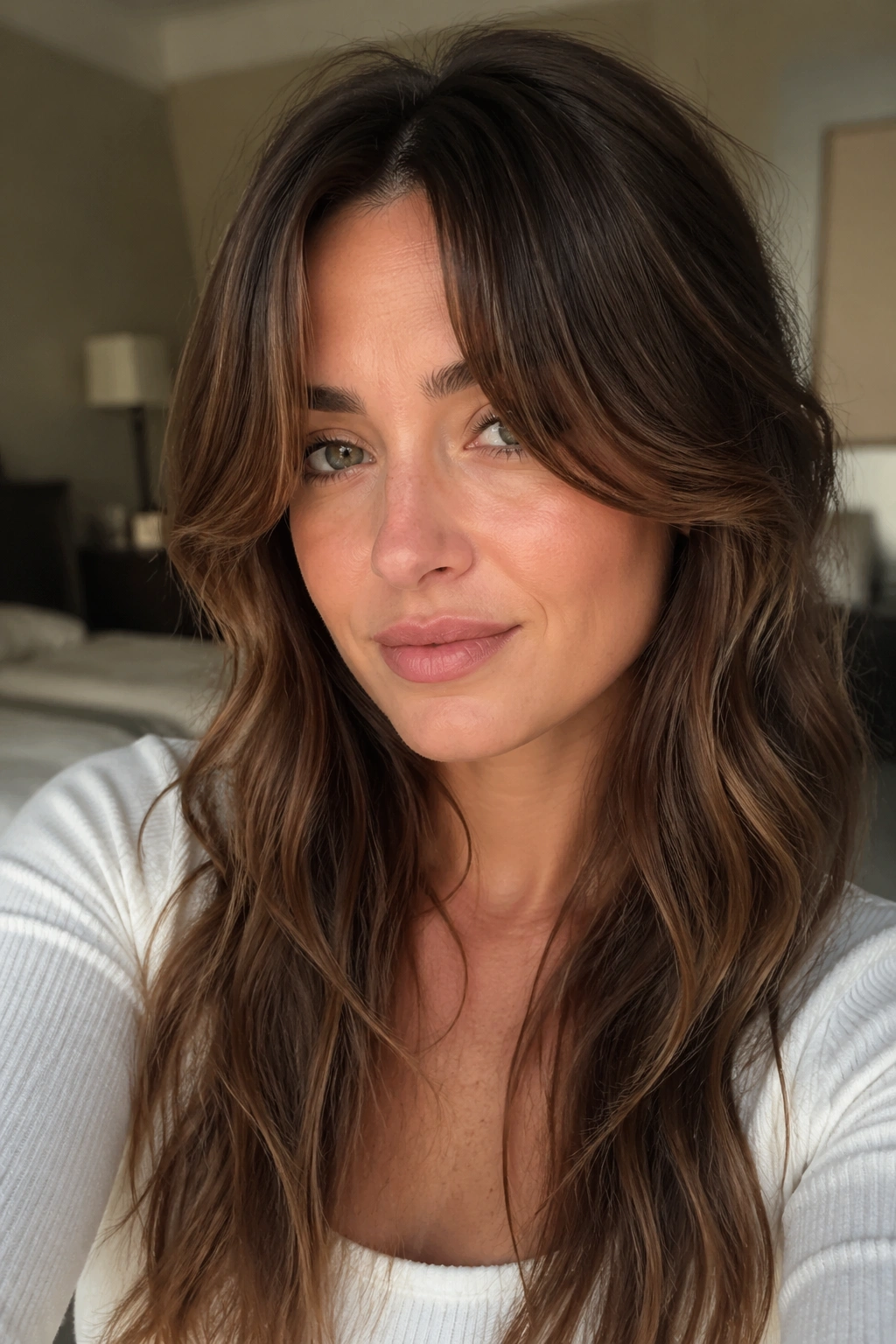
The most flattering medium wavy bang styles for round faces usually do one of three things: they open at the center, sweep diagonally, or fall long enough to pass the cheekbones. That extra movement changes the whole balance of the haircut.
If you want the easiest starting point, curtain bangs, bottleneck bangs, and temple-starting face frame pieces are the least fussy. If you want more edge, the shag, feathered fringe, and softly angled cuts bring more personality. And if you like a neat front with some softness, brow-graze bangs with bend are worth a serious look.
Bring photos, yes. Bring the right photos, though. A stylist can work better when you show both the shape you want and the amount of thickness you can live with every morning, because wavy hair does not behave like a flat sketch on a screen.
