



Bridesmaid hair has a sneaky way of causing trouble. It needs to look polished in photos, hold up through hugs and dancing, and still feel like the person wearing it — not a helmet of lacquered curls from a prom flyer.
That’s why wavy hairstyles for bridesmaids are such a smart lane to stay in. Waves give you softness, movement, and a little forgiveness when the day runs long or the weather gets bossy. They also work across a lot of hair lengths and textures, which matters when one bridal party includes a lob, a waist-length mane, and someone who lives in a claw clip most days.
The trick is choosing a style that fits the dress neckline, the formality of the wedding, and the amount of handling the hair can take before it starts to frizz, puff, or collapse. A good bridesmaid style should look intentional from the front, the side, and in a candid where someone is laughing with a bouquet in one hand and a champagne glass in the other.
1. Soft Side-Swept Waves
Soft side-swept waves are the easy crowd-pleaser. They give you that pretty, slightly romantic shape without asking for a ton of structure, which is exactly why they work so well for bridesmaids with different hair lengths. One deep side part, a loose bend through the mids, and one side tucked behind the ear can change the whole feel.
Why this one earns its keep
This style plays especially well with one-shoulder dresses, sweetheart necklines, and gowns with a bit of drape at the collarbone. It also photographs well from the front because the sweep creates shape near the face instead of letting hair fall flat on both sides. If you want the hair to stay soft, finish with a flexible spray instead of a stiff one.
- Best on medium to long hair
- Works with a 1.25-inch curling iron or a large wand
- Tuck one side with a pearl pin, crystal pin, or just a few hidden bobby pins
Tip: Leave the ends a little straighter than the mids. That tiny detail keeps the waves from looking overdone.
2. Half-Up Twisted Crown
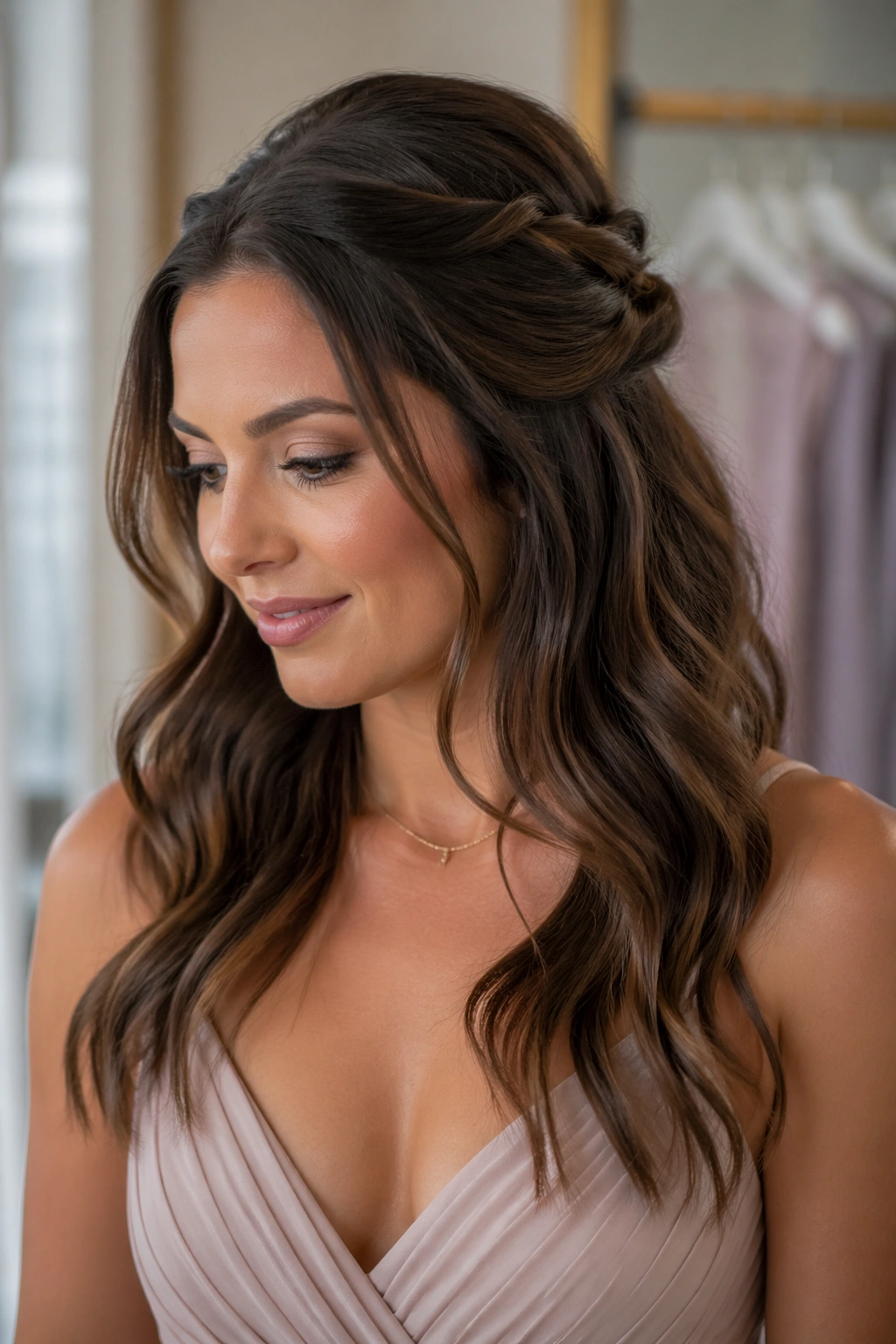
A half-up twisted crown gives you structure without losing the movement bridesmaids usually want. The top section is twisted back from each temple, then pinned at the back of the head so the lower half can fall in soft waves. It has a calm, pretty look that doesn’t fight with busy dresses or statement earrings.
This is one of my favorite choices for mixed hair types because the twist gives grip even if the rest of the hair is finer or a little slippery. A small amount of mousse at the roots helps the crown section stay put, and a mist of texture spray on the lengths keeps the waves from slipping into one soft blur. Good hairpins matter here. Cheap ones bend. Fast.
Use this when you want the hair away from the face but still loose enough to move.
3. Old Hollywood Waves
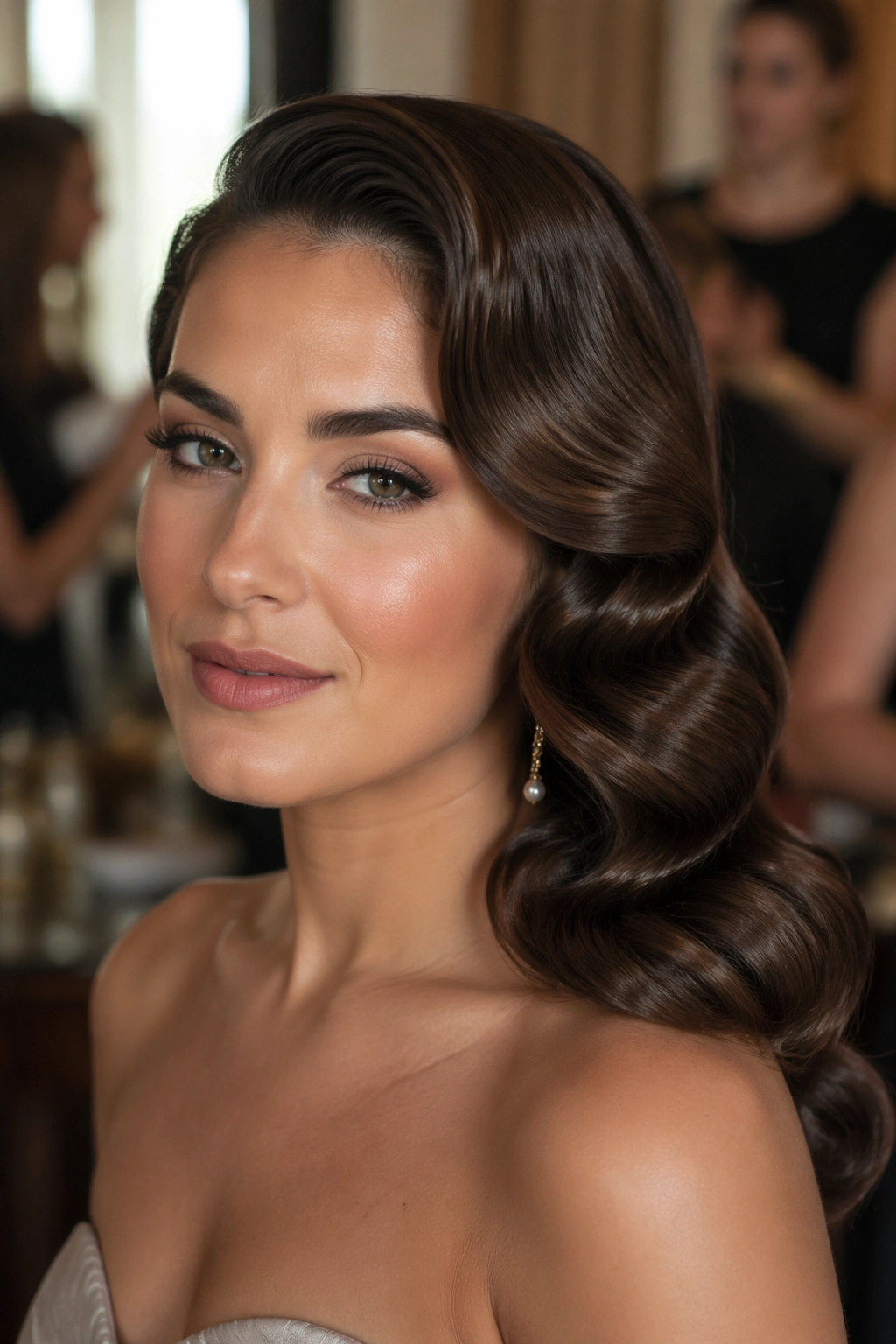
Why do old Hollywood waves work so well for bridesmaids? Because they look deliberate from every angle. The shape is smooth, glossy, and sculpted, with a deep side part and uniform curves that sit close to the head. That makes them ideal for formal weddings, black-tie dresses, and bridal parties that want a more refined finish.
These waves ask for a little discipline. You need a strong setting spray, a curling iron that makes clean bends, and the patience to brush the curls into one continuous wave pattern. Once they’re set, though, they hold their shape better than loose beachy texture and look sharp in low light.
How to wear them well
- Best for long bobs, collarbone cuts, and long hair
- Works beautifully with side-swept bangs or a tucked-back front section
- Add one hair comb instead of several small pins
Useful detail: If the hair is very layered, pin the waves to cool before brushing. That keeps the shape crisp instead of fuzzy.
4. Braided Halo with Loose Waves
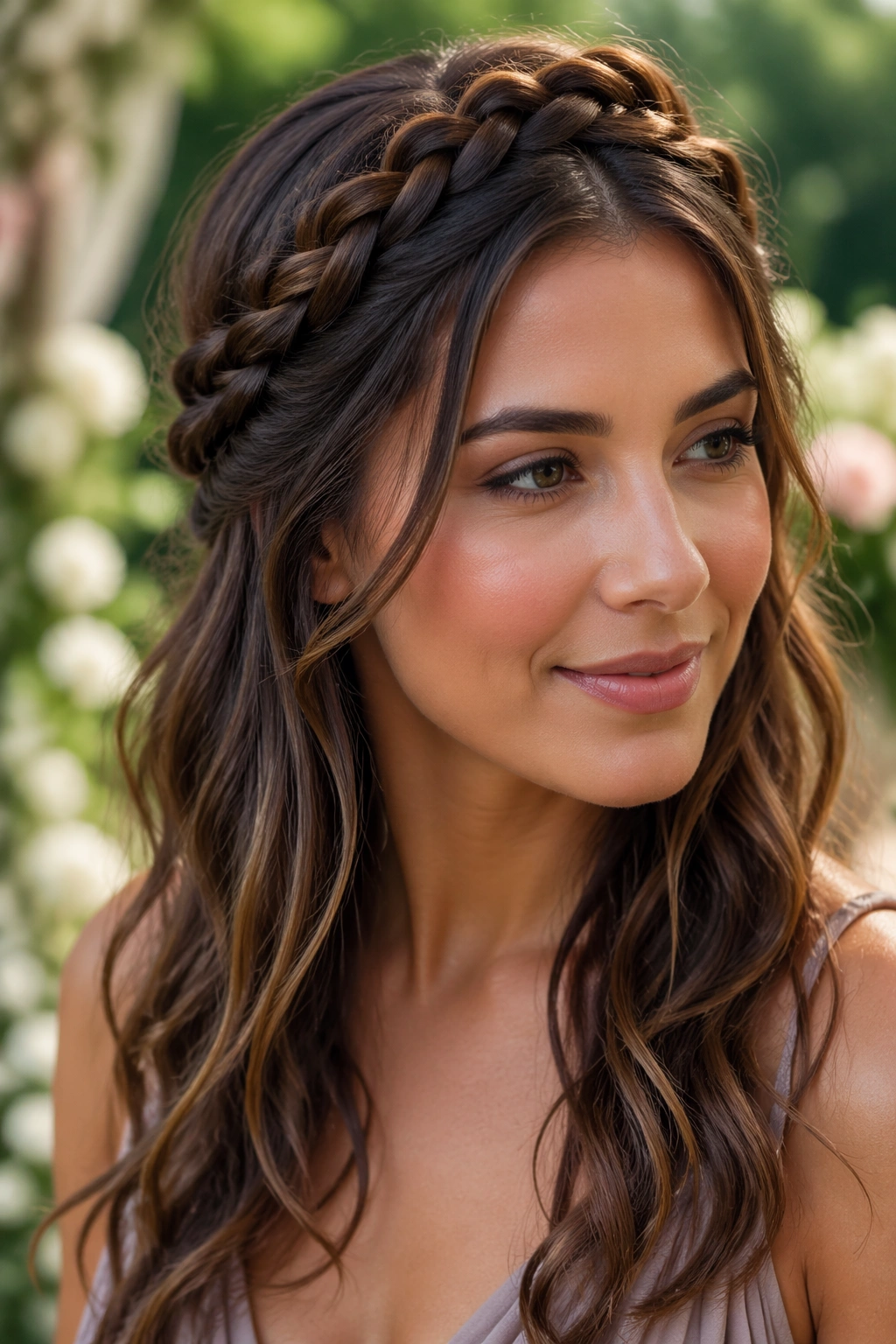
A braided halo with loose waves has that soft, almost storybook feel without tipping into costume territory. The braid wraps around the crown or starts just behind one ear and travels across the head like a thin frame, while the rest of the hair stays wavy and free. It’s pretty, yes, but it also solves a real problem: keeping some hair off the face in humid rooms and outdoor ceremonies.
The braid does the practical work. The waves do the pretty work. That split is why this style keeps showing up for bridesmaids.
I like it most for dresses with open backs or clean necklines, because the hair itself becomes part of the detail. Keep the braid a little loose so it doesn’t look severe, and leave a few face-framing pieces out if the group wants a softer finish. Tiny flowers can go in, but you do not need them. The style already has enough going on.
5. Low Chignon with Face-Framing Waves
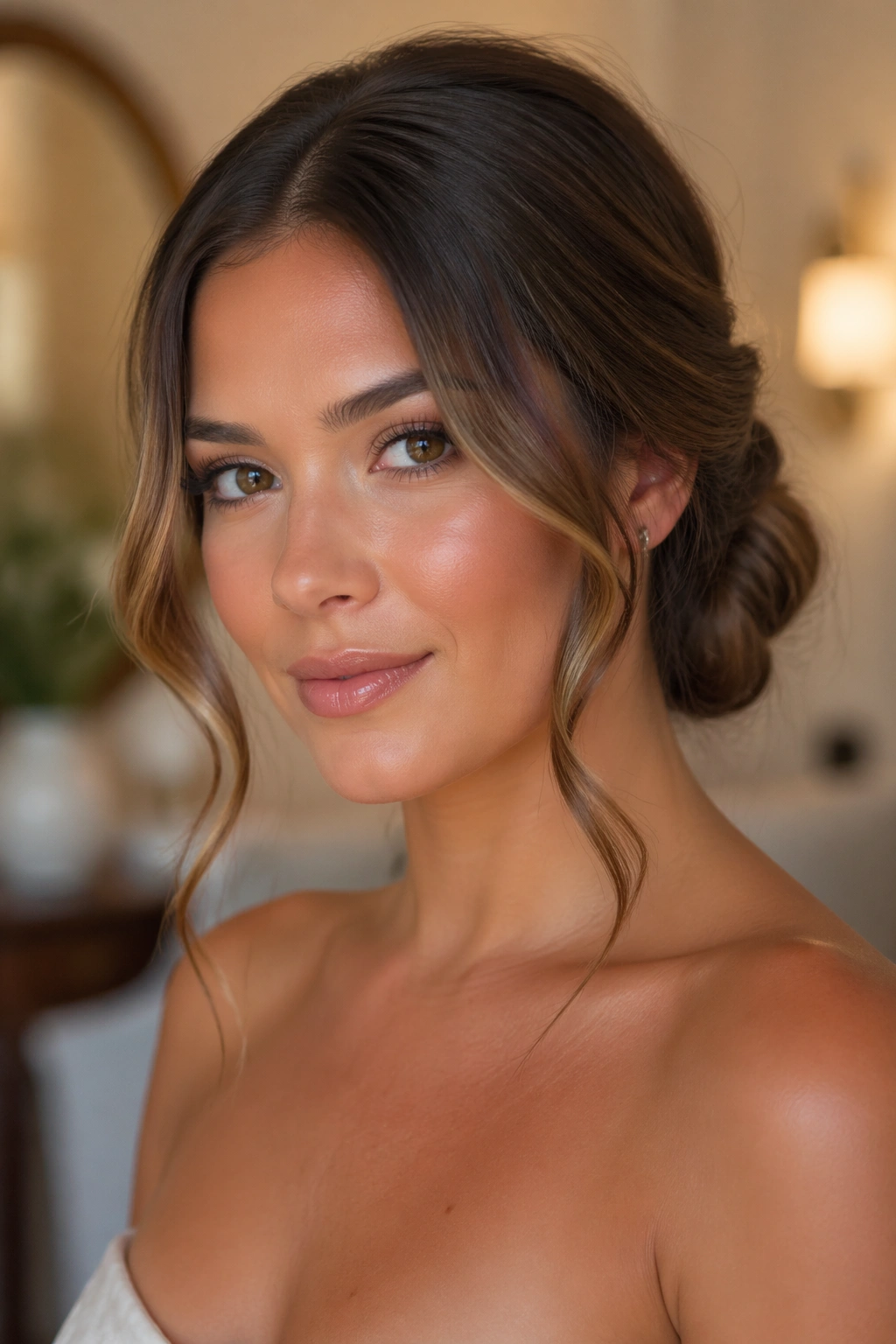
A low chignon with face-framing waves is a smart answer when the dress is dramatic and the hair should step back a little. The bun sits at the nape, usually tucked or rolled, while two soft pieces stay out near the cheeks or jaw. Those loose front waves keep the style from feeling too strict.
This one works especially well for bridal parties where one or two people have heavier hair that can weigh down a half-up look. The low chignon gives the hair a place to settle, and the face-framing pieces keep it friendly. Use a light smoothing cream on the surface, then curl the front sections away from the face so they sit nicely instead of flipping into the eyes.
A few hidden pins and a mist of medium-hold spray are enough. You want movement, not shellacking.
6. Textured Ponytail with Wavy Ends
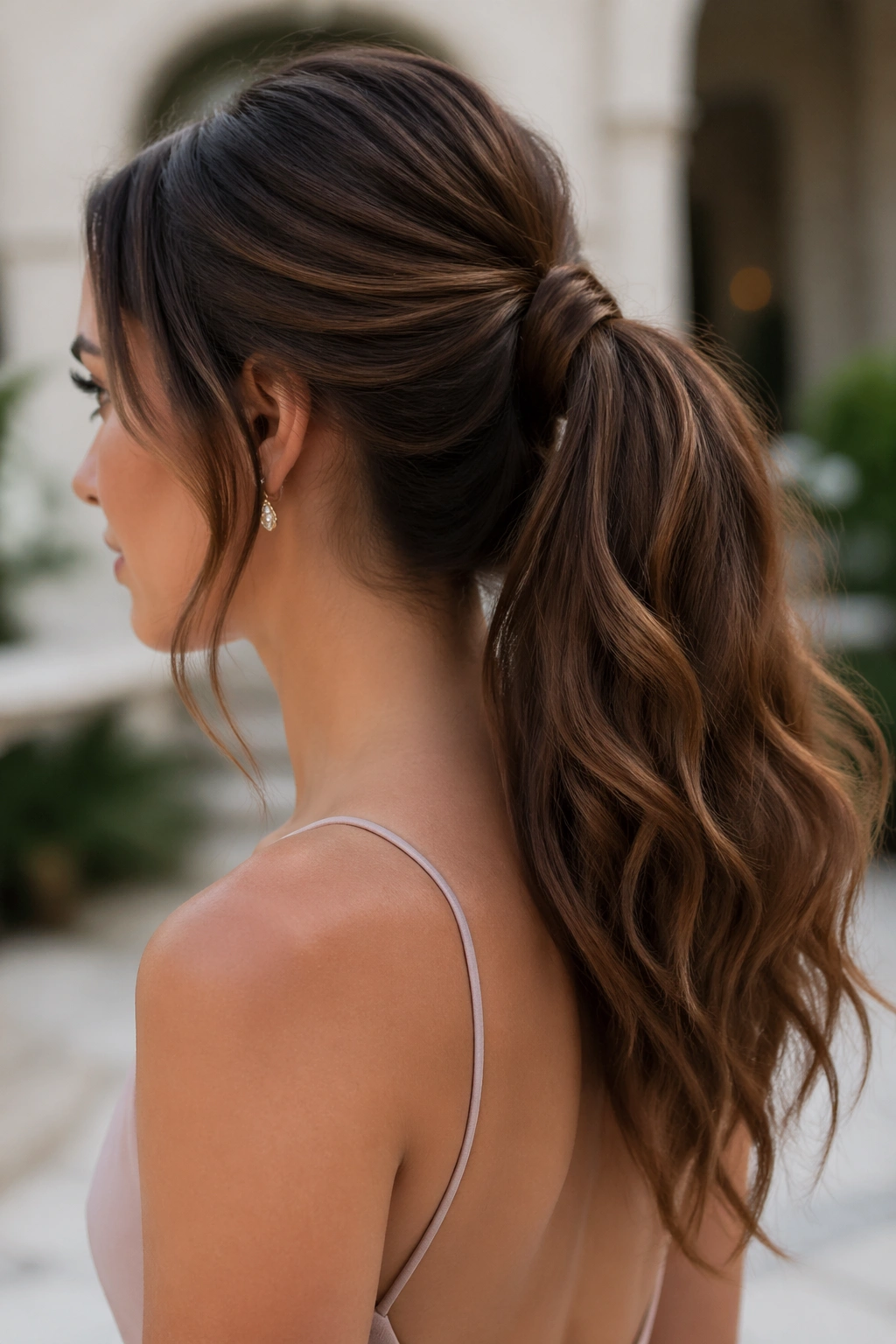
A textured ponytail with wavy ends looks far more dressed up than people expect. The crown stays smooth but not tight, the ponytail sits low or mid-height, and the lengths are curled or waved before being gathered so the tail has body. It’s a clean choice for bridesmaids who want their hair off the neck without going full updo.
Unlike a sleek ponytail, this one forgives a little volume at the roots. That matters on a long wedding day, because hair naturally loosens and expands. A small section of hair wrapped around the elastic makes the base look finished, and gently teased crown roots keep the ponytail from sinking by hour four.
Best for: square necklines, halters, and dresses with busy bodices.
Avoid: using tiny curls in the tail. Bigger bends last longer and look calmer in photos.
7. Waterfall Braid into Waves
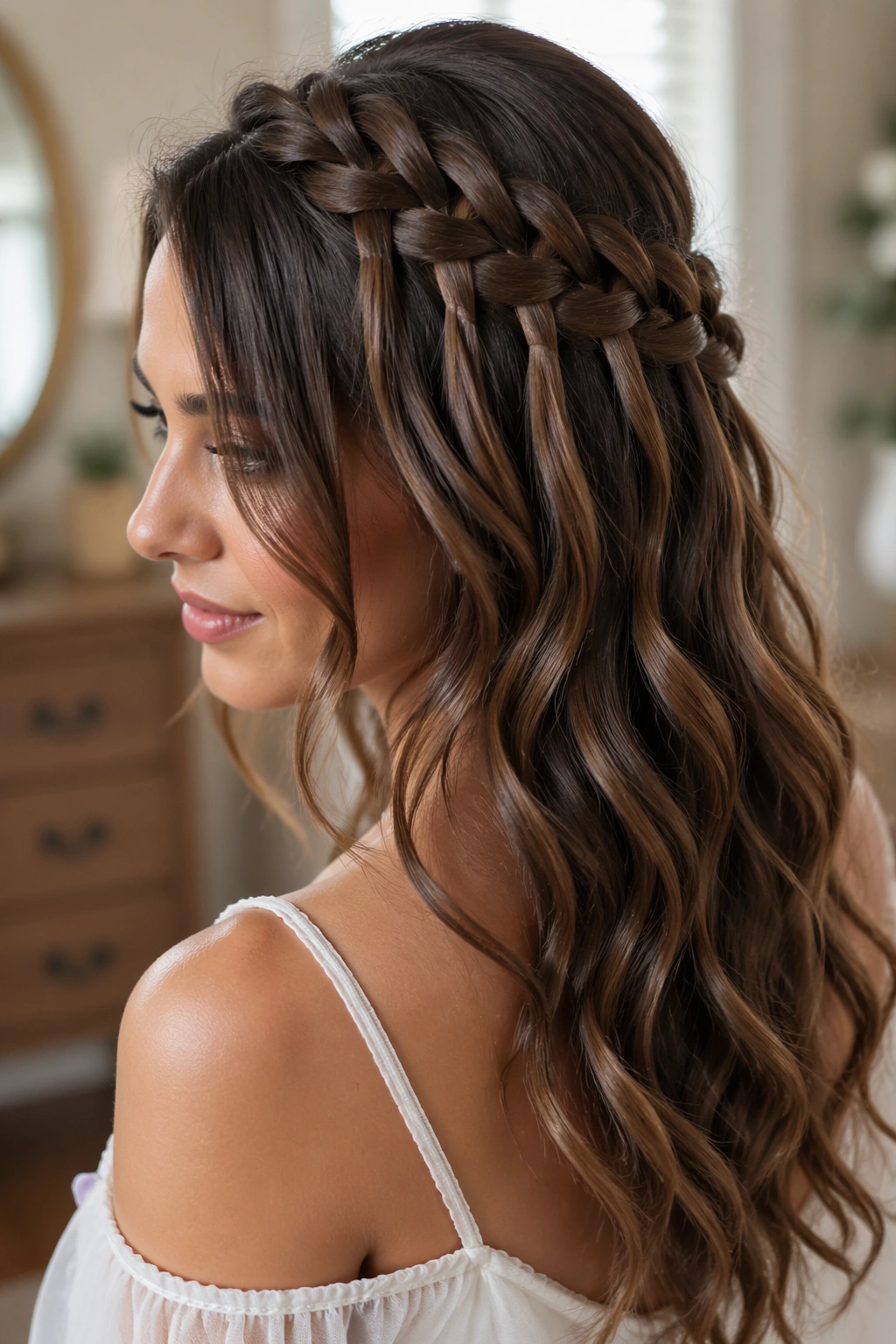
Waterfall braids are one of those styles that looks complicated from a distance and surprisingly manageable once you’ve done it once or twice. The braid travels across the head, dropping strands as it goes so the hair underneath stays loose and wavy. The result feels airy and pretty, with just enough detail to stand out among a row of similar bridesmaid looks.
This is especially nice for medium-length hair because the braid gives definition without swallowing the whole style. If the hair is very thick, keep the braid narrow; a wide braid can make the head look busy. If the hair is fine, add a bit of powder or dry shampoo at the roots before braiding so the sections don’t slip.
The loose waves below should be brushed just enough to look soft, not puffy. That’s the balance.
8. Center-Part Soft Waves with Hair Pins
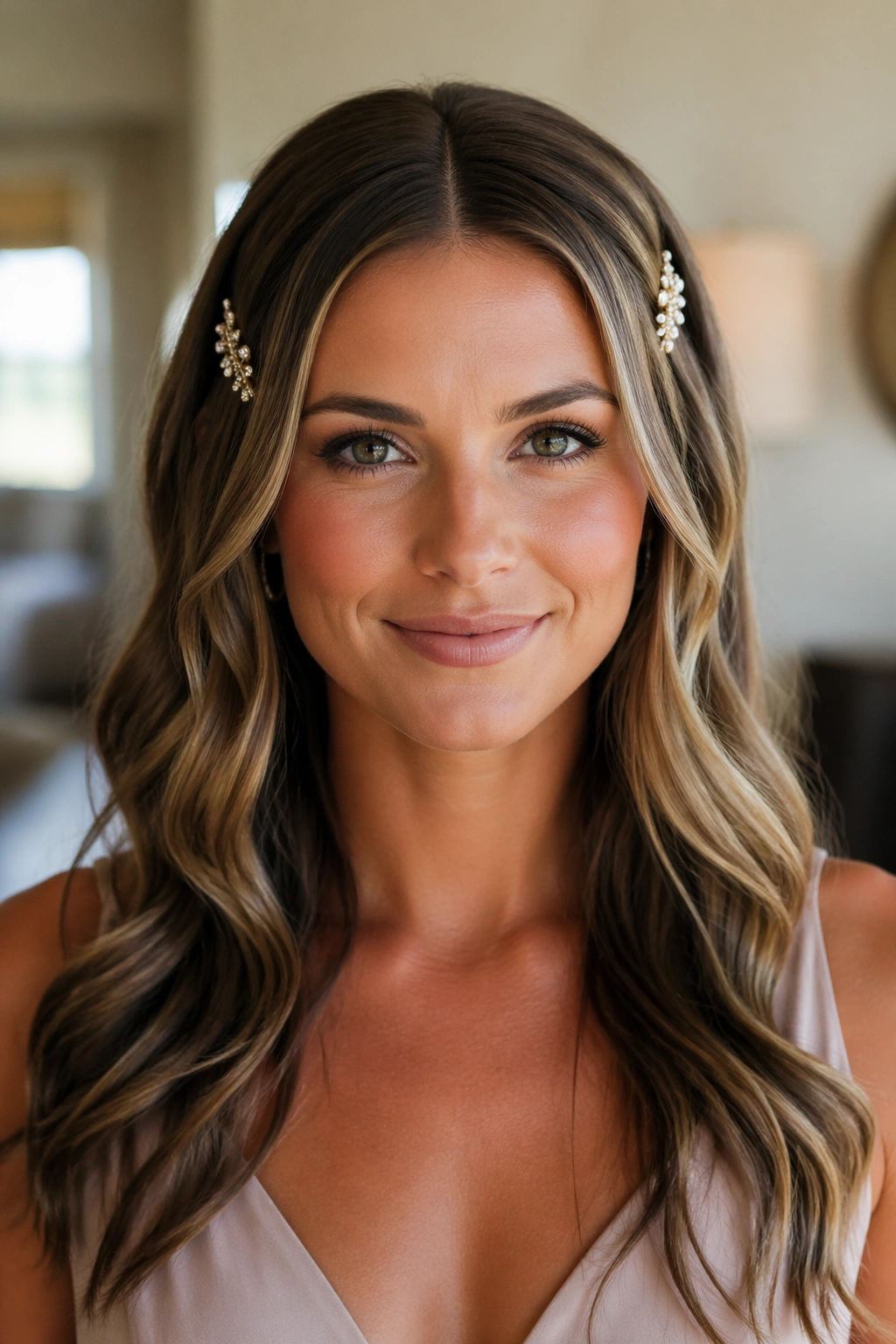
A center part with soft waves is plain in the best way. No twists, no braid, no tucked sides — just smooth symmetry and a loose wave pattern that falls cleanly on both sides. The style feels modern and calm, which makes it a good match for minimalist dresses, simple bouquets, and bridal parties that want everyone to look coordinated without being identical.
A few hair pins can change the whole mood. Place one or two decorative pins above the ear on each side, or cluster three tiny pins on one side if the group wants a more polished finish. Keep the waves relaxed and touchable; if they’re too uniform, the style starts to look stiff.
This is also a friendly option for people who hate hair in their face but don’t want a half-up look. The center part does the visual work. The pins do the practical work. Nice and simple.
9. Romantic Half-Up Knot
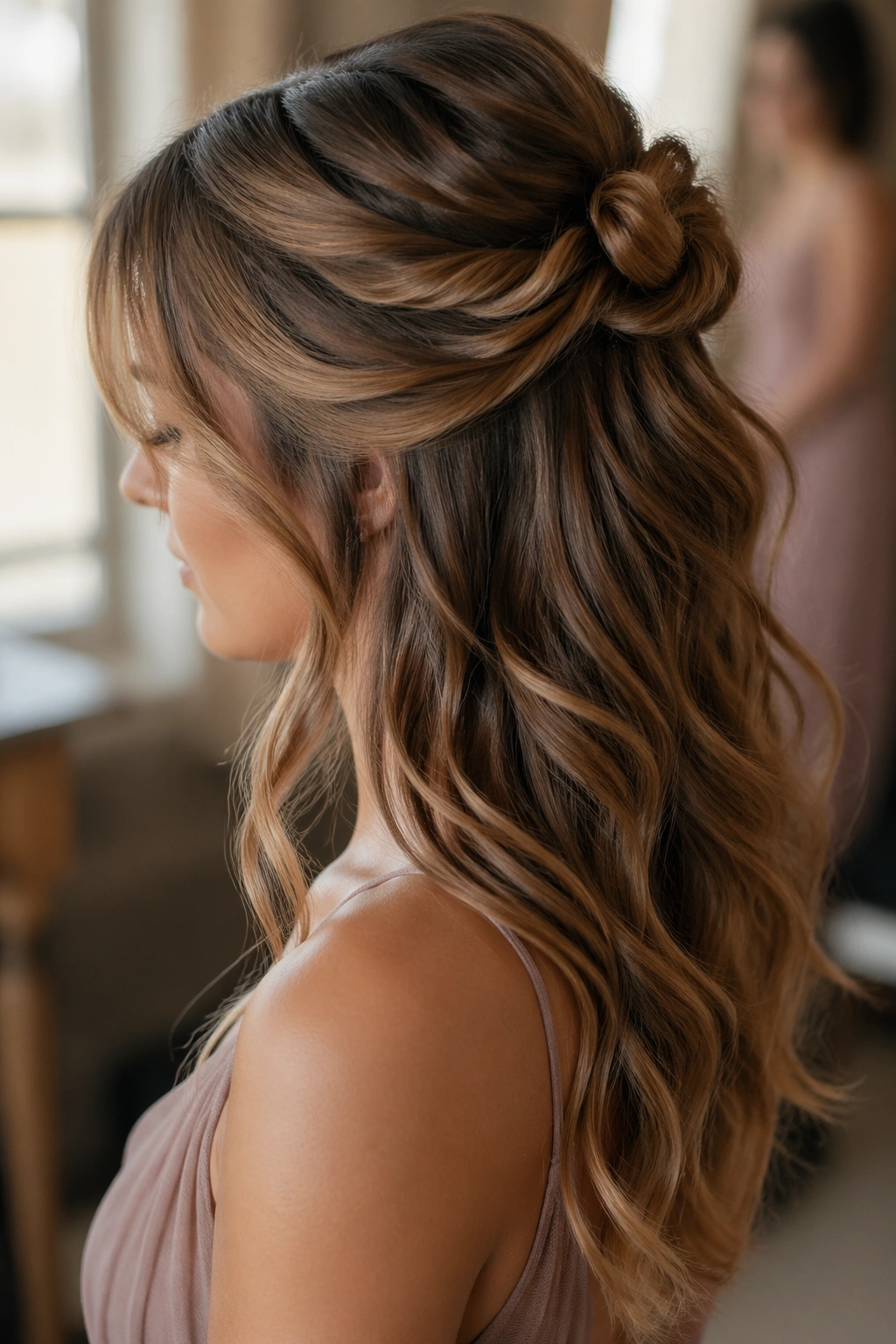
A romantic half-up knot gives you the sweetness of a half-up style with a little more shape at the crown. Instead of twisting both sides straight back, you gather them into a small knot or loop at the back of the head, then let the rest of the hair fall in soft waves. It feels softer than a bun and more finished than a simple clip.
How to get the look
Start with loose curls or waves, then let them cool before touching them. Gather the top section with your fingers, not a brush, so the top keeps some texture. Tie or pin the knot low enough to sit comfortably under the head’s natural curve. Too high and it looks childlike. Too low and it disappears.
A romantic knot works well with floral dresses, thin straps, and bridesmaid gowns that have movement in the fabric. It also gives you a nice space for a small comb or a cluster of pins if the bridal party wants a little sparkle.
10. Side Braid and Loose Length
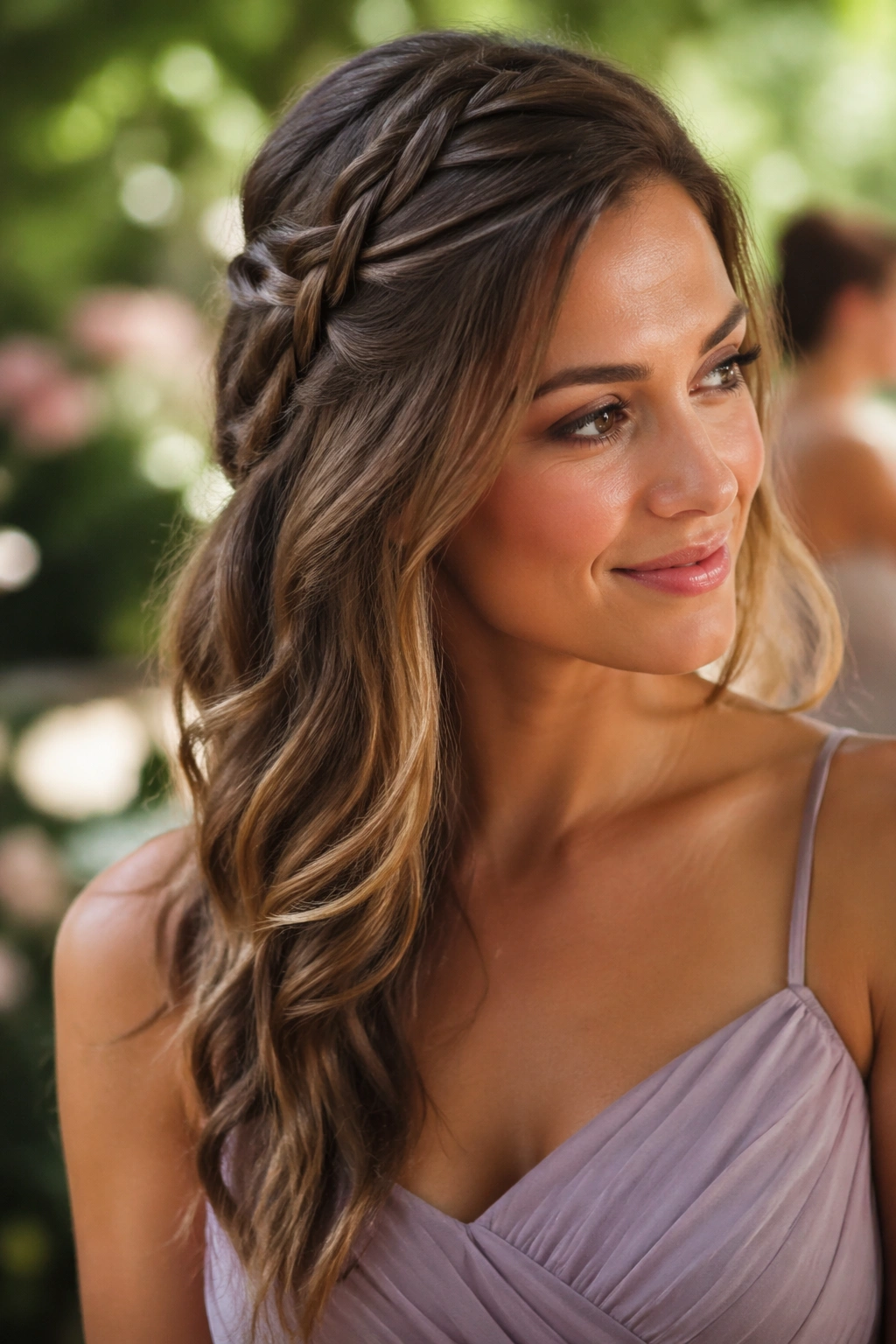
A side braid and loose length style gives bridesmaids a little edge without leaving the romantic lane. The braid starts at one side — usually near the temple or above the ear — and travels down into the rest of the waves, where it can blend in or sit clearly apart as a detail. It’s a good pick when the dress has a strong neckline and the hair needs one visible element to break things up.
This style works best when the braid is not too tight. A snug braid can feel formal in a rigid way, while a slightly loose one looks softer and better with wavy texture. Pull the braid open a touch after securing it, but stop before it gets lacy and fragile. You want shape, not collapse.
Side braids also help with shorter front layers. They gather the pieces that usually slip out first, which is a small gift on a long day. Honestly, I’d keep this one on the list for any bridal party with windy weather in the forecast.
11. Loose Waves with a Velvet Bow
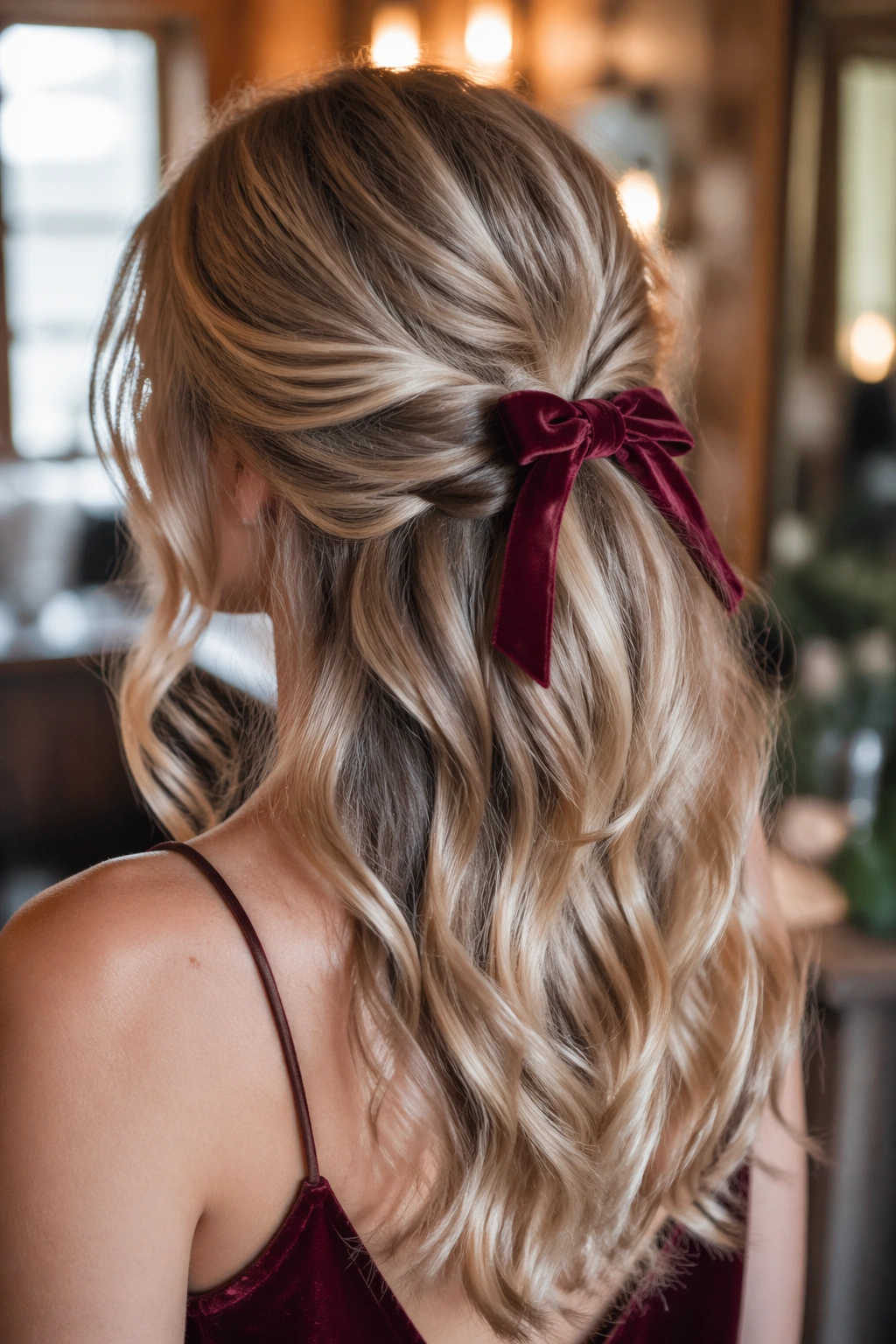
Loose waves with a velvet bow have a little vintage sweetness to them. The bow sits at the back of a half-up section, a low ponytail, or even just around a gathered twist, and the waves stay soft and touchable below. It’s a small accessory, but it can steer the whole look toward formal, rustic, or moody depending on the bow color and size.
This style is especially useful when the dress is simple and the hair needs one clear focal point. The bow does that without requiring a lot of extra styling. Keep the waves brushed out, not tight, so the hair feels balanced against the fabric texture of the ribbon. Thick velvet can handle more volume in the hair; satin looks better when the waves are smooth and glossy.
If the wedding palette is muted, a deep green, black, burgundy, or navy bow can look unexpectedly sharp.
12. Wavy Bob with Tucked-Back Sides
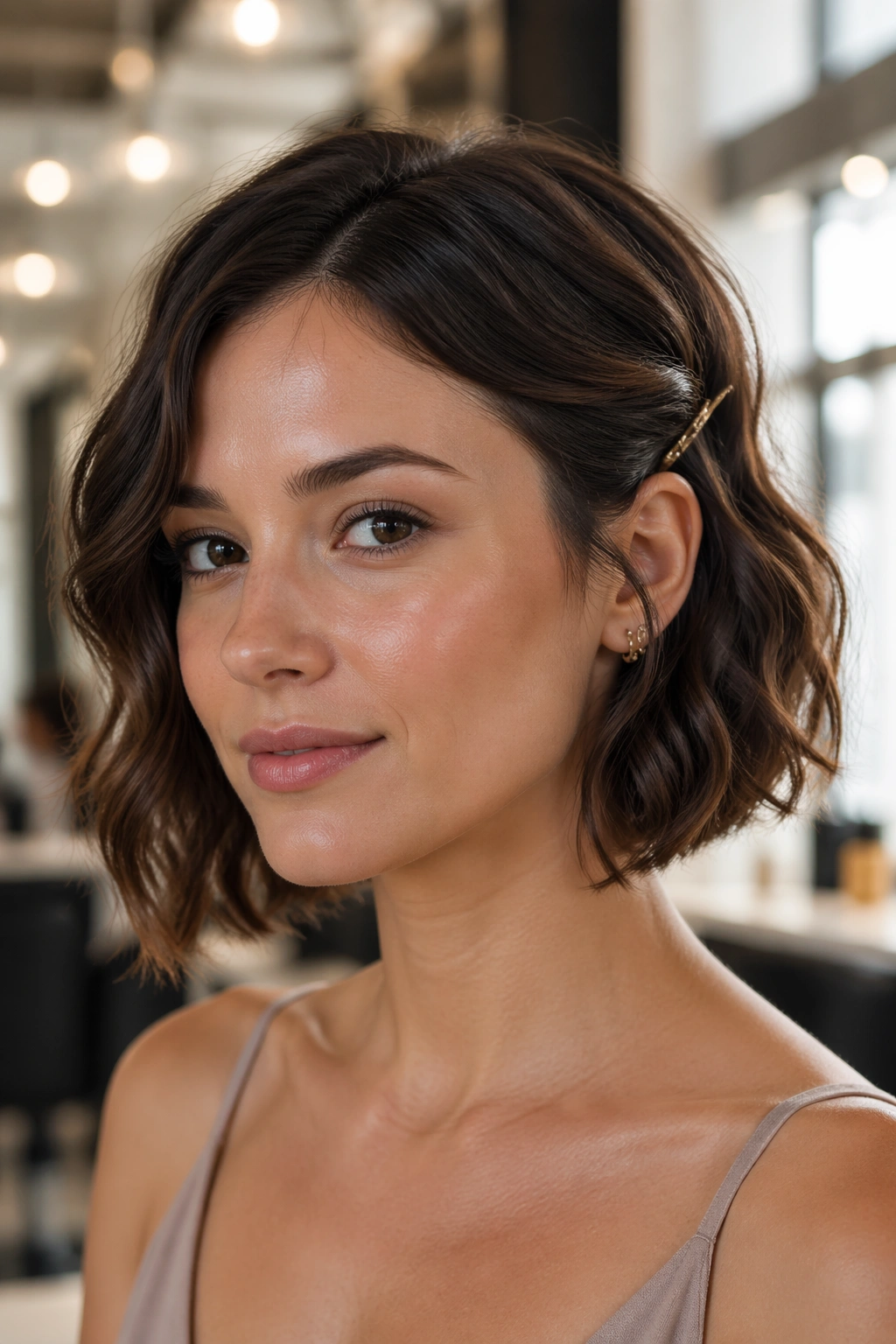
A wavy bob with tucked-back sides solves the common short-hair worry: how do you make a shorter cut feel special without stuffing it full of pins? The answer is shape. Curl the bob into loose waves, then tuck one or both sides behind the ears and secure with tiny pins or decorative clips. That leaves the ends free to swing a little.
What makes it work
- Best for chin-length to collarbone-length cuts
- Use a small wand or flat iron to create bends instead of ringlets
- Keep the crown lightly lifted so the bob doesn’t sit flat against the head
This style has a crisp, modern look that still feels soft. It’s especially good for bridesmaids who don’t want to fight their haircut into something it isn’t. A bob should look like a bob, not a fake long style pinned into submission. The tucked sides make it wedding-ready without losing the line of the cut.
13. Boho Crown Braid
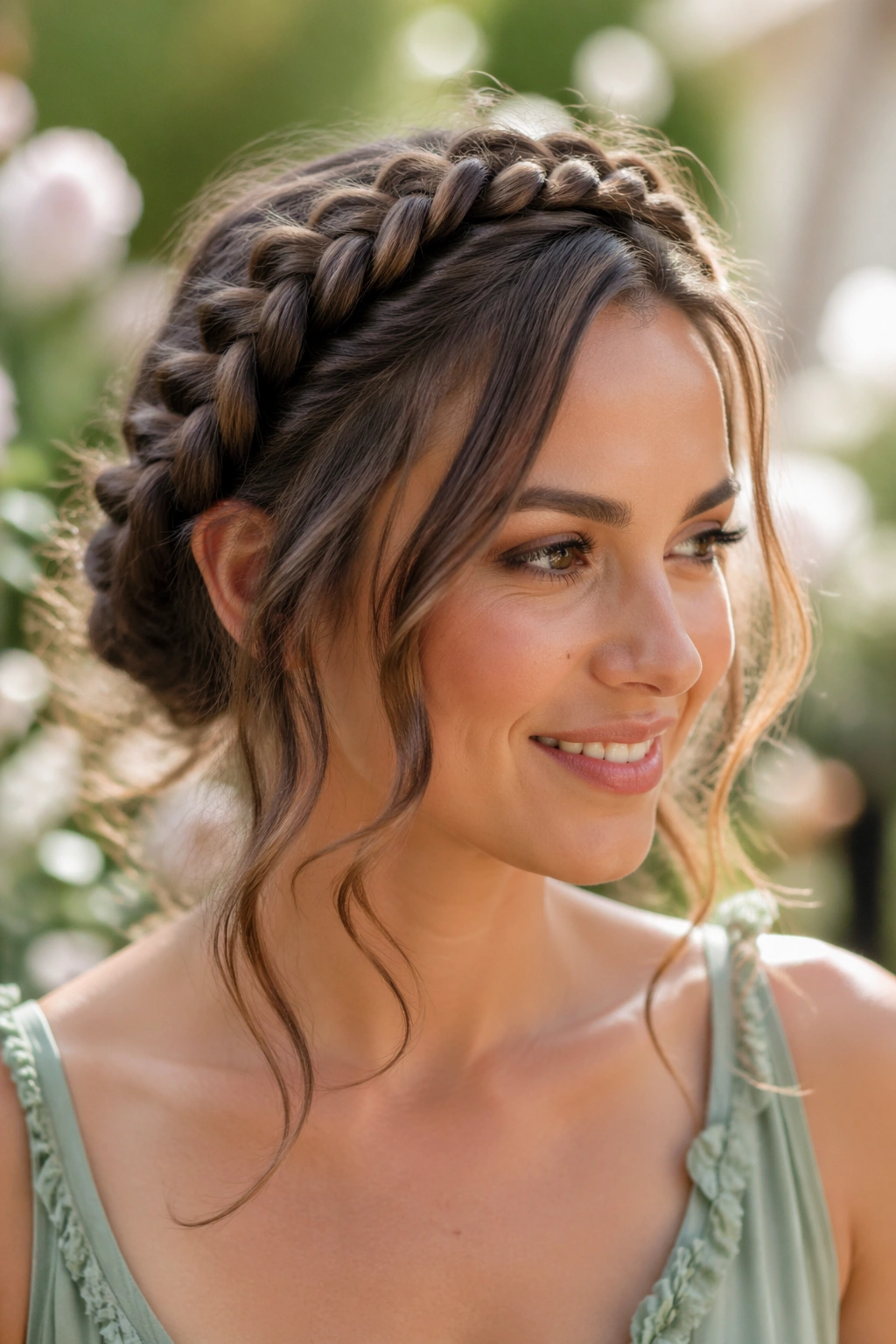
A boho crown braid is the loose, earthy cousin of the halo braid. The braid doesn’t need to be perfect, and that’s the point. It can start at one temple, weave across the top, and trail into the opposite side while the rest of the hair stays wavy and unforced. The finished look feels relaxed but still considered.
This style shines when the wedding has outdoor elements, textured linens, or bridesmaid dresses in softer fabrics like chiffon or crepe. The braid gives the hair enough detail to stand out against those gentle materials. Let a few shorter pieces fall out near the face. That little bit of mess keeps the look from feeling too done.
If the hair is slippery, prep the braid section with dry texture spray before you start. Otherwise the braid can slide apart faster than you expect, and nobody wants to be redoing hair during makeup.
14. Polished Low Ponytail with Waves
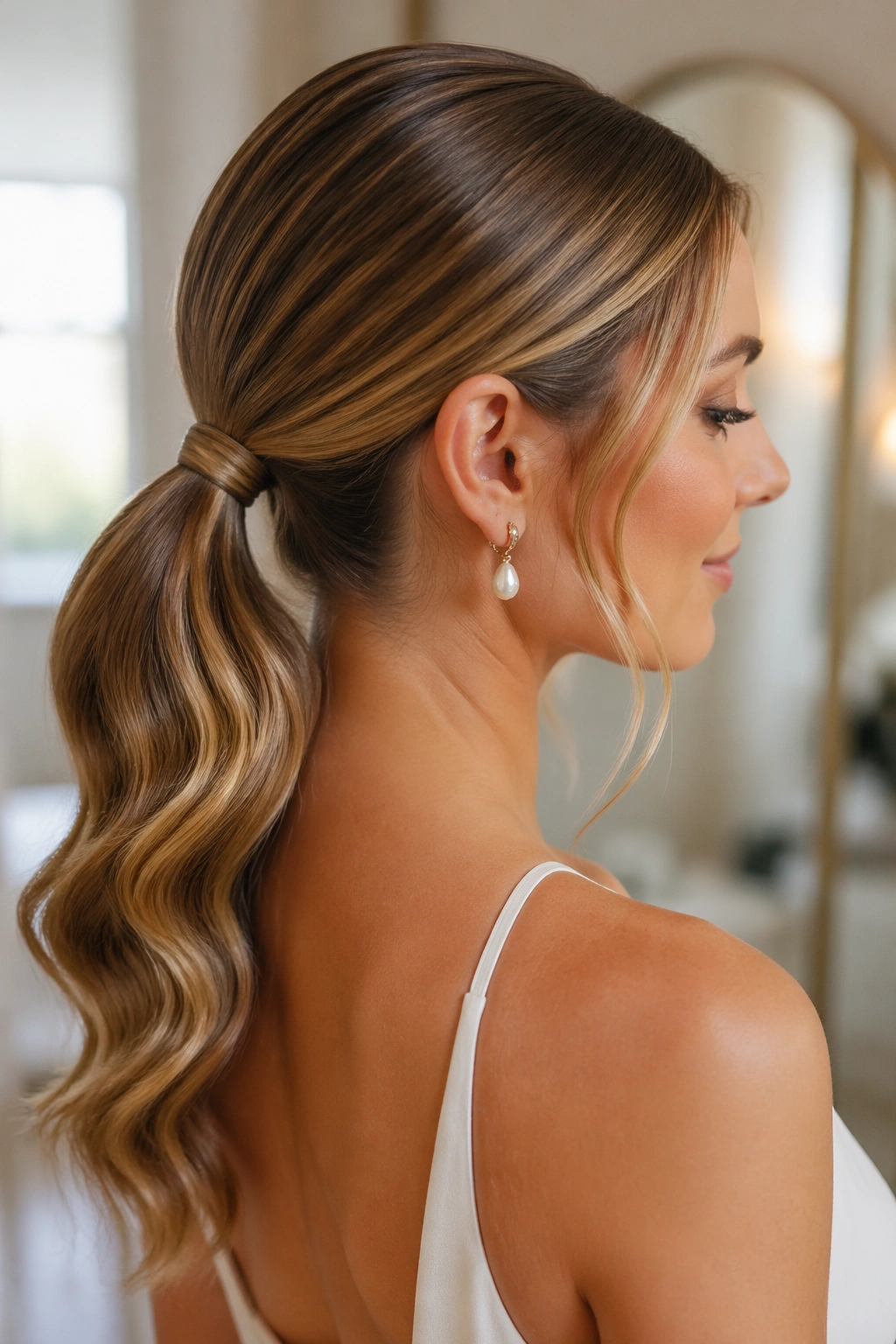
A polished low ponytail with waves is one of the cleanest looks in the whole lineup. The hair at the crown is smoothed back, the pony sits at the nape, and the tail itself keeps a soft bend instead of lying straight. It reads elegant without calling too much attention to itself, which makes it perfect for bridal parties where the dresses are already doing a lot.
The key is keeping the top neat and the tail soft. Too much teasing makes the crown look bulky. Too little makes the ponytail sag. A few passes with a flat brush and a drop of shine cream are enough. Then curl the tail in large sections, not tiny ones, so it falls in loose curves.
This style is a strong choice for long earrings, high necklines, or matching bridesmaid dresses where the hair should not compete. It also survives a lot of movement, which is more useful than people admit.
15. Soft Mermaid Waves
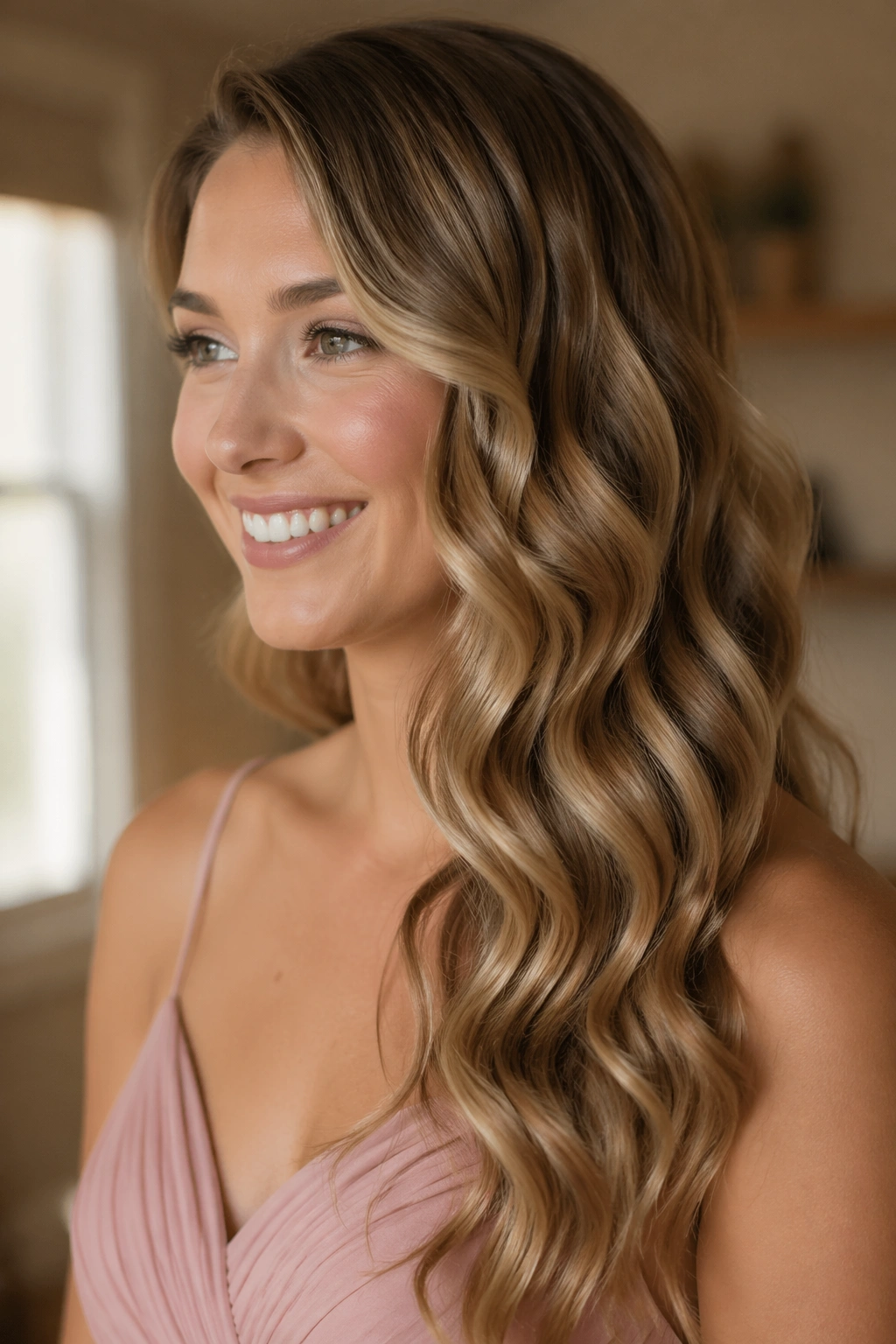
Soft mermaid waves have that long, rippled look that feels lush without crossing into costume territory. The bend pattern is smoother than a tight curl and more defined than brushed-out beach waves. On bridesmaids, that balance can be lovely because it gives the hair shape while keeping the ends touchable.
I’d use this style for longer hair that can hold a wave pattern for several hours without falling completely straight. A larger barrel iron, sectioned in alternating directions, creates the soft ripple. After cooling, brush it out gently with a boar-bristle brush or wide paddle brush so the wave becomes one continuous pattern. The result should feel full, but not puffy.
This is one of the few styles where a little extra length really helps. Mid-back hair gives you the best movement. Shorter lengths can still do it, but the wave pattern needs more care or it disappears.
16. Pinned-Back Sides with Open Waves
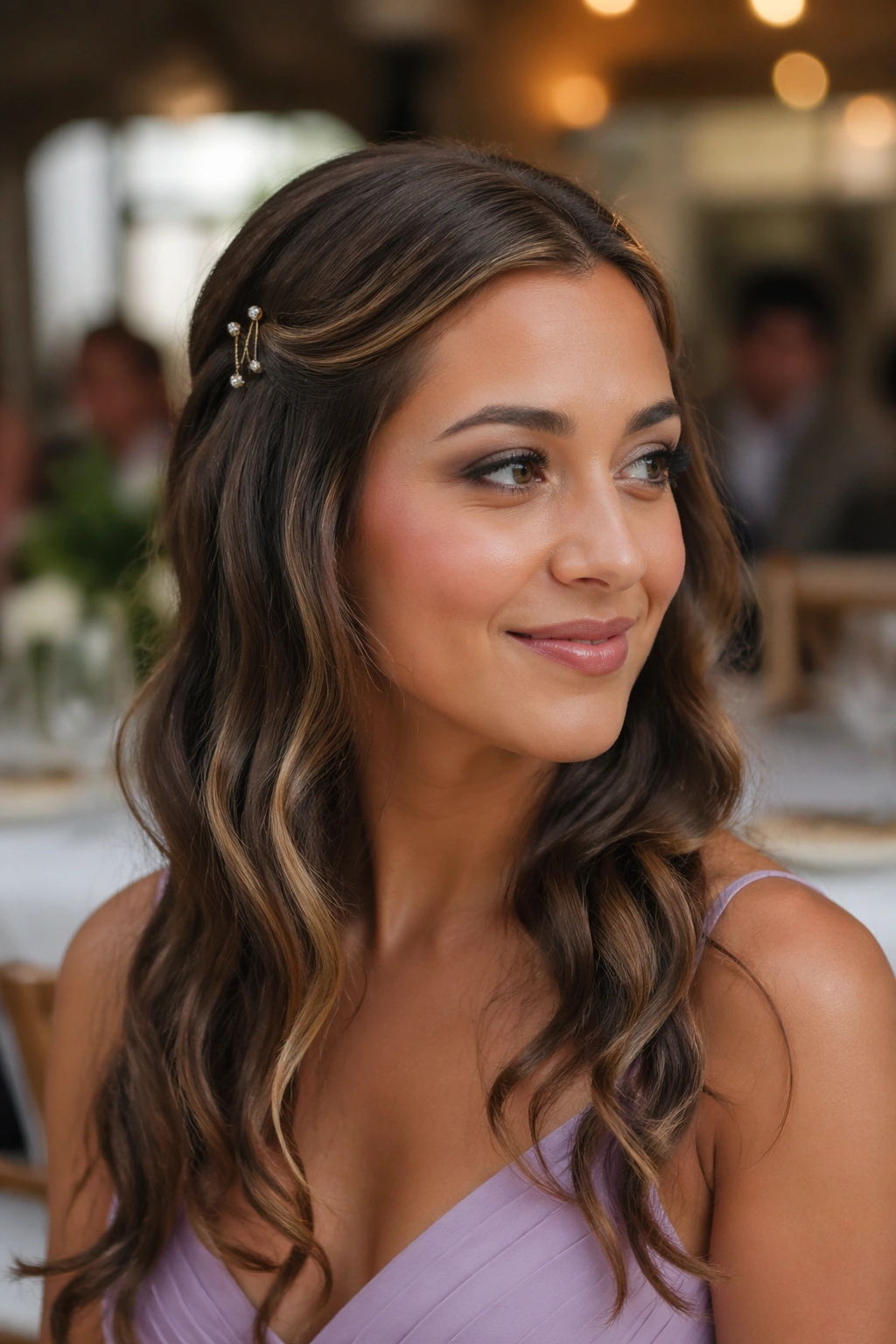
Pinned-back sides with open waves are almost unfairly useful. They keep hair away from the face, show off earrings, and still let the rest of the hair move naturally. It’s one of those styles that works when the bridal party wants coordination but not matching clones.
Why this is such a safe pick
It suits almost every face shape because the pinned area can be adjusted. Round faces usually like a little lift at the crown, while longer faces often look balanced with the pins placed a bit lower near the temples. Use two or three decorative pins on each side, or keep it bare and rely on the wave pattern itself.
If the dress has an embellished neckline, this style helps keep the eye on the neckline instead of creating a second busy area near the shoulders. That sounds small. It isn’t. In wedding photos, those little decisions matter.
17. Messy Bun with Wavy Tendrils
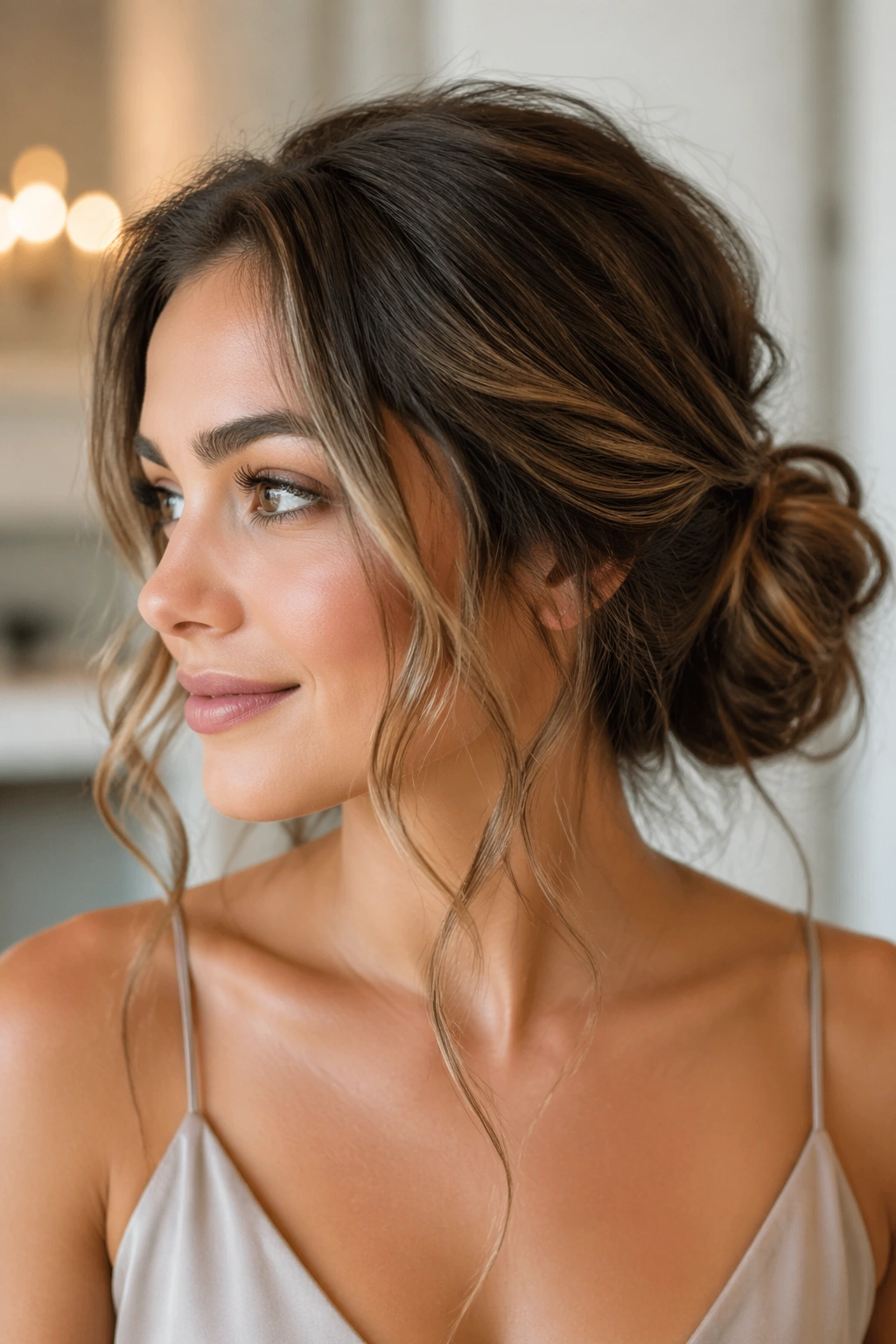
A messy bun with wavy tendrils is the answer when the bridesmaid wants her hair up but not sealed in place. The bun can sit low or mid-height, and a few curved pieces are left out around the face and neck. Those tendrils soften the whole thing and keep it from looking harsh under bright indoor lights.
The bun itself should not be too neat. A little looseness is the charm here. Twist the hair, pin it in sections, and let the texture stay visible. Then curl the tendrils away from the face so they open the cheekbone instead of falling straight down. If the hair is very thick, split the bun into two smaller coils; it’s easier to pin and holds better.
This style suits bridesmaids who want a romantic updo but hate a tight ballerina bun. Same general family. Very different feeling.
18. Glam Side Part with Deep Waves
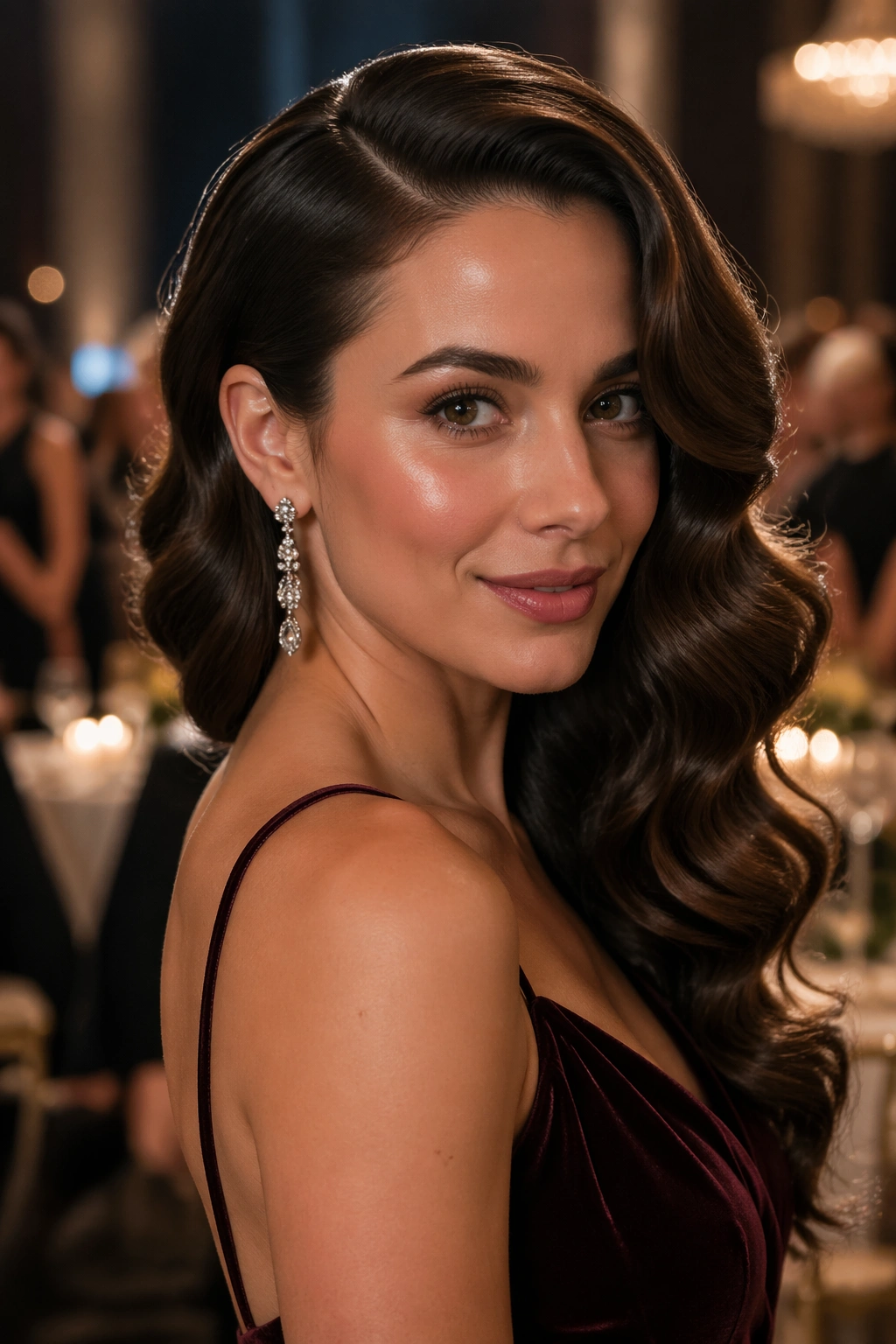
A glam side part with deep waves gives you a more dramatic version of soft waves. The part is deep, the curve is pronounced, and the wave pattern sits in broad, shiny bends that feel a touch more formal than beach texture. It’s a good match for evening weddings, satin dresses, or looks that need a stronger silhouette.
What I like here is the immediate shape. You get lift at the crown, softness near the cheek, and enough wave to look deliberate from across a room. A shine spray helps, but only lightly. Too much and the hair starts looking greasy under flash photography. That’s a common mistake, and it’s avoidable.
This style is especially pretty on thick hair because the wave line has some body to work with. On finer hair, prep with mousse at the roots and a light texturizing spray through the mids before curling.
19. Twisted Low Bun with Wavy Pieces
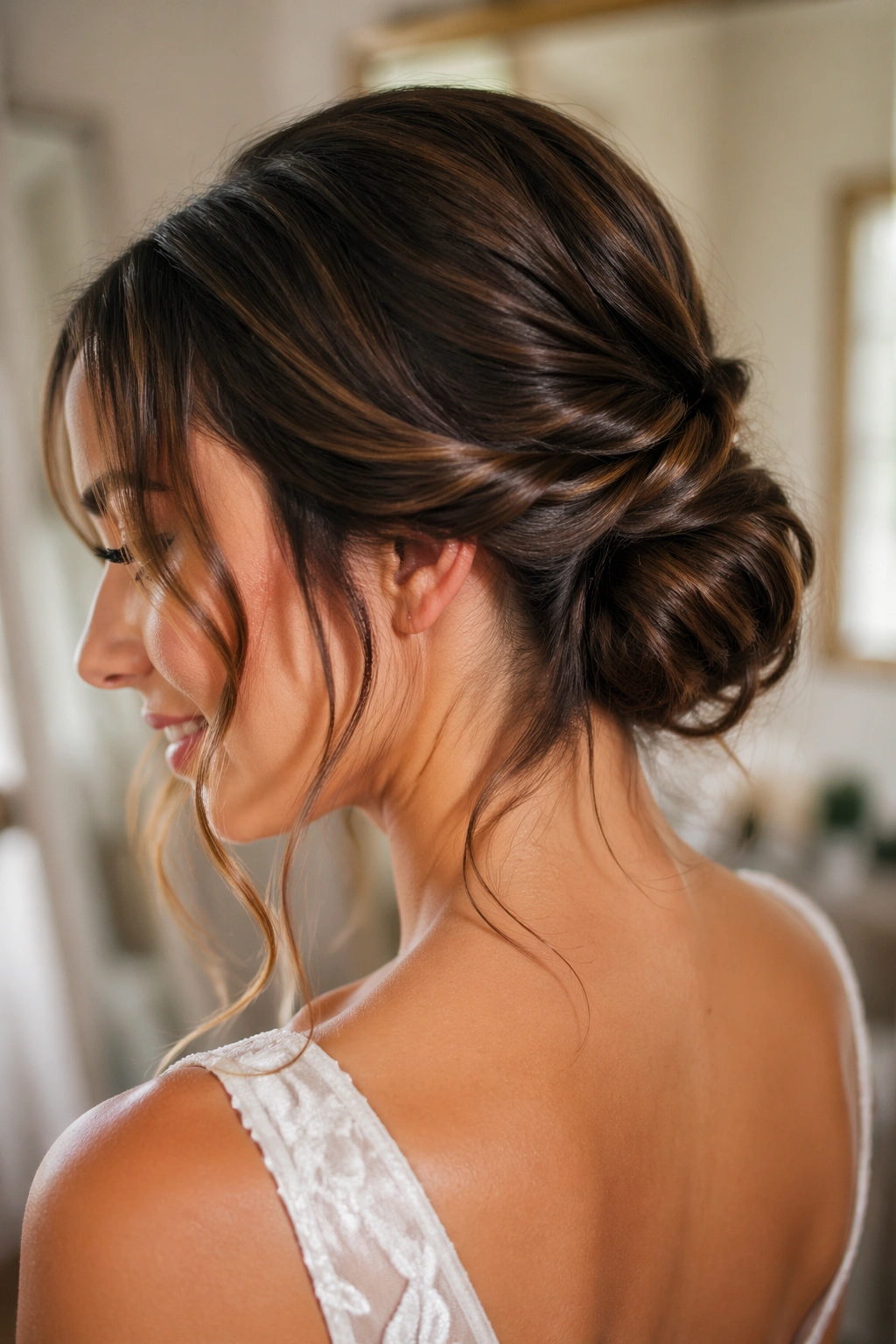
A twisted low bun with wavy pieces sits in that nice middle ground between formal and relaxed. The hair is pulled back, twisted instead of braided, and pinned low at the nape. A few wavy pieces are left around the face or along the neckline so the whole style keeps some softness.
This is a strong option when the wedding dress has a detailed back. The bun leaves that area visible, and the loose bits keep the style from feeling too severe. It also works well for bridesmaids who don’t want their hair brushing the neck all night. Sometimes that alone makes the difference between enjoying the reception and spending it fanning yourself with a menu.
Keep the twists visible. If the bun is smoothed so hard that the texture disappears, the style loses half its charm. Texture is the point.
20. Double Braid Half-Up
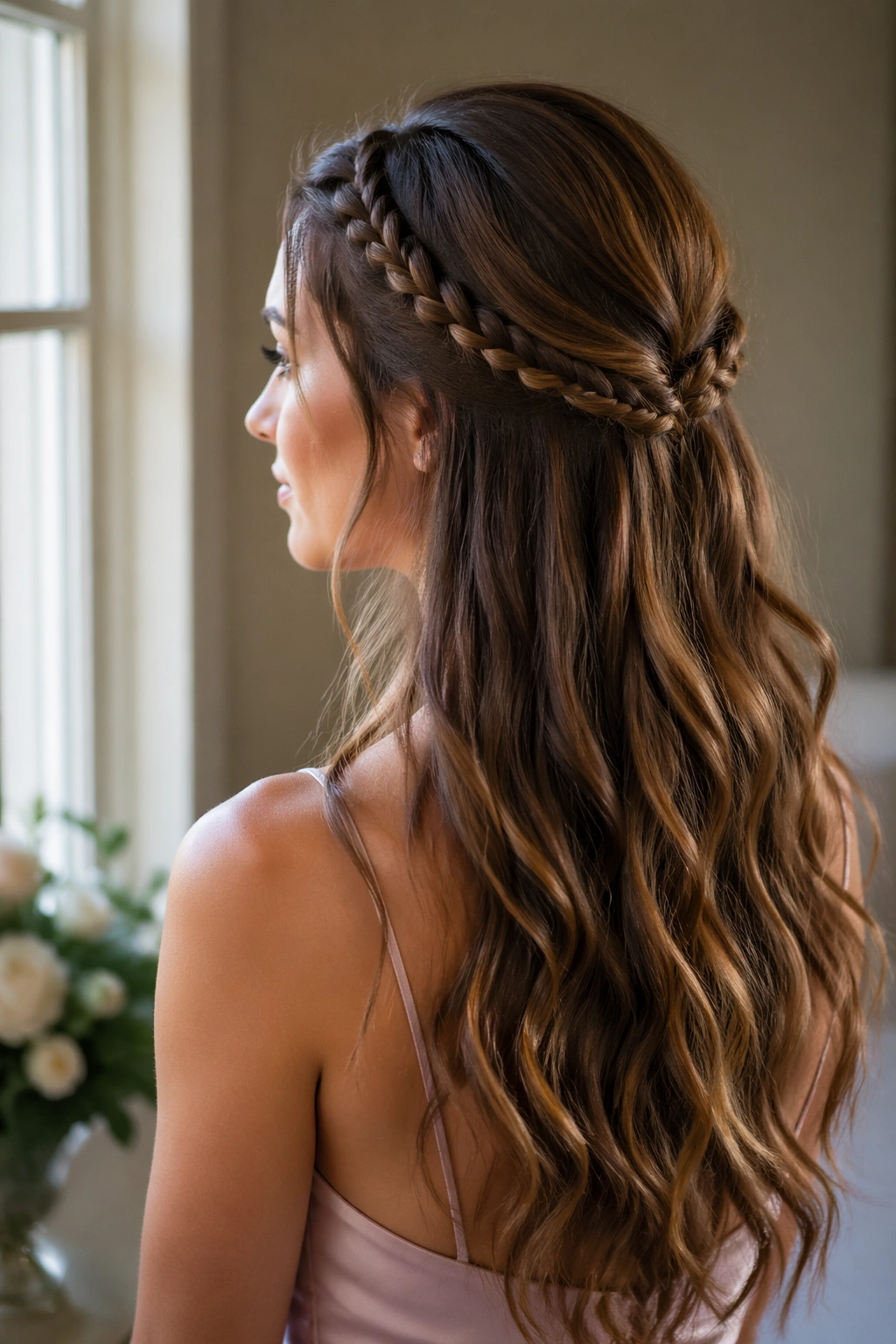
A double braid half-up style uses two slim braids — one on each side — that meet in the back and pin over the top half of loose waves. It has a balanced, symmetrical feel that works especially well when the bridesmaid dresses are uniform and the group wants a little detail without going overboard.
The braids can be thin and neat or a little wider and pulled apart. Thin braids feel cleaner and more refined. Wider braids lean boho. Either way, the lower half should stay soft and wavy so the look doesn’t become too structured. That contrast is what makes the style interesting.
This one is also useful for keeping shorter front layers from falling into the face. Instead of fighting those pieces, the braids collect them and let them be part of the style. Very practical. Very pretty. A rare combination.
21. Bubble Ponytail with Wave Texture
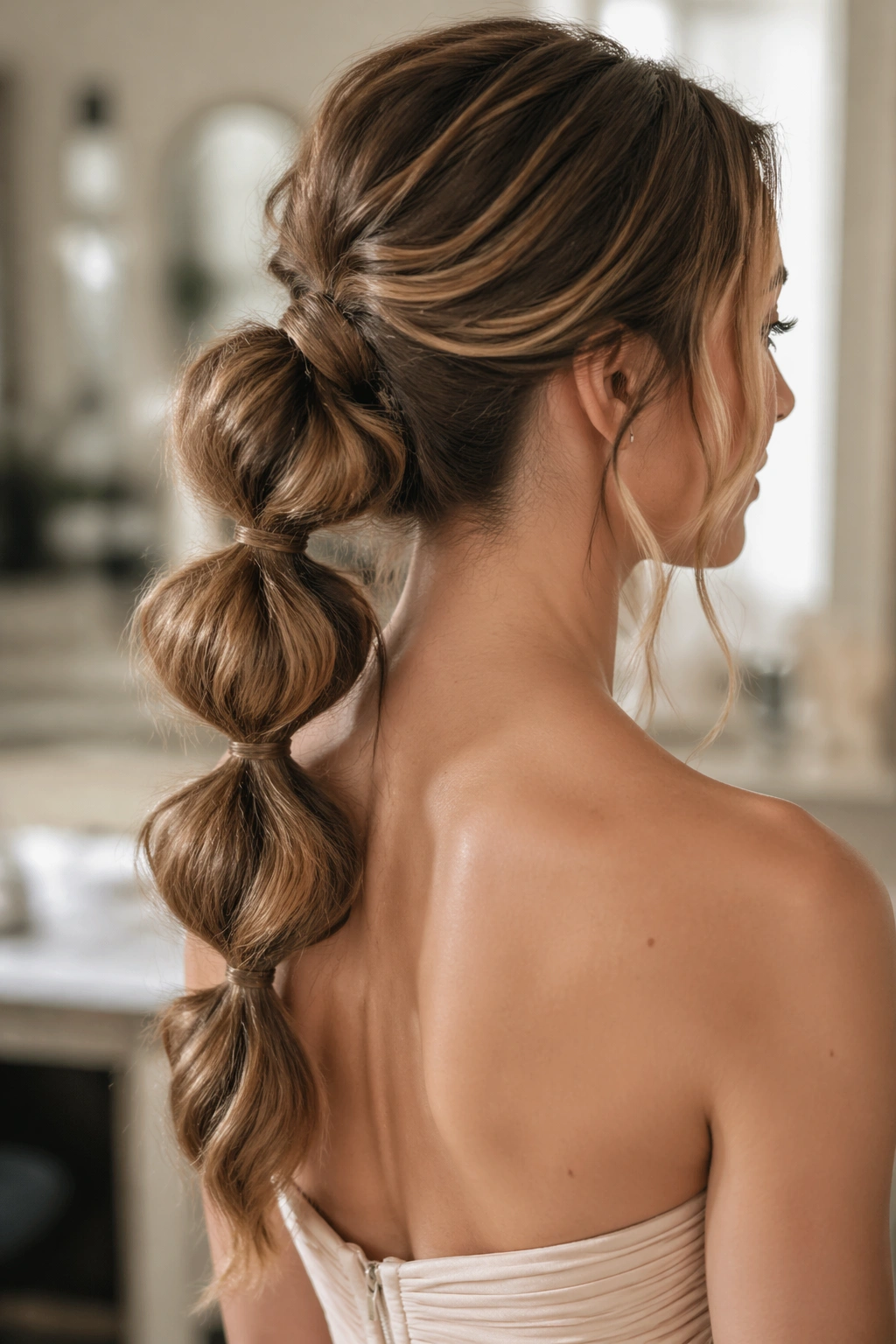
A bubble ponytail with wave texture is a little more playful than the average bridesmaid style, and that can be a good thing. The hair is gathered into a ponytail, then secured at intervals down the length so the sections puff into rounded “bubbles.” If the hair is waved first, the bubbles look softer and less sporty.
This works best on medium to long hair with enough length to show the spacing between elastics. Use small clear bands and hide them with tiny wraps of hair if you want a cleaner finish. A little backcombing at each section helps the bubbles stand out, but don’t overdo it or the ponytail will look stiff.
I’d pick this for dresses with minimal detail or for bridal parties that want something different without going strange. It has energy. It also holds up better than people expect, which is useful when the dance floor starts.
22. Wavy Lob with Pearl Clips
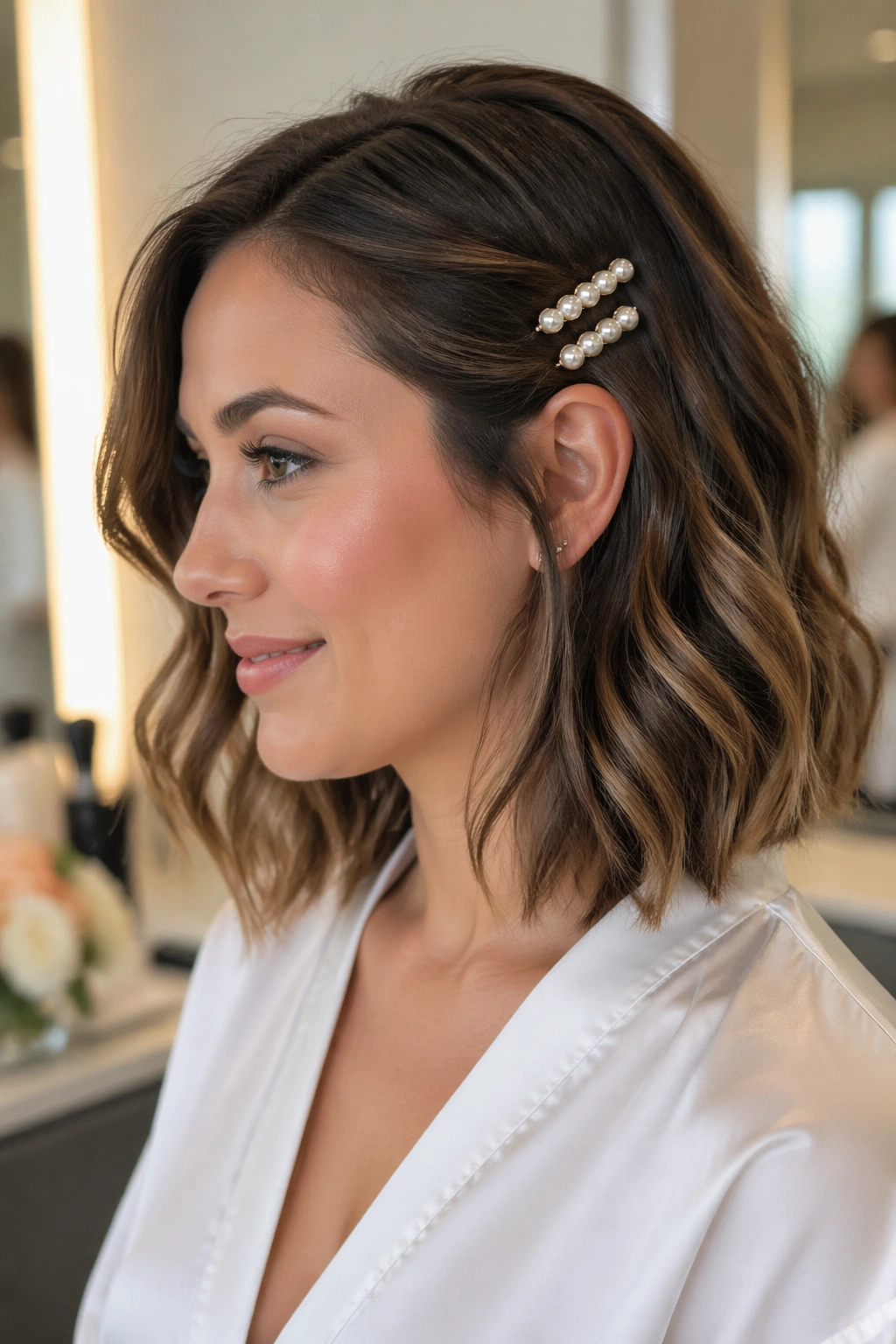
A wavy lob with pearl clips is proof that short hair does not need to be buried under pins to look wedding-ready. The lob keeps its shape, the waves add softness, and the pearl clips bring in just enough shine to make the style feel dressed up. A side tuck with one or two clips is usually enough.
What makes it different from loose waves alone
The clips create a focal point. Without them, a wavy lob can sometimes read as “nice hair.” With them, it reads as a deliberate style. Place the clips above the ear or just behind it, depending on where the part sits. If the hair is very fine, mist the tucked section with a bit of dry texture spray before pinning so the clips grip better.
This is one of my favorite options for bridesmaids who wear shorter cuts and want to feel included in the overall look without pretending to have longer hair.
23. Braided Bun with Loose Front Waves
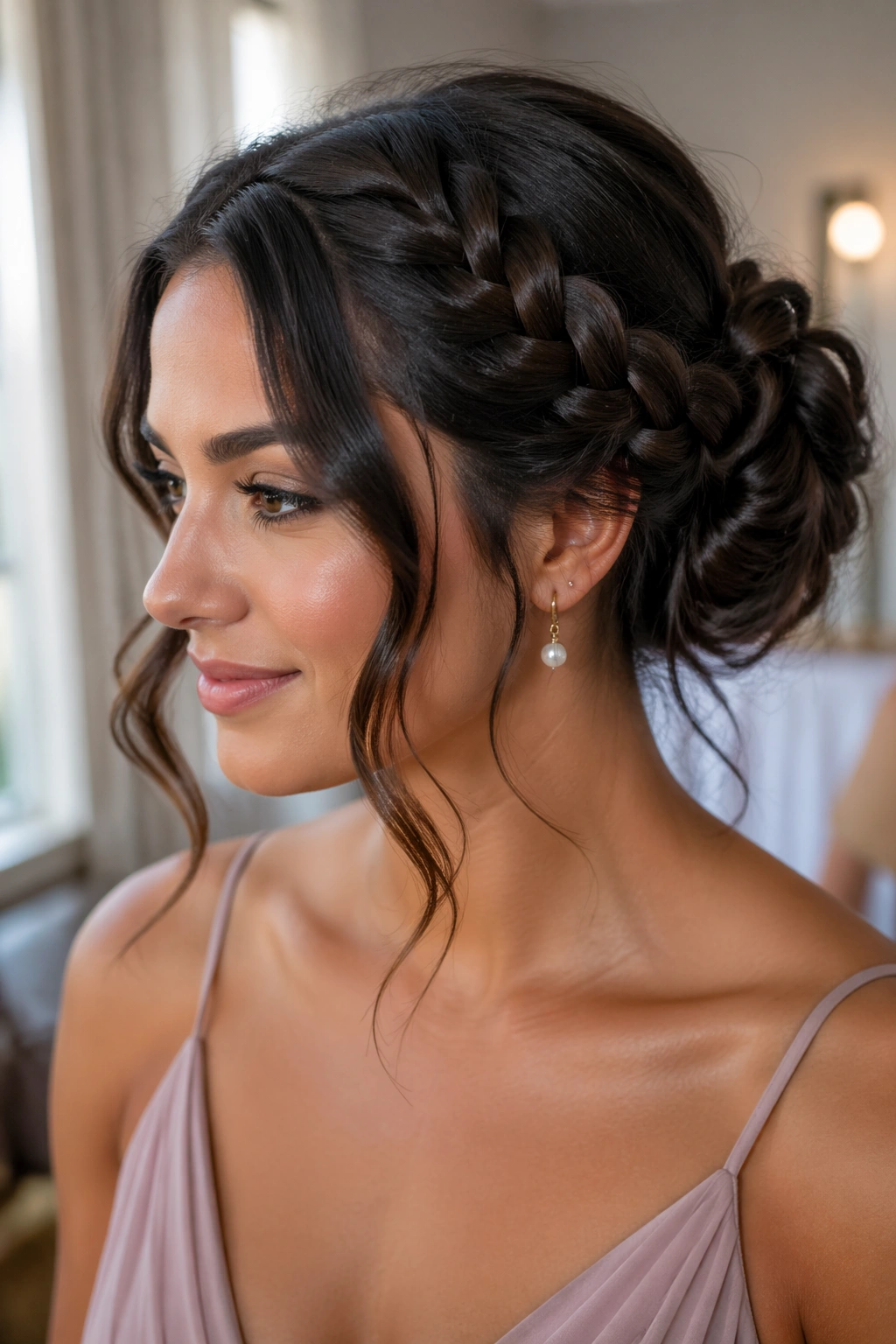
A braided bun with loose front waves has more detail than it first appears. The braid wraps into the bun, giving the updo texture and a little visual interest, while the front stays soft with two face-framing pieces. That mix is what keeps the style from looking too severe.
It’s especially good for formal dresses with high necks or clean shoulders, because the bun keeps the neckline open. The loose front waves stop the whole thing from becoming stiff. Ask for the front pieces to be curled away from the face, then softened with your fingers after cooling. That gives a gentle curve instead of a pageant flip.
If the bridal party is wearing matching jewelry, this style helps the earrings show without making the face look bare. A small thing. An important one.
24. Soft French Twist with Curved Ends
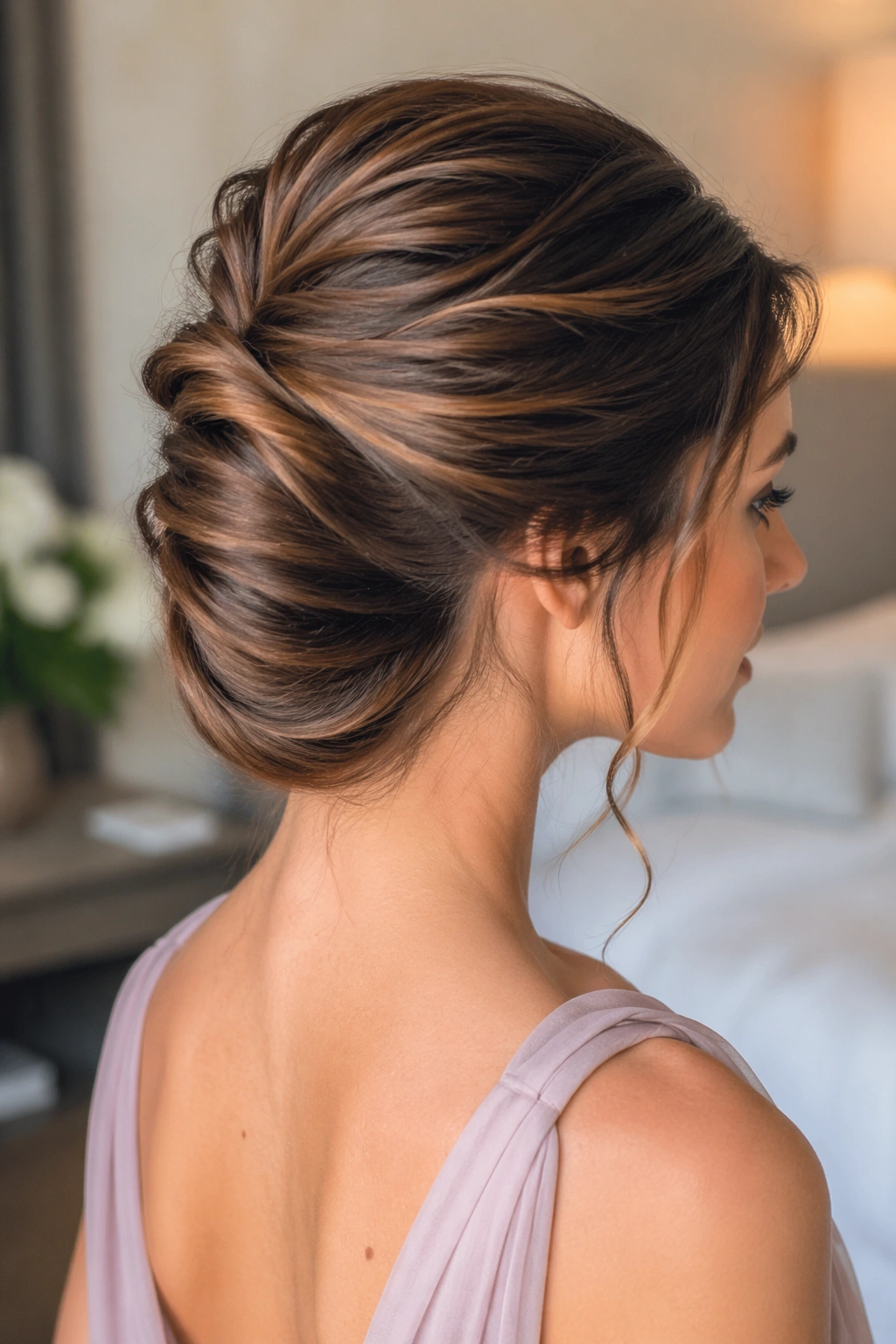
A soft French twist with curved ends takes the classic twist and loosens it up just enough to suit a bridesmaid role. The hair is tucked upward along the back of the head, but the ends are not hidden so tightly that the style loses movement. A few curved pieces can be left at the nape or temples for softness.
This look is useful when the dress or ceremony leans formal, but the hair still needs a little warmth. A hard French twist can feel too severe for a group setting. A soft one, with some curved ends and a bit of texture at the crown, feels friendlier. Use pins in layers, not just one heavy anchor point. That gives the twist staying power.
It also works well when you want the bridesmaids to look coordinated without all choosing the same bun. This is the elegant cousin. Slightly quieter. Often better.
25. Half-Up Braided Rosette
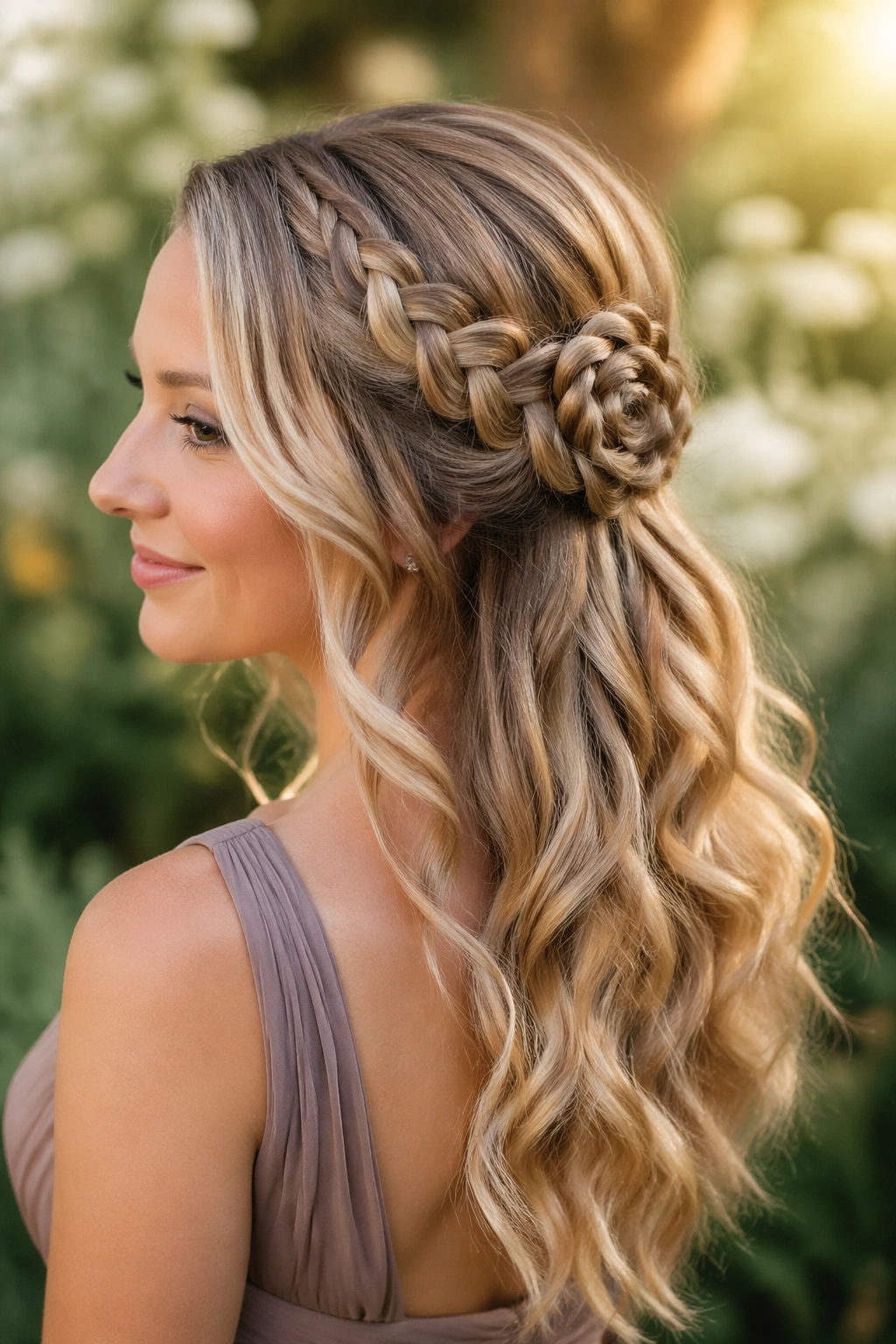
A half-up braided rosette is a lovely choice when the bridal party wants something that looks special up close. The braid is wrapped or coiled into a rosette shape at the back of the head, then pinned so the lower waves can fall freely. From a distance, it reads like a soft knot. Up close, there’s a little flower-like detail that feels handmade.
How to get the shape
Start with a small braid from each side or a single braid from the center section. Coil it into a circle, pin the edges, then loosen the outer loops just enough to make the rosette shape visible. Keep the surrounding waves brushed out and soft, not tight. If the braid is too sleek, the rosette can look flat.
This is one of those styles that makes sense for romantic dresses, garden settings, or bridesmaid groups that want a little artistry in the hair without going full updo.
26. Tucked Side Waves with One Statement Clip
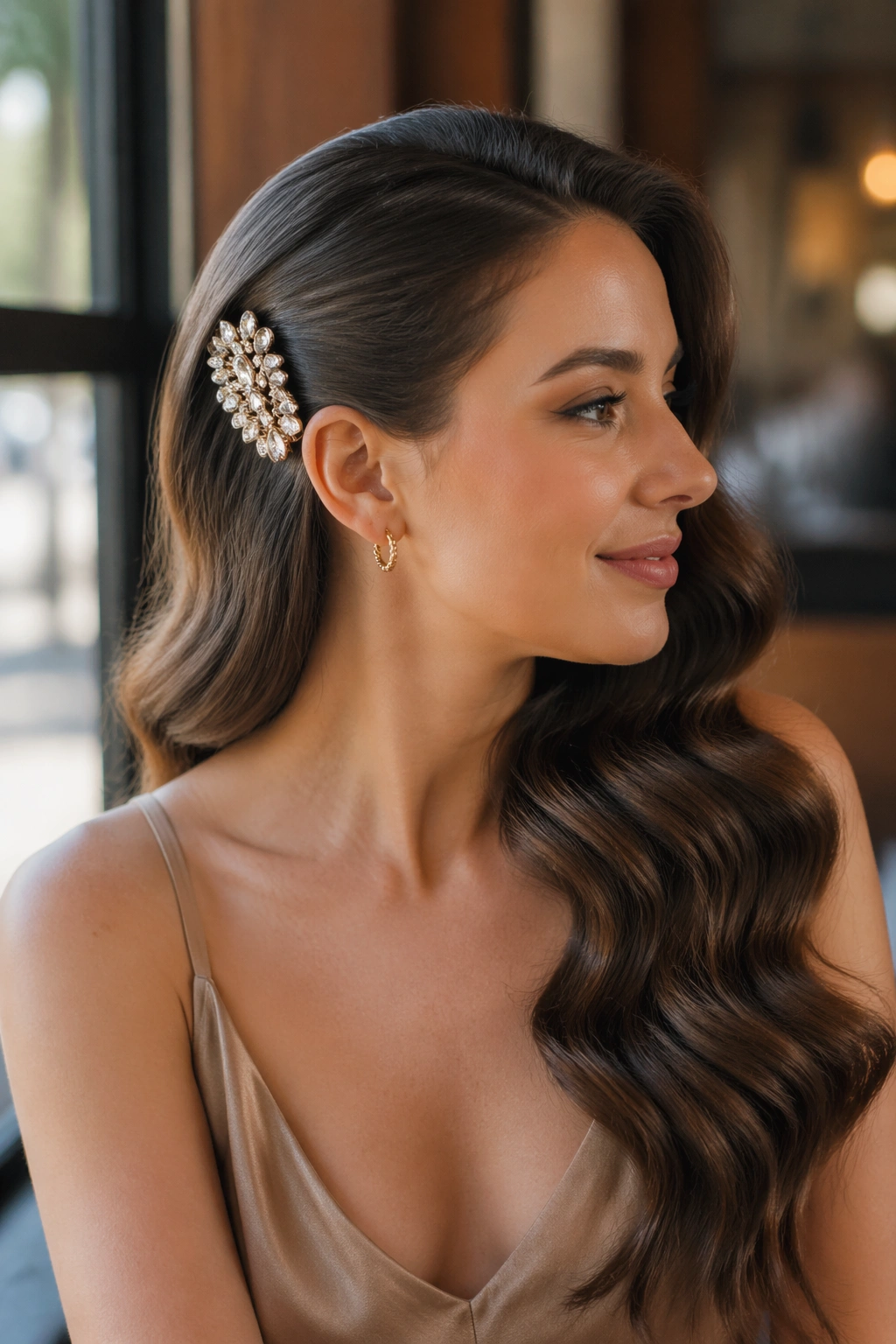
Sometimes one good clip does more than ten pins. Tucked side waves with a single statement clip keep the hair mostly down, with one side tucked behind the ear and held in place by a larger accessory — a barrette, comb, or jeweled clip. The rest of the waves stay open and soft.
This style is perfect for bridesmaids who like wearing their hair down but want one clear detail that feels wedding-ready. The clip should be strong enough to hold a section, not just sit on top. If it slides, the style falls apart by the second toast. That’s the kind of thing people forget until it happens.
Use this when the dress is minimal or when the bride wants the bridal party to have a unified accessory without forcing one universal hairstyle. It’s neat, simple, and easier to maintain than it looks.
27. Shoulder-Grazing Waves with Fringe
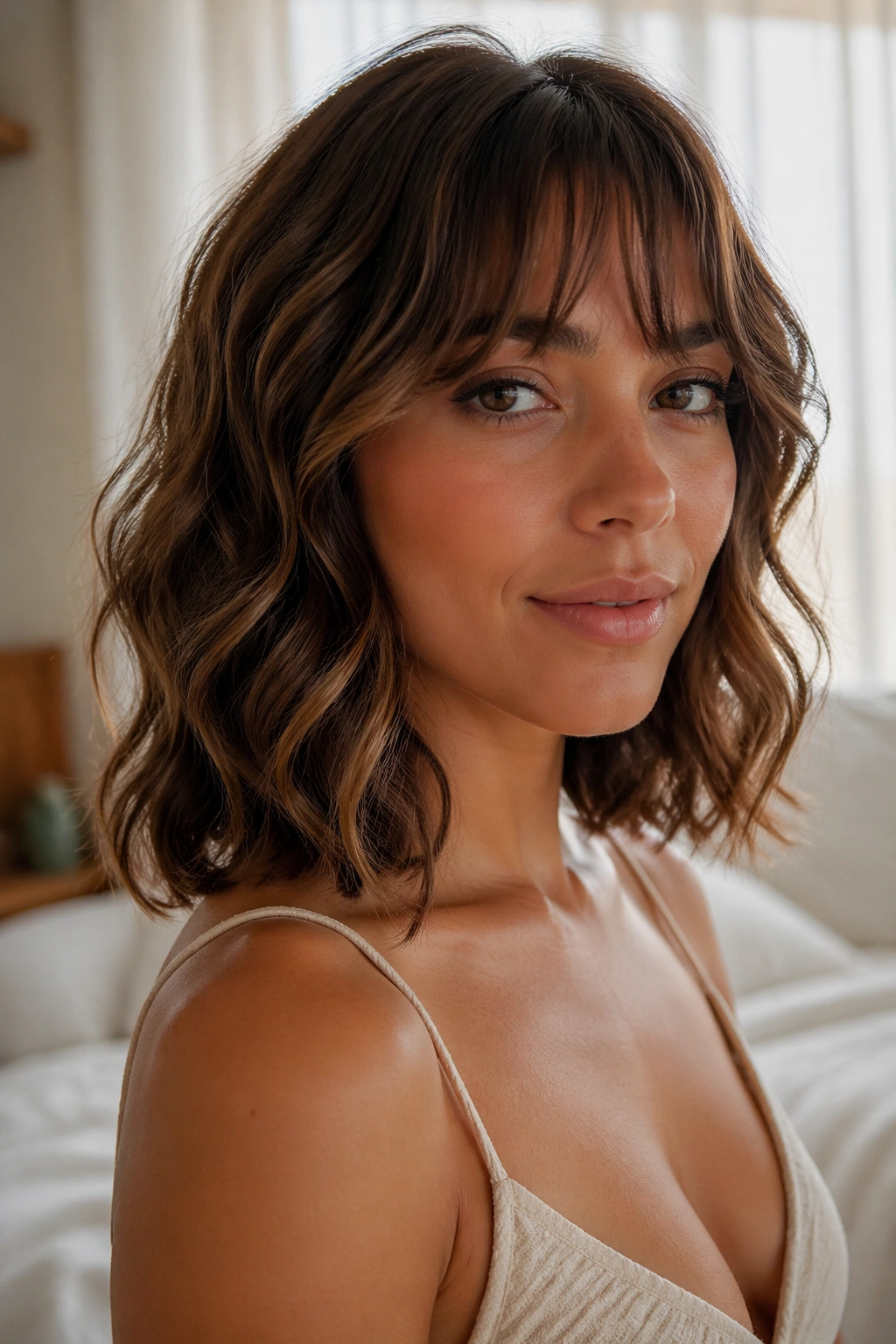
Shoulder-grazing waves with fringe are proof that shorter hair can be every bit as pretty as long hair on a wedding day. The waves should be loose enough to move, and the fringe — whether curtain bangs, a soft straight fringe, or a side-swept bang — becomes part of the style instead of something to fight.
This look is strongest when the fringe is styled with intention. A flat, limp fringe will drag the whole cut down. A lightly bent fringe, or one that’s blown with a round brush and then softened, gives the face shape and keeps the waves from looking disconnected from the front.
I like this one for bridesmaids who already have a shoulder-length cut and don’t want extension-heavy styling. It feels honest. It also sits nicely with both structured and flowy dresses, which makes life easier for everybody.
28. Low Knot with a Veil-Friendly Crown
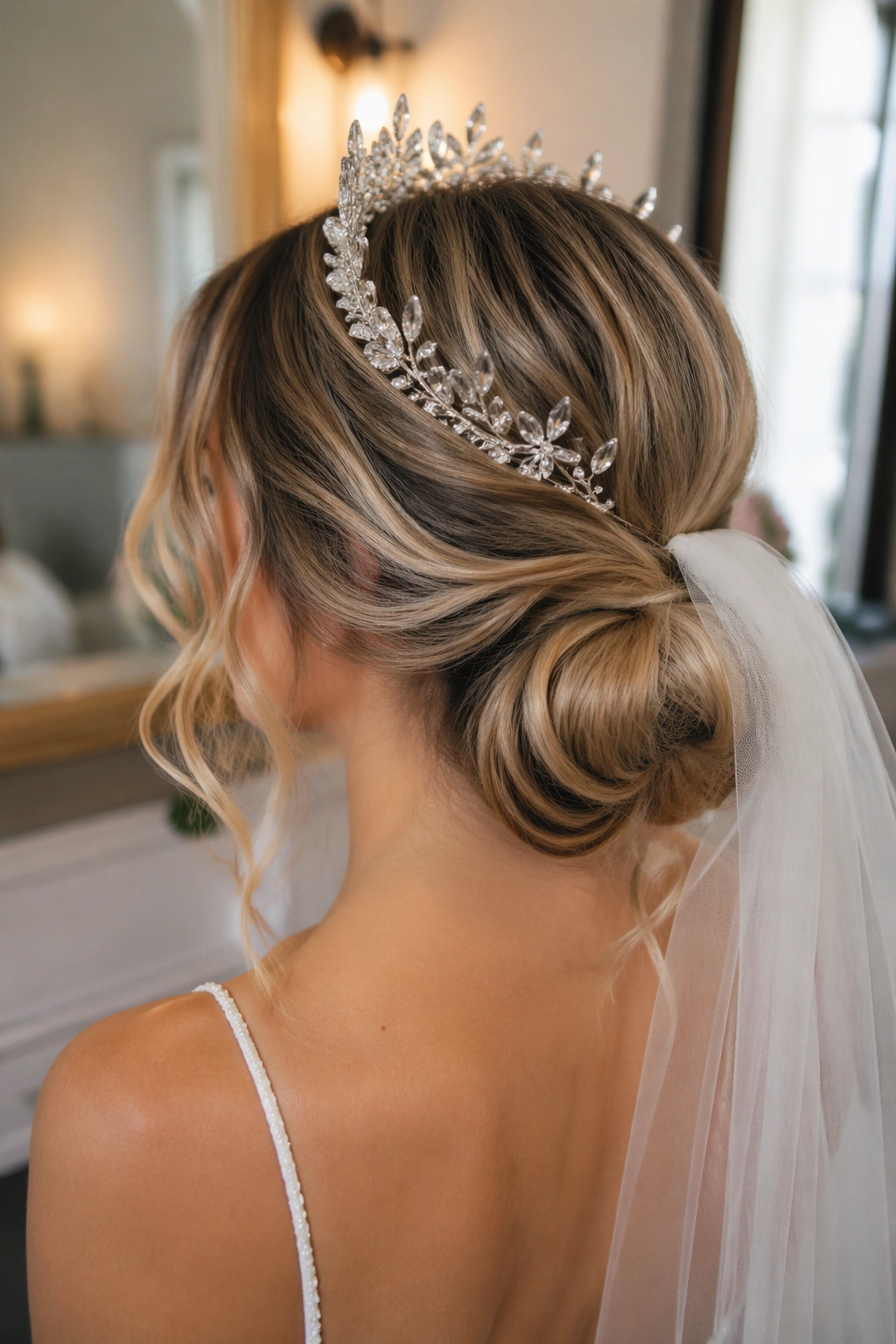
A low knot with a veil-friendly crown is useful even for bridesmaids, especially in ceremonies where the bridal party and bride share similar hair placement. The knot sits low at the back, leaving the crown smooth enough to support a veil comb, flower piece, or simple decorative headband if needed. The rest of the hair can be subtly waved first so the style still feels soft.
Why this is a practical choice
The low placement keeps the head neat and prevents accessory conflict. High buns and strong crown volume can make veils or larger hair pieces sit awkwardly, while a lower knot gives everything room. If the hair is layered, pin the shorter pieces under the knot first, then secure the larger sections around them. That makes the style hold better.
Even without a veil, this is a smart bridesmaid look for formal ceremonies where the hair should stay contained and calm.
29. Wavy Ponytail Wrapped at the Base
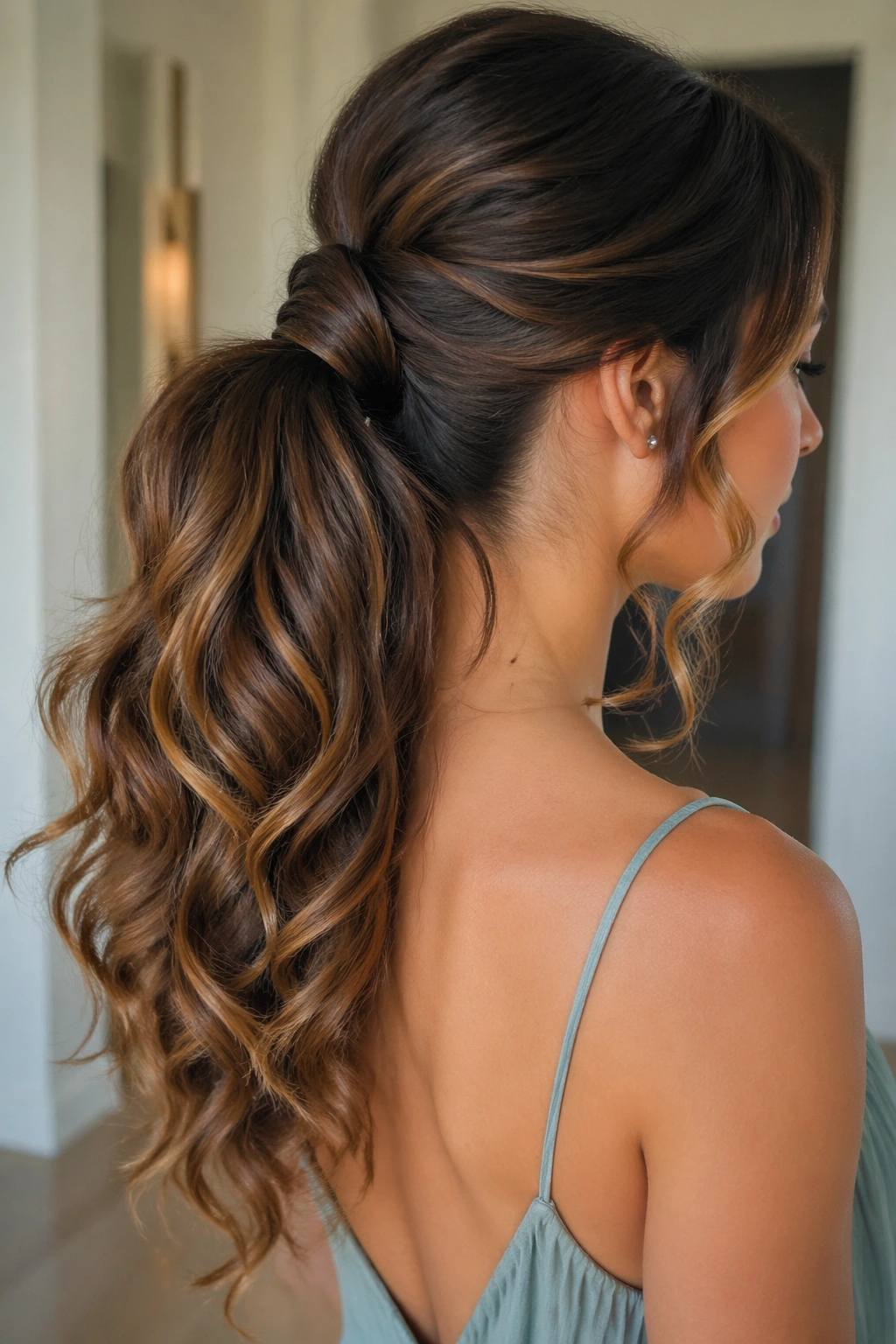
A wavy ponytail wrapped at the base is cleaner than a messy ponytail and softer than a sleek one. The lengths are waved first, then pulled back and wrapped with a strand of hair around the elastic so the base looks finished. The result is tidy, but not cold.
Why choose this over a bun? Because it gives movement. The tail sways, which looks good in walking shots and candid photos. It also tends to be kinder to thicker hair than a tight updo, especially if the hair doesn’t love sitting pinned in place for hours.
If you want the ponytail to stay polished, smooth the crown with a small amount of cream and set the wrapped section with a few hidden pins underneath. That detail matters more than people think. A wrapped base that comes loose looks messy in the wrong way.
30. Crown Twists with Long Waves
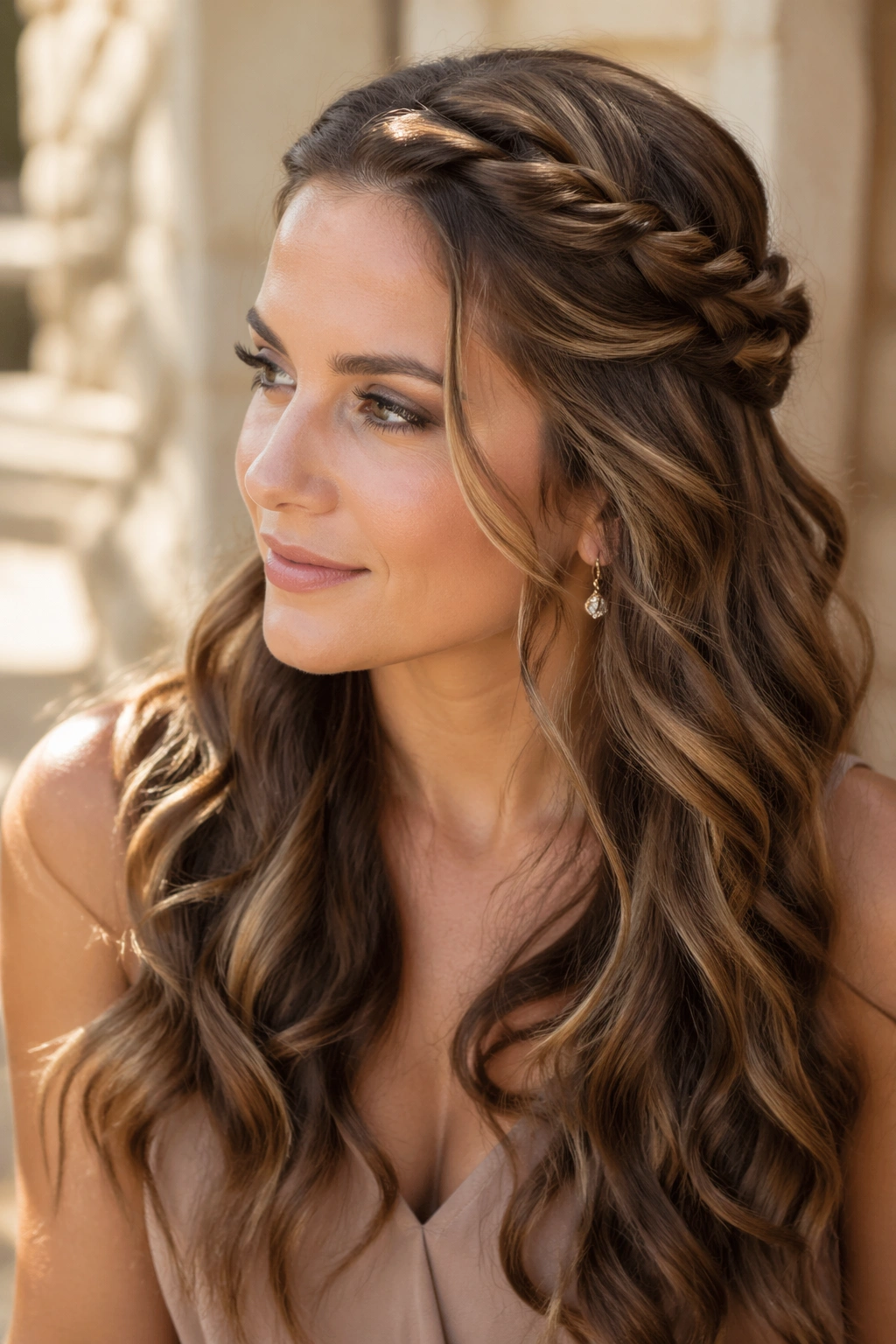
Crown twists with long waves are a nice middle road between a full half-up and a loose style. The front sections are twisted back along the hairline, meeting near the crown, while the rest stays down in long waves. The effect is gentle and a little regal, but not stiff.
This is a good option for bridesmaids with medium to long hair who want the face opened up without committing to a braid or bun. Twists also create a softer line than braids, which helps if the dress has a lot of detail near the shoulders. Keep the twists narrow and controlled, then let the waves below have a wider, freer bend.
A few pins can disappear into the twist if you match them to the hair color. That sounds obvious. It saves a lot of hassle when the photos are taken from the side.
31. Side-Swept Waves with Mini Braids
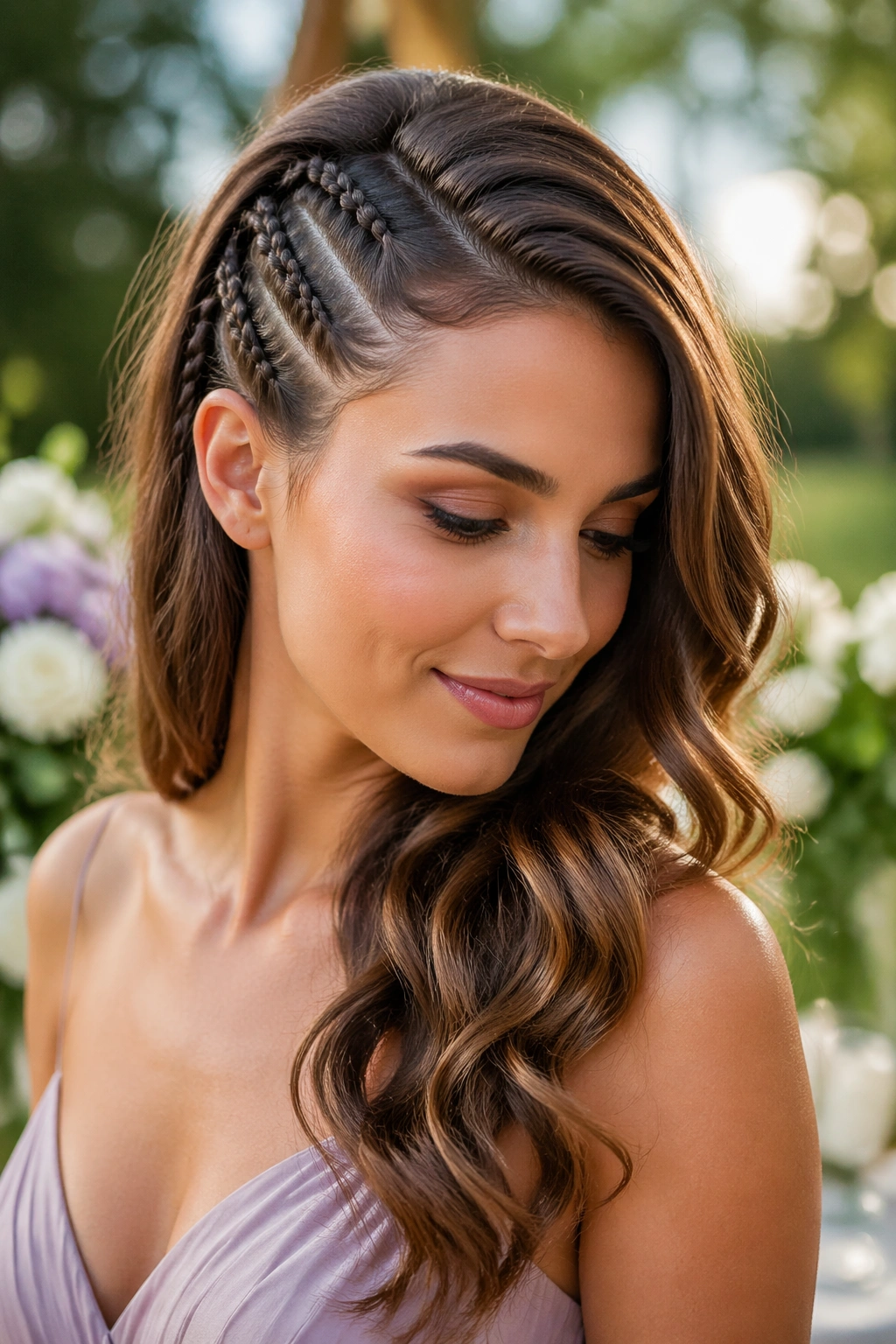
Side-swept waves with mini braids add a little edge to a classic style. Tiny braids are worked into one or both sides, then the whole look is swept lightly to one side so the braids become part of the shape instead of standing apart. The rest of the hair stays soft and loose.
Where this shines
- Good for bohemian, garden, or outdoor weddings
- Works with layered hair because the braids help control shorter pieces
- Adds detail without needing large accessories
The best part is that mini braids don’t overpower the wave pattern. They’re small enough to feel like a detail, not a costume. Keep them sparse. Two or three slim braids are enough. More than that starts to crowd the head and distract from the dress.
This is a style for bridesmaids who like a bit of texture and don’t mind hair with personality.
32. Airy Curly-Wavy Blend
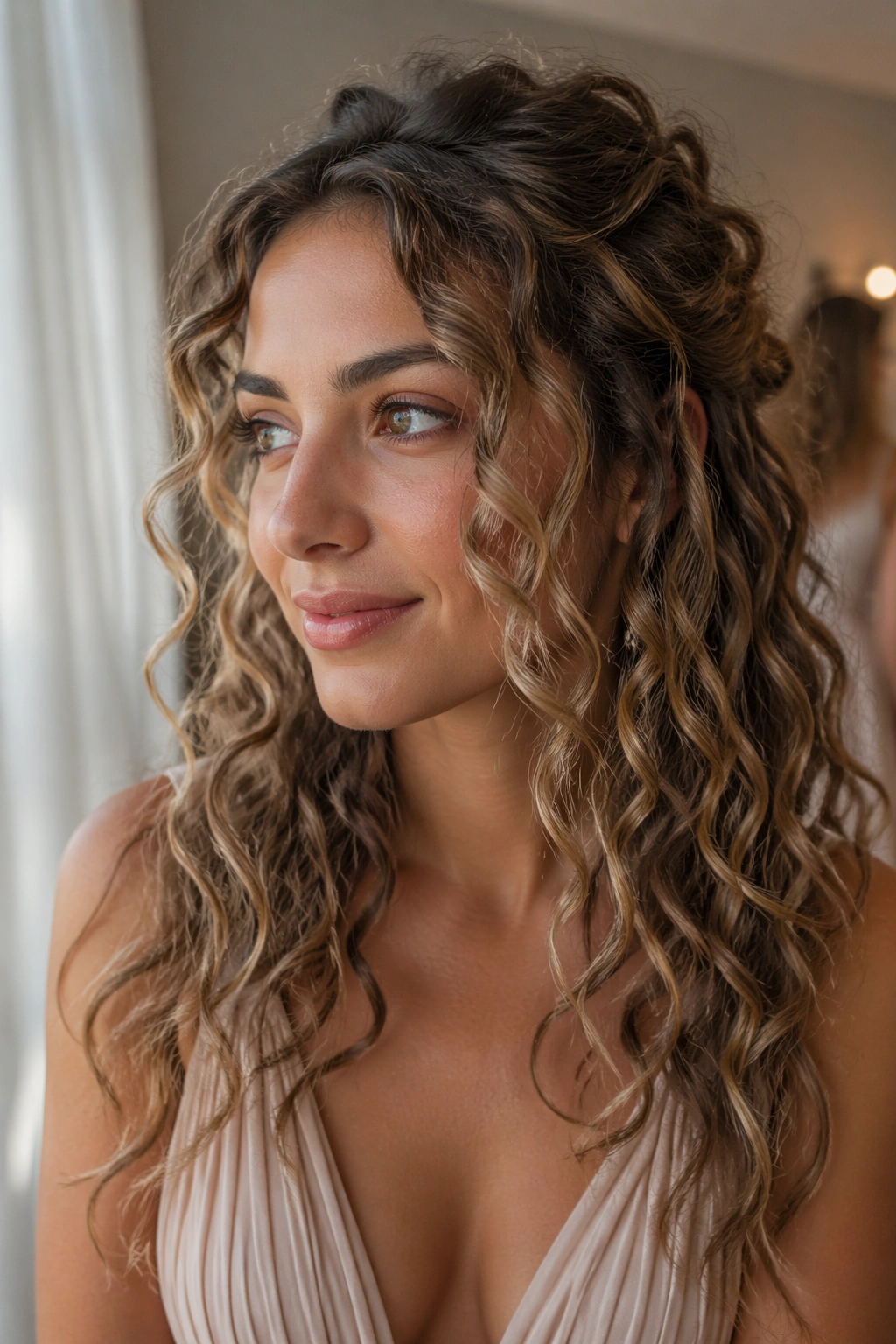
An airy curly-wavy blend sits between a full curl and a relaxed wave, which makes it useful for hair that already wants to bend on its own. Instead of fighting the natural texture, you work with it. A diffuser, a large iron, or even a set with rollers can encourage the hair into soft, lifted movement that keeps some curl but doesn’t turn into ringlets.
I like this for bridesmaids with naturally wavy or curly hair who want the texture to look polished, not flattened. The trick is to define the pieces near the face and crown, then leave the ends slightly looser so the whole style feels soft. A light curl cream or foam can help, but heavy product will make the hair collapse.
This one can look especially good with dresses that have movement too — chiffon, tulle, anything that doesn’t need a super sleek hairstyle beside it.
33. Soft Rolled Half-Up Style
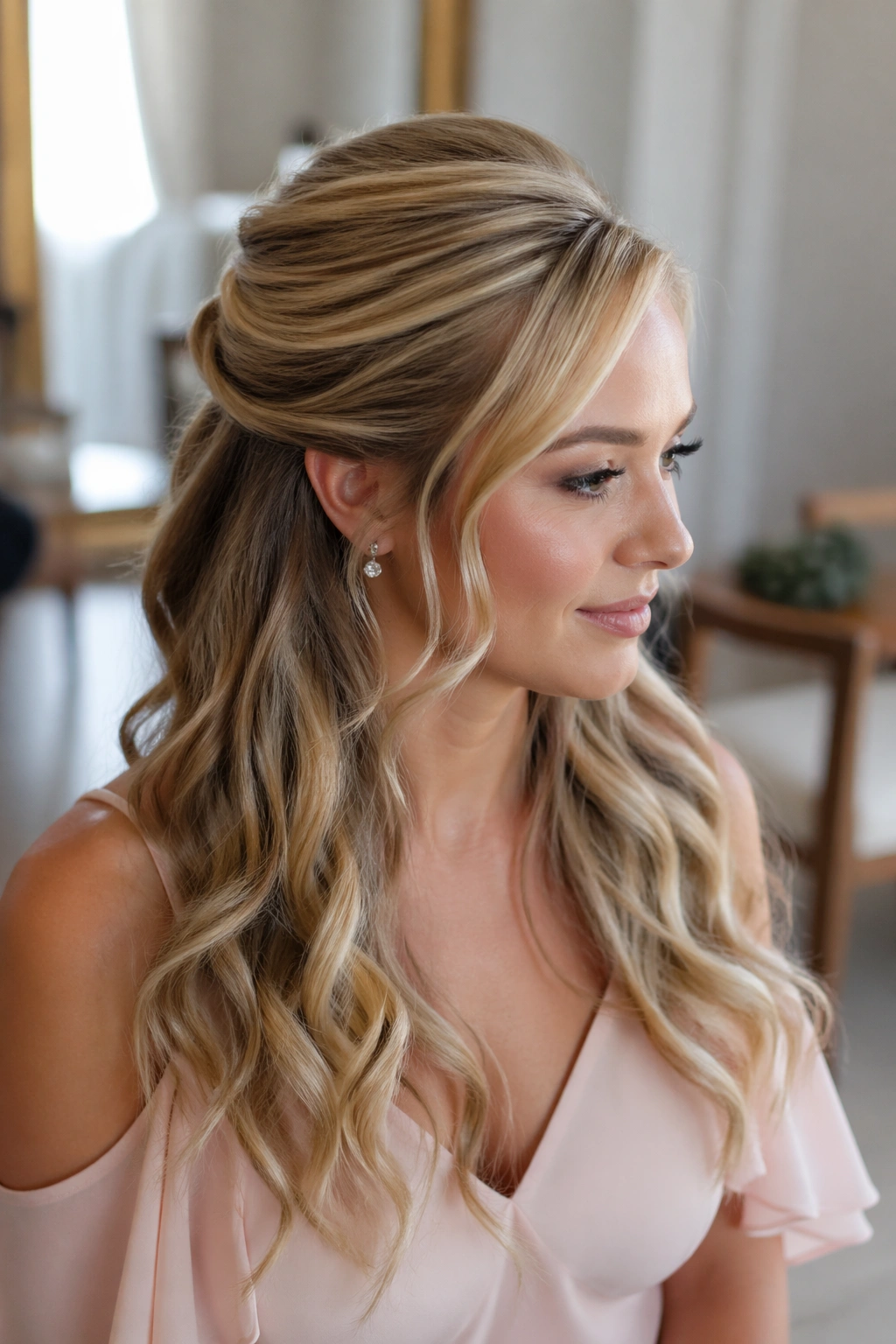
A soft rolled half-up style has that old-school charm without the stiffness of a formal roll. The top sections are rolled or folded back toward the center, then pinned so the bottom half falls in waves. It gives a bit of lift at the crown and a smooth finish where the hair meets the back of the head.
This style is useful when the wedding calls for something a little more dressed up than a plain half-up style. The roll creates a shape that looks intentional in profile, which matters in side photos. If the hair is thick, keep the roll shallow; a huge roll can make the head look top-heavy. If the hair is fine, a little teasing underneath gives the roll enough support.
A small decorative comb tucked into the seam can finish it nicely. No need to crowd the area. The shape already has enough character.
34. Wavy Updo with Scattered Pins
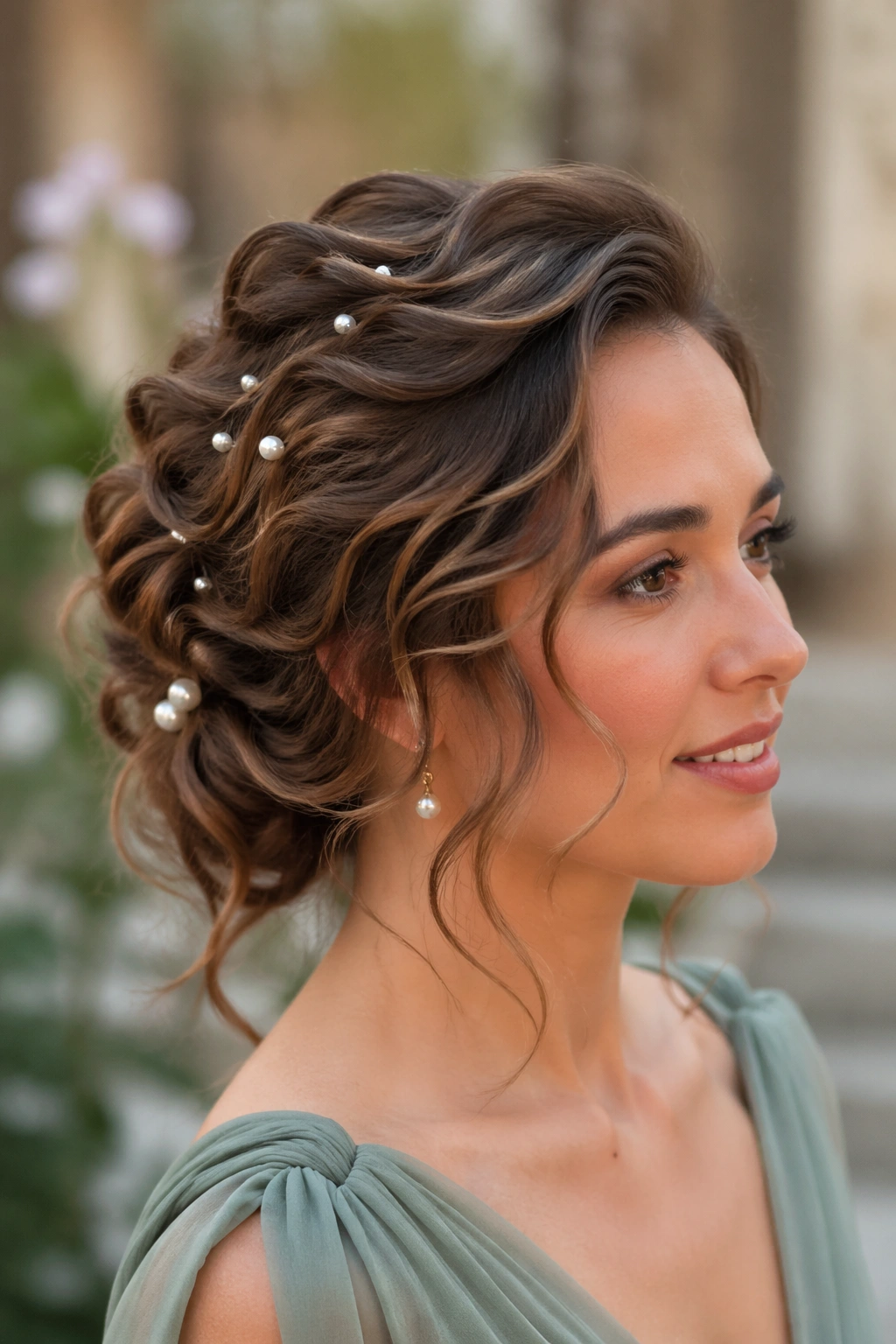
A wavy updo with scattered pins feels loose and modern, even though the hair is mostly up. Rather than hiding every pin, you let some of the shaped waves and twists show, then scatter small decorative pins or pearls through the style. It gives the impression of movement and lightness, which is useful when a full bun feels too heavy.
How to place the pins
Start with a base updo — a low twist, small bun, or pinned roll — then add the decorative pins after the structure is secure. Place them where the eye naturally lands: near the twist line, around the crown, or just above the nape. Don’t cluster them too tightly. A few inches between pins keeps the style from looking crowded.
This works well for bridal parties that want a consistent accessory moment but still want each hairstyle to feel a little different. The shape is there. The details are where the fun is.
35. Minimalist Glossy Waves
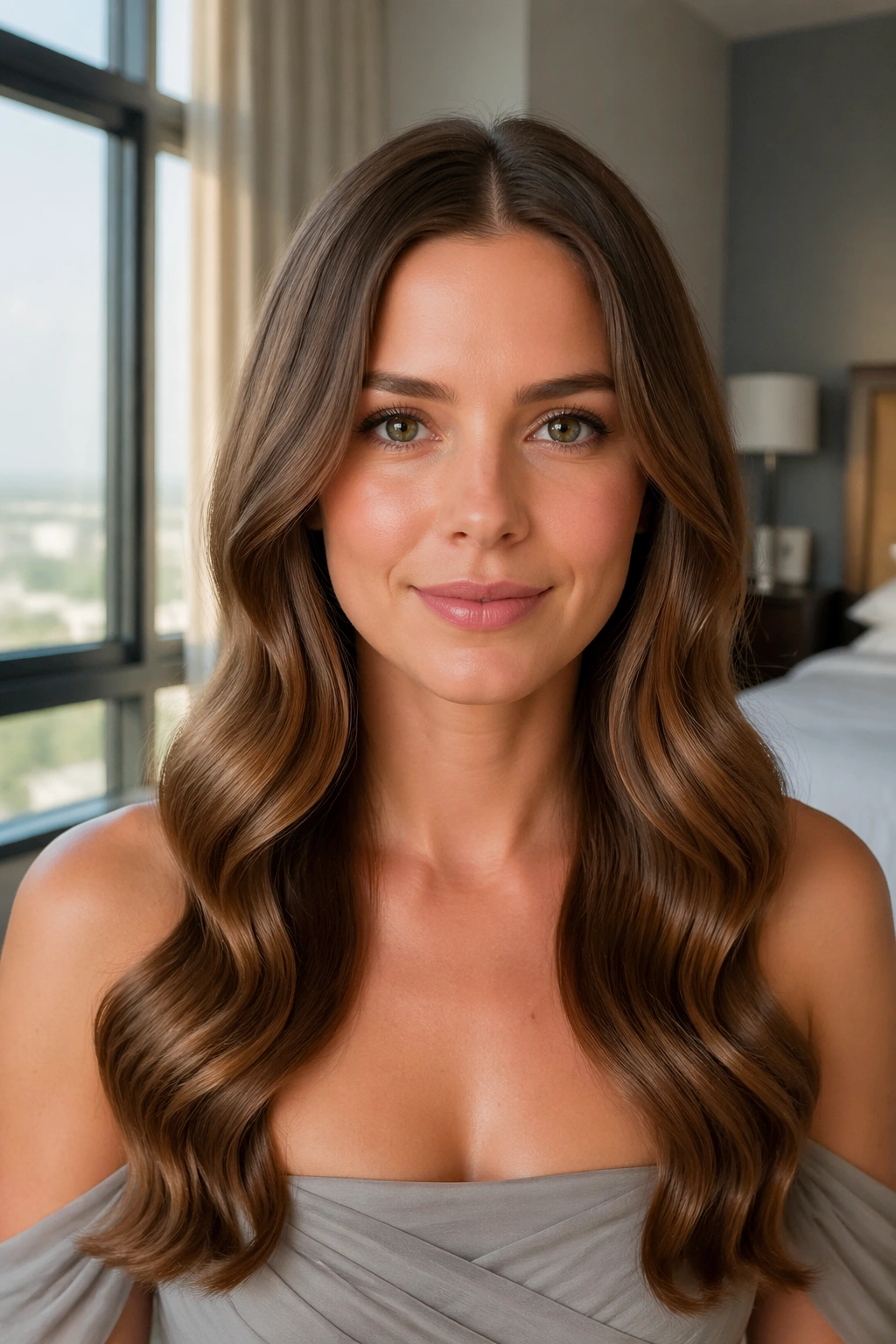
Minimalist glossy waves are for the bridesmaid who wants the simplest answer and knows it. The hair is parted cleanly, waved with care, brushed into smooth movement, and finished with a little shine. No braid, no clip, no twist — just hair that looks healthy, polished, and quietly expensive without trying too hard.
That said, simplicity is not laziness here. The cut has to be clean, the waves have to be even, and the ends need to look intentional. A flat iron wave or large-barrel bend works well because it creates shape without a lot of bulk. Use a heat protectant, then finish with a light serum on the mids and ends. A tiny amount goes a long way. Too much and the hair gets slick.
This is the style I’d choose for bridesmaid dresses with strong tailoring or for a group that wants everyone to look cohesive in a very low-key way. Nothing gets in the way. That’s the whole point.
Final Thoughts
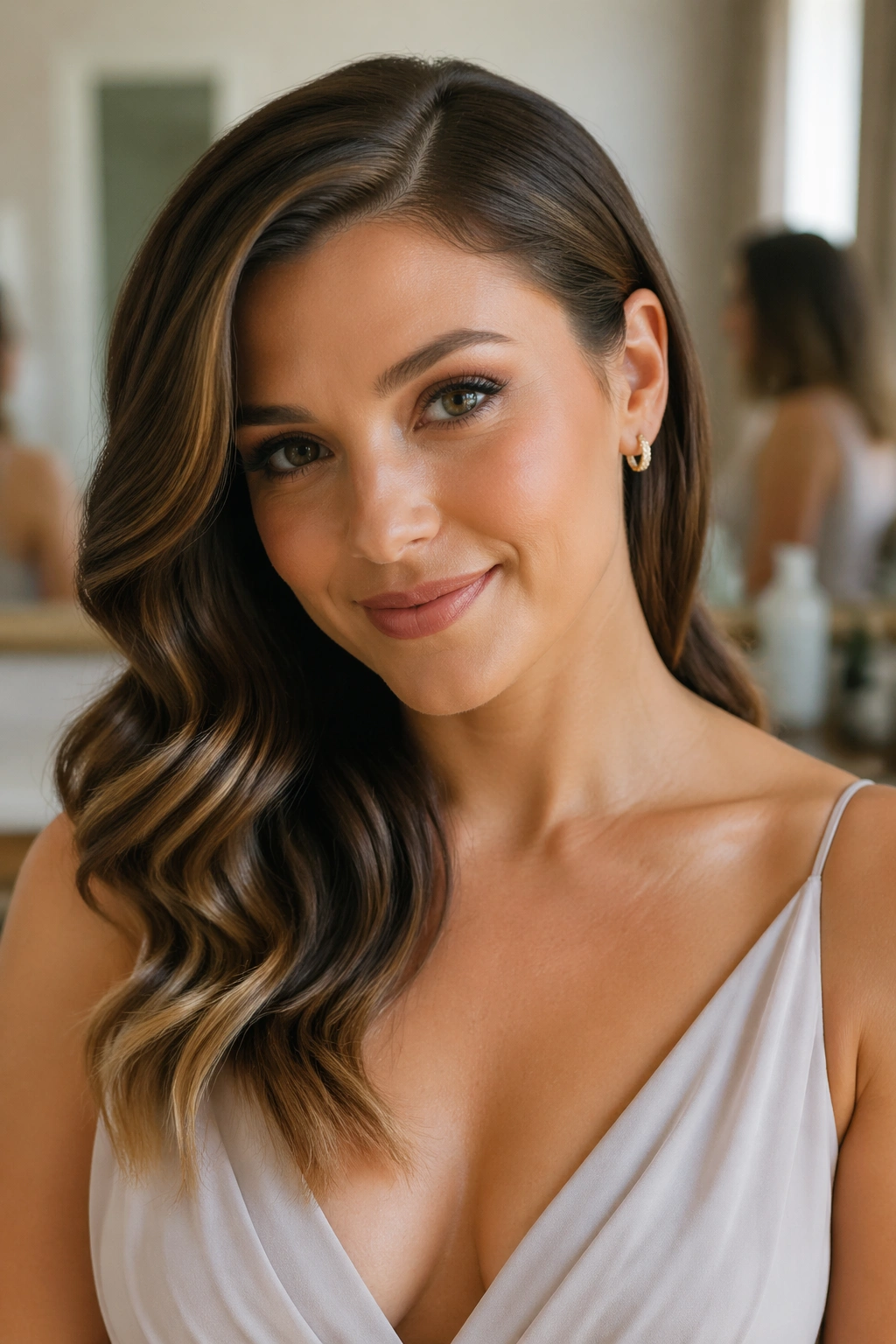
The best bridesmaid hairstyle is the one that holds up when the ceremony runs long, the photos take forever, and somebody hugs you a little too hard. Waves help because they stay soft even when they loosen, and they give every hair length a chance to look finished.
If you’re choosing between a few styles, think about the neckline first, then the hair’s natural behavior. Fine hair usually likes something with pins or a bit of structure. Thicker hair can carry bigger waves, low buns, and half-up shapes without much trouble.
And if you’re still stuck, pick the style that looks good from the side. That’s the angle people forget, and it’s the one that shows up in more photos than you’d expect.
