



Shoulder length wavy styles with highlights sit in a sweet spot that a lot of haircuts miss. You get movement, shape, and enough length to pull pieces back, yet you do not have the drag and flatness that can show up when waves get too long. Add the right highlight placement, and the texture stops looking like one block of color and starts showing every bend, twist, and soft flip.
The catch is that wavy hair is fussy in ways straight hair is not. A cut that looks neat when it is wet can dry into a triangle. Highlights that look soft on a pin-straight blowout can turn stripey once the hair springs into its natural S-pattern. I have seen this happen most often when the perimeter is too blunt, the layers start too high, or the lightener is packed onto the outer layer and nowhere else.
Placement matters more than people think. On wavy hair, lighter pieces show up first where the hair bends forward and catches daylight, usually around the cheekbone, jawline, and the ends that sit on your collarbone. That is why a good stylist will often talk about where your wave lives before they talk about color level.
Some of these looks lean polished. Some are shaggy, airy, and a little wild. A few are built for low salon upkeep, while others ask for glosses and regular toning. The point is not to force your hair into one idea of a wavy lob. It is to find the version that works with your density, your wave pattern, and the amount of maintenance you will actually keep up with.
1. Soft Lob With Honey Ribbons
If you want a safe first step into shoulder-length wavy hair with highlights, start here. A soft lob with honey ribbons works on an enormous range of natural bases, from dark blonde to medium brown, and it flatters 2A to 2C wave patterns without asking for fussy styling every morning.
Why this one keeps working
The cut usually lands from the collarbone to one inch above it, with long layers that begin below the chin. That placement keeps the ends from puffing out while still giving the wave room to form. Honey ribbons, placed two shades lighter than your base, warm up the bends without making the whole head read blonde.
Quick details worth asking for
- Ask for a blunt-looking perimeter with hidden internal layering, not stacked layers at the back.
- Keep the brightest pieces around the front third of the hair, where waves open up near the face.
- A root blur of half an inch to one inch helps the grow-out stay soft.
- Style with a golf-ball amount of mousse and diffuse on low heat until the hair is about 80 percent dry.
Best for: anyone who wants lightness and movement without a big color commitment.
2. Blunt Shoulder Cut With Beige Highlights
A blunt perimeter can make fine wavy hair look fuller fast. That is the whole appeal of this cut. You keep weight at the ends, which stops airy waves from turning wispy or stringy, and the beige highlights brighten the surface without screaming for attention.
The trick is restraint. You do not want chunky blocks sitting on top of a blunt line, because that can make the haircut look boxy. Thin beige slices, especially through the mid-lengths and face frame, give the color a soft lift while keeping the finish smooth.
Beige sits in that neutral zone between cool ash and warm gold. On hair that throws both yellow and orange when lightened, it is often the most forgiving tone. It looks expensive when the stylist leaves a little depth at the root and tones the lighter strands so they do not go brassy after a few washes.
I like this look most on fine to medium density hair. Thick hair can wear it too, though the cut needs hidden debulking under the top layer or the line gets heavy near the shoulders.
3. Layered Shag With Caramel Pieces
Why does caramel work so well with a wavy shag? Because the haircut already has broken-up movement, and caramel picks out those flicks and bends in a way flat brown never will.
A shoulder-grazing shag needs layers, but not chaos. The strongest version has short pieces around the crown, cheekbone layers near the face, and enough length left at the bottom so the haircut still feels grounded. Caramel highlights keep all that texture from collapsing into shadow.
Where people get this cut wrong
Too much blonde can make a shag look dry, even when the hair is healthy. Caramel is kinder. It reflects warmth, keeps brunette depth in place, and shows separation when you scrunch in curl cream. If your natural base is level 4 to 6 brown, ask for caramel pieces that sit one to two levels lighter, not four.
Skip razor-heavy shaping if your hair frizzes the moment humidity shows up. A shag can be soft and piecey with point cutting alone. That small choice changes the whole finish.
4. Collarbone Waves With Face-Framing Blonde
Picture a shoulder-length cut that still feels bright around the face even when the rest of the hair stays brunette. That is why this style sticks around. You get the pop people notice first without taking lightener through every inch of your hair.
The cut itself stays easy: collarbone length, loose waves, light layering under the cheekbone. The blonde sits in the contour area around the front, often with two brighter ribbons and a few lighter touches around the part line.
A good formula looks something like this:
- Two stronger face-framing pieces from eyebrow level to the ends
- A softened root so there is no hard stripe at the scalp
- Scattered lighter ends through the front half of the hair
- A darker interior to keep the haircut from looking flat
This one suits people who wear their hair down often. Ponytail fans should ask for a few fine highlights in the back too, or the color can disappear the second the hair goes up.
5. Angled Wavy Bob With Toffee Balayage
An angled wavy bob can do a lot for the jawline. The back sits a little shorter, the front slides longer toward the collarbone, and the shape gives shoulder-length waves a cleaner outline than a one-length cut often can. If your hair grows outward before it grows down, this shape helps.
Toffee balayage is a smart match because it warms the line of the cut without turning the whole style into a blonde look. On brunette hair, toffee sits in a middle lane: richer than honey, softer than copper, and less likely to clash with neutral or olive skin. It tends to show up best when painted from the mid-lengths down, with a few pieces starting higher near the face.
You do need to be careful with angle. Too steep, and the cut starts reading stacked bob instead of shoulder length. I prefer a front that lands one and a half to two inches longer than the back. Enough shape, no drama.
This style looks strongest when waves are loose, not tight. A 1-inch iron wrapped only through the middle section of the hair will get you there, while the ends stay slightly straighter and modern-looking.
6. Center-Part Lob With Rooted Bronde
Unlike a full blonde highlight service, a rooted bronde lob grows out with far less fuss. That is the whole reason people keep asking for it. You get brightness through the mids and ends, but the root stays close to your natural depth, so the color shift looks intentional even after a long stretch between salon visits.
The center part gives the style balance. On shoulder-length wavy hair, that symmetry works well when the waves are soft and the color placement is mirrored on both sides of the face. It also lets the rooted effect show off, since the darker base is part of the design, not a problem to cover.
Who suits it best? Medium-density hair does. Thick hair can carry it too, though the stylist should paint a few pieces underneath or the outer layer will look light and the interior will look too dark. Fine hair benefits from thin ribbons instead of chunky ones, since high contrast can make sparse areas easier to spot.
Ask for a root shadow that sits one level deeper than the highlighted sections, then a bronde melt through the lengths. The result has depth without looking stripey.
7. Textured Cut With Cinnamon Highlights
Cinnamon is one of those shades that wakes up brown wavy hair fast. It is warmer than chestnut, less orange than copper, and it makes soft waves look richer instead of washed out. Under indoor light it reads cozy and brown. Step outside and the red-gold undertone starts to show.
Where cinnamon earns its keep
This color works best on a textured shoulder cut with movement through the ends. If the haircut is too blunt, the warmth can feel heavy. If the layers are too short, the whole thing can turn fluffy. You want a cut with light point-cut ends and long interior layers, so the highlighted strands peek through when the waves separate.
A few details to ask your stylist about
- Place the brightest cinnamon pieces from ear level downward so the warmth glows through the wave pattern.
- Keep the root area half a level deeper than the mids for a richer base.
- Use a color-safe mask once a week if the hair feels dry after lifting.
- Style with a lightweight cream, not a thick butter, or the warmth can look dull under product buildup.
This one looks best when it has shine. A clear gloss every couple of months helps more than people expect.
8. Shoulder-Skimming Waves With Champagne Babylights
Need brightness without thick streaks? Champagne babylights are the answer a lot of people were looking for all along. The sections are tiny, the lift is soft, and the end result looks brighter in motion than it does in one still photo.
On shoulder-skimming wavy hair, babylights can keep the cut from feeling heavy near the ends. Because the highlights are woven in fine slices, the wave pattern still looks intact. You see light and shadow trading places as the hair moves, not bands of color sitting on top of the style.
Champagne works best when the base is already dark blonde or light brown. On deep brunette hair, it can still look good, though it takes more lifting and more toning, which means more upkeep. That is not always worth it if your goal is low effort.
Keep the cut simple here. Too many short layers plus fine highlights can make the hair look busy. One or two long layers, a clean shoulder line, and soft babylights through the top and front usually do the job.
9. Curly-Wavy Hybrid Lob With Mocha Melt
Some hair does not sit in one category. It is wavy at the crown, curlier underneath, and a little unpredictable from wash day to wash day. A mocha melt is one of the smartest color choices for that kind of texture because it leans into softness rather than contrast.
The haircut should land at the shoulder or a touch above, with roundness built into the shape so the curlier sections do not bunch up underneath. Think of it as a lob designed for mixed texture, not a straight-hair lob with hope attached.
Why a mocha melt helps
A melt keeps the color close in tone. Dark espresso roots fade into mocha mids and lighter cocoa ends, which means the curl pattern shows off without sharp color breaks. Tight curls and loose waves can live together more peacefully when the shade shift is gradual.
- Ask for dry cutting if your stylist offers it, since mixed texture shrinks unevenly.
- Keep highlights mostly from mid-length to ends.
- Diffuse on low airflow so the looser top sections do not frizz out.
- Avoid heavy oils near the root. They can flatten the wavy areas first.
This style has a soft, rich finish that looks polished even when the texture has a mind of its own.
10. Razor-Cut Midi Shag With Golden Tips
I would not recommend a razor cut to everyone. On coarse, frizz-prone hair, it can turn the ends feathery in the wrong way. On medium-density hair with a softer wave pattern, though, a razor-cut midi shag can look airy, cool, and far lighter than the same haircut done with blunt scissors.
Golden tips are the move here, not heavy all-over highlights. By keeping the lightness mostly on the last two or three inches, the cut shows motion at the edges where the razor has already created separation. The ends look sun-touched, a little messy, alive.
This haircut thrives on texture spray, not polished blowouts. Scrunch the lengths, let the fringe sit piecey, and do not chase perfection. If you want every wave to match, pick another style. This one looks best with a little disorder.
Ask for caution around the crown. Too much razoring near the top can leave short fuzzy bits that lift in humidity and refuse to behave.
11. Side-Part Waves With Amber Contour Highlights
A side part changes the whole mood of shoulder-length wavy hair. It gives lift at the root, pushes one side forward, and makes contour highlights around the face look sharper. If your hair falls flat around the crown, this is a smart switch before you even talk color.
Amber sits between gold and copper. It is warmer than beige, softer than a true red, and it lights up medium brown bases well. The side part lets the brighter side of the face frame show first, which is why this look often photographs better than a centered, evenly balanced highlight layout.
Placement matters more than tone here
Keep the strongest amber pieces on the heavier side of the part and a little less brightness on the lighter side. That asymmetry gives the hair depth instead of a mirrored salon-finish look. Wavy hair likes imbalance. It reads more natural.
If you wear glasses, ask the stylist to start the front highlight near the temple rather than too close to the root. Otherwise the color can crowd the frame of your face.
12. One-Length Lob With Smoky Ash Streaks
Cool-toned highlights can make shoulder-length waves look sharper and cleaner, especially if your natural hair already pulls neutral or ash. A one-length lob with smoky ash streaks has a crisp feel that warm colors do not give you.
The cut stays blunt, or close to it, because the color is doing the visual work. You do not need a stack of layers when the contrast between the base and the ash pieces already shows the bends in the hair. On fine hair, that is useful. Too many layers plus cool color can make the ends look sparse.
Ash does need upkeep. If your hair lifts orange, smoky toner will fade and the warmth underneath can show through sooner than you expect. Purple shampoo helps, though not every wash. Once a week is often enough. More than that and the hair can take on a flat cast.
This is one of my favorite options for people who want their wavy lob to look polished rather than beachy. Pair it with a smooth bend from a flat iron instead of a fluffy diffuser finish.
13. Beachy Shoulder Cut With Sunlit Ends
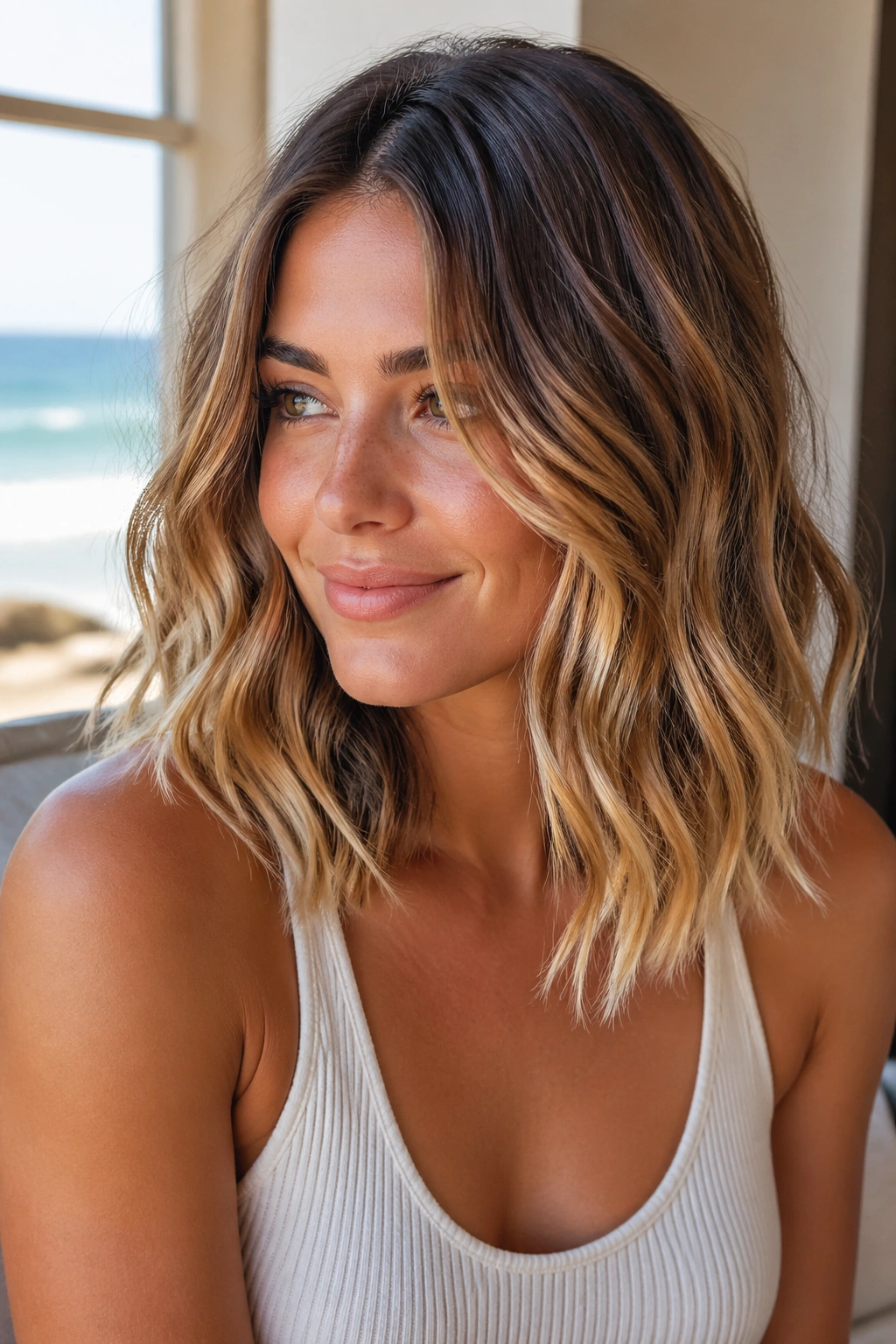
This is the cut people ask for when they want their hair to look like it spent a week in salt air, even if it never leaves the city. The shape stays relaxed, the ends are broken up, and the highlights live mostly from the mid-lengths down so the root still looks natural.
Sunlit ends work because waves tend to turn lighter where they are driest and most exposed anyway. That makes the placement believable. You do not need a hard face frame or thick streaks here. The color should feel scattered through the outer bends and the last few inches.
A few things make it better:
- Keep the longest length at or a little below the collarbone.
- Use soft balayage, not foils packed to the scalp.
- Leave depth underneath so the cut does not turn one-note.
- Finish with salt spray only on the mids and ends, never soaked into the roots.
Too much spray will make the hair feel stiff. A little gives grip. More than that starts to feel like straw.
14. Thick Wavy Lob With Butterscotch Panels
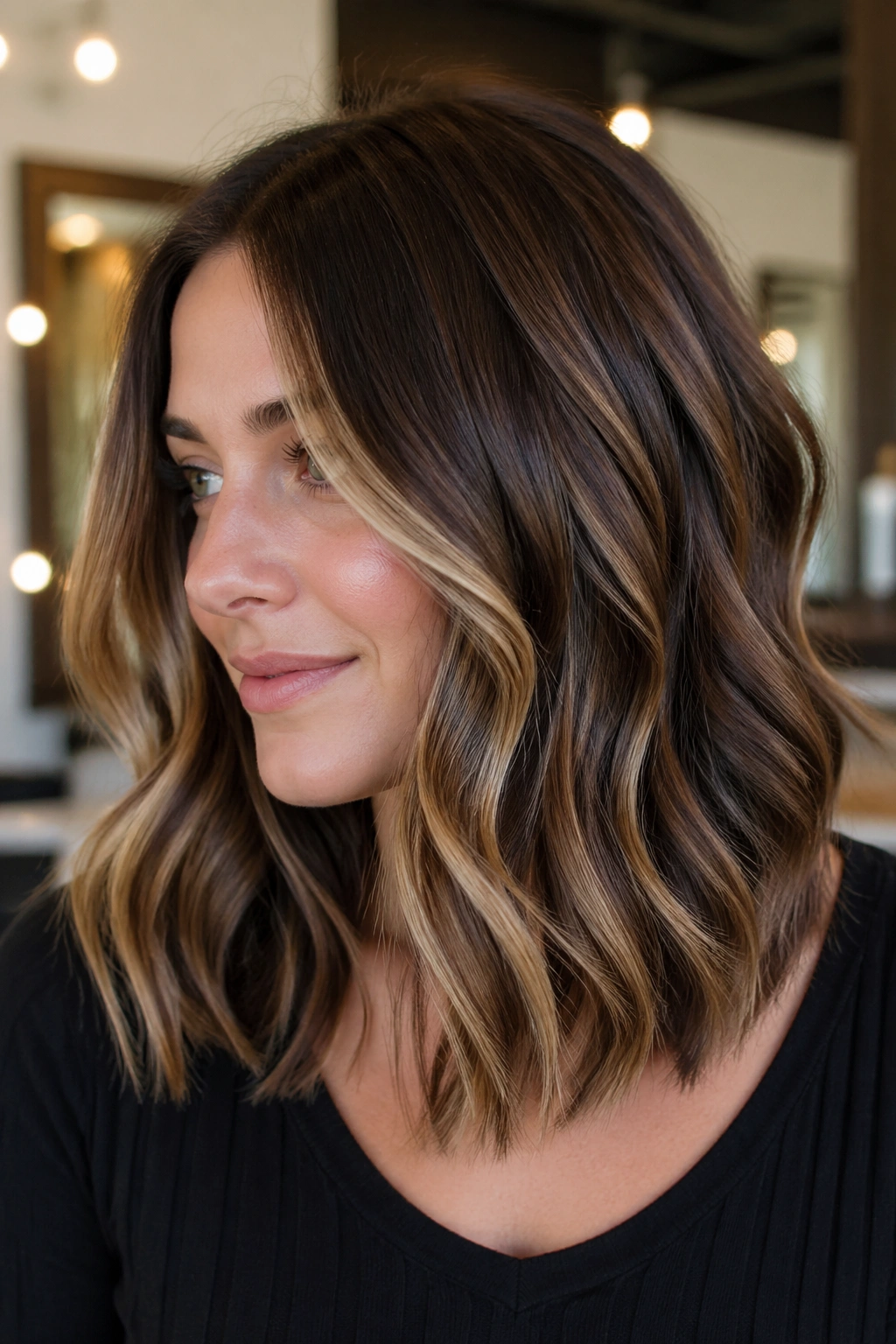
Thick wavy hair can go bulky fast at shoulder length. The ends stack up, the sides widen, and the whole cut starts to resemble a bell. That is why I like butterscotch panels on thick hair. The wider ribbons break up the mass so your eye sees movement instead of one dense block.
The cut still needs work from the inside. Not thinning-shear chaos, which can leave frizz sticking out everywhere, but careful weight removal under the top layer. Once that is done, butterscotch panels can sit in the front, around the crown, and through the lower sections to show off the wave pattern.
What makes this different from fine highlights
The ribbons are broader, usually half an inch to an inch wide in selected sections, and the tone has a richer gold-brown base. On thick hair, fine babylights can disappear. Panels have enough presence to show through all that density.
This one asks for moisture. Thick highlighted hair drinks product. A leave-in cream and a weekly mask keep the ends from turning rough, which is the fastest way to make this color look tired.
15. Fine Wavy Cut With Soft Vanilla Threads
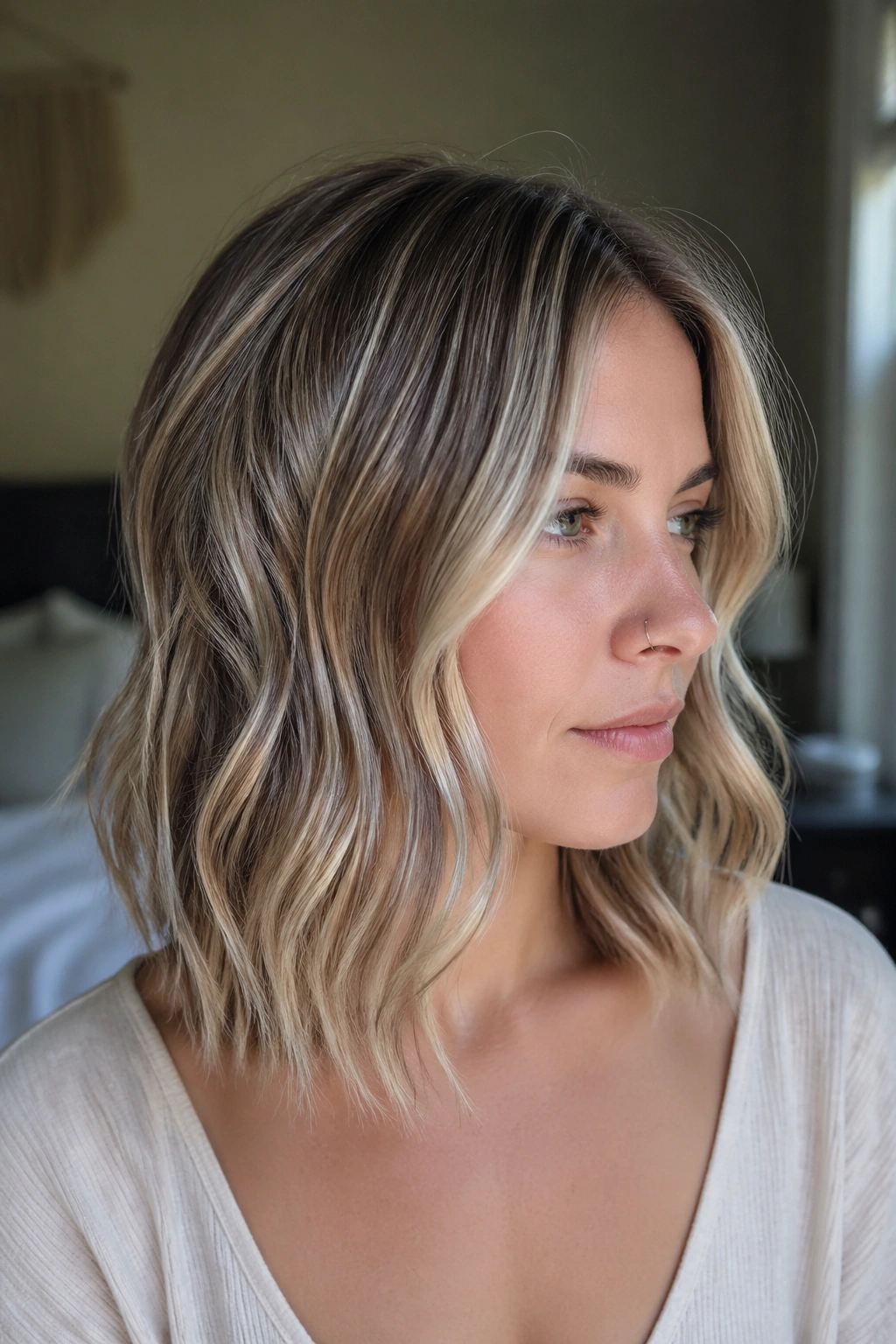
Fine wavy hair needs caution from both the scissors and the bleach. Too many layers take away fullness. Too much lightener can make the strands look thin around the temples. Soft vanilla threads solve part of that problem because they brighten the hair in narrow lines instead of big pieces.
A shoulder-length cut for fine waves usually works best when it is almost one length, with maybe a whisper of layering around the face. Then the vanilla threads can sit across the top layer, around the part, and through the front to create the look of more texture than the hair naturally has.
I would skip chunky face-framing pieces here. Thin hair can end up looking transparent in those front corners if the color gets too light. Ask for micro ribbons instead, especially above the cheekbone.
This style looks best with lightweight hold. A mousse, a root lift spray, and a five-minute diffuse do more good than thick curl creams on fine hair. Keep the product load small and the movement will show up.
16. French-Inspired Shoulder Waves With Subtle Balayage
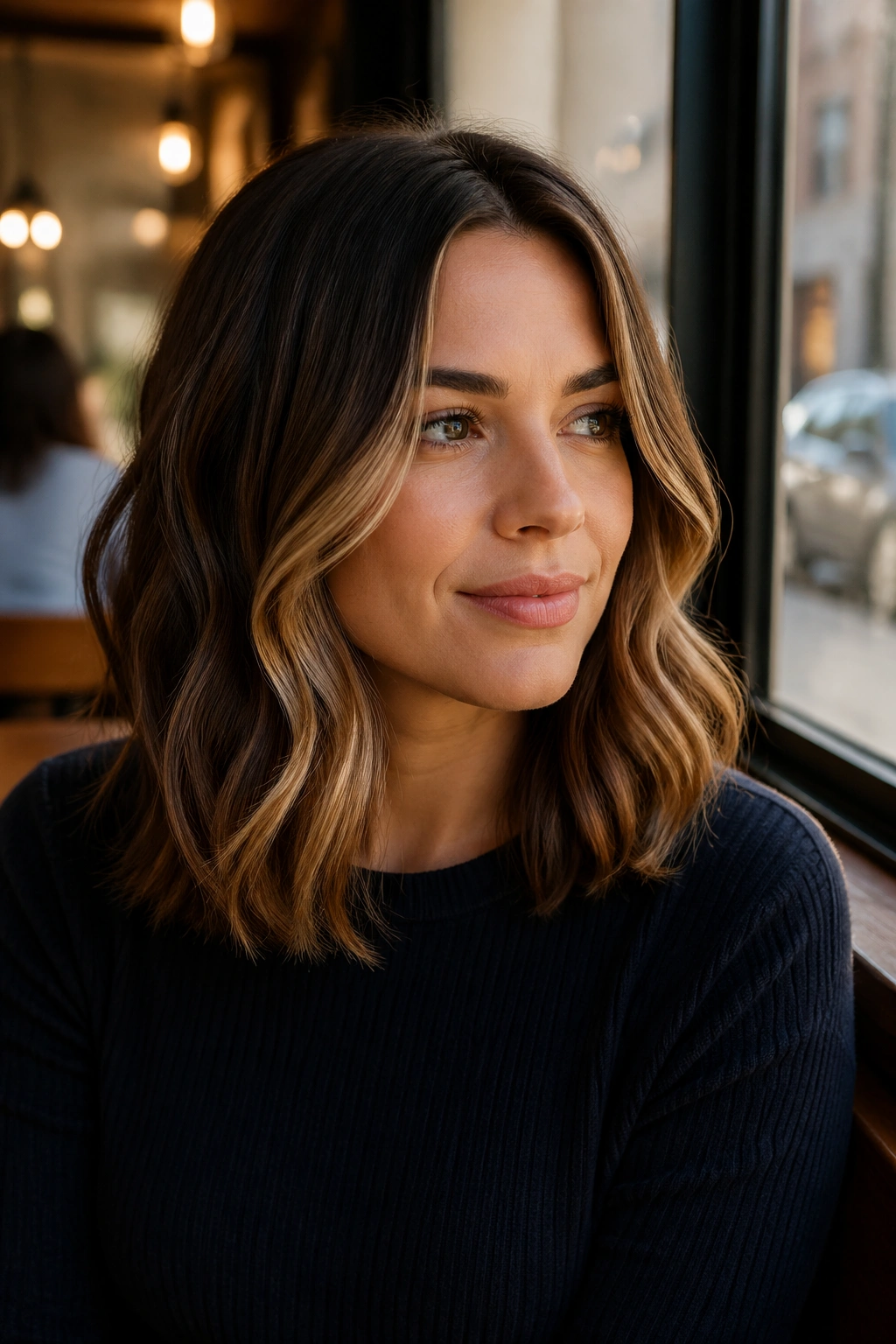
This is the haircut that looks best when you stop styling before it becomes too polished. The shape sits around the shoulders, the ends kick a little, and the balayage is so soft it reads more like natural variation than salon stripes.
A French-inspired take on shoulder-length wavy hair usually means fewer visible layers and a looser bend. You are not carving out a shag. You are keeping the silhouette clean and letting the wave do the talking. The color follows that same restraint: fine painted pieces near the front, a little lift through the ends, and plenty of your natural base left in place.
The beauty of this look is in the grow-out. Because the highlights are painted and the root is left alone, you can go a good stretch between appointments without the color line shouting at you. For people who hate rigid salon schedules, that matters more than a dramatic result on day one.
A dab of styling cream and an air-dry often suits this cut better than a full hot-tool routine. Leave a little imperfection in it. The shape likes that.
17. U-Shaped Shoulder Cut With Copper Highlights
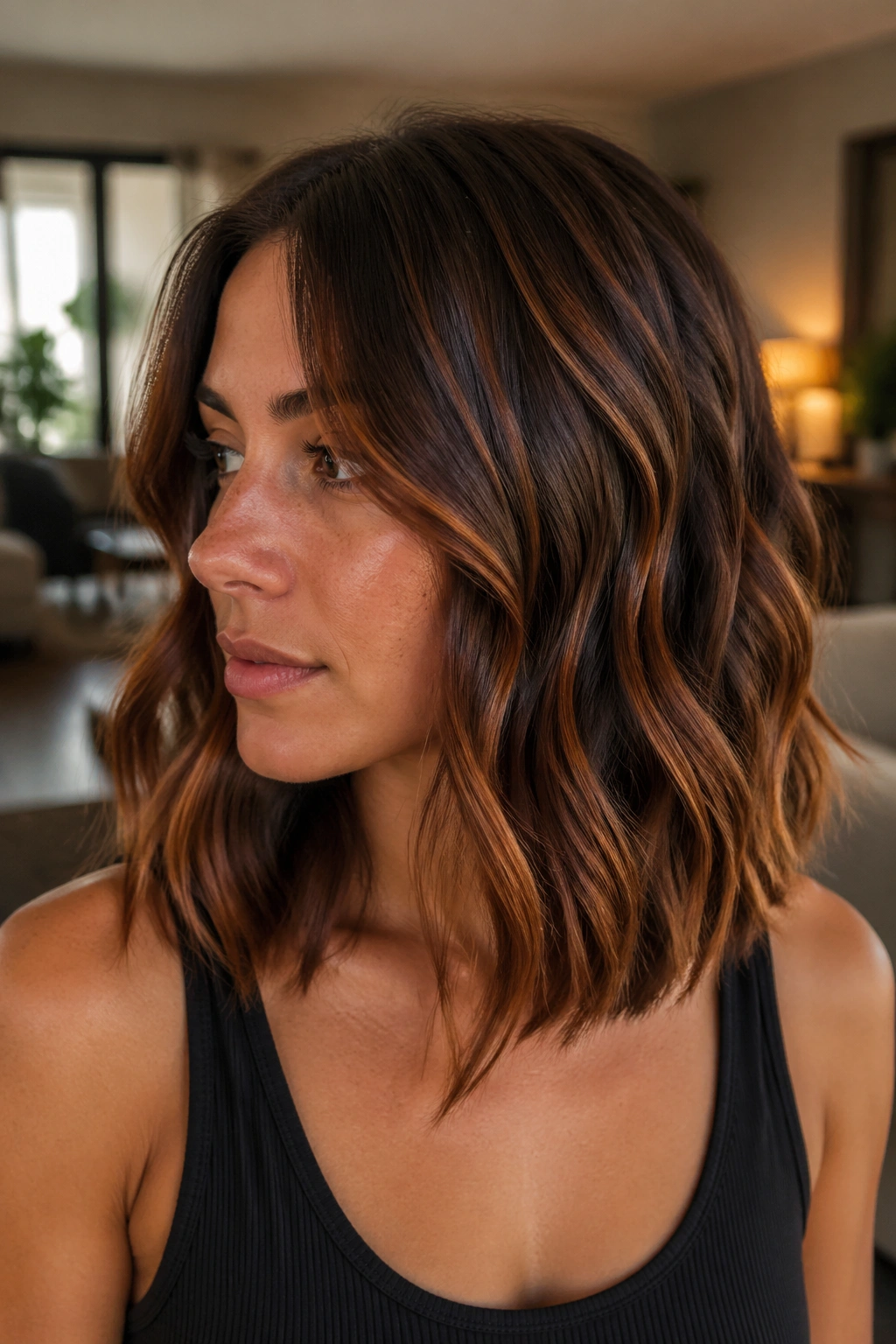
A U-shaped hemline does something useful on wavy hair: it keeps the back from looking boxy while letting the front pieces skim the collarbone. On dense or medium-thick hair, that soft curve gives the cut more swing than a straight-across finish.
Copper highlights wake the whole thing up. Not neon orange. Think polished copper penny, toasted ginger, or warm apricot streaks tucked through a brunette base. On waves, those flashes show up first where the hair bends forward, which makes the cut look more textured even before you style it.
Good reasons to choose this one
- The shape keeps bulk off the corners of the haircut.
- Copper suits green, hazel, and brown eyes especially well.
- You can go bolder around the face and softer through the back.
- It looks strong on medium to thick hair that needs movement.
Copper does fade faster than beige or ash. A deposit conditioner every week or two can keep the warmth alive between gloss appointments.
18. Wavy Wolf-Inspired Lob With Peekaboo Color
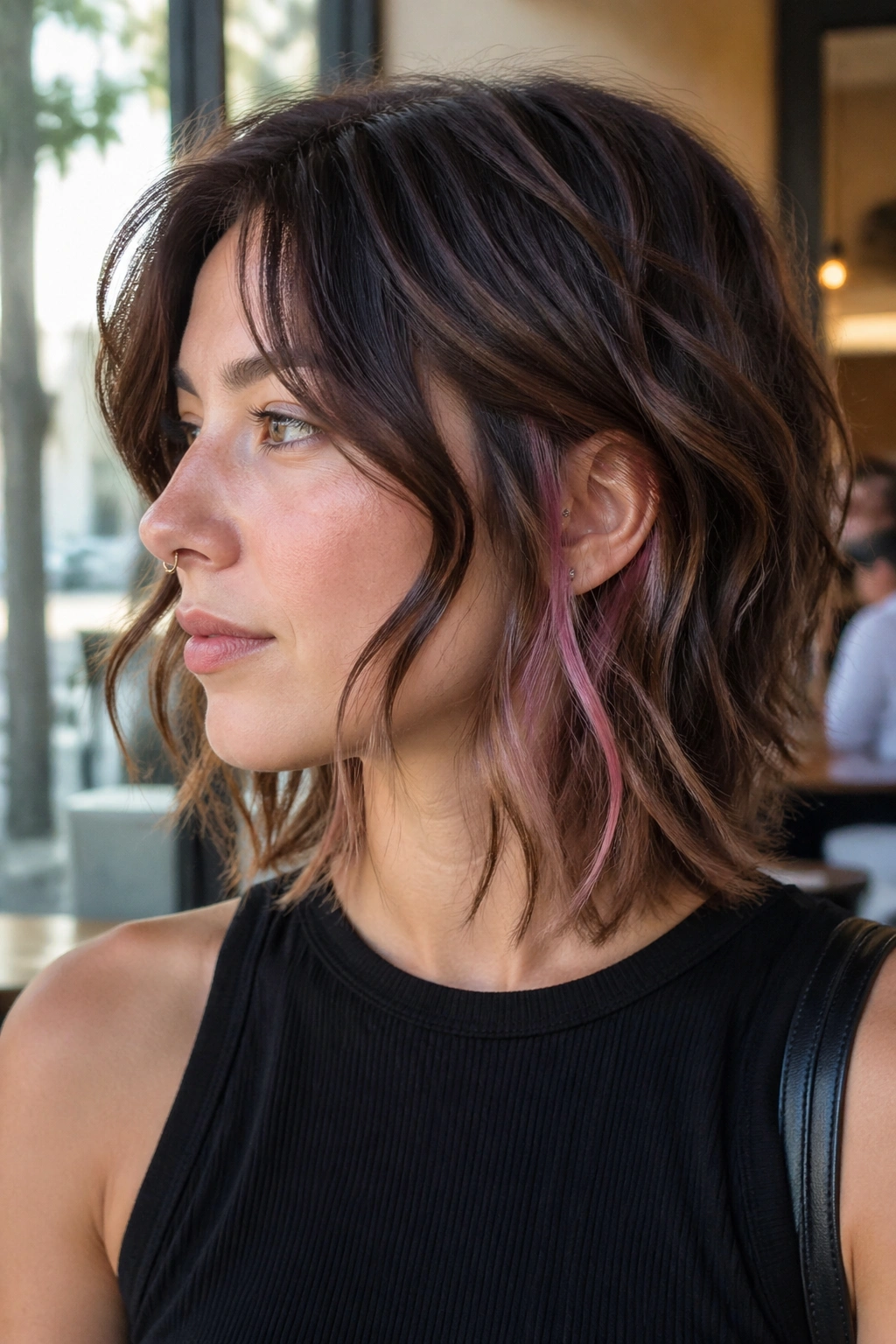
Can a wolf cut work at shoulder length without turning into a mullet? Yes, though the softer versions are the ones worth wearing. Keep the shortest layers around the cheekbone or lip, leave length through the nape, and do not carve the crown too aggressively.
Peekaboo color makes this cut more playful without hijacking it. The brighter pieces live under the top layer, often in the lower back and around the underside near the ears, so the color flashes when the hair moves or when you tuck one side back. On wavy hair, that hidden placement looks better than a big surface highlight more often than not.
What to watch for
If your hair is fine, this shape can collapse at the ends. You need enough density to hold the layered outline. If your hair is coarse, the stylist has to respect the wave pattern and avoid shredding the perimeter with a razor.
Use curl cream on the lower half and a lighter foam near the root. That product split helps the layers stay airy while the ends still clump into defined waves.
19. Glossy Brunette Lob With Hazelnut Money Piece
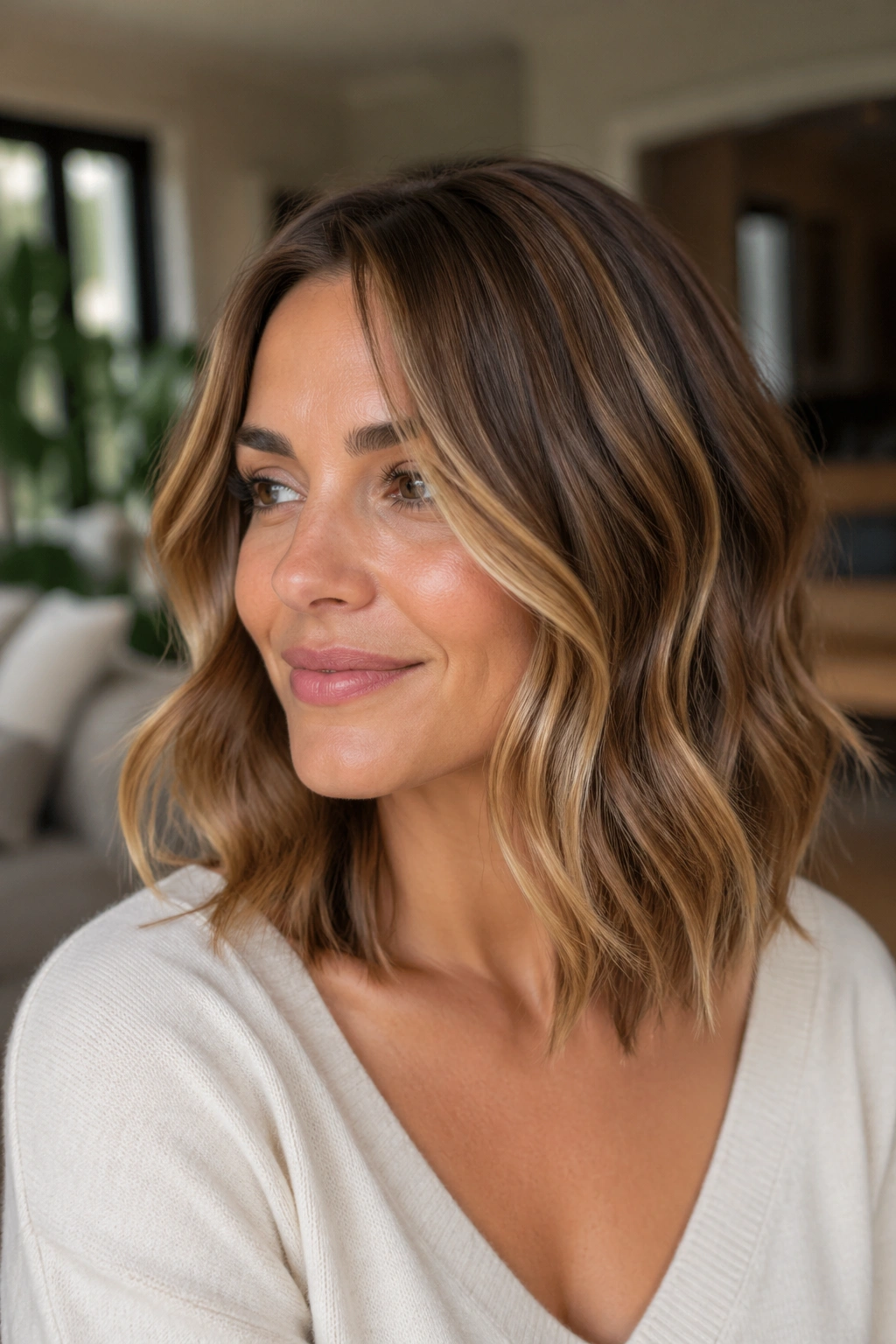
Some people want brighter hair. Others want brunette hair that looks richer, shinier, and a little more expensive. A hazelnut money piece does that job without dragging you into full-highlight territory.
The cut is straightforward: shoulder length, soft lob, long layers in the front. The color work is what shifts the look. A hazelnut money piece is lighter than your base but still brown, sitting around the face and sometimes echoed by a few thin ribbons through the crown. The effect is subtle at rest and more visible once the waves split apart.
This style is a good call if your hair takes warm tones well but full blonde turns harsh against your skin. It also suits people who wear neutral makeup and want their hair to stay in that same soft lane. I like a gloss on this one more than I like extra highlights. Shine matters.
Blow it out with a round brush, then bend the mid-lengths with a large iron. The smoother finish lets that hazelnut contrast show.
20. Shoulder-Length Waves With Lived-In Blonde Melt
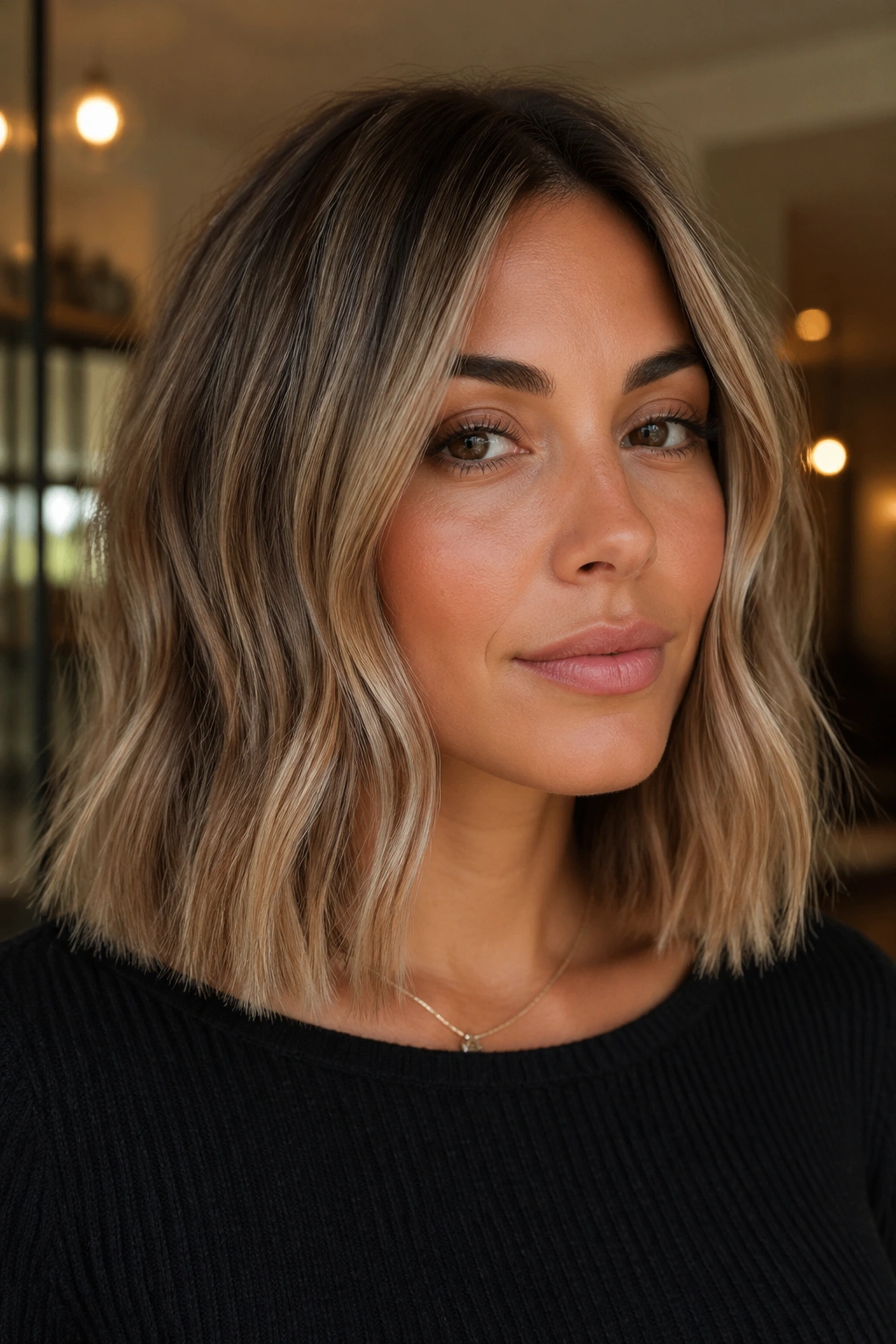
If you want blonde without a hard line every six weeks, this is where I would look first. A lived-in blonde melt leaves the root deep enough to blend with your natural color, then shifts lighter through the middle and ends so the overall result feels bright without looking newly striped.
The shoulder-length cut should not compete with the color. Soft layers, a clean perimeter, and enough weight at the ends to keep the wave pattern from fraying out. Once the shape is settled, the melt can do its job.
Ask your colorist for these three things:
- A shadow root close to your natural base
- Brightness around the face and top layer
- Paler ends with depth left in the interior
This layout keeps the blonde visible even when the waves separate, yet the regrowth still looks soft. It is one of the easiest ways to wear highlighted wavy hair without feeling tied to the salon chair all the time.
Purple shampoo can help, though use it with a light hand. Too much can leave blonde hair looking gray and dull.
21. Choppy Ends With Sand-Toned Highlights
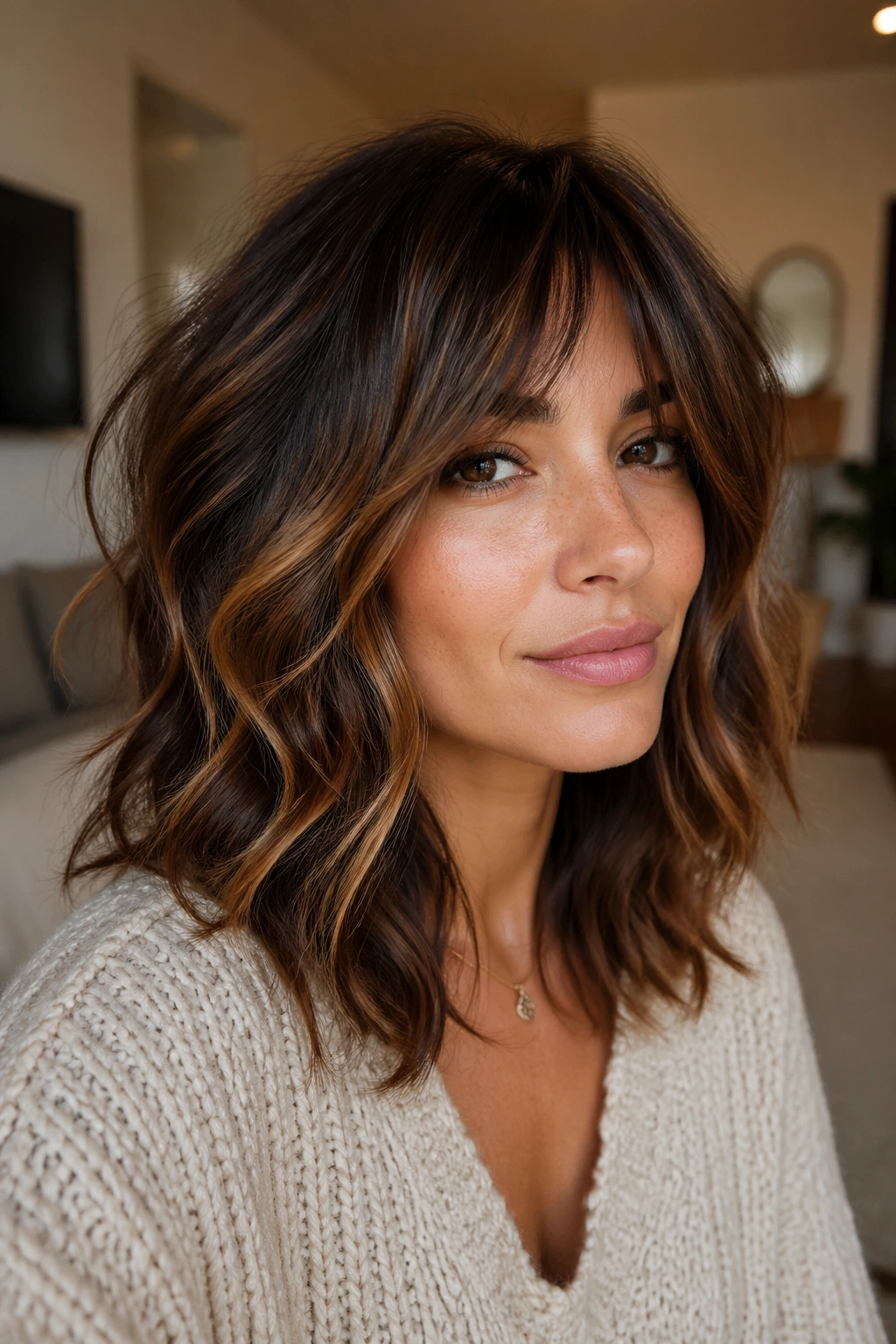
Choppy does not mean hacked up. Done well, choppy ends create little broken sections at the bottom of the cut, which gives shoulder-length waves that cool undone texture people often try to fake with hot tools and spray.
Sand-toned highlights are a smart match because they sit in a muted blonde-beige lane. They do not fight with the chopped outline. They soften it. On medium brown or dark blonde hair, sand reads bright without the strong gold that can make broken ends look dry.
How to style it so it looks intentional
Use a flat iron to put one or two bends through each large section, leaving the last inch straighter. Then rake in a pea-size dab of matte cream through the ends. That keeps the separation visible.
This cut suits oval, heart, and longer face shapes well because the choppy perimeter widens the lower half of the style a touch. Round faces can wear it too, though I would keep the front pieces longer than the jaw so the shape does not crowd the cheeks.
22. Long Layered Bob With Rose Brown Ribbons
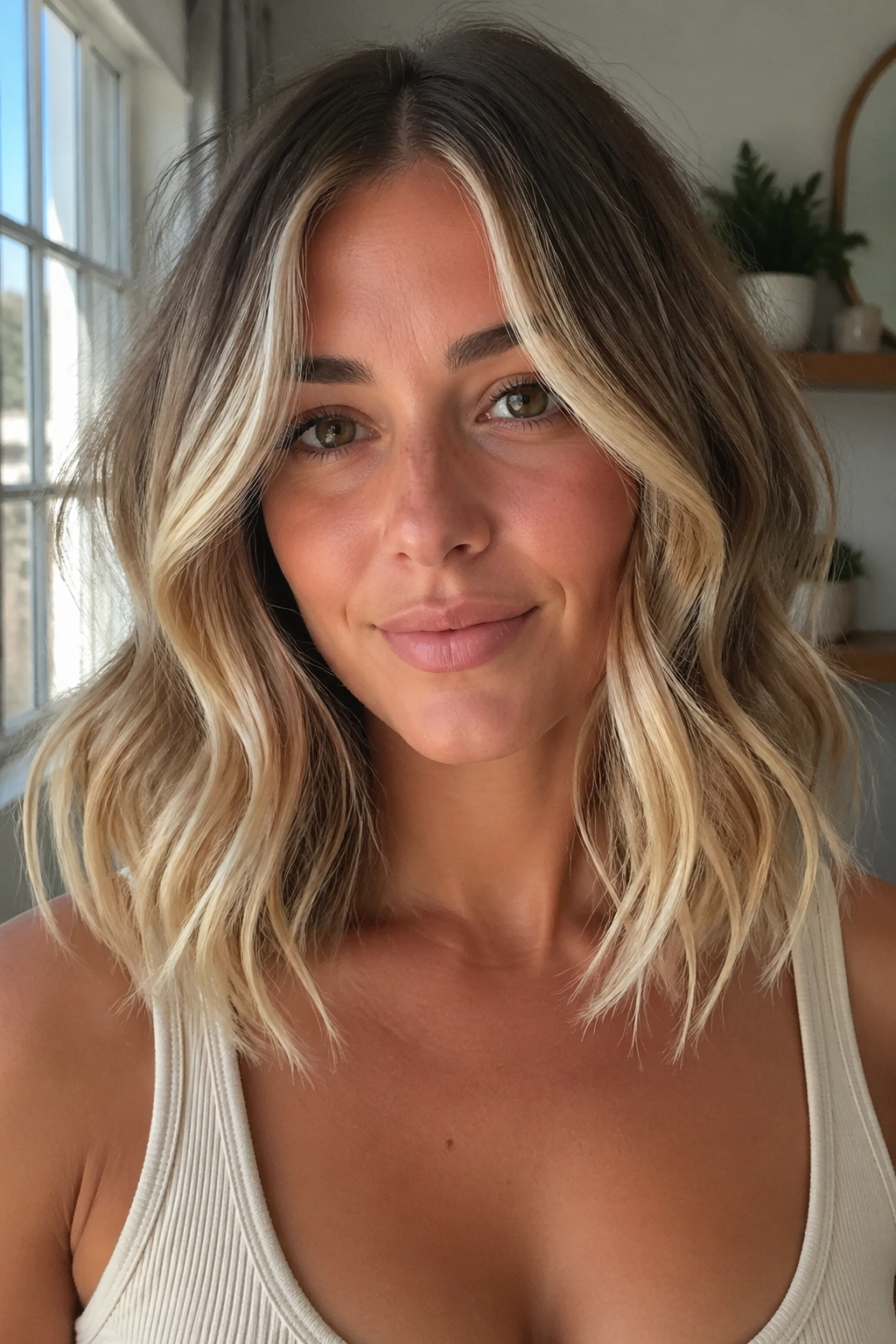
Rose brown is brown hair with a muted rosy warmth running through it. Not pink hair. Not copper hair. More like brunette with a soft flush under the surface. On wavy shoulder-length hair, that undertone gives the highlights a quiet glow without dragging the cut into obvious fashion-color territory.
A long layered bob gives the color room to show. The layers should be long enough to keep the bottom edge full, with shorter face pieces only if your wave pattern needs help opening up around the front. Then the rose brown ribbons can be threaded through the mids and ends so they appear when the wave bends.
This look works best on brunettes who already pull warm in sunlight. If your base is ashy and you fight brass every time you lift, rose brown may turn too warm too fast. In that case, go softer with the copper side of the formula and keep the ribbons fine.
I like this style on textured blowouts and on loose air-dried waves. It has enough character to hold up either way.
23. Soft A-Line Lob With Maple Highlights
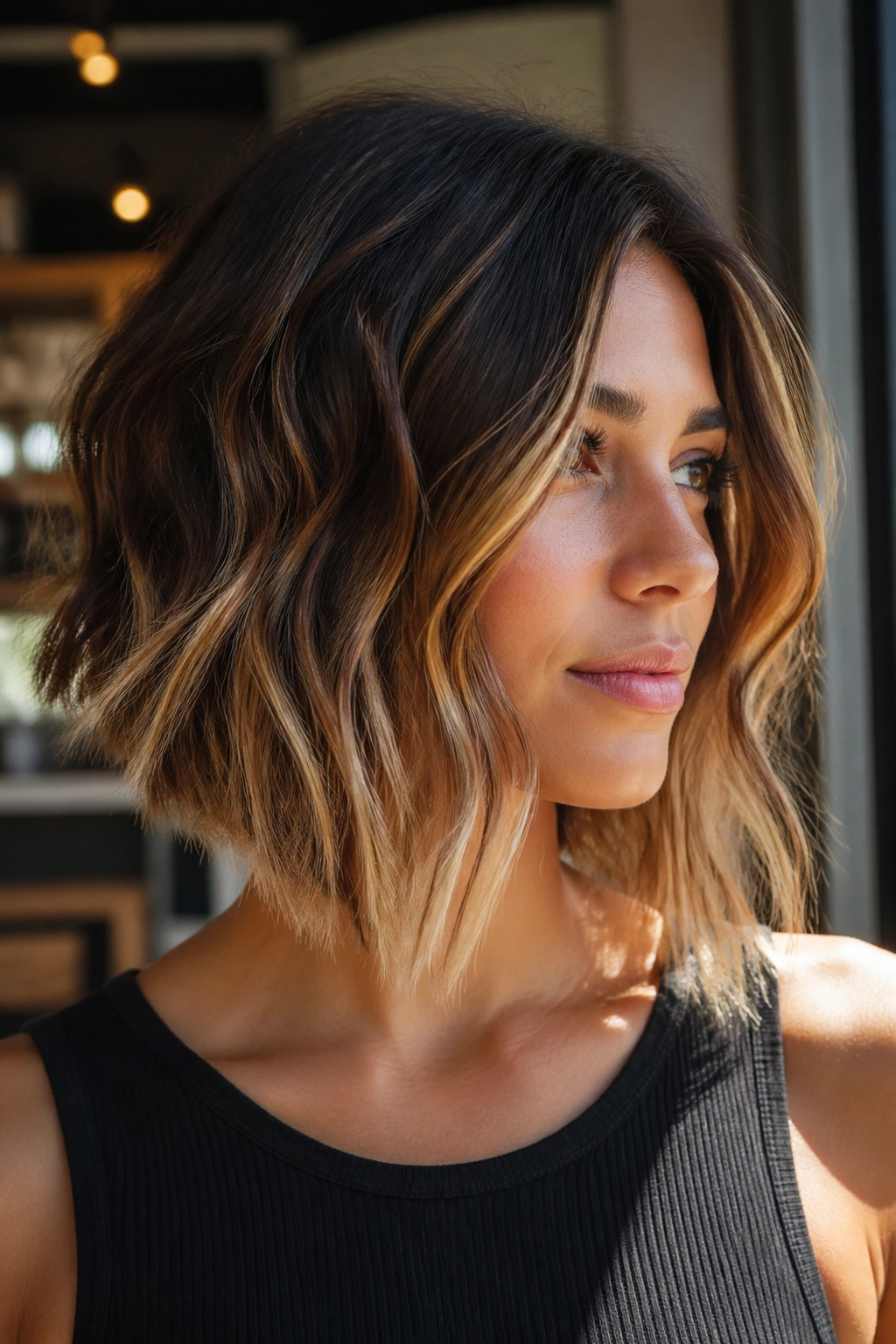
The A-line lob is one of the cleanest shoulder-length shapes for wavy hair. The back sits a bit shorter, the front stretches longer, and the line keeps the cut from looking wide through the middle. A soft A-line matters here. You want shape, not a dramatic wedge.
Maple highlights sit in a warm brown-gold zone that looks rich on medium brunettes. They are deeper than honey and less red than copper, which makes them easy to wear with natural-looking makeup and everyday clothing. Nothing about the color feels loud, though it still shows movement.
A few salon notes help:
- Keep the front about two inches longer than the back at most.
- Place the maple pieces around the face, through the surface, and a little underneath.
- Ask for point-cut ends so the line does not look stiff.
- Use a 1.25-inch iron if you want looser, flatter waves.
This is one of the most office-friendly looks in the bunch, if that matters to you. It looks neat without losing personality.
24. Air-Dried Wavy Cut With Painted Pieces
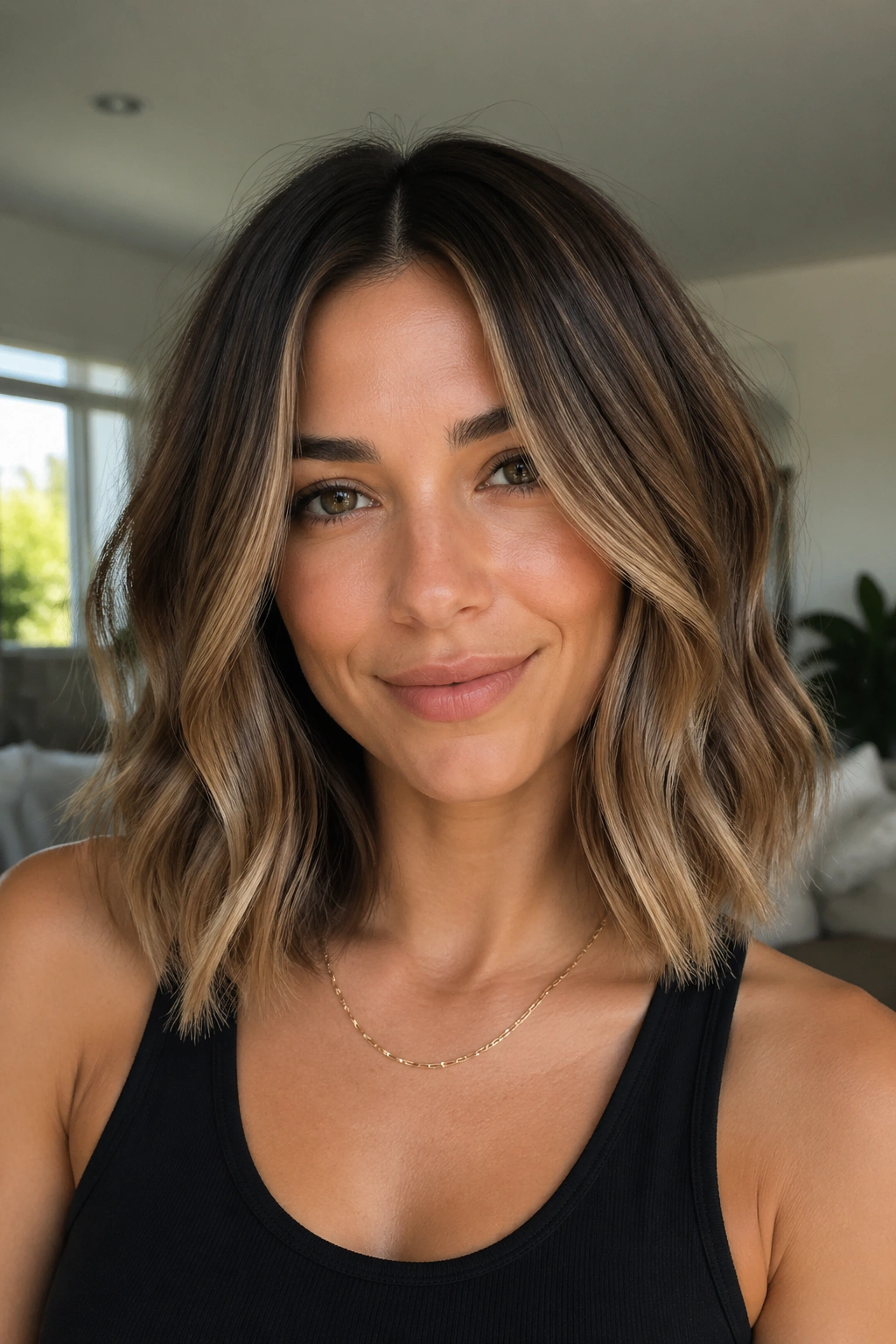
A haircut you can air-dry is worth more than one that looks good for 40 minutes after a full styling session and then collapses by lunch. I feel strongly about that. Shoulder-length waves already want to bend on their own, so forcing them into a shape that only works with heat often backfires.
Painted pieces make this cut better because the color follows the natural wave pattern. A stylist can paint where your hair opens up, where it falls flat, and where it needs more brightness near the face. Foils still have their place, though hand-painted highlights suit an air-dried wavy cut unusually well.
A low-effort routine that suits this style
- Apply leave-in conditioner on soaking-wet hair.
- Add mousse at the roots and cream through the mids.
- Scrunch with a cotton T-shirt or microfiber towel.
- Do not touch it again until it is dry.
The less you fuss, the better this haircut usually looks. Once it dries, shake the roots and maybe smooth a drop of serum over the ends. Done.
25. Shoulder-Length Waves With High-Contrast Chunky Ribbons
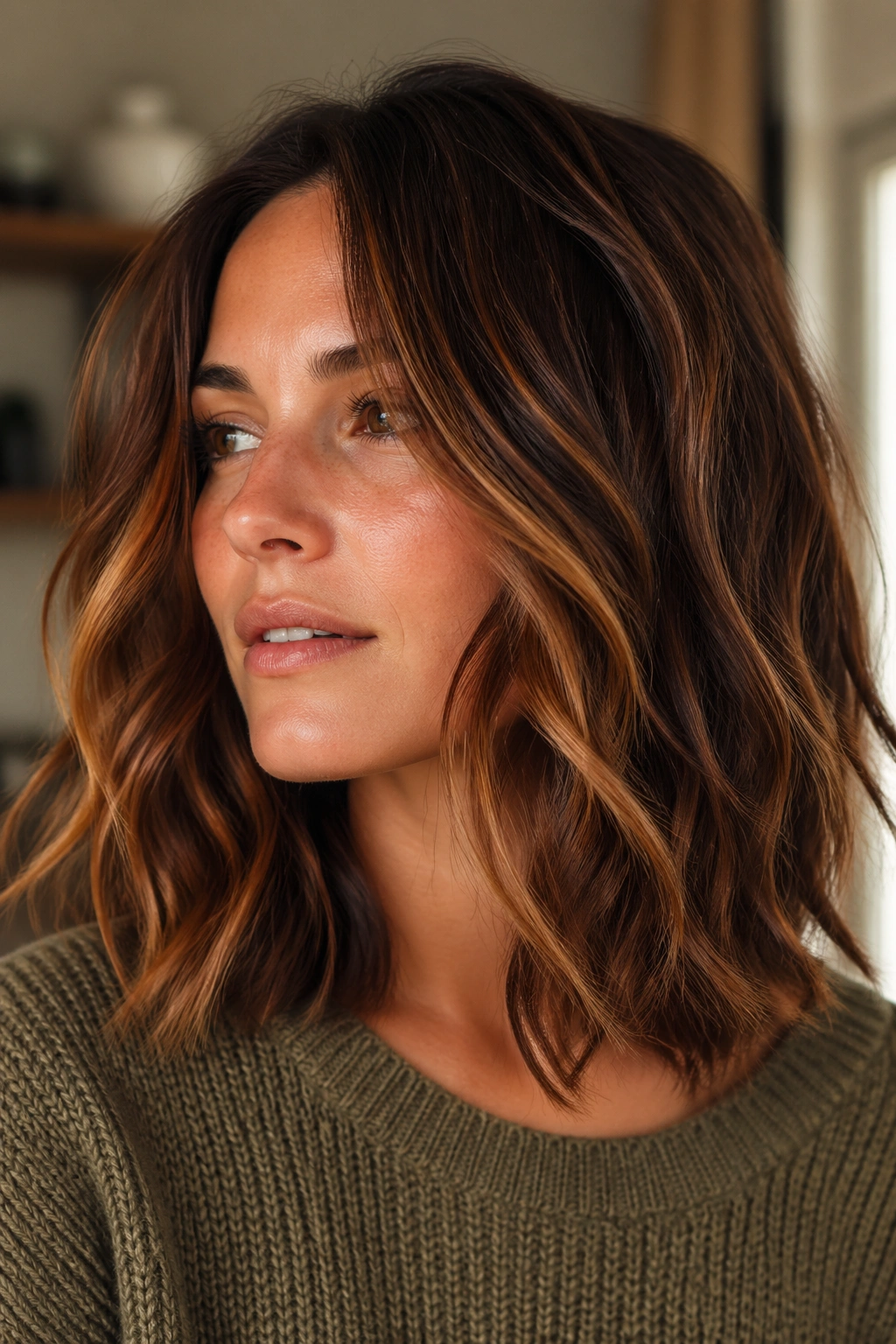
Chunky ribbons are back often enough that pretending they are gone feels silly. The difference between a good version and a bad one comes down to spacing and tone. Random thick streaks can look harsh. Deliberate ribbons placed where the wave naturally splits can look bold in a good way.
This style works best on medium to thick hair because the contrast needs enough hair to carry it. Fine hair can end up looking sparse when thick blonde pieces cut across a darker base. If you have the density for it, though, shoulder-length waves with chunky ribbons have attitude that softer balayage never will.
Keep the cut clean. Too many shaggy layers plus bold ribbons can head into chaos fast. A collarbone-length lob, a few long face-framing pieces, and maybe subtle internal texture are plenty.
Know the upkeep before you commit. High-contrast pieces show root growth sooner, and toner fades are more obvious. If salon maintenance annoys you, pick a melt instead. If you like a statement look and do not mind touch-ups, this one is fun.
26. Low-Maintenance Wavy Lob With Root Smudge
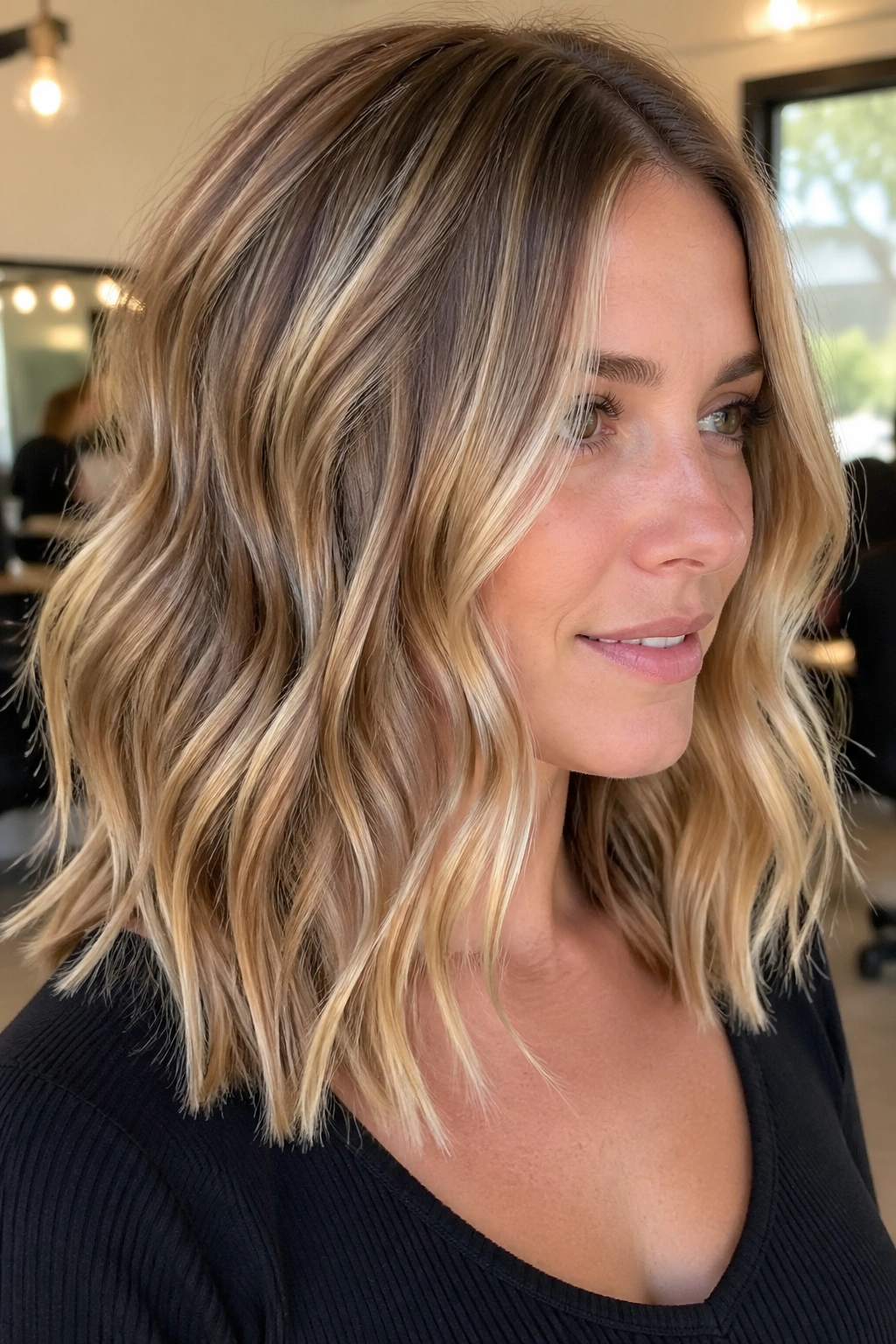
Hate frequent touch-ups? A root smudge is one of the most practical ideas in color. The stylist applies a deeper tone at the root after lifting, then blends it downward by an inch or two so there is no harsh break between your natural base and the lighter hair.
On a wavy lob, that blend has an extra benefit: the darker root makes the waves look fuller near the top, while the lighter ends keep the bottom from feeling heavy. It is subtle, though the effect is easy to spot once you know what you are looking at.
A few specs make this style work:
- The smudge should sit close to your natural level, not dramatically darker.
- Highlights need to start at slightly different points, not one straight line.
- A trim every eight to ten weeks keeps the shoulder-length shape from going blunt and bulky.
- A gloss in between lightening appointments helps the color stay fresh.
If you want highlight grow-out that does not nag at you in the mirror, this is one of the smartest routes.
27. Romantic Waves With Pearl Blonde Accents
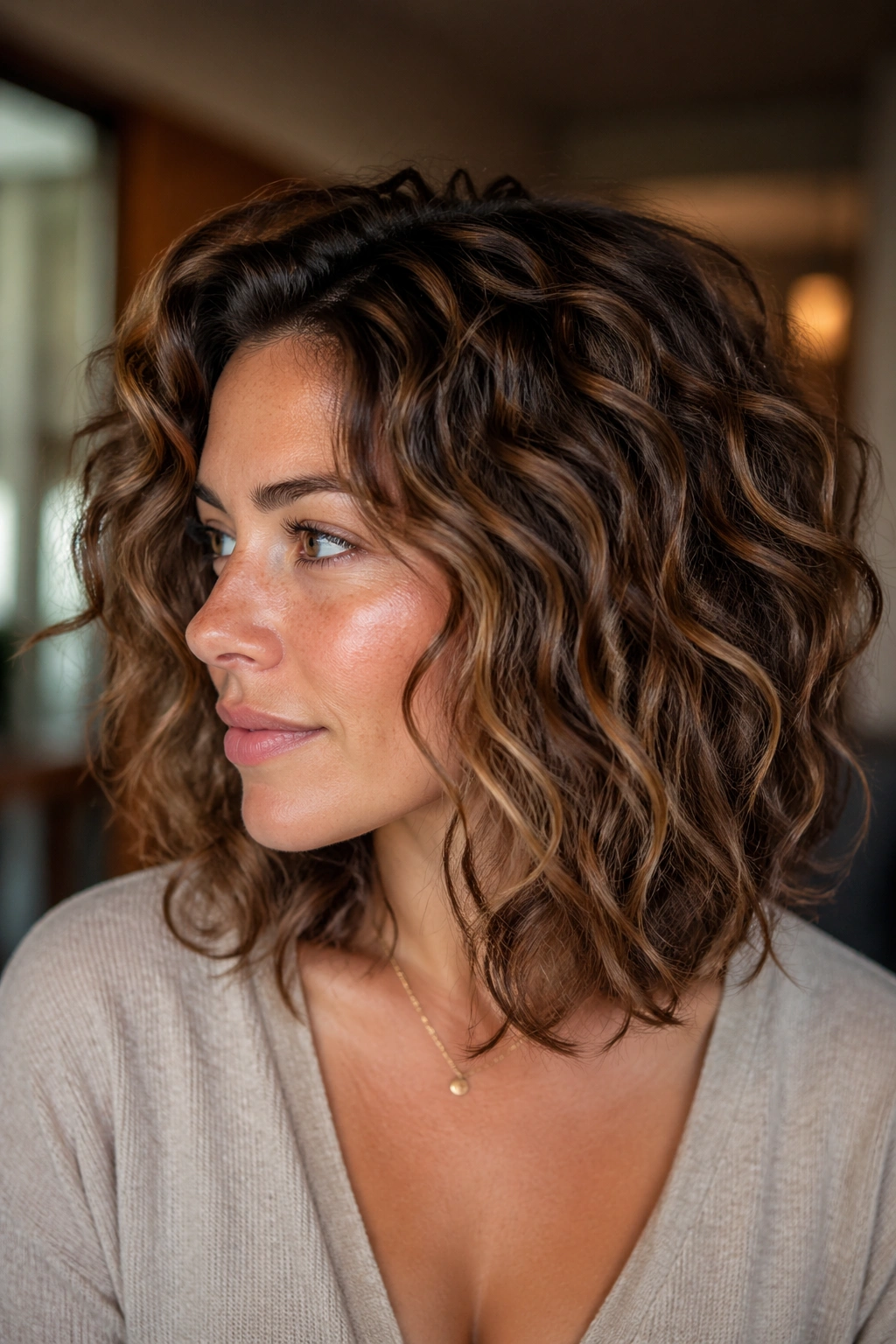
Pearl blonde has a cool, creamy sheen that looks soft rather than icy. On shoulder-length romantic waves, it gives the hair a polished finish that suits events, dressier styling, and anyone who likes a smoother, more brushed-out bend.
The cut here should be gentle. No hard choppy ends, no aggressive shag layers. Think collarbone length, face-framing pieces that start near the mouth or chin, and enough layering only to keep the waves from sitting too heavy. Then the pearl accents can sit through the front, top layer, and ends.
How I like to finish this look
Blow-dry the hair smooth first. Then wrap large sections around a 1.25-inch iron, all in the same direction on each side, and brush through with a mixed-bristle brush once cool. The wave opens up into a softer pattern, which lets the pearl tones look clean and reflective.
Pearl blonde can go flat on hair that is dry or porous. Use a shine spray or a light serum, not a thick oil, or you will weigh down the shape you spent time creating.
28. Wavy Cut With Underlayer Highlights
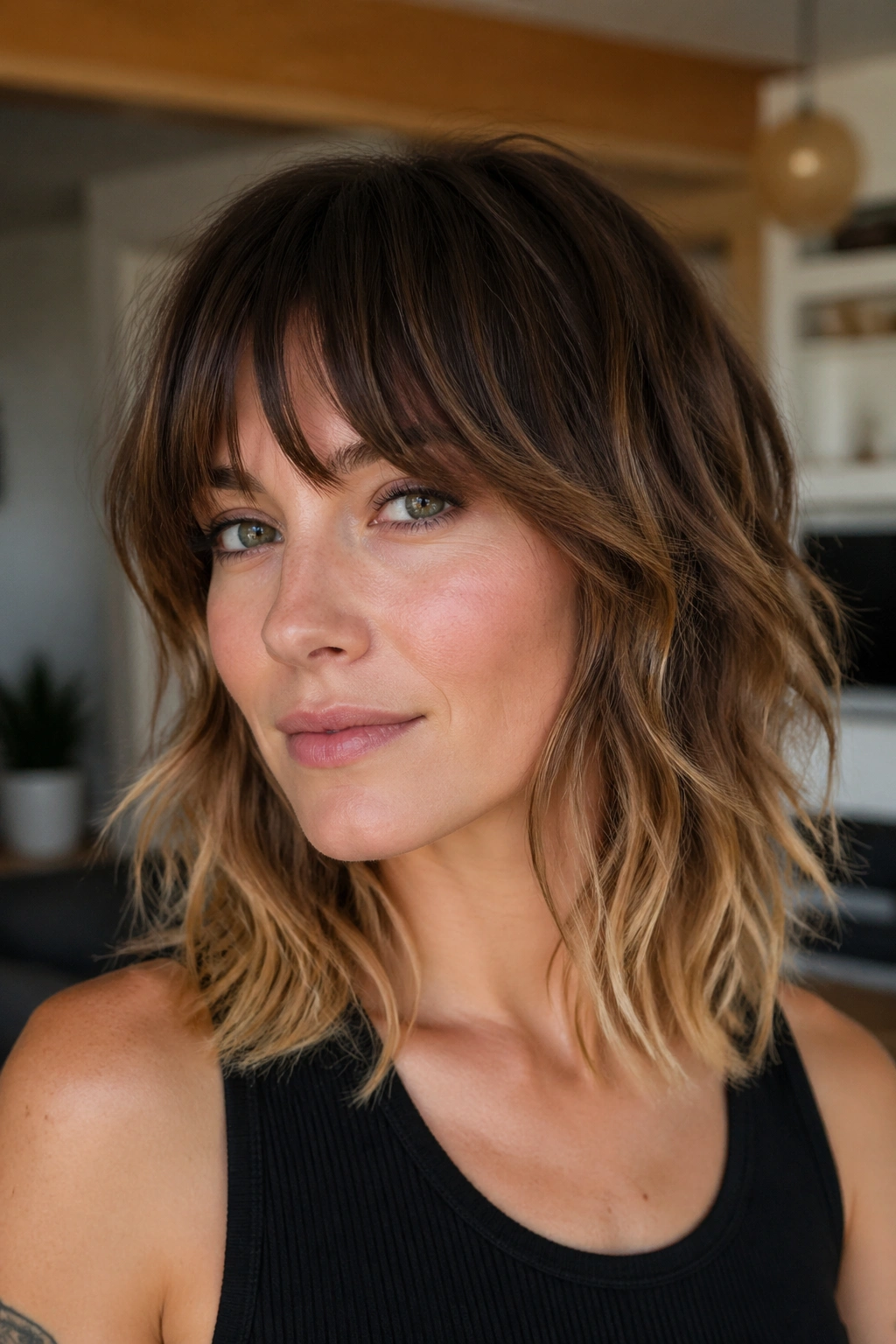
Underlayer highlights are one of the most underrated tricks for shoulder-length wavy hair. The top looks more natural and lower-maintenance, while the brighter pieces underneath flash when the hair moves, tucks behind the ear, or flips in the wind.
This style is useful if you want color without feeling overly blonde from the front. It is also handy in workplaces where bold surface highlights might feel like too much. You still get personality. It is simply tucked one layer down.
A few good placements for underlayer color:
- Behind the ear sections
- The lower back half of the haircut
- The underside of the face frame
- The bottom two inches near the nape
On waves, those hidden lights show up in motion first, which gives the hair depth without painting every outer strand. It is a clever choice for brunettes who want something different but not loud.
29. Shoulder-Length Shag Lob With Espresso and Toffee Blend
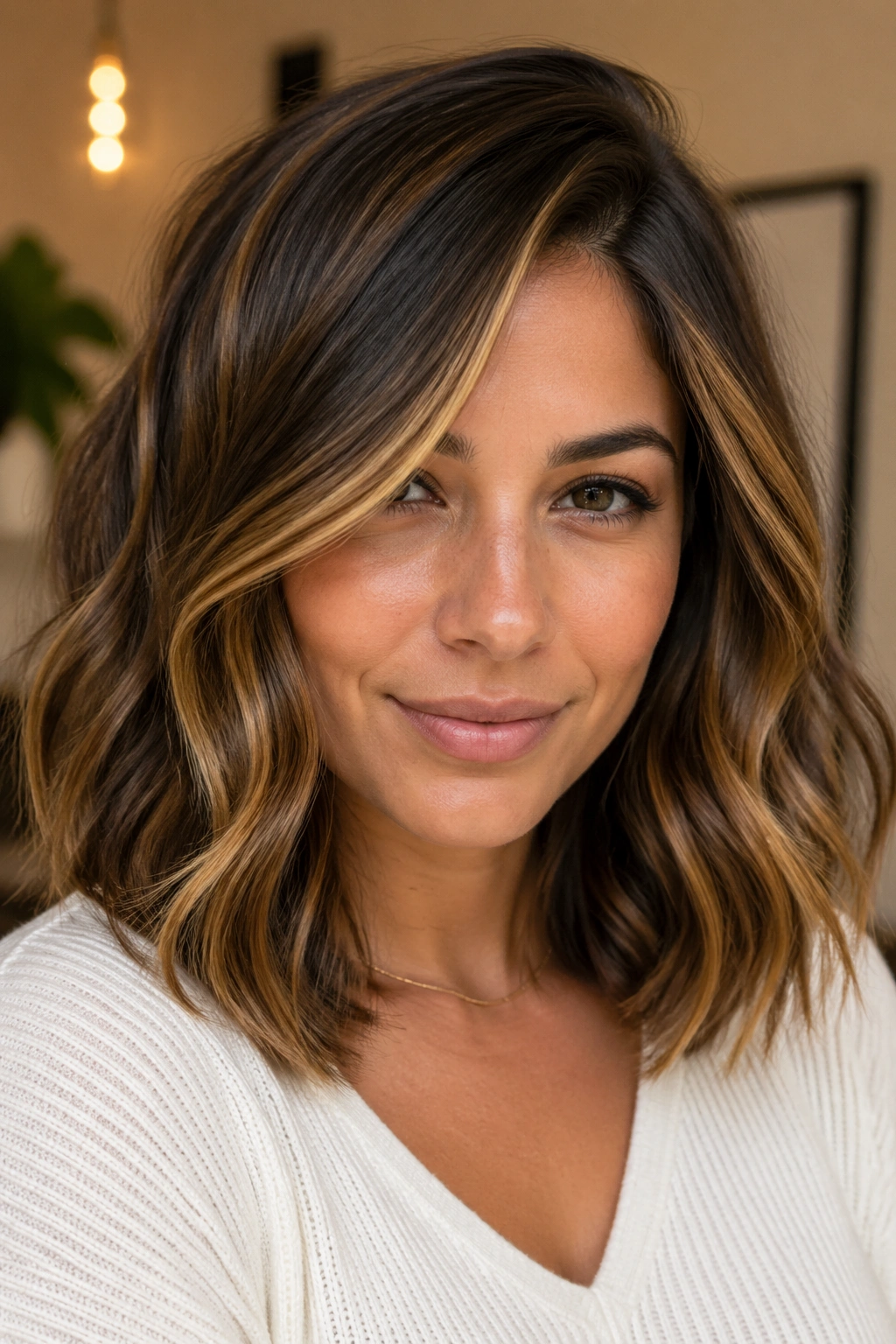
Dark hair does not need blonde to look dimensional. An espresso and toffee blend proves that. The base stays rich and dark, while the toffee pieces lift the wave pattern enough to show shape, especially around the front and through the crown.
The shag-lob hybrid suits people who want movement but still need the haircut to read shoulder length, not short shag. Keep the layers broken up through the top and sides, though leave enough length through the lower third so the cut still has weight. That balance matters.
This color combination works because the contrast is moderate. Espresso creates depth. Toffee warms it up. Your eye catches the lighter bends, yet the whole head still reads brunette. I think that is a sweet spot for a lot of people who want change without full commitment to blonde maintenance.
Style it with a diffuser and a touch of paste at the ends. The darker base helps the piecey texture stand out in a flattering way.
30. Polished Blowout Waves With Dimensional Highlights
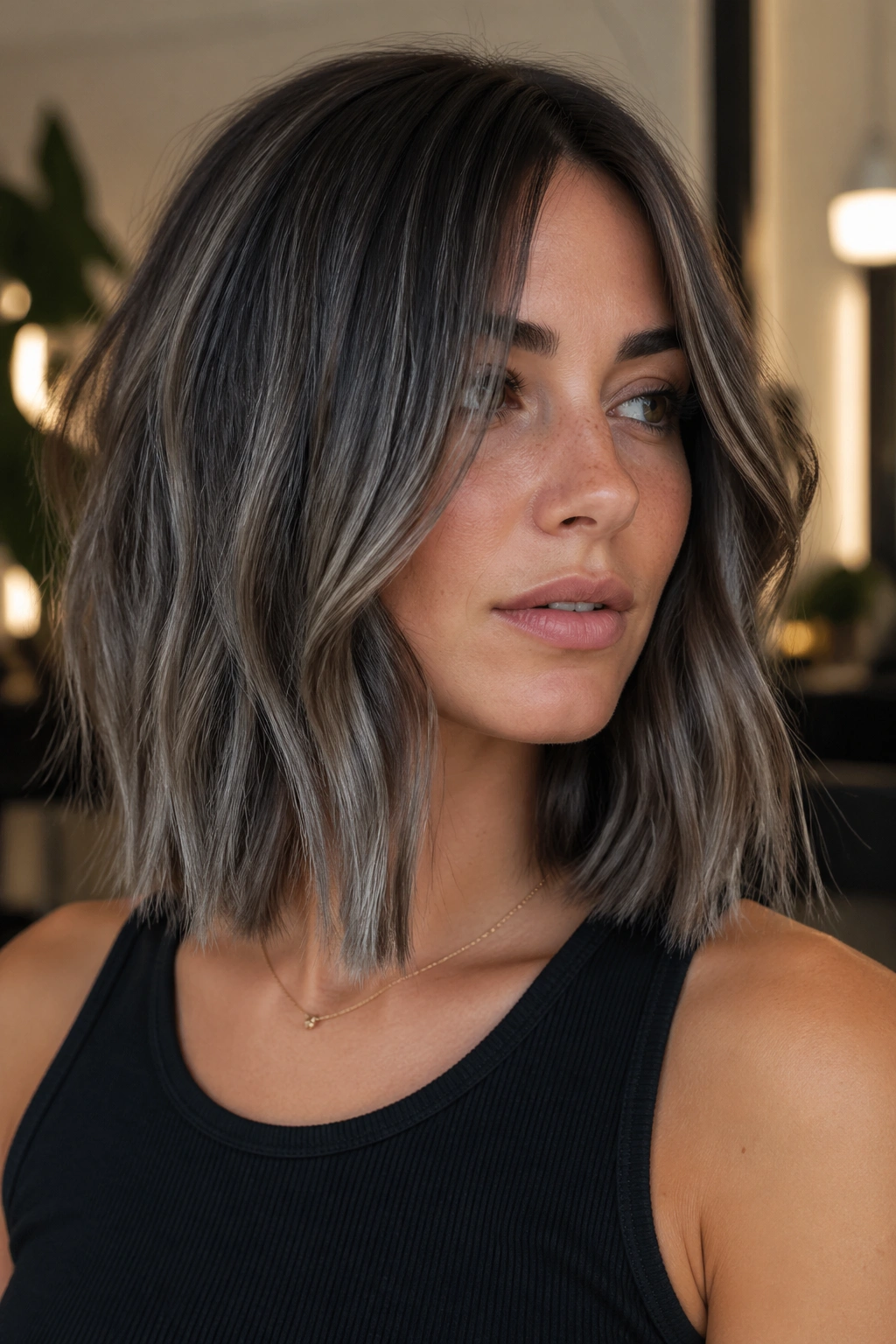
Not every shoulder-length wavy style needs to look undone. A polished blowout version can be sharp, glossy, and strong in its own way. This cut leans smoother through the root and mid-lengths, with controlled bends through the bottom half so the highlights read as ribbons rather than beachy streaks.
Dimensional highlights are key because a polished finish shows every placement line. You want at least three tones in the hair: a base, a lighter highlight, and a lowlight or rooted area to keep the color from looking flat. When the hair is blown smooth, that tonal layering becomes far more visible.
Best on days when you want a cleaner finish
Round-brush the hair in sections, then set the crown in Velcro rollers for 10 minutes while the ends cool in soft bends. Brush out, mist lightly, and leave it alone. The style should feel touchable, not shellacked.
This one is excellent for weddings, job interviews, parties, and any day when air-dried texture is not the mood. It also proves something useful: shoulder-length wavy hair with highlights can look relaxed or refined depending on how you finish it.
Picking the right one comes down to three things more than anything else: your wave pattern, your density, and your patience for upkeep. Fine hair usually wants softer highlights and fewer layers. Thick hair can handle bolder panels, stronger shaping, and hidden weight removal. If you hate salon touch-ups, rooted color, painted pieces, and smudged blends will save you grief.
Bring your stylist photos of the haircut and the color placement you like, from the front and the back. Then show them one picture of your hair air-dried on a normal day. That last image tells the truth no polished salon reference ever can.
