



A sleek double ponytail can look sharper than a single one because the part does half the styling for you. Clean roots, even tension, and a little shine at the crown turn what could feel childish into something crisp and deliberate.
The trick is that double ponytails are unforgiving. A crooked part, fuzzy flyaways, or two uneven sections show up fast. But when the lines are clean and the finish is glossy, the style reads polished in a way that works for errands, dinner, photos, or any day your hair needs to look put together without a full blowout.
I keep coming back to this style because it gives structure without asking for much drama. A rat-tail comb, a light hand with gel, and two small elastics can do more than a pile of accessories ever will. The details matter. They always do.
Some versions lean sleek and strict. Others are softer, with curved partings, wrapped bases, or a little movement in the ends. The difference is in the finish, not the idea itself, and that is what makes double ponytails such a useful look to keep in your rotation.
1. Classic Center-Part Sleek Double Ponytails
This is the version people picture first, and for good reason. A sharp center part, mirrored sections, and two smooth ponytails sitting low or mid-height create a tidy frame for the face. The look is simple, but it is not lazy. It needs neat sectioning and a calm hand.
Why it works
The center part gives the style balance. When the two sides match, the whole look feels intentional, and that matters more than any accessory you could pin on later. Keep the roots flat with a touch of gel, then brush each side back with the same amount of tension so one ponytail does not sit higher than the other.
A small detail changes everything: smooth the hair before you tie it, not after. Once the elastics are in place, use a dab of styling cream on your fingertips to press down stray pieces near the temples. That tiny step keeps the finish from looking fuzzy by lunchtime.
- Best on straight or lightly waved hair
- Works well for shoulder-length to long hair
- Looks especially clean with a middle part and low shine
- Use a fine-tooth comb for the part, then a paddle brush for the length
One tip: keep both ponytails at the same height, even if you have to measure by eye twice.
2. Low Nape Double Ponytails With Wrapped Bases
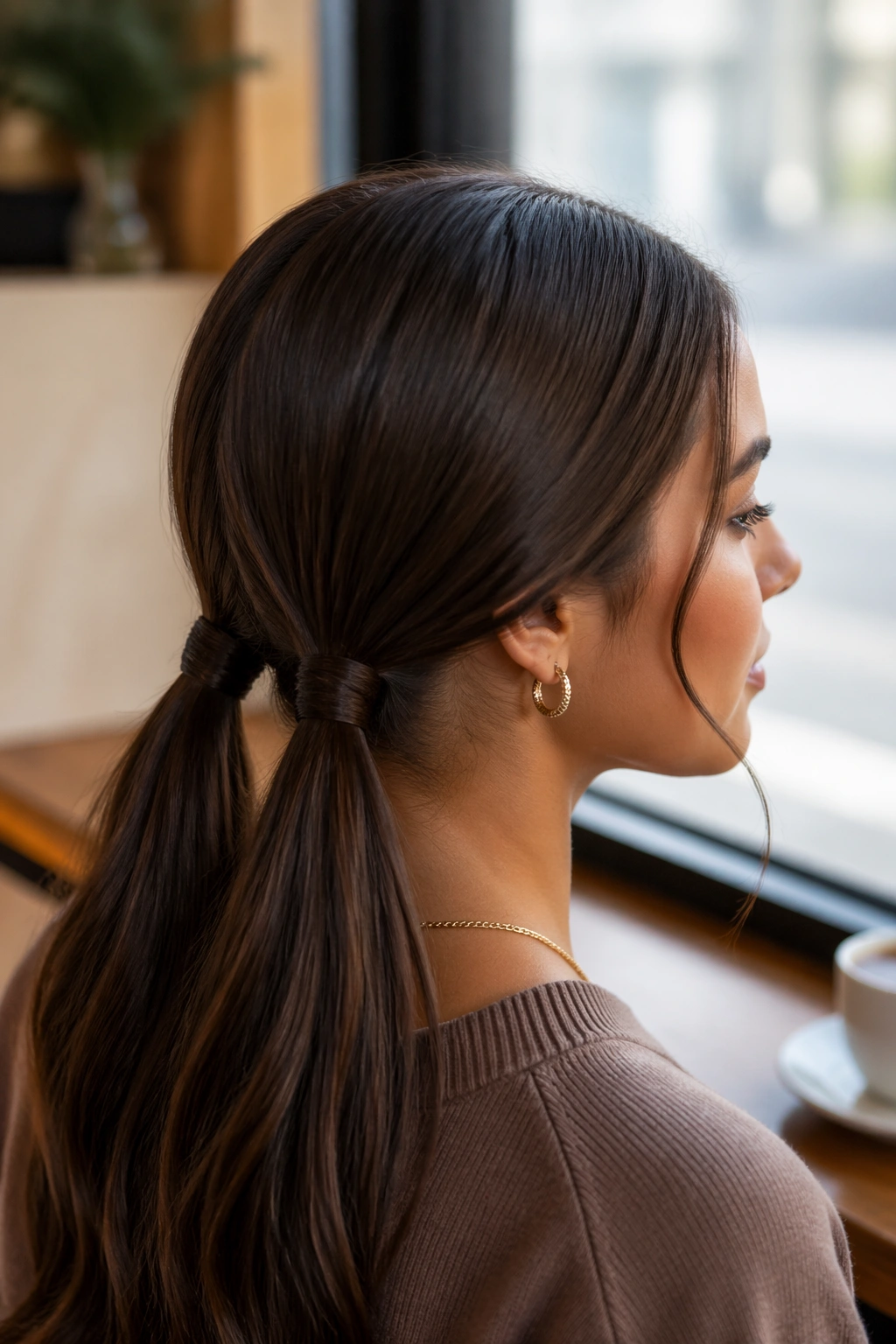
Why does a low double ponytail look so polished? Because it stays close to the head and avoids that bouncy, schoolyard feel that higher versions can slip into. At the nape, the style looks controlled and a little chic, especially when the elastics are hidden.
Start by parting the hair cleanly down the center, then gather each side just above the ears and secure both ponytails low. After that, take a thin strand from each ponytail and wrap it around the elastic until the band disappears. Pin the end underneath with a bobby pin. That one move makes the style feel finished.
A low placement also makes this version easier to wear with coats, collars, and scarves. Hair does not puff out as much at the base, and the silhouette stays neat even when the rest of the outfit is busy. If your hair is thick, use a little smoothing lotion on the last 2 inches before tying. It helps the ends lie flatter.
3. High Sleek Double Ponytails With a Strong Part
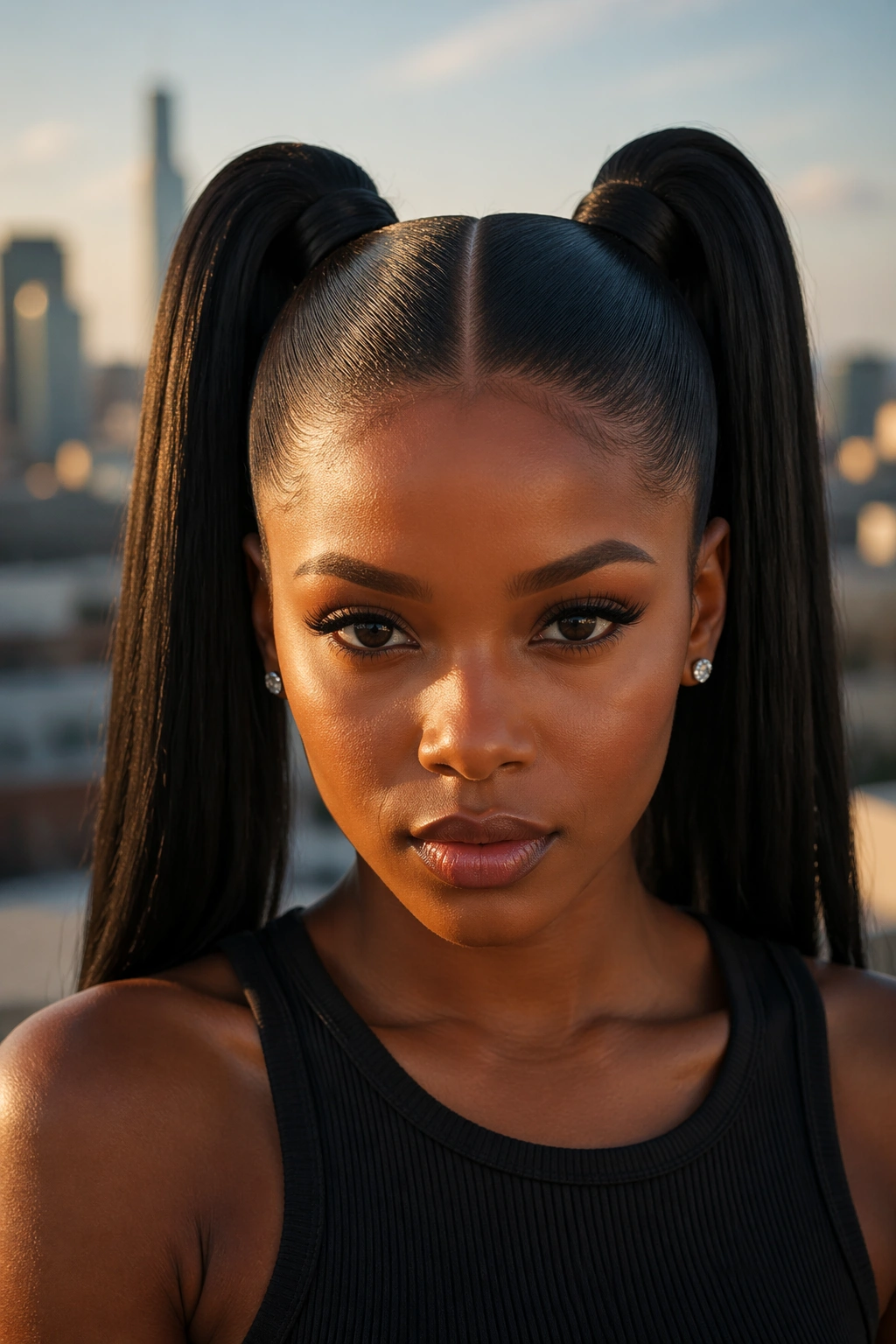
A high double ponytail has attitude, but sleek hair keeps it from tipping into playful territory. When the sections sit high on the head, the eyes go straight to the face line and cheekbones, which makes this one a strong choice for a sharper look.
The part does the heavy lifting
If the part is clean and the roots are flat, the ponytails can be high without looking messy. Use a rat-tail comb and make the part in one pass if you can. Fiddling back and forth creates little zigzags, and those show up once the hair is pulled tight.
This version works well with shiny hair products, but do not drown the crown in them. A pea-sized amount of gel at the roots and a light mist of shine spray over the length is enough. Too much product makes the hair look greasy instead of glossy, and that is a very different thing.
Best moments for this style
- Photos where you want your face fully open
- A structured blazer or fitted top
- Thicker hair that needs more lift
- Straightened hair with a smooth finish
The whole style depends on control. Loose, high, and sleek is the sweet spot.
4. Side-Part Sleek Double Ponytails
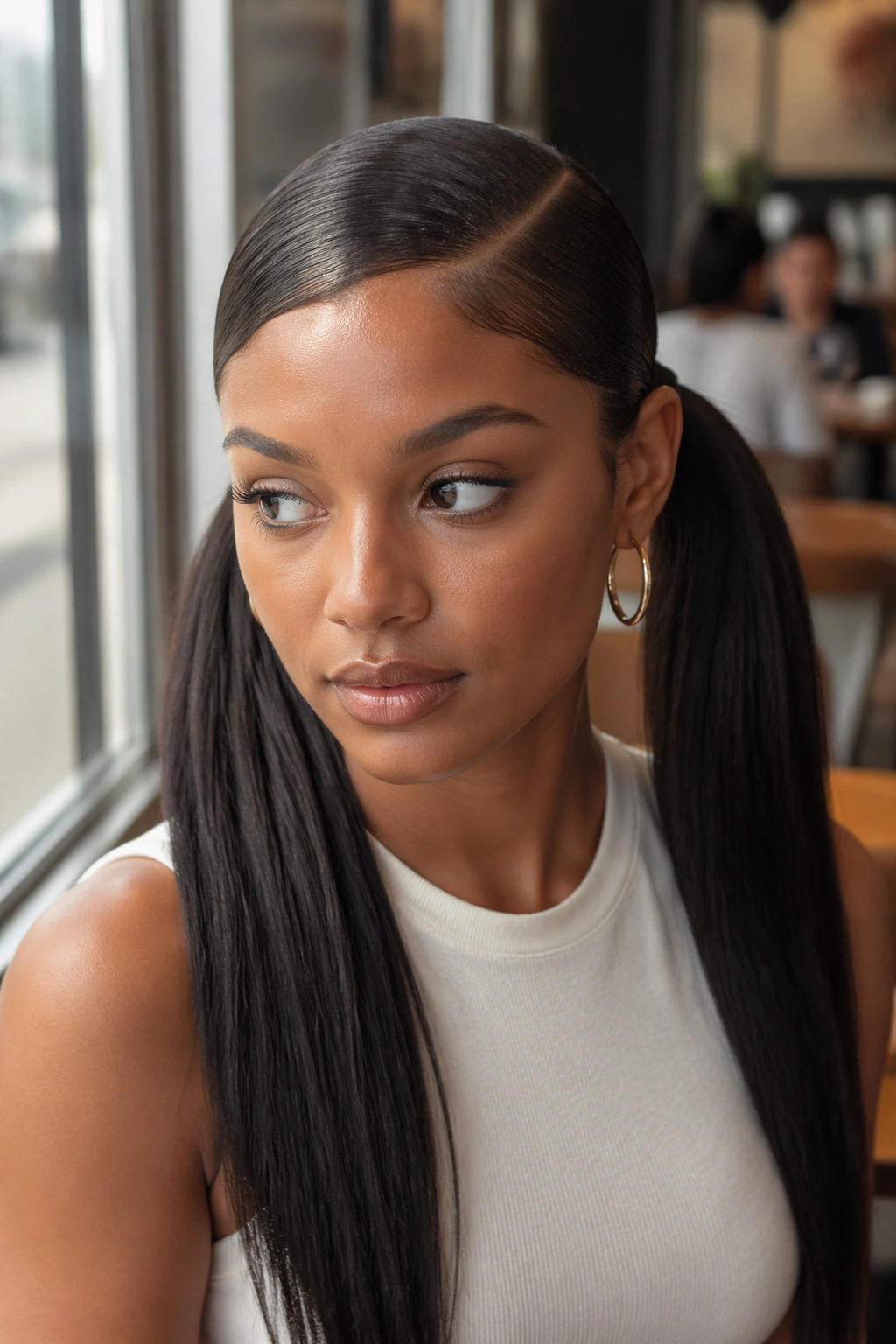
A side part changes the mood right away. It softens the symmetry, which can make double ponytails feel a little more grown-up and less severe. The style still looks neat, but it has more shape across the forehead and front hairline.
Think of this as the version for people who like a clean finish but do not love the hard line of a middle part. A deep side part can draw attention to one eye and make the whole style feel slightly more styled, almost like the hair was arranged on purpose instead of simply tied back. That matters when the rest of the outfit is minimal.
Use a smoothing brush to direct the front section across the forehead before tying each side. If the shorter pieces near the part keep slipping out, mist them with water and a light styling gel, then press them flat with your palm for a few seconds. The style holds better than you might think.
5. Bubble Double Ponytails With Sleek Roots
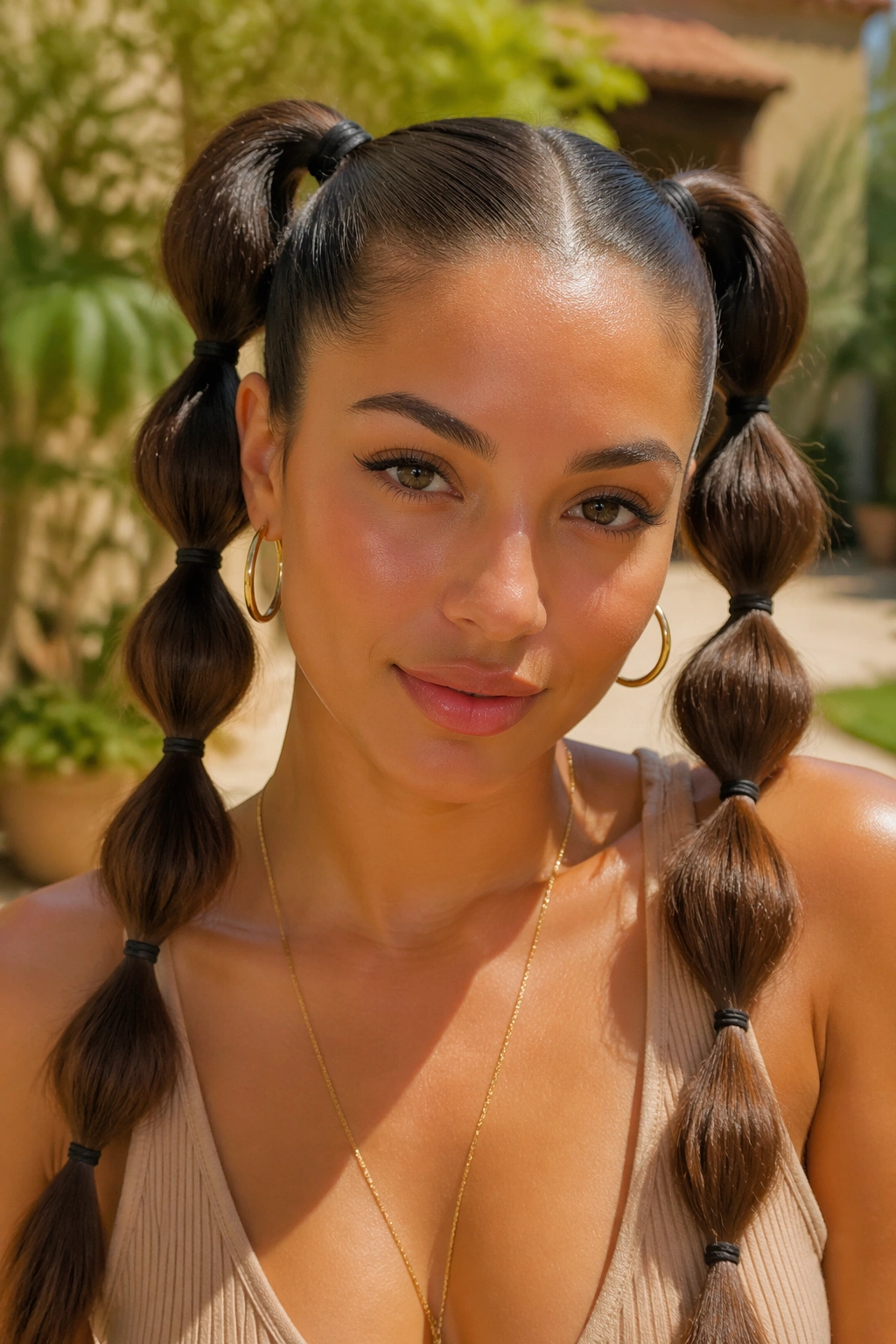
Bubble ponytails can look too playful if the base is loose. Keep the roots sleek, and they change fast. The smooth top half gives the style a polished frame, while the rounded bubbles add texture down the length without needing waves or curls.
The trick is to tie each ponytail with clear elastics every 2 to 3 inches, then gently pull each section outward until it forms a soft bubble. Do not tug too hard. You want shape, not frizz. If your hair is especially slippery, secure the ends with a tiny elastic first, then add the bubbles upward.
This style is useful when you want something more interesting than plain ponytails but still need a clean finish. It also works nicely with longer hair because the bubbles break up the length and keep the look from falling flat. I like it best when the crown is smooth and the bubbles are evenly spaced.
A few details that help
- Use 3 to 5 small elastics per side
- Keep the first bubble just below the ear
- Pinch each bubble from the sides, not the top
- Finish with a fine mist of flexible-hold spray
6. Braided-Base Double Ponytails
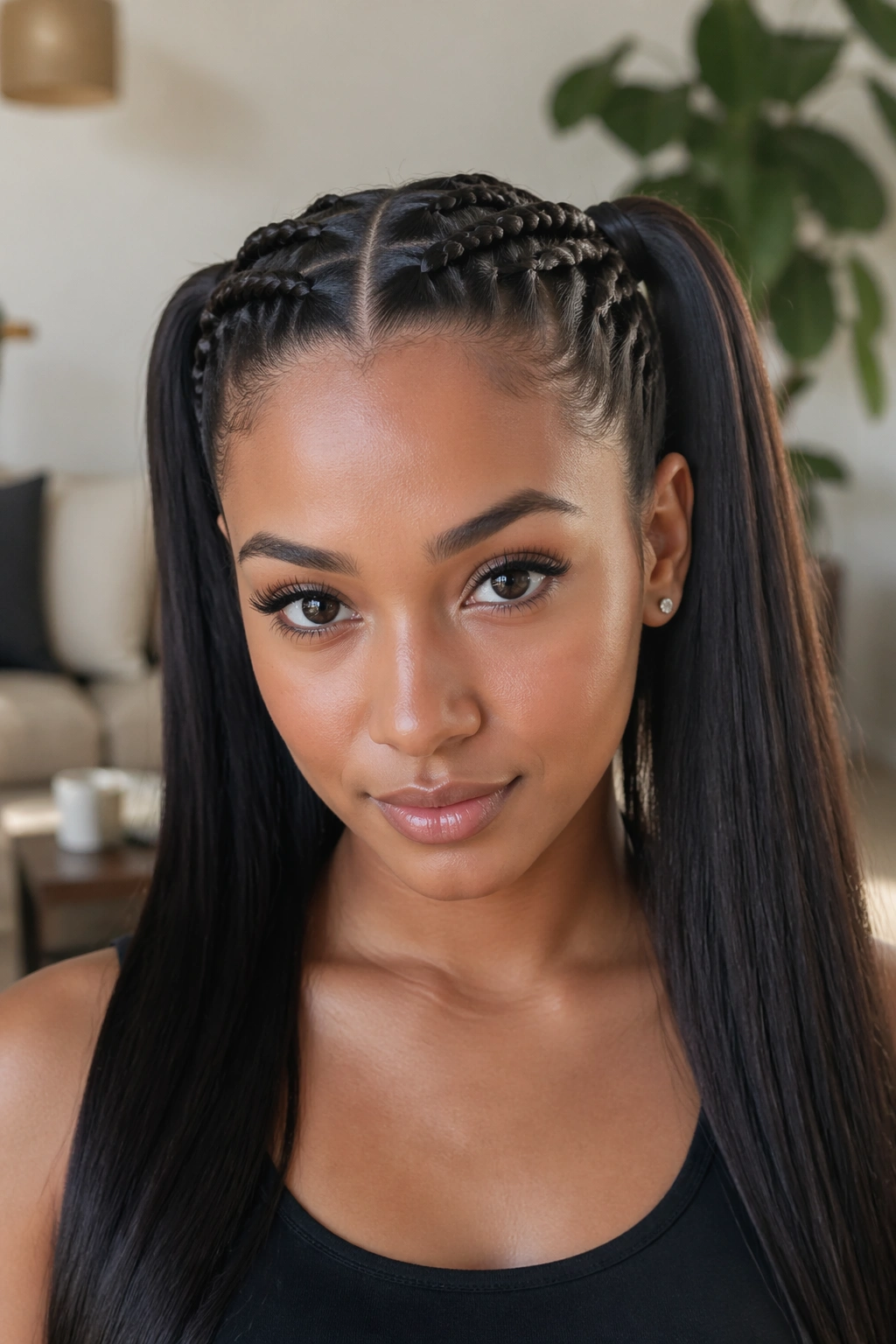
A braid at the base changes everything. Instead of tying the hair straight back, you start with a sleek section, braid the first few inches, and then let the rest fall into a ponytail. It gives the style texture right where the eye lands first, which makes it feel more detailed without getting fussy.
This version is a smart pick for hair that tends to slip out of elastics. The braid grips the crown better than a plain tie, especially if the hair is layered or freshly washed. Once the braid is secure, keep the rest of the ponytail smooth with a cream that has a little hold.
The style can look sporty or dressy depending on how tight the braids are. Tight braids read sharper. Looser ones feel softer. Either way, the finish stays clean if you hide the elastic under a wrapped strand or a narrow ribbon in the same hair color.
7. Wet-Look Double Ponytails
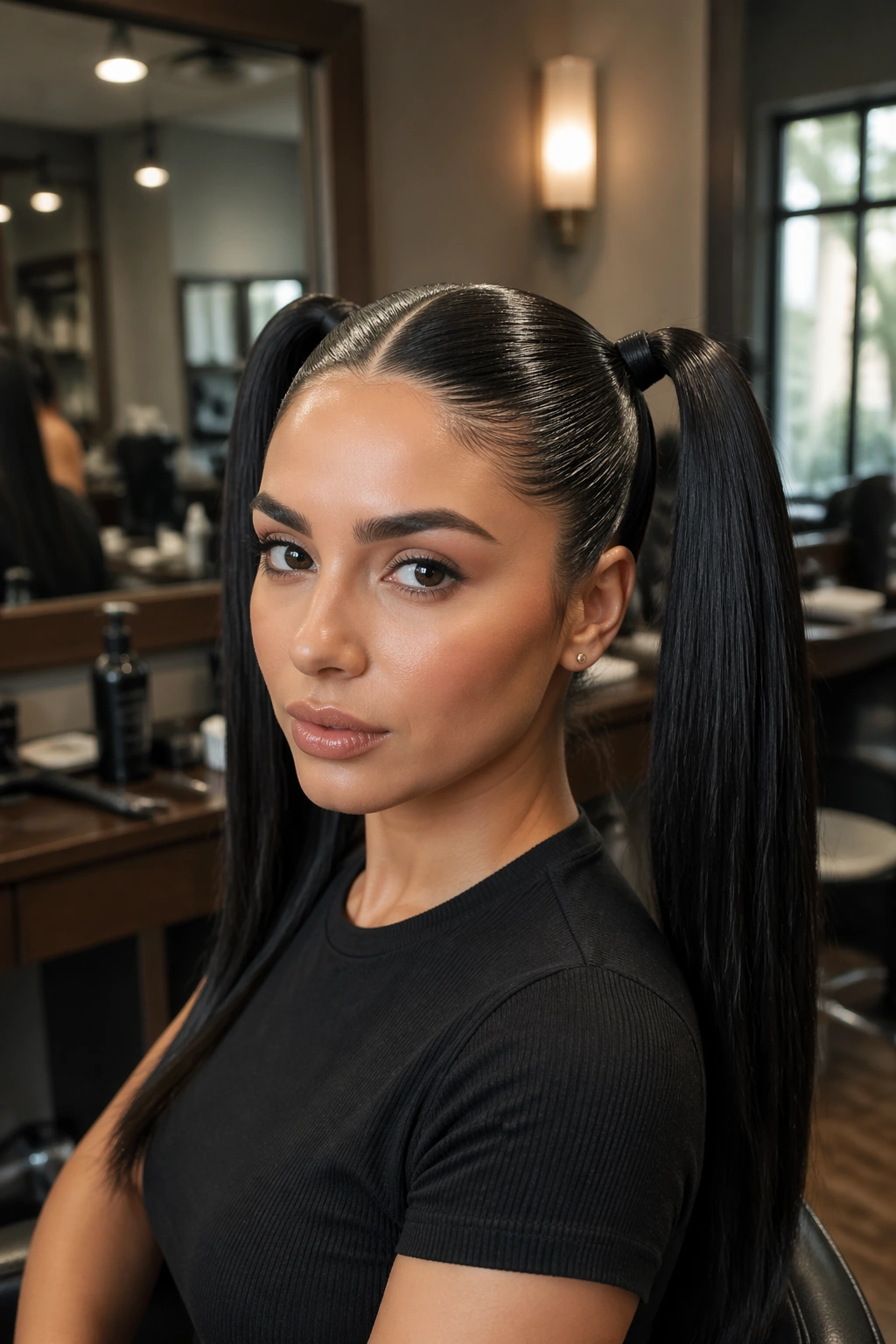
Wet-look hair is not actually wet, of course. It just has that glossy, slick surface that makes a style feel sharp and modern without needing much movement. On double ponytails, the effect can be especially polished because the two sections give the shine a place to land.
Start with damp hair or spray the roots lightly with water before applying gel. Comb everything back until the part and the side panels are smooth, then secure each ponytail close to the head. The goal is a slick surface that reflects light evenly, not a crunchy helmet. That line gets crossed fast if the product is too heavy.
Keep the lengths neat too. If the ponytails are long, run a small amount of serum through the mids and ends so they look glossy rather than dry. This style is strongest when the finish is consistent from root to tip. A shiny crown with frizzy ends ruins the point.
8. Double Ponytails With a Clean Tucked Finish
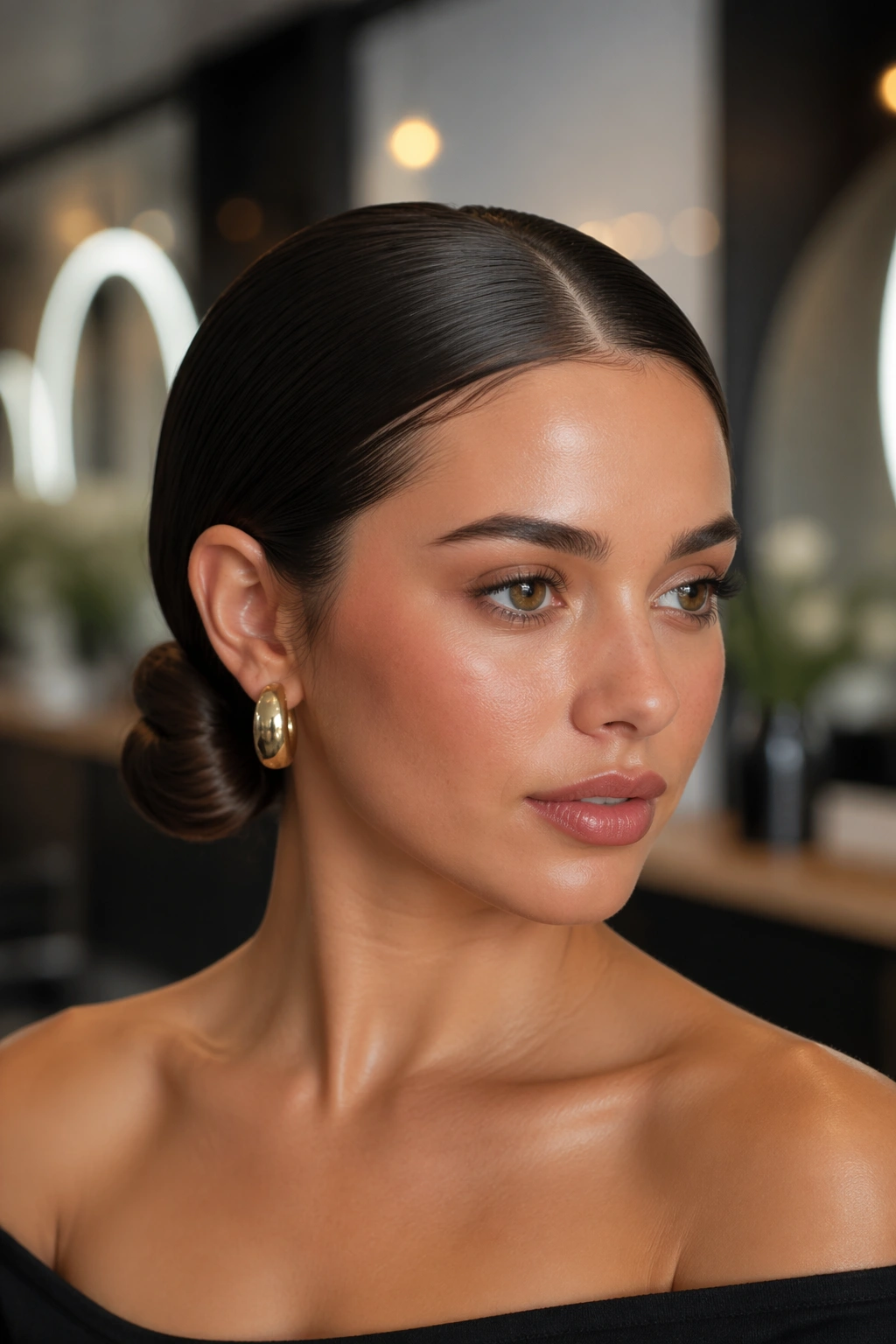
A tucked finish gives double ponytails a more tailored feel. Instead of leaving the ends loose, fold each ponytail under itself and pin it low so the shape stays compact. The result sits somewhere between a ponytail and a soft roll, which is neat if you want polish without a lot of length showing.
This is one of those styles that makes short- to medium-length hair look deliberate. It also helps if the ends are dry or blunt, because tucking them hides the parts that tend to fray first. Use two or three bobby pins per side, crossed in an X if the hair is heavy.
The look feels especially clean with a deep side part or a smooth center part. You can also add a little shine spray just on the outer surface, but keep it light. Too much product near the pins makes the style slide out. Not worth it.
9. Sleek Double Ponytails for Curly and Coily Hair
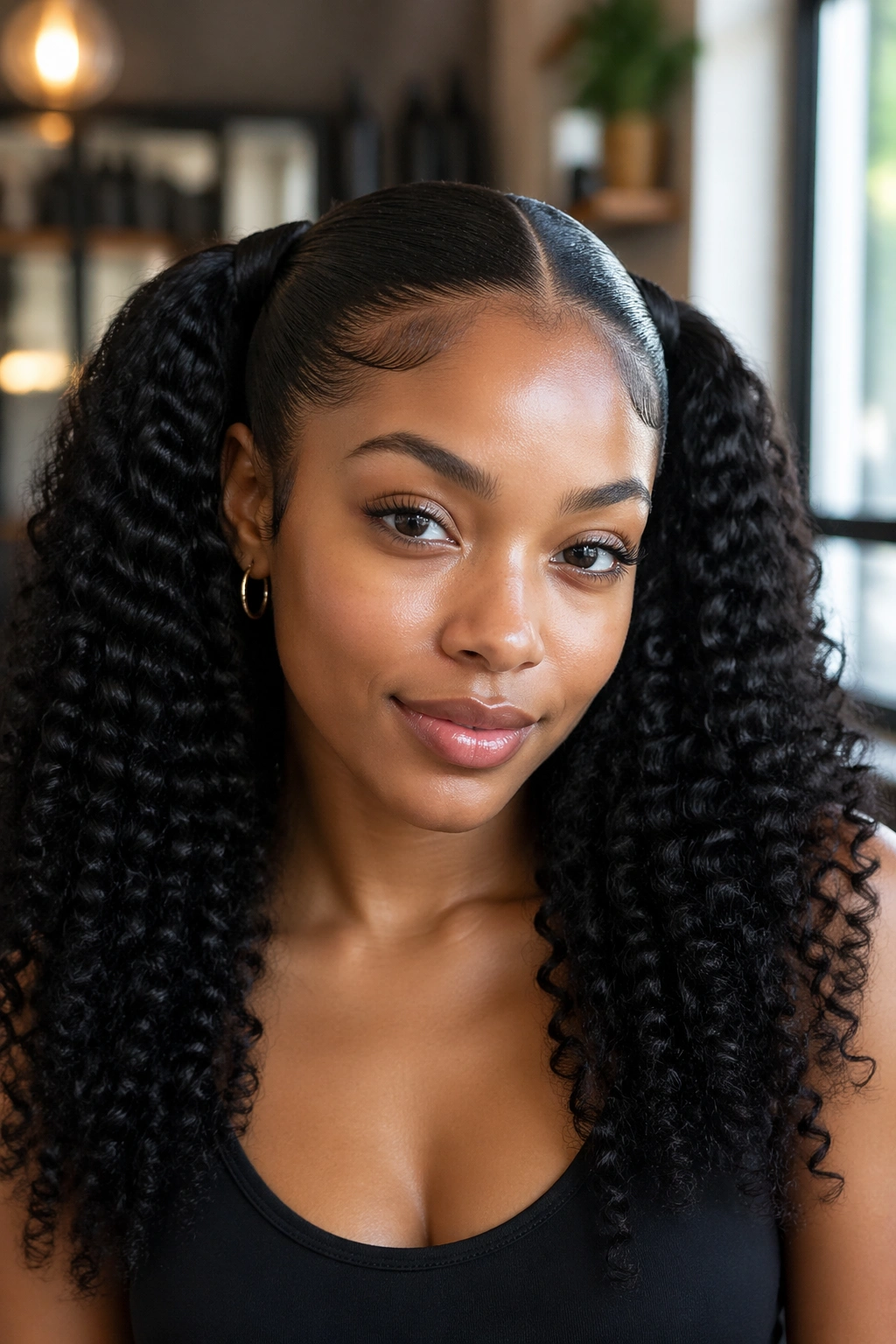
Can double ponytails look sleek on curly or coily hair? Absolutely. The trick is not to flatten the texture into something it is not. The polished version keeps the roots smooth while letting the length stay stretched, braided, or softly defined.
A strong moisturizing leave-in helps before any brushing starts. Then use a gel that gives hold without leaving white flakes, and smooth the hair in small sections so the surface stays even. A brush with firm bristles works better here than a flimsy one, because it presses the hair down instead of just moving it around. That pressure matters.
The ends can stay curly, braided, or blown out depending on the look you want. I like the contrast of a slick root and a textured tail. It feels modern without pretending the hair has to become something else. If the hairline needs extra hold, a little edge control around the front can keep the finish crisp.
How to keep it neat
- Work in sections instead of all at once
- Use a satin scarf for 10 minutes after styling
- Avoid heavy oil at the roots
- Re-tie with a soft elastic if needed
10. Double Ponytails With Curled Ends
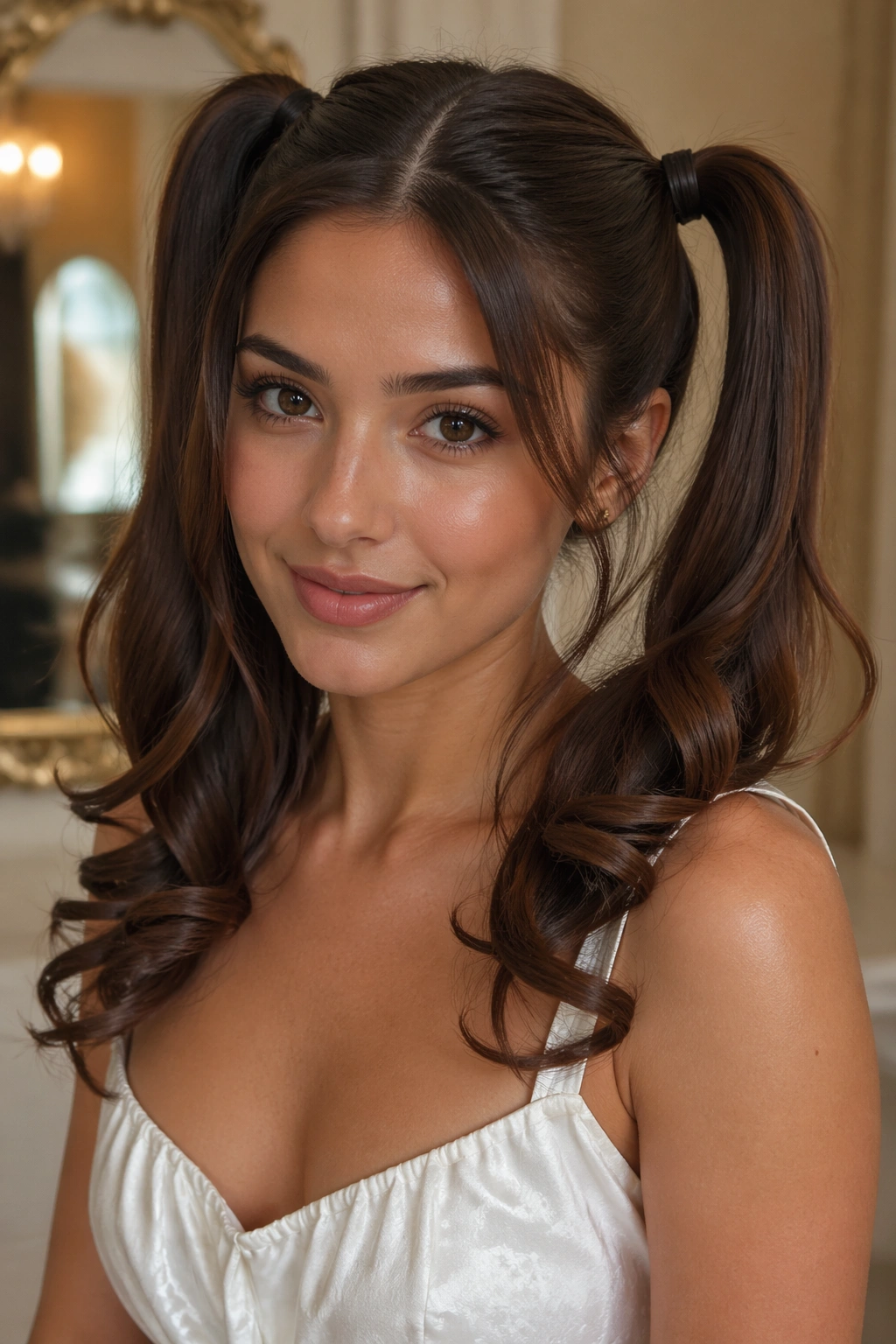
Straight roots and curled ends make a double ponytail look a little softer without losing the polish. The top stays neat, the bottom gets movement, and the style feels finished from every angle. It is a good choice when you want the hair to look styled, not stiff.
Begin with a sleek base and tie each side as usual. Then curl only the last 4 to 6 inches of the ponytails with a curling iron or rollers, depending on how much bend you want. Keeping the curl away from the roots stops the whole look from going fluffy. The change should sit near the ends, not take over the style.
This version works especially well for events, dinners, and photos where a plain straight finish might feel too blunt. The curled ends soften the overall line and make the style move when you turn your head. It is a small detail, but it reads as intentional.
11. Criss-Cross Double Ponytails
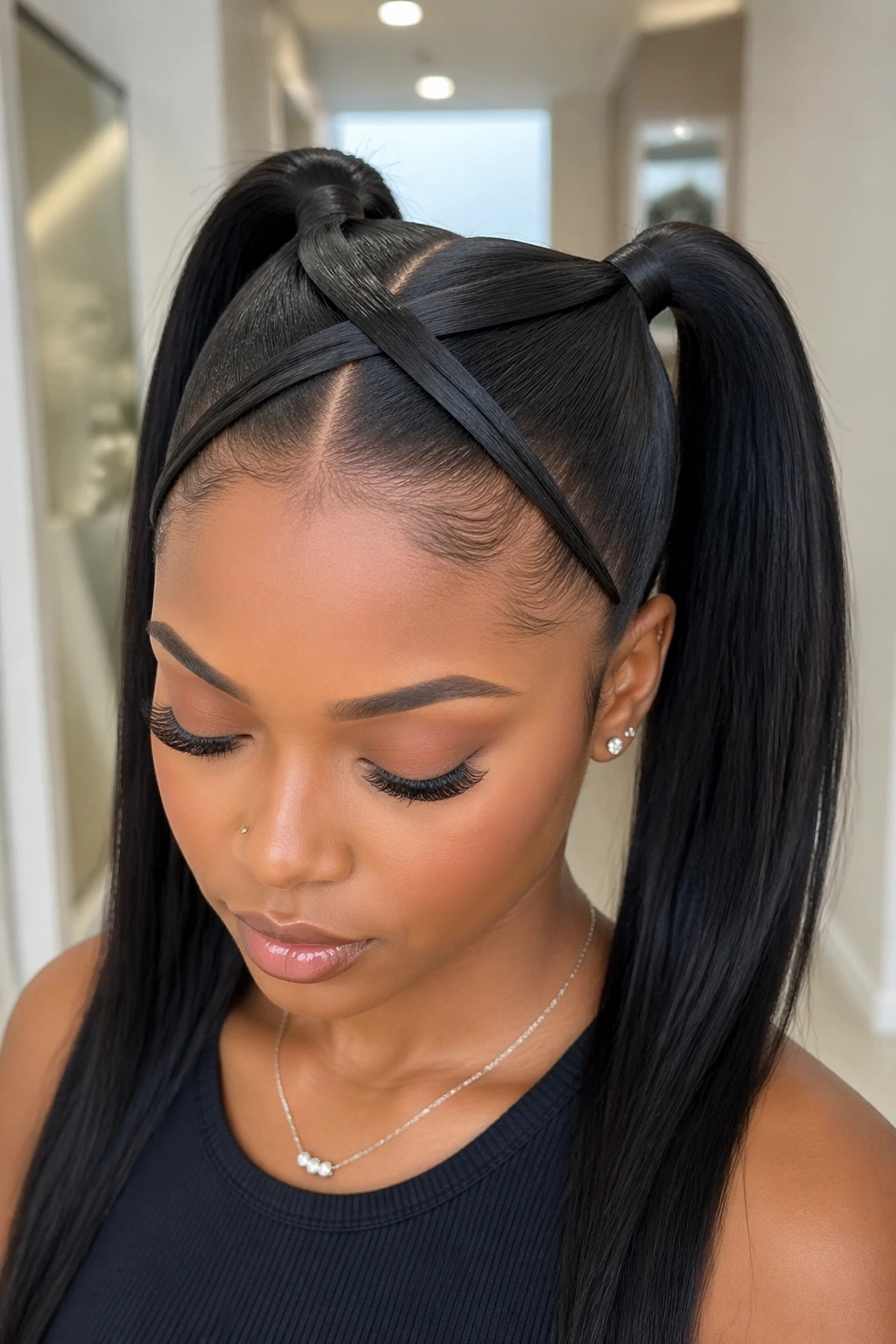
Criss-cross detailing gives double ponytails a tailored, almost dressmaker feel. Instead of stopping at a simple center part, you bring small front sections across one another before tying the ponytails. The result looks more complex than it actually is.
The style is easiest when you map out the parting first. Separate the front pieces, cross them once or twice over the crown, and secure each side into its own ponytail. A few hidden pins can keep the crossover flat. If the crossed section is too bulky, the whole look starts to puff out, and the neatness disappears.
This is a strong option for special occasions because it adds detail without requiring curls, braids, or accessories. It also works well on straight hair that can feel a little plain on its own. The criss-cross element gives the top half something to do, which is half the battle with sleek styles.
12. Mini Double Ponytails for Shorter Hair
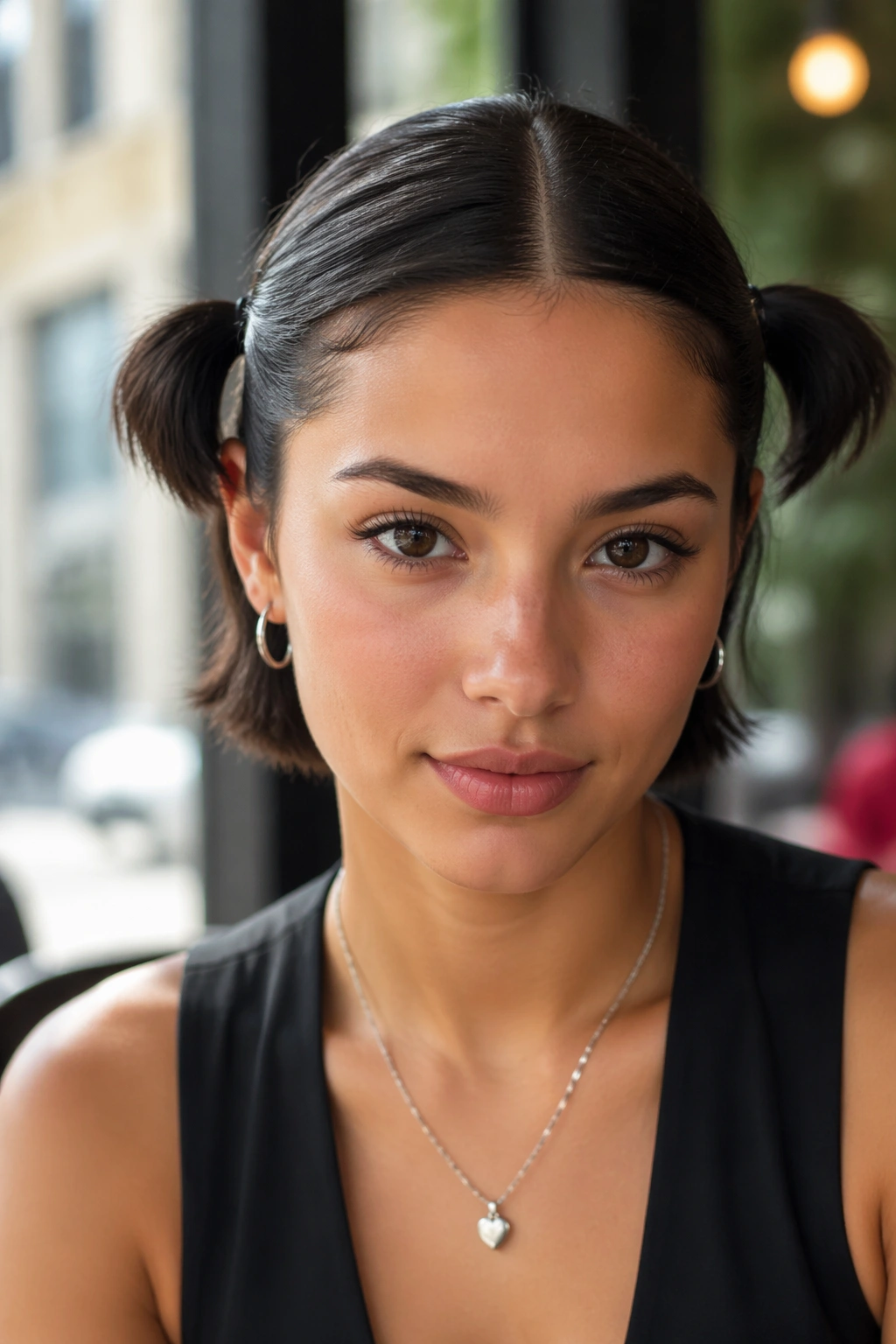
Shorter hair can absolutely wear sleek double ponytails. The difference is that the ponytails sit closer to the ears and the lengths may be small enough to flick out instead of hang down. That does not make the style less polished. It just changes the proportion.
Use a fine comb to smooth the hair back tightly, then choose low or mid placements so the shorter lengths stay contained. If the ends barely reach the shoulders, that is fine. Tiny ponytails with a clean part can look elegant in a sharp, graphic way. The style almost becomes an accessory on its own.
I like this version when the goal is neatness more than drama. A little serum on the ends helps them lie flatter, and a light mist of flexible spray can keep flyaways from sticking up at the crown. The key is not chasing fullness you do not have. Clean lines beat fake volume every time.
13. Long Glossy Double Ponytails
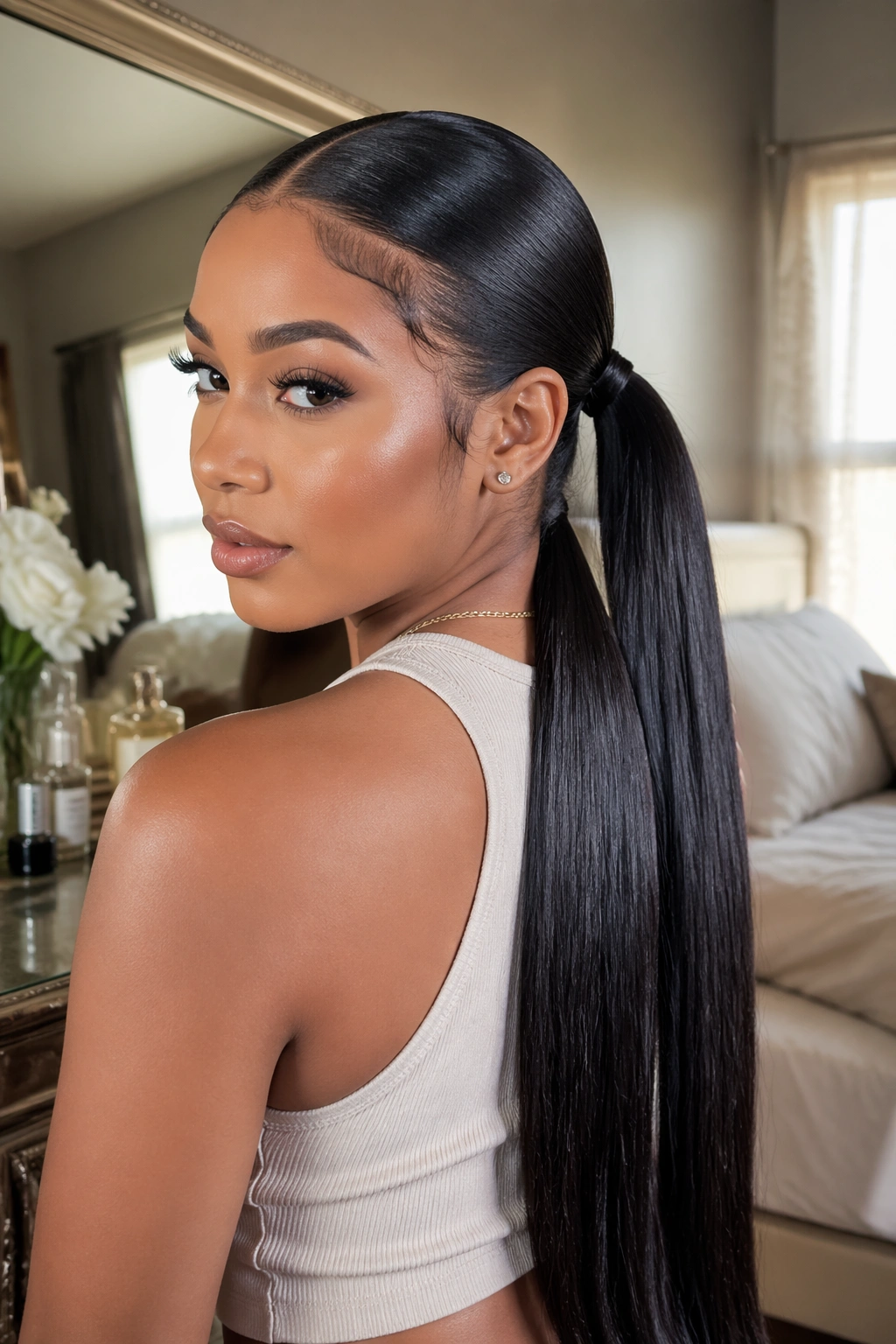
Long hair gives sleek double ponytails a real advantage: the length can do the work for you once the roots are under control. When the ponytails fall long and glossy, the style feels deliberate and a bit dramatic, especially if the part is exact and the bases are tight.
Gloss matters more than volume here
A flat, shiny finish is the whole point. Brush the hair thoroughly before tying, then smooth a small amount of serum through the mids and ends. If the lengths get frizzy, the style looks older than it should, even when the parting is clean.
Long hair also benefits from a good elastic that actually grips. Thin elastics can slip, and that ruins the shape fast. Wrap the base twice if the hair is fine, three times if it is dense. Stop before the ponytail starts to bend upward awkwardly. That bend is a dead giveaway that the tie is too tight.
Best uses for this version
- Evening looks
- Tall collars and structured necklines
- Hair that has been straightened already
- Styles where length is part of the statement
Long and sleek. That combination holds up.
14. Double Ponytails With Face-Framing Pieces
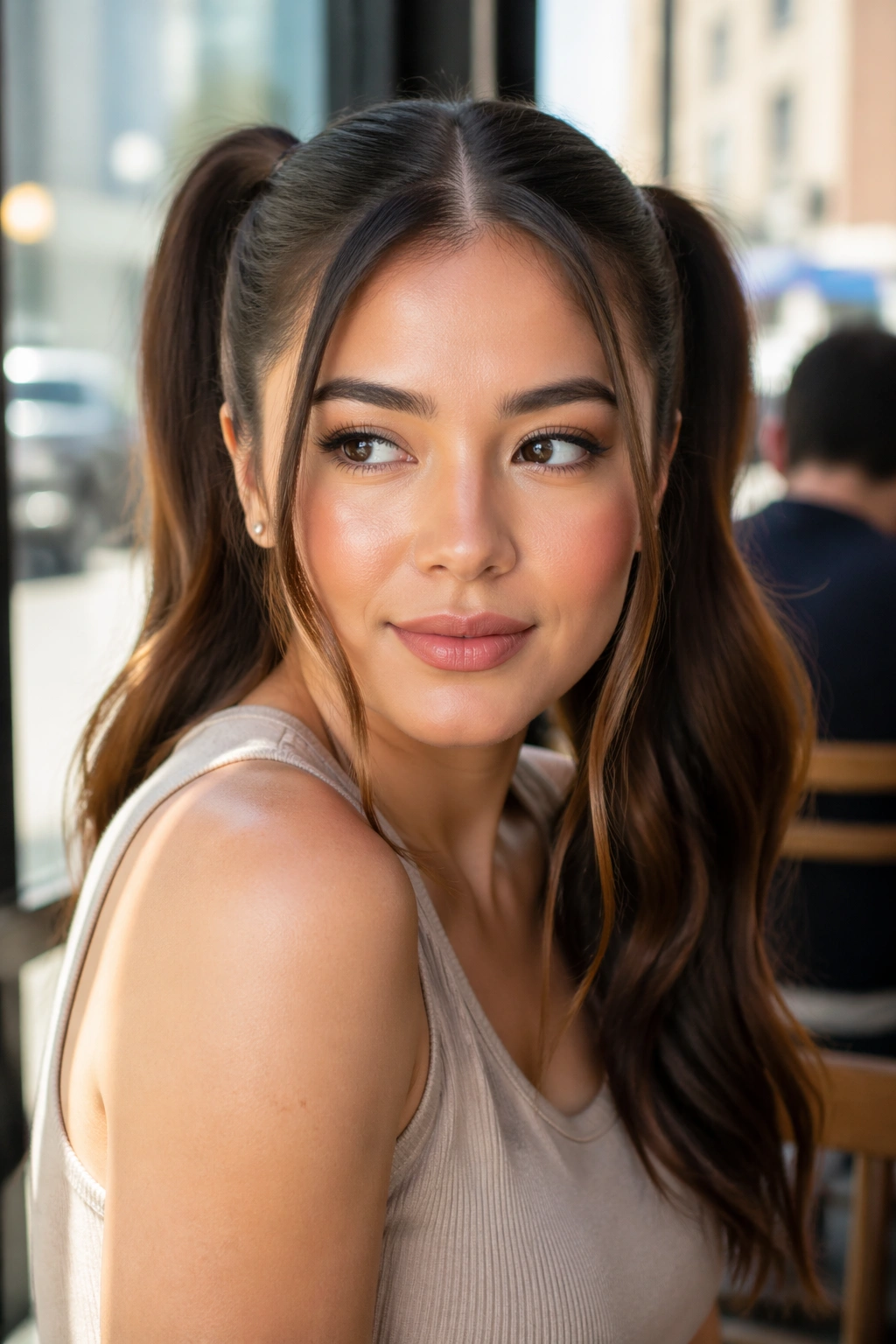
A few loose pieces around the face can soften sleek double ponytails without making them messy. The trick is to keep the ponytails themselves polished while leaving the front strands controlled and intentional. Think soft, not sloppy.
Pull out thin sections near the temples before tying the ponytails, then smooth those pieces with a touch of cream or a flat iron if needed. The tendrils should curve gently, not sit in random bends. A good face-framing piece is like a small outline around the style. It changes the mood fast.
This version is helpful if your face shape feels overwhelmed by a pulled-back style. It gives a little movement near the cheeks and jawline, which can make the look more flattering in person. Keep the rest of the hair smooth and the contrast does the work.
15. Rope-Twist Double Ponytails
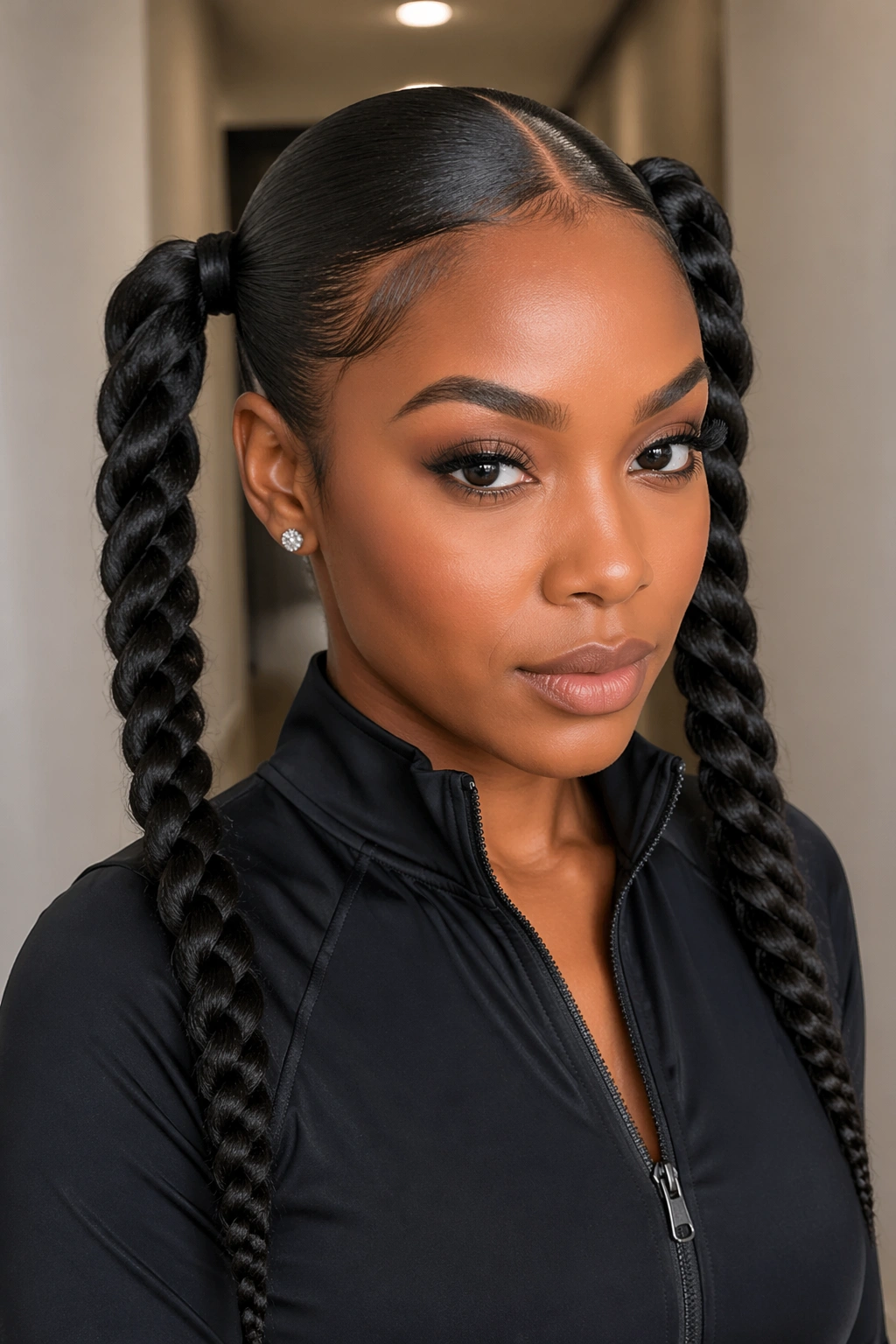
Rope twists bring a tighter, cleaner texture than loose curls or braids. After securing each ponytail, divide it into two sections, twist each section in the same direction, and then wrap them around each other in the opposite direction. That crosswise motion locks the twist in place.
The style looks sleek because the twist stays controlled and the shape is narrow. It is also practical on hair that slides out of plain ponytails. Rope twists tend to hold better than loose ends when the hair is layered or slippery, and they keep the finish from looking flat. If you want to, you can add a small clear elastic at the end so the twist does not unwind.
This is one of the more polished-looking options for everyday wear. It has texture, but not chaos. And it works especially well when the roots are smooth and the twists are even in size. Uneven twists make the whole style look rushed.
16. Deep Side-Part Double Ponytails
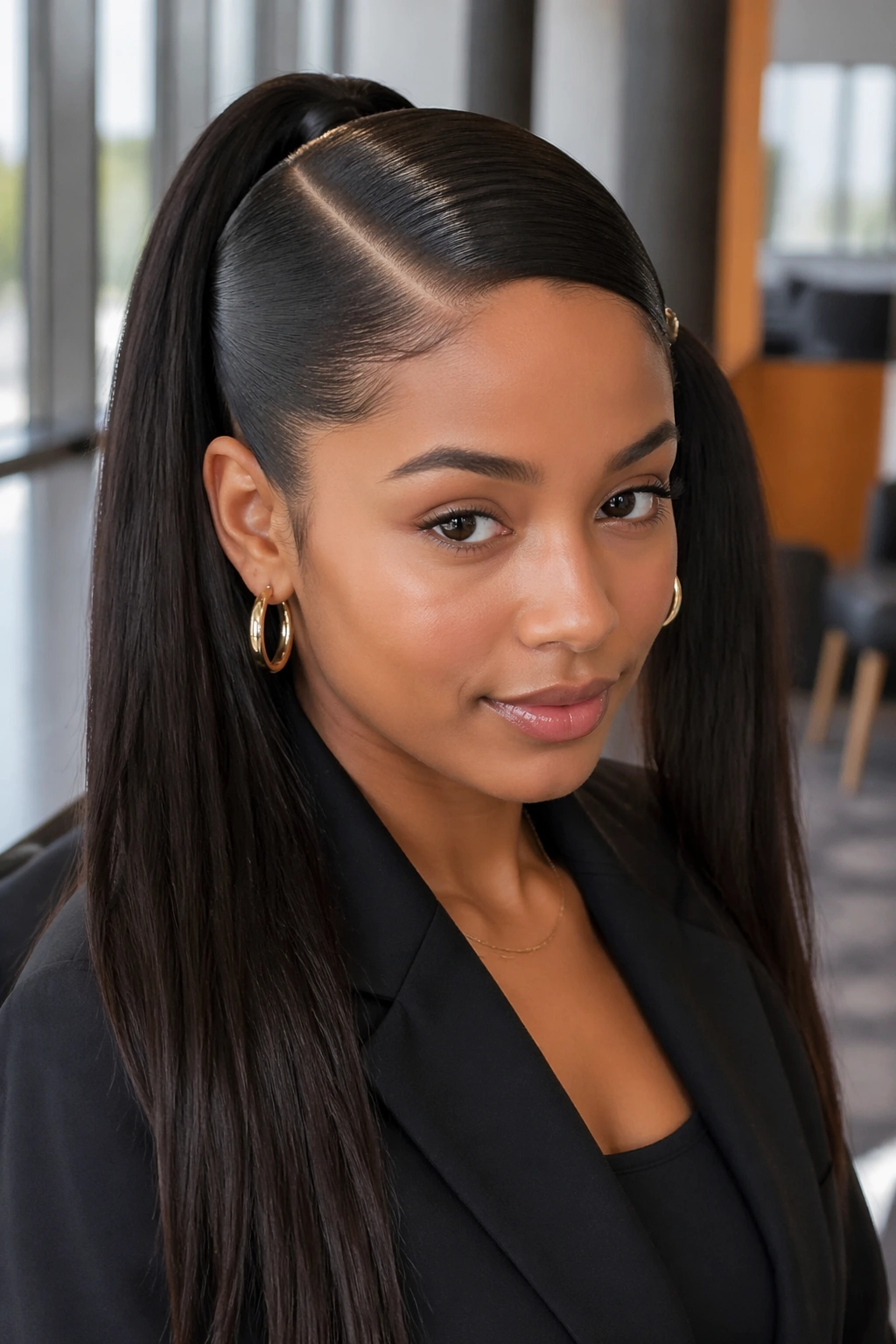
A deep side part gives sleek double ponytails a little edge. The asymmetry makes the look feel less uniform, which is useful when you want something polished but not overly strict. One side carries more hair, and that shift changes the whole face frame.
The heavier side can be brushed back more tightly while the lighter side stays tucked close to the scalp. That small difference creates shape without needing extra styling. If you have a cowlick near the front, a deep side part can also work with it instead of fighting it, which is a relief on days when the hair has ideas of its own.
Use gel sparingly at the roots and keep the rest soft. A deep side part already gives enough attitude. Too much product makes the crown look stiff, and stiff is rarely the goal. Clean is better.
17. Sleek Double Ponytails With Ribbon Ties
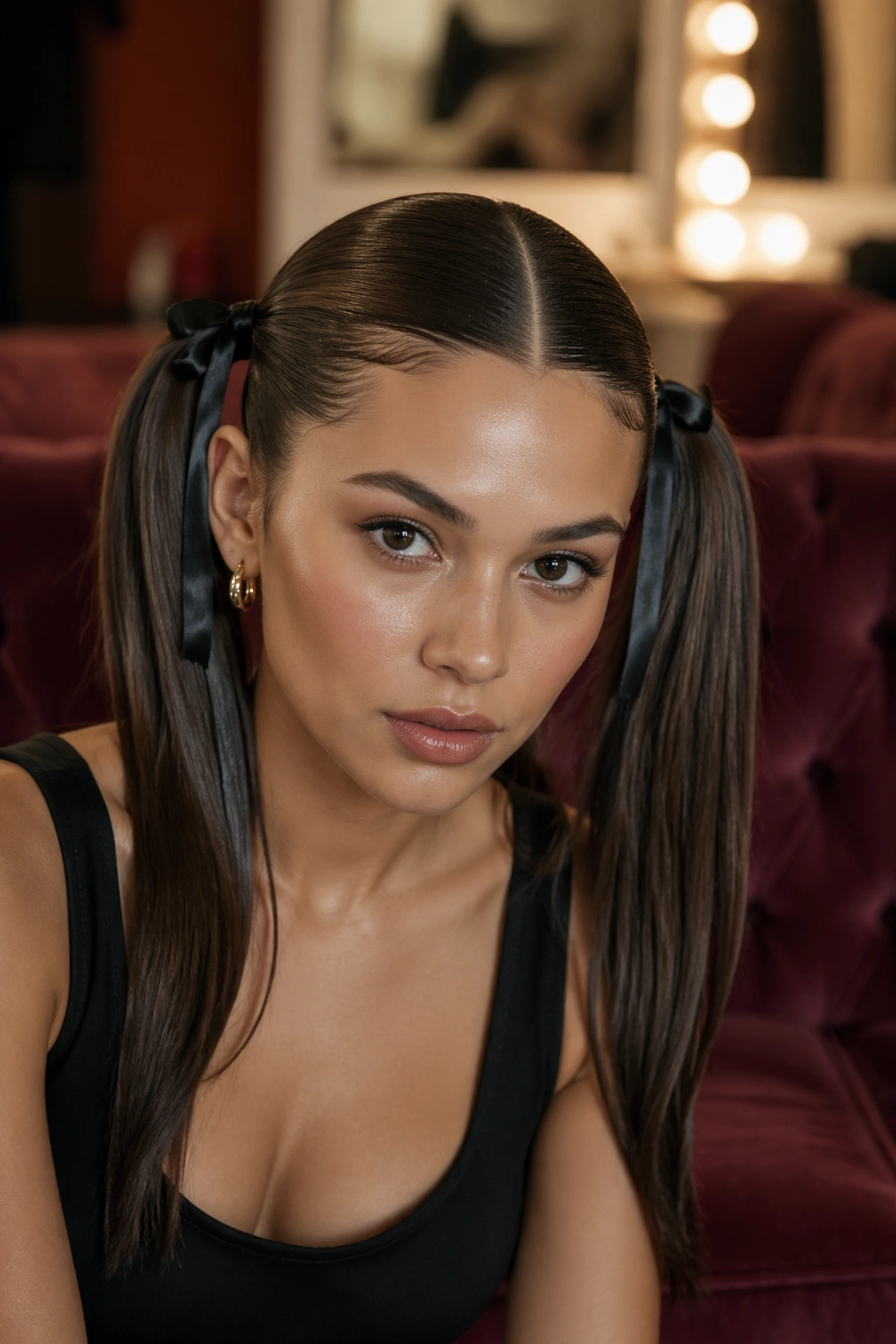
Ribbon ties can make a simple double ponytail look finished fast. The trick is to keep the ribbon narrow and the color quiet so it does not overpower the style. Satin or grosgrain works well because it sits flat and adds a neat edge around the elastic.
Tie the ponytails first, then cover each elastic with ribbon. If the tails are long enough, let the ribbons hang a few inches below the ponytail ends. That little bit of movement can look polished rather than fussy, especially with a center part and smooth roots. Wide ribbon can be charming, but it can also get loud. Narrow is safer.
This version is a good fit for dressier outfits or hair that needs one more detail to feel complete. It also works on medium-length hair because the ribbons add visual length without making the style heavier. Keep the rest of the hair very smooth so the ribbon feels like a choice, not a fix.
What to watch for
- Ribbon should not be slippery enough to untie itself
- Keep the knot flat against the elastic
- Use matching or neutral colors for a cleaner finish
- Trim the ribbon ends evenly
18. Sleek Double Ponytails With Braided Lengths
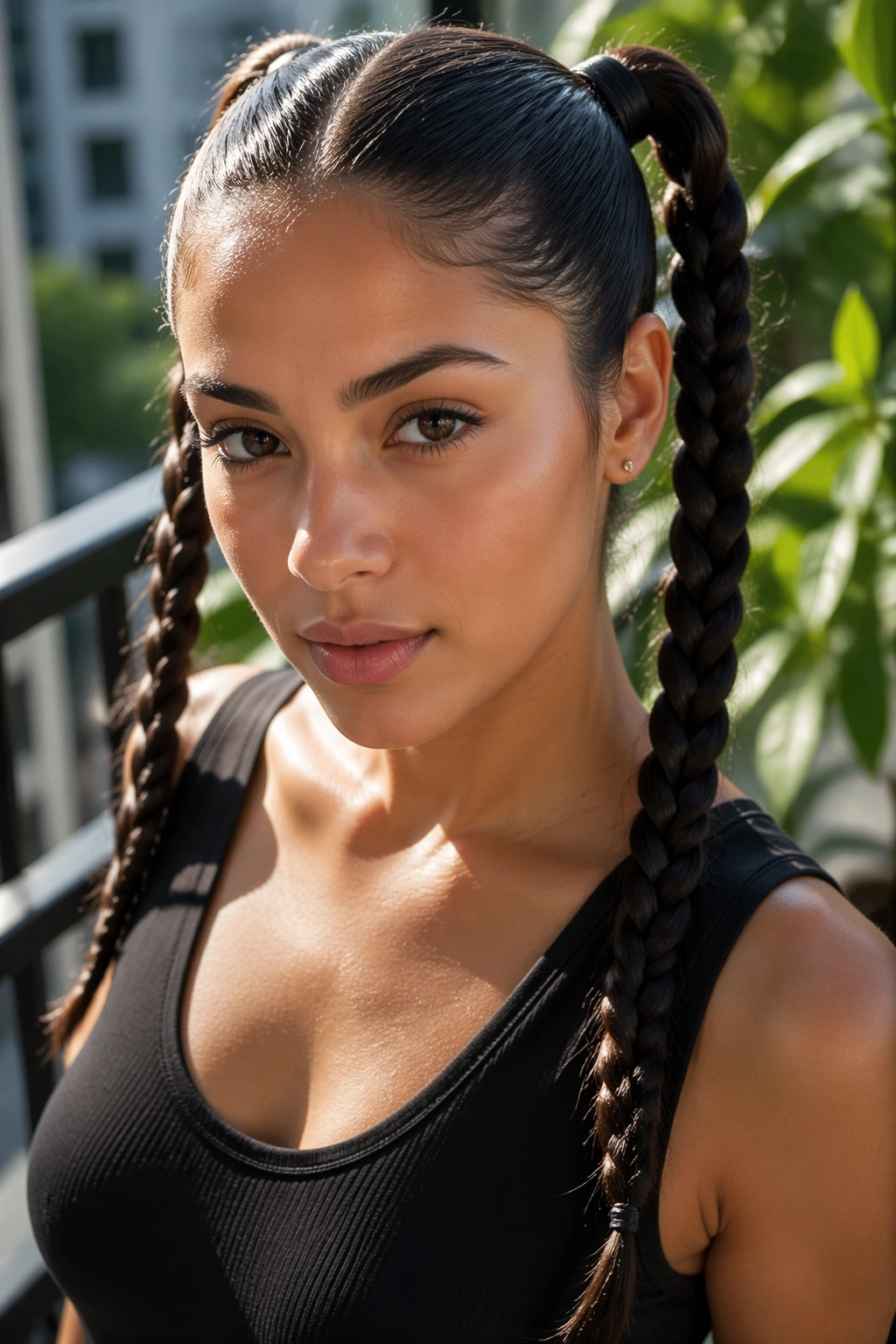
A braid through the length of each ponytail changes the texture while keeping the roots clean. The polished part stays at the top, and the braids give the tails a tighter, more structured line. It feels neat, almost architectural.
This style works best when the ponytails are secured first and braided afterward, with each braid kept the same size. That symmetry matters. If one braid is loose and the other is tight, the style loses its balance fast. A little styling cream on the lengths helps the strands stay together instead of separating at the edges.
Braided lengths are useful when you want the ponytails to stay out of the way. They do not swing as much, which makes them practical for busy days. They also hold shape better in humidity than loose straight lengths, and that is worth something on its own.
19. Sculpted Crown Double Ponytails
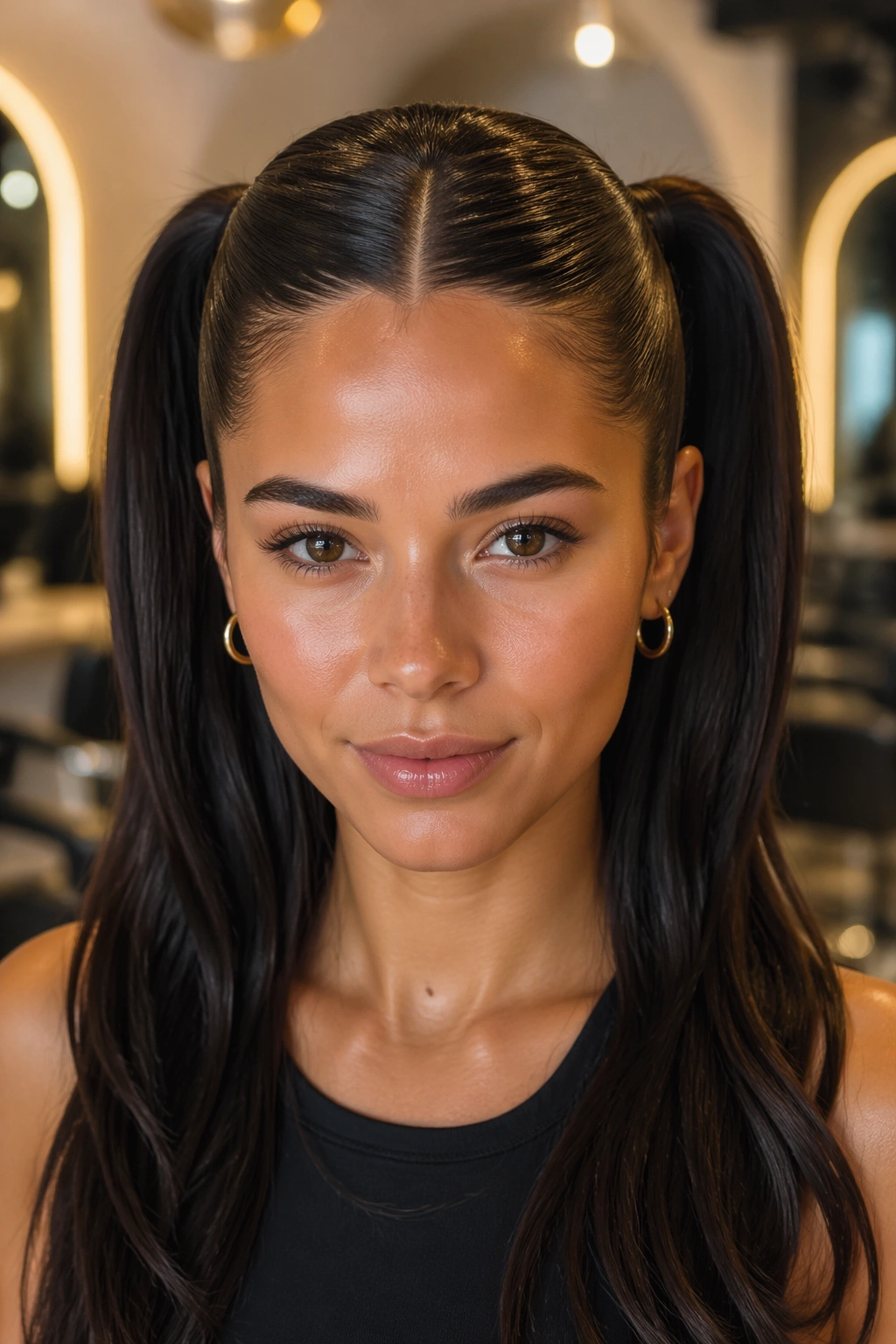
What makes a style look expensive? Usually not the accessories. It is the crown. In this version, the hair at the top is smoothed into a sculpted shape before each ponytail is tied, so the roots look almost carved into place.
The technique is simple but a little fussy. Use a comb to direct the front sections into a clean curve, then pin or gel them where they need to stay. The goal is to erase random bumps near the scalp. Once that surface is smooth, the ponytails can be plain and still look refined.
I like this option for formal settings because it photographs well from the side and front. The shape at the crown gives the style a more deliberate finish than a basic tie-back. It is the kind of detail people notice even if they cannot say why. That is usually a good sign.
20. Double Ponytails With Swooped Front Pieces
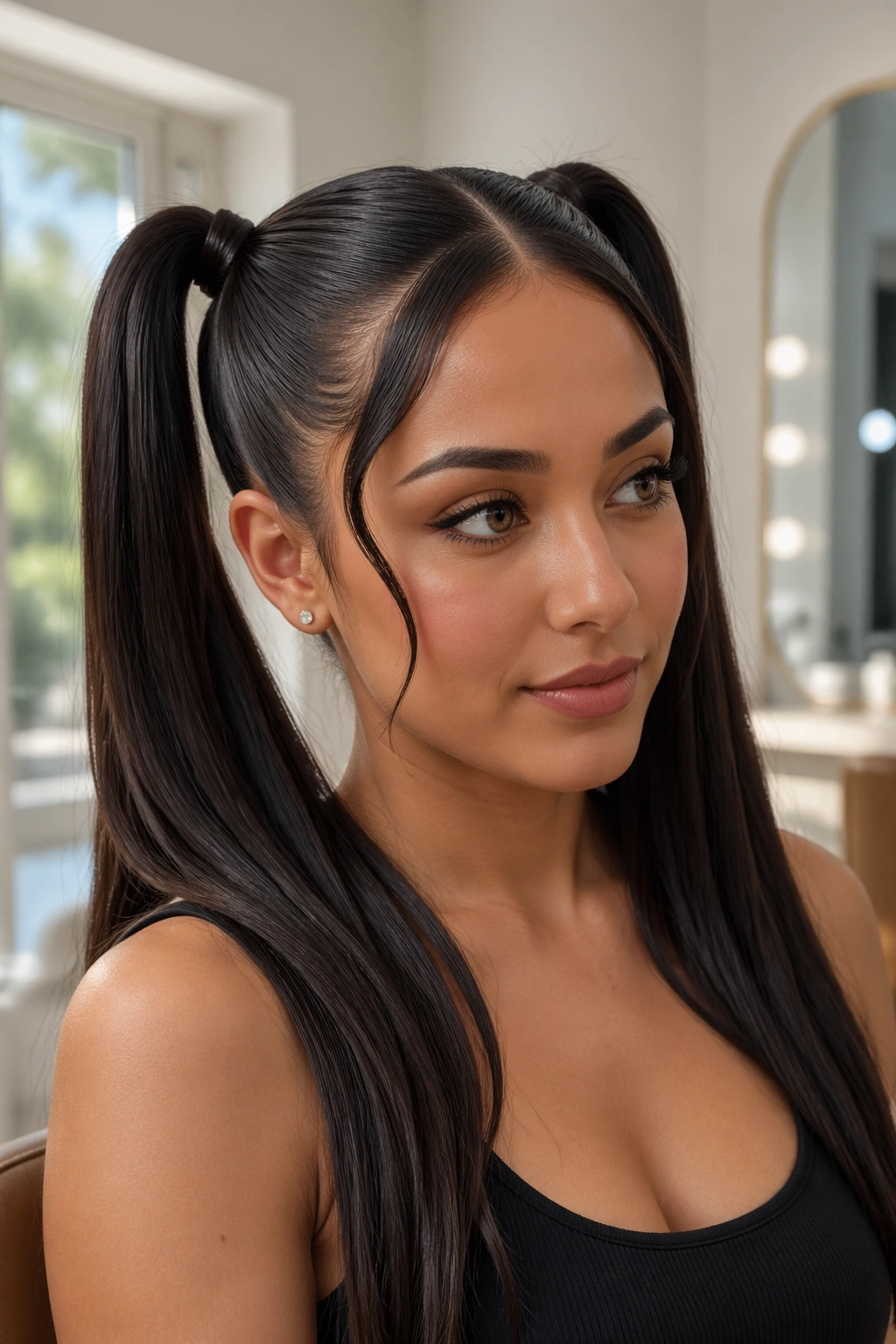
Swooped front pieces can soften the face while the rest of the style stays sleek. They work especially well when you want the ponytails to feel polished but not severe. The swoop gives movement at the hairline and keeps the style from looking too boxed in.
Brush the front section to one side, then pin or gel it into a smooth curve before securing the ponytails. If the hair is layered, you may need a little extra holding spray near the temples so the shorter pieces stay down. A clean swoop should curve, not puff. That distinction matters more than people think.
This version plays nicely with makeup looks that emphasize the eyes or cheeks, because it keeps the hair from crowding the face. It also breaks up the center of the style just enough to make the whole thing feel softer. The ponytails stay sleek. The front does the talking.
21. Sleek Double Ponytails for Thick Hair
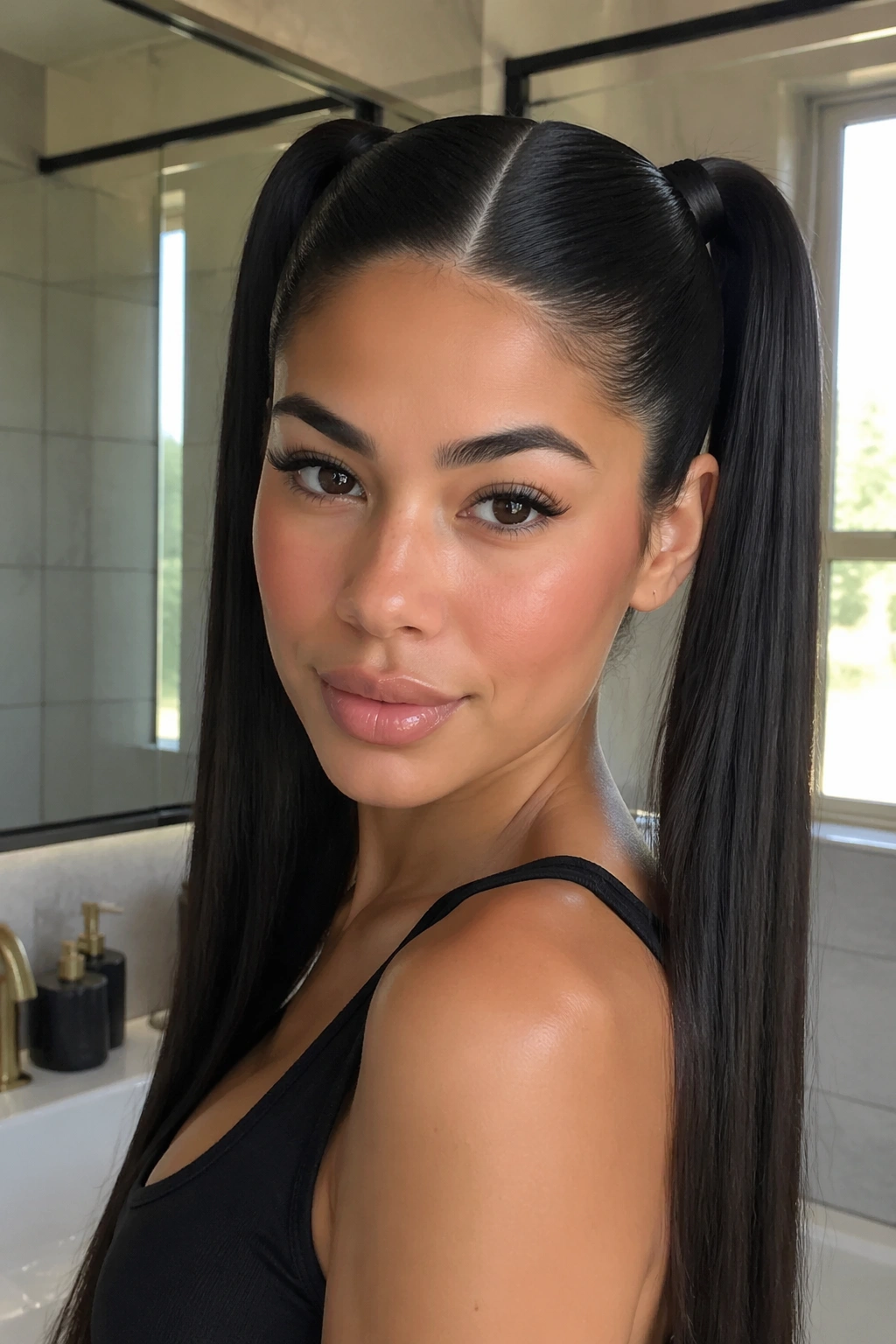
Thick hair can make double ponytails look rich and full, but it can also make them bulky at the base if you do not manage the volume. The answer is not more product. It is better sectioning and firmer control near the roots.
Split the hair neatly, then smooth each side with a brush before tying. If the ponytails feel too heavy, tie them slightly lower so the weight sits closer to the head. That makes the style easier to wear and helps the part stay clean longer. A little gel near the roots keeps the surface flat, but use enough brush tension to really shape the hair.
Thick hair also benefits from stronger elastics and an extra pin or two at the base. Otherwise the style can loosen during the day and start to puff. That puff is not cute here. It reads messy fast. Keep the crown controlled, and the rest of the fullness becomes a feature instead of a problem.
22. Sleek Double Ponytails for Fine Hair
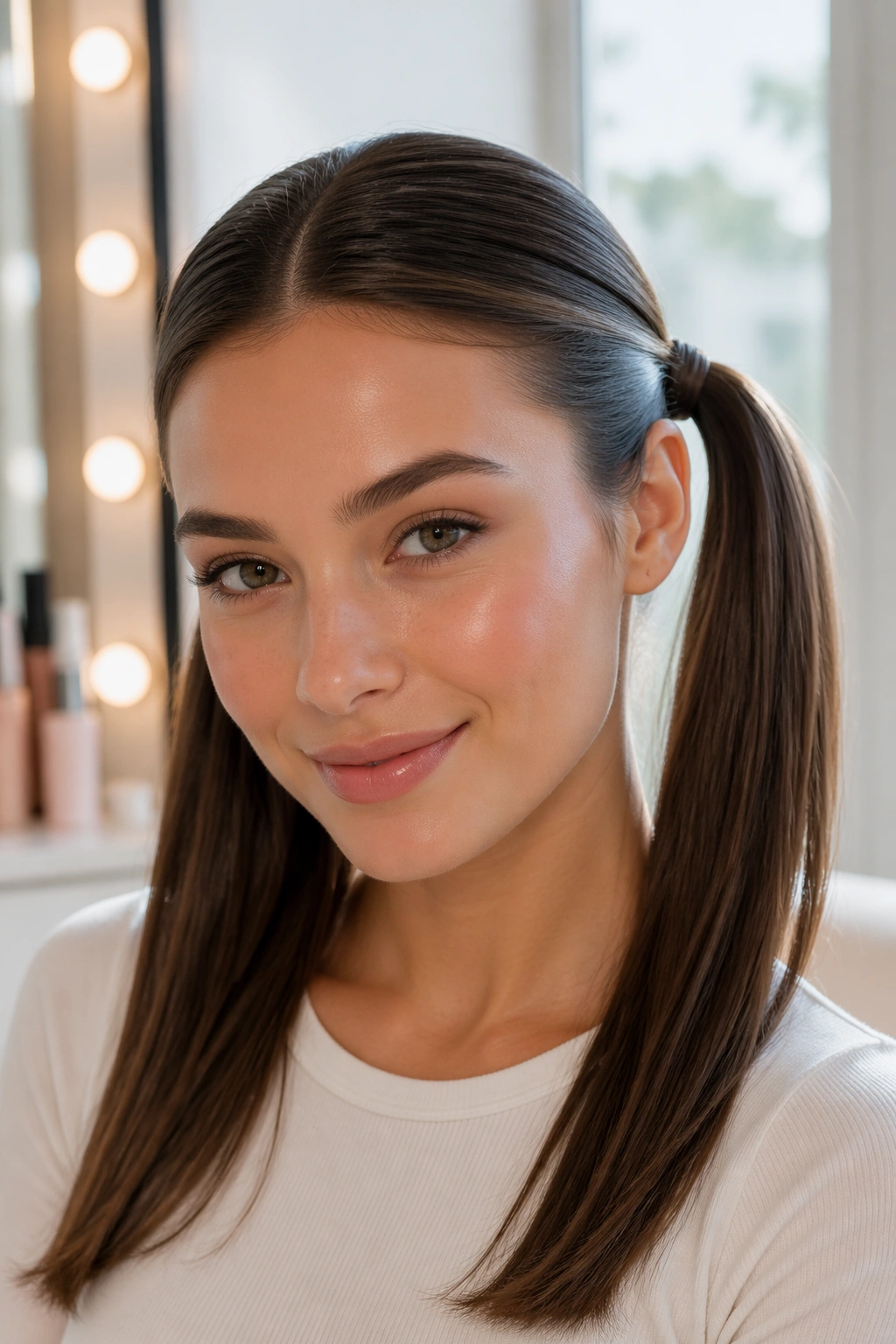
Fine hair needs a different approach. Too much product weighs it down, and too much tension can make the base look thin. The polished look comes from shape, not bulk, so the styling has to be a little smarter.
A light mousse at the roots before blow-drying can help create a bit of lift. Then smooth the hair into two sections and tie them with clear elastics that grip without crushing the strands. If the ponytails feel too wispy, gently tease the underside of each section before tying. Keep the teasing hidden. The surface still needs to look clean.
This style can look especially crisp on fine hair because the sleekness is easy to see. Every line shows. Every part shows too. That sounds unforgiving, but it also means a very small amount of effort goes a long way. Use less product than you think, and the hair stays airy instead of flat.
Quick adjustments that help
- Choose small elastics, not thick fabric ties
- Avoid heavy oils at the crown
- Keep the part narrow and straight
- Use a light-hold spray instead of a stiff one
23. Double Ponytails With Hidden Elastics
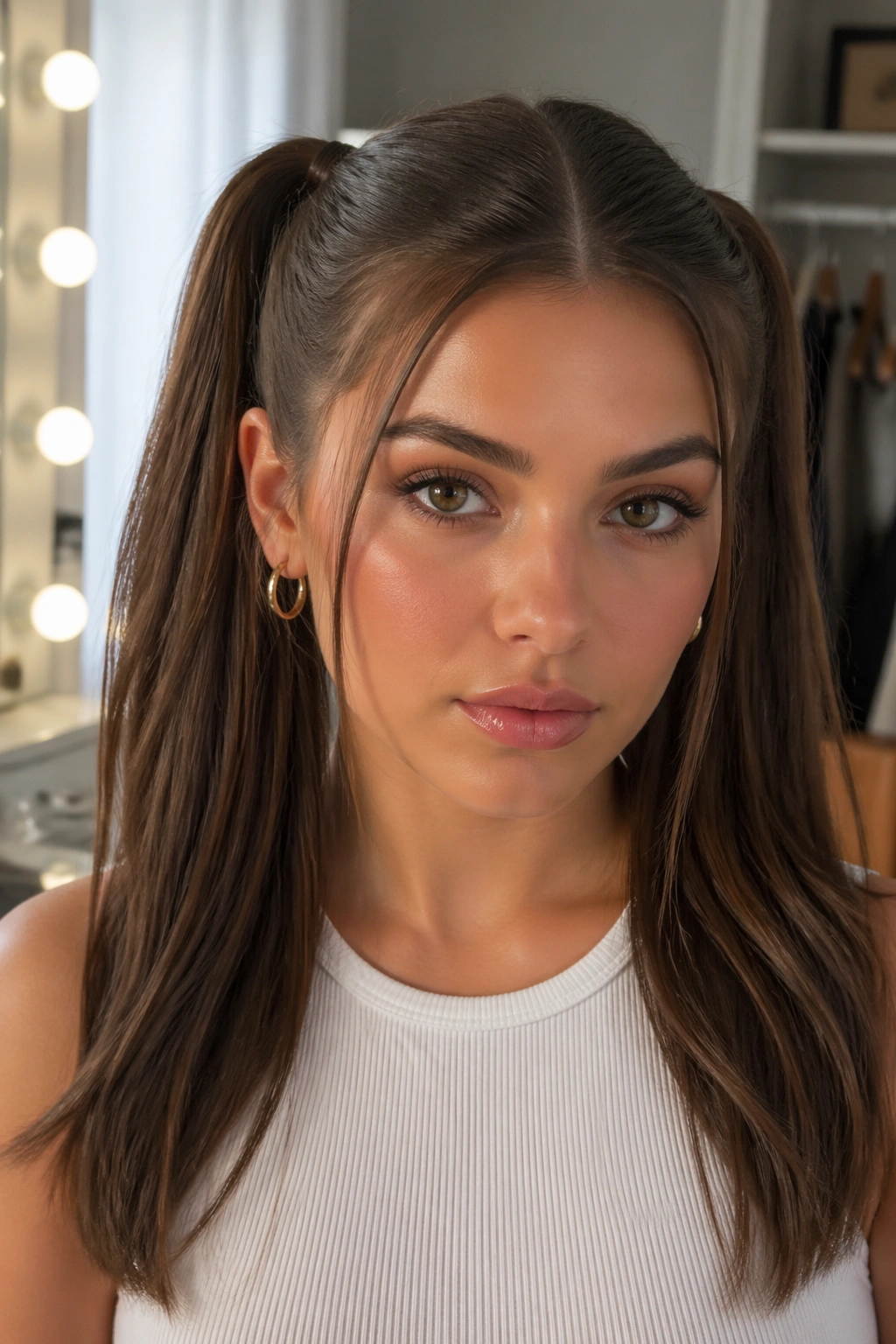
Hidden elastics give double ponytails a cleaner silhouette. The hair itself becomes the visible feature, not the band that holds it. That small change can make a basic style look much more finished, especially when the outfit is simple and you want the hair to carry the polish.
To hide the elastic, wrap a thin strand around each ponytail base and secure the end underneath with a pin. Then smooth the surface one last time with your palm. If the wrap looks too thick, unwind it and take a thinner strand. A chunky wrap can make the base look bulky, which defeats the point.
This style is a good choice when you want neatness without decoration. No ribbon needed. No clip required. Just a clean line and a well-hidden tie. That spare look has its own kind of elegance, and it works especially well when the hair is extra straight and glossy.
24. Double Ponytails With a Sleek Flip-Out End
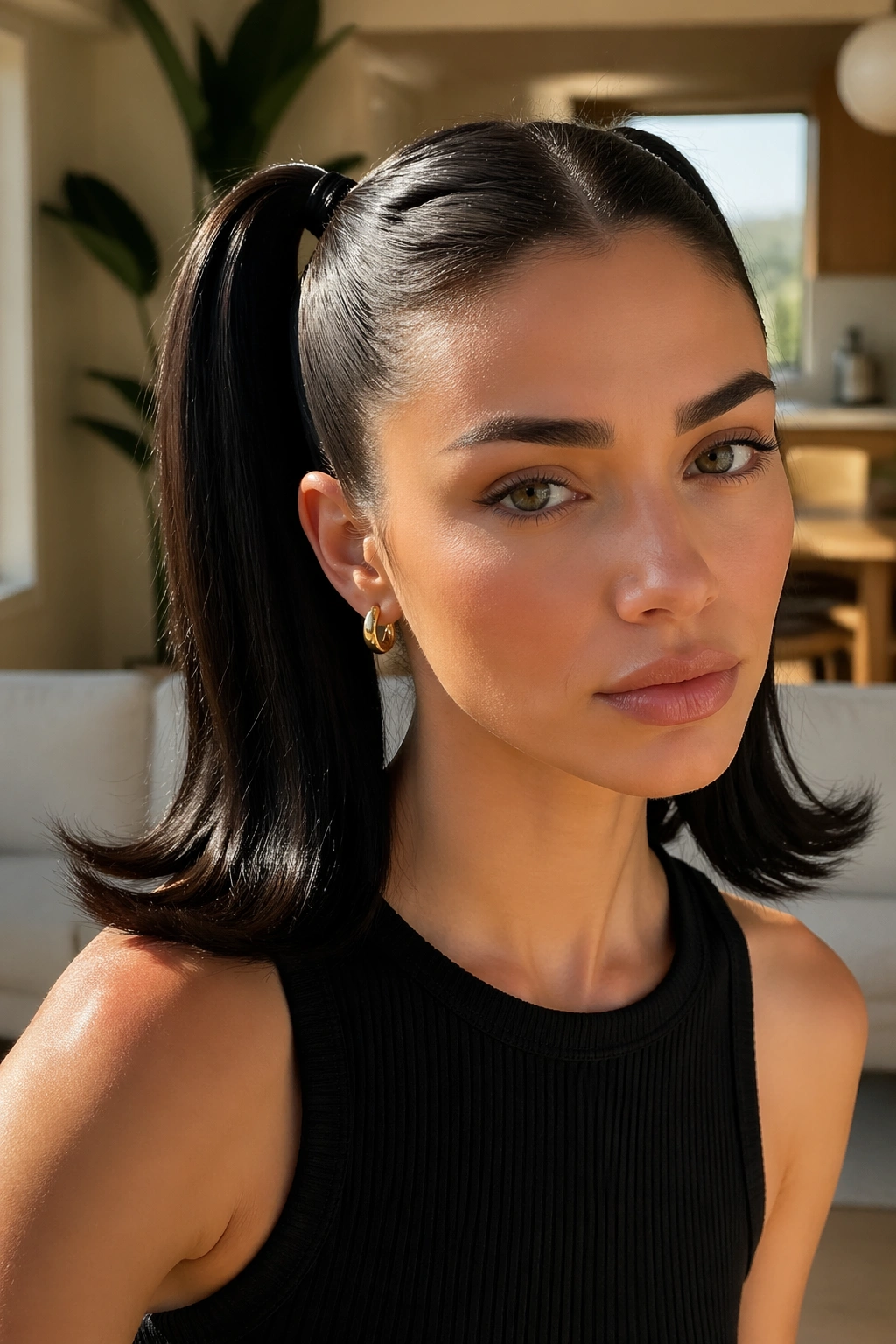
A tiny flip at the ends can keep sleek double ponytails from feeling too stiff. The roots stay polished and tight, while the last inch or two bends outward just enough to add shape. It is a small detail, but it stops the style from reading flat.
Use a flat iron or a round brush to turn the ends slightly outward after the ponytails are secured. Keep the flip subtle. A dramatic bend pulls the style away from sleek and into retro territory, which may not be what you want. The point is a little movement, not a whole new mood.
This version works nicely when the hair is blunt-cut or recently trimmed. Straight ends can sometimes feel severe, and the flip softens that line. I also like it for double ponytails that need a bit of personality without any added pieces. It is simple, but not plain.
25. Editorial Double Ponytails With Sharp Part Lines
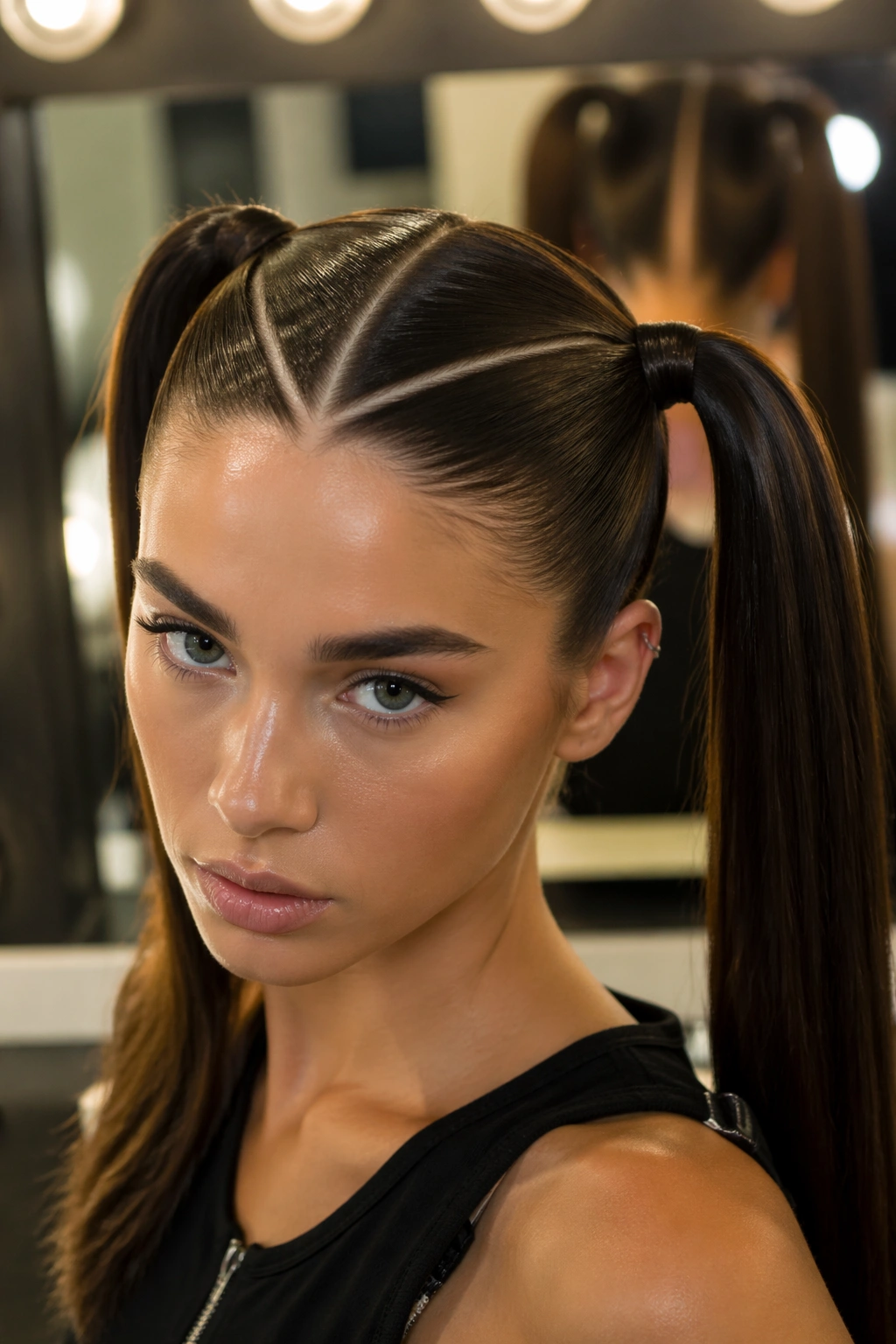
Sharp part lines take sleek double ponytails from neat to striking. Instead of a standard straight part, you can carve in narrow parallel lines, a geometric side section, or a tiny zigzag near the crown before tying the ponytails. Done carefully, the style looks polished and a little unexpected.
Why this version stands out
The part becomes the design. That is the whole idea. When the lines are crisp, the ponytails themselves can stay clean and simple, because the detail at the scalp does the visual work. This works best on straight or smoothed hair, where the parting can stay visible and defined.
Keep the rest of the style restrained. One or two sharp lines are enough. Too many and the look starts to feel busy, which is the opposite of polished. I like this version when the rest of the outfit is minimal and the hair needs one clear point of interest.
A fine comb, a steady hand, and a little gel are all it takes. No need to overcomplicate it. The clean parting is the point.
Final Thoughts
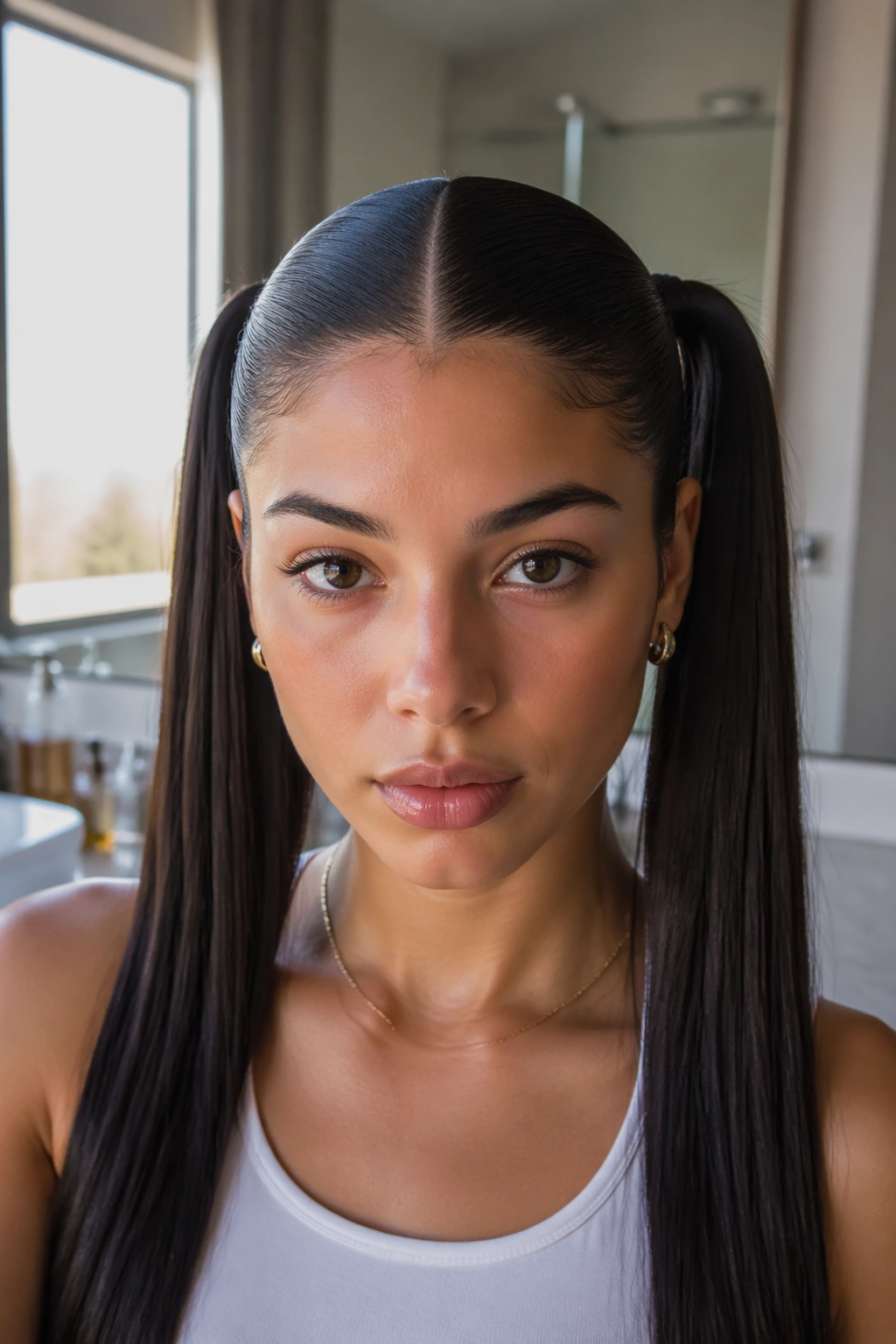
Sleek double ponytails work because they balance control and symmetry. When the part is clean, the roots are smooth, and the base is tight enough to stay in place, the style has real presence.
The best version is the one that suits your hair texture and your day. Some people need hidden elastics. Some need braids. Some just need a good center part and a brush that actually smooths. The style is flexible, which is why it lasts.
And if the first attempt looks a little off, that is normal. A cleaner part or one less pump of gel usually fixes more than people expect.
