



Ponytails for long hair with curtain bangs have a specific problem: the style can go sleek in a flash, or it can turn severe if the fringe is pulled back too tightly. The bangs are doing half the styling work, so if they sit wrong, the whole look feels off.
That’s why the best ponytail hairstyles here are not just about where the elastic sits. They’re about root lift, the amount of tension around the temples, and whether the curtain pieces are blown forward before they’re tucked back. A 1-inch round brush, a touch of dry texture spray, and a clean center part can change the whole shape.
Long hair helps. It gives you weight, swing, and enough length to wrap, braid, twist, or puff the tail without it looking skimpy. But it also means one lazy ponytail can look flat at the crown and heavy at the ends, which is a boring combo no one needs.
Some of the looks below are polished enough for work or dinner; others are the kind you throw on when you want your hair out of the way but still want the bangs doing their soft face-framing job. Either way, the trick is the same: keep the curtain bangs intentional, not accidental.
1. Sleek High Ponytail With Curtain Bangs
A high ponytail can look too sharp. Curtain bangs fix that fast. They soften the forehead, break up the lift at the crown, and keep the style from reading like a gym tie-back that got promoted by mistake.
How to style it
Brush the hair straight up toward the crown, then secure it with a strong elastic about 2 inches above the top of the ears. Leave the curtain bangs out from the start, then blow-dry them forward and slightly away from the face with a round brush so they curve at the cheekbones.
A tiny bit of smoothing cream on the top layer helps, but don’t drown the roots in product. The point is sleek, not glued down. If your hair is very long, wrap a 1-inch strand around the base to hide the elastic and pin it underneath with a bobby pin.
- Use a fine-tooth comb for the top section.
- Keep the crown taut, not painful.
- Finish the tail with a flat iron pass if the ends puff out.
- Mist the bangs lightly with flexible hairspray so they stay piecey.
Best for: straight or softly wavy hair, especially when you want a clean look with a little movement around the face.
2. Low Ponytail With Soft Face-Framing Curtain Bangs
Want the easiest place to start? Go low. A low ponytail is calm, unfussy, and flattering without trying too hard, which is exactly why it works so well with curtain bangs on long hair.
Sit the elastic at the nape, not halfway up the back of the head. That lower placement lets the bangs do the visual work while the rest of the hair stays smooth. Keep the center part neat, then let the curtain pieces fall in a gentle curve instead of tucking them behind the ears.
This version looks especially nice when the ends are curled under with a 1.25-inch iron. You get a soft bend, not stiff ringlets. The whole point is to make the ponytail feel like part of the haircut, not a separate idea.
A little shine serum on the mid-lengths can help long hair move instead of hanging in one blunt block. Keep it off the roots, though. Greasy roots and curtain bangs do not get along.
3. Bubble Ponytail With Curtain Bangs
A bubble ponytail gives long hair something to do. That matters more than people admit. Without the little elastic sections, a long ponytail can just hang there and get lost; with bubbles, it has shape from root to tip.
Why it works
Start with a mid- or high ponytail, then add small clear elastics every 2 to 3 inches down the tail. Gently tug each section to puff it into a rounded shape. If your hair is very thick, leave a little more space between elastics so the bubbles have room to show.
Curtain bangs make this look less playful in a teenage way and more styled in a real-life way. They soften the edges and keep the style from feeling too rigid. A light texturizing spray on the tail before sectioning gives the bubbles better grip.
- Use 4 to 6 elastics for medium-length ends.
- Pancake each bubble by pulling the sides outward.
- Keep the bangs loose at the front.
- Wrap a small strand around the first elastic if you want a cleaner finish.
Pro tip: Don’t over-puff the bubbles on day one. A slightly smaller shape holds up better and looks more expensive, even though I hate that phrase.
4. Wrapped Ponytail With Hidden Elastic
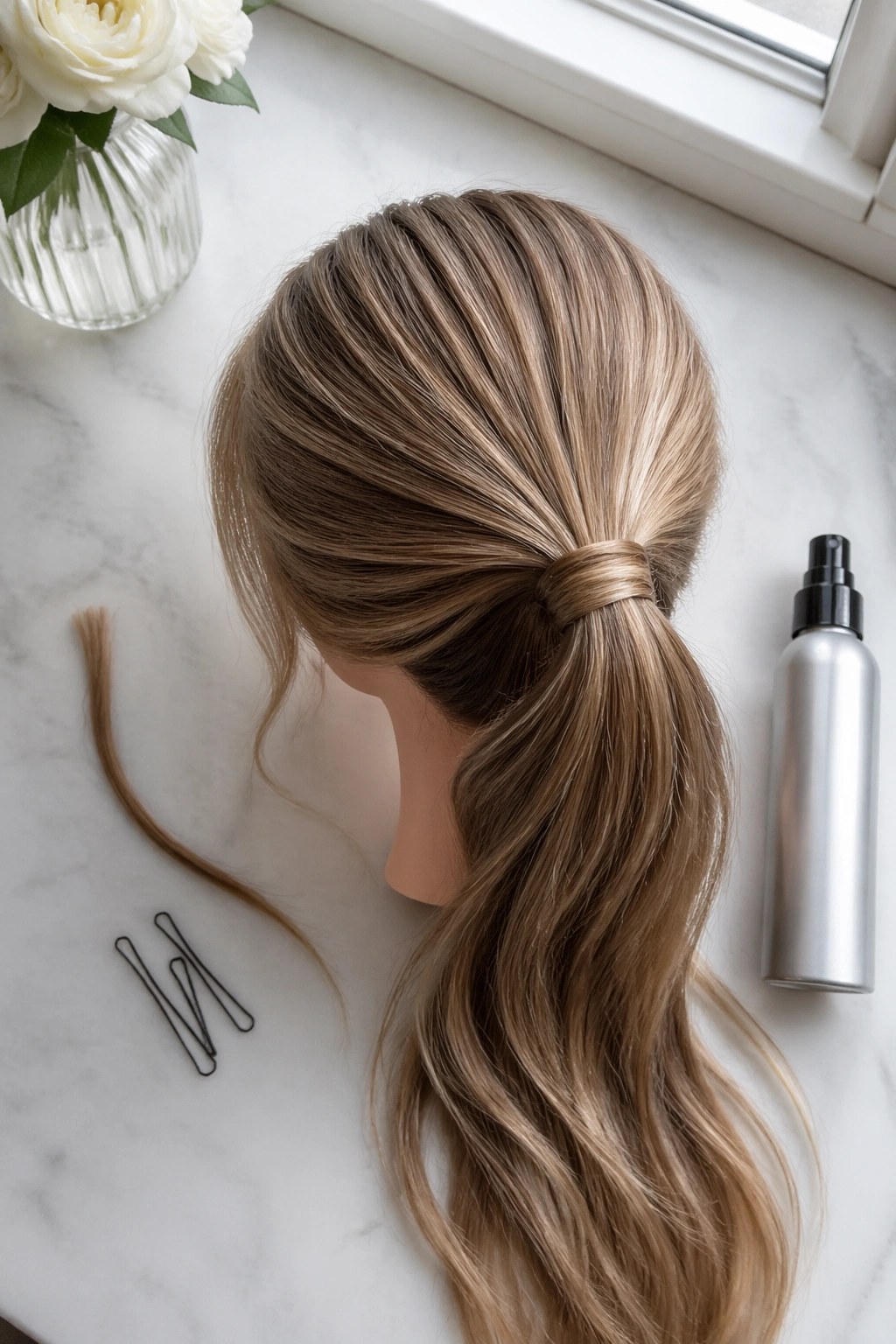
Wrapped ponytails are the kind of detail that makes a simple style feel finished. You know the look: clean base, no visible band, and a smooth strand spiraled around the elastic like it was meant to be there.
That little wrap matters more on long hair than it does on shorter lengths. A long tail draws the eye down, so a tidy base keeps the whole style from feeling unfinished. Pair it with curtain bangs that curve outward at the jaw, and the result looks balanced instead of severe.
Secure the ponytail first, then take a thin strand from underneath the tail and wrap it around the elastic once or twice. Pin the end under the base where nobody will see it. If your hair is slippery, mist the wrap strand with a touch of hairspray before winding it.
This is one of those styles that looks best when the top is smooth but not stiff. A brushed, controlled crown works. A helmet head does not.
5. Braided Ponytail With Curtain Bangs
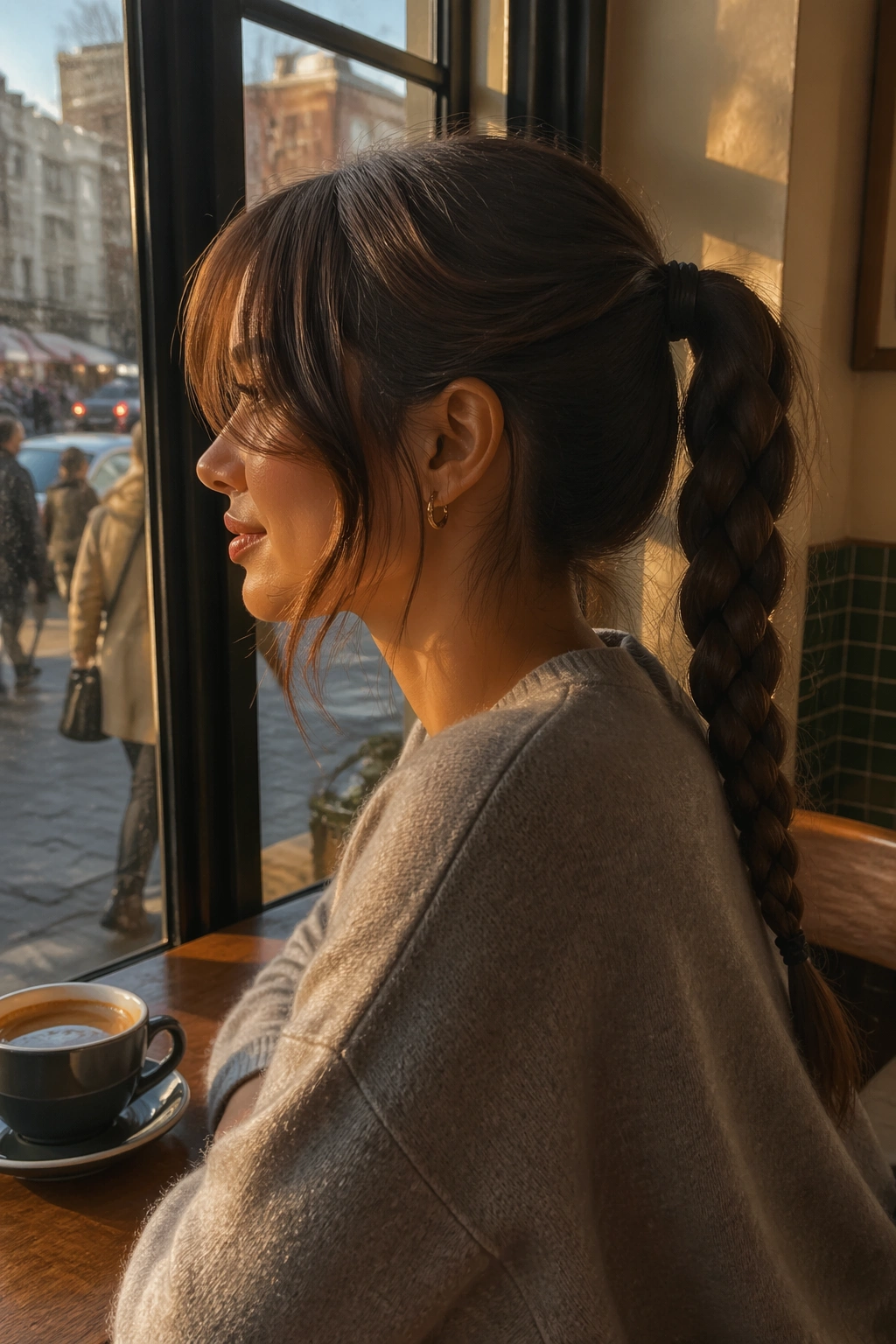
A braided ponytail gives long hair structure right where it needs it. The braid keeps the tail from splitting into a limp curtain of ends, and the bangs keep the front from looking too tight or too school-uniform.
Unlike a standalone braid, this version lets you play with how neat or loose the tail feels. You can make the braid snug for a cleaner line, or pull it apart after tying it off to get more width. I prefer the second option for long hair. It shows off the length better.
The curtain bangs should stay soft and separated, not brushed flat into the braid line. Let them sit a little apart from the temples. That small gap keeps the style from closing in on the face.
If your hair is layered, braid from the nape down instead of starting too high. The shorter front layers won’t escape as badly, and the braid will hold its shape longer.
6. Half-Up High Ponytail With Curtain Bangs
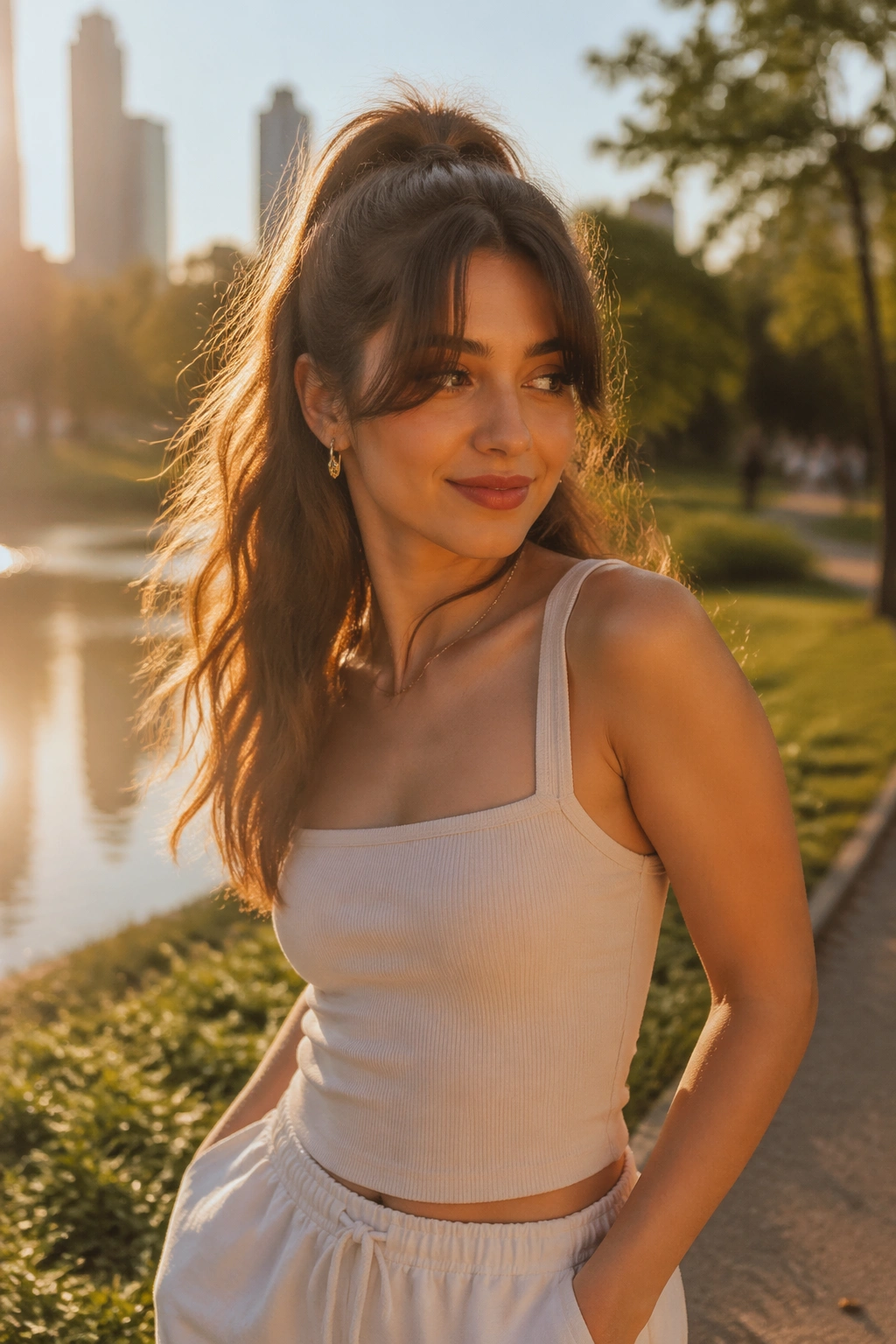
Half-up ponytails are the answer when you want height but you do not want all your hair off your neck. They also play nicely with curtain bangs because the front sections already frame the face, so the top knot of hair feels deliberate instead of busy.
The key is lifting only the top third of the hair. Gather it from temple to temple, then secure it high on the back of the head. Leave the lower section loose and smooth, or give it a loose wave if you want extra swing. The contrast between the lifted crown and the flowing lengths is what makes this one work.
Curtain bangs should fall right into that middle space. They soften the transition from lifted top to loose bottom, which is why this style looks better when the bangs are lightly blown out rather than pinned back tightly.
It’s a good option for second-day hair, too. A little dry shampoo at the roots gives the half-up section enough lift without making the base gritty.
7. Messy Textured Ponytail With Curtain Bangs
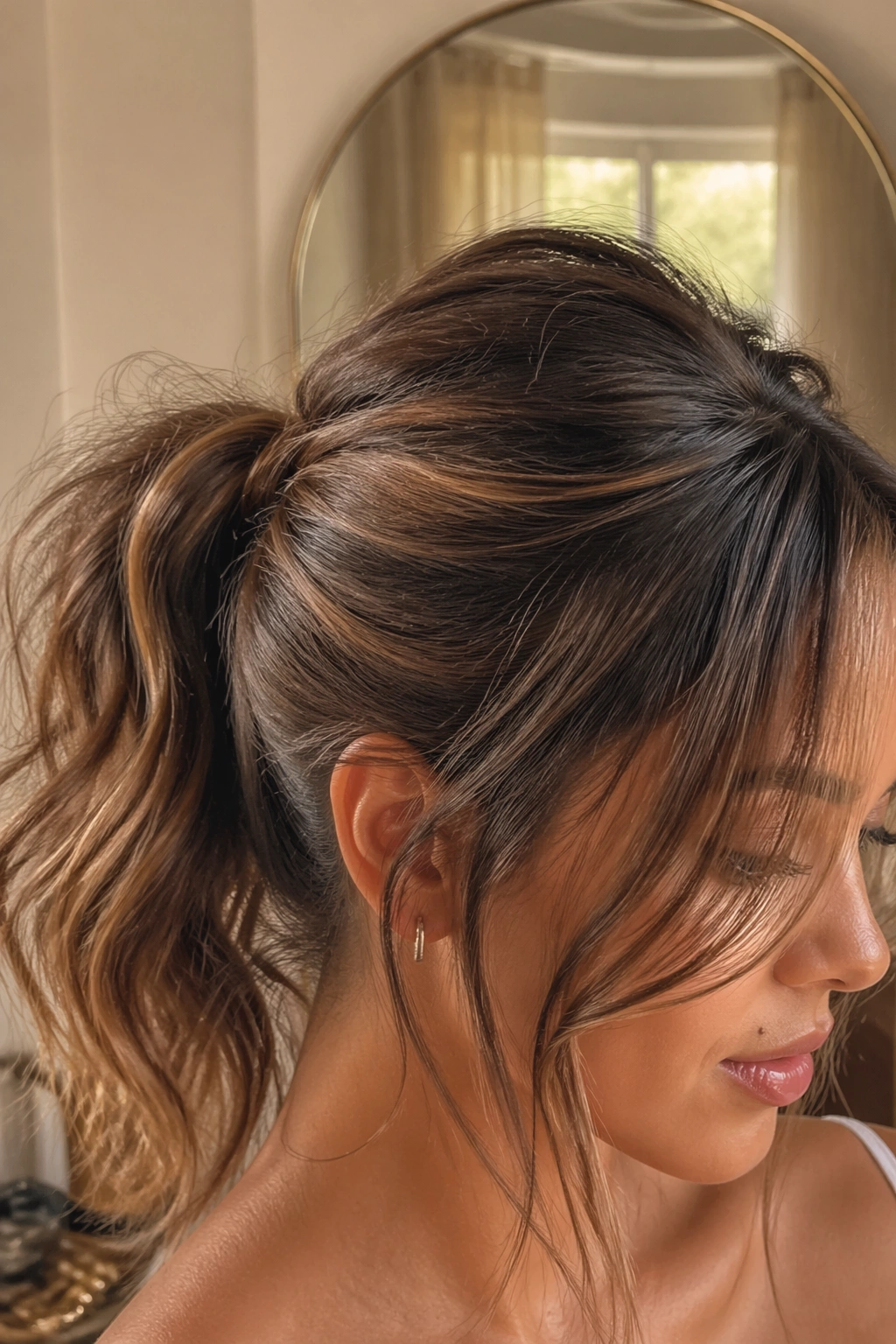
A little mess helps here. Not a disaster. Just enough texture to keep long hair from sitting flat against the head like it was ironed onto the scalp.
Start by rough-drying the roots with your fingers, then mist the mid-lengths with sea salt spray or a light texturizer. Pull the hair into a mid-height ponytail without smoothing every bump out of it. The crown should have a bit of lift, and the tail should have separation, not one solid rope.
Curtain bangs make this style feel lived-in on purpose. They break up the face line and keep the mess from spreading into the front. If the bangs are too clean, the whole look can feel mismatched, which is a tiny thing but an annoying one.
Leave a few shorter pieces out around the temples if your haircut already has them. They blend in better than you might expect and help the ponytail feel less stiff.
8. Side-Swept Low Ponytail With Curtain Bangs
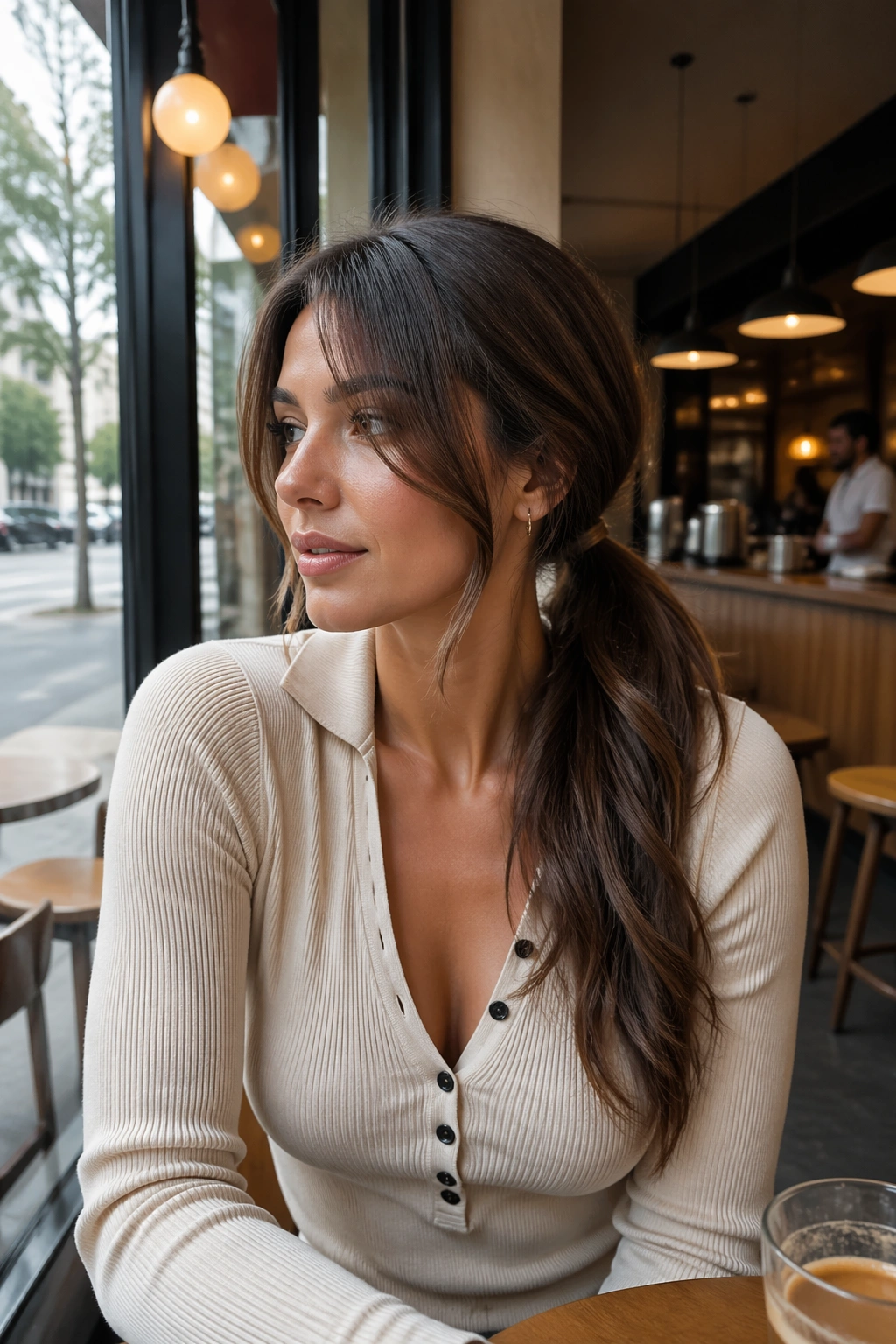
A side part does not have to look dated. Done right, it gives long hair a softer diagonal line and makes a low ponytail feel a little more elegant without becoming fussy.
Shift the part only slightly off center, then sweep the curtain bangs in the same direction as the part. That gentle movement keeps the style from looking split into two separate halves. Gather the ponytail low and a touch to the side of the nape rather than dead center.
The trick is keeping one side of the front a little fuller than the other. You want the bangs to echo the side sweep, not fight it. A soft bend at the ends helps, too. Straight ends can make the whole thing feel boxy.
This is a nice choice when your hair is long enough to weigh itself down. The side sweep lifts the mood a bit, which sounds silly until you see how much difference it makes.
9. Rope-Braid Ponytail With Curtain Bangs
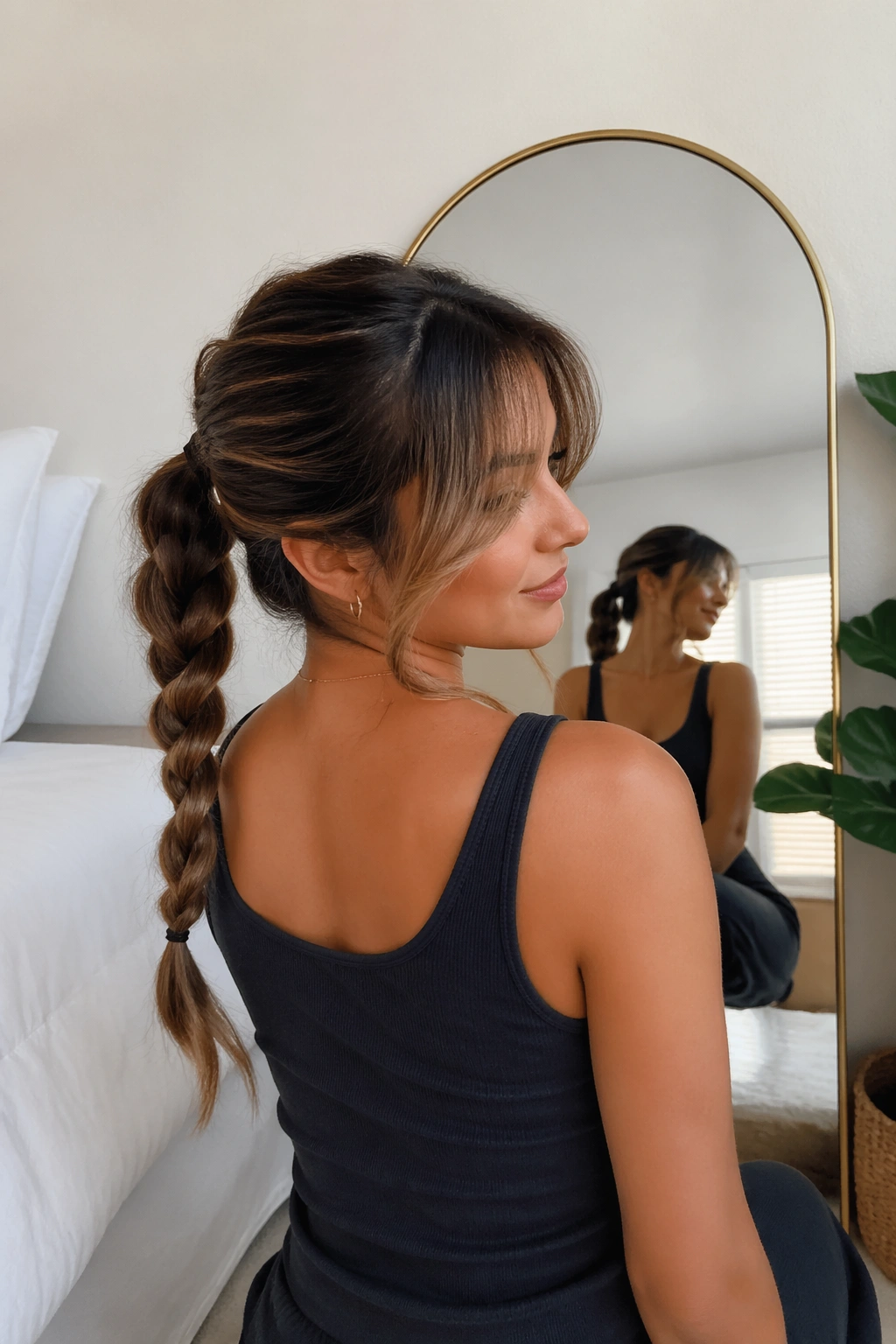
Need something that stays neat for hours? Rope braid. It’s one of the easiest ways to make a ponytail look more detailed without learning a complicated braiding pattern.
How to style it
Secure a ponytail first, then divide the tail into two equal pieces. Twist each piece in the same direction, usually clockwise, until they start to tighten. After that, wrap the two sections around each other in the opposite direction and secure the end with a small elastic.
The movement in the braid pairs well with curtain bangs because the front stays soft while the back feels controlled. That contrast is the whole appeal. If you want more bulk, tug gently at the twists after tying them off. Don’t yank hard or the rope shape will collapse.
- Use a light hold spray before twisting.
- Keep both twists even in tension.
- Secure the end with a clear elastic.
- Leave the curtain bangs loose and airy.
Watch for: slippery hair. Rope braids unravel faster on very clean strands, so a little texture spray helps a lot.
10. Voluminous Blowout Ponytail With Curtain Bangs
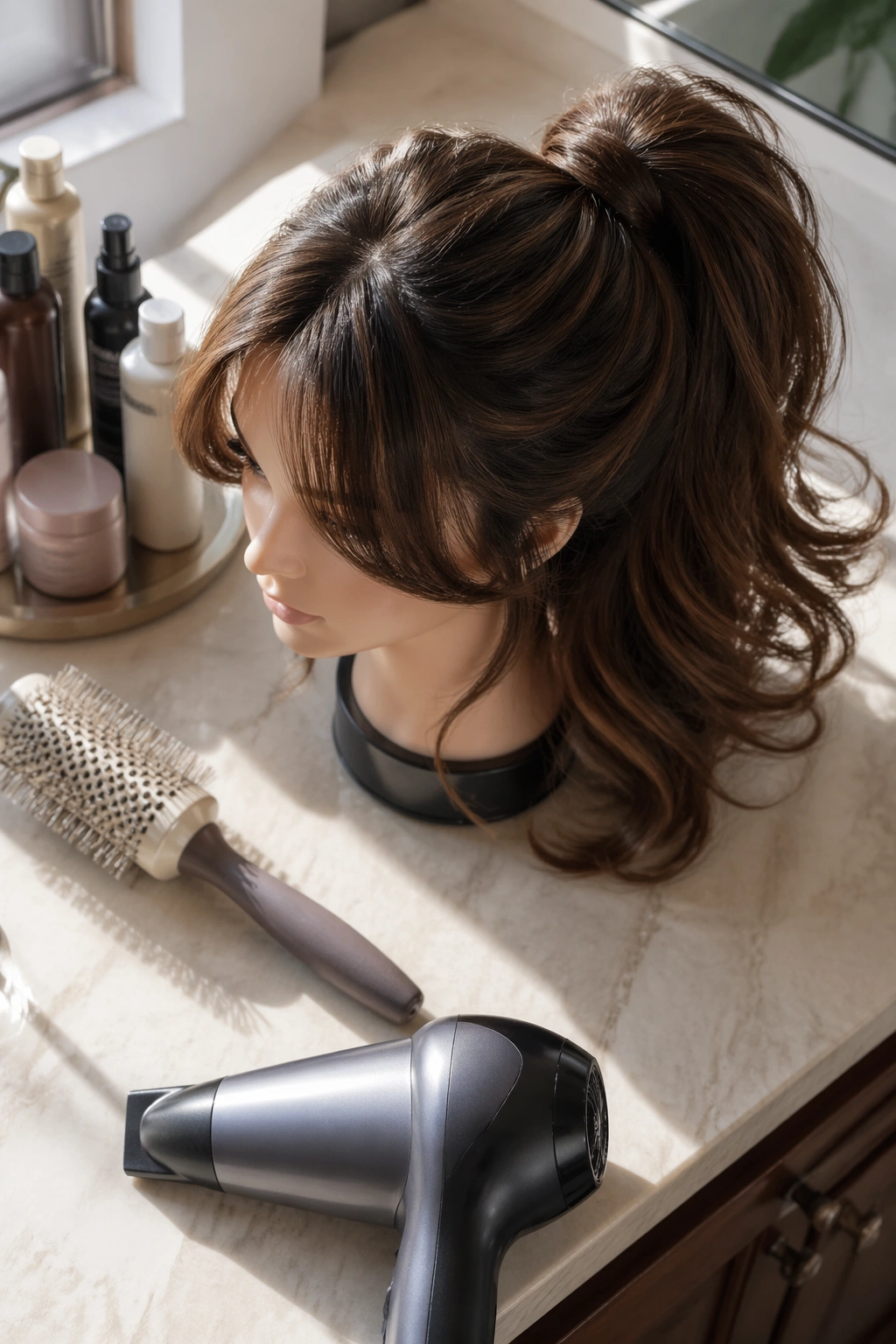
Picture soft bends through the tail, not stick-straight lengths. That’s the whole point of a blowout ponytail, and long hair gives you enough material to make it look rich instead of puffy.
Blow-dry the hair with a round brush, lifting the roots at the crown and curving the ends under slightly. Then gather the ponytail high or mid-high, depending on where you want the emphasis. The curtain bangs should be styled with the same brush, pulled away from the face and then released so they fall in a rounded arc.
This style needs shape, not stiffness. A little root lift at the front matters more than heavy product. If you use too much serum, the blowout collapses in an hour and the ponytail starts looking sleepy.
I like this look for long hair because the tail itself becomes part of the volume. You don’t have to fake fullness. It’s already there.
11. Double-Elastic Sleek Ponytail With Curtain Bangs
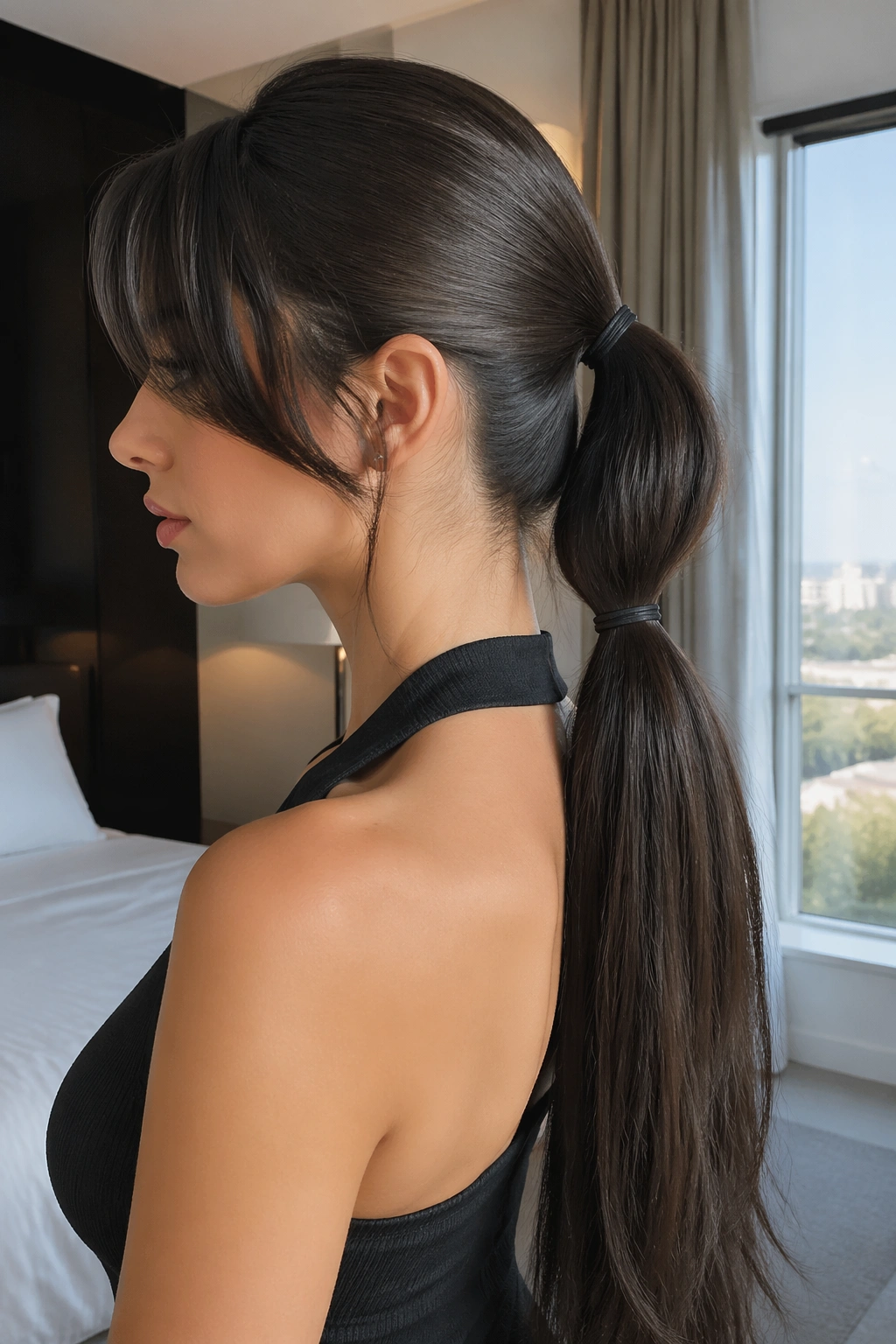
A single elastic can sag under the weight of long hair. Two elastics fix that. Simple, practical, and a lot less fussy than trying to pin a heavy ponytail back into place all day.
Place the first elastic where you want the ponytail to sit, then add a second one about 1 to 2 inches below it on the same tail. The result looks cleaner and stays more secure, especially if your hair is thick. The top section still reads as one ponytail, but the base has extra support.
Curtain bangs keep the style from feeling too severe. A center part and softly curved front pieces make the doubled base feel intentional instead of utilitarian. If the bangs are too straight across, the look turns harsh fast.
This is a good choice for long workdays, travel, or anywhere you know you’ll be moving around a lot. Pretty and practical is a rare combo. Take it when you can get it.
12. Fishtail Ponytail With Curtain Bangs
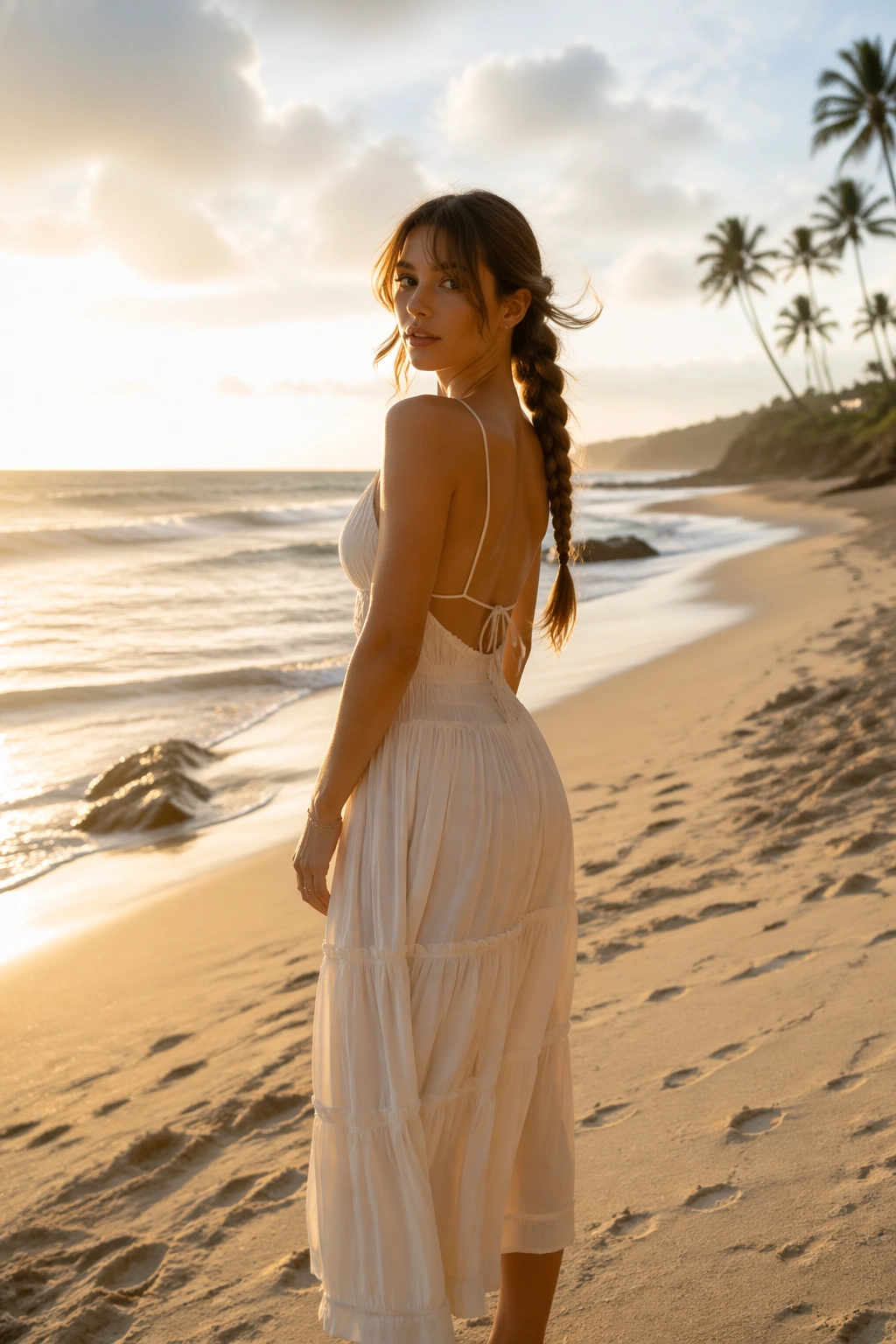
A fishtail ponytail sounds fancier than it is. That’s half the charm. Once you know the hand motion, it becomes one of those styles that looks like it took forever when it really didn’t.
Gather the hair into a ponytail first, then split the tail into two sections. Pull tiny pieces from the outside of each section and cross them into the opposite side. Keep going until the end, then secure it. The smaller the pieces, the tighter and more detailed the braid will look.
Curtain bangs do the same job here that they do in so many long-hair ponytail styles: they keep the front from getting too busy. With the braid handling the detail, the bangs can stay soft and loose. That gives the style a cleaner read.
If you want the fishtail to look fuller, gently widen each braid section after it’s tied off. Don’t start tugging from the top. Work from the bottom upward so the shape stays even.
13. Scarf-Tied Ponytail With Curtain Bangs
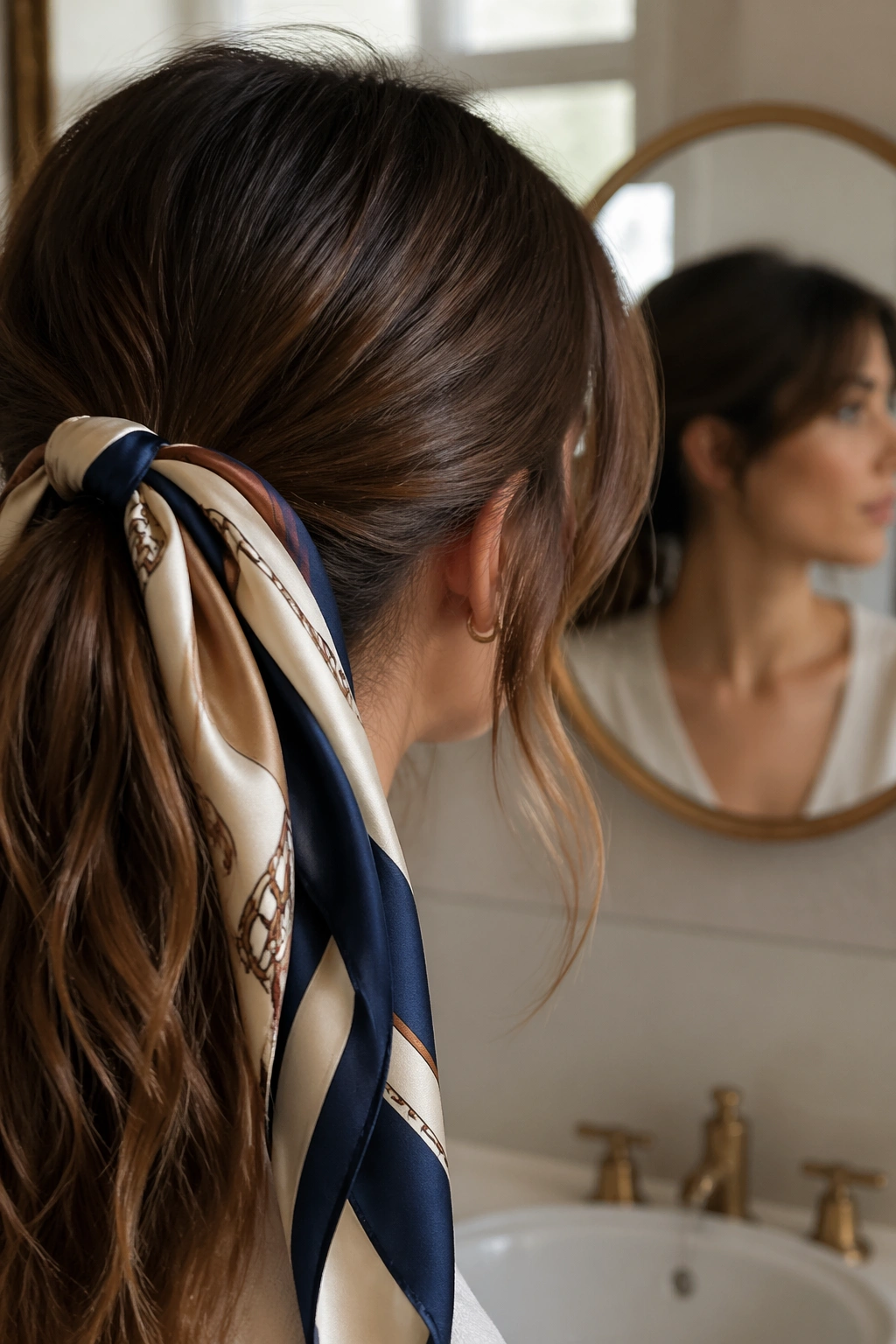
A scarf changes the mood fast. One minute you have a simple ponytail, and the next it looks like you bothered to think about the outfit, which is sometimes the whole game.
How to wear it
Pick a narrow silk or satin scarf, usually 1 to 2 inches wide once folded, and tie it around the base of the ponytail after securing the elastic. Let the ends hang long if you want a softer look, or knot them close to the base for a tidier finish.
The scarf should not fight the curtain bangs. That means the bangs need room to sit in their own shape, especially if the scarf has a bold print. If the front is too busy and the accessory is too loud, the hair starts feeling crowded.
- Choose silk for a smoother drape.
- Keep the ponytail low or mid-height.
- Match the scarf width to the thickness of your hair.
- Leave the curtain bangs brushed forward, not pinned back.
Good pairing: loose waves in the tail and a scarf with a matte finish. Shiny scarf plus shiny hair can look slippery in a bad way.
14. Tucked-Under Ponytail With Curtain Bangs
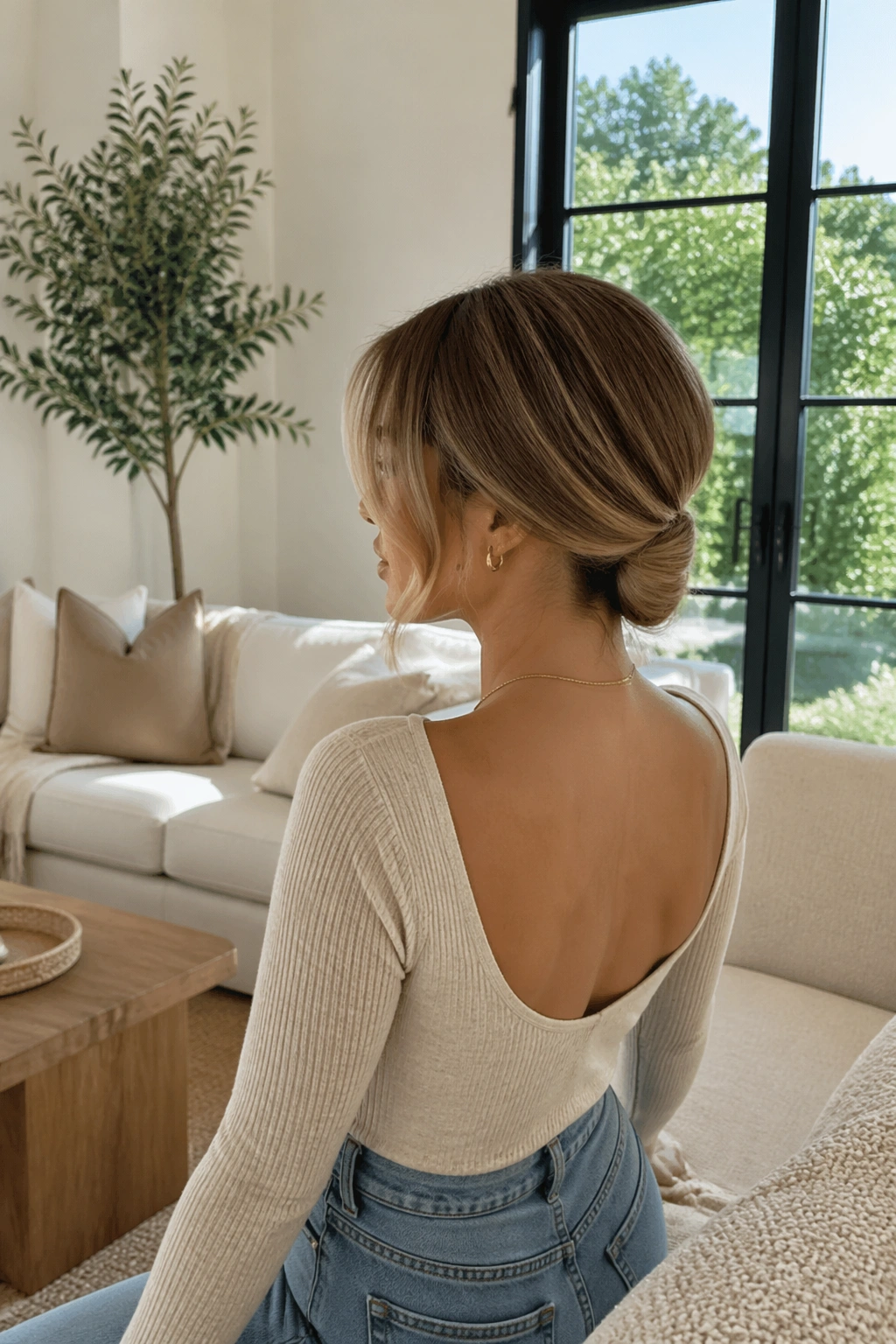
A tucked-under ponytail gives long hair a shorter silhouette without actually cutting anything off. That’s the appeal. It looks neat, a little vintage, and far more intentional than a basic low tie.
Create a low ponytail, then fold the tail upward and tuck the ends under the base, securing them with pins or a second elastic hidden underneath. The shape should sit close to the head and curve under slightly. It works especially well when the hair has a smooth texture or a soft wave.
Curtain bangs are useful here because they keep the front from feeling boxed in. The tucked shape can be structured, almost architectural, so the bangs provide the softness that balances it out. No sharp corners. That’s the goal.
If your hair is very long, you may need to create a second fold so the ends don’t stick out. It’s one of those styles that looks simple from the outside and takes a little fussing underneath. Worth it.
15. Teased-Crown Ponytail With Curtain Bangs
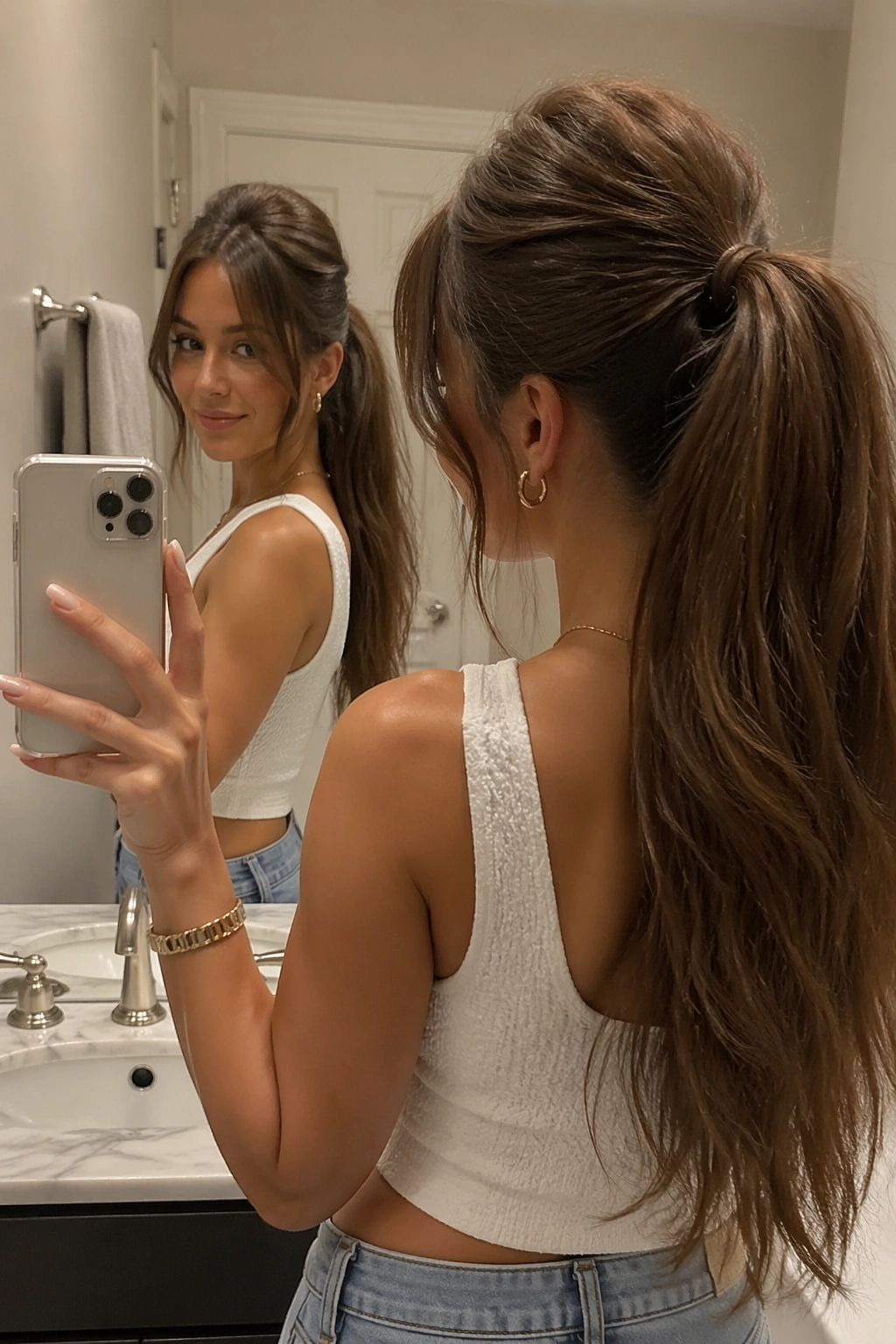
The crown feels almost weightless when you tease it right. That tiny lift changes everything, especially on long hair that likes to pull itself flat by noon.
Backcomb the crown in small 1-inch sections, then smooth the top layer over the teasing so it still looks clean. Secure the ponytail high or mid-high, depending on how much lift you want to show. The curtain bangs should fall forward in soft pieces that mirror the volume at the top.
This is a good style for finer hair that needs a little body. A dry shampoo mist at the roots gives the teasing something to hold on to, and a light hairspray keeps the crown from collapsing. Don’t overdo either one. Too much product makes the hair dull and stiff.
One small thing matters here: keep the bangs separated from the teased crown. If they blend too tightly, the whole head starts to look helmet-shaped. Nobody wants that.
16. Crimped Ponytail With Curtain Bangs
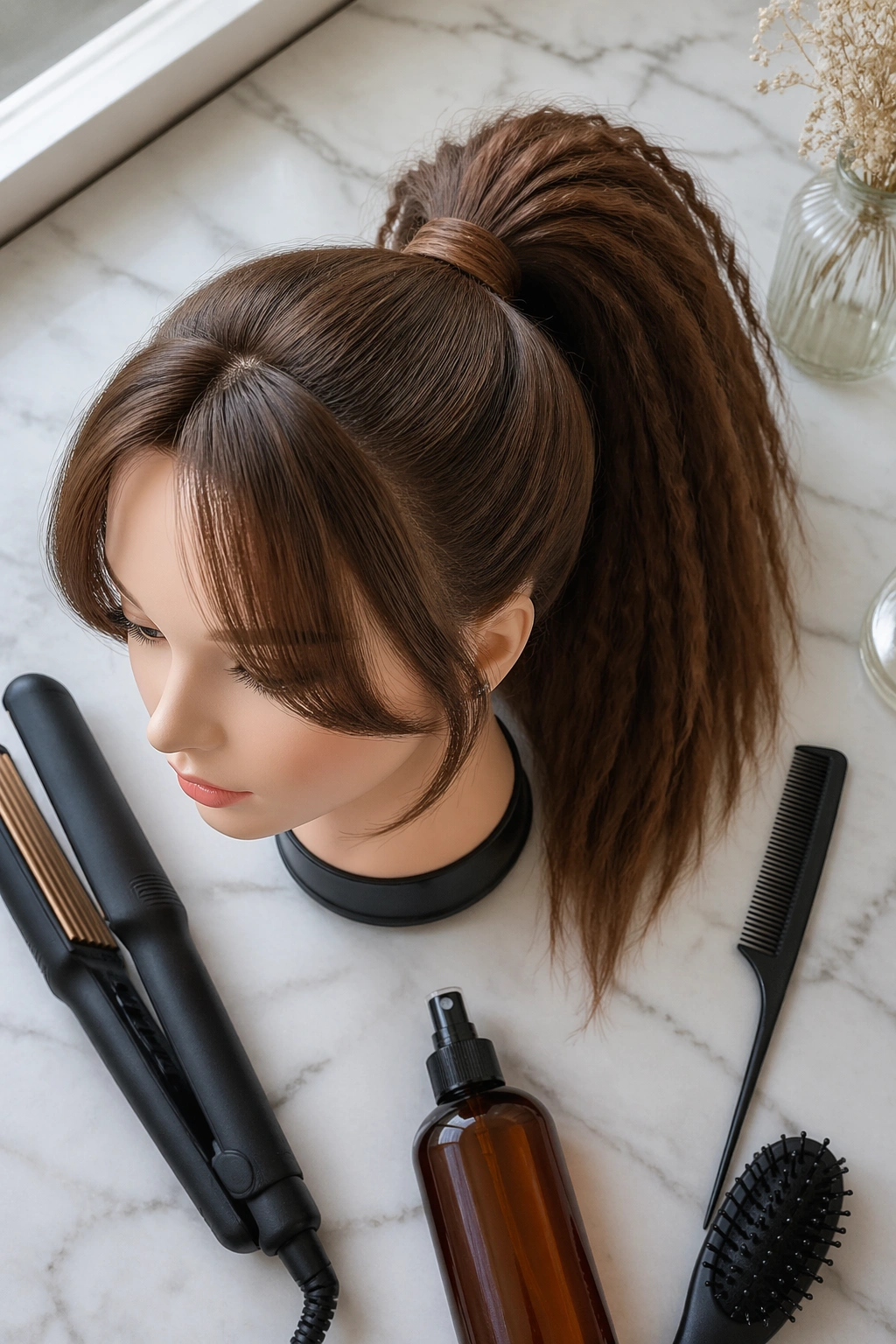
Crimping is back in a practical way, not a costume way, and long hair is where it really makes sense. The crimp adds texture through the tail so the ponytail has body even before you pull it together.
What makes it work
Crimp only the mid-lengths and lower sections if you want the style to stay modern. Leave the curtain bangs smooth, with just enough bend at the ends to echo the texture behind them. That contrast keeps the front from feeling busy.
A heat protectant spray is non-negotiable here. Crimped hair takes more passes than a loose wave, and long hair needs that protection. After crimping, rake through the tail with your fingers instead of a brush. A brush flattens the ridges and kills the whole point.
- Crimp in 2-inch sections for a softer pattern.
- Leave the top 3 inches of hair smoother.
- Gather the ponytail after crimping, not before.
- Keep the bangs brushed out and airy.
Tip: This look is strongest when the ponytail sits mid-height. Too high, and the texture can read too loud.
17. French-Braid Into Ponytail With Curtain Bangs
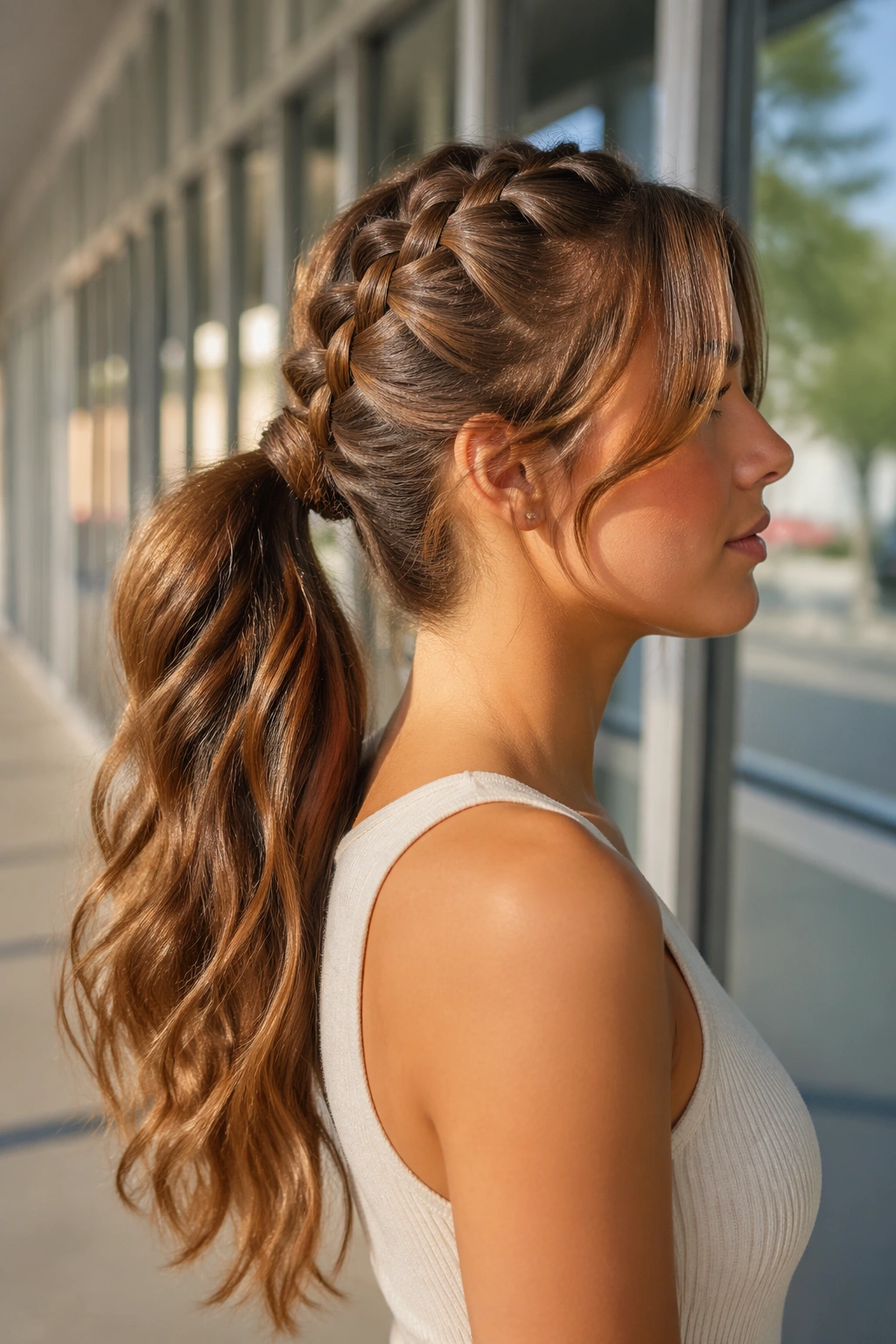
A French braid feeding into a ponytail solves a common problem: the top of the head looks styled, and the ponytail still gives you length and movement. That’s a useful combination for long hair.
Start the braid at the front hairline or just behind the bangs, then add sections as you braid back toward the crown. Stop once you reach the point where you want the ponytail to begin, then secure the rest into a tail. The front braid keeps flyaways down and gives the style a solid anchor.
Curtain bangs keep the braid from feeling too tight around the face. Let the bangs sit outside the braid line and curve naturally toward the cheeks. That small amount of softness changes the whole mood.
If your hair is layered, use a bit of pomade or light cream on the shorter front pieces before braiding. It helps them stay in place without turning shiny or crunchy.
18. Ribbon-Tied Ponytail With Curtain Bangs
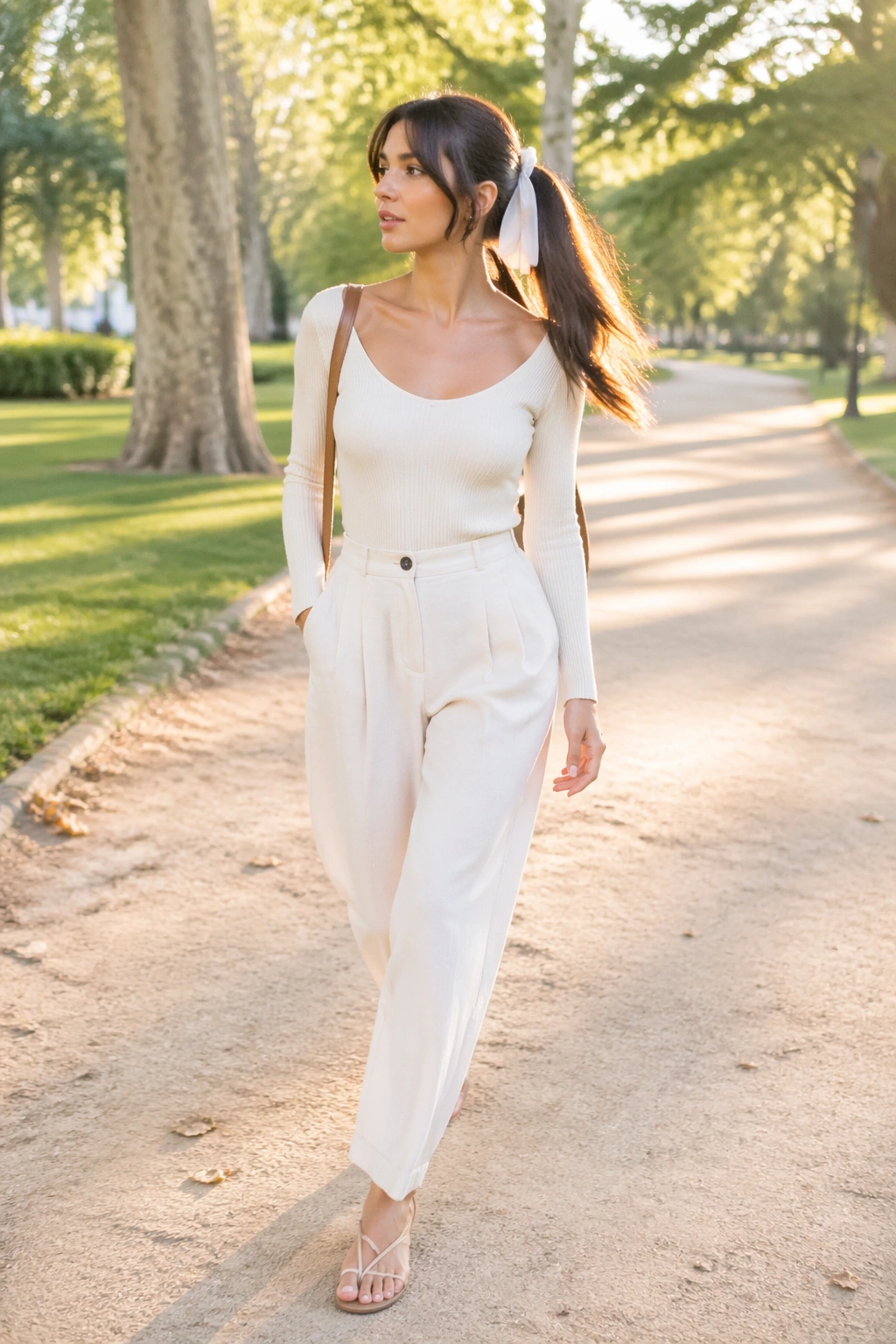
A ribbon changes the whole mood. The ponytail stops looking purely functional and starts feeling like you made a choice, which is useful on mornings when the rest of you is not exactly cooperating.
Choose a ribbon that’s about 1 inch wide for fine hair, or closer to 2 inches if your ponytail is thick and long. Tie it around the base of the ponytail after the elastic, then let the ends hang down the tail or off to one side. Satin gives a smoother finish; velvet gives a heavier, more wintery feel.
Curtain bangs should stay loose and soft here. The ribbon already brings attention to the base, so the bangs just need to frame the face and keep the style from feeling formal in a stiff way. A gentle bend at the cheekbones is enough.
This works especially well with low ponytails and soft waves. If the rest of the hair is too polished, the ribbon can look like an afterthought. A little movement makes it feel planned.
19. Wet-Look Ponytail With Curtain Bangs
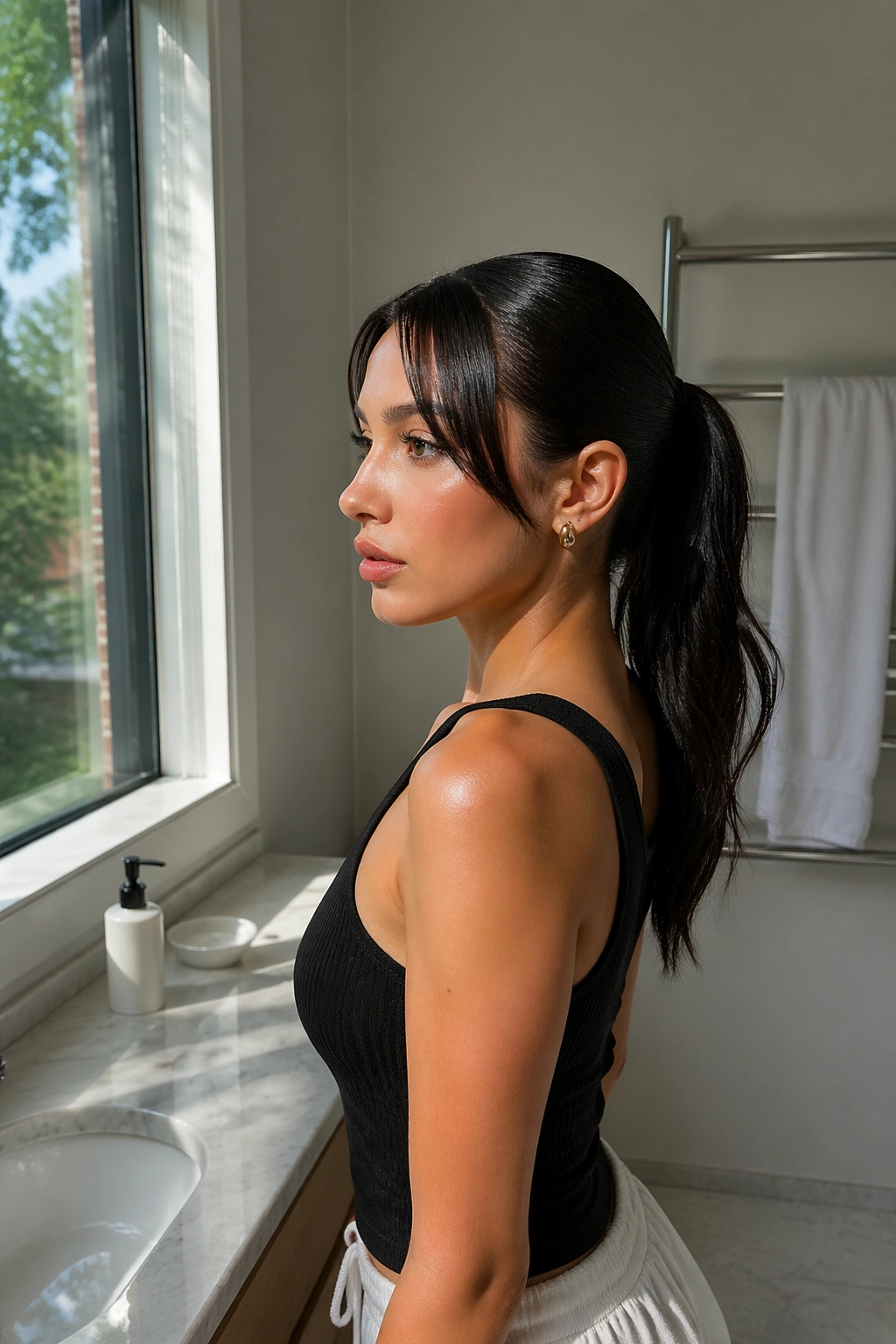
A wet-look ponytail is all about control. Not hard control, just enough polish to make the hair read sleek and deliberate. Long hair can take this style better than short hair because the length keeps the wet finish from looking sparse.
Use gel or styling cream on damp hair, then comb it back into a ponytail with a clean center part. The curtain bangs need a lighter hand. You want them smooth and separated, not coated to the point where they cling together. A small amount of cream through the front pieces is usually enough.
Unlike a blowout ponytail, this one doesn’t need softness at the crown. It wants shine and structure. That said, the bangs still matter because they break the severity of the slicked-back shape.
This is one of those looks that can swing from sharp to messy fast, so keep a small comb nearby if you’re wearing it for more than a few hours. A quick touch-up at the hairline makes a bigger difference than people expect.
20. Mid-Height Ponytail With Curtain Bangs
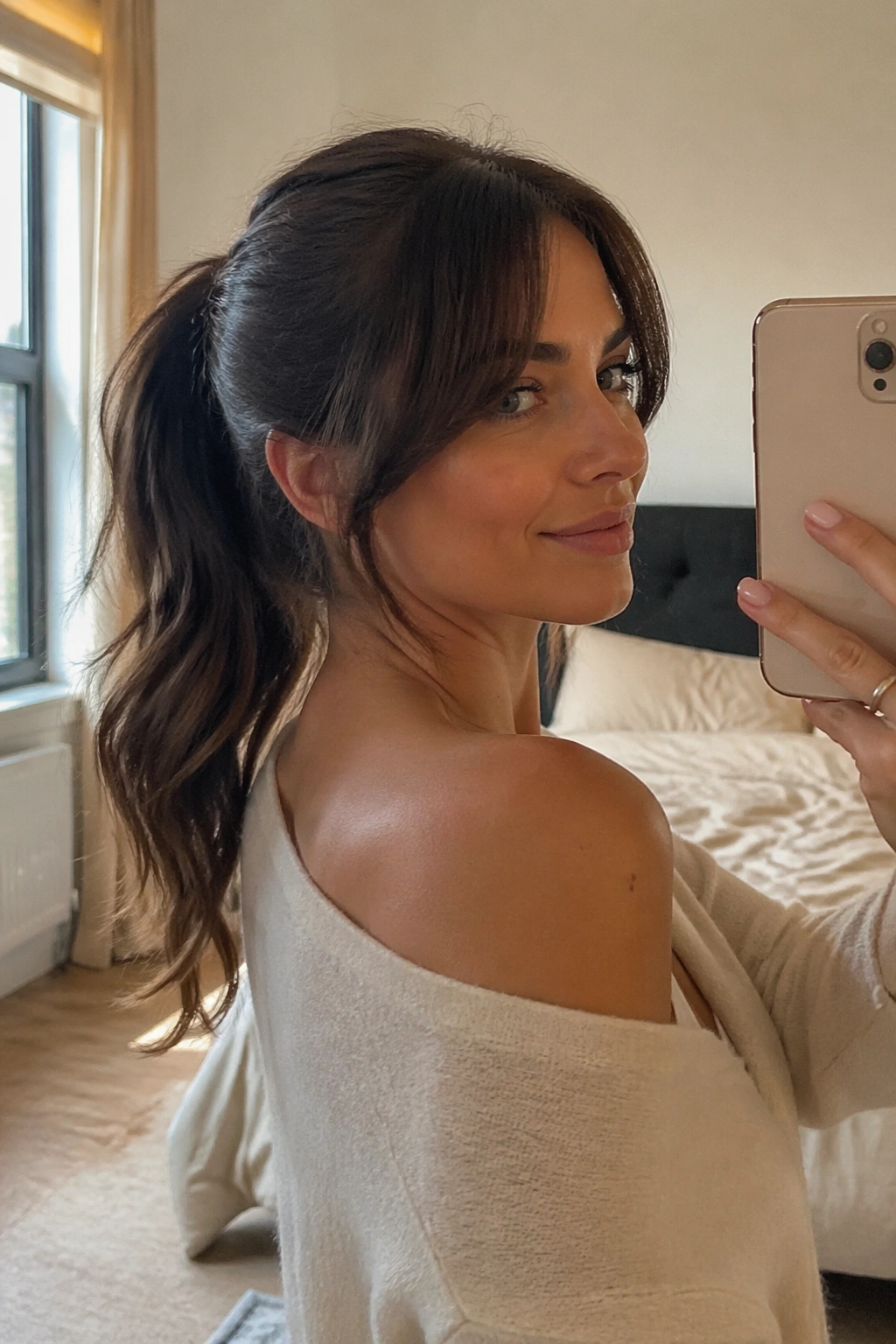
Two inches below the crown is a sweet spot. High enough to lift the face, low enough to stay wearable, and not so high that your long hair starts pulling at the scalp by lunchtime.
A mid-height ponytail is one of the easiest ponytail hairstyles for long hair with curtain bangs because it sits in the middle of everything. It works with straight hair, waves, and even a little natural frizz. The curtain bangs can be parted neatly and left to fall in two soft arcs, which keeps the style balanced.
If you want a cleaner look, smooth the top with a boar bristle brush before you tie it off. If you want a looser look, use your fingers and let a few crown pieces lift. The difference is small, but it changes the mood.
This is the one I’d call the safest bet if you’re trying to choose only one style. It doesn’t fight the haircut, and it doesn’t make the bangs feel decorative for no reason.
21. Braided-Base Ponytail With Curtain Bangs
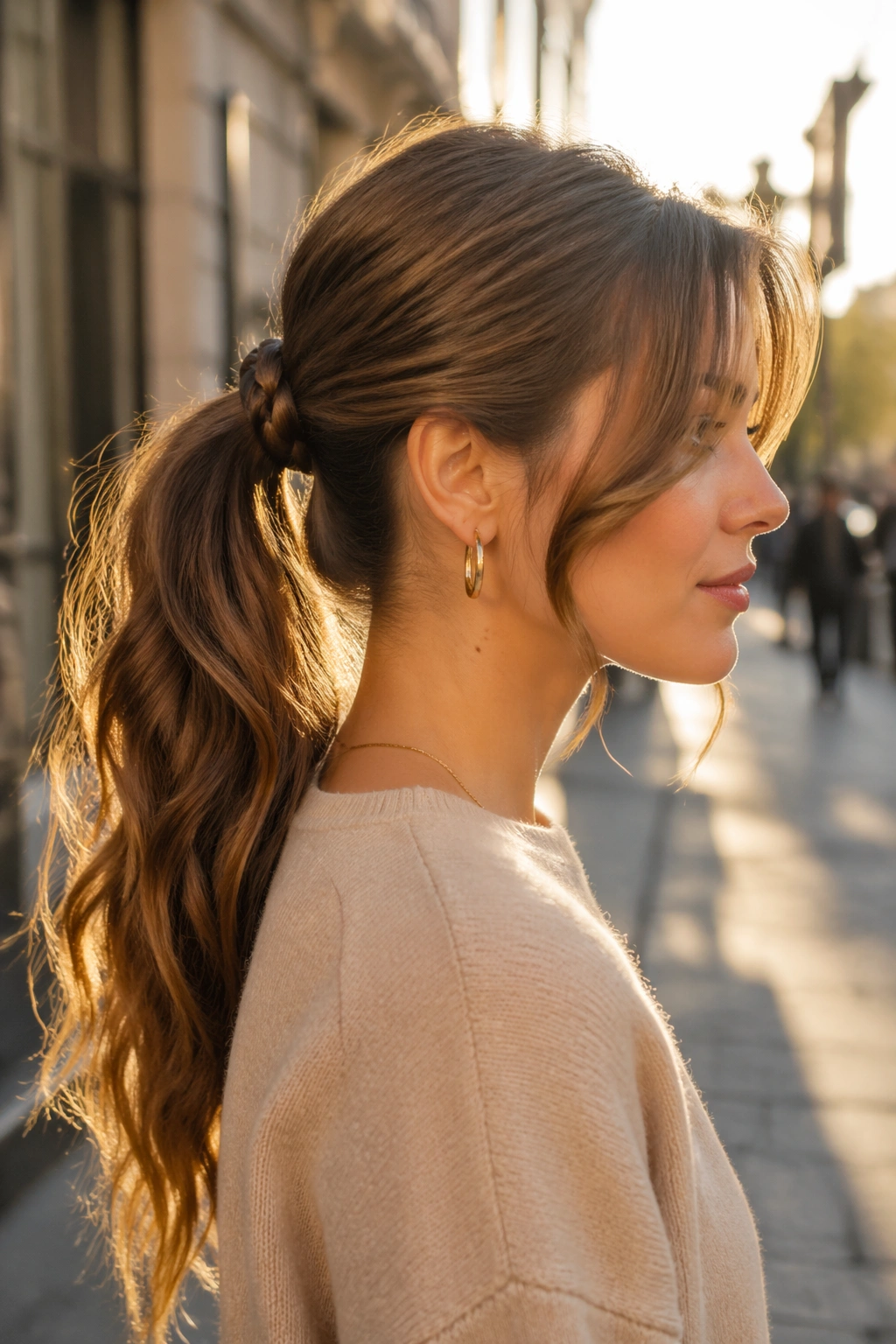
A braided base gives a regular ponytail a little armor. That sounds dramatic, but the idea is simple: braid a small section near the ponytail base, wrap it around, and the whole style looks more finished.
Gather the hair into a ponytail, then take a thin strand from underneath or from one side of the base and braid it into a narrow plait. Wrap that braid around the elastic and pin it in place. You get the same hidden-elastic effect as a wrapped ponytail, but with a little extra texture.
Curtain bangs are what stop this from feeling too severe. The braid at the base adds structure, so the bangs should stay soft and slightly lifted away from the temples. That contrast keeps the style from looking overworked.
I like this for long hair because the braid doesn’t disappear the way it can on shorter lengths. You can actually see the detail, which is the whole point of bothering with it.
22. S-Wave Ponytail With Curtain Bangs
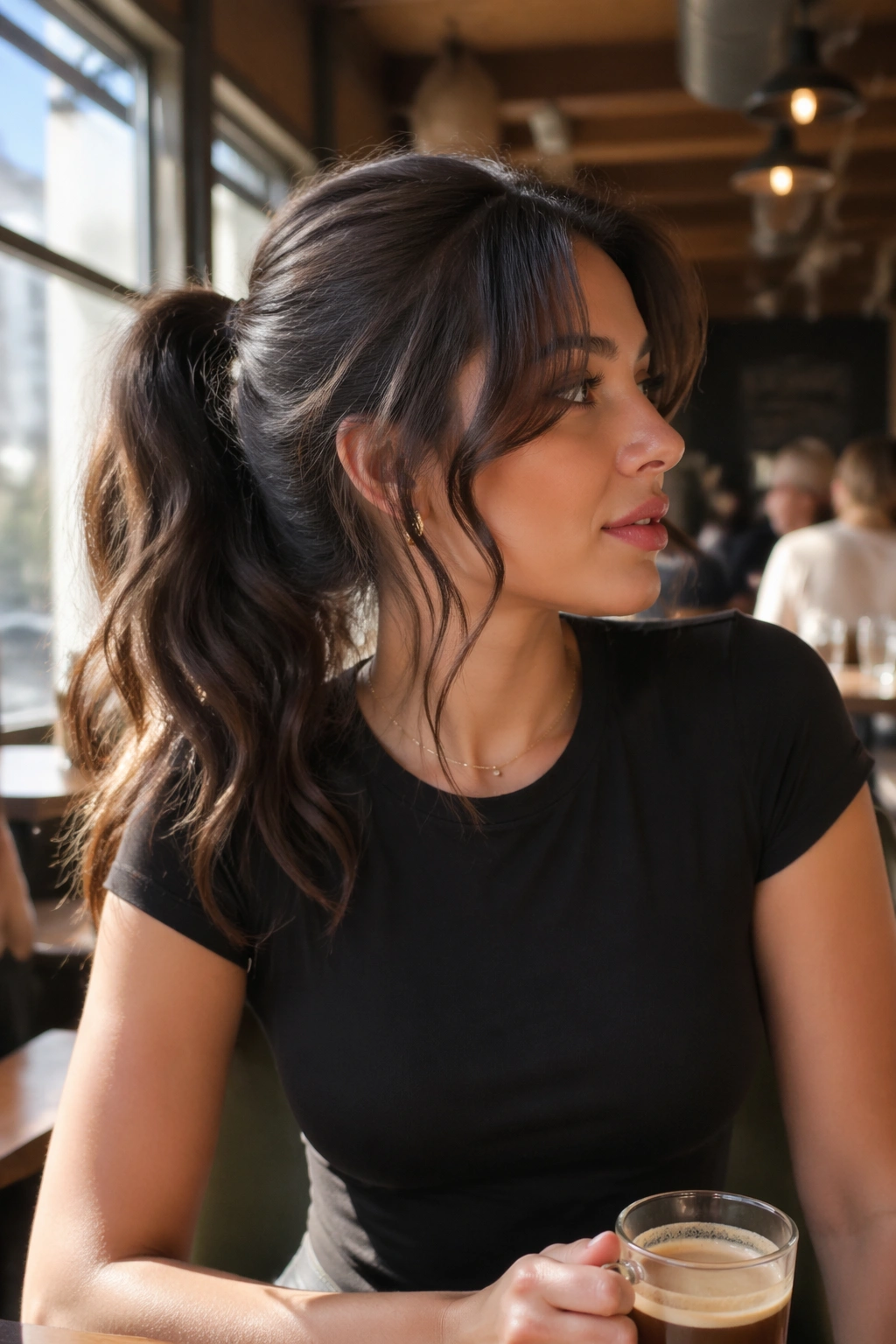
Want movement without full curls? S-waves are the answer. They bend through the lengths in a way that looks relaxed and intentional, not too round or too shiny.
How to get the wave
Use a 1-inch curling iron or flat iron to create a gentle bend, alternating direction every few inches so the shape makes a loose S instead of one repeated curl. After curling, run your fingers through the tail once or twice. A brush will undo the pattern too much.
Curtain bangs should echo that same bend. Curve them away from the face, then let them settle naturally. If they’re too straight, they clash with the wave pattern in the tail. If they’re too curled, the whole head starts looking busy.
- Curl only the middle and lower lengths.
- Leave the ends a little soft.
- Use a light mist of hairspray, not a heavy shell.
- Keep the ponytail at mid-height or low so the waves can hang.
Best paired with: second-day hair. A little natural grit gives the waves better hold.
23. Knotted Ponytail With Curtain Bangs
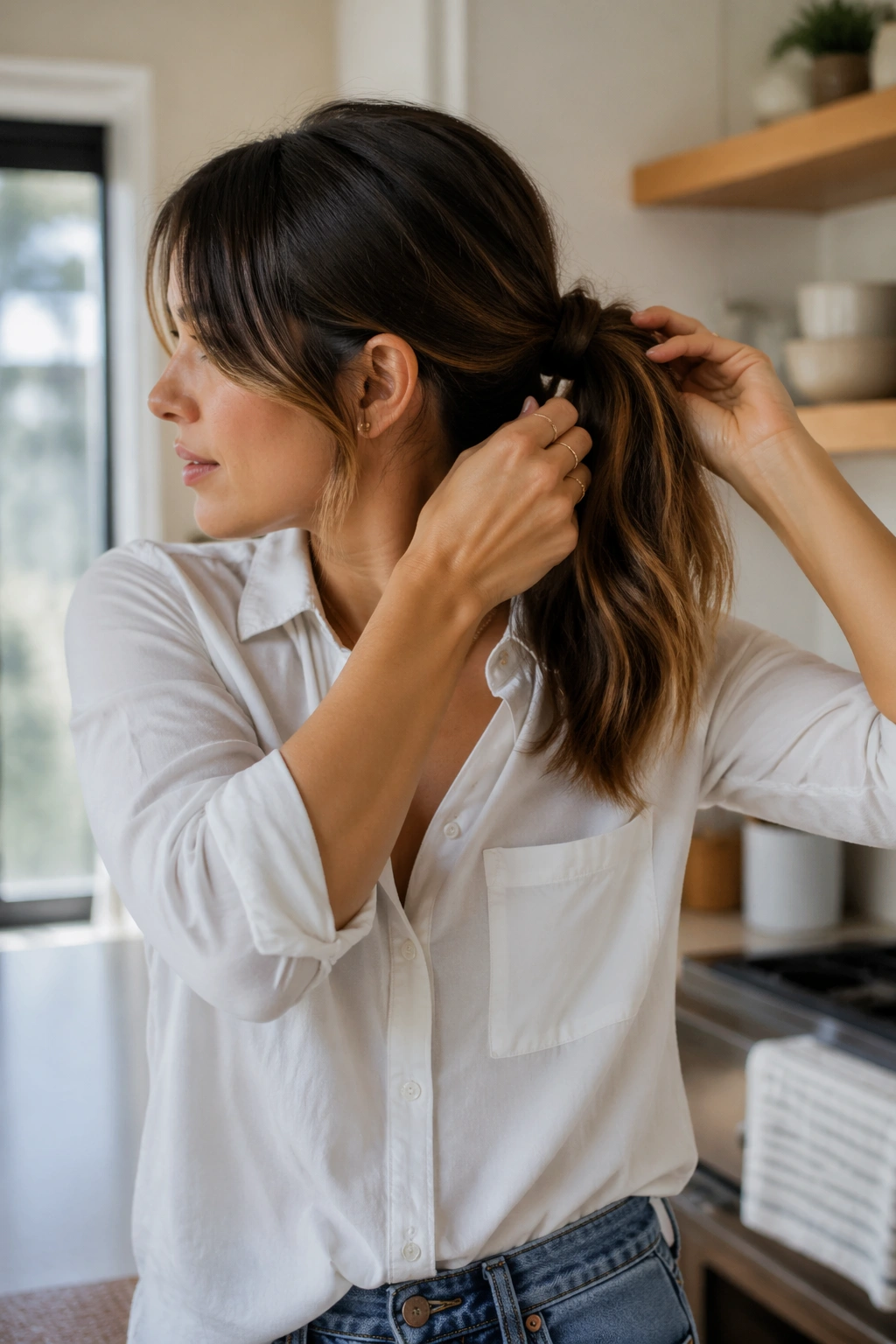
A knotted ponytail sounds fussy, but it isn’t. You’re just tying the hair in a way that makes the base look more sculpted than a plain elastic would.
Split the hair into two sections near the base, cross them over once or twice like a loose knot, then secure the tail underneath. On very long hair, the knot can sit as the main visual feature while the rest hangs freely. It’s a small change, but it reads differently from a standard tie.
Curtain bangs are useful because they keep the front from becoming too structured. The knot gives the back a neat little twist, and the bangs soften the whole thing so it still feels wearable.
If your hair is heavy, anchor the knot with hidden bobby pins before you pull the tail through. Otherwise it can loosen faster than you’d like. Long hair has weight, and weight will always win if you let it.
24. Sporty Ponytail With Curtain Bangs
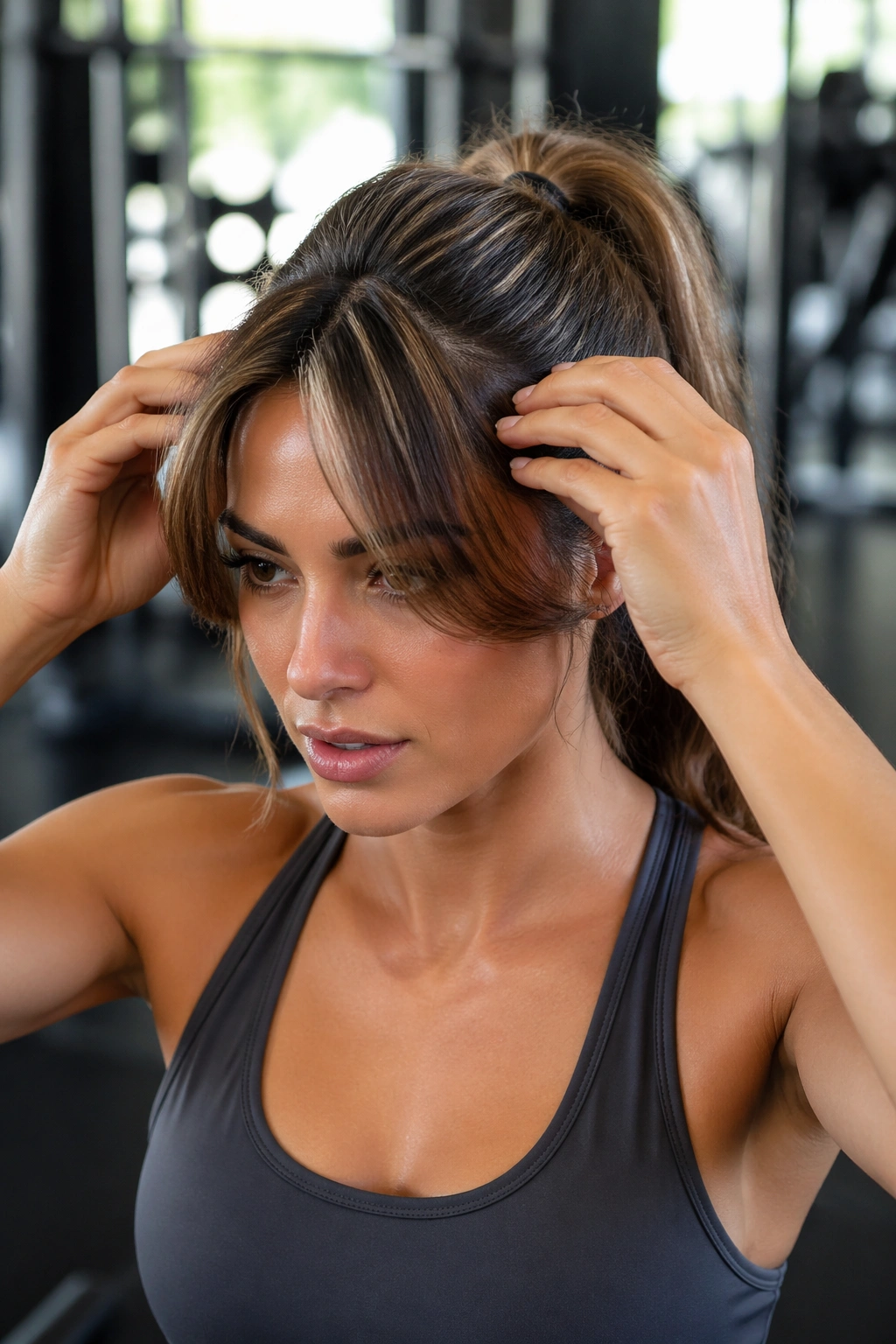
A gym ponytail can still look styled. It does not need to be a sad afterthought you only wear because your hair refused to cooperate.
Pull the hair into a high or mid-high ponytail, keep the crown smooth, and use a light cream or serum to control flyaways around the hairline. Curtain bangs can stay loose if you want movement, or you can pin back just the outer edges with tiny bobby pins if you’re sweating a lot. Either way, they should look intentional.
The long tail is the advantage here. It gives the ponytail enough swing that the style doesn’t feel purely functional. If your hair is thick, a strong elastic and one backup pin under the base help keep everything in place.
This is one of those looks that works because it respects the haircut. The bangs stay part of the look, not a problem to be solved. That tiny difference matters more than people think.
25. Pinned-Back Curtain Bangs With a Clean Ponytail
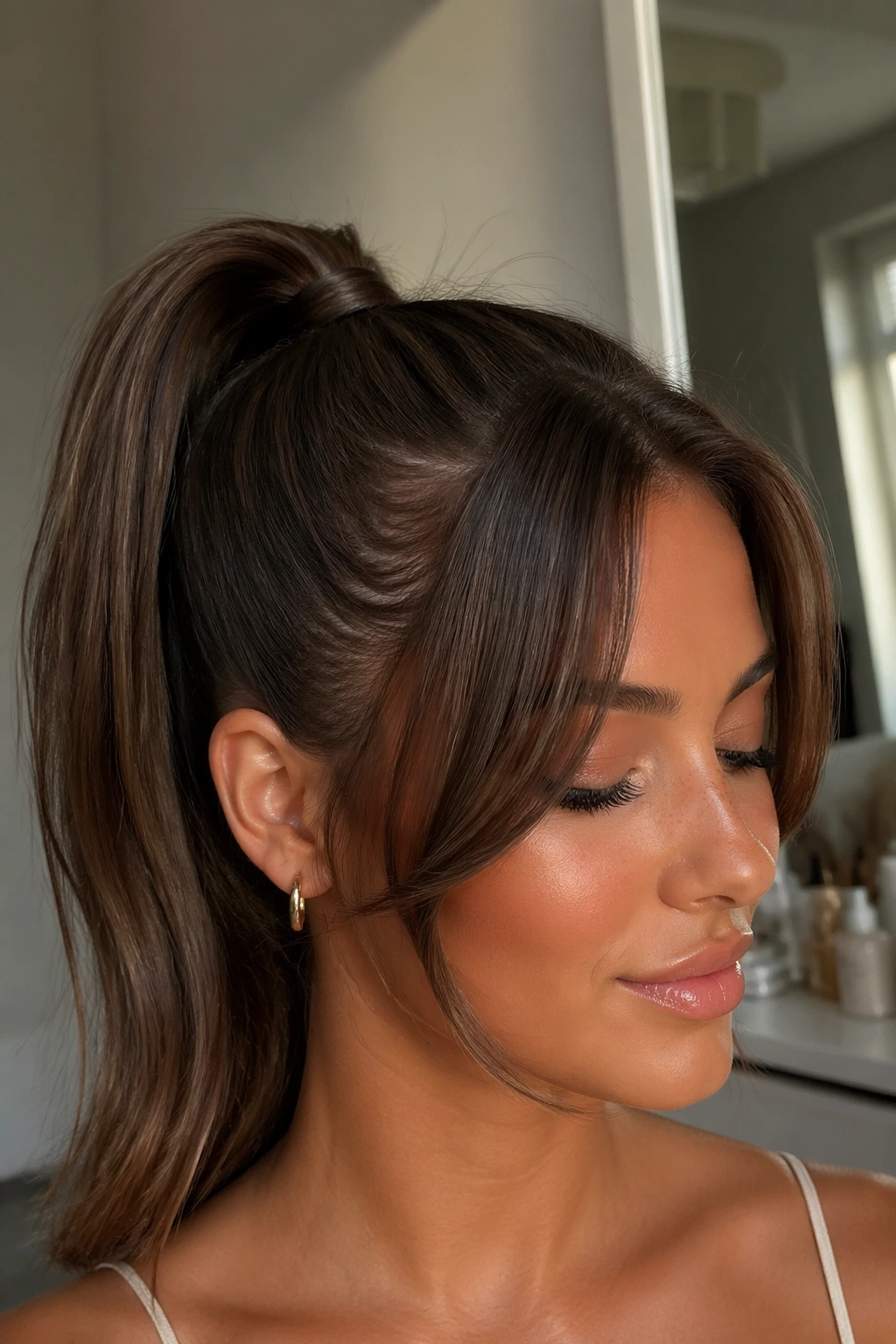
Sometimes the best move is to keep the ponytail simple and let the bangs do one neat little job. Tiny pins can shape the curtain bangs back without erasing them completely, which is useful when you want your face fully open but still want some softness.
Take the outer edges of the bangs and pin them just behind the temples with two small bobby pins on each side, crossed if needed. Leave the center part and some front length loose so the style still reads as curtain bangs, not a slicked-back ponytail with attitude.
This works best with a low or mid ponytail because the top area already feels controlled. You don’t need extra drama there. A smooth base, a clean part, and a couple of hidden pins do the job.
Use this version on days when you need hair out of your eyes but still want a face frame. It’s also handy if your bangs are in that awkward in-between length where they keep falling into your lashes.
26. Looped Ponytail With Curtain Bangs
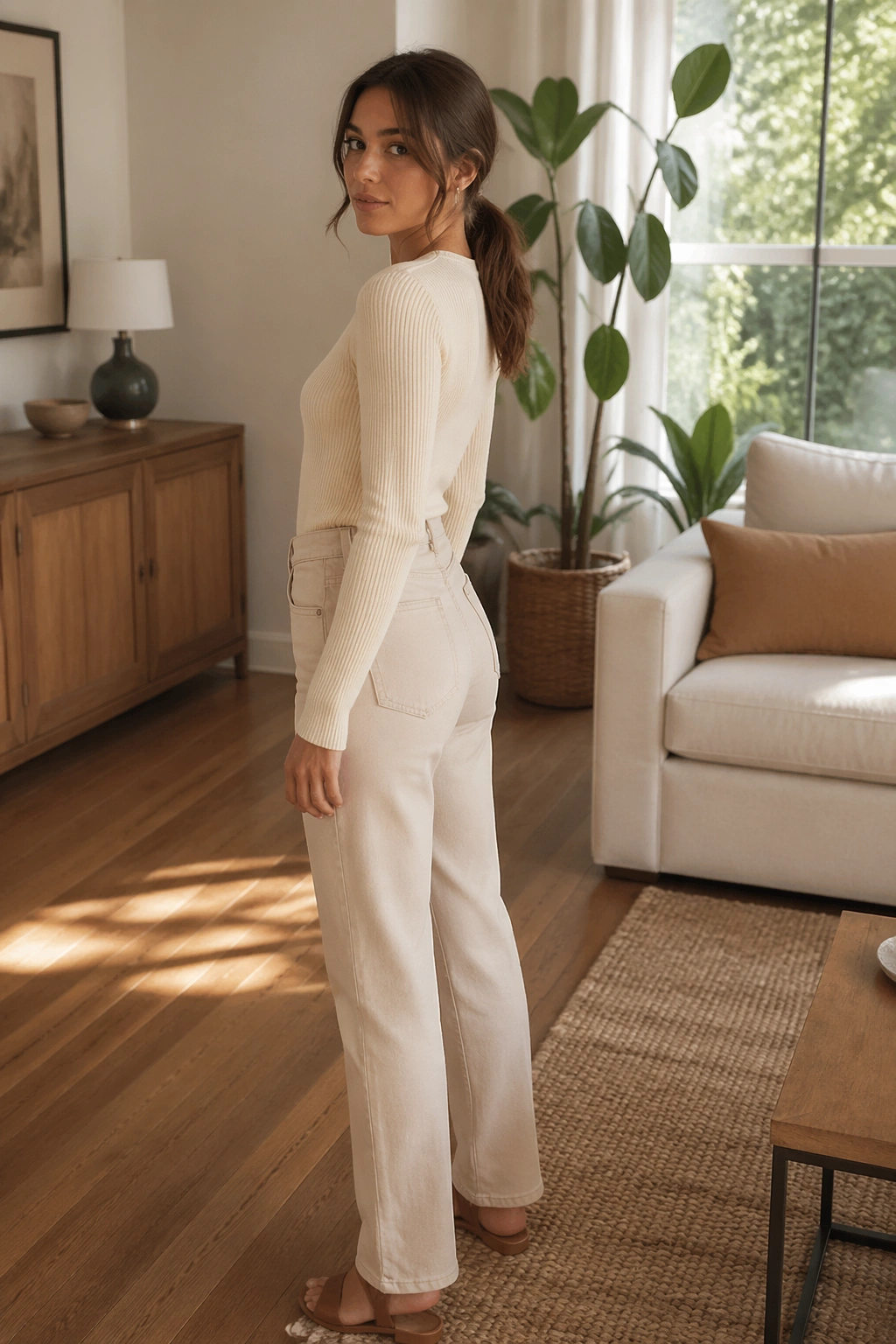
A looped ponytail gives long hair a chunkier shape without making you do a full updo. The result looks polished, a little playful, and far more interesting than the usual pulled-through elastic trick.
How to style it
Gather the hair into a ponytail, then on the final pull-through of the elastic, stop halfway so the ends create a loop instead of coming all the way through. Adjust the loop so it sits round and balanced, not lopsided. The remaining ends can hang a little if your hair is very long.
Curtain bangs help soften the whole silhouette. The loop has a rounded shape, almost architectural, so the bangs keep the front from looking too closed off. A center part with loose cheekbone pieces works best.
- Use a thick elastic for grip.
- Smooth the top, but keep the loop airy.
- Tuck any loose ends under the base if they poke out.
- Mist the bangs with a touch of shine spray, not too much.
Note: This style looks best when the loop is full. If the loop is tiny, the whole thing feels accidental.
27. Soft Romantic Low Ponytail With Curtain Bangs
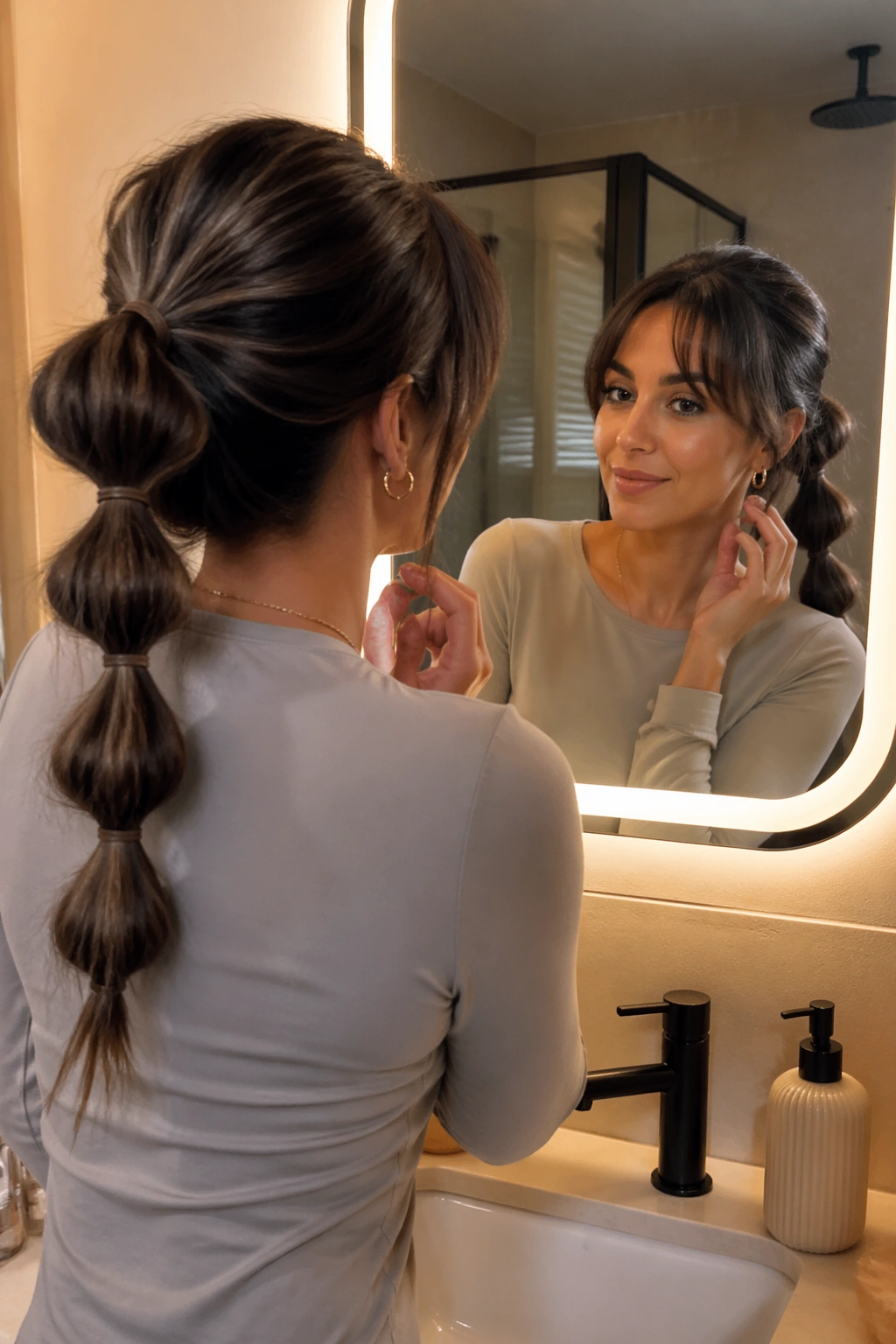
This is the one I reach for when I want hair to look done without looking strict. The ponytail sits low, the lengths stay loose, and the curtain bangs do exactly what they should: frame the face, soften the edges, and keep the style from feeling too neat.
Add a gentle wave through the tail with a medium iron, then gather the hair at the nape with just enough tension to hold it. Leave a few face-framing pieces around the bangs if the haircut already gives you them. The whole point is softness, not perfection.
A small amount of lightweight cream through the ends keeps long hair from looking dry. Too much product would flatten the style, and that would be a shame because the texture is the best part. The bangs should fall in a light sweep, not a hard curtain.
If you want one ponytail to wear again and again, pick this one. It works for long hair, it flatters curtain bangs, and it never looks like you spent all morning fighting with your own head.
