



A claw clip ponytail on curly hair works only when you stop treating the curls like they need to be flattened. The best claw clip ponytails for curly hair keep the bend, the fluff, and the lift — they just arrange all that texture in a way that actually holds.
That’s the part most people get wrong. They slick the hair back too hard, squeeze it into a tiny clip, and then wonder why the whole thing starts slipping by lunch. Curly hair wants a little room. It also wants a clip with real spring tension, not a decorative piece that looks cute in a drawer and gives up the second it meets a dense ponytail.
My favorite versions are the ones that look easy on purpose. A low twist, a high puff, a side-swept ponytail — those styles let the curl pattern do the work, which is why they still look good when a few spirals escape around the temples. Honestly, I trust a messy, well-placed clip more than a perfectly smooth ponytail that turns into a puffball the moment humidity walks into the room.
Start with the low styles if your hair tends to slide, then move higher once you know where your clip likes to sit. After that, it gets more fun than fussy.
1. Low Twisted Claw Clip Ponytail
A low twisted claw clip ponytail is the one I reach for when I want my curls to look neat without looking tight. It sits right at the nape, which gives the clip more to grip and keeps the shape from ballooning out too far at the crown.
Why It Works on Curly Hair
The twist creates a little anchor point before the clip goes on. That matters more than people think. Curly hair has a lot of air in it, so a low twist helps compress the base without crushing the length.
- Split the hair into two loose sections.
- Twist each side back toward the nape.
- Gather both twists together and clip them low.
- Leave a few curls out at the front if you want softness.
Tip: use a medium or large clip with teeth that feel a little sharp, not slick. Smooth, shiny clips slide off dense curls faster than you’d expect.
2. High Puff Claw Clip Ponytail
This is the style that proves a claw clip can handle volume. A high puff ponytail gives curly hair room to rise at the crown, which keeps the look lively instead of pinned flat.
What I like here is the shape. It has height, but it does not need a lot of precision. Pull the hair up, let the curls stack naturally, and clip the base just under the puff so the teeth catch the densest part. The ends can spill over the top or sit to one side; both versions work.
If your curls are thick, use a large clip with a strong hinge. If they’re fine but springy, a smaller clip can hold better because it isn’t fighting so much bulk. Keep the roots loose. Tight roots make the whole style look stiff, and stiff curls rarely hold their charm for long.
3. Half-Up Curly Claw Clip Ponytail
Want the clip to do less work? Keep half the hair out of the fight. A half-up curly claw clip ponytail is a smart fix when you want height at the crown but don’t want all your length trapped in a clip.
How to Keep It Balanced
The top section should be generous enough to show the style, but not so large that it collapses the clip. I usually take the hair from the temples back, gather it loosely, and clip it just above the midpoint of the head. The lower curls stay free, which makes the whole thing look lighter.
This version is especially good for layered cuts. Shorter face-framing pieces get to stay soft, and the clip doesn’t have to wrestle with every curl on your head. If your roots are flat, this is the one that gives you lift without the drama of a full ponytail. Simple. Clean. Reliable.
4. Side-Swept Claw Clip Ponytail
If your curls always fall the same way after sleep, a side-swept claw clip ponytail can turn that habit into the style. Instead of fighting the bend in your hair, you use it. The result looks a little dressed up without feeling overworked.
I like this one for second-day curls because the side sweep hides unevenness. Bring the hair to one side, twist once, and clip it just behind the ear or slightly below it. That offset placement gives the style movement and keeps one side from looking heavier than the other.
- Sweep the crown in one direction.
- Leave the front curls loose on the lighter side.
- Clip at the low side of the head, not the middle.
- Tuck only the ends you don’t want poking out.
The best part is the profile. From the side, it looks intentional. From the front, it still feels soft.
5. Rope-Twist Claw Clip Ponytail
A rope-twist claw clip ponytail has a little more shape than a plain gather, which is why it works so well on long curls. You divide the hair into two sections, twist them in the same direction, then wrap them around each other before clipping the base. The finish looks more woven than thrown together.
I’ve always liked this one because it gives the hair a clear path. Curls with a lot of length can look heavy when they’re just shoved up into a clip. The rope twist breaks that bulk into a cleaner line, and the clip sits more securely because it has something structured to grip.
What to Watch For
The twist should be loose enough to keep the curl pattern alive. If you twist too hard, the ponytail ends up looking ropey in a bad way — thin, strained, and a little tired.
Use this style when you want movement and hold at the same time. It’s one of the few upstyles that still looks good if a few curls spring free. Actually, those stray pieces make it better.
6. Bubble-Effect Claw Clip Ponytail
Unlike a regular ponytail, this one uses the clip as the base and the shape does the decorating. A bubble-effect claw clip ponytail is a nice fit for curly hair because the texture already gives you volume; the bubbles just make that volume feel deliberate.
Clip the ponytail first, then add a small elastic a few inches down the length if your curls are long enough. The section between the clip and the elastic puffs out into a round shape, which makes the whole style feel playful without tipping into childish territory. If your curls are shorter, you can fake the same effect by fluffing the tail with your fingers after clipping.
Best for: thick curls that need a little structure, long spirals that want extra shape, and days when you want something less ordinary than a standard ponytail. My recommendation is a clear elastic or a hair tie that matches your hair color, so the bubble effect stays the focus.
7. The Pineapple Claw Clip Ponytail
The pineapple version is the one I reach for when I want height without wrecking the curl pattern. It borrows the shape of the classic curly pineapple, but the clip keeps the base more stable and less likely to sag.
Why It Works
Curly hair naturally wants to stack upward when it’s gathered loosely. A claw clip just helps it stay there. Put the hair high on the head, keep the front pieces loose, and let the curls fan out over the clip instead of trying to tuck every strand in.
This style is especially kind to 3B through 4C curls because it preserves the round silhouette people usually want to keep. It also looks better slightly imperfect. If one section stands up more than another, leave it alone. That unevenness is part of the charm.
Use a large clip here. The smaller ones pinch too hard and make the top look squashed. A big, curved clip hugs the shape more naturally, which is the whole point.
8. Crown-Clipped Messy Ponytail
Messy isn’t the point. Strategic mess is. A crown-clipped ponytail takes the lift from the top of the head and lets the rest of the curls fall in an easy pile, which gives curly hair a little drama without making it look stiff.
The trick is placement. Clip the hair a bit higher than you think, then tug softly at the crown to loosen the front. You want the top to puff a little, not collapse into a flat sheet. The curls around the back should feel free, not forced into a single tidy rope.
This style is good when you want big earrings, a strong lip color, or just a face-framing shape that feels alive. It’s not the best pick for a formal boardroom mood. It is, however, excellent for dinners, events, and those days when your curls decide they’d like to have a say in the styling. Fair enough.
9. Sleek Roots, Curly Tail
Can curly hair look polished without going flat? Yes, and this is the easiest way to do it. Smooth the roots at the front and sides, then let the tail stay curly and full. The contrast is what makes it work.
How to Get the Contrast
Use a small amount of gel or cream only near the hairline. Brush that section back with a soft bristle brush or your hands, but leave the rest of the hair alone. Gather the ponytail low or mid-height, clip it, and stop before the ends lose their shape.
The point is restraint. Too much product near the roots turns the style heavy, and too much brushing pulls the curl out of the tail. Keep the crown controlled, not shellacked.
I like this version for dressier days because it gives you a clean outline without stealing the texture that makes curly hair interesting in the first place. It’s neat. It’s not fussy. And it looks especially good with a side part or a center part, depending on your face shape.
10. Crisscross Twist Claw Clip Ponytail
I’ve seen this style rescue a lot of half-done hair mornings. The crisscross twist ponytail looks more involved than it is, which is honestly part of the appeal. Two sections cross over each other at the nape, and the clip pins the overlap in place so the whole thing feels built, not just gathered.
Key Details
- Use two loose sections from either side of the head.
- Cross them once or twice at the back.
- Clip right over the crossed point.
- Leave the tail full and untouched.
That crossing motion makes the base flatter and keeps the clip from sitting on a lump. It also looks good with layered curls because the overlapping strands create a little texture before the ponytail even begins.
If your hair is very dense, don’t make the twists too tight. Tight twists fight the natural spring and can make the clip pop open. Loose is better here. Always.
11. Center-Part Low Ponytail
A center-part low claw clip ponytail has a clean, calm shape that curly hair wears surprisingly well. It’s not flashy. That’s the whole reason it works.
The center part gives the front a clear line, and the low placement keeps the clip discreet. You end up with something that feels tidy without flattening the curl pattern into submission. The curls in the ponytail can stay loose and soft, which keeps the style from looking too severe.
I like to leave the part a little imperfect. If the line is ruler-straight, the whole style can feel hard. A slightly soft part lets the curls around the face soften the geometry. That tiny bit of looseness matters more than people think.
This is a good choice for work, school, or any setting where you want your hair to read as put-together without shouting for attention. It’s one of the quieter looks on this list, and I mean that as a compliment.
12. Deep Side-Part Ponytail
Compared with a center part, a deep side part gives curly hair more motion and a little extra drama. The shift in weight changes the whole silhouette. Suddenly the ponytail looks fuller, because the hair is falling from one side instead of splitting evenly down the middle.
That asymmetry is useful when the roots feel flat or one side has more shape than the other. Brush or finger-comb the hair over to the heavier side, gather the ponytail low, and let the clip sit just behind the thicker section. The top will get height from the sweep, and the tail will look more layered.
Best for finer curls, side-fringe growth-outs, and anyone who wants a softer face line. If you like earrings, this is a nice style for them. The side part frames the face while the ponytail keeps the back from feeling messy. It’s a good trade.
13. Curly Mohawk Claw Clip Ponytail
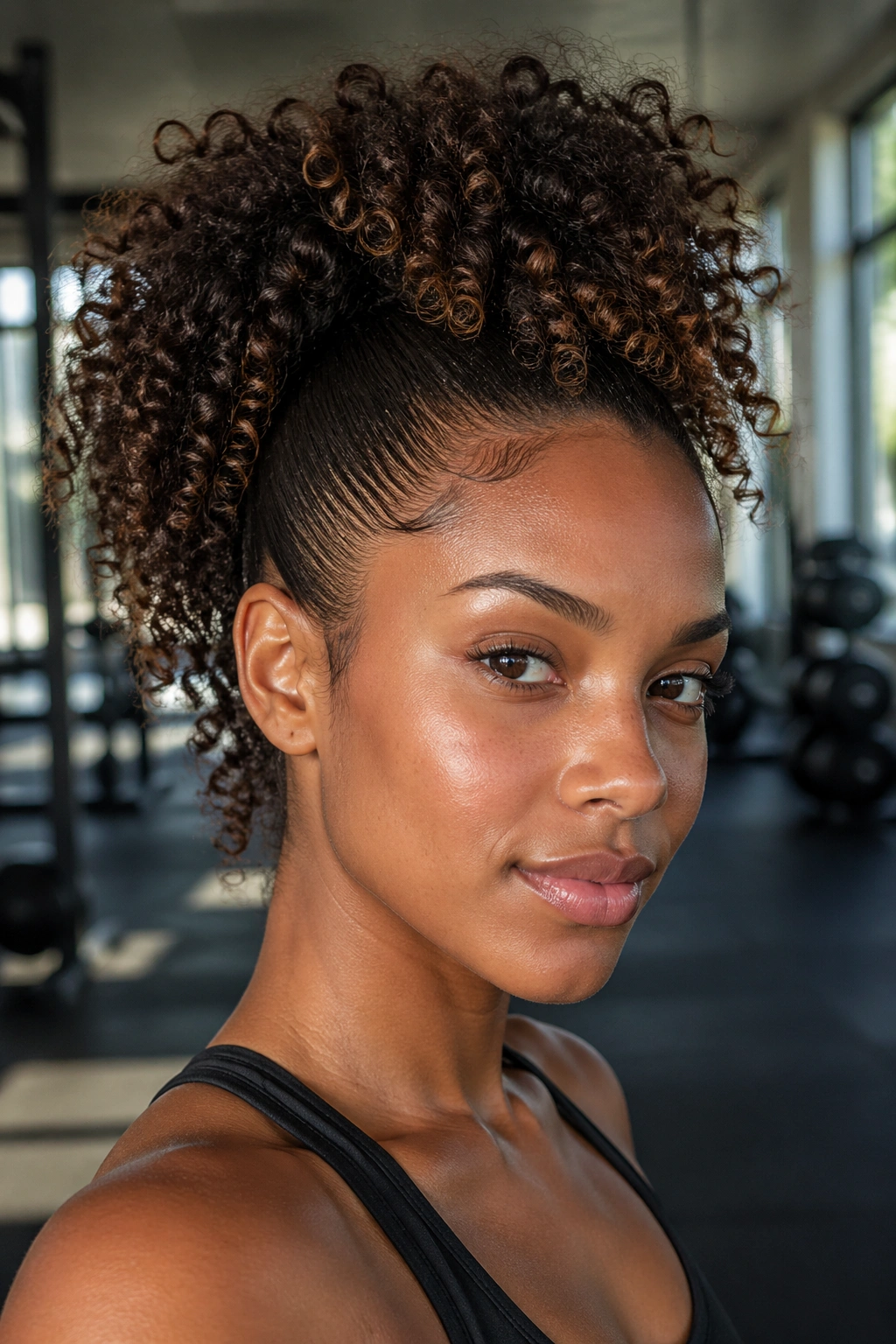
This one has attitude, but not in a try-hard way. A curly mohawk claw clip ponytail keeps the sides controlled while the center rises high, which makes the curl pattern look bold and clean at the same time.
The Shape to Aim For
You do not want the sides crushed flat against the scalp. That usually makes curly hair look tense. Instead, smooth the sides back enough to keep them off the face, then let the center section stay full and lifted before clipping it high.
This works especially well on 4A through 4C curls, where the center section naturally has a lot of height. It also makes a good gym style because the sides stay out of the way and the crown stays secure.
If you want the mohawk shape to read clearly, leave the top a little more elevated than the rest. That one decision changes the whole mood. Short, sharp, and a little dramatic.
14. Tucked-Under Nape Ponytail
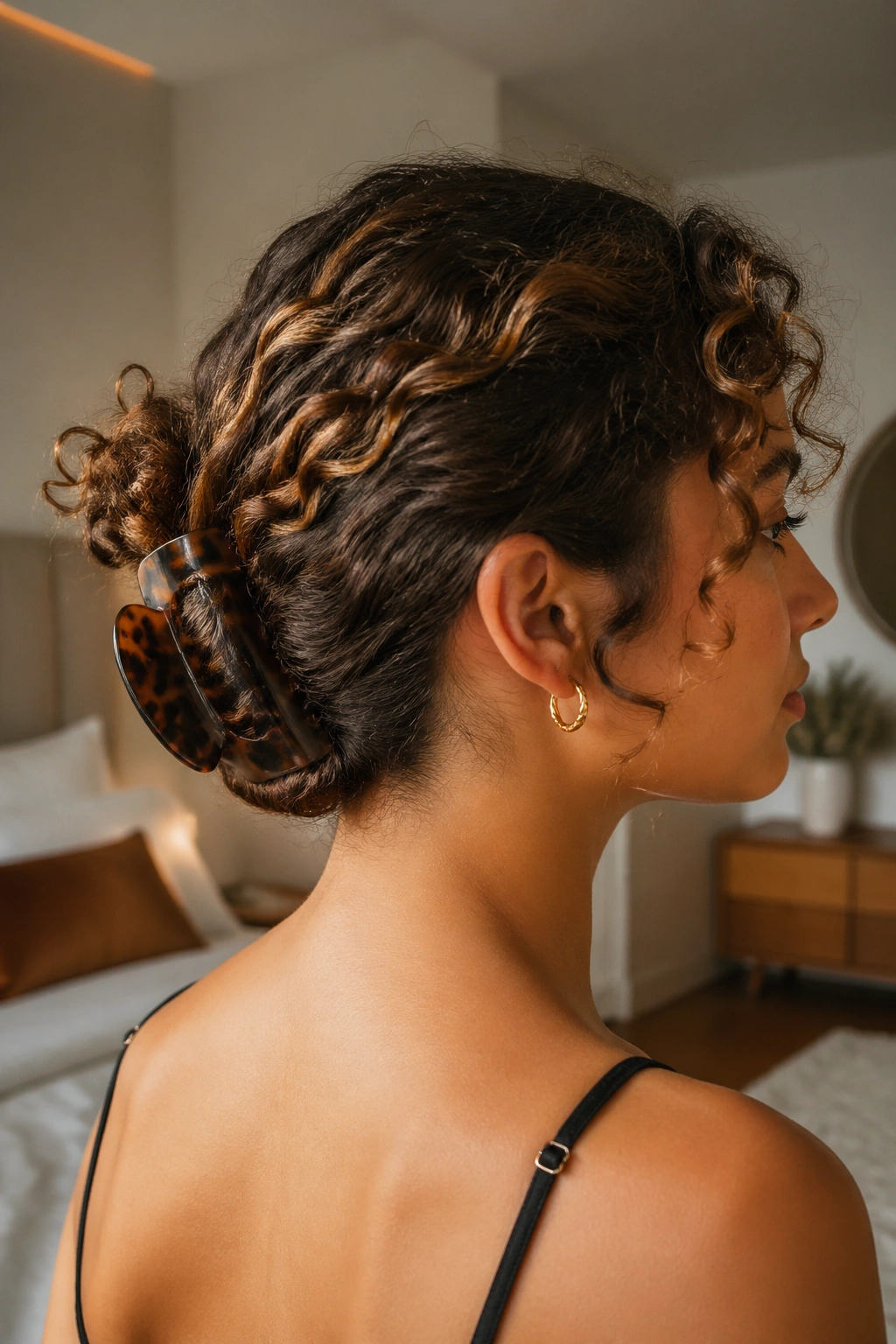
A tucked-under nape ponytail is for the days when you want the clip to do its job quietly. The hair is gathered low, clipped at the base, and then the ends are tucked underneath so they sit in a soft roll instead of hanging straight down.
That tucked shape gives curly hair a neater outline without erasing the texture. It’s one of the few styles that can look polished on coarse curls without making them feel cramped. If the tail is long, you can fold it once before clipping. If it’s shorter, let the curl ends sit under the clip and call it done.
How to Make It Hold
Use a clip with a deep curve, not a flat one. Deep clips hold that tucked shape better because they catch more hair at the base. A couple of bobby pins can help if the ends keep slipping out, though I’d use them sparingly.
This is the kind of style that quietly fixes a bad hair day. No drama. Just shape.
15. Flipped-End Claw Clip Ponytail
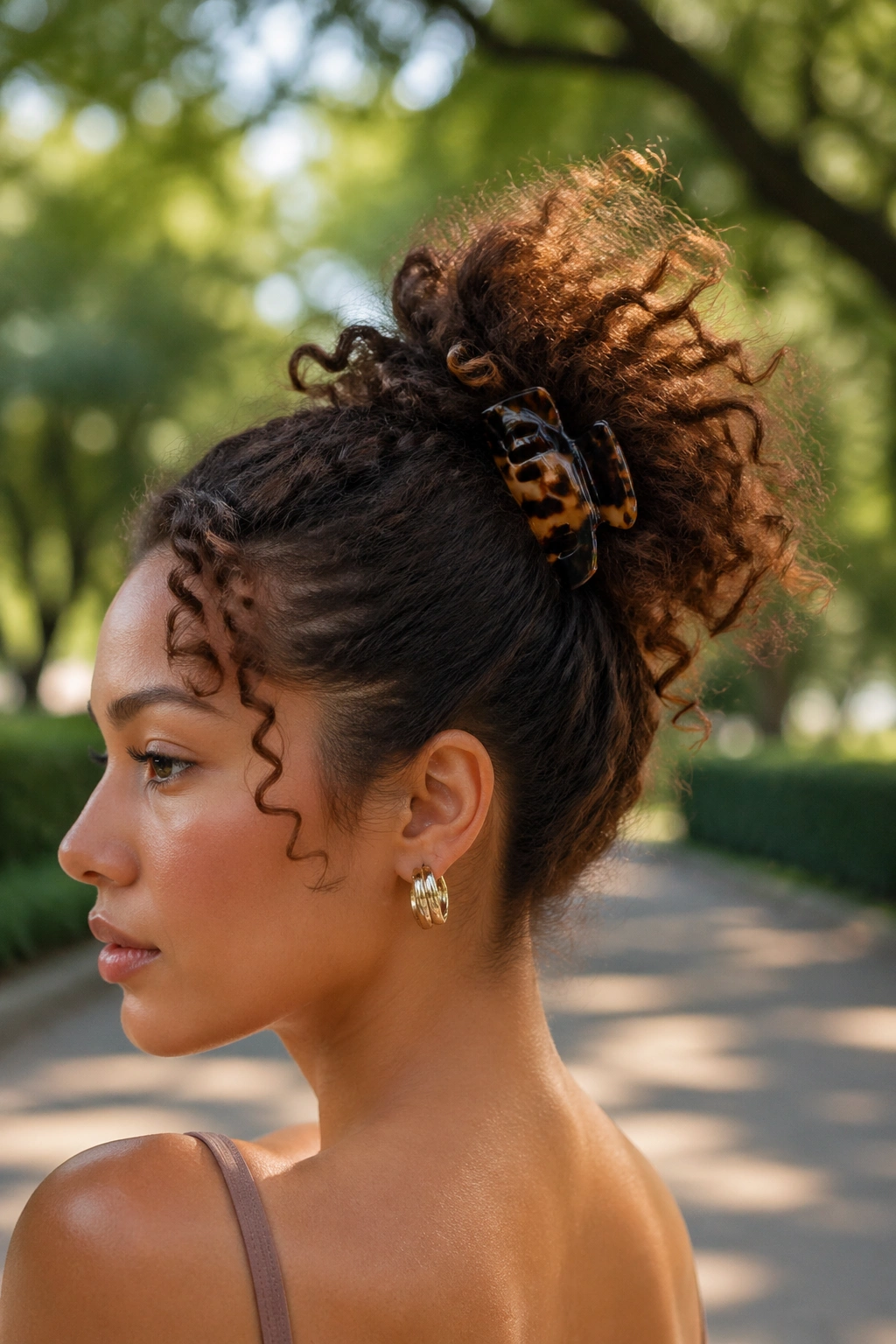
What makes this one fun is the finish. A flipped-end claw clip ponytail lets the tail lift or curl outward at the end, which gives the whole style a bit of bounce. It’s especially good on hair that already has a strong curl pattern, because the ends naturally want to move.
How to Wear It
Clip the ponytail a little higher than a basic low style, then let the tail arc outward over the top edge of the clip. You can also finger-fluff the ends so they kick to one side instead of hanging straight. That tiny angle keeps the style from feeling heavy.
This looks best when the hair has some stretch, either from day-two curls or from a light refresh. If the hair is too wet or too product-heavy, the flip tends to droop. Dry texture helps it stay buoyant.
I like this for casual days with a little personality. It’s playful without being loud, and the shape shows off the curl ends instead of hiding them.
16. Wrapped-Braid Claw Clip Ponytail
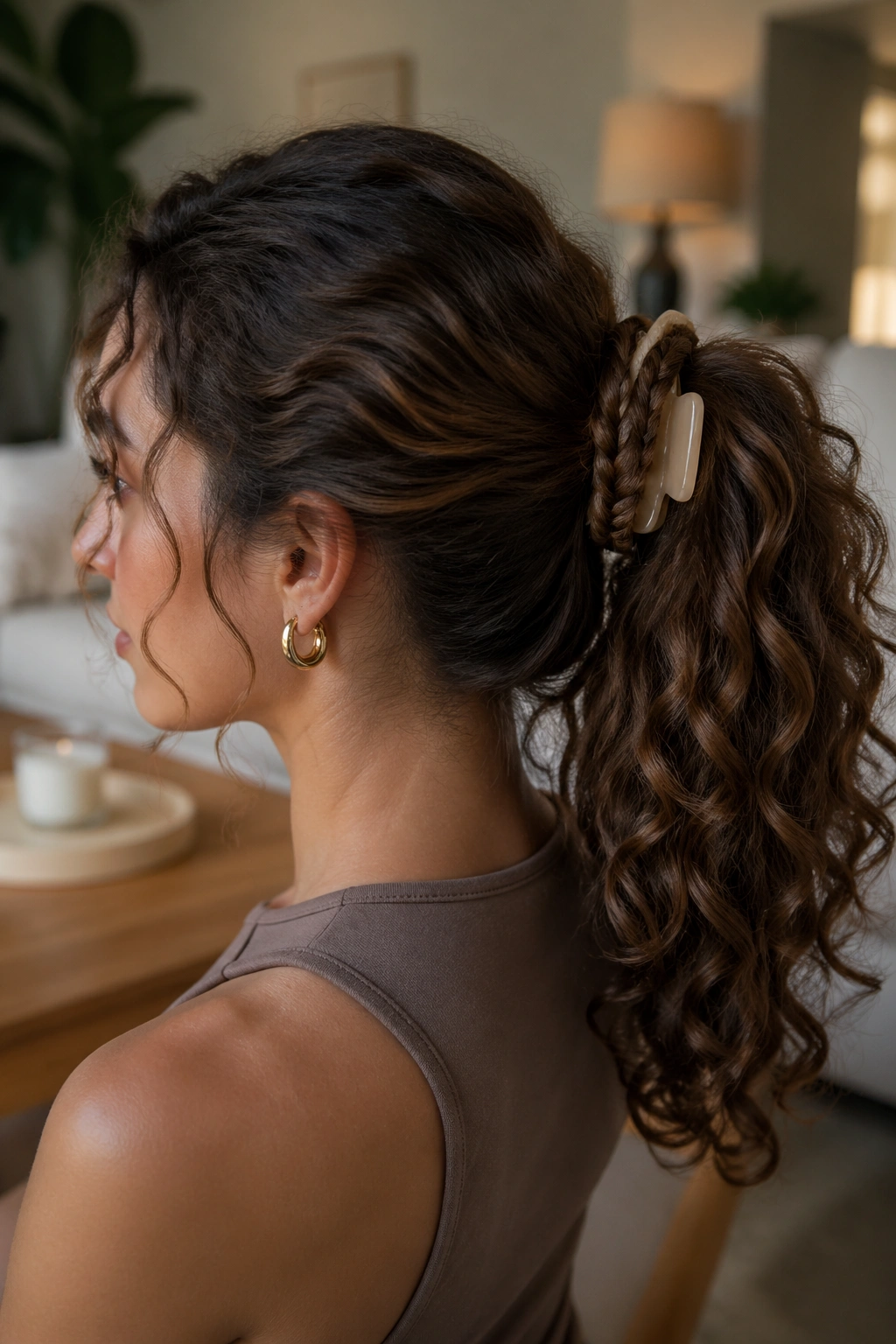
A wrapped-braid ponytail gives curly hair a little extra control at the base, which is handy when layers keep slipping out. You braid a small section, wrap it around the ponytail base, and clip over the whole thing so the braid becomes part of the structure.
That wrap does two jobs. First, it hides the elastic or the loose base under the clip. Second, it gives the ponytail a more finished look, almost like the style was planned instead of improvised five minutes before leaving the house.
- Braid a 1- to 2-inch section from one side.
- Wrap it around the base once or twice.
- Clip over the wrap so it stays flat.
- Let the curly tail stay loose.
This is a good pick for medium to long curls when you want the back to look tidy but still textured. It’s one of those styles that looks harder than it is, which I never complain about.
17. Gym-Ready Secure Ponytail
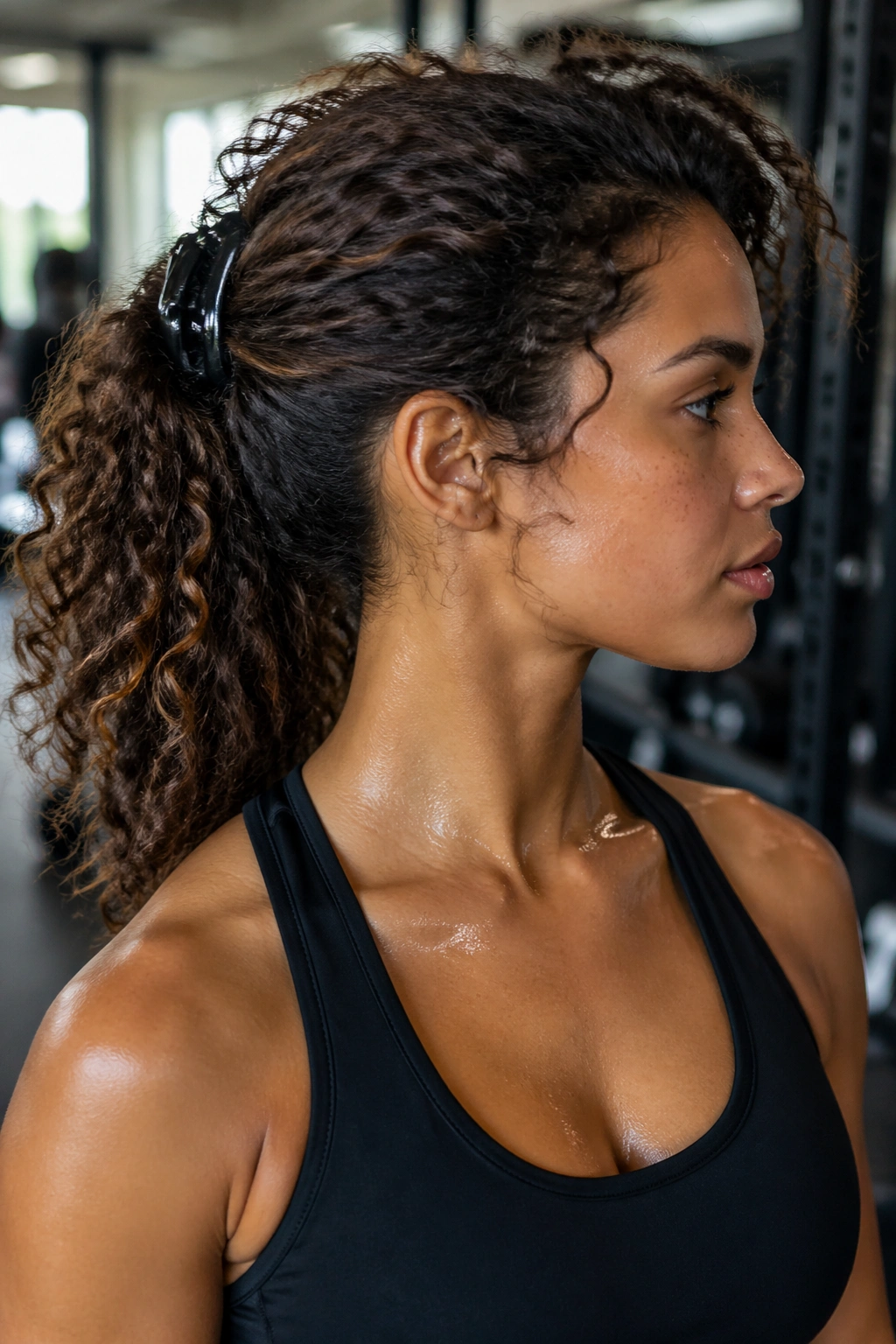
A gym-ready claw clip ponytail needs one thing above all else: it has to stay put while your head moves. That sounds obvious, but curly hair asks for a different kind of hold than straight hair. The clip needs to lock into volume, not slide over it.
I like this style with a low or mid-height placement because it keeps the weight closer to the head. If the ponytail sits too high, the bounce can pull at the clip during workouts. A lower anchor feels steadier, especially if you’re doing jumps, lifting, or anything that shakes the head around.
Choose a clip with strong teeth and a spring that closes with some resistance. If you can open it with one finger and barely feel the pressure, it may not be enough. That’s one of those annoying truths nobody likes, but there it is.
Keep the front simple, the base secure, and the tail free. That’s all the style needs to do.
18. Romantic Face-Framing Ponytail
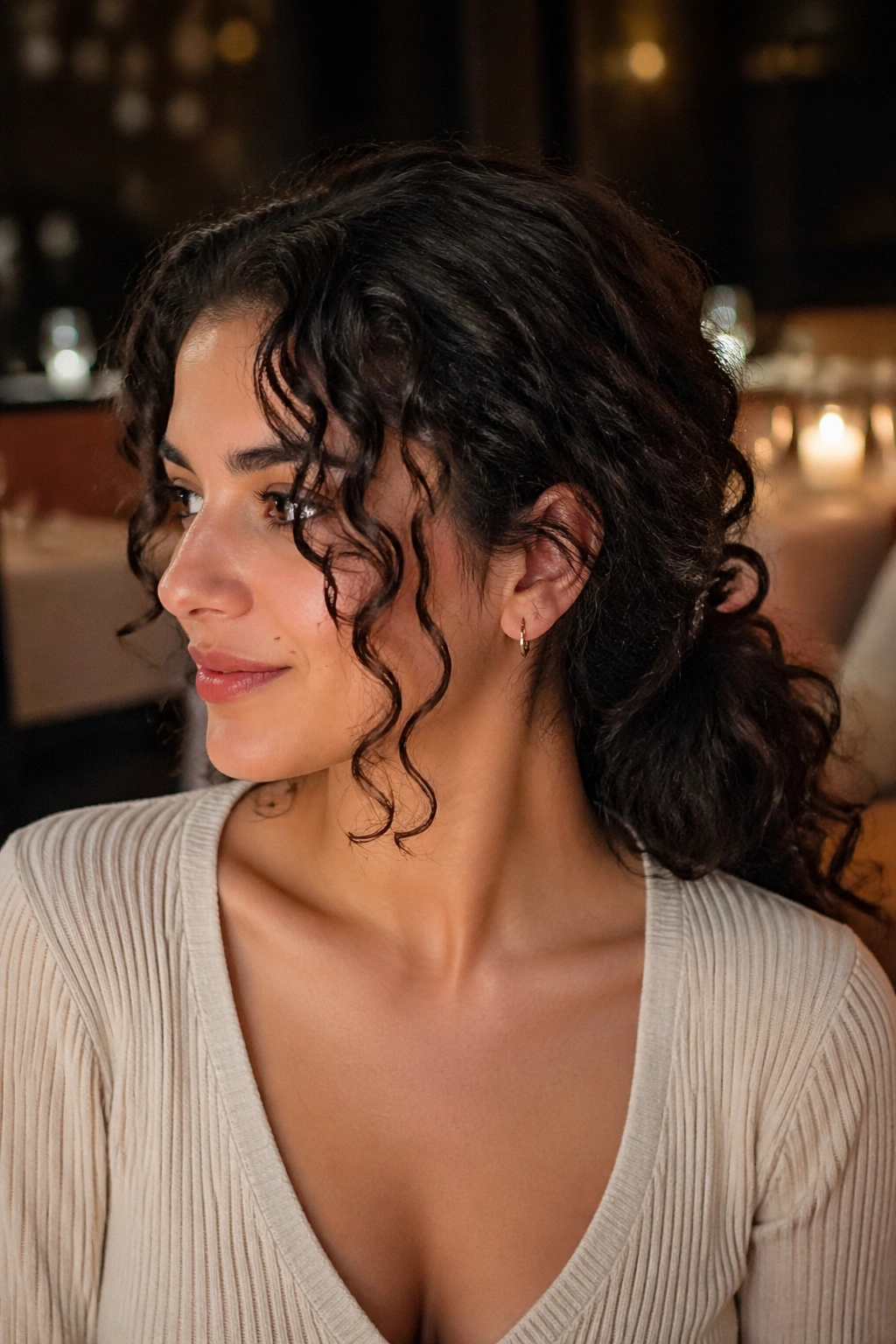
This is the claw clip ponytail I’d pick for dinner, a date, or any day when you want your curls to look soft instead of strict. The face-framing pieces are the real star here. The ponytail supports them, not the other way around.
Compared with a tight ponytail, this version leaves more air around the temples and jawline. That extra space makes the whole look gentler. Clip the back low, keep two front sections loose, and let those pieces curl naturally instead of over-styling them into perfect arcs.
If you want a little polish, twist the front sections around your fingers while they’re still damp, then leave them alone. That gives them a softer curve without turning them crunchy. I’d skip heavy gel here. The style works because it moves.
This one flatters a lot of face shapes, especially when the front curls are a little different on each side. That asymmetry feels lived-in, not lazy.
19. Clipped French-Twist Hybrid Ponytail
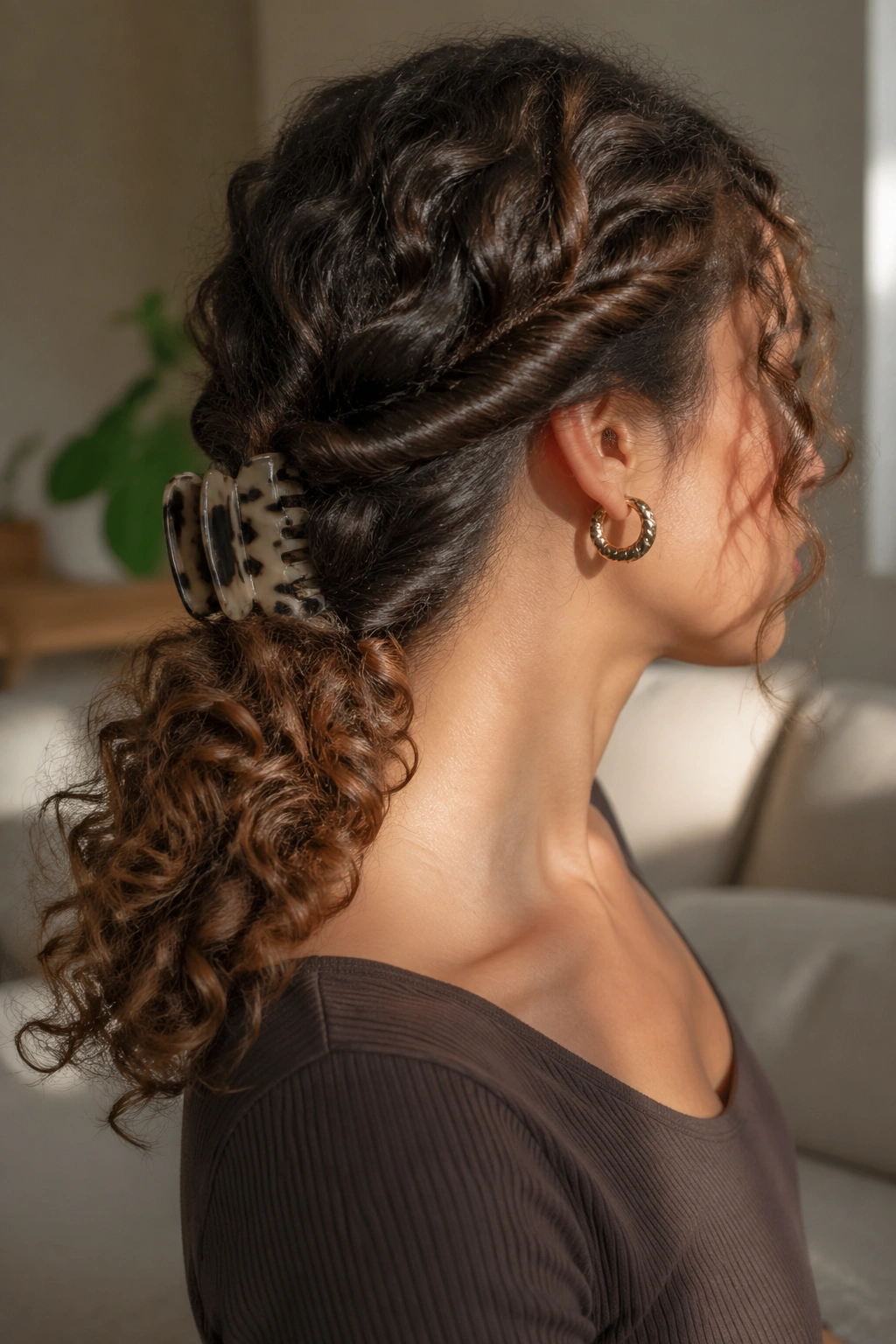
A French-twist hybrid is one of those styles that sounds more complicated than it is. You twist the hair upward from the nape, clip it partway up the back of the head, and let the ponytail fall from underneath or beside the twist. The result sits somewhere between an updo and a ponytail.
What Makes It Different
A standard claw clip ponytail keeps the base low and obvious. This one hides some of the mechanics. The twist gives the back a smoother line, while the curls still cascade below the clip. It’s a nice middle ground when you want structure but not a fully pinned look.
This style is best for medium to long curls, especially if the hair has enough weight to drape well. Short layers can work too, but they need a softer clip placement so the ends don’t poke out in every direction.
I recommend this for dressier settings, especially with a clip that has a simple shape. Nothing too sparkly. Let the hair do the talking.
20. Lob-Length Mini Ponytail
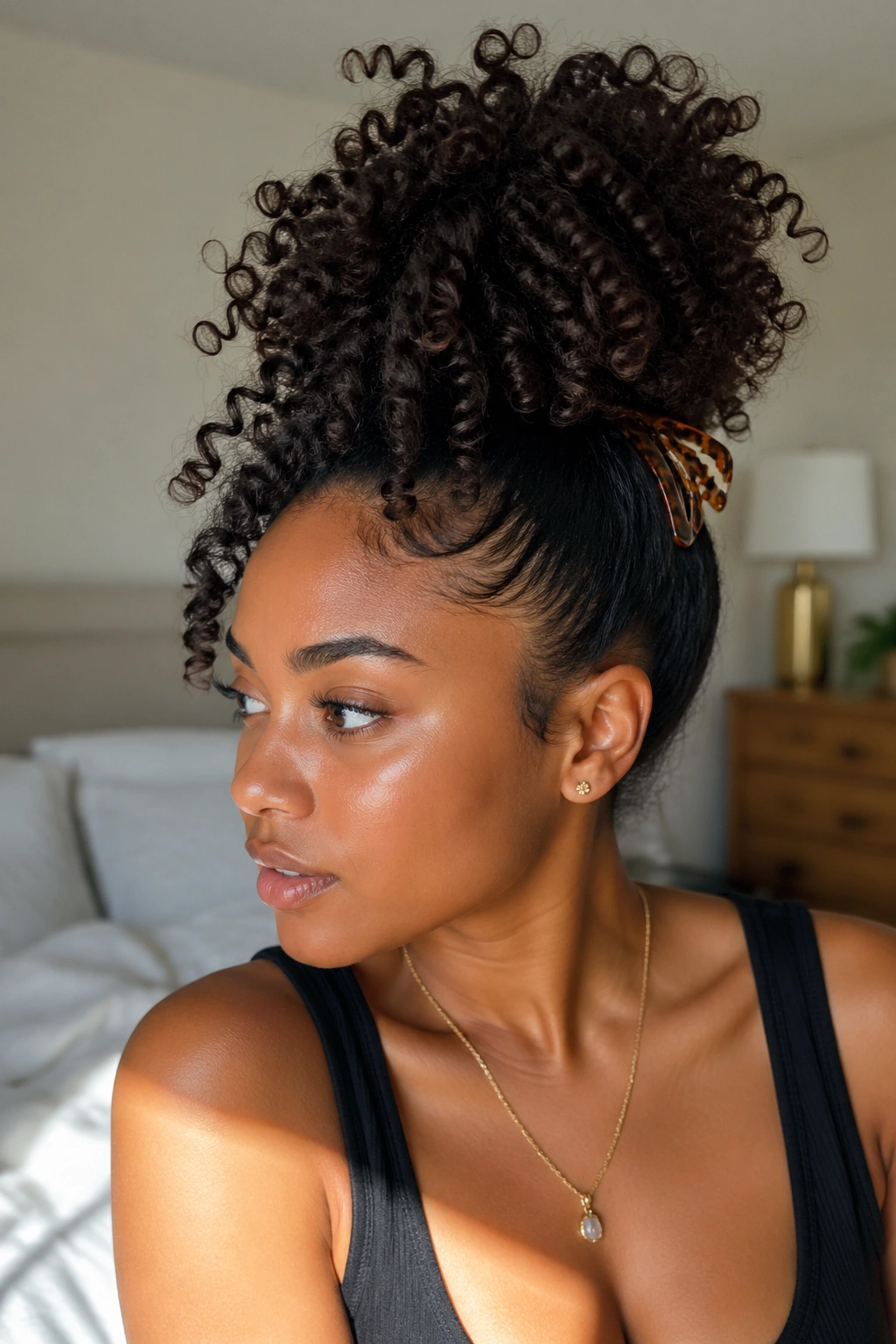
A lob can be tricky, because there’s often not enough length for a full ponytail and not enough shortness for a true clip-up. A mini claw clip ponytail solves that problem by gathering only what the cut can comfortably hold.
The trick is to stop trying to include every strand. Pull back the crown and the top sides, clip them low or mid-level, and let the bottom layer stay loose. On a lob, that creates a small, tidy lift without making the ends feel strained.
This style is especially good for fine curls or loose waves that need a little shape without a bulky finish. Use a smaller clip — around 2.5 to 3 inches — so it doesn’t overpower the cut. A large clip on a shorter length tends to look awkward, and not in a charming way.
Think of this as the “just enough” version. That’s the charm.
21. Long Cascade Claw Clip Ponytail
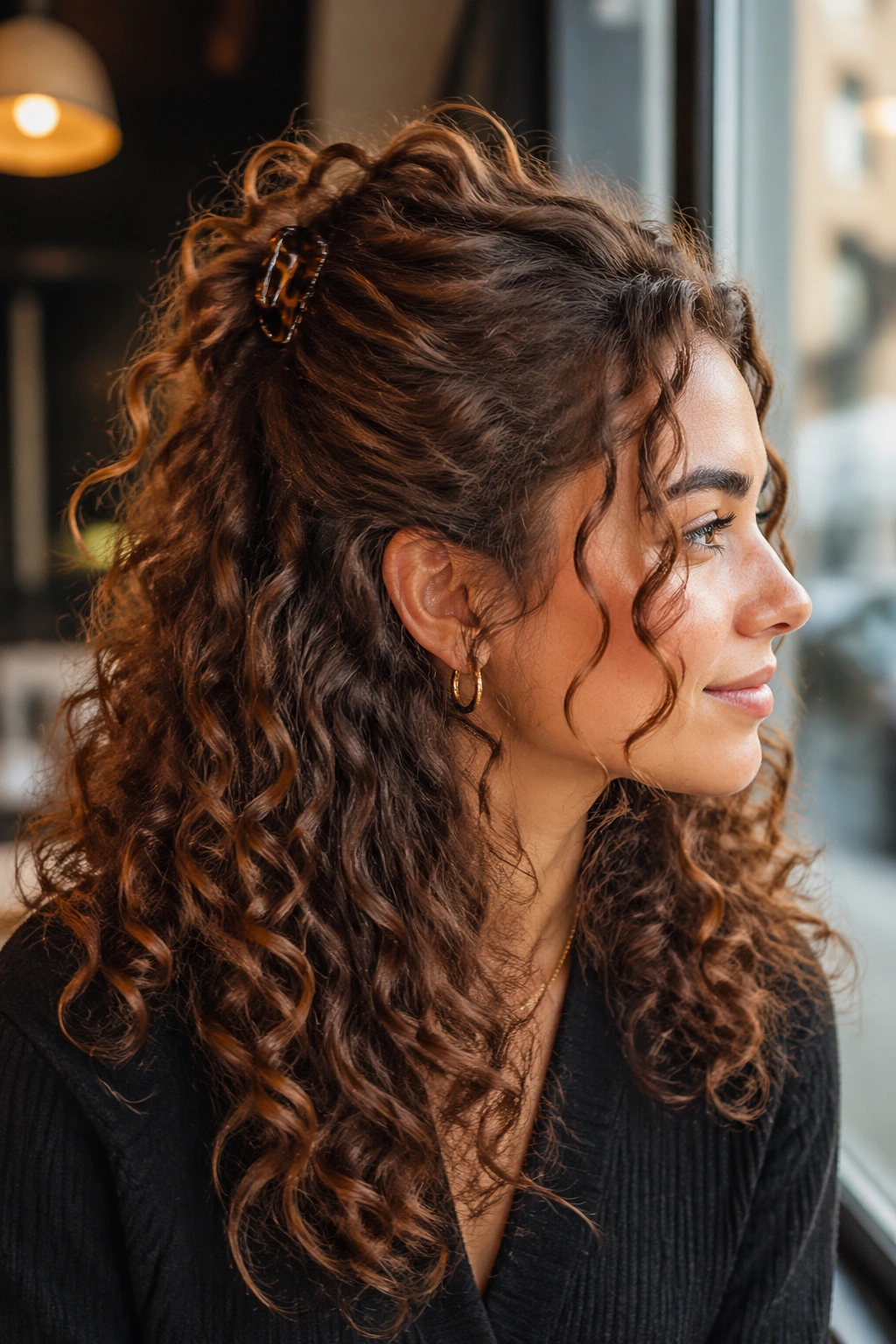
If your curls are long, this style lets you keep the length in play instead of hiding it. A long cascade ponytail is clipped low enough to stay secure, but loose enough that the tail falls like a thick rope of curls down the back.
How to Keep the Length from Dragging
The biggest mistake with long curly hair is pulling the clip too high. That makes the tail heavy and can tug the clip downward. Keep the base close to the nape, then let the length drop naturally so the weight is distributed better.
I also like to leave the crown a little loose. When the top is too tight, the long tail starts to feel like an anchor. A softer base helps the whole style move with you instead of against you.
This is the version that shows off the shape of the curls most clearly. If the hair has good definition, the cascade becomes the style. If it’s a little frizzy, that works too. Long curls have room to be themselves.
22. Clip-and-Loop Ponytail
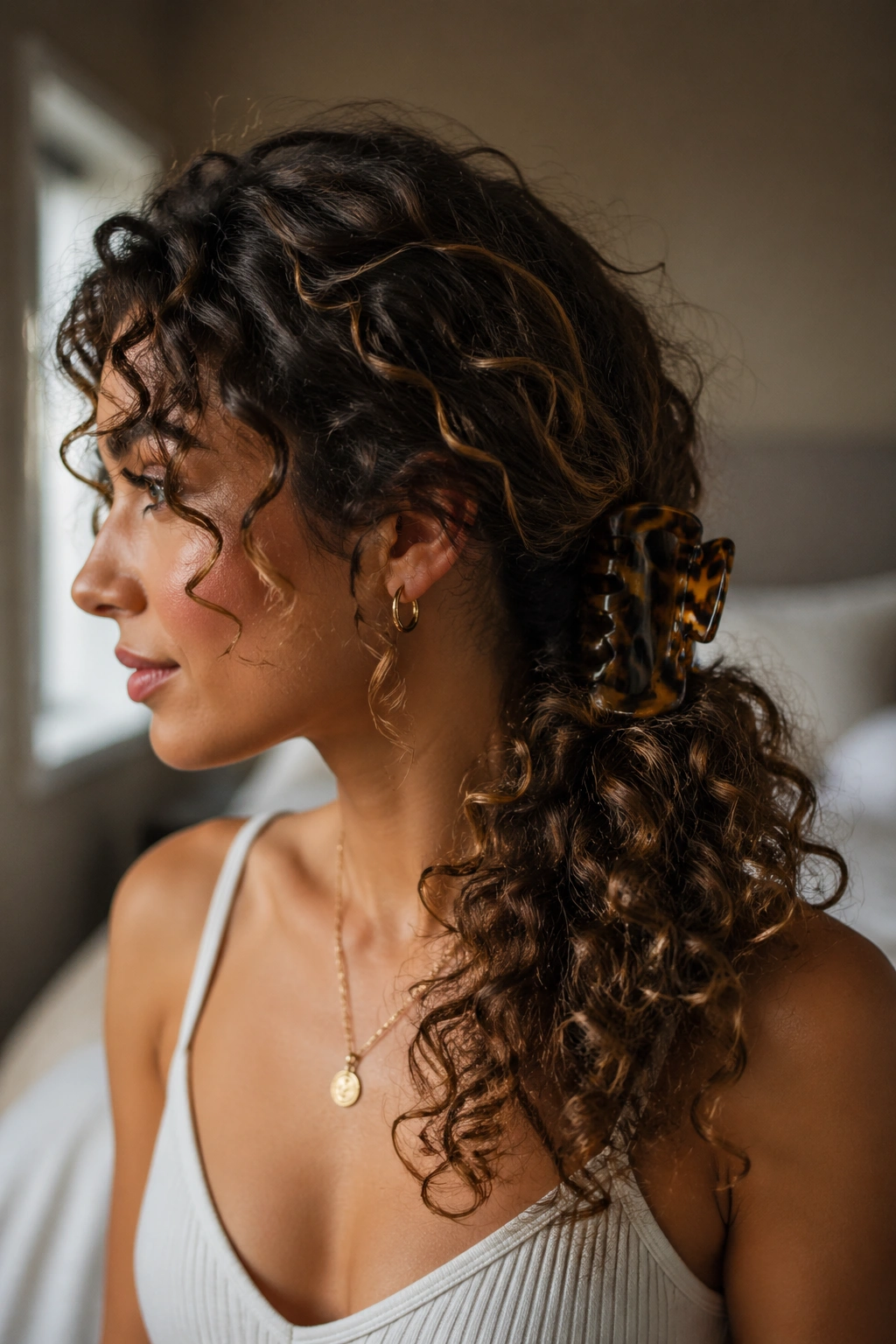
This one has a nice balance of structure and softness. A clip-and-loop ponytail folds part of the hair back on itself before the clip goes in, creating a looped shape that feels fuller than a simple gather.
The loop can be small or large, depending on how much hair you want to keep out of the way. On curly hair, even a small loop creates a fuller silhouette because the texture expands the shape once it’s clipped. That’s the clever part. You don’t need to force volume; the curls already have it.
- Gather the hair as if making a low ponytail.
- Fold the length back toward the base.
- Clip over the fold so the loop stays in place.
- Pull a few curls free if the shape feels too tight.
This style works well when you want something a little dressier but not formal. It has a soft knot-like finish that reads more styled than a regular ponytail.
23. Day-Two Refresh Claw Clip Ponytail
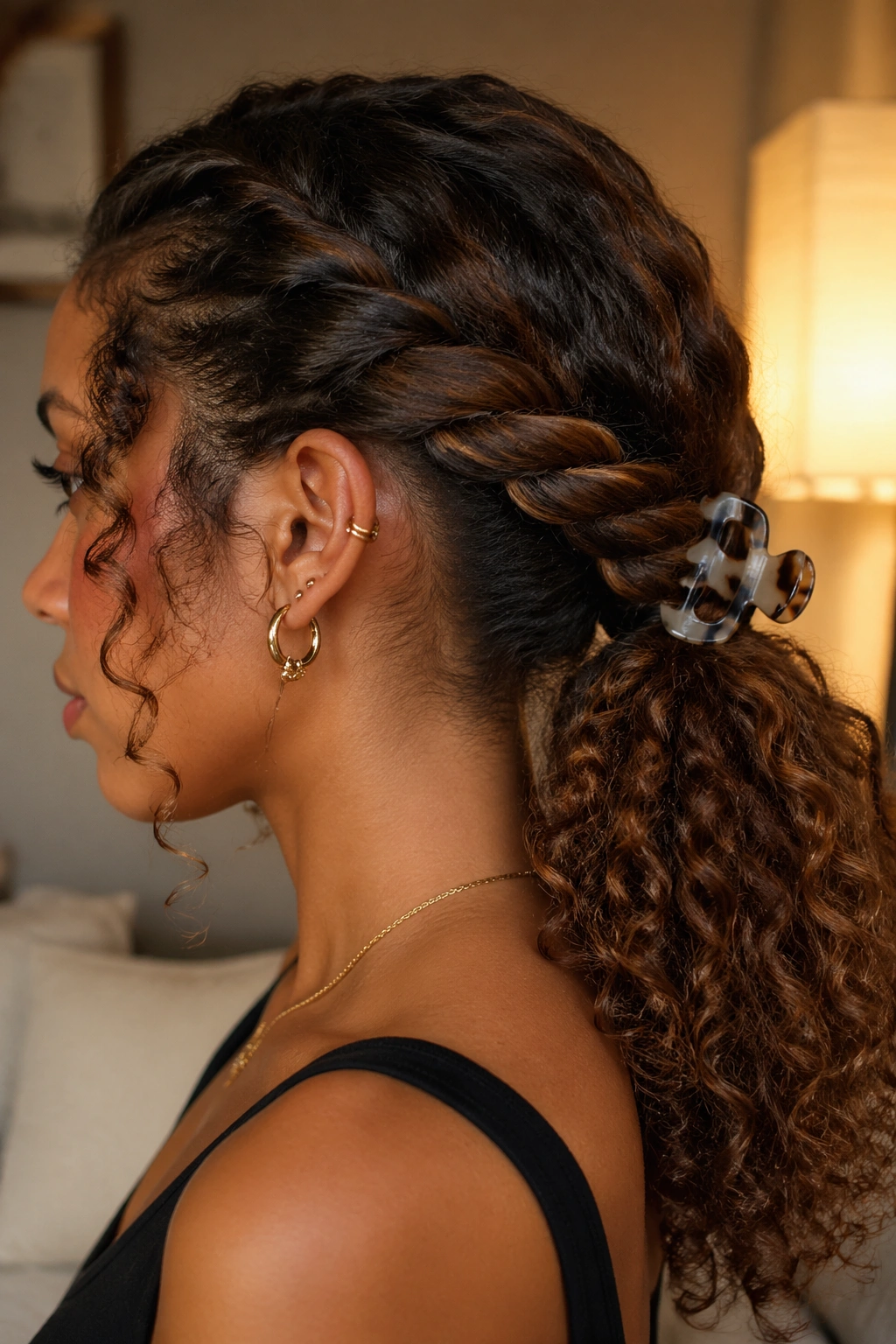
Day-two curls are often the best curls for a clip ponytail. They have less slip, more shape, and just enough bend to hold the clip without turning limp. The key is refreshing the texture before you gather it.
I mist the hair lightly, then smooth a tiny bit of cream through the frizzy spots with my hands. Not much. Too much water reactivates everything and leaves the roots weirdly damp while the ends stay flat. You want the curls awake, not soggy.
After that, the clip can sit almost anywhere: low for neatness, mid-height for volume, or high if the curls have enough spring. The beauty of a refresh style is that you’re not starting from scratch. You’re just giving the curl pattern a better seat.
This is one of the most practical styles on the list because it uses the hair you already have. No battle. Just cleanup.
24. Office-Clean Claw Clip Ponytail
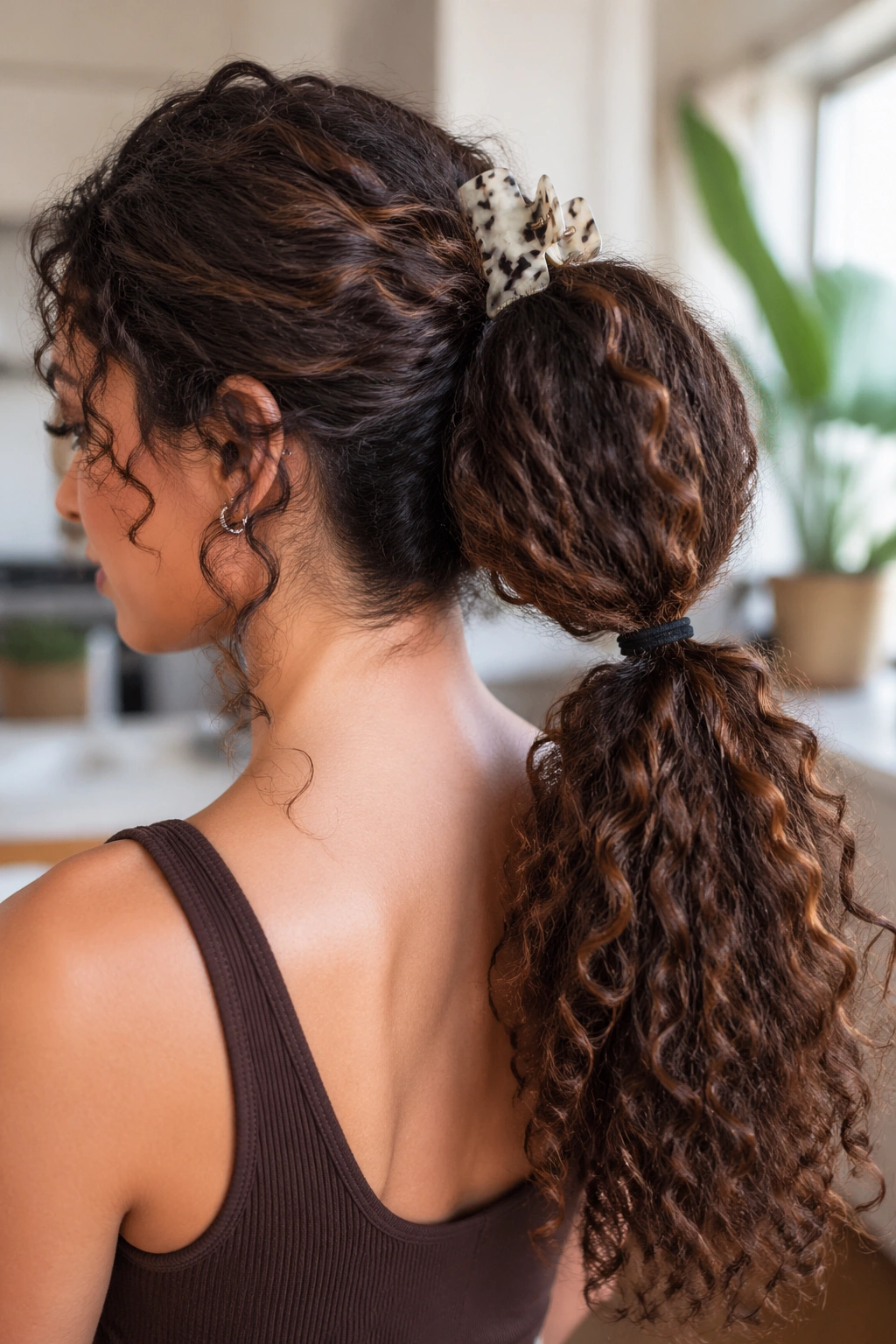
A work-friendly claw clip ponytail for curly hair should look calm from the front and controlled at the base. That does not mean stiff. It means the curls are arranged with enough order that they won’t unravel while you’re staring at a screen or moving between meetings.
Compared with a casual messy clip, this version keeps the sides smoother and the tail a little more contained. I like a low placement, a side or center part, and a clip in a neutral finish that doesn’t shout for attention. The curls can still be full — just guided.
Use a touch of serum on the outermost frizz, not the whole head. A couple of drops is plenty. If you coat the curls, they lose that soft separation that makes curly hair look alive. Nobody needs glossy helmet hair at work.
This style is for the days when you want to look composed without pretending your hair is straight. That distinction matters.
25. Festival Volume Claw Clip Ponytail
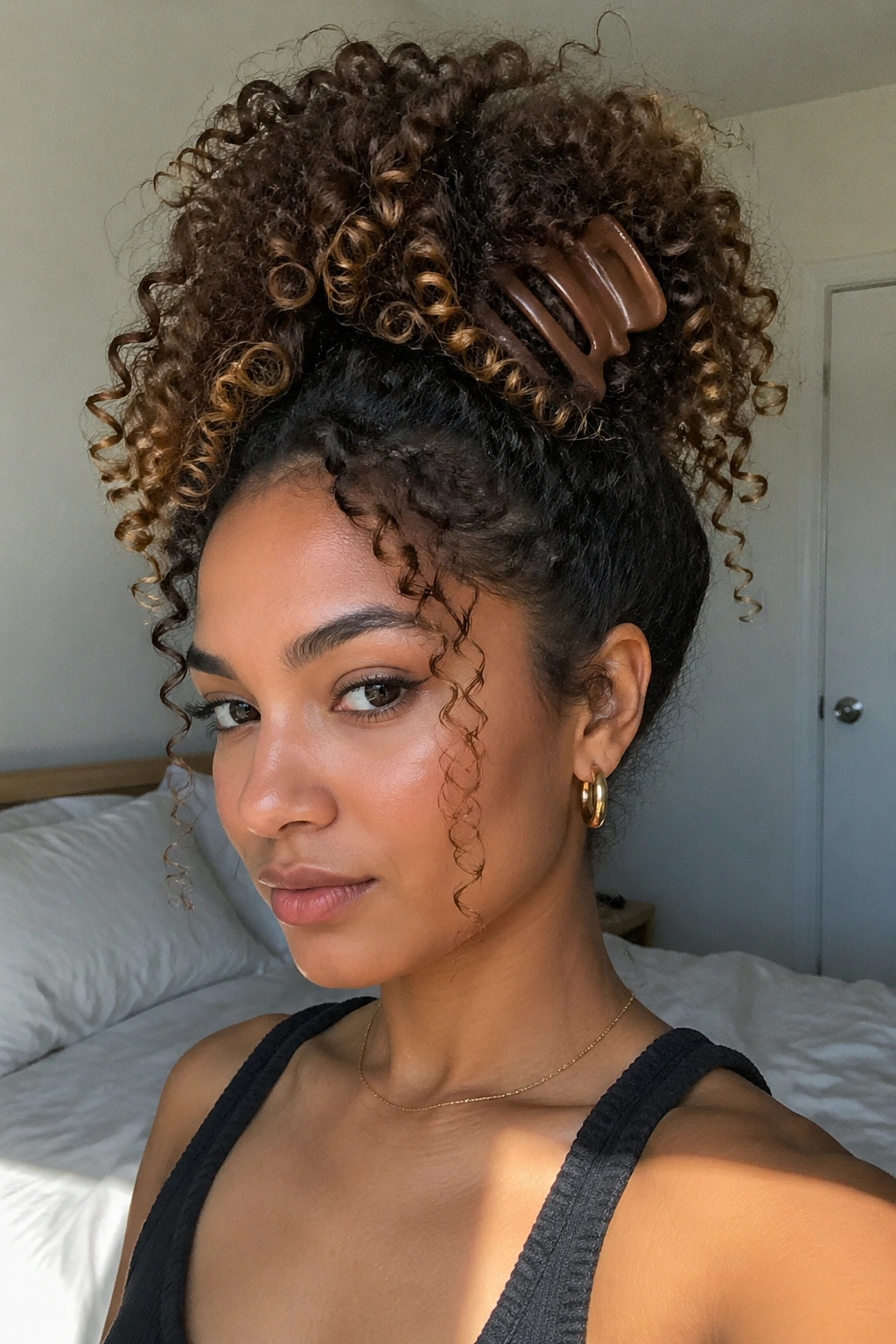
A festival volume ponytail is built to be seen. Big curls, high placement, a clip that holds the base, and enough lift at the crown to make the whole shape feel energetic. This is not the style for hiding hair. It’s for letting it take up space.
Why It Works
Curly hair already carries volume, so a high clip simply frames it. The trick is to gather the top loosely and keep the tail full. If you pull it too tight, the look loses the easy bounce that makes it fun in the first place.
You can tuck in a few mini braids, a thin ribbon, or a small decorative pin if you want extra detail. I’d keep the base secure and the extras minimal. Too many accessories can start to fight the curl pattern.
This style looks best when the shape is unapologetic. If a few curls stick up or spill out, that’s fine. Actually, that’s kind of the point.
26. Damp-Set Defined Claw Clip Ponytail
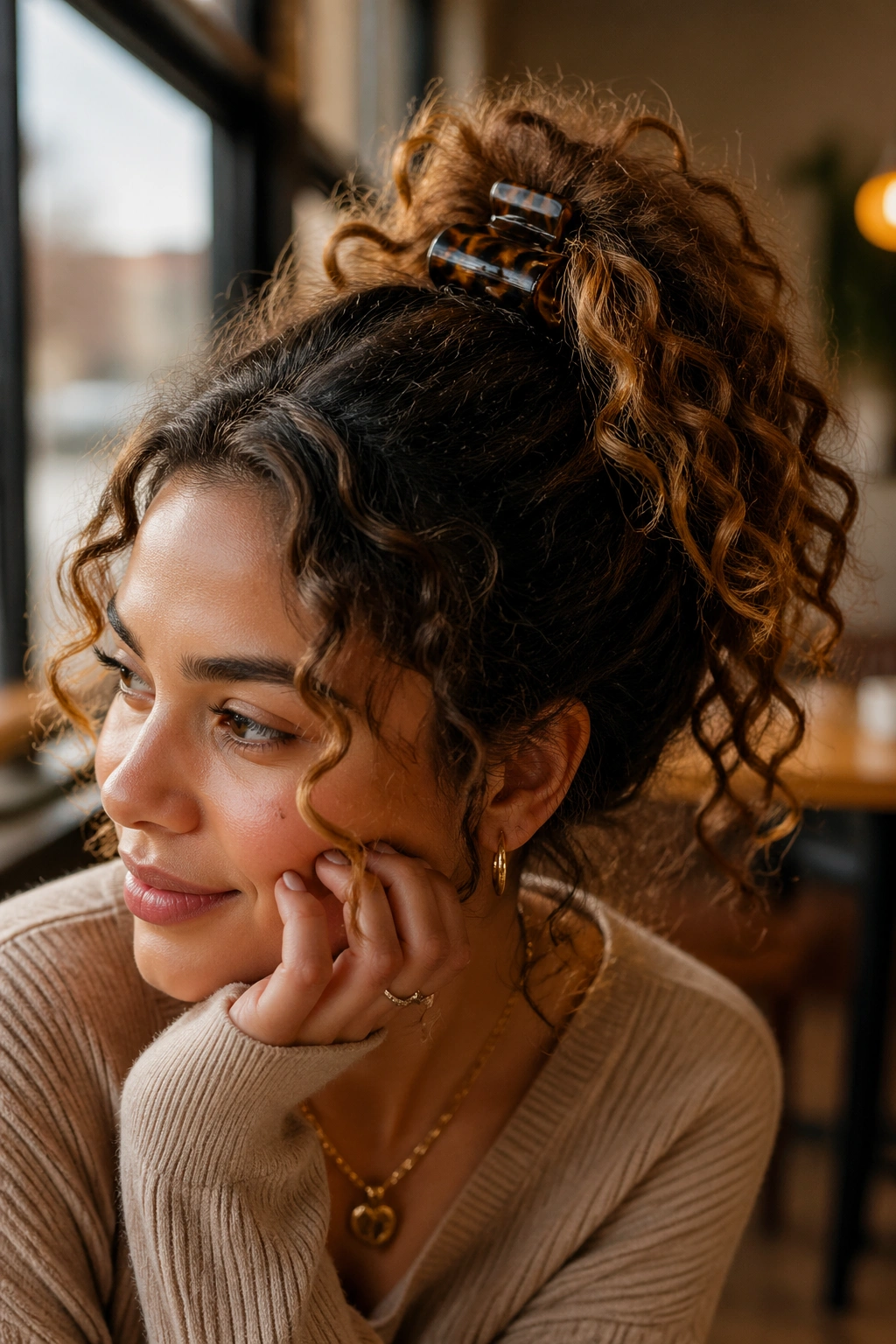
A damp-set ponytail is for people who want the curls to look organized, not just gathered. The hair is slightly damp, styled with a light cream or gel, and then clipped into place while it dries into a defined shape.
That approach gives you cleaner curls in the ponytail, especially around the tail and the face-framing pieces. It works best when you have 10 to 15 minutes to let the shape set a bit before heading out. If you clip the hair while it’s soaking wet, the top can dry in strange dents and the ends may hang limp.
I like this version on hair that loses definition fast. The light product gives the curls a little memory, and the clip keeps the base from puffing too much while it sets.
Use it when you want definition first and softness second. The result is neater, but it still reads as curly.
27. Braided-Base Claw Clip Ponytail
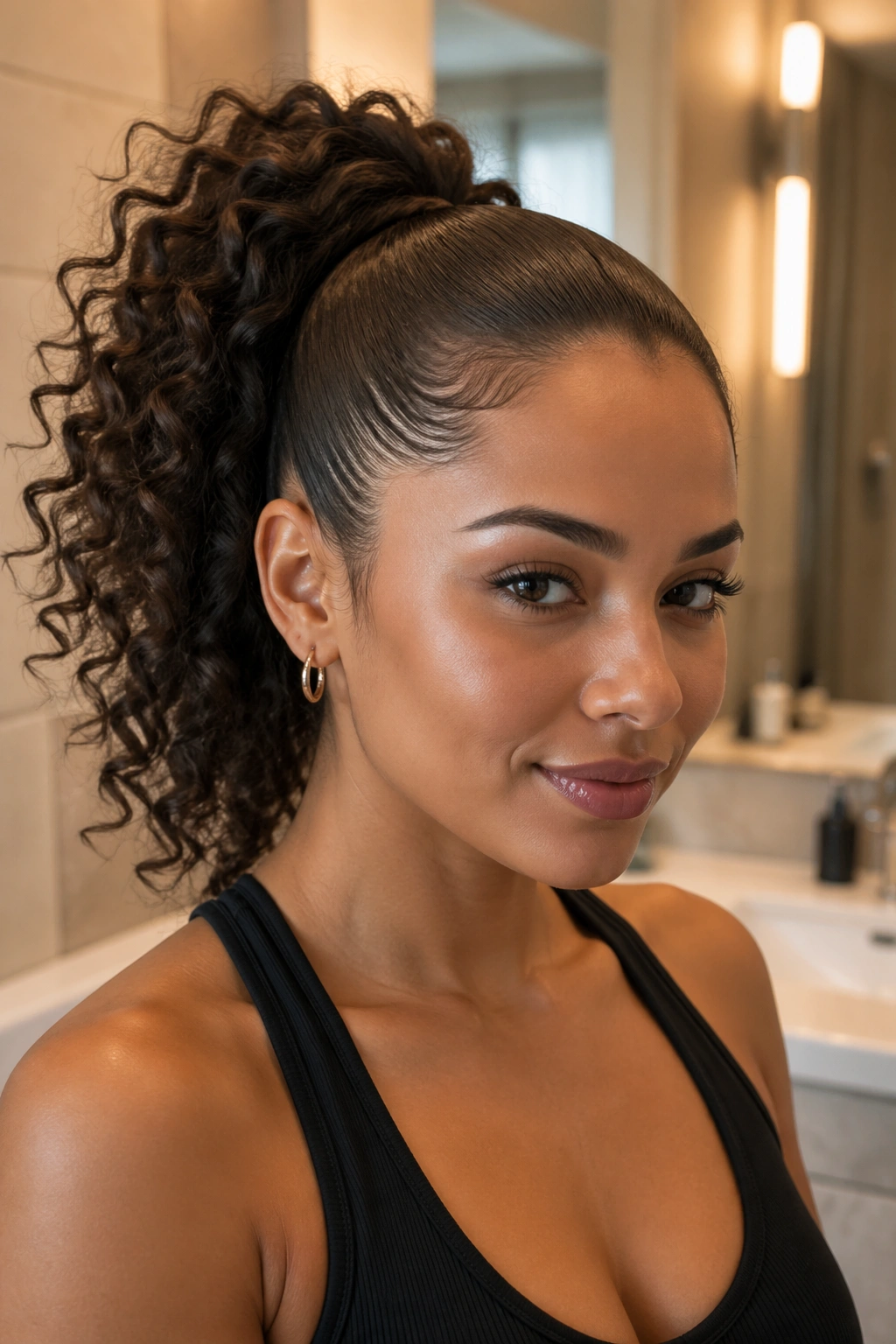
A braided base gives the clip something firmer to hold, which makes this a smart choice for layered or slippery curls. You braid a short section near the crown or nape, then gather the rest of the hair and clip over the braid so the base feels anchored.
How to Braid Without Overcomplicating It
Keep the braid small. A 2-inch section is enough. You are not trying to build a full cornrow situation here. You just want enough texture for the clip teeth to grab onto without slipping.
This style also adds a nice visual line at the base, which helps when the curls themselves are very full. The braid acts like a frame. The ponytail becomes the soft part.
Best for medium-density curls, humid days, and anyone tired of adjusting the clip every half hour. I like a braid here because it solves a real problem instead of just decorating the style. That’s the kind of detail that matters.
28. Low Anchor Claw Clip Ponytail
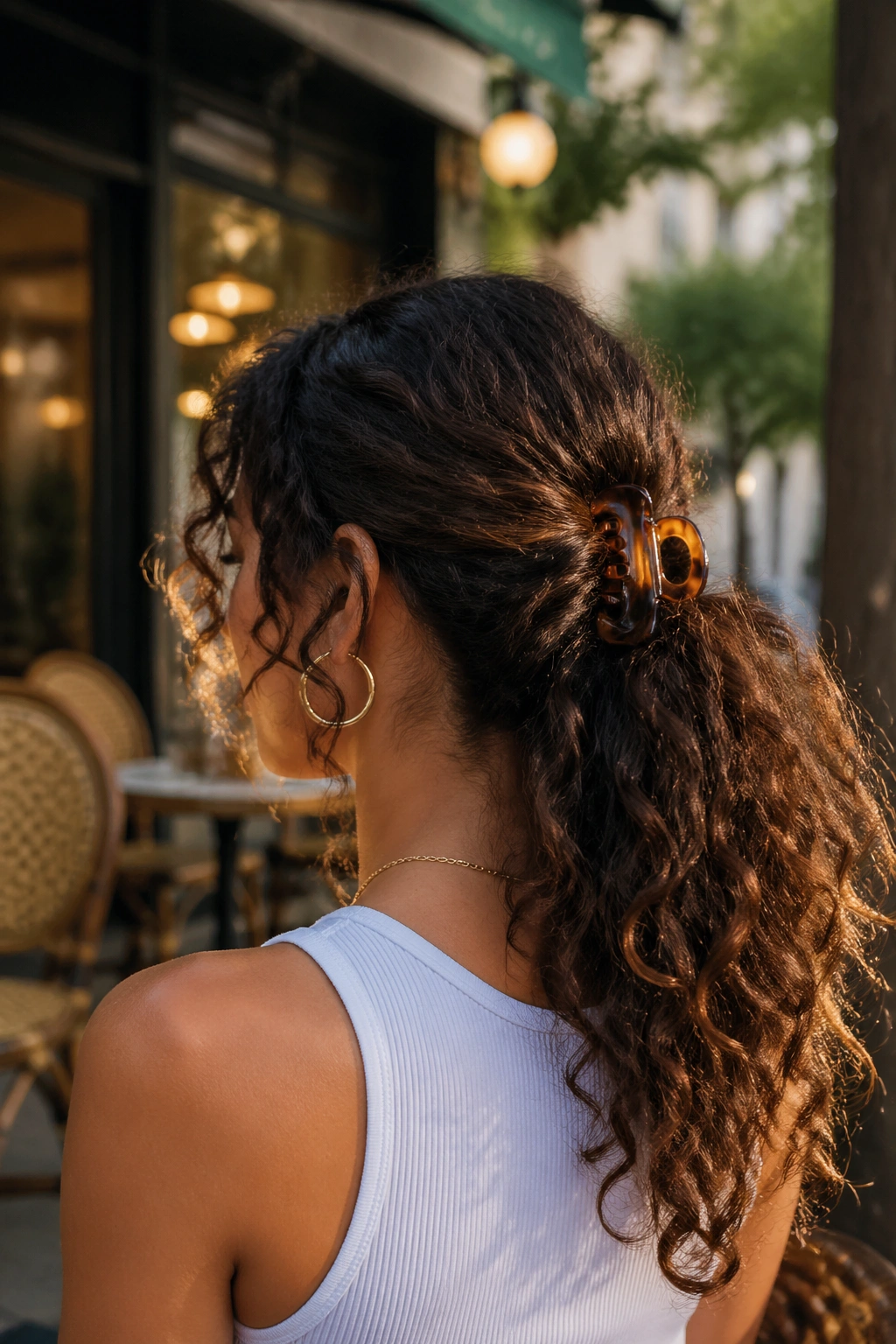
The low anchor ponytail is the quiet workhorse of the whole list. The clip sits right at the nape, the hair is pulled back just enough to stay neat, and the weight of the curls hangs low so the style feels secure.
This is the one I’d choose for very thick curls or hair that has a lot of shrinkage. A lower anchor keeps the pull gentle and the shape grounded. It also makes the clip less visible, which can be nice if you want the texture to be the main event.
- Keep the clip centered, not tilted.
- Let the tail sit straight or slightly to one side.
- Use a clip with deep teeth for grip.
- Leave the crown a touch loose so it doesn’t bulge.
That’s really the whole formula. No drama. Just a stable base and a soft finish. Sometimes that’s the smartest style in the room.
29. Evening Polish Claw Clip Ponytail
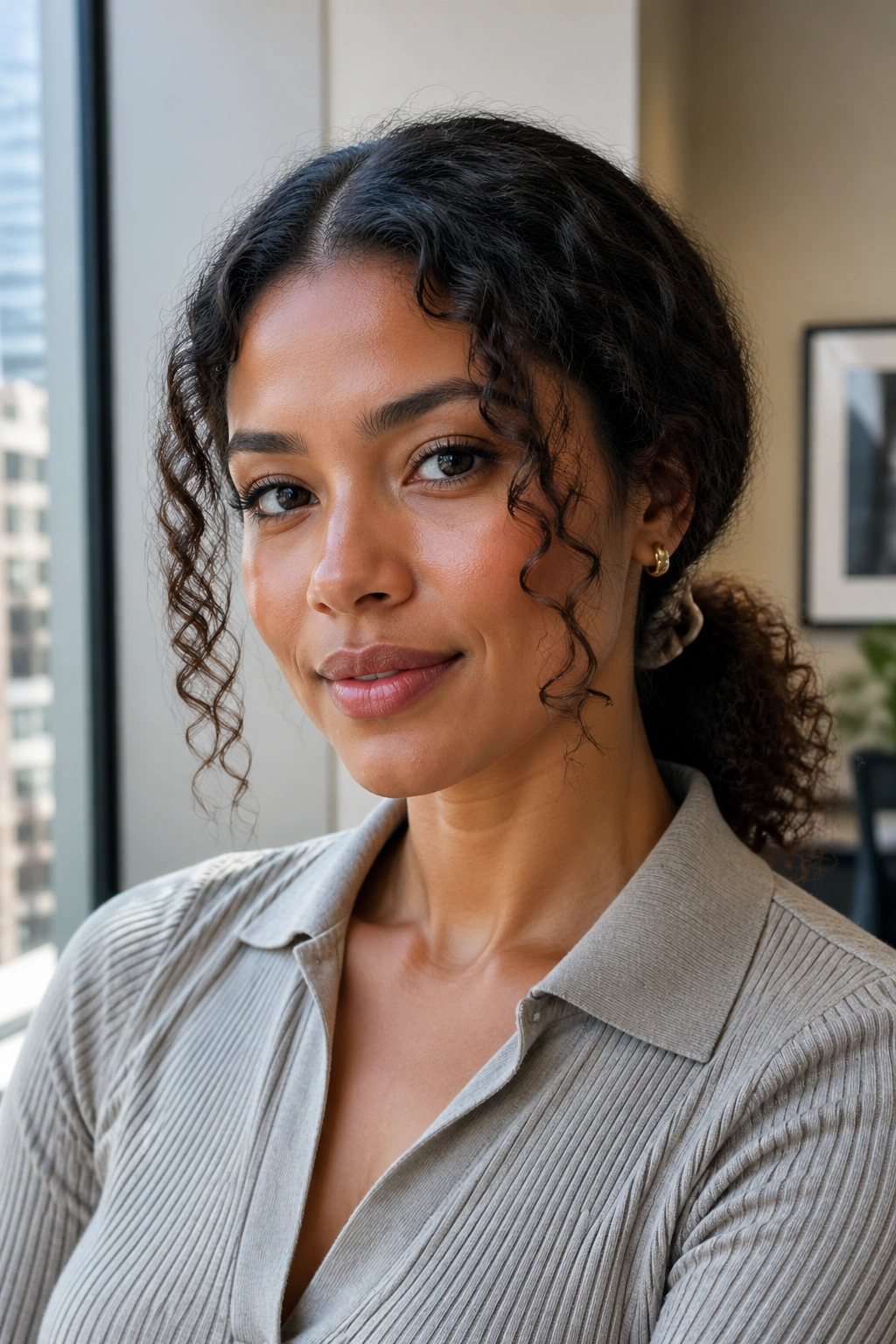
For a dressier look, the evening-polish ponytail is the one that makes curly hair feel intentional from every angle. The crown is smooth enough to look tidy, the clip stays hidden under the bulk of the curls, and the tail falls in defined sections instead of one fuzzy mass.
What gives this style its finish is restraint. Use a small amount of serum on the surface, then separate the curls with your fingers rather than brushing them apart. That keeps the definition while adding a little shine. A side part or soft off-center part can make the whole shape feel more graceful too.
I like this version with a simple clip in tortoiseshell, matte black, or another neutral finish. Nothing too noisy. You want the hair to carry the look, not the accessory.
It’s the sort of style that works for dinner, events, and any time you want your curls to look cared for without looking overworked.
30. Soft Exit Claw Clip Ponytail
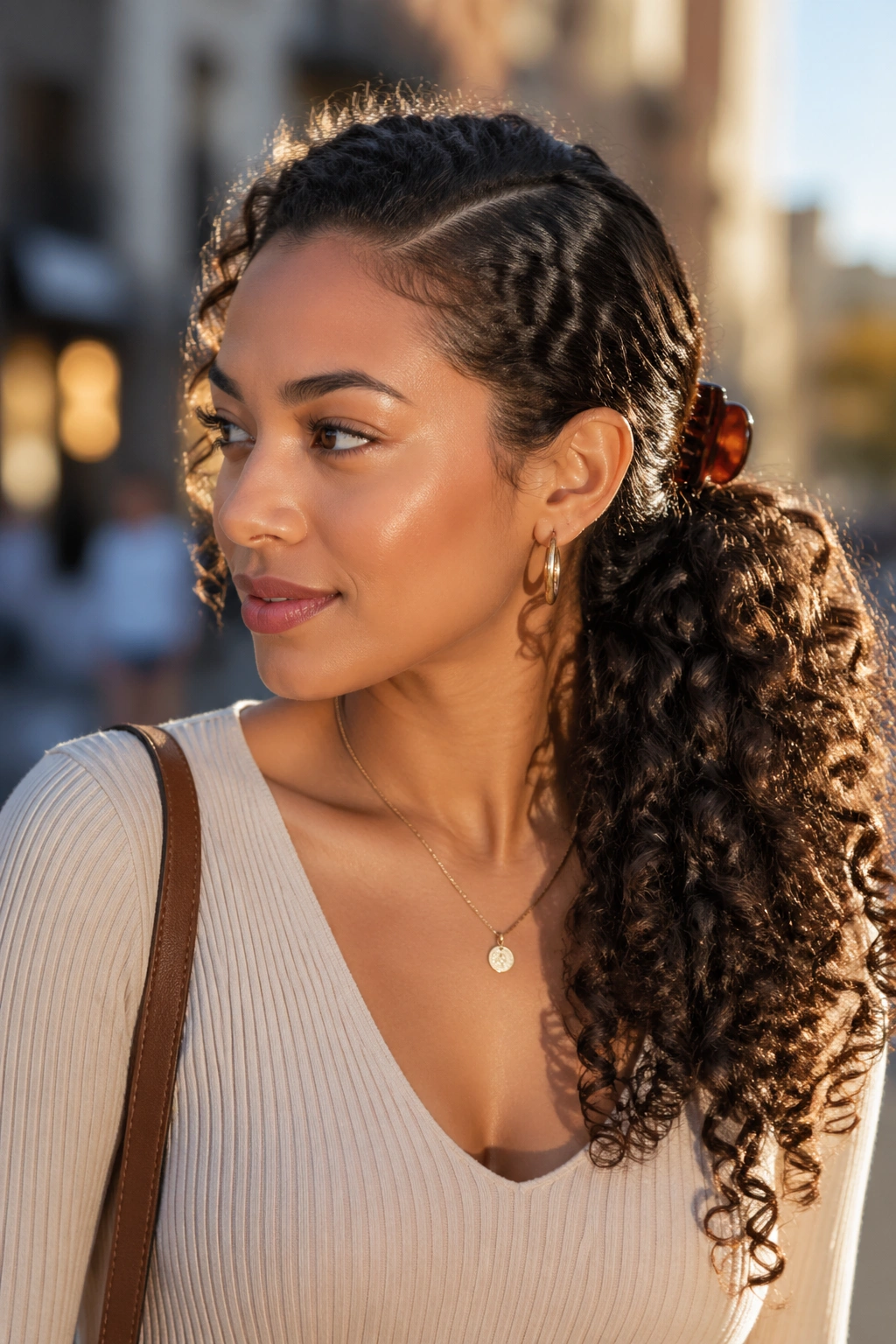
This is the one you wear when you want the curls to stay recognizable. A soft exit ponytail keeps the base low, the clip almost hidden, and the ends loose enough to move the way curly hair wants to move.
The Finish to Aim For
The front should be touched only lightly. No hard brushing. No squeezing the life out of the roots. Just gather, clip, and let the curl pattern settle where it naturally wants to go. If a few pieces fall free around the face, leave them there. They make the style feel human.
I think this is the best closing note for claw clip ponytails on curly hair because it captures the whole point: the clip should support the texture, not flatten it. That’s the trick behind every style here, whether it sits high, low, braided, twisted, or tucked under at the nape.
When the clip and the curls are working together, the hair looks easier, fuller, and more alive. And that’s usually the look worth keeping.
