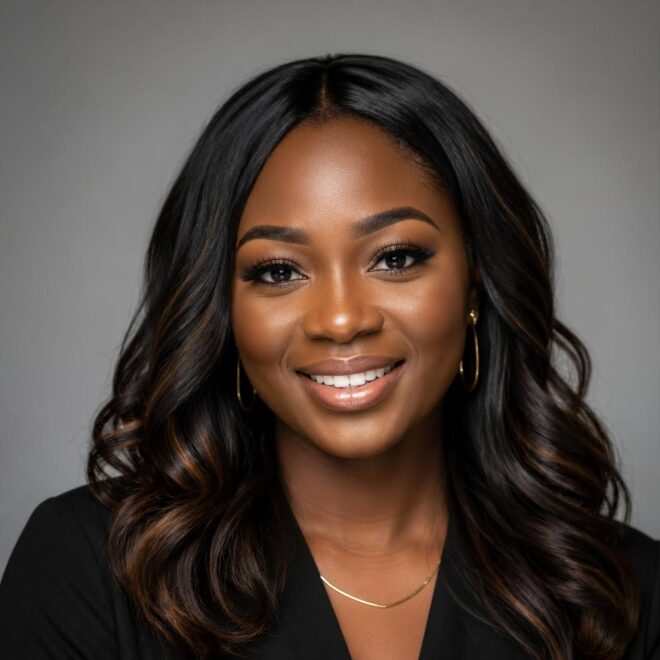


Twist braided ponytails for natural hair solve a very specific problem: you want your hair up, neat, and interesting, but you do not want the flat, scraped-back look that can make coils feel pinned down. A good ponytail should still look like hair, not a helmet.
That difference comes down to three things: the tension at the roots, the size of the twists or braids, and how much of your natural texture you let show. A clean center part with slim feed-ins gives one mood; a low wrapped ponytail with chunky twists gives another. Same category. Completely different energy.
Tension matters.
On natural hair, the strongest styles do more than sit pretty for a photo. They protect the ends, keep daily manipulation low, and let you stretch a wash day without giving up shape at the crown. If the base is done well, the style can sit comfortably for hours without that nagging pulling feeling around the hairline.
That is where the good stuff starts.
1. High Twist Braided Ponytail with Sleek Middle Parts
A high ponytail gives the sharpest lift in the bunch, and on natural hair it works best when the front is clean but not overworked. The middle part keeps the style centered, which matters more than people think. A high pony can look lopsided fast if one side is tighter than the other.
Why It Works
The height pulls the eye upward and makes the twist lengths look longer. That helps if your hair is medium length and you want the ponytail to carry the drama instead of the roots doing all the talking.
A thin layer of gel on the parting, a soft brush, and a firm but gentle tie at the crown are enough. You do not need to drown the front in product. Too much gel leaves flakes, and flakes show up instantly on dark hair.
- Works well on stretched 4b and 4c hair.
- Flat twists on each side keep the base neat.
- A 18- to 24-inch twist tail gives enough swing without dragging the scalp.
Tip: put mousse on the twist lengths, not the roots, so the front stays smooth and the tail keeps a soft finish.
2. Low Nape Twist Braided Ponytail Wrapped at the Base
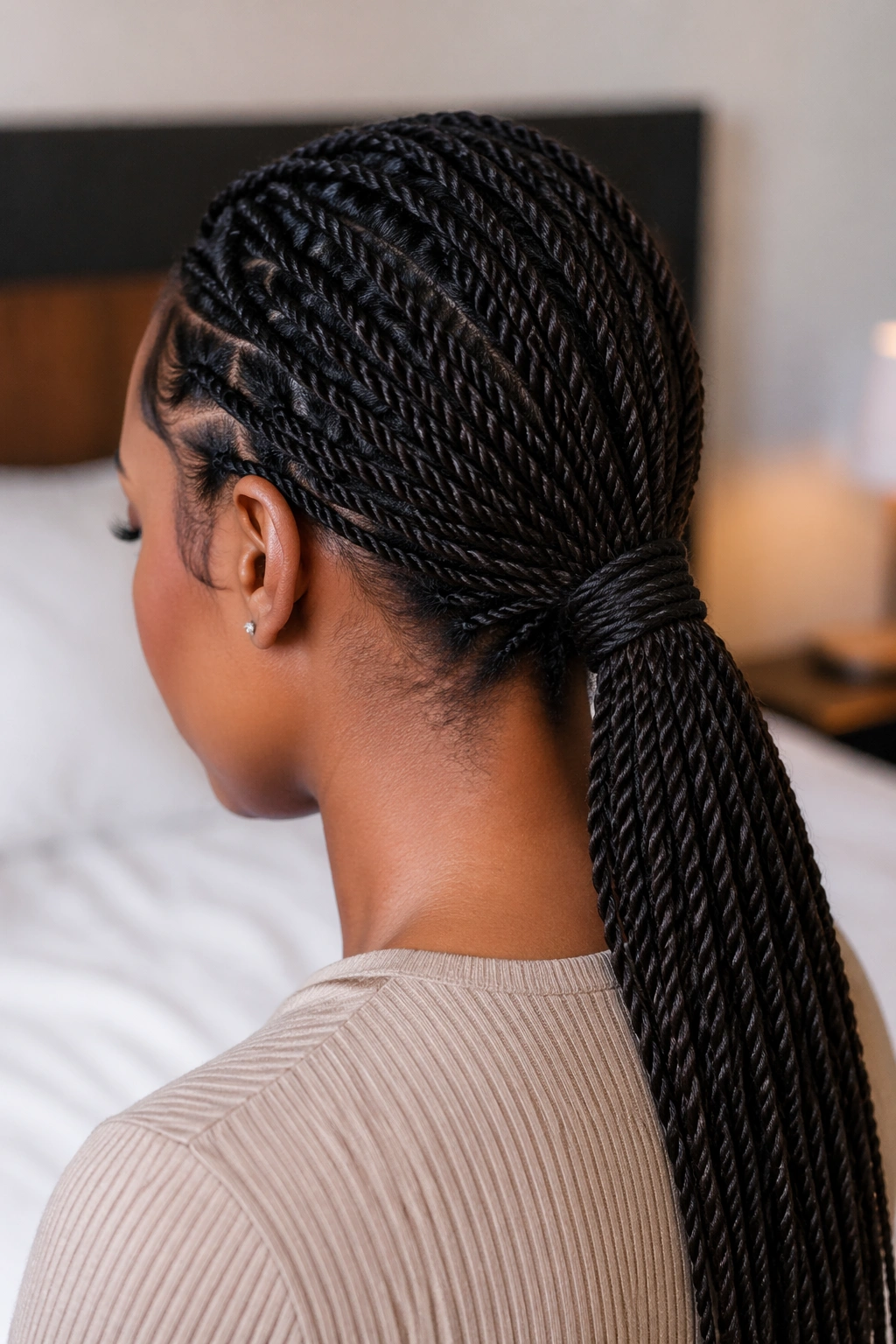
A low ponytail is the one I reach for when the hair needs to look calm. It sits close to the neck, so the weight feels more settled than a high version, and the wrapped base hides the hair tie in a way that always looks intentional.
The real advantage is comfort. A low nape pony usually puts less strain on the front hairline, which matters if your edges are tender or if you wear ponytails a lot. It also plays nicely with thicker twist lengths because the whole style stays grounded instead of bouncing around.
The wrapped base makes the style look finished even when the rest of the hair is simple. No fuss. No extra pieces floating around. Just a clean line and a long tail.
Keep the pony low enough that it sits just under the occipital bone. Any lower and it can sag; any higher and it starts to lose that relaxed shape. A satin scarf at night helps the wrap stay smooth, too.
3. Side-Swept Twist Braided Ponytail with Deep Part
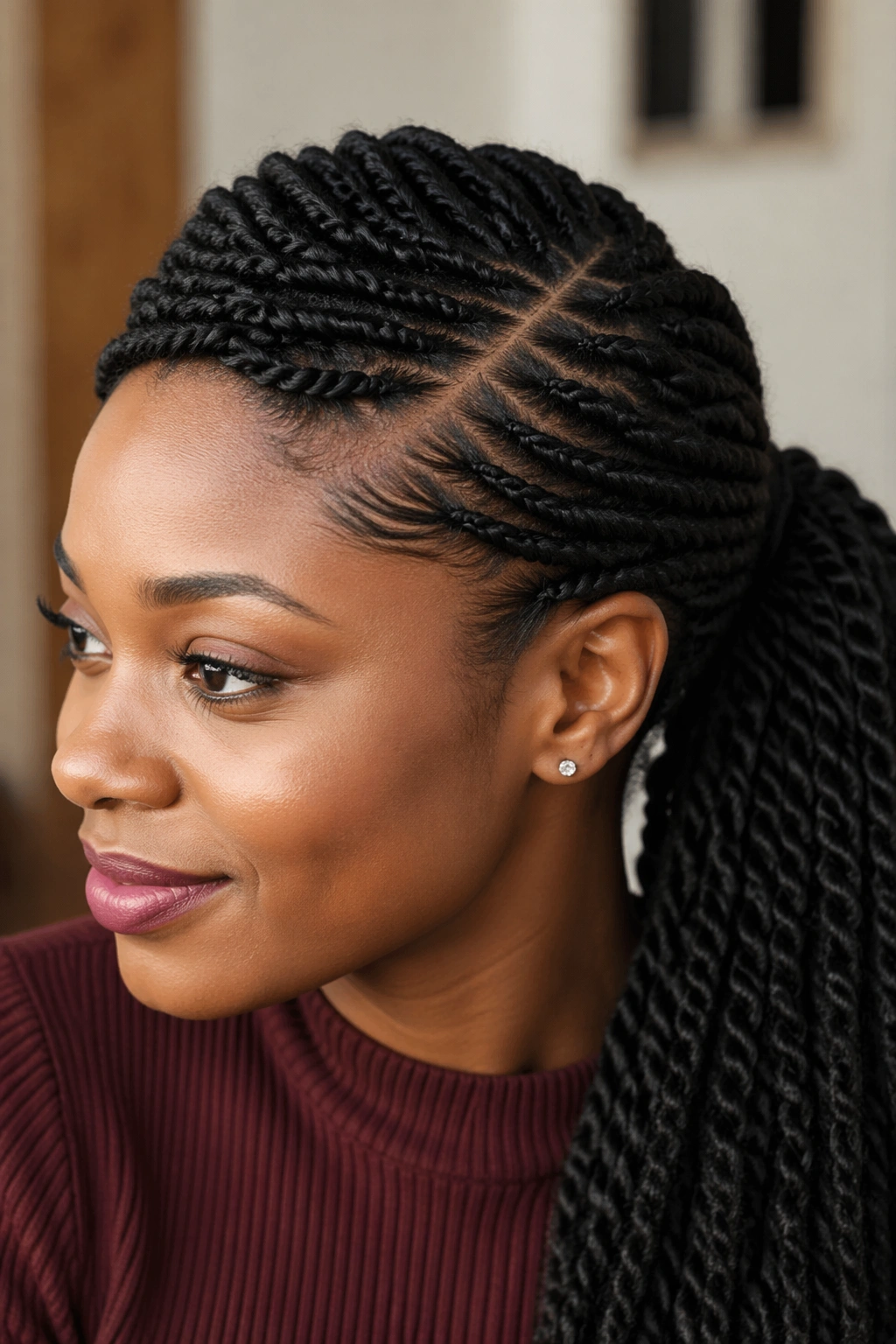
Why does a side part change the whole mood? Because it breaks the hard symmetry that can make a slick ponytail feel severe. On natural hair, a deep side sweep softens the forehead area and gives the style a little motion before the twists even start.
This version works especially well when you want the ponytail to feel dressier without looking stiff. The part does a lot of the visual work, so the twist lengths can stay fairly simple. If your face shape tends to get overwhelmed by straight-down styles, this one gives you room.
How to Wear It
A deep side part, about two to three inches off center, usually gives enough contrast without taking over the whole head. Braid or twist the heavier side back first, then let the ponytail sit just behind the ear line.
- Best on medium to long natural hair that can hold a clean part.
- Looks good with one side tucked tighter than the other.
- Works with plain twist lengths or curled ends.
If you want a softer finish, leave one small face-framing piece out and curl it lightly. That tiny detail keeps the style from feeling too formal.
4. Feed-In Braided Ponytail with Two-Strand Twist Lengths
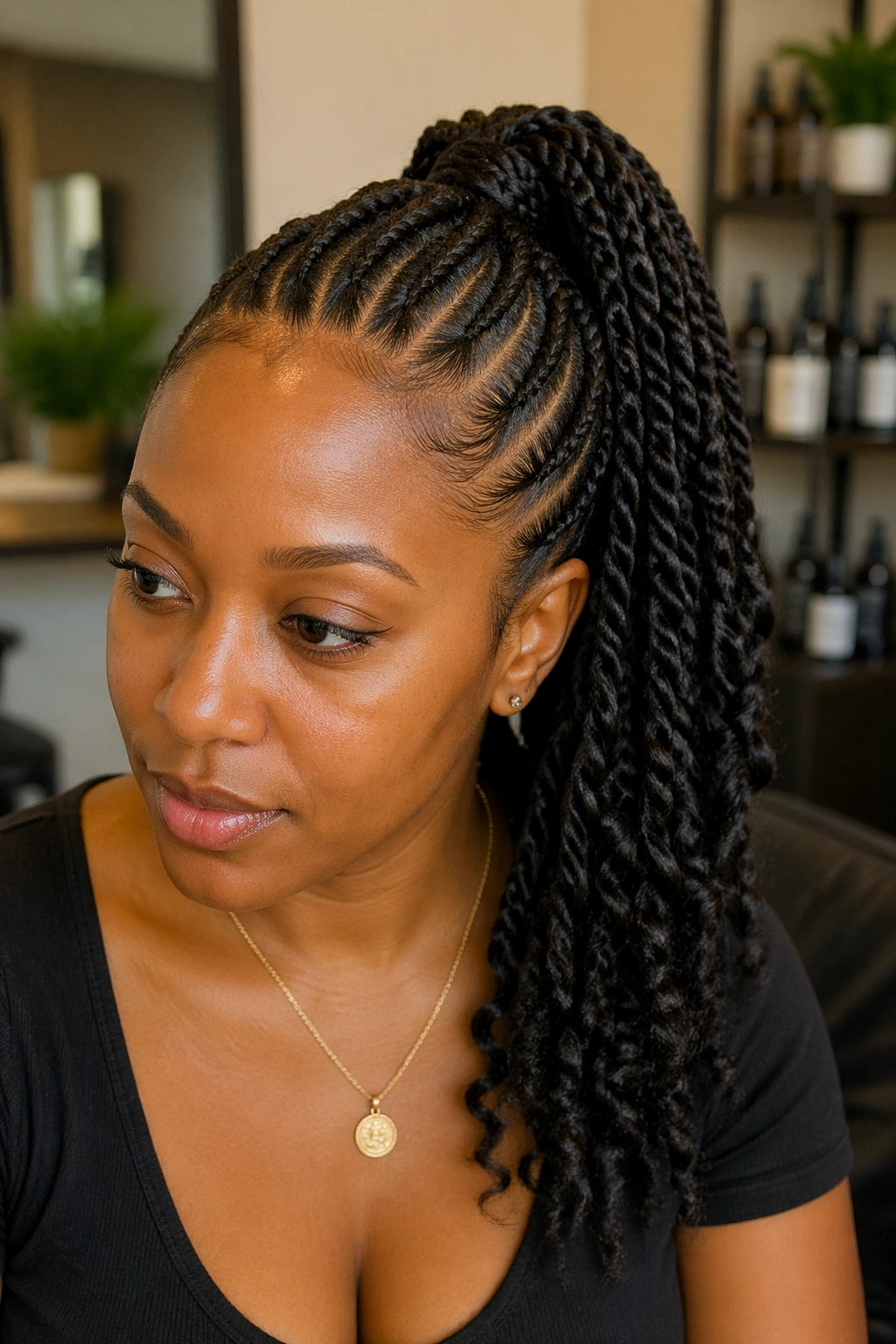
If you hate bulky roots, feed-in braids are the fix. They start small and build gradually, which means the base sits flatter and looks cleaner than a braid that begins thick right away. On natural hair, that matters because the hairline can start to look crowded very fast.
The ponytail itself can switch from braids at the scalp to two-strand twists in the lengths. That gives you the neatness of braid work and the softer movement of twists. It is a smart mix, and I think it looks better than forcing one texture to do all the work.
This style also distributes weight well. Instead of everything hanging from one heavy point, the feed-in sections spread the tension across the crown. That makes it easier to wear for longer stretches without the front feeling angry.
Use this when you want a ponytail that stays polished from the root down but still moves when you turn your head. The transition from braid to twist should be smooth, not abrupt, or the whole thing can feel chopped up.
5. Jumbo Twist Braided Ponytail for Thick Natural Hair
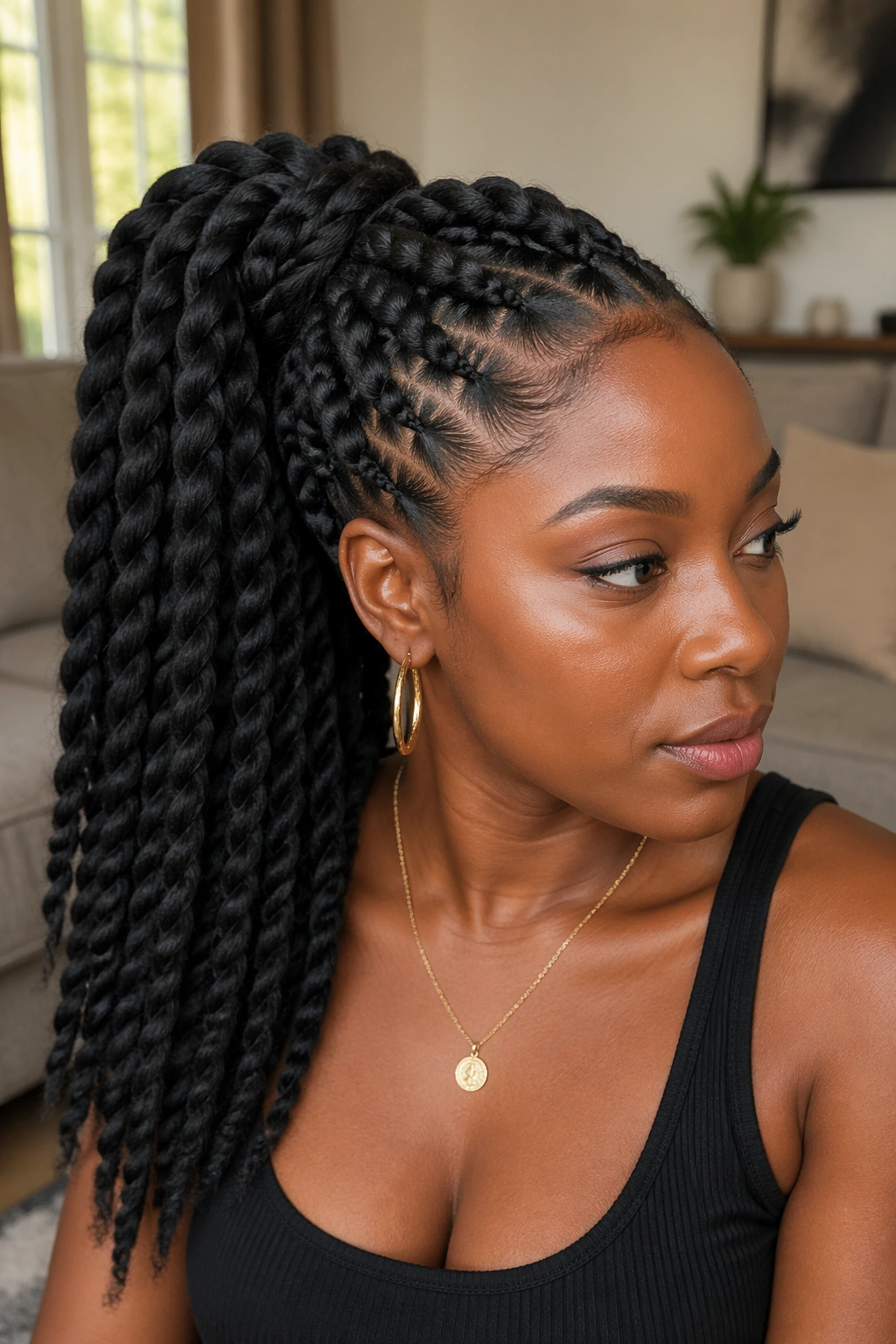
Jumbo twists are honest styles. They do not pretend to be delicate, and that is the whole charm. On thick natural hair, the bigger sections show off density instead of fighting it, which makes the ponytail look full even before you add extension hair.
The mistake people make is assuming jumbo means easier. It is faster, yes. It is also heavier if the base is sloppy or if the sections are uneven. Big twists need clean parting and a secure anchor point, or the ponytail starts leaning in strange directions by midday.
I like this version for hair that already has good volume at the root. The ponytail looks expensive in the practical sense — sturdy, balanced, and obvious in a good way. Nothing tiny gets lost in it.
A few pieces of advice make a big difference here:
- Keep each section roughly the same width, even if the parts are not perfect.
- Use a strong, covered elastic that will not snag your coils.
- Finish with a light oil on the ends only, not the scalp.
6. Mid-Height Cornrow Ponytail with Rope Twists
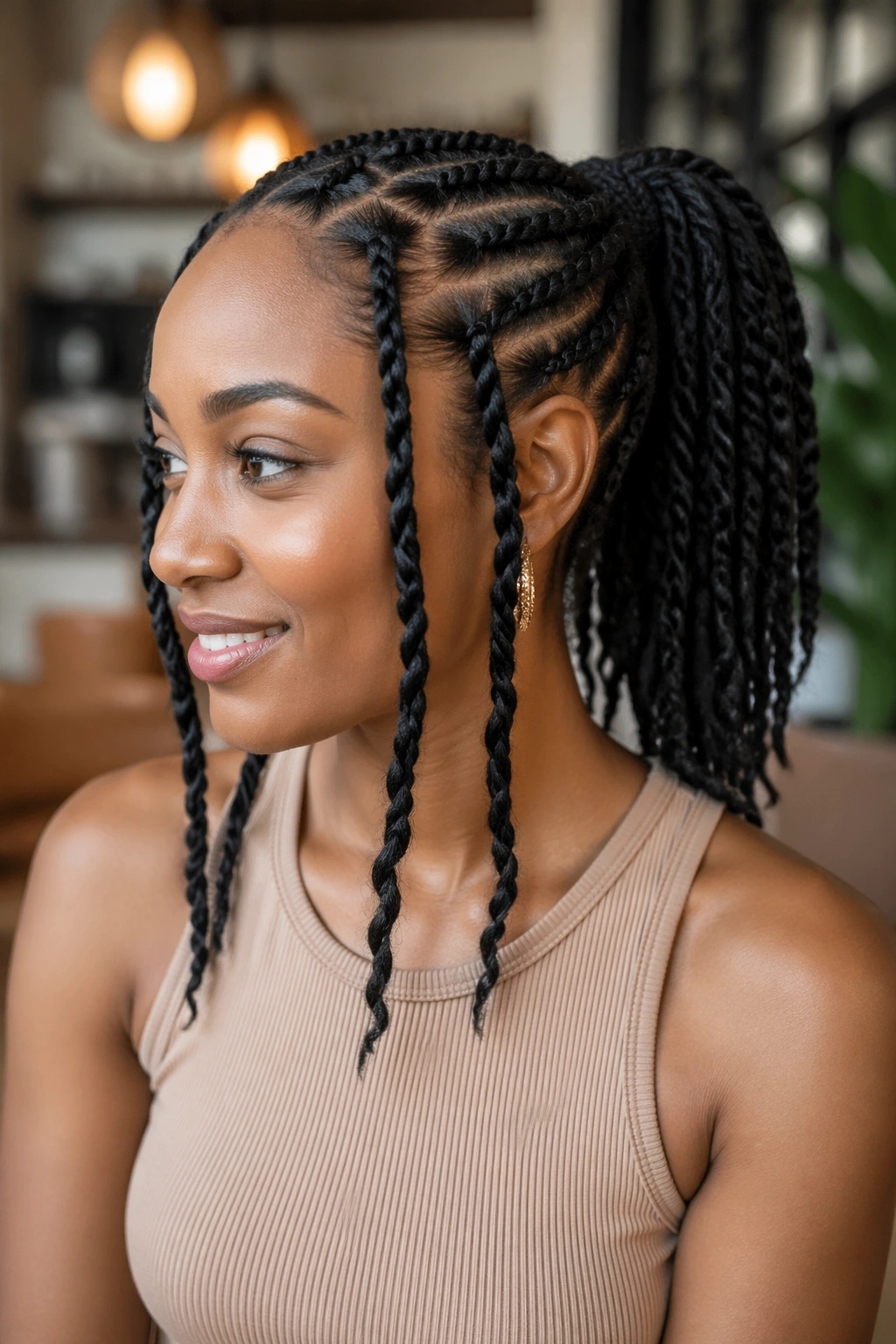
If high ponytails feel too sporty and low ones feel too formal, mid-height sits in the middle and gets used more than people admit. It lands around the top third of the head, which makes it easy to wear with casual clothes, office clothes, or something nicer.
Compared with a high ponytail, this one puts less strain on the crown. Compared with a low ponytail, it gives a little more lift and keeps the tail visible from the front. That balance is why it works so well for natural hair that needs a break from constant manipulation but still wants shape.
The rope twists at the back help the style look longer and slimmer without making it thin. A mid-height base also keeps the silhouette neat if your hair is medium density and you do not want extra bulk at the nape.
This is a practical, no-drama choice. If you like styles that survive a workday and still look decent after a long ride home, this one earns its spot.
7. Bubble Twist Braided Ponytail Down the Back
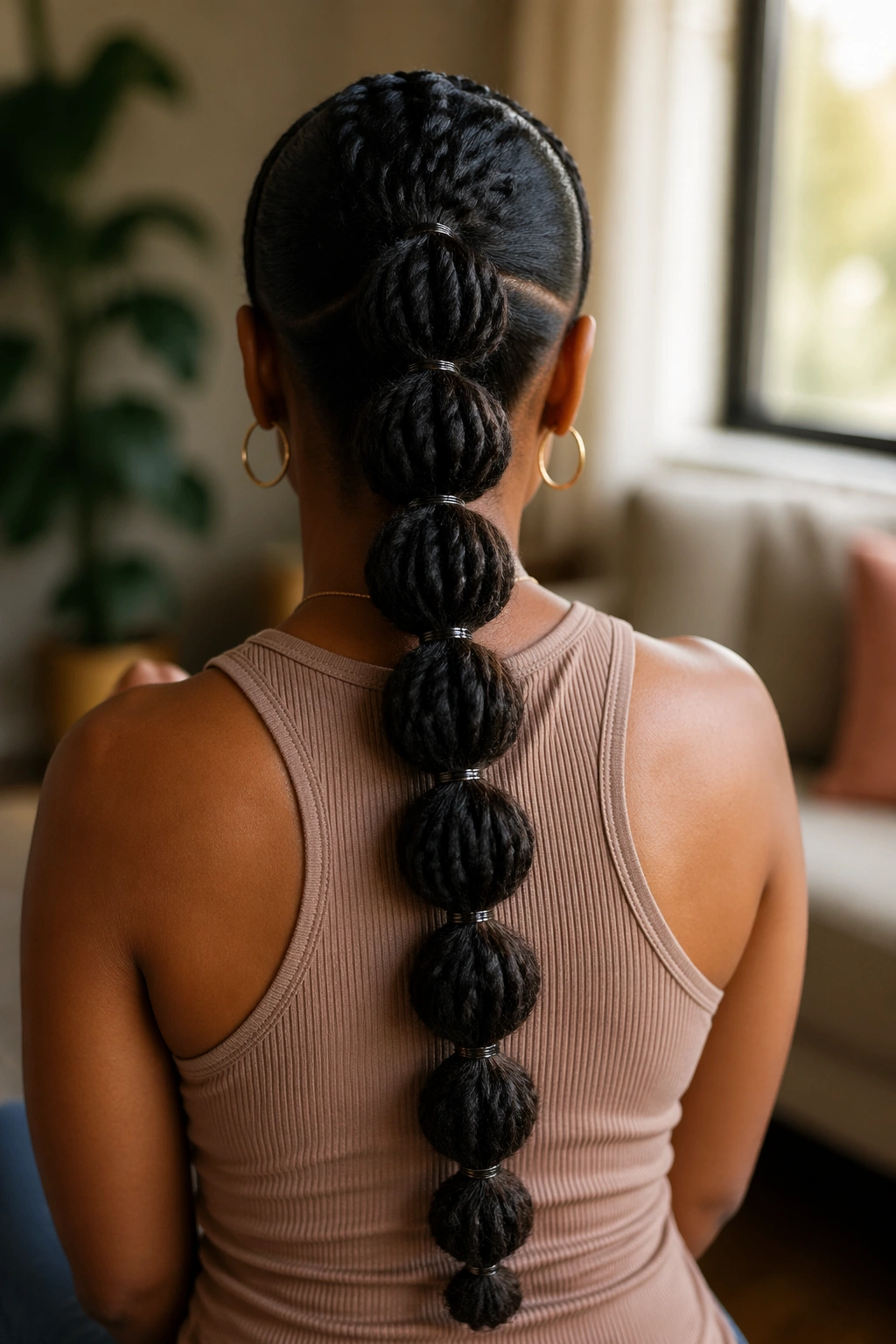
Bubble ponytails sound playful, but on natural hair they solve a real problem: how to keep a long ponytail from collapsing into one heavy line. The bubbles break up the length, so the style keeps shape even when the hair is dense or the extensions are thick.
What Makes the Bubbles Hold
The trick is spacing. Put small elastics about 2 to 3 inches apart, then gently pull each section outward with your fingers until it rounds out. Do not yank. You want a soft puff, not a stretched mess.
A bubble ponytail looks best when the base is tight enough to support the weight but not so tight that your temples feel sore. The sections should be even, though a little irregularity actually helps if you want it to look less stiff.
- Works well with medium or long twist lengths.
- Best when the twists are smooth, not overly frizzy.
- Easier to keep neat with a light mousse pass before sectioning.
Tip: put the bubbles on the lower half of the tail so the crown stays sleek and the shape starts where the eye naturally falls.
8. Half-Up Twist Braided Ponytail on Long Natural Hair
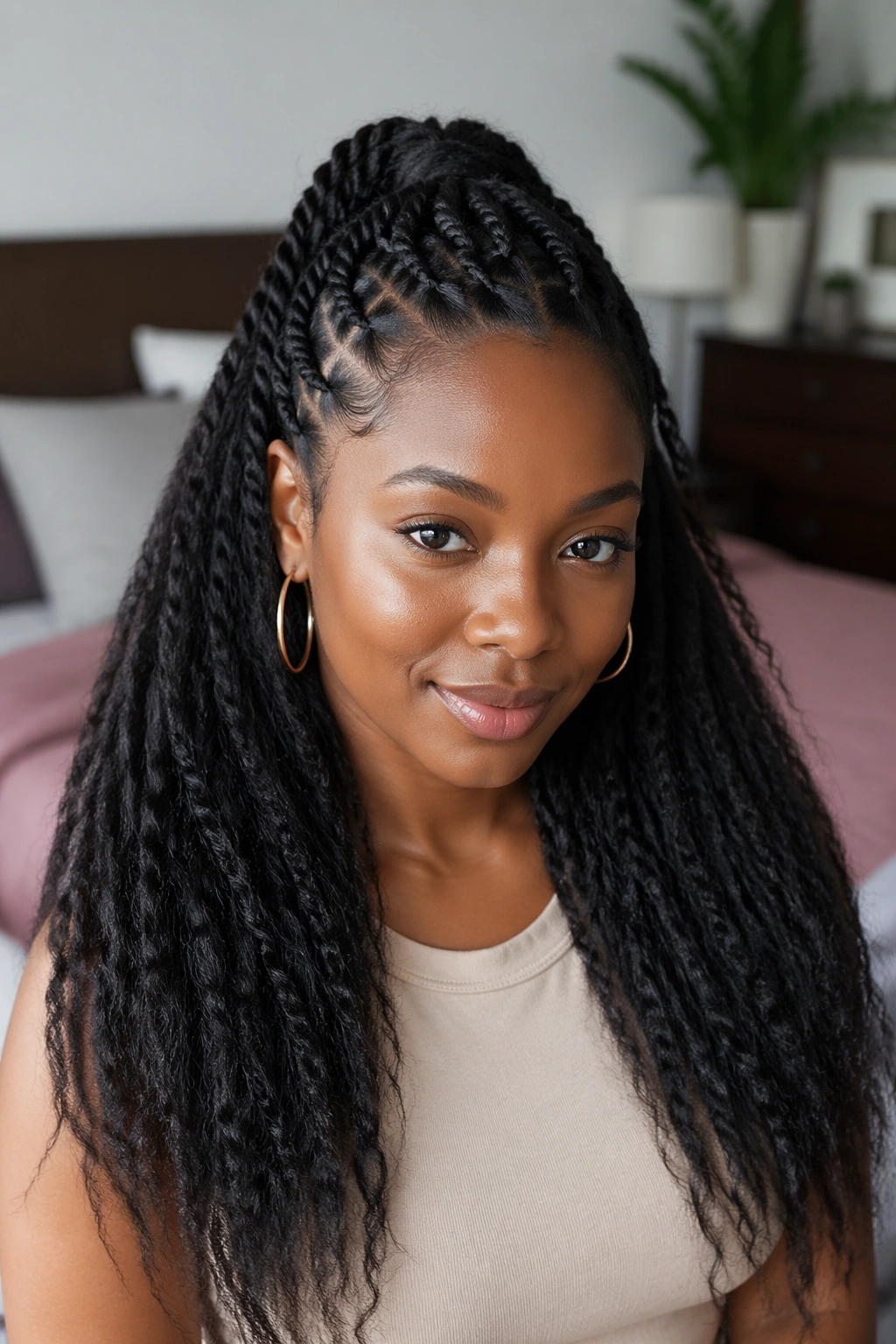
Half-up styles get dismissed as youthful too often, and I think that is lazy thinking. On long natural hair, a half-up twist braided ponytail keeps the front controlled while letting the rest of the hair stay visible, which is exactly the point if you like length but hate hair in your face.
The top section can be twisted back into a ponytail, while the lower section stays loose, braided, or curled. That means you get lift at the crown without sacrificing the body of the hair underneath. It is one of the few styles that makes length feel useful instead of just heavy.
This works especially well when your ends are healthy and you want them on display. If the lower section is dry or uneven, though, the whole style can look unfinished, so a trim helps more than extra product ever will.
The nice part is how flexible it is. You can wear it clean and simple, or add one or two cornrow details along the front. Either way, the silhouette stays easy to read.
9. Mohawk Twist Braided Ponytail with Side Braids
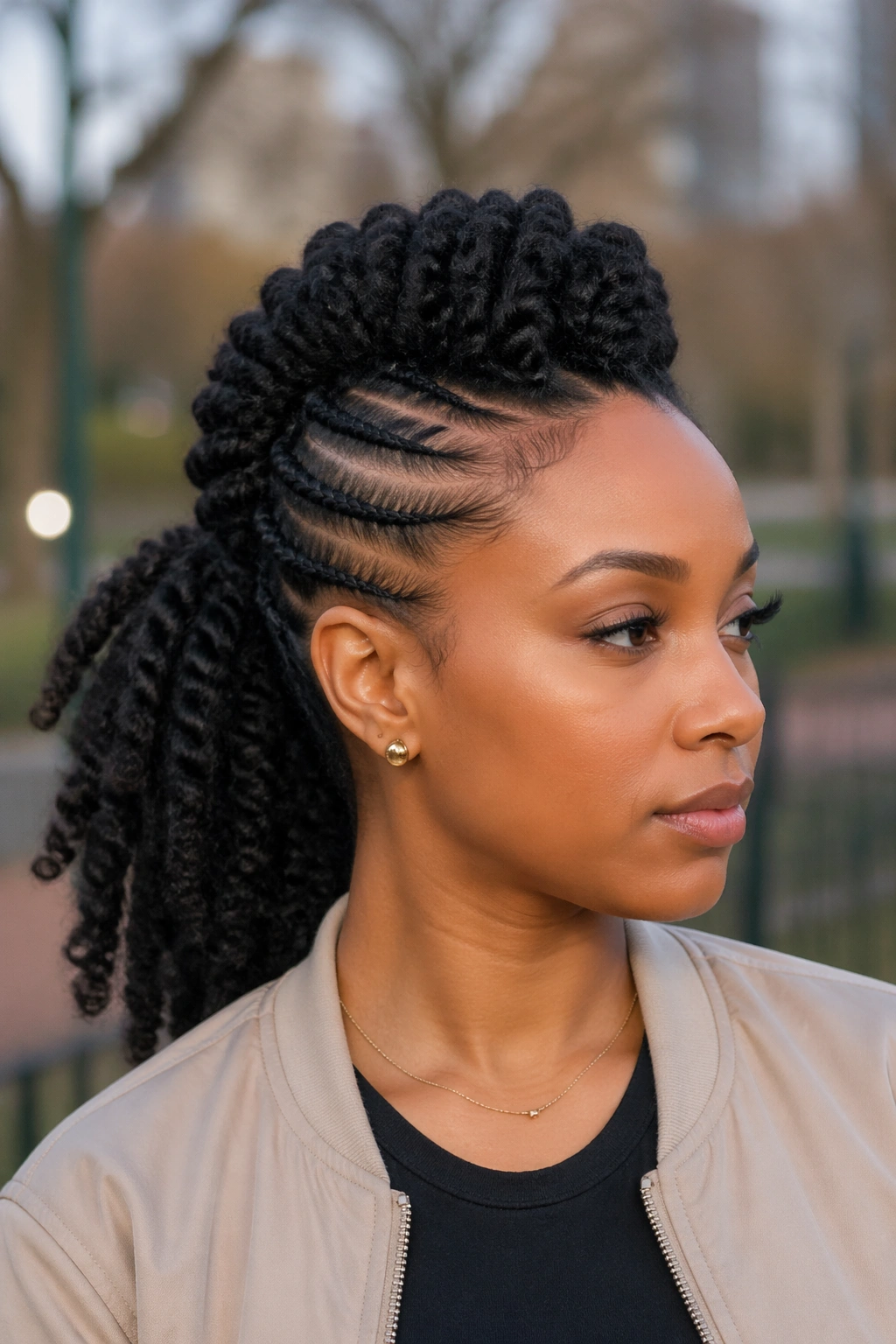
Can a mohawk ponytail feel soft? Yes, if the sides are braided close and the top section keeps enough height to read as lifted rather than spiky. That is the difference between a style that feels costume-like and one that feels wearable.
The center strip usually gets the most texture, while the sides are braided flat or twisted in tighter rows. From there, the ponytail drops at the back and carries the volume. On natural hair, this shape is useful because it keeps the edges protected and gives the crown a strong line.
How to Wear It
Use this when you want a little edge without losing polish. It suits thick hair especially well because the middle section can hold height without help from too much extension weight.
- Keep the side braids thin so the center strip stays dominant.
- Use a light hold foam on the top to tame flyaways.
- Anchor the ponytail just above the occipital bone for a balanced profile.
A mohawk ponytail always looks stronger when the parting is crisp. If the lines blur, the whole style loses its shape.
10. Crown-Braid Ponytail with a Long Twisted Tail
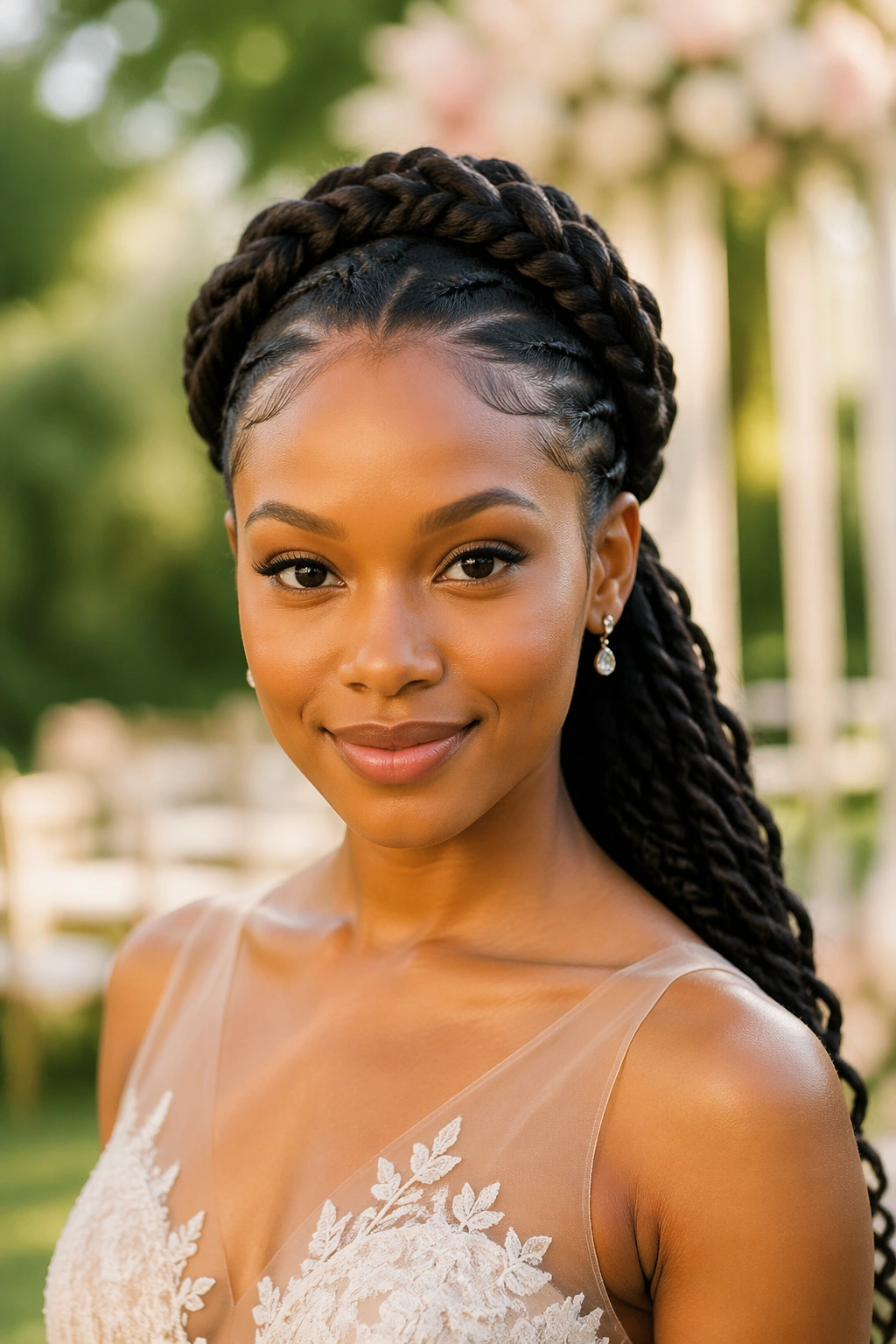
Picture a wedding, a dinner, or any event where you want your hair off your neck but not boring. The crown braid ponytail is the answer that never feels lazy. It wraps the front of the head like a halo, then drops into a long twist tail at the back.
The crown braid does the decorating so the tail does not have to work as hard. That is what makes this style feel balanced. The eye moves from the braid line to the length, and the whole look reads as planned without looking overbuilt.
Small bobby pins help here, but they need to disappear. Use ones that match your hair or extension color and tuck them under the braid ridge. Visible pins ruin the clean line fast.
- Keep the crown braid flat against the head.
- Match the tail thickness to the braid width.
- Add a light gloss only to the braid surface, not the whole ponytail.
This one is especially good when you want the front to feel secure and the back to stay long.
11. Flipped-End Twist Braided Ponytail for a Soft Finish
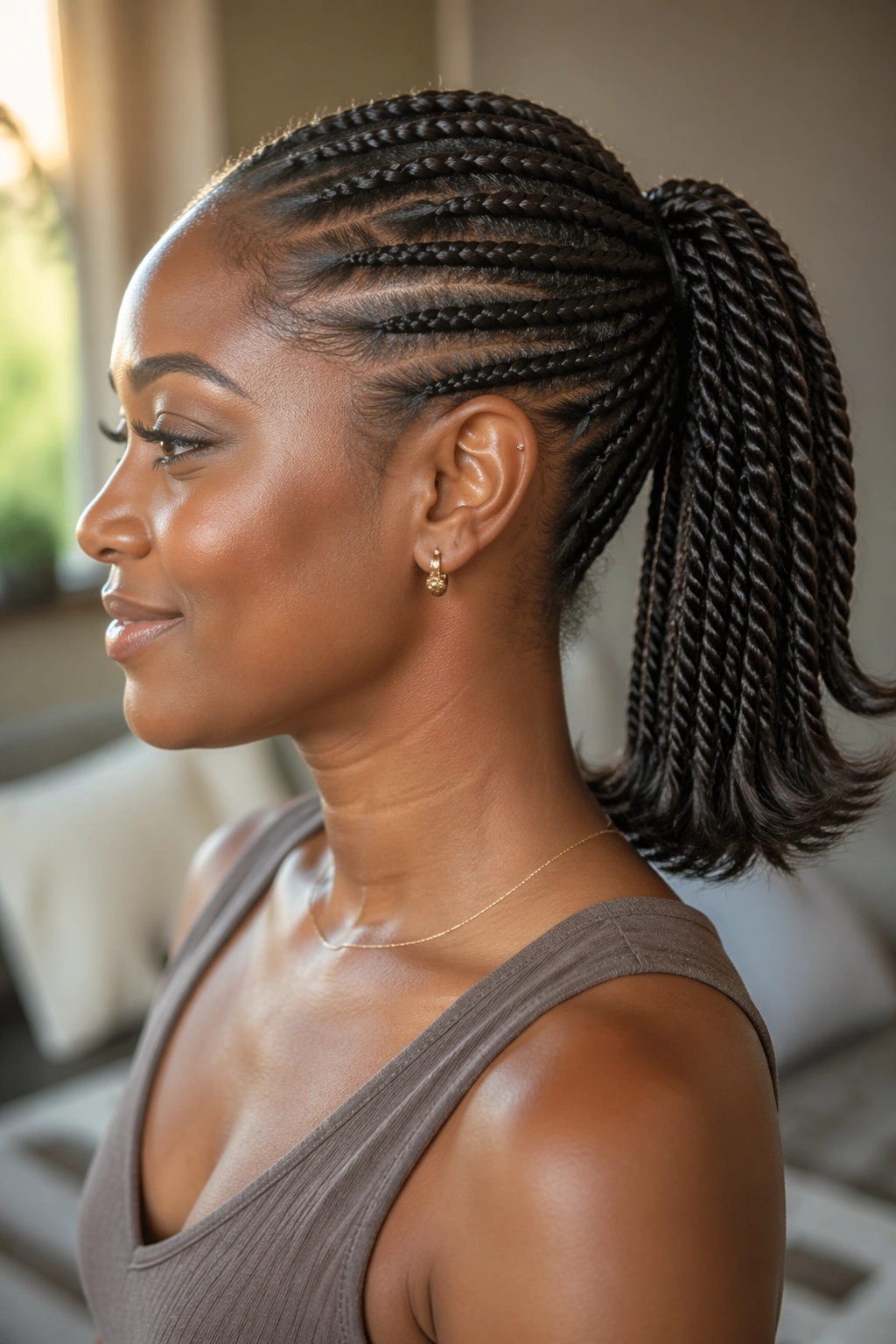
Flipped ends change the mood of a ponytail in a way that people underestimate. A straight twist tail can feel strict. A slightly flipped end feels softer, more relaxed, and a little more playful without turning into a curly style.
If the tail uses synthetic braiding hair, a hot-water set or a roller set can give the ends that subtle turn. On natural hair, flexi rods or a small bend created with a finishing brush can do the same job without needing much heat. The point is not a huge curl. Just a bend.
The best part is how the flip lightens the visual weight of the style. Long twists can look heavy at the bottom, especially if the hair is dense. A turned-up end makes the line travel upward instead of dropping straight down.
This style works when you want a ponytail that still behaves in a breeze. It keeps the shape from feeling too rigid, and that tiny change matters more in person than it does in pictures.
12. Goddess Twist Braided Ponytail with Curled Ends
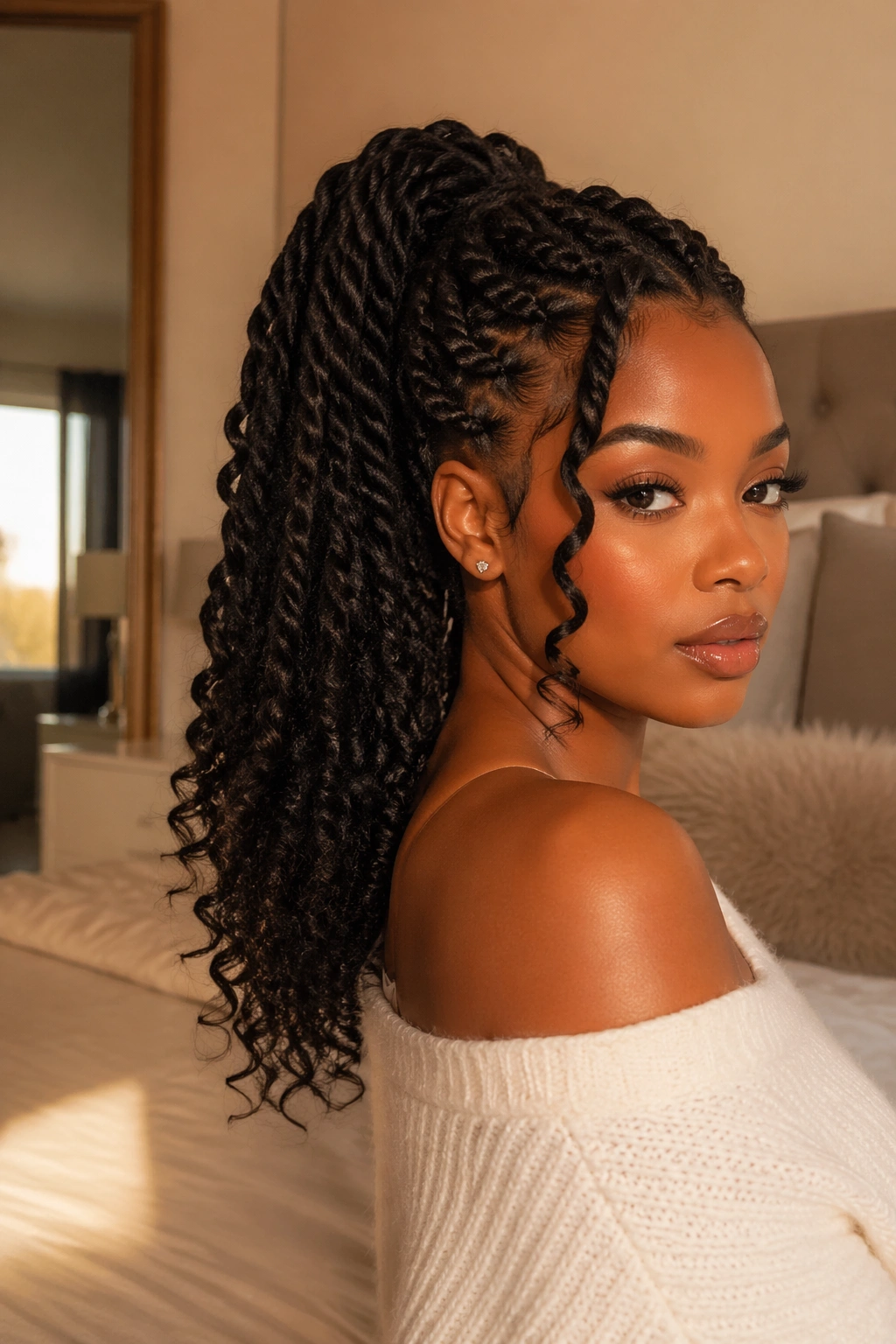
Unlike a super sleek ponytail, the goddess version leaves room for softness. A few curly tendrils, a little texture around the face, and curled ends at the tail make the whole style feel less severe. That is the charm.
It is a good pick when you want the ponytail to look full but not heavy. The curls break up the long line of the twists, so the style reads as airy instead of dense. If your natural hair has a lot of shrinkage, this is also a forgiving way to work with movement instead of against it.
The downside is maintenance. Curled pieces frizz faster than straight ones, so you need to accept a bit of texture drift. I think that is a fair trade. A goddess style should not look frozen.
Best for soft glam, date nights, and any moment when you want the face-framing pieces to do some of the work. Keep the base neat, keep the curls light, and do not overload the style with extra accessories.
13. Short Natural Hair Twist Braided Ponytail with Extensions
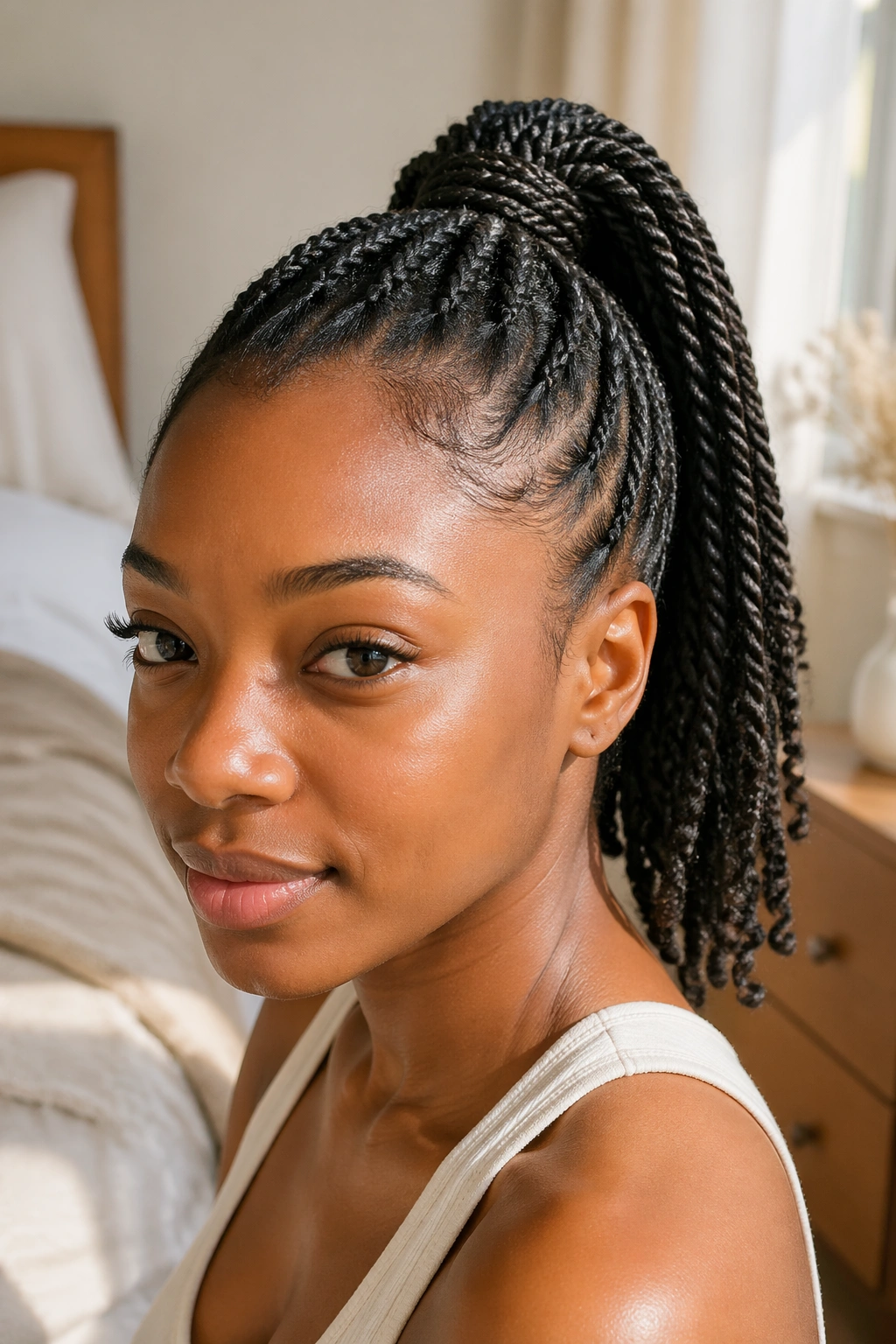
Short natural hair can absolutely hold a ponytail style, but the base has to do more work. Extensions help create the ponytail shape, while your own hair gives the anchor. That is the whole trick.
How to Keep the Base Secure
On a TWA or shorter cropped natural hair, start with a firm set of flat twists, small cornrows, or a stitched base that grips close to the scalp. A loose base will not hold the added hair well, and the ponytail can slip once the weight starts pulling down.
The extension length should match your hair’s strength, not your wish list. Heavy bundles on a small base are trouble. Keep the tail manageable.
- Use lightweight braiding hair instead of oversized packs.
- Keep the ponytail high enough that the base can support it.
- Smooth the roots with mousse first, then set with a scarf for 10 to 15 minutes.
This style is proof that short hair does not mean limited options. It just means the foundation matters more.
14. Stitch-Braid Ponytail with Defined Twist Segments
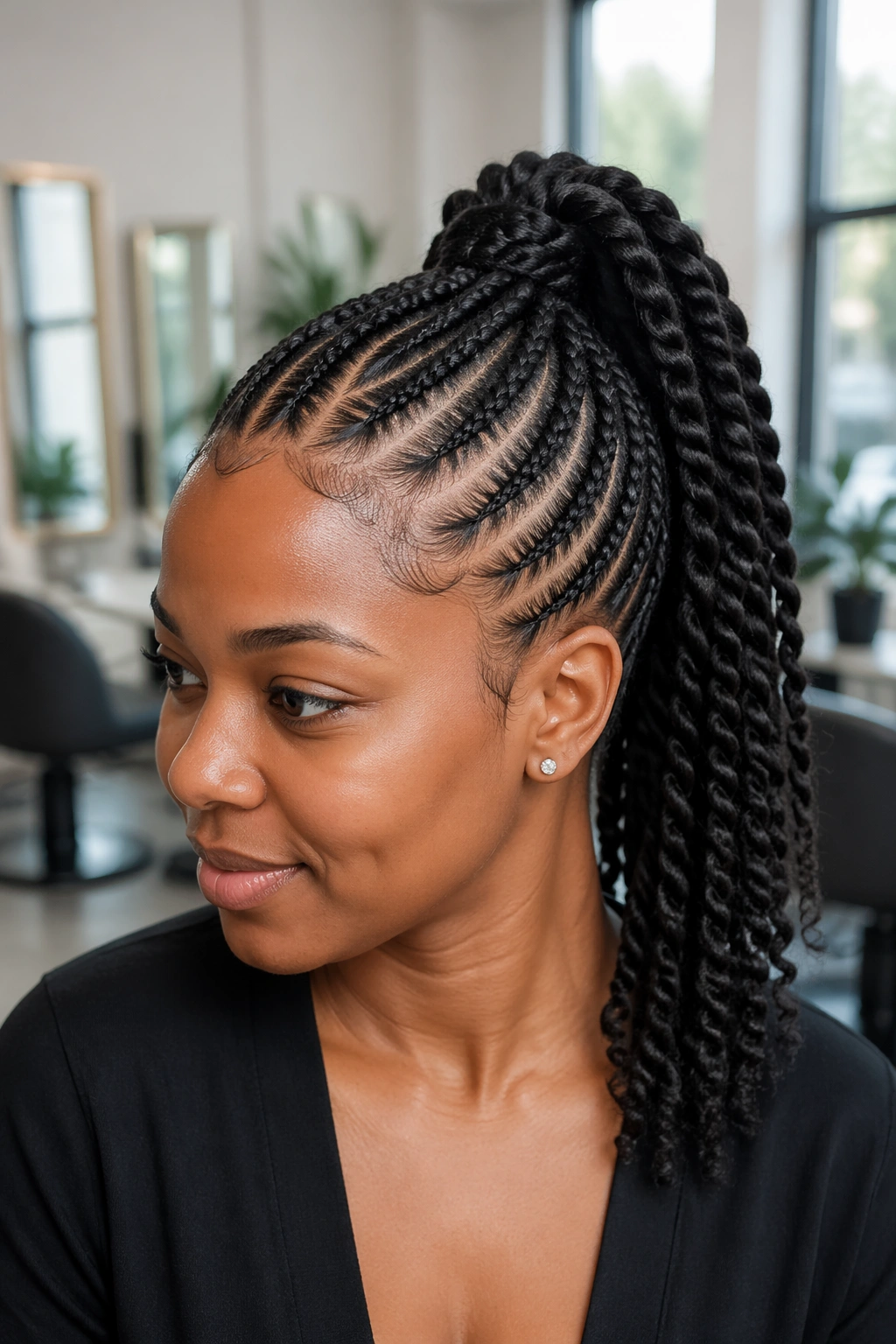
Stitch braids make the base look sharp, almost architectural. The parting lines are clean, the sections sit close together, and the ponytail has a defined start instead of looking like it was thrown together in a hurry.
That matters when you want a twist braided ponytail to feel graphic. On natural hair, stitch work gives you visual order before the twists even begin. The ponytail then becomes the soft part of the style, which is a nice contrast.
The spacing between the stitch rows should stay even, usually around half an inch or so, depending on head size and hair density. If the sections wander, the whole look gets fuzzy fast. Precision helps here more than extra shine.
I would use this when the rest of the outfit is simple and the hair needs to carry some of the structure. It pairs well with clean lines, sharp collars, and earrings that do not compete with the braid pattern.
15. Curly-End Twist Braided Ponytail for Extra Movement
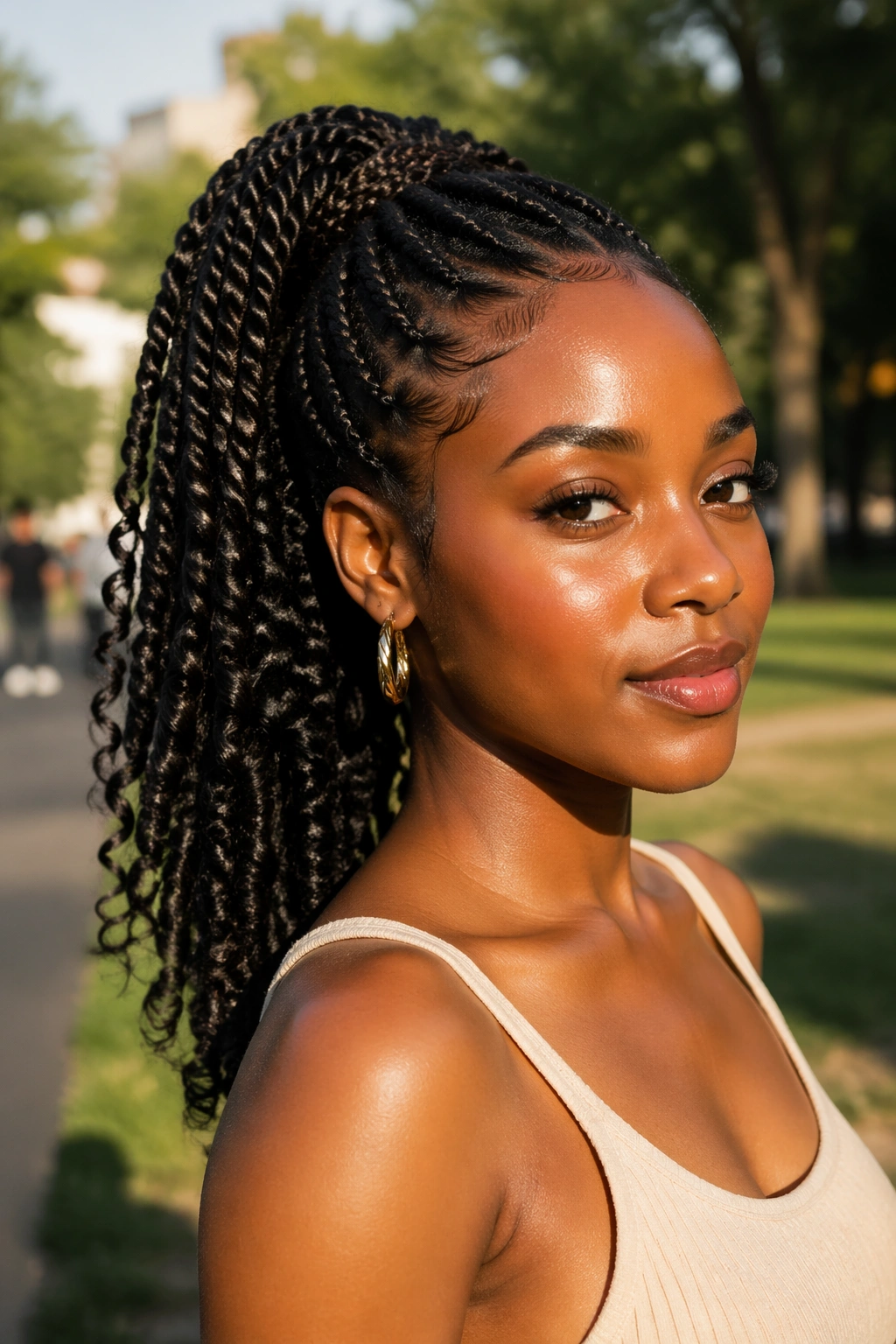
How do you keep a ponytail from looking stiff? Add movement at the ends. Curly tips break the hard line that long twists can create, and on natural hair that little bit of bounce changes the whole feel of the style.
This works especially well if the base is neat and the tail is long. The curls stop the eye from dropping straight to the ends, so the ponytail feels softer all the way through. It also helps if your hair tends to look heavy when it is pulled back.
How to Get the Curls to Hold
Use flexi rods, perm rods, or a roller set on the ends of the extension hair. If the braiding hair is synthetic, set it carefully and let it cool fully before touching it. Half-set curls fall flat fast.
- Curl only the bottom third if you want a cleaner look.
- Keep the roots sleek so the ends do the talking.
- Pick a curl size that matches the thickness of the twists.
This is one of those small changes that gives a ponytail more personality without adding more hair or more work.
16. Twin Twist Braided Ponytails for a Split-Part Look
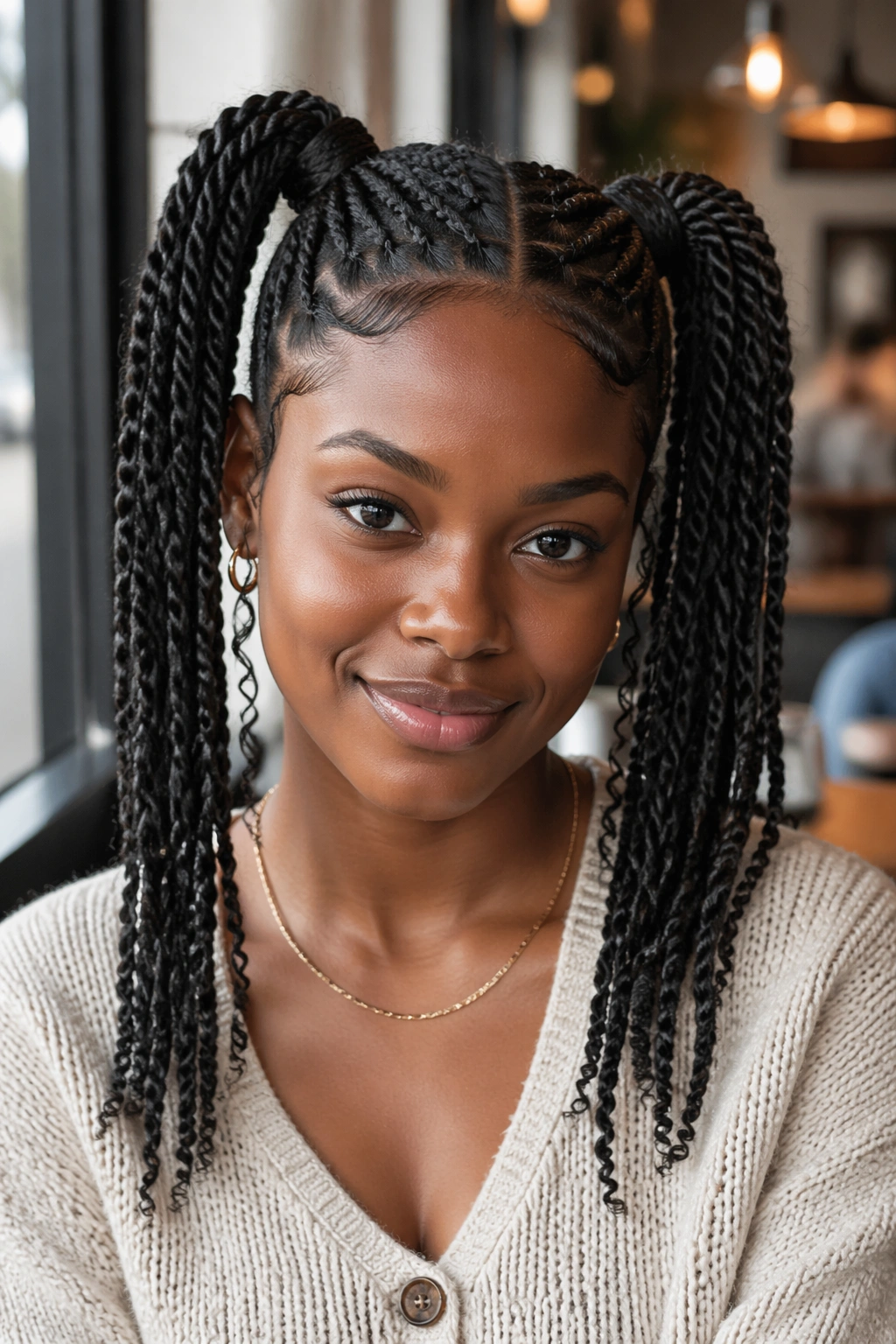
Twin ponytails can be fun without turning childish, and the difference is in the parting and the braid work. When the sections are neat, the style reads as deliberate. When they are crooked, it reads as rushed. Simple as that.
The split-part version works well on natural hair because it divides the weight. Each ponytail carries less tension than one big one, which makes the style easier to wear if you do not want a single heavy anchor pulling at the back of your head.
This is a good style for casual days, concerts, or any setting where you want a little energy in the silhouette. The two ponytails can sit high, low, or at a mid-level, but they should match in shape so the look feels balanced.
A satin scrunchie on each side helps if you want a softer finish. And if you want a little more edge, a few cuffs near the base of each tail can change the whole tone without much effort.
17. Puff-to-Pony Twist Braided Hybrid for Stretchy Texture
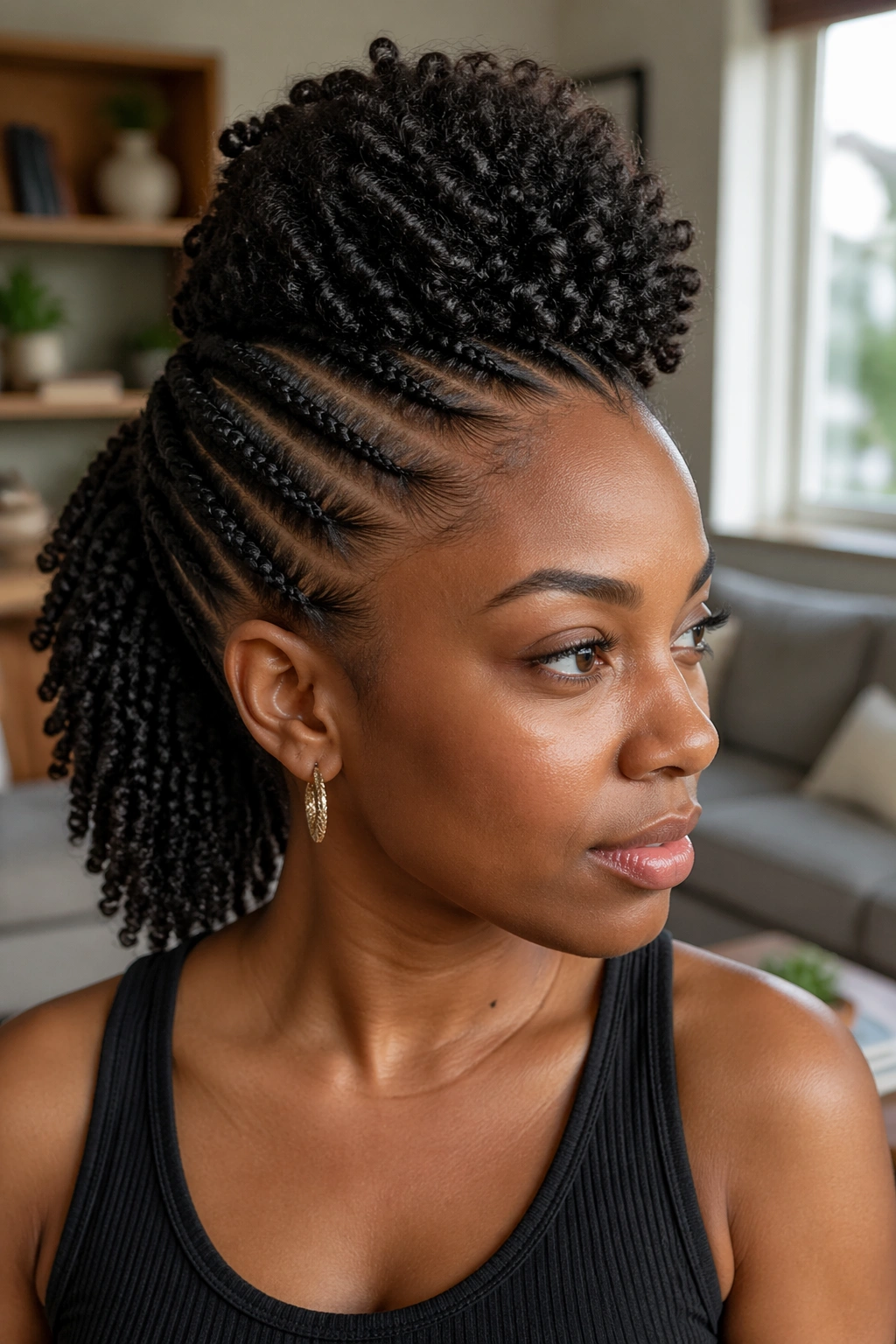
Some natural hair shrinks too much to behave like a sleek ponytail, and forcing it into that shape usually backfires. A puff-to-pony hybrid makes peace with texture instead of flattening it out.
The front or crown can stay a little puffed, then the hair narrows into twist braids or a gathered ponytail at the back. That middle ground is useful when you want your hair to look styled but still show its natural body. It feels more relaxed than a fully slicked style.
I like this on hair that has a lot of density but not a lot of length at the moment. The puff creates height, the ponytail creates direction, and the two together keep the style from looking unfinished. There is no need to fight every coil into obedience.
This version also works when you want less gel on the scalp. A light touch at the front and a stronger hold lower down keeps the shape intact while protecting the hairline from too much pulling.
18. Accent-Braid Ponytail with Chunky Twist Lengths
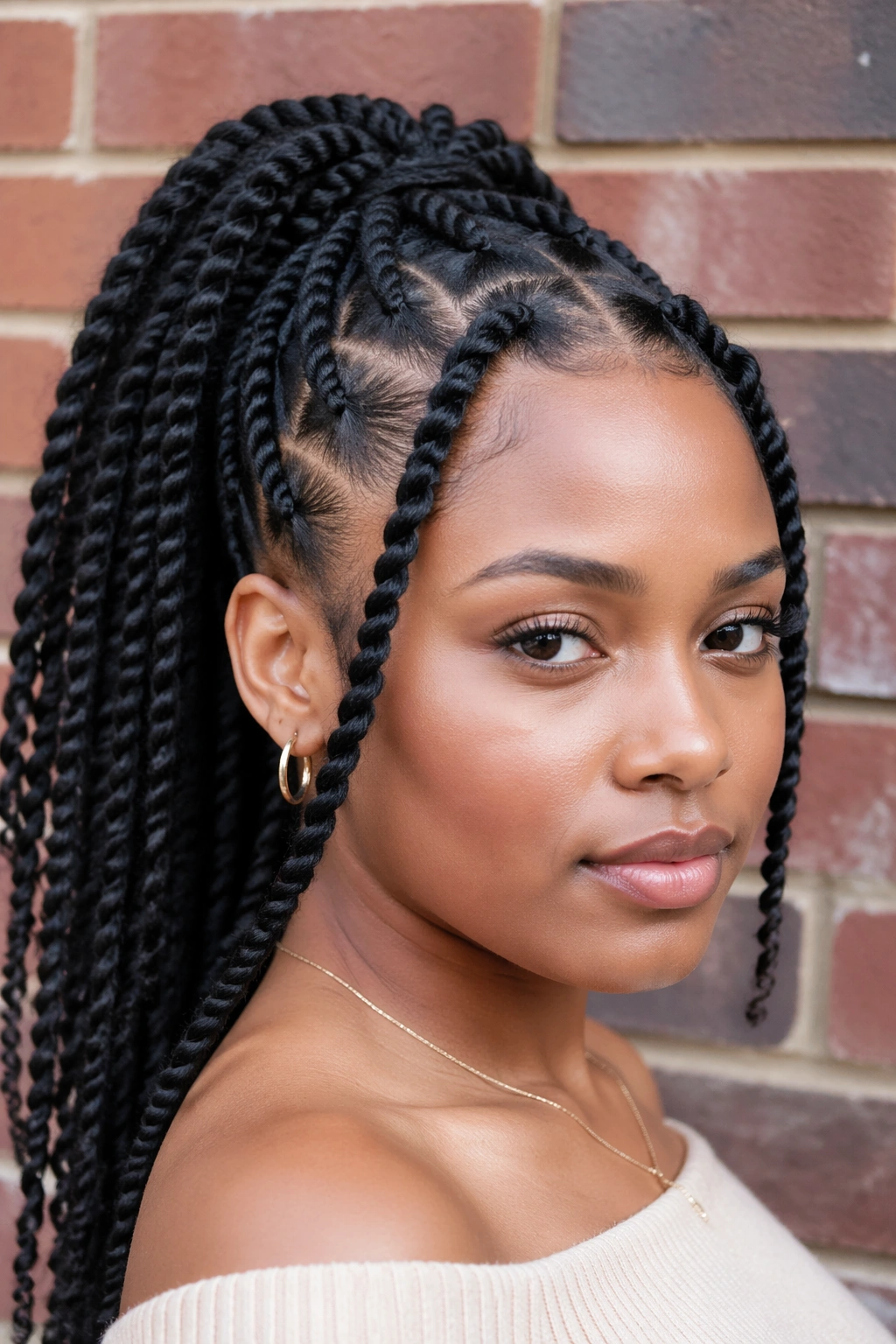
Unlike an all-over braid pattern, this version keeps most of the head smoother and uses one or two accent braids near the temples or along the part. That makes the style lighter, faster, and a little easier to redo if one section gets fuzzy.
The chunky twist lengths do the heavy lifting, so the accent braids only need to frame the face and guide the eye into the ponytail. On natural hair, that can be a smart choice if you want the look of detail without spending forever on the base.
This style is best for someone who wants texture but not a full head of intricate braiding. It also works if your scalp gets irritated by too many tight sections. Less grid work. Less tension. Cleaner finish.
I would recommend keeping the accent braids thin and deliberate. If they get too thick, they compete with the ponytail instead of supporting it. One or two well-placed braids usually say enough.
19. Beaded Twist Braided Ponytail with Center Part
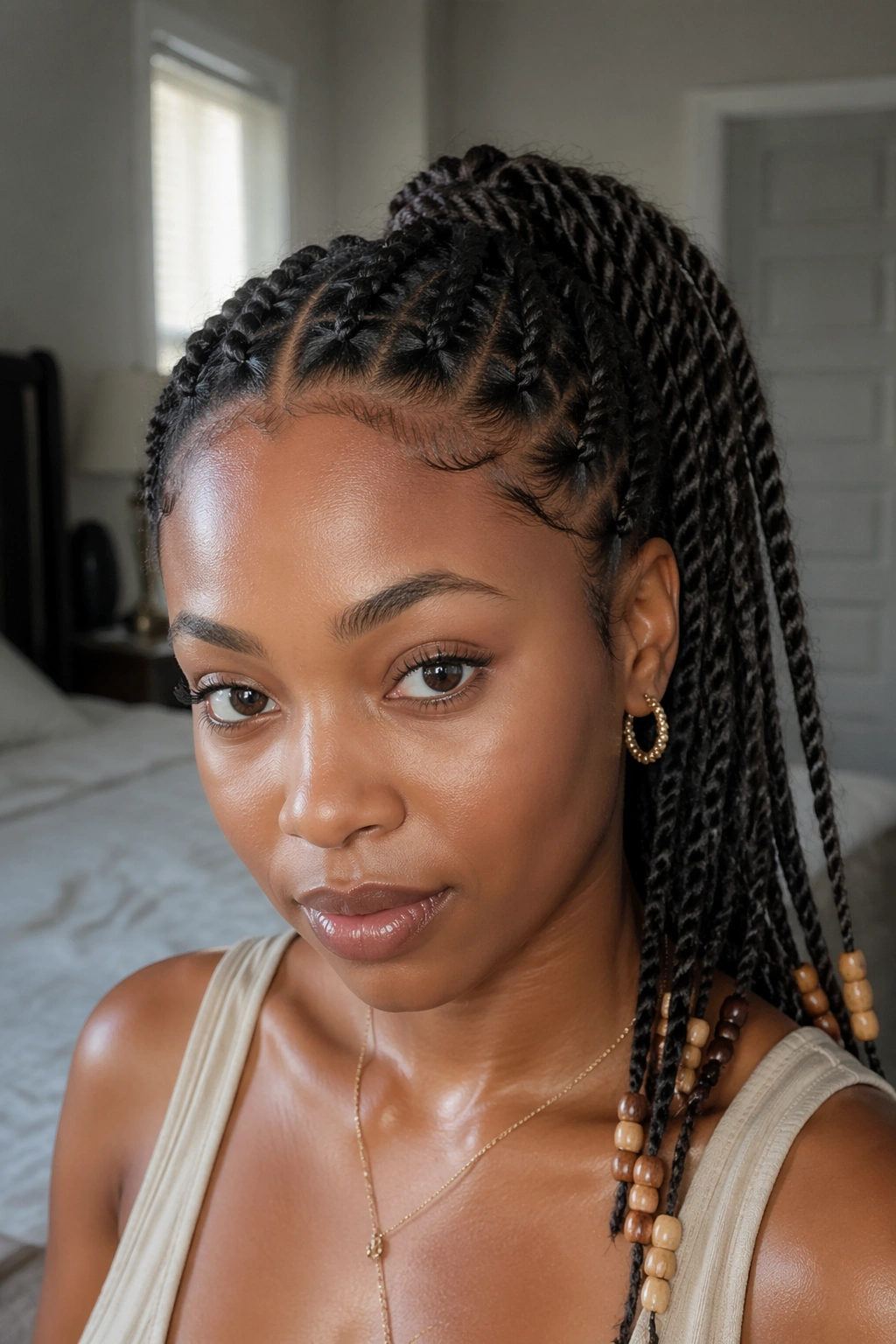
Beads change the sound and the movement of a ponytail in a way that never really gets old. The little clink matters. So does the weight. On natural hair, beads can help the ponytail fall in a straighter line instead of flaring out at the bottom.
How to Keep Beads From Dragging
The main thing is placement. Put the beads near the ends or only on a few sections, not everywhere at once. Too many beads make the ponytail heavy and can pull on the twists more than you want.
A center part gives the bead work a clean frame, which keeps the style from feeling busy. If the part is off, the beads can look random. If the part is straight and the beads are balanced, the whole style feels finished.
- Use lightweight wooden or acrylic beads.
- Match the bead size to the thickness of the twist.
- Check the nape for extra weight before leaving the style in place.
I like this when someone wants a little personality without changing the whole structure of the ponytail.
20. Side-Part Twist Braided Ponytail with Wrapped Base
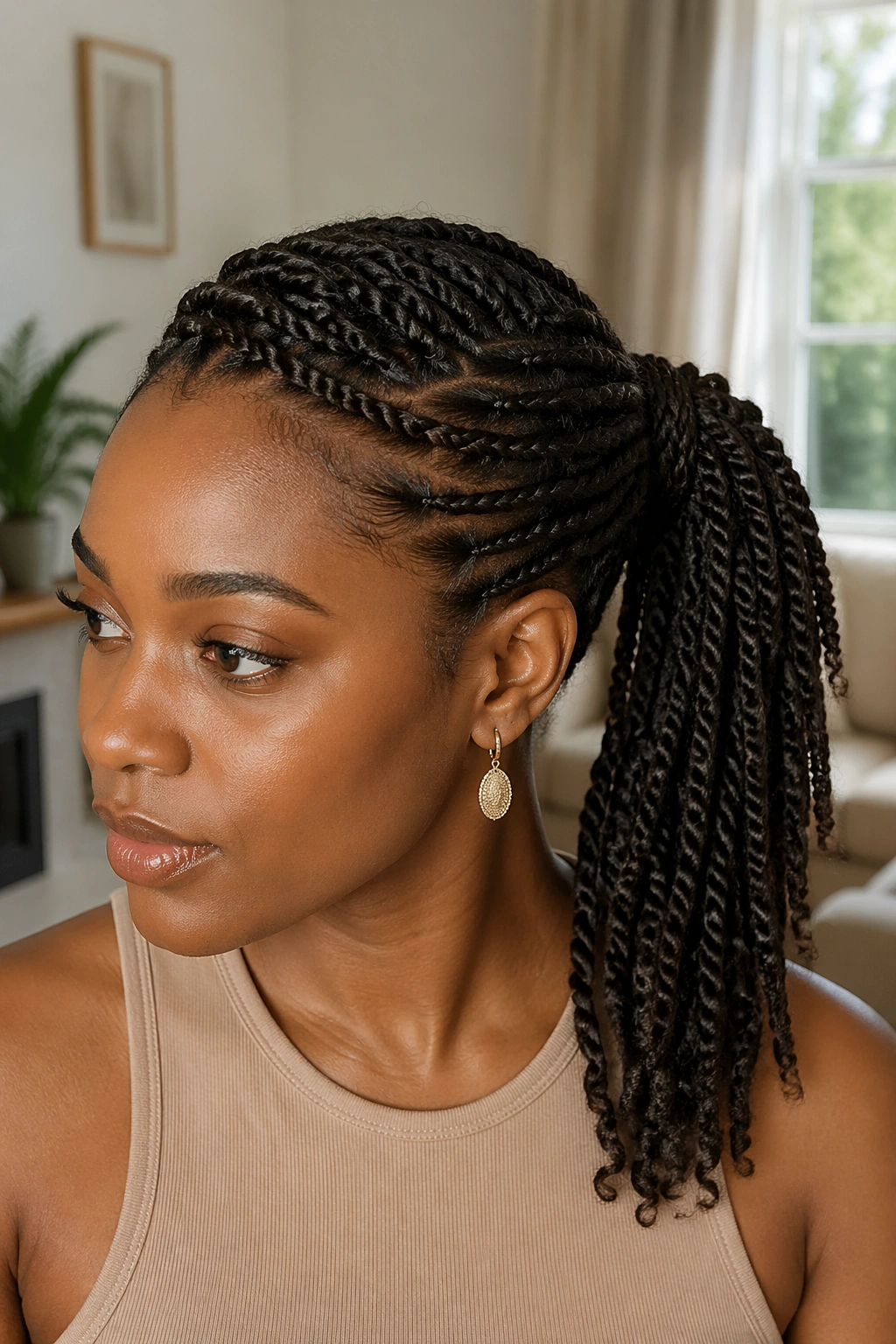
A side part gives the ponytail a softer start than a center part, and the wrapped base keeps the style from looking bare at the tie point. Together, those two moves make the whole look feel more deliberate.
This works well for people who do not like seeing a lot of scalp in the middle of the head. A side part breaks up the line, which can be flattering on rounder faces or on anyone who wants a little asymmetry. It also gives the hair a more relaxed drape.
The wrapped base matters because it covers the elastic and creates a cleaner transition into the ponytail lengths. Without it, the style can look unfinished. With it, the ponytail feels more polished without needing extra pieces.
It is simple. That is the point. If you want a style that looks done but does not ask for a lot of extra decoration, this one delivers.
21. Rope-Twist Ponytail with Invisible Foundation
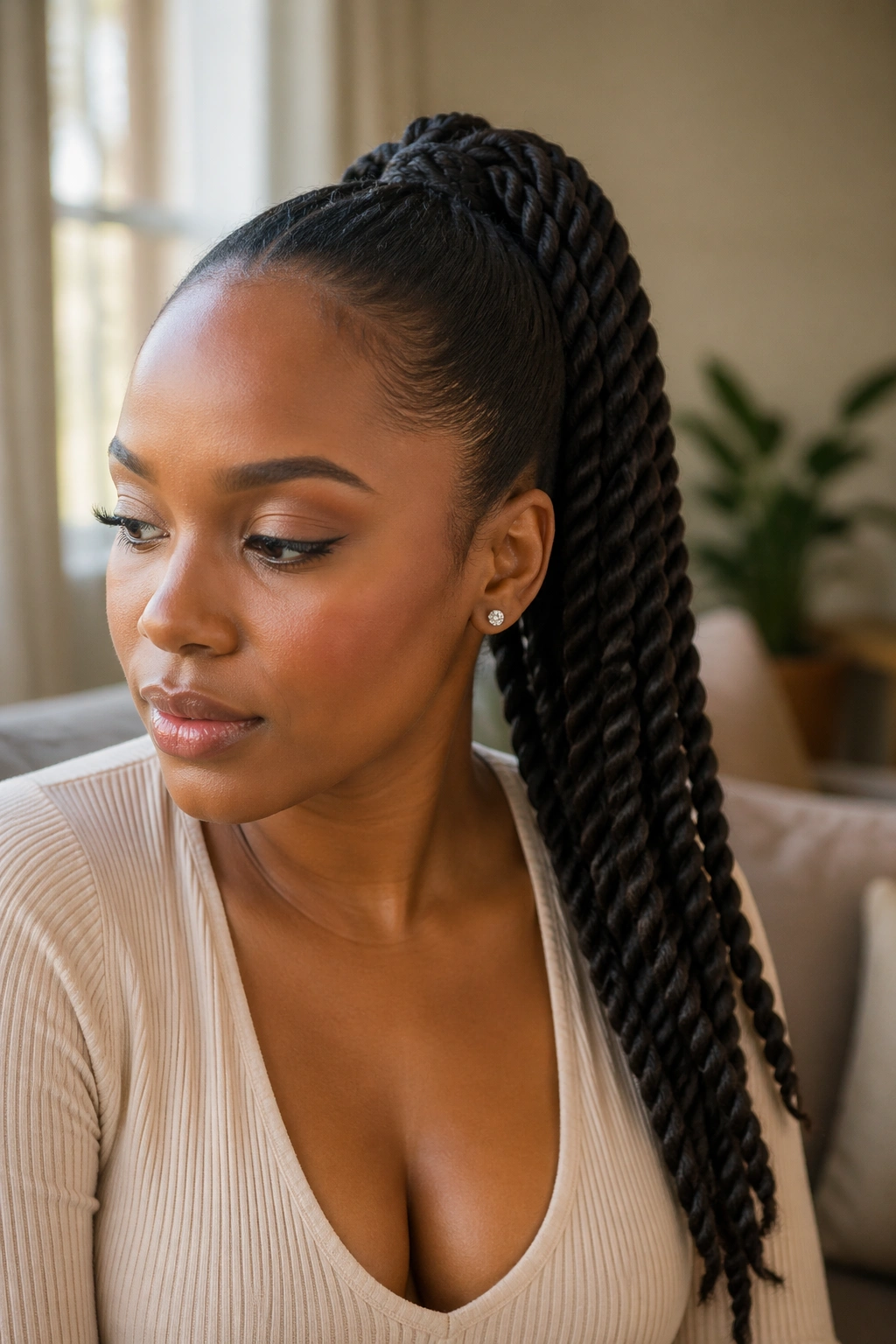
What makes a rope-twist ponytail different from a regular braided ponytail? The base disappears more cleanly, so the focus stays on the length and texture instead of the scalp pattern. That is useful when you want the ponytail to look smooth from a distance.
The invisible foundation usually comes from small flat twists or tight cornrows that blend into the ponytail attachment point. Once the lengths start, the rope twist shape gives the style a narrow, tidy line. It feels neat without being fussy.
How to Hide the Base
Keep the anchor sections small and close to the scalp, then wrap or tuck the join point under a section of hair that matches the ponytail color. A tiny bit of tension at the root is enough. More is not better here.
This style is a good pick for anyone who wants a clean profile and fewer visible lines. It looks especially nice on hair that has been stretched first, because the base can sit flatter and the twist lengths can move more freely.
22. Crochet Twist Ponytail Install for Long Wear
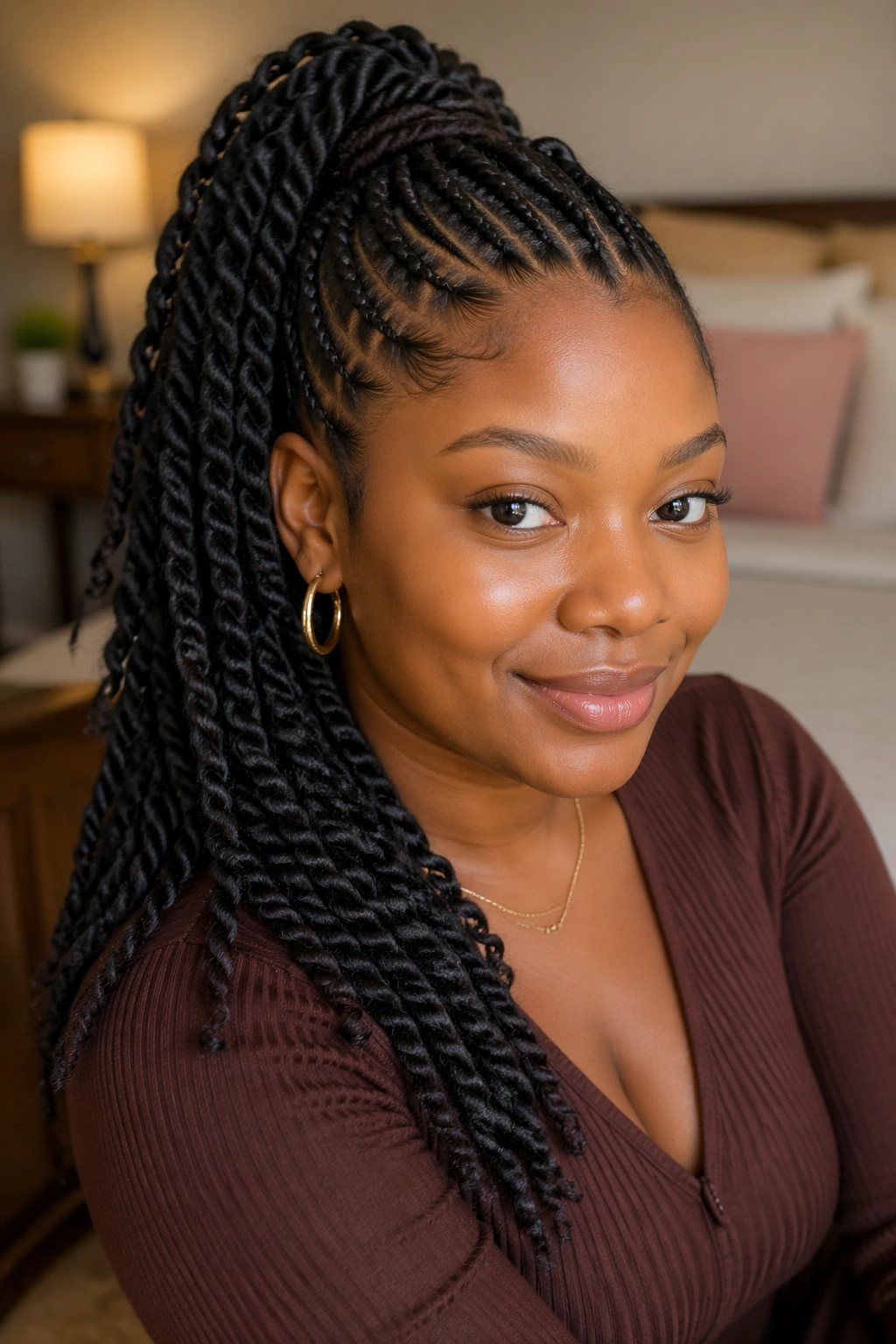
Crochet twist ponytails are a quiet lifesaver when you want a long style without sitting for hours in a chair. The base gets braided down first, then pre-looped twists are attached through the braids. Fast. Clean. Practical.
The charm here is wear time. Crochet installs can stay neat when the base is solid, and they usually keep the ponytail looking full without forcing your own hair to carry all the weight. That is useful if your natural hair needs a break from constant styling.
The finish matters, though. If the base is bulky, the whole ponytail sits awkwardly. If the braids underneath are too loose, the style shifts around. Good crochet work looks easy because the hidden part was handled carefully.
I would use this when I need length, volume, and fewer daily decisions. It is not the fanciest option on the list, but it is one of the most practical.
- Choose pre-looped twists that match your hair density.
- Keep the base low and compact.
- Wrap the ponytail at night with a scarf so the attachment points do not fray.
23. Color-Pop Twist Braided Ponytail with Braid Hair
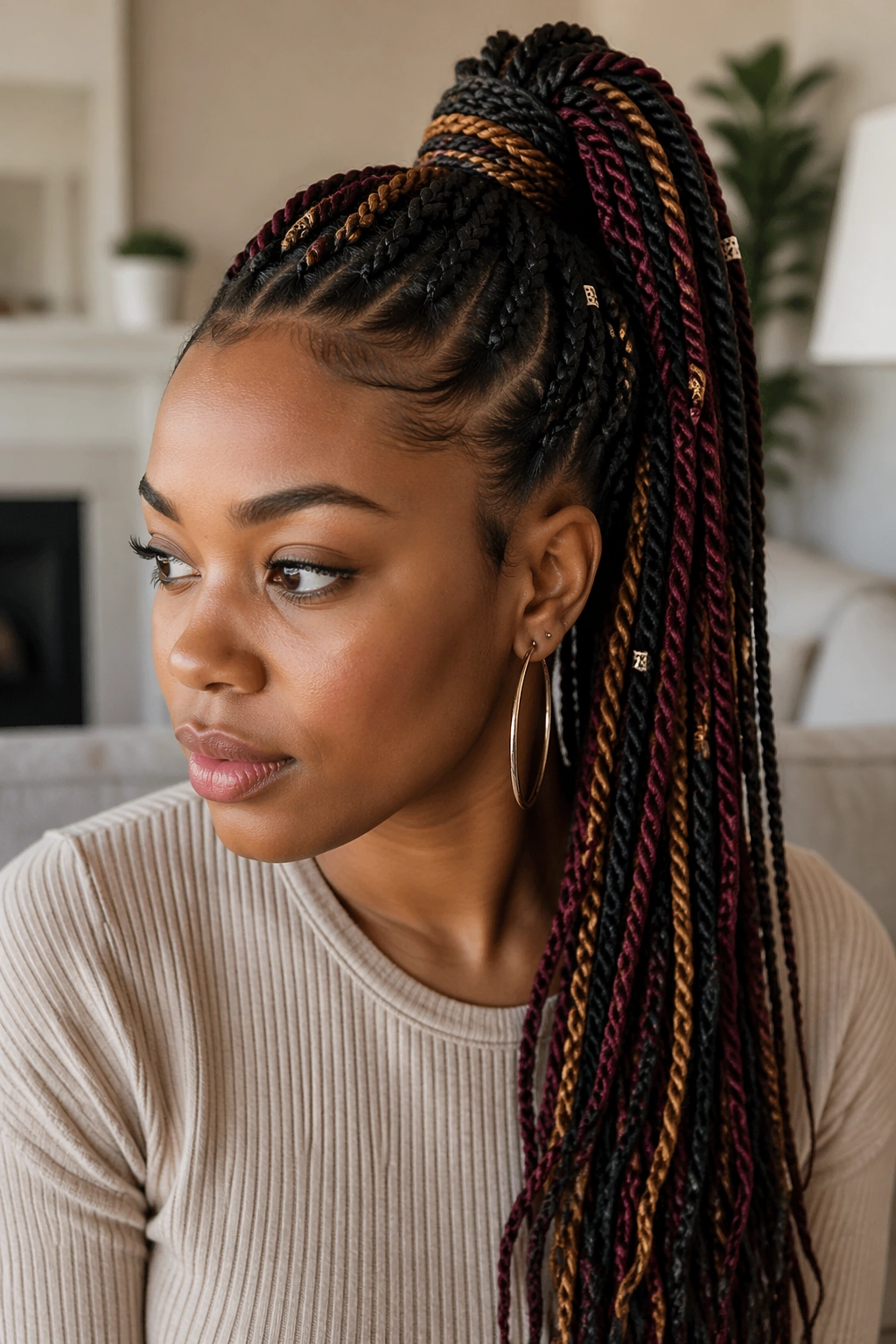
Color changes the whole story of a twist braided ponytail. A honey brown tail feels softer than jet black. Burgundy looks richer. Copper catches attention fast. The trick is choosing a shade that supports the style instead of fighting it.
I like color best when it lives in the ponytail lengths or in a few accent braids. That keeps the roots grounded and the finish believable. If every inch is bright, the style can lose its shape because the eye has nowhere to rest.
The texture of natural hair helps here too. Coils and twists give colored braiding hair more depth than straight hair would, so even a single shade can look layered in person. That is one reason these styles hold up so well.
Keep the scalp color close to your own if you want the ponytail to feel soft. Push the color farther out if you want drama. Both work. The part that usually looks off is a bright root paired with an overly busy base, so let one area stay quiet.
24. Formal Twist Braided Ponytail with Hair Jewelry
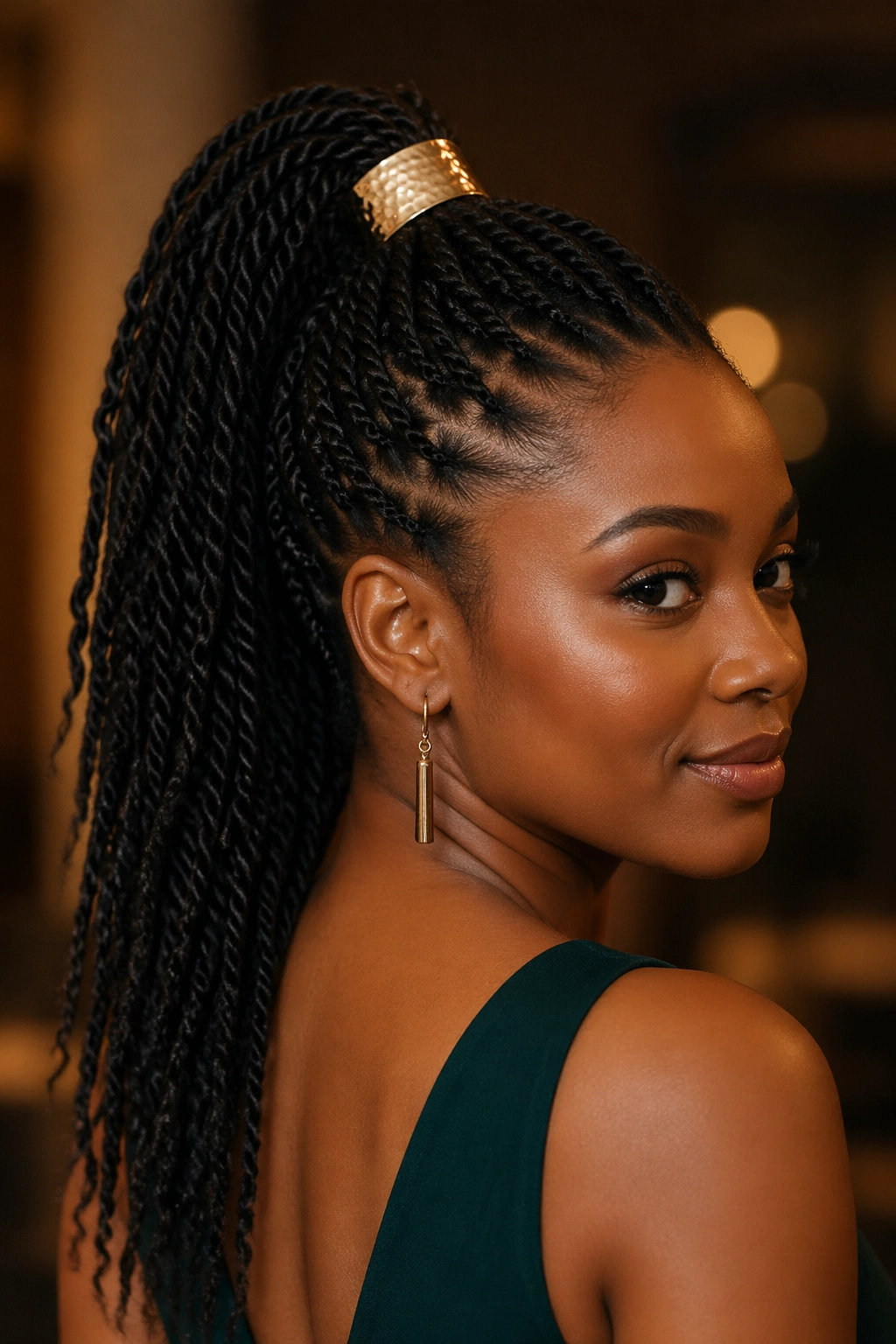
A formal ponytail does not need a dozen accessories. One metal cuff, a few small rings, or a slim hair comb is usually enough. More than that and the style starts fighting itself.
Compared with an everyday twist braided ponytail, this version leans on finish. The parts need to be clean, the wrap needs to hide the tie, and the jewelry needs to sit where it adds shape instead of clutter. On natural hair, the details matter more because the texture already brings enough interest.
This is the one I would pick for weddings, dinners, church, or any event where you want the hair to feel dressed up without turning into a formal updo. It keeps the ponytail shape but gives it a little shine.
Pick one metal tone and stay with it. Gold with gold. Silver with silver. Mixing too many finishes makes the style look accidental, and that is exactly what you do not want when the rest of the hair is so intentional.
25. Low-Maintenance Twist Braided Ponytail for Multi-Day Wear
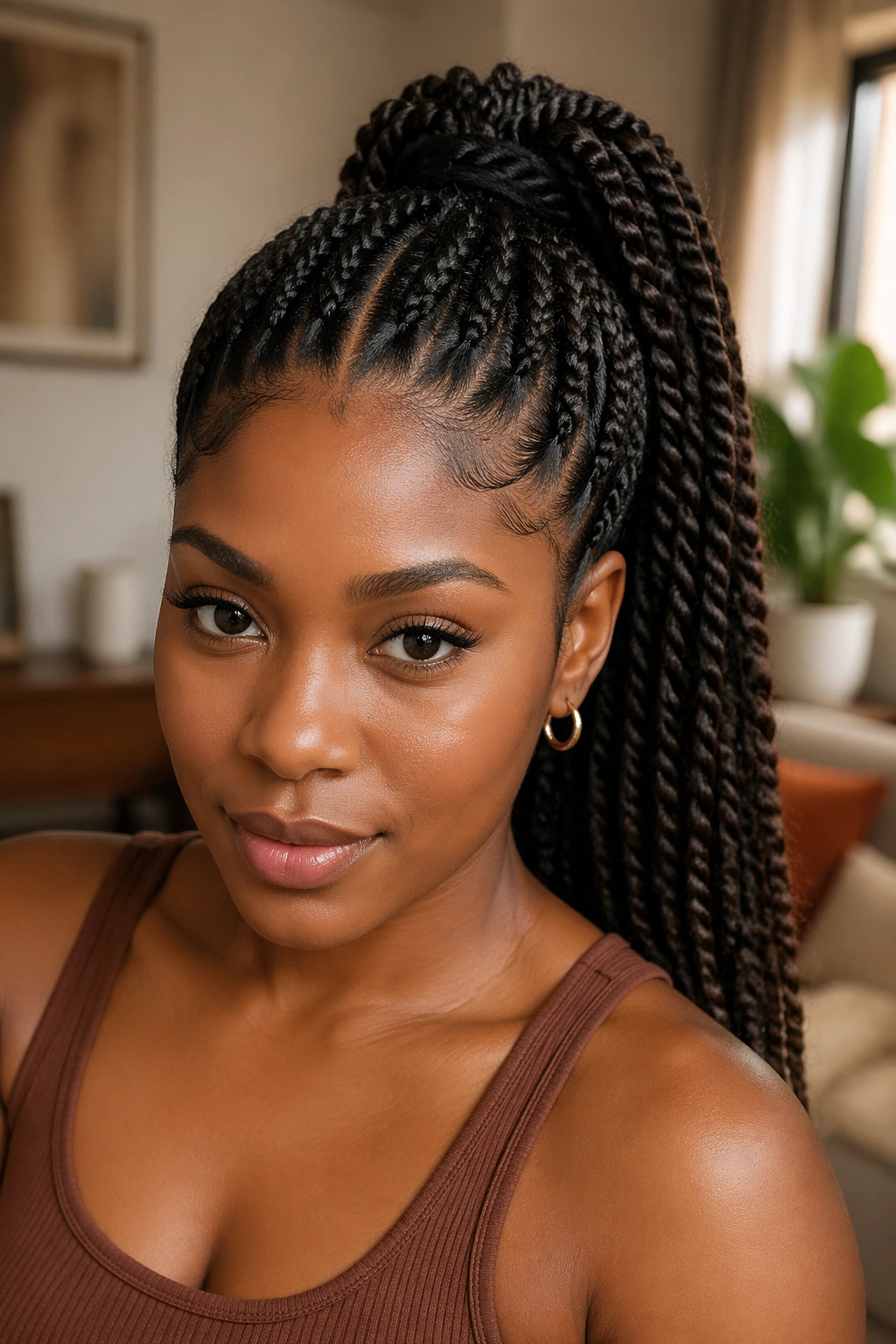
If you want one style that can survive errands, a long workday, and a pillowcase without falling apart, start here. A low-maintenance twist braided ponytail works because the base stays simple and the length does most of the visual work.
The best version is not the fanciest one. It is the one with a secure, low-tension foundation, medium-sized twists, and enough structure to hold shape after a scarf, a hood, or a quick refresh in the mirror. That kind of style earns its keep.
How to Make It Last
Keep the roots clean on day one, then leave them alone. A little mousse on the lengths helps control frizz, but the scalp does not need daily layering of product. Too much buildup makes the hair feel heavy and dull.
- Sleep with a satin bonnet or scarf.
- Smooth the edges only when needed.
- Refresh the ponytail by separating the twists with your fingers, not a comb.
This is the version I would choose when I want the style to do the work for me. No drama. No extra handling. Just a ponytail that stays in place and still looks like it belongs on textured hair, which is the whole point anyway.