


Locs are more than just a hairstyle; they are a long-term commitment that evolves in texture, length, and weight over time. When you have spent years cultivating a healthy set of locs, the last thing you want is a styling method that creates unnecessary tension at the root or compromises the integrity of your hair shaft. The beauty of incorporating braids into a ponytail lies in that delicate balance between structural security and creative expression.
Finding a style that lifts the hair off your neck while adding a layer of intricate design is the holy grail for anyone managing a full head of locs. You need styles that respect the weight of your hair, particularly as it gains length. Heavy styles can lead to scalp fatigue, but the right braiding technique can actually help distribute that weight more evenly across the crown.
Whether you are looking for a protective style that keeps your ends tucked away or you simply need a look that transitions from a professional office environment to a casual weekend setting, these braided options offer more than just aesthetics. They provide a foundational way to wear your locs that feels intentional, polished, and—most importantly—kind to your roots.
1. Classic High Braided Ponytail
This is the baseline for high-impact styling. By pulling your locs up into a sleek base, you immediately lift the face and create a clean profile. The braid itself shouldn’t be pulled tight against the scalp; instead, focus on gathering the locs into a smooth, elevated anchor point.
Why It Works for Locs
The weight of the locs is centered at the crown, which prevents the pulling sensation that often occurs with lower, heavier ponytails. When you braid the length of the ponytail, it keeps the locs from snagging on your clothing throughout the day.
Maintaining the Tension
- Use a soft, fabric-covered band to secure the base.
- Avoid tight elastics that can cause breakage where the loc meets the band.
- If your locs are heavy, consider using a second, hidden band further down the ponytail to hold the weight.
Key takeaway: Focus on the smoothness of the base. A messy base with a perfect braid can still look unkempt.
2. Side-Swept Braided Ponytail
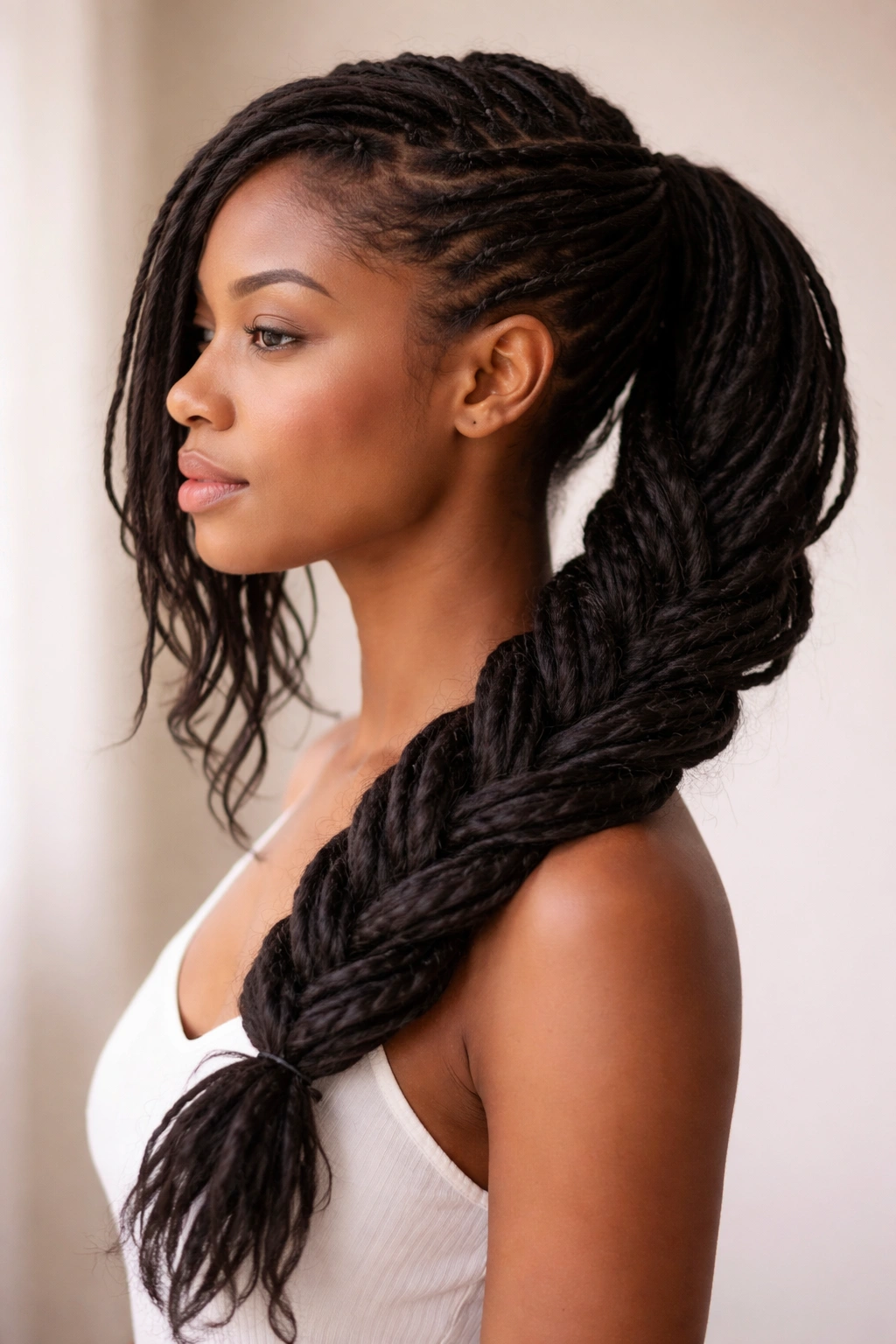
For a softer, more romantic silhouette, the side-swept look is a frequent favorite. It softens the jawline and offers a bit more movement than a rigid, center-based pony. You can achieve this by gathering your locs toward one temple before securing them.
Styling the Sweep
The key to this style is the direction of your gather. Do not simply pull the hair to the side; instead, use a wide-tooth comb or your fingers to direct the roots toward your preferred side. This prevents the hair from buckling awkwardly at the nape.
The Braid Technique
Once the pony is secured, divide the locs into three thick sections. Braid them loosely. Because locs provide their own natural thickness, you do not need to braid to the very tip. Leaving an inch or two of your natural ends loose gives the style a more organic, finished look.
3. Bohemian Braided Ponytail with Loose Tendrils
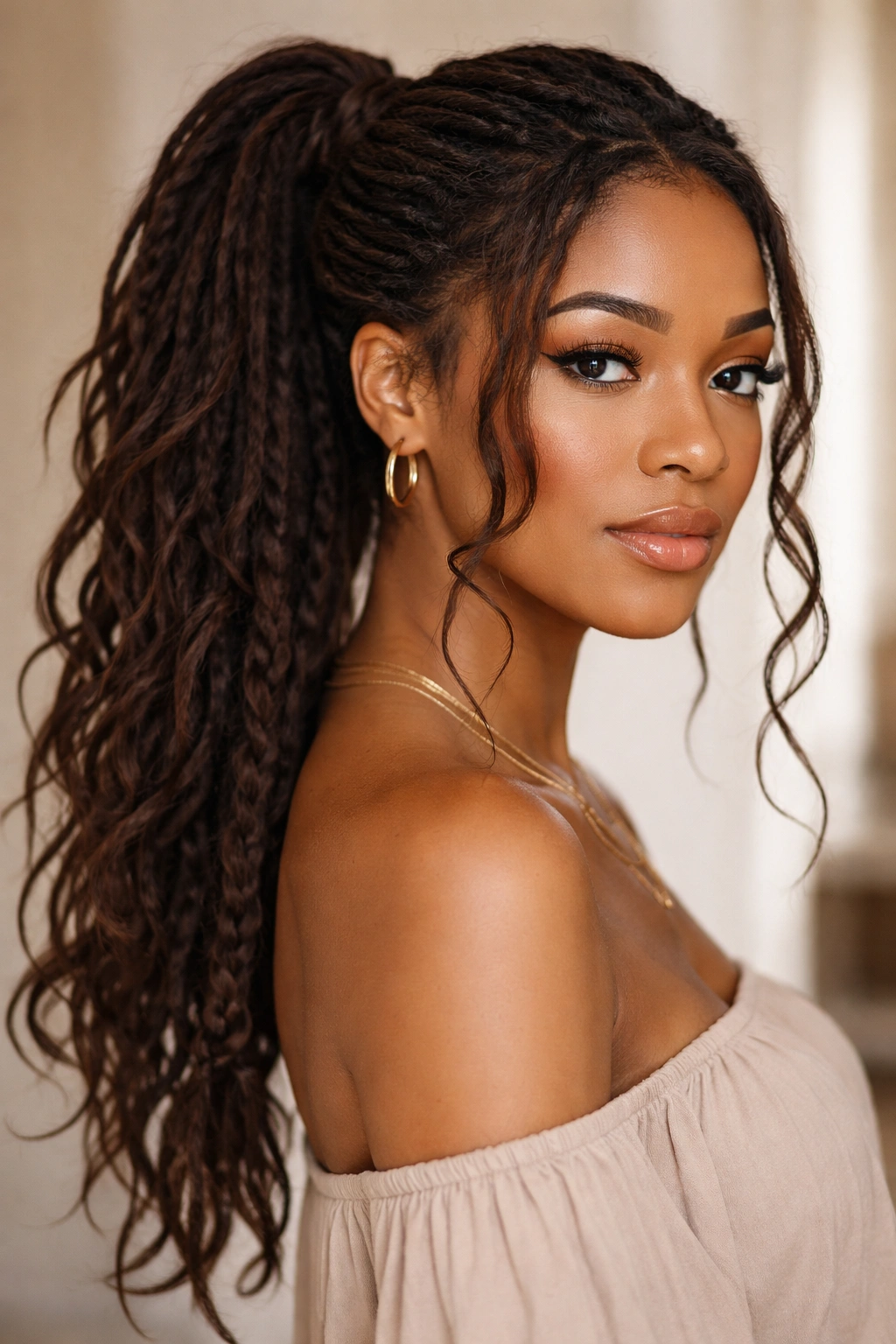
This style leans into a more relaxed, undone aesthetic. It is perfect if you like your hair to have a bit of texture and movement, rather than the severe, sleek look of a traditional high pony.
The magic happens at the hairline. Before you pull your locs back, pull out a few individual locs or smaller sections around the temples and nape of the neck. These tendrils frame the face beautifully.
Balancing the Aesthetic
Don’t overthink the braid. A simple, loose three-strand braid that starts about two inches below the base of the ponytail works wonders. The contrast between the tight, structured base and the loose, flowing braid creates a sense of depth that draws the eye.
4. Wraparound Braid Ponytail
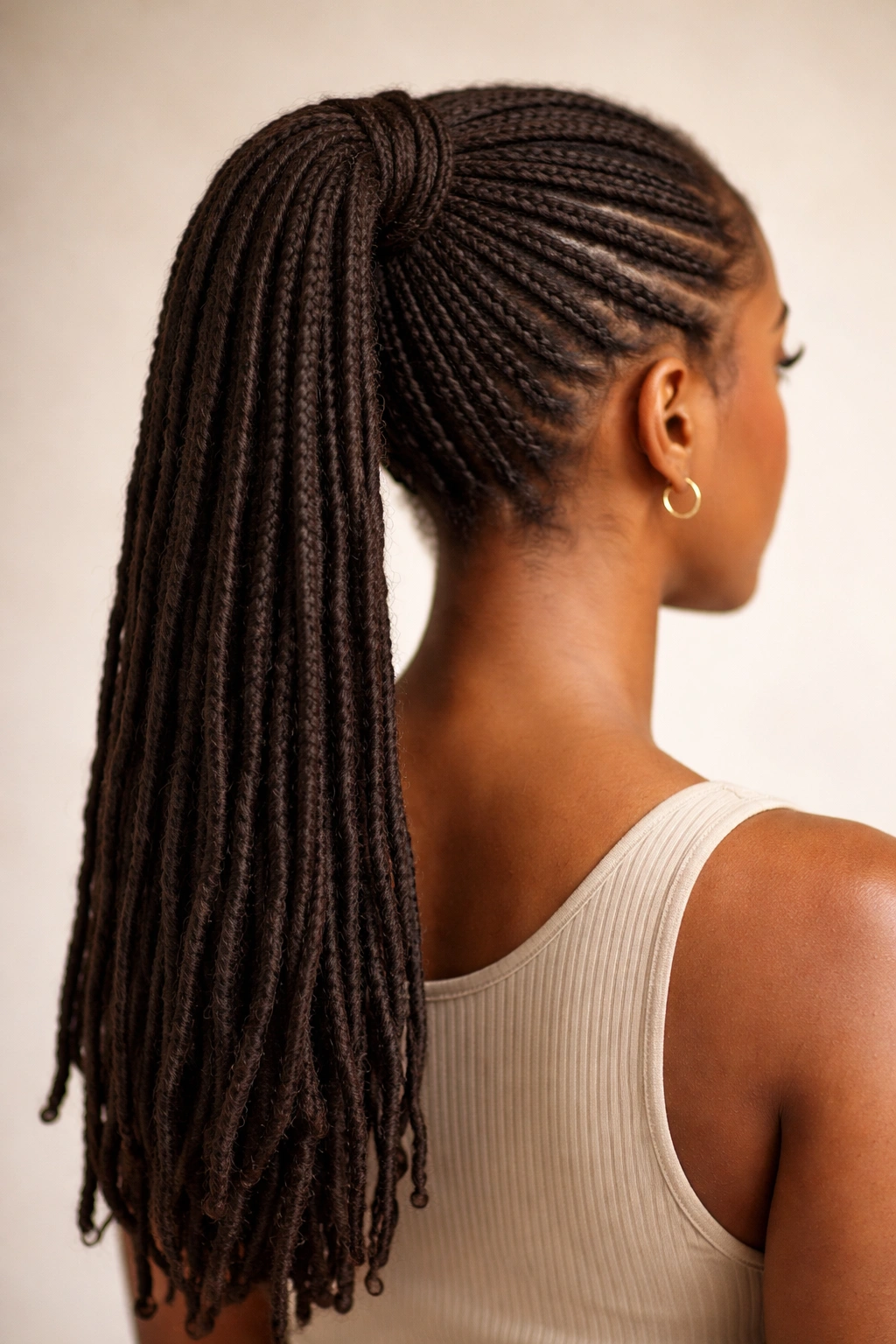
If you want to hide the hair tie, this is the most effective and elegant way to do it. You are essentially using a section of your own hair to create the anchor.
Execution
Gather your ponytail as you normally would. Before you finish braiding the length of the pony, take one or two individual, thinner locs from the underside of the ponytail. Wrap these locs tightly around the base where your hair band is visible.
Securing the Wrap
Use a small metal cuff or a bobby pin to tuck the end of the wrapping locs securely under the base. This not only conceals the band but adds a layer of sophistication to the entire look. It feels finished, custom-made, and intentional.
5. Double Braided Crown Ponytail
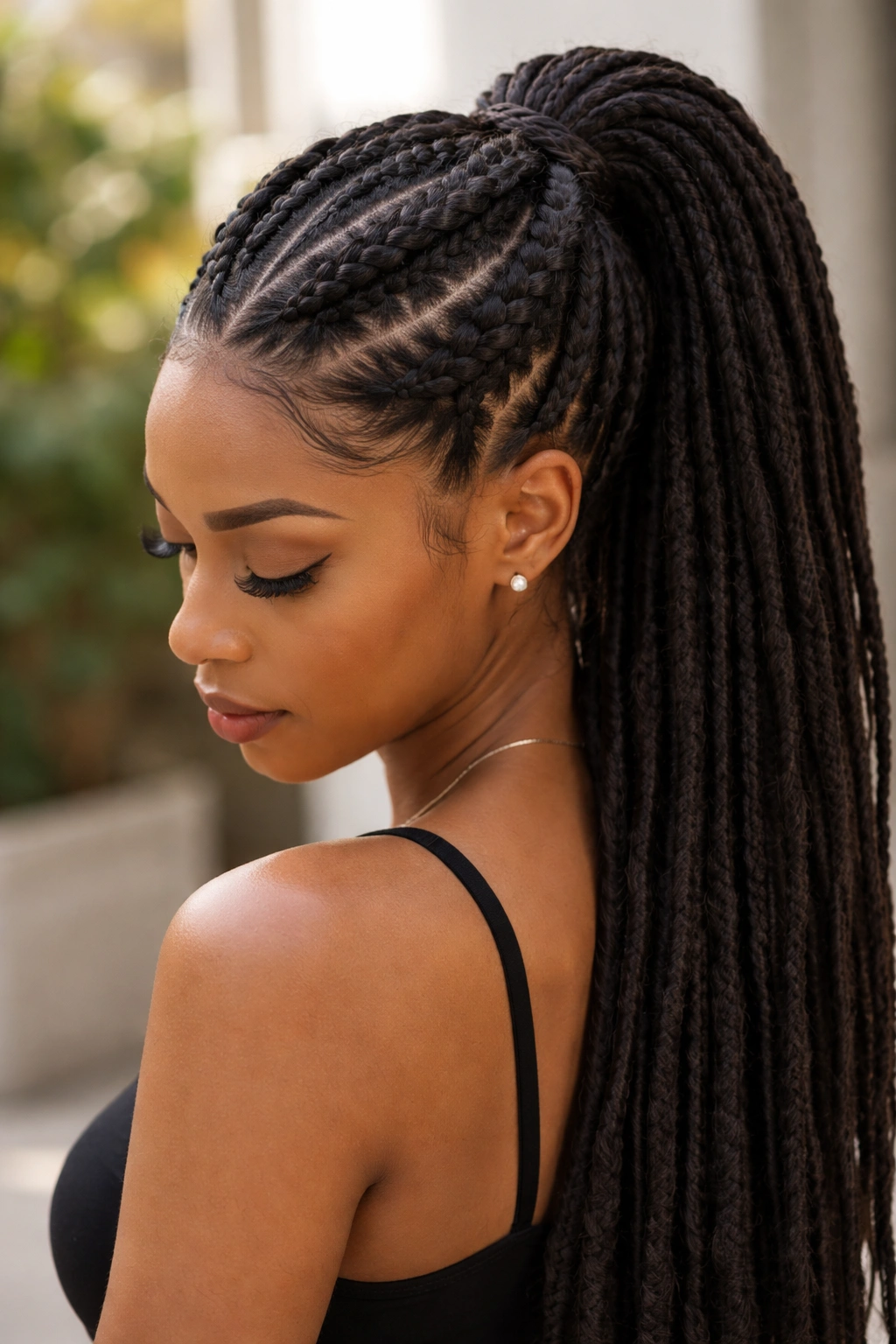
This style introduces a bit of architectural interest. By creating two distinct braids that lead into the ponytail, you split the visual weight of the hair, making it look much more complex than a standard pony.
How to Section
Start by parting your hair horizontally at the crown. Create two Dutch braids—one starting from the front hairline, the other slightly behind it—and braid them back until they meet at the crown. Gather these into your main ponytail.
Volume Management
Because you are using part of your hair for the crown braids, your remaining ponytail will be slightly smaller in circumference. This is often a relief for those with very heavy or mature locs, as it reduces the bulkiness at the nape of the neck while still giving you the drama of a high pony.
6. Tribal-Inspired Braided Ponytail
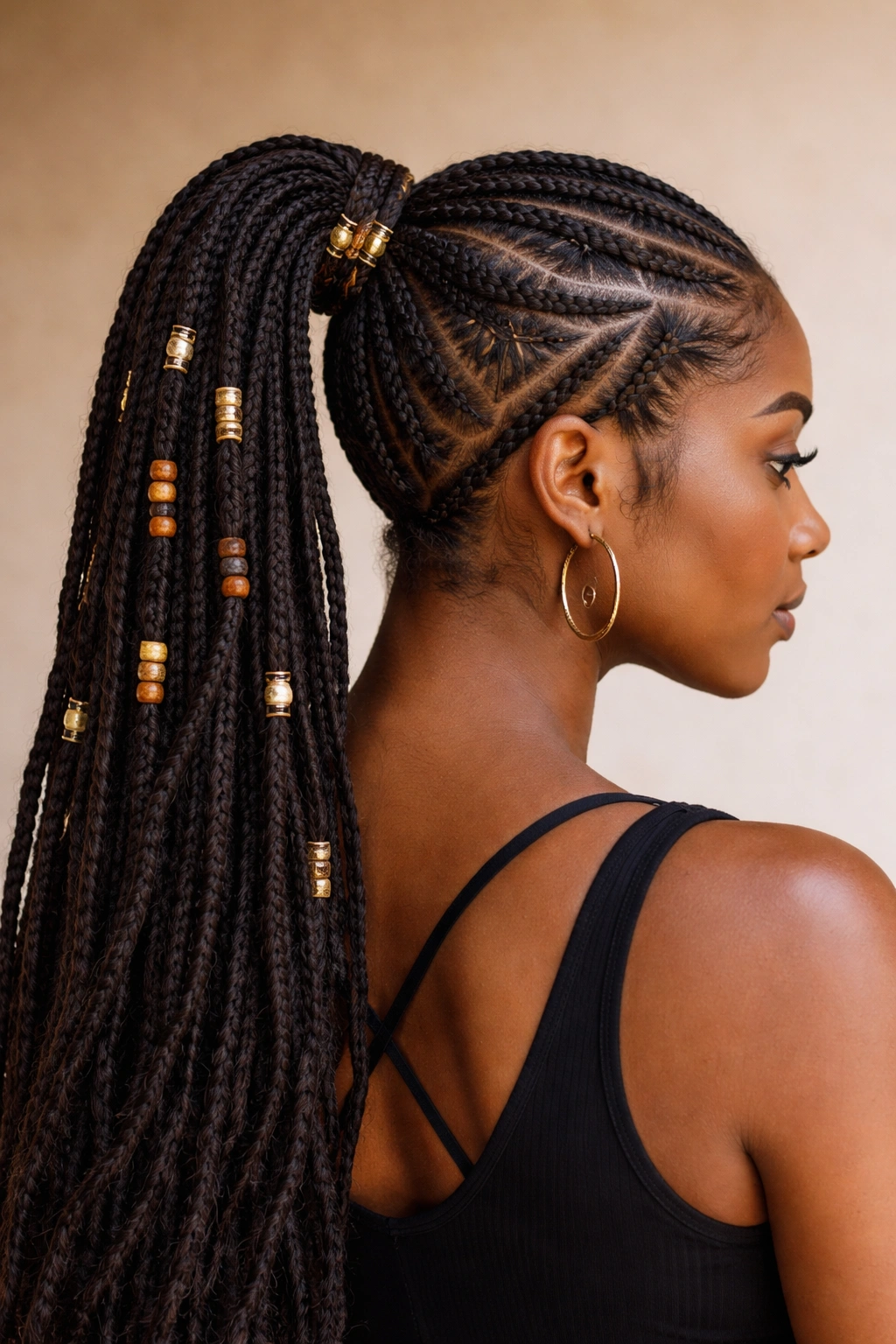
Tribal braids rely on precision and pattern. This style is not just about the ponytail; it is about the geometry of the scalp. You are creating defined lines and possibly even adding beads or cuffs along the scalp braids.
The Pattern
You can create a series of straight-back cornrows or curved, radiating patterns. The goal is to lead all these braids toward a single, central point at the back of the head.
The Finish
Once the braids are established, gather the ends into a thick, braided ponytail. The interplay between the tight, scalp-hugging pattern and the free-flowing braid creates a stunning contrast. This is a protective style at its best—durable, striking, and incredibly low-maintenance for weeks at a time.
7. Intricate Fishtail Braid Ponytail
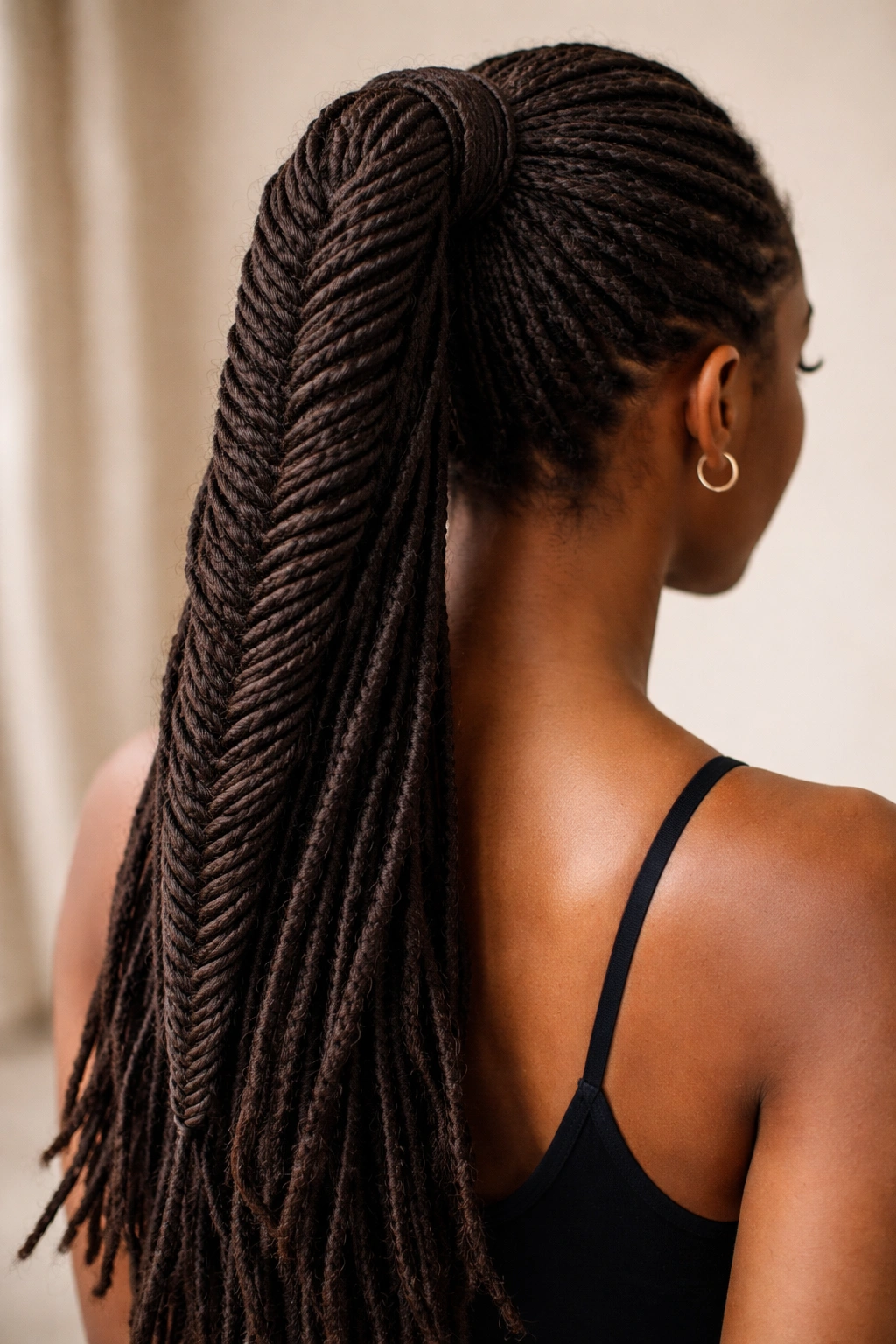
The fishtail braid looks intimidating, but with locs, it is actually quite straightforward. Because locs are thicker and more textured than loose hair, they naturally hold the structure of a fishtail without needing constant readjustment.
The Technique
Split your ponytail into two main sections. Take a small, thin loc from the outer edge of one section and cross it over to the inner edge of the opposite section. Repeat this process, alternating sides.
Why it Works
A standard three-strand braid can sometimes look bulky with heavy locs. A fishtail, however, creates a narrower, more tapered look. It elongates the ponytail and creates a sophisticated, woven pattern that shows off the maturity of your locs.
8. Rope Braid High Pony
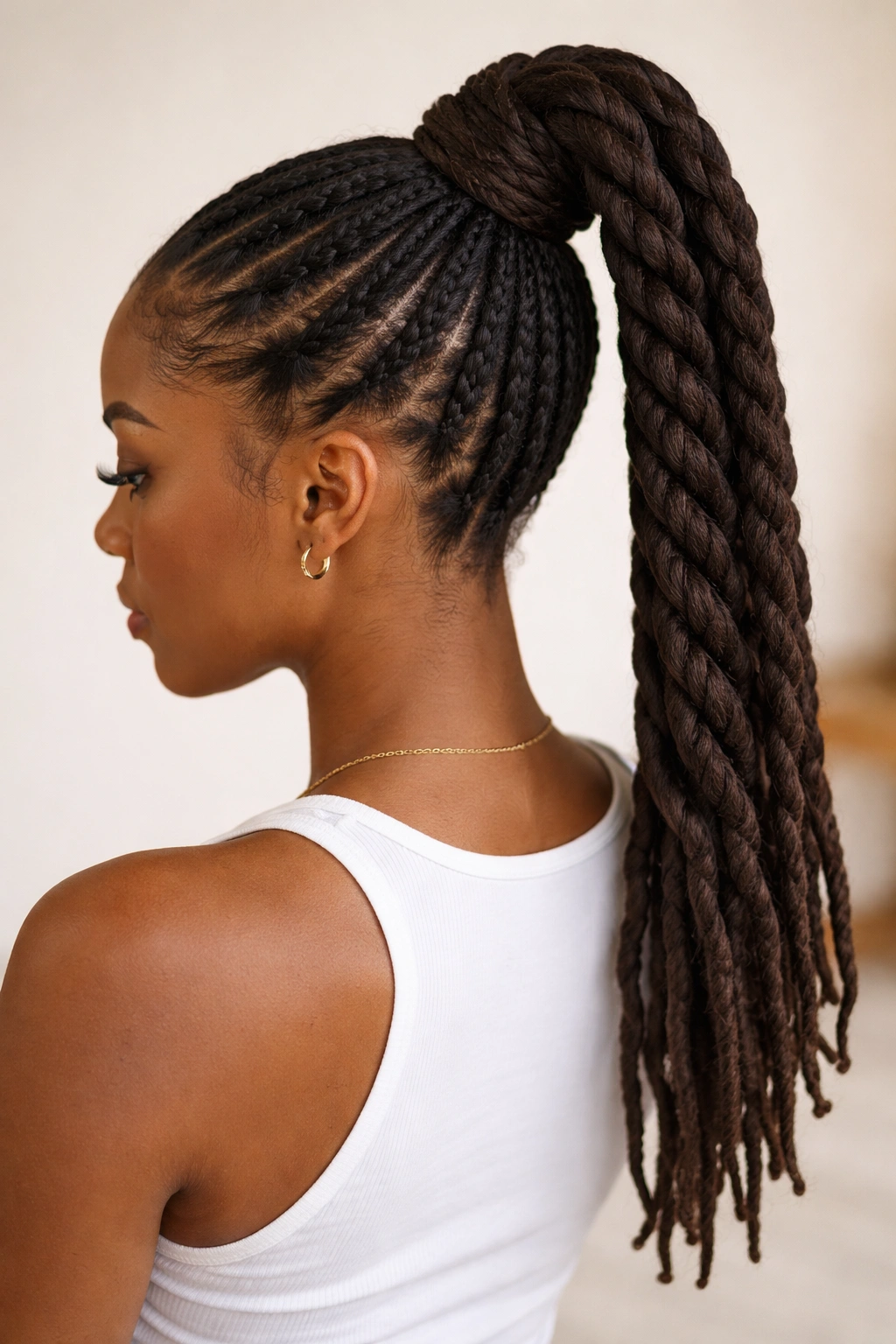
The rope braid, or twist braid, is the fastest way to get a polished look. You simply divide your ponytail into two thick sections, twist each section in the same direction, and then wrap them around each other in the opposite direction.
Dealing with Unraveling
Locs have a natural grip, which makes the rope braid incredibly durable. Unlike loose hair, which might need constant tension to prevent untwisting, your locs will lock into place.
The Visual Effect
This creates a very clean, rope-like appearance that looks particularly good on medium to long-length locs. It feels less like a traditional “braid” and more like a structured sculpture.
9. Zig-Zag Part with Braided Ponytail
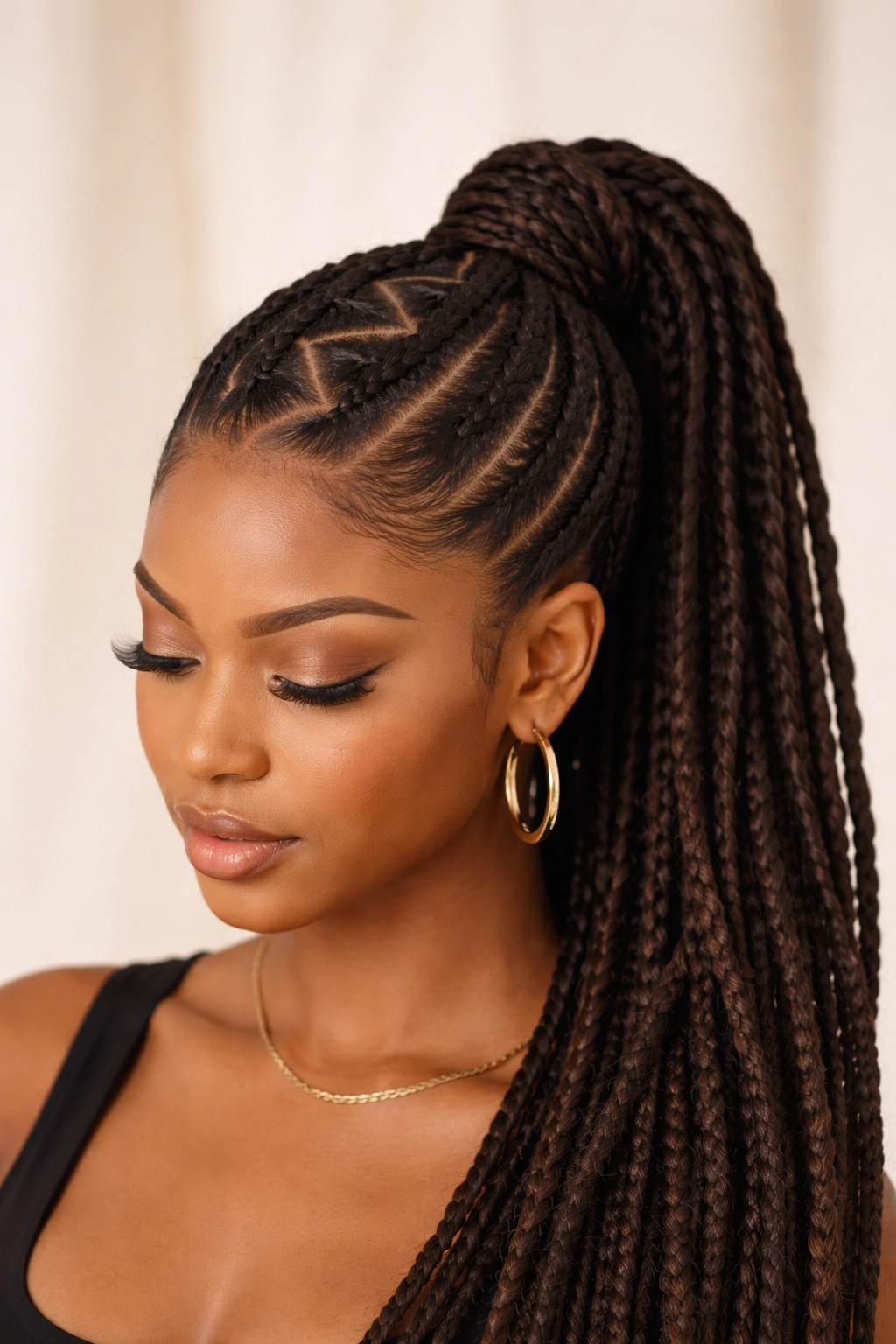
Sometimes, the interest shouldn’t be in the ponytail itself, but in how you get there. A zig-zag part adds a nostalgic, graphic element to an otherwise standard hairstyle.
Precision is Key
Use the tail of a rat-tail comb to carve a sharp, angular zig-zag pattern from your forehead to the crown. This adds a layer of visual “noise” that makes the sleekness of the ponytail pop.
Why Use This?
It breaks up the monotony of straight-back parts. If you often wear your locs in the same high-pony position, changing the part is the easiest way to refresh the look without redoing the entire style.
10. Half-Up Braided Ponytail
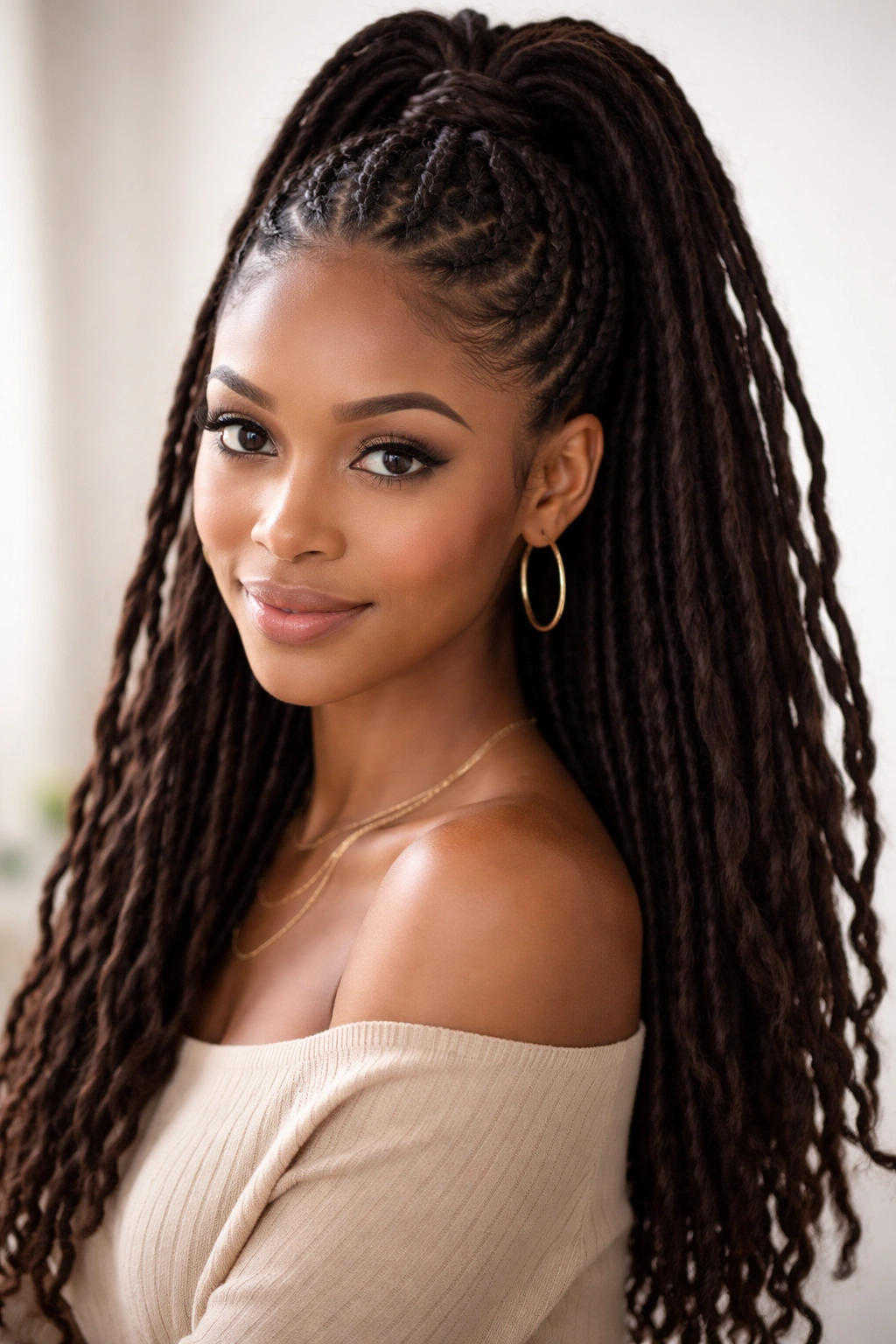
For those who love the look of a ponytail but aren’t ready to commit to the weight of pulling every single loc off their neck, the half-up, half-down approach is perfect.
Creating the Style
Section off the top half of your locs, starting from your temples and moving toward the crown. Braid this section and secure it into a ponytail at the back of the crown. Leave the remaining locs at the nape of the neck loose.
The Result
You get the polished, face-framing effect of a high pony while maintaining the volume and length of a full head of locs. It’s a great middle ground for days when you want to look put-together but still want to feel the weight of your hair.
11. Beaded Braided Ponytail
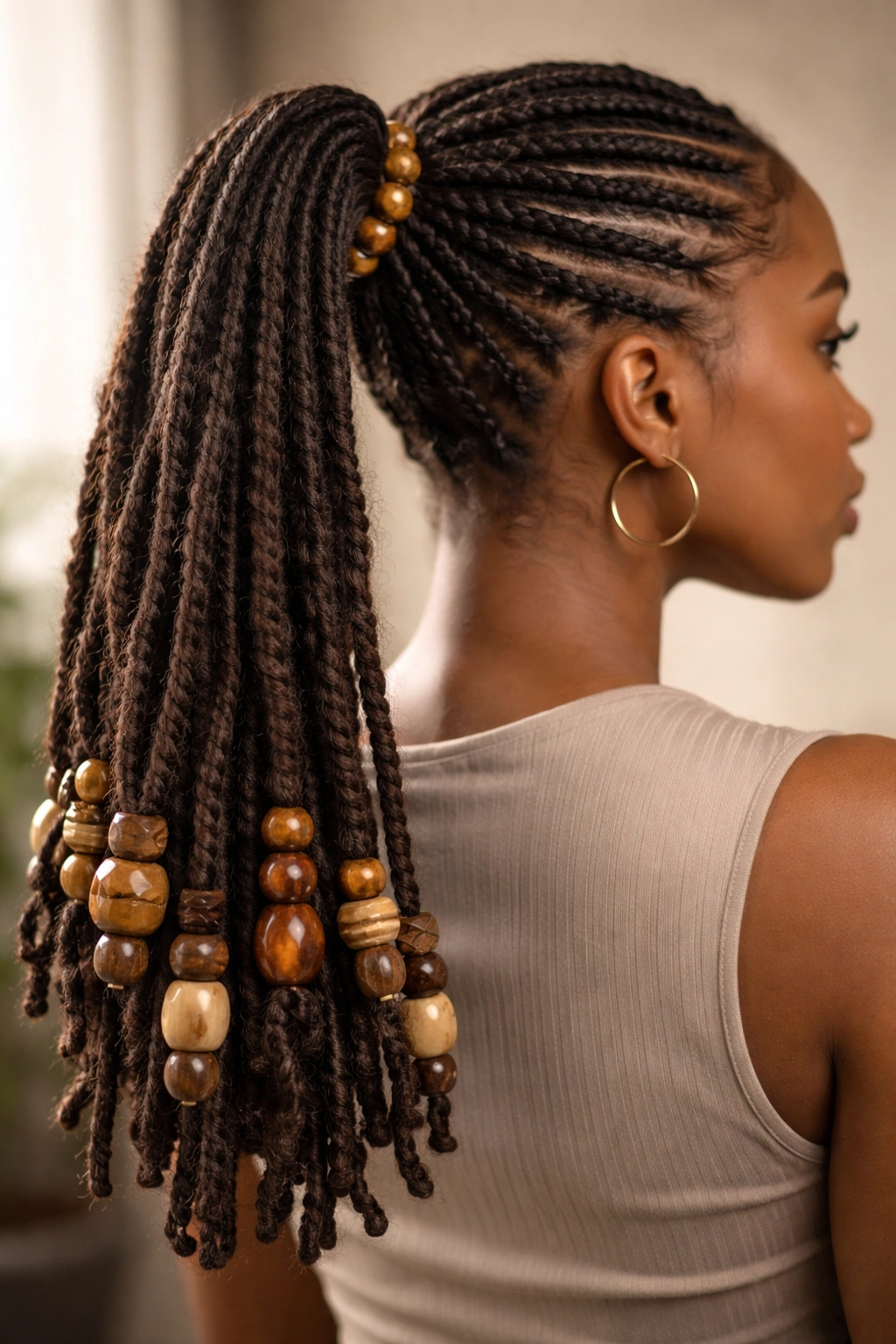
Accessories change the entire context of a hairstyle. Adding wooden, metal, or clear beads to the braids in your ponytail adds a rhythmic, auditory element to your movement.
Placement Matters
Do not just throw beads on randomly. Focus them either at the base of the ponytail or at the very ends of the braid. Placing them at the ends gives the ponytail a subtle weight, helping it hang straighter and preventing flyaways.
Choosing Your Material
Wooden beads offer an earthy, natural vibe, while metal cuffs provide a sharper, more industrial aesthetic. Match the weight of the beads to the strength of your locs; avoid overly heavy metallic beads if your locs are still relatively young to prevent pulling at the tips.
12. Chunky Three-Strand Braid Ponytail
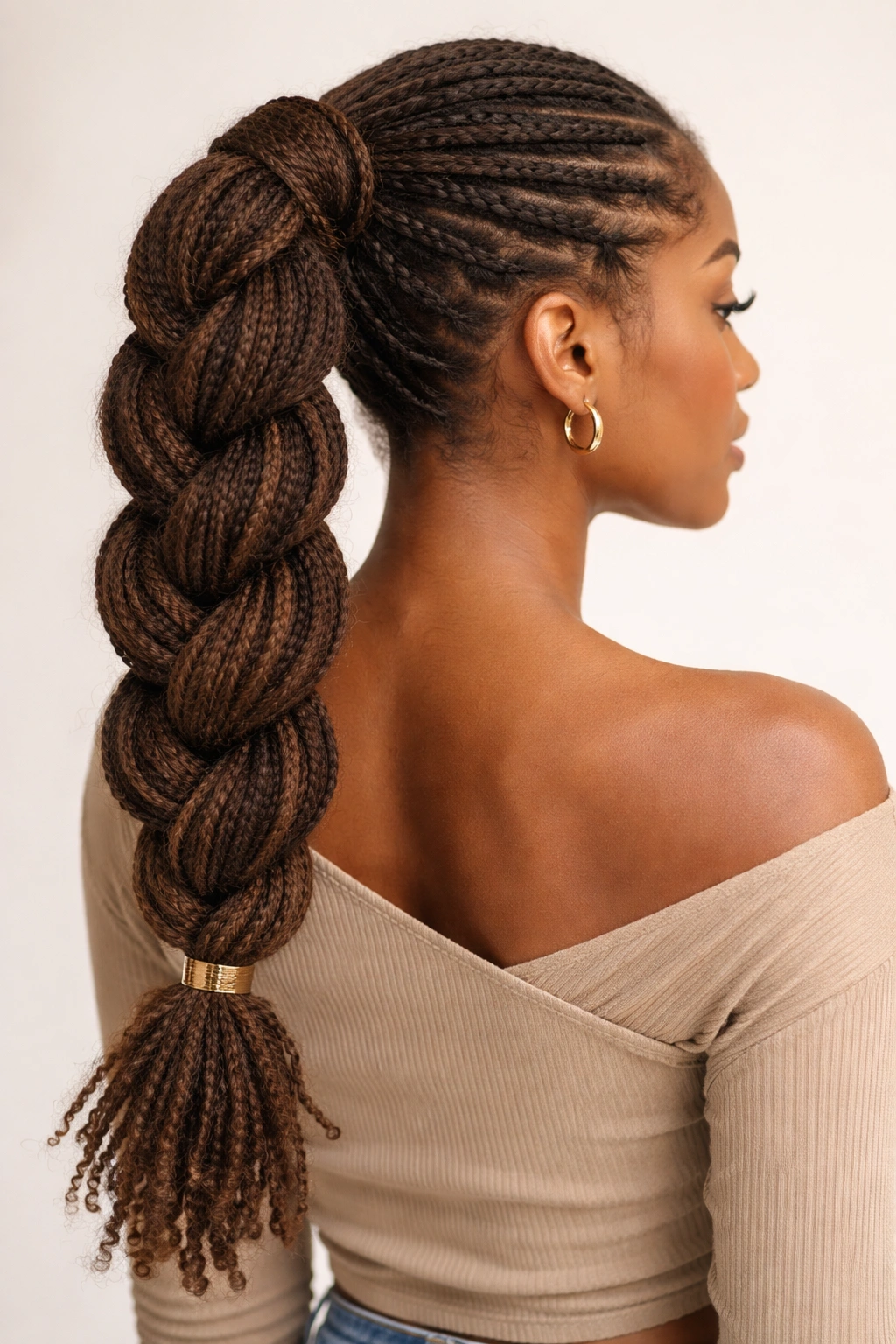
There is something inherently cozy and substantial about a chunky braid. With locs, a three-strand braid becomes a statement piece because of the inherent thickness of the hair.
Volume Boosting
To get that “chunky” look, do not pull the braid tight. Keep your hands relaxed. After you have secured the end of the braid, go back through and gently tug at the edges of each loop to “pancake” or flatten the braid slightly. This creates the illusion of even more width and volume.
Why This Style Succeeds
It is classic and never goes out of style. It pairs perfectly with casual wear, such as sweaters or denim, but can look surprisingly elegant with formal attire because of its clean, symmetrical lines.
13. Sleek Low Braided Ponytail
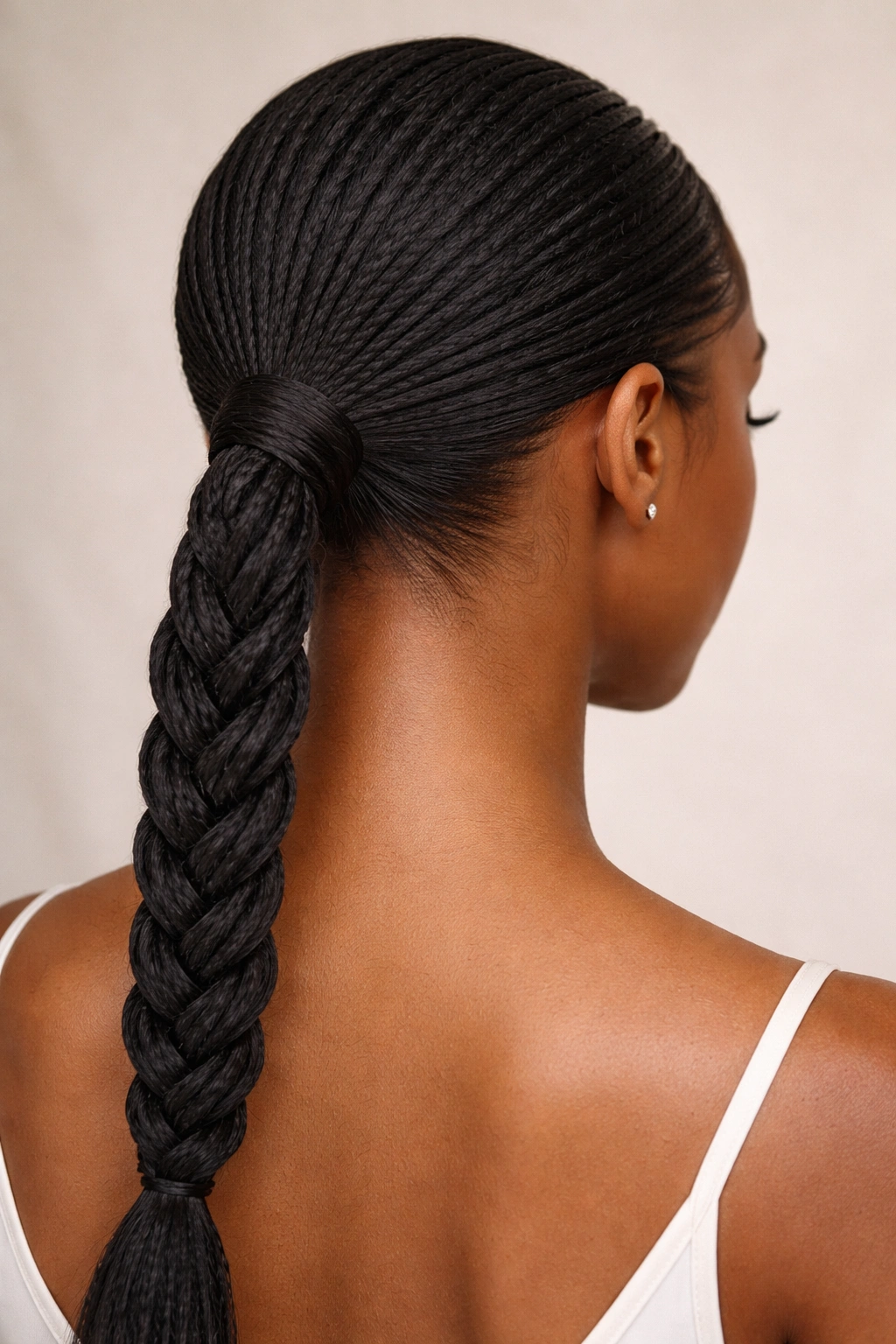
Not every ponytail belongs at the crown. A low, sleek braid at the nape of the neck is the epitome of understated elegance. It keeps the hair contained and off the shoulders, which is a major benefit during warmer weather or for activities where you need to be active.
The Base
To achieve that “sleek” look, use a light oil or setting foam on the hairline before you brush the locs back. This smooths down any frizz or loose hairs around the edges, creating a crisp, clean starting point at the base of the neck.
The Braid
Since it’s a low pony, the braid will likely hang down your back. Keep this braid simple. A regular three-strand braid is sufficient, as the simplicity of the style is its main strength.
14. Messy Knot Braided Ponytail
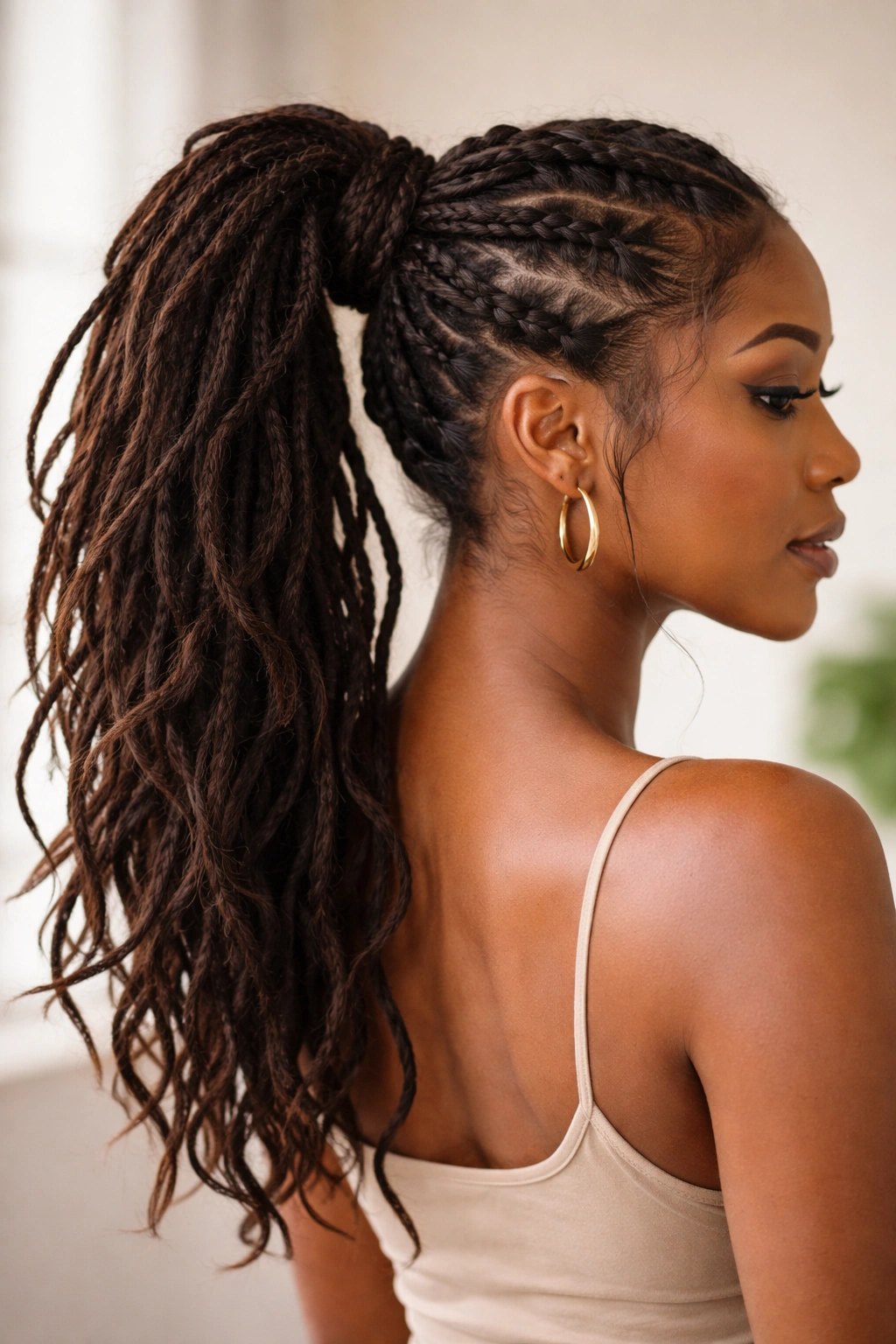
“Messy” is a deliberate style choice, not a lack of effort. This look is about creating a chaotic but intentional texture that feels effortless.
Achieving the Texture
Start by pulling your locs into a high ponytail. Instead of braiding all the way down, braid only the first three inches of the ponytail, then twist the remaining length into a loose, low-tension bun or “knot” at the base of the braid.
The Look
This gives you the structure of a braid with the softness of a bun. It’s perfect for those days when your locs have a bit of new growth at the roots and you want to disguise it while keeping the style interesting.
15. Multi-Braid Ponytail
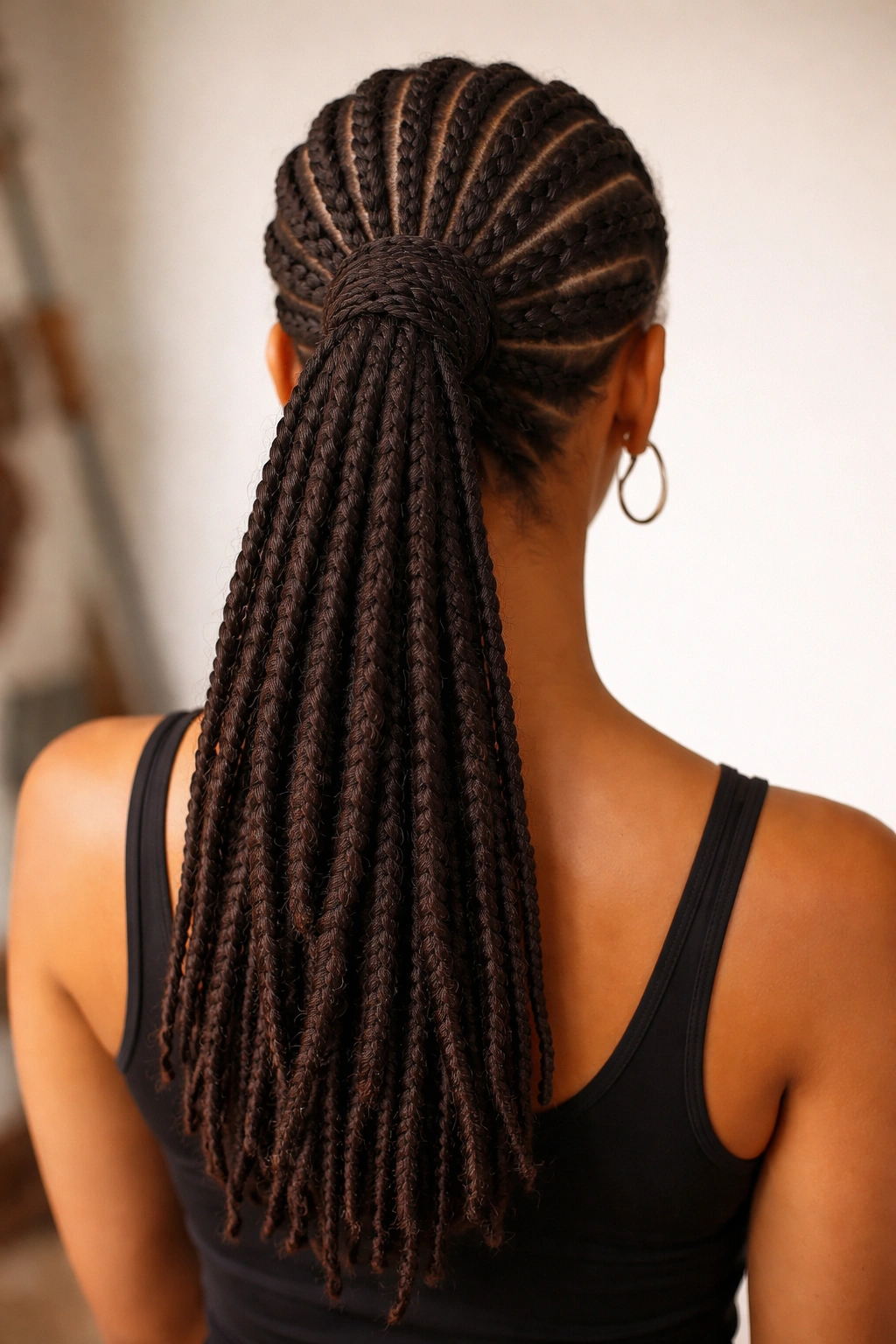
This is an advanced style that requires patience, but the result is undeniably impressive. Instead of gathering all your locs into one large ponytail, you break the hair into smaller, individual sections.
Sectioning
Divide your hair into 5 to 8 smaller sections, braiding each one from the scalp back to the crown. Once they all meet at the crown, combine them into one singular, thick ponytail.
The Detail
The visible parting lines between the braids act as a design element. This style is extremely secure and can last for weeks, making it an excellent choice for a vacation or a busy season where you don’t want to worry about styling your hair every morning.
16. Wrapped Base Braid
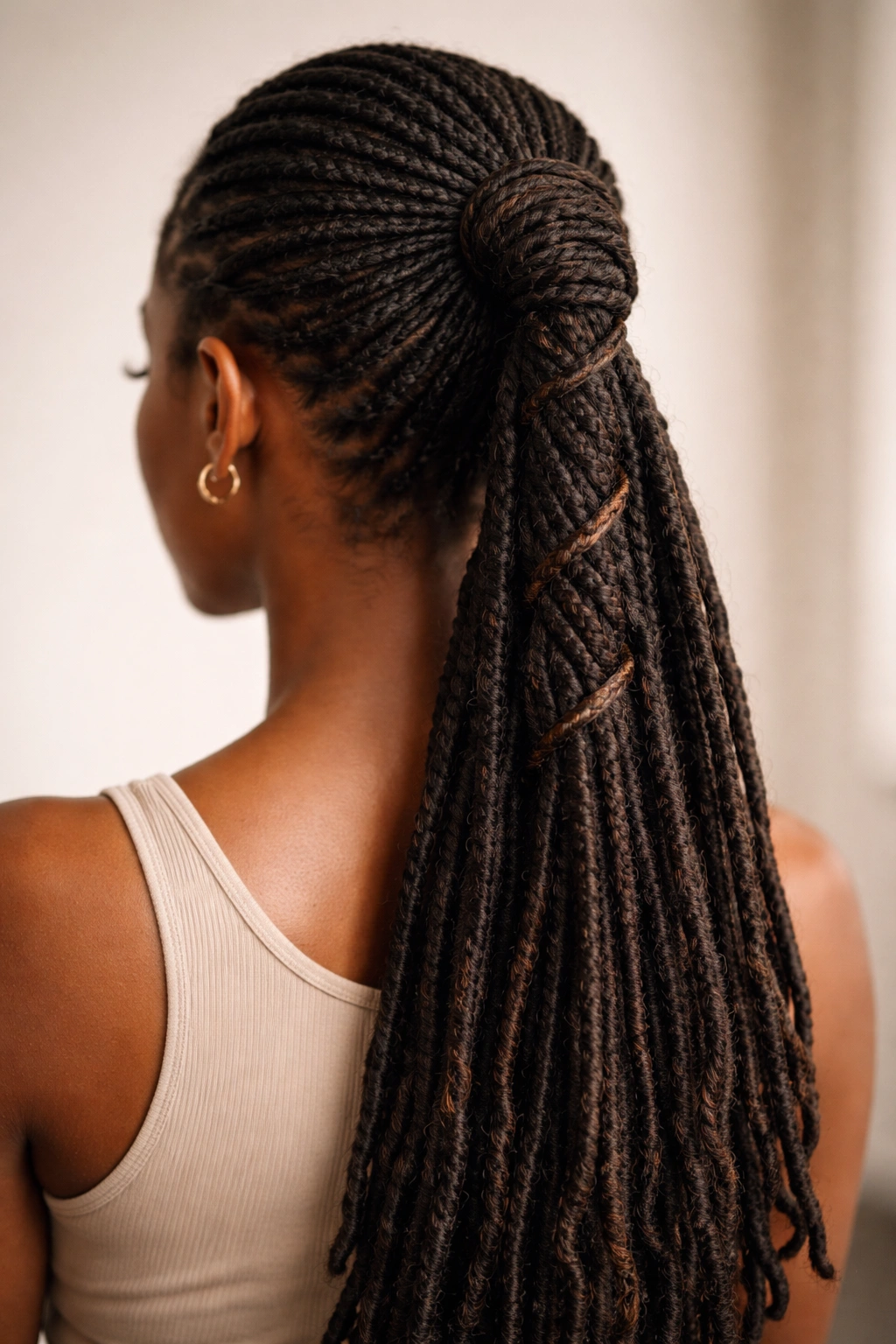
This is a variation of the wraparound, but instead of using a simple hair tie, you incorporate the wrap into the braid itself.
The Technique
Gather your locs. Take a section of hair from underneath, just like in the simple wraparound. However, instead of just wrapping it and tucking it, braid that specific section into the main ponytail braid as you go down.
Why It Works
It keeps the ends of your wrapping hair secure and adds a unique, spiraling detail to the braid. It’s a subtle touch that most people won’t immediately understand, leading to that “how did they do that?” effect.
17. Braided Puffs with Ponytail
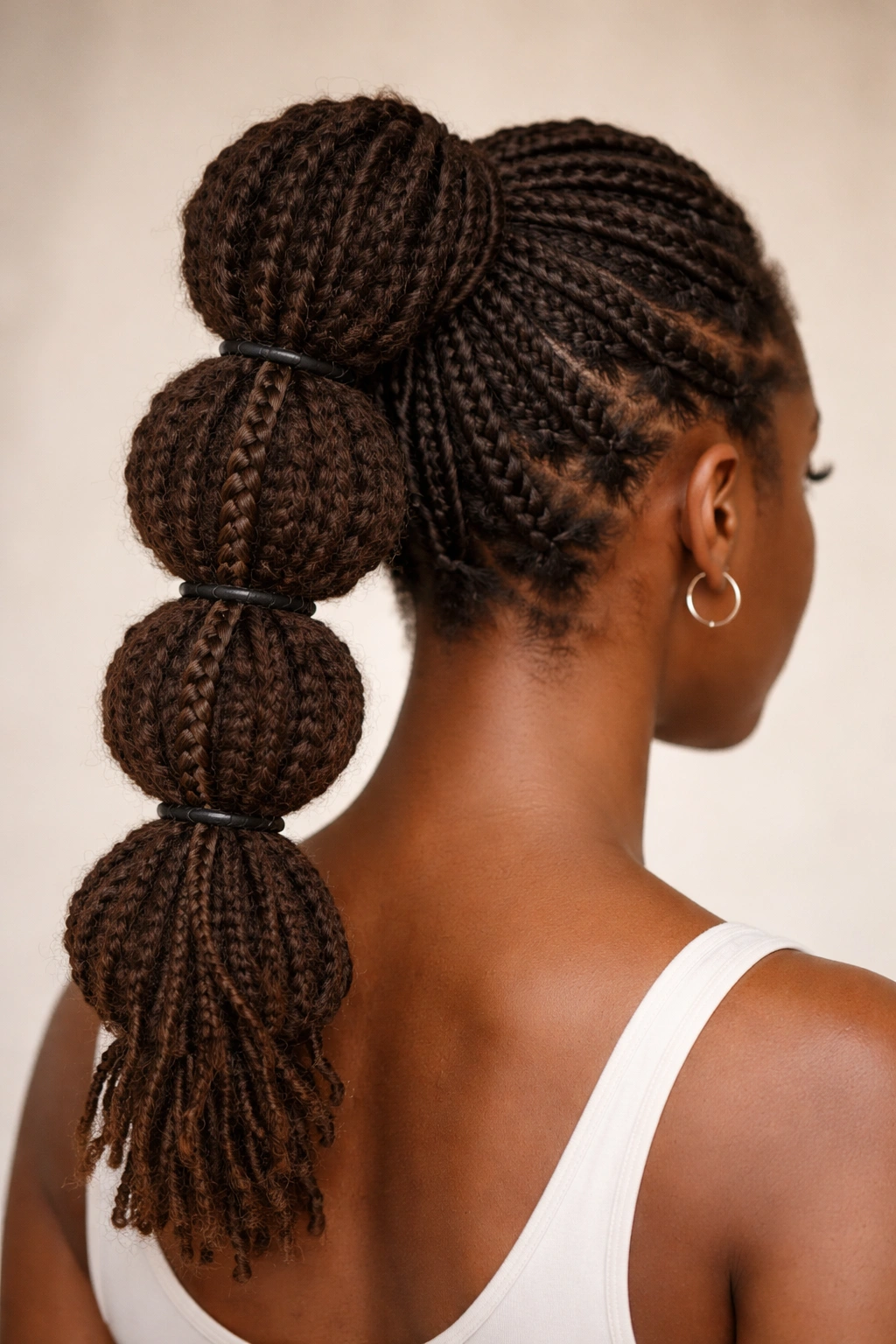
Who says a ponytail has to be a single tail? You can create a high, braided ponytail and then, rather than braiding the length, you can puff out the locs and secure them into “bubbles” or sections.
Creating the Puffs
Secure your ponytail with a base band. Then, place additional small bands every 2 to 3 inches down the length of the ponytail. Between each band, fluff or “puff” the locs to create round, voluminous sections.
The Braid Connection
For an added touch, you can braid the sections between the bands. This gives you the structure of the bubble ponytail but with the intricate detail of small, tight braids connecting the puffs.
18. Mohawk Braid Ponytail
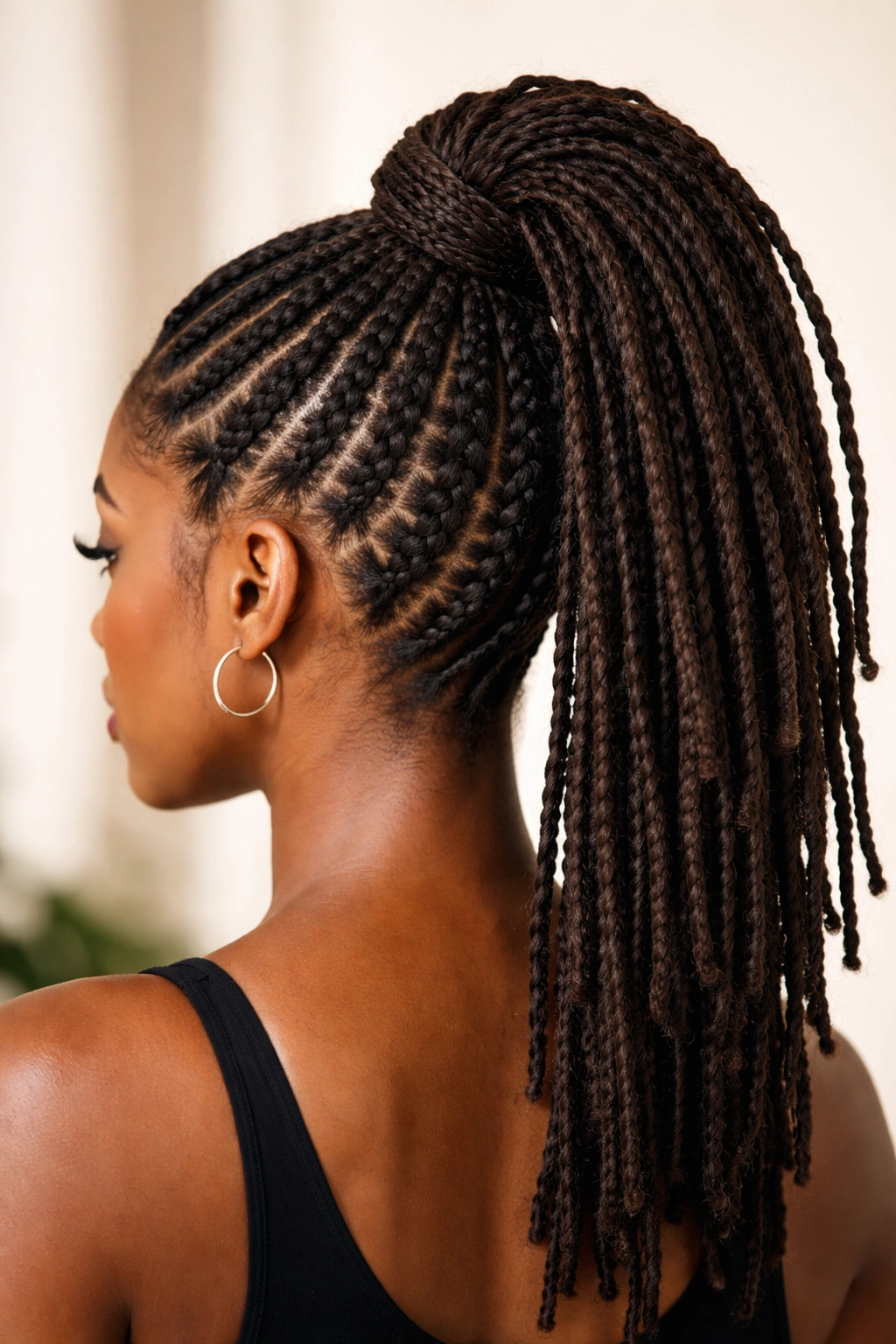
The mohawk braid is all about verticality. By cornrowing the sides of your head toward the center, you create a line of braids that all meet at the top, creating the illusion of a mohawk.
The Silhouette
This style is bold and commanding. It works incredibly well with locs because they provide enough volume to make the “mohawk” look full and healthy.
Why This Style Stands Out
It keeps the sides of the head clean and tight, which is great for scalp health and maintenance. It also allows you to be creative with the braid pattern—curved, straight, or zig-zag patterns all work perfectly within this framework.
19. Two-Tone Braided Ponytail
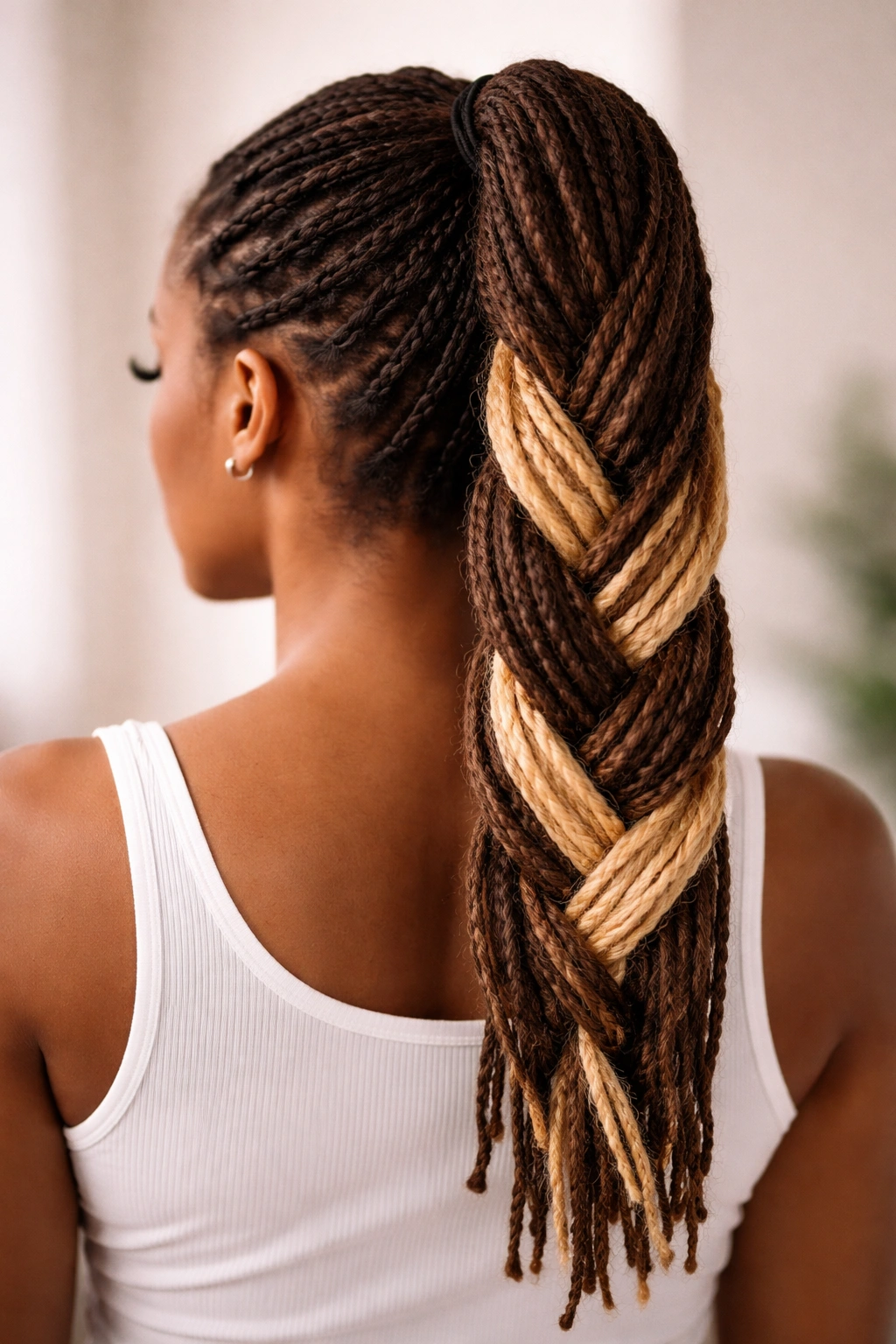
If you have locs that have been colored or have natural variations in shade, this style is designed to highlight that.
Strategic Sectioning
When you are sectioning for your ponytail, group the lighter-colored locs together in one section and the darker ones in another. When you braid them, the contrast creates a “marbled” or highlighted effect throughout the braid.
Styling Tip
Even if your locs are all one color, you can achieve this effect by adding a few colored hair extensions to one section of the braid before you start. It’s a temporary way to experiment with color without the commitment of dyeing your hair.
20. Side Parted Braided Pony
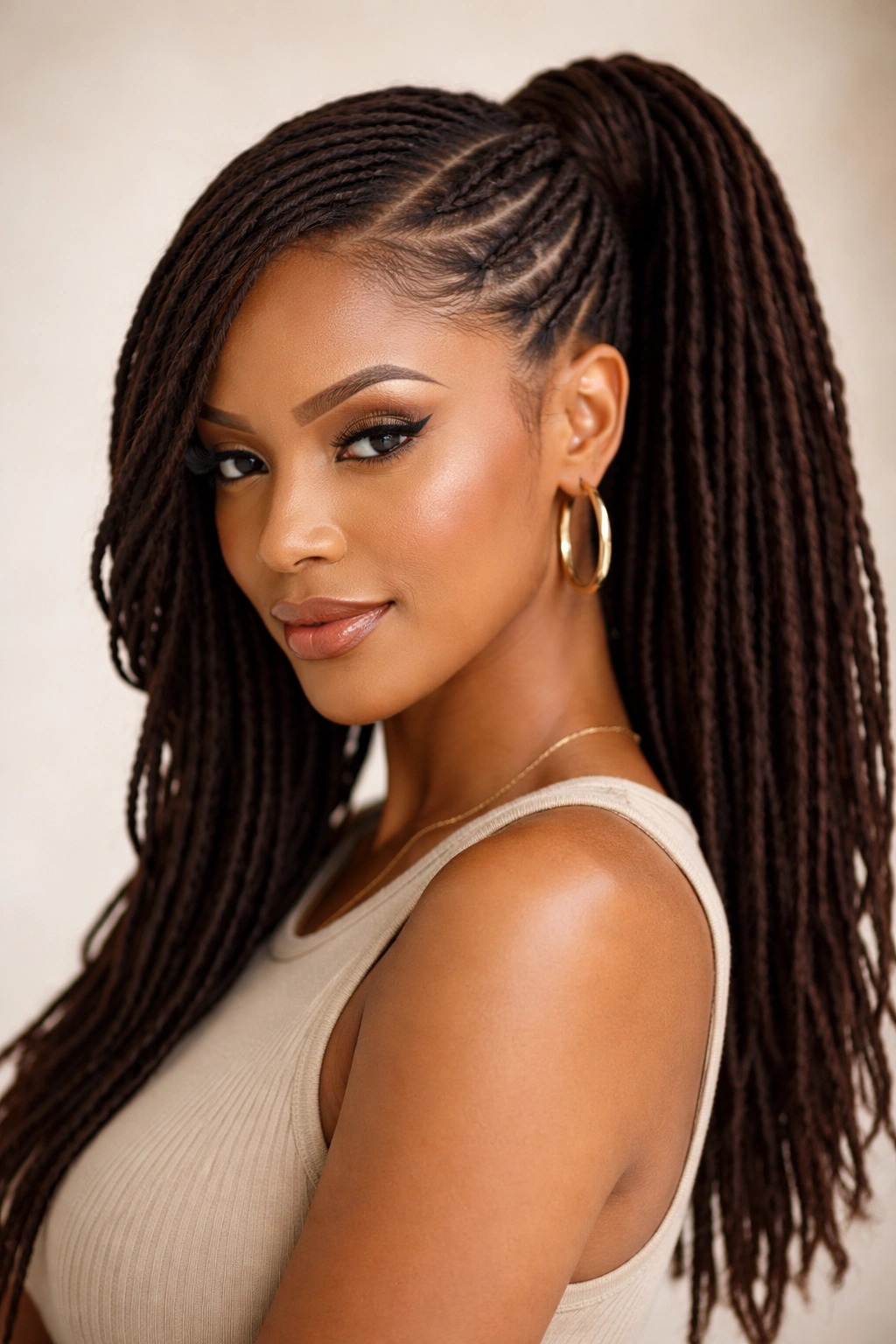
A side part instantly changes the geometry of your face. It moves the center of gravity of the style and creates a sophisticated, asymmetrical look.
The Part
Use a fine-tooth comb to create a sharp side part that extends back to the crown. Brush the hair on the larger side across your forehead and toward the back.
The Braid
Because of the side part, the ponytail will sit slightly off-center. This looks particularly elegant when paired with a side-swept braid that follows the direction of the part. It creates a seamless flow of hair from the hairline to the end of the braid.
21. Dutch Braid Into Ponytail
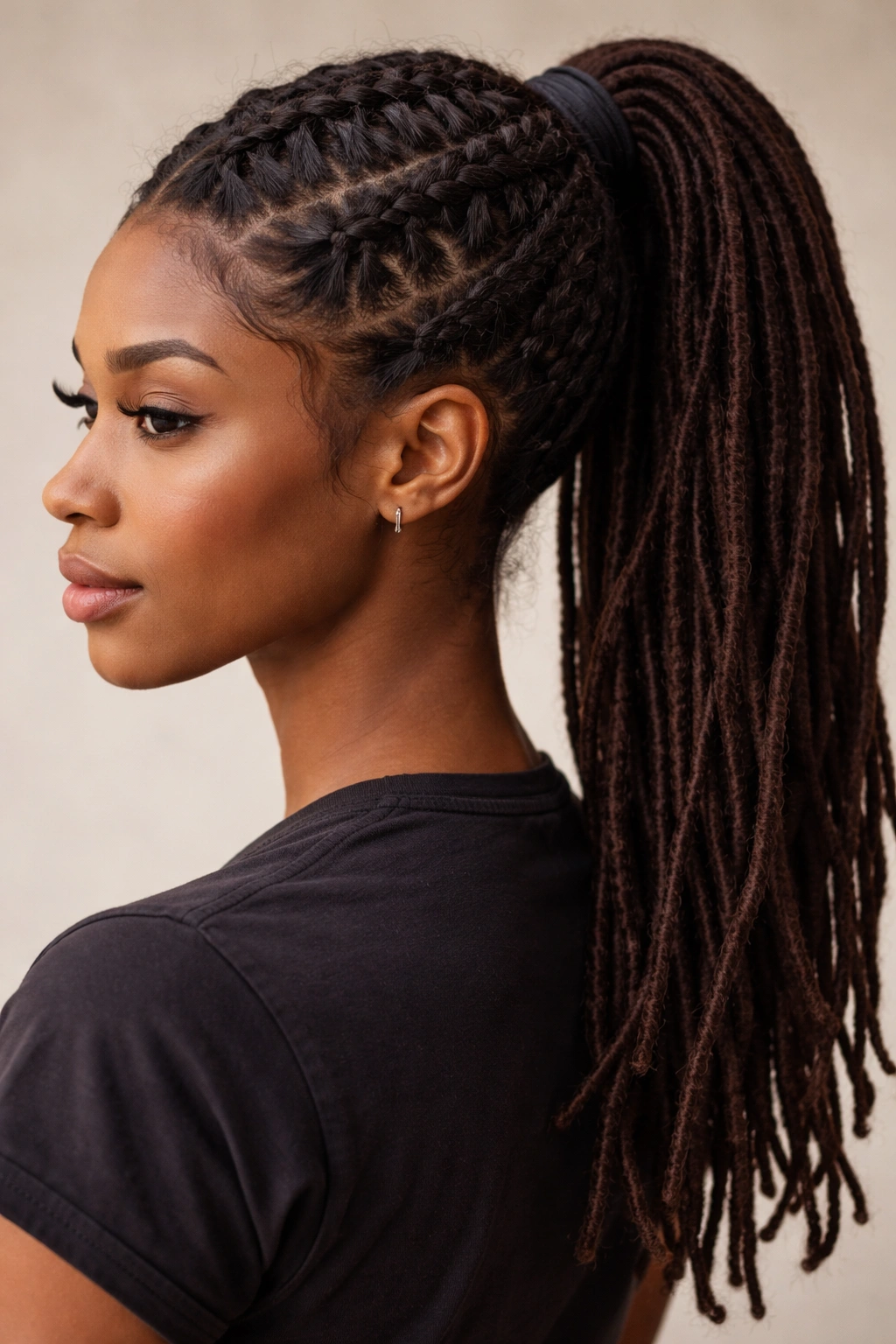
The Dutch braid is essentially an inverted French braid—the strands go under rather than over, which makes the braid “pop” and sit on top of the hair.
The Elevation
This style creates a raised, 3D effect. When you braid a Dutch braid from your forehead into a ponytail, it draws attention to the center of your face and adds a significant amount of visual texture to your hairline.
Maintenance
Dutch braids are notoriously secure. They hold tight to the scalp, making them one of the best protective styles for those who are active or who have locs that tend to frizz easily at the roots.
22. Criss-Cross Braided Ponytail
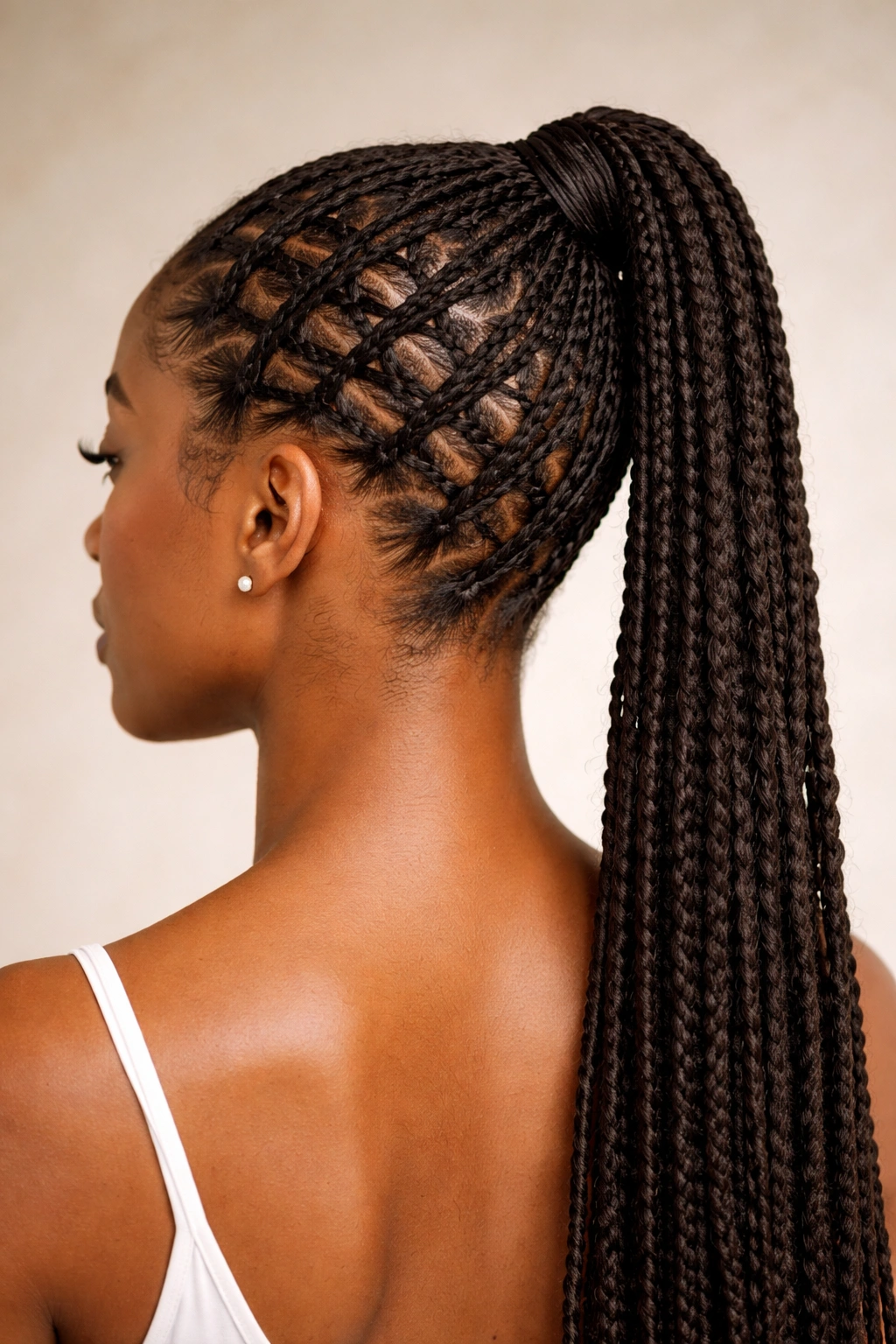
This style requires a bit of dexterity but pays off in sheer visual complexity. Instead of straight-back cornrows, you create diagonal parts that intersect.
The Pattern
By crossing the braids over each other as you head toward the ponytail, you create a lattice pattern on your scalp. It looks intricate and artistic.
The Ponytail
Gather all these intersecting braids into a single high ponytail. Because the scalp pattern is so complex, keep the ponytail braid itself relatively simple—a standard three-strand braid ensures the focus remains on the lattice design on your head.
23. Bubble Braid Ponytail on Locs
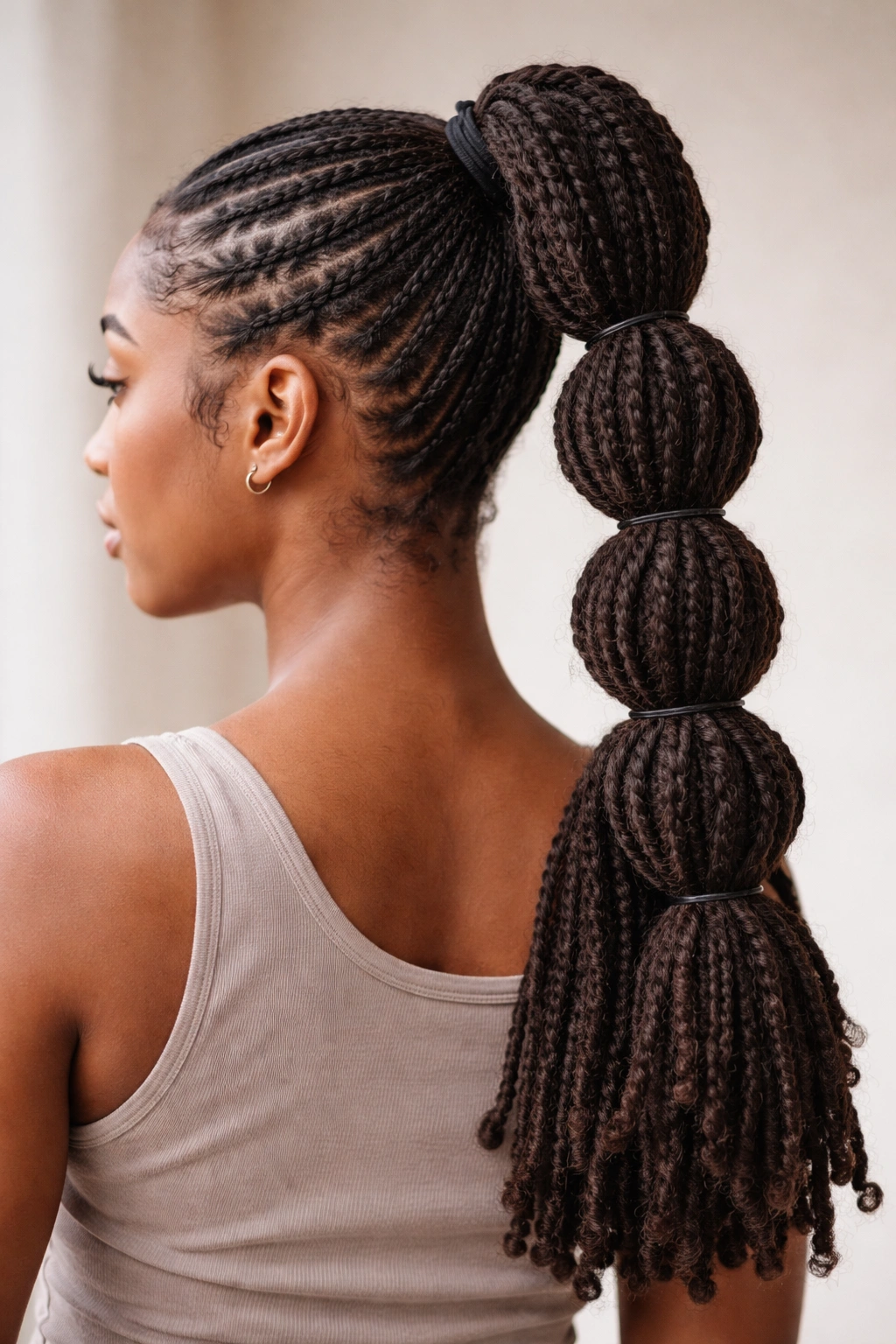
The bubble braid is the most beginner-friendly style on this list, and yet it looks incredibly modern. You don’t actually need to know how to braid at all.
How to Build It
Pull your locs into a high ponytail. Place a band every few inches down the length. Take the section of hair between the bands and gently tug it outward to “bubble” it up.
Customization
You can keep the bubble braid plain, or you can add a single, thin cornrow braid that runs down the side of the bubbles for a bit of contrasting texture. It’s a great way to add volume to locs that might be on the thinner side.
24. Halo Braid Ponytail
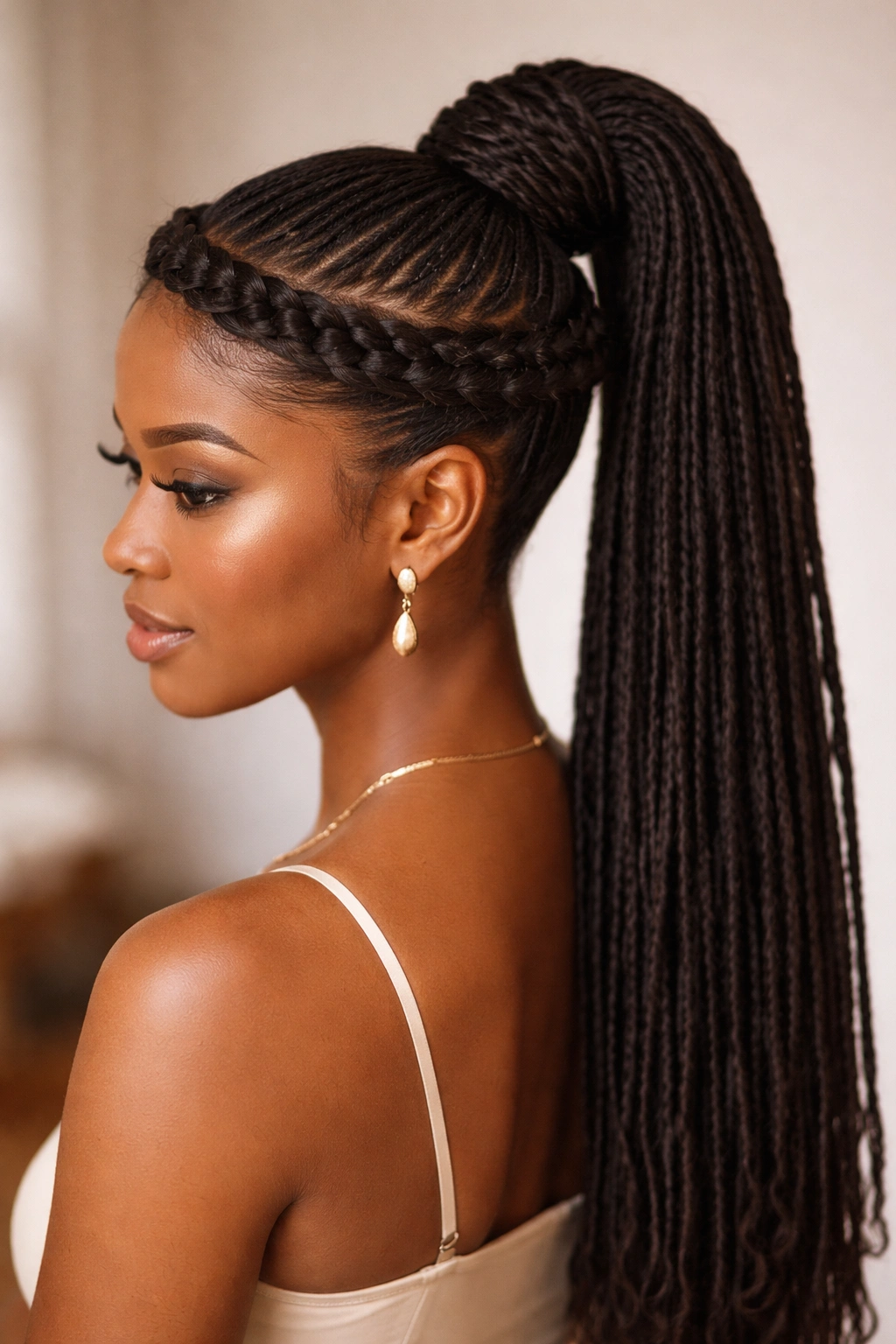
This style blends a crown braid with a traditional ponytail. It creates a “halo” effect around the base of the ponytail.
The Construction
Take a section of locs from around the hairline and braid them in a circle around the base of your ponytail. Once you complete the circle, secure the end into the base of the ponytail.
The Result
The base of your ponytail is essentially “encased” in a braided halo. It’s an incredibly regal look that works well for weddings, galas, or any time you want to feel a bit more elevated.
25. Accessorized Braided Ponytail
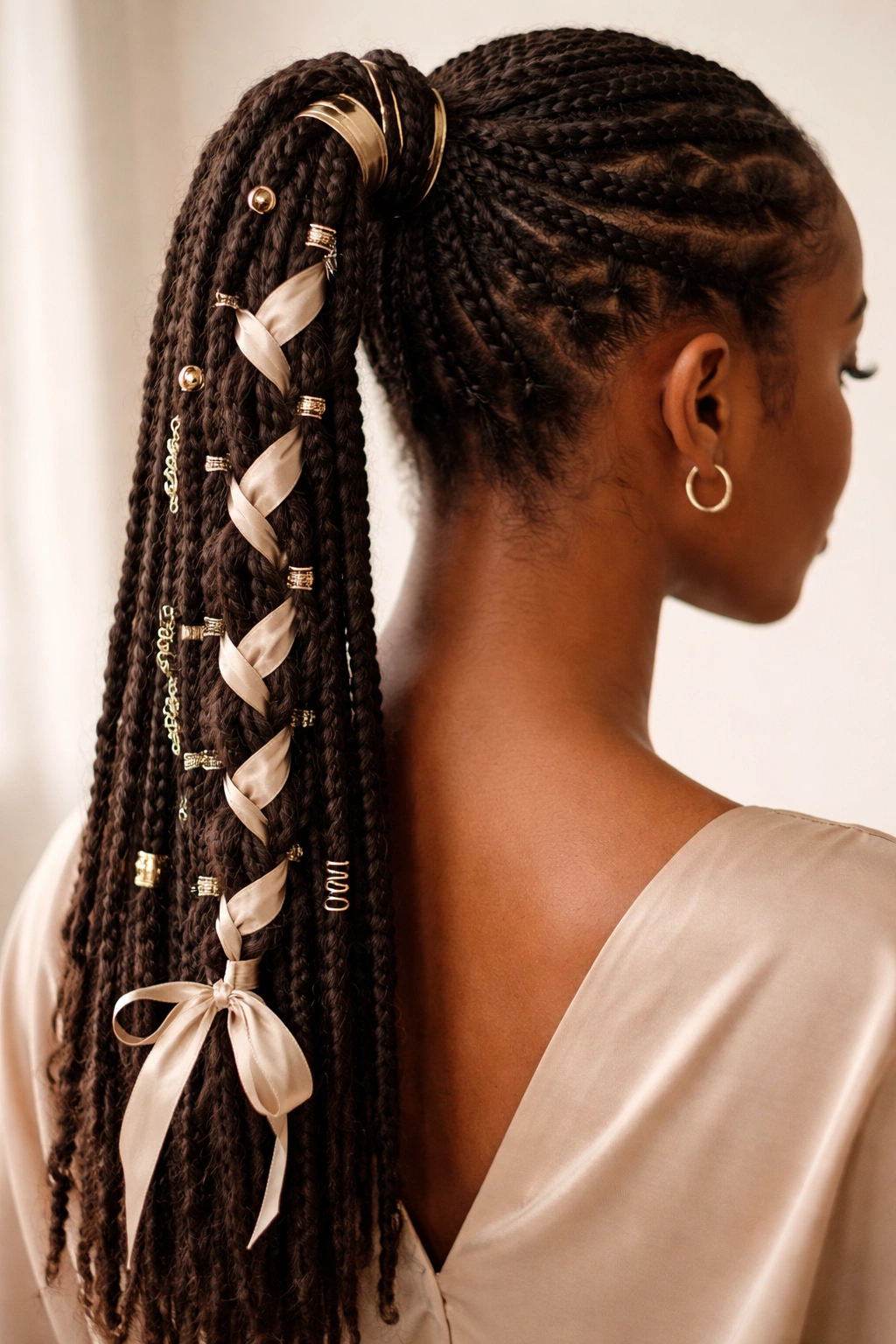
Sometimes, the braid itself is simple, but the way you finish it defines the style. Using gold or silver hair rings, cuffs, or even ribbon woven directly into the braid changes the entire vibe.
Weaving Ribbon
If you choose to use ribbon, weave it into the braid as you go. Start at the base and secure it with a bobby pin under your hair tie. As you braid the three strands, treat the ribbon as one of the strands.
Final Polish
This is a fantastic way to coordinate your hairstyle with an outfit. It feels intentional, polished, and custom-designed for the occasion. It’s not just a hairstyle; it’s an accessory in its own right.
Final Thoughts
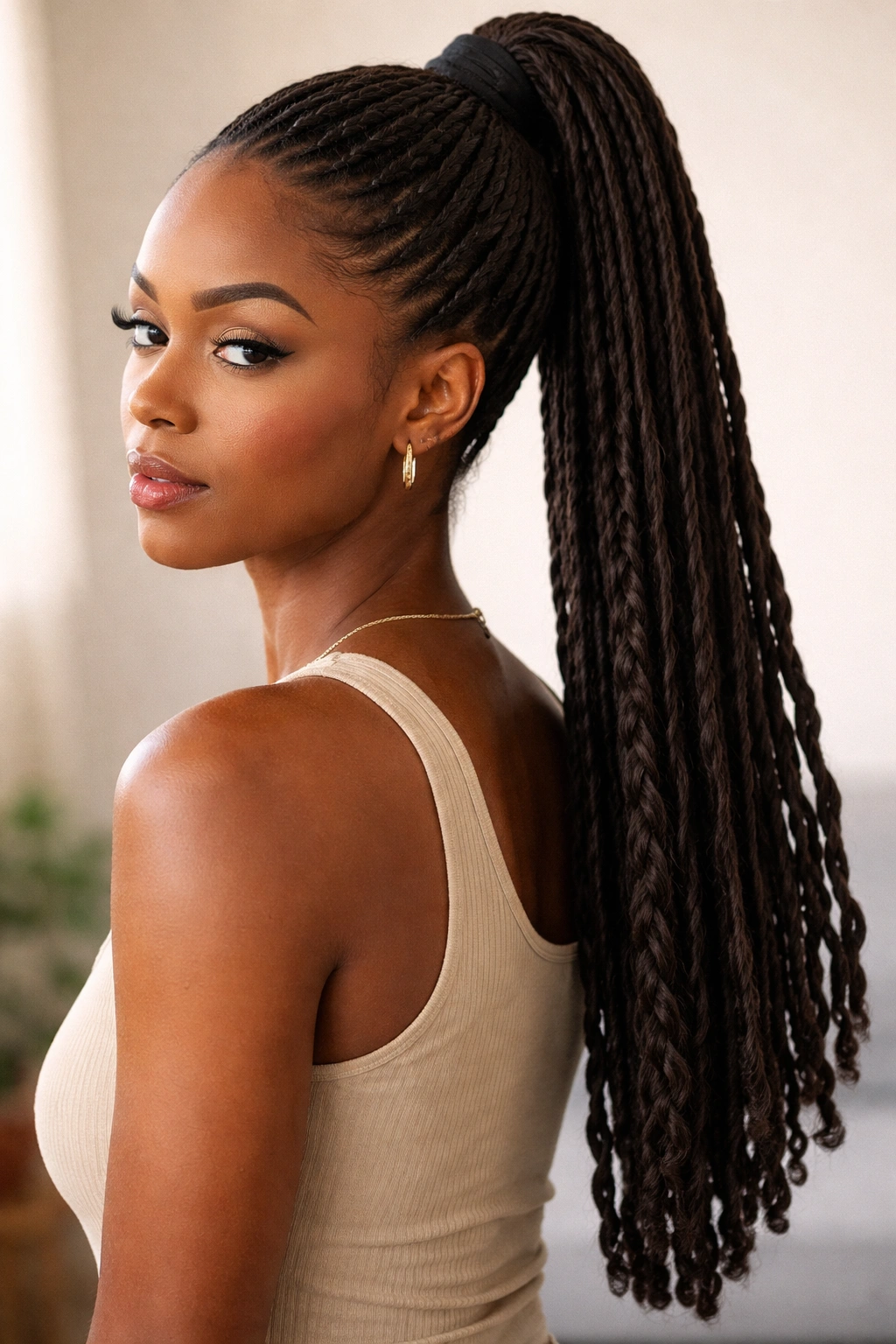
The art of the braided ponytail for locs isn’t just about pulling hair back; it is about creating a structure that honors the time you have put into growing and maintaining your hair. Every style listed here shares a common theme: they prioritize the health of your roots while allowing for creative expression.
Remember that with any style involving tension, the way you secure your hair matters more than the style itself. Always opt for bands that do not snag, and never force a braid tighter than is comfortable. Your locs will thank you for the extra care.
As your locs continue to mature and thicken, the way these styles sit on your head will shift. Embrace that change. What looks like a sleek, tight braid today might look like a voluminous, chunky masterpiece a year from now. That is the true joy of locs—they are a living style that grows with you.