

A low ponytail can look flat in a blink if you pull every strand tight and stop there. The fix is not more hairspray. It’s shape.
The best voluminous low ponytails build fullness in three places: the crown, the sides, and the body of the tail itself. A little lift at the roots, a softer part, and some texture in the lengths do more than a heavy teasing session ever will.
Fine hair needs friction. Thick hair needs control. Curly hair needs room to keep its pattern from collapsing into a heavy rope. That is why the strongest low ponytail hairstyles are not one-size-fits-all — they borrow a trick from blowouts, a bit from braids, a bit from backcombing, then stop before the whole thing turns stiff.
I like low ponytails that look touched, not sprayed into submission. The first few styles below are easy to wear to work or dinner, and the later ones lean a little more editorial. Pick the one that fits your texture, your time, and how much effort you want to spend at the mirror.
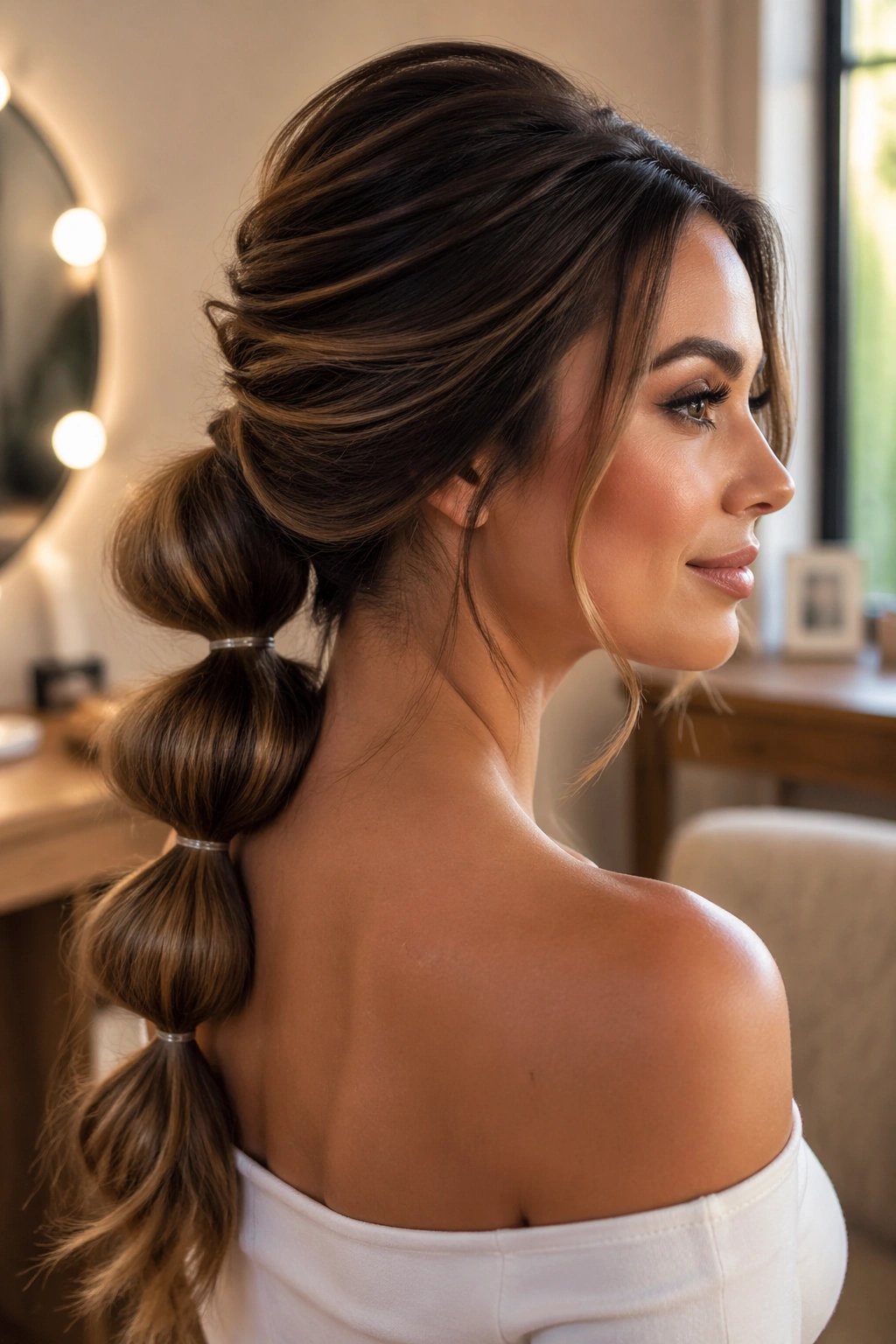
1. Bubble-Back Low Ponytail With Crown Lift
A bubble-back low ponytail gives you fullness without asking for much length. The shape is doing most of the work here, which is why it looks thicker than a plain tail even when the hair itself is fine.
How the bubbles create body
Start with a little lift at the crown, then secure the first elastic low at the nape. Add another elastic every 2 to 3 inches down the tail and tug each section outward until it rounds into a soft bubble. The trick is to keep the bubbles loose, not puffy in a cartoon way.
If your roots go limp fast, mist dry shampoo or texture spray before you gather the hair. That tiny bit of grit helps the crown stay lifted and keeps the bubbles from sliding flat an hour later.
- Best for: fine to medium hair
- Use: 3 to 5 small clear elastics
- Keep the bubbles: about the width of your palm, not tiny
Pro tip: Leave the first bubble slightly smaller than the rest. It gives the illusion of a fuller base.
2. Wrapped Low Ponytail With a Teased Base
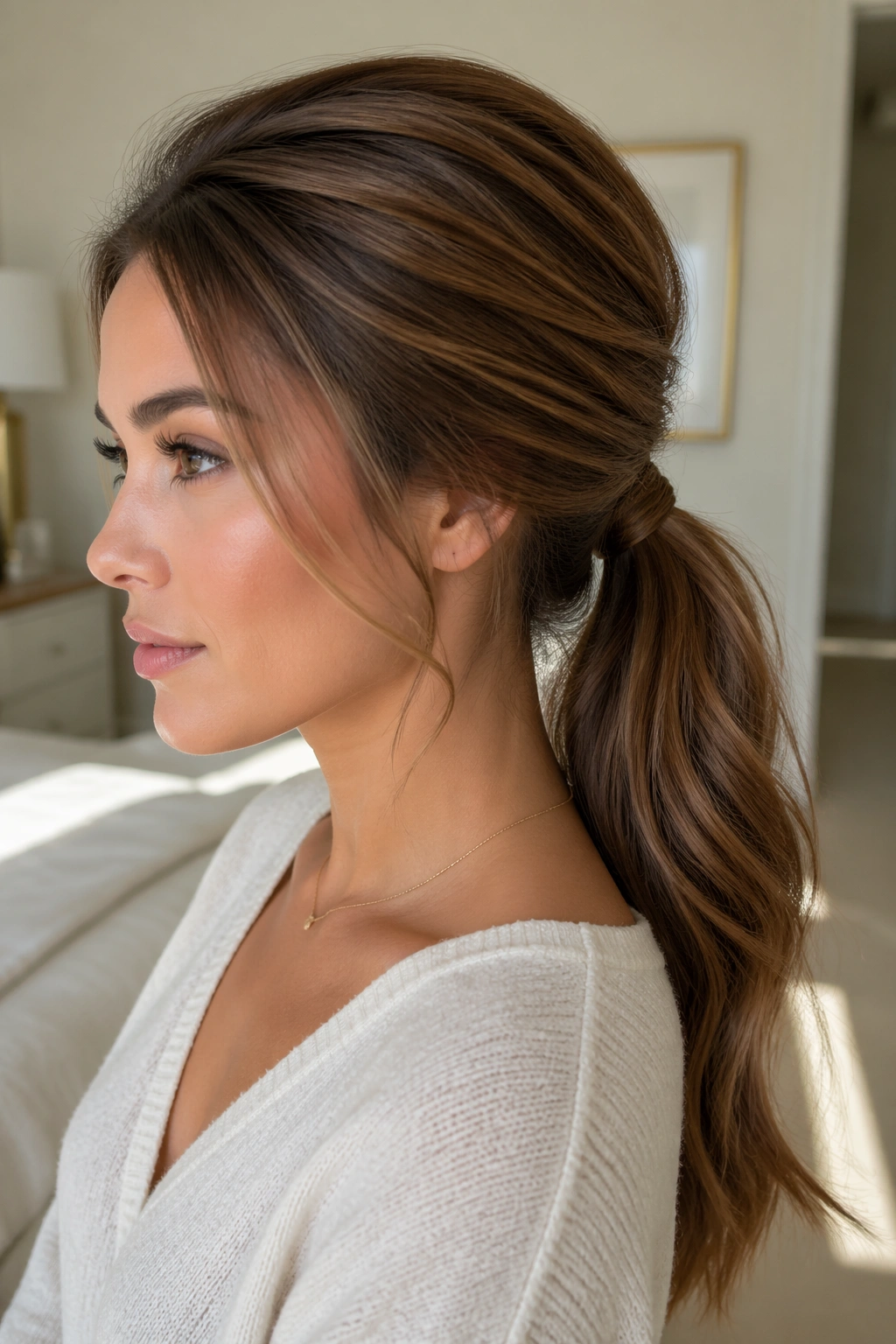
Why does a wrapped low ponytail look fuller than a plain one? Because the eye reads the smooth base as intentional, not sparse, and the wrapped section hides the elastic cleanly.
Backcomb a 2-inch section at the crown before smoothing the top layer over it. That small cushion keeps the ponytail from sitting too close to the head. Then wrap a 1-inch strip of hair around the elastic and pin it underneath with a bobby pin.
This style is one of my favorites for fine hair that needs a little swagger. It looks polished, but it still has some air around the roots.
What to watch for
Do not tease the whole head. That gets fuzzy fast. Keep the teasing narrow and focused right where the ponytail starts. That one spot does more for fullness than a whole cloud of roughened hair ever could.
3. Deep Side-Part Low Ponytail With Soft Waves
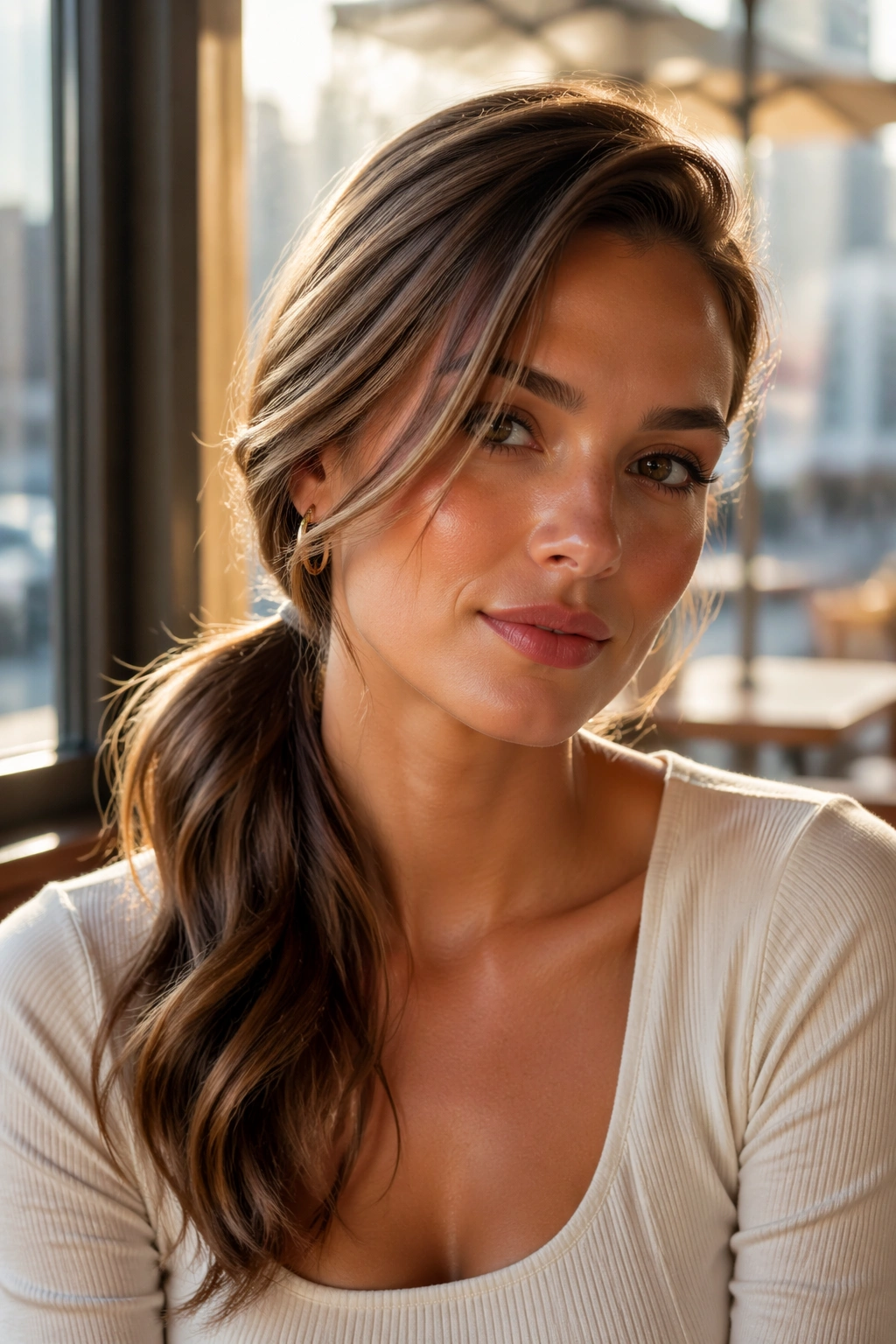
A deep side part changes the shape of the face immediately. It also gives one side of the crown more room to rise, which is a very simple way to make a low ponytail feel larger.
Soft waves are the other half of the trick. Curl the hair with a 1.25-inch iron, brush the waves out with your fingers, then gather the ponytail slightly below one ear instead of dead center. The off-balance placement makes the style look fuller on purpose.
This is a good choice when your hair is shoulder length or longer and you want movement without a messy finish.
How to keep it from collapsing
Spray the roots at the part line first, not after. Once the hair is already tied, you’re mostly trying to fix a shape that never got built.
4. Crimped Low Ponytail for Fine Hair
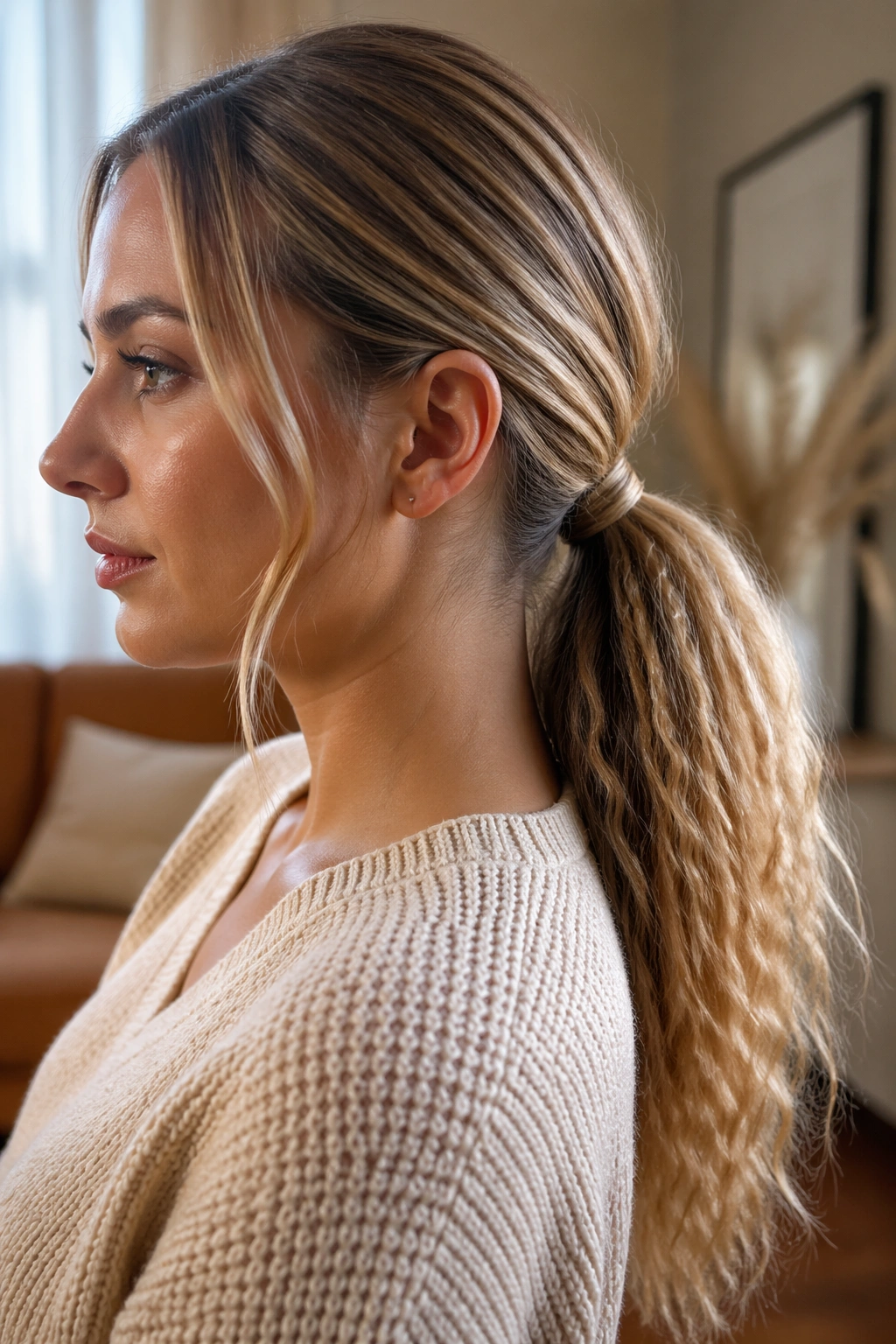
Crimping is not just a throwback move. On fine hair, it creates tiny ridges that add grip, lift, and a whole lot of visual thickness under the surface.
Use a mini crimping iron on the underlayers and the hair closest to the crown. Leave the topmost layer smoother so the texture does not read as frizzy. Then gather the ponytail low and let the crimped body sit just above the elastic.
Why it works
- The texture makes the hair look denser.
- The roots stay less slippery.
- The tail holds shape longer than a pin-straight version.
If you hate full crimping, do only the middle third of the hair. That’s usually enough. Seriously. One hidden crimped layer can change the whole ponytail.
5. Curl-Set Low Ponytail With Glossy Ends
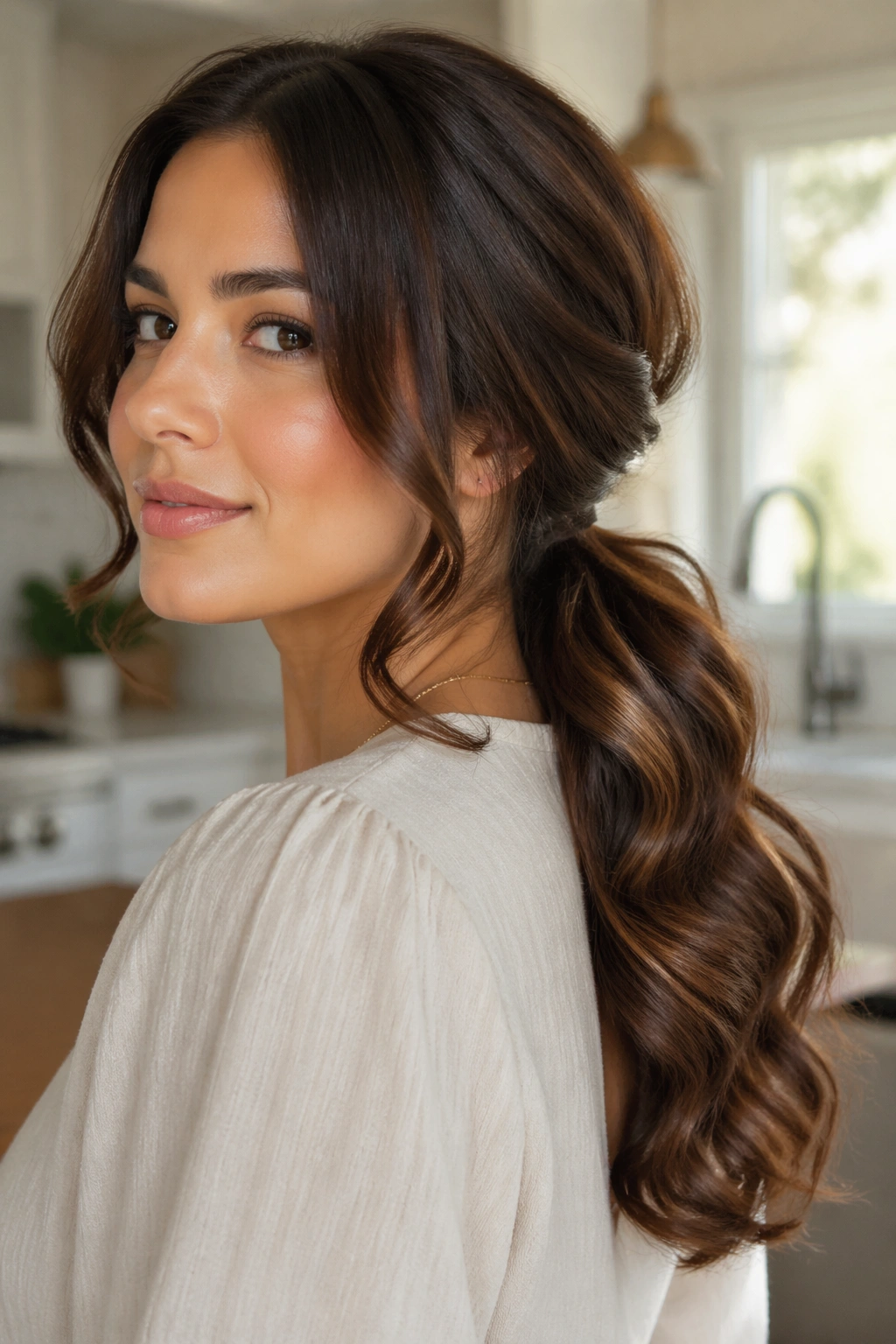
The best curl-set low ponytail feels soft in the hand and shiny at the ends. It’s the kind of style that looks like you spent longer on it than you did.
Curl the lengths in 1-inch sections, then let them cool completely before brushing them out. That cooling step matters. Warm hair loses shape fast, and you end up with a ponytail that drops before lunch. Gather the hair low, but do not pull the curls tight at the tie. Leave a little slack so the tail keeps its body.
A tiny drop of serum on the ends gives this style that polished finish without flattening the movement.
One sentence makes the difference here: cool first, smooth later.
6. Sleek Root Low Ponytail With a Padded Tail
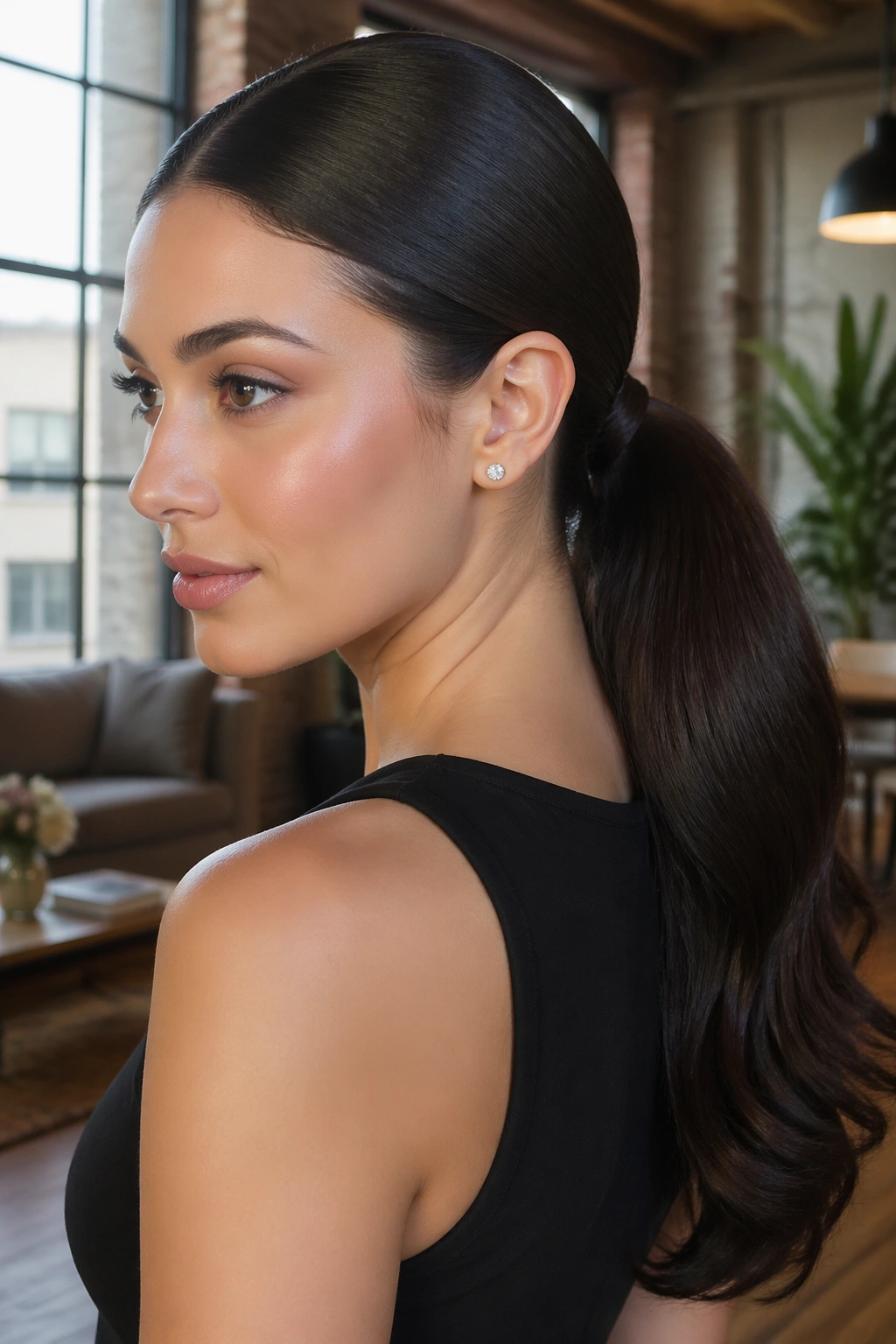
If you want the front to stay sleek without losing fullness, put the volume into the tail instead. That is the whole point of this version.
Keep the crown smooth with a light cream or pomade, then secure the ponytail low and backcomb the tail from the mid-lengths down. Brush the outer surface only a little so the texture still shows through. The result looks fuller because the tail has body, but the top stays neat.
Where the fullness lives
The trick is to build shape in the lengths, not at the hairline. That keeps the style clean and stops the crown from going puffy in a weird way.
This style is especially good for straight hair that tends to hang thin when tied back. It needs structure, not more product.
7. Twisted Half-Pull Low Ponytail
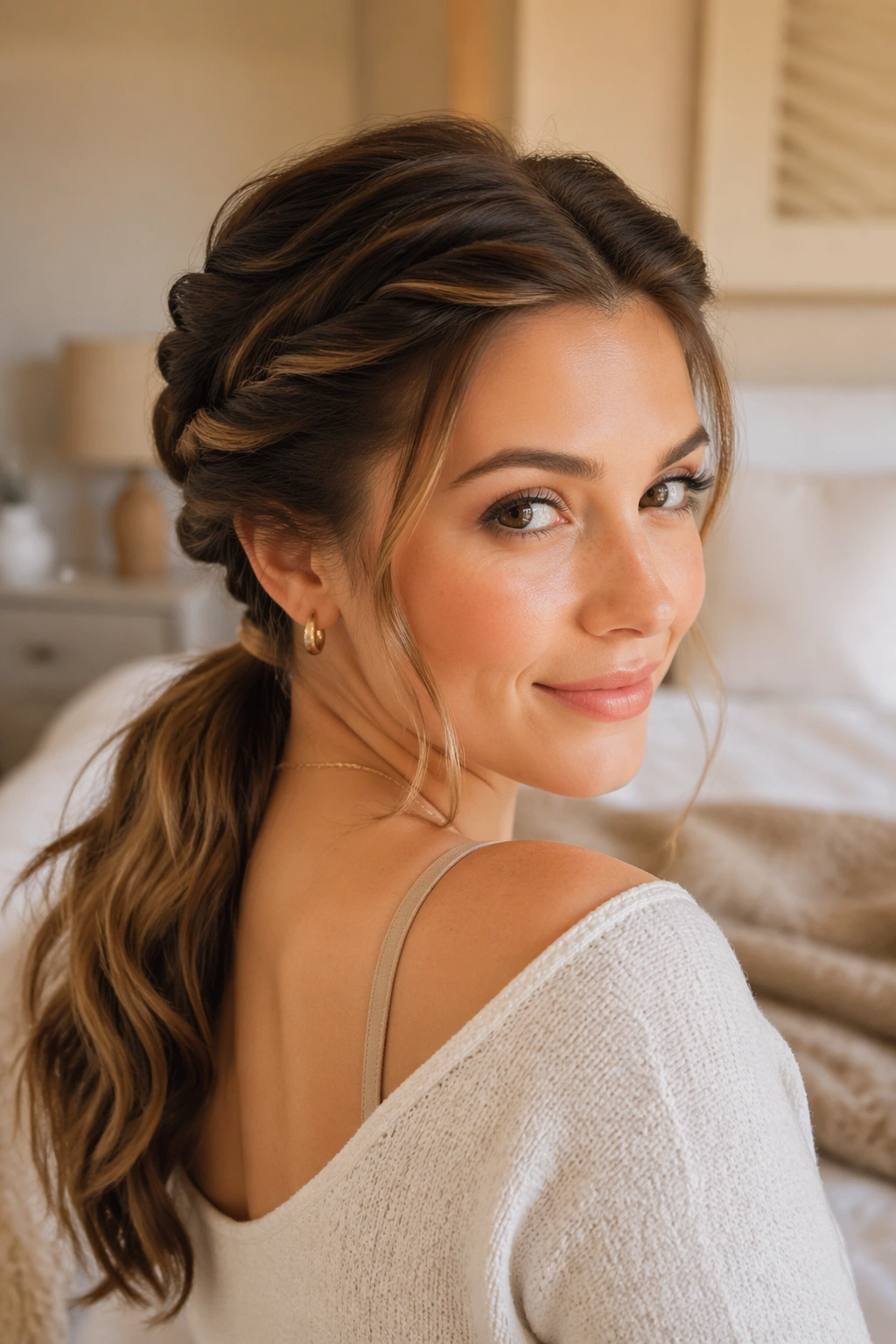
What if the front of your hair is the flattest part? Twist it. That’s the move.
Take two sections from each temple, twist them back toward the nape, and secure them into a low ponytail with the rest of the hair. The twists create a lifted frame around the face and give the top of the head a little more height than a simple gather ever would.
How to keep the twists soft
- Pull each twist slightly outward after pinning.
- Keep the tension even on both sides.
- Leave the ends of the twists loose enough to blend into the tail.
This is a nice option for second-day hair because a little texture helps the twists stay put. Too-clean hair makes them slide.
8. Claw-Clip Lifted Low Ponytail
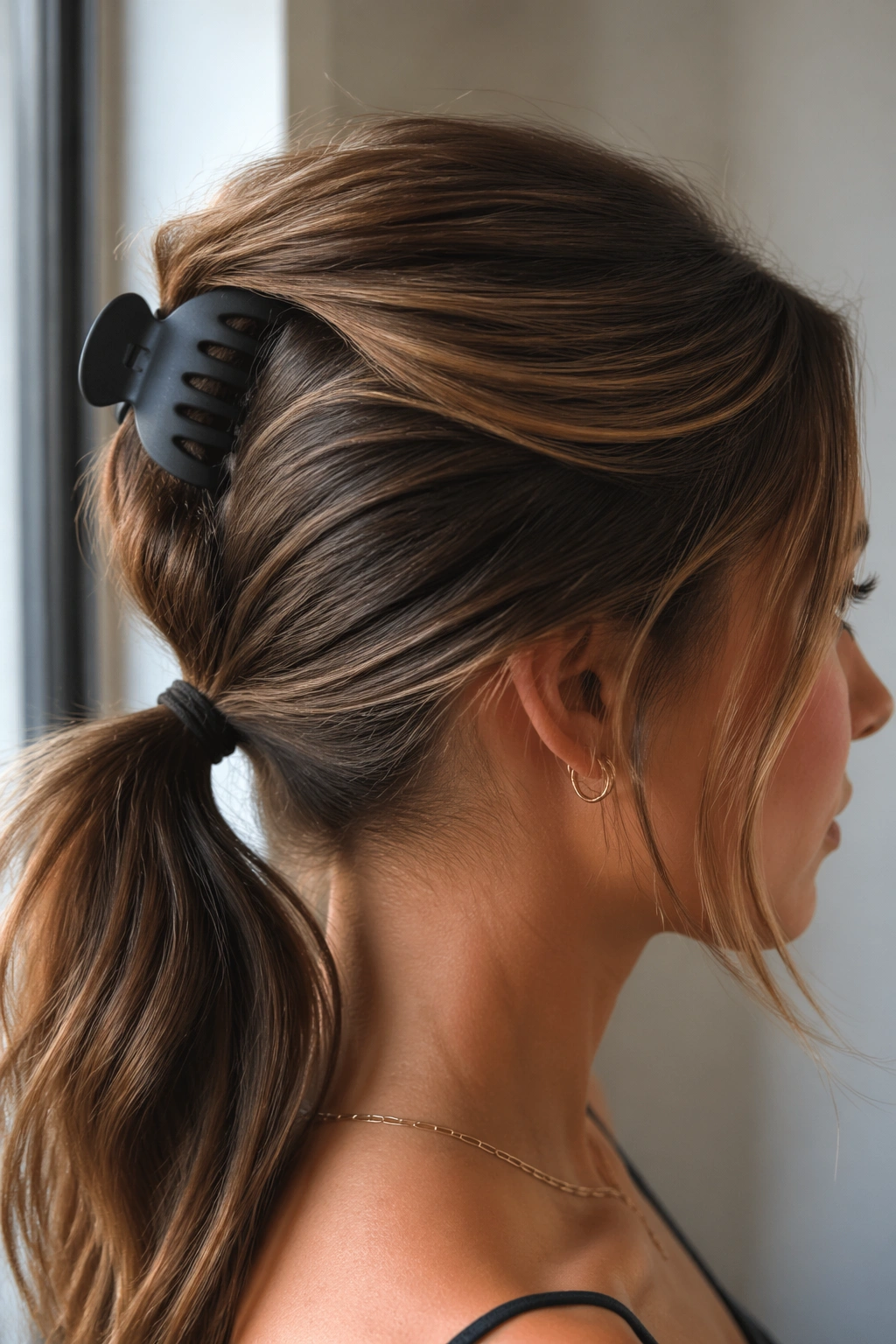
A claw clip can create volume if you hide it correctly. That surprises people, because most of the time the clip gets used as a quick fix, not a styling tool.
Place a small clip under the top layer at the crown, then gather the rest of the hair low over it. The clip acts like a tiny shelf, so the upper section sits a bit higher and the ponytail doesn’t collapse flat against the head.
It’s not the prettiest step while you’re doing it. Fine. Nobody sees that part. Once the hair is smoothed over the clip, the shape reads fuller and softer, especially from the side.
Use a matte clip, not a glossy one. Glossy plastic tends to slip.
9. Crown-Braid Low Ponytail
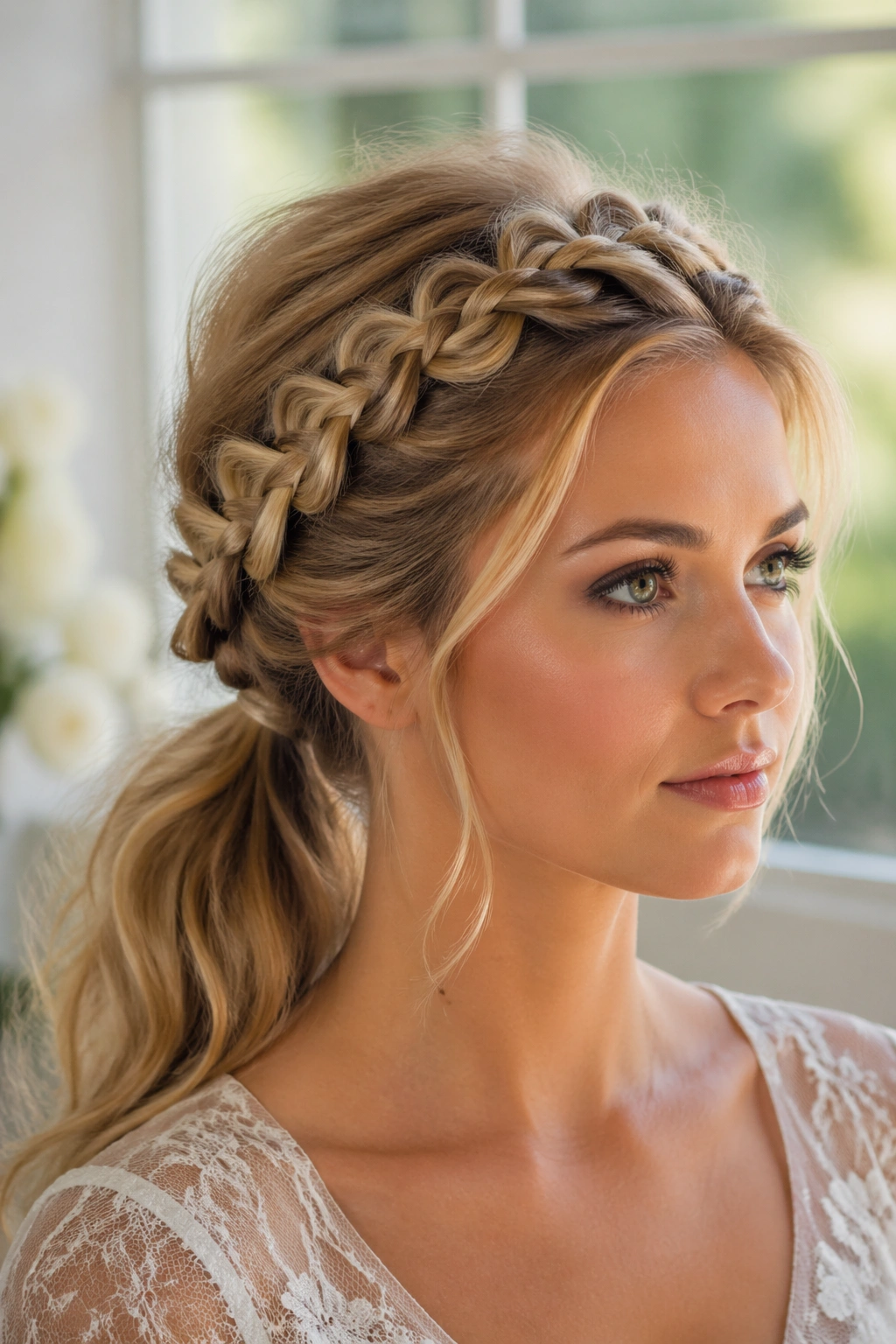
A crown braid brings fullness to the top of the head before the ponytail even starts. That’s why it works so well on low ponytails that need more shape around the face.
Braid along the hairline from temple to temple, then pinch the braid wider with your fingers so it looks thicker. Gather the rest of the hair low at the nape and let the braid feed into it. The braid acts like a built-in headband, but one that gives the ponytail more visual weight.
Quick details that matter
- Keep the braid loose enough to pancake.
- Smooth the ponytail base after tying.
- Use a clear elastic under the braid if you want the finish to look cleaner.
This one has a little romance to it without getting fussy.
10. Face-Framing Low Ponytail With Loose Pieces
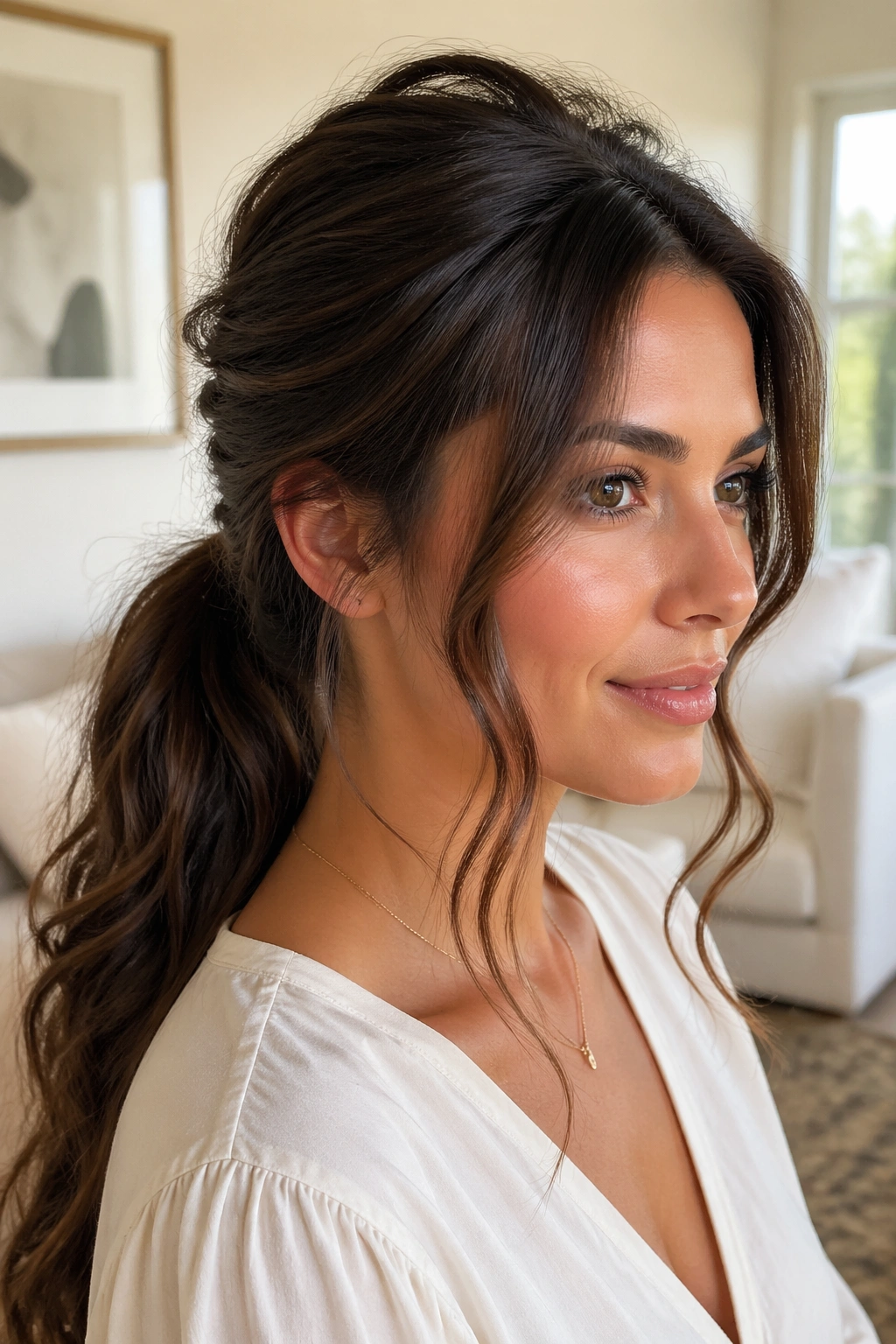
A low ponytail doesn’t need to be full everywhere. Sometimes the smartest move is to keep the volume around the face and let the tail stay simple.
Leave two front pieces out, curl them away from the face, and give the crown a light lift with a tail comb. Then gather the rest low and let a few soft strands fall near the ears. Those small pieces stop the style from looking severe.
I reach for this when the hair feels flat but I still want a soft shape. It’s fast, and it works with layers better than a fully pulled-back look.
Small warning
Do not leave the front pieces too thin. Skinny face-framing strands can make the ponytail look accidental. A slightly wider section always reads better.
11. Ribbon-Tied Low Ponytail With Full Sides
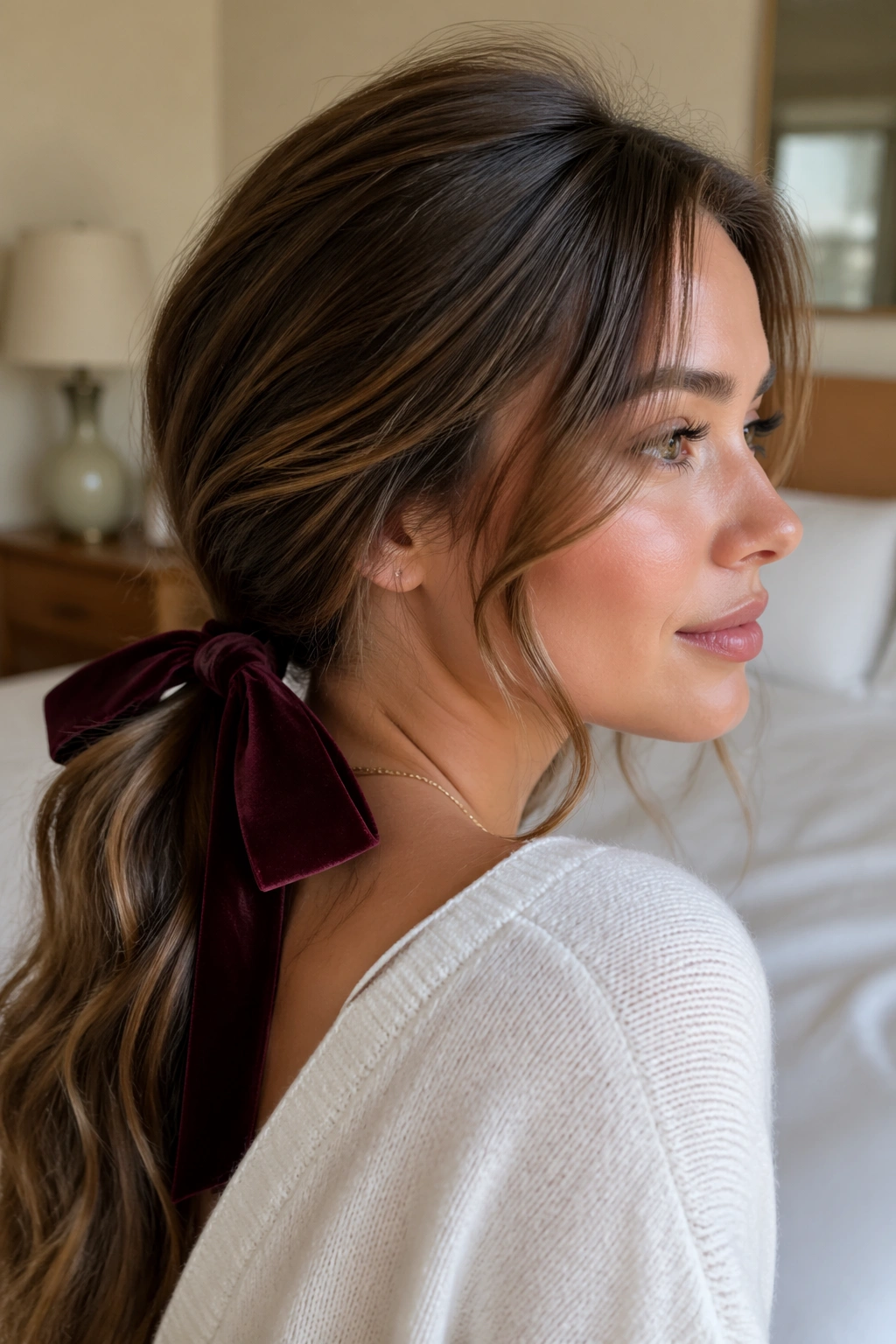
Unlike a skinny hair tie, a ribbon spreads the base visually. That alone makes the ponytail feel bigger.
Tie the hair with a narrow elastic first, then cover it with a 1 to 1.5-inch ribbon in velvet, satin, or grosgrain. Keep the knot slightly off-center if you want the side volume to feel softer. The ribbon also keeps the eye moving, which helps the ponytail seem fuller than it really is.
What makes it different
A ribbon adds softness around the nape and lets the tail sit with a little more volume. It is especially nice on shoulder-length hair, where the ends can otherwise look too neat.
If the ribbon is too stiff, the style starts to feel costume-like. A softer fabric usually wins.
12. Faux-Blowout Low Ponytail
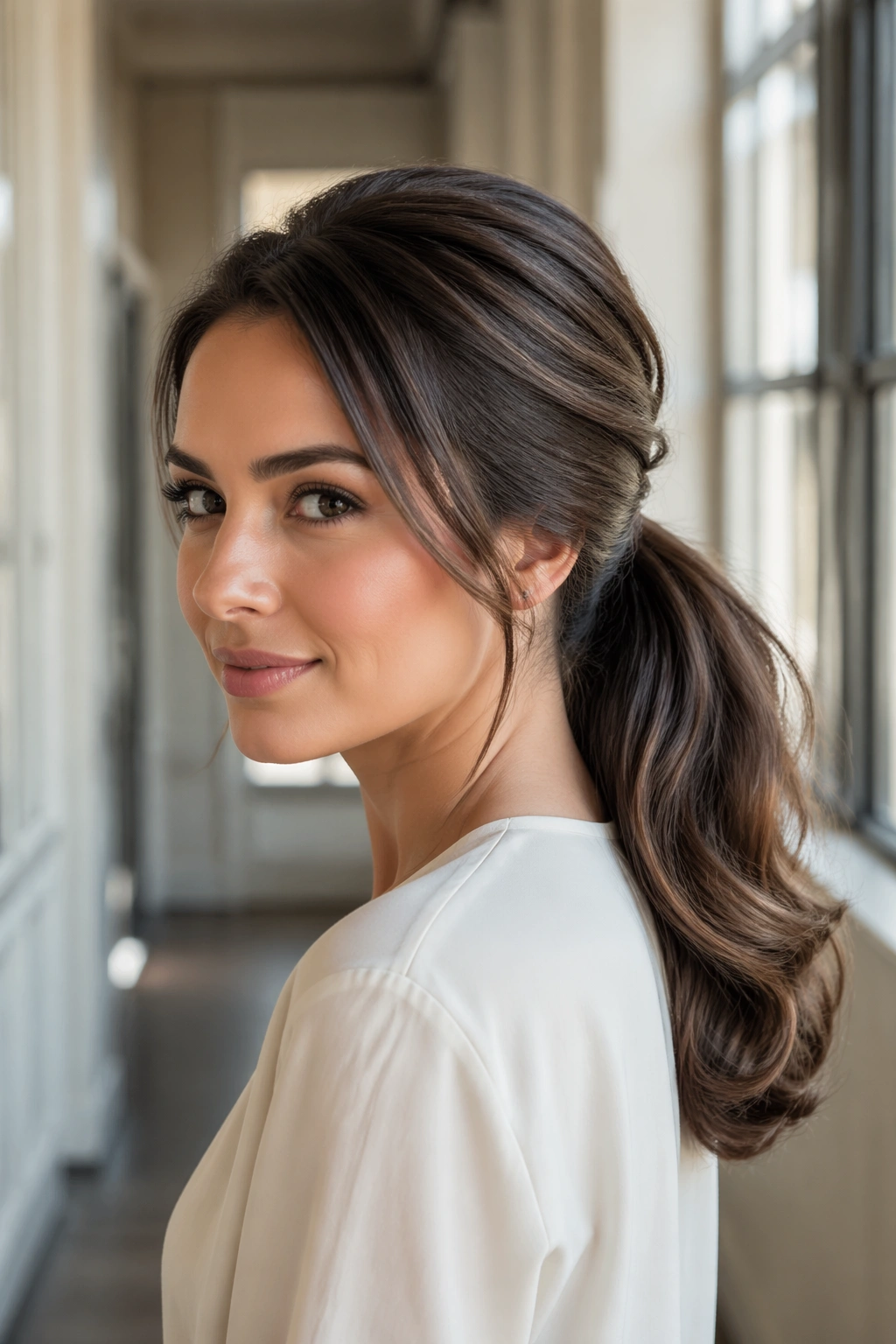
How do you make a low ponytail look like it came from a round brush and a salon chair? You fake the blowout shape first.
Blow-dry the roots with a round brush, then bend the ends under and away from the face with a 1.5-inch brush or hot brush. Once the hair cools, gather it low and keep the top slightly lifted. The rounded movement in the lengths gives the whole ponytail more body.
This style is a favorite of mine for days when the hair is neither clean nor dirty enough to behave. It turns that in-between texture into something useful.
One thing to avoid
Do not flatten the crown with too much oil. You want shine on the ends, not a slick helmet at the top.
13. Fishtail-Woven Low Ponytail
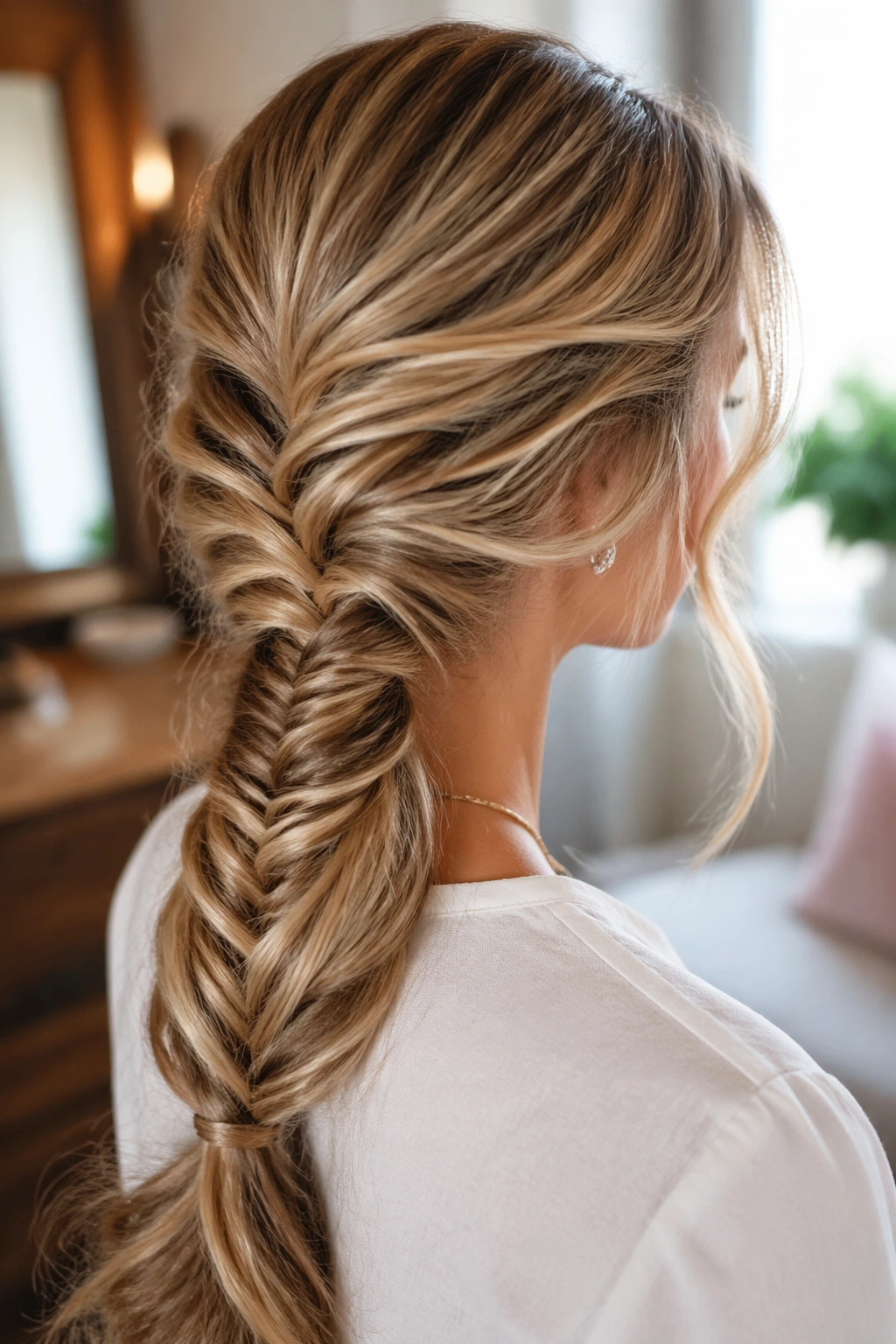
A fishtail braid makes a ponytail look fuller because the woven pattern adds depth. Even a thin tail can read thicker once it’s braided and tugged out a little.
Secure the ponytail low first, then fishtail braid the tail and gently pull the edges outward. That “pancaking” step is where the fullness happens. Keep the braid loose enough that you can see the weave, but not so loose that it starts dropping apart.
Key details
- Works well on layered hair.
- Use a small elastic at the end.
- Tug from the outer loops, not the center.
This one leans a little more styled than the others, but it’s worth the extra minute.
14. Double-Elastic Low Ponytail for Extra Height
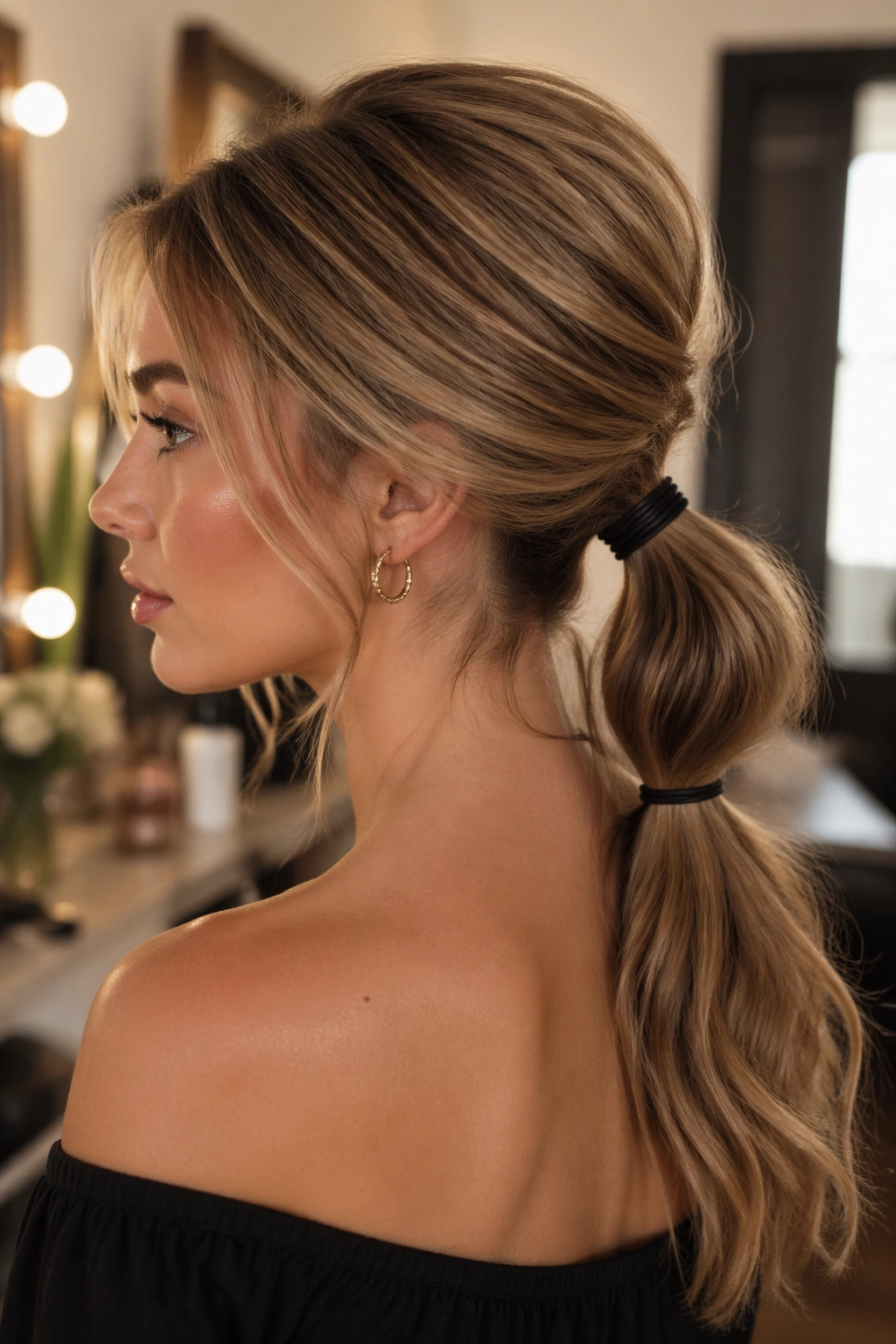
A double-elastic ponytail sounds tiny on paper. In practice, it gives the base more lift and helps the tail sit with a little distance from the neck.
Secure a small hidden ponytail first, then add a second elastic over a slightly larger section so the tail stacks instead of clinging flat. The two anchor points spread the weight out, which helps the style look thicker from the side.
How to keep it wearable
- Keep the first tie snug but not tight.
- Leave a bit of slack above the second elastic.
- Wrap a small section of hair around both ties if you want a cleaner finish.
This is one of those tricks that looks plain until you see the before-and-after in a mirror. Then it makes sense.
15. Textured Low Ponytail for Thick Hair
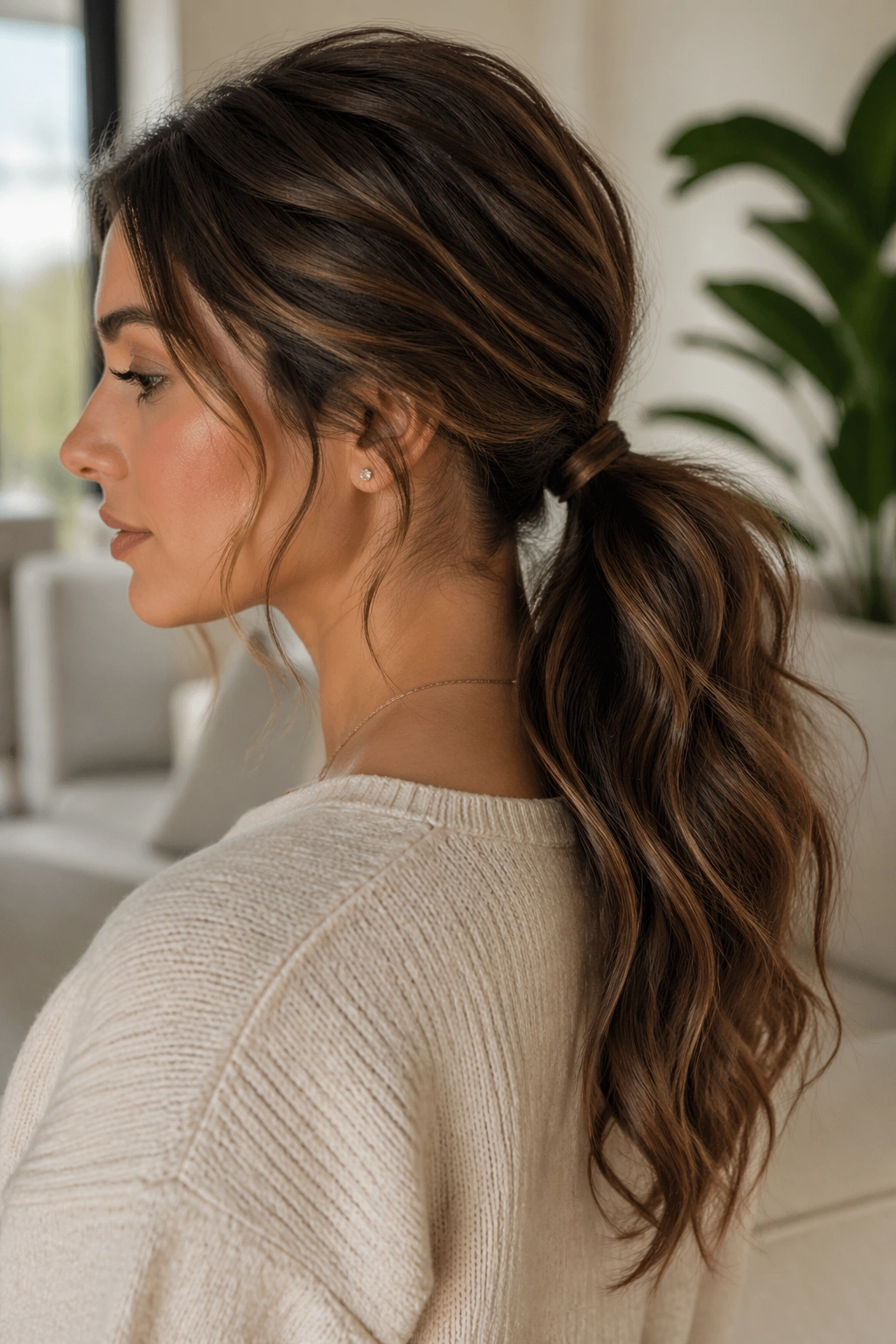
Thick hair does not always need more volume. Sometimes it needs better shape. That’s the part people miss.
If your hair is already dense, use texture spray at the mid-lengths and a light smoothing cream at the roots so the ponytail stays plush instead of bulky. A little wave through the lengths keeps the tail from turning into a heavy block. Let the ponytail sit low, but don’t drag every side section tight.
Keep the shape, lose the bulk
The goal is controlled fullness, not a giant lump at the nape. A few loose bends and a looser tie do more than flattening the whole head down.
If you have a lot of hair, a sturdy elastic matters more than a pretty one. Thin elastics snap too easily under that much weight.
16. Curly Low Ponytail With Defined Ends
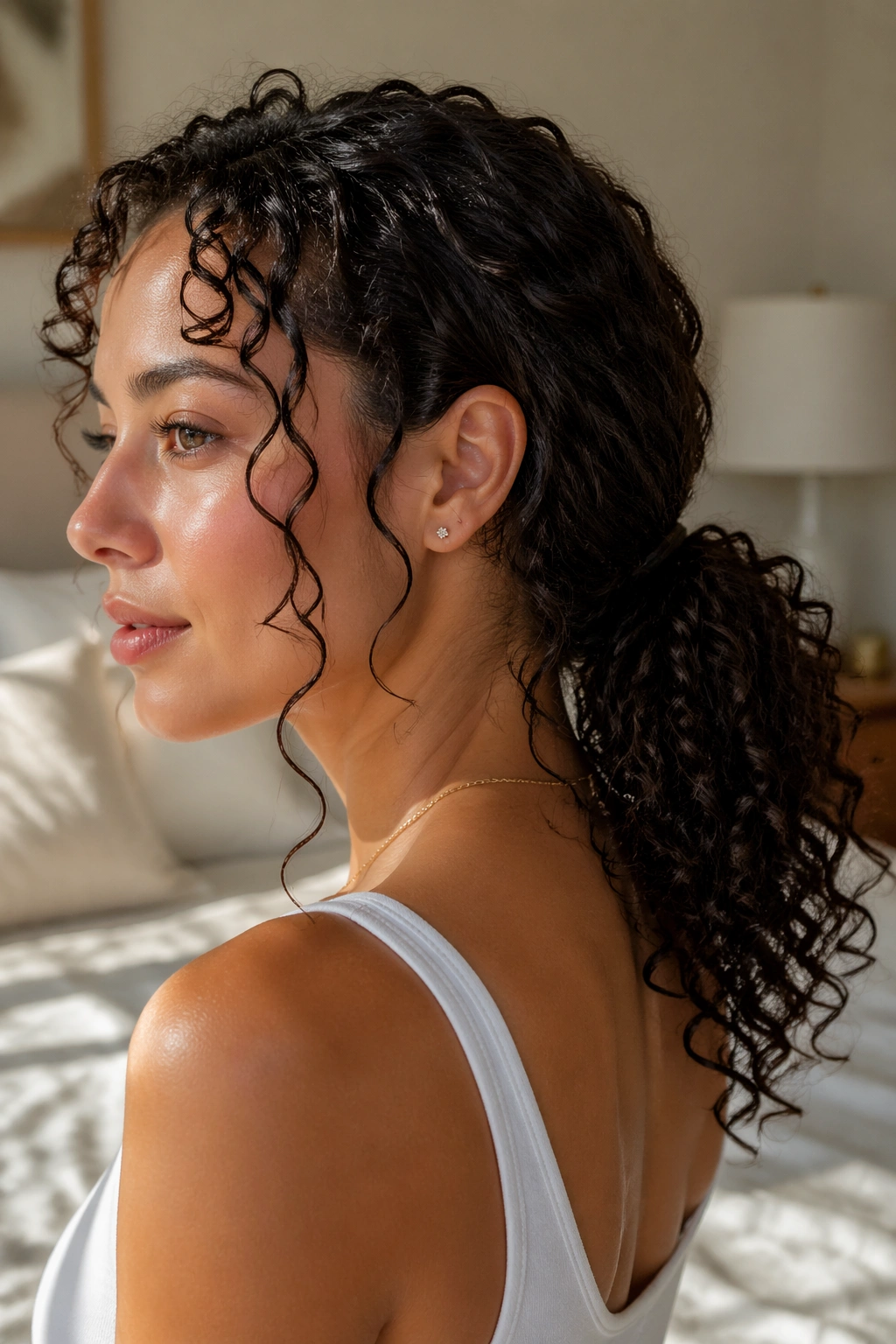
A curly low ponytail should respect the curl pattern instead of fighting it. That’s what keeps it looking full instead of crushed.
Use a curl cream or gel on damp hair, let the curls dry, then gather them low with your fingers or a wide-tooth comb. Hold the ponytail loosely so the curls keep their spring. If you brush curly hair smooth, you lose the body you were trying to keep.
This style loves a little height at the crown and a few curls left loose around the nape. Those free pieces stop the silhouette from becoming too neat.
What to do if the curls flatten
Mist the ponytail with water and scrunch it lightly. A dry curl is not the same as a dead curl.
17. Softly Messy Low Ponytail With a Padded Crown
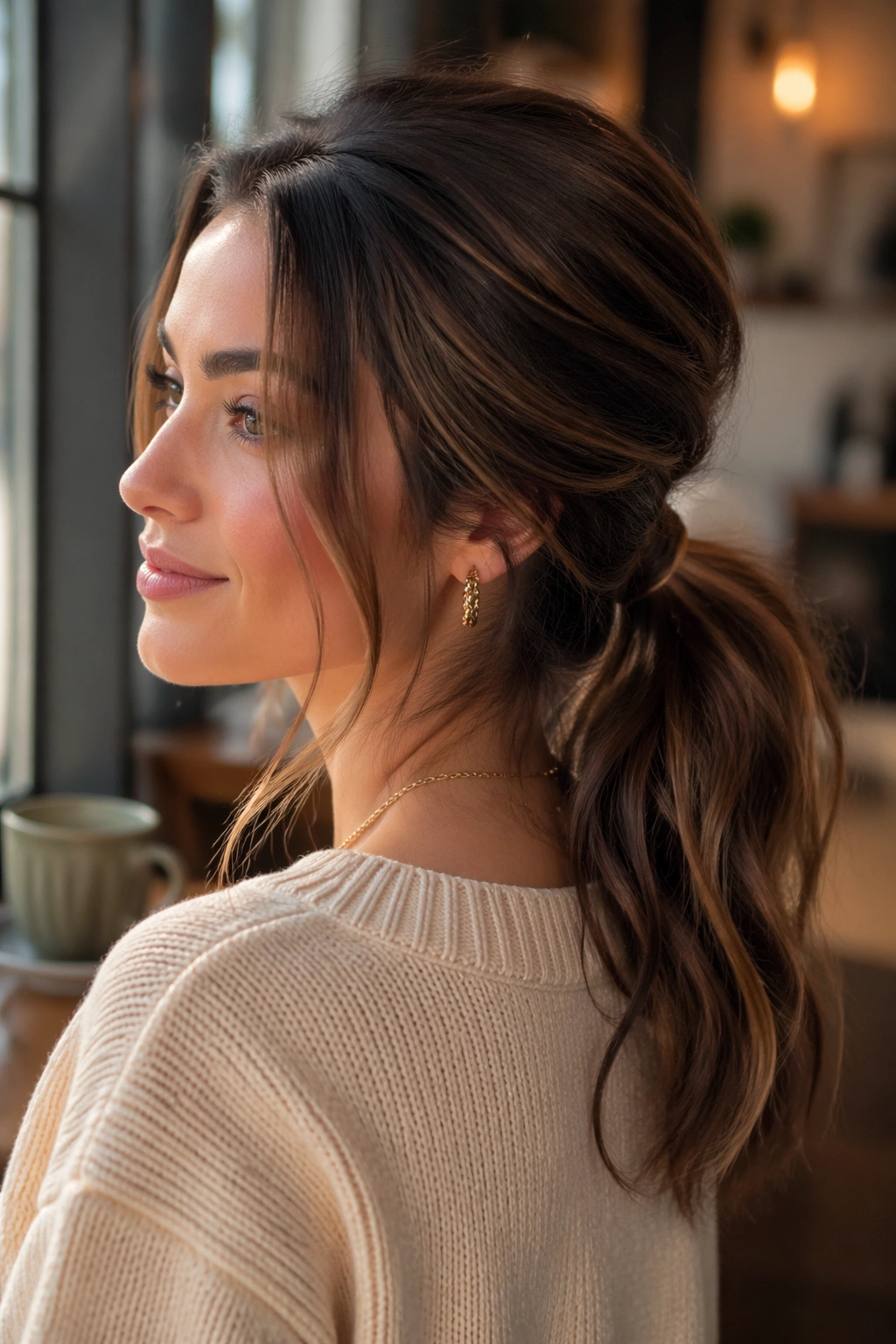
A messy low ponytail can still look full when the mess is placed on purpose. The secret is not random tugging all over the head.
Curl the hair loosely first, then gather it low and pull a few pieces at the crown and temples with your fingertips. Focus on the top half of the style, not the tail. That gives you softness up top and keeps the ponytail itself from looking thin.
A few easy rules
- Leave 1 to 2 face-framing pieces out.
- Loosen the crown by about ¼ inch on each side.
- Keep the ends brushed enough to avoid frizz.
This version is forgiving. If the hair isn’t behaving, it usually still looks better than a too-tight ponytail.
18. Off-Center Low Ponytail With a Side Sweep
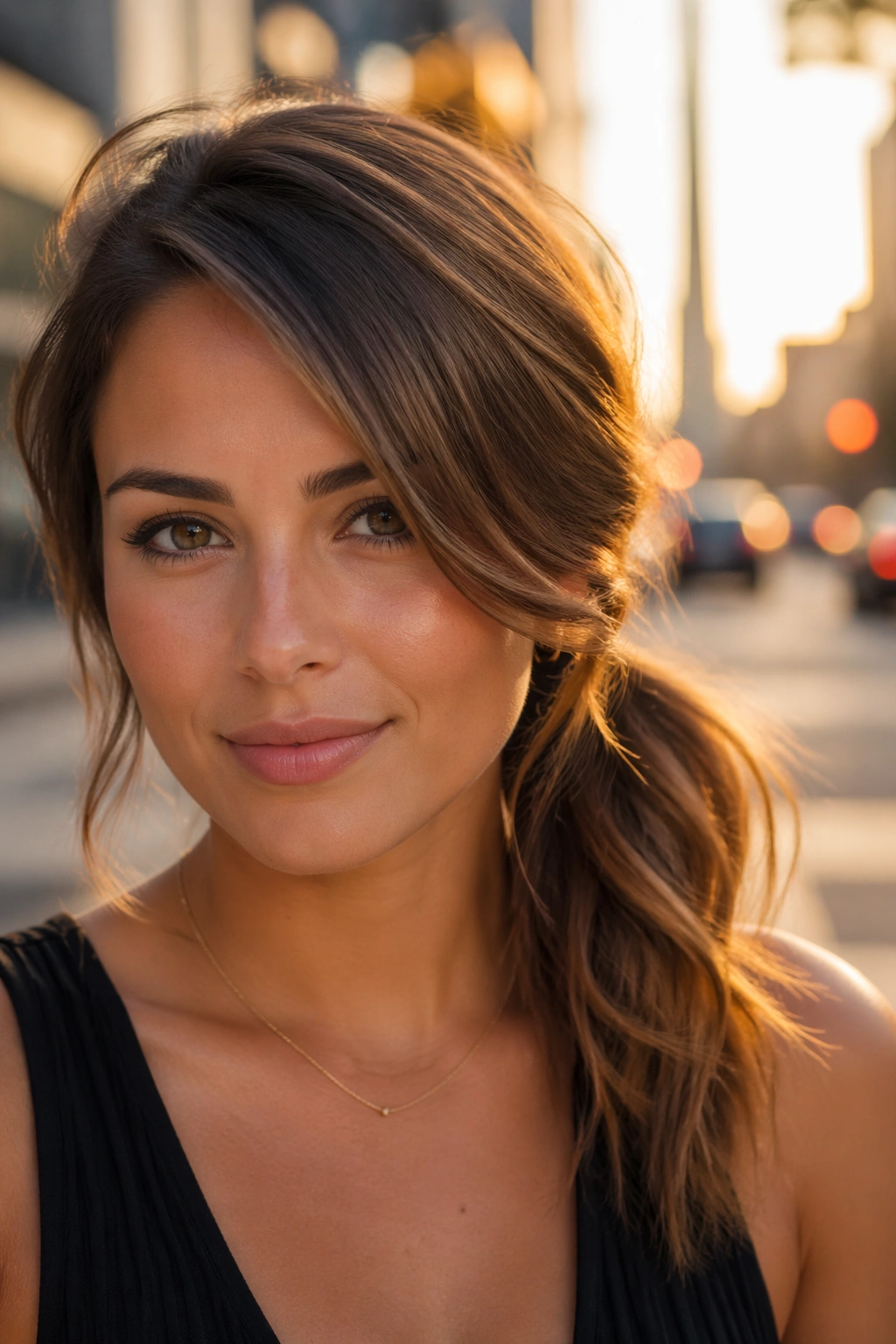
The best thing about an off-center low ponytail is the asymmetry. Your eye reads the heavier side first, which makes the whole style look fuller.
Sweep more hair over one shoulder-side section before tying the ponytail low and just off the middle of the neck. Then bend the front pieces slightly with a flat iron or a wide curling iron. The curve keeps the shape from looking rigid.
This works especially well on layered cuts because the ends do not all fall in one blunt line. That little irregularity adds movement.
One sentence says it best: symmetry can be a little boring here.
19. Flipped-End Low Ponytail
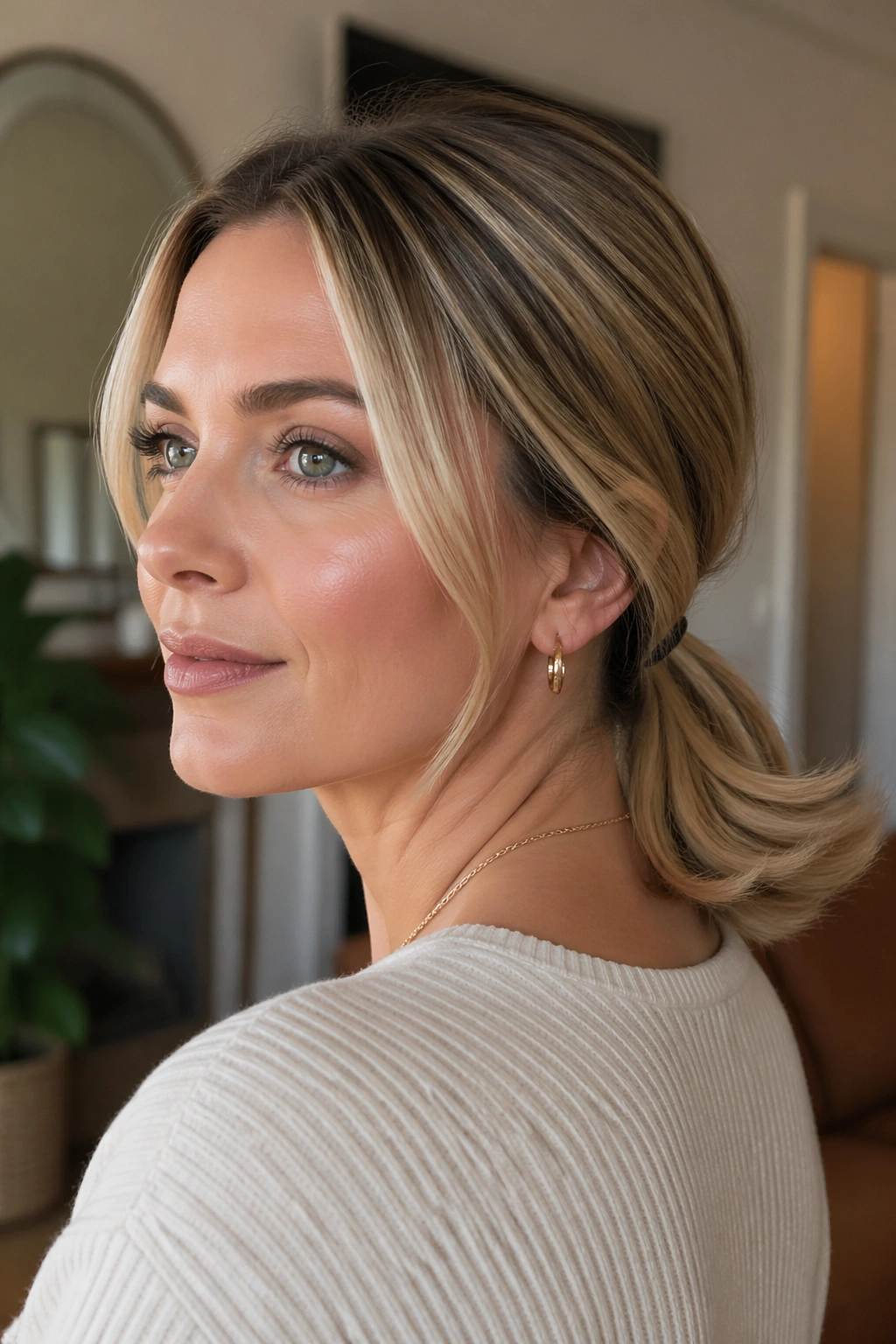
Flipped ends give a low ponytail a sense of motion, and motion reads as fullness. A ponytail that bends outward or under at the ends never looks as flat as one that hangs straight.
Use a blow dryer or flat iron to give the last 2 to 3 inches of the ponytail a soft flip. If your hair is fine, the bend makes the tail look thicker from the middle down. If your hair is already full, the flip keeps the length from feeling heavy.
Best way to style it
- Flip away from the face for a softer result.
- Flip under for a cleaner finish.
- Use a medium-hold spray only on the ends.
This one is understated, but it changes the whole silhouette.
20. Mohawk-Lift Low Ponytail
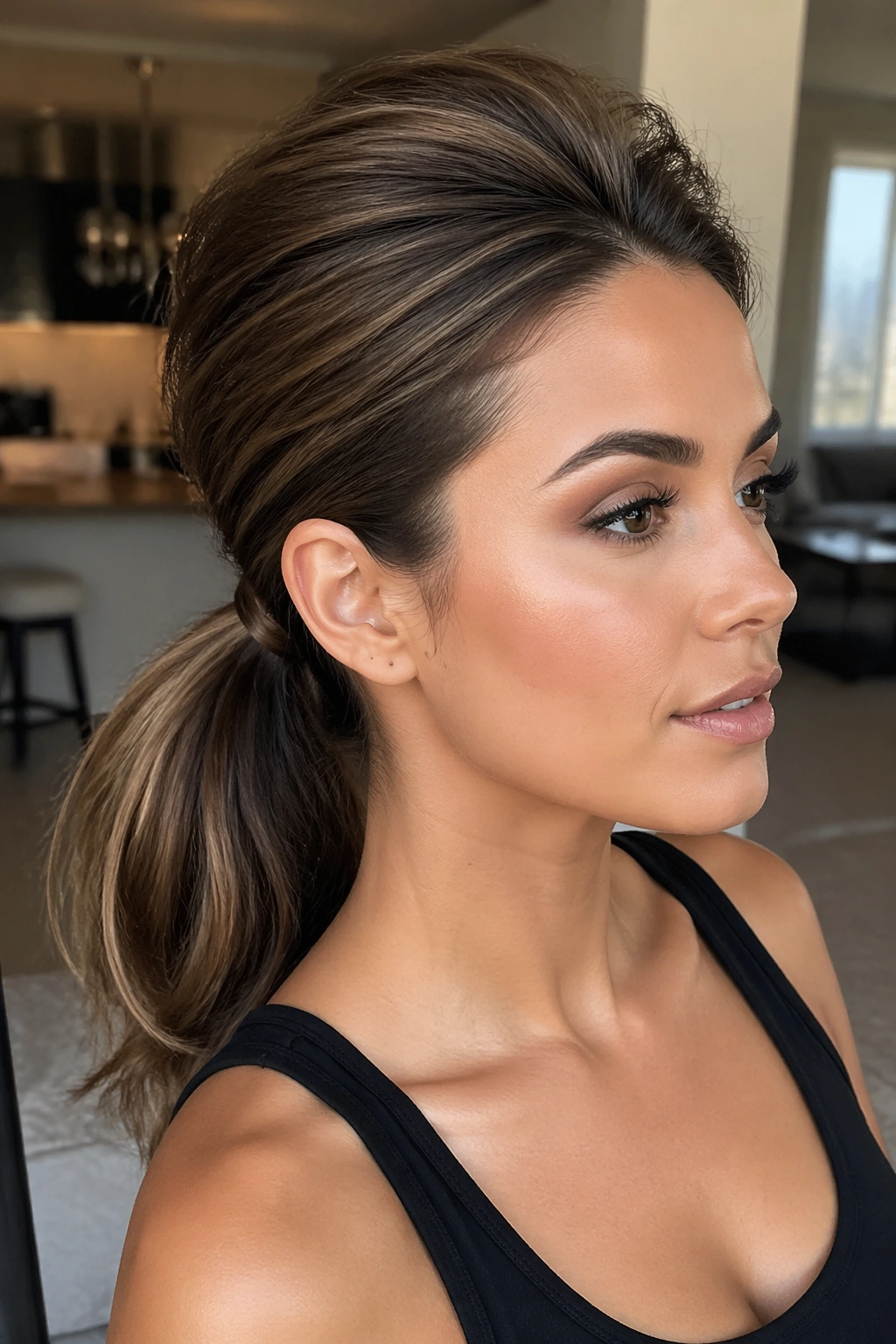
A mohawk-lift low ponytail puts the volume where people notice it first: the center strip from forehead to crown.
Backcomb a 2-inch strip down the middle section and smooth the sides down with a brush. That contrast makes the crown look taller and the ponytail base look thicker. Gather the tail low once the top has enough lift, then pinch the center gently so it doesn’t collapse.
How to keep it wearable
The lift should be soft, not spiky. If the top looks too teased, brush the surface lightly and mist from a distance. You want height, not helmet hair.
This style has more edge than the others, and that is the point.
21. Silk-Scarf Low Ponytail
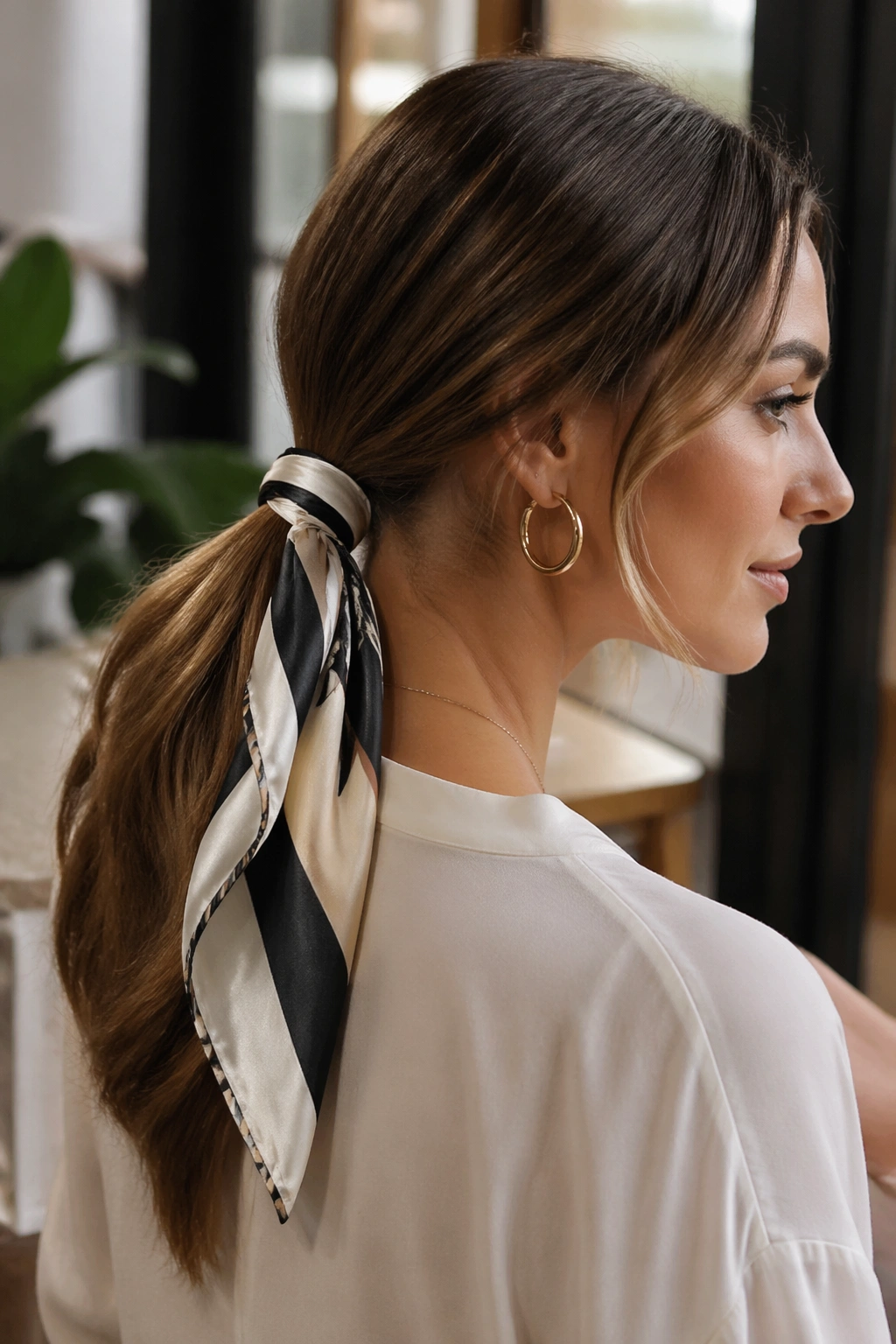
A silk scarf can do more than decorate a low ponytail. It can also hide a thin base and make the whole style read fuller.
Tie the ponytail low, then knot a slim scarf around the elastic and let the ends hang or trail to one side. If the scarf is wide, fold it first so it doesn’t swallow the ponytail. The fabric gives the style softness, and the knot draws attention away from a narrow tail.
This works well with straight hair, where a plain tie can look a little severe. The scarf breaks that line up fast.
Use a scarf with enough texture to stay put. Slippery silk can slide if the knot is weak.
22. Knotted Low Ponytail
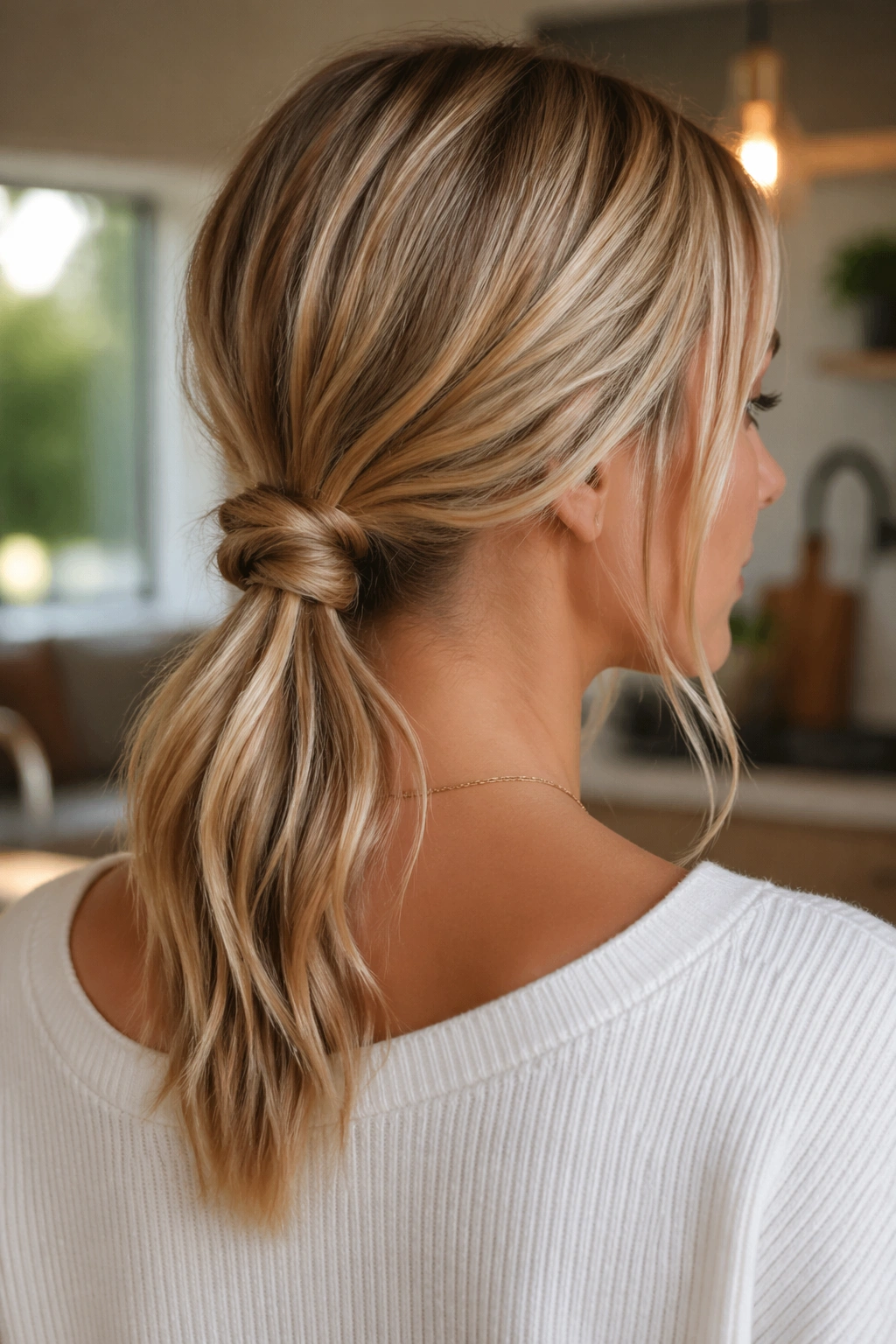
Why does a knotted low ponytail look thicker than a basic one? Because the knot itself creates a little lump of shape right where the eye wants fullness.
Split the hair into two sections, knot them once at the nape, then secure the ends below with a small elastic. You can loosen the knot slightly afterward so it doesn’t sit too tight. The shape is clean, but it has more body than a simple tie.
Best for
- Medium to long hair
- Hair with some natural wave
- Days when you want structure without braids
This is one of those styles that looks more complicated than it is. That’s partly why I like it.
23. Clip-In Extension Low Ponytail
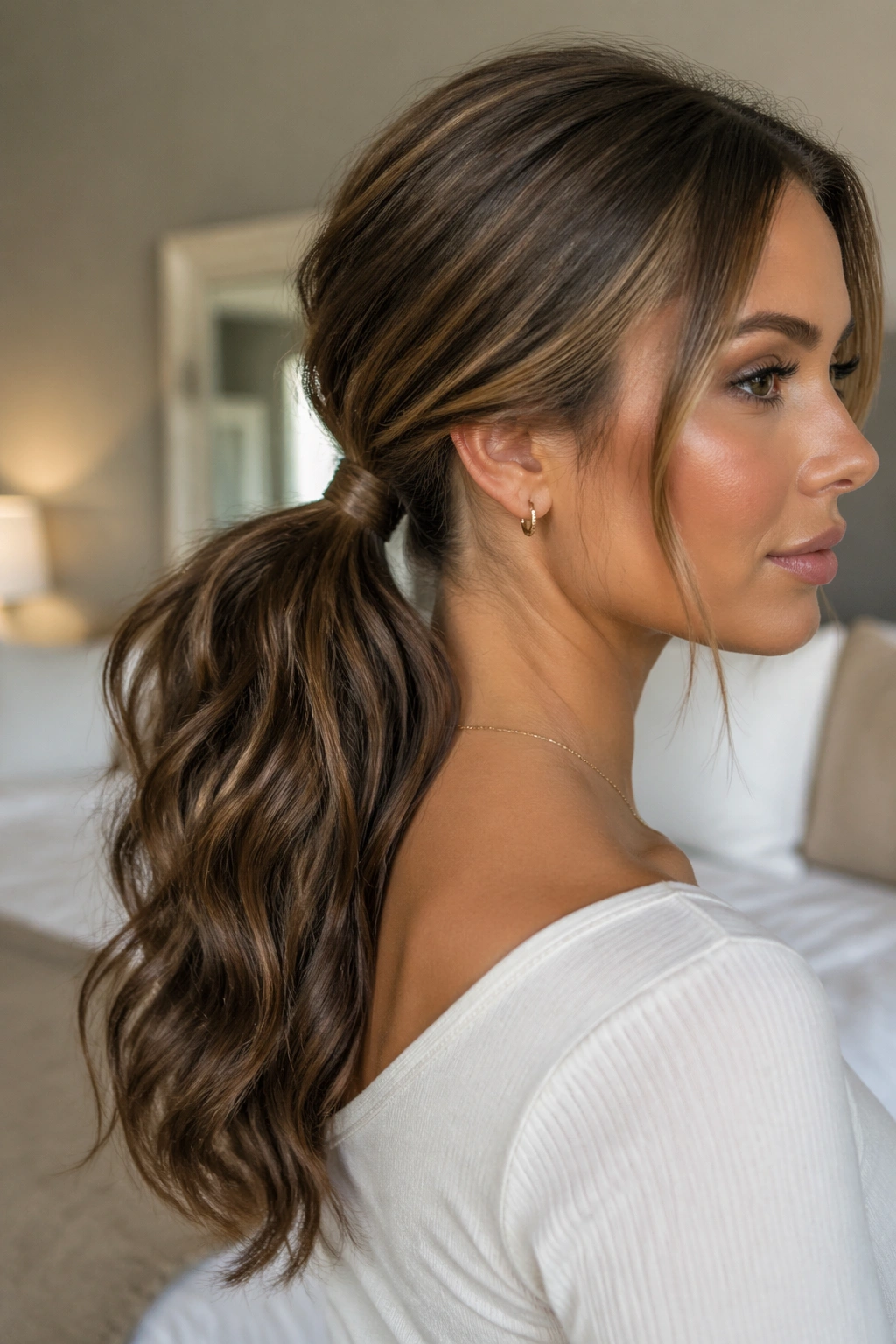
A clip-in extension low ponytail is the most direct way to add fullness, and there is nothing wrong with that. If the goal is thicker-looking hair, sometimes the honest answer is extra hair.
Choose an extension that matches your texture first, then your color. A perfect color match with the wrong texture still looks off. Clip it in low at the base, wrap a small section of your own hair around the attachment, and blend the lengths with a curling iron or brush.
What makes it look real
- Use an extension that’s only a little longer than your natural hair.
- Curl your hair and the extension together.
- Keep the base low and clean.
When the blend is good, nobody notices the extension. They just think your ponytail has a lot going on.
24. Curtain-Bang Low Ponytail
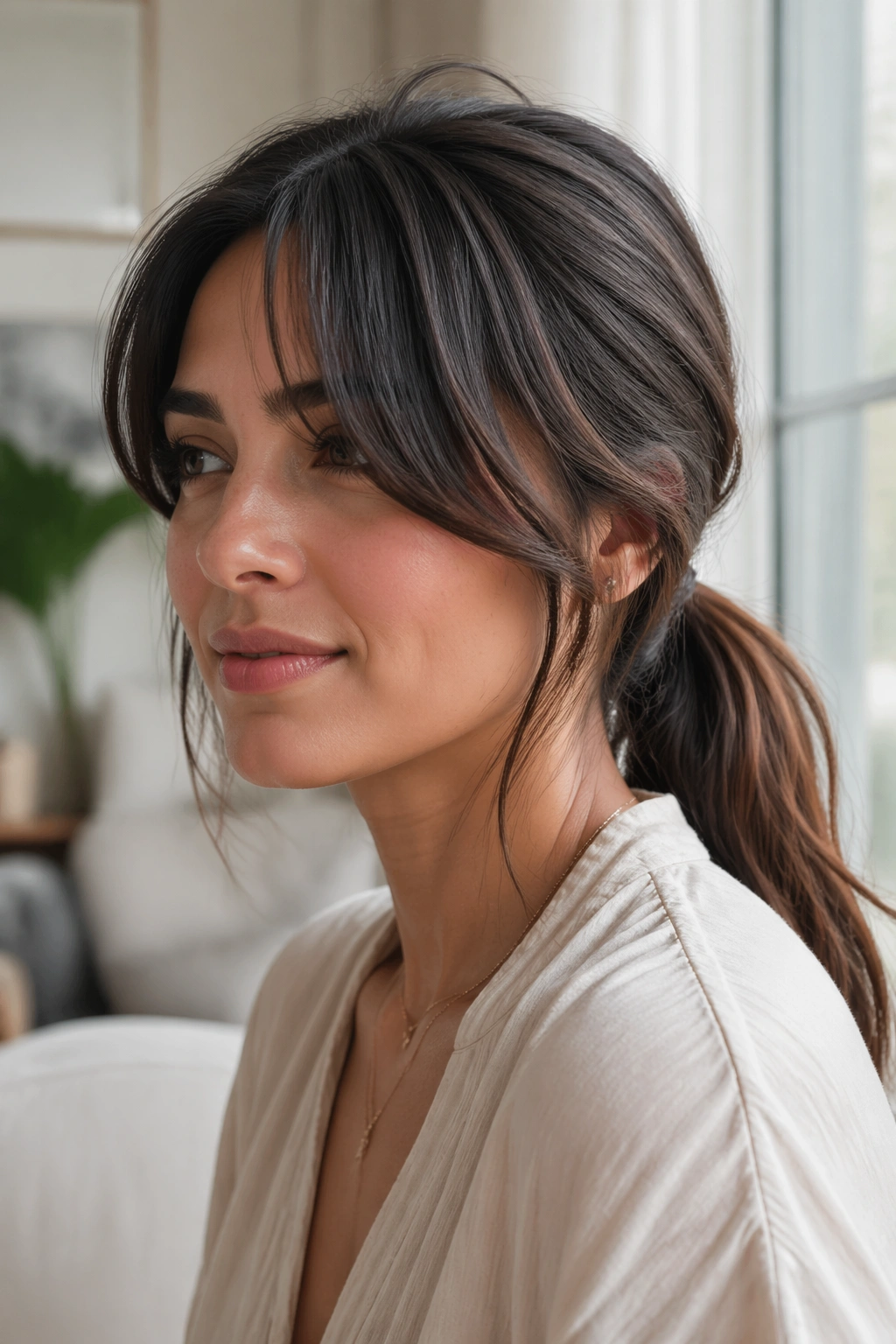
Curtain bangs change the whole look of a low ponytail because they keep the front soft while the tail stays tucked low.
If you have curtain bangs or long face-framing layers, blow them away from the face with a round brush and let them fall into the ponytail shape without pulling them back too tight. That little bit of movement at the front keeps the crown from looking bare. The result feels fuller even when the tail is modest.
How to make the fringe blend
- Bend the bangs away from the face.
- Keep the part slightly off-center.
- Let the shortest layers fall naturally near the temples.
This is one of the easiest ways to make a low ponytail look intentional without doing much at all.
25. Vintage Roll Low Ponytail
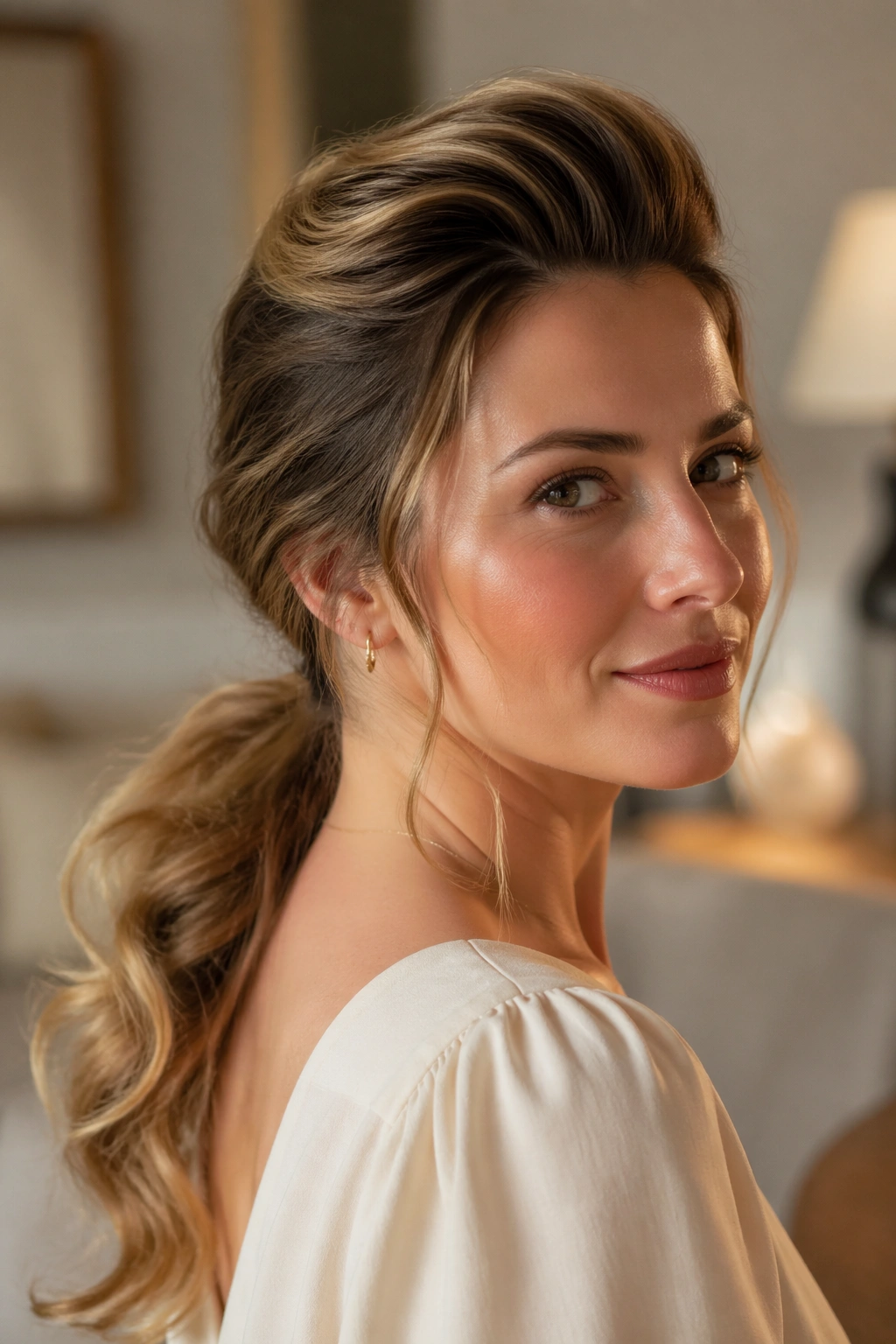
A vintage roll at the crown gives a low ponytail immediate height. The shape is old-school in the best way, and it adds volume without needing much length.
Take a top section, roll it back softly, and pin it in place before gathering the rest into a low ponytail. The roll can be loose and rounded, not tight like a victory wave unless you want a stronger retro feel. Either way, it builds a fuller crown and makes the ponytail sit lower and richer.
This style works well for dressier settings, but I’d wear it on a plain day too. It has presence. That counts.
Final Thoughts
A full-looking low ponytail is mostly a shape problem, not a hair problem. Crown lift, side movement, and texture at the tail do more than piling on spray ever will.
If your hair is fine, start with the wrapped base, the crimped version, or the double-elastic trick. If your hair is thick or curly, the better move is to control the bulk and keep the silhouette soft.
The nice part is that none of these styles asks for a huge time commitment. Five minutes of smart sectioning usually beats twenty minutes of fussing. And that’s the real win here: a low ponytail that looks like it has weight, softness, and shape all at once.