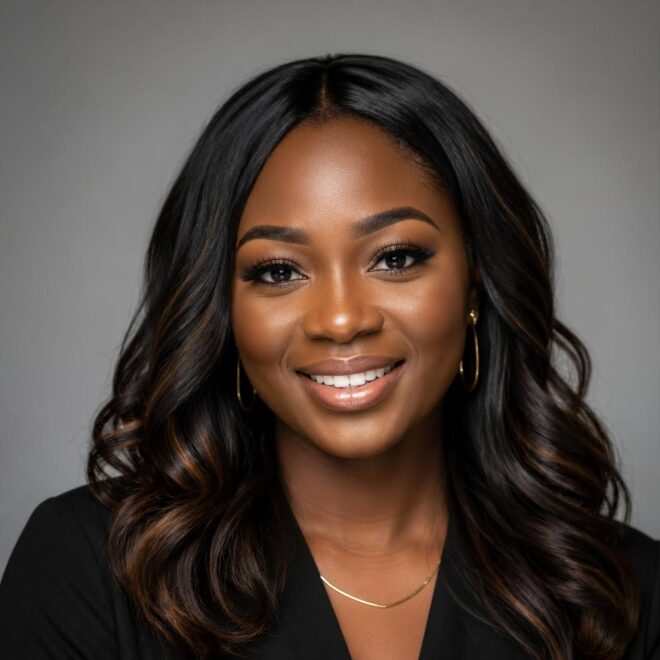


Natural hair can make a ponytail look rich, soft, sharp, or all three at once. It can also turn a ponytail into a small battle if the base is too tight, the parts are sloppy, or the style fights your curl pattern instead of working with it.
The sweet spot is right there in the middle: ponytails for natural hair that respect shrinkage, density, and the shape of your coils. A good ponytail does not flatten your texture into submission. It frames it. It gives you lift, movement, and a little bit of polish without making your scalp feel like it signed a bad contract.
Shrinkage changes everything. So does length that looks short when dry and a whole lot longer when stretched. If you’ve ever tied your hair up, stepped away from the mirror, and come back to a puff that somehow has opinions, you already know the vibe.
A cute ponytail on natural hair should hold up, feel comfortable, and still look like your hair at its best. Some styles are sleek and neat. Some are full and fluffy. Some need gel, some need twist-outs, some need a satin scarf and a little patience. The fun part is that there’s no single right answer — just a whole lot of good ones.
1. Sleek High Ponytail with a Wrapped Base
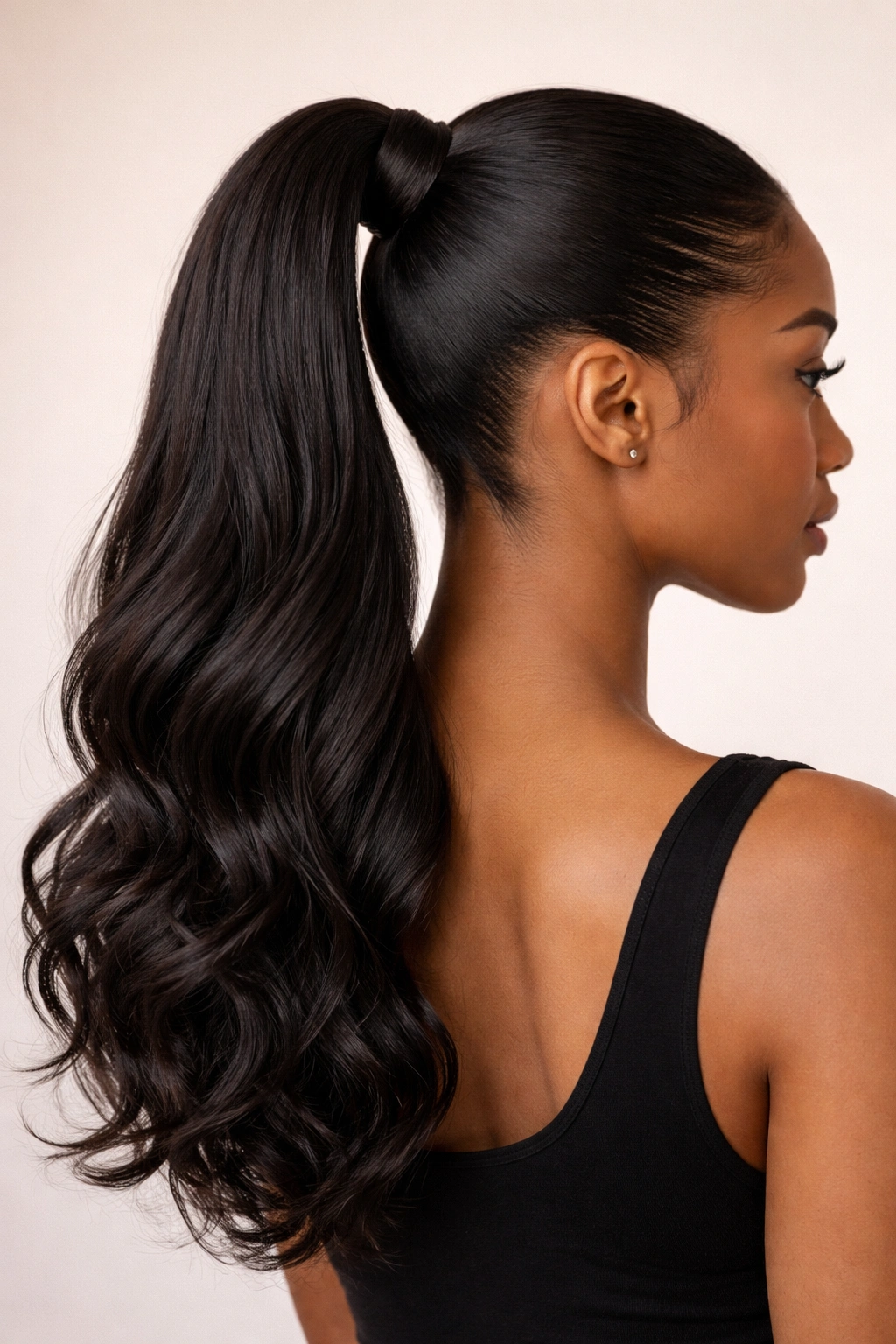
This is the ponytail that makes natural hair look instantly intentional. The high placement lifts the face, and the wrapped base gives the whole style a finished look instead of a school-gym elastic situation.
Why It Flatters Coils
A high ponytail works because it turns the height of your hair into the shape of the style. On stretched natural hair, that lift shows off density without making the ends look bulky. On curly hair, it gives the top section enough control while letting the tail keep movement.
A wrapped base matters more than people admit. It hides the band, smooths the transition from roots to tail, and keeps the eye moving upward. Use a soft brush or your hands, not a heavy hand that drags the hairline flat. That’s where styles start getting tense.
- Best on medium to long natural hair
- Works with blown-out, stretched, or defined curls
- Looks sharp with a middle part or no part at all
- Use a covered elastic or bungee to avoid a thick bump
Tip: wrap one small strand of hair around the base, then pin it underneath. Clean. Simple. Done.
2. Soft Curly Ponytail with a Middle Part
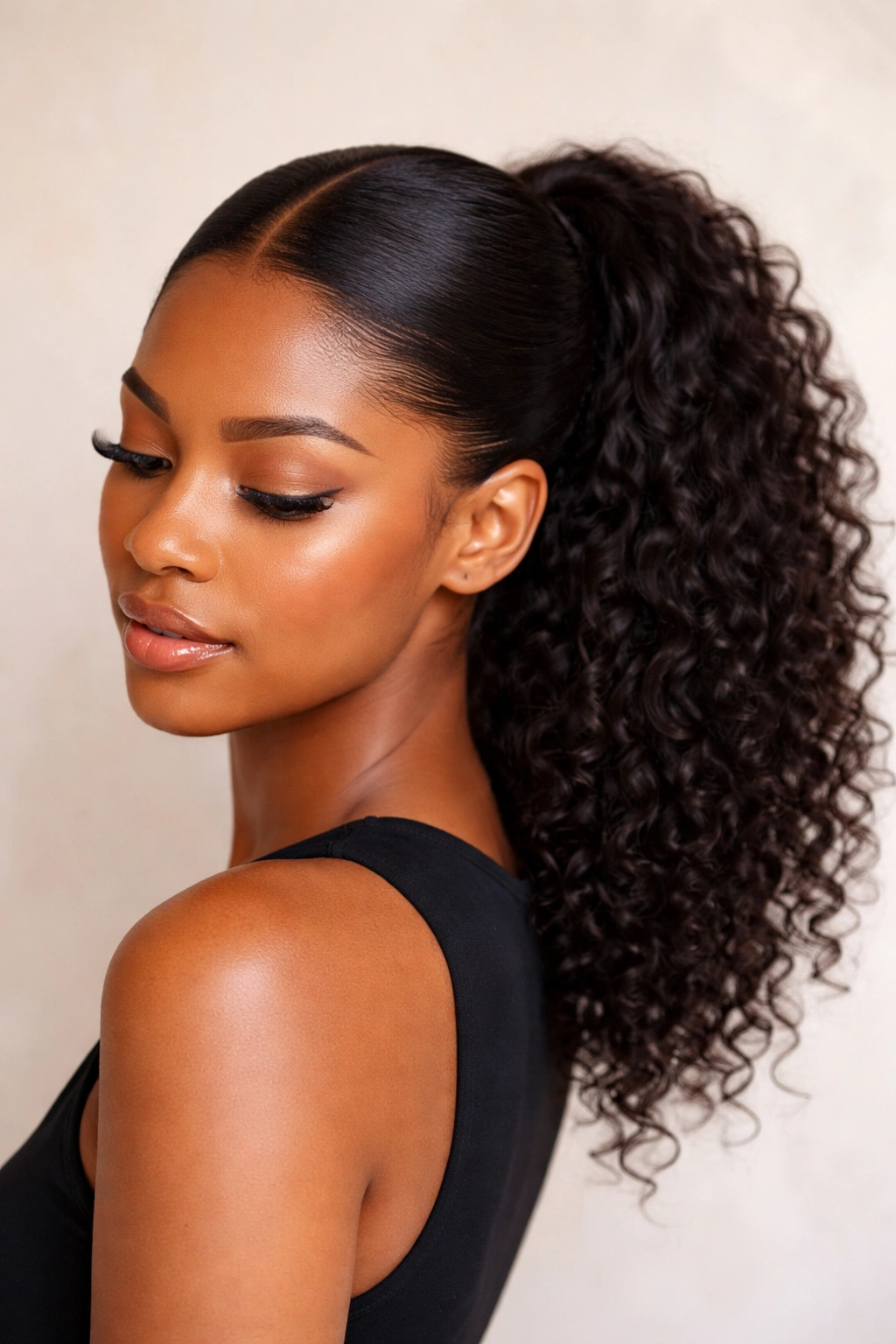
Why does this one always look easy in the best way? Because the middle part gives the face a straight line, and the curls do the rest. It’s a gentle style, not a stiff one.
A curly ponytail like this works beautifully on a wash-and-go, a stretched twist-out, or old curls that still have shape. The trick is not to crush the curl pattern while gathering it. Leave the top smooth, but don’t press the tail into submission. Let it hang with a little bounce.
How to Style It
Use a moisturizing leave-in first, then a light gel or mousse at the roots if you want the part to stay neat. If the curls at the crown puff up a little, that’s fine. Too slick can look harsh on natural texture.
A few face-framing coils make the style feel softer. One or two loose tendrils are enough. More than that and the shape starts to look messy on purpose, which is a different mood entirely.
3. Low Braided Ponytail with Clean Partings
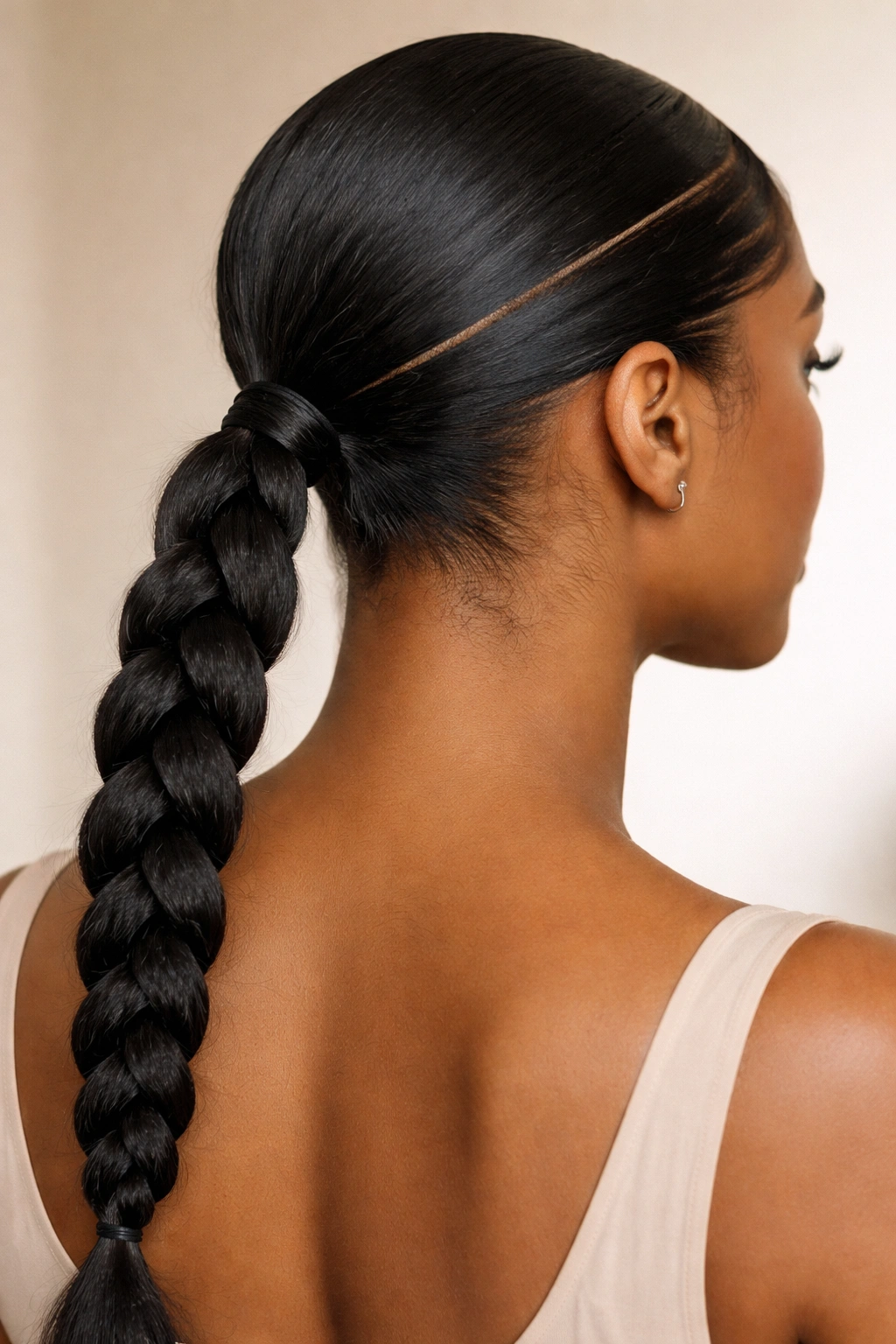
A low braided ponytail has that calm, tidy energy that works for work, dinner, or any day when you want your hair out of the way but still styled. The braid keeps the ends protected, and the low placement makes the whole look feel grounded.
The parting is the part people notice first, even if they don’t know they’re noticing it. A crisp center part or a deep side part gives the style structure before the braid even starts. If your hair is thick, split the ponytail base carefully so the braid doesn’t pull unevenly.
What Makes It Worth Trying
- Good for stretched natural hair
- Keeps ends tucked away
- Easy to dress up with cuffs or ribbon
- Less likely to frizz up fast than a loose tail
The best version isn’t overpacked with product. Use enough gel to smooth the roots, then stop. A braid that feels hard and crunchy at the base tends to look overworked, and that’s a shame when the shape itself is this clean.
4. Bubble Ponytail on Stretched Natural Hair
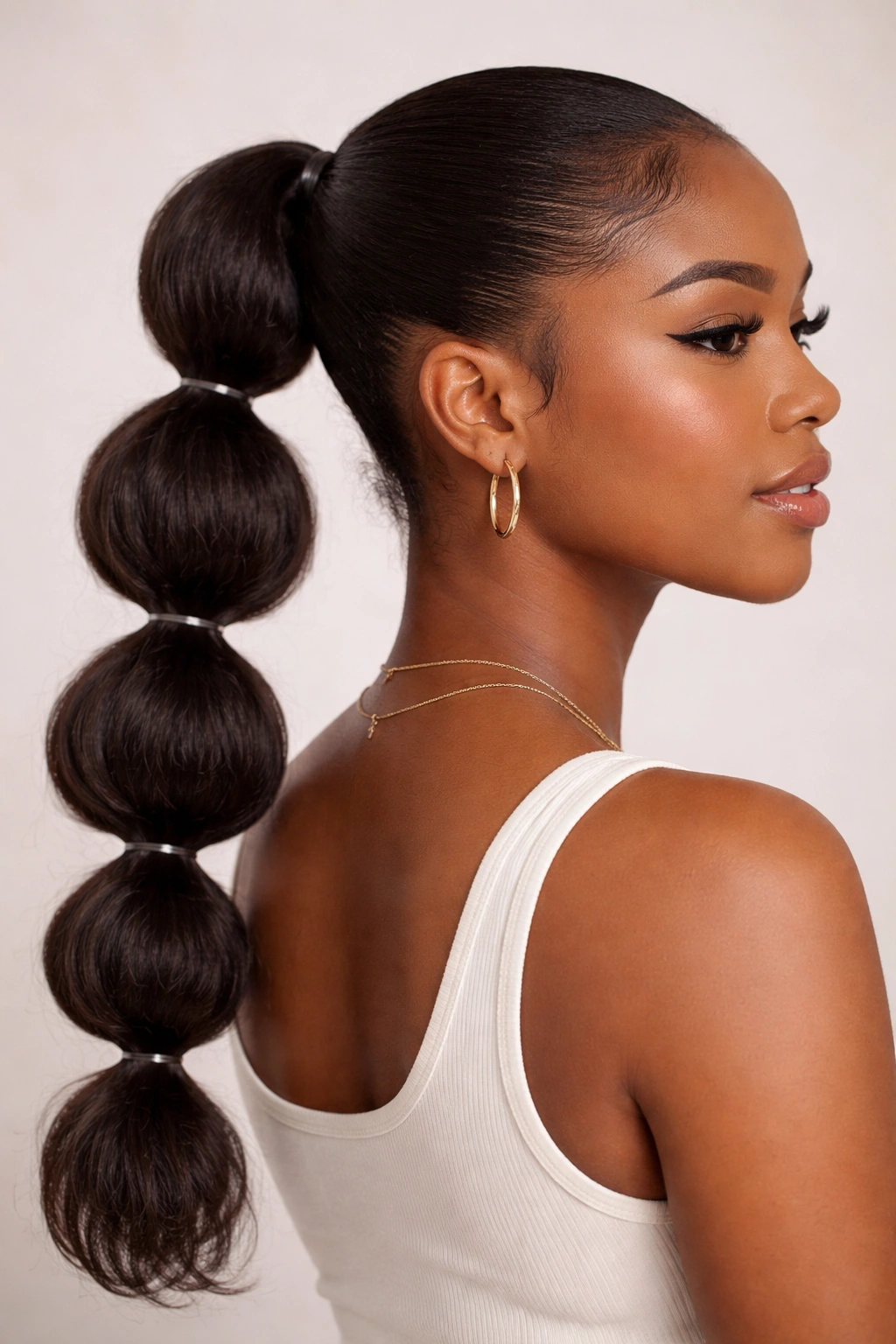
The bubble ponytail is playful, but on natural hair it also solves a real problem: it turns one long tail into several rounded sections that hold shape better. If your hair has been stretched, the bubbles pop more clearly and the style reads as deliberate instead of random.
I like this one because it does not need perfect sleekness. It needs structure. Tie the ponytail first, then add small clear elastics or silk ties every 2 to 3 inches down the length. Gently tug each section to round it out. That’s it. No wrestling.
A few details make all the difference:
- Use a smoothing cream or gel at the root
- Space the bands evenly so the bubbles look balanced
- Fluff each section a little after securing it
- Keep the tension mild, especially near the hairline
If your hair is dense, this style can look full fast. If it’s finer, a little added hair in the tail can help, but you do not need much. Too much extension and the bubbles lose their shape.
5. Pineapple Ponytail for Defined Curls
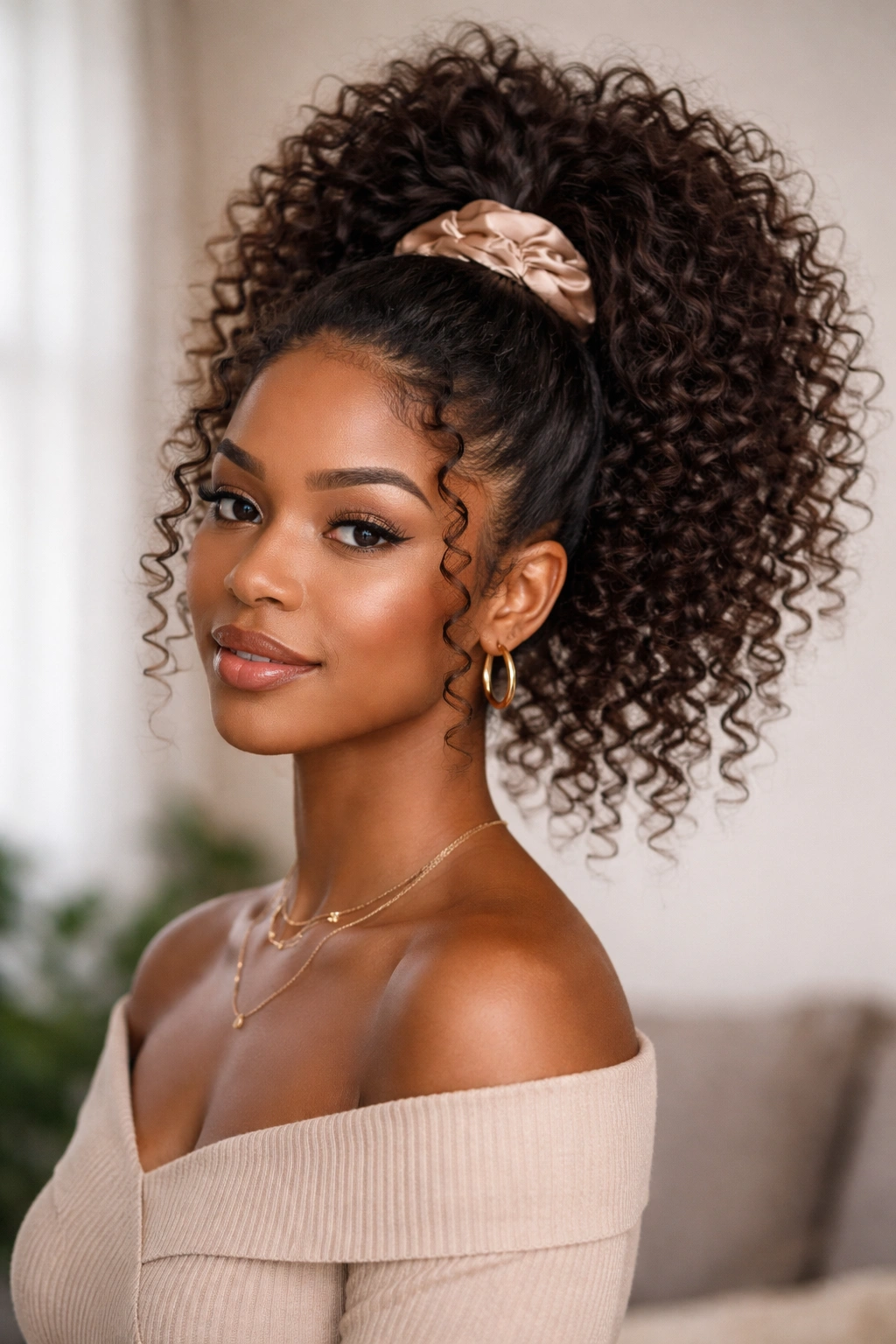
The pineapple ponytail is a curl-friendly classic for a reason. It keeps the hair high, protects the curl pattern, and makes second- or third-day curls look less like leftovers and more like a plan. That high placement also keeps the style soft around the face.
The secret is the band placement. Don’t drag the hair tight to the crown. Place a satin scrunchie or soft band high enough to lift the curls, then stop before the root starts to feel strained. If the top section is too tight, the whole look loses its easy shape.
You can wear this with loose spirals, a fluffy wash-and-go, or a curly set that still has spring. It’s especially good when the front curls are a little stretched and the ends are still defined. That contrast gives the style texture.
A pineapple ponytail works best when you let a few curls fall naturally around the face. Not many. Just enough to make it feel lived-in rather than staged.
6. Side-Swept Ponytail with Face-Framing Pieces
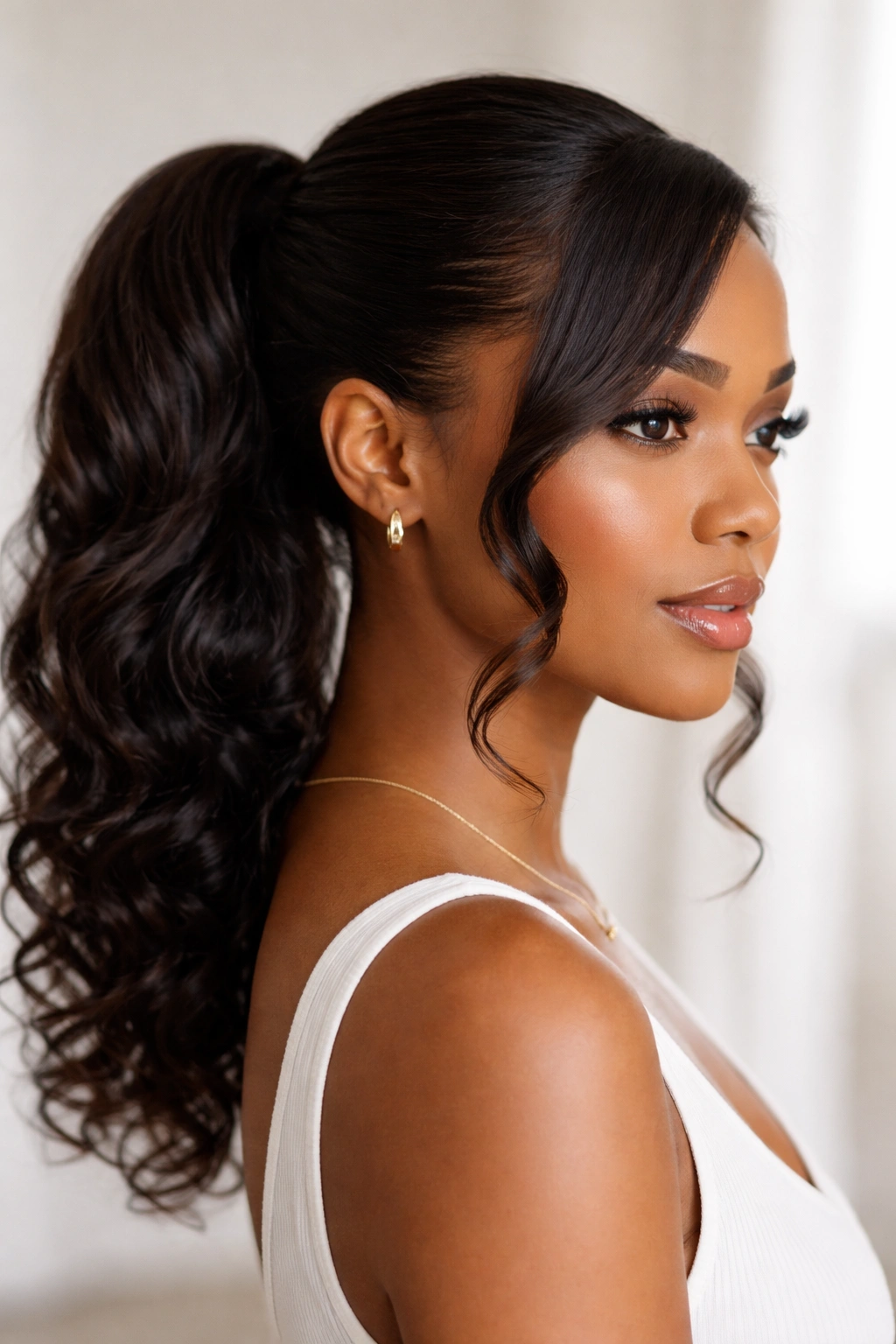
Unlike a straight-down center style, a side-swept ponytail gives natural hair a little motion before the tail even starts. It draws the eye across the face, which can make the whole style feel softer and less rigid.
This is a good choice when your curls are having one of those “almost good, almost not” days. A deep side part, a smooth front section, and a ponytail gathered just behind one ear can hide uneven shrinkage without making it look like you tried to hide anything. Which is the charm, really.
If you want the look to hold, set the front with a light gel and a soft brush. Then leave two small pieces free near the cheekbones. Curl them with a flexi rod if you want a cleaner finish, or leave them as natural tendrils if you like more movement.
It works on stretched hair, twist-outs, and even a day-old blow-dry. The best part is that it looks different from the usual center-part pony without needing complicated hands or extra hair.
7. Cornrow-to-Ponytail Style
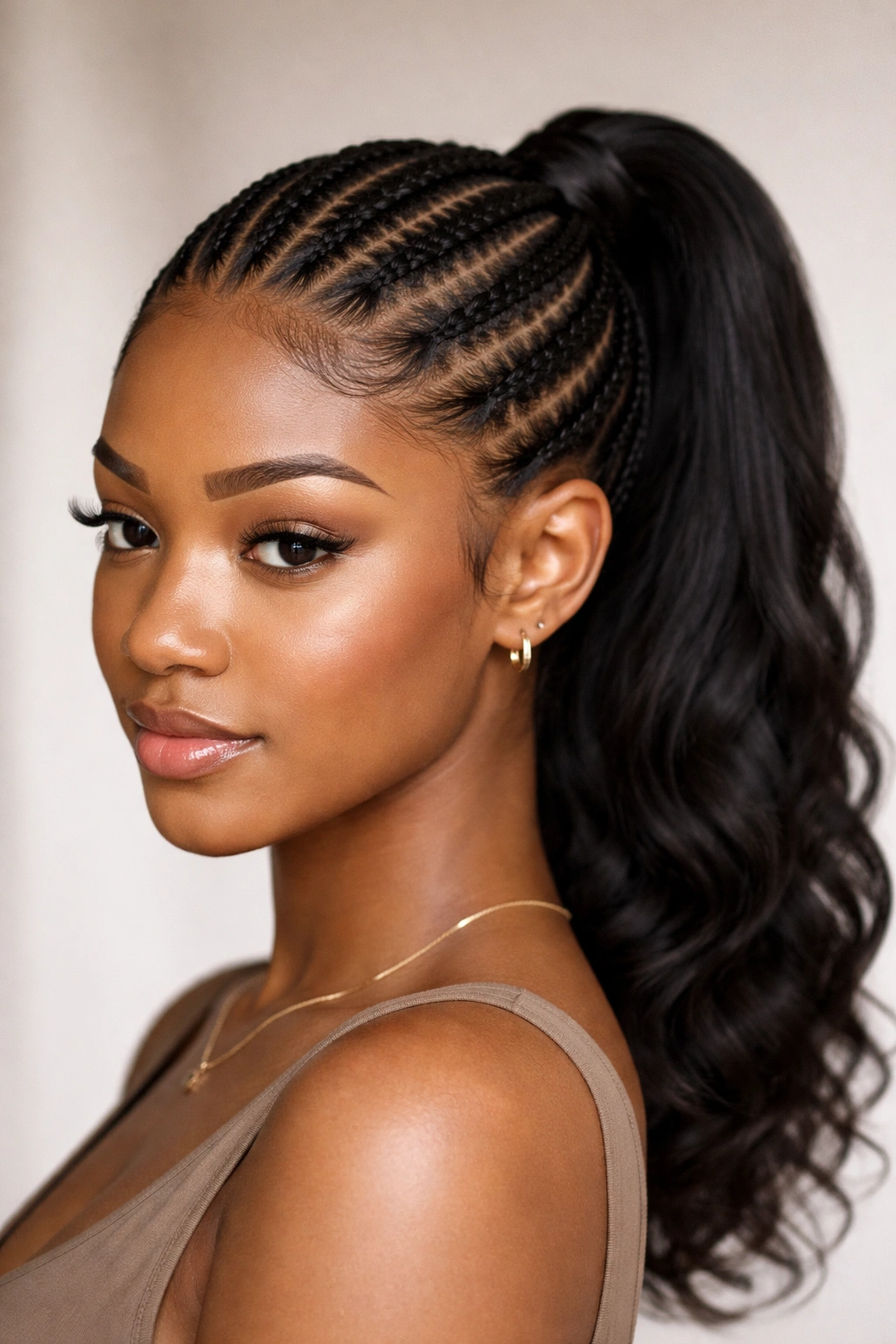
A cornrow-to-ponytail style has real staying power. The front is braided flat, the back gathers into a tail, and the whole look stays neat far longer than a loose ponytail usually does.
Why It Works So Well
Cornrows spread tension across the scalp instead of putting all the pull on one elastic point. That makes the style easier to wear for a full day, sometimes longer, depending on how much your hair frizzes up. The tail can be curly, straightened, or braided, which gives you room to adjust the mood.
Quick Styling Notes
- Use 4 to 8 cornrows, depending on density
- Keep the braid size even so the style sits balanced
- Add a curly bundle if you want extra swing
- Don’t braid so tightly that the scalp feels sore by hour two
A tiny bit of scalp oil on the exposed parts can keep the finish looking clean, but don’t overload it. Too much product near the roots makes the style shiny in the wrong way. The neatness should come from the braiding, not from drowning it.
8. Double-Stacked Ponytail with Two Height Levels
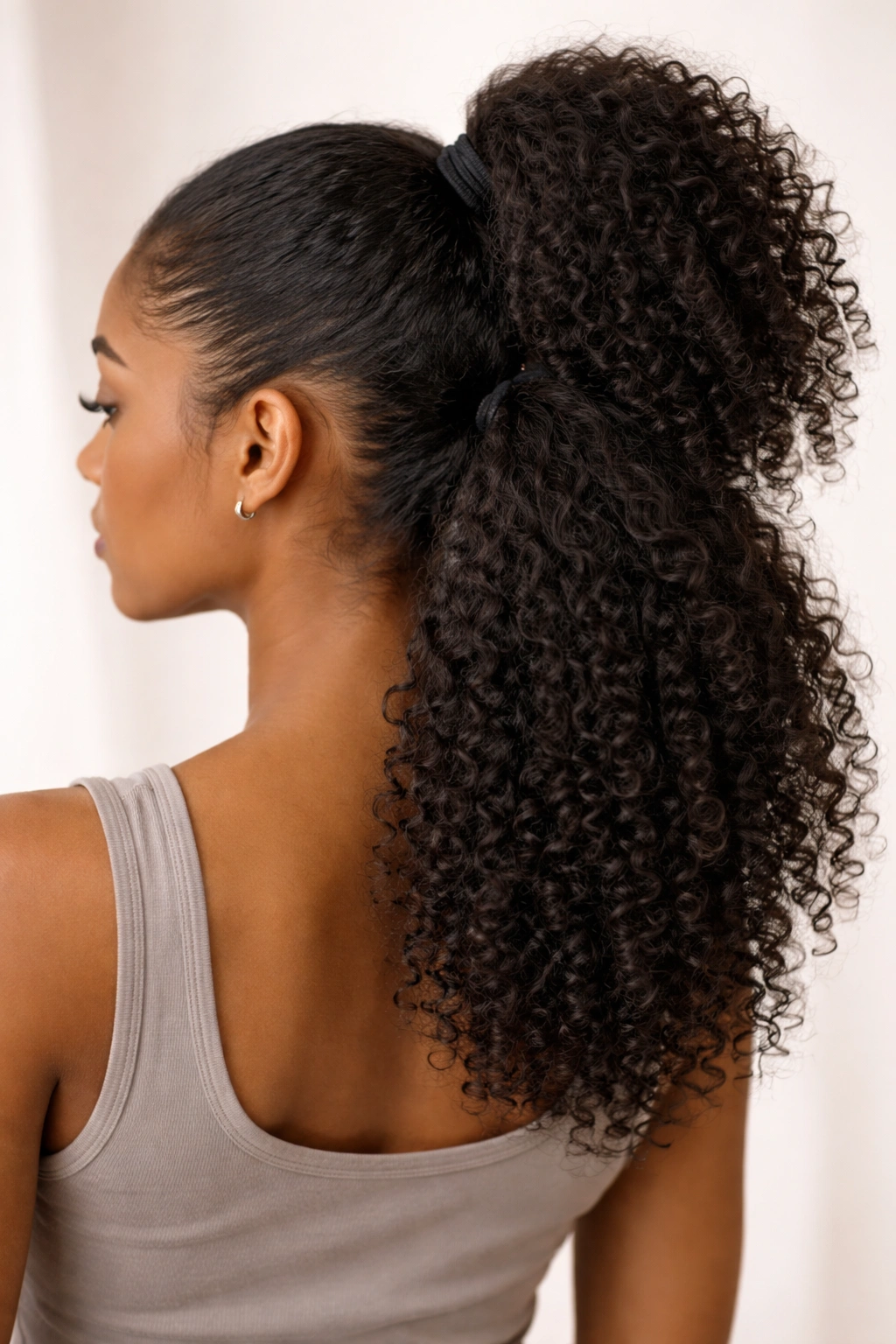
A double-stacked ponytail sounds fancy, but the idea is simple: one ponytail sits above the other, and the two sections blend into a fuller shape. It gives natural hair extra lift without asking one elastic to do all the work.
This style is a smart move when your hair is medium length and you want more volume at the crown. The top section lifts the eye, while the lower section fills out the tail. It’s one of those styles that looks more complicated than it is, which is a nice little bonus.
Use two matching elastics and keep the sections neat. If the top ponytail is too tiny and the bottom one is huge, the balance gets awkward fast. Same with tension. Keep both bands snug, not punishing.
A wrapped strand or a small decorative cuff at the base can hide the seam between the two sections. That detail matters. Without it, the style can look like two separate ideas. With it, the ponytail reads as one shape.
9. Rope-Twist Low Ponytail
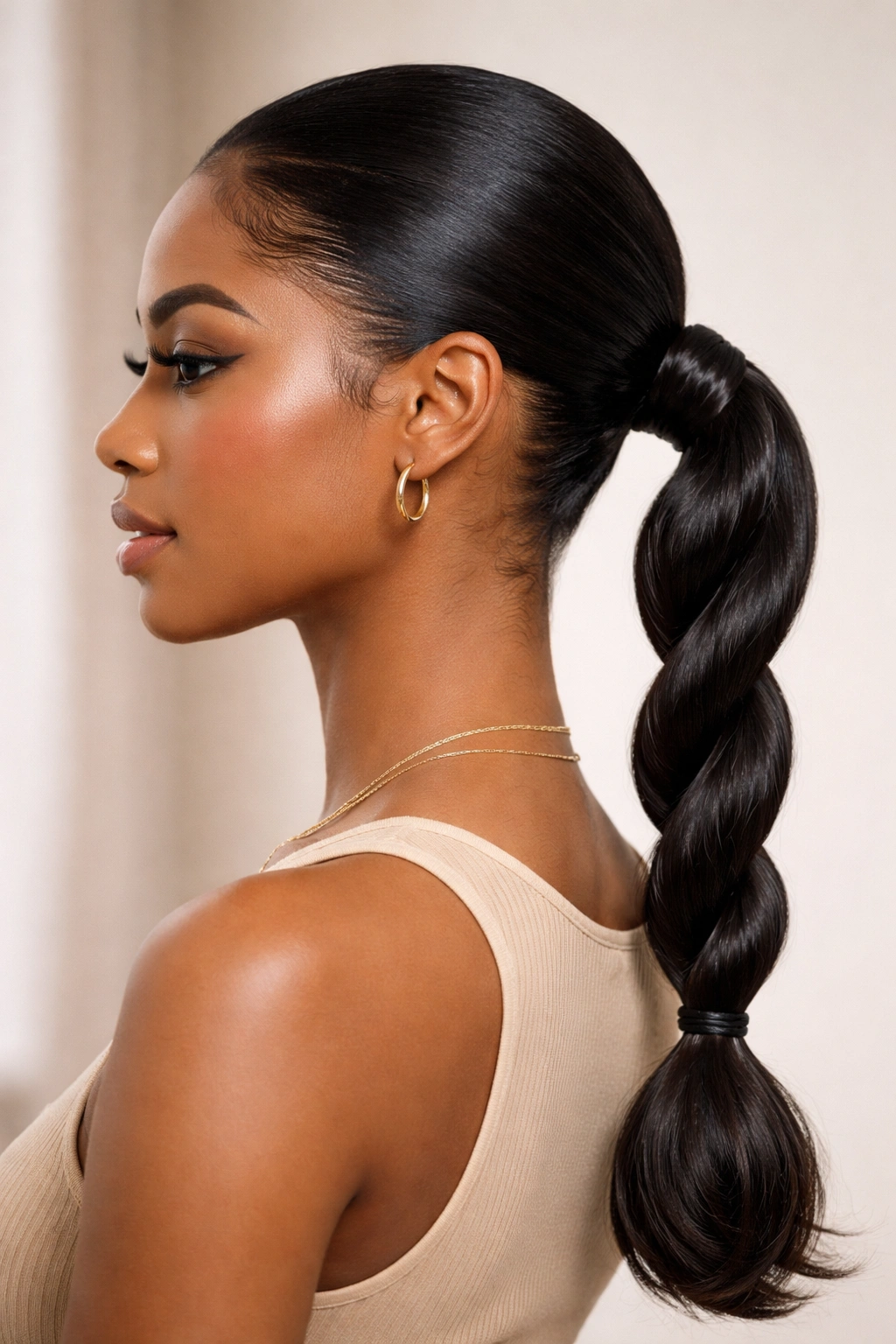
A rope-twist low ponytail is smoother than a braid and quicker than a full flat-twist set. It has that tidy, polished look, but the twist texture gives it a little more shine and movement than a plain low ponytail.
The style works best when your hair is stretched first. You can do that with banding, twist-outs, braid-outs, or a gentle blow-dry if that’s part of your routine. The point is to give the rope twist enough length to show its pattern without shrinking back into a lump.
Split the tail into two sections, twist each one in the same direction, then wrap them around each other in the opposite direction. That push-and-pull is what keeps the rope shape from unraveling. Secure the end with a small elastic and, if needed, tuck it under.
It’s a good style for thick hair because it stays compact at the neck. It also works when you want something neat that doesn’t scream “special occasion” but still looks cared for.
10. Fluffy Afro Puff Ponytail
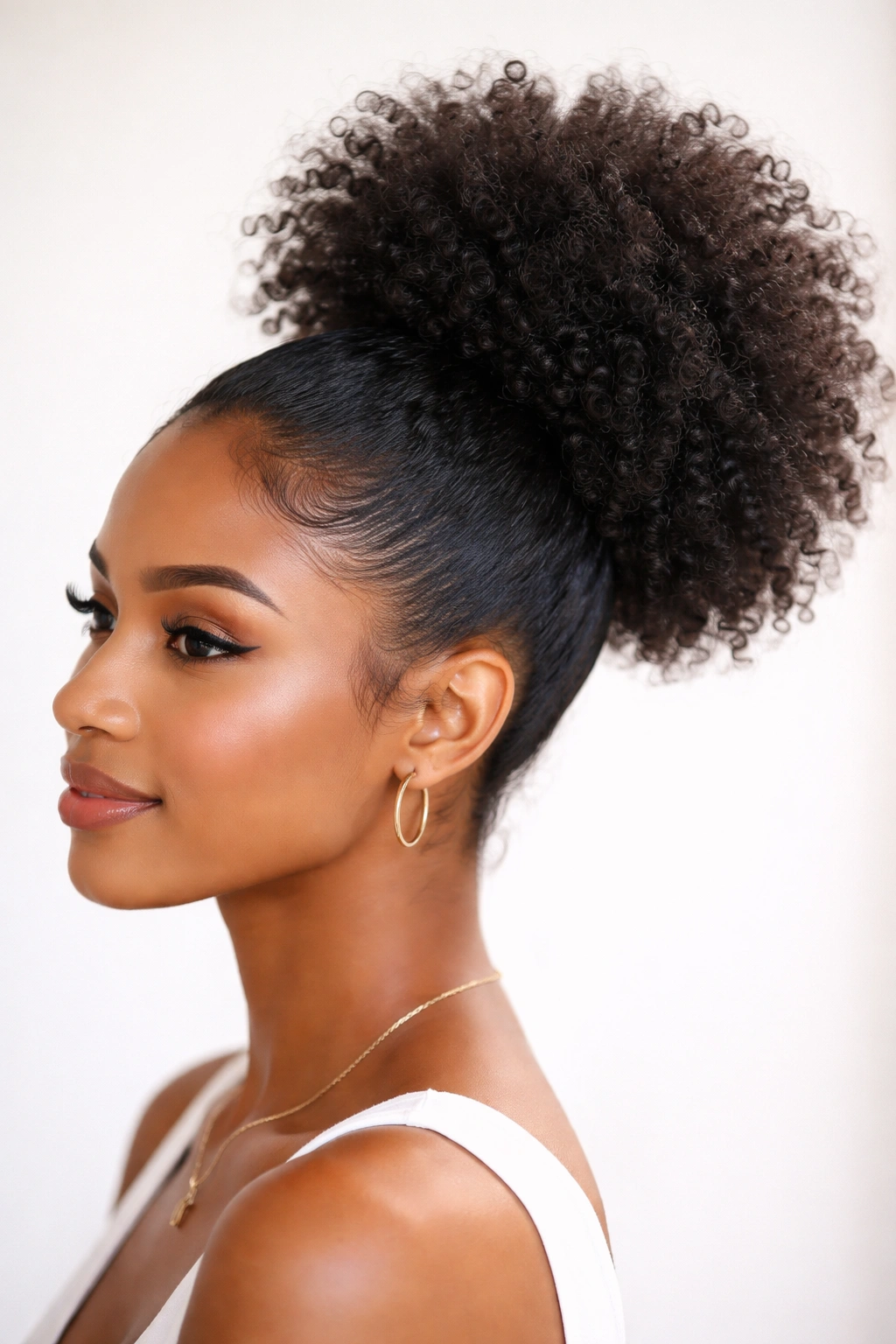
A puff is not a backup plan. It’s a shape, and a strong one.
The afro puff ponytail gives natural hair room to be big, soft, and unapologetically textured. You gather the hair high or mid-level, smooth the perimeter a bit, then let the rest bloom into a rounded puff. The finish is playful, easy, and full of personality.
A wide headband or a strong elastic with a little give usually works better than a tiny band that digs in. If your hair is dense, use a brush only around the edges and leave the body alone. A puff looks best when it feels airy. Over-brushing kills that effect.
This style is especially good on short-to-medium natural hair, but longer hair can wear it too. The trick is keeping the base neat and letting the body expand naturally. A little shine on the surface helps, but you want the texture to stay visible. That’s the whole point.
11. Ponytail with a Swooped Side Bang
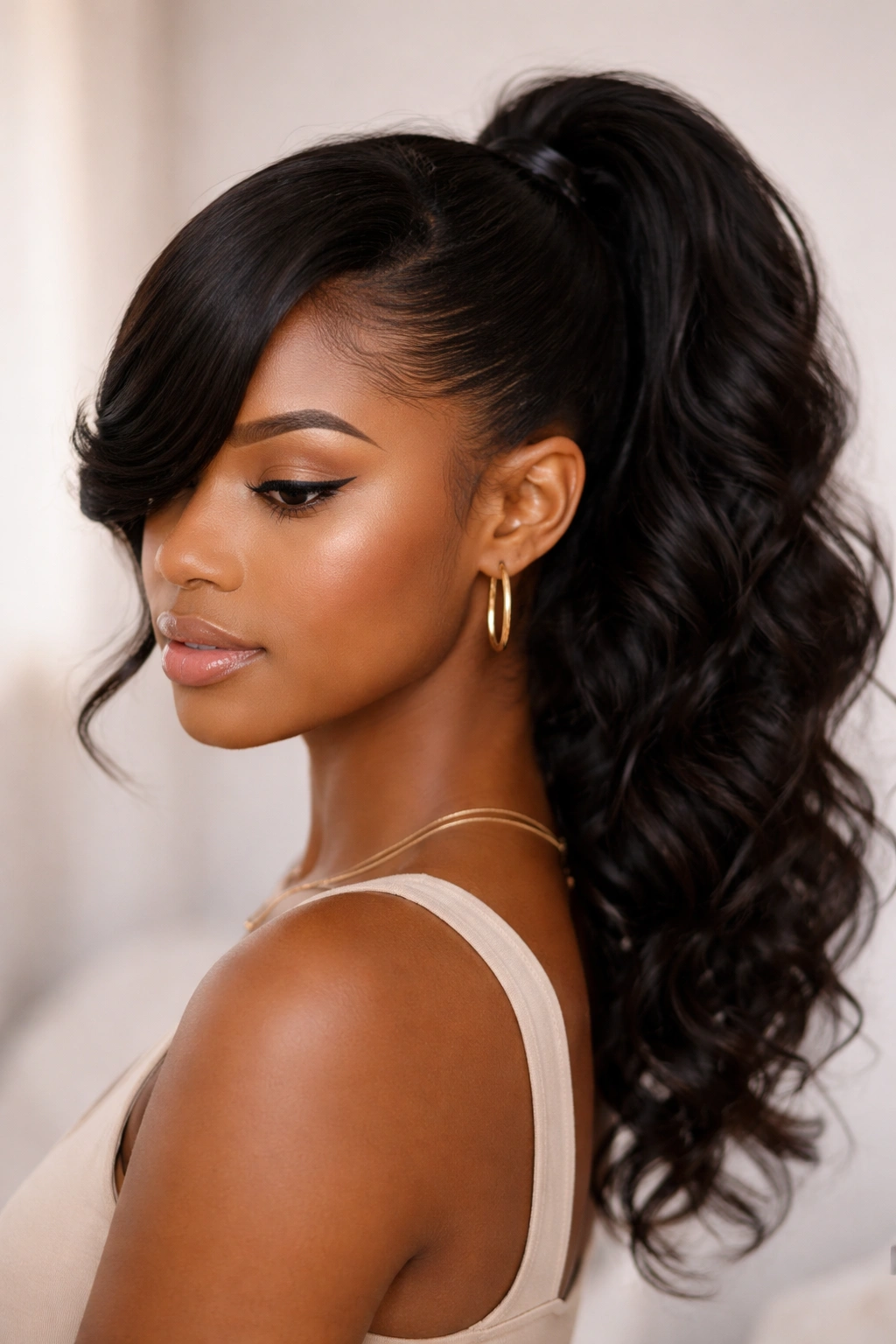
A swooped side bang changes the whole tone of a ponytail. Without it, the style can read as plain. With it, the face gets softness, and the ponytail feels shaped instead of merely tied back.
This works especially well when the rest of the hair is pulled away from the forehead. The bang gives you one controlled curve, and that single curve makes the style feel more finished. If the front pieces are too stiff, the style loses the point. They need a little bend, not a helmet.
You can create the swoop with a large twist, a flat twist, or a stretched section that’s gently pinned across the forehead. If your hair doesn’t want to lie flat, use a touch of gel and a scarf for a few minutes before taking it off. That small wait pays off.
The ponytail itself can be curly, braided, or puffed. The bang does the visual work. It’s a small detail, but it changes the mood fast.
12. High Braided Ponytail with Added Length
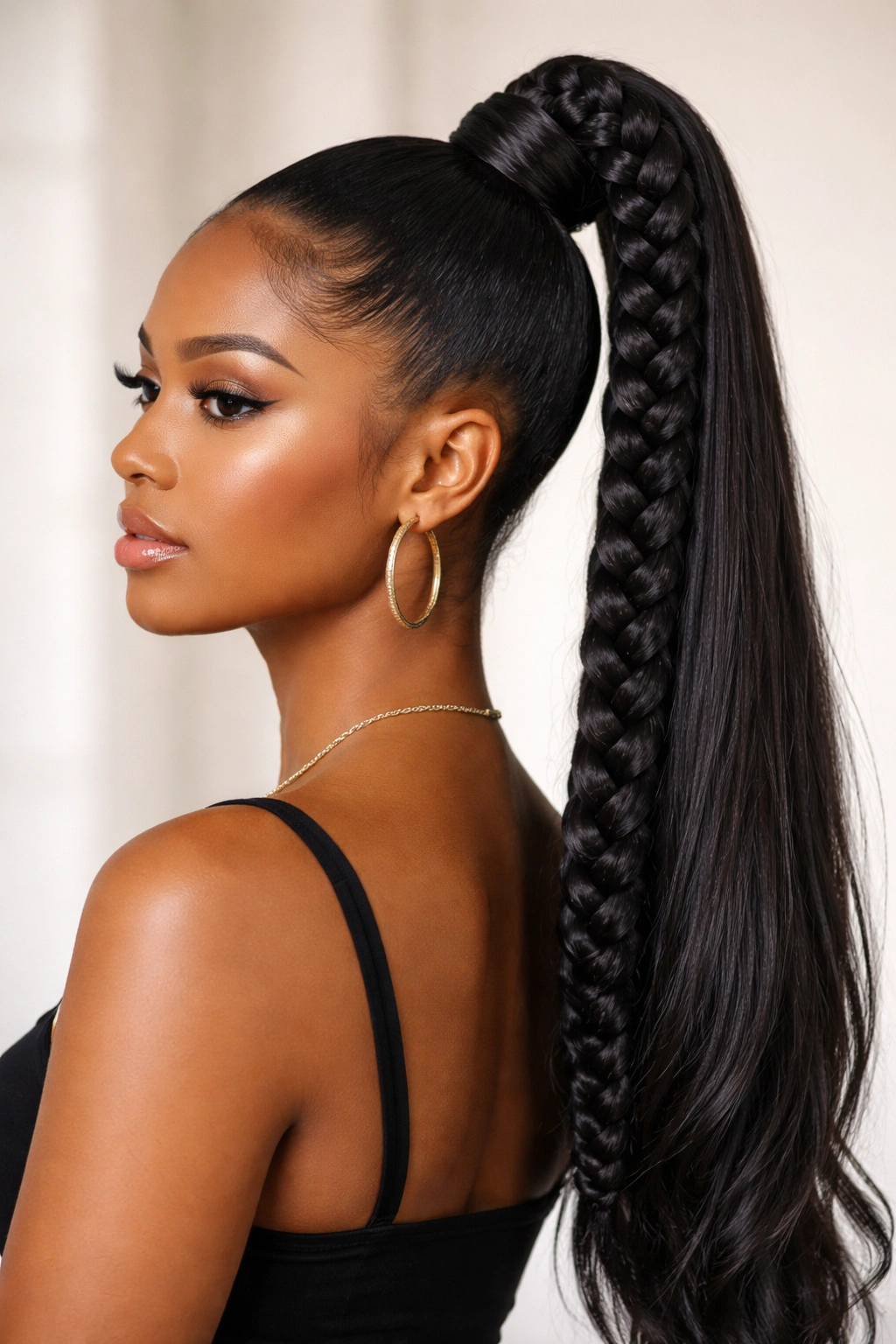
A high braided ponytail gives you drama without needing a whole head of braids. The hair is gathered high, then braided down into a long tail that can hang heavy, swingy, or straight depending on the finish you want.
This is one of those styles where the braid itself becomes the accessory. Pick a lightweight braiding hair if you’re adding length, because too much weight at the crown gets old fast. A style that looks nice for ten minutes and then starts tugging on your scalp is not a win.
Use a secure base and smooth the hair upward in sections so the ponytail doesn’t develop bumps. If your natural hair is thick, split it into two or three parts before gathering it. That keeps the base flatter and the braid more even.
It’s a good choice for events, nights out, or any day you want your hair to feel more sculpted. A small wrapped piece at the base or a few gold cuffs can sharpen it up even more.
13. Faux-Hawk Ponytail with Flat Sides
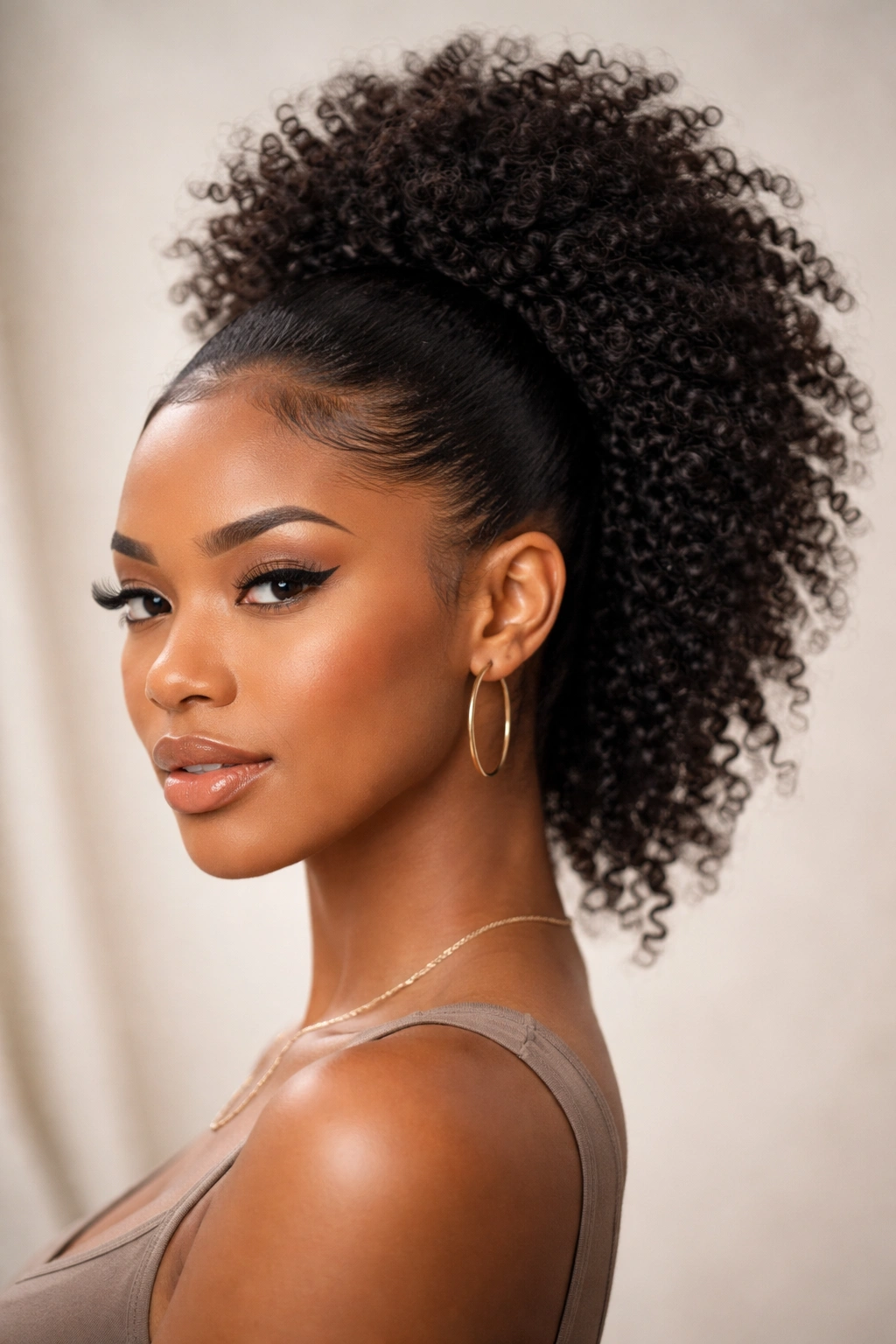
This one has attitude. The faux-hawk ponytail keeps the sides flat and channels the height through the center, which gives natural hair a sharp line without fully committing to a mohawk.
What Makes It Different
The visual trick is all in the contrast. Smooth sides make the middle section look taller, fuller, and more dramatic. On curly or coily hair, that contrast feels even stronger because the texture in the center stands out against the sleek sides. A regular ponytail sits. This one leans into shape.
How to Keep It Clean
- Divide the hair into three sections
- Smooth the sides down with gel or edge control
- Gather the center into one high ponytail
- Let the tail stay curly, braided, or blown out
A faux-hawk can be bold without being fussy. If you want a softer version, loosen the sides a bit and keep the center puffier. If you want more edge, braid the sides in toward the middle. Either way, the line from forehead to crown matters most.
14. Half-Up Ponytail on Natural Hair
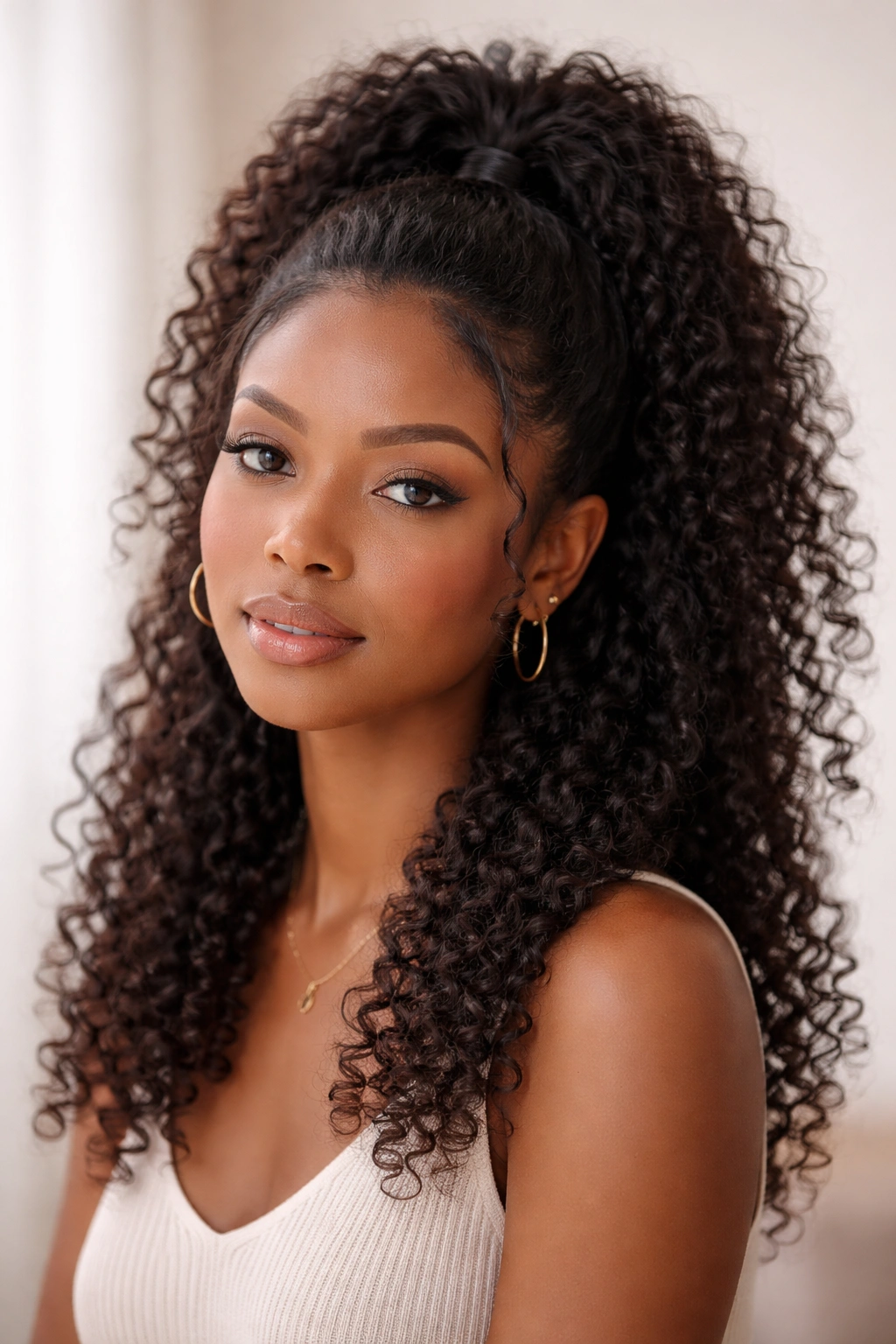
Can a half-up ponytail count as a ponytail? Absolutely. And on natural hair, it’s one of the easiest ways to get shape without losing all the texture around your shoulders.
This style works because it lifts the top section away from the face while leaving enough hair down to keep the look soft. That balance is useful on days when you want some control but not a fully pinned-up feel. A wash-and-go, twist-out, or stretched set all work here.
The top section should be secure but not yanked back so hard that the front starts to feel tense. Use a satin scrunchie or a covered elastic, then fluff the lower section with your fingers. If the bottom hair is a little wild, that’s fine. It gives the style movement.
You can keep the top section small and neat or make it big and puffier. Both look cute. The style changes a lot depending on how much hair you pull up, so play with that before you call it done.
15. Satin-Scarf Wrapped Ponytail
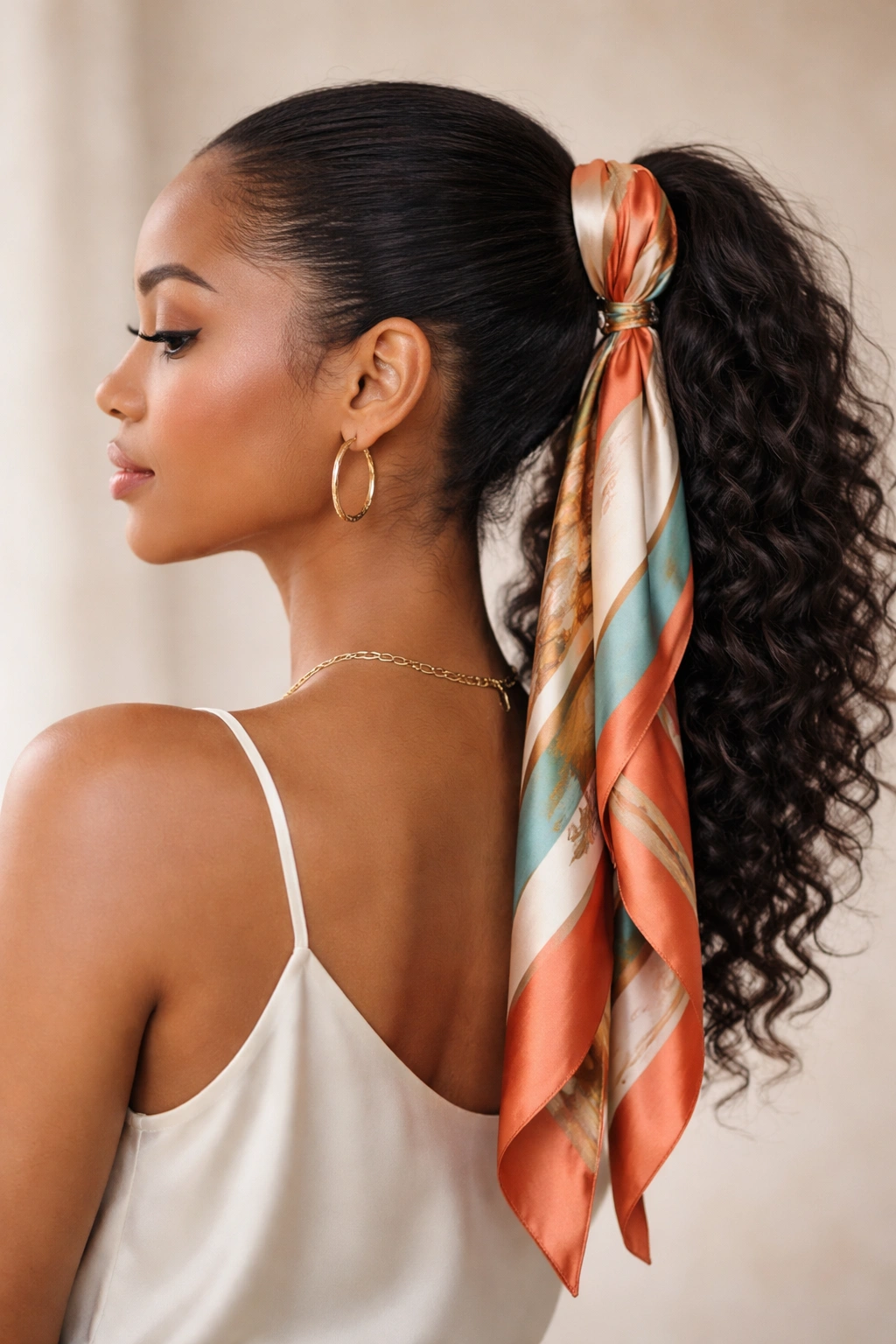
A satin scarf can do more than protect your hair at night. Wrapped around a ponytail, it becomes part of the style. That’s handy when you want color, pattern, or just a way to hide a base that isn’t behaving.
The scarf can sit around the ponytail base, trail into the tail, or cover the front band entirely. I like this option when the hair is slightly frizzy and doesn’t need a full redo. The scarf buys you a polished finish without forcing the texture to fake anything.
Choose a scarf that isn’t too slippery if you want it to hold. Satin feels nice, but a scarf with enough body stays tied better. A square scarf usually gives you more shape than a long skinny one. And yes, the knot matters. If it’s too bulky, it steals the spotlight from the ponytail.
This look is especially good with low ponytails and puff styles. It adds color fast, and it’s one of the few accessories that can make a simple style feel intentional in ten seconds flat.
16. Low Ponytail with Curled Ends
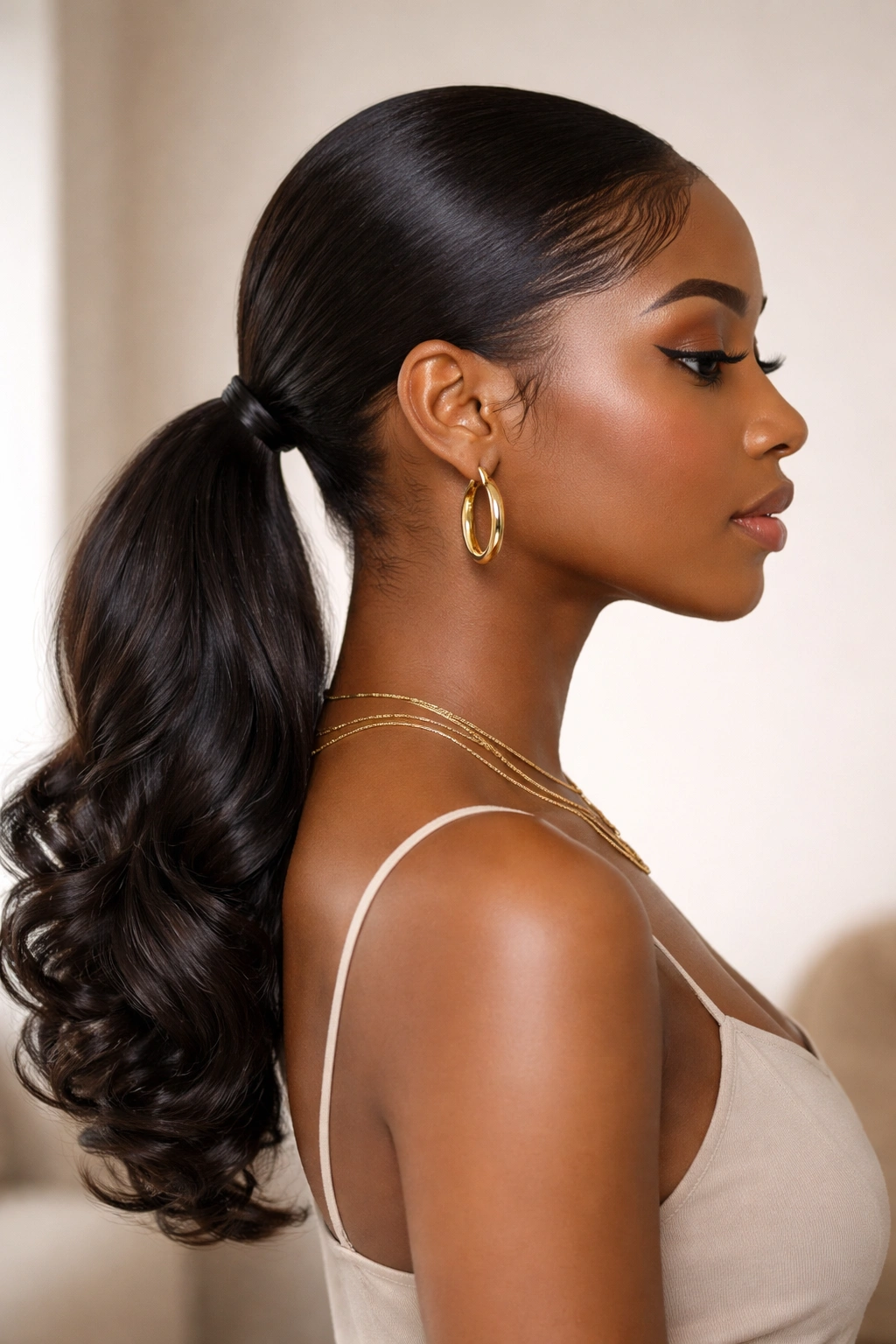
The low ponytail with curled ends is sleek where it counts and soft where it matters. The crown stays smooth, the tail stays neat, and the curled ends keep the whole look from feeling too severe.
The ends can be curled with flexi rods, perm rods, or even large rollers if your hair has enough length. What you want is a clean bend, not a tight little spiral that fights the rest of the style. A soft curl at the bottom gives natural hair a little swing every time you move.
This style is good for formal settings, sure, but it works just as well on ordinary days when you want your hair off your neck and still styled. The low placement makes it comfortable. The curled ends make it feel finished.
A side part gives the style more elegance, while a center part makes it feel cleaner and more direct. Both work. The choice depends on whether you want softness or structure.
17. Two-Strand Twist Base Ponytail
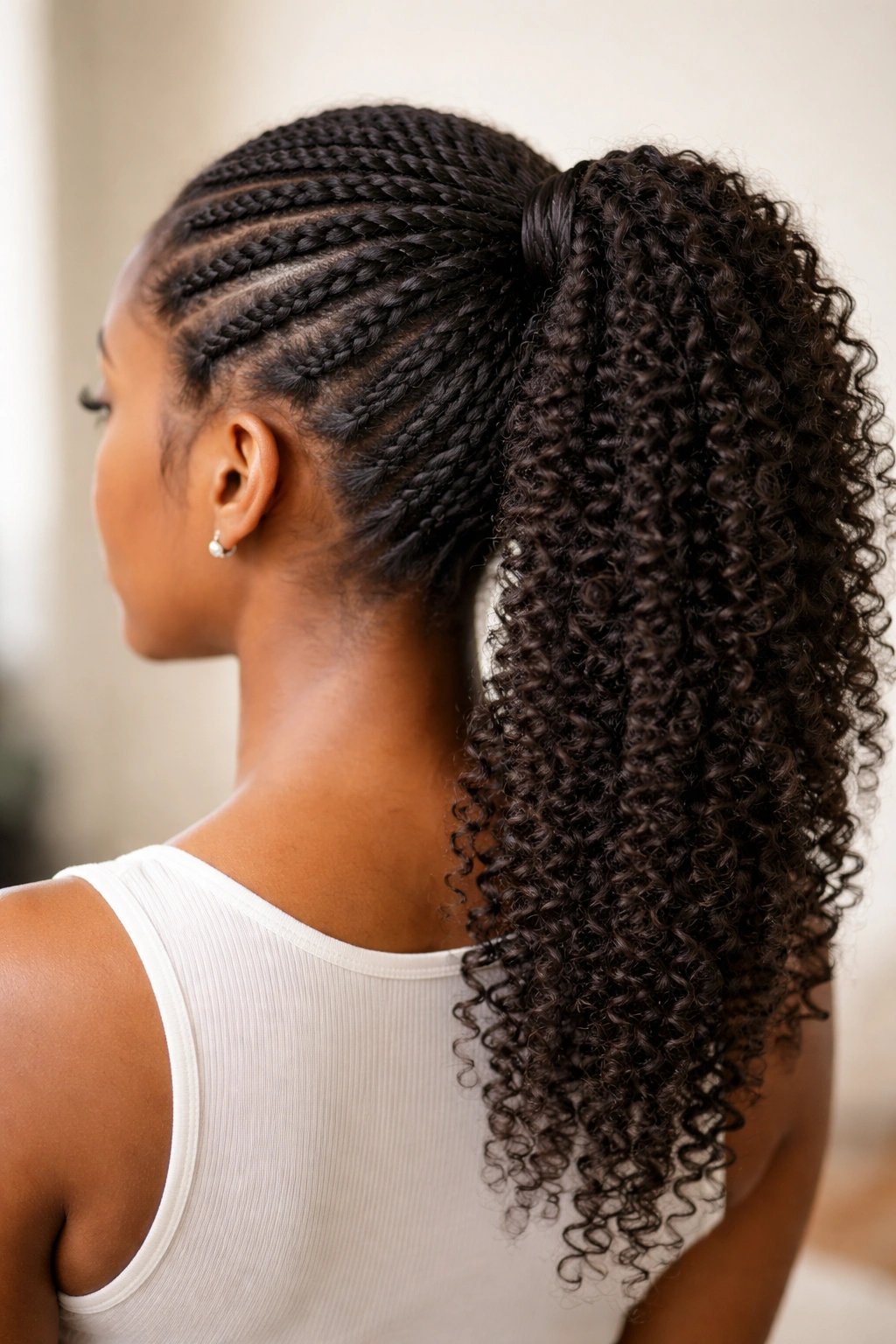
Why do two-strand twists work so well at the base of a ponytail? Because they hold texture, stay visible, and keep the style from looking flat at the roots.
You can twist the front sections back from the hairline, or start the twists at the crown and gather them into the tail. Either way, the twist pattern creates interest before the ponytail even begins. It’s a nice answer when you want a style that looks detailed without needing a full braid set.
How to Get the Most From It
Use a little styling cream or mousse on the sections before twisting, then smooth the rest of the hair into the ponytail. If the twists are too dry, they puff up in a way that can look messy sooner than you’d like. If they’re too wet, they won’t hold shape.
This style works especially well on stretched hair. It can also hide a less-than-perfect front line, which is useful on busy mornings. The twist base gives the style a handmade feel that plain elastic ponytails often miss.
18. Feed-In Braid Ponytail
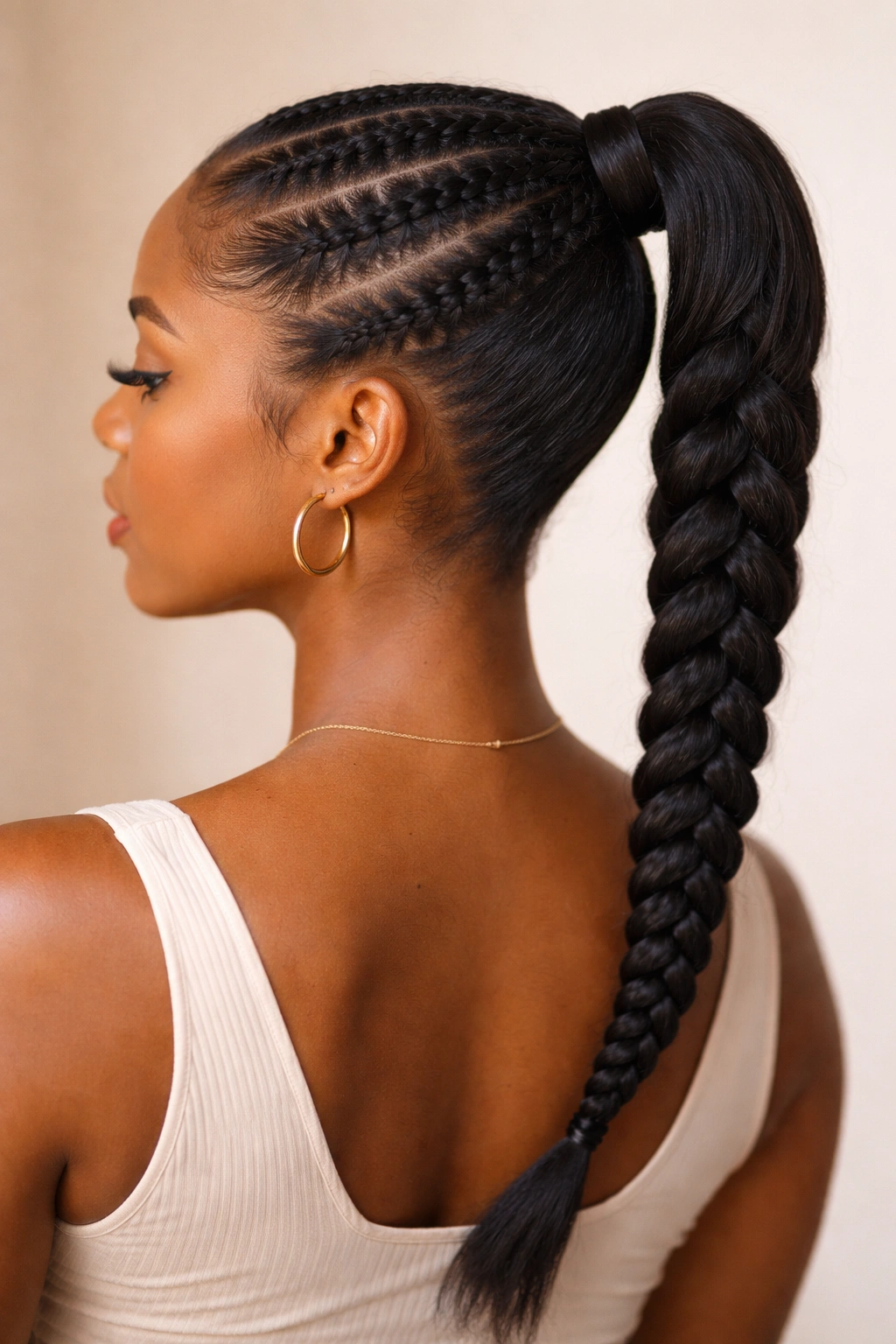
A feed-in braid ponytail gives you a clean start and a long, polished finish. The braid begins small near the scalp, then gradually builds as hair is added, so the transition looks smoother than a chunky braid dropped onto the head.
That gradual build matters. It spreads out the weight and makes the style sit more naturally. If the braid starts too thick too soon, the front can look stiff and the scalp can feel crowded. Feed-in braiding avoids that.
This style is a solid pick when you want length and neatness at the same time. It can be high, low, or off to the side. Add curly ends if you want a softer finish, or keep the braid long and straight for a sleeker line.
A good feed-in ponytail depends on balance. The braid should feel anchored, not heavy. If you’re adding hair, choose a texture that blends with your natural strands instead of fighting them.
19. Crisscross Ponytail at the Crown
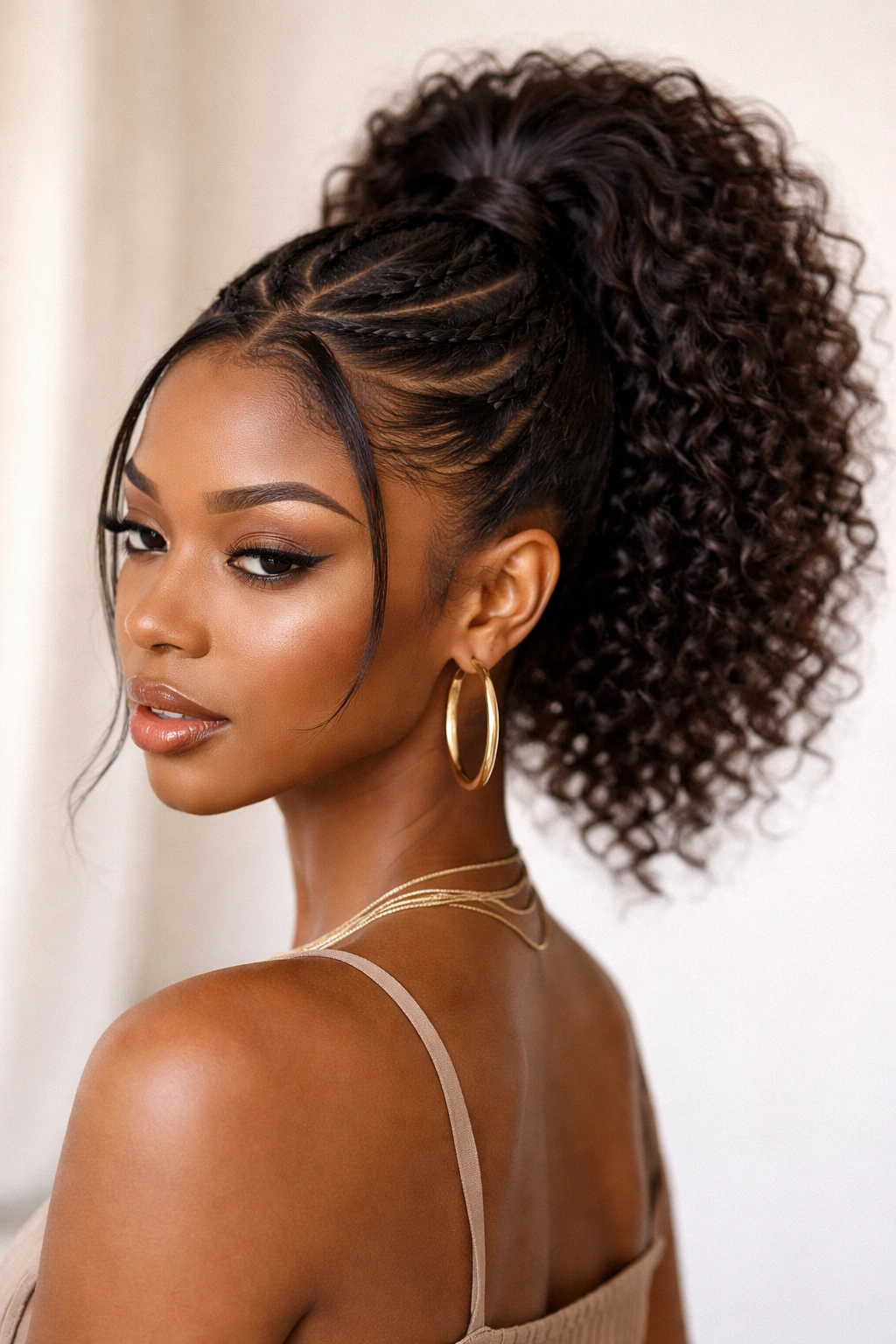
A crisscross ponytail looks playful because the front pieces form their own pattern before the hair ever reaches the elastic. It gives natural hair a built-in design, which is nice when you want more than a plain pulled-back style.
Small Details That Matter
- Use 2 to 4 sections at the front
- Cross each piece over the next and pin them flat
- Keep the ponytail base centered or slightly off-center
- Smooth the crown before securing anything
The best part is the shape. Crisscrossing creates little windows of texture and movement at the top, then the ponytail drops out of that pattern in a clean line. It works on kids’ styles, yes, but it can look adult and polished too when the parts are crisp.
If your hair is thick, pinning the crossed sections down before gathering the ponytail helps a lot. Otherwise, the front can loosen while you’re working on the back. Tiny bobby pins are your friend here. Small. Hidden. Necessary.
20. Short Natural Hair Puff Ponytail
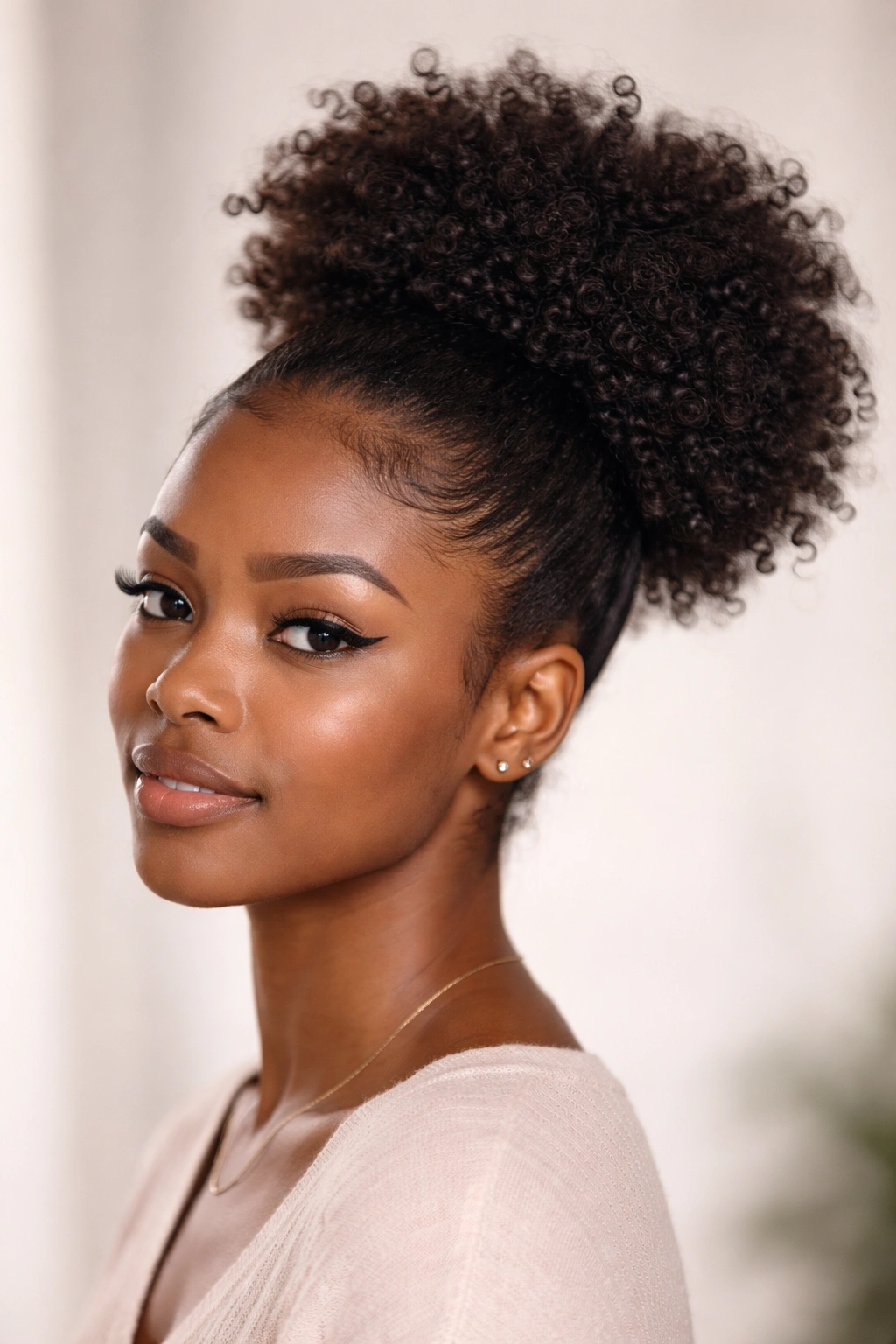
Short natural hair can absolutely wear a ponytail look. It just wears it differently. A puff ponytail on a TWA or tapered cut keeps the shape tight and cute without pretending the hair is longer than it is.
The key is working with the length you have. Gather the hair where it naturally wants to sit, usually higher on the crown or centered near the back, then let the coils puff outward. A soft brush around the edges helps the shape look neat, but the body should stay fluffy.
This style is good for short hair because it respects shrinkage instead of fighting it. A tiny band can create a rounded puff, and a little pick at the top can add lift. If the front is too short to smooth back completely, let it stay a little loose. That softness looks better than forced control.
It’s one of the easiest ways to make short natural hair feel styled fast. No extension required. No drama either, if you keep the band gentle.
21. Rope-Braid Ponytail
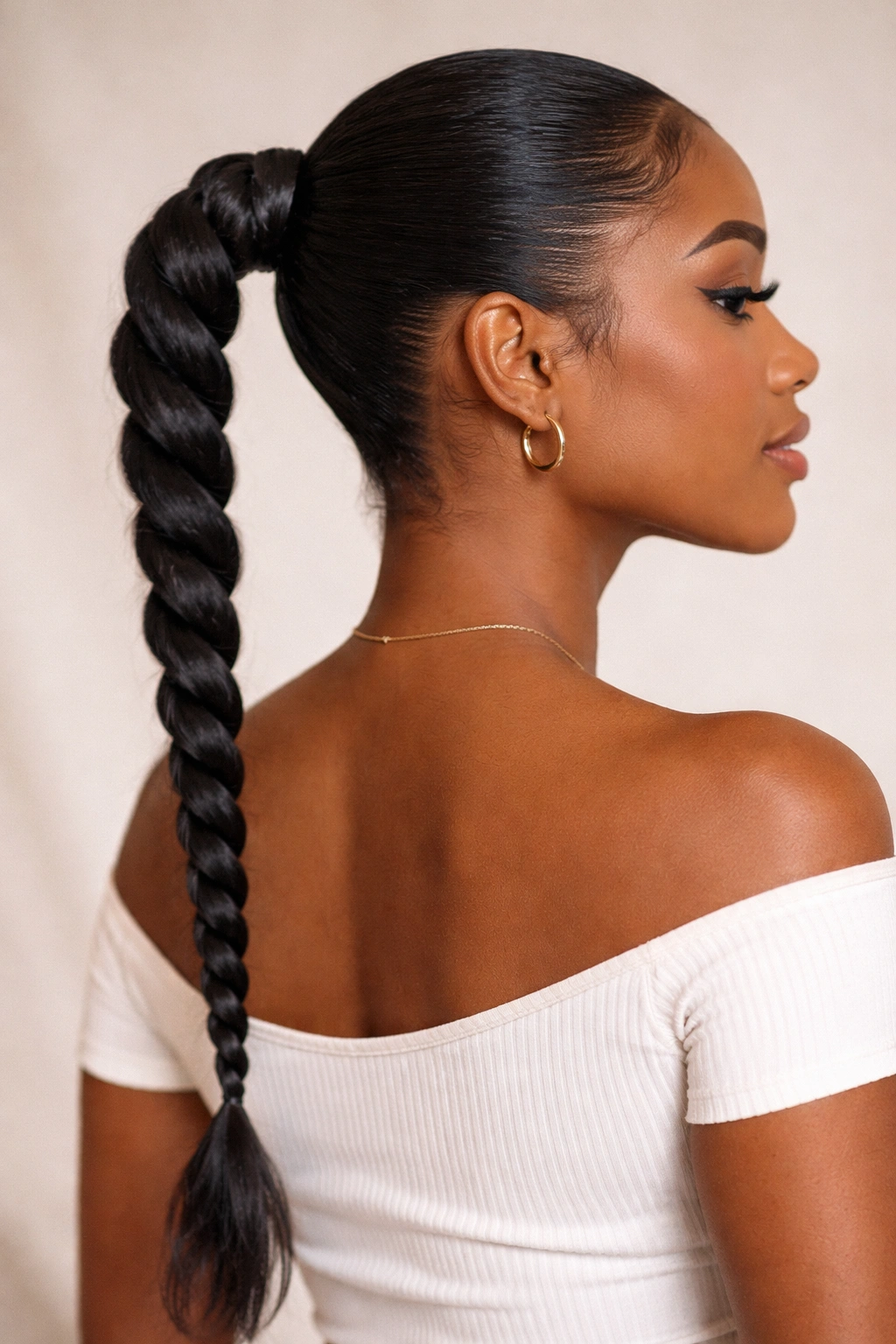
A rope-braid ponytail has a sleeker finish than a loose curly tail, and it reads a little more deliberate than a standard three-strand braid. The twist pattern shines, especially when the hair has been stretched first.
Unlike a regular braid, a rope braid only needs two sections. That makes it faster to build once your base is secure. The braid also shows off length in a cleaner line, which is useful if you want the ponytail to look long without turning bulky.
It’s a good match for natural hair that already has some stretch or smoothness. A touch of mousse before braiding can help the strands stay together and reduce flyaways. Don’t drown it in product. Rope braids hold better when the hair still has some grip.
This one works for casual days and dressier outfits alike. If you like tidy styles that don’t feel rigid, it sits in a nice middle ground.
22. Curly Ponytail with Accent Braids
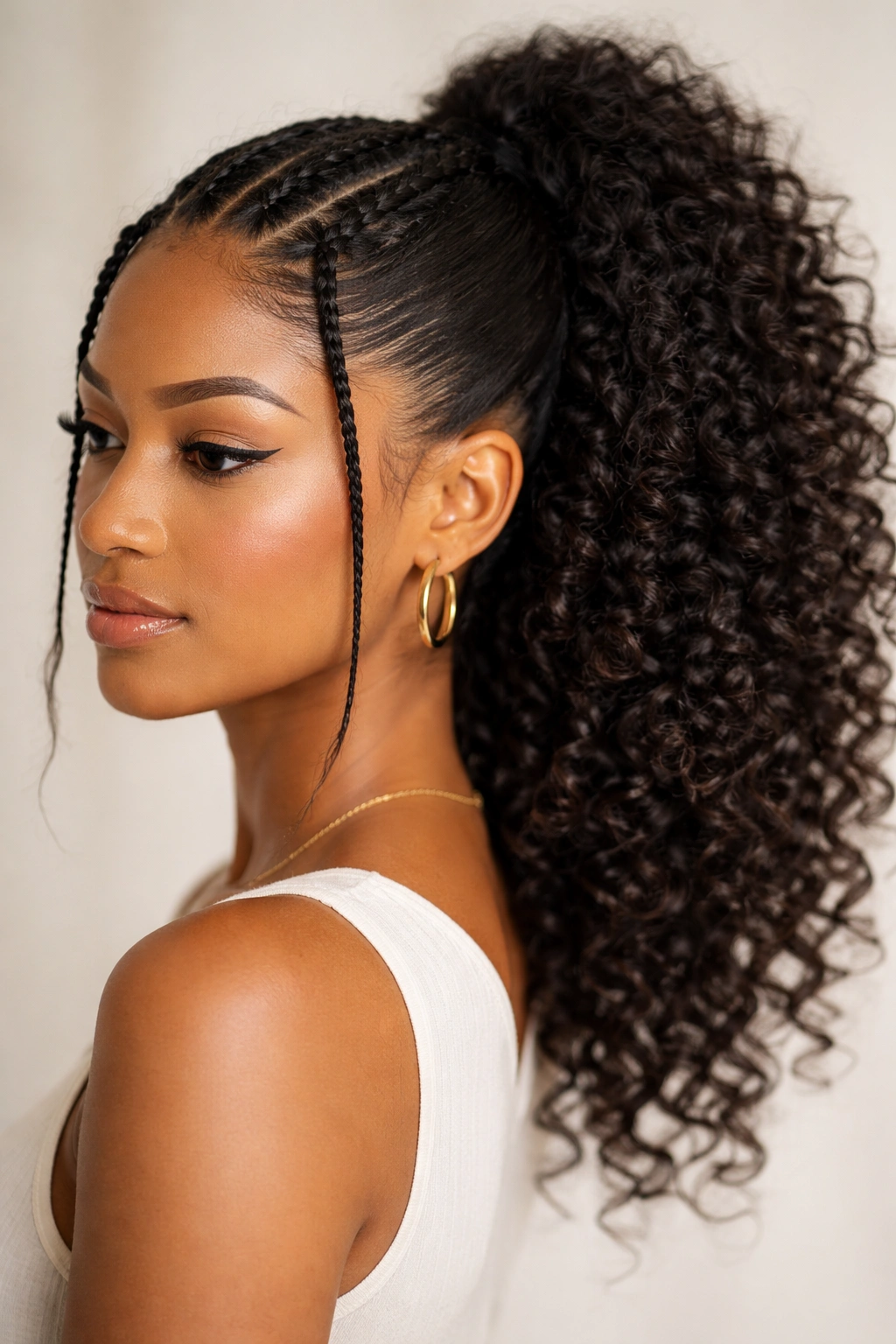
A curly ponytail gets a lot more personality when you tuck in a few accent braids. The braids add rhythm, while the curls keep the style soft. It’s a useful mix when you want structure at the top and movement at the tail.
You do not need many braids. Two small braids near the front or along one side can be enough. Too many, and the tail starts competing with the details instead of supporting them. I’d rather see one or two neat braids than six rushed ones.
This style is especially nice on twist-outs, braid-outs, or defined curls that still have bounce. A light gel at the roots keeps the front tidy, and a curl cream through the tail helps the ends stay juicy. If you’re adding hair to the ponytail, keep the texture close to your own curl pattern so the braids don’t feel disconnected.
A small gold bead or cuff on one braid can pull the whole look together. One accent is plenty.
23. Sleek Low Ponytail with Laid Edges
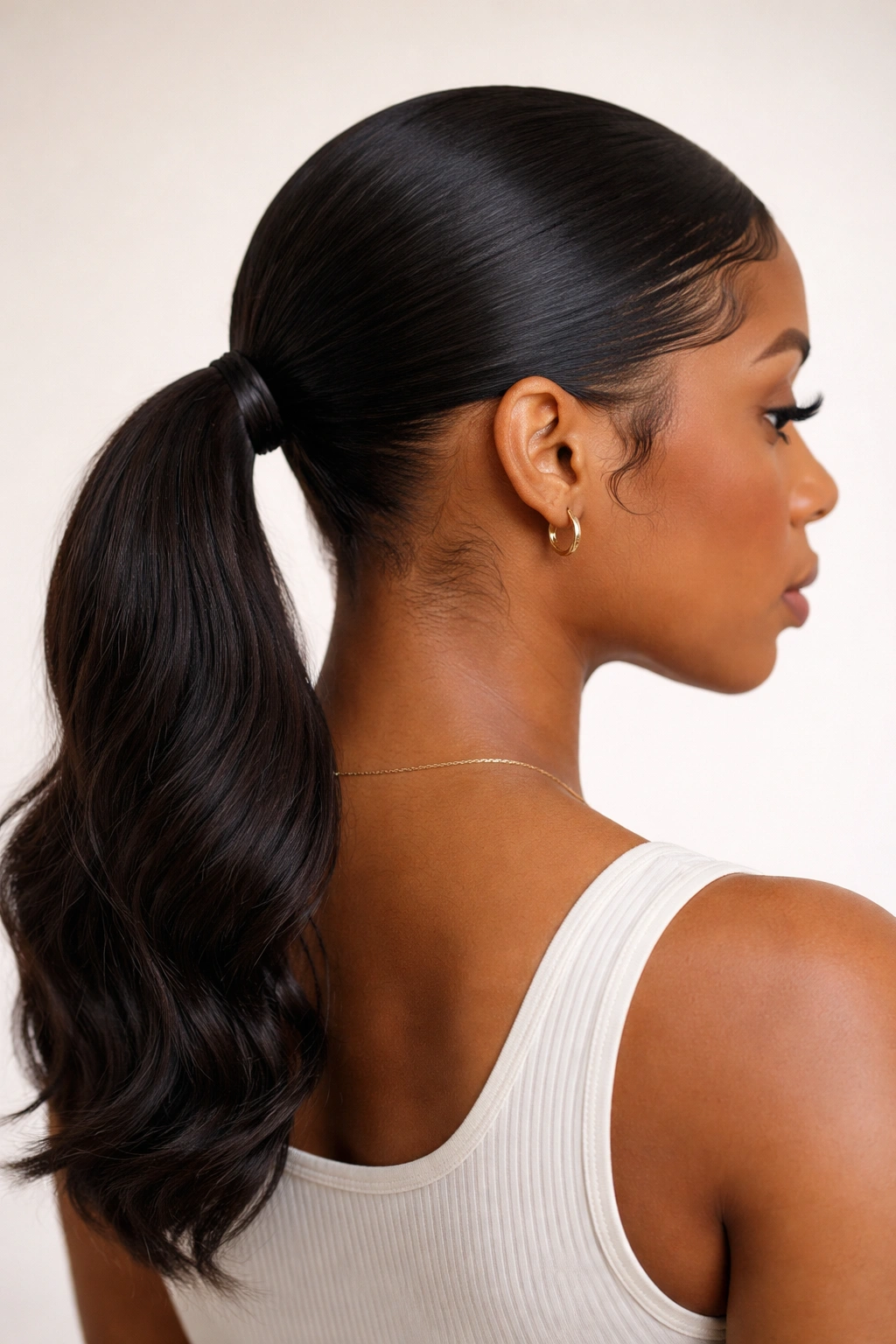
A sleek low ponytail is one of those styles people call simple when they mean lazy. Done well, it’s neither. It’s crisp, low, and quietly sharp.
The clean center part does a lot of work here. So does a smooth base that hugs the head without flattening the life out of the hair. If you want the style to stay neat, use a light gel on the part and a scarf for a few minutes before you leave the house. That short set time helps the front behave.
Edge control can help, but don’t lay everything down so hard that the style loses softness. A few carefully shaped baby hairs can frame the forehead nicely. A full helmet of edges? No thanks.
This ponytail is one of the easiest styles to dress up with earrings, a bold lip, or a clean collar. It has a formal feel without needing a formal amount of effort, and that’s a useful thing to have in your pocket.
24. Puff Ponytail with a Braid Extension
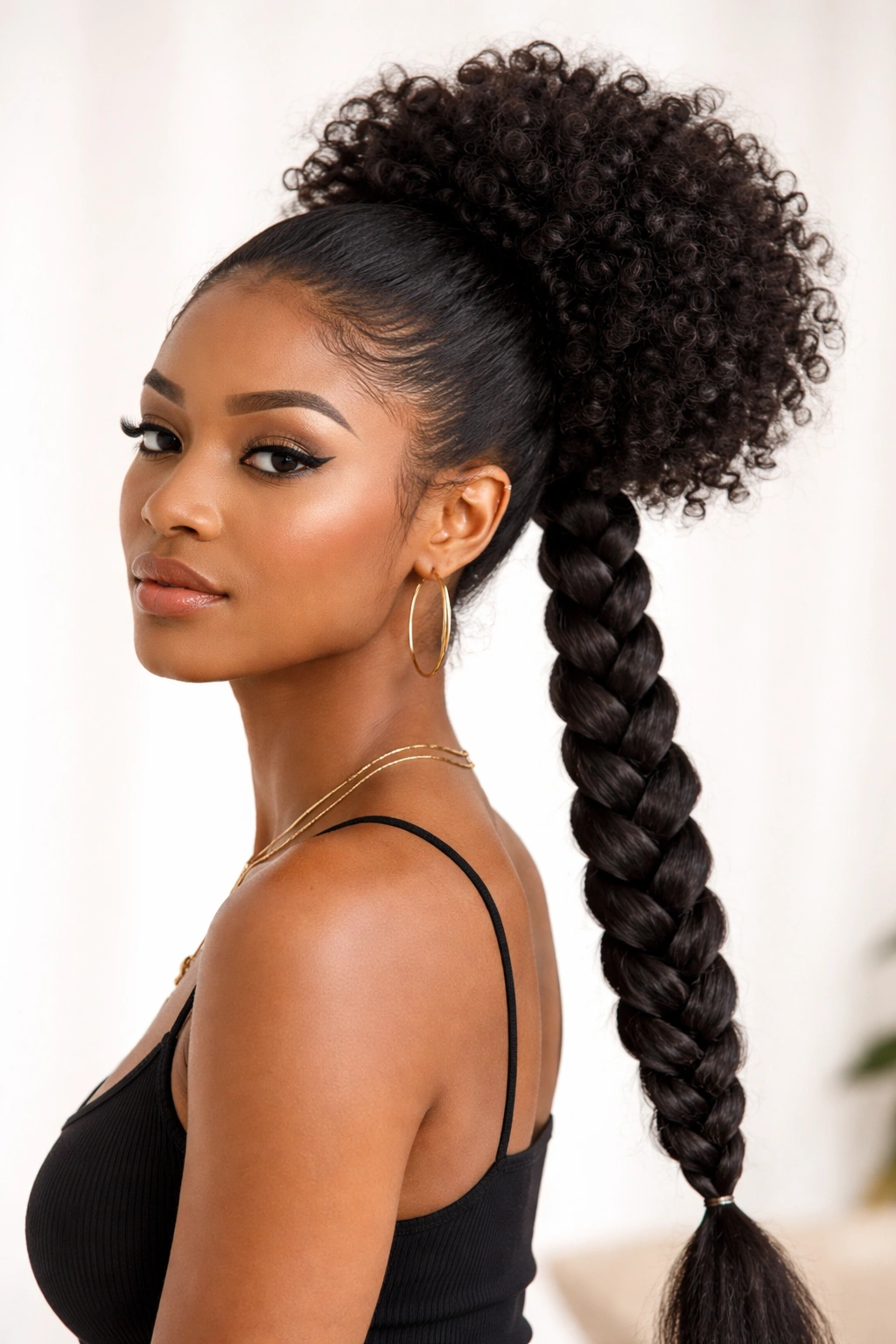
A puff plus a braid extension gives you two textures in one style. The base stays full and natural, while the braid adds length and a little drama. It’s a smart compromise if you like volume but also want the visual drop of a long tail.
The transition point matters. Secure the puff firmly, then attach the braid extension low enough that the base still looks like a puff, not a stretched band with extra hair hanging off it. If the attachment point sits too high, the style can look top-heavy. Too low, and you lose the puff shape.
This style works well for events and weekend wear because it feels styled without asking your whole head to do too much. A small amount of wrap hair around the base hides the join cleanly.
If you’re adding a braid extension, choose one that isn’t too heavy. A lighter braid moves better and keeps the puff from sagging during the day. That matters more than people think.
25. Flat-Twist Ponytail Across the Hairline
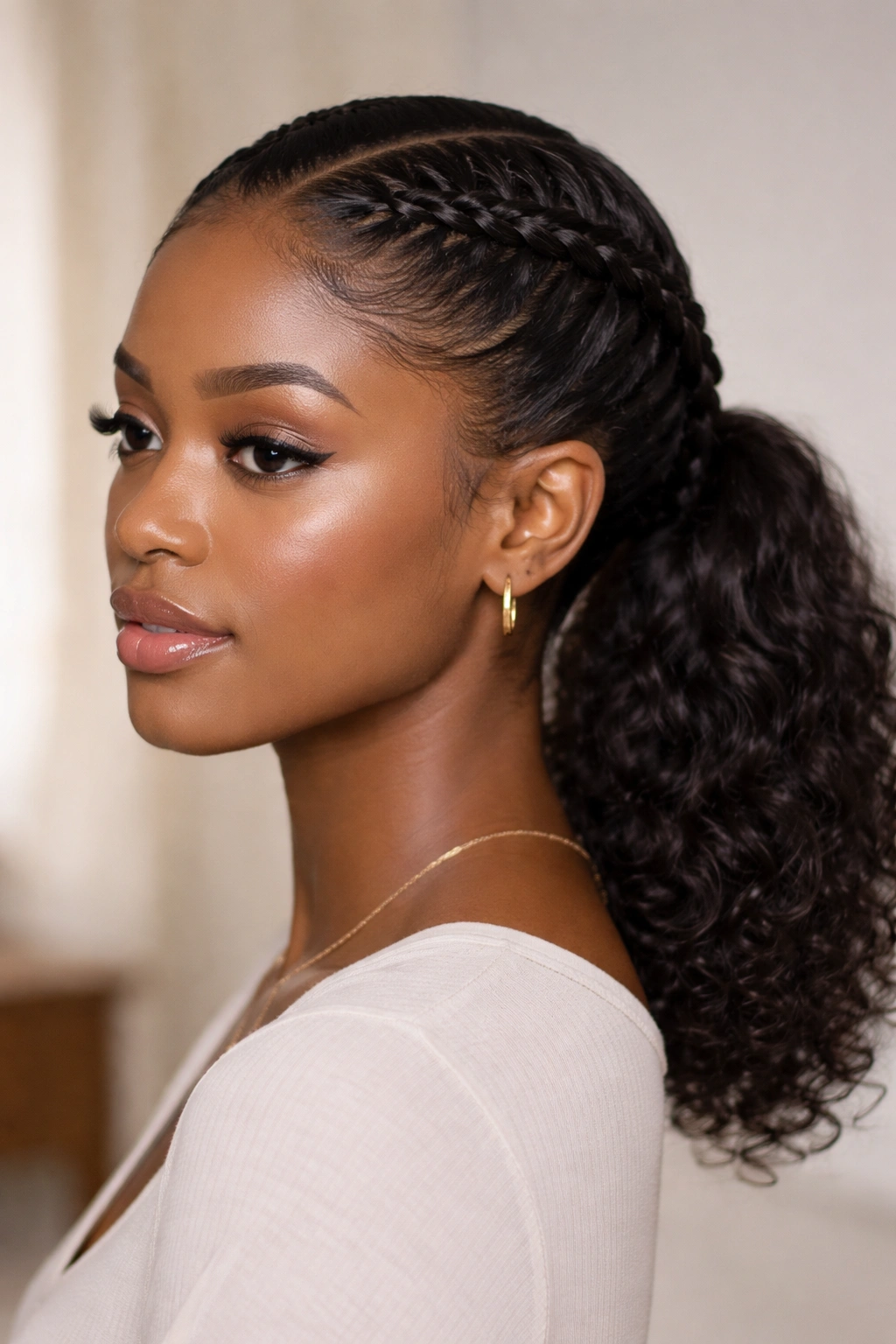
Flat twists across the hairline give a ponytail a built-in frame. They pull the eye around the face and into the tail, which makes the style feel polished without needing extra accessories.
Quick Styling Notes
- Use 2 to 4 flat twists, depending on how much hair you want at the front
- Start each twist with a clean part
- Keep the ponytail low if you want the twists to show more
- Refresh the twists with a little water and leave-in when they start to dry out
Flat twists sit flatter than regular twists, which makes them useful when you want less bulk around the forehead. They also help hold the front in place better than loose sections. That said, don’t twist so tightly that the scalp feels pulled. The style should sit secure, not tense.
A flat-twist ponytail can be casual or dressed up. The difference comes down to the tail: curly, braided, or blown out all change the mood. The front structure stays the same.
26. Tapered Natural Hair Mini Ponytail
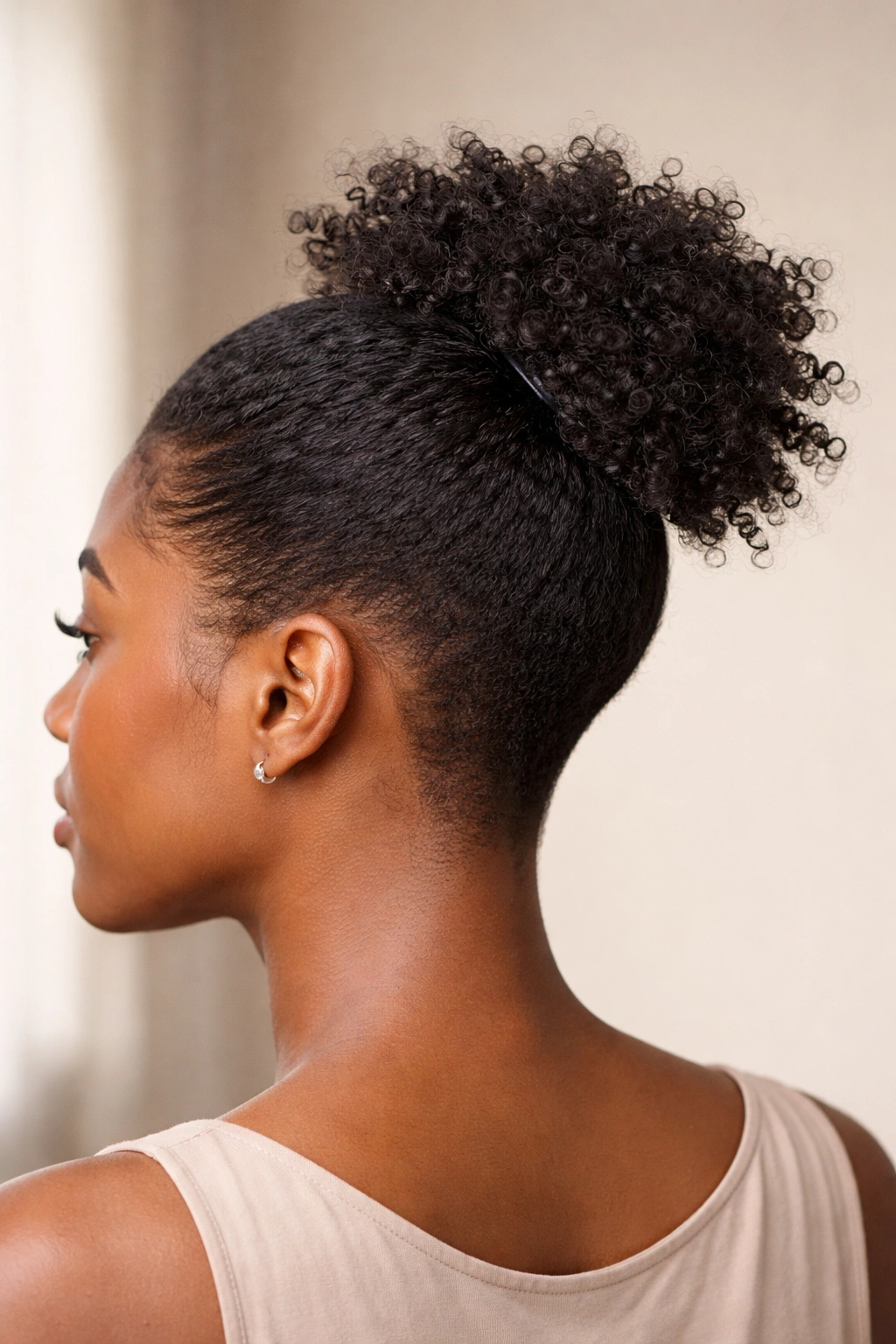
Can a tapered cut do a ponytail? Yes — and sometimes it looks cooler than a longer one.
A mini ponytail on tapered natural hair keeps the longest part gathered while leaving the shape of the cut visible. That contrast is the point. You still see the fade, the curls, or the shorter sides, but the crown gets a lifted finish. It’s neat without pretending to be something it isn’t.
This style works best when the top section has enough length to grab with a small elastic. You can smooth the crown lightly and let the rest puff a bit at the back. If the ponytail is tiny, that’s fine. Tiny can be cute. Tiny can also be elegant.
Use a small band that won’t slide, and avoid overloading the hair with heavy cream. Short natural hair usually looks better with a light touch. A bit of moisture, a bit of shape, and then stop. That restraint is half the charm.
27. Side Puff Ponytail with a Deep Part
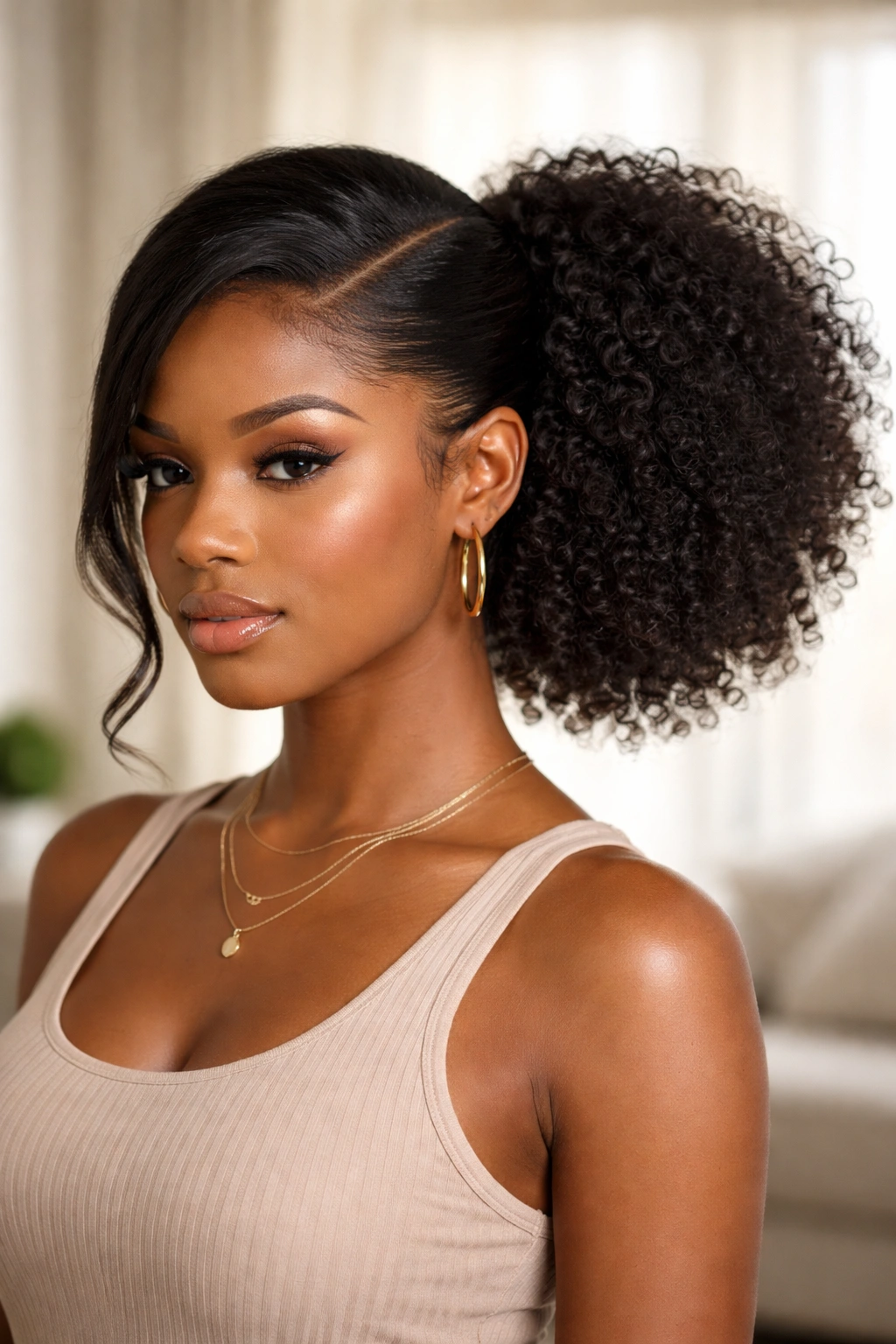
A side puff ponytail is an easy way to make a puff feel styled instead of casual. The deep part shifts the volume, and that shift gives the whole look more personality.
This is a good fix for hair that naturally falls heavier on one side. Instead of fighting the imbalance, use it. Pull the puff to the side with a wide elastic, smooth the front, and let the body flare out. The asymmetry makes the style feel on purpose.
A side puff can be bold with earrings and simple with a plain tee. That flexibility makes it useful. If you want a little more shape, add a twist or braid on the smaller side of the part. If you want more softness, leave that area loose and let the puff carry the weight.
It’s also a flattering choice when your hair has lots of volume but not much stretched length. The side placement gives the puff room to breathe.
28. Braided Crown Ponytail
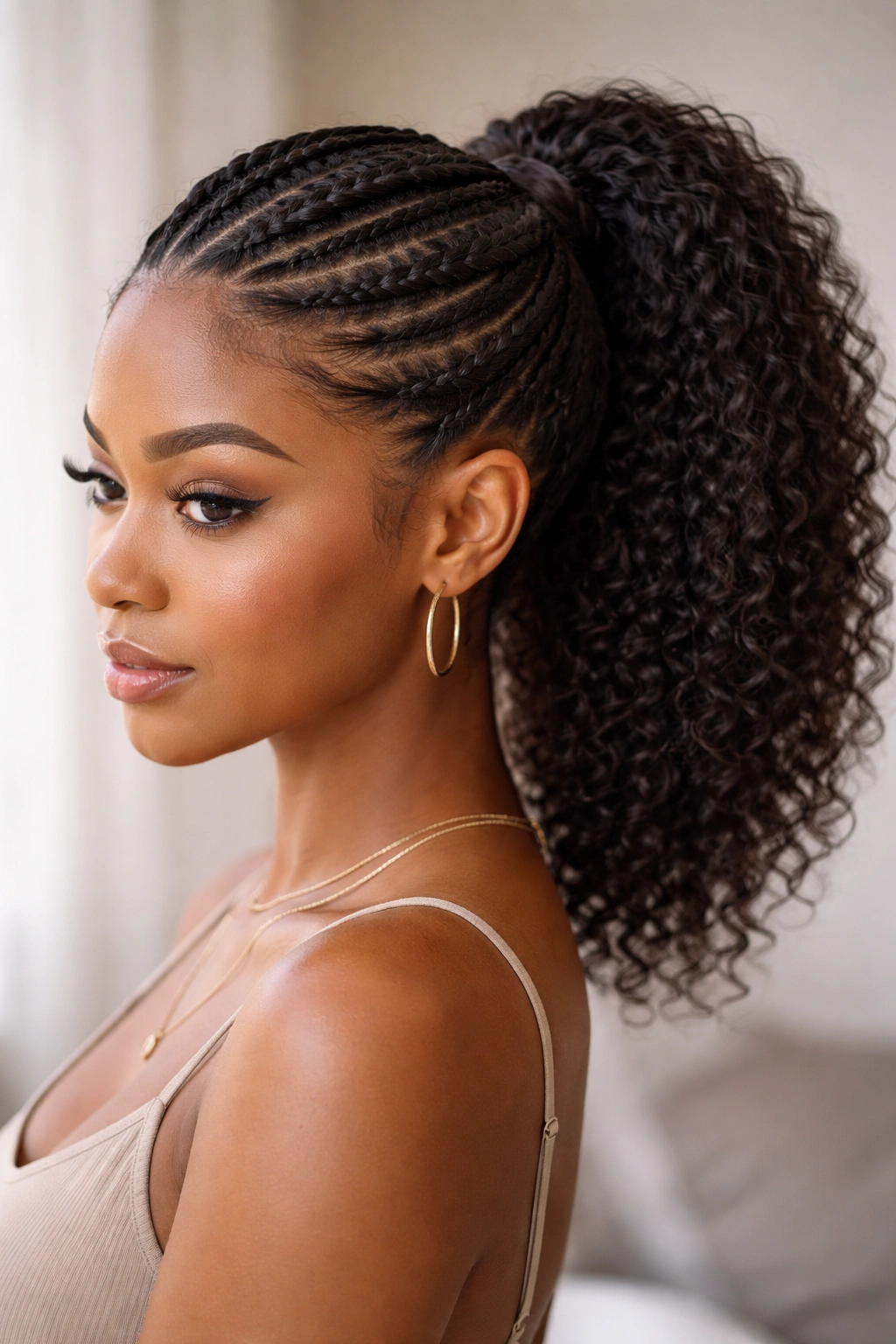
A braided crown ponytail wraps the hairline in braids, then gathers the rest into a tail. It has that dressed-up feeling, but it’s also practical because the front stays tucked and controlled.
The crown braids can be simple cornrows, flat twists, or a mix of both. What matters is that they follow the curve of the hairline cleanly. If the braids wander or the parts wobble, the style loses its shape fast. Neat sections help the crown sit close to the head, which keeps the ponytail looking balanced.
This style works well on stretched hair and can hold for a while if the ends are secured well. Add curly extensions to the ponytail if you want more length, or keep it natural and compact for a softer finish. Either version feels finished.
A little scalp oil along the parts can keep the braids from looking dry too quickly. Use a light hand. Shine is good. Grease is not.
29. Messy Textured Ponytail with Tendrils
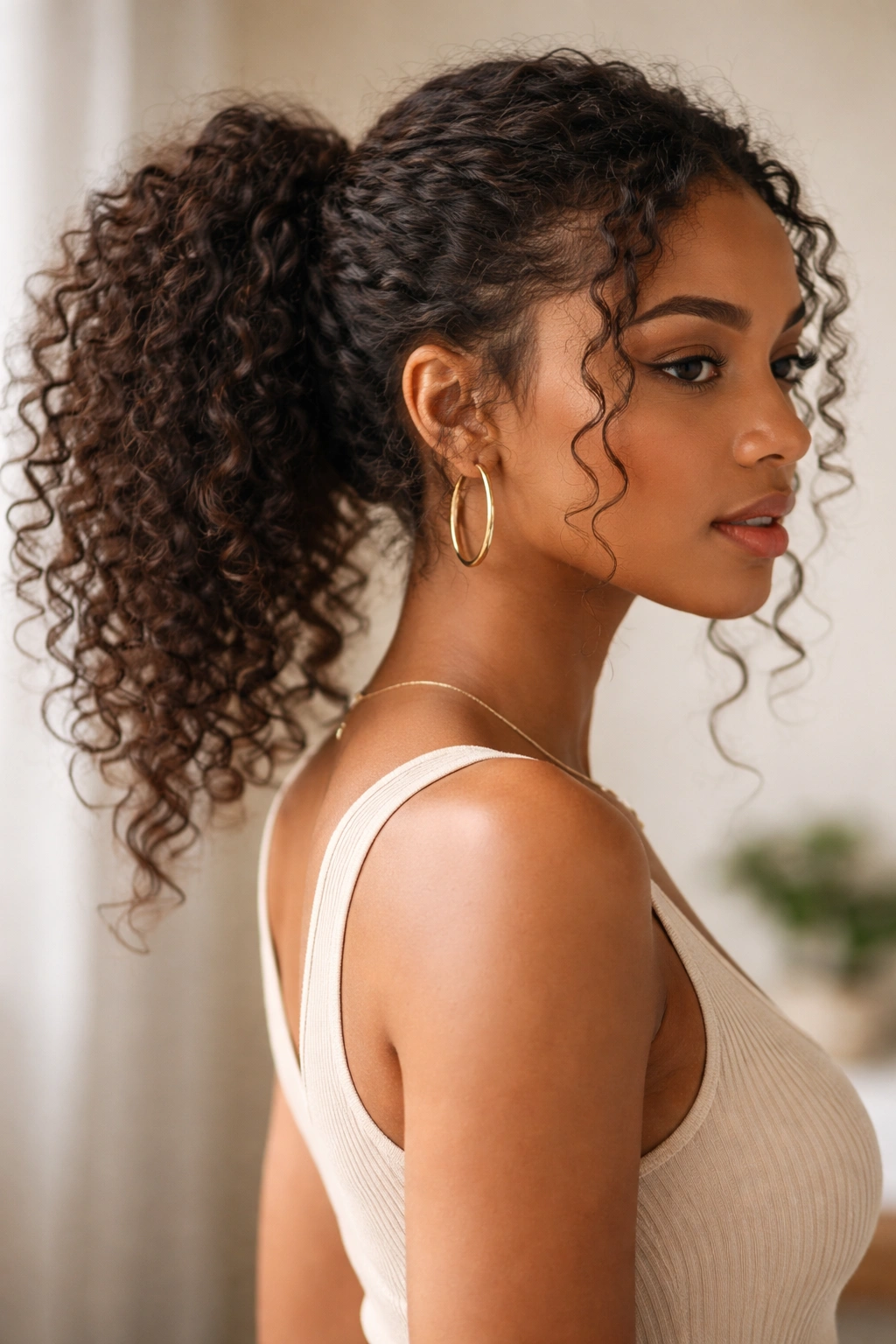
Not every cute ponytail has to look polished to the last strand. A messy textured ponytail with tendrils works because it keeps the shape loose, touchable, and a little bit undone.
The trick is controlled mess. You still want a defined base, but the ponytail itself can stay fluffy and irregular. Finger-rake the curls, leave a few tendrils around the face, and let some frizz live a little. That frizz is not a mistake here. It gives the style texture and stops it from looking stiff.
This style is especially good for natural hair that’s on day two or three. Freshly set curls can look too precious for this look. Slightly lived-in hair gives you better results. A mist of water and a bit of leave-in are usually enough to wake the curls back up.
It’s one of the easiest ponytails to wear when you want low effort and high shape. The messy part is the point. Don’t tidy it too much.
30. Low Statement Ponytail with a Clean Center Part
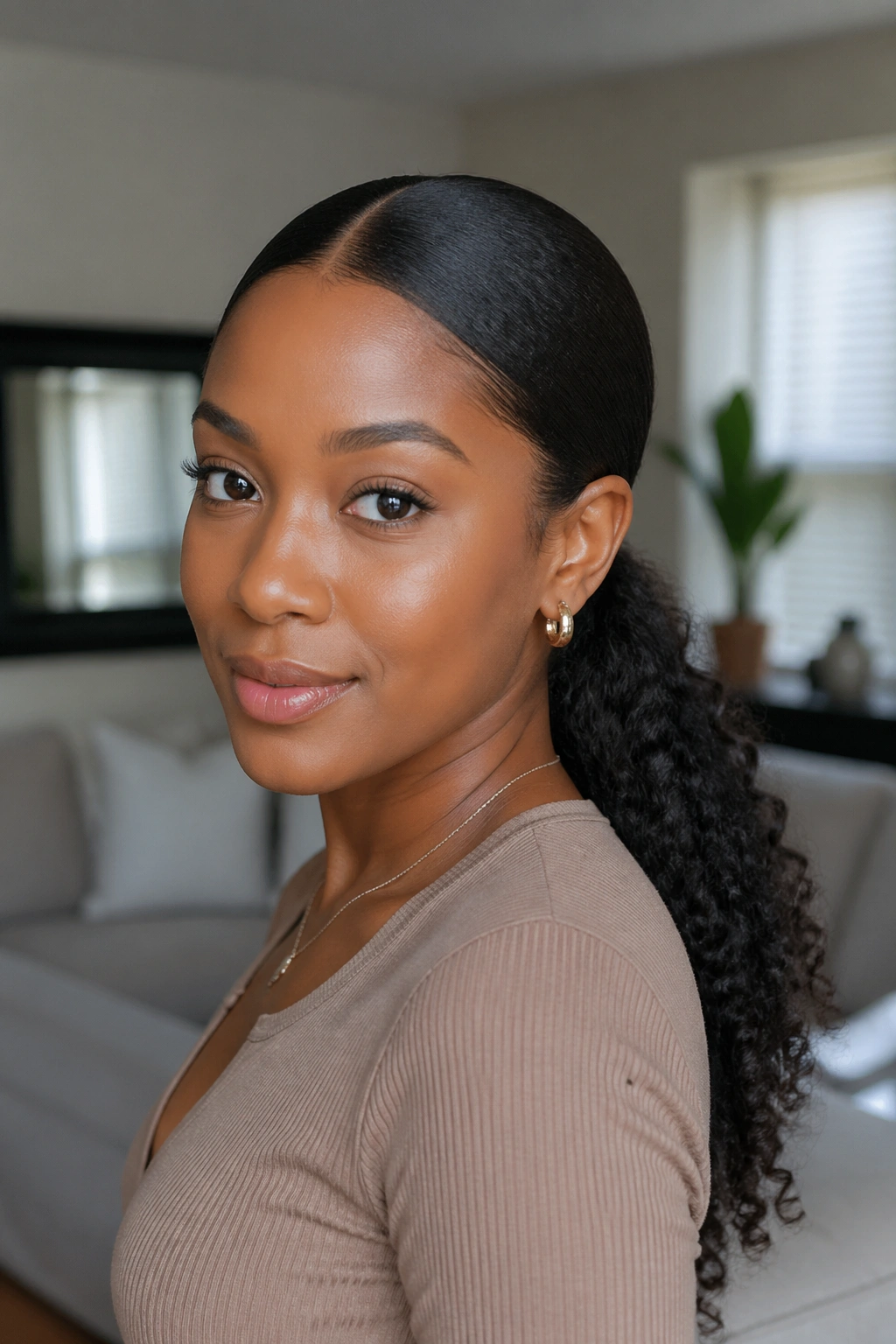
A low statement ponytail can look quiet from across the room and sharp up close. The clean center part gives it structure, the low placement keeps it elegant, and the finish can be as smooth or as textured as you want.
This is the style I reach for when I want natural hair to look deliberate without asking it to do a hundred things. A polished part, a wrapped base, and a tail that’s either curled, braided, or softly stretched are enough. If you want more presence, add a metal cuff or a silk ribbon at the base. If you want less, leave it clean.
The reason this ponytail stays useful is simple: it works on a lot of hair lengths and a lot of textures. It can be office-friendly, dinner-friendly, or plain old errand-friendly. No fuss, no wasted motion.
And that’s the real appeal of cute ponytails for natural hair. They let the texture stay the main event, which is exactly where it belongs.