



Curly hairstyles for Black women aren’t a trend, a moment, or a phase — they’re a living tradition, a daily expression, and a space where identity and creativity intersect in ways that go far beyond aesthetics. The range of curl patterns among Black women — from the loose, flowing 3A wave to the tight, dense 4C coil — means that “curly hair” isn’t one thing. It’s an entire universe of textures, volumes, and behaviors, each with its own particular beauty and its own particular needs. Curly hairstyles for Black women are as varied as the women who wear them.
The Deep Roots of Natural Hair Styling in Black Culture
Natural hair has always been more than a style choice for Black women. For generations, the way Black women wore their hair — pressed, relaxed, braided, locked, natural — carried social, cultural, and political weight. The natural hair movement that gained momentum over the past two decades didn’t create this significance; it revealed and reclaimed what was always there.
Choosing to wear your natural curl pattern is a decision that intersects with beauty standards, professional environments, family history, and personal identity in ways that a haircut or color change simply doesn’t. Understanding that context makes the specific styles themselves more meaningful — not just aesthetically pleasing choices, but expressions of something real.
The styles that appear in this collection span the full range of what curly natural hair can do. Some are simple and everyday. Some are elaborate and occasion-worthy. Some prioritize protection and health. All of them celebrate the curl pattern as it is — not as something to be corrected, flattened, or apologized for.
Understanding Your Curl Pattern and What That Means for Styling
The Andre Walker hair typing system — the 3A through 4C classification that’s become the shorthand of the natural hair community — is a starting point, not a sentence. Knowing your curl type gives you useful information about the likely behavior of your hair and which products and techniques tend to work well, but it doesn’t determine your options. Most Black women have multiple curl patterns on the same head, and the “rules” for each type are more like guidelines than laws.
3A and 3B curls are looser, defined spirals with more natural shine and typically less shrinkage. They tend to be more cooperative with a wider range of products and can often air-dry to a defined curl without extensive product application. The challenge for these types is sometimes maintaining definition and avoiding the triangle shape from too much volume at the ends.
3C curls are tighter spirals with significant volume and more shrinkage than 3A or 3B. They benefit from more moisture-rich products and techniques that encourage curl clumping and minimize frizz. 3C hair is incredibly voluminous when fully stretched or diffused.
4A, 4B, and 4C are the tightest coil categories. 4A has a defined S-shape or small coil. 4B has a tighter Z-shape with less defined curl. 4C has the tightest pattern with the most shrinkage — 4C hair can shrink up to 75% of its actual length. These types need the most moisture, benefit most from protective styles, and produce some of the most striking natural looks when styled with care.
Building a Foundation: What Curly Natural Hair Actually Needs
Before exploring specific styles, the foundation matters. The most beautifully conceived style fails on hair that’s dry, brittle, or damaged. And curly natural hair is, by its nature, prone to dryness — the coil pattern prevents natural scalp oils from traveling down the hair shaft the way they do on straight hair, which is why most natural hair care routines are built around external moisture application.
The LOC or LCO method — leave-in conditioner, oil, and cream in sequence — is a staple moisturizing routine for a reason. It layers products in a way that both adds moisture and seals it in. Which order works better for you (LOC or LCO) depends on your hair’s porosity and your product choices — experiment with both.
Deep conditioning is the cornerstone. Not an occasional treat, but a regular practice. Weekly or biweekly deep conditioning keeps the hair shaft pliable, reduces breakage, and makes every style easier to achieve and maintain. Skipping this step and trying to make elaborate styles work is like trying to build a house without a foundation.
Protective styling is a strategy that extends the life of your styles and gives your ends (the oldest, most fragile part of your hair) a break from daily manipulation and environmental exposure. Not every style needs to be protective, but building protective styles into your rotation is one of the most effective long-term hair health strategies.
Choosing Styles for Your Lifestyle, Not Just Your Aesthetic
The most honest advice about choosing curly hairstyles is this: choose based on your actual life, not just what looks beautiful in photos. A gorgeous, intricate style that takes three hours to achieve and needs daily refreshing is the wrong choice if you have 15 minutes in the morning and a demanding schedule.
Active lifestyles need styles that can handle sweat, moisture, and movement without falling apart — cornrows, braids, puffs, and protective updos are the real-life heroes here.
Office environments need styles that read as polished and intentional — twist-outs, defined wash-and-gos, updos, and sleek buns serve this purpose without compromising your natural hair identity.
Special occasions open up the full range — elaborate braided updos, dressed-up puffs with accessories, defined finger coil looks that take time to achieve but are worth it for a special event.
The style that makes you feel best is the one you’ll wear with confidence. That’s always the right choice.
1. The Wash-and-Go
The wash-and-go is the natural hair style in its most authentic form — a style achieved by washing your hair, applying product to wet strands, and allowing your curl pattern to do what it does naturally. No heat, no manipulation beyond the initial product application, no artificial structure imposed on the hair.
What Makes a Great Wash-and-Go
- Apply leave-in and gel to soaking-wet hair, section by section
- Rake or finger-coil each section to encourage curl clumping
- Diffuse on low heat or allow to air-dry completely without touching
- Use the “plopping” method with a microfiber towel to reduce drying time without disrupting curl formation
Pro tip: Shingling — applying gel strand by strand from root to tip — produces the highest definition, but is time-intensive. Rake application is faster and suits looser curl types. Finger coiling produces the most distinct curls but requires the most time.
2. The Classic Puff
If there’s one signature curly natural hair look, it might be the puff. Gathered at the crown or at the nape, small or enormous, neat or wild — the puff is versatile, effortless, and genuinely beautiful.
Bold fact: A well-moisturized puff on 4C hair in full volume is one of the most striking silhouettes in all of natural hair styling. The sheer size and density of it is a statement all its own. You don’t need to add anything. The puff is the look.
Use a satin-lined scrunchie or a thick, stretchy band that won’t crease the hair. Keep your hairline moisturized and defined with a light gel or edge control.
3. Two-Strand Twist-Out
Two-strand twists set overnight and released the next morning produce one of the most beloved results in natural hair: the twist-out. Depending on your curl pattern and the size of your twists, you’ll get anything from defined, separated coils to a voluminous, wavy fro texture.
Larger twists produce bigger, more separated waves. Smaller twists produce tighter, more defined curls. The magic is in finding your preferred size and learning to release them in a way that maintains the definition without adding too much frizz.
4. Braid-Out on Natural Hair
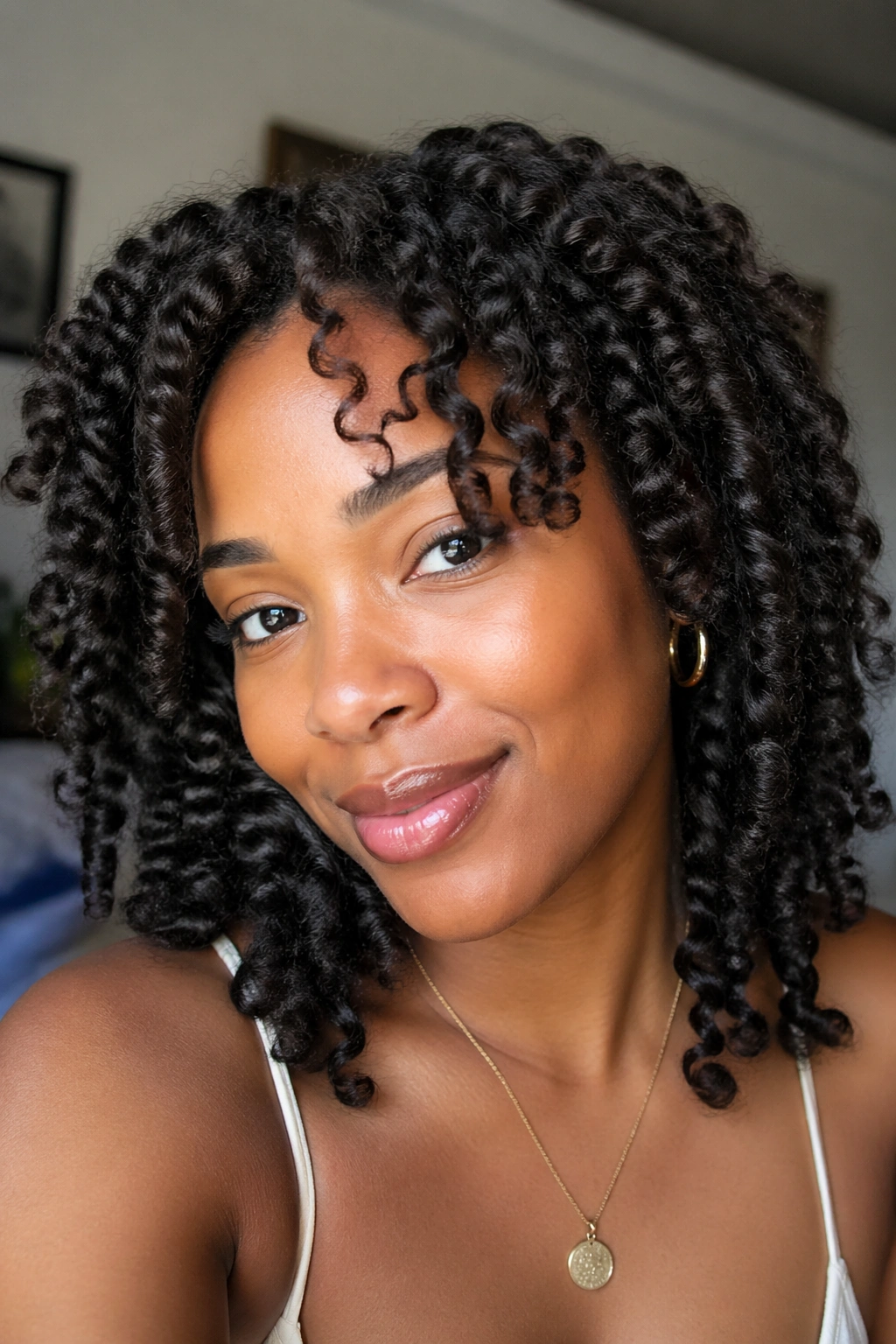
Similar in concept to the twist-out, but using three-strand braids instead. The braid pattern creates a different texture — often more of a crimp or wave than the smooth spiral of a twist-out. On 4C hair, a braid-out is often the best way to achieve a stretched, defined look without any heat.
Set the braids while damp and well-moisturized, allow to fully dry overnight, and release carefully from tip to root. The result: defined waves with volume that doesn’t revert to the natural coil immediately.
5. Cornrows
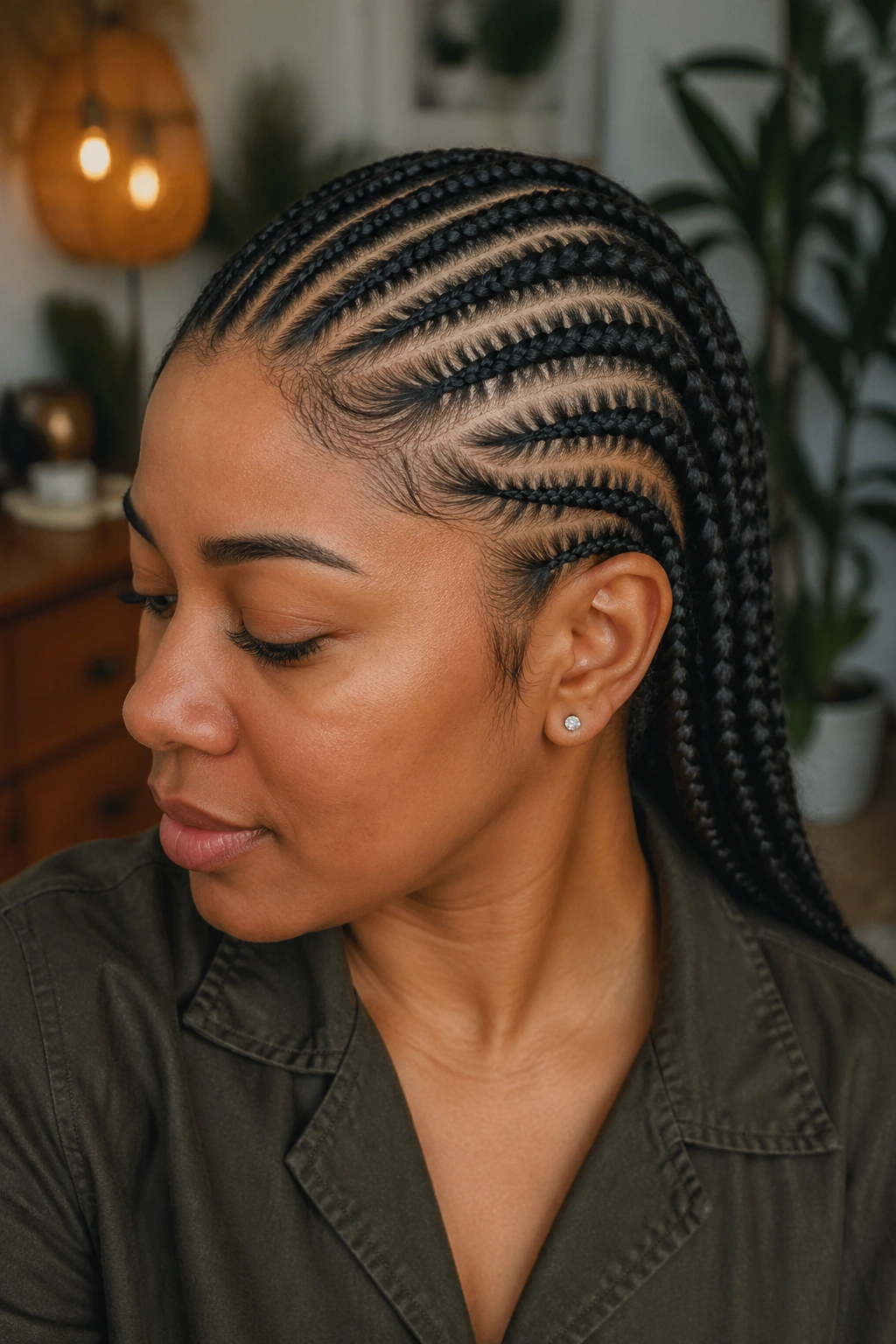
Cornrows are one of the oldest documented hairstyles in human history, and their longevity isn’t accidental — they’re beautiful, practical, protective, and infinitely customizable. The basic cornrow is a flat, three-strand braid that lies close to the scalp. The pattern, direction, size, and number of cornrows can be infinitely varied.
Styling Directions
- Straight back: the most classic, clean, and versatile direction
- Side-parted: adds asymmetry and visual interest
- Zigzag or curved parts: creates pattern before the braids even begin
- Feed-in braids: starting thin at the hairline and adding extension hair as you go, for a more gradual, natural-looking start
6. Box Braids
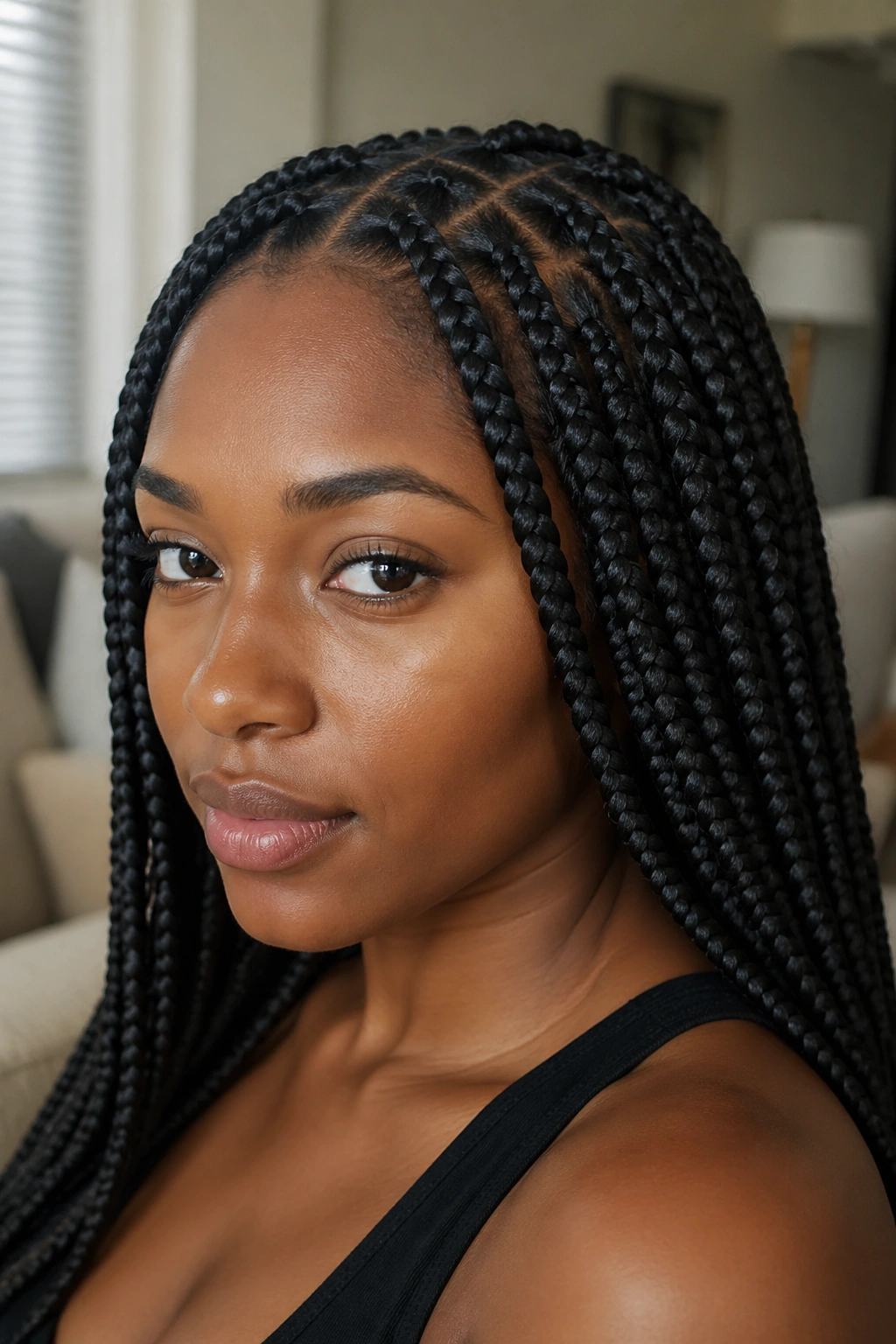
Box braids are the most iconic protective style for Black women — divided into square sections, braided from root to extension tip, they offer weeks of protective wear and remarkable versatility in how they can be styled after installation. Wear them loose, in a bun, in a ponytail, or half-up half-down. Add cuffs, rings, and wraps.
Box braids are not a “cheat” — they’re a deeply considered style choice that prioritizes hair health, lifestyle needs, and personal aesthetic in equal measure. They’re also deeply rooted in African hair tradition. Wearing them isn’t the absence of styling; it’s a styling decision in its own right.
7. Flat Twist Updo
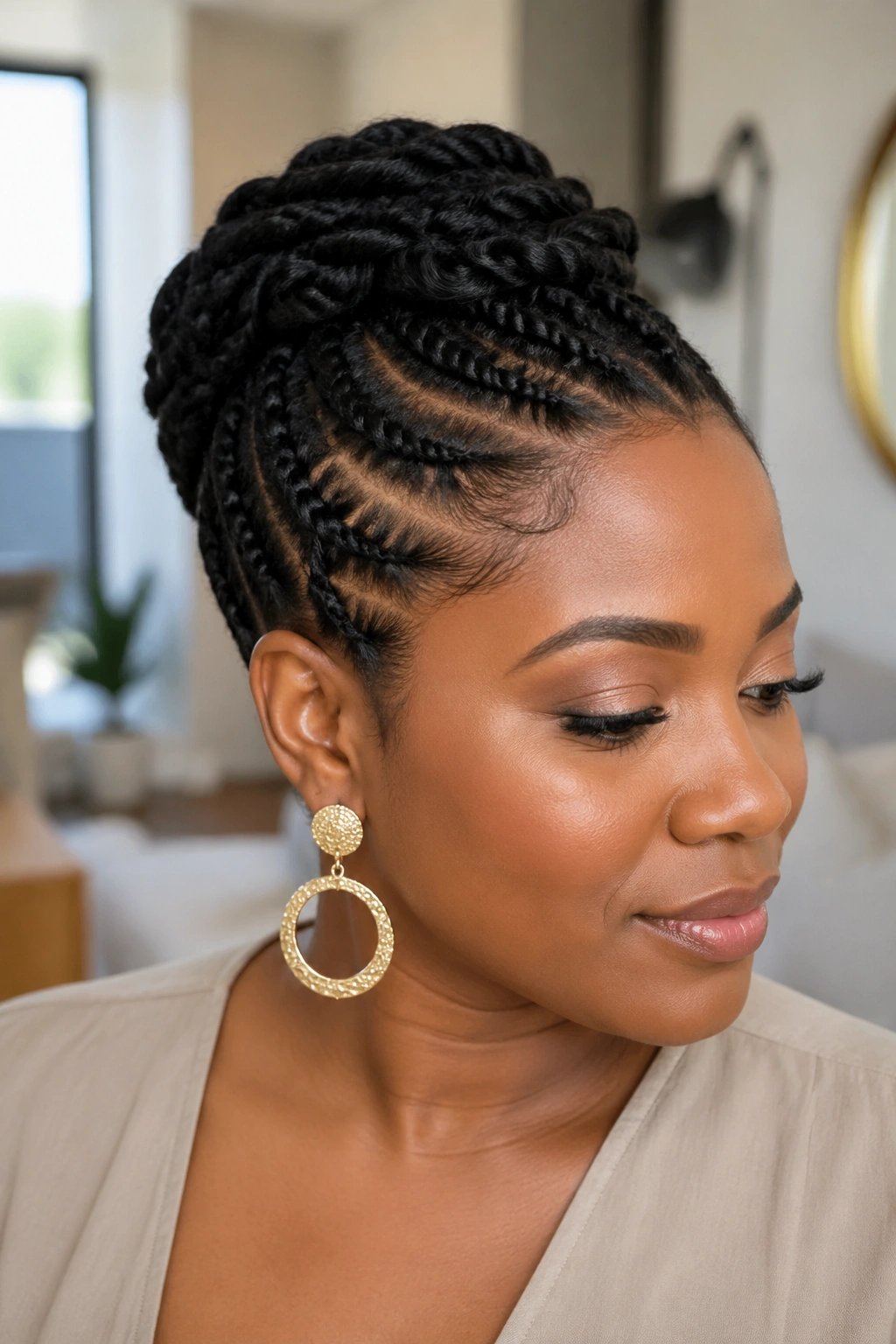
Flat twists — where two sections are twisted flat against the scalp — create a look similar to cornrows but with a slightly different texture and a more accessible technique for home styling. Gathered into an updo, flat twists create a sophisticated, multi-textured look that works for professional settings, events, and everyday wear.
The technique: part your hair into sections, apply a moisturizing cream to each section, then twist two strands around each other while adding hair from the section below as you move toward the crown. The twist lies flat against the head as it progresses.
8. Senegalese Twists
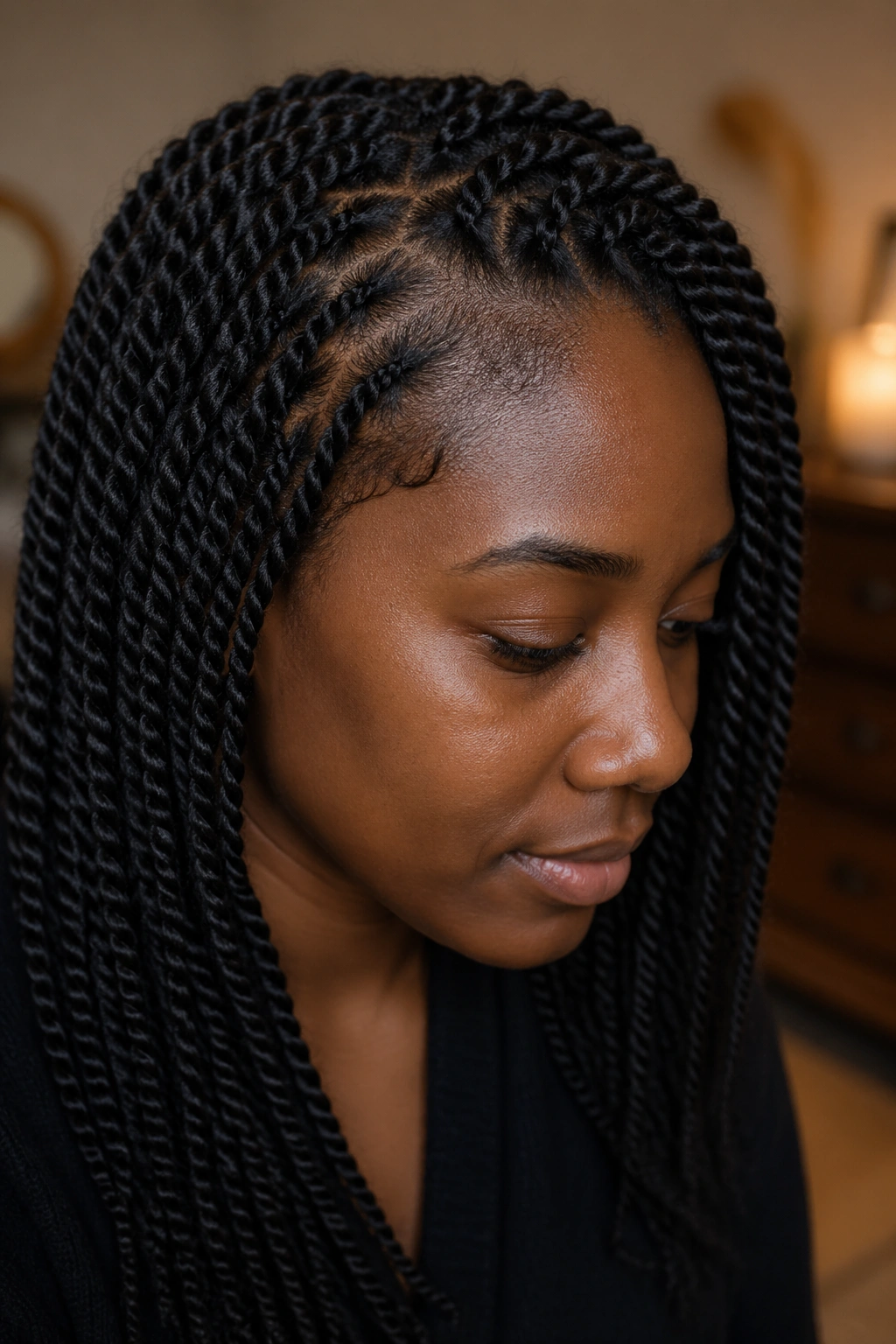
Senegalese twists use a rope twist technique — two strands twisted around each other (rather than intertwined) — that produces a smoother, more polished result than two-strand twists. They’re a popular protective style that installs faster than box braids and has a different, sleeker aesthetic.
For curly natural hair, the difference in texture between the smooth Senegalese twist extension hair and the visible natural curls at the parting can look beautiful — a visible contrast that reads as intentional and authentic.
9. Bantu Knots
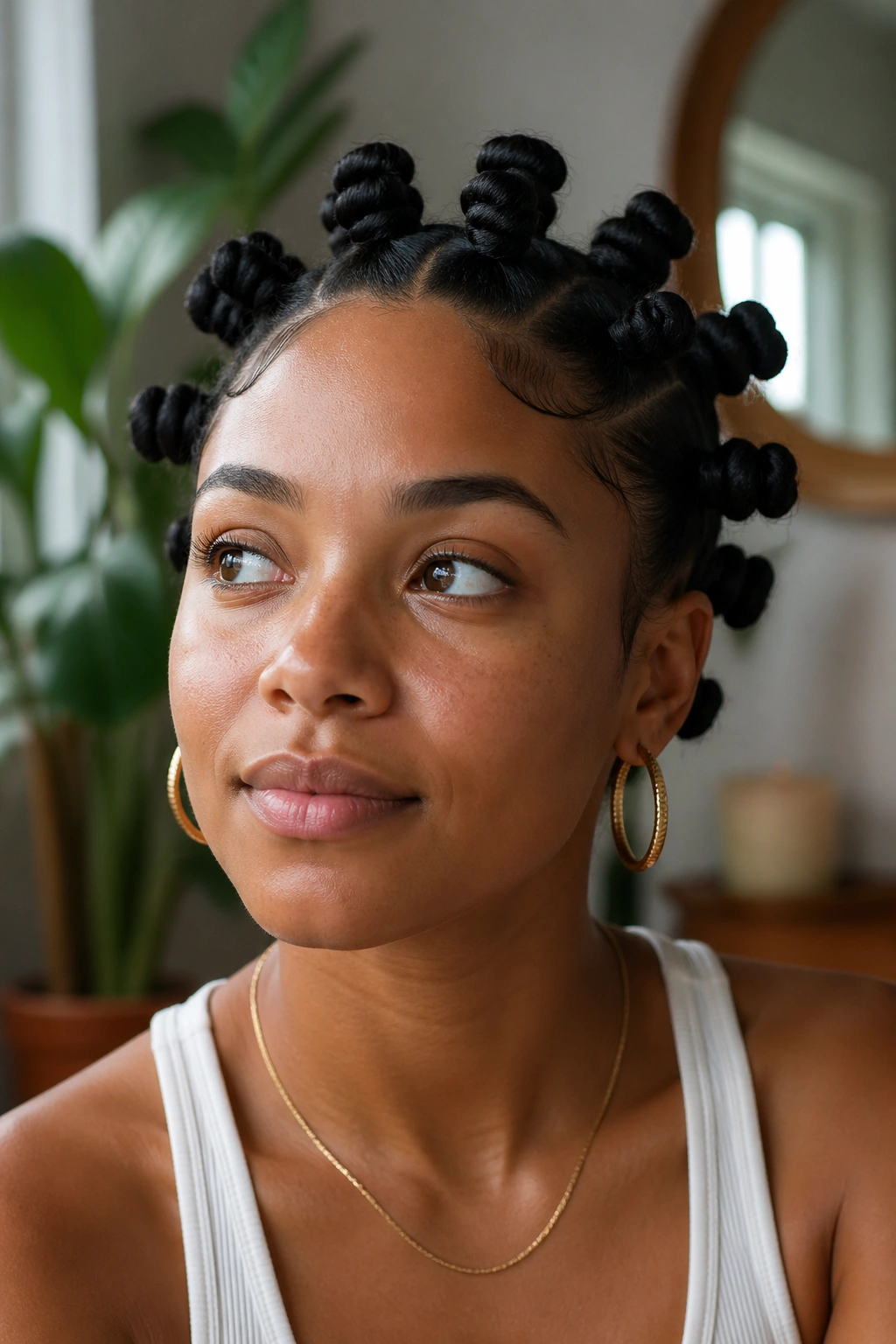
Bantu knots are sculptural, geometric, and deeply rooted in African hair tradition. They’re created by dividing hair into sections, twisting the section tight, and coiling it into a small knot that’s secured at its own base. Worn as a finished style, a full head of bantu knots is a statement look. Released after setting, they produce one of the most beautiful curl patterns a natural hair style can achieve — the bantu knot-out.
The knot-out is special. The specific spiral created by the knot shape produces a curl that’s more defined and elongated than a standard twist-out, and on looser 3x types, it creates luxurious ringlets that hold beautifully.
10. Finger Coils
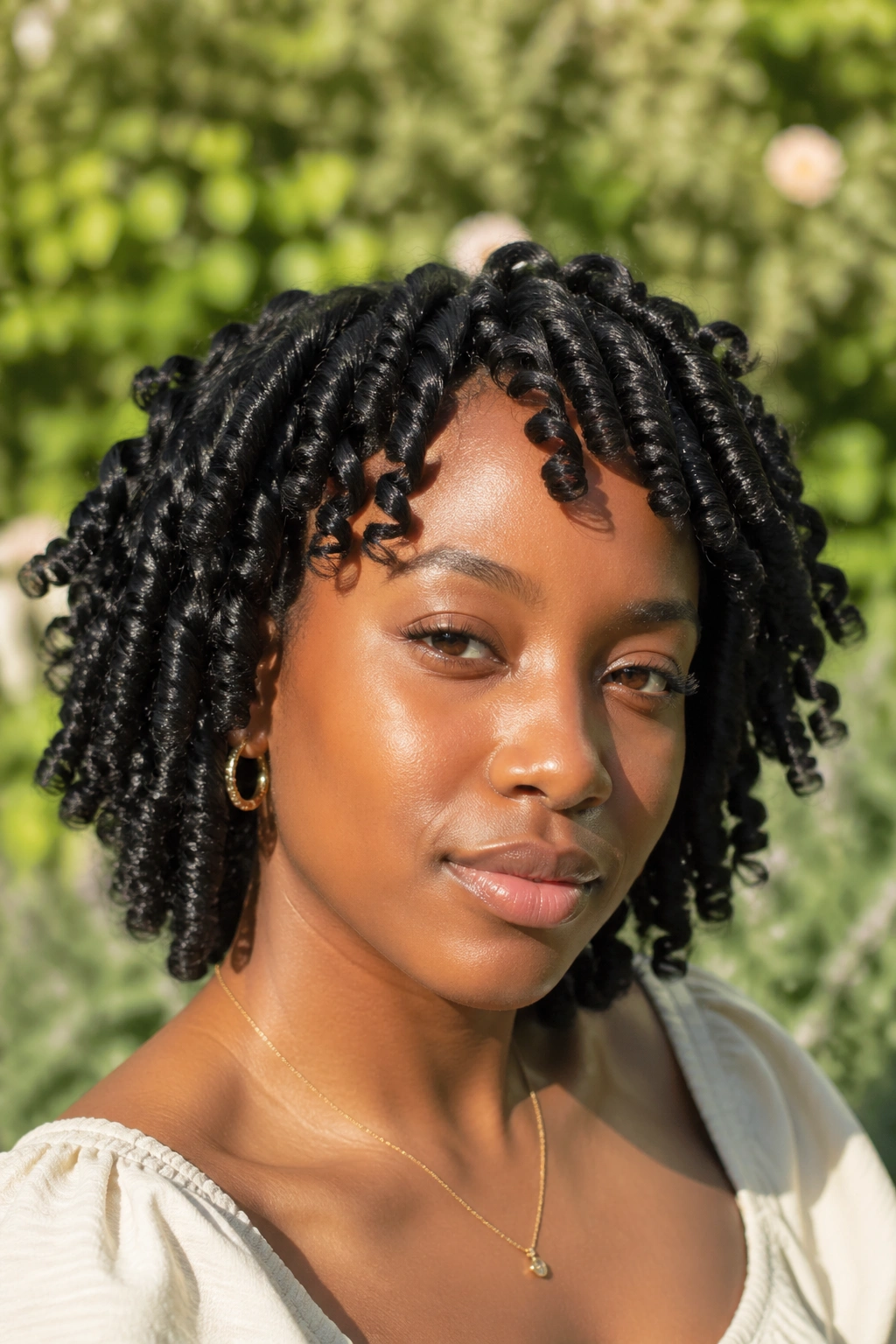
Finger coils require the most patience of any wash-day technique, but the results are extraordinary. Using a defining gel, you wrap each section of hair around your finger from root to tip, holding for a moment to encourage the coil to form, then releasing. Done across the entire head, finger coils produce a uniform field of distinct, shiny spirals.
This works best on 3C to 4A hair types where there’s enough natural curl to hold the coil shape. On very tight 4B or 4C coils, finger coiling can still produce beautiful results — the coils just have their own distinct shape rather than a round spiral.
11. Natural Faux Hawk
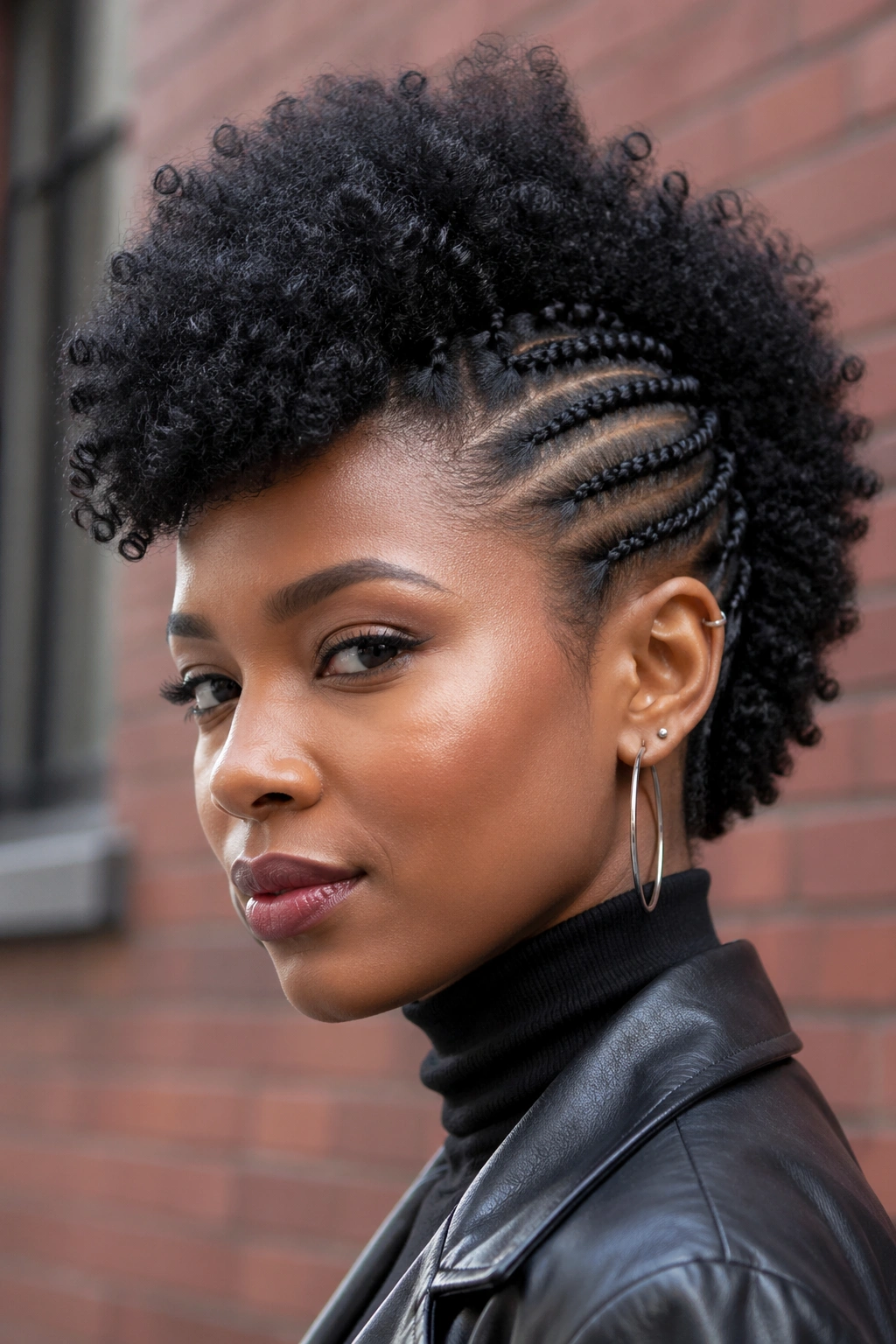
Divide your hair into three vertical sections — left, center, right. Braid or twist the left and right sections toward the center and secure. Leave the center section loose and in its natural curl state, or style it as a defined wash-and-go section. The result is a bold mohawk silhouette with a natural curl crown.
It’s one of the more editorial natural hair looks — it takes the architectural boldness of a mohawk and translates it through the medium of natural curly hair. The result is unmistakably powerful.
12. High Bun With Natural Texture
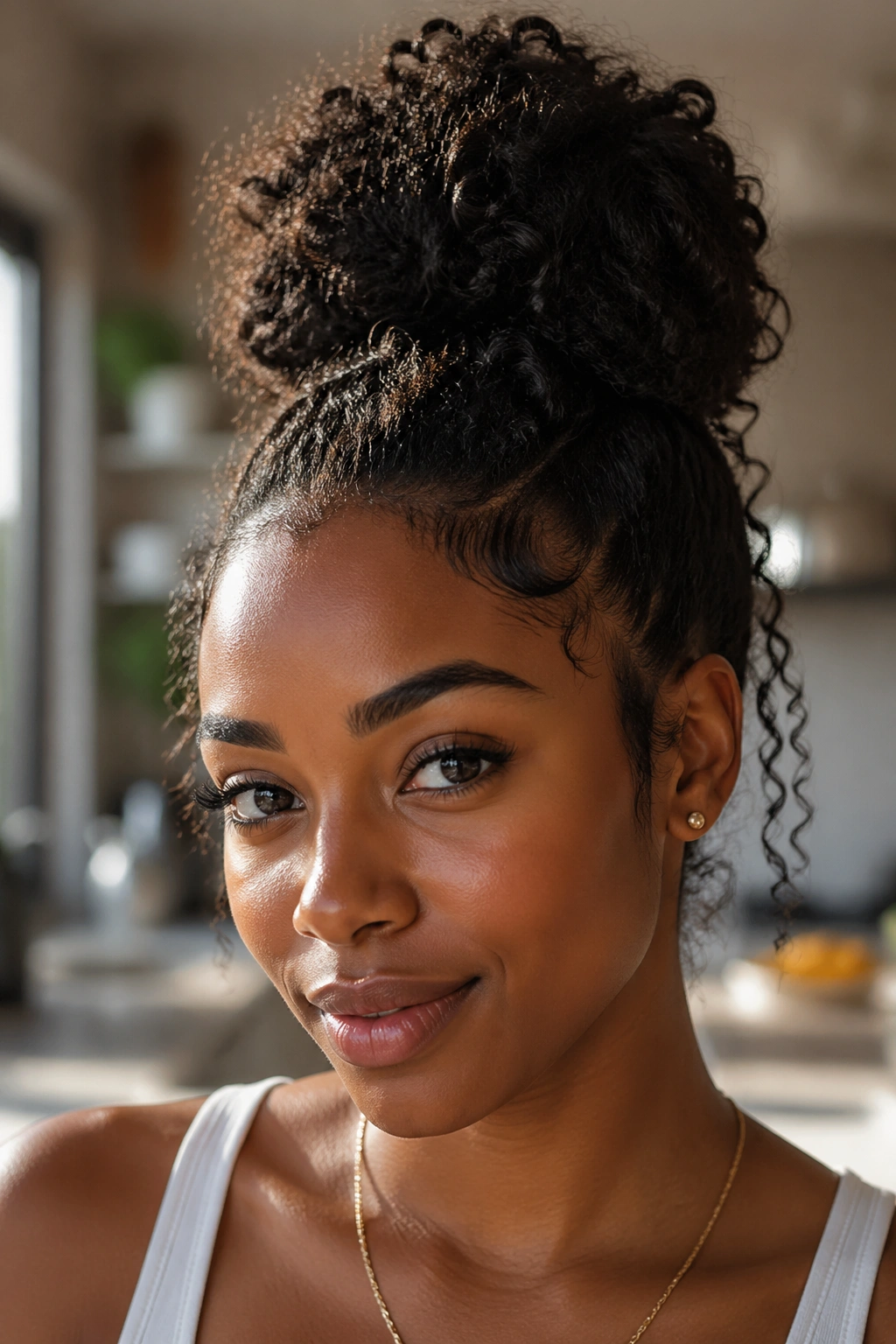
A high bun on natural curly hair is different from the sleek buns on straight hair — and that’s a good thing. The texture and volume of natural hair means your bun has presence and personality. Let coils and curls escape around the edges and the perimeter. Let the bun itself have visible texture rather than trying to smooth everything flat.
Use a doughnut or bun form if you want additional size. Stretch the hair slightly (in a loose pineapple overnight) before attempting the bun to reduce the battle with shrinkage.
13. Faux Locs
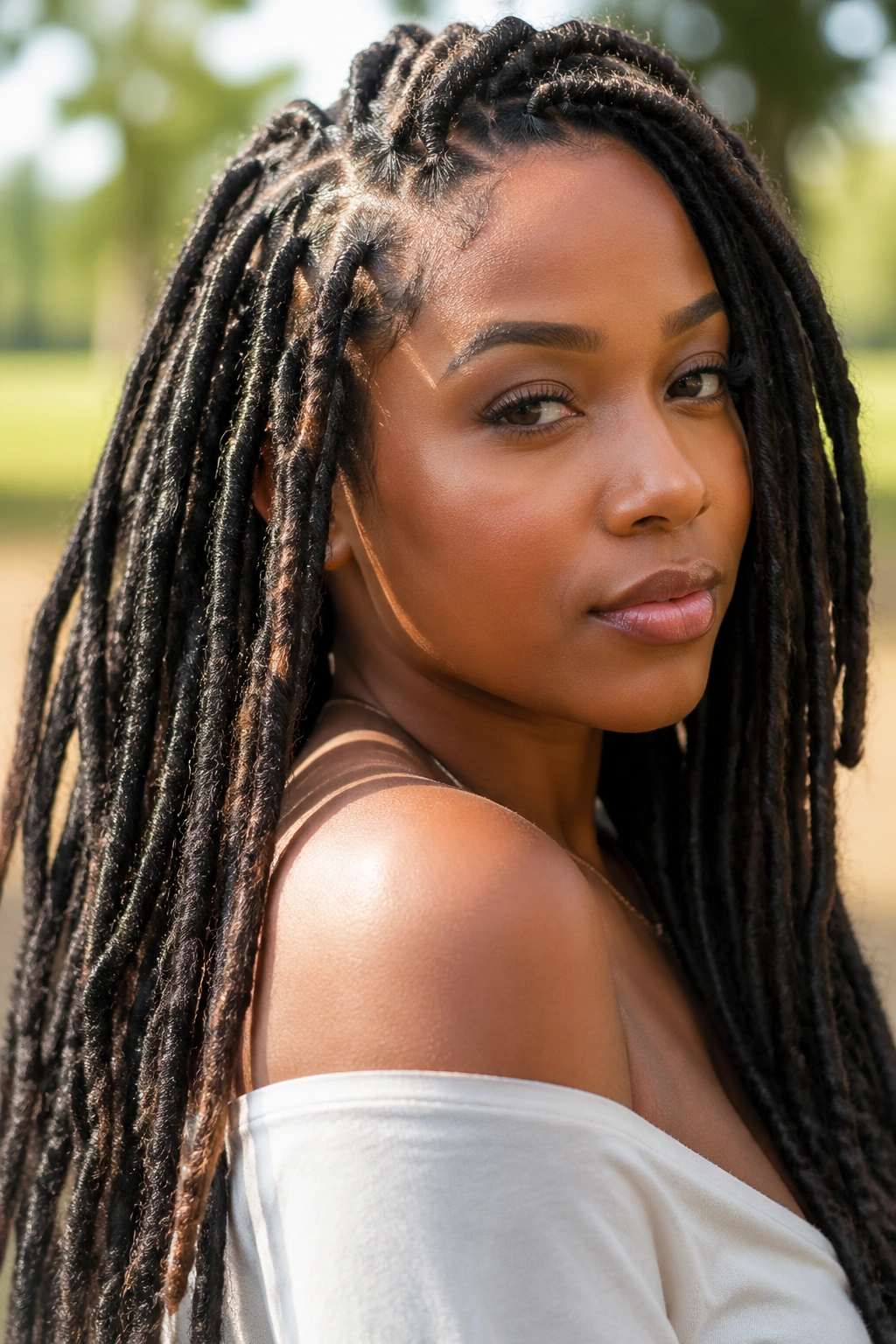
Faux locs use crochet or wrapping technique to create the appearance of locs using extension hair over natural hair. They’re protective — your natural hair is tucked away inside the faux loc — and they offer a dramatic, textured look that’s different from anything braids or twists produce.
Distressed versus smooth: Distressed faux locs have visible texture, flyaways, and a boho quality. Smooth faux locs are more refined and polished. The choice depends entirely on the aesthetic you’re going for.
14. Crochet Braids With Curly Extensions
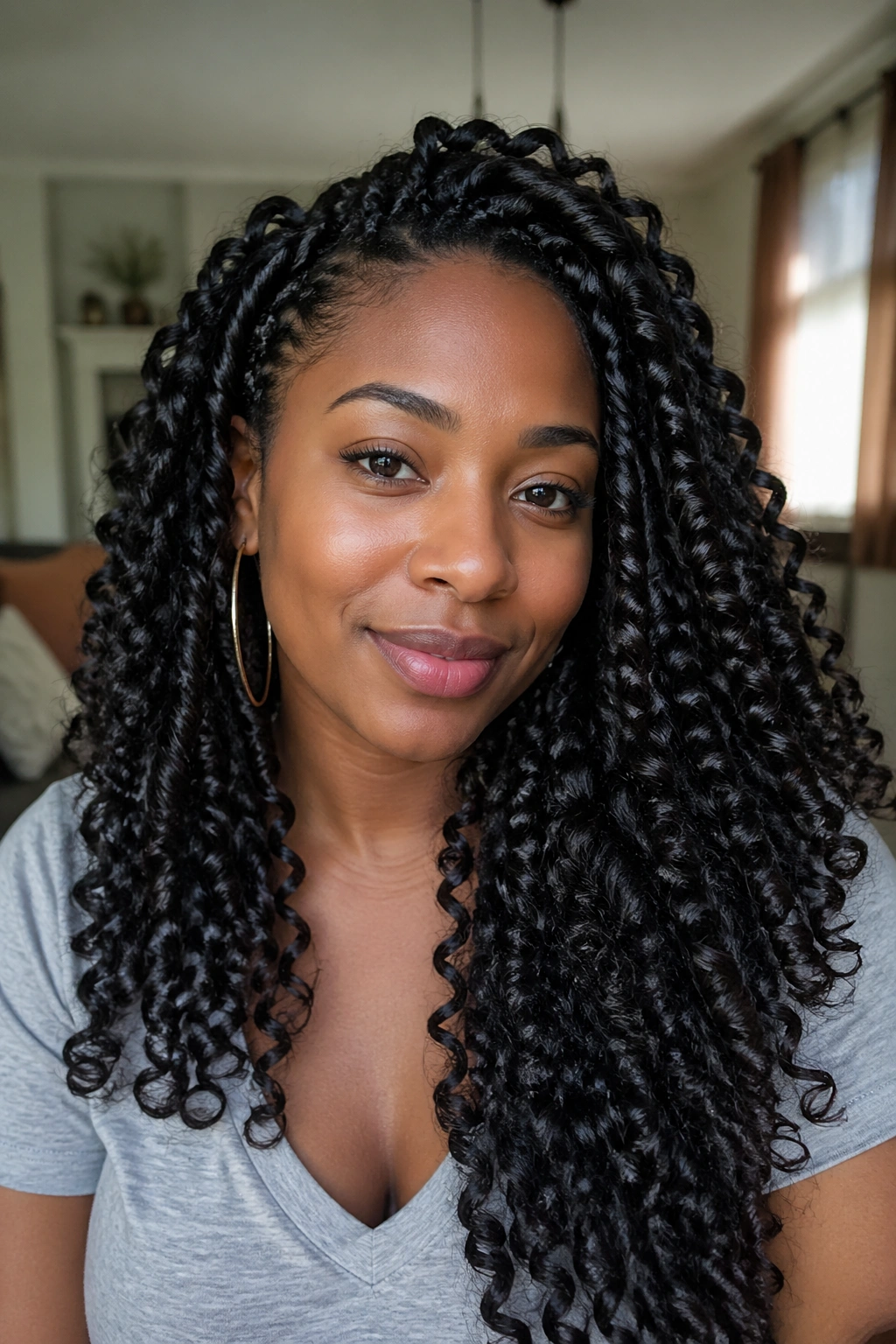
Crochet braids offer one of the most efficient ways to try a different curly style without altering your natural hair at all. Your natural hair is cornrowed underneath, and curly extension hair is looped through with a crochet hook. The result looks like a full head of curly styled hair — but your natural hair is protected underneath.
Crochet curly styles can look virtually identical to a natural wash-and-go, or they can look distinctly different (water wave, spiral, kinky curly) depending on the extension pattern chosen. The setup takes a couple of hours; the maintenance is minimal for the weeks of wear.
15. Locs
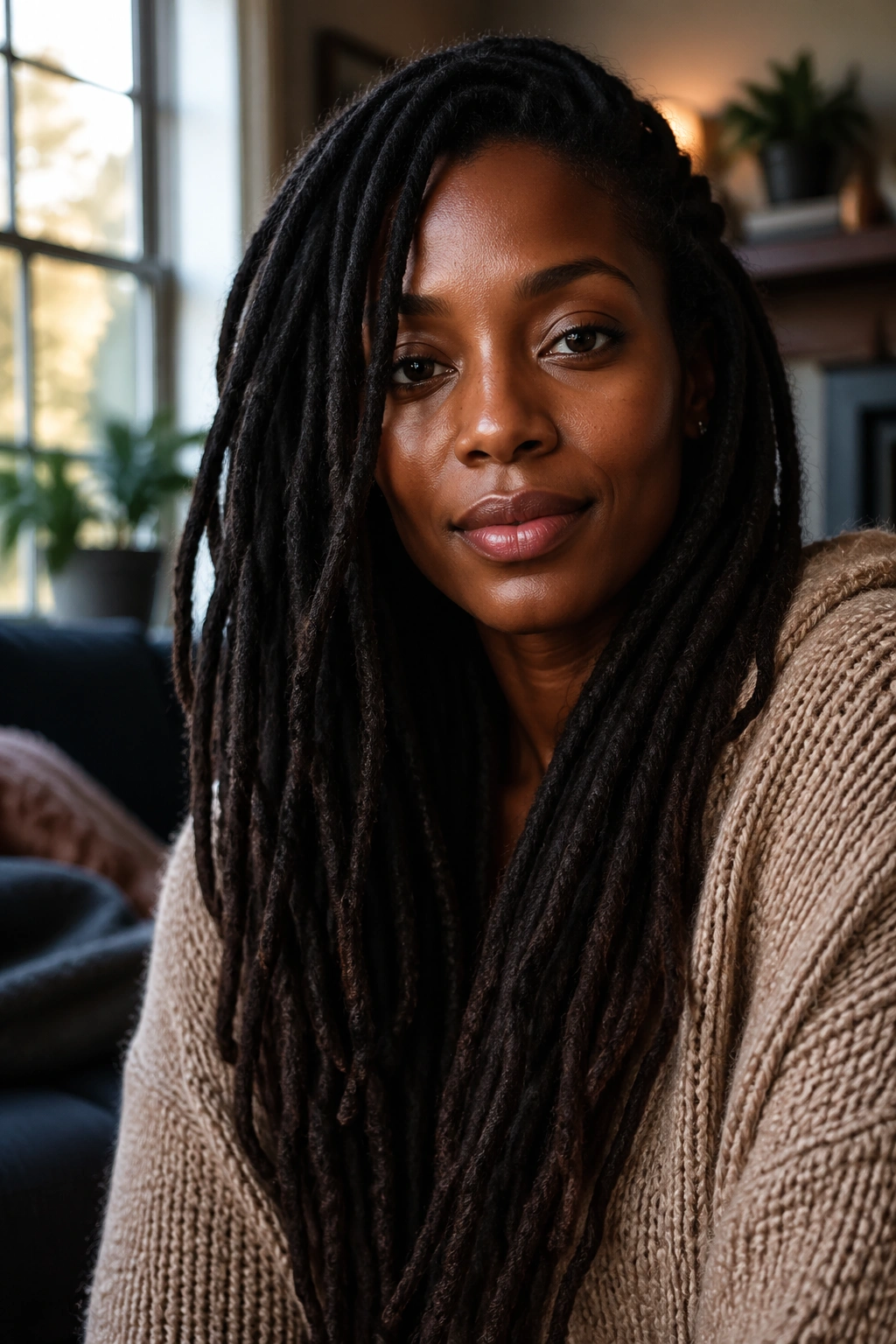
Traditional locs — whether started with twists, braids, or freeform — are their own category of natural hair. Not a style that comes down and goes back up, but a permanent commitment to a specific form of natural hair that matures and evolves over years. Locs are a lifestyle as much as a hairstyle.
New locs (the first one to two years) are in a budding and maturing stage where the pattern is still forming. Mature locs have their own gravity, weight, and distinctive beauty. Long, mature locs on curly natural hair are one of the most striking looks in existence.
16. Afro Puffs (Two Puffs)
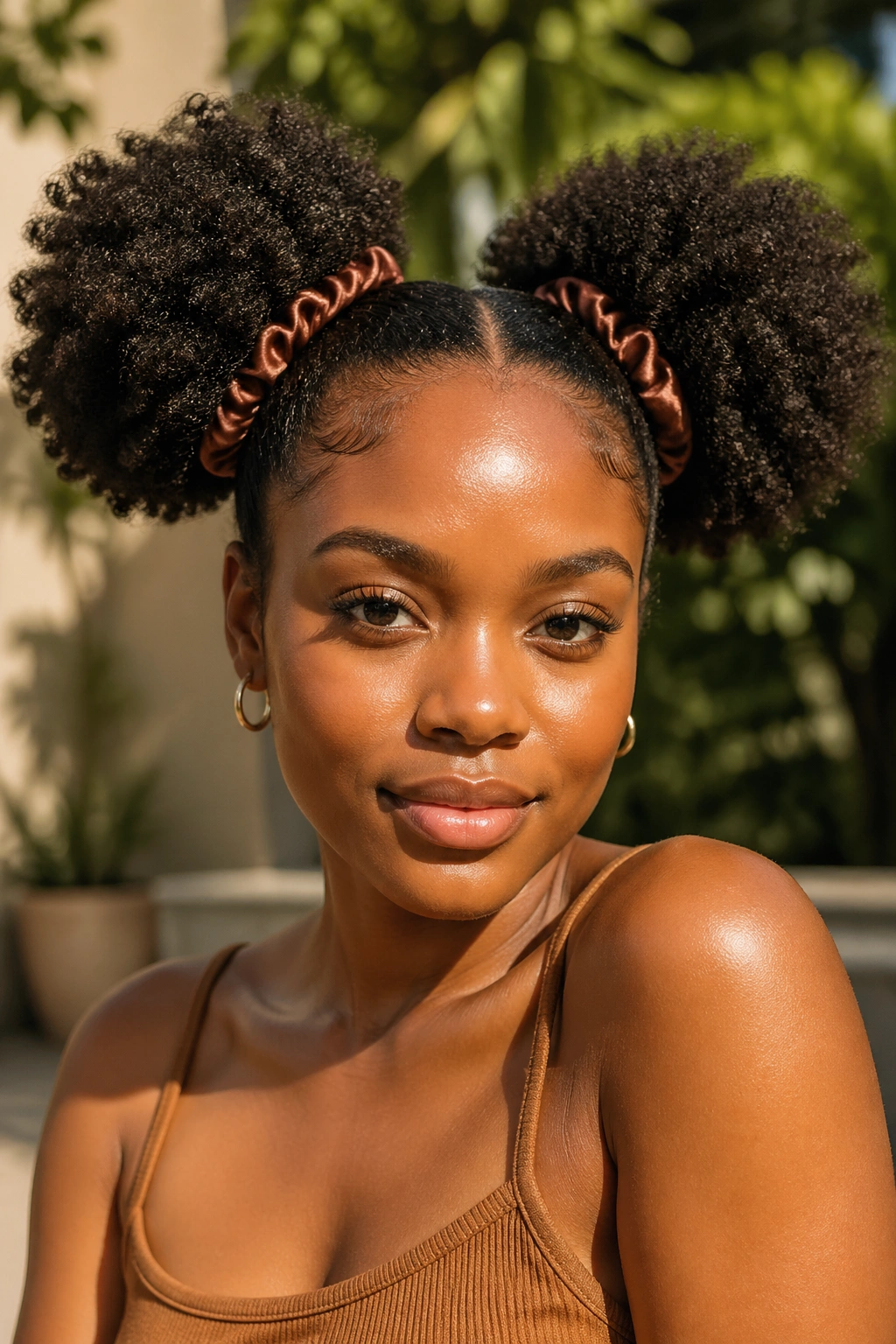
Two puffs — one on each side, gathered at the temples or above the ears — are a playful, youthful, and absolutely charming look for curly natural hair. They emphasize the roundness and volume of the natural hair in a way that single puffs don’t, and they create a silhouette that’s immediately recognizable as a celebration of natural hair.
Moisturize thoroughly before gathering. Use satin scrunchies. Let the hair in each puff be as voluminous as it wants — don’t try to compress or flatten it. The bigger the better.
17. Tapered Cut and Natural Curl
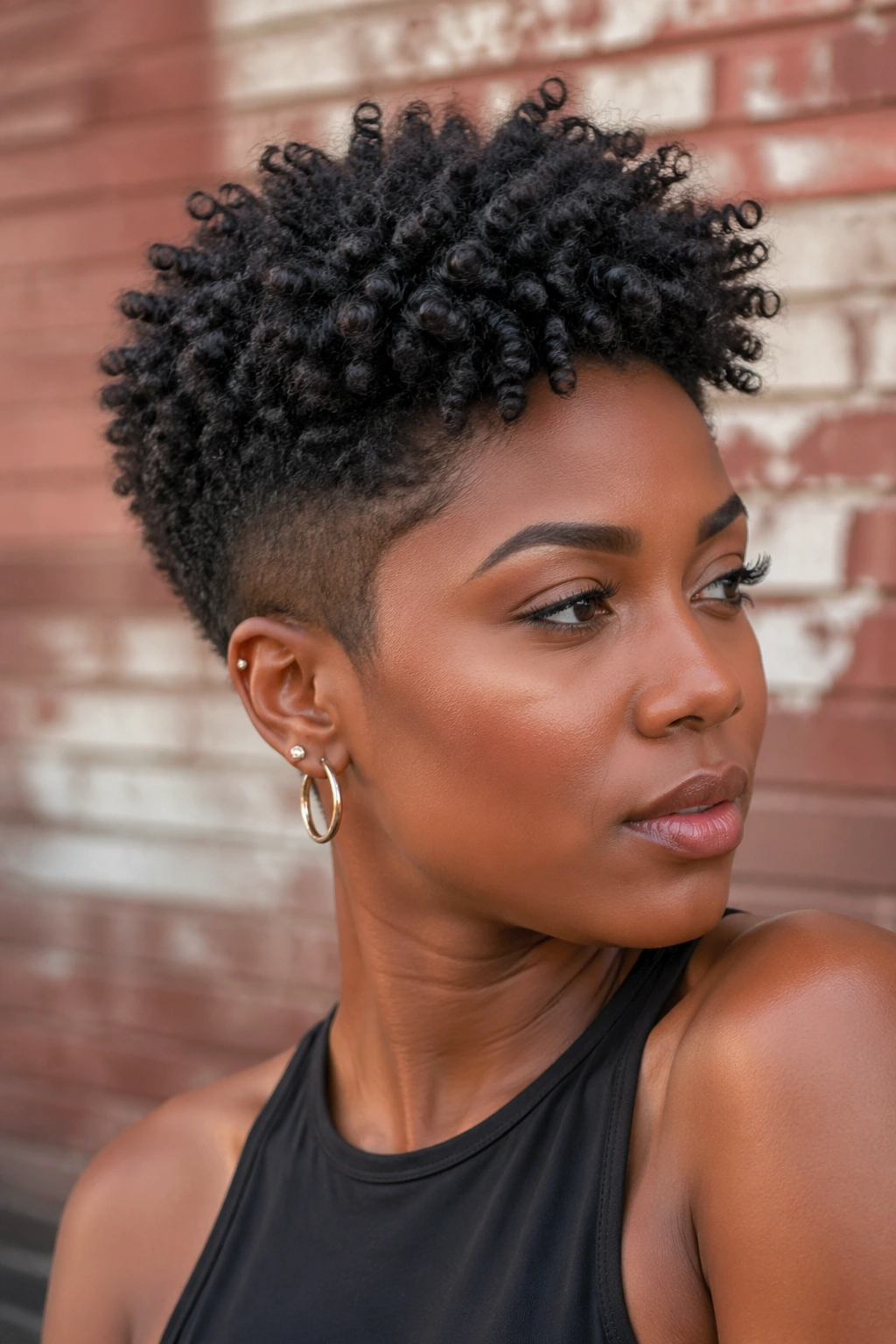
A tapered natural is one of the most striking and low-maintenance looks available for curly natural hair. The sides and back are trimmed progressively shorter (by a barber or natural hair stylist skilled in tapering), while the top is left longer and natural. The result is a shape that emphasizes the geometry of your head and the density of your natural curl at the crown.
On 4C hair, a tapered cut creates a bold, sculptural silhouette. On 3C hair, the natural curl at the crown creates a halo effect above the tight taper. The style requires virtually no daily manipulation — just moisturize the crown, and go.
18. Coil Out on Type 4 Hair
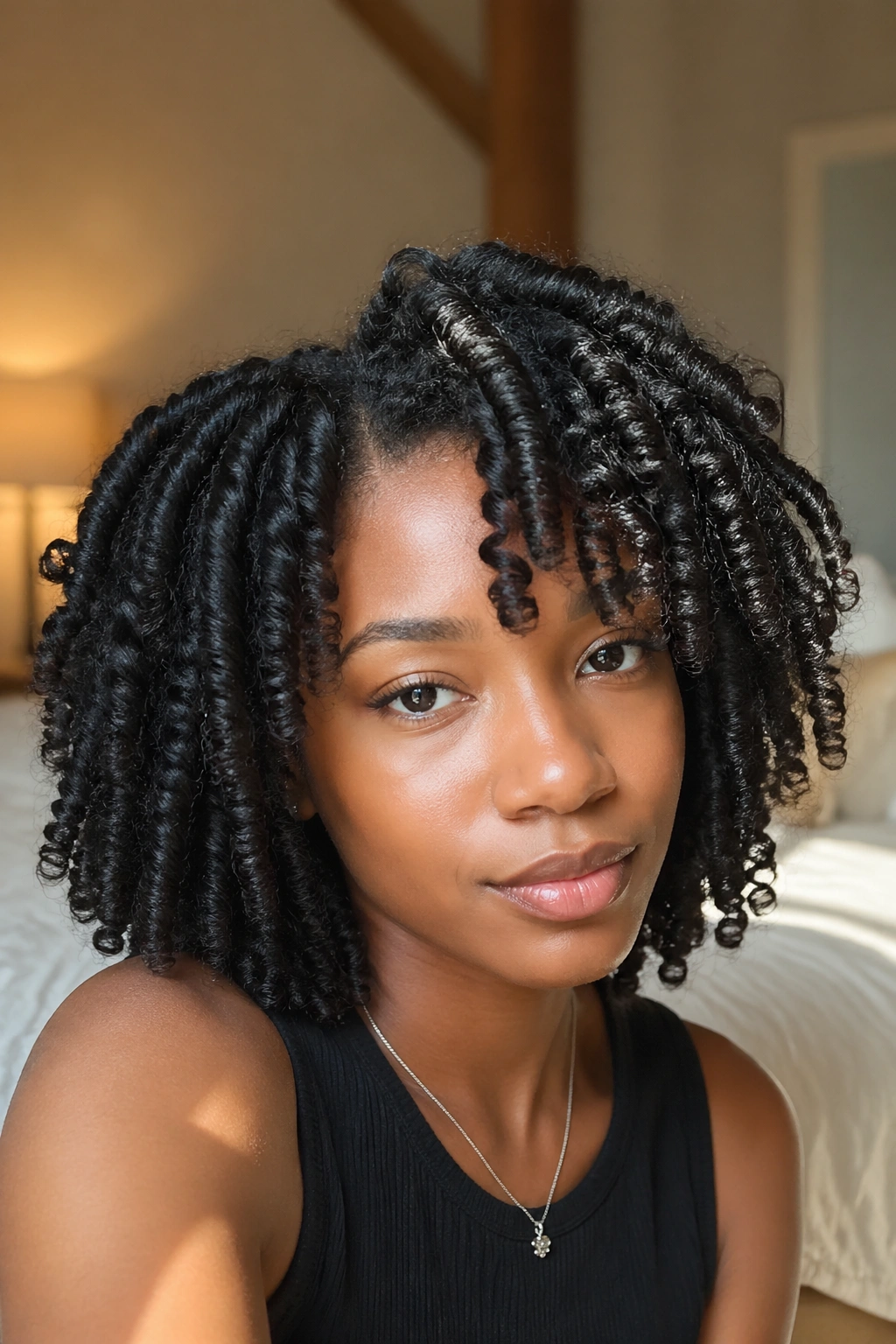
Different from a finger coil (which you do wet on wash day), a coil-out is done with a small rod or flexi rod on moisturized hair, then released after drying to reveal a curl pattern. On 4B and 4C hair, the coil-out produces a defined, stretched curl that you can’t achieve through air-drying alone.
The size of the rod determines the tightness of the curl. Smaller rods produce tighter, more defined coils. Larger rods produce looser, more open spirals. You can vary the rod size throughout the head for a more dimensional result.
19. Halo Braid
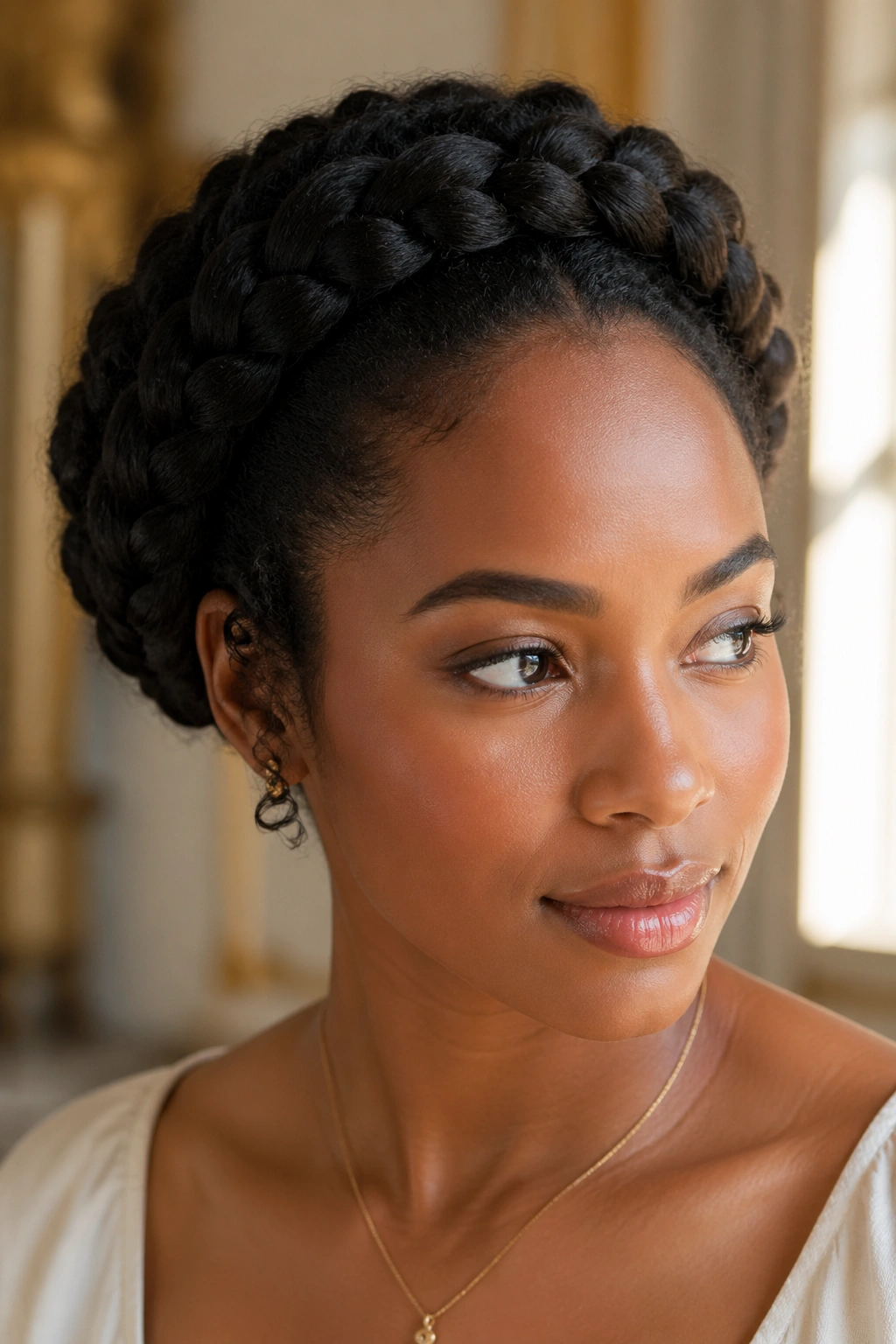
A halo braid — a single French or Dutch braid that circles the entire perimeter of the head like a crown — is one of the most elegant natural hair looks available. It requires length to complete (the braid needs to travel all the way around the head), but it’s a timeless updo that works for the most formal occasions.
For curly natural hair, the texture of the braid has a richness that flat-ironed or relaxed hair braids don’t. The visible texture of the coils within the braid pattern makes it look more complex and artisanal.
20. Afro (Free and Full)
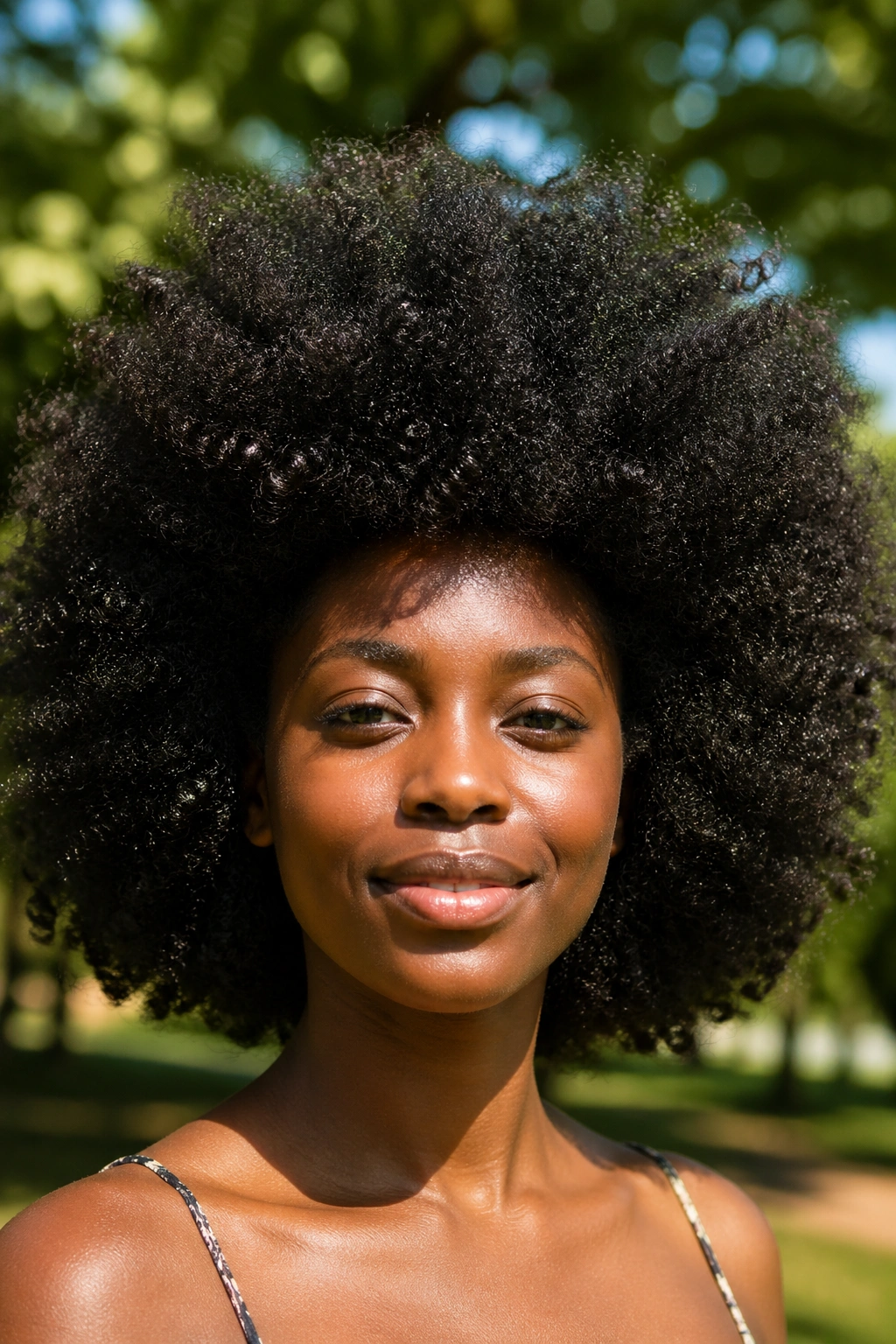
The afro in its fully free, fully unmanipulated state is the most politically and culturally significant of all natural hair styles — and also one of the most beautiful. Not a wash-and-go, not a defined style, not a puff. Just hair, allowed to be what it is, in as much volume and depth as it naturally achieves.
The afro doesn’t need to be styled into anything. Moisturize, pick out gently to release any compression, and let it stand. The shape, the density, the cloud-like volume — these are the style. Don’t intervene. Let it be.
21. Protective Updo With Natural Edges
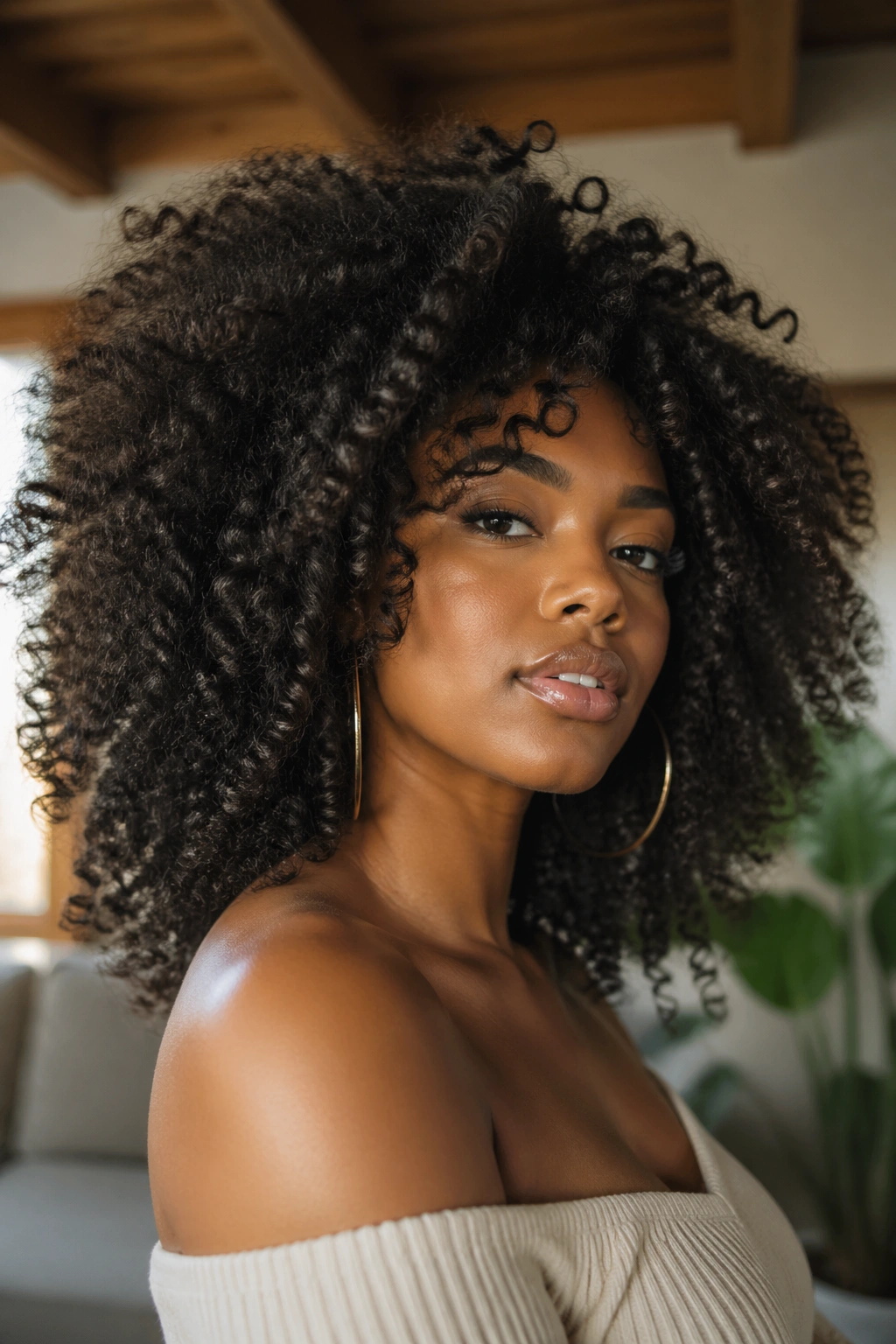
This describes a category of styles rather than one specific look: any updo that keeps the bulk of your natural hair protected (pinned, tucked, braided) while intentionally styling the hairline and edges. The edges become the face of the style — artfully laid with edge control, styled into waves, swoops, or directional patterns that frame the face.
The contrast between the protected, contained updo and the precisely styled edges is striking. It demonstrates control and intentionality while keeping the natural hair safe from manipulation.
22. Wash-and-Go With Headband
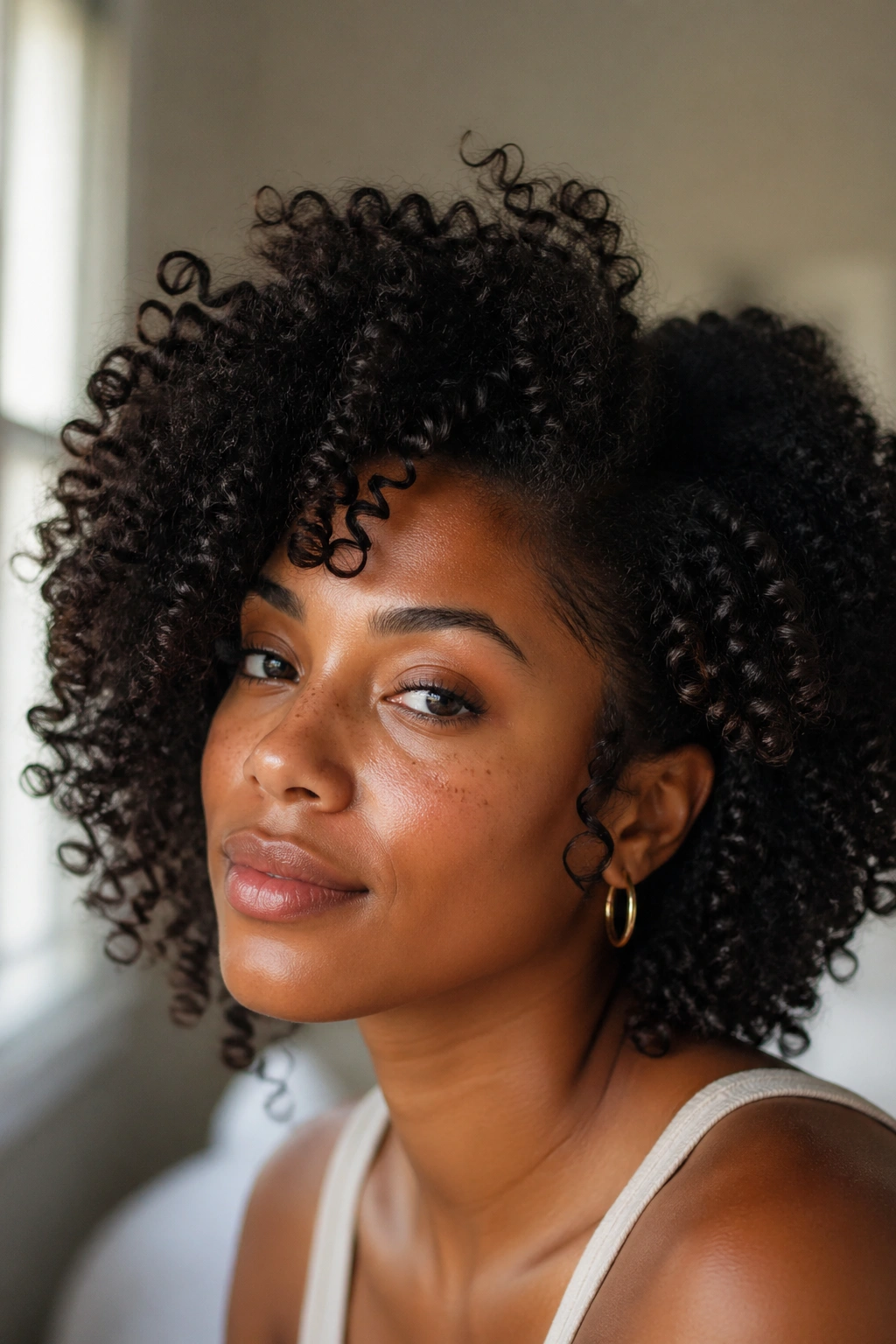
The simplest upgrade to a basic wash-and-go. After your curls are set and dry, add a headband — velvet, satin, knotted fabric, jeweled, or beaded — that sits just behind the hairline. This creates instant polish and transforms an everyday style into a more composed look.
Choose headbands that don’t pull or crease the edges. Wide headbands can tame any flyaways at the hairline without edge control. A thin, embellished headband adds elegance without obscuring any of the curl.
23. Knotless Box Braids
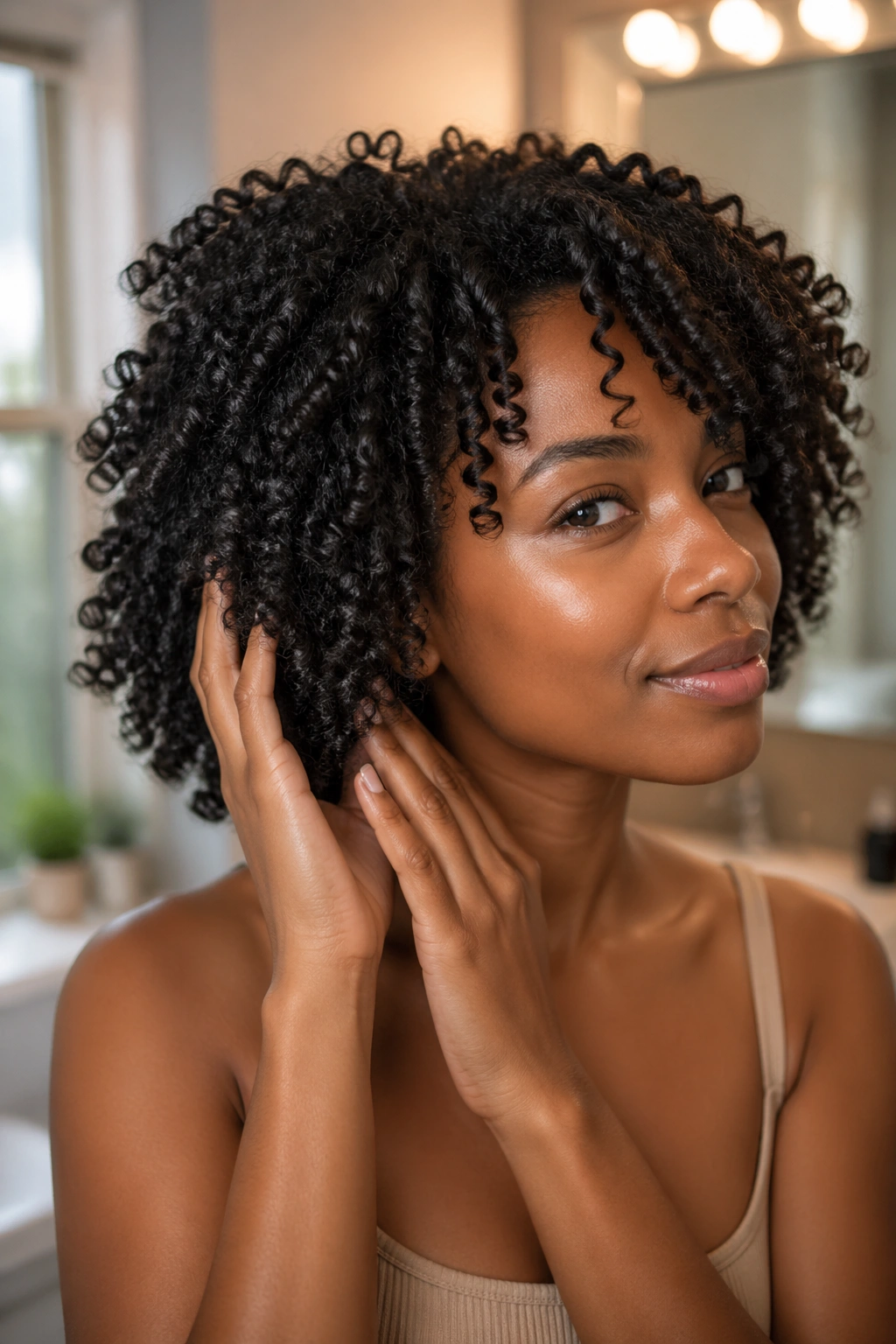
Knotless box braids are a variation on traditional box braids where the braid begins with your natural hair rather than starting with a knot of extension hair. This eliminates the tension at the root that traditional box braids can create — which matters for hair health and scalp comfort. The result is a more seamless start that makes the braids appear to grow directly from your head.
Knotless braids also lie flatter, which can give the style a more natural, less obviously braided appearance at the root. They’ve become the preferred technique for many who prioritize scalp health alongside the aesthetic of a braided look.
24. Twist-Out With Headwrap
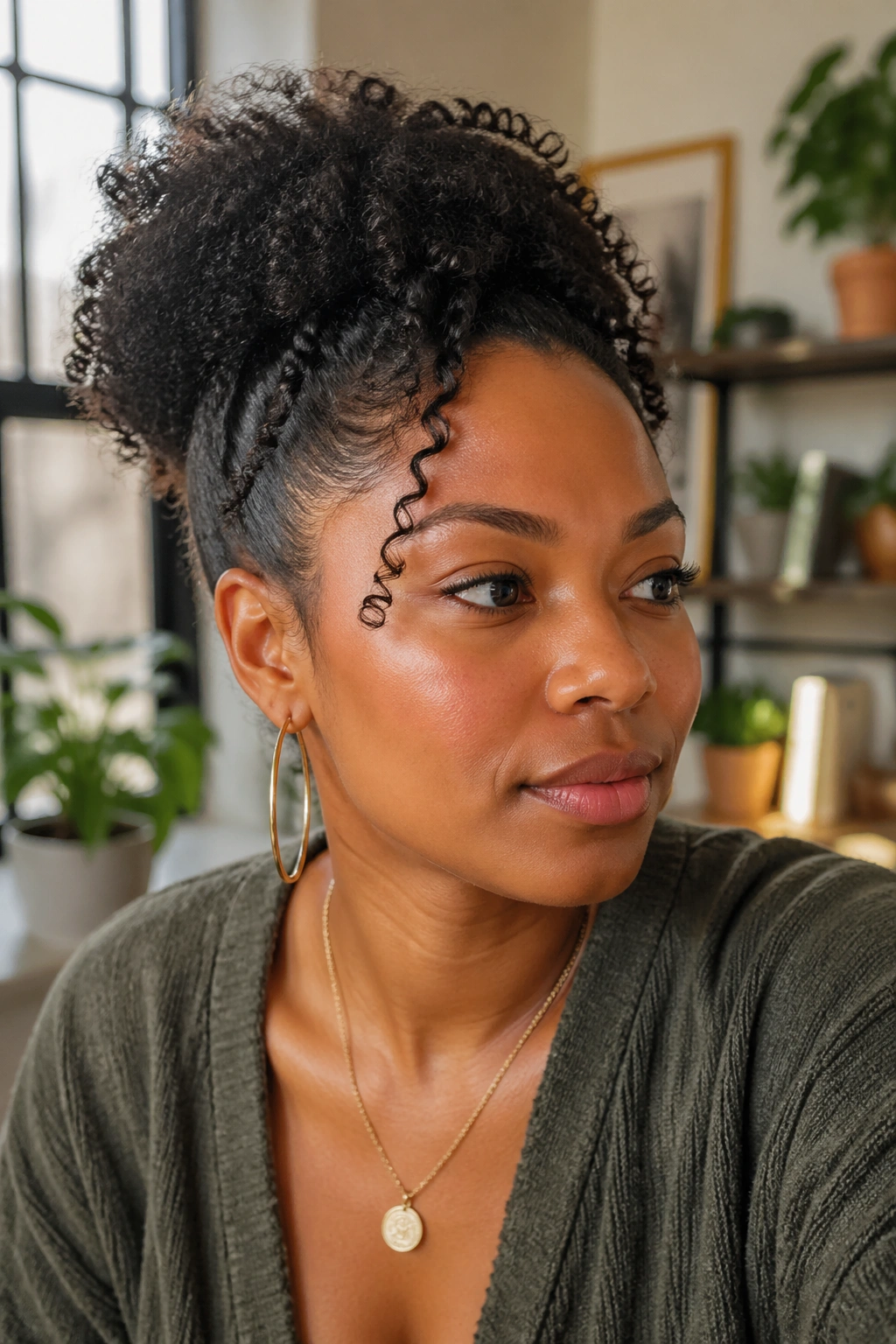
A twist-out finished with a fabric headwrap or turban is a complete look — not a work-in-progress or a bad-hair-day solution. The wrap covers the crown and top of the head, the twist-out volume and definition shows at the sides and back, and the combination reads as intentional, stylish, and expressive.
Match the wrap color to your outfit or your mood. A bold, graphic print for a casual day. A rich solid color for a more composed look. The headwrap is not hiding your hair — it’s completing the look.
25. Big Chop TWA (Teeny Weeny Afro)
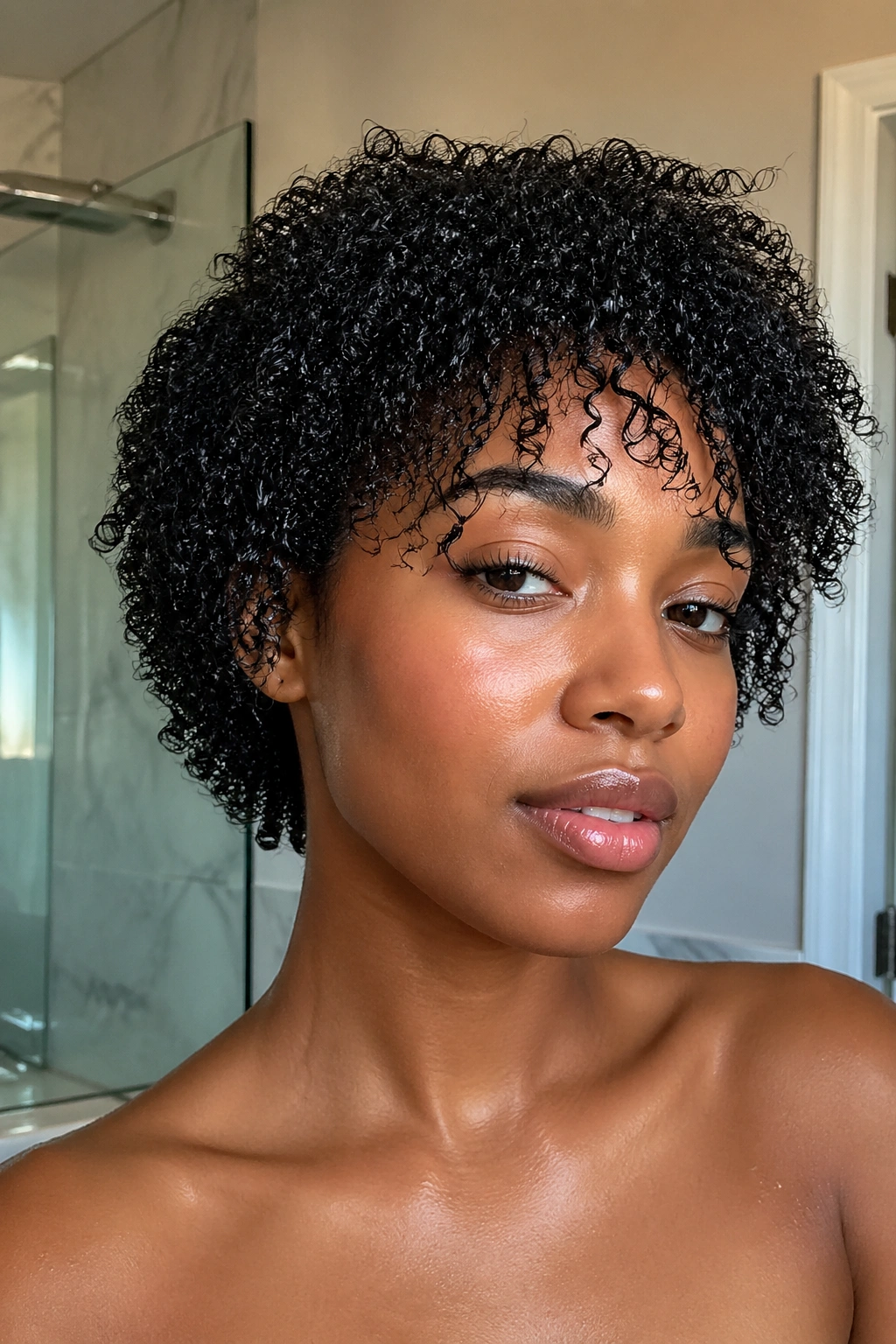
The Big Chop — cutting off chemically processed or heat-damaged hair to start fresh with your natural texture — is a milestone moment for many Black women. The resulting teeny weeny afro might be the starting point, but it’s never just a beginning. A well-shaped TWA is a stunning style in its own right.
A TWA on curly natural hair is all about shape and health. The curl pattern is close to the scalp, so the shape of the cut determines how the style looks. A rounded, full shape. A tapered edge. A flat-top profile. These choices make the TWA as intentional and styled as any longer look.
26. Jeweled Braid Crown
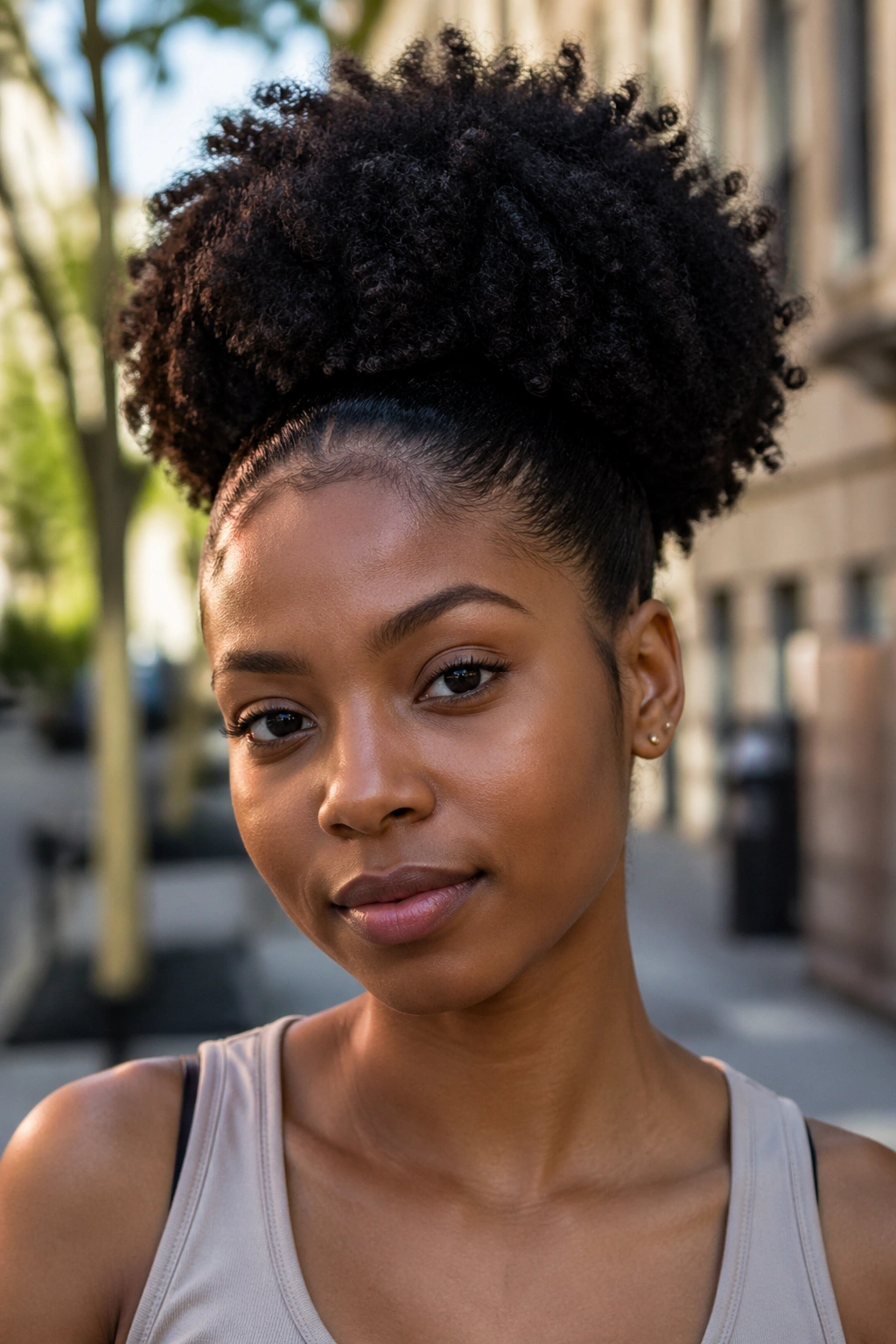
A braid crown — braids circling the head from front to back, meeting at the crown — adorned with jeweled pins, gold cuffs, or floral accents is one of the most visually spectacular natural hair looks available. It requires more technical skill than most styles on this list (or a skilled braider), but the result is extraordinary.
This is occasion hair. Weddings, formal events, photoshoots, celebrations. The braid crown elevates natural hair into formal styling territory without requiring any heat or chemical alteration. It says, with complete authority, that natural curly hair belongs in every room, at every occasion, at the highest level of beauty and intention.
The Future of Curly Hairstyles for Black Women
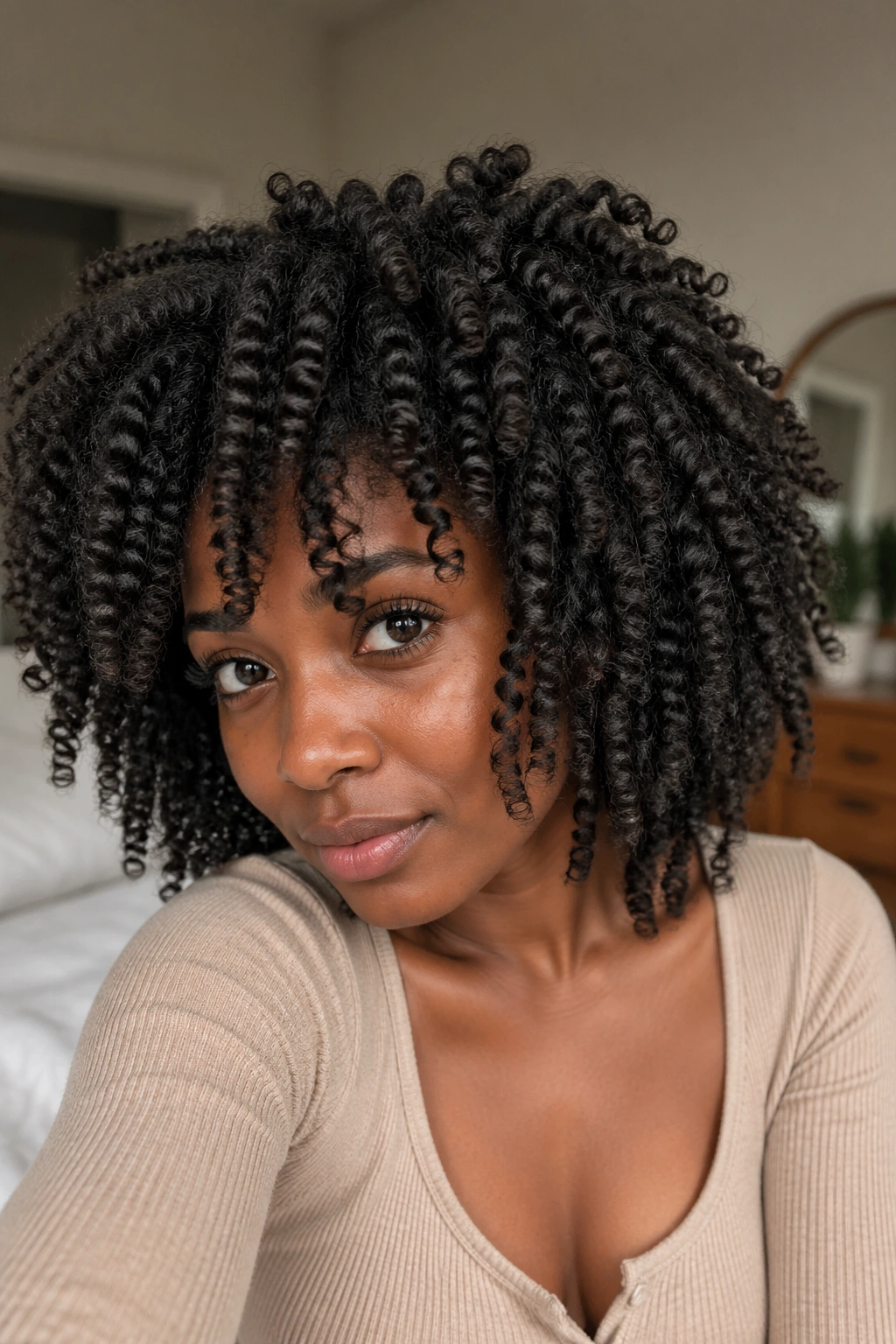
There is no ceiling. That’s what the last two decades of natural hair visibility have made clear. The range of styles, techniques, products, and cultural contexts for curly natural hair continues to expand — not because the hair itself is changing, but because the space for it to be seen, celebrated, and explored has finally opened up in ways it wasn’t always allowed to be.
Every curly hairstyle a Black woman chooses to wear — whether it’s a simple moisturized puff or an elaborate braided crown — is a statement. Not necessarily a political one, though it can be. Simply a statement of presence, identity, and creative self-expression. That’s what these styles have always been. And that’s what they’ll continue to be.
