Balayage ideas for curly natural hair have exploded in popularity over the years, and for good reason — the freehand color technique creates a sun-kissed, dimensional look that mimics the way hair naturally lightens from extended time in the sun, and on natural curl textures it looks extraordinary. There’s no other coloring method that creates quite the same effect on coily and curly hair: soft, graduated color that seems to emerge from within the curl rather than being applied to it. If you’ve been curious about balayage on your natural curls, this guide covers everything from technique to style to aftercare.
What Makes Balayage Different from Other Color Techniques
Balayage is a French word meaning “to sweep,” and the name perfectly describes the application method — color is swept onto the hair freehand using a brush, without the use of foils or a cap, allowing the colorist to place pigment precisely where the sun would naturally hit the hair.
This distinction matters enormously for natural hair. Traditional highlight techniques using foils apply color in highly controlled, uniform sections that can look rigid and artificial on curly and coily textures. Balayage, applied freehand, follows the natural curl pattern — the colorist can put lighter color on the outer curves of each coil and leave the interior darker, mimicking the way natural sunlight actually interacts with curly hair.
The result is a graduated color effect where the roots stay dark, the mid-lengths develop some warmth and dimension, and the ends display the most visible lightening. There are no harsh lines of demarcation, no obvious grown-out roots in six weeks, and no artificial uniformity that betrays the process. On natural curls, this organic quality makes balayage one of the most flattering and believable color techniques available.
Balayage is also more forgiving on natural hair than other highlight methods because the amount of product applied is minimal and targeted rather than saturating entire sections. Less chemical exposure means less structural damage to the hair, which is a significant consideration for maintaining curl pattern and overall hair health.
Choosing the Right Balayage Tones for Natural Curls
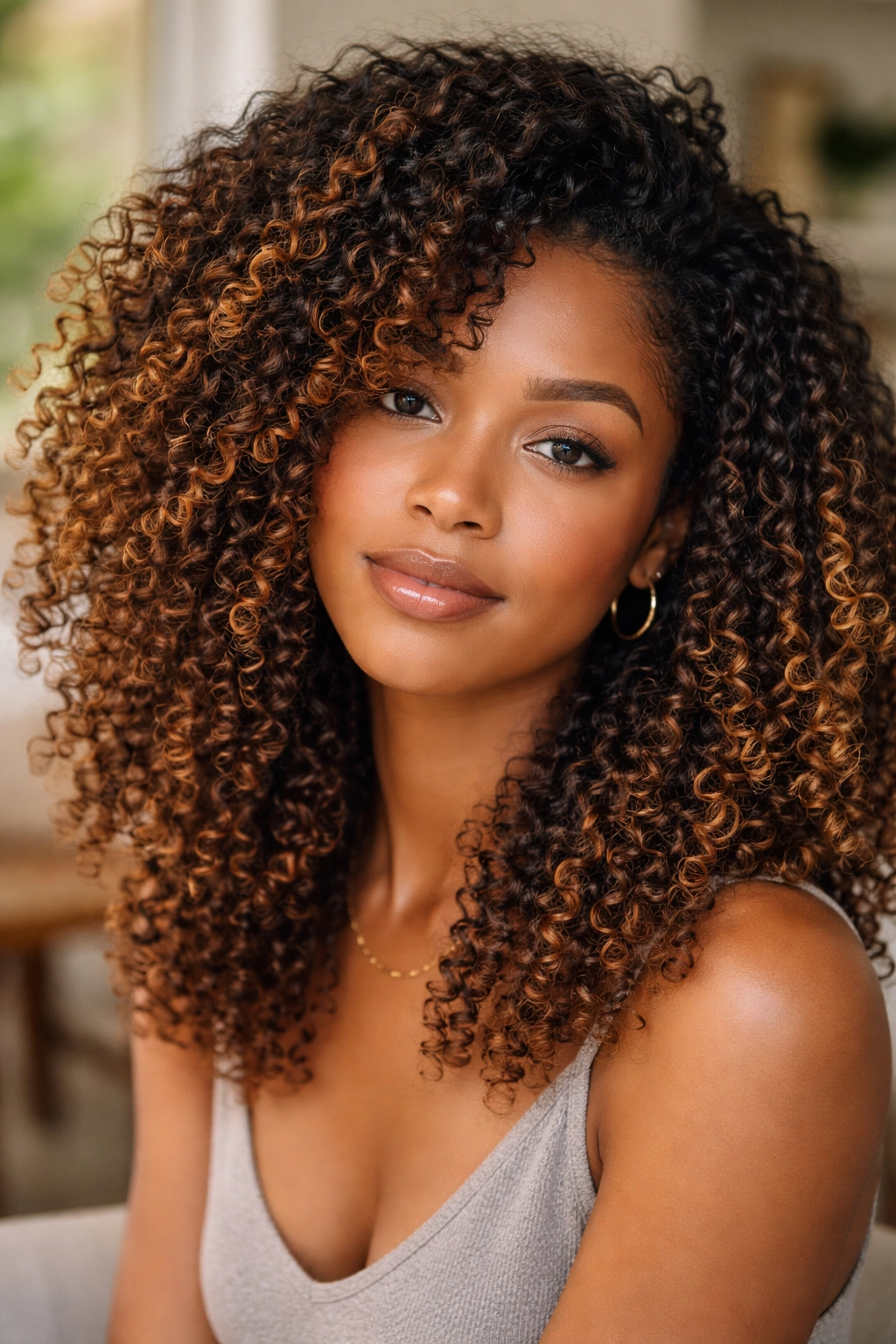
The balayage technique itself is only part of the equation — the color tone you choose determines the overall look, and not all balayage tones suit every skin tone or curl pattern equally well.
Warm tones — honey, caramel, copper, amber, golden brown — are the most popular balayage choices for Black women with natural hair because they complement melanin-rich skin beautifully and create warmth rather than contrast. Caramel balayage on a dark base is perhaps the most universally flattering warm option because it has depth and richness without being stark.
Cool-adjacent tones — ash brown, cool blonde, platinum — can work on deeper skin tones but require more intentional consultation because the contrast between a very cool highlight and warm skin can look harsh rather than harmonious. Platinum balayage specifically is a bold choice that requires significant lightening and careful maintenance.
Dimensional tones that blend multiple warm shades — a balayage that incorporates honey, caramel, and a hint of copper, for example — tend to create the most naturalistic and beautiful results on natural hair because they replicate the complexity of actual sun-lightened hair rather than a single flat highlight tone.
The Balayage Process on Natural Hair: What’s Involved
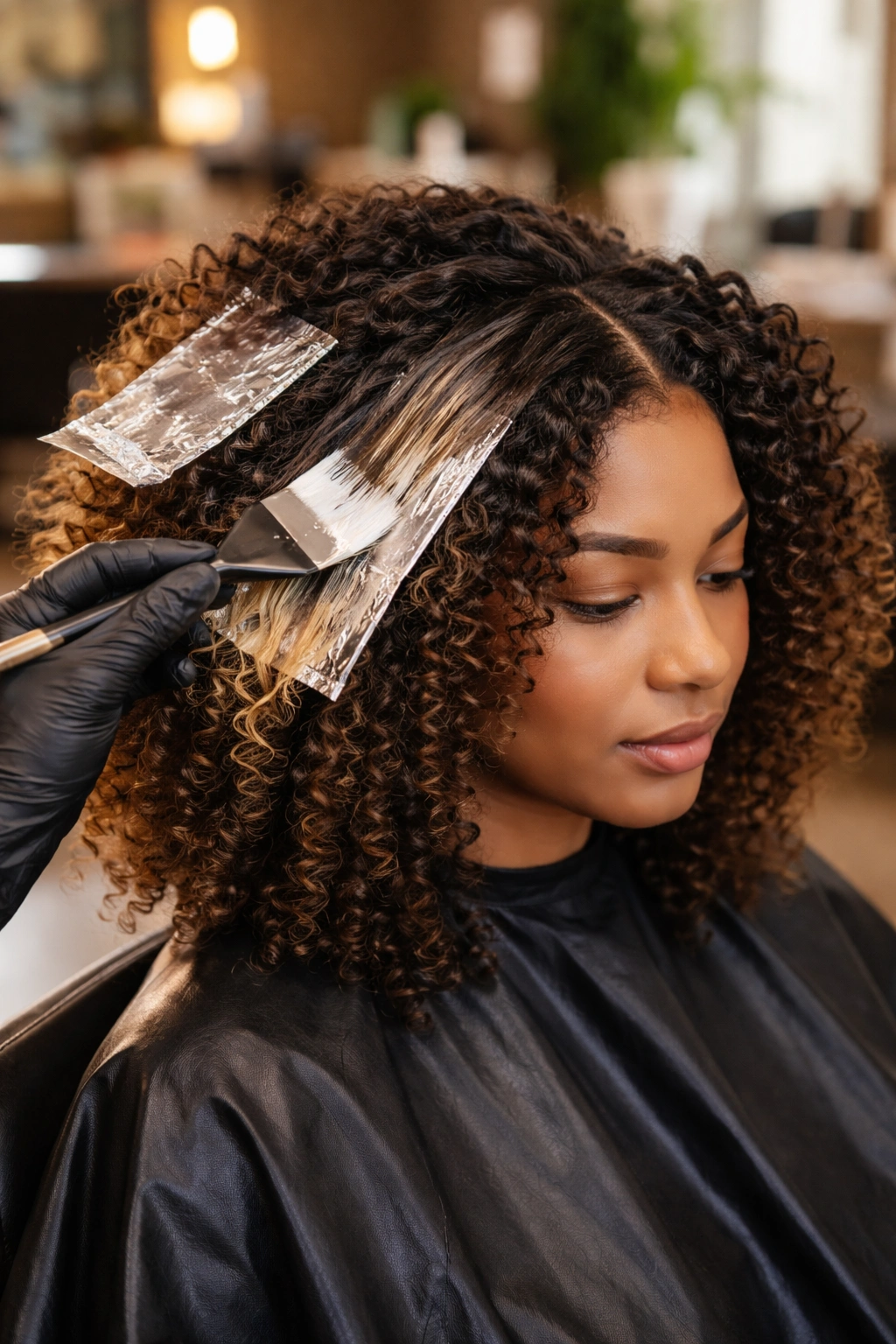
The balayage process on natural curls differs meaningfully from the process on straight hair, and understanding those differences helps you prepare for the appointment and communicate with your colorist effectively.
Natural hair — especially type 4 textures — has a different porosity profile than straight or relaxed hair. The coil structure means natural oils can’t travel easily down the hair shaft, which often results in varying porosity across the hair (higher porosity at the ends, lower at the roots). This porosity variation affects how quickly and evenly hair lifts during a chemical lightening process.
An experienced natural hair colorist will take this into account when planning and applying balayage. They might apply the lightener in carefully staged sections, adjust developer strength for different parts of the hair, or work in a specific order that accounts for the head’s natural heat zones (the nape is coolest, the crown is warmest and lifts fastest).
Timing and observation during processing are critical. A colorist who understands natural hair will check the lightener regularly and rinse at the precise moment each section reaches the target lift rather than following a rigid timer. This level of attention is what separates a beautiful balayage result from an uneven or damaged one.
Setting Realistic Expectations for Balayage on Natural Curls
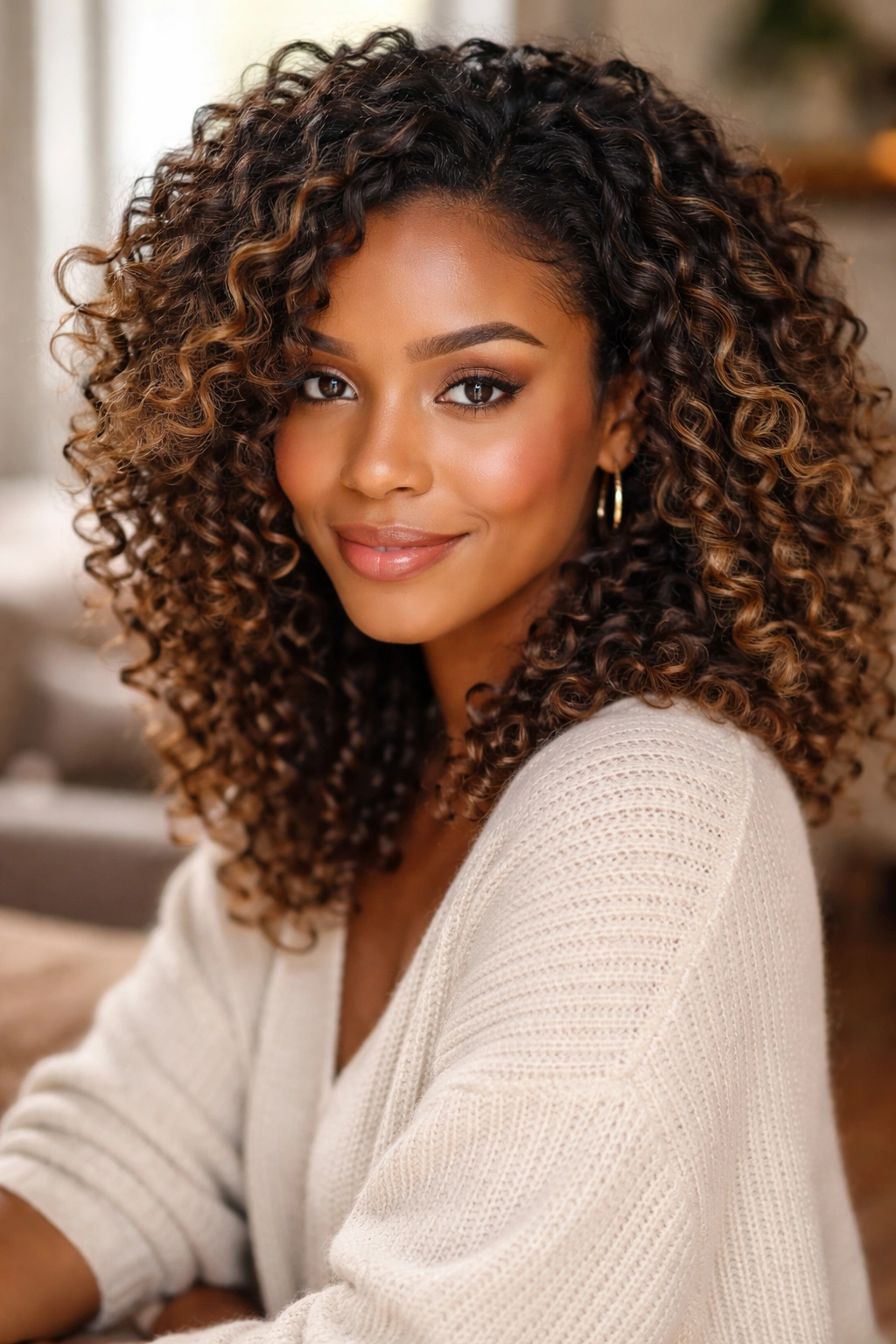
One of the most important things about going into a balayage appointment on natural curls is having accurate expectations about the result — both what it will look like and what the maintenance journey looks like going forward.
Balayage on natural curls often looks softer and less vivid than it looks on straight hair in reference photos, because the coil pattern distributes and partially obscures the color within the curl structure. What looks like a bright, obvious highlight on straight hair in a photo may look more subtle and blended on coily hair — which can be a beautiful thing or a disappointment, depending on what you were expecting.
The “reveal” moment for balayage on natural hair is the wash-and-go — the first time you see your curls fully defined and dry after the color service, with the light playing across the curl pattern. That’s when balayage on natural hair looks its most spectacular, and it often looks significantly better than it did when wet or freshly blown-out in the salon.
Plan for the natural hair balayage experience to require two to three sessions if you want a significant tonal shift on a very dark base — patience here preserves your curl pattern and your long-term hair health in ways that rushing simply can’t.
1. Caramel Balayage on Dark Natural Curls
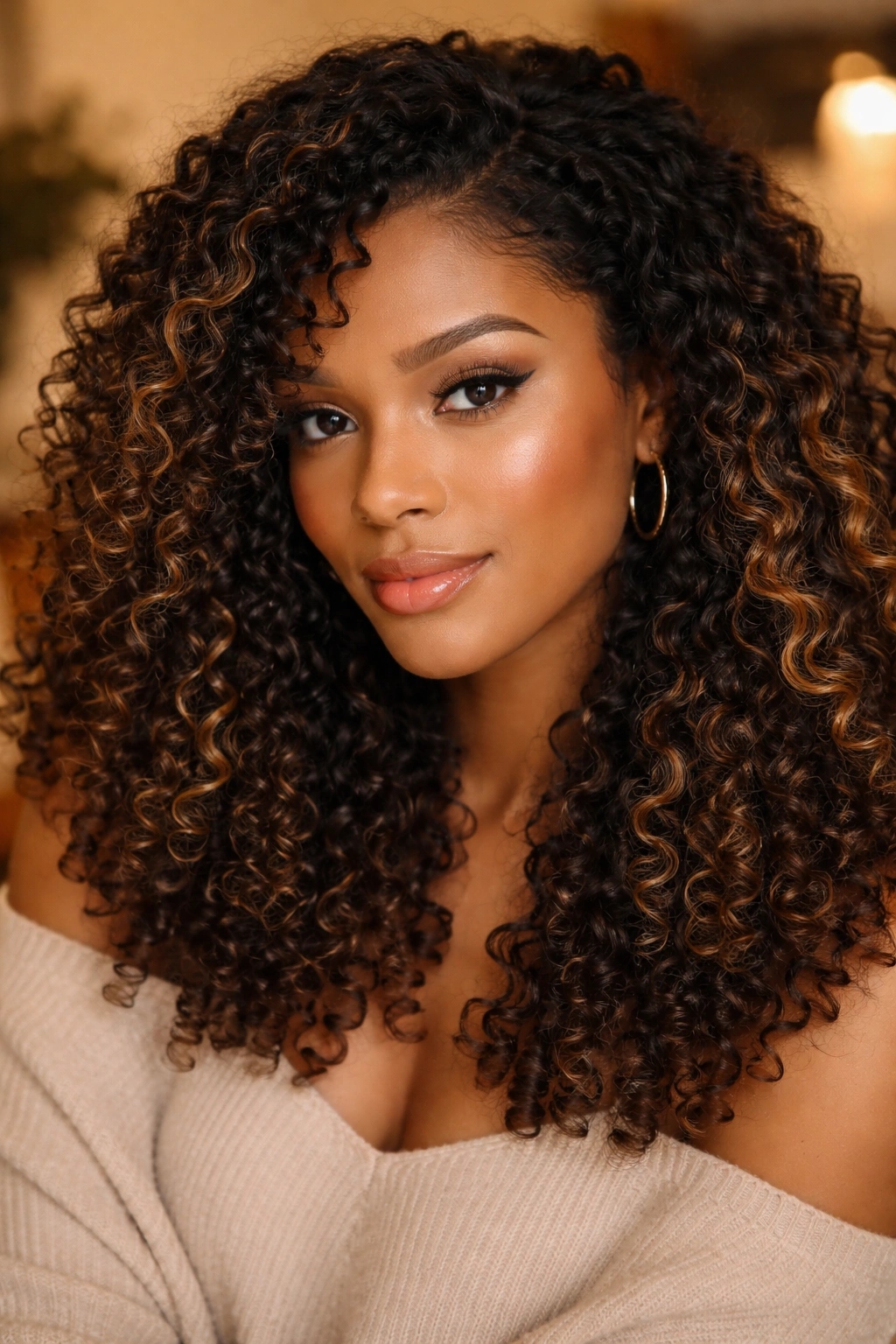
Caramel balayage on a dark natural curl base is arguably the most universally flattering balayage option available for Black women. The warm, amber-infused caramel tones against a dark chocolate or black base create depth and dimension that looks completely organic.
Why it works so consistently: Caramel sits in the middle of the warm color spectrum — not too light to look stark, not too dark to read as color at all. On curly hair, it catches in the places where sunlight would naturally hit and stays dark where curls fold into shadow.
How to Achieve This Look
Your colorist will apply bleach or high-lift color freehand to the outer surfaces of curl sections, focusing on the mid-lengths and ends while leaving roots untouched. After reaching the target lift, a warm caramel toner is applied to dial in the exact tone before rinsing.
- Request that color be concentrated on the outer face-framing sections for maximum impact
- Ask for “melted” application where the color is blended upward rather than cut off sharply
- Maintenance: A caramel gloss treatment every six to eight weeks keeps tones from fading to brassy
Tip: Ask your colorist to apply color to the curls in their natural state rather than pulling them straight — this ensures the color lands on the parts of the curl that show most in the finished style.
2. Honey Blonde Balayage
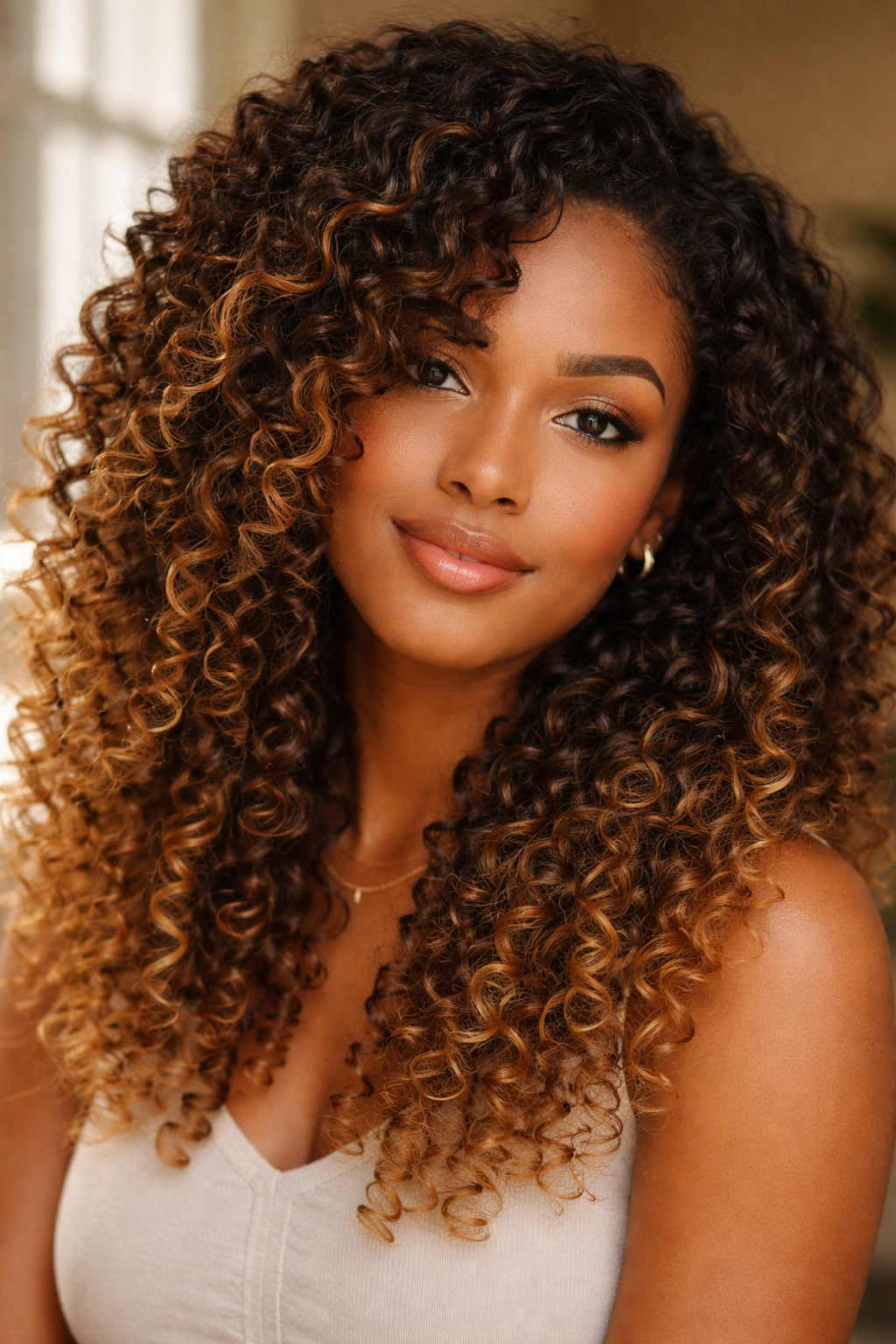
Honey blonde balayage on natural curls creates a sun-kissed warmth that looks almost too good to be true — the golden tones swept across the curl formation look like the hair has spent a season in Caribbean sun.
Bold fact: Honey blonde balayage consistently photographs as the most dramatic balayage effect on natural curls because the contrast between dark roots and honey blonde ends is vivid enough to read clearly even in the coil-diffused display of curl textures.
The key to beautiful honey blonde balayage on natural hair is the tone used after lifting — a honey or golden blonde toner rather than a cool or neutral blonde keeps the warmth authentic rather than going ashy. Golden toners in the honey family are specifically formulated to deliver that warm, rich blonde that sits beautifully on darker base colors.
Maintain with a color-depositing conditioner in a warm blonde or honey tone weekly to prevent the honey from fading to a washed-out pale blonde or developing unwanted brassiness.
3. Copper Balayage on Natural Curls
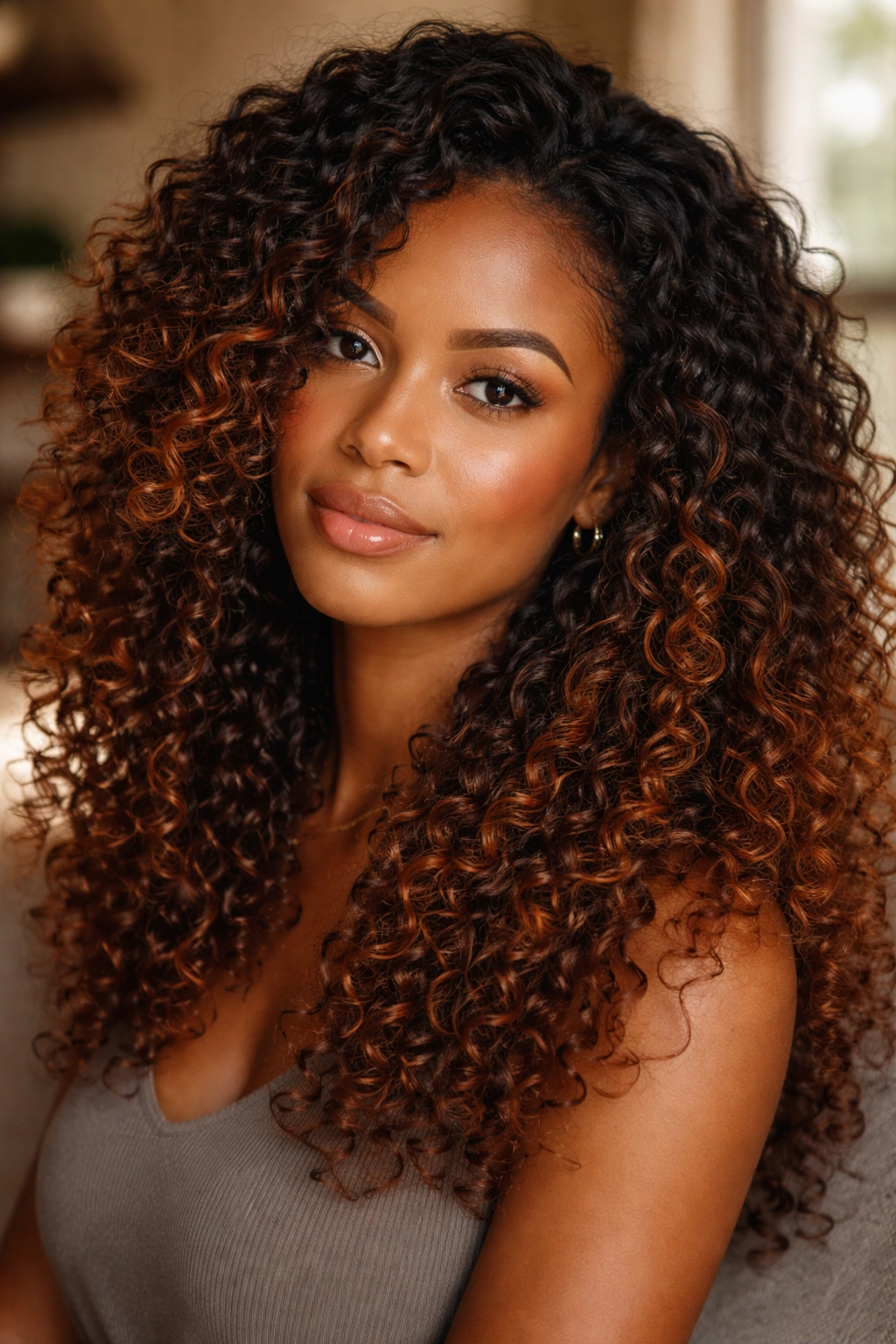
Copper balayage is bold and vivid — the orange-red metallic tones swept through dark natural curls create a fiery, constantly shifting look that’s genuinely spectacular in natural light. Each curl edge that catches the copper tone seems to glow.
The graduated nature of balayage works particularly well with copper because the transition from dark root to bright copper end feels natural rather than abrupt. It’s as if the hair has its own internal fire that intensifies toward the tips.
On natural curls, copper balayage looks most vivid at the ends, where the lightest lifting occurs, and shows as a warm reddish tint through the mid-lengths where less lightening was applied. The roots stay dark and natural, grounding the overall look.
4. Burgundy to Dark Brown Balayage
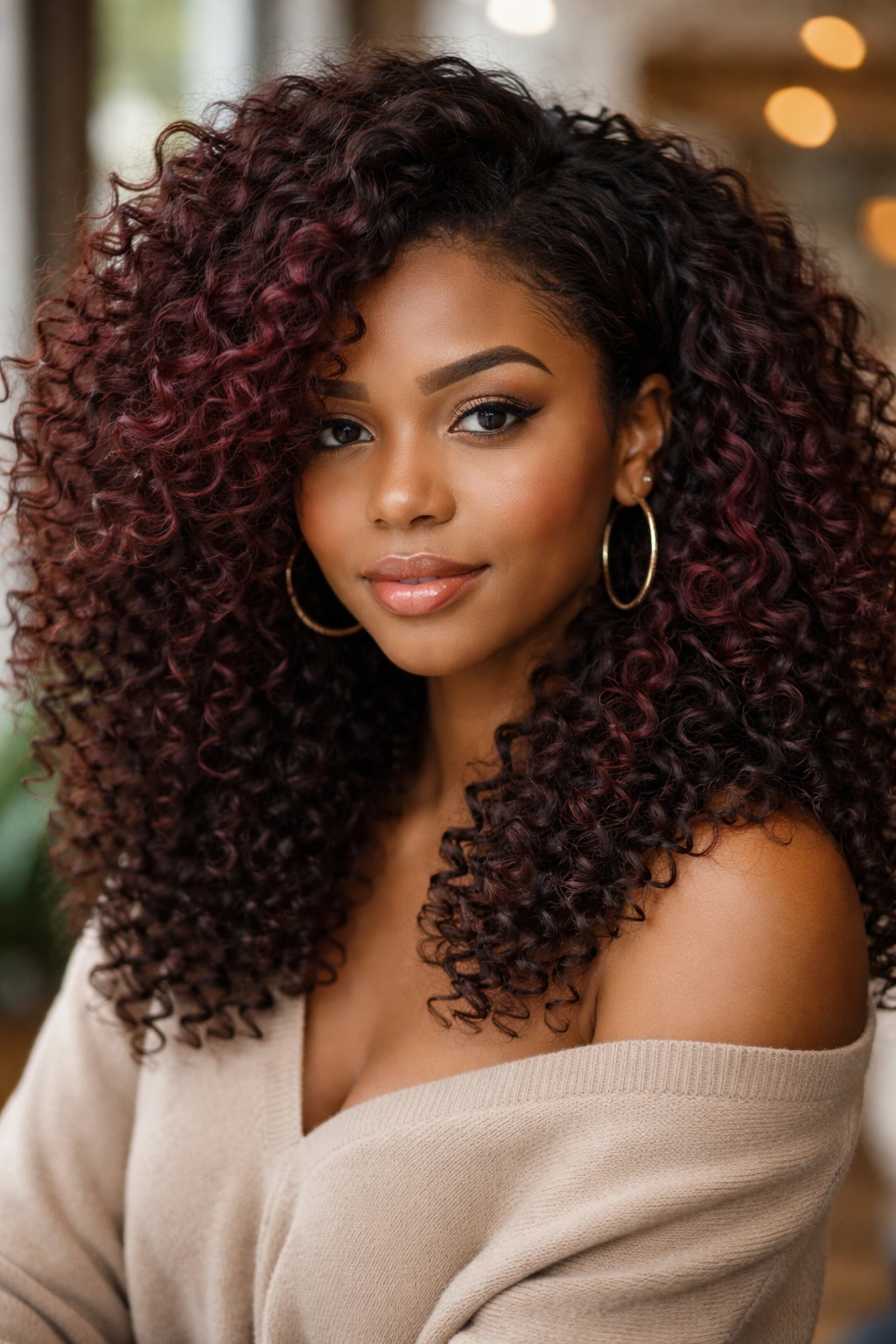
A burgundy and dark brown balayage combination on natural curls is a sophisticated, dimensional look that doesn’t require extreme lightening. The deep reddish-purple tones of burgundy blend into the dark brown base in a way that creates rich, complex color without stark contrast.
This is one of the best balayage options for women who want color without drama. The burgundy tones are present and beautiful but subtle — adding warmth and dimension rather than creating an obvious, high-contrast color effect.
How to Achieve This Look
Your colorist will lift select sections of your hair to a medium warm brown — not as light as they would for a honey blonde, but light enough for the burgundy toner to show vividly. A deep burgundy or wine-red toner is applied to these sections and blended into the darker root zone for a seamless transition.
5. Balayage with Face-Framing Highlights
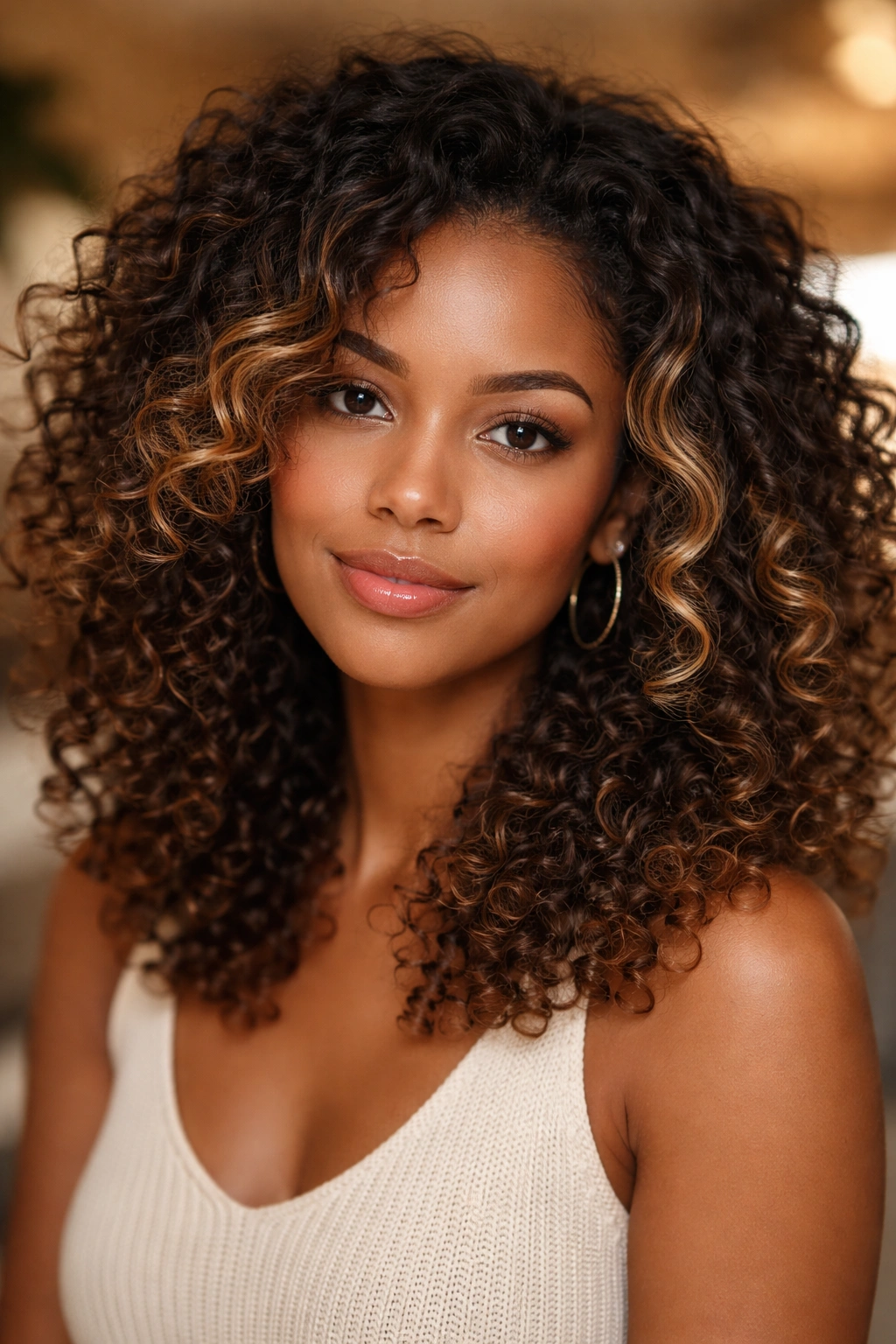
Face-framing balayage concentrates the lighter color on the sections of hair that fall directly around the face — the front sections, temples, and pieces nearest the hairline — while leaving the back sections darker or more lightly touched.
This technique creates the most immediate visual impact per amount of product used because the lightened sections are always in the line of sight when someone looks at your face. It’s an efficient, targeted approach to balayage that brightens the overall look without requiring extensive processing across the entire head.
On natural curls, face-framing balayage looks especially beautiful because the lighter front curls create a halo effect around the face that’s warm, dimensional, and flattering from every angle.
6. Bronze Balayage on Natural Curls
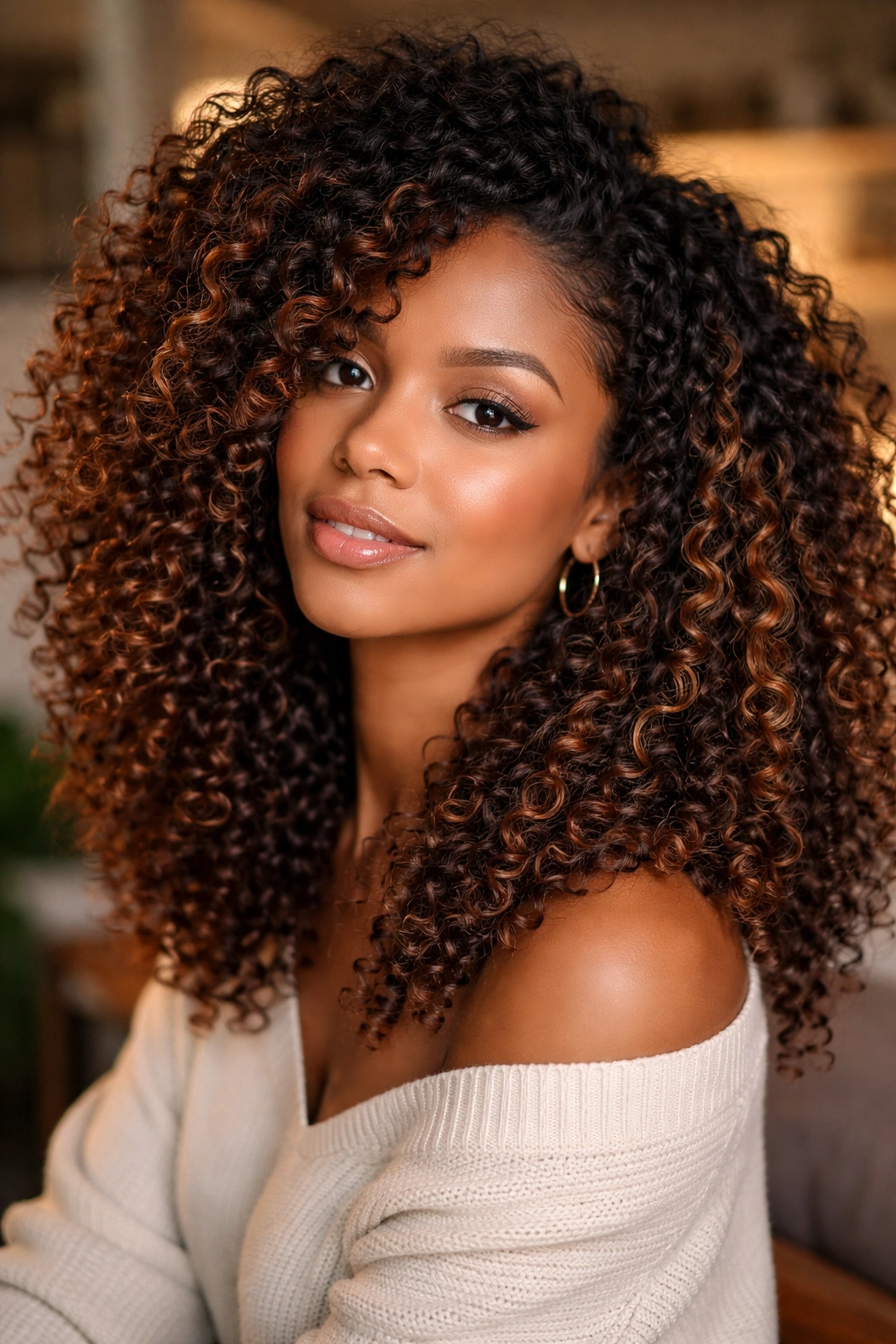
Bronze balayage sits at the intersection of golden brown and copper — it has the depth of warm brown, the metallic quality of copper, and the golden richness of a true blonde, all combined in a single tone. On natural curls, it looks like hair made of warm, liquid metal.
Bronze is less commonly requested than caramel or honey but produces one of the most beautiful results on natural curls because the multi-tonal quality of the bronze color interacts with the multi-tonal natural display of curly hair to create incredible complexity.
Ask your colorist specifically for “bronze” and request a look at color swatches before committing — bronze can range from a pale, champagne-adjacent gold to a deep, burnished amber-brown. The version that works best for you depends on your natural base color and skin tone.
7. Chestnut Balayage
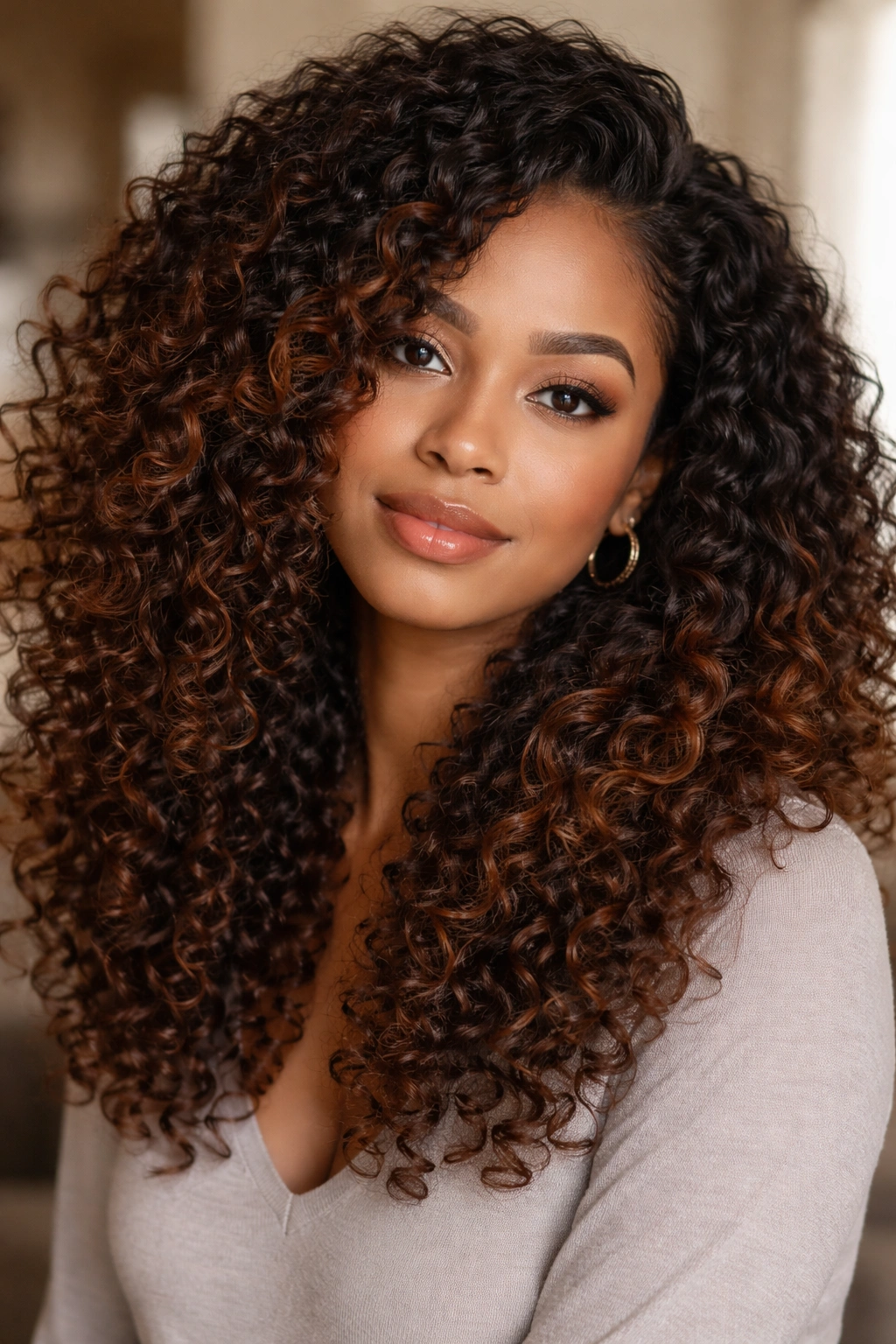
Chestnut balayage on natural curls creates warmth and dimension in a more muted, wearable way than brighter balayage options. The warm, reddish-brown chestnut tones blend naturally into dark natural hair and create a rich, dimensional result that looks like the most beautiful version of natural hair rather than an obvious color treatment.
This is the balayage option for women who want dimensional color without anyone being quite sure it’s colored. Chestnut tones on a dark natural base can look like the hair just has exceptionally good light-catching qualities — and that ambiguity is entirely intentional.
Maintain chestnut balayage with weekly conditioning and a color gloss in a warm red-brown tone every six to eight weeks to keep the chestnut dimension from fading to a flat warm brown.
8. Platinum Balayage on Natural Curls
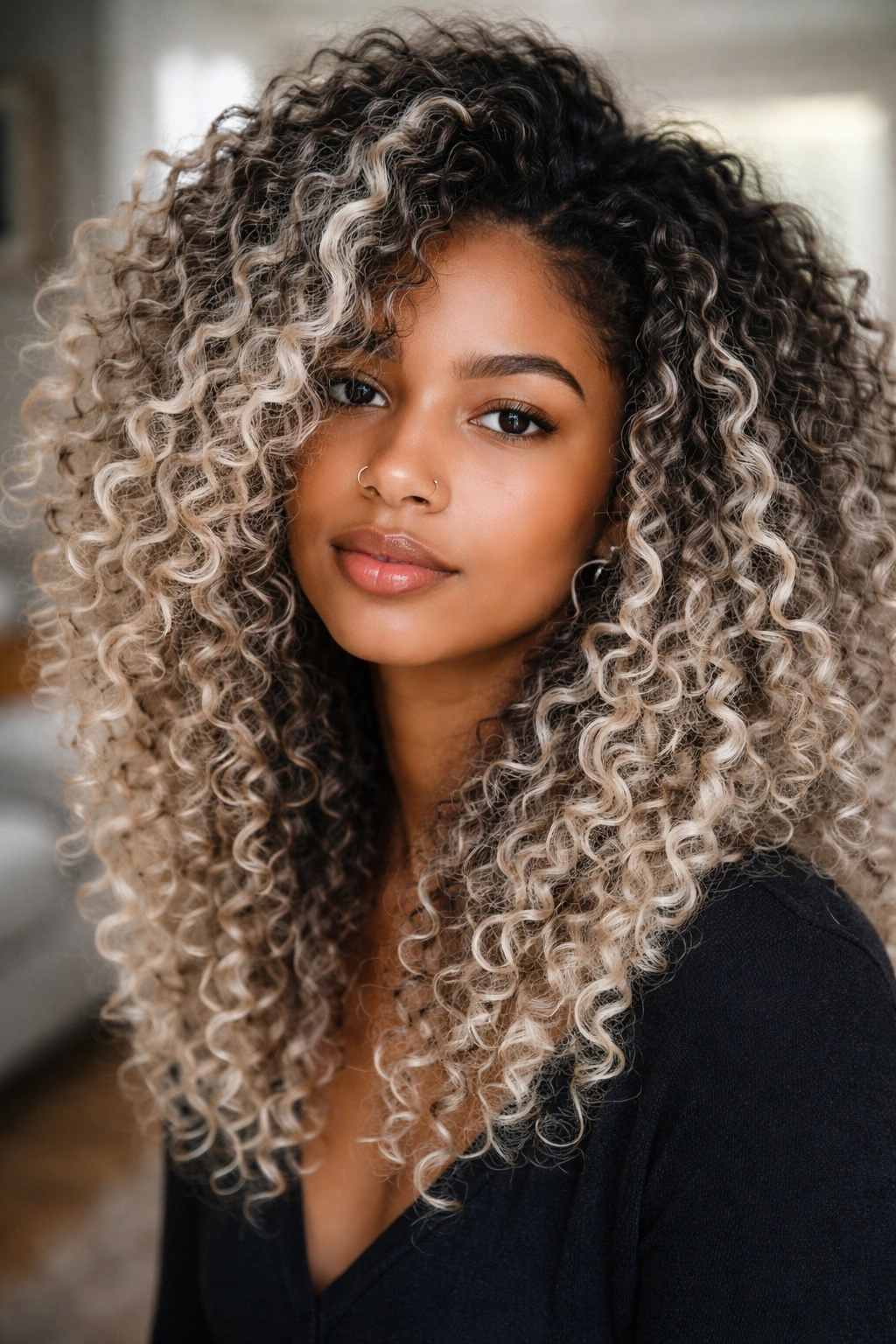
Platinum balayage is the boldest option in this guide — it requires the most significant lightening, carries the most risk to curl health, and produces the most dramatic visual contrast. It’s not for the faint-hearted, but when done well on the right candidate, it’s jaw-dropping.
The key to platinum balayage on natural curls is a highly skilled colorist, exceptional curl health going in, and absolute patience. Attempting to reach platinum in one session on natural hair is a mistake that ends in significant breakage. Multiple sessions, spaced weeks apart, are the minimum responsible approach.
How to Achieve This Look
A colorist will systematically lighten select sections over multiple appointments until the target platinum lift is reached, then apply a purple or silver toner to neutralize any remaining warmth and achieve the true platinum tone.
- Deep condition intensively in the weeks before each appointment
- Request a protein treatment in the salon between lifts
- Use bond-building treatments throughout the process (Olaplex or similar)
9. Soft Blonde Balayage on Type 4 Curls
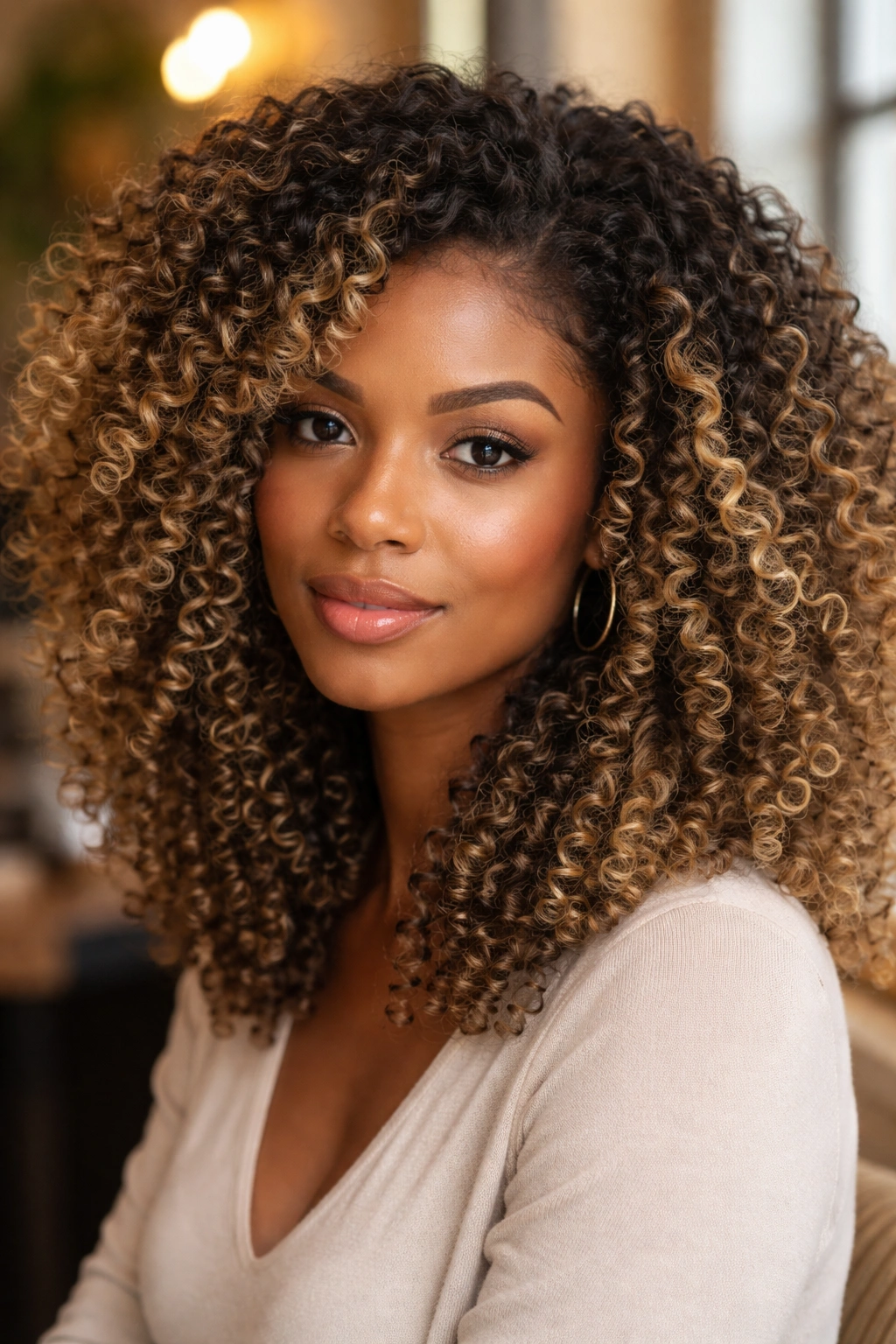
Type 4 curls and blonde balayage have a particular beauty — the tightly coiled texture creates concentrated pops and bursts of blonde within the dark curl formation that look almost like individual illuminated curls throughout the mass of hair. It’s genuinely spectacular and unlike any other curl-and-color combination.
The key for type 4 specifically is ensuring the colorist works with the natural curl groupings rather than straightening or stretching sections before applying color. Color applied to the natural curl grouping lands in the right places; color applied to stretched sections may land in areas that aren’t visible in the final natural curl formation.
This look typically requires three to four lightening sessions for very dark starting hair, but the patience pays off in a result that looks absolutely extraordinary on type 4 textures.
10. Two-Tone Balayage: Black and Caramel
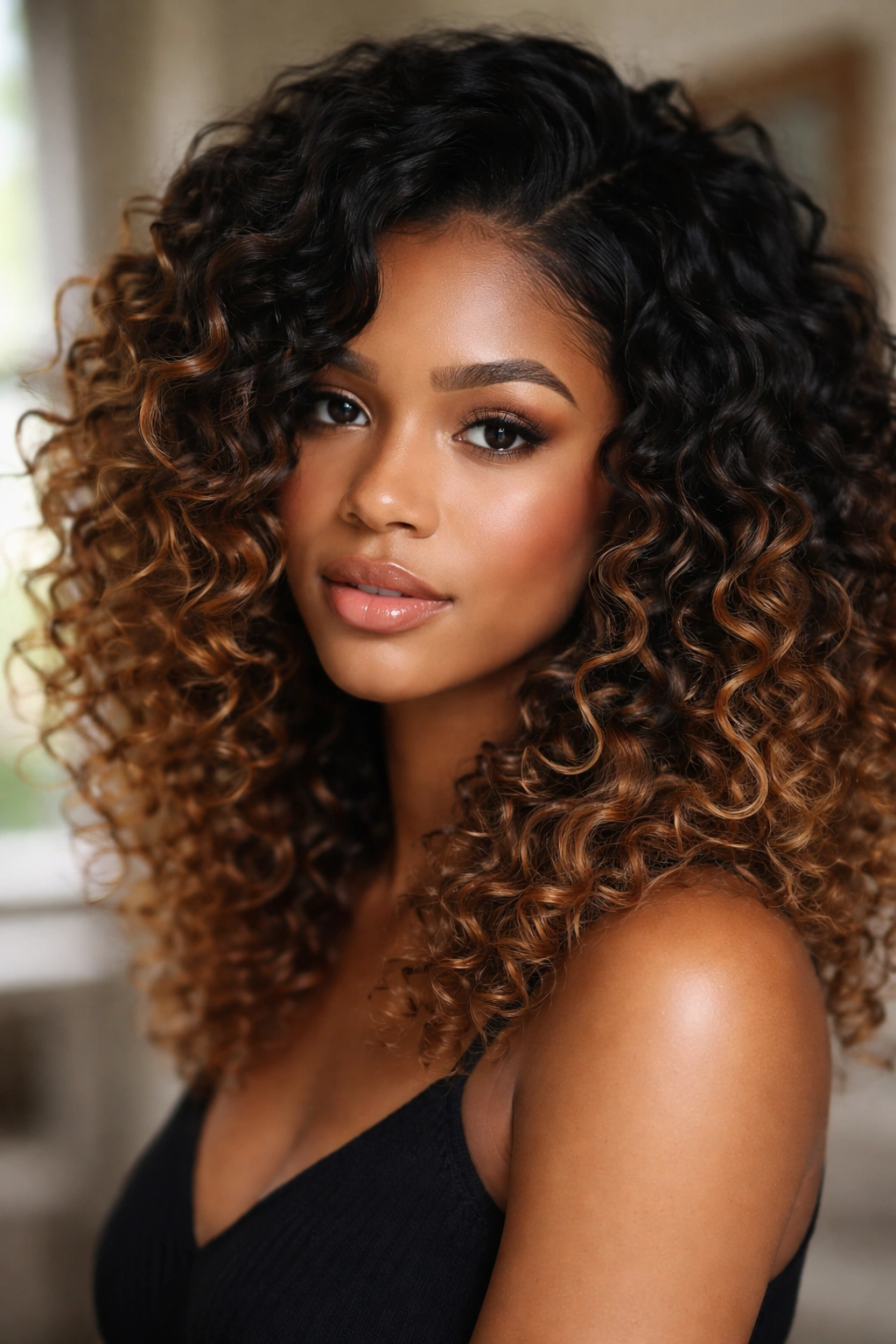
A stark two-tone look — deep black root and caramel ends — achieved through balayage rather than a traditional color block has a boldness and clarity that’s striking on natural curls. The transition point where black becomes caramel is gradual and melted rather than a clean line, which is what makes it balayage rather than a two-tone dye.
This look reads as editorial and intentional — it’s clearly a color choice, clearly considered, and the contrast between deep black and warm caramel is visually compelling across all natural curl patterns.
On wash-and-go curls, the two-tone effect creates a natural ombre within each curl as it lengthens downward — dark at the root, warming through the middle, caramel at the tip. It’s one of the most dramatic and beautiful applications of balayage on natural hair.
11. Warm Bronde Balayage
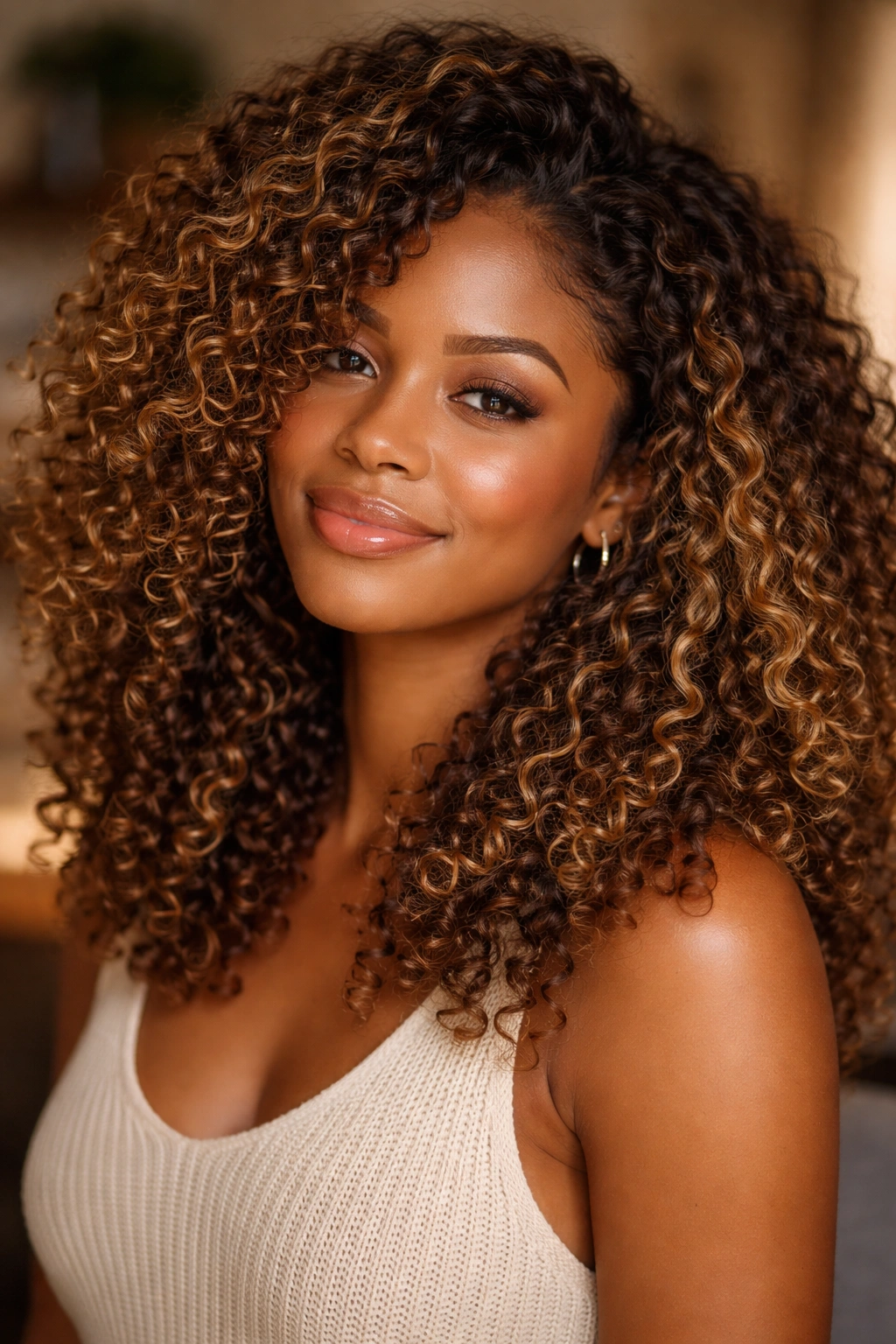
Bronde — the blend of brown and blonde — is the most wearable, naturalistic balayage tone for most natural hair colors. It’s warm enough to create visible dimension but not so light that it reads as clearly colored rather than naturally sun-kissed.
Bronde balayage on natural curls is the definition of “your hair but better.” The tones are warm, the effect is dimensional, and the overall result is hair that looks extraordinarily healthy and naturally illuminated.
This is an excellent starting-point balayage for natural hair beginners because it’s forgiving of slight imperfections in lift, requires less aggressive lightening than true blonde, and grows out beautifully without obvious demarcation.
12. Sun-Kissed Natural Balayage
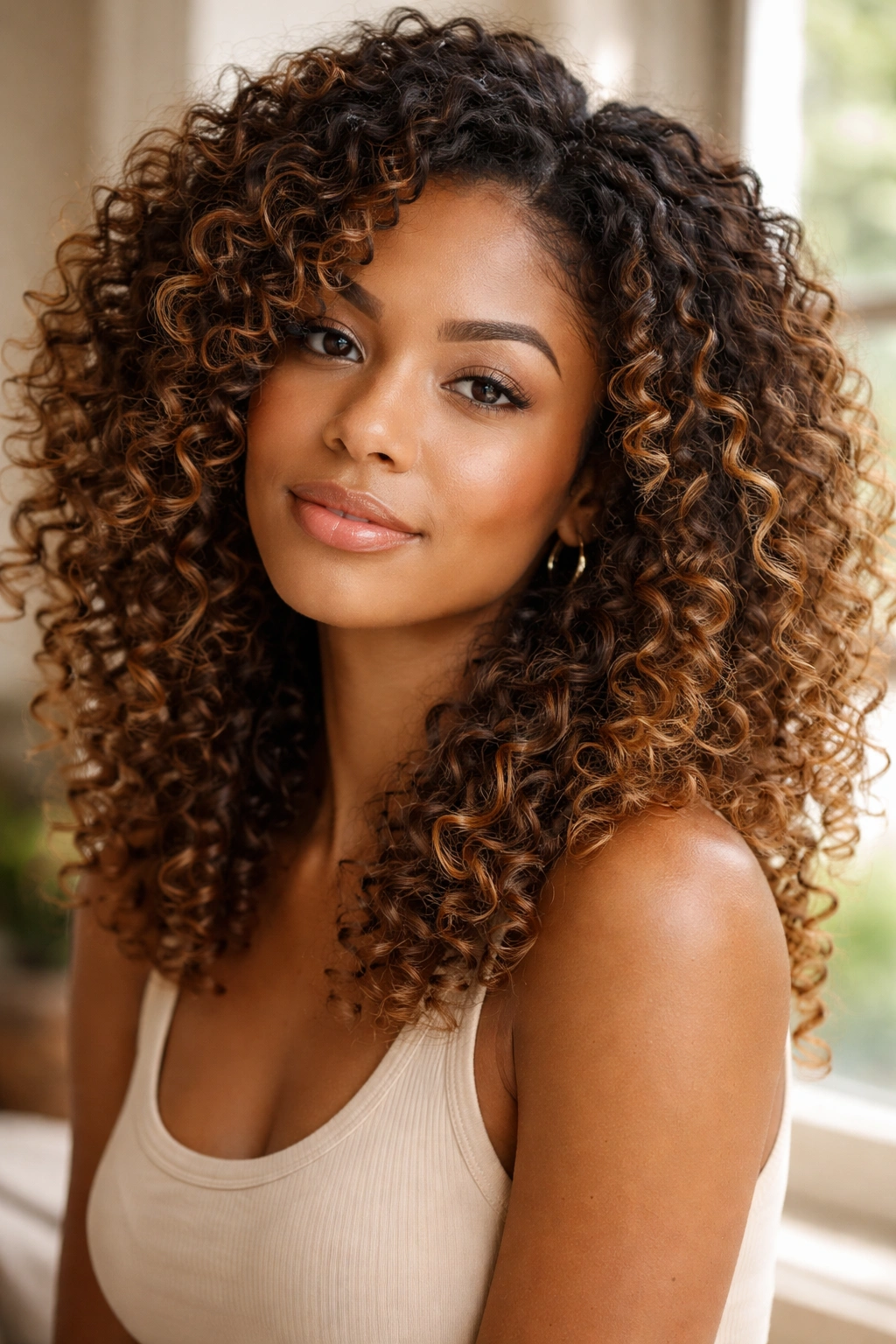
Sun-kissed balayage is the most minimal version of the technique — just enough color to suggest natural sun lightening without creating an obviously dyed effect. The goal is for people to look at your hair and think “she spends a lot of time outdoors” rather than “she had a color appointment.”
This is the subtlest balayage approach and the most maintenance-friendly. Because the color is minimal, fade is less obvious, and appointments can be stretched to every four to six months rather than every two to three.
On natural curls, even subtle sun-kissed balayage creates visible dimension because the curl pattern amplifies any tonal variation — a little color goes a long way on textured hair.
13. Red-Brown Balayage on Natural Curls
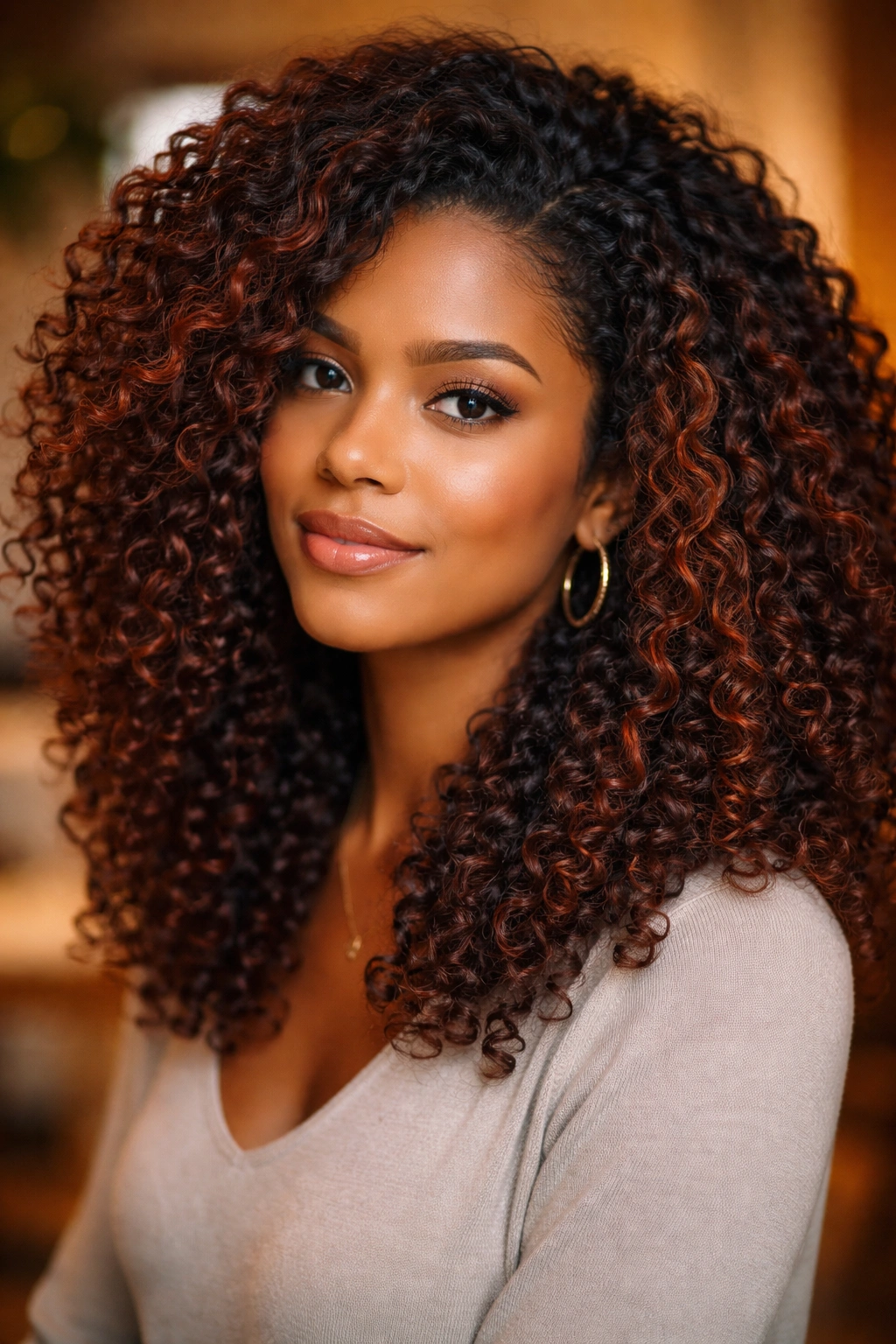
A red-brown balayage — where the color swept through dark natural curls lands in the warm, reddish-brown family rather than pure red or pure brown — has a richness and complexity that few other balayage choices can match.
The reddish element of the balayage creates warmth and vibrancy while the brown grounding keeps the overall look wearable and natural. On natural curls, red-brown balayage looks like the hair has an internal warmth that’s always present, not just in certain lighting.
How to Achieve This Look
Your colorist lifts select sections to a warm orange-brown level, then applies a red-brown toner that pulls the lifted sections back from orange into a rich, complex reddish-brown. The result is a multi-dimensional color that shifts between warm brown and subtle red depending on the light.
14. Contrasting Root-to-Tip Balayage
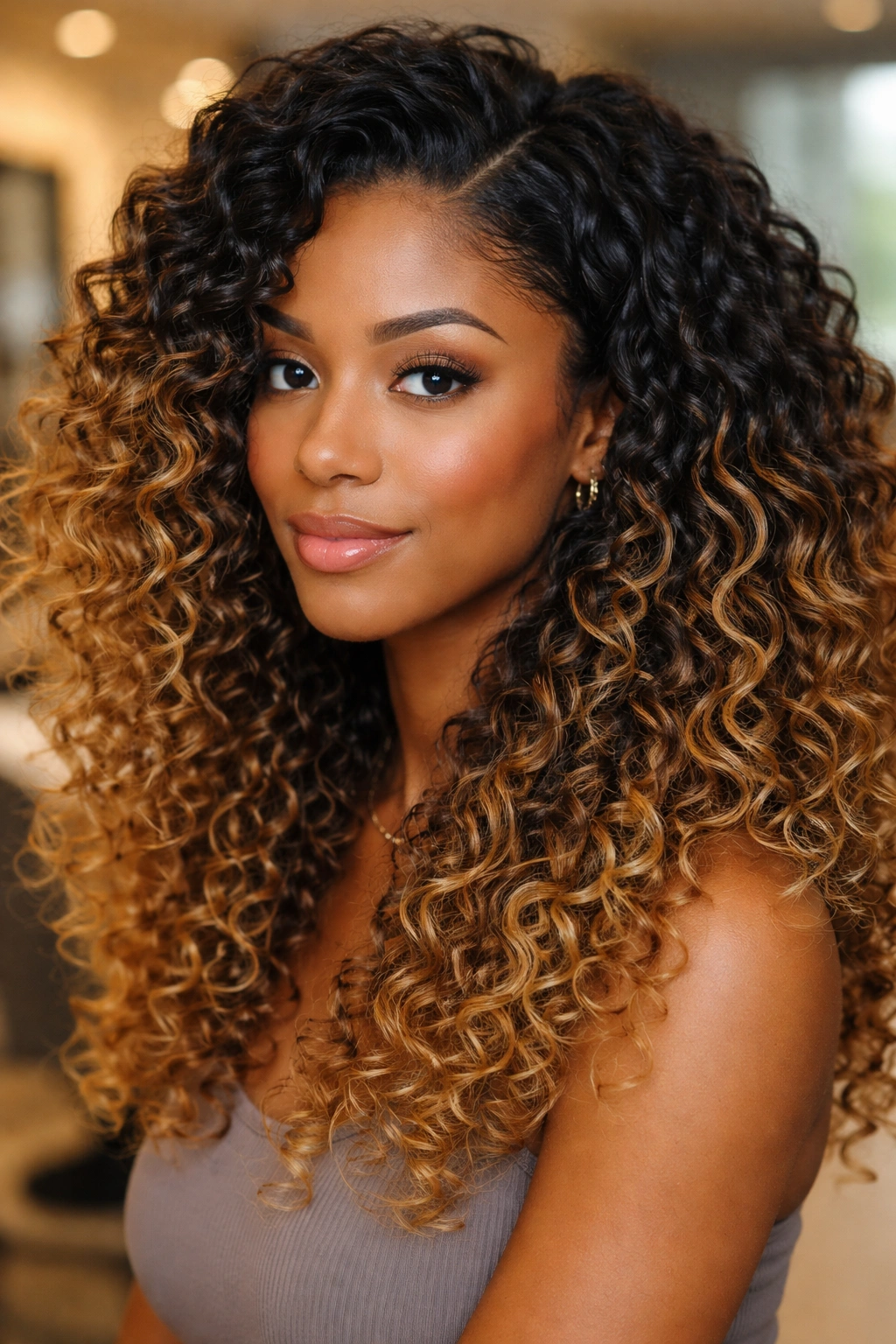
A dramatic root-to-tip balayage that starts very dark at the root and becomes significantly lighter at the ends is one of the most striking configurations for natural curls because the full length of each curl displays the color gradient.
On longer natural curls or stretched styles, this creates a visible, beautiful gradient that runs from dark root through warming mid-lengths to lighter ends — all within a single curl, visible from root to tip.
This approach works especially well on wash-and-go styles and stretched twist-outs where the full length of the curl is visible. It’s less effective on very tight, compact curl patterns where the length is hidden in the coil.
15. Peekaboo Balayage on Underneath Layers
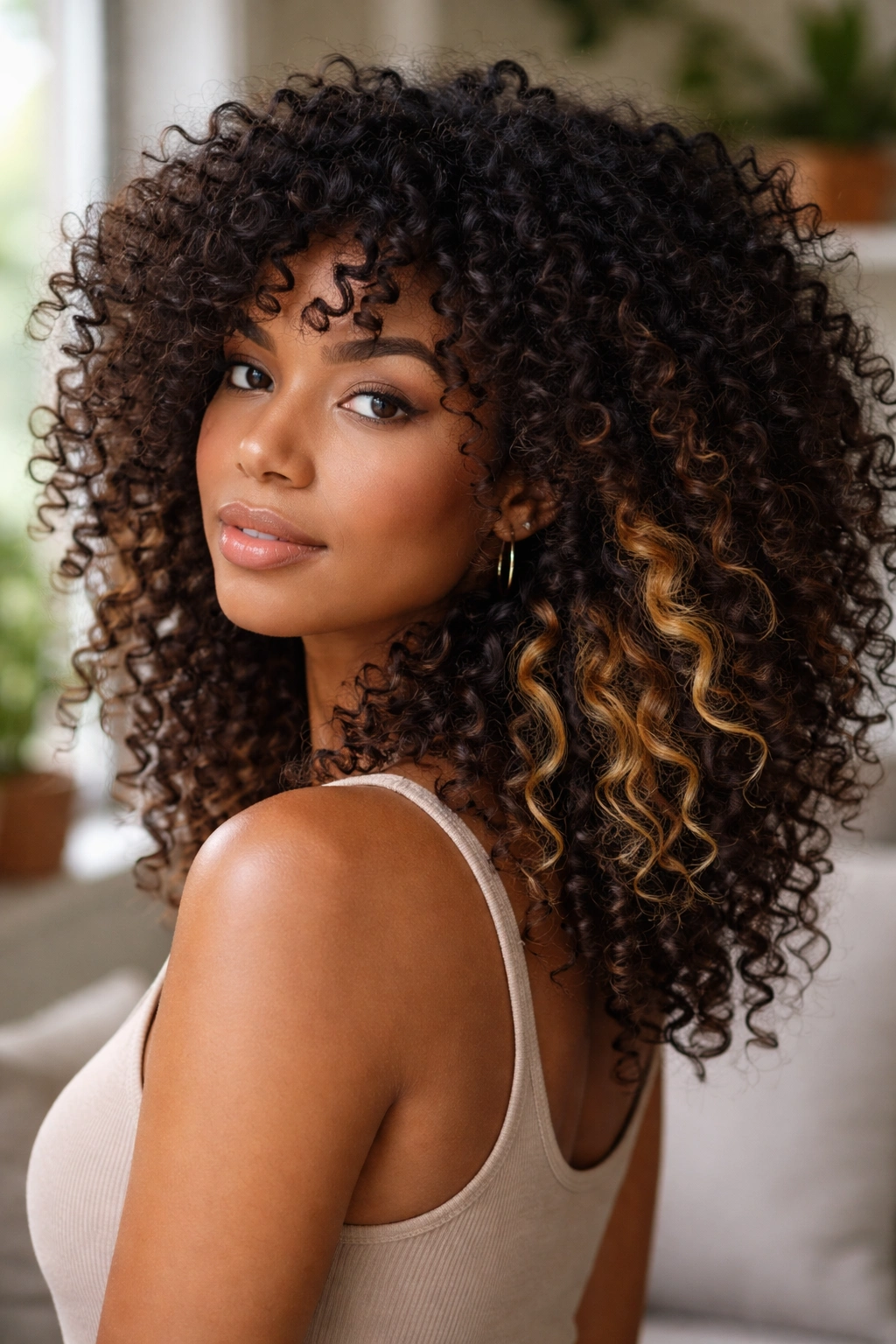
Peekaboo or panel balayage concentrates the lighter color on the underneath layers of the hair rather than on the top or all-over. When the hair is down, the lighter tones peek through from beneath — hence the name.
This is a low-commitment, high-impact option for women who want dimensional color but aren’t sure they want the lighter tones on top where they’ll always be visible. The underneath panels can be revealed by flipping the hair or shown through the curl formation when the hair moves.
On natural curls specifically, peekaboo balayage creates a depth-from-within effect that looks genuinely complex and dimensional — you see hints of warmth moving through the overall curl mass rather than a surface-level highlight.
16. Balayage on a Twist-Out
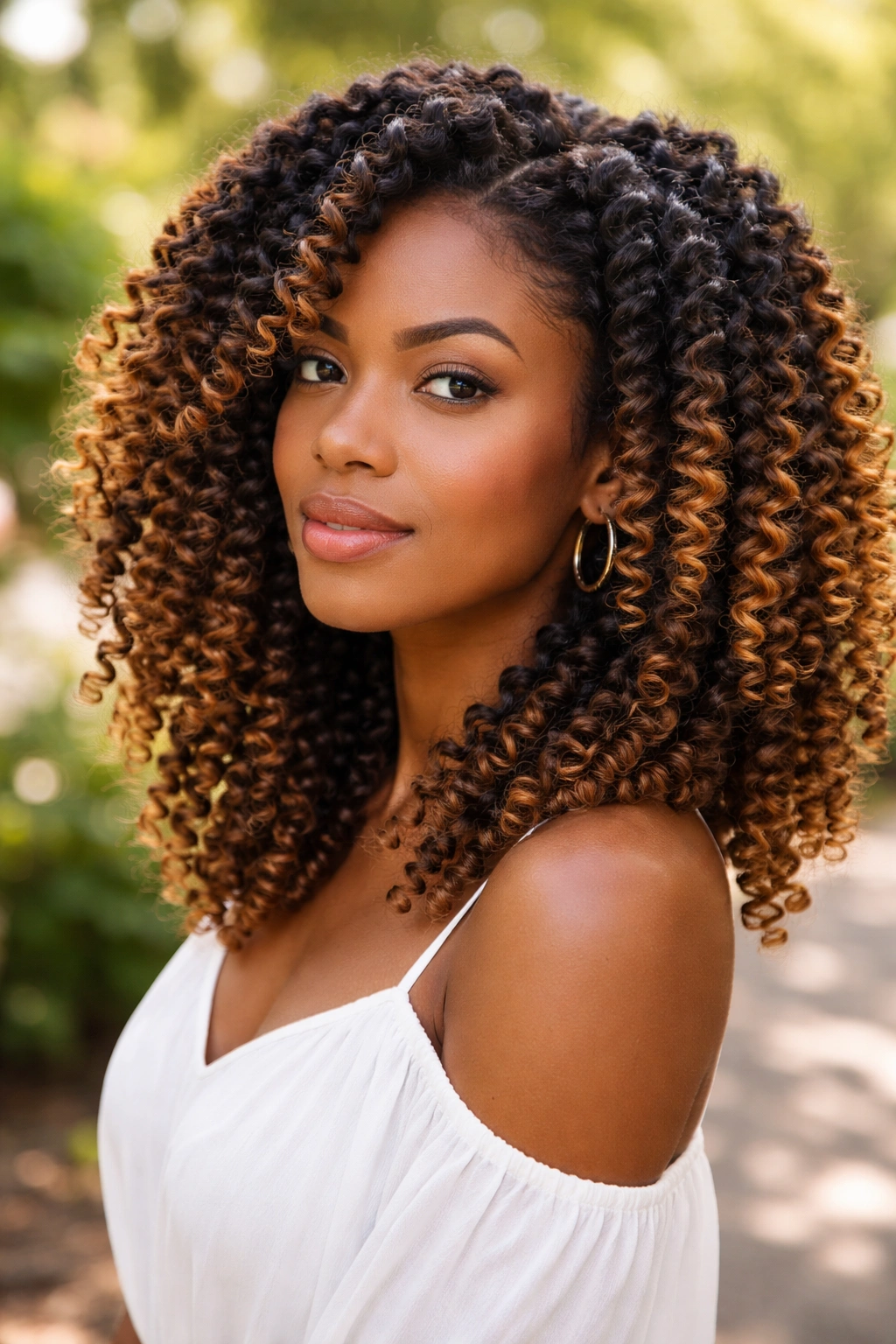
This isn’t a color placement variation so much as a styling choice — wearing your balayage in a twist-out configuration creates one of the most dramatic and beautiful displays of the color technique on natural hair.
Twist-outs elongate and define each curl section, which means the balayage gradient within each curl is stretched out and fully visible rather than condensed within a tight coil. On a good twist-out, you can see the full range of your balayage from root to tip on each defined section.
Balayage on a twist-out looks its most vivid on the first and second day when the definition is tightest and the color is displayed most clearly. Maintain the twist-out with a pineapple and satin bonnet at night for three to four days of wear.
17. Balayage on Natural Hair Worn in a Puff
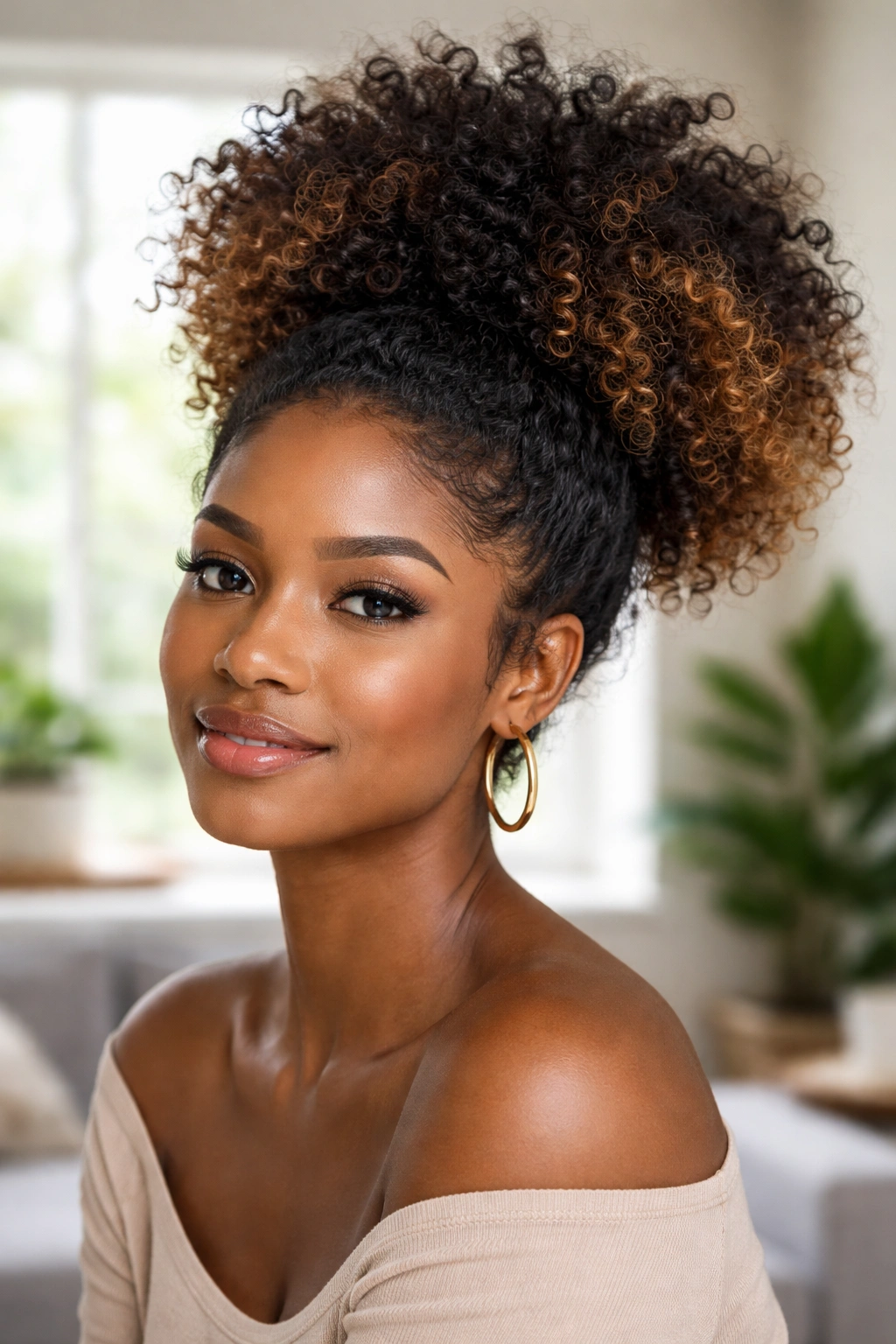
Wearing balayage natural hair in a high or low puff showcases the color in a unique way — the puff gathers all your curls into a concentrated mass where the lighter balayage ends are visible at the perimeter of the puff shape.
The perimeter of a puff is where the ends of your hair sit, which is also where balayage is most vivid. The practical result is a puff that appears to have a warm halo of lighter color around its outer edge — a beautiful, subtle effect that catches light from above and from the sides.
This is an effortless style for showcasing balayage on busy days — gather your curls, secure at the crown, and the color does the rest.
18. Balayage on Protective Styles
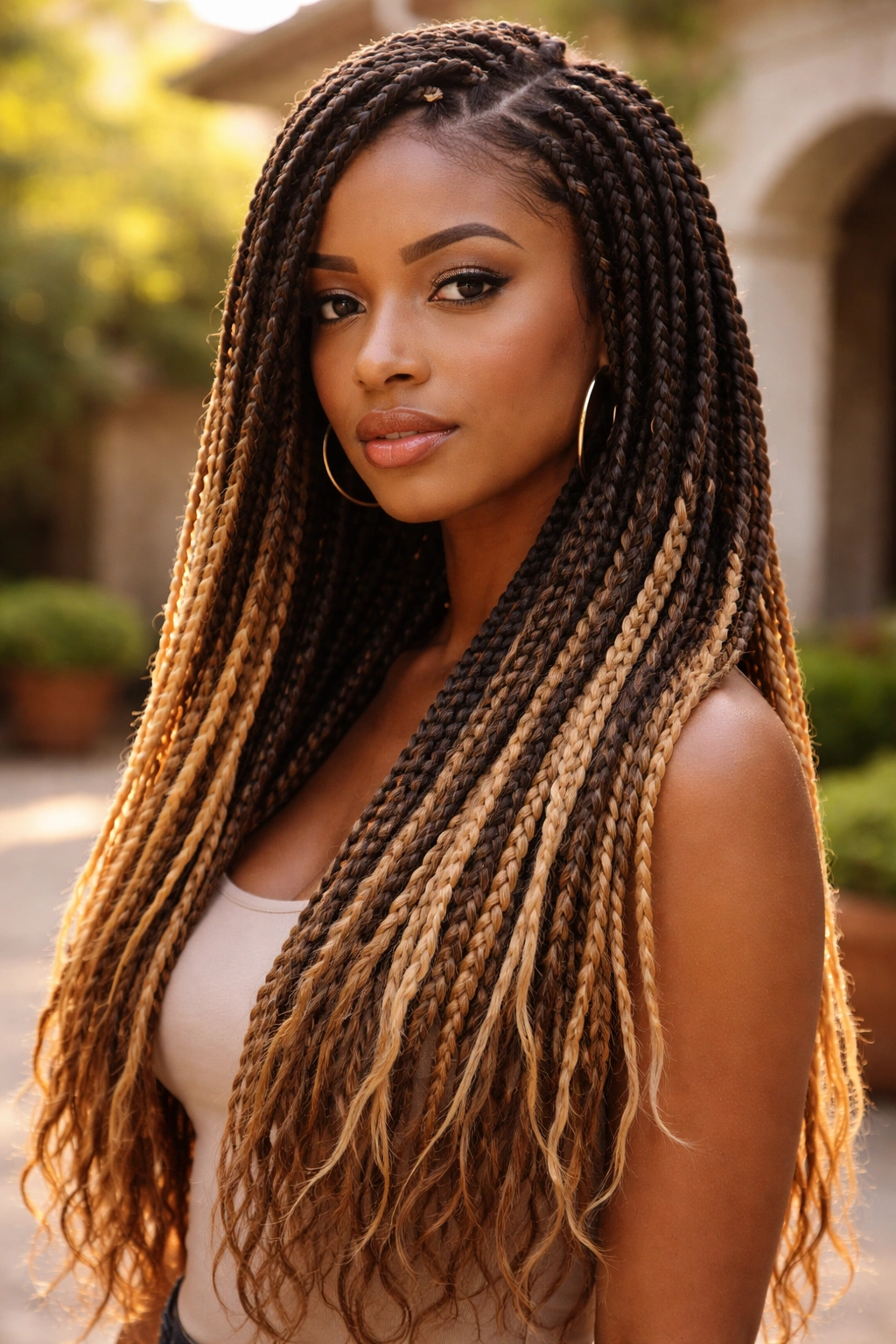
Balayage on braids, twists, or locs — using extension hair in a balayage-style gradient — creates the look of a sun-kissed ombre within a protective style. The extension hair is chosen in two or three complementary tones and blended throughout the installation in a way that mimics the freehand sweep of real balayage.
This is the commitment-free version of balayage — the color lives entirely in the extension hair, and your natural strands stay untouched underneath. It’s a way to experience the balayage aesthetic during a protective style period and decide if you want to commit to the actual color process.
How to Achieve This Look
Choose extension hair in three tones: your natural color, a mid-tone warm brown, and a lighter caramel or honey. Blend the shades throughout the installation, concentrating the lighter tones toward the ends and the darker tones at the root.
19. Soft Copper Balayage
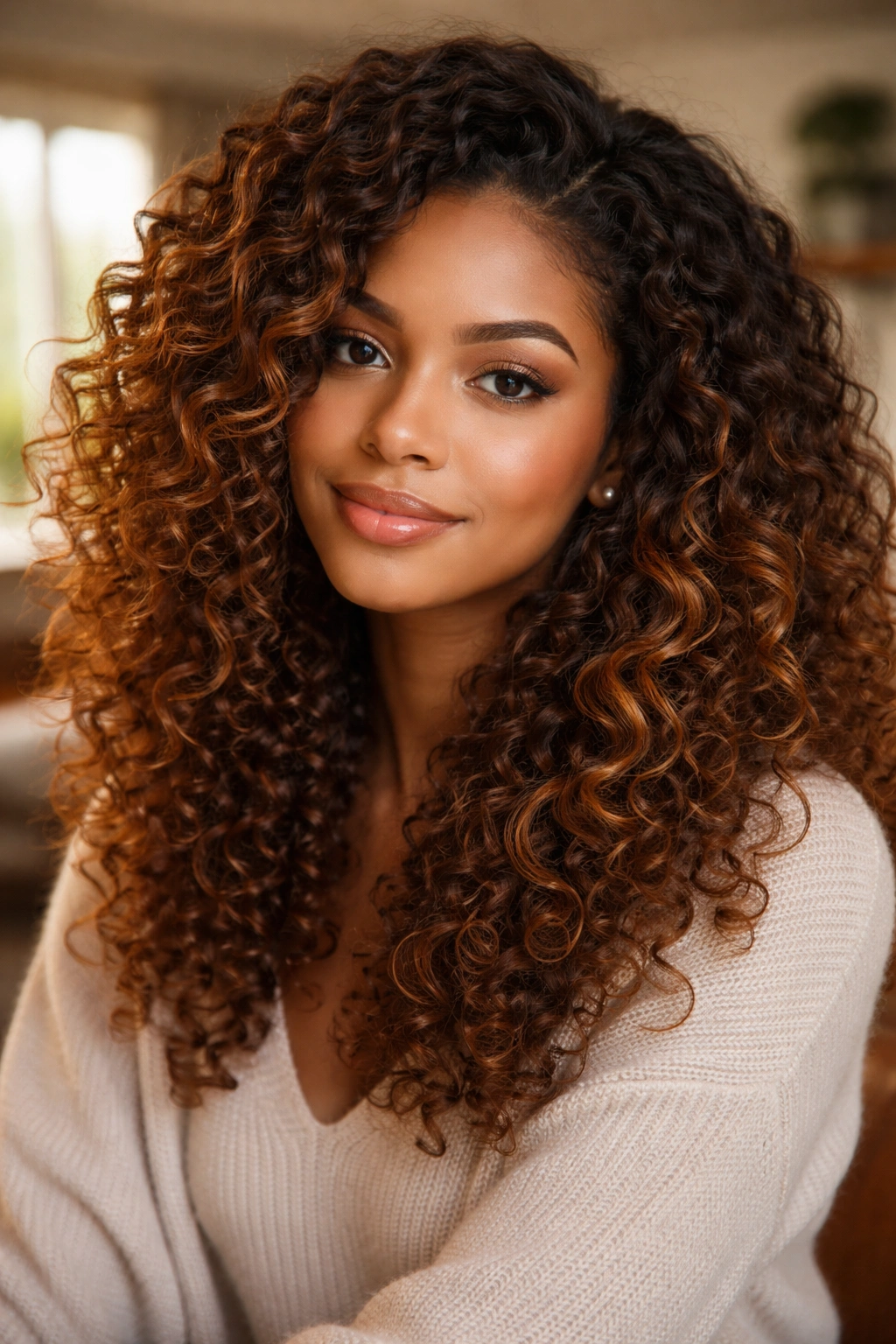
Soft copper balayage sits between caramel and bright copper — it has the metallic warmth of copper but at a lower intensity than a vivid copper application. On dark natural curls, it creates a subtle but genuinely beautiful warmth that looks like the most flattering possible version of natural hair.
The “soft” qualifier is important here. This isn’t the vivid, orange-forward copper that reads as obviously colored — it’s a more muted, burnished copper that adds warmth and dimension without creating dramatic contrast. It’s copper for women who want the warmth without the statement.
20. Balayage on Short Natural Curls
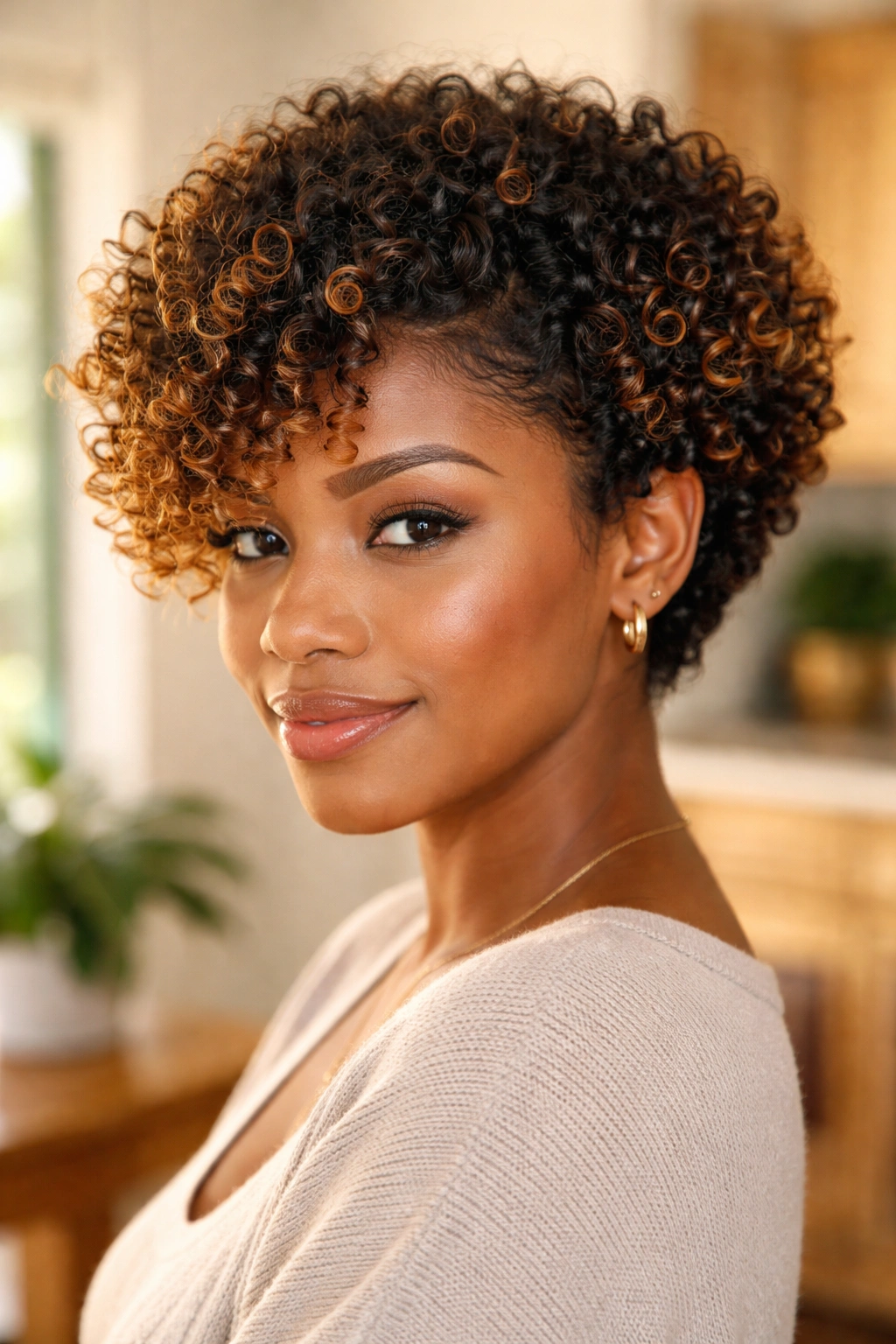
Short natural curls — in a TWA (teeny weeny afro), tapered cut, or short coil configuration — are absolutely not exempt from the balayage technique, and the results on shorter textures have their own distinct and beautiful quality.
Balayage on short natural curls creates an all-over warmth effect rather than the graduated root-to-tip gradient you see on longer hair — because there simply isn’t enough length to display a full gradient. Instead, the lighter tones sit at the tips of each short coil while the base stays dark, creating a warm, dimensional effect across the entire head simultaneously.
This is actually one of the most flattering applications of balayage on natural hair because the short length means the color is visible from every angle at once, creating a 360-degree warm glow effect that longer styles can’t achieve as easily.
21. Balayage Maintained with Glossing Treatments
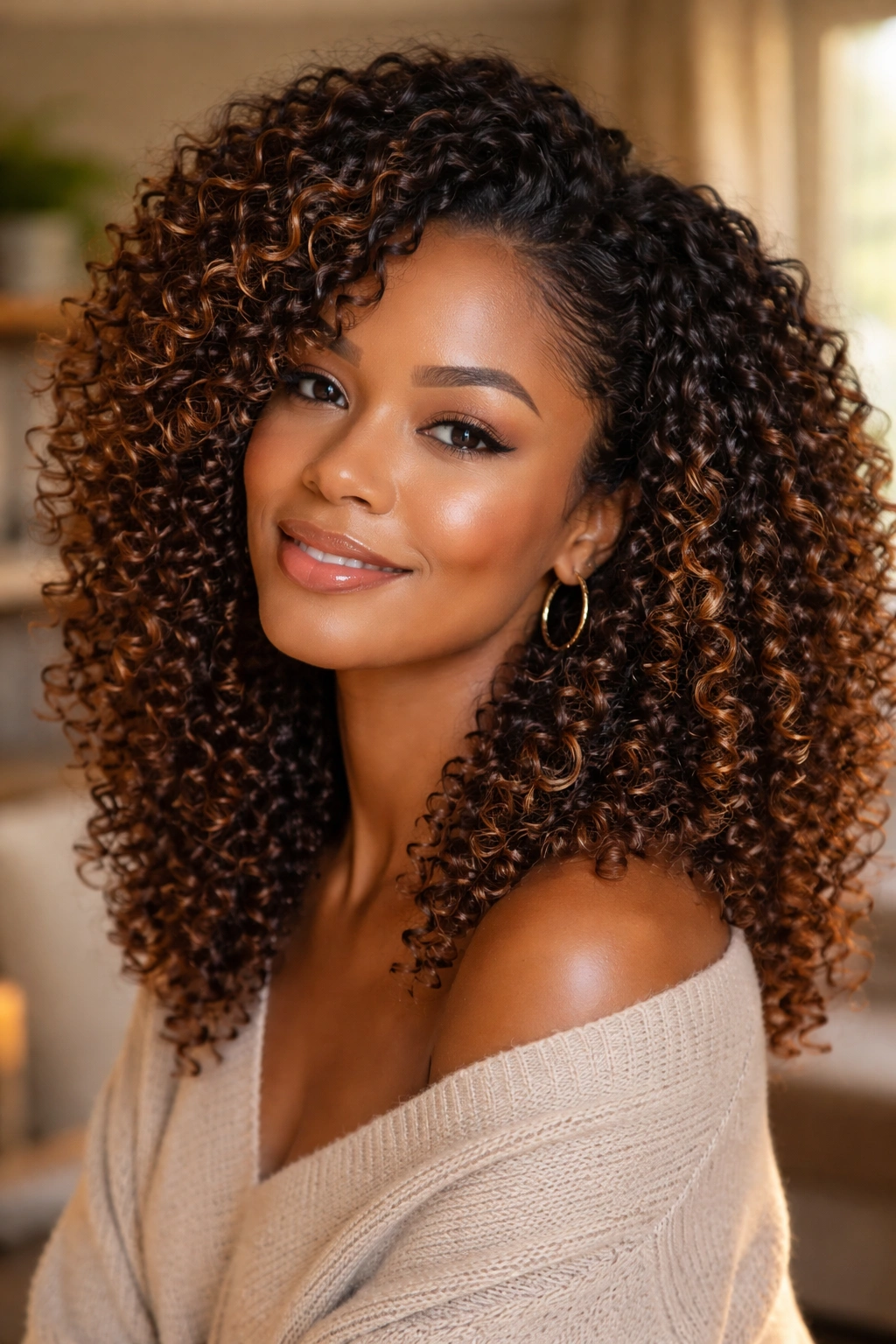
Maintaining balayage on natural curls is as important as the initial color service, and glossing treatments are the single most effective maintenance tool in your arsenal. A gloss is a conditioning treatment with a small amount of color pigment that refreshes your balayage tone without the lifting or structural change of a full color service.
Most natural hair colorists recommend a gloss every six to eight weeks for balayage clients. The gloss seals the cuticle, adds shine, and deposits just enough color to bring the balayage tones back to their freshest, most vibrant expression. It’s also a deeply conditioning treatment that benefits the curl pattern alongside the color.
At-home glossing options — available in clear, warm, and tinted varieties — can supplement professional treatments and extend the time between salon appointments. Use a warm blonde or caramel gloss for honey and caramel balayage; a warm red-brown gloss for richer balayage tones.
22. Balayage and the LOC Method
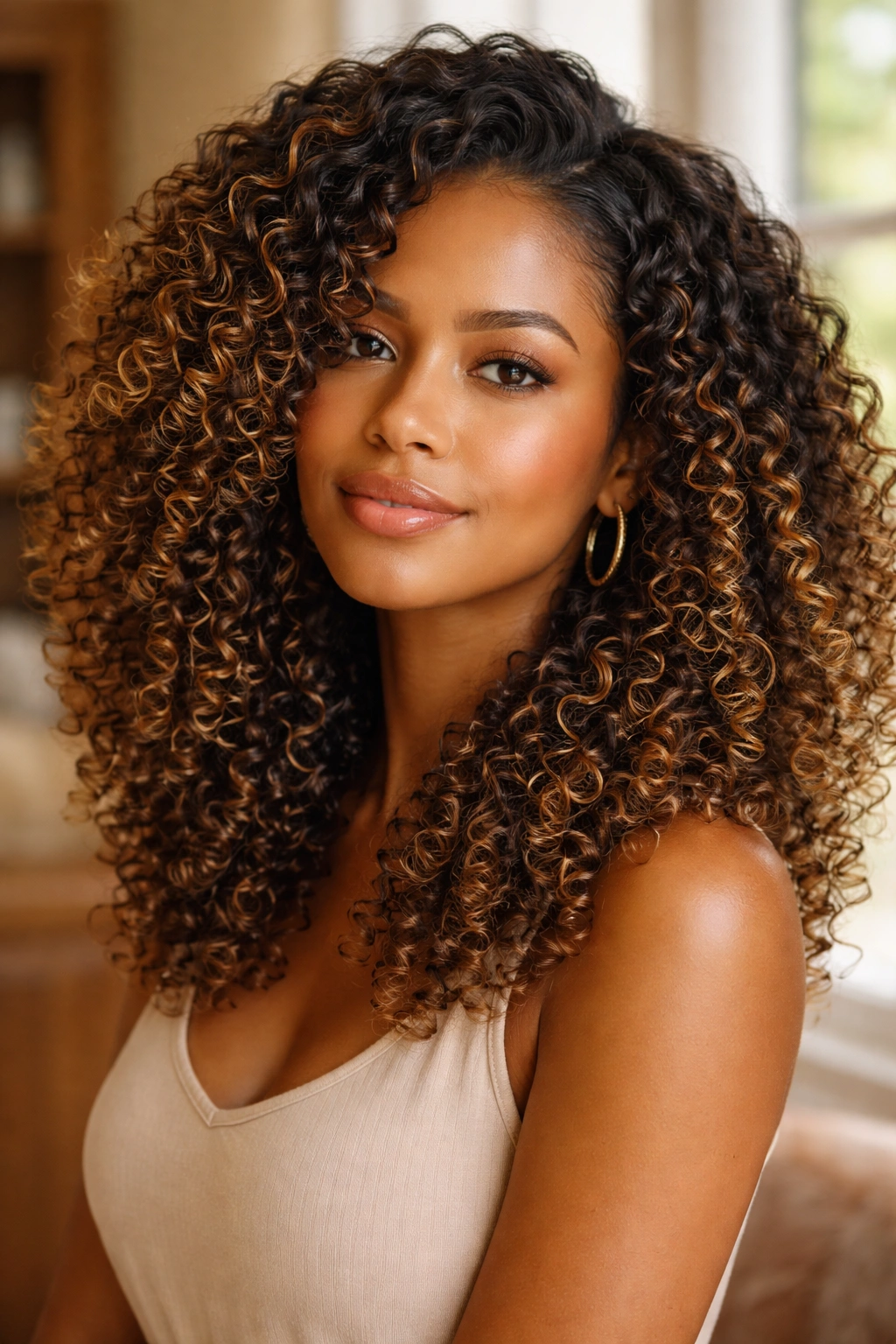
The LOC method — liquid, oil, cream — is a moisture-sealing technique popular in natural hair communities, and it works beautifully for balayage-treated curls that need extra moisture support.
Color-treated curls are more porous than virgin hair, which means they absorb product quickly but also lose moisture quickly. The LOC method addresses this by layering products in a specific sequence that seals moisture progressively: a water-based liquid (leave-in conditioner) locks in moisture, a lightweight oil seals the liquid layer, and a cream or butter seals the oil layer and adds emollient slip.
On balayage curls specifically, the LOC method keeps the color looking vibrant between washes by keeping the cuticle sealed and the curl pattern defined. Dry, frizzy balayage curls look flat and dull; properly moisturized, sealed balayage curls look luminous and rich.
23. Balayage Color-Blocking on Natural Hair
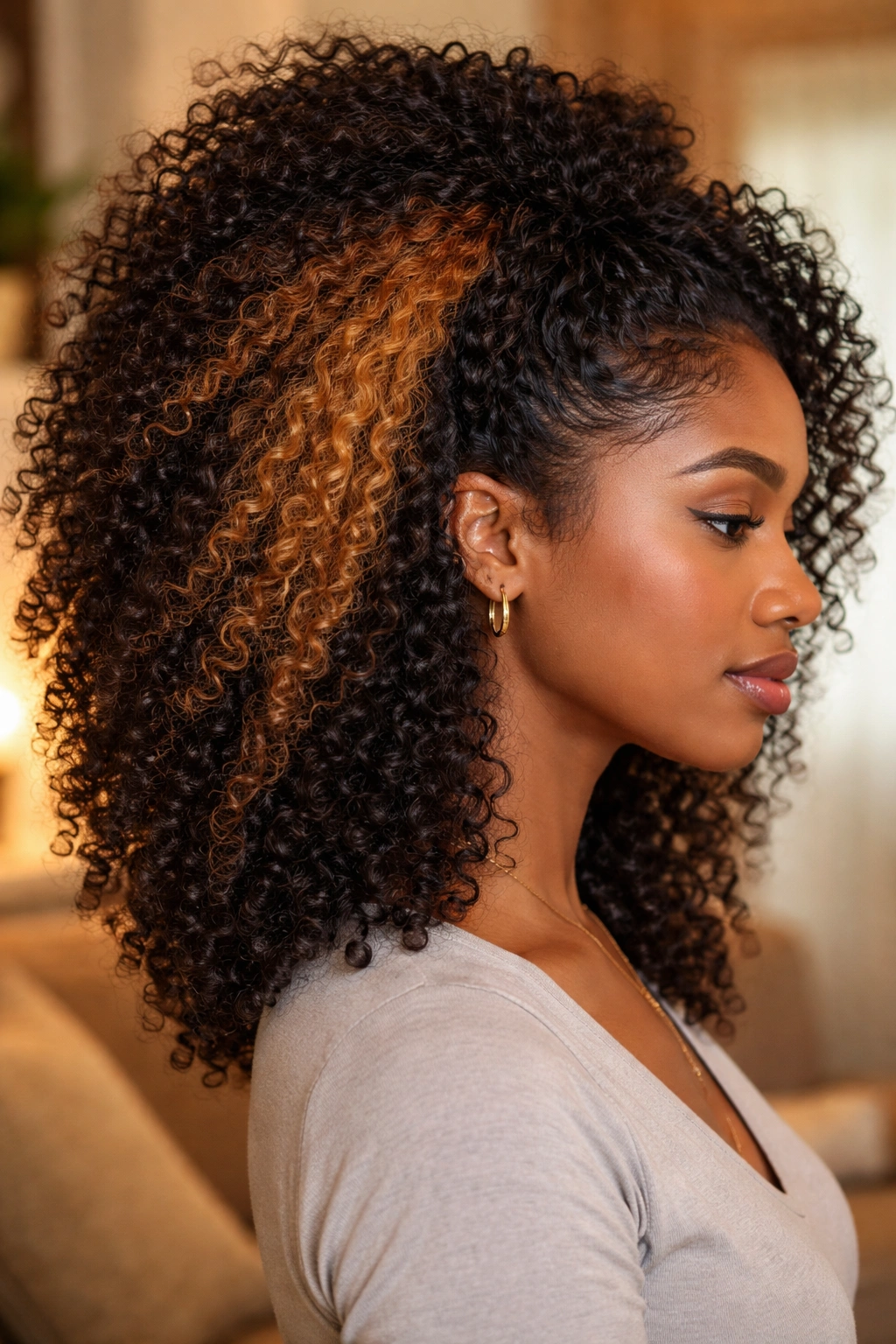
Color-blocking with balayage technique — applying a distinct, concentrated band of color to a specific section of natural hair — creates a look that’s bold, graphic, and completely distinctive. Think: one side of the hair in caramel balayage, the other in natural dark, with a clear but blended separation.
This is an advanced, fashion-forward application that requires a very skilled colorist with a clear creative vision and the technical precision to execute it. The balayage technique keeps the color block from looking rigid, but the overall effect reads as clearly intentional and artistic.
24. Balayage on Locs
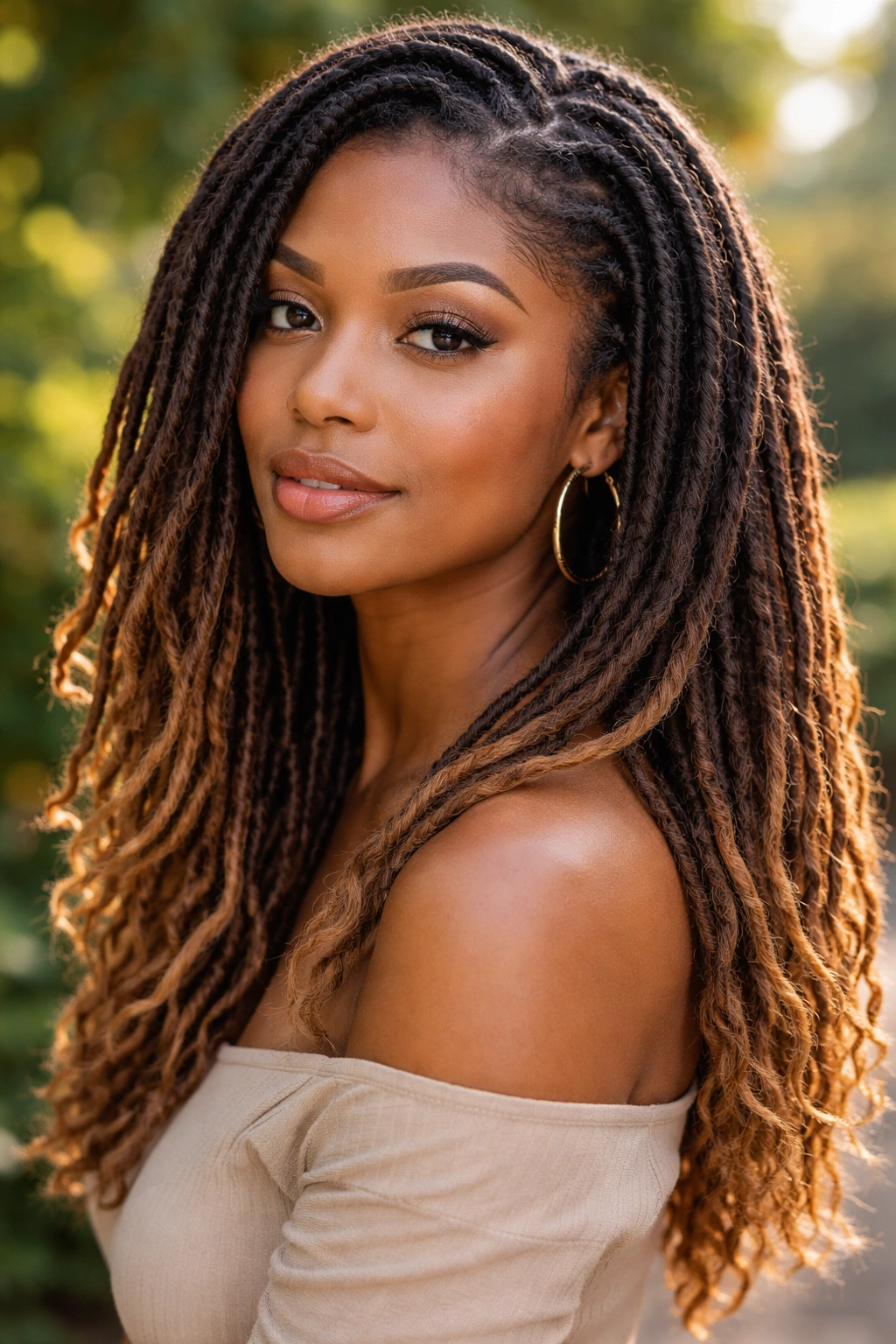
Natural locs and balayage might not be the first combination that comes to mind, but it’s genuinely beautiful. The freehand application of balayage on established locs creates warmth and dimension throughout the loc structure without requiring even or complete coverage.
Locs take color differently than loose natural hair because the tightly compacted structure of a mature loc is denser and harder to fully penetrate. This means balayage on locs often creates a surface-level warmth that reads as lighter at the tip and darker in the loc body — which is actually a beautiful, naturalistic gradient.
Use a professional colorist experienced specifically with locs for this service — the approach differs significantly from balayage on loose hair.
25. Maintaining Balayage Through Protective Styles
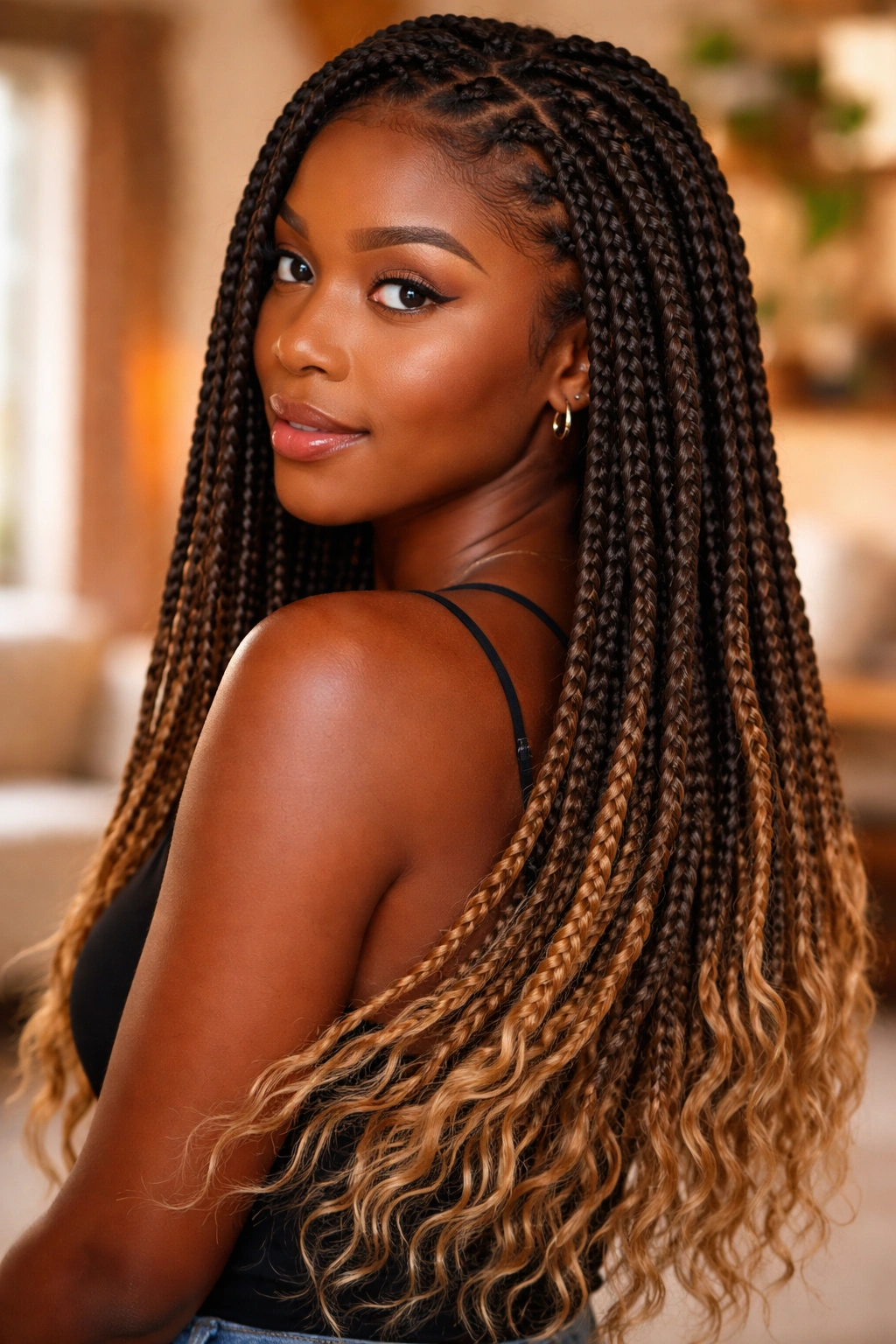
One of the most practical aspects of balayage on natural hair is how well it holds up through protective style periods. Unlike all-over color that looks clearly grown-out when the roots become visible, balayage transitions seamlessly into a protective style because the roots are meant to be darker than the ends.
A balayage client can wear their hair in braids, twists, or locs for several months and come out with roots that look completely intentional — the gradual lightening that naturally occurs toward the ends of the hair simply reinforces the balayage effect rather than contradicting it.
This grow-out friendliness is one of the most practical advantages of balayage over other color techniques for women who regularly cycle through protective styles.
26. Balayage Touch-Up Timing for Natural Curls
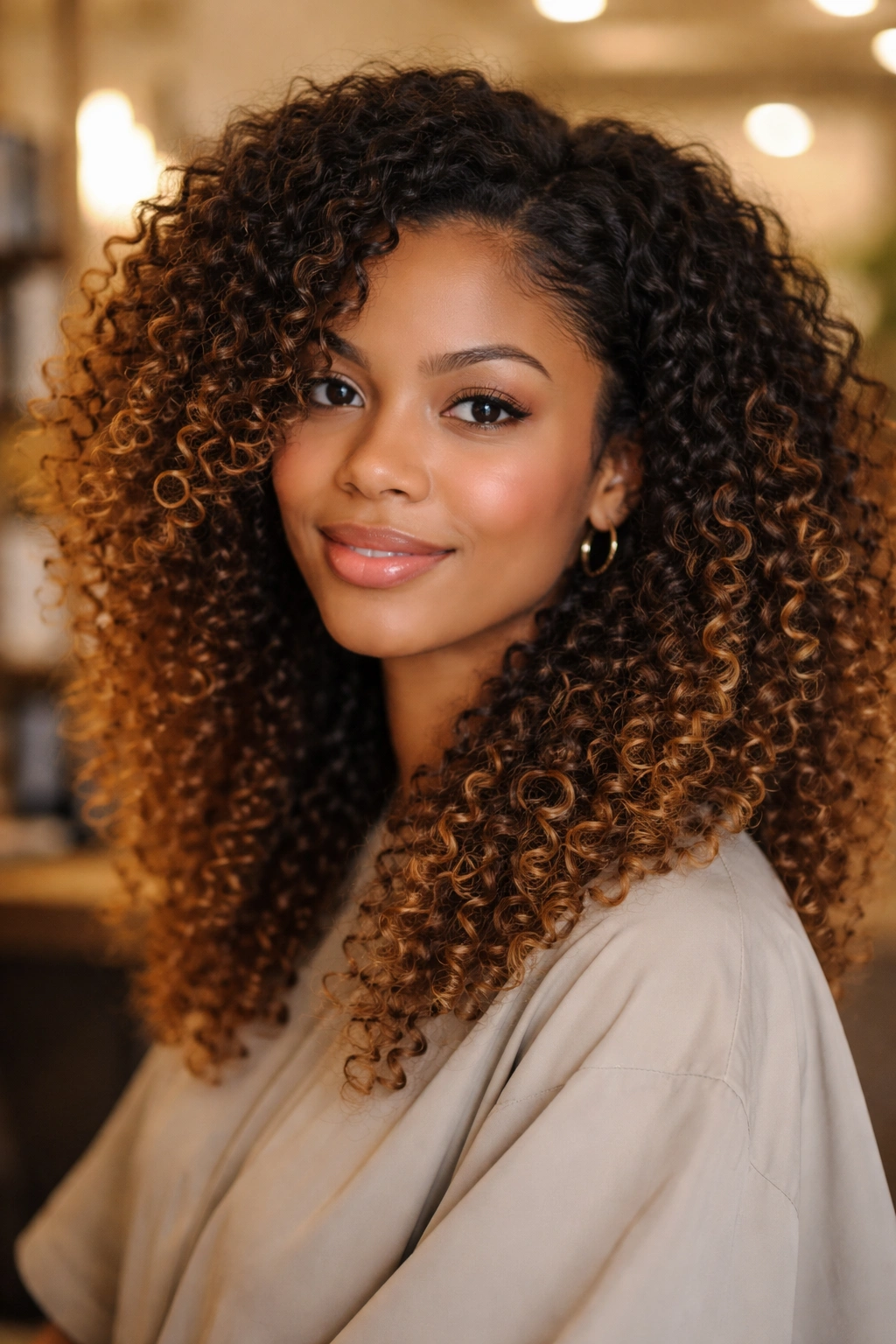
Unlike all-over color that needs touch-ups every four to six weeks as roots grow in, balayage can typically go much longer between appointments. The root-to-end gradient means root growth is incorporated into the overall look rather than being a visible departure from it.
Most natural hair balayage clients return every three to four months for a touch-up — and for those with a more subtle balayage, every four to six months is entirely reasonable. This makes balayage one of the most low-appointment, low-cost color techniques over the long term, which matters for anyone thinking about long-term hair health and budget.
The touch-up appointment typically focuses on refreshing the ends and mid-lengths where color has faded most, with minimal new lightening at the root zone. A gloss is almost always applied at the end of each appointment to seal the color and add shine.
27. Balayage vs. Ombre on Natural Curls
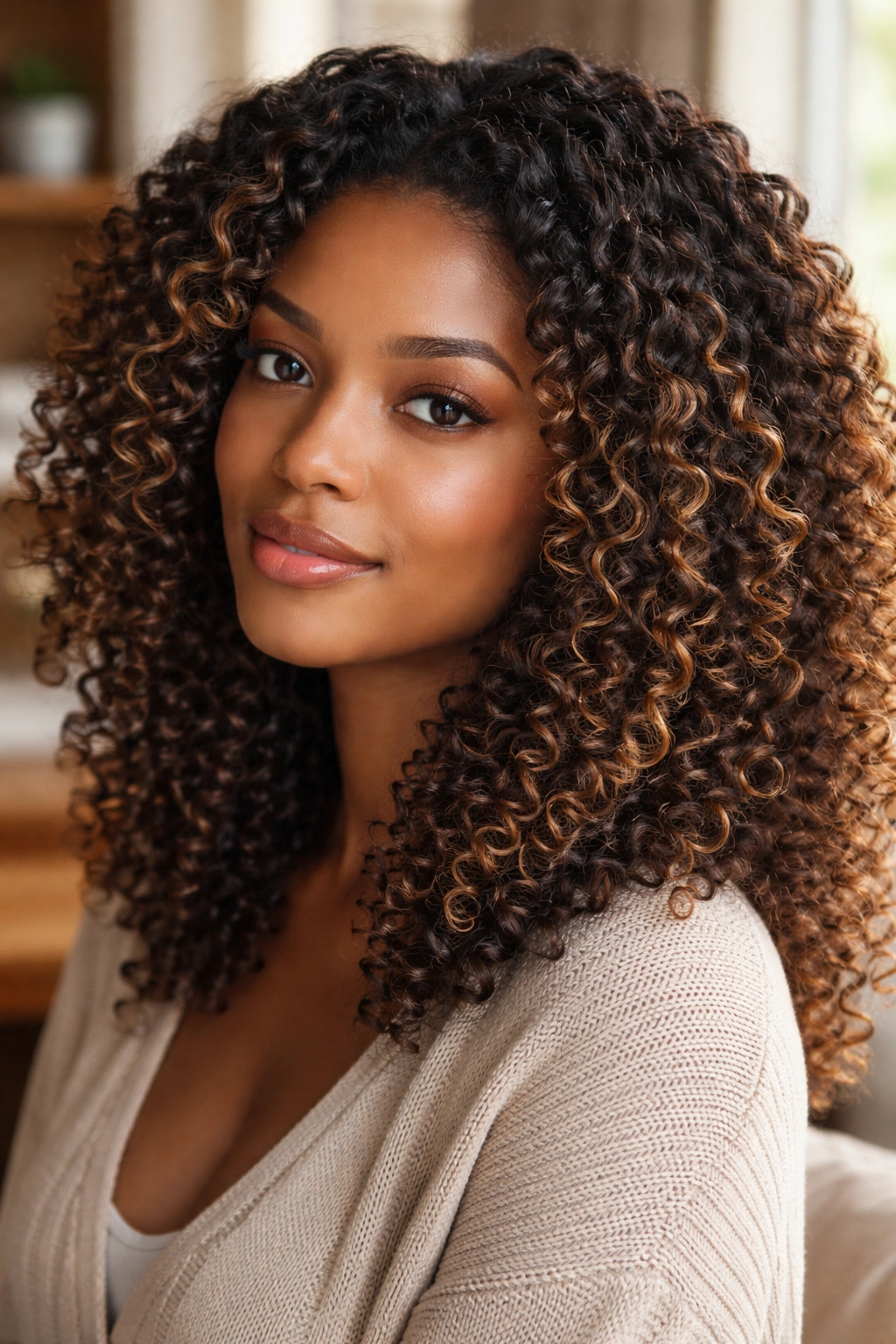
Balayage and ombre are frequently confused but are genuinely different techniques, and understanding the distinction helps you ask for exactly what you want when you sit down with your colorist.
Ombre creates a gradient from one color to another — typically dark at the root and lighter at the ends — with a relatively defined transition point where the two colors blend. The color application is more systematic and less freehand than balayage.
Balayage is applied freehand without a set transition point, creating a more diffuse, less defined gradient where the color appears in random patterns across the curl formation rather than in a clean, progressive sweep from root to end.
On natural curls, balayage typically looks more naturalistic because the freehand application allows the color to follow the curl pattern rather than being applied uniformly regardless of how the curl falls. Ombre on natural curls can look more graphic and deliberately contrasted — which some women prefer. Neither is objectively better; they create different aesthetic results, and knowing which one you want before your appointment saves everyone time and prevents disappointment.