



Auburn curly hair styles sit in this perfect, impossible-to-ignore middle ground between red and brown, and on natural curl textures they create something that genuinely looks like the hair just grew in that color — rich, dimensional, and undeniably warm. It’s one of those shades that reads differently depending on the light: fiery reddish in the sun, deep warm brown in low light, with flickers of copper in between. For Black women with natural hair, auburn is a color choice that manages to feel both bold and wearable at the same time, which is a combination that’s harder to pull off than it sounds.
What Makes Auburn Different from Red and Brown
Auburn exists in a narrow, specific band of the color spectrum that distinguishes it from both pure red and standard warm brown — and understanding that distinction matters when you’re communicating with a colorist about what you actually want.
Pure red hair — vivid, bright red — reads as clearly and unmistakably red from any distance, in any light. There’s nothing subtle or ambiguous about it. It’s a statement color in the most literal sense.
Warm brown has depth and richness, but it stays squarely in brown territory. The warmth comes from golden or reddish undertones, but the overall read is brown first, warm second.
Auburn splits the difference. It’s simultaneously brown enough to feel grounded and wearable, and red enough to be genuinely striking. The reddish quality of auburn is structural — it’s baked into the tone rather than layered on top of it — which means it shows up differently at different times of day and in different lighting conditions. That built-in dynamism is part of what makes auburn so appealing on natural curls.
Auburn on Different Natural Hair Textures
The way auburn shows up on your hair depends significantly on your curl pattern and porosity, and knowing what to expect for your specific texture helps you plan realistically.
Type 4 hair — tight coils and zigzag patterns — displays auburn in concentrated, vivid bursts within each tightly wound coil. The color pools inside the bends of the curl and catches light differently at each curve, creating incredible depth. Auburn on type 4 hair often looks like the hair is lit from within.
Type 3 hair — loose to medium spirals and ringlets — shows auburn in longer, more continuous swaths because the curls have enough diameter to display a length of color before bending back on itself. The result is richer and more evenly distributed than on tighter textures.
Type 2 hair — wavy — shows auburn in a broad, flowing way that can look almost like a natural gradient when the waves catch and release the light. The flatness of the wave pattern reflects light more consistently than rounder curl shapes.
Achieving Auburn on Natural Hair: What to Expect
Getting auburn on natural hair is technically achievable on a wider range of starting points than most other color choices, but it still requires some planning and realistic expectations.
On medium to lighter brown natural hair, auburn can often be achieved with a direct color application or a gentle lift followed by a warm auburn toner. The amount of lightening required is relatively modest compared to blonde or pastel colors, which is good news for curl health.
On deep brown to dark black natural hair, some level of lightening is still required to achieve a true auburn tone rather than a burgundy or very dark red-brown. The key is not trying to achieve the full auburn in one session. A skilled colorist will lift in stages, applying auburn toner at the appropriate lift level to get the warmth right.
At-home auburn color is more accessible than at-home blonde because the tones are more forgiving of imperfect application and slight variations in starting color. That said, professional results on natural hair — particularly type 4 textures — are genuinely different from what most at-home processes achieve, and a professional consultation is always the recommended starting point.
Building a Routine That Keeps Auburn Curls Thriving
Auburn hair on natural curls has some specific maintenance needs that differ from virgin hair care, and building those needs into your regular routine from day one makes the entire experience more sustainable.
Moisture is the first and most important priority. Chemical color processes — even relatively mild ones — affect the hair’s ability to retain moisture, and natural curls already tend toward dryness because of their structure. Deep conditioning weekly with a heat cap or warm towel keeps your curl pattern healthy and your color looking vibrant.
The wash frequency conversation is important for auburn specifically because warm red tones fade with water exposure, particularly hot water. Scaling back shampooing to once or twice a week and relying on co-washing for interim washes dramatically extends color vibrancy. Cool water rinses at the end of every wash also help — they seal the cuticle and lock color molecules in rather than releasing them down the drain.
Color-safe, sulfate-free products across your entire routine aren’t optional. Even if you only use sulfate shampoo occasionally, those washes strip color significantly and undo whatever maintenance work you’ve been doing the rest of the week.
1. Auburn Wash-and-Go
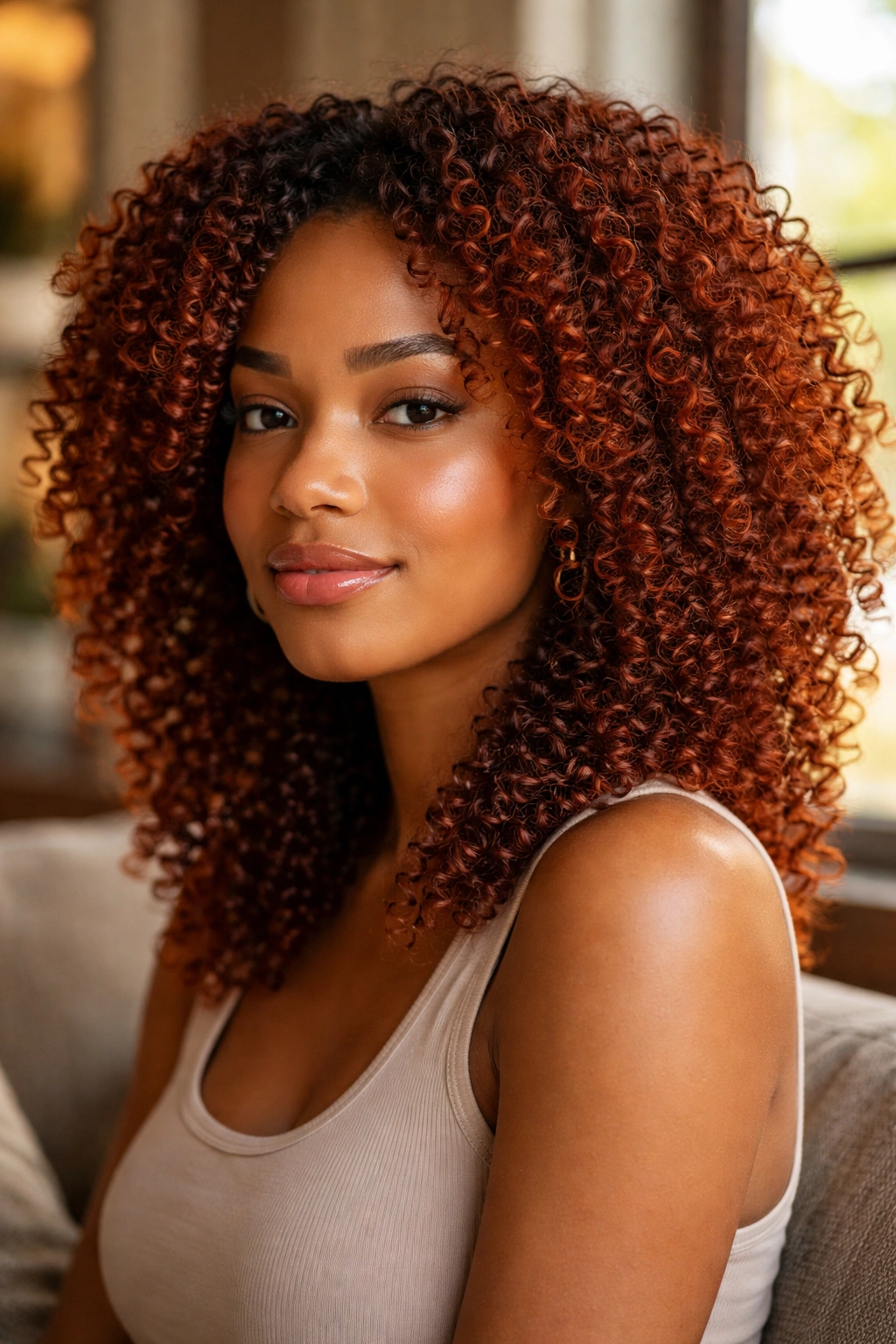
An auburn wash-and-go is one of the most beautiful expressions of this color on natural hair — the warm, red-tinged tones catch sunlight across a full canopy of defined curls and create a fiery, dimensional look that turns heads effortlessly.
Why it works so well: The rounded surface of each curl reflects auburn’s warm tones from multiple angles simultaneously, so the overall look constantly shifts between brown, red, and copper depending on how the light hits.
How to Achieve This Look
Start with freshly washed hair using a color-safe shampoo followed by a moisture-rich conditioner. Apply a curl-defining gel or cream to soaking wet hair in sections, raking from root to tip. Diffuse on low heat or allow to air-dry completely. The auburn tone shows up most vividly once the curls are fully dry and the light can interact with the finished curl formation.
- Use a wide-tooth comb or your fingers only — no brushes on wet curly hair
- Apply product generously; color-treated hair tends to be slightly more porous and absorbs product quickly
- Finish with a dime-sized amount of oil applied to the palms, smoothed over the surface of dry curls for added shine
2. Auburn Twist-Out
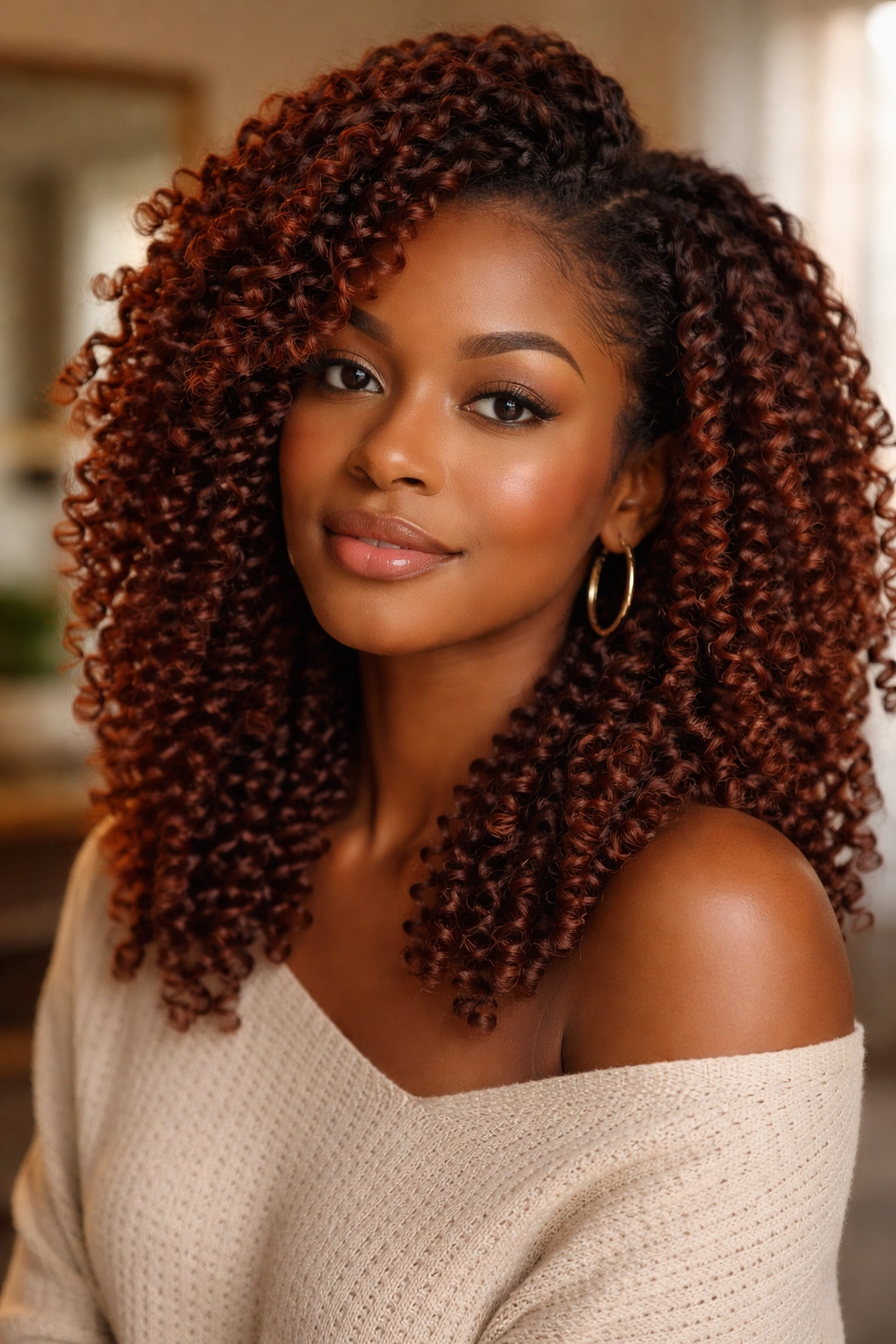
A twist-out in auburn creates defined, elongated curls with a warmth and richness that the brown undertones of auburn provide as a base. Unlike brighter reds that can look harsh when slightly faded, auburn twist-outs look beautiful through their entire color life cycle — from freshly colored and vibrant to slightly faded and burnished.
Bold fact: Auburn is one of the most gracefully aging hair colors for natural curls. As it fades, it transitions through warm reddish-brown stages rather than washing out to a flat, muddy tone.
Divide clean, damp hair into sections and apply your twist-out product of choice — a curl cream, butter, or styling pudding all work well. Twist each section downward in two-strand twists. For maximum definition in auburn, work with smaller sections. Allow to fully dry before unraveling.
Nighttime care: Pineapple your twists at the crown and secure with a satin scrunchie. Cover with a satin bonnet or sleep on a satin pillowcase. Refresh in the morning by spritzing with water and a little leave-in before re-separating.
3. Auburn Bantu Knot-Out
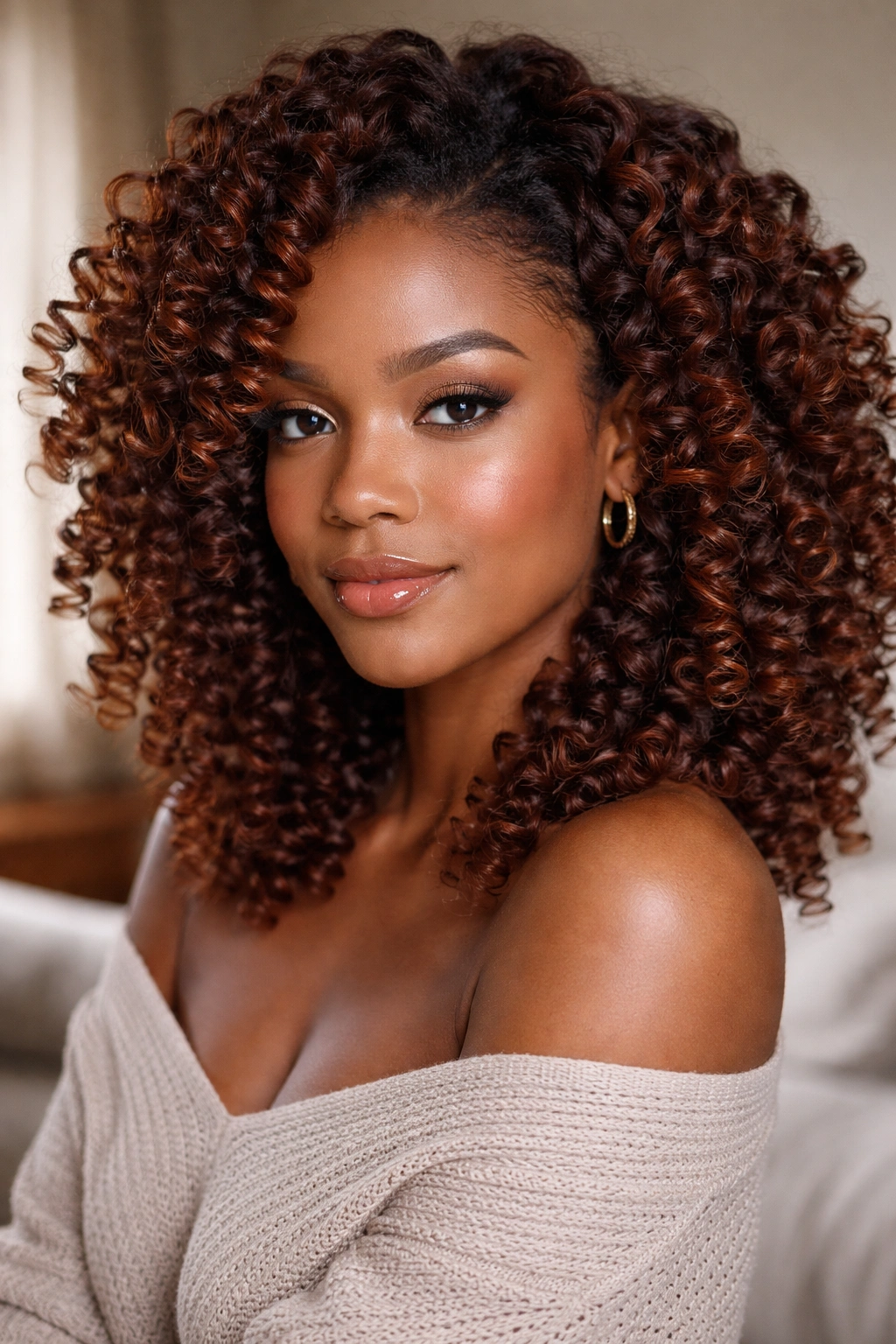
A Bantu knot-out in auburn is an event. The tight, spring-coiled curls that release from each knot showcase the auburn tones in a concentrated, intensely rich way — each coil is its own small firework of warm color.
Imagine this: perfectly defined spirals in rich auburn, each one slightly different in shade depending on how the underlying color was distributed, creating a naturally graduated color effect without any deliberate technique. That’s the magic of auburn on a Bantu knot-out.
The setting technique matters for longevity. Knots set on damp hair with a holding product dry into a more defined, longer-lasting curl than those set on wet or dry hair. Work with a curl cream or defining mousse and make sure each knot is fully dry before unraveling.
How to Achieve This Look
Section your hair into evenly sized portions — the size of each section determines the diameter of the resulting curl. Apply product, then wind each section around itself in a circular motion, tucking the end under the base to secure. Diffuse or air-dry completely. Unravel with oiled fingers, separating gently to avoid breaking the curl pattern.
4. Auburn Goddess Locs
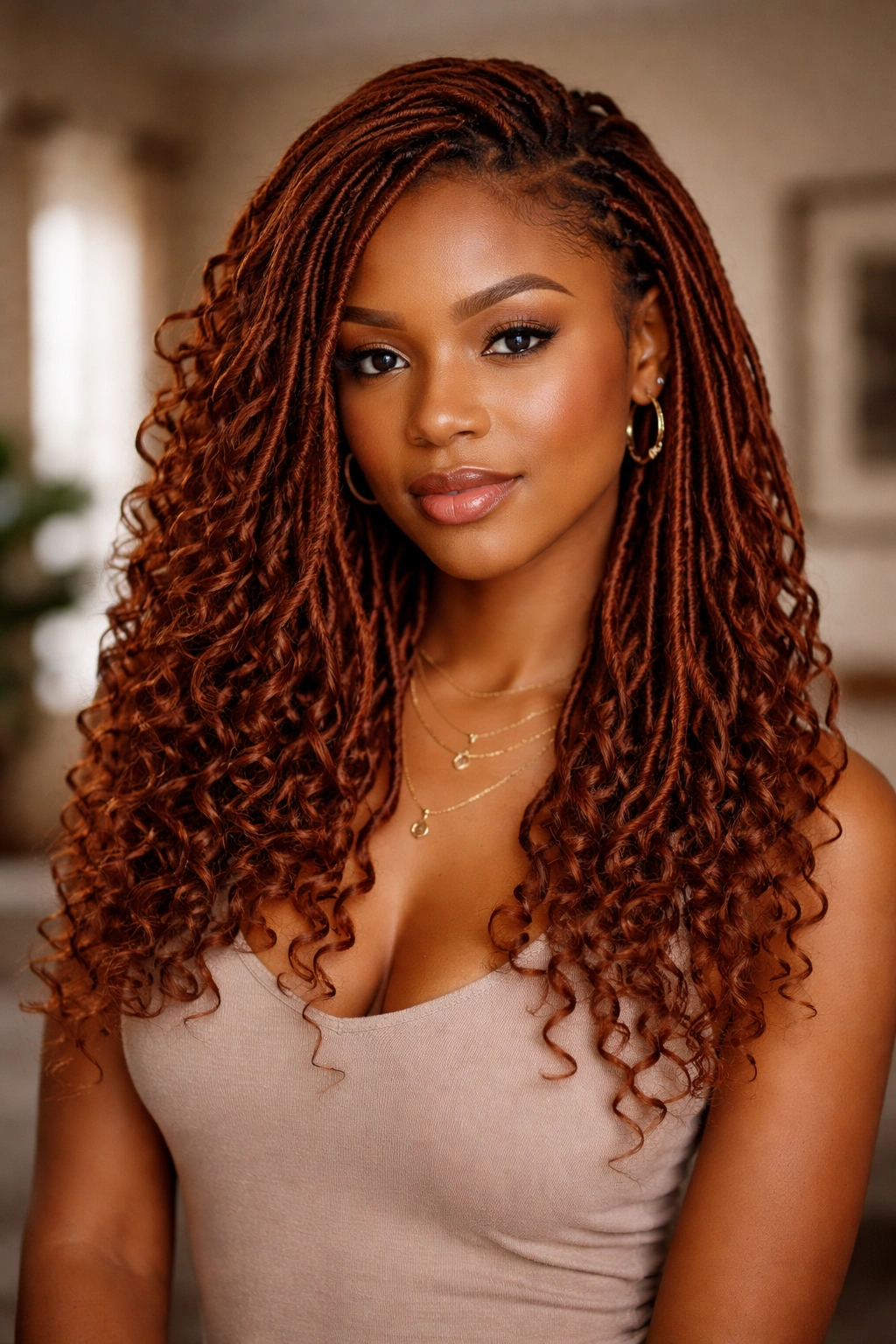
Auburn goddess locs are genuinely ethereal — the soft, spiraling curly ends and the structured wrapped body create a texture combination that auburn tones transform into something warm and almost otherworldly.
The wrapped body of each loc tends to display a slightly darker, more burnished version of auburn, while the soft curly ends catch more light and show the brighter, more vibrant reddish tones. The natural contrast between the two elements of the style enhances the multi-dimensional quality of auburn beautifully.
This is a protective style with significant aesthetic payoff. Auburn goddess locs in a medium length — collarbone to mid-back — frame the face beautifully and move in a way that constantly showcases the color from different angles.
5. Auburn Frohawk
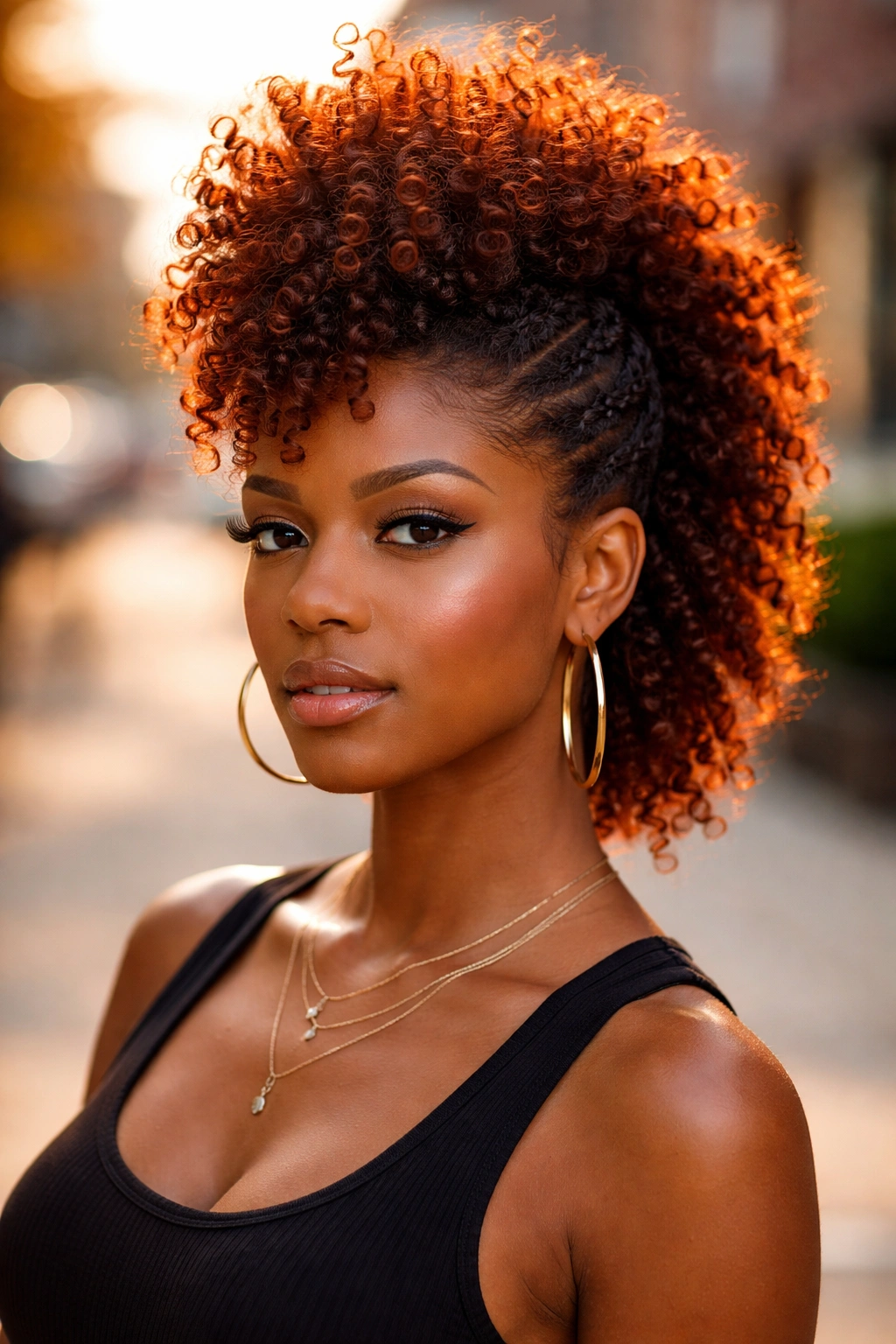
An auburn frohawk is dramatic, bold, and completely confident. The architectural silhouette of the frohawk — sides pinned or braided down, center section standing tall — places the auburn color exactly at the highest point of your silhouette where it catches the most light.
Bold fact: The auburn frohawk photograph particularly well because the warm tones create a natural rim-lighting effect when photographed with a light source behind or above — the edges of each curl glow almost gold while the deeper interior of the curl formation reads as rich reddish-brown.
How to Achieve This Look
Braid, pin, or smooth the side sections flat. Leave the center strip of hair from front to nape free, styled with a curl cream and diffused or picked out for maximum height and volume. Use a strong-hold gel at the hairline for a clean edge.
- The width of the center section determines the visual weight of the hawk
- Apply edge control or a light pomade to the sides for a sleeker perimeter look
- Finish with a shine spray on the center section to maximize auburn luminosity
6. Auburn High Puff
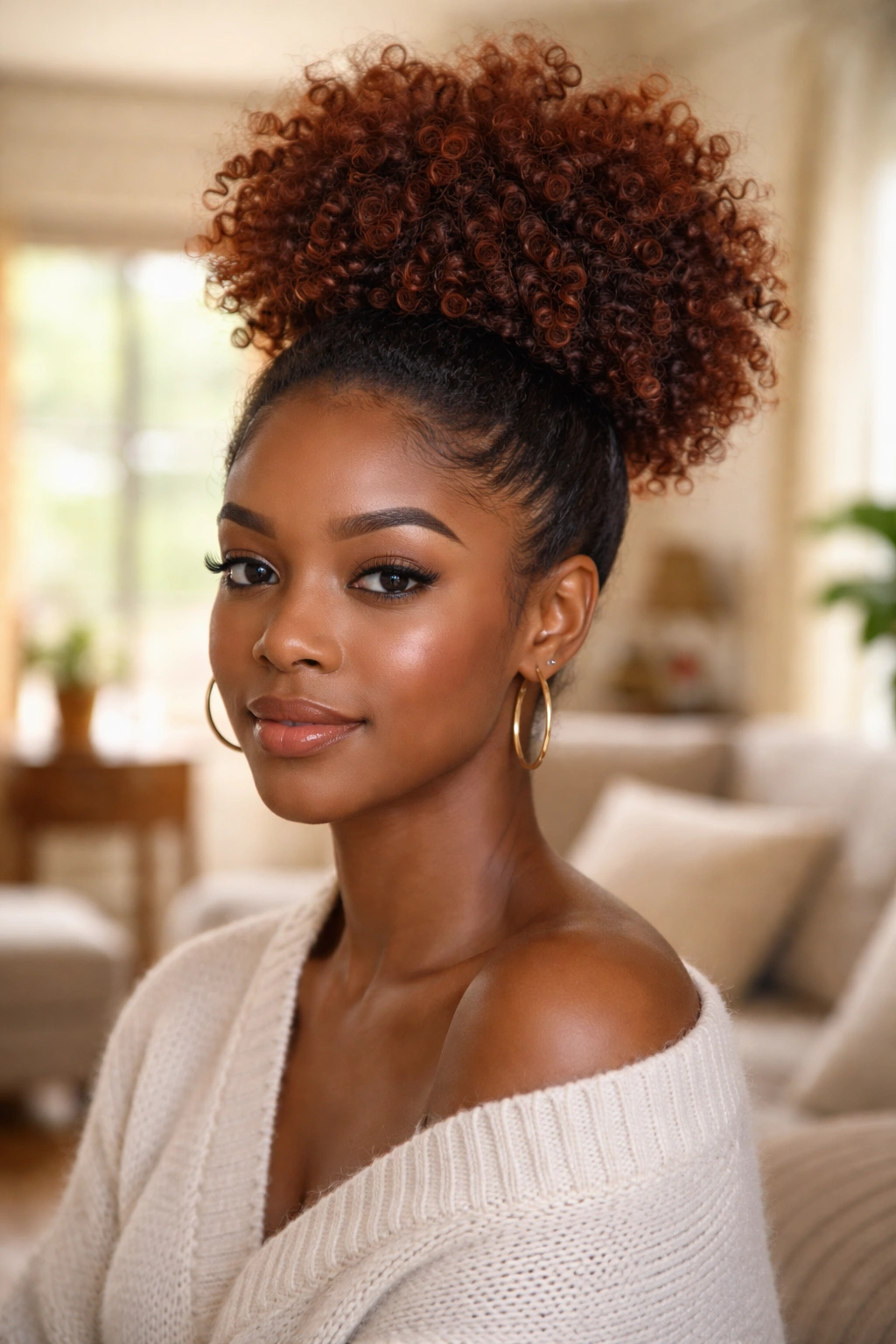
The high puff in auburn natural hair is one of those looks that’s genuinely greater than the sum of its parts. It’s simple — just gathering your curls at the crown — but in auburn tones the effect is warm, rich, and completely beautiful.
A good high puff showcases the full volume of your natural curls while the auburn color creates warmth across the entire silhouette. The rounded shape of a well-done puff with the warm glow of auburn tones is a combination that flatters almost every face shape.
Secure clean, defined curls at the crown with a thick hair tie or satin scrunchie — never a tight thin elastic that can break color-treated strands. Fluff the puff upward at the crown for maximum height. Smooth the perimeter with edge control for a polished base.
7. Auburn Box Braids
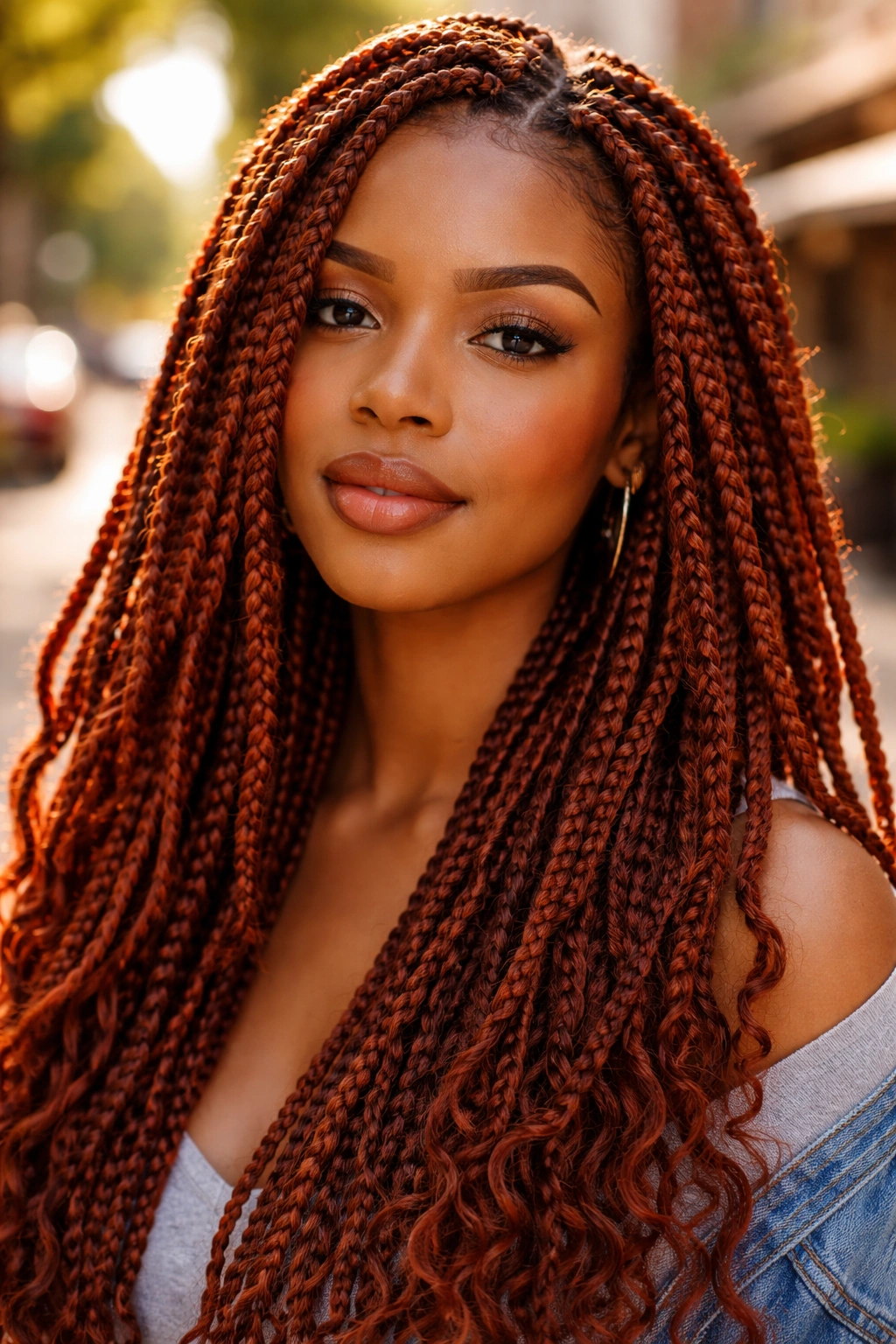
Auburn box braids — using auburn extension hair — are one of the most popular protective style choices for women exploring warm hair color because they’re completely reversible. Your natural hair stays untouched while the auburn tones live entirely in the braiding hair.
Auburn braiding hair is widely available and comes in multiple shade variations — from bright, vivid reddish-auburn to deeper, more burgundy-adjacent auburn, and everything in between. Mixing two shades creates a natural-looking dimension within the braid body.
This style also offers complete versatility in length. Short auburn box braids sit at the jaw or shoulder; long ones hang to the waist or beyond. Each length interacts with the auburn color differently — shorter braids show the tone in concentrated close-up clarity, longer braids display the warm color across a sweeping, dramatic length.
8. Auburn Flat Twist-Out
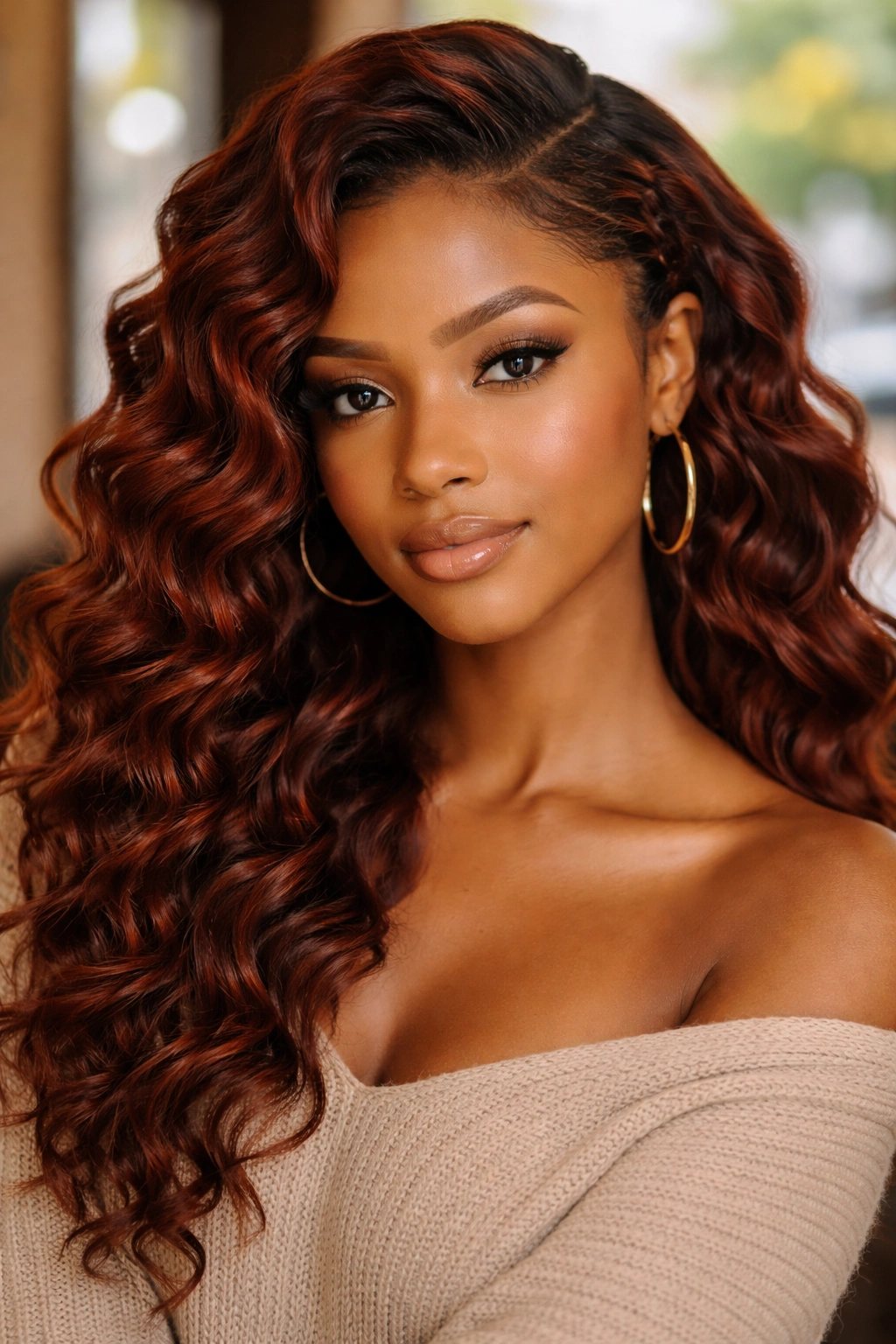
Flat twists create a different curl pattern than regular two-strand twists when unraveled — more S-shaped and wave-like, with a slightly structured quality that looks intentional. Auburn tones on a flat twist-out have a beautiful, fluid quality as the color moves through each wave.
The difference between a flat twist-out and a regular twist-out is significant. Regular twist-outs create rounder, more springy curls. Flat twist-outs create longer, more flowing waves with defined S-curves. In auburn, the wave pattern shows off the warm tone across a broader surface, creating a more continuous ribbon of color.
How to Achieve This Look
Part your hair cleanly and lay flat twists directly against the scalp in the direction you want the final waves to fall. Apply a curl cream or butter as your styling product. Secure the ends and allow to fully dry overnight. Unravel gently with a little oil to separate without disturbing the wave pattern.
9. Auburn Tapered Cut
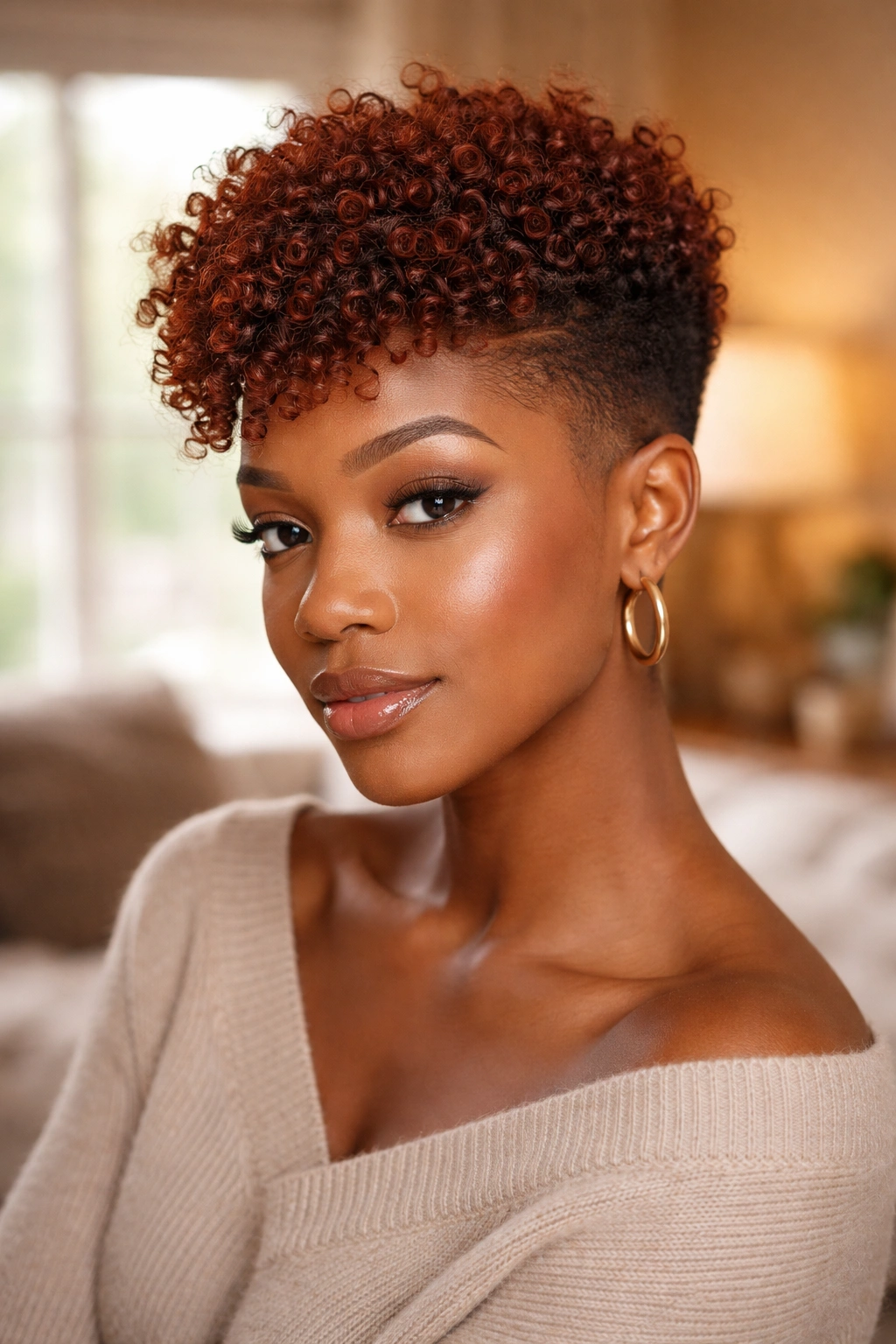
A tapered cut in auburn is one of the most polished, sophisticated natural hair looks available. The precision of the fade or taper at the sides creates a clean architectural foundation, and the auburn-toned crown curls become the undeniable focal point.
Auburn is particularly beautiful on tapered cuts because the limited surface area of the crown means the color shows up in concentrated, rich clarity. There’s no diffusion across a large mass of hair — every auburn curl is front and center.
Maintain a tapered cut by visiting your barber every three to four weeks to keep the taper sharp. The crown curls need minimal daily styling — a bit of curl cream and a pick for volume is usually enough. The auburn color and the cut shape do the visual heavy lifting.
10. Auburn Senegalese Twists
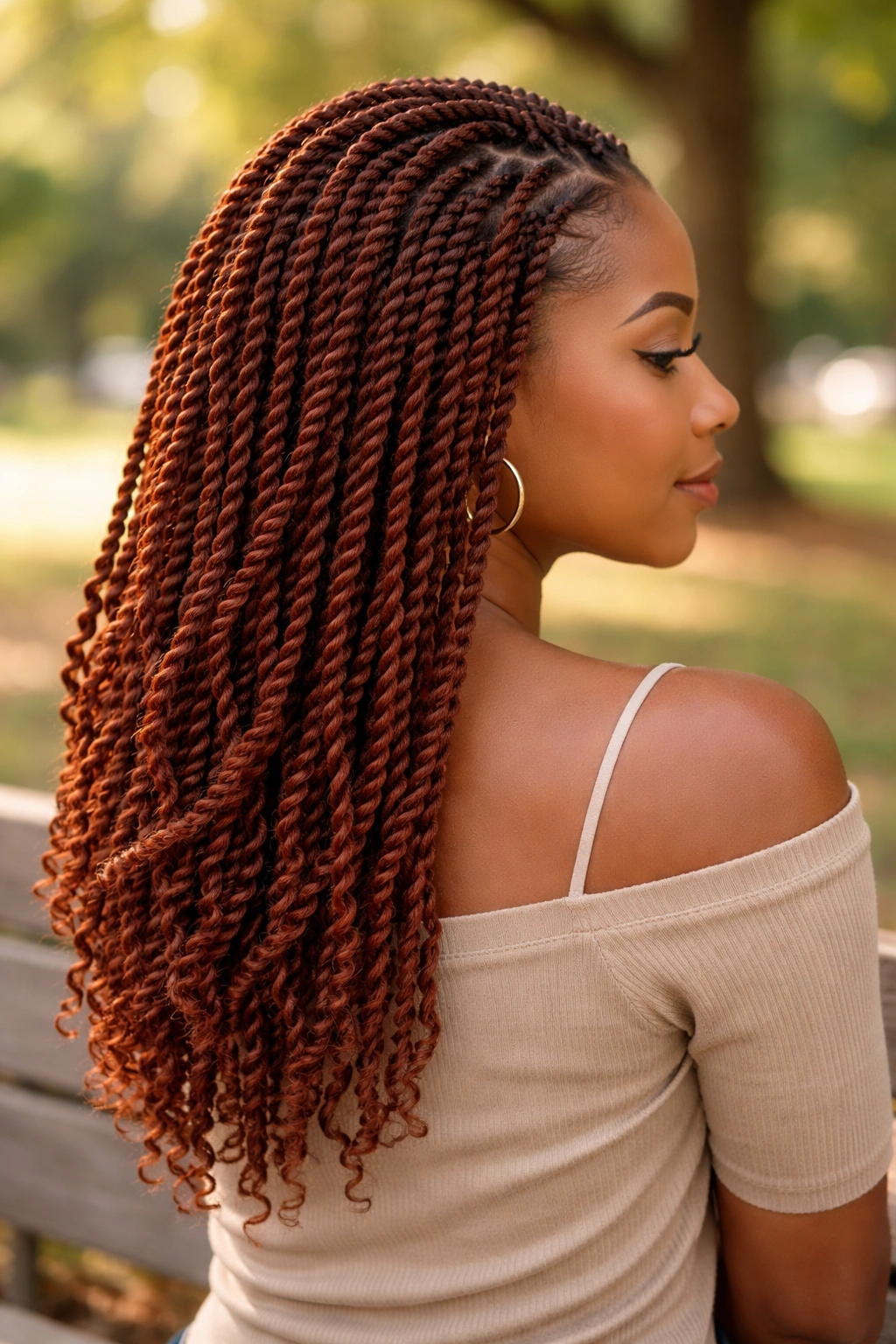
Senegalese twists in auburn extension hair have a smooth, slightly reflective surface that showcases warm tones with unusual clarity. The consistent wrapping of the two-strand technique creates a uniform color column from root to tip.
The neatness of Senegalese twists is their defining quality, and that neatness makes auburn color look incredibly clean and intentional. There’s no variation in the color display from one braid to the next — just consistent, beautiful warmth from scalp to ends.
Auburn Senegalese twists in a medium length create a style that works for literally every occasion, from the most casual to the most formal. The warmth of the color adds a richness that makes even a simple loose-twist style look dressed-up.
11. Auburn Cornrows
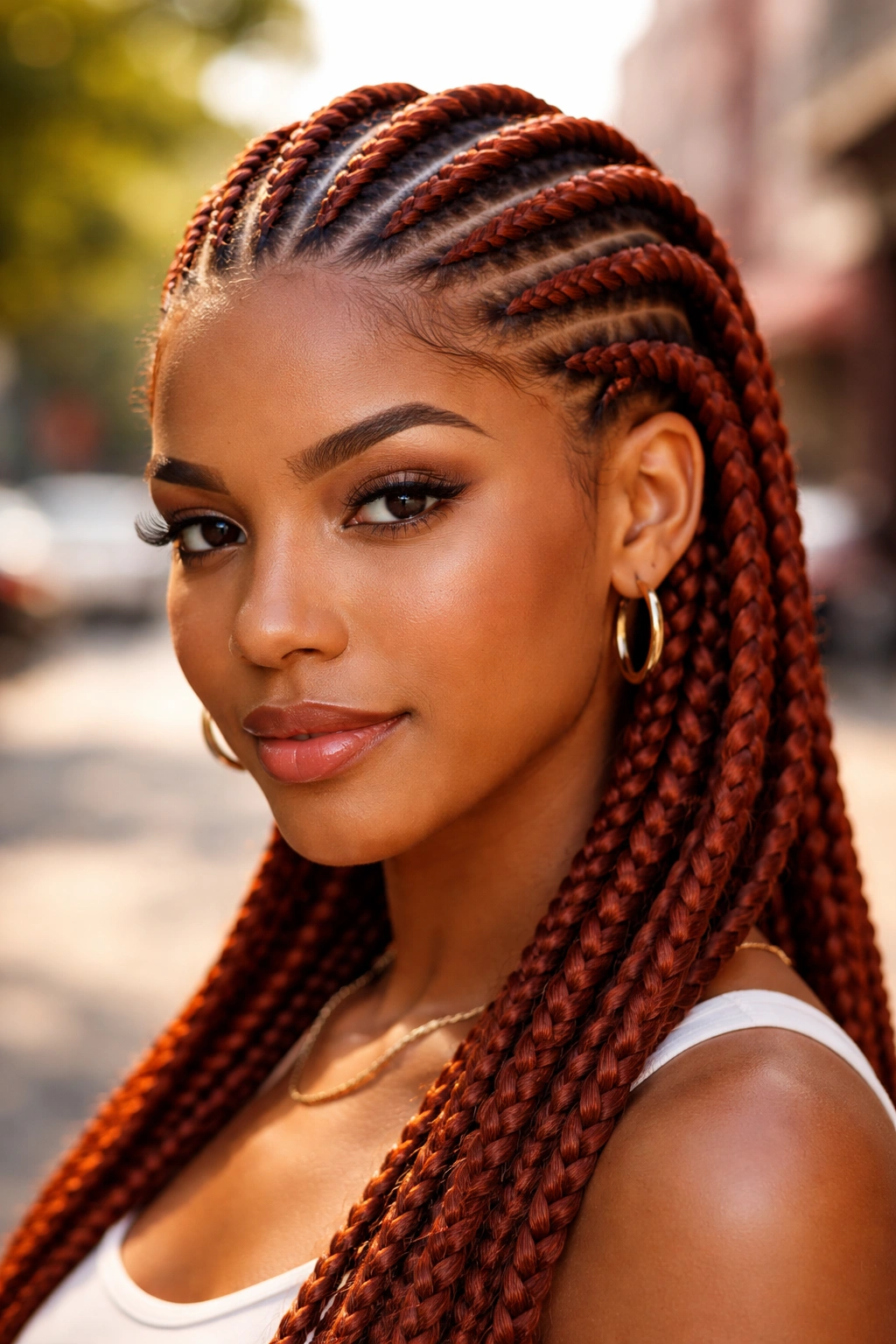
Cornrows in auburn extension hair are a study in precision and warmth — the geometric braid pattern in vivid warm color creates a graphic look that’s simultaneously traditional and striking.
Simple straight-back cornrows in auburn show off the consistent color most clearly. Complex geometric patterns in auburn create something more artistic and eye-catching, with the color following the braid pattern in clean, defined lines.
How to Achieve This Look
Divide hair into clean sections following your desired braid pattern. Cornrow each section from root to tip, incorporating auburn extension hair for added length and color. Keep the parts crisp and the braids tight at the root for the cleanest result.
12. Auburn Kinky Twists
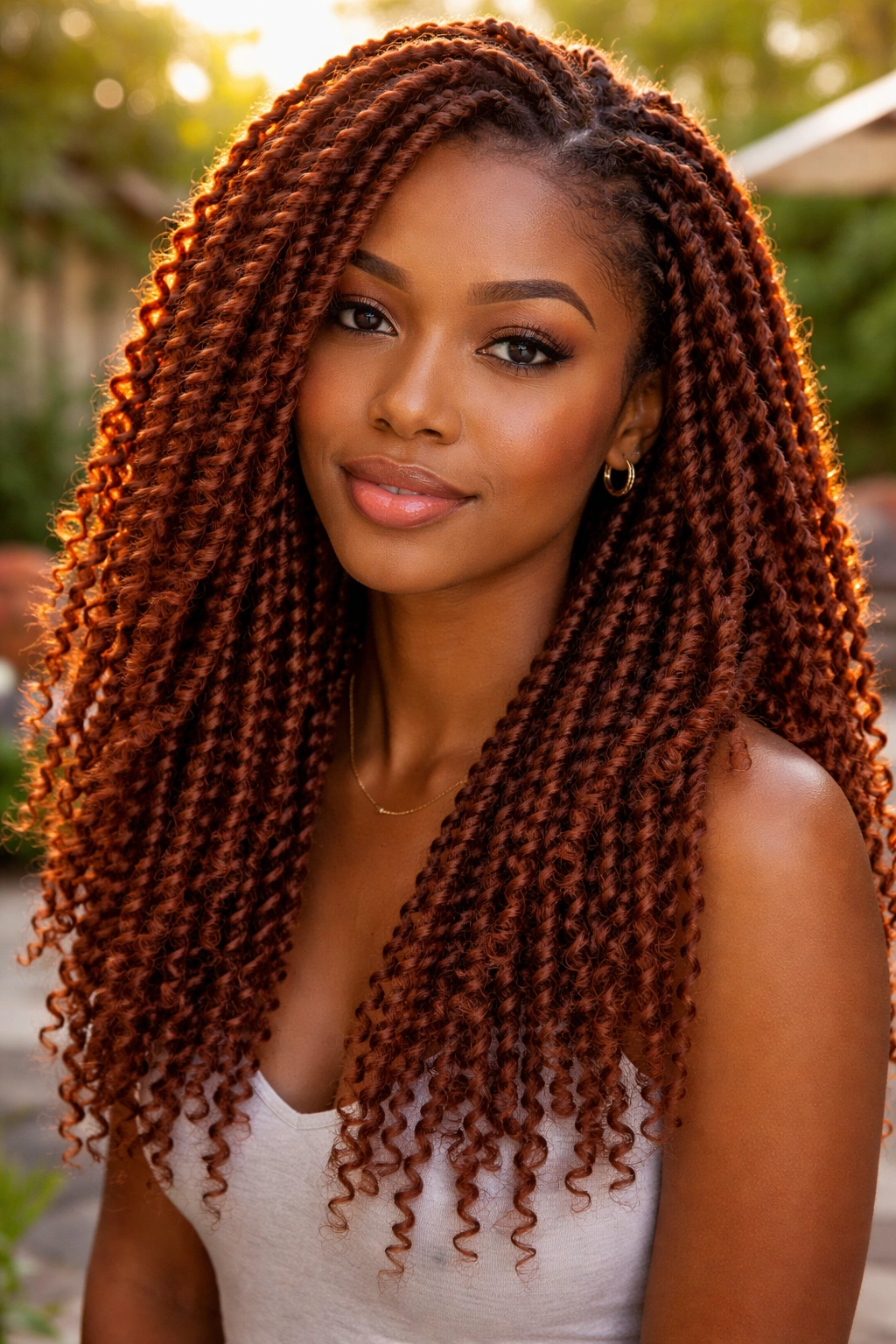
Kinky twists in auburn Afro kinky extension hair look remarkably close to color-treated natural hair because the rough, natural-looking texture of the extension hair mimics type 4 hair so closely. The auburn tones show up throughout the kinky texture in a way that reads as completely organic.
This is the go-to protective style for women who want the look of auburn natural hair without the color chemical process. The texture and color are convincing enough that most people assume it’s actually your color-treated natural hair.
Maintain by keeping the scalp moisturized with a lightweight oil applied directly to the scalp through the twists every few days. The style typically lasts four to six weeks.
13. Auburn Crochet Braids with Curls
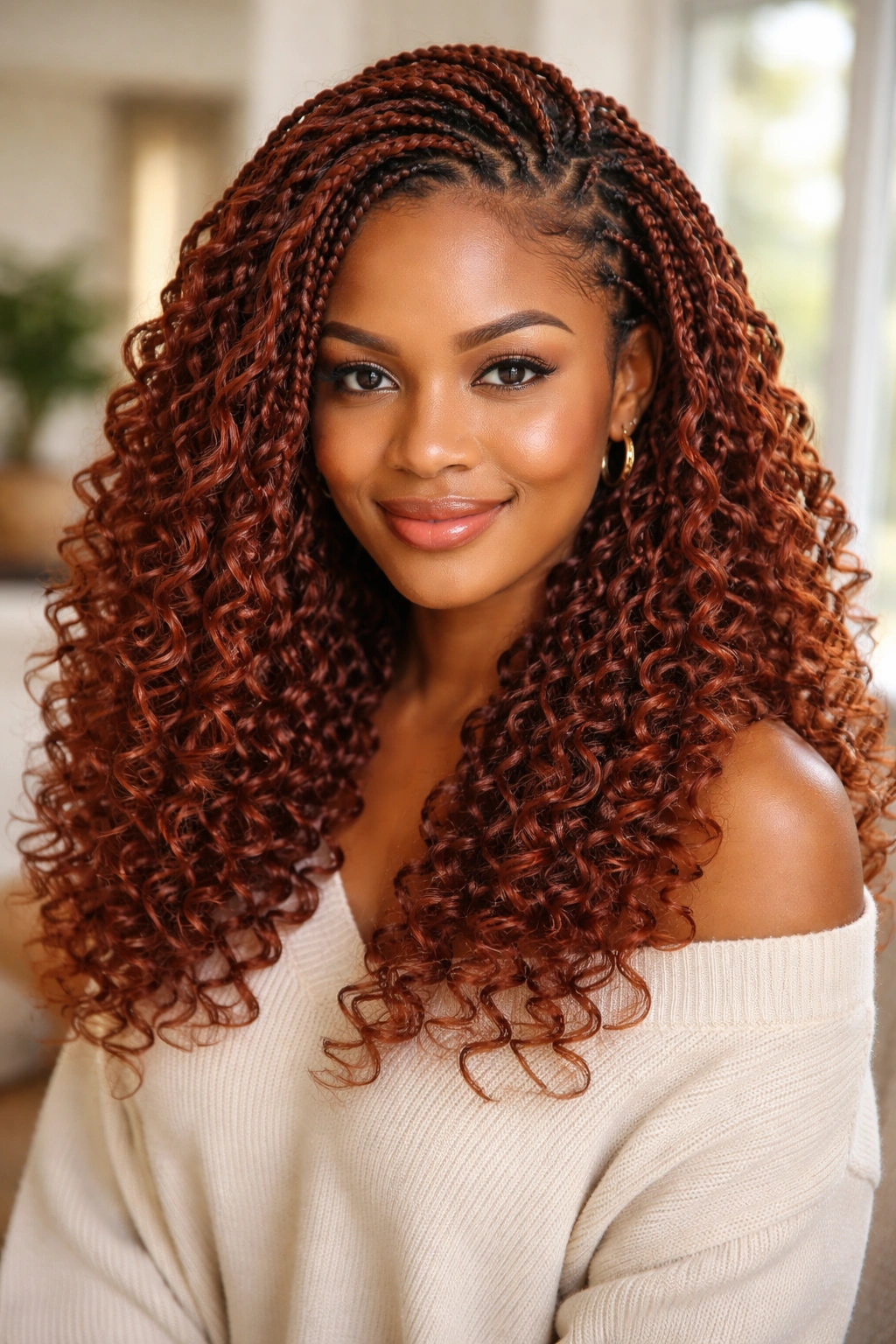
Auburn crochet braids with a curly extension hair pattern create a full head of warm, auburn-toned curls with your natural hair completely protected underneath. The key is matching the extension hair’s curl pattern to your natural texture for a seamless blend.
The protective benefit is maximal here. Your natural hair spends the entire duration of the style in moisturized, manipulation-free cornrows under the crochet installation. Meanwhile, the auburn crochet curls handle all the daily exposure and styling.
Look for crochet hair specifically marketed for afro or natural hair textures — kinky curly, Afro coily, or Marley texture crochet hair in auburn shades creates the most convincing natural hair look.
14. Auburn Half-Up Half-Down
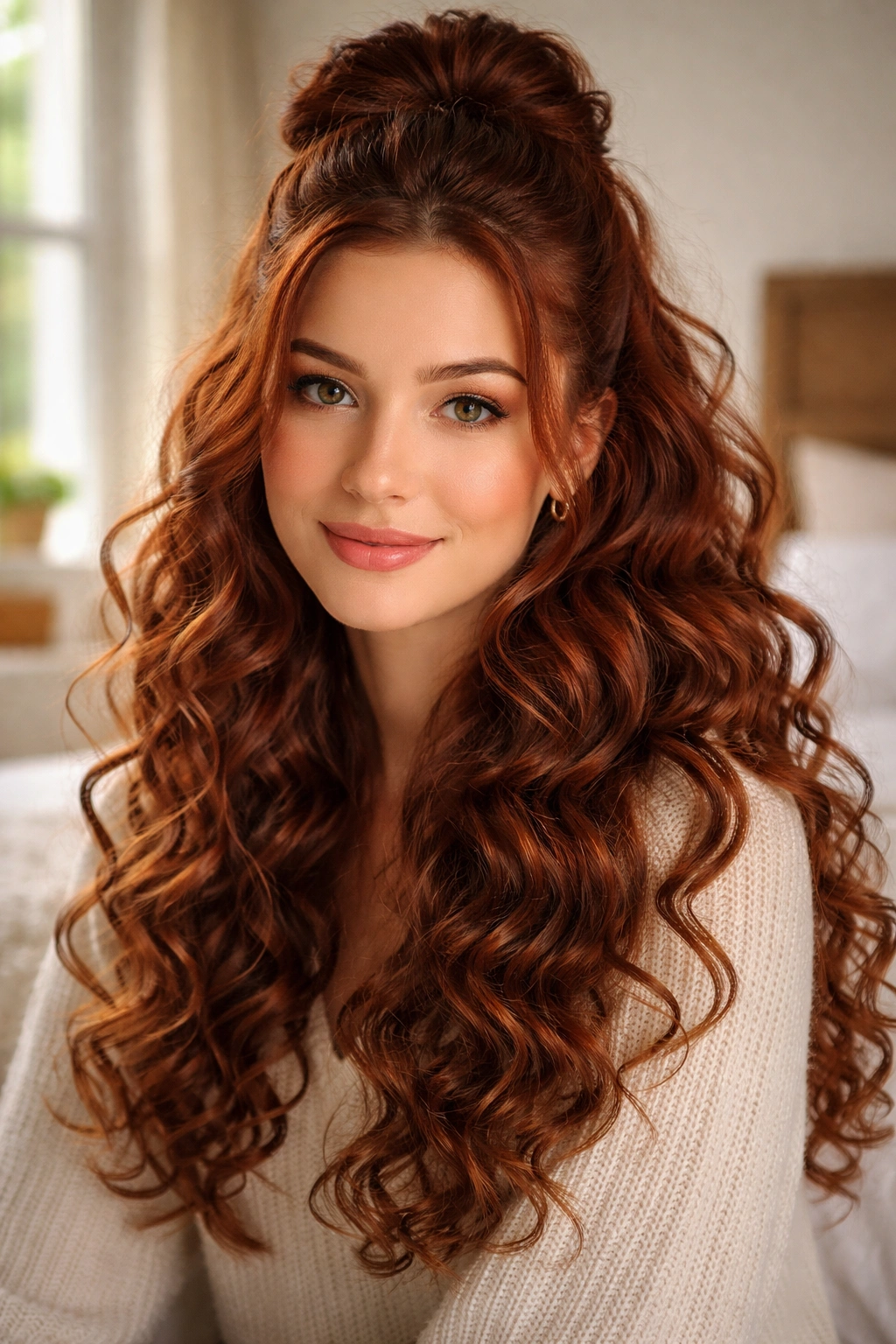
The half-up half-down in auburn natural curls is the most practical gorgeous style — it shows off your length, showcases your color, and keeps the face clear while the warmth of the auburn lower section frames your neck and shoulders beautifully.
This style photographs beautifully from any angle. The gathered top section shows auburn in concentrated richness, while the loose lower section displays it across a broader, more fluid expanse of curls.
Gather the upper half of your hair and secure at the crown with a clip or decorative hair accessory. Let the lower half hang loose in its natural curl state. The auburn color creates instant visual interest without any extra styling required.
15. Auburn Passion Twists
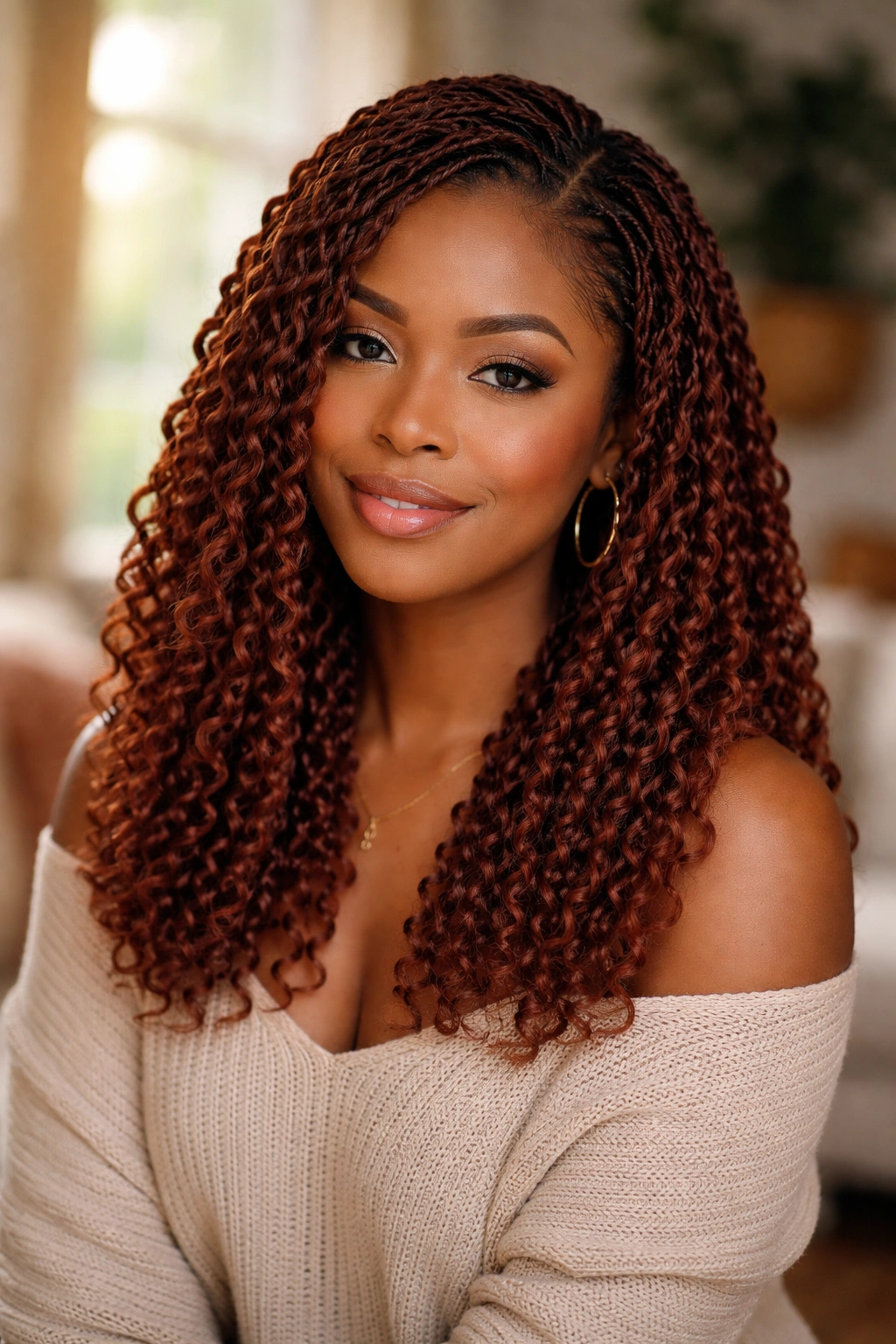
Passion twists in auburn water wave extension hair have a soft, bohemian quality that suits auburn’s rich warmth perfectly. The slightly undone, individually different texture of each passion twist creates a natural-looking style that the auburn color infuses with warmth and richness.
Auburn passion twists look particularly beautiful at medium length — long enough to move freely but not so long that the weight pulls out the soft texture of the water wave extension. Collarbone to mid-chest is usually the sweet spot.
Maintain by misting with water and a little leave-in spray daily to keep the extension ends hydrated and defined. Auburn passion twists typically last four to six weeks with proper nighttime care.
16. Auburn Space Buns
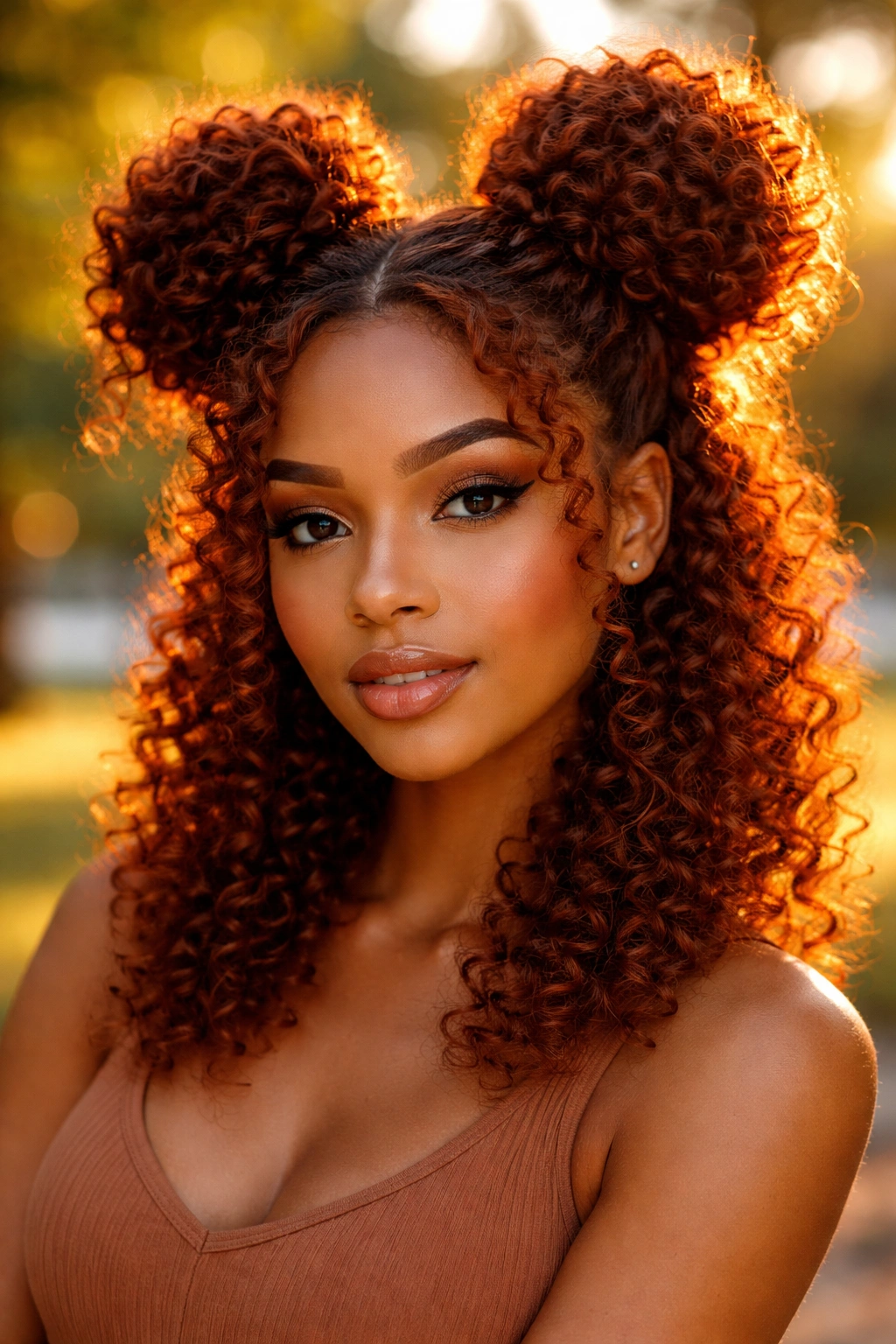
Space buns in auburn natural curls are playful, confident, and unexpectedly elegant — the symmetrical round buns at the top of the head showcase the auburn color in two concentrated focal points that are genuinely striking.
In auburn, space buns look less youthful-cute and more editorial-confident. The richness and depth of the auburn tone adds a seriousness that keeps the style from reading as purely whimsical.
Divide your hair cleanly down the center and gather each half into a bun secured at the desired height. Fluff each bun for volume and pull a coil or two loose at the face for softness. Auburn tones in the loose tendrils at the face are especially beautiful.
17. Auburn Faux Locs
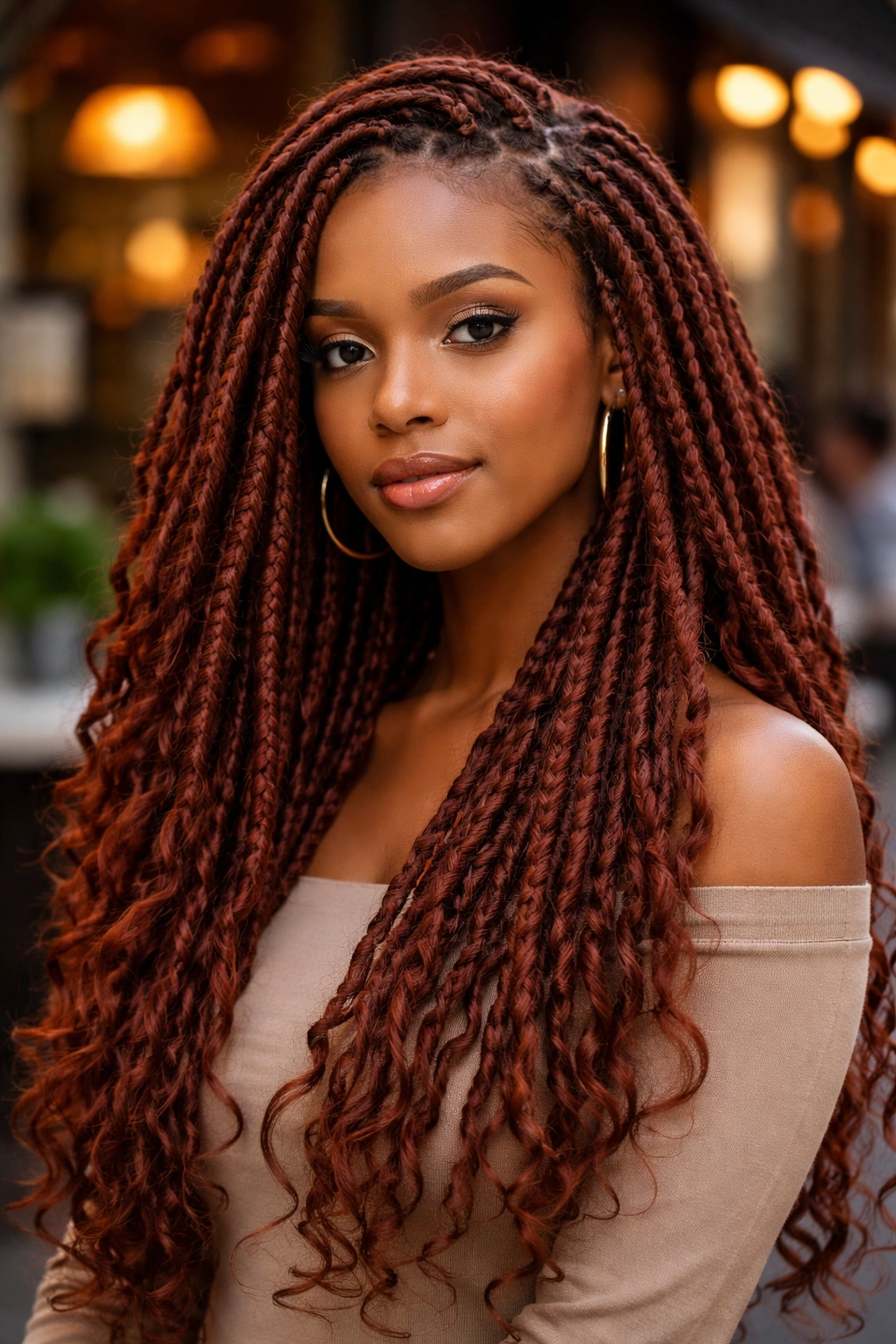
Auburn faux locs have a natural, organic quality that suits the color beautifully — the wrapped, slightly textured body of faux locs has a warmth and dimensionality that matches the depth of auburn tones.
Longer auburn faux locs are particularly striking because the color has more surface area to display, and the movement of longer locs constantly shifts between the brighter reddish tones and the deeper brown-auburn base.
Installation involves wrapping auburn braiding hair around small braided sections of your natural hair, creating the faux loc structure from root to tip. Maintain with scalp moisture and nightly protection.
18. Auburn Updo with Twisted Elements
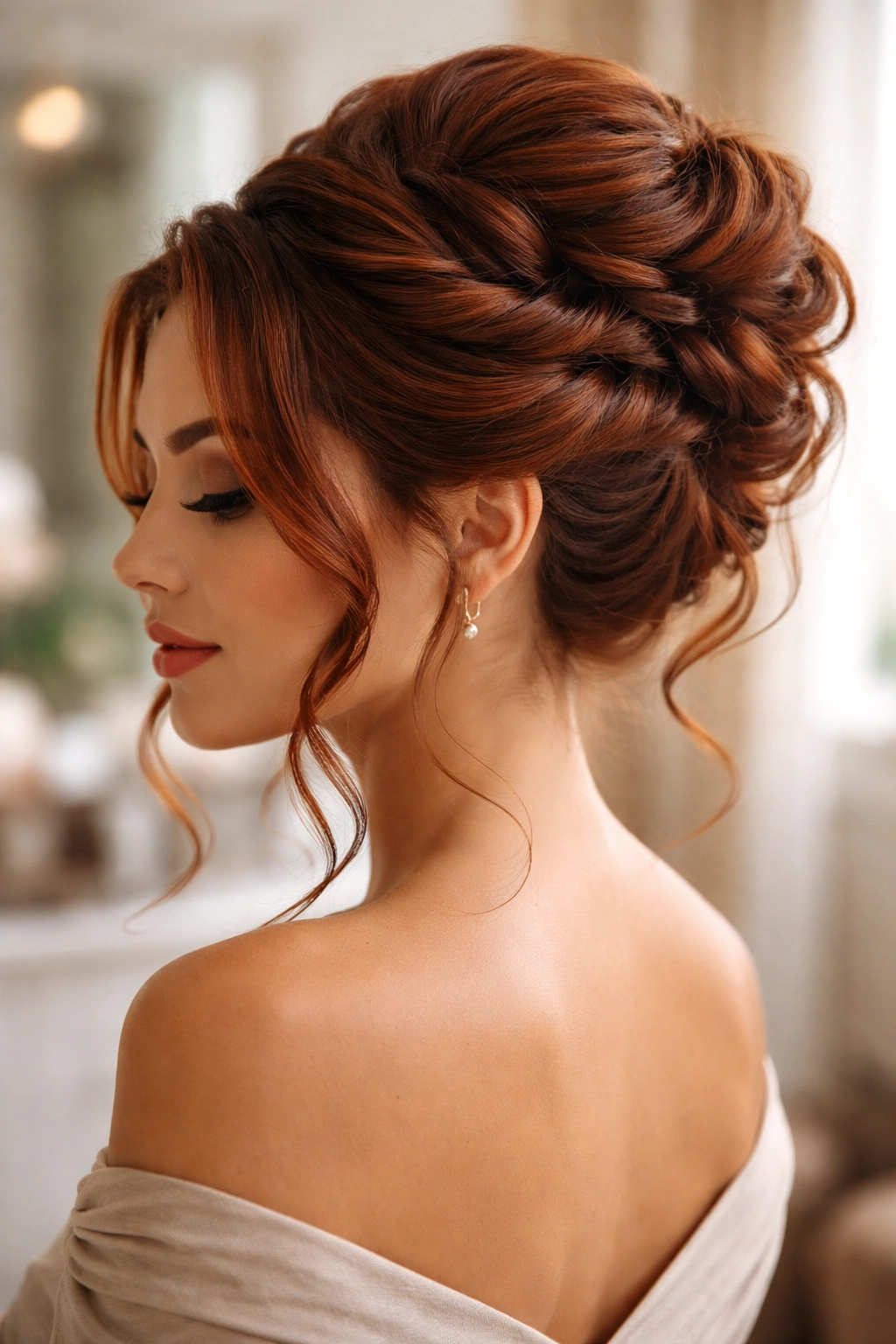
A structured updo that incorporates twisted sections in auburn natural hair looks sophisticated and finished — the kind of style that works equally well for everyday occasions and more formal settings.
Twist elements within an updo create texture and dimension that simple pinned or gathered styles don’t have. In auburn, each twist shows the warm tones from a slightly different angle within the overall structure of the updo.
How to Achieve This Look
Create several two-strand twists throughout your hair while it’s damp and let them partially dry. Gather the twists into an upswept shape, pinning them securely but leaving a few twisted pieces loose at the face and nape. The combined texture of the twists and the warmth of the auburn color creates an elaborate-looking style with less effort than it appears.
19. Auburn Puff with Defined Edges
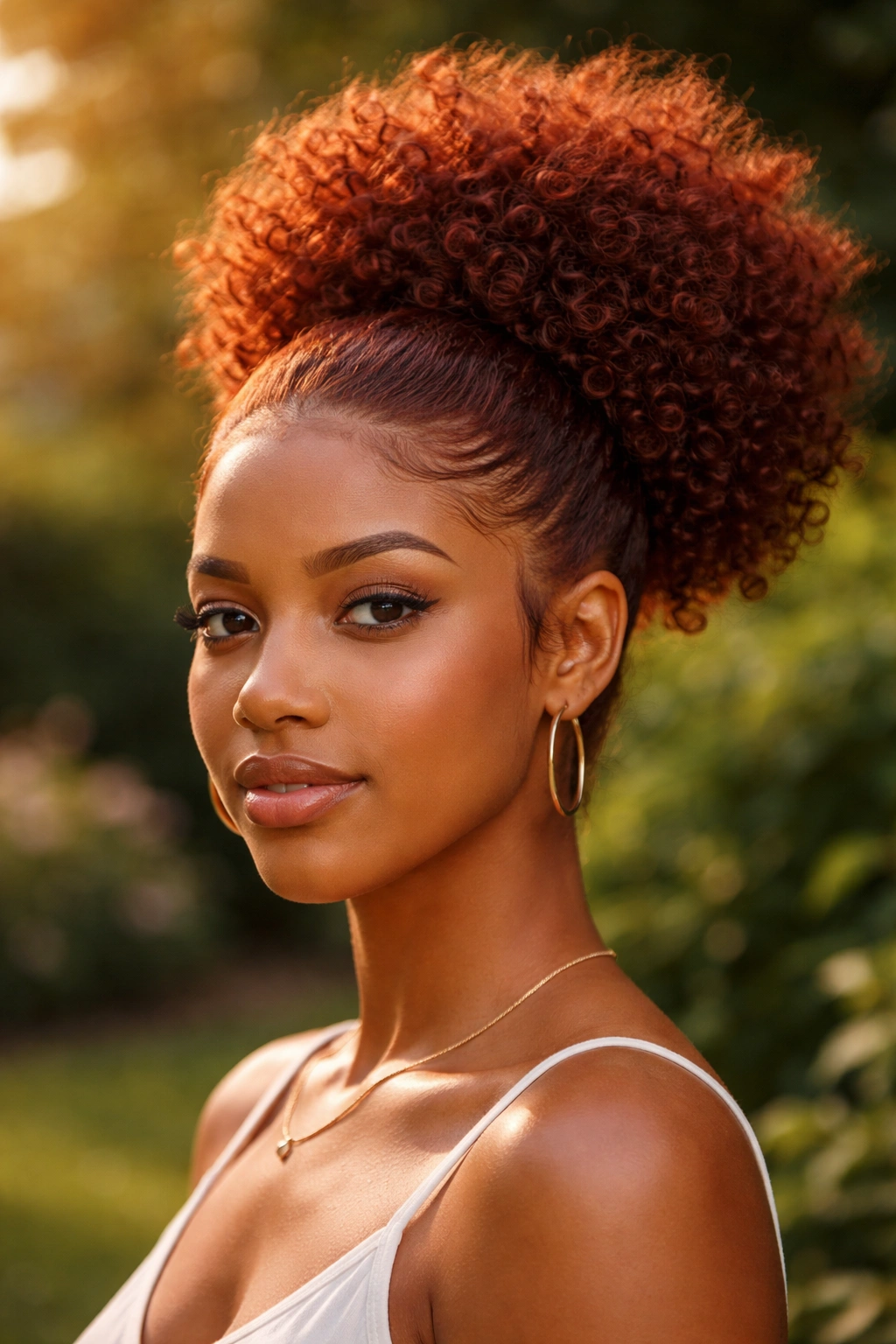
A puff style with deliberately styled edges is a natural hair staple that looks completely polished, and in auburn tones it has an extra richness that makes even the most casual puff look intentional.
Defined edges are the detail that transforms a puff from quick to intentional. Using an edge brush and a good edge control product to lay and style the hairline — swoops, waves, or simply smoothed back — adds a finished quality that balances the casual volume of the puff.
Apply edge control to damp edges and use a bristle brush to create your preferred edge design. Secure the puff at the crown and fluff for volume. The auburn tones inside the puff contrast beautifully with the sleeker perimeter.
20. Auburn Natural Afro
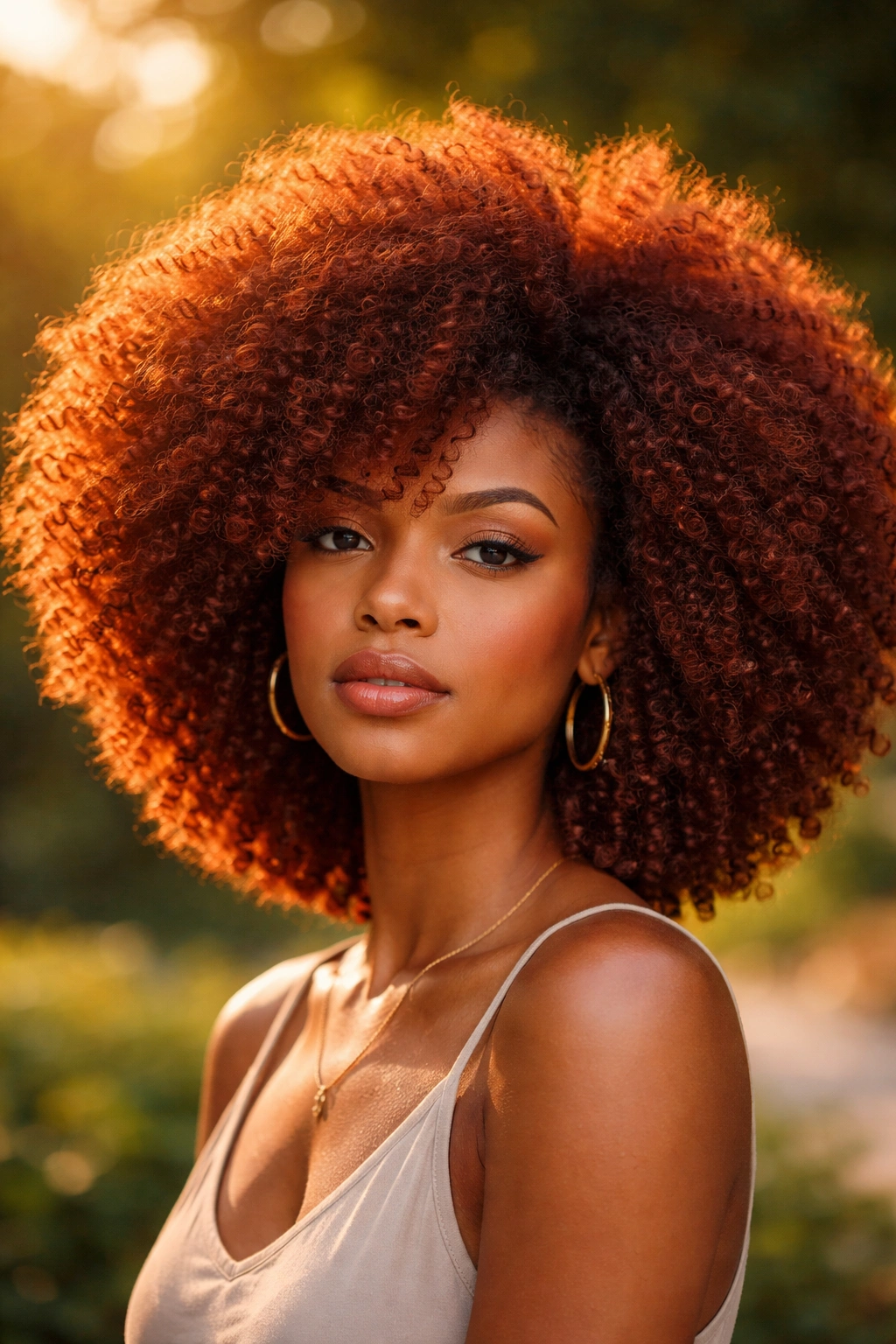
A full, rounded afro in auburn is unapologetically bold and beautiful. The warm, reddish-brown tones spread across a full afro silhouette create a look that’s impossible to ignore in the best possible way.
Auburn afros have a golden-hour quality in natural sunlight — the edges of the afro silhouette catch warm tones while the interior shows deeper brown, creating a natural gradient effect that makes the hair look lit from within.
Pick out the afro using an afro pick from roots to ends, working from the bottom up to avoid breakage. The key is separating the coils without losing their structure — a steady hand and patience matter more than force. A light oil or sheen spray on the surface adds luminosity to the auburn color.
21. Auburn Defined Coil-Out
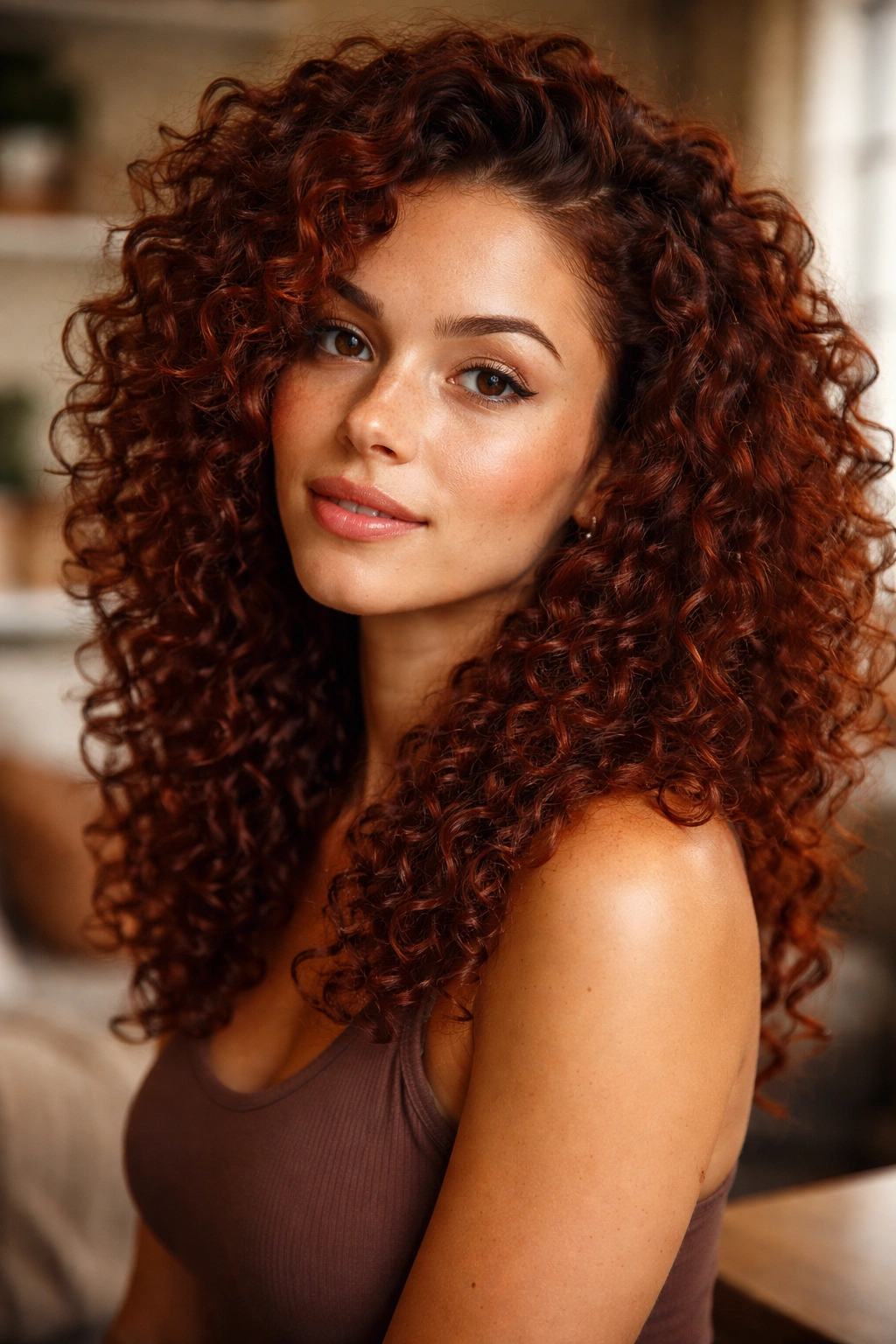
A finger coil-out in auburn is a patient labor of love that pays off in one of the most visually stunning results in natural hair. Each individual coil is a perfectly defined spiral of warm auburn color — and a full head of them together is genuinely spectacular.
The discipline of working in small sections pays off enormously in the final look. Larger sections produce looser coils that show the auburn color in broader sweeps; pencil-thin sections produce tight coils where the color is intensely concentrated within each spiral.
Apply a curl pudding or styling cream and wrap each small section around your finger in a downward spiral. Keep the coil tight and lay it flat as you continue working. Let everything fully air-dry before separating.
22. Auburn Protective Style with Color Accessories
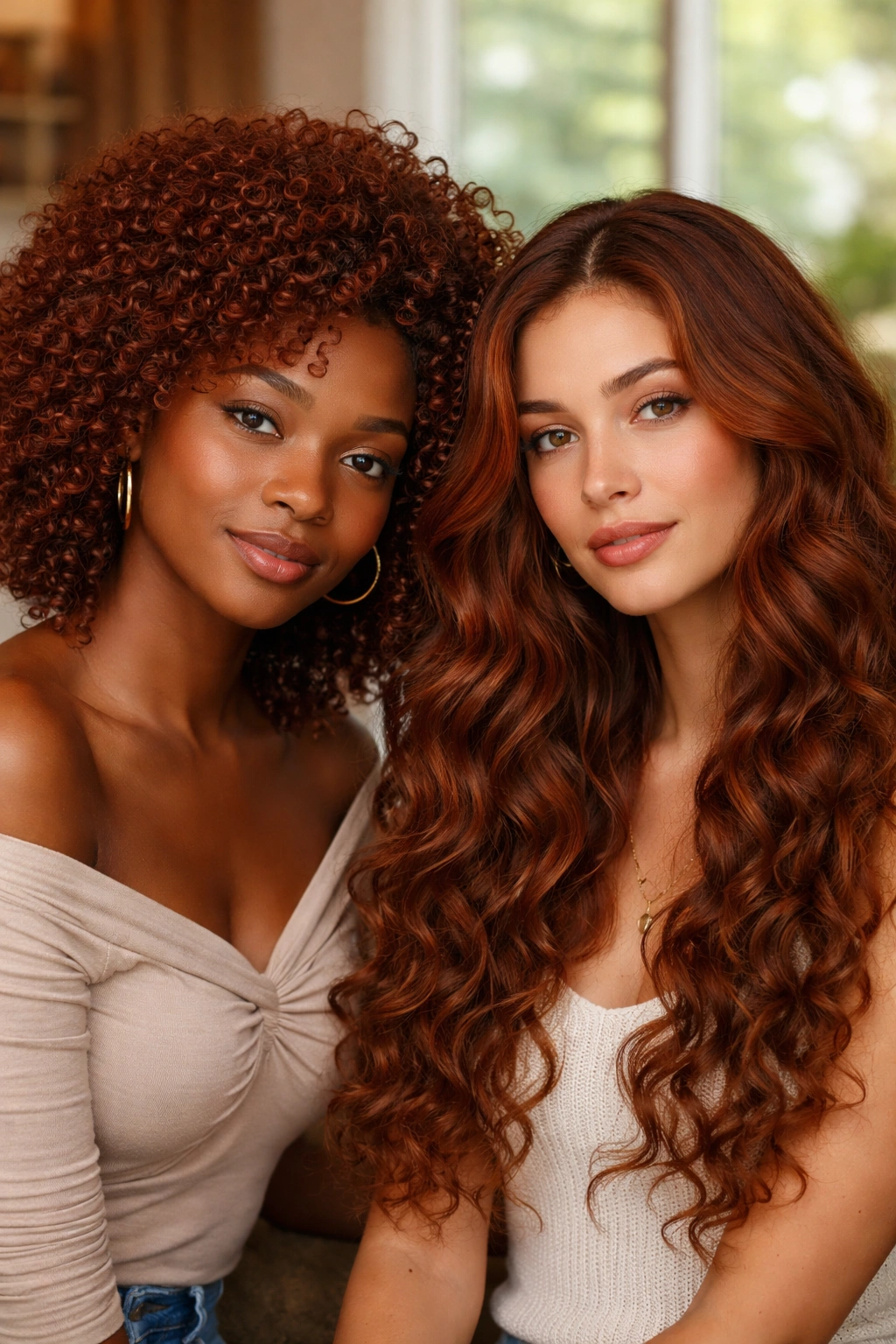
Auburn-toned protective styles paired with coordinating accessories — amber or gold hair cuffs on braids, warm-toned hair wraps, antique gold pins — create a look that’s curated and intentional without requiring extra styling effort.
Accessories that complement auburn tones rather than contrast with them create a cohesive look that feels put-together even on simple styles. Amber, tortoiseshell, gold, and warm brown tones all complement auburn beautifully.
This approach works across many different base styles — box braids, twists, cornrows, locs — and the accessories add visual interest and personality that makes even a simple style feel finished and thoughtful.
23. Auburn Shag Cut
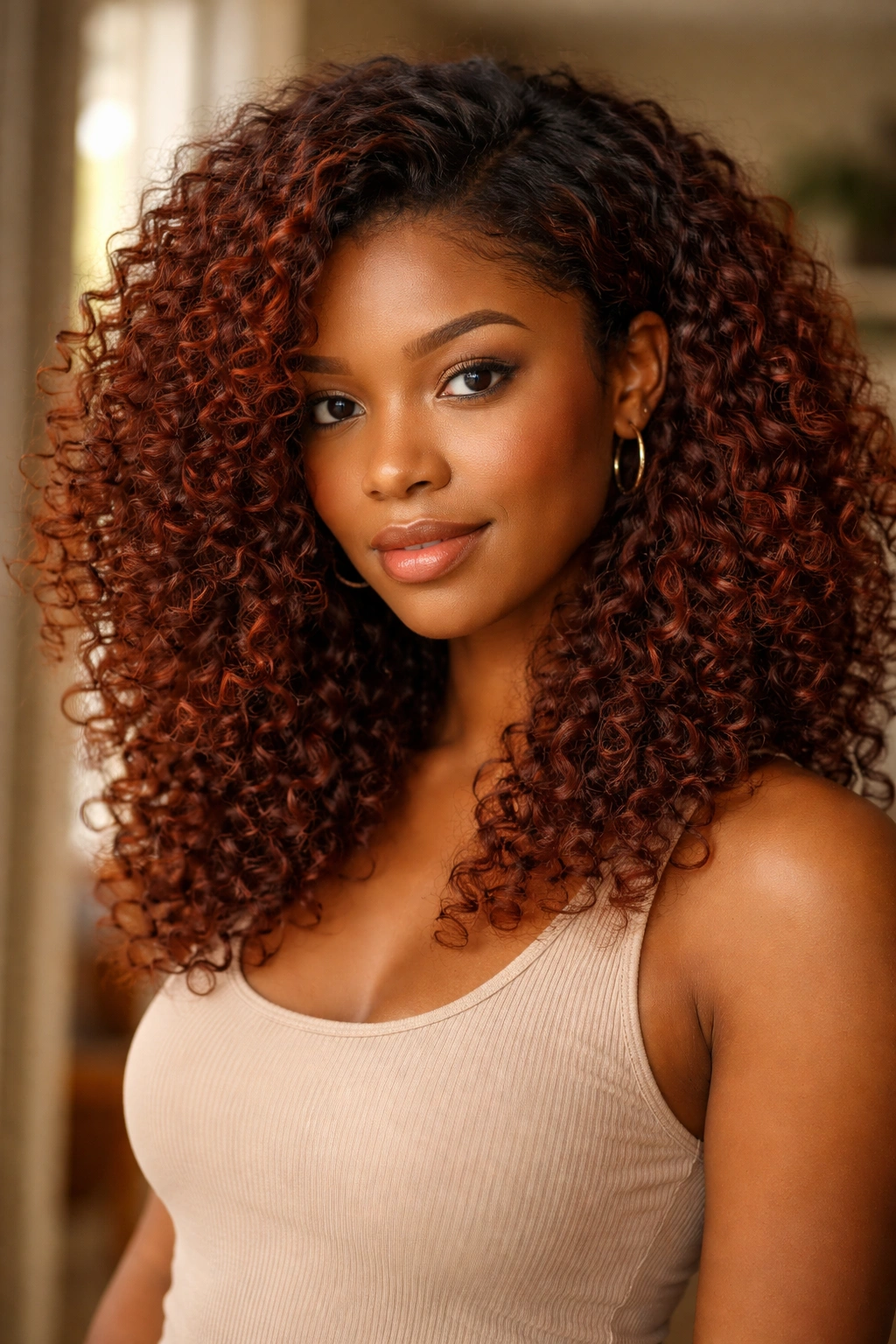
A shag haircut in auburn curls creates layered movement and dimension that showcases the warm tones in a genuinely beautiful way. The layers reveal different depths of color as the hair moves — lighter auburn at the top layers catching the most light, deeper reddish-brown in the underneath sections where light is more filtered.
The shag and auburn color are a natural combination because both thrive on visual complexity and movement. The cut creates shape; the color creates depth; together they create a look that’s rich, dynamic, and genuinely contemporary.
How to Achieve This Look
A shag cut on natural curls requires a stylist skilled in dry cutting on textured hair. The layers are cut while the hair is dry so the stylist can see exactly how each curl falls. Face-framing layers in the front create softness, while layers throughout the back and sides add movement.
Protecting Your Auburn Investment Between Appointments
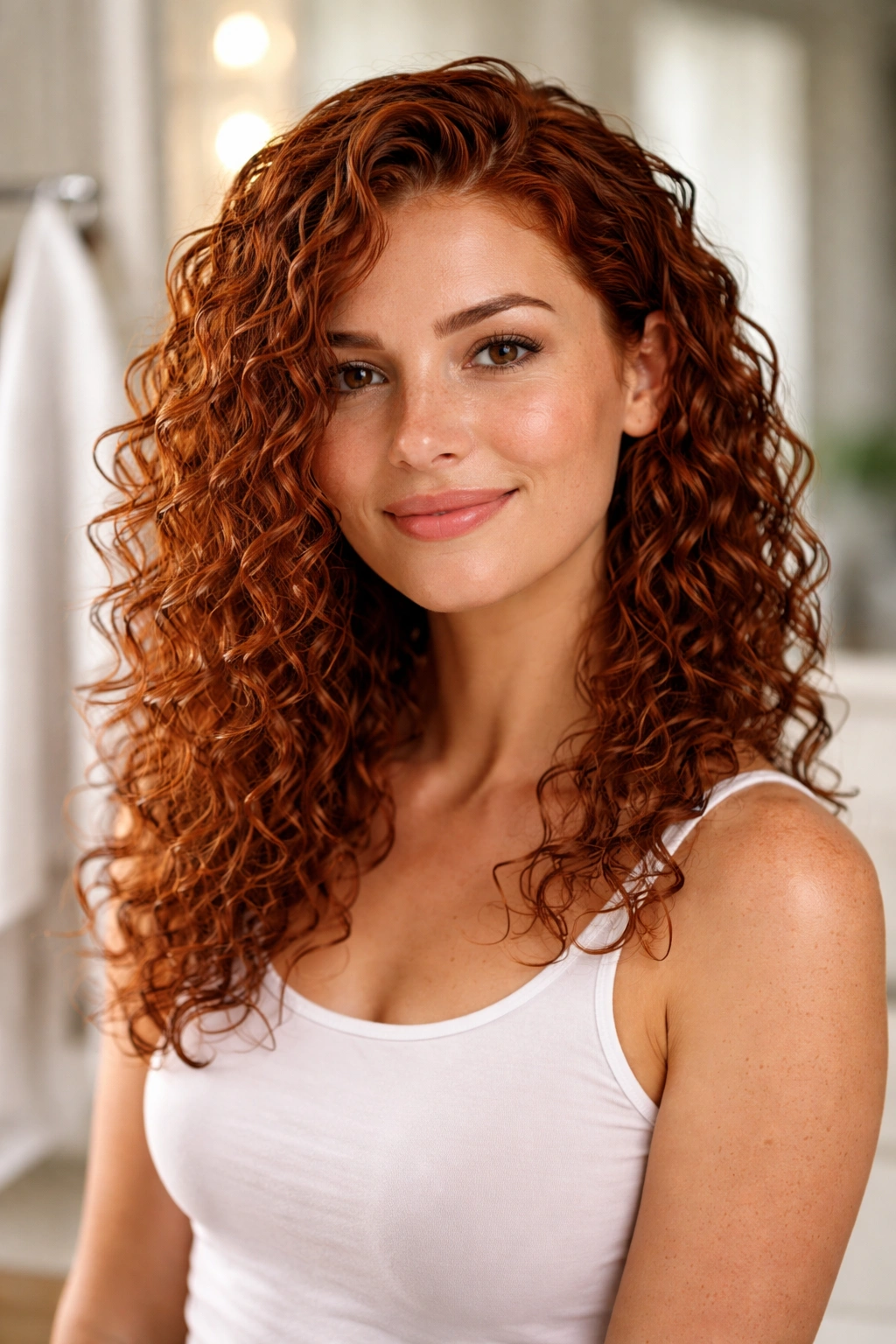
The long-term success of auburn natural hair is almost entirely dependent on what you do between salon appointments. Getting the color right is a collaboration with your colorist. Keeping it beautiful is your ongoing responsibility.
Protein treatments become more important after color processing because the chemical process partially breaks down the hair’s protein structure. A light protein treatment every three to four weeks helps maintain strength and elasticity in color-treated curls. Watch for signs of protein overload — stiff, brittle, or crunchy-feeling hair — and back off if you see those signs.
Color gloss treatments at home — using a warming red-toned gloss or toner — refresh auburn tones between appointments without requiring a full color service. Many can be applied at home using a conditioning gloss in a warm auburn or red-brown shade, left on for 20-30 minutes, and rinsed thoroughly.
Silk and satin everything. Satin pillowcases, satin bonnets, satin scrunchies — all of these reduce friction during sleep, which reduces breakage and preserves both the color and the curl pattern. Cotton absorbs moisture from color-treated hair and creates friction that leads to frizz and breakage. Switching to satin night protection is one of the most impactful single changes you can make for auburn natural hair health.
