



A low ponytail on 4C hair can look sharp, soft, regal, or plain-old practical — and the same head of hair can do all four without asking for a full wash day. That’s the part people miss. The style is not about forcing 4C texture into flatness; it’s about choosing how much of your natural coil pattern you want to show, how tight you want the roots to be, and whether the finish should feel polished or plush.
4C hair has a built-in advantage here. The coils hold shape, tuck neatly, and give a low ponytail real body at the nape instead of that limp, see-through look straight hair can get when it’s pulled back. The catch is tension. Pull too hard and the style gets stiff, sore, and honestly kind of grumpy-looking. Leave a little softness at the temples or crown, and the whole thing feels more expensive without trying too hard.
There’s also shrinkage to think about, because 4C hair will happily shrink up the second it dries. That is not a problem. It’s a styling note. Some of the prettiest low ponytails use stretched roots, some lean into puff, and some mix both so you get a slick front with a textured tail. The trick is knowing which version matches your day, your outfit, and how much patience you have.
1. Center-Part Sleek Low Ponytail
A clean center part gives a low ponytail a calm, balanced look that works especially well on 4C hair when you want the front to stay neat and the back to keep its natural fullness. The middle line does a lot of quiet work here. It pulls the eye straight down, which makes the style feel intentional even when the ponytail itself stays simple.
Why It Works
4C hair holds the shape of a part better when the roots are lightly stretched first, so the style looks smoother instead of puffy at the scalp. A little edge control near the temples helps, but you do not need to drown the hair in gel. Too much product can make the hairline shiny in a bad way and leave flakes once it dries.
Keep the ponytail low at the nape and secure it with a snag-free elastic. If your hair is thick, split the ponytail into two sections before tying it down. That reduces pressure and keeps the base from feeling like it’s being yanked backward all day.
Best for: work days, dinners, and anything where you want the face to look open and the hair to stay off the neck.
Watch for: a sharp part that looks crooked once the roots puff up a little. Take an extra minute to part it cleanly before smoothing.
2. Deep Side-Part Low Ponytail
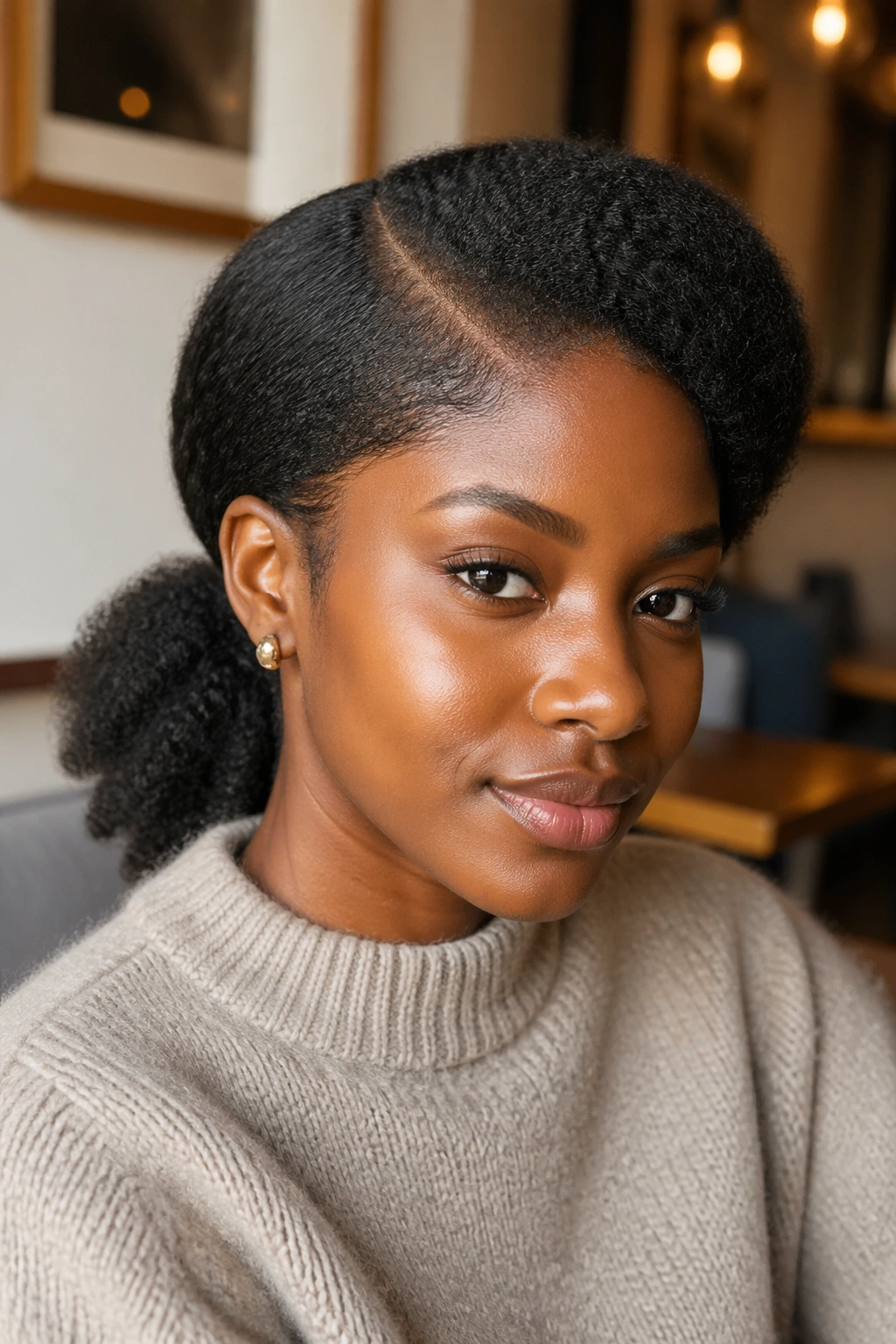
A deep side part changes the mood fast. Suddenly the ponytail feels softer, a little more dramatic, and less buttoned-up than the center-part version. On 4C hair, that side sweep also gives you room to show off texture at the front without fighting it.
The beauty of this look is that it does not need a bone-flat finish to work. A neat side part, brushed roots, and a low ponytail tucked near one ear are enough. If the hair around the part has a slight swell to it, that can look better than an over-smoothed helmet. Really.
I like this style for days when a center part feels too severe. It plays nicely with large earrings, bold collars, and off-shoulder tops because the hair moves to one side and clears the neckline. If you want a softer edge, leave one curl or coil near the temple loose on purpose. That tiny bit of movement makes the whole thing feel less rigid.
3. Stretched Blowout Low Ponytail
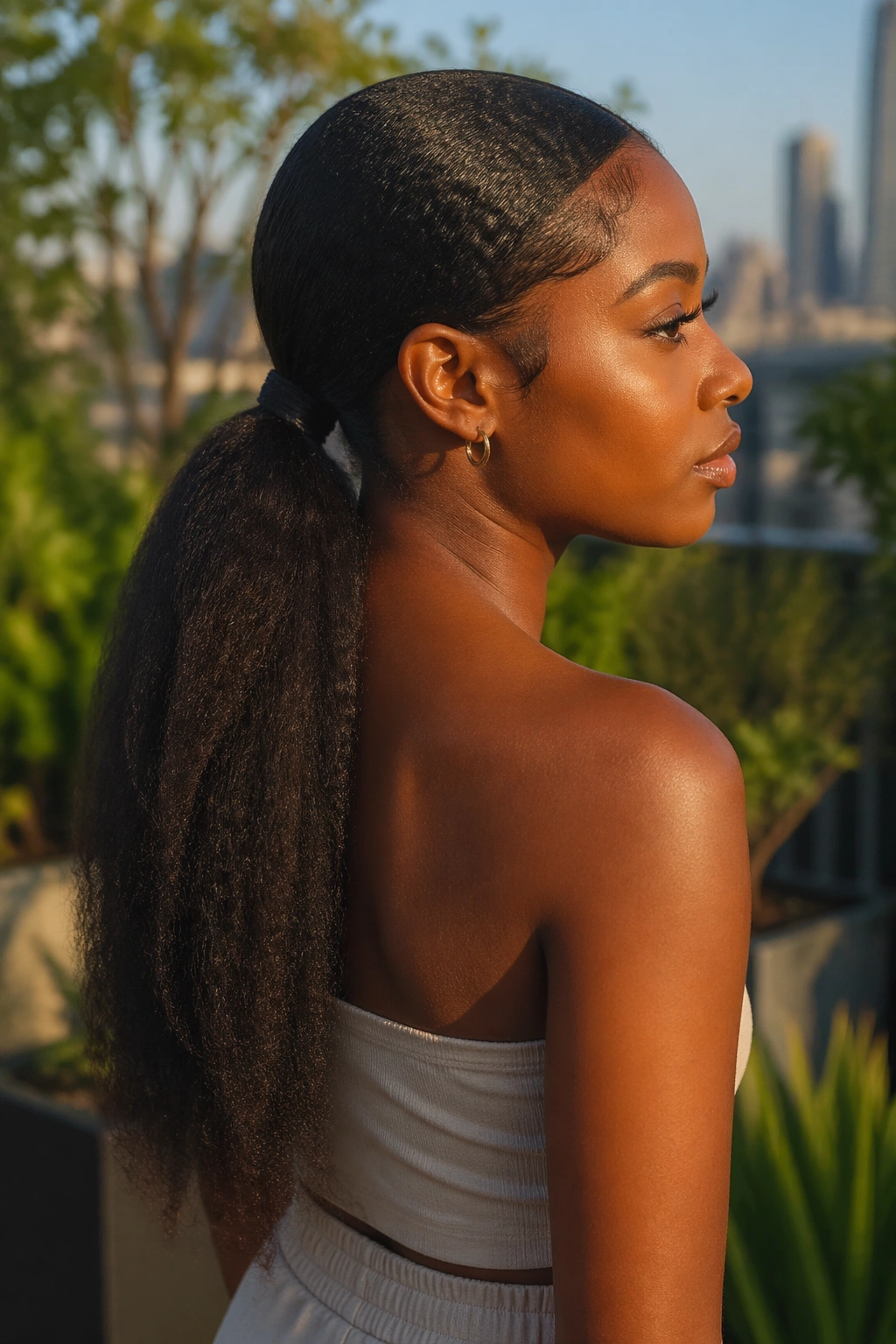
There’s a reason a stretched low ponytail stays in rotation for 4C hair: it gives you length without losing body. Blow-dried roots and mid-lengths make the ponytail hang lower and look fuller, which is a big deal if your hair shrinks up fast and refuses to stay “long” in photos.
This version is all about shape. Smooth the roots, keep the nape tidy, and let the tail show a little texture instead of forcing it straight. If you’re using heat, keep it low and use a protectant. No heroics. The goal is softness and stretch, not frying the bend out of the hair.
A stretched ponytail is one of those styles that looks plain from a distance and then gets better the closer you get. You can see the coil pattern at the ends, the fullness through the tail, and the clean line at the scalp. It’s simple, yes, but it has presence.
- Quick styling note: use a paddle brush for the roots and a wide-tooth comb for the tail.
- Best companion product: a light leave-in, not a heavy butter.
- Good for: longer wear and less shrinkage at the back.
4. Soft Low Puff Ponytail
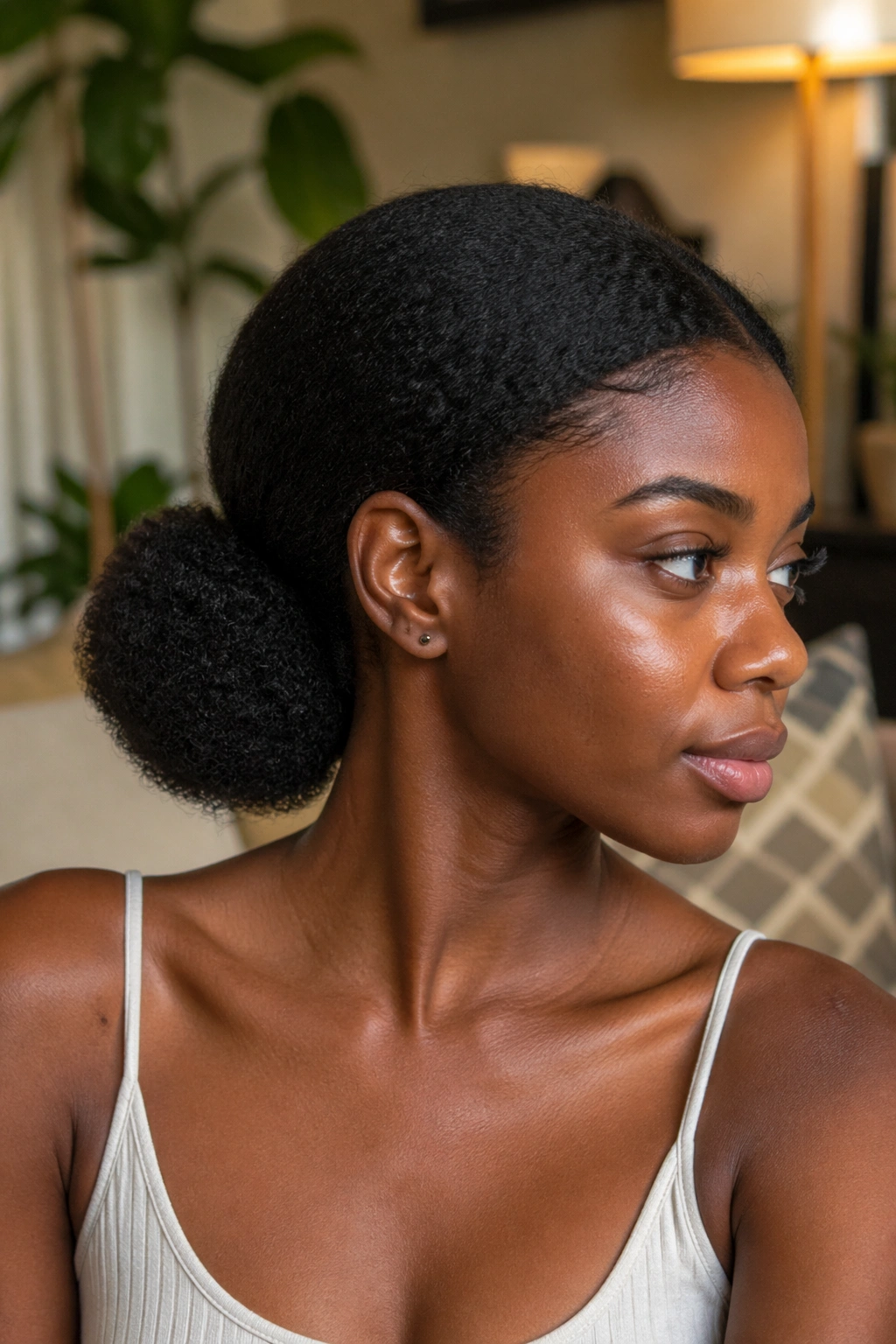
A low puff is what happens when you stop fighting the texture and let 4C hair be plush on purpose. It sits low, keeps the nape clear, and gives you that full cloud of curls or coils at the back without making the style feel stiff.
The base matters here. Gather the hair low, secure it gently, and pull the puff forward just enough so it looks round instead of pinned down. If the roots are too tight, the puff loses its shape and starts looking pulled thin. That’s the line to avoid.
This is one of my favorite low ponytail options for weekends because it feels easy but still put together. The front can stay brushed back, parted, or slightly lifted, while the puff does the visual work. Put earrings with it. Put a turtleneck with it. It holds up.
5. Braided-Base Low Ponytail
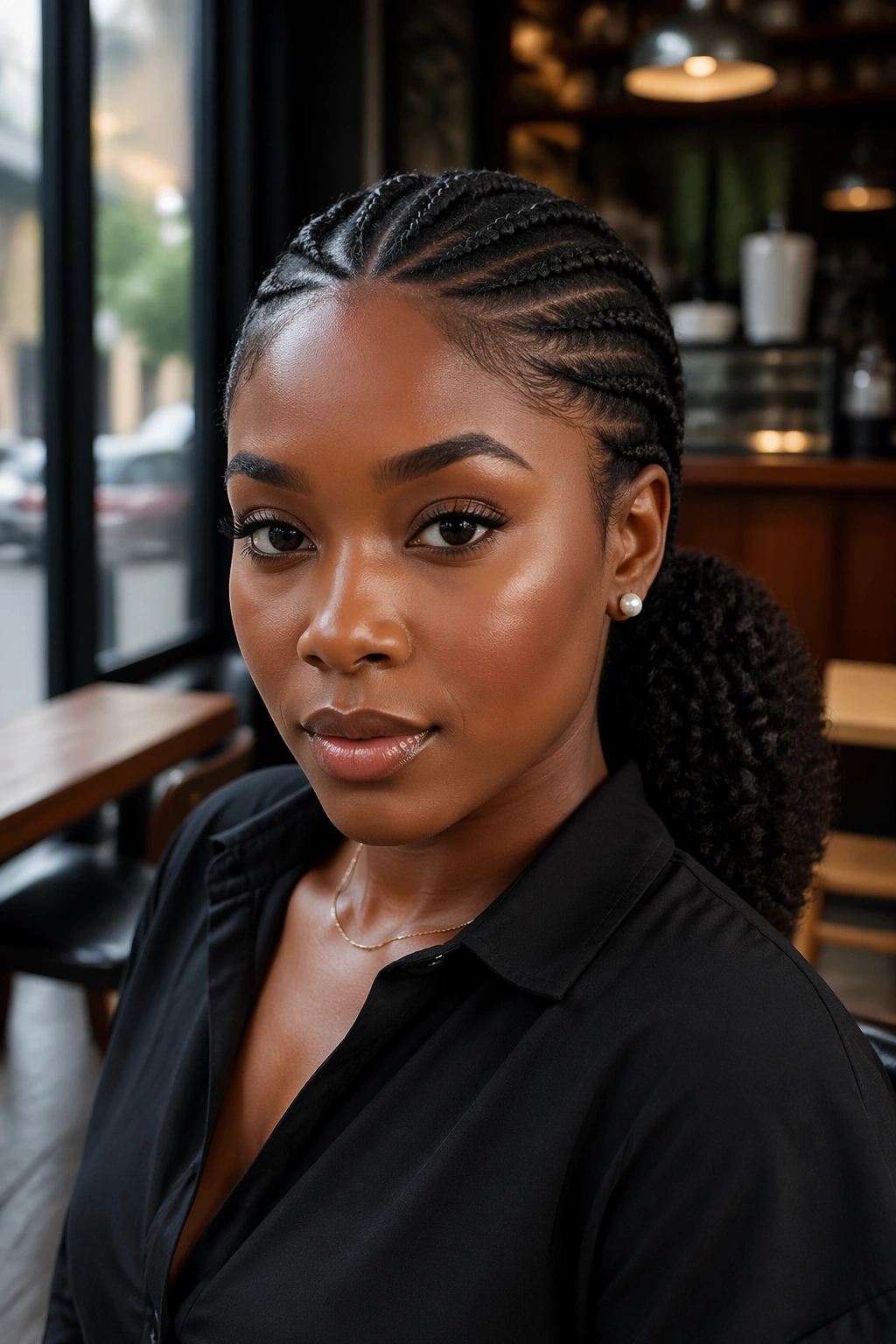
Why does a braided base look so good on 4C hair? Because it creates structure where the hair would otherwise puff and shrink around the elastic. A few neat braids at the crown or sides give the ponytail a cleaner starting point and make the style last longer.
What Makes It Different
Instead of pulling everything into one smooth gathering, you braid small sections first, then collect the rest into a low ponytail. That means less tension on the root line and a more polished finish around the head. It also gives the style a little architectural shape, which I love when the rest of the outfit is simple.
How to Wear It
- Braid 2 to 6 sections, depending on how detailed you want it.
- Keep the braids snug, not painful.
- Leave the ponytail itself textured or stretched.
- Add a wrapped elastic cover if you want the base to look finished.
This style works well when you need something that can survive a long day without looking tired by hour four.
6. Two-Strand Twist Low Ponytail
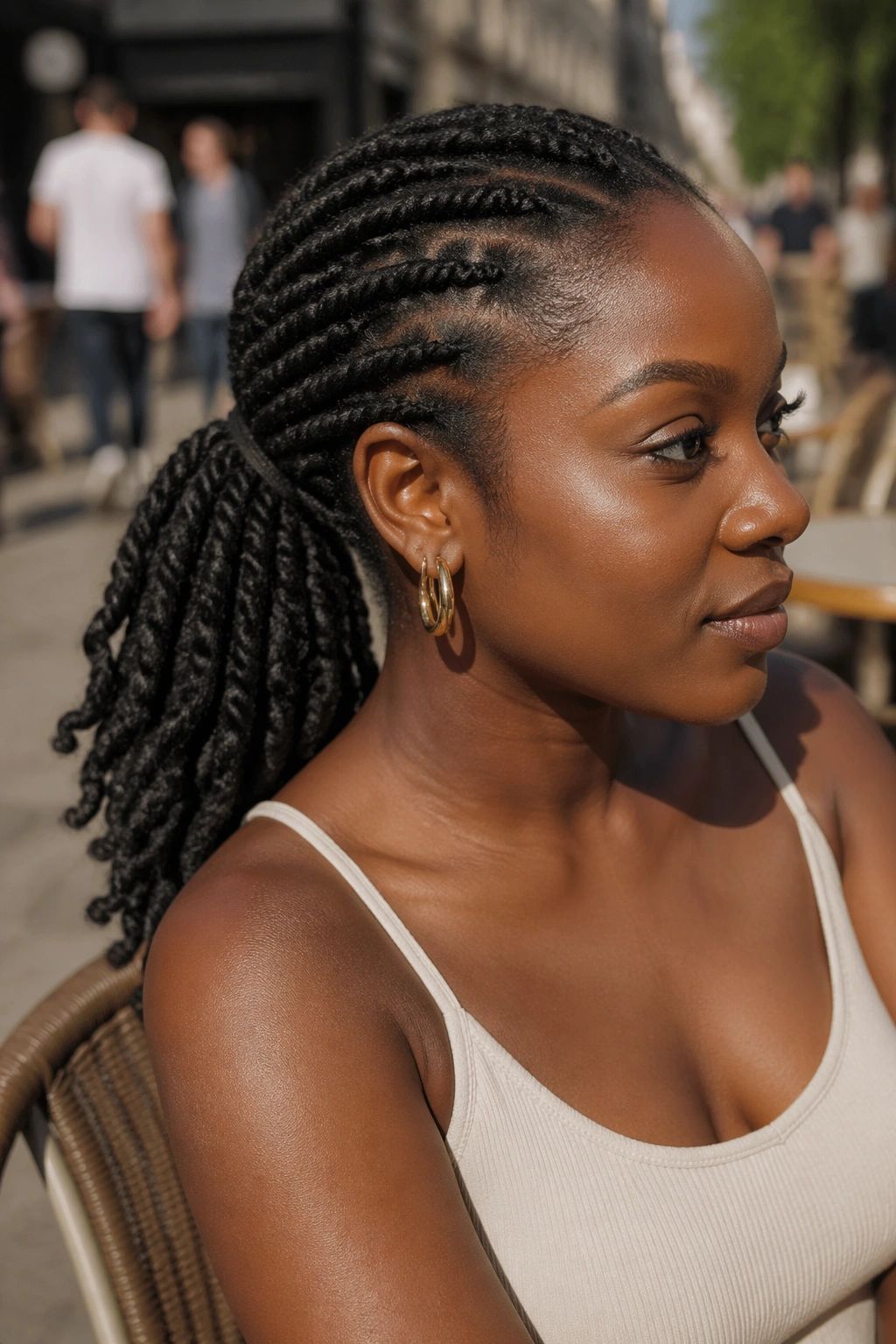
Two-strand twists change a low ponytail from basic to textured in a way that feels very natural on 4C hair. The twist pattern adds line and movement, and because the style starts from the hair’s own coil pattern, it doesn’t fight the texture the way a sleek ponytail sometimes does.
You can twist the front and sides into the ponytail, then let the tail stay twisted or unravel the ends for a softer finish. If you want more shape, twist with a bit of leave-in and a pea-sized amount of cream so the strands stay together. Too much product makes the twists limp and heavy.
This is a nice choice when you want something protective-ish but not fully tucked away. It’s not fussy. It’s not trying too hard. And when the twists loosen slightly over time, the style usually looks better, not worse.
7. Hair-Wrapped Low Ponytail
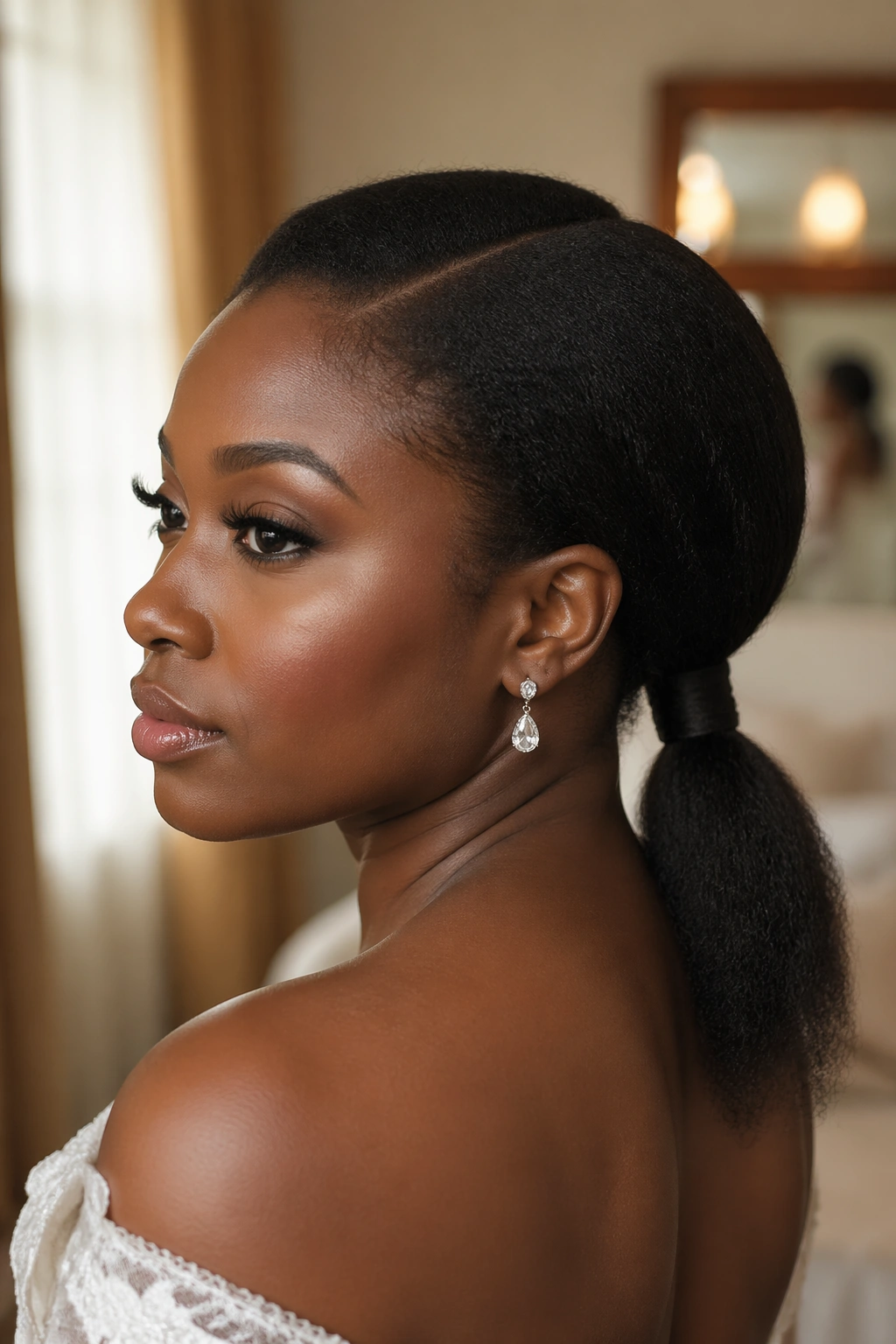
A hair-wrapped base hides the elastic and makes the ponytail look more finished than a plain tie ever will. On 4C hair, that small wrap can make a huge difference because the texture around the base blends into the style instead of fighting it.
The trick is to take a thin strip of hair from underneath the ponytail, wrap it around the elastic once or twice, and pin the end underneath with a bobby pin. Keep the wrap smooth, but not so tight that it starts slipping. If the hair is too short for a clean wrap, use a matching extension piece or a small satin-covered tie.
This version is especially nice for weddings, interviews, or days when you want a low ponytail to look deliberate. Plain ponytails can feel casual. A wrapped base changes the whole read.
8. Bubble Low Ponytail
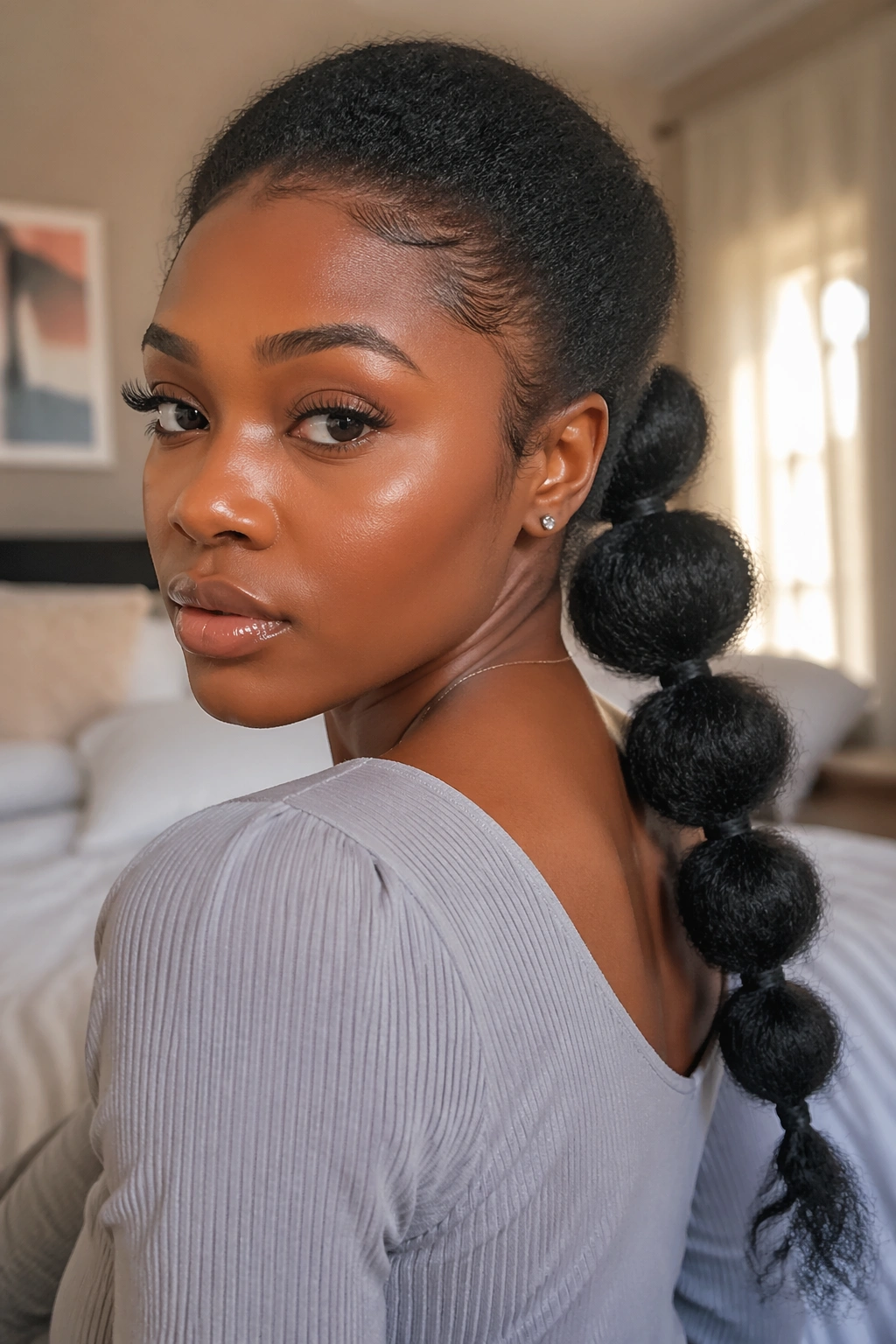
Bubble ponytails are playful, but on 4C hair they can also look surprisingly refined. The texture of the hair gives each “bubble” a little more body, so the shape doesn’t collapse the way it sometimes does on finer hair.
You build it by placing small elastics down the tail every few inches, then gently puffing each section with your fingers. For low ponytails, keep the first bubble close to the nape so the style stays grounded instead of high and bouncy. That matters.
This look works best when the ponytail is stretched first. If the hair is too shrunken, the bubbles can get bulky in the wrong way. A lightly smoothed tail gives you round sections that actually show the structure. It’s fun, yes, but it still needs a little control.
9. Cornrow Feed-In Low Ponytail
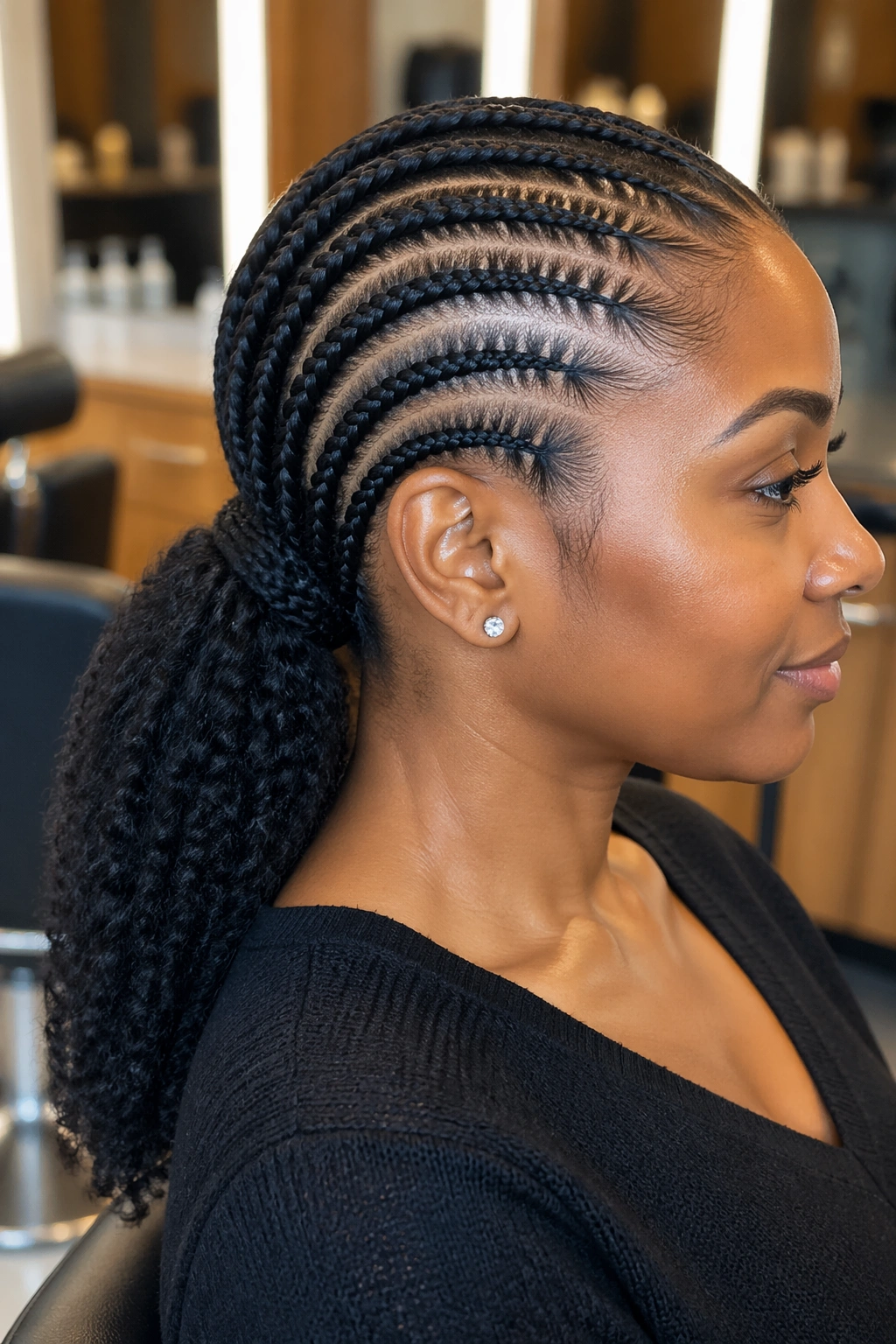
A feed-in cornrow base makes a low ponytail feel secure from the start. The braids feed gradually into the style, which spreads tension and keeps the front neat without relying on heavy gel alone. For 4C hair, that matters because the roots can frizz fast once they’re stressed.
This is one of the most practical low ponytail styles on the list. It can last longer, it keeps the scalp tidy, and it lets the ponytail itself stay fuller because the front is already controlled. I also like the visual contrast: sleek braids at the scalp, textured length at the nape.
If your hairline is sensitive, ask for loose, even braid tension. Tight cornrows are not a badge of honor. They just hurt. The best feed-in ponytail sits flat where it should and still feels wearable by the end of the day.
Good pairings
- Statement hoops
- A clean collar
- Light makeup or a bare face
10. Curly-End Low Ponytail
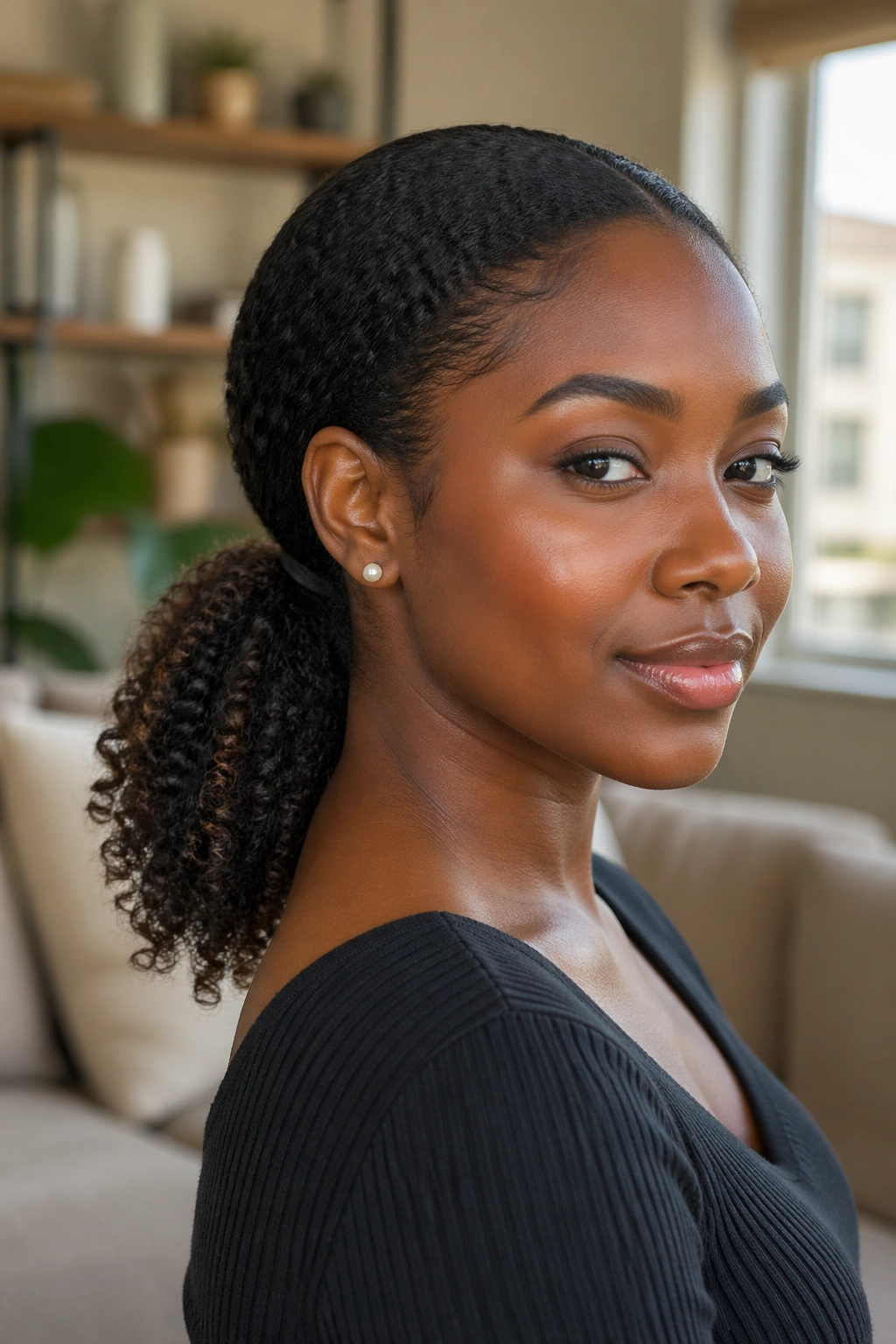
A ponytail with curly or coily ends keeps 4C hair from looking too stiff. The roots can be smoothed, stretched, or braided, while the tail stays soft and springy at the bottom. That mix is what makes the style feel lively.
You can get this look by twisting or braiding the tail overnight, then letting the ends fall apart a little before securing the ponytail. A small amount of water-based leave-in on the ends helps the curl pattern stay visible without turning the hair greasy. Don’t soak it. Damp is enough.
This style is good when you want movement without committing to a full wash-and-go shape. The base stays low and neat. The ends do the talking. Simple idea, nice result.
11. Pineapple-Inspired Low Ponytail
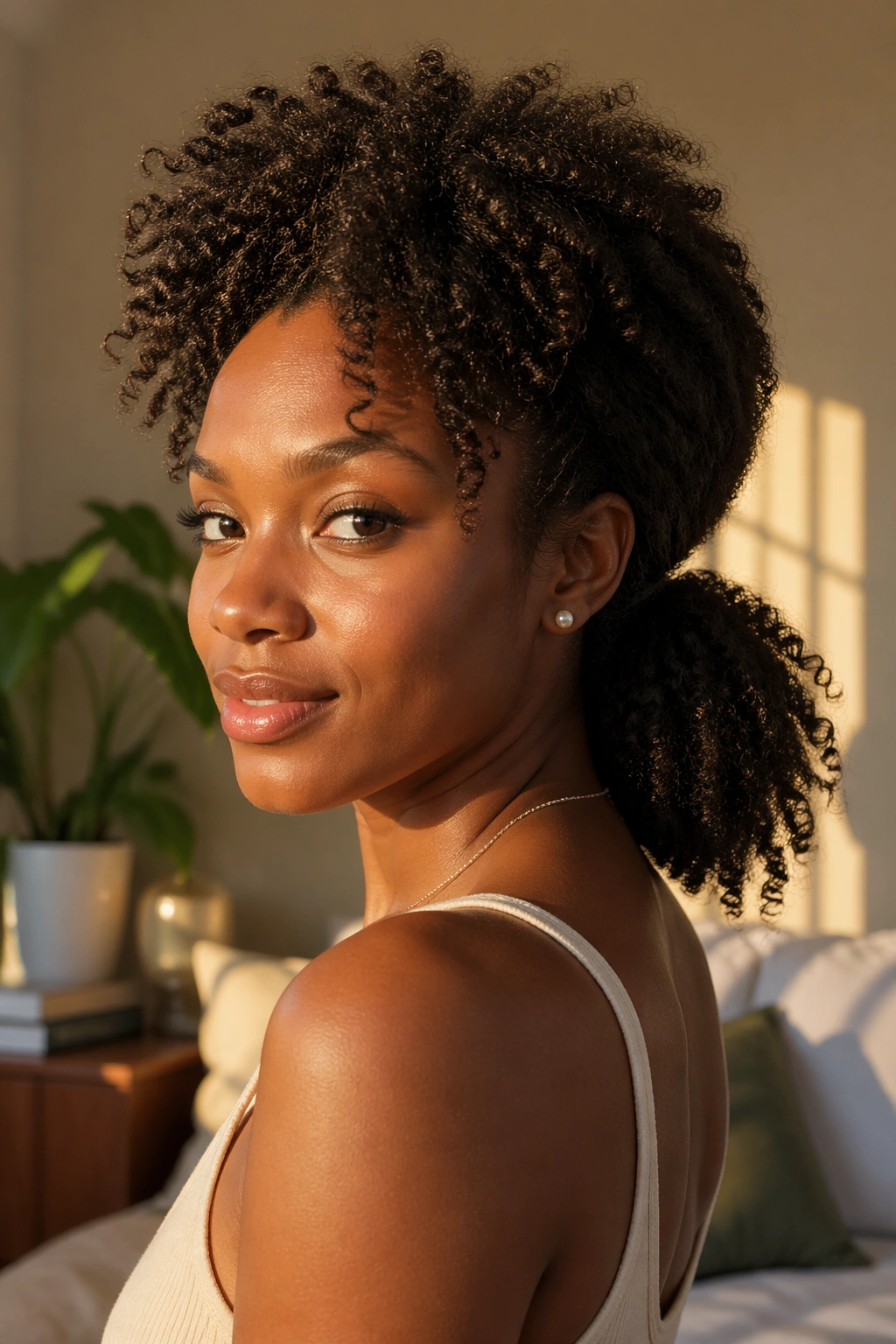
A pineapple-inspired low ponytail borrows the loose, lifted feel of a pineapple style but keeps it anchored at the nape. On 4C hair, that means you get volume and softness without having everything sit high on the head.
It’s a smart choice when your hair is stretched at the roots but still has a lot of body through the ends. Gather it loosely, let the tail stay fluffy, and avoid over-smoothing the crown. The point is bounce, not tension. If you flatten the top too hard, you lose the whole effect.
This style feels especially good on days when you want something casual that still photographs well from the side. The low anchor keeps it grounded. The top stays light. And the texture reads clearly, which is half the appeal.
12. Side-Swept Low Ponytail
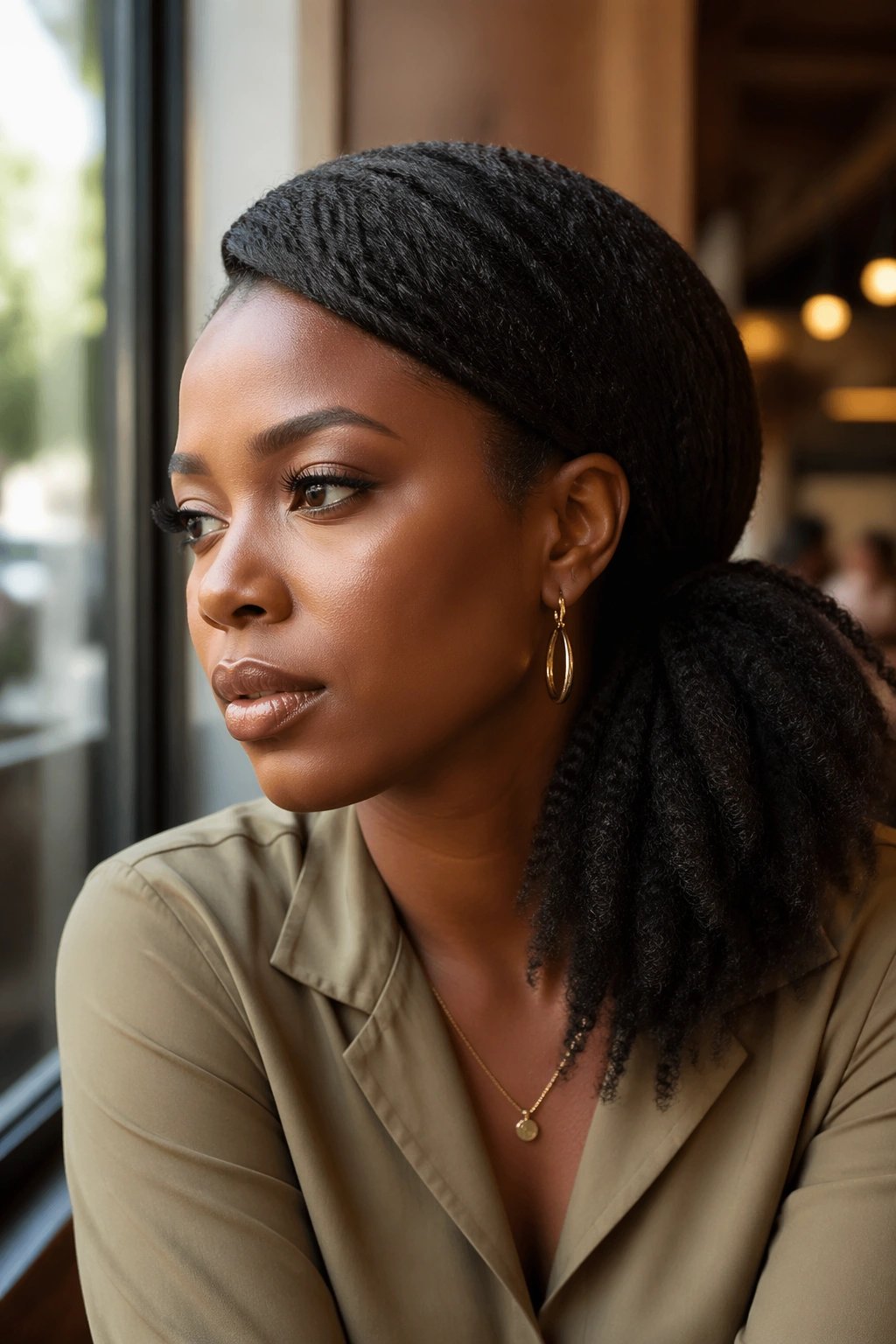
A side-swept low ponytail has a little old-Hollywood drama, but it works on 4C hair because the natural fullness at the nape gives the sweep real shape. Instead of falling flat against the head, the ponytail has enough weight to stay put.
The style is simple: brush or guide the hair toward one side, secure it low, then let the ponytail drape over one shoulder or stay tucked just behind it. A smooth side part helps, though you can keep the roots a bit soft if that suits your texture better. Not everything needs to be crisp.
This is one of those styles that makes a t-shirt look more dressed up. Add a lip color, a pair of glasses, or nothing at all. It still works.
13. Beaded Low Ponytail
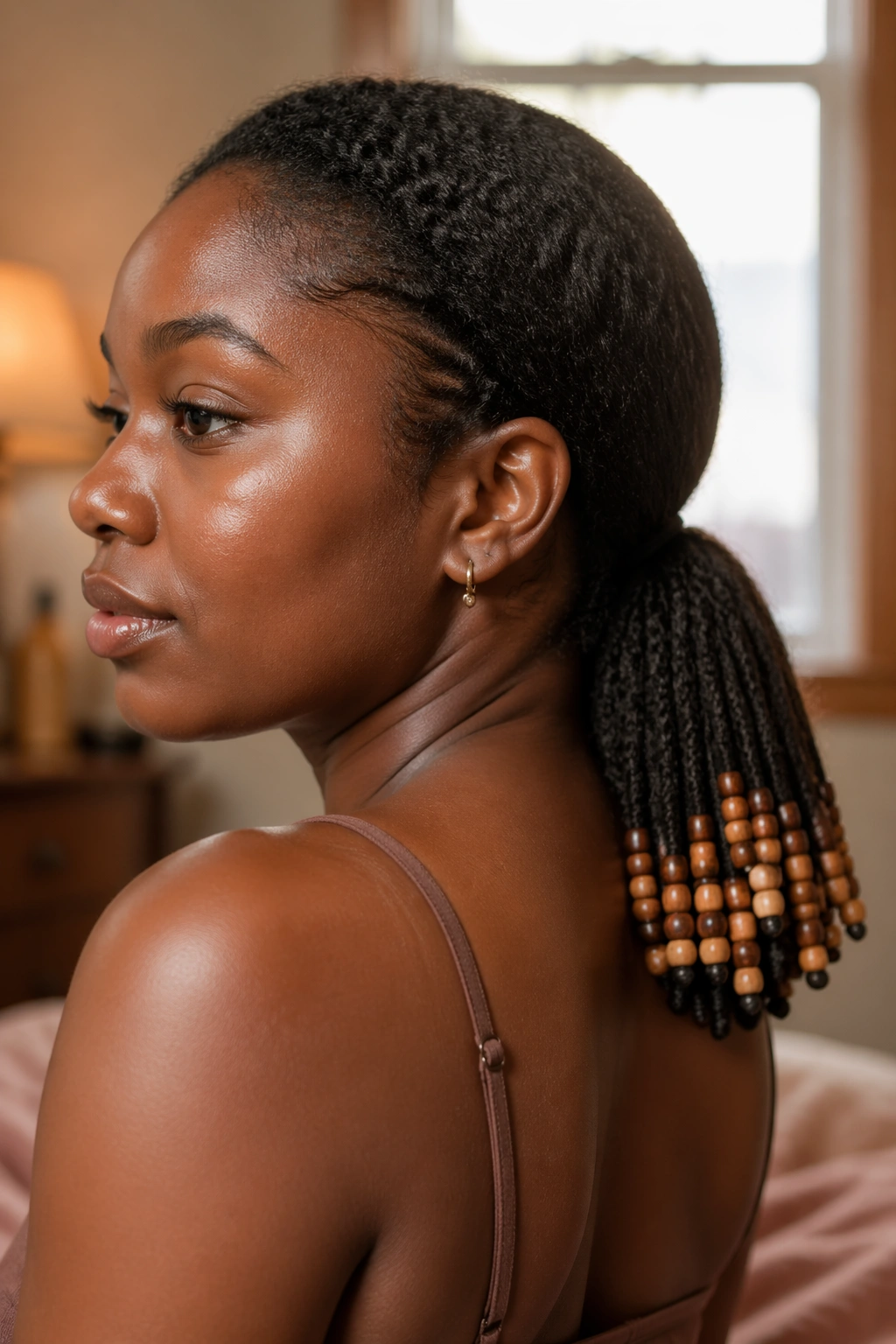
Beads at the ends of a low ponytail bring rhythm and sound to the style. On 4C hair, they also give the tail a visible finish, which can be useful when the hair is short, layered, or prone to shrinkage.
The trick is balance. Use enough beads to make a statement, but not so many that the ponytail feels weighed down. Wood, metal, and matte plastic all behave differently. Metal beads pull more. Wood sits lighter. If the tail is very thick, use smaller sections rather than trying to force everything through one opening.
This style has personality. It’s not quiet, and that’s the point. Wear it with a simple outfit and let the ponytail do the talking.
14. Flat-Twist Crown Low Ponytail
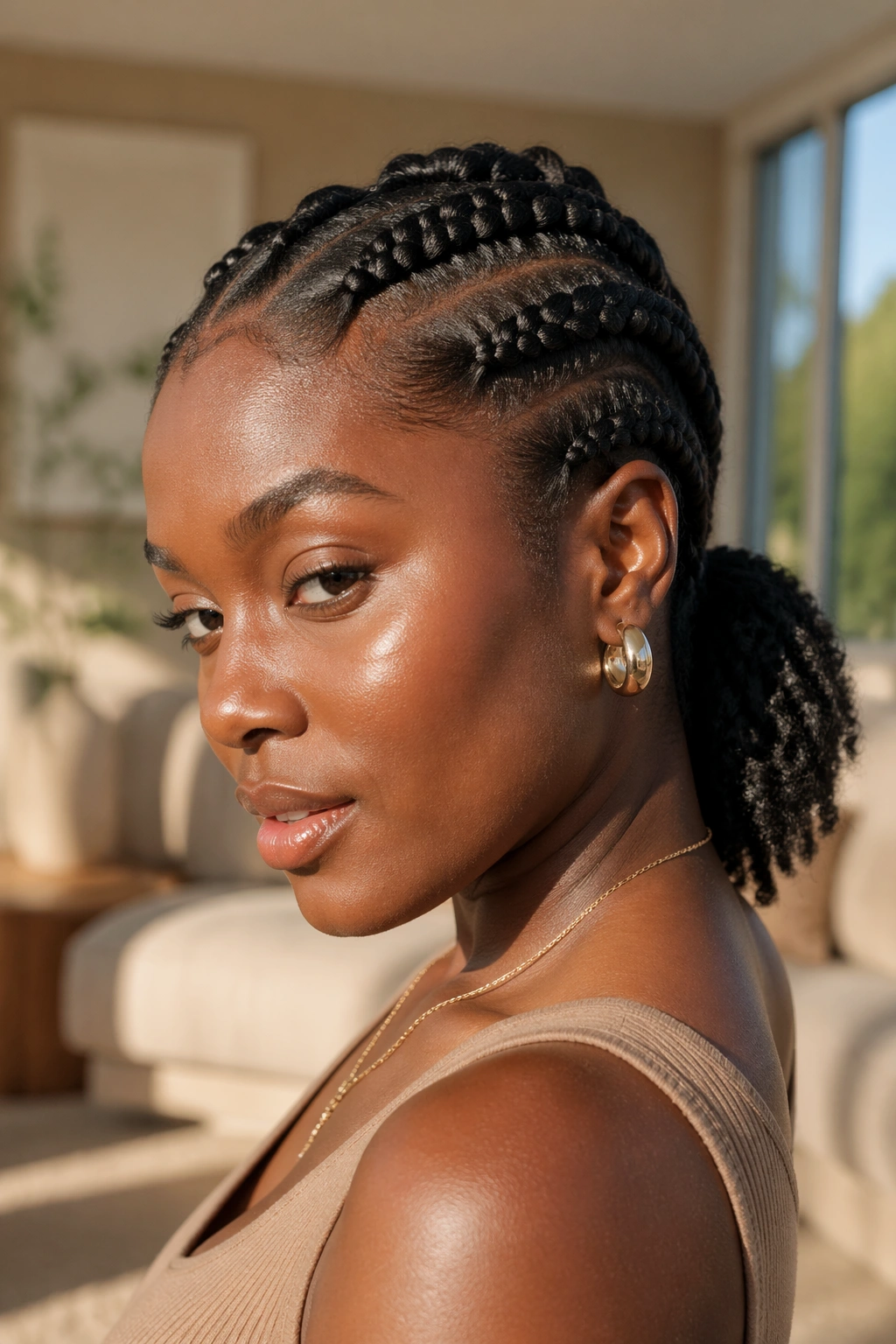
Flat twists around the hairline make the top of a low ponytail look polished without the tension of tight braids. For 4C hair, they’re a nice middle ground: neat enough for work, softer than cornrows, and easier to refresh if one twist starts to fuzz up.
Why It Stands Out
Flat twists create a clean frame around the face and lead the eye straight to the ponytail at the nape. That’s useful when your hair has a lot of density and you want shape, not just volume. The crown looks intentional. The rest can stay textured.
How to Get the Most From It
- Part the hair into 3 to 6 sections along the front.
- Twist each section close to the scalp.
- Keep the ponytail low and slightly full.
- Oil the scalp lightly if it tends to feel dry.
This style does better when the parts are neat and the twists are even. Messy parts show fast here.
15. Twist-Out Texture Low Ponytail
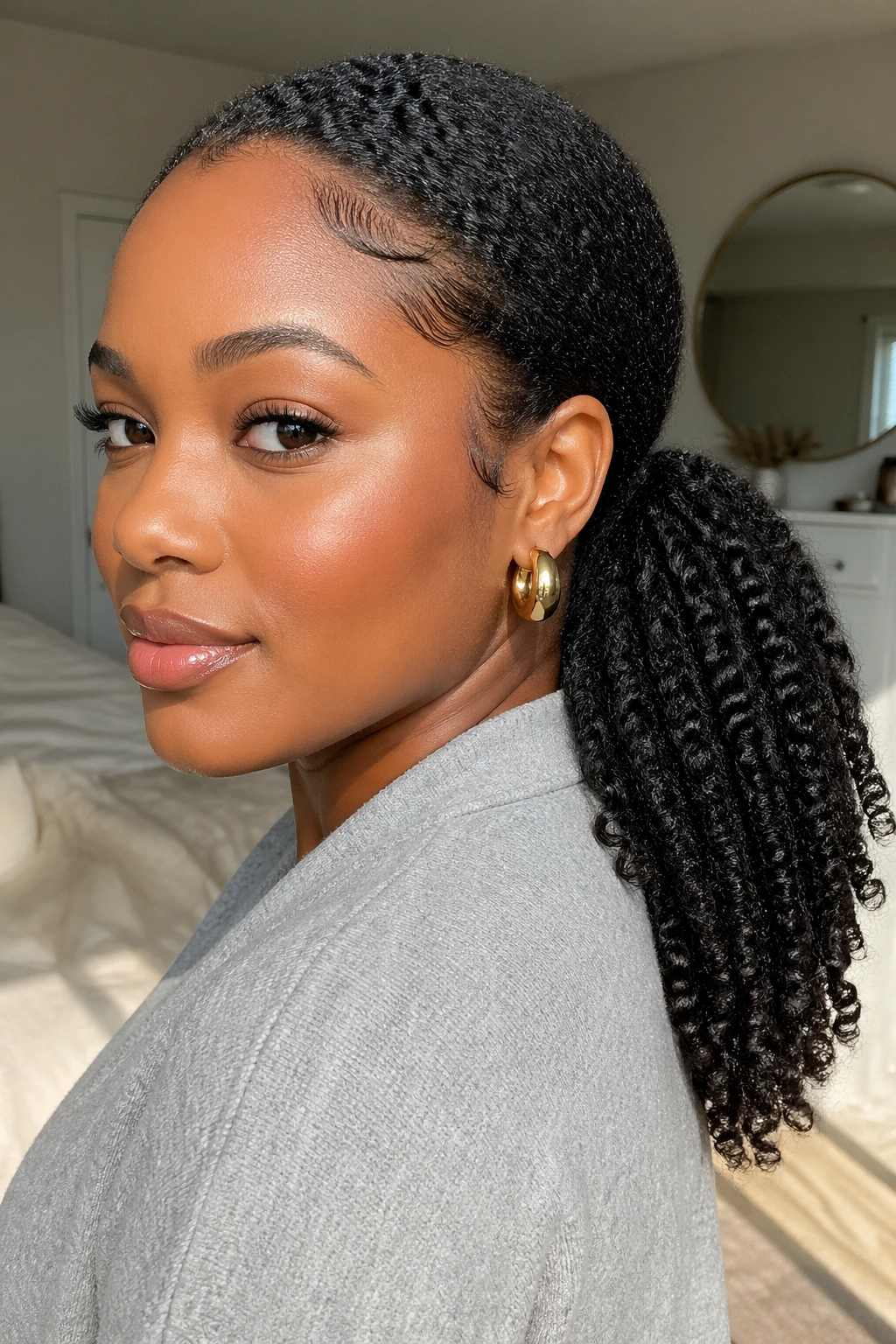
A twist-out low ponytail is for the person who loves definition but doesn’t want every strand locked down. The front can be lightly smoothed, while the ponytail keeps the twist-out texture through the tail, giving the whole style a soft, patterned finish.
It looks especially good when the hair has been fully dry before styling. Wet or half-dry twist-outs lose shape fast once they’re gathered. A little stretch at the roots helps, too, because the twist pattern shows better when the ponytail sits low and the crown isn’t puffy.
I like this one because it feels relaxed without looking unfinished. The texture is the point. The ponytail just gives it a home.
16. Faux Loc Low Ponytail
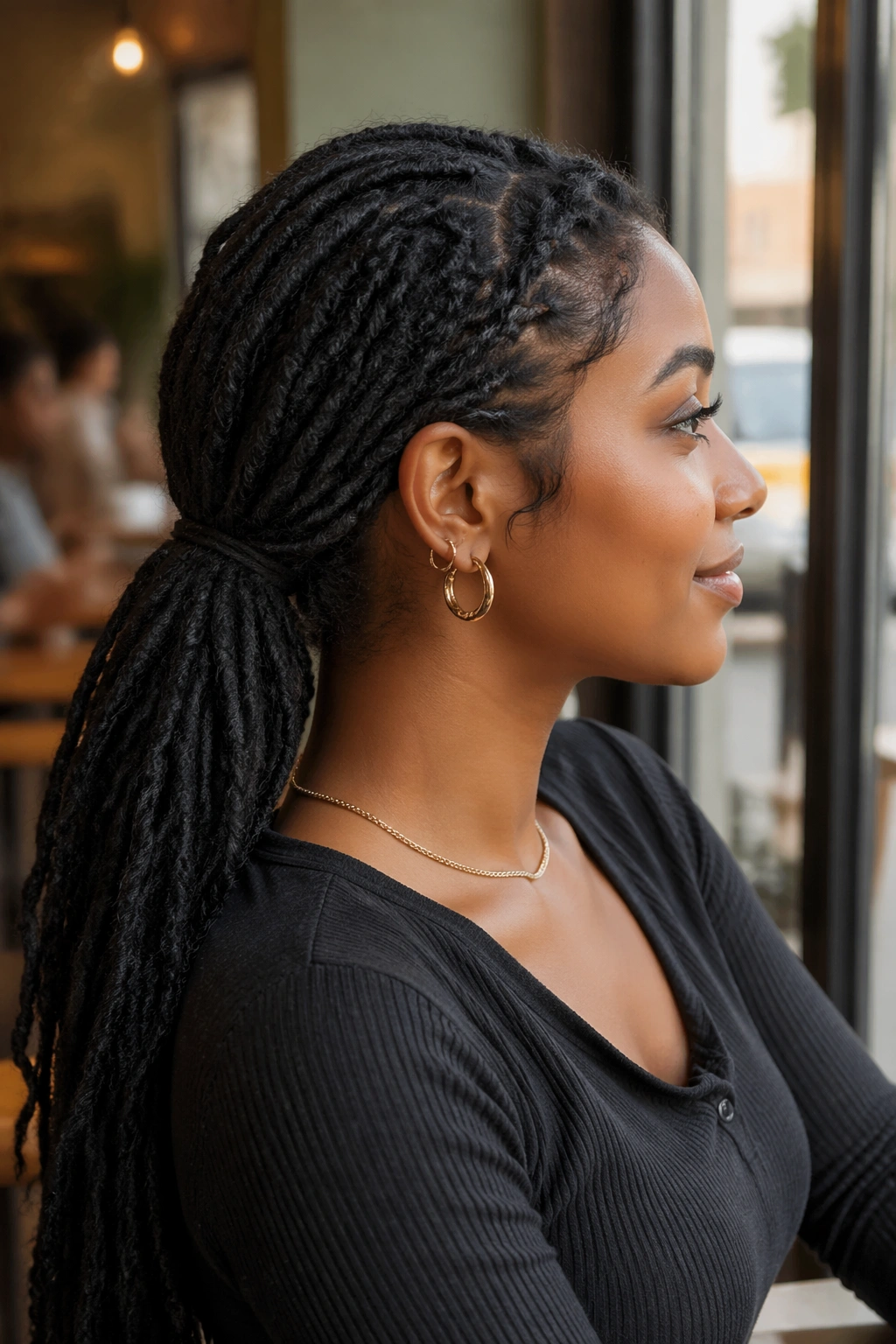
A faux loc low ponytail brings weight and length in a way 4C hair handles beautifully. The loc texture can be left low and dense, or gathered into a softer tail that swings a bit more. Either way, the style gives the nape a neat anchor.
This is a strong choice when you want a low ponytail that holds shape for hours without much fuss. The locs already bring built-in structure, so the style does not need a lot of smoothing at the roots. If the base feels bulky, spread the locs evenly around the elastic rather than stacking them on one side.
It’s one of those looks that can read casual or dressed up depending on the finish. Small gold cuffs help. So does a clean middle part.
17. Double-Elastic Illusion Low Ponytail
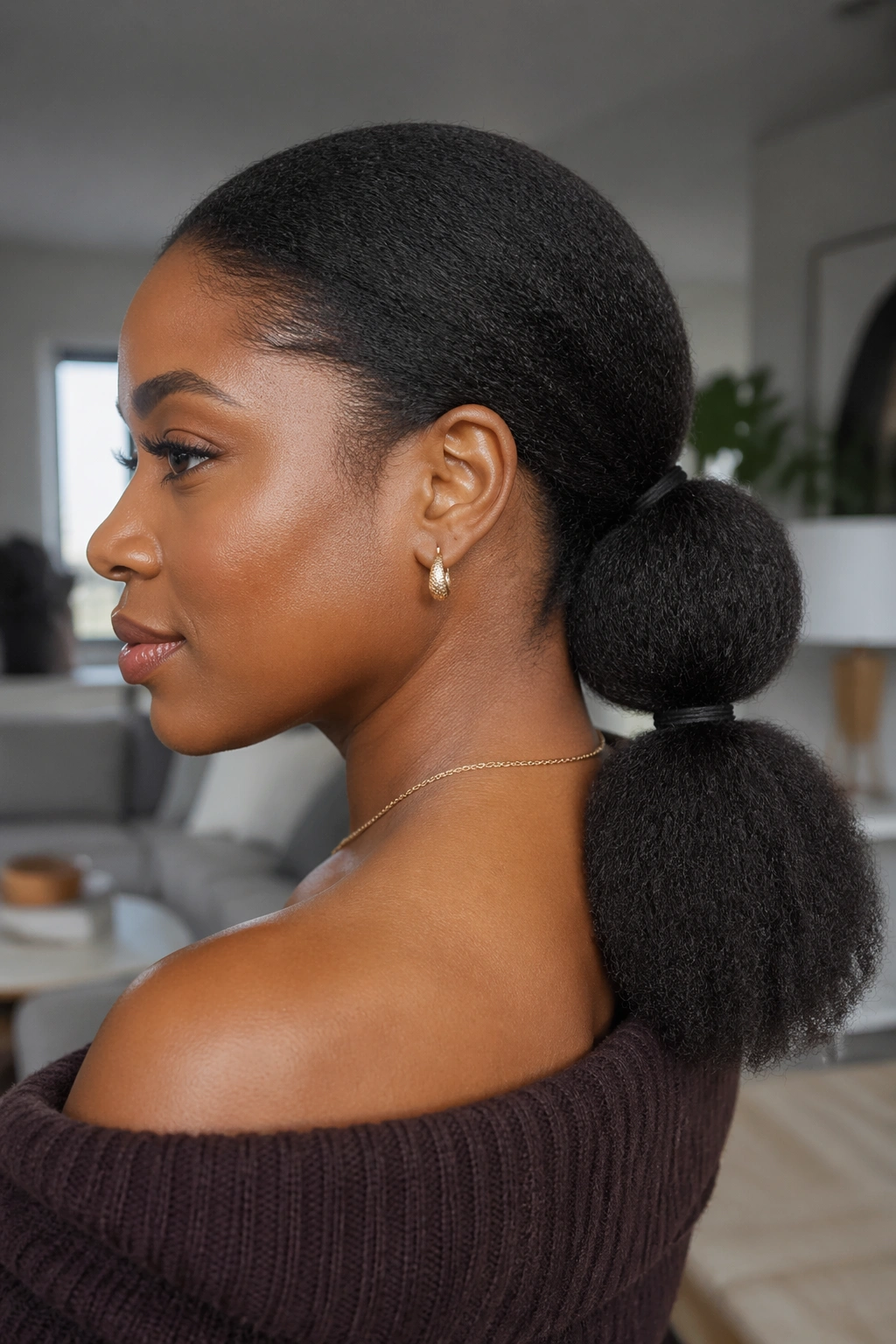
A double-elastic illusion ponytail looks fuller than a regular tie because the first elastic gathers the hair low and the second one shapes the tail into a thicker, longer line. On 4C hair, that trick is useful when you want length without pulling the roots too tight.
The style works best when the ponytail is split into two or three sections and tied in stages, almost like creating one longer tail out of several smaller ones. That keeps the base from feeling heavy. It also helps the ponytail hang in a more controlled way, which matters if your hair gets puffier as the day goes on.
No need for fancy technique. Just spacing. A little structure goes a long way here.
18. Scarf-Tied Low Ponytail
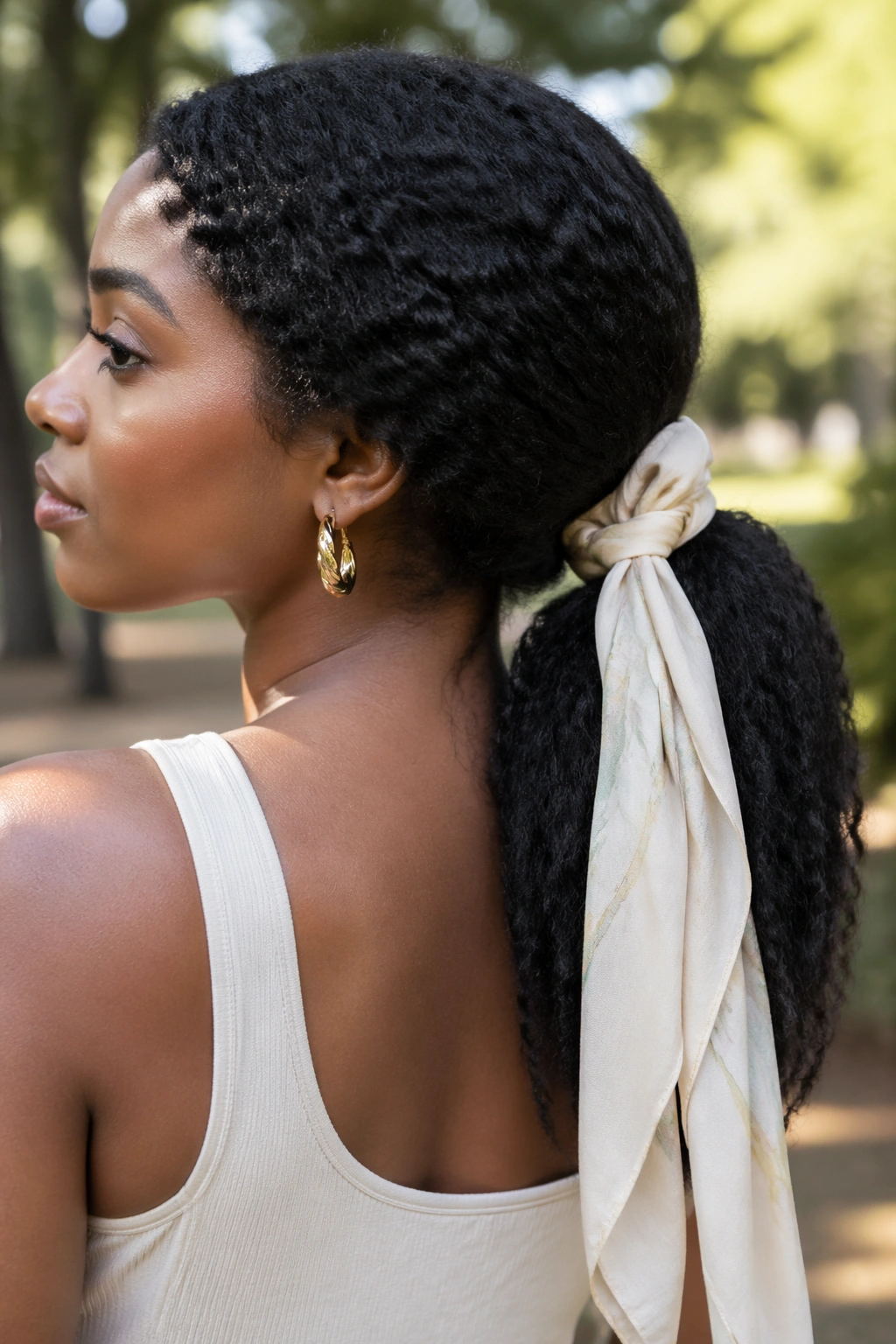
A scarf tied around a low ponytail adds color and keeps the base from looking plain. On 4C hair, the scarf also helps smooth the transition between the roots and the tail, which is useful when the hair is stretched but not bone-sleek.
You can knot the scarf at the nape, wrap it around the elastic, or fold it into a narrow band and let the ends hang. Silk and satin are kinder to the hair than stiff cotton, especially if the style will stay in for a while. A scarf that’s too bulky can crowd the nape and make the ponytail sit oddly.
This look feels easy in the best way. It solves two problems at once: it finishes the style and adds a little personality without needing extra hair.
Small detail that matters
Choose a scarf with enough length to tie securely once, maybe twice. Short scarves slip.
19. Tucked-End Low Ponytail
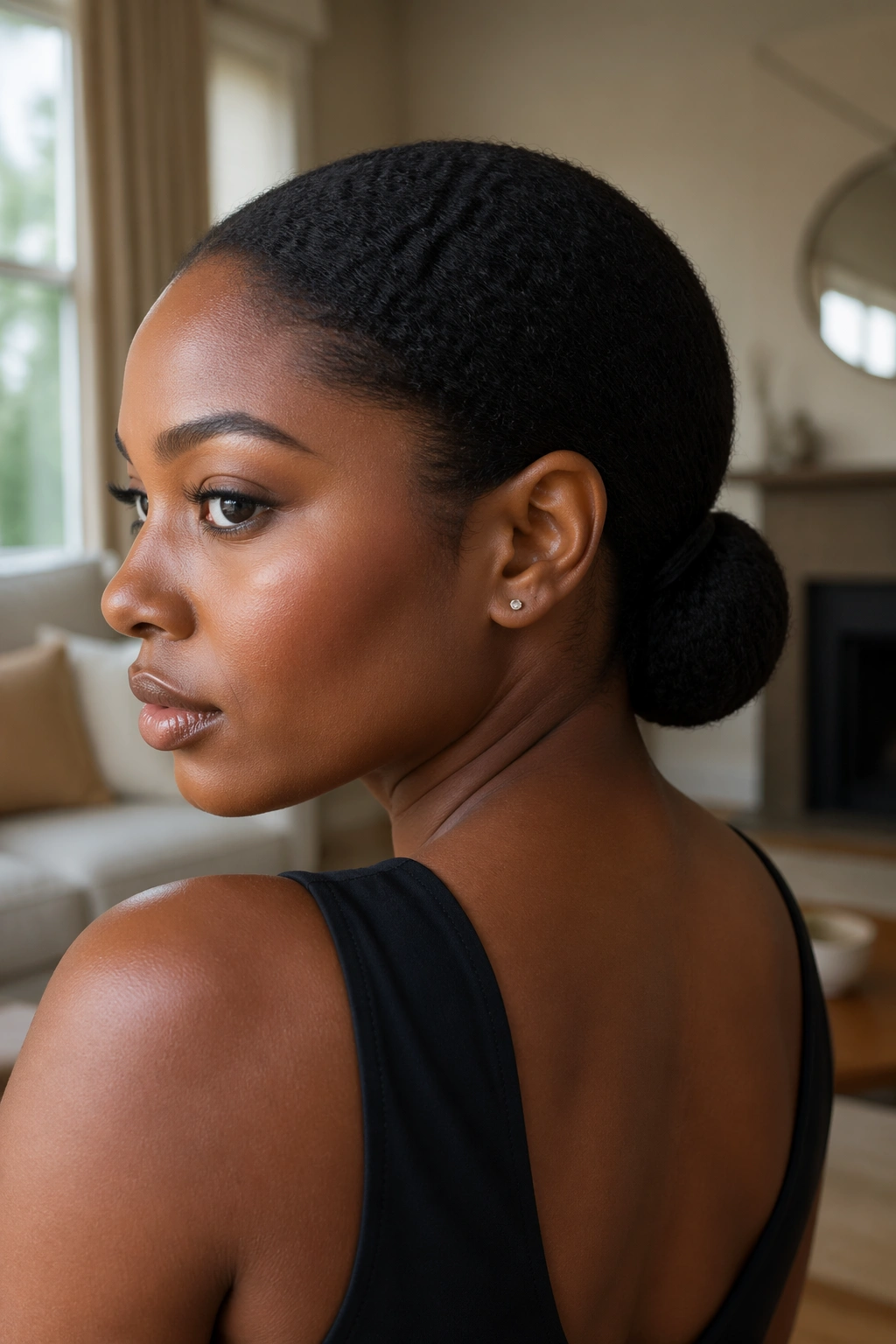
A tucked-end low ponytail gives you the clean shape of a ponytail with the neat finish of a bun. That makes it useful for 4C hair when you want the nape to stay tidy but don’t want a full bun sitting there all day.
The tail is gathered low, folded under, and pinned or tied so the ends disappear. If your hair is thick, tuck in sections instead of trying to fold everything at once. That keeps the shape smoother and prevents the back from bulking up in one spot. Little pins are your friend.
This style is a sleeper hit. It looks modest, then you catch yourself in a mirror and realize it has a very clean line. No loose ends. No frizz hanging off the back.
20. Statement-Accessory Low Ponytail
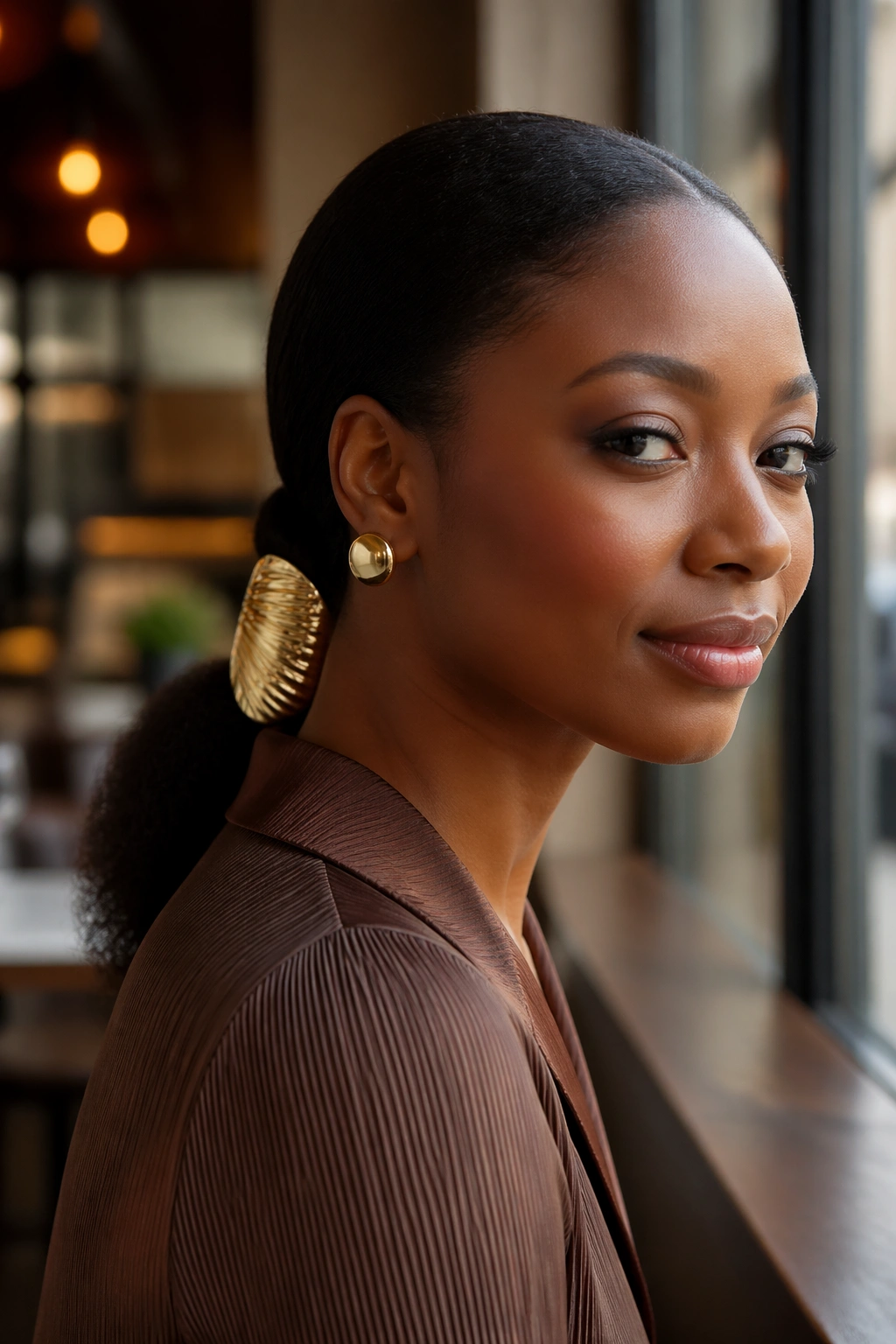
A statement accessory can turn a plain low ponytail into a whole look. Think chunky cuffs, oversized clips, a jeweled comb near the base, or a single bold barrette on one side. On 4C hair, the texture gives the accessory something solid to sit against, which helps the piece show up instead of disappearing.
The trick is not to overcrowd the ponytail. One strong accessory usually beats three medium ones. If the hair already has braids, twists, or a wrapped base, a large clip may fight the style instead of helping it. Pick the piece that matches the ponytail’s shape.
This is the style I reach for when the outfit is simple and the hair needs to do a little more work. It saves time. It also keeps the whole look from feeling too predictable.
21. Rolled Side-Panel Low Ponytail
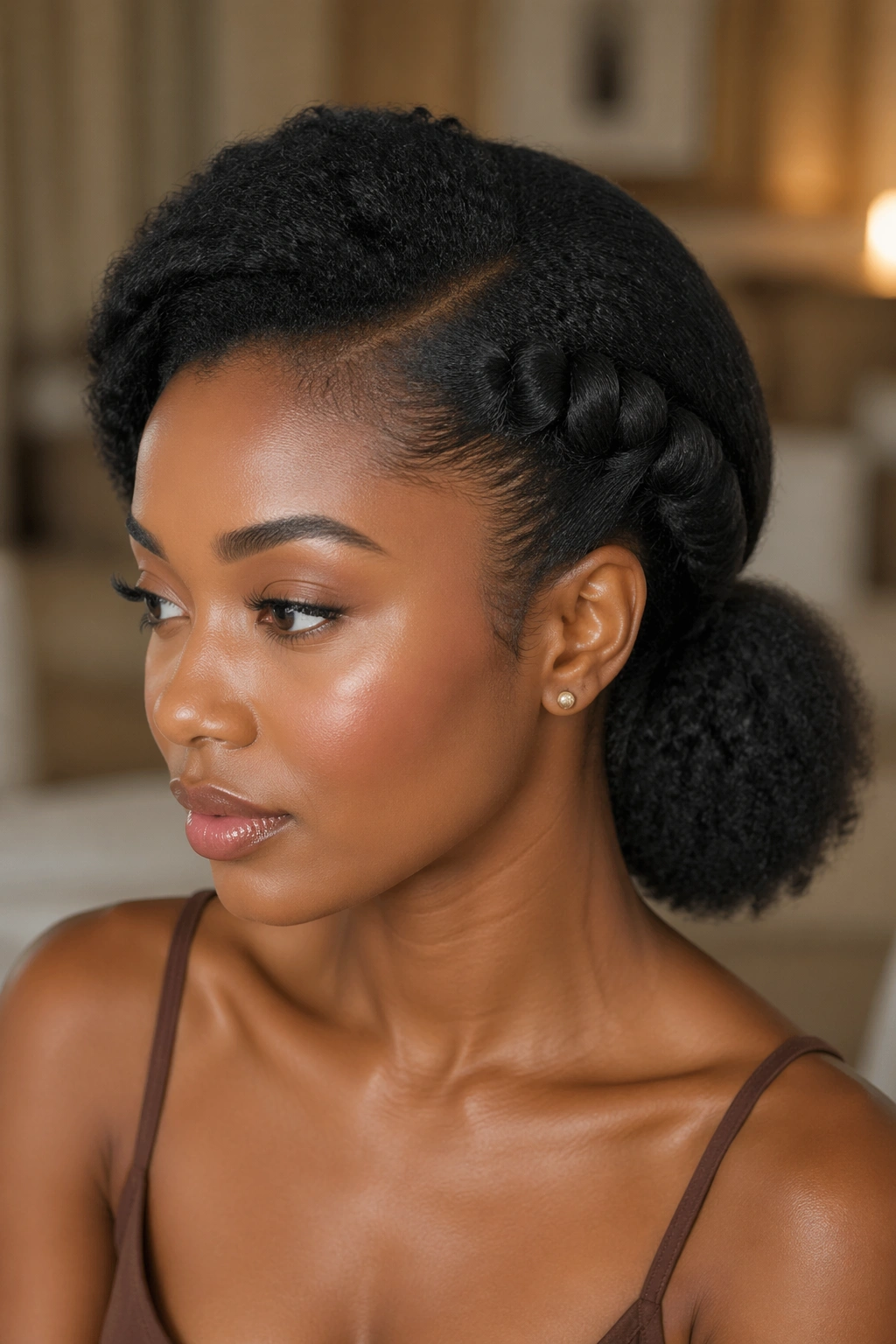
A rolled side-panel ponytail uses a small rolled section along one side of the head to frame the face before the rest of the hair drops into a low ponytail. It’s a clever shape on 4C hair because the roll adds softness without needing a full blowout.
The roll can be done with a flat twist, a tucked section, or a gently pinned fold. That side detail gives the eye something to follow before it lands at the ponytail. If the rest of the hair is full, the rolled piece keeps the front from feeling too broad.
This style suits people who like asymmetry. It’s a little dressier than a basic ponytail, but not fussy enough to feel precious. I’d wear it to an event where you’ll be photographed from the side.
22. Zig-Zag Part Low Ponytail
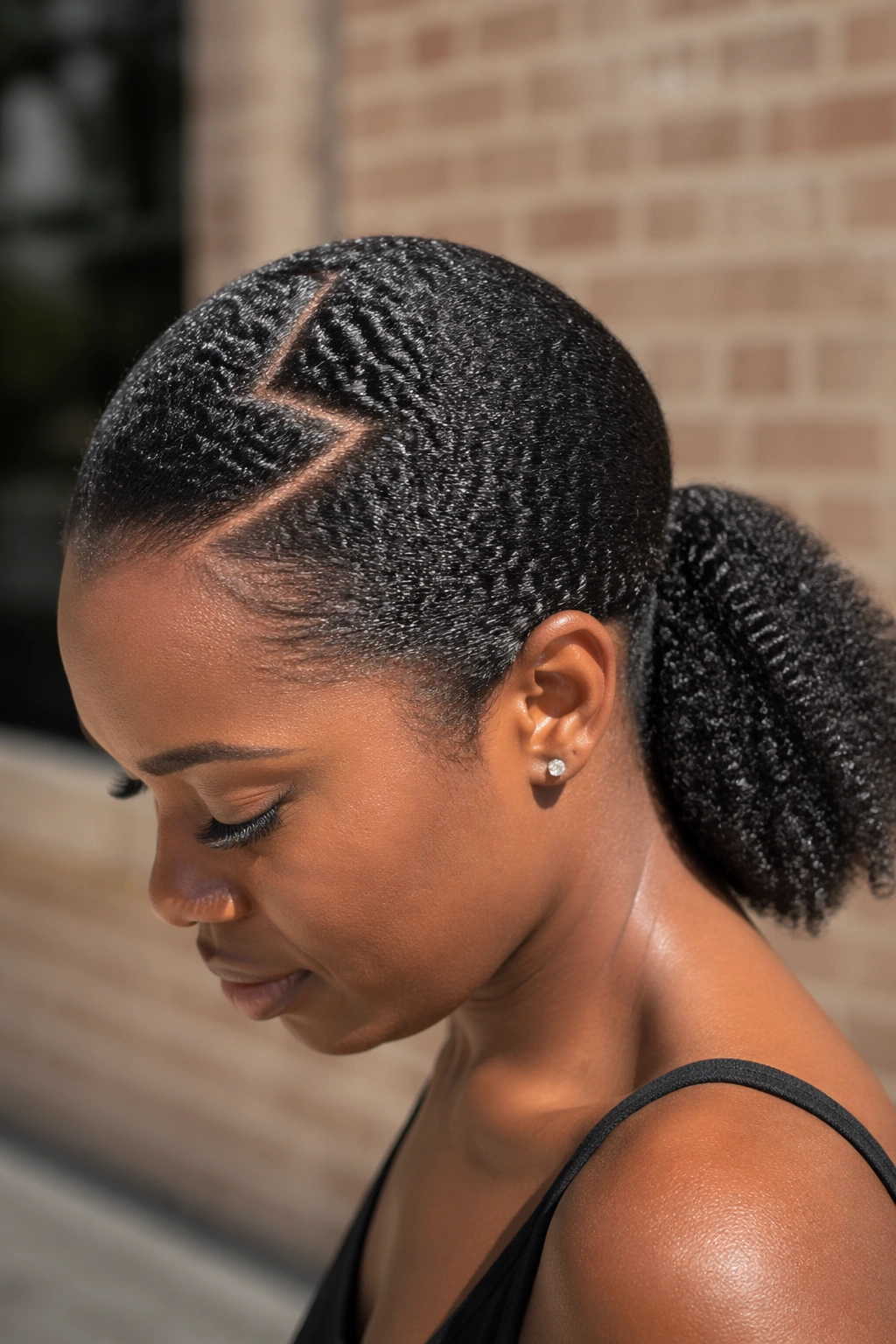
A zig-zag part gives a low ponytail a playful edge without changing the basic structure. On 4C hair, the part holds up nicely because the texture gives the lines a little grip. That means you get shape even before the ponytail starts.
This is a good pick when you want something more interesting than a straight part but don’t want to spend forever styling. The zig-zag can sit down the middle, curve slightly to one side, or travel from temple to crown before the hair is gathered low. Keep the edges around the part neat, but don’t flatten them into a shell.
It’s fun. It has energy. And it reminds me a little of the styles people forget they can still wear as adults, which is a shame because the shape is good.
Quick styling note
Use the tip of a rat-tail comb and work slowly. A shaky zig-zag looks accidental fast.
23. Braided Tail Low Ponytail
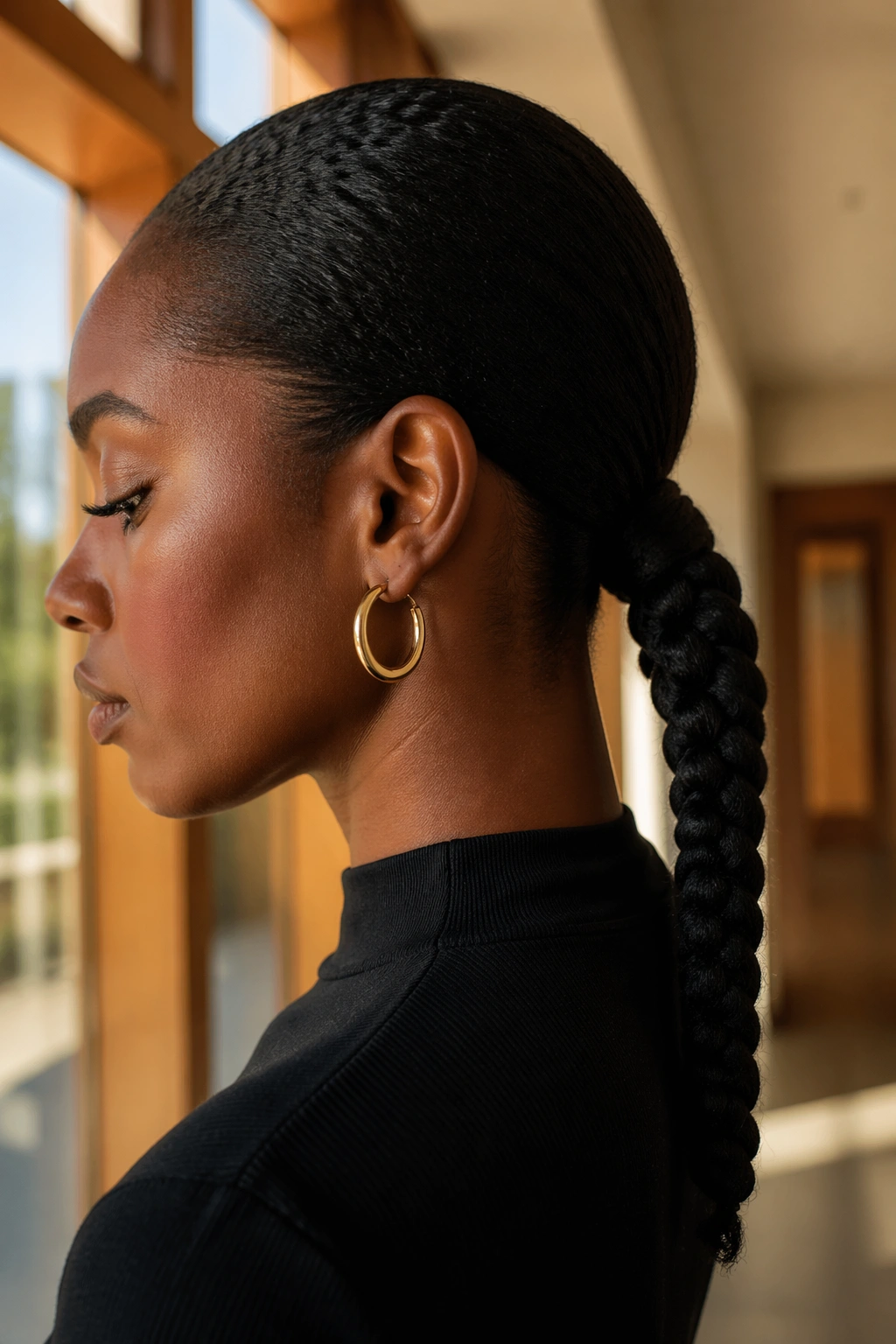
A braided tail low ponytail keeps the front smooth and lets the braid itself handle the finish. For 4C hair, that braid can be thick, rope-like, and full of texture, which gives the style a strong silhouette at the nape.
You can braid the ponytail itself after tying it low, or feed the hair into the braid from the start if you want a cleaner base. Either way, the braid acts like a long sculpted tail. A little oil on the length helps the braid shine without looking wet.
This style is practical in humid weather, during long days, or whenever you want the hair controlled without pinning every strand down. It stays tidy. That’s the whole point.
24. Puff-Base Low Ponytail
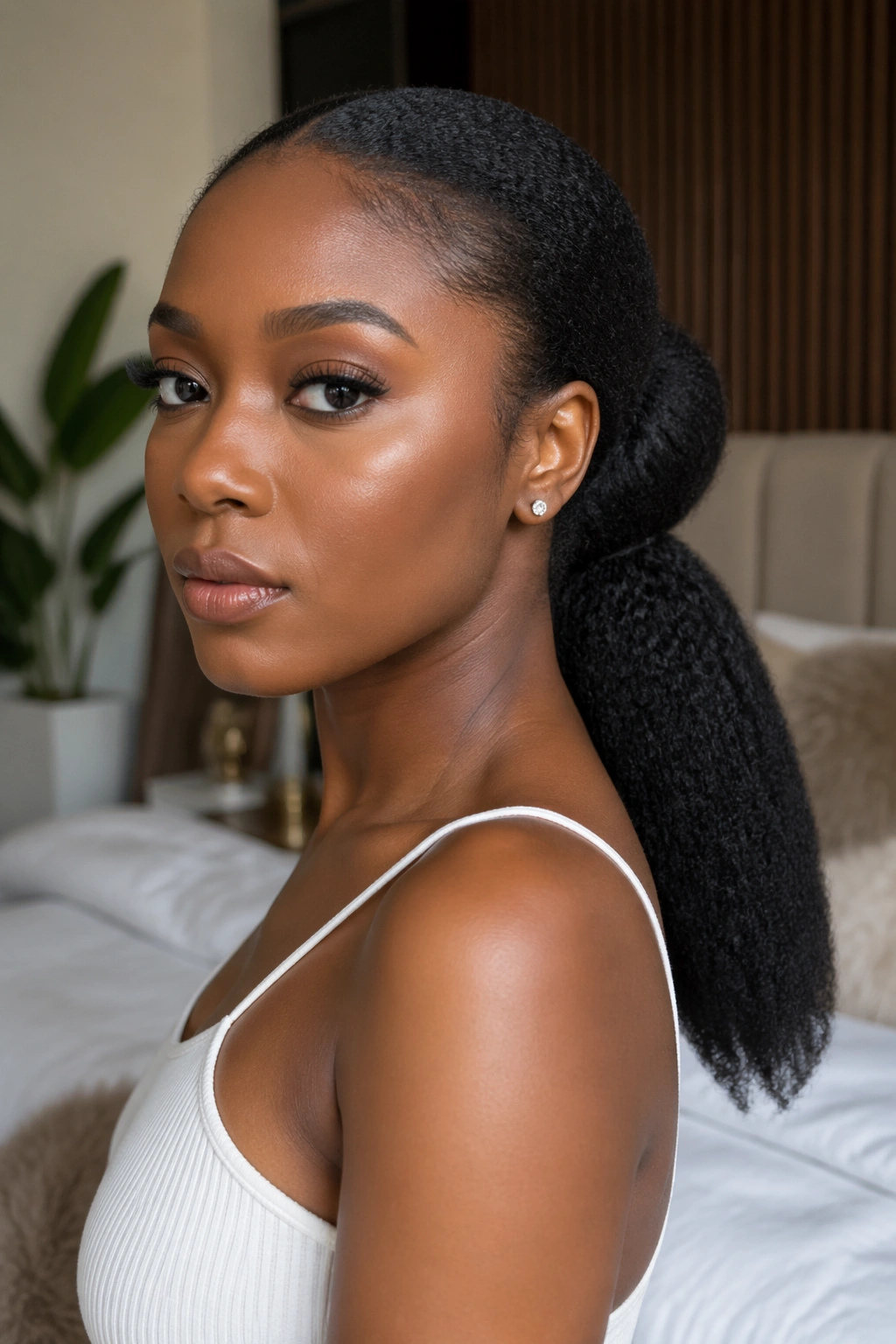
A puff-base ponytail keeps the roots brushed low and controlled while the bulk of the texture gathers into a rounded puff right behind the nape. It’s a nice hybrid for 4C hair because it respects shrinkage while still giving you a defined ponytail shape.
The base should not be too tight. If the root area is yanked flat, the puff loses its natural roundness and starts looking squeezed. Instead, gather the hair low, secure it, and let the tail open up on its own. A little finger fluffing at the back helps the shape.
This style is especially good for hair that sits between stretched and fully natural. It doesn’t demand one texture. It allows two.
25. Mini Low Ponytail for Short 4C Hair
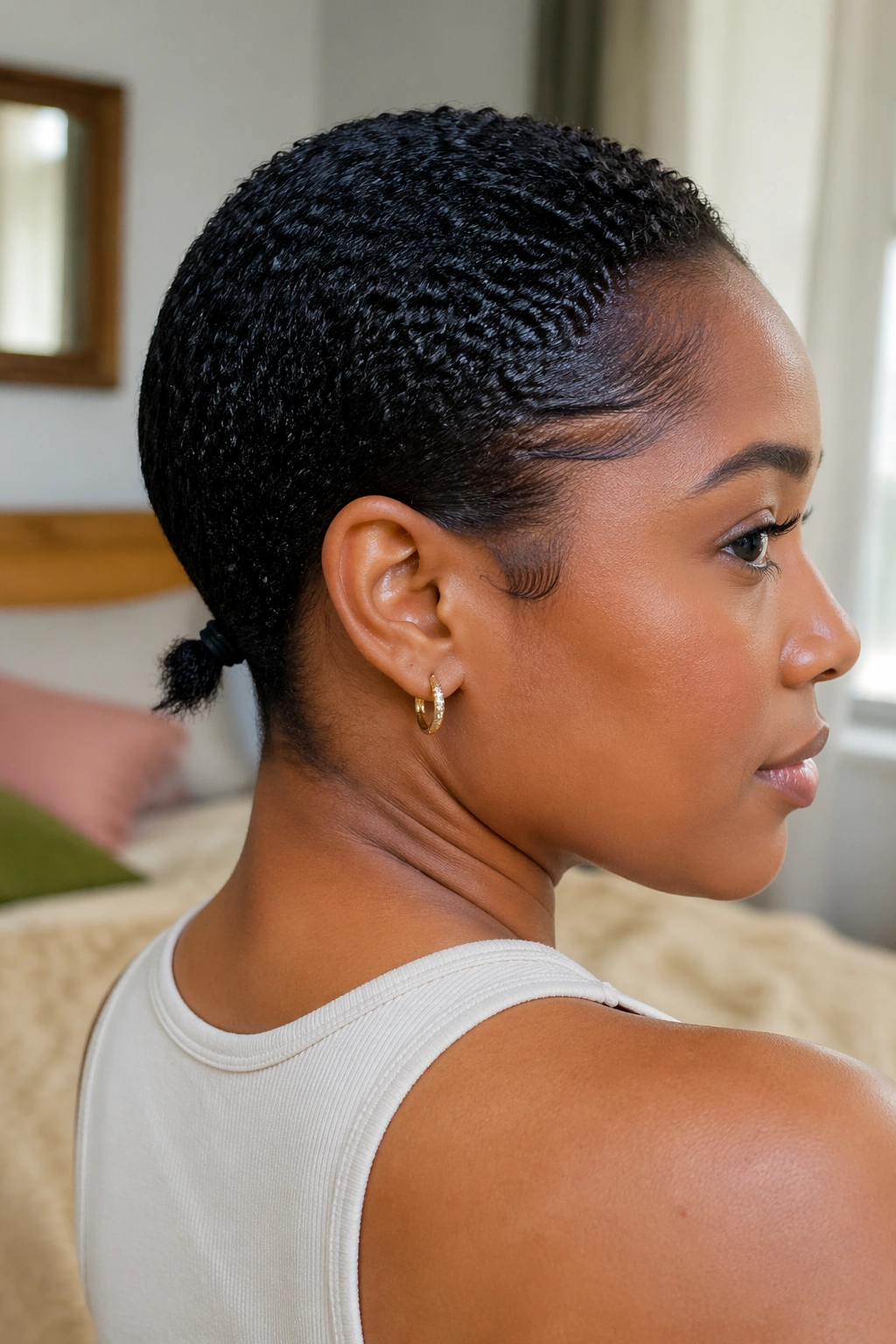
Short 4C hair can absolutely wear a low ponytail, and no, it does not need to be long to look good. A mini low ponytail at the nape can be clean, cute, and surprisingly sharp when the sides are smoothed and the tail is left tiny on purpose.
What makes this version work is proportion. Don’t try to stretch a small ponytail into something it isn’t. Keep the base neat, use a small elastic, and let the short tail sit low and close to the neck. If the hair is layered, a few pins or a small curl sponge touch-up can help the ends behave.
It’s an underrated style for shorter coils. Quiet. Neat. Useful.
26. Swooped Temple Low Ponytail
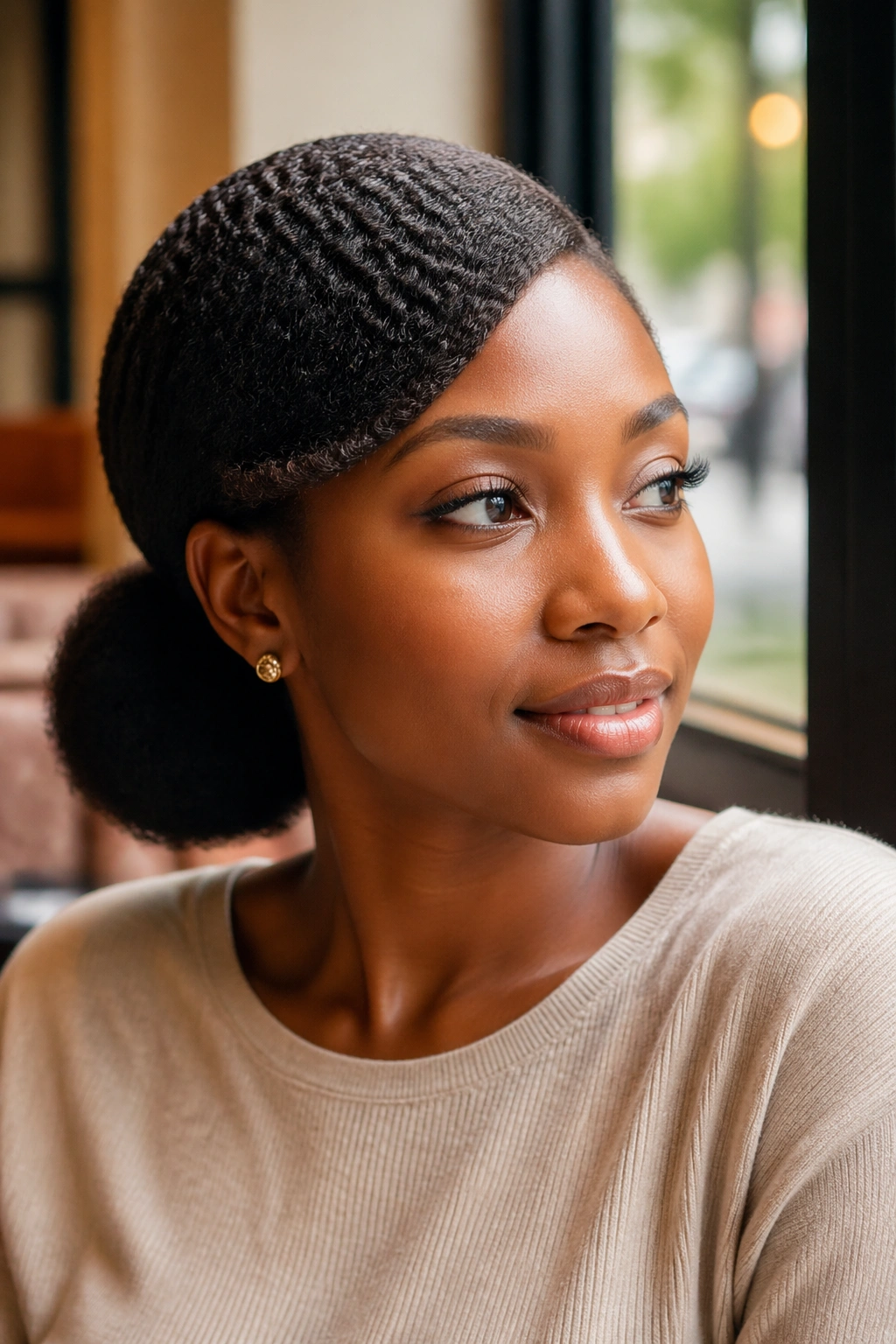
A swooped temple low ponytail gives the front a soft curve, almost like a side bang without cutting one. The swoop works well on 4C hair because the texture can hold the bend, especially if the hair is lightly stretched or set with a scarf for a bit.
You sweep one section from the temple across the forehead or along the hairline, then gather the rest into a low ponytail. The result feels feminine in a very classic way, but not stiff. If the swoop is too tight, it can pull the face in a weird direction, so keep it relaxed and let the curve sit naturally.
I like this style for evenings, dates, or any day when a simple middle part feels too plain. The little arc at the front changes everything.
27. Fluffy No-Gel Low Ponytail
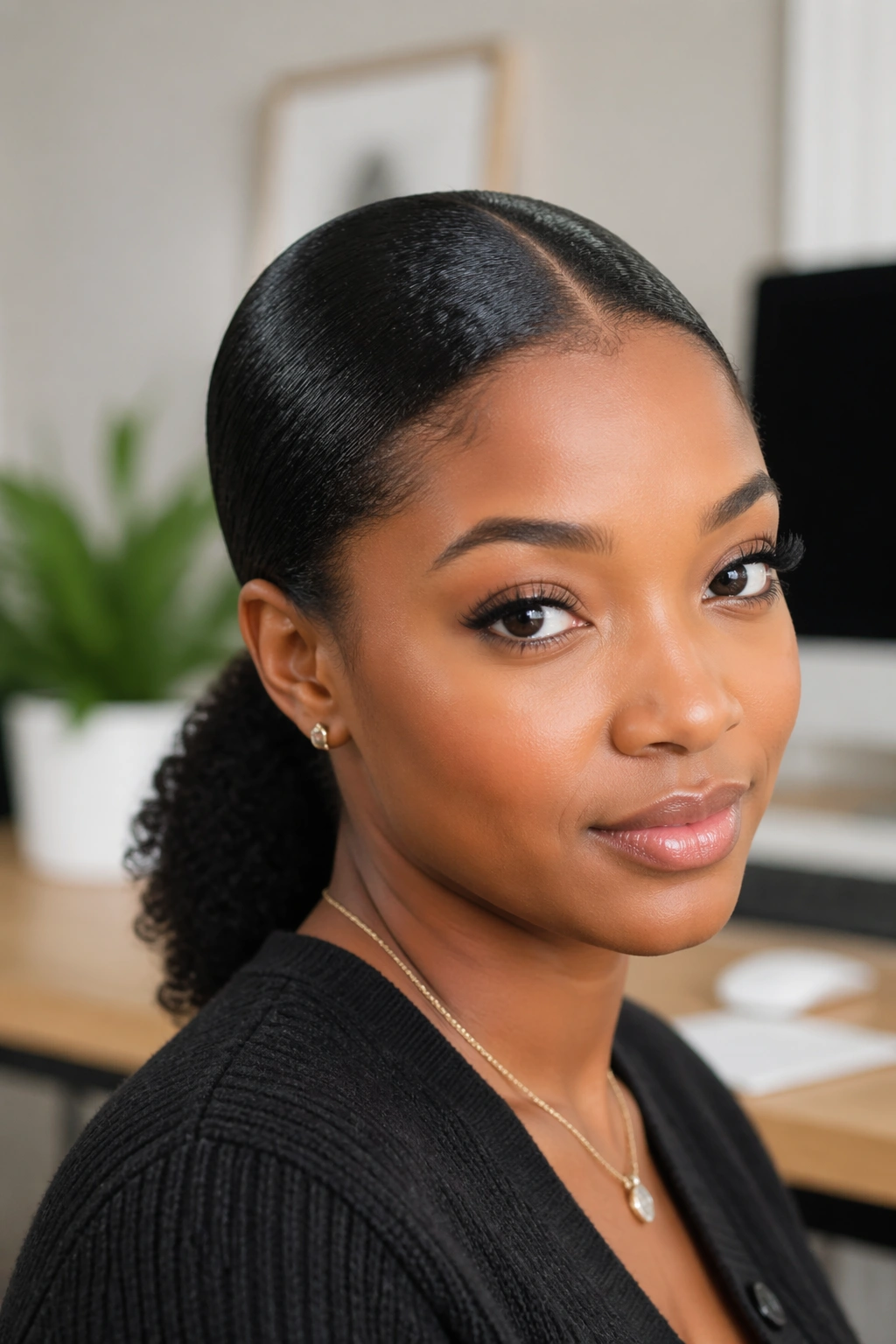
A fluffy no-gel low ponytail is the antidote to overworked hair. It keeps the ponytail low, but the roots stay soft, the edges stay natural, and the whole style breathes a little. On 4C hair, that softness can look cleaner than a stiff slick-down, especially if your hairline gets irritated easily.
The shape matters more than the polish here. Brush the hair back with a light leave-in or water mist, secure it low, and stop before the front turns crunchy. Let a few coils sit free near the temples if they want to. They usually do.
This is the style for people who want low effort without giving up style. It’s honest about the texture. It also ages well through the day, which is more than I can say for some ultra-sleek looks.
A low ponytail on 4C hair does not have to mean one kind of finish. It can be soft, sharp, braided, puffy, wrapped, decorated, or barely touched at all. The best version is the one that matches how your hair wants to sit that day — and if it changes by tomorrow, that’s fine too.
