


Cold weather can be rough on hair, and ponytails are usually the first style people reach for when they want speed, control, and a little less fuss. The catch is that ponytails for cold weather have to work harder than the easy styles we wear in milder air. They need to survive wind, sit under scarves, not get mangled by coat collars, and still look decent after you’ve taken off a hat that flattened everything for twenty minutes straight.
Dry air changes the game. Hair loses moisture, static shows up like an uninvited guest, and the ends start looking rough faster than they do in softer weather. Add wool, zippers, and constant friction at the nape, and a plain elastic can go from useful to annoying in about five minutes. A good winter ponytail style isn’t only about looking neat. It’s about reducing breakage, keeping the hair from rubbing itself into a puffball, and giving you something that holds its shape without feeling tight.
I’ve always thought the best cold-weather ponytail hairstyles do two jobs at once: they protect the hair and make the outfit look finished. Some lean sleek and polished. Some are softer and more forgiving. A few are the kind you throw together before running out the door, then keep wearing because they work better than expected. That’s the sweet spot.
So let’s get practical and pick the styles that actually make sense when the temperature drops and your hair starts acting a little dramatic.
1. Sleek Low Ponytail for Cold Weather
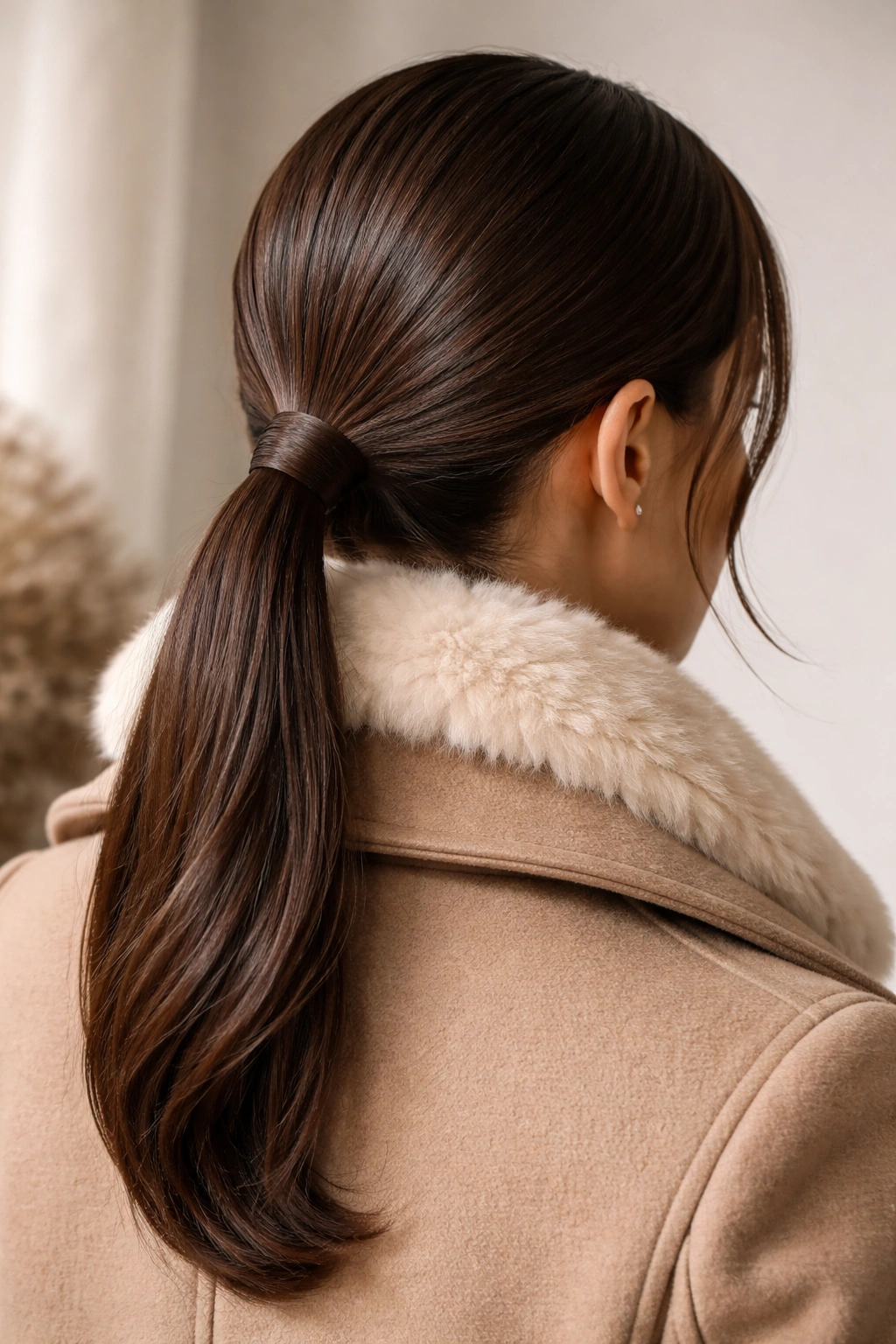
A sleek low ponytail is the one I reach for when I want my hair to stay put under a scarf or coat collar. It sits low enough to avoid most friction, and the clean line at the nape keeps the whole style looking intentional instead of rushed.
Use a small amount of smoothing cream or a pea-size drop of serum on damp or dry hair, then brush it back with a boar-bristle or soft paddle brush. Keep the ponytail snug, not painful. Too much tension will leave your scalp sore long before you get anywhere useful.
If your hair frizzes at the ends, wrap a 1/2-inch strand around the elastic and pin it underneath. That one detail makes a plain ponytail look finished. It also keeps the elastic from snagging on coat linings, which is a tiny annoyance until it happens every morning.
2. Bubble Ponytail with Small Elastics
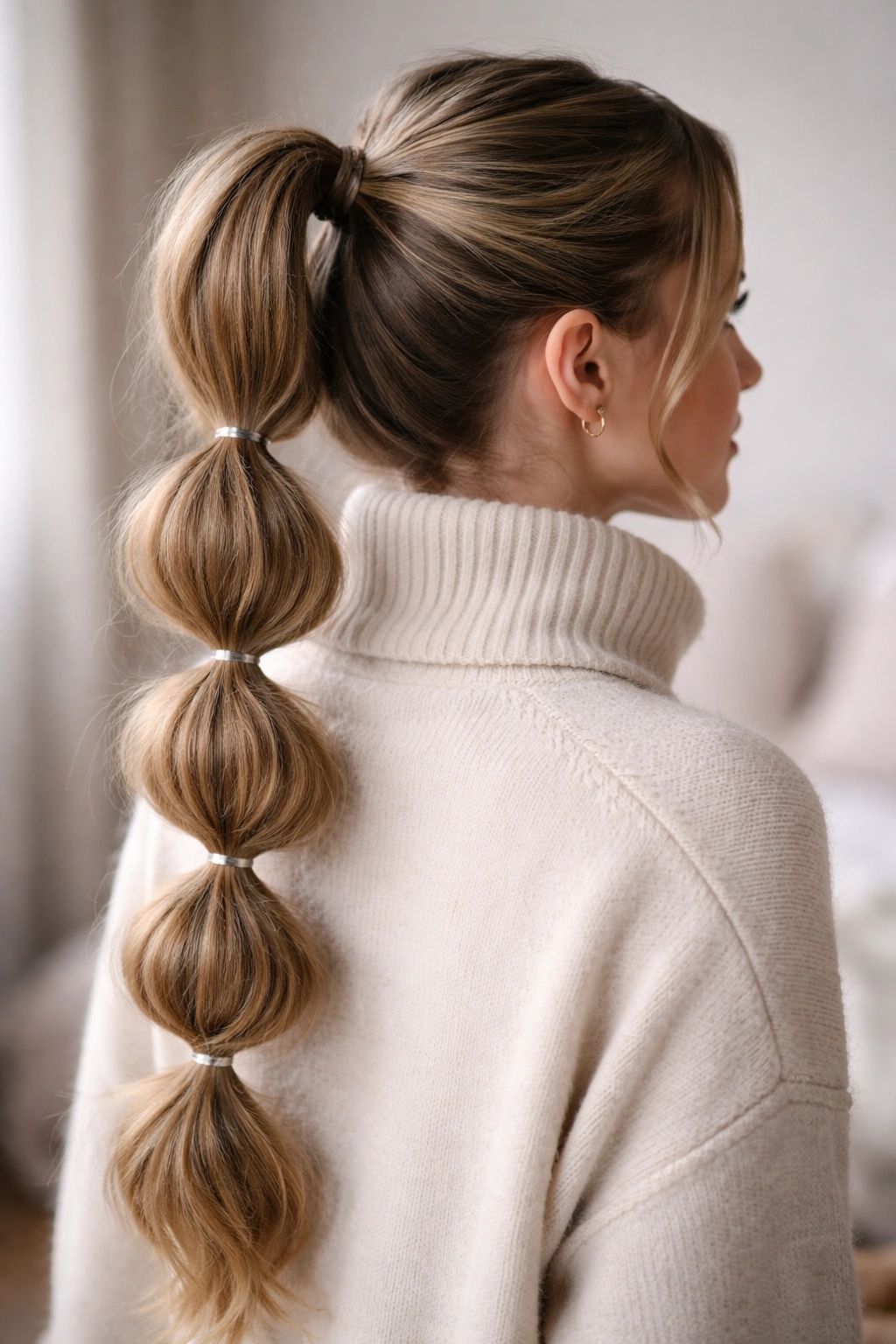
A bubble ponytail is a smart answer to windy days because the shape stays interesting even when the hair itself wants to misbehave. The sections create structure, and that structure gives the style a little grip. It also looks good with chunky sweaters, which is not a minor detail.
Start with one ponytail secured at your preferred height, then add clear elastics every 1½ to 2 inches down the length. Gently tug each section outward until it puffs into a round bubble. If your hair is fine, backcomb each section lightly before you pull it apart. That adds just enough body to keep the bubbles from collapsing.
This style works especially well on longer hair, but medium-length hair can wear it too if the sections are spaced closer together. Keep the elastics smooth and snag-free. Rough bands fight with dry winter ends, and dry winter ends already have enough to deal with.
3. Braided Low Ponytail
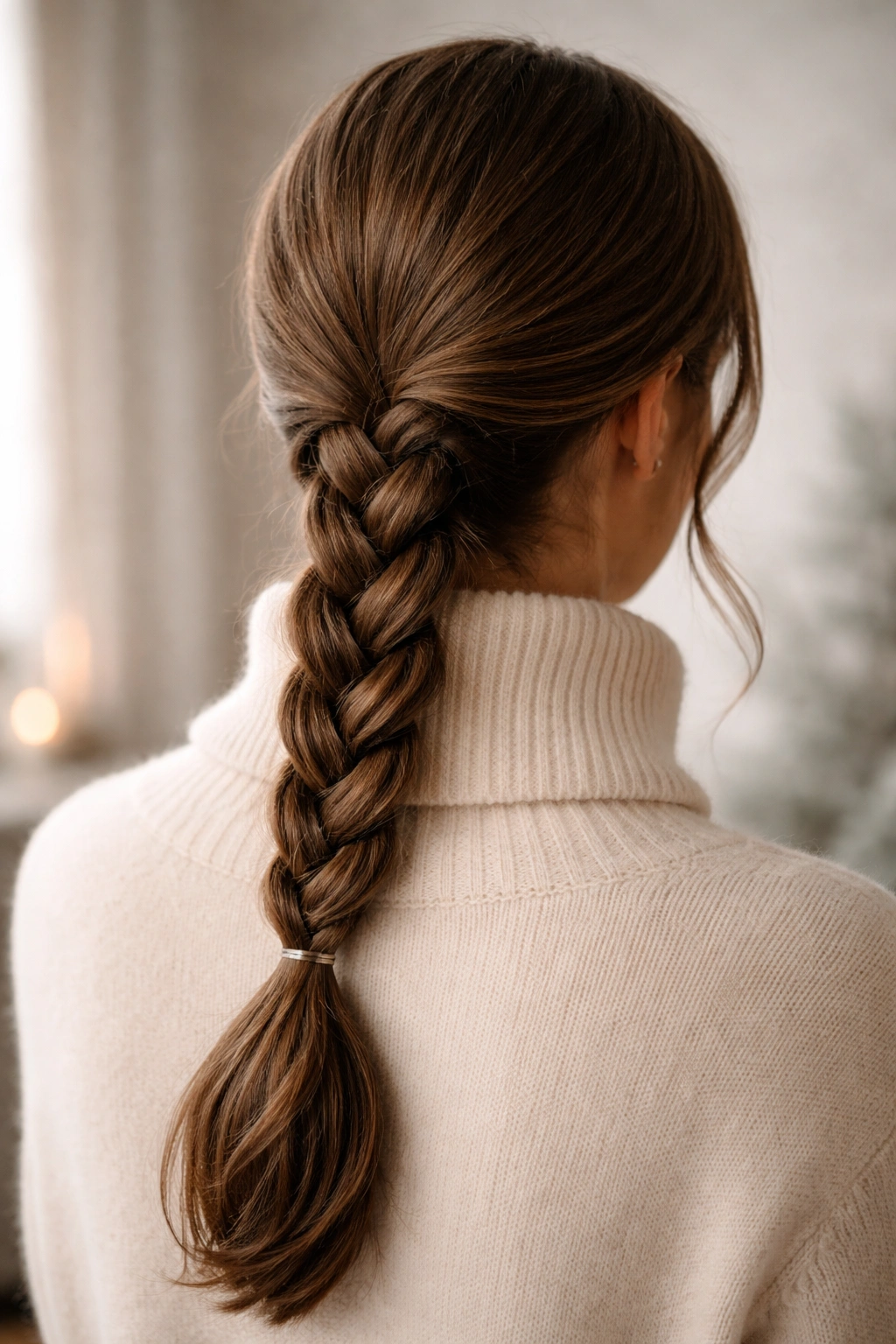
Why does this one hold up so well? Because the braid keeps the lengths together instead of letting wind separate every strand into its own problem.
A braided low ponytail is one of those styles that looks more put together than the effort it takes. Secure the hair at the nape first, then braid the ponytail in a classic three-strand plait. Leave the braid a little loose if you want softness, or pull it tighter for a cleaner finish. Either way, the ends stay contained, which matters when your coat rubs against them all day.
How to Wear It
Use a light mist of texture spray before braiding if your hair is slippery. That gives the braid something to hold. If you want the braid to look thicker, pinch the outer loops gently after tying off the end. Don’t overdo it. A little fullness goes a long way here.
4. Wrapped Ponytail with a Hair Section
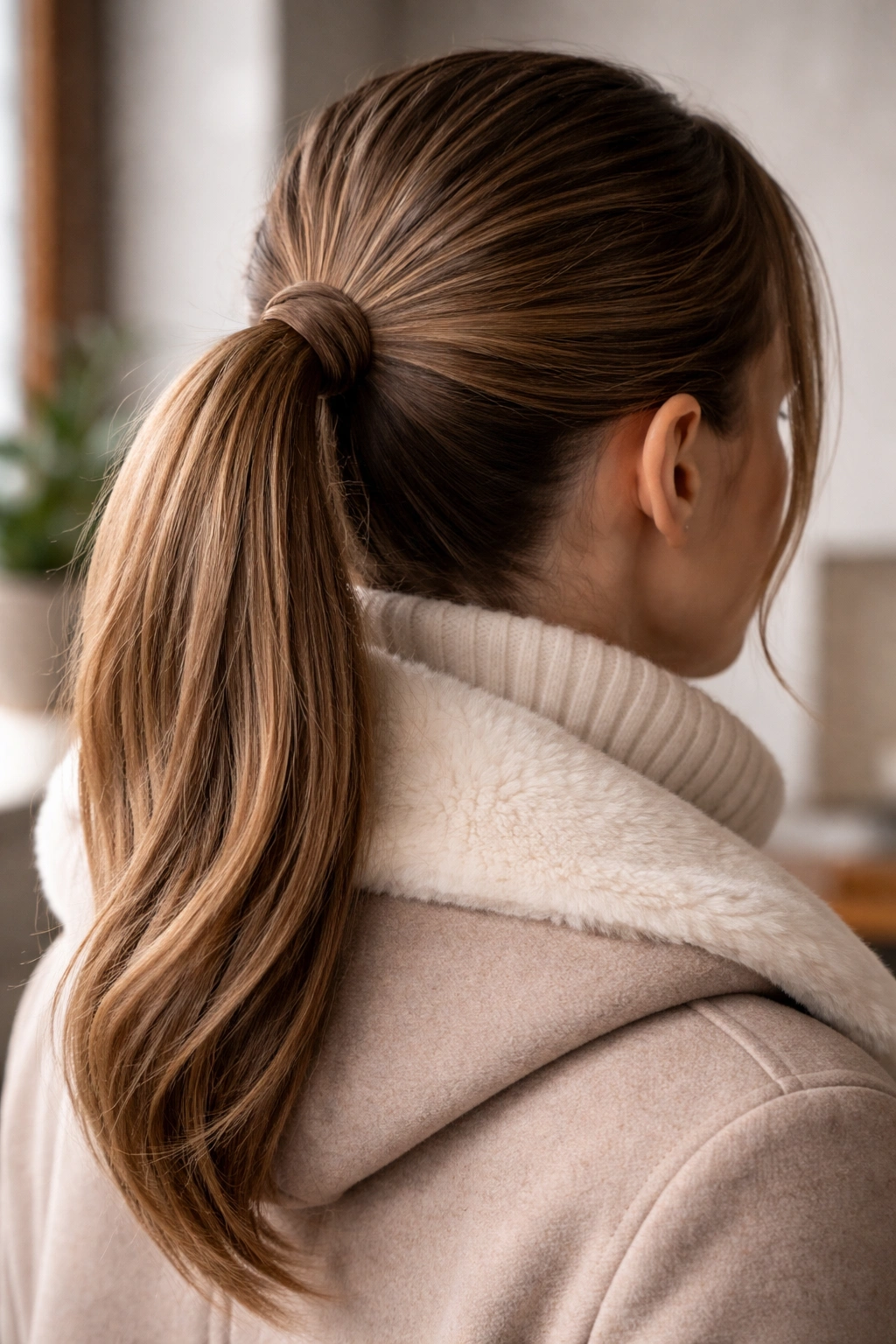
The wrapped ponytail is one of those styles that looks like you spent more time on it than you did. That’s useful in cold weather, because the polished finish hides the fact that the rest of your hair may be a little dry or static-prone.
Picture this: you’ve got a wool coat on, the wind is doing its worst, and you still want your ponytail to look neat when you walk inside. A wrapped base handles that nicely. Pull the hair into a ponytail, take a thin 1/2-inch strand from underneath, and wind it around the elastic until the band disappears. Secure the end with a bobby pin tucked under the ponytail.
- Use a tight-woven bobby pin so it does not slip.
- Keep the wrap section smooth, not thick.
- Finish with a light mist of flexible-hold spray.
- Press the wrap flat with your fingertips before you leave.
That last bit matters more than people think. A wrapped base looks best when it lies flush, not twisted and bulky.
5. Twisted Side Ponytail
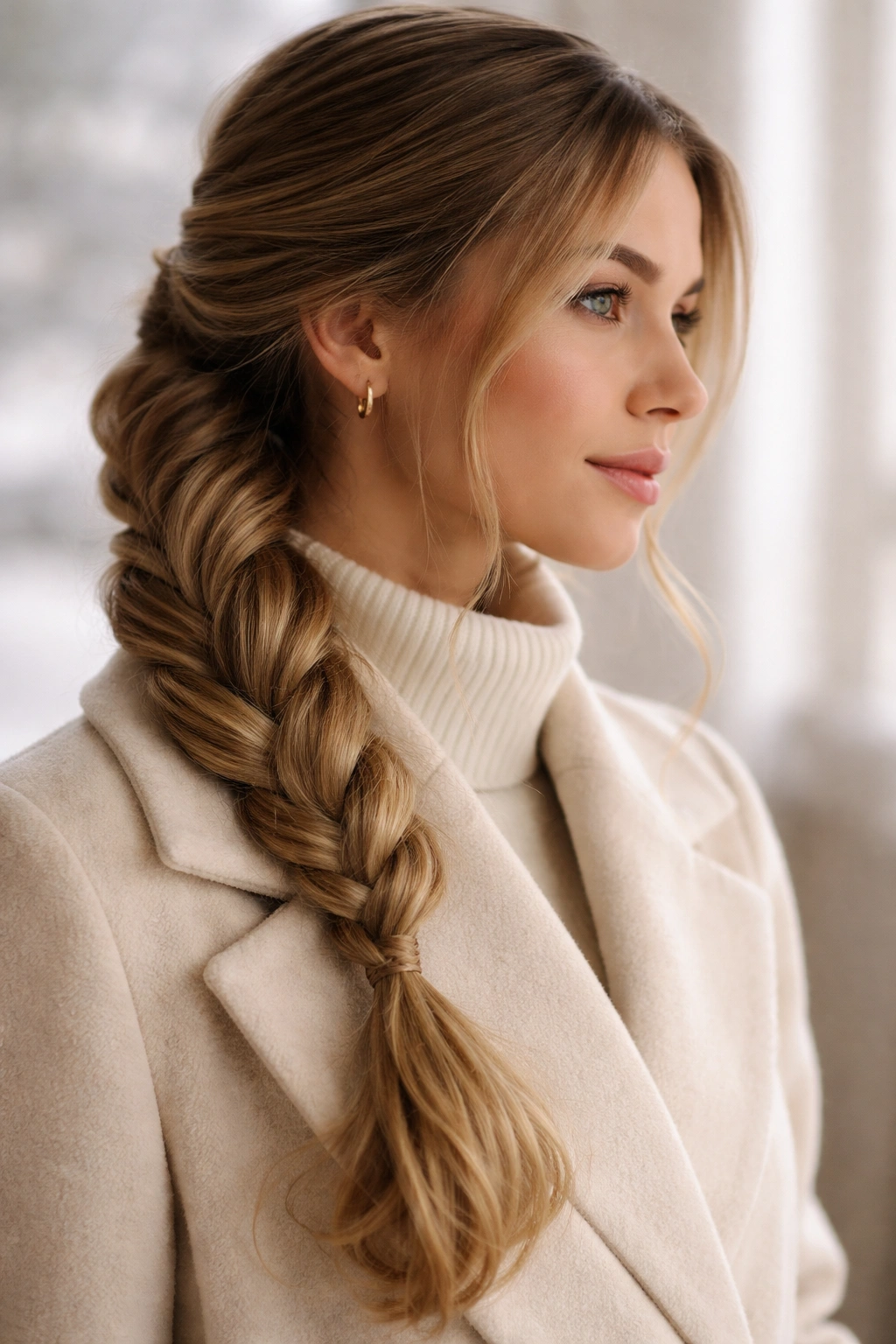
A twisted side ponytail feels softer than a center-back style, and that softness helps in cold weather when heavy layers already make your outfit feel boxed in. The side placement also keeps the hair away from the back of your coat, which I appreciate more every time I wear a high collar.
Take a side part, pull the hair to one shoulder, and divide the lengths into two sections. Twist each section in the same direction, then wrap them around each other before tying the end. The result is a low, rope-like shape that looks more deliberate than a regular loose ponytail.
If your hair is fine, tease the crown slightly before pulling it over. If it’s thick, skip the teasing and focus on keeping the twists even. The style works best when the twists are tidy at the top and a little relaxed through the ends. That balance keeps it from looking stiff.
6. High Ponytail with Face-Framing Pieces
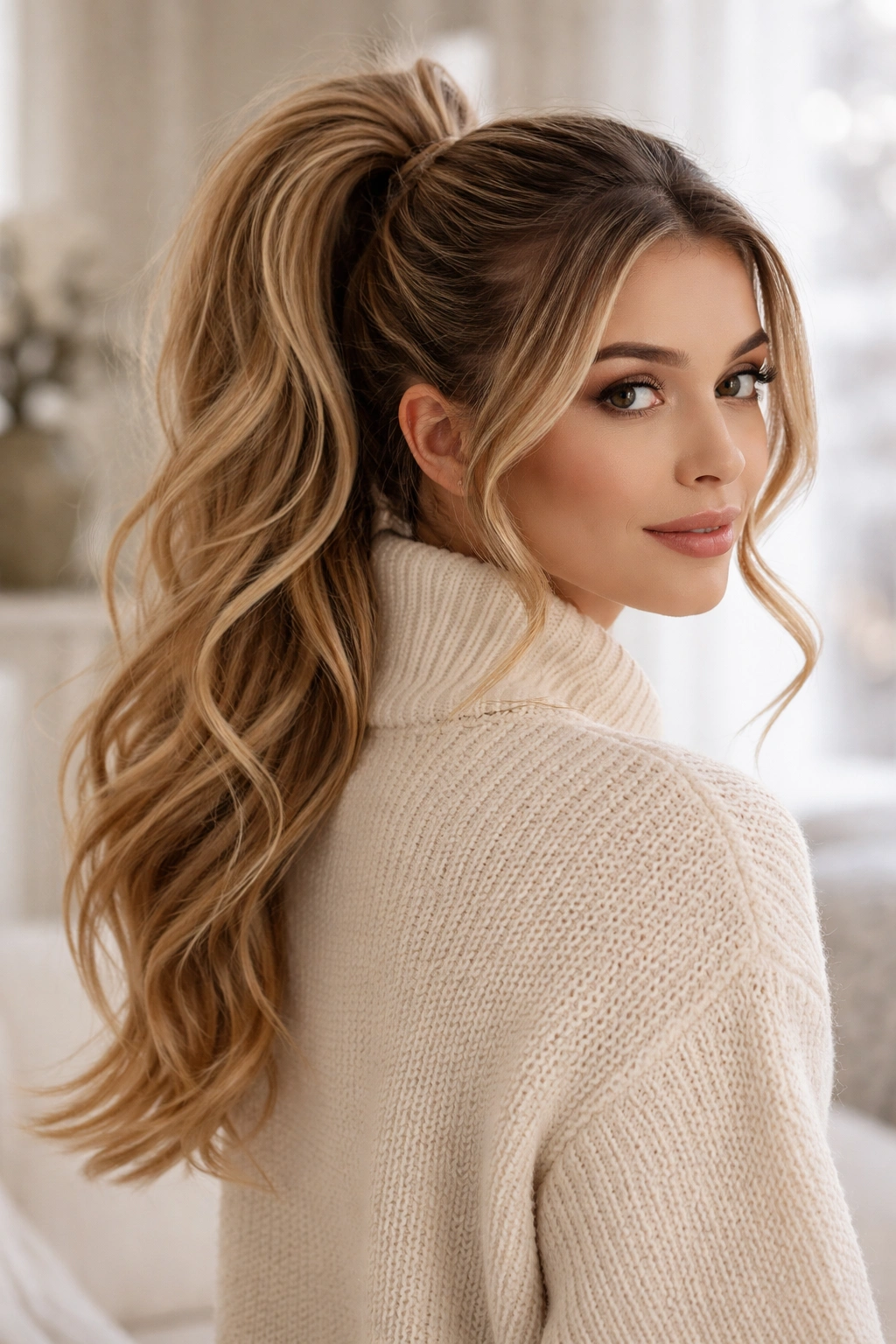
A high ponytail can still work in cold weather. It just needs a softer edge than the severe versions people wear for the gym.
The trick is leaving out a few front pieces or bending them with a 1-inch curling iron so they fall away from the face. That keeps the style from looking too tight, which can happen fast when you add a hat or a bulky scarf. I like this version when I want lift at the crown but don’t want my whole head to feel flattened by outer layers.
What Makes It Different
Unlike a slick high ponytail, this one keeps a little movement around the cheeks and temples. That movement matters when your skin is dry and your clothes are heavy. Use a light shine spray only on the ponytail itself, not the roots, or the style can start to look greasy by lunch.
Best for medium to long hair. Best on days when you want a bit of energy without the fuss of a blowout.
7. Scarf-Wrapped Ponytail
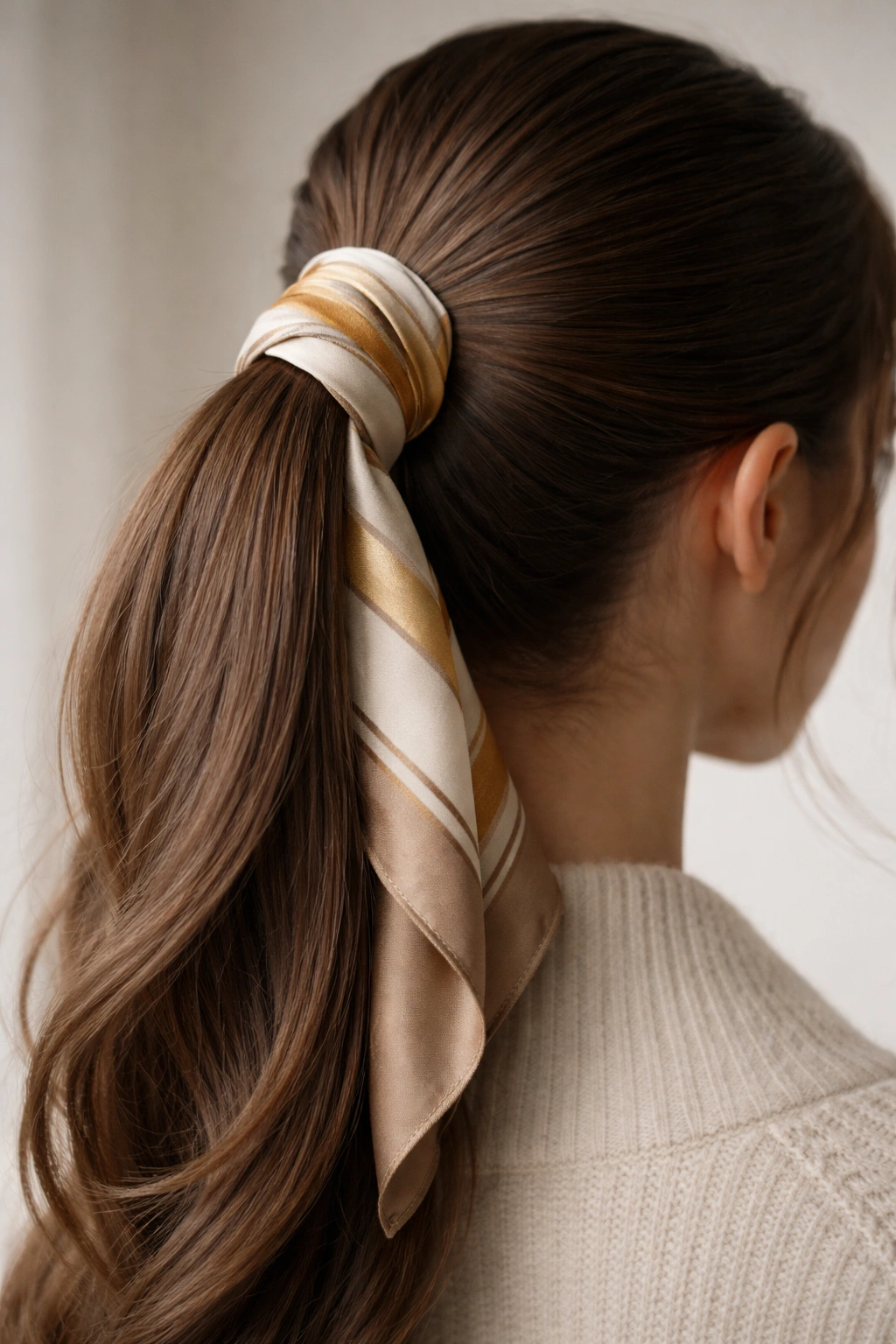
A scarf-wrapped ponytail is one of the easiest ways to make cold-weather hair behave and look styled at the same time. The scarf protects the elastic, softens the outline of the ponytail, and gives you a little extra warmth around the neck if you tie it right.
Choose a silk or satin square scarf around 20 to 22 inches if you want a classic wrap. Tie it around the base of the ponytail with the knot sitting underneath or to the side, depending on how visible you want it. Keep the tails neat. A sloppy knot can drag the whole look down, and a crisp one makes even second-day hair look like a choice.
A scarf also helps on windy walks because it keeps the base from rubbing against your coat. If your hair tangles easily, this is one of the few styles that gives you style and comfort without asking for much in return.
8. Velvet Ribbon Ponytail
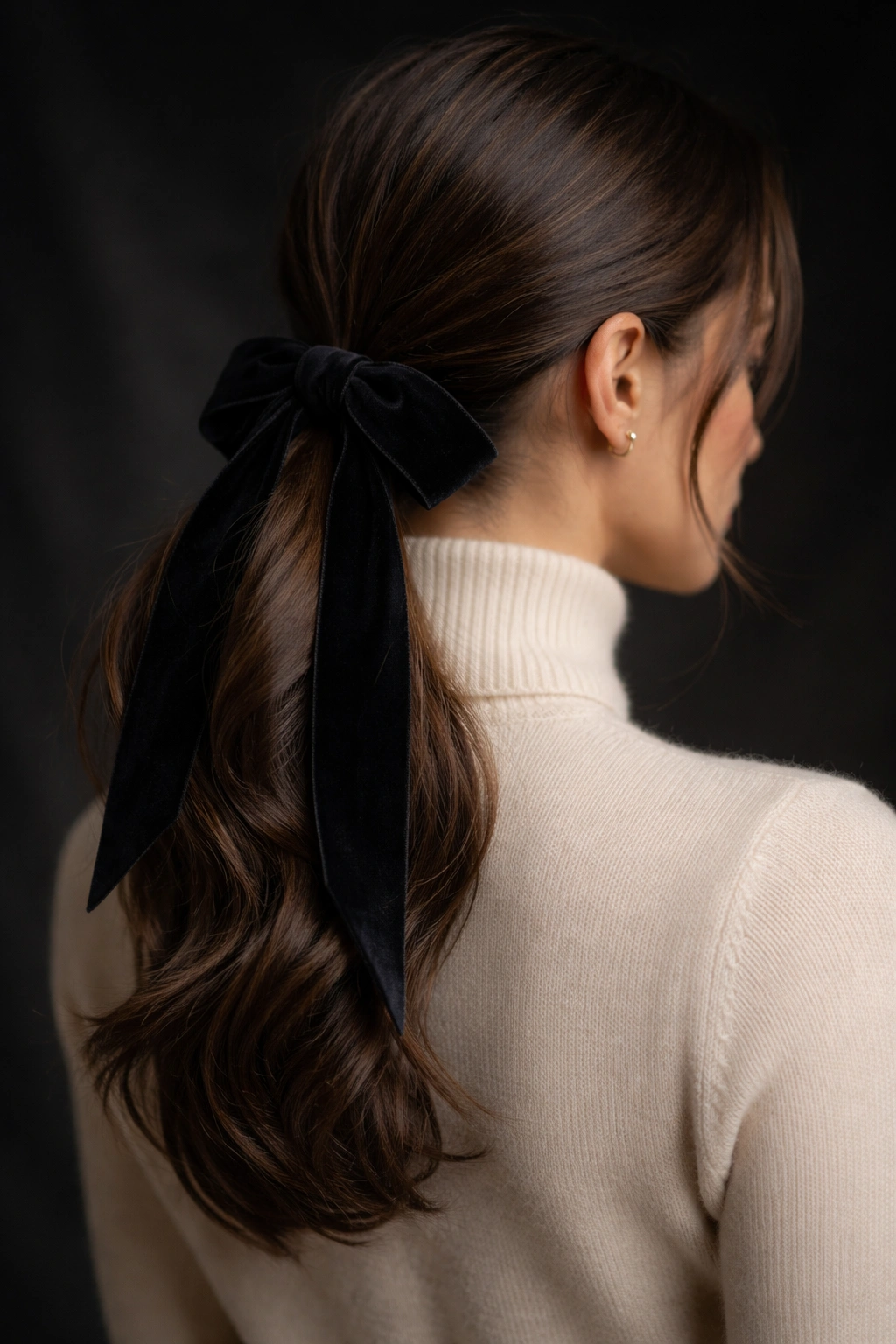
Velvet is one of those materials that makes sense in cold weather for a reason. It grips a little better than slick ribbon, and it has enough weight to hang properly instead of spinning around the elastic.
Tie a 1 to 1½-inch velvet ribbon around a low or mid ponytail, leaving the ends long enough to drape down a few inches. I prefer darker colors here because they make the style feel richer without trying too hard. Black, forest green, deep burgundy, navy. Those shades do the work for you.
The best part is that velvet hides minor frizz. If the hair around the base isn’t perfectly smooth, the ribbon covers a lot of that. It’s a forgiving style, and honestly, I think those are the most valuable ones in dry weather.
9. Rope-Braid Ponytail
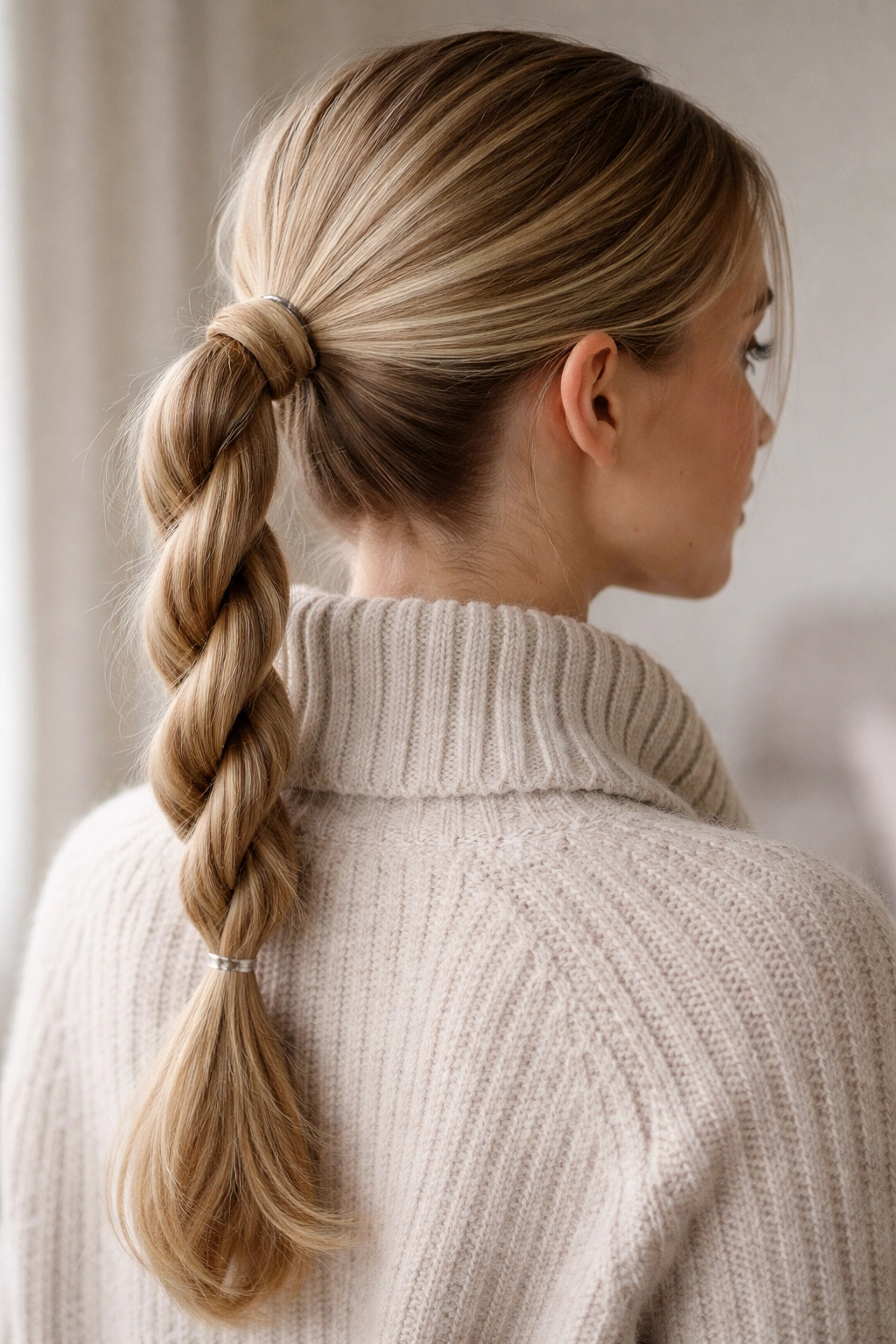
A rope-braid ponytail is fast, neat, and better at resisting winter wind than loose lengths. It’s also one of the few ponytail styles that feels sturdy without looking severe.
Pull the hair into a ponytail, split it into two equal sections, and twist both sections in the same direction before wrapping them around each other in the opposite direction. That opposite motion is what keeps the braid from unraveling. Secure the end with a clear elastic, then tug the rope lightly to widen it.
How to Get the Most From It
Use a texturizing spray on the mid-lengths first if your hair is too silky. Rope braids need a bit of grip. For layered hair, smooth the shorter pieces back with a dab of styling cream before you start twisting. Otherwise, the layers pop out and the whole thing loses shape halfway through the day.
It’s a simple style, but it has range. Great for errands, great for travel, and great when you want your hair to stay civilized.
10. Curly Pineapple Ponytail
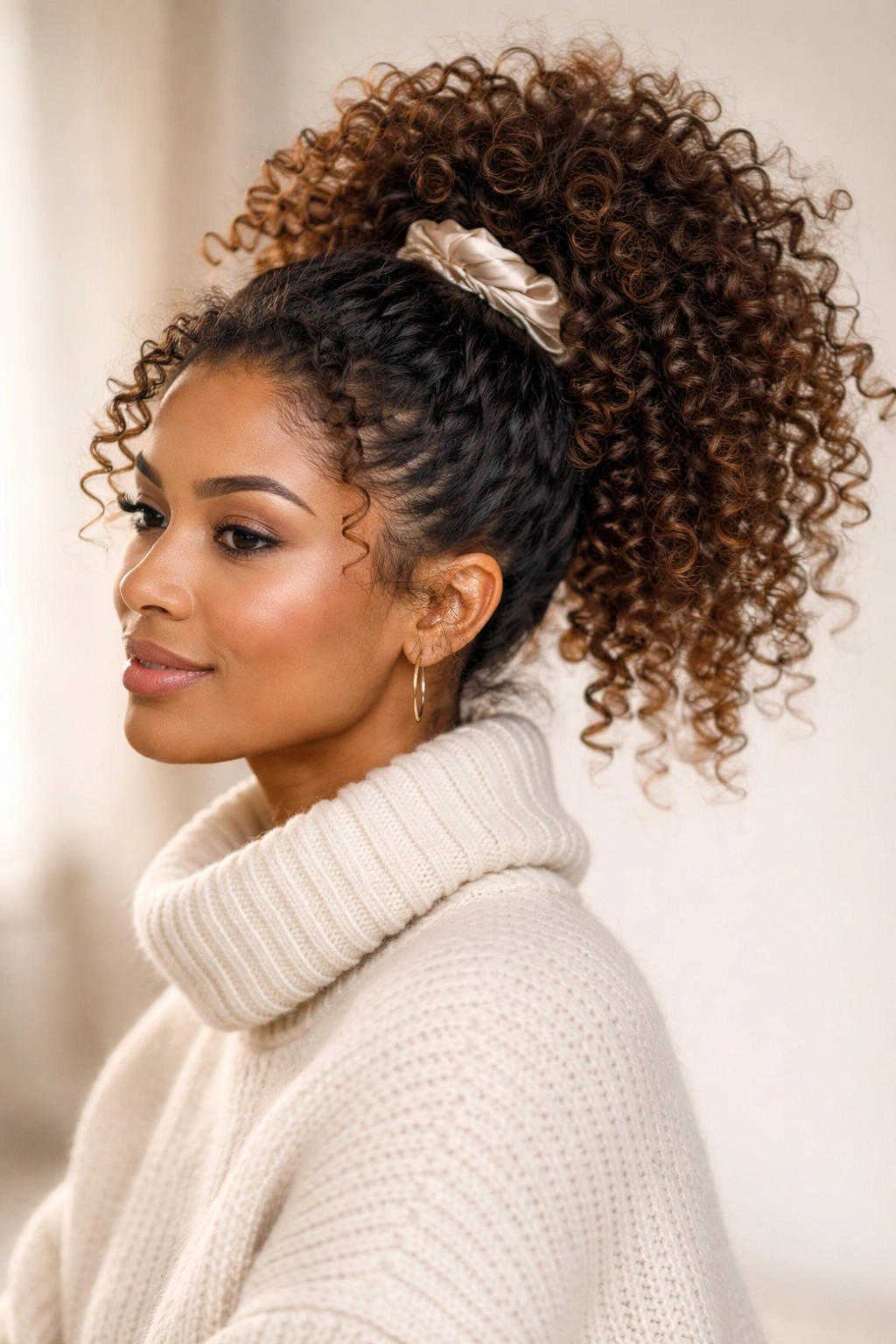
Curly hair and cold air are not friends, so a pineapple ponytail makes a lot of sense. It keeps the curls lifted high enough to avoid being crushed by collars while protecting the curl pattern better than a tight low tie would.
Gather the curls loosely at the crown with a satin scrunchie. Loosely is the key word. You want height, not a strained scalp. Leave the curls airy so they don’t get dented or stretched out. If the ends are dry, smooth a little leave-in conditioner over the last few inches before tying it up.
This style is especially useful on second- or third-day curls. A quick mist of water mixed with a little leave-in can wake the ends up without soaking the whole head. It’s one of the few styles that actually makes winter dryness look less obvious, which is a small miracle in its own right.
11. Hat-Friendly Low Ponytail
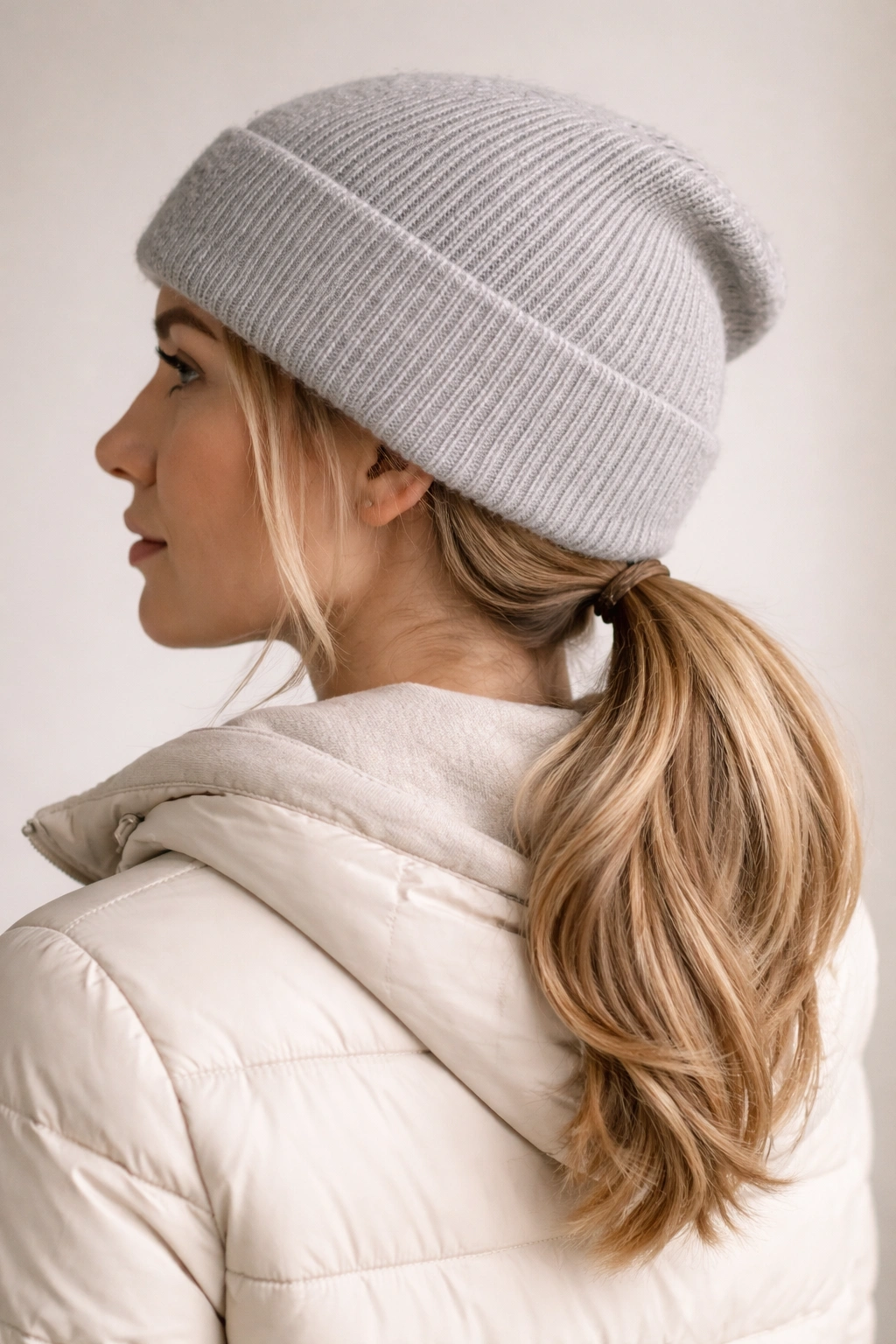
Can a ponytail survive a beanie? Yes, if you place it low enough and keep the base compact.
A hat-friendly low ponytail sits right at or just below the nape, so the hat can slide over it without squashing the crown. That makes it ideal for people who go in and out of cold air all day. I like this version more than a high ponytail when I know I’ll be removing my hat indoors, because it has fewer dramatic dents to recover from.
Use a slim elastic and keep the top smooth, but don’t flatten the ponytail completely. A little air at the crown helps the style look alive after the hat comes off. If your hair is fine, you can gently lift the roots with the tail of a comb before securing the elastic. That small move prevents the whole head from looking pasted down.
12. Half-Up Ponytail for Layered Hair
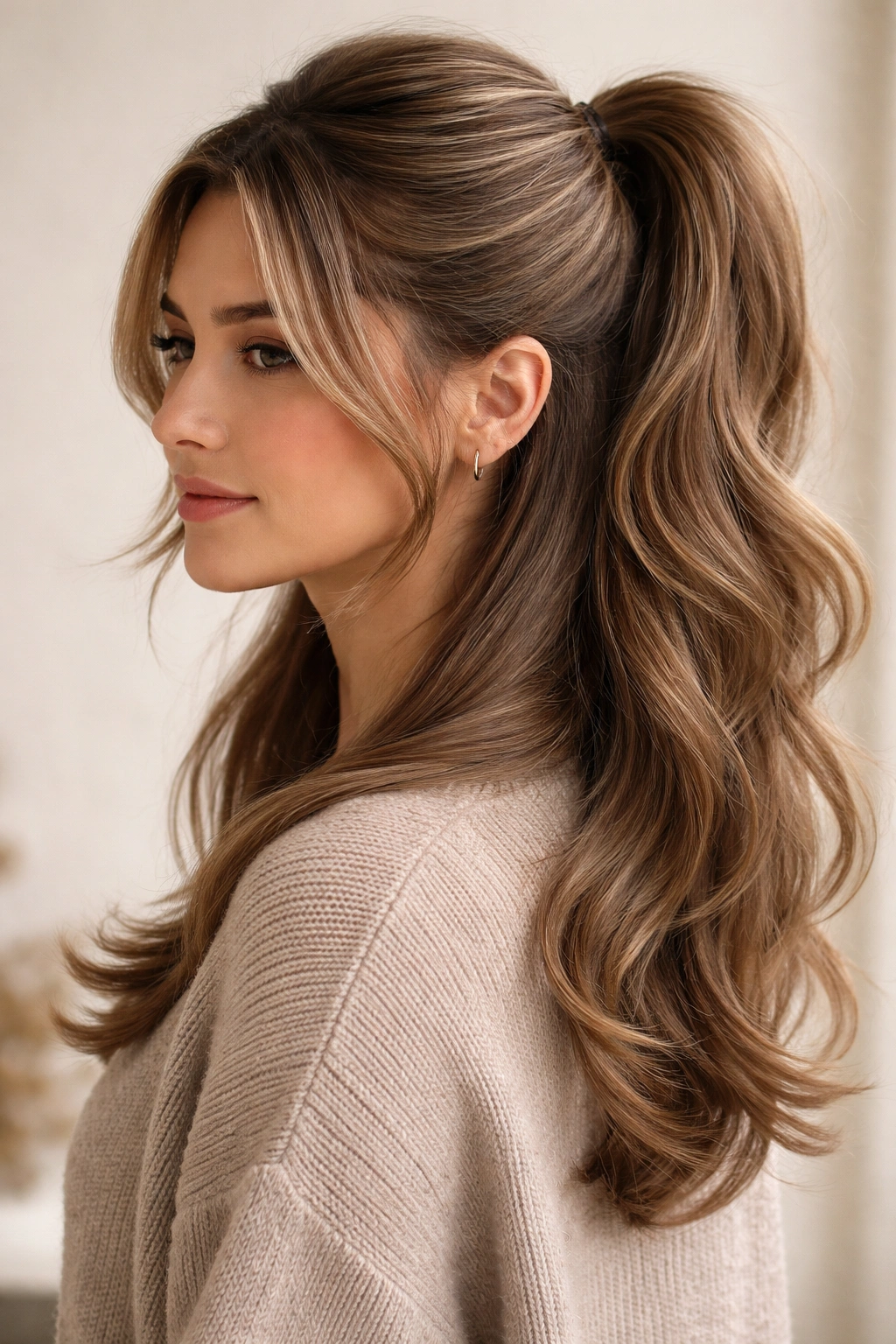
A half-up ponytail is a solid compromise when your layers keep falling in your face and a full ponytail feels too strict. It also plays nicely with scarves because the lower lengths stay free while the top stays controlled.
Take the hair from the temples back to the crown, secure it with a small elastic, and leave the rest down. If your layers are shorter, curl the loose ends under slightly so they don’t stick out in odd directions. That tiny bend makes the whole look feel more finished.
- Use the top section as a place to control flyaways.
- Leave the bottom hair loose to avoid collar friction.
- Add a soft wave to the ends for shape.
- Mist only the top section with light hold spray.
This style is easy, but not lazy-looking. That’s the difference.
13. French-Braid Into a Ponytail
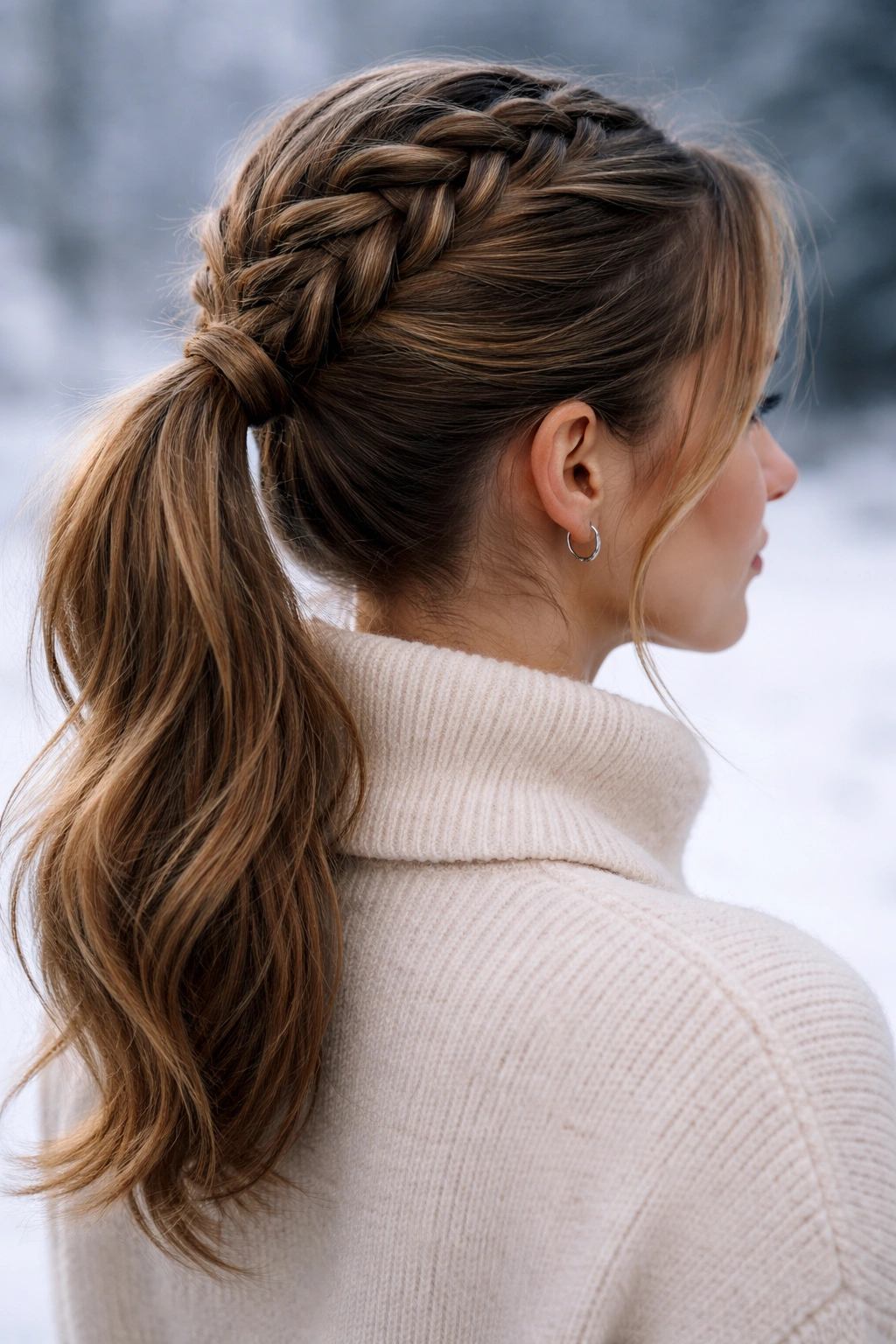
A French-braid ponytail looks more involved than it is, which is a nice bonus on mornings when your patience is thin. The braid controls the front and sides, and the ponytail keeps the shape from feeling too formal.
Braid from the hairline back toward the crown, picking up sections as you go, then secure the rest into a ponytail at the nape or mid-back. You can stop the braid higher if you want more volume at the crown. You can also keep it tighter if you’re worried about flyaways.
What I like most here is how much hair it keeps out of coat friction. A loose ponytail can get fuzzy at the top from scarf rub. The French braid handles that before it starts. If your hair is very silky, use a little root powder or dry shampoo before braiding so the sections don’t slide apart.
14. Dutch-Braid Ponytail
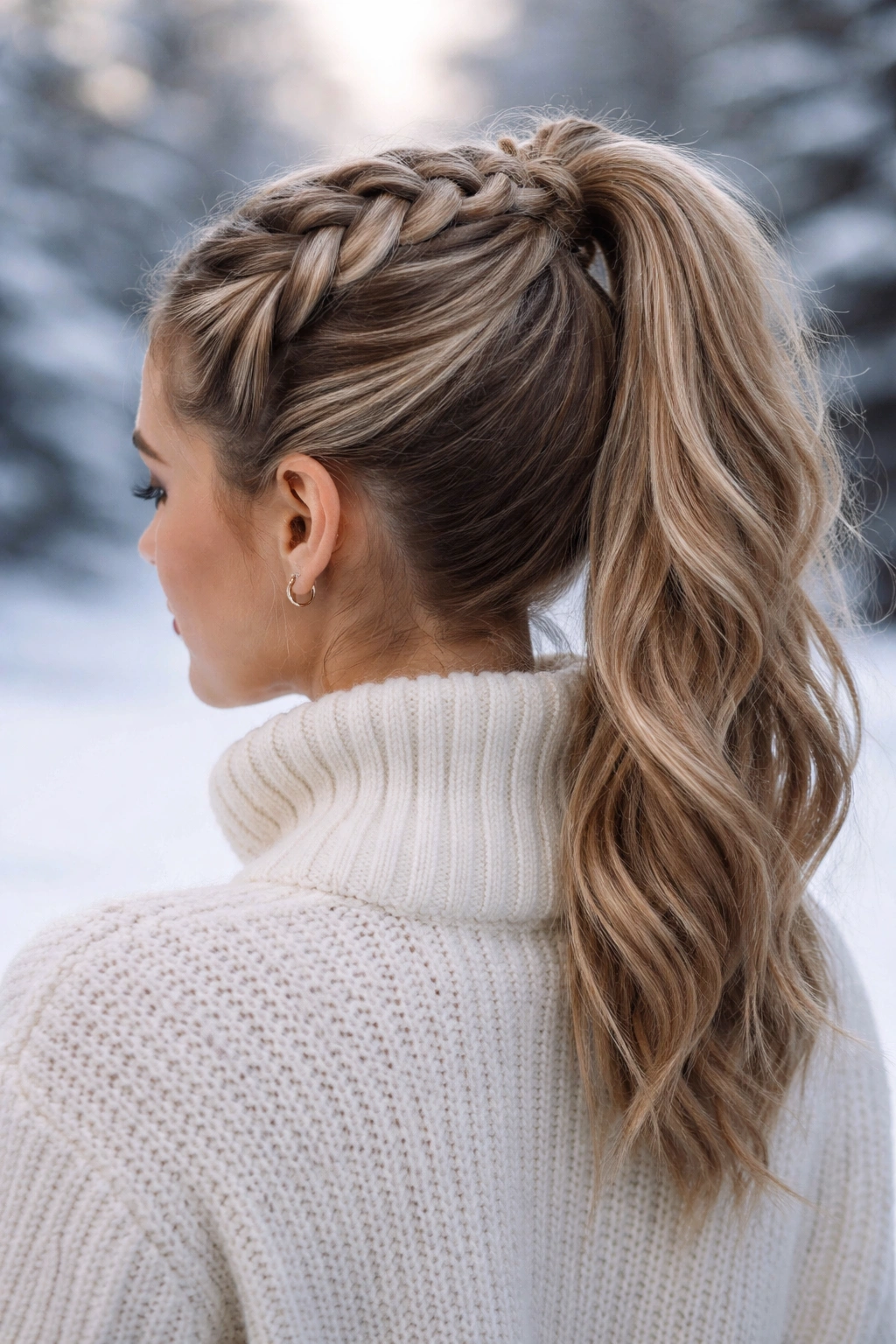
Why do Dutch-braid ponytails look so good in cold weather? Because the braid sits on top of the hair instead of disappearing into it, which gives the whole style more shape and a little more toughness.
Start a Dutch braid at the front or crown, crossing the strands under instead of over, then finish with a ponytail once you reach the back. The braid itself acts like a built-in frame, and that frame helps the style survive wind better than a plain ponytail usually does.
How to Keep It from Puffing Up
Keep the braid snug at the scalp, but not so tight that it pulls. After securing the ponytail, pinch the braid gently with your fingers to widen the rows just a touch. That creates a thicker look without turning it fluffy. If you have thick hair, this style can be your best friend. If your hair is fine, it may need a small spritz of texture spray first.
15. Teased Volume Ponytail
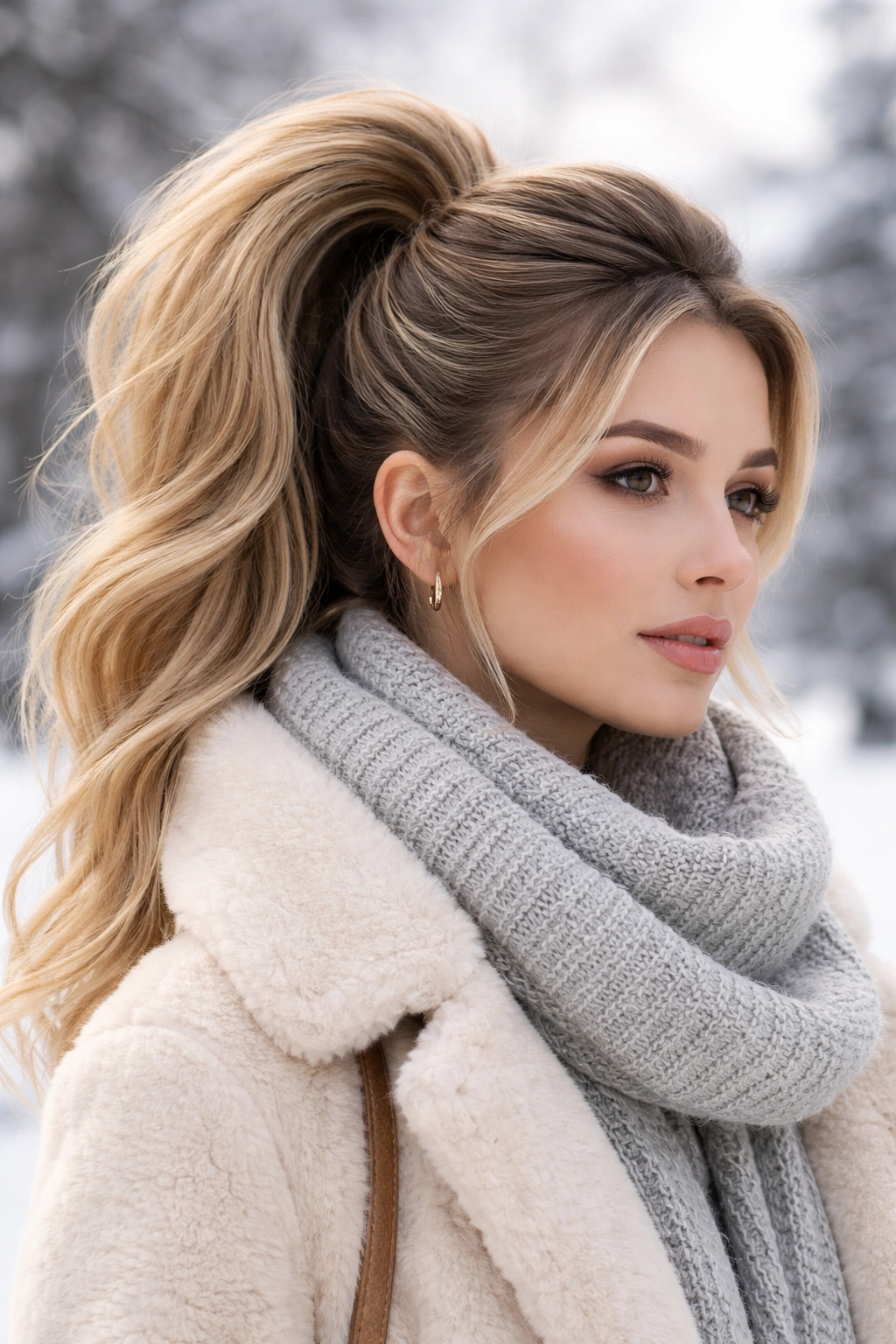
A teased volume ponytail is for the days when winter has flattened your hair and you refuse to accept it. The lift at the crown gives the ponytail some body, which keeps it from disappearing under coats and scarves.
Take two-inch sections at the crown, backcomb lightly underneath, then smooth the top layer over the teasing with a soft brush. Secure the ponytail at mid-height. The key is to leave the structure under the surface and keep the top looking polished, not puffy in a dated way.
A little dry shampoo at the roots helps here too, especially if the hair feels oily from hat wear. Use it before teasing, not after. That gives the roots more grip. If the ends are dry, add a drop of serum there only. Don’t smear it through the crown or the whole shape collapses.
16. Textured Wavy Ponytail
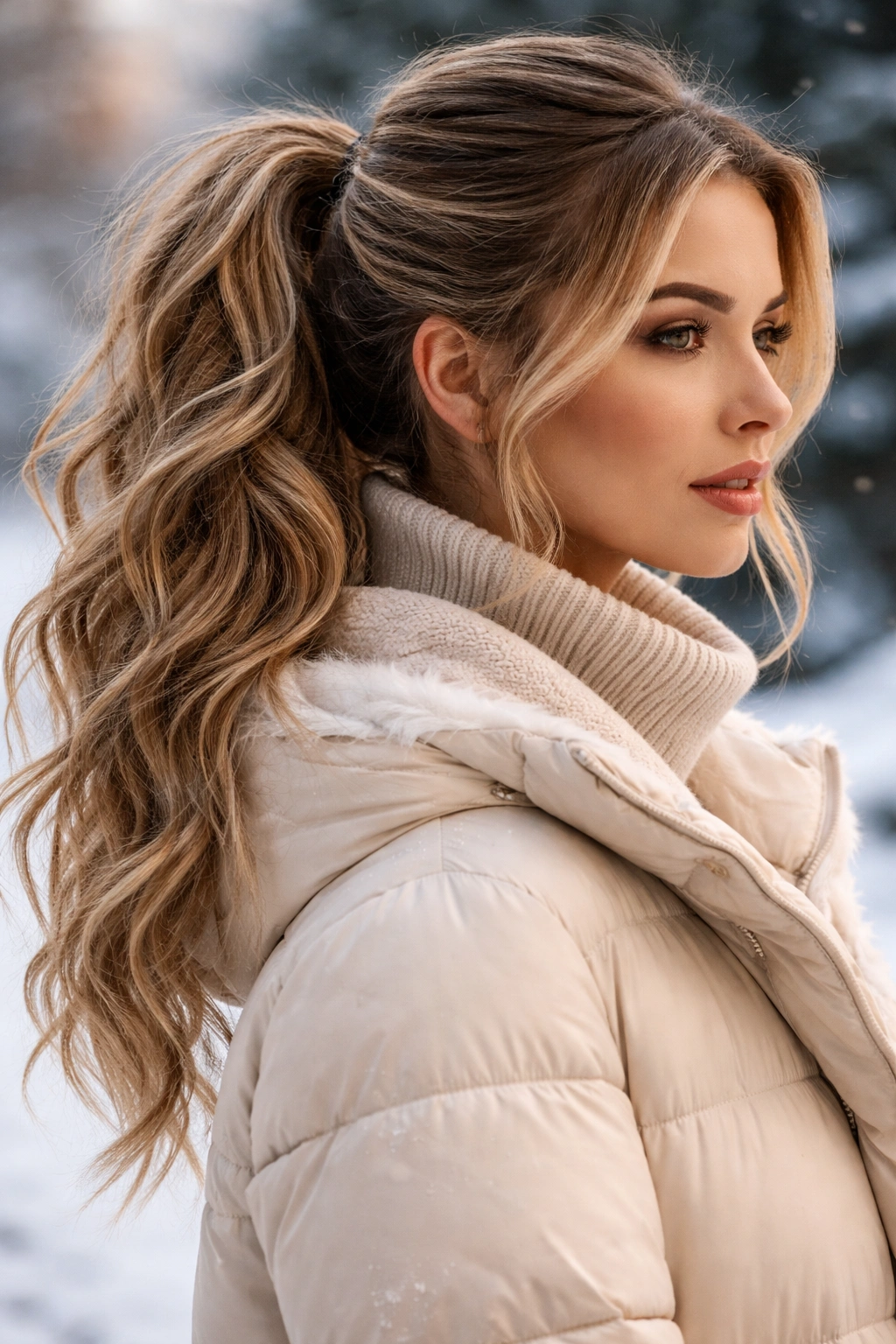
A textured wavy ponytail makes sense when static is winning and you want a style that looks intentional even if the weather is doing its worst. The waves hide little flyaways, and they make thinner hair look fuller than a pin-straight finish usually does.
Create loose bends with a 1-inch curling iron or a flat iron wave technique, alternating directions so the movement looks natural. Let the curls cool before gathering the hair into a ponytail. If you pull too soon, the waves fall flat and you lose the shape.
Unlike an ultra-sleek ponytail, this one forgives dry ends. That matters more in cold weather than people like to admit. A textured ponytail can survive a hat, a scarf, and a few gusts of wind without looking defeated when you take everything off.
17. Knotted Ponytail
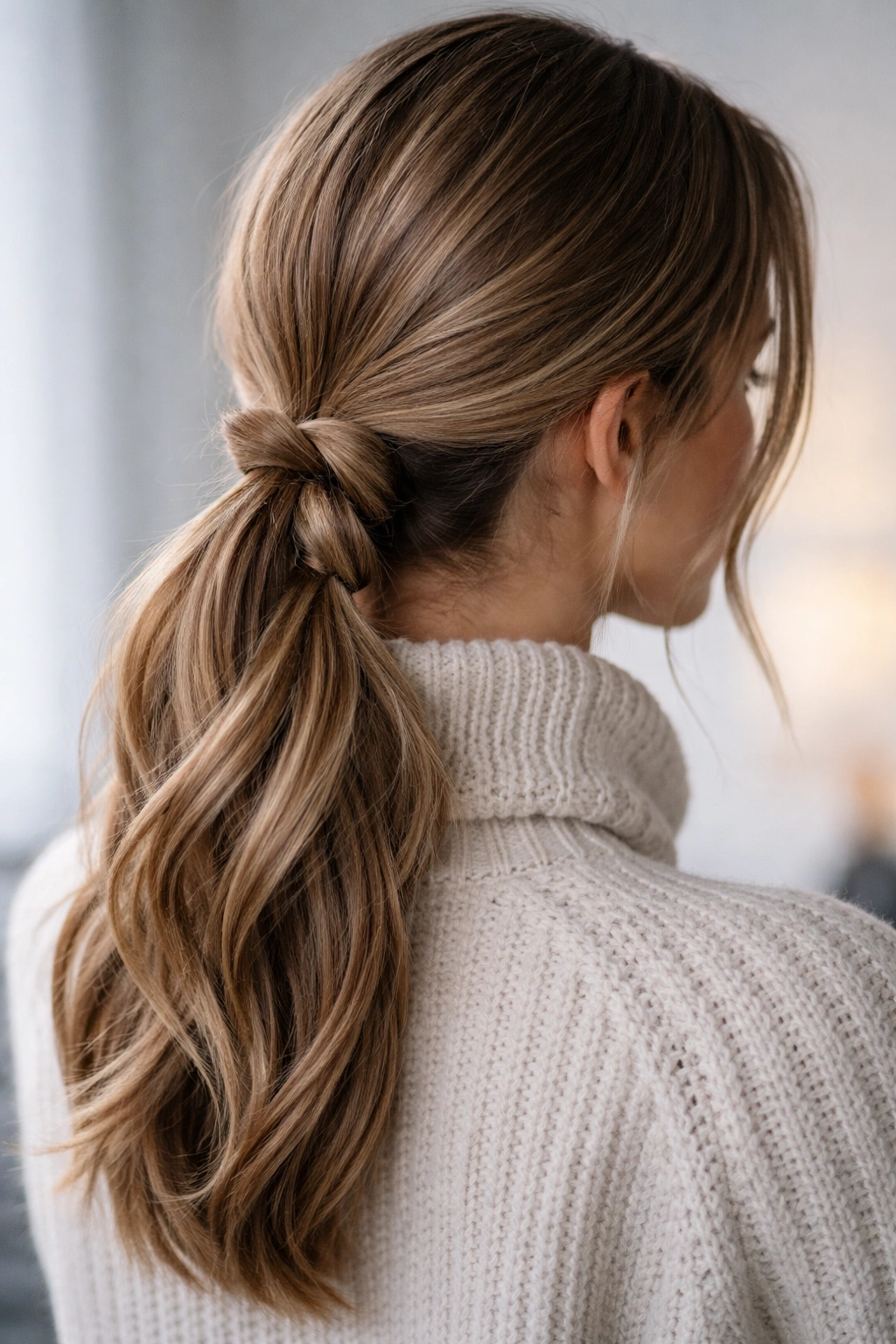
A knotted ponytail looks clever without asking for braiding skills, and that makes it a winner on rushed mornings. It also gives you a soft, wrapped shape that feels a little more special than a basic elastic tie.
Split the hair into two low sections, tie them once like a loose knot, then secure underneath with a small clear elastic or a few pins. If your hair is long enough, you can repeat the knot one more time for a stronger effect. The goal is to create visible shape without making the style bulky.
- Works best on medium to long hair.
- Looks especially nice with a side part.
- Needs a little grip, so prep with texture spray.
- Keep the knot loose enough to read as a knot, not a twist.
I like this one on cold mornings when my hair wants structure but not stiffness. It lands in that useful middle ground.
18. Side-Swept Low Ponytail
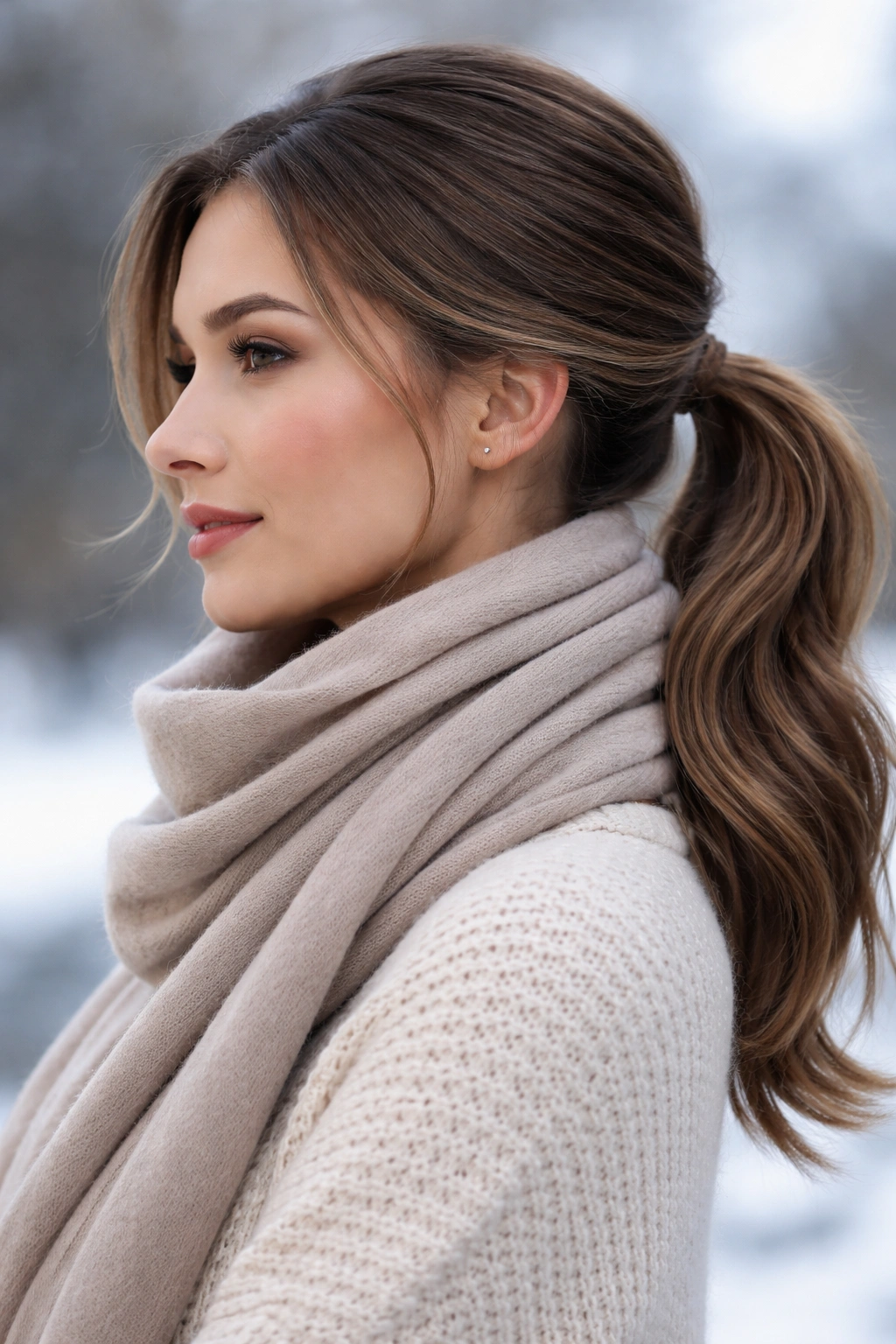
A side-swept low ponytail softens the whole face and sits comfortably with scarves that drape across one shoulder. It’s a small change, but it changes the mood of the style more than people expect.
Pull the hair to one side just behind the ear and secure it low. Add a soft bend through the lengths if the hair is stick-straight. That little curve keeps the style from looking flat against the head. If you want volume at the crown, lift the roots slightly before tying the elastic.
This one is especially kind to fine hair because the side placement creates the illusion of fullness. It’s also easier to wear with a heavy turtleneck since the ponytail doesn’t have to fight the collar line. Small practical things. They matter.
19. Clipped-Base Ponytail
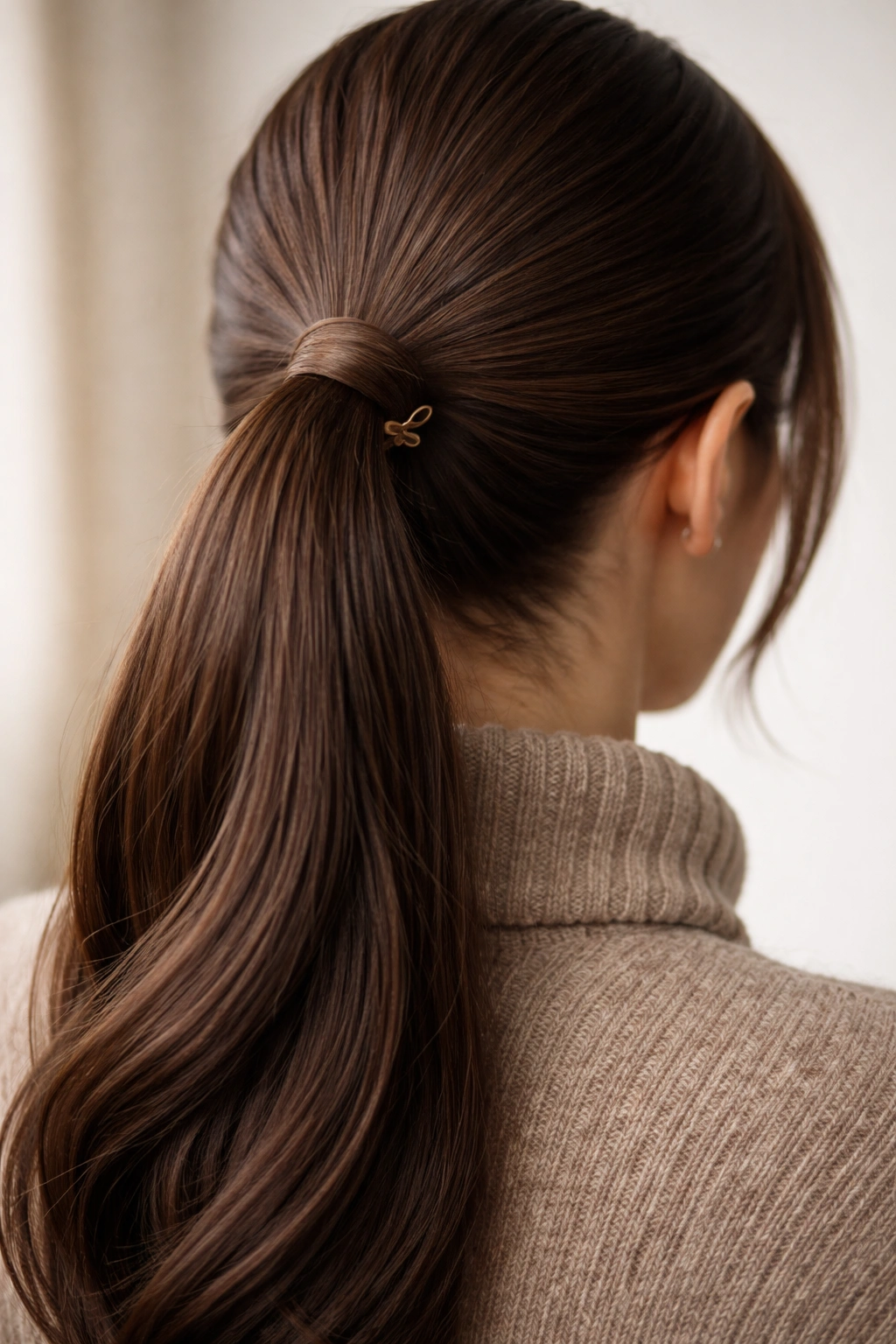
Can a claw clip and a ponytail live together? Absolutely, and the result can be a lot more comfortable than a tight elastic on its own.
Use a regular ponytail first, then place a small claw clip above or just under the elastic to support the base. The clip takes some of the weight off thick hair, which is useful when your scalp is already irritated from hats and tight sweaters. I’ve found this helpful on days when I want the hair up but don’t want a headache by noon.
How to Hide the Clip
Choose a clip close to your hair color or tuck it beneath a wrapped strand so it blends in. Keep the ponytail low to mid-height, or the clip can feel awkward against a coat collar. This style is not about perfection. It’s about relief, and sometimes relief looks better than a polished updo anyway.
20. Curtain-Bang Ponytail
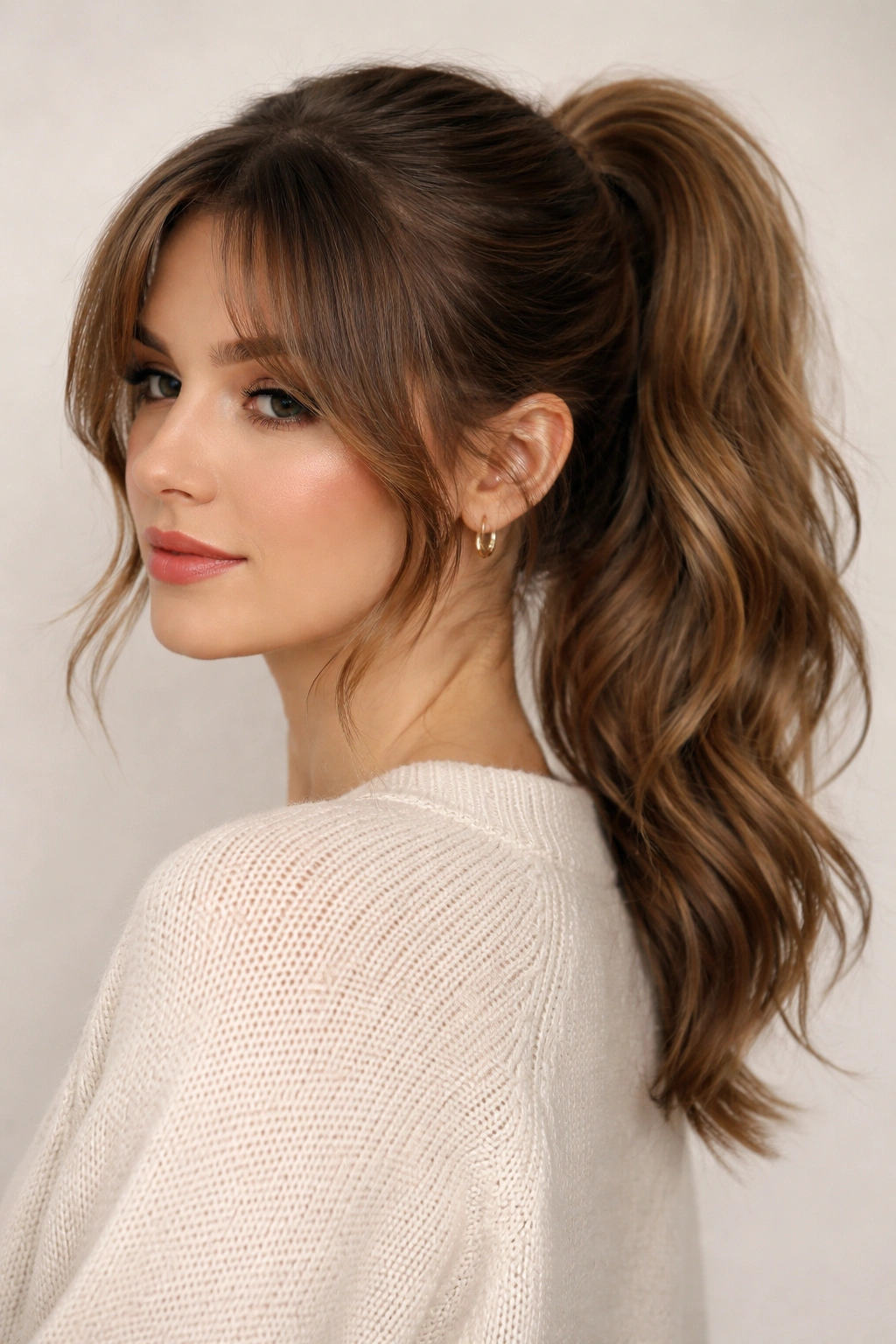
Curtain bangs change a cold-weather ponytail fast. They soften the front, keep the style from feeling severe, and give you movement even when the rest of the hair is tied back.
Leave the bangs out on purpose, then shape them with a round brush or a large roller while the hair is still warm from blow-drying. Let them fall away from the face instead of tucking them flat. That curve is what makes the style work. If the bangs get oily from hat wear, a small puff of dry shampoo at the roots helps a lot.
I like this style because it balances structure and softness. The ponytail does the practical work. The bangs do the pretty work. No argument between the two.
21. Sleek Mid Ponytail with Serum Finish
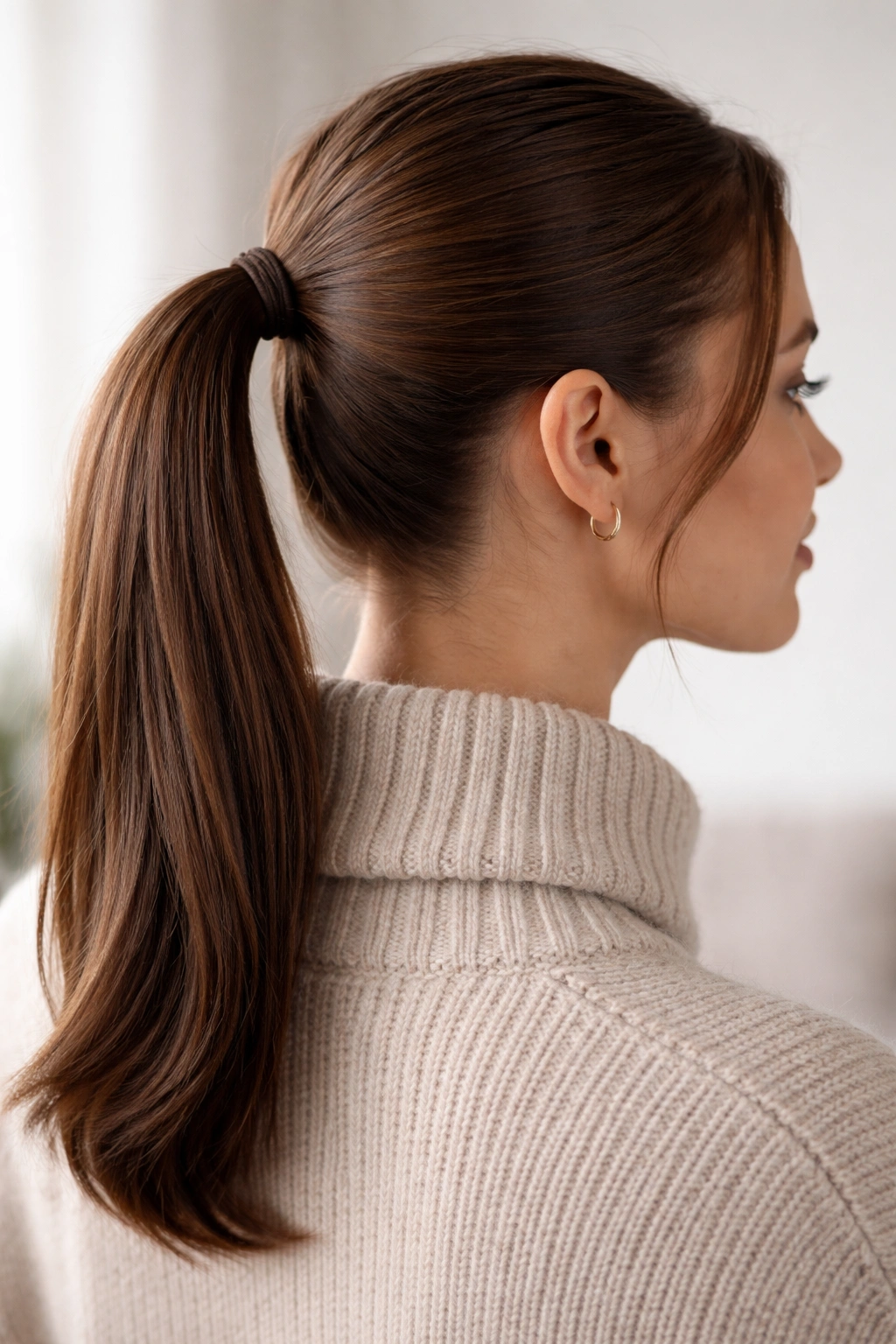
A mid ponytail sits in a useful middle zone. It avoids the collar line better than a low ponytail, but it doesn’t sit so high that a hat crushes it flat.
Brush the hair back to the middle of the head and smooth the surface with a tiny amount of serum or lightweight cream. Use enough to tame static, but not enough to make the roots shiny. A mid ponytail can turn greasy-looking fast if you overdo the product, and that is the one thing this style does not need.
Compared with a high ponytail, it feels calmer. Compared with a low ponytail, it shows off more of the face. That makes it a good everyday option when the weather changes a lot between outside and inside. You don’t have to baby it much, which I appreciate.
22. Fishtail Ponytail
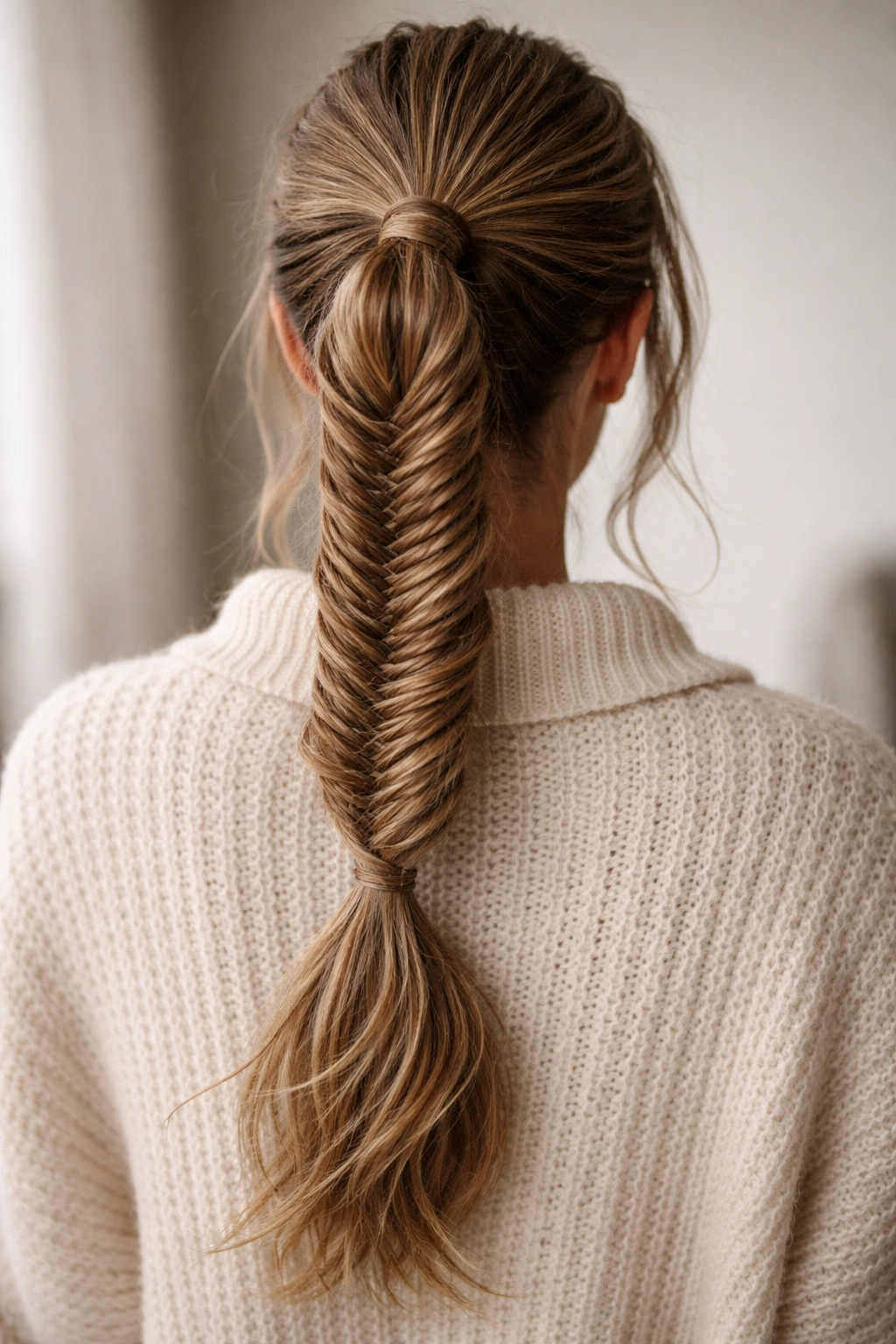
A fishtail ponytail looks intricate, but it has a practical side too. The woven structure keeps the hair together, so the style holds its shape better than loose lengths in dry wind.
Split the ponytail into two sections, then take a small piece about 1/4 inch thick from the outer edge of one section and cross it over to the other side. Keep repeating that same move, alternating sides all the way down. The smaller the pieces, the tighter and more detailed the braid looks. The bigger the pieces, the softer it feels.
- Best on hair with a little texture.
- Works well on long hair past the shoulders.
- Looks better if you tug the braid wider at the end.
- Holds up well after a light mist of flexible spray.
This is a good one when you want something that reads polished but not stiff. It has texture without trying too hard.
23. Double Ponytail for Thick Hair
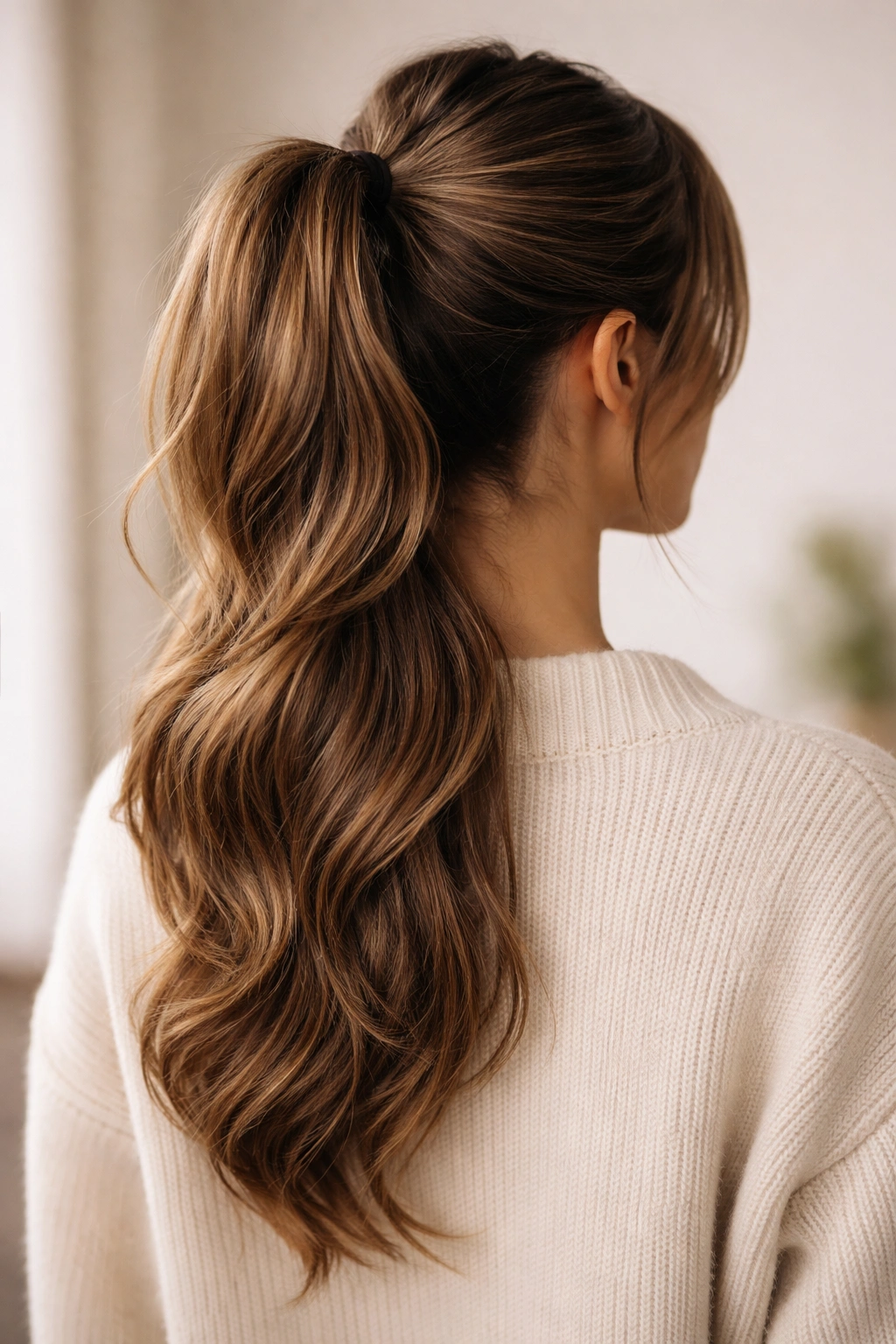
Thick hair can drag a single ponytail downward until the whole style sits too low and too heavy. A double ponytail fixes that by dividing the weight.
Gather the top half of the hair into a ponytail first, then secure the lower half just beneath it. The upper ponytail hides the base of the lower one, so the two read as a single fuller ponytail with better lift. It’s a small trick, but it changes the shape a lot.
This style is especially useful in cold weather because thick hair under scarves can feel bulky fast. Splitting the weight keeps the nape from getting overwhelmed. If the lower layer is layered or shorter, smooth it with a touch of cream first so it blends instead of sticking out underneath. That one detail makes the style look deliberate instead of improvised.
24. Tucked-Low Ponytail
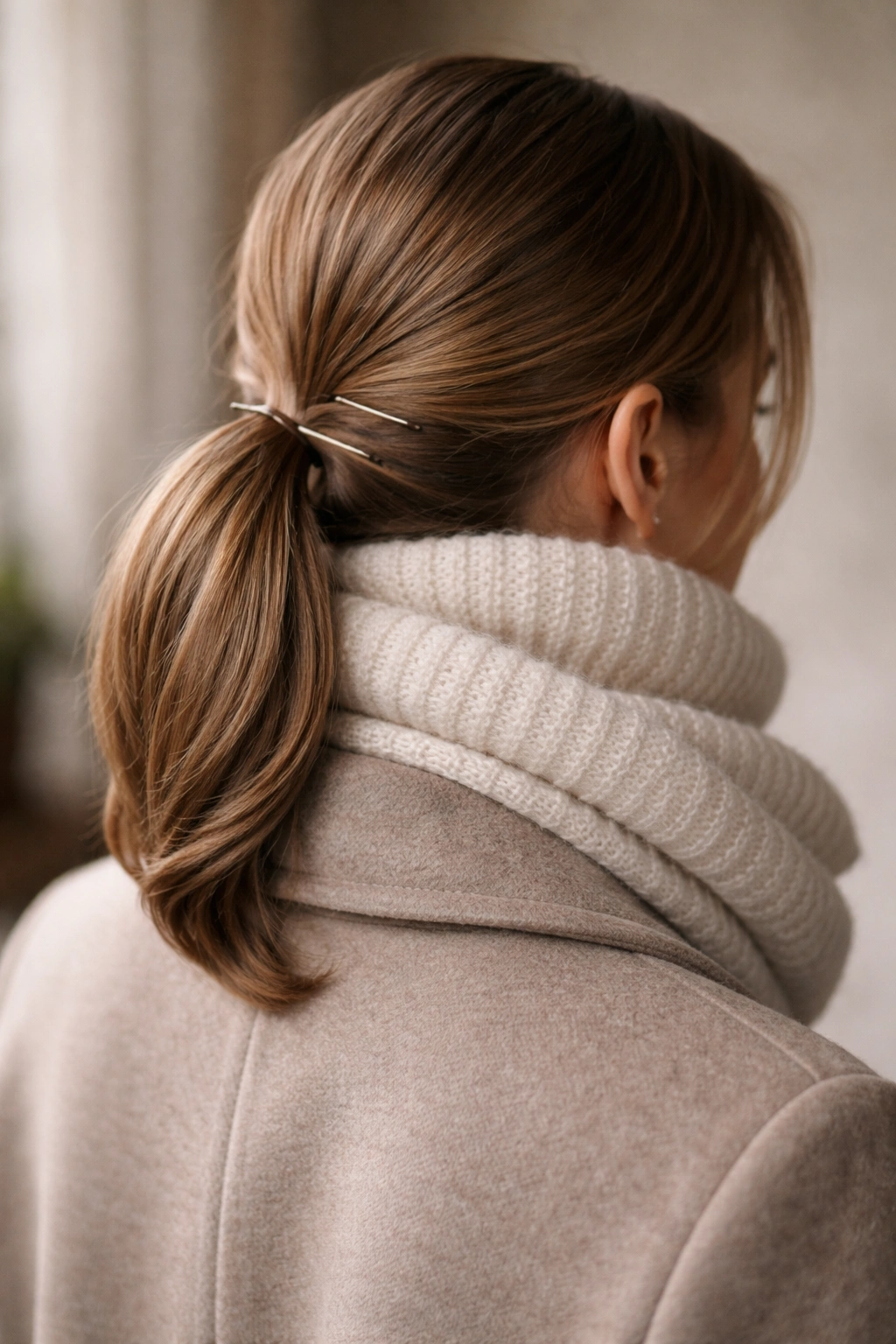
What do you do when the ends keep catching on your coat? Tuck them in.
A tucked-low ponytail folds the tail under itself or into a scarf loop, then pins it lightly so the ends stay protected. It’s tidy, compact, and excellent for icy commutes when you do not want your hair swishing against your jacket all day. The visual effect is neat, almost sculptural, but the reason to wear it is practical.
How to Make It Stay Flat
Keep the ponytail low and use a soft elastic first. Then roll or fold the tail upward and pin it with 2 to 4 bobby pins, depending on thickness. If you want more hold, mist the tucked section with light-hold spray before pinning. This style works best when the hair is slightly textured, not freshly washed and slippery.
25. Satin-Scrunchie Ponytail
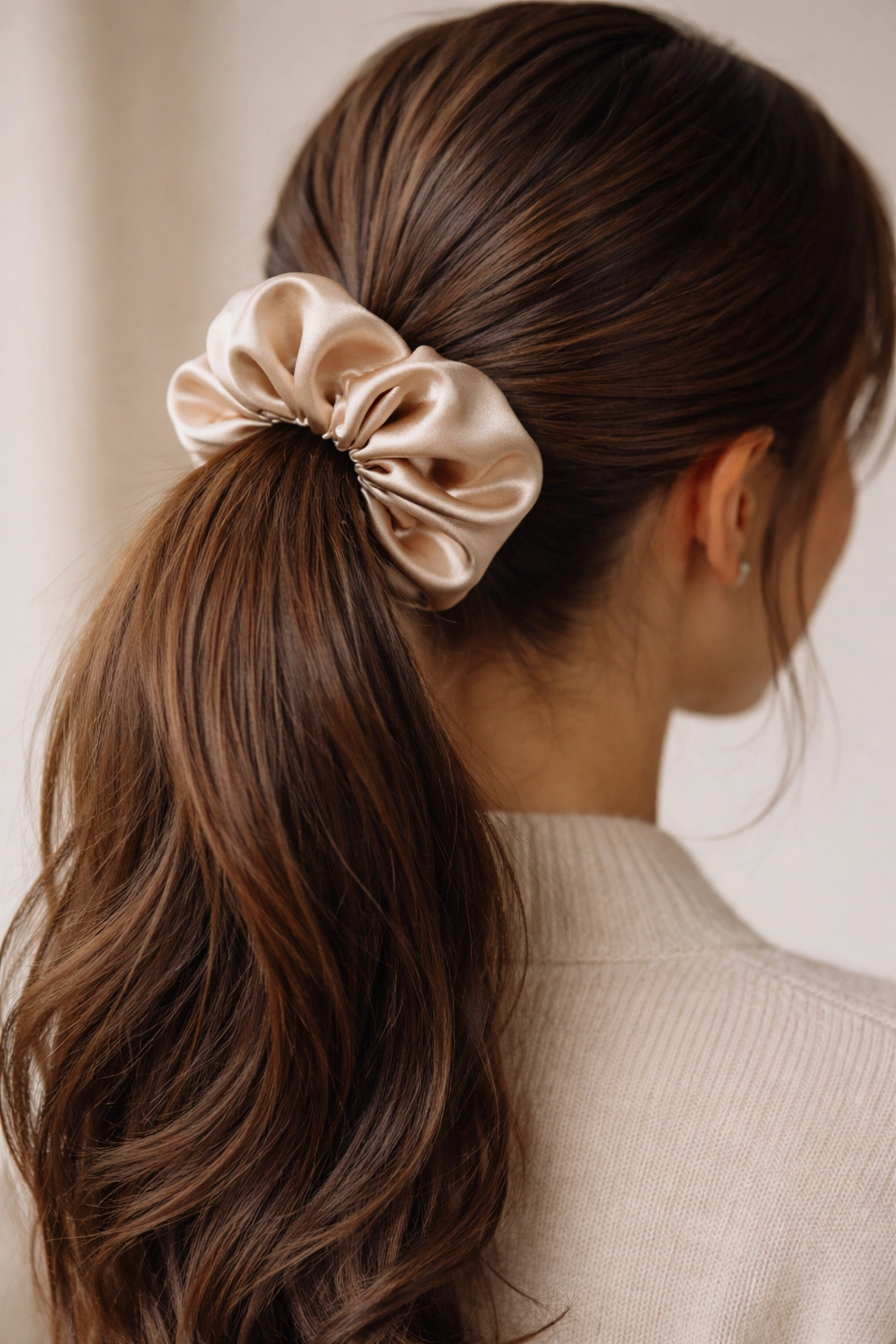
A satin-scrunchie ponytail is the easiest style in the bunch, and I mean that in the best way. Satin reduces friction, which helps keep static down and protects the hair from the kind of rubbing that happens all day in cold weather.
Choose an oversized satin scrunchie for thick hair or a slimmer one for finer hair. Tie the ponytail at the nape, mid-height, or even higher if you want, then let the scrunchie do the visual work. The softness of the fabric makes the style feel kinder than a plain elastic ever does.
This is the ponytail I’d wear on a lazy day, an office day, or any day when my hair already feels dry and I want to stop arguing with it. It is not flashy. It does not need to be. Some styles earn their place because they make the hair feel better while still looking finished.
Final Notes
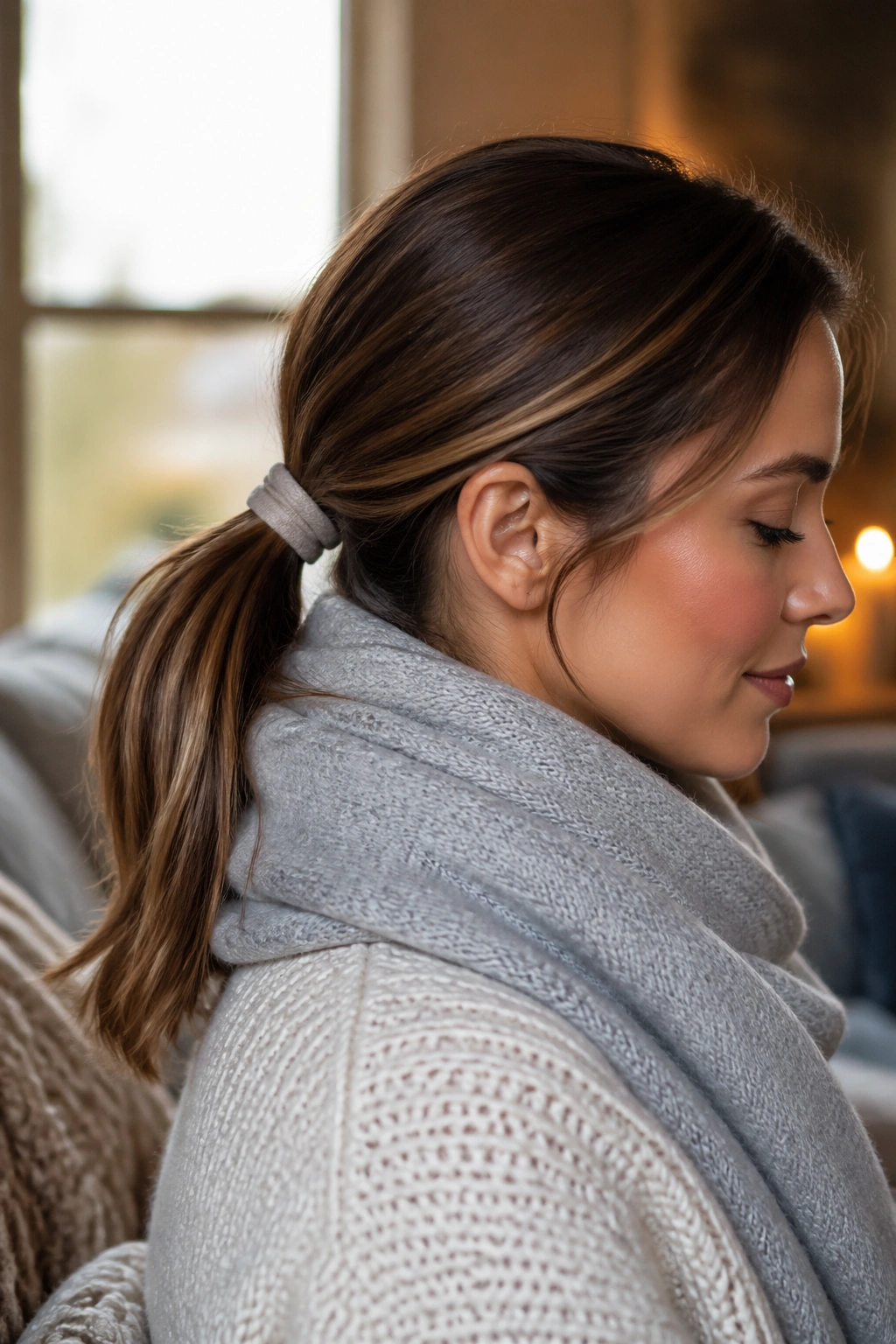
Cold-weather ponytails are better when they do one simple thing well: reduce friction. That means soft ties, low tension, and styles that keep the hair from rubbing itself raw against collars, scarves, and hat bands. The prettiest version is not always the smartest one.
If your hair is getting static-prone, try misting your brush with water and a tiny bit of leave-in conditioner before you smooth the surface. That tiny habit can calm flyaways without soaking the hair or making the roots limp. Small fix. Big difference.
And if a style looks a little too neat for your taste, pull out one thin face-framing piece or loosen the crown by a few millimeters. That’s usually enough. Hair in cold weather rarely wants to be perfect; it wants to be handled with a little care and a little less friction than usual.