



A low ponytail is the hairstyle that survives actual life. It handles coffee runs, office chairs, grocery bags, headphones, and the annoying little gust of wind that shows up the second you step outside. When it’s done well, it looks deliberate. When it’s done badly, it looks like you gave up halfway through the morning.
That gap is smaller than most people think. A ponytail sits a little higher or lower, the part shifts by half an inch, or the elastic gets hidden instead of left exposed — and suddenly the whole style changes. The shape near the nape matters. So does the finish on the crown. So does whether your ends are sleek, waved, braided, or left a little messy on purpose.
The nice thing about low ponytails is that they’re forgiving. Straight hair, wavy hair, curly hair, coily hair, fine hair, thick hair — all of it can wear a low ponytail without looking generic. You just need the right version for the day you’re having.
Some days call for polished. Some days want soft and loose. And some days, honestly, just need your hair out of your face without making you look like you wrestled with it.
1. Sleek Center-Part Low Ponytail
A clean center part gives a low ponytail that calm, tidy look that works with almost anything you wear. Smooth the top with a light serum or a drop of cream, brush everything straight back, and anchor the elastic right at the nape. Keep the crown flat. That’s the whole point.
I like this version because it looks intentional without asking for much. If you have flyaways around the hairline, mist a boar-bristle brush with water or hairspray and smooth them down instead of dumping more product on top. Too much product near the part turns shiny in a bad way.
Wrap a thin strand around the elastic for a cleaner finish. Small detail, big payoff.
2. Soft Side-Part Low Ponytail
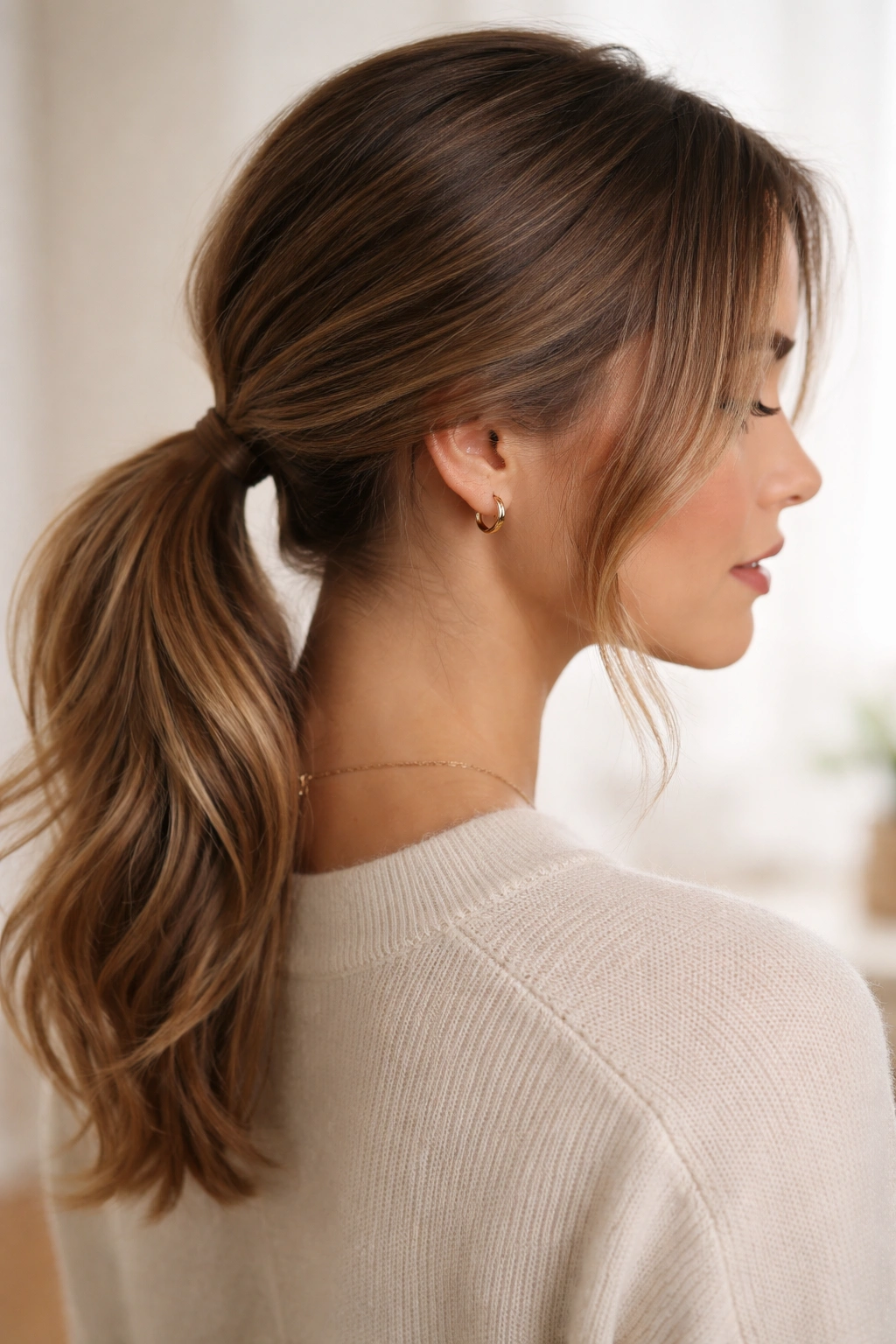
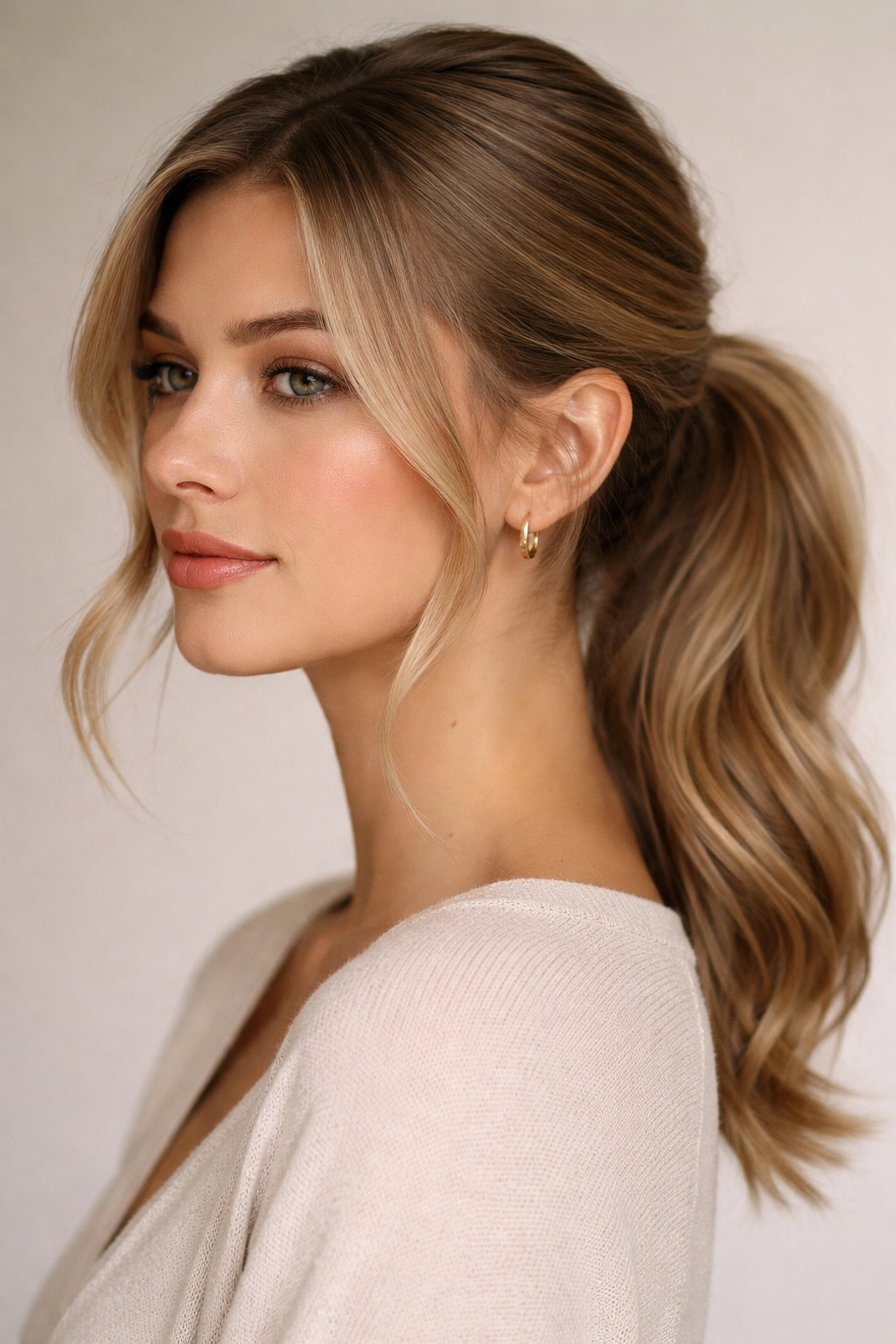
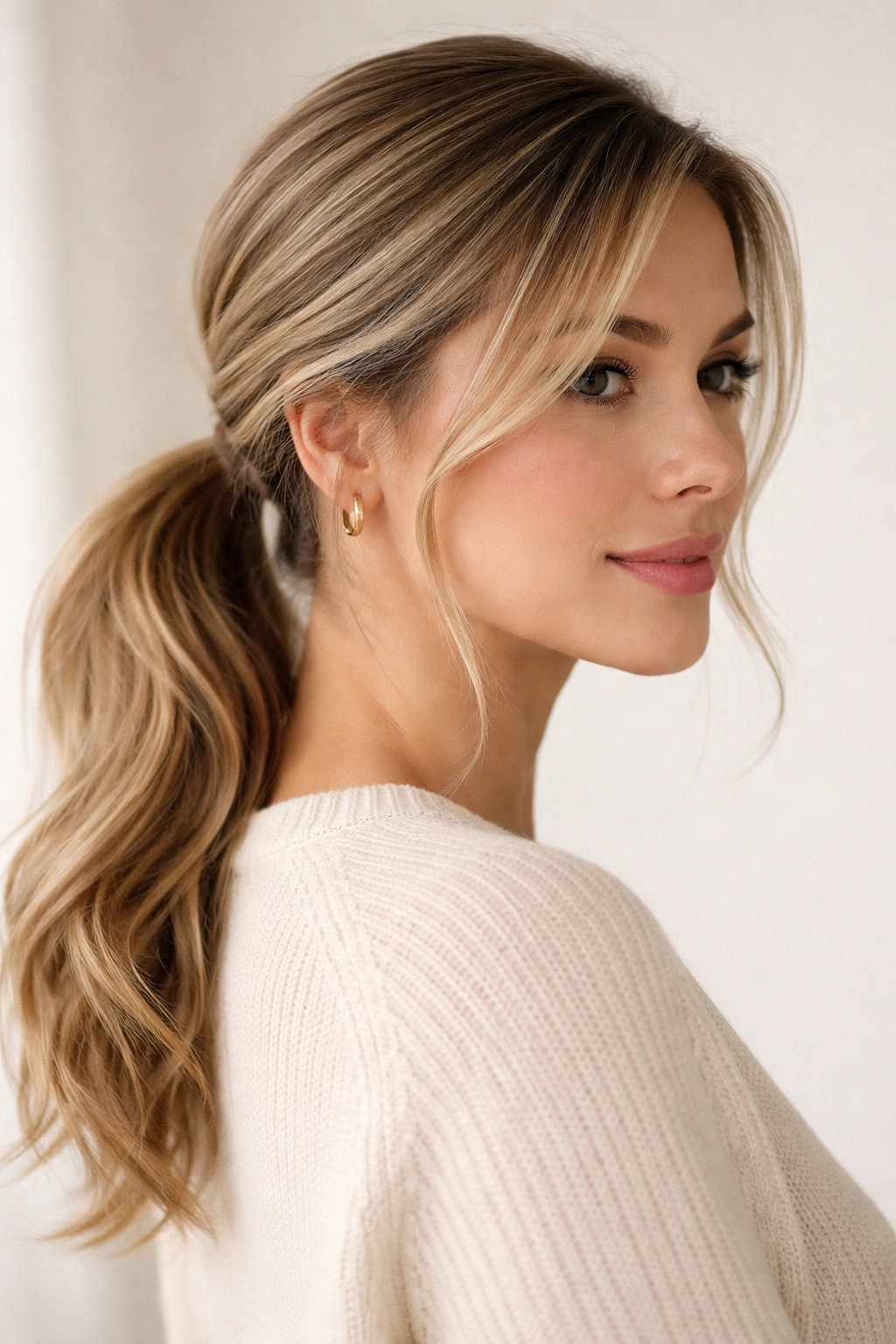
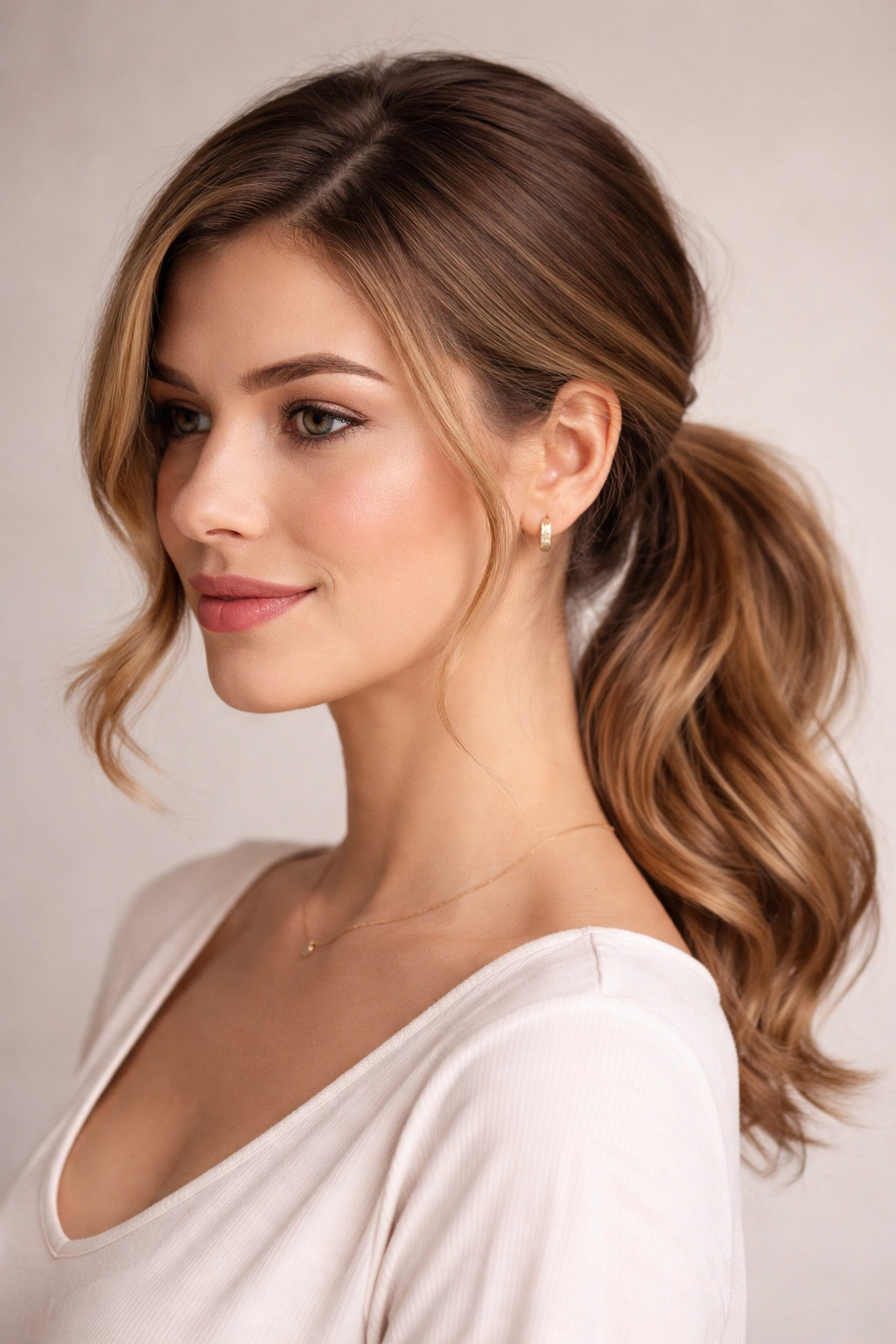
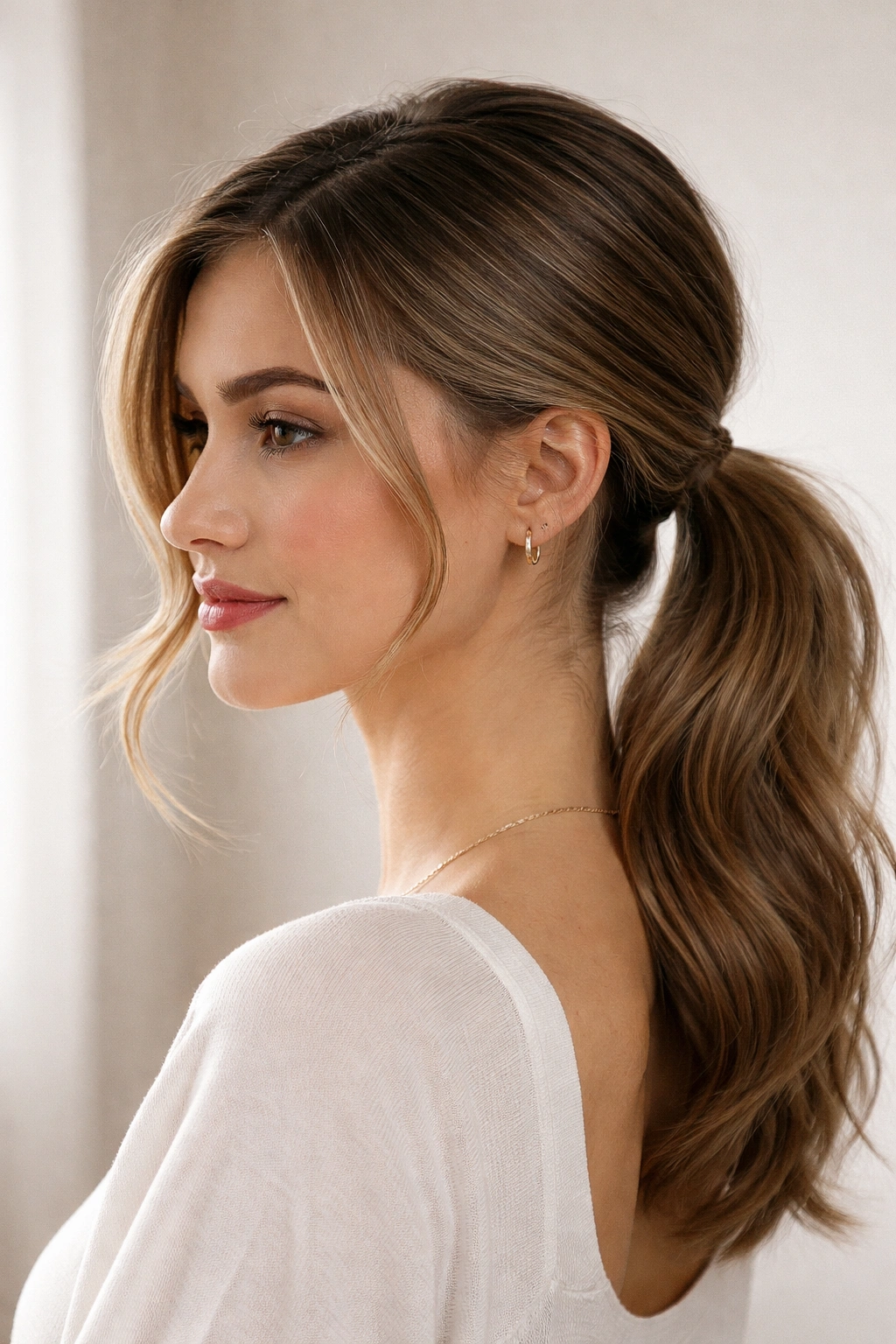
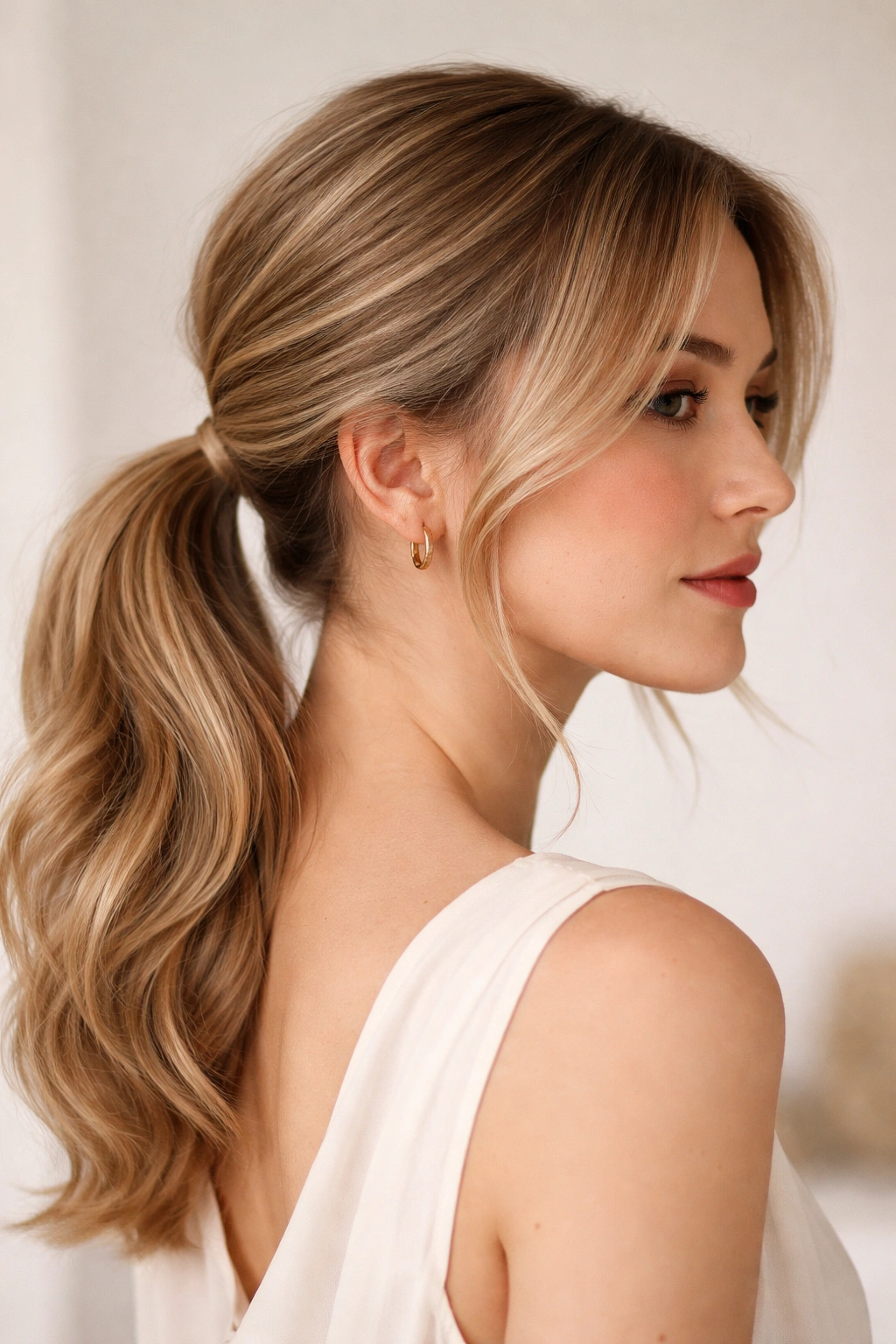
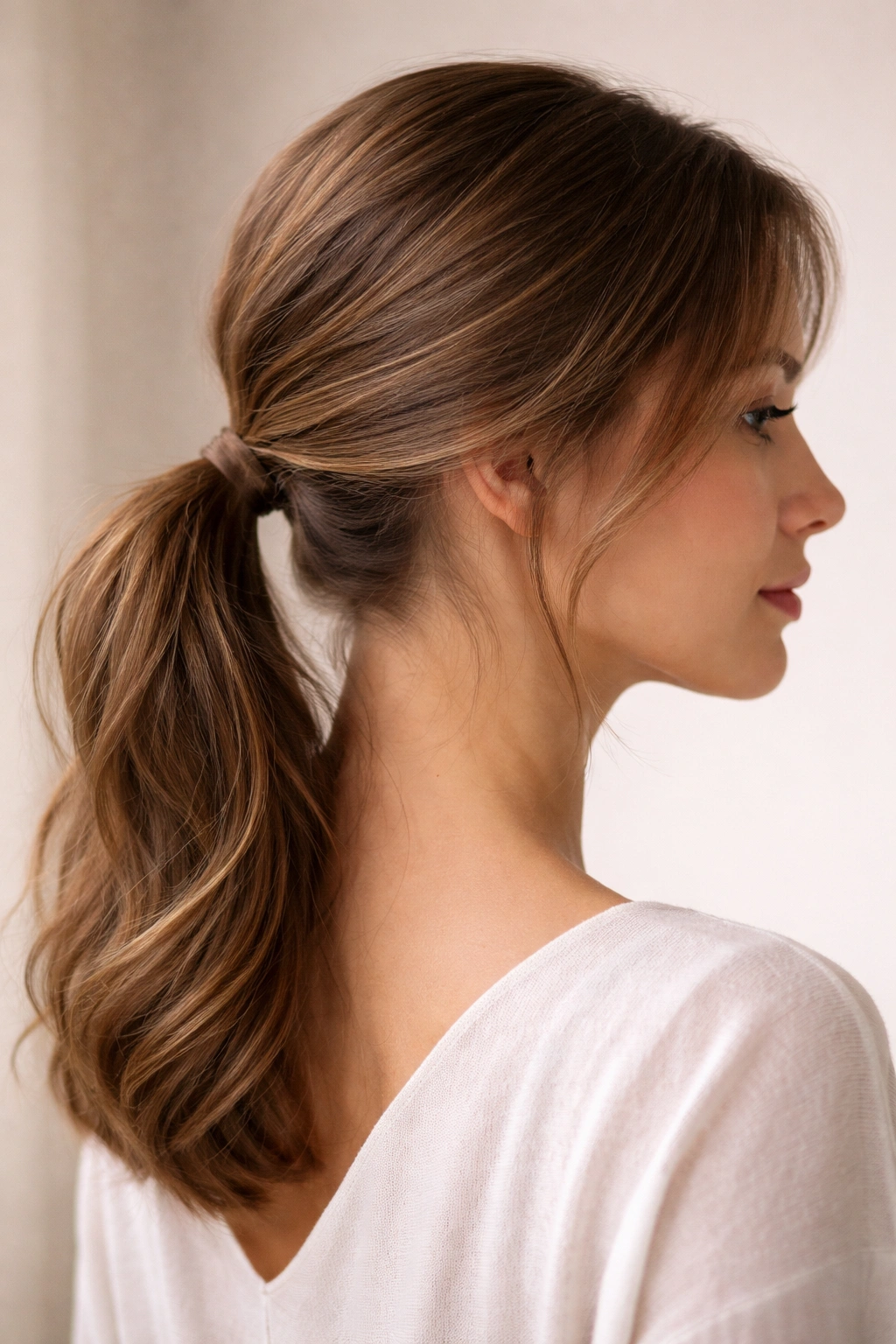
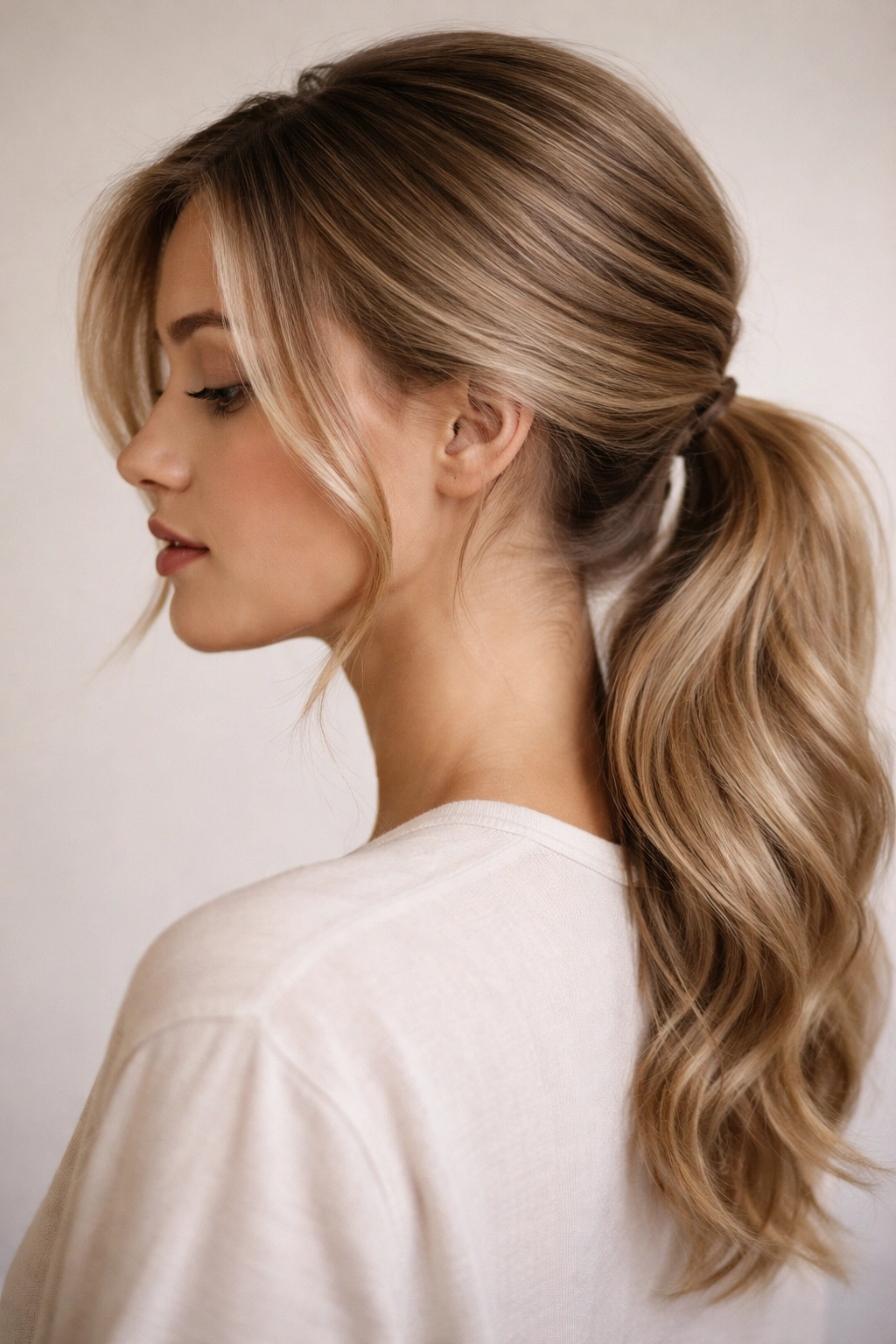
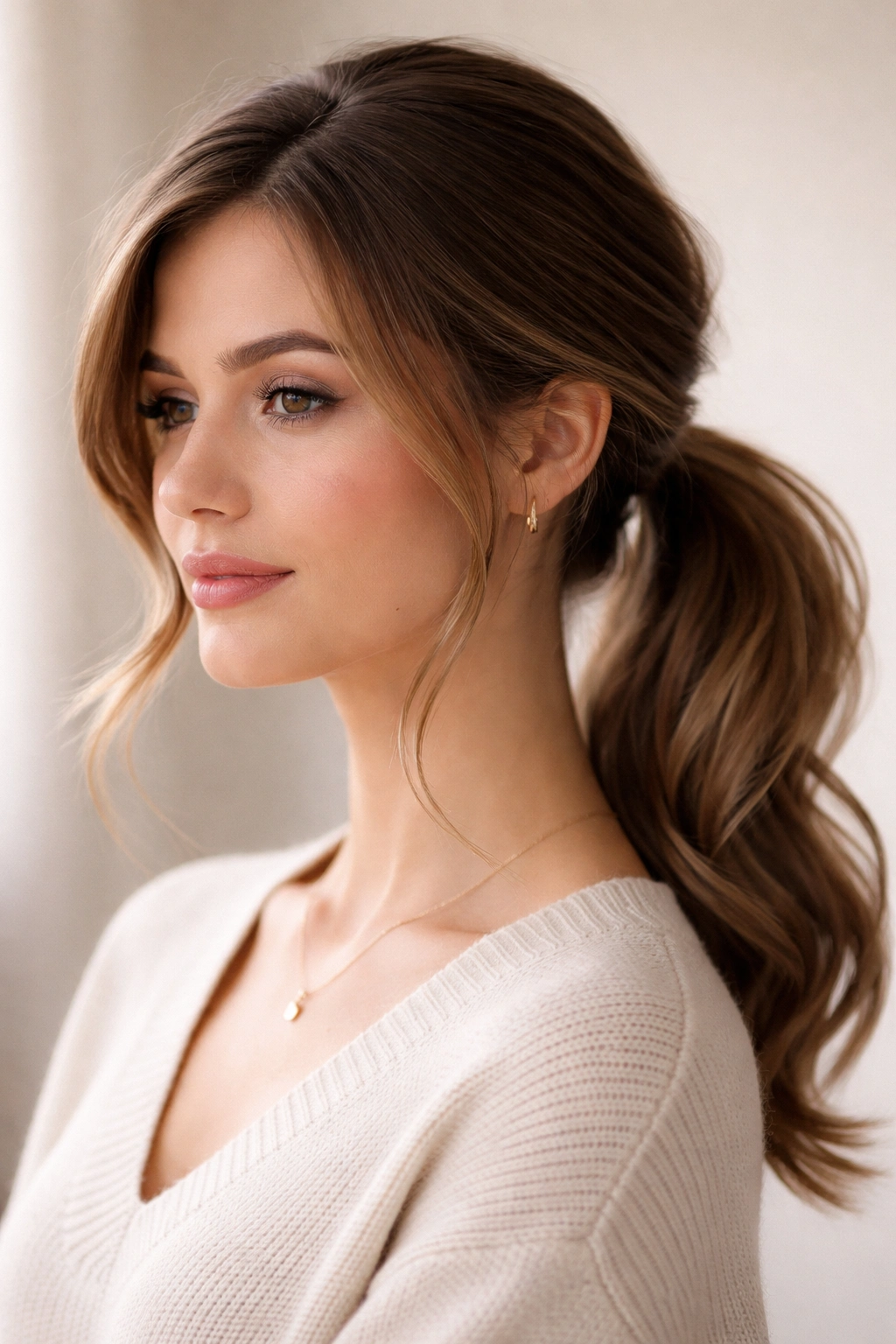
Why does a side part make low ponytails look softer? Because it breaks up the line before the hair ever reaches the nape. A deep or medium side part takes the edge off a strict style, which is handy on days when you want tidy hair but not a severe look.
Keep the root lift gentle. A little dry shampoo at the crown, then a soft brush-through, usually does the trick. Pull the ponytail low and slightly off-center rather than dead straight back.
Tiny trick
Leave the front section a touch loose before you tighten the elastic. That small slack keeps the style from looking too pulled. If the ends are flat, bend them with a 1-inch curling iron for a minute or two.
3. Wrapped-Base Low Ponytail
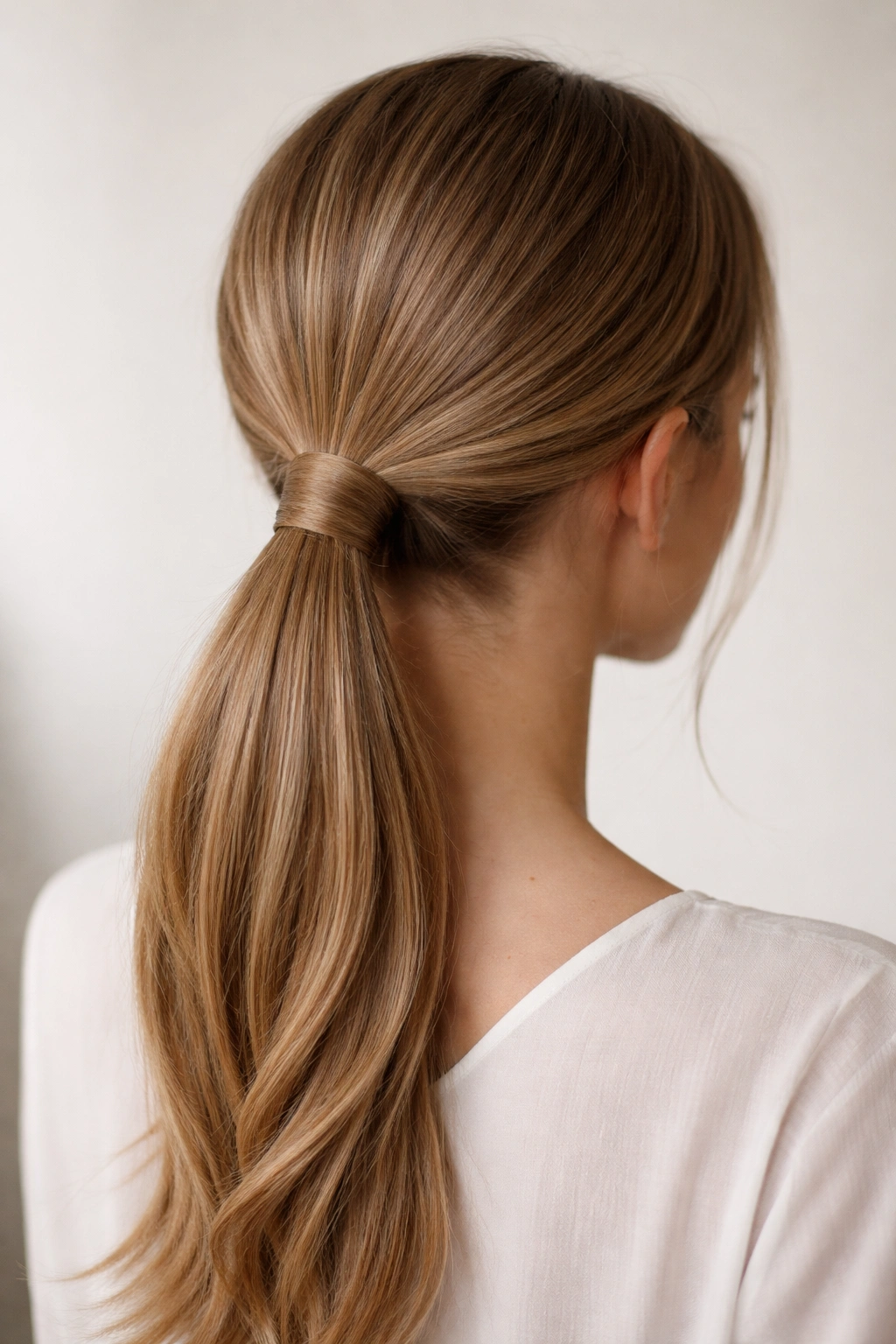
A wrapped base fixes the thing that ruins a lot of low ponytails: the elastic showing. Take a thin strand from underneath the ponytail, wind it around the tie, and pin the end under the base. It sounds fussy. It isn’t.
Best part: it makes even a simple ponytail look finished.
Works well on: straight hair, blown-out hair, and wavy hair that needs a cleaner shape.
Try this: keep the wrap strand no thicker than a pinky finger so it lies flat.
If your hair slips, place one bobby pin vertically through the wrapped strand and one horizontally underneath. That usually holds better than a single pin.
4. Bubble Low Ponytail
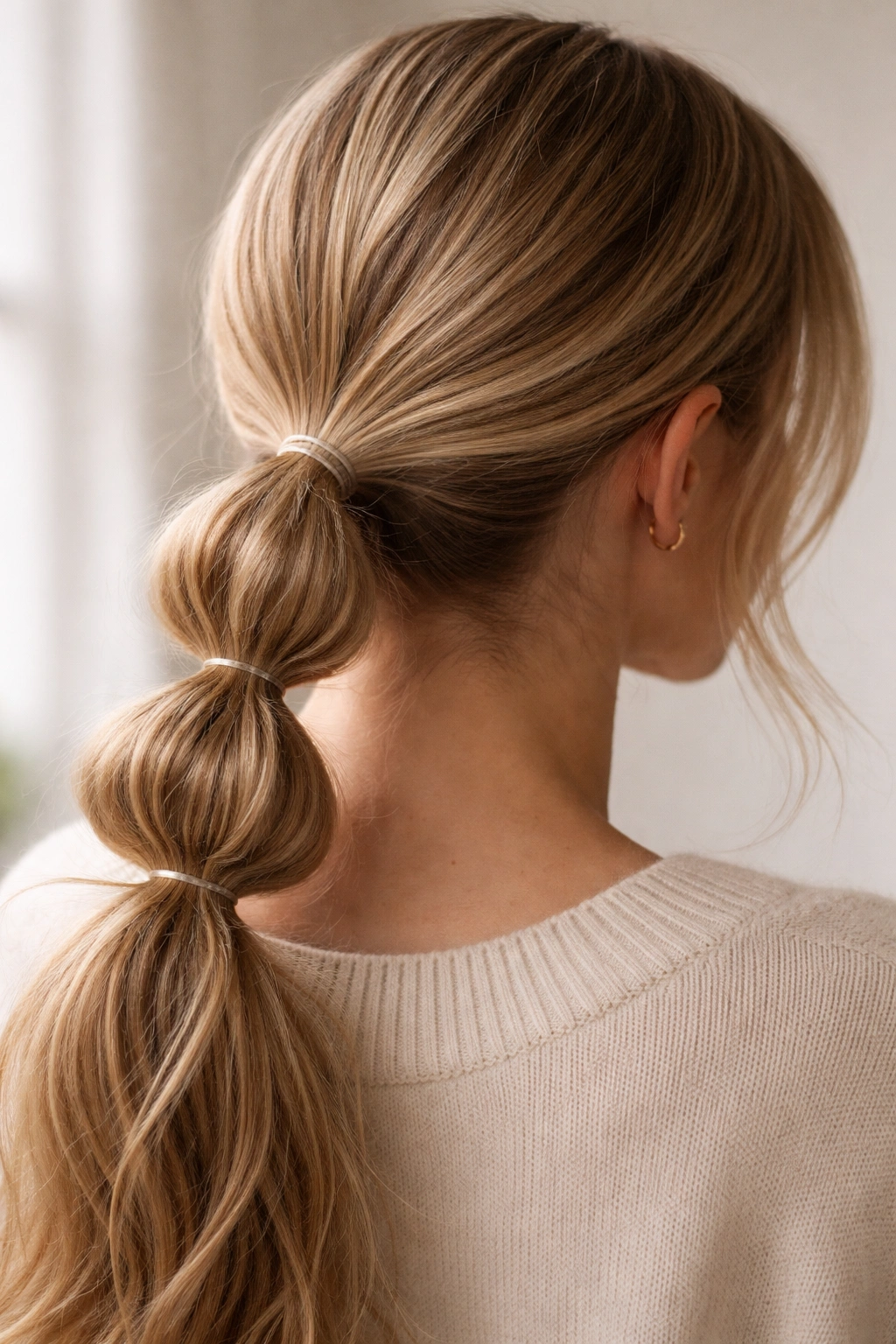
Bubble ponytails are playful without feeling childish, especially when the bubbles are small and spaced evenly. Start with a low ponytail, then add clear elastics every 2 to 3 inches down the tail. Gently tug each section outward so it rounds into a soft bubble.
This one loves thick hair, extensions, and long lengths. It also hides uneven ends better than people expect. If your hair is fine, mist the tail with texture spray before you start; the bubbles hold shape much better when the hair has a little grip.
Keep the top smooth and the bubbles relaxed. Tight, perfect circles can look stiff. Soft puffed sections feel easier to wear.
5. Braided Low Ponytail
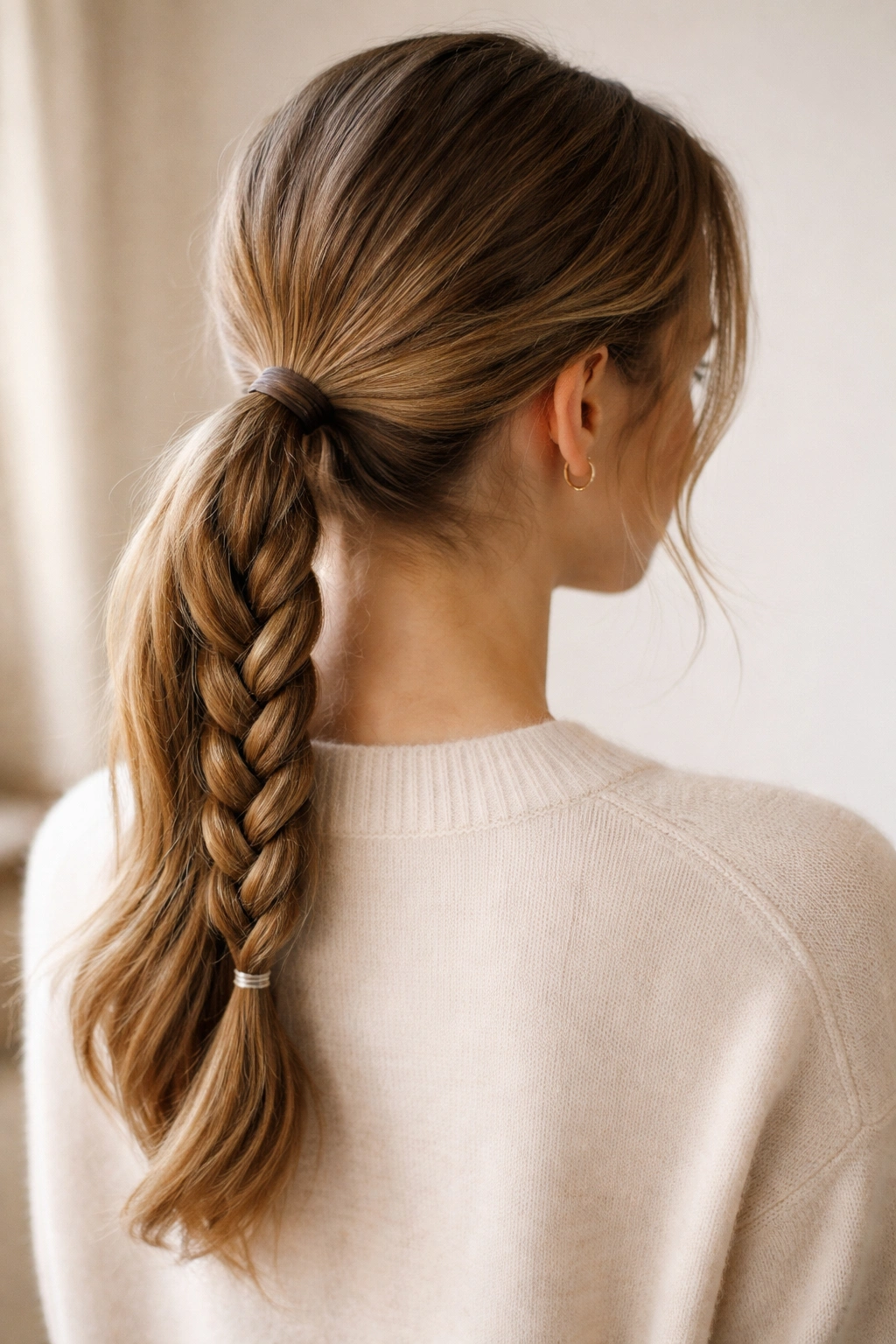
A braid turns a low ponytail into something that stays neat all day. Pull the hair low, secure it, then braid the tail with a simple three-strand braid and finish with a small elastic. It’s not fancy. It just works.
What makes it hold up
Braiding the tail keeps ends from tangling, which matters more than it gets credit for. If you’re dealing with layers, lightly mist the hair first so shorter pieces stay folded into the braid instead of escaping at the sides.
I reach for this one on busy days, especially when I know I’m taking a scarf off and on, or I’ll be brushing my coat collar against my hair. It keeps its shape better than a loose ponytail.
6. Twisted Low Ponytail
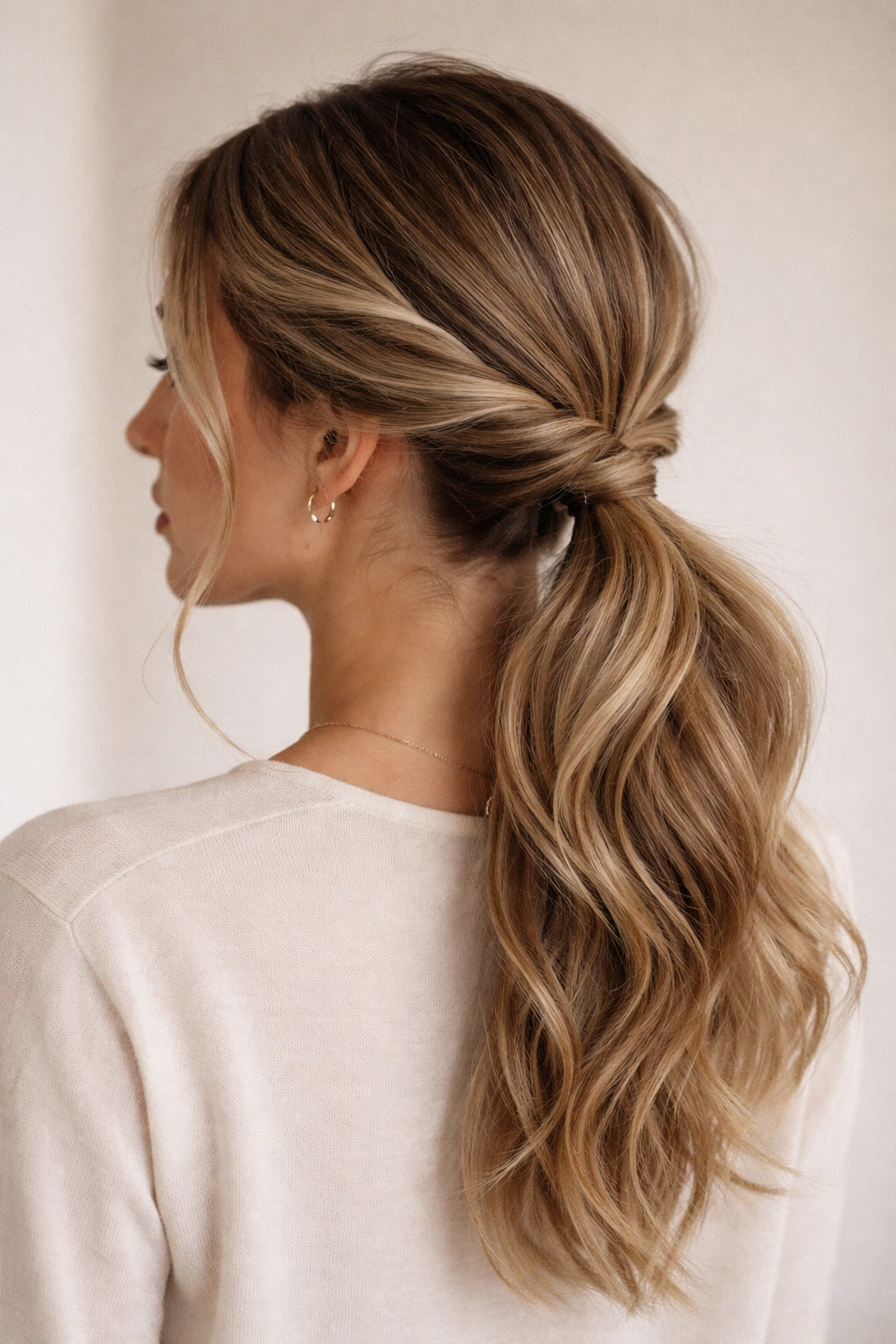
Two side twists can make a low ponytail feel softer than a full braid. Part the hair down the middle or slightly off-center, twist each front section back toward the nape, and pin them before gathering everything into a ponytail. The result looks calm and a little romantic, without tipping into occasion hair.
A twist is also kinder to layered cuts than a braid sometimes is. Fewer tiny pieces stick out. The shape stays loose enough to feel casual, but there’s still some detail at the sides.
If your hair is slippery, pinch the twists flat with one hand while you secure them. That keeps them from unraveling before you reach for the elastic.
7. Low Ponytail With Face-Framing Pieces
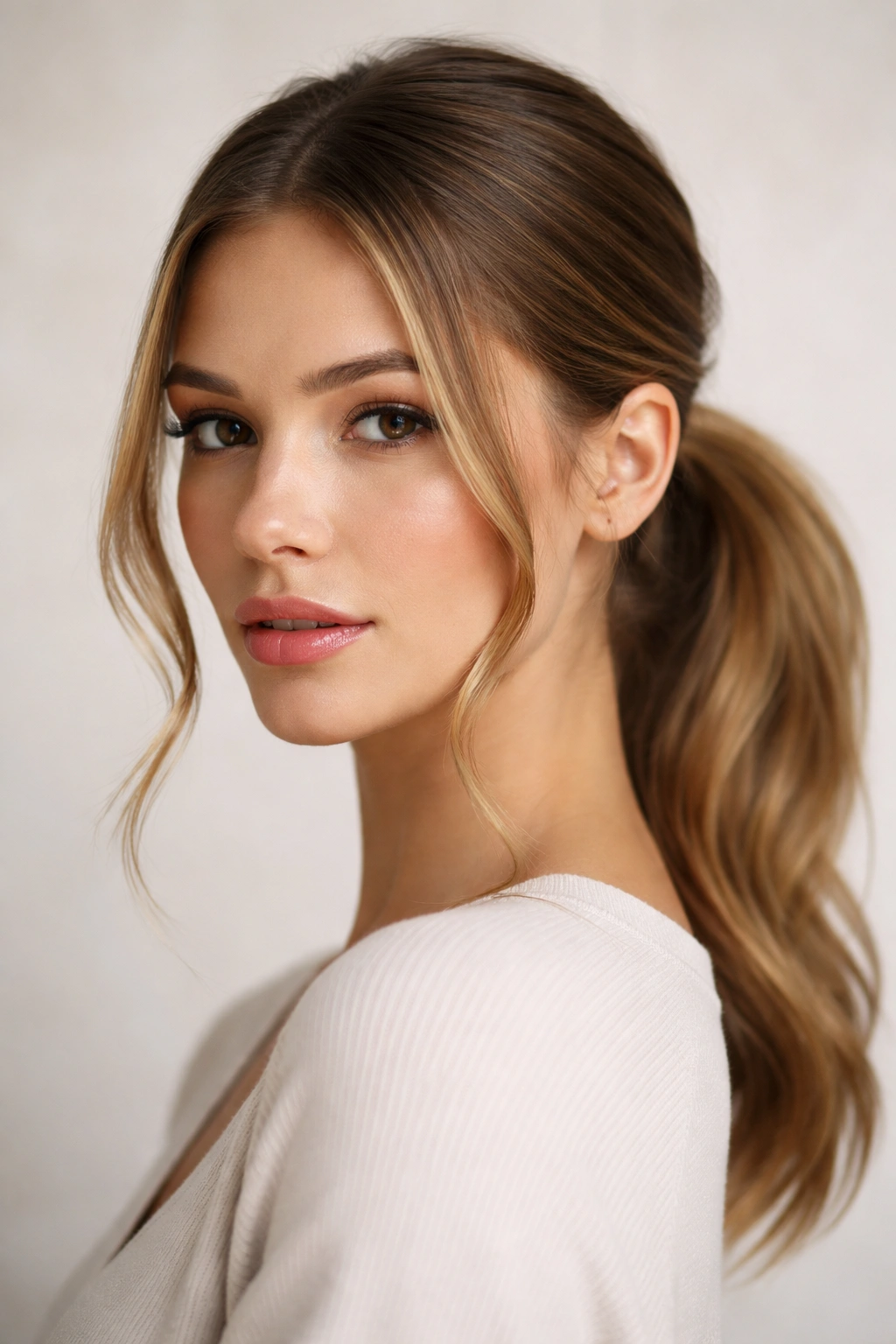
Leaving two face-framing pieces out can change the whole mood of a low ponytail. It softens the jawline, fills in a strong middle part, and keeps the style from looking too neat. Those pieces do not need to be thick. Thin sections around the temples often look better.
Curl the front pieces away from the face if you want a lifted shape. Or leave them straight if the rest of the ponytail is wavy. Both work.
A lot of people overdo this style by pulling out too much hair in front. Resist that. Two slim sections near the cheekbones usually do more than a wide curtain of hair.
8. Ribbon-Tied Low Ponytail
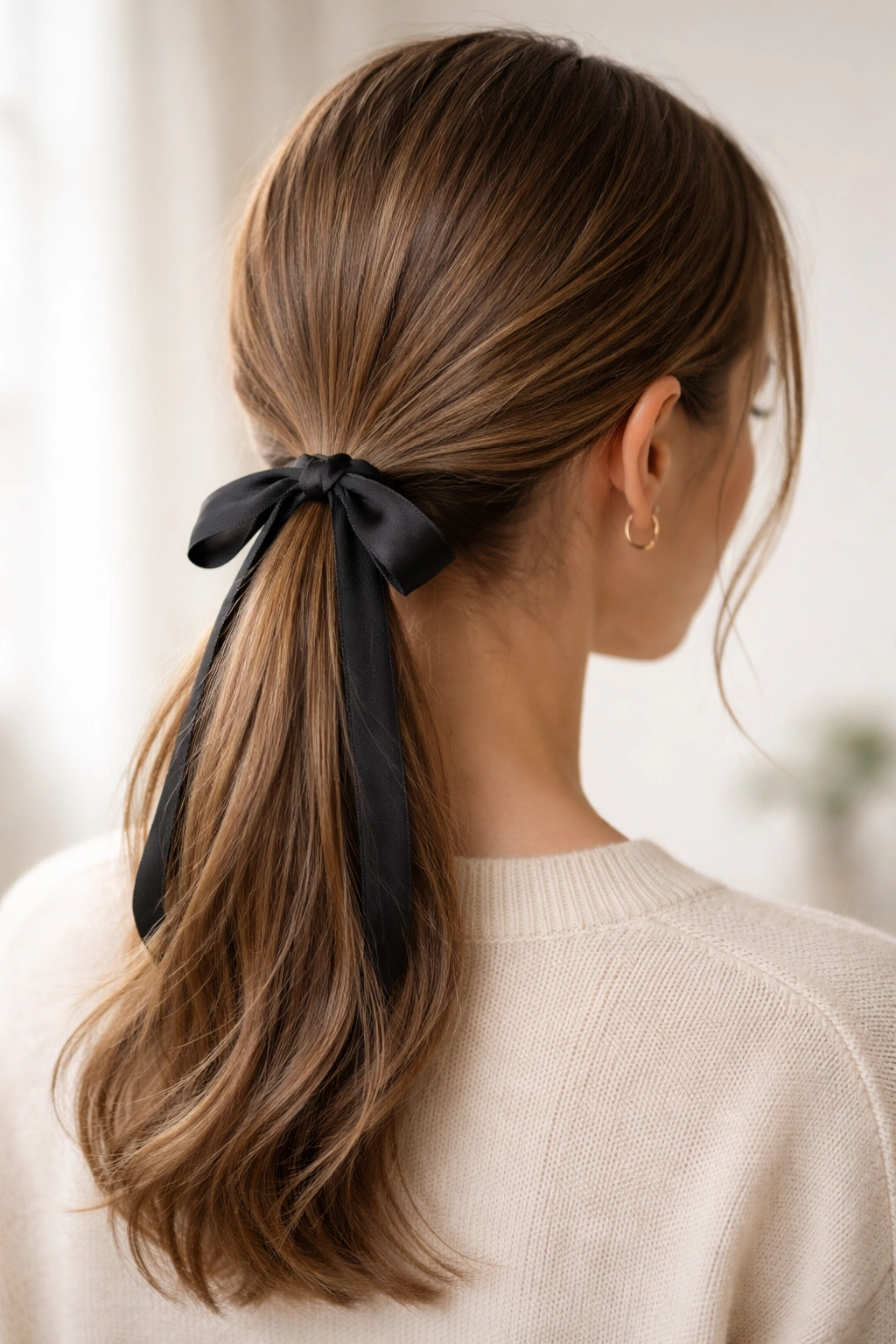
A ribbon adds charm fast, and it doesn’t have to look sugary. A narrow satin ribbon in black, cream, navy, or a muted color can sit around the base of a low ponytail and feel polished instead of playful. Tie it in a knot, a bow, or a long tail depending on the mood.
- Choose a ribbon that’s about ½ to 1 inch wide for an everyday look.
- Keep the ponytail itself simple so the ribbon stays the focus.
- Match the ribbon to one color in your outfit if you want it to feel more intentional.
This is one of those styles that looks better with a little looseness. A perfectly rigid bow can feel stiff. A slightly soft knot feels lived in.
9. Scarf-Wrapped Low Ponytail
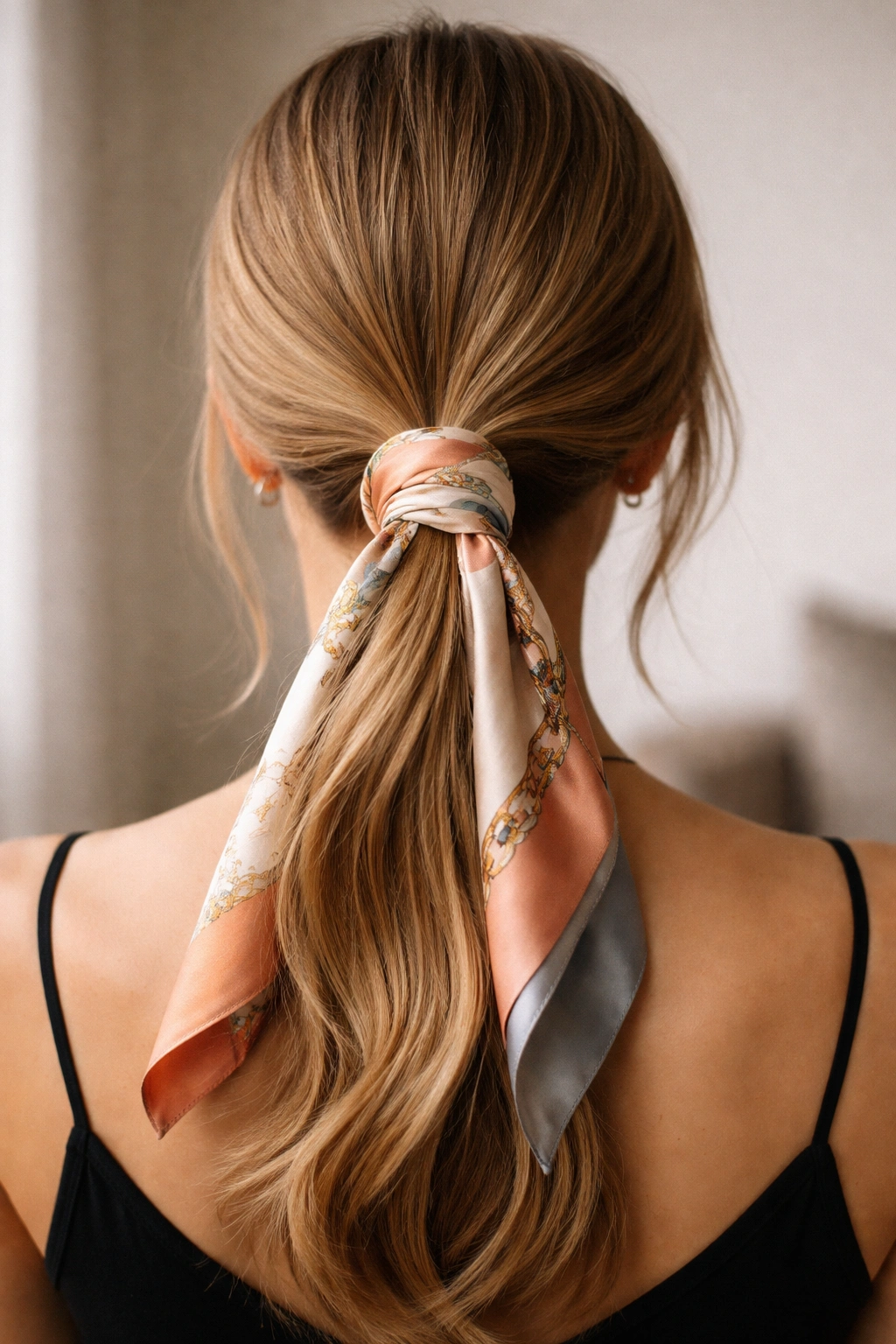
A scarf works when you want color and texture at the base without using a big accessory. Fold a square scarf into a band, tie it around the ponytail, and let the ends hang or tuck them under the elastic. Silk and satin scarves are especially nice because they don’t rough up the hair as much.
This style does a good job on second-day hair. If the roots are a little flat, a scarf pulls attention away from that and toward the print or color. It also works well when you want the ponytail to feel softer than a clip or barrette would make it.
Be careful not to over-tighten the knot. A scarf should sit snug, not squeeze the hairline.
10. Voluminous Crown Low Ponytail
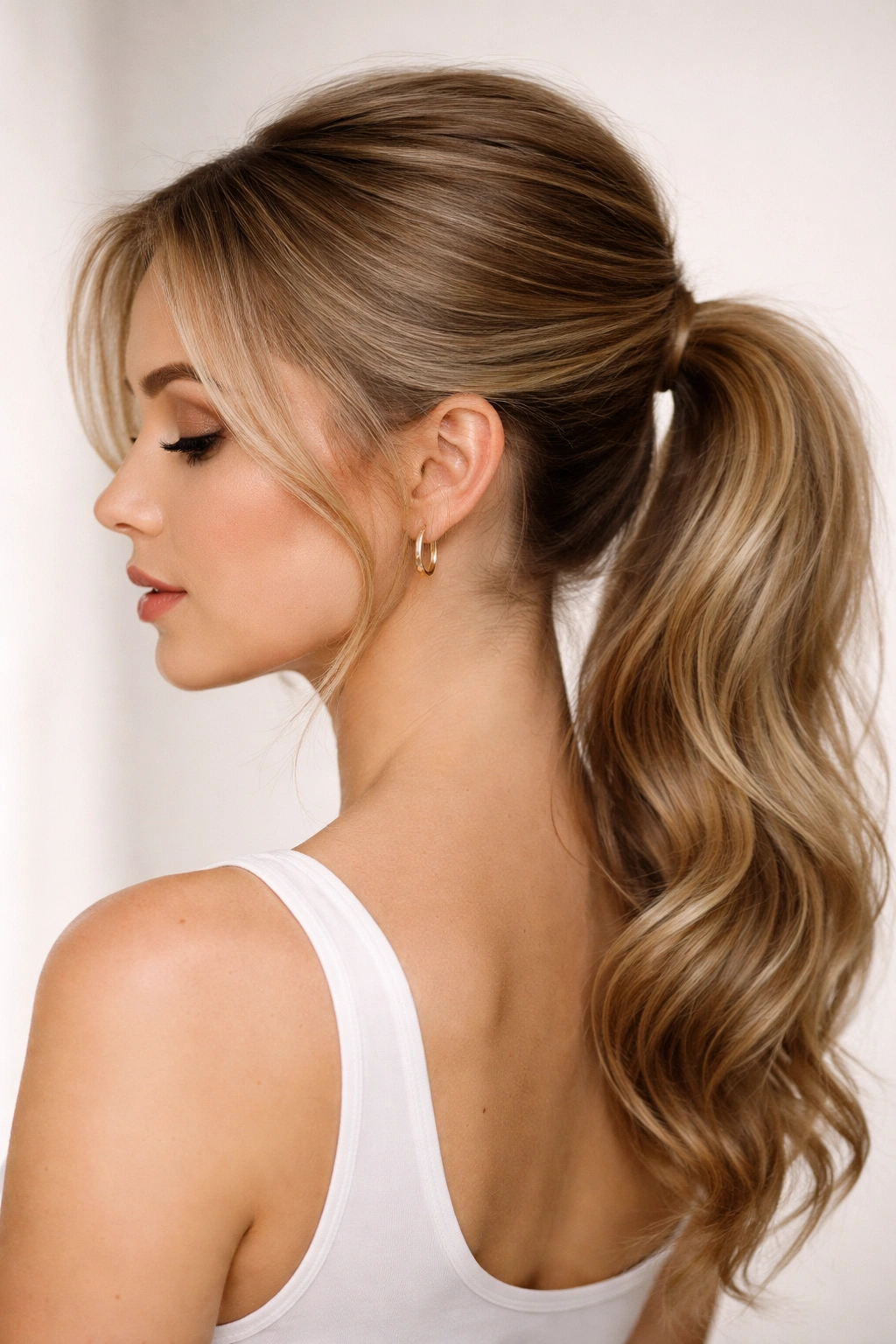
A little lift at the crown changes the shape more than people expect. Tease the top very lightly with a fine-tooth comb, then smooth the surface over it so the volume stays hidden instead of looking messy. A touch of texture spray at the roots helps fine hair hold the bump.
How to keep the lift
Don’t tease the whole head. Just work the top section, and only enough to give the crown a rounded shape. If you go too hard, the ponytail starts to look top-heavy and weirdly disconnected from the rest of the hair.
This version is especially nice when you want a low ponytail that still has some presence from the front. It reads fuller, but not stiff.
11. Loose-Wave Low Ponytail
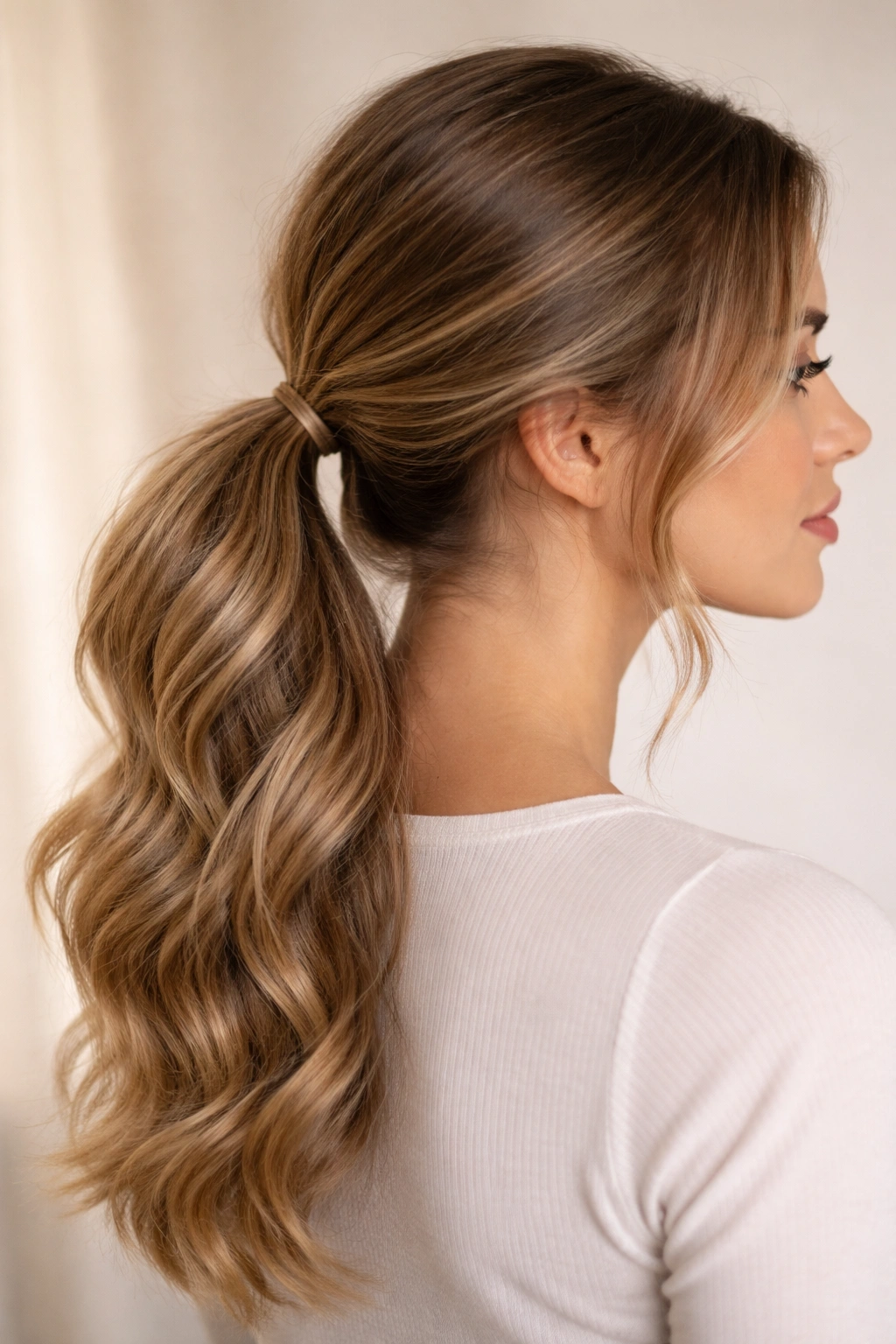
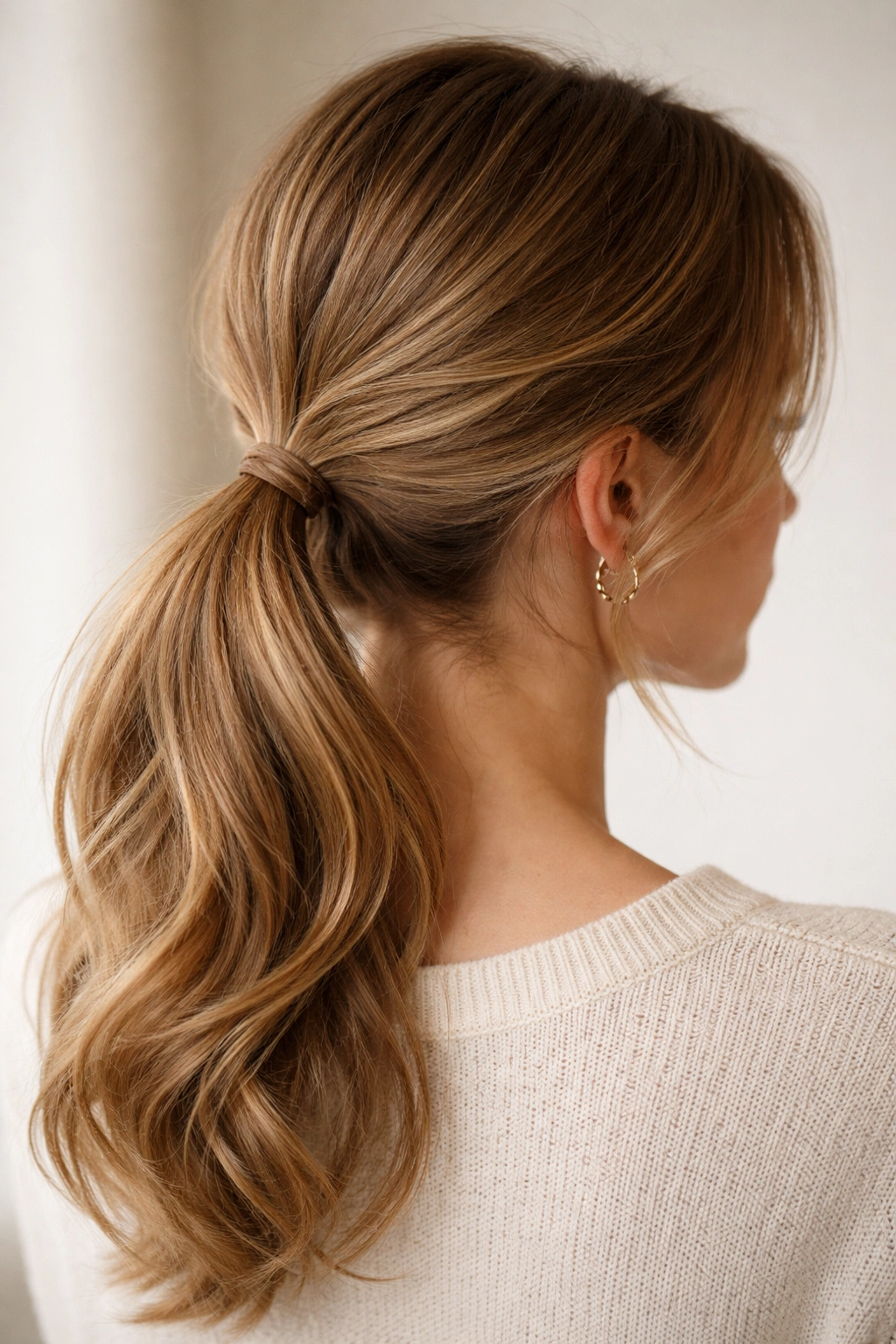
Loose waves make a low ponytail feel easy and a little soft around the edges. Leave the crown smooth, then wave the tail with a 1-inch iron or refresh it with a few bends in second-day hair. The contrast is what makes it pretty: controlled at the top, relaxed through the length.
I like this style when the ponytail itself doesn’t need to be the point. The movement in the tail does the work. It also plays nicely with balayage, highlights, or any color that shows off dimension in the bends.
If your hair is naturally wavy, don’t over-style it. A few defined sections are enough.
12. Curled-End Low Ponytail
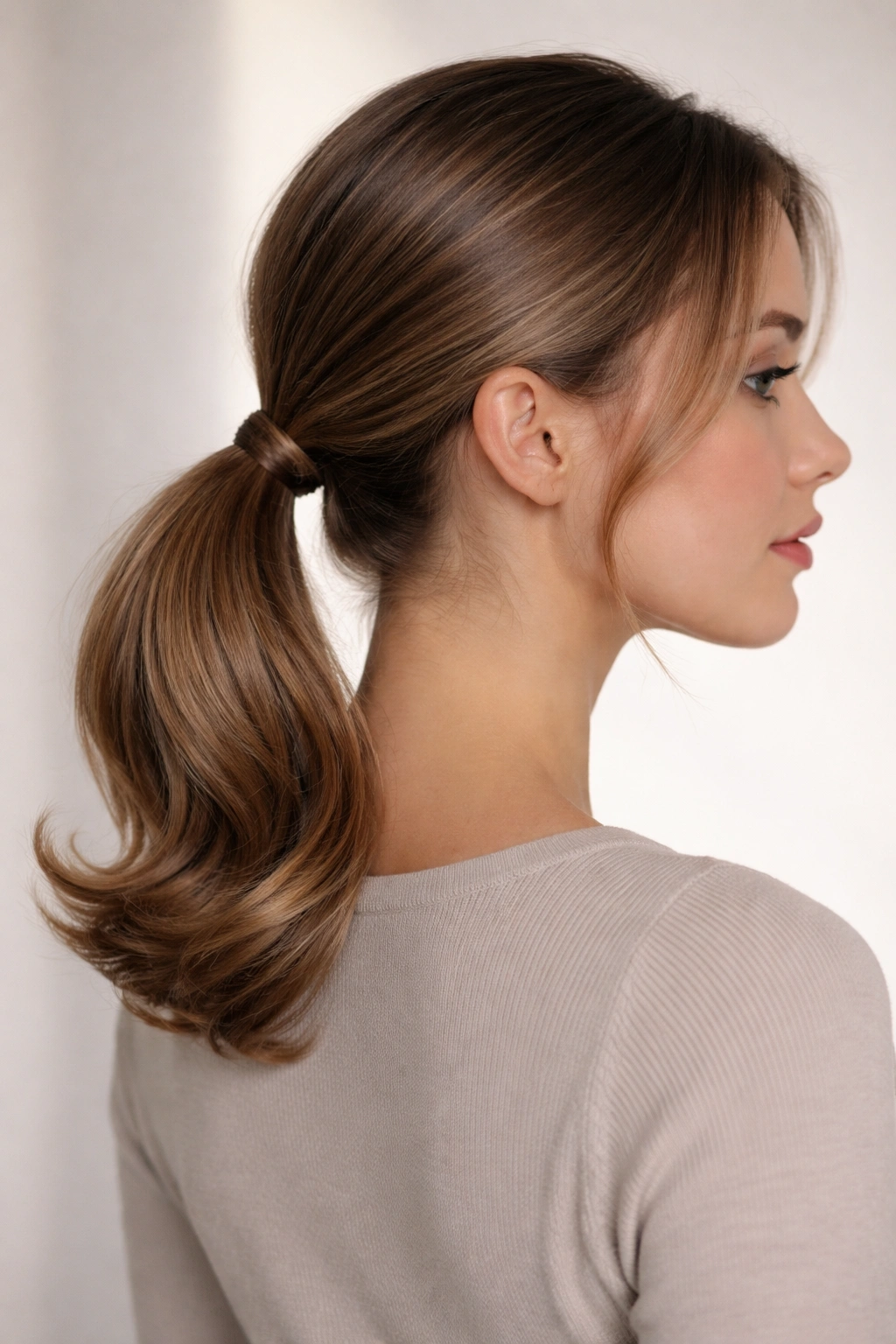
Curled ends make a low ponytail look more finished without changing the base too much. Keep the top sleek or softly brushed back, then curl just the last 2 to 3 inches of the tail under or away from the face. That little flick at the bottom gives the whole style movement.
This is a smart choice for shoulder-length hair because the curl makes the ends feel deliberate instead of awkward. If your hair is long, it keeps the tail from hanging too straight and heavy.
Use a light-hold hairspray only on the ends if needed. The crown should still move naturally.
13. Crisscross Elastic Low Ponytail
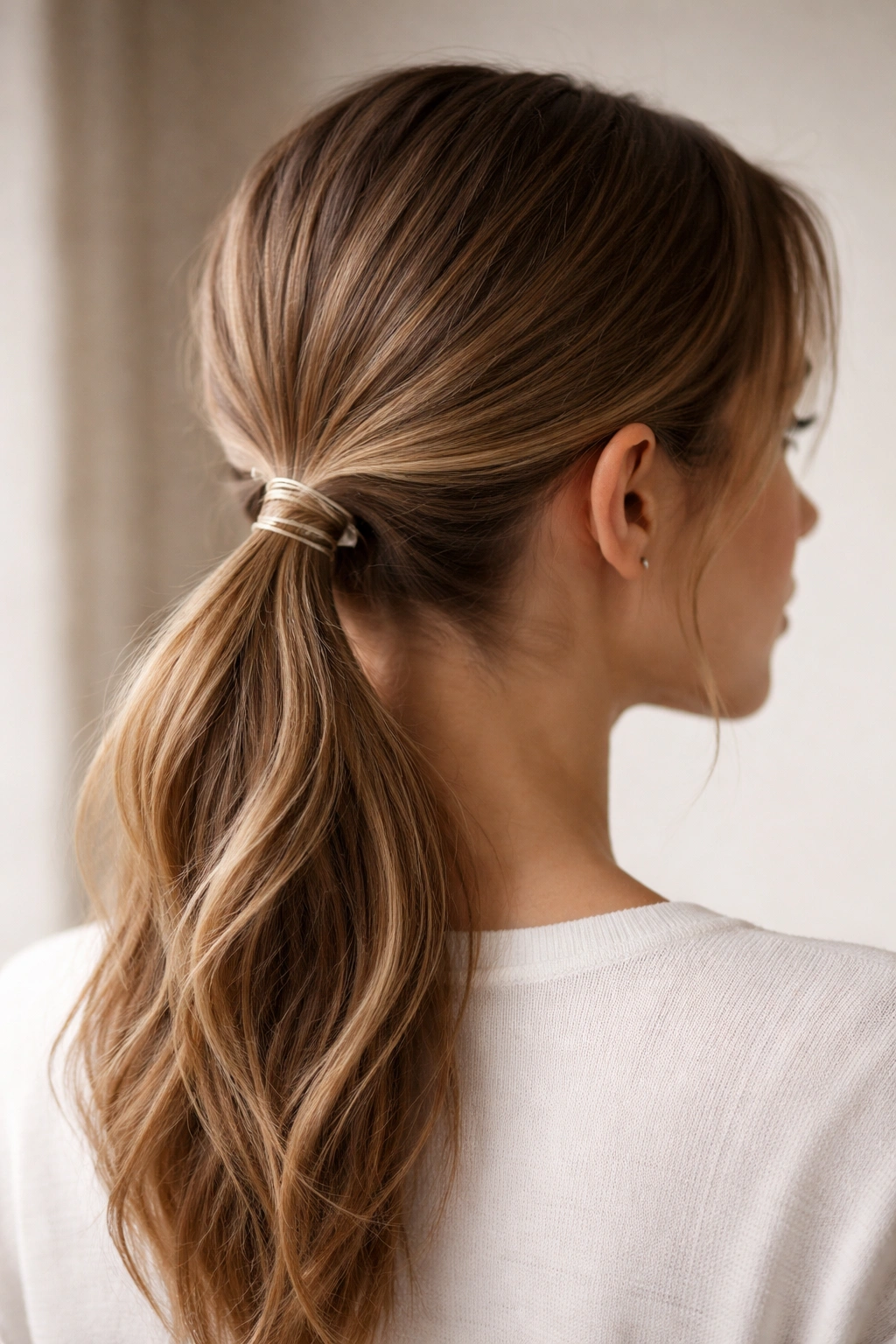
A crisscross detail gives a low ponytail a little visual interest before the tail even starts. Separate two thin sections from the sides, cross them over each other at the back, and secure them over the ponytail base. It sounds complicated. It isn’t, once you’ve done it once.
- Use two small elastics if your hair is thick.
- Keep the crossing sections thin so the detail stays neat.
- Pin the ends underneath if they feel loose.
The nice part here is that the style looks more intricate than the effort it takes. That’s a useful trade. I’ll take a hairstyle that looks clever and survives an ordinary Tuesday.
14. Side-Swept Twist Low Ponytail
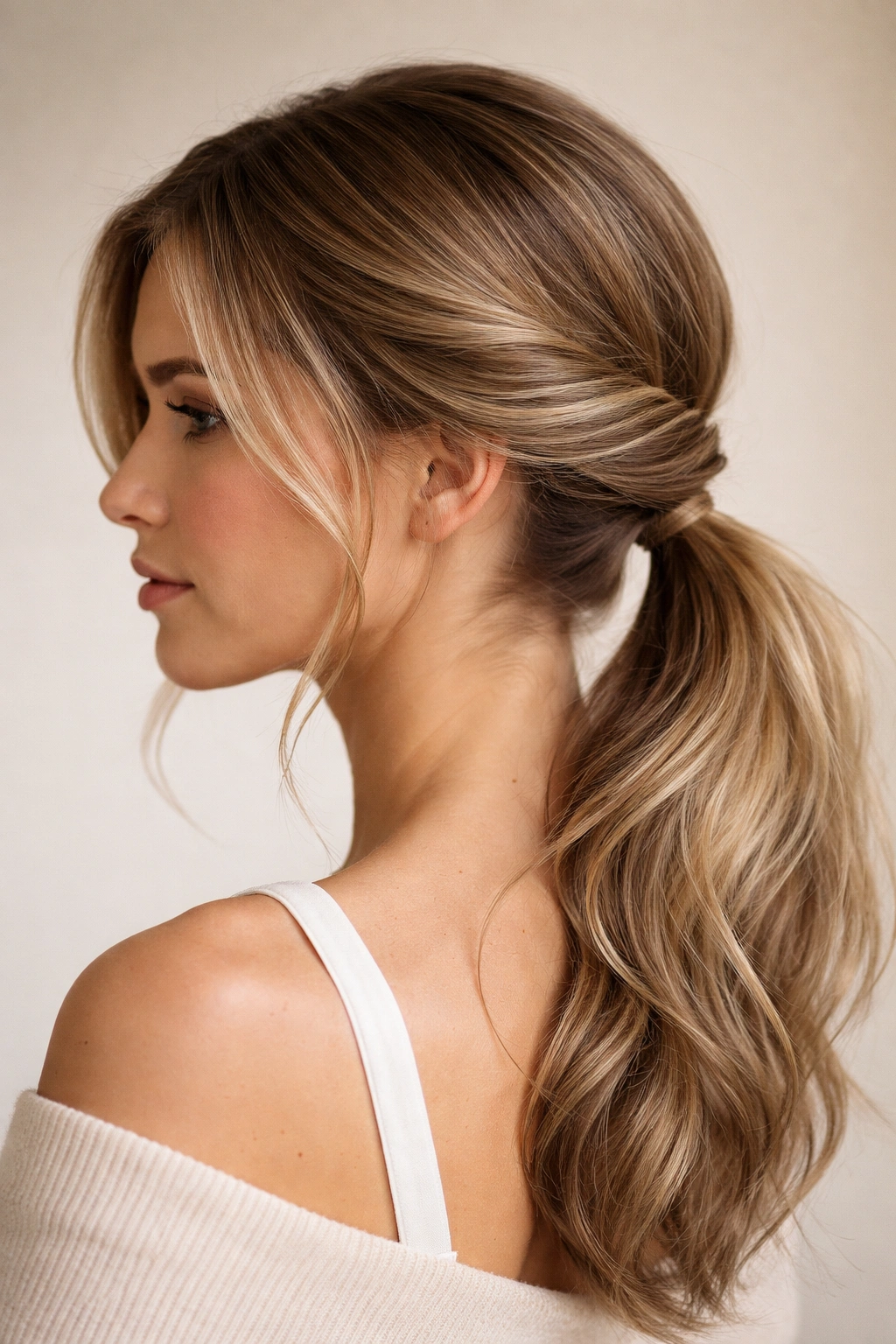
A deep side part plus a twist on one side gives the ponytail a more relaxed shape. Sweep the heavier side back in a soft twist, gather everything low, and leave the ponytail slightly off-center. That asymmetry keeps the style from feeling too formal.
This one works well when your hair has some natural bend. The twist blends into the length instead of fighting it. If your hair is pin-straight, a small wave at the front helps the whole thing feel less rigid.
You don’t need perfect symmetry here. In fact, a little unevenness makes it better.
15. Fishtail Low Ponytail
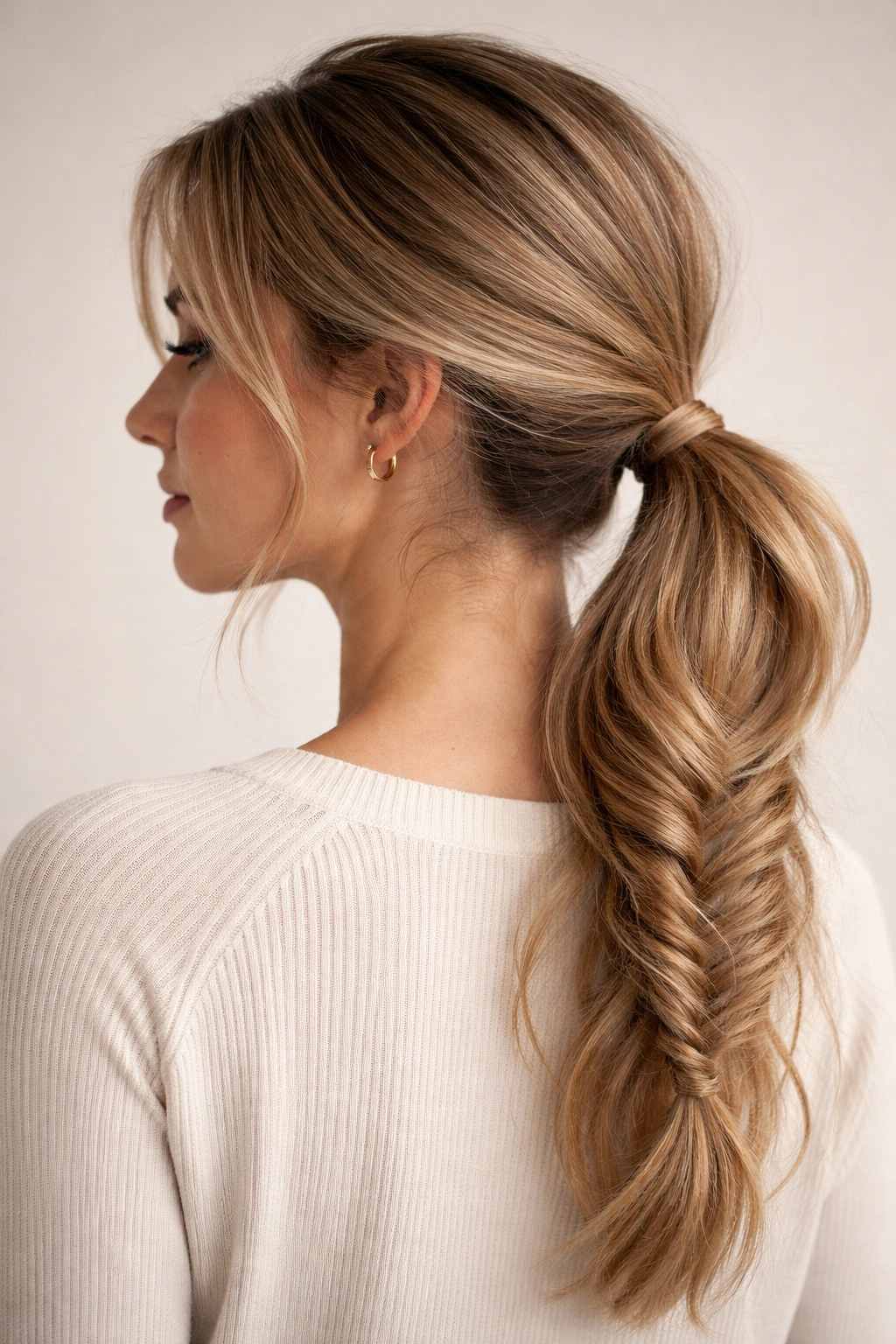
A fishtail braid brings texture that a regular braid can’t quite match. Secure the hair in a low ponytail first, then fishtail the tail in small sections for a more detailed finish. The shape looks intricate, but the basic motion is still simple once you settle into it.
Why it works for everyday wear
A fishtail feels special without being loud. It’s neat enough for work, but it doesn’t look overdressed with a sweatshirt or jeans. If your hair is layered, lightly mist it first so the shorter pieces stay tucked into the braid.
Keep the braid a little loose and pancake it gently at the end if you want more width. A too-tight fishtail can look thin and severe.
16. Micro-Braided Low Ponytail
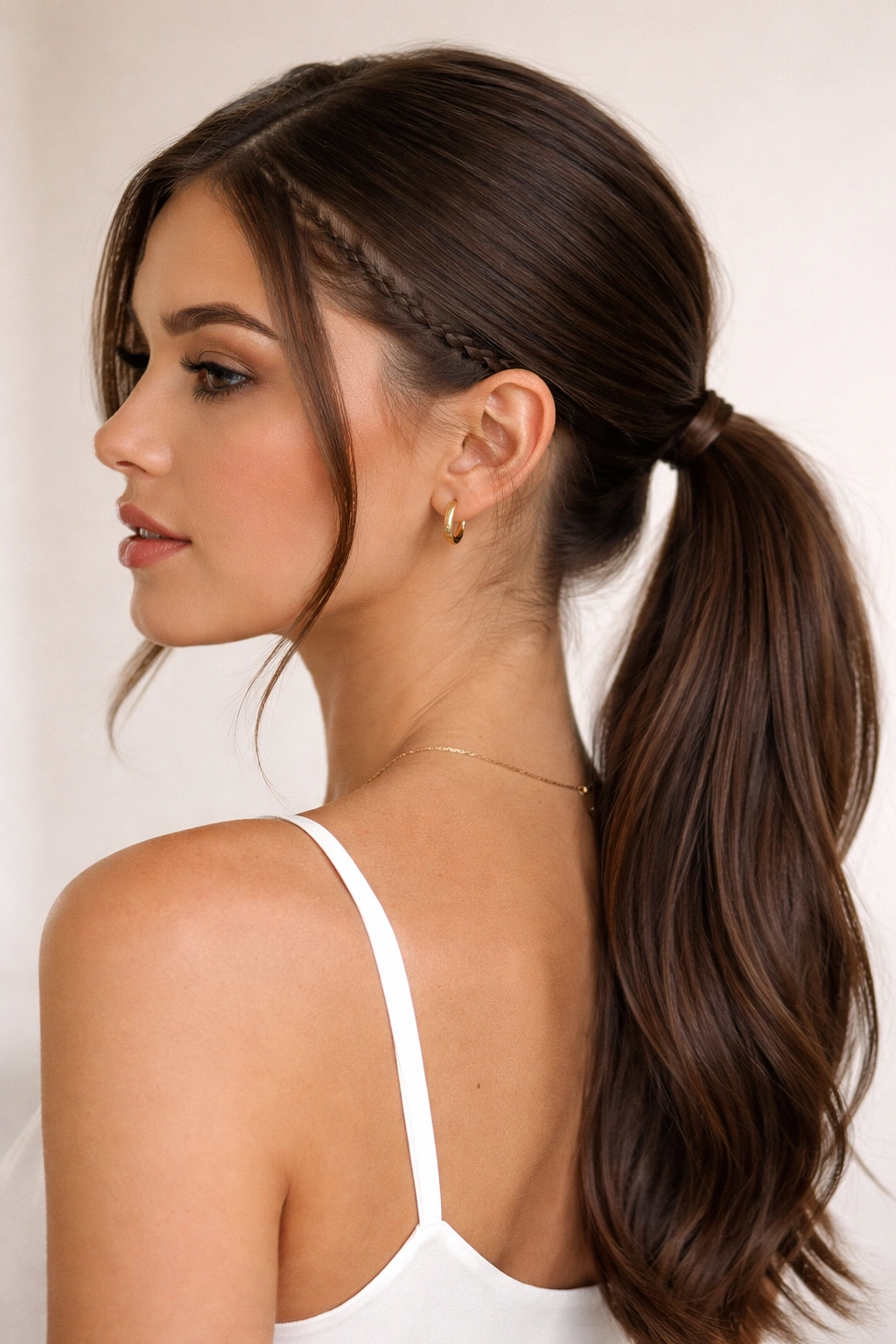
Tiny braids around the hairline or woven into the ponytail itself can make a low ponytail feel a little more personal. You do not need many. Two slim braids near the temples, or one small braid hidden through the tail, is enough to change the read.
This is a good style for people who like detail but don’t want a whole head of braids. It also gives you a smart way to handle growing-out bangs or shorter layers near the front.
Keep the rest of the ponytail simple. Micro-braids work best when they’re the accent, not the whole story.
17. Curly Hair Low Ponytail
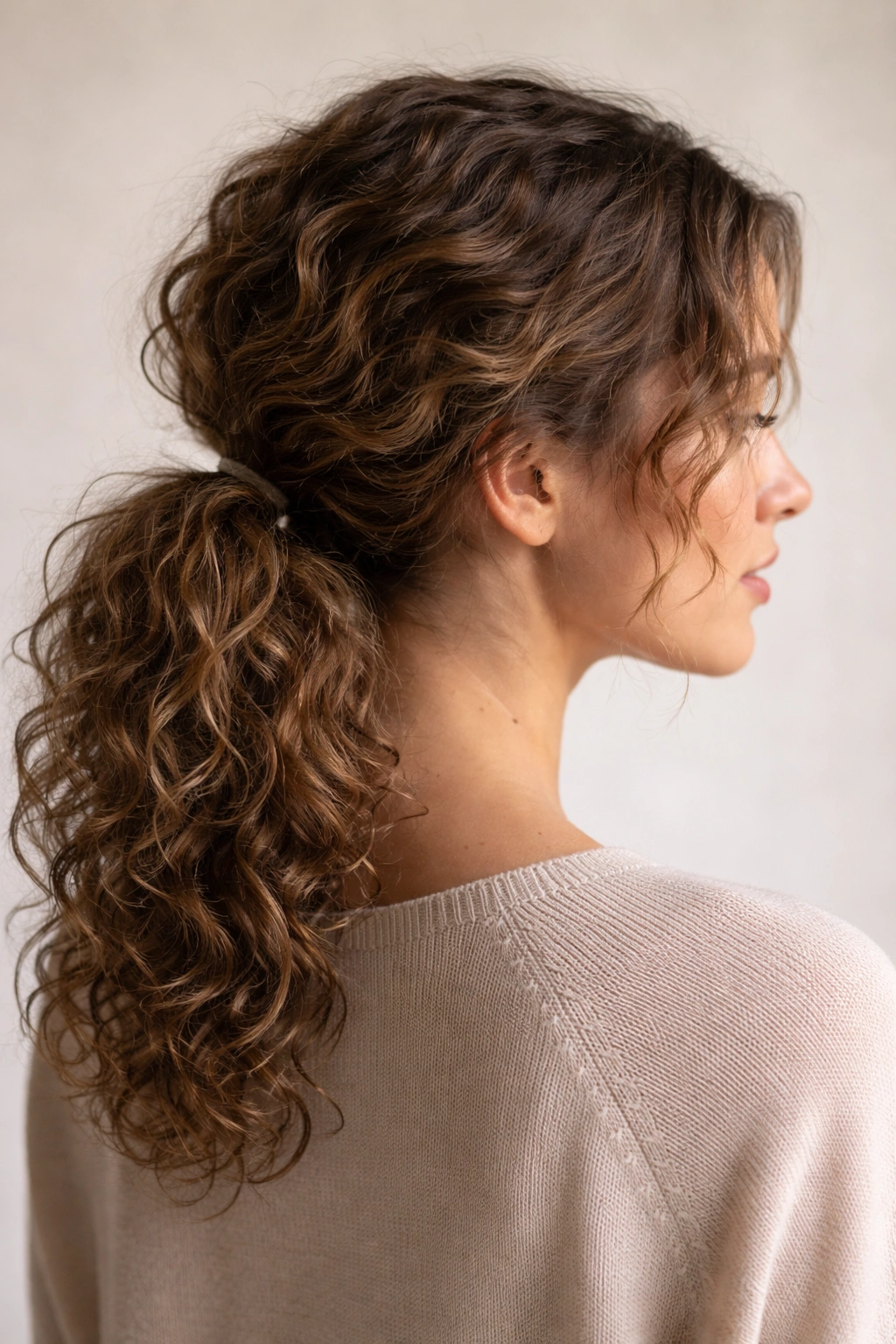
A low ponytail on curly hair looks best when you leave the curl pattern alone. Skip the heavy brushing. Use your fingers or a wide-tooth comb, gather the hair loosely at the nape, and let the curls fall where they want. That keeps the shape soft and keeps frizz from taking over.
How to keep it looking like curls
A leave-in conditioner or curl cream in the lengths helps the ponytail stay defined. If you want the crown smoother, smooth only the top section with a little gel and leave the tail alone. That balance matters.
I’d avoid pulling curly hair too tight here. A low ponytail should feel gathered, not flattened. There’s a difference, and curly hair shows it fast.
18. Coily Puff Low Ponytail
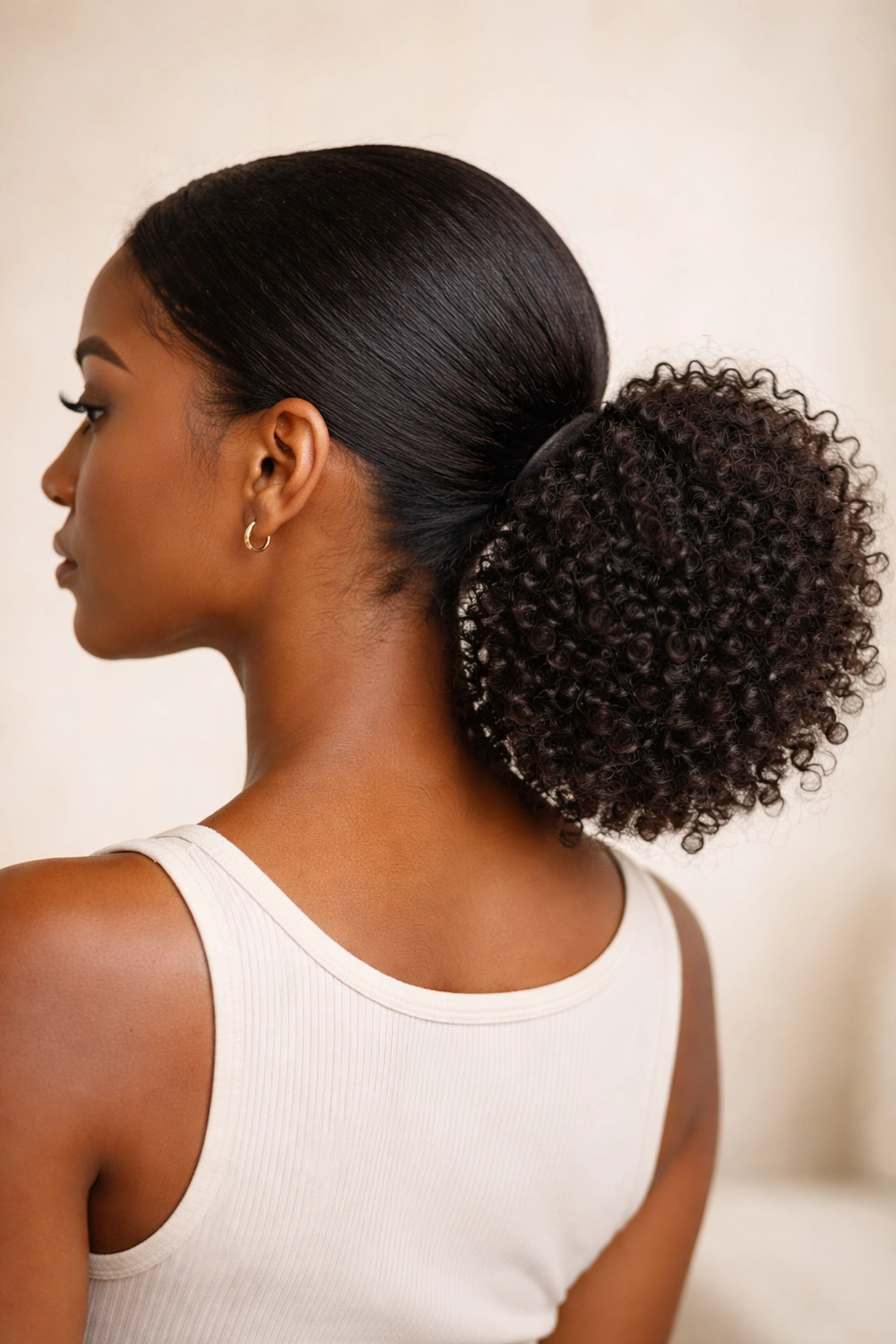
A low ponytail on coily hair can lean sleek, but a soft puff at the nape often feels easier to wear. Stretch the hair gently, smooth the roots with gel or cream, and gather the length low with a satin-friendly elastic. The result is clean at the base and full through the tail.
- Use a brush with firm bristles to smooth the root area.
- Keep one satin scrunchie nearby if standard elastics feel too tight.
- Lay down edges only if that’s already part of your routine.
This style lets the texture stay visible instead of fighting it. That’s the part I like most. It respects the hair’s shape instead of forcing it into something flat.
19. Fine-Hair Textured Low Ponytail
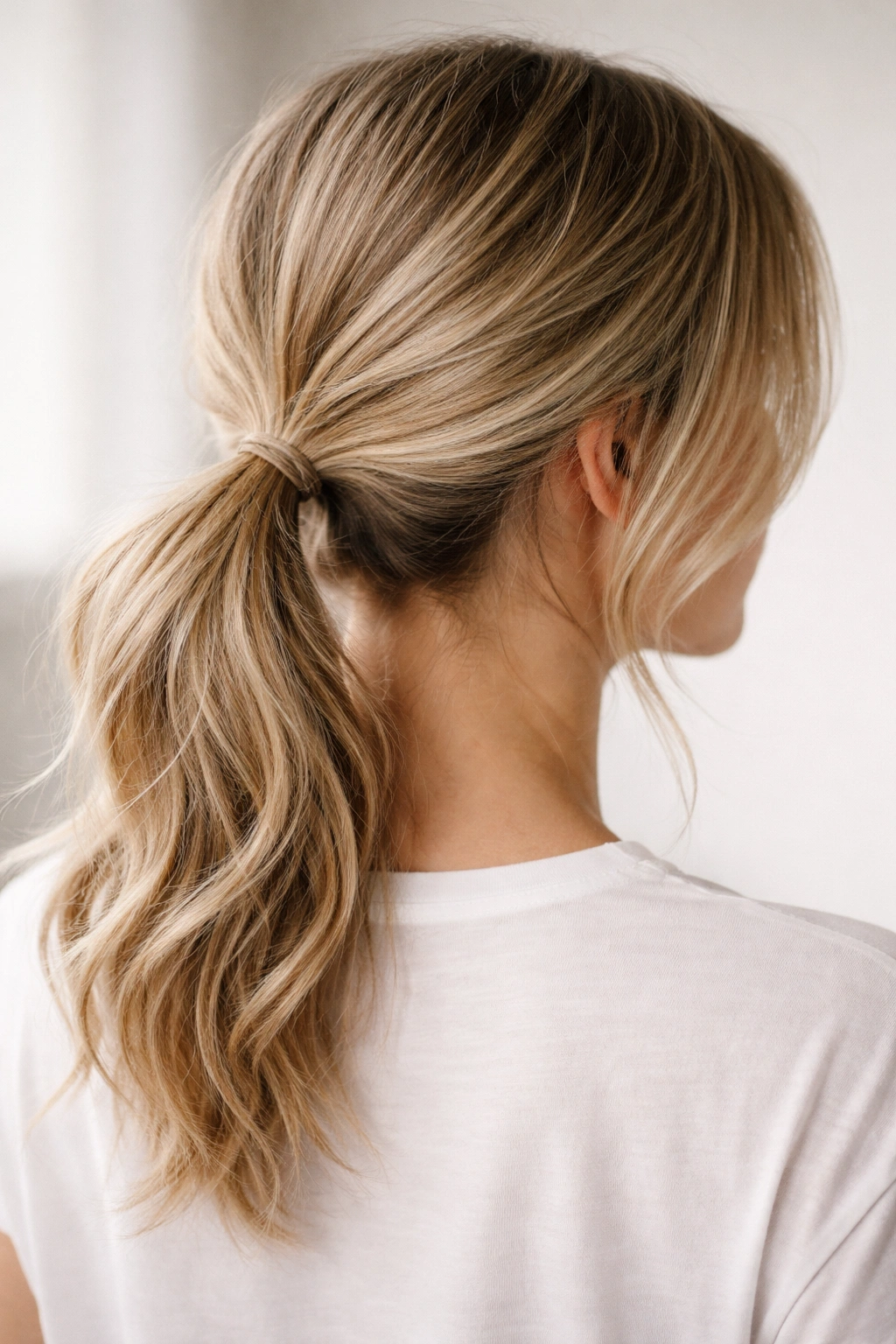
Fine hair usually needs grip, not more product. A little dry shampoo or texture spray at the roots gives the ponytail something to hold onto, and a loose anchor point keeps the crown from going flat by midday. If you pull it too tight, the style can look smaller than it is.
This version works best when the ends are slightly bent or waved. Straight, slippery tails tend to separate and look sparse. A bit of texture gives the ponytail body without making it look stiff.
Don’t chase perfect smoothness here. A little air in the crown is the whole point.
20. Short-Hair Mini Low Ponytail
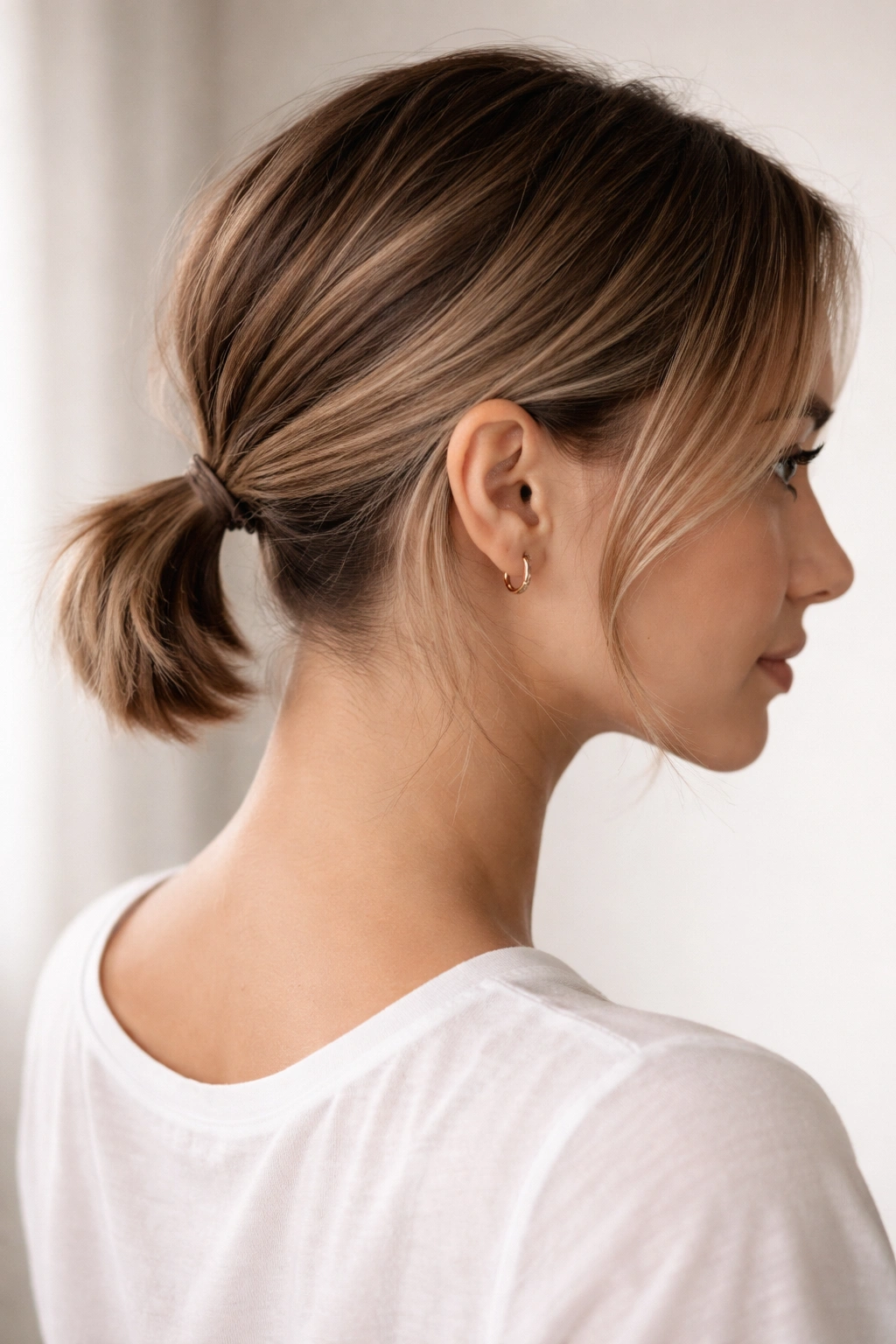
A mini low ponytail is a quiet hero for lobs and shorter cuts. You might not gather every strand into one sleek tail, and that’s fine. Pull the hair low at the nape, secure what you can, and pin the shorter pieces at the sides so they blend instead of hanging awkwardly.
What to watch for
The trick is the elastic size. Use a small, snag-free one that actually grips short hair. If the front layers keep falling out, tuck them behind the ears first and pin them there with flat bobby pins.
This style is especially useful when your cut is just a bit too short for a full ponytail but long enough to feel like it should do something. That in-between length can be annoying. This fixes it.
21. Long Hair Draped Low Ponytail
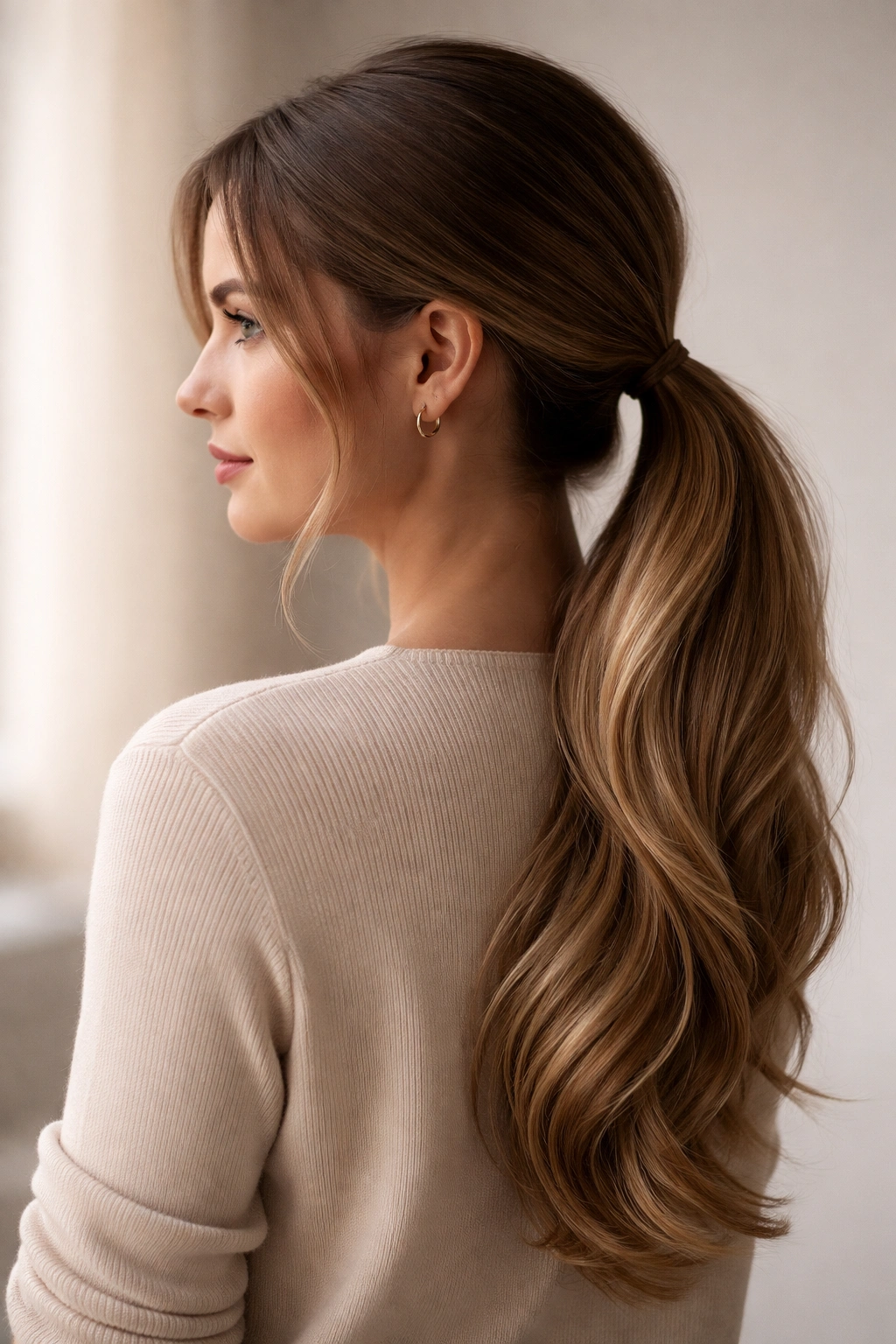
Long hair looks especially good in a low ponytail when the tail is allowed to drape over one shoulder. Keep the base low and smooth, then let the length fall where it wants instead of forcing it straight down the back. The weight of the hair does half the styling for you.
A sleek base with a long tail creates a nice contrast. It feels clean at the top and soft through the ends. If the lengths are dry, a tiny bit of serum on the last few inches keeps the ponytail from looking frayed.
This one is simple, but I never find it boring. Long hair can handle that extra bit of weight.
22. Sporty Low Ponytail
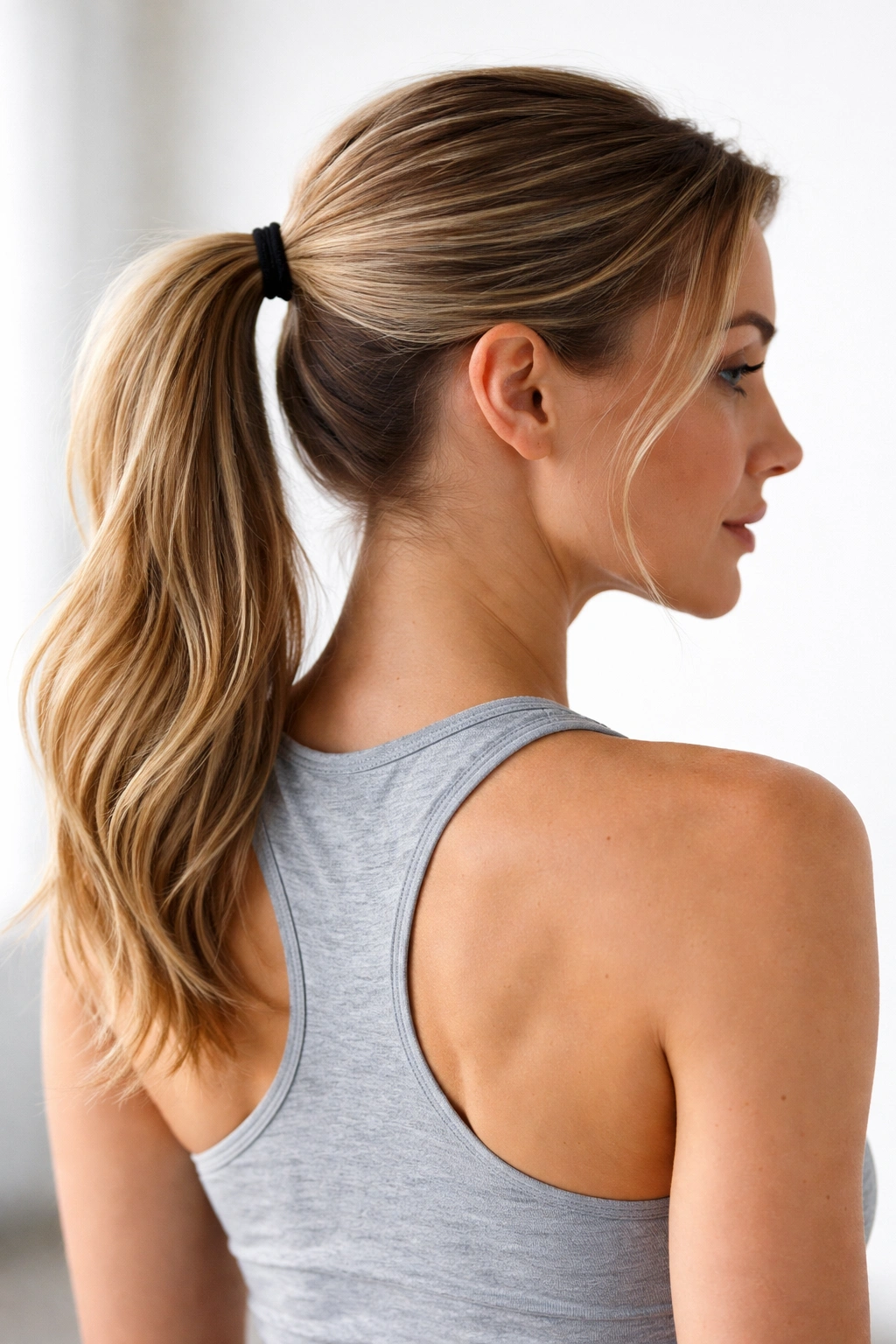
A sporty low ponytail is about staying put. Use a no-slip elastic, keep the crown secure, and avoid too much softness at the nape if you know you’ll be moving around a lot. It’s the version that works for walks, errands, and any day when you want your hair to stay exactly where you put it.
- Choose an elastic with a good grip, not a decorative one that slips.
- Keep flyaways under control with a light mist, not a heavy spray.
- If you wear a cap or headband, leave a touch more room at the crown.
This style is practical in the best way. Nothing fancy. No drama. Just hair that behaves.
23. Office-Polished Low Ponytail
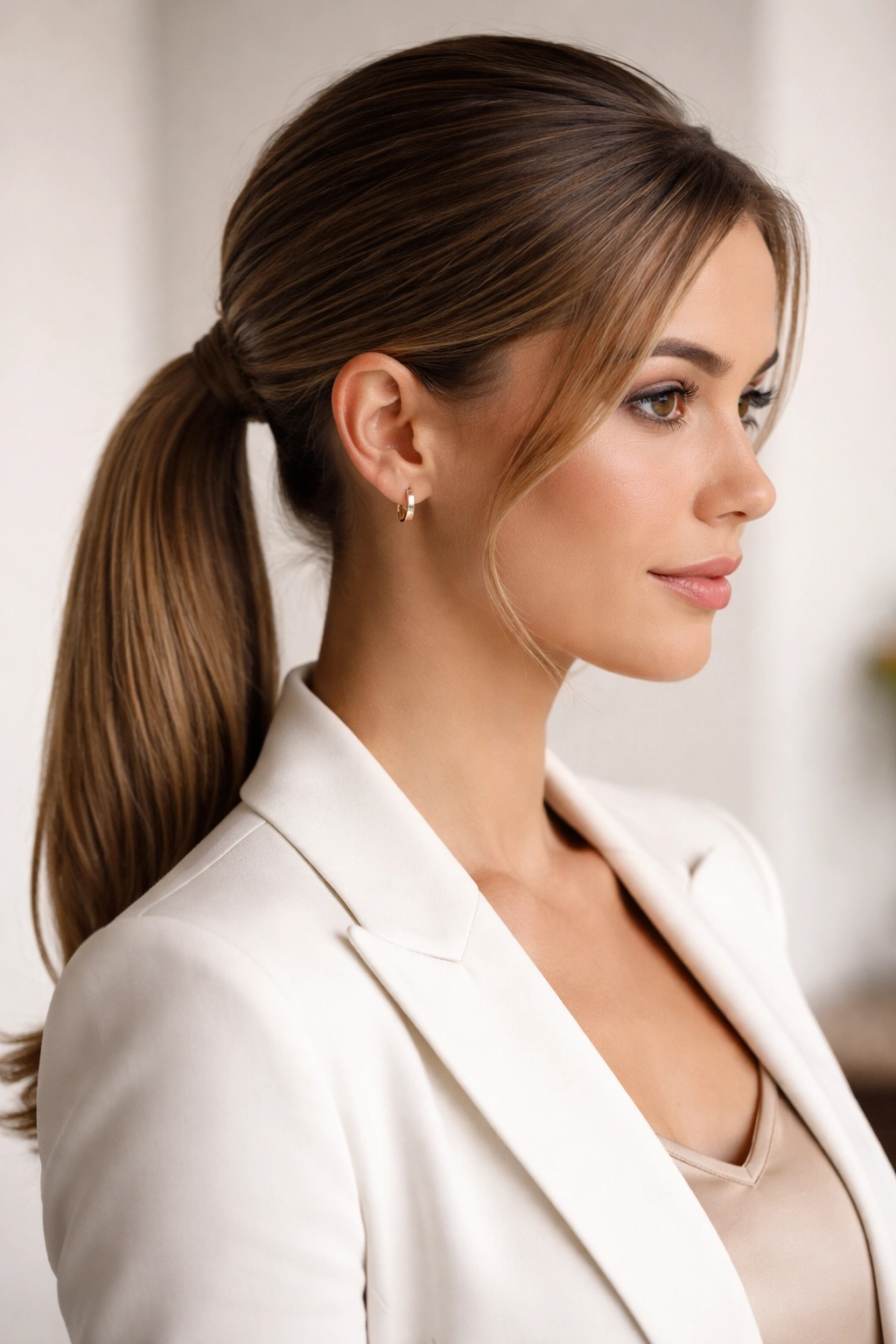
A polished low ponytail has one job: look neat without seeming fussy. Smooth the crown, keep the part clean, and tuck every loose piece into the base before you leave the mirror. A wrapped strand or a small barrette can finish it off, but the real work happens in the prep.
Why this reads polished
The line from forehead to nape stays uninterrupted. That’s what makes it feel crisp. If you want extra neatness, use a light styling cream before you brush the hair back, then a touch of hairspray on the brush for the surface.
I reach for this one when I want the hairstyle to disappear into the outfit instead of competing with it. It’s quiet hair, which is sometimes exactly right.
24. Weekend Messy Low Ponytail
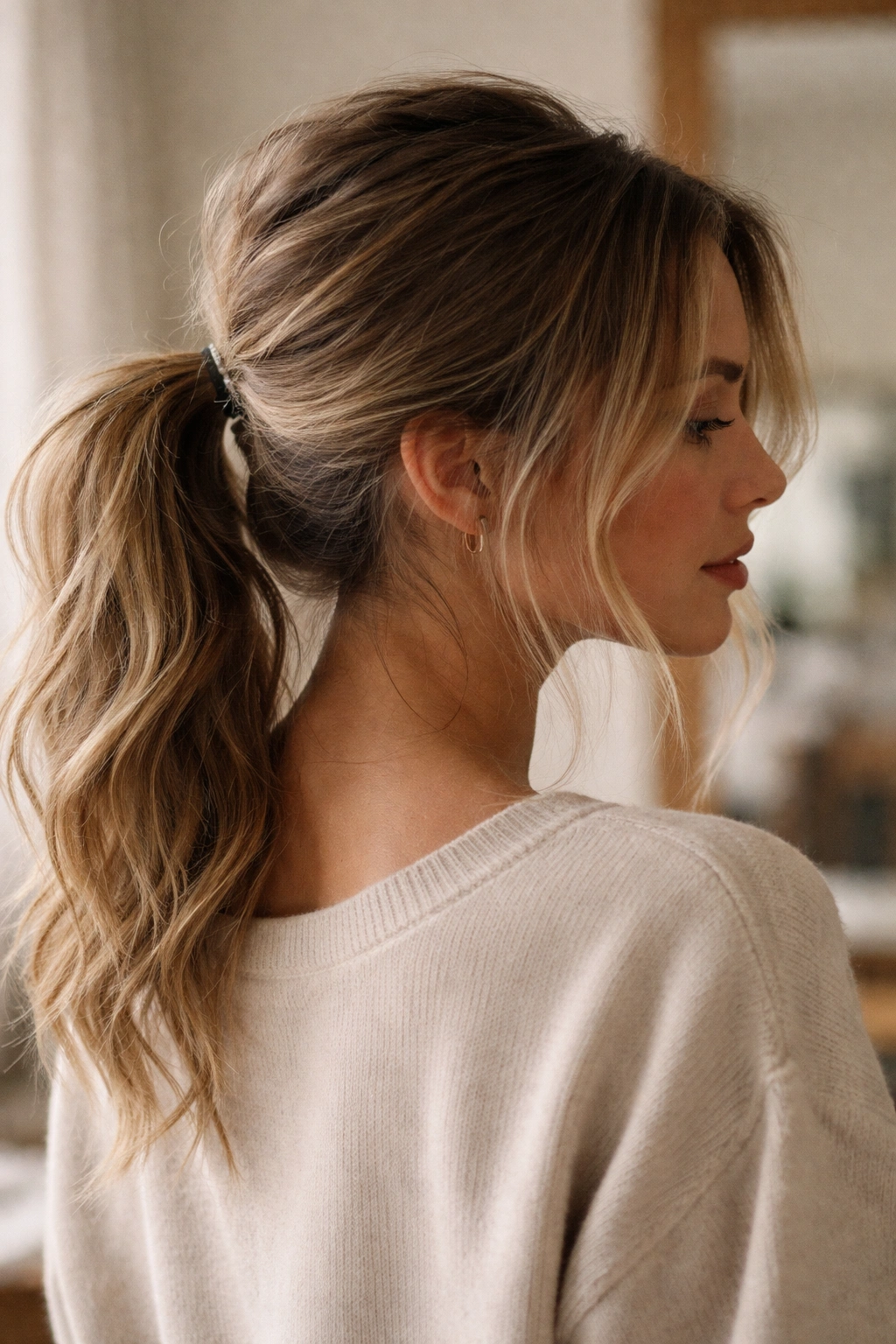
A messy low ponytail only works when it still looks chosen. Use your fingers instead of a brush, loosen the crown with a small tug, and let a few front pieces fall wherever they naturally want to sit. The point is softness, not chaos.
This is the version I’d wear with a tee, a knit sweater, or anything that already has a relaxed shape. If your hair is freshly washed and too slippery, add texture spray first so the looseness doesn’t collapse.
The easiest mistake is over-pulling. Stop sooner than feels natural. A little slack makes this style look lived in.
25. Barrette-Stacked Low Ponytail
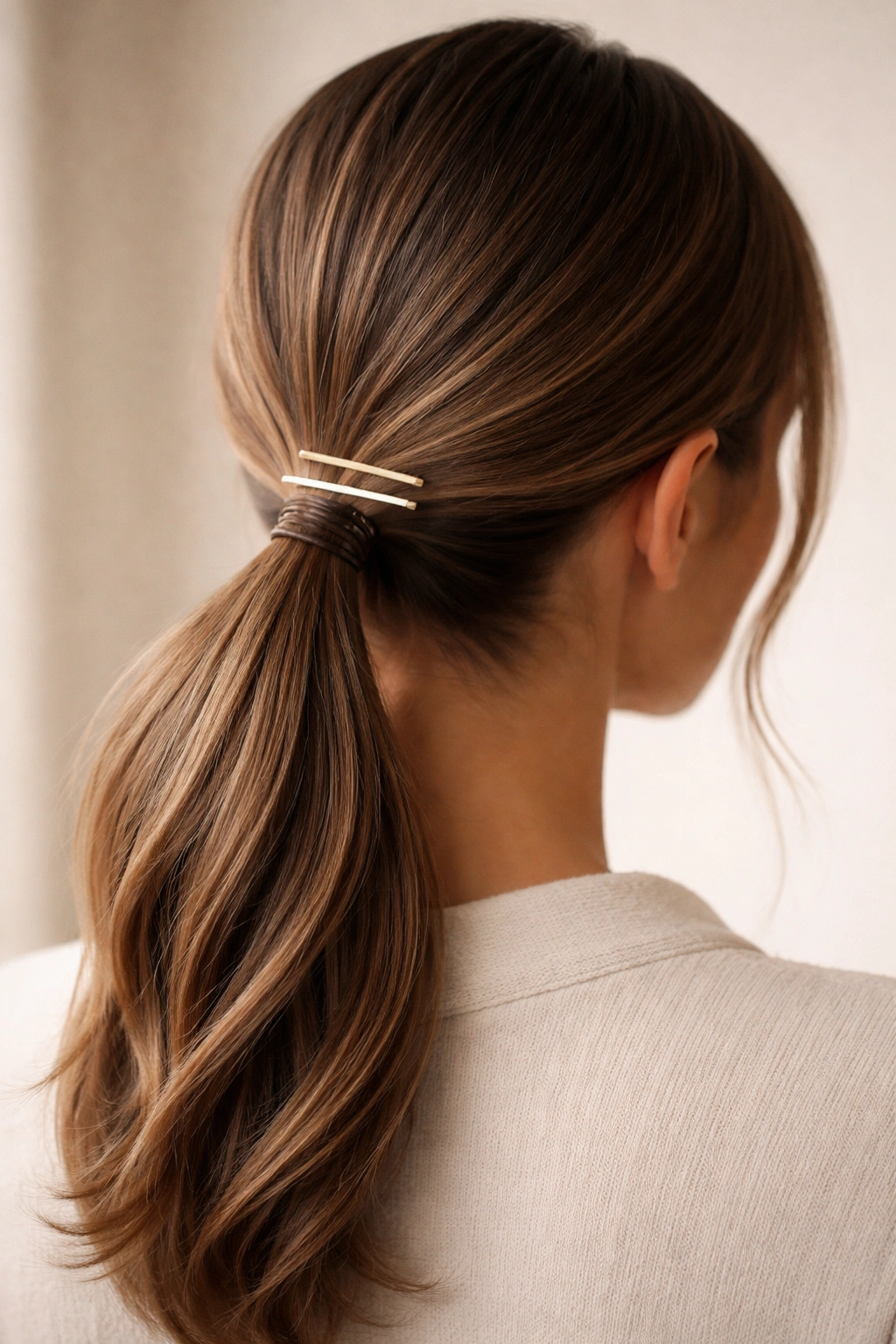
A pair of barrettes can turn a basic low ponytail into something that feels styled. Clip one or two slim barrettes above the elastic, off to one side, or stack them in a neat line if you want a sharper look. Metal, pearl, resin — they all work, but keep the scale small for everyday wear.
This is one of the easiest ways to make a ponytail look considered without changing the structure. You’re not rebuilding the style. You’re just giving it a point of interest.
If the clips slide, place them on a section with a tiny bit of texture instead of the glossiest part of the hair. That usually helps.
26. Knotted Low Ponytail
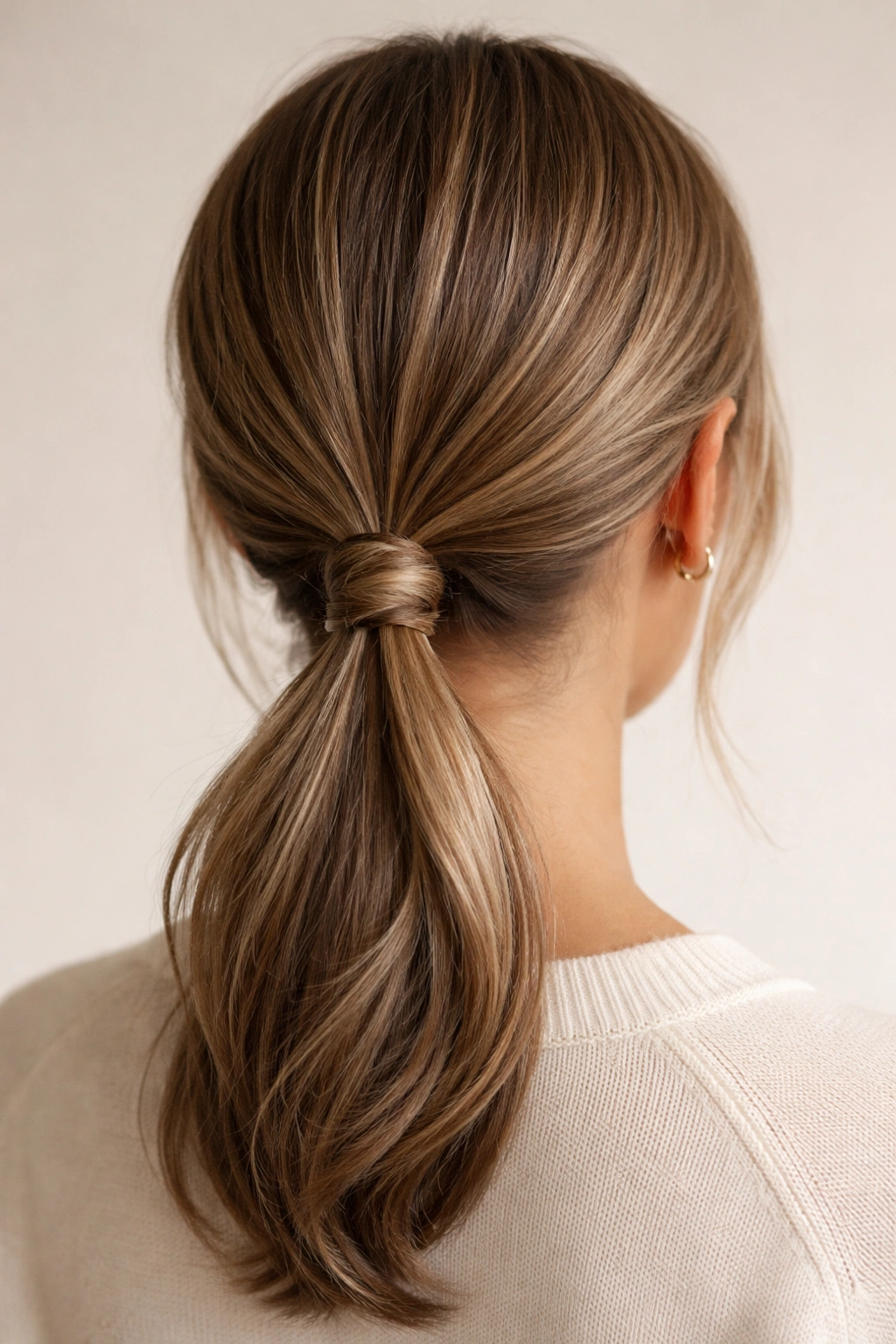
A knotted low ponytail looks more complex than it is. Split the hair into two sections, tie them into a simple knot at the nape, and secure the ends with a small elastic underneath. It has a little built-in detail, which makes it useful when you want something different but not too precious.
Unlike a braid, this style doesn’t need perfect tension all the way through. That makes it friendly for layered cuts and hair that doesn’t cooperate with neat weaving. It also sits nicely under collars because the knot is compact.
Keep the knot centered and low. If it drifts too high, the shape gets awkward fast.
27. Tucked-Under Low Ponytail
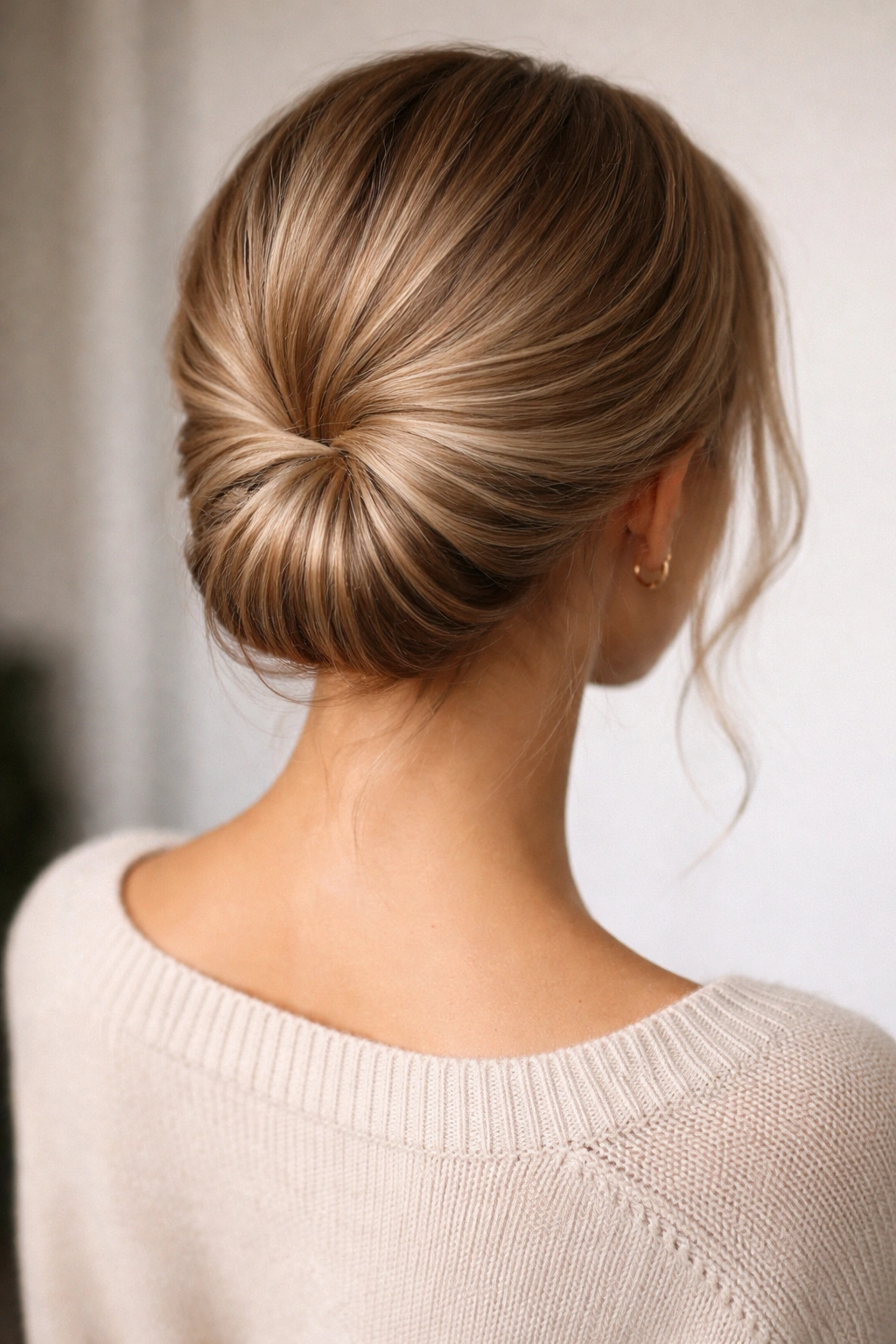
Tucking the tail under gives a low ponytail a softer, almost tucked-up shape. Secure the hair low, fold the length under itself, and pin it so the ends disappear. The result sits somewhere between a ponytail and a faux bob, which is fun on days when you want something a little different.
- Use 2 to 4 bobby pins, depending on your hair thickness.
- Leave a touch of volume at the crown so the tuck doesn’t look severe.
- If you want extra softness, curl the tucked ends before pinning them.
This one has a nice old-school feel without looking costume-y. It’s a little unexpected, and I like that.
28. Braided-Crown Low Ponytail
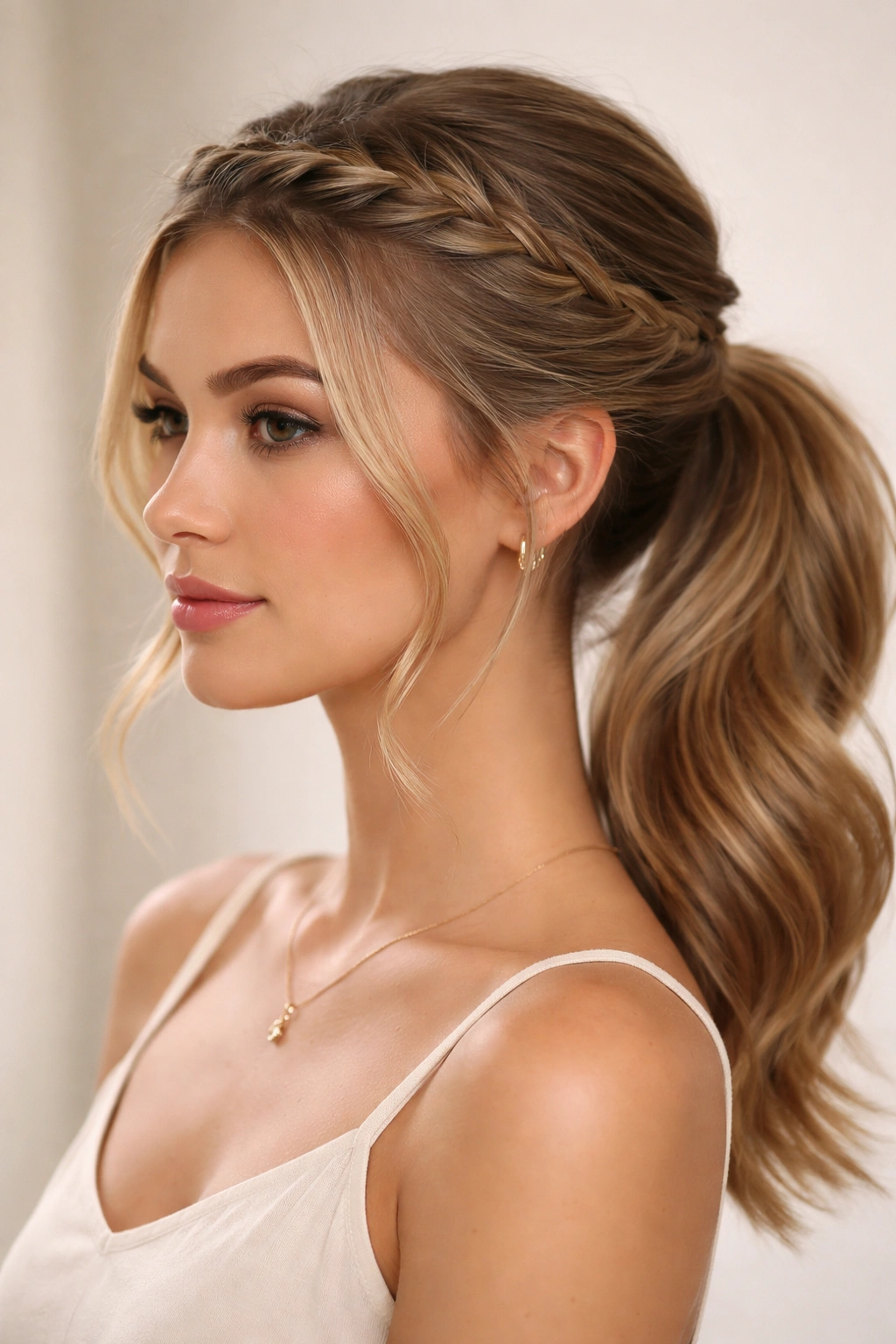
A braid along the hairline gives a low ponytail a more detailed front view. Braid one side, or both sides if you want a tighter frame, then gather everything low at the nape. The braid works like a headband, which is useful when the front pieces are growing out or when you just want the hair off your face.
This style has a bit more structure than the soft twists earlier on the list. It also survives a long day better, since the braid helps keep the front secure.
If your hair is thick, don’t make the braid too wide. A slim braid is easier to keep neat and doesn’t add too much bulk near the temple.
29. Bow-Accent Low Ponytail
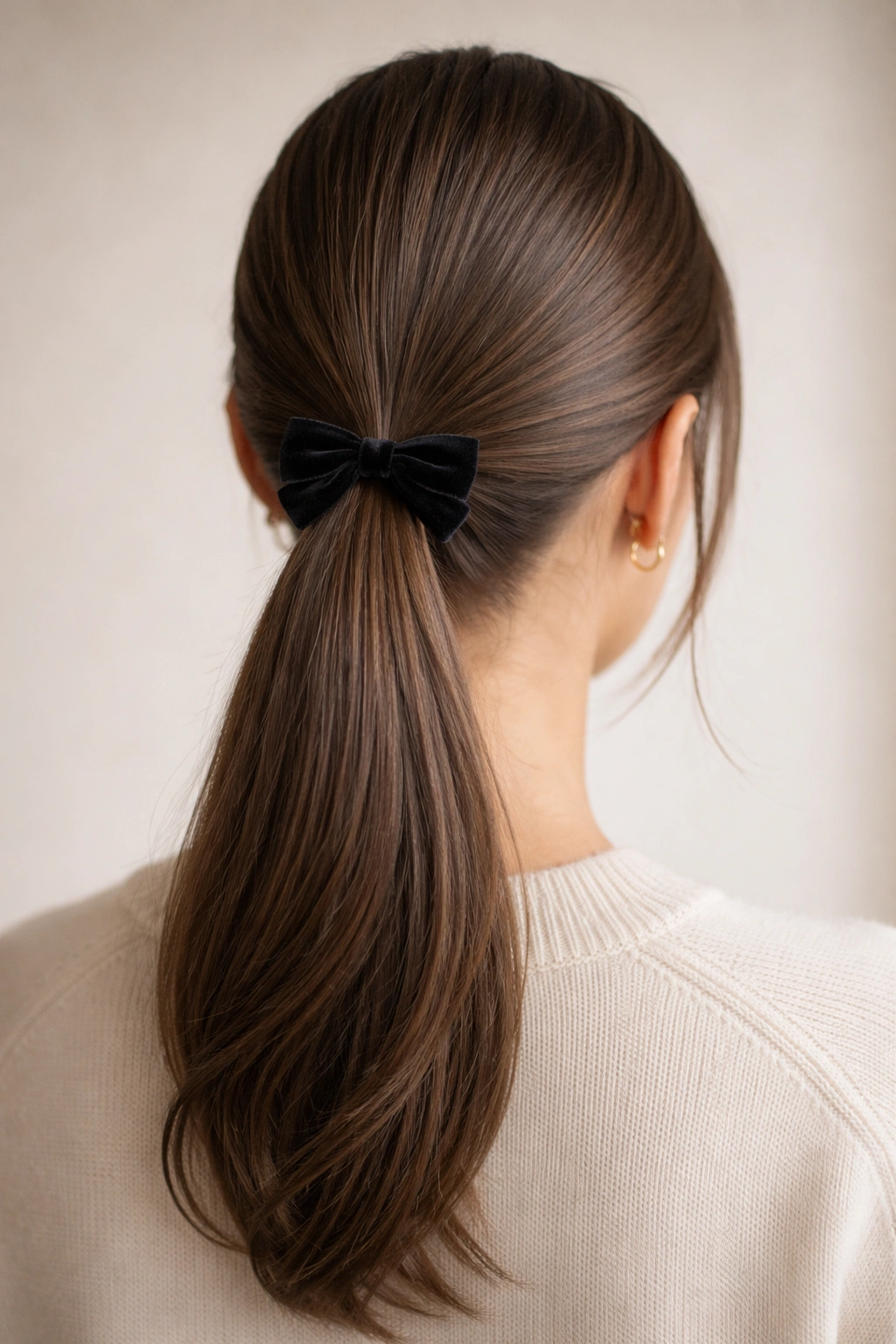
A bow at the base of a low ponytail can feel sweet, but it doesn’t have to lean young or costume-like. The trick is scale and fabric. A narrow velvet bow, a simple satin tie, or a structured fabric ribbon keeps the style looking intentional.
This version works especially well with plain clothes. Jeans, a cardigan, a basic button-down — all of it gets a little lift from the bow. If you want the look to stay grown-up, keep the ponytail itself sleek or softly waved and let the bow be the only decorative piece.
One accessory is enough. More than that starts to crowd the style.
30. Rope-Twist Low Ponytail
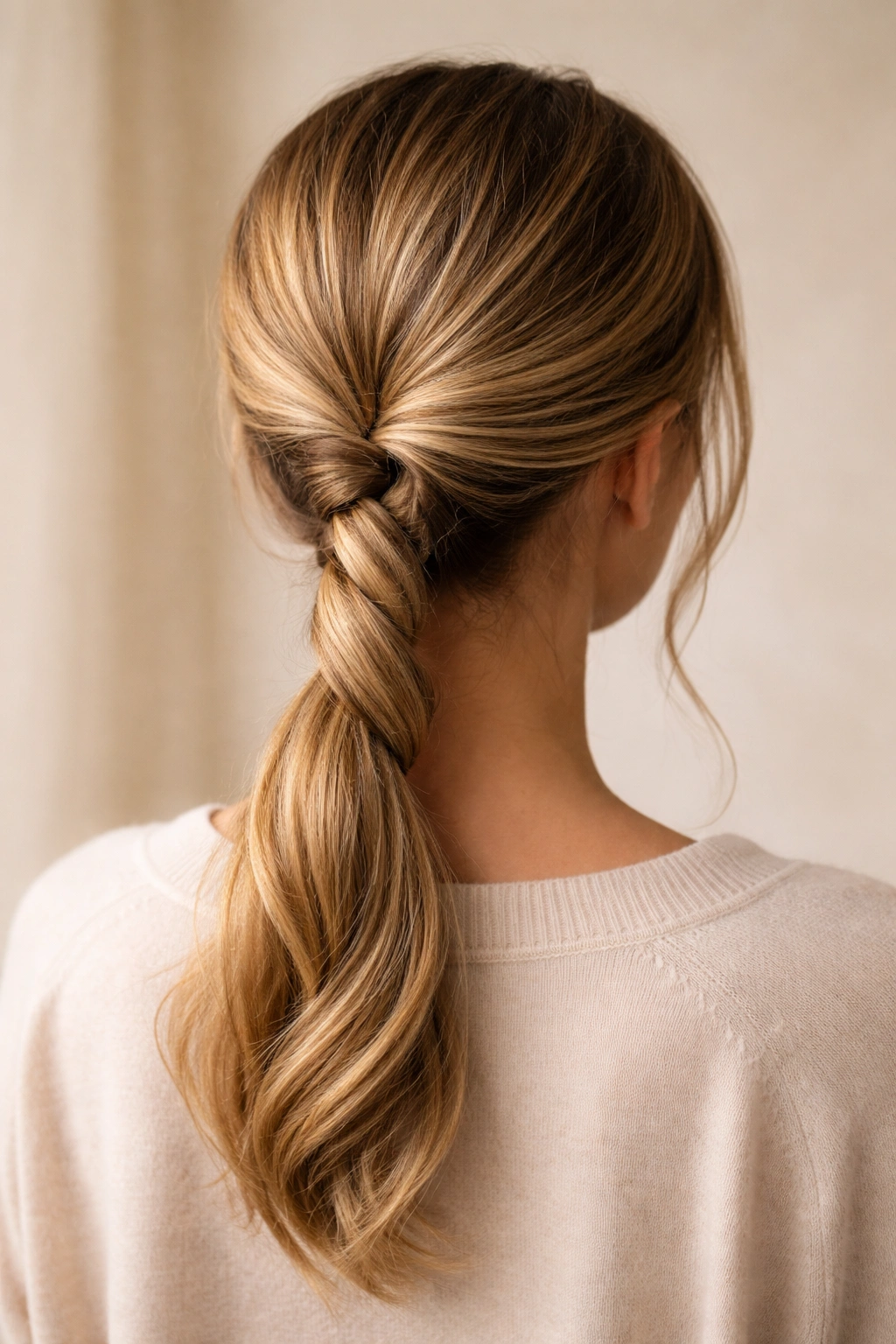
A rope twist adds texture without needing a full braid. Split the tail into two sections, twist each section in the same direction, then wrap them around each other in the opposite direction. That twist pattern holds better than a loose rope made by accident, so keep the motion clean.
The part people miss
The two sections need even tension. If one side is tighter, the rope starts to corkscrew in a lopsided way. That can look interesting on purpose, but not everyone wants that.
This style is good when you want something neat with a little movement. It’s a small change that makes a plain low ponytail look more thought-out.
31. Low Ponytail With Curtain Bangs
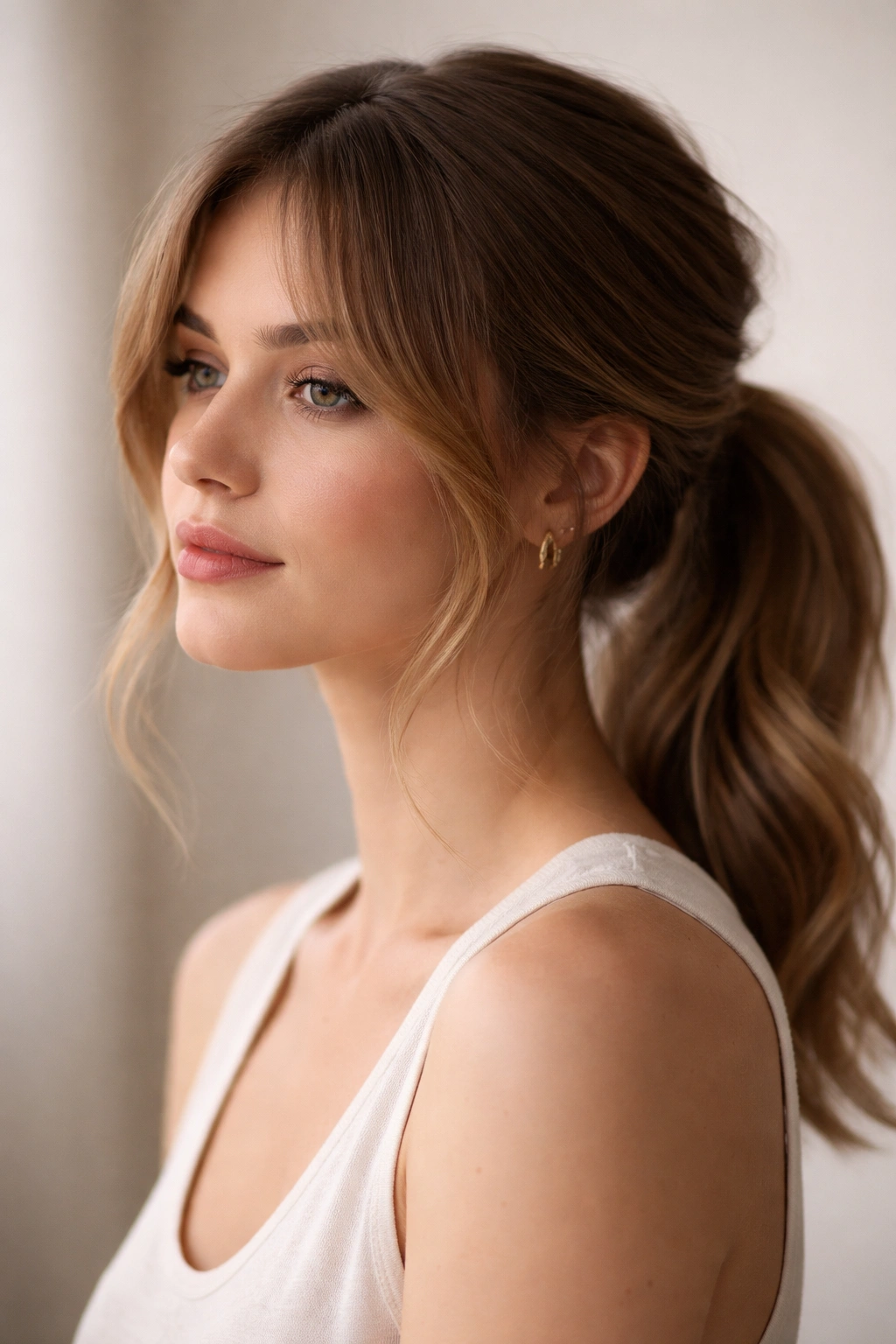
Curtain bangs do a lot of the work here. Keep the ponytail low and restrained, then let the bangs curve away from the face so the front stays soft. You do not need extra pieces at the temples if the fringe already frames everything.
This works especially well when you want an everyday style that feels relaxed around the eyes and cheekbones. The bangs break up the face line, while the ponytail keeps the back tidy.
If the bangs are freshly styled, avoid making the ponytail too tight. The contrast between the soft fringe and the pulled-back tail should feel balanced, not severe.
32. Claw-Clip Accent Low Ponytail
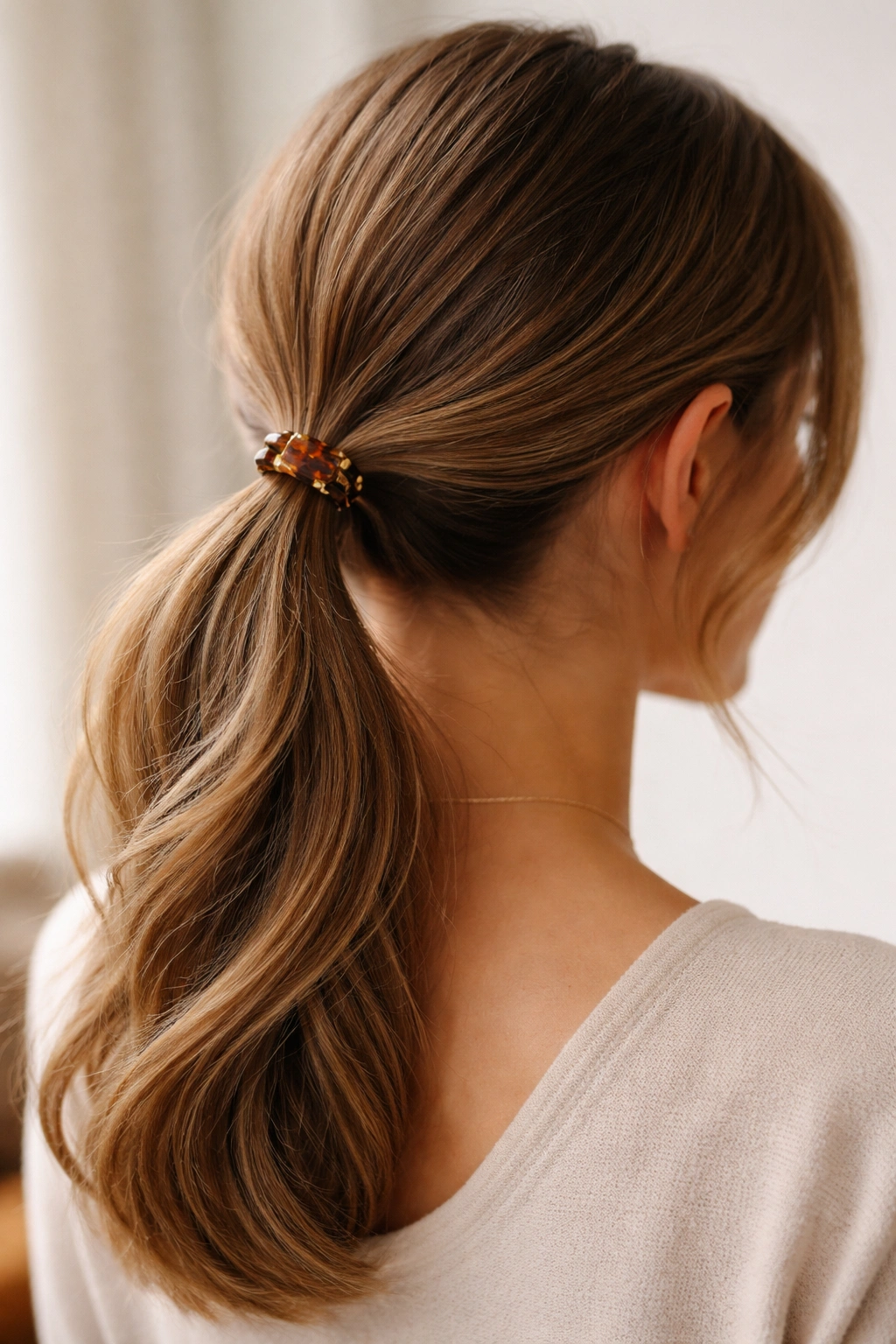
A small claw clip can sit right above the elastic or catch the wrapped strand that hides it. That little extra hardware changes the whole style without taking over. It’s a nice choice when you want your ponytail to feel a little more styled but still casual.
- Choose a small clip for fine or medium hair.
- Use a medium clip only if the ponytail is thick enough to support it.
- Place it slightly off-center if you want the style to feel less rigid.
I like this one for quick mornings because it takes seconds, not minutes. The clip does the visual work for you.
33. Soft Side-Part Low Ponytail With Loose Ends
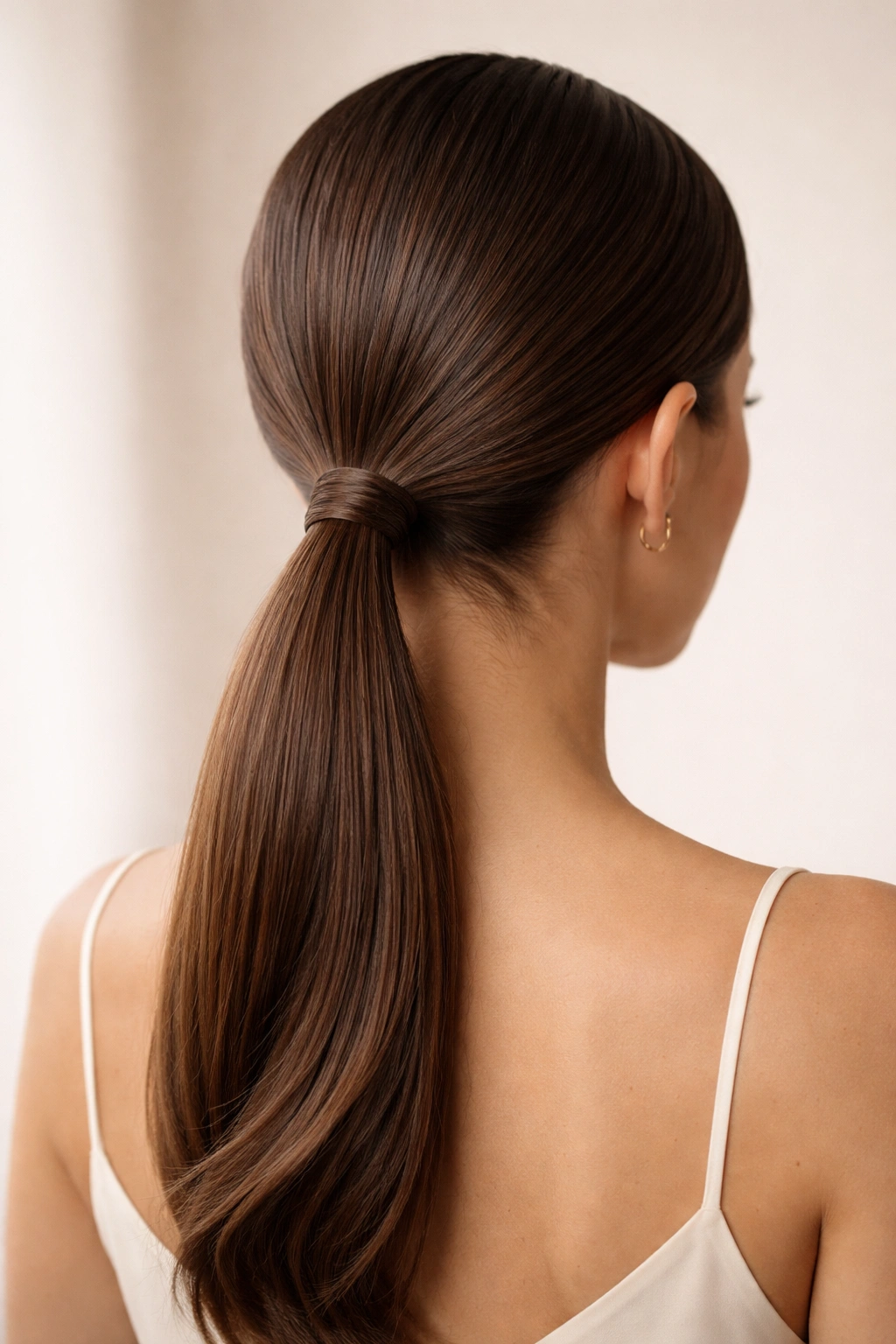
A soft side-part low ponytail with loose ends is the kind of style that lives in the real world. The top stays smooth, the part leans just a little to one side, and the tail is left with natural bend instead of being ironed flat. It feels relaxed, but not sloppy.
This is the low ponytail I’d keep around for almost any ordinary day. It doesn’t ask for much product, and it doesn’t punish you if the hair isn’t freshly washed. A touch of serum through the ends, a loose anchor at the nape, and you’re done.
The best part is the balance. It looks like hair that was arranged on purpose, but not overthought.
Final Thoughts
Low ponytails work because they leave room for personality. A center part makes one look sharper. A ribbon makes another one softer. A braid, a twist, or a wrapped base changes the mood without changing the basic shape.
If you keep a tiny kit nearby — snag-free elastics, 2 bobby pins, a small brush, maybe a ribbon or clip — you can shift from plain to pulled-together in under a minute. That matters on days when the mirror needs to stay simple.
And if your hair refuses to behave, start lower and softer rather than tighter and harder. That one move saves more ponytails than most styling tricks ever will.
