



Curly hair already has what most ponytail styles are trying to fake: lift, movement, and texture. The trick is not forcing those curls into a straight-haired mold. It’s choosing a shape that respects the curl pattern, keeps the crown from collapsing, and still looks polished enough for work, weddings, errands, or the kind of dinner where you want your hair to behave for more than ten minutes.
That’s why updo ponytails for curly hair work so well. The curl does half the styling for you. A good ponytail on curly hair should feel secure at the base, soft through the lengths, and intentional around the hairline. Tight and slick is one option, sure, but it’s not the only one. Sometimes the smartest move is leaving a few spirals loose near the temples, or building height at the crown, or wrapping a curl around the elastic so the whole thing looks finished instead of hurried.
The biggest mistake is treating curly hair like it needs to be flattened first. Nope. If you press every ounce of volume out of it, you usually end up with a ponytail that looks smaller, shorter, and oddly stiff. Curly hair has its own architecture. Work with it, and the result is usually better, longer-lasting, and far easier to wear.
Some of these styles lean sleek. Some are soft and romantic. A few are practical enough for a gym day, which is saying something because curly ponytails can get heavy fast if the base isn’t set right. Start with the styles that fit your curl density and the mood you want, and the rest falls into place.
1. High Curly Crown Ponytail
A high curly crown ponytail is the style I reach for when I want instant height without messing around with complicated sectioning. It lifts the face, shows off your curl pattern, and works especially well if your hair tends to puff out at the roots in humid air.
Why It Works
The crown stays lively because you’re gathering the hair at the highest point of your head instead of dragging it back low and flat. That little shift changes everything. The curls cascade down from above eye level, which makes the style feel bold instead of bulky.
- Use a soft brush or boar-bristle brush only at the crown if you want a smoother finish.
- Secure with a strong elastic and then wrap a small curl or coil around it.
- Add 3 to 5 bobby pins under the wrapped section if your hair is thick.
- Leave the ends free so the ponytail keeps its shape and bounce.
Best tip: tilt your head forward while you gather the hair. It helps the ponytail sit higher and keeps the base from sagging.
2. Slicked-Back Puff Ponytail
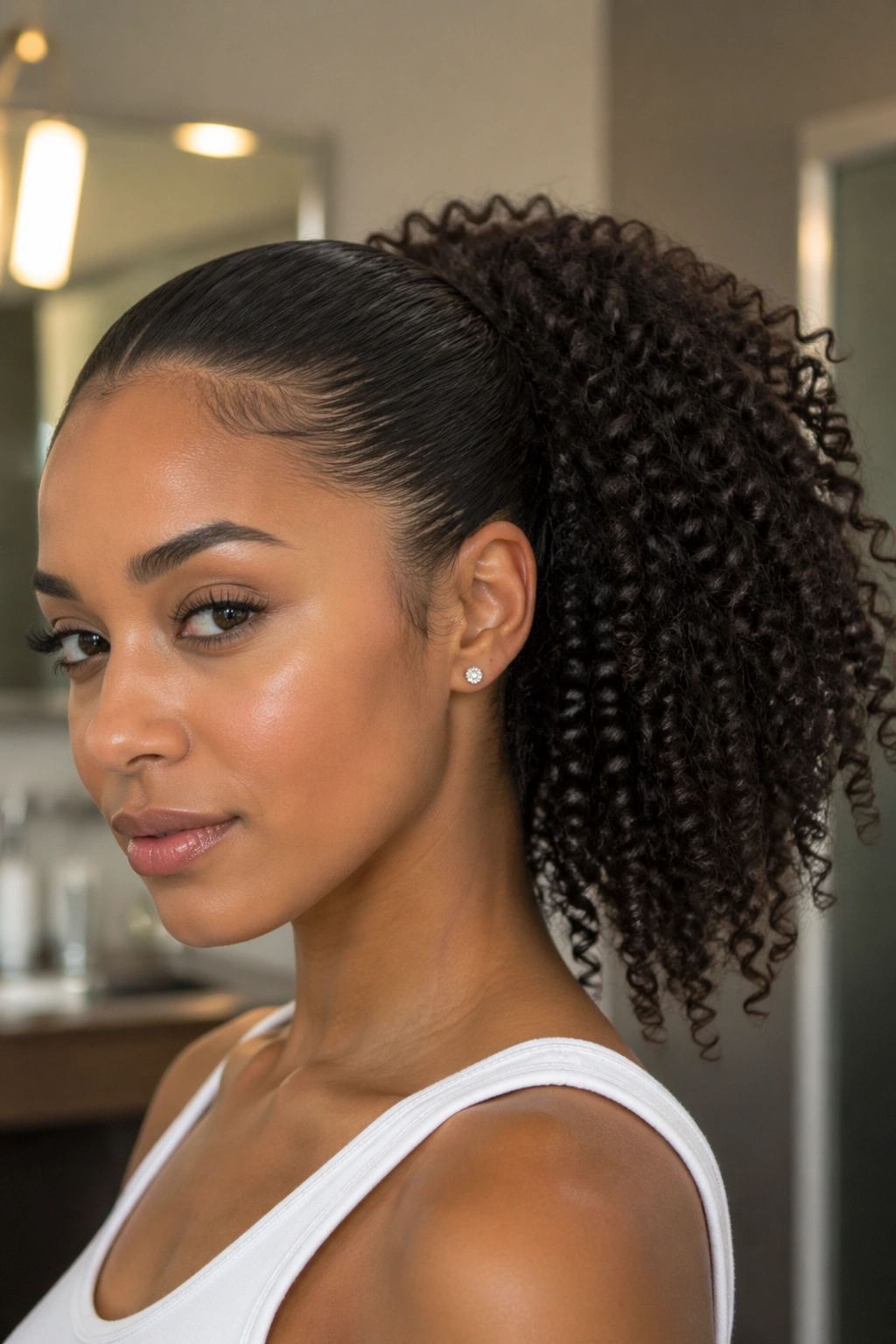
This one has attitude. The slicked-back puff ponytail is clean at the front and full everywhere else, which makes it a favorite when you want the contrast between smooth roots and a big curly tail.
The key is not drowning the front in gel. A thin layer is enough. Work the product from the hairline back with a brush, then stop before the rest of the hair loses its texture. The ponytail itself should still look soft and curly, not like it was ironed into submission.
I like this style for longer days because it stays neat for hours. The front holds the shape, and the puff at the back keeps the look from feeling too severe. If your curls shrink a lot, this one usually looks better after they settle for ten minutes.
A satin scrunchie helps keep the puff from getting crushed. So does wrapping the base with a small section of hair. Tiny detail. Big payoff.
3. Braided-Base Curly Ponytail
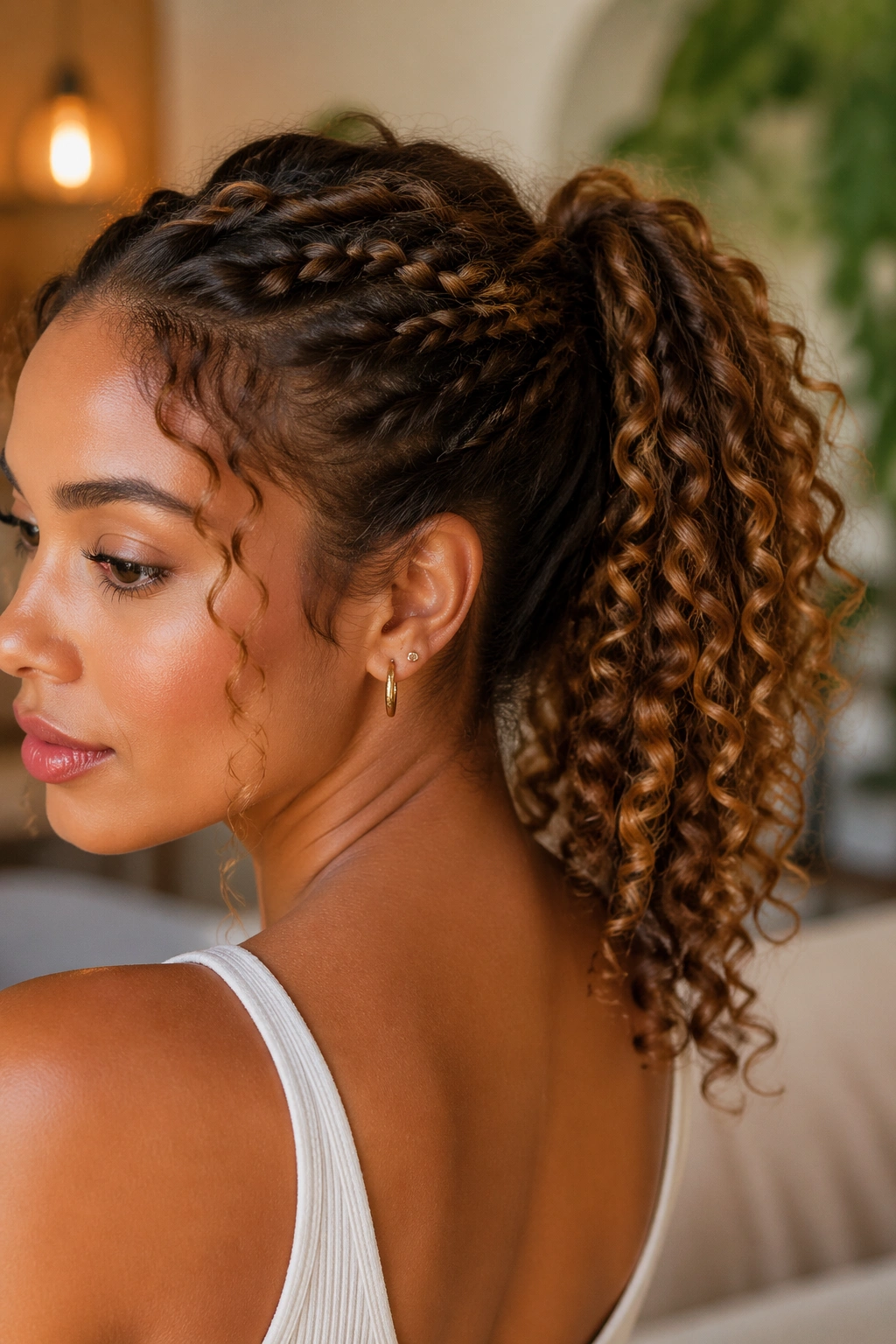
Ever notice how a simple braid at the base makes a ponytail look dressed up without trying too hard? That’s the whole charm here.
What Makes It Different
Instead of pulling the hair straight into a tie, you braid the first 2 to 3 inches near the scalp, then gather the rest into a curly ponytail. It gives the style a built-in anchor and a little texture at the base, which looks especially nice on thick curls.
This is a smart choice if your roots are slippery or if your hair tends to frizz around the crown after a few hours. The braid keeps the top section controlled, and the ponytail still has room to move.
How to Wear It
- Part off a narrow strip along the center or side.
- Braid it loosely, then secure it with a tiny clear elastic.
- Pull the rest of the hair into a mid or high ponytail.
- Hide the elastic with a curled strand or a ribbon if you want a softer finish.
It looks more complicated than it is. That’s usually a good sign.
4. Bubble Ponytail on Coils
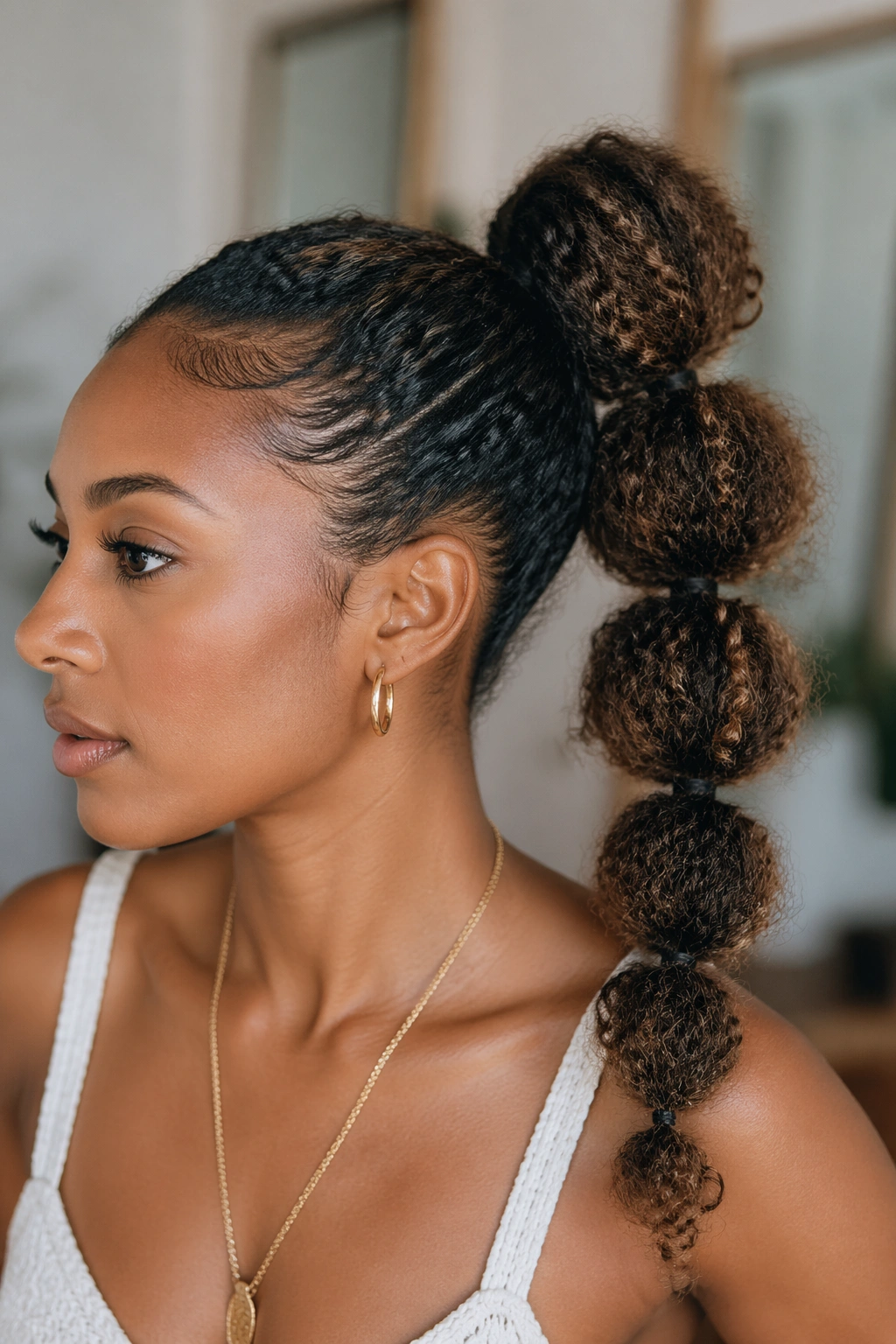
A bubble ponytail on curly hair can look almost theatrical in the best way. The shape breaks up the length into rounded sections, which makes dense curls look playful instead of heavy.
The style depends on spacing. You tie the ponytail at the base, then add elastics every 2 to 3 inches down the length. Gently pull each section outward so it rounds into a bubble. If your curls are tight, the bubbles may look smaller; that’s fine. Smaller bubbles can be even better because they hold their shape.
This version works especially well if your hair is layered. The shorter pieces add little wisps around each bubble, which gives the style movement without making it messy. Use a light mist of water or curl refresher before you start if the curls have gone a little dry. Dry coils can snag when you stretch them.
A bubble ponytail is one of those styles that looks like effort. But not too much effort. That’s the sweet spot.
5. Low Nape Ponytail with Face-Framing Curls
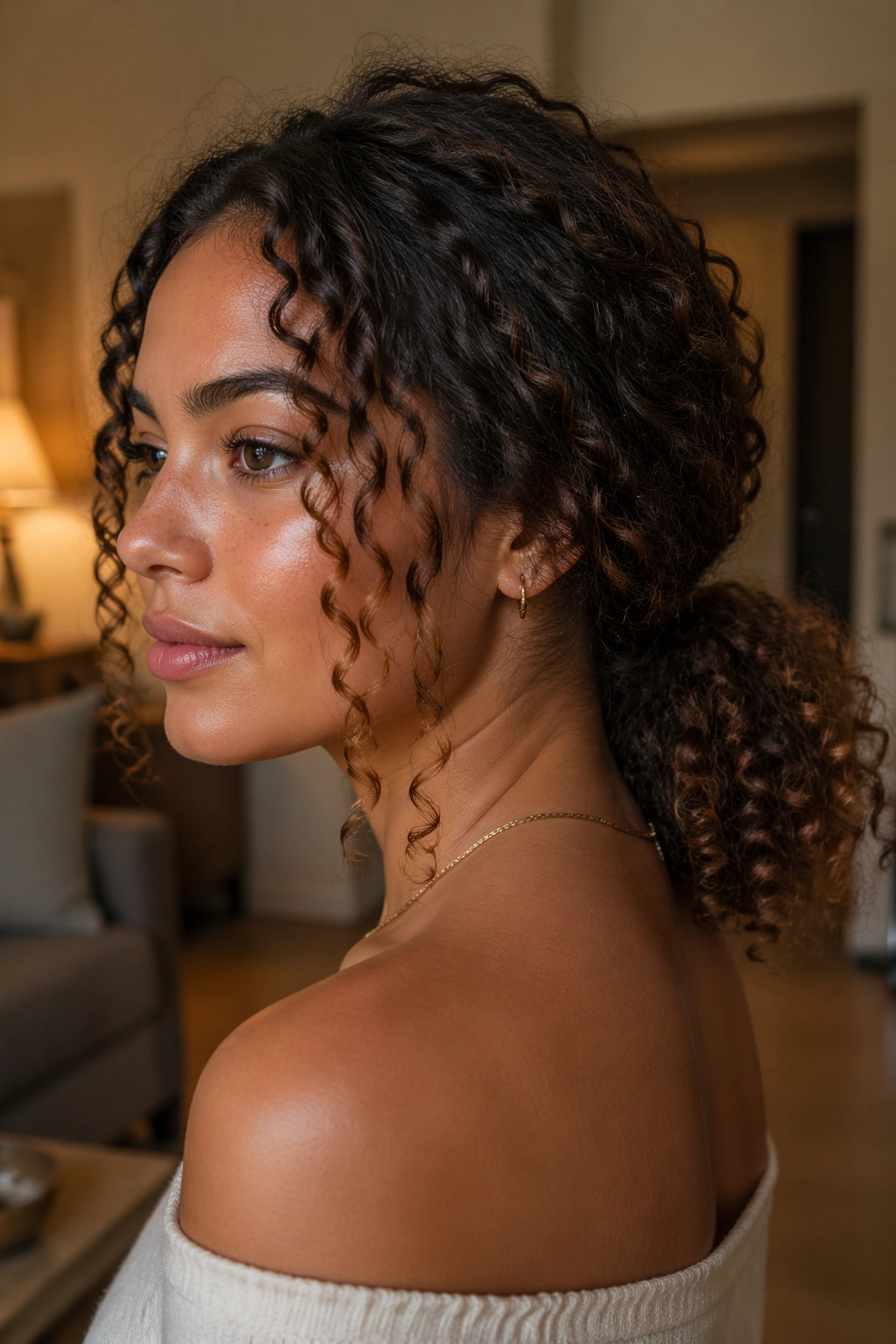
A low nape ponytail is calm, elegant, and far less fussy than people expect. On curly hair, it becomes softer and more interesting because the front pieces can stay loose and textured instead of perfectly tucked away.
I like this style when the goal is polish without stiffness. Gather the hair just above the nape, leave two curls out at the front, and let the ponytail sit low enough that it doesn’t fight your natural volume. If your hair is shoulder length, this can be a smart way to keep the style from puffing out too much at the sides.
The face-framing curls matter. They should be intentional, not random. Twist each piece around your finger while the hair is damp, then let it dry before you set the rest of the ponytail. That gives the front a clean curl shape instead of a frizzy little bend.
Use a small satin tie or a coil elastic so the base stays comfortable. No one wants a low ponytail that feels like a headache by lunchtime.
6. Pineapple Ponytail
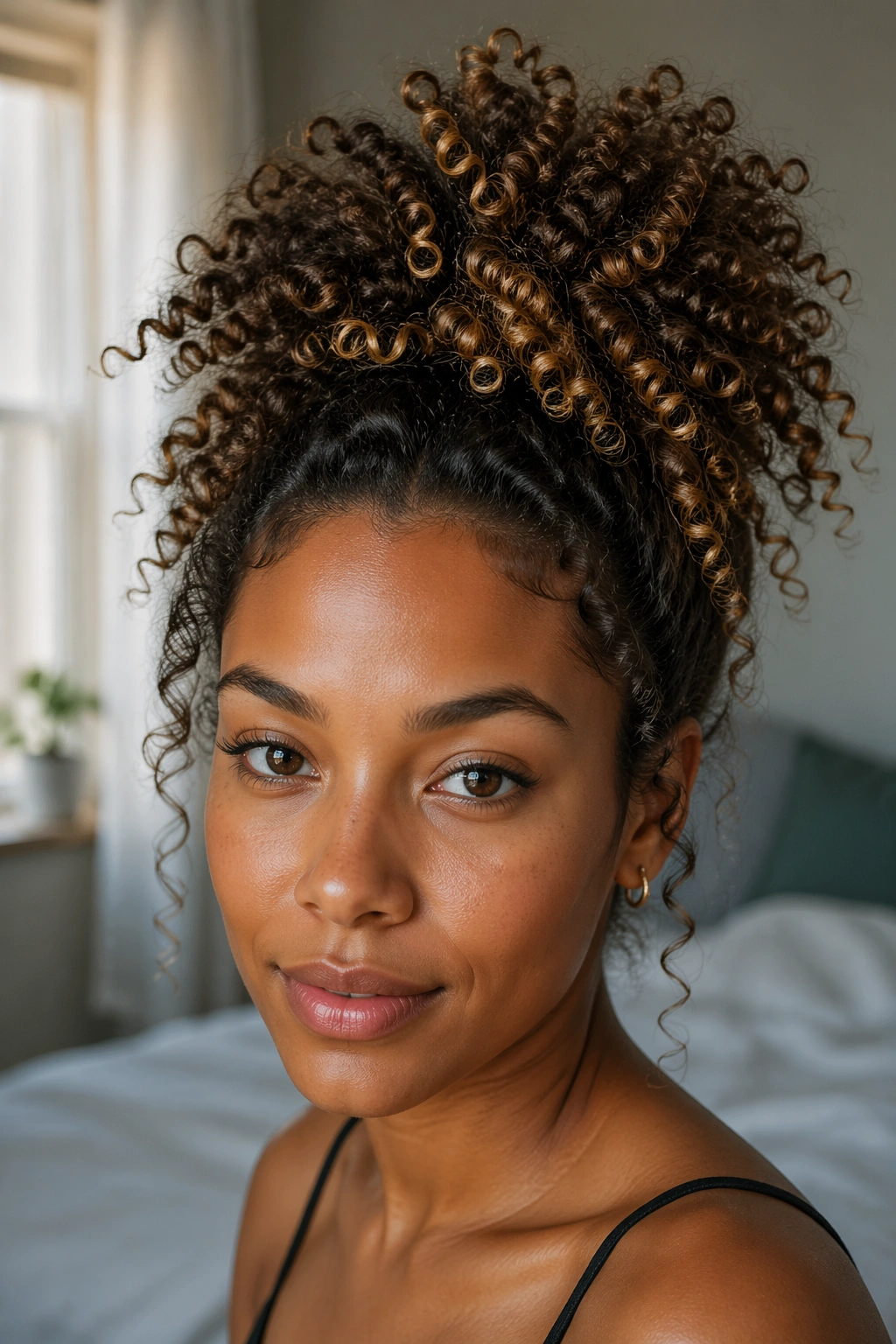
The pineapple ponytail is the curly-haired version of easygoing confidence. It sits high, pulls the curls upward, and keeps the length from getting flattened against your neck.
Why do people love it? Because it protects the curl pattern while still looking styled. You’re not trying to smooth every strand. You’re lifting the curls into a loose high ponytail and letting the ends spill out naturally. That makes it a strong choice for day-two hair or for curls that need a quick refresh.
Use a scrunchie rather than a hard elastic if your hair is prone to breakage. The base should feel secure but not crushed. If the crown is fluffy, smooth it with your fingertips and a tiny dab of styling cream, not a heavy gel layer.
This one is also forgiving on shorter curly cuts. If your ponytail is more puff than tail, that’s part of the charm. It reads as intentional when the shape is high and rounded.
7. Twisted Side Ponytail
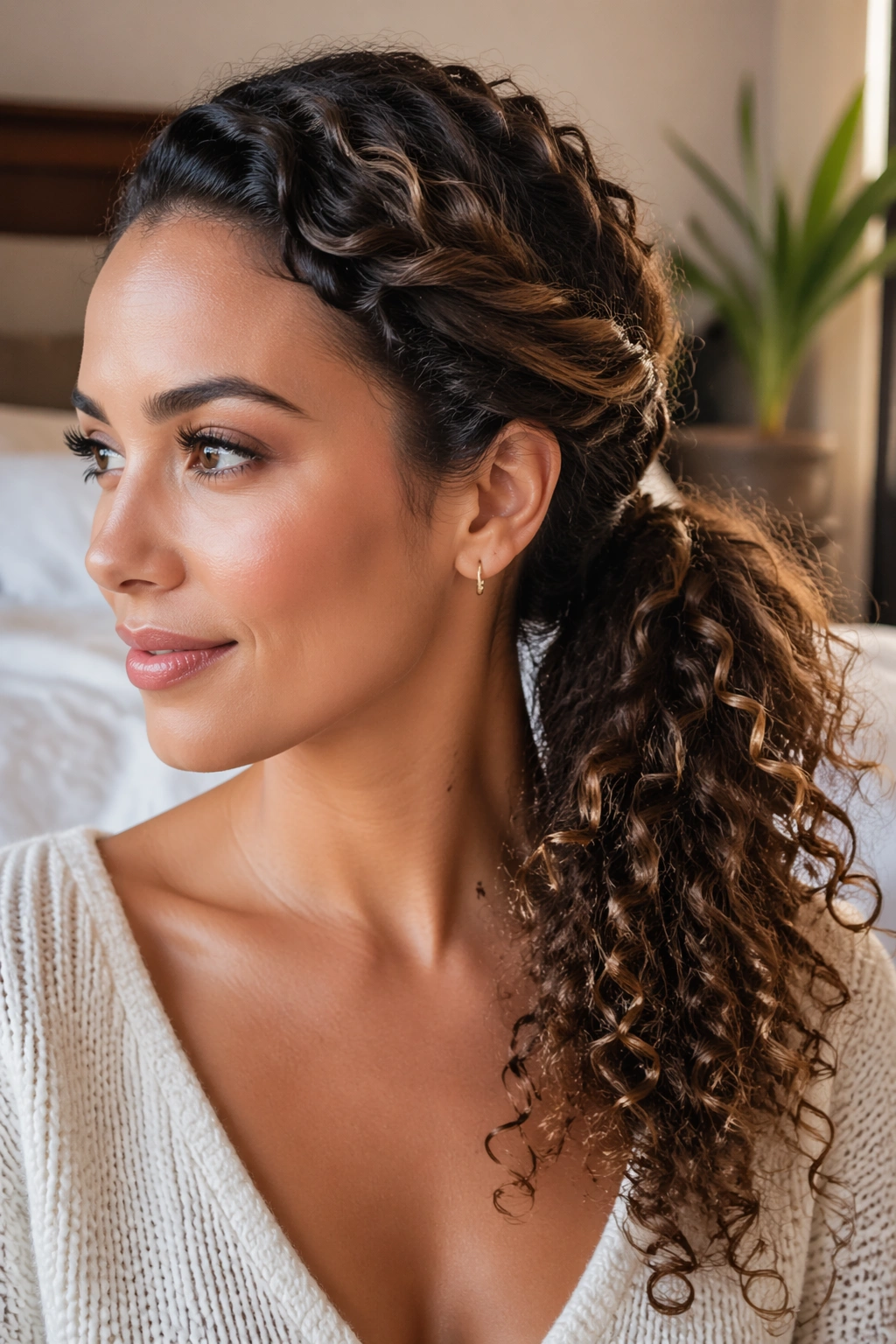
A twisted side ponytail gives curly hair a slight old-Hollywood feel without turning it into a formal updo. The side placement makes it softer than a centered ponytail, and the twist along one side adds a bit of visual rhythm.
Start by taking a front section from the heavier side of your part. Twist it back toward the ear, then pin it or feed it into the ponytail. Keep the ponytail low to mid-height on the opposite side of the head. The asymmetry is what gives it personality.
I’ve found this style works especially well when curls are different lengths. The side twist helps blend shorter pieces around the temples, so the whole look feels more deliberate. If your hair has layers, let a few of the shorter spirals stay loose near the face. They soften the line of the style.
A side ponytail can slide around if the hair is silky. A small hidden bobby pin under the twist usually fixes that.
8. Half-Up High Ponytail
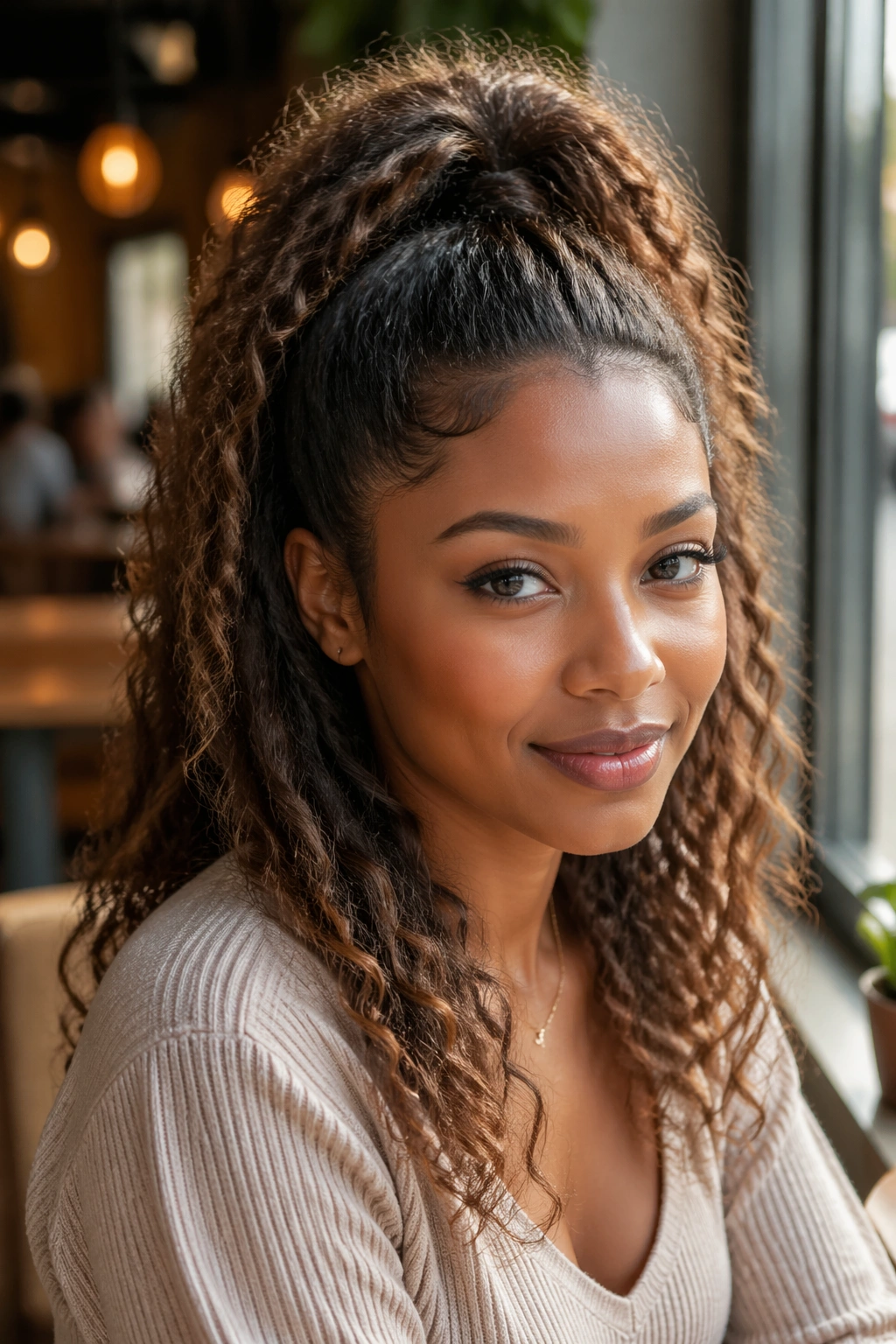
This is the one for people who want lift without giving up all their volume. A half-up high ponytail keeps the top section off the face, then lets the rest of the curls fall freely underneath.
The shape is good when your curls are long enough to look weighed down in a full ponytail. Instead of forcing all the hair into one tie, you let the top do the styling and the bottom do the showing off. It’s a nice compromise, and honestly, sometimes compromise is the smarter haircut decision.
Use the front and crown section only, from temple to temple, then secure it high and firm. Tease the crown a little with your fingers if you want more lift. Don’t backcomb aggressively unless you enjoy dealing with knots later. Most people do not.
This style is also easy to dress up. A curled tendril on each side, a thin ribbon, or a wrapped elastic can change the whole mood in less than a minute.
9. Wrapped-Base Minimal Ponytail
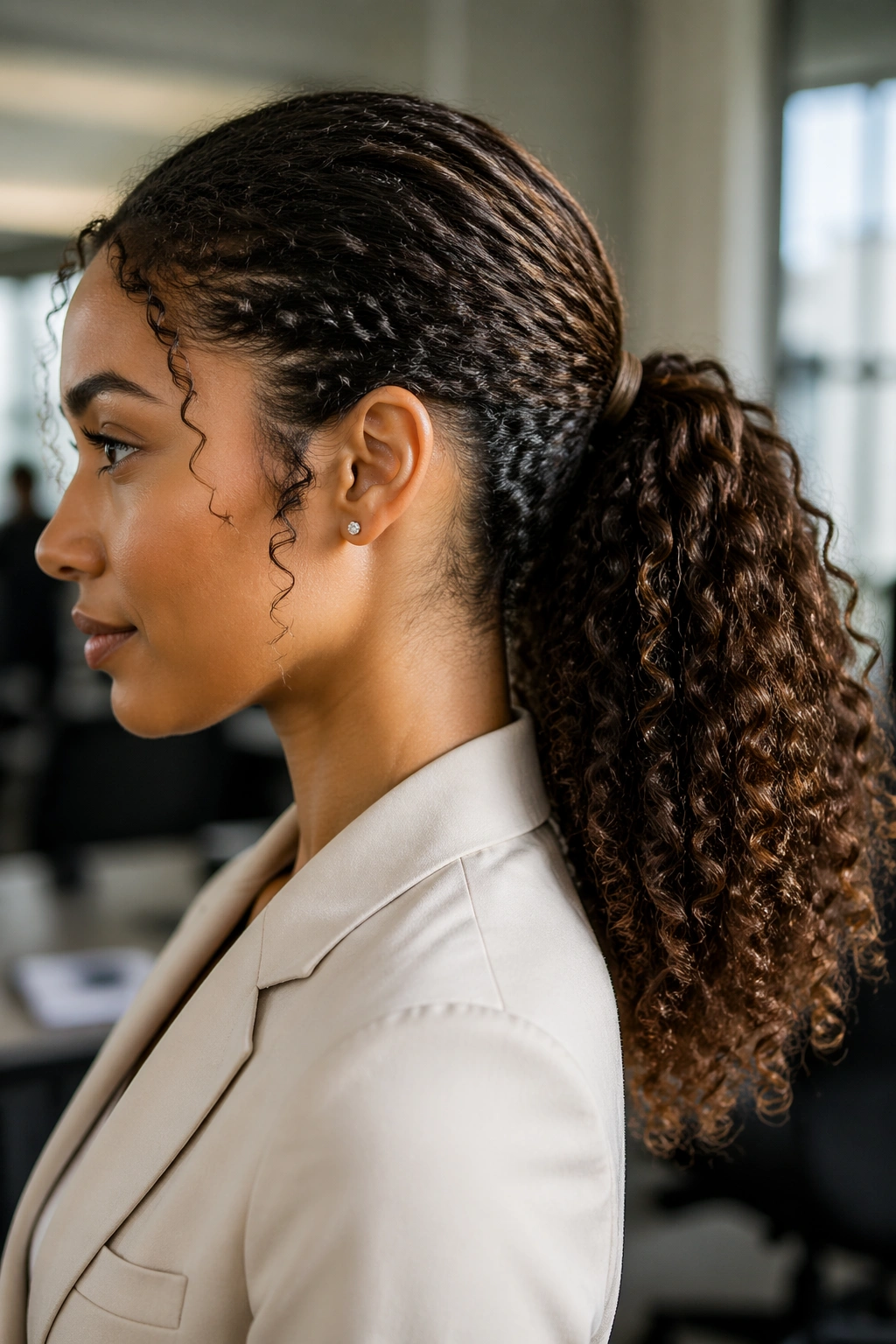
A wrapped-base ponytail is one of those tiny upgrades that makes a plain style feel finished. Instead of showing the elastic, you hide it with a strand of your own hair. Simple. Clean. Effective.
The trick is to take a narrow curl or section from underneath the ponytail, smooth it around the base, and pin it where it disappears behind the tail. If the hair is thick, use a small pin with a matte finish so it grips better. Shiny pins tend to slide on silky curls.
This style looks especially good on curly hair because the wrap adds contrast against the texture of the tail. The base feels polished, while the lengths keep their natural fullness. It’s a good option for interviews, dinners, or any situation where you want tidy without looking overly styled.
If the wrapped strand is too chunky, it can look clumsy. Keep it slim. One neat turn around the elastic is enough.
10. Mid-Height Volume Ponytail
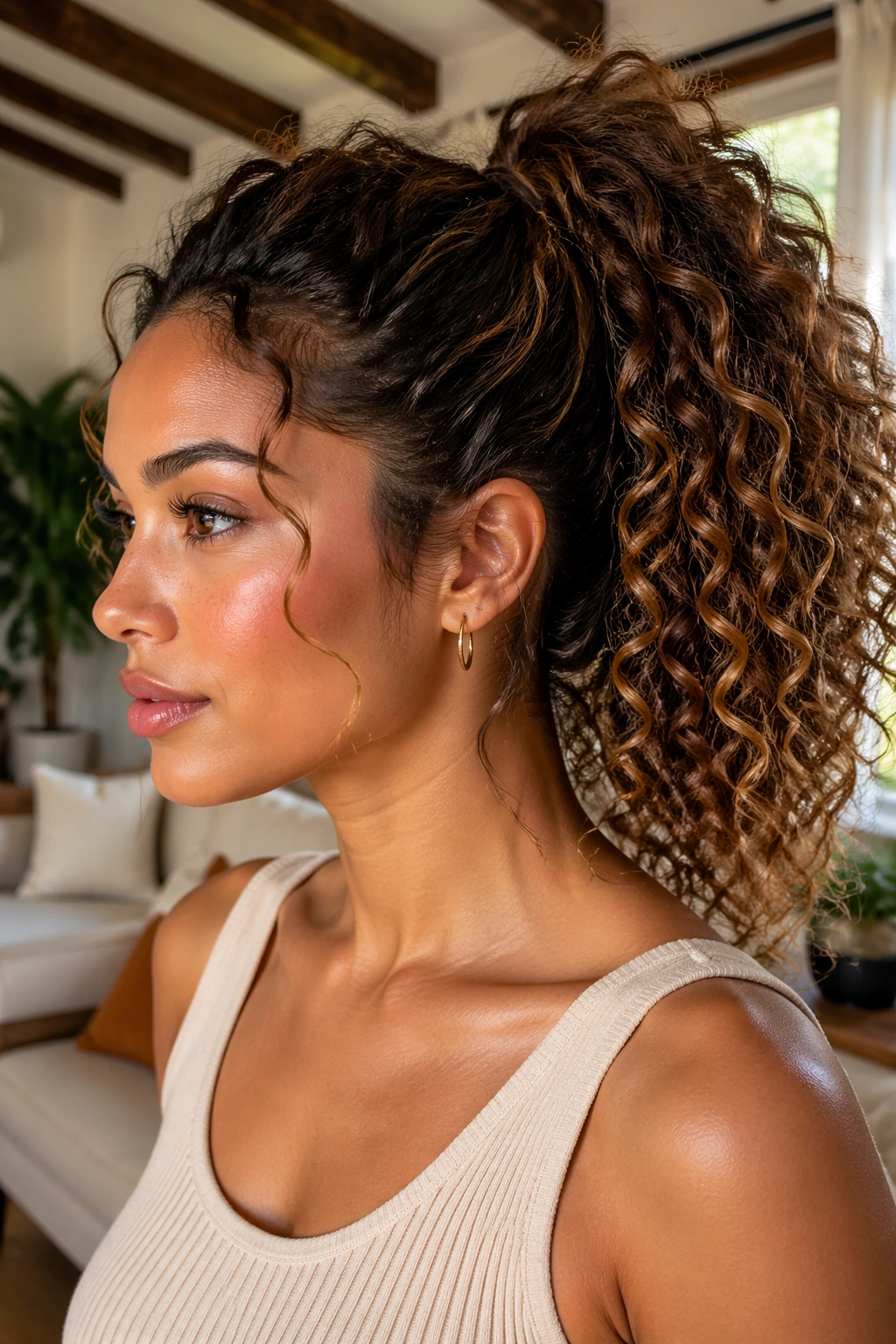
A mid-height volume ponytail sits in that useful middle ground between casual and dressed up. It doesn’t shout for attention, but it still has shape, bounce, and enough presence to work with thick curls.
The height matters. Too low, and the style sinks. Too high, and it can look more sporty than chic. Mid-height gives the curls room to move while keeping the top of the head from going flat. That’s especially helpful if your curls are dense near the crown and shorter through the front.
What to Watch For
- Keep the base snug, but not tight enough to flatten the roots.
- Use a wide-tooth comb only if you want extra smoothness at the top.
- Refresh the ponytail with a light oil on the ends if they look dry.
- Pin back any shorter layers that keep slipping out at the nape.
It’s a workhorse style. Not flashy. Just solid.
11. Faux Hawk Ponytail
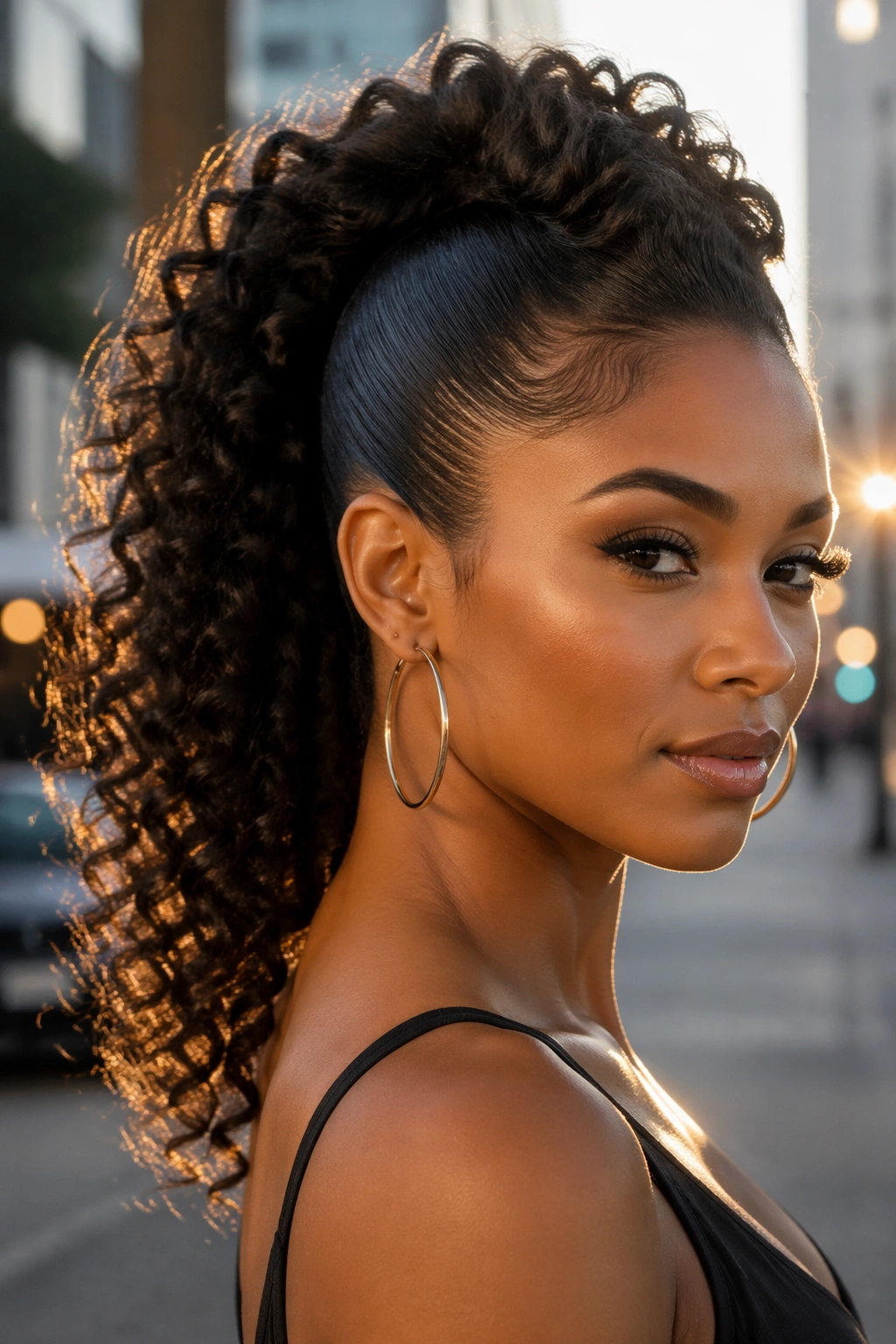
A faux hawk ponytail has edge, and it’s one of the best ways to show off curly texture without sacrificing height. The sides stay close to the head while the center section rises into a ponytail or puff.
Unlike a standard high ponytail, this one depends on contrast. You flatten the sides a bit more, either with gel or with tight twisting, then leave the center full. That gives the silhouette a lean, lifted shape that feels sharper than a regular curl puff.
I’d recommend it for people who like a little drama in their hair but still want the ponytail to stay wearable. The style can be sporty, dressy, or somewhere in between depending on how smooth you make the sides. Add more gel for a cleaner finish. Leave the edges softer if you want it less severe.
One warning: the style can pull if you tie it too tightly at the crown. Keep the tension firm but reasonable. Your scalp will thank you later.
12. Crown Braid into Ponytail
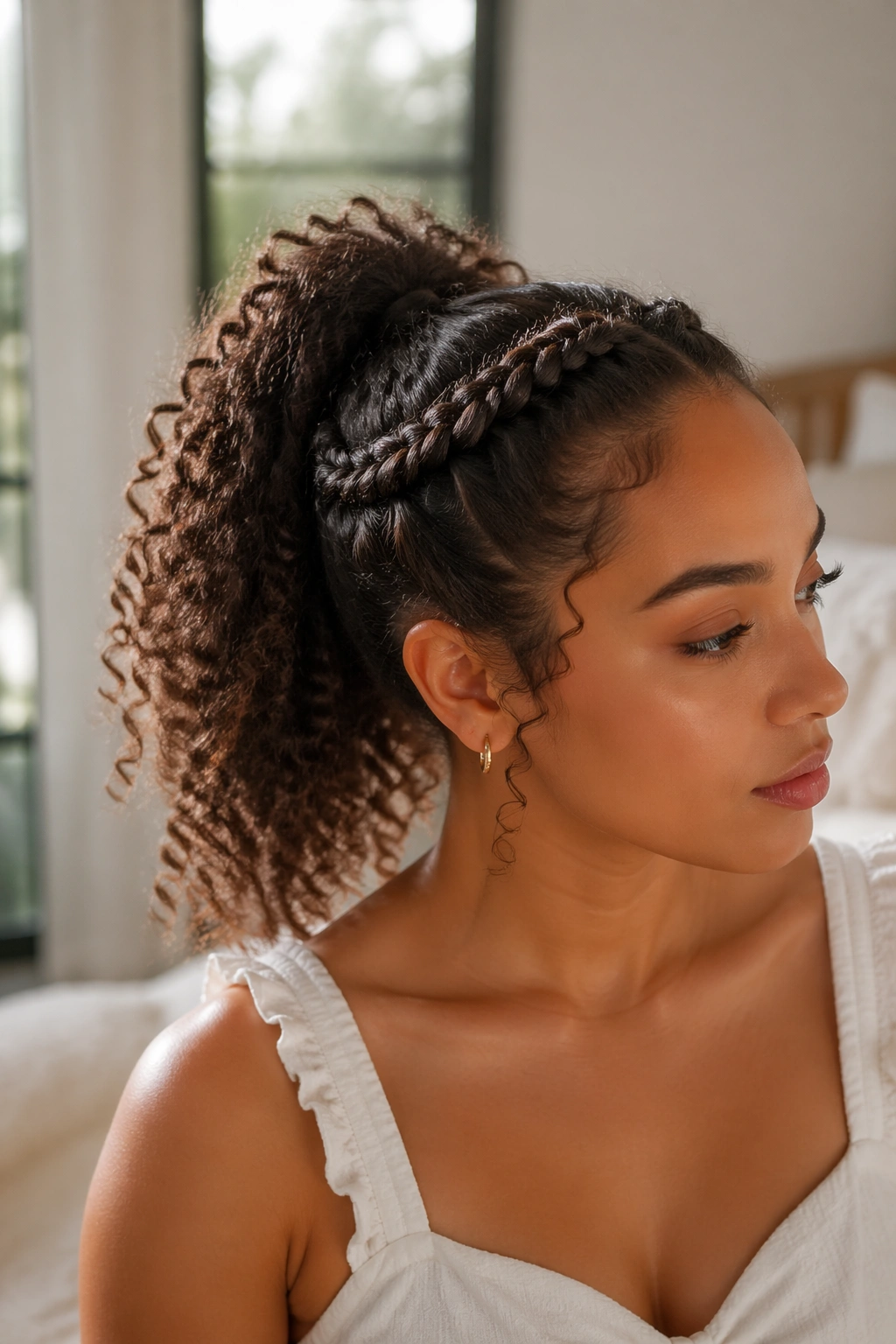
A crown braid into ponytail gives curly hair a nice sense of structure. The braid frames the top of the head, while the ponytail keeps the style from feeling too formal or locked in place.
This one is especially flattering if your curls have a lot of volume at the sides. The braid tucks some of that width inward and draws the eye up toward the crown. You can make the braid narrow and delicate, or thicker and more obvious. Both work.
How It Starts
Braid along the front hairline or create two short braids that meet at the back, then gather everything into a ponytail. Let the ponytail stay curly and soft. The braid is the architecture; the ponytail is the part that moves.
A crown braid also helps if your front layers fall forward all day. It keeps them in place without pinning every piece individually. That alone is worth the effort.
13. Rope-Twist Ponytail
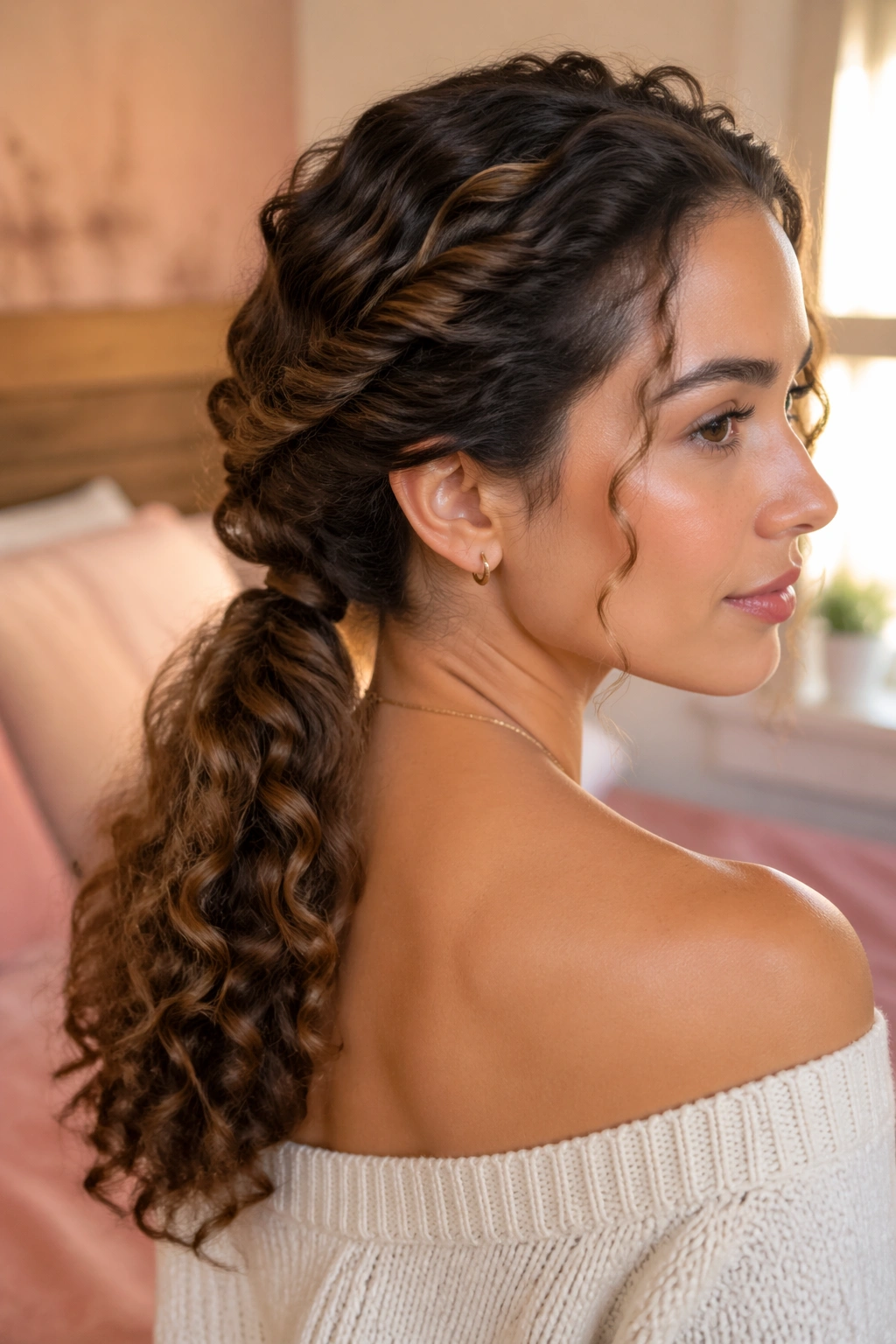
A rope-twist ponytail looks polished in a way that feels almost unfair for how easy it is. You split a section into two pieces, twist them in the same direction, then wrap them around each other in the opposite direction. The result is compact, neat, and very good at holding on curly hair.
This style works best when the twists are done with slightly damp hair or a touch of cream. Dry curls can fray at the ends and make the twist look fuzzy. If your hair is coarse, a little leave-in conditioner helps the strands glide together.
I like rope twists because they give the ponytail a rope-like spine without needing a full braid. That makes them a nice choice for medium-thick curls that need control but still deserve to keep some spring. Secure the twist at the base before letting the rest fall loose.
It’s tidy. It’s fast. And it looks like you thought about it.
14. Side-Swept Event Ponytail
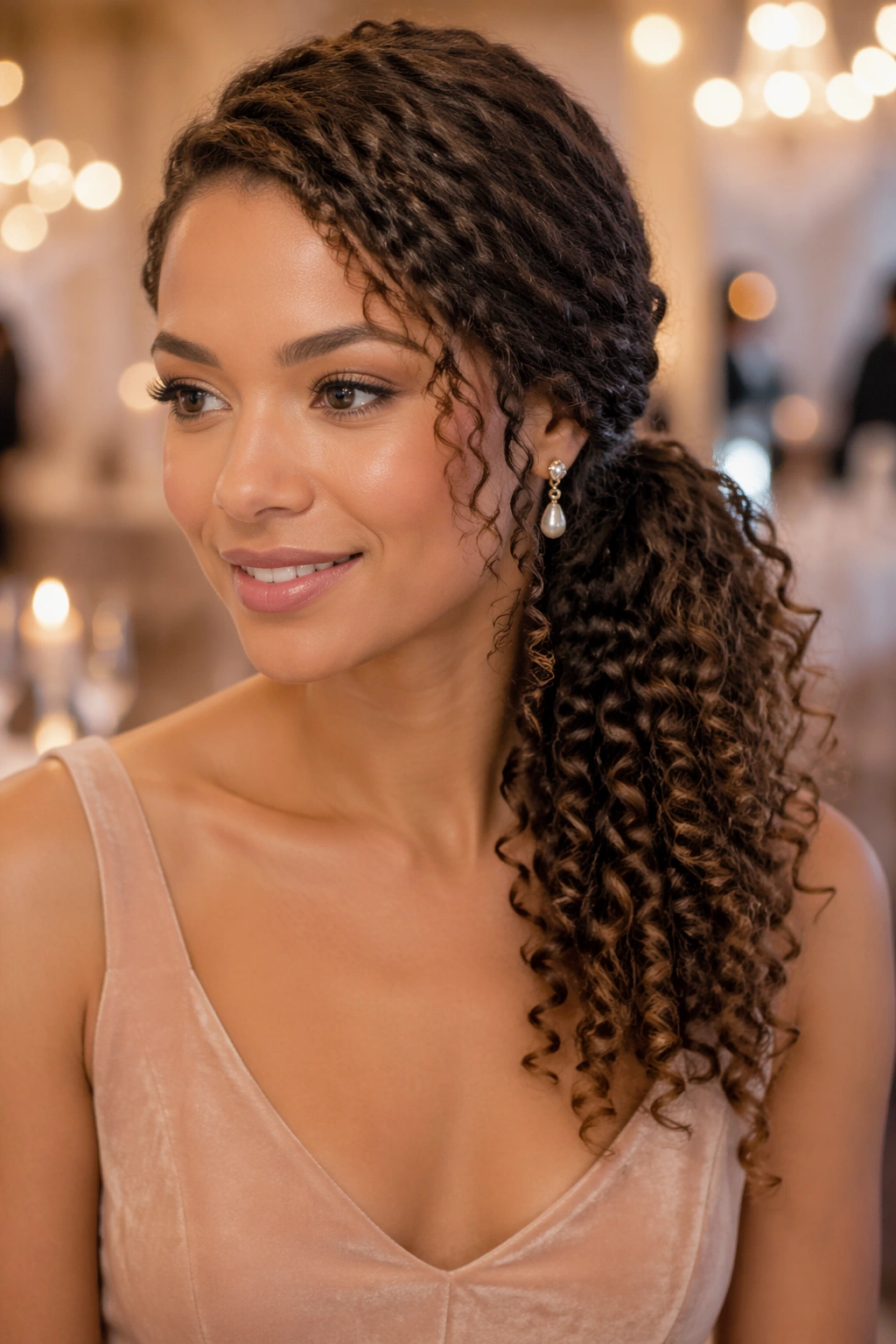
A side-swept event ponytail changes the balance of curly hair in a flattering way. Instead of centering everything, you sweep the hair across one shoulder and let the curls spill in a long arc.
The style shines when you want a softer, dressier silhouette. Keep the roots smooth on the side opposite the ponytail, then gather the curls low and off to one side. If you want extra shape, curl the front pieces away from the face before you pin them. That keeps the front from collapsing into a blunt line.
A side-swept ponytail photographs well because the shape has movement even when you stand still. The curls stack over one shoulder and create a strong outline, which makes it a nice choice for formal dresses with open necklines. It also keeps the back visible, which matters if your outfit does a lot of the work.
The only real downside is stability. Use enough pins to keep the sweep in place, especially if your hair is heavy or layered.
15. Messy Textured Low Ponytail
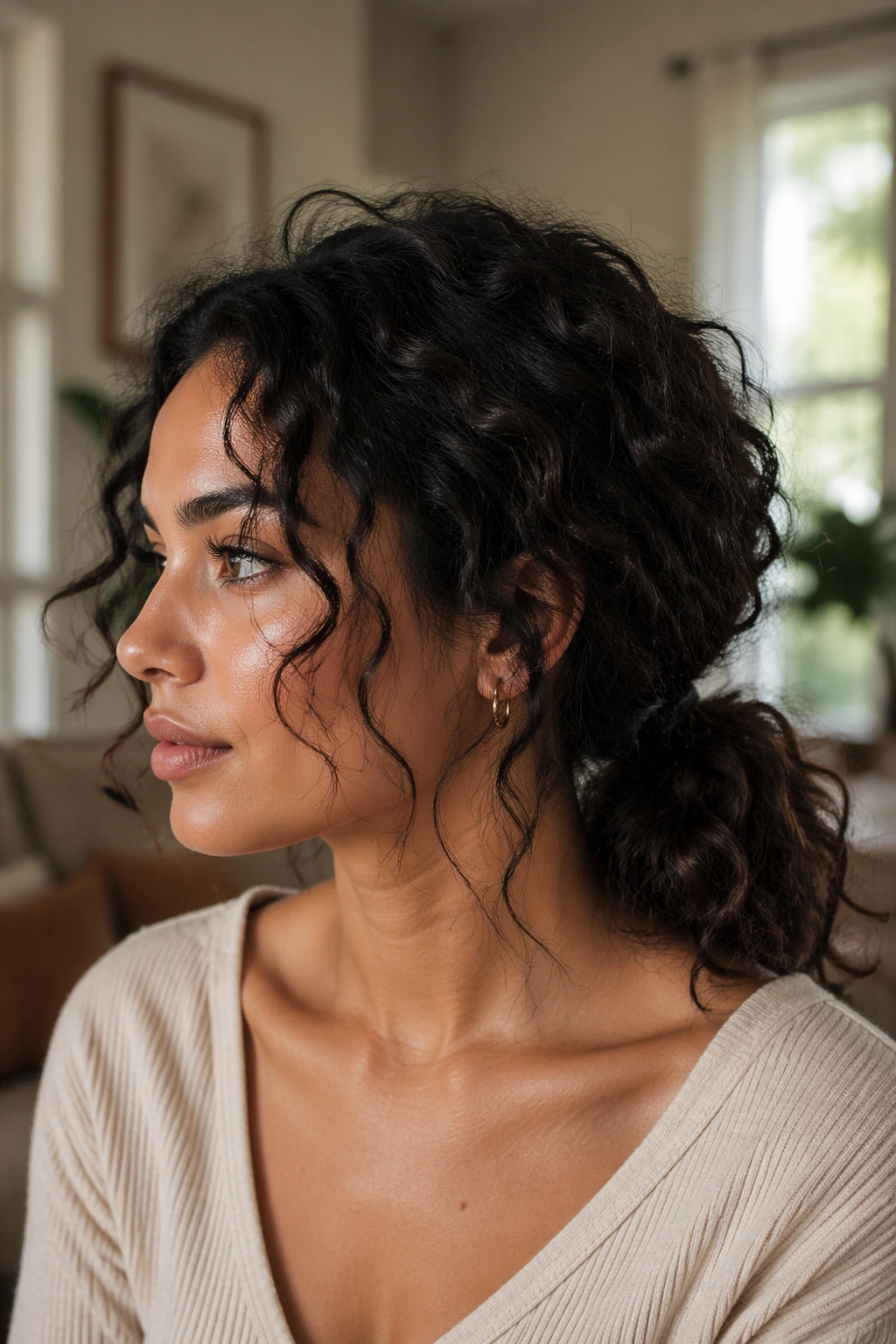
Messy does not mean careless. A messy textured low ponytail is about controlled looseness, with the curls arranged so they look soft instead of unfinished.
Start low at the nape, leave a bit of volume at the crown, and gently tug on a few pieces around the ears. The goal is a shape that feels lived-in but still deliberate. If you over-smooth the hair, you lose the whole point. If you pull too much apart, it starts to look like you gave up halfway through.
I think this style works best on second- or third-day curls because the texture has a little grip. Freshly washed hair can be too slippery unless you add mousse or a light styling cream first. A few flyaways are fine. Actually, they help.
If you want it to look better, not bigger, pin the crown first and then loosen the ponytail a touch. Small difference. Big result.
16. Claw-Clip Lift Ponytail
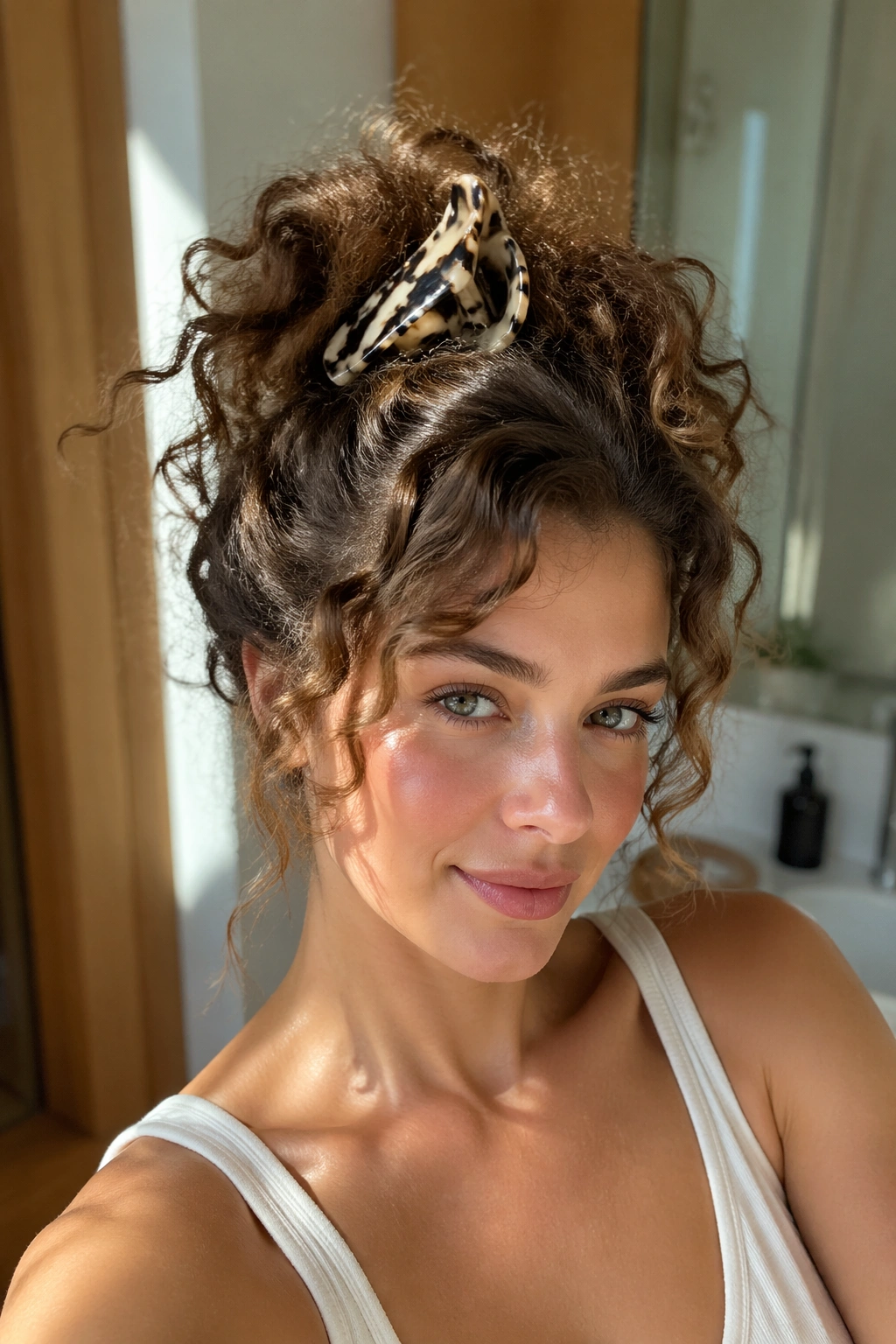
A claw-clip lift ponytail is not a true ponytail in the strictest sense, and that’s part of why it’s useful. It gives curly hair height at the back without the crease that some elastic ties leave behind.
The clip lifts the hair in a loose fold, which creates a soft updo shape. Then the curls fall out in a puff or tail underneath. It’s quick, friendly to fragile ends, and much easier on the scalp than a tight tie. If your curls are dense, choose a large clip with strong teeth. Tiny clips will give up fast.
This style is a good backup when you want your hair off your neck but don’t want a full styled look. It also works on hair that’s a bit too short for a wrapped ponytail. The clip makes the shape, not the length.
Use it when the day calls for convenience, but not sloppiness. That’s where it earns its keep.
17. Scarf-Wrapped Ponytail
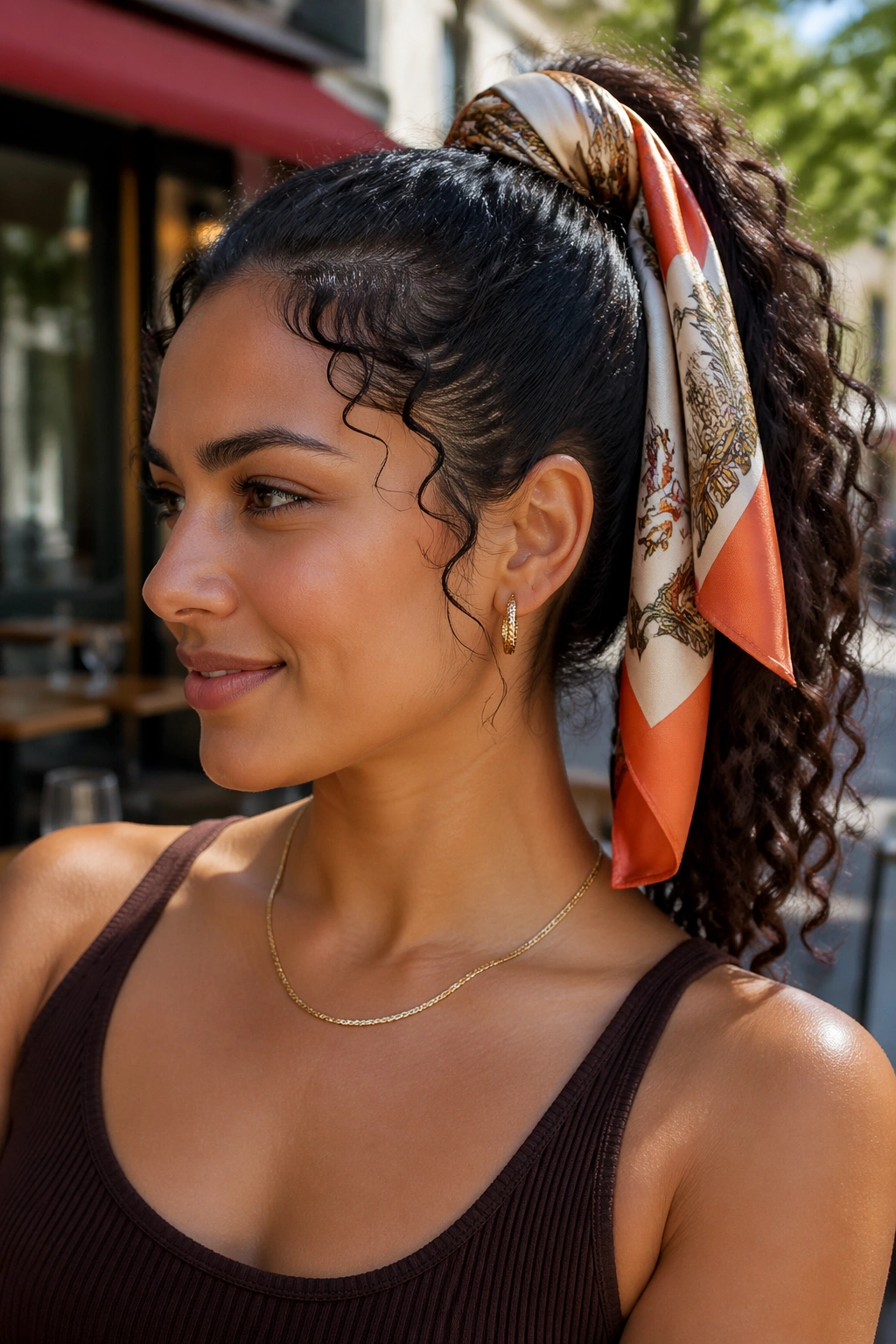
A scarf-wrapped ponytail brings in color and gives curly hair a little extra personality without needing extra styling time. Tie the ponytail first, then wrap a silk or satin scarf around the base and knot it to one side.
The scarf does more than decorate. It can help protect the hairline from friction, especially if you wear ponytails often. A smooth fabric is kinder than a rough cotton tie, and it also helps the style feel a bit more finished. You can let the scarf tails hang long, or tuck them back for a cleaner look.
This style suits curls of almost any length because the scarf becomes part of the silhouette. Bright prints make the hair look playful. Solid colors look sharper. A narrow scarf gives a neater line than a wide one, which can swallow the whole ponytail if the hair is fine.
The only thing to watch is bulk. If the knot gets too thick, move it slightly off-center so it doesn’t sit right on the top of the ponytail.
18. Knot-Lift Ponytail
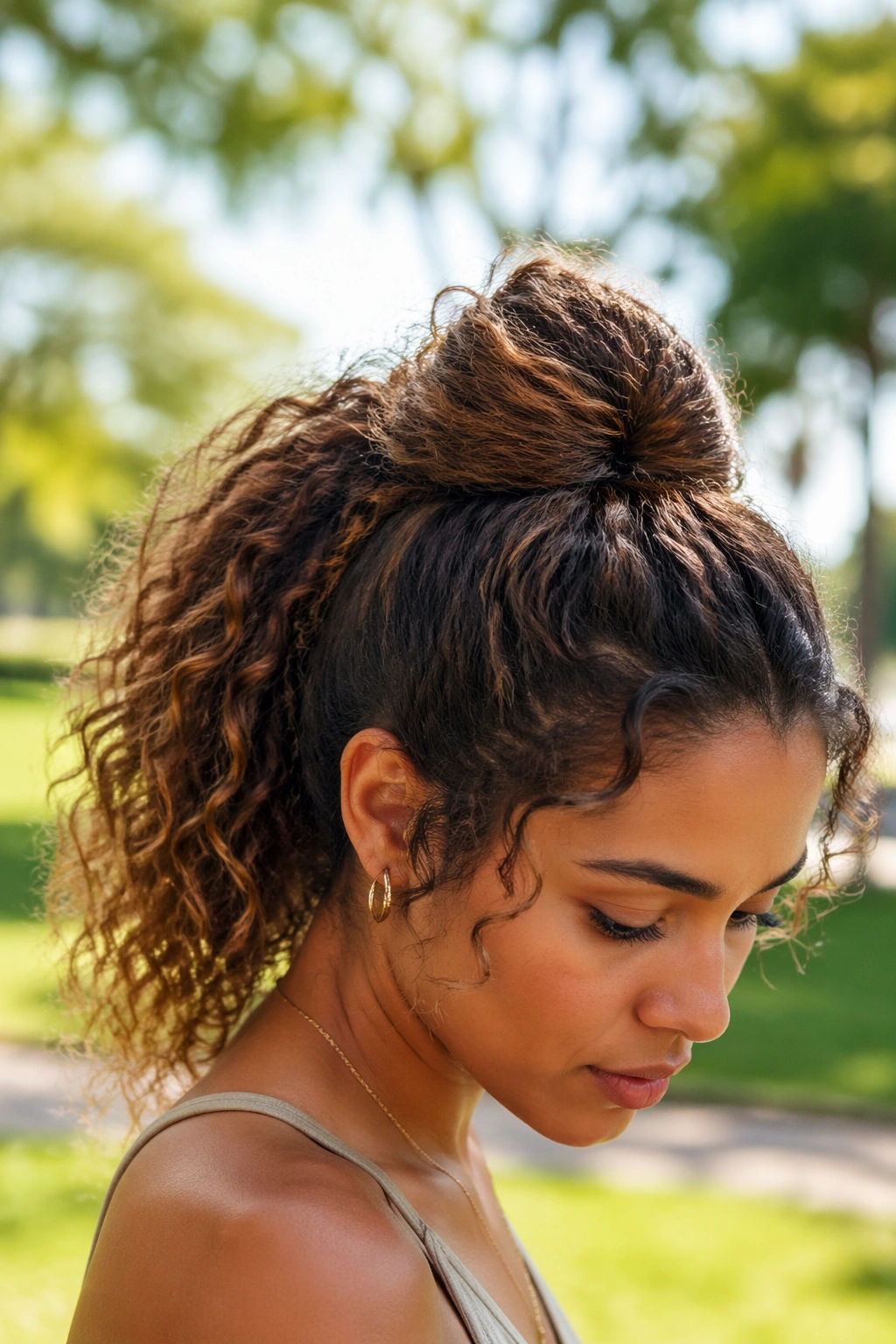
A knot-lift ponytail is one of my favorite tricks for adding shape at the crown without a teasing comb. You split the top section, knot it once or twice, then secure the rest into a ponytail.
It sounds odd until you see it. The knot creates a bit of lift where the hair usually lies flat, and it gives the style a sculpted look without looking rigid. On curly hair, the texture hides the join well, so the knot reads as design rather than hack.
How It Helps
- Adds crown height without heavy backcombing.
- Keeps the front from collapsing if your hair is fine.
- Works on medium or long curls.
- Pins easily under the rest of the ponytail.
If you try this, keep the knot loose enough to move. A tight knot can create a weird bump. The sweet spot is soft structure, not a hard little lump.
19. Curly Ponytail with Tendrils
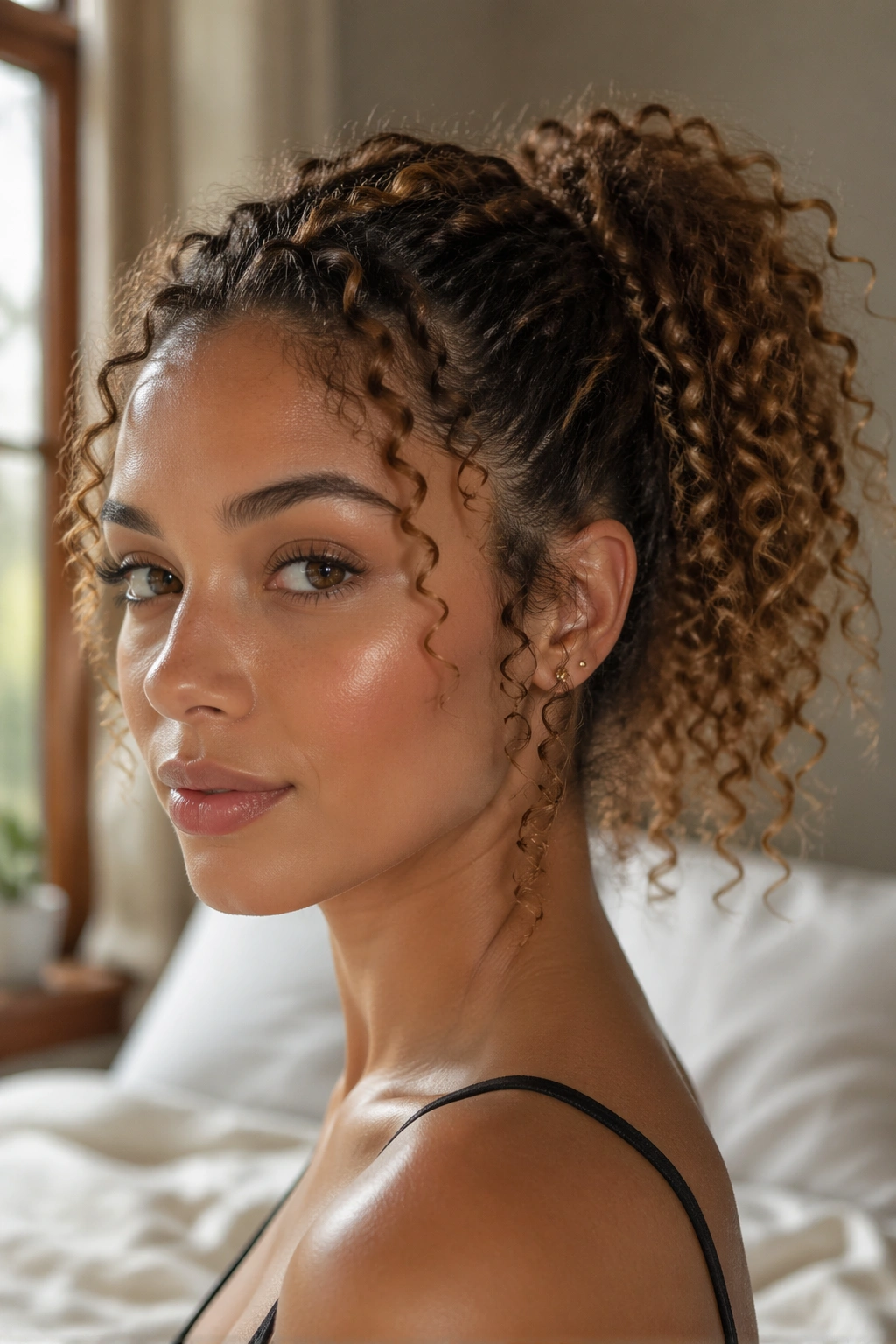
A curly ponytail with tendrils is proof that a few loose pieces can change the whole mood of a style. The ponytail itself can be simple, but the tendrils around the face make it feel softer and more finished.
The tendrils should be chosen on purpose. Pick pieces near the temples or just behind the ears, then define them with a little cream or gel so they curl cleanly. If they’re too short, leave them alone. Choppy frizz is not the goal here.
This look works especially well when you want the ponytail to feel romantic without turning it into a full updo. The loose front pieces frame the face and keep the style from looking severe. It’s one of the easiest ways to make curly hair look styled in under five minutes.
A small warning: don’t overdo the tendrils. Two or four pieces is usually enough. Too many, and the style starts to look accidental.
20. Double-Braid Ponytail
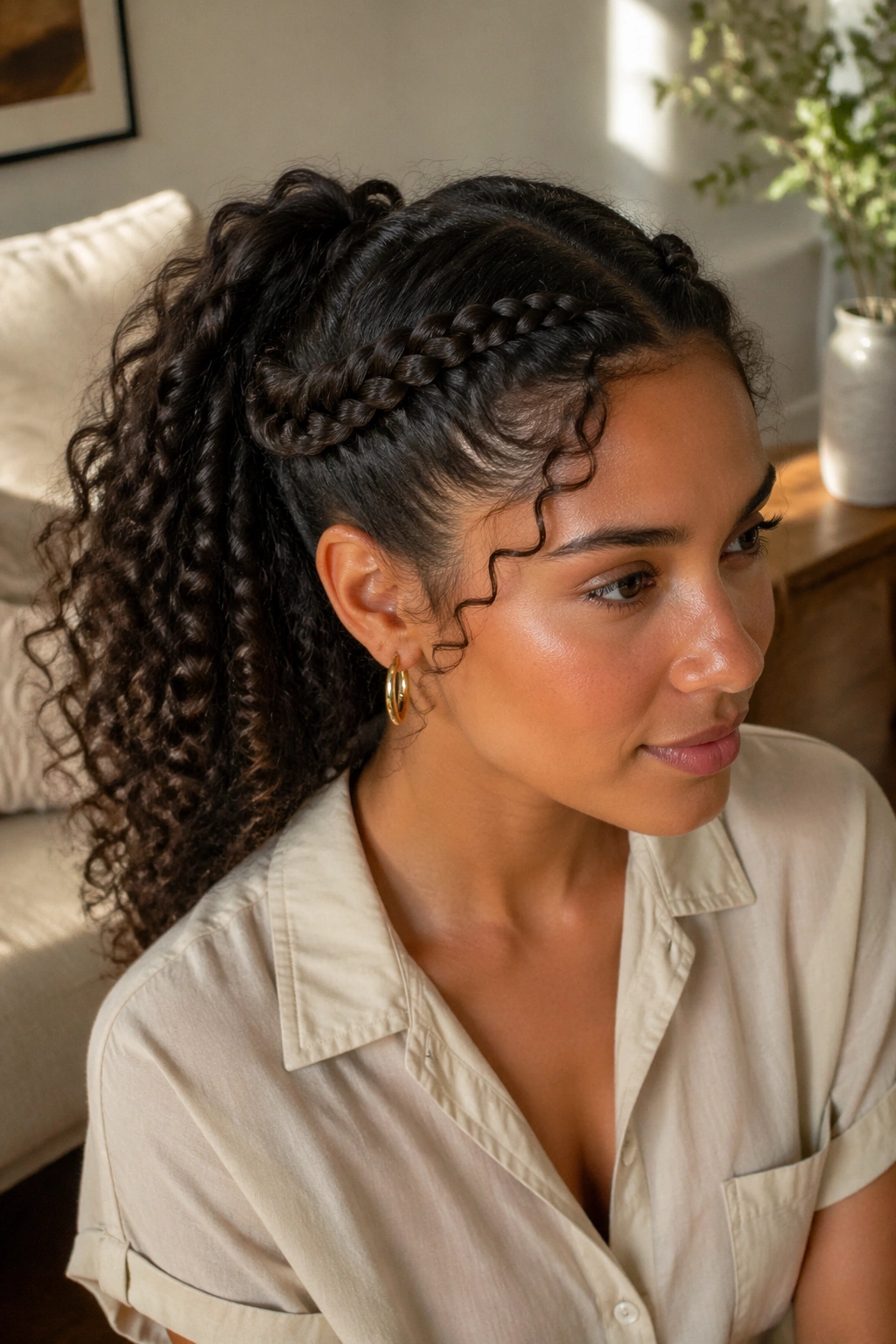
A double-braid ponytail gives the impression of detail without forcing the rest of the hair to be too controlled. You braid two small sections on either side, then gather them into one curly ponytail.
The braids add structure near the face, which is useful if your curls tend to flare outward at the temples. They also create a nice visual line leading into the tail. That makes the whole style look more deliberate, especially when the curls are thick or layered.
I like this for medium to long curly hair because it keeps the sides tidy while leaving the length free. You can braid the sections tightly for a cleaner result, or loosely for a softer, more casual finish. The ponytail itself should stay full. That’s where the style gets its energy.
If your braids unravel easily, secure the ends with tiny elastics before they join the ponytail. That saves you from redoing the whole thing later.
21. Braided Mohawk Ponytail
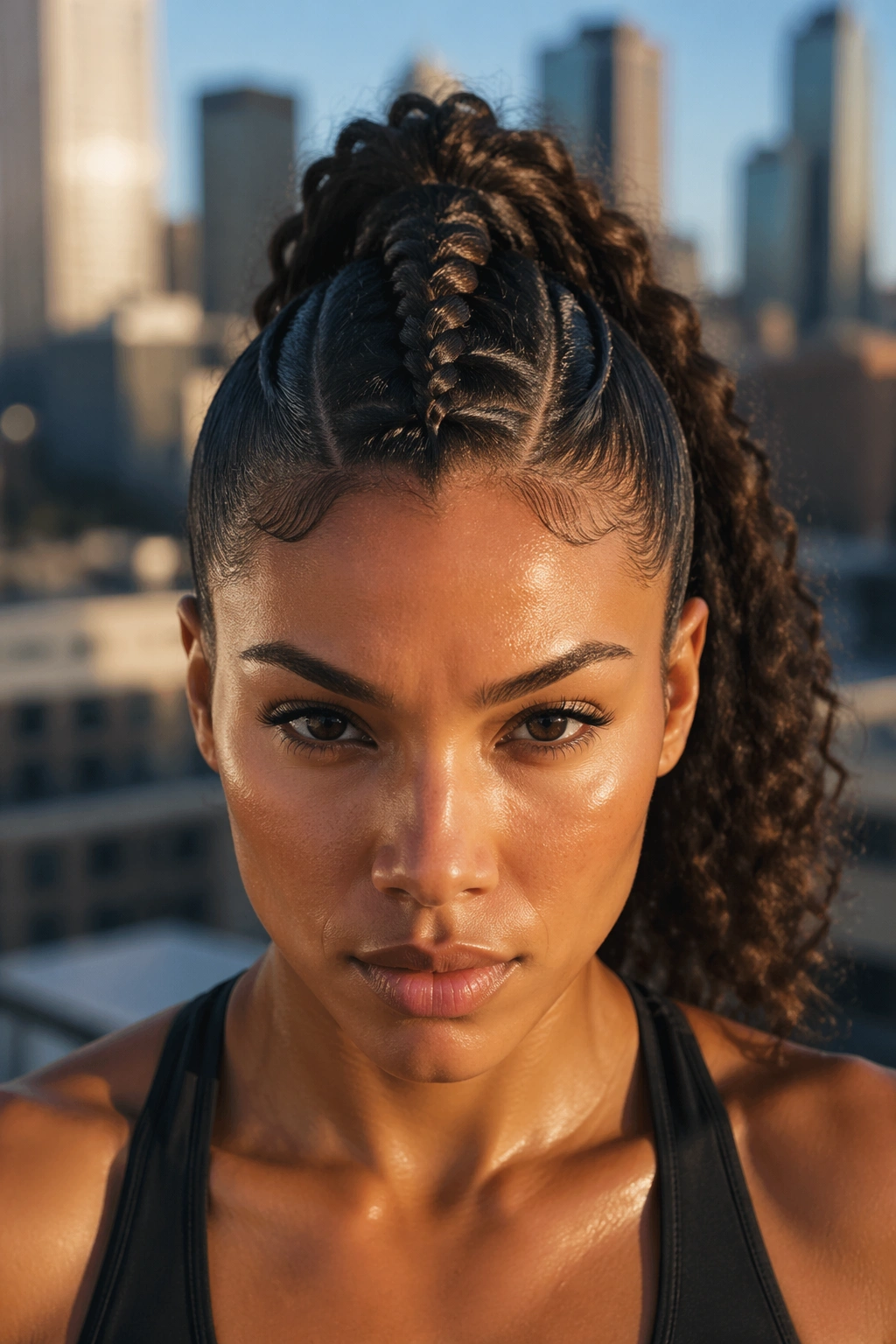
The braided mohawk ponytail has a bit of bite. It pulls the focus up the center of the head and leaves the sides tighter, which gives curly hair a strong, athletic shape.
This is not the style you pick when you want delicate. It’s the style you pick when you want presence. The center braid can be one thick braid or a line of smaller ones, depending on how dramatic you want the silhouette to be. Then the ponytail sits at the back or crown and spills down with full texture.
It works well on curls that hold shape. Loose waves can still do it, but tighter curls make the mohawk line stand out more clearly. If your hair is very soft, add a little mousse before braiding so the sections stay put.
A braided mohawk ponytail is one of those looks that can carry an outfit all by itself. Keep the rest of the styling simple and let the hair do the talking.
22. Sleek Middle-Part Ponytail
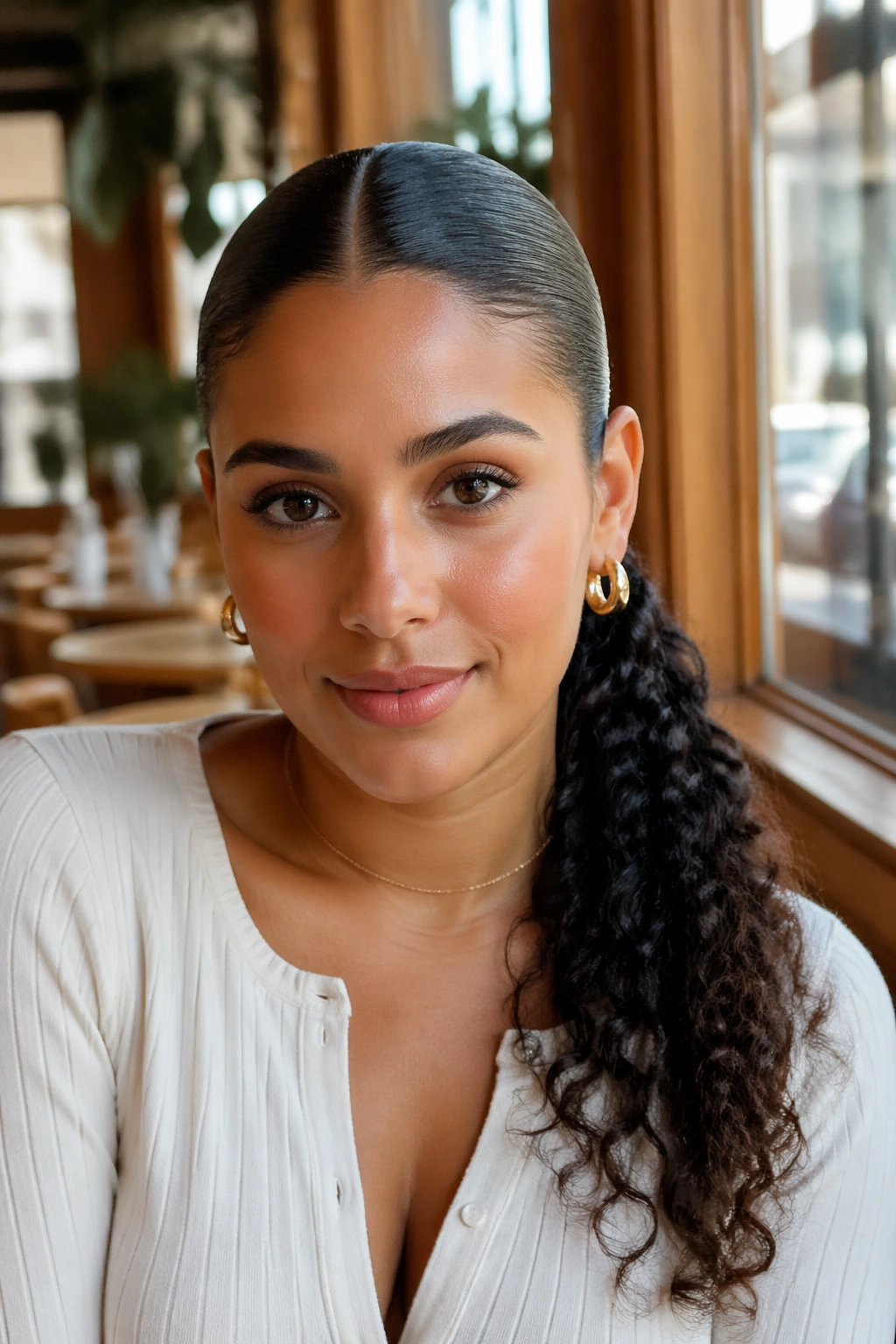
A sleek middle-part ponytail is all about line and symmetry. On curly hair, that clean center part creates a sharp contrast with the fullness of the tail, which makes the style feel elegant without much decoration.
The key is controlling the front without erasing the texture in the ponytail. Smooth the roots with gel or cream, comb the part straight, and keep the sides close to the head. Then stop. If you chase perfection too far, the whole style can lose its life.
This ponytail works especially well for formal settings or sharp outfits because the middle part gives it order. But it can still feel soft if the tail stays natural and curly. That balance matters. The front should be neat; the ends should move.
If your curls resist middle parts, set the part while the hair is damp and clip each side for a few minutes. It makes a bigger difference than people expect.
23. Soft Romantic Low Ponytail
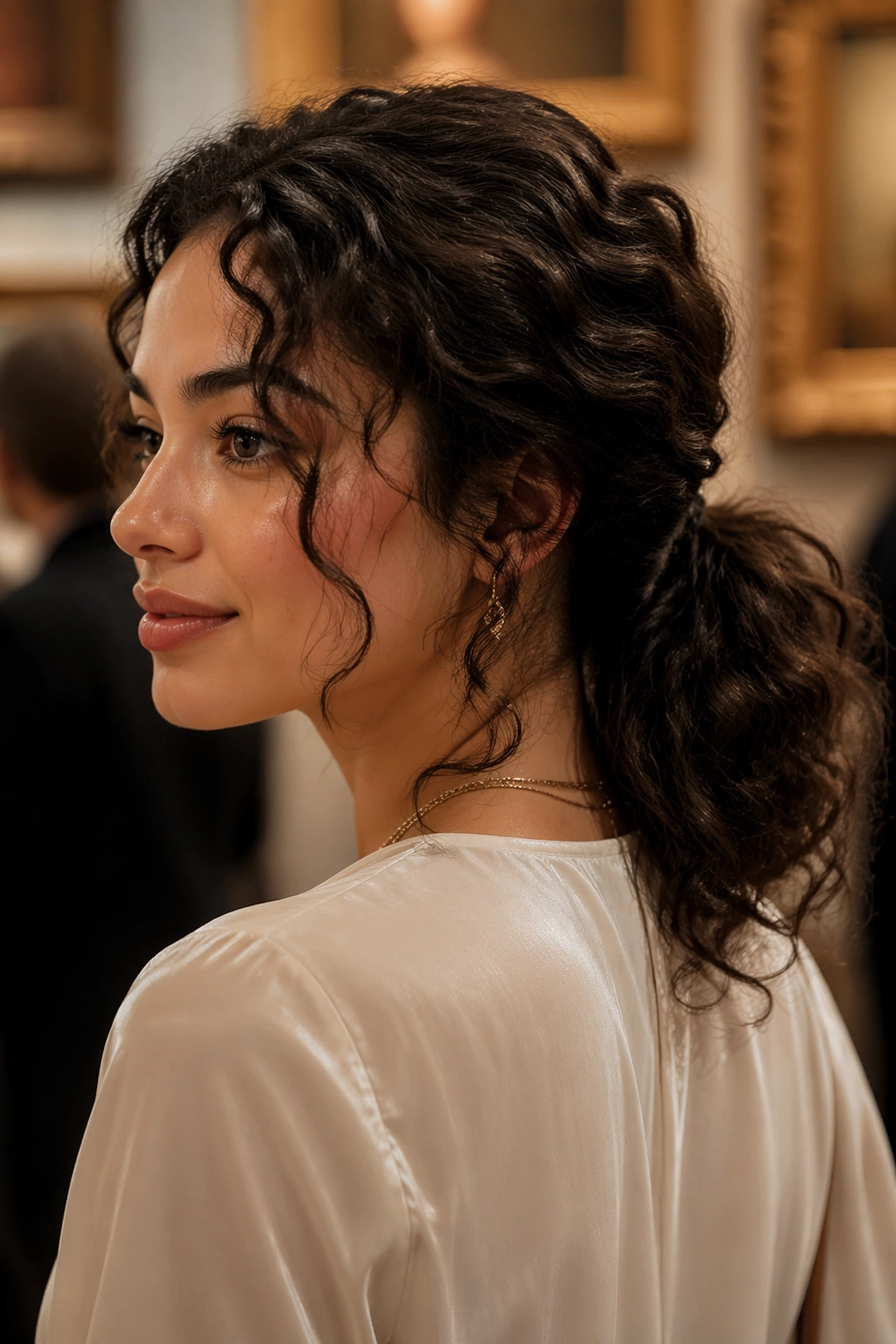
A soft romantic low ponytail is basically the curly ponytail that learned how to flirt a little. It sits low, keeps some volume at the crown, and lets a few curls escape on purpose.
The style is pretty without being precious. That matters. You want the hair to feel touchable, not frozen in place. A little lift at the roots helps, and a loose wrap around the elastic finishes the look without making it stiff. If the ends are extra dry, smooth a tiny bit of cream through them so they look intentional instead of frayed.
This is a good style for date nights, gallery events, or any occasion where you want softness more than structure. It also works well with a side part if your face shape likes asymmetry. The whole thing depends on that relaxed, slightly undone finish.
Don’t over-pin the loose pieces. Let them breathe a bit. That’s the whole point.
24. Workout-Safe High Ponytail
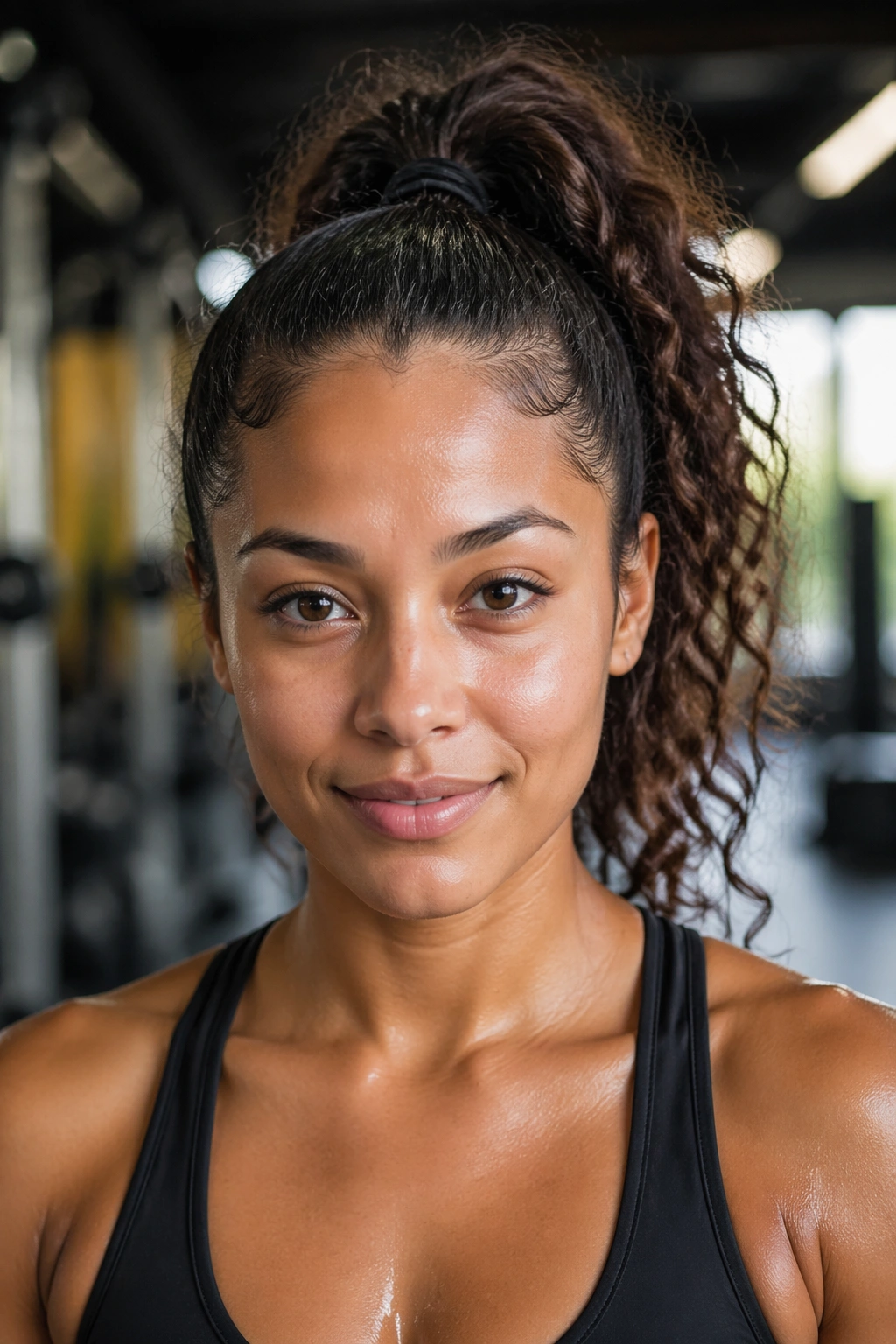
A workout-safe high ponytail has one job: stay put. On curly hair, that means strong hold at the base, limited tension at the scalp, and enough support that the curls do not whip around every time you move.
Use a firm elastic and gather the hair high at the crown. If your hair is dense, split it into two sections before tying so the elastic can catch everything without straining one spot. A second elastic underneath the first can add security if the ponytail is heavy. That little trick helps more than people think.
I’d keep this one practical and not too polished. A bit of frizz is fine. You’re going for secure, not glossy. A few bobby pins at the sides can keep layers from escaping, which matters if your curls are cut with face-framing pieces.
The best workout ponytail is the one you forget about halfway through the warm-up. This gets close.
25. Puff-Crown Ponytail
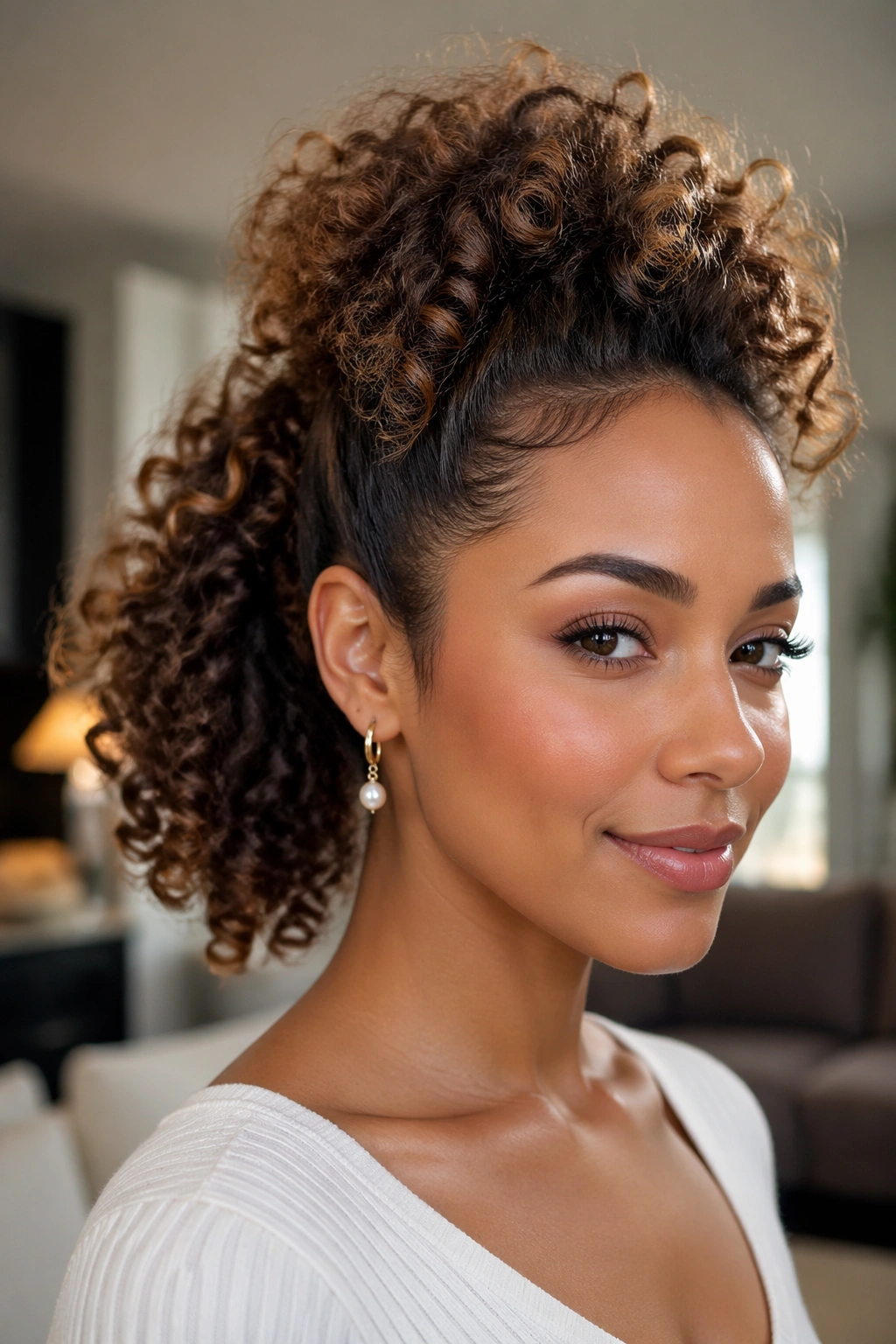
A puff-crown ponytail keeps the top full and airy while the length stays gathered in back. It’s a good choice when your curls naturally lift at the roots and you do not want to crush that volume.
The crown puff gives the style some shape from the side, which can be flattering if your curls are finer at the ends than at the roots. You can create the puff by lightly lifting the front section before securing the ponytail, or by leaving the top slightly loose before the final tie. Either way, the crown stays soft and rounded.
This style feels more casual than the sleek middle-part look, but it still looks considered. That’s what makes it useful. You can wear it with a sweatshirt or a blazer and it still makes sense.
If the puff gets too tall, smooth the top with your fingertips rather than a comb. A comb can flatten too much too fast. Fingers are kinder here.
26. Twisted Halo Ponytail
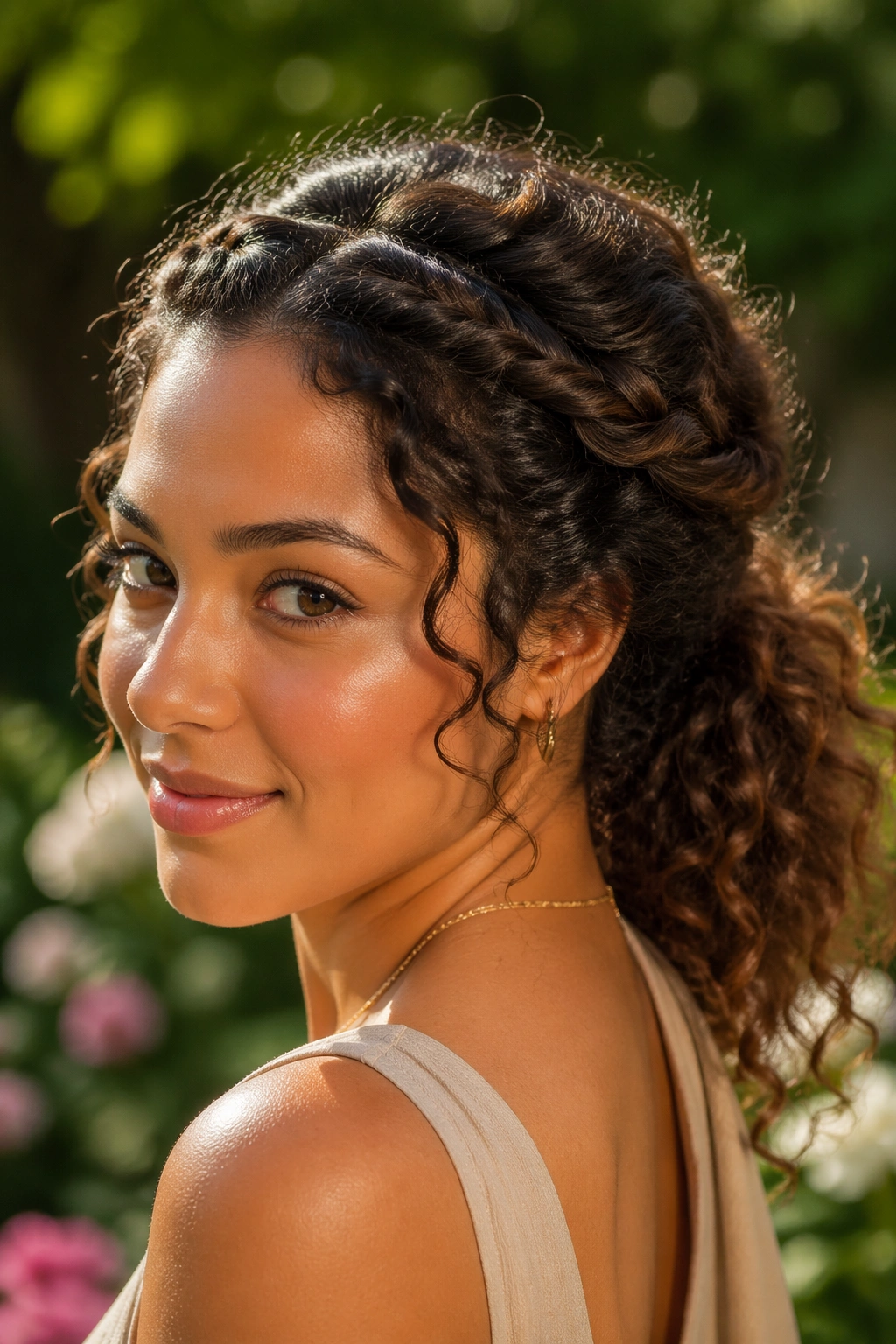
A twisted halo ponytail wraps a twisted section around the front or crown before everything gets pulled into the tail. It gives curly hair a framed, almost braided look without the time cost of a full crown braid.
The halo twist is especially nice if you want your hairline to stay neat but still prefer a softer finish than a slicked-back style. Twist two sections from either side of the part, guide them back toward the ponytail, and pin them in place before tying the rest. That creates a lifted path around the head.
It suits curls that are medium to long and a bit layered. The twist adds structure, while the ponytail keeps the rest from feeling too formal. If the ends of the twist poke out, tuck them under the base with a couple of pins. No need to overthink it.
The result feels balanced. Not severe. Not messy. Just shaped.
27. Double-Bubble Ponytail
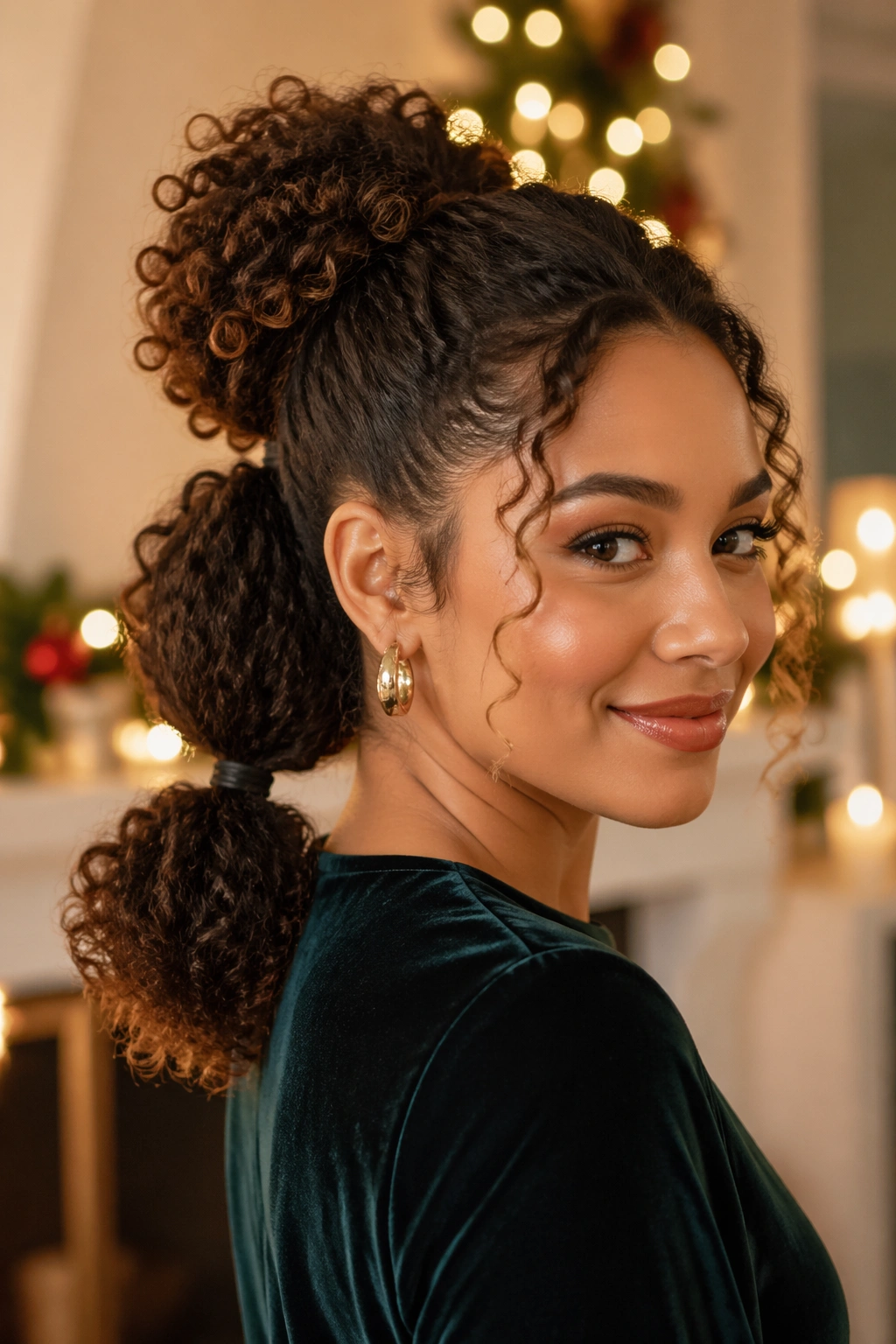
A double-bubble ponytail takes the bubble idea and stretches it into two larger sections, which gives curly hair a playful, sculpted look. It’s a little more dramatic than a single bubble ponytail, and that makes it fun for parties or photos.
Start with one secured ponytail, then add a second elastic a few inches down. Gently puff the first section. Add another elastic lower down, then puff that section too. The key is keeping the bubbles even enough to read as design, not accident. If your curls are thick, each bubble may need a few tug-and-shift adjustments to round out properly.
This style loves texture. Curly hair gives it body that straight hair often has to fake. Use that. Let the ends stay natural instead of trying to force a perfectly smooth finish.
If your hair is short enough that the bubbles are tight, the style still works. They just look a bit more compact, which can be neat in its own right.
28. Braided Accent Ponytail
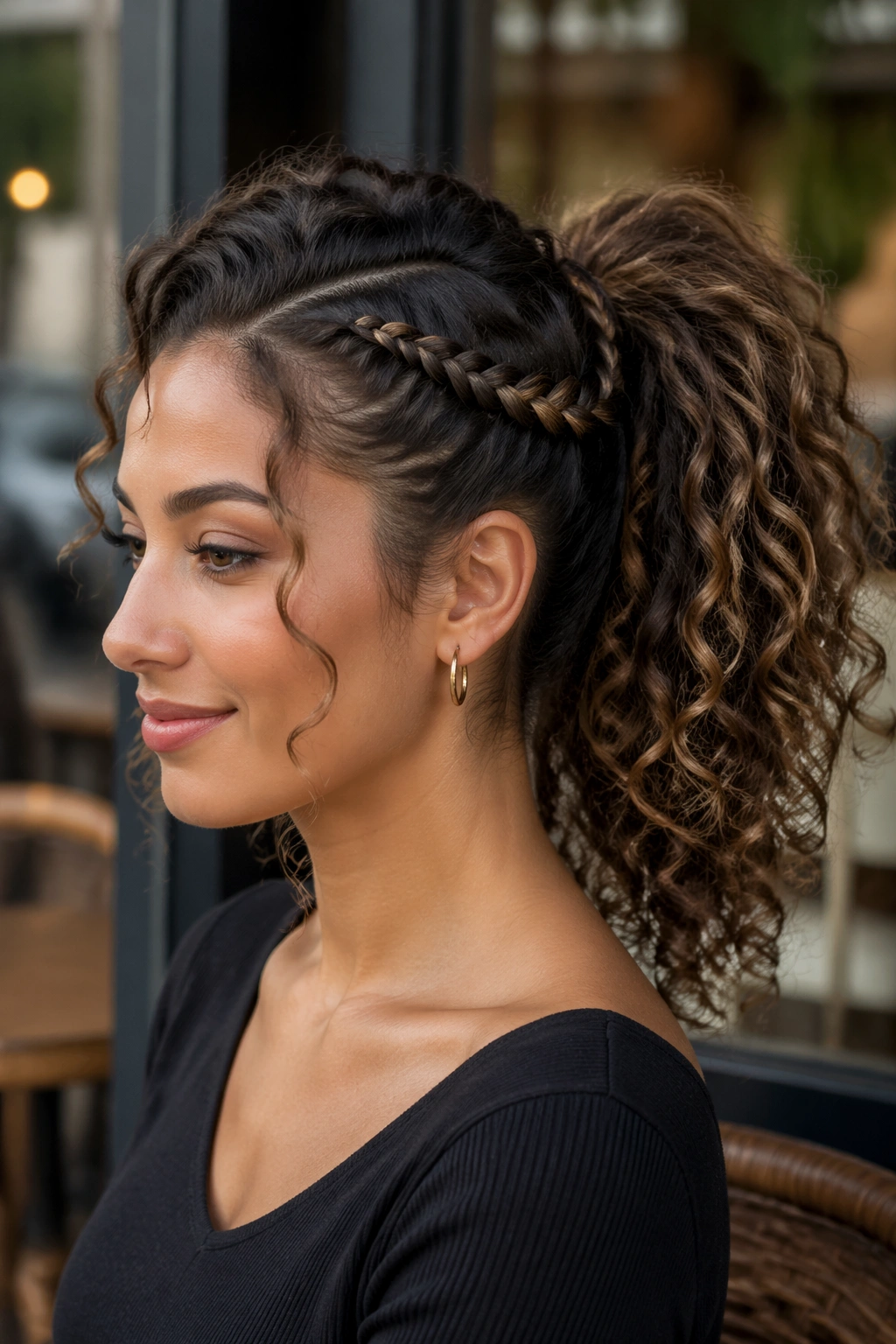
A braided accent ponytail is a good option when you want just a touch of detail, not a full braid situation. One small braid along the side or part feeds into the ponytail and gives the style a subtle focal point.
I like this because it solves a common curly-hair problem: the front sections can feel too plain while the back has all the texture. The accent braid gives the front something to do. It also keeps pieces from falling into your eyes if you wear your hair off your face a lot.
The braid can be skinny and tight for a cleaner result, or loose and chunky for a softer feel. Either way, it should blend into the ponytail instead of looking like an add-on. If you want it to disappear more naturally, braid a section that matches the curl density near the temples.
This is one of the easiest styles to wear on repeat. Small effort, decent payoff. That’s a combination people don’t talk about enough.
29. Loose Everyday Curly Ponytail
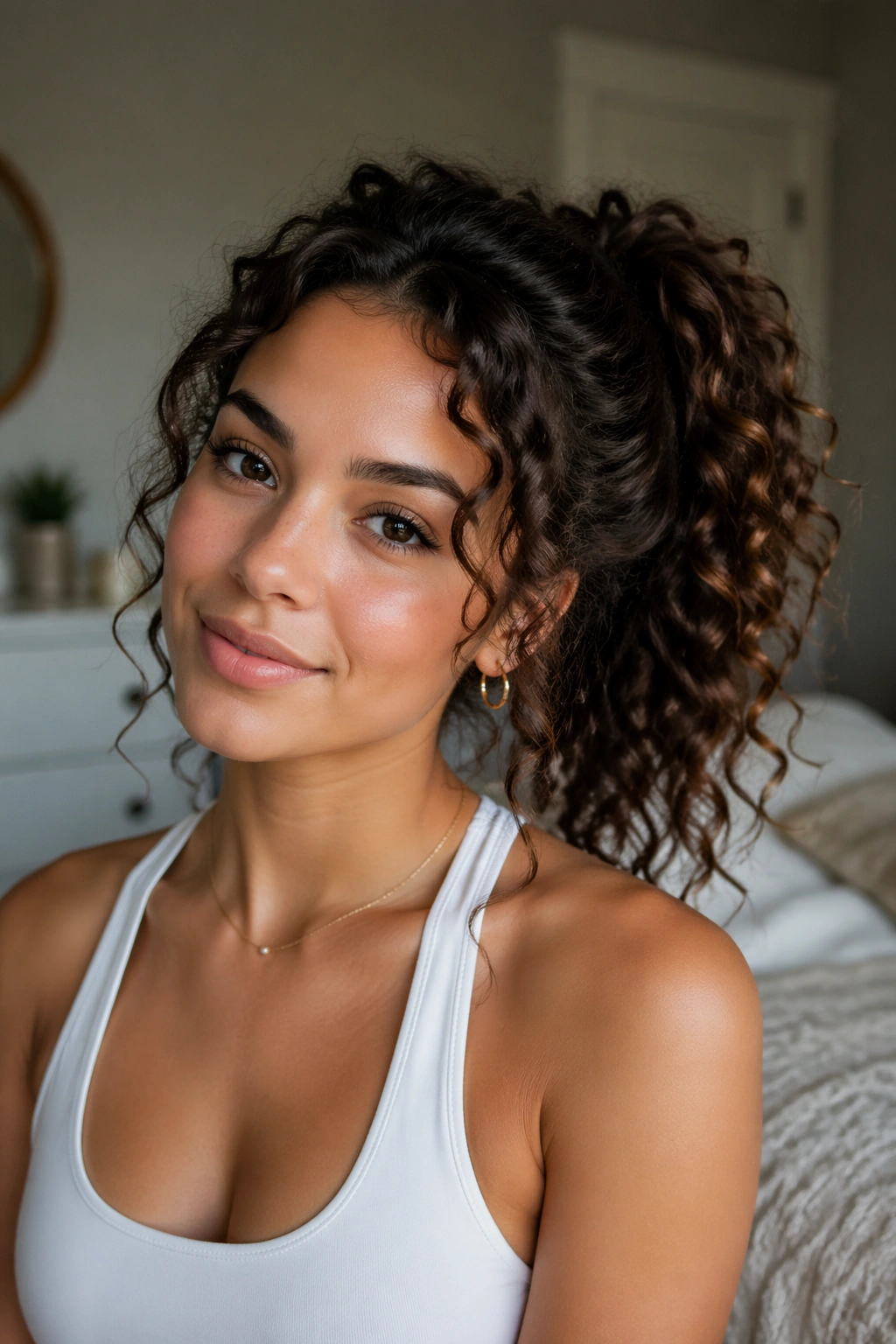
A loose everyday curly ponytail is the one you wear when you want your hair up, but you still want it to feel like your hair. No hard edges. No stiff crown. Just curls gathered in a way that makes sense for the day.
The trick is to avoid overworking it. Gather the hair with your fingers, not a brush, if you want the shape to stay soft. If the roots need a little control, smooth just the top layer and leave the underneath alone. That keeps the ponytail from looking too neat, which is often what makes curly hair lose its charm.
This style is useful because it adapts. You can wear it with a middle part, a side part, a few loose tendrils, or none at all. It’s the base model. From here, you can add a scarf, a braid, or a wrapped elastic if the mood changes.
Sometimes the simplest ponytail is the one that gets worn most. There’s a reason for that.
30. Satin-Wrapped Formal Ponytail
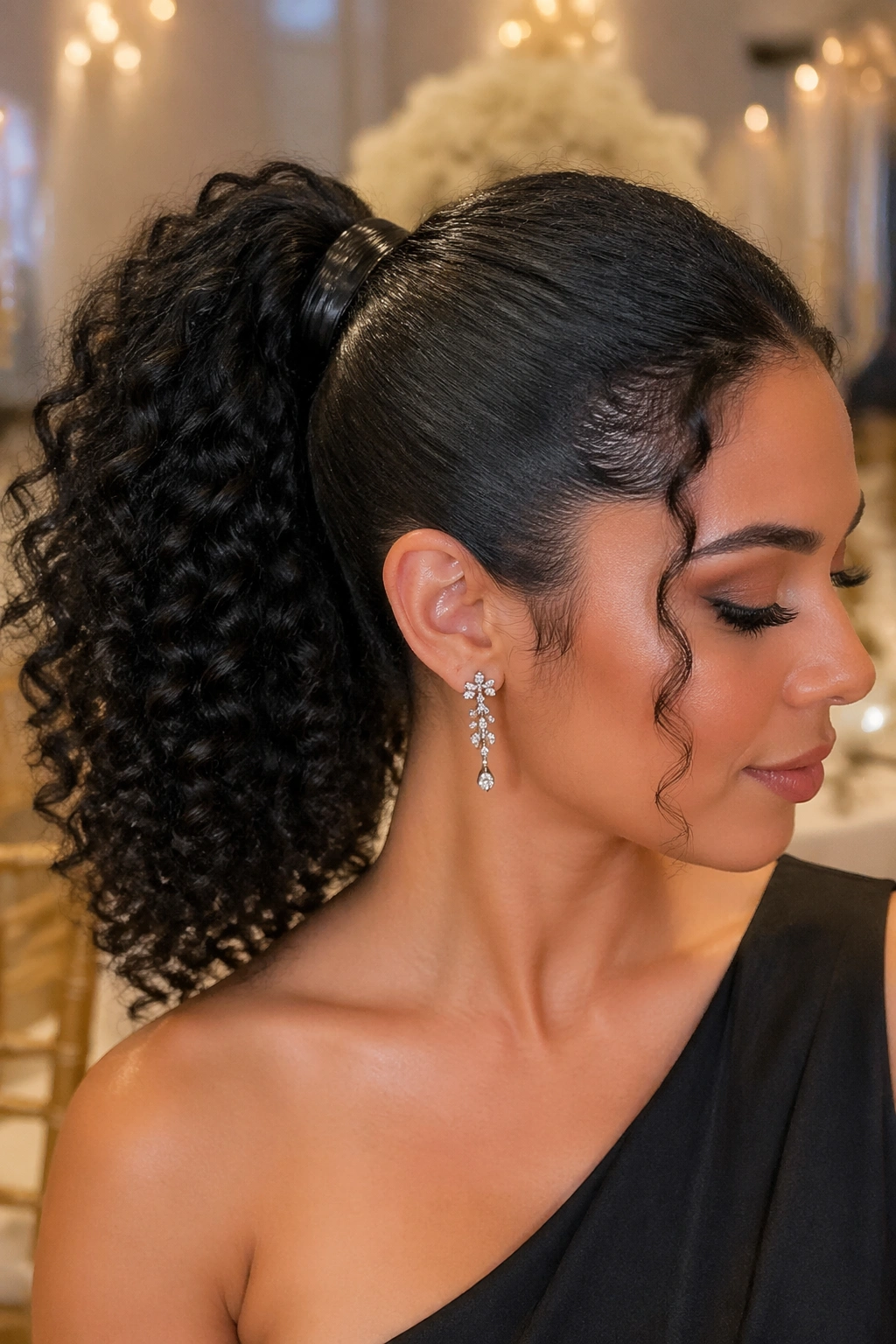
A satin-wrapped formal ponytail is what I’d reach for when the occasion wants clean lines and the curls still need to be part of the story. The satin wrap hides the elastic, adds a smooth finish at the base, and brings a little shine without making the style stiff.
Use a narrow satin ribbon or wrap to cover the tie, then knot it neatly underneath or off to one side. The rest of the ponytail can stay curly and full, but the base should look tidy. That contrast is what makes the style read as formal. If you want it even sleeker, smooth the crown with a light gel before you secure the tail.
This style is good for weddings, dinners, or events where a plain ponytail would feel too casual. It also works well if your hair accessories need to coordinate with an outfit. The ribbon can be black, ivory, jewel-toned, or metallic, depending on the rest of the look.
A little shine at the base changes the whole finish. Not flashy. Just enough.
Final Thoughts
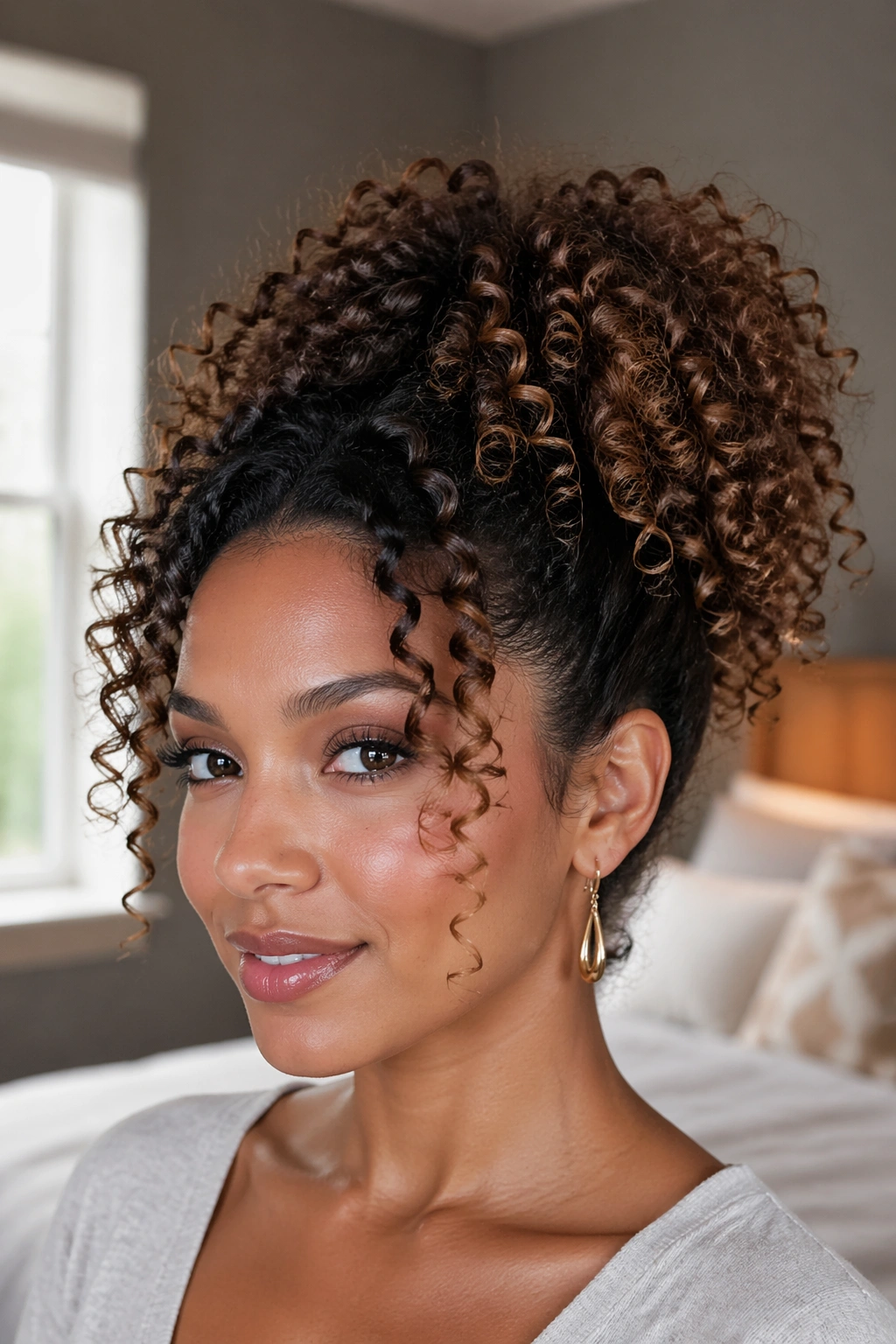
Curly hair gives you more ponytail options than people often admit. You can go sleek, soft, high, low, braided, wrapped, or half-up, and the texture still does part of the work for you.
The real difference is control. Not control in the stiff sense. More like knowing where to smooth, where to leave volume alone, and where a single bobby pin can save the whole style.
If one of these ponytails feels almost right, that’s usually the one to try first. Curly hair tends to reward small adjustments more than dramatic reinvention, and that’s part of its charm.
