



Wedding ponytails for short hair are not a consolation prize. They can look sharper, cleaner, and more expensive than a long, heavy ponytail if the shape is right and the ends are handled with a little care.
Short hair changes the job. A bob, lob, or chin-length cut does not give you endless length to wrap, twist, and hide things, so the style has to do more with placement than with bulk. Tiny elastics, hidden pins, texture at the roots, and a smart part can turn hair that barely reaches the collarbone into something that feels deliberate.
And that’s the part people miss. A good bridal ponytail on short hair is usually less about “making it bigger” and more about making every inch count. A 1-inch curling iron, a few crossed bobby pins, a small veil comb, or even a narrow satin ribbon can change the whole mood.
Some brides want sleek. Some want soft and romantic. Some want a ponytail that leaves room for earrings, a veil, or a neckline that deserves a little space around it. Short hair can do all of that, and it can do it without looking overloaded.
1. Sleek Low Ponytail With a Deep Side Part
A deep side part makes short hair look longer at the front and neater at the back. That little shift in balance matters a lot on a bob or lob, because it keeps the style from feeling boxy.
Why It Holds on Short Hair
The trick is to smooth the sides first, then secure the ponytail low enough that the shortest layers can tuck into the base. Use a light smoothing cream, a fine-tooth comb, and a small elastic that matches your hair color. If the ends barely reach the tie, wrap a 1-inch section around the band and pin it under.
- Keep the part clean and crisp.
- Pin any side layers flat before tying.
- Mist the crown with flexible-hold spray, not crunchy lacquer.
- Let the tail sit just above the nape.
Tiny details matter. A ponytail placed half an inch too high can look stubby on short hair. Lower usually wins.
2. Soft Twisted Nape Ponytail
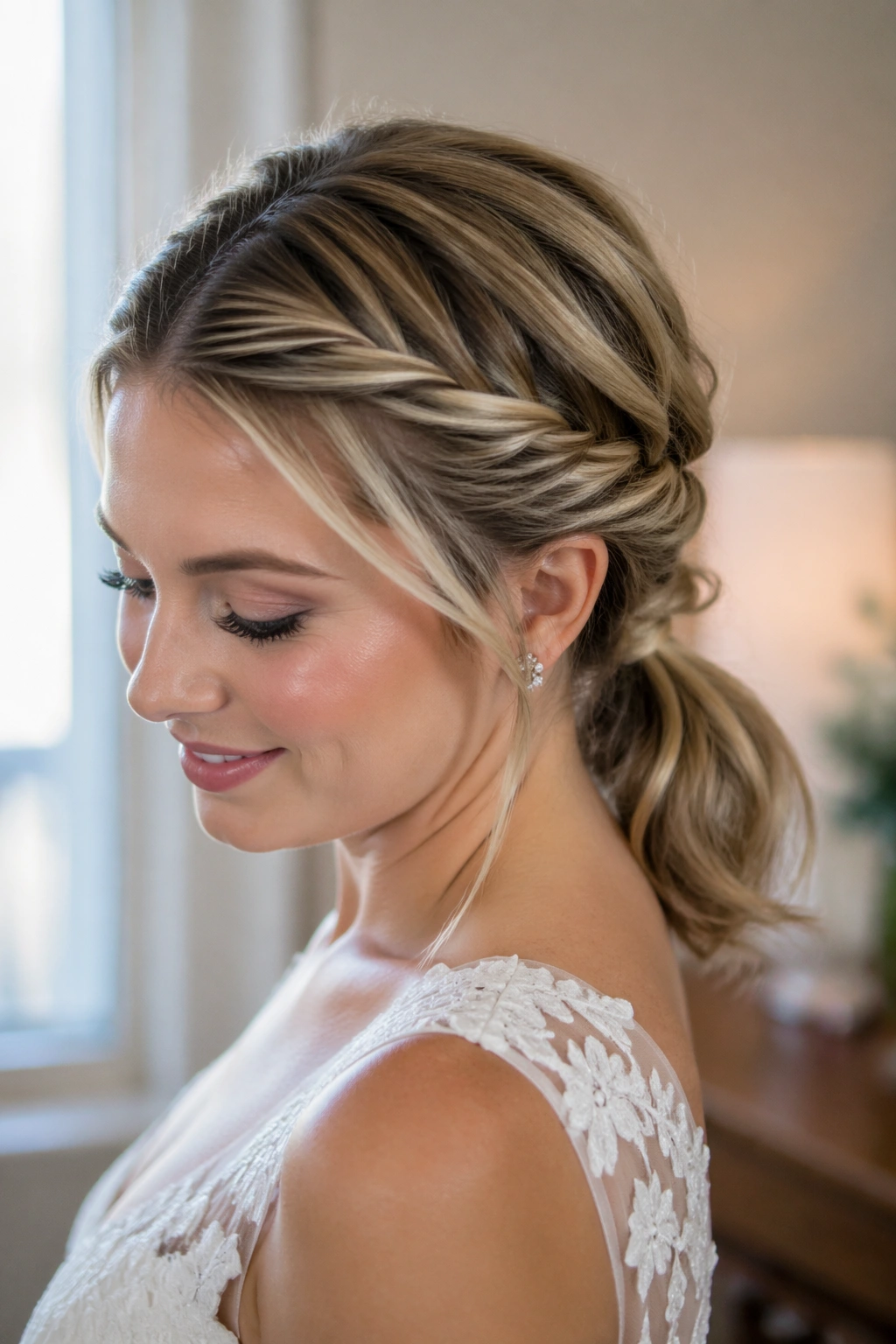
This is the style that saves shoulder-length hair when the bride wants polish without stiffness.
Take two small sections from the temples, twist each one back, and pin them where the ponytail will sit. That leaves the front looking controlled while the back stays soft. The twists also hide the fact that the actual ponytail may be shorter than it looks from the front.
It works especially well with layered cuts because the twists can catch the shorter pieces instead of fighting them. If you want a veil, place the comb just above the elastic so the fabric doesn’t crush the twist line.
Short hair likes structure. This is structure with a softer edge.
3. Bubble Ponytail for a Short Lob
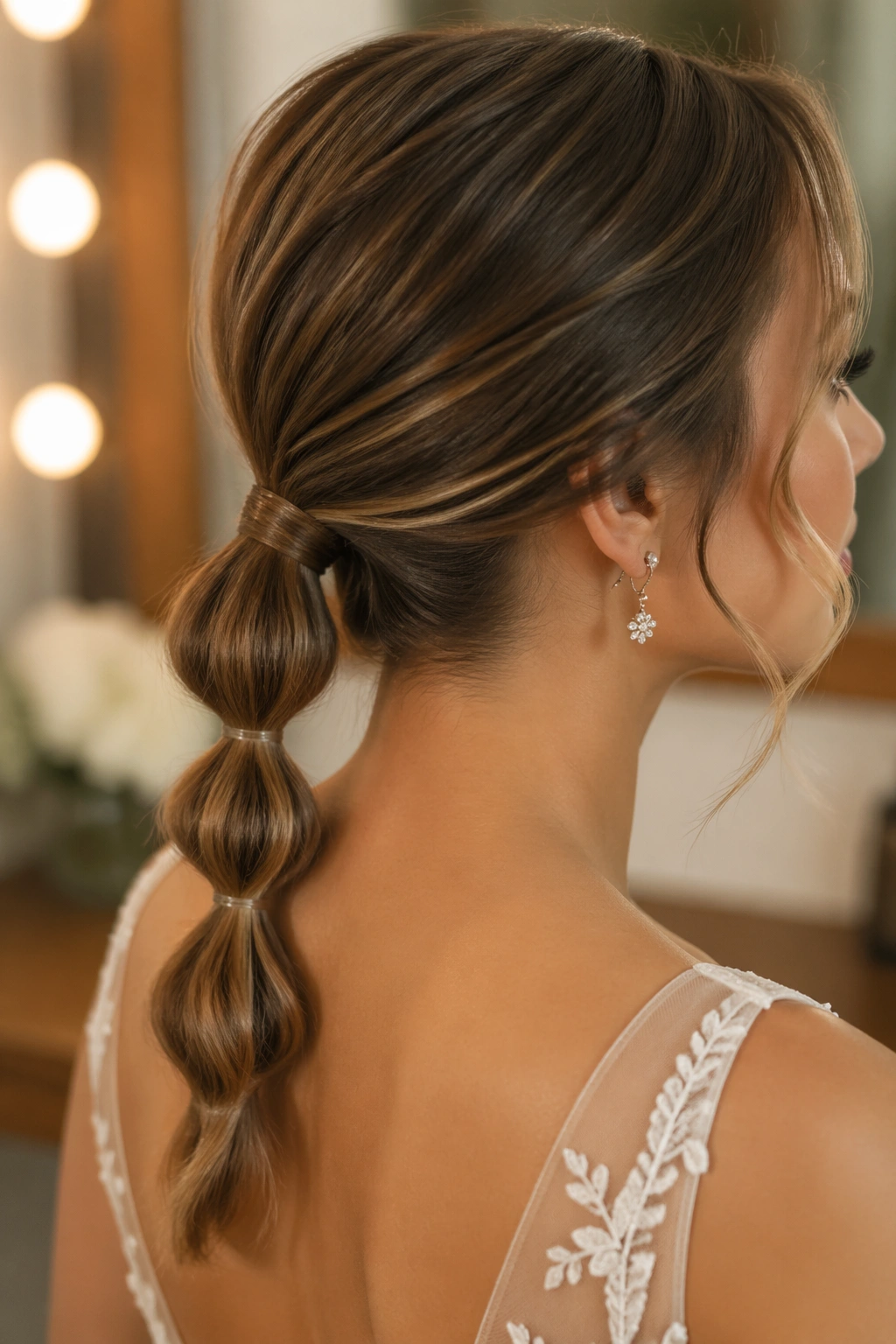
Can a short lob pull off a bubble ponytail? Yes, if you keep the bubbles small and the spacing tight.
How to Use It
Start with a low ponytail, then add clear elastics every 1½ to 2 inches down the length. Gently tug each section outward until it rounds out. On short hair, you usually only need two or three bubbles, not a long chain down the back.
A little wave helps here, but straight hair can work too if you prep it with texturizing spray first. Wrap the first elastic with a thin strand of hair so the base looks finished, not rushed.
Best part: the bubbles create the feeling of length without asking your hair to be longer than it is.
4. Braided Crown Feeding Into a Ponytail
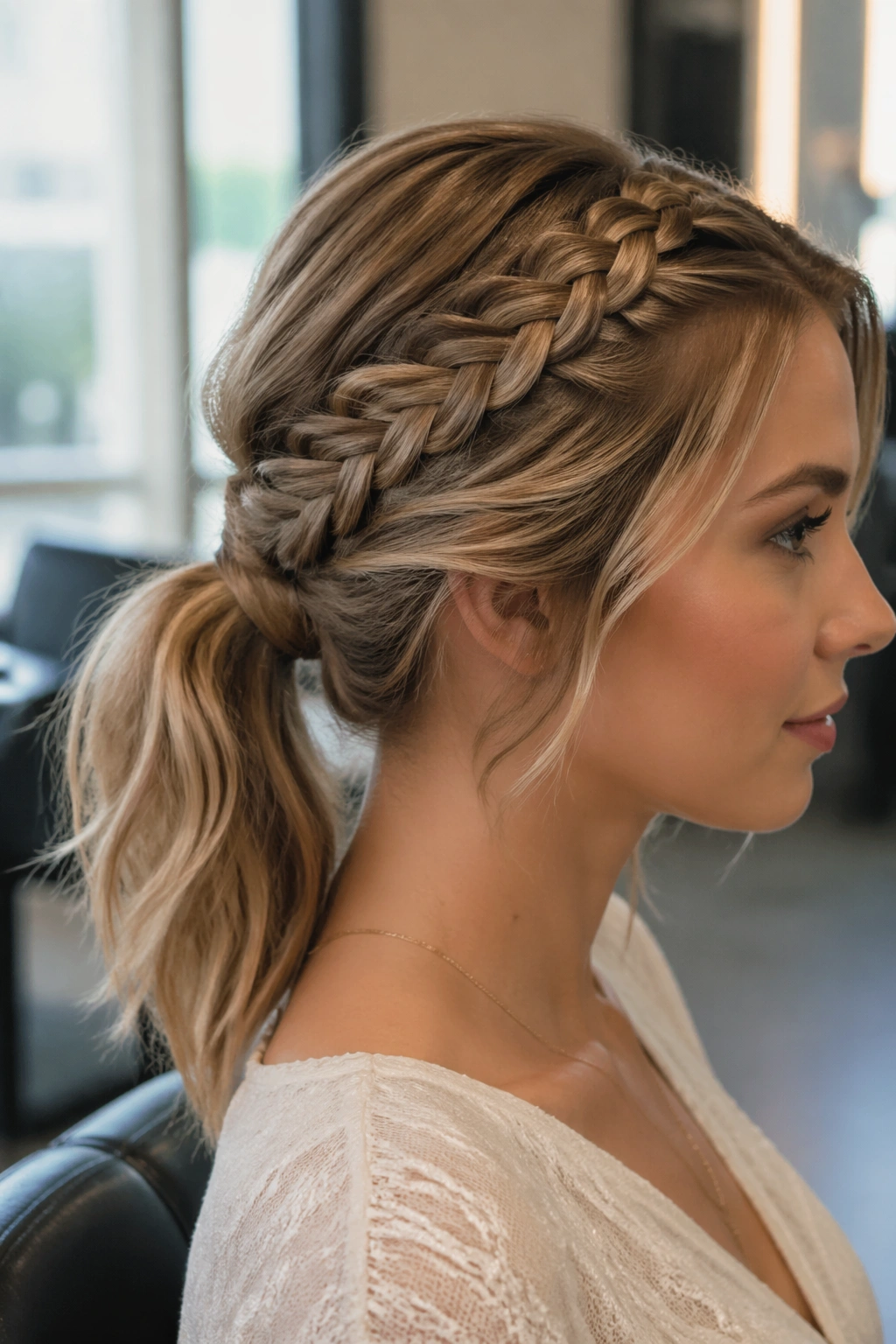
Picture a side braid starting at one temple and disappearing into a low ponytail at the back. That’s the shape here, and it’s one of the smartest ways to handle short layers around the face.
What to Watch For
The braid does the heavy lifting at the front, where short hair likes to slip out. Once the braid reaches the back of the head, tie the rest into a ponytail and pin any stray ends under the base. A little styling wax on the fingertips helps keep the braid neat.
- Braid only the top section, not the whole head.
- Use two or three small pins behind the ear.
- Keep the ponytail low and close to the neck.
- Finish with a soft-hold spray, not a helmet.
This style has a nice side effect. It draws the eye upward, which helps short hair feel intentional instead of improvised.
5. Ribbon-Wrapped Low Ponytail
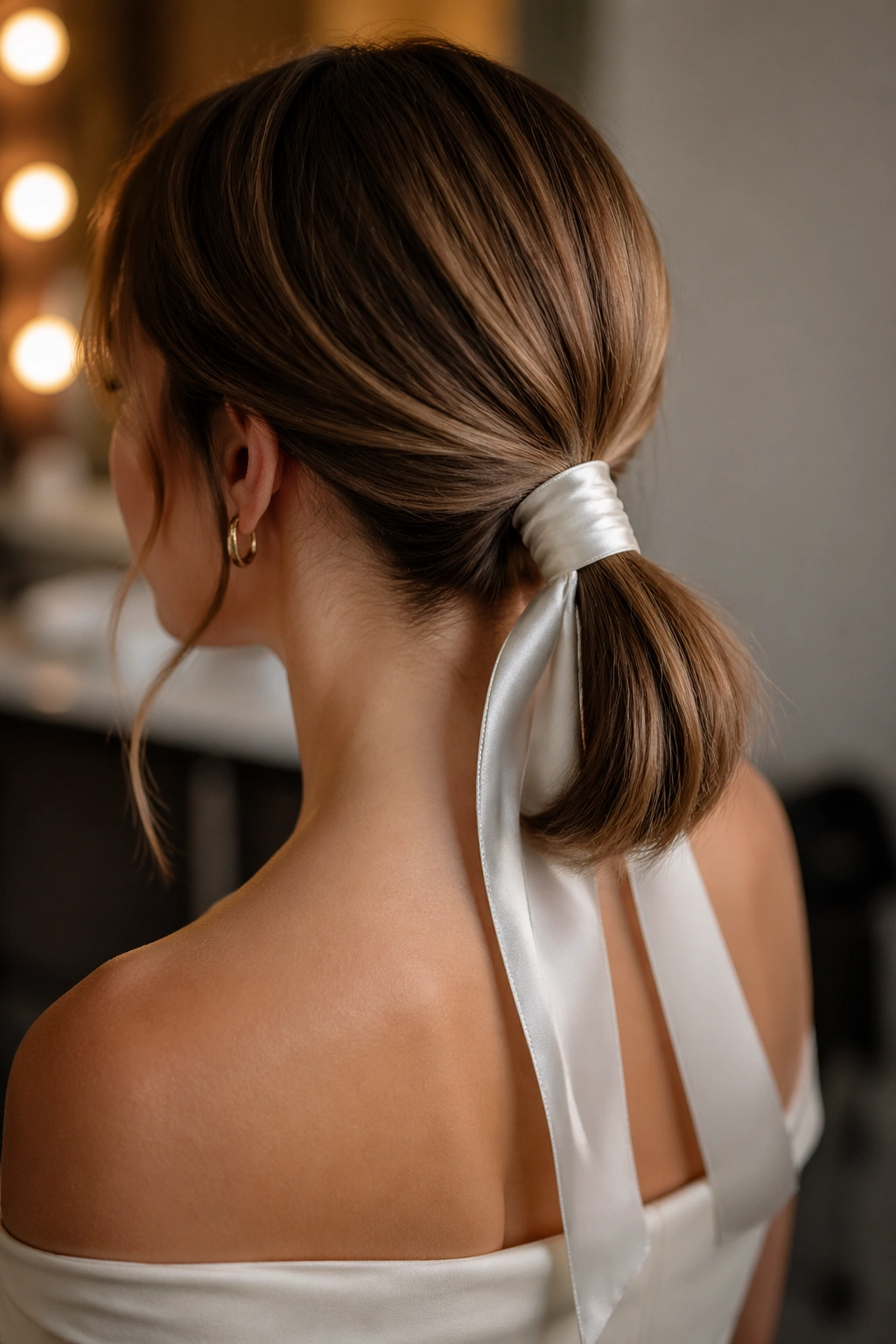
A ribbon changes everything. Satin, grosgrain, velvet — they all give the ponytail a point of view, and they’re especially useful when the hair itself is too short to create a lot of visual drama.
On short hair, ribbon is more than decoration. It hides the elastic, smooths over uneven ends, and gives the base of the ponytail a cleaner line. I like a ribbon that’s about ½ inch wide for a subtle look, or closer to 1 inch if the dress is simple and the hair needs a stronger finish.
Tie it just under the elastic and let the tails fall a little unevenly. Perfect symmetry can feel fussy. A slight drape looks more natural.
If the hair is blunt-cut or collarbone length, this one is a friend.
6. Curled Ponytail With Face-Framing Pieces
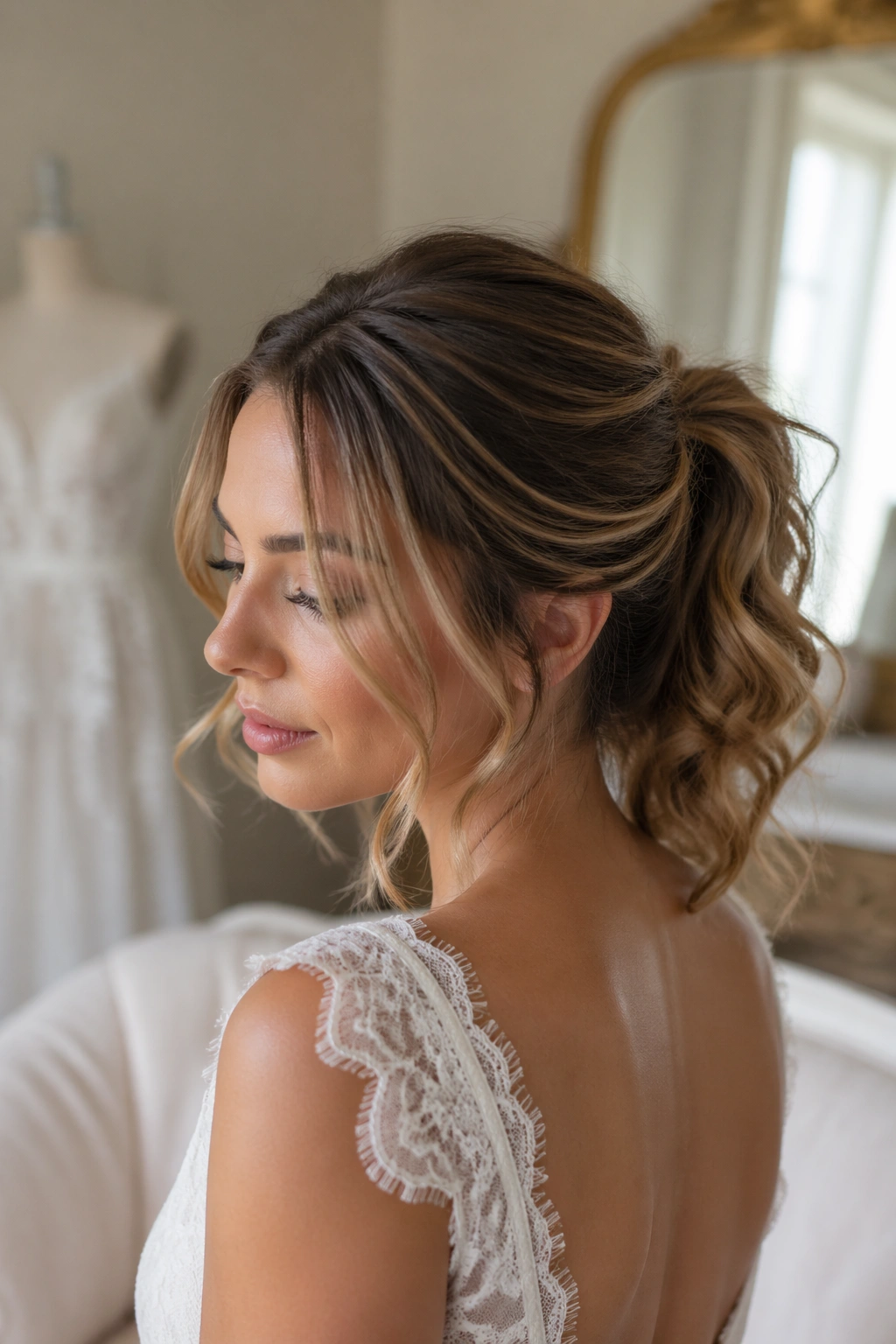
Unlike a tight ponytail, this one leans on movement. That makes it a strong choice for brides who want softness more than sharpness.
Curl the ponytail with a 1-inch iron, then brush it out just enough to turn the curls into loose bends. Leave a few face-framing pieces out at the front and curve them away from the cheeks. That tiny detail keeps the style from looking severe, which short hair can do if everything is pulled back too neatly.
This works well with a middle part or a soft off-center part. It also plays nicely with gowns that have lace or a softer neckline, because the whole look stays light. Not airy. Light.
And that matters.
7. Half-Up Ponytail for a Bob
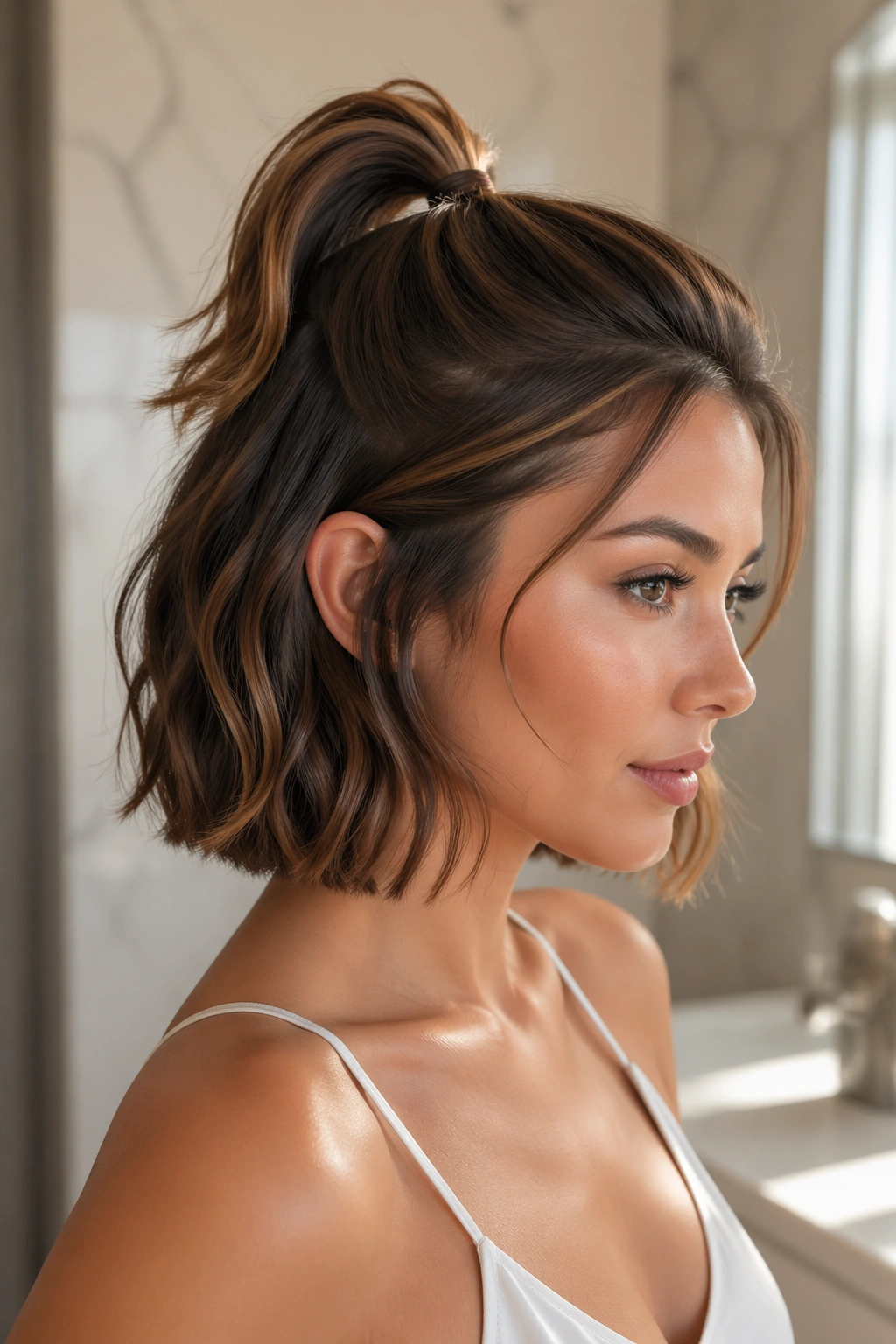
A half-up ponytail is one of the easiest bridal shapes for a bob because it only asks the top section of the hair to do the lifting.
The Trick With a Bob
Take the top third of the hair — from the temples back to the crown — and secure it into a small ponytail. Then smooth the top with a brush and leave the bottom hair curled under or softly waved. If the bob is blunt, add a little bend at the ends so the whole shape feels deliberate.
- Tease the crown by about ½ inch for lift.
- Keep the ponytail small and centered.
- Hide the elastic with a wrapped strand or a pin.
- Finish the bottom half with soft bends, not tight ringlets.
It’s a clean fix when full ponytails feel like too much for the length you have.
8. Side Ponytail With Pearls or Crystals
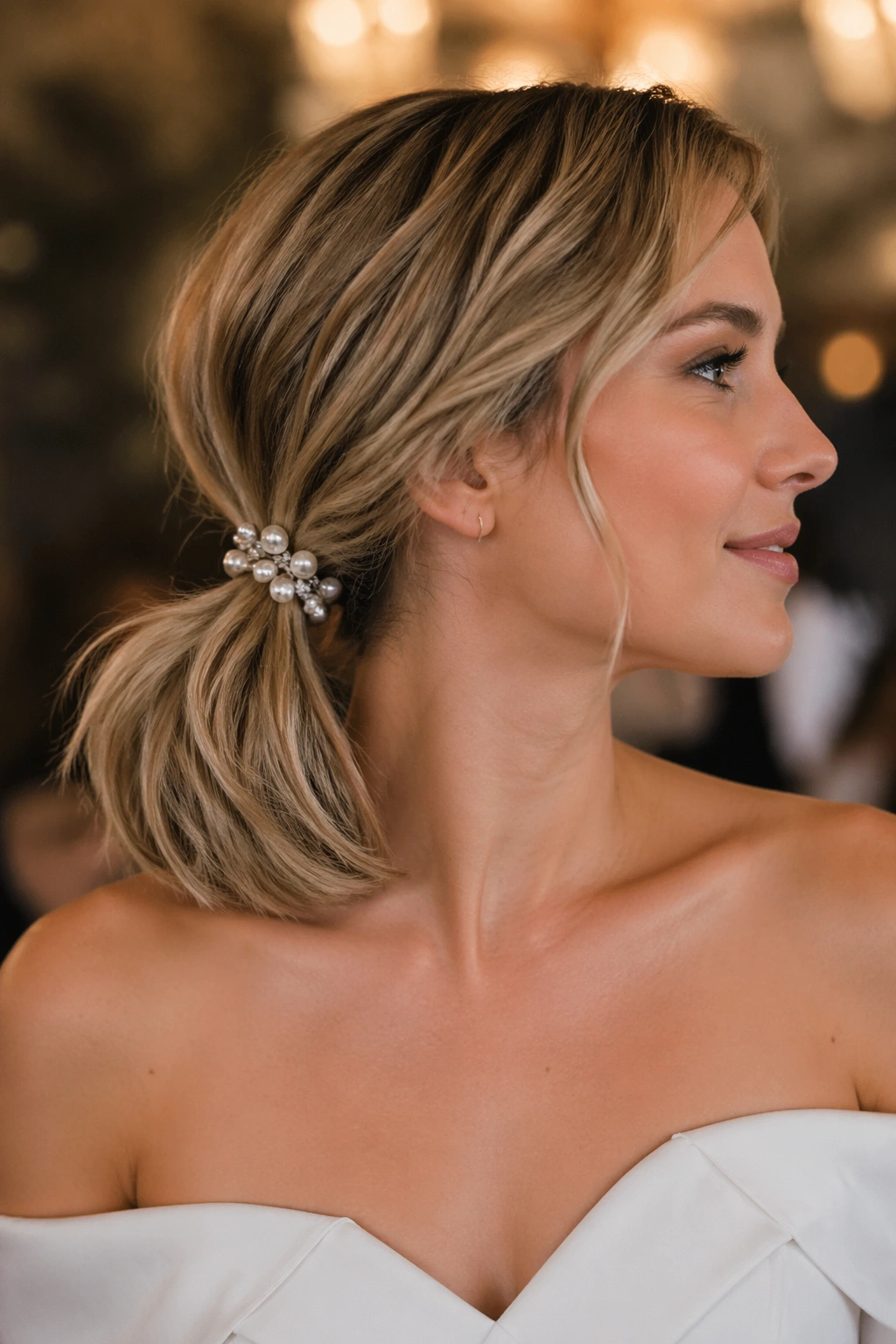
A side ponytail shifts the visual weight, and that helps short hair look longer on one side. It also gives you a natural place to add pearls or crystals without crowding the head.
The placement should feel low and a little loose, sitting just behind one ear or at the side of the nape. Short hair often looks better when the accessory sits close to the elastic instead of scattered all over. A cluster of three to five pins can be enough.
This is a good option when the dress already has a lot going on at the neckline or bodice. The hair doesn’t need to compete. It just needs to hold its shape and give the eyes somewhere pleasant to land.
A side ponytail can do that without much fuss.
9. Mini Ponytail at the Nape
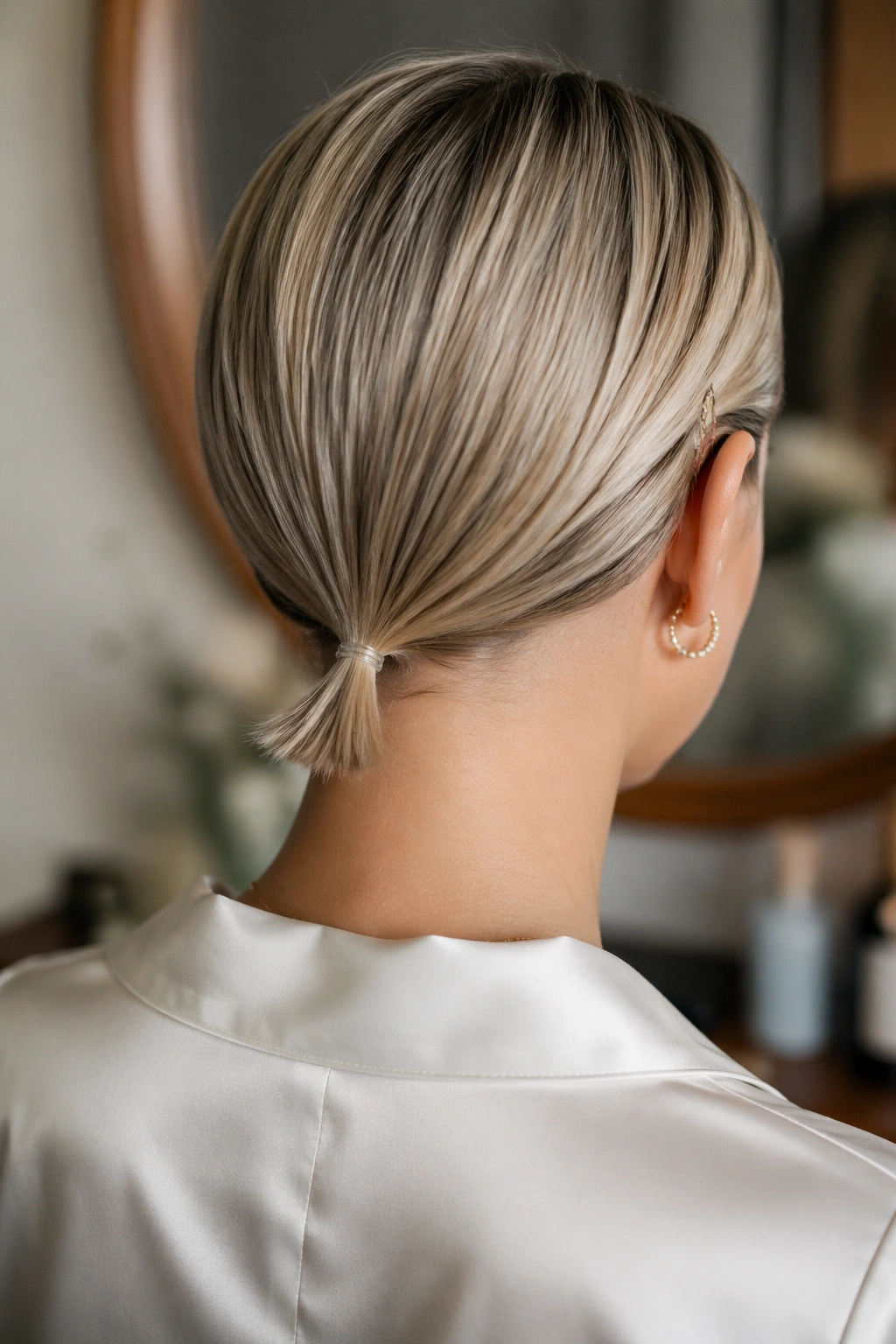
Can very short hair become a ponytail at all? Sometimes yes — and when it can, the answer is often a tiny nape pony that acts more like a detail than a full style.
How to Keep It Wedding-Ready
Work with a strong gel or styling cream so the shortest pieces stay close to the head. Gather the hair low, secure it with a small clear elastic, and pin the sides flat. If the tail is too short to hang elegantly, tuck it under and pin it so it looks like a neat fold.
This is not the style for someone chasing length. It’s the style for someone who likes clean lines and does not want hair in their face while she moves, hugs people, or dances.
Quiet. Neat. Good-looking from the back.
10. Faux Ponytail Made With Clip-In Extensions
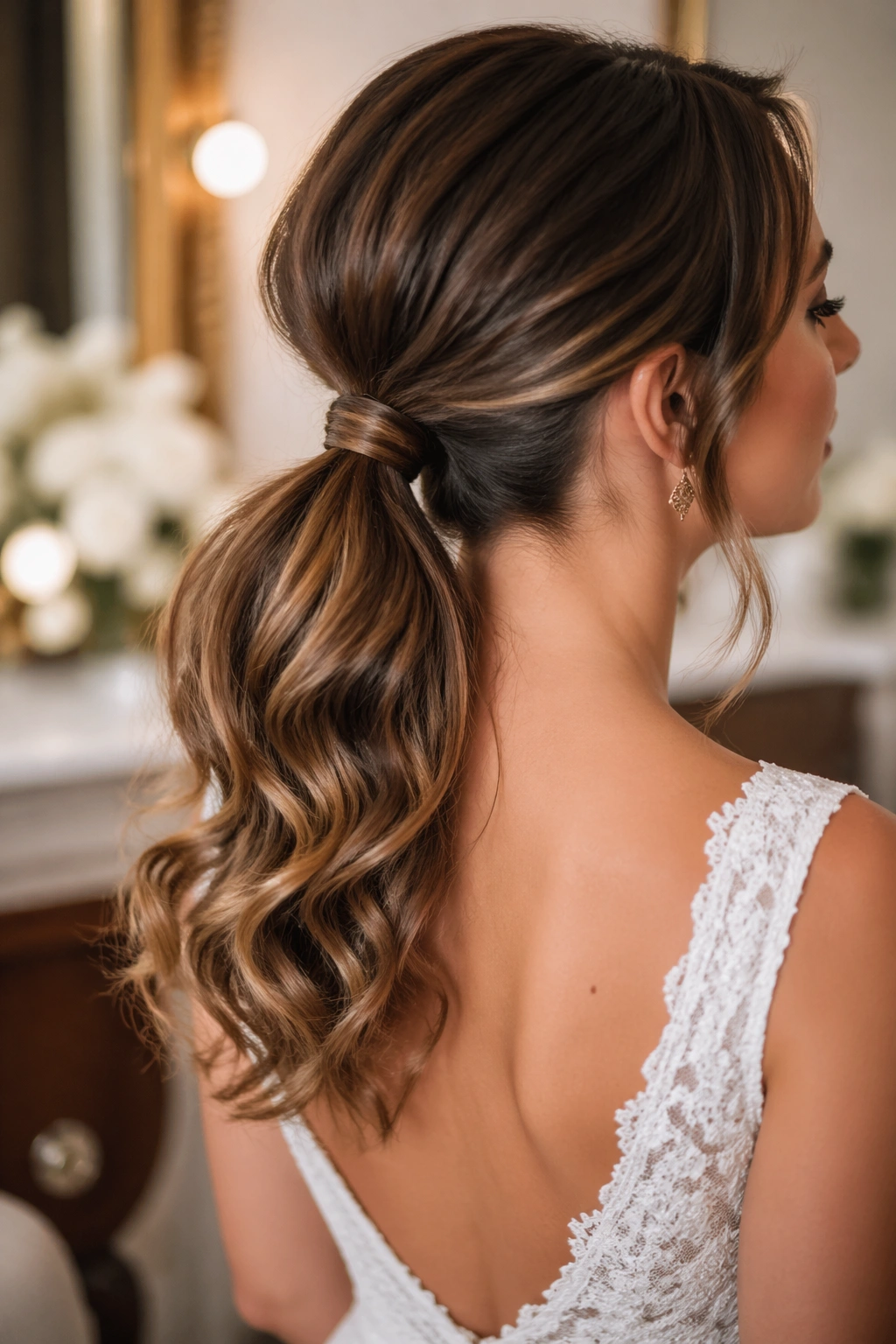
A clip-in ponytail piece can save the day on short hair, but the match has to be exact or the whole thing looks obvious.
What Matters Most
Pick a piece that matches both color and texture. If your hair is brushed-out waves, don’t attach a pin-straight ponytail and expect it to behave. Curl or smooth the added hair so it blends with your natural pattern, then anchor your real hair into a small base first.
- Match the density to your own hair.
- Place the attachment low, not high.
- Hide seams with a wrapped strand or a decorative pin.
- Test the weight before the wedding day.
This is one of the few times where a little extra fullness makes sense, especially if the dress is simple and the hairstyle needs to carry more of the look.
11. Volumized Crown Ponytail
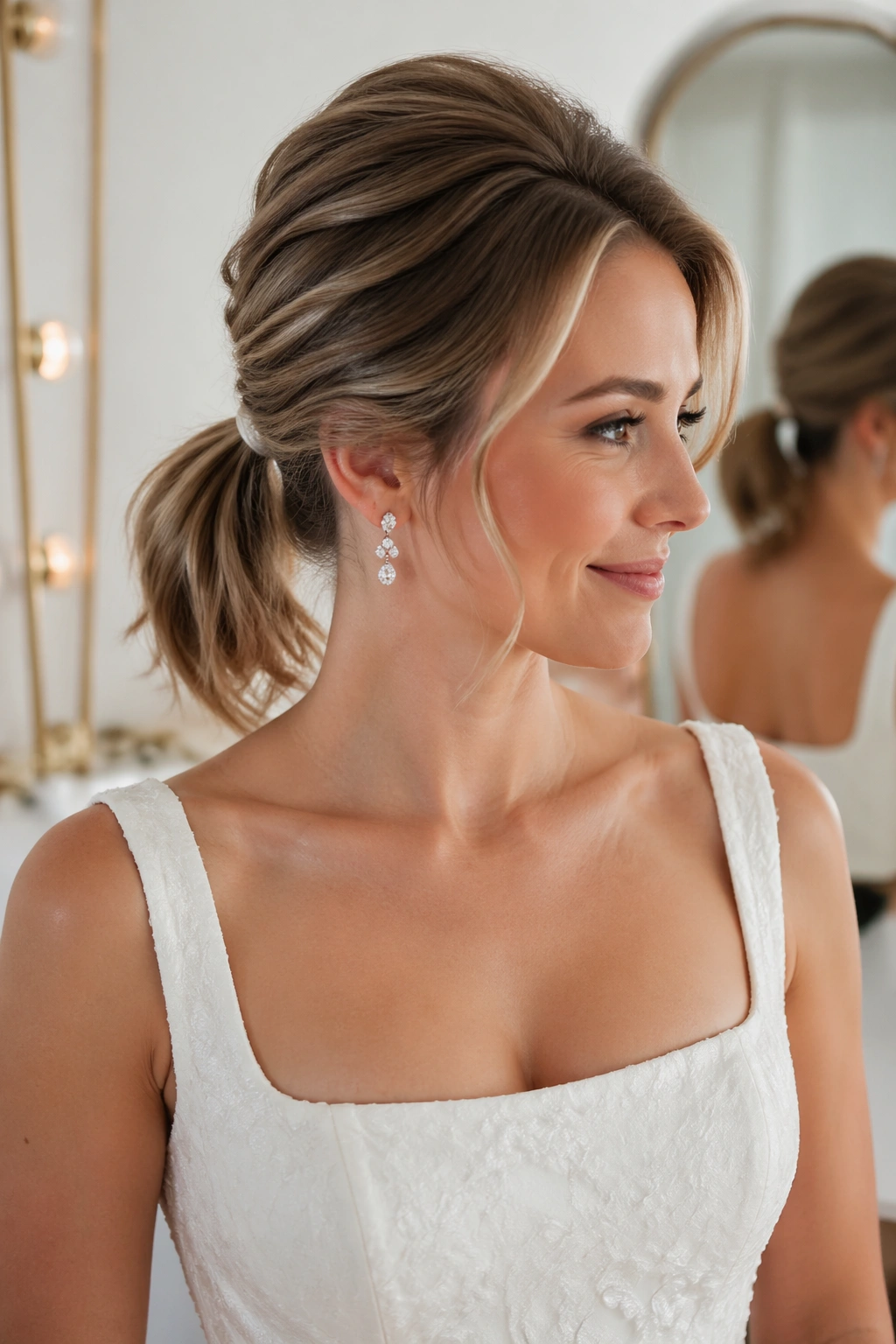
A little crown lift can make a short ponytail feel taller and more formal. The key is not to over-tease it into a lump.
Backcomb a thin section at the crown, smooth the top layer over it, then secure the ponytail low or mid-low. Use a tail comb to lift the hair in small sections so the shape stays soft, not bulky. If the top looks too flat, the ponytail tends to read as small. If it’s too puffed up, it starts looking dated.
This style is especially nice with drop earrings or a square neckline. It leaves the face open while still giving the hair enough shape to matter.
It’s a useful middle ground. Not severe, not fussy.
12. Knotted Ponytail
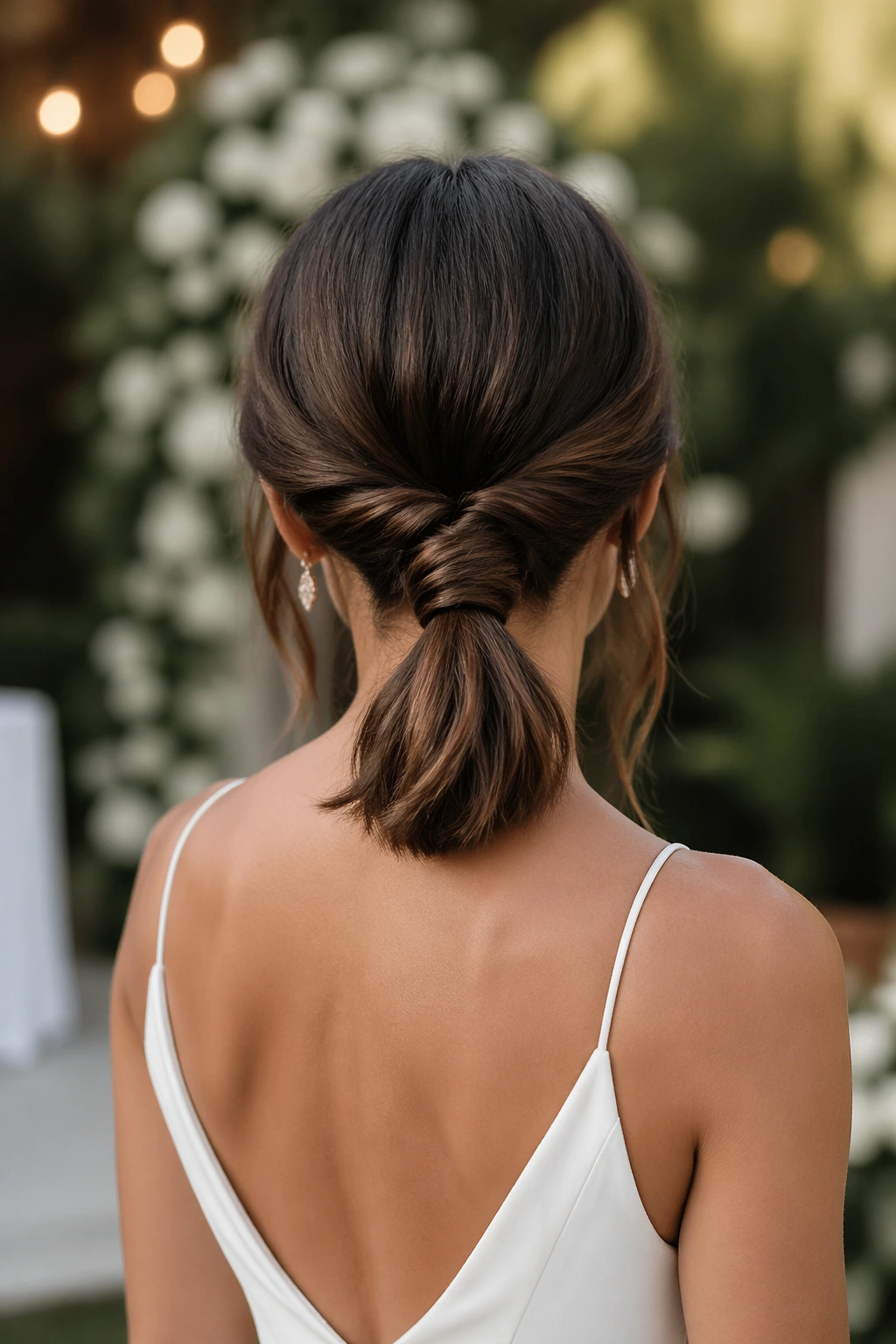
A knotted ponytail has a softer, more handmade look than a braid, and that makes it feel right for weddings that lean relaxed instead of formal.
Unlike a braid, which builds a repeating pattern, a knot creates one clean focal point at the back. On short hair, that can be easier to manage because you don’t need much length to make the knot read properly. Two twisted side sections are usually enough; secure the knot low and pin the ends underneath so nothing sticks out.
It suits dresses with open backs or simple necklines. The hair adds interest without stealing the scene.
If braids feel too busy or too familiar, this is the quieter choice. Still pretty. Just less expected.
13. Waterfall Braid Feeding Into a Ponytail
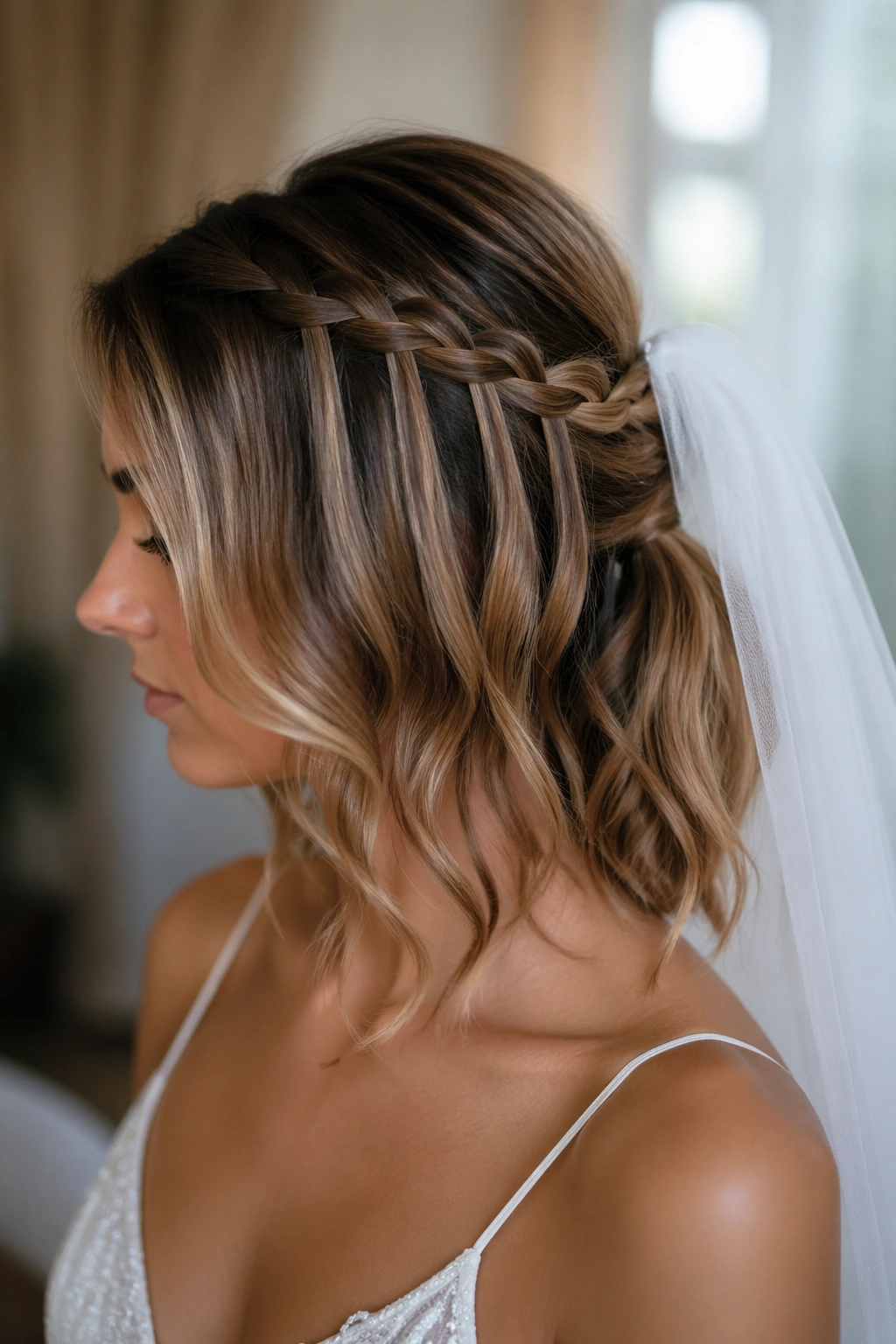
A waterfall braid gives short hair a chance to show off movement around the face before everything is pulled back.
Why Short Hair Can Still Do It
You do not need a long braid here. You only need enough hair for a front braid that travels from temple to temple or from one side into the back. Let the dropped sections fall into the ponytail as you go, then secure the rest low at the nape. The braid stays visible from the side, which is where it earns its keep.
- Keep the braid width to about ¾ inch.
- Use small pins under the braid line.
- Curl the ponytail lightly so the ends blend.
- Spray each section before you pin it.
This one looks especially good with soft waves and a veil that sits a little higher on the crown.
14. Low Ponytail With Brushed-Out Waves
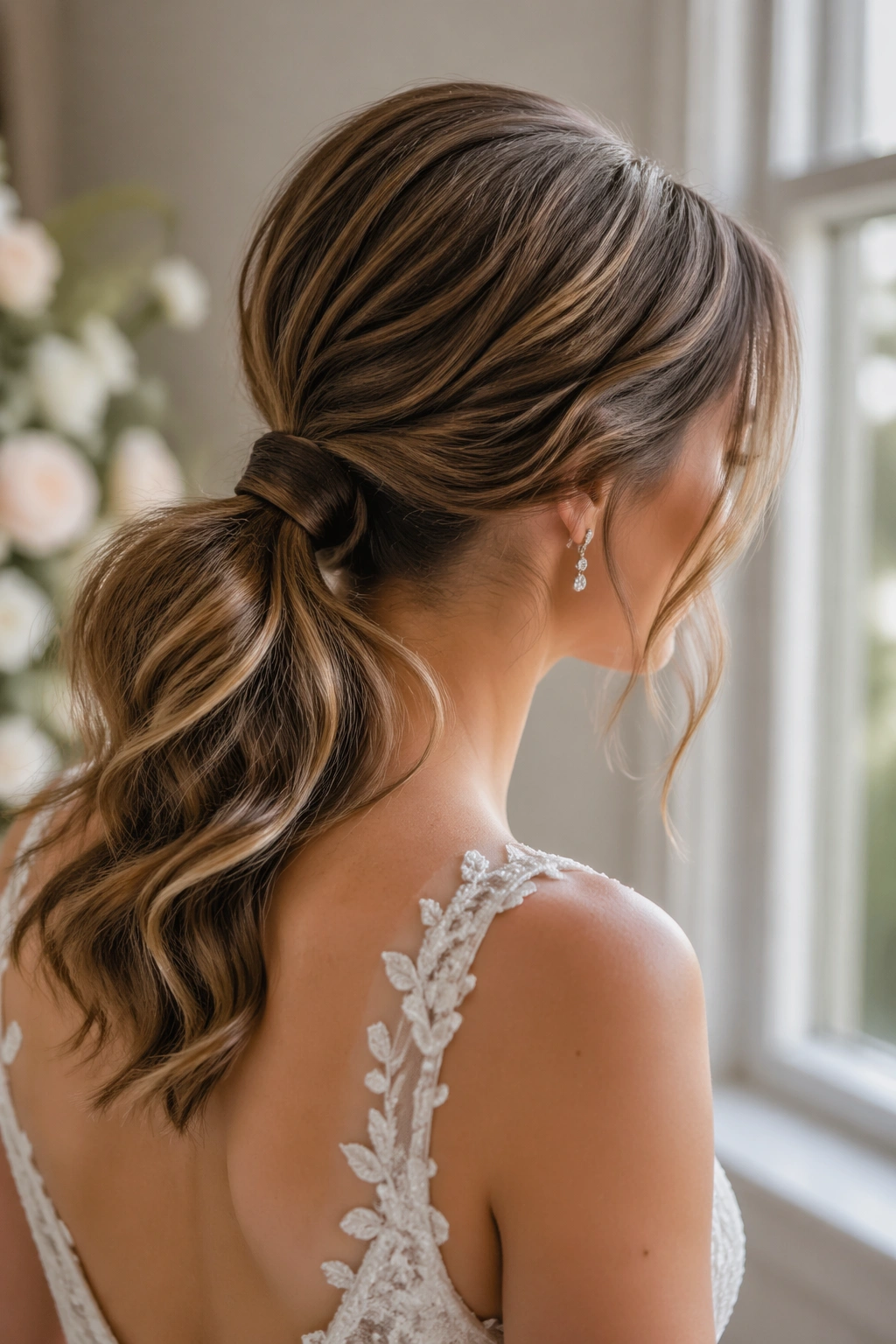
If you want hair that looks done in photos but not stiff, this is the one.
Curl the hair first, let the curls cool, then brush them out until they become smooth bends. Pull everything into a low ponytail, but leave the texture soft at the sides and tail. That brushed-out wave gives short hair enough movement to feel romantic without becoming fluffy or overworked.
Use a light mist of spray after tying, not before. Too much spray early on can make short layers stick in awkward places. And if the hair is very fine, a pinch of powder at the roots can help the style stay in place through the ceremony and beyond.
It’s a practical style. Also a flattering one.
15. Rope-Braid Ponytail
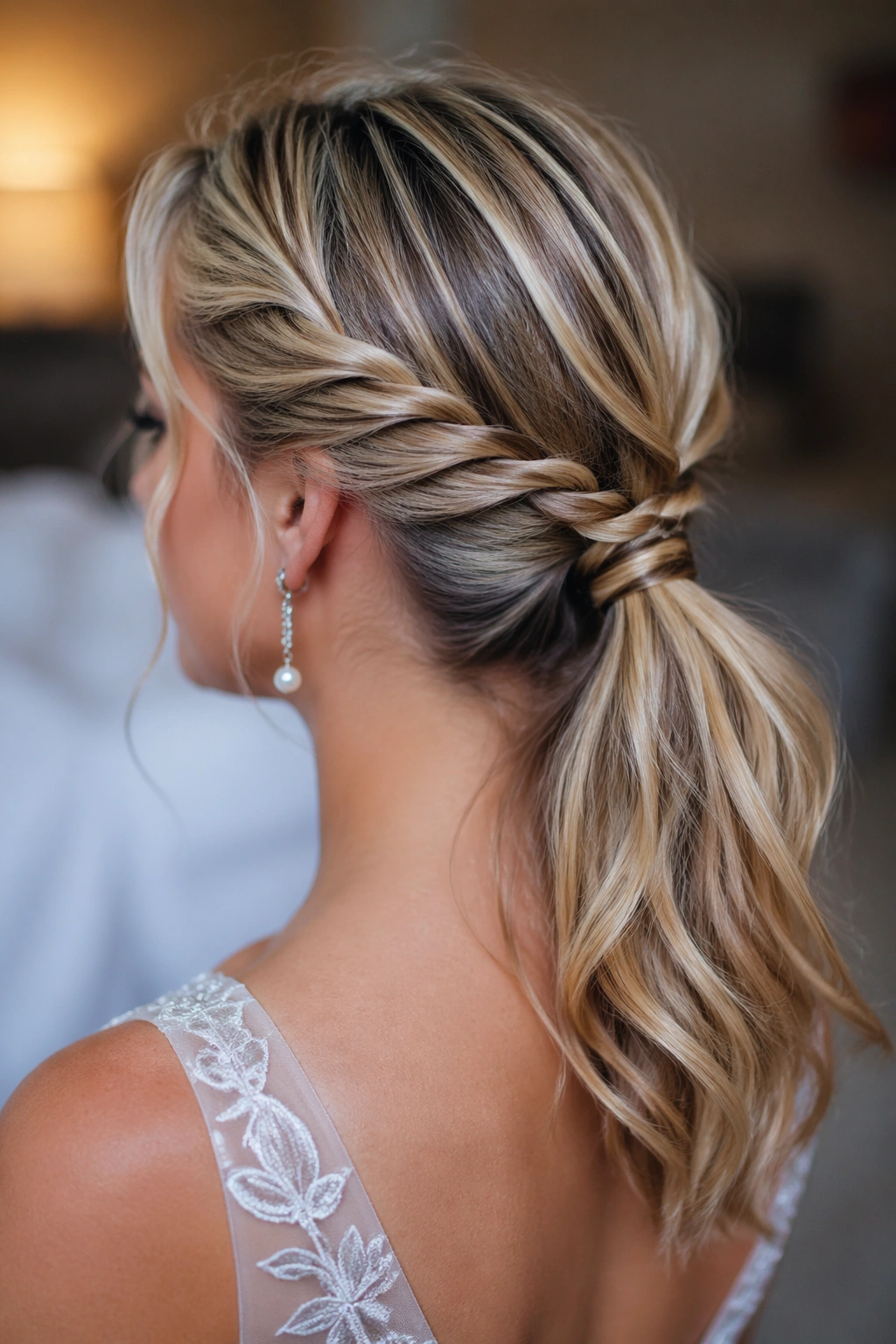
Can a rope braid work better than a three-strand braid on short hair? Often, yes.
A rope braid only uses two sections, twisting them around each other as they travel back into the ponytail. That means fewer moving pieces and less chance of shorter layers popping loose at the sides. It also gives the hair a neat spiral look that feels a little cleaner than a full braid.
How to Keep It Neat
Start with a small elastic at the base, twist each section in the same direction, then wrap them in the opposite direction. If that sounds fussy, it is the first time. The second time gets easier.
Rope braids are good for brides who want structure without a lot of decoration. They do not need much help.
16. Sleek Center-Part Ponytail
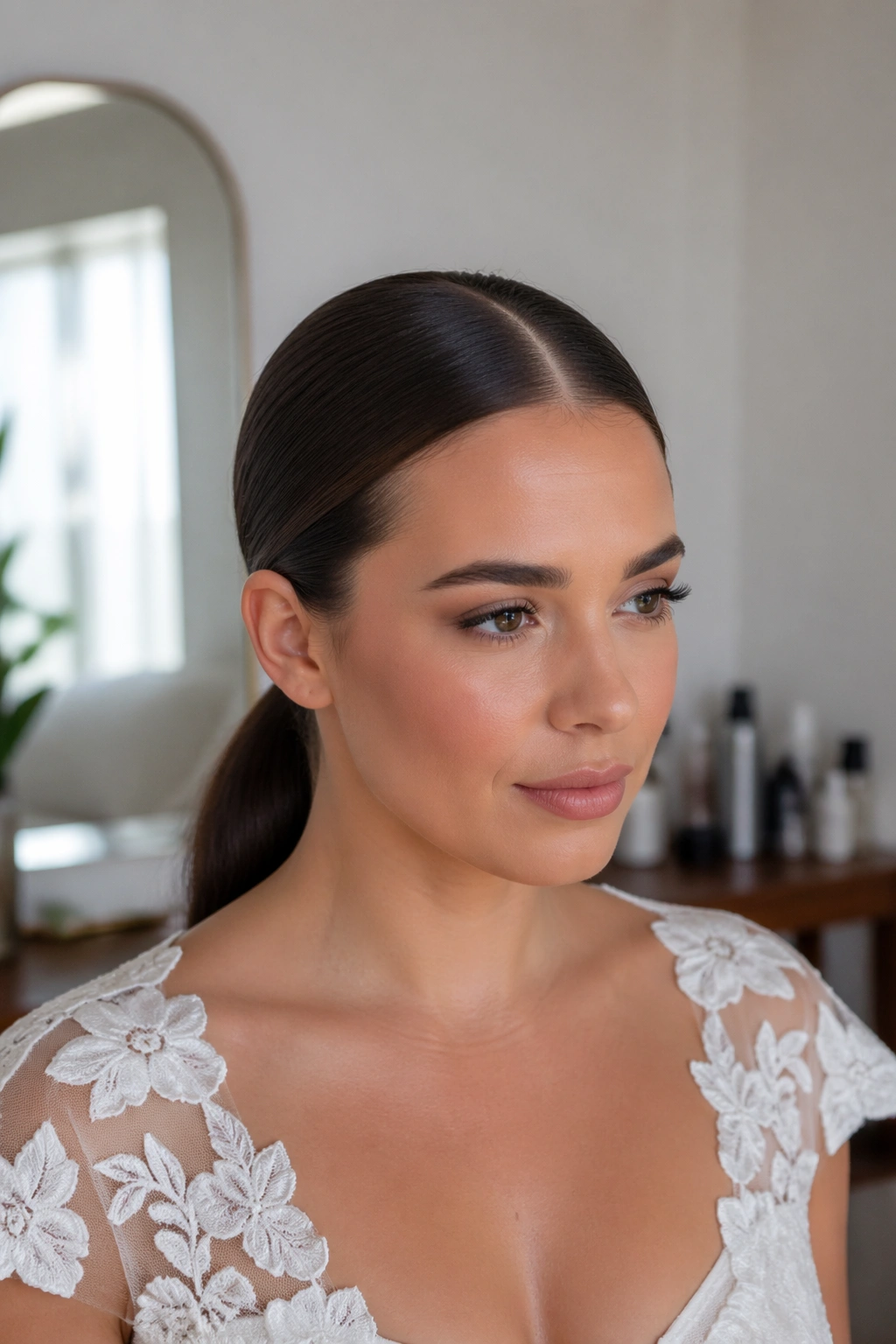
A center part can make a short ponytail feel calm and modern, especially when the rest of the styling stays close to the head.
Brush the part straight back, smooth each side with a light cream or pomade, and secure the ponytail low and centered. On short hair, the middle part helps distribute attention evenly, so the cut looks intentional rather than like you simply ran out of length. That sounds small. It isn’t.
If you want a little shine, use a drop of serum on the palms and smooth it over the top only. Avoid the tail if the hair is fine; too much product there can make it hang flat.
This one is clean in the best way.
17. Pearl-Pinned Ponytail
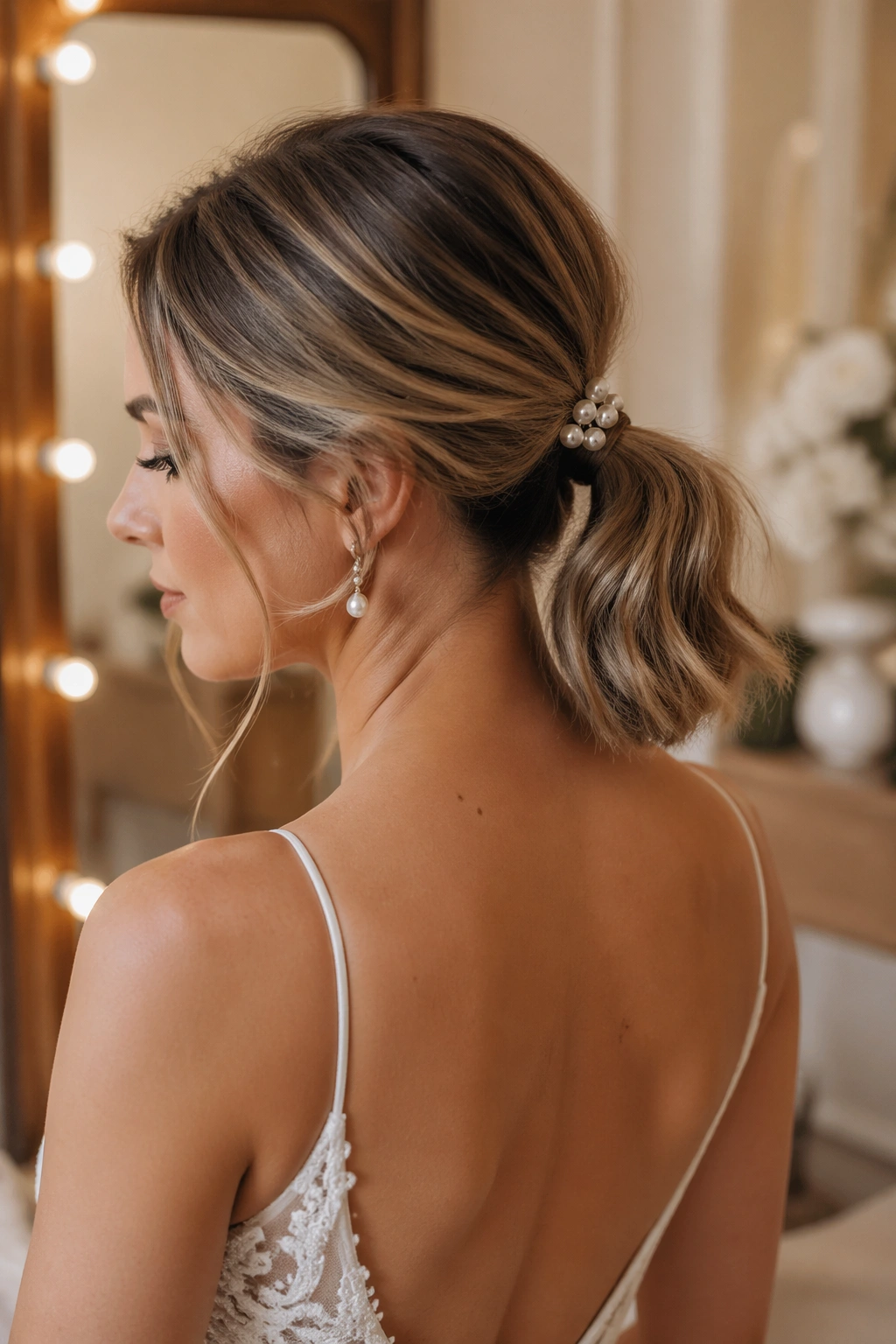
Pearl pins do not need much room to make an impact. That’s useful when the ponytail itself is short.
A few pins clustered near the base can dress up even the smallest tail. I like odd numbers here — three, five, maybe seven if the hair is thicker — because the arrangement looks less stiff. Place them on one side of the elastic or trail them up toward the back of the head, where they can catch the eye without crowding the face.
This style works with straight hair, waves, or a soft curl. It’s the accessories doing the visual work, not the amount of hair you have.
Simple ponytail. Better finish.
18. Satin Bow Ponytail
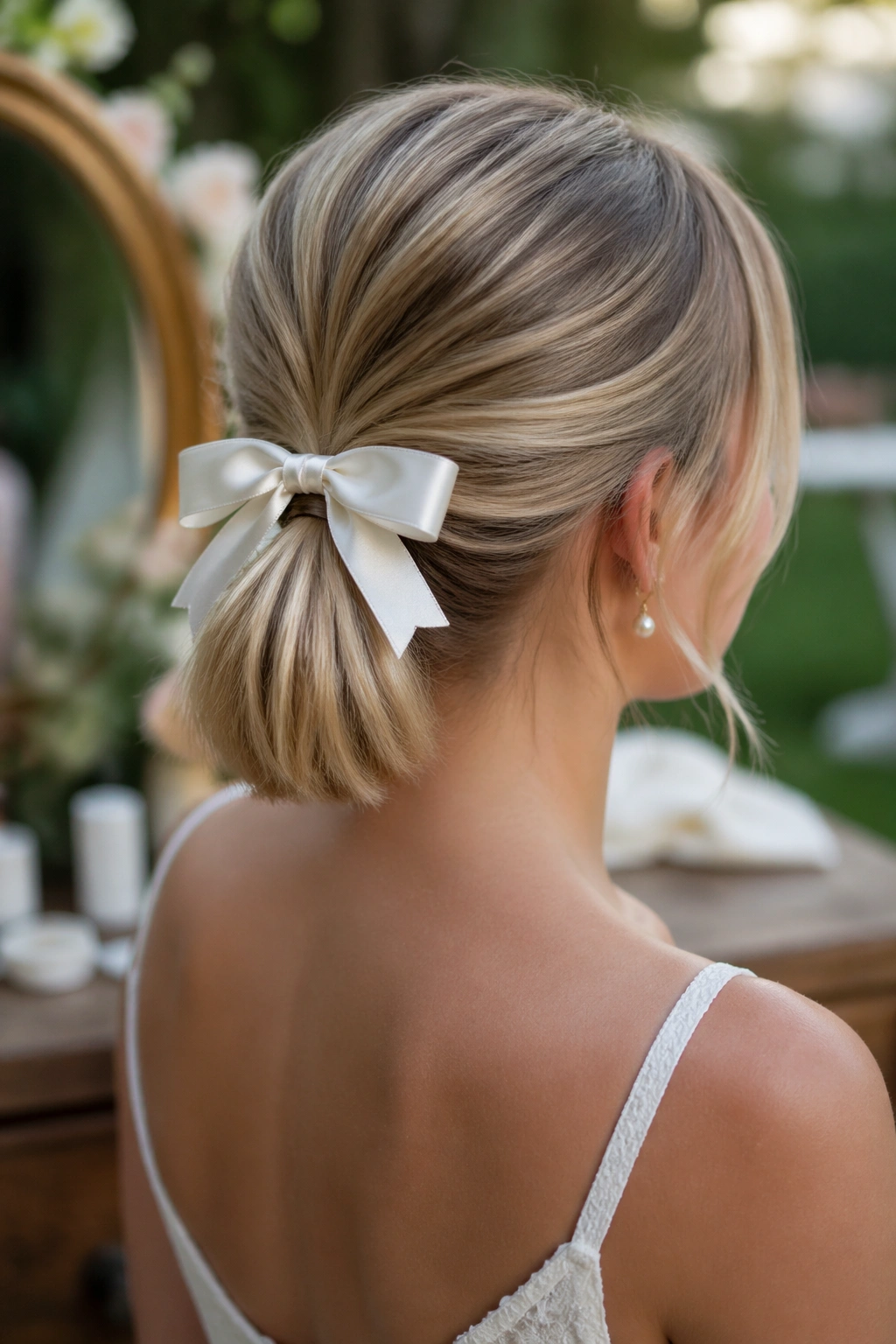
A satin bow changes the tone fast. It makes the ponytail feel more deliberate, and a little softer too.
Unlike pearls or crystals, which read more polished, a bow brings in a gentle, almost old-fashioned sweetness. That can be lovely with a tea-length dress, a garden ceremony, or any bridal look that leans toward romance instead of sparkle. Keep the bow size in proportion to the hair — around 2 to 3 inches across for short hair is usually enough.
Choose a ribbon with enough body to hold its shape. Floppy fabric can droop by the end of the night, and nobody wants that.
There’s a reason this style keeps showing up. It works.
19. Textured Messy Ponytail
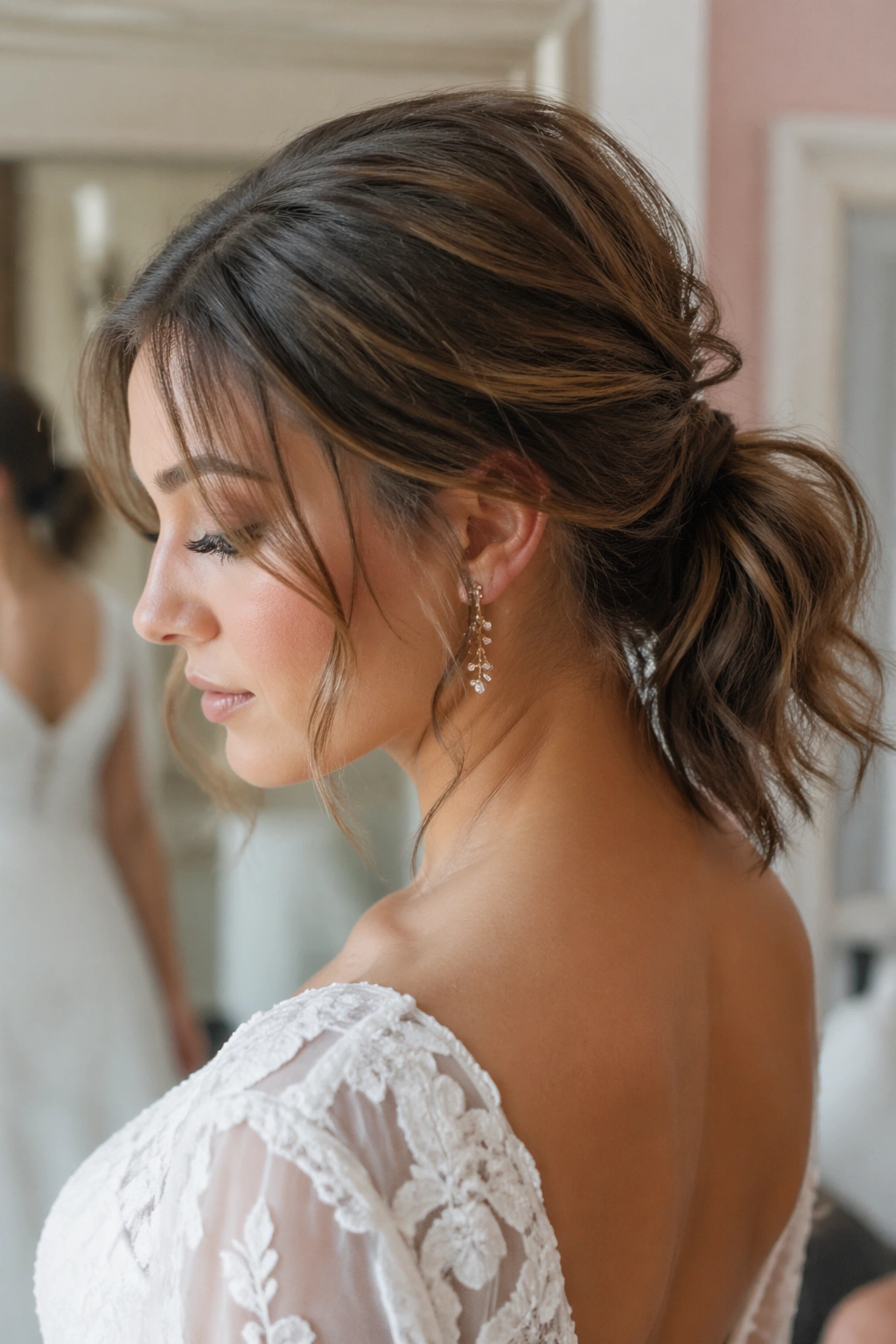
Messy sounds easy. It isn’t. A good textured ponytail needs a bit of planning so it looks soft rather than frizzy.
What Keeps It Pretty, Not Frizzy
Start with second-day hair or add texture spray at the roots. Then curl random sections with a 1-inch iron, leaving a few pieces straighter so the ponytail doesn’t become too uniform. Gather it low or mid-low, then pull out just enough face-framing pieces to soften the front.
- Use dry texture spray at the crown.
- Twist the sides loosely before tying.
- Pin any short layers that stick out.
- Leave the ends a little uneven if the cut is layered.
This is the style for brides who do not want to look overdone. It has movement, and it photographs well from the side.
20. Retro Flipped Ponytail
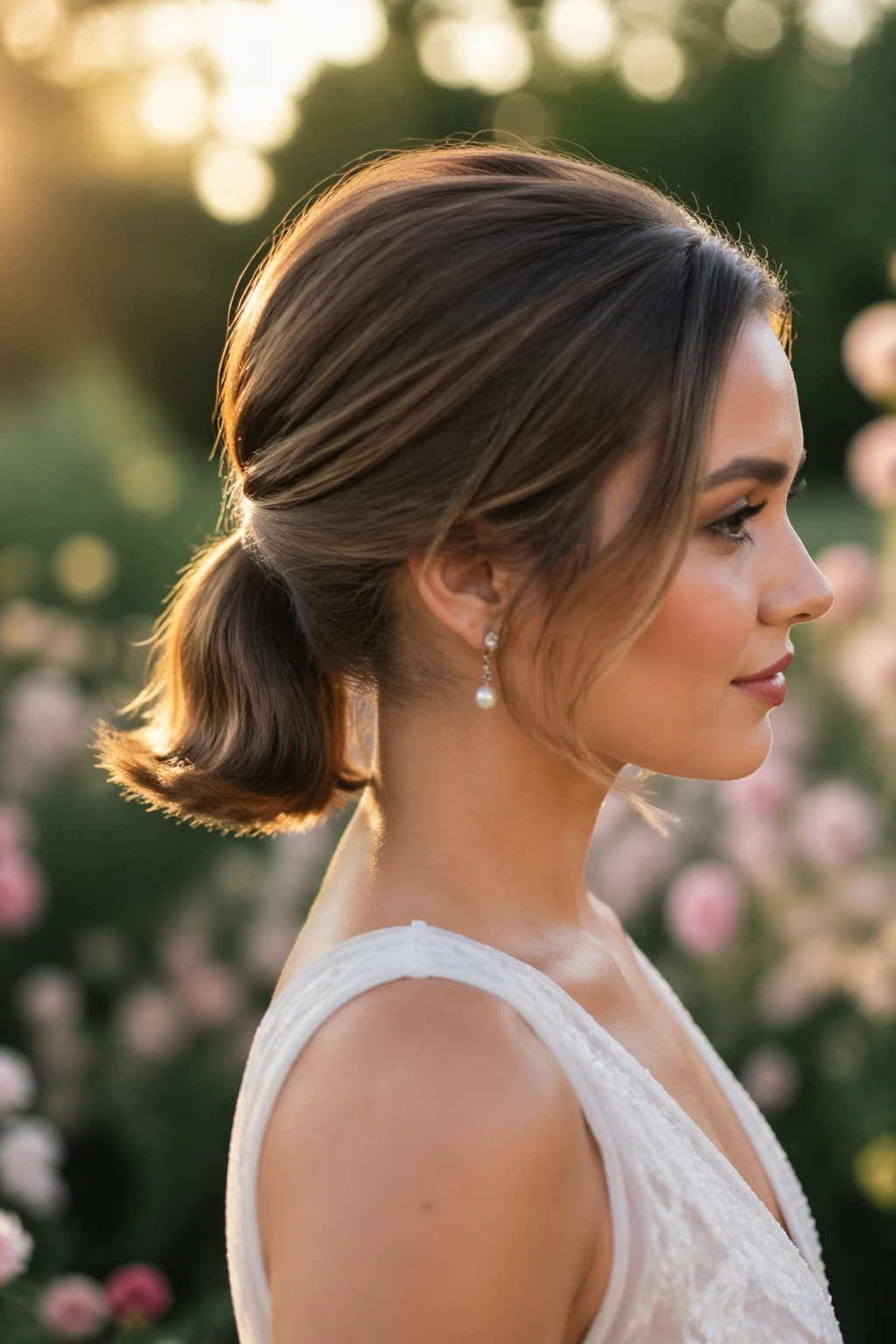
A flipped ponytail brings a vintage shape into the mix, and on short hair it can look especially sharp.
Turn the ends outward with a round brush or a flat iron, then smooth the top so the crown stays neat. The flip gives the ponytail a little bounce at the ends, which keeps shorter lengths from disappearing into the back of the head. If the hair is blunt, the flipped finish also makes the cut feel less severe.
This is a good match for a structured dress or a simple satin neckline. It has a bit of attitude, but not in a loud way.
Some styles whisper. This one has a little more edge.
21. Braided Elastic-Camouflaged Ponytail
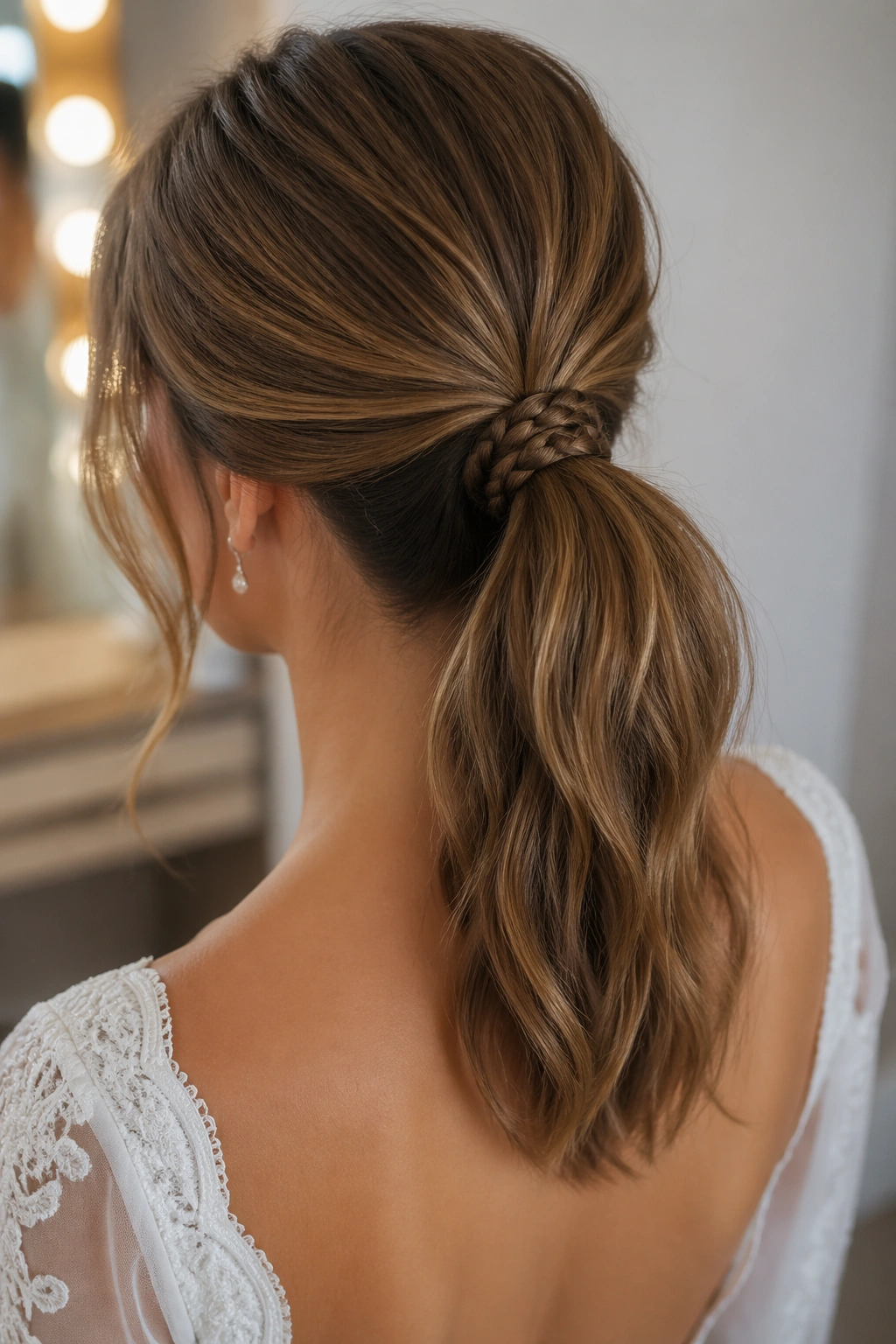
What makes this style useful is not the braid itself. It’s the way the braid hides the elastic and disguises the shortness of the tail.
How to Make the Braid Stay Put
Take a small strand from the tail, braid it tightly, and wrap it around the base of the ponytail to cover the band. If the hair is too short for a full wrap, pin the braid end underneath and let the rest of the ponytail fall as it is. That small move makes the whole style look more finished.
This is especially handy for fine hair, where the elastic can show through too easily. A braid around the base gives the ponytail a stronger anchor and a cleaner line.
It is a tiny fix with a big payoff.
22. Asymmetrical Low Ponytail
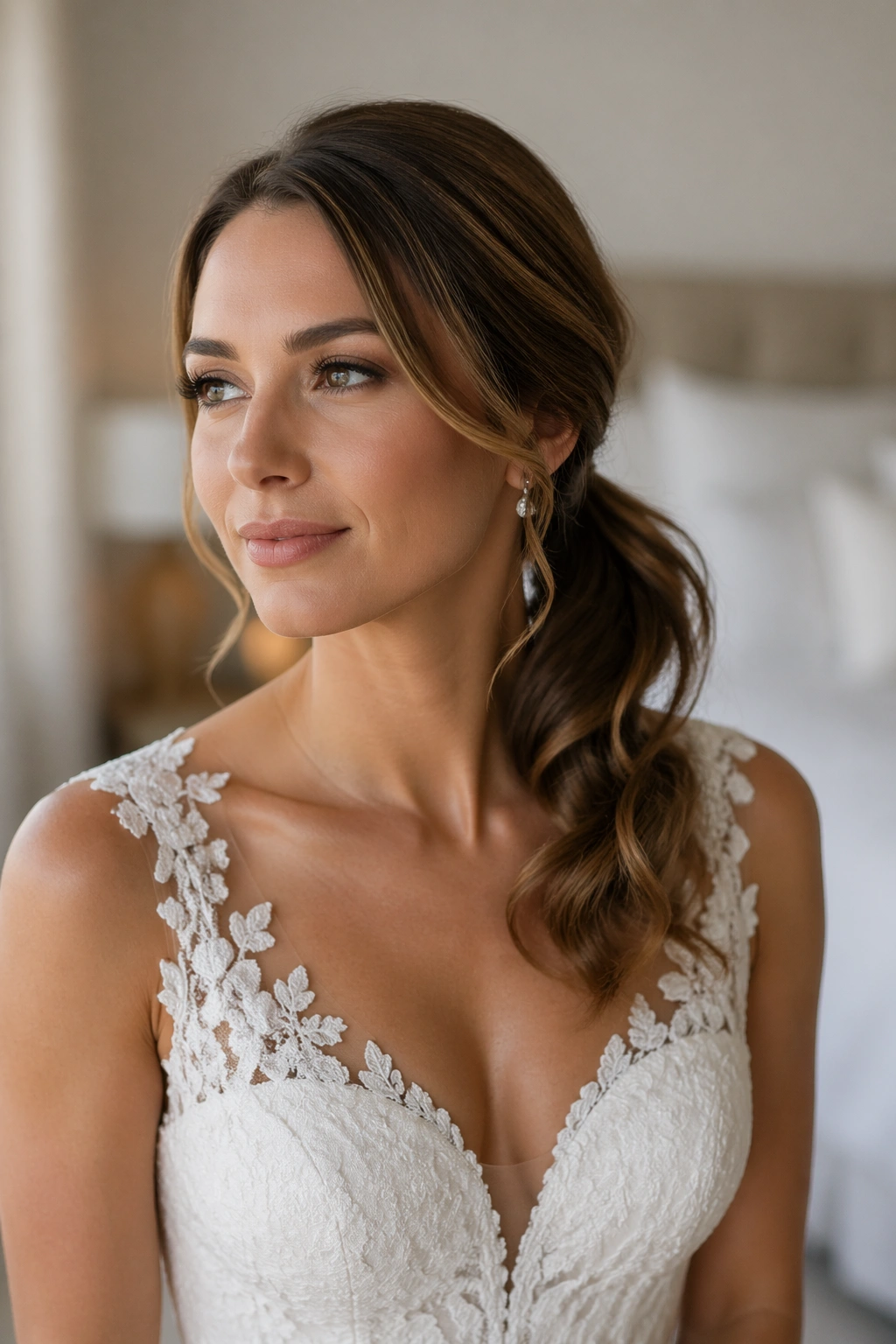
A ponytail does not have to sit in the middle to look bridal. Shifting it just off-center can make the whole style feel less rigid.
Start with a side part, gather the hair low behind one ear, and let the ponytail rest over the opposite shoulder. This is a smart move for short hair because it gives the ends more visual space. On a bob or lob, the side placement makes the length look more generous than it really is.
Where the Sweep Starts
The front sweep should begin at the arch of the brow and move back in one clean curve. Pin the shorter pieces close to the head so the line stays smooth. If the hair is very layered, a little curl at the ends helps the side-swept shape hold together.
It feels relaxed, but not casual.
23. Tucked-End Ponytail
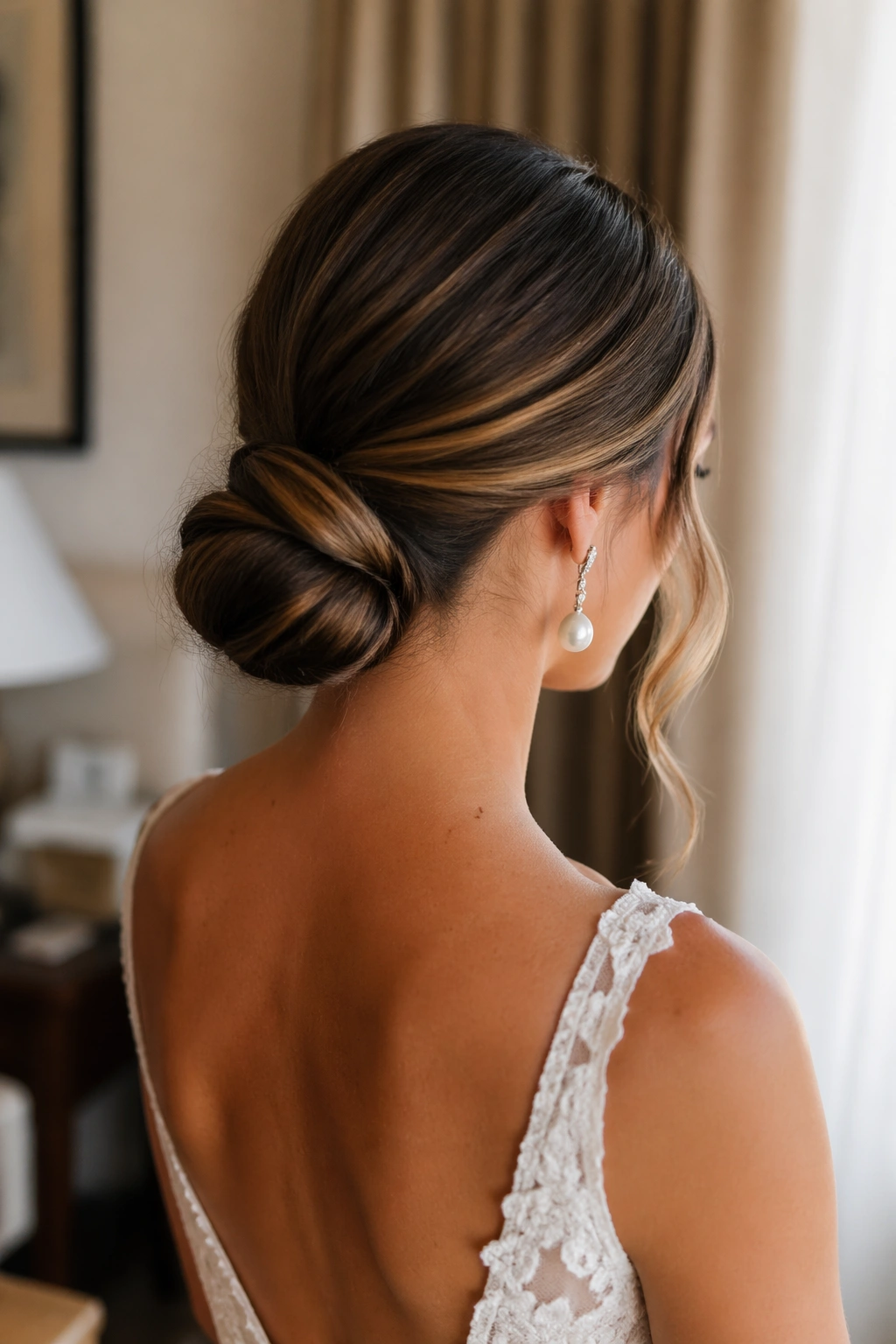
A tucked-end ponytail is one of those styles that looks more complicated than it is.
You gather the hair low, then fold the tail under itself and pin it so the ends disappear into a soft loop or tucked fold. On short hair, this can be a lifesaver because the ends do not need to hang long. They just need enough length to tuck once and stay hidden.
The result sits somewhere between a ponytail and a soft chignon. That makes it useful for brides who want a neat back view without the stiffness of a formal bun.
It also keeps shorter layers from swinging loose every time you turn your head.
24. Crown-Volume Ponytail With Veil Comb
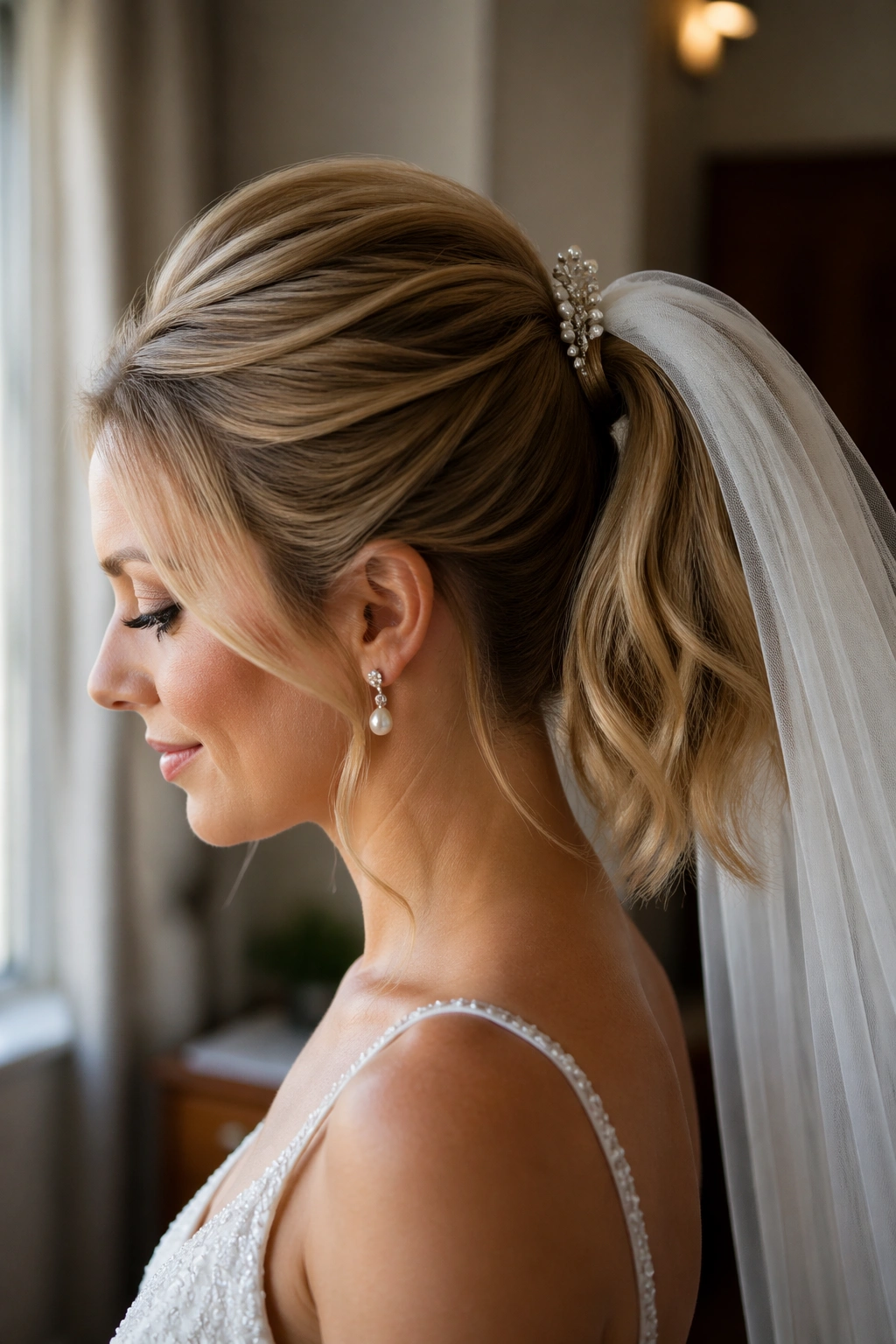
A full updo can crush a veil. A crown-volume ponytail usually gives you more room to work.
Unlike a tight chignon, this style keeps lift at the crown and space at the back, so the veil comb can sit above the ponytail base instead of fighting it. That matters when the bride wants to remove the veil later and still have hair that looks shaped. The ponytail should stay low enough to support the veil, but not so low that the style disappears.
If the hair is short, build the crown first, then set the veil comb about 1 to 2 inches above the elastic. That distance keeps the top from flattening.
It’s a small placement detail. It changes everything.
25. Crimped Texture Ponytail
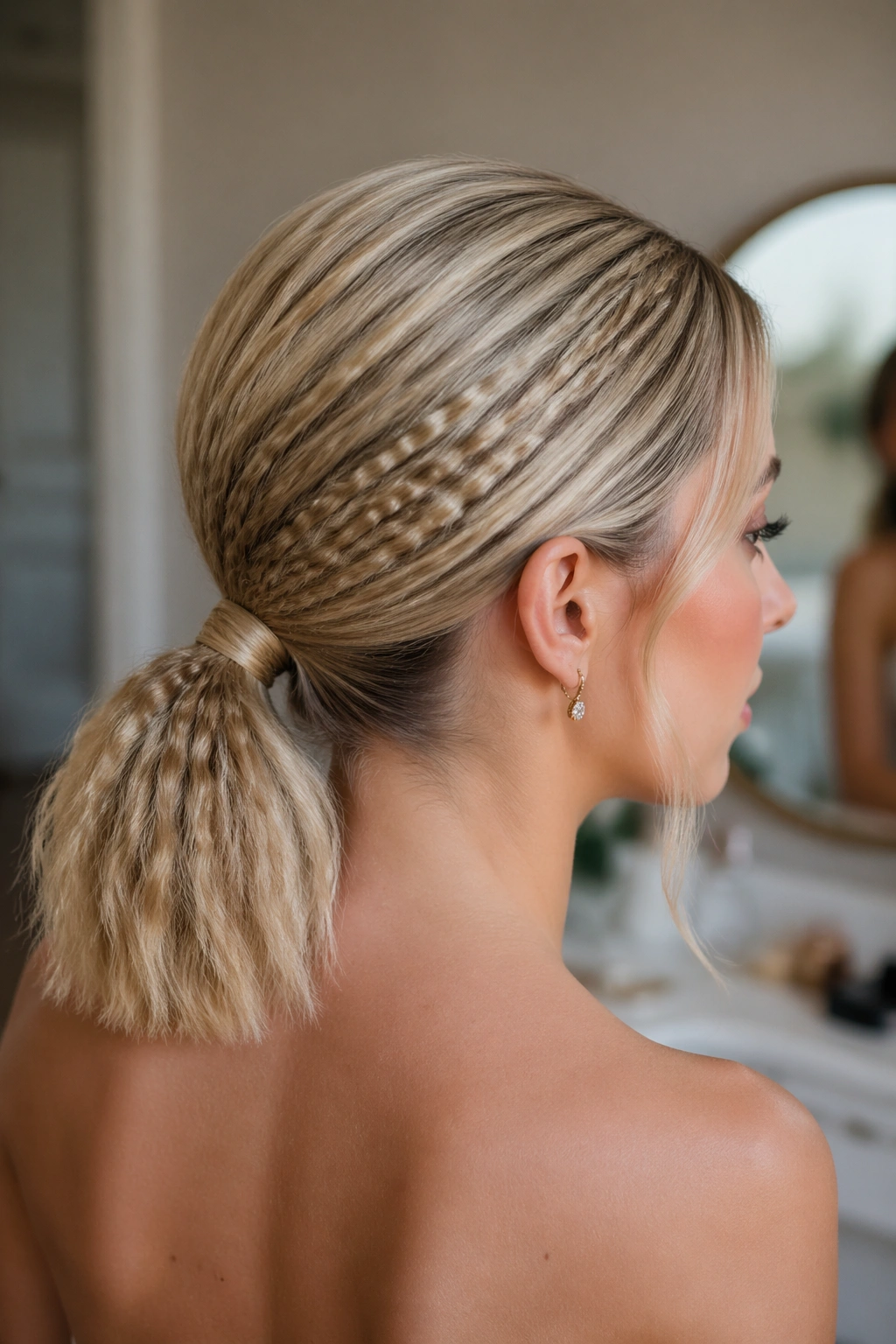
Crimped texture is a strong move for short hair because it creates body where there is usually not much to work with.
Where to Crimp
You do not need to crimp the whole head. The underlayers and the crown are usually enough. Once the texture is in, pull the hair into a low ponytail and smooth the top lightly so the crimp stays hidden in the body of the style. That gives the tail more thickness without making the top look busy.
- Crimp 1-inch sections under the top layer.
- Keep the front smooth.
- Use a soft brush only at the surface.
- Add one pearl pin or leave it bare.
This works especially well for fine, straight hair that tends to collapse under its own weight.
26. Twisted Half Ponytail
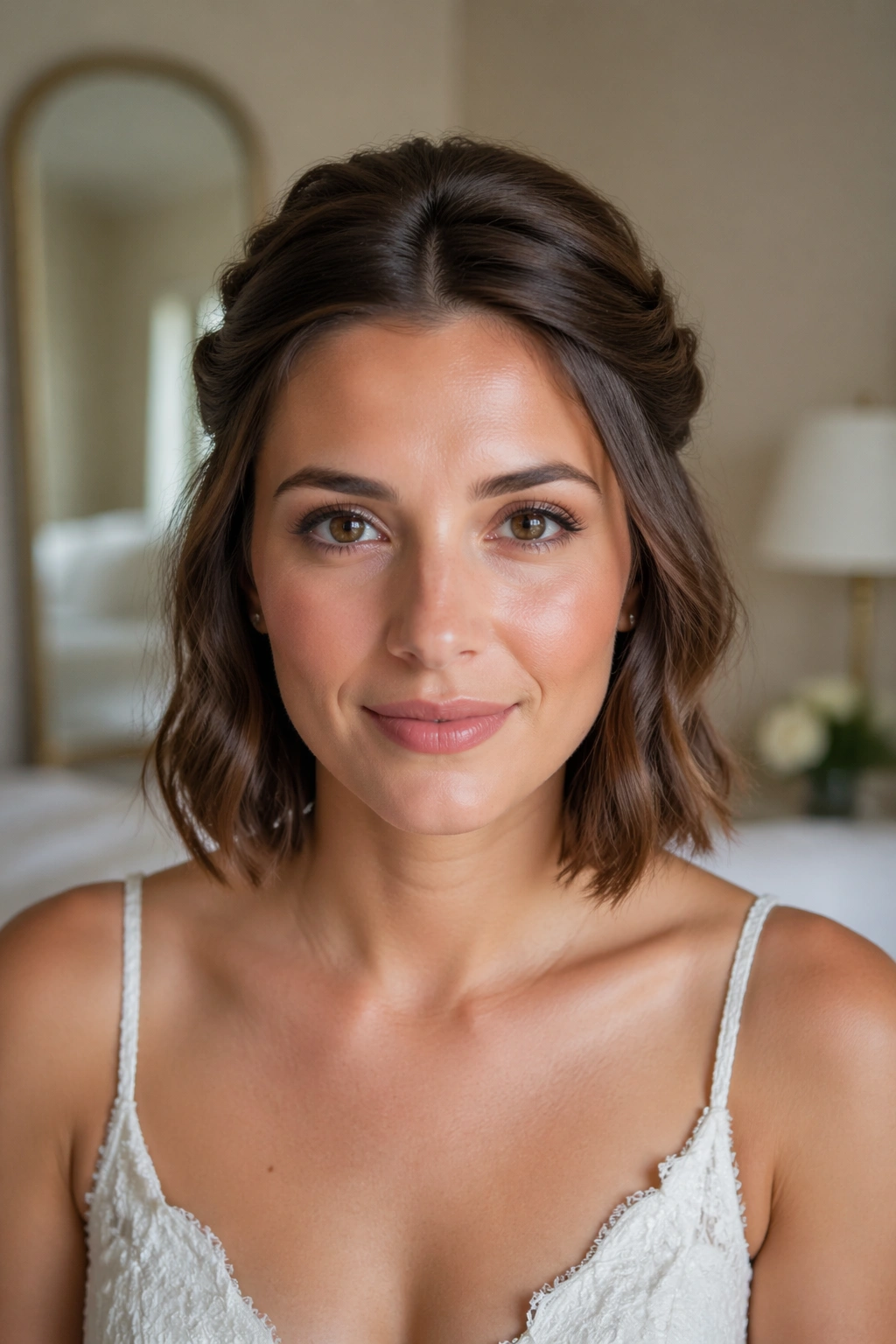
Probably the easiest bridal ponytail for chin-length hair is the twisted half ponytail.
You only need enough hair at the top to twist from each side and meet at the back. The rest stays loose, which means the shorter bottom sections do not have to pretend they are longer than they are. That makes the style feel friendly to a bob or a very layered cut.
The twist line can be neat or slightly loose, depending on the dress. If the gown is simple, keep the hair smoother. If the gown has lace or a softer bodice, pull the twists apart a touch so they feel less tight.
Fast. Pretty. Good on shorter hair.
27. Low Ponytail With a Side Sweep
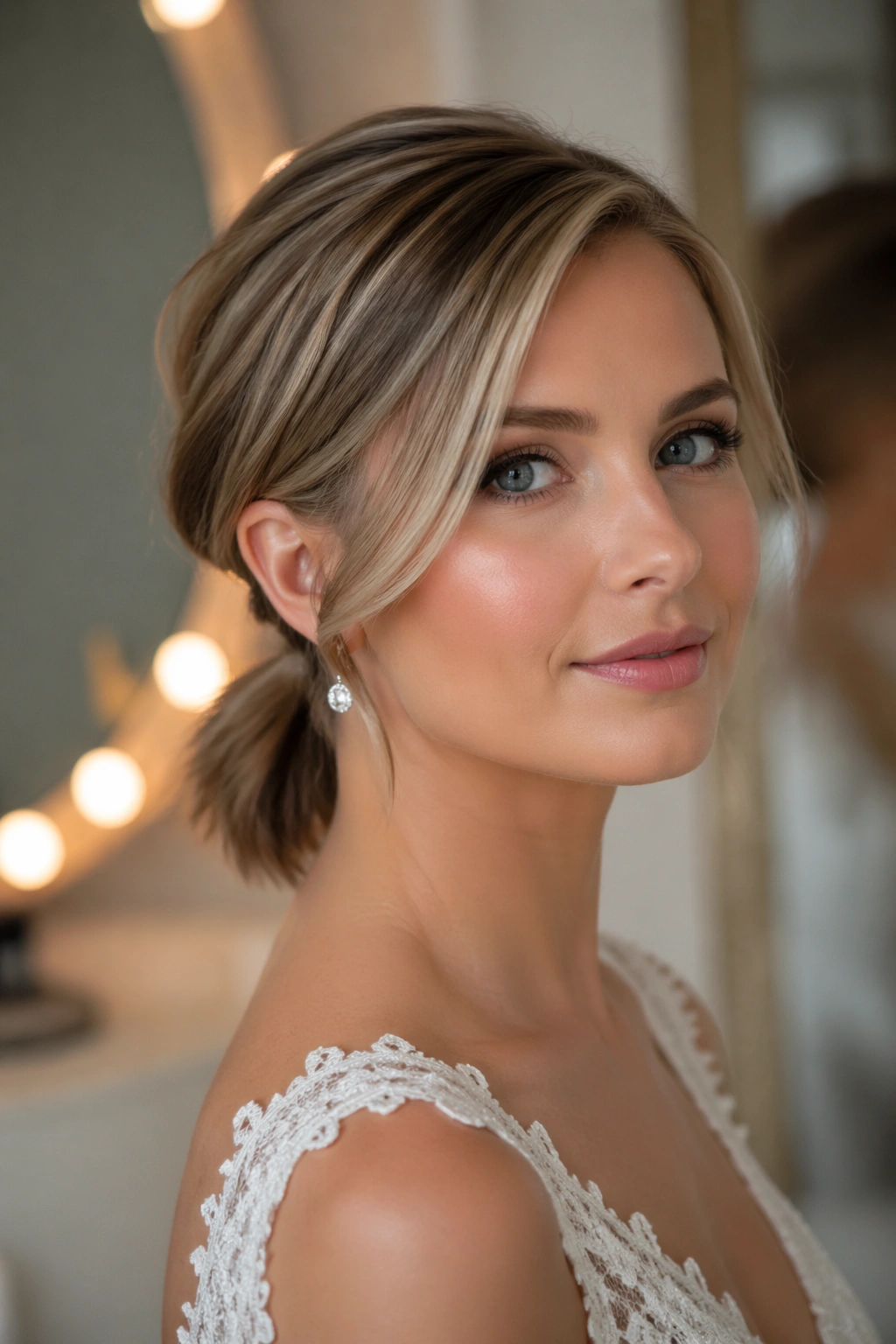
A side sweep gives short hair more softness around the face, and it keeps the ponytail from feeling too centered or strict.
Where the Sweep Starts
Begin the sweep at the heavier side of the part, then curve it back toward the opposite ear before securing the ponytail low. A little root lift under the sweep helps the front stay full. If the hair sticks to the head too much, the style loses its charm fast.
This is a good option for brides with angular features or a strong jawline, because the sweep softens the profile without hiding the face. One or two hidden pins are usually enough to keep it in place.
It’s gentle. That’s the whole point.
28. Braided Halo Into Micro Ponytail
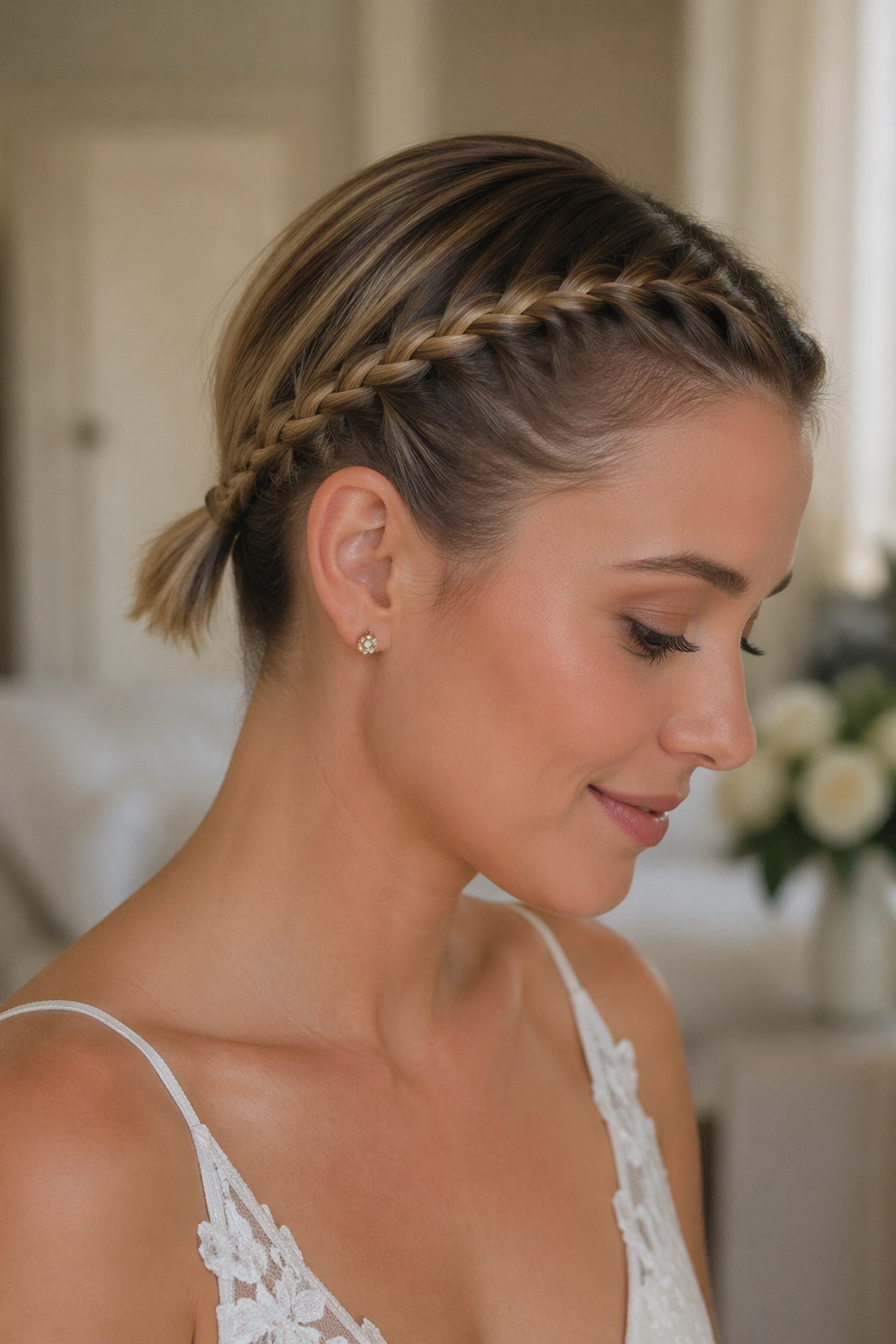
A braided halo sounds elaborate, but on short hair it can be scaled down into something neat and wearable.
Take a narrow braid around the hairline or along one side of the head, then let it feed into a tiny ponytail at the back. The braid acts like a frame, which is useful when the cut has layers that want to escape. It also gives the style a clear front view, so the back does not have to carry all the interest.
Key Details
- Keep the braid thin and close to the scalp.
- Secure the ponytail with a small elastic first.
- Pin the braid end underneath the tail.
- Add one floral pin if the dress is simple.
This looks especially nice with soft makeup and a neckline that leaves room for the face.
29. Soft, Centered Ponytail With Floral Pins
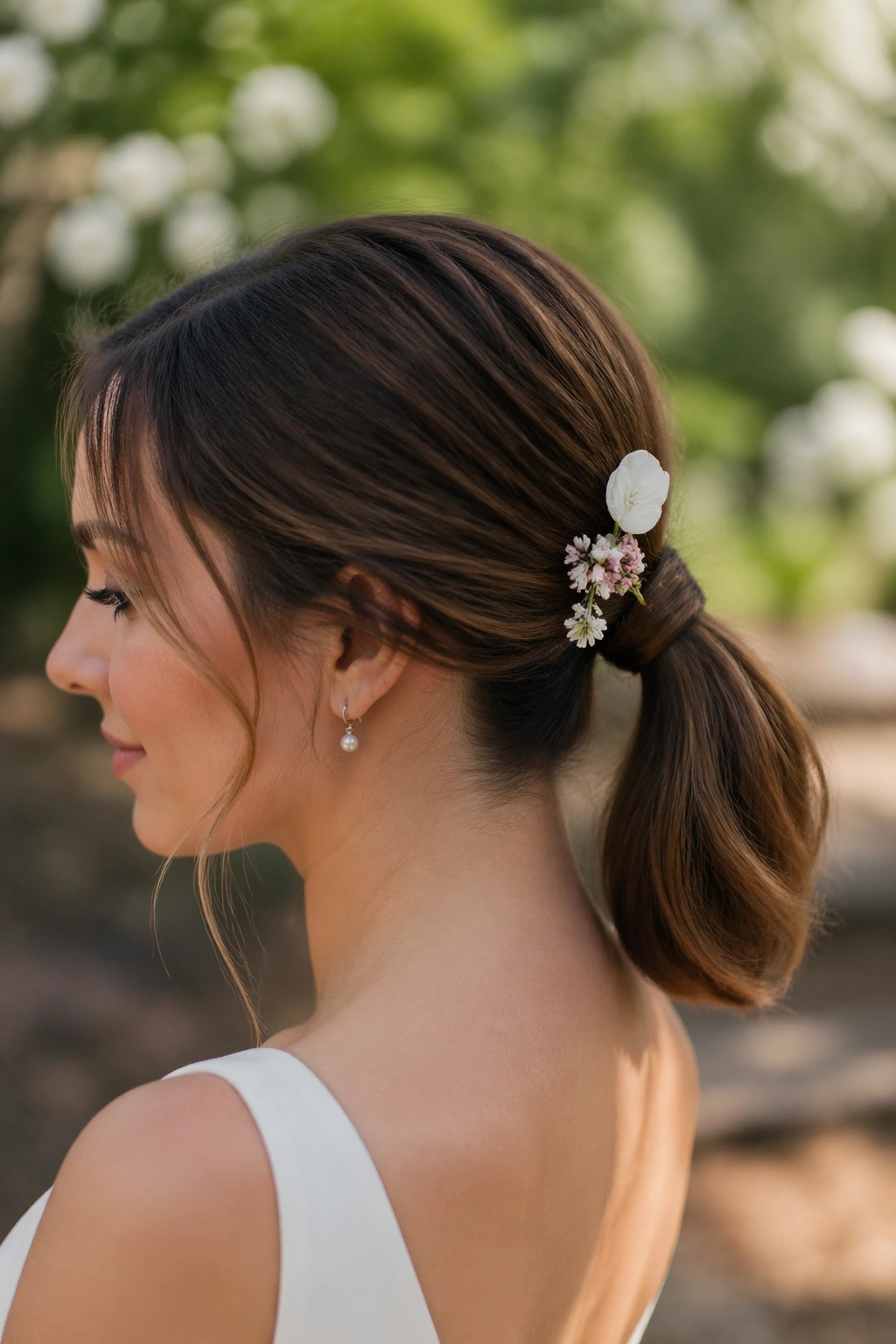
Fresh flowers can be lovely in short hair, but they need to be used with a light hand or the style tips into costume territory.
A few small blooms, baby’s breath, or tiny greenery sprigs pinned near the base of a centered ponytail can soften the whole look. The trick is to keep the placement loose and asymmetrical, not lined up like a row of buttons. On short hair, that little bit of messiness keeps the style from feeling stiff.
I like this best when the ponytail itself is simple. Clean base, soft tail, one or two flowers, maybe three at most. The hair does not need to fight the flowers.
That restraint makes the style feel fresh instead of busy.
30. The Clean Bridal Ponytail
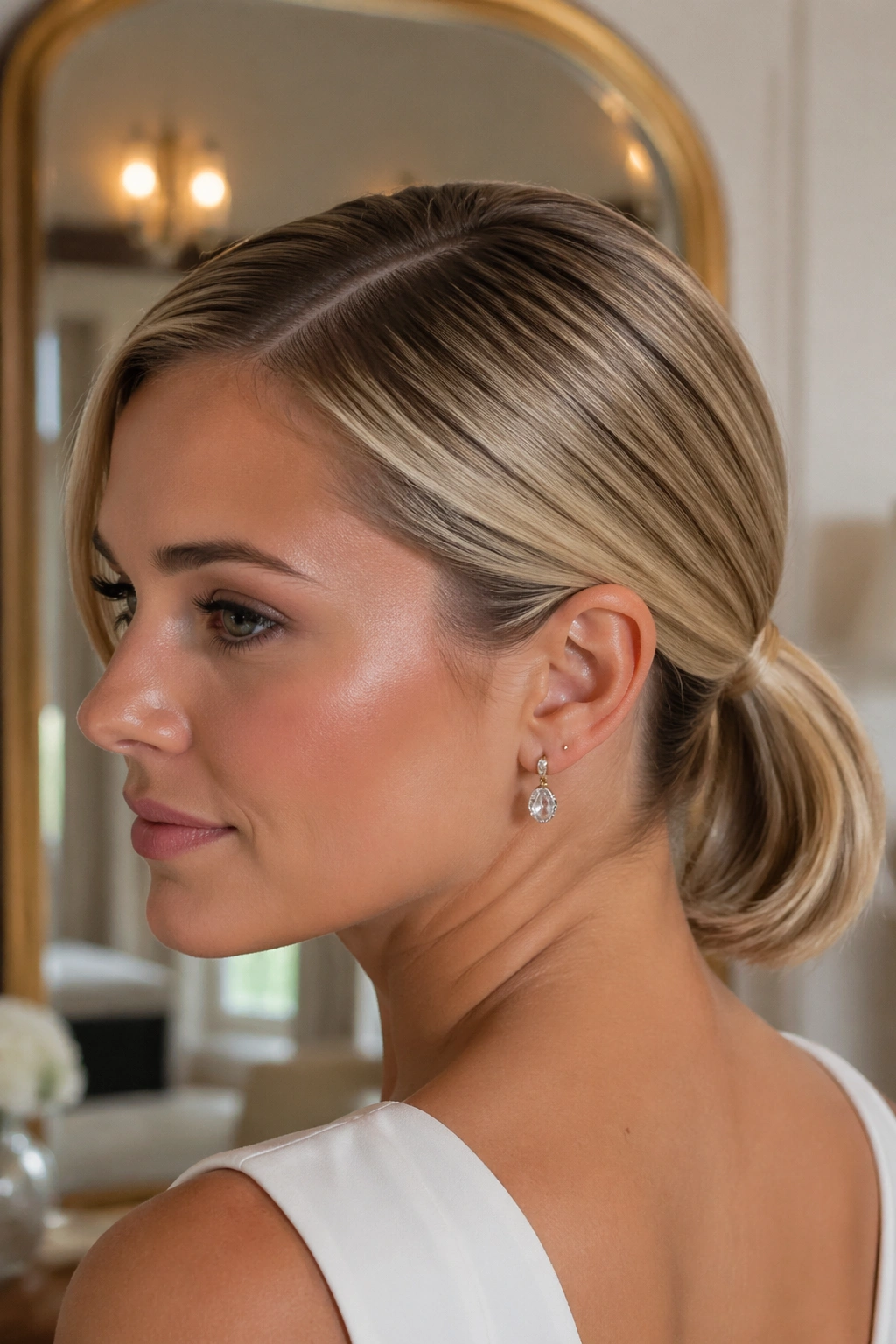
Some wedding ponytails for short hair work because they add more. This one works because it leaves things out.
A clean bridal ponytail, centered low or slightly off-center, gives the dress, makeup, and neckline room to breathe. Keep the part precise, smooth the crown with a light cream, and let the tail fall in a soft bend rather than a rigid line. If the hair is too short to create a long tail, that’s fine. Let the shape be honest.
The best part of this style is its calm. No extra braid to manage. No heavy accessory to balance. Just a neat line, a little shine, and enough structure that the back of the head looks finished when the veil comes off.
If you want the hair to feel expensive without looking overworked, this is the one I’d keep on the shortlist.
