

Wedding hair has a funny way of becoming the most emotional part of the whole look. A half up half down wedding hairstyle can seem easy in the chair, then the veil goes on, the wind picks up, and suddenly every pin has to earn its keep. The good versions hold the face open, keep the length soft, and still survive hugs, dinner, and a dance floor that lasts longer than anyone planned.
I’ve always liked this style because it solves a real problem. You get shape at the crown without giving up the movement people usually want from their hair, and that matters when the dress already has a lot going on. A clean satin gown, a lace sleeve, a bare shoulder line — all of them can work with half-up wedding hair, but the details change fast. A tiny twist and a big curled cascade are not the same thing at all. Not even close.
Hair texture matters too. Fine hair needs lift and smart anchoring. Thick hair needs sectioning so the style doesn’t balloon out like a pillow. Curls want room to breathe. Straight hair wants shape and grip. That’s why the same headline style can look graceful on one bride and a little flat on another if the placement is off by an inch.
The good news is that there are many elegant versions of this look, and the best ones feel intentional without looking stiff. Some are soft and romantic, some are sleek and formal, and some lean a little more modern. The trick is picking the right shape for the dress, the veil, and the kind of movement you actually want when you turn your head.
1. Classic Twisted Half-Up Crown
A classic twisted crown is the safest place to start if you want bridal hair that feels calm instead of fussy. Take a section from each temple, twist them back toward the center, and pin them low enough that the top of the style stays smooth. The result is neat, flattering, and easy to dress up with a comb or a small spray of pearls.
Why it flatters so many gowns
The twist opens the face and keeps the sides controlled, which is a nice match for sweetheart necklines, bateau tops, and simple straps. It also keeps the back soft, so the whole style still feels like hair rather than a helmet. That matters more than people think.
- Use 1-inch sections from each side for a balanced twist.
- Anchor with 2 crossed bobby pins so the twist does not slide.
- Leave the ends softly waved, not pin-straight.
- Place a veil comb just above the twist if you’re wearing one.
Small warning: if the twist sits too high, the whole thing starts to look school-dance formal. Keep it low and smooth, and it stays bridal.
2. Soft Hollywood Waves with a Half-Up Lift
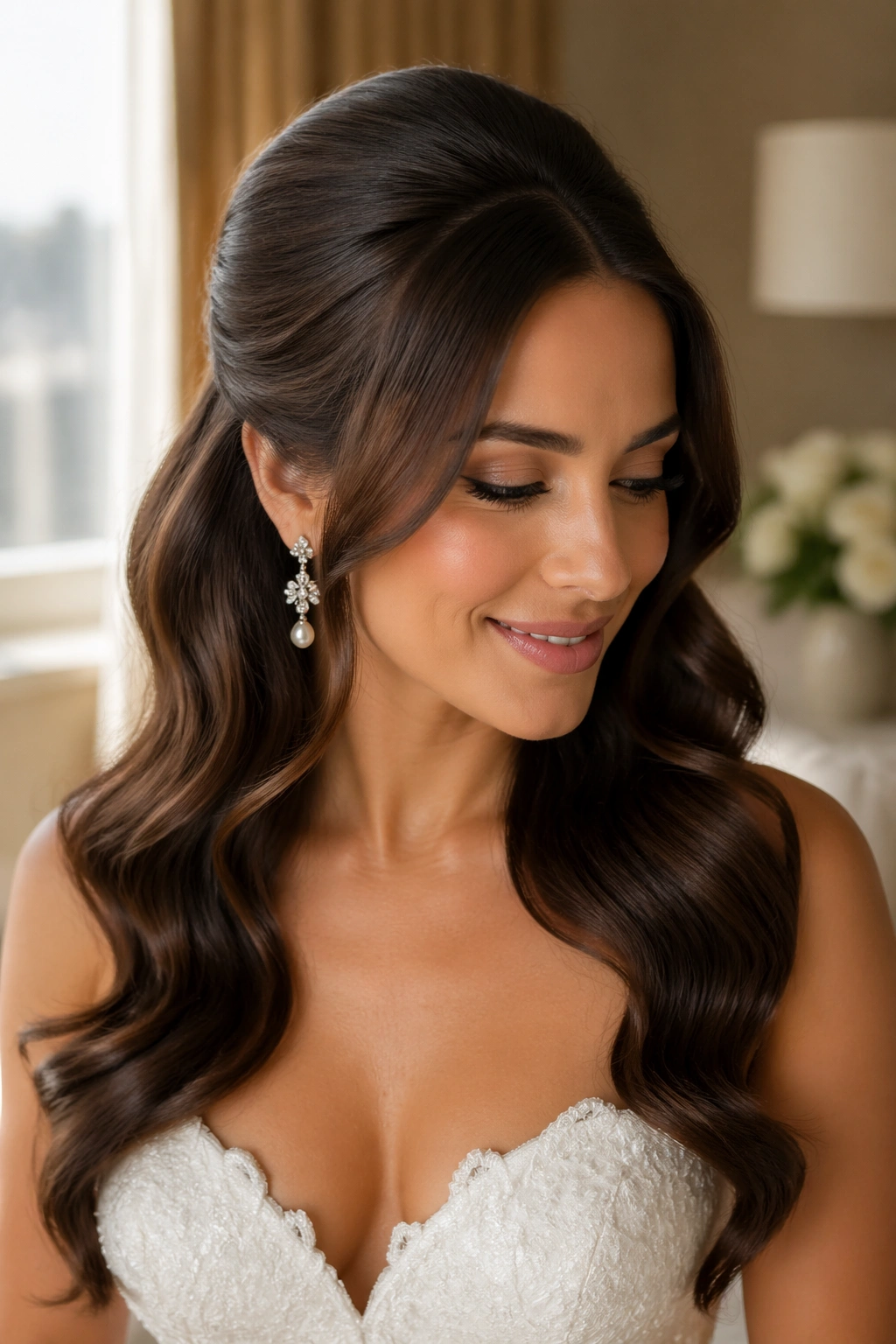
Can a half-up style still feel polished when the lengths are full of wave? Absolutely, if the crown section is tidy and the curls are brushed into long, smooth bends rather than tight spirals. This is the version I reach for when the dress is simple and the bride wants the hair to do a little more of the talking.
The front is lifted just enough to show the cheekbones, then the rest falls into wide, soft curves. A 1.25-inch curling iron usually gives the right bend, and the key is brushing the curls out once they cool so they sit in that glossy, old-school wave shape. Too much separation and it turns frizzy. Too little and it looks rigid.
This one loves a side part, but a center part works too if the face shape can take the symmetry. Keep the crown smooth, keep the ends shiny, and don’t bury it under heavy accessories. The wave should do the work.
3. Braided Halo Half-Up
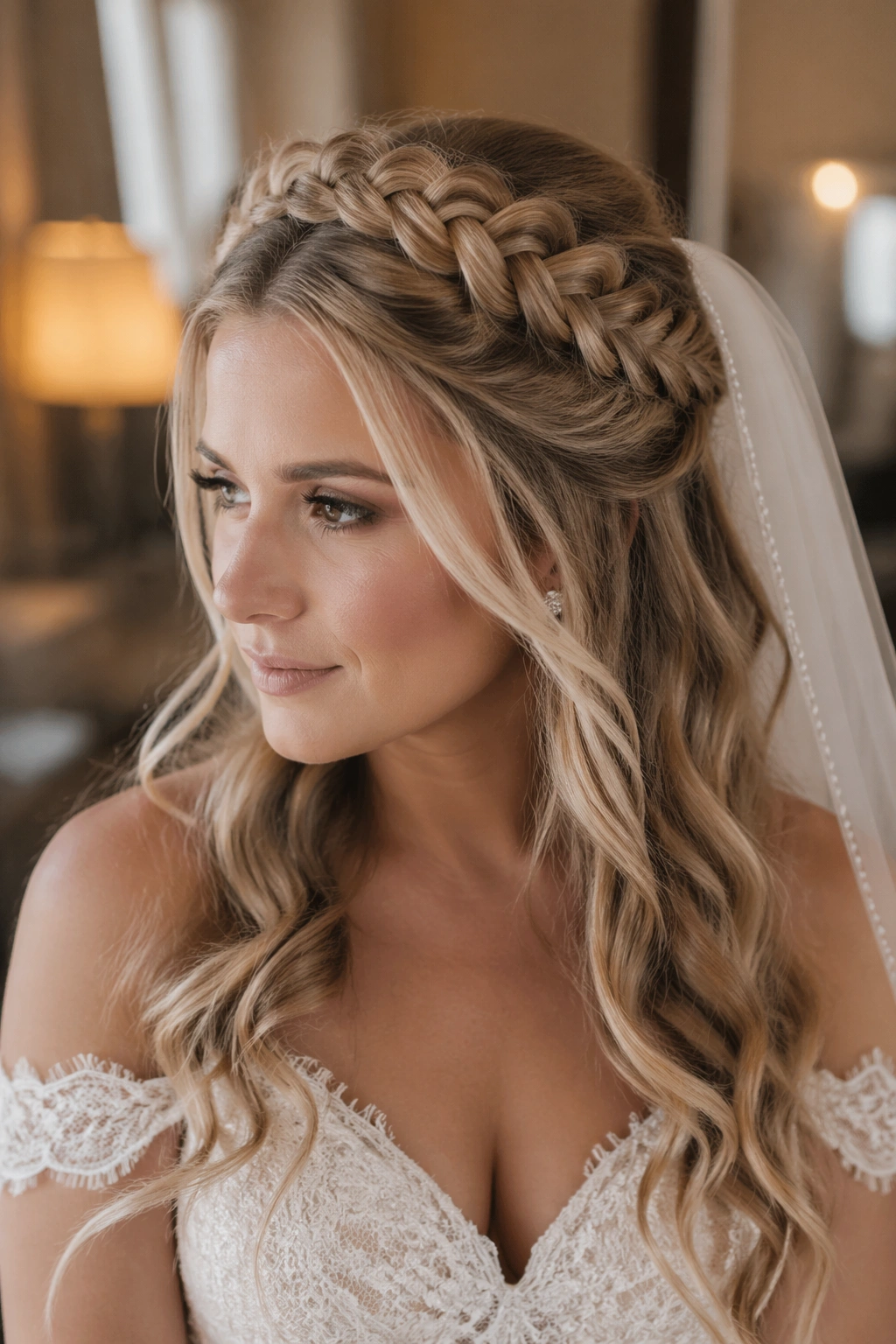
A braided halo has that woven, lace-like feel that makes people think you spent an hour on the front alone. It’s a strong choice for brides who want romance without a lot of loose fluff around the face. The braid wraps from one side toward the back, then disappears into the rest of the hair like a clean seam.
What makes it stand out
A halo braid looks best when the braid itself is slightly pulled apart after it’s secured. That small widening gives it a softer shape, and it keeps the braid from looking too tight or youthful. The trick is to braid firmly first, then tug gently at the outer loops once it’s pinned. Not hard. Just enough.
- Start the braid behind the hairline, not at the very edge.
- Use 3 to 5 pins under the braid depending on thickness.
- Pair it with loose curls or softly waved lengths.
- Tuck the braid low if the veil needs room.
Best use: lace dresses, outdoor ceremonies, and brides who want detail near the face without wearing a full headband.
4. Sleek Center-Part Half-Up with Polished Ends
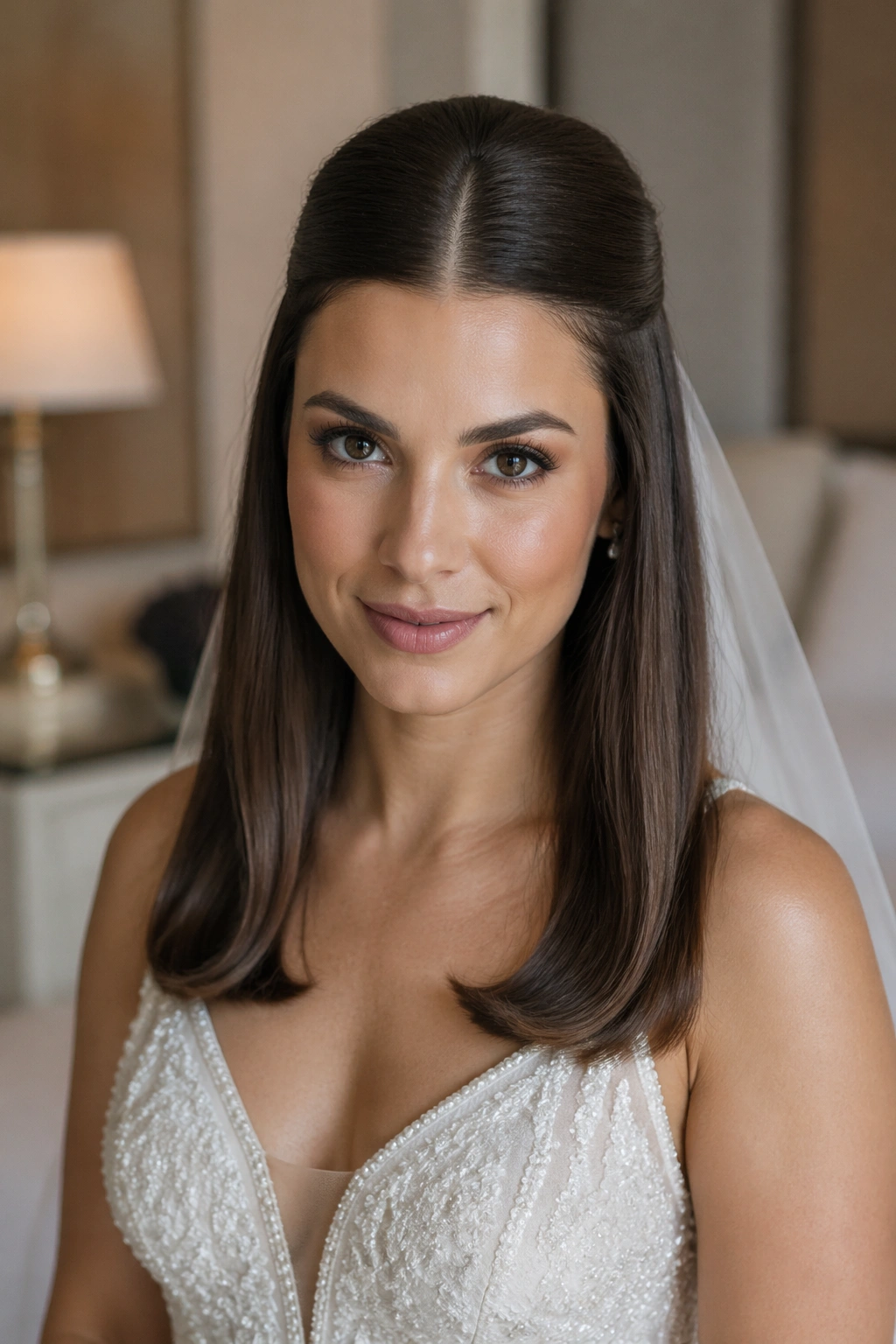
A sleek half-up style is the opposite of airy and loose, and that’s exactly why it works. When the dress already has texture — lace, beading, embroidery — hair that stays clean and controlled can be a relief. The center part gives the look structure, and the top section should be brushed flat before it’s secured.
The lengths can stay straight or take a soft bend at the ends, but the line from forehead to crown needs to stay smooth. Use a light serum, not a heavy oil, or the roots start looking slick in the wrong way. A fine-tooth comb helps more than a round brush here. So does patience.
This look suits square necklines and modern silhouettes. It also plays nicely with drop earrings, since nothing around the face competes with them. If a bride says she wants “simple but expensive-looking,” this is usually the style I picture first.
5. Satin Bow Half-Up
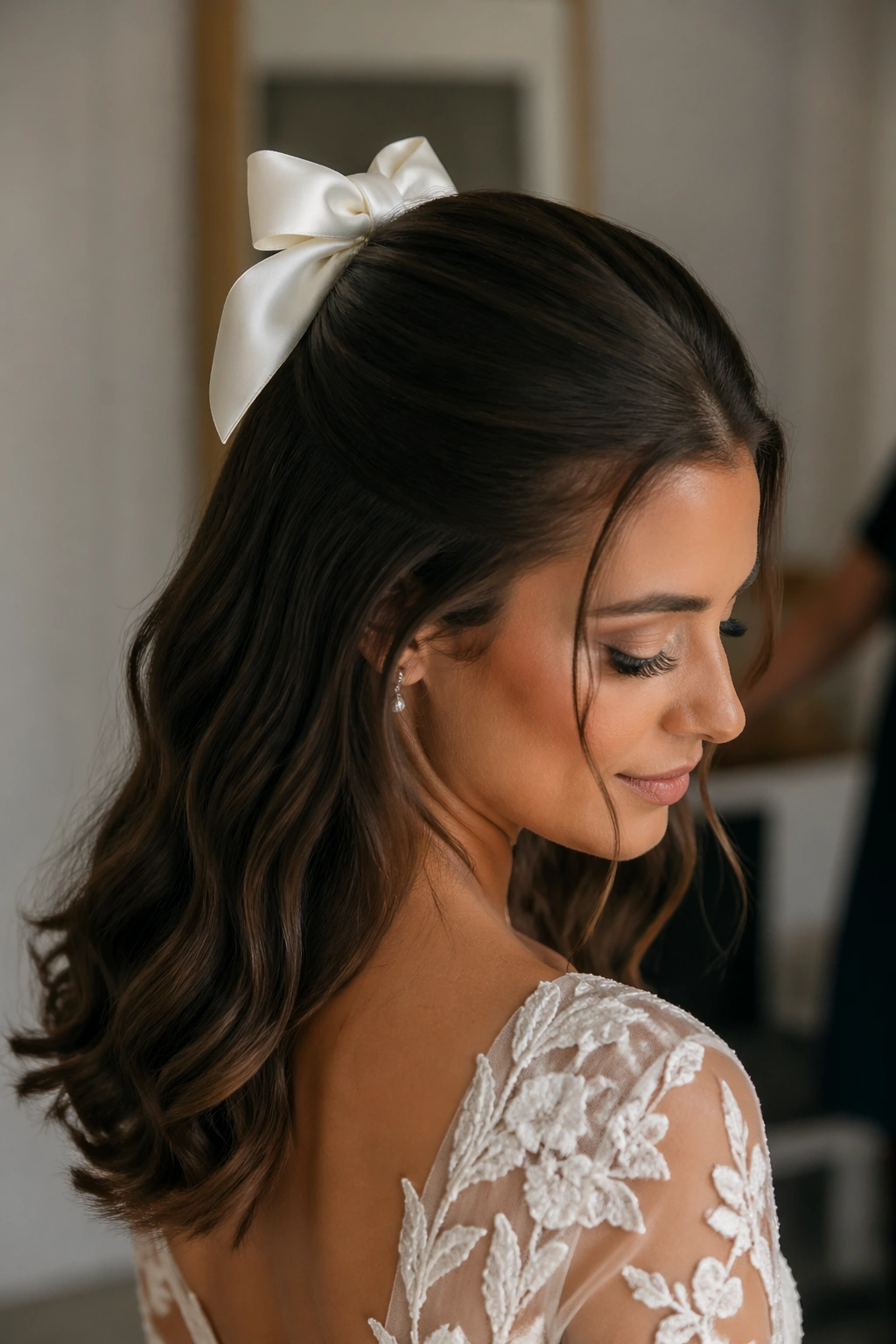
A satin bow can turn a plain half-up style into something sharp and charming without making it childish. The knot sits where the hair is gathered at the back of the crown, and the ribbon tails trail down into the loose lengths. It’s cleaner than a huge floral piece and softer than a crystal clip.
Use a ribbon that has enough body to hold shape — matte satin or grosgrain works better than floppy fabric that collapses after ten minutes. The bow should be about 2 to 3 inches wide on most hair lengths. Bigger can be lovely, but only if the dress is simple and the rest of the styling stays calm.
This is one of those styles that looks especially good on brides who like a little French-girl energy without going full vintage. It’s sweet. Not sugary. Keep the rest of the hair smooth or softly waved, and let the ribbon be the point.
6. Waterfall Braid Over Loose Curls
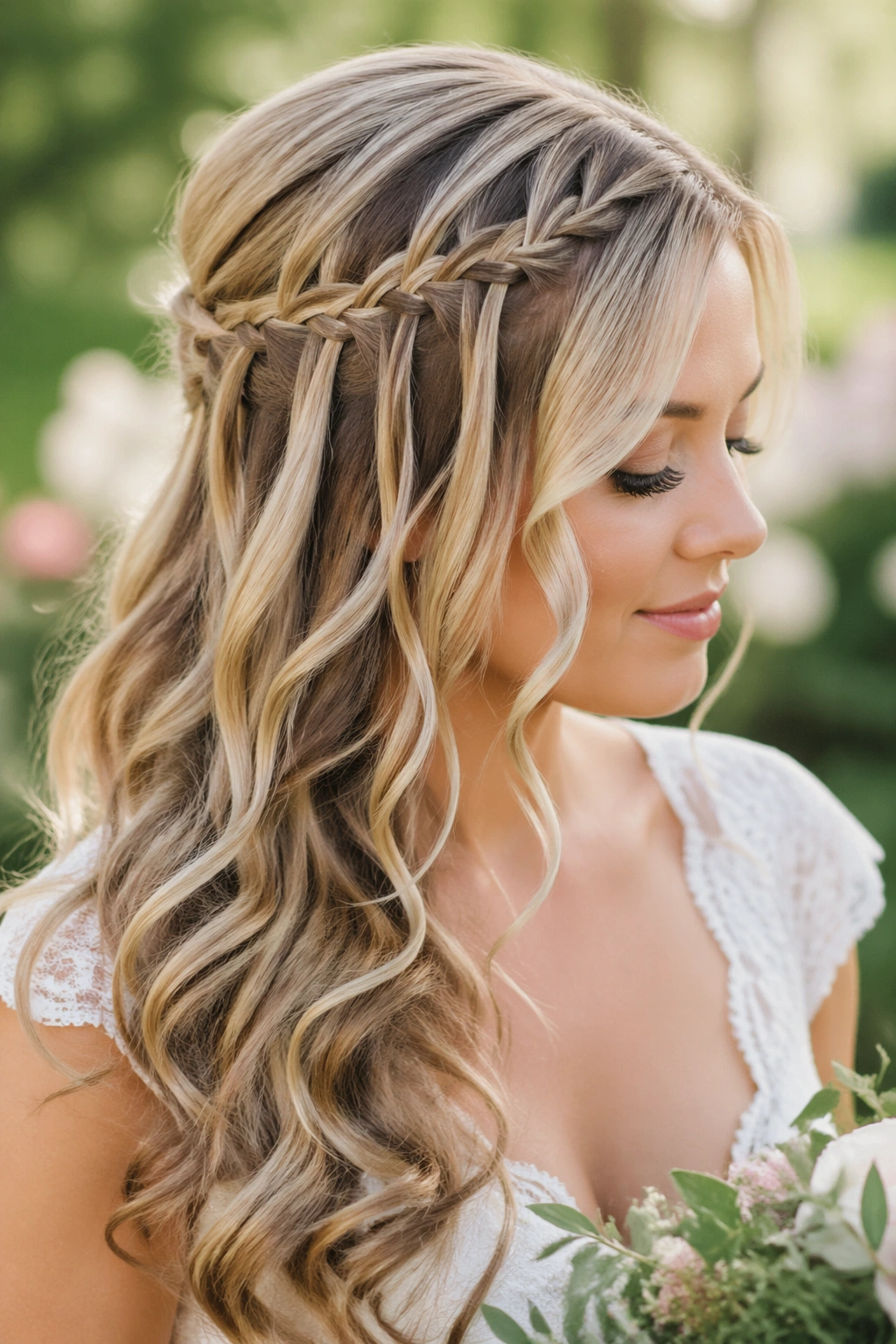
What makes a waterfall braid so charming is the sense of movement. Hair slips through the braid in a pattern that feels almost like a ribbon trail, then falls into the curls below. It’s pretty without being heavy, and it keeps the front from getting too flat if the bride has layered hair.
How to keep the braid from sagging
Waterfall braids can loosen faster than people expect, especially on silky hair. Start with a little texture spray, braid with steady tension, and pin the end under the back section instead of leaving it to float.
- Mist the hair with texturizing spray before braiding.
- Keep the dropped strands the same width so the braid looks even.
- Use small clear elastics only if the hair is very slippery.
- Curl the loose lengths after the braid is set.
The style is especially nice for outdoor weddings where you want the hair to move a little in the air but still stay controlled at the crown.
7. Pearl-Pinned Half-Up
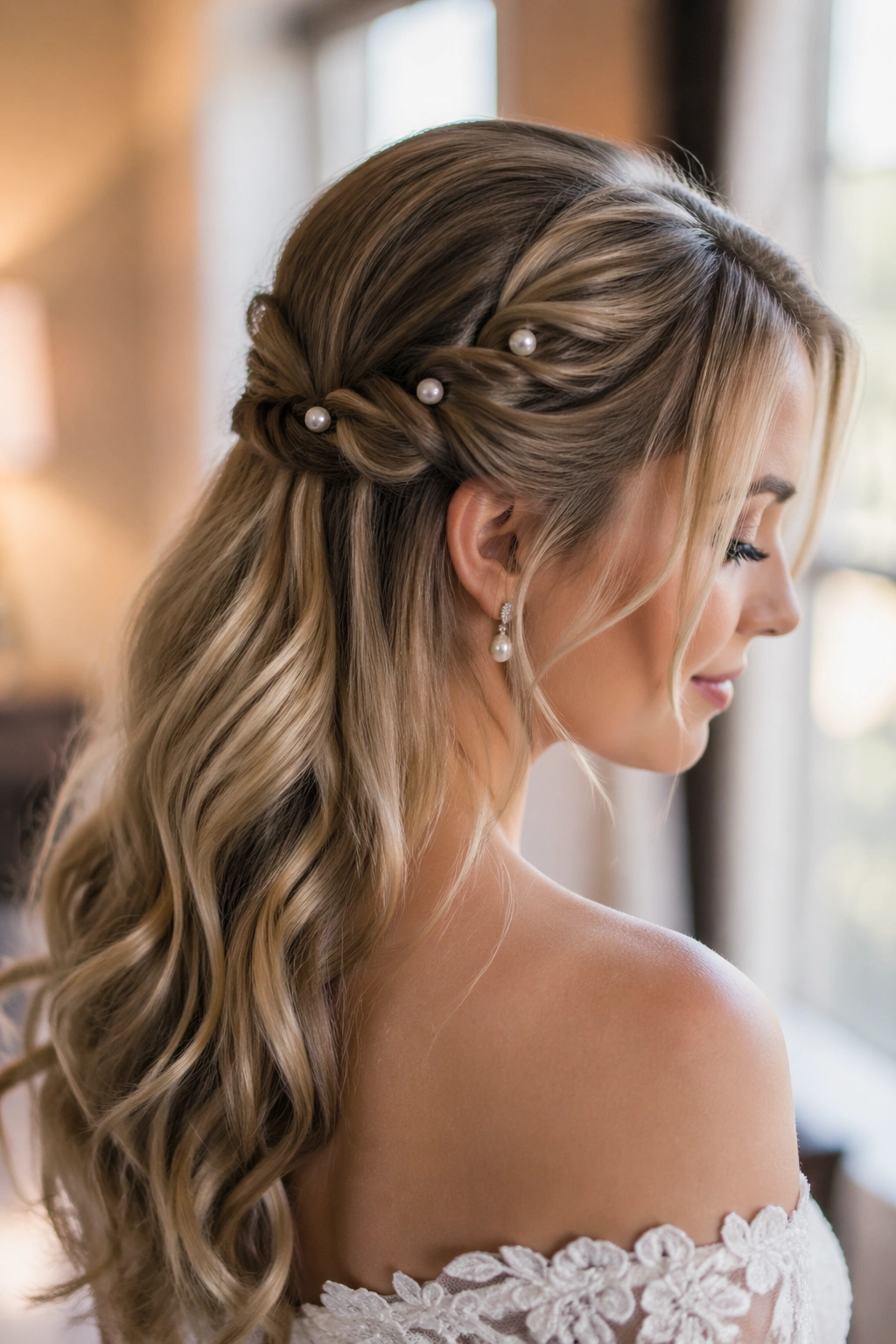
Pearls can be overdone fast, so the secret is placement. A few tiny pearl pins scattered through a twisted half-up shape look far better than a heavy cluster. The style feels refined, not precious, and it works with both smooth hair and soft waves.
I like this look when the dress has a subtle sheen — satin, silk, or organza — because the pearls echo that quiet shine. Place the pins along one side of the twist or in a loose arc across the back. If you pack them too tightly, the whole thing starts to look like costume jewelry. Space matters here.
The strongest version keeps the hair itself simple. Let the accessory do the talking. A clean part, a soft wave, and three to seven pearl pins are often enough. That’s the sweet spot. More can be too much.
8. Boho Fishtail Half-Up
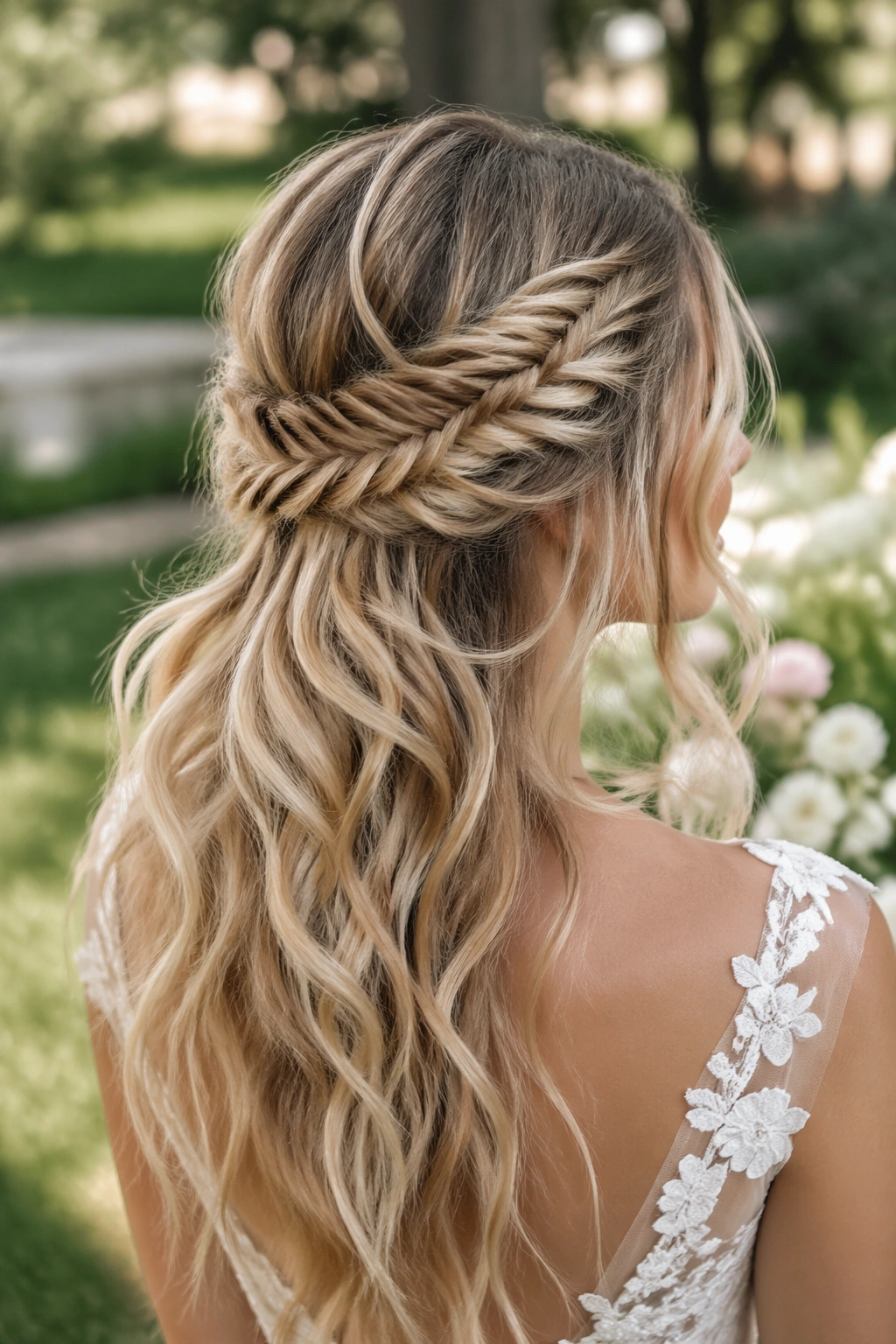
A fishtail half-up has a touch more texture than a regular braid, which is why it feels a little softer and more handmade. It’s a good match for brides who want a relaxed look that still reads as intentional. The braid itself sits across the back of the crown, while the rest of the hair falls loose and slightly undone.
This style likes hair that has been waved first. Straight lengths can make the fishtail look thin unless the braid is pancaked out after it’s finished. That’s the part most people skip. Pull the edges wide, then pin the braid low enough that it sits as a band rather than a ridge.
It works especially well with garden venues, chiffon dresses, and any gown with lace detail. There’s a softness to it that feels right in open air. A little imperfect is actually the point.
9. Voluminous Crown with Big Curls
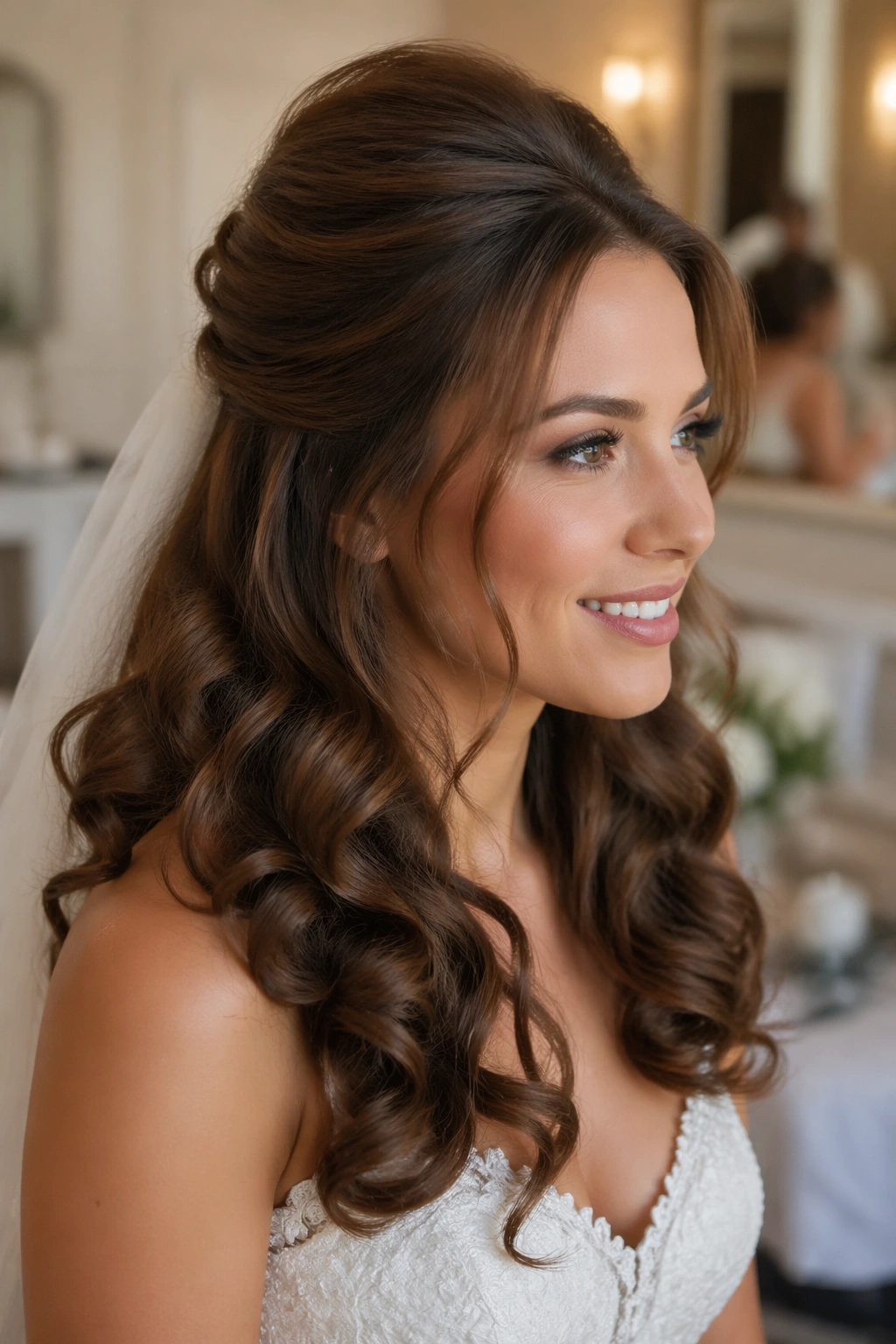
There’s a reason this style keeps showing up in bridal salons: height at the crown changes the whole face shape. The lift gives the profile a little drama, and the big curls below keep it from feeling severe. If the dress has a long train or a formal veil, this shape holds up nicely in photos and in person.
The crown should be backcombed gently, then smoothed over with a brush so it still looks clean. Don’t tease until it feels like packing straw. You want support, not crunch. The curls below should be broad and glossy, preferably with a 1.5-inch barrel or a large hot roller set.
A lot of brides choose this look when they want classic wedding hair, and I get why. It’s flattering from the front, strong from the side, and it has enough fullness to balance a fitted bodice. Just keep the front pieces soft around the face. Sharp tendrils can break the line.
10. Veil-Ready Hidden Anchor Half-Up
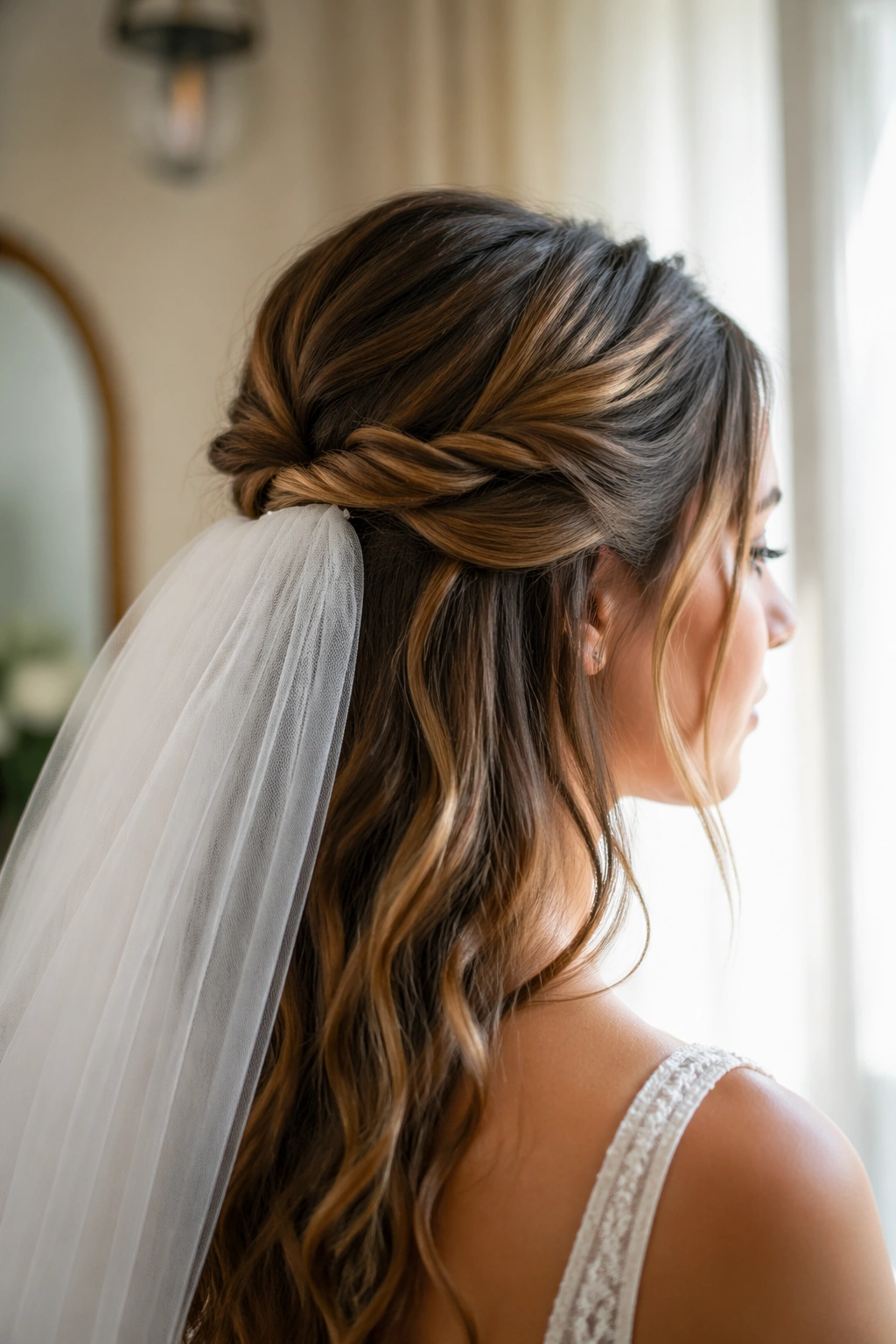
A veil-friendly half-up style should do one job above all else: hold the veil comb without ruining the shape of the hair. The cleanest way to do that is to build a hidden anchor under the top section, then slide the comb into that secure pocket. The veil disappears into the style instead of sitting on top of it like an afterthought.
This works especially well when the half-up section is twisted rather than braided, because the twist gives the comb something to bite into. The hair at the crown should be firm but not tight, and the veil should sit either just above or just below the gathered point, depending on the dress.
No loose charm pins right under the comb. That creates bulk. Keep the anchor plain, then dress the visible part with whatever detail you want. If the veil comes off for the reception, the hairstyle should still make sense on its own. That’s the real test.
11. Floral Half-Up with Fresh Blooms
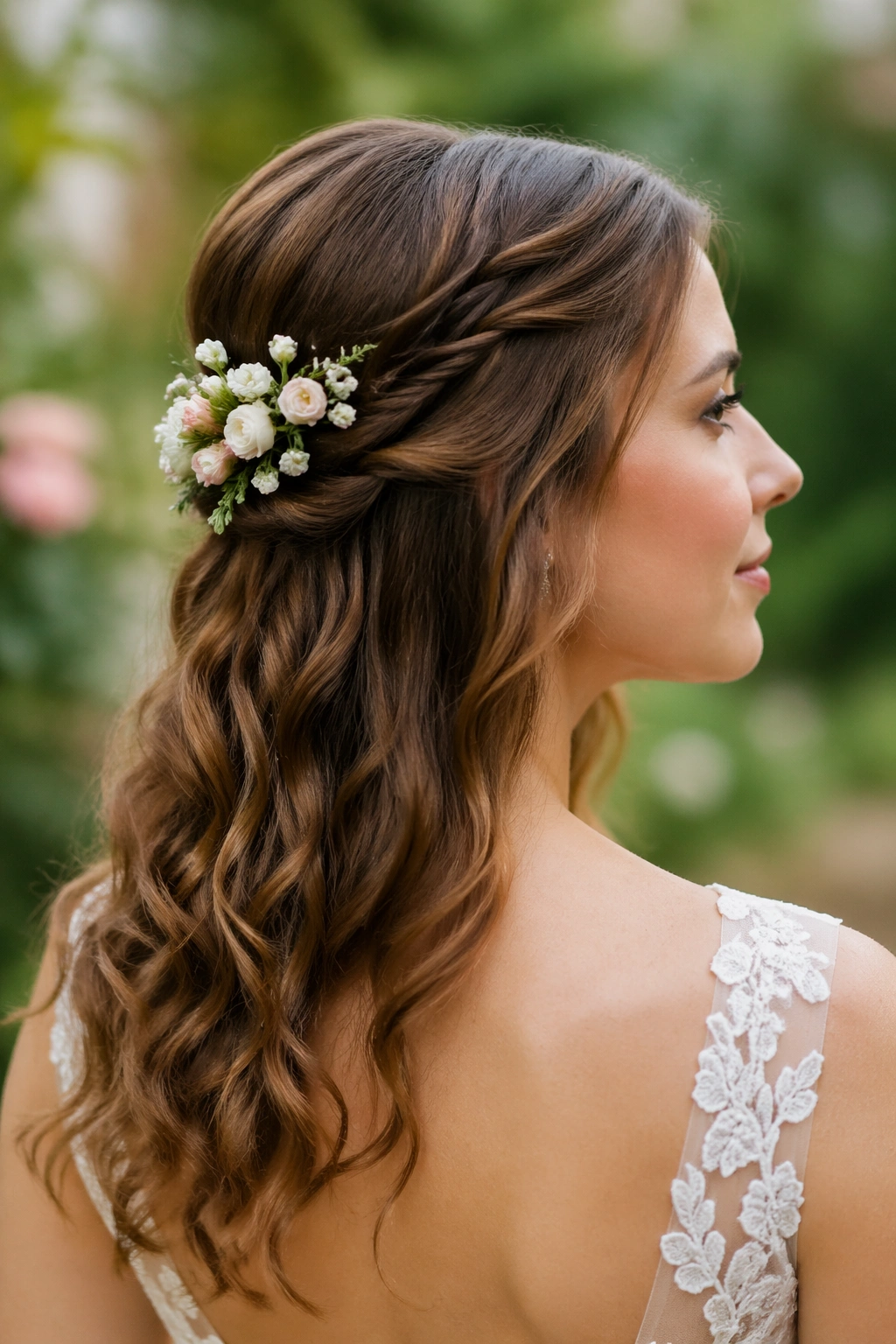
Fresh flowers can look gorgeous in a half-up style, but they need discipline. Small blooms tucked into the twist or braid can feel romantic and alive, while oversized flowers can swallow the whole hairstyle. I usually prefer buds, tiny roses, spray flowers, or a few carefully wired stems.
What to ask the florist
The flowers need to be prepped for hair, not just cut from a bouquet. Ask for wired stems, a little water tube if the bloom is delicate, and pieces that can sit flat against the head.
- Choose flowers with short, strong stems.
- Keep the floral cluster to one side or one back corner.
- Match the bloom size to the braid or twist.
- Avoid flowers that bruise easily in heat.
A floral half-up style feels especially strong for garden ceremonies and daytime weddings. It can get fussy if there are too many colors fighting each other, so I like to keep the palette restrained. Two shades is plenty.
12. Rope-Twist Half-Up for Fine Hair
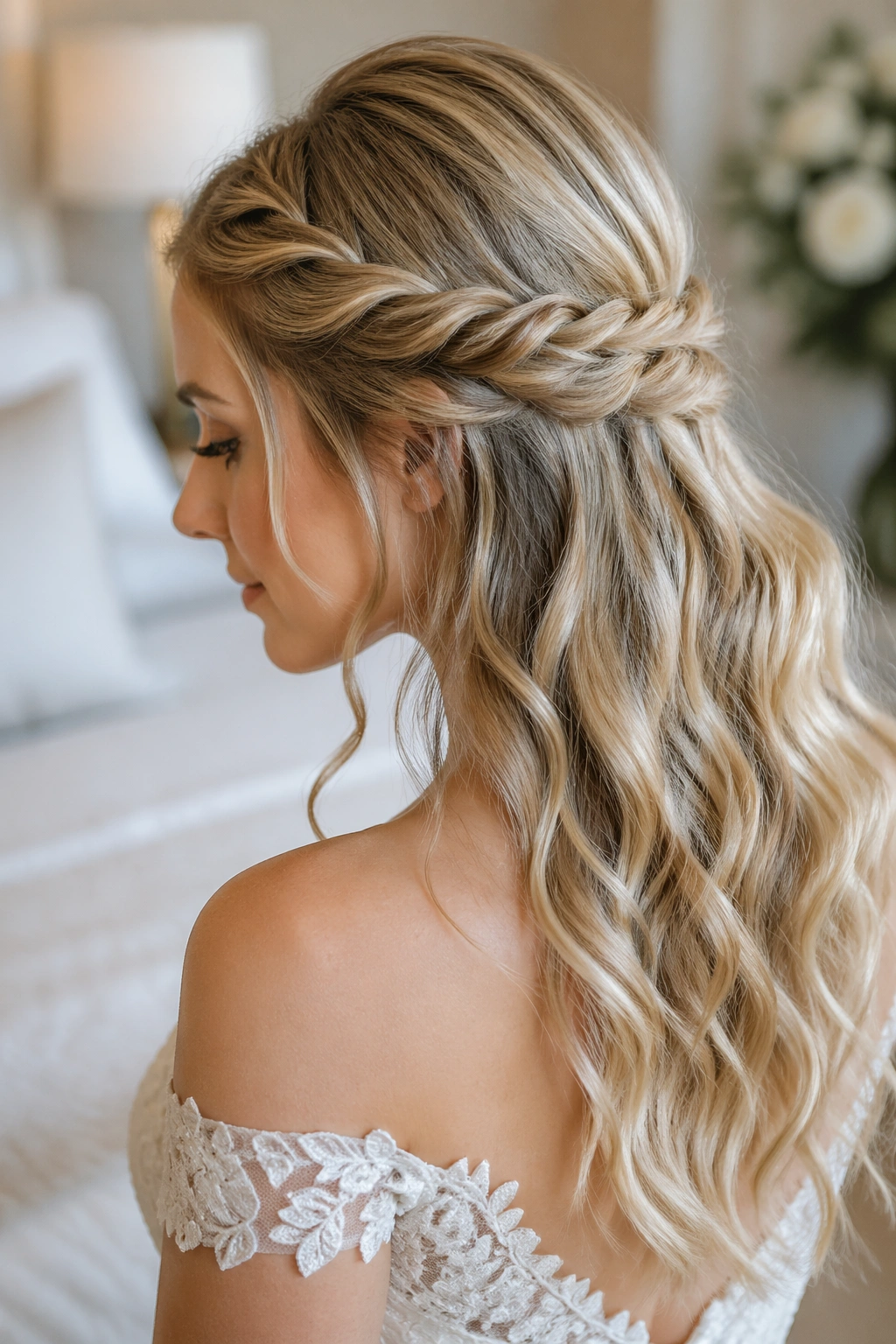
Does fine hair need a braid to look full? Not always. Rope twists often give better shape because the two strands wrap around each other and create a thicker-looking line than a standard three-strand braid. That makes them useful when the hair is soft and slippery.
Start with a little dry texture spray or mousse, then twist the front pieces tightly before pinning them at the back. The twist should sit low enough to create the feeling of volume, not a bump right at the part. That small difference matters more than any accessory.
I like this look for brides who want something neat but not severe. It can be polished with a side part or more relaxed with a center part. If the hair is especially fine, keep the rest of the style loose and avoid overloading it with heavy pins. The shape should feel airy, not weighed down.
13. Bubble Braid Half-Up
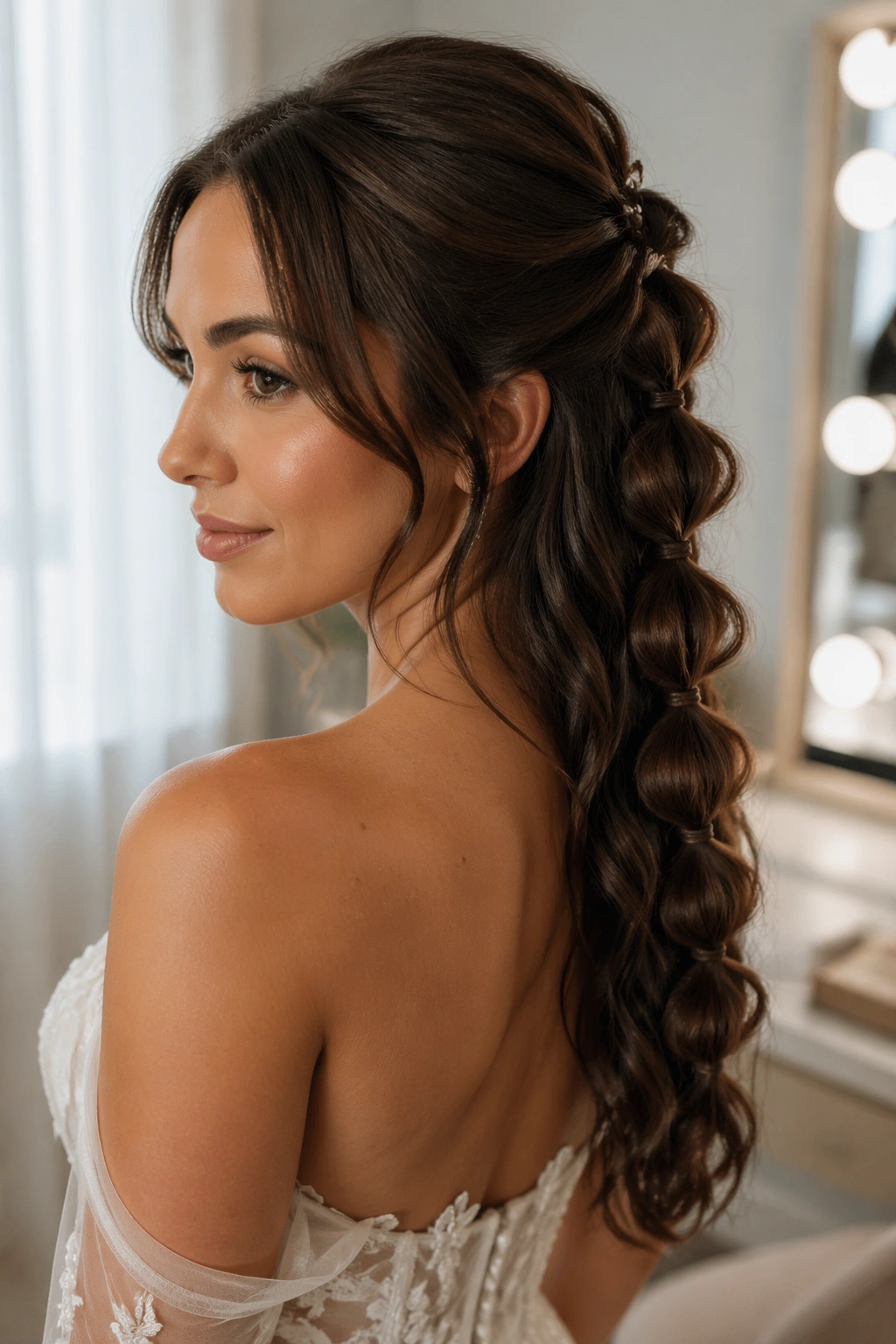
A bubble braid sounds playful, but in wedding hair it can look surprisingly refined if the sections are spaced well. The trick is to keep the bubbles round and even, not lumpy. That means small elastics every 1.5 to 2 inches, then a gentle tug on each section to widen it into shape.
Where the bubbles should sit
The bubbles work best when they start just under the crown and continue into the back section, rather than sitting too high on the head. High bubbles can feel youthful fast. Lower ones feel more controlled.
- Use clear elastics or wrap each elastic with a tiny hair strand.
- Keep the top section sleek before the first bubble.
- Tug each bubble evenly on both sides.
- Add one pin or comb at the base if the hair is slippery.
This style has a modern edge, which makes it a good choice for brides who do not want florals, pearls, or anything too soft. It still reads bridal. Just with a sharper line.
14. Sleek Half-Up Knot with Straight Ends
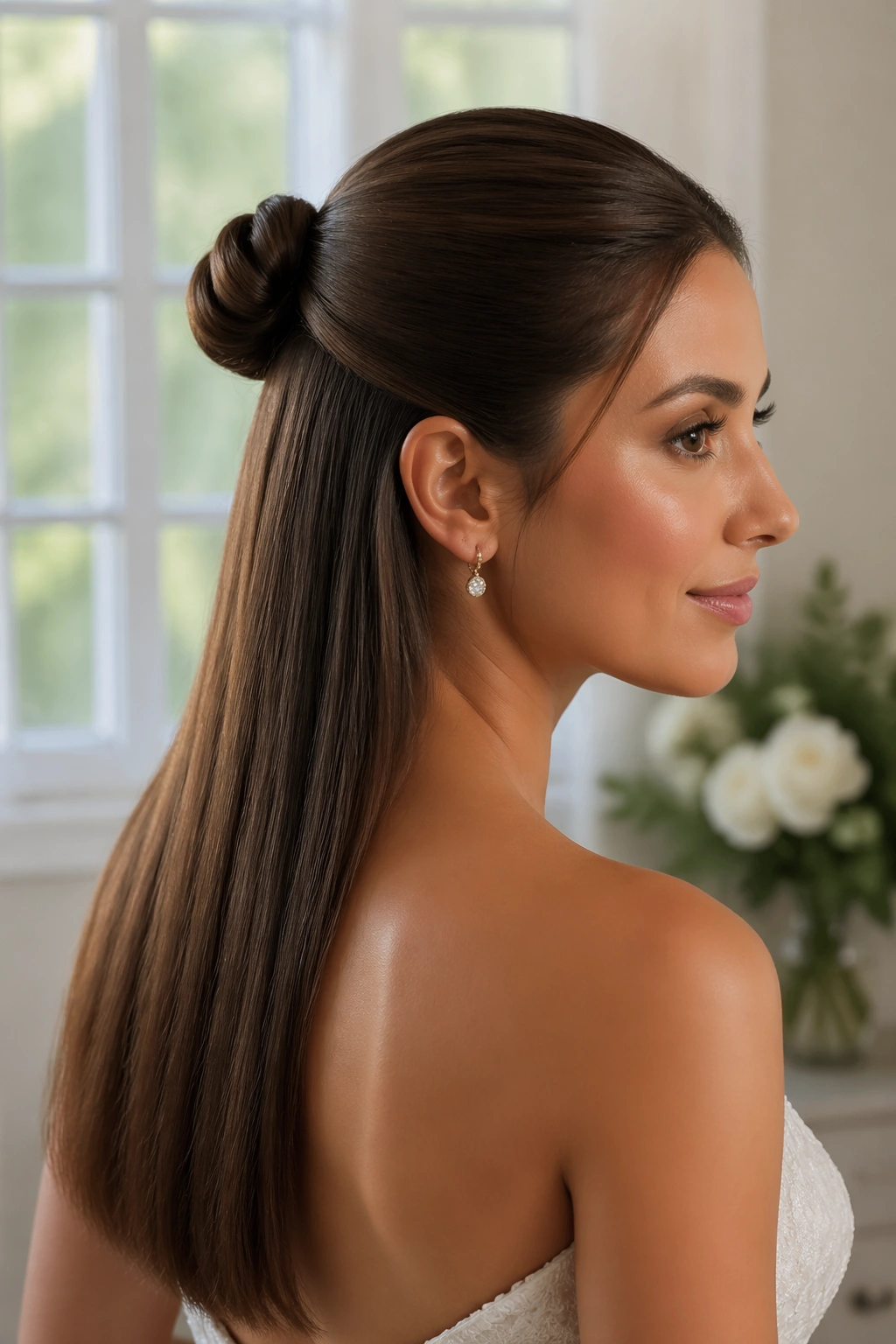
A little knot at the crown can do more than people expect. It gives the half-up style a crisp center point, and when the lengths are left straight, the whole look feels modern and clean. No fluff. No extra curl unless you want a tiny bend at the very ends.
This version works especially well with minimalist dresses and sharp tailoring. Think satin columns, square necks, and gowns with clean seams. The knot itself should stay low and compact, secured with hidden pins that sit flat. If it gets bulky, the whole point disappears.
A center part keeps it balanced, but a deep side part can make the knot feel softer. Either way, the finish should be smooth enough that the hair reflects light without looking oily. That line between glossy and greasy is narrow. Stay on the right side of it.
15. Side-Swept Half-Up for a One-Shoulder Dress
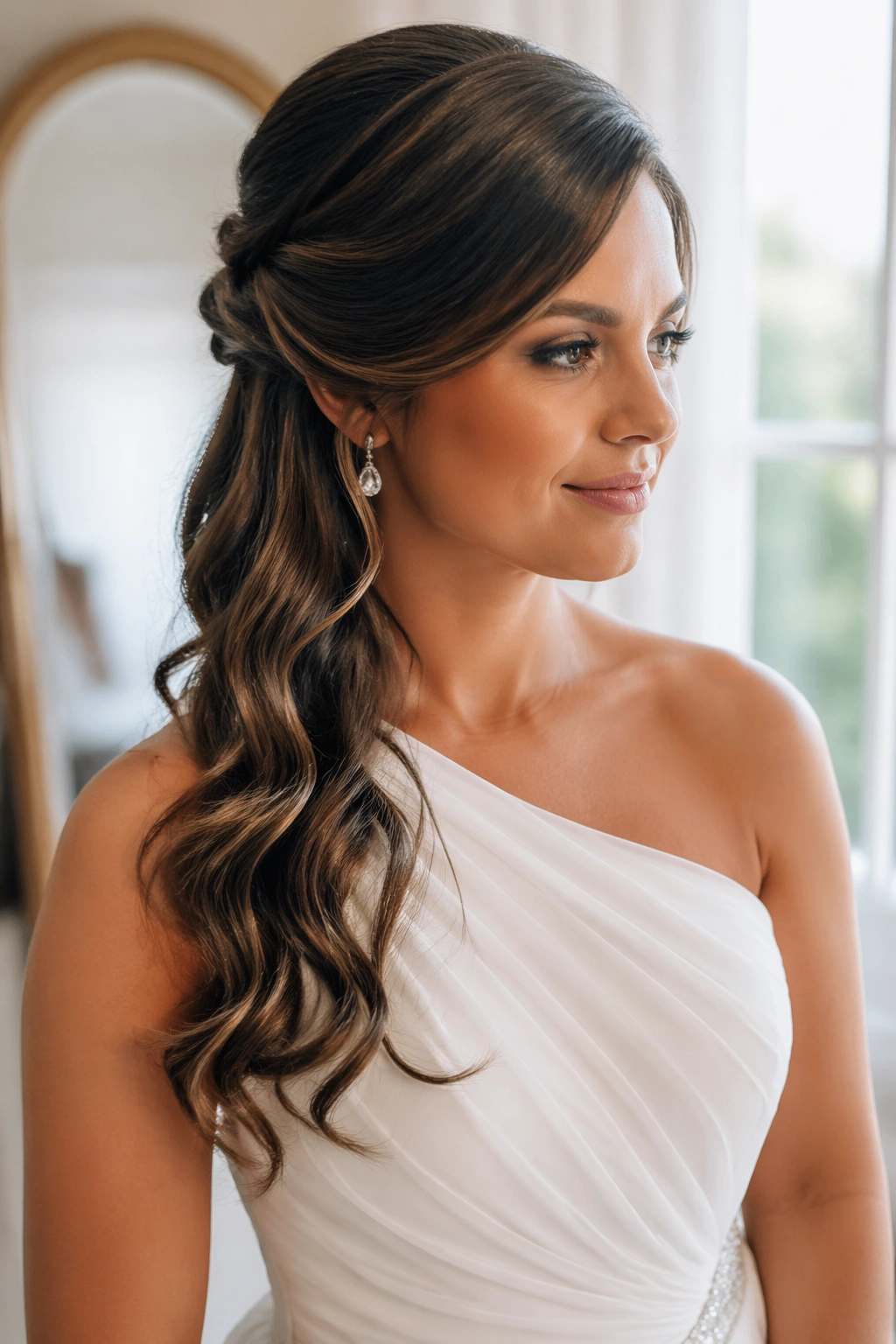
One-shoulder dresses ask for asymmetry. A centered half-up can fight the neckline, while a side-swept version lets the dress lead. Gather more hair from the heavier side, twist it back loosely, and let the front sweep across the forehead or temple before it joins the back.
The loose lengths should also fall slightly off center. That creates a line that echoes the dress instead of competing with it. If the gown has a big shoulder bow or beaded strap, keep the hair softer so the styling doesn’t start a tug-of-war.
This is one of those looks that feels easy only after it’s been placed correctly. The balance has to be right. Too much volume on the dress side and the head starts to look crowded. Too little and the style loses its shape. A few minutes of mirror checking pays off here.
16. Messy French Twist Half-Up
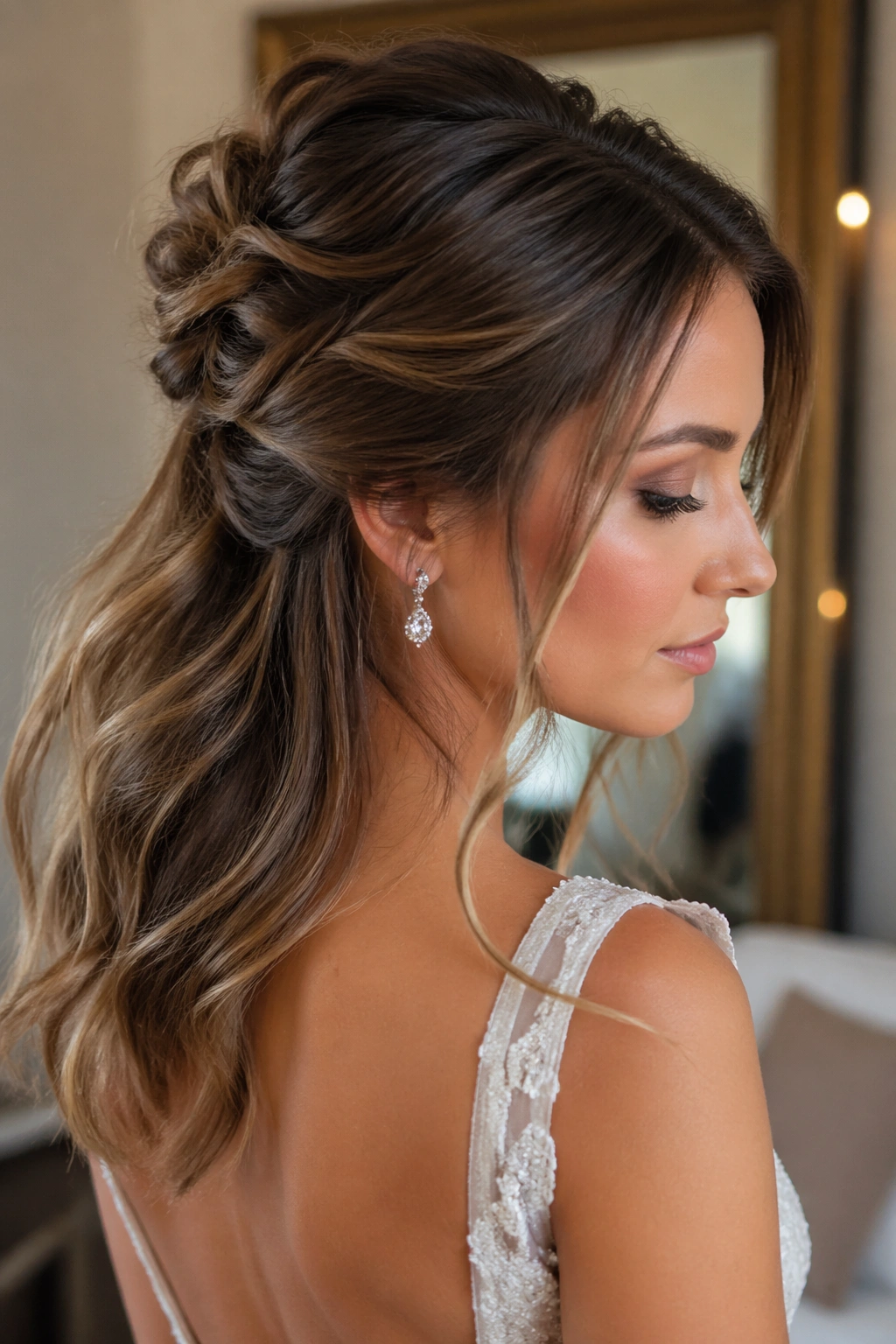
A French twist usually sounds more rigid than it is, and a half-up version can borrow just enough of that structure to feel elegant without going stiff. The gathered top section is folded in on itself, but the ends stay loose instead of disappearing completely. That little contradiction gives the style its charm.
I like this look for brides who want polish but not perfection. A few pieces can fall softly around the face. The twist at the back should be smooth at the center and a touch looser at the edges so it doesn’t feel like a formal office bun wearing a wedding dress.
It pairs well with satin, crepe, and dresses that already have strong lines. If you want jewelry, keep it simple. A drop earring or a single comb is enough. Anything bigger starts to fight the twist.
17. Ribbon-Wrapped Half-Up
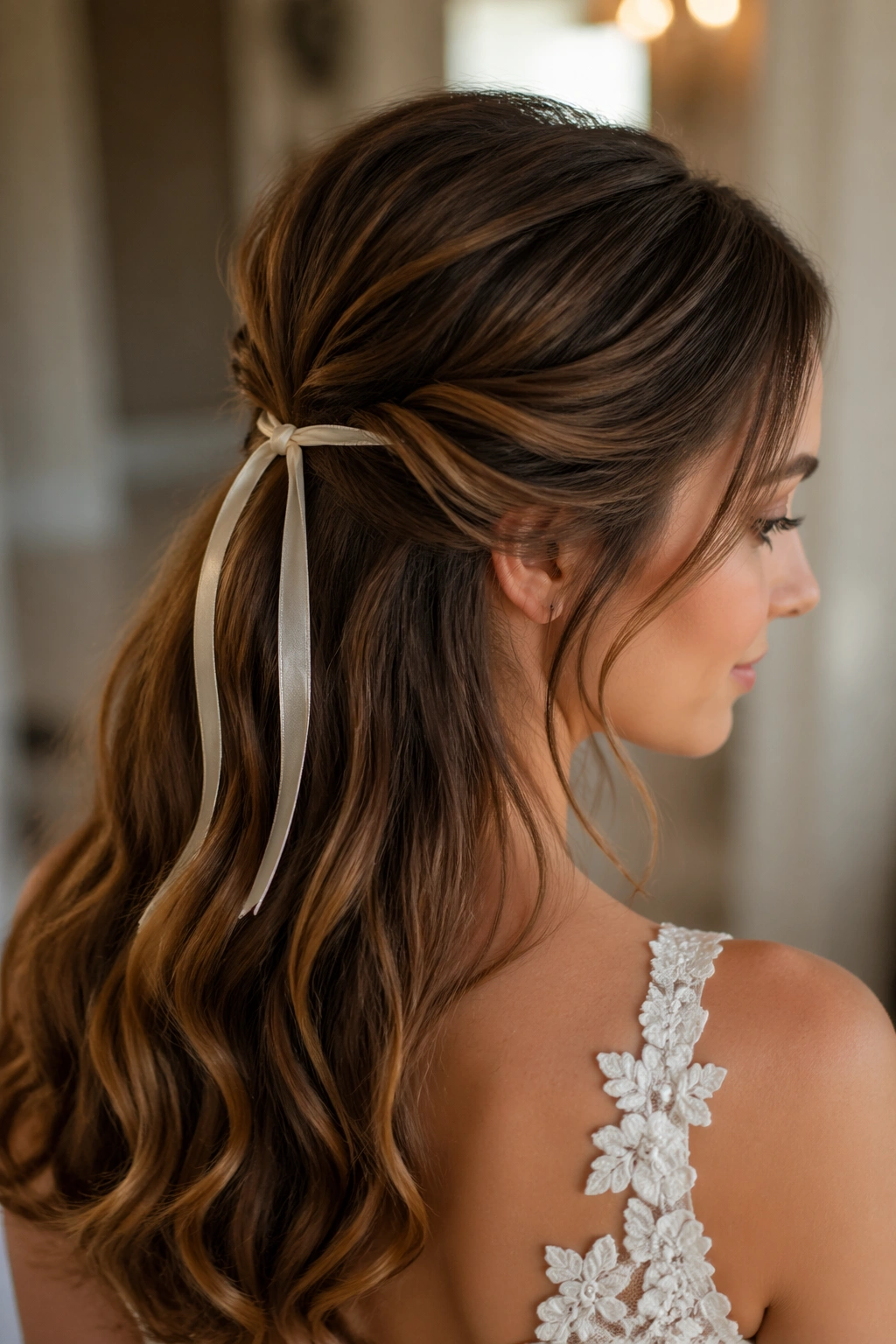
Ribbon can soften a half-up hairstyle without taking over the whole look. Wrap a narrow strip around the gathered section, tie it into a knot or bow, and let the tails trail into the lengths. It’s charming, but only when the ribbon color is chosen with care.
A white ribbon is not always the answer. Ivory often sits better with warm-toned dresses, and a blush or dove gray ribbon can look more interesting than plain bright white. The ribbon should also have enough body to hold shape. Thin satin can collapse once it warms up.
This style works best when the rest of the hair is simple. Loose curls or soft waves are enough. If you add too many accessories, the ribbon loses its place. Let it be one clean accent, not part of a crowded little pile.
18. Crystal Clip Half-Up
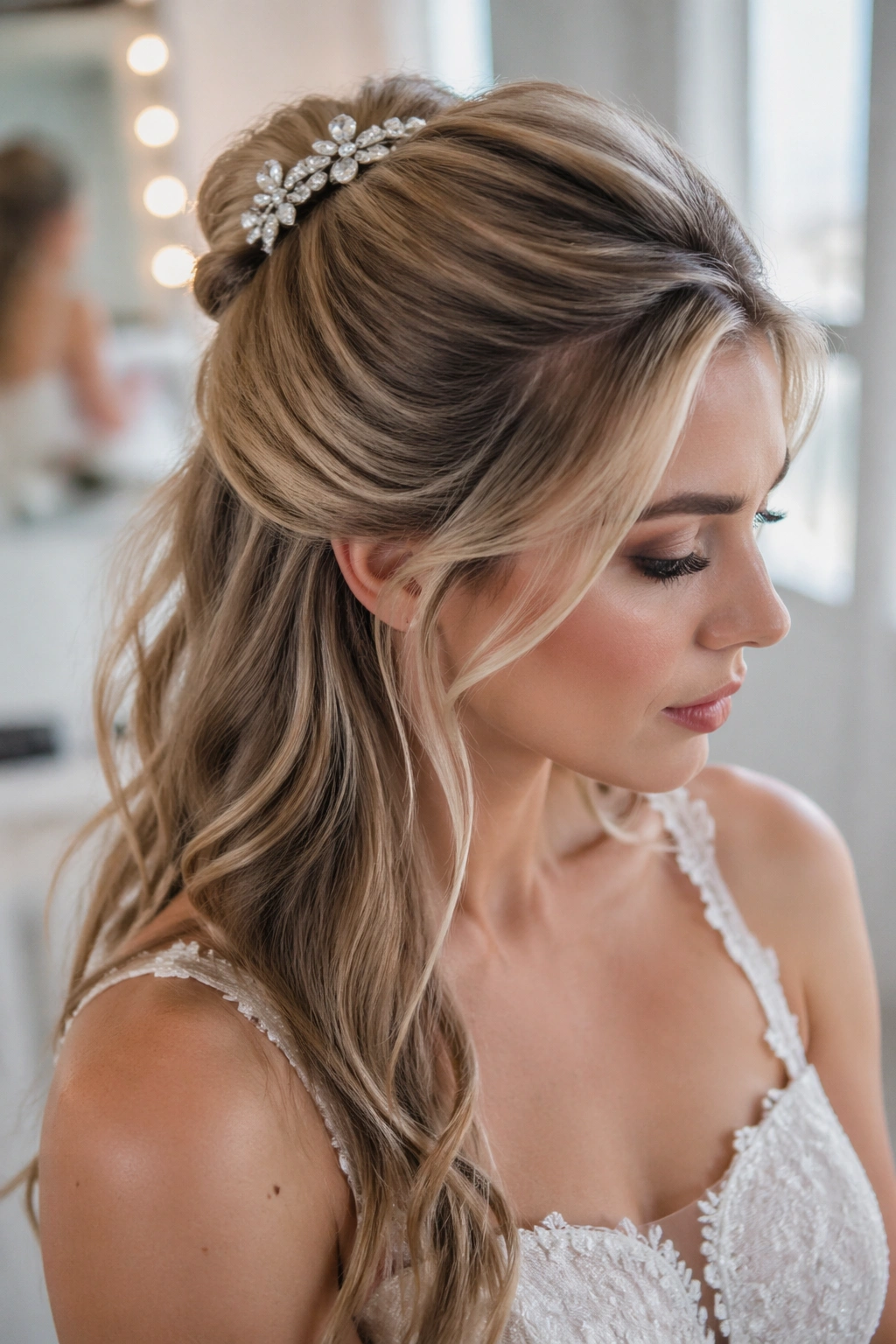
A crystal clip can save a style from looking too plain, but only if the hair around it is handled well. The crown section should be smoothed back first, then clipped with a piece that sits flat and spreads the weight evenly. A bulky clip can tilt and drag the style down.
What to look for in the clip
A good bridal clip has strong teeth, a secure clasp, and stones that are set close enough together to read as one piece from a distance. Shiny, yes. Fragile, no.
- Choose a clip that measures about 2 to 4 inches across.
- Keep the hair under it tight enough to hold but not compressed.
- Place it slightly off center if the dress is asymmetrical.
- Use pins underneath if the clip feels heavy.
I like this style for brides who want sparkle without a full headpiece. It’s cleaner than scattered stones and easier to remove later.
19. Half-Up for Natural Curls
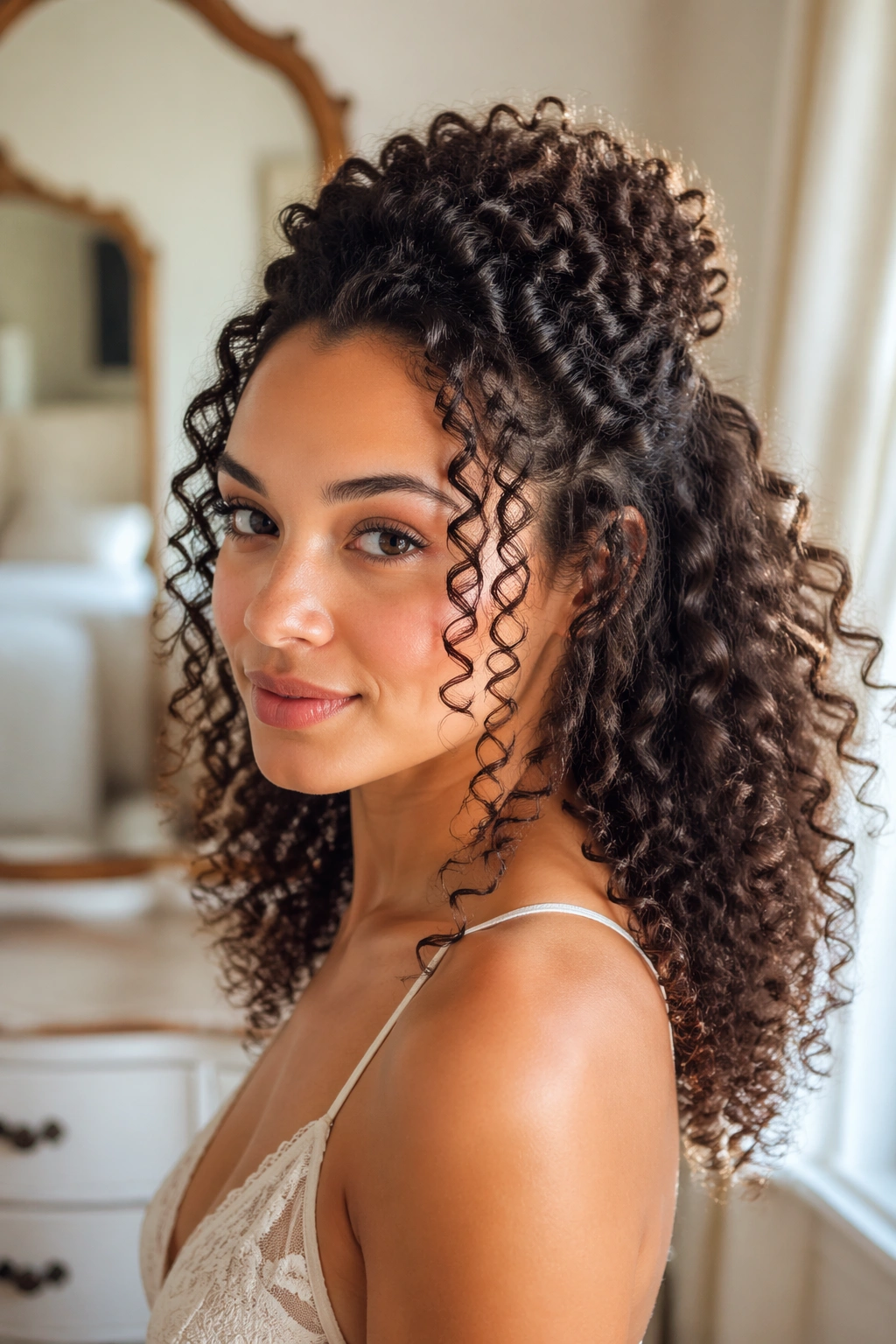
Natural curls make a half-up style look alive in a way straightened hair never quite does. The goal is not to flatten the curl pattern. It’s to lift the front, shape the crown, and let the texture stay itself. That honesty reads beautifully in wedding hair.
What to ask your stylist
Ask for curl definition first, then pinning second. A curl cream or gel should be worked through damp hair, and the curls should be dried with a diffuser before any crown shaping starts. Once the front is gathered, the stylist should pin where the hair naturally wants to sit, not force it into a shape that fights the texture.
- Keep the part where the curls fall naturally.
- Use short, curved pins that disappear into coils.
- Lift the crown only enough to create shape.
- Leave a few face-framing curls free if they fall there on their own.
That last part matters. Over-managing curls usually makes the style look less elegant, not more.
20. Half-Up with Locs and Braids
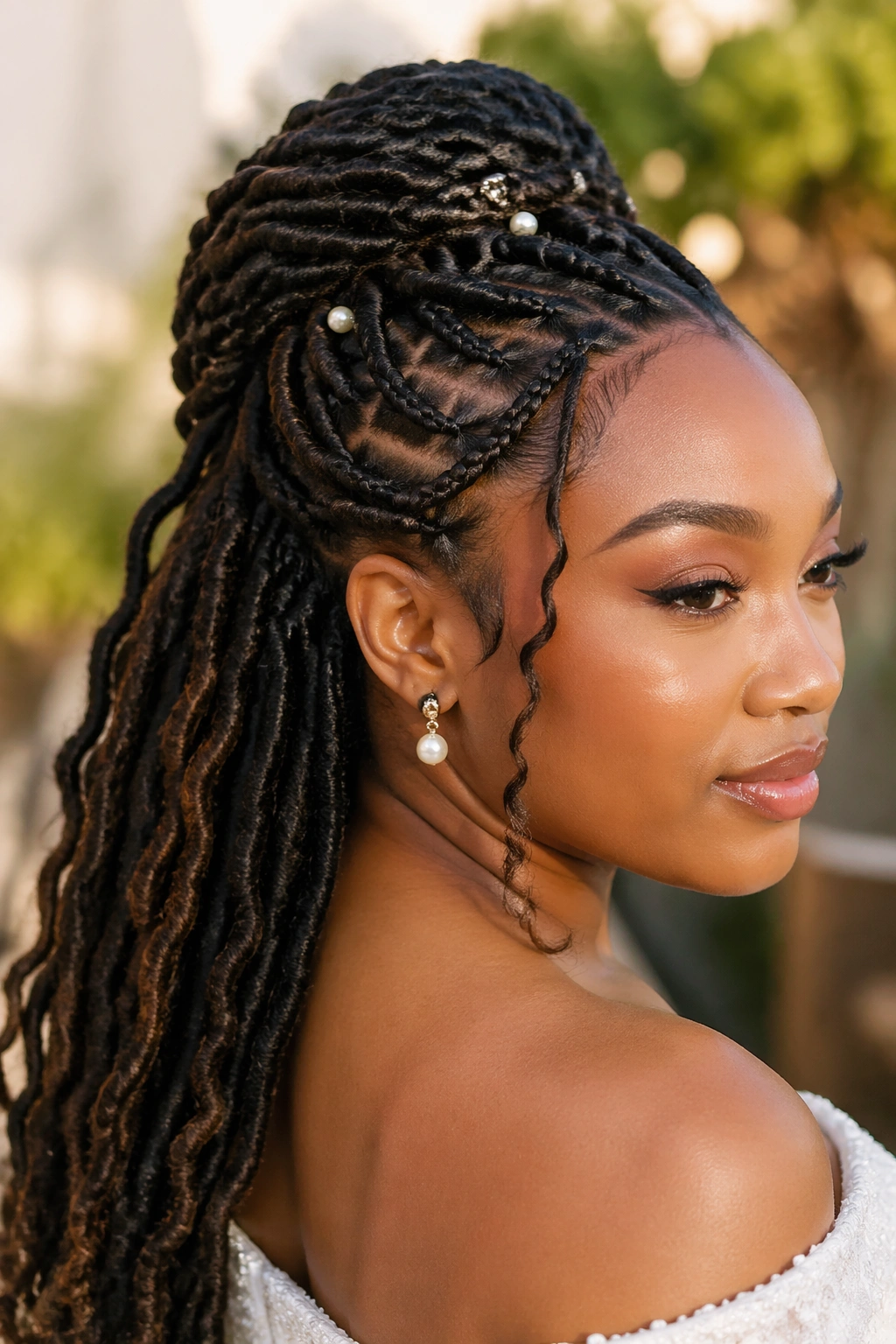
Locs, twists, and braids can make a half-up style look striking because the texture already carries weight and pattern. The best versions keep the gathered section clean and purposeful, then let the length speak for itself. A simple twist, a wrapped knot, or a low half-up bun can all work here.
The main issue is balance. Heavy locs can pull if the top section is too small or pinned too tightly at one point. Spread the weight across several anchors and avoid putting all the tension in one little spot. That’s when things start to ache halfway through the ceremony.
This style gives room for embellishment too. Gold cuffs, a delicate wire comb, or a few pearl pins can sit beautifully against braided texture. Just keep the accessory scale in check. The texture is already doing a lot.
21. Short Hair Half-Up with Texture
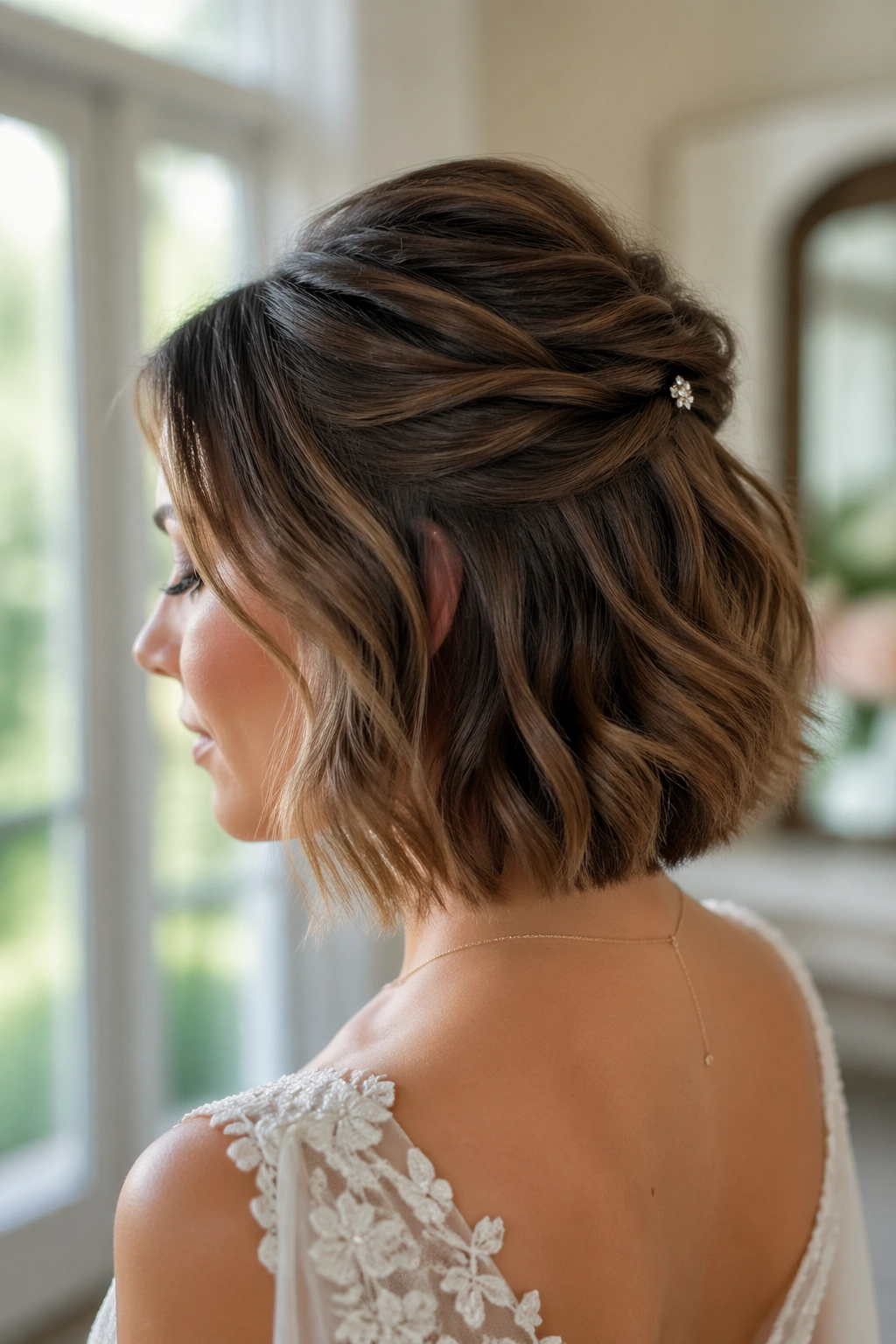
Can a bob or lob handle a wedding half-up look? Yes, if the sections are chosen carefully and the finish has enough grip. Shorter hair often looks best when the top layer is pulled back into a mini twist, a tiny braid, or a small knot that shows off the cut instead of hiding it.
Short hair tricks that actually help
Texture spray is your friend here. So is a little root lift at the crown. The style should look planned, not overworked.
- Curl the ends outward or under for a softer edge.
- Keep the half-up section small and neat.
- Add one decorative pin instead of a large comb.
- Tease the crown lightly if the hair lies flat.
I like this for brides who love sharp lines and do not want their hair to fight the shape of the dress. A short half-up can look chic in a way longer styles sometimes miss. It’s clean. Direct. A little modern.
22. Thick Hair Half-Up with Control
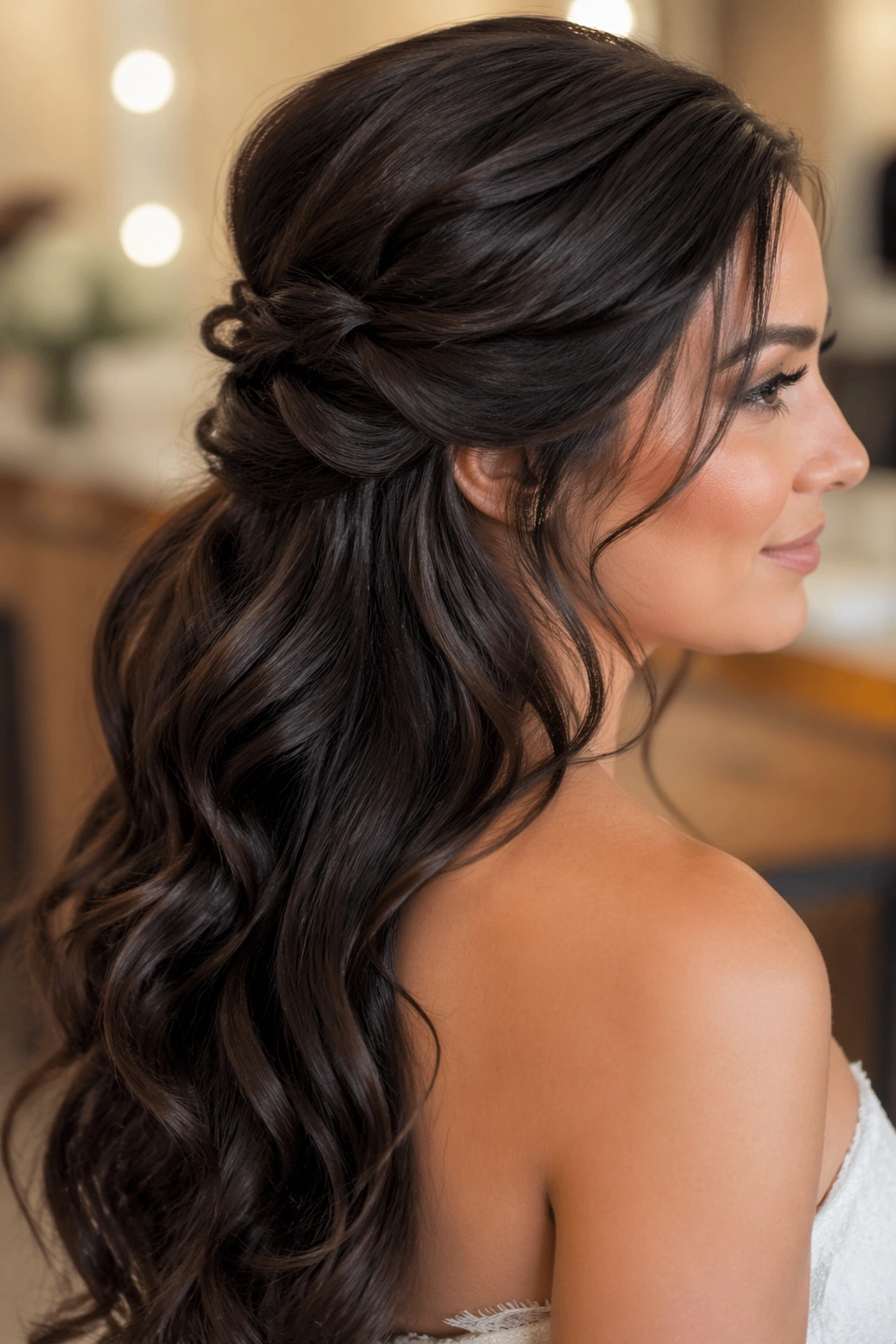
Thick hair can look glorious in a half-up style, but only when the sectioning is thoughtful. If too much hair gets gathered at once, the back becomes bulky fast and the style starts to sit too far from the head. That’s the mistake that ruins a lot of otherwise pretty work.
The fix is simple: take smaller side sections, secure each one separately, and let the remaining length fall in controlled waves or a brushed-out bend. A stylist with thick hair knows that pins must go in deeper, not just wider. The weight has to be spread out.
I also like a lower half-up placement for thick hair. It keeps the shape elegant and stops the crown from puffing up. If accessories are used, pick sturdy ones with real grip. Thin clips tend to disappear or slip. No one wants to fight with that on a wedding day.
23. Fine Hair Half-Up with Crown Lift
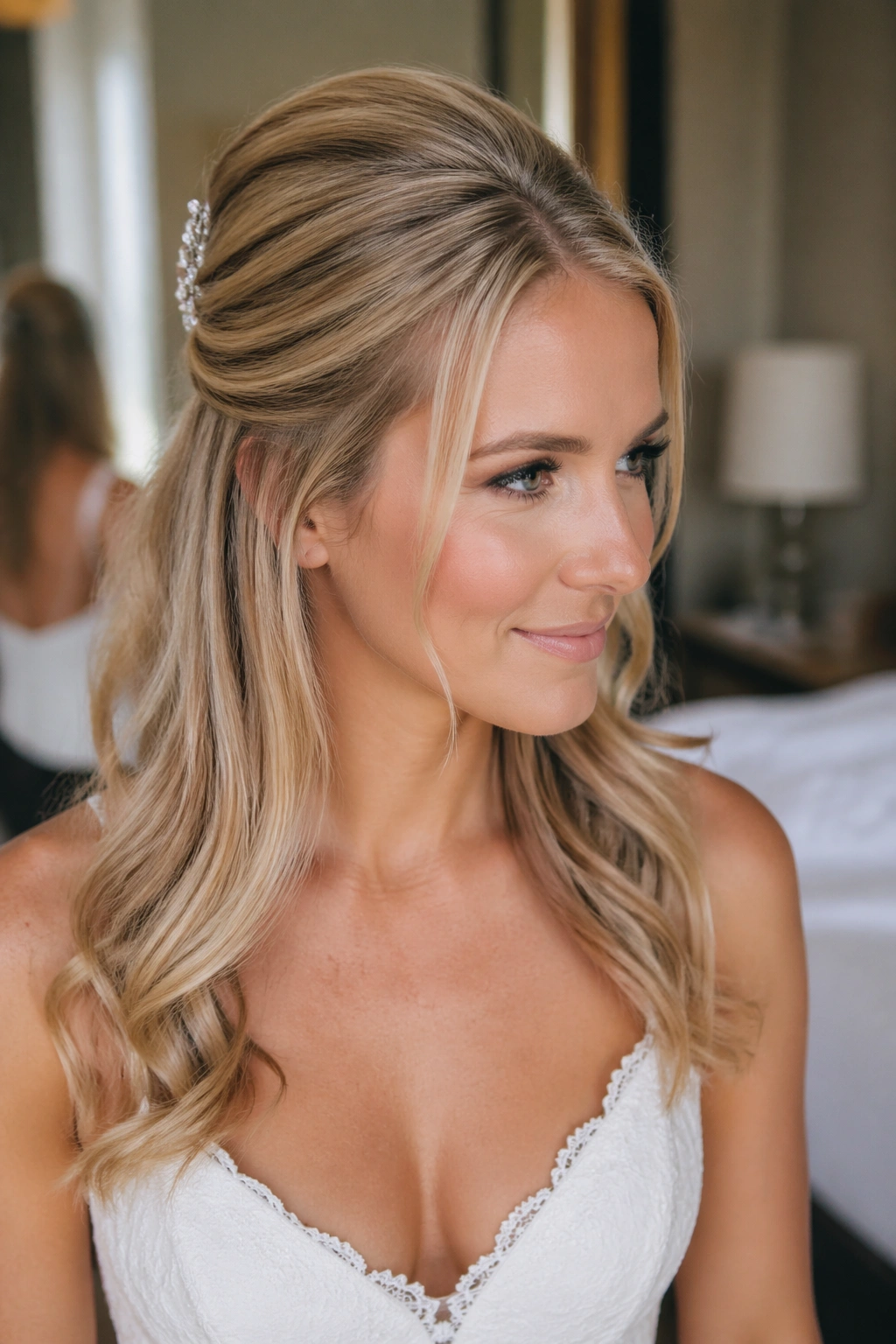
Fine hair needs structure first, decoration second. A bit of root powder, a small amount of backcombing, and careful pinning can change the whole look. Without that support, the style falls flat before the vows are finished.
The most flattering version keeps the crown lift modest but visible. You do not need a giant bump. You need enough height that the hair doesn’t cling to the scalp. After the top section is secured, the remaining hair can be curled into soft bends or left smooth if the dress is doing the heavy lifting.
A lighter accessory is usually better here. One comb, a few pins, or a small barrette will hold the eye without dragging the style down. Heavy pieces can pull fine hair out of shape in under an hour, which is annoying and entirely avoidable.
24. Formal Half-Up for Black-Tie Wedding
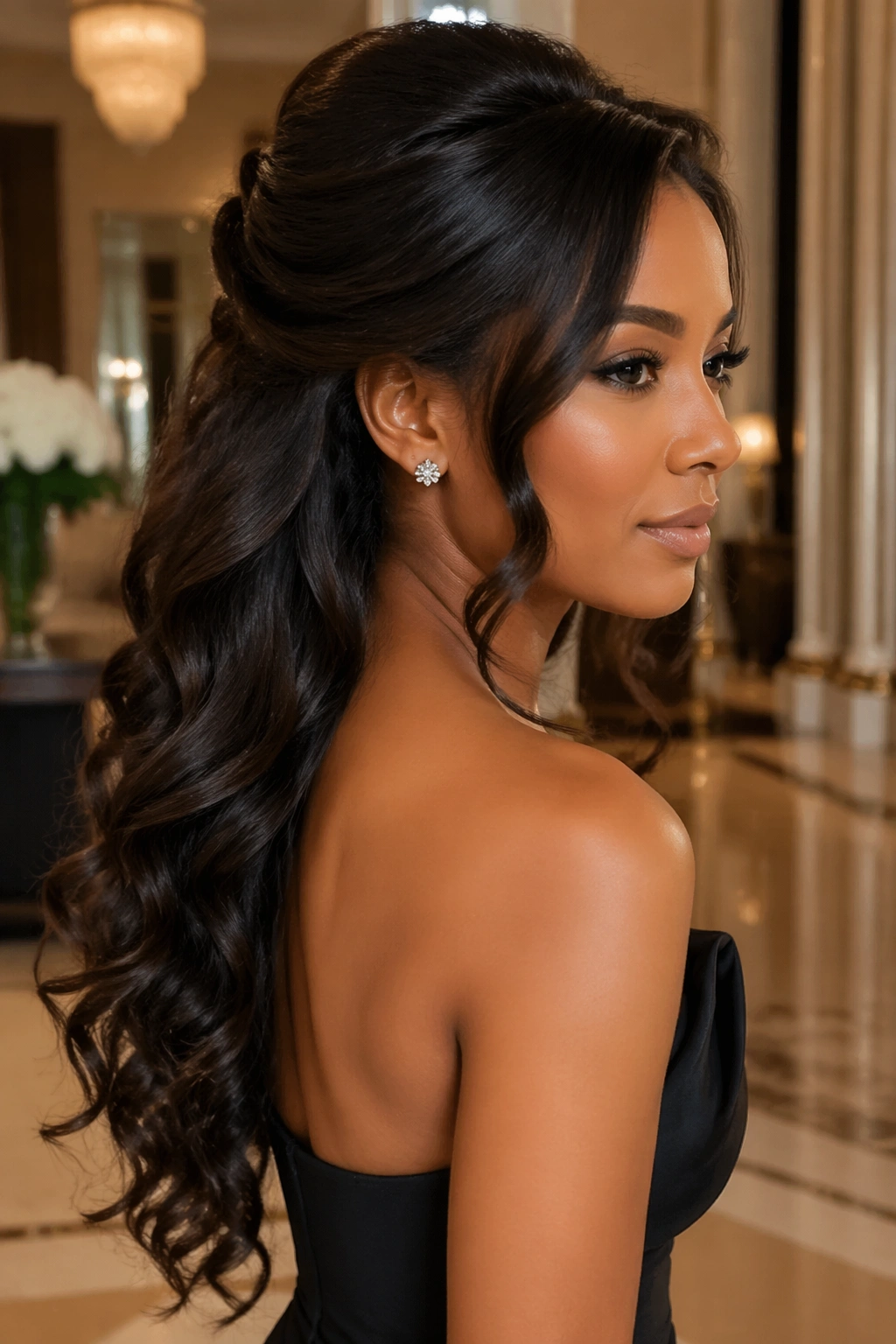
A black-tie half-up style should feel sculpted. Not stiff. Sculpted. That means crisp parting, polished sides, and a crown section that is placed with intent rather than gathered casually. Everything should look deliberate from the front and tidy from the back.
This is where glossy waves or a smooth knot shine. The lengths can be brushed into a consistent bend, and the top section should sit low enough that it never steals attention from the gown. A dramatic necklace, if worn, needs that clean hairline to breathe.
I’d skip anything too bohemian here. Loose braids and messy texture can be lovely in the right room, but formal events ask for more restraint. A black-tie style works because it knows when to stop. That restraint is the whole point.
25. Romantic Half-Up for Outdoor Ceremonies
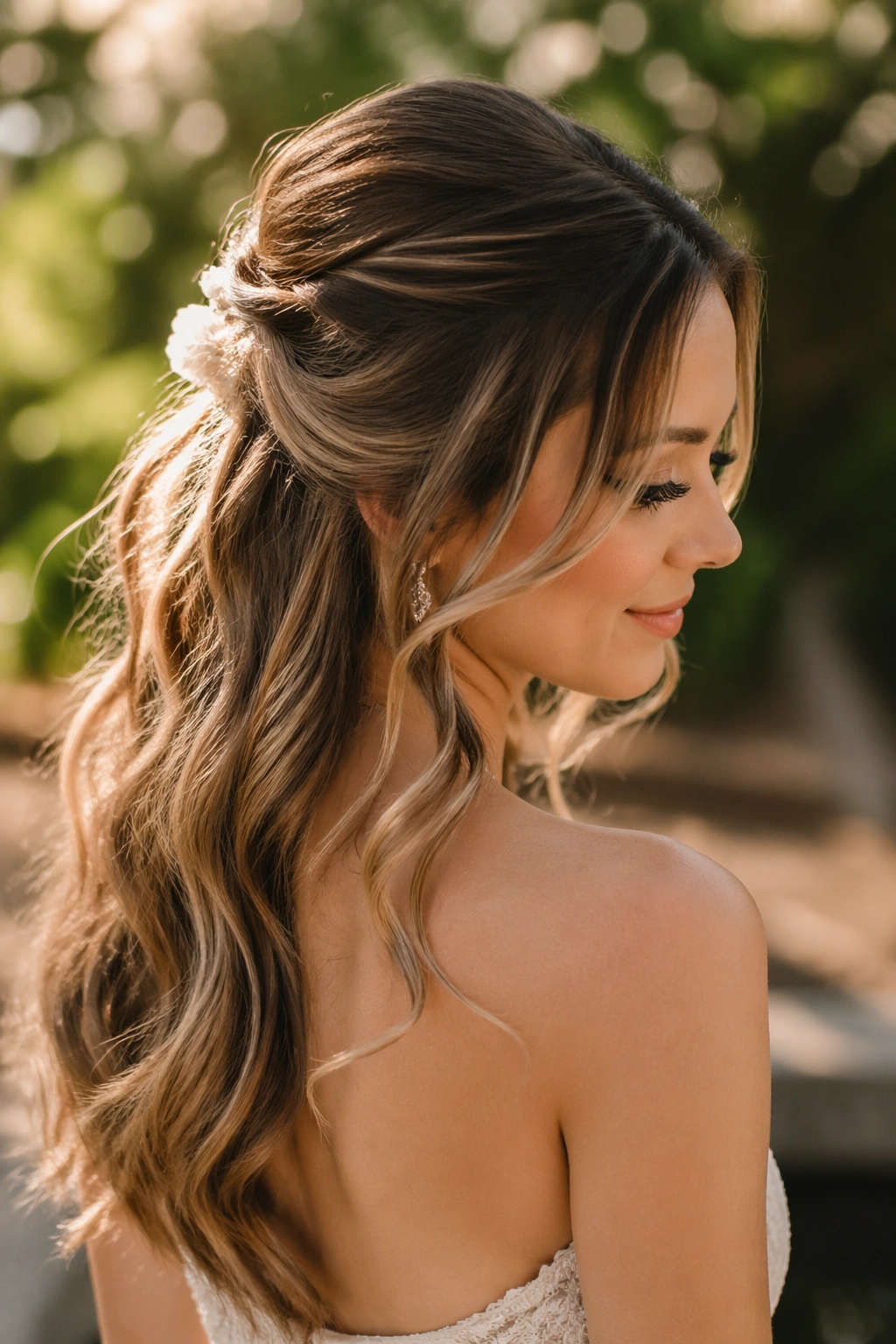
Outdoor weddings ask a lot from hair. Humidity, wind, sunlight, and the odd rogue breeze can undo a style that looked perfect in the mirror. A romantic half-up survives by staying soft at the edges but anchored at the crown, so the shape holds even when the weather gets bossy.
This is where softly waved lengths and a low twist earn their keep. Keep a few face-framing pieces if the venue calls for them, but do not leave too much loose hair near the temples or it starts whipping around. A light spray with a flexible hold mist can keep movement without turning the hair stiff.
The style works especially well with flowing dresses, sleeves, and outdoor aisles lined with greenery. It feels relaxed, but not careless. That difference is the whole game.
26. Minimalist Half-Up with One Statement Pin
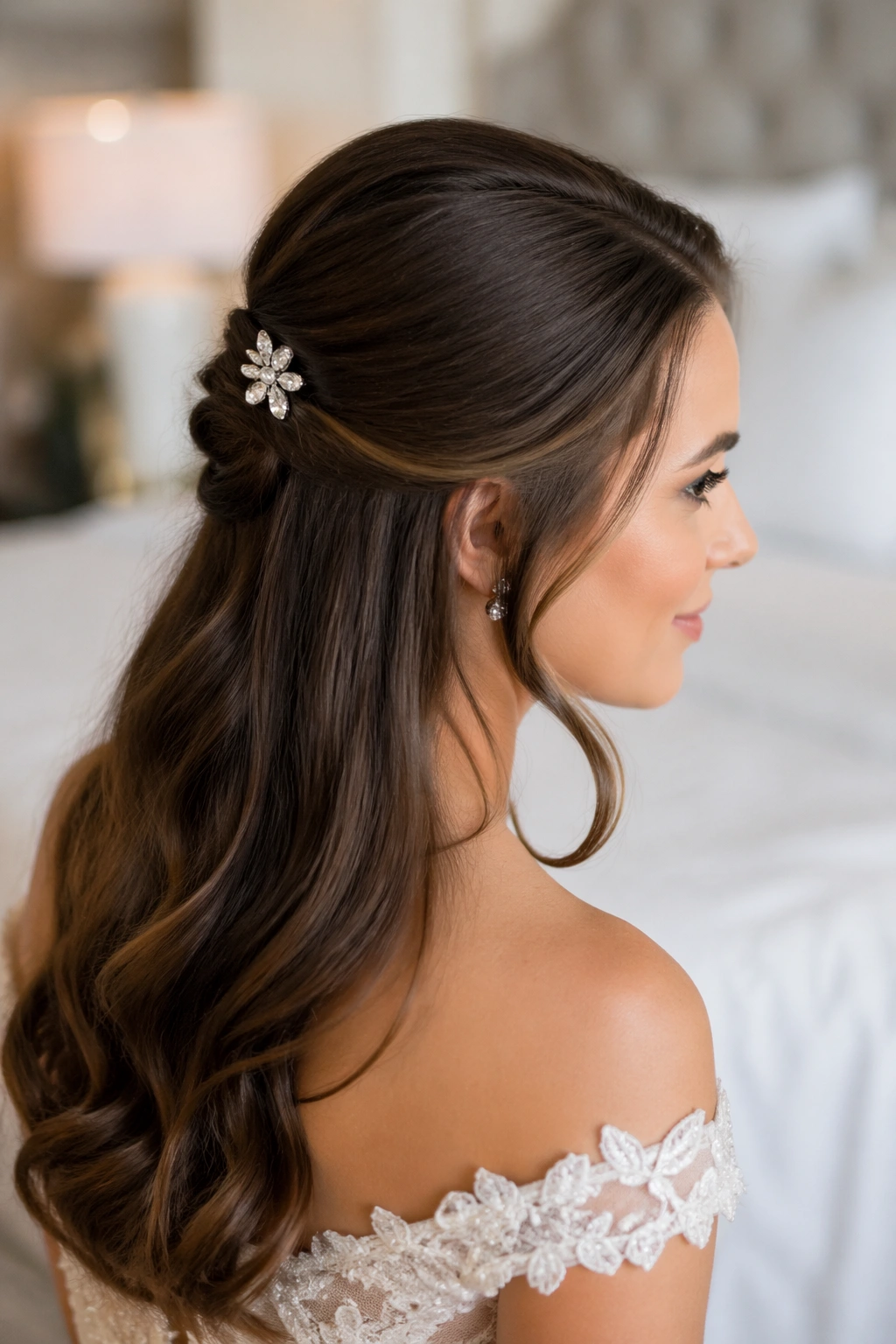
Do you need pearls, flowers, and crystals all at once? No. One strong pin can carry an entire half-up style if the hair is clean enough to frame it. That single piece becomes the center of the look, which is exactly what minimalist brides usually want.
The hair around the pin should be smooth and simple. A low twist or a neat gathered section keeps the eye where it belongs. If the accessory is geometric, the parting can be center-split and precise. If the pin is curved or organic, softer waves may suit it better.
This style is a quiet answer to overdone wedding hair. It doesn’t ask for a lot of product, and it doesn’t need layers of decoration. It just needs a well-placed pin and decent structure underneath. The restraint is the elegance.
27. Half-Up with a Tiara or Headband
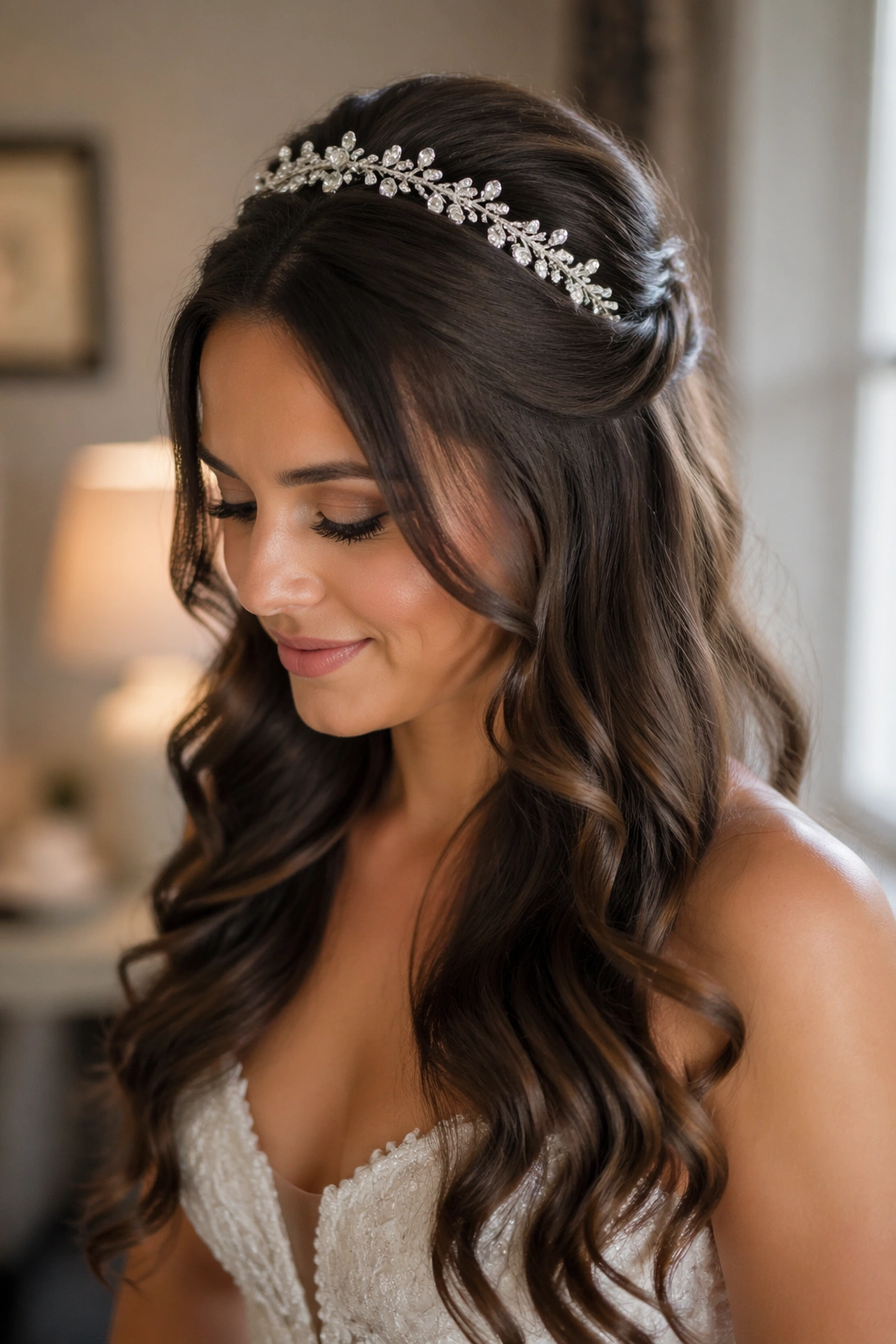
A tiara or bridal headband can look regal, but only if the half-up shape leaves enough room for it. The top section should sit low enough that the accessory has a stable base, and the rest of the hair should fall in a way that balances the sparkle at the crown. Too much volume underneath and the tiara starts floating.
This style works best when the headband matches the line of the hairstyle. A slim band wants sleek hair. A wider, more ornate piece can handle softer waves or a more structured half-up twist. The accessory should feel like part of the hairstyle, not something added at the last minute because the box was still on the vanity.
If the veil comes into play, test the placement early. A tiara and a veil comb can clash if they’re both fighting for the same spot. That’s the kind of problem that seems small until you’re in the chair with ten minutes left.
28. Reception-Ready Half-Up That Stays Put
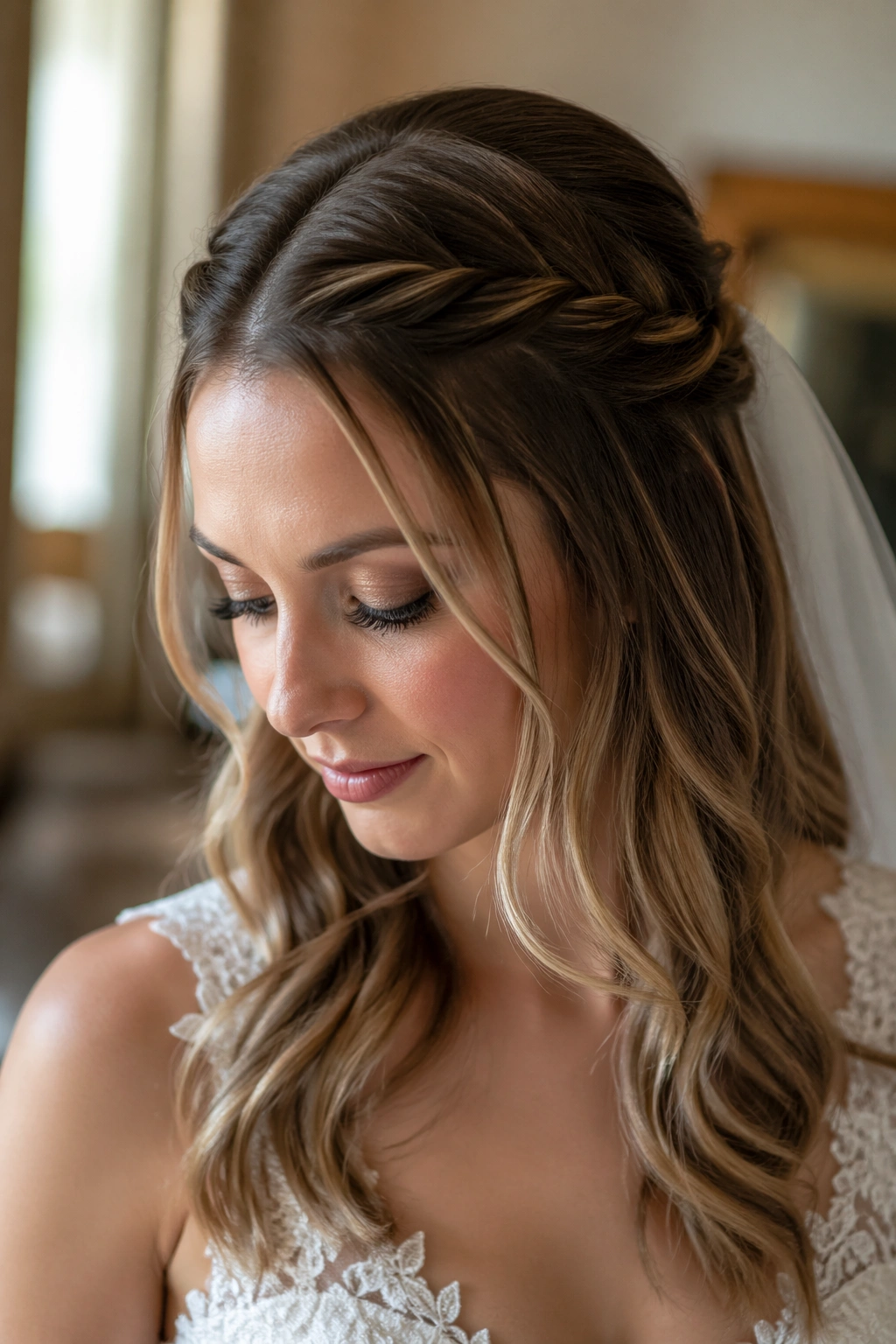
A wedding hairstyle has one final job after the ceremony: it has to survive the reception without collapsing into a sad version of itself. The best reception-ready half-up look is built with that in mind from the start. Strong pins, a secure back section, and a finish that doesn’t rely on fragile fluff make all the difference.
How to make it hold through the last dance
The style should be set with more grip spray than you’d use for a casual look, but not so much that the hair feels crunchy. The crown needs enough structure to keep the face open, and the back needs several hidden anchors instead of one big visible pin.
- Use crossed pins for the main hold.
- Add a light mist of flexible hairspray after shaping.
- Keep a small emergency pin pack nearby.
- Avoid heavy accessories if you plan to dance hard.
A wedding half up half down look that lasts is rarely the flashiest one in the room. It’s the one that still looks intentional after dinner, after the first song, and after somebody’s aunt has squeezed you in a hug. That’s the real test.