



Long box braids can carry a whole look on their own. Give them enough length, and they stop acting like a basic protective style and start behaving like a silhouette: something you can pull back, swing over one shoulder, wrap into a ponytail, or leave hanging like a curtain down your back. The catch is weight. The longer the braids go, the more the details matter — clean parting, light extension hair, and a braid size your scalp can actually live with.
A lot of people talk about long braids as if they are one single thing. They’re not. A center part reads sharp and tidy, triangle parts feel punchier, boho curls soften the whole install, and a high ponytail can make waist-length hair look even longer without adding a single extra braid. Small choices change the mood fast.
That’s why the strongest long-braid styles aren’t just about length. They’re about shape, density, and how much daily effort you want to spend fussing with your hair. If you know that before you sit in the chair, you make better decisions and end up with braids you actually enjoy wearing. Start with the classic shapes, then move toward the bolder ones once you know what suits your head, your routine, and your patience.
1. Classic Waist-Length Long Box Braids
Classic waist-length long box braids are the style people picture first, and for good reason. They sit in that sweet spot where the braids feel dramatic without turning into a wrestling match every time you wash or tie them up. If you want a clean, dependable look, this is the one to beat.
Why this shape stays popular
The waist-length finish gives you enough hair to style into a bun, a low ponytail, or two neat plaits, but it does not drag the way ultra-long braids do. That matters more than people admit. A medium part size and clean sections keep the style looking neat for weeks, and the length makes the entire install feel polished even when you’re wearing a T-shirt and sneakers.
- Best with medium-square parts.
- Works well with pre-stretched braiding hair.
- Easier to style than hip-length or thigh-length braids.
- Gives you enough length for low buns and half-up looks.
Best move: ask for the ends to land just at or a little below the waist if you want the most wearability for everyday life.
2. Knotless Long Box Braids
Knotless long box braids are the smarter pick if you care about comfort as much as appearance. The braid starts with your natural hair and feeds in extension hair gradually, so the root feels lighter than a traditional knot. That difference shows up fast when you wear them long.
Long length and heavy roots are a bad pairing, and knotless braids solve a lot of that problem. They move more naturally, sit flatter at the scalp, and tend to feel less tuggy along the hairline. The look is still full and long, but the root doesn’t have that bulky knot sitting on top of it.
They are a solid choice if you plan to keep the style up for a while, because the flatter base makes it easier to sleep, wash, and tuck the braids under a scarf. The install takes skill, though. A sloppy knotless braid can unravel at the root or look thin at the top, and that defeats the whole point.
You want them neat, not loose. Big difference.
3. Triangle-Part Long Box Braids
Why do triangle parts change the whole mood? Because the scalp pattern becomes part of the design, not just the background. A triangle-part install gives long box braids a sharper, more graphic look, especially when the hair is worn down.
How to get the parting right
Triangle parts work best when the braider keeps the sections crisp and the braid size consistent. If the parts wander, the geometric effect disappears fast. The scalp pattern should look intentional from the front and the crown, not just in one mirror angle.
This style is especially nice if you pull your braids up often. The triangles show more clearly when the hair is gathered into a ponytail or a half-up style, which makes the install feel more detailed than standard square parts. It also photographs well in a very practical sense: the pattern reads clearly from the top and side, so the whole style looks finished.
What to ask for
- Clean triangle sections with even spacing.
- Medium-sized braids for better balance.
- Light edge control, not a heavy gel helmet.
- A parting plan that stays visible even when you wear the braids loose.
4. Slim, Pencil-Size Long Box Braids
Slim, pencil-size long box braids give you the most movement of any braid size here. They sway more, stack more neatly under hats, and look elegant when they fall over one shoulder. The tradeoff is time. Lots of it.
A thin braid count means a longer install, and the finished style can feel denser around the shoulders if the length is very long. Still, there’s a reason people keep asking for them: smaller braids make long hair look lighter and more fluid, especially when you want that curtain-like fall down the back.
The key is not making every braid tiny if your hair is already fine. That’s where installs get heavy in a hurry. A good braider will adjust the part size to your hair density and your tolerance for weight. Good judgment matters more than trendiness here.
If you like braids that swing when you walk, this is your lane. If you want quick installation, skip it. No shame in that.
5. Boho Long Box Braids with Loose Curls
Boho long box braids soften the whole look by leaving a few curly pieces free between the braids. That tiny bit of texture changes the mood from neat and structured to softer and a little undone. It’s the style for people who like movement and do not mind a bit of daily upkeep.
The loose curls usually need a light mousse refresh or a mist of water and leave-in to keep them from looking fuzzy. That is the catch with boho braids: they look relaxed, but they ask for more maintenance than plain braids. If you sleep rough or skip wrapping your hair, the curl pieces will tell on you fast.
Still, the payoff is worth it. The curls break up the length so the braids do not feel like one solid block, and they add texture around the face and shoulders. It’s a smart pick if you want long braids but don’t want the whole style to read severe.
A little mess is part of the charm. Too much, though, and it just looks tired.
6. Long Box Braids with Beaded Ends
Beaded ends bring sound, weight, and a bit of personality to long box braids. They’re not subtle. That’s the point. A few beads placed at the ends of select braids can make a plain install feel much more styled without changing the braid pattern itself.
Why beads work best in small doses
Too many beads drag the ends down and make the braids feel clanky. A better move is using them on the outer braids or on just the face-framing pieces. Three to five beads on a few strands is usually enough to change the look without overloading the ends.
They also work well when you want the braids to feel a little more playful. Think weekend plans, festivals, vacations, or just a day when you want your hair to do something when you move. Beads are especially nice on long braids because the length gives them room to show.
Secure them well. Loose beads can slip, and nobody wants that sound in the middle of the day.
7. High Ponytail Long Box Braids
A high ponytail changes long box braids from heavy and grounded to lifted and sharp. Pull the braids up, wrap the base neatly, and the length suddenly looks even longer because all that weight drops from the crown instead of sitting at the shoulders.
The trick is using a strong, snag-free tie and not yanking the roots too tight. A high ponytail should feel held, not pulled. If the scalp starts barking at you after an hour, the style is wrong for your tension level. That matters more than the mirror.
This look is great when you want your face open and your braids out of the way, but you still want the drama of long length. It also works well with long earrings, glossy lips, or a collar that sits close to the neck. The visual line is clean.
Honestly, it is one of the fastest ways to make long braids look styled even on a plain day.
8. Half-Up, Half-Down Long Box Braids
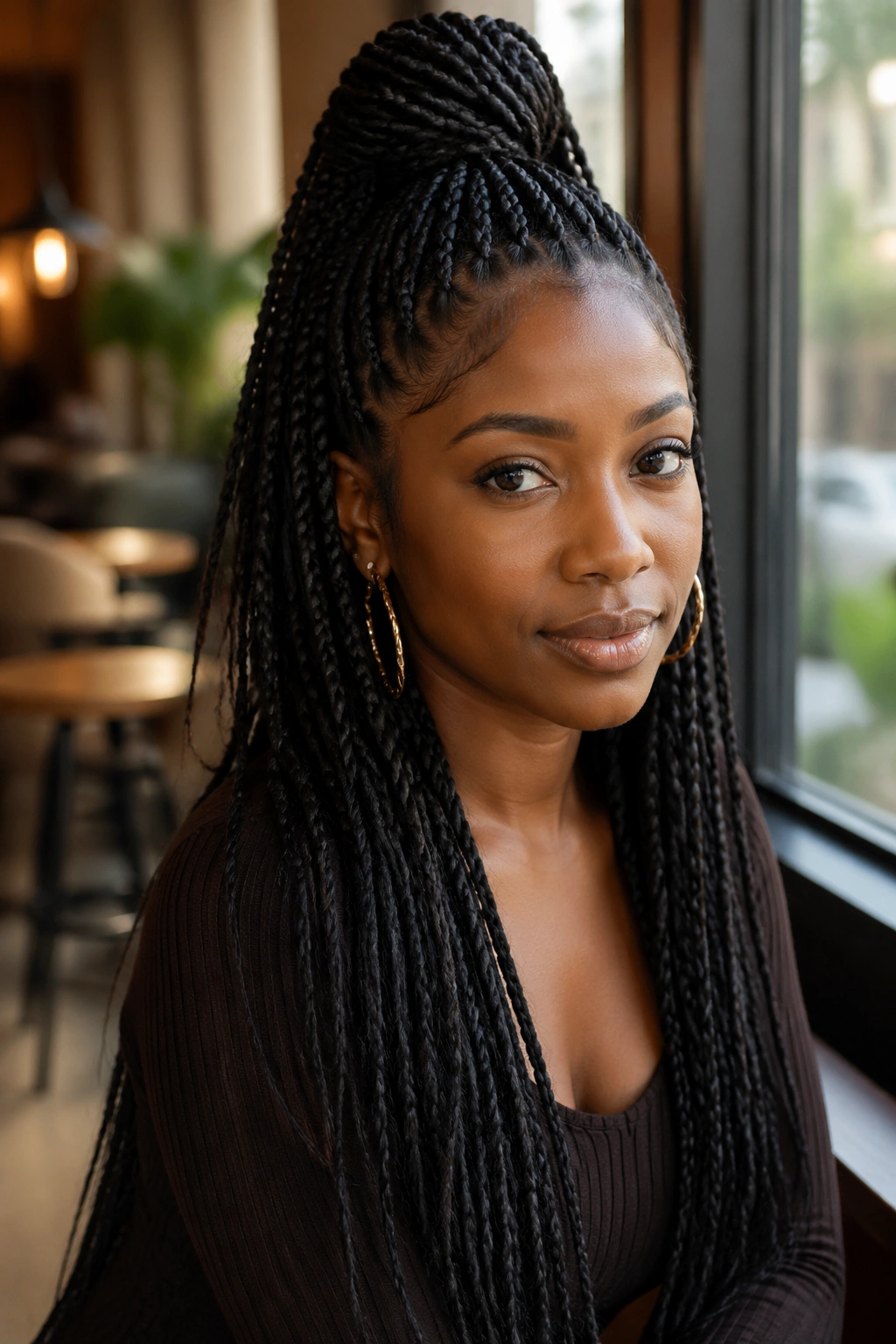
Half-up, half-down long box braids are the easy answer for anyone who wants shape without losing length. You get the lift at the crown, the movement down the back, and a style that can go from errands to dinner with almost no extra work.
It also solves a common problem with long braids: face friction. Hair in your eyes gets old fast, especially if the front pieces keep slipping forward. Pulling the top section back gives you breathing room without sacrificing the length you paid for.
The best version is not too tight at the top. Use a medium clip or a wrapped ponytail base and let the rest fall naturally. If the crown is stretched hard, the style starts to look stiff, and the whole point gets lost.
This is one of those styles that makes a long install feel useful every single day. No drama. Just easy mileage.
9. Deep Side-Part Long Box Braids
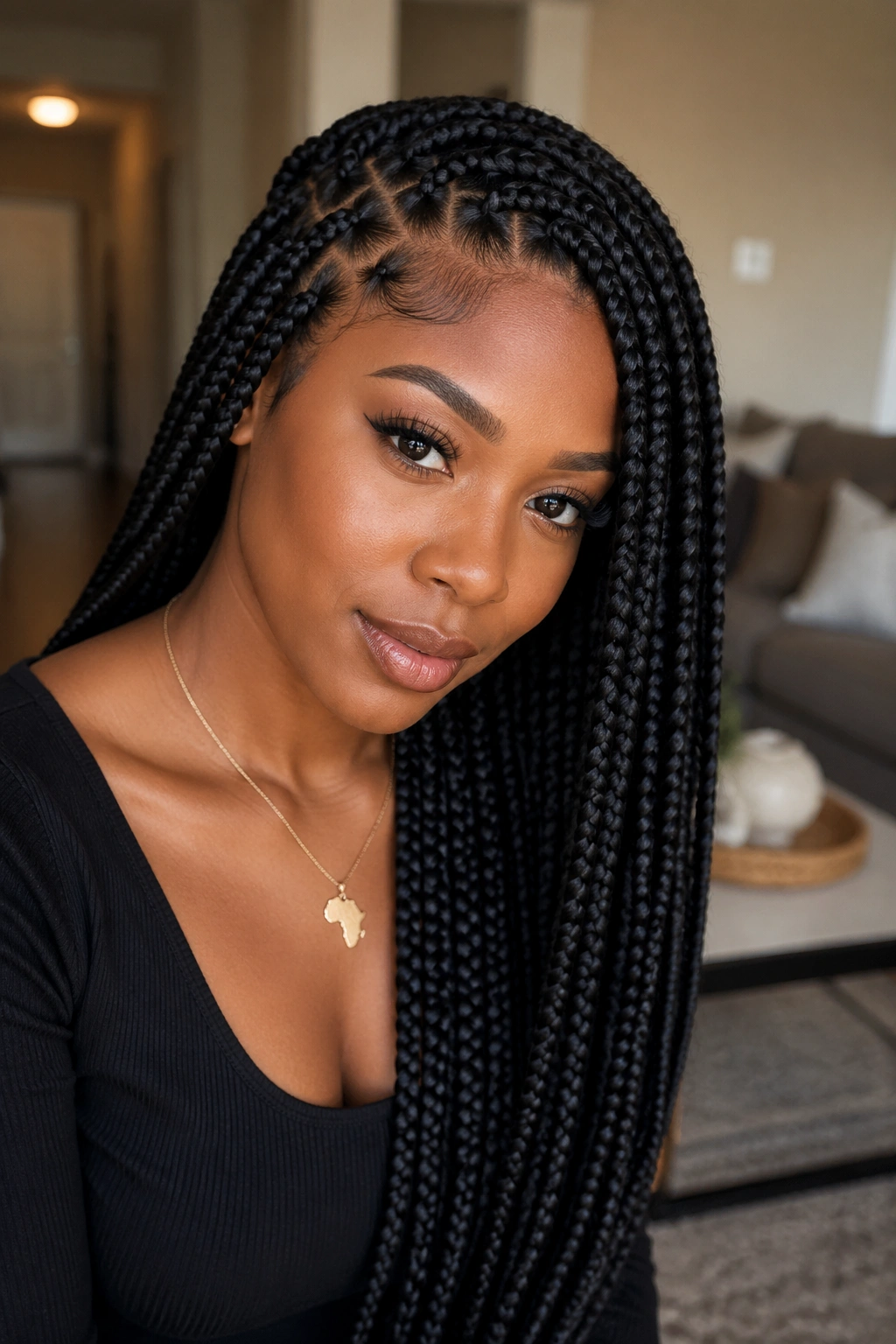
A deep side part can make long box braids feel instantly more dramatic. It pushes the volume to one side, frames the face, and gives the length a sweeping line that looks richer than a straight middle part on certain face shapes.
The part itself needs to be clean from the start. If the braids are installed with a vague side part and you try to fix it later, the whole line can look crooked. A sharp side part is a planning decision, not an afterthought. If you know you want this look, say so before installation begins.
This style also works well when you want to wear the braids down but still soften the forehead area. The sweep creates movement near the roots, which helps keep long braids from looking too heavy on the head. It is especially useful if your braids are thick or if your hairline is the part you want to highlight less.
Some styles shout. This one leans and lets the length do the talking.
10. Layered Long Box Braids
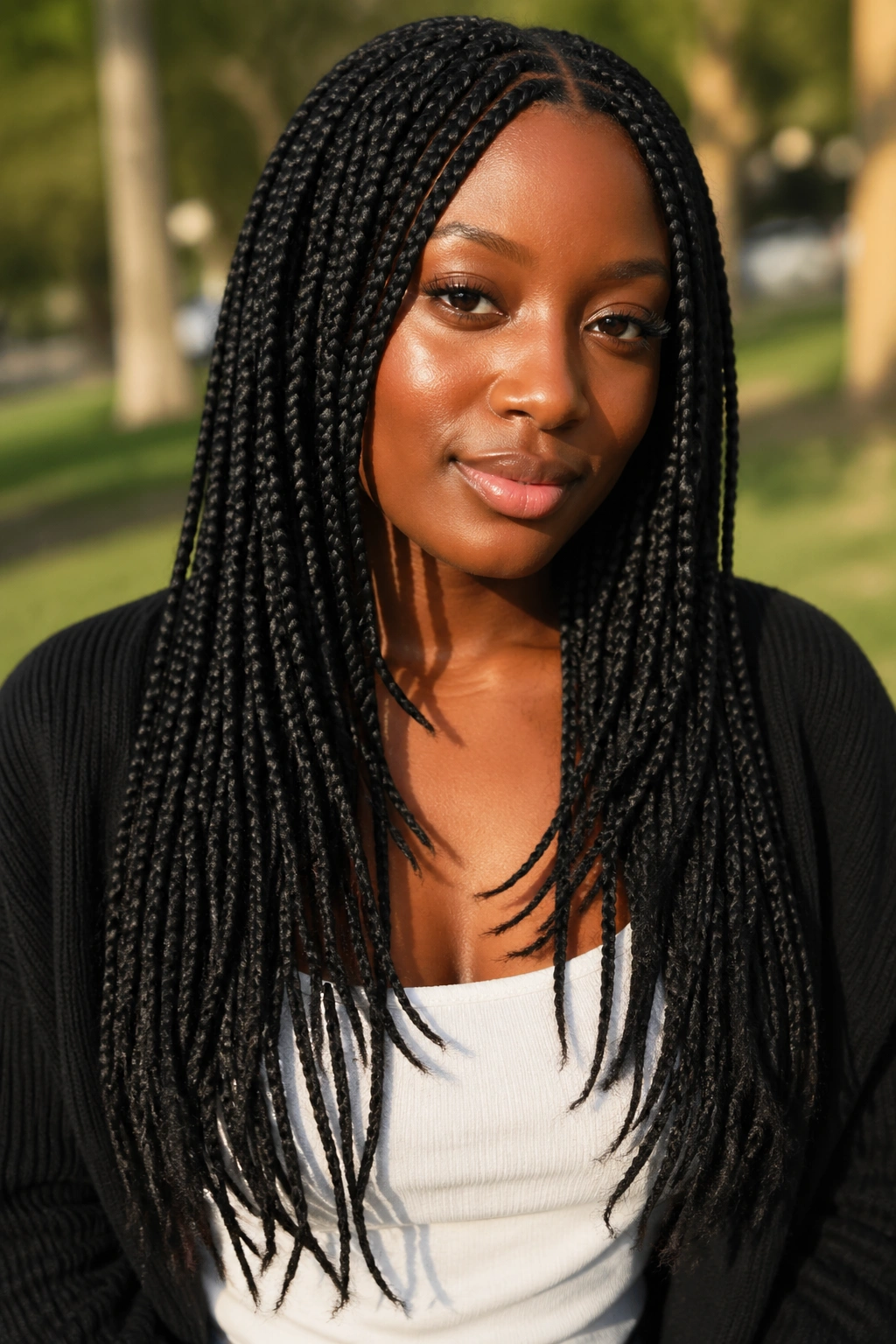
Layered long box braids fix the one complaint people have about braids that all hit at the same place: the curtain effect. When the braids are trimmed into layers, the style gets shape around the shoulders and movement near the front instead of dropping in one flat line.
That layering makes a big difference if you wear your braids down most of the time. The front sits lighter, the back still gives you length, and the whole style looks more thought-out. Even a small layer cut can stop the ends from feeling blunt and boxy.
The timing matters. Most people cut or shape the braids after installation, once they can see how the hair falls. That’s the safer move, because the same braid length looks different on different people depending on height, shoulder width, and part placement.
If you like a cleaner silhouette, this is worth asking about. It’s one of the few braid tweaks that changes the shape without changing the braid itself.
11. Honey Blonde Long Box Braids
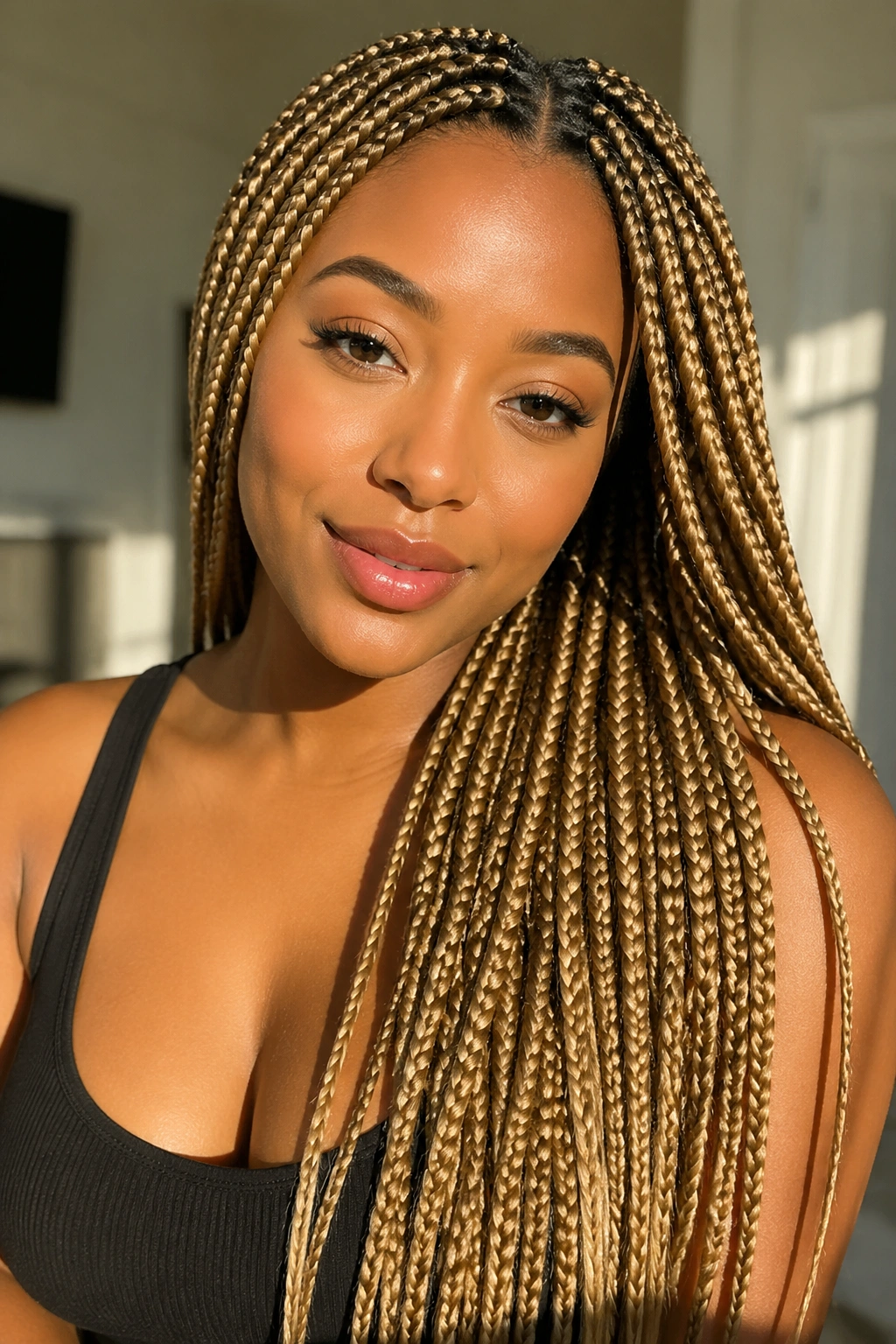
Honey blonde long box braids bring warmth without the harshness of a pale blond install. The color sits in that middle zone that flatters a lot of skin tones and still gives enough contrast to make the parting pop.
The nicest thing about honey blonde is the way it catches light against darker roots or darker outfits. It feels bright, but not loud. If you want color that reads soft rather than edgy, this shade is an easy pick. It also pairs well with gold jewelry and warm-toned makeup because the whole look stays in the same color family.
You do have to think about maintenance. Bright synthetic hair can dull if it gets too much heavy oil or product buildup, so keep scalp oils light and use only what you need on the lengths. A little sheen spray goes a long way.
This is a good “first color” braid if you’re curious about going lighter but do not want your hair to feel costume-y.
12. Jumbo Long Box Braids
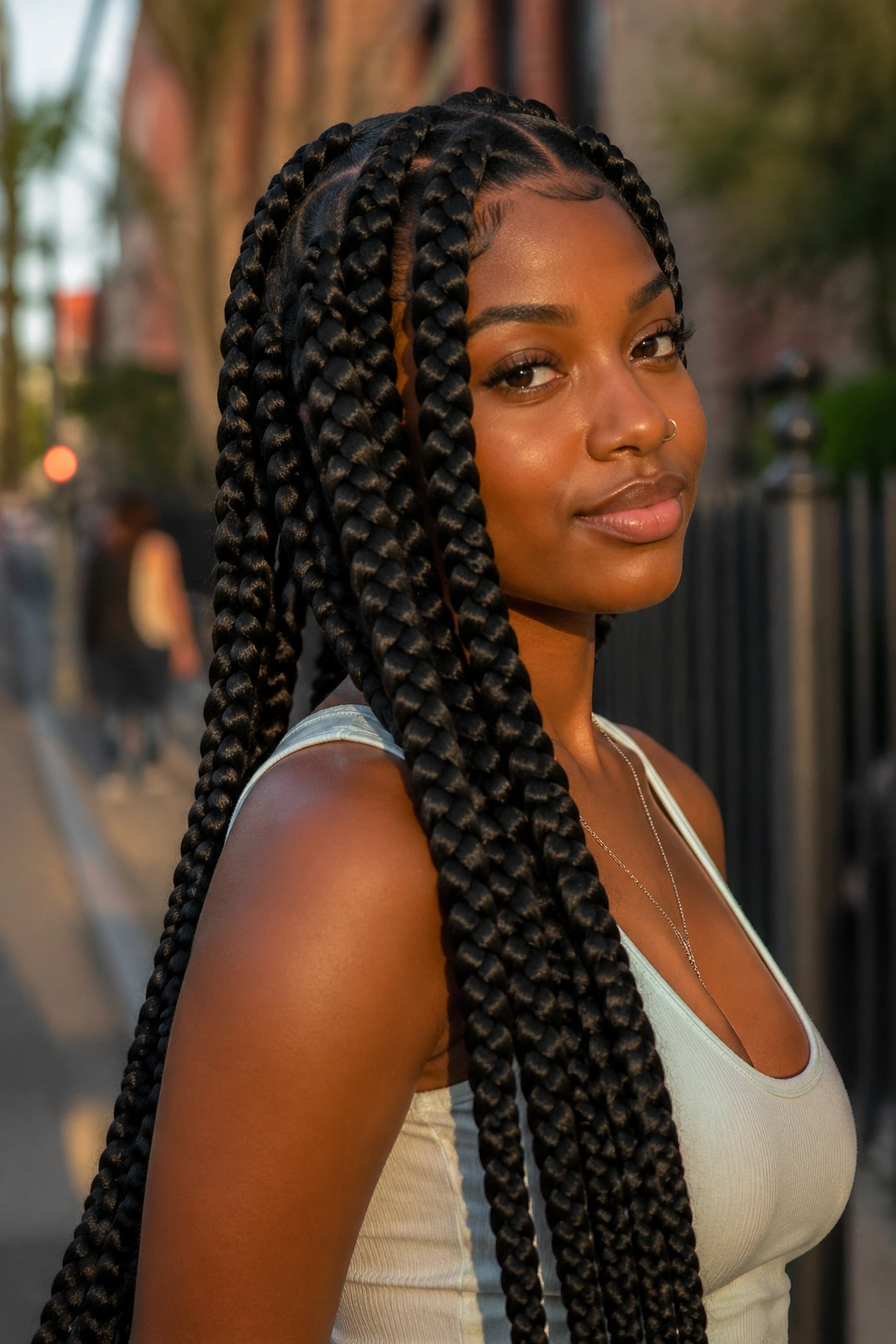
Jumbo long box braids are the bold, fast option. Fewer braids mean less installation time, and the thicker plaits create a strong visual line that looks confident without needing accessories or color.
The downside is weight. Bigger braids at long length can feel heavy at the nape and shoulders, especially if the hair used is dense or extra long. Jumbo braids work best when the install is balanced and the root tension stays controlled. If the first inch is too tight, you feel it for days.
They are a smart pick when you want a statement style with a shorter chair time. You also get easier maintenance, because there are fewer individual braids to separate and retwist at the roots. That part is boring, but useful.
This is not the style for people who want softness. It is for people who like a clear shape and do not mind a little weight with their drama.
13. Caramel Ombre Long Box Braids
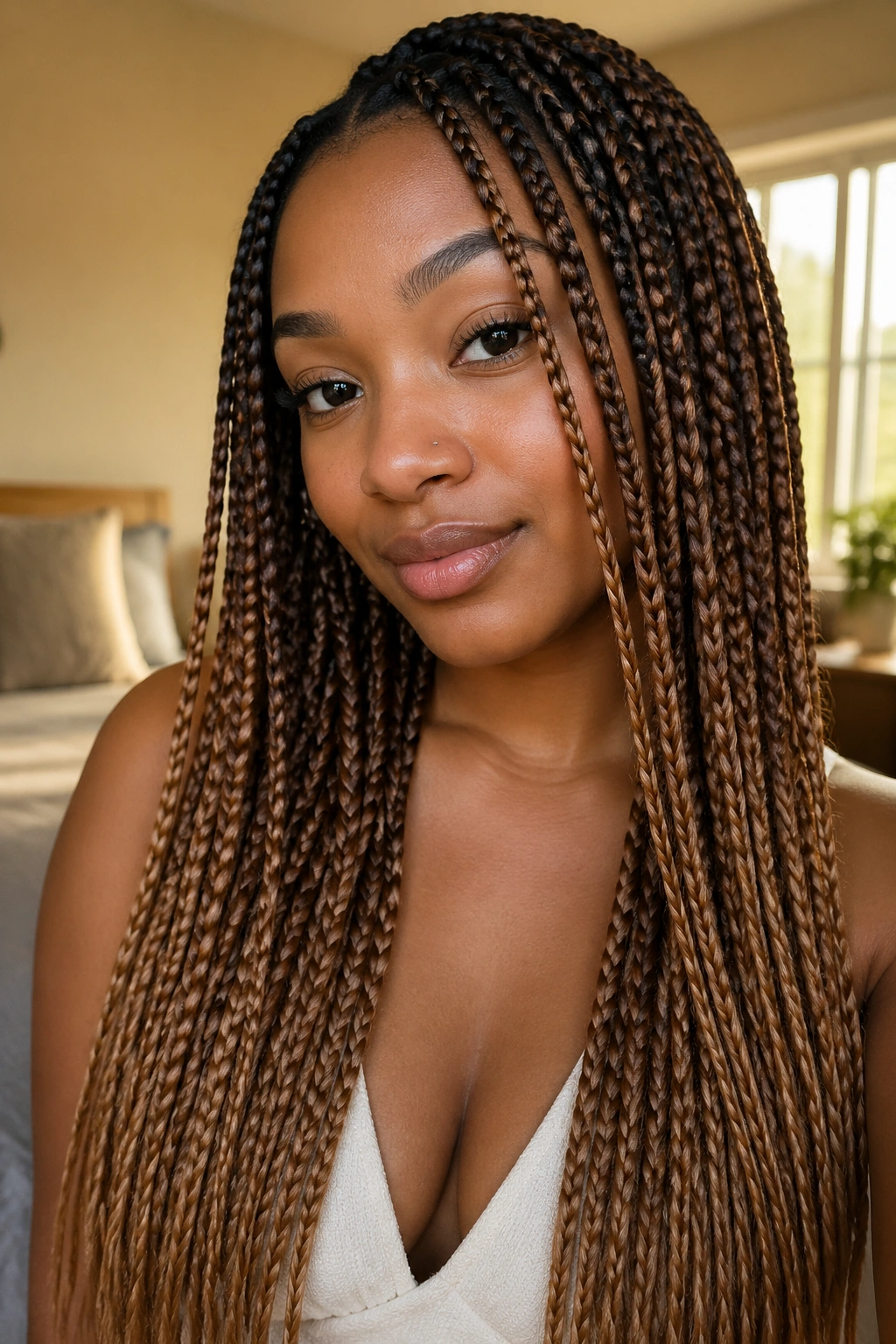
Caramel ombre long box braids give you a color fade that feels softer than a solid blonde install and warmer than a plain brown one. Darker roots melt into caramel ends, which makes the length stand out in a more gradual way.
The beauty of ombre braids is that they make the install look more expensive without asking for extra styling. The gradient does the work for you. The roots keep things grounded, and the lighter ends add movement when the braids swing or are pulled into a ponytail.
This shade also helps with grow-out. Since the roots start darker, a bit of new growth does not fight the look as badly. That is a practical perk, not just a visual one.
If you wear a lot of neutral clothes — black, cream, olive, denim — caramel ombre slides in easily. It has enough warmth to be noticeable, but not enough to hijack every outfit in the closet.
14. Burgundy Long Box Braids
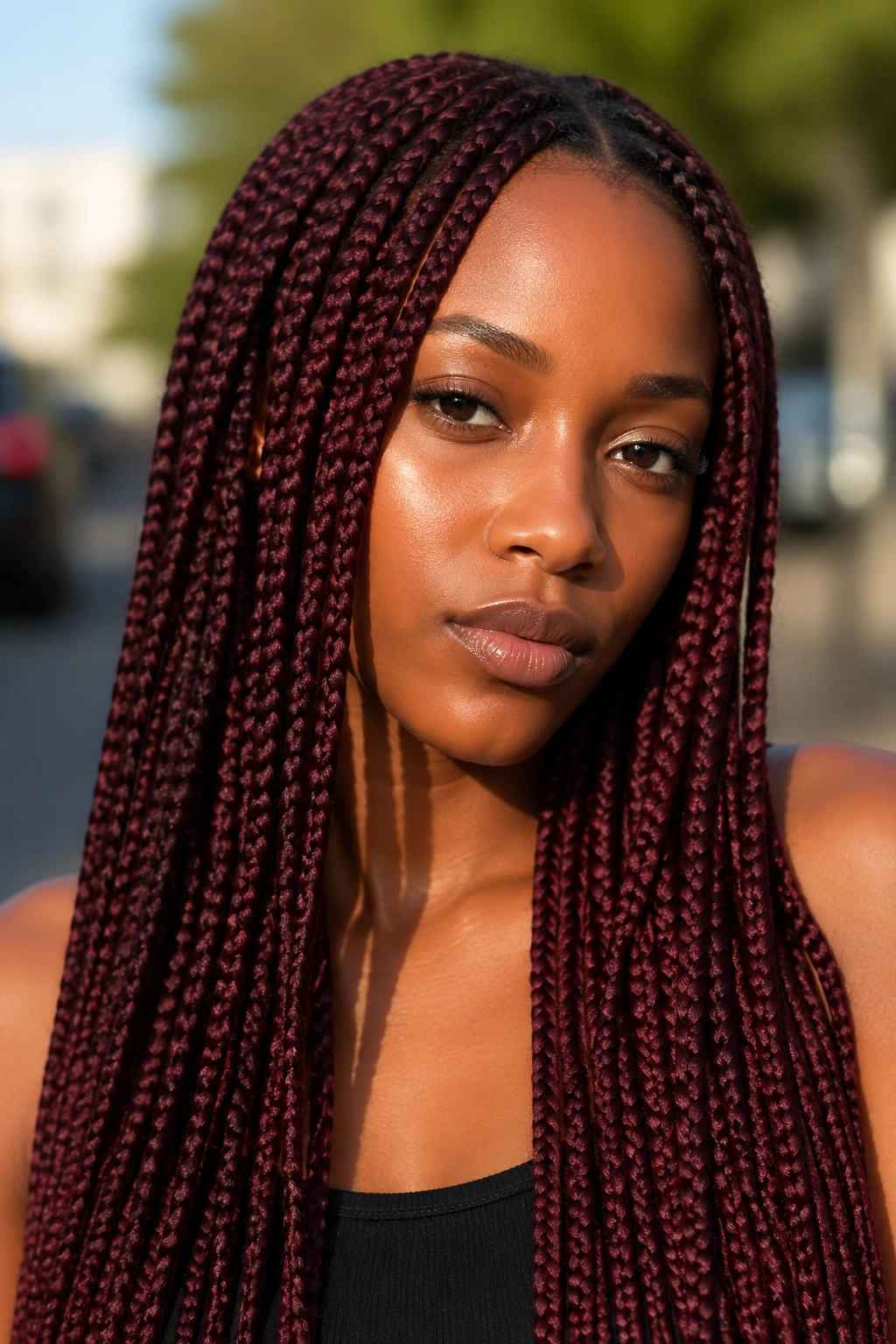
Burgundy long box braids sit in that rich color lane that looks polished in low light and more vibrant in sun. It is a deep shade, but not a flat one. You get red, wine, and plum tones depending on the hair used and the light around it.
This is a good choice if you want color that feels dramatic without going neon. Burgundy reads grown, moody, and put-together. It can make long braids look denser too, because darker saturated tones give the install more visual weight.
Pair it with gold cuffs, black clothing, or lip colors in the berry family and the whole style locks into place. You do not need much else.
A small warning: burgundy can look very different under indoor bulbs than in daylight. If that matters to you, check the extension hair in both settings before you commit.
15. Fulani-Inspired Long Box Braids
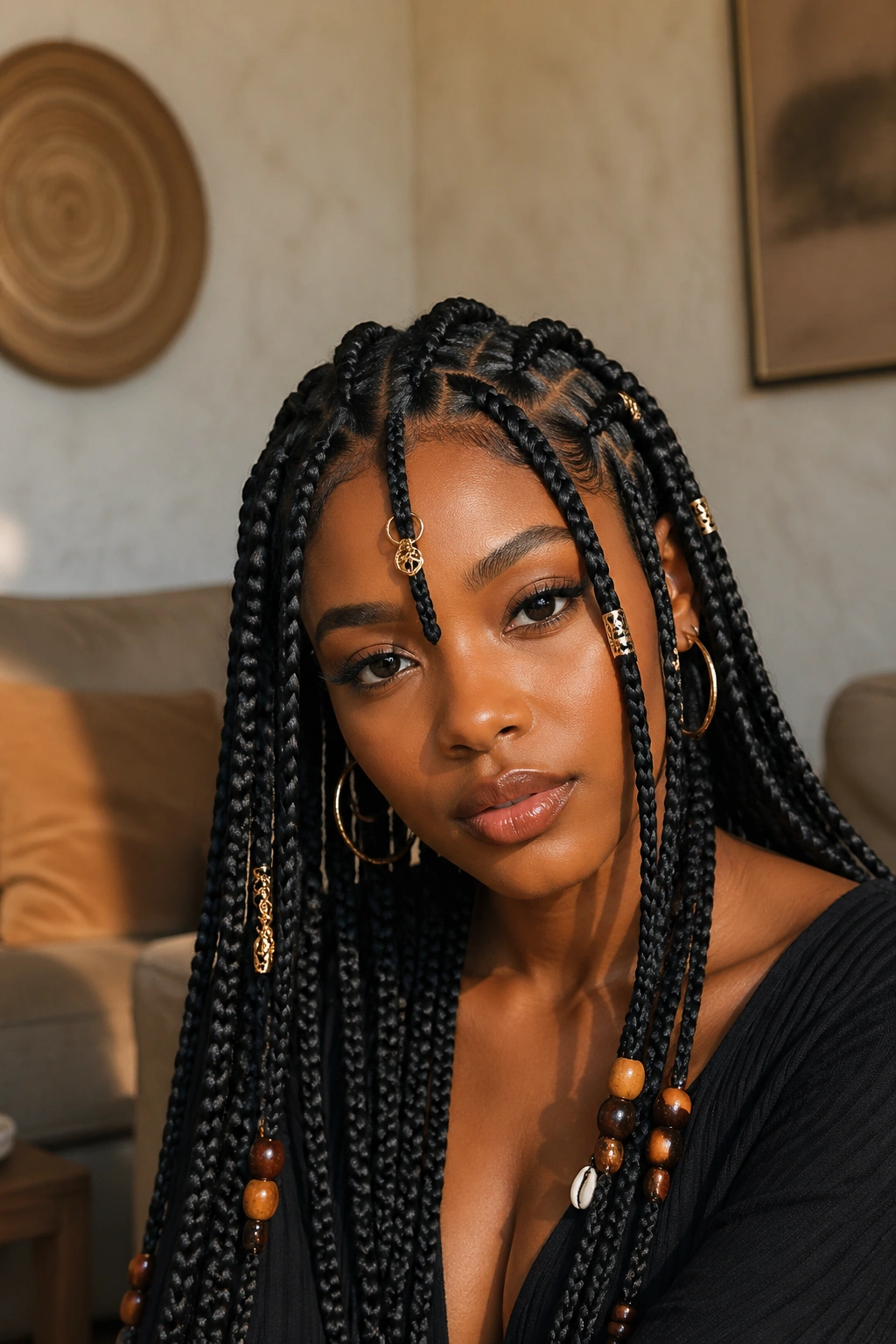
Fulani-inspired long box braids mix pattern, braid direction, and accessories in a way that gives the style more structure than plain hanging braids. You usually see a central braid or cornrow line, side details, and decorative pieces near the front.
What makes this look work is contrast. The front can be tight and patterned while the back stays long and loose. That combination gives you the cleanest version of “ornamented but wearable.” It feels dressed up without requiring a full head of beads or heavy decoration.
This style depends on part placement. If the front design is sloppy, the whole look loses its edge. Ask for crisp sections and a clear plan before the first braid starts, because the layout matters almost as much as the length.
It is a good option if you want a style that looks considered from the front and still gives you long braids to move around with in the back.
16. Long Box Braids with Gold Cuffs
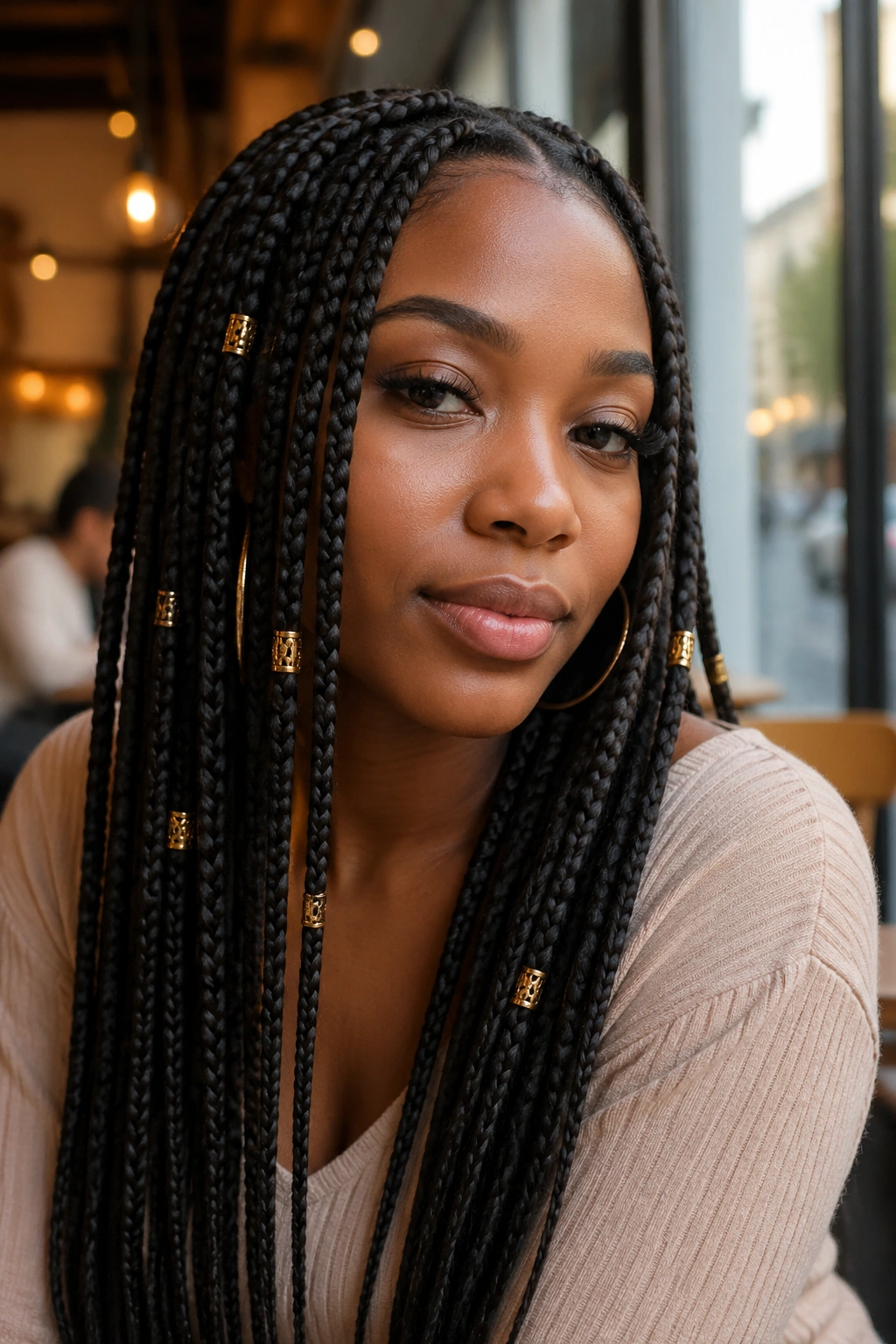
Gold cuffs are the quickest way to dress up long box braids without changing the braid pattern at all. Slide a few cuffs onto the braids, and the style suddenly feels more finished. A little goes a long way here.
Placement matters more than quantity
The smartest spots are the outer braids, the front pieces, or the lower third of the length. Putting cuffs on every braid can feel busy and adds more weight than people expect. Three to eight cuffs, placed with intention, usually look better than twenty random ones.
They also work well with solid colors like black, burgundy, or honey blonde because the metal stands out cleanly. The shine from the cuffs can pick up earrings, rings, and other little details in your outfit without making the style look overdone.
If you’re the kind of person who likes a small detail that changes the whole vibe, this one is easy. Cheap cuffs can snag, though, so choose ones with smooth edges.
17. Goddess Long Box Braids
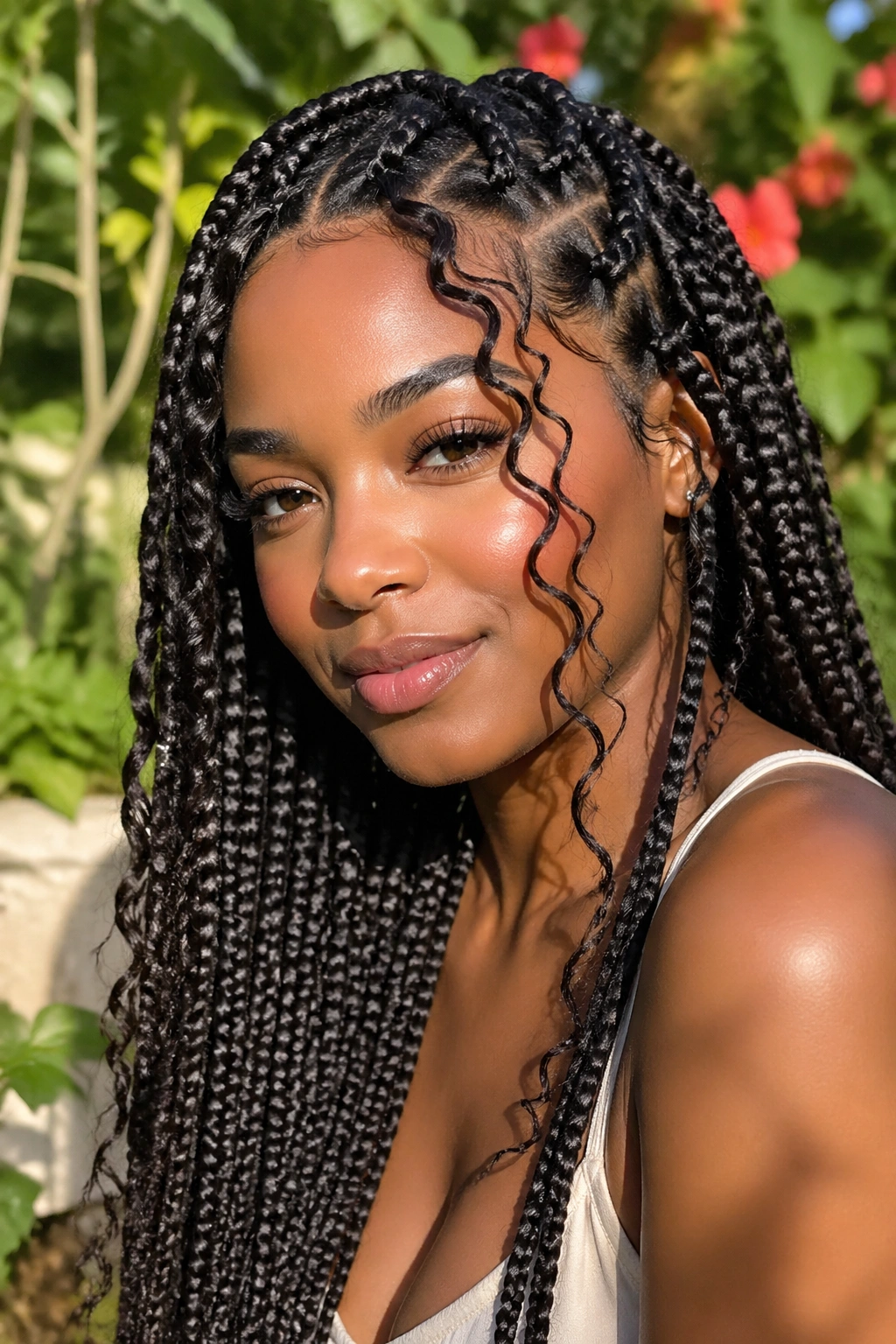
Goddess long box braids use loose curly pieces in a more deliberate way than boho braids. Instead of scattering curls throughout the install, the curls are usually placed to frame the face or break up selected braids in a controlled pattern.
That small difference changes the feel. Goddess braids look softer and more styled than plain box braids, but less carefree than a full boho set. They sit in the middle, which is why so many people like them. The style still has structure.
You do need to care for the loose pieces. A light mousse, a satin bonnet, and a gentle refresh routine help keep the curls from turning frizzy at the ends. If the curls are left to dry out, the style loses its shape fast.
This is a strong choice if you want movement around the face and a little softness around the lengths, but you don’t want the whole install to look messy. There’s a difference between relaxed and neglected.
18. Sleek Center-Part Long Box Braids
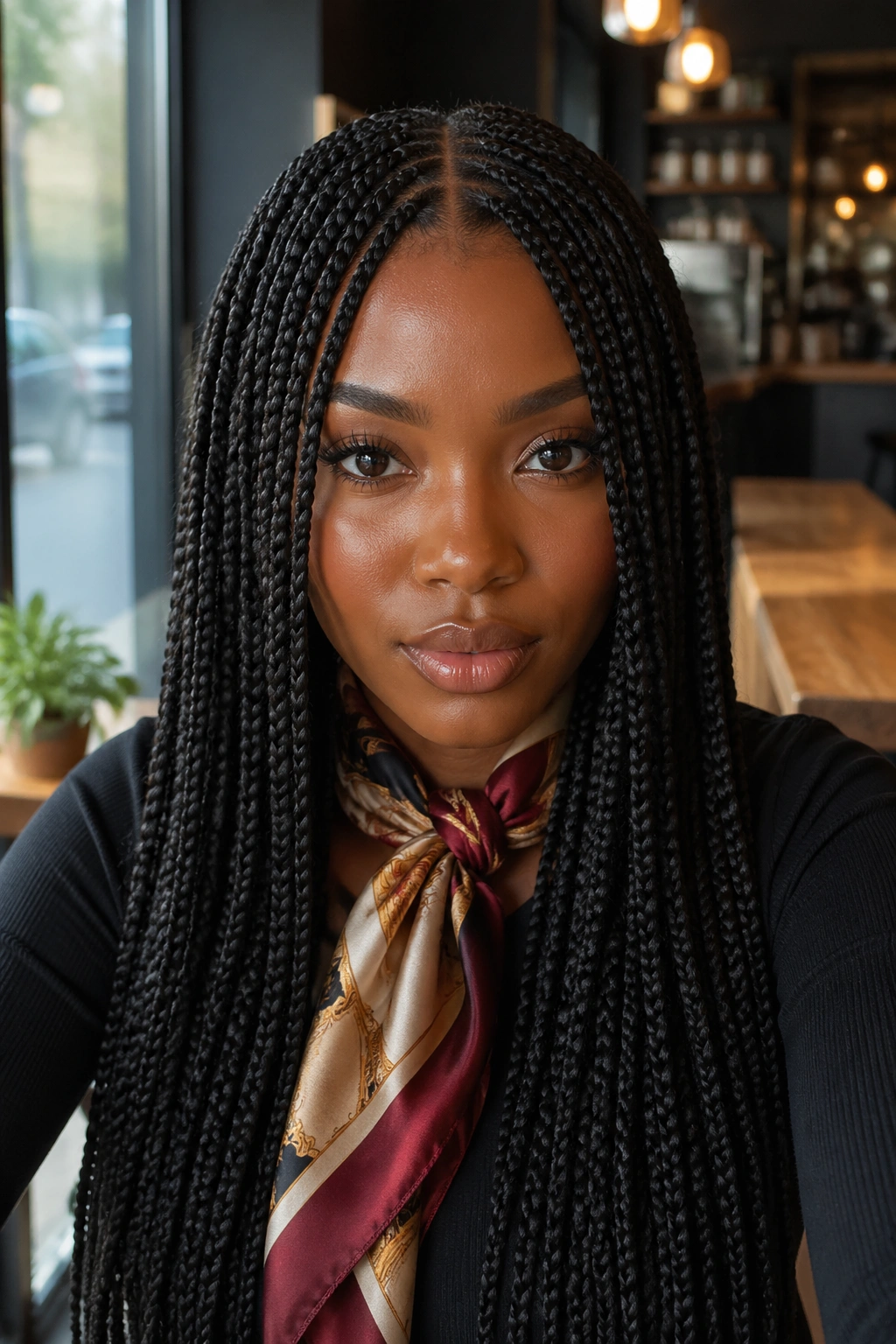
A sleek center-part install is the cleanest version of long box braids you can wear. The line down the middle creates symmetry, and the braids fall in two even sections that look controlled, neat, and a little more formal than other layouts.
The part itself has to be sharp. If the middle line wanders, the whole style loses its power. A crisp center part gives long braids a more expensive-looking finish because nothing is fighting for attention. Your face becomes the focus, then the length follows behind it.
This style works especially well with straight, glossy braids and minimal accessories. It is the one to choose when you want the braids to look polished with little extra effort. A neat scarf at night matters here, because any fuzz around the part shows fast.
Not every braid style needs drama. Sometimes clean and direct wins.
19. Micro Long Box Braids
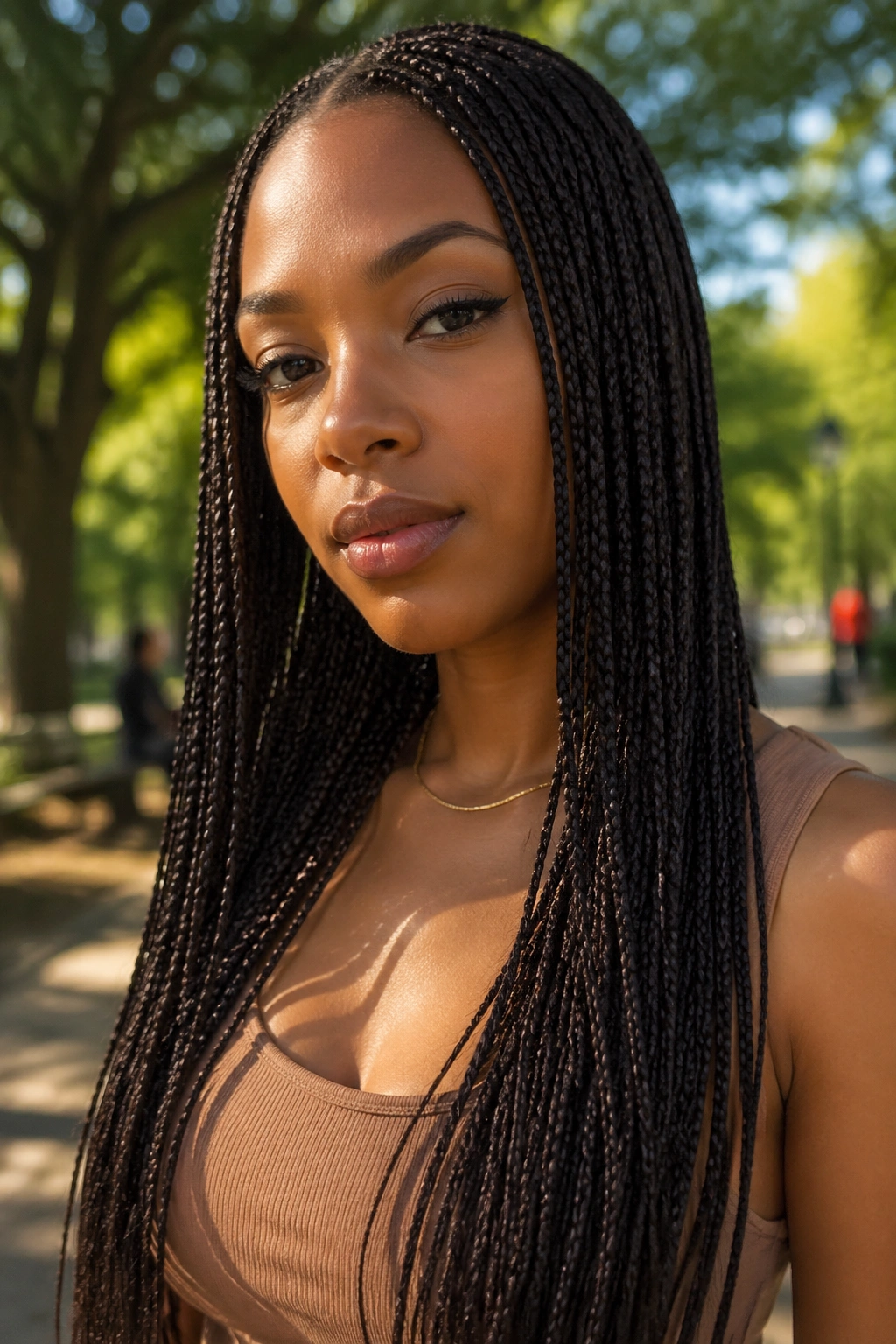
Micro long box braids are for people who want the thinnest possible sections and the most delicate movement. They take the longest to install, no question, but the finished result has a light, floating quality that bigger braids cannot match.
The advantage is texture. With micro braids, the length moves almost like strands of fabric, especially when the braids are worn loose or tucked behind the shoulders. They also stack more neatly under hats and scarves because each braid is smaller and more flexible.
The maintenance side is more demanding. Washing takes longer, drying takes longer, and separating them at the roots requires patience. If you rush that part, you get frizz and tangles at the base.
This is not the easy option. It is the detail lover’s option. If you like a lot of movement and do not mind the upkeep, the payoff is real.
20. Oversized-Part Long Box Braids
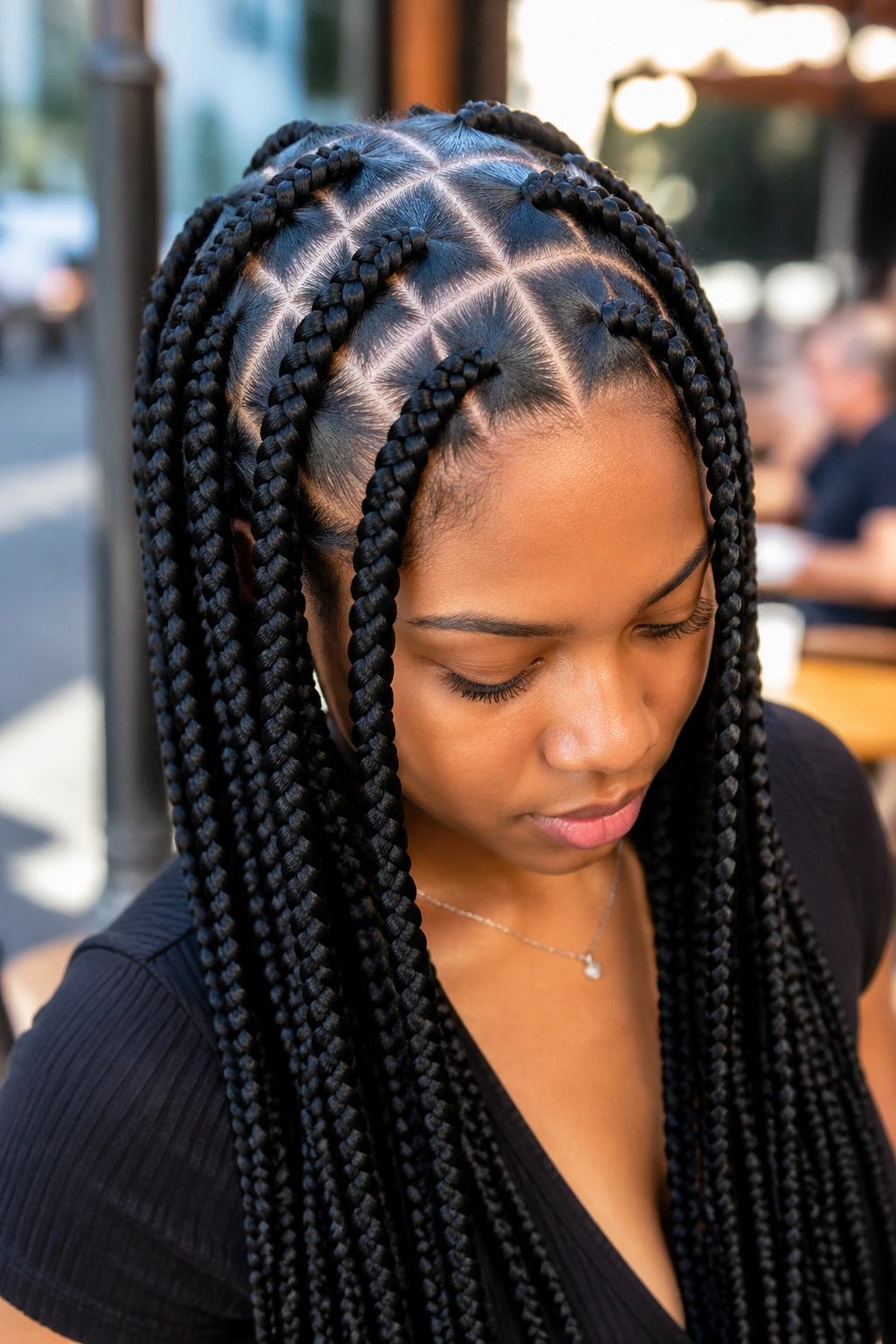
Oversized-part long box braids are different from jumbo braids because the braids themselves do not have to be huge; the sections are simply larger. That gives the scalp more visibility and cuts down on install time without forcing the whole look into thick plaits.
The bigger parting makes the style feel breezier at the roots. Fewer parts mean less tension spread across the head, which is useful when you want long length without a dense forest of braids. It also creates a clean grid that looks modern and neat in a straightforward way.
This style is a solid choice if you like medium-to-large braids but want the scalp pattern to feel airy. It works well with simple outfits and sharp makeup because the geometry already does enough work.
A lot of people confuse “more hair” with “better braids.” Not always. Sometimes a little more space between parts makes the whole style easier to wear.
21. Rope-Wrapped Ponytail Long Box Braids
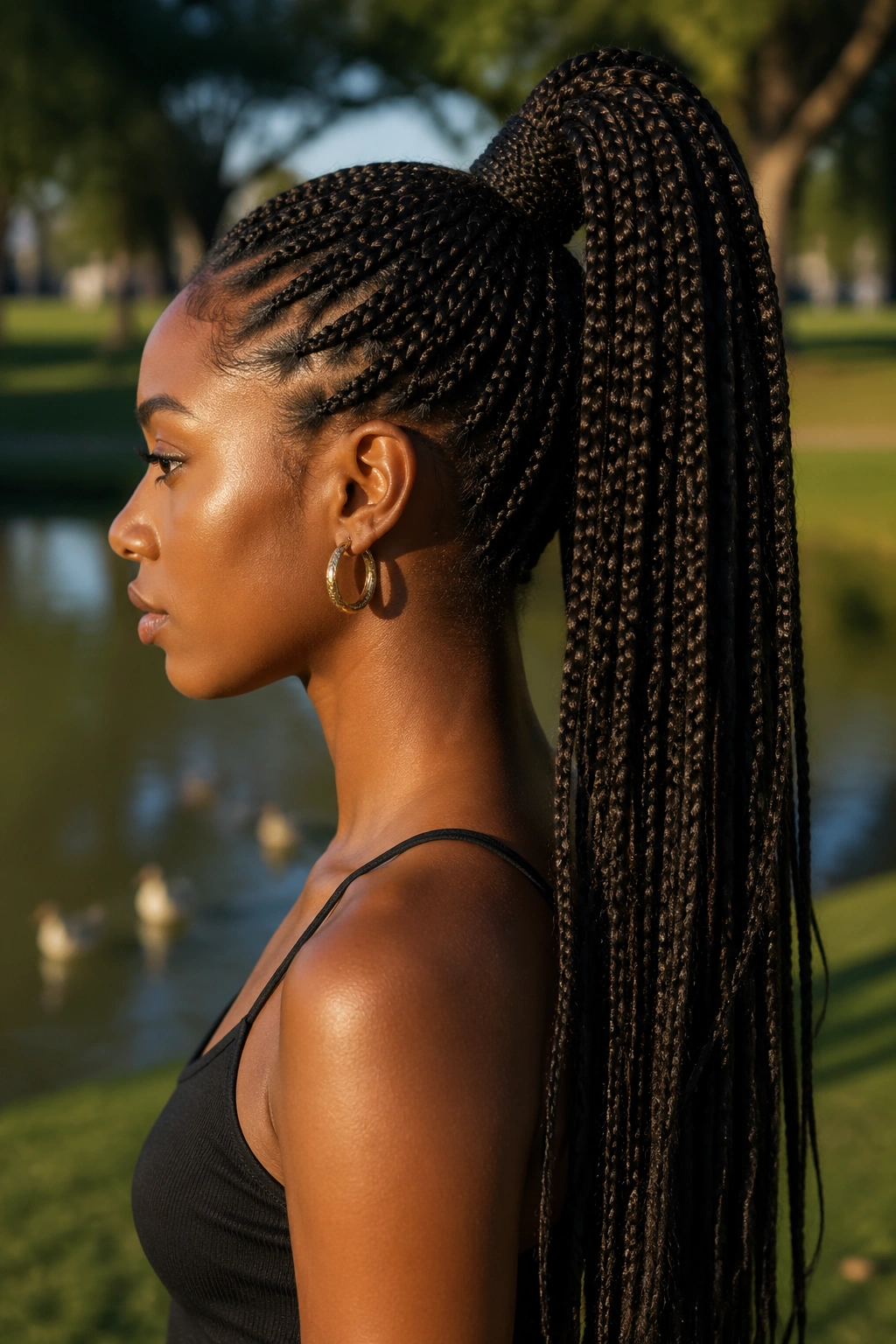
A rope-wrapped ponytail gives long box braids a tighter, more finished look than a plain elastic tie. You gather the braids high or mid-height, wrap one braid around the base, and let the length drop from there. It looks intentional in a way a quick tie never does.
The wrap hides the elastic and smooths the transition from scalp to ponytail. That small detail makes the style look clean from the front and back, especially when the braids are very long. It also gives the base a little more stability.
This is a strong style for busy days, workouts, or any setting where you need your hair off your neck but still want the length visible. If the wrap braid is too tight, though, the style starts tugging in a way you feel by lunchtime.
Practical and neat. That’s the whole appeal.
22. Soft Hairline Feed-In Long Box Braids
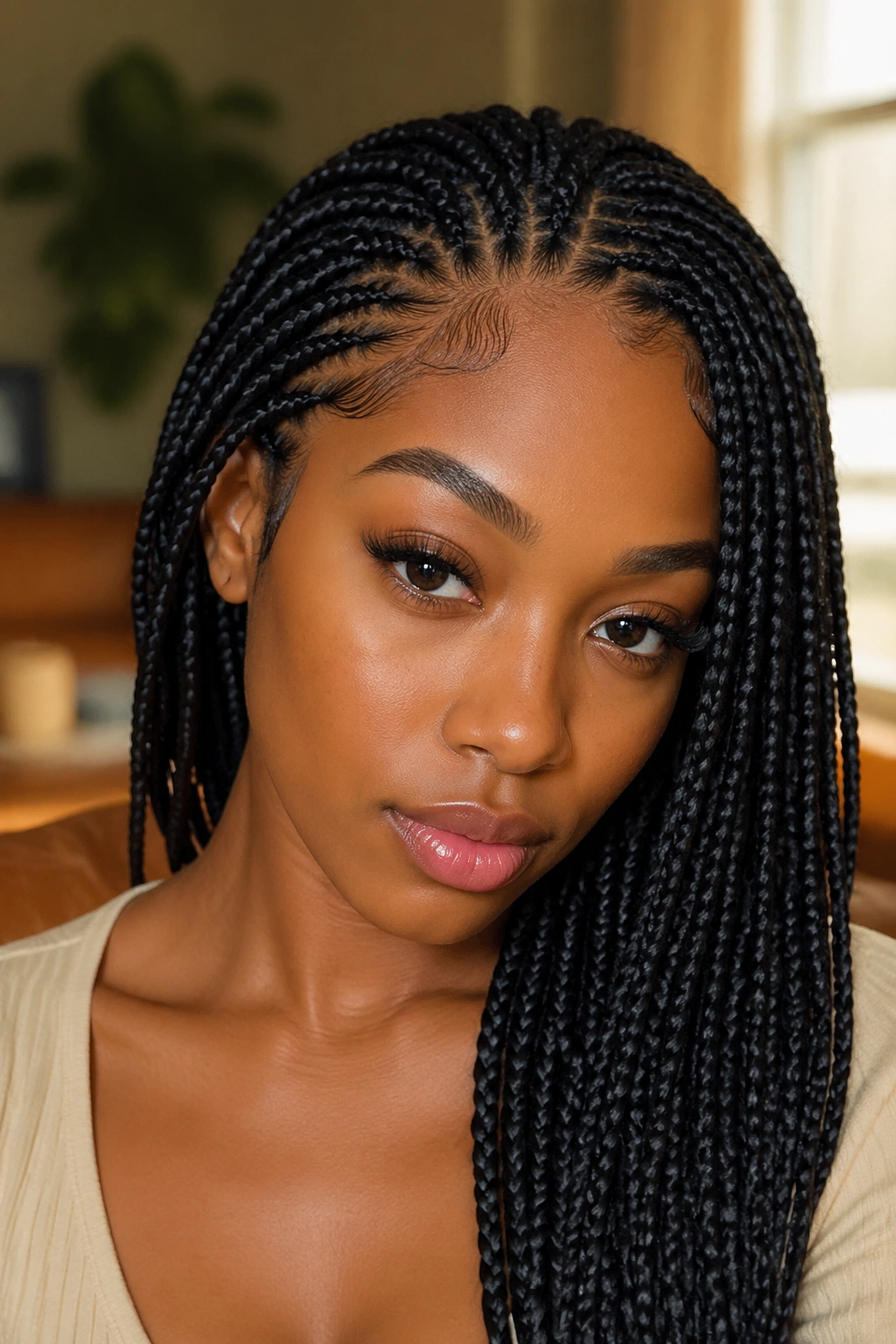
Soft hairline feed-in long box braids solve one of the biggest comfort issues with long installs: tension around the edges. The braids start smaller at the hairline and build gradually, so the front doesn’t look or feel as bulky as a straight knot-heavy start.
That matters if your edges are delicate or if you plan to wear the style for a good stretch. A softer front section can make long braids feel lighter without changing the rest of the install. It is one of those details you feel more than you see.
The result is especially clean when the front braids are worn down around the face or pulled into a high style. Because the hairline sits flatter, the whole install has a neater frame. You still get the fullness and length in the back, just with less pressure up front.
If the edges matter to you, ask about this explicitly. Do not assume the braider will default to it.
23. Copper-Red Long Box Braids
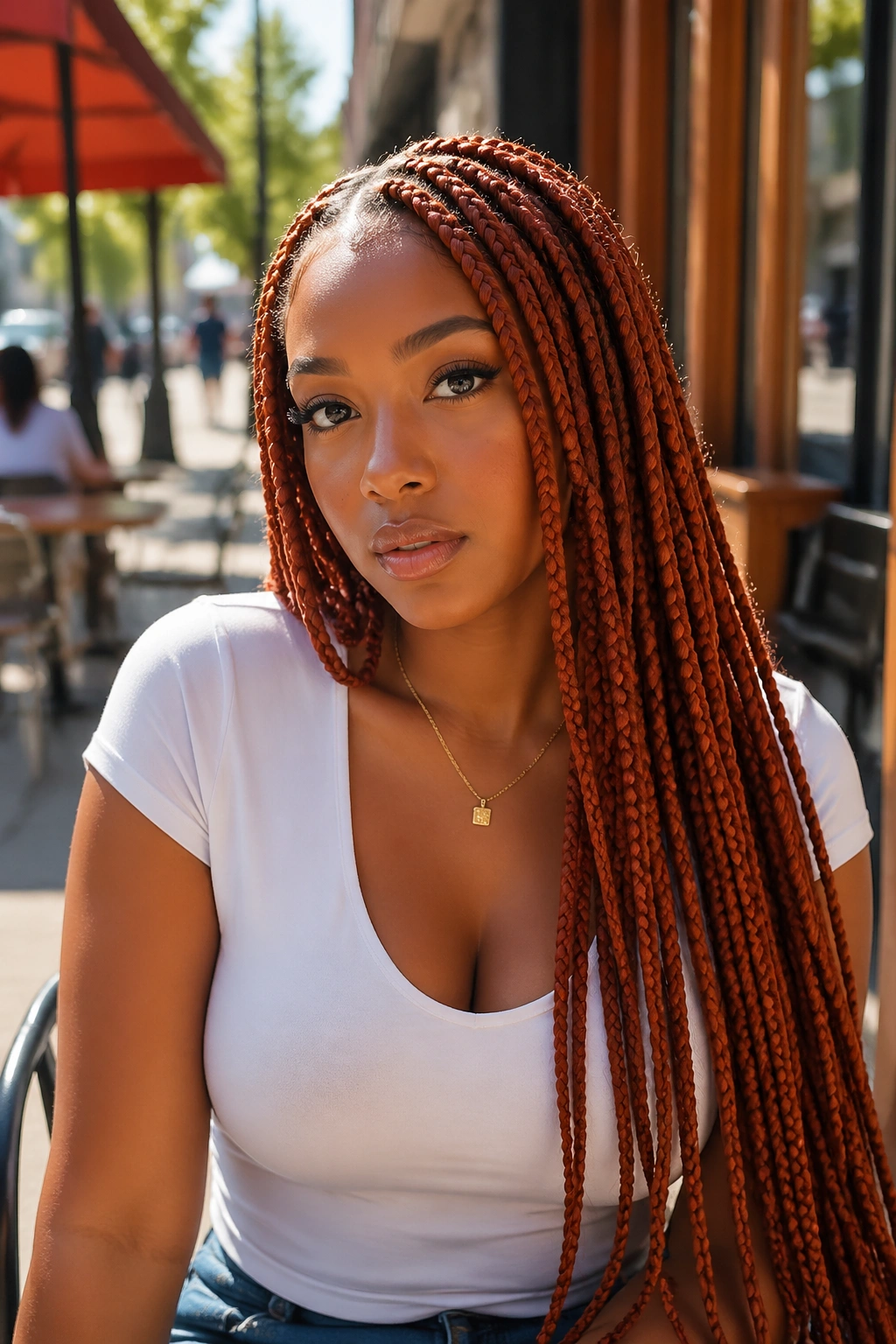
Copper-red long box braids bring warmth and energy without going into harsh neon territory. The shade has enough orange-red in it to stand out, but the copper tone keeps it grounded and wearable. It looks especially good when the braids move and the light catches different pieces.
The color is the whole story here. Copper red makes the length feel alive because it changes tone from angle to angle. That shifting effect is what keeps the style from feeling flat, even when the braid pattern is simple.
It pairs well with brown makeup, gold jewelry, and neutral clothes. You do not need much styling around it because the braids already carry the visual weight. A topknot or high ponytail can make the color show even more.
If you want something bold but not harsh, this is one of the most flattering choices in the whole group.
24. Tapered-End Long Box Braids
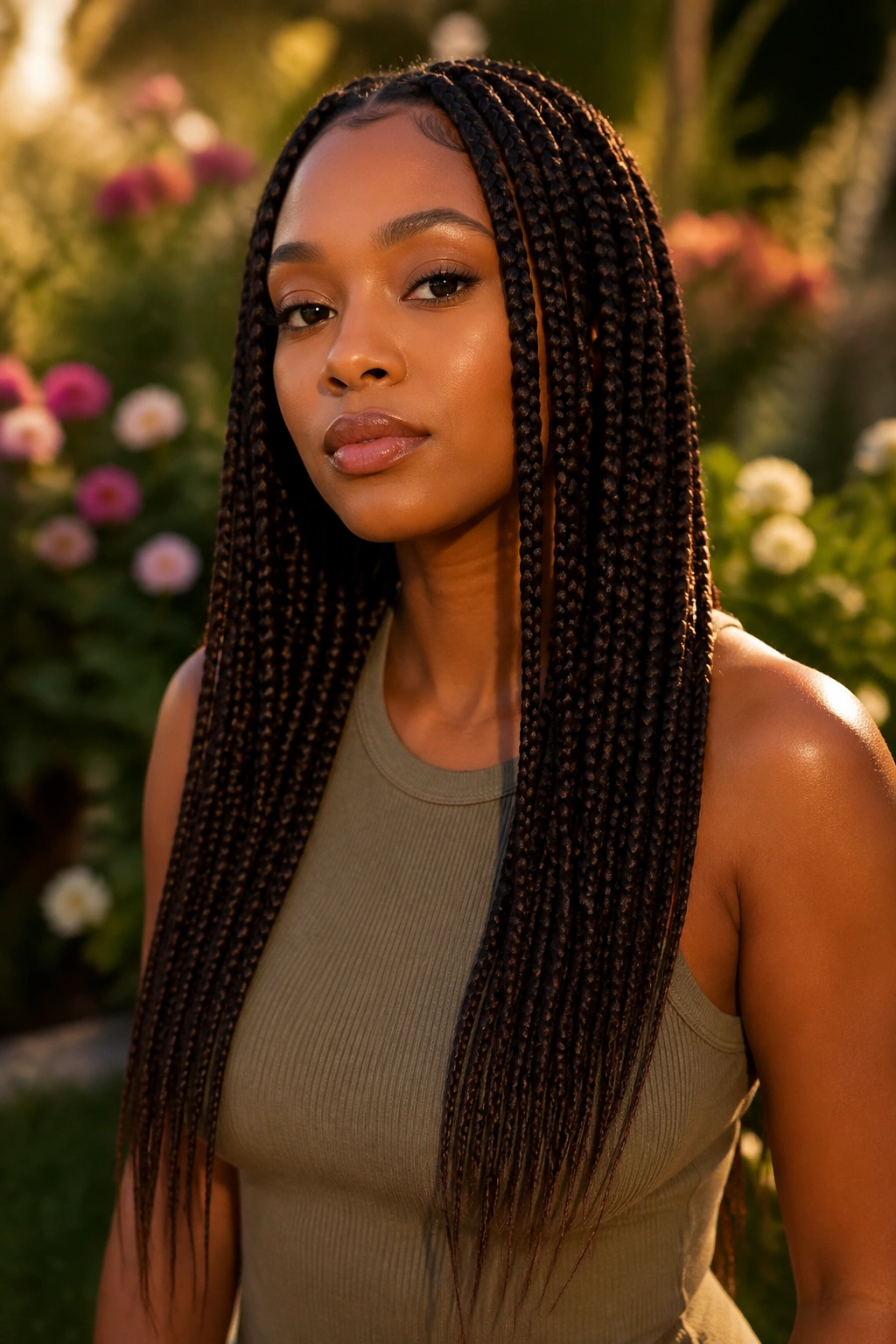
Tapered-end long box braids narrow slightly toward the bottom, which keeps the length from looking bulky at the tips. That matters more than people think, especially when the braids reach well below the shoulders. Ends that taper gently look cleaner and move better.
The shape is useful if you want long braids but dislike the blunt, heavy block that some installs create at the bottom. A tapered finish makes the hair fall more naturally and keeps the length from feeling bottom-heavy. It also looks nice when the braids are gathered into a bun because the ends tuck in more easily.
This style is quiet, but not boring. It gives the eye a smoother line from root to tip, which makes the whole install feel more balanced. You can add cuffs or leave it plain and it still holds its shape.
A small trim after installation can help, but only if the ends are even to begin with. A bad trim looks choppy fast.
25. Curled-End Long Box Braids
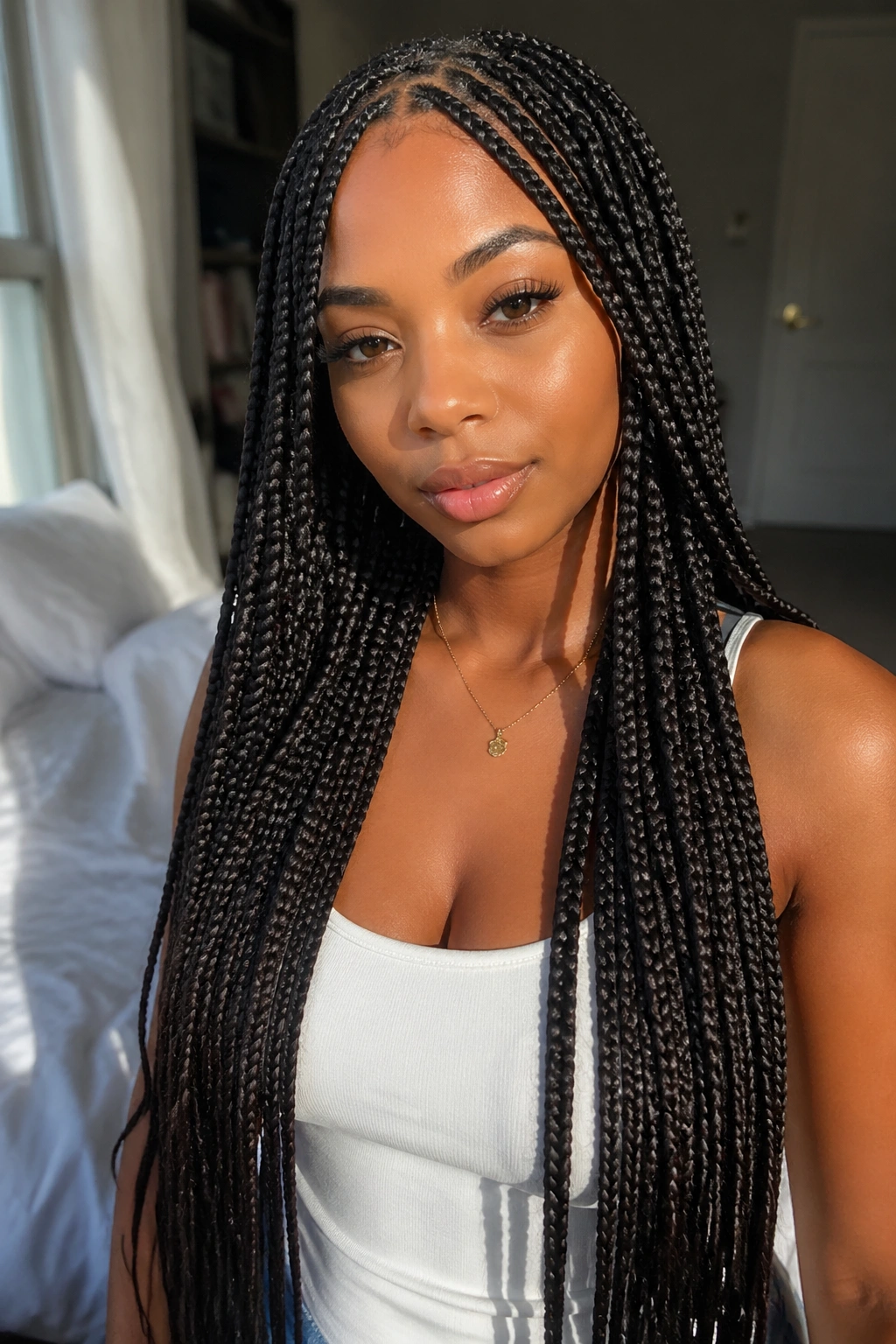
Curled-end long box braids soften the finish by giving the ends a loose spiral or wave. The curl breaks up the long straight line and gives the style a little bounce at the bottom, which keeps it from looking too rigid.
The easiest way to get this look is by setting the ends carefully, usually with hot water or rods depending on the hair type and the finish you want. The ends need to be sealed cleanly and cooled fully before you touch them, or the curl loses shape fast. That patience pays off.
This style is especially nice when you want a more romantic version of long braids. The curl at the ends gives movement near the shoulders and hips, so the braids do not just hang there. They finish.
If you like a softer silhouette, this one is worth the extra time. It turns straight length into something a little more fluid.
26. Mixed-Size Long Box Braids
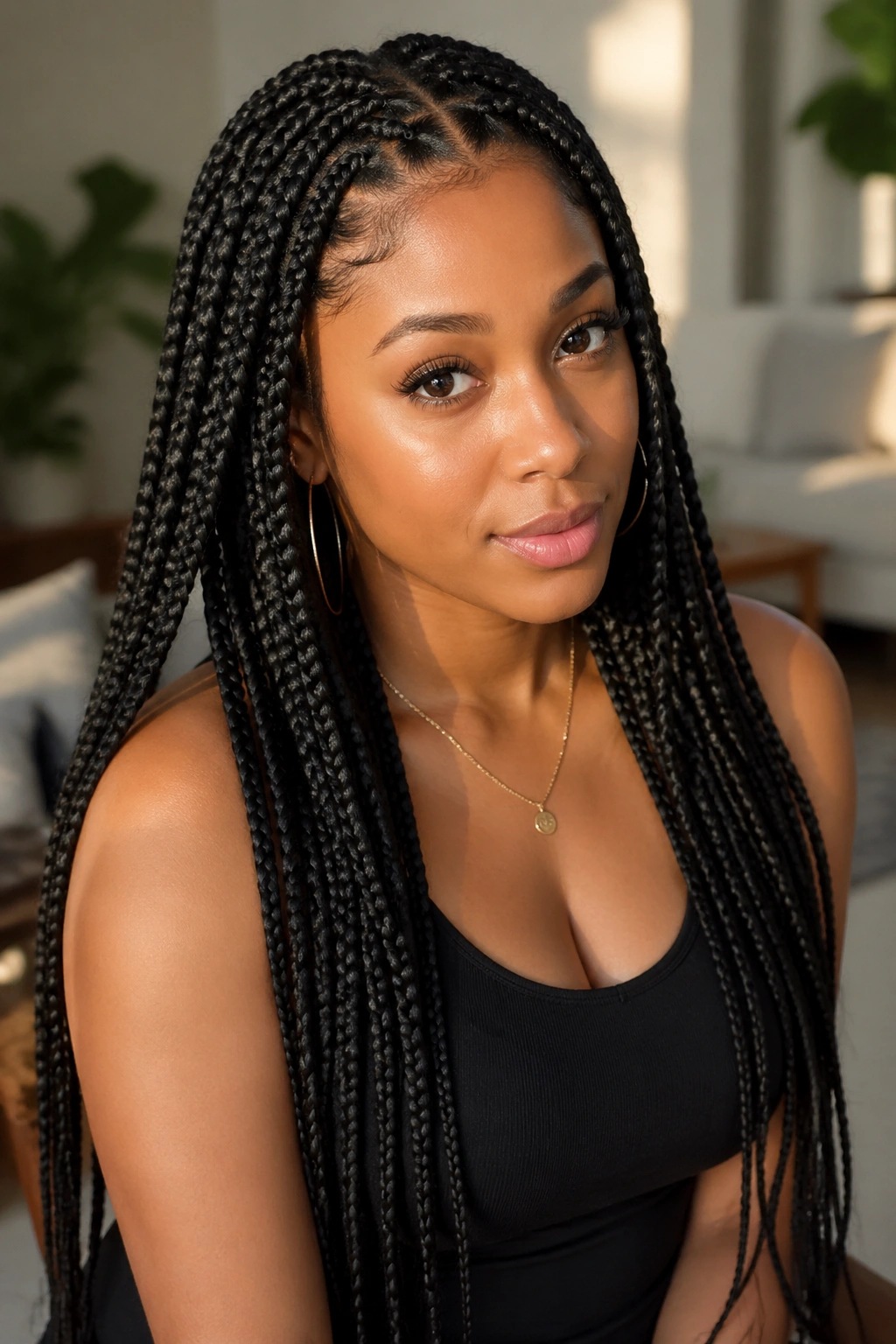
Mixed-size long box braids alternate between slim and medium sections to create texture without using color. That mix keeps the style from looking too uniform, and it gives the scalp pattern more rhythm.
The key is balance. You do not want random braid sizes scattered all over the head. The thicker and thinner sections need a pattern of their own, or the style reads messy instead of intentional. A good braider will place the size changes in a way that supports the shape of your head.
This style is useful if you like dimension but do not want beads, curls, or bright tones. The braid sizes do the talking. From a distance, the style looks layered and active; up close, the variation keeps the eye moving.
It’s a nice middle ground for people who want something different without being flashy. Plain can be good. Mixed can be better.
27. Jet-Black Long Box Braids
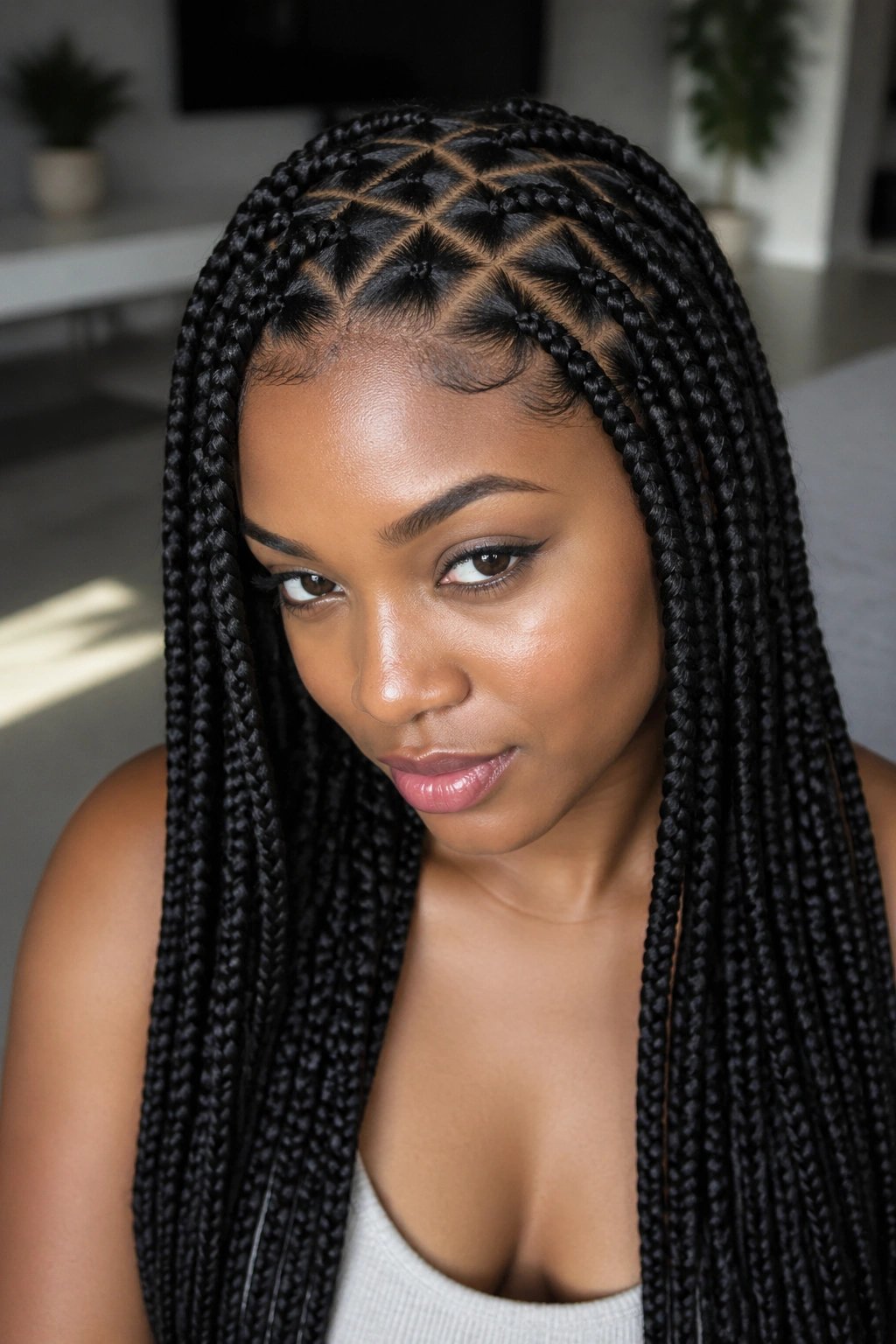
Jet-black long box braids have a clean, sharp look that depends on shine and shape more than color variety. Black braids can be dramatic in a very direct way, especially when they’re smooth and evenly installed.
The danger here is buildup. Heavy oils and thick greases can make the braids look dull and dusty instead of sleek. A light sheen spray and a clean scalp do more for jet-black braids than a pile of product ever will. The shine should look natural, not coated.
This style works with almost everything: casual clothes, formal wear, bright lipstick, bare face, gold accessories, silver accessories. It’s a base that does not argue with the rest of your outfit. That’s a strength.
If you want long braids that feel strong and simple, this is still one of the best looks on the table. Nothing fussy. Just clean length.
28. Layered Half-Up Long Box Braids
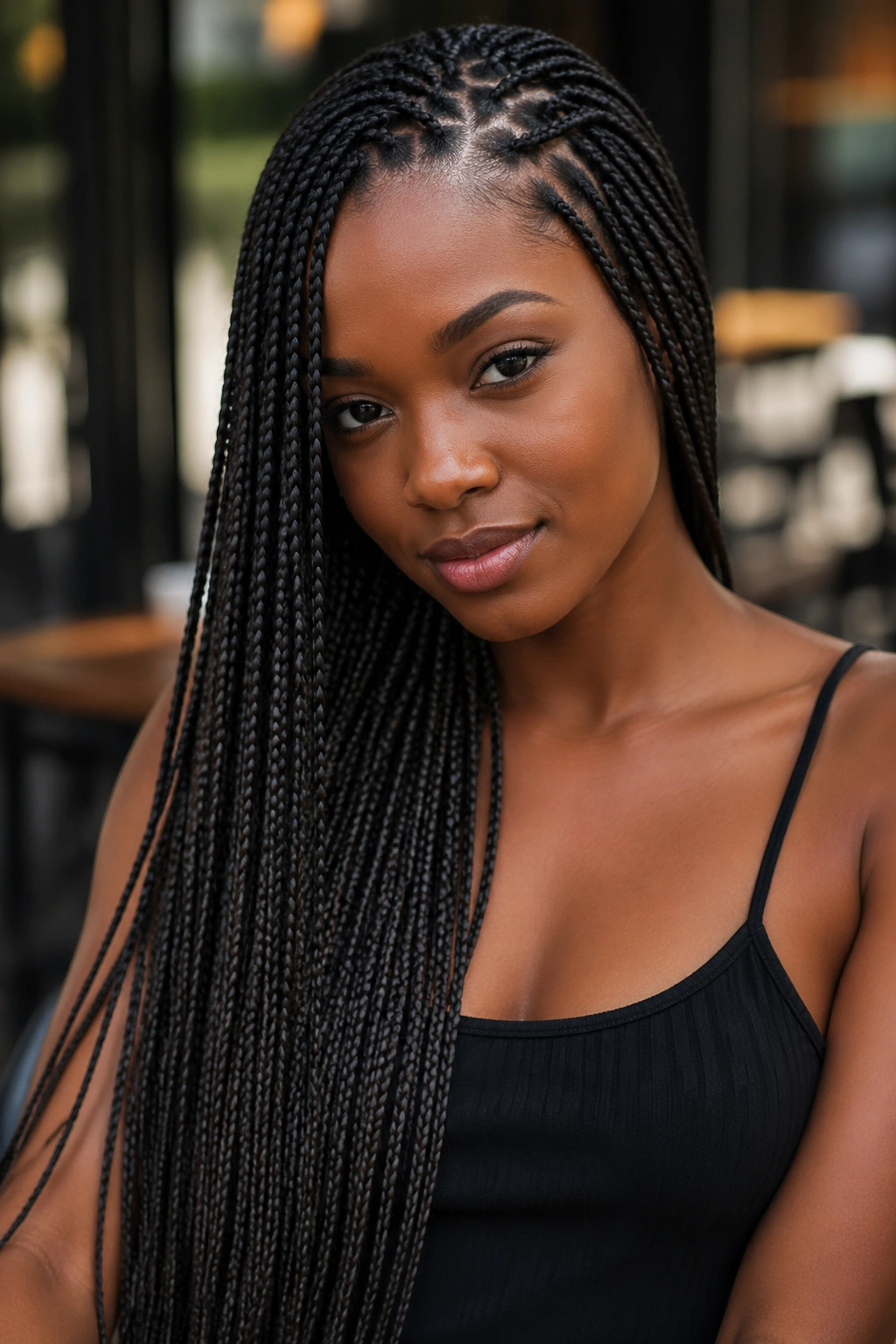
Layered half-up long box braids combine two useful ideas: shape around the face and lift at the crown. A few shorter front pieces or face layers keep the front from feeling too heavy, while the top section pulled back opens the face.
That combination is practical. You get the polished look of a half-up style without losing the softness of longer pieces around the cheeks and jawline. It’s one of the easiest ways to make long braids feel styled without a lot of effort.
The hair at the crown should be secured gently so the top section sits flat. Then the layers below can fall naturally. If the top is too tight, the style gets rigid and the layers stop mattering.
This is the kind of braid style that works for real life — office, errands, dinner, whatever. It looks put together without demanding a full styling session every morning.
29. Thigh-Grazing Long Box Braids
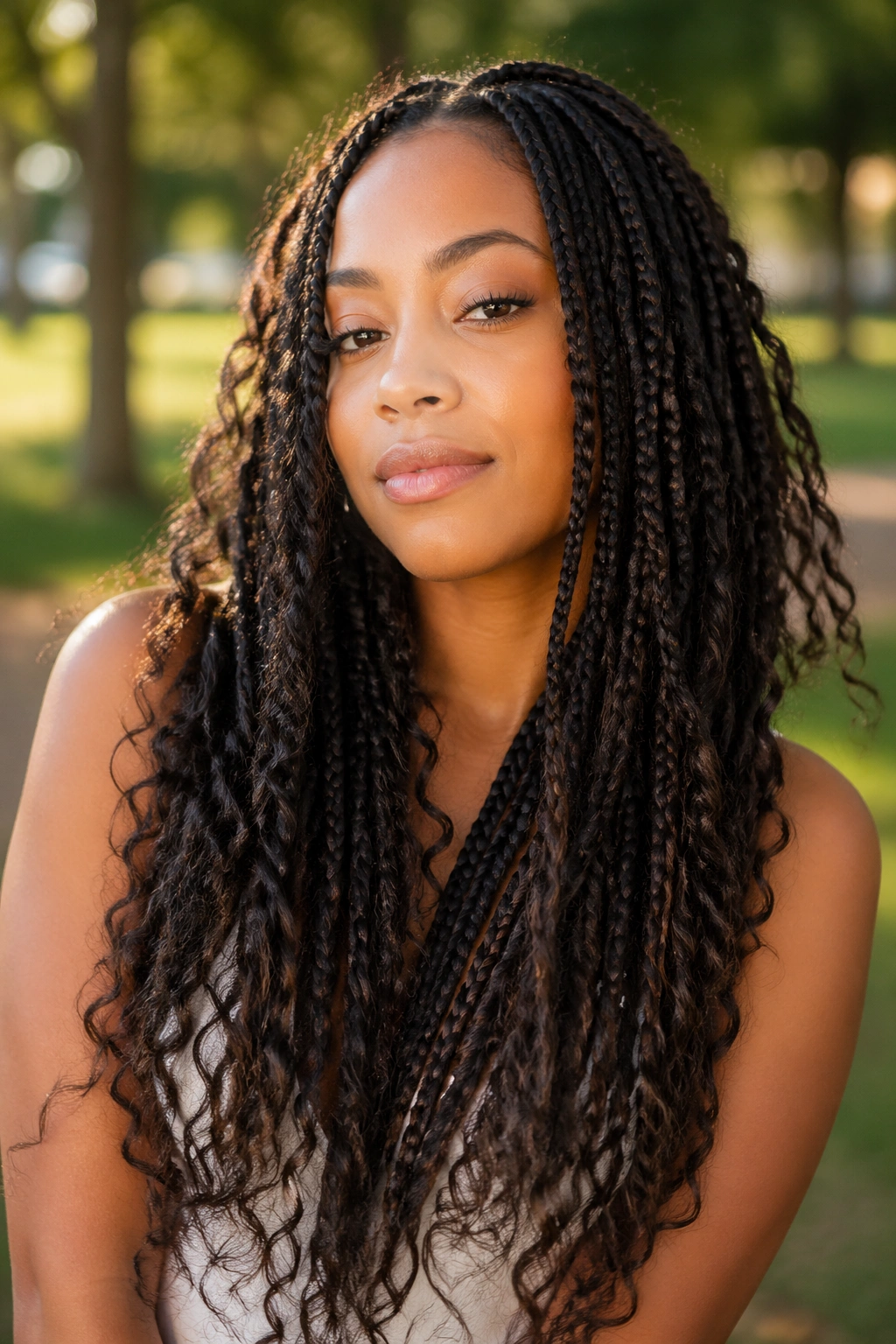
Thigh-grazing long box braids are for people who want the full drama of length and are willing to deal with it. These braids make a statement the second you stand up, and they keep making one every time you turn around.
Nope. They are not the lightest option.
The weight changes how you live in the style. Sleeping takes more care, drying takes longer, and ponytails can pull harder than you expect. The longer the braids go, the more important the installation balance becomes at the scalp and nape. If the roots are overloaded, the whole style turns into a chore.
Still, when they are done well, thigh-length braids are unforgettable in the best way. They swing dramatically, tuck into a huge bun, and create a shape that no shoulder-length install can match.
Choose them because you love the length, not because you think you’re supposed to. That’s the difference.
30. Face-Framing Long Box Braids
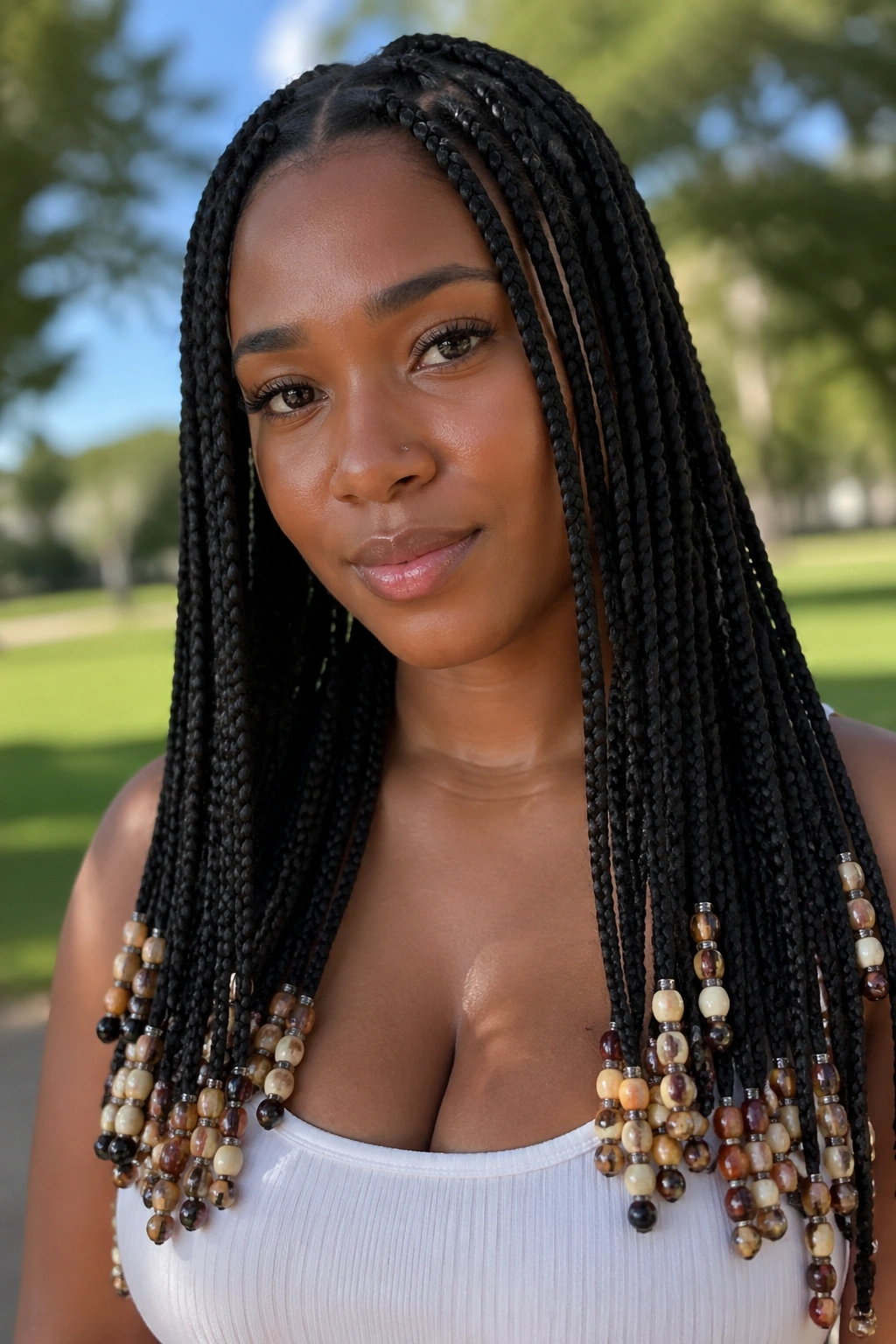
Face-framing long box braids put a little more attention near the front, usually with a few braids or layers that land closer to the jawline while the rest stay long. That small adjustment changes the whole balance of the style.
The front pieces soften the length so it does not feel like one flat wall of hair. A few shorter braids near the face can make a long install look lighter, more shaped, and easier to wear with glasses, hoops, or a high neckline. That practical part matters.
This style works especially well if you want your face to stay visible in a full-length install. It gives movement at the front, keeps the braids from swallowing your features, and still leaves you with plenty of length down the back.
If you want long braids but like a little framing around the cheekbones and chin, this is one of the easiest shapes to ask for. It sounds small. It makes a real difference.
Final Thoughts
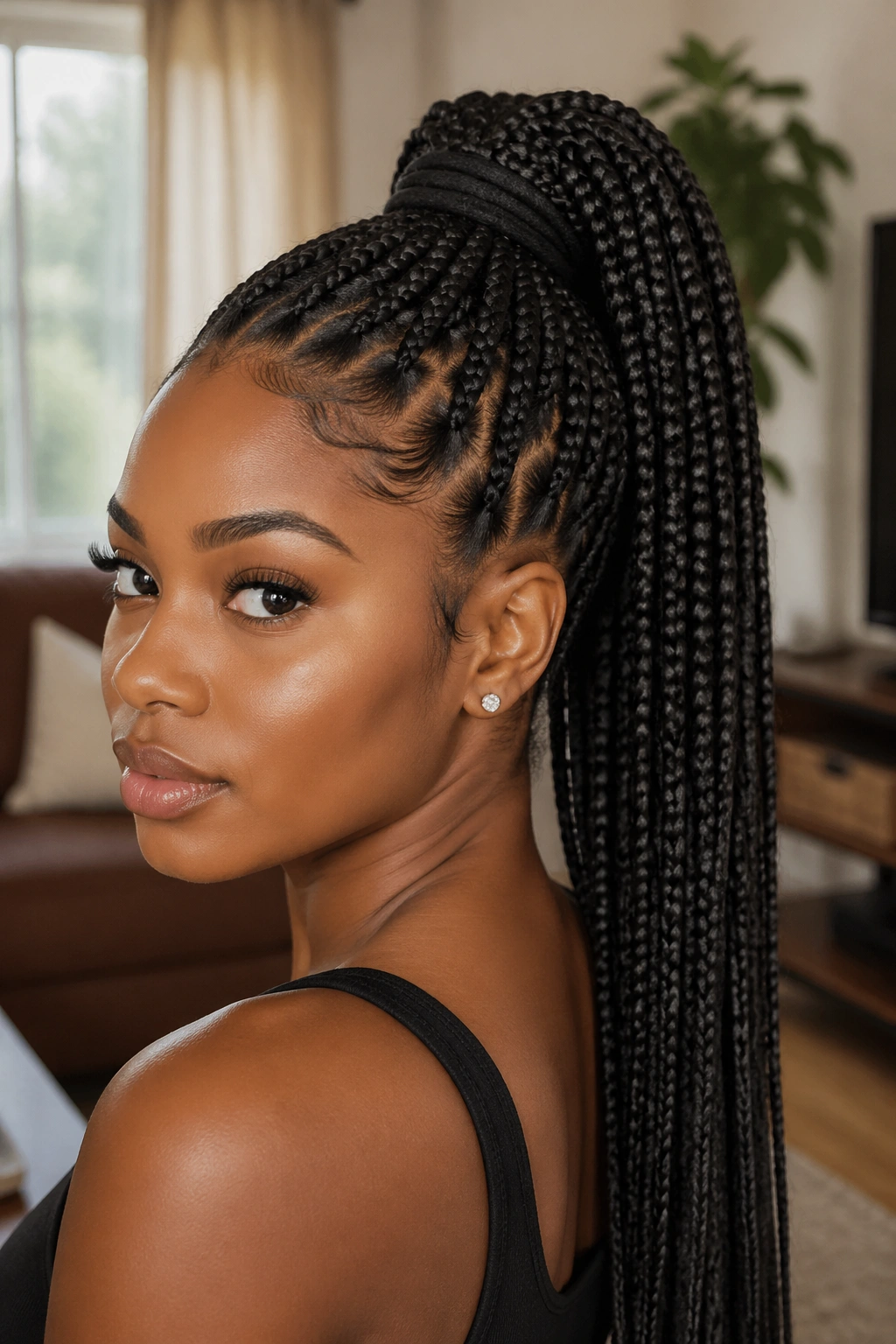
Long box braids work best when the length matches the way you actually live. If you want easy wear, cleaner parts, medium density, and a length that stays out of your way, that matters more than chasing the longest possible install. If you want drama, bring in color, cuffs, curls, or a ponytail shape that shows off the length.
The main thing people miss is this: the braids are only half the look. The parting, the root tension, the ends, and the way you wear them day to day carry just as much weight. A style can be gorgeous in the chair and miserable by week two if those details are ignored.
Pick the version that gives you room to move. That’s where long braids really earn their keep.
