



Blue box braids change the whole mood of a braid install. A deep cobalt set can look sharp and sleek, while a softer denim blue feels almost smoky, and a bright electric shade goes loud in a way that is hard to ignore.
The part people miss is that blue is not one look. It shifts with length, braid size, parting, and the kind of extension hair you choose. Waist-length braids read dramatic because the color has room to move. A chin-length bob feels cleaner and more graphic. Knotless braids soften the hairline, while jumbo braids put the color front and center with fewer pieces competing for attention.
That matters because blue shows everything. Shine, buildup, flyaways, and parting lines all stand out more than they do on darker braids. A careful install can make the color feel expensive and controlled; a sloppy one can make even a beautiful shade look busy. The difference is usually smaller than people think — a slightly richer blue, a smarter length, a cleaner part.
So the styles below are not just “blue braids” in a generic sense. They are different ways to wear the color, and each one changes the whole read of the hairstyle.
1. Waist-Length Cobalt Blue Box Braids
Cobalt is the shade that makes blue box braids look decisive. It has enough depth to stay elegant indoors, but enough brightness to show movement when you walk past a window or step into daylight.
Why cobalt works so well
Long braids give the shade room to breathe. On waist-length pieces, the color does not just sit there — it swings, stacks, and catches the eye in sections, which keeps the look from flattening out.
Ask for a medium part size if you want the blue to feel clean and polished. Tiny braids can look busy with a saturated shade, while extra-large ones can make the color feel blocky. A waist-length install with pre-stretched braiding hair is also easier on the scalp than a heavy pile of thick pieces hanging from the roots.
- Best for: people who want the color to do most of the work
- Length to ask for: 24 to 26 inches, depending on your height
- Works well with: a center part, side part, or pulled-back half-up style
- Watch for: extra weight at the ends if the braids are too thick
Tip: Keep the ends blunt or neatly sealed. Cobalt looks sharp when the finish is crisp.
2. Midnight Blue Knotless Box Braids
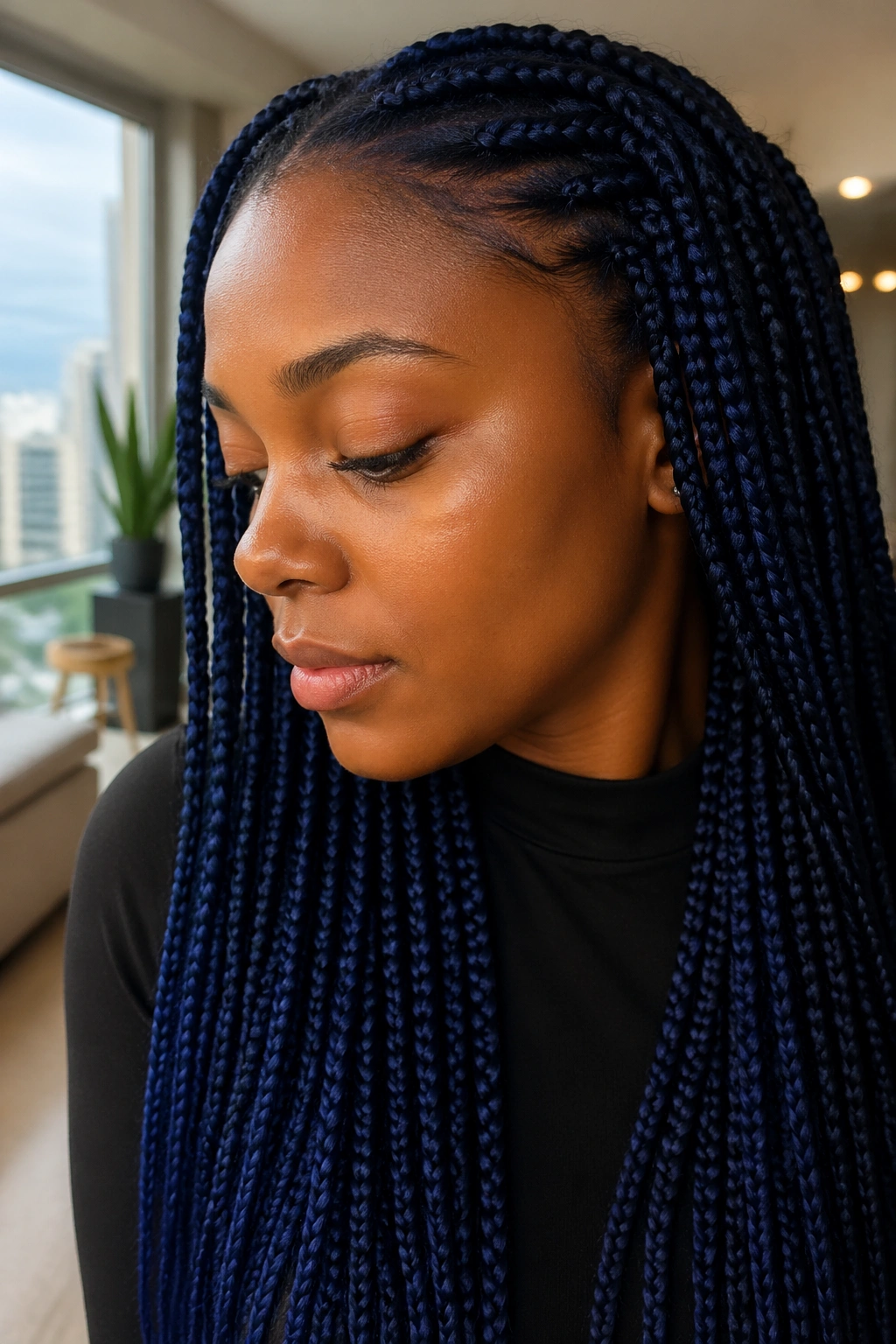
Midnight blue is for anyone who wants blue without shouting about it. In low light, it can read almost black. Then the color wakes up in daylight and gives you that deep, cool flash that looks expensive for the simple reason that it isn’t trying too hard.
Knotless braids make this shade even better. The flatter start at the root keeps the hairline soft, and that matters with a dark, glossy color because every detail at the scalp is visible. If you wear your braids up a lot, knotless styling also helps the front lay smoother.
The cleanest version of this look uses small to medium parts and a slightly tapered end. That shape keeps the braid from feeling heavy, which can happen fast when the hair is very dark and very long.
A lot of people choose midnight blue when they want color but still need something that plays nicely with work clothes, school uniforms, or a plain T-shirt and jeans day. It does not fight your outfit. It just sits there looking better than it should.
3. Electric Blue Jumbo Box Braids
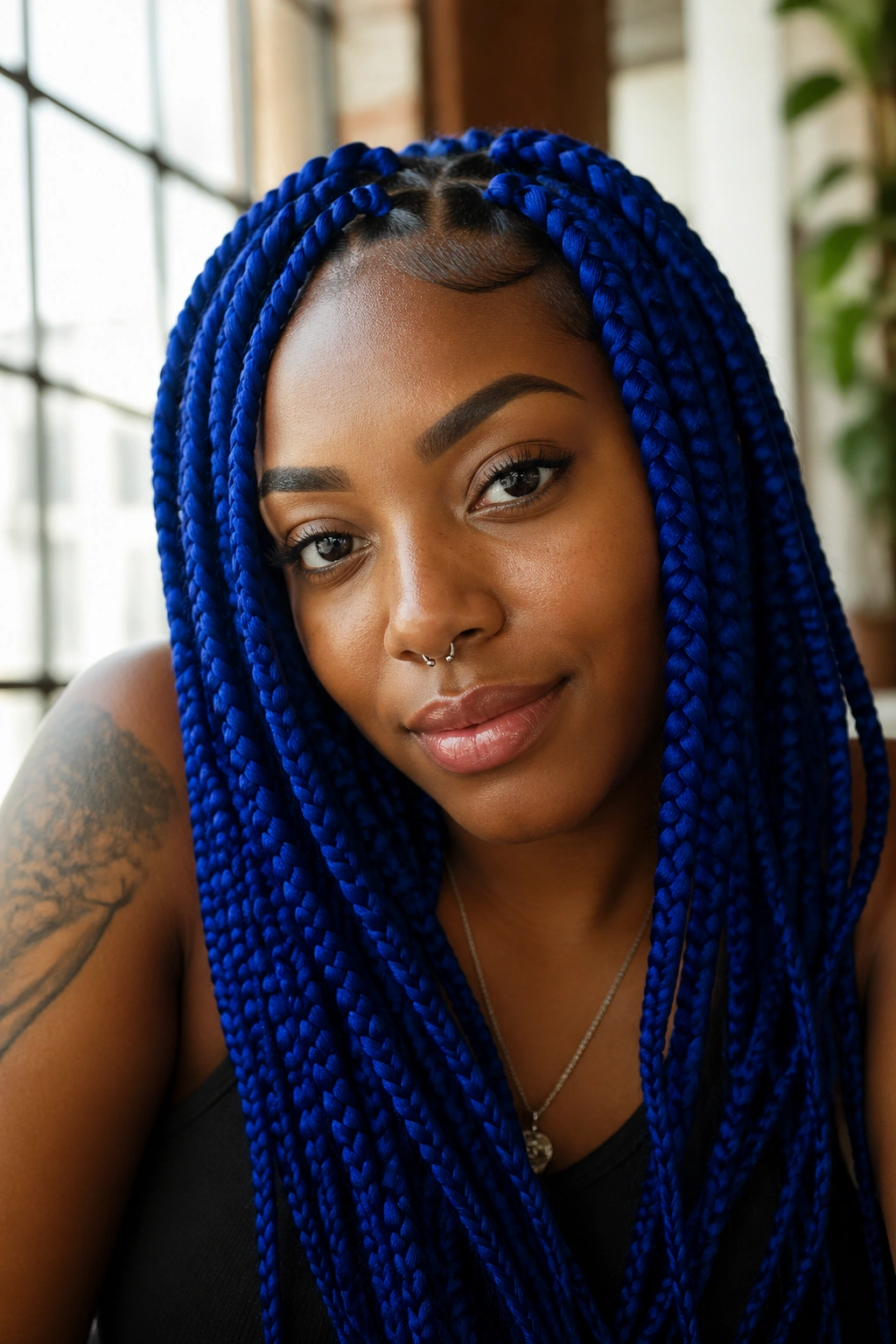
Electric blue is not subtle, and that is the whole point. Jumbo braids give the shade more surface area, so the color lands in thick, confident lines instead of thin streaks.
Why does that matter? Because bright blue can look noisy if there are too many tiny pieces. Bigger sections calm it down. The braid itself becomes the statement, which is useful if you want the style to feel bold but still organized.
How to wear it
Jumbo braids work nicely at shoulder length or a little past it. Go much longer and the weight can start to drag, especially if your braider uses dense extension hair. A blunt finish keeps the shape modern.
This is also one of the easier blue braid styles to style quickly. A half-up ponytail, a top knot, or just one thick braid draped over each shoulder is enough. You do not need much else.
Good fit for: someone who wants a faster install, fewer braids, and a color that reads from across the room. Not ideal for: anyone who hates hair on the heavier side.
4. Blue Ombré Box Braids
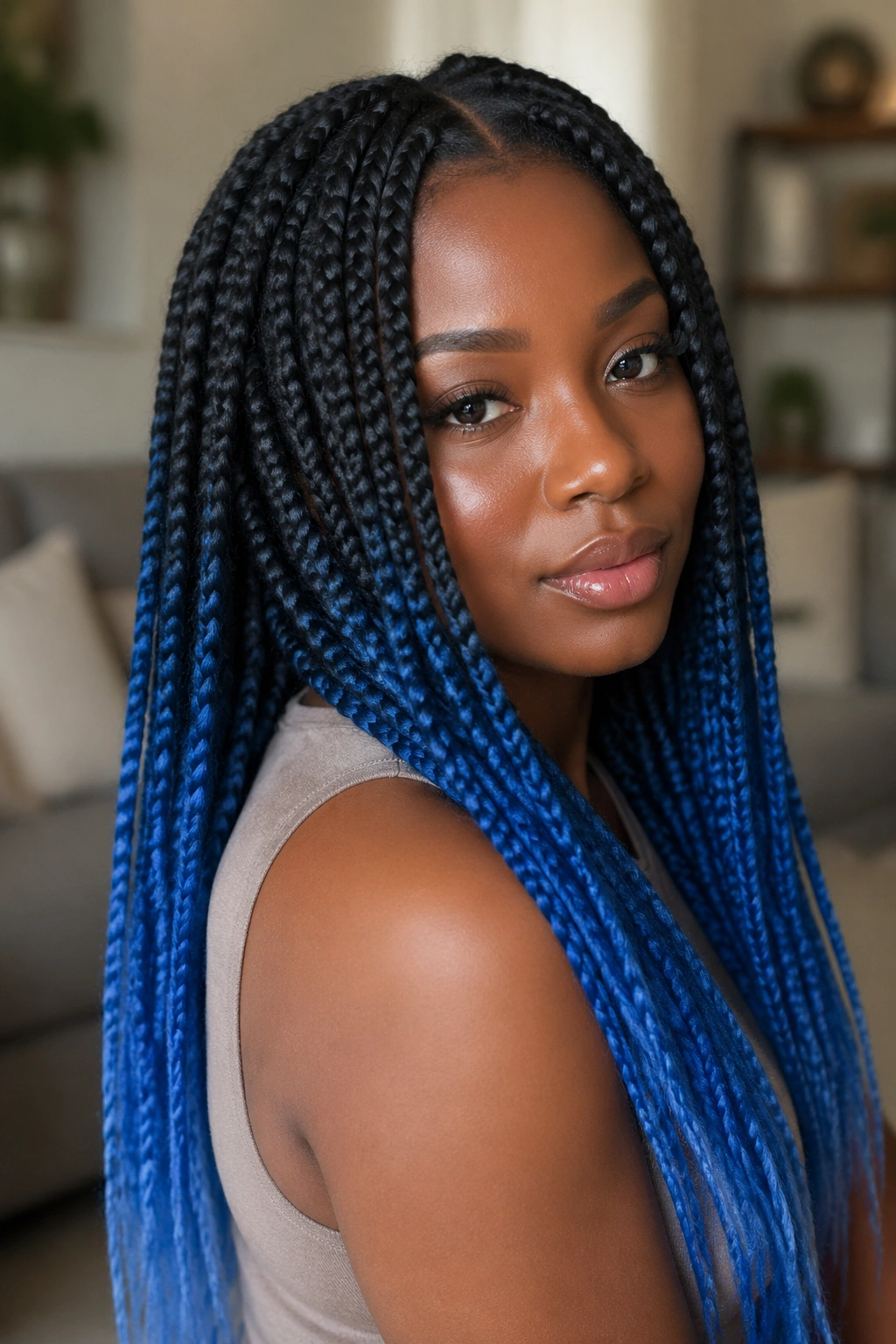
Ombré blue braids are the smartest option when you want color without committing to a full blue root. The darker base keeps the style grounded, and the blue only appears where the hair moves, which makes the whole look feel softer.
That trick also helps growth look less obvious. Roots are less of a problem when they are already dark, and the shift into blue makes the braid feel intentional for longer. It is one of the most forgiving ways to wear colored braids.
A black-to-blue ombré works well if you want contrast. A brown-to-blue blend feels a little warmer and softer. If you are choosing between the two, think about your wardrobe and makeup habits. Stronger contrast tends to look sharper with clean lines and gold jewelry. Softer contrast leans easier and more casual.
This style is easy to love because it does not ask you to choose between “safe” and “fun.” It gives you both.
5. Blue-and-Black Box Braids
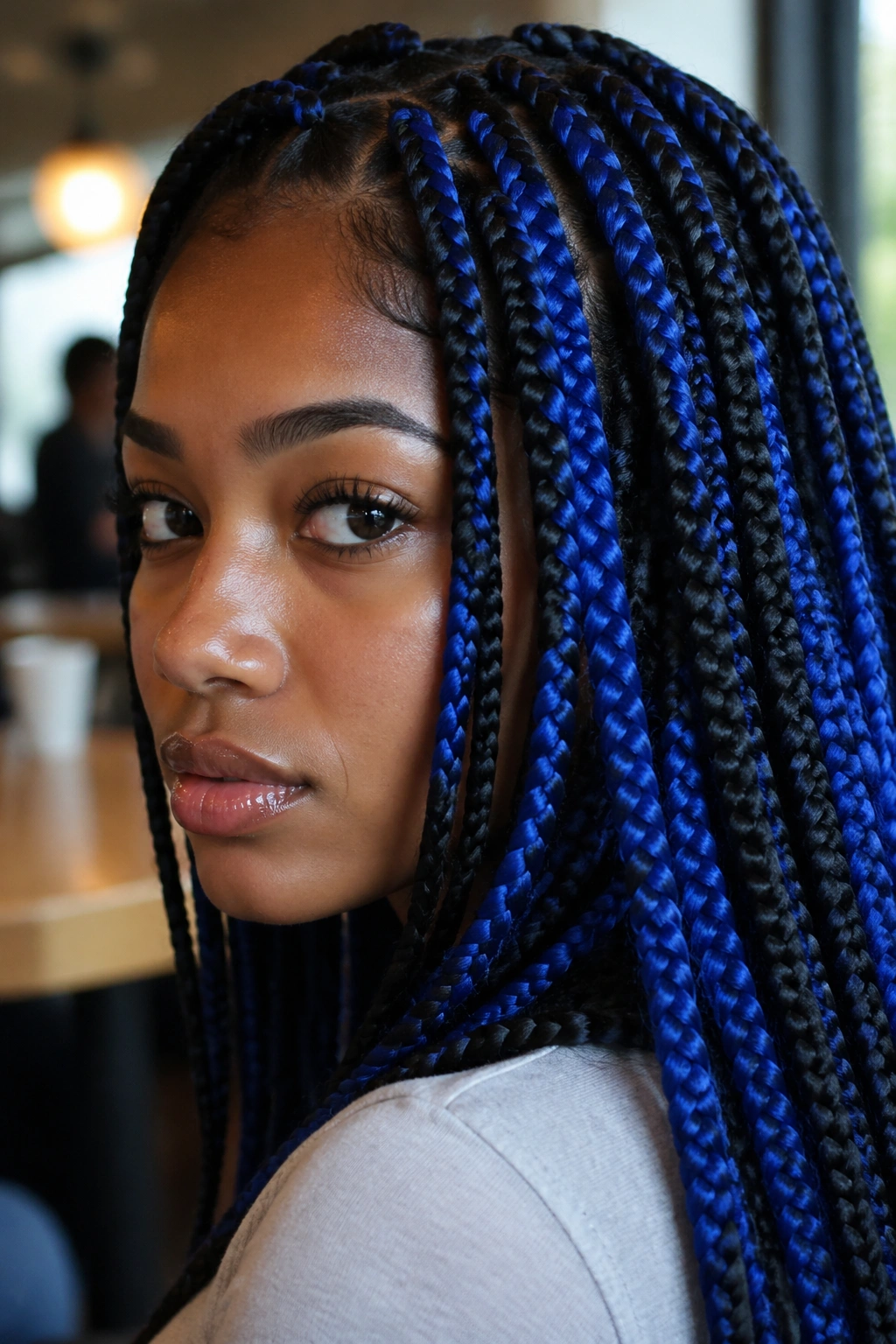
Blue-and-black braids have a quiet confidence that I honestly think gets overlooked. They are not flashy in the obvious way, but the color shift is still there, and that little bit of blue is enough to change the whole braid.
The black keeps the style grounded. The blue breaks it up. Together, they create depth that shows up best when the braids move. Under indoor light, the color can feel restrained. In sunlight, the blue threads through the black and suddenly the style has more texture than you expected.
There is also a practical upside. Black at the root and throughout the braid hides lint and minor buildup better than pale shades do. That makes this a good choice if you want colored braids but do not want to baby them every single day.
Best ask for the salon chair: a deep sapphire or royal blue mixed through black extension hair in medium sections. Too much blue can erase the effect. A little goes a long way here.
6. Royal Blue Shoulder-Length Box Braids
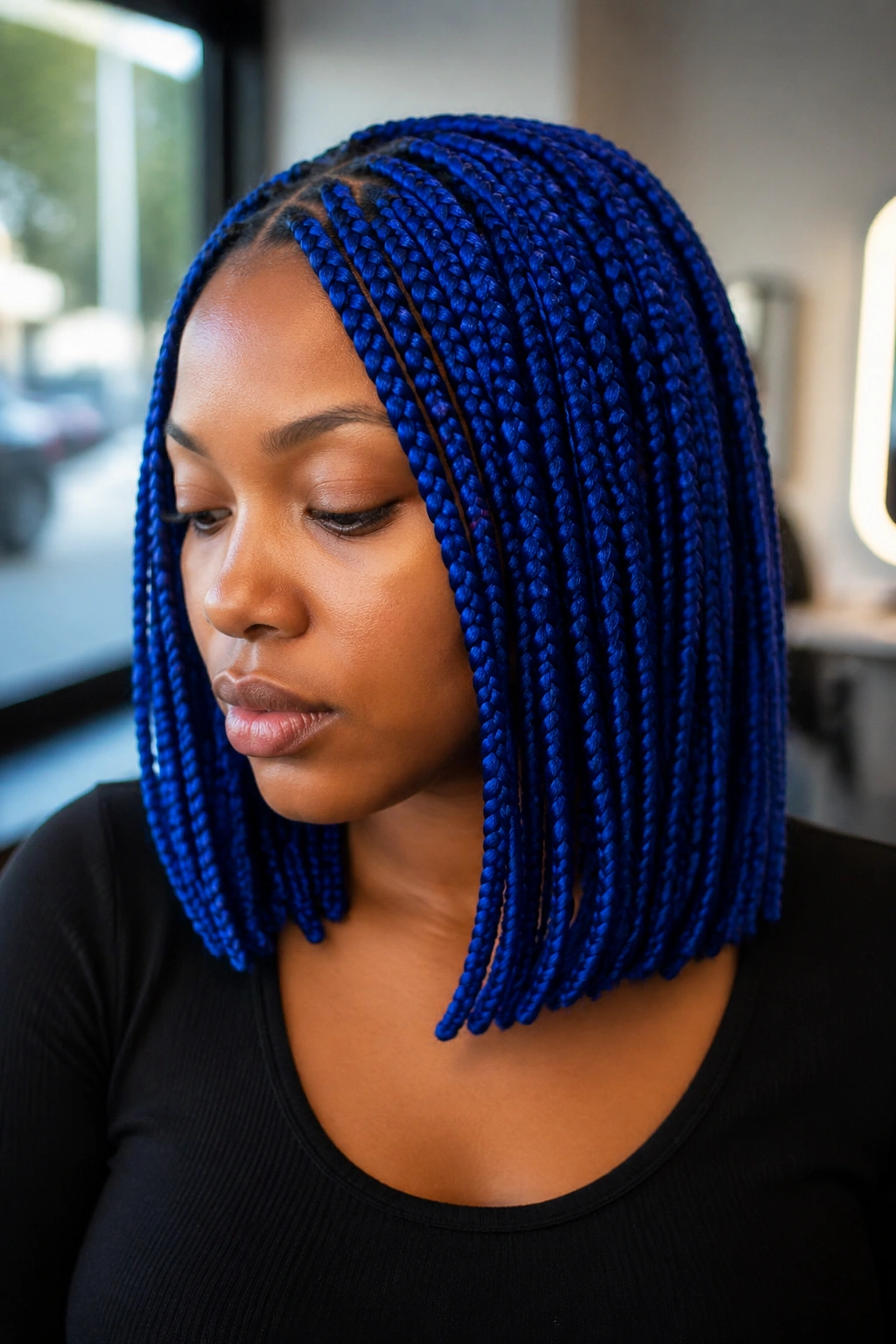
Shoulder-length royal blue braids are the style I would point to for someone who wants color but does not want the maintenance of a long install. They are lighter, quicker to dry after cleansing, and easier to sleep on without getting tangled in the blanket.
Royal blue has a crispness that suits shorter lengths. The color does not need long strands to make a point. At shoulder level, it frames the face nicely and keeps the neckline open, which makes the whole look feel neat instead of heavy.
Why this length works
Shorter braids move less at the ends, so they fray more slowly. That helps the style hold its shape longer, especially if you are careful with a silk wrap at night. It also means your scalp gets a break. That is not a small thing.
If you like simple styling, this length is easy to live with. Push one side back with a clip, add hoops, and you are done. No elaborate setup required.
Note: shoulder-length royal blue braids look sharper when the ends are even. A blunt cut makes the color seem richer.
7. Baby Blue Box Braids
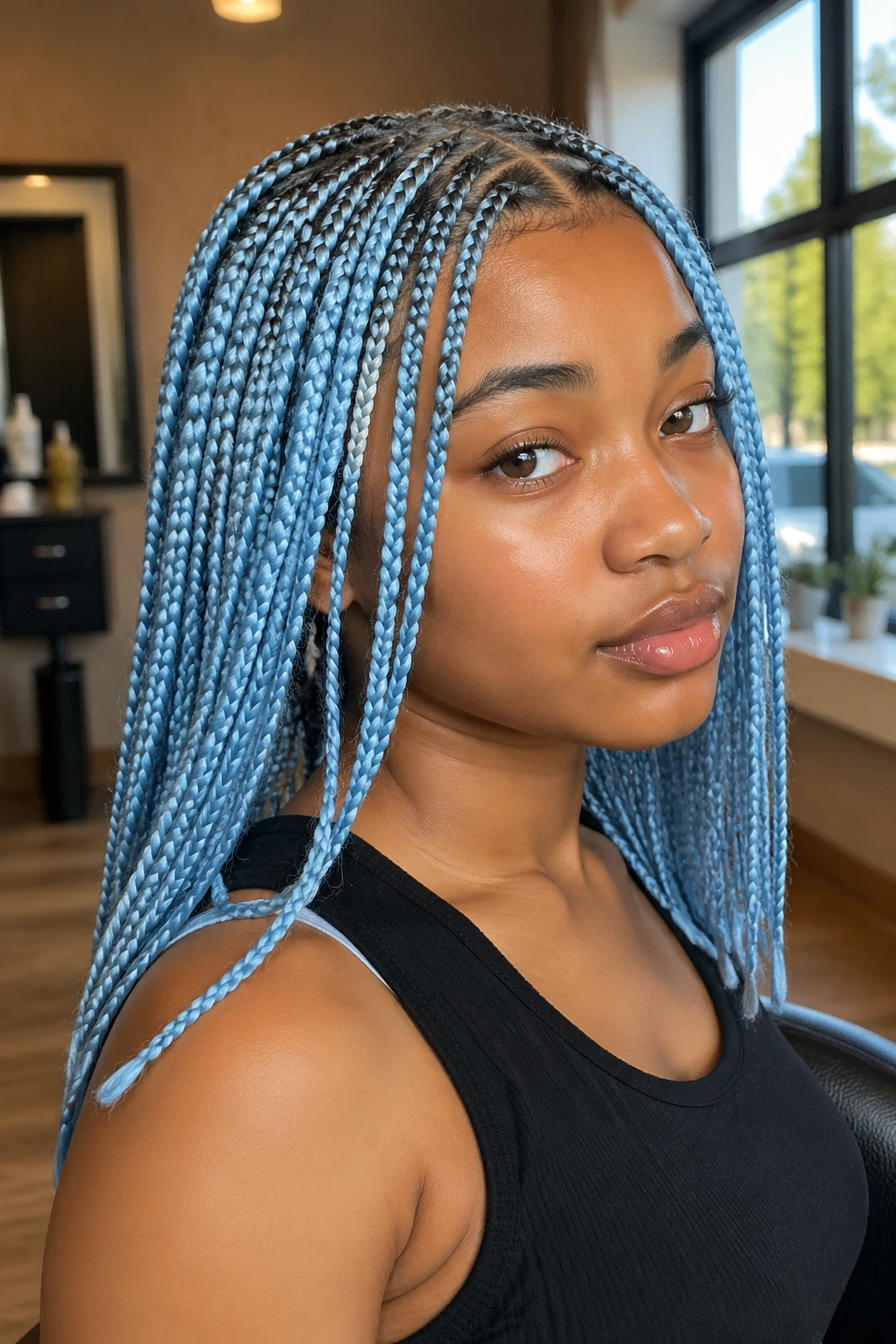
Baby blue changes the whole tone of box braids. Instead of strong contrast, you get something soft, pale, and slightly unexpected — the kind of color that looks delicate in one light and almost icy in another.
What makes baby blue different
Light shades show texture more clearly. That means the parting, the braid tension, and the finish at the ends matter a lot. If the install is neat, baby blue looks clean and airy. If the braids are fuzzy or uneven, the color can start to look dull fast.
This is one of those styles that rewards a tidy routine. A light mousse on the braid lengths can help keep the surface smooth, and a silk scarf at night matters more here than it does with darker hair. Tiny lint specks show up faster on pale extensions. Annoying, yes. True, also yes.
If you want baby blue without it feeling too sugary, keep the braid size medium and the length around collarbone to mid-back. That keeps the style from drifting into costume territory.
One small trick: pair it with a clean middle part or a crisp side part. Soft color looks better with a sharp shape.
8. Blue Boho Box Braids
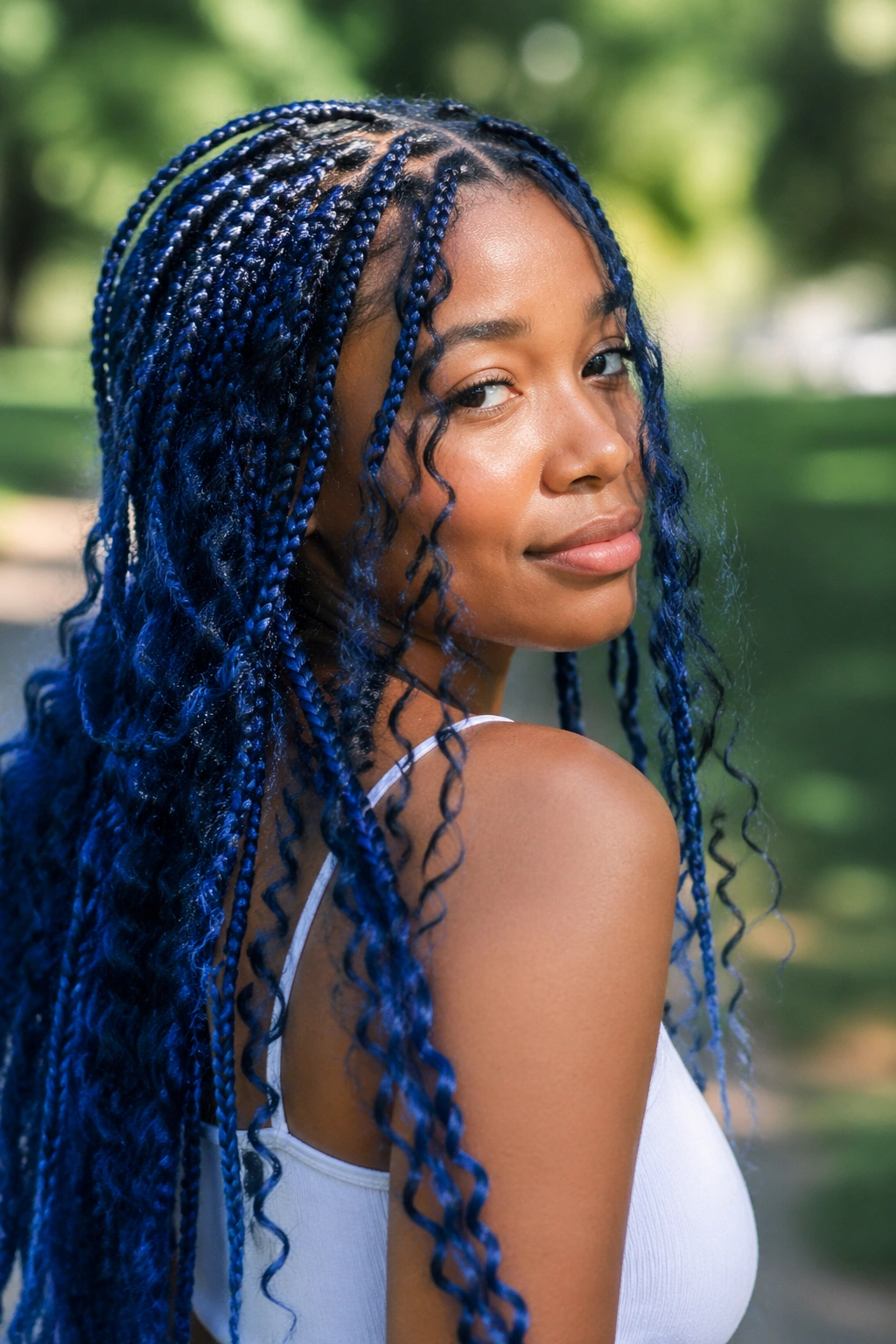
Boho blue braids have movement built in. The loose curly pieces woven through the braids make the color feel less rigid, and the blue ends up looking a little more alive because the style keeps changing shape as you move.
This is a good choice if you like texture. The curly strands break up the straight lines of the braid and soften the whole install. Blue can sometimes feel hard-edged on its own, so the boho finish gives it a more relaxed feel.
How to make them work
Do not overload the style with curls everywhere. A few curly pieces placed through the length are usually enough. Too many and the braid starts to lose its shape. That is the line to watch.
Boho braids also need a gentler touch at home. Finger-detangle the curly pieces instead of dragging a brush through them. Use a light mist of water or setting foam if the curls start to puff, but do not soak the whole head. That only creates frizz and dries slowly.
This is the style for someone who wants blue braids to feel less structured and more lived-in.
9. Blue Box Braids with Gold Cuffs
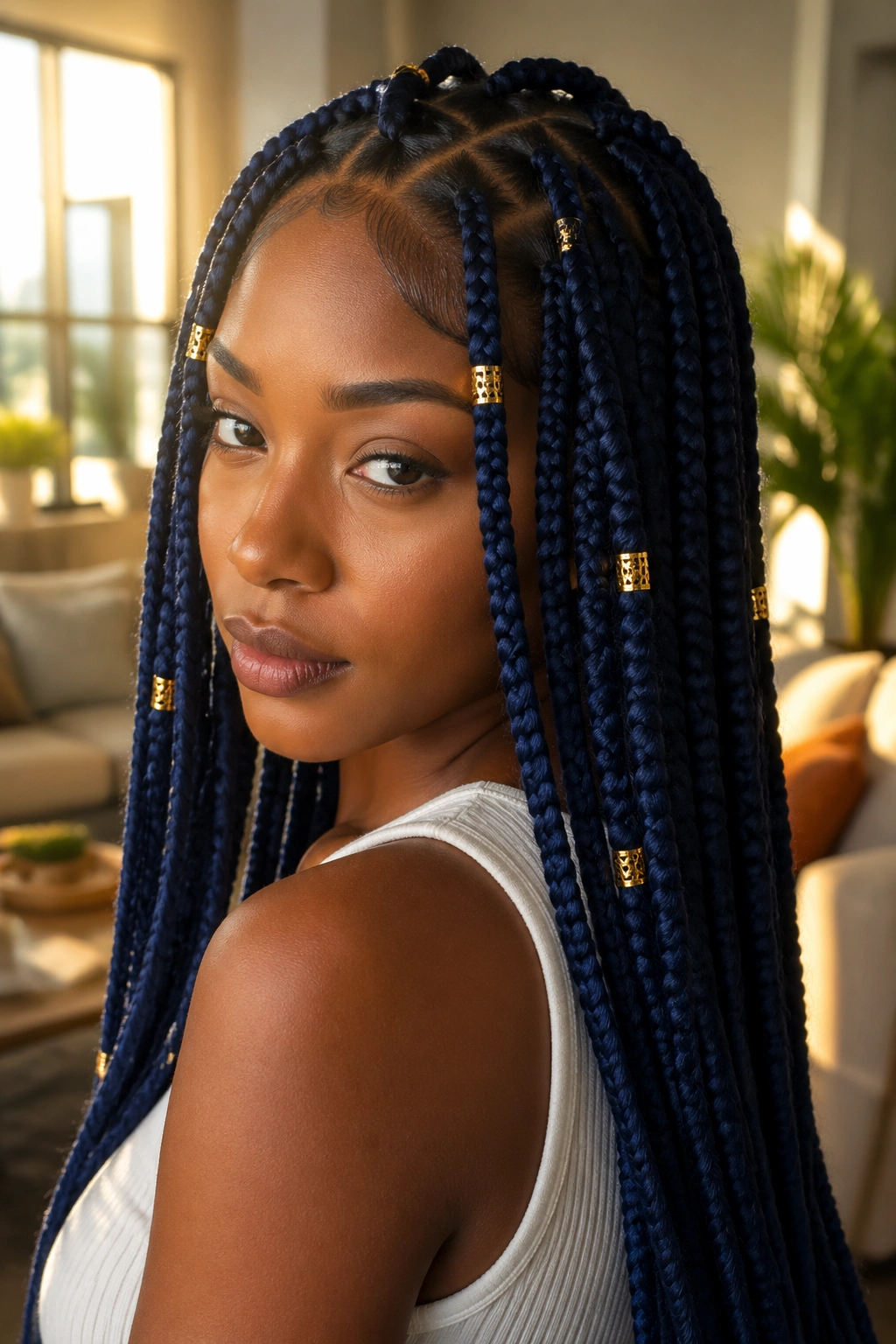
Gold cuffs are the easiest way to give blue braids a finished look without changing the braid itself. One or two cuffs near the front can make the style feel deliberate, while a few scattered through the length add a little rhythm.
The combination works because gold and blue play off each other cleanly. Blue gives the eye something cool and deep to rest on. Gold adds a warm point of light. You do not need many accessories for the effect to land.
- Keep it light: 6 to 10 cuffs is usually enough
- Place them near: the face, the ends, or the outer braids
- Avoid: packing every braid with metal, which can feel heavy and noisy
- Nice extra: a matching gold nose ring or hoop earrings if that is your thing
A style like this is useful when you want a braid install to look dressed up without actually doing much styling. The cuffs do the work. You just keep them spaced out so the braids can still move.
10. Triangle-Part Blue Box Braids
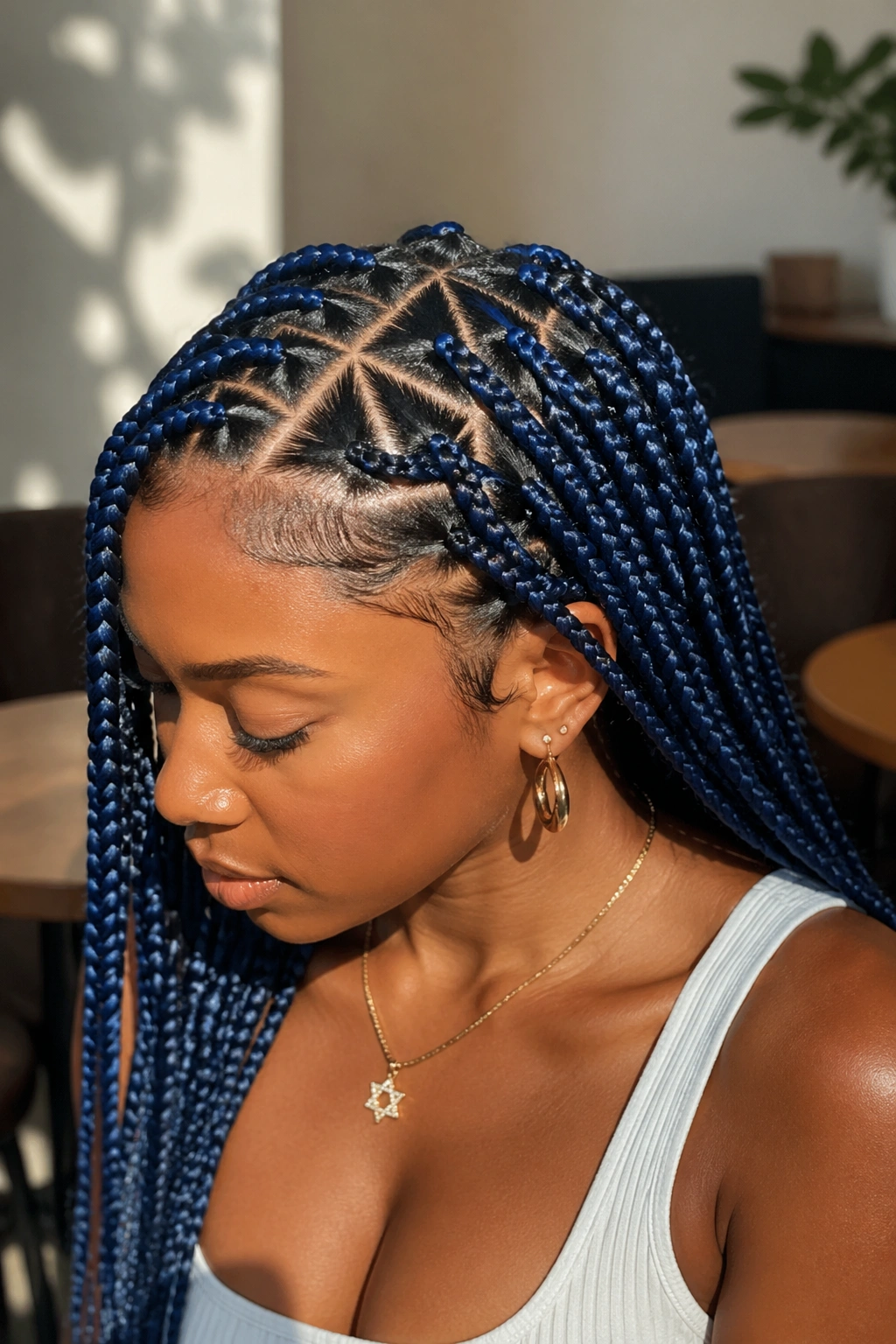
Triangle parts change the whole shape of blue box braids before the first braid even starts. Instead of the usual square sections, you get sharp little geometric pieces that make the color look more graphic and less predictable.
That matters more with blue than with a plain dark braid. The parting becomes part of the design. In bright shades, those lines show up clearly, and the style gains a bit of edge even if the braids themselves are medium or small.
What makes this parting stand out
Triangle parts usually take longer, because the sections need to be neat from the start. A tail comb and a steady hand make a difference here. If one row is crooked, you will notice it all week.
The style works especially well with medium-length braids, where the parts stay visible but do not get lost in too much hair. If you want the look to feel crisp, pair the triangles with clean edges and a smooth root. A little styling gel at the base helps, but too much product can build up fast.
This is for the person who likes structure. Not softness. Structure.
11. Blue Feed-In Ponytail Braids
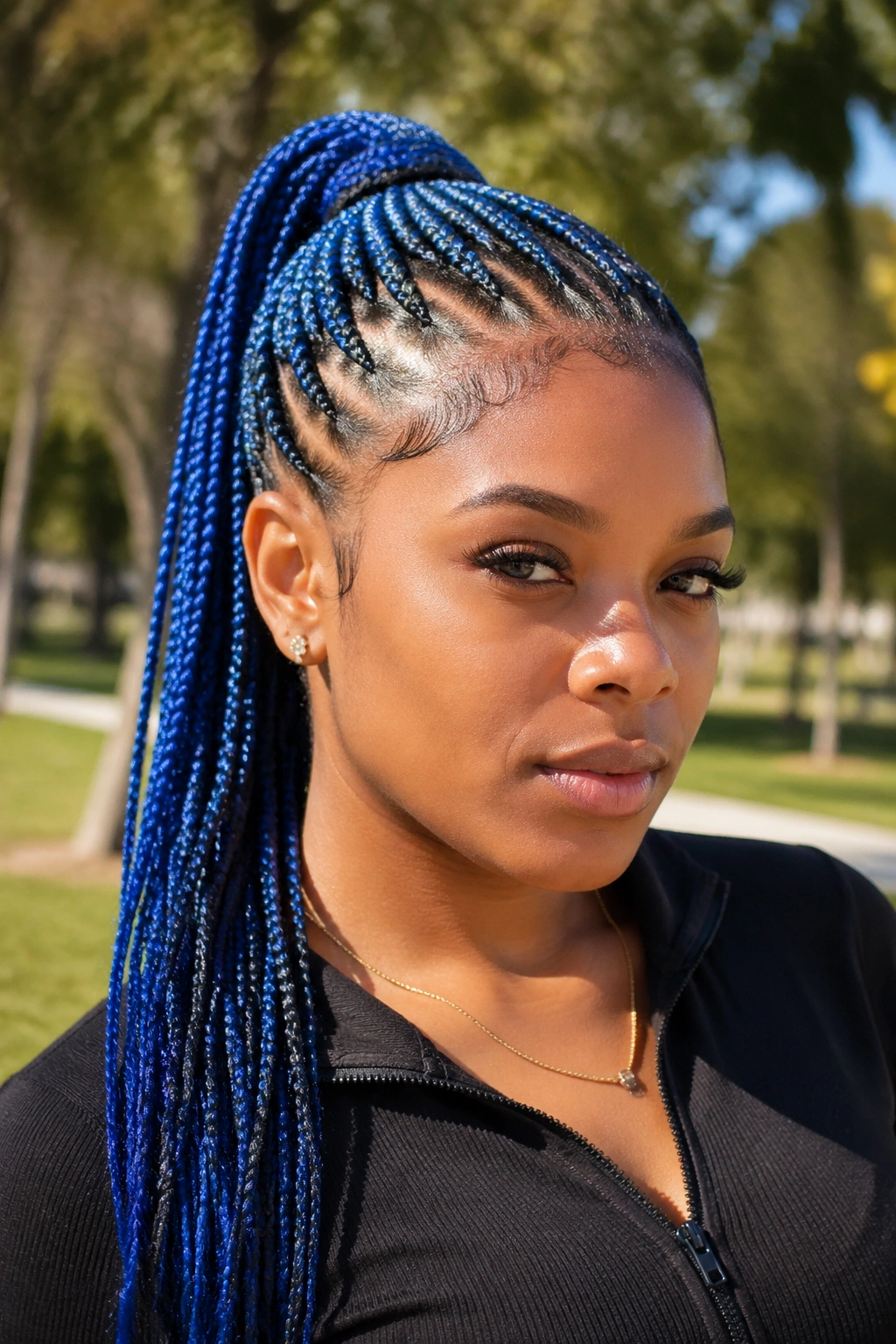
A blue feed-in ponytail gives you height, shape, and a clear view of the color all at once. Because the braids are gathered upward, the blue reads as one strong sweep instead of a curtain of pieces hanging loose.
Feed-in work also helps the front stay flatter, which is a real advantage if you like a sleek hairline. The braid starts small and builds gradually, so the style can feel lighter at the roots than a straight-up heavy install.
Where this style shines
It looks especially good when the ponytail sits high but not pulled so tight that your scalp feels it immediately. That line matters. If the front is gripped too hard, the style loses its charm fast.
This is a strong choice for events, workouts, or days when you want your face open and your hair out of the way. It also shows off color well because the ponytail swings as one piece. Add a wrapped base or a few cuffs if you want a cleaner finish.
Small warning: high ponytail braids can put extra strain on the front if the style is too heavy. Ask for a lighter build at the crown.
12. Blue Box Braids in a Half-Up Bun
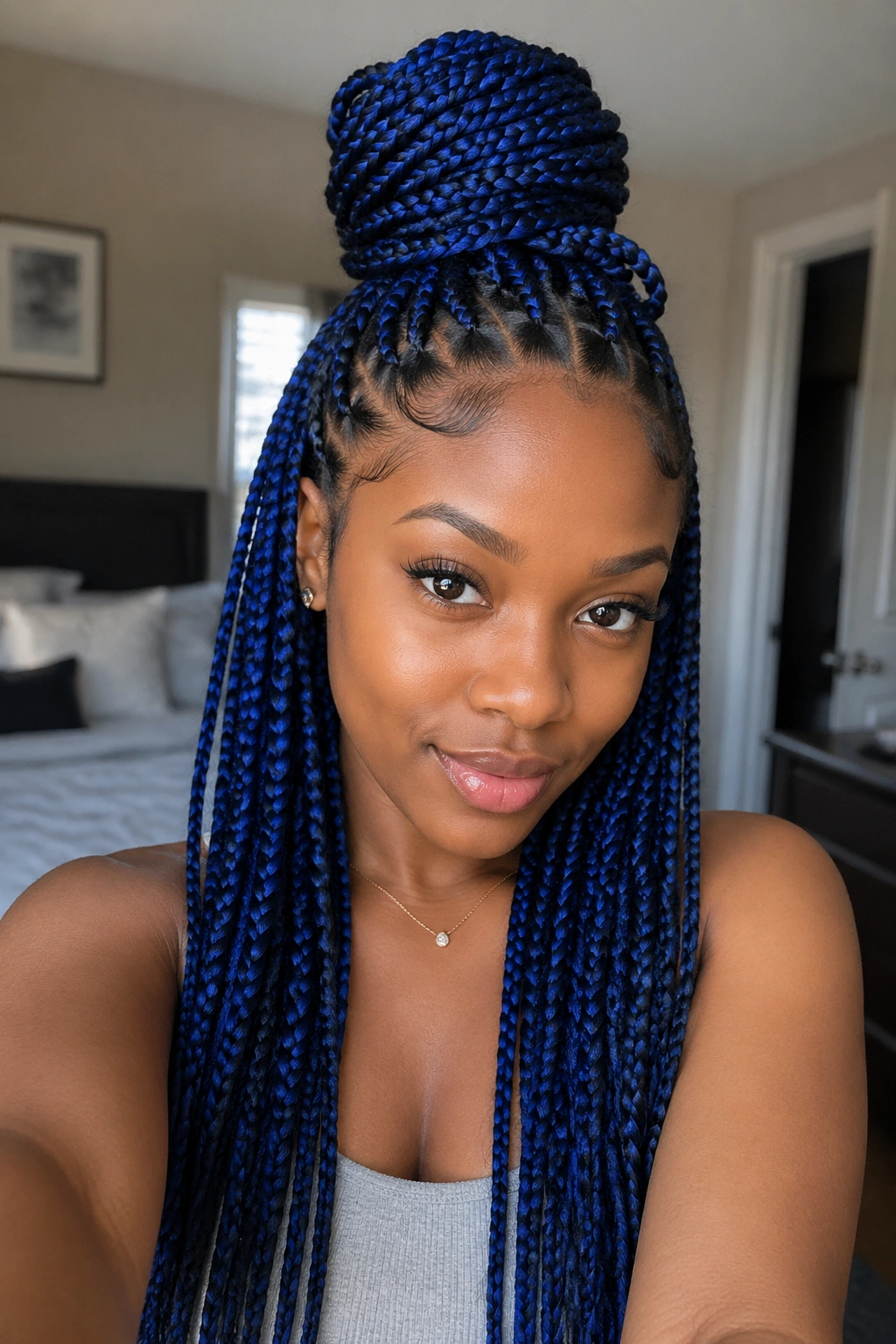
Half-up blue braids hit that useful middle ground between styled and easy. You get the face-framing lift of an updo, but the rest of the braids still hang free, so the color stays visible down the back and over the shoulders.
This style works because the bun creates a second shape on top. Blue braids can sometimes look flat when they all fall in the same direction. The half-up setup breaks that line and gives the eye somewhere else to go.
It is also one of the most forgiving everyday styles. If the braids are a little older, the bun hides that. If the ends are starting to fuzz, the lifted section helps distract from it. That is not glamorous, but it is useful.
A secure snag-free elastic and a few pins are enough. Do not yank the bun tight. Blue braids already make a statement; they do not need to be strained into one.
13. Blue Bob Box Braids
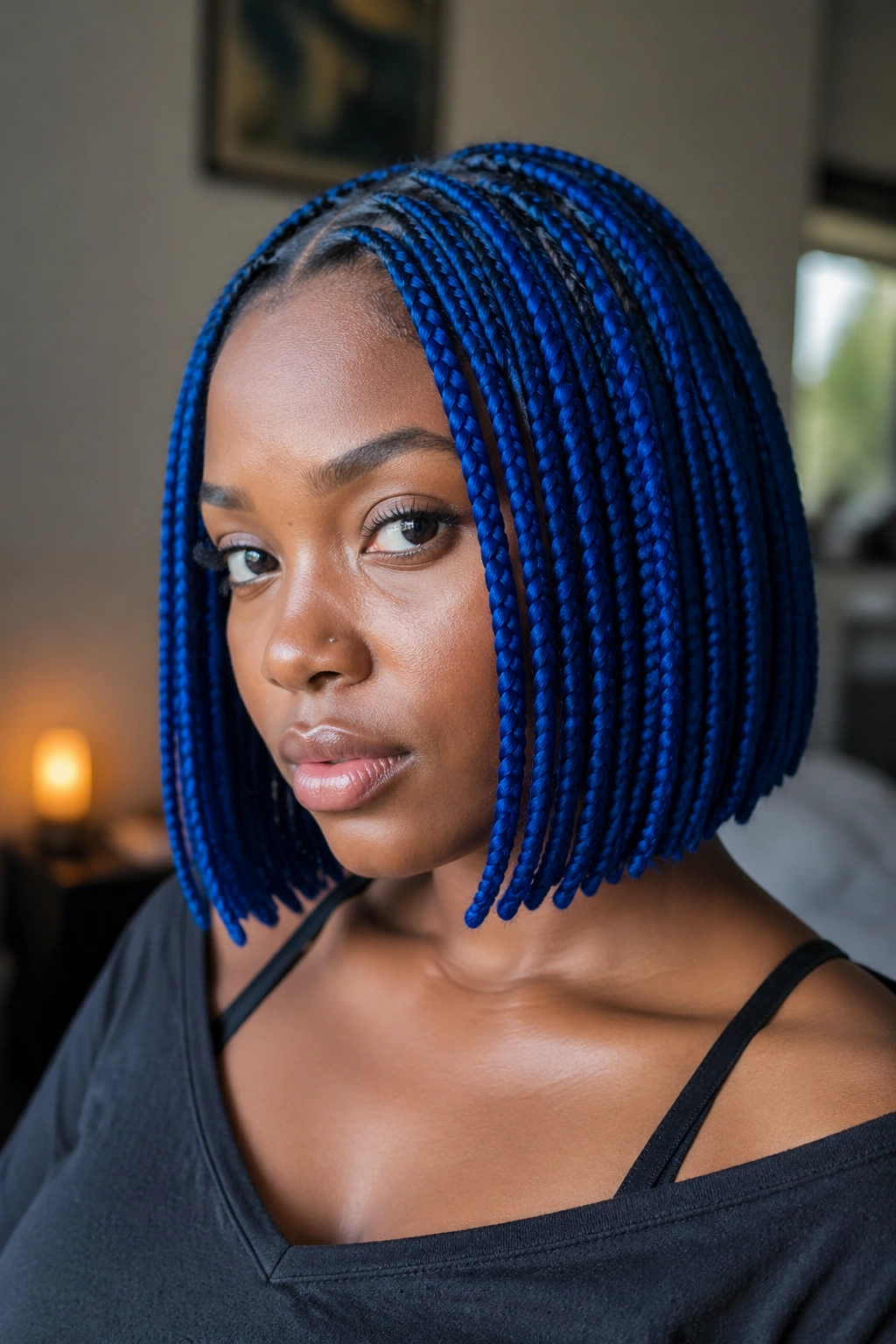
A blue bob is sharp in the way a good haircut is sharp. The shorter length makes the color feel more deliberate, because your eye takes in the whole shape at once instead of reading the hair in long sections.
That is why this style works so well with bold blue. A chin-length or jaw-length bob gives the shade a clean outline. It also keeps the weight down, which is a blessing if you have ever had long braids tug at your neck by the end of the day.
Why people keep coming back to it
A bob dries faster, sleeps easier, and gets less tangled at the ends than long braids do. That sounds boring until you live with braids for a few weeks and remember what it feels like to swing a heavy set of hair over your shoulder for the hundredth time.
I also like this length because it makes accessories easier to see. Big hoops, a bold lip, a good pair of sunglasses — they all get more space to show up when the braids stop at the jaw or collarbone.
Best shape: blunt ends for a crisp look, slightly layered ends if you want softness.
14. Blue and Purple Mixed Box Braids
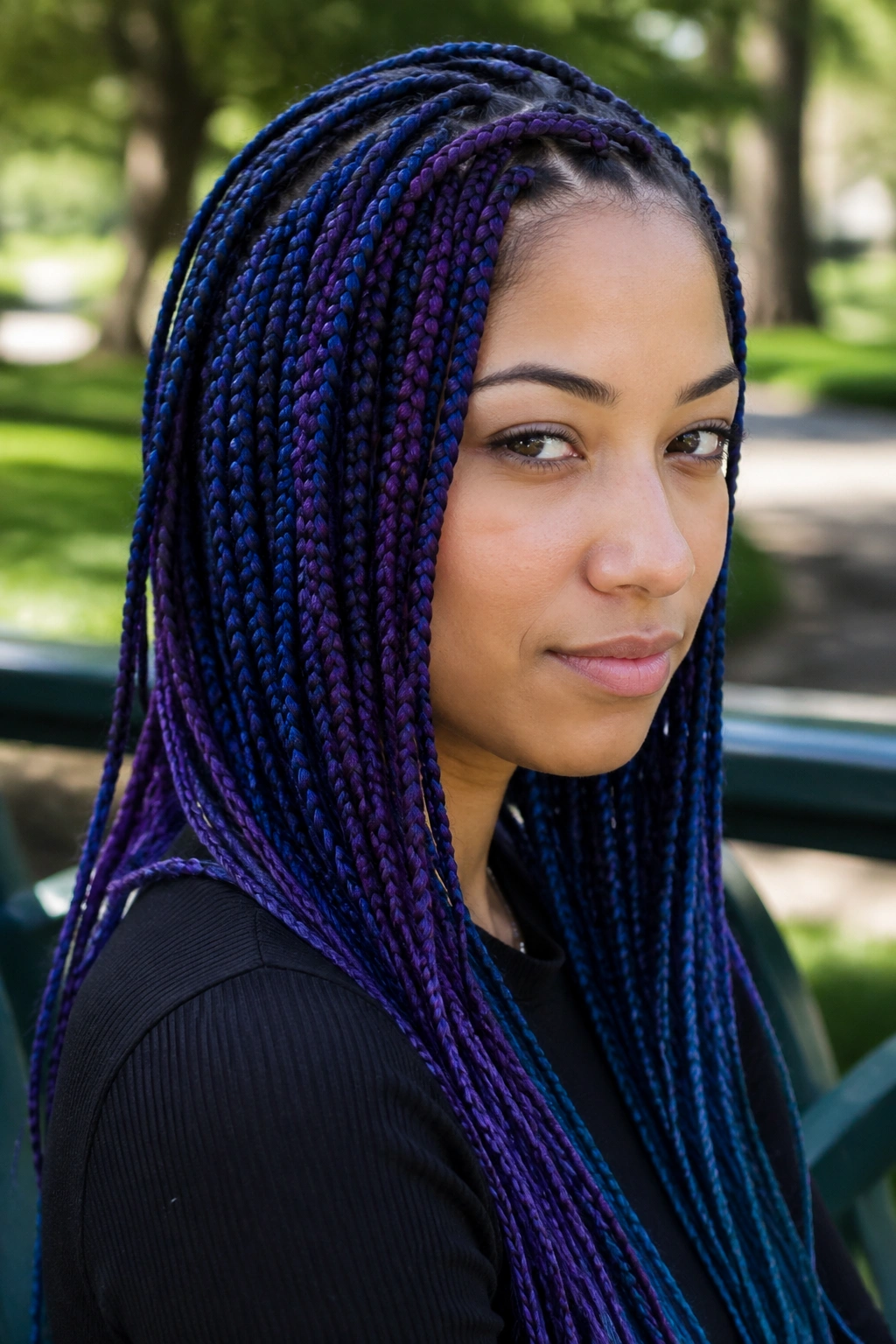
Blue and purple together can go either dreamy or electric, depending on the shades you choose. The two colors sit close enough to feel related, but different enough to keep the braid from looking flat.
A blue-heavy mix gives you a cool, moody effect. Add more purple and the whole style warms up a little. That balance is the fun part. You can make the look softer with muted tones or turn it louder with saturated royal blue and violet.
This style works especially well when the braids are medium size, because the colors have room to alternate without turning into a blur. Too many tiny braids and the blend can get noisy. Too few and you lose the color play.
Ask your braider to alternate colors in a pattern rather than randomly grabbing hair. A controlled mix looks better than a messy one. Blue and purple are cousins; they should look like they meant to meet.
15. Denim Blue Box Braids
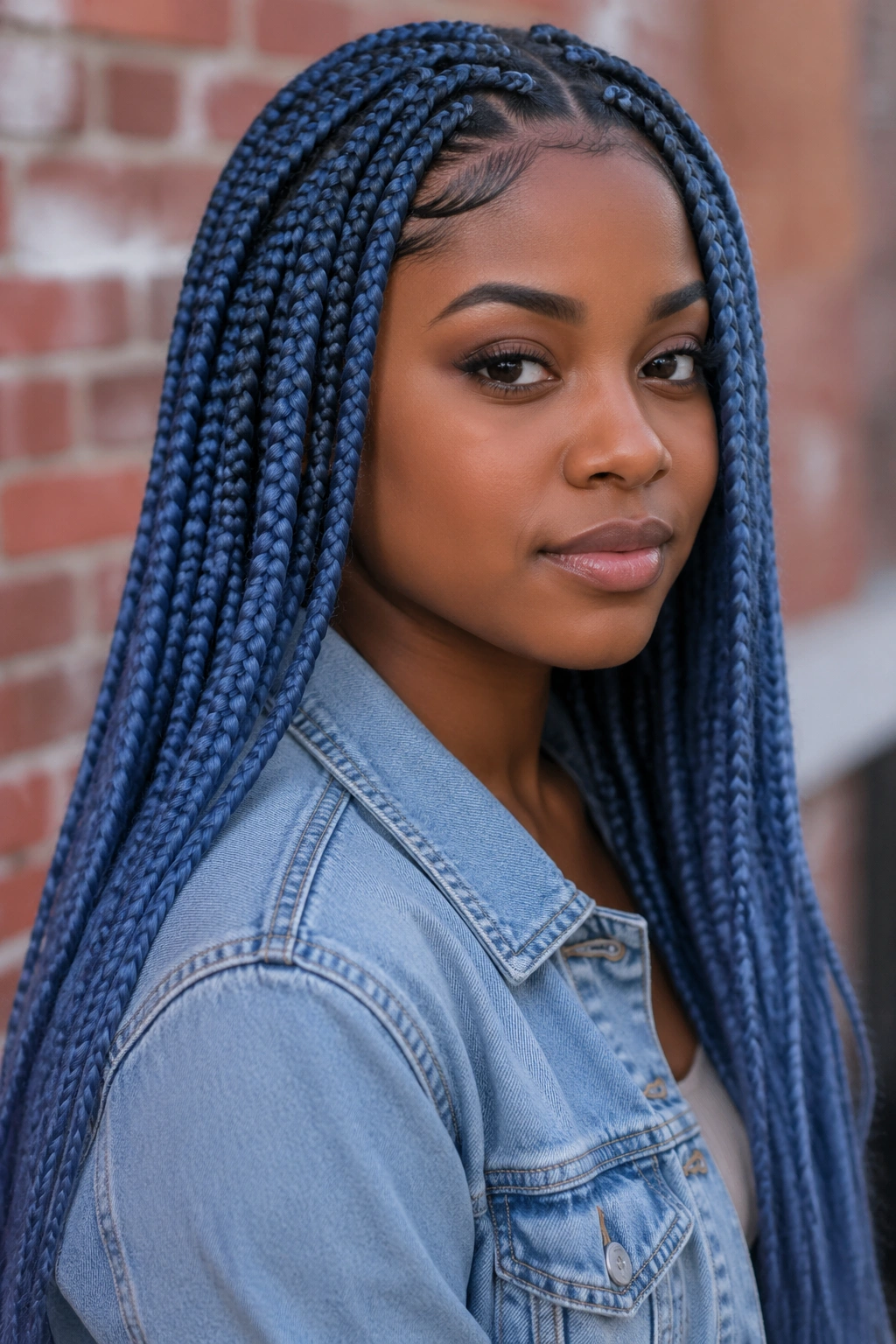
Denim blue sits in that easy zone between bold and quiet. It has color, but it is not screaming for attention. The shade feels softer than cobalt and less icy than baby blue, which makes it one of the easiest blue braid colors to wear day after day.
That softness is the appeal. Denim blue works with plain clothes, bright clothes, gold jewelry, silver jewelry — almost anything, honestly. It has a worn-in feel without looking faded. A good install lands with that slightly washed texture, like a favorite pair of jeans that still holds its shape.
The style is especially nice if you want blue braids but do not want a color that dominates your whole look. It reads relaxed. A little cool. Not precious.
If you are choosing extension packs, look for a muted blue rather than a candy-bright one. A smoky finish gives denim braids their character. Bright blue would just turn the whole thing into something else.
16. Blue Box Braids with Curly Ends
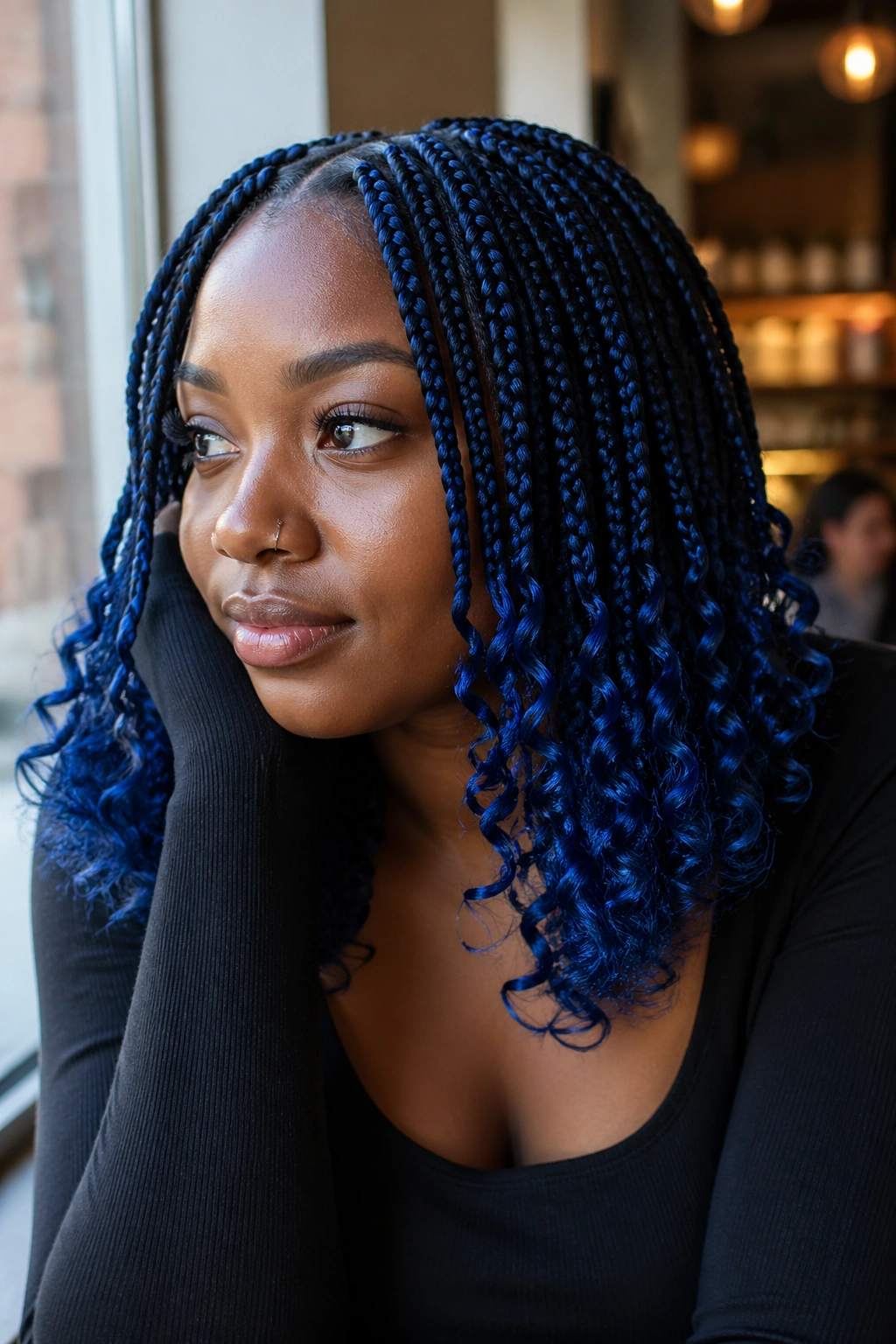
Curly ends soften blue box braids in a way that makes the whole style feel lighter. Instead of a straight, blunt finish, the braid opens into curls at the bottom, which keeps the silhouette from feeling too rigid.
The contrast is useful. Braids bring structure. Curly ends add motion. Put them together with blue hair and you get a style that feels less severe than a fully straight install. It is a small change, but it changes the read a lot.
What to ask for
Ask for curled ends that hold their shape without looking overdone. Loose spirals work better than tight ringlets on most braid lengths because they move more naturally and do not tangle as quickly.
The one catch is maintenance. Curly ends brush against jackets, seat backs, and scarf edges, so they need more care than blunt ends. A light mist and a gentle finger comb are usually enough. Harsh brushing can flatten them fast.
This style suits people who want blue braids but do not want the finish to feel severe or blocky. The curls make the whole thing easier on the eye.
17. Blue Stitch-Part Box Braids
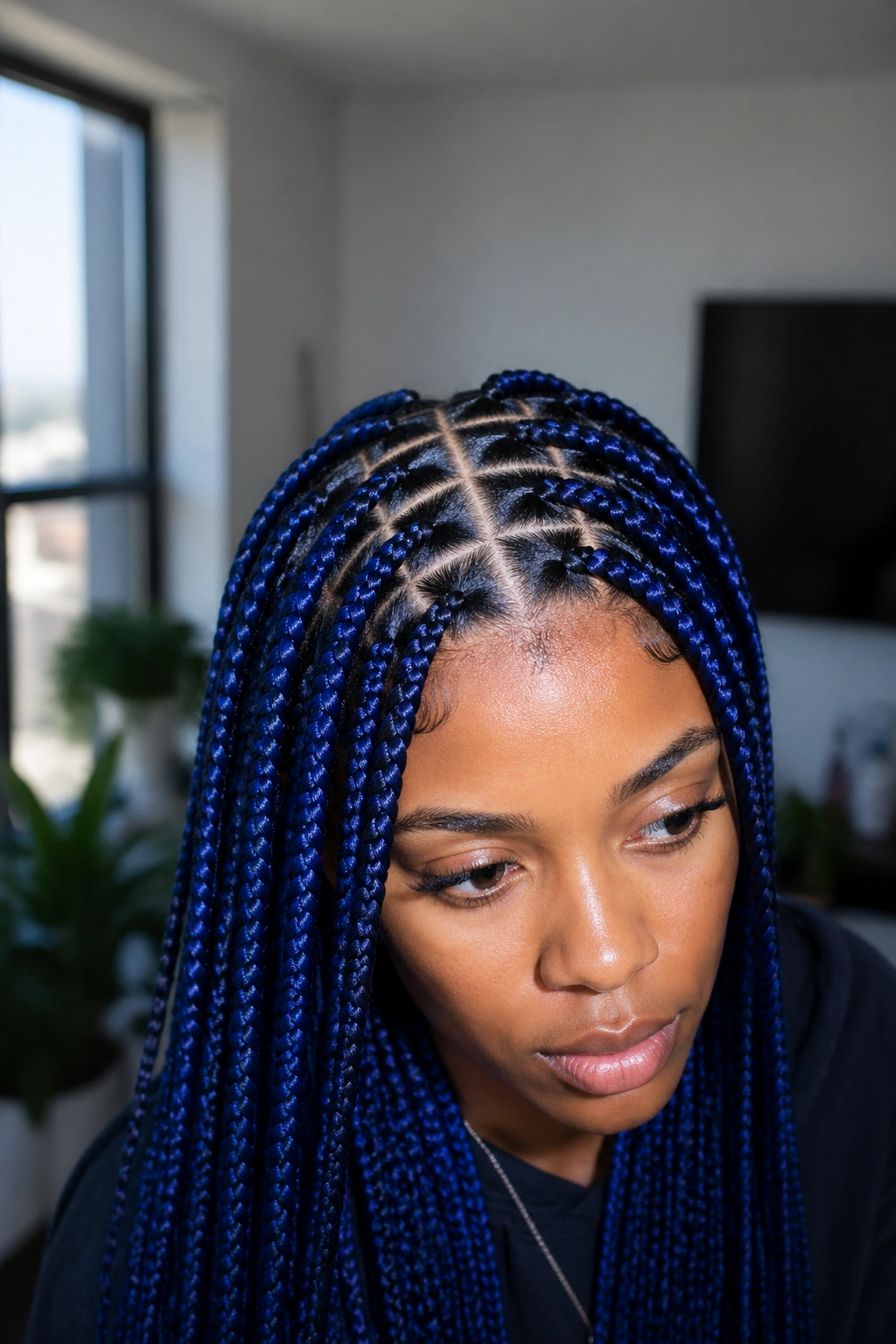
Stitch parts are neat, straight, and very visible. On blue box braids, that sharp parting gives the color a cleaner frame, which is useful when you want the style to feel precise instead of loose.
The lines matter. A stitch part runs in deliberate rows, often with tiny horizontal sections that give the scalp pattern a braided, architectural look. With blue extensions, the design becomes even more noticeable because the color contrasts with the scalp and the clean rows.
This style takes patience. Not because the braids themselves are harder, but because the parting needs a steady setup from the start. A tail comb, edge gel, and clean sectioning are the tools that matter most here.
It is a strong choice if you like detail. If you are the kind of person who notices the spacing on a manicure, stitch parts will probably make you happy. If you hate sitting still for parting, maybe skip it.
18. Blue Box Braids with Braided Bangs
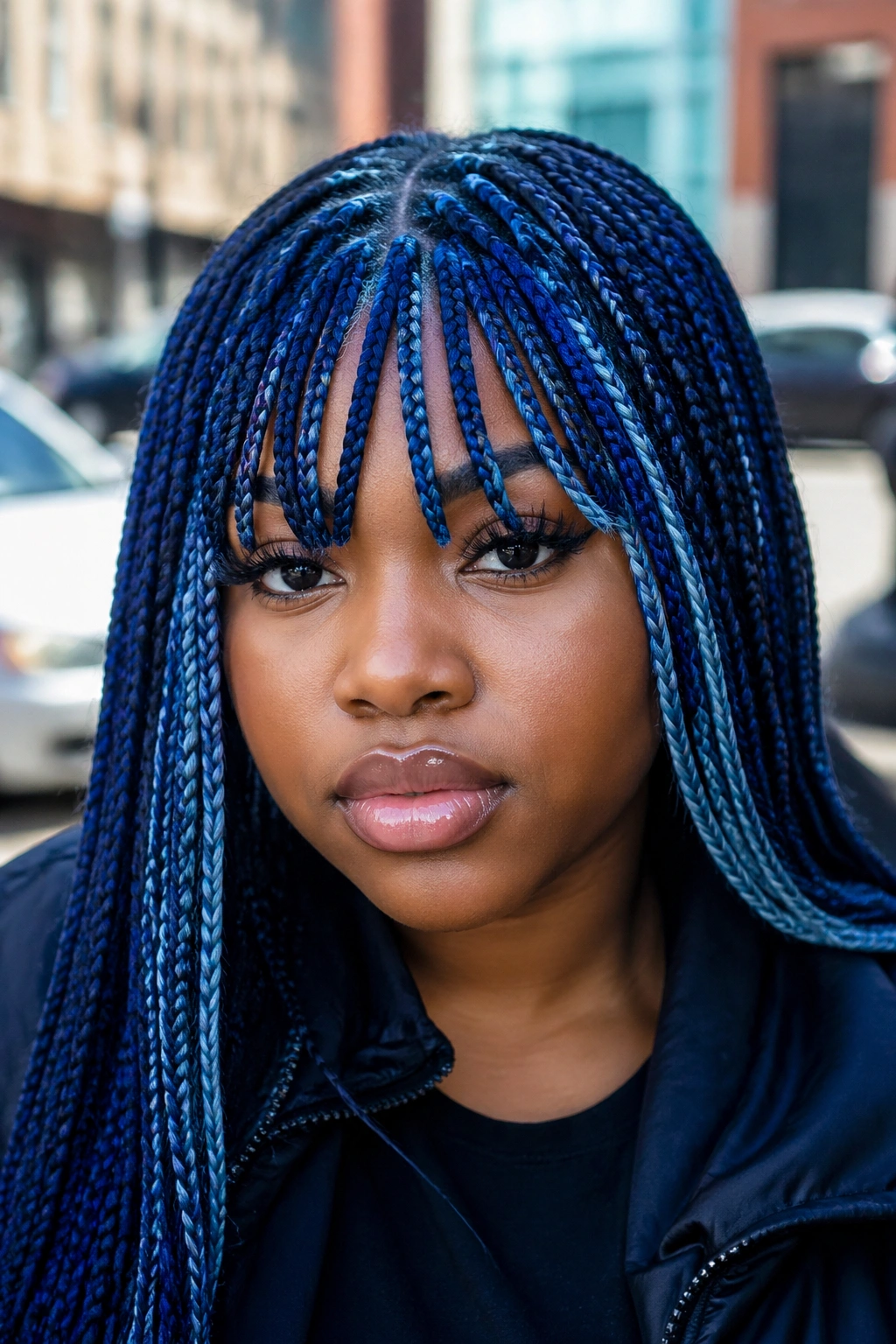
Braided bangs change the whole frame of blue box braids. Instead of having every braid pulled straight back or hanging evenly, a few front pieces are shaped to fall across the forehead or sweep to one side.
That softens the look fast. Blue can feel bold and a little hard-edged, and bangs take some of that pressure off. They also shorten the face visually, which is useful if you want the braid install to feel less long and severe.
Why they work
Braided bangs give you movement around the eyes and cheekbones without needing loose hair. That is a nice compromise if you like structure but still want some face-framing softness.
Keep the front pieces lighter than the rest of the install. Heavy bangs can pull more than they should, especially if the style is long. A few medium braids are enough. You do not need a thick fringe unless you are going for a very specific look.
This is a style I would pick for someone who likes a little drama but wants the braids to feel wearable every day. It does that job well.
19. Blue Goddess Box Braids
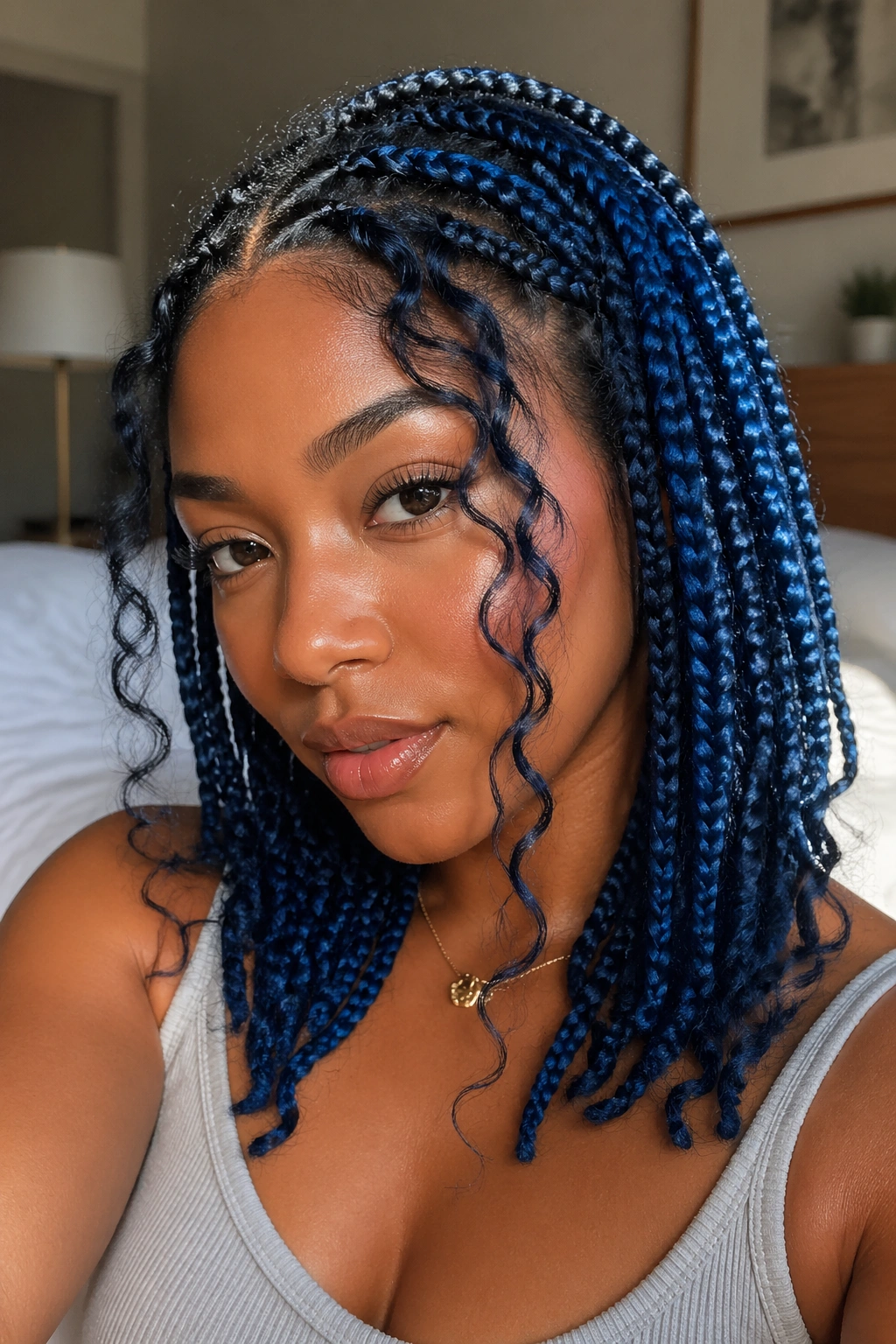
Blue goddess braids sit between polished and loose. You still get the braid structure, but a few curly tendrils are left out around the face and along the length, which gives the style a softer, more finished feel.
The difference from boho braids is small but real. Boho leans more relaxed and full of texture. Goddess braids feel more deliberate, with the curls placed where they do the most work — near the temples, around the cheeks, or just at the ends. That keeps the style looking styled, not messy.
A rich blue shade looks especially good here because the curls break up the solid color. The movement gives the eye something to follow. It is a nice way to make blue braids feel romantic without turning them fussy.
Good pairing: medium-to-long length, side part, and a little shine on the braid lengths. Not a heavy product. Just enough to keep the surface smooth.
20. Blue Box Braids with Beads and Shells
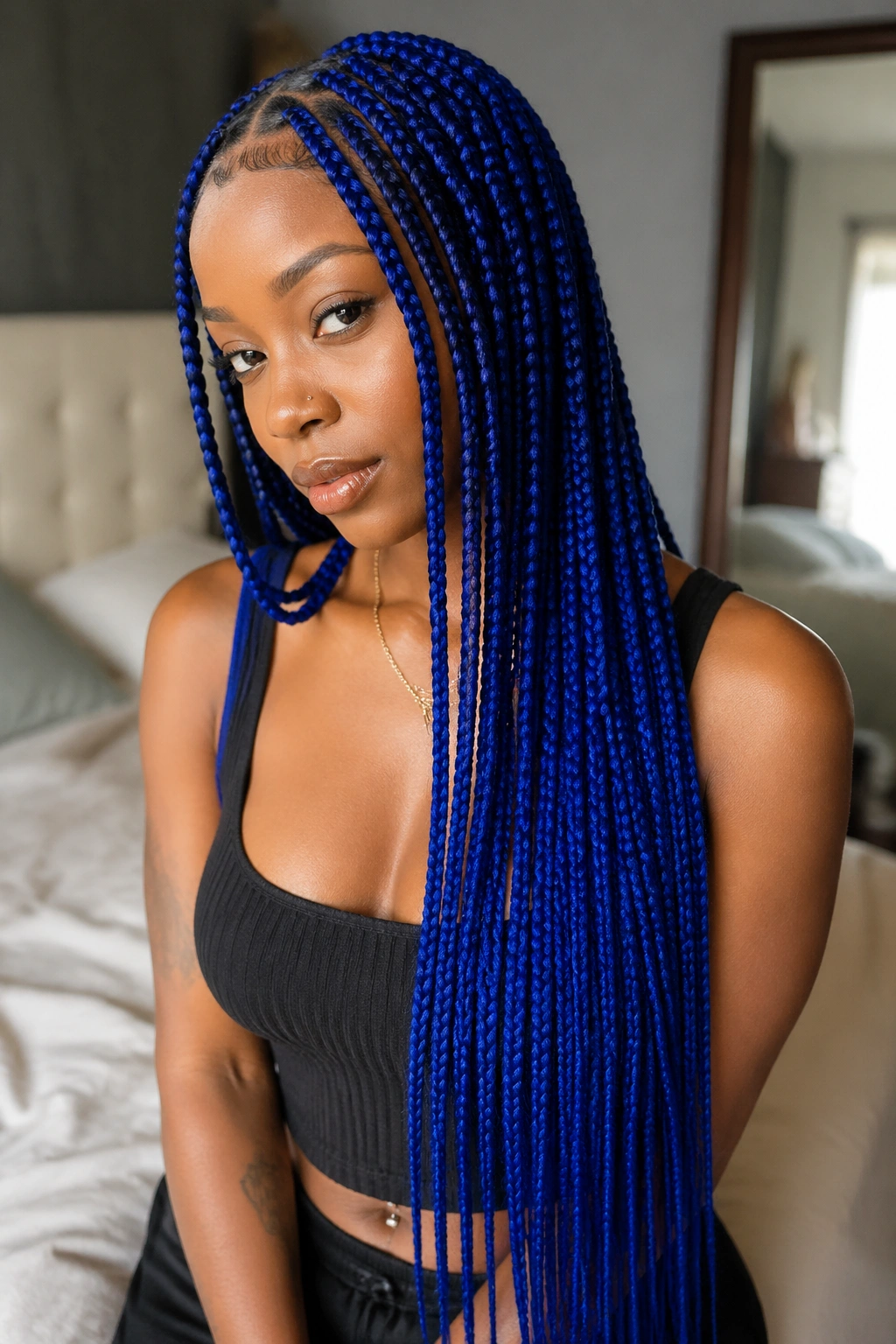
Beads and shells finish blue box braids with a bit of texture and sound. The style moves differently when the ends are weighted, and that tiny bit of movement can make the whole look feel more alive.
The best part is that you can decide how much ornament you want. A few clear or silver beads near the ends keep the look clean. Shells add a more beachy feel. Wooden beads lean earthy. The blue braid color acts like a base coat, and the accessories decide the mood.
- Use a light hand: 4 to 8 beads on a section is usually enough
- Place them low: near the ends to avoid extra pull at the scalp
- Mix carefully: one bead type is often cleaner than three
- Choose smooth holes: rough edges snag braiding hair fast
This style is useful when you want the braids to feel finished without relying on length or complicated styling. A small row of beads can do a lot. And with blue, the contrast looks especially crisp.
Blue box braids do not need to be loud to work. Sometimes the strongest version is the one with the cleanest shape, the right shade, and one detail that makes the whole style feel like yours.
