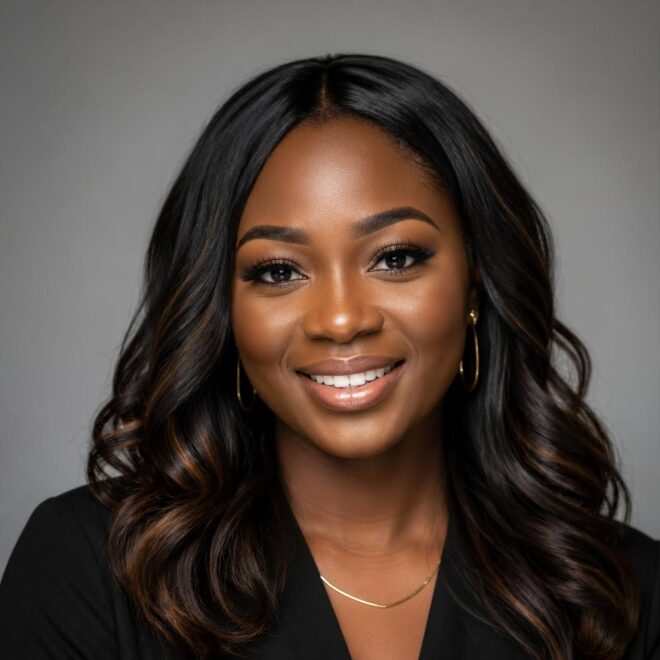


Wavy bang styles for fall work best when they move a little. If the fringe sits stiff, it fights the texture you already have, and that usually ends with awkward bends, puffiness, or a flat patch right in the middle of the forehead.
Cooler weather helps more than people give it credit for. Hair often holds shape better when the air is less damp, which means you can lean into bangs with more texture, more bend, and a little less perfection. That is the sweet spot for waves.
The real trick is not picking the prettiest fringe photo and hoping for the best. You want a cut that respects your wave pattern, your density, and how much styling you’ll actually do on a weekday morning. Small difference. Huge payoff.
Some bang shapes love movement. Others only look good if you fight them every day with a brush and three products. I’m staying on the first side of that argument.
1. Curtain Bangs That Skim the Cheekbones
Curtain bangs are the safest starting point if you have waves. They split the forehead, soften the face, and let the fringe bend instead of forcing it into a straight line. That little bit of movement matters, because waves look better when they are allowed to swing a bit.
Ask your stylist for a center part, a shorter inner section, and longer sides that land near the cheekbone or upper lip. If the pieces start too short, they can spring up and sit awkwardly above the brow. Longer pieces are easier to tuck, pin, or blow out.
Why They Work So Well
The shape gives you options. Air-dry them forward for a softer curtain, or round-brush the front away from the face for a more polished finish.
- Best for medium to thick waves
- Easy to grow out
- Looks good with collarbone-length hair or longer
- Benefits from a light mousse at the roots
My favorite move: dry the fringe almost all the way forward, then split it with your fingers at the end. That keeps the bend loose instead of helmet-like.
2. Bottleneck Bangs With a Narrow Center and Wider Sides
Want something shaped, but not full-on heavy? Bottleneck bangs sit in that middle space. They start a bit shorter in the center and open out toward the sides, which gives wavy hair room to bend without looking too busy.
The cut is named for the shape, and that shape matters. The narrow center keeps the fringe off the eyes, while the wider side pieces help everything blend into the rest of the haircut. On waves, that balance looks especially nice because the texture adds a little softness where a straight fringe might feel sharp.
If you wear your hair down most of the time, this is a smart pick. It works with loose bends, but it also handles a more defined wave pattern without turning frizzy. A 1-inch curling iron can smooth the side pieces in about 10 seconds each if they decide to flip the wrong way.
3. Side-Swept Fringe That Tucks Into the Wave
Side-swept bangs are the low-drama option that still looks intentional. If you already part your hair a little off center, this style feels familiar fast. The fringe moves with the rest of the cut instead of sitting in its own little world.
I like this style for anyone growing out a shorter bang. It hides the awkward stage without making you commit to a middle part. You can blow-dry it across the forehead with a flat brush, then tuck the longer side behind one ear or let it melt into the waves near your cheek.
A side-swept fringe also behaves better on days when your wave pattern is uneven. If one side dries flatter, the sweep covers it. If one side gets too much volume, the diagonal line reins it in. That flexibility is the whole point.
4. Shag Bangs With Choppy Ends
Shag bangs are not messy by default. Bad shag bangs are messy. There’s a difference, and it shows up the minute the hair dries.
The clean version uses choppy lengths that break up the forehead line, then folds those pieces into a shag haircut with layers around the cheek and jaw. On wavy hair, that cut can look almost effortless because the wave pattern gives each piece a little lift. No stiff line. No perfect symmetry. Good.
What Keeps Them From Looking Hacked
A lot of people make the mistake of overloading shag bangs with texturizing spray. You do not need that much.
- Use a light sea salt spray on damp hair
- Scrunch once, then leave it alone
- Dry with a diffuser if you want more separation
- Trim every 6 to 8 weeks so the ends do not collapse
Best for thicker waves: if your hair has some grit, these bangs hold shape without needing constant rework.
5. Wispy Bangs That Hover Above the Brows
Wispy bangs feel light for a reason. They use less hair, softer ends, and a little space between strands, so the fringe never lands as one heavy block across the forehead. On wavy hair, that airiness can be a blessing.
This style is especially nice if your hair is fine or medium in density. Too much fringe can swallow a small face or create that “bang shelf” look that nobody asked for. Wispy pieces solve that by showing a hint of forehead through the texture. It keeps things soft.
Keep the styling simple. A quick round-brush pass, or even a finger-dry with a dab of smoothing cream, is often enough. And if you wear glasses, this is one of the easiest bang shapes to live with because it stays out of the lenses without needing constant clipping.
6. French-Girl Bangs With a Soft Center Split
Middle part. Soft bend. No hard line.
That’s the whole mood here. French-girl bangs work when the front pieces are long enough to part naturally but short enough to frame the face instead of disappearing into the rest of the haircut. On waves, the shape looks better when it’s slightly broken up, not too neat.
This is a good choice if your hair likes to separate on its own. Some fringe styles fight that. This one uses it. Let the bangs dry forward, split them with your fingers while they’re still damp, and avoid brushing them flat against the forehead. The tiny bend near the root gives the style its shape.
If your wave pattern starts at the root, leave the pieces a touch longer than you think. Wavy hair springs. Always. The extra length keeps the fringe from bouncing up too high.
7. Feathered Bangs With a 1970s Flip
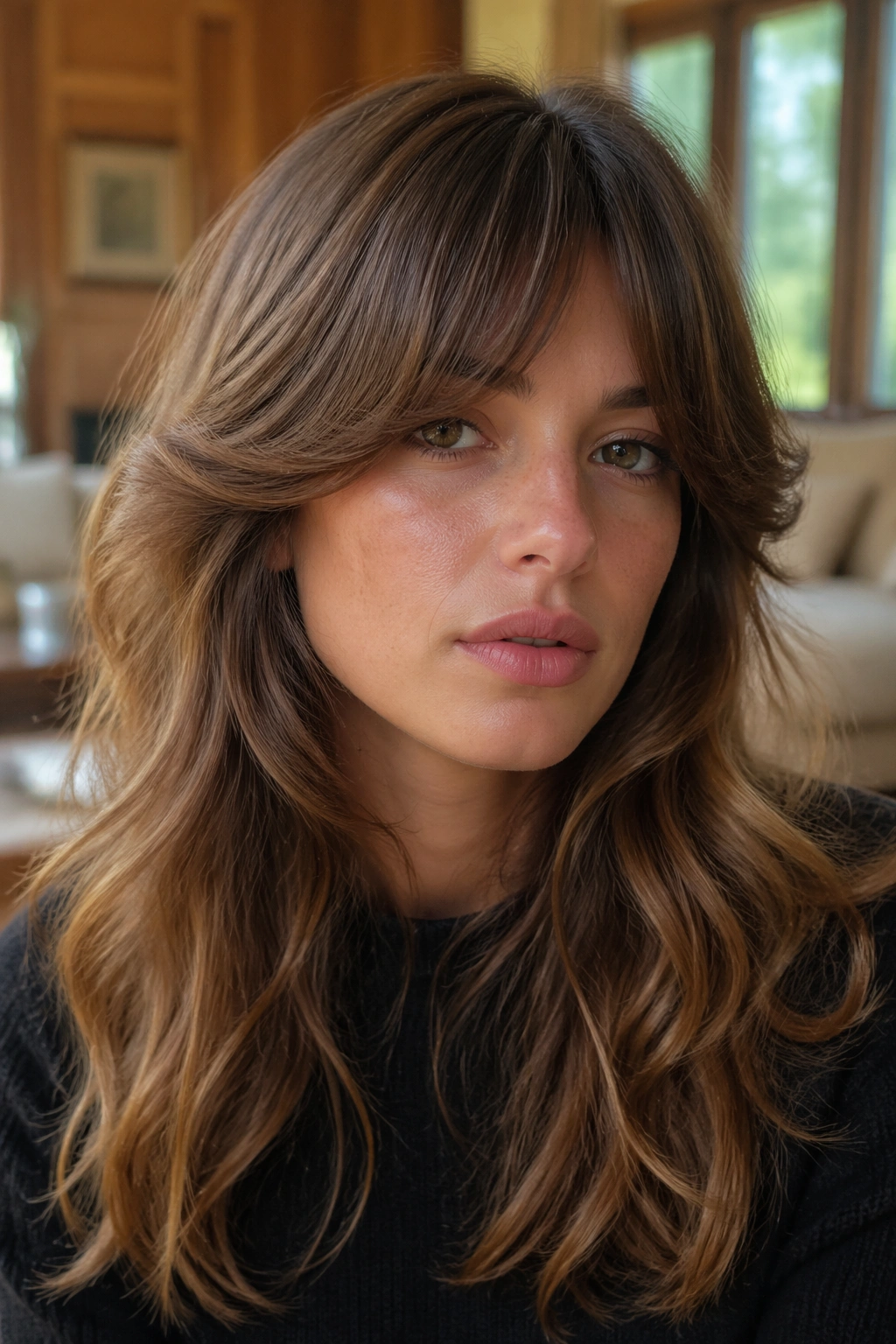
Feathered bangs have a soft, airy swing that looks especially good with long waves. The ends are layered so the fringe doesn’t sit as one blunt chunk, and that makes the whole front section feel lighter around the face.
A round brush helps here, but not in an overworked, lacquered way. You want the bangs to turn under slightly or flick away from the face, not sit in a stiff arch. The easiest version is a quick blow-dry with a medium round brush and a nozzle attachment, then a touch of cream on the ends.
What to Ask For
- A soft feathered perimeter
- Shorter inner pieces
- Longer sides that blend into the cheek layers
- No harsh, blunt edge across the forehead
The payoff is movement. Feathered bangs look especially good with sweater weather outfits because they have that easy, brushed-in feel without looking old-fashioned in a bad way.
8. Brow-Grazing Piecey Fringe
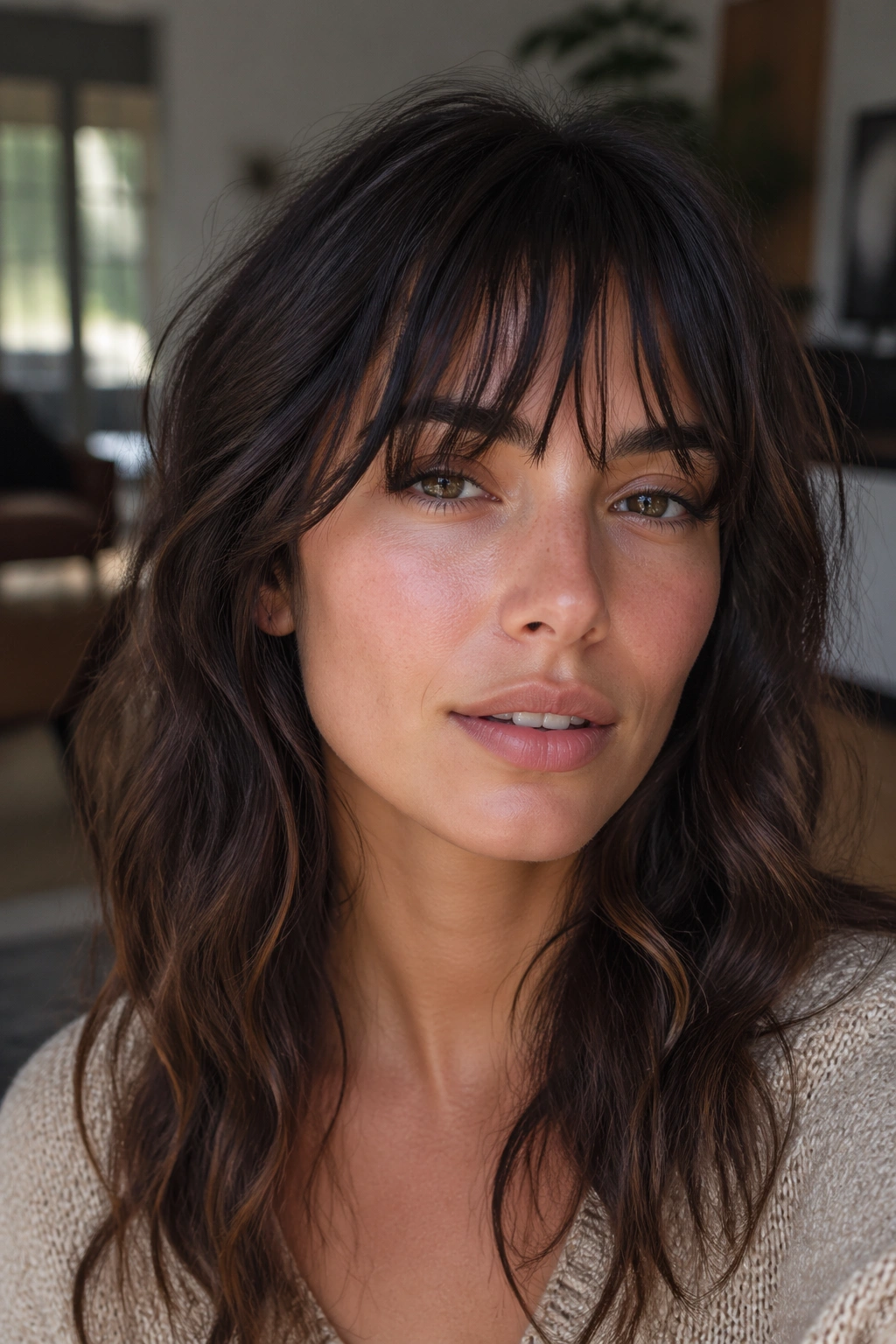
Piecey bangs are built for hair that refuses to stay one texture from root to tip. Instead of one solid panel, you get separated strands that land around the brows and break apart in a way that feels light, not thin.
This is a smart bang style if your waves get a little frizzy in the front. The separation hides that. It also makes the fringe easier to restyle during the day, because you are not chasing a perfect straight line every time the wind catches it. A tiny bit of styling wax on the ends can keep the pieces visible without making them greasy.
I’d choose this if you like your bangs to look lived-in. Not lazy. Just lived-in. The difference is in the shape: piecey fringe still has structure, even when it’s not trying to be polished.
9. Long Bangs Blended Into a Wavy Lob
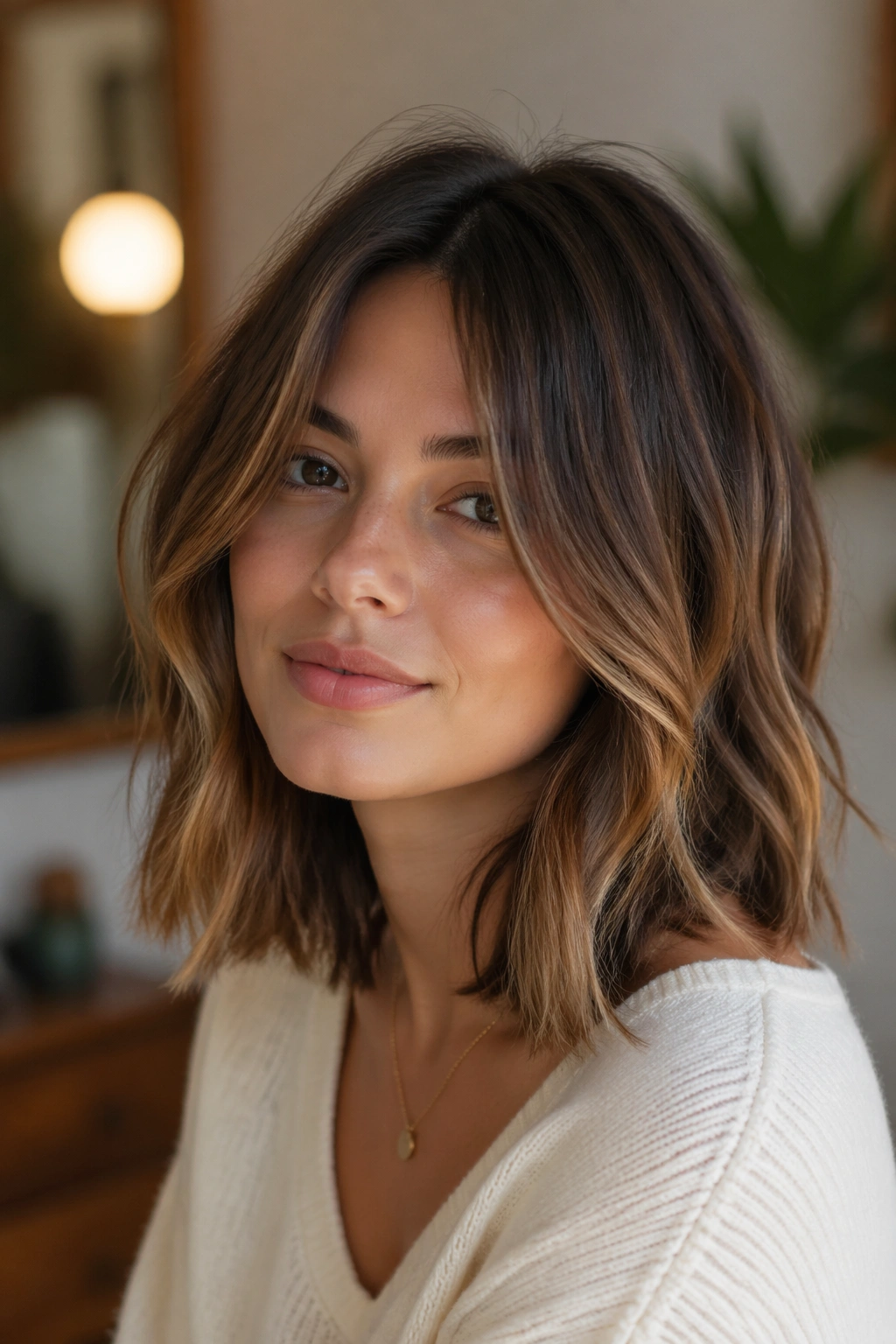
A collarbone-length lob with long bangs solves a problem that comes up a lot: you want fringe, but you do not want the whole haircut to feel short. This pairing keeps the front soft and the length useful.
The bangs should hit somewhere between the nose and cheekbone when dry, then blend into the lob so the front pieces can be worn center-parted, swept aside, or tucked back. That flexibility makes morning styling easier. If one side flips weirdly, it disappears into the rest of the cut.
This is one of my favorite options for people who wear their waves loose and a little undone. The fringe frames the face, but the lob keeps the overall shape grounded. It never feels too precious.
10. Angled Bangs That Narrow at the Temples
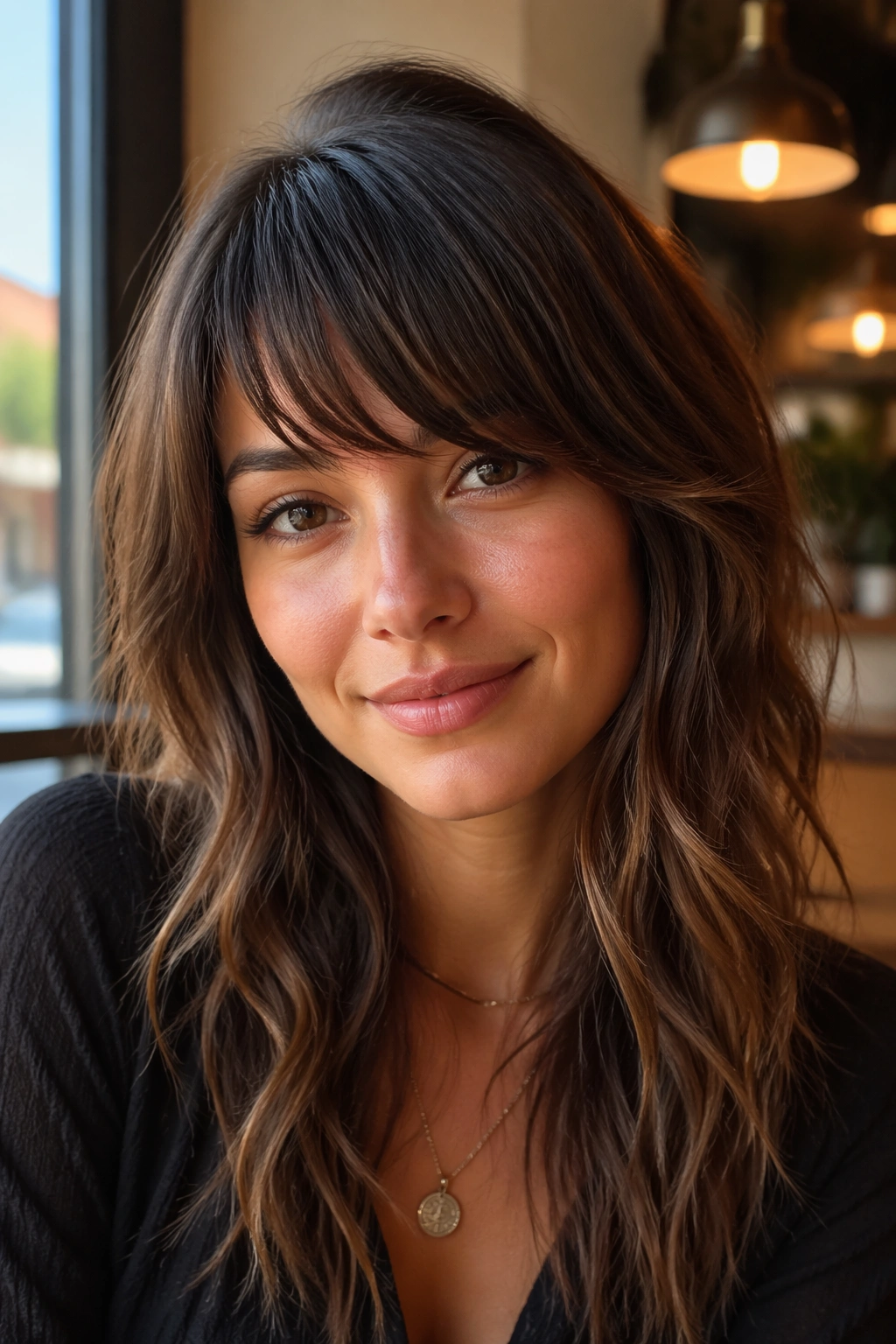
Angled bangs are a nice fix when you want the forehead framed without everything sitting at the same length. The center usually lands lower, while the outer pieces taper shorter near the temples, creating a diagonal that draws the eye inward.
That angle does a lot of quiet work. It can soften a wider forehead, pull attention toward the eyes, and keep wavy hair from puffing out in a boxy shape. If your hairline has cowlicks near the temples, the angle helps the fringe settle instead of fighting those spots.
Ask for a diagonal fringe, not a blunt line with a slight bend. Those are not the same thing. The real shape matters more than the label, and the cut should look good even when air-dried on a lazy day.
11. Micro Bangs With a Soft Wave
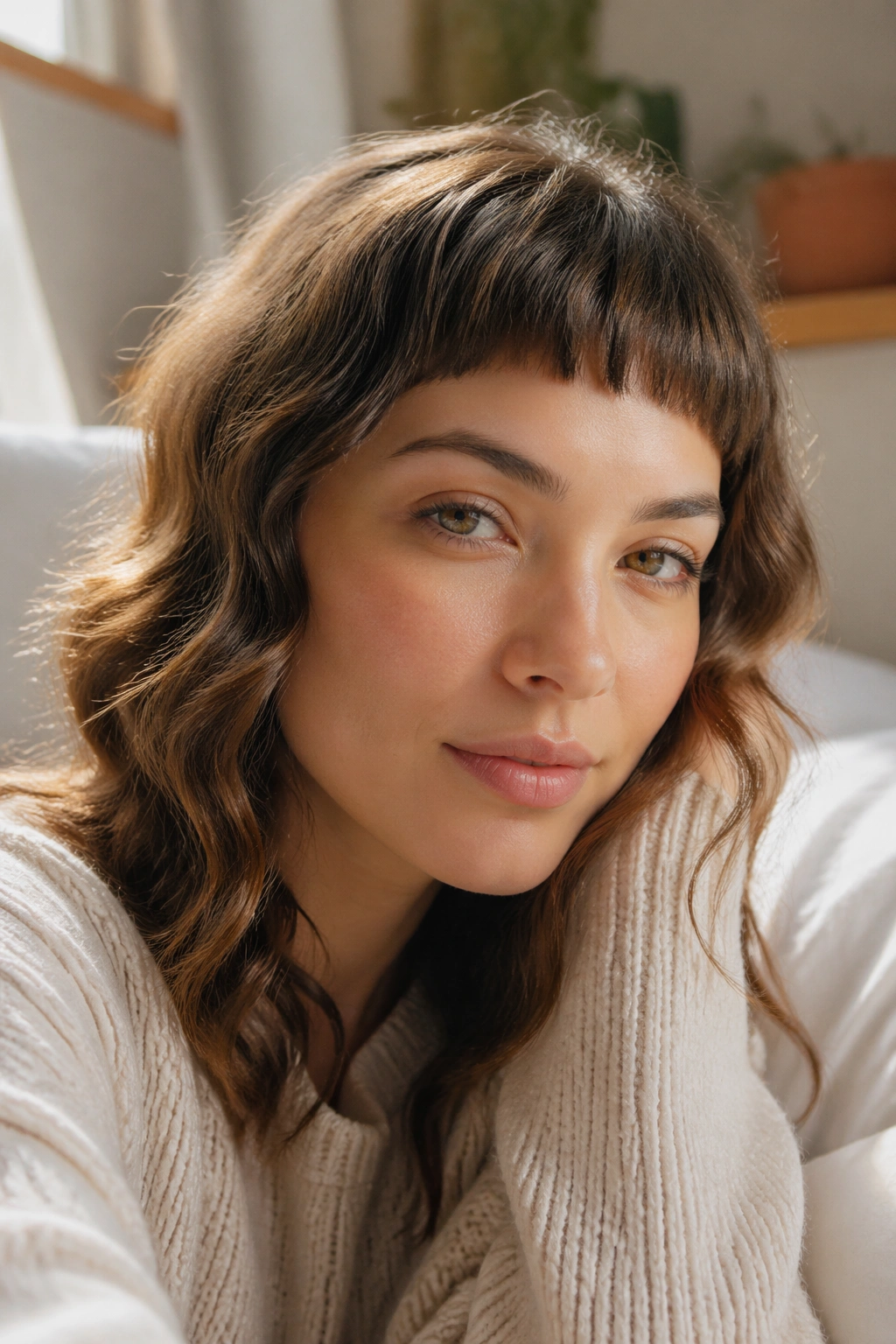
Micro bangs on wavy hair are not subtle. That’s the point.
They sit high on the forehead, usually well above the brows, and the wave pattern gives them a less severe edge than a pin-straight micro fringe would. If you like a little edge in your haircut, this one brings it fast. If you want to hide behind your hair, skip it.
When They Work Best
- On strong wave patterns that do not collapse flat
- With a stylist who is willing to cut them longer than they first seem
- When the rest of the haircut has softness through the sides
- If you are fine restyling the front every morning
A tiny fringe like this can be a headache if your cowlicks are loud. But when the cut is right, it looks sharp in a way that a longer bang never quite can.
12. Crescent Bangs That Curve Across the Forehead
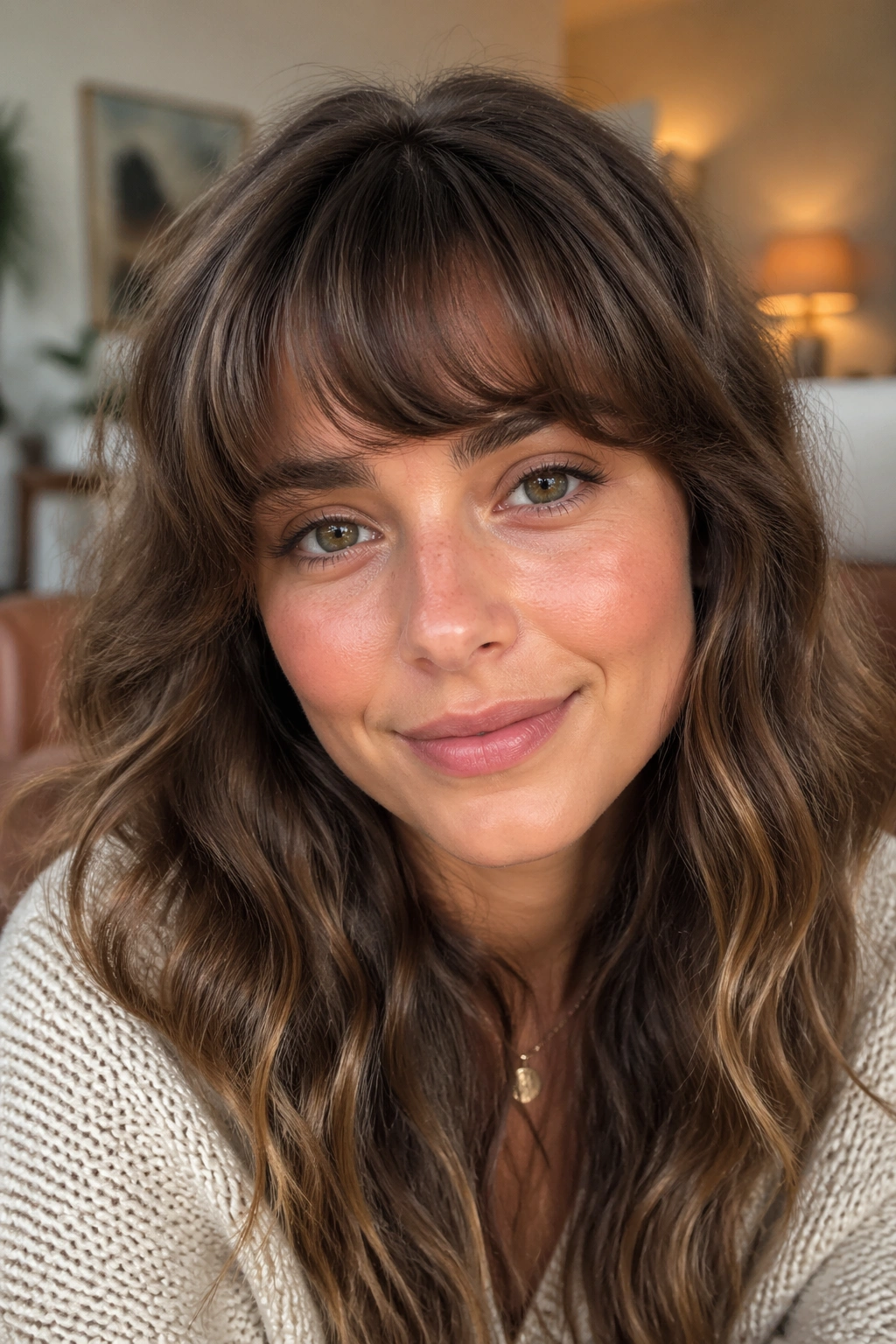
Crescent bangs have a gentle arc, almost like a moon shape across the forehead. They are fuller in the middle than curtain bangs and smoother than a shag fringe, which gives wavy hair a clean frame without making the cut feel severe.
The curve matters because it follows the face instead of sitting against it. If your forehead is longer or your features feel strong, this shape can soften the upper half of the face without hiding it. That balance is the reason people keep coming back to it.
Dry the bangs with the brush moving in a soft curve, not straight down. A paddle brush can work too if the wave pattern is loose. Either way, let the ends keep a little bend. Too much smoothing kills the whole effect.
13. Grown-Out Bangs With Face-Framing Pieces
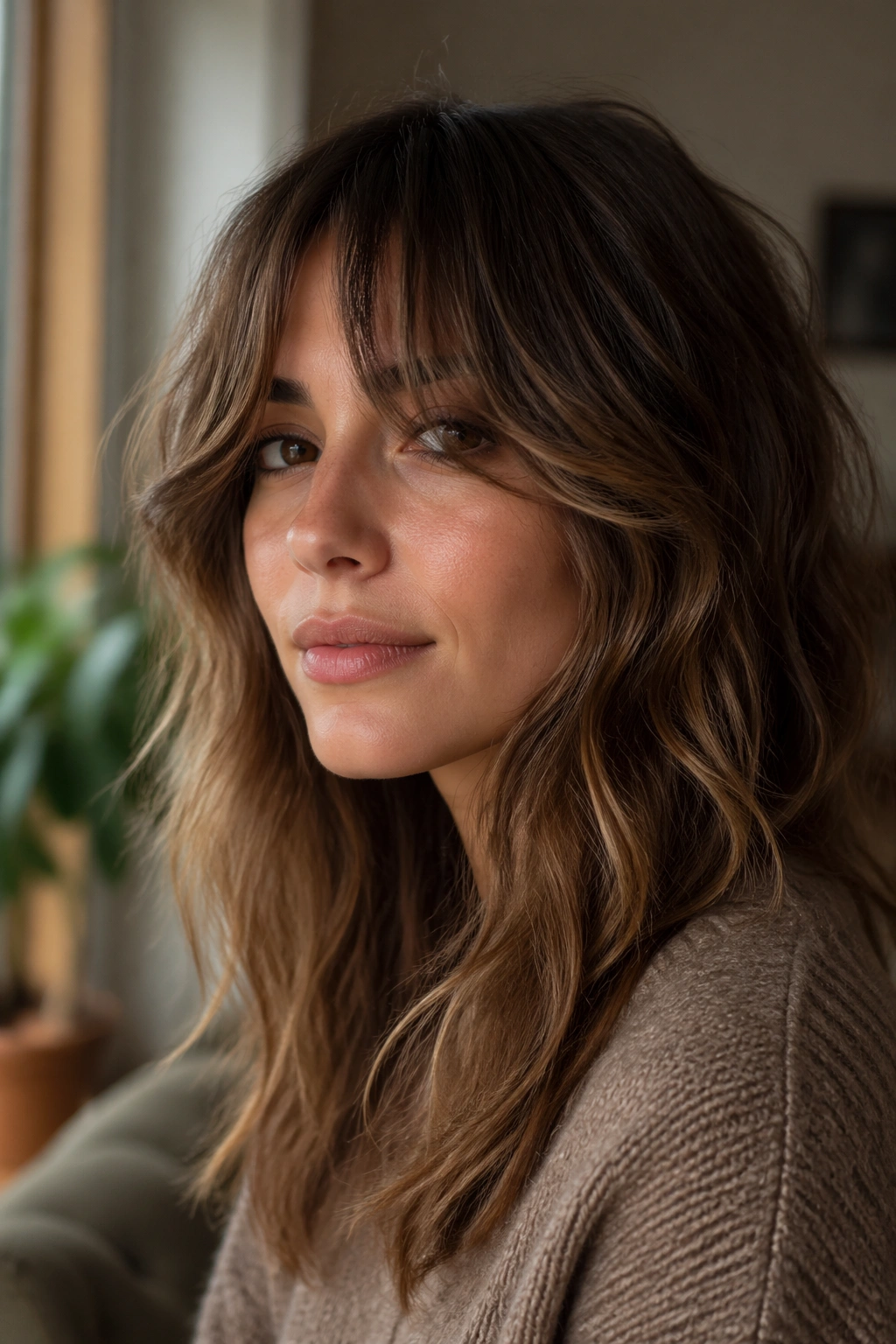
There is a point in every fringe grow-out where things look awkward for about ten minutes. Then a stylist cuts in face-framing pieces, and suddenly the whole front looks intentional again.
That is the charm of grown-out bangs. They sit longer, graze the eyes or cheekbones, and blend into the front layers so the haircut feels easy rather than staged. On wavy hair, the movement covers a lot. You do not need a perfect line when the texture already gives you shape.
This is the most forgiving choice if you are unsure about committing to a shorter fringe. You can sweep it aside, split it down the middle, or let it fall forward when you want more face framing. It behaves like a soft transition, which is honestly useful more often than a dramatic bang.
14. Arched Bangs With a Clean Center Dip
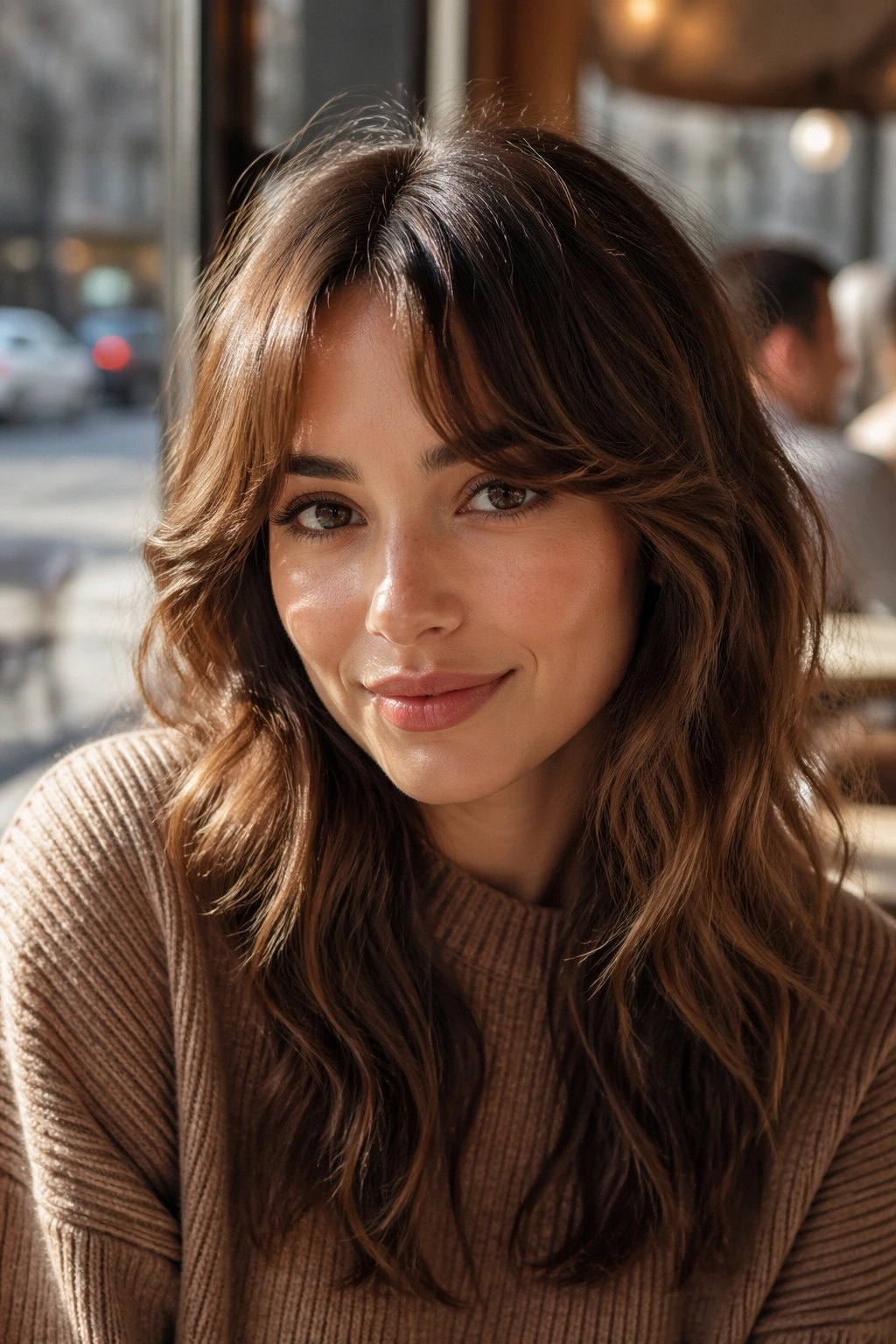
Arched bangs look tidy in a way that still works with wave. The center sits a touch shorter, then the line rises slightly toward the sides, so the shape mirrors the brow without laying flat across it.
This style is a little more precise than crescent bangs. Less moon, more brow line. That makes it a good choice if you want the face framed cleanly and you do not want the fringe to feel too fluffy. Wavy texture keeps it from looking severe, which is half the appeal.
Ask for the arch to stay soft, not sharply rounded. A hard curve can look dated fast. A gentle one is easier to style, easier to grow out, and much nicer when the air gets dry and the ends start doing their own thing.
15. Choppy Razor-Cut Bangs
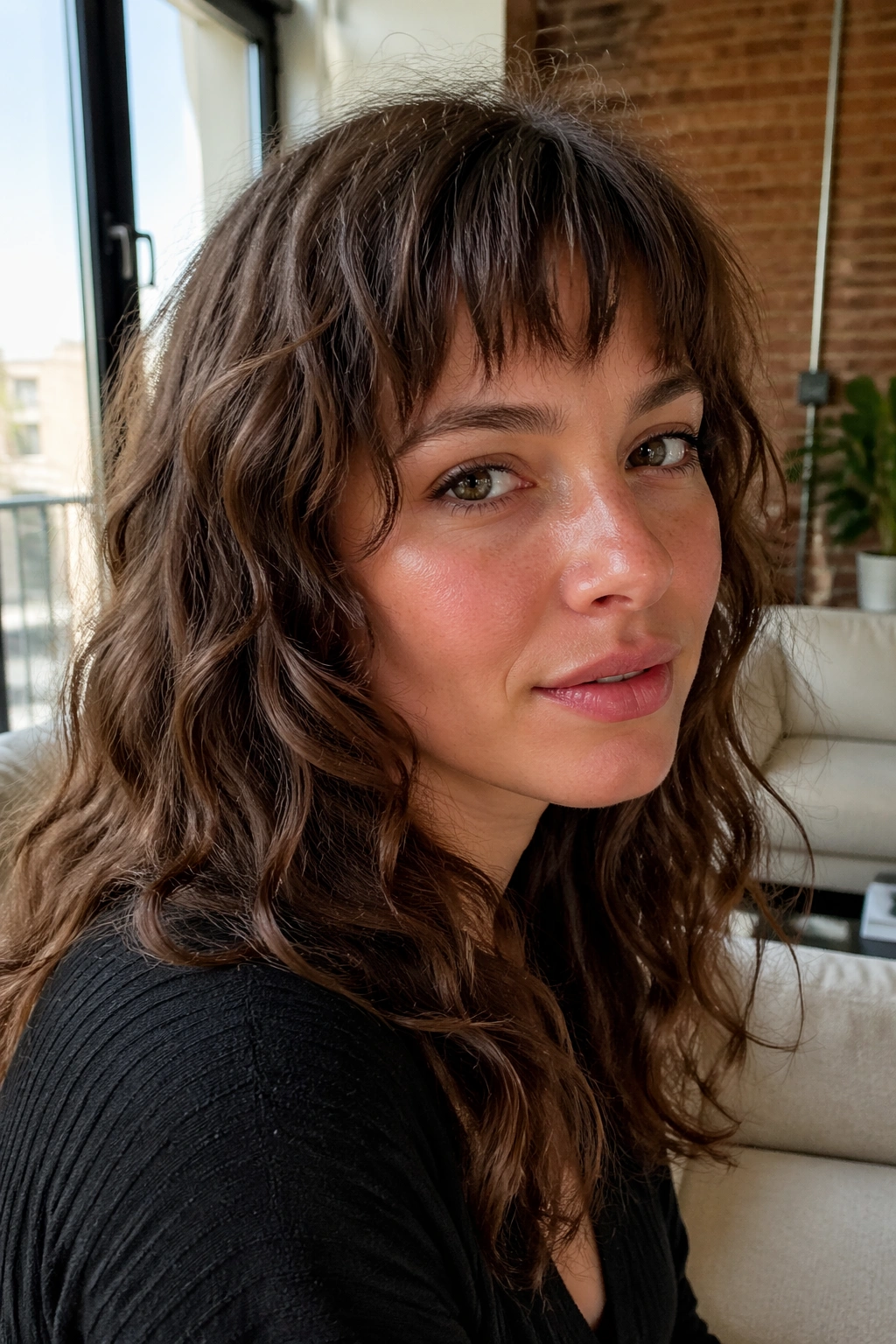
Razor-cut bangs bring movement fast, but they need the right hair type. On thick, wavy hair, a razor can break up the line and give the fringe a lighter feel. On coarse hair that frizzes easily, the same cut can turn fuzzy if it is too short.
The best version uses jagged ends that separate without looking shredded. That means the stylist should carve shape into the fringe, not strip it down until the strands look tired. The result is a bang that bends with the wave instead of fighting it.
If you style with a blow-dryer, keep the airflow low and direct it down the hair shaft. Rough drying can make the ends puff. A small round brush helps, but only for the first inch or two at the root. After that, let the wave do the rest.
16. Butterfly Bangs That Open at the Cheeks
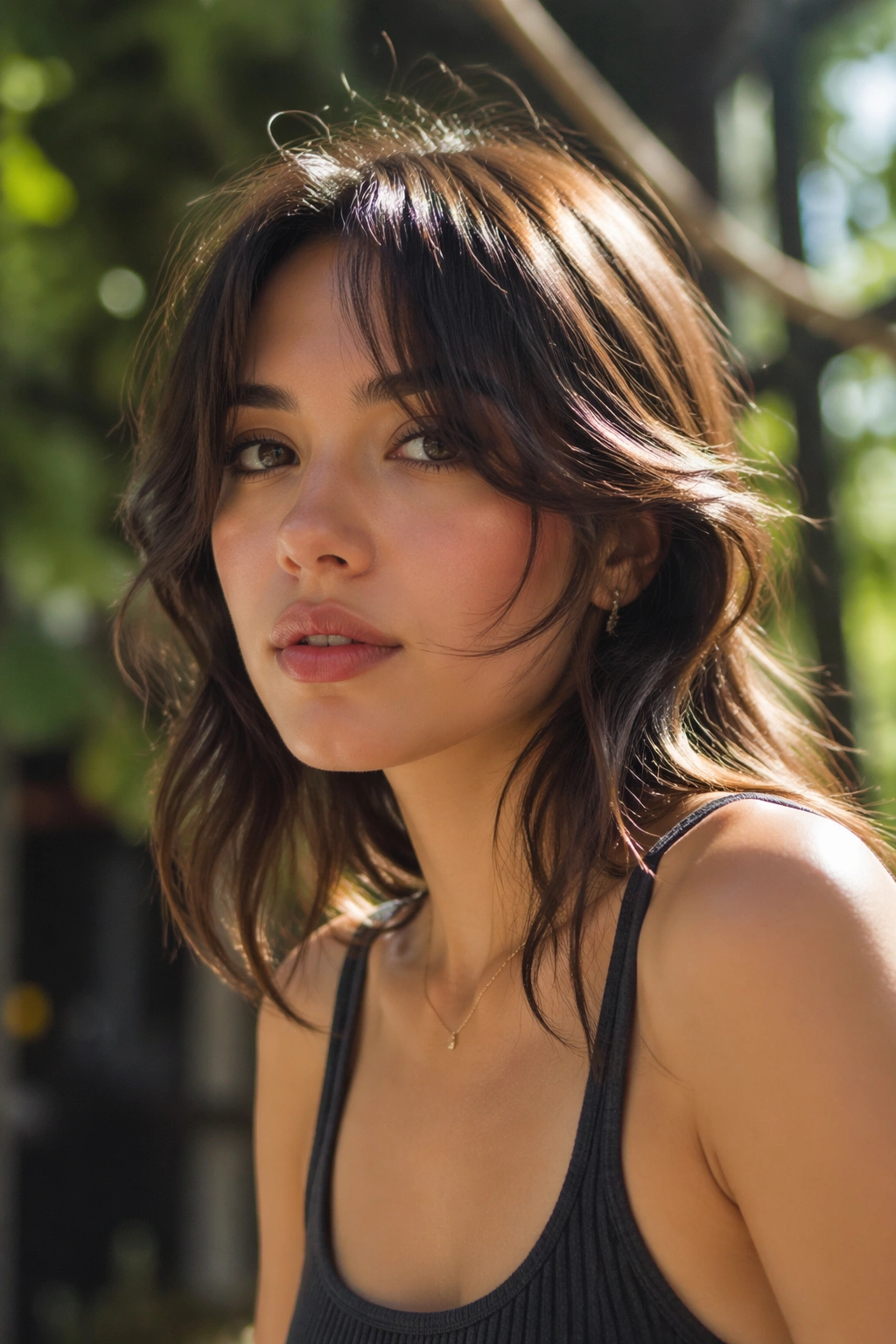
Butterfly bangs are all about the way the front section opens near the face. Shorter inner pieces give shape, while longer outer pieces fall into the layers around the cheek and jaw. The whole thing feels airy, not heavy.
This is a strong pick if you wear long hair and want bangs without losing length around the sides. The shape creates a soft frame that works with loose waves especially well, because the movement at the ends matches the movement in the fringe. Nothing feels out of place.
The Shape in Practice
Ask for the shortest pieces to hit around the lip or chin, depending on how much forehead you want covered. The longer sides should merge into the rest of the haircut with no hard stop.
Best for medium to thick hair: butterfly bangs need enough density to hold the split shape without collapsing.
17. Heavy Full Bangs Broken Up With Texture
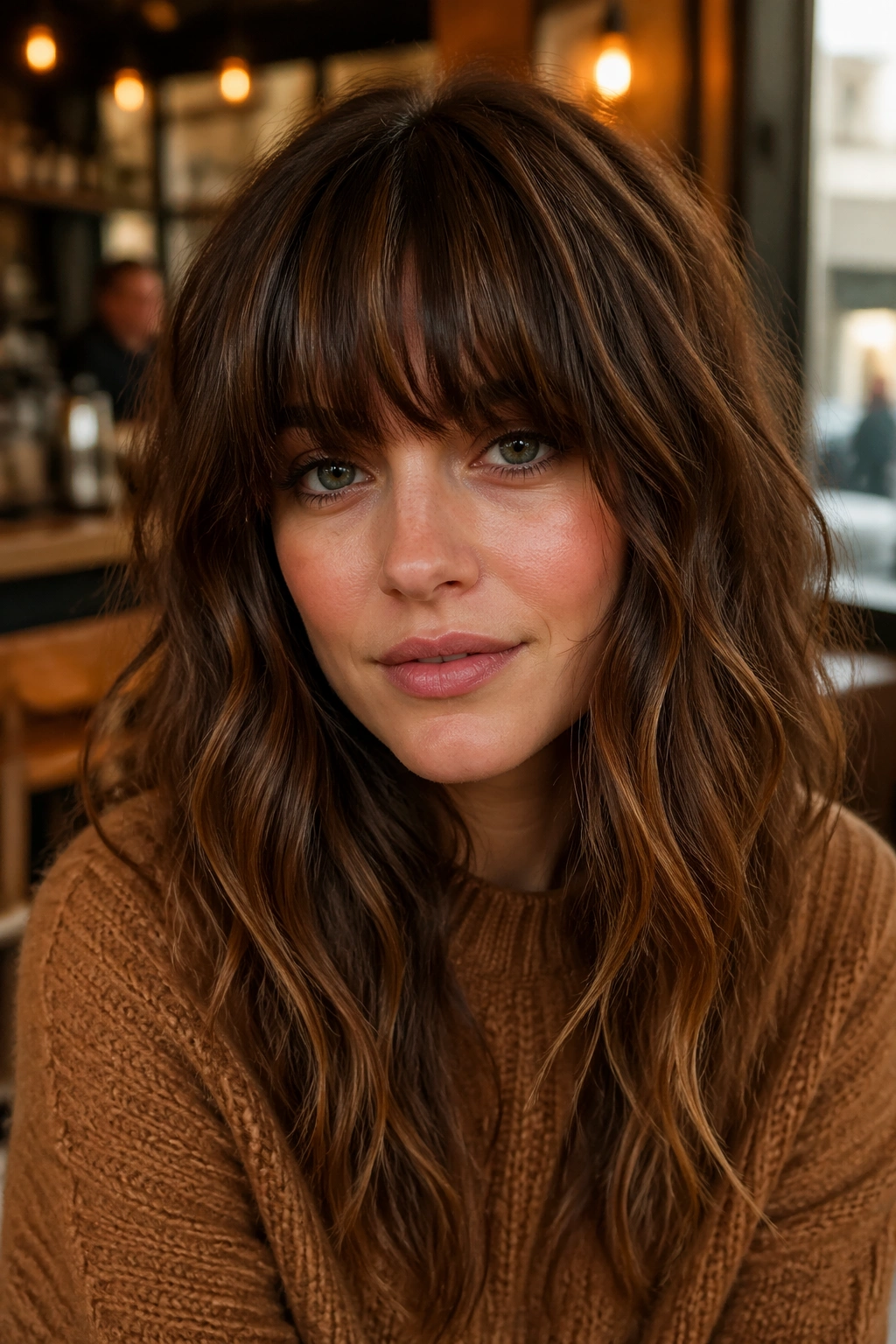
Heavy full bangs can look rich on wavy hair when they are cut with some internal texture. That is the difference between a solid sheet of hair and a fringe that still moves.
If your hair is dense, this shape can be flattering because it gives the face a strong frame without making the rest of the cut look thin. The key is not to remove too much weight. You want the bangs full, not stringy. A stylist who uses point-cutting or interior layering can soften the line without taking away the impact.
Styling matters here. Blow-dry the roots forward first, then separate the ends with your fingers once they cool. If you rush that step, the bangs can sit in one clump and lose all that texture you paid for.
18. Off-Center Bangs That Fall Across One Eye
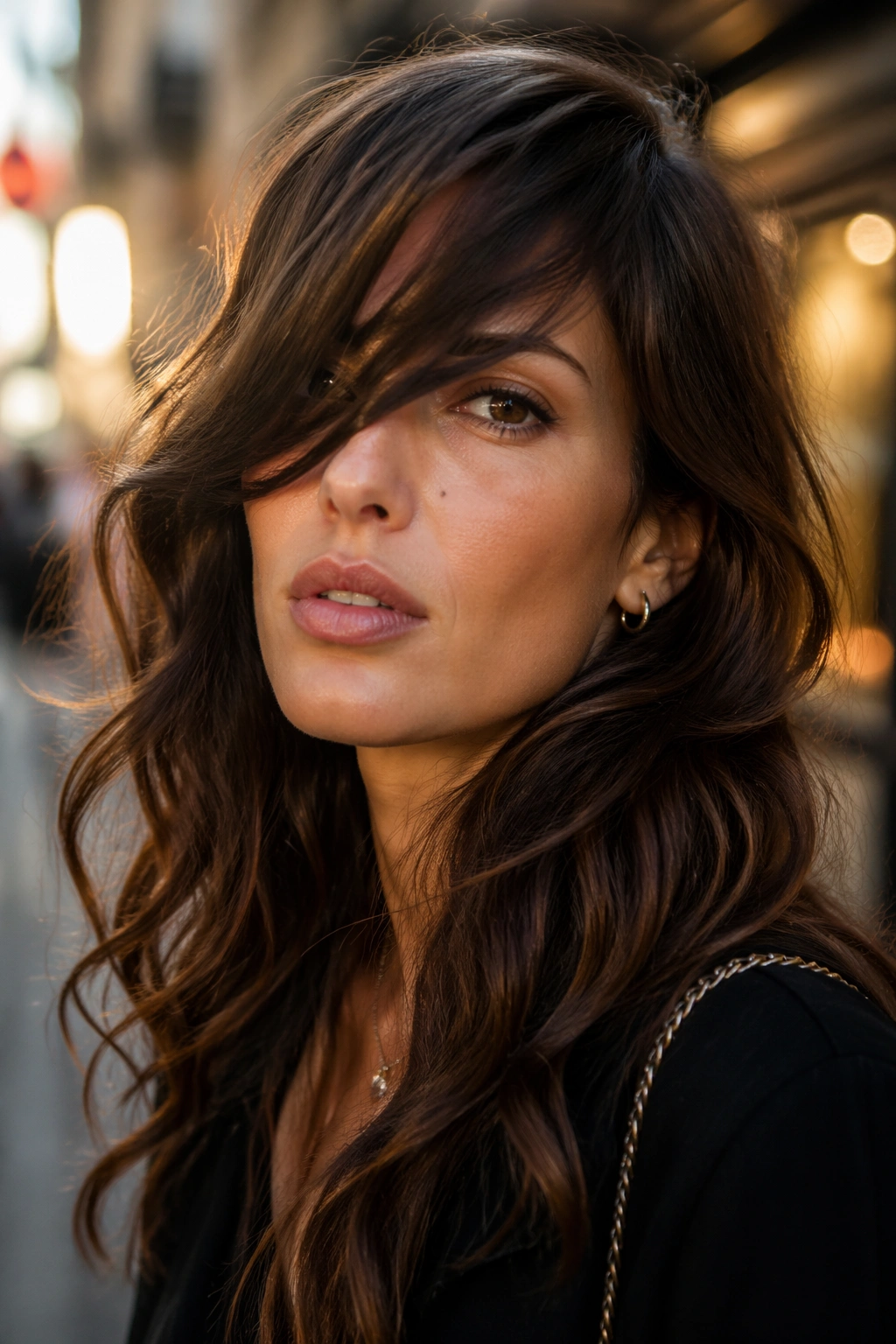
Off-center bangs have a little drama, but not the theatrical kind. They slide from a near-center part toward one side, which creates a diagonal that can be very flattering on wavy hair.
This style helps if your wave pattern naturally pushes one direction. Instead of forcing it back to the middle, you work with the bend. The fringe can skim one brow, cross the forehead, and tuck near the opposite temple. On a windy day, it still looks deliberate.
I like this most on cuts that already have some movement through the layers. A super-stiff haircut makes off-center bangs look like an afterthought. Loose waves, though? They make the whole thing feel easy.
19. Collarbone Lob With Soft Fringe
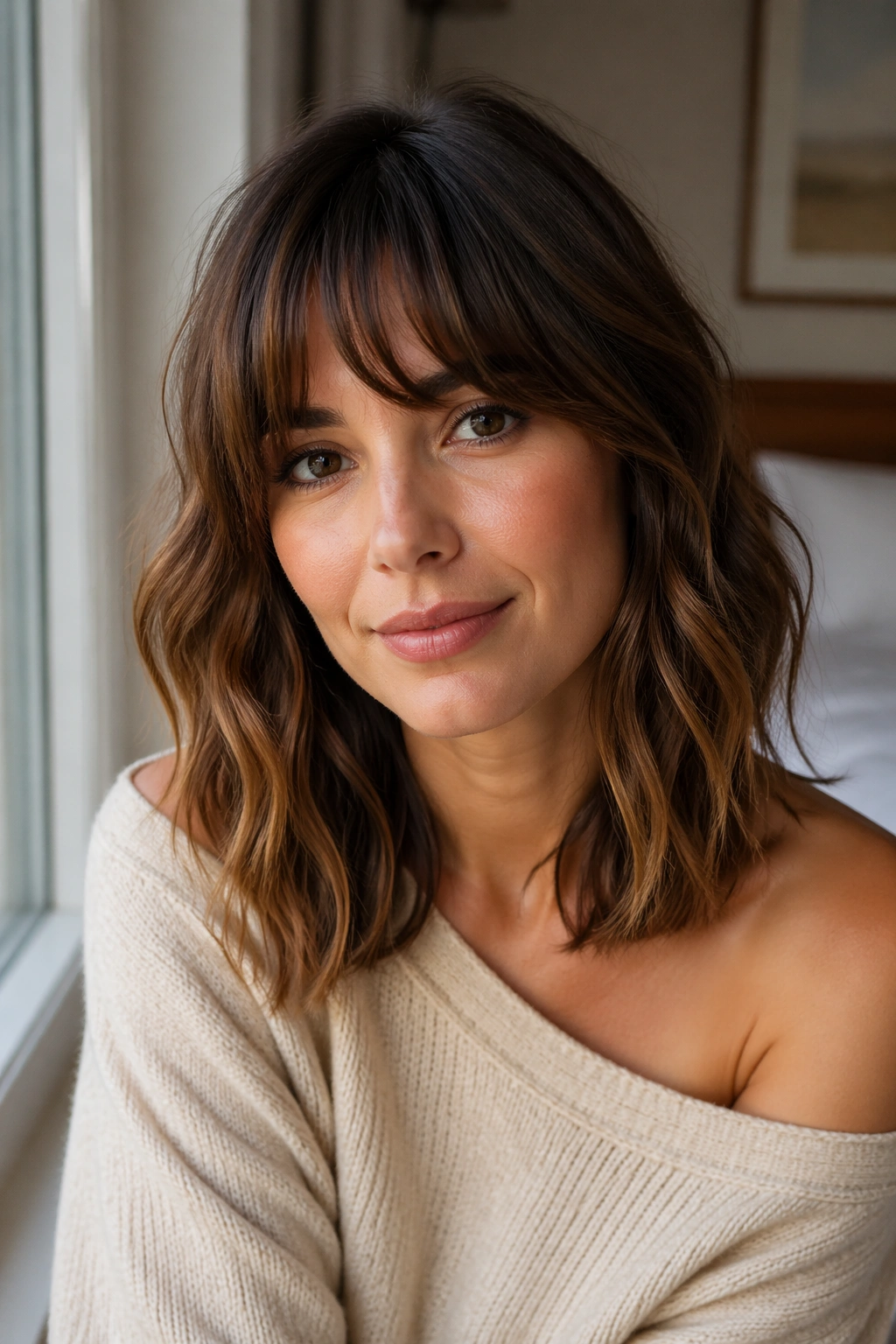
A collarbone lob and soft fringe belong together more often than people admit. The length sits in that useful middle zone where the haircut can be worn straight, waved, tucked, or flipped out at the ends. Add bangs, and the whole thing gains shape fast.
The fringe should not be too short here. If the lob already gives you a strong outline, the bangs need to stay soft enough to balance it. Long, wavy pieces around the brow or cheekbone are the safest bet. They keep the cut from feeling top-heavy.
This is one of the most wearable options on the list. It works for busy mornings, office settings, and anyone who wants hair that looks styled without turning into a project. Not flashy. Just good.
20. Peekaboo Bangs That Hide in Layers
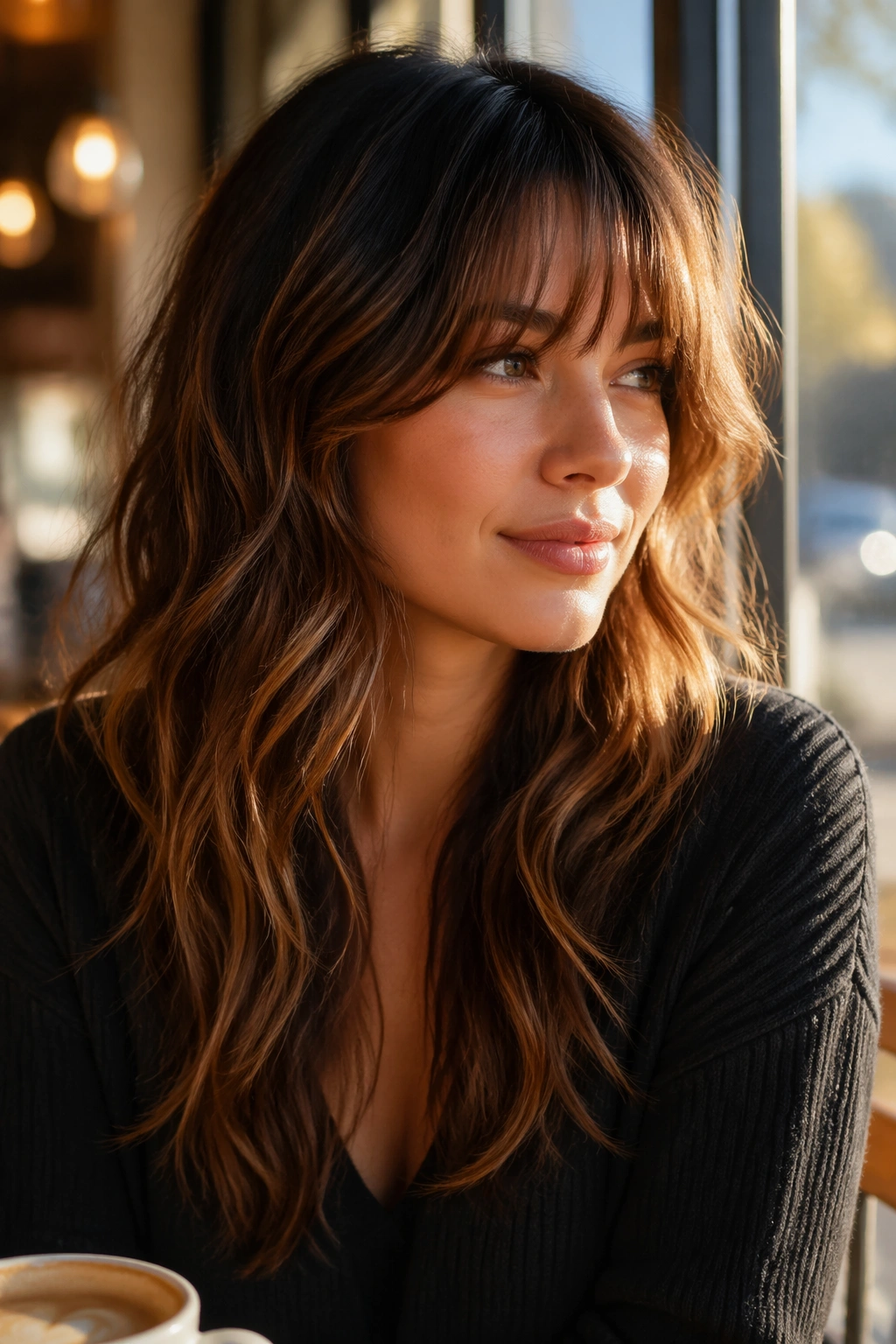
Peekaboo bangs are the sneaky choice. They live under the top layers, then show up when the hair separates or moves. On wavy hair, that hidden quality makes them easy to wear because they never feel too blunt or too committed.
The cut usually starts with a small front section that blends into longer face-framing pieces. When the hair is down, the bangs appear and disappear depending on how the wave falls. When you tuck the sides back, the fringe becomes more obvious. That flexibility is the whole point.
This is a smart option if you want a fringe effect without a clear line across the forehead. It also buys you a lot of grace on days when styling takes three minutes and a dry shampoo puff. The bangs still count, even when they’re partly undercover.
21. Soft Blunt Bangs With Air-Dried Waves
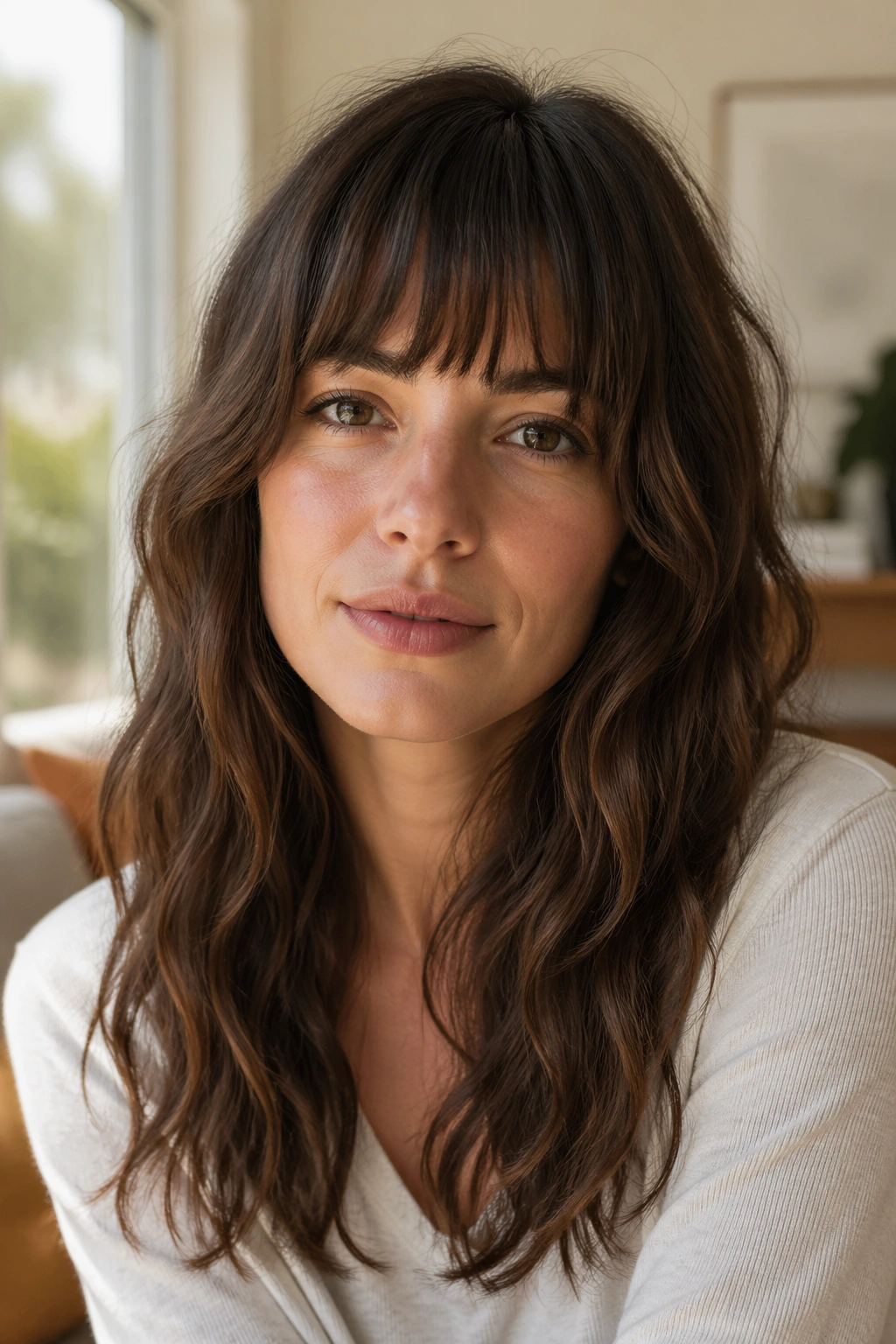
Blunt bangs and waves sound like a fight, but they do not have to be. The trick is keeping the line soft enough that the wave can break it up a little, rather than forcing a hard shelf across the forehead.
A soft blunt fringe usually lands just at or slightly below the brows when dry. That tiny bit of length helps the wave pattern settle without springing too high. If the hair is air-dried, the bend at the ends gives the bangs a little personality instead of a rigid line.
I would not choose this if your hair is wildly uneven in the front. It works best when the wave pattern is fairly predictable. When that is the case, the result looks modern, clean, and a little unexpected in a good way.
22. Mullet Bangs With Short Front Pieces
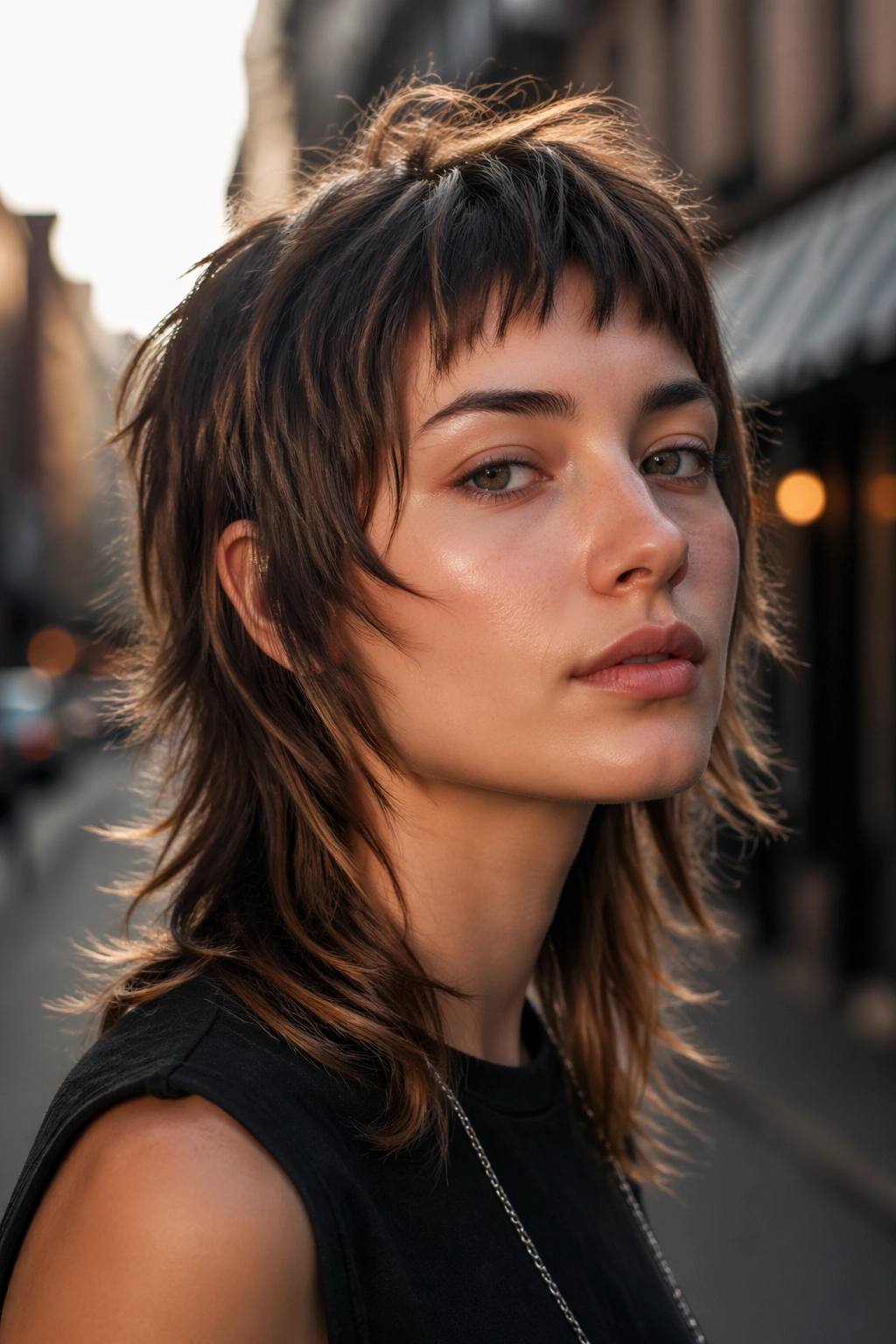
Mullet bangs are for people who like texture with some attitude. The front pieces are shorter and chunkier, then they flow into longer lengths around the sides and back. On wavy hair, that contrast can look sharp.
This is a haircut for someone who is fine with shape that is a little uneven on purpose. The front can be choppy, the sides can be longer, and the whole thing still works because the wave ties it together. If you like air-drying and hate perfect blowouts, the style has a real advantage.
Who Should Try It
- Thick wavy hair that needs shape
- A strong jawline or cheekbones
- People who like a bit of edge
- Anyone bored by soft, blended fringe
The catch: this style needs confidence and a stylist who knows how to balance weight. If the proportions are off, it can look accidental fast.
23. Rounded Bangs That Follow the Brow Line

Rounded bangs sit close to the brow shape and make the forehead look softly framed instead of chopped off. They are fuller than wispy fringe, but less severe than a blunt straight line.
On wavy hair, the round shape keeps the ends from flipping every direction. The curve gives the eye a clean path across the face, and that can be especially flattering on longer faces or anyone who wants more width up top. The effect is polished, but not stiff.
The most important part is the cut. Rounded bangs need enough length on the sides to echo the curve, and the center should not sit so short that it bounces way up when dry. A small misjudge here changes the whole look.
24. Sliced Bangs With Separation
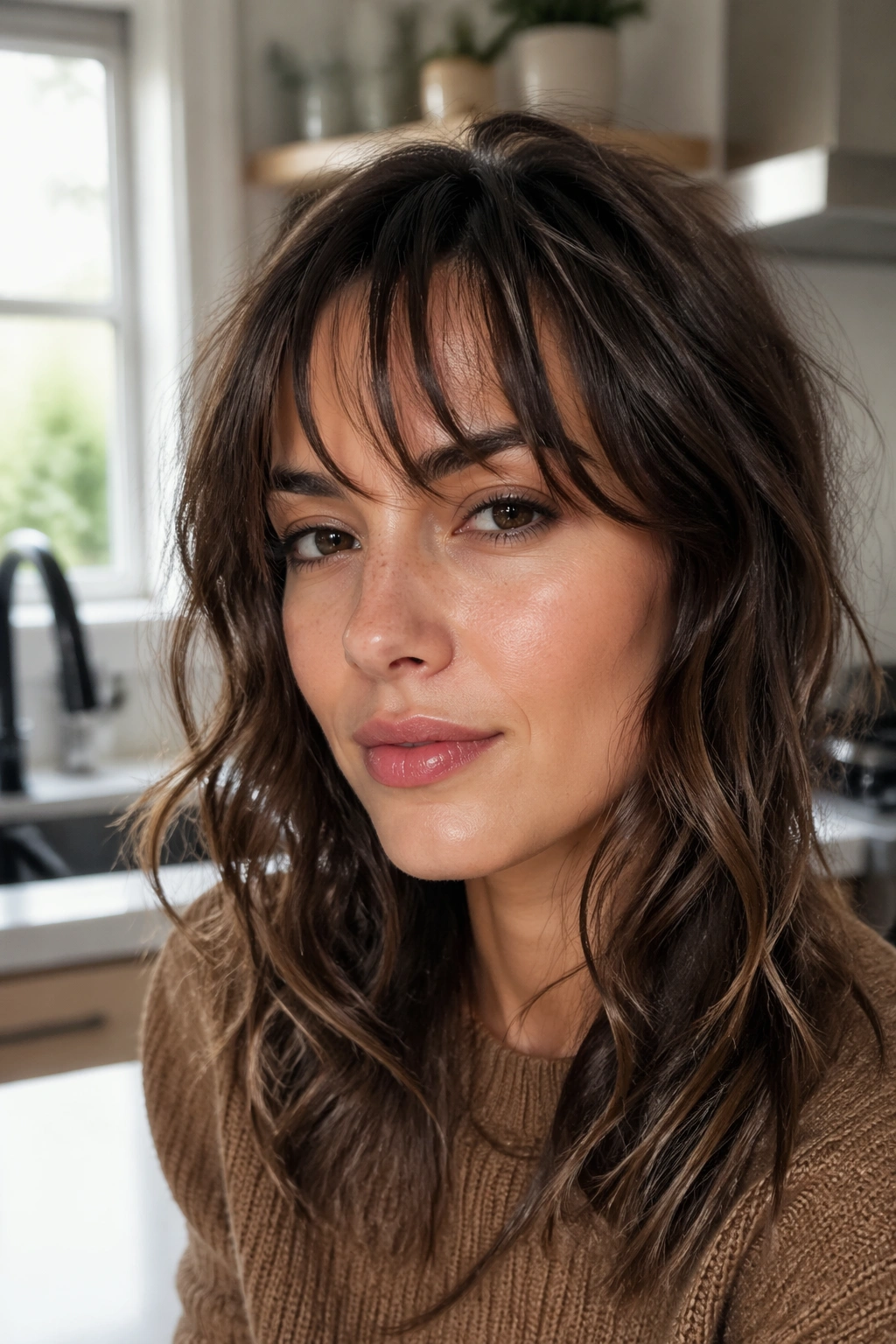
Sliced bangs are all about clean gaps between pieces. The ends are cut so the fringe falls into soft strips rather than one solid block, and that makes them easy to wear with wave.
This style is useful if your hair likes to clump. Instead of fighting that clumping, the cut turns it into part of the design. A touch of styling cream or a tiny bit of pomade on the fingertips can define the slices without making the bangs sticky.
What Makes Them Different
They are lighter than a full fringe, but less floaty than wispy bangs. That middle ground is useful.
- Works well on medium-density waves
- Keeps movement visible
- Needs finger styling, not brush-overkill
- Grows out in a forgiving way
I’d pick this for humid weather or active days. The separation keeps the bang from turning into one heavy sheet.
25. Swoopy Bangs Blended Into a Long Shag
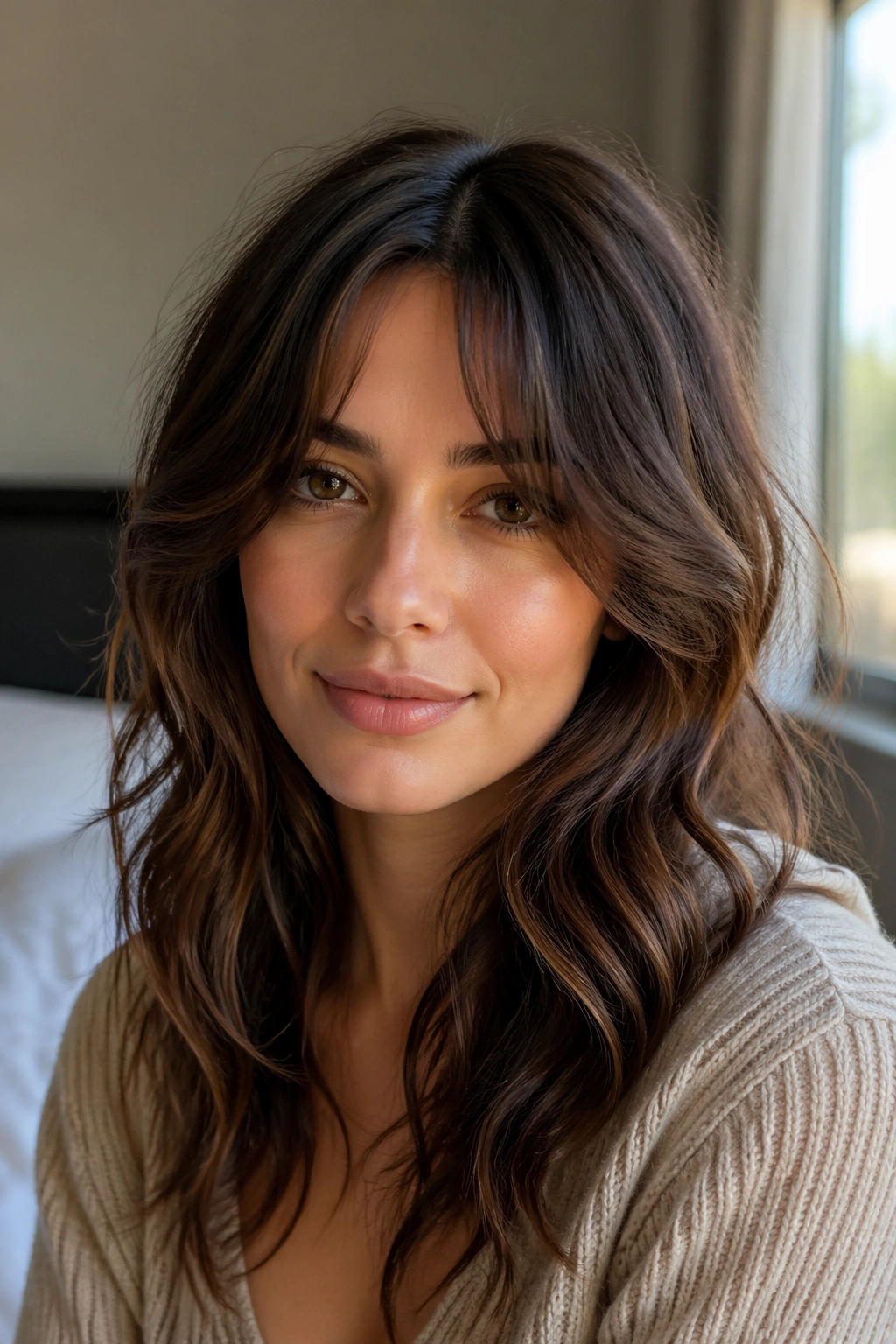
Swoopy bangs bring the front section into the rest of the haircut with a long, obvious sweep. They are different from side-swept fringe because the curve is more built-in, more part of the cut itself.
A long shag makes this shape even better. The bang pieces travel into the layers at the cheek and jaw, so the whole haircut feels connected. That is a big deal with wavy hair, because disconnected fringe can look like it was added later.
This is one of the easiest bang styles to style with a blow-dryer brush or a quick twist of the hand. The wave does most of the work. You just keep the front from collapsing at the root.
26. Thick Wavy Bangs With Interior Layering
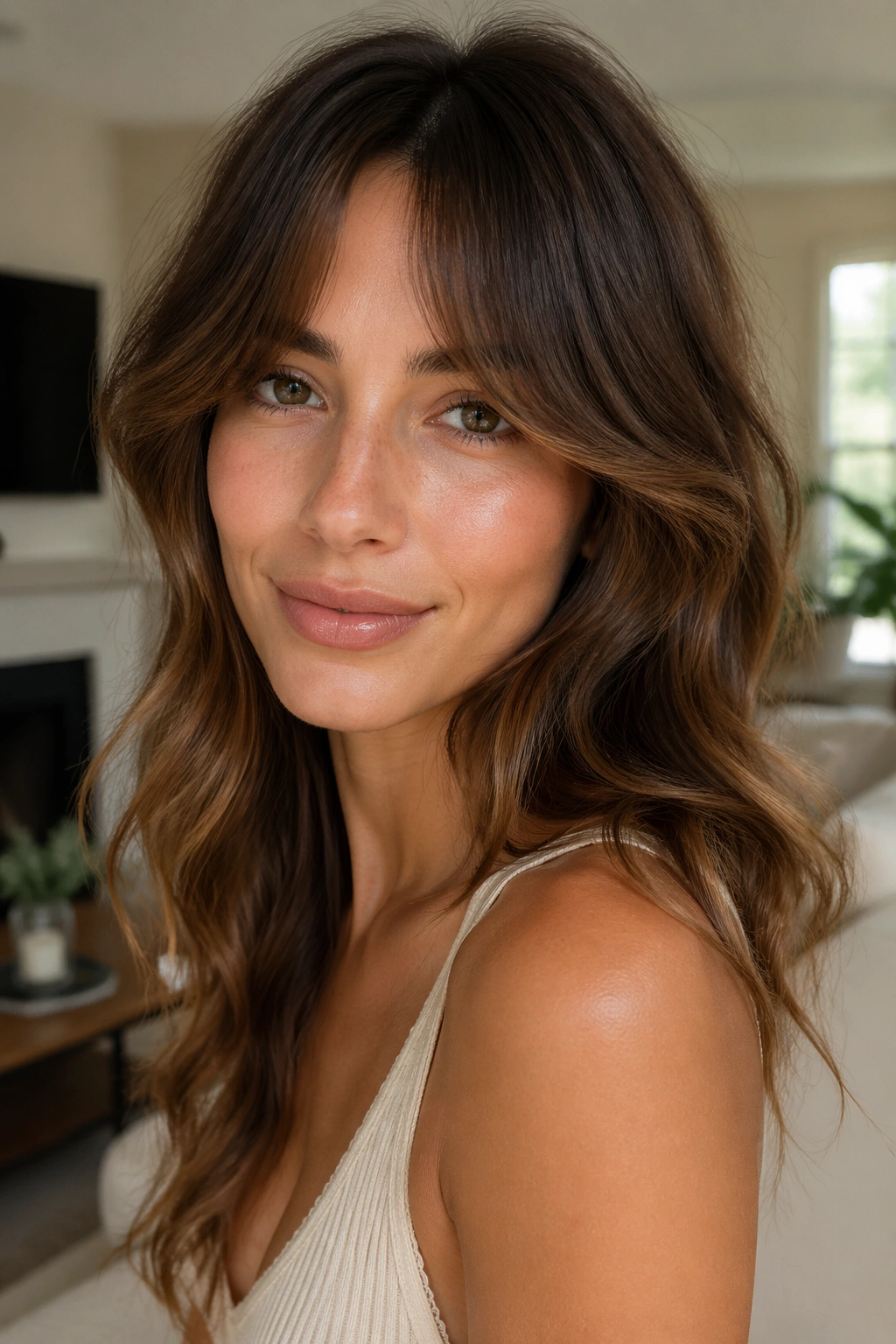
Thick hair needs room to move, and interior layering gives it that room without removing the bulk that makes the bang look full. The result is a heavier fringe that still has bend and lift.
If your waves are coarse or dense, this can be a better choice than wispy bangs. Thin fringe often disappears on strong hair. Thick bangs keep their presence. The internal layers stop them from sitting like a wall across the forehead, which is the part that usually goes wrong.
A stylist should avoid over-thinning the surface. That is where people get into trouble. Once the ends start to look see-through, the bangs can separate in odd places and lose the strong shape that made them flattering in the first place.
27. Fine-Hair Bangs With Root Lift
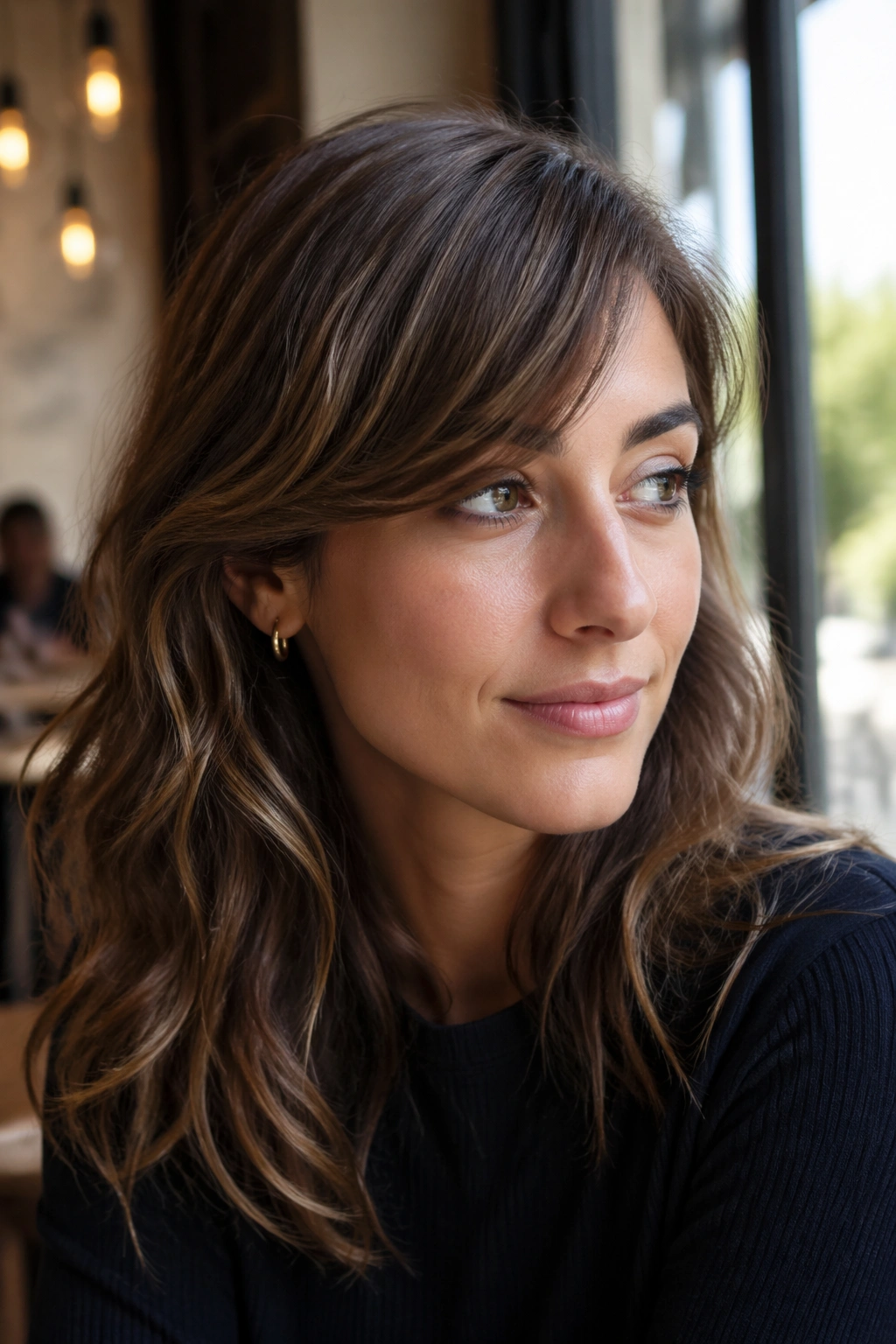
Fine hair needs a different bang strategy. Too much fringe can look sparse, but too little can vanish into the rest of the cut. Root lift solves that problem.
The style usually uses a narrower bang section, then a little volume at the roots so the front does not sit flat against the forehead. A small round brush or a Velcro roller for 5 to 10 minutes can make a big difference. So can a light root spray. Heavy cream is the enemy here.
I like this option because it gives fine hair a little shape without asking for more density than it has. The fringe should still look soft. Just not limp. That is the line to hold.
28. Damp-Set Bangs With a Piecey Finish
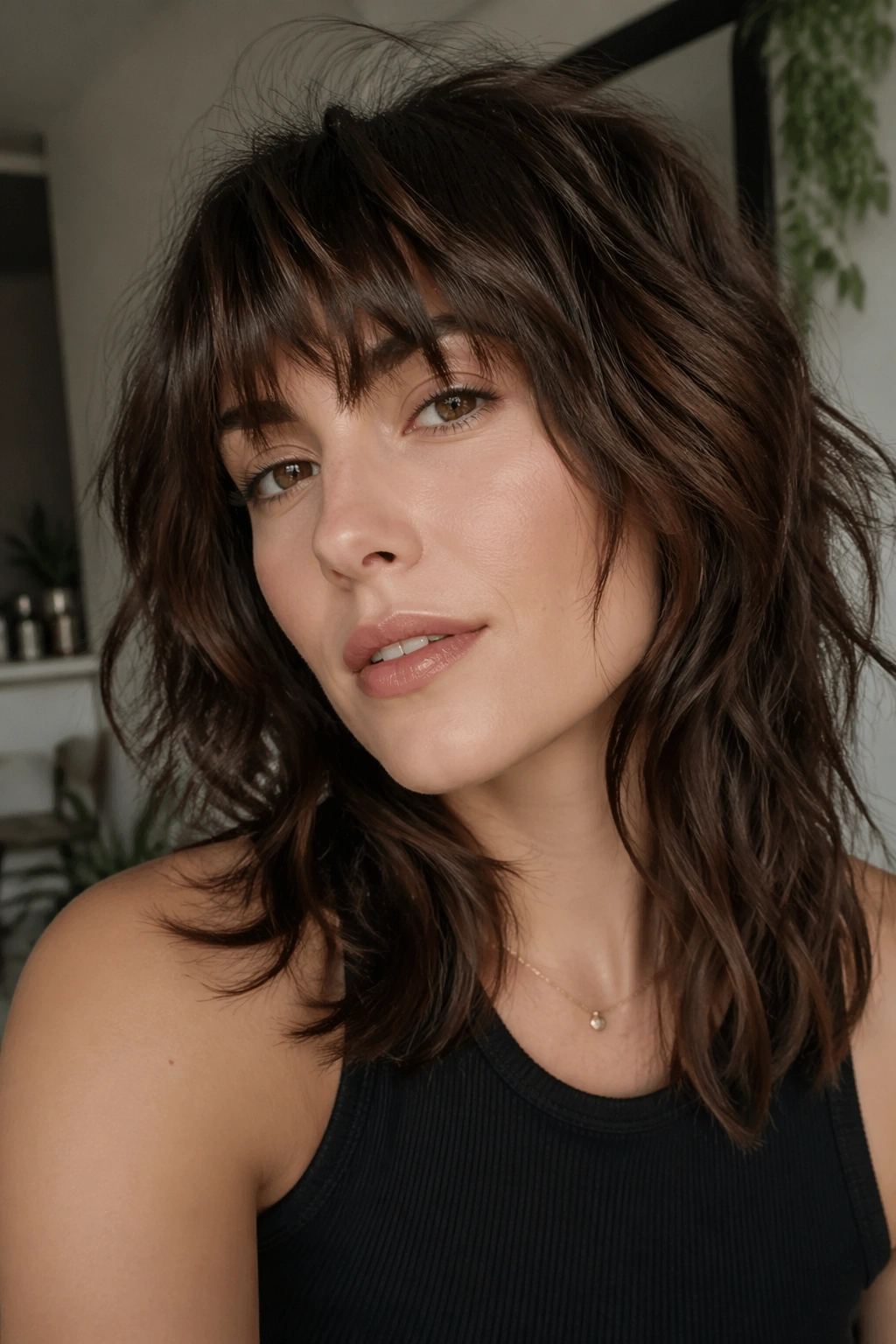
Damp-setting is one of those boring techniques that earns its keep. You shape the bangs while they are still wet, clip or twist them into position, and let them dry in the shape you want. It works especially well with waves because the hair remembers the bend.
The Simple Routine
- Towel-dry until the bangs are no longer dripping
- Apply a pea-sized amount of mousse or styling cream
- Clip the fringe into the direction you want it to fall
- Let it dry fully before touching it
That little pause is worth it. If you keep messing with damp bangs, you break up the pattern and invite frizz. Let them set, then separate them with your fingers at the end. Piecey, soft, done.
29. Convertible Bangs With a Flexible Part
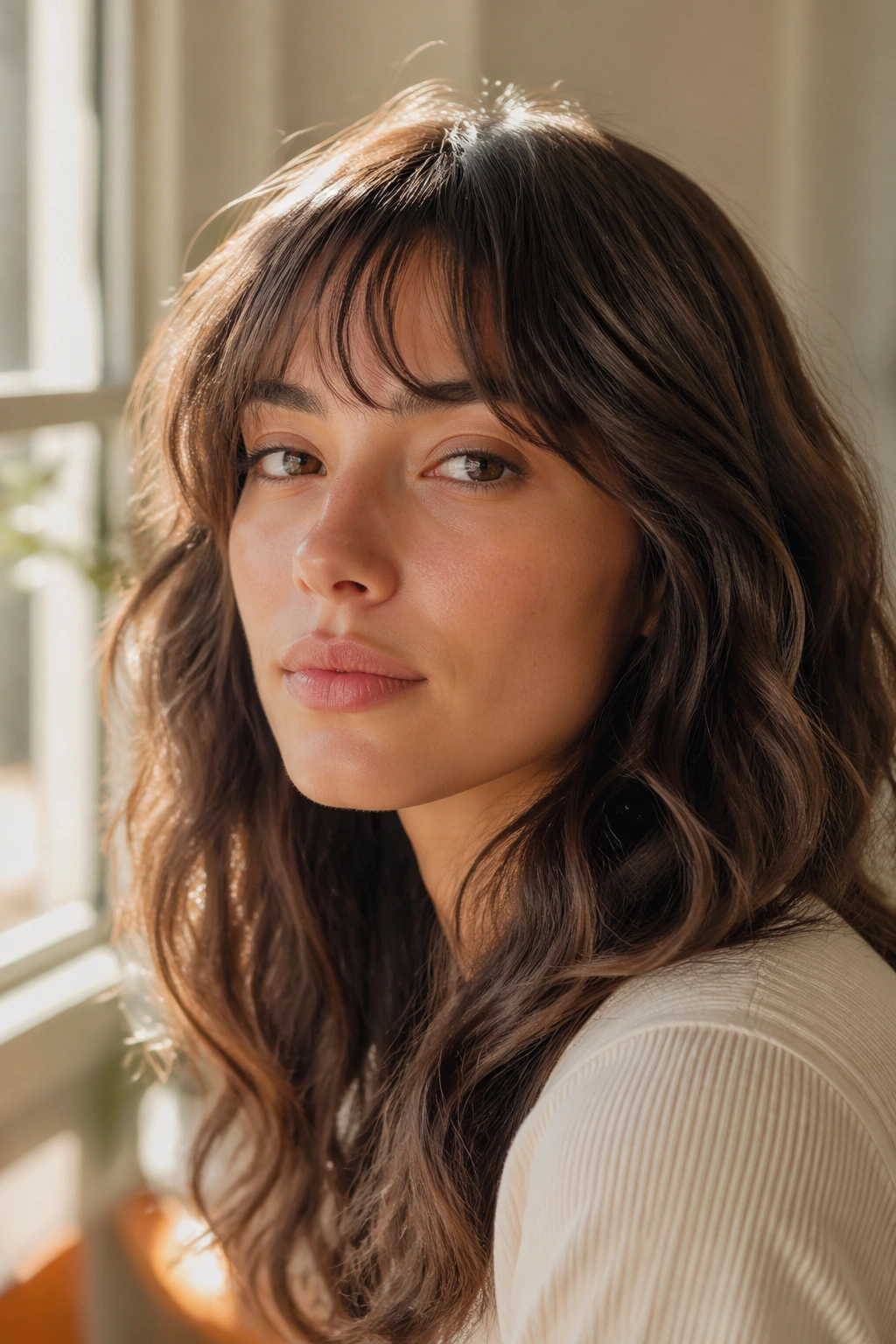
Convertible bangs are the practical answer for people who change their mind halfway through the week. They are cut so they can wear center, side, or slightly off-center without looking wrong in any of those positions.
The trick is in the sectioning. The front pieces are long enough to move, but shaped enough to frame the face either way. On wavy hair, that kind of flexibility is gold. One day you get a curtain look. The next day you sweep everything over and pin one side back.
This style is also nice if you are not ready to choose a permanent lane. You can test-drive different parts, different drying methods, and different levels of polish. No drama. Just options.
30. Invisible Bangs That Blend Into Front Layers
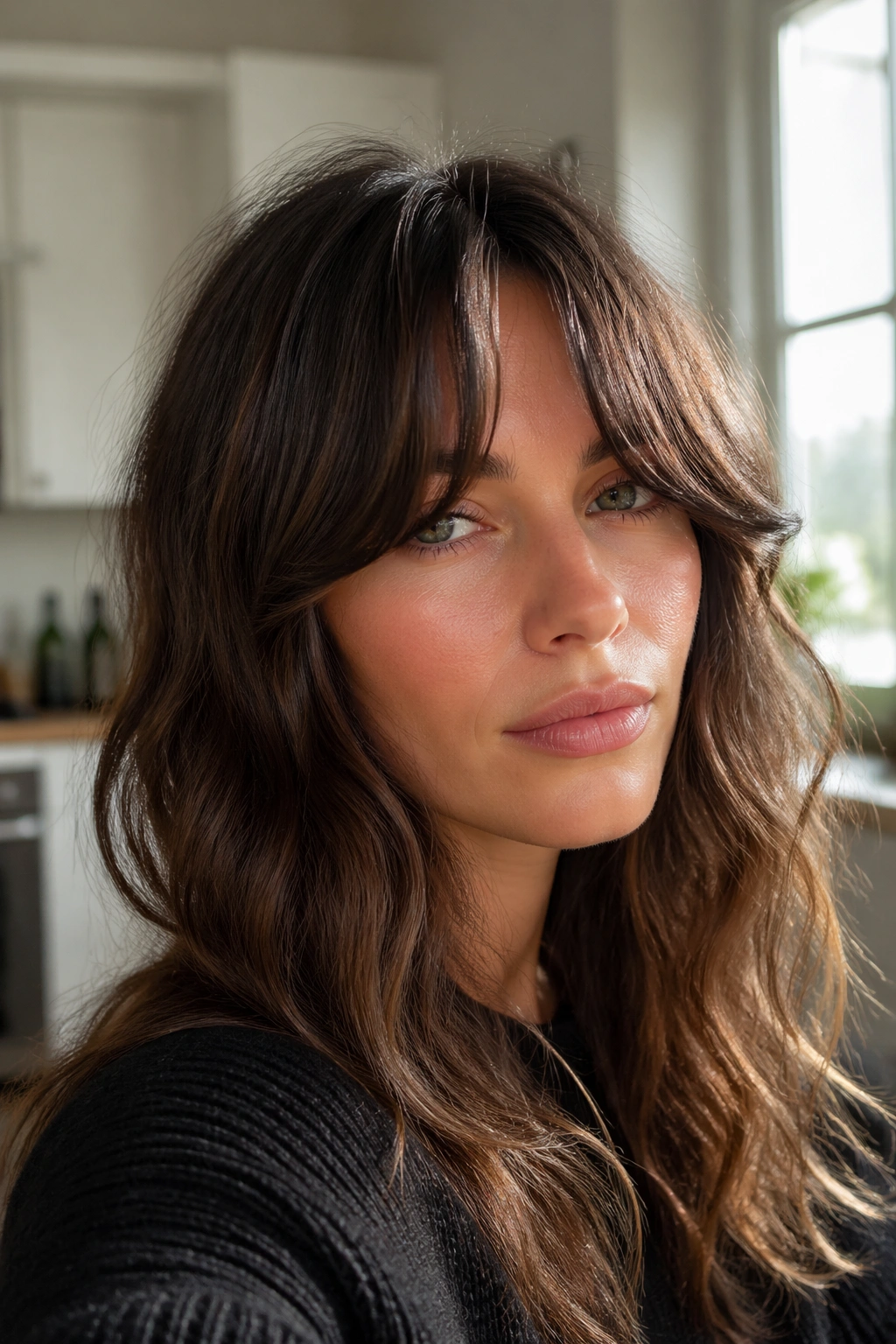
Invisible bangs are the quietest version of fringe, and that is exactly why they work for a lot of wavy hair. Instead of making a clear line across the forehead, the front pieces disappear into the layers around the face.
This is the best choice if you want bangs without the obvious bang moment. The haircut still frames the face, but the line stays soft enough that nobody gets that “new fringe” shock. It is especially helpful if you are nervous about commitment or if your wave pattern changes from day to day. The cut forgives a lot.
If I had to give one practical rule, it would be this: start longer than you think you need. Waves shrink. They also puff. A slightly longer invisible fringe can be tucked, split, or reshaped, while a too-short one has only one mood and it is rarely the right mood.