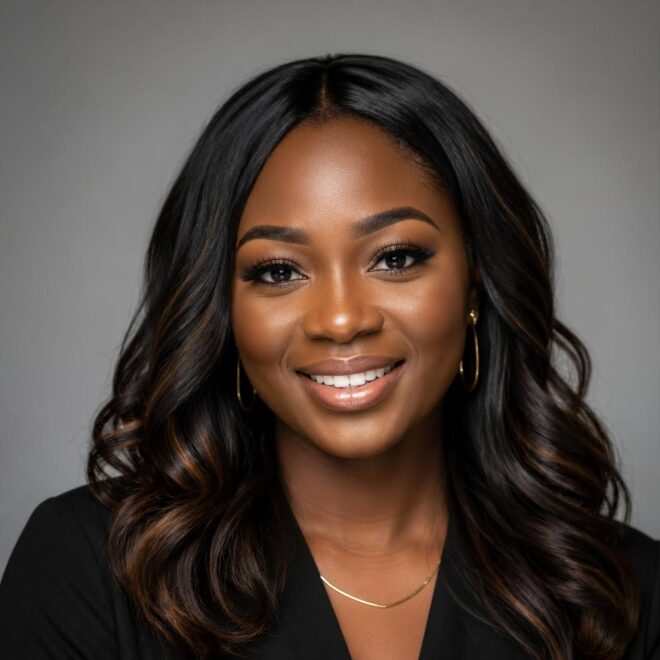
Wavy hairstyles for job interviews have one job: look polished before you even say hello. They should stay out of your eyes, hold their shape through a handshake, and still feel like your hair rather than some stiff helmet you built in the bathroom under pressure.
The best interview hair usually sits in that middle lane. Too loose, and you spend the whole conversation brushing it back. Too slick, too sprayed, too curled, and the look starts to feel formal in a way that can drown out your face. A soft wave, a clean part, and a little control around the hairline go a long way.
I’ve always liked styles that survive the awkward parts of the day: the car ride, the waiting room, the nervous touch at the temple, the sudden blast of wind between the curb and the door. That’s the real test. If your hair still looks calm after that, you’re in good shape.
1. Side-Parted Soft Waves That Stay Close to the Face
A side part is hard to beat when you want your waves to look settled and intentional. It creates a little structure right away, which helps the whole style read as neat instead of beachy or random.
Why It Works
The off-center line gives the eye somewhere to rest, and that matters in a room where people are already deciding how organized you seem. Soft waves keep movement in the hair, while the side part keeps the top from puffing out in a way that can look messy under fluorescent light.
This is one of the easiest wavy hairstyles for job interviews because it works on medium and long lengths without needing a full blowout. If your hair has a little bend already, you may only need to smooth the roots, define the ends, and tame the front pieces.
- Part your hair about 1 to 2 inches off center.
- Use a 1-inch curling iron or wand to bend only the mid-lengths and ends.
- Brush the waves out once they cool for a softer finish.
- Tuck the heavier side behind one ear if you want a cleaner frame.
Tip: Keep the top flat and the wave pattern loose. Tight ringlets can look out of place in a formal interview setting.
2. Low Wavy Ponytail With a Clean Hairline
This is the style I’d hand to someone who hates fussing with their hair. A low ponytail with soft waves feels controlled, practical, and calm, which is a strong combination when your hands are already busy holding a portfolio or résumé folder.
The trick is making the ponytail look finished, not gym-class casual. Keep the elastic at the nape, leave a slight bend through the lengths, and smooth the crown with a light cream or serum. You still want movement, just not flyaways that stand up the second you step outside.
If your hair is medium thickness, this style is especially useful because it keeps the shape close to your head and makes your face the focus. Add a small wrap of hair around the elastic if you want it to look a touch more deliberate. One small detail can change the whole read.
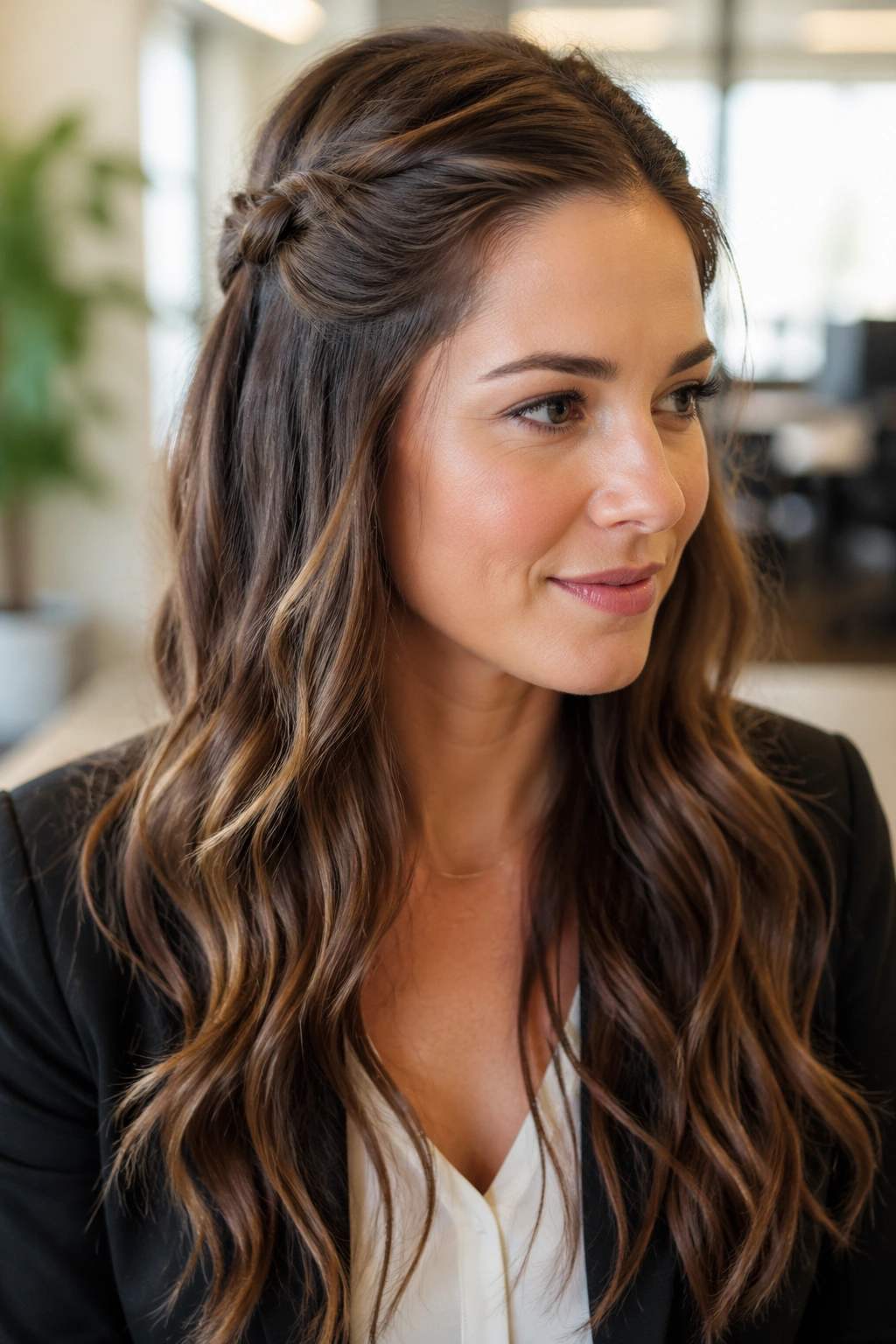
3. Half-Up Twist for Shoulder-Length Waves
Why does a half-up twist work so well? Because it solves the two biggest interview hair problems at once: hair in the face and hair that feels too severe when pinned all the way back.
Shoulder-length waves can be tricky. Left alone, they may fall forward every time you lean in. Pulled back too tightly, they lose the soft shape that makes wavy hair feel friendly and approachable. A half-up twist sits right in the middle, keeping the top controlled while leaving the length free enough to move.
How to Wear It
Take two small sections from just above the temples, twist them back, and secure them with two bobby pins or a small clip at the back of the crown. Keep the twist low and close to the head. If the ends stick out too much, tuck them under the back section instead of letting them flare.
A quick mist of flexible-hold spray helps, but don’t drown it. The whole point is soft control, not shellac.
4. Polished Lob With Bent Ends and a Soft Bend
Picture a collarbone-length cut that sits neatly against a blazer collar and never flips into your mouth while you talk. That’s the lob doing its best work.
This style reads clean because the shape is already contained. You don’t need huge volume or a lot of styling drama. A gentle bend at the ends, plus smooth roots, is enough to make the cut look finished. For interviews, that’s often better than chasing bigger waves that may collapse before you even get to the building.
I like this look on anyone with straight-to-wavy texture who wants to seem pulled together without looking overdone. The bent ends add shape, but they stay close enough to the head that the style still feels serious. If you have a blunt lob, this may be the easiest route of all.
A 1-inch iron, one pass per section, and a soft brush-out usually do the job. Keep the movement quiet. That’s the whole point.
5. Low Chignon With Loose Wave Texture
The low chignon is old-school for a reason. It puts the hair where it can’t distract anyone, but it still leaves enough texture around the bun to keep the style from looking severe.
I prefer this on wavy hair when the texture is a little too lively to leave fully down. Instead of forcing the hair smooth all the way through, work with what’s there. Gather the length at the nape, twist it into a compact coil, and let the natural wave pattern soften the edges. A few face-framing pieces can make the style feel less rigid.
You do not need a ballerina bun here. That version can look too polished for a standard office interview, especially if the rest of your outfit is already sharp. Keep the bun low, pin it close, and let the finish stay slightly relaxed.
A little shine cream on the crown helps a lot. So does a fine-tooth comb used lightly, not aggressively.
6. Center-Parted Waves With a Smooth Crown
A center part can look harsher than people expect, but only if the crown is puffy or the wave pattern starts too high. When the top is smooth and the waves begin below the cheekbone, the result feels modern and composed.
That matters in interviews where you want a tidy outline without looking overly styled. The middle part gives symmetry. The smooth crown keeps the look from tipping into boho territory. Together, they make a strong case for a clean, calm presentation.
If your hair naturally parts down the middle, this is easy. If it doesn’t, don’t fight it too hard. Use a tail comb to set the line, then blow-dry the top flat with a brush before adding soft bends through the lengths. The face framing should be gentle, not dramatic.
This style works especially well with simple earrings and a plain neckline. The hair gets to be the quiet detail instead of the whole event.
7. Tucked-Behind-the-Ears Waves With Controlled Volume
A tucked-behind-the-ears style does something subtle but useful: it shows your face. That sounds obvious, but in a job interview, it changes the tone fast. Your features stay open, your expressions are easier to read, and nothing hangs in the way when you nod or smile.
The best version keeps a little volume above the temples so the style does not collapse into the head. You want shape, not flatness. Leave the lower lengths wavy and soft, then tuck the front sections behind the ears and secure them with a tiny, hidden pin if your hair tends to slip.
This is a strong choice if you wear glasses or if your collar is already busy. It also helps when your hair is thick enough to feel heavy down. The tuck relieves that weight without making the style formal in a stiff way.
One small note: smooth the ear line. If that area frizzes, the whole style can look undone.
8. Crown Twist on Long Wavy Hair for Job Interviews
Long hair can be a little much in an interview if you leave it floating everywhere. A crown twist reins it in without making you look like you tried too hard, and that balance is hard to beat.
The style works by pulling just enough hair away from the face to keep the front clear while letting the rest stay long and softly waved. I like it because it keeps movement in the lower half, so the hair still feels like hair. You’re not stuffing every strand into a clip or bun and hoping for the best.
Take a section from each temple, twist it back toward the crown, and pin it flat underneath the top layer. Then smooth the front with your fingers, not a brush, unless you want to flatten all the shape out. The lower waves should stay loose and brushed through once.
This is a good pick for longer, thicker textures that need a bit of structure. It also photographs nicely in person, which matters more than people admit.
9. Blowout Waves With Lift at the Roots
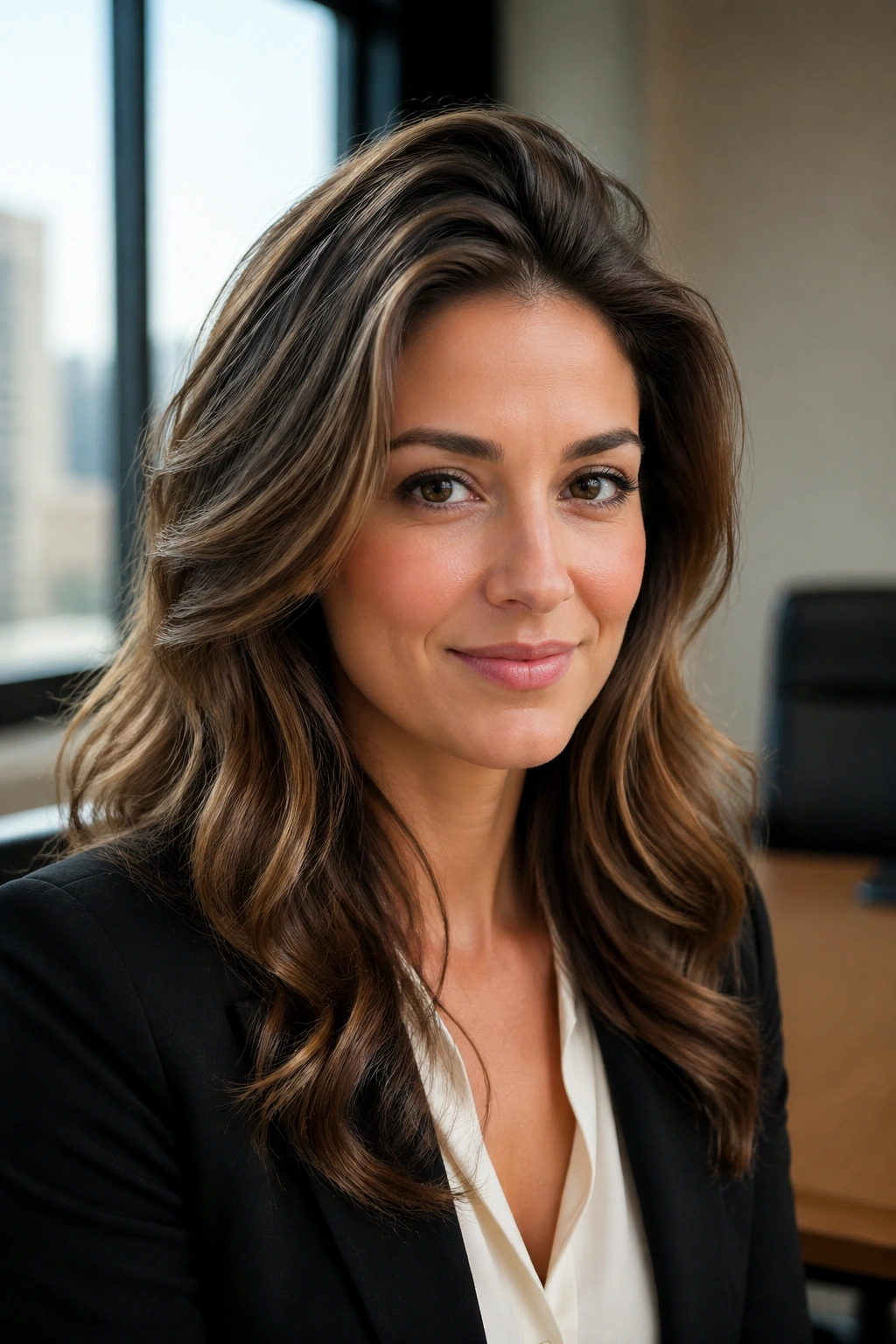
Why do root lift and interview hair go so well together? Because flat roots can make even good waves look tired.
A soft blowout wave keeps the top airy, which gives the style a fresh, alert feel. You do not want huge pageant volume. You want enough lift that the hair moves away from the scalp and frames the face instead of sitting heavy around it. That tiny bit of height makes a big difference.
How to Get the Most From It
Use a round brush or large barrel brush while drying the top section. Lift at the roots, dry the roots first, then wrap the mid-lengths around the brush for a few seconds. Finish by smoothing the ends into a broad bend rather than a tight curl.
A light mist of spray at the roots helps the shape stay put, but keep it flexible. If the front feels too soft, pin one side behind the ear and leave the rest loose. That keeps the overall mood relaxed while still looking prepared.
This works especially well for corporate interviews where the room itself already feels formal.
10. Deep Side-Swept Waves With One Ear Revealed
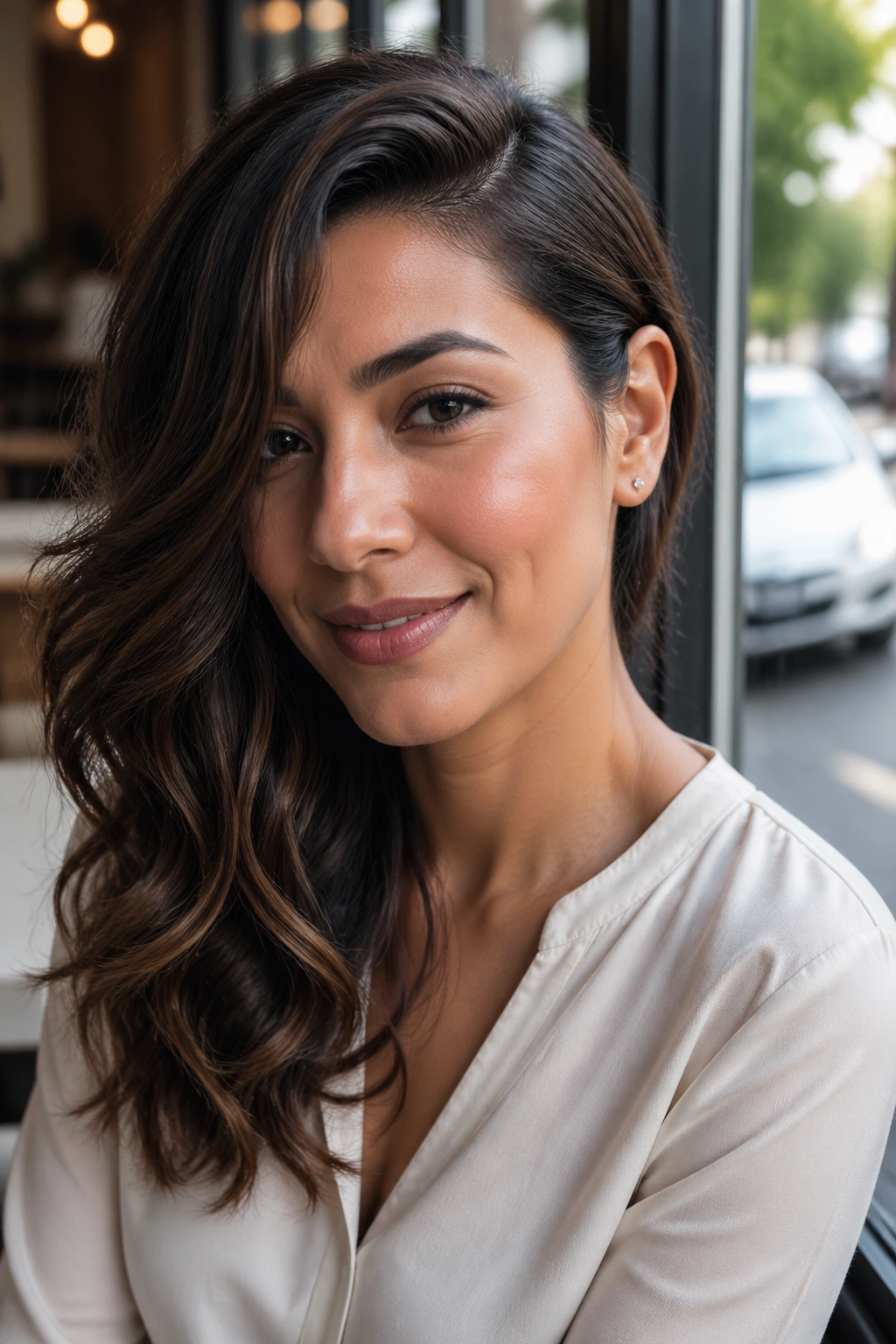
A deep side sweep has a little more personality than a standard side part, and sometimes that’s useful. It says you paid attention to the style, but it stops short of looking flashy.
I like this for wavy hair that naturally falls in big sections. Sweep the heavier side across the forehead, let it skim one eyebrow, and tuck the other side behind the ear. That opens the face in a nice way and keeps the shape from feeling symmetrical to the point of dullness.
What to Watch For
- Keep the wave broad, not crunchy.
- Use one strong clip or a hidden pin to hold the sweep in place.
- Smooth the top with a small amount of cream.
- Leave the ends touchable rather than stiff.
The style works best when the volume sits on one side and the other side stays clean. That contrast gives the whole look a little polish without making it theatrical. Good for creative roles. Safe enough for many formal ones, too.
11. Short Wavy Bob With Defined Pieces
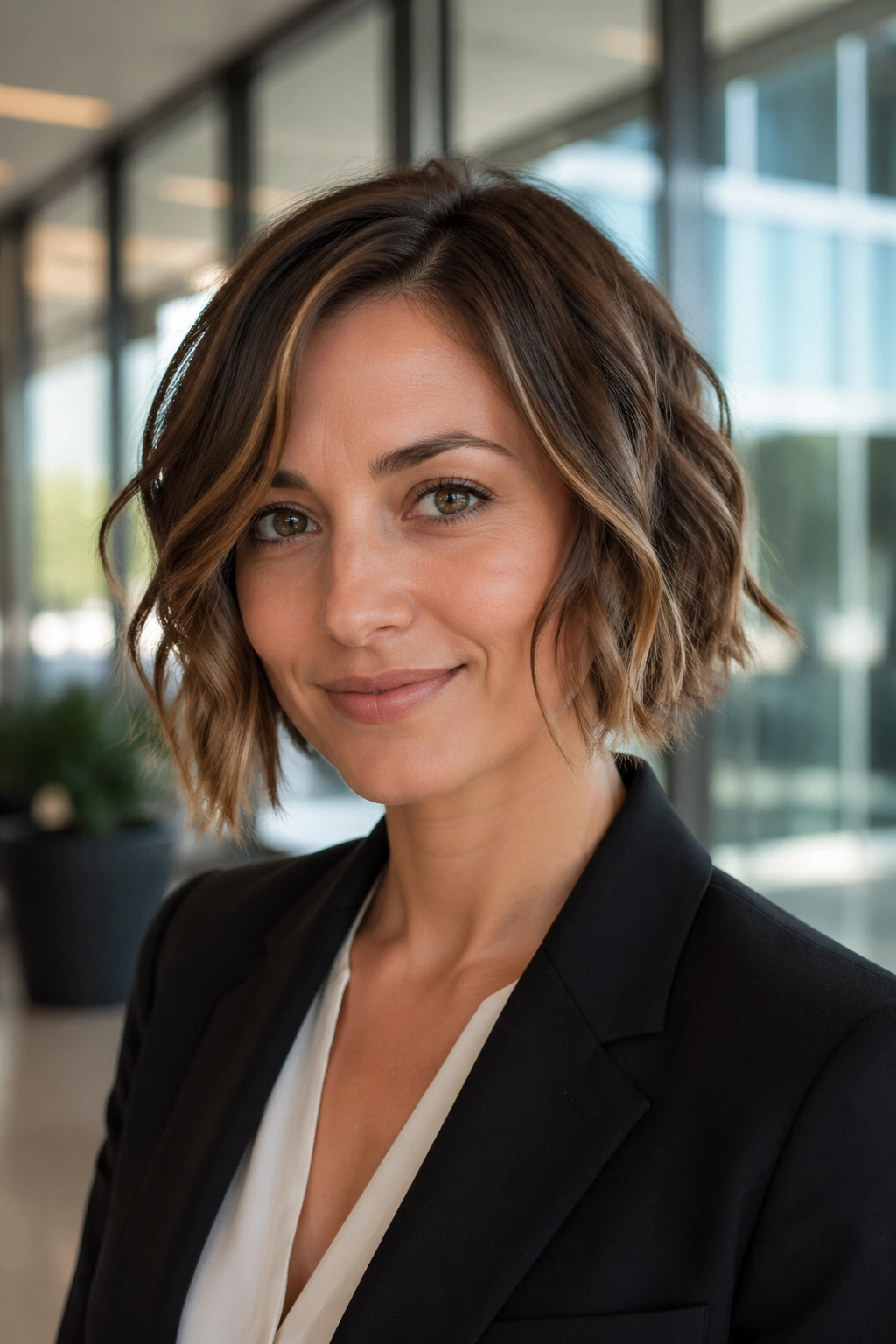
A short bob can be a gift in interview settings because it already has limits built in. There’s less hair to manage, less chance of it falling into your face, and less time spent taming it before you leave.
The key is definition. A short wavy bob should not look puffy or triangular. Define a few pieces around the cheekbones, smooth the top, and let the ends land neatly at the jaw or just below it. That shape draws attention upward and frames the face without shouting for it.
I’d use a light mousse or styling cream on damp hair, then diffuse only enough to keep the wave pattern alive. If the bob gets too fluffy, it can start to look casual fast. A small amount of shine product on the outer layer helps the cut look intentional.
This is one of those styles that looks better when it’s slightly imperfect, which is useful. It doesn’t need to be fussy to be interview-ready.
12. Clipped-Back Front Sections and Loose Lengths
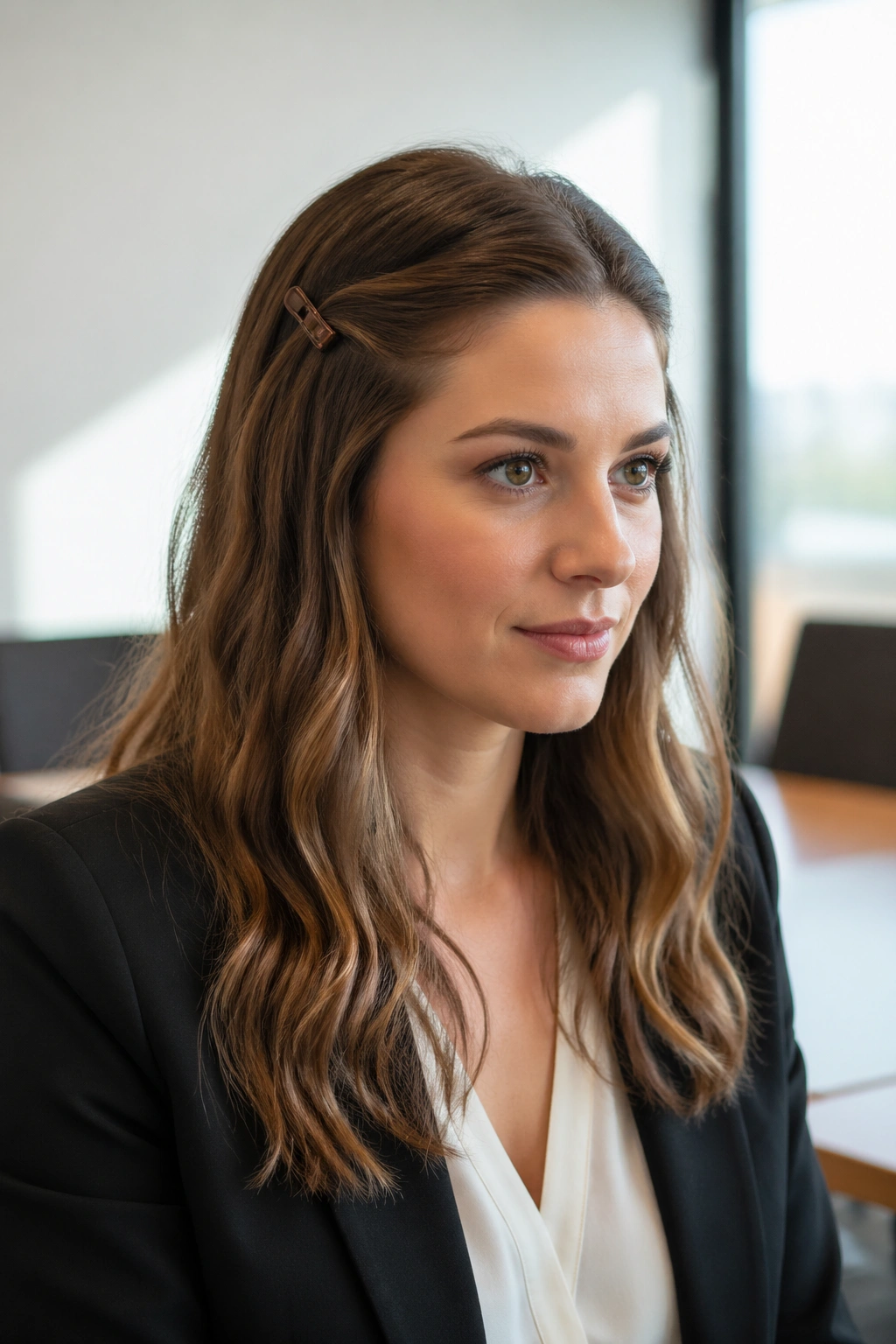
This is the move when you like your hair down but refuse to let it get in your eyes. Clipping back just the front pieces gives you the best of both worlds.
It also makes a stronger impression than a full-down style because the face stays open. That’s useful when you want the interviewer to focus on your expression, not on whether your fringe is doing its own thing. The rest of the waves can stay loose and soft, which keeps the whole look from feeling over-managed.
Choose a clip that sits flat. A big decorative piece can distract more than it helps, especially in conservative settings. A small metal clip, a matte barrette, or even two crossed bobby pins can work better. Pin the front just above the temple and slide the section back far enough that it stays put when you nod.
If your hair is fine, tease the clipped section very lightly first. If it’s thick, use a hidden pin underneath so the clip does not slide.
13. Low Braided Accent Under Soft Waves
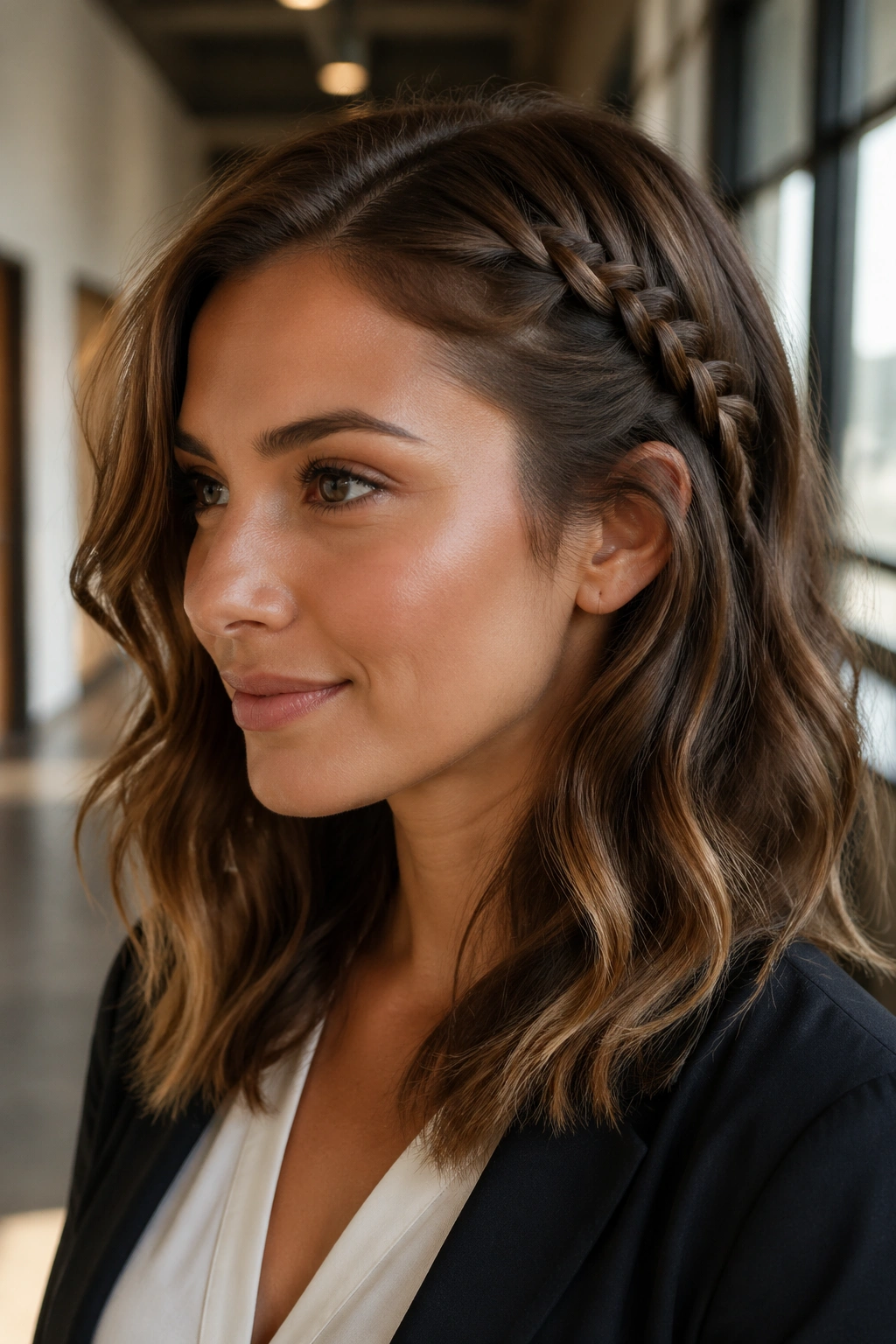
A braided accent can make wavy hair look polished without dragging the whole style into formal territory. The braid becomes a detail, not the headline.
This works especially well if you have medium or long waves and want a little extra control near the face. Braid a small section near one side of the head, then tuck it back and leave the rest of the hair loose. The braid adds structure right where the style needs it, while the waves keep the look human and soft.
I like this better than a full braid for interviews because it doesn’t read as playful or overly styled. It’s restrained. You can keep the braid flat and narrow, which makes it feel more appropriate for a business setting. A single braid over one temple can be enough.
A tiny amount of wax or cream on the braided section helps with frizz. Don’t overdo it. You want the braid to sit there calmly, not look glossy in a strange way.
14. Soft Knot at the Nape With Face-Framing Strands
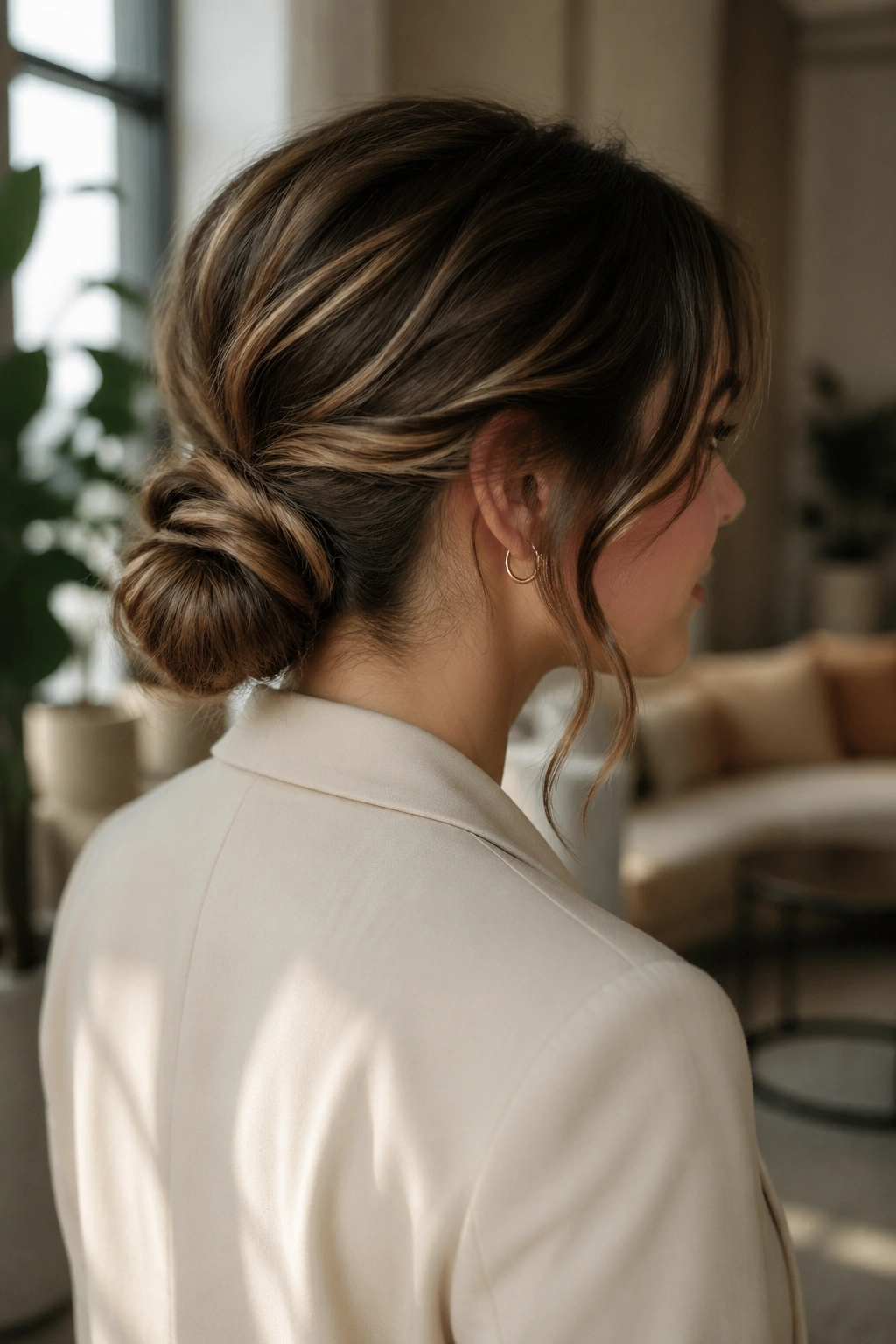
The soft knot at the nape is the cousin of the low bun, just less rigid. It lets the texture stay visible while keeping the silhouette neat and compact.
For interviews, I think that’s a smart trade. The hair is controlled, but it doesn’t look locked down. Leave two thin face-framing strands out in front, then pull the rest into a low knot and pin it close to the base of the neck. If your hair is wavy, the knot will usually have enough texture on its own to look relaxed in a good way.
This is a nice choice if you’re wearing a collared shirt or a jacket with a sharper line. The soft knot balances the outfit without competing with it. If the ends poke out, tuck them under the knot rather than trimming them with a thousand pins. Too many pins can make the back feel bulky.
A little spray on the front pieces helps them stay smooth without turning them stiff. That’s the sweet spot.
15. Shoulder-Grazing Waves With a Satin Finish
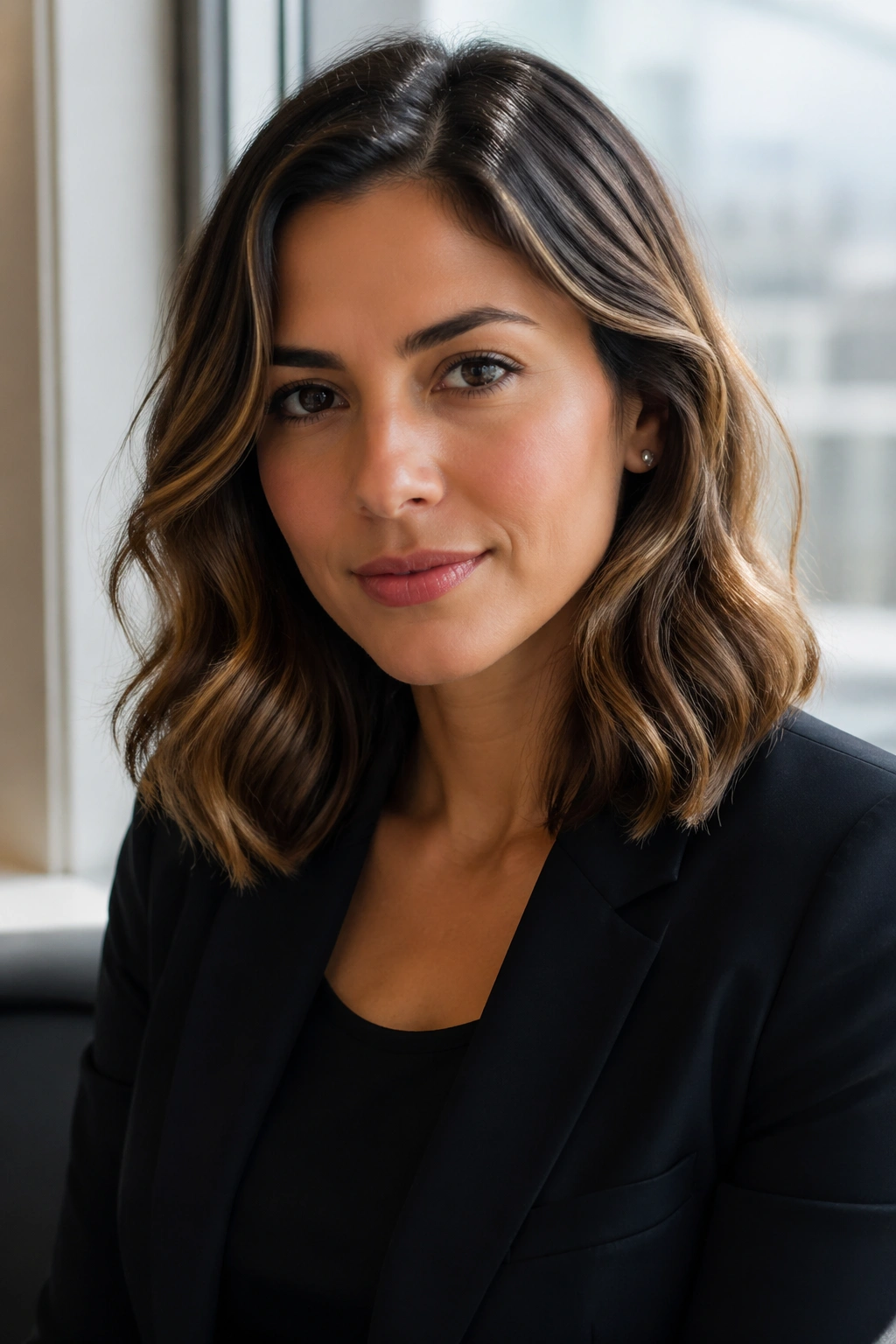
Can waves look polished without looking flat? Absolutely. The shoulder-grazing length is the sweet spot for that.
This cut sits in a useful zone because it’s long enough to show texture but short enough to stay manageable. When the finish has a satin sheen, the hair looks cared for without looking overworked. That matters in interview settings where you want neatness, not glamour.
I’d keep the waves broad and soft, almost like a loose bend rather than a strong curl. The ends should look finished and smooth, and the top should stay under control. A tiny bit of serum on the palms, smoothed over the outer layer, can take care of flyaways without flattening the whole style.
How to Wear It
- Keep the ends bent away from the neck.
- Smooth the crown with a soft brush.
- Add a side or middle part based on your face shape and outfit.
- Avoid heavy texture spray that makes the hair feel sticky.
If your hair slips easily, tuck one side behind the ear and leave the rest down. Simple. Effective.
16. Curtain Bangs and Polished Wavy Lengths
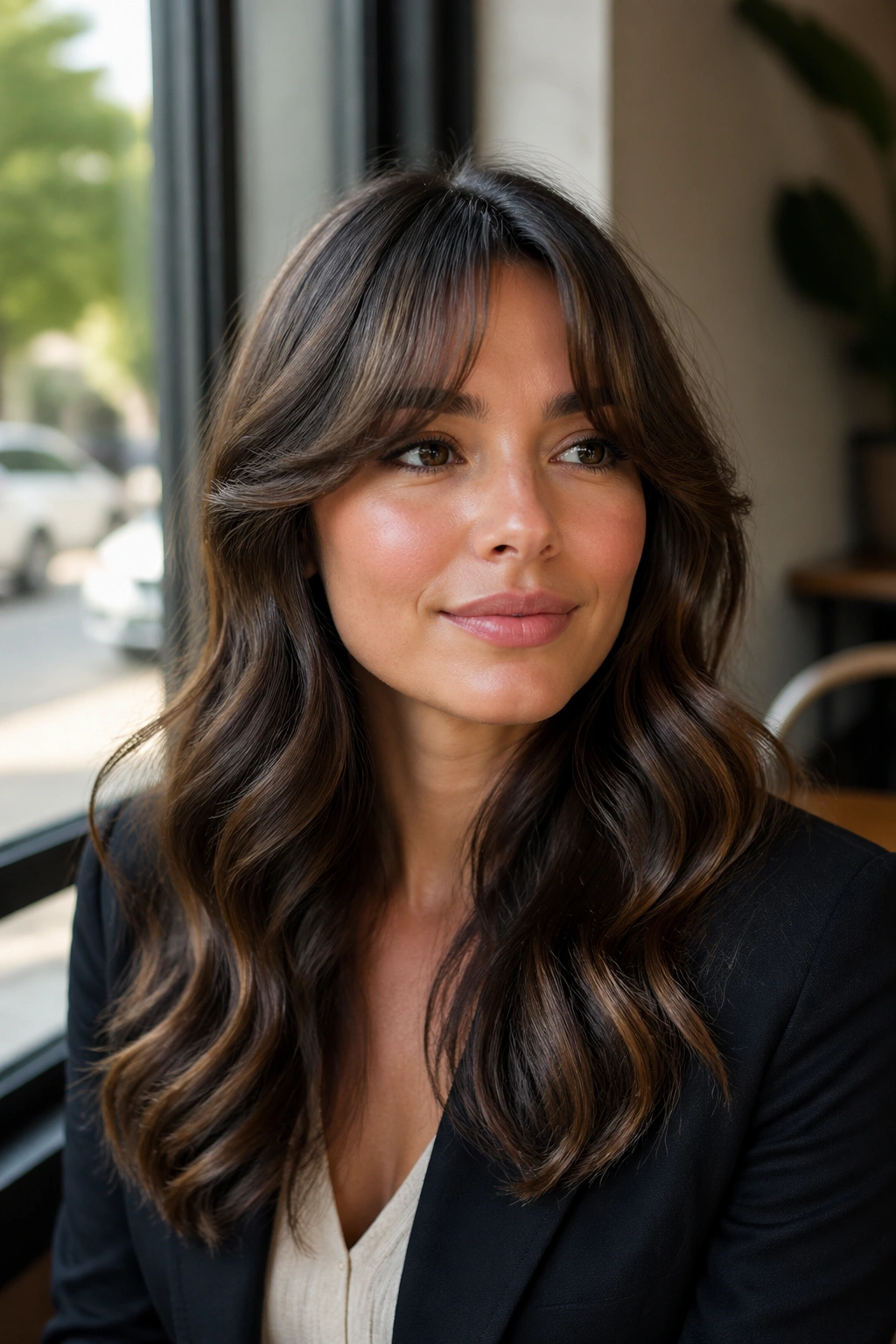
Curtain bangs can be a gift or a headache, depending on how they’re styled. For interviews, the good version is the one that curves away from the face instead of falling straight into the eyes.
The reason this works is balance. The bangs add movement near the forehead, while the rest of the waves give the style softness. When the bangs are blended and the lengths are smooth, the whole look feels current without being loud. It’s one of the few styles that can show personality and still stay safe.
I’d blow-dry the curtain sections with a round brush, pushing them back and away from the center. Then set the rest of the waves with a loose iron bend. If the bangs separate too much, a touch of cream on the fingertips usually brings them back together.
This style suits people who already wear curtain bangs in daily life. If you’re not used to them, an interview isn’t the place to experiment.
17. Side Pin and Sweep for Extra-Long Waves
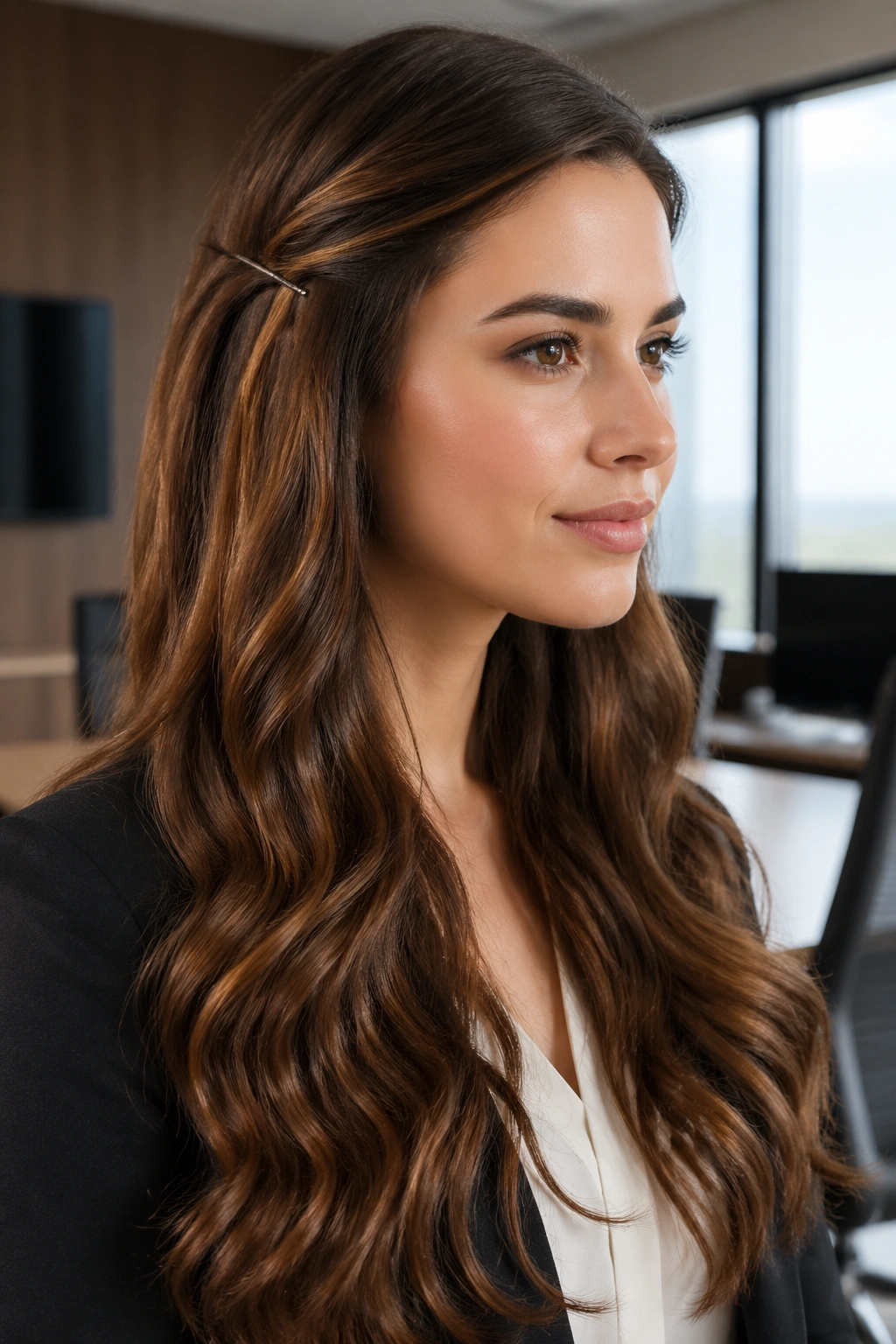
Very long waves can be beautiful, but they can also take over the room if they’re left loose and wild. A side pin and sweep gives that length a job.
The idea is simple: sweep one larger section back from the face and pin it low near the temple, then let the rest fall in organized waves. This keeps the front clear while letting the length stay visible, which can be helpful if your hair is one of the things you want to keep tidy without hiding it.
I like this for long, dense hair that needs a little direction. It stops the front from drooping forward during the interview, and it prevents the style from looking too heavy around the cheeks. A low pin placement matters here. If you pin too high, the whole thing can look fussy.
You can also add one small wave refresh at the ends right before you leave. That keeps the shape from collapsing under its own weight.
18. Twisted Low Ponytail With Controlled Texture
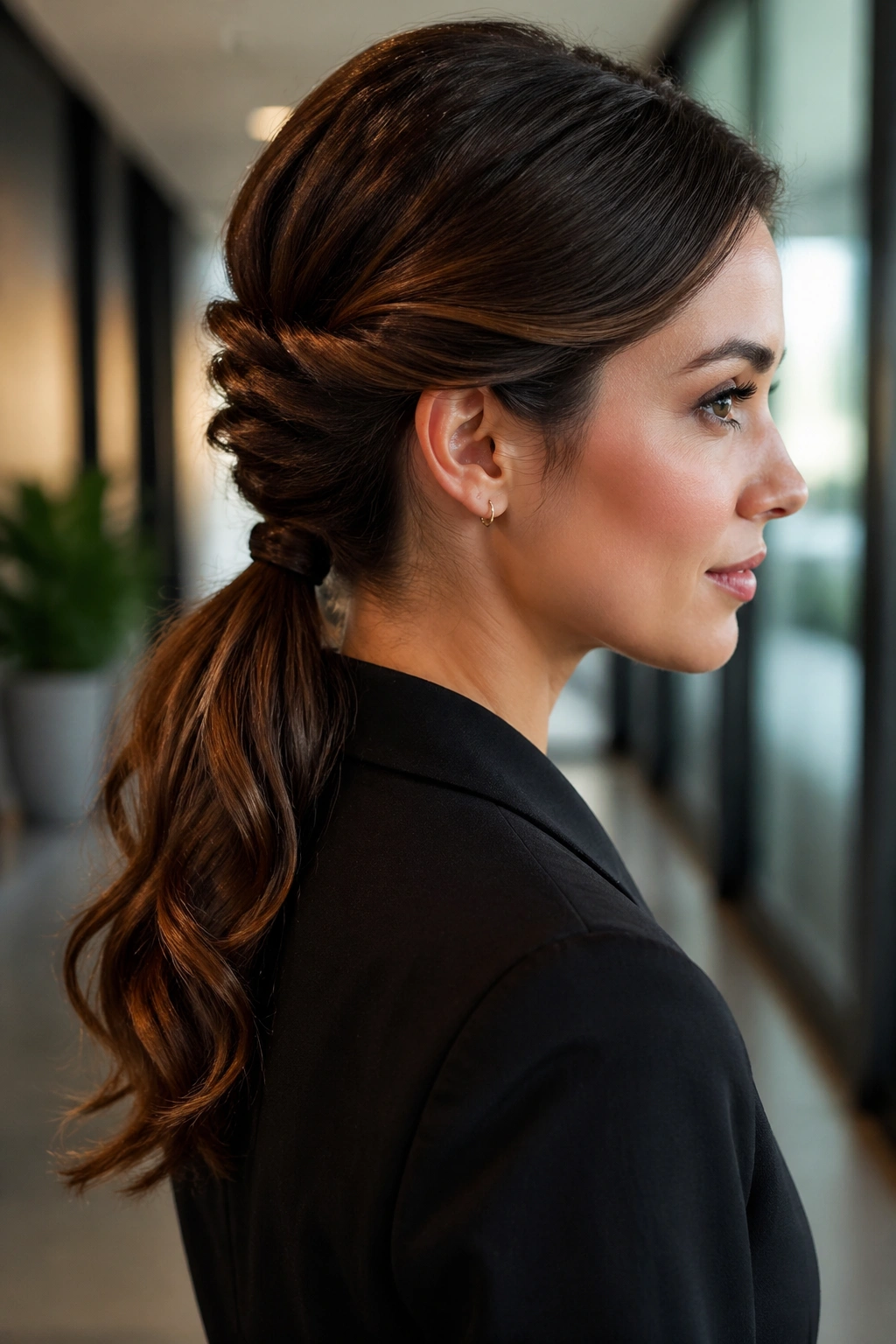
Unlike a plain ponytail, a twisted low ponytail feels deliberate. It shows that you did something with the texture, but it still stays practical and calm.
That’s a useful mix for interview hair. The twist gives the style a little depth at the back of the head, while the low placement keeps it grounded. The waves through the tail add movement, so the look doesn’t feel stiff or corporate in a dated way.
Start by dividing the hair into two sections at the back, twist them together once or twice, and secure them at the nape. Then let the remaining length fall into a soft ponytail. If your hair is layered, you may need a few pins to keep the twist tight against the head. Worth it.
This style is good for hair that tends to puff out at the crown. The twist smooths that area down. Add a tiny wrap of hair around the elastic if you want the finish to look cleaner.
19. Sleek Half Ponytail With Soft Bends for Job Interviews
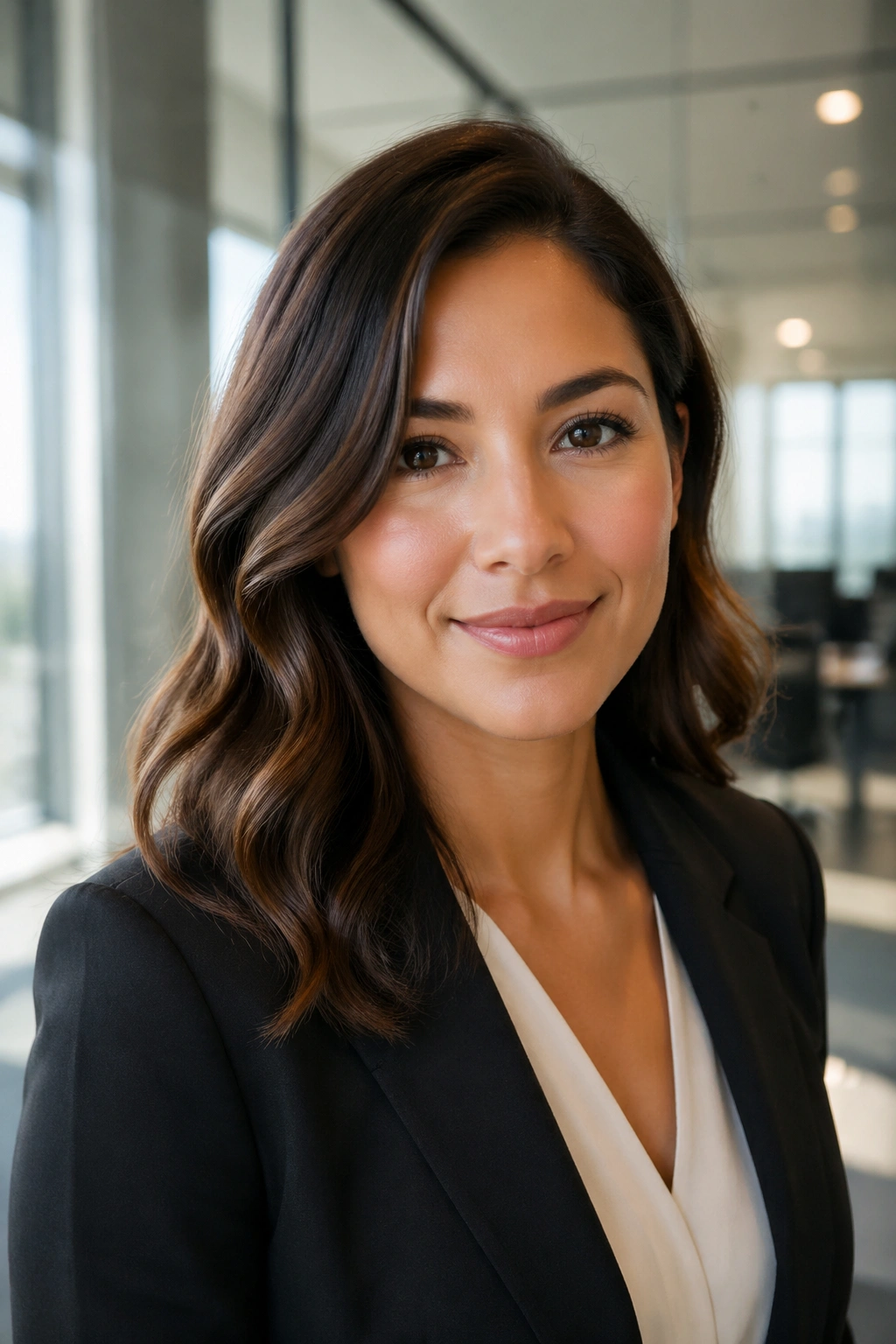
A half ponytail can look too youthful if you don’t anchor it properly. The sleek version solves that fast.
Keep the top section smooth and the half pony low enough that it doesn’t sit like a bubble on the crown. Let the lower half stay wavy, but shape the bends so they fall in broad curves rather than choppy pieces. That combination reads as neat, controlled, and a little modern without drifting into prom territory.
This is a smart style for interviews when you want your face open but still want some hair down around the shoulders. It works especially well on medium to long hair, and it’s forgiving if your wave pattern is uneven. The top section does most of the structural work, so the lower half can stay relaxed.
A small elastic, one hidden pin, and a dab of smoothing cream at the hairline usually do the trick. If the top is sleek, the rest can breathe a little.
20. Natural Wave Wash-and-Go With Frizz Control
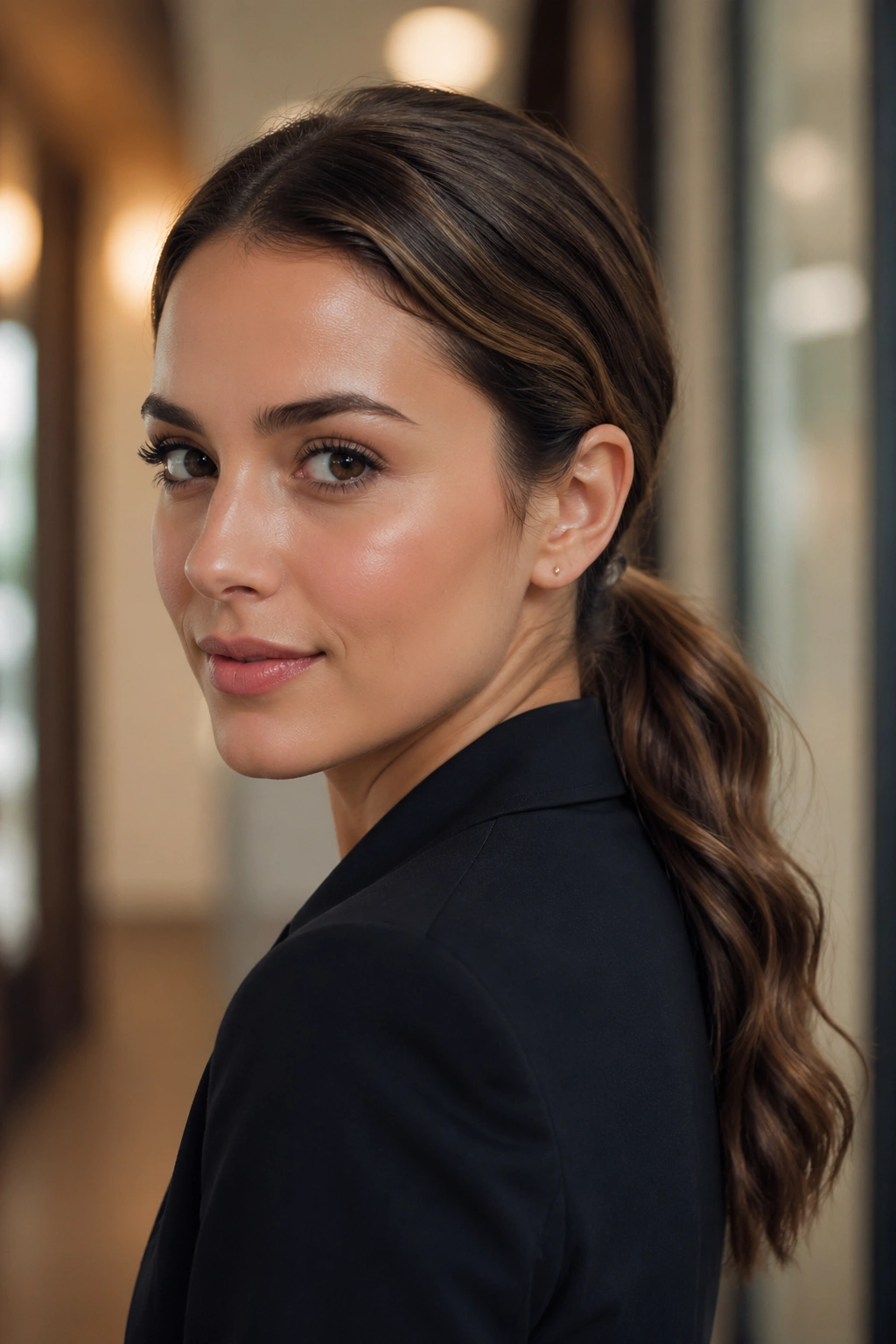
Sometimes the best option is to let the wave pattern do what it already wants to do. The trick is making that look intentional instead of accidental.
A wash-and-go style can work for interviews if the curls or waves are defined, soft, and free of halo frizz. The hair should fall in clean, separate pieces, not a puffy cloud. That means using a little leave-in conditioner or curl cream, scrunching gently, and letting the top dry in a shape that stays close to the head.
I like this for people whose natural texture looks best when left mostly alone. Forcing it into a hot-tool wave can sometimes create more frizz than it fixes. If your texture is already nice, give it a neat edge and stop there. A center or side part can help the shape look more controlled.
If you go this route, check the hairline in a mirror from a few feet away. That’s where the style either holds together or falls apart.
21. Compact Wavy Bob With a Clean Part
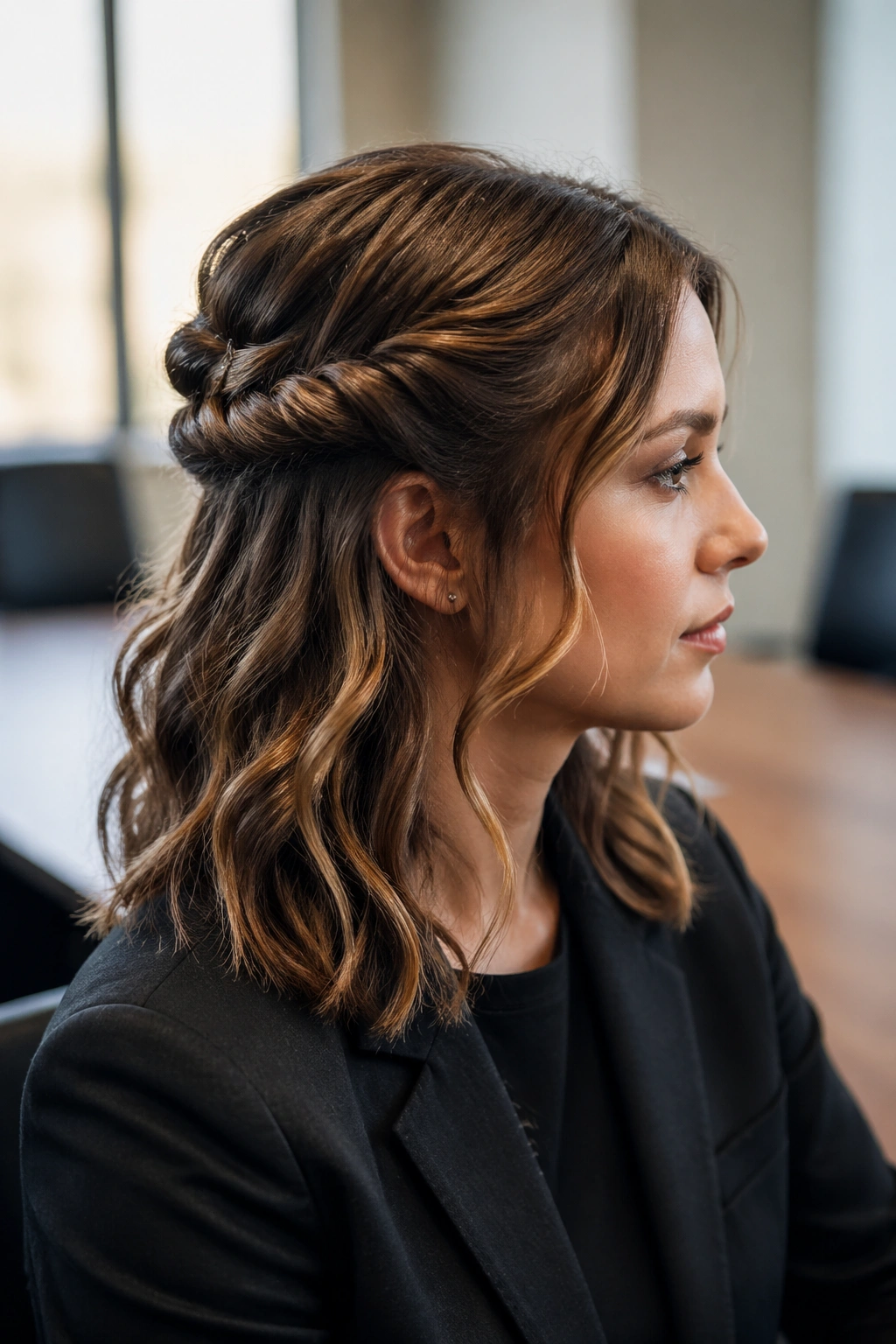
Short hair should not be boring, and it certainly does not need to be stiff to look interview-ready. A compact wavy bob proves the point.
The clean part gives the bob structure, while the wave pattern keeps it from looking too severe. The length should sit around the jaw or just below it, with the bends placed in a way that follows the face rather than fighting it. That little bit of curve makes the cut look tidy and expressive at the same time.
I’d keep the texture close and the volume controlled. If the sides blow out too much, the silhouette can get wide fast, which is rarely what you want in a formal setting. A small amount of smoothing cream through the top layer is often enough to keep it in line.
This is one of those styles that looks especially good with a crisp shirt collar. The shape and the neckline work together instead of competing.
22. Low Rolled Bun With Loose Wave Ends

A low rolled bun is a little softer than a classic bun, and that softness helps in a job interview. The style looks finished, but it still has a bit of movement at the edges.
The waves are useful here because they give the roll some body. Instead of pinning the hair into a hard knot, you roll it inward at the nape and let the natural bends help shape it. A few loose ends can stay tucked just enough to keep the style from feeling overdone.
This is a good choice when you know you’ll be on camera or in a room where you’ll be sitting a while. It stays put. It also makes high collars, blouses, and structured jackets look sharper because the hair is off the shoulders. If a bun tends to collapse on you, a rolled version may hold better.
Use enough pins to secure the base, but not so many that the back feels like a hardware store. You want the style to be quiet and clean.
23. Minimal-Layer Waves With a Controlled Middle Part
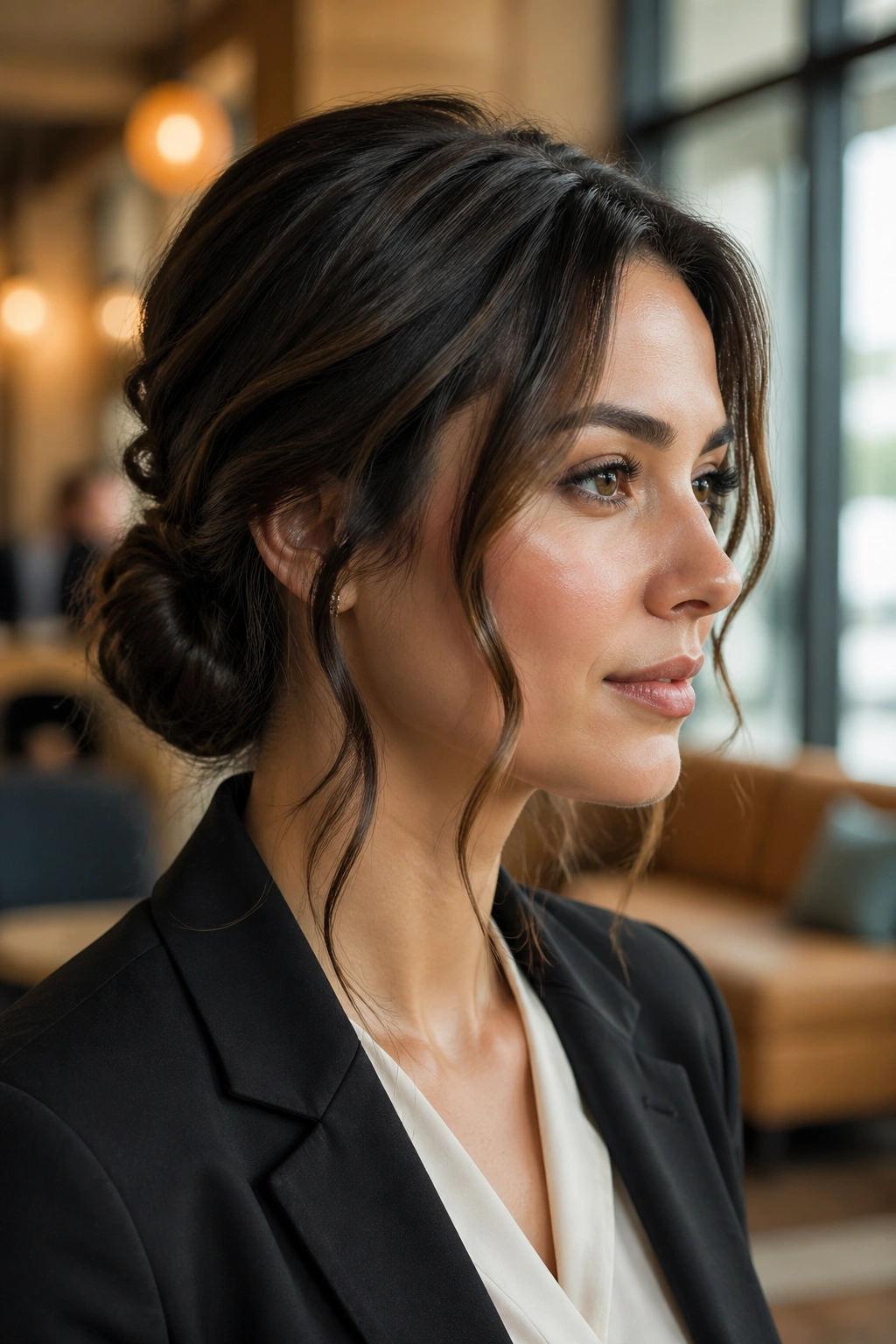
Layers can be tricky in interview hair. Too many, and the ends jump around. Too few, and the style can fall flat. Minimal layers keep the movement, but they don’t make the shape chaotic.
A controlled middle part works well here because it creates a calm line down the center while the waves frame the face on both sides. The result feels steady and approachable. That matters in rooms where you want to look organized without seeming overly formal.
This style is especially useful for medium to long hair that already has some natural bend. You may only need a blow-dry at the top and a few touch-ups through the lower half. Keep the layers blended so they don’t stick out in odd directions around the jaw or collarbone.
If your hair is thick, this can reduce the bulk around the face. If it’s fine, the middle part can give the style a little more shape than a side part sometimes does.
24. Small-Barrette Half-Up Style for Fine Wavy Hair
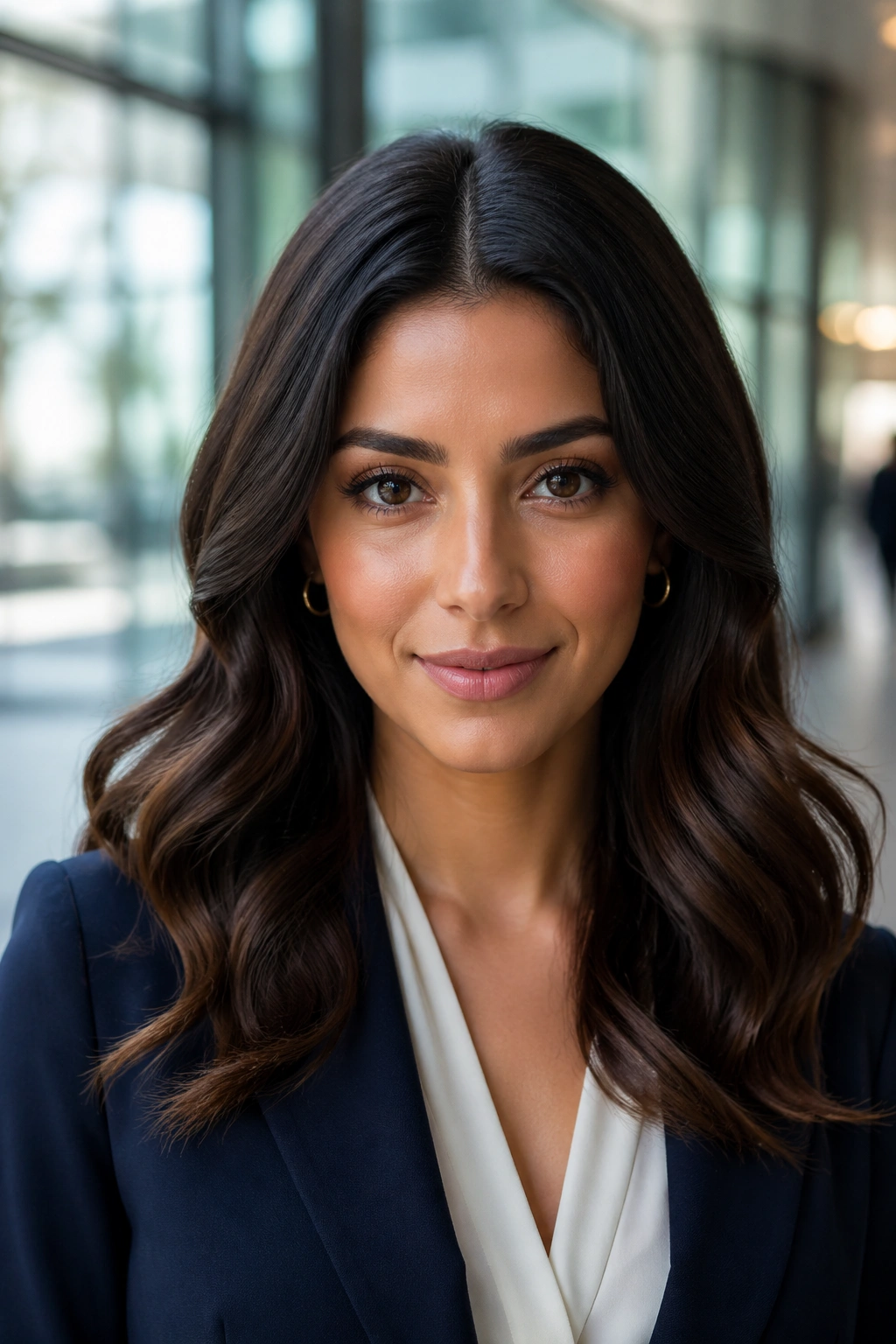
Fine wavy hair can disappear fast in an interview style if you overwork it. A small-barrette half-up look fixes that by adding a focal point without adding weight.
The barrette should be small and flat enough to sit close to the head. Gather only the top section, pinch it back, and clip it in place so the hair at the sides stays soft and the lower half keeps its wave. The style gets some lift at the crown, which fine hair often needs, and it avoids the limp look that can happen when everything is pulled back too hard.
I like this better than big clips for interviews because it feels neat, not decorative. The barrette’s job is to hold the hair, not announce itself. A matte finish usually works better than shiny plastic or oversized metal. Less noise. More control.
If your hair slips, spray the section lightly before clipping it. That alone can keep the style together for the whole day.
25. Soft Volume Waves With a Conservative Finish for Job Interviews
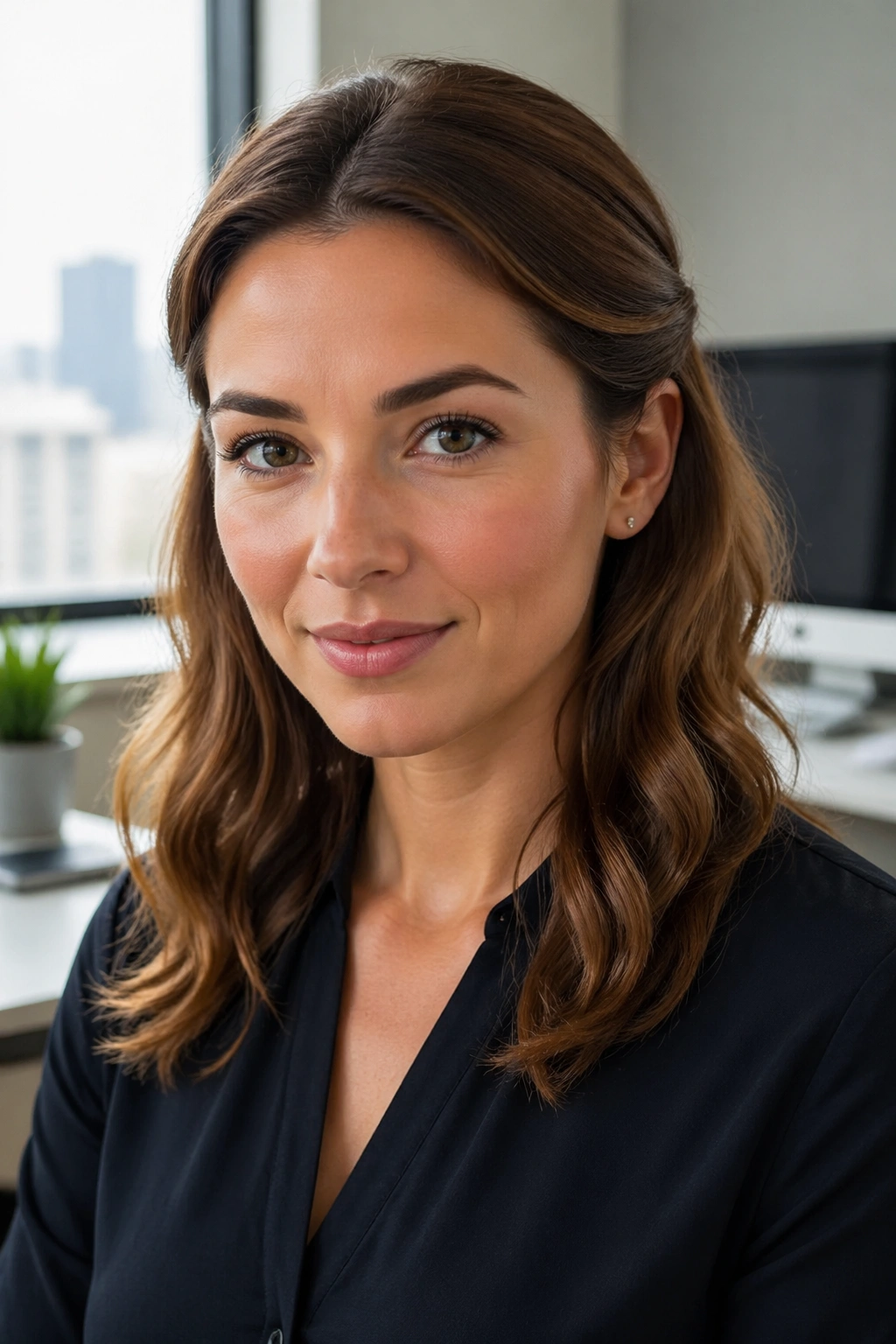
This is the safest all-purpose option when you want your waves to look clean but still soft. The shape has enough body to feel polished, and the finish stays restrained enough for conservative workplaces.
Think broad waves, smooth roots, and no giant curl pattern. The hair should move, but in a calm way. I like this on shoulder-length and longer hair when the goal is to look put together from every angle. A light side part or a shallow middle part can both work, depending on what sits best on your face.
The finish matters more than most people think. A wave that’s soft at the end but smooth at the crown reads as prepared. A wave that starts frizzing near the part or puffing out at the temples can tip the style the wrong way. Keep a small comb, a bit of serum, and a few pins in your bag if your hair has a mind of its own.
This one is not flashy. That’s exactly why it works.
Final Thoughts
The best interview hair is the kind that lets the room notice you first. Hair should support your face, not compete with it.
If you’re deciding between two styles, choose the one that keeps the front clear and the crown calm. Those two things solve most of the problems that happen in a tense room.
And if a style needs constant fixing, skip it. You have enough to think about without wrestling a wave that falls into your eyes every three minutes.