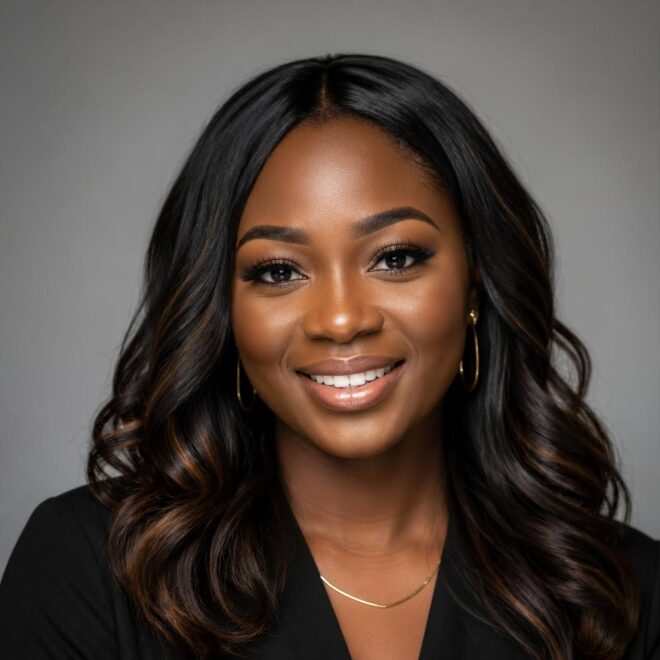


A wavy pixie haircut works best when it respects the wave pattern instead of fighting it. Cut it too blunt, and the sides puff out. Cut the crown too short, and the wave loses the shape that makes the style interesting in the first place. Give the top a little room, tighten the nape, and the whole cut starts to feel airy instead of harsh.
That balance is what makes pixies on wavy hair so appealing. The bend in the hair gives you texture for free, but only if the cut leaves enough length in the right places. A stylist who can cut dry, or at least check the movement while the hair is dry, usually gets a much better read on where the hair flips, where it lies flat, and where it wants to spring up.
I’ve always liked this family of cuts because it can go in so many directions. Soft and pretty. Sharp and cool. Messy in a way that looks planned, which is harder to pull off than people think. Some versions work better for fine hair, some tame thick hair, and some are just plain fun if you like a little edge around the face.
The 35 looks below each lean on a different strength of wavy hair. A few are safe starters. A few are bolder. All of them work far better when the cut is shaped around the wave instead of against it.
1. Soft Side-Swept Pixie
This is the wavy pixie haircut I’d hand to someone who wants a gentle first step into short hair. The side-swept top keeps the style from feeling boxy, and the waves fall in a loose curve across the forehead instead of standing up in a stiff ridge. It’s easy to wear, easy to grow out, and forgiving on mornings when you barely have time to smooth the front with your fingers.
Ask for a little extra length on the top and a soft taper around the ears. The goal is movement, not precision. A dab of cream or mousse is usually enough to keep the wave defined without making it crunchy.
2. Choppy Crown Pixie
Need more lift at the top without teasing the hair into a cloud? This is the shape. The crown is cut with short, uneven layers so the wave has room to rise, which helps fine or limp hair look fuller right away.
Why It Works
The crown is where wavy hair either looks lively or collapses. A choppy crown gives the roots air and keeps the shape from going flat by noon. I like this cut on people who wear glasses or have a narrow face, because the volume on top balances the frame.
- Ask for point-cut layers through the top.
- Keep the sides tidy, not shaved bare.
- Style with a lightweight mousse and finger-dry.
- Skip heavy oils near the roots.
A little grit helps here. Too much softness and the cut loses its shape fast.
3. Tapered Nape Pixie
Picture a clean neckline with soft, wavy texture above it. That contrast is the whole point of the tapered nape pixie. The back is clipped close and refined, while the top stays loose enough for the waves to bend naturally.
It’s a smart choice if you hate hair brushing your collar or puffing out at the nape. The tight back makes the style look polished even when the top is messy. I also like it for thick hair, because the taper removes bulk where it tends to get awkward.
4. Long-Top Wavy Pixie
A longer top changes everything. Once the crown and front sit at about 3 to 4 inches, the wave pattern becomes much more visible, and the haircut starts reading as intentional texture instead of a short crop that’s halfway grown out.
This version is good if you like styling options. You can push it forward, sweep it back, or part it hard to one side. The trick is to keep the sides shorter so the top doesn’t turn into a mushroom. That’s the mistake people make most often. The length on top needs contrast below it, or the whole shape loses tension.
5. Curly-Fringe Pixie
What if your waves are on the looser, springier side? Then the fringe can do a lot of the work. A curly-fringe pixie leaves enough length in front for the hair to bend over the forehead in soft bends, not straight lines.
What Makes It Different
The fringe softens the face and keeps the cut from looking severe. It’s especially nice if you’ve got a higher forehead or a face shape that needs a little horizontal balance. A small amount of cream, worked in while the hair is damp, helps the front separate into pieces instead of forming one heavy curtain.
If you like a cute, lived-in look, this one’s hard to beat.
6. French-Inspired Tousled Pixie
This cut has that slightly undone feel that never looks overworked. The waves are left loose through the top and around the temple, and the edges are softened so the whole shape feels airy rather than sharp.
I like this version on hair that has a bit of natural bend but not much density. It gives the illusion of fullness without demanding a lot of product. A quick pinch of texture paste at the ends is usually enough. If your hair is too clean and silky, though, the style can fall a little flat, so a salt spray or light mousse helps.
7. Undercut Pixie with Waves
Here’s the bold one. The undercut removes weight from the sides and back, then leaves the top long enough for waves to spill over the shorter base. The contrast gives the haircut attitude fast.
Best For and Why
- Thick hair that balloons at the sides
- Waves that need room to curl without bulk
- People who want a sharper outline around the head
- Short hair lovers who still want styling range
The undercut can look sleek or messy depending on how you finish it. I’d keep the top piecey and a little irregular. That keeps the style from feeling too hard-edged.
8. Feathered Pixie for Fine Waves
Fine waves can go limp if the cut is too blunt, and this feathered version avoids that problem. The layers are sliced softly so the ends move instead of sitting like one solid shelf.
The result is light, airy, and easy to fluff up with your fingers. This is one of the better cuts if your hair looks thinner when it gets short. A round brush is optional, not required. A little root spray at the crown and a few seconds of scrunching can make the whole shape wake up.
9. Piecey Pixie with Micro Fringe
This one has personality. The fringe is short, the top is broken into small pieces, and the wave pattern shows up in little separated bends rather than one smooth sweep.
I like this style because it feels playful without looking fussy. A tiny amount of wax goes a long way here; too much, and the fringe clumps in a way that looks greasy. The cut works especially well if you want your eyes and brows to stay visible. It keeps the face open while still giving you texture around the hairline.
10. Grown-Out Pixie Bob
This is the cut for people who like the pixie idea but don’t want to live in the salon chair. It sits right in that in-between zone where the top is still short, but the sides and back have enough length to flirt with bob territory.
The wave pattern likes this shape because it has space to fall. The grow-out looks deliberate, not sloppy, when the layers are blended well. If you’re nervous about going very short, this is a smart middle ground. It also gives you a longer runway between trims, which matters more than people admit.
11. Deep Side-Part Pixie
A deep side part can change a face in about ten seconds. It shifts the wave mass to one side, creates lift at the roots, and gives the haircut a little drama without any extra length.
Why does it work so well on wavy hair? Because waves naturally want to arc. A hard center part can fight that. A deep side part lets the bend do its thing. I’d keep the heavier side a touch longer and the opposite side closer to the head. The contrast makes the cut look sharper and keeps it from collapsing into a flat cap.
12. Slicked-Back Wavy Pixie
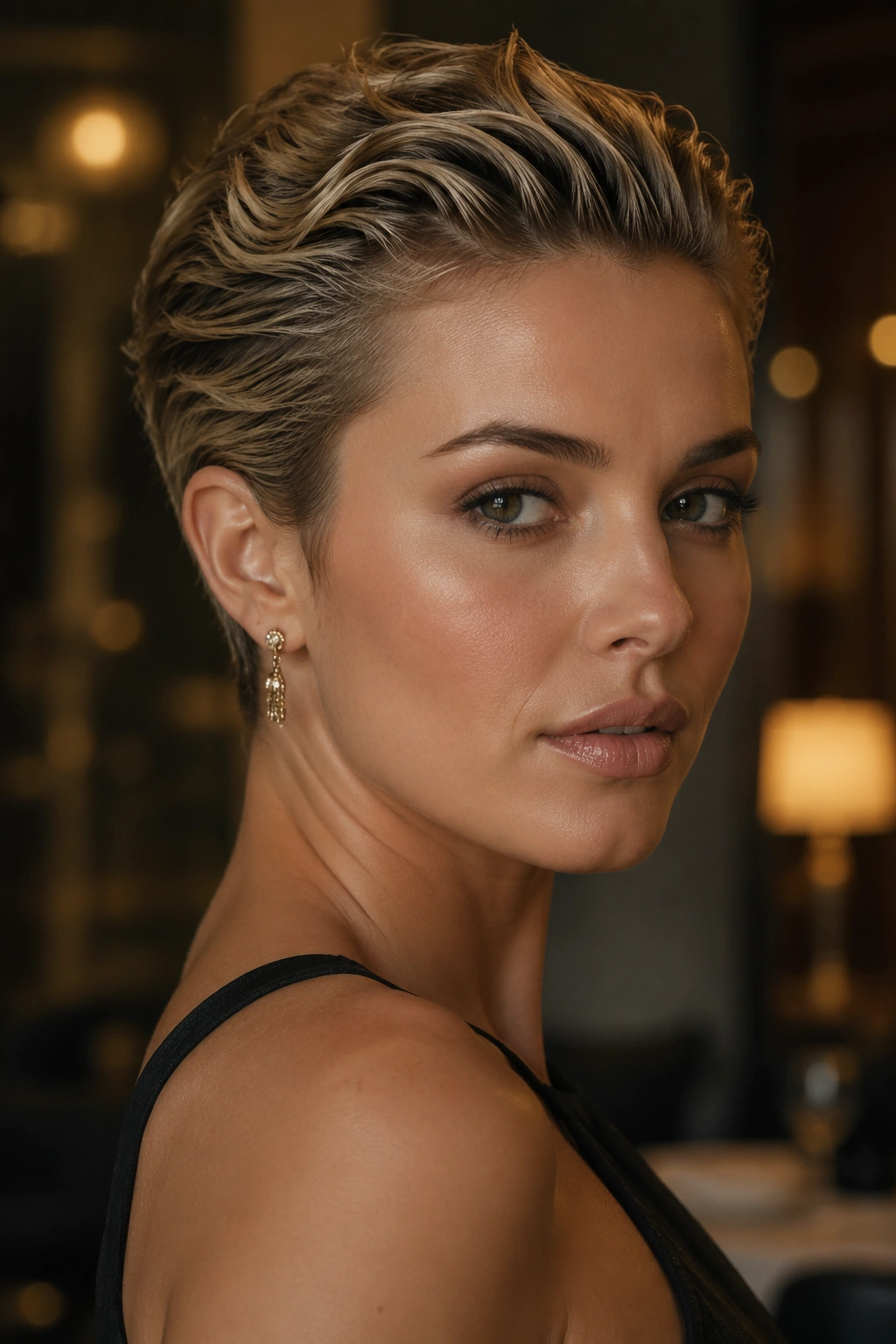
This is the polished cousin in the family. The waves are still there, but they’re guided back from the face with gel or styling cream, which gives the cut a clean, almost evening-ready finish.
How to Wear It
- Work a small amount of gel through damp hair.
- Comb or finger-sweep it backward.
- Let the top dry without touching it too much.
- Use a little shine serum only on the surface, not the roots.
The important part is restraint. A slicked-back pixie looks elegant when it still shows a hint of texture. If you flatten it into a helmet, the whole point is gone.
13. Shaggy Pixie with Crown Layers
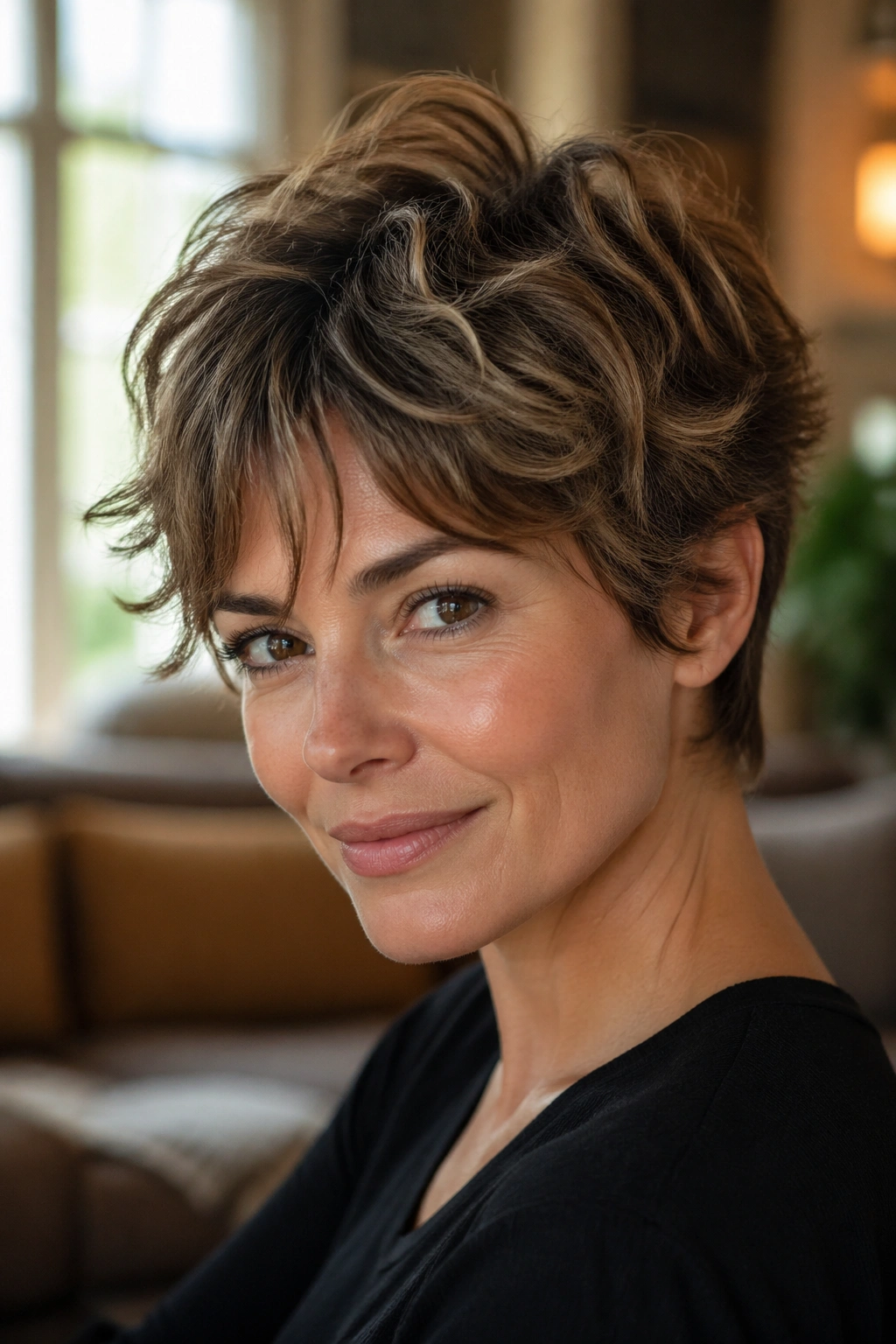
This cut borrows a little from the shag and a little from the pixie. The crown gets extra layering, the ends stay uneven, and the waves are encouraged to fall in different directions.
It’s a strong choice for thick hair because it removes weight without taking away movement. I also like it for anyone who hates perfectly styled hair. This cut looks better when it’s a little rumpled. Use a diffuser on low heat or let it air-dry with some mousse, then separate the pieces with your fingers once it’s dry.
14. Asymmetrical Wavy Pixie
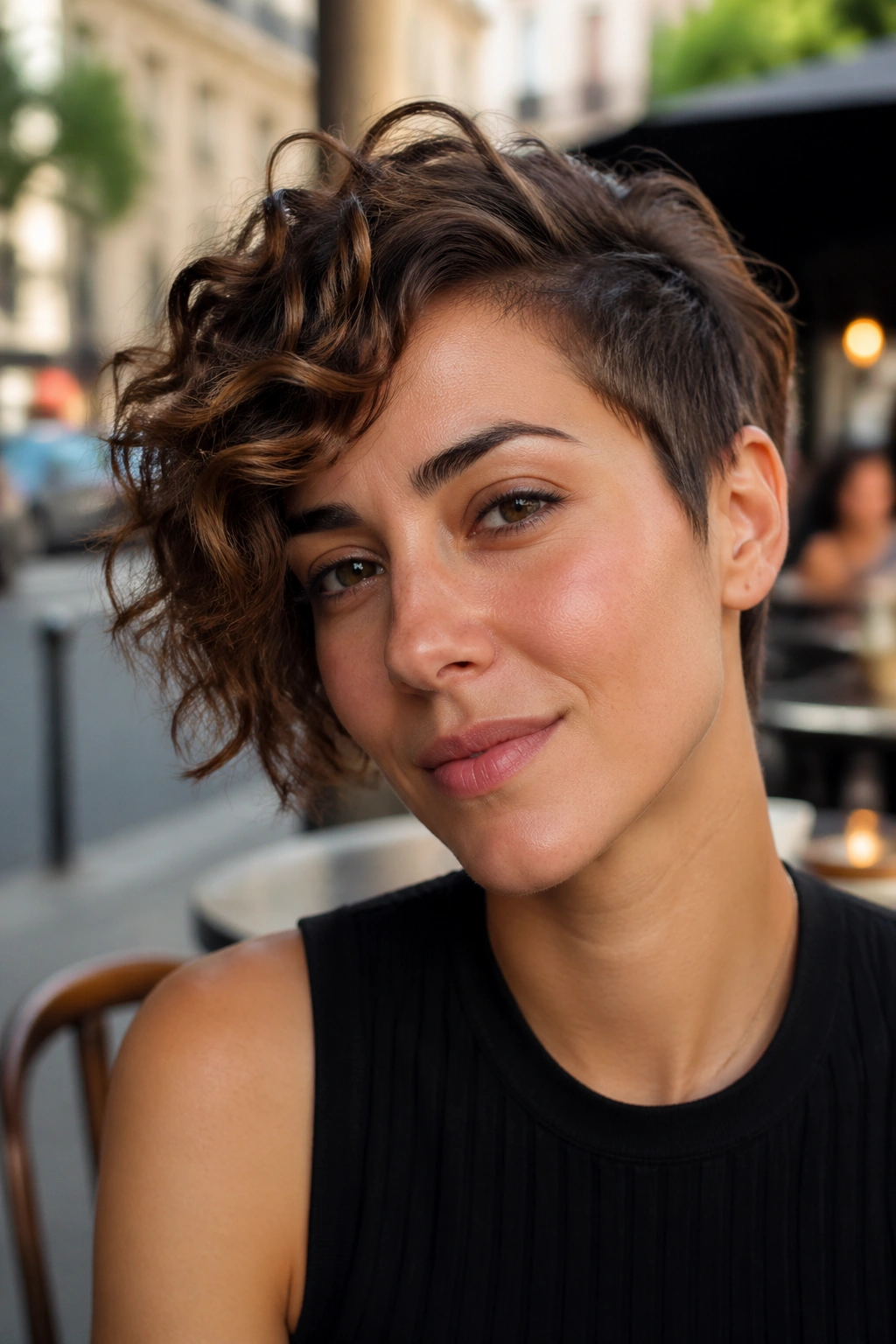
One side longer. One side tighter. That’s the whole appeal, and it works because waves already bring movement to the shape.
An asymmetrical pixie draws attention to the jawline and cheekbones in a way a symmetrical cut sometimes misses. It also gives you a little edge without going full avant-garde. If your hair grows in a strange direction on one side, this cut can actually hide that. The longer side absorbs the wave pattern, while the shorter side keeps the outline clean.
15. Rounded Pixie with Soft Edges
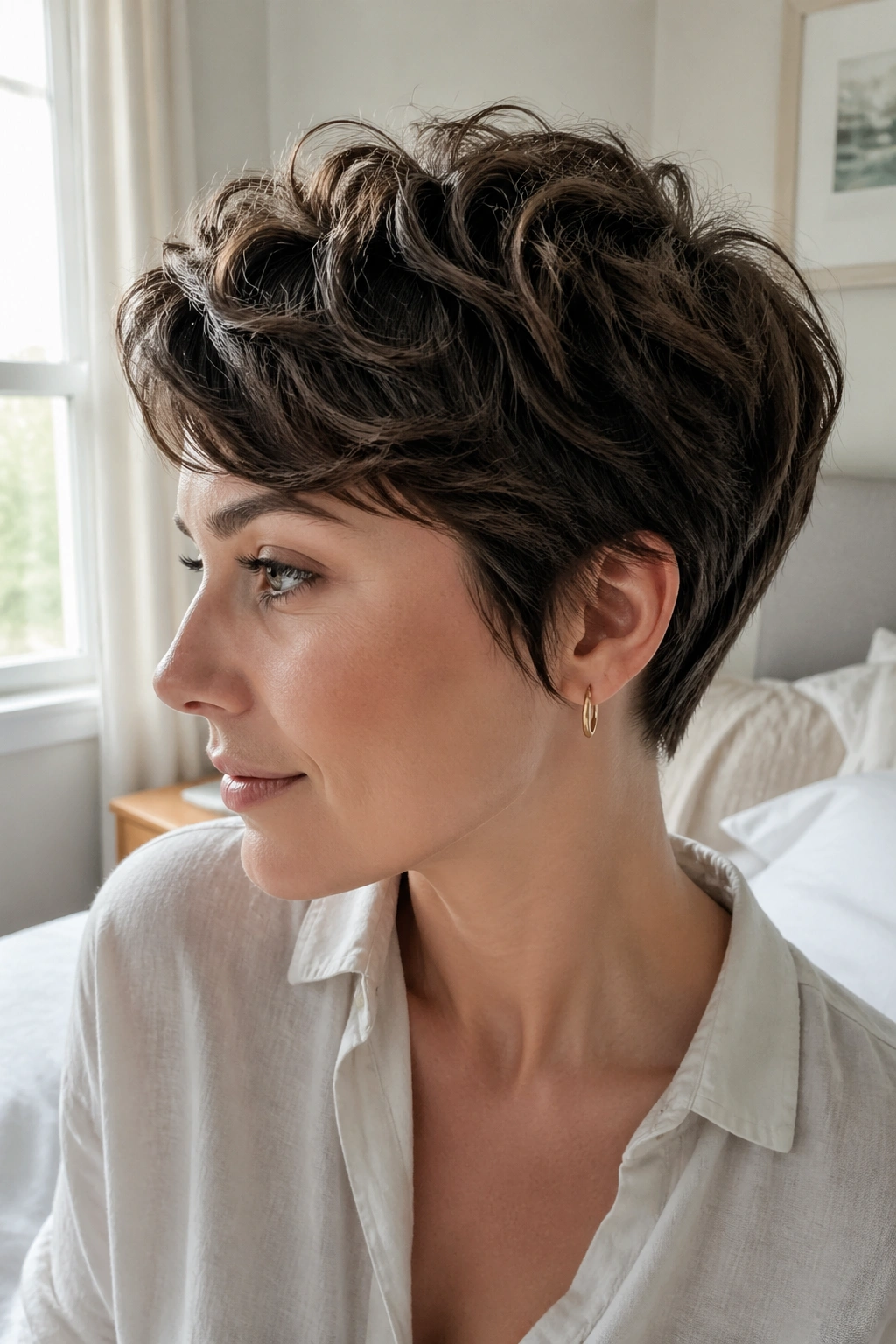
Not every pixie needs bite. A rounded pixie curves around the head a bit more softly, which makes the silhouette feel gentler and more balanced.
This shape flatters people who want a neat haircut without sharp corners near the temples or nape. The waves help round out the top, while the edges stay close enough to keep the style tidy. I’d ask for a soft outline, not a blunt one. When the edges are too rigid, the haircut starts looking helmet-like. A rounded cut should move when you turn your head.
16. Wet-Look Pixie
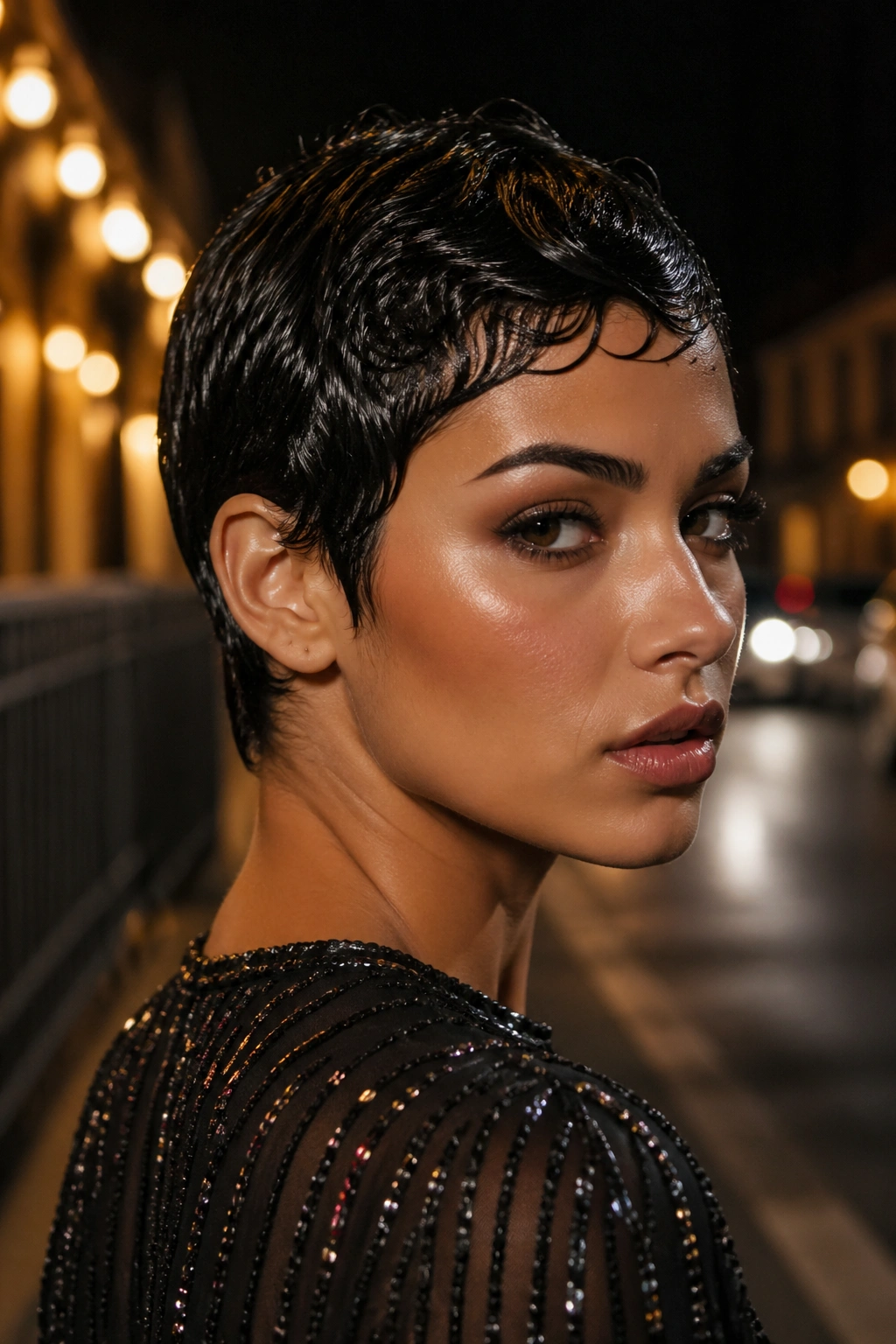
If you like a little drama, this one has it. The waves are defined with gel, combed close to the head, and left glossy so the texture looks slick rather than fluffy.
It works especially well for evenings or warmer weather, when you want the style to stay put. The cut itself can be simple; the finish does the heavy lifting. The key is keeping the top defined while the sides stay neat. Too much product near the roots can make the hair collapse, so use a small amount and build only where you need the hold.
17. Wispy Bang Pixie
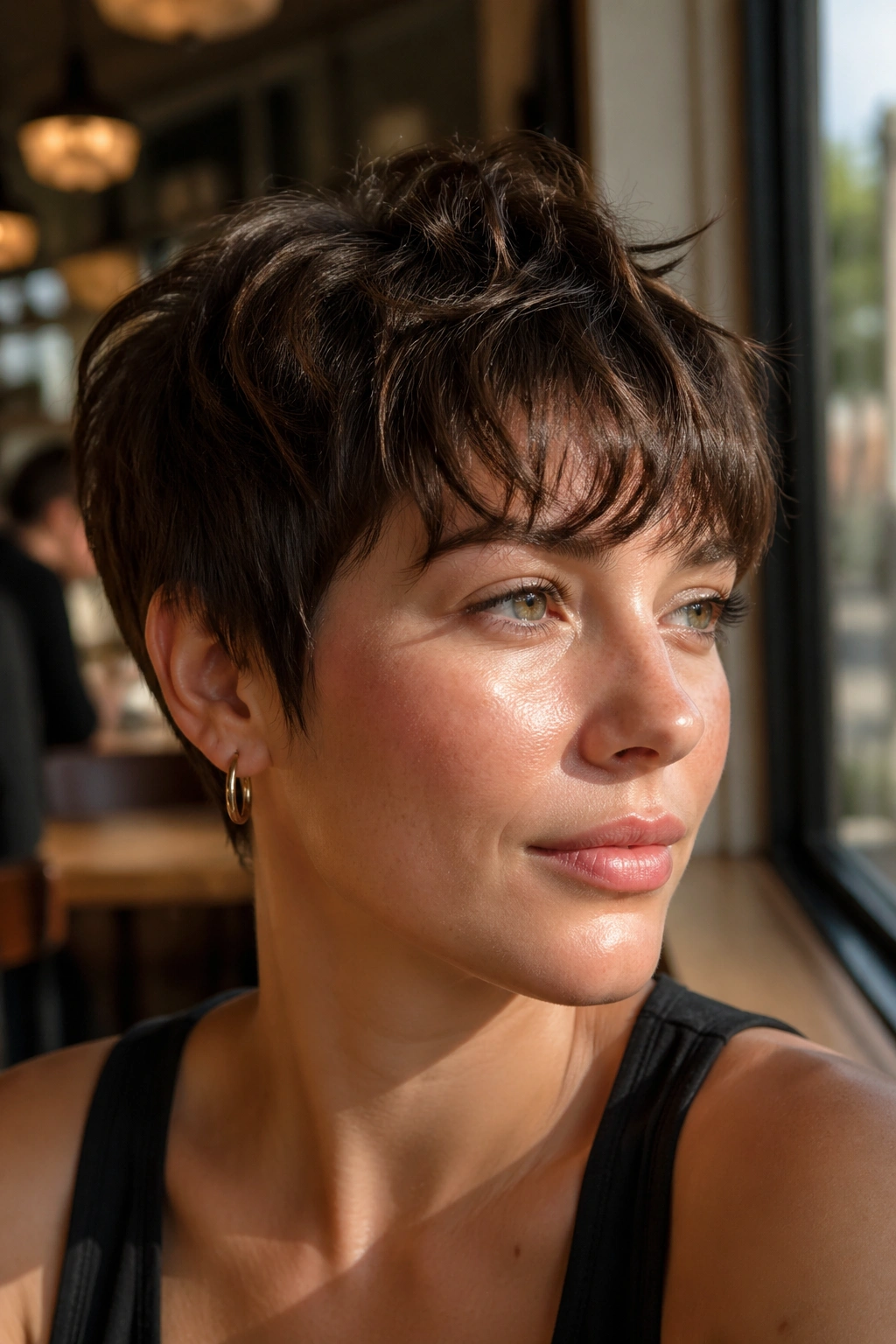
A few thin, airy bangs can soften a short cut fast. Instead of a heavy fringe, the front breaks into light pieces that hover over the forehead and move when you blink.
What to Ask For
Ask for fringe that’s cut with a light hand, not a thick block. The ends should look broken up, almost feathery, so the waves can bend without springing into a full curtain. This is a smart option if you want to soften a strong brow or shorten the look of a long forehead. It’s delicate, though, so it needs a stylist who knows when to stop cutting.
18. Sculpted Pixie for Thick Waves
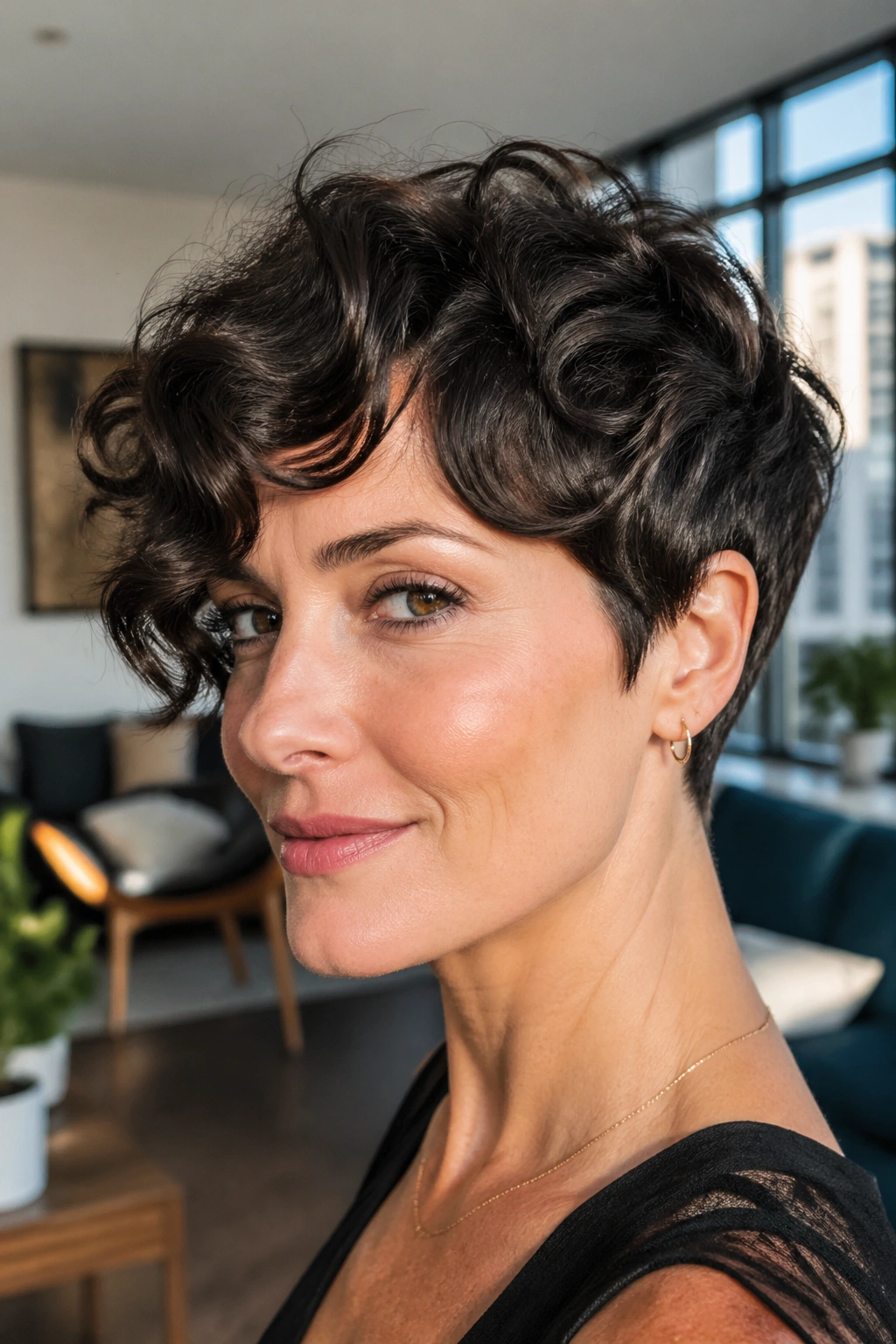
Thick waves need structure, or they swell in all the wrong places. A sculpted pixie uses internal debulking and careful layering to keep the shape controlled while still letting the wave pattern show.
The Cutting Approach
- Remove weight from the interior, not just the ends.
- Keep the nape close so the back doesn’t puff.
- Leave enough top length for visible wave movement.
- Use point cutting to avoid a hard shelf line.
This is the haircut I think of when someone says, “My hair has too much body.” That body can look great, but only if the cut has a plan.
19. Close-Cropped Side Pixie
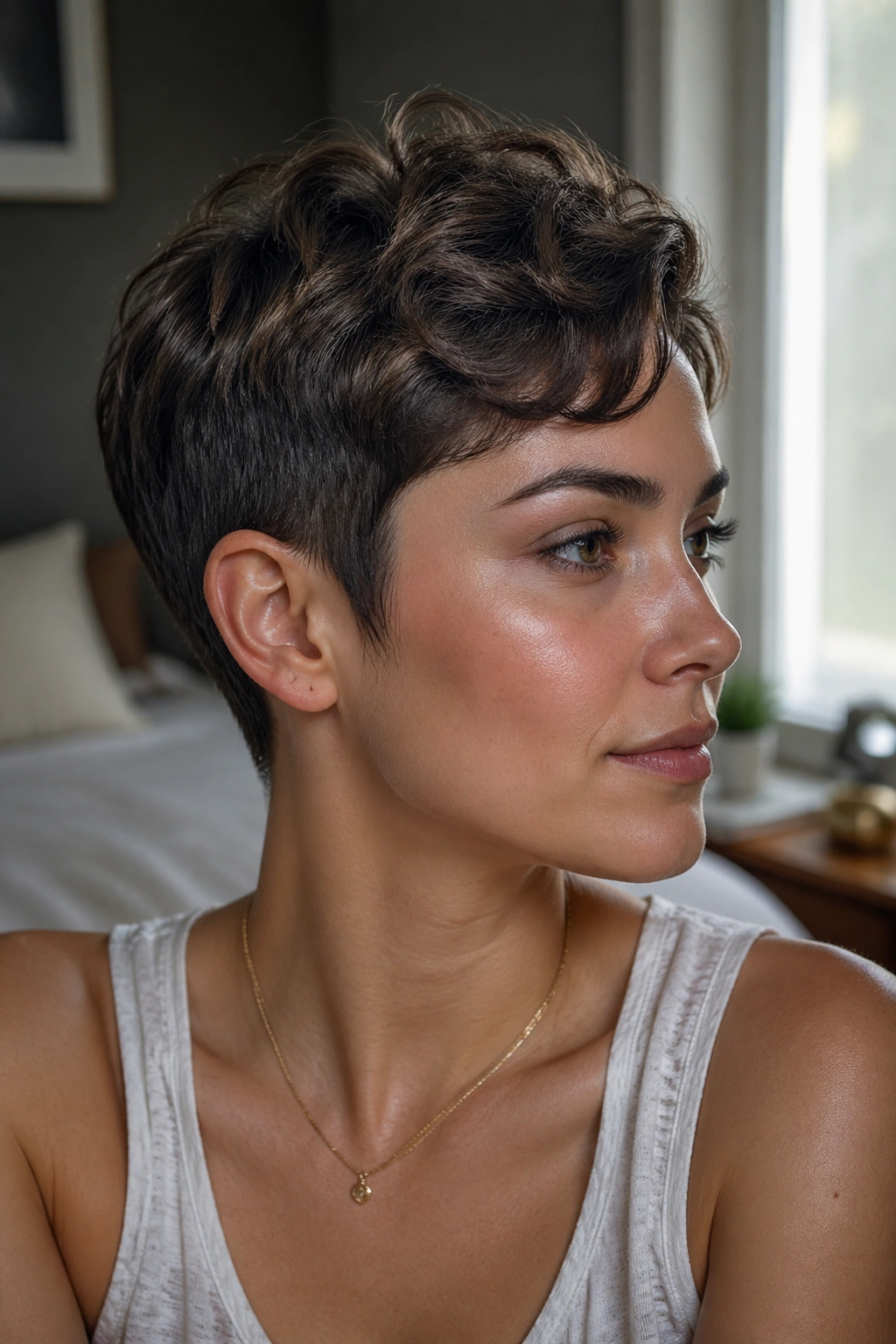
The sides are short enough to show the ears or skimming sideburns, while the top keeps enough length for the waves to bend. That contrast feels clean and a little daring.
I like this shape for people who wear earrings or glasses because it frames those details instead of competing with them. It also brings the attention upward, which helps elongate the face a bit. If you want softness, keep the top slightly curved. If you want edge, tighten the sides more and let the wave on top stay irregular.
20. Razor-Cut Pixie
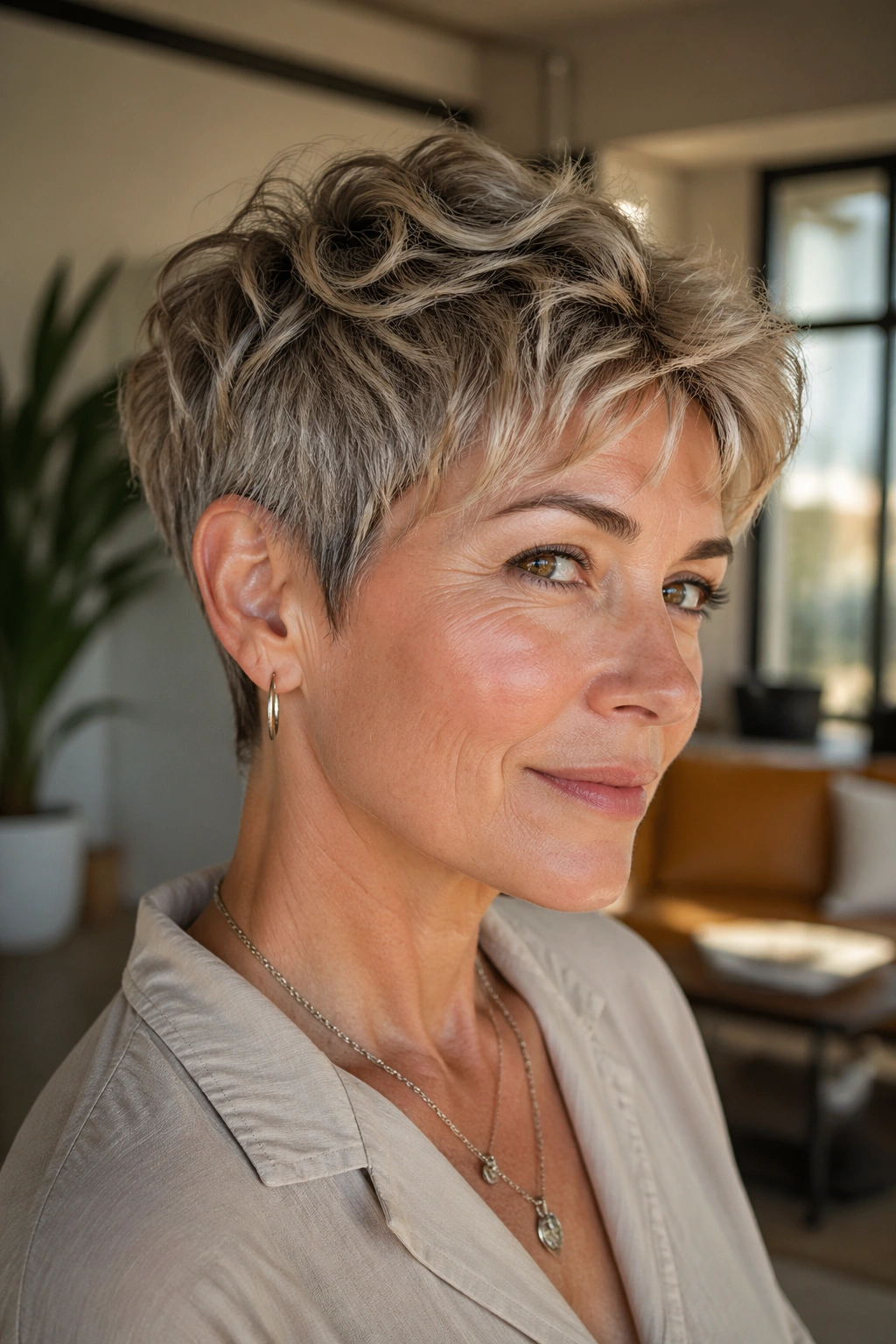
A razor-cut pixie has a sharper, airier edge than a scissor-only cut. The blade removes bulk and leaves the ends softer, which can make waves look more separated and light.
But this one depends on a stylist who knows how to use a razor on textured hair. Done badly, it frays the ends. Done well, it gives you movement that looks effortless without actually being sloppy. I’d choose this cut for medium-density hair that needs softness around the perimeter, especially if your waves tend to spring up too wide at the sides.
21. Curtain-Bang Pixie
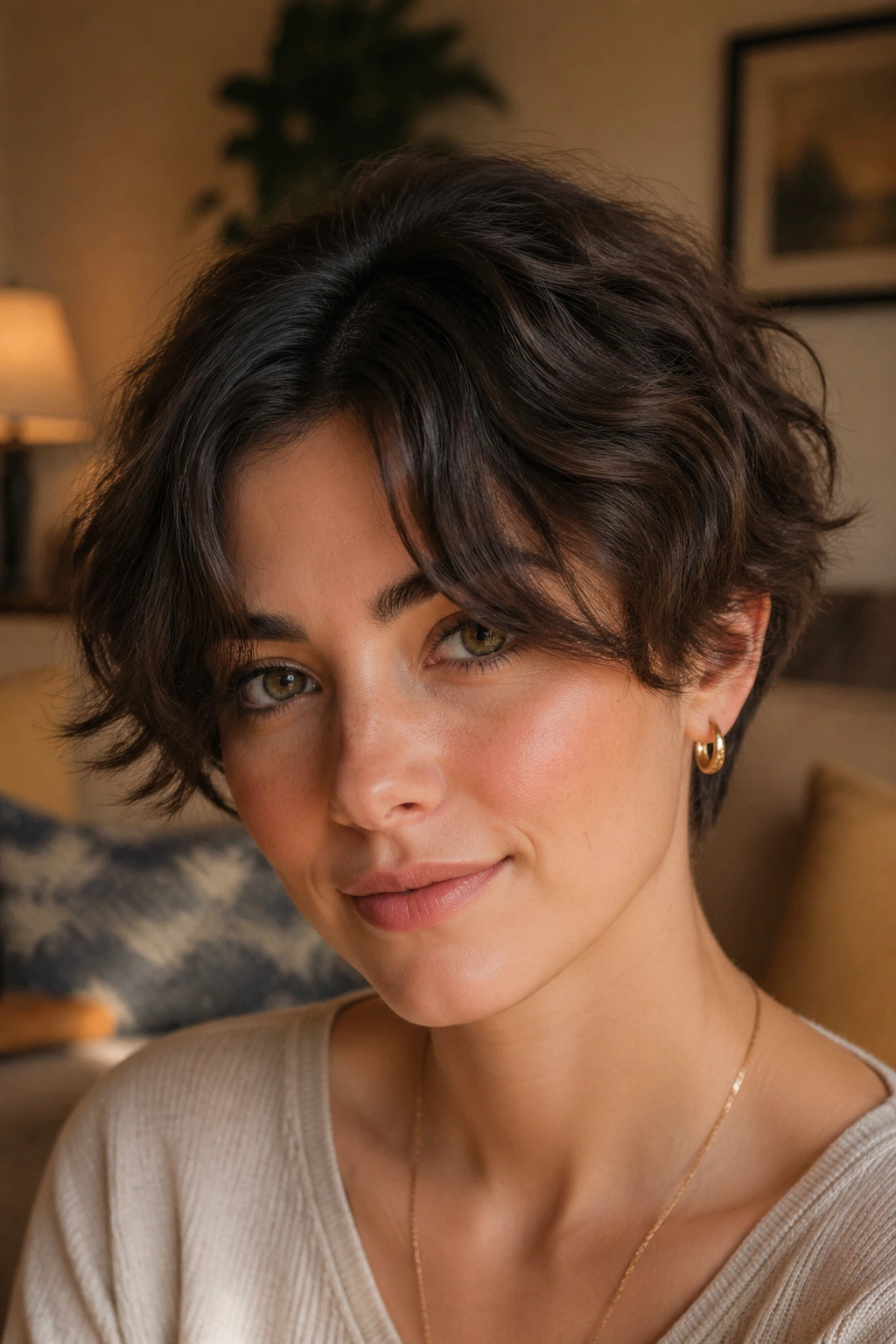
Curtain bangs aren’t only for longer cuts. On a pixie, they can part gently down the middle and fall to each side, giving the face a little frame without hiding it.
That center split makes the wave pattern feel modern and relaxed. It also helps balance wider foreheads or narrow chins. Keep the bangs long enough to sweep, not so long that they drag into the cheeks. A quick twist with the fingers while drying usually helps the bend sit where you want it.
22. Ear-Tucked Pixie
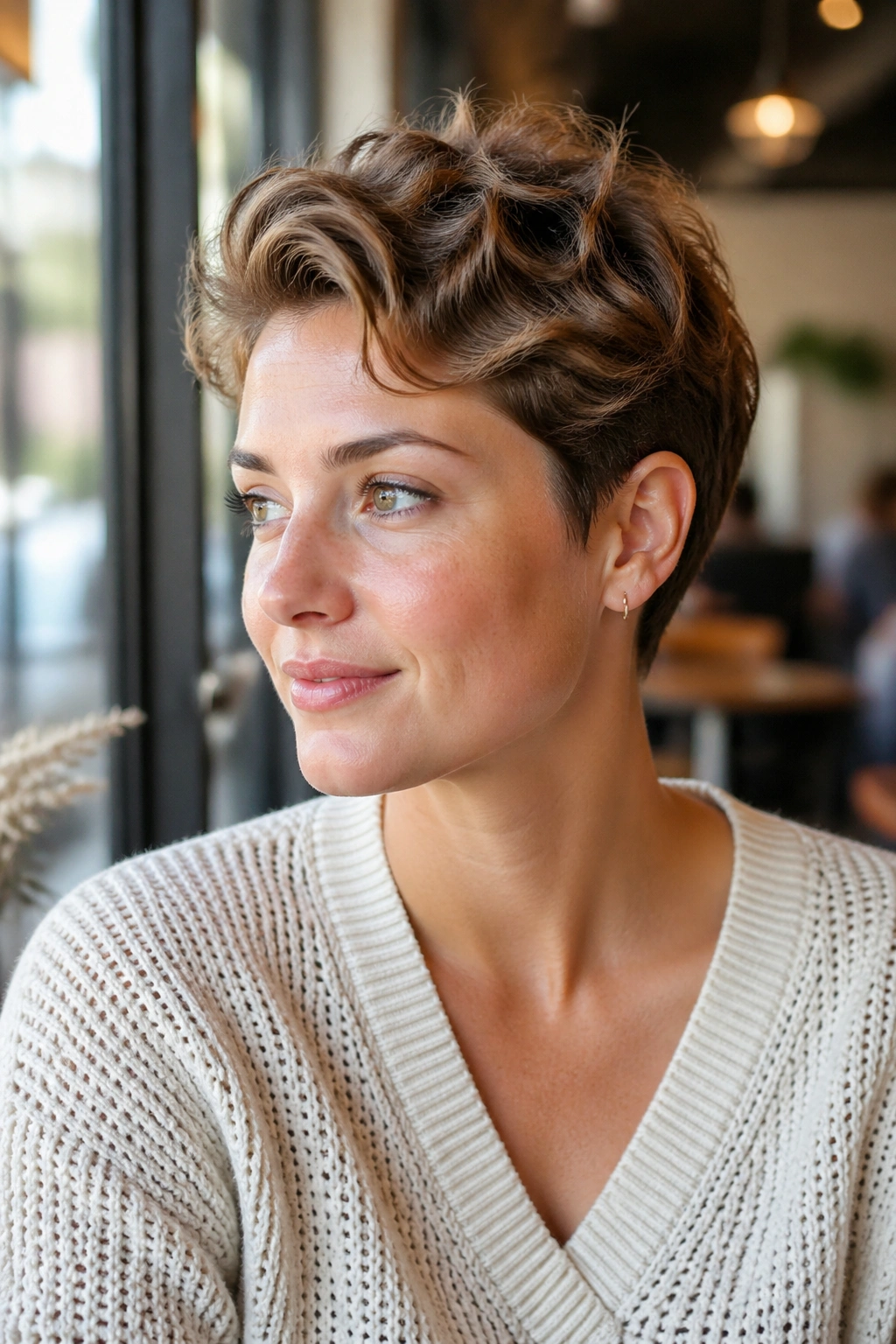
This one is subtle, which is exactly why it works. The length around the ears is left just long enough to tuck behind them, and the waves above do the rest.
The style feels neat on workdays and a little softer when you let the pieces fall loose. I like it because it gives you options without needing a different cut. Hair that can tuck and untuck is useful hair. Keep the sides light and the top soft, and you’ll get a pixie that can look dressed up with almost no effort.
23. Long-Fringe Tapered Pixie
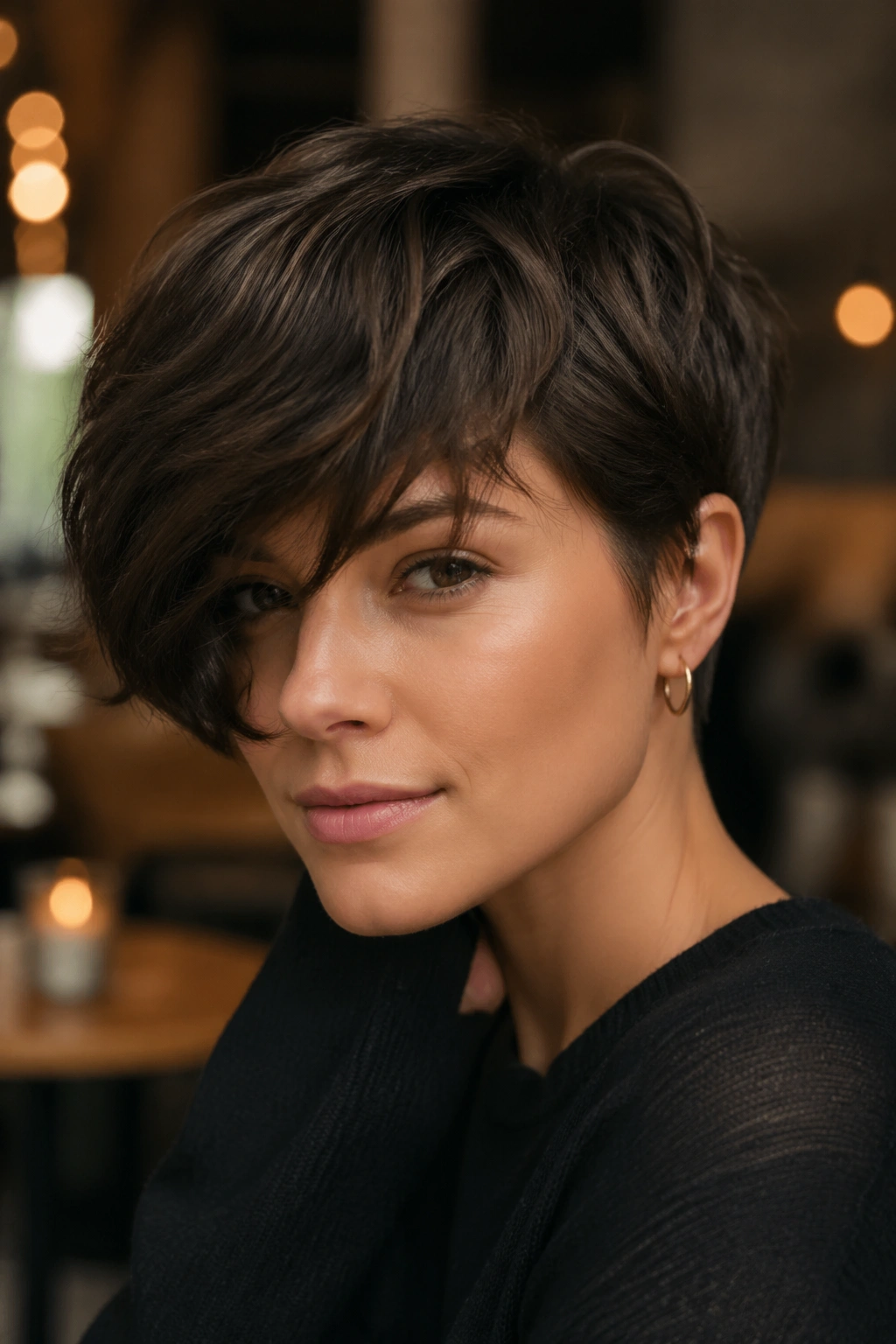
A longer fringe changes the mood of the whole haircut. It gives the front of the pixie more weight, while the tapered back keeps the shape from getting bulky.
This is a good option if you want something that reads feminine and a little moody at the same time. The fringe can sweep across the brow, drop slightly over one eye, or sit loose with a side part. The back should stay clean, though. If the nape gets too long, the style stops looking like a pixie and starts drifting into a short crop that hasn’t made up its mind.
24. Neck-Grazing Pixie
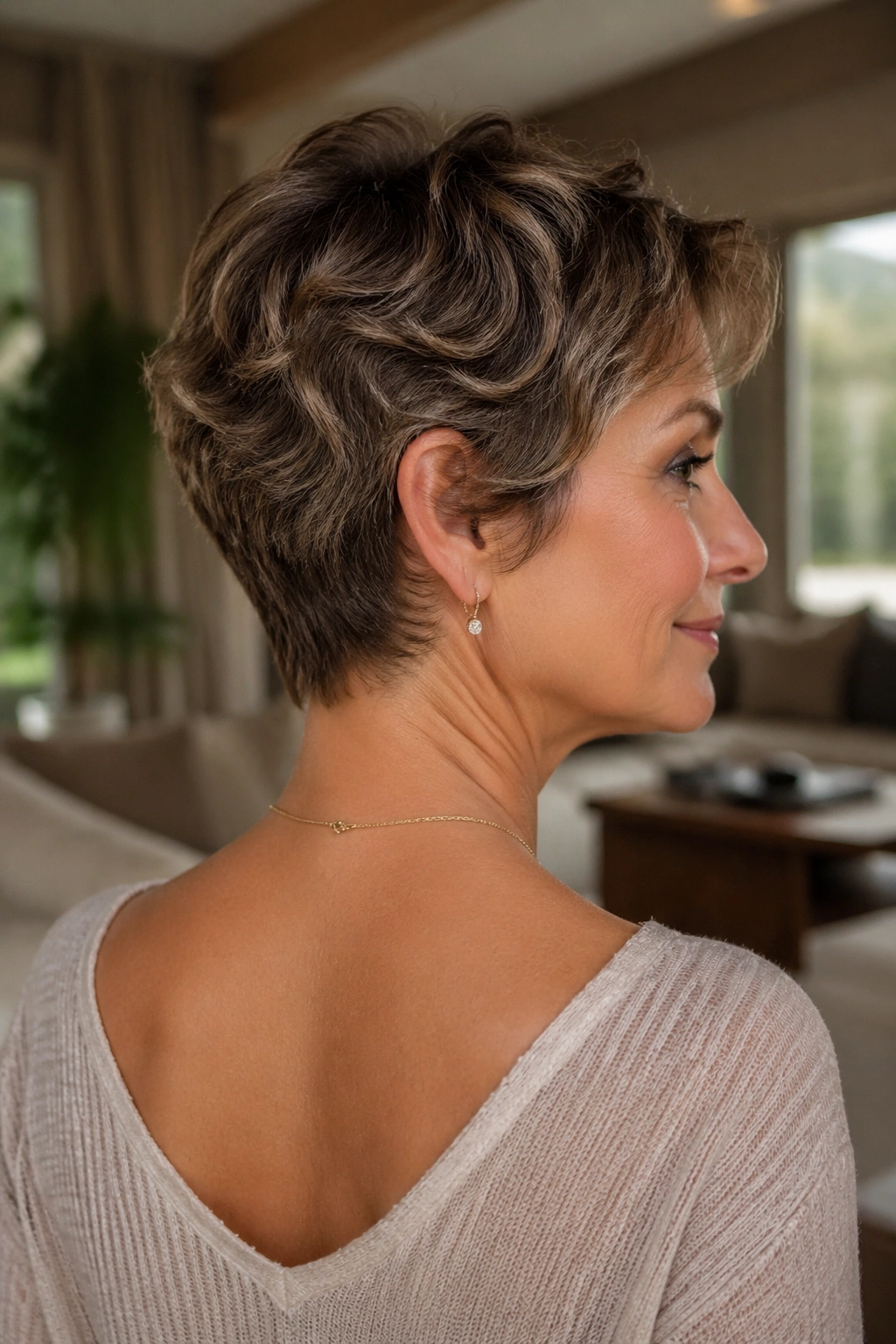
How short is too short? Not if the back still grazes the neck and the top has shape. This version sits just long enough to keep the wave pattern visible in the back while still feeling very cropped.
What Makes It Stand Out
- The neckline stays soft, not blunt.
- The top carries most of the texture.
- The sides stay close enough to keep the shape tidy.
- It grows out more gracefully than a very tight crop.
This cut is useful if you want to feel short-haired without going all the way to a buzzed nape. It has a little more movement than a super-close pixie, which I think helps wavy hair look richer.
25. Brushed-Forward Pixie
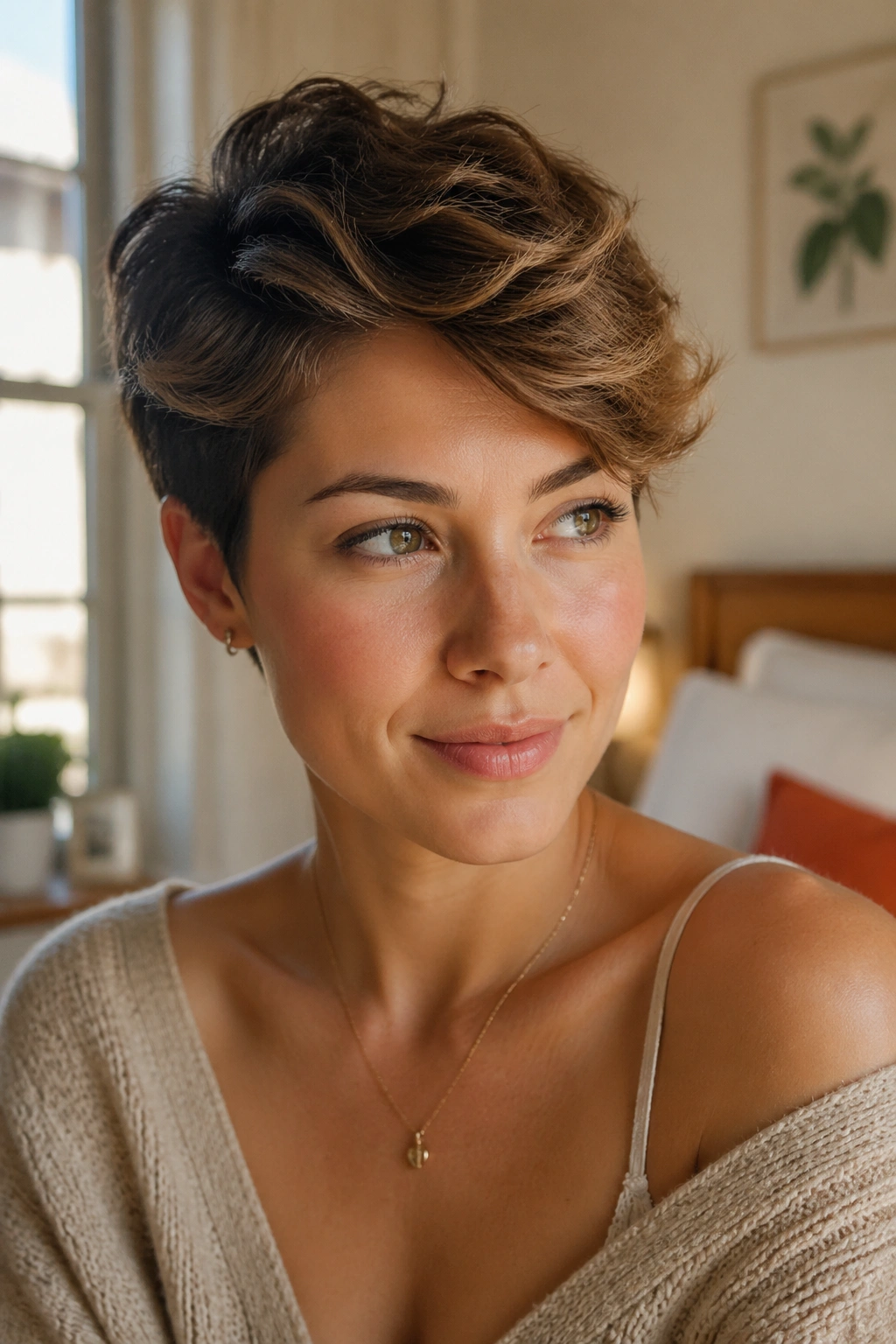
Brushing the waves forward gives the cut a moodier edge. The top moves toward the forehead, the ends get a little piecey, and the shape feels less airy than a side-swept style.
It’s a strong choice if your hairline is even and your waves have enough bend to fall forward without sticking straight up. I’d keep the front slightly longer than the rest so it can fold naturally. A tiny bit of paste at the ends helps define the direction. Too much, and the movement turns sticky instead of soft.
26. Wash-and-Go Pixie
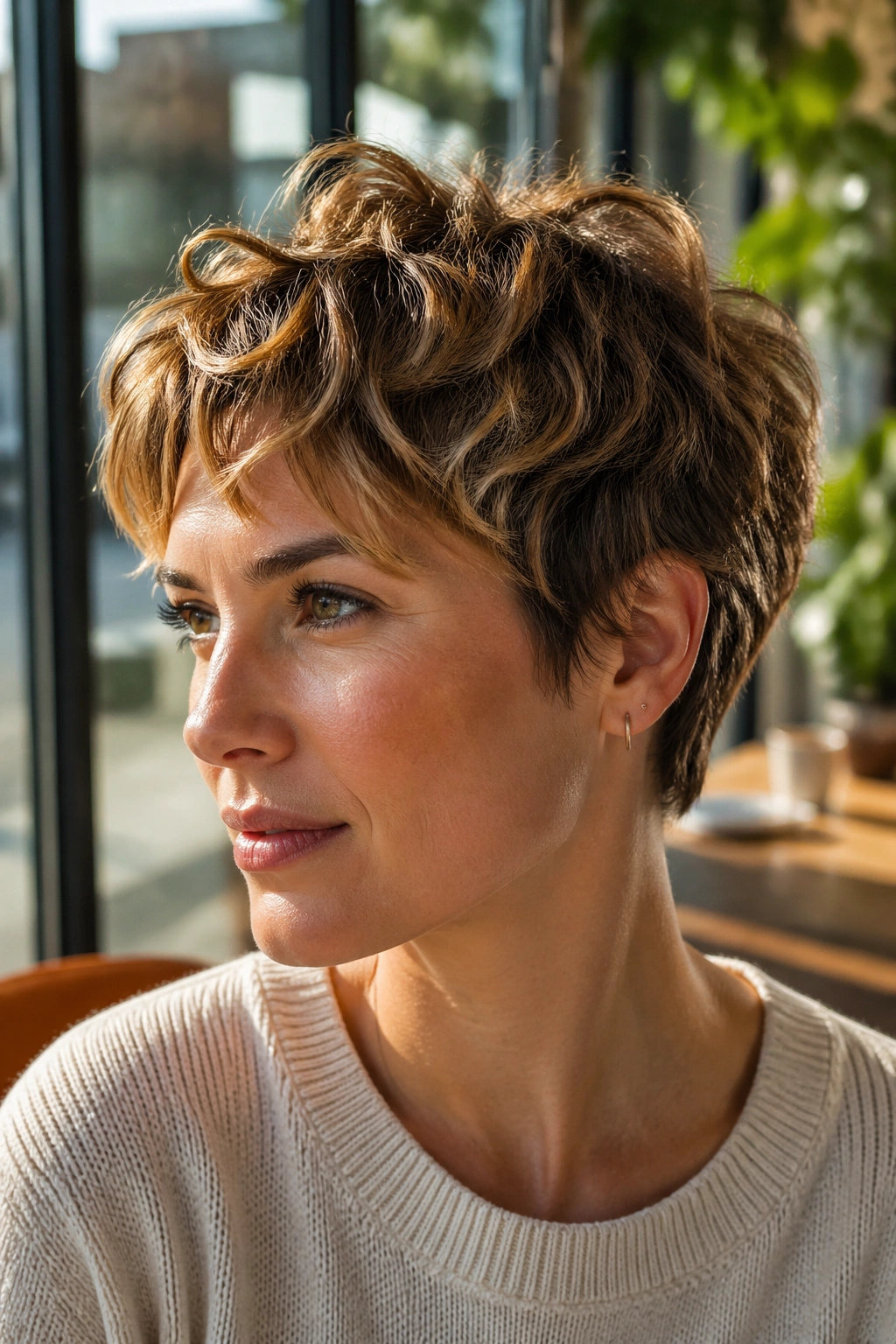
Some pixies need a blow-dryer. This one doesn’t. The cut is designed so the waves fall into place with minimal help, which makes it a solid choice for anyone who wants a short haircut that doesn’t demand a full styling ritual.
The trick is in the layering. The hair has to be cut so it air-dries with a shape already built in. A wash-and-go pixie only works when the stylist cuts for your natural bend. If your wave pattern changes from side to side, the cut should account for that, not pretend everything behaves the same.
27. Retro Wave Pixie
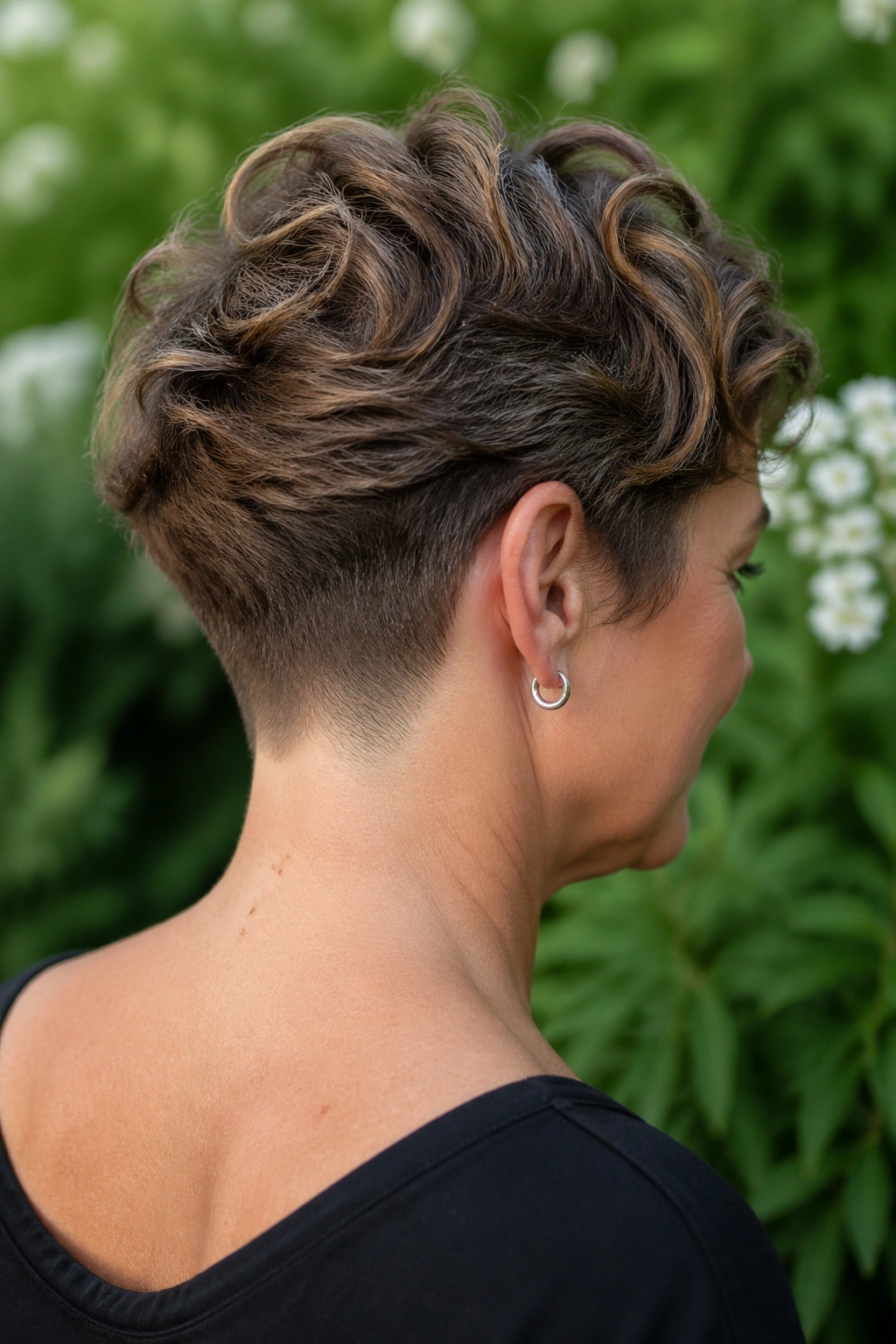
This cut leans into old-school polish. The wave is shaped in a soft sweep, often with a little shine and a bit more structure around the front than a messy pixie would have.
Why People Like It
It feels dressed up without asking for long hair. A side part, a smooth crest at the front, and a neat nape can make the whole style look intentional in a way that suits dinners, events, or just a day when you want your hair to have some presence. I’d keep the finish controlled, but not stiff. Retro is charming. Helmet hair is not.
28. Salt-and-Pepper Pixie
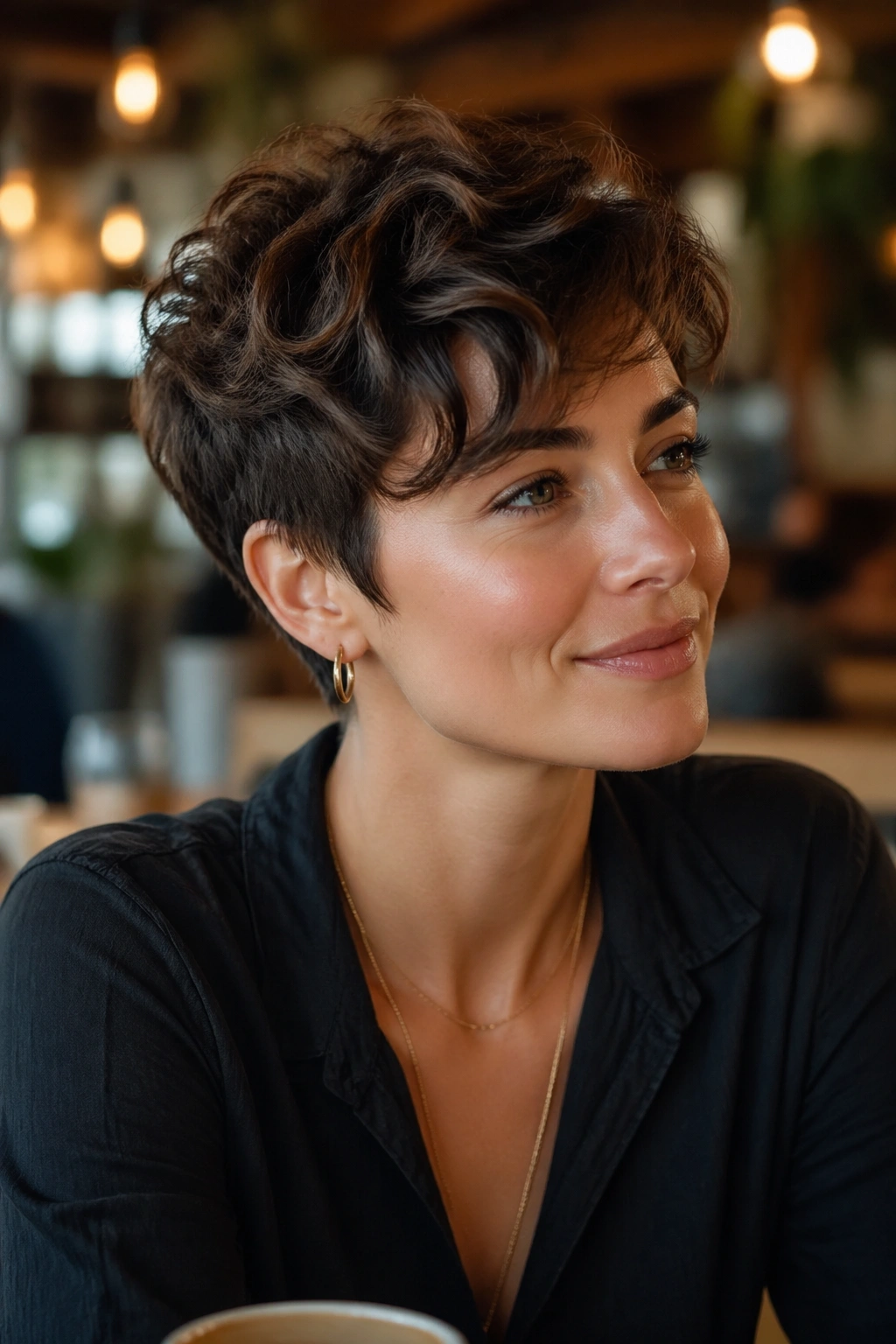
Natural gray changes the way waves read. The silver pieces catch light differently from the darker strands, so the texture shows up with much more contrast.
This cut is especially flattering on salt-and-pepper hair because short length keeps the color mix from looking muddy. The waves become the focus, and the color adds depth on its own. I’d avoid over-layering if the hair is very coarse; too many short pieces can make gray hair stick out where you don’t want it. A clean, balanced shape usually works better.
29. Highlighted Dimension Pixie

A few well-placed highlights can make a wavy pixie look thicker because the light hits the bends and shows off the layers. You do not need a full head of color for this to work. Small ribbons around the top and fringe are often enough.
The haircut matters first, though. If the shape is flat, highlights won’t save it. What they can do is make the movement easier to see. This is a nice option if you want the cut to feel a little softer and more dimensional without changing the length much. It’s subtle, which I prefer.
30. Mini-Mullet Pixie
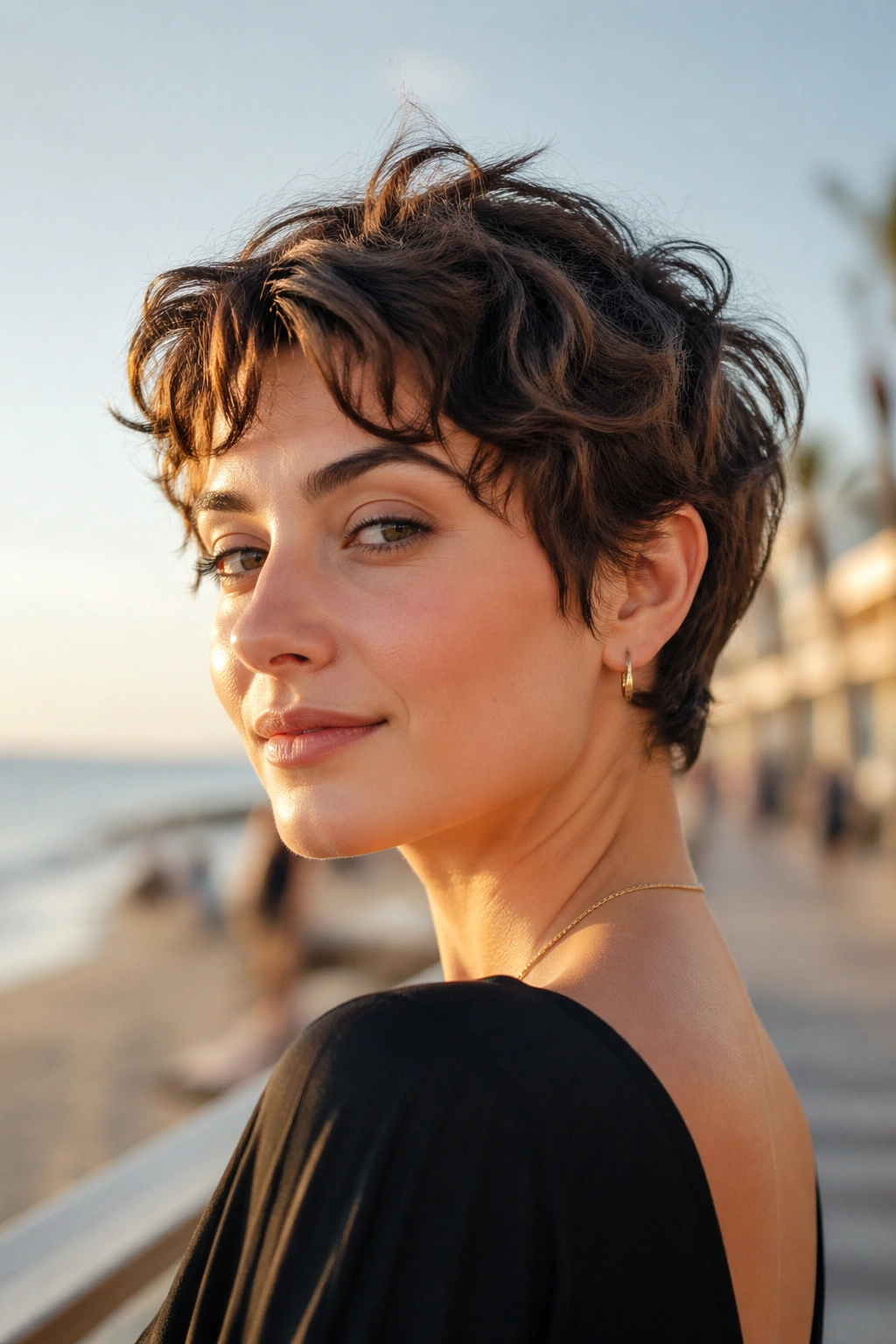
This one is for people who like a little rebellion in their haircut. The front and sides stay pixie-short, while the back keeps a touch more length, so the shape has a slight kick to it.
What Gives It Character
- Short, textured top
- Tightened sides
- A back that is longer, but not shaggy
- Waves that are left piecey rather than brushed smooth
It works because the contrast feels fresh, not costume-y, when the lengths are kept controlled. If the back gets too long, the cut stops reading as a pixie. Keep it compact, and the result is sharp in a fun way.
31. Tousled Texture Pixie
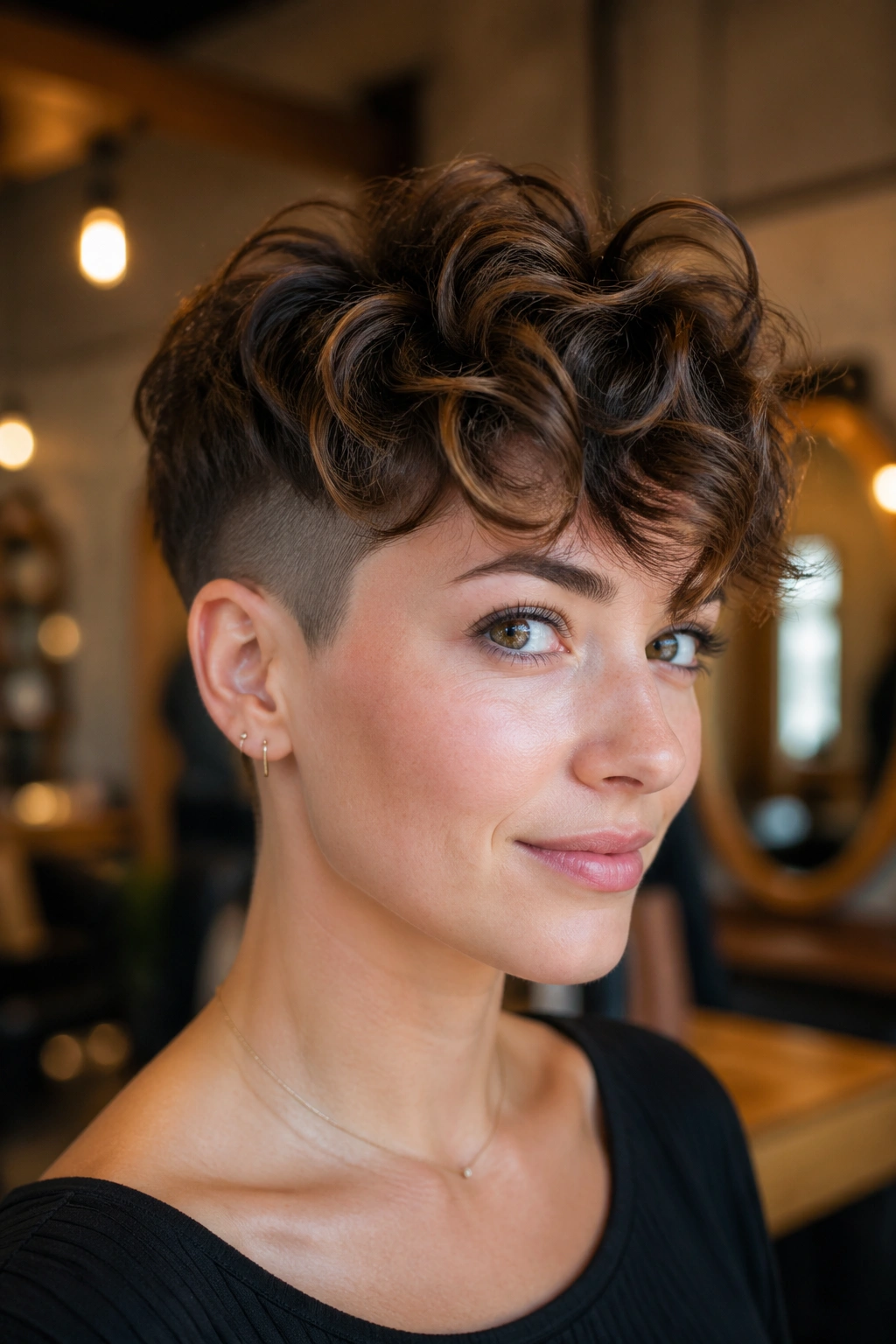
This is the messy one, but in a good way. The waves are left irregular on purpose, with little bends falling in different directions so the style looks relaxed and lived-in.
I like this cut on hair that already has some natural movement, because it doesn’t need much persuasion. A lightweight cream or mousse, then a quick scrunch, is often enough. The end goal is separation, not frizz. If the hair starts to puff, the product is probably too heavy or too dry for the texture you have.
32. Sideburn-Forward Pixie
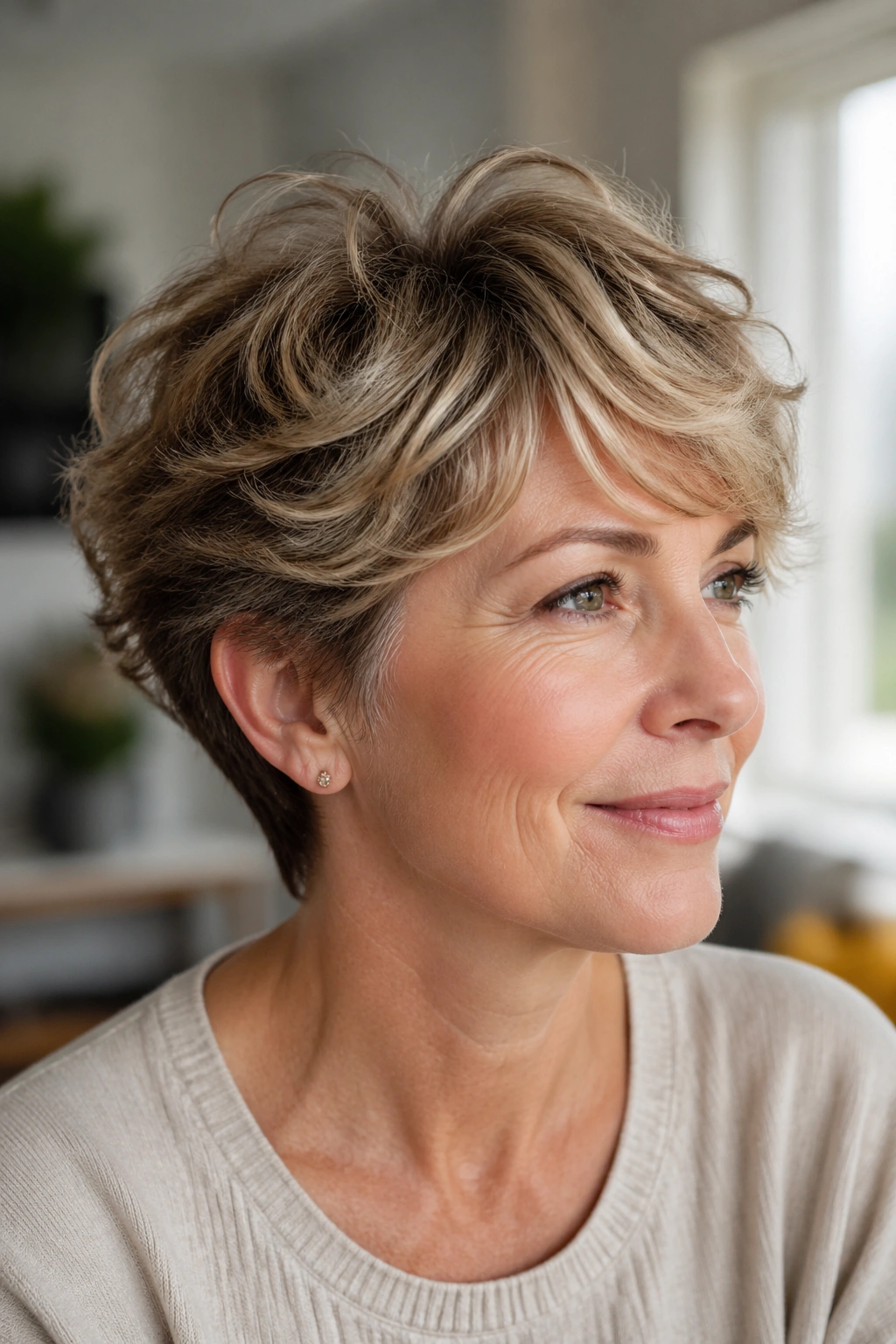
Sideburns are one of the most overlooked parts of a pixie. Leave them a little longer, and they can frame the cheekbone in a way that makes the whole cut feel softer and more deliberate.
This is a quiet but smart choice for anyone who wants the face framed without adding much bulk elsewhere. It’s also helpful if you like tucking hair behind one ear but want something to stay in place near the jaw. I’d keep the waves at the top loose and let the sideburns do the visual work near the face.
33. Lifted-Crown Pixie
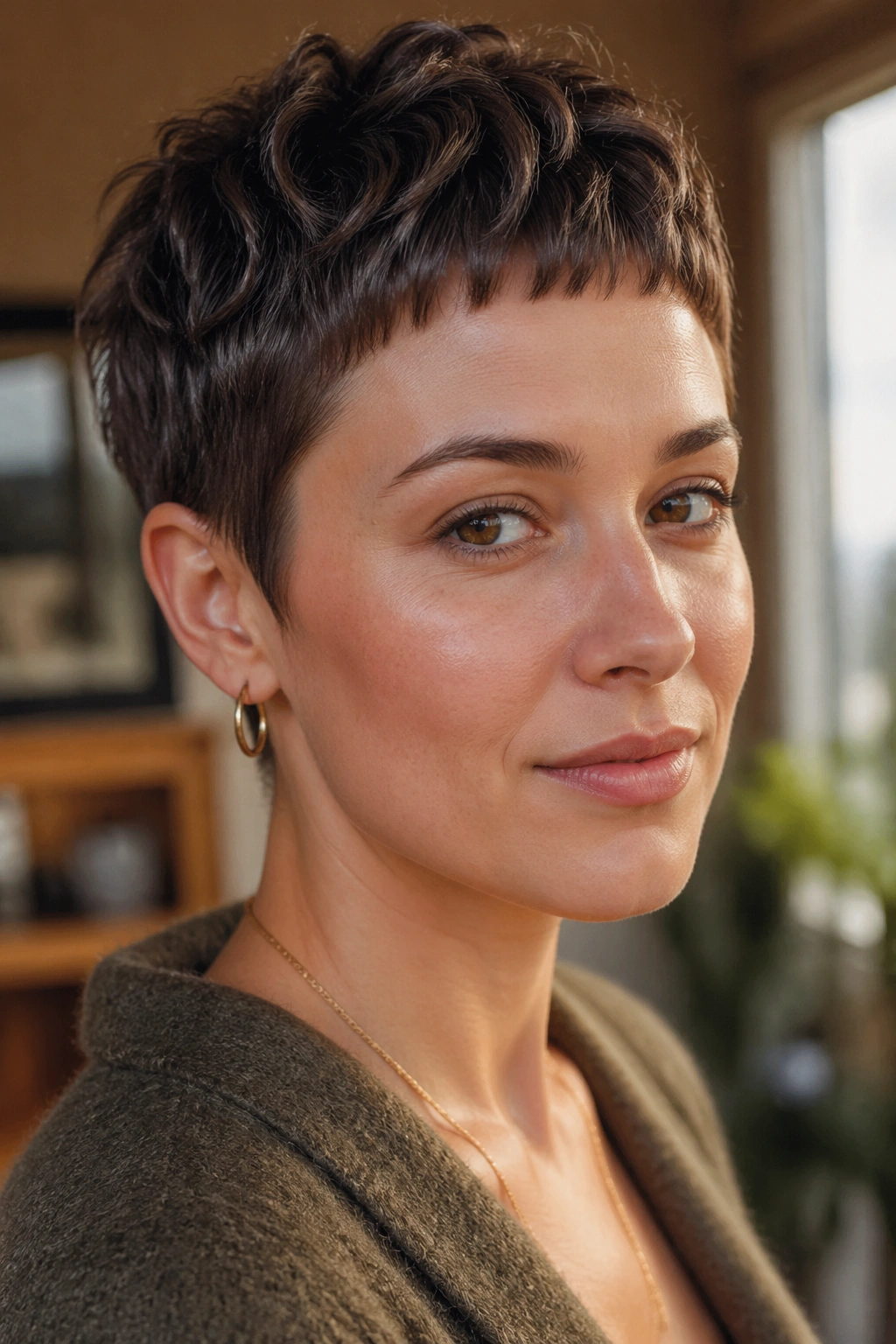
When the crown is lifted, the whole haircut feels more awake. The top has height, the sides stay controlled, and the waves sit in a shape that opens up the face instead of hiding it.
This is especially nice on small or oval faces, where a little extra volume can add balance. The lift should look soft, not teased. A root spray, a small diffuser, and a finger lift at the crown usually do more than a round brush ever will. The shape should feel airy, not stiff.
34. Clean Athletic Pixie
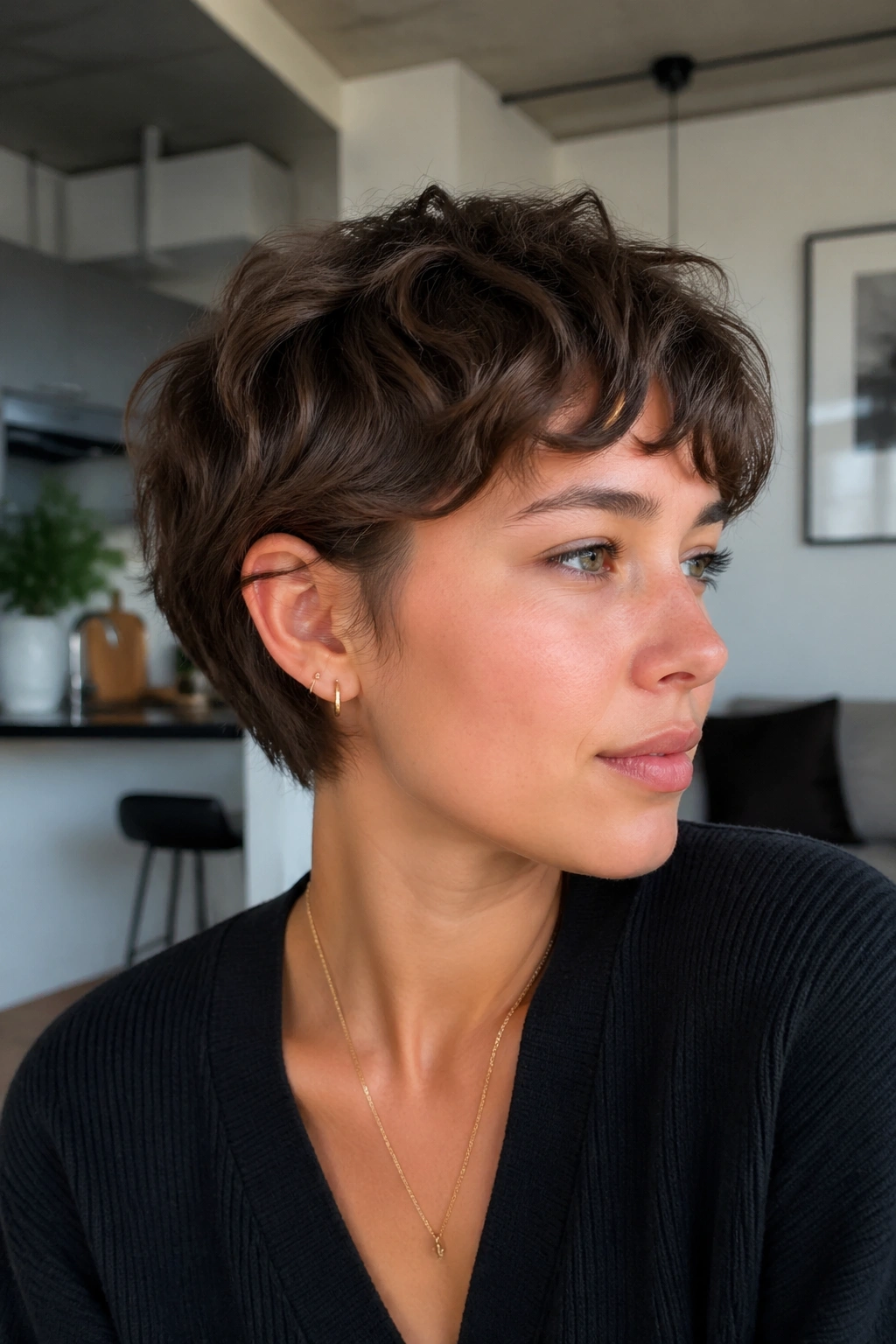
This is the short cut that can handle a busy day. The lines are neat, the nape is tight, and the waves are left just enough room to show texture without requiring a lot of fuss.
I like this pixie on active people because it survives a workout, a hat, and a rushed morning without falling apart. The style works best when the top is short enough to stay compact, but not so short that the wave disappears. Keep the outline crisp, and it looks fresh even when you’ve barely touched it with product.
35. The Grow-Out Pixie
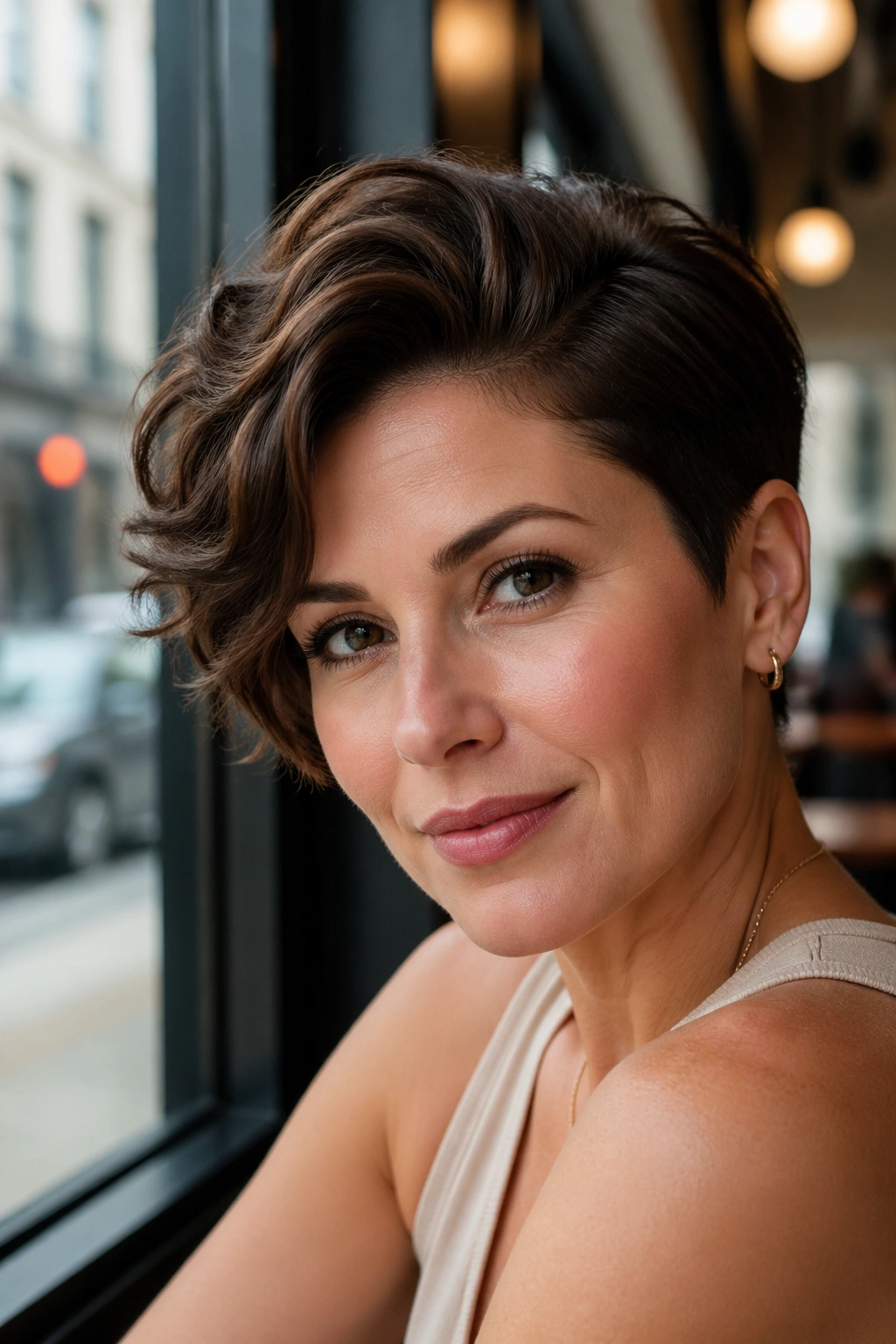
A good wavy pixie haircut should still look decent when it starts to grow. That is the real test, honestly. If the layers were cut with some thought, the shape will slide into a longer crop instead of turning into an awkward helmet.
This version keeps the top a touch longer, the sides softly tapered, and the nape tidy enough to hold its shape for weeks. It’s the one I’d choose for anyone who wants flexibility more than perfection. Short hair does not have to feel fragile. When the wave pattern is cut well, the grow-out can look like part of the plan, which is the nicest surprise a pixie can give you.