



Wavy hairstyles for the office work best when they look calm at the roots and a little loose through the lengths. If your waves start too high, the style can read beachy before 9 a.m.; if you flatten everything, it gets stiff and a bit dated.
Office lighting is blunt. It shows frizz, a crooked part, and a limp crown in a way bathroom mirrors never do. That’s why the smartest work hairstyles for wavy hair usually do one of two things: they keep the front neat, or they give the waves a shape that survives a long day in a chair, in a meeting, and under a blazer collar.
A 1-inch iron, a few flat clips, a lightweight mousse, and a flexible hairspray can carry a lot of the load. Thick hair usually needs less product than people think. Fine hair needs a little more grip at the roots, not a gallon of spray, and that detail makes a bigger difference than most styling advice admits.
The styles below stay in that useful middle ground. Polished, but not fussy. Soft, but not sloppy. And yes, a few of them are the kind you can do fast when the morning gets away from you.
1. Classic Side-Part Waves

A deep side part is still one of the easiest ways to make waves look work-ready. It gives the style a clear shape right away, and that shape matters more than extra curl. You get lift on one side, a smoother frame on the other, and just enough movement to keep the look from feeling stiff.
Why it reads polished
The trick is keeping the wave pattern broad, not tight. Use a 1-inch or 1¼-inch curling iron, wrap sections away from the face, then brush them out once they’ve cooled. That softens the curl into a wave and keeps the finish from looking too formal.
- Best for shoulder-length hair and longer bobs
- Works well with side parts that naturally flatter one side of the face
- Holds up well if you wear glasses or need to tuck one side behind your ear
- Pairs nicely with a light mist of flexible-hold spray
One small move matters here: let the front section cool before you touch it, or the whole shape falls flat fast.
2. Center-Part Waves with a Clean Finish

A center part can look sharper than people expect. The reason is simple: symmetry feels controlled, and control reads as neat in an office setting. The style works best when the waves sit from cheekbone to shoulder, not from the root downward.
Use a smoothing cream the size of a dime through damp hair, then blow-dry the crown flat with a paddle brush. After that, bend the mid-lengths with the iron and leave the ends a little straighter. That contrast keeps the style from turning into a full curl set, which is a different mood entirely.
This is the style I’d pick for days with back-to-back meetings. It looks intentional on camera and doesn’t get too puffy by lunch. If your hair tends to split at the part, a tiny amount of root spray along the part line helps the style stay put without making it sticky.
3. The Wavy Lob with a Tucked-Behind-Ear Front

I keep coming back to the wavy lob for desk jobs because it behaves. It’s long enough to feel soft, short enough not to drag on your collar, and the tucked front section makes it look tidy without needing much work.
What makes it office-friendly
The tucked side opens the face and keeps hair away from your mouth when you’re talking all day. That sounds minor. It isn’t. Hair near the face gets annoying fast once you’re typing, drinking coffee, and turning toward a screen every ten minutes.
- Ask for a lob that lands around the collarbone
- Style only the mid-lengths and ends
- Tuck one side behind the ear and secure it with a flat pin if needed
- Use a matte barrette if your hair slips easily
The lob has one nice advantage over longer waves: it doesn’t collapse under its own weight as quickly. That makes it a low-drama office cut, which is a compliment in my book.
4. Half-Up Twist with Loose Ends
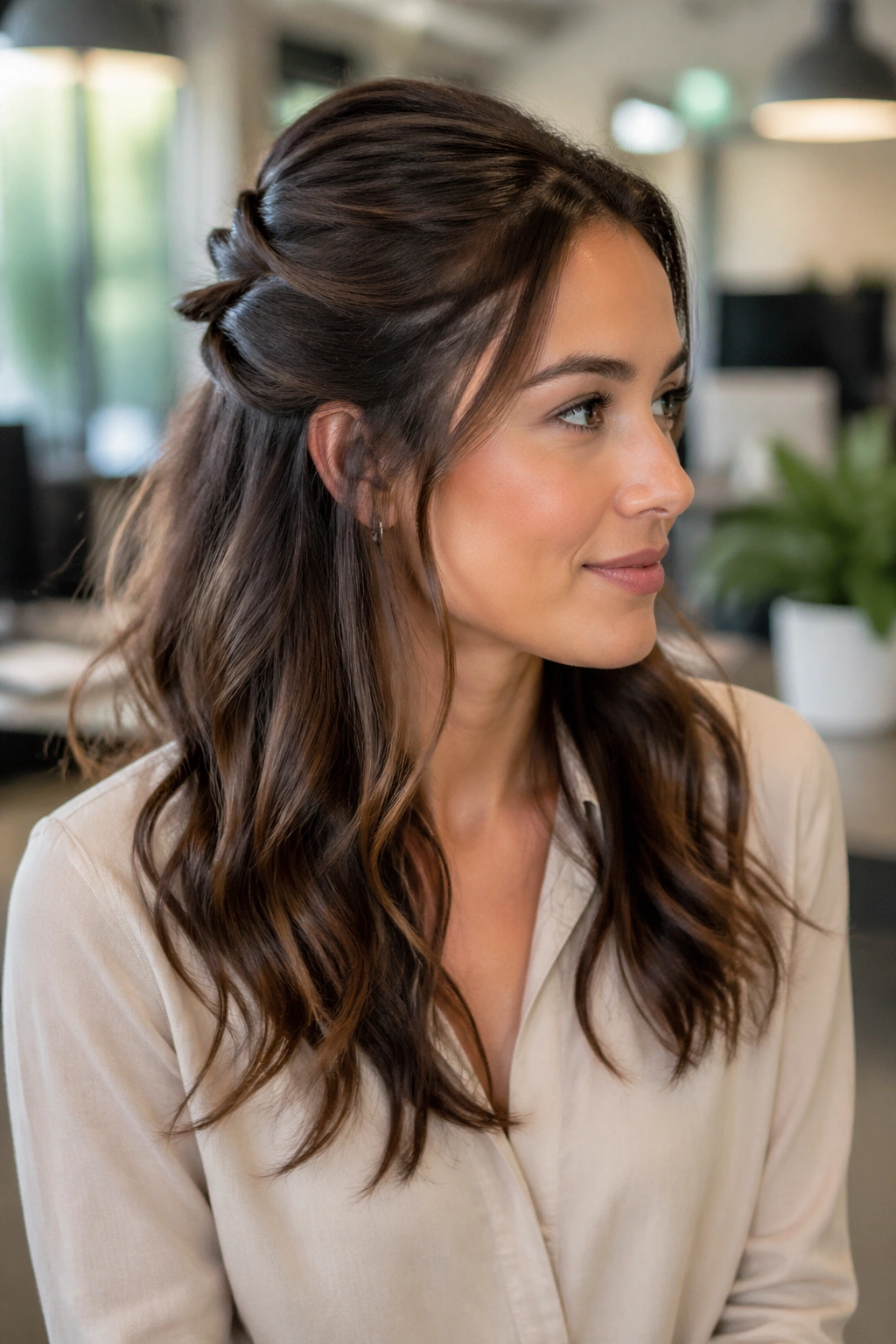
The half-up twist is the style I reach for when I want the top half under control but still want movement through the bottom. It’s a smart middle road. The hair around the face stays lifted, the ends still look soft, and you get a little structure without looking overdone.
Start by taking two sections from the temples and twisting them back toward the crown. Pin them where they meet, then leave the rest of the hair in loose waves. If your hair is fine, mist the twists with texturizing spray before pinning; otherwise, they can slide down by noon.
This works especially well with second-day hair. The wave pattern already has memory, so the twist gives it a cleaner shape instead of trying to fight it. And if you’re the kind of person who ends up touching your hair during calls, this one is practical in a way a full down style isn’t.
5. Low Ponytail with Wavy Length
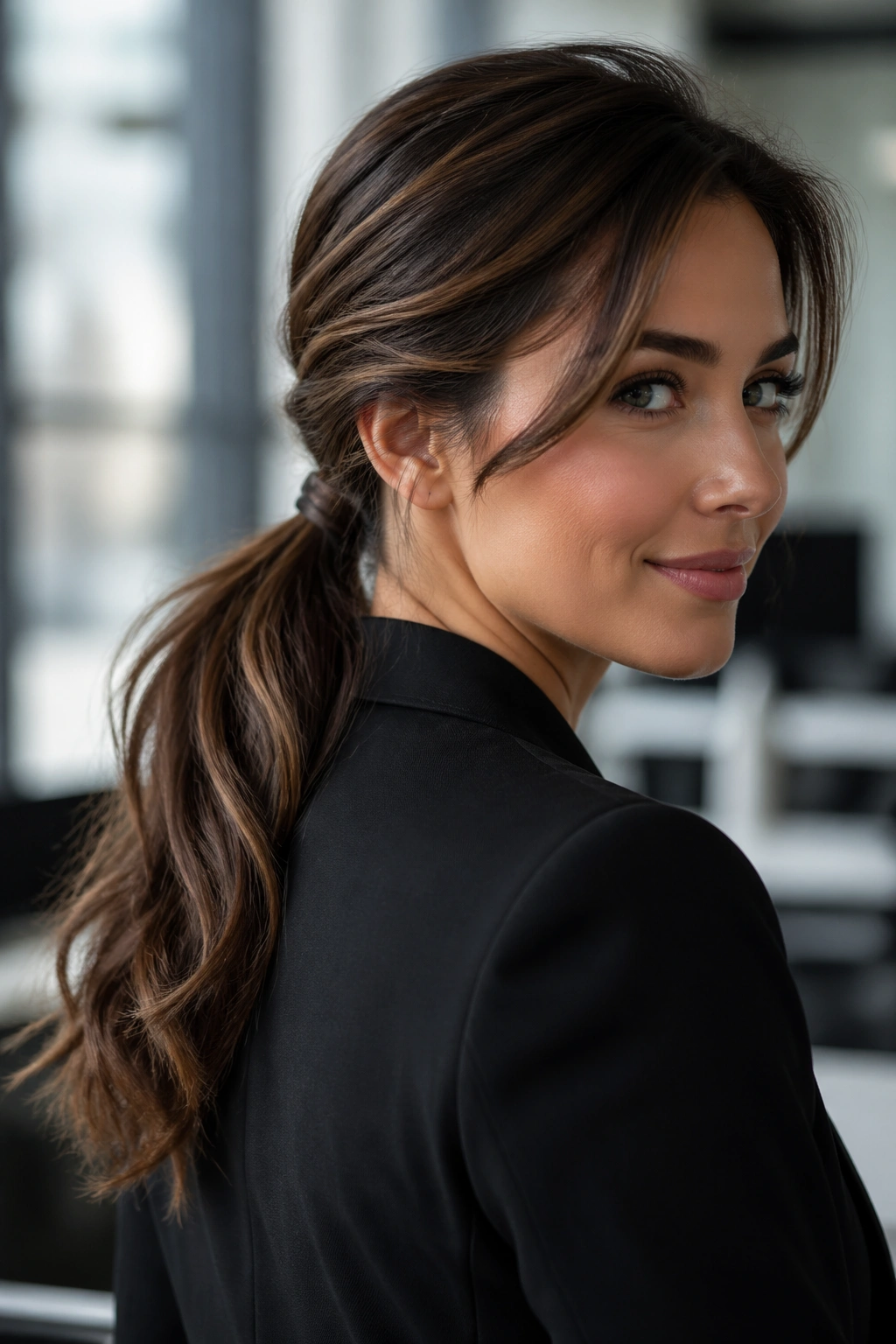
A low ponytail can look plain, but that’s only when it’s pulled too tight and left with no shape. When the lengths are waved and the crown stays smooth, it reads as sharp and easy rather than rushed.
Unlike a high ponytail, a low one sits under jacket collars and doesn’t bounce around every time you turn your head. That makes it better for long workdays and commutes. Wrap a small strand of hair around the elastic, pin it underneath, and leave the tail in broad waves so it still has movement.
The best version keeps the ponytail low at the nape, not in the middle of the back of your head. That small adjustment changes the whole feel. If your hair is thick, use two slim elastics stacked together for support; if it’s fine, a little root lift at the crown helps prevent the style from looking flat against the head.
6. Polished S-Waves
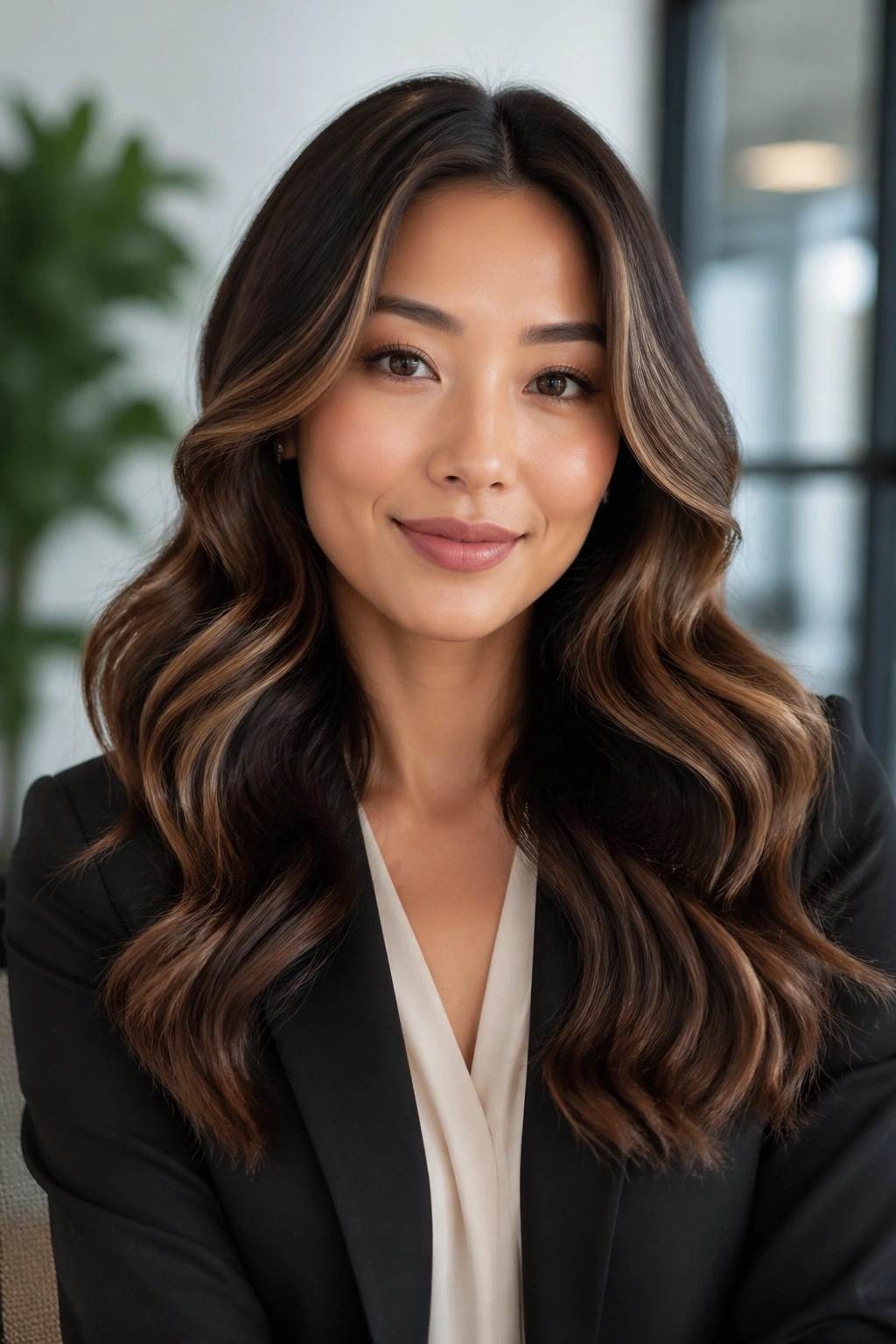
S-waves are one of those styles that look more technical than they are. The shape is smooth and sculpted, but not stiff. It’s a good choice when you want a little more finish than a loose bend gives you, especially for presentations or days when you know you’ll be on camera.
How to set the bends
Use a flat iron or curling iron to make a wave in one direction, then the next section in the opposite direction. Clip each bend while it cools. That part matters. If you skip the cooling step, the wave loses its shape and turns into a soft curl instead.
- Best on medium-length hair
- Use a heat protectant with a slippery feel, not a heavy cream
- Finish with a shine spray from mid-lengths down
- Brush lightly with a soft paddle brush once the hair is cool
The goal is structure, not perfection. A few uneven bends are fine; they make the style look less like a salon set and more like a real head of hair.
7. Curtain Bang Waves
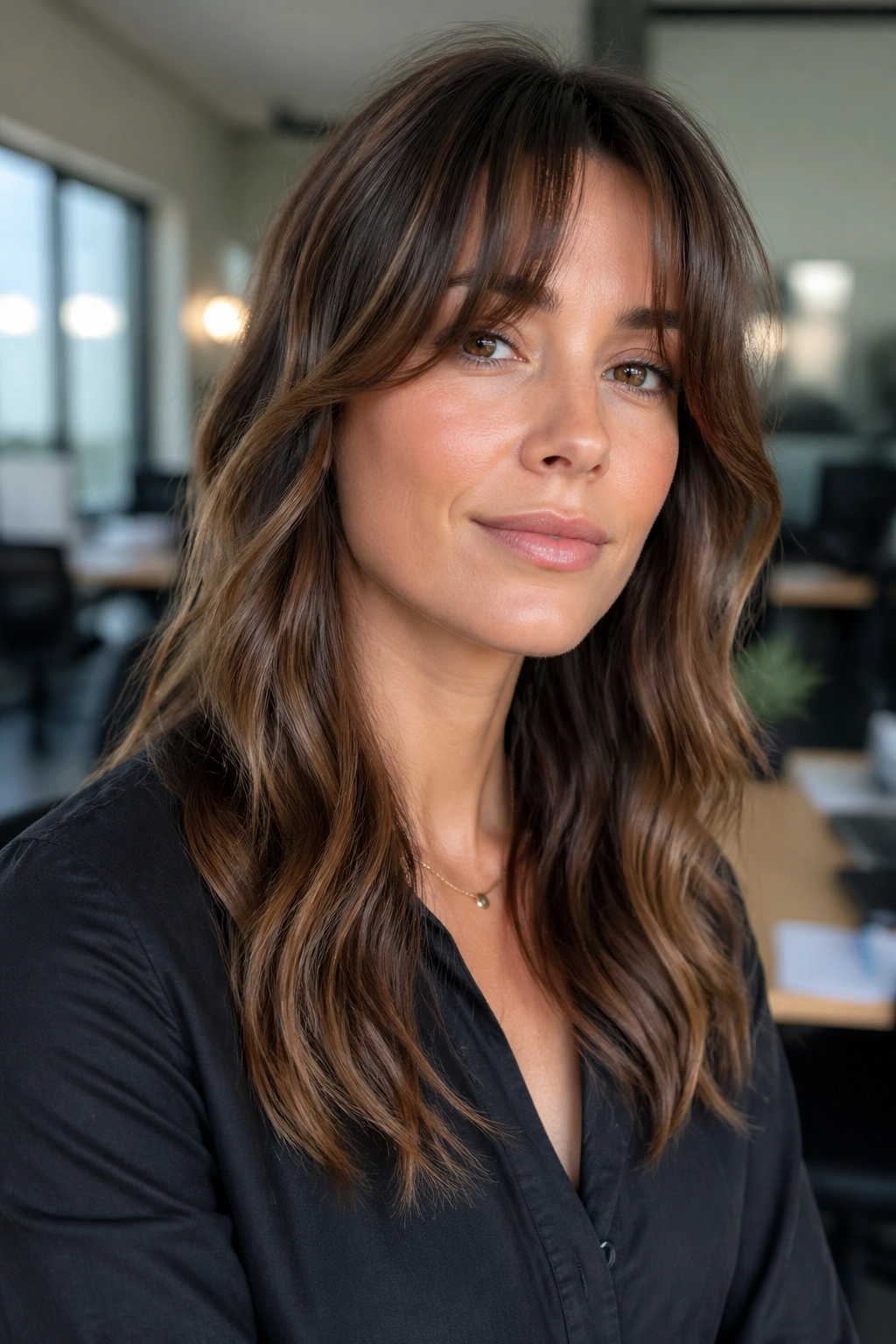
Curtain bangs can make office waves look softer without pushing them into “done up” territory. They break up the forehead, frame the eyes, and take the edge off a blunt haircut. If you’ve been avoiding bangs because you think they’re too high-maintenance, this is the version that makes the most sense.
What makes them different
The bang area needs its own styling, separate from the rest of the wave pattern. Dry the bangs with a round brush, rolling them away from the face, then let the lengths stay wavy and loose. That keeps the front from sticking to the forehead or separating in awkward pieces.
Curtain bangs also help if you wear your hair the same way every day and want a little change without a full cut. They move when you turn your head, which sounds cosmetic, but it does a lot for the overall shape. Keep a small dry shampoo in your bag if the fringe gets oily fast. Bangs notice everything.
8. Soft Blunt Bob Waves
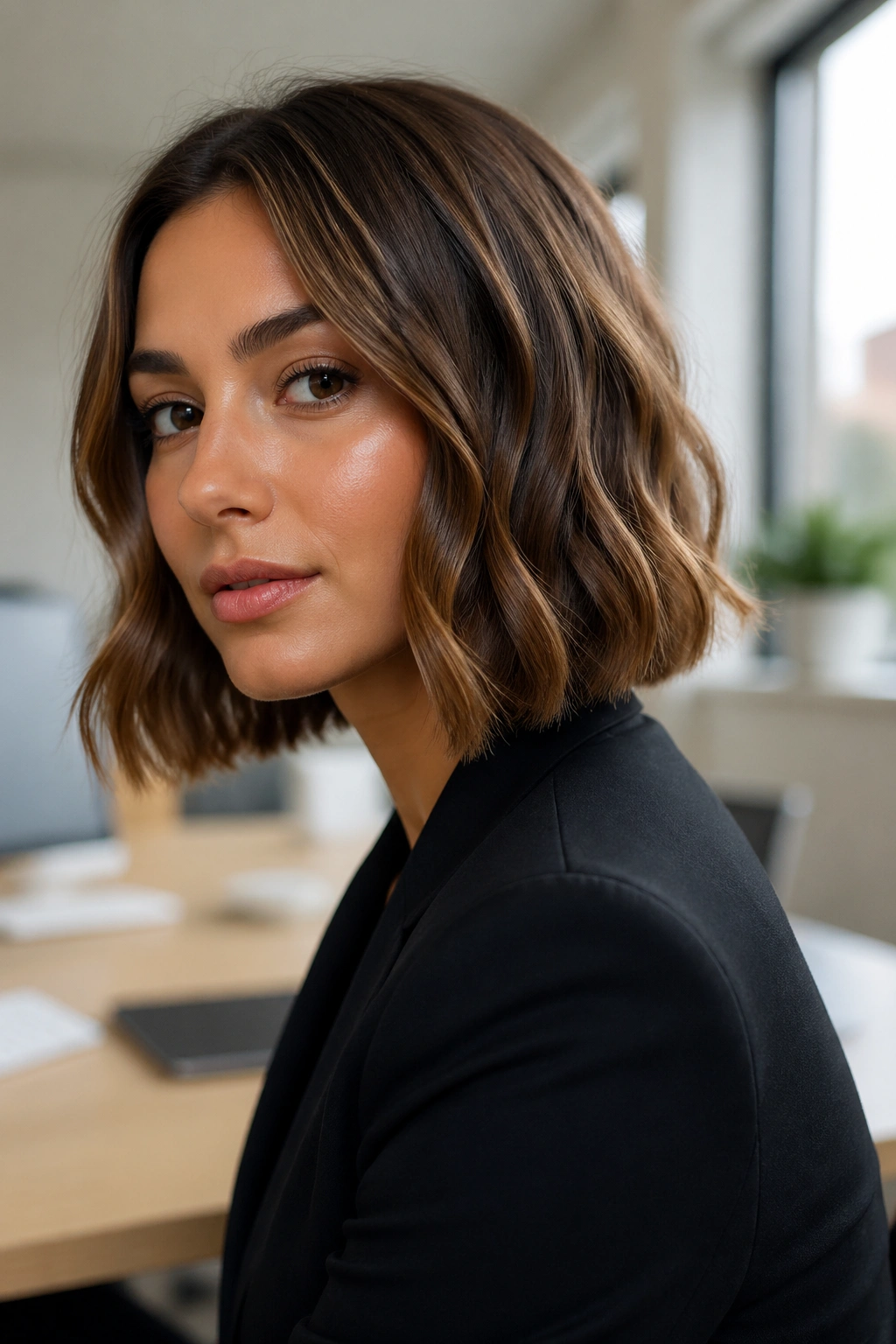
A blunt bob can still look office-friendly if the wave is broad and the ends stay clean. Tight curls make a bob feel smaller and busier than it needs to be. Soft bends, on the other hand, give the cut shape without making it shout.
The best version starts with a smooth blow-dry and a side or center part that you commit to. Then use a curling iron to create one loose bend through each section, leaving the very ends almost straight. That makes the bob look crisp around the edge and relaxed through the middle.
This style is especially good if your hair sits at the jawline or just below it. It keeps the neck visible, which helps the whole look feel lighter. If your bob flips out in humid weather, a pea-sized amount of cream on the ends can calm the shape down without making it flat.
9. Shoulder-Length Layers with Airy Ends

Shoulder-length layers are one of the easiest cuts to style into office waves because the cut already helps the hair move. You’re not forcing the shape. You’re working with it. That matters when you want something that still looks decent after three hours at a desk.
What keeps the shape from falling flat
Layers need lift at the crown and a bend through the ends. A mousse through damp roots, then a diffuser or rough blow-dry, gives the style enough body to stay off the head. After that, wave the lower half only. If you curl the whole head, the layers can start to look too puffy.
- Good for thick hair that tends to expand
- Nice for fine hair when you want movement, not bulk
- Use a 1¼-inch iron for broader bends
- Keep the final finish soft with a single mist of spray
There’s a reason this cut shows up so often in real offices. It’s forgiving. If one section falls, the whole style still holds together.
10. Face-Framing Waves with a Clip-Back Side
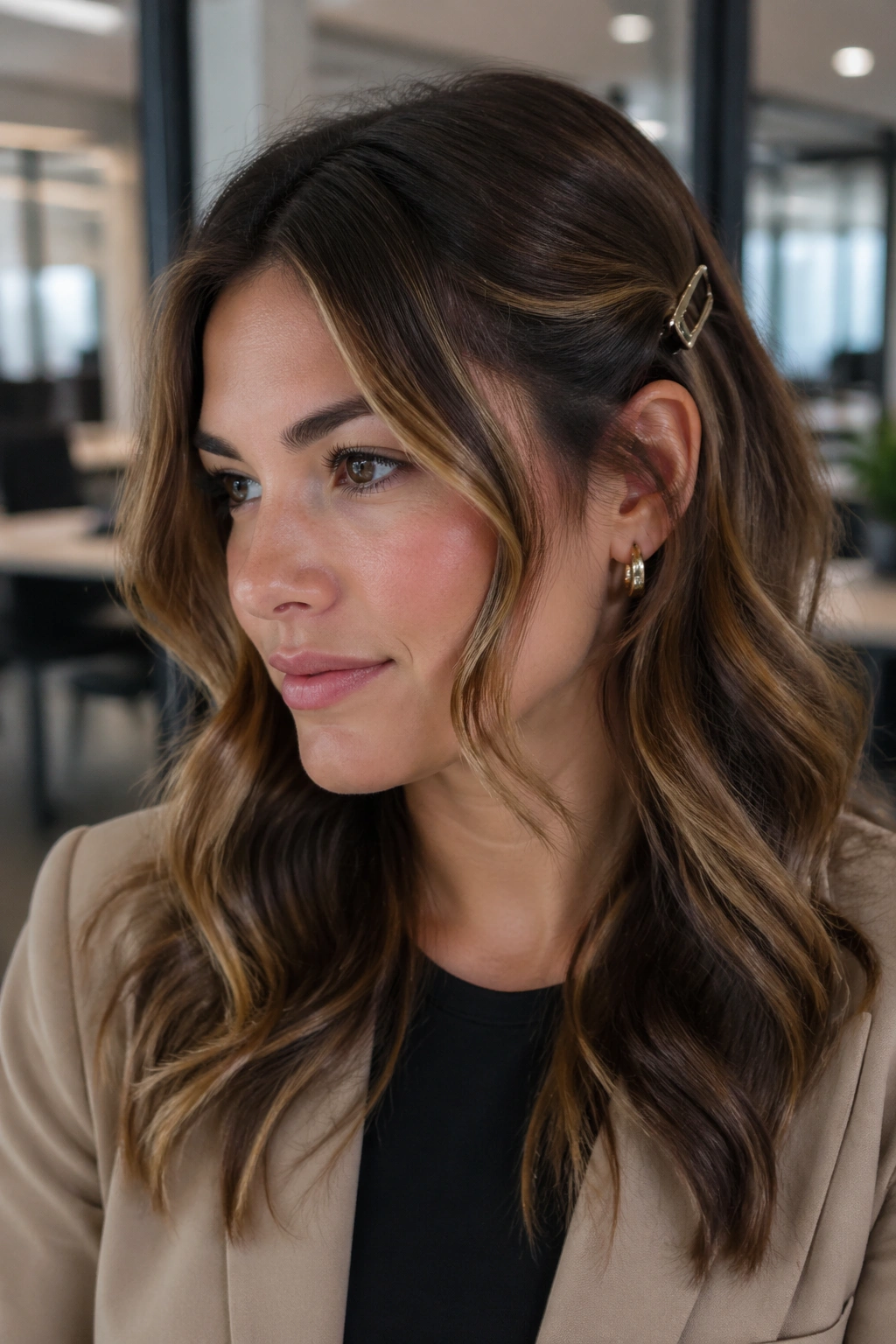
This is the style I’d choose on a day when you want your hair to look pretty, but you also want your face fully visible. Pinning one side back clears the cheek and jawline, which makes the wave pattern feel lighter and more deliberate.
The key is not overloading the pinned side with too much hair. Take a small front section, twist it back once, and pin it flat near the ear with a simple clip or bobby pin. Leave the rest in loose waves. That contrast keeps the style from feeling overworked.
It also works well with glasses, earrings, or a blazer that already has a strong neckline. Too much hair near the temples can crowd the face. This fixes that problem without needing a full updo, and that’s why it earns its keep. A little restraint goes a long way here.
11. Wavy High Ponytail with a Wrapped Base
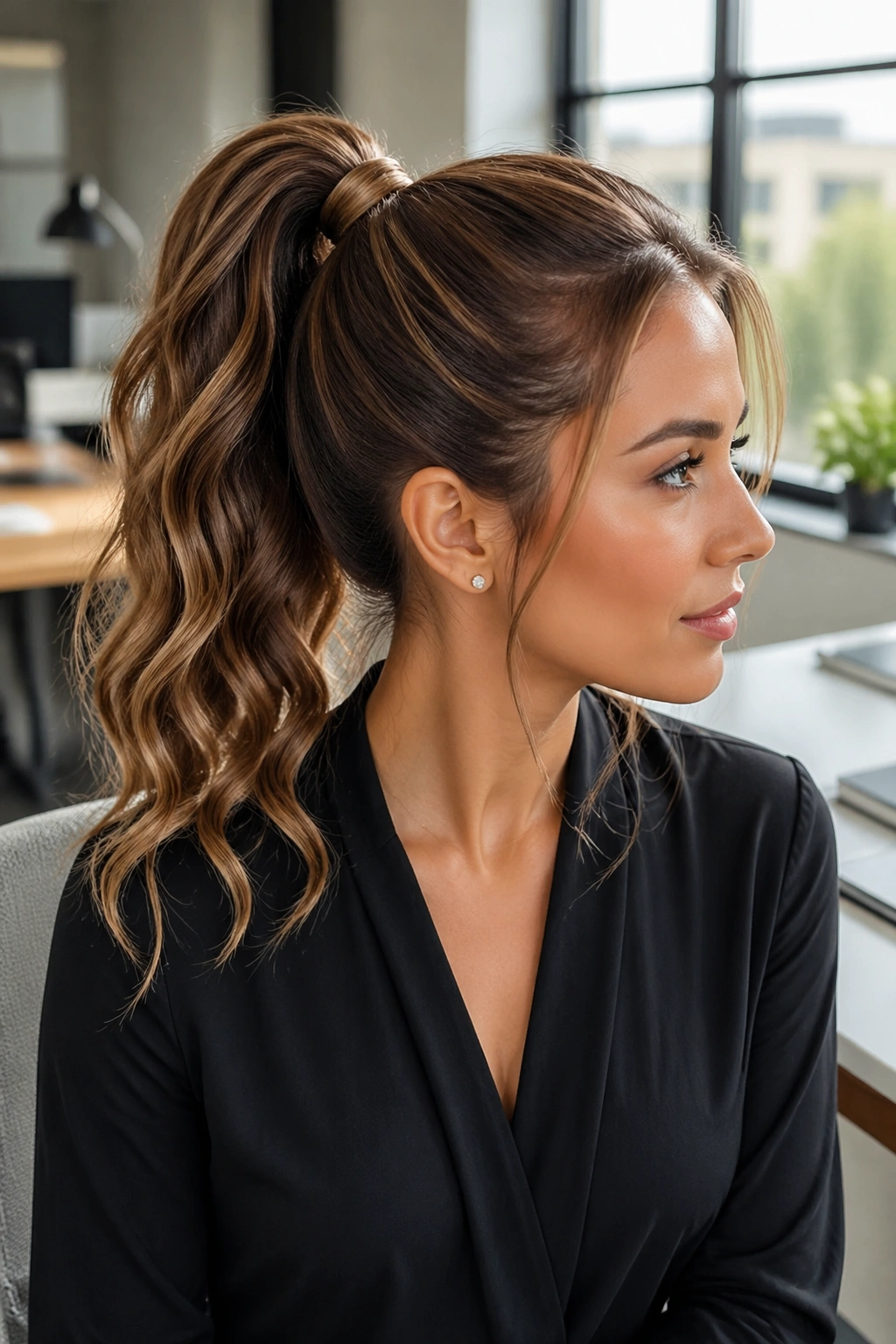
A high ponytail is more casual than a low one, but it can still work in an office if the crown is smooth and the pony is wrapped cleanly. The style has energy. It also keeps hair off the neck, which becomes a blessing when you’re in a warm room or rushing through a long day.
Unlike a low ponytail, this one needs a little more root prep. Blow-dry the crown with lift, tease only the underside slightly if your hair is fine, and secure the pony high but not straight on top of the head. A pony that sits a bit back from the hairline usually looks better.
The wrapped base matters because it hides the elastic and makes the style look finished. Pull a thin strand from underneath the pony, wrap it around the band, and pin it tight. Then leave the tail in soft waves. If the tail is too curly, brush it once so it falls in broader bends instead of springy spirals.
12. Loose French Twist with Wavy Ends
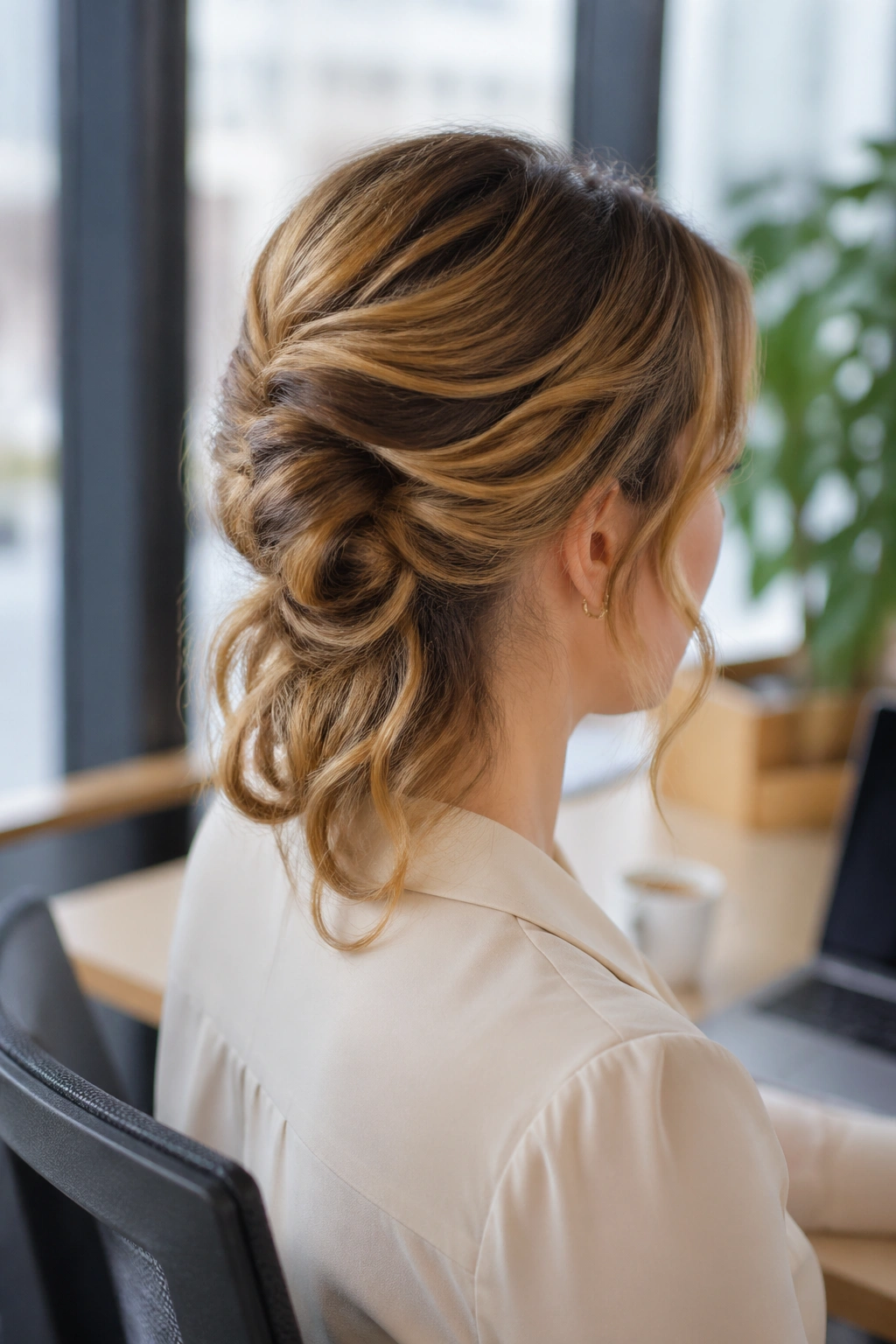
A loose French twist is more relaxed than the classic version, which is why it works so well for work. You get the shape of an updo without the stiff, formal finish. Leave a few wavy pieces out near the nape or around the temples, and the whole thing softens immediately.
Why it works for meetings
The twist keeps the hair secure and off the shoulders, which is useful when you’re moving around or sitting in a chair for hours. The loose ends make it feel less severe. That balance is the whole point.
If your hair is slippery, prep it with a bit of dry texture spray before twisting. If it’s thick, make the twist slightly off-center so the roll doesn’t get too bulky. A few bobby pins crossed in an X hold better than one pin alone, and they tend to disappear better into dark hair.
This is one of those styles that looks like it took longer than it did. I like that. It feels useful, not precious.
13. Deep Side Part with Glossy Waves
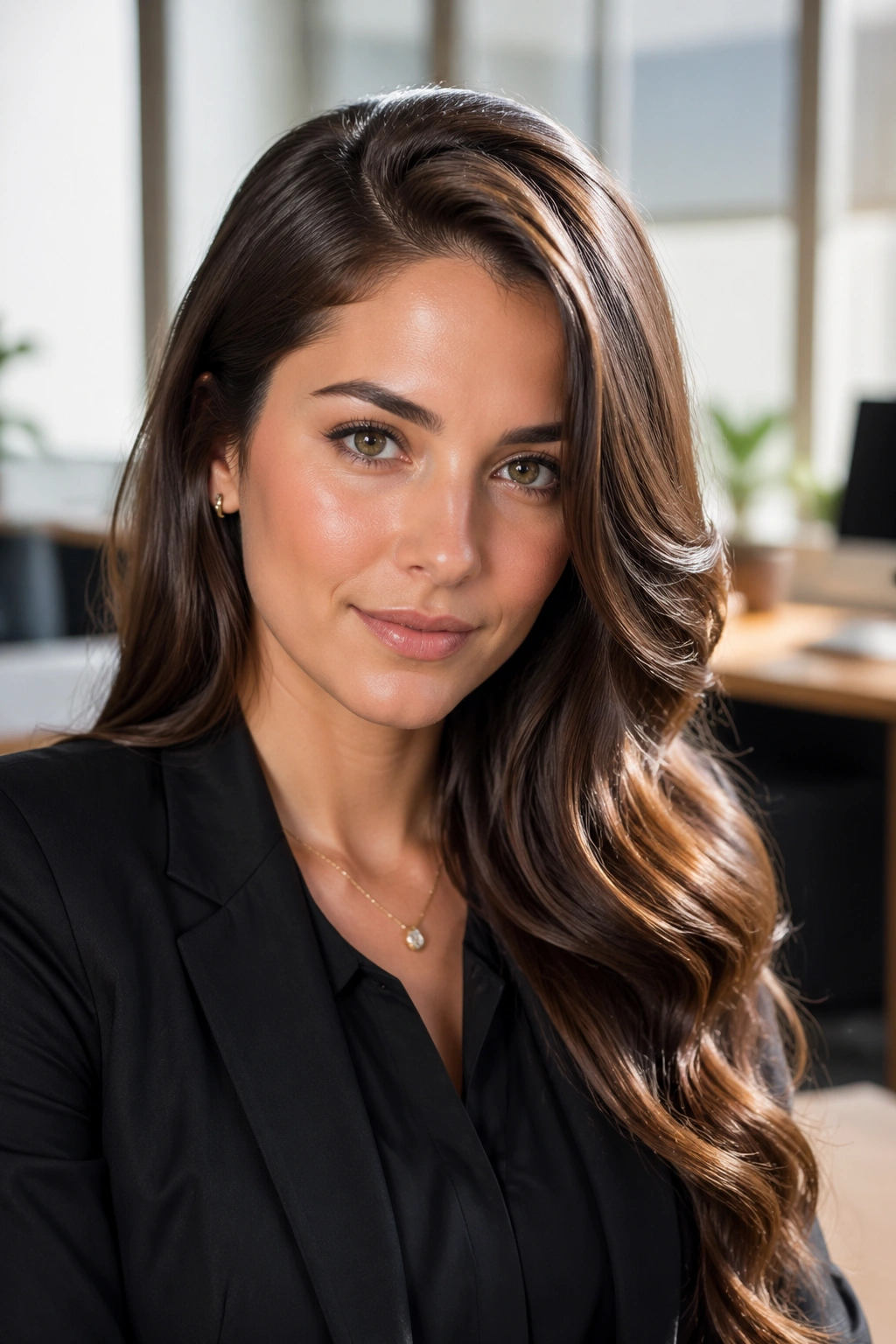
A deep side part changes the whole mood of waves. It gives you drama at the front, but the style still stays wearable for the office because the rest of the hair can remain smooth and controlled. The shine is what pulls it together.
Use a heat protectant with a little slip, then create large waves with a 1¼-inch iron. Brush them out, apply one drop of serum to the ends, and smooth the surface with your hands. Don’t pile on oil near the roots. That’s how a pretty style becomes greasy by lunch.
This look suits longer hair especially well because the side sweep has room to sit. If your hair is medium or short, keep the sweep close to the face so it doesn’t fight the cut. The effect is polished without feeling hard, and that’s a useful lane when you want something a little more dressed up than the everyday wave.
14. Minimal Claw-Clip Wave Twist
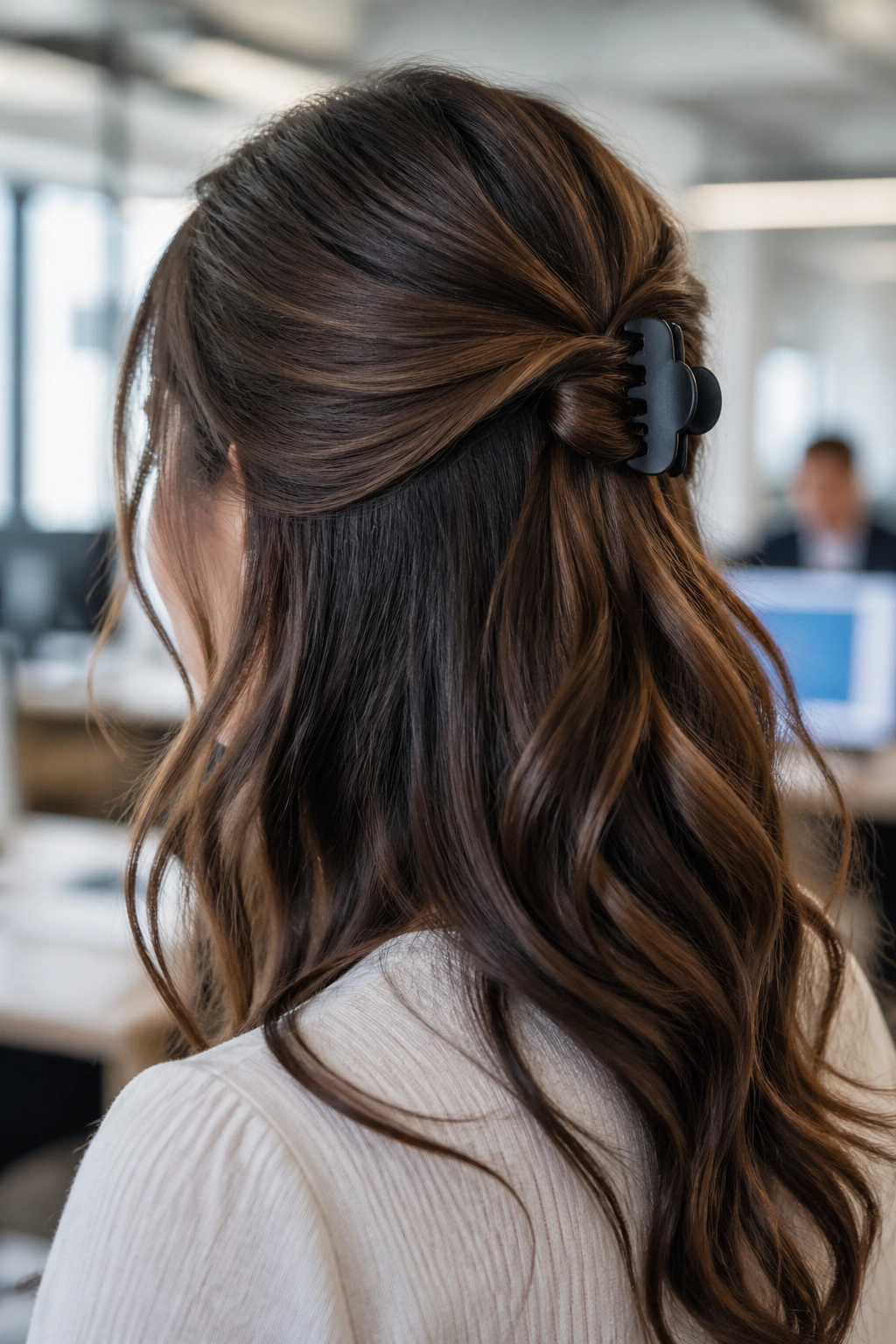
Three minutes before you leave, this is the one. A minimal claw-clip twist keeps the hair off your face, shows the wave pattern, and looks deliberate even when you did it in a hurry. The trick is choosing a clip that feels simple: matte, neutral, and not too large.
Twist the length once at the back of the head, fold it up, and clip it so the ends spill out in soft waves. If the front pieces fall loose, leave them. They soften the whole style. A few face-framing strands are better than a too-tight twist that looks like you gave up halfway through.
This style is better on medium to thick hair than on very fine hair, which can slip out of a claw clip if the surface is too smooth. A little texture spray at the roots usually solves that. And if your clip grabs too much hair and creates a lump, use a smaller clip instead. Smaller often looks neater.
15. Wavy Shag with Controlled Frizz
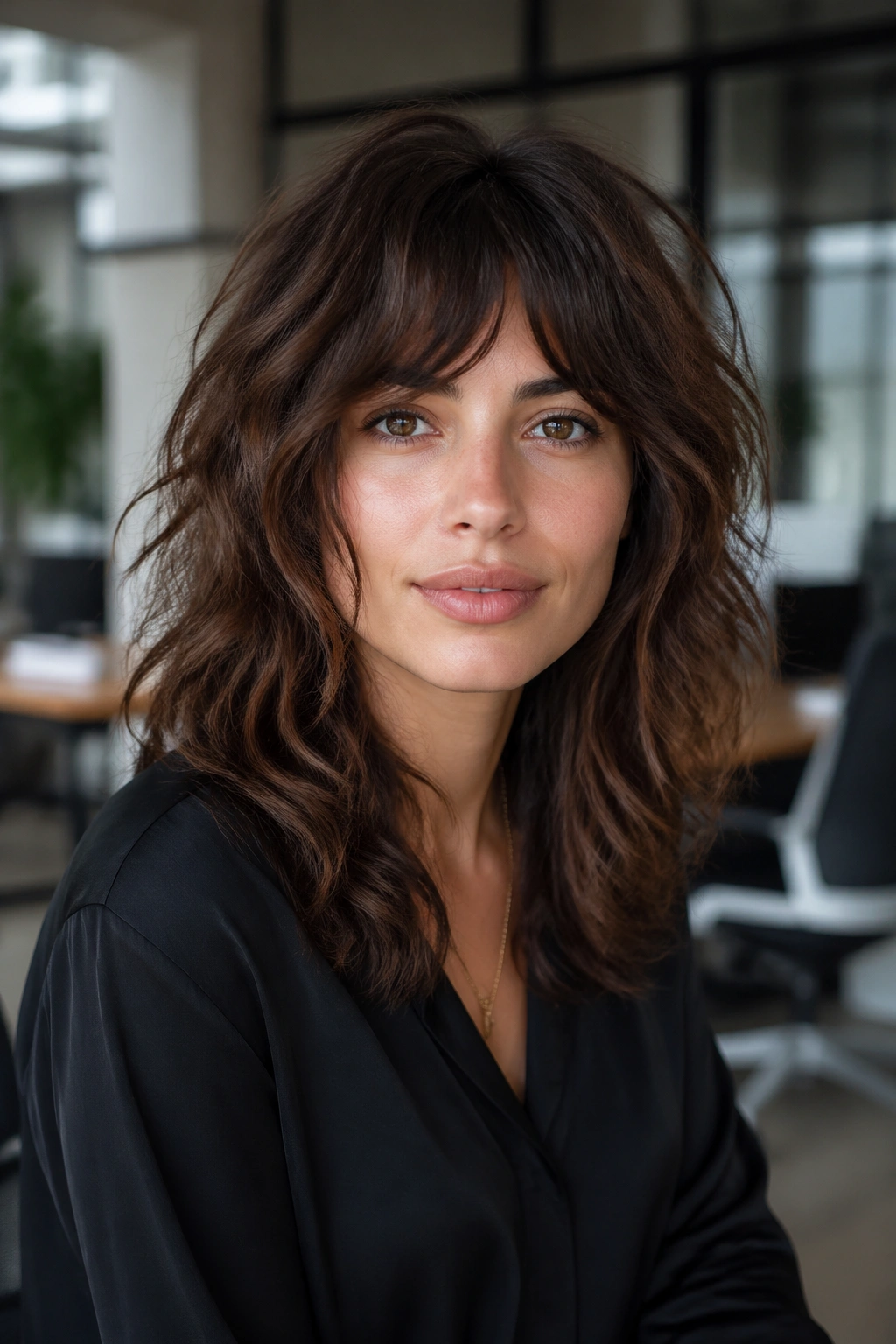
A shag can work in an office, but only if you control the frizz. Leave it wild and it reads as a weekend haircut. Keep the ends soft and the top shaped, and it looks modern in a way that still belongs near a laptop.
The reason this cut works is simple: the layers give the waves somewhere to sit. You do not need to force every piece into place. A small amount of styling cream through damp hair, followed by scrunching and air-drying or diffusing, is usually enough. Once dry, separate only the very front pieces if they clump too hard.
This style suits people who want movement and don’t want to spend much time with hot tools. It’s also forgiving on days when the hair has a bit of natural texture already. The downside is that it can puff up if you over-touch it. So don’t. That’s the whole lesson here.
16. Sleek Crown, Soft Ends
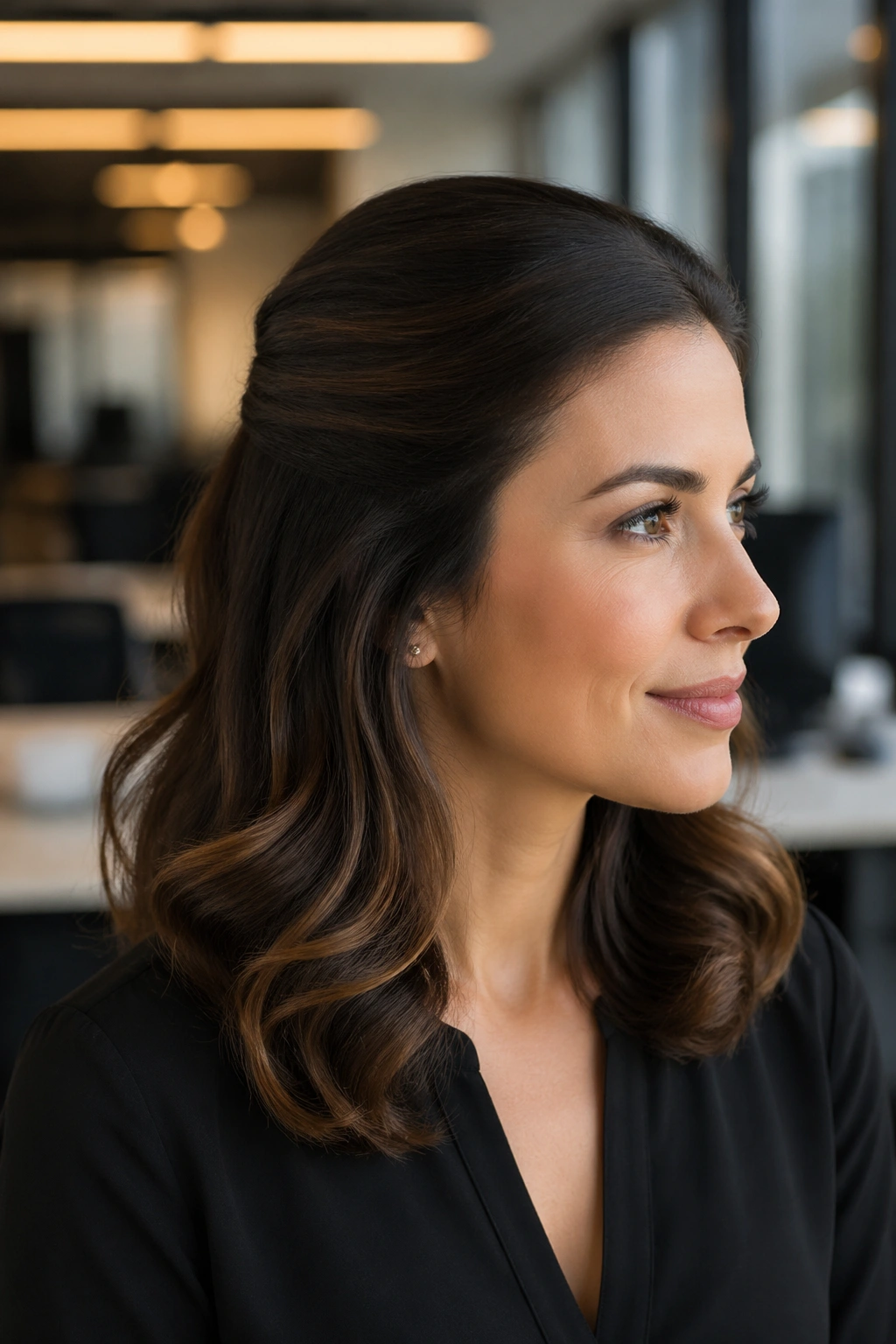
This one is useful when your roots get frizzy before your ends do. Keep the crown smooth and the waves concentrated from the ear down. The result feels clean at the top, soft at the bottom, and much easier to wear under office lighting than a full head of curl.
A flat brush and a blow-dryer help here more than a curling iron does. Smooth the top section first, then bend the lower half in large waves. If your hair is thick, a small amount of anti-frizz cream through the crown before drying keeps the surface calm. If it’s fine, use less. Too much product kills lift.
I like this look for humid rooms and long days because the smooth crown hides a lot of wear. The ends can loosen a bit and the style still holds its shape. That’s useful. Styles don’t need to stay perfect all day. They need to look like they belonged there in the first place.
17. Half-Up Barrette Waves
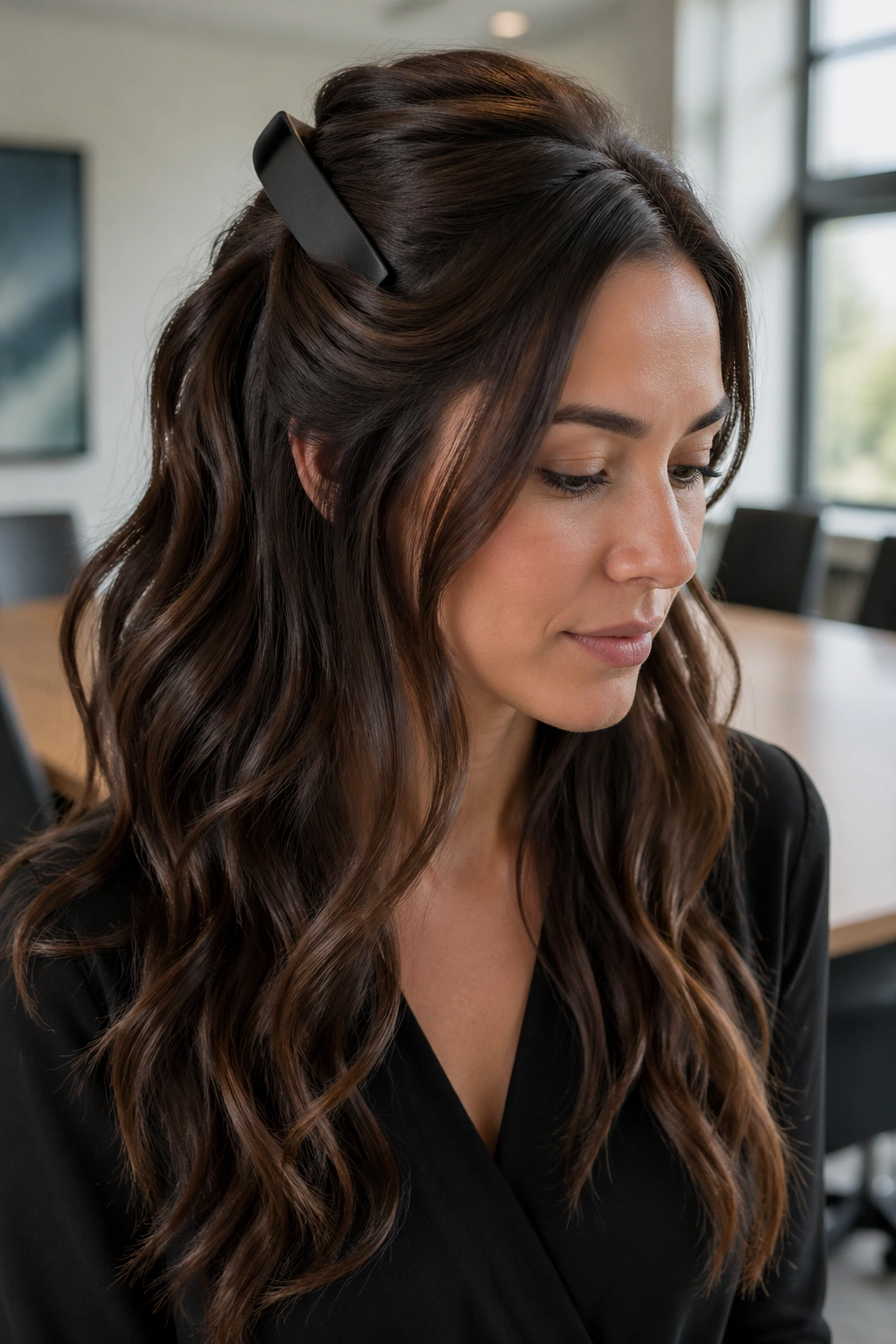
A barrette does more than hold hair back. It gives the style a point of focus. A simple half-up barrette wave look is one of the cleanest ways to keep hair off the face while still letting the waves stay visible.
Pick a barrette that lies flat and doesn’t snag. A shiny, oversized clip can feel too dressed up for everyday work, while a matte or tortoiseshell clip usually looks easier to wear. Pull the top half of the hair back from temple to temple, fasten it, and let the bottom stay loose.
The shape works best when the front is softly brushed back before clipping. If the front is puffy, the barrette looks like an afterthought. Smooth it first, then clip. That tiny step changes the whole look. A simple accessory, used well, beats a complicated style done badly. Every time.
18. Braided Crown Into Waves
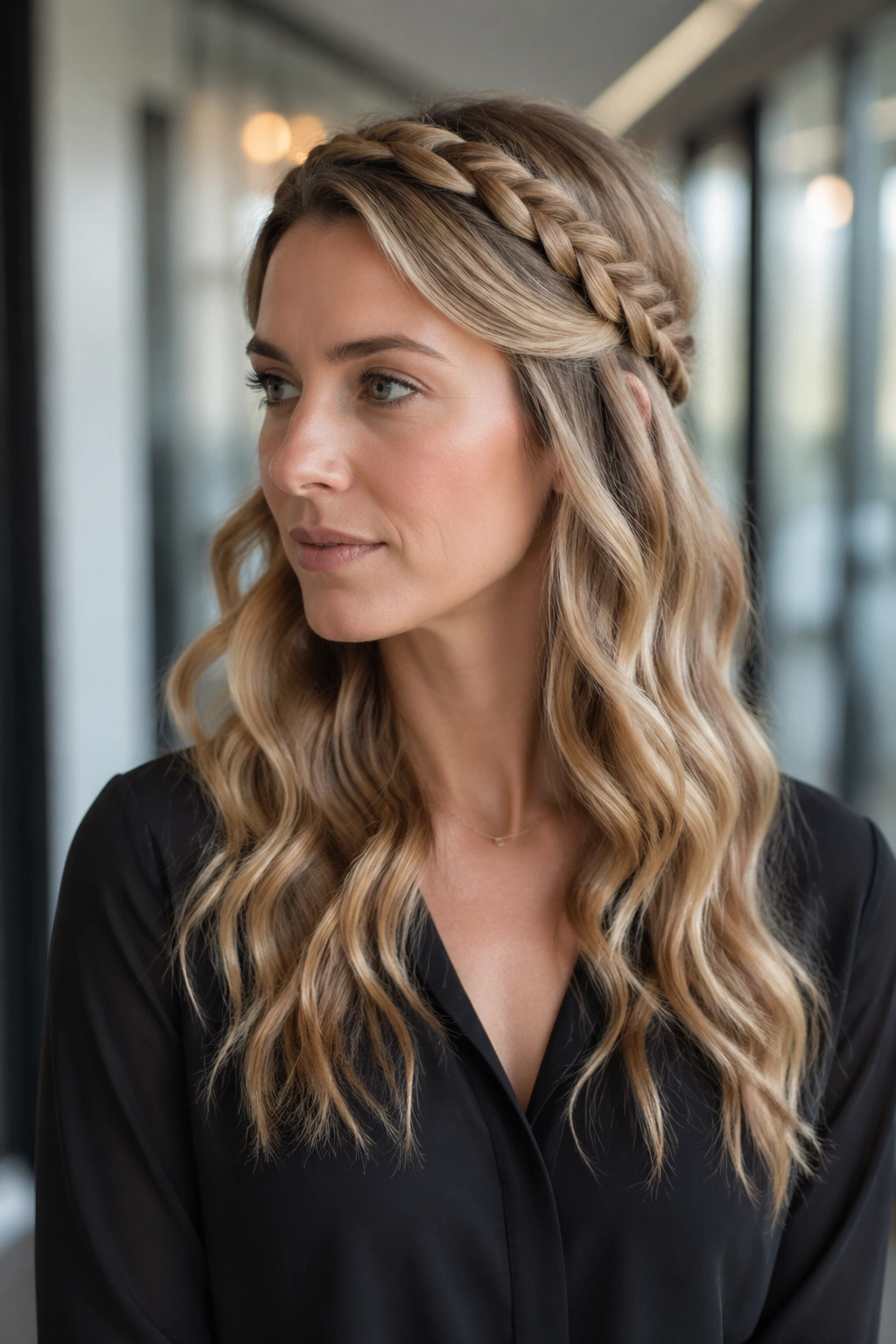
A braided crown keeps the hairline neat without forcing the whole head into an updo. That’s why it works so well for office days when you want a little control up front and softness everywhere else. The braid does the organizing. The waves do the rest.
What to watch for
Keep the braid small and close to the head. A thick braid can start to feel heavy and a little too rustic for an office. A slim braid from one temple across the top, pinned out of sight, is usually enough.
- Best on medium and longer hair
- Use pins that match your hair color
- Leave the lower waves broad, not tight
- Finish with a light spray over the braid, not just the ends
This style has a nice side benefit: it keeps shorter face pieces from falling into your eyes. If your hair tends to split and puff at the front, the braid takes care of that problem while still leaving the wave pattern visible underneath.
19. Low Bun with Face-Framing Waves
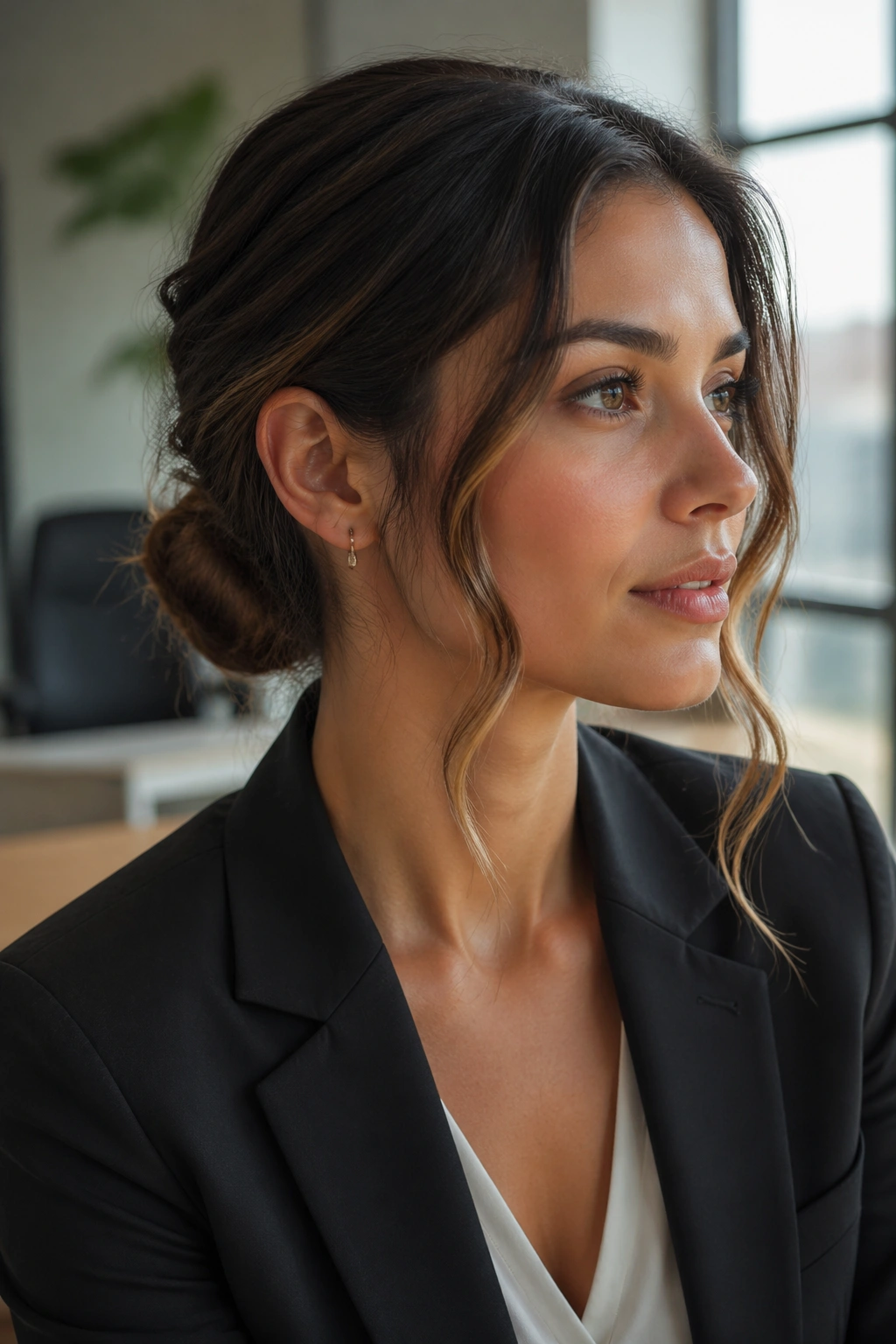
A low bun is a work staple for a reason. It stays put, it clears the neck, and it keeps the overall shape tidy. Add a few face-framing waves, though, and it stops feeling severe. That tiny bit of softness makes all the difference.
The bun doesn’t need to be perfect. Twist the hair at the nape, coil it into a small knot, and pin it in place with a few bobby pins. Leave two small front pieces out, then bend those pieces with a iron or let them stay in their natural wave pattern if they already move well.
- Use when you need hair fully controlled
- Great under blazers and turtlenecks
- Works best with medium to long hair
- Looks better with a matte finish than a shiny one
This is one of the few office styles that can shift from serious to relaxed depending on how loose the front pieces are. That flexibility is why it earns a spot here.
20. Cascading Shoulder-Length Waves
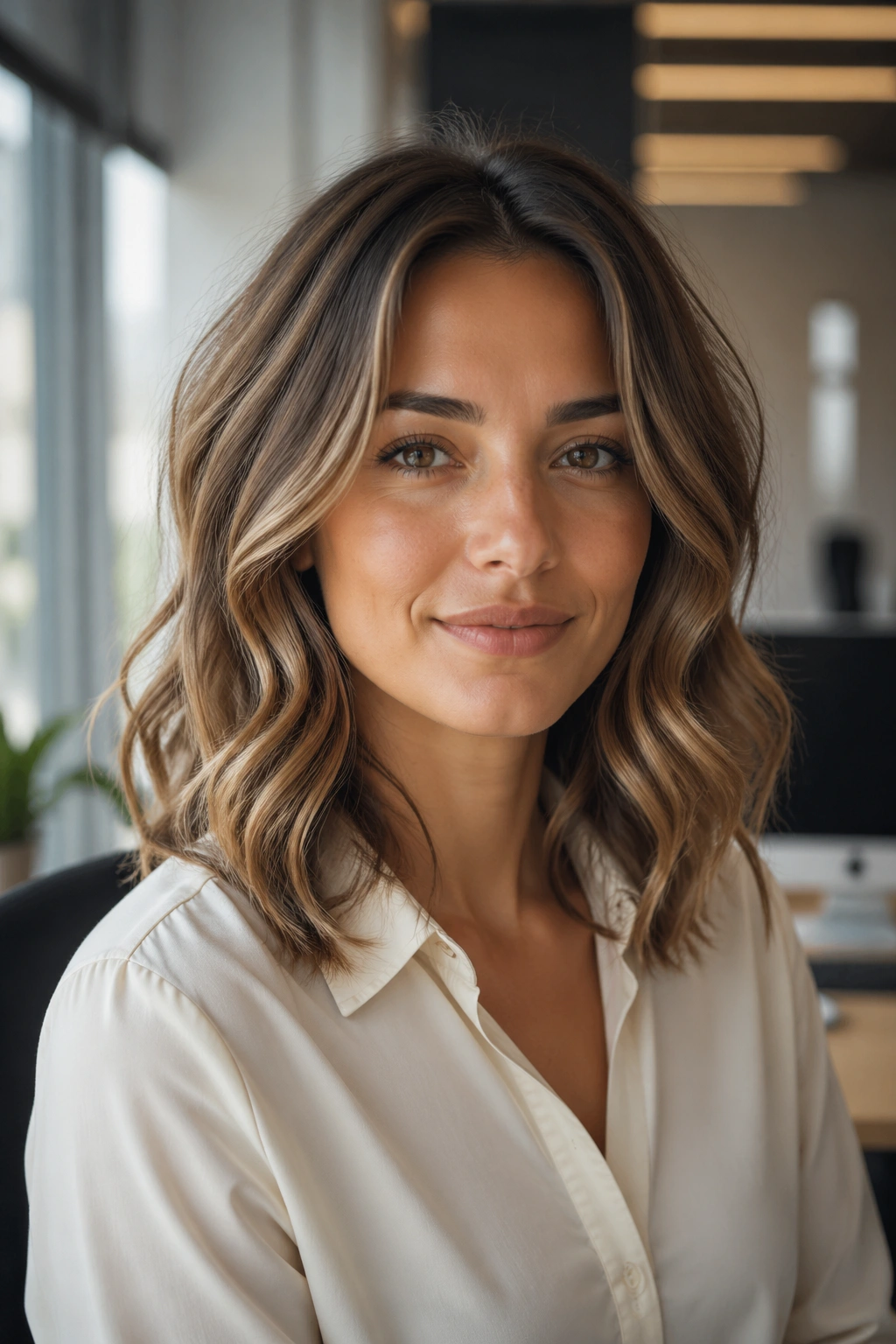
Shoulder-length waves can look flat if they’re all one volume level. Give the hair a little lift at the roots and a broad bend through the lengths, though, and the cut suddenly has shape. The waves fall in layers, not in a heavy curtain, and that’s what keeps it office-appropriate.
Use a round brush at the crown when you blow-dry, then wrap large sections around a curling iron only once or twice. You want movement, not tight ringlets. If the ends flip too much, brush them out while they’re still warm. That usually softens the line enough.
This style is a good fit for people who want hair down but not messy. It looks neat with a simple shirt collar and still feels soft around the shoulders. If your hair is naturally wavy, you may only need a cream and a diffuser. If it’s straighter, the bends should start below the cheekbones.
21. Side-Swept Waves for Glasses Wearers

If you wear glasses, the best office waves usually stay clear of the temples. Side-swept waves do that naturally. They keep the hair from crowding the frames and stop the annoying habit of strands sticking to the sides of your face.
The side sweep also gives the style a little movement that reads well in person. Pull the heavier side over one shoulder, let the front skim the cheekbone, and keep the opposite side tucked back. That keeps the frames visible instead of buried in hair.
A lot of people make the mistake of adding too much volume around glasses. Don’t. It creates clutter near the face and makes the whole style feel busier than it needs to be. A cleaner part, a smoother top section, and a soft bend through the lengths work better. Sometimes the simplest answer is also the one that looks smartest.
22. Wavy Pixie Grow-Out
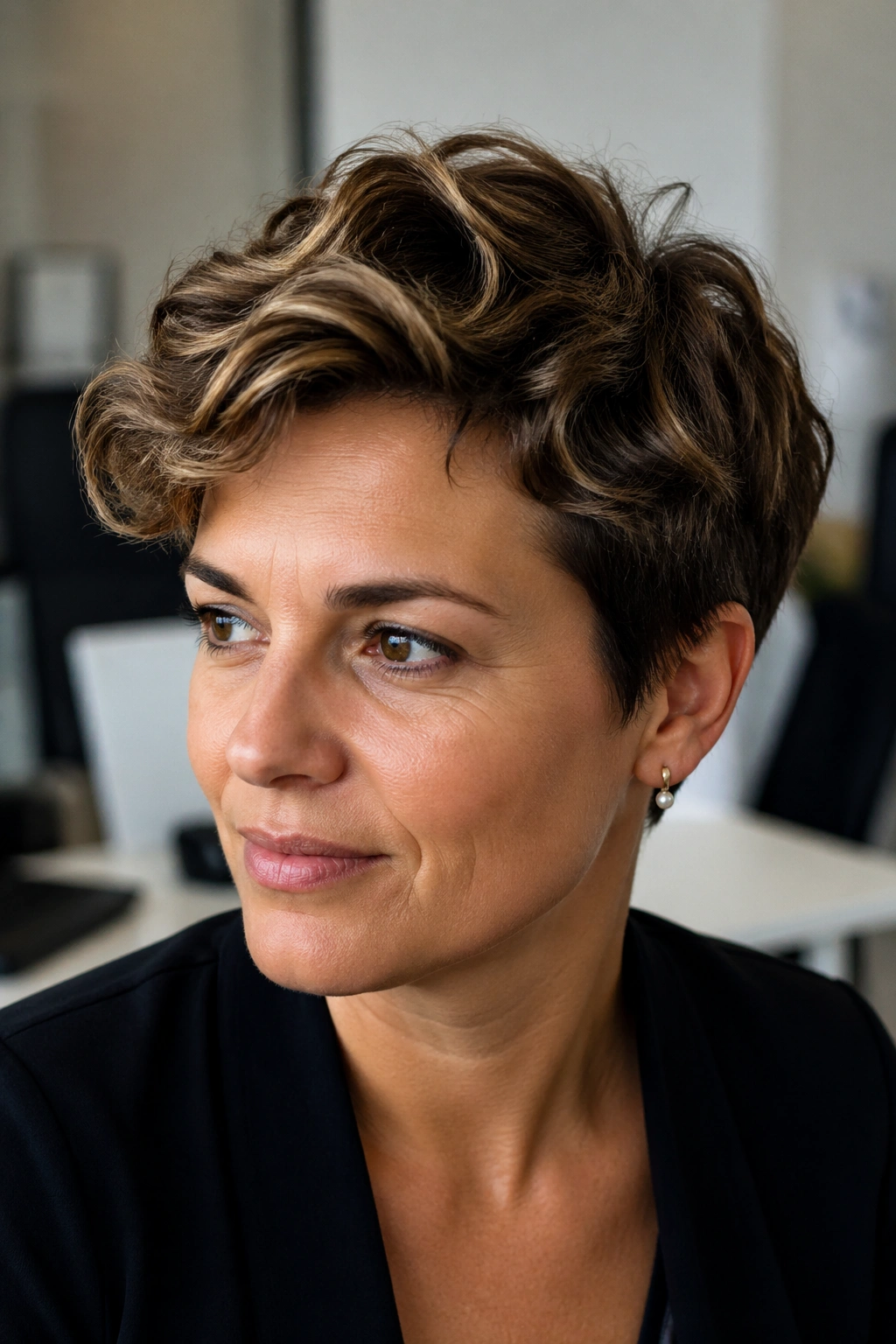
Short hair can still live in this conversation. A wavy pixie grow-out looks good in an office when the texture is controlled and the pieces are separated just enough to show shape. It’s not about creating a big wave pattern. It’s about making the cut look deliberate.
Use a tiny flat iron or even a finger-wrap technique on the longer top sections to make small bends. A pea-sized amount of cream can stop the ends from sticking up. If the cut is in that awkward stage between pixie and bob, tuck one side behind the ear and leave the top slightly lifted.
This style is useful for people who don’t want to spend 20 minutes on hair but still want it to look finished. The hazard is overstyling. Too much product makes short hair sit flat or greasy. A light hand works better. Short hair notices every extra drop.
23. Ribbon-Back Low Pony
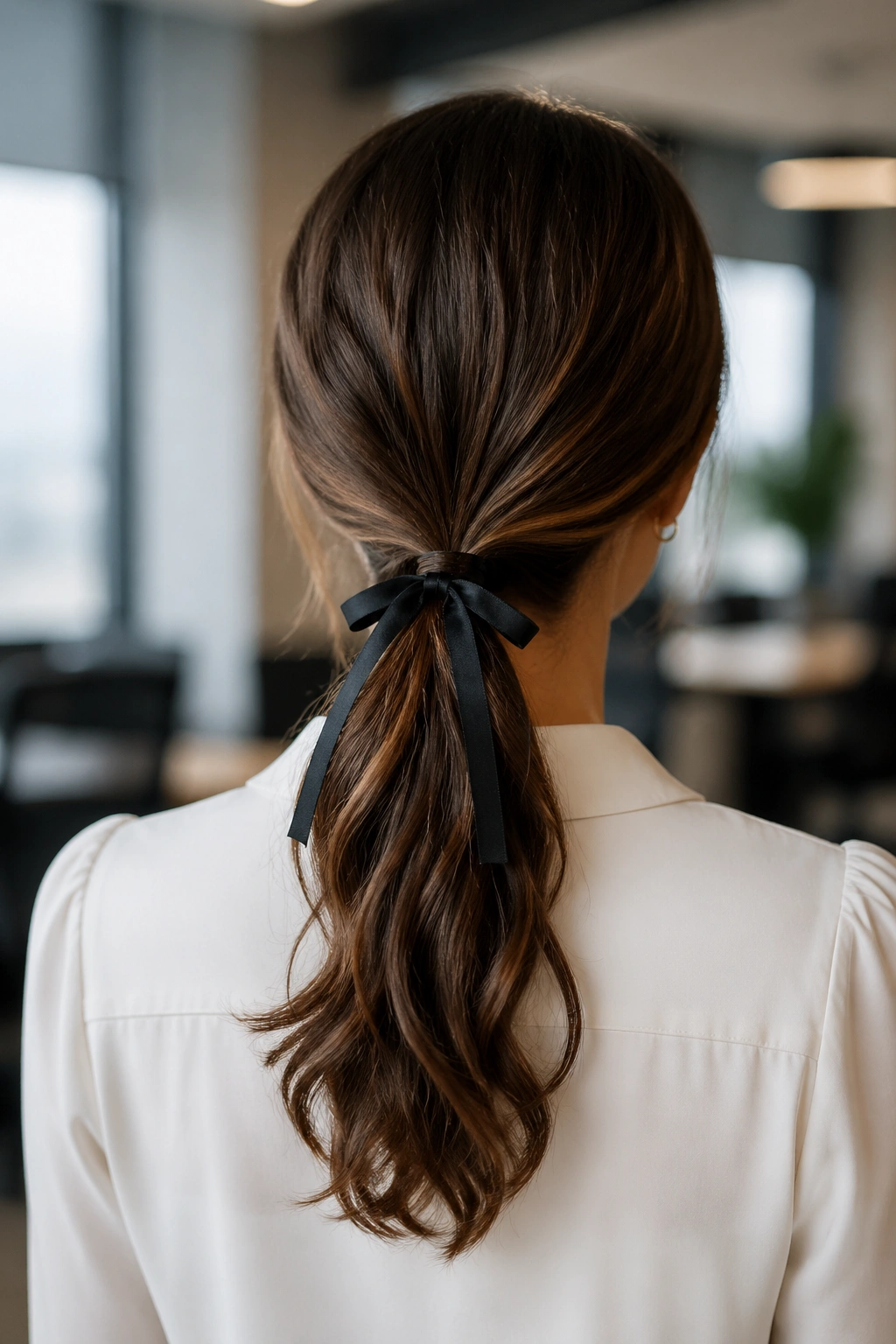
A ribbon-back low pony sounds fussy until you try it in a neutral fabric. Then it makes sense. A slim ribbon in black, navy, taupe, or muted brown turns a plain ponytail into something a little more finished without wandering into dressy territory.
Tie the pony low at the nape, then wrap the ribbon around the base once or twice and knot it neatly. Leave the tail in waves so the style still moves. If the ribbon is slippery, choose a grosgrain or matte finish instead of silk. That gives you better grip and keeps the knot from slipping.
The ribbon should look like a detail, not a decoration. That’s the distinction. When the color is quiet and the tie is clean, the style feels office-ready. When it’s shiny or oversized, it starts to look like you’re headed somewhere else. Subtle wins here.
24. Loose Rope-Twist Half-Up
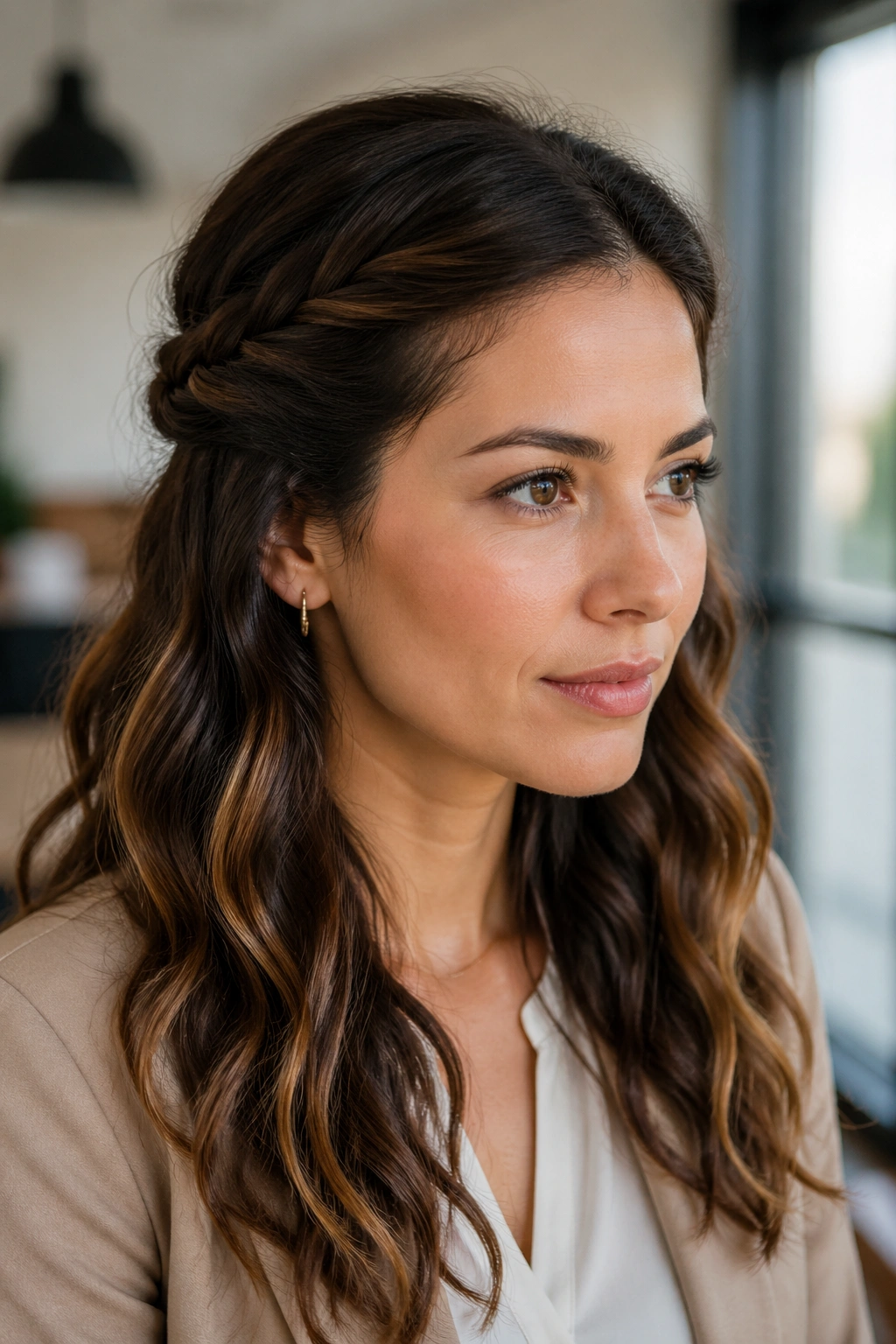
A rope-twist half-up style looks more complicated than it is. Twist two small sections from the front, wrap them backward in a rope shape, and pin them together at the back of the head. The waves below stay loose, which keeps the style soft.
How to do it cleanly
Take equal sections from each side so the twist sits balanced. If one side is bigger, the whole style drifts off center and you’ll notice it every time you look in a mirror. Use two pins crossed behind the twist for a stronger hold.
This style works especially well on hair that’s already wavy and a little textured. You’re not trying to make it sleek. You’re giving it a tidy front and letting the rest move. That’s a good office formula. If the twist starts to unravel during the day, a little dry texture spray on the front pieces usually fixes it faster than starting over.
25. Rounded Lob with Soft Volume
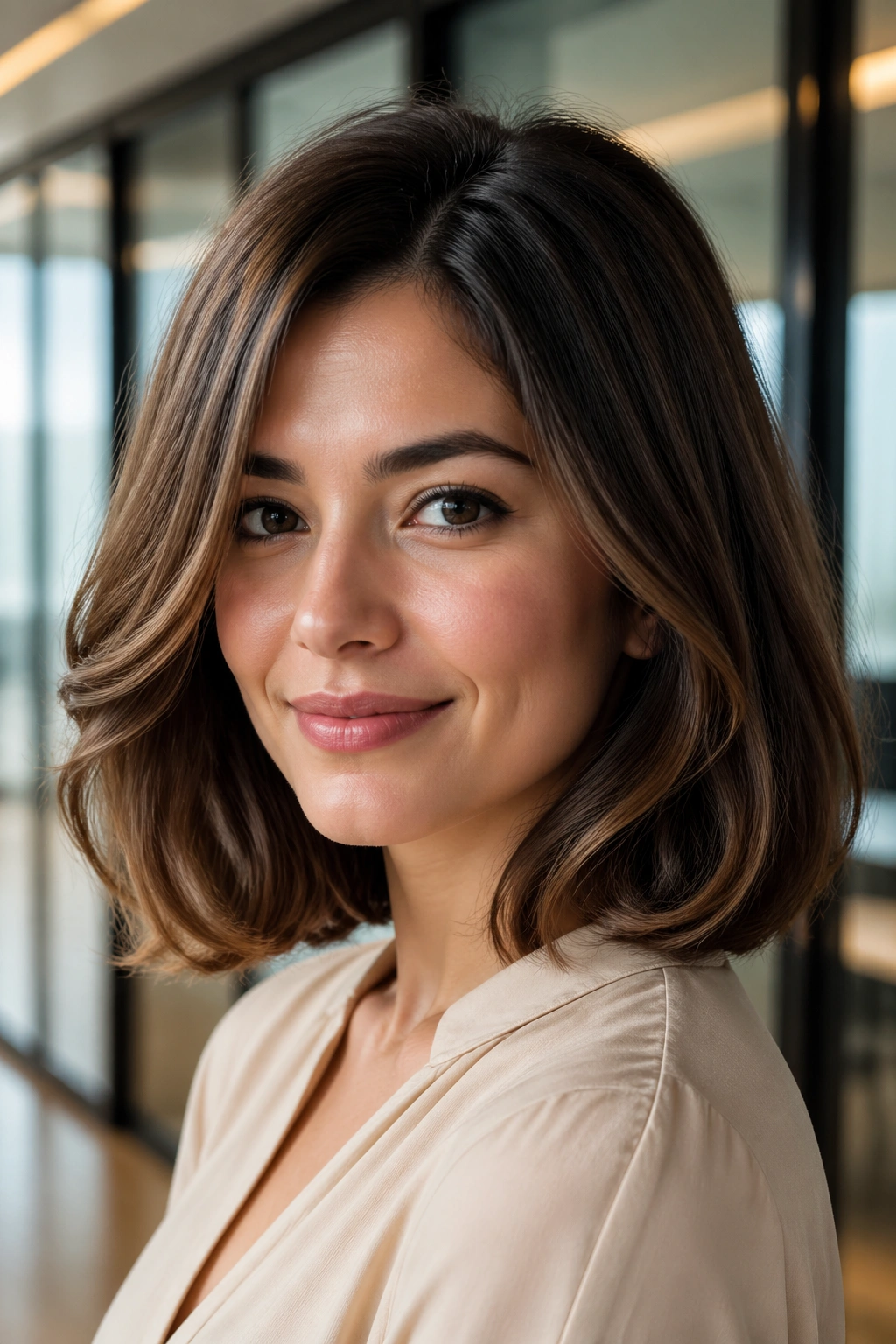
A rounded lob is for people who like shape. The ends curve in just a bit, the crown has lift, and the whole cut feels neat without looking stiff. Add waves to it and the result becomes one of the easiest office styles to wear on repeat.
The rounded shape matters because it keeps the hair from collapsing into a straight line. Blow-dry with a round brush, then add a soft wave through the lower half. If your ends flip out too much, wrap them under for a second with the iron and release quickly. That usually gives the cut the curve it needs.
This works best when you want volume but not too much width at the sides. It’s especially nice on finer hair because the rounded line makes the hair look fuller. A root-lifting spray helps, but don’t overdo it. Too much height at the crown can make a lob feel dated fast.
26. Tucked Low Knot with a Wavy Tail
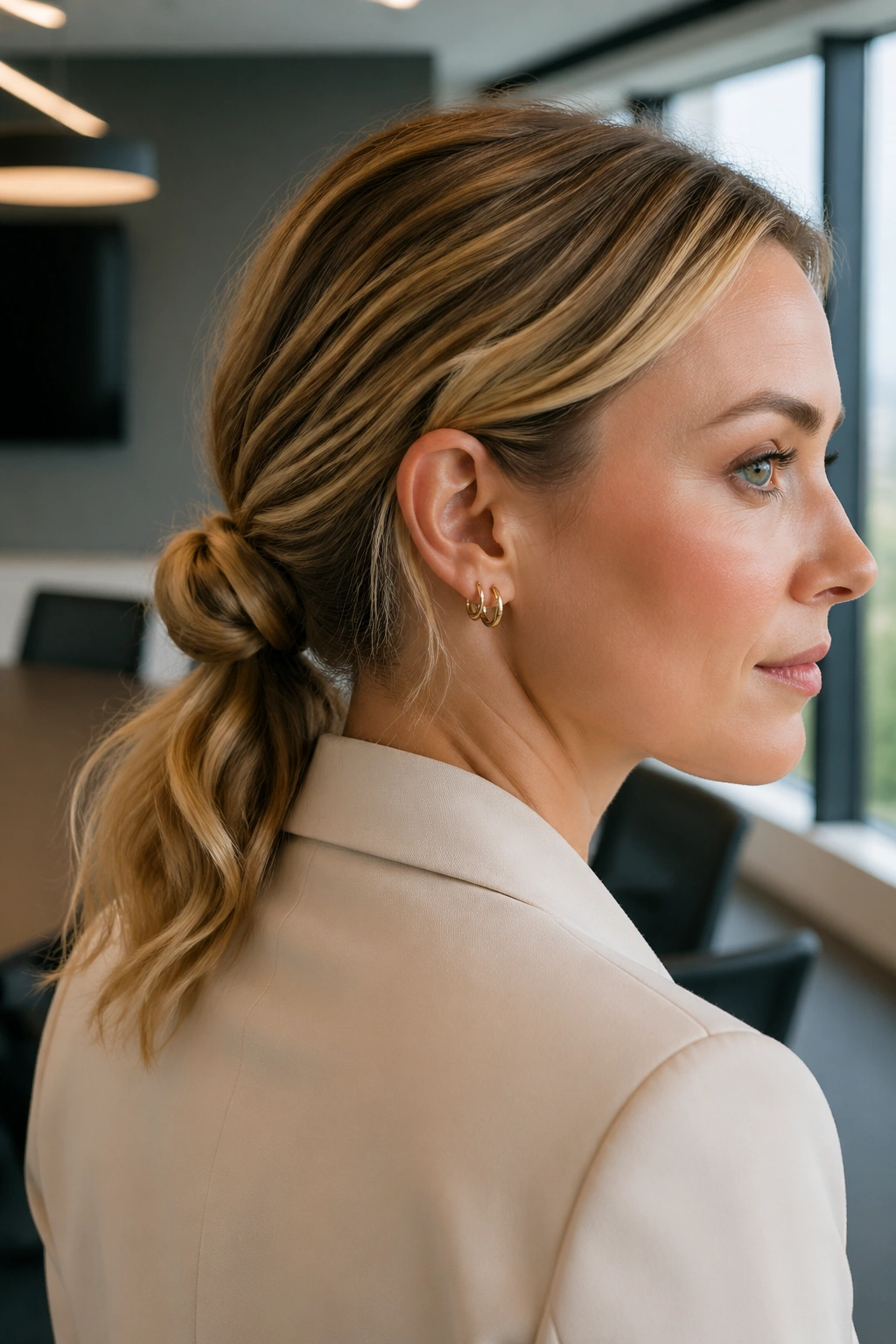
A tucked low knot is one of the neatest office styles you can wear without flattening the whole head. It gives the back a clean finish, then leaves a tail or small section of waves to keep the look from feeling too rigid.
Start with a low ponytail, twist it into a small knot, and tuck the ends underneath instead of wrapping them in a big bun. Leave a short length free if your hair allows it. That wavy tail softens the whole style and keeps it from feeling severe.
This is a good choice for days when you want your neck clear and your hair under control, but you still want some movement. It’s also useful if your ends are a little dry. A tucked knot hides that faster than a full down style does. There’s no reason to make life harder than it needs to be.
27. Soft Brush-Out Waves
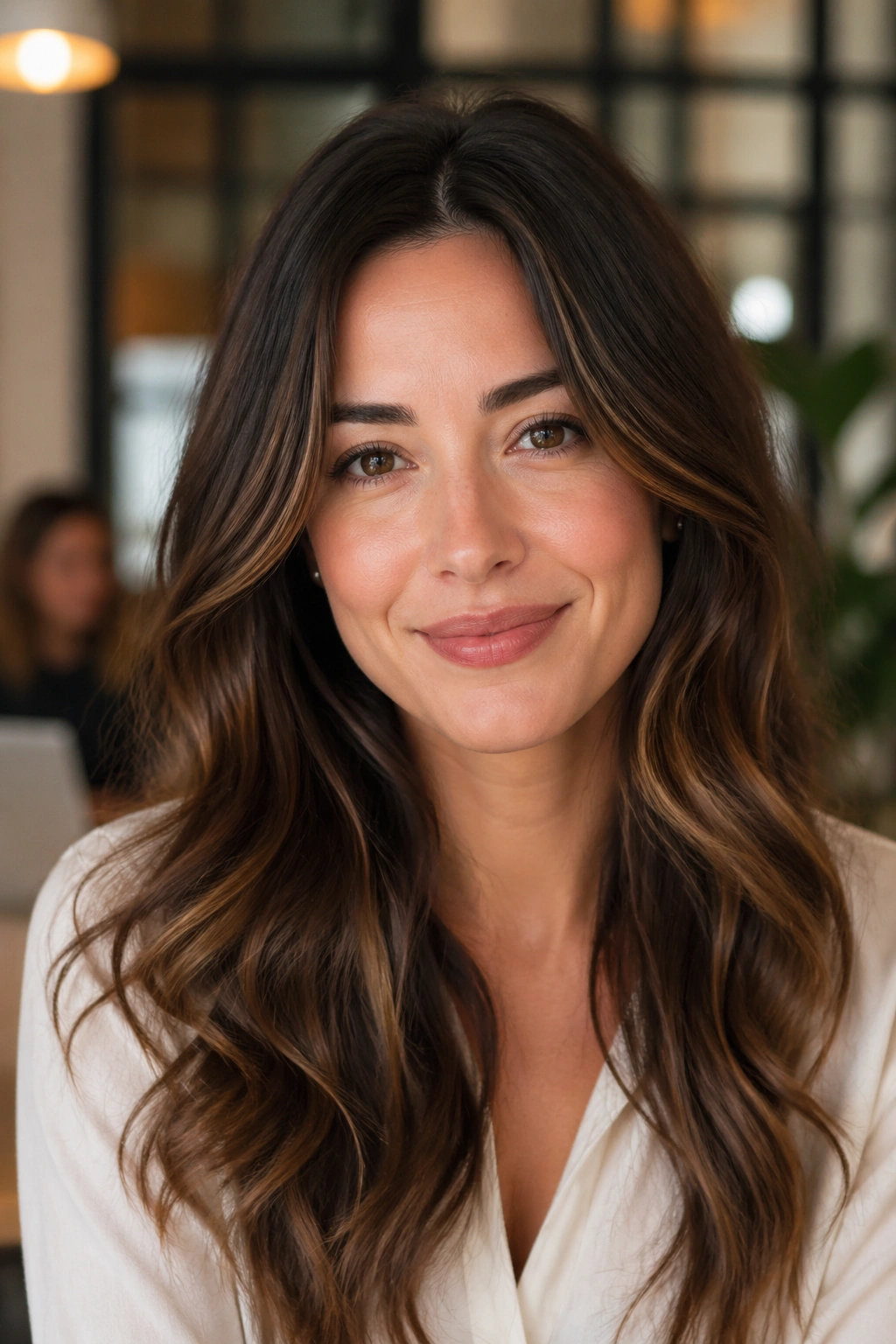
Brush-out waves are calmer than defined curls. That’s the point. They look more natural under office lights and less like you spent the morning building each bend with tweezers. A paddle brush or soft boar-bristle brush turns crisp waves into something smoother and easier to wear.
Use a curling iron first, let the hair cool, then brush through it section by section. A drop of lightweight oil on the palms helps tame the surface. If the hair starts to look too fluffy, stop brushing and smooth the outer layer with your hands instead.
This style is especially nice on days when your hair has too much volume after heat styling. Brushing the wave out loosens the shape and makes it sit closer to the head. I like this one because it feels more realistic than a too-perfect curl set. Hair moves. Let it.
28. Double-Clip Half-Up
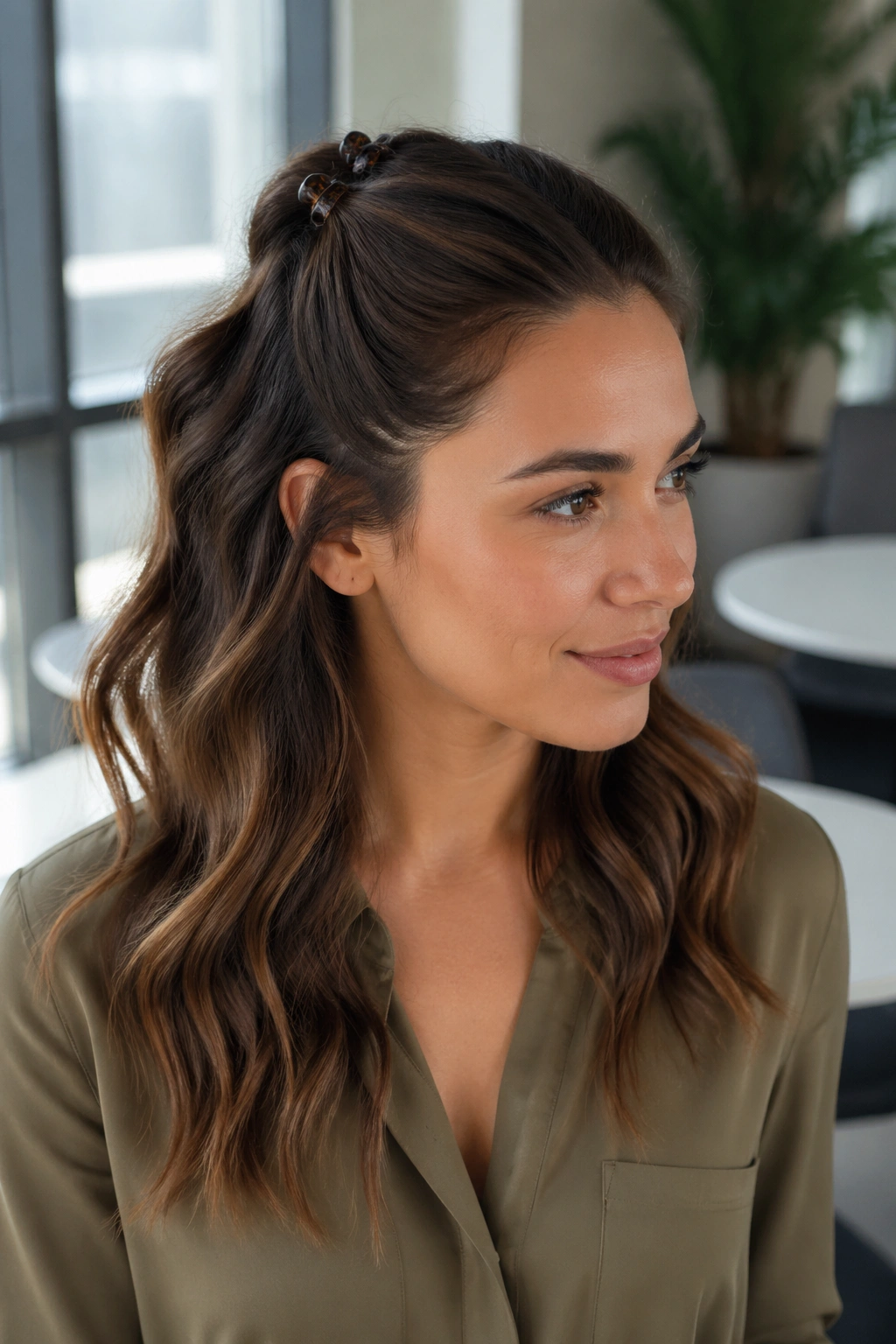
Two clips are often better than one. A double-clip half-up style uses that simple idea to keep the front pieces organized while still showing off the waves underneath. It also gives the style a bit more structure than a single clip, which can matter if your hair is thick or heavy.
Place one clip slightly above the other, or use two small clips side by side to hold the gathered section. The key is to keep the placement clean and symmetrical. If the clips sit crooked, the whole style looks accidental. If they line up, it looks intentional.
Choose clips that are simple in shape and finish. Matte black, brown, tortoiseshell, or brushed metal usually works better than glitter or oversized plastic. The hair should stay the main event. The clips are there to do a job, not take over the room.
29. Deep Side Sweep with One-Shoulder Tuck
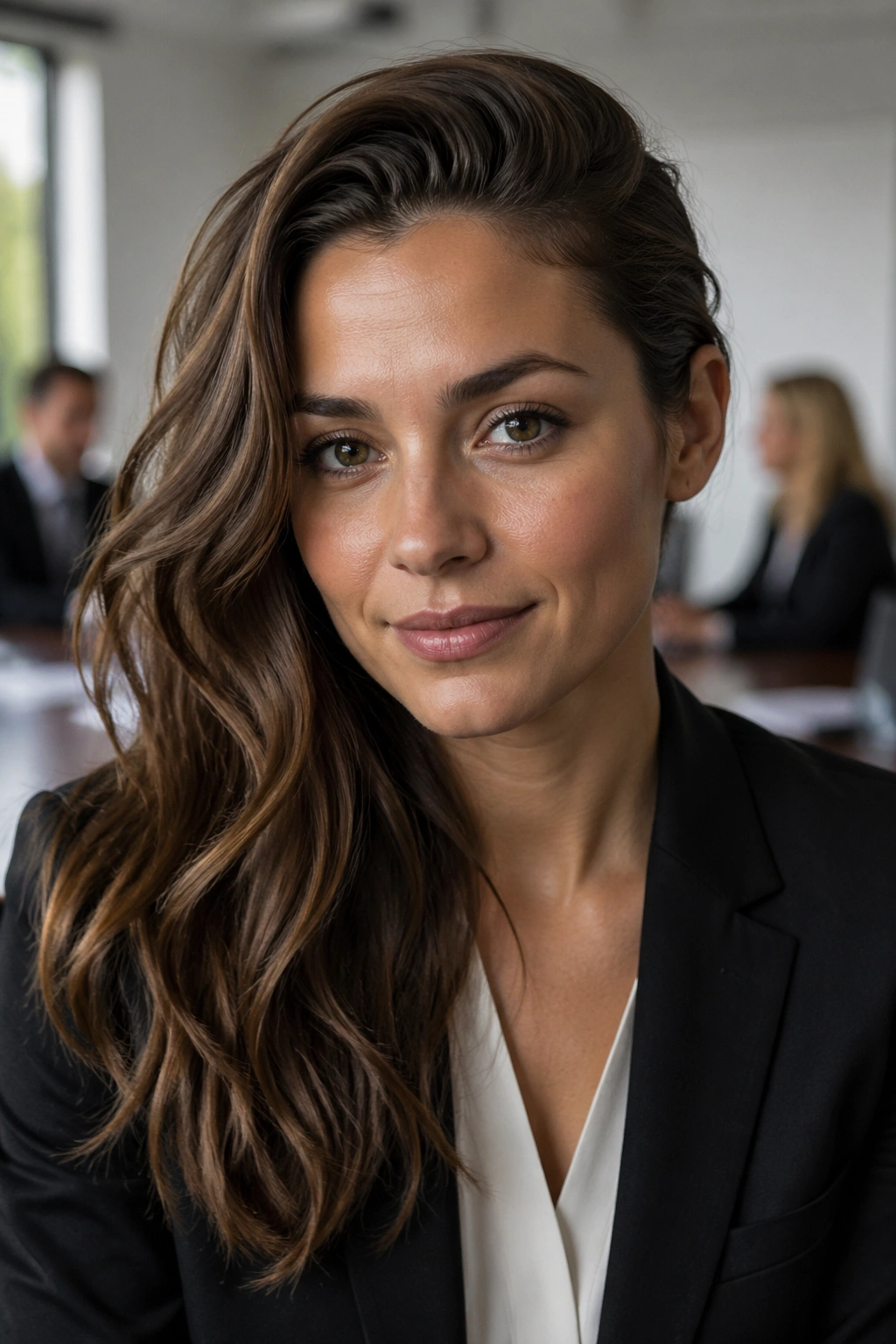
A deep side sweep works well when you want the waves to feel dramatic but still office-safe. Pull the fuller side over one shoulder, tuck the other side back slightly, and let the part do the heavy lifting. It’s a clean shape. That’s why it reads well in meetings.
Where this style shines
It’s especially good for presentation days, client visits, or any moment when you want your face and neckline open. The one-shoulder tuck keeps the hair from spreading across the collar, which helps the whole outfit look more put together.
- Best with medium-long waves
- Use a flexible spray to keep the sweep in place
- Works well with statement earrings
- Keep the front smooth before moving the hair over
This style has a nice side effect: it makes the hair look fuller on the heavy side and slimmer on the tucked side, which can balance the face without much effort. The shape does most of the work for you.
30. Soft Side-Part Sweep
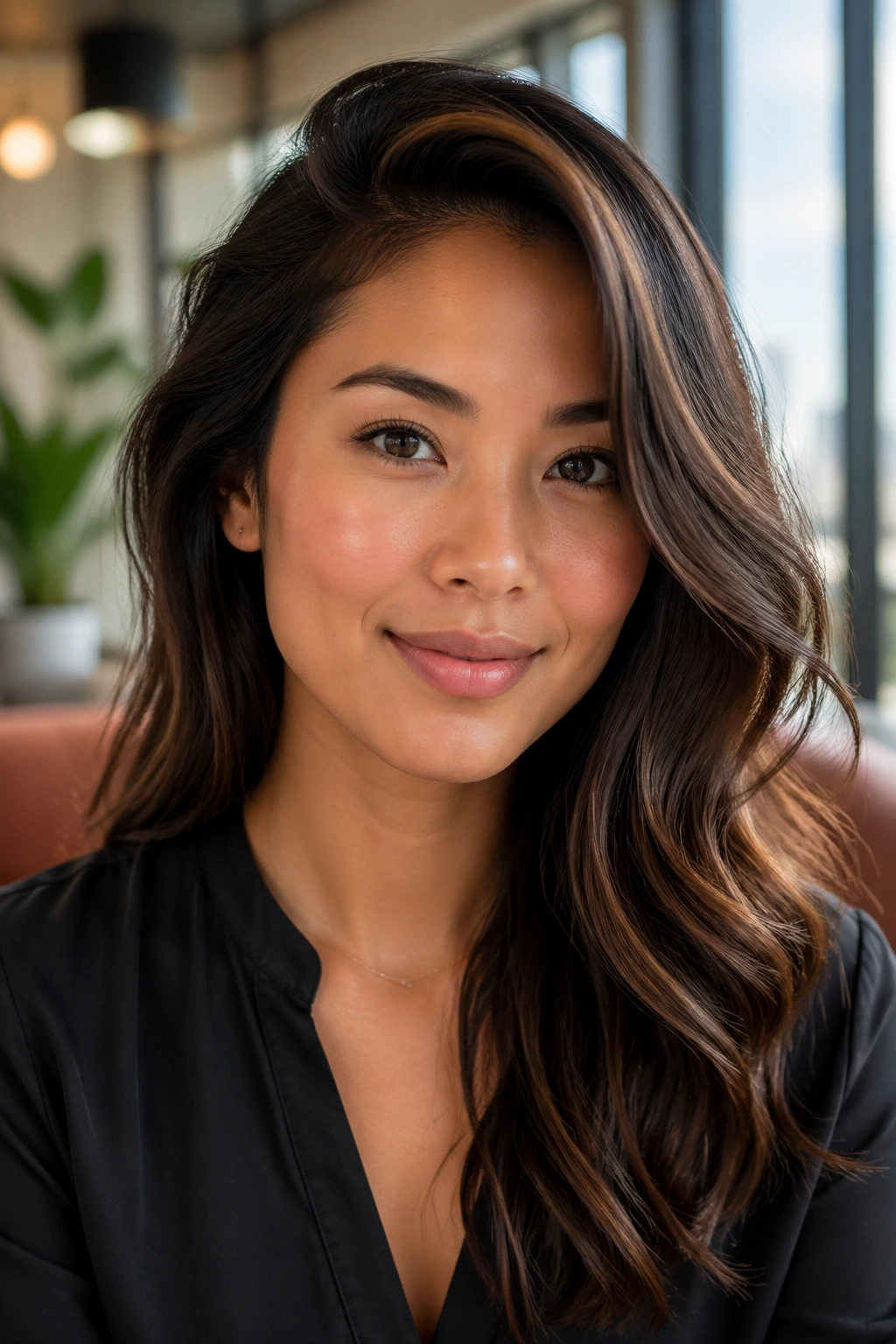
If you only want to learn one office wave, make it this one. A soft side-part sweep is simple, adaptable, and hard to mess up. It gives the hair a clear direction, keeps the front controlled, and still leaves enough movement to feel like hair, not a helmet.
Start with a side part, bend the lengths in broad waves, then sweep the front section slightly across the forehead and pin or tuck it where needed. The back can stay loose. The front just needs enough shape to look deliberate. That small amount of order changes the whole style.
This is the version I’d trust on the days that matter most. It works with a blazer, a knit top, or a plain shirt. It works with straight hair that needs a little bend and wavy hair that only needs a quick refresh. A clean part, soft movement, and one flexible-hold spray usually do the job better than a drawer full of tools ever will.
