



Short wavy cuts that look fuller are not magic; they are shape management.
If your waves seem to spread out and go flat once they pass your shoulders, the problem is often the cut, not the wave pattern. A smart short cut keeps weight where the eye wants to see it — at the outline, near the jaw, and around the cheekbones — so the hair reads denser without turning helmet-stiff.
That is why a blunt bob can make fine waves look thicker, while an over-layered shape can make even healthy hair look airy in the wrong way. The sweet spot is a cut that lets the wave bend, keeps the perimeter strong, and avoids shredding the ends. A few of the styles below lean polished, a few are more undone, and a few sit right in that useful middle ground where hair looks full without needing a perfect blowout.
The details matter more than the label. A chin-length bob and a jaw-length bob can live in the same family, but the density they create is not the same, and that difference shows up fast when the hair dries. These are the cuts I’d actually look at first.
1. Chin-Length French Bob With Soft Wave
This is the cut I reach for when someone wants short wavy hair that still feels soft around the face. A chin-length French bob puts the bottom line right where the eye notices it fastest, which makes the whole head look denser. The trick is keeping the edge clean while leaving enough room for the wave to bend.
A tiny bit of texture near the cheekbones helps, but the bottom should stay blunt. If the ends get too feathered, the shape starts to fray at the edges and the fullness disappears.
Why It Works
- The chin-length outline creates a solid frame.
- Waves bounce at this length instead of dragging down.
- The cheekbone area gets lift without extra bulk at the neck.
- It dries fast, which matters if your waves fall flat under too much handling.
Styling note: rough-dry to about 80 percent, then let the rest air-dry so the bend stays loose instead of puffy.
2. Jaw-Length Blunt Bob

A blunt jaw-length bob is one of the fastest ways to make wavy hair read thicker. There’s no hiding the line here. The cut ends right around the jaw, and that hard edge gives the hair a solid base instead of a wispy finish.
That matters even more on fine waves. Fine hair can look sparse when the ends are too broken up, but a blunt line stacks all the visual weight in one place. The result feels fuller, cleaner, and a little sharper in the best way.
I like this cut on people who want hair that can live with a side part, a center part, or a tucked-behind-the-ear style. It also grows out better than people expect, because the shape stays intact even when the bob starts to lose its crispness.
If your hair tends to puff at the sides, keep the interior layering light. Too much thinning at the bottom is a mistake here. The whole point is the edge.
3. Wavy Bixie With Soft Crown Lift
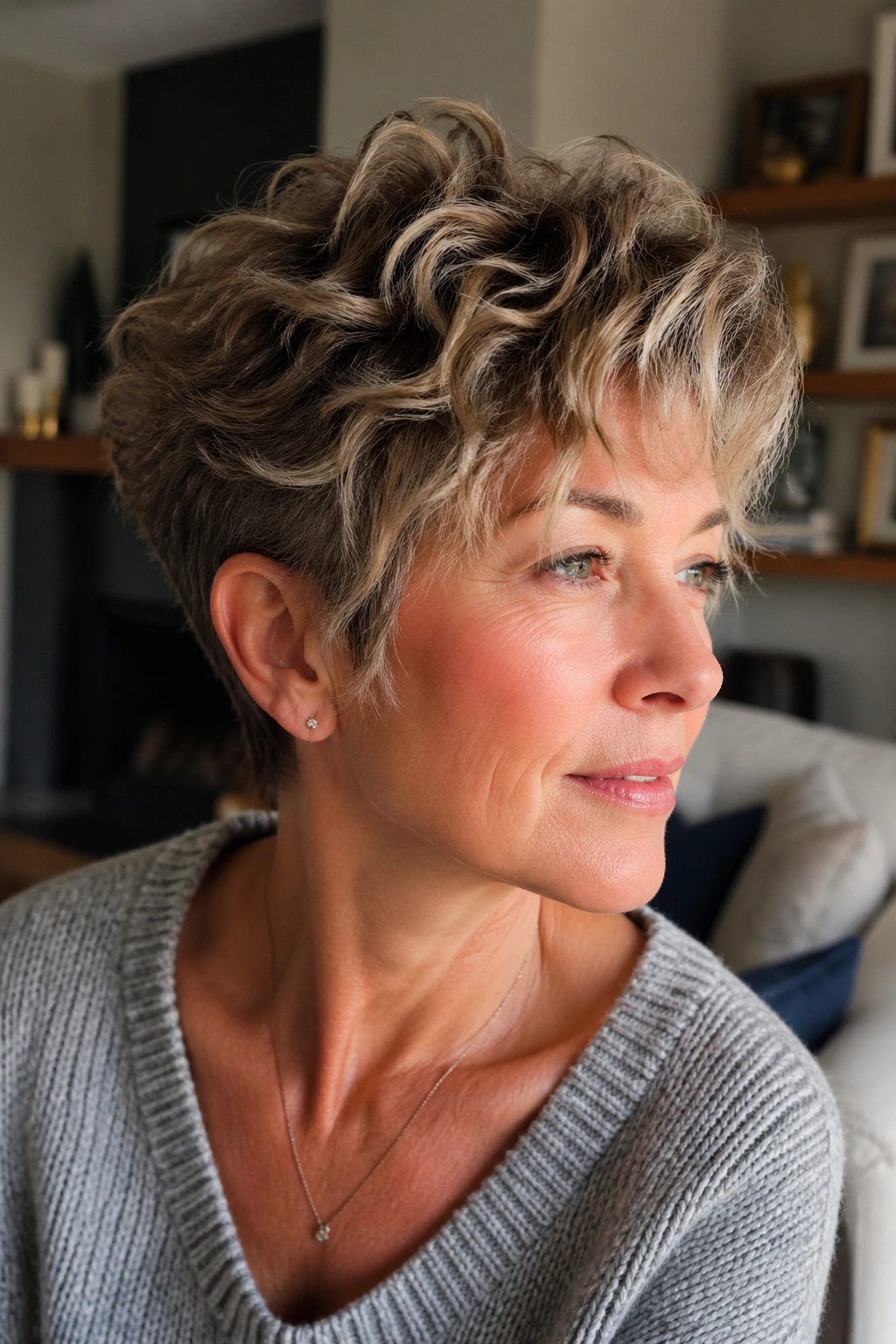
Can a pixie still look full on wavy hair? Absolutely — if the top is left long enough to show the wave pattern. A bixie, which sits between a bob and a pixie, gives you short sides and a longer crown, and that extra height makes the whole cut feel fuller.
The crown lift matters more than people think. Short wavy hair can collapse at the roots if everything is cut the same length, but a bixie keeps the top piecey and alive. It also leaves enough length at the front to soften the face instead of exposing every edge.
What to Ask For
- Keep the top long enough to scrunch into a wave.
- Taper the nape without taking the back too high.
- Leave sideburns soft, not shaved tight.
- Avoid heavy razor texturizing at the ends.
A little mousse and a diffuser go a long way here. Tiny cut. Big payoff.
4. Textured Pixie Bob With a Tapered Nape
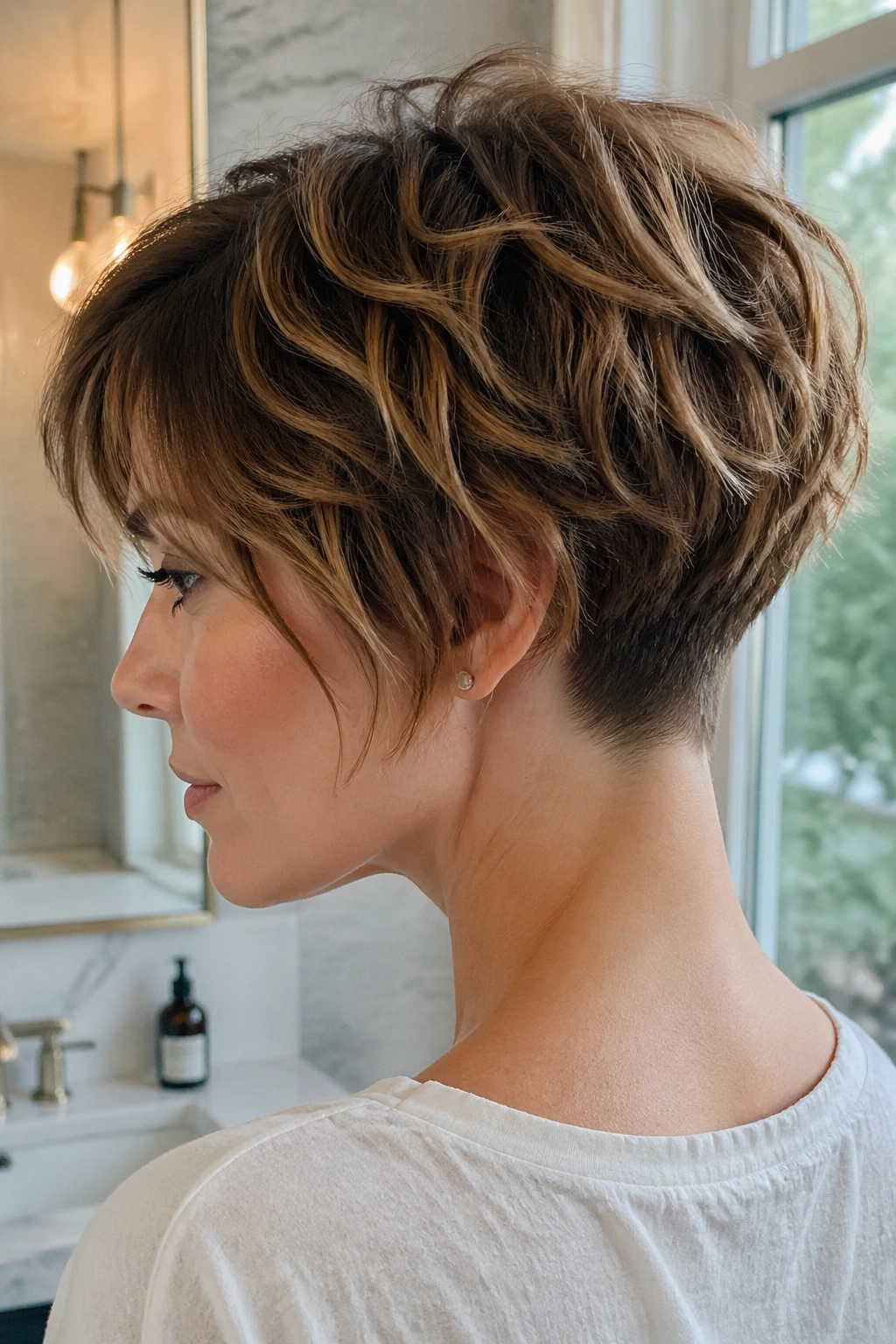
If your hair always falls flat at the back, a pixie bob with a tapered nape can fix that without making you go full pixie. The short back removes heavy weight where it usually sits, and the longer top gives the waves somewhere to stack. That combination makes the crown look lifted instead of pressed down.
This is one of those cuts that looks small on a hanger but bigger on a real head. The back hugs the neck, the top moves, and the front still has enough length to look soft.
Key Details to Ask Your Stylist For
- A nape that’s neat but not shaved close.
- Longer pieces at the top for wave definition.
- Soft graduation through the back.
- Minimal thinning through the perimeter.
The biggest mistake here is over-chipping the top. That turns a cute pixie bob into something sparse and fussy. Keep the shape clean, and the fullness comes from the contrast between the short back and the lifted crown.
5. Italian Bob With One-Length Ends
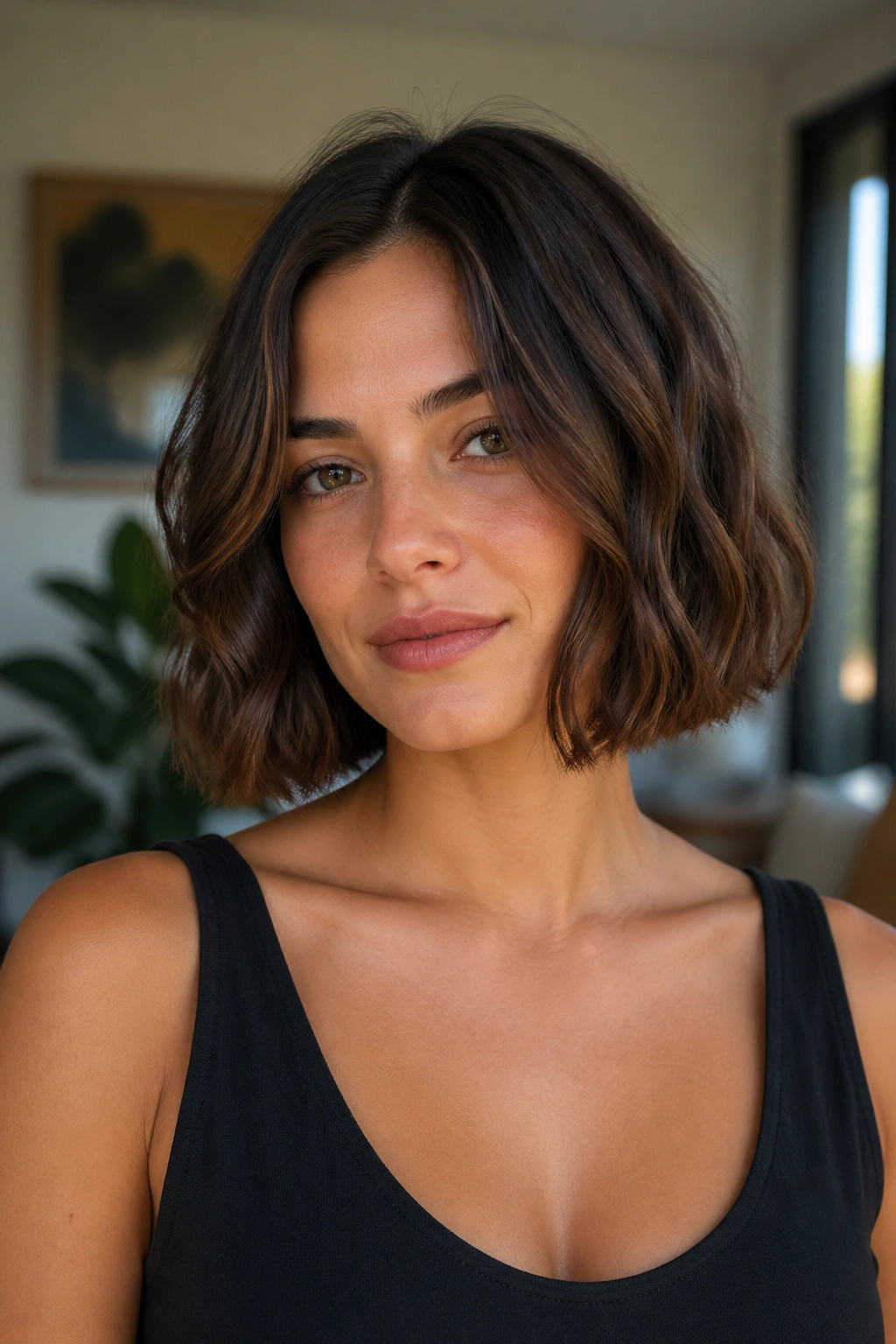
The Italian bob is the cut that makes people think your hair is thicker than it is. It sits somewhere between jaw and collarbone, usually with a smooth one-length perimeter and enough body to hold a wave. What gives it that fuller look is the solid outline. There’s nowhere for the shape to vanish.
I like this one for wavy hair that has a little bend but not a lot of curl. The clean bottom line makes the hair look expensive in the plainest sense of the word: healthy, intentional, and not overworked. You can wear it air-dried and a little undone, which is the whole point. It should look like it has movement, not layers fighting each other.
A center part keeps the shape balanced, but a soft side part can add lift if your roots are stubborn. Either way, this cut works because the ends stay together. That is what creates the density illusion.
6. Rounded Crop Bob
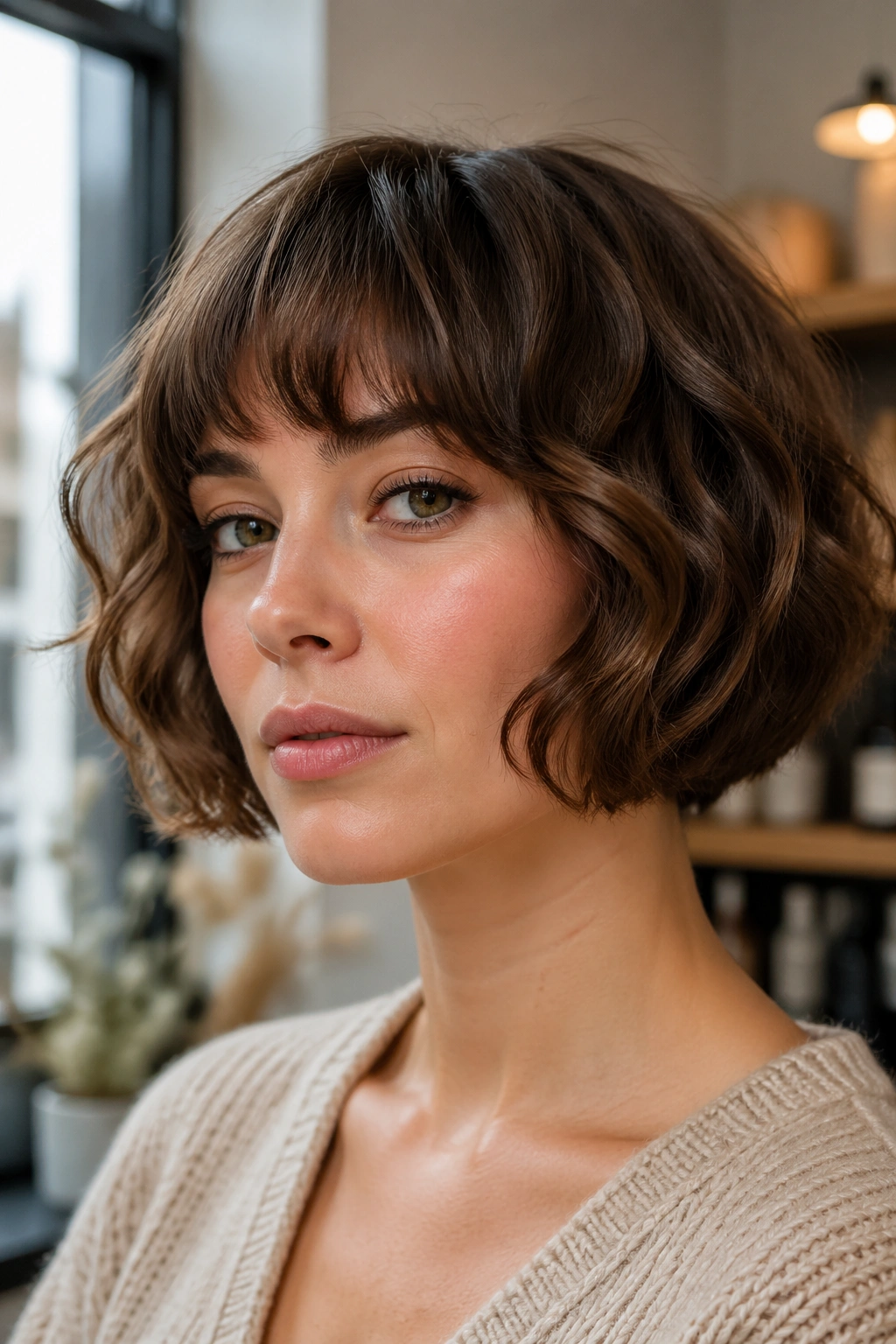
A square bob is not the only shape that can look thick. A rounded crop bob wraps in gently at the sides, following the curve of the head instead of flaring out at the bottom. That small shift makes the hair look fuller through the middle, which is exactly where many wavy cuts lose their body.
The rounded shape is useful if your waves spread wide instead of dropping down. It reins in the side bulk and keeps the silhouette compact. The result feels more controlled, but not stiff.
Best Styling Move
A diffuser on low heat helps keep the curve soft. If you blow-dry, use a small round brush only at the front pieces and leave the rest alone.
This cut also works well with a subtle side part. It gives the waves a little direction without flattening the top. Simple. Clean. Dense-looking.
7. Collarbone Lob With Internal Layers
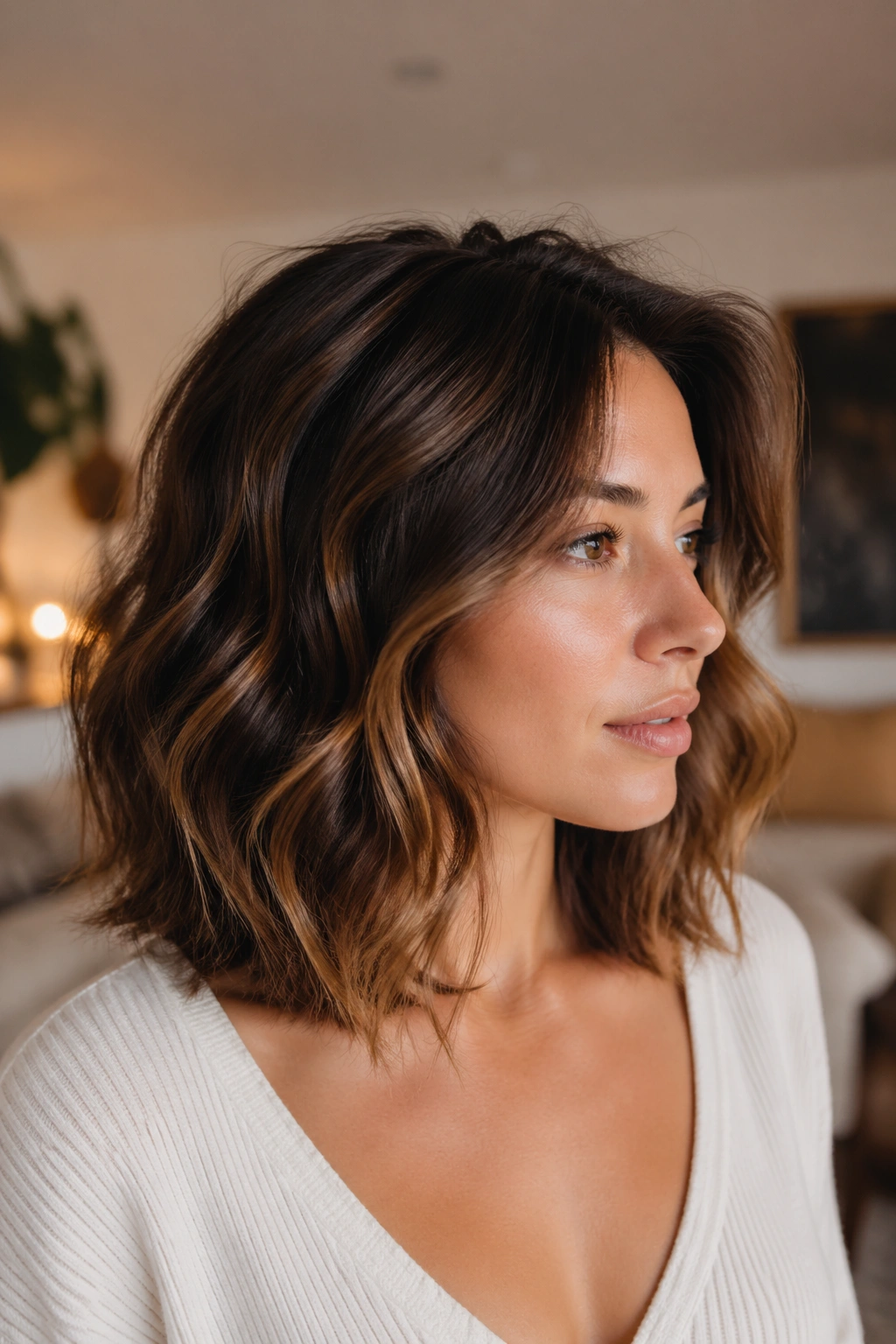
If you are not ready to go as short as a bob, a collarbone lob is the compromise I usually like most. It is long enough to keep some movement, but short enough that the waves still spring up instead of hanging down. That alone can make the ends look thicker.
The nice part is that internal layers can remove bulk without destroying the outline. You don’t see them right away, but you feel the difference when the hair moves. It gets lighter without turning stringy.
Why Stylists Like This Cut
- The collarbone length gives the wave room to bend.
- Internal layers prevent the shape from going boxy.
- The perimeter still looks dense from the front.
- It grows out without an awkward shelf.
A collarbone lob is also forgiving on busy days. If you air-dry it, it still has shape. If you bend the front with a brush, it looks polished enough for a dinner out. That’s a useful cut, and honestly, useful cuts deserve more credit than they get.
8. Shaggy Bob With Cheekbone Pieces
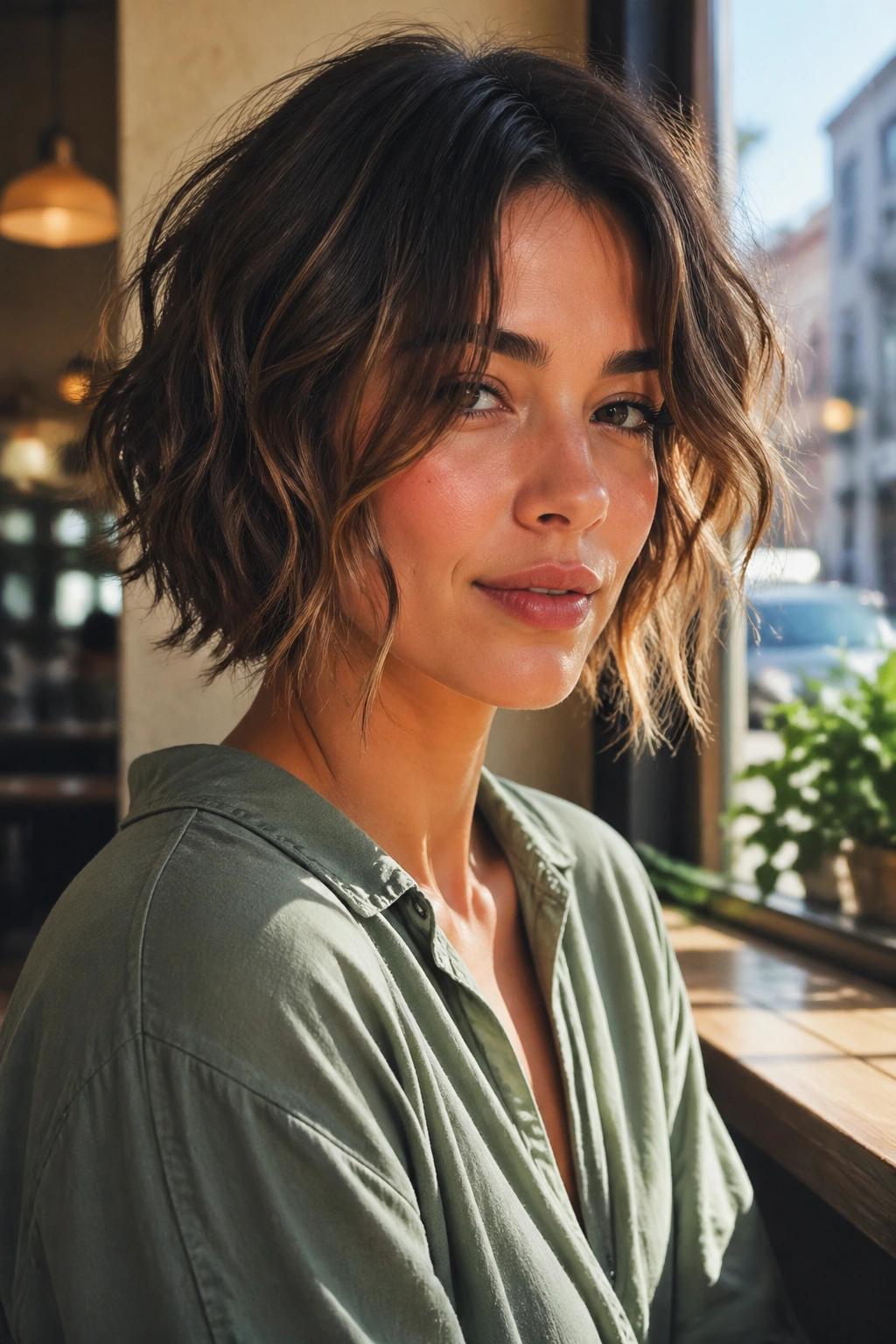
A shaggy bob can look fuller than a neat bob when the layers start high enough to frame the cheekbones instead of the ends. That is the part people miss. If the layers only chip away at the bottom, you lose weight without gaining shape, and the hair can look thin.
The cheekbone pieces change the whole story. They draw the eye upward, keep the top from going flat, and give the wave pattern a place to sit. The bottom should still hold some structure — not a razor-sliced fringe of ends, but a real edge.
I like this cut on medium-density wavy hair that needs movement but not too much reduction. It has that loose, lived-in feeling without sliding into chaos. A little texturizing cream works better than a heavy balm here. You want separation, not stickiness.
9. Wolfy Bob With Soft Fringe
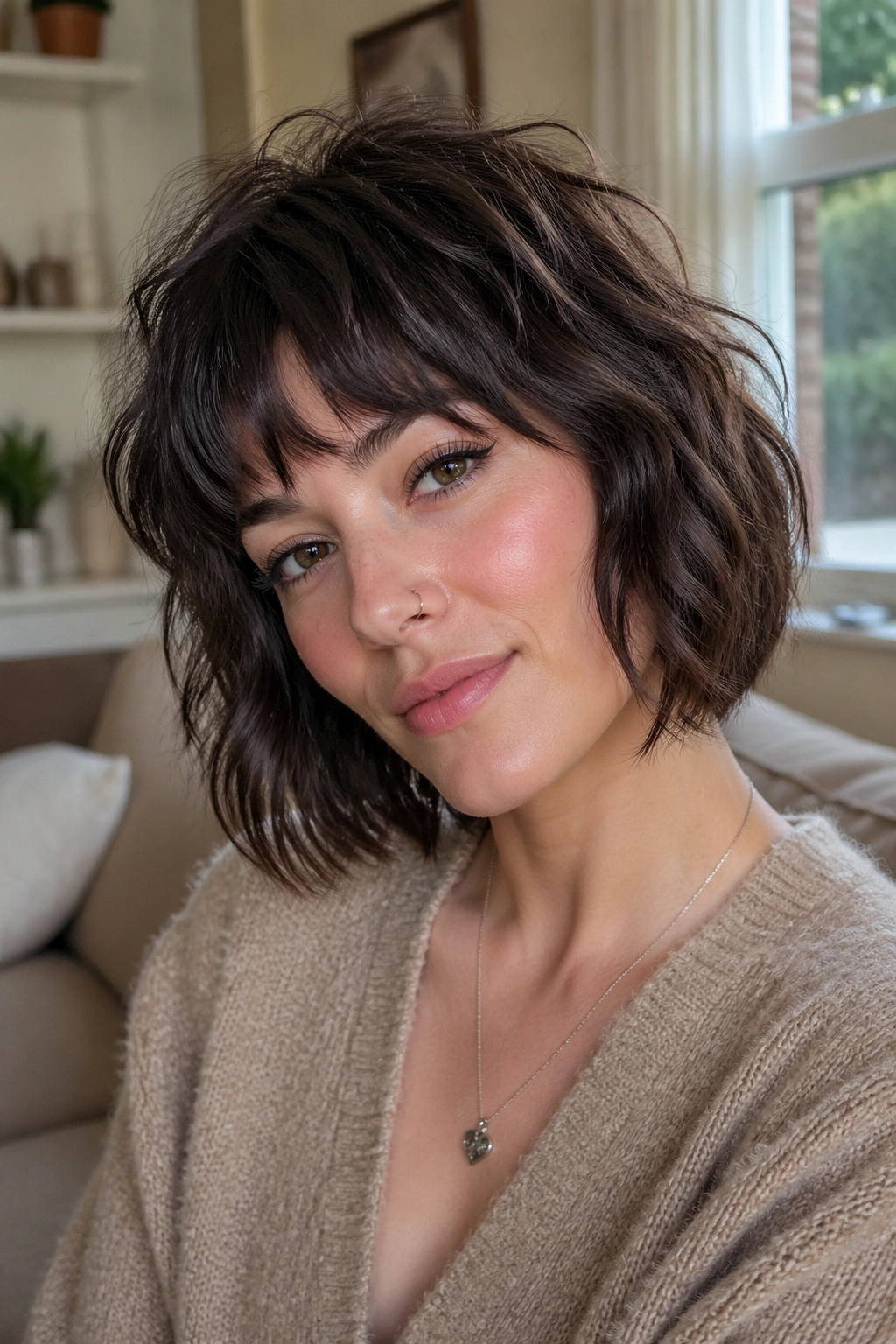
Why do some wolf cuts make hair look thinner? Because the weight gets pulled away from the perimeter. A wolfy bob works only when the layers stay soft and the outline stays honest. If the crown is chopped too high, the ends can look bare.
The version I like keeps the bob length near the jaw or a touch below it, then adds a softer fringe and some piecey height around the crown. That gives you movement without losing the feeling of density. It is a tricky balance, and the better cuts feel more shaped than shredded.
How to Keep It Full
- Ask for soft, blended layers rather than hard, disconnected ones.
- Keep the bottom line visible.
- Let the fringe sit loose across the forehead.
- Use a small amount of mousse at the roots.
This is a good option if you like messy texture and do not want hair that looks overdone. But it needs a careful hand. Too much razor work, and the fullness disappears fast.
10. A-Line Bob With a Lifted Back
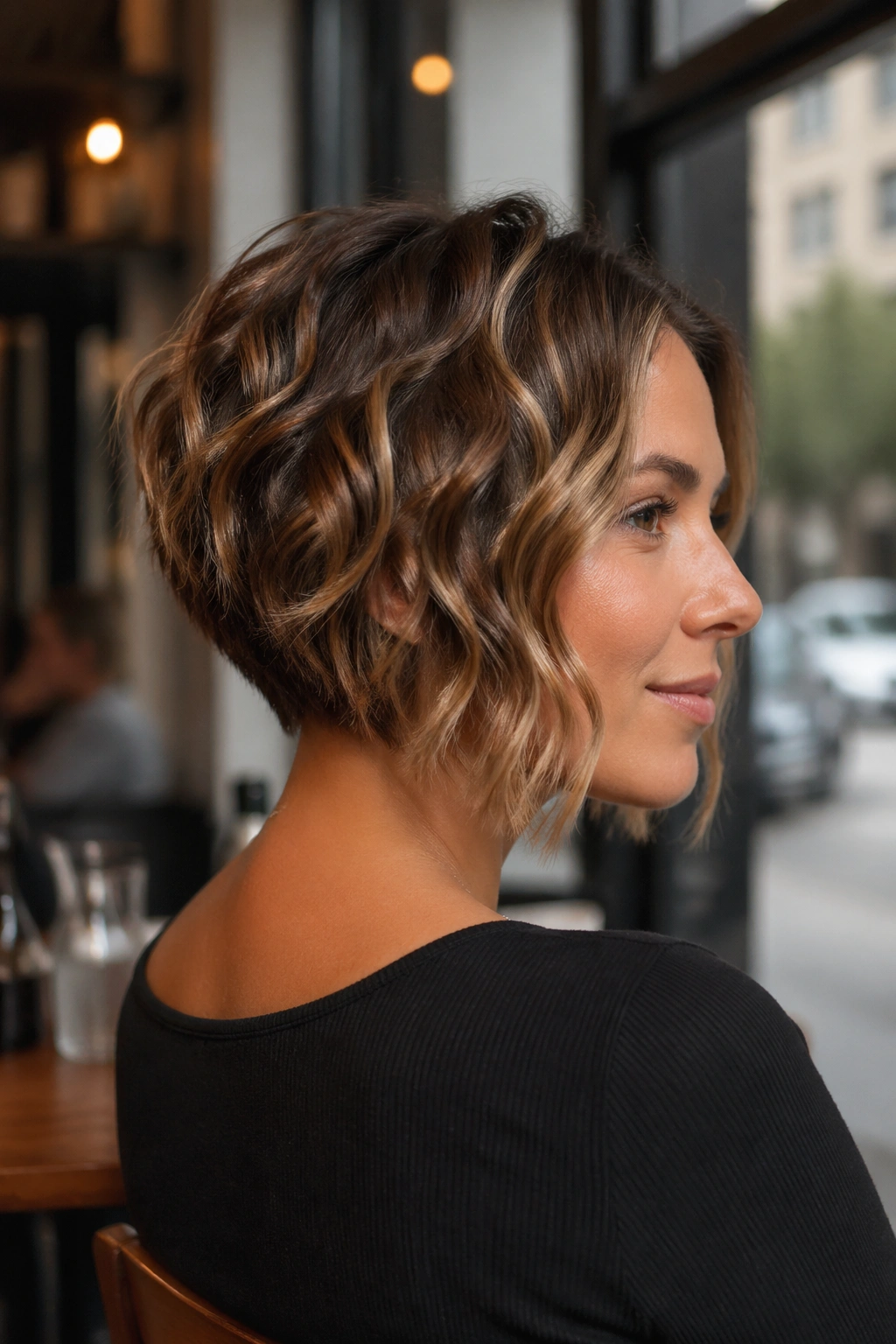
If your hair hangs heavy at the nape, an A-line bob can pull the whole shape forward in a good way. The back sits a little shorter, the front falls a little longer, and that angle gives the cut a sense of movement without making it look sparse.
What I like most is the contrast. The longer front pieces make the face feel framed, while the shorter back keeps the crown from collapsing. On wavy hair, that angled line can make the hair seem thicker because the ends are not all sitting at the same level.
The Details That Matter
- Keep the front long enough to skim the jaw.
- Do not over-thin the back.
- Let the angle be soft, not severe.
- Style with a side part if the crown is flat.
This cut looks sharp when it’s smooth and casual when it’s air-dried. That range is part of the appeal. It does not need much coaxing.
11. Box Bob With Brow-Grazing Fringe
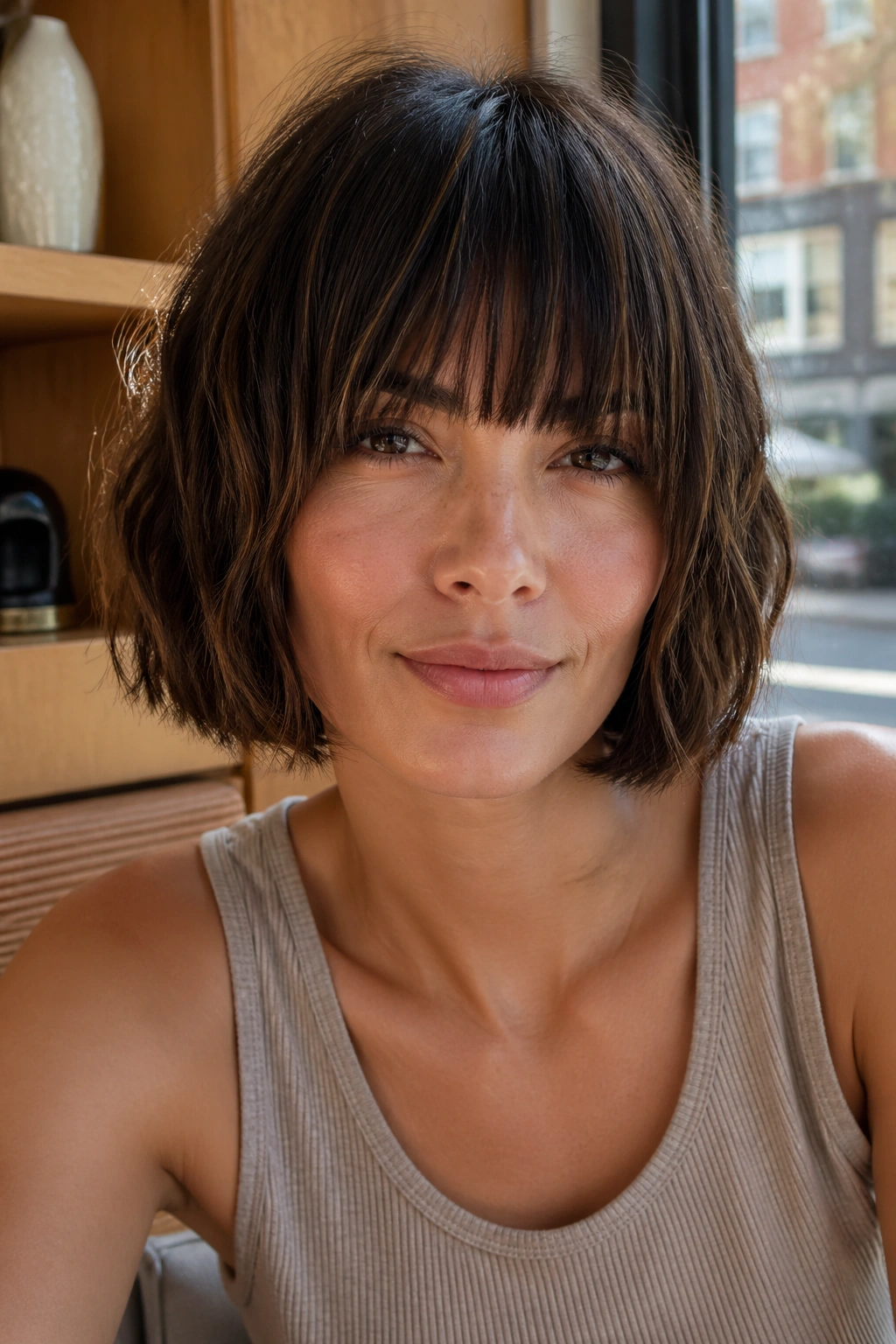
A box bob is blunt on purpose, and that is exactly why it works on wavy hair that needs more body. The shape is fuller through the bottom because the perimeter stays broad instead of tapering off. Add a brow-grazing fringe, and the whole haircut feels heavier in the best way.
This is not the cut for someone who wants soft, feather-light movement. It’s for someone who wants the hair to hold a shape. The fringe helps by putting attention near the eyes, which makes the lower half of the cut feel denser by comparison.
Keep the ends crisp. Seriously. A box bob loses its point if the bottom line gets chipped up too much. A little wave is enough here; you do not need to chase perfect curl separation.
The best versions feel structured but not stiff. That is a harder balance than it sounds.
12. Stacked Wedge Bob
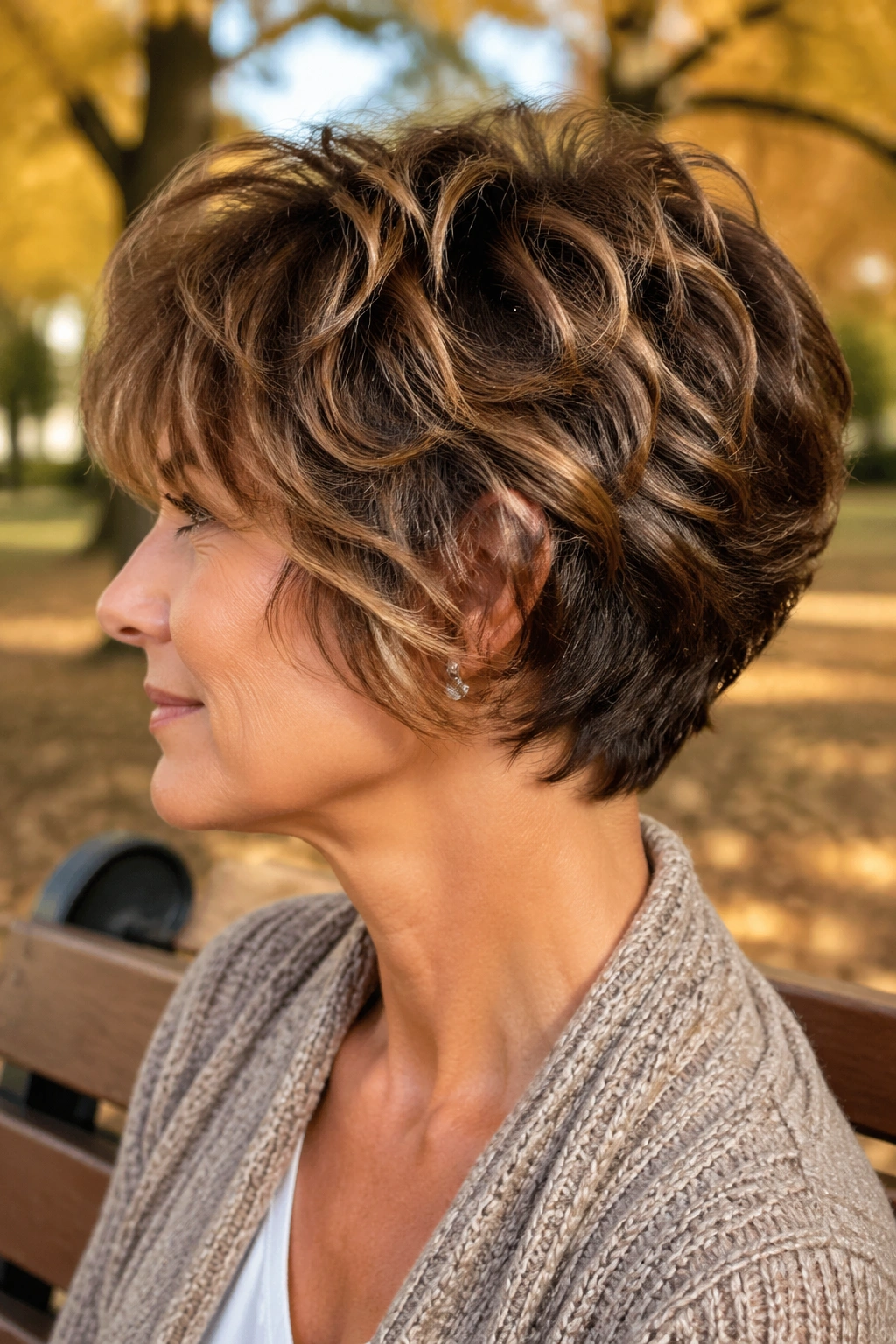
Unlike a flat bob, a stacked wedge builds shape in the back where the head naturally rounds. That stacking gives the crown a lift, which is useful when your waves tend to lie down by midafternoon. The result is a cut that looks fuller from the side and the back, not only from the front.
I’m picky about wedge bobs. The modern version should be soft, not frozen in place. Think gentle graduation through the back, a smooth curve toward the nape, and enough length on top to keep the wave pattern visible.
What Makes It Worth Trying
A wedge bob suits thicker waves that lose their shape when they grow too long. It also gives a cleaner outline than a shag, which means less daily fuss. If you like the feeling of hair that has a built-in shape, this is a strong option.
Ask for soft stacking, not a dramatic shelf. That’s the difference between polished and dated.
13. Feathered Bob With Crown Layers
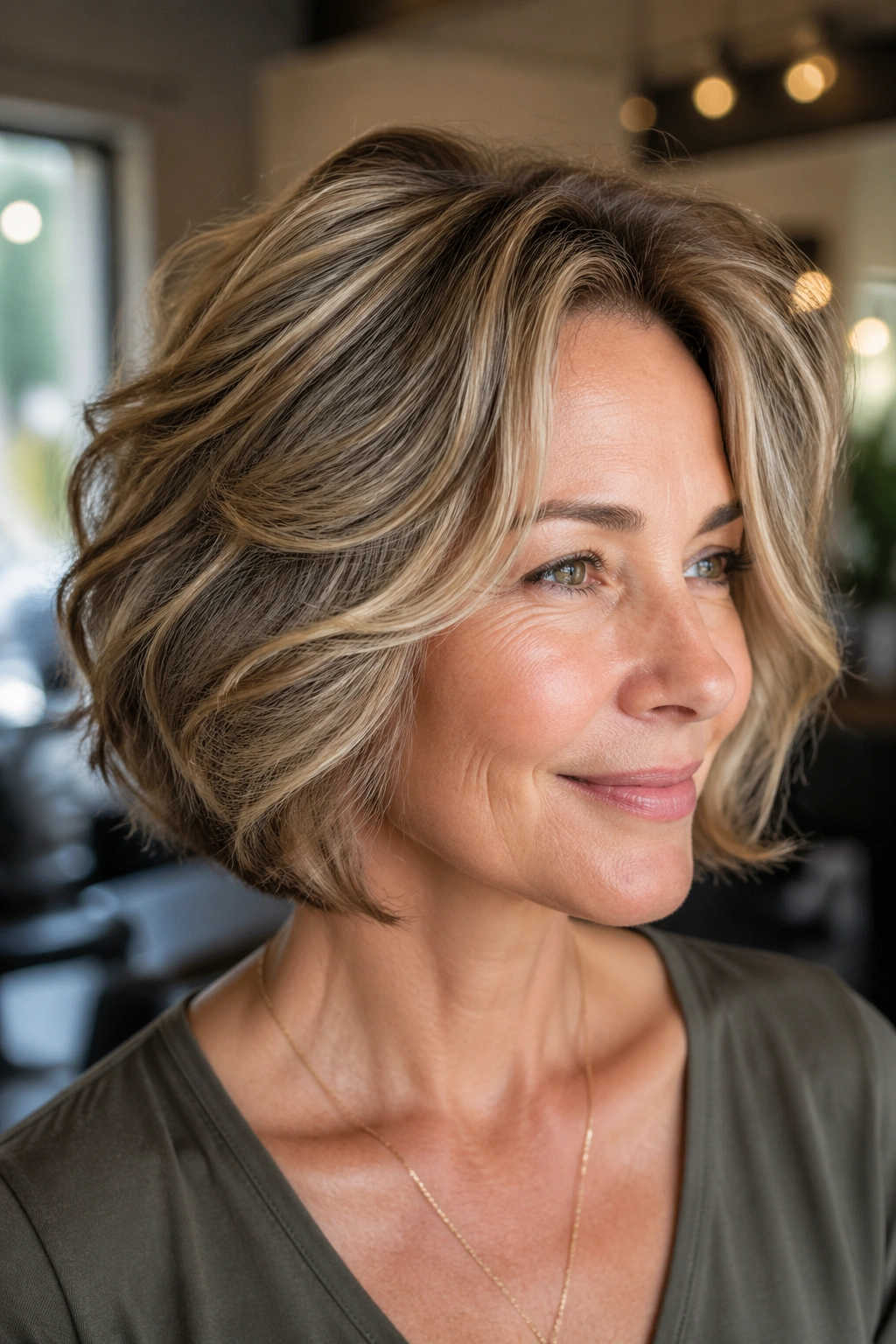
If your roots sink by lunchtime, a feathered bob can help. The crown layers lift the top without tearing apart the bottom line, and that is the part that matters for fullness. Feathering should feel like air moving through the cut, not like the hair has been thinned into dust.
What Makes It Different
The crown gets the most attention here. That means the top layers are cut to encourage lift, while the perimeter stays more solid. It’s a smart approach for wavy hair that wants movement but also needs a stronger outline.
What to Tell Your Stylist
- Keep the ends dense.
- Put softness in the crown, not the whole head.
- Leave enough front length to frame the face.
- Avoid over-blending the bottom into nothing.
This cut can be lovely on fine waves, but only if the feathering stops before it eats the shape. That line between soft and sparse is thin. Stay on the right side of it.
14. Micro Lob With Blunt Ends
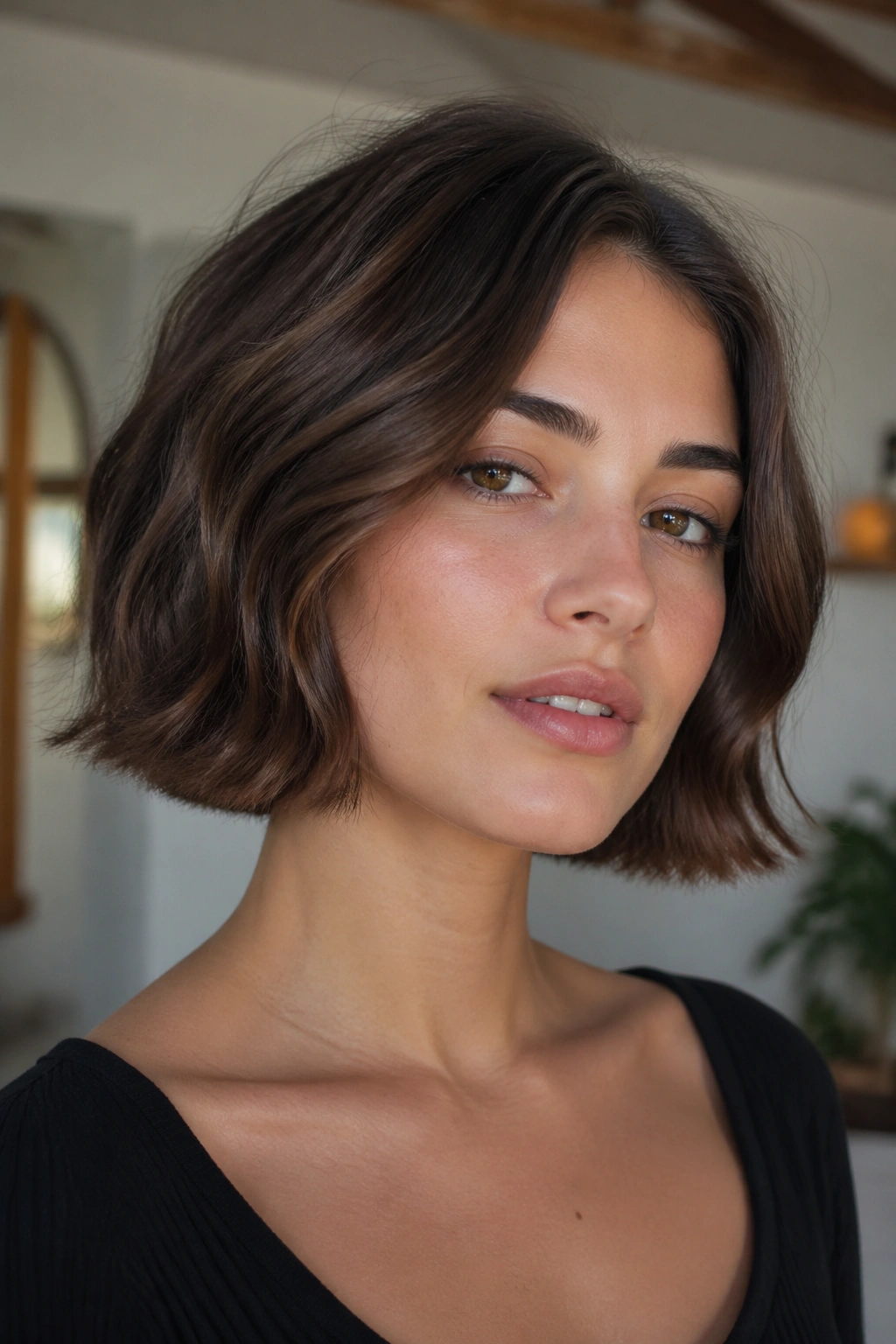
A micro lob is shorter than a classic lob and longer than a bob, which makes it a useful in-between shape for waves that need a thicker-looking edge. The length usually sits around the lower jaw or upper neck, and that alone makes the hair feel more compact.
The blunt ends do most of the work. Wavy hair tends to look fuller when the outline stays clean, and this cut gives you that without going ultra-short. It’s a good choice if you want enough length to tuck behind the ear or clip back on one side.
I like this cut on hair that has some natural bend but not much frizz. The shape needs to stay visible. If the ends get sliced too thin, the whole thing can lose its clean finish, and that defeats the point.
A tiny bend at the front pieces can be enough. You do not need to style every wave into place.
15. Curly Pixie With a Long Top
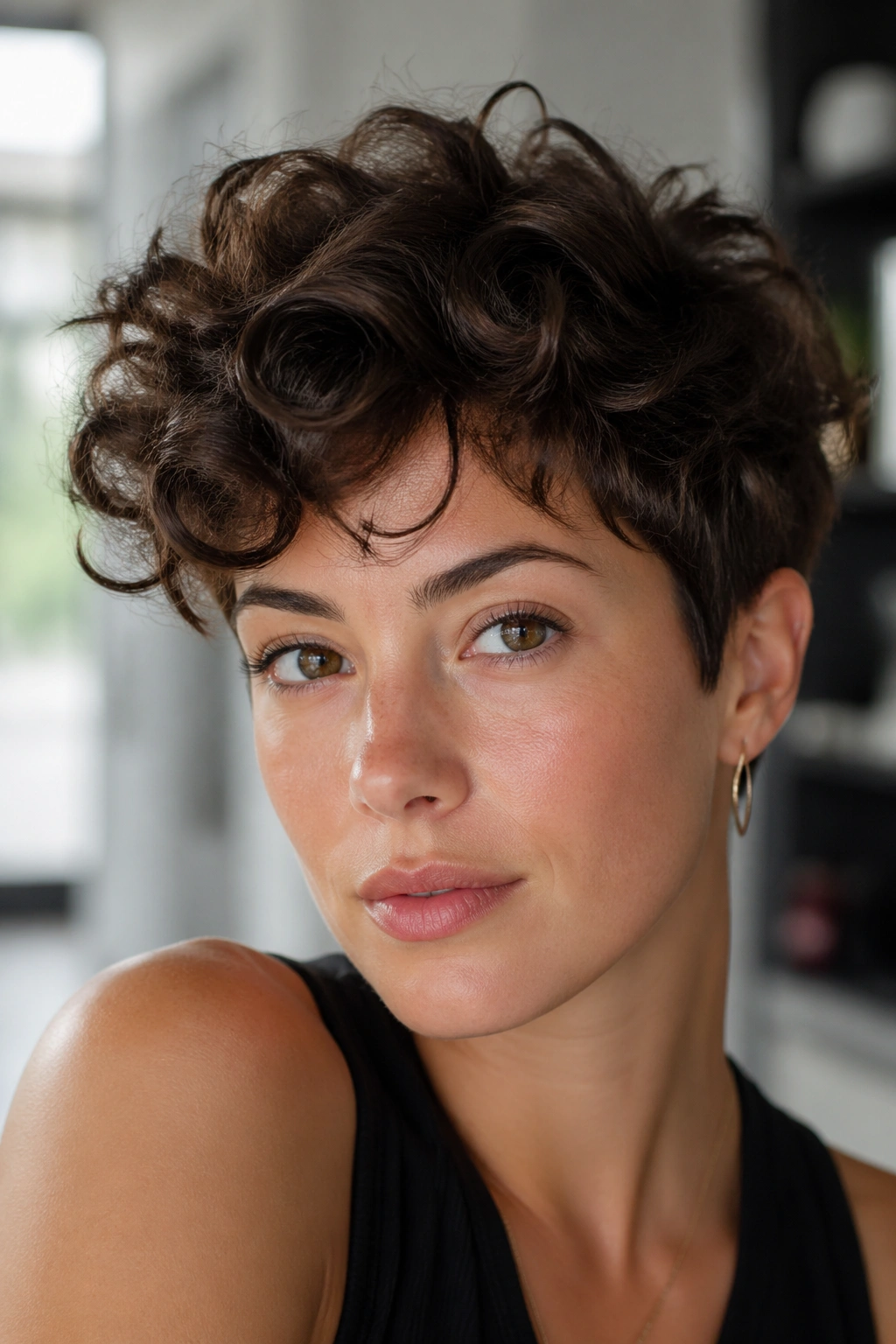
Can a pixie make wavy hair look fuller instead of frizzier? Yes, if the top stays long enough to clump into defined waves. A curly pixie with a longer crown gives the hair something to do, while the sides stay close enough to keep the shape neat.
The best versions leave enough length on top for a bit of lift and avoid making the back too bare. That balance matters. Short wavy cuts can go from cute to scattered fast if the top is cut too short.
Styling Note
- Use a curl cream or light gel on damp hair.
- Scrunch, then leave it alone for a while.
- Don’t brush it once it dries.
- A diffuser on low speed helps the top keep shape.
This is a good cut if you like short hair but still want texture. It is playful, and it has more presence than people expect.
16. Ear-Length Bob With Side-Swept Fringe
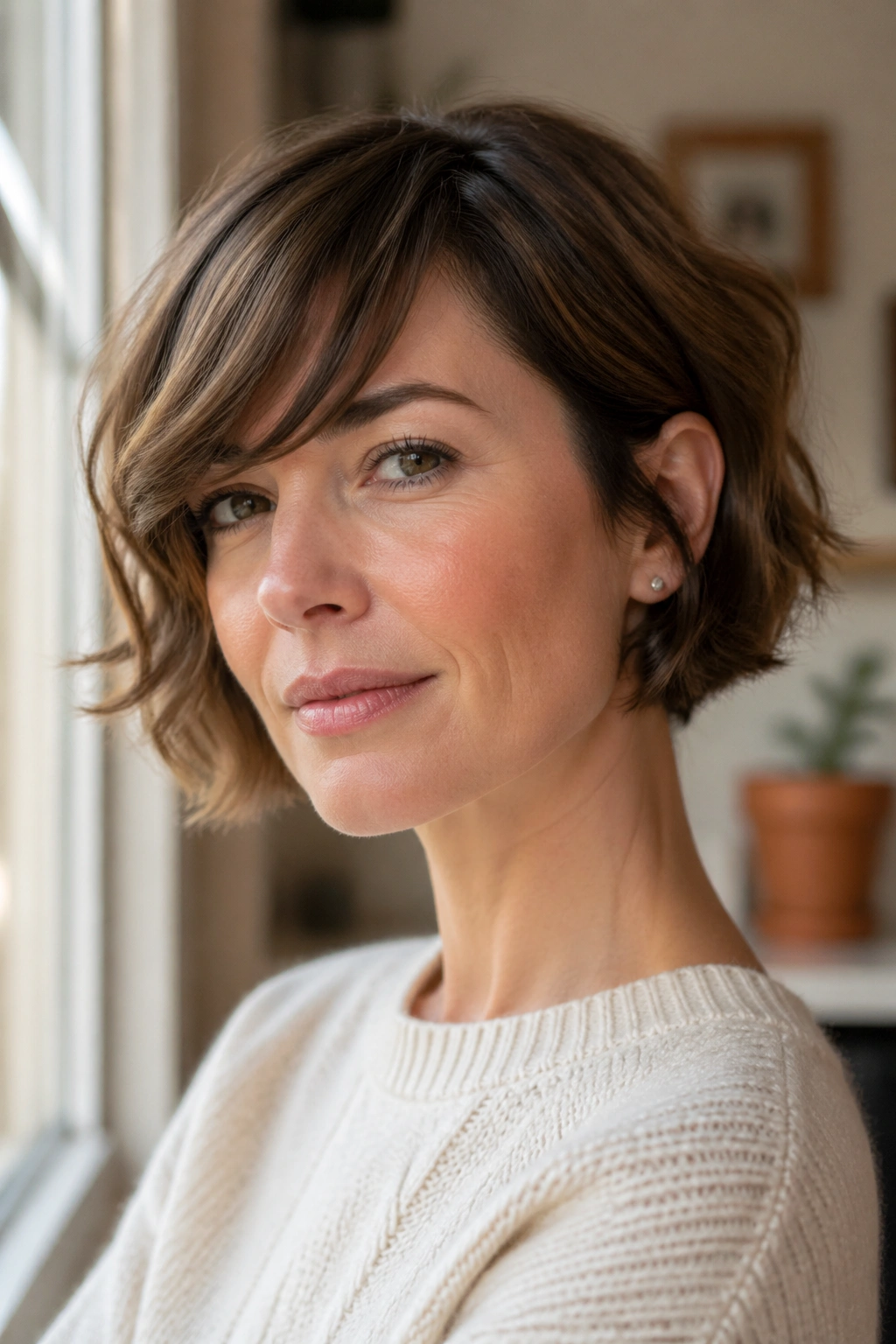
The first time someone cuts wavy hair to ear length, they usually worry it will puff out. Sometimes it does, which is why the side-swept fringe matters. It gives the cut a softer front line and keeps the shape from looking too boxy around the face.
At this length, the hair looks especially full when the ends stay blunt and the top has a little lift. The bob sits high enough to expose the neck, which makes the volume at the sides read more clearly. That contrast helps.
Useful Details
- Keep the fringe light and movable.
- Let the sides brush the jaw or hover just above it.
- Use minimal thinning at the ends.
- Air-dry with a small amount of cream.
This is a sharper, more editorial shape than a long lob. It’s not for everybody, but when it works, it works fast.
17. One-Length Bob With Curtain Bangs
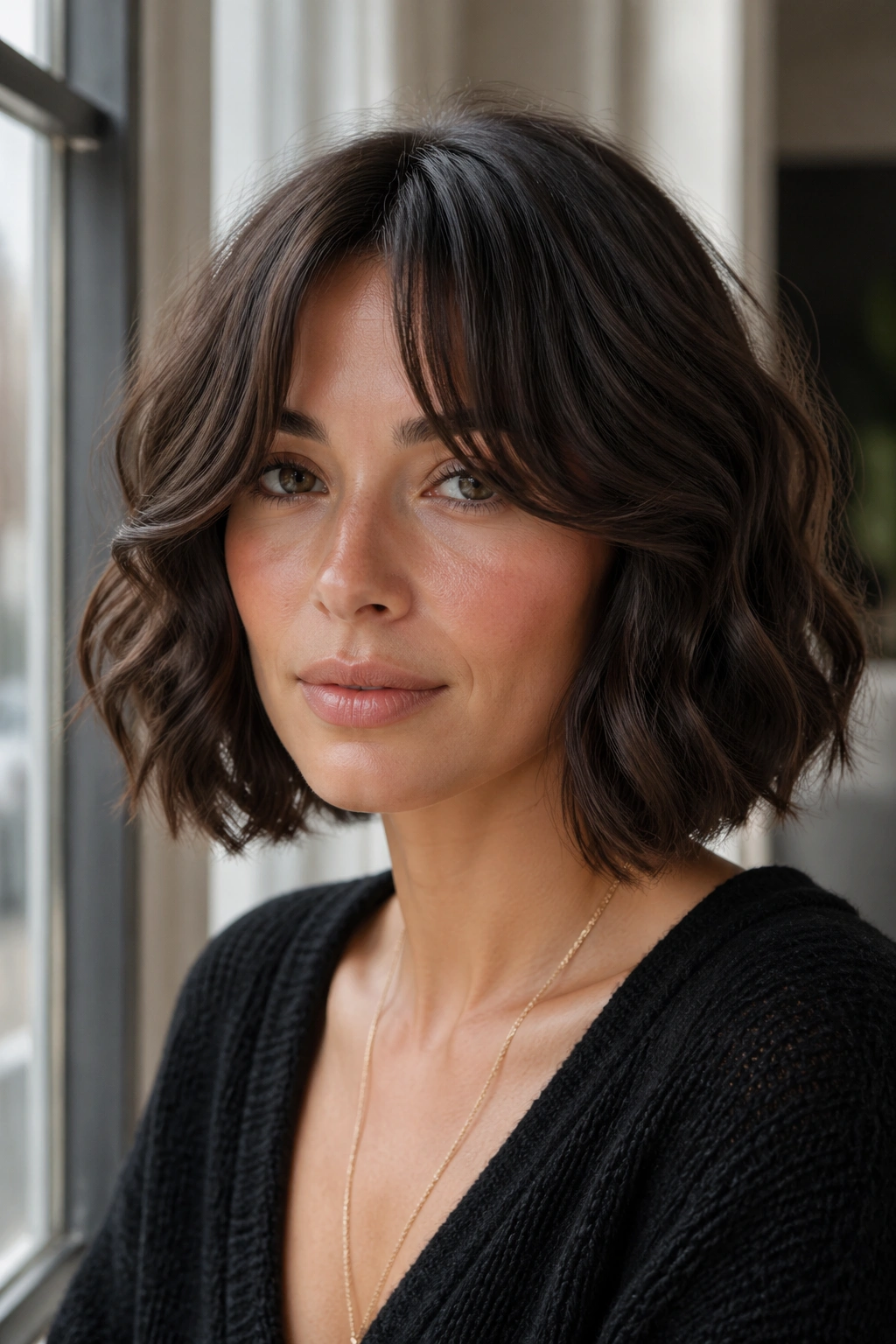
A one-length bob with curtain bangs is one of the cleanest ways to make short wavy hair look fuller. The bob gives you the thick perimeter, and the curtain bangs open the front without making the whole cut feel heavy. It’s a neat balance.
The bangs matter because they break up the forehead area while keeping the rest of the hair dense. That gives the face some shape and keeps the bob from feeling boxy. On wavy hair, the middle section of the fringe tends to part naturally anyway, which makes the styling easier than people think.
This cut is a good fit if you like symmetry but don’t want a strict straight-across fringe. It feels softer around the eyes and still gives the ends something solid to do. That’s the combination I keep coming back to.
And no, it does not need to be perfectly styled every day. A little bend is enough.
18. Invisible-Layer Bob
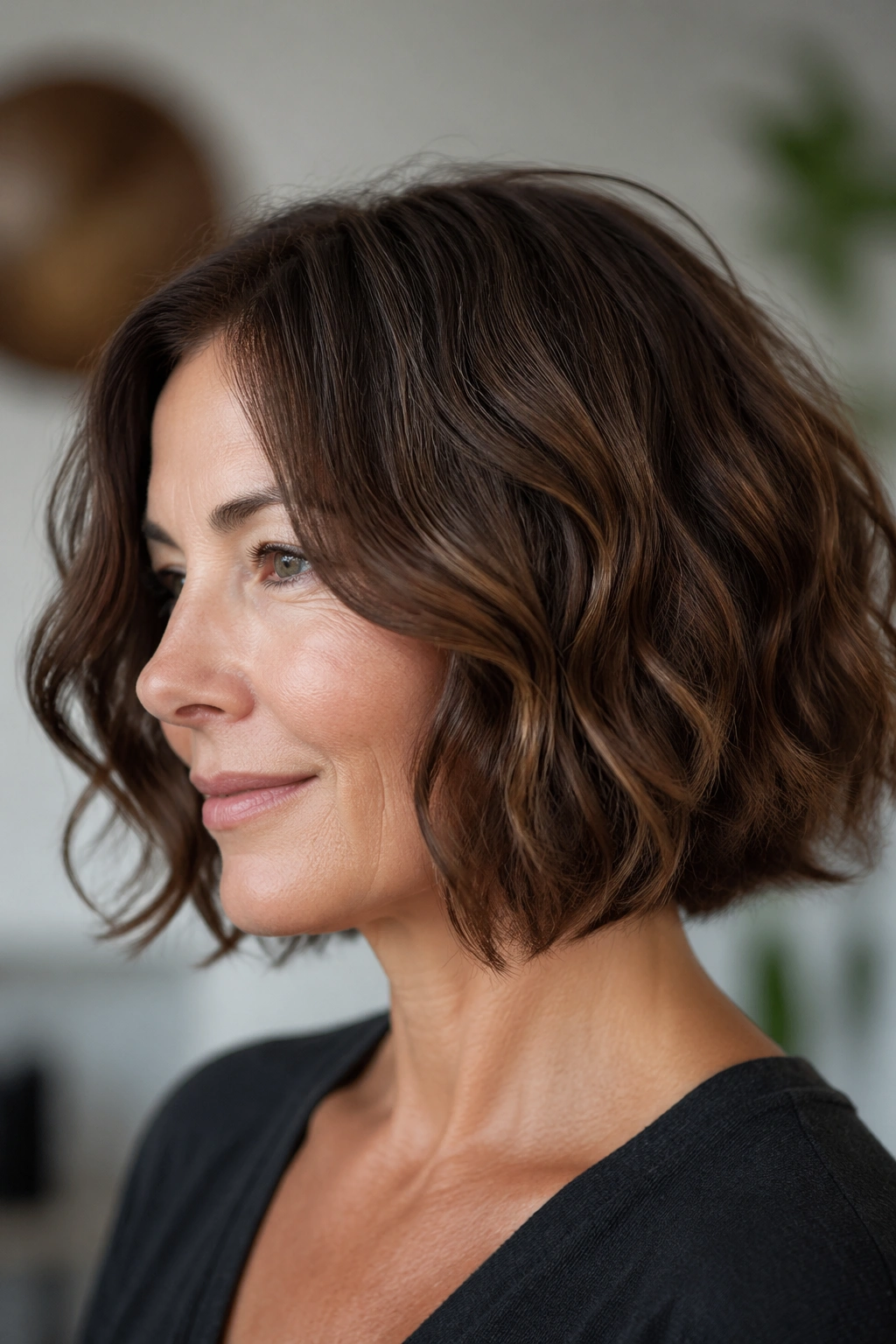
Unlike choppy layers you can spot from across the room, invisible layers disappear into the shape. They remove weight from inside the cut while leaving the outer line intact, which is why this bob can look fuller than a heavily layered version. The eye sees thickness at the edge and movement in the middle.
This is a strong choice for thick wavy hair that puffs too wide when it’s all one length. Hidden layers tame the bulk without exposing too much scalp or making the ends look ragged. The perimeter still does the visual work.
Best For
- Hair that feels bulky but not coarse.
- Waves that collapse if the cut is too heavy.
- People who want shape without obvious layers.
- Anyone who hates the “triangle” look.
Ask for internal weight removal, not surface shredding. Those are not the same thing, and the distinction matters a lot here.
19. Brow-Skimming Crop With Tucked Ends
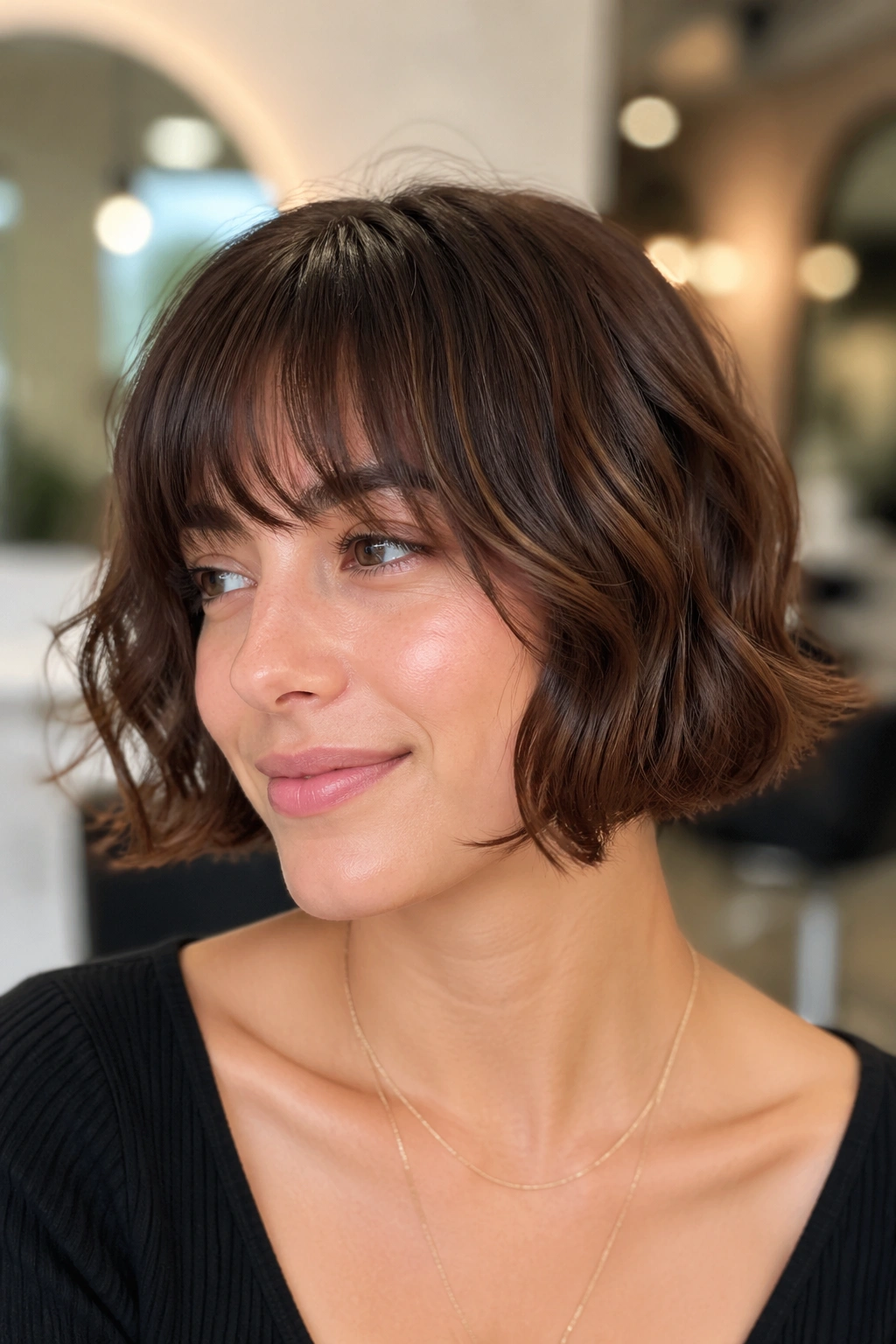
Can a short crop still look soft? Yes, if the bangs sit near the brows and the ends tuck inward instead of sticking out. That little bend changes the whole mood of the cut. It keeps the shape neat while making the hair feel fuller around the face.
The brow-skimming fringe gives the eyes a frame, and the short length below it keeps the waves from dragging the style down. I like this cut when someone wants personality in the front but not a lot of hair to manage at the neck. It’s compact without feeling severe.
How to Wear It
- Let the fringe dry first so it doesn’t split oddly.
- Tuck the ends under with your fingers, not a heavy brush.
- Use a pea-size amount of styling cream.
- Keep the crown loose so the cut has lift.
A crop like this needs a little attention, but not much. The shape does most of the talking.
20. Face-Framing Shag With a Shorter Crown
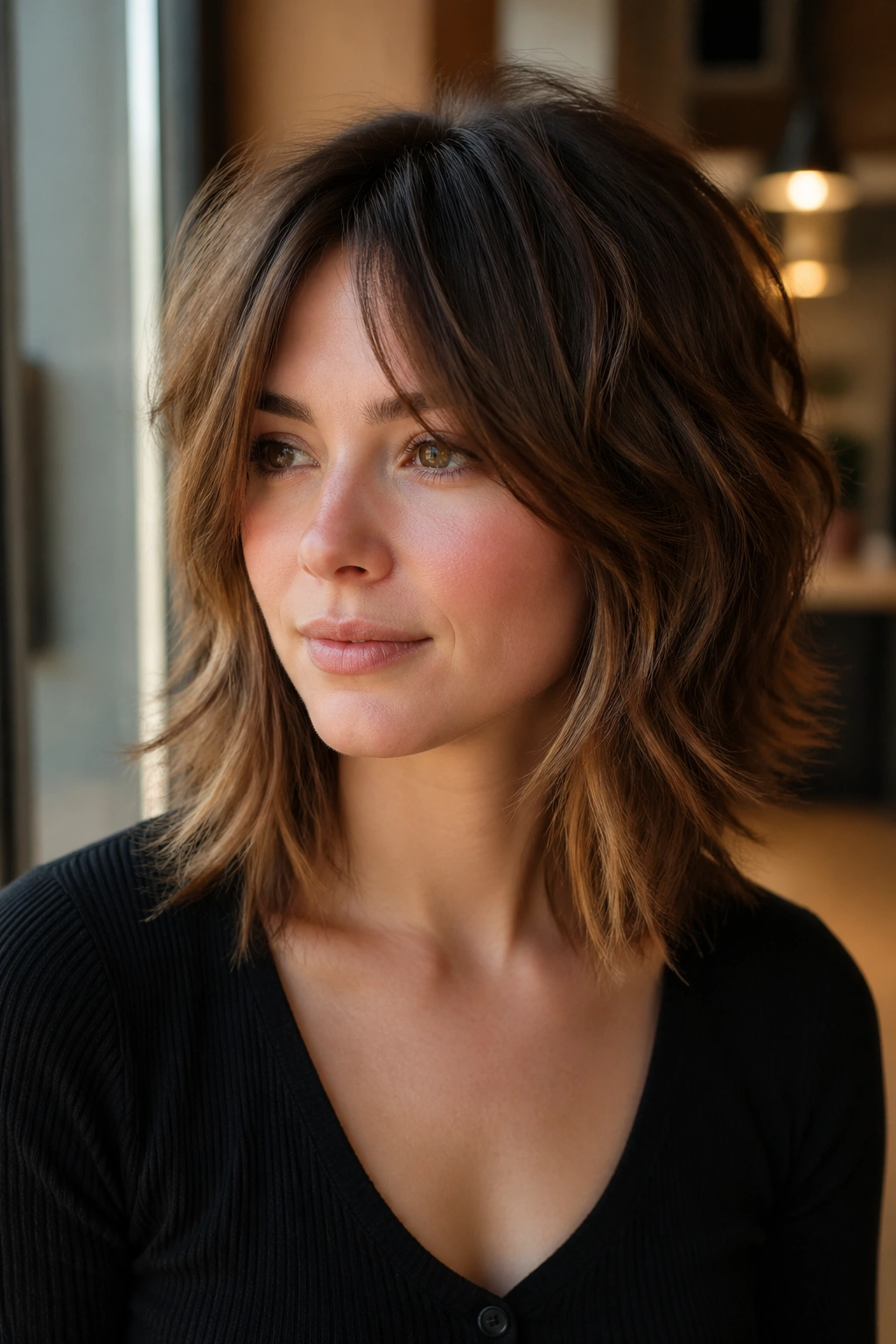
If your waves collapse at the roots, a face-framing shag can bring the height back. The shorter crown gives the top some lift, while the longer front pieces keep the outline soft enough to look full rather than ragged. That is the trick with a good shag.
The face-framing parts are where the style earns its keep. They guide the eye, make the cheekbones look more open, and stop the haircut from turning into a wide puff. Short wavy hair needs that kind of control.
I would avoid going too high with the layers. Once the crown gets shredded, the ends can start to look thin, and then the cut loses its shape fast. Keep the perimeter decent and let the movement happen inside the silhouette.
This is a cut for people who like texture with a little attitude. Clean, but not too neat.
21. Soft Undercut Bob
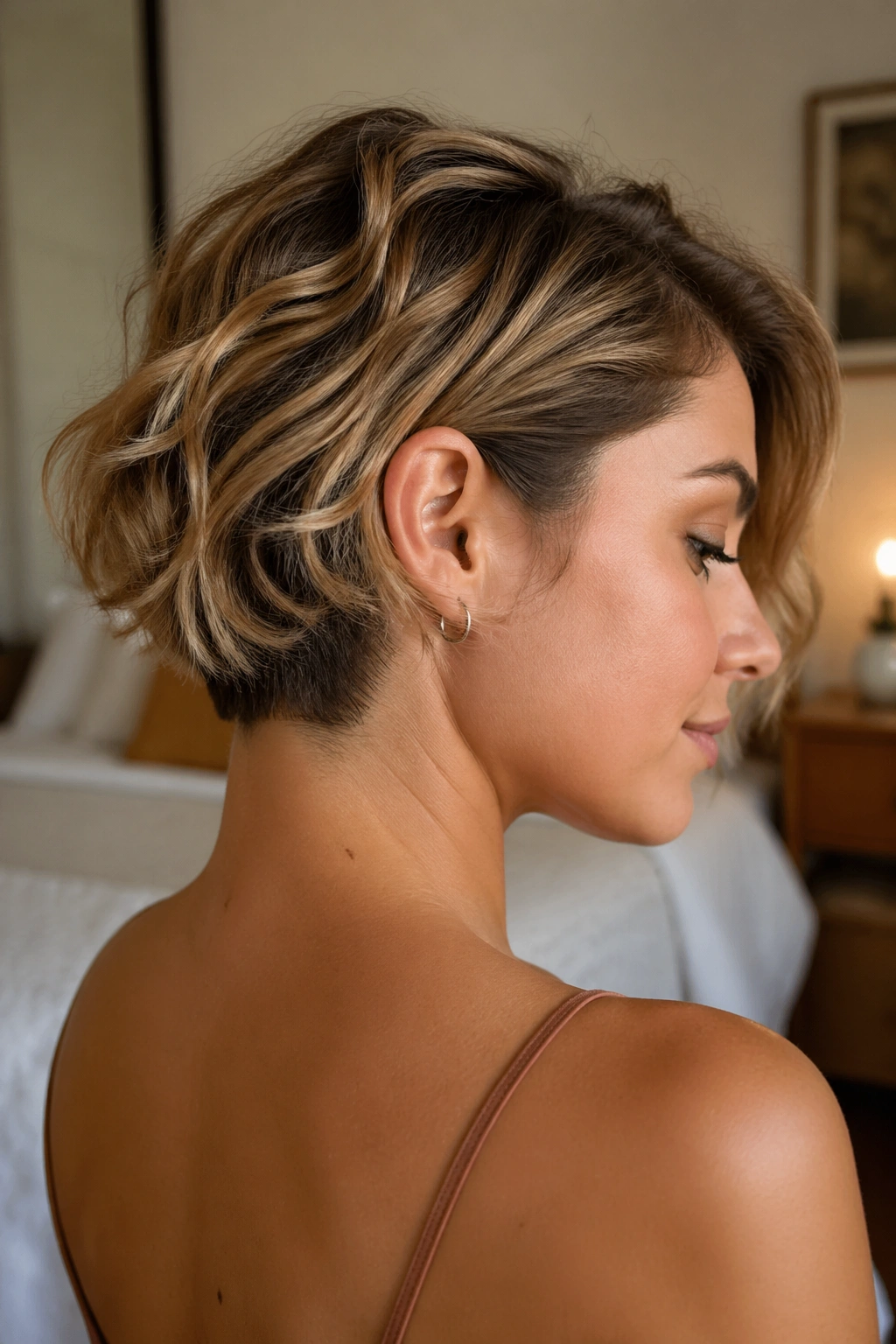
Why would anyone hide an undercut in a wavy bob? Because it takes out bulk where you do not want it and leaves the top looking fuller. That sounds backward until you see it dry. Hair that sits too heavy underneath can pull the whole shape down, and a soft undercut solves that without looking severe.
The key word is soft. You do not want a dramatic shaved section unless that’s your thing. You want enough removal to let the waves sit on top of each other instead of spreading wide at the neck.
Who Should Ask for It
- People with thick wavy hair.
- Anyone who gets a triangle shape at the bottom.
- Short styles that feel too puffy underneath.
- Hair that takes forever to dry.
The best part is the low maintenance. Less hidden bulk means less fighting with the dryer, and that alone can make a haircut feel better day to day.
22. Rounded Pageboy Cut

A rounded pageboy sounds old-fashioned, and I actually think that is part of the charm. The curve around the jaw gives wavy hair a dense, almost plush look, because the shape stays continuous from the front to the back. There are no broken edges fighting each other.
This cut works especially well when the waves are loose and the hair wants to flip under naturally. It uses that tendency instead of arguing with it. The result feels structured but not rigid, which is harder to pull off than it looks.
Useful Details
- Keep the sides rounded, not flared.
- Let the nape stay neat.
- Leave enough weight at the bottom edge.
- A soft fringe can make it feel less severe.
If you want a short cut that feels polished in real life, not only in photos, this is a solid bet. It has shape from every angle.
23. Grown-Out Pixie With a Sweeping Fringe
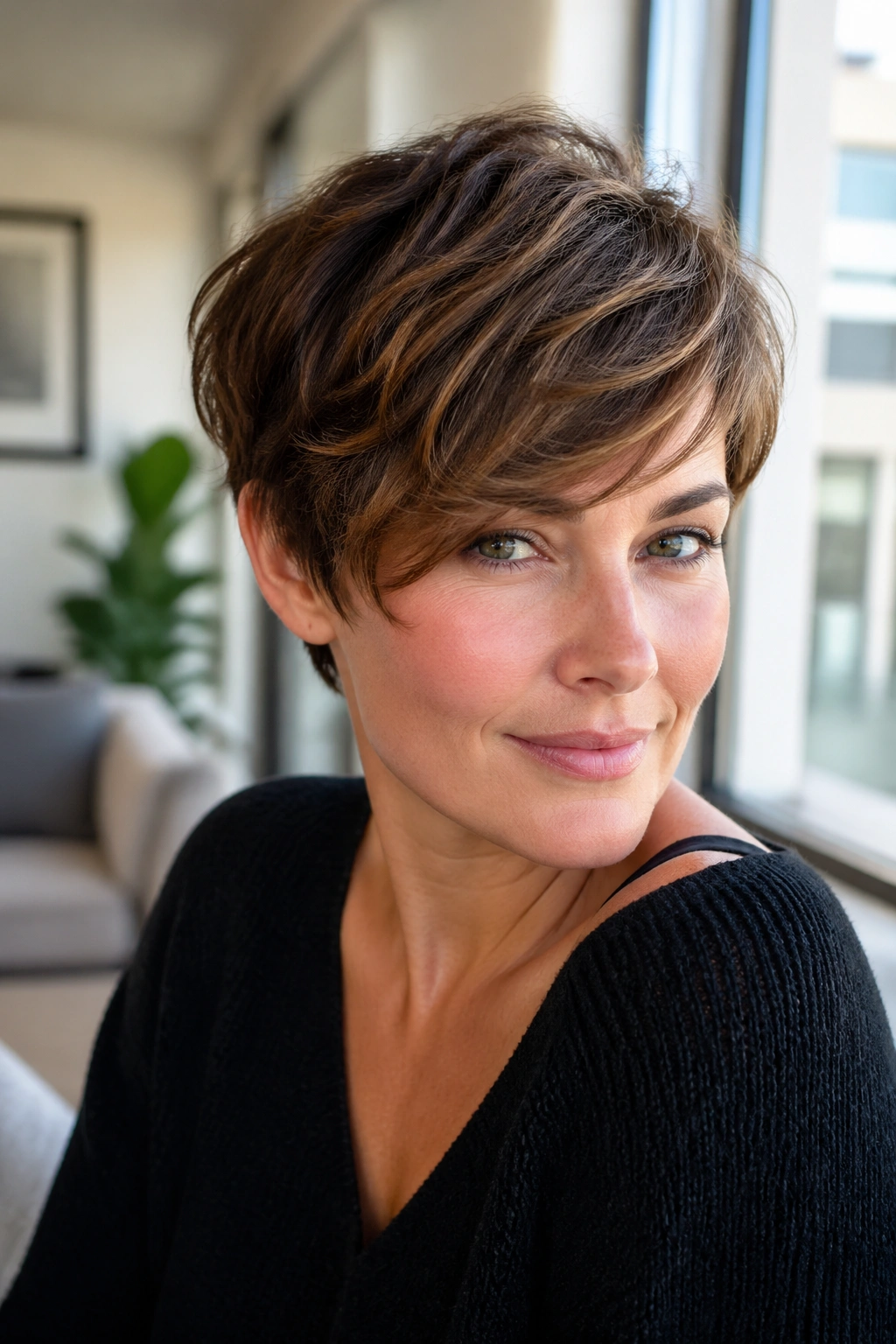
A grown-out pixie is one of the easiest short wavy cuts to live with because the top keeps enough length to move, and the sides stay short enough to keep the shape tidy. That sweep across the forehead gives the cut softness, which helps the hair look fuller instead of cropped flat.
I like this style on waves that form loose bends rather than tight curls. The fringe can fall to one side, tuck behind an ear, or split a little in the middle, and all three versions work. That flexibility is part of the appeal.
The nape should stay neat, but not so tight that the cut feels harsh. A little length in the crown goes a long way here. Too little, and the style loses the very thing that makes it look full.
This is a good one for people who want short hair without a lot of daily fuss. It’s casual in a smart way.
24. Deep Side-Part Wavy Bob
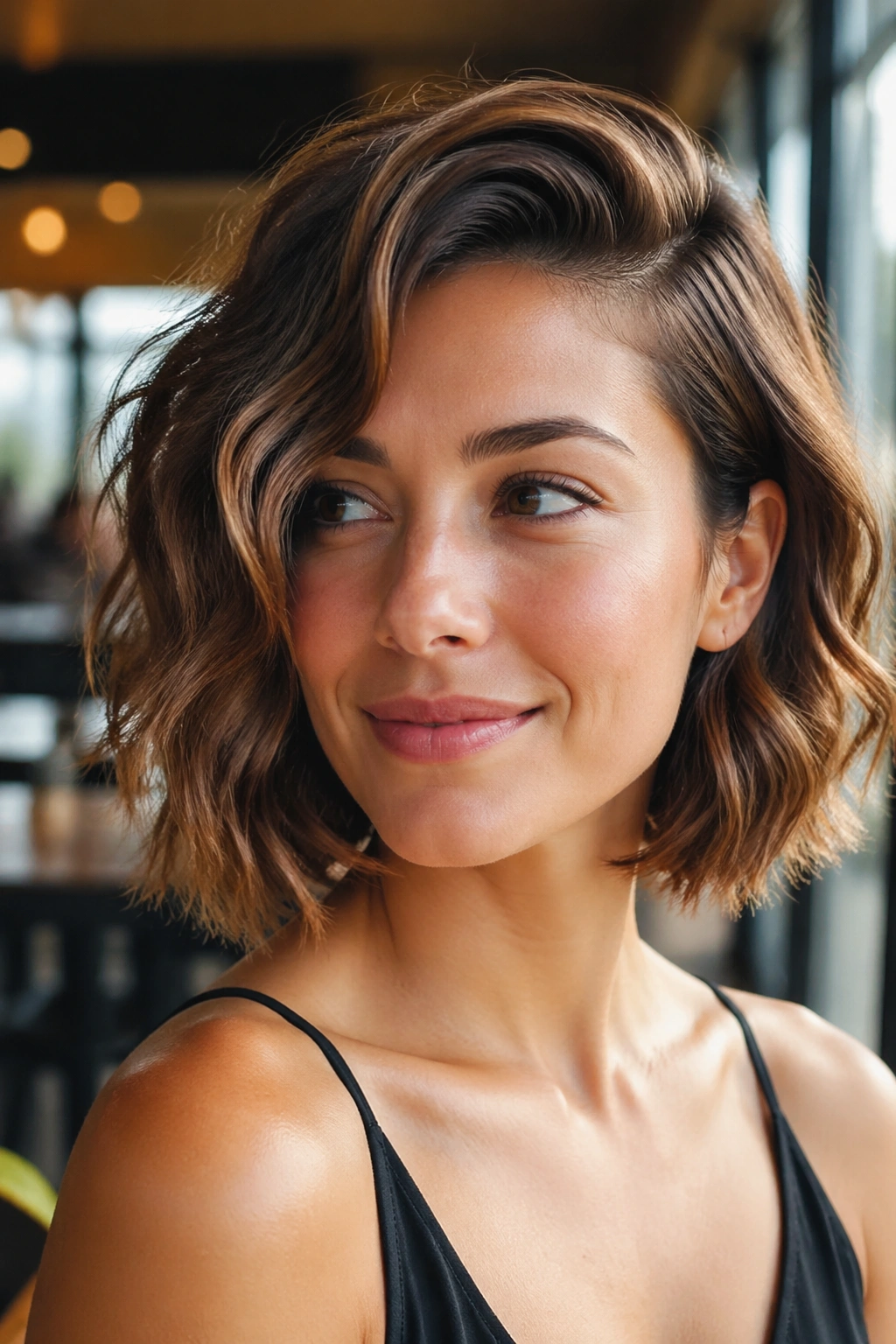
A middle part is fine, but a deep side part can give short wavy hair the lift it needs right at the roots. The hair on the heavier side gets pushed up a little, and that creates instant body without adding product or teasing. It’s a small shift with a big effect.
On a wavy bob, the side part also changes how the front pieces fall. One side frames the cheek, the other side opens the face more sharply. That asymmetry makes the style feel fuller because the eye sees more movement across the whole shape.
Where It Works Best
- Flat roots that need help.
- Short bobs that look too even.
- Wavy hair that benefits from side volume.
- People who want a change without a haircut.
You can pair this with almost any bob length from jaw-skimming to chin-length. The part is doing the heavy lifting, and that’s handy when you want a simple fix.
25. Jaw-Skimming Wavy Bob With Airy Ends
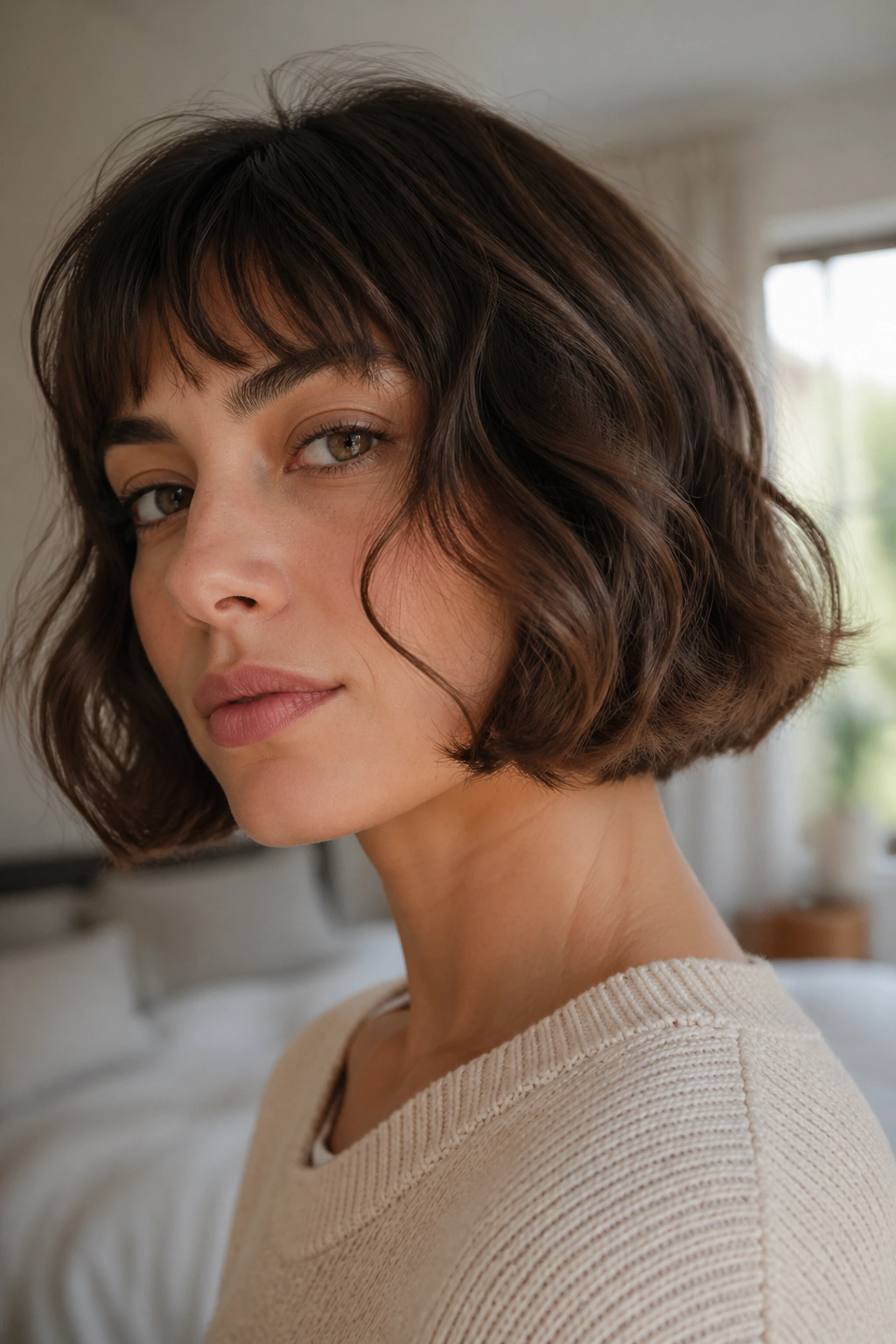
If I had to pick one short wavy cut that feels safe, flattering, and easy to grow out, I’d start here. A jaw-skimming bob puts the density right at the frame of the face, which is where fullness reads most clearly. The ends can be a little airy, but not so thin that they vanish.
This cut works because it keeps the perimeter intact. The waves get room to move, the jaw gets a clean outline, and the whole style looks fuller than it would at shoulder length. It is one of those haircuts that does a lot without looking busy.
Ask for soft movement through the interior and a strong bottom line. That balance is the whole game. If the ends get too light, the shape starts to slip, and the fullness goes with it.
A bob like this doesn’t need a fussy finish. A good cut, a little bend, and a hand that knows when to stop are usually enough.
