



Thick wavy hair can make a short bob look expensive in the best way. It can also go sideways fast. If the cut is too blunt, too boxy, or too heavy at the bottom, you get that puffed-out triangle shape nobody asked for.
The sweet spot sits somewhere between jaw and chin, with enough weight removed inside the shape that the wave pattern can move. That’s what makes messy short bobs for thick wavy hair work so well: the hair looks full, but not bulky. Soft edges, broken-up ends, a little air around the face. Not a helmet. Never a helmet.
A good short bob on dense waves usually needs more thought than a straight bob. Dry cutting helps. Point cutting helps. Internal layering helps when it’s done with restraint. Heavy thinning shears all over the head? I’d be cautious. They can make thick hair frizzy at the surface while leaving the bulk underneath, which is a messy problem in the wrong sense.
1. Chin-Length French Bob for Thick Wavy Hair
A chin-length French bob has attitude without shouting. It sits right at the jawline or a hair below it, which gives thick waves a clean frame and keeps the ends from ballooning out. The line feels neat, but the texture stays loose enough to look lived-in instead of stiff.
Why the shape works
The magic is in the length. Hit the chin and you keep enough weight to stop the hair from exploding outward, but you still let the wave pattern show. A slight side part and a soft bend through the mids keep it from reading too polished.
For thick wavy hair, this is one of those cuts that looks better when it is not overworked. A little mousse at the roots, a quick diffuser pass, and a few finger-scrunched pieces around the face are usually enough.
- Best when the wave pattern is loose to medium, not super tight
- Ask for soft point cutting at the ends, not a blunt shelf
- Keep the front pieces a touch longer if your jaw is wider
- Style with a light cream first, then a touch of texture spray
Pro tip: If your hair puffs at the sides, ask for the perimeter to sit just below the jaw. That tiny shift can change the whole silhouette.
2. Jaw-Grazing Side-Part Bob

Why does a side part help so much on thick waves? Because it gives the hair somewhere to go. A center part can be lovely, but on dense hair it sometimes spreads the volume evenly across both sides and makes the head look wider than it is.
A jaw-grazing side-part bob drops a little more weight on one side and builds lift at the root on the other. That asymmetry is flattering, and it also keeps the style from feeling too tidy. On wavy hair, the part line usually stays in place without much persuasion, which is a bonus on mornings when you do not feel like wrestling with a round brush.
I like this shape for anyone whose hair bends away from the face naturally. Ask your stylist to keep the line soft at the ends, though. A sharp edge can fight the wave and turn the whole cut into a blunt block. A small amount of internal layering is enough here. You want movement, not collapse.
3. Shaggy Layered Bob with Piecey Ends
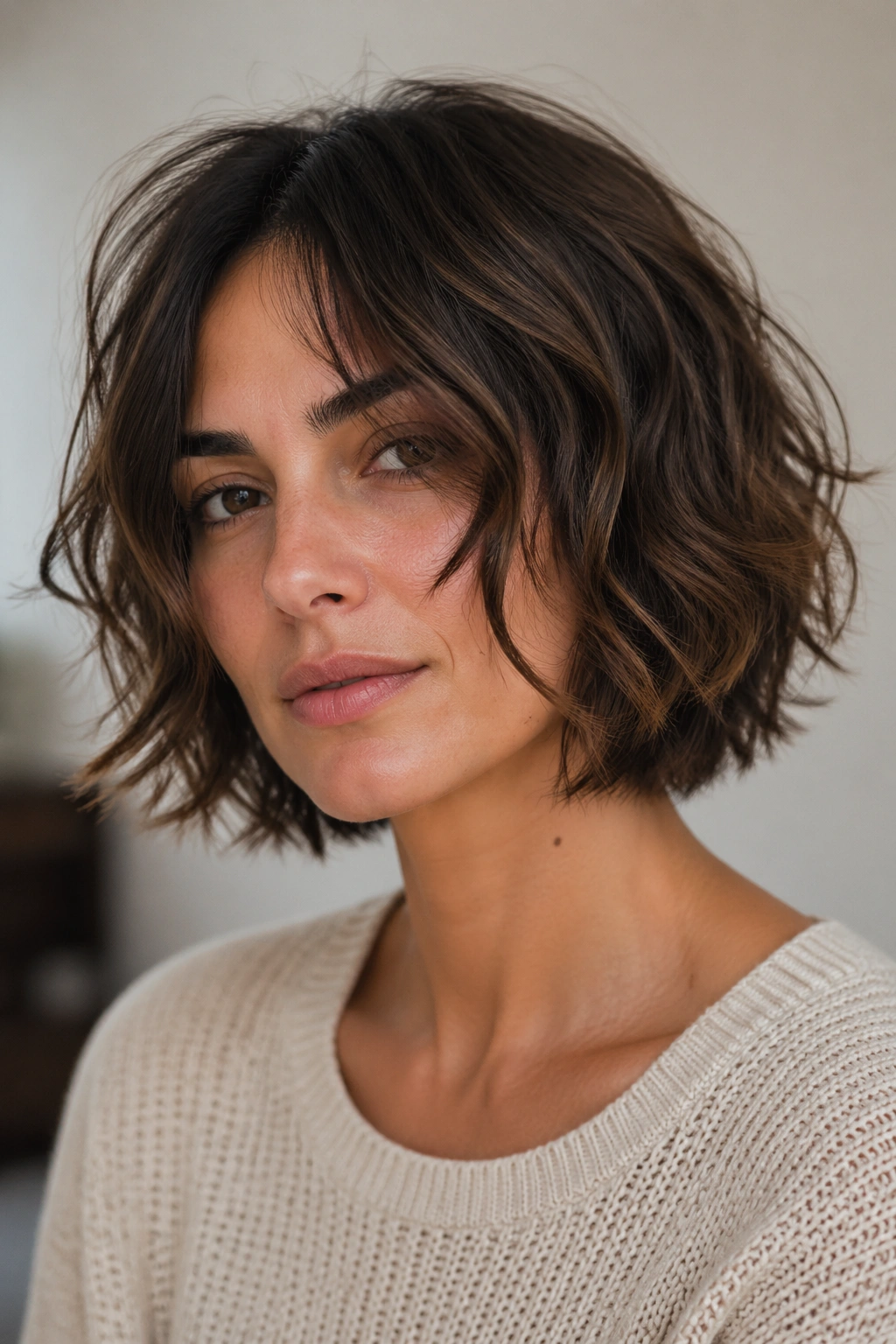
Picture a bob that looks better after you sleep on it. That’s the shaggy layered version, and thick wavy hair wears it with a kind of easy confidence that straight hair often has to fake. The layers break up the mass, and the piecey ends keep the shape from becoming too round or too heavy.
What to ask for
Ask for layers that start below the cheekbone, not way up near the crown. Too many short layers can make thick hair frizzier and wider. A better cut uses length in the top section to preserve weight, then slices into the ends so the shape moves.
- Keep the shortest interior layers around the cheekbone
- Let the perimeter stay near chin length
- Use a matte cream or light mousse for separation
- Diffuse on low heat or air-dry and scrunch
This one works especially well if your hair naturally leans toward wave rather than curl. The shaggy outline gives the wave something to cling to, and the ends don’t sit in a hard line. A little mess is the point.
4. Curtain-Bang Bob

Curtain bangs are not only for longer hair. On a short bob, they can soften the front and stop thick waves from looking too boxy around the face. The trick is keeping the shortest point around the bridge of the nose or just below the brows, then letting the sides fall into the cheekbones.
That shape plays nicely with wavy hair because the bangs can bend instead of hanging flat. If your hair likes to puff at the forehead, keep the bangs a touch longer and ask for them to be texturized, not thinned to death. Shorter fringe can get sticky and weird on humid days. Longer side bits behave better.
This cut also gives you styling flexibility. Wear the bangs center-parted and brushed open for a soft frame, or push them off to the sides when you want the face more open. A dab of styling cream through the fringe is enough. Heavy products make the front look limp fast.
5. Asymmetrical Bob
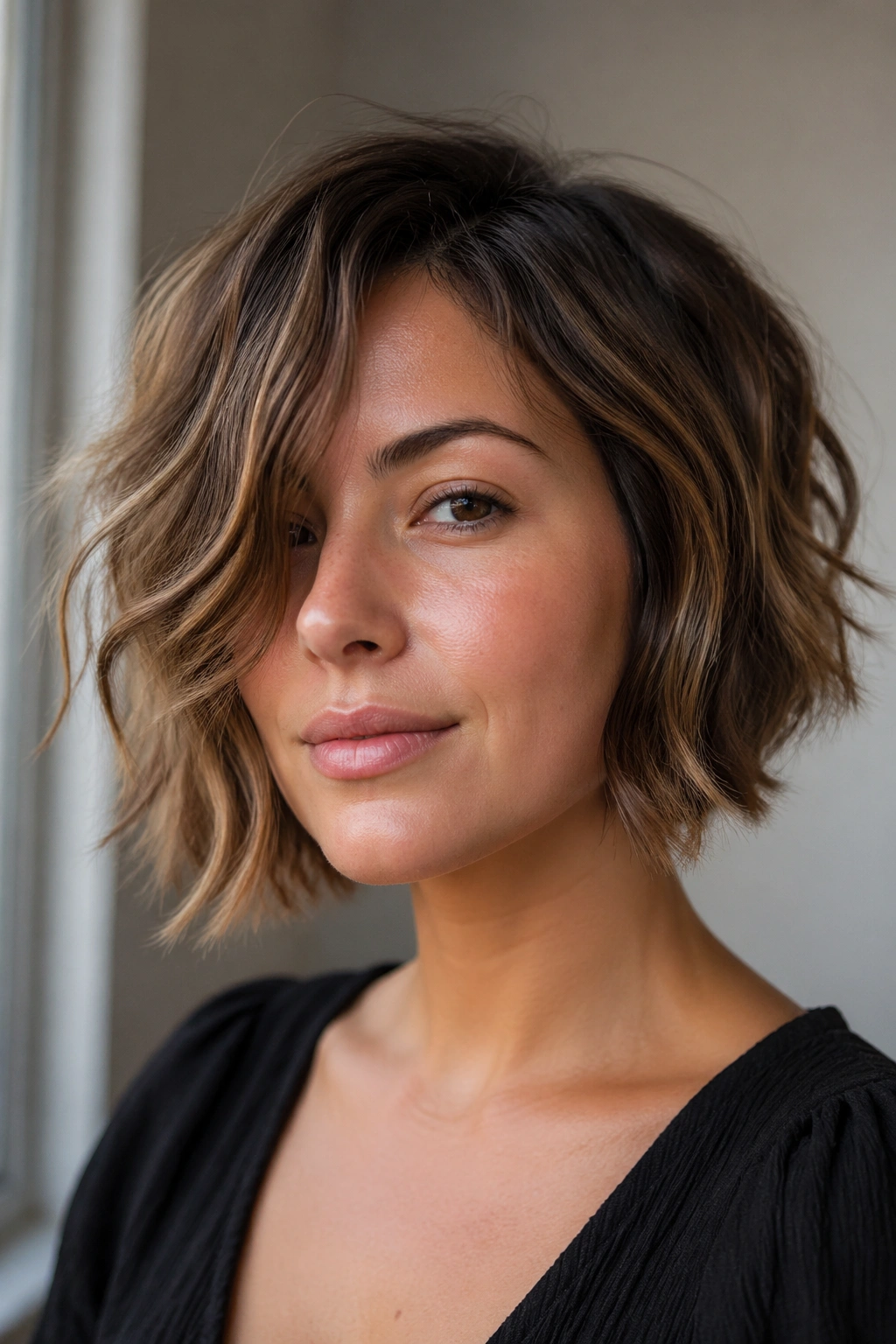
One side falling a little longer than the other can do more for thick wavy hair than a lot of people expect. It cuts the visual weight, draws the eye downward, and gives the whole shape some motion even when the hair is sitting still. That tiny imbalance makes the bob feel modern without needing a dramatic chop.
Small asymmetry, big payoff
Keep the difference subtle. Half an inch to 1½ inches is usually plenty. If the gap is too big, the style starts to feel like a statement haircut you need to maintain every morning. A soft asymmetrical line gives you the benefit without the work.
This is a smart choice if your hair grows out in a heavy, square shape. The longer side gives the jaw some length, while the shorter side opens the neckline. It also works well with an off-center part, which keeps the style from reading too symmetrical or too formal.
- Best for broad cheeks or strong jawlines
- Ask for texture at the ends, not all over
- Keep the longer side in the front, not the back
- Style with fingers first, brush second
6. Blunt Bob with Soft Ends

A blunt bob sounds severe, but it does not have to look hard. On thick wavy hair, a blunt outline with softly point-cut ends can give you the clean shape you want while keeping the finish relaxed. That’s the sweet spot if you like structure but hate a stiff result.
The real move here is restraint. Keep the perimeter solid enough to hold the bob’s shape, then soften the last half-inch of the ends so they don’t sit like a shelf. A lot of stylists over-thin this cut and ruin the edge. I’d rather see a clean line with subtle texture than shredded ends that swell up later.
This bob looks especially good if your wave pattern is broad rather than springy. It can hold a strong silhouette while still moving when you turn your head. A light serum on the ends and a diffuser on low speed are usually enough. Skip heavy creams here; they can make the cut feel flat at the roots.
7. Micro Fringe Bob
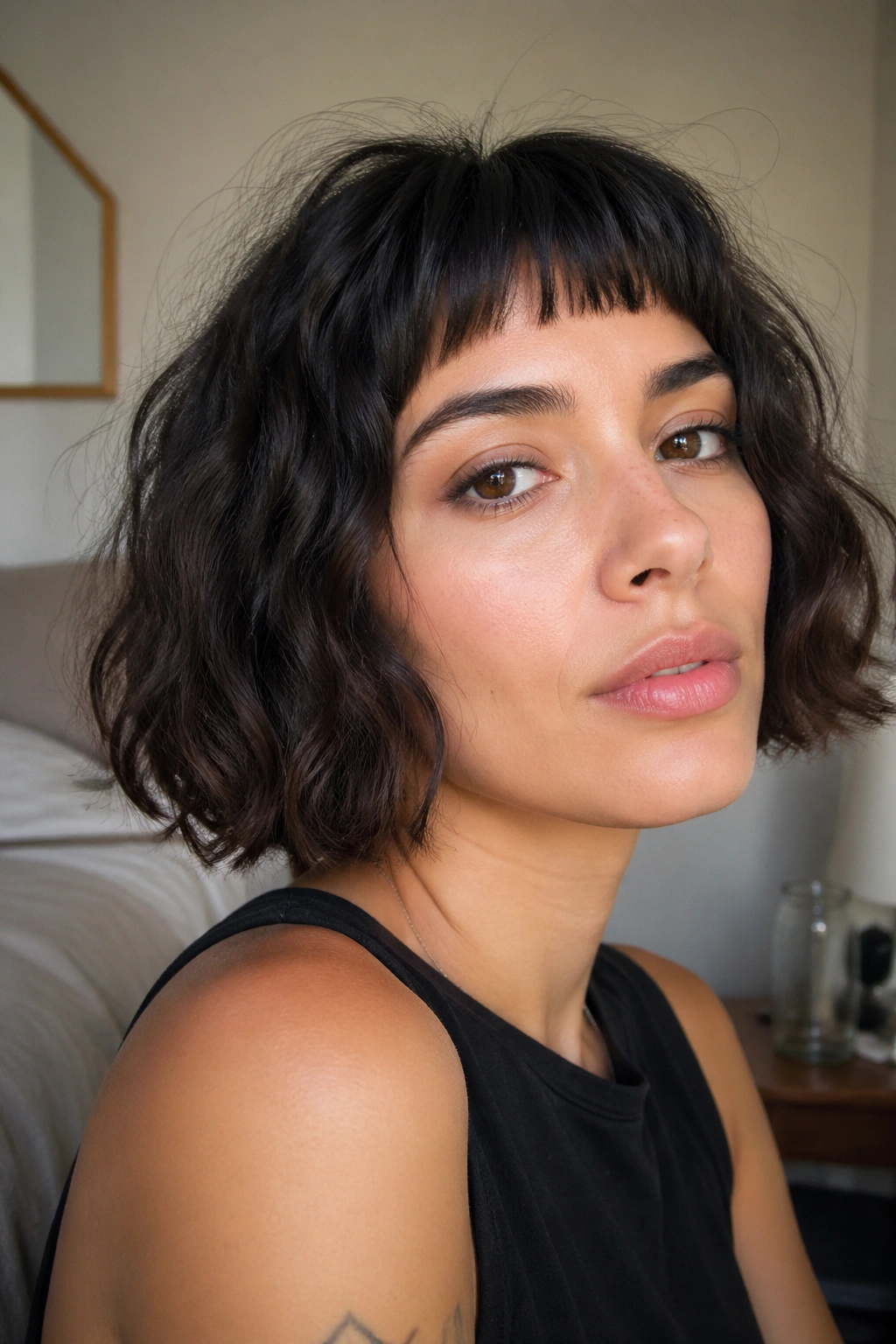
Short fringe. Short bob. A little attitude.
A micro fringe can look sharp on thick wavy hair because it breaks up all that density around the forehead. The key is making the fringe small enough to feel deliberate and not so heavy that it fights the wave pattern. When it works, the whole haircut reads as crisp, playful, and a little bit bold.
The bob itself should stay fairly simple. If you add too many layers plus a micro fringe, the cut can start to feel busy fast. Keep the shape around the chin or just below, and let the fringe be the point of interest. This is one of those styles that looks best when the rest of the hair is slightly undone.
Not everyone wants the upkeep, and that’s fair. Micro bangs need a trim more often than the bob does, usually every 4 to 6 weeks, because even a quarter-inch changes the balance. If your cowlick pushes the fringe around, ask your stylist to test the fall while the hair is dry. Dry fringe tells the truth.
8. Inverted Bob with Crown Volume
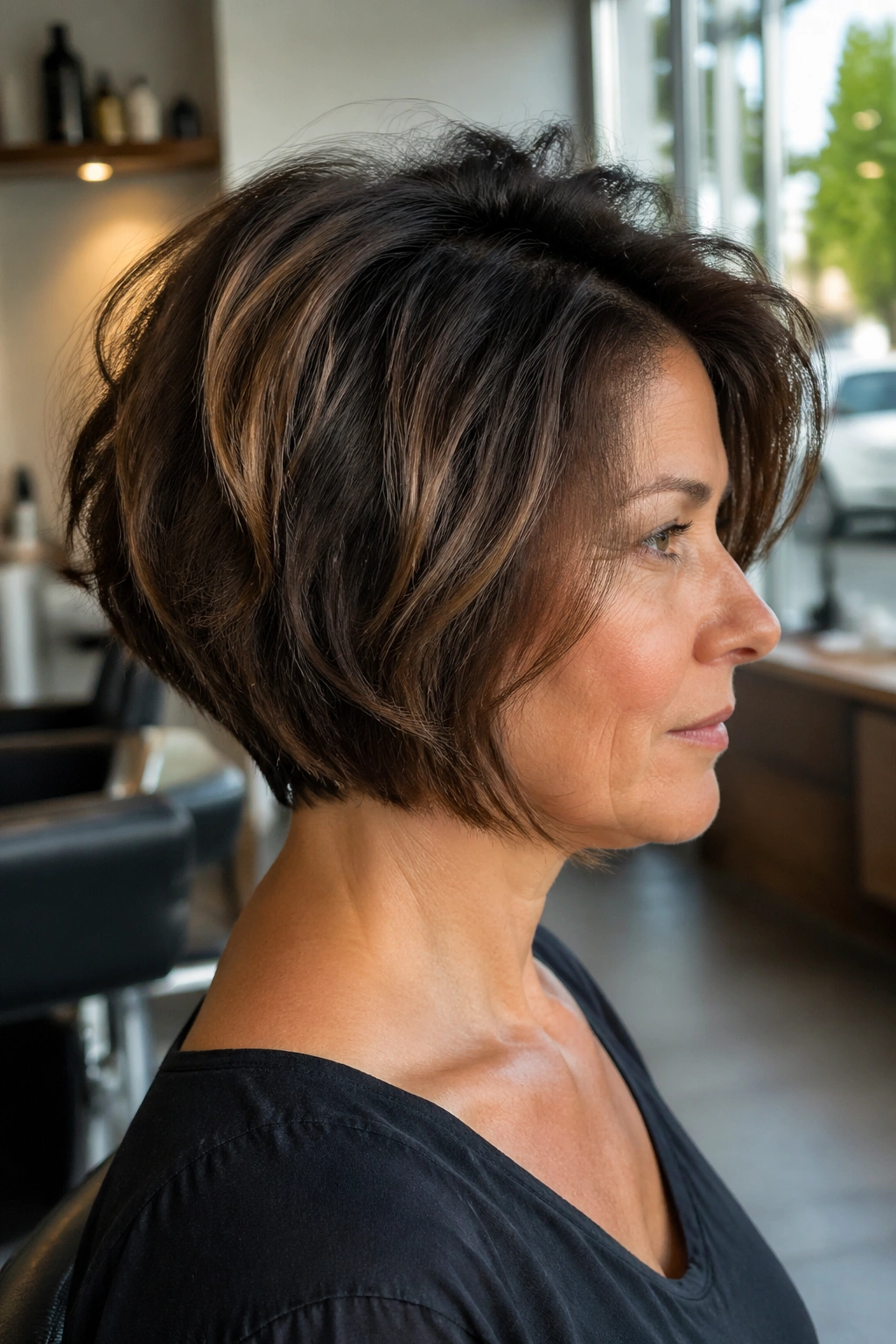
A bob that is a little shorter in the back can change the whole shape of thick wavy hair. The inverted line lifts the nape, opens the neckline, and gives the front pieces more room to move. That slight angle keeps the cut from sitting like one heavy block around the head.
This version works best when the graduation in the back is controlled. You want lift, not a stacked mushroom shape. The front can skim the jaw or sit right below it, which keeps the face-framing effect soft. Too steep an angle and the cut starts to feel dated; too little and you lose the shape that makes the style useful in the first place.
If your hair gets dense at the crown, this bob can help the top section look lighter without making the ends wispy. It’s one of the better options for people who like volume but not bulk. Ask for a dry check at the end, because thick waves often sit differently once they’re fully dry and the real outline shows itself.
9. Razored Bob with Airy Texture

A razor can be your friend, or it can turn thick waves into fuzz. That’s the whole conversation.
Used carefully, a razor softens the perimeter and creates airy texture that thick wavy hair wears well. The trick is where it goes. The razor should live mostly on the outer ends and only on hair that’s in good shape. If the hair is porous, overprocessed, or already frizzy, scissors are the safer call.
Where the razor belongs
Ask for controlled razor work near the ends, not through the crown. The crown needs strength. The perimeter needs movement.
- Use razor texture only on healthy ends
- Keep the top sections mostly scissor-cut
- Avoid aggressive thinning at the sides
- Finish with a light cream, not a sticky wax
This kind of bob has a breezy, broken-up finish that works especially well if you like your hair to look a little irregular on purpose. It’s less neat than a blunt bob, more relaxed than a shag, and easier to shake out with your fingers in the morning.
10. Deep Side-Part Bob
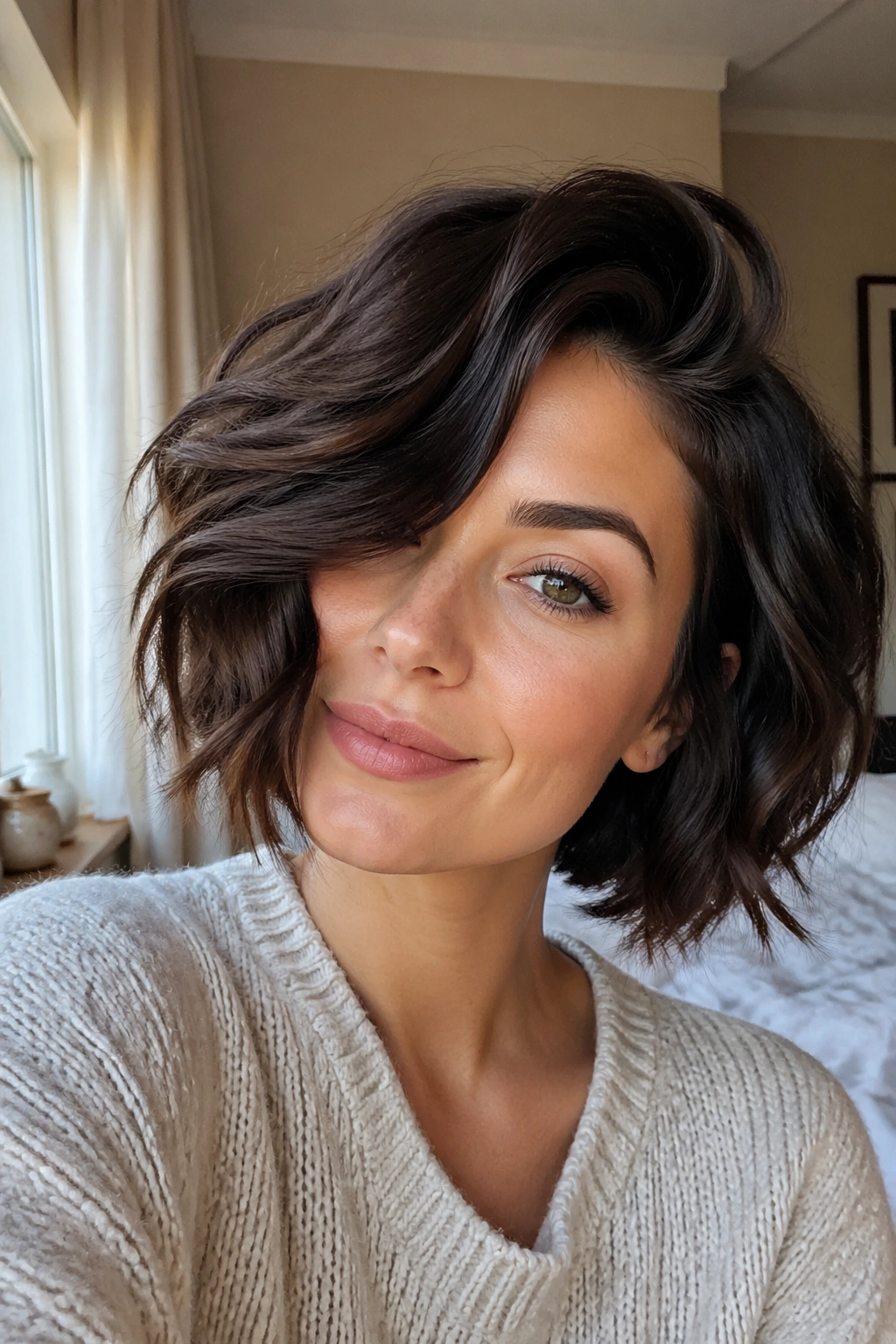
Want volume without losing the short length? A deep side-part bob is the move. It builds lift where thick wavy hair usually wants to lie flat and gives the face a more angled, sculpted frame. One side gets that sweep across the forehead, and the other side tucks a bit closer to the head.
The part matters more than people think. Set it while the hair is damp, then clip the root on the heavier side for a few minutes if you want extra lift. That tiny bit of training helps the style hold its shape longer, especially if your hair has a stubborn flat spot on one side.
This bob also softens strong cheekbones and can slim the look of a broader face without trying too hard. It’s not fussy. It just behaves well. If you’re tired of fighting a center part every single day, this one can feel like a relief.
11. Stacked Bob
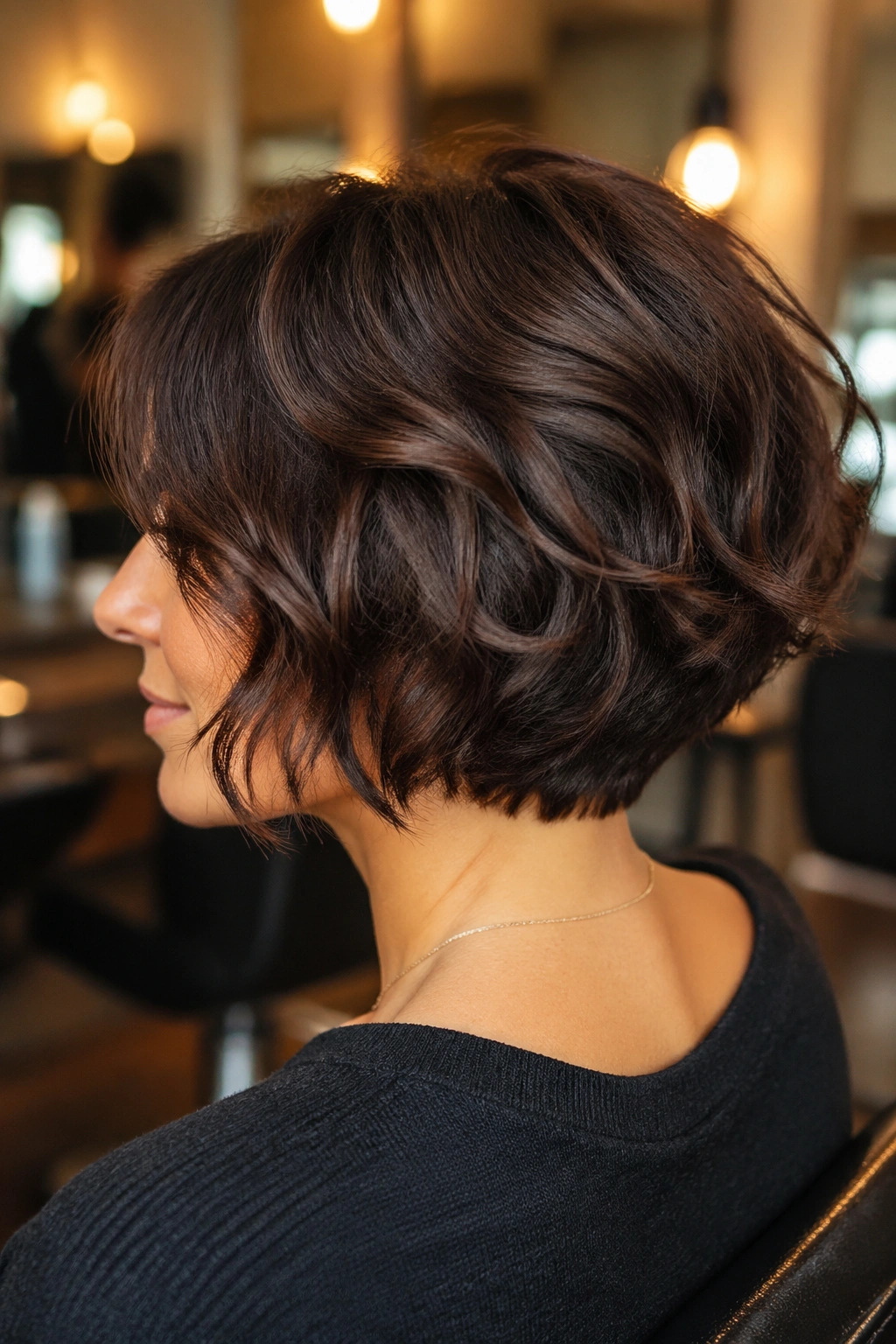
If the back of your hair feels heavy by noon, this is the cut. A stacked bob builds shape through the back so thick wavy hair doesn’t hang like a damp towel. The shorter layers at the nape support the longer top pieces, and that makes the whole cut sit higher and look lighter.
The danger is overstacking. Too much graduation and the bob starts to puff in the back while the front falls flat. That is exactly the wrong balance for wavy density. Keep the stack modest, and ask your stylist to leave enough length in the crown so the wave pattern has room to move.
This shape tends to work well on hair that grows straight out from the neck or gets bulky right under the occipital bone. It also gives a nice lift if you wear glasses, since the shape stays clear around the temples and does not fight the frames. Small detail, but it matters.
12. Beachy Bob with Long Layers

Beachy does not have to mean long. On a short bob, beachy texture can look sharper because the length is compact and the wave pattern reads more clearly. Long layers keep the cut from getting too round, while a little salt spray gives the mids that dry, separated look people want from this style.
The trick is not to overdo the salt. Thick wavy hair can already lean dry at the ends, so use a cream first if your hair feels rough, then a light mist of texture spray through the mids. Scrunch, let it bend, and stop touching it once it starts to set. Constant rearranging is how you kill the shape.
This bob looks best when it is imperfect. A few bendy sections, a couple of straighter bits, and some softness around the face give it that easy feel. It’s the sort of cut that forgives a rough air-dry, which is useful when you do not want to blow out your hair every time you wash it.
13. Rounded Bob with Face-Framing Pieces
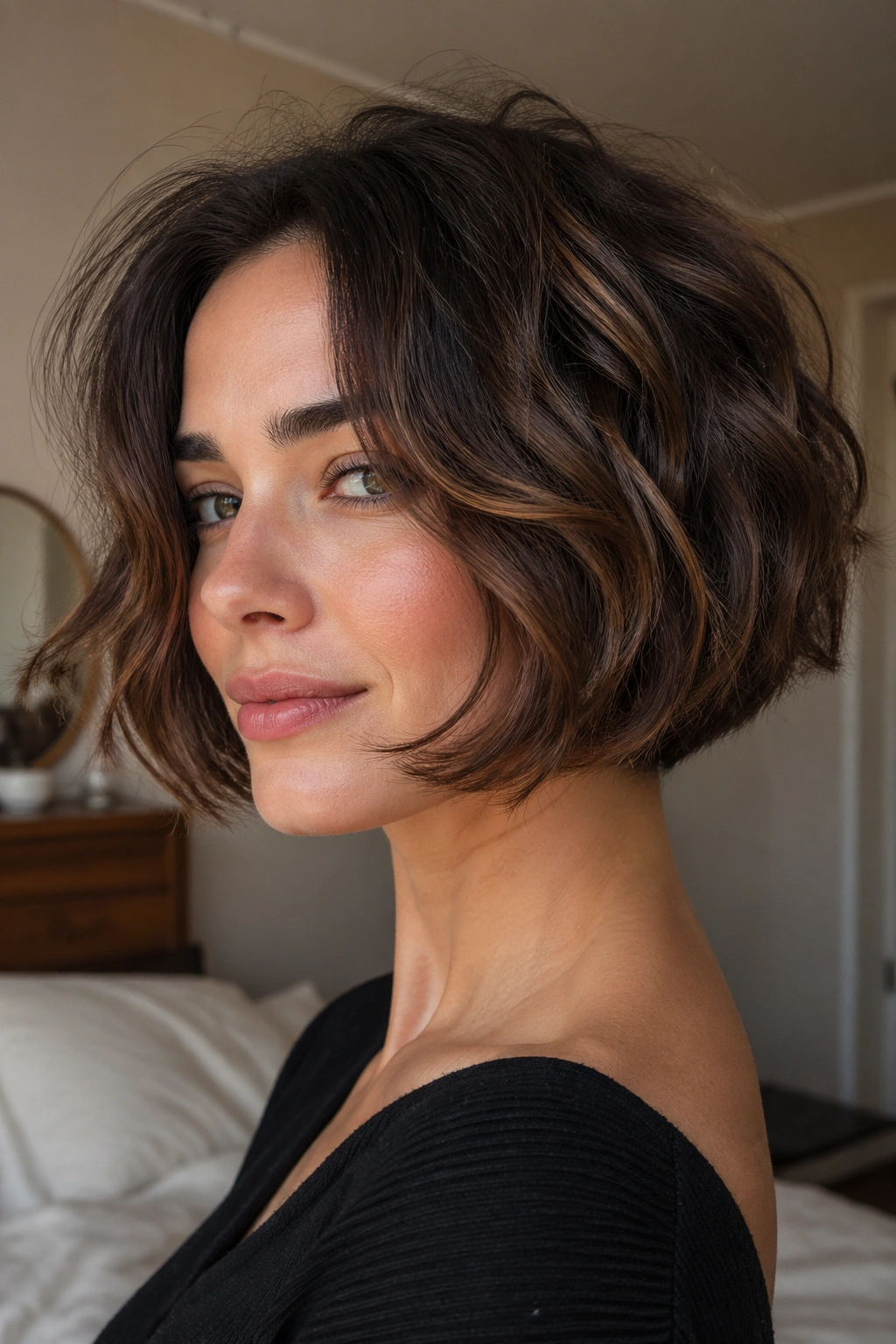
When the perimeter curves softly around the chin, the whole cut feels calmer. A rounded bob works with thick wavy hair because it contains the volume instead of forcing it into a hard angle. The result is fuller through the sides, but softer at the edges.
The face-framing pieces matter more than people give them credit for. Keep them a little longer around the cheekbone or lip line, and they’ll break up the heaviness at the front. Without those pieces, a rounded bob can feel too dense. With them, it moves.
I like this one on hair that has a strong bend but not a lot of spring. The rounded shape gives the wave room to turn inward instead of flipping out at the ends. If your hair tends to spread wide at the sides, this is one of the cleaner ways to keep the silhouette under control without making it look strict.
14. Italian Bob

This is the bob I’d suggest if you want body without lots of visible layering. The Italian bob usually sits at the chin or just below it, with a fuller outline and soft movement at the ends. On thick wavy hair, that fullness reads as richness instead of bulk when the cut is handled well.
The styling trick
Keep the roots smooth and let the mids do the work. A round brush or a large velcro roller at the crown can give you a little lift, but the ends should still move freely. If you blow-dry the whole thing straight, you lose what makes the cut interesting in the first place.
A few practical notes:
- Ask for a soft bevel at the ends
- Keep layers minimal unless the hair is very dense
- Use a medium-hold mousse at the roots
- Finish with fingers, not a brush, for the last bit of shaping
The Italian bob suits thick waves because it keeps the line full and strong. It does not rely on lots of chopped-up layers. That means the shape can grow out gracefully, which is a nice change from some bob cuts that look awkward after two weeks.
15. Choppy Bob with Piecey Layers
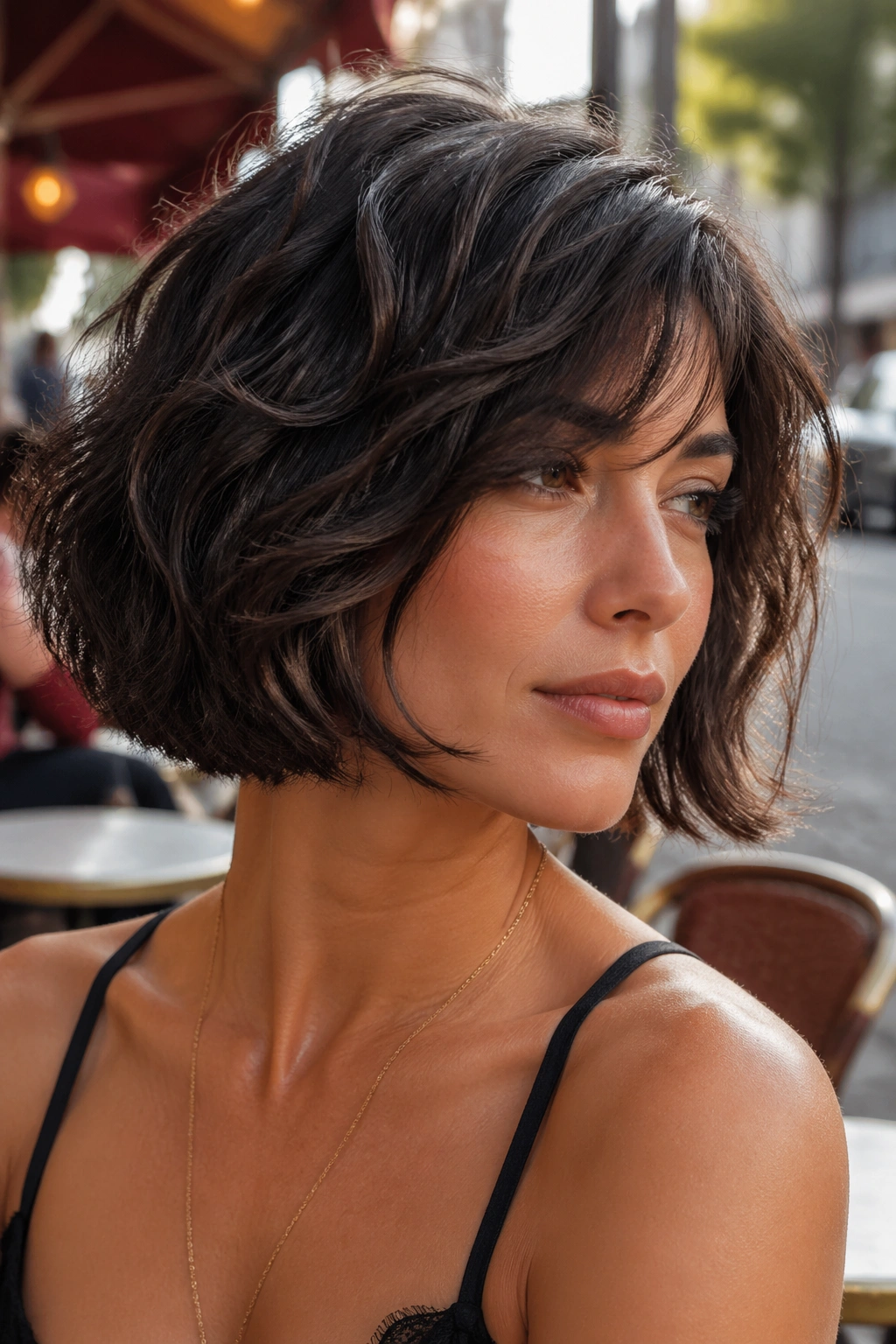
Piecey ends. Soft separation. Zero helmet energy.
A choppy bob leans into the natural movement of thick wavy hair instead of trying to smooth it into one solid shape. The layers are not tiny and not fussy. They’re broken up enough to let the waves sit apart from one another, which gives the haircut that slightly undone finish people keep trying to copy with styling products.
The main thing here is balance. Too much chopping and the ends can look thin while the mids stay heavy. Too little and the cut turns into a blunt line with bad manners. The sweet spot is somewhere in between, with visible separation around the face and cleaner weight through the back.
This cut looks good with a dab of styling cream or a small amount of matte paste worked through the ends. Use your fingers. A comb tends to over-organize the texture, and that takes away the charm. The whole point is for the hair to look shaped, not shelled into place.
16. Bob with a Hidden Undercut

A hidden undercut can save a lot of time. If your hair is very dense at the nape or behind the ears, removing a small section underneath can make the outer shape sit flatter and dry faster. Nobody has to see the undercut unless you lift the top layer, which is exactly why it works.
This option is especially useful for thick wavy hair that feels bulky in hot weather or takes forever to dry. The trick is keeping the undercut subtle. You are not trying to shave the whole back of the head. You’re removing enough bulk that the bob can sit cleanly.
It does come with a tradeoff. Grow-out needs maintenance, and some people hate the feeling of shorter hair underneath. Fair enough. But if your main complaint is that your bob turns puffy and heavy at the neck, this is one of the most practical fixes on the list.
17. Wedge Bob
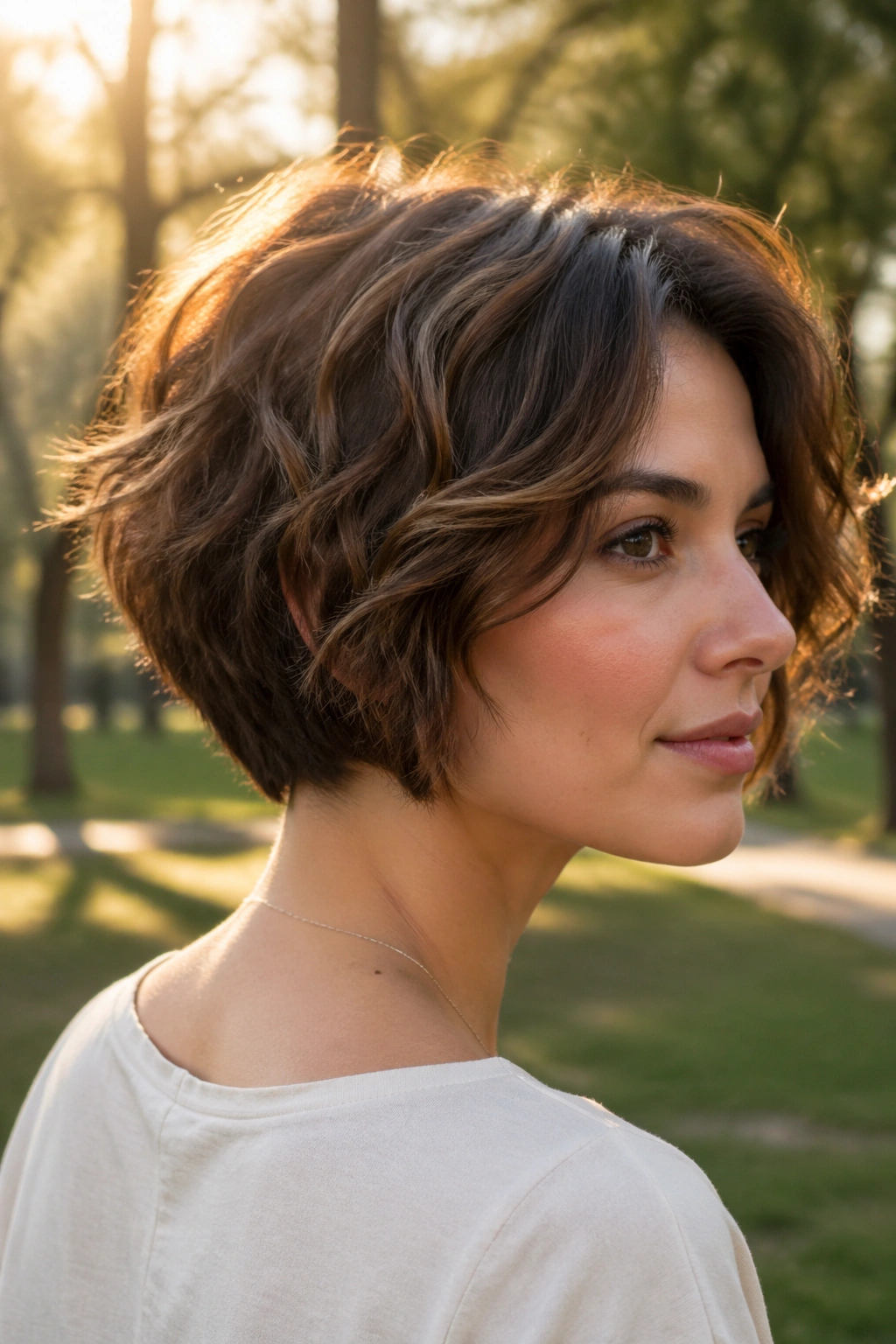
The wedge bob is old-school in the best way. Shorter in the back, fuller through the top, and shaped so the hair falls close to the head at the nape, it gives thick waves a compact outline that still has movement. When it’s softened a little, it can feel sharp and wearable at the same time.
What keeps this version modern is texture at the ends. You do not want a hard geometric wedge unless that is the look you love. For most thick wavy hair, a slightly softer graduation makes the cut easier to style and less prone to puffing out around the ears.
This one suits people who like a bob that looks intentionally cut, not accidentally grown out. It frames the neck well and shows off the wave pattern without asking for much styling. If your hair gets heavy fast, the wedge shape can hold the line longer between trims than softer, more layered bobs.
18. Disconnected Bob
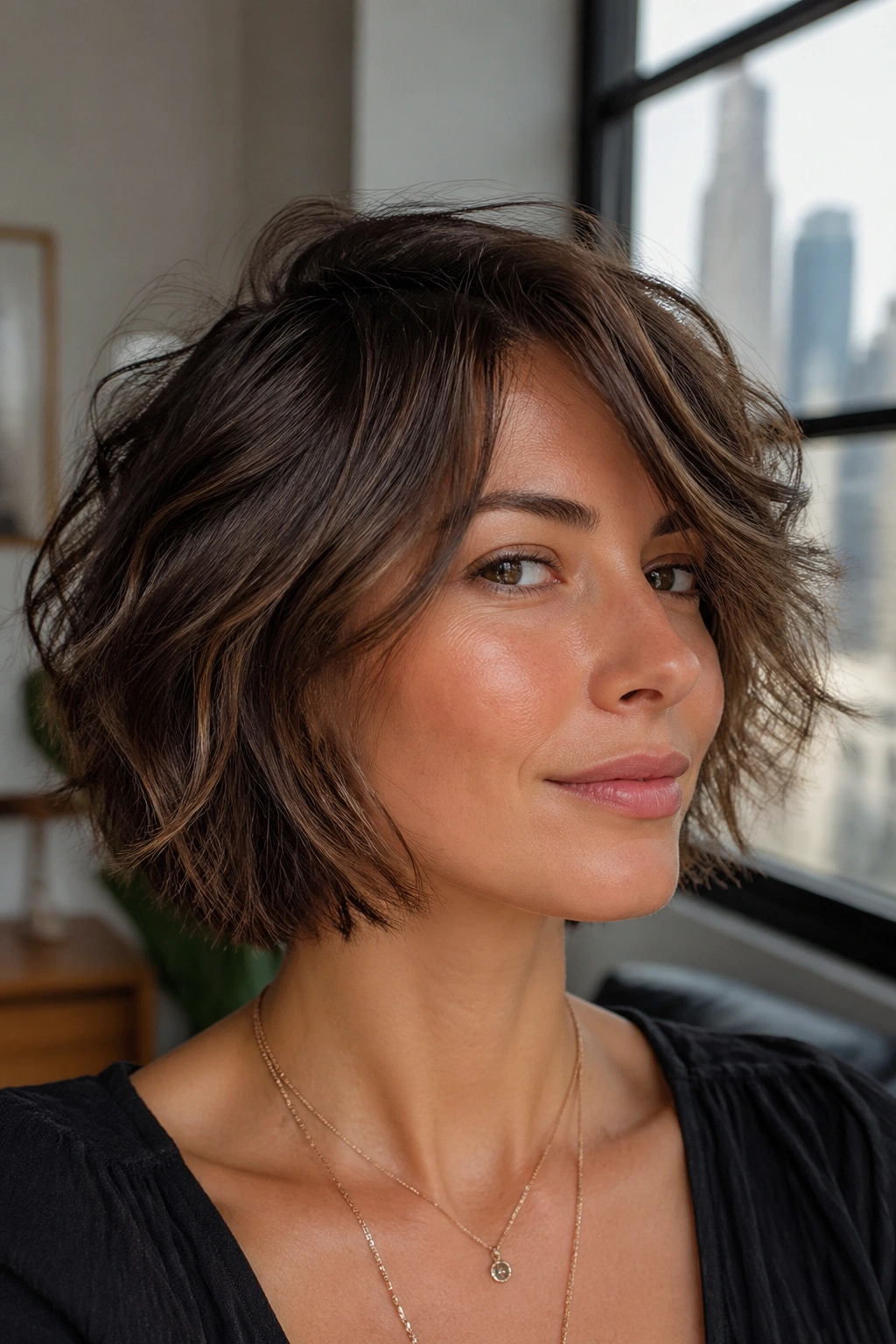
What happens when the top layer stays a touch longer than the underlayer? You get movement without losing the shape. That is the appeal of a disconnected bob, especially on thick wavy hair that needs space to bend instead of sitting in one solid mass.
How to keep it wearable
The difference between the layers should be subtle. Think half an inch to 1½ inches, not a dramatic gap. The top should drape over the lower section, not sit like a different haircut. When the disconnection is soft, the bob moves around the head instead of locking into one boxy outline.
This cut is handy if you like texture but hate a lot of visible layering. It also works well with a side part or a loose face frame, because those details help hide the transition between lengths. If you want a bob that feels a little more editorial but still easy to wear, this is a good lane to explore.
19. Bob with Bottleneck Bangs
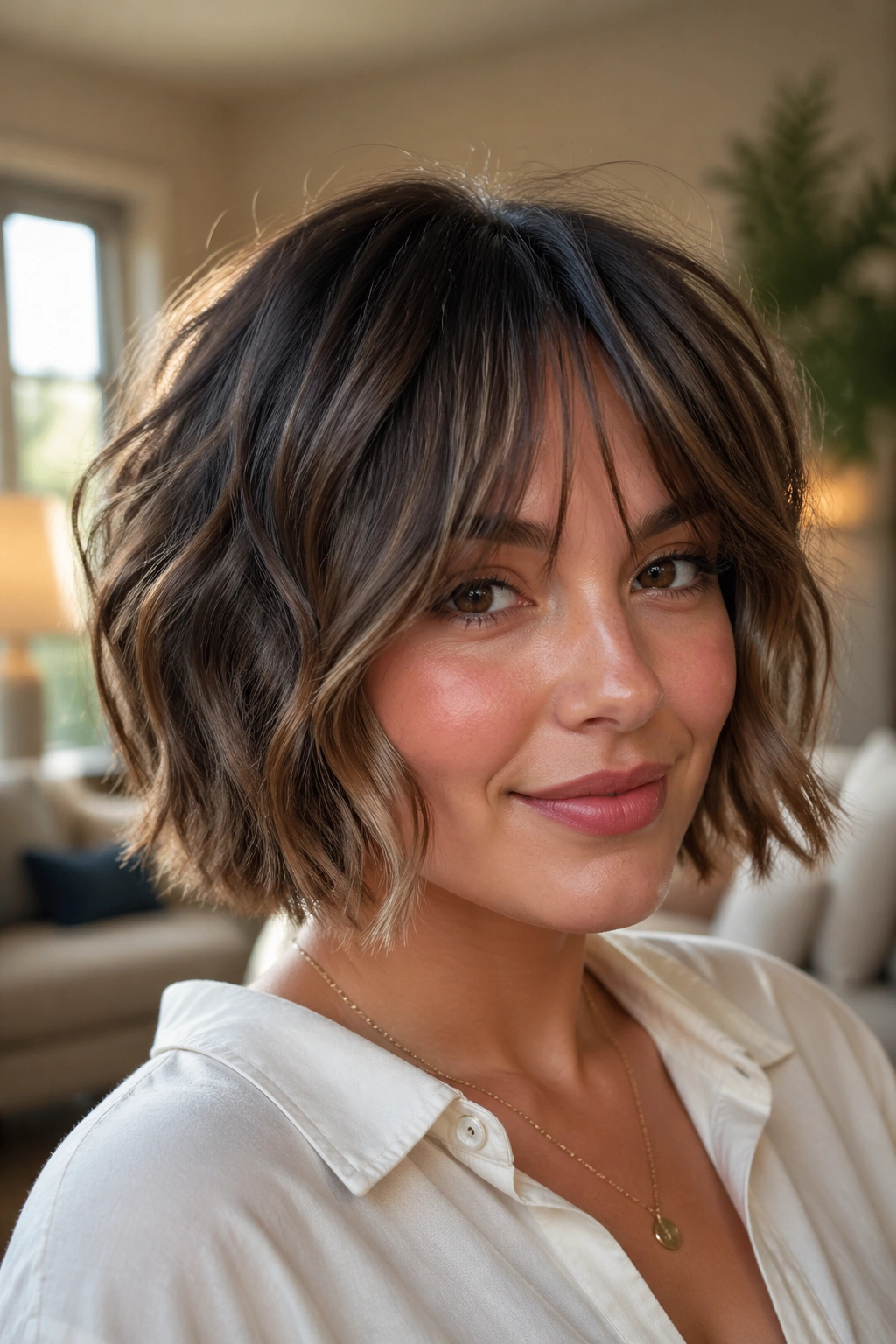
A center fringe that opens wider near the cheekbones can make a thick bob feel lighter. Bottleneck bangs do exactly that. They start narrow in the middle, then widen as they bend toward the sides, which helps the face look softer and the haircut look less heavy at the front.
The shape suits wavy hair because the fringe does not need to lie perfectly flat. A little bend through the center, a little sweep at the sides, and the whole thing falls into place. If the bangs are cut too blunt, they can sit like a curtain across the forehead and fight the bob underneath.
I like this style when the rest of the cut is fairly simple. The fringe becomes the point of interest, so the bob itself can stay chin-length and clean. Use a diffuser or finger-dry the bangs so they keep some separation. A round brush can work, but only if you want a smoother finish than a messy one.
20. Soft A-Line Bob
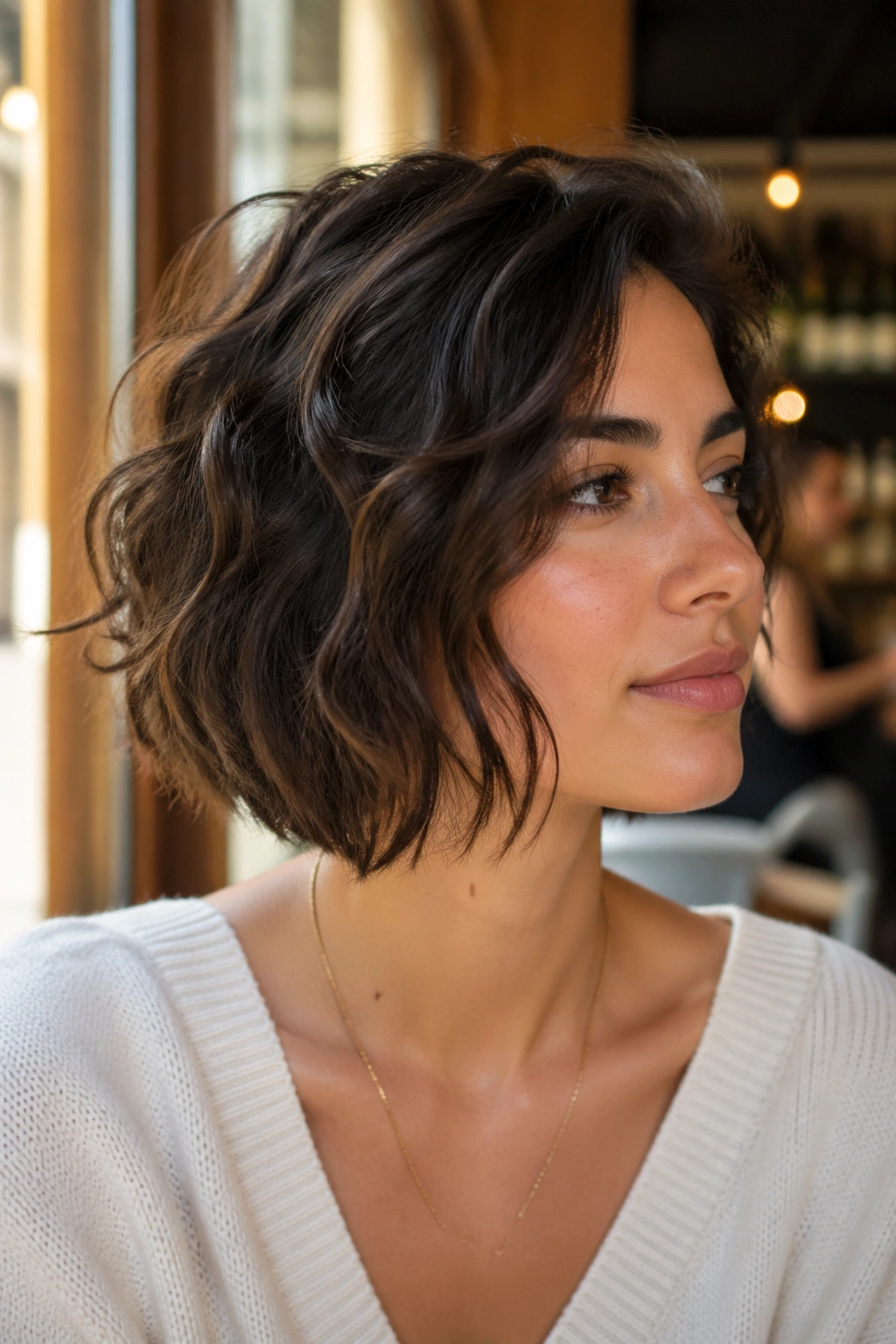
A-line does not have to be sharp. A soft A-line bob keeps the front a little longer than the back, but the angle is gentle enough that thick wavy hair still moves naturally. The result is a shape that feels polished without becoming stiff.
This cut helps when the jawline is the part of the face you want to skim rather than hug. A small forward angle pulls the eye down and lengthens the profile a bit. Keep the difference subtle, though. A steep A-line on thick waves can flip strangely and create a shelf at the sides, which is a headache no one needs.
A soft A-line also gives you a little more room to play with styling. Tuck one side behind the ear, leave the other side loose, or push everything forward for more edge. The line stays readable even when the texture gets messy, which is why this version works so well in real life and not only in salon photos.
21. Tapered Nape Bob
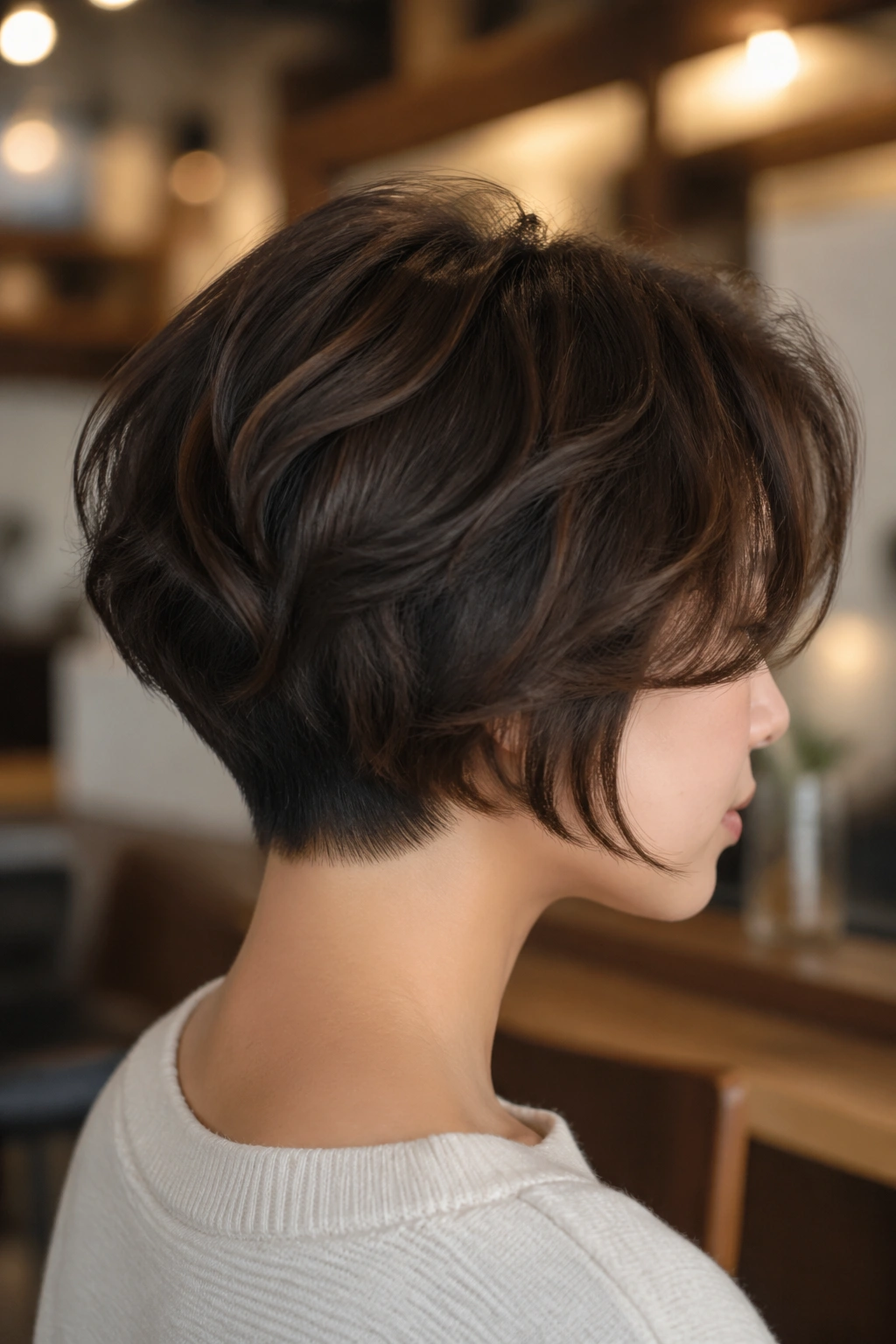
At the nape, the cut should lie flat and clean. A tapered nape bob does exactly that, trimming bulk where thick wavy hair often feels the heaviest and letting the rest of the shape sit more easily. It is one of the quietest fixes on the list, and one of the most practical.
The taper keeps the neckline neat without needing a hard undercut. That makes the haircut easier to grow out and less dramatic if you decide you want a slightly longer bob later. The top can still have soft layers or a side part, but the back stays controlled.
This style is especially useful if your hair gets bulky against collars or jackets. The shorter nape takes some of that pressure off, which helps the bob keep its outline on busy days. It is not flashy. It is just smart.
22. Air-Dried Bob for Thick Wavy Hair

If you want the least fussy option, build the cut around air drying. That means the bob has to look good when it bends on its own, not only when it’s blown out smooth. Thick wavy hair can absolutely do that, as long as the cut respects the wave pattern and does not fight it.
Products that behave best
Start with a light curl cream or leave-in through the mids, then add a mousse at the roots if you need lift. Heavy oils near the scalp will collapse the shape. A microfiber towel helps, and so does a short scrunch with your hands once the hair is damp, not dripping.
- Use a light cream on the mid-lengths
- Add mousse at the roots for lift
- Skip heavy butters near the crown
- Diffuse only the parts that dry too flat
The whole point is to work with the natural bend. If the cut is right, you should be able to let the hair dry with a bit of randomness and still end up with a shape that looks intentional. That is the real test, honestly. Not how it looks for ten minutes in the mirror.
23. Tousled Bob with Flip Ends

A little flip at the ends goes a long way. On thick wavy hair, a tousled bob with slightly turned-out ends breaks up the weight and keeps the shape from feeling static. It’s the kind of detail that makes a short bob look moving, even when you’re standing still.
The flip does not need to be dramatic. A soft bend from a round brush, a quick pass with a large barrel iron, or a careful scrunch-dry can all create that lifted edge. The important part is that the ends do not sit like a hard line. That’s where the cut starts to feel too serious.
This style works well if your hair has a naturally loose wave and you want it to look a bit playful. It also grows out nicely, because the flipped ends hide small changes in length. If you like hair that looks a little imperfect but still shaped, this one hits the mark.
24. Half-Moon Fringe Bob

Think of a soft curved fringe that sits a touch shorter in the middle. A half-moon fringe bob gives thick wavy hair a gentle frame around the eyes without the heaviness of a full straight bang. The curve keeps the front open, which matters when the rest of the hair already has plenty of density.
The fringe should be textured enough to move. If it is cut too blunt, it can sit like a wall and make the bob feel denser than it is. Keep the sides slightly longer so they blend into the front of the haircut instead of stopping abruptly at the temples.
This shape can be a nice middle ground if you like bangs but do not want to commit to a full fringe with a lot of daily styling. It has enough softness to work with wavy texture, and enough structure to keep the face from getting swallowed by the cut. That balance is the whole game here.
25. Tucked-Under Ends Bob

This is the neatest messy bob on the list. The ends tuck under just a little, giving thick wavy hair a finished edge without killing the movement. It feels polished, but not stiff, and that small inward bend is often enough to stop the shape from spreading out at the bottom.
The styling part is straightforward. A medium round brush or a large bendy brush can guide the ends inward while leaving the mids loose. You do not need a perfect blowout. You only need the bottom inch to fold under slightly so the perimeter stays controlled.
I keep coming back to this one because it holds up on real days, not fantasy days. It works after errands, after a long commute, after sleeping on it. Ask for light internal debulking, a soft perimeter, and enough length at the front to keep the face frame from puffing out. That combination gives thick wavy hair shape without making it feel over-managed, and that’s usually the sweet spot people are trying to find in the first place.
