



Wavy hair often exists in a frustrating middle ground. It is heavy enough to lose its curl pattern if the cut is too long, but it lacks the structural support of coarse curls. When you walk into a salon and just ask for “a trim,” the stylist might accidentally remove the exact weight that was keeping your hair from looking frizzy, or conversely, leave enough length to turn your head into a bottom-heavy triangle. If you are struggling with flat roots and a lifeless mid-length, the culprit is usually the haircut, not the product.
Volume is fundamentally a game of physics and geometry. You need to remove weight from the areas that pull your hair down while maintaining density in the areas that create the appearance of fullness. Most people with waves make the mistake of thinning their hair too much at the ends, which leads to wispy, unhealthy-looking strands, or they leave the hair all one length, which creates a heavy curtain effect. The secret is layering—specifically, internal and ghost-layering—that pushes the hair up rather than letting it sit flat against the scalp.
We are going to break down thirty-five specific cuts that manipulate texture and weight to force your waves to behave, bounce, and actually occupy space. Whether you are ready for a major chop or just looking to refine your current length, the following options are designed to maximize your natural texture.
Understanding the Physics of Wavy Volume
Before selecting a cut, you need to understand how your hair is currently failing to hold volume. Most wavy hair is finer than it looks, meaning individual strands might be thin, even if you have a lot of them. This creates a deceptive density. If you cut this hair with a razor, you might accidentally create frizz because the bluntness of a shear-cut is often necessary to keep the cuticle smooth.
Weight is the enemy of volume. When wavy hair grows past the shoulders, gravity takes over. The hair at the roots is pulled tight, and the waves at the bottom become stretched out. By strategically removing weight through internal layers—layers cut into the middle of the hair shaft rather than the ends—you allow the hair to spring up. This creates a “cushion” effect where the strands support each other, preventing that dreaded flat-top look.
1. The French Bob
This is the gold standard for immediate volume. By keeping the length right at the jawline or slightly above, you remove the heavy length that usually stretches out waves. The French bob is typically blunt at the bottom, which creates a sharp line that makes the hair look thicker, while the interior is texturized to allow the waves to stack on top of each other.
Why It Works for Waves
The blunt perimeter provides a base that looks healthy and dense. Because the hair is short, gravity has almost zero impact on your root lift. You get a natural bounce that requires very little styling effort.
Styling for Maximum Height
- Apply a light-hold sea salt spray while damp.
- Use a diffuser attachment on a low-heat setting.
- Scrunch the hair upwards toward the scalp while drying. Pro tip: Do not brush this cut when dry. Use your fingers to pick out the roots to preserve the wave clumps.
2. The Choppy Lob
If you aren’t ready to commit to a jaw-length crop, the long bob, or “lob,” is your best friend. This cut sits right around the collarbone. It is long enough to pull back if you need to, but short enough to retain significant body.
The “choppy” aspect refers to the ends. Rather than a clean, straight line, ask your stylist to point-cut the ends. This technique involves cutting into the hair with shears held vertically, which softens the perimeter and allows the waves to nestle into one another. It prevents the hair from separating into those distinct, stringy triangles that plague wavy hair.
3. Internal Layering Bob
Many people fear layers because they associate them with the 1990s “mullet” aesthetic. Internal layering, however, is a modern technique where the stylist cuts shorter pieces underneath the top layer of hair. These shorter pieces act like invisible scaffolding for your hair.
When the top layer of your hair rests on these shorter, hidden layers, it is physically pushed outward. This creates an instant boost in volume at the crown without changing the external look of the haircut. It is perfect if you have thin, wavy hair that needs a boost but you don’t want the “layered” look.
4. The Shaggy Mullet
Yes, the shag-mullet hybrid has returned, and it is arguably the best cut for high-volume, wavy hair. This style embraces the chaos. It features shorter, choppier layers around the crown and face, while keeping some length at the back.
The disconnect between the top and the back forces the hair to stand up. Because the layers are quite short at the top, they are lightweight and easy to volumize. You can wake up, spritz with some texture spray, and go. It’s a low-maintenance, high-impact cut that screams personality.
5. Long Pixie with Crown Layers
A long pixie is for those who want to commit to the chop. By keeping the top long and the sides tight, you create a beautiful silhouette that draws the eye upward.
The Mechanics of the Lift
The key to this cut is the crown. You want those layers to be short enough that they don’t flatten out, but long enough that they still show your wave pattern. If they are too short, you’ll end up with a poofy texture that looks like an afro; if they are too long, they’ll lie flat. Aim for a length that allows the hair to bend at least once.
Maintaining the Shape
- Use a lightweight mousse rather than a cream.
- Visit the salon every six weeks to keep the sides tight. Maintenance note: If the sides grow out, the whole cut loses its “volume” focus, so don’t skip those trims.
6. Deep Side-Parted Wavy Bob
Sometimes, volume isn’t about the cut itself, but how the cut is designed to be styled. A bob with a deep side part is a classic trick to force the hair up at the roots.
When you flip a large section of hair over to one side, you are creating a “root lift” effect automatically. The weight of the hair on the heavy side forces the roots to stand up at an angle, which is the exact opposite of what happens when you part down the middle. Ask your stylist for a bob that is slightly longer in the front to complement this sweeping motion.
7. Graduated Inverted Bob
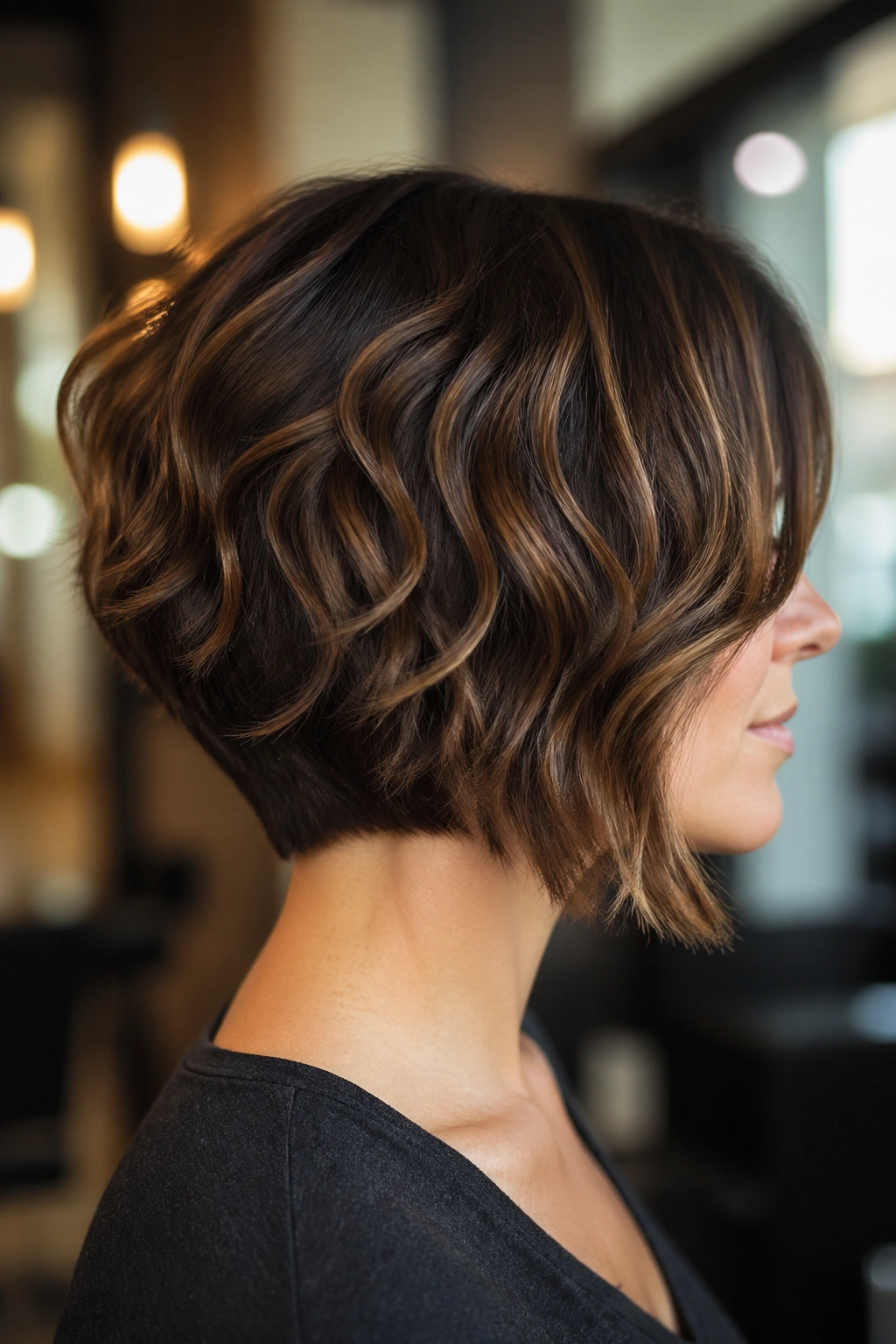
This style is shorter in the back and gets progressively longer toward the front. The stacked layers in the back create a natural wedge, which is essentially a built-in volume generator.
Unlike a standard bob, the inverted bob uses the nape of your neck as a pivot point. The hair is cut with short, stacked layers that push everything above them upward. It’s one of the most effective cuts for people whose hair tends to go flat the moment they walk out the door. It essentially forces volume into the back of your head.
8. Blunt Cut with Invisible Layers
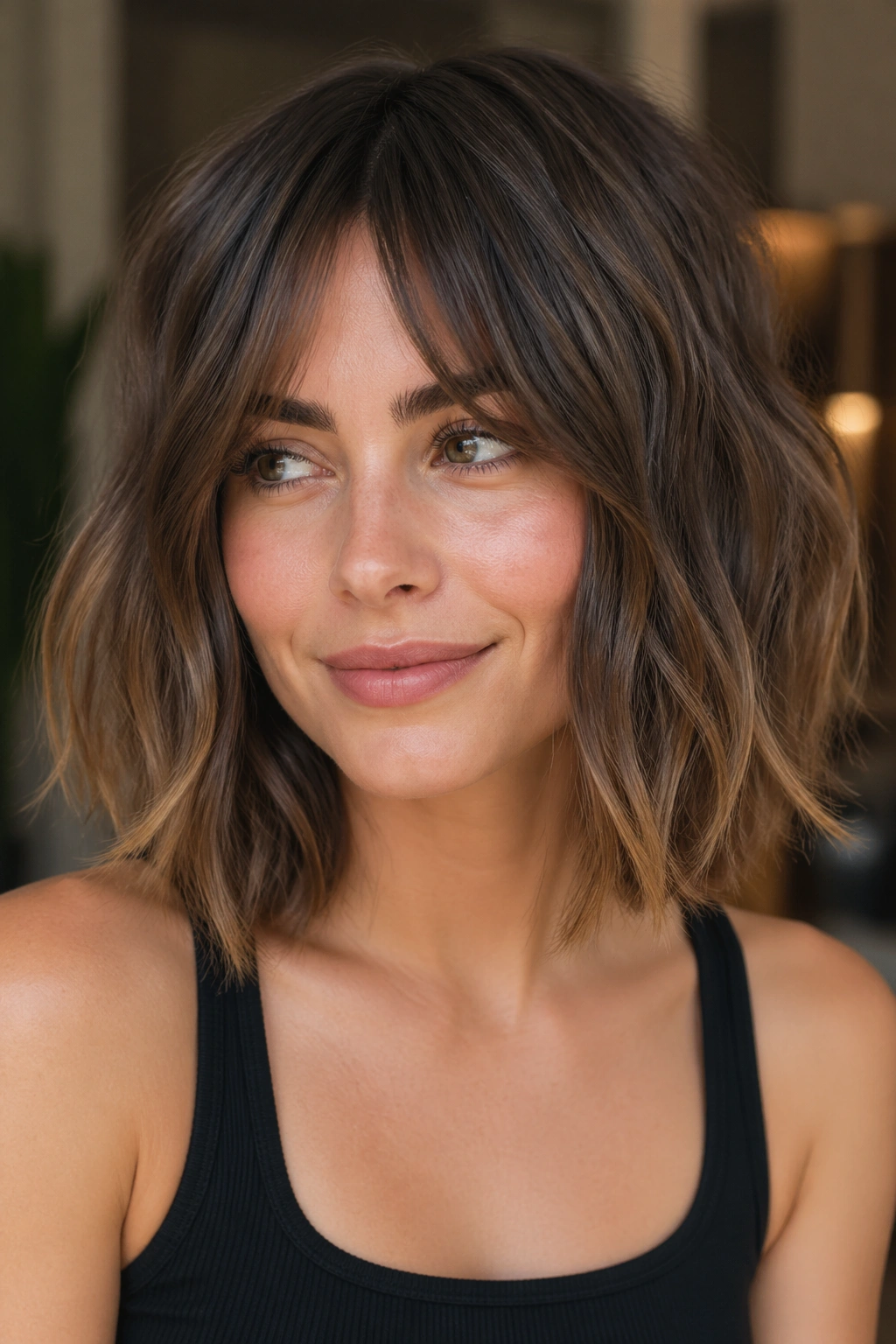
If you love the look of thick, heavy, healthy hair, the blunt cut is tempting. But if you have wavy hair, a straight blunt cut can look like a lampshade. The solution is the “invisible layer” technique.
This is where the perimeter of the hair is kept blunt and sharp, but the stylist uses a texturizing shear or a razor on the internal sections to break up the weight. You get the appearance of a solid, thick cut, but the hair is significantly lighter and has the capacity to hold volume at the roots because it isn’t being weighed down by a massive, solid mass of hair at the bottom.
9. Collarbone-Grazing Shag
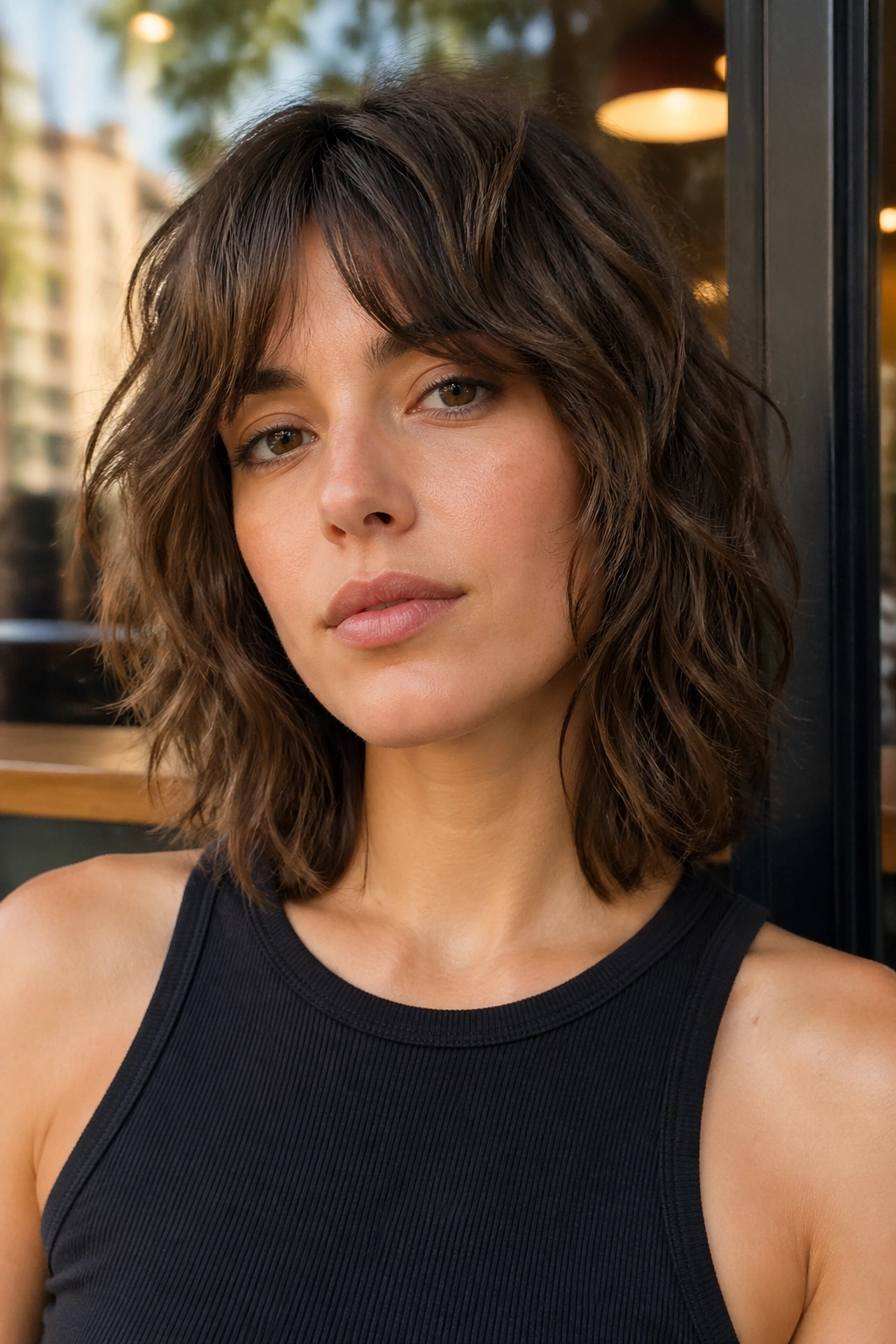
This is the “cool girl” cut of the decade. It hits right at the collarbone, creating a flattering length that elongates the neck, while the layers throughout the mid-section create movement.
Why It Excels
The shag relies on shattered ends and lots of layers. Because waves want to bend, the layers give them permission to do so. A collarbone-grazing shag prevents the “triangle effect” because the layers remove enough weight to stop the bottom from getting wider than the top.
Essential Styling Tip
- Use a curl cream on damp hair.
- Let it air dry 80% of the way.
- Flip your head upside down and use a hair dryer for the final 20% to boost the roots.
10. Mid-Length Face-Framing Layers
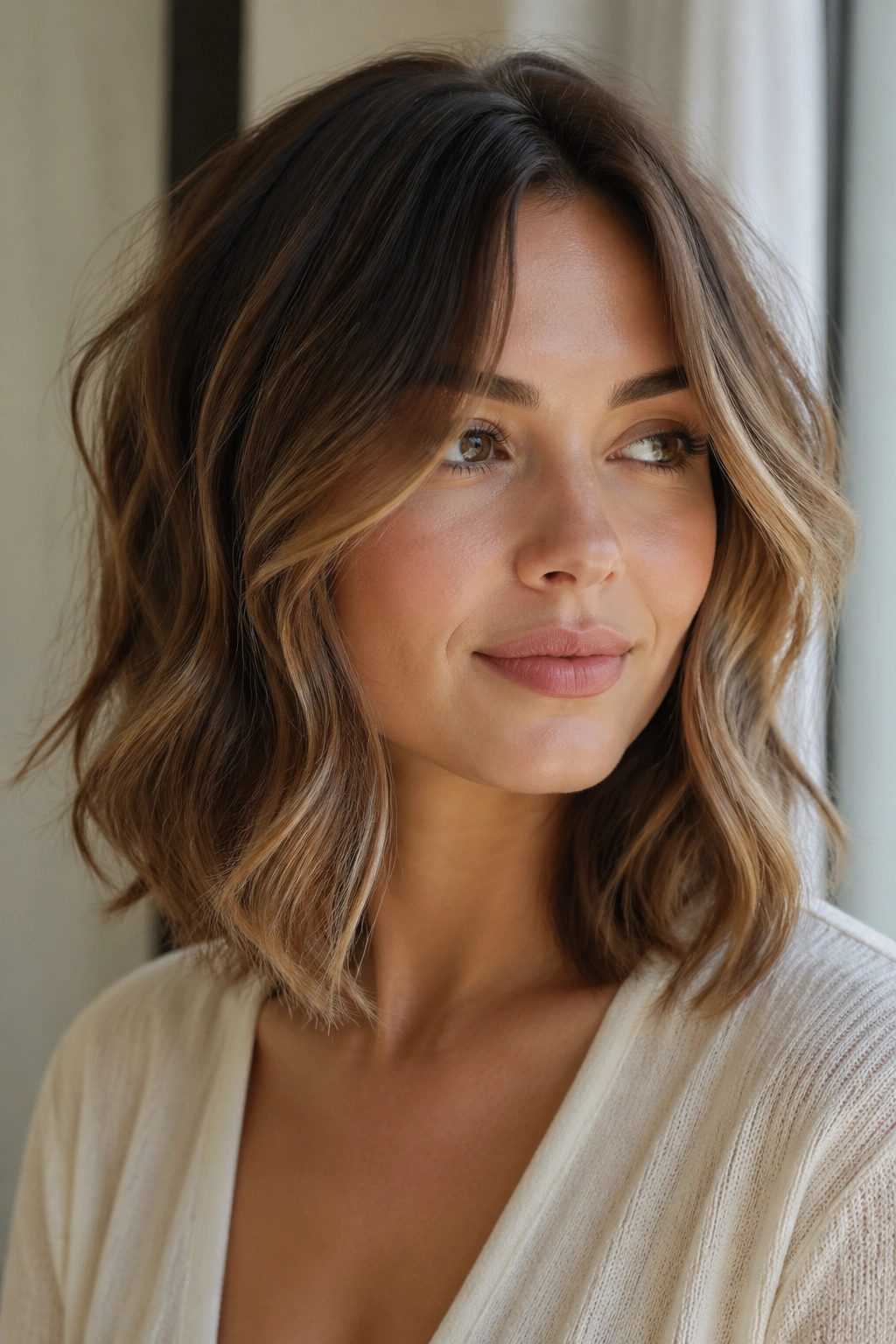
For those who want to keep their length but need more lift around the face, this is the solution. It’s not a full shag; it’s a controlled layering technique.
The stylist cuts shorter layers specifically around the cheekbones and chin. These layers have less weight, so they can hold a wave more effectively than longer, heavier strands. When the hair around your face is bouncy and full, it creates the illusion that your entire head of hair is voluminous, even if the back is kept slightly sleeker.
11. The Butterfly Cut
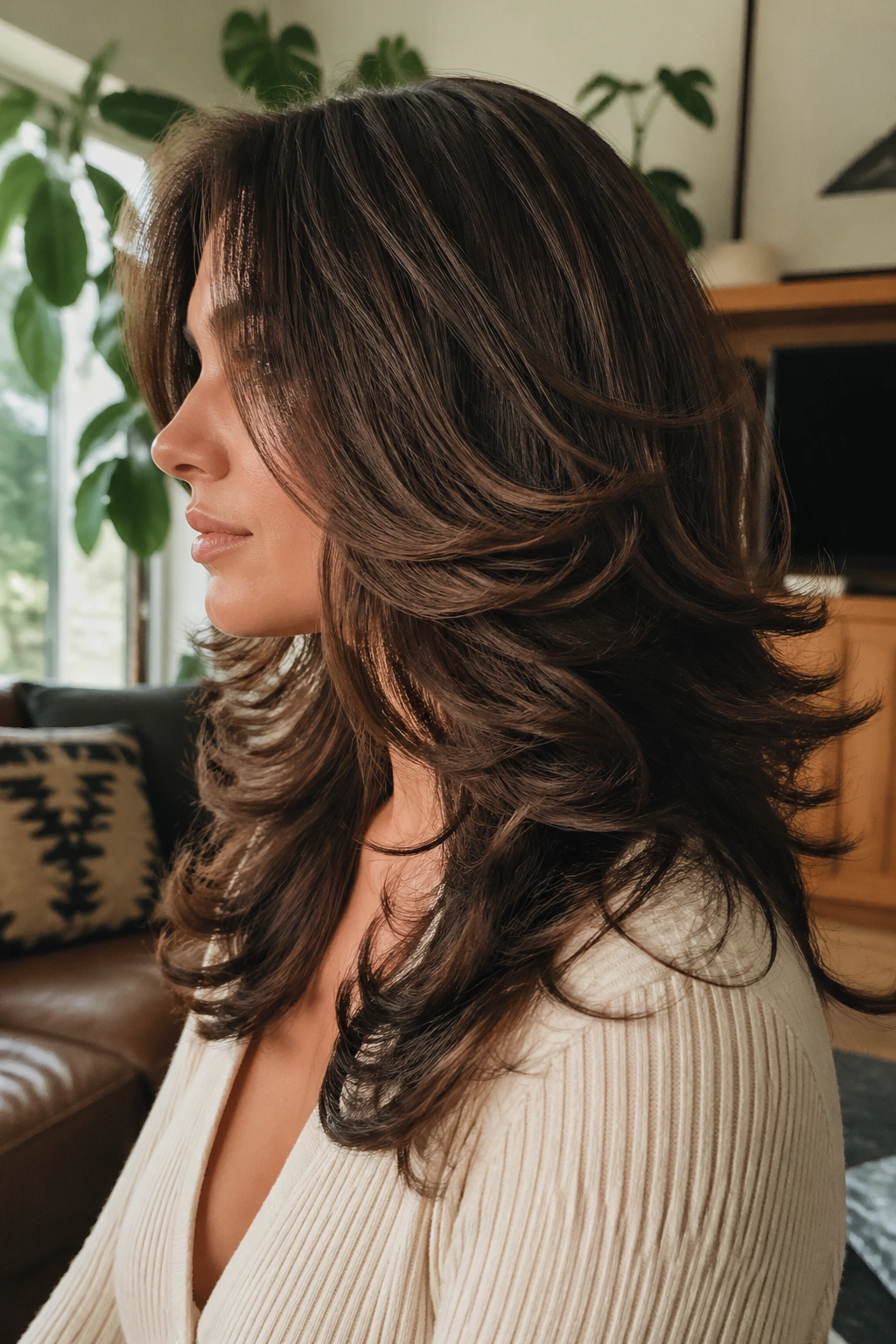
The butterfly cut is designed to give you the look of a blowout without the effort. It involves heavy, feathered layers that start around the chin and continue down.
These layers are cut in a way that allows them to “flip” outward, creating massive volume and movement. If you have wavy hair, this cut encourages the waves to form a loose, voluminous shape that mimics a professional round-brush style. It’s high-maintenance in terms of styling—you generally need to encourage the waves to flip—but the volume payoff is immense.
12. Texturized Lob

A standard lob can be boring. A texturized lob is functional art. The difference is in the cut’s finish. Your stylist uses a razor or texturizing shears to create “shatter” in the ends.
This isn’t about thinning the hair out; it’s about making the ends inconsistent. When the ends are inconsistent, they don’t clump together into one solid block. They stay separated, which creates a more airy, lightweight, and voluminous look. It’s the perfect middle ground for someone who wants to look professional but still have that “woke up like this” texture.
13. Curtain Bangs with Mid-Length Waves
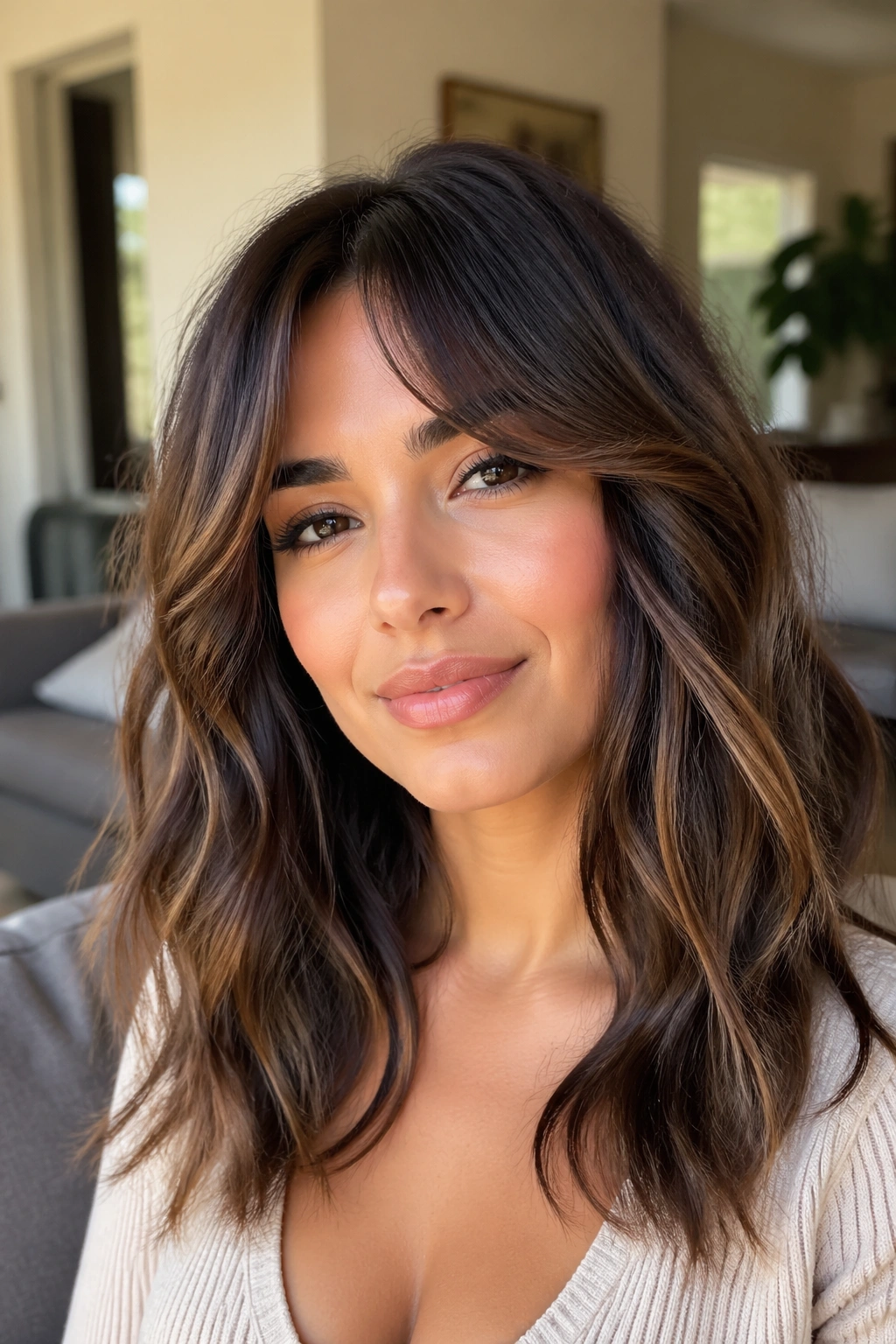
Bangs are usually the first thing people with wavy hair avoid, but curtain bangs are the exception. They are long, sweeping, and designed to blend into the rest of the hair.
The Volume Benefit
Curtain bangs allow for volume at the front of the head. Because they are shorter than the rest of your hair, they possess a natural spring that longer pieces lack. By styling these with a round brush or rollers, you add a huge amount of height to your hairline, which changes the profile of your entire hairstyle.
How to Style
- Blow-dry the bangs forward with a round brush first.
- Let them sit for a few minutes before sweeping them to the side.
- This creates that “swoop” that adds instant lift.
14. Disconnected Undercut Bob
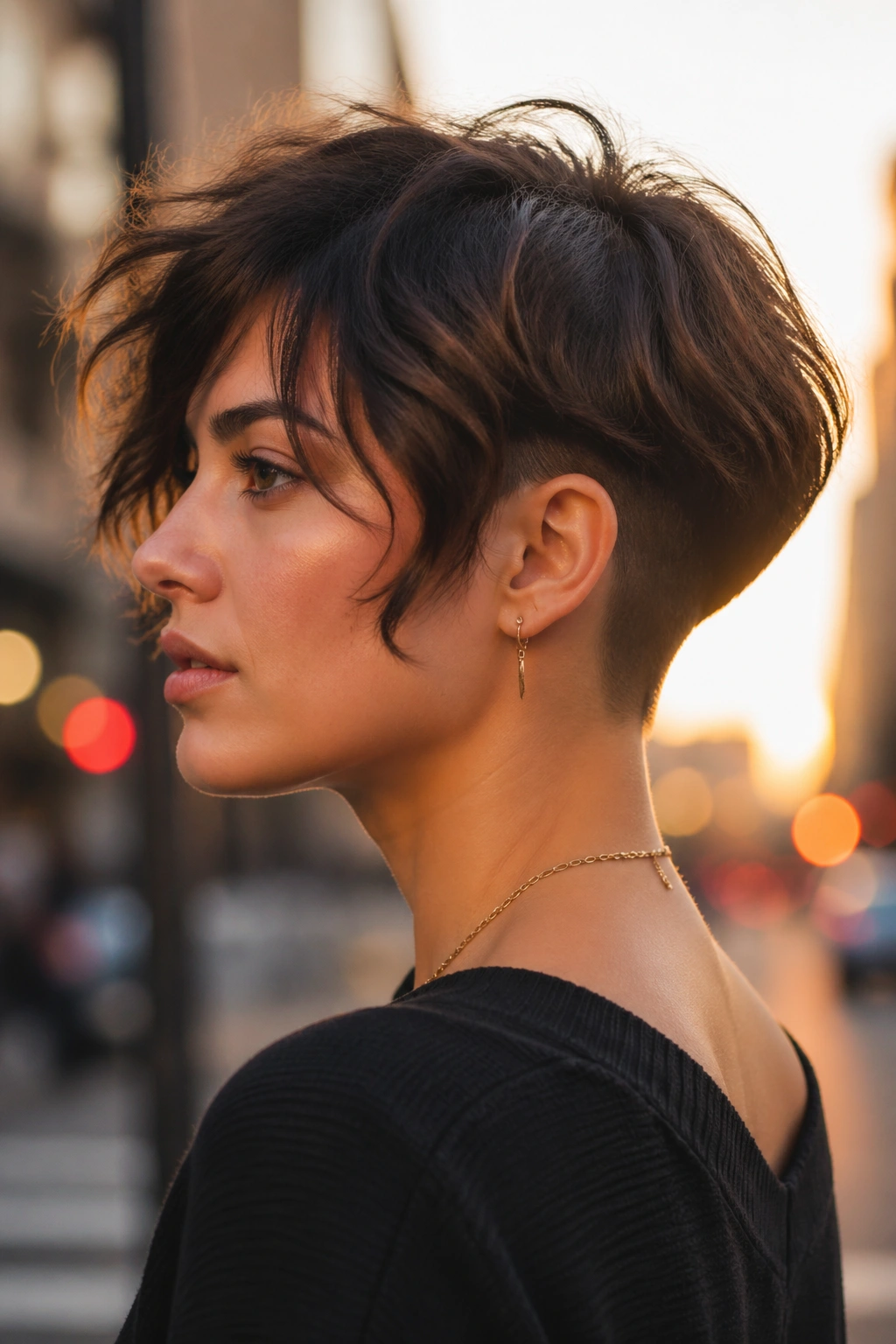
For those with very thick, coarse wavy hair, the struggle isn’t finding volume—it’s managing the bulk. However, even thick hair can go flat if the weight is uneven.
A disconnected bob involves cutting the hair in two distinct lengths. The top layer might be slightly longer, while the bottom section is cut much shorter. This essentially keeps the bottom of your hair from getting too poofy, which allows the top layer to maintain a nice, rounded, voluminous shape. It’s a sophisticated cut that requires a skilled stylist.
15. Soft Tapered Cut
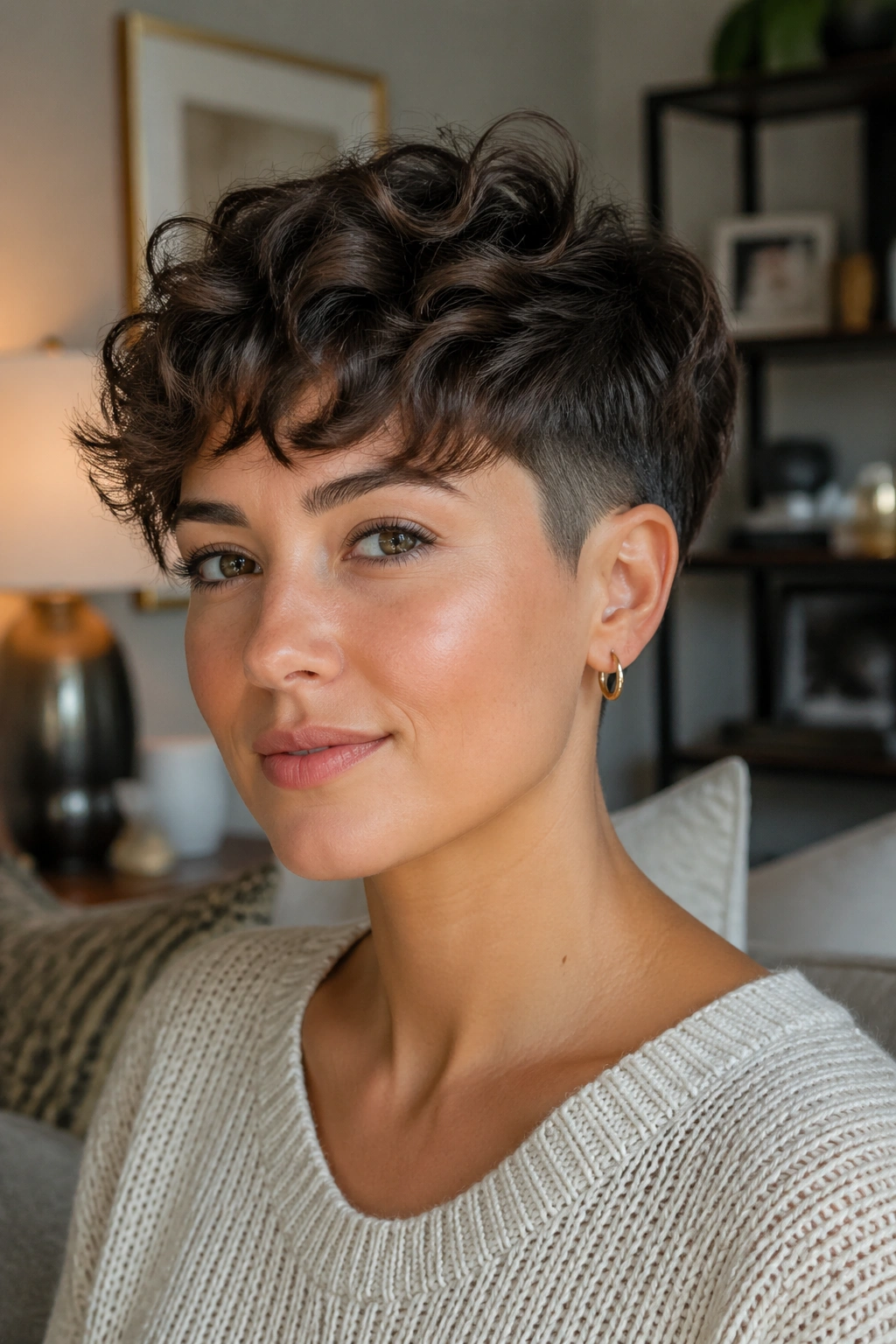
A soft taper is a slightly more feminine take on the pixie. The sides are shorter, but not buzzed or disconnected. They fade gently into the longer hair at the top.
This cut is fantastic because it removes the “bulk” from behind the ears, which is where many people with wavy hair experience unwanted width. By tapering the bottom, you force the volume to stay at the top and the crown, which creates a much more flattering, lifted look.
16. The “Wolf” Cut

The wolf cut is essentially a marriage between a shag and a mullet. It is defined by tons of short, choppy layers at the top and crown, and longer, wispy layers at the bottom.
Why It’s Powerful
It is the ultimate volume machine. By concentrating the shortest layers at the crown, you are creating a permanent “lifted” structure. You don’t have to work as hard to get height because the haircut does it for you.
What to Watch For
- It can look messy if not styled well.
- You need to use a leave-in conditioner to prevent the shorter layers from getting frizzy.
- It is a commitment; growing it out takes time.
17. Long Layers with Minimal Weight
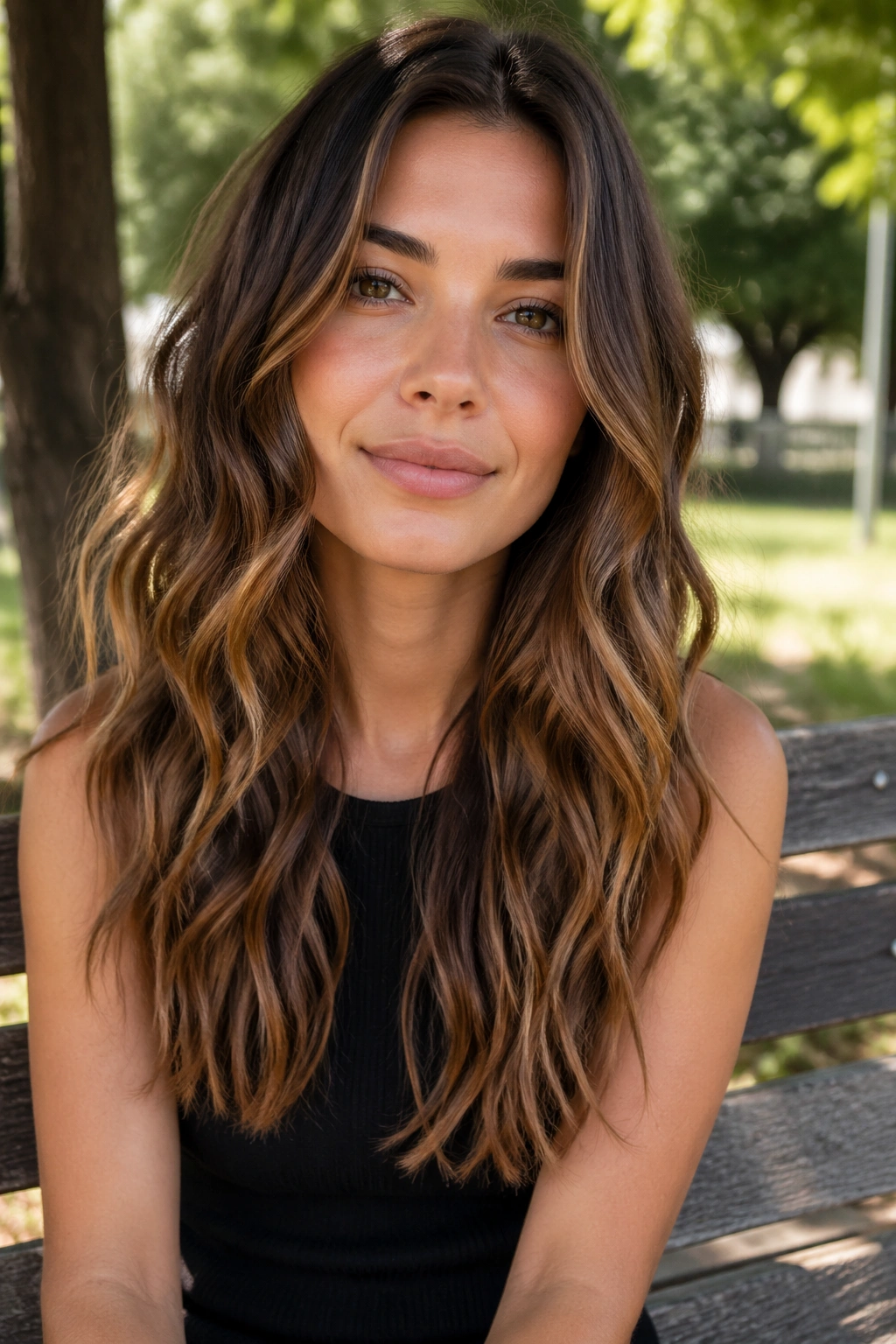
If you have very long wavy hair and refuse to cut it, you are fighting a losing battle against gravity. However, if you insist on keeping your length, “long layers” are your only option.
The key here is minimal weight removal at the ends. You want to layer the mid-lengths to remove the heavy “shelf” of hair, but you want to keep the ends blunt enough so they don’t look stringy. This keeps the hair healthy while allowing the waves in the middle of your head to actually curl instead of being pulled straight.
18. Crown-Focused Layering
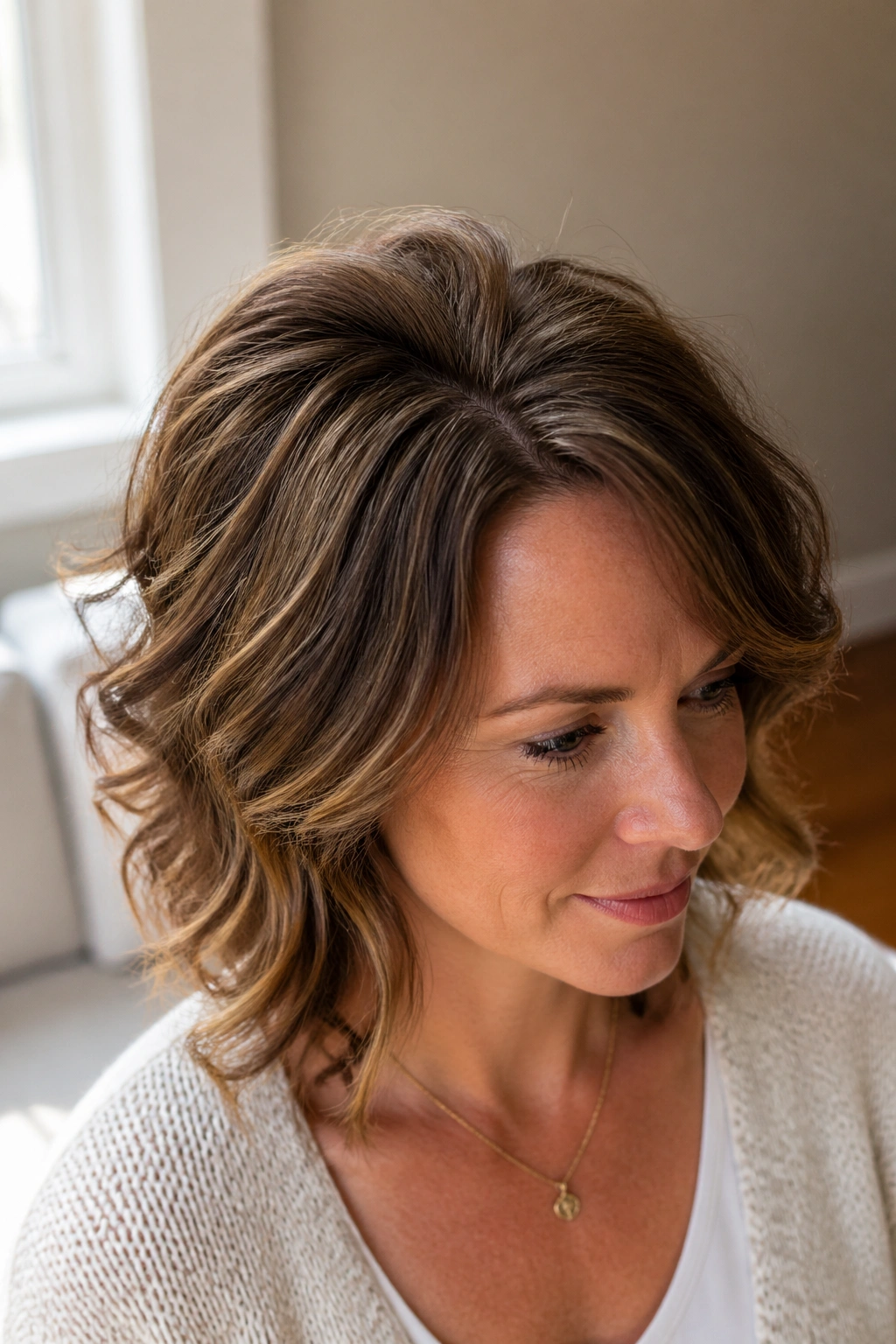
Sometimes, the rest of your hair is fine, but the crown—the very top back of your head—goes flat. This is common with wavy hair because that’s where the hair is longest and heaviest.
Ask for crown-focused layers. The stylist takes the top section of hair and cuts it shorter than the layers underneath. This is an “over-direction” technique. When the hair falls back into place, those shorter, top-layer hairs sit on top of the longer ones, propping themselves up and creating an automatic bump of volume.
19. The Textured Shag Bob
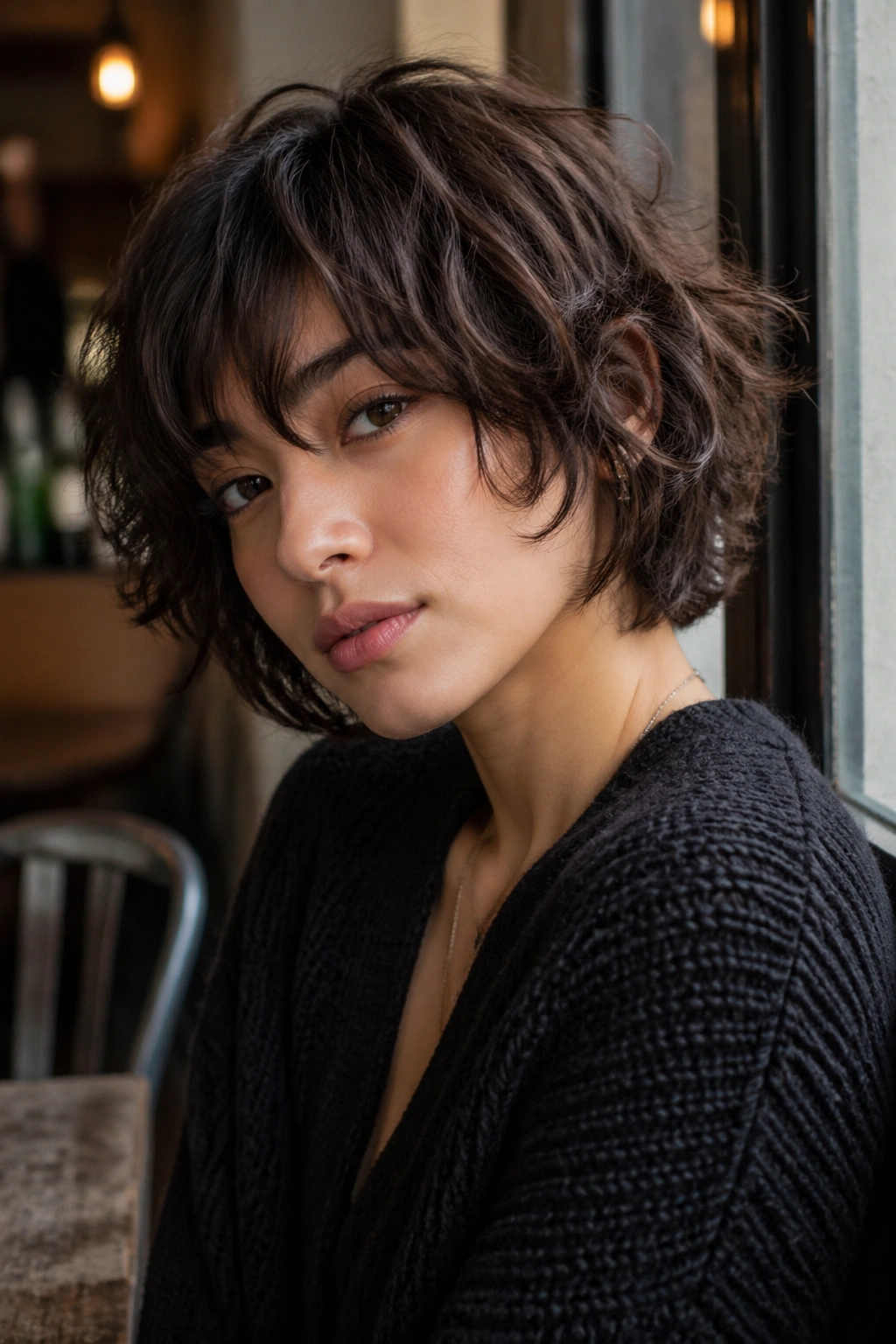
This is the shorter, bolder cousin of the collarbone shag. It is ear-to-chin length, heavily layered, and usually paired with fringe.
It creates a round, bouncy silhouette. Because the hair is so short, the wave pattern has time to form a complete curl before it hits the ends. This is the ultimate “lazy” cut. It thrives on air-drying, and the more “messy” you make it, the better it looks.
20. Deeply Texturized Shoulder Cut
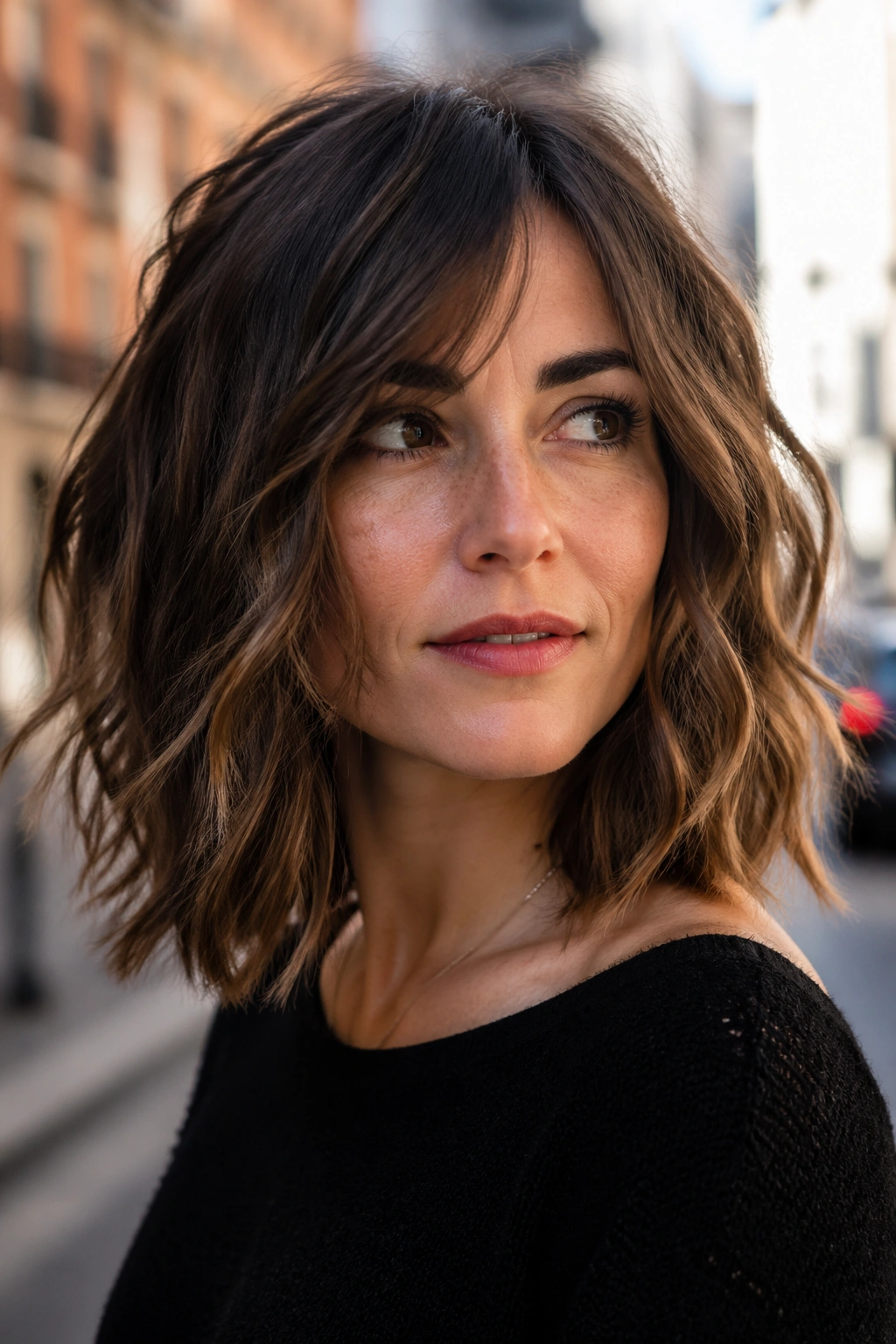
If you are stuck in the shoulder-length rut, make it interesting. A shoulder-length cut is often the most awkward length for wavy hair because it hits the shoulders and flips out aggressively.
Combat this by embracing the texture. Ask for deep point cutting throughout the entire length. This creates a piecey, shattered look that prevents the ends from flipping out in a way that looks messy. Instead, the hair looks intentional, layered, and full of body.
21. The V-Cut with Layers
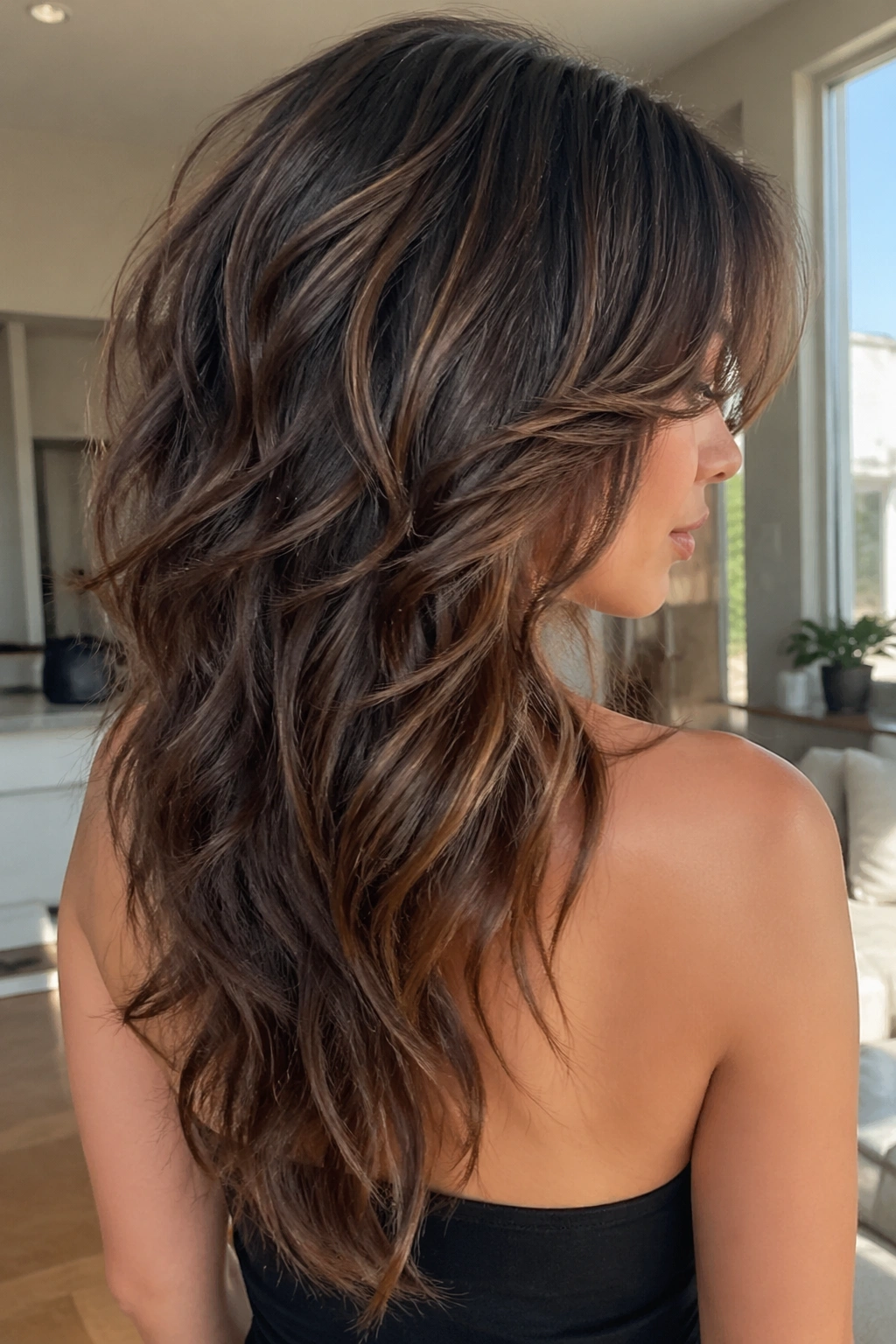
A V-cut—where the hair is shorter at the sides and longer in the back—is a classic way to reduce the amount of hair you have. By removing the weight from the sides, you stop the hair from becoming a triangle.
How It Adds Volume
By tapering the sides, you are removing the weight that pulls the waves straight at the sides of your head. This allows the side waves to pop more, creating an appearance of width and fullness around the face, rather than just length at the back.
The Stylist’s Role
- Ensure the transition from short to long is smooth.
- Do not let the “tail” in the back become too thin or wispy.
22. Long U-Shaped Cut
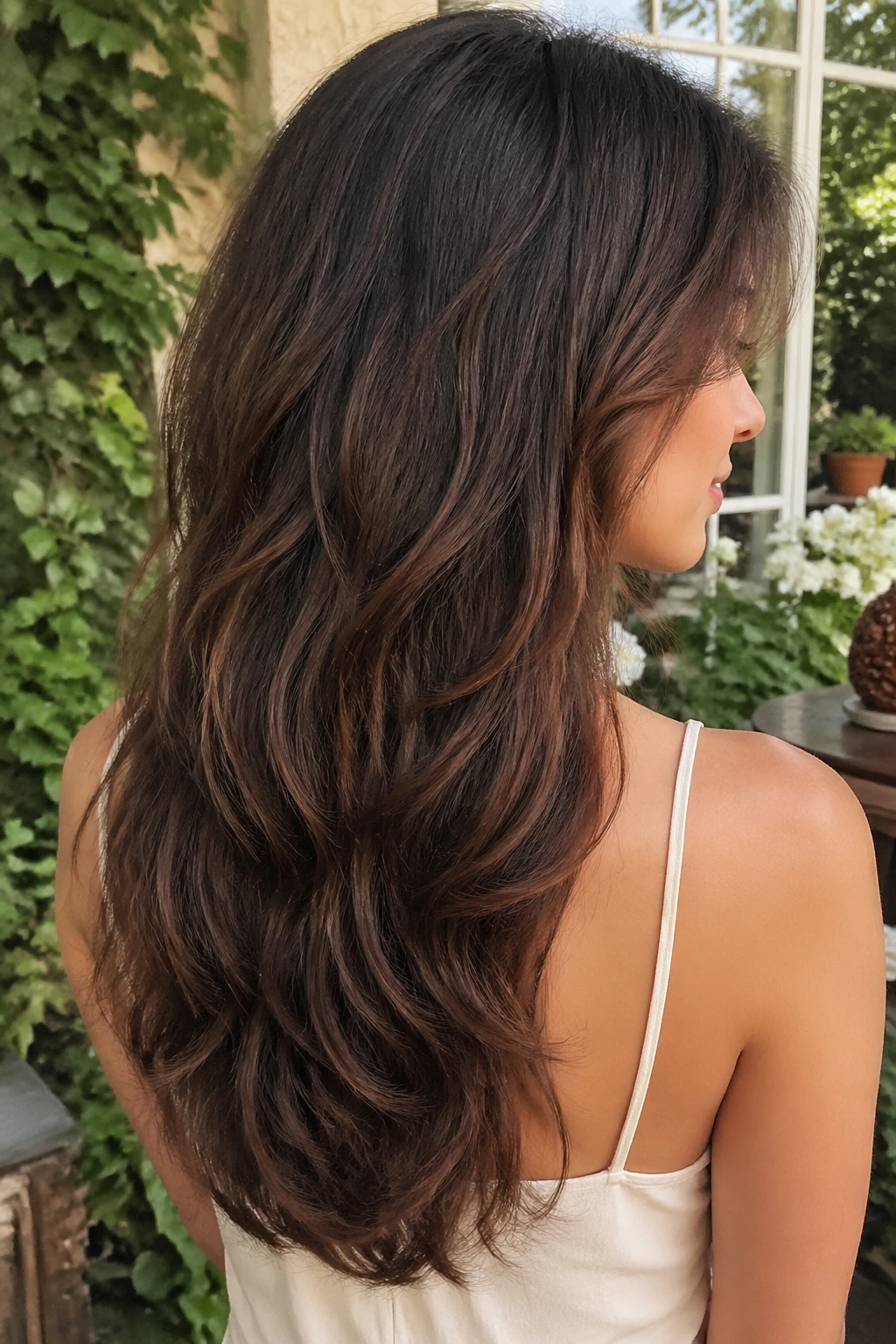
The U-cut is softer than the V-cut. The sides are gently layered into the back, creating a U shape. This is excellent for maintaining volume because it doesn’t leave you with a long, thin “tail” of hair like some V-cuts do.
It allows you to keep more density in the back, which is important if you want your hair to look thick. The layers along the U-shape help the hair move, preventing the stagnant, flat look that comes with a straight-across cut.
23. Heavy Fringe with Long Waves
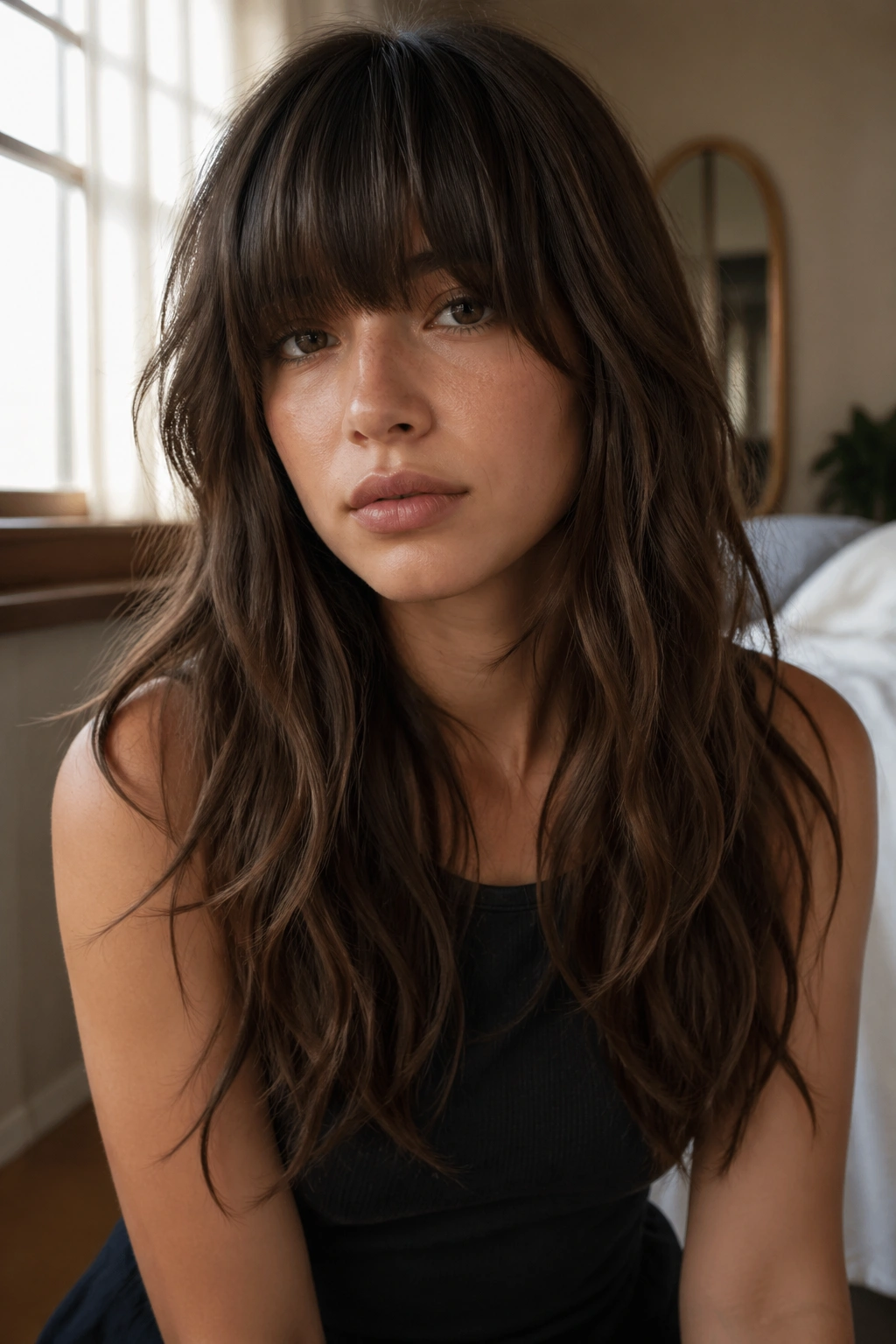
If your hair is long and wavy, the best way to change the silhouette is to add a heavy fringe. A thick, blunt-cut fringe draws the eye forward and provides a focal point for volume.
Why This Works
By cutting a significant portion of your front hair into a fringe, you are removing weight from the top of your head. This immediately makes the remaining hair feel lighter. The fringe also frames the face in a way that makes your hair look fuller, as it bridges the gap between your forehead and your hair length.
Styling Tip
- Use a round brush to blow-dry the fringe forward.
- This creates a soft, rounded shape that is highly volumizing.
24. Disconnected Long Layers
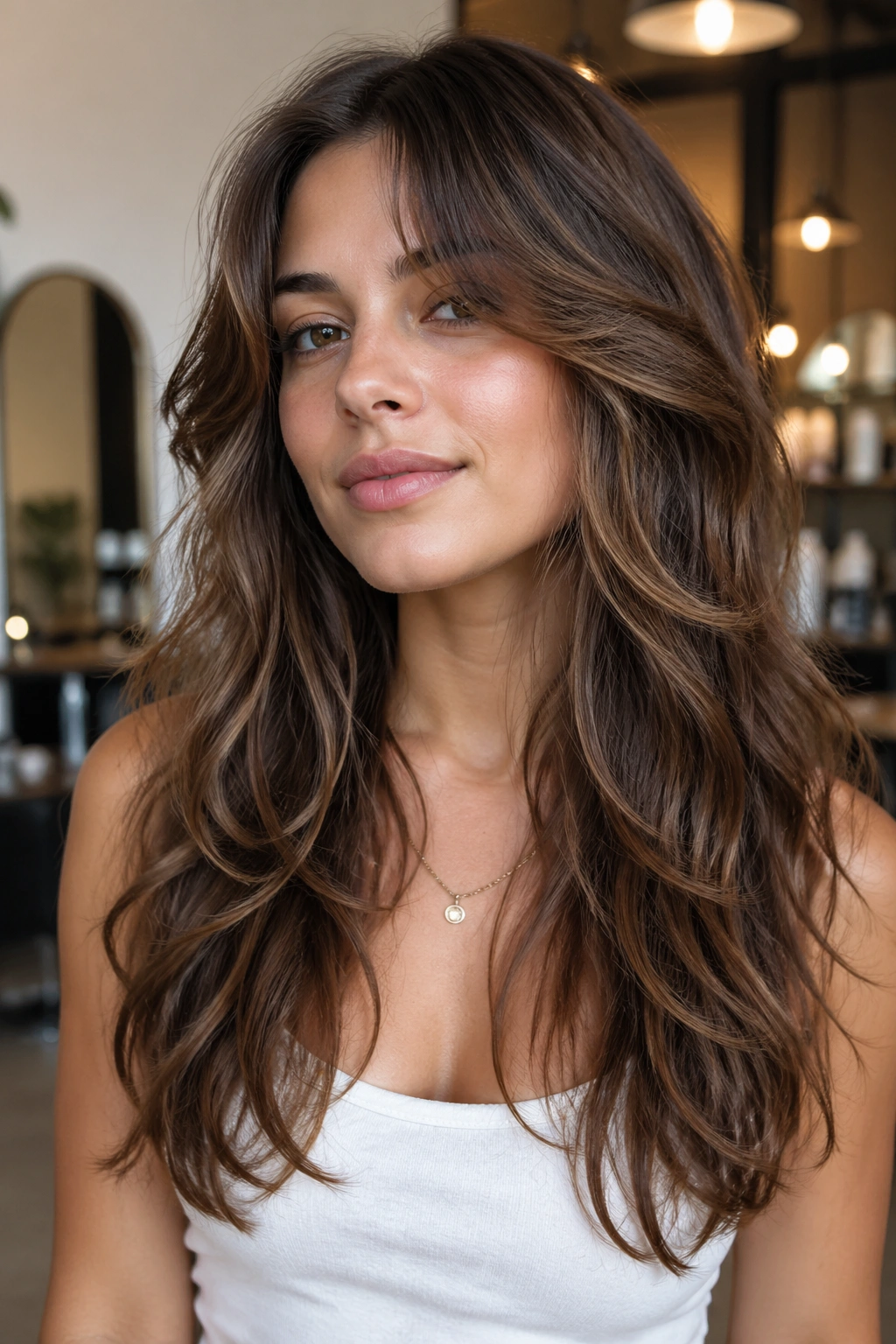
Disconnected layers mean that the layers are not seamlessly blended into one another. You might have a layer that hits at the chin, and the next layer jumps straight to the chest, skipping the shoulder.
This creates “steps” in the hair. These steps act as platforms for the waves to sit on. Instead of one long, heavy strand of hair, you have multiple segments of hair that support each other. This is a very dramatic look that adds significant volume.
25. Razored Ends Long Cut
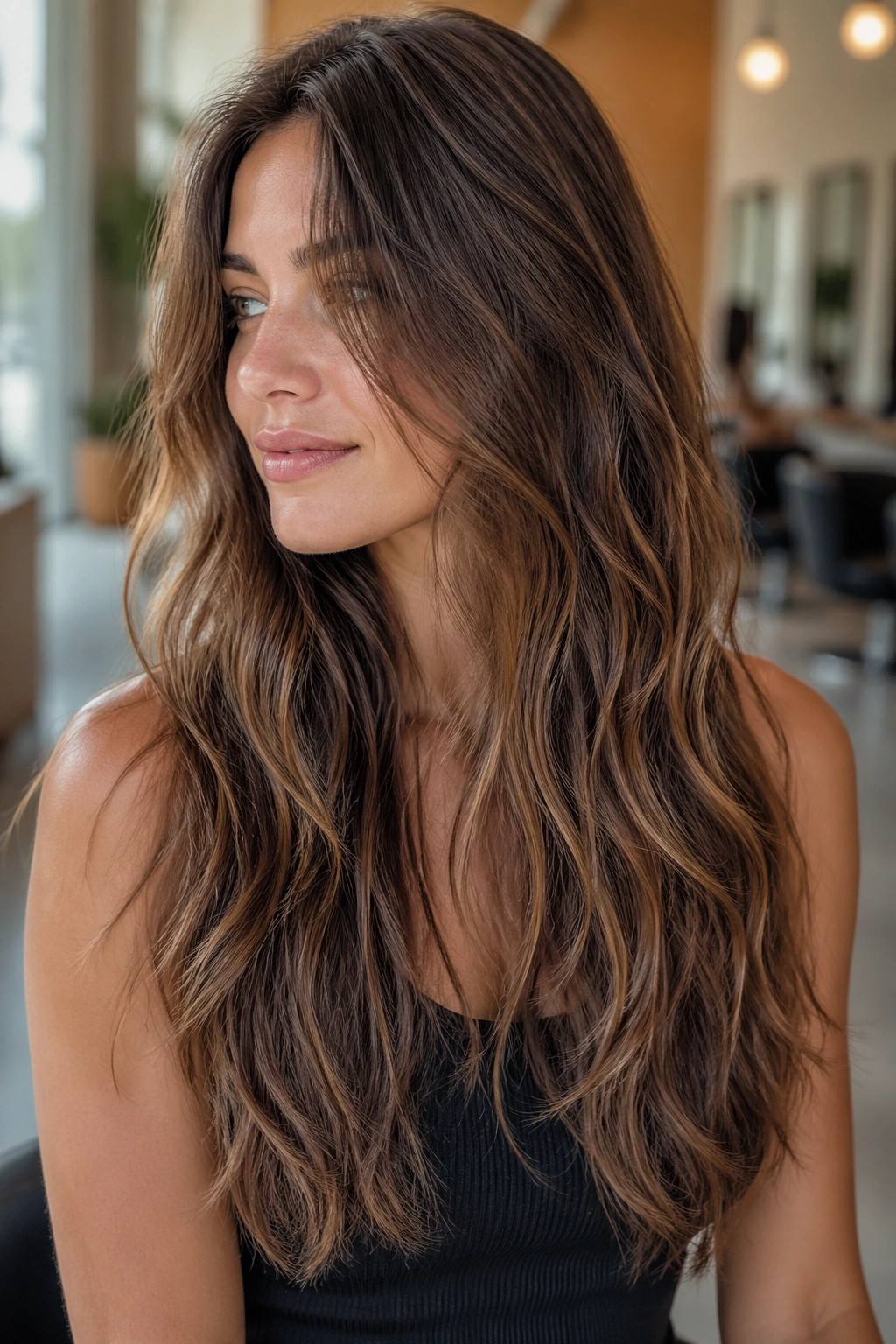
Using a razor on long, wavy hair is controversial, but it is one of the most effective ways to add volume. A razor cuts the hair at an angle, creating a soft, tapered end rather than a blunt one.
This softness allows the ends of the hair to intertwine more easily. When they intertwine, they hold the volume better. Blunt ends tend to separate and look sparse; razored ends look fluid and dense. It’s a great option for someone who wants to maintain length but hates the “heavy” feeling of long, blunt hair.
26. Graduated Long Layers
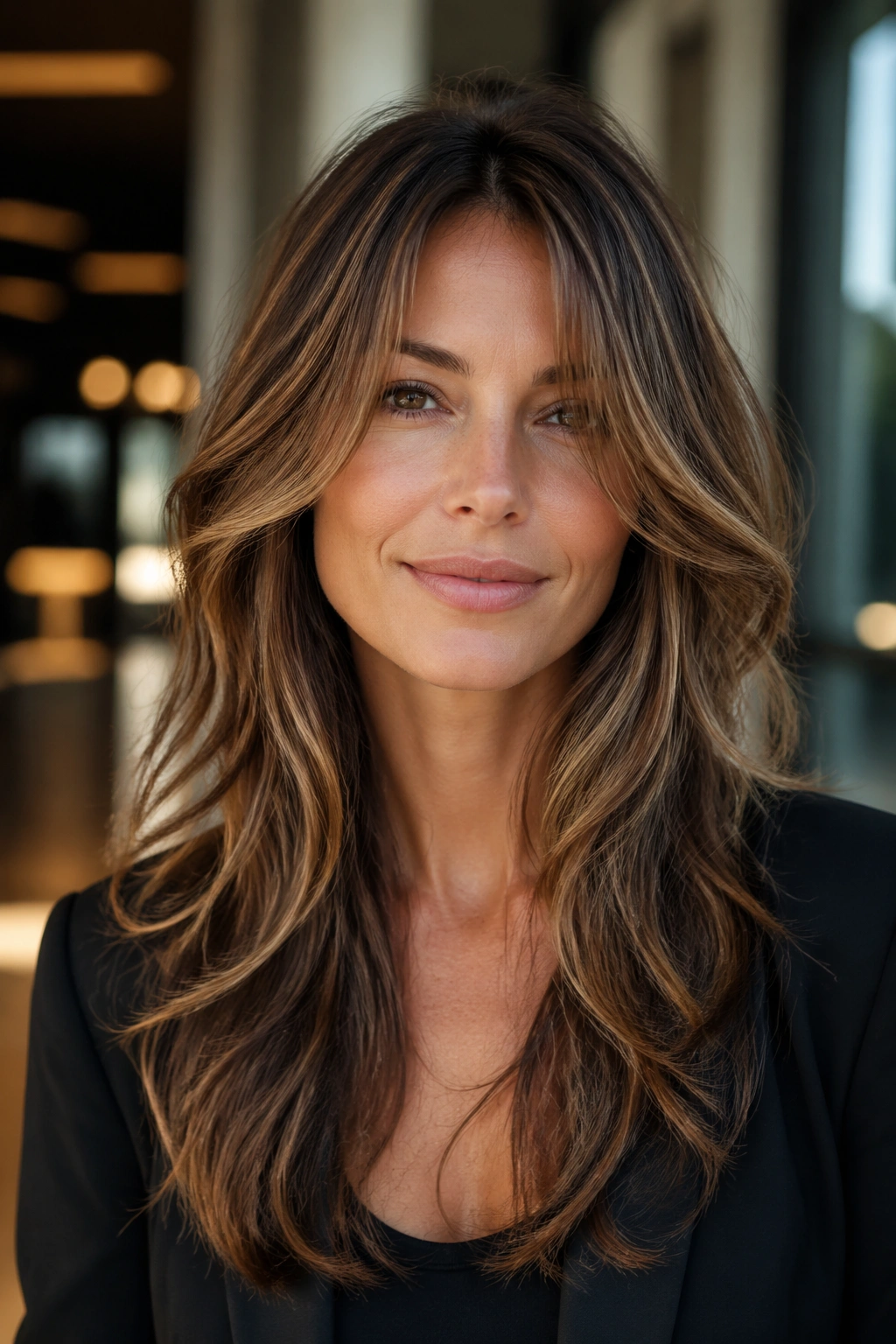
This is a very technical cut. The layers are graduated, meaning they get progressively longer from the face to the back.
It’s the most “polished” way to add volume to long, wavy hair. It looks incredibly elegant, smooths out the wave pattern so it looks more like a cohesive wave rather than frizzy chaos, and adds a nice amount of lift. It’s perfect for someone who works in a corporate environment but still wants a stylish, voluminous look.
27. Rounded Layers
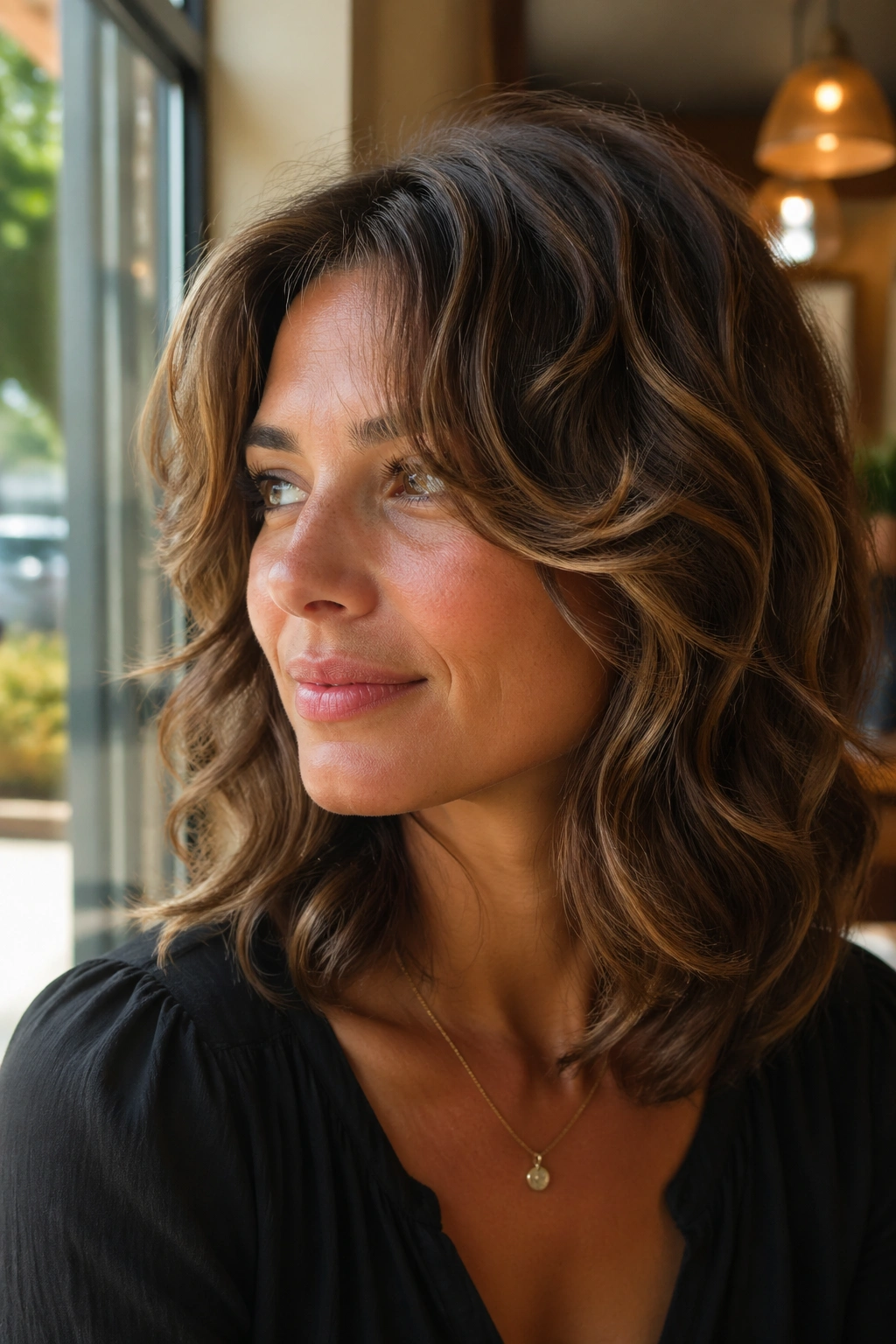
Rounded layers are cut to follow the shape of the head. This technique is specifically designed to create volume on top.
Instead of cutting the layers straight across or following the length of the hair, the stylist cuts the hair at a 90-degree angle from the head all the way around. This keeps the hair at a uniform length throughout the interior of the cut, which builds significant height at the crown and keeps the silhouette rounded and full.
28. Invisible Layering for Length
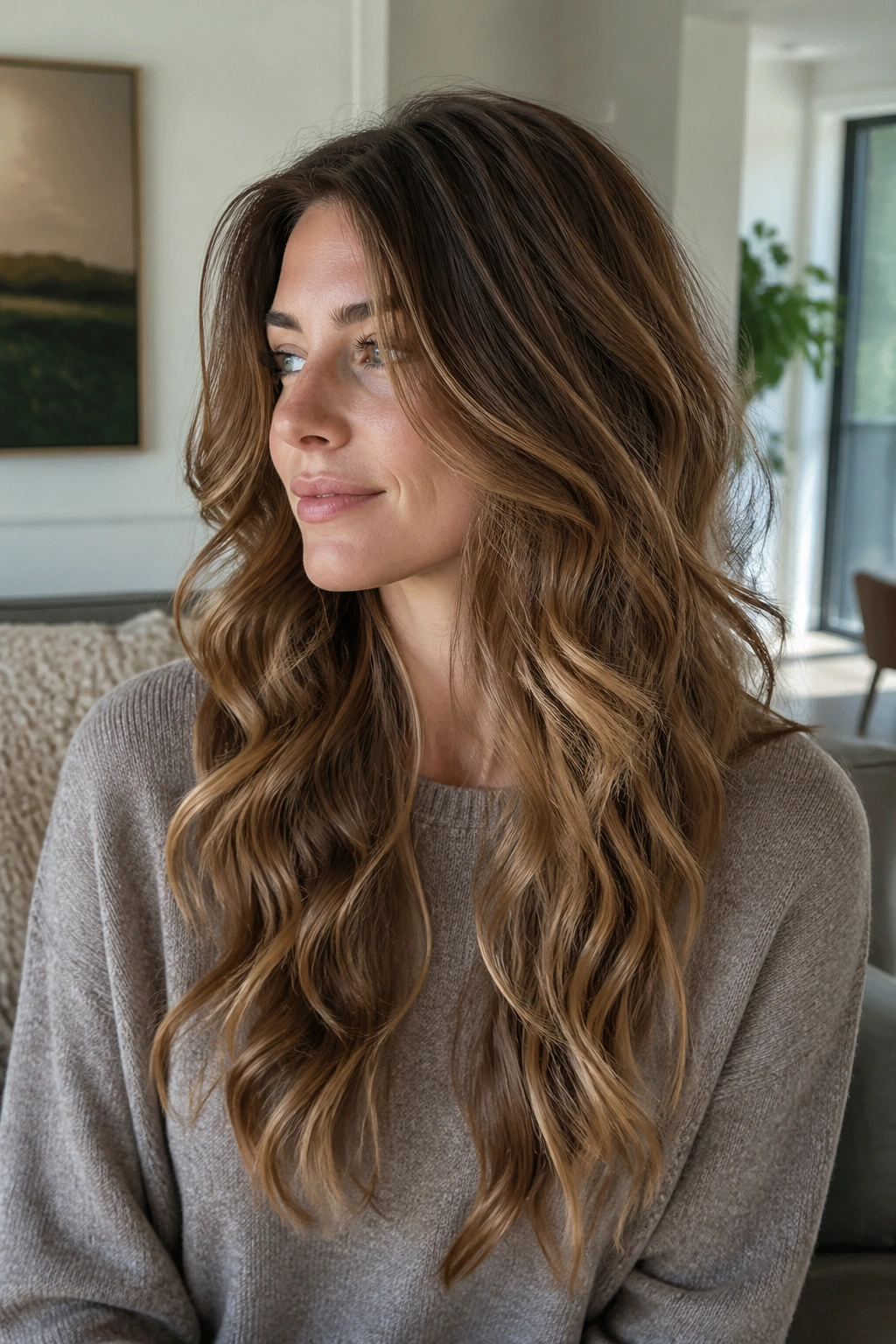
We talked about invisible layering for bobs, but it is equally vital for long hair. If you have long, wavy hair, you want to keep the blunt perimeter but remove the internal bulk.
Ask for “slide cutting” or “point cutting” through the mid-lengths. This technique involves removing small chunks of hair from the inside of the strands. The hair looks exactly the same from the outside, but it feels half as heavy. This lightness is the key to getting long, wavy hair to hold a root lift.
29. The “Rachel” Inspired Wavy Cut
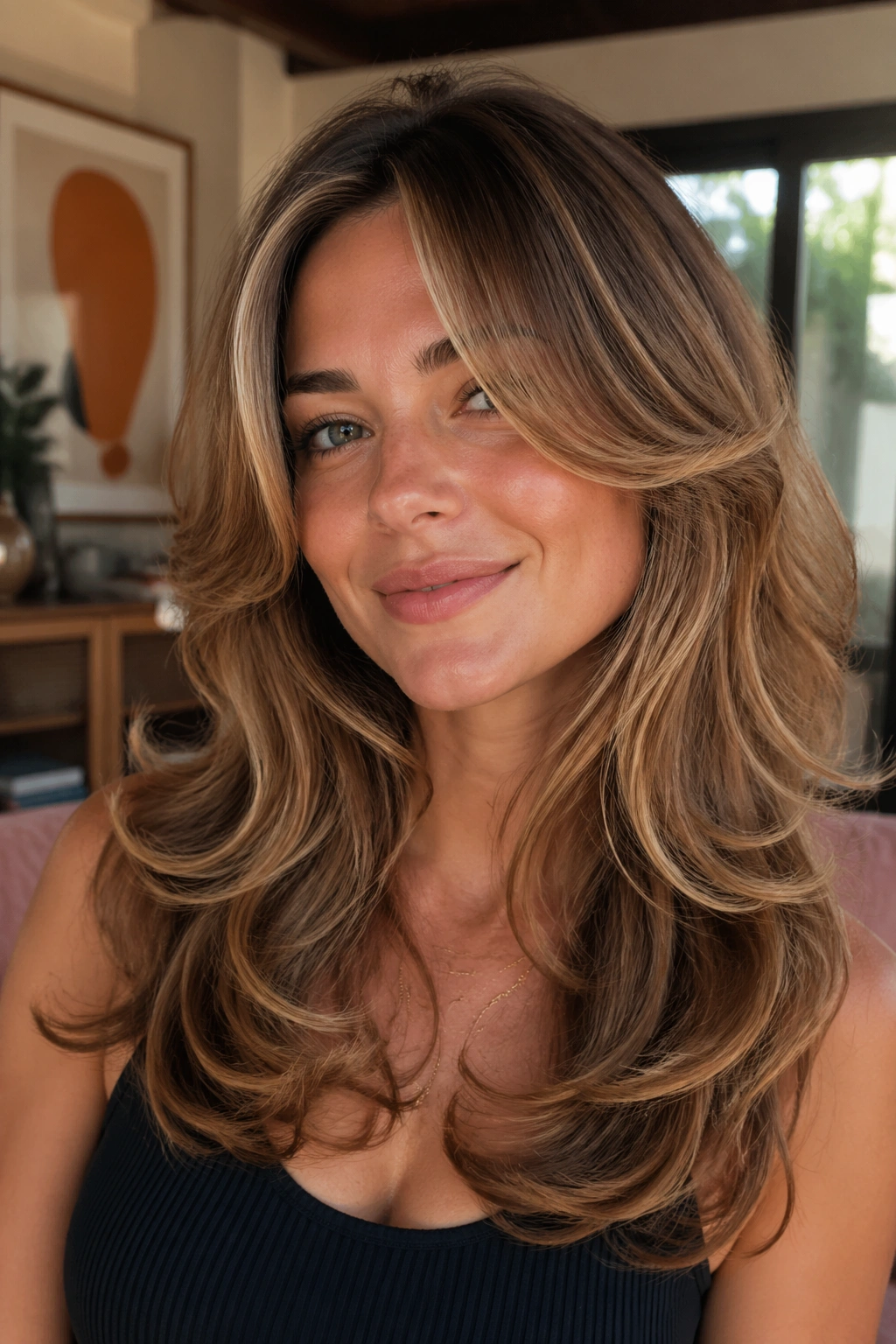
The iconic cut from the 90s is actually a masterclass in volume for wavy hair. It involves heavy, face-framing layers that are blown out to curl inward.
You don’t have to style it perfectly like the 90s blowout to get the benefits. The cut itself—lots of shorter, face-framing pieces that transition into longer layers—is brilliant for wavy hair. It takes the weight off the front of your face and creates a beautiful, cascading volume that feels very natural.
30. Layered Bob with Nape Undercut
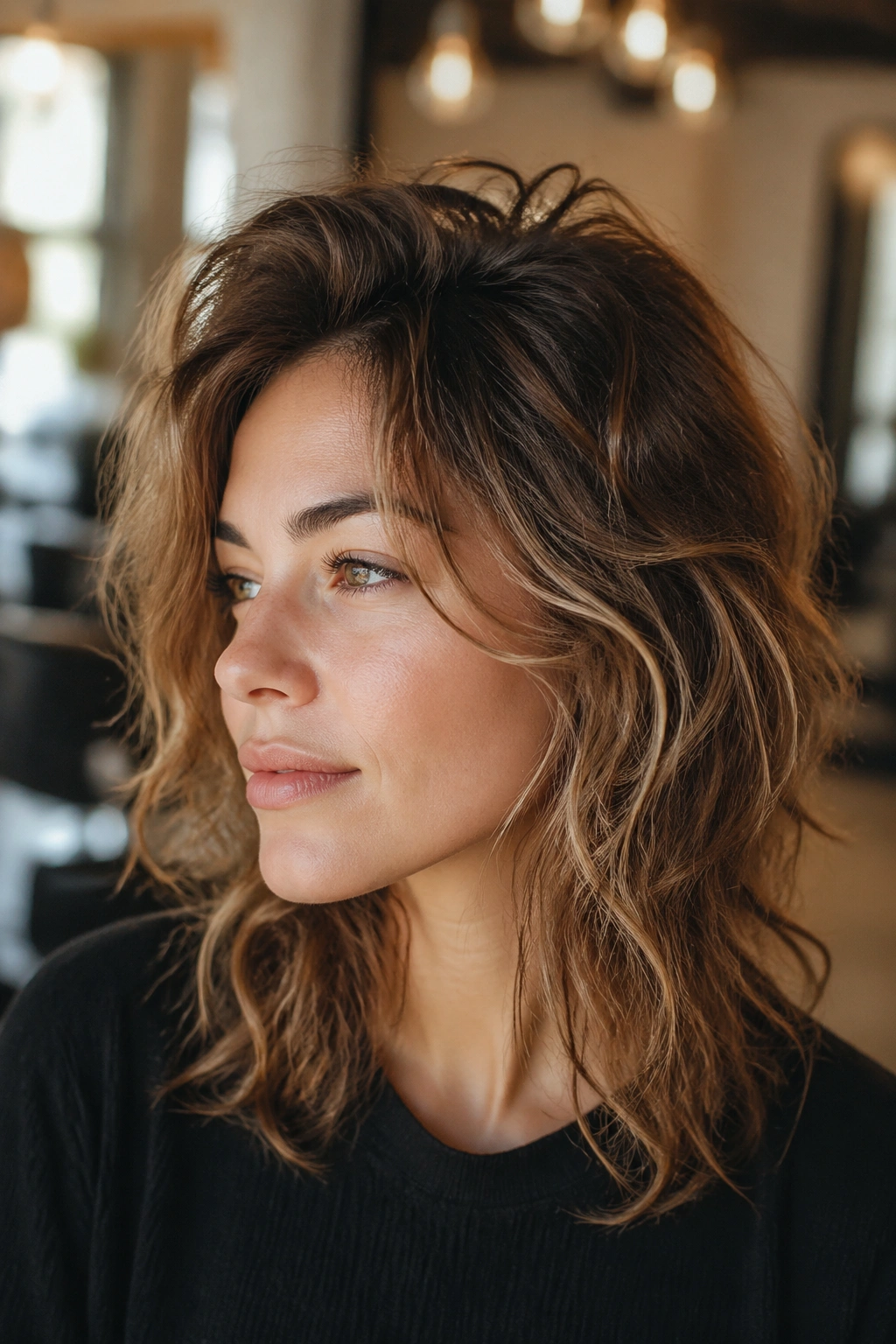
For the bold. If your hair is thick and wavy, the hair at the nape of your neck is likely the most difficult to manage. It gets sweaty, it frizzes, and it pushes the rest of the hair out, creating that triangle shape.
An undercut at the nape involves buzzing or shaving the very bottom section of your hairline. It sounds extreme, but you cannot see it when your hair is down. It eliminates the bulk, allowing your hair to lie much flatter and closer to your neck, which creates a more streamlined, voluminous look on top.
31. Curly-Wavy Hybrid Shag
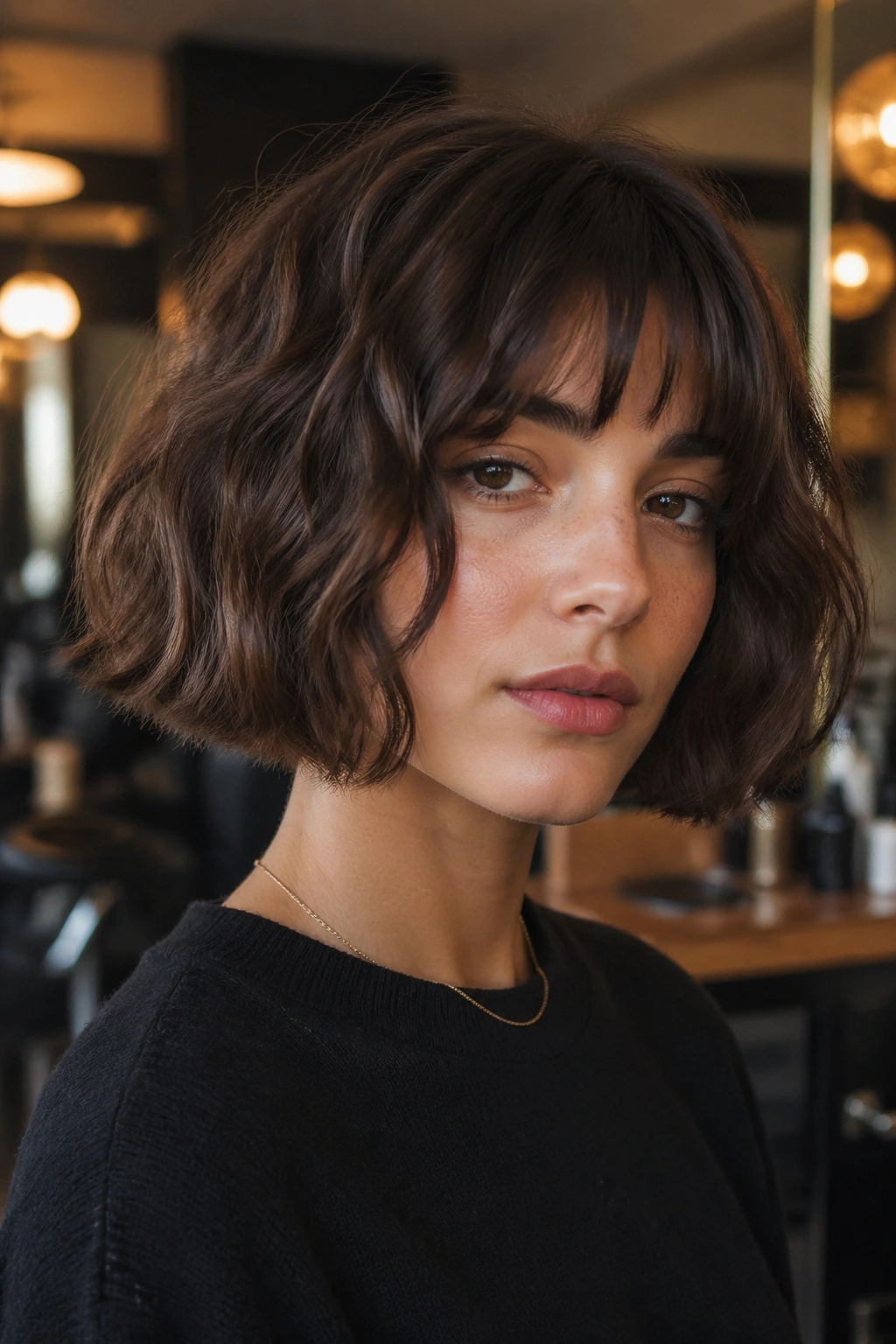
Sometimes wavy hair is just “curly hair that hasn’t been encouraged yet.” If you suspect your waves are actually curls, the hybrid shag is the best way to find out.
It uses very short, curly-friendly layers throughout the whole head. This cut is designed to force the hair to clump into tight, defined ringlets. The volume from this cut is incredible because the hair is forced to expand horizontally. It’s a fun, quirky, and incredibly voluminous style.
32. Face-Framing Curtain Layers
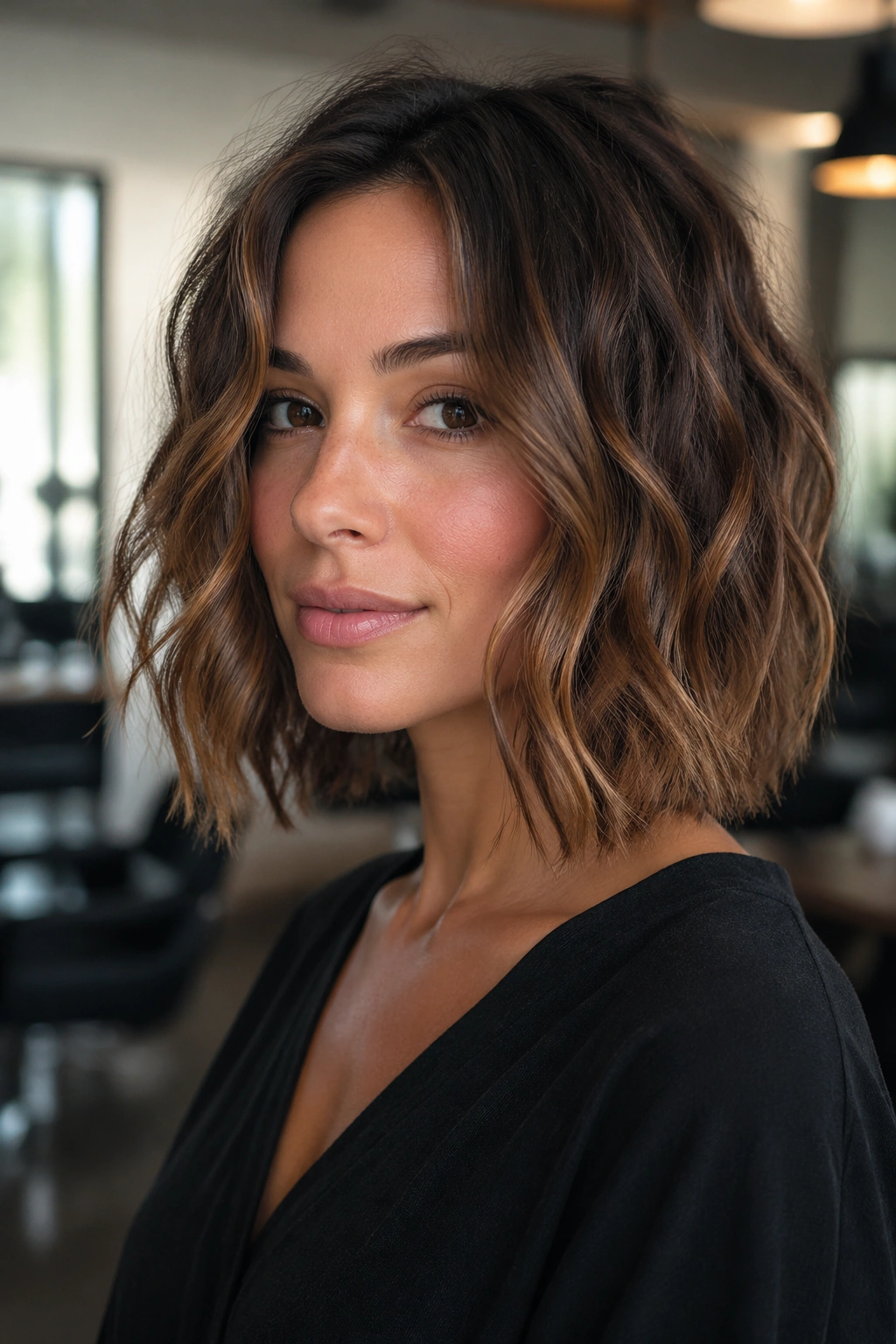
Unlike the curtain bang, which is just the front section, curtain layers involve slicing into the hair around your face from roots to ends.
This creates a “curtain” of shorter, lighter hair that frames your face. It draws the eye to your features and adds a lot of height at the cheekbones. Because these pieces are shorter, they are almost always the bounciest parts of your hair, which gives the illusion that your hair has more body than it actually does.
33. Piecey Textured Bob
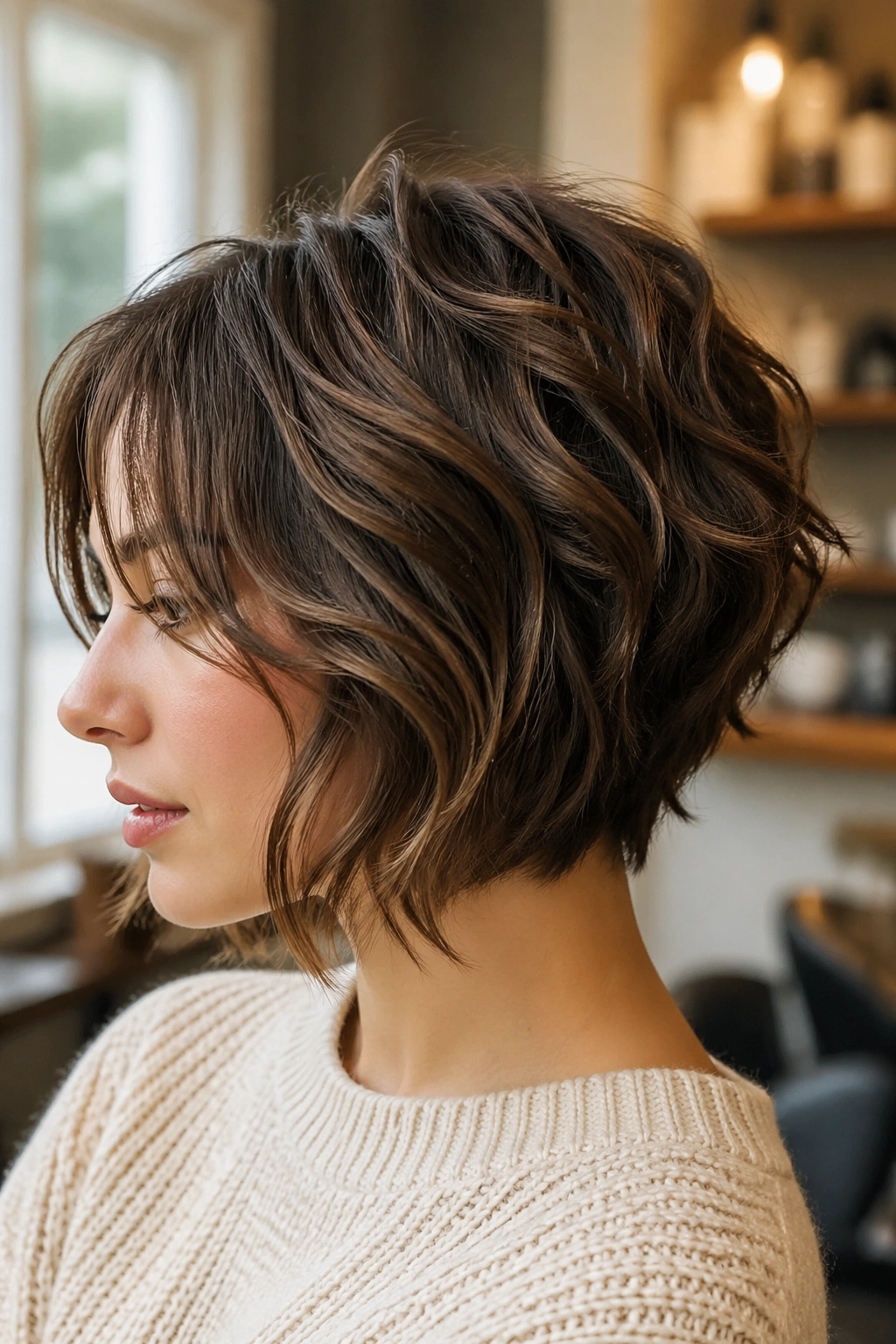
The piecey bob is all about separation. You want to see the individual strands and waves. This is achieved by cutting the hair into “slabs” or sections.
The Technique
The stylist avoids blending the layers perfectly. Instead, they leave them slightly disconnected. This creates space between the waves, which adds volume. It’s a very modern, slightly gritty look that works best with a bit of texture paste.
Styling for the Piecey Look
- Use a matte clay or texture paste.
- Warm it between your palms.
- Pinch small sections of your hair and twist the ends.
- This creates the separation that defines the cut.
34. Asymmetrical Wavy Bob
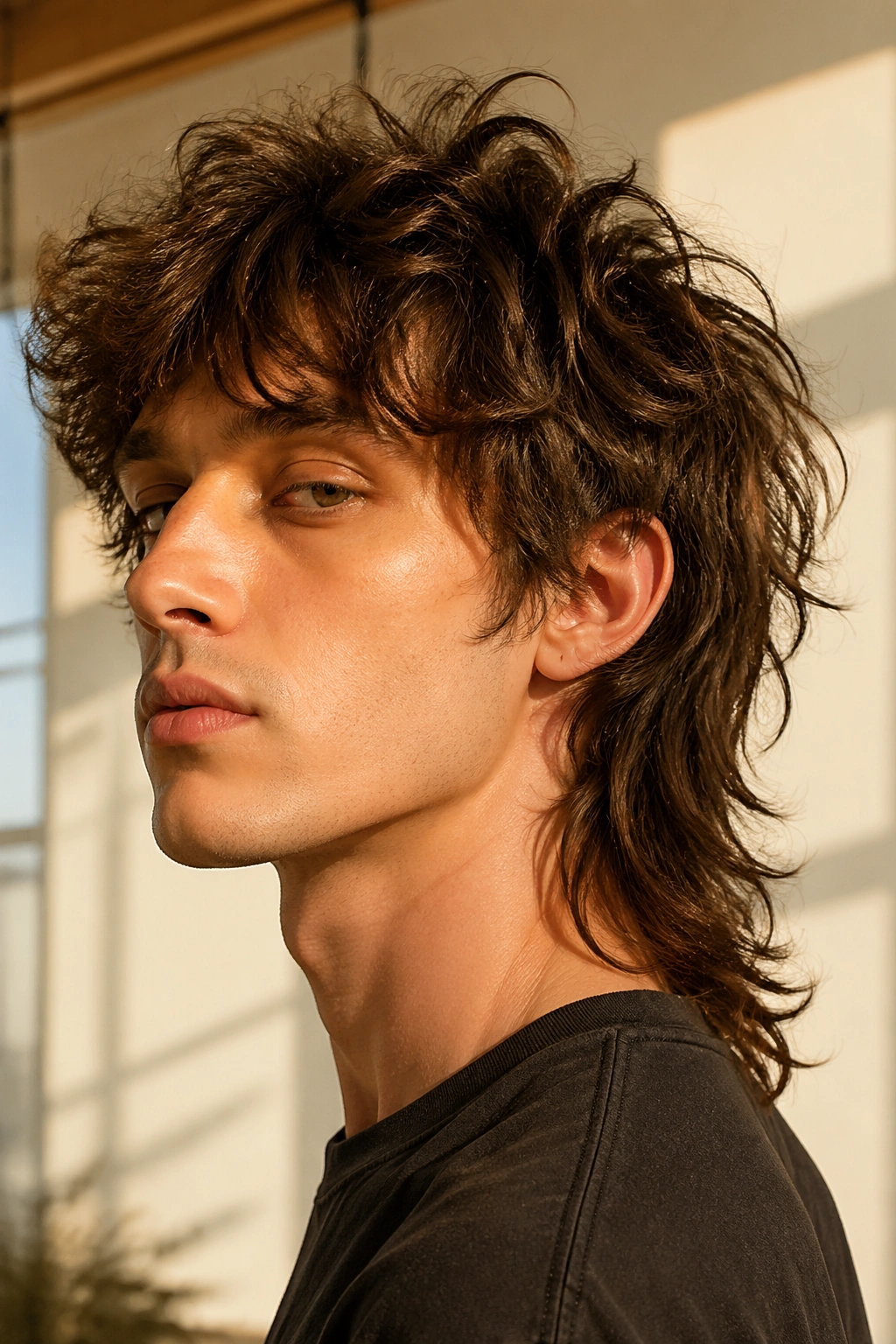
An asymmetrical bob, where one side is longer than the other, is a fantastic volume hack. The longer side acts as a visual anchor, while the shorter side is automatically more voluminous because it’s lighter.
It also changes how the hair falls. Because one side is shorter, it has more lift at the roots. This asymmetry breaks up the monotony of a standard bob and forces your hair to move in a more dynamic, voluminous way. It’s a chic, deliberate choice.
35. Softly Layered Long Cut
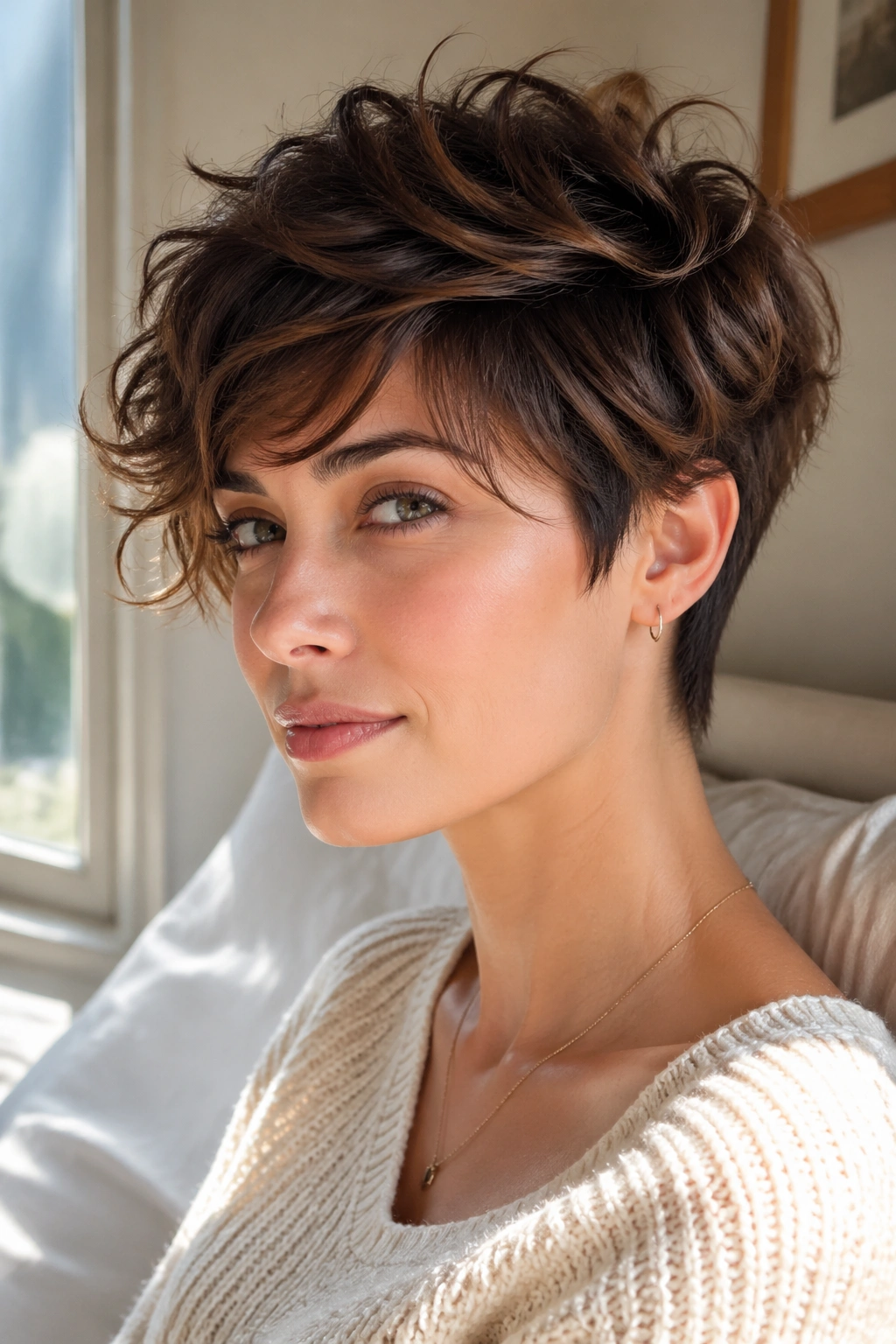
Finally, if you want something simple, go for soft, long layers. This isn’t the “shag,” it isn’t the “butterfly.” It is just gentle, blended layers that start below the chin.
It’s the most “everyday” haircut. It keeps the hair manageable, easy to tie back, and professional. The layers are just long enough to move, but short enough to still give you some volume at the crown. It’s the perfect, low-risk entry point if you aren’t sure how much you want to change your look.
The Bottom Line
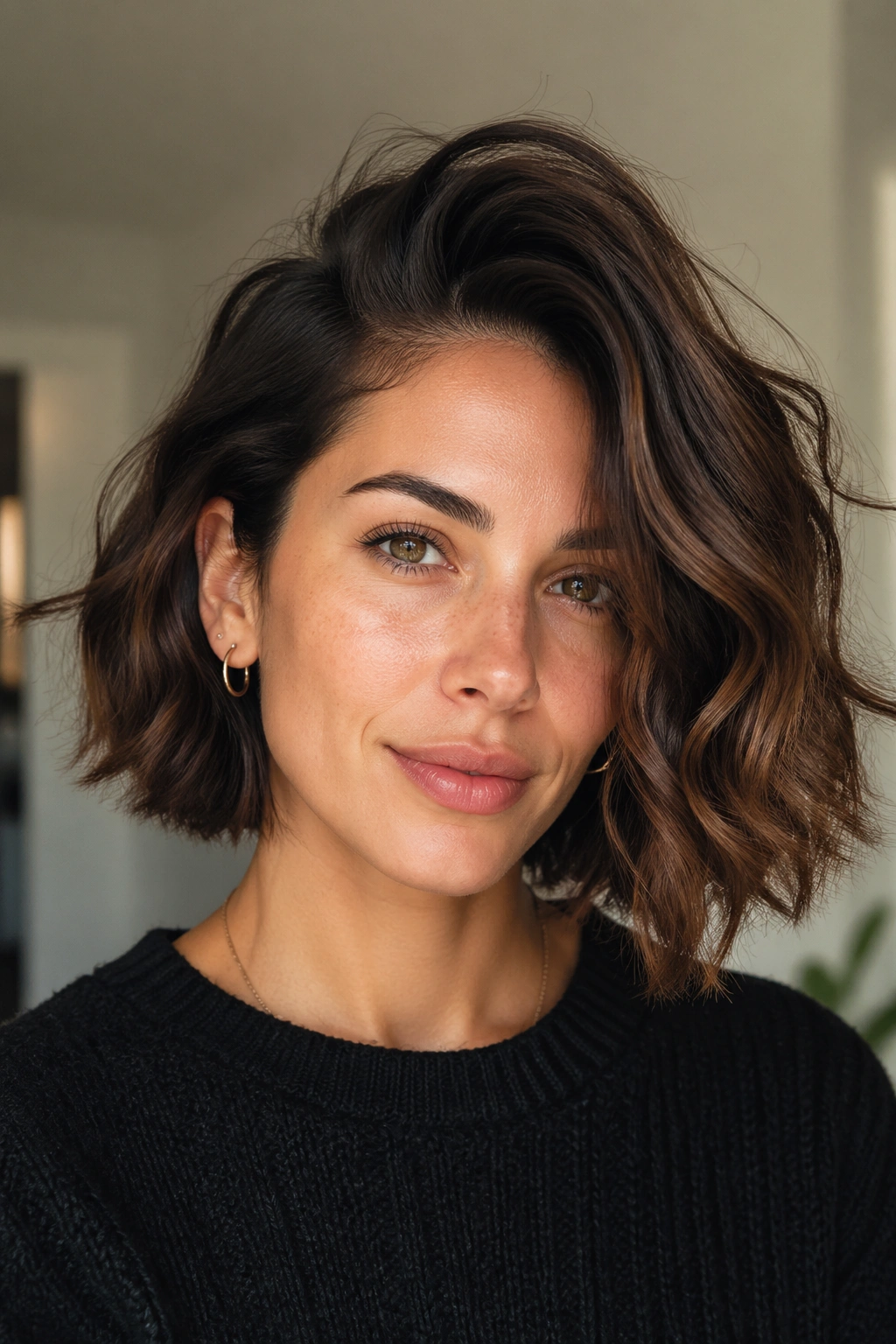
Volume in wavy hair is rarely about the product you use. While a great mousse or salt spray can help, they cannot fix a haircut that is actively working against your natural texture. The best wavy haircut is one that removes enough weight to let your hair spring up but keeps enough structure to prevent the “frizz halo.”
Take your time when talking to your stylist. Do not just ask for “layers.” Ask for “internal weight removal” or “crown-focused layering.” Bring photos, but look at the texture of the hair in the photo, not just the length. If your hair is finer than the hair in the photo, you will need more layers. If it is coarser, you will need more weight removal.
Ultimately, your hair is dynamic. It will change with the weather, your health, and your stress levels. A good cut is the foundation, but learning how to encourage your hair to move the way you want it to—through drying techniques, parting, and minimal product—is the true secret to the volume you’re looking for. Pick a style that excites you, find a stylist who understands texture, and don’t be afraid to embrace the natural bounce that comes when the weight is finally lifted.
