



If you have thick, wavy hair, you know that a ponytail isn’t just a hairstyle—it’s a structural engineering project. The classic, sleek look is often an illusion that falls apart the moment you start moving. Your hair is heavy, it has a mind of its own, and if you use a flimsy, gas-station elastic, it will snap before lunch. We have all experienced the dreaded “pony headache,” where the weight of your hair pulls on your scalp until you just have to let it down.
But the ponytail remains the absolute standard for getting things done while still looking like you put in some effort. The trick isn’t fighting your texture; it’s working with the density. You need different tactics than those with fine hair. You need to focus on weight distribution, secure anchoring, and using your natural wave to your advantage rather than trying to flatten it into submission. This isn’t about making your hair do what it doesn’t want to do—it’s about controlling the volume so you can actually get through your day comfortably.
When you have a high volume of hair, the pivot point of the ponytail matters more than anything else. Place it too high, and the weight pulls your hairline back painfully. Place it too low, and it gets tangled in your jacket collar or scarf. The sweet spot is usually right at the crown or at the nape of the neck. We are going to walk through twenty-five ways to style your thick, wavy hair into ponytails that look intentional, hold securely, and actually stay in place.
1. The Classic High Wavy Pony
The high ponytail is the gold standard, but on thick hair, it can easily turn into a heavy, drooping mess. The secret to a perfect high pony for wavy hair is not tightening the elastic until your eyes water—it’s about the preparation. Start by flipping your head upside down and gathering your hair at the crown. Instead of one single elastic, use two, or use a hair bungee. A bungee—an elastic cord with hooks at the ends—is a game-changer for thick hair. It allows you to wrap the band around your hair without pulling it through the loop, giving you total control over the tightness.
Once the pony is secured, use a texturizing spray, not a heavy hairspray, to define those waves. If your hair is too clean, it will be slippery and the ponytail will slide down. A little “grit” from a dry texture spray adds the grip necessary to keep the band from traveling south throughout the day. Tease the underside of the pony itself slightly to add volume, then smooth the top layer over. It’s an effortless look that keeps the weight off your neck while showing off your natural texture.
2. The Low Messy Textured Pony
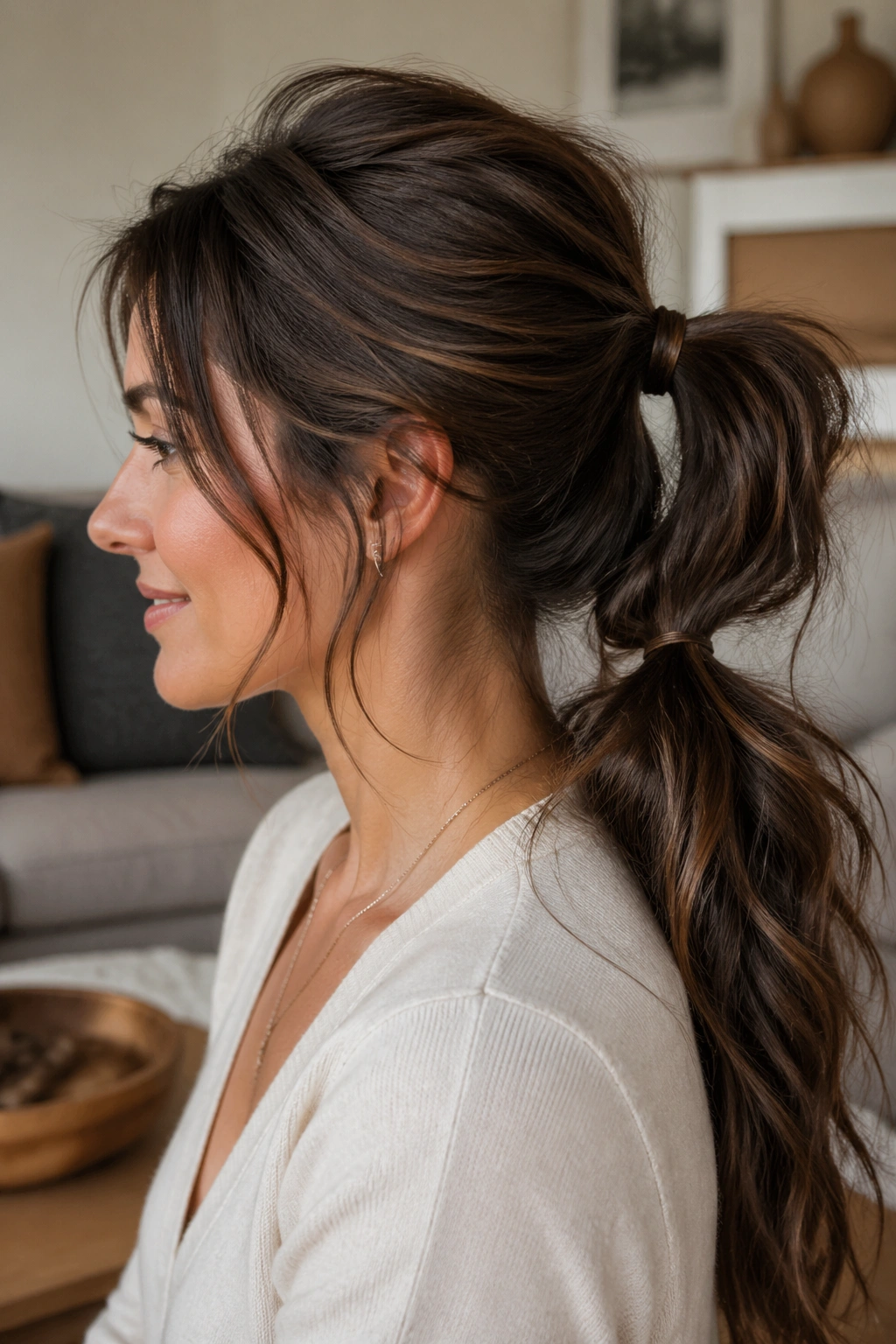
This is the “I just threw this up” look that somehow manages to look sophisticated. For thick hair, a low ponytail can get messy quickly because the weight tends to pull at the crown, causing the roots to loosen and sag. To fix this, create a small, half-up section first. Secure that top section with a small, clear elastic, and then gather the rest of your hair into a second, lower ponytail that includes the first one.
Why This Technique Matters
- Weight Distribution: By splitting the hair into two, you aren’t asking one single elastic to support the entire weight of your thick hair.
- Volume Control: The top section creates a slightly raised, voluminous base that keeps the ponytail from looking limp against your neck.
- Security: If one band snaps, you have a backup. It is a simple redundancy measure that saves you from having your hair fall down in the middle of a meeting.
Once you have the base secure, gently pull at the hair around your face and the crown to create that “undone” aesthetic. Don’t pull it tight—let the waves frame your face naturally.
3. The Braided Wrap Ponytail
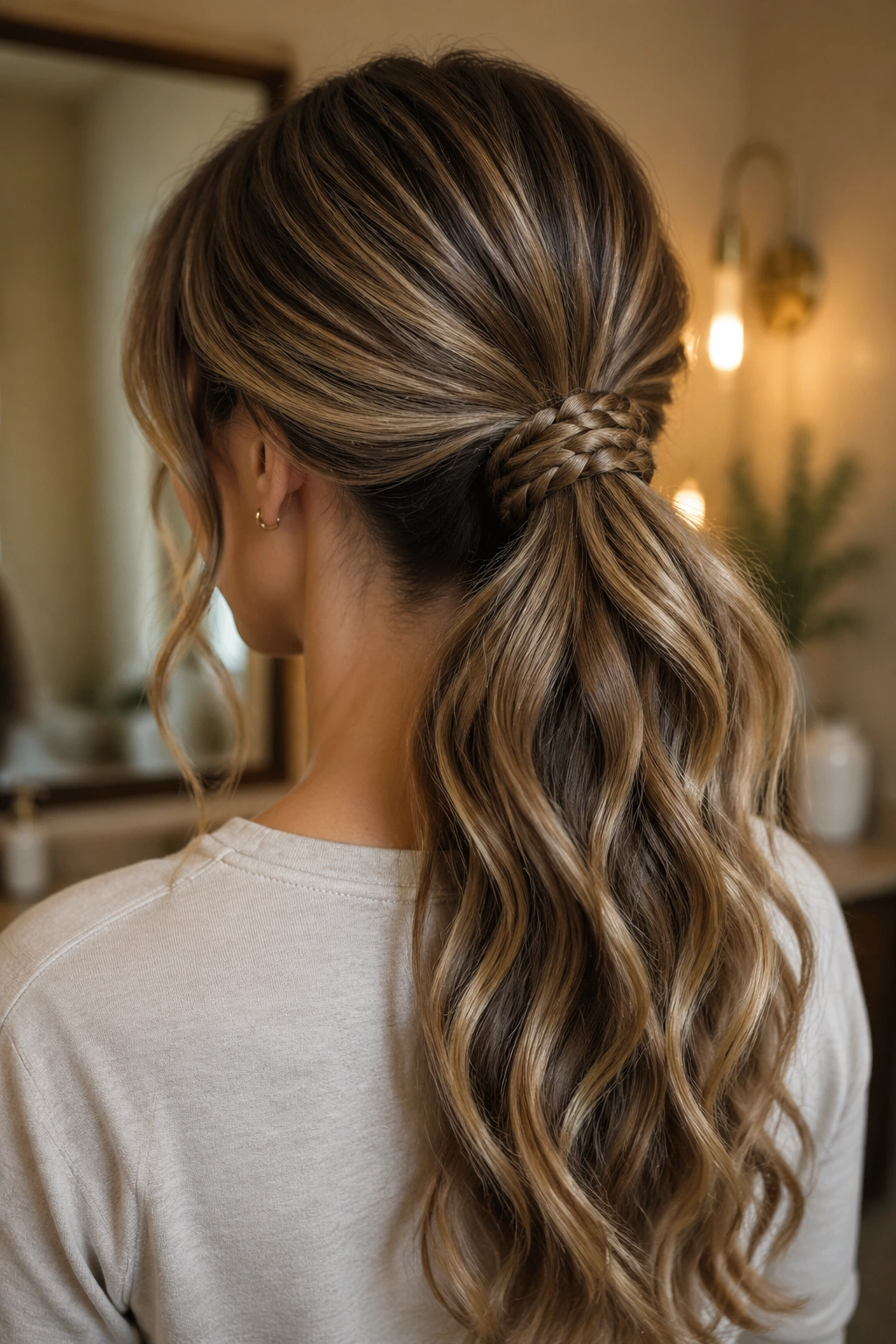
The “wrap” is where you take a small section of hair from the underside of your ponytail and wrap it around the elastic to hide it. With thick hair, a single wrap often isn’t enough because the elastic is thick and stubborn. That is where the braid comes in. Instead of just wrapping a piece of hair, braid that section first. It looks more intentional and adds a subtle bit of texture that distracts from the bulk of the elastic.
Start by pulling your hair into your desired ponytail position. Take a one-inch section of hair from the bottom of the pony. Braid this section tightly all the way to the ends. Secure the braid with a tiny, clear elastic. Wrap the braid around the base of your ponytail until you run out of length, and tuck the end underneath the base. Secure it with two bobby pins that match your hair color—one pointing down, one pointing up to lock it in place. It’s a polished detail that makes the ponytail look like it was professionally styled.
4. The Half-Up Wavy Ponytail

Sometimes, you want the control of a ponytail but the freedom of wearing your hair down. The half-up ponytail is perfect for thick, wavy hair because it removes the bulk from around your face without losing the “wow” factor of your length. The key is in the sectioning. Do not just grab a chunk of hair from the front—that often leads to a heavy, awkward-looking lump on the back of your head.
Instead, section your hair from the tops of your ears upward. If your hair is exceptionally thick, consider doing a double knot or a twisted knot instead of just a standard ponytail. After securing your half-up section, use a curling iron on just the pieces in the ponytail and a few pieces near your face to unify the wave pattern. This ensures the style looks cohesive rather than like you just pinned your hair back because you were in a rush.
5. The Bubble Ponytail
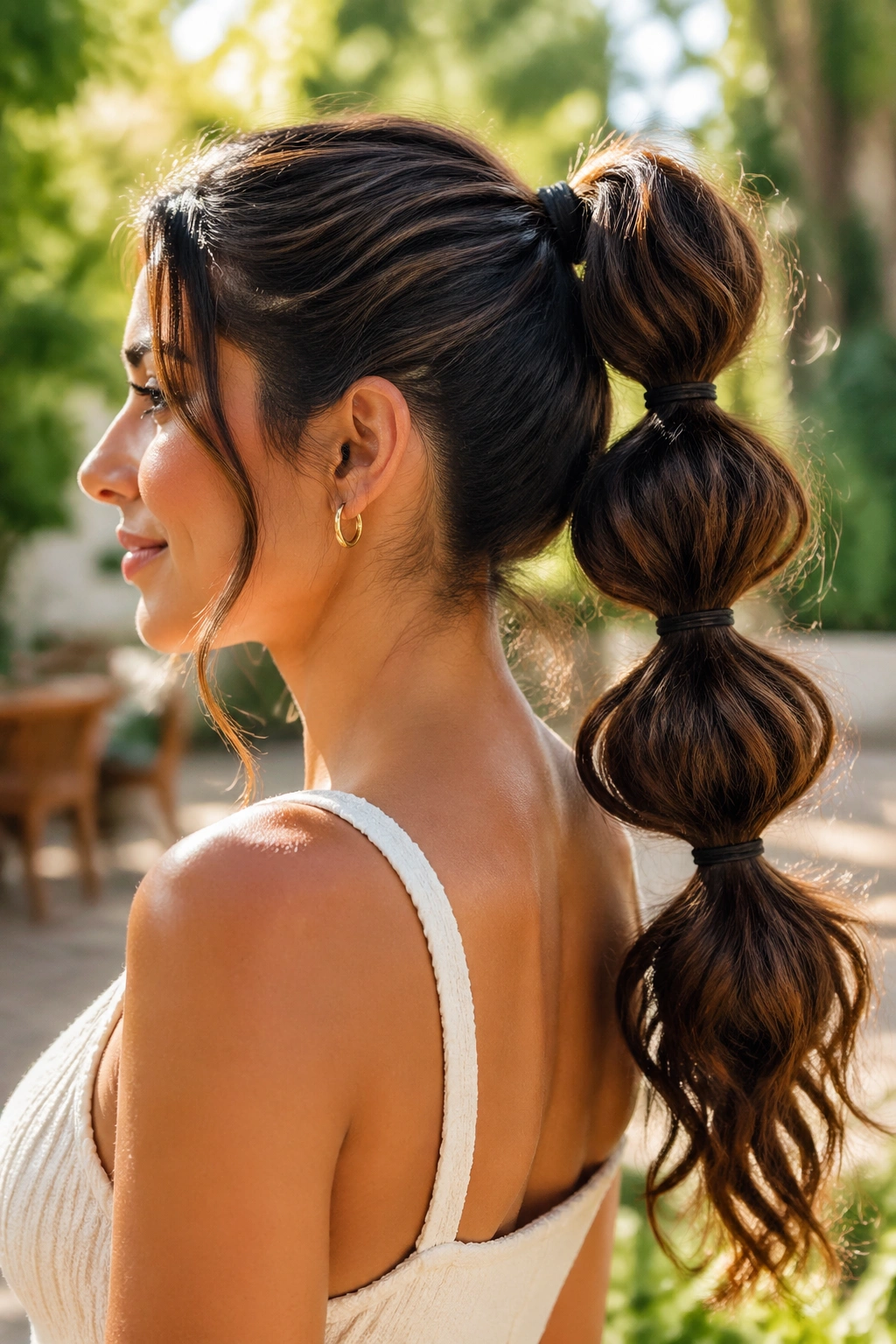
The bubble ponytail is a fantastic solution for thick hair because it controls the volume in sections rather than letting it sit as one massive, unruly mass. It sounds complicated, but it’s actually quite straightforward once you get the rhythm. First, secure your hair in a high or mid-height ponytail. Then, place additional elastics every two to three inches down the length of your ponytail.
After placing each elastic, gently tug and fluff the hair between them to create “bubbles.” Because your hair is thick, your bubbles will be naturally full and substantial, which is exactly the look you want. This style works best on day-two hair when your waves have a bit more grip. If your hair is too silky, the bubbles will slide around. A spritz of sea salt spray before you start building the bubbles gives your hair the necessary texture to hold that rounded shape all day long.
6. The Side-Swept Wavy Pony
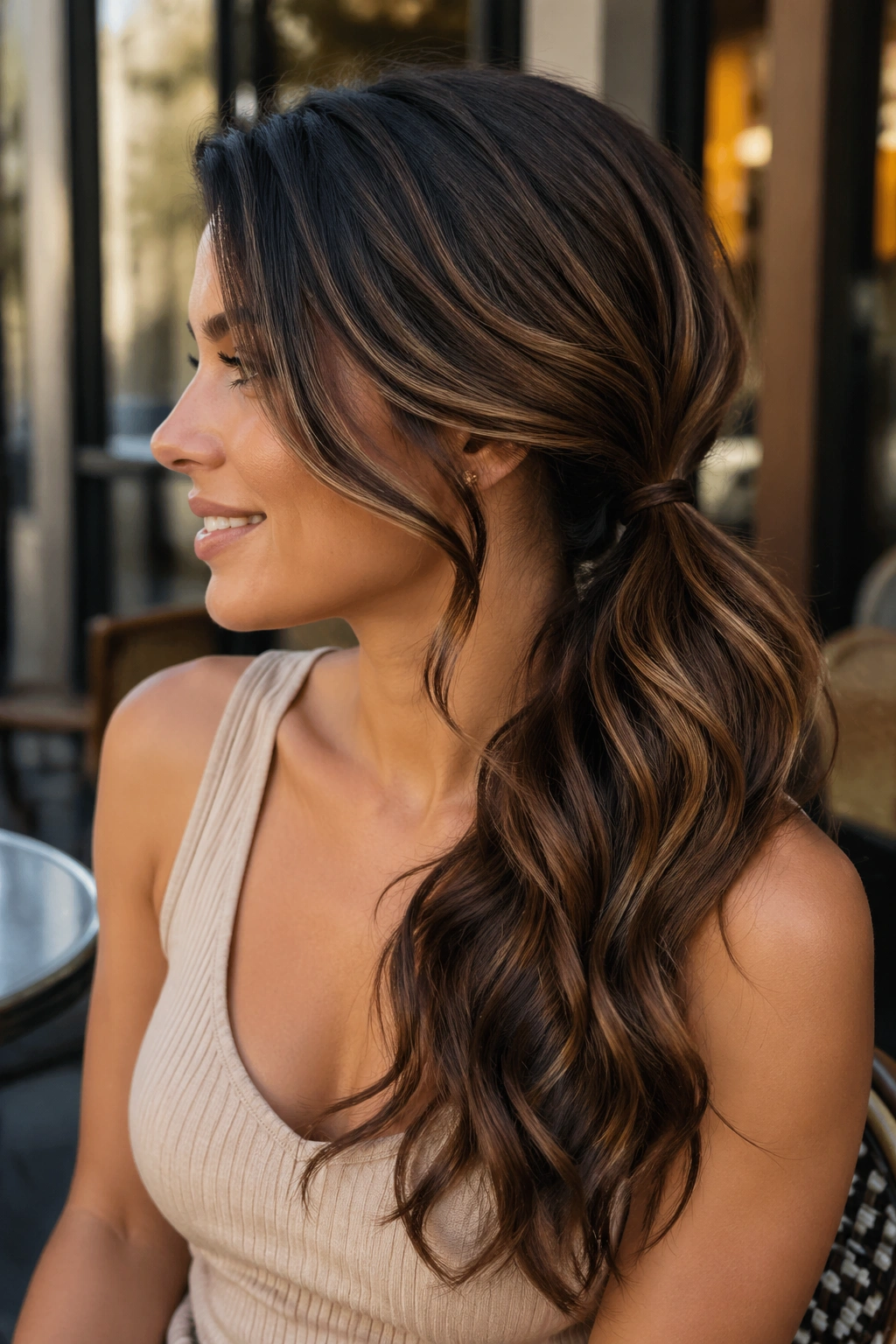
There is something inherently romantic about a side-swept ponytail, especially when your hair has a deep, natural wave. The danger with this style on thick hair is that it can start to pull on your scalp if you try to drag all that hair to the side. The workaround is to create a soft, side-parted base before you start gathering the hair.
Bring your hair over your shoulder, but leave out a few face-framing pieces. When securing the ponytail, use a fabric-covered elastic—the thicker the better—to avoid friction and breakage. Once it’s tied, don’t leave it perfectly smooth. Run your fingers through the ponytail to loosen up the waves and separate them. The goal is a soft, flowing look that rests comfortably against your shoulder without feeling like a heavy dead weight pulling on your neck.
7. The Scarf-Accented Ponytail
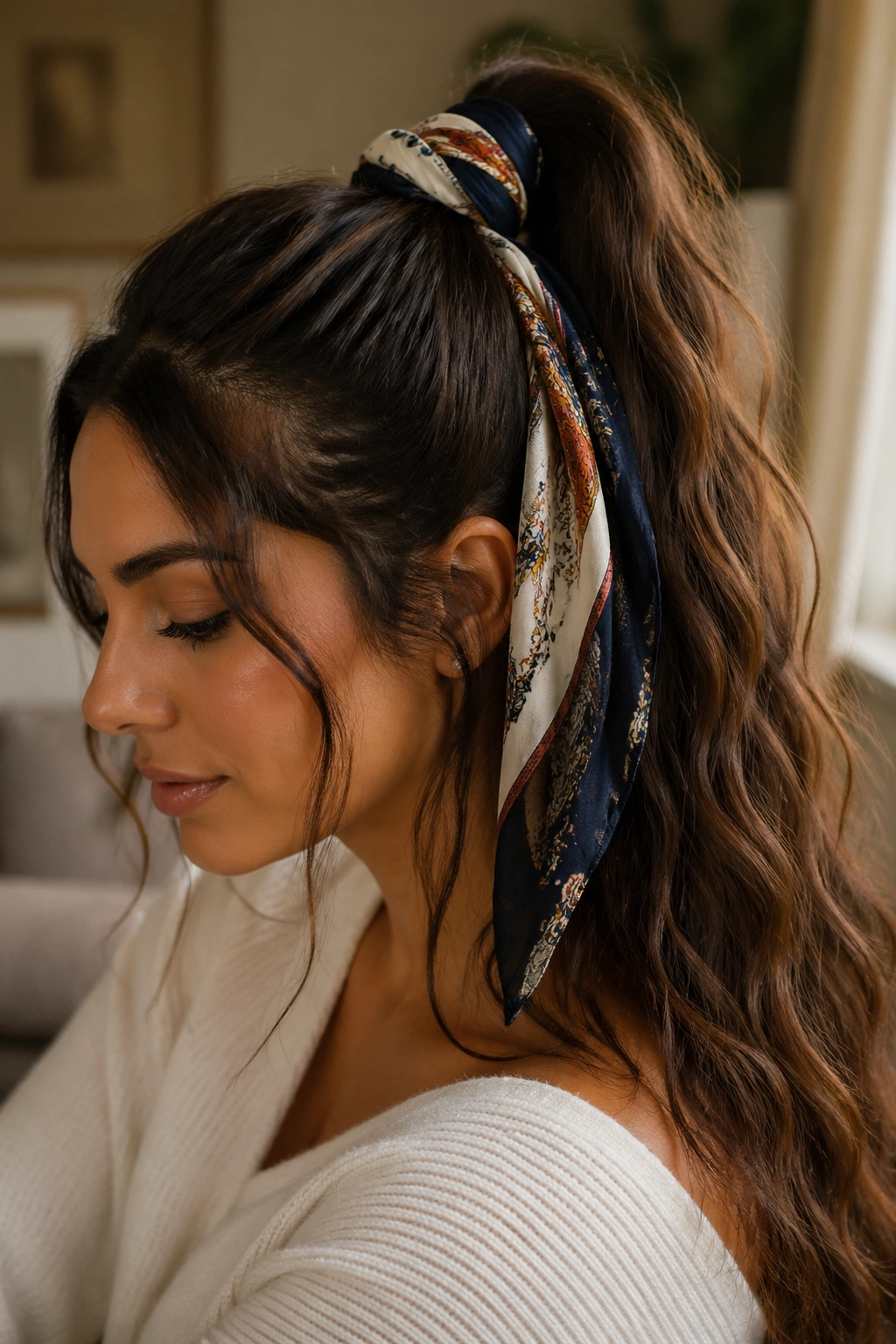
A silk or satin scarf can be the best friend of someone with thick hair. It acts as a structural element, not just a decorative one. If you struggle with elastics that break or are too tight, a scarf can replace the hair tie entirely or be used to cover one. Gather your hair into a ponytail and secure it with a basic, neutral-colored band. Then, tie a scarf around the base.
For thick hair, use a longer scarf. You can braid the tails of the scarf into the ponytail or just let them drape down alongside your hair. The added weight of the scarf helps keep the ponytail from “poofing” out too much at the base, which is a common issue with thick, wavy textures. It also adds a layer of protection, preventing the hair tie from creating a hard crease in your waves.
8. The Double-Elastic Method
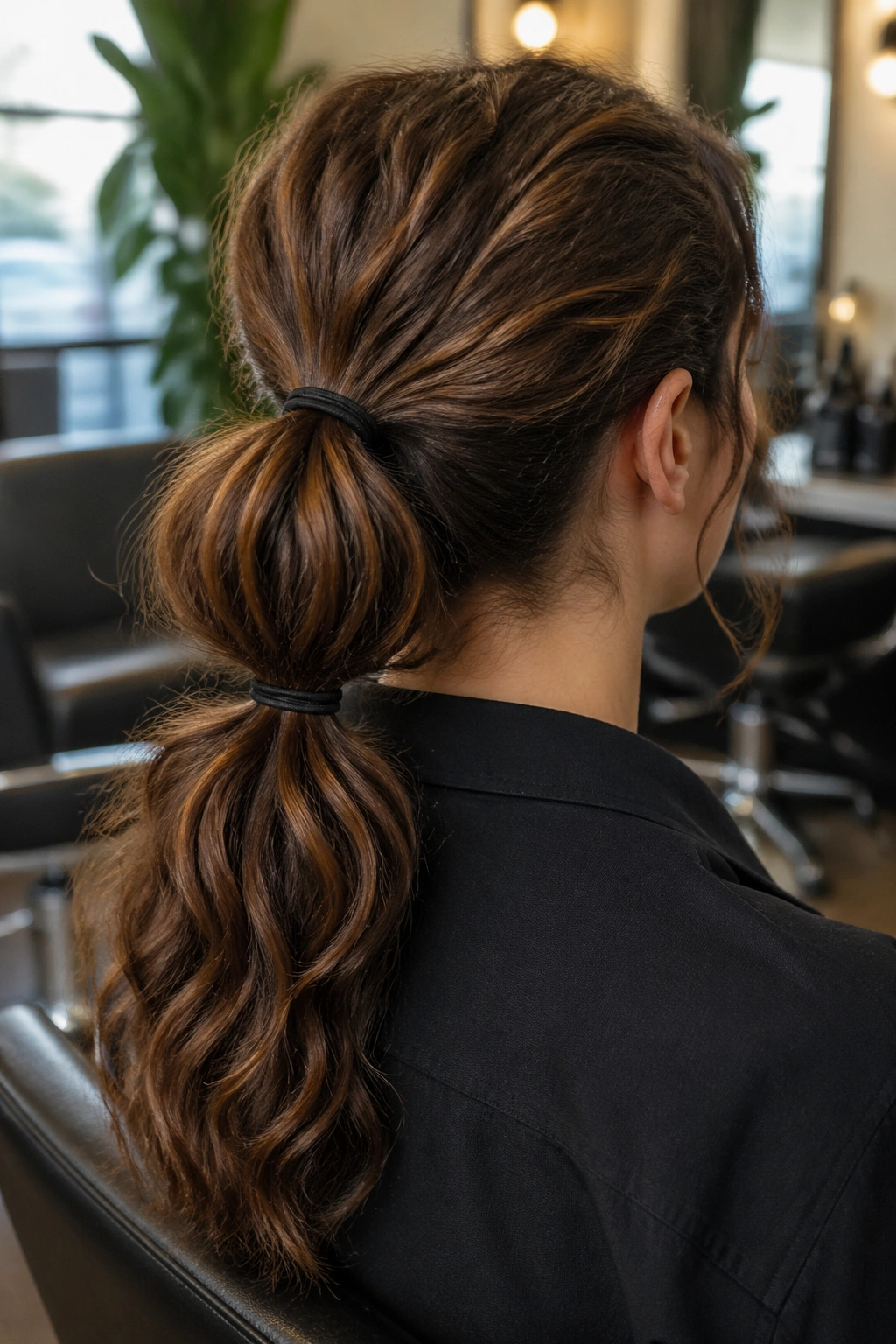
This is less of a style and more of an essential technique for the thick-haired community. If you have ever felt your ponytail slowly sliding down your head throughout the day, this is for you. Instead of trying to force your hair into one massive elastic, split your hair horizontally into two sections—a top half and a bottom half.
Secure the top half into a ponytail first. Then, take the bottom half and incorporate it into the same elastic, or create a second ponytail just below the first one and then blend them together. This “double-anchor” method keeps the weight distributed more evenly. It prevents the ponytail from “splitting” in the middle, which happens frequently with thick hair when the hair tie can’t quite get a grip on all the strands at once. It creates a seamless, sturdy foundation that lasts until you take it out.
9. The Twisted Side Ponytail
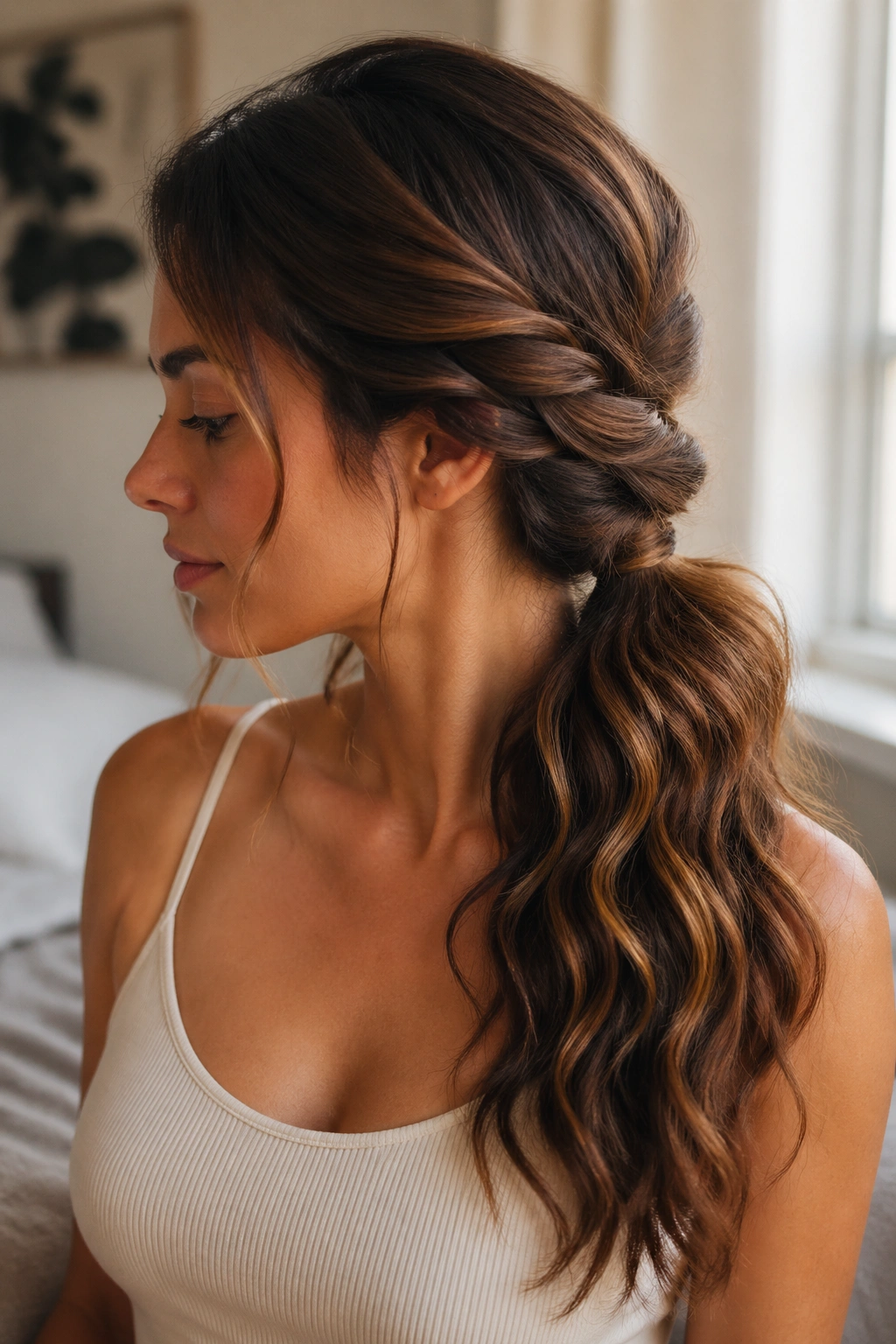
Twisting your hair before securing it into a ponytail adds an element of architectural interest that simple ponytails lack. For this style, divide your hair into two large sections at the nape of your neck. Twist both sections toward your face. Then, take both twists and cross them over each other, bringing them to the side.
Secure with a clear elastic. The twists manage the volume of your thick hair by compacting it slightly, creating a sleek base that transitions into a wavy ponytail. This works particularly well if you have layers, as the twists help anchor shorter layers that might otherwise fall out of a standard ponytail. It’s a clean, elegant look that works just as well for a casual weekend as it does for a formal event.
10. The Crown Braid Integration
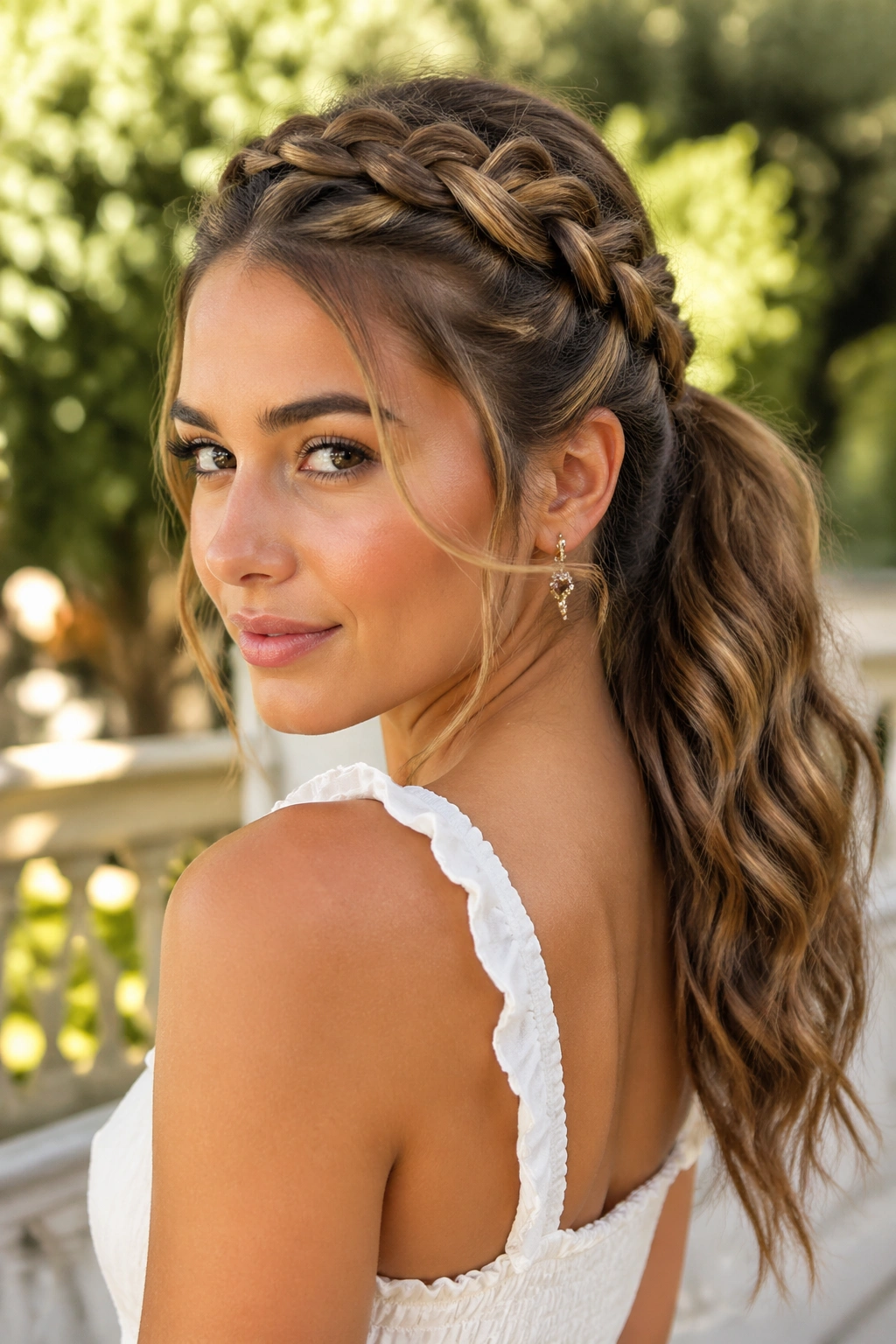
If your wavy hair is thick, braids are an excellent way to keep the volume in check. Integrating a crown braid—or a small braid along your hairline—into your ponytail is a great way to elevate the style. Start by braiding a section of hair from your part down towards your ear, incorporating hair as you go.
Once you reach the base of your neck, stop braiding and incorporate the braid into your main ponytail. This keeps the hair around your face secure and prevents it from frizzing throughout the day. It also creates a “headband” effect that looks intentional. This is a very secure style because the braid acts as an anchor, holding those heavy front pieces in place so they don’t drag down the rest of your hair.
11. The Sleek-to-Wavy Hybrid
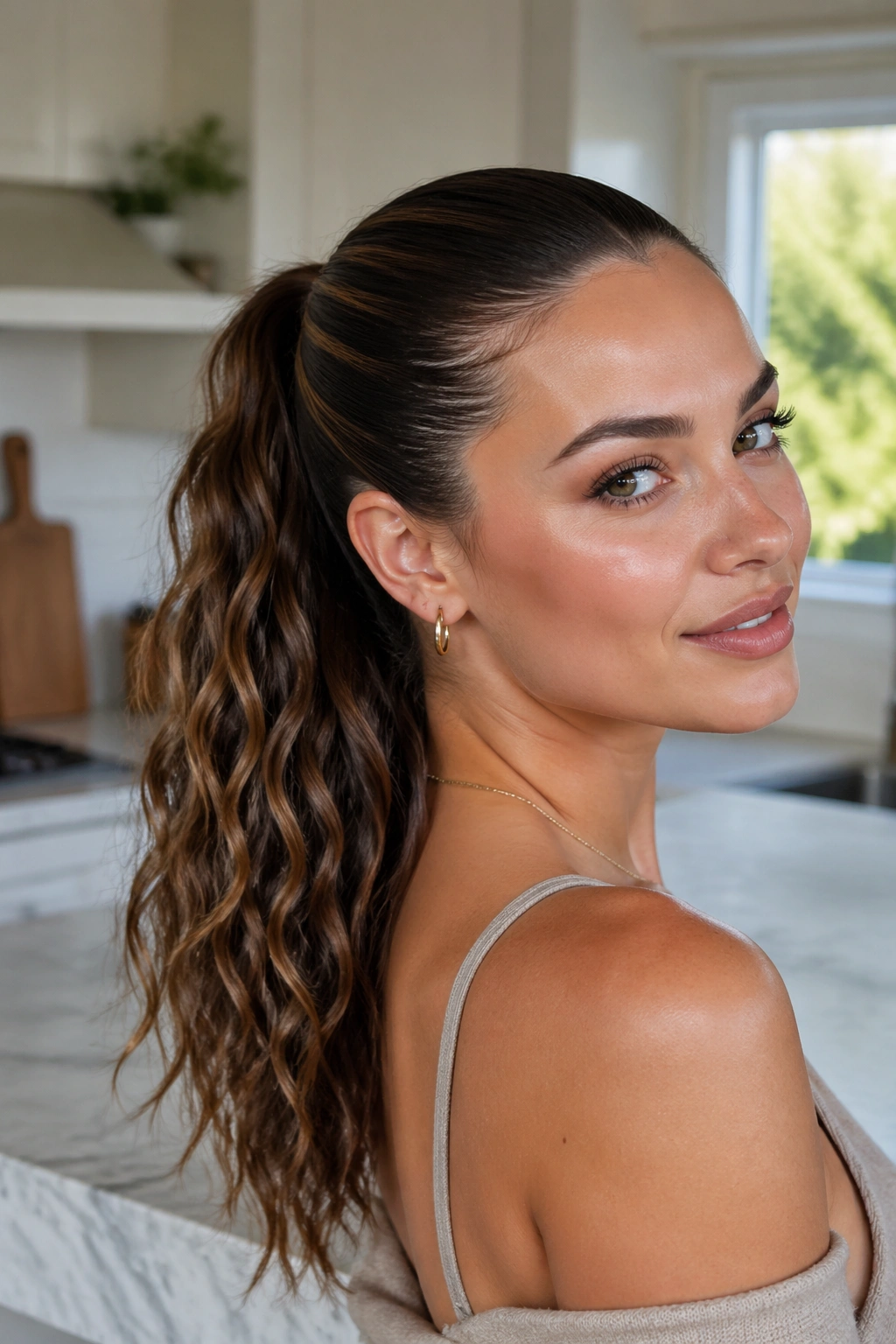
This style plays with the contrast between controlled roots and natural, wild ends. If you have thick hair, you might find that the roots get a bit unruly when pulled back. Using a pomade or a light styling cream, smooth the top section of your hair—the part from your forehead to the crown—until it is sleek.
Once you reach the crown, stop the smoothing process and let your natural waves take over for the ponytail itself. You can even use a small-barrel curling iron to tighten up the waves in the ponytail to make them look uniform. This creates a high-fashion contrast that looks like you spent an hour on your hair, even though you only spent five minutes smoothing the roots.
12. The Ribbon-Tie Ponytail
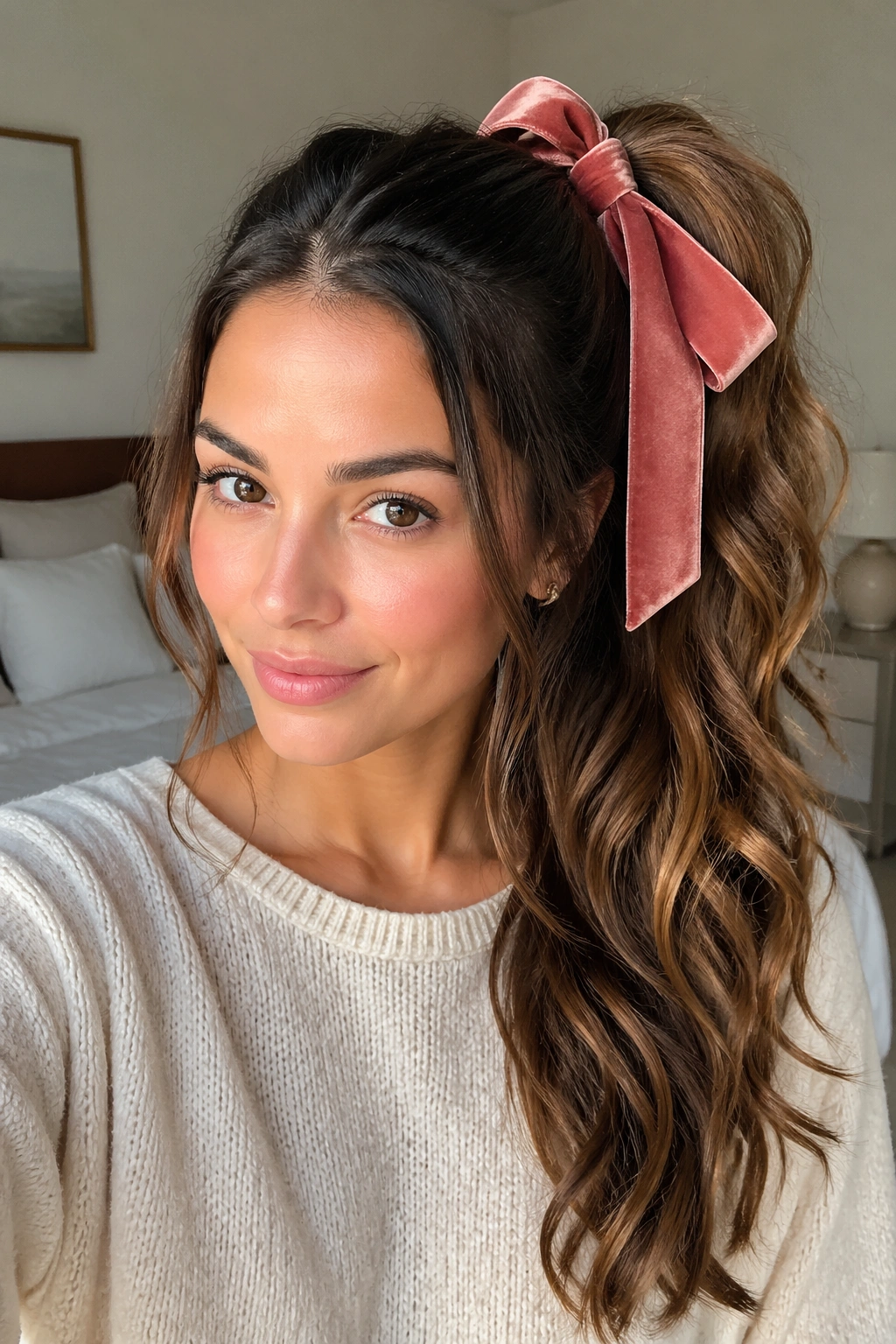
Ribbons are back in style, and for thick hair, they are incredibly functional. A long, velvet or satin ribbon can hold a lot of hair if you wrap it correctly. To use a ribbon effectively, secure your hair with a clear, small elastic first—this is your safety net. Then, wrap the ribbon around the elastic multiple times and tie it into a bow.
Because your hair is thick, a thin ribbon will just disappear. Use a wider ribbon. The material of the ribbon provides enough friction to hold the ponytail up, and it doesn’t cause the breakage that tighter elastic bands can cause. If you have very thick hair, ensure the ribbon is long enough to wrap at least three times. It adds a touch of softness to your wavy texture and keeps the pony looking intentional rather than utilitarian.
13. The Pineapple Ponytail
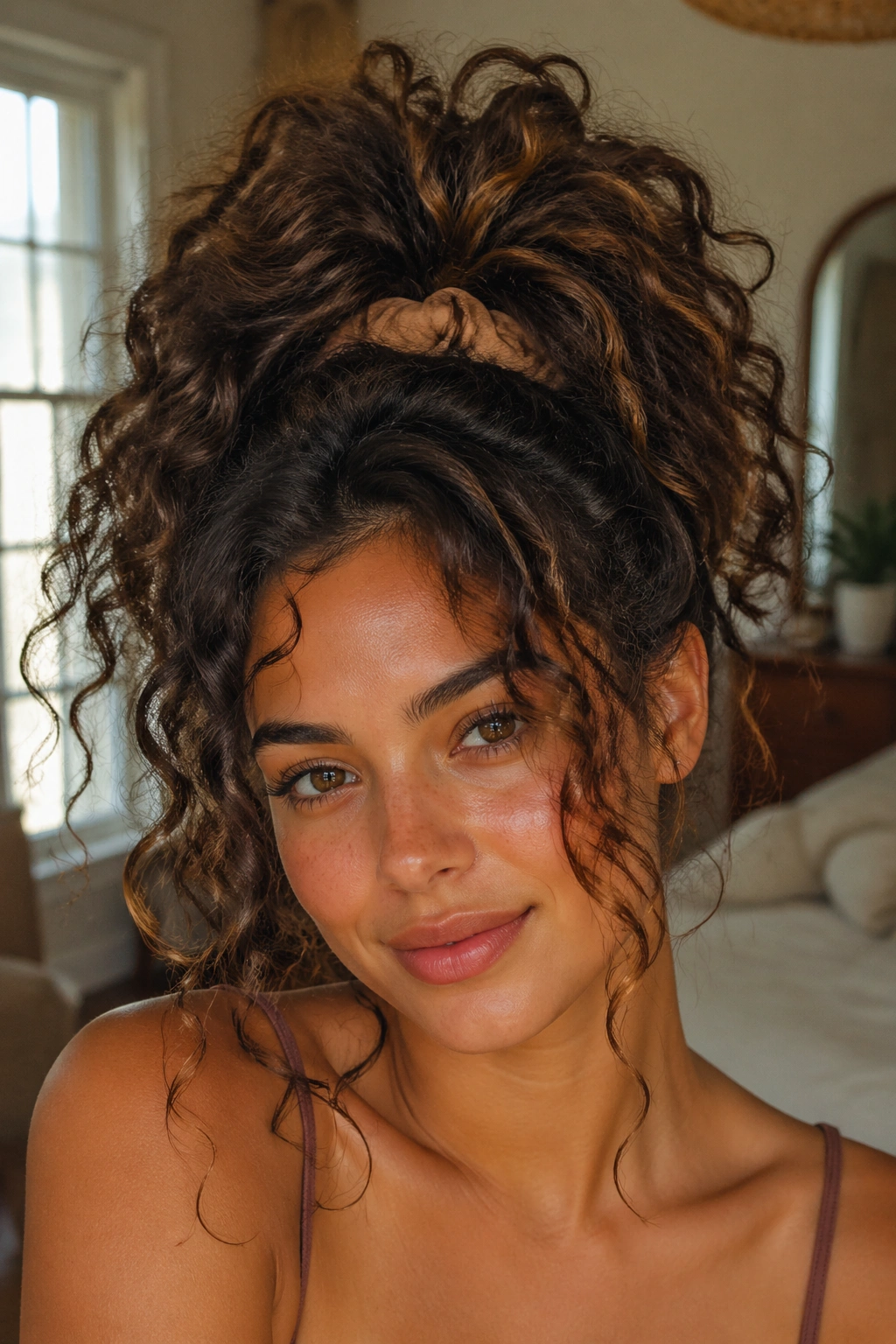
While often used as a sleep style for curly hair, the “pineapple” works perfectly as a daytime look for thick, wavy hair as well. The goal is to bring all your hair to the very top of your head, essentially creating a high, loose ponytail. The key here is not to pull the hair tight. You want the waves to cascade over your forehead and the sides of your head.
Use a silk scrunchie for this. Because the hair is gathered at the highest point of your head, the weight is distributed straight up rather than pulling backwards on your hairline. This is the most comfortable ponytail style for thick hair, and it highlights your waves beautifully. If you’re going for an edgy, voluminous look, this is the one to choose.
14. The Face-Framing Tendril Pony

If you have thick hair, you might feel tempted to pull every single strand back to get it out of your face. Resist that urge. Leaving a few pieces around your face softens the look and stops the ponytail from looking like a severe, tight ball. Part your hair in the middle or off-center and pull out two one-inch sections.
Secure the rest of your hair in a mid-height ponytail. Now, take a curling iron and quickly curl those front pieces away from your face. For thick hair, these tendrils can get frizzy if you don’t use a little bit of product. A tiny drop of smoothing oil on these pieces will keep them defined and sleek, providing a nice contrast to the natural waves in the ponytail.
15. The Claw Clip Ponytail
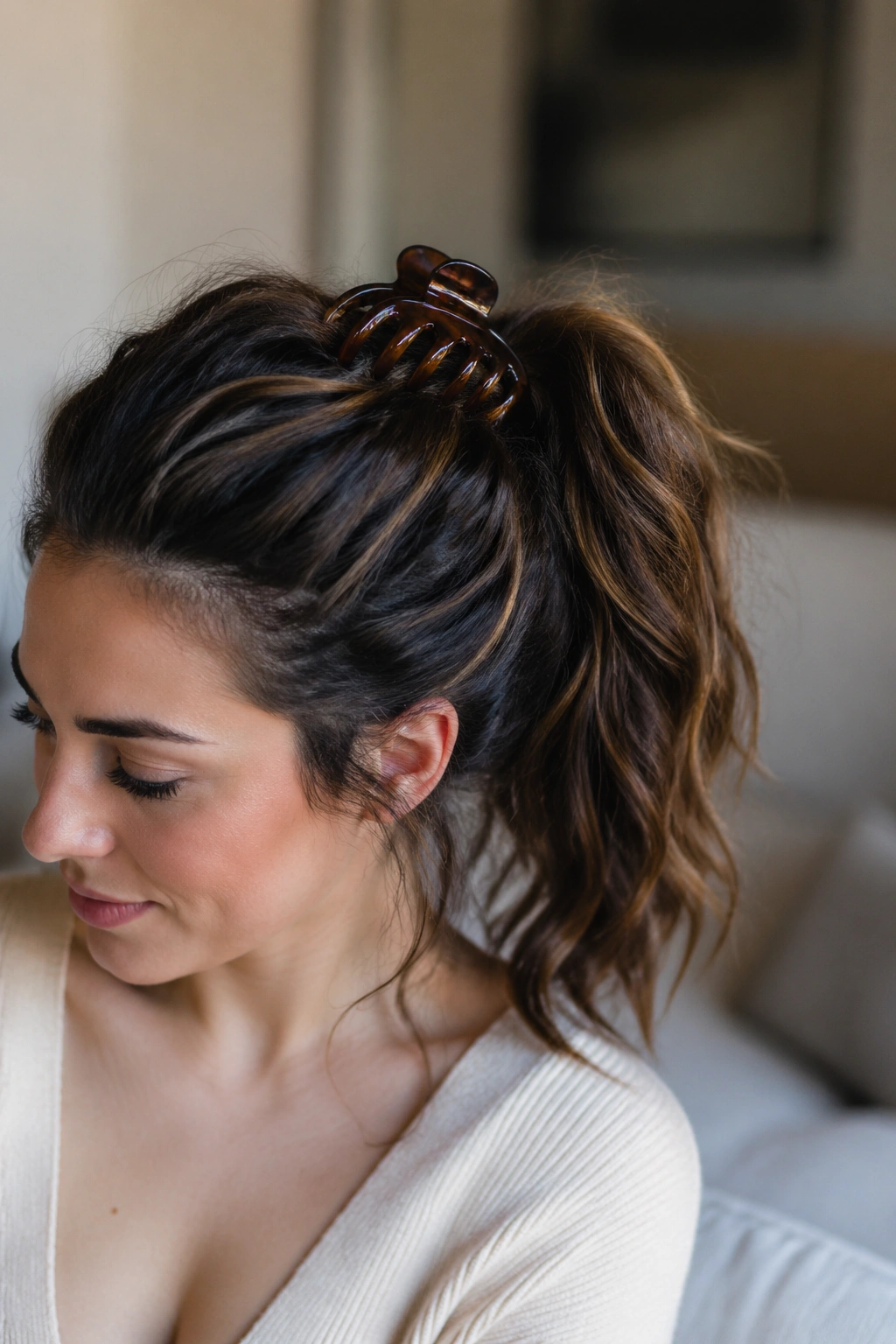
Claw clips are the secret weapon for thick hair. If you have never tried a “faux” ponytail using a claw clip, you are missing out. Instead of using an elastic, gather your hair like you are going to put it in a ponytail, twist it once or twice, and then secure it with a large, strong claw clip.
The clip distributes the weight of your hair across the clip’s teeth rather than pulling on a single elastic point. This is the only way to get a “ponytail” look without the inevitable headache that comes with thick hair. It also allows for more volume at the crown, as you can lift the hair and clip it in a way that creates height. Look for clips that are designed for “extra hold” or thick hair to ensure the teeth are long enough to actually bite through all that volume.
16. The Dutch Braid Into Ponytail
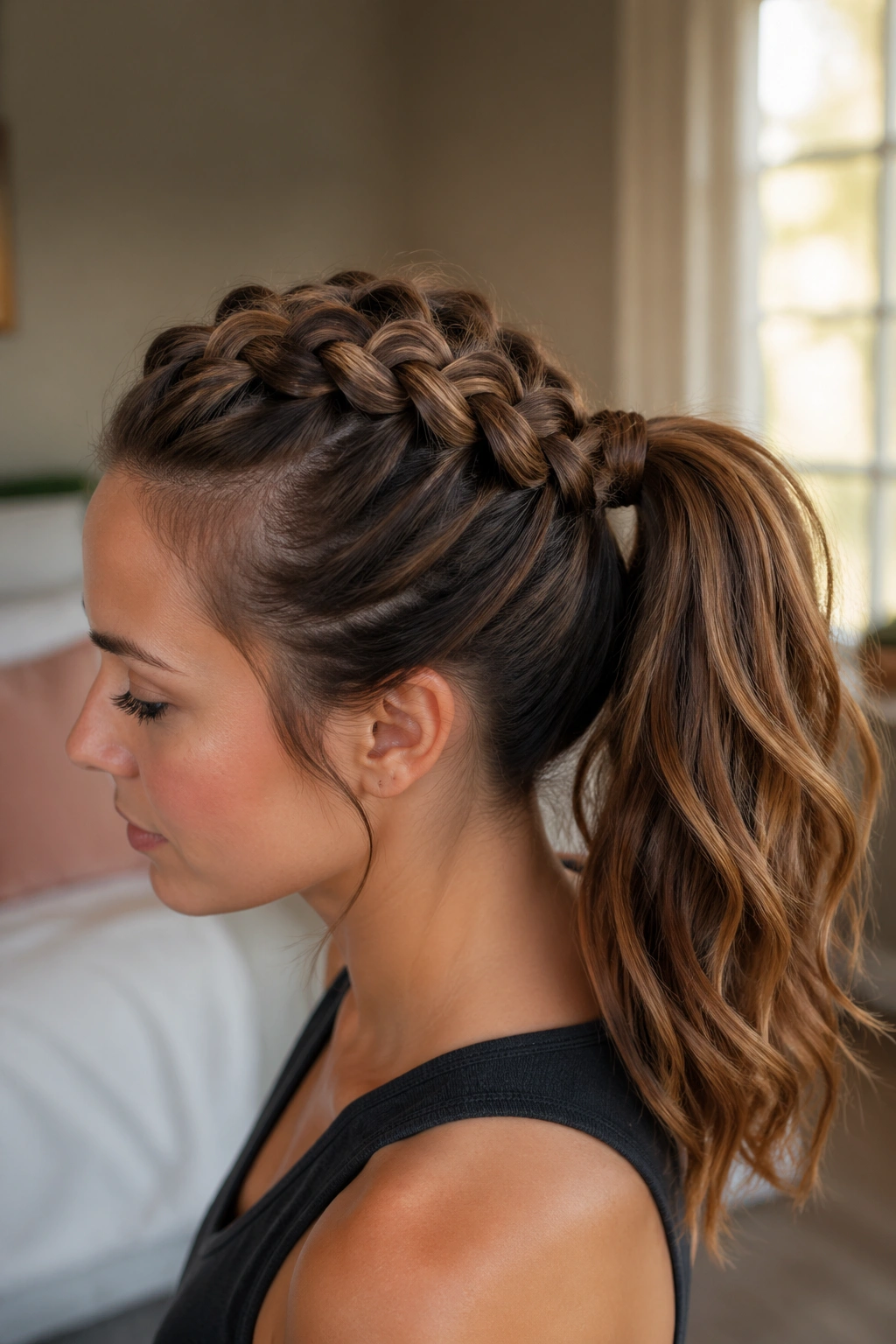
If you are dealing with layers that fall out of your ponytail, a Dutch braid is your best friend. Start a Dutch braid—an inside-out French braid—at your hairline and continue it back toward the crown of your head. Once you hit the crown, gather the rest of your hair and combine it with the braid into a ponytail.
The Dutch braid physically locks those shorter, stubborn pieces of hair into the style. It also adds a lot of visual interest to the top of your head. For thick, wavy hair, this is a very durable style. Because you are braiding the hair back, you are also managing the volume before it even reaches the ponytail, making the overall style look cleaner and more structured.
17. The Low-Slung Wrapped Pony
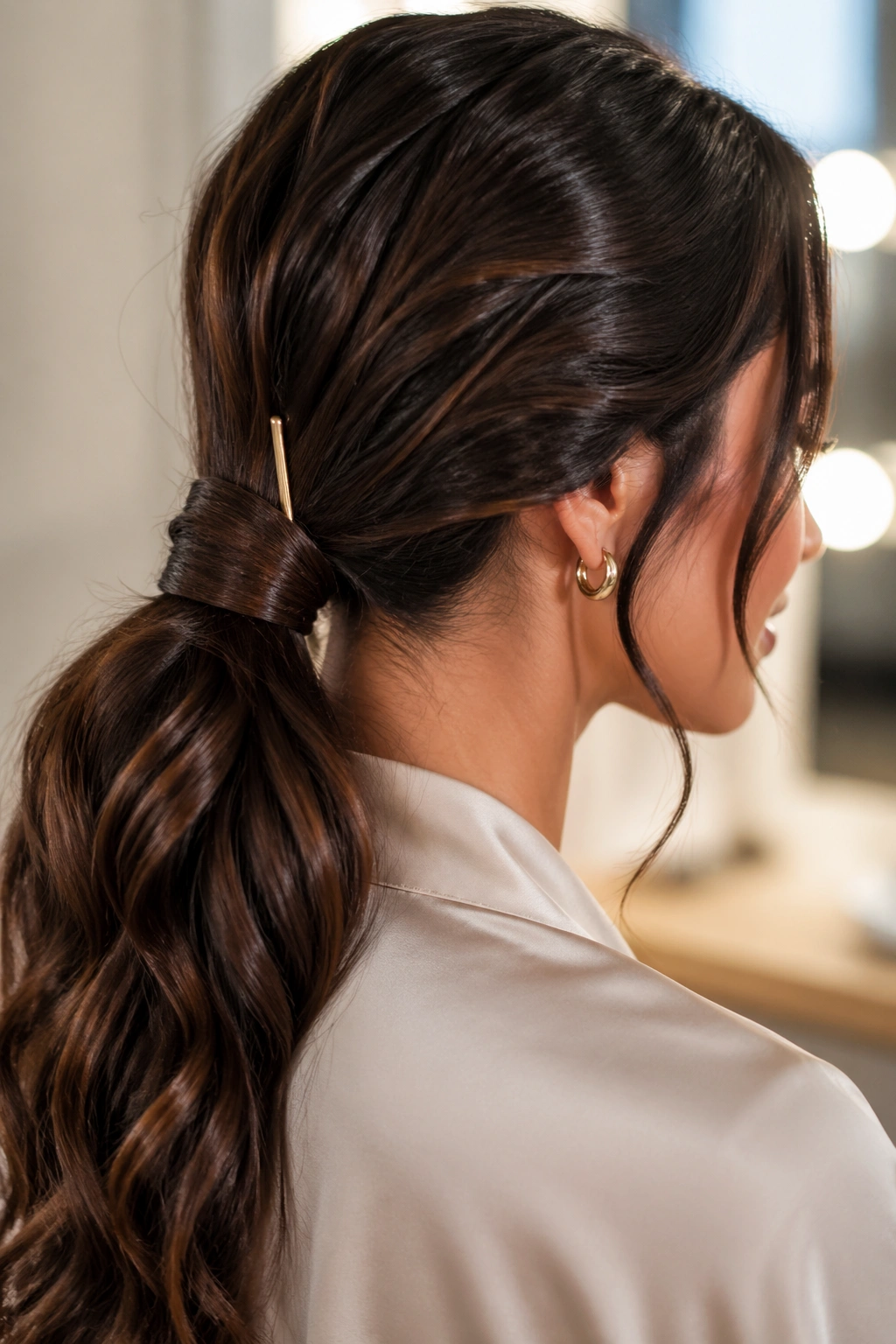
This is for when you want to look put-together with minimal effort. Create a low ponytail at the nape of your neck. Take a substantial piece of hair—about two inches wide—from the underside of the pony. Wrap it around the base until you have about three inches left.
Instead of pinning this end underneath, take a small, decorative hair pin or a flat metal clip and slide it vertically into the wrap to secure it. This looks much more polished than a bobby pin. Because you are using a thick section of hair to wrap, it creates a “cuff” effect that makes the ponytail look wider and more luxurious. It is a simple, effective trick that completely hides the hair tie.
18. The Teased Crown Ponytail

One of the biggest struggles with thick hair is that the weight of the ponytail can make the top of your head look flat. To counteract this, add volume at the roots before you secure your ponytail. Section off the hair at the crown and lightly tease it with a fine-tooth comb.
Spray the teased area with a little bit of hairspray. Smooth the top layer of hair over the tease so it looks seamless, then gather all your hair into a ponytail. This creates a “lifted” look that balances out the weight of your ponytail. It gives you a vintage-inspired silhouette that is very flattering for those with thick, wavy hair, as it highlights the texture without making the head look weighed down.
19. The Scrunchie Statement Pony
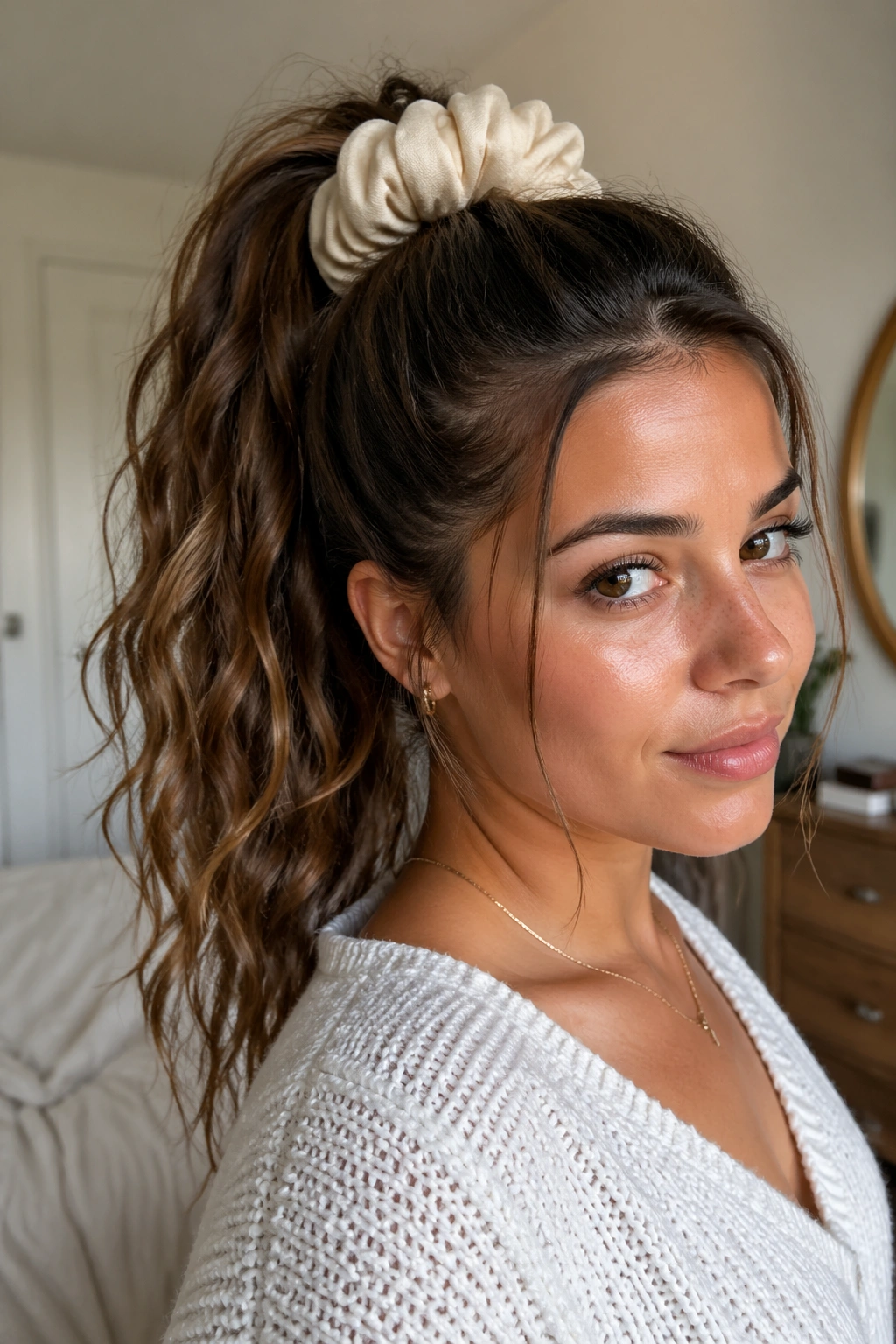
Do not underestimate the power of a large scrunchie. If you have thick hair, you need a scrunchie that is scaled to your hair volume. A tiny, thin scrunchie will get lost, but a large, fluffy one can actually help distribute the tension. Because scrunchies are made of fabric, they are much gentler on wavy hair than rubber or silicone elastics.
To make this work, secure your ponytail with a neutral hair tie first, then add the scrunchie over it. The scrunchie adds volume to the base of the ponytail, which makes the contrast with the length of your hair look more intentional. It is a quick way to add a bit of personality to your style without needing to do any complex braiding or twisting.
20. The Flipped-Inside-Out Ponytail
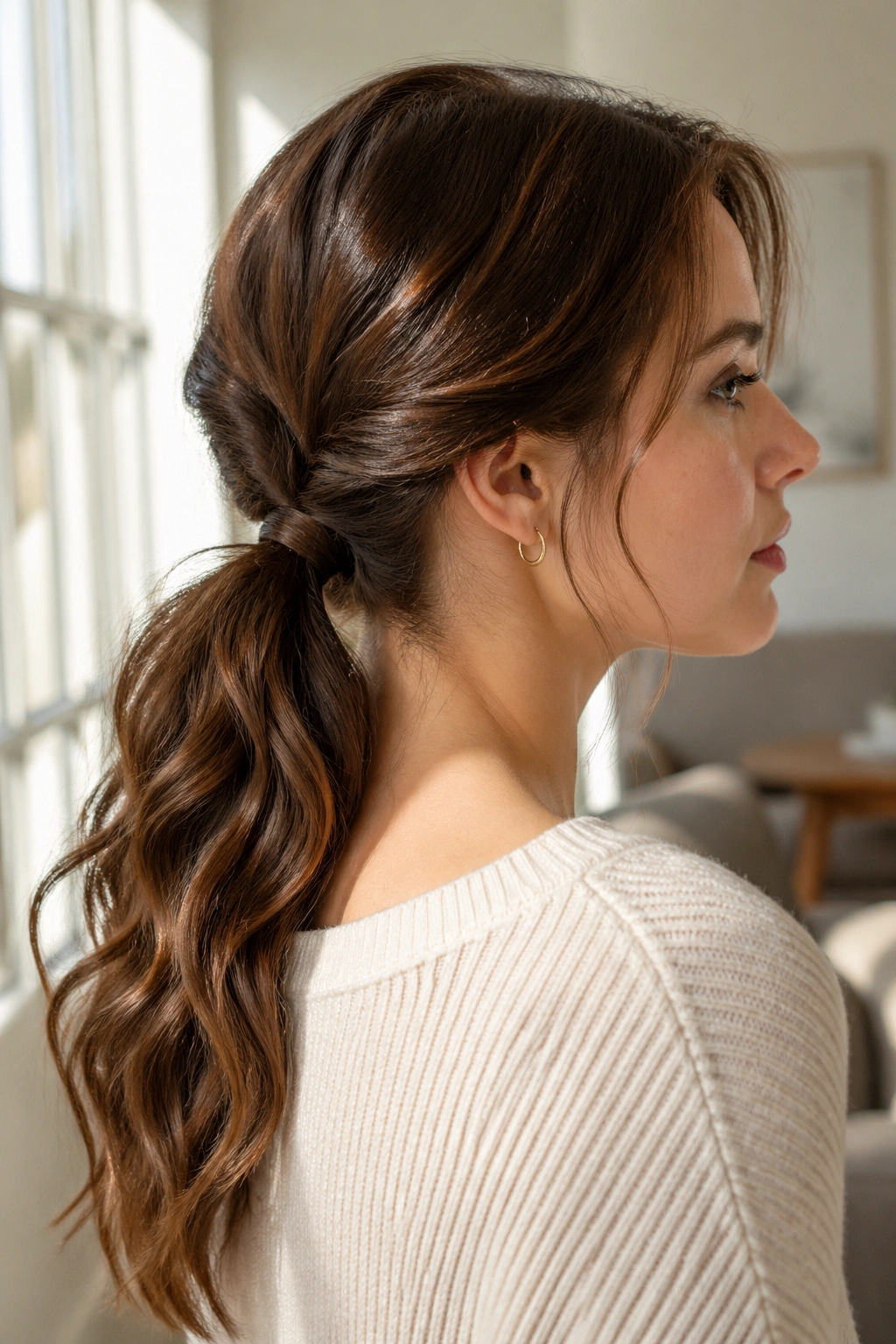
This is an old-school trick that works wonders for managing thick hair. Secure your hair in a low or mid-height ponytail. Use your fingers to create a small gap in the hair just above the elastic. Grab your ponytail, and flip it up and through that gap.
This “topsy-tail” method creates a twisted, elegant detail at the base of your ponytail. For thick hair, it helps to tighten the elastic a bit more than you think you need to before flipping, because the twist will create a little bit of slack. It manages the volume at the nape of the neck and creates a sophisticated twist that looks like it took much longer to create than it actually did.
21. The Textured Messy Bun-Pony Hybrid
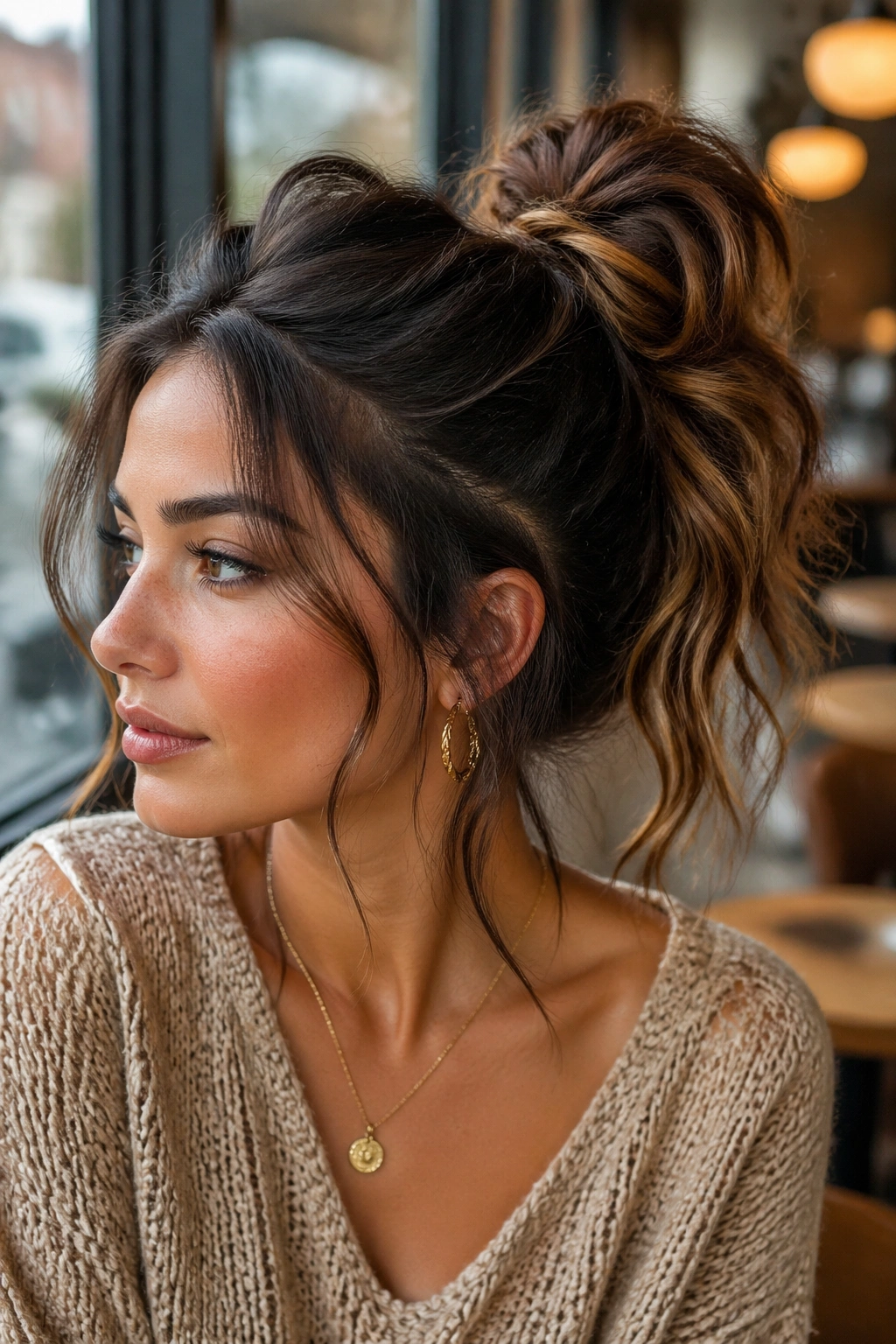
Sometimes you want the ease of a bun but the length of a ponytail. This style gives you both. Pull your hair into a mid-height ponytail. When you go to pull the hair through the elastic the final time, pull it only halfway through to create a loop or a “bun.”
Take the remaining ends of the hair—the tail—and wrap them around the base of the bun to hide the elastic. Pin them in place. The result is a messy, voluminous knot with a ponytail tail hanging out. This is excellent for thick hair because the bun takes some of the weight of the hair, making the ponytail feel lighter and less likely to pull on your scalp.
22. The Jeweled Pin Ponytail
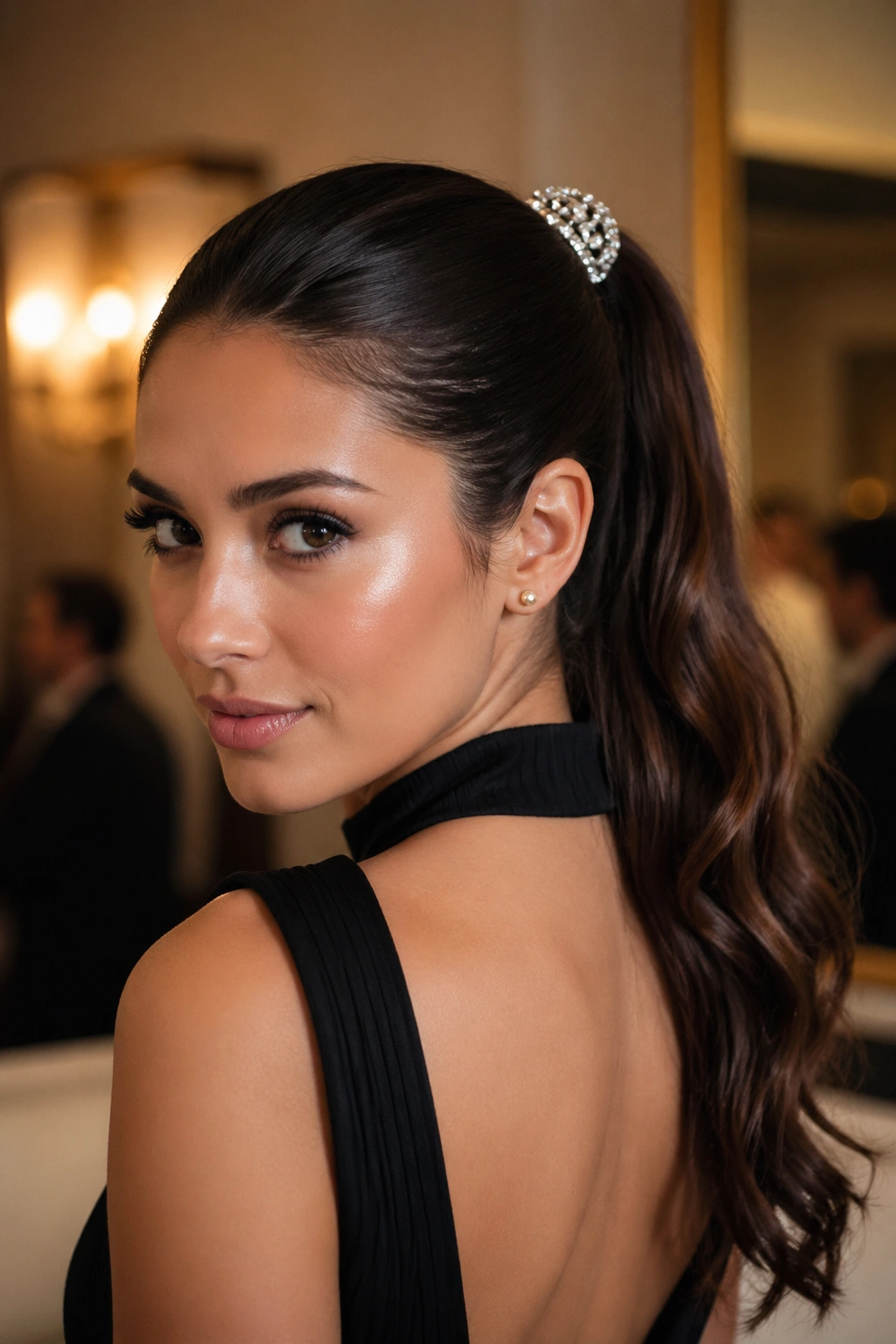
If you are heading to an evening event, your ponytail needs an upgrade. Instead of hiding your hair tie with a strand of hair, use a statement piece. This could be a large, jeweled hair clip, a metal barrette, or even a decorative cuff designed specifically for ponytails.
Gather your thick hair into a sleek, mid-height ponytail. Use a clear elastic to secure it. Then, clamp your accessory over the elastic. Because your hair is thick, ensure the accessory is large enough to encompass the base of the ponytail. The weight of the metal or jewelry can actually help keep the ponytail in place, acting as a counterbalance to the length of your waves.
23. The Deep Side Part Wavy Pony
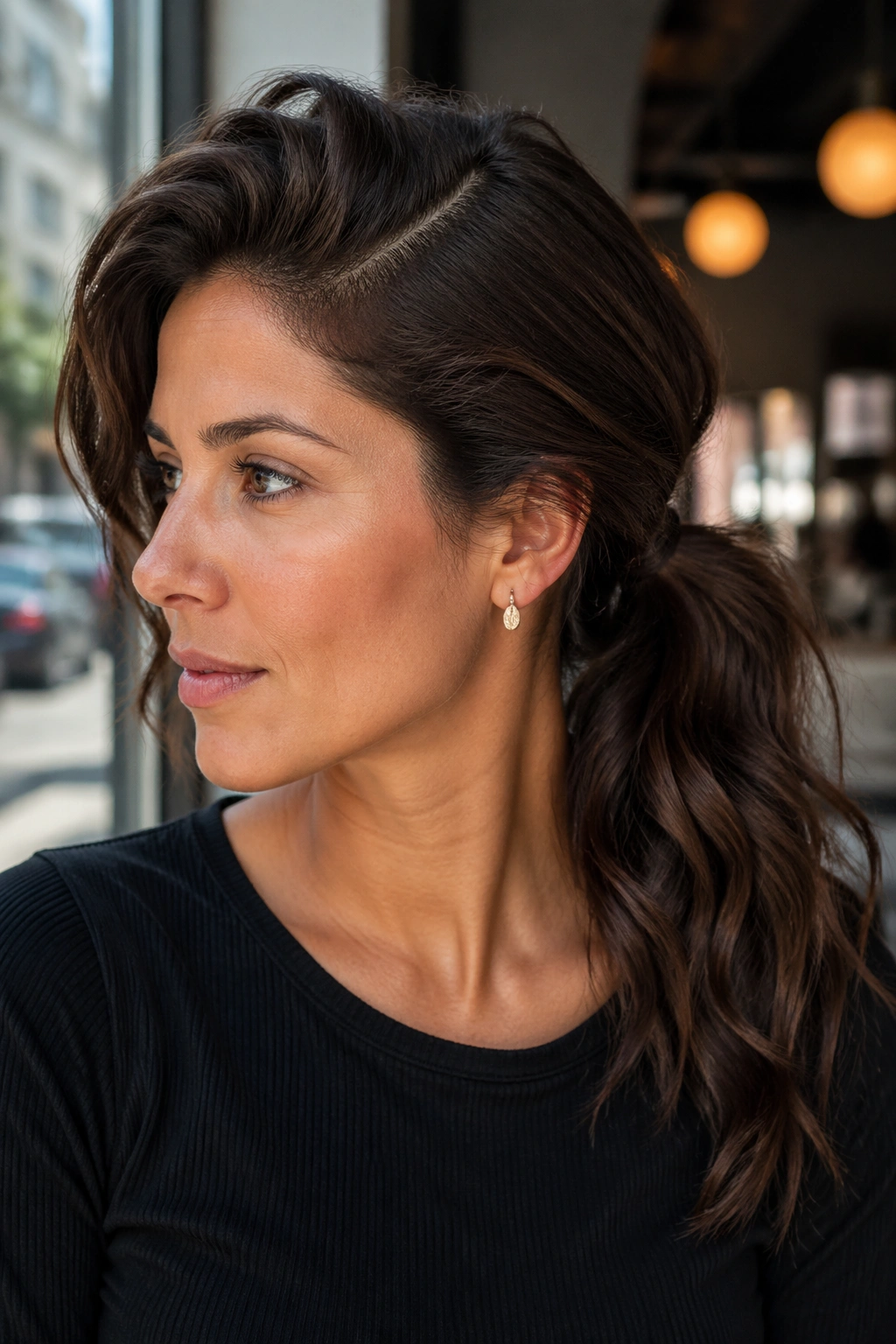
A deep side part instantly changes the geometry of your face and adds a level of sophistication to any ponytail. Start by creating a deep side part on your preferred side. Brush your hair back, keeping the volume along the roots on the heavier side of the part.
Gather your hair into a mid-to-low ponytail. The key here is to keep the side with more hair slightly loose so it maintains that volume and doesn’t get flattened against your head. This style is particularly effective for thick, wavy hair because the deep part breaks up the density of your hair, preventing the “helmet head” look that can happen when you pull everything back tightly.
24. The Double-Braid Accented Pony
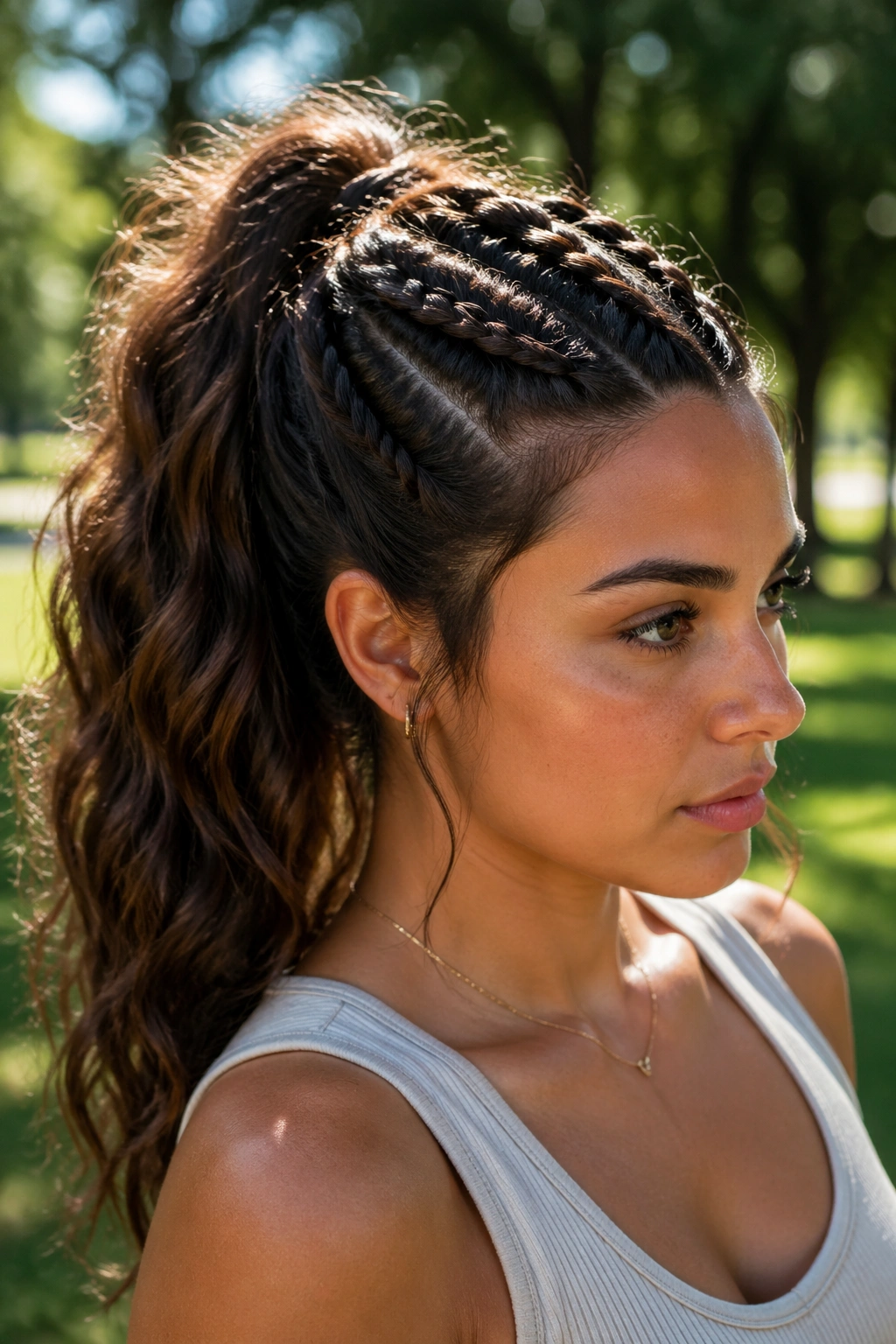
This is a step up from the single braid wrap. Create two small braids, one on each side of your part, moving back toward your crown. Once you reach the center, join these two braids together into a small ponytail. Then, take that small ponytail and incorporate it into the rest of your hair to form your main, larger ponytail.
This double-braid detail acts as a framework, securing the front of your hair so perfectly that you don’t have to worry about strands falling into your face. For thick hair, having these two anchor points creates a very secure base. It’s an intricate, beautiful look that works well for weddings, parties, or just days when you want your hair to stay pristine from morning until night.
25. The Undercut-Style Faux Pony
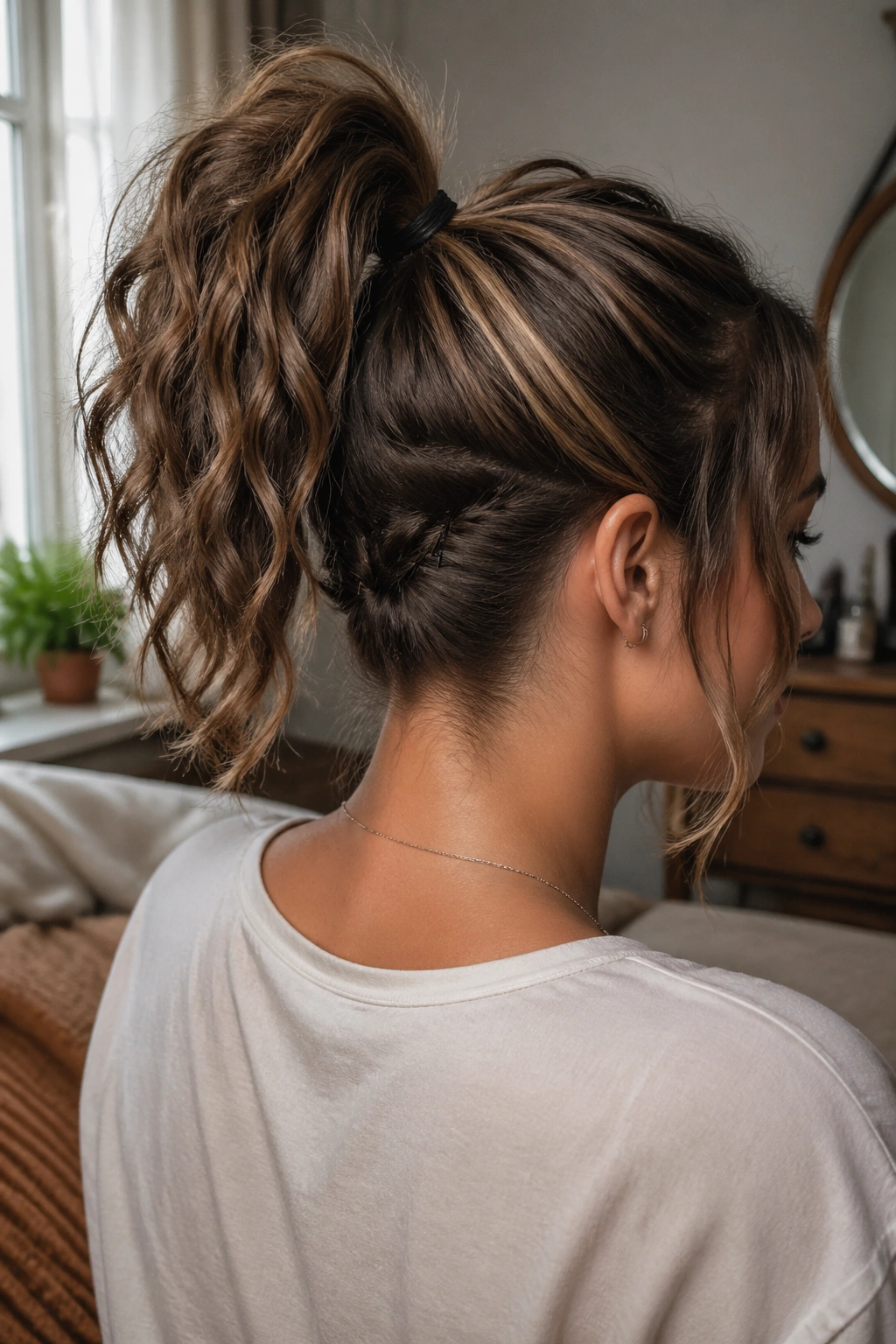
If you have extremely thick hair and feel overwhelmed by the volume, this style gives you the illusion of a more manageable amount of hair. Take the hair at the nape of your neck—about an inch or two—and pin it up tightly against your head with bobby pins, almost like a faux undercut.
Then, gather the remaining hair and pull it into a high ponytail. Because you’ve pinned up the bottom section, your ponytail will be lighter, have less bulk at the base, and will be much more comfortable to wear all day. This is a life-saver for those with truly dense hair who want a high, voluminous pony without the massive weight. It looks like a normal ponytail from the front and sides, but you’ll know it’s a lightweight secret.
Final Thoughts
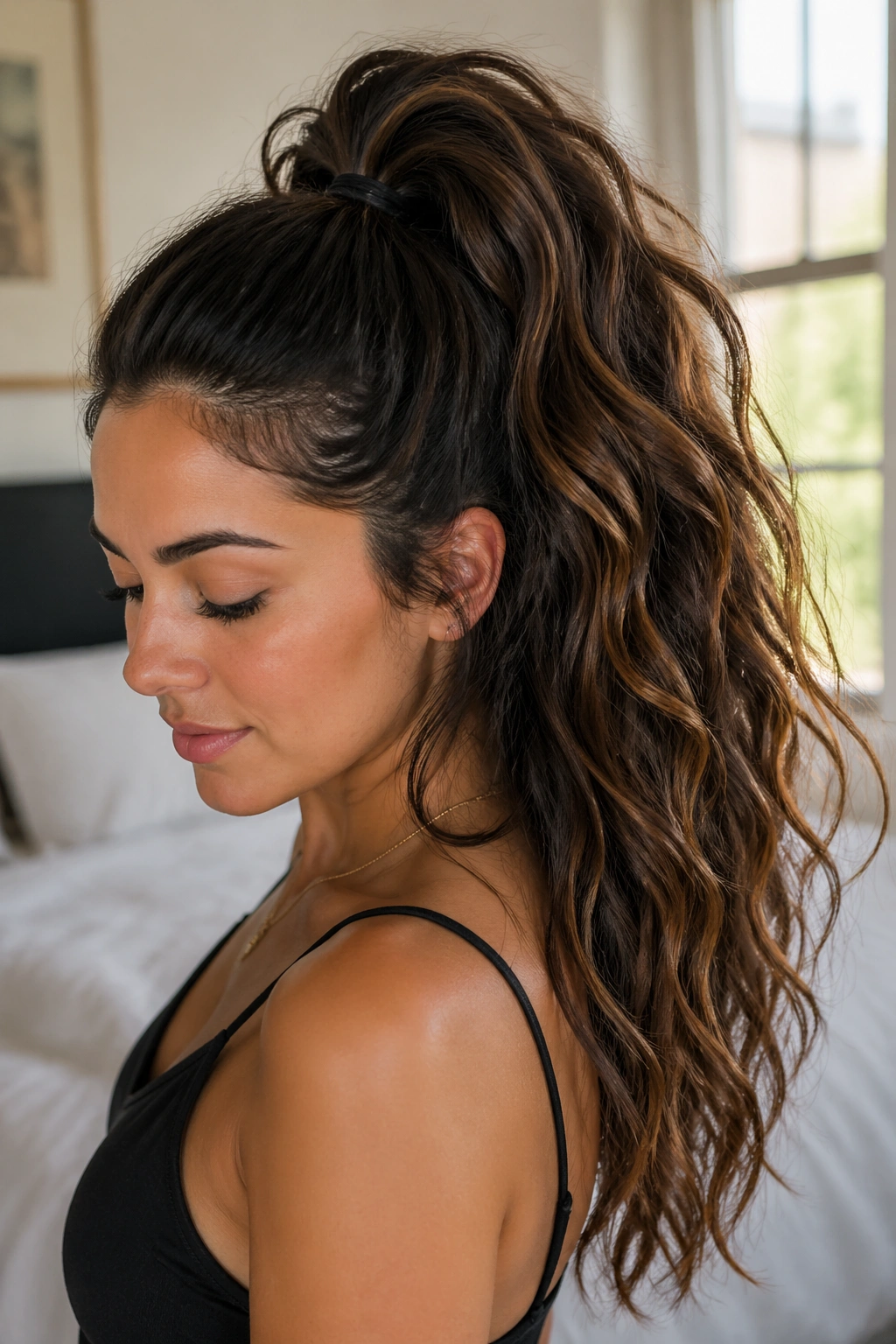
Thick, wavy hair is a gift, even if it feels like a burden when you’re trying to tame it for a ponytail. The struggle with heavy hair usually comes down to trying to use techniques designed for finer textures. Once you start using double-elastic methods, braiding techniques for security, and accessories that actually hold weight, the ponytail transforms from a source of headaches into your most versatile hairstyle.
Remember that with hair of your density, the “perfect” look is often achieved through layers of preparation—whether that’s a bit of texture spray for grip, pinning pieces that don’t want to cooperate, or simply placing your ponytail in a spot that respects the weight of your locks. Don’t be afraid to experiment with these styles. Your hair is sturdy and capable; it just needs a little bit of structural help to stay exactly where you want it.
