



Long faces and wavy hair are a better match than people usually think. The catch is shape. If the waves fall straight down with all the lift piled on top, the face can look even longer; if the style widens near the cheekbones, softens the jaw, and breaks up that vertical line, everything starts to look more balanced.
That’s why the best wavy hairstyles for long faces don’t all look the same. Some use curtain bangs. Some lean on a side part. Some keep the length but add layers that kick out around the lips or collarbones. A few use updos and half-up shapes to create width where it matters most. Different haircut, same goal.
A lot of people assume they need to cut their hair short to flatter a long face. Not true. Shorter hair can help, sure, but so can the right wave pattern, the right fringe, and the right amount of volume in the right place. That part gets skipped in terrible hair advice all the time.
The sweet spot is simple: think width, not height. Once you start looking at hairstyles through that lens, the options open up fast.
1. Curtain Bangs with Shoulder-Grazing Waves
Curtain bangs are one of the easiest ways to soften a long face shape without making the haircut feel heavy. The split fringe breaks up the vertical line down the center of the face, and shoulder-grazing waves give the sides enough movement to widen the whole frame.
Why It Works
Ask for curtain bangs that start around the cheekbones, not up at the crown. That length matters. If the fringe is too short, it can push the face upward and make the forehead feel taller. If it lands around the cheekbone or just below, it draws the eye sideways in a much friendlier way.
The rest of the cut should stay light and bendy. A lob that sits just above the shoulders is easy to wear and easy to style, especially if your hair has a natural wave already. Blow-dry the bangs away from the face with a round brush, then add loose bends through the rest of the hair with a 1.25-inch iron.
- Best for medium to thick wavy hair
- Works well with a center part or a slight off-center part
- Keeps the face open without adding top-heavy height
Tip: Keep the waves loose near the ends. Tight curls near the cheekbones can crowd the face.
2. Deep Side Part with Loose Brushed Waves
A deep side part is one of those fixes that sounds too simple, then ends up doing a ridiculous amount of work. It instantly shifts volume off the center line and gives a long face more width on one side, which helps the shape feel shorter and softer.
The best version is not stiff or pageant-y. Brush the waves out a little so they look plush instead of curled into place. That extra looseness matters. You want movement, not shellacked hair that sits like a helmet. Start the wave around eye level and let the ends stay soft.
This style is especially good if your hair falls flat at the roots. A side part gives you lift without making the crown look huge, and that balance is exactly what a long face needs. If your waves tend to collapse, mist the roots with a light volumizing spray before you blow-dry.
A little height is fine. A tower on top is not.
3. Collarbone Lob with Soft Ends
Why does a collarbone lob work so well here? Because it lands in that in-between zone where the hair feels long, but not dragging. It gives the face room to breathe and still creates enough width at the bottom half of the face to keep things balanced.
The trick is in the ends. Ask for a blunt-ish lob with just enough texture to keep the wave from looking stiff. If the cut is too layered, the sides can thin out and lose the very fullness that helps a long face. If it’s too blunt and too sleek, it can feel severe. The middle road is the one you want.
How to Style It
- Use a mousse on damp hair for grip.
- Dry with a diffuser until the roots are about 80% dry.
- Wrap random 1-inch sections around a curling wand, leaving the last inch out.
- Finish with a soft cream, not a crunchy spray.
That little bit of bend at the bottom makes the whole haircut feel fuller.
4. Chin-Skimming Waves with Cheekbone Volume
Picture hair that stops right where the jaw starts to narrow. That’s the whole point of this look. Chin-skimming waves put the visual weight beside the face, not below it, so the face reads a little wider and a little shorter.
This style looks especially good with a side part or soft off-center part. The parting keeps the top from feeling flat, while the waves create a shelf of volume around the cheeks. If you have naturally wavy hair, the cut almost does the work for you. If your wave pattern is loose, a few turns of a curling iron around the mid-lengths is enough.
The biggest mistake is cutting this shape too straight. It needs softness at the outline. A few face-framing pieces around the cheekbone or lip line keep it from feeling boxy.
5. Soft Shag with Airy Layers
A soft shag is one of the easiest ways to give a long face some shape without making the haircut feel fussy. It adds texture through the sides and the lower half of the cut, which helps break up the long vertical line that can make a face look stretched.
What I like about this cut is the movement. The layers sit in different places, so the hair doesn’t hang in one long sheet. That matters a lot with waves, because waves already have bounce and irregularity. A shag works with that instead of fighting it.
Keep the layers soft, though. You do not want a choppy, overtextured mess that turns puffy at the wrong spots. The best version has shorter pieces around the cheekbones, longer pieces near the collarbone, and enough weight at the ends to keep the shape grounded. It should feel messy in a good way, not accidental.
6. Face-Framing Layers with a Center Part
A center part is not the enemy. It just needs the right support around it. On a long face, center parts can look harsh when the hair hangs straight, but when you add face-framing layers that begin around the cheekbones or lips, the part starts to work for you.
The layers should be obvious enough to bend the eye outward, but not so short that they bounce up and expose the length of the face. That’s the tension to watch. Long faces often look best when the first layer lands around the mouth or chin, where it can create a little side-to-side shape.
This is a smart choice if you like wearing your hair down most days. It keeps the style low-maintenance, and it doesn’t depend on perfect blowouts. A few loose bends, a clean center part, and a little movement near the front are enough.
7. Wavy Lob with Blunt Ends
Blunt ends can look fantastic on a long face when the texture is soft enough to keep them from feeling severe. The blunt line gives the haircut a stronger base, which helps widen the lower part of the face, while the waves stop the whole thing from looking too stiff.
The best version is shoulder length or just below the jaw, not much longer. Once a blunt lob drops too far past the shoulders, it can start stretching the face again. Keep the cut clean at the bottom and let the waves do the softening. That contrast is the whole point.
A clean outline also makes fine wavy hair look thicker. If your ends tend to get wispy, this is a smart move. Just avoid over-layering the bottom half. Too much slicing will remove the very density that makes this cut useful.
8. Side-Swept Fringe with Long Waves
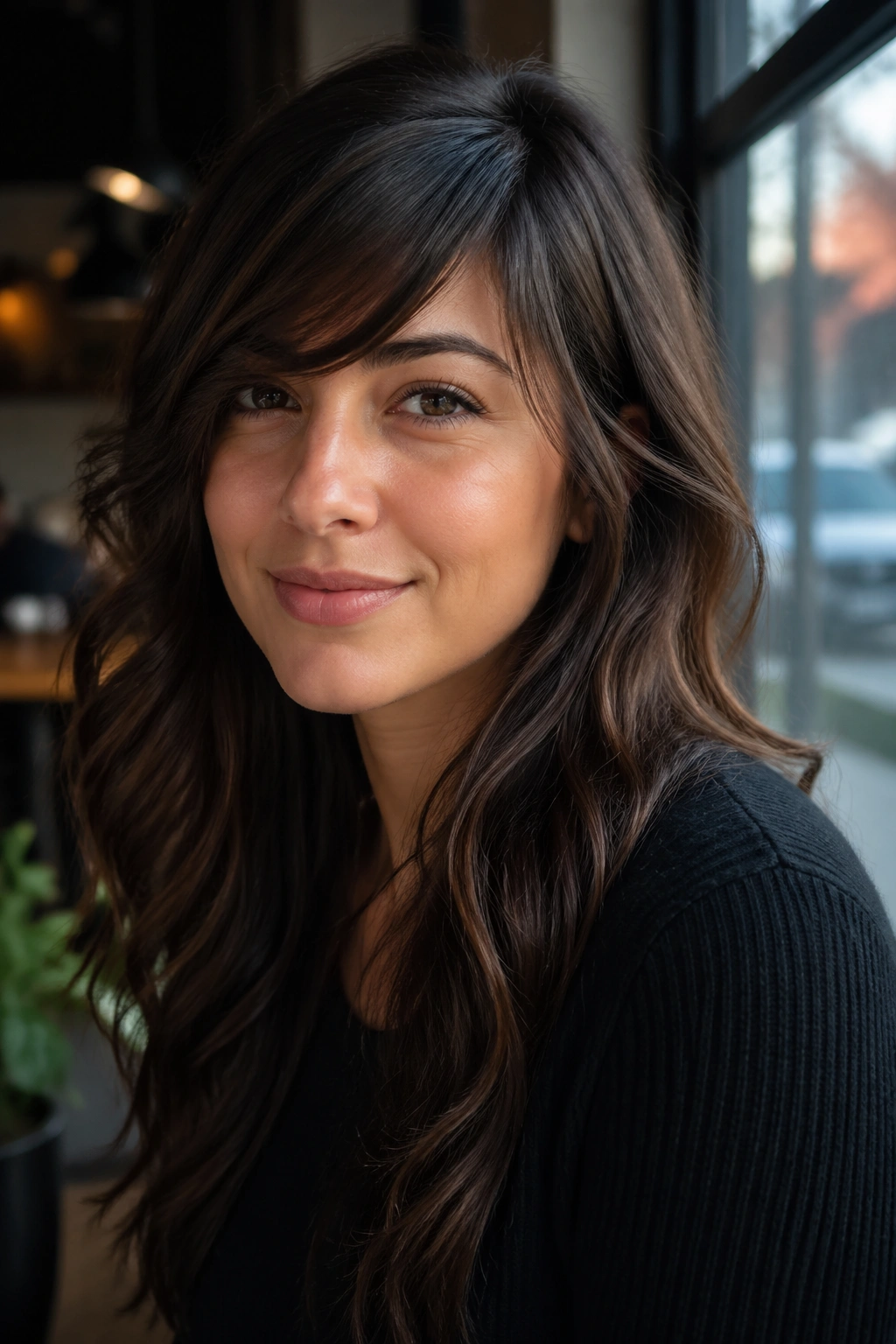
If curtain bangs feel too open and straight-across bangs feel too heavy, a side-swept fringe sits in the middle. It bends the eye across the face and takes some length out of the forehead area without boxing the features in.
The rest of the cut can stay long, which is a relief if you like length. Long waves with a side-swept fringe are flattering because the fringe does the balancing work while the waves soften the sides. I’ve always liked this combo on people who want a little polish without looking overstyled.
What to Ask For
- Fringe that starts around the eyebrow or cheekbone
- Long layers through the sides
- Waves that begin mid-length, not at the roots
- A finish that keeps the fringe movable, not stiff
Small warning: Side-swept fringe needs regular trimming. If it grows out past the cheekbone, it can lose the shape that makes it useful.
9. Half-Up Crown Lift with Loose Lengths
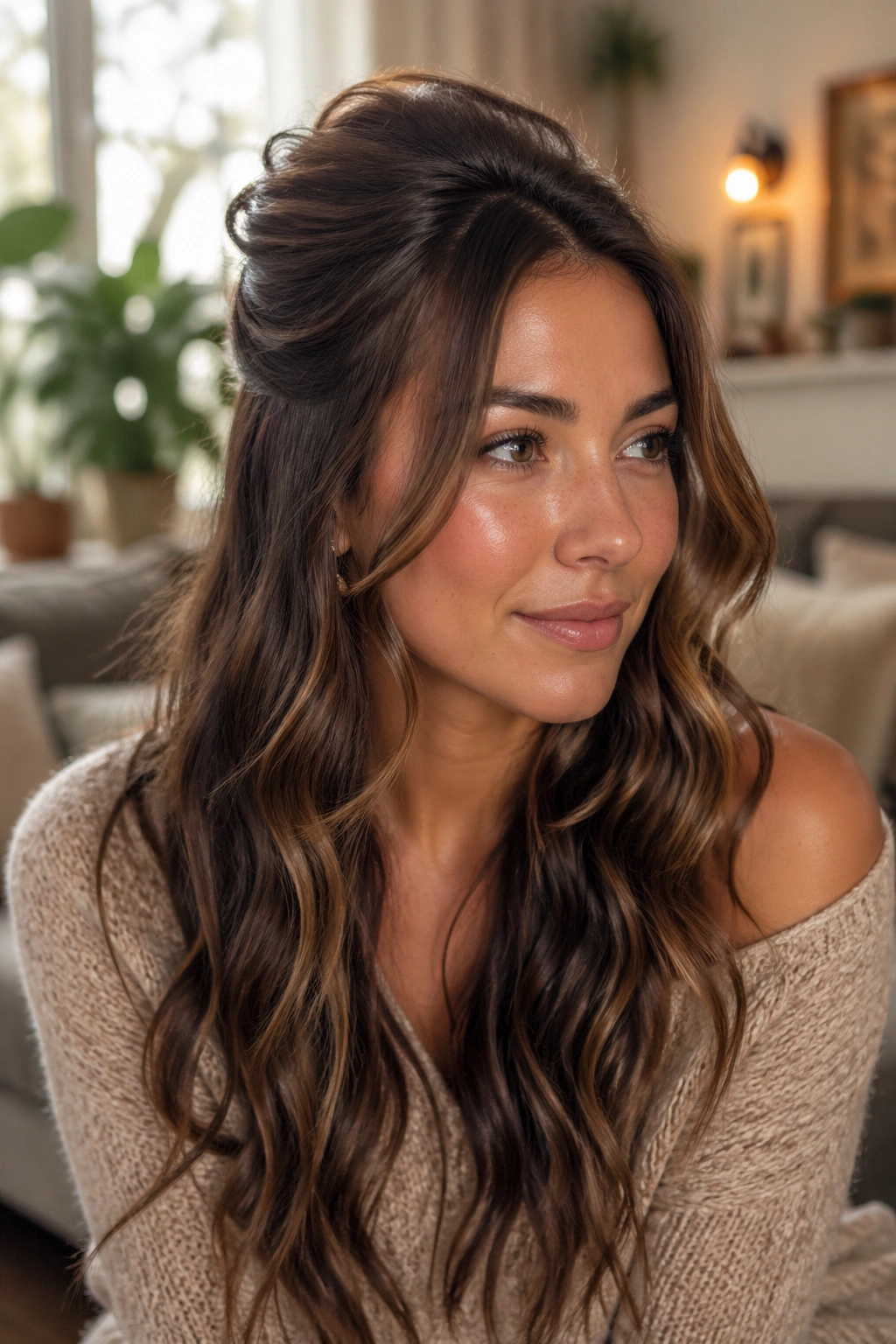
Half-up styles solve a sneaky problem for long faces: they give you height where you need only a little, while leaving the sides free to add width. The trick is not to pull everything straight back. Leave volume near the temples and ears so the hair can still frame the face.
A soft half-up with loose waves below works better than a tight one. Pulling the top too snug can expose the length of the face and make the forehead feel larger. Instead, lift the crown gently, pin the top section loosely, and let a few front pieces fall around the cheekbones.
This style is good for days when your hair needs shape fast. It looks polished enough for dinner, easy enough for errands, and it does not require a perfect blowout to hold together.
10. Bottleneck Bangs with Tousled Waves
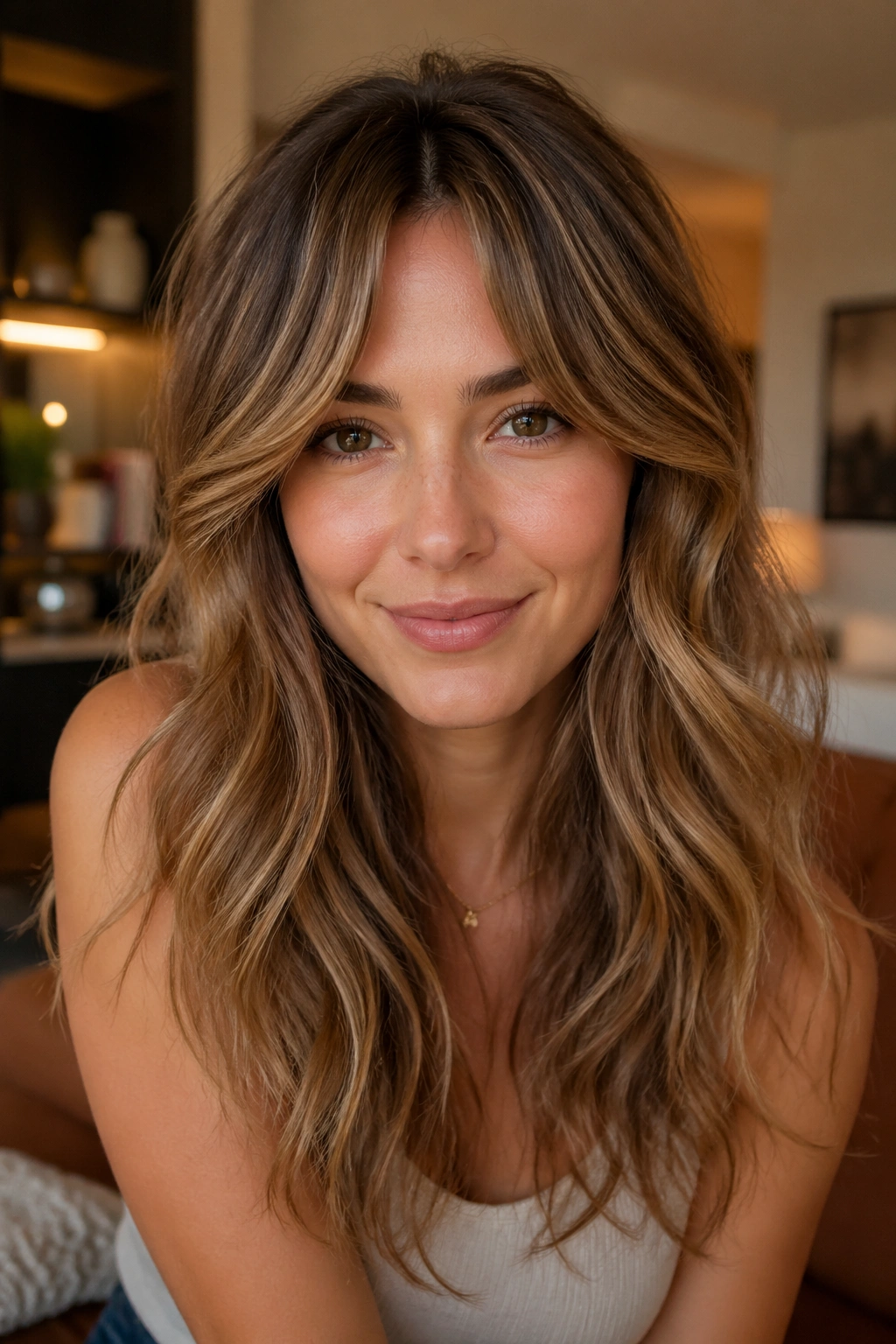
Bottleneck bangs are one of the smartest fringe choices for a long face because they begin narrow at the center and open out softly near the cheekbones. That little flare helps widen the face in a controlled way, which is exactly what you want.
The hairstyle works best with loose, tousled waves rather than tight, defined curls. Tight curls can shorten the bangs too much and make the face feel busier than it needs to be. Soft bends, a bit of bend through the ends, and a touch of separation in the fringe give the cut a relaxed feel.
The bangs should kiss the top of the cheekbone or slide toward the lashes, depending on how much forehead coverage you want. If your forehead is longer, let the center pieces sit a little lower. If not, keep them lighter and airier.
11. Modern Wolf Cut with Waves
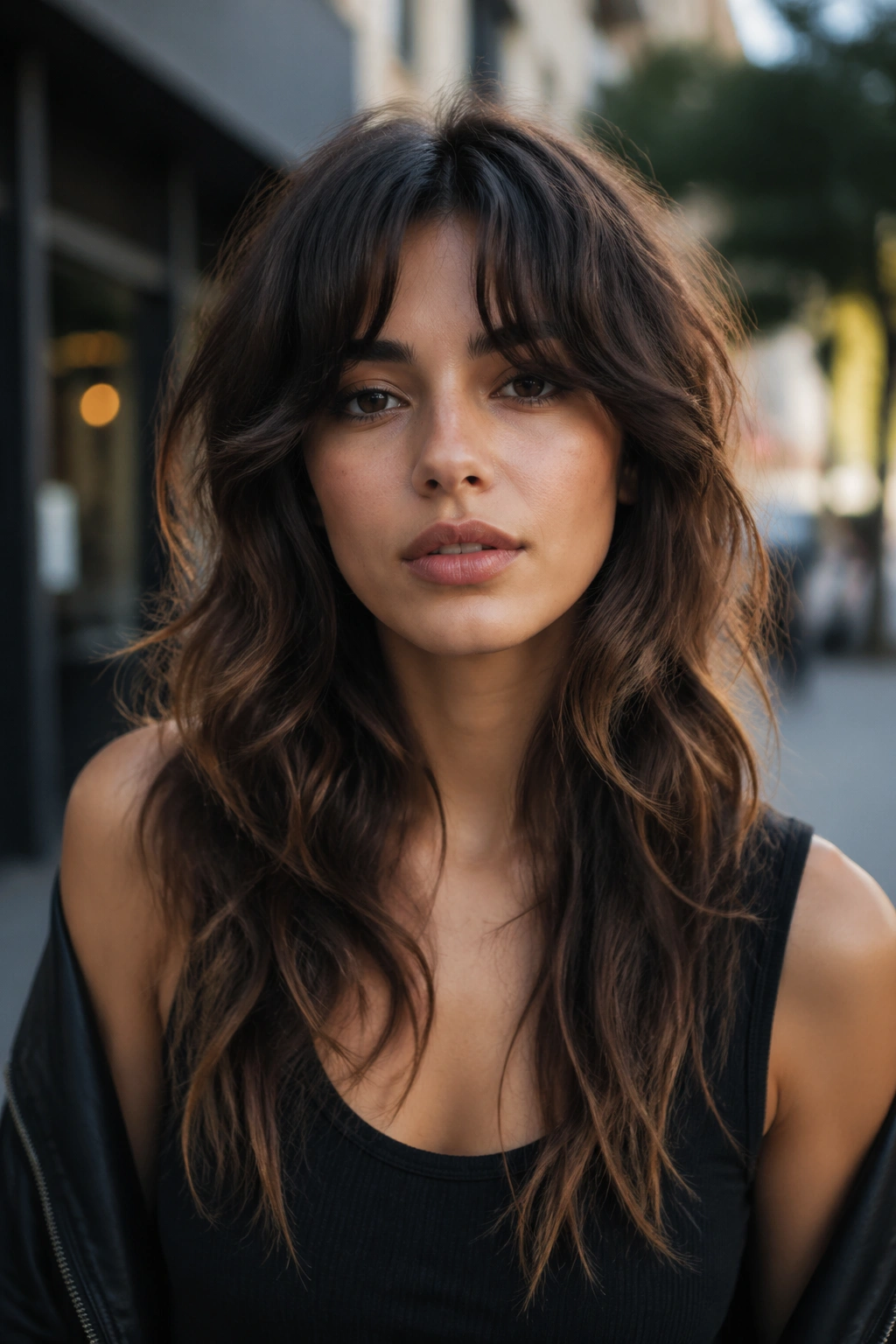
A wolf cut sounds edgy because it is edgy, but the reason it works on a long face has more to do with shape than attitude. The shorter top layers and the looser bottom length create width around the middle of the face, which helps break up that long vertical line.
This cut needs some restraint. Too much crown height and too many choppy short pieces can make the face look taller, not shorter. The better version keeps the top pieces textured but not spiky, with longer layers that fall around the cheekbones and jaw. You want movement, not a porcupine.
If your waves are naturally messy, this cut can be a dream. Air-dry it with a curl cream, rough it up a little at the roots, and let the shape live on its own. That slightly undone finish is the whole charm.
12. Brushed Old Hollywood Waves with a Side Part
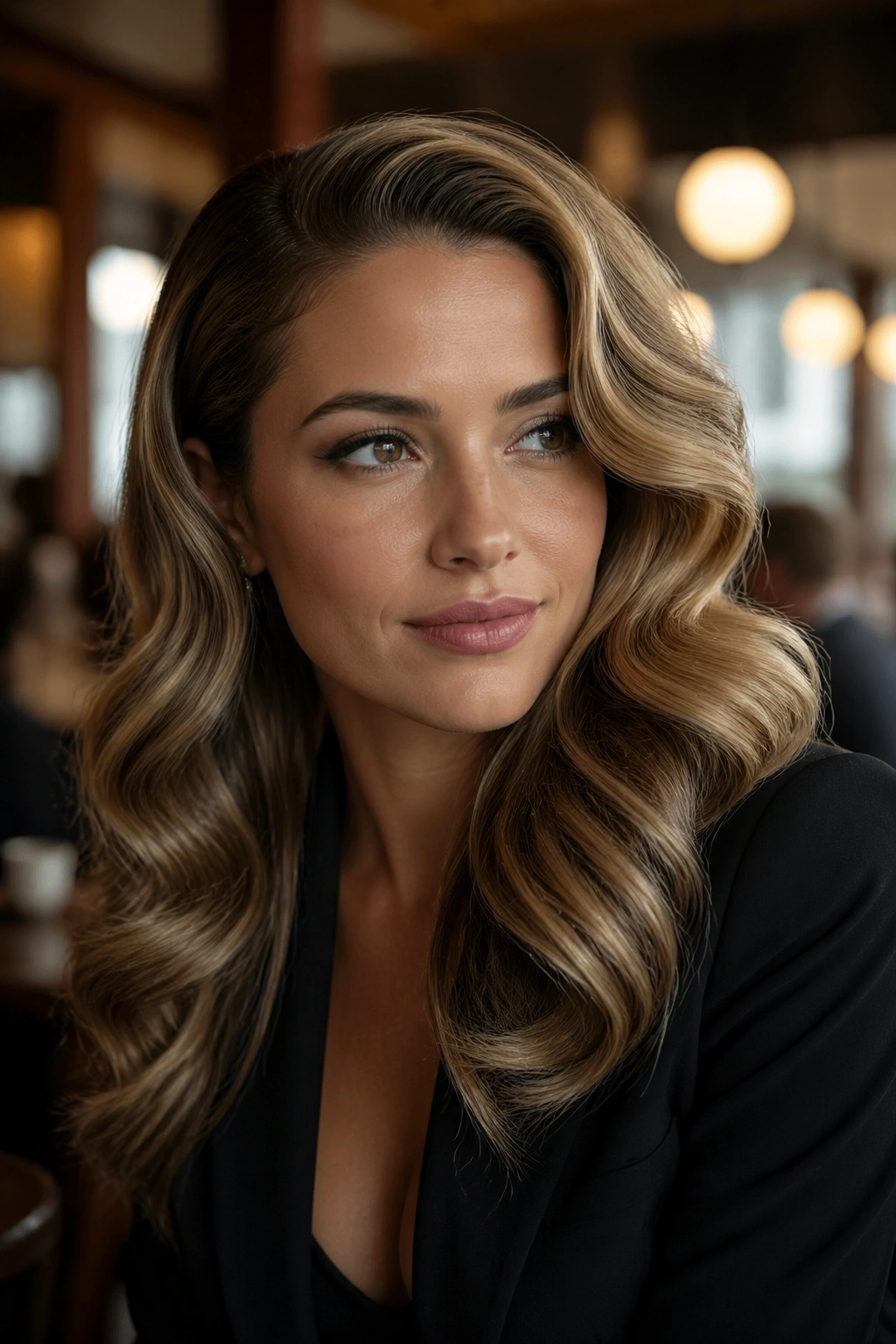
Old Hollywood waves are polished, but on a long face they need one adjustment: more width, less height. A deep side part and brushed-out waves create a broad, soft outline that looks glamorous without exaggerating the face length.
The side part keeps the top from feeling too centered and vertical. The brushed wave pattern widens the hair at eye and cheek level, which gives the face a gentler frame. If the hair is all shine and no softness, it can look too severe, so leave some movement in the ends.
This style looks especially good for events, but it does not have to feel formal. A looser version, with the waves separated a little by hand, can work beautifully for everyday wear. A wide-barrel iron helps, but a foam roller set can give you the same soft pattern if you like a smoother finish.
13. Mermaid Waves with Mid-Length Layers
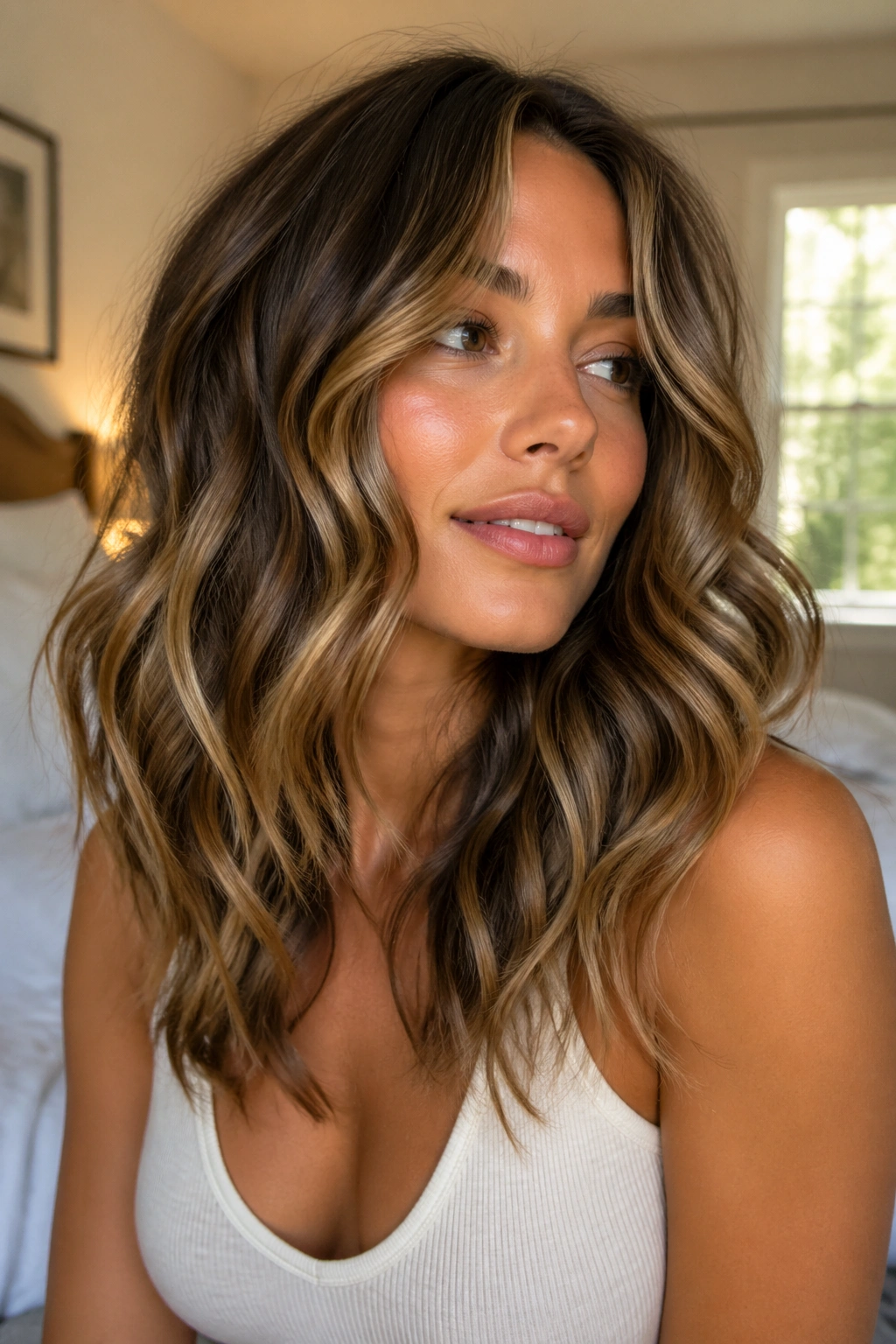
Mermaid waves can work on a long face as long as the layers are placed with some care. If the hair is all one length and falls straight past the chest, the face can look drawn downward. Mid-length layers stop that by building movement through the middle of the hair.
The smartest version keeps the thickest part of the wave around the cheeks and collarbones. That’s the zone where you want the eye to land. Longer ends are fine, but they should not be so heavy that they pull the whole style down. A few face-framing pieces near the lips can make a big difference.
This style suits people who like their hair long and romantic. It does take a little more styling time than some of the shorter looks, especially if your wave pattern is loose. Still, the payoff is worth it when the hair has that soft, floating shape instead of hanging flat.
14. Textured Blunt Cut with Wavy Ends
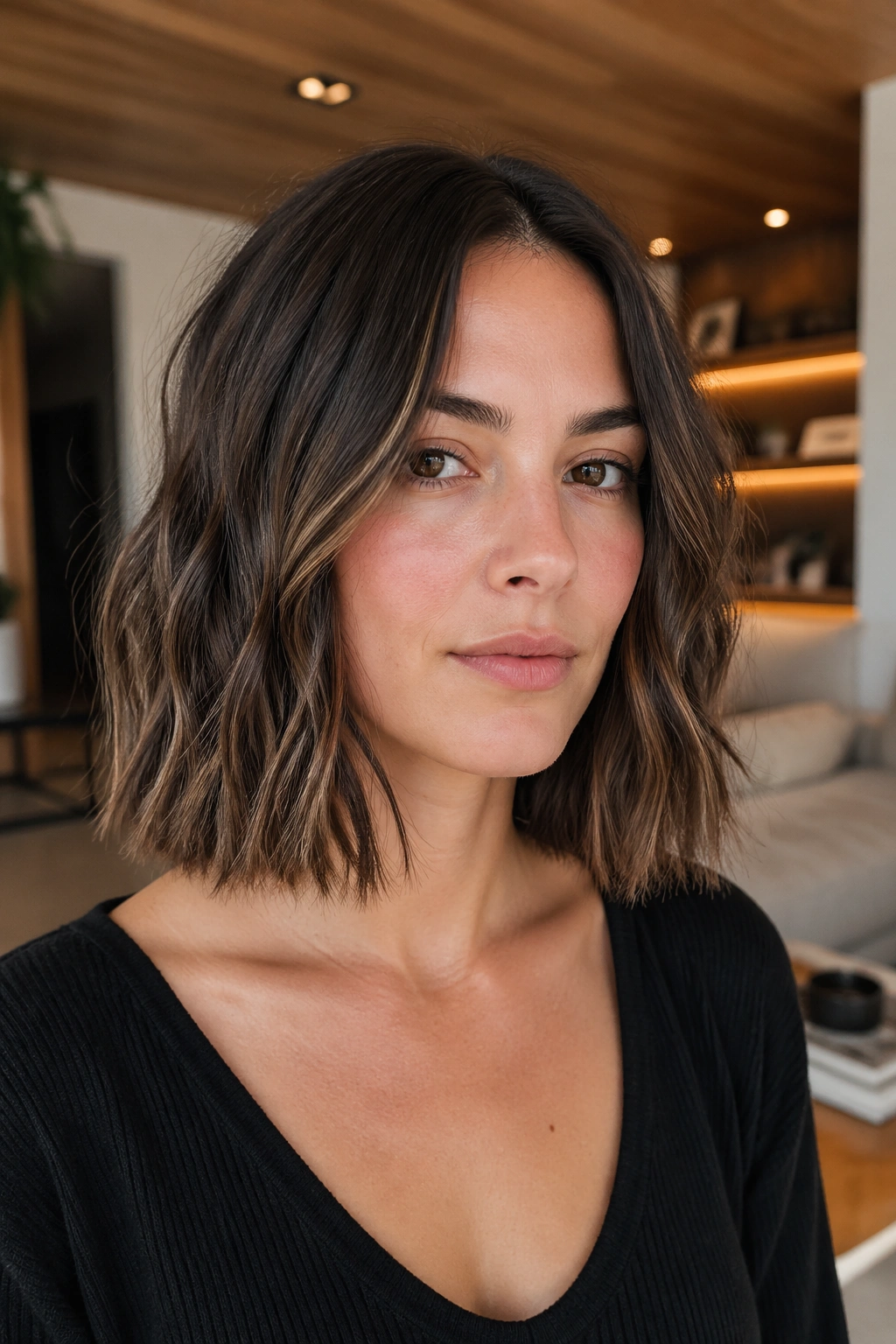
A blunt cut with texture is cleaner than a shag and less precious than a polished lob. On a long face, that blunt bottom edge gives the hair a solid line that helps the eye stop somewhere useful, while the wavy texture keeps the whole thing from feeling rigid.
The cut should sit between the chin and shoulders, depending on how much length you want to preserve. If your face is especially long, I’d keep it closer to the collarbone than the chest. That distance matters more than people think. Too much length and the style starts pulling down again.
This one is good for people who like structure. It feels modern without trying too hard. And if you want a haircut that still looks neat on day three, this is one of the better options.
15. Sliced Layers with Flipped Ends
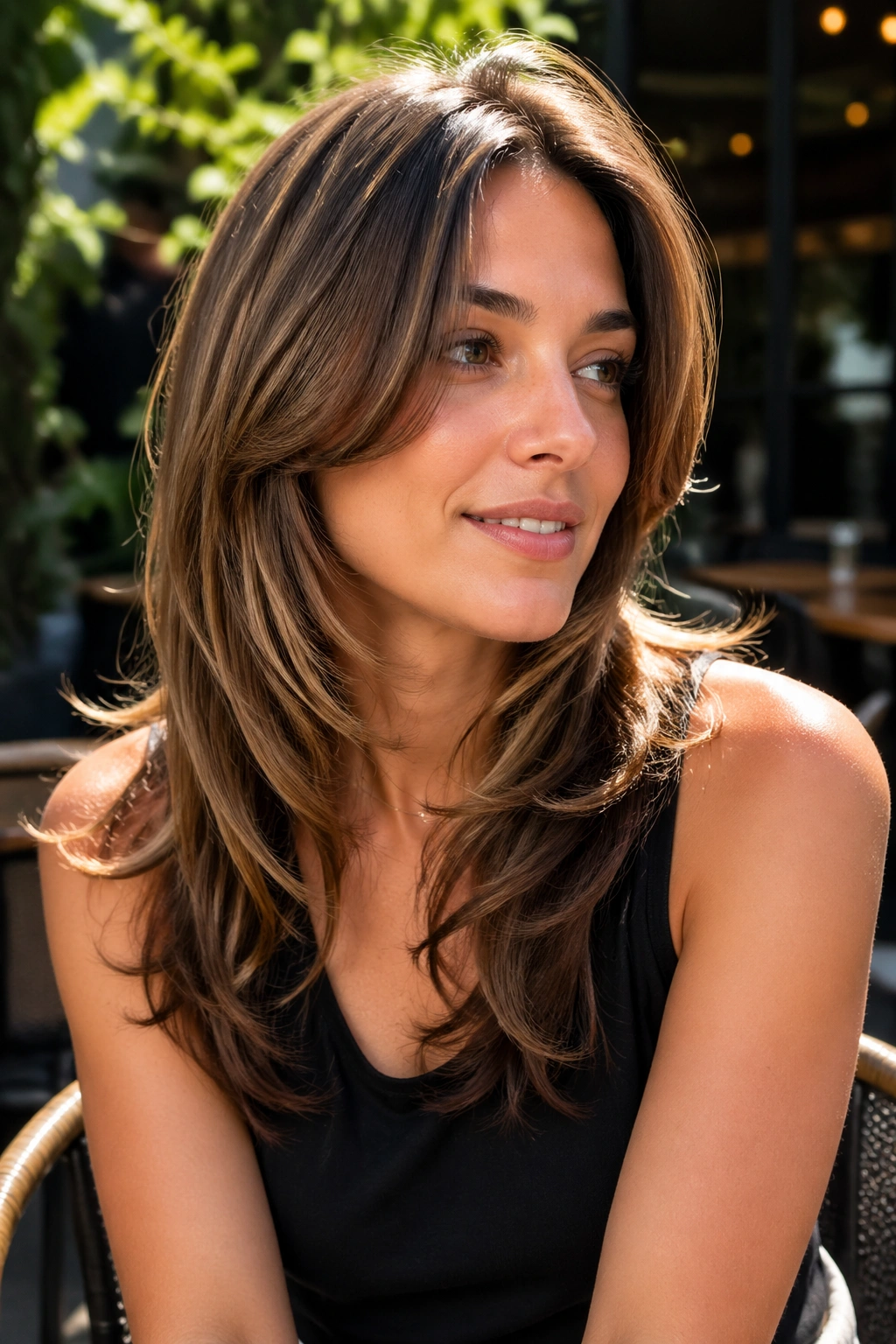
What if you want movement without losing length? Sliced layers are a good answer. They remove bulk in narrow sections instead of chopping the whole shape apart, so the hair keeps its length while gaining a bit of swing around the face.
Flipped ends are the detail that keeps this from feeling flat. A gentle flip out near the jaw or collarbone adds width at the bottom half of the face, which is useful on a longer shape. You don’t need a big retro flip. A small outward bend is enough.
This style is especially nice if your waves tend to fall in one direction and stick there. A little variety in the ends keeps the cut from looking too neat. It also makes the hair feel lighter when you move, which is never a bad thing.
16. Low Ponytail with Face-Framing Waves
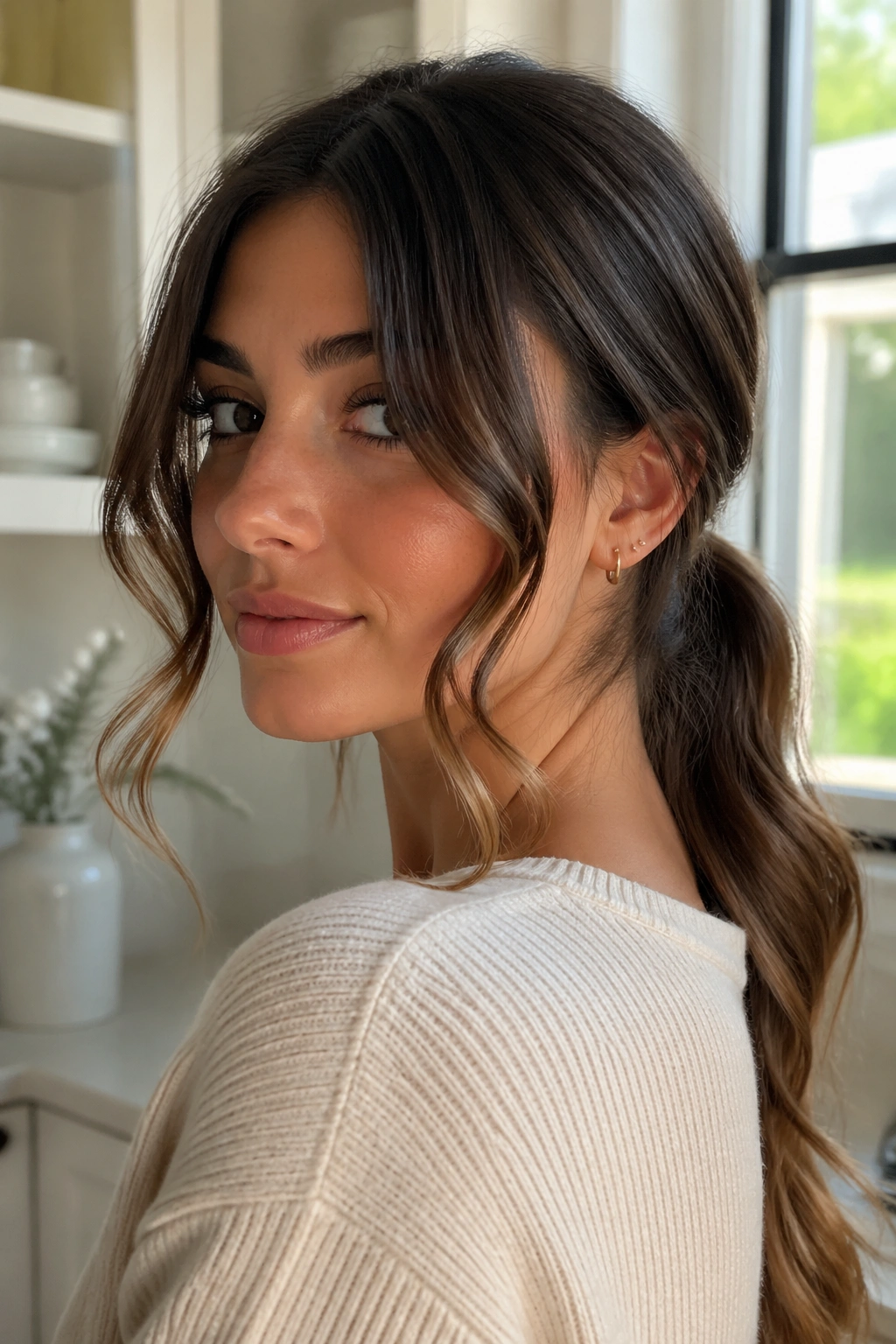
A low ponytail can flatter a long face better than a high one, and that surprises people. The reason is simple: a high pony throws all the attention upward, while a low pony keeps the silhouette calm and lets soft pieces around the face do the balancing.
Leave a few face-framing strands out on both sides, and curl them lightly so they bend around the cheekbones. That’s the sweet spot. If the strands are too straight, they just hang there. If they’re too curled, they can look formal in a way that fights the relaxed wave pattern.
You can also pull the ponytail apart slightly after tying it, which gives the back a fuller look. A little width at the nape is helpful. It keeps the profile from looking too stretched when the hair is gathered back.
17. Soft Bun with Loose Tendrils
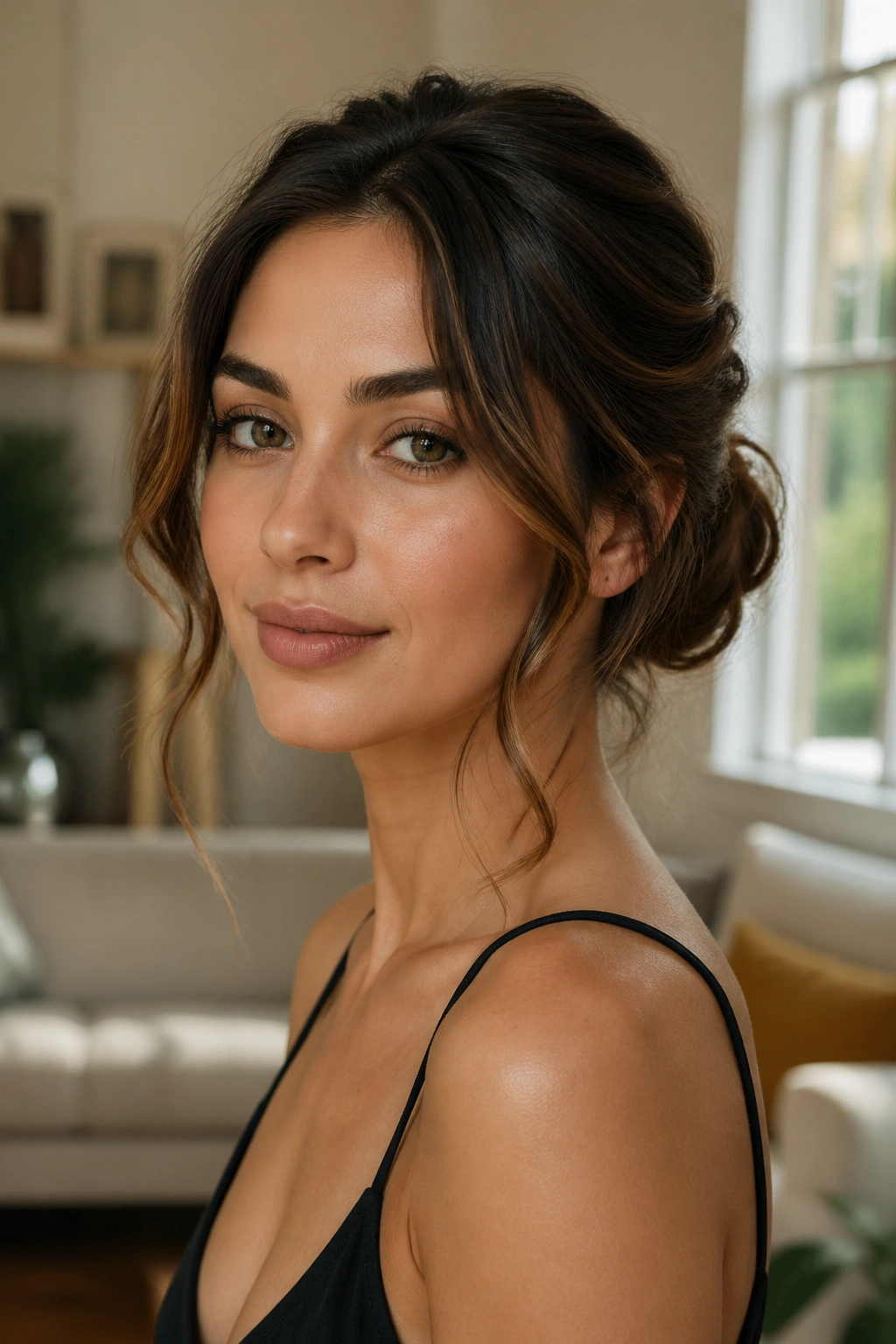
A soft bun is not boring here. It can actually be one of the most flattering updos for a long face, especially when you keep the bun low or mid-low and let a few wavy tendrils fall around the temples and jaw.
The biggest mistake is stacking the bun too high on the head. That just adds vertical length where you do not need it. A lower placement keeps the balance calmer and gives the sides room to soften the face. Loose, wavy pieces around the front do the rest.
This is a good move when you want your hair up but still want shape around the face. Pin the bun loosely, tug a little volume into the crown, and let the sides stay a touch undone. It should feel relaxed, not decorated.
18. Braided Crown with Loose Waves
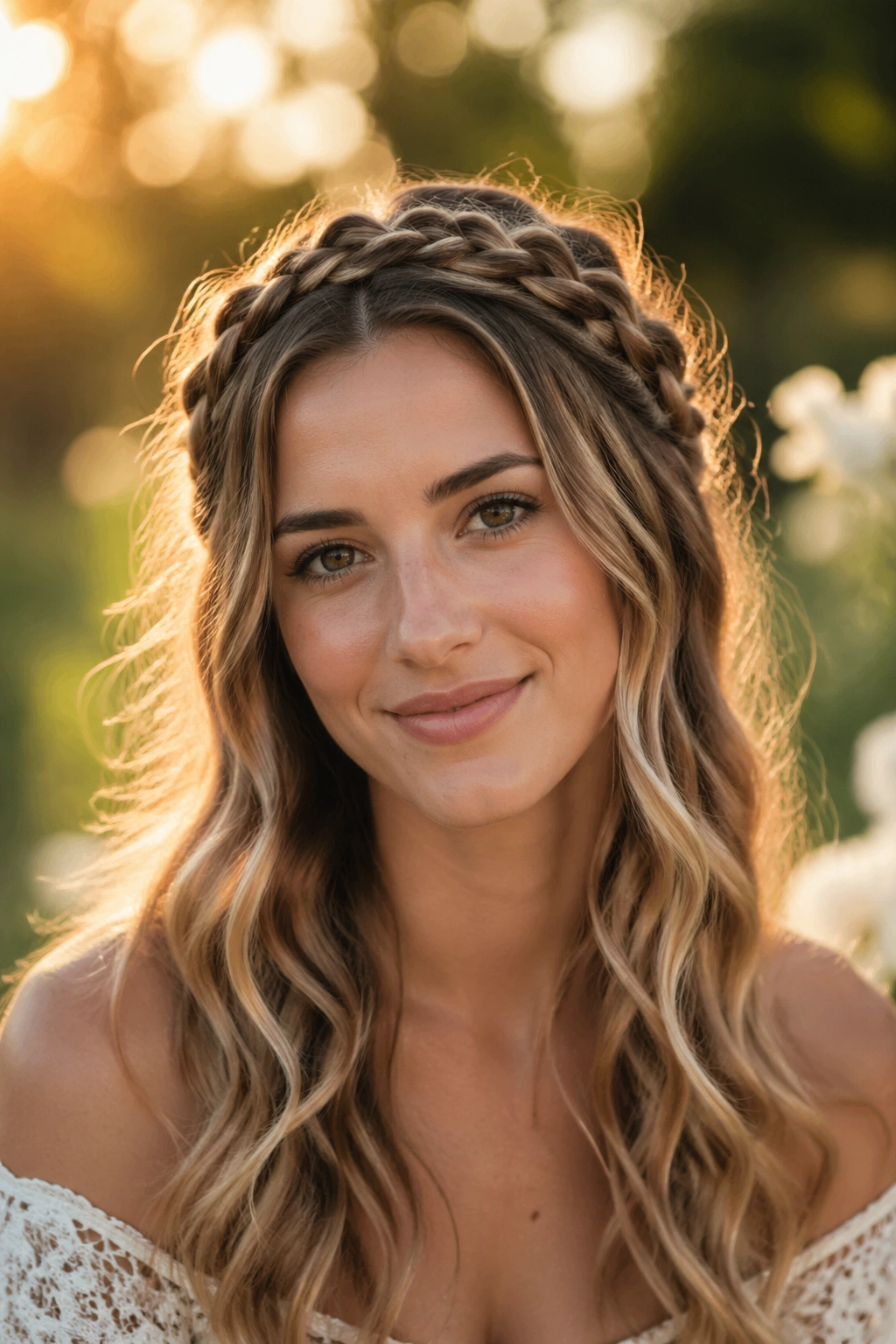
Braids can help a long face more than people expect, especially when they sit across the head and add width near the temples. A braided crown does exactly that. It creates a horizontal line that interrupts the length of the face before the waves drop down the sides.
The loose waves underneath keep the style soft. If the braid is too tight and polished, the look can feel severe. A little looseness makes it friendlier and more wearable. Pull the braid apart gently once it’s secured, then let the rest of the hair stay wavy and undone.
This style is useful for weddings, concerts, or just a day when you want your hair to stay off your face without going into a full updo. It’s also forgiving on second-day hair, which is a bonus. Braids love hair that has a little grip.
19. Claw Clip Twist with Cascading Ends
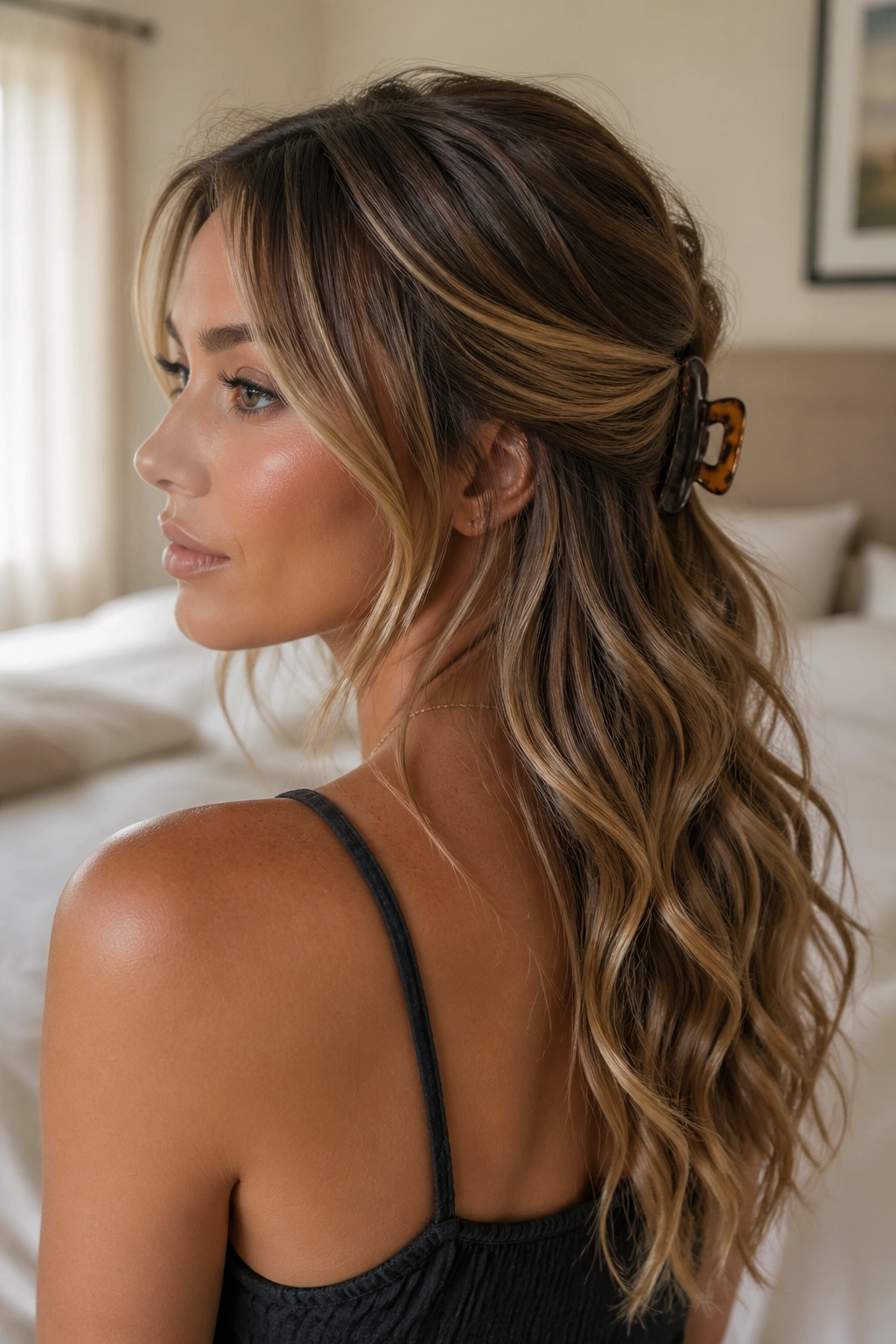
Claw clips are not just for lazy hair days. A half-twist secured with a clip can be very flattering on a long face if you leave enough length hanging below the clip to keep the silhouette soft and wide.
The key is placement. Put the clip a little lower than you might think, around the back of the head rather than high up near the crown. Then let the lower section fall in loose waves. If you pile the twist too high, the style starts stretching the face. Lower is better.
A few pieces left out near the front help a lot, especially if they bend toward the cheekbones. That tiny detail keeps the style from feeling pulled back too hard. It should look like you meant to wear your hair this way, which is half the battle with clip styles anyway.
20. Asymmetrical Wavy Bob
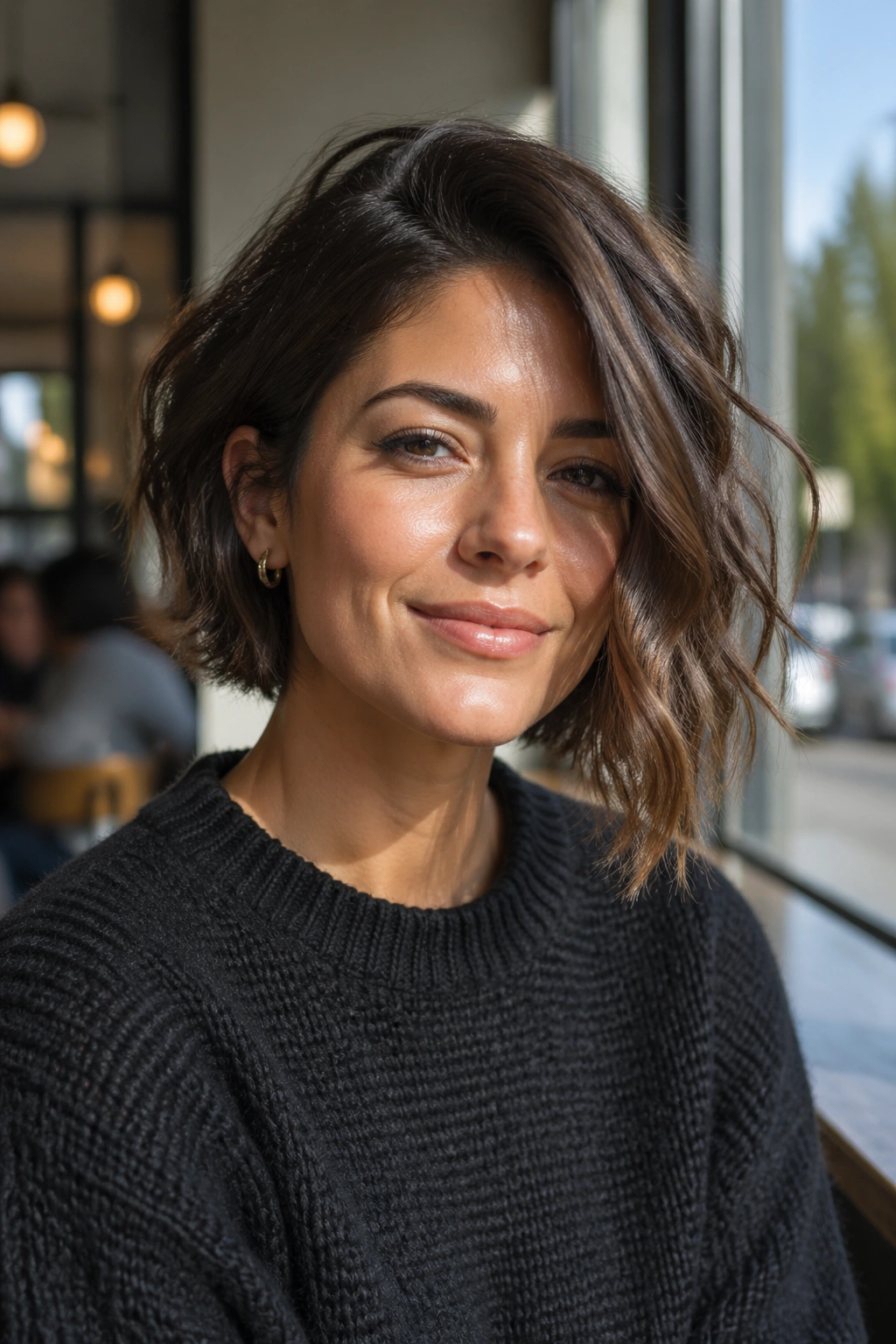
An asymmetrical wavy bob sounds risky, and if it is done badly, it is. But on a long face, a slight difference in length can be useful because it cuts the symmetry just enough to keep the eye moving sideways.
The shorter side should not be dramatic. A subtle angle is plenty. The goal is to create width and motion, not a sharp editorial statement that fights the face. With waves, the uneven length looks softer and more interesting than a straight asymmetrical cut would.
This style suits someone who wants a little edge without going full experimental. It works especially well if one side of your hair naturally falls flatter than the other. The angle gives the style a point of interest, and the waves keep it from looking severe.
21. U-Shaped Long Layers
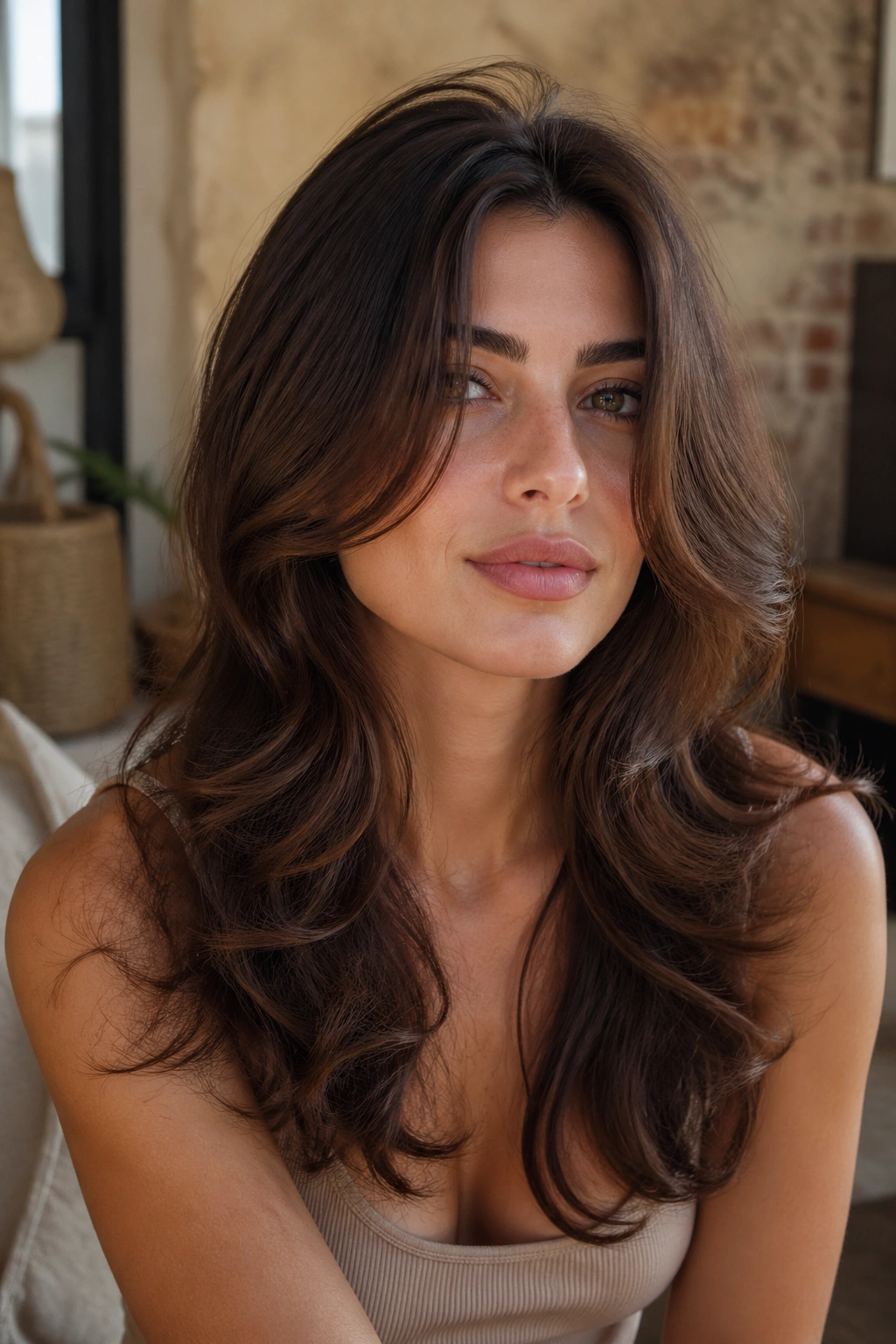
Long, one-length hair can drag a long face downward. A U-shape fixes that by lifting the sides just enough to create movement while keeping the longest part in the back. The result feels softer and less stringy, especially when waves are part of the picture.
The layers should be long and gradual, not short and choppy. Short layers in very long hair can create a halo of volume on top, which is the wrong place for it. The U-shape works because it gives the hair a curved outline that echoes the soft shape you want around the face.
If your hair is thick, this is a nice way to remove some weight without losing the length you like. If your hair is finer, the shape keeps the ends from looking skinny. It’s one of those cuts that behaves better than it sounds.
22. Swept-Back Waves with Side Volume
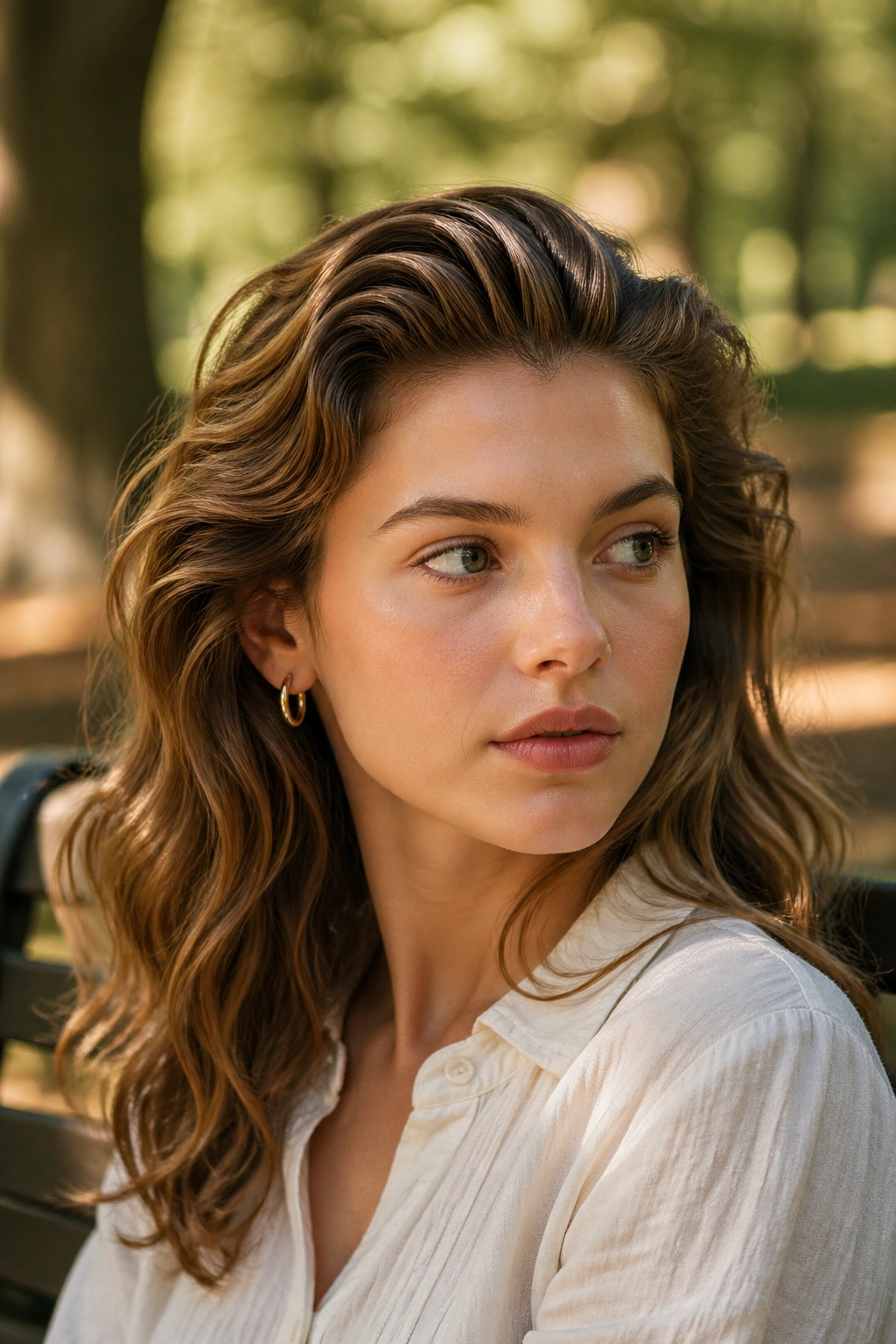
Sweeping the hair back can work on a long face if you keep the sides full. That’s the catch. Too much slick-back styling exposes the length of the face and leaves the profile looking narrow. Side volume fixes that.
Try pinning the front sections back loosely while leaving the rest of the waves draped over the shoulders. The effect is clean but not tight. A little lift at the temples helps too, since that area creates width around the upper face without making the crown look exaggerated.
This is a smart choice when you want your hair off your forehead but don’t want a fully slicked style. It looks especially good with earrings, since the open front gives the whole look some balance. Keep the finish soft and touchable.
23. Side Braid with Loose Wavy Pieces
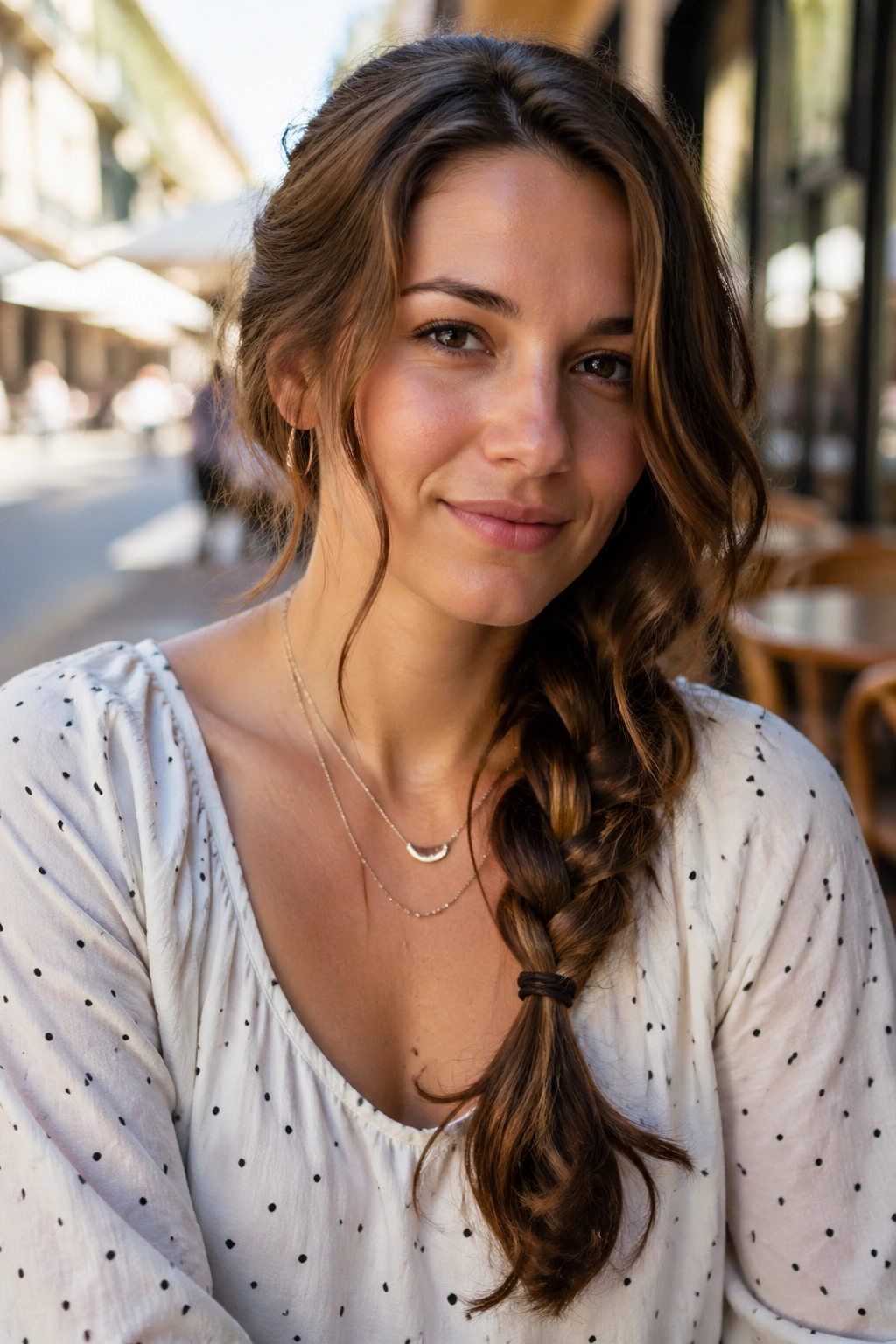
A side braid can be a strong option for a long face because it shifts the bulk of the hair to one side and creates a broad, low shape. That shape matters. It gives the face somewhere to stop instead of letting everything fall straight down.
Leave the braid loose. Tight braids sit flat and can make the hair feel too narrow. A little puff in the braid body, plus a few loose pieces around the cheekbones and neck, makes the whole style more flattering. If your hair is layered, the ends will escape a bit, and that’s fine.
This style works for casual days, travel, or weather that makes loose hair behave badly. It’s practical and still pretty. If you want extra softness, curl the loose front pieces before braiding the rest back.
24. Disconnected Fringe with Long Waves
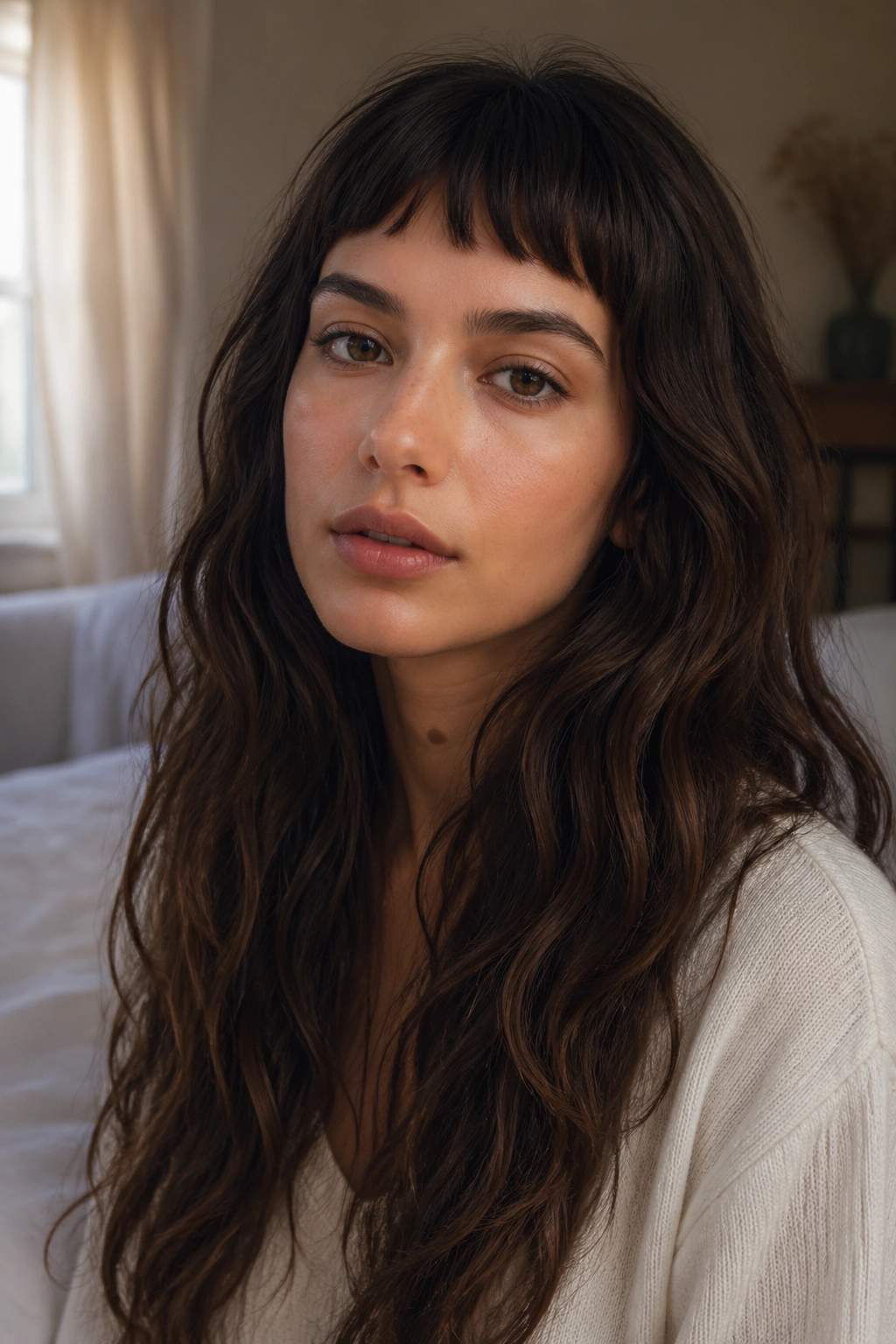
A disconnected fringe is for the person who wants a little drama but still cares about balance. The bangs sit apart from the rest of the cut, which creates a strong horizontal line across the forehead and interrupts the length of the face fast.
The rest of the hair should stay long and softly waved so the fringe doesn’t feel like a separate costume piece. That contrast is what gives the cut its edge. If the waves are too structured, the fringe can look heavy. If the rest of the hair is too flat, the bangs become the whole story. You want both parts to talk to each other.
This is a better fit for someone who already likes some texture and a little attitude in a haircut. It is not the safest option on the list, but it can be one of the most interesting when it’s cut well.
25. Shoulder-Length Layers with an Inward Bend
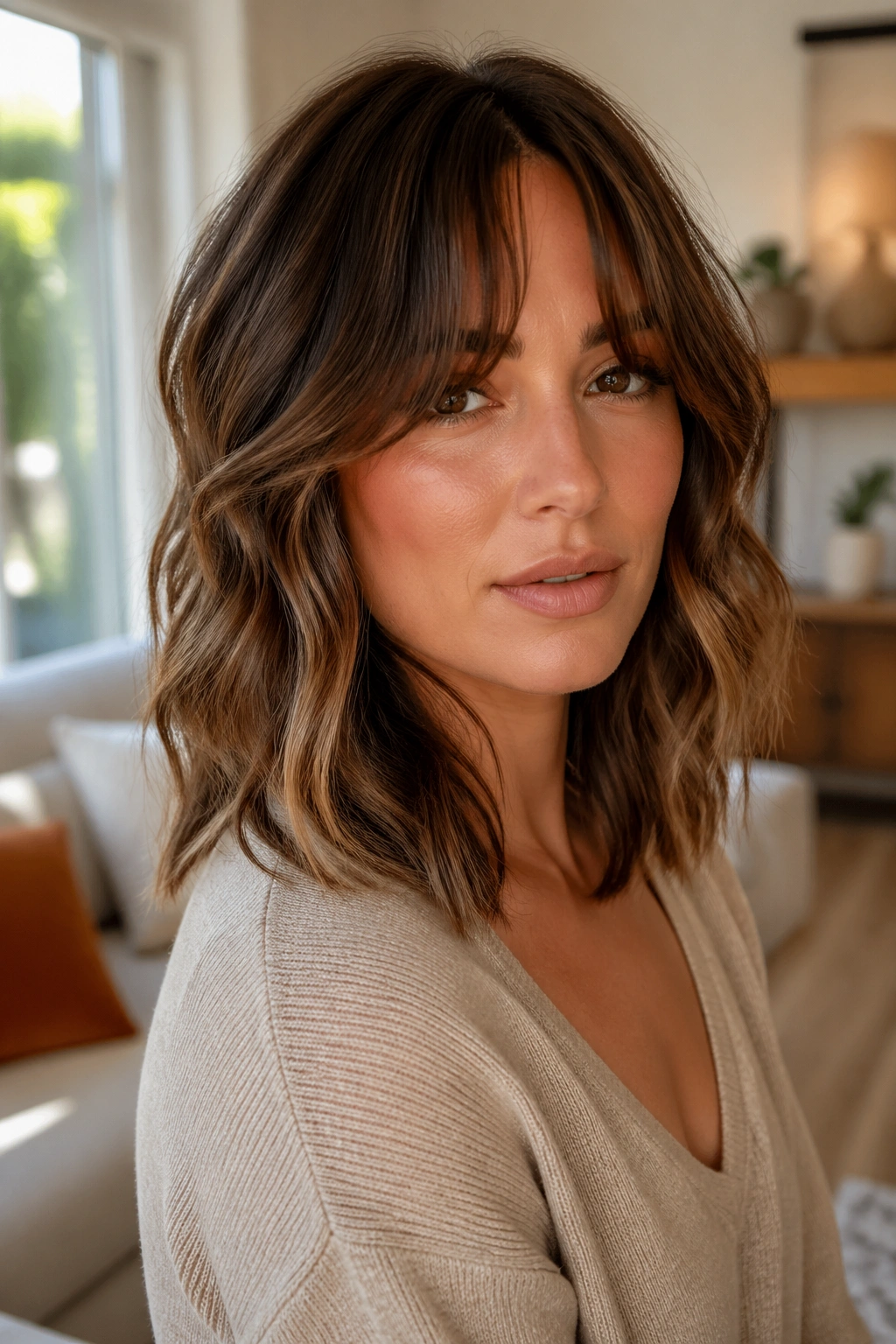
Shoulder-length layers with an inward bend are quietly good. Not flashy. Just effective. The ends curve in toward the collarbone, which creates width in the lower half of the face and keeps the overall shape compact.
That inward movement is especially useful if your hair naturally flips out or falls straight. A round brush or a large curling iron can coax the ends under in a way that softens the outline. You do not need a stiff blowout. A gentle curve is enough.
This style is one of the best picks for fine to medium wavy hair because it gives the illusion of density without needing a ton of product. It also grows out gracefully, which matters if you hate appointments every few weeks.
26. Temple Volume with Waterfall Waves
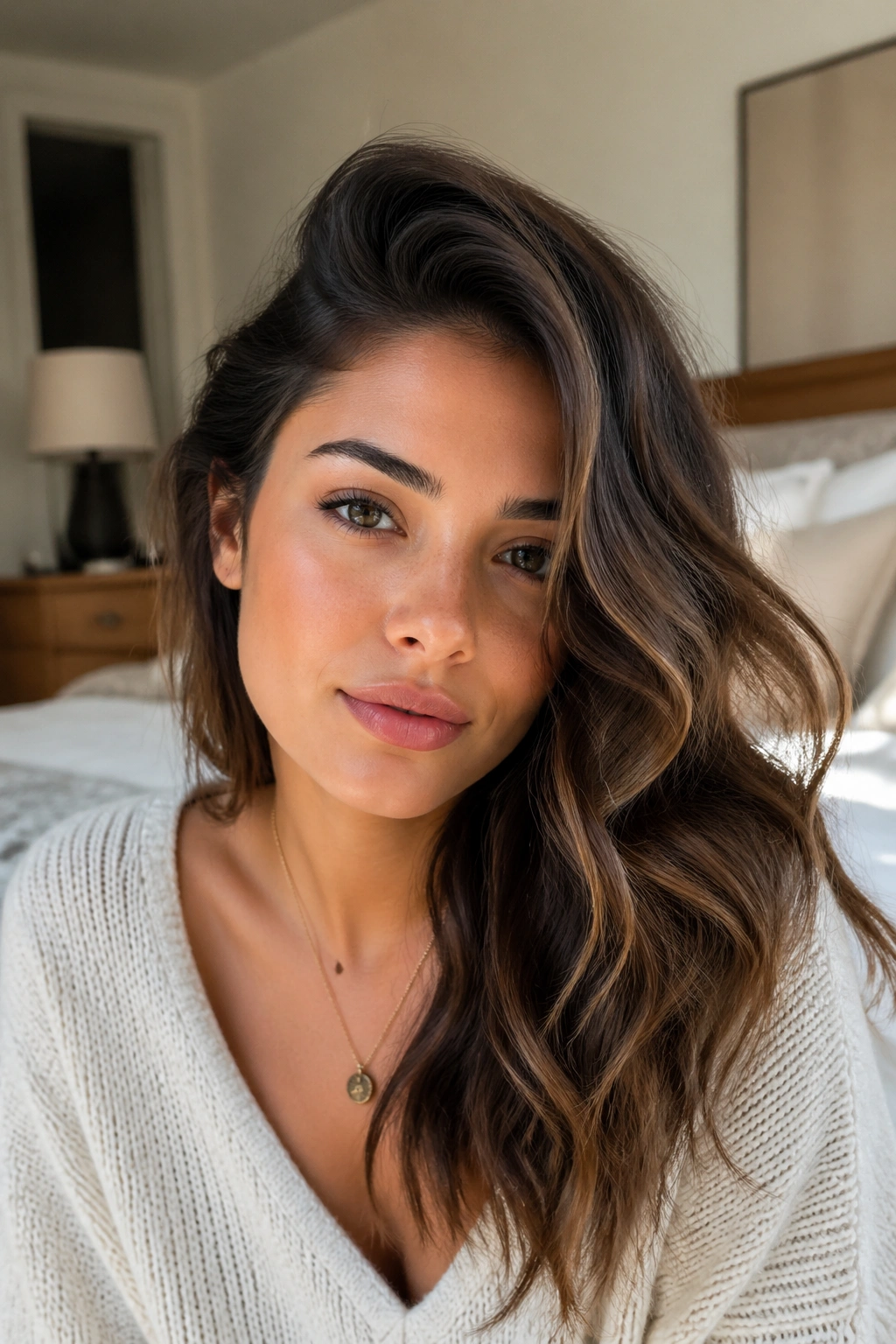
Temple volume is the unsung hero here. When the sides of the hair have fullness near the temples, the face reads wider where it usually needs help. Waterfall waves are a nice way to create that effect because the hair cascades gently instead of dropping in one line.
The waves should overlap a little and fall in sections that move away from the face, not straight down it. That sideward bend is what creates the widening effect. If your hair tends to cling, use a bit of dry texture spray and shake the roots loose with your fingers.
This is a good option for longer hair that needs a shape update without a dramatic cut. It still feels feminine and soft, but it adds enough structure to make a difference. Small changes, honestly, can matter a lot here.
27. Glossy S-Waves with Ear-Level Fullness
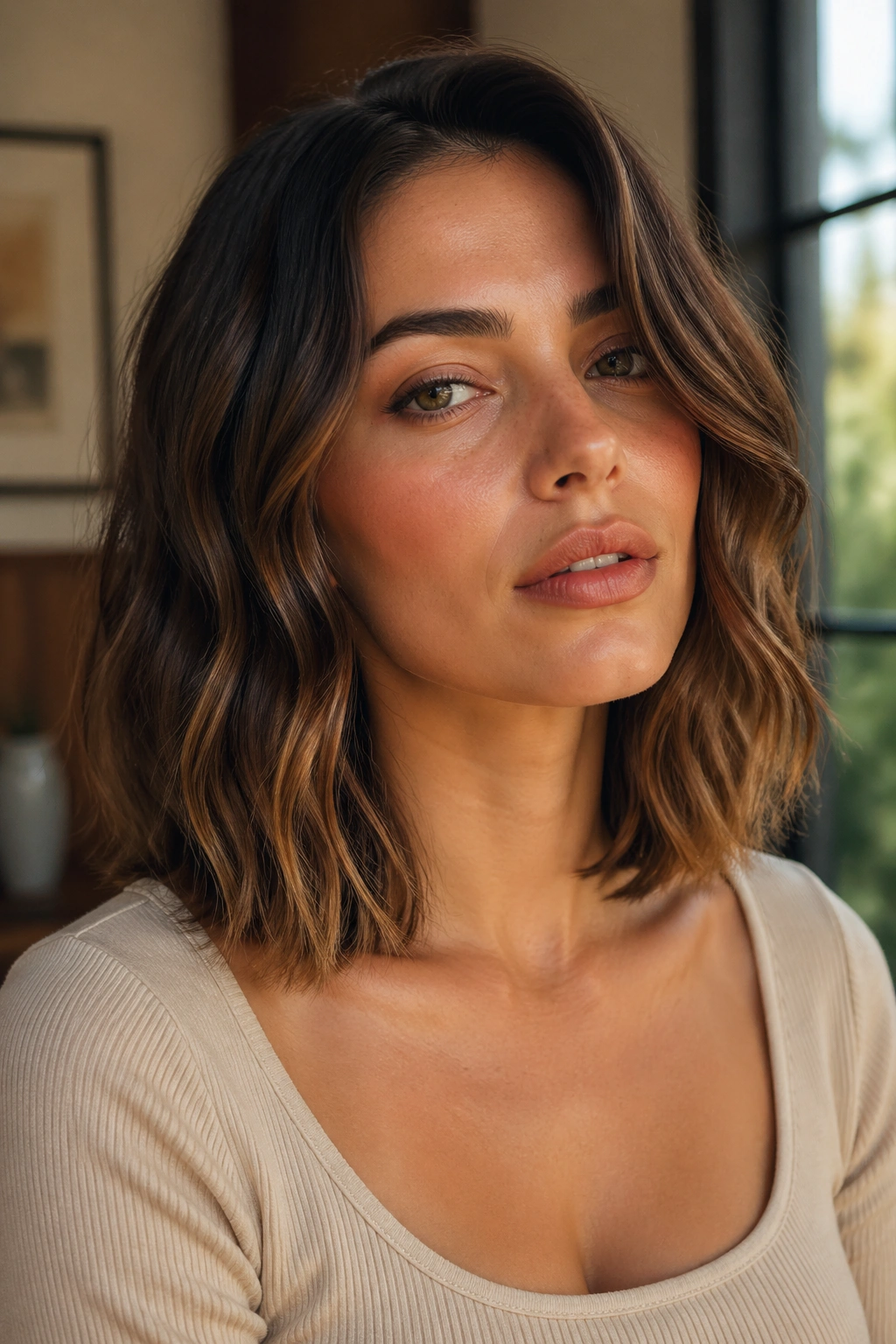
Glossy S-waves look especially good on long faces when the fullest part of the wave sits around the ears or cheekbones. That gives the face a broader middle, which makes the proportions feel more even. If all the volume is at the bottom, the face can look longer. Here, it stays in the middle where it helps.
The finish matters. S-waves need shine, but they should not look stiff. A soft brush-out or a wide-tooth comb through cooled waves gives that smooth bend without flattening the shape. A light serum on the ends is enough.
This style is a strong match for formal events, but I also like it for everyday wear when you want your hair to feel controlled. It has a classic quality, yet it still works with a natural wave pattern if you do the set loosely.
28. Messy Half-Up Knot with Side Pieces
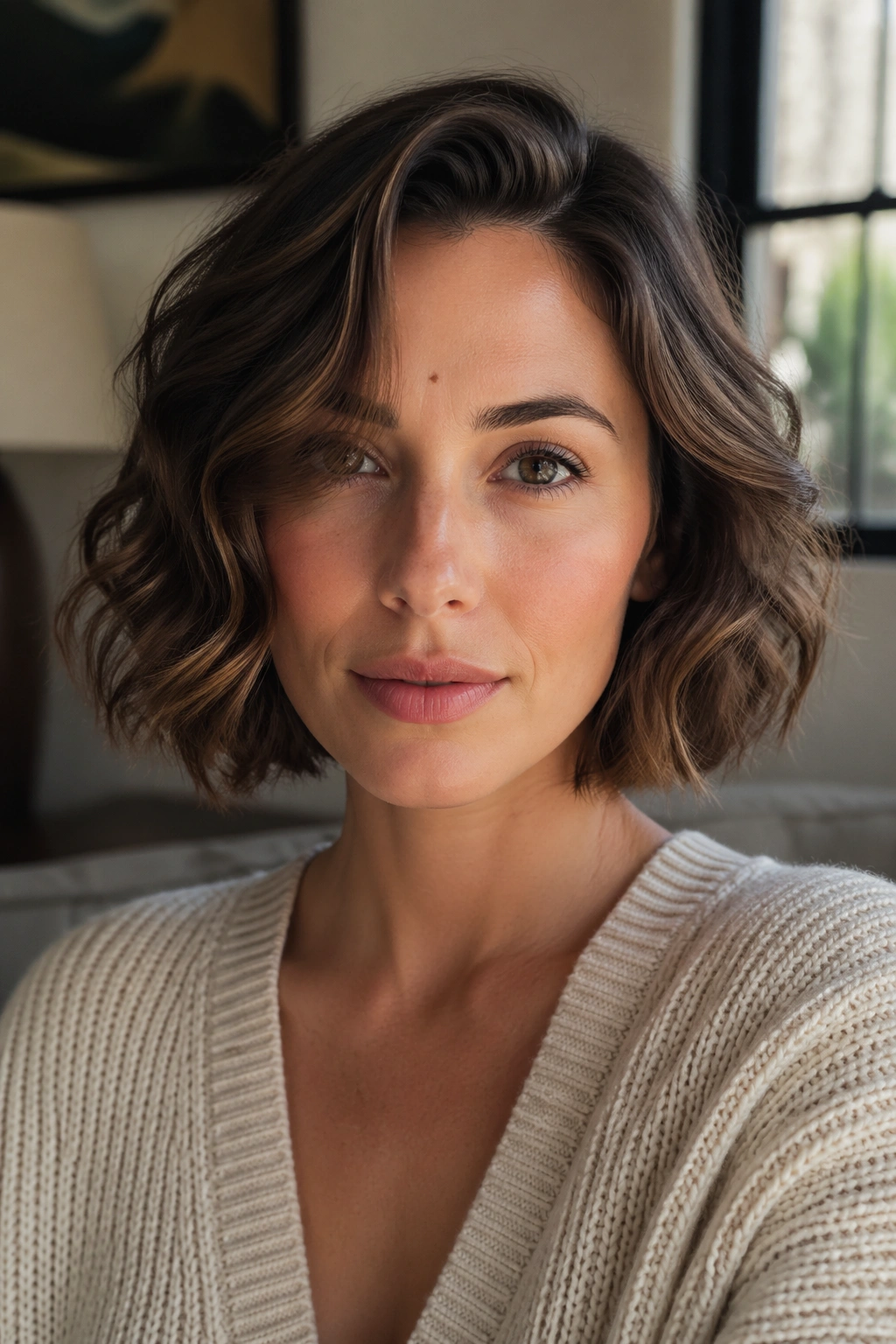
A messy half-up knot is one of those styles that sounds like it should be lazy, then turns out to be useful. For long faces, it works because the knot gives a bit of lift without taking all the width away from the sides. The loose pieces keep the face from looking too exposed.
Don’t overthink the knot. It should sit low enough that the head shape stays soft. Pull a few side pieces free and bend them lightly with a wand if they’re too straight. That small bit of shaping at the sides is what keeps the style flattering.
This is a good choice for second- or third-day hair, which often has the right amount of grip for a knot to stay put. It also works when you want the front of your hair out of your face but still want some softness around it.
29. Long Layered Waves with a Soft Side Sweep
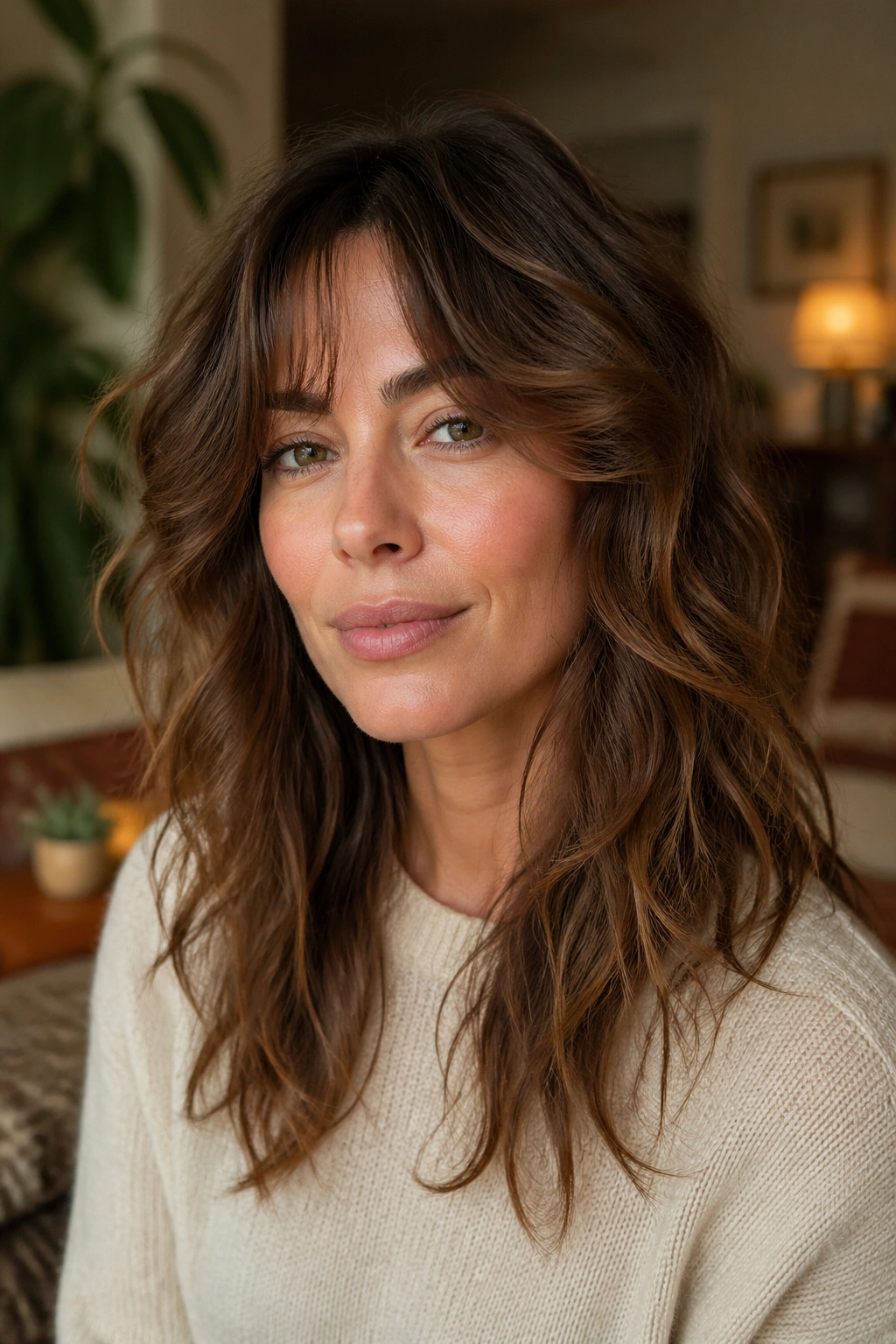
If you want to keep your length and still flatter a long face, this is one of the safest bets. Long layers stop the hair from hanging like a curtain, and the soft side sweep breaks up the center line without demanding a full fringe.
The side sweep should be loose enough to move. If it’s pinned too flat, the effect disappears. Let it fall across the forehead a little and blend into the waves near the cheekbones. That connection between the front and the sides is what gives the cut its balance.
This is also a forgiving style for different textures. Fine hair gets shape from the layers. Thick hair gets movement from the sweep. It’s one of those cuts that works because it doesn’t force the hair into one exact pattern.
30. Long Waves with a Soft Face Sweep
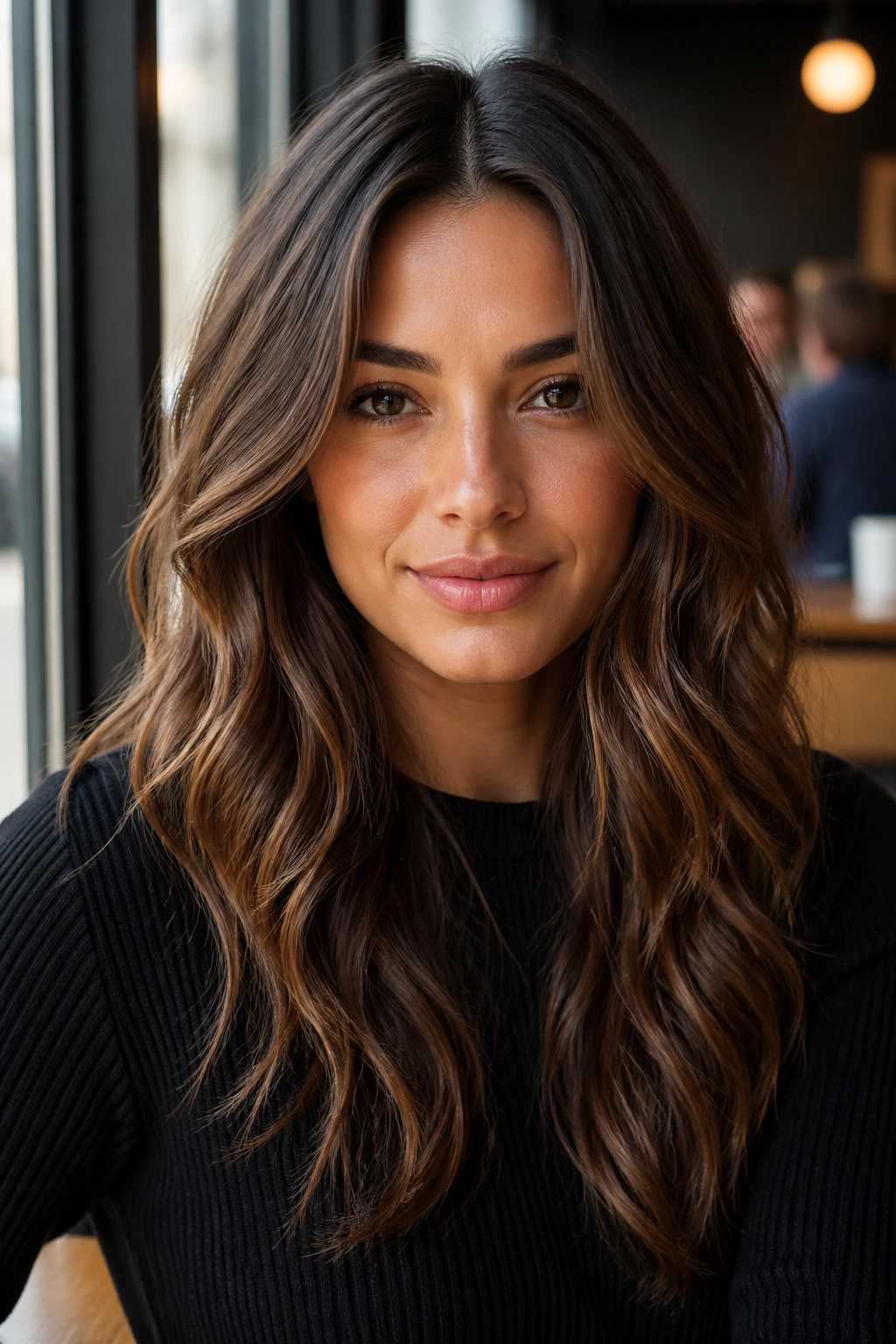
The cleanest finish for a long face is often the one that looks the least forced. Long waves with a soft face sweep keep the length, keep the movement, and use a gentle curve at the front to stop the eye before it runs too far down.
What makes this style different from a plain center-part wave look is the direction of the front pieces. They bend slightly toward the face, then out again near the jaw or collarbone. That subtle shift matters more than a dramatic cut sometimes. A tiny angle can change the whole balance.
If your hair is naturally wavy, this is a low-drama style that still looks polished. If your hair is straighter, a few loose bends with a large iron will get you there. Keep the roots soft and the ends touchable. That’s the part people notice first.
Final Thoughts
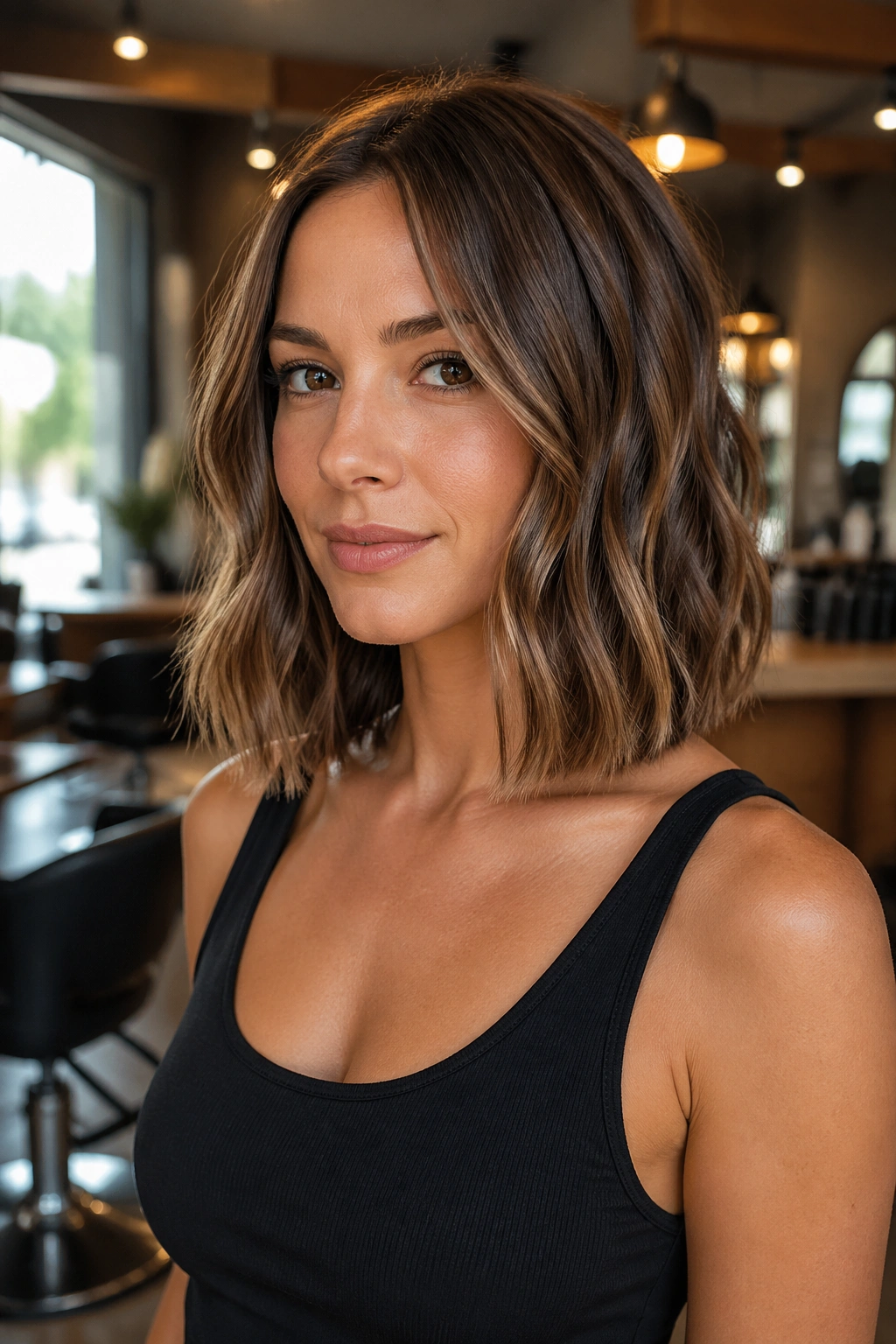
A long face does not need to be hidden. It just needs a haircut or styling shape that gives the eye a place to rest on the sides instead of sending everything straight down the middle.
The best wavy hairstyles here do the same basic job in different ways: some add fringe, some add width at the cheeks, and some use length in smarter places. Once you know which part of your face needs more balance, choosing gets much easier.
And honestly, that’s the part most people miss. They chase a trendy cut when they really need a shape that works with their features, their wave pattern, and the amount of time they want to spend styling in the morning.
