

Heart-shaped faces look best when the waves do a little balancing work. The forehead is usually the widest point, the chin narrows fast, and that means the prettiest hair shapes tend to add softness around the jaw instead of piling everything at the crown.
That does not mean every wavy style has to hide the forehead. Some of the strongest looks actually show it off — a deep side part, a wispy fringe, or a bit of cheekbone-skimming texture can pull the eye where you want it. The trick is simple: keep the upper half from feeling too heavy and let the lower half get some visual weight.
I keep coming back to face-framing pieces for this reason. A wave that starts around the cheekbone or collarbone tends to flatter a heart shape faster than one that balloons near the temples. A chin-length bend, a loose lob, or long layers with soft front pieces can make the face feel more even in a way that looks natural, not staged.
The styles below cover short cuts, shoulder-length shapes, long layers, polished waves, messy textures, and a few looks that are a little bolder than people expect. Some are low-effort. Some want a curling iron and a few clips. All of them work with the face shape instead of fighting it.
1. Deep Side Part Beach Waves
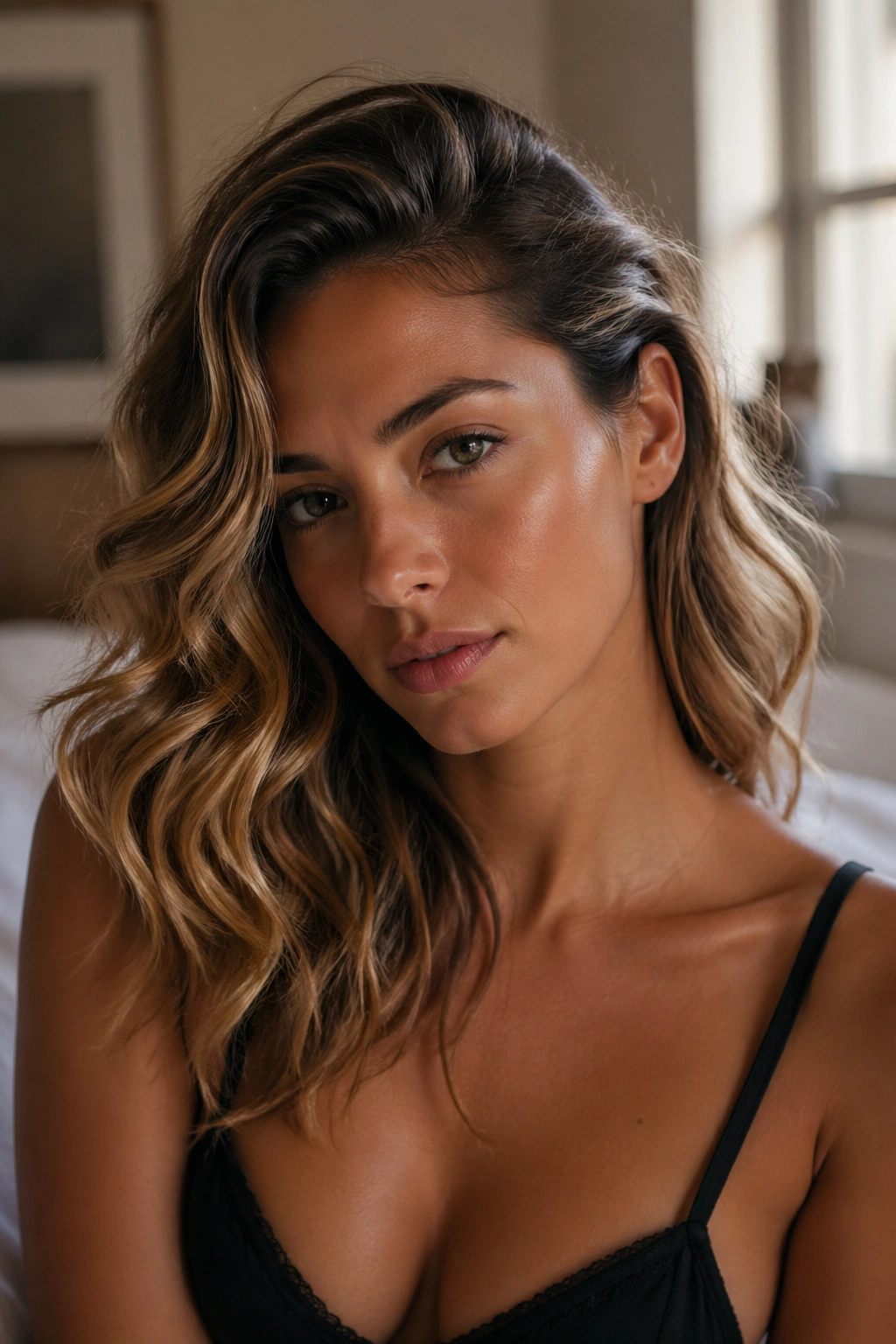
A deep side part is one of the easiest ways to make wavy hair look more balanced on a heart-shaped face. The part shifts some of the visual weight away from the center of the forehead, and the loose waves give the jaw a little more presence. It’s one of those styles that looks casual, but there’s real shape control happening underneath.
Why It Works
The goal is not big volume everywhere. The goal is controlled volume on one side and softness around the lower face. If your waves start too high near the temples, the forehead can feel even wider. If they begin lower, around the cheekbone or just below, the whole face looks calmer.
Use a 1¼-inch curling iron, leave the last inch of the ends out, and break the waves up with your fingers after they cool. That little bit of restraint at the ends matters. It keeps the style from turning into a round puff.
- Part hair about 2 inches off center.
- Curl away from the face on the heavier side.
- Tuck the lighter side behind one ear.
- Finish with a light mist of flexible-hold spray.
Best detail to remember: keep the roots smooth and the movement lower down.
2. Curtain Bangs With Collarbone Waves
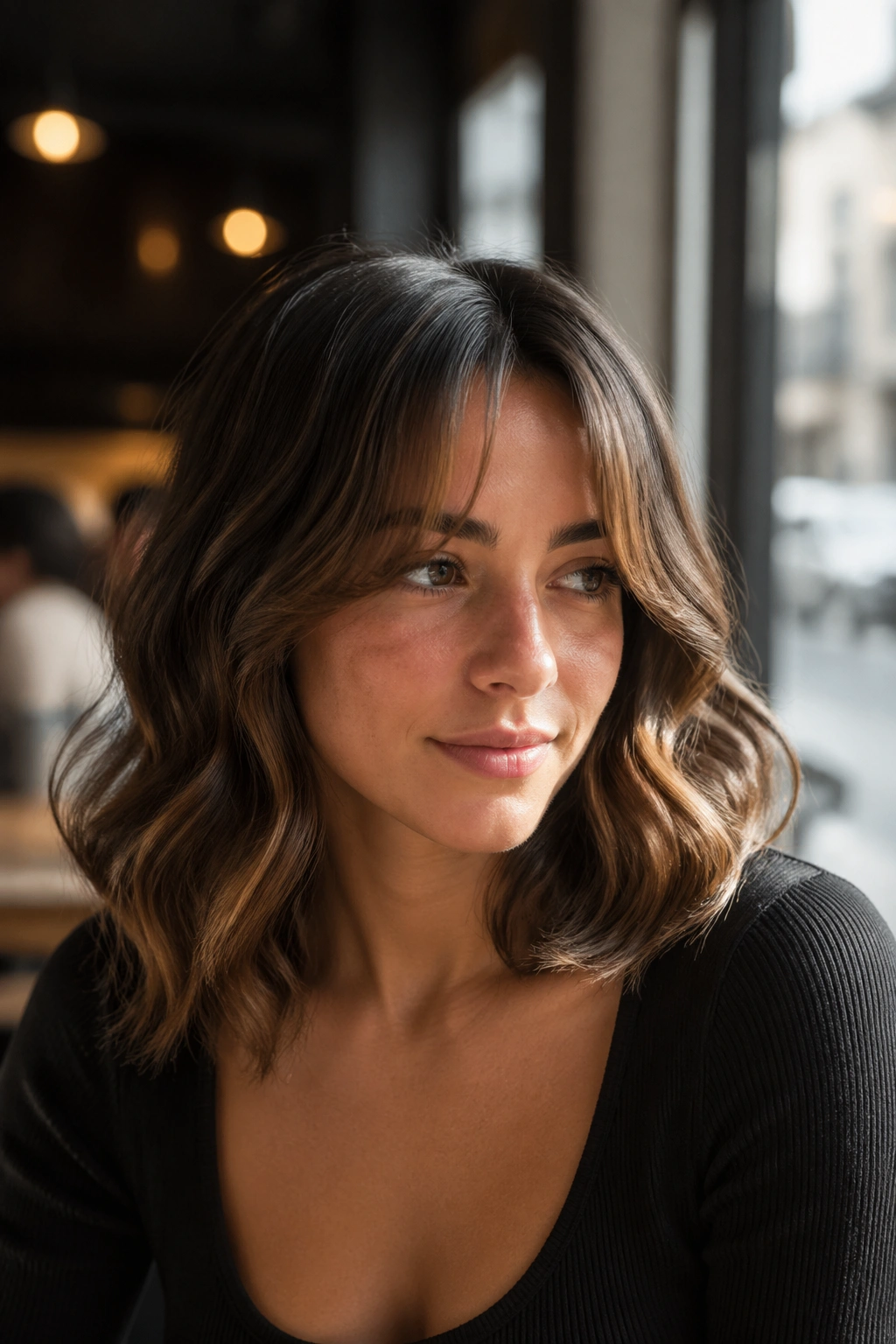
Curtain bangs are almost cheating on heart-shaped faces, and I mean that in the nicest way. They split the forehead visually without hiding it, then slide into collarbone-length waves that pull attention downward. It’s soft, easy, and a little bit flattering in the most annoying way possible.
The bangs should start somewhere around the brow or just below it, then open at the center and blend into the sides. If they’re cut too short, the look can go sharp fast. If they’re too heavy, they do the opposite of what you want and crowd the forehead.
Wear the waves loose, not barrel-curl tight. A soft bend from mid-length to ends is enough. The whole point is to frame the face, not build a helmet of texture around it.
This style works especially well if your cheekbones are the widest part of your face and you want the eye to travel past them. The collarbone length gives the jaw more presence, which is the part heart-shaped faces often need most.
3. Chin-Length Wavy Bob
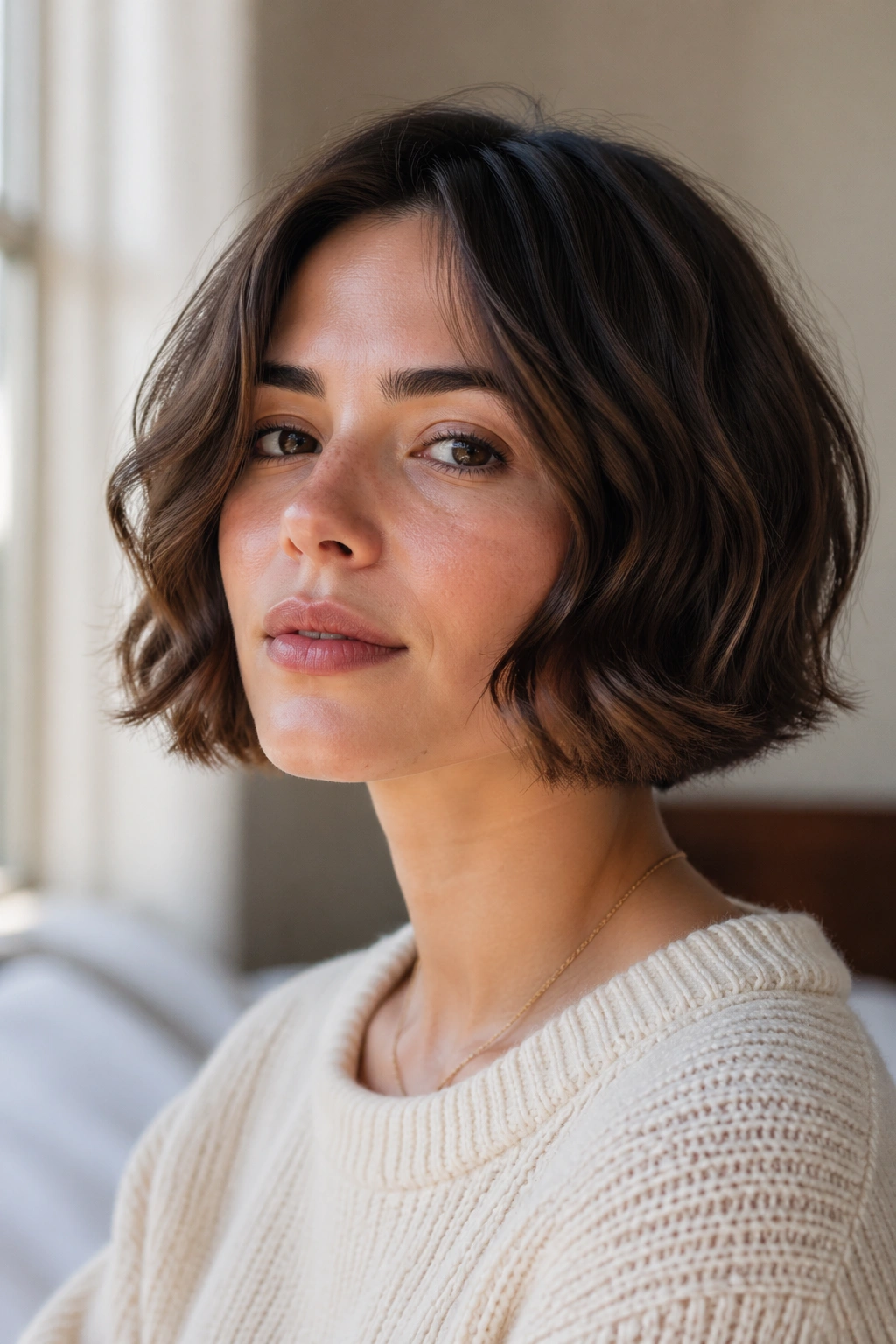
Why does a chin-length wavy bob flatter a heart-shaped face so well? Because it puts shape right where the face narrows. That length gives the lower half a little more width, so the chin does not disappear under the rest of the cut.
The trick is in the edges. Keep the bob blunt enough to hold its line, but not so heavy that it feels stiff. Soft waves should bend around the cheek and jaw, then land close to the chin. If the curl pattern gets too big, the style starts to balloon upward and loses the balance you wanted in the first place.
How to Wear It
Dry the hair to about 80 percent, then use a small round brush or a flat iron to add a gentle bend. Aim the front pieces slightly forward, not away from the face. That tiny angle changes everything.
A chin-length bob is also a nice option if your hair is fine. The shorter shape makes it look fuller without needing lots of product. Too much mousse, though, will make it puff out. Keep it light.
4. Long Layers With Face-Framing Waves
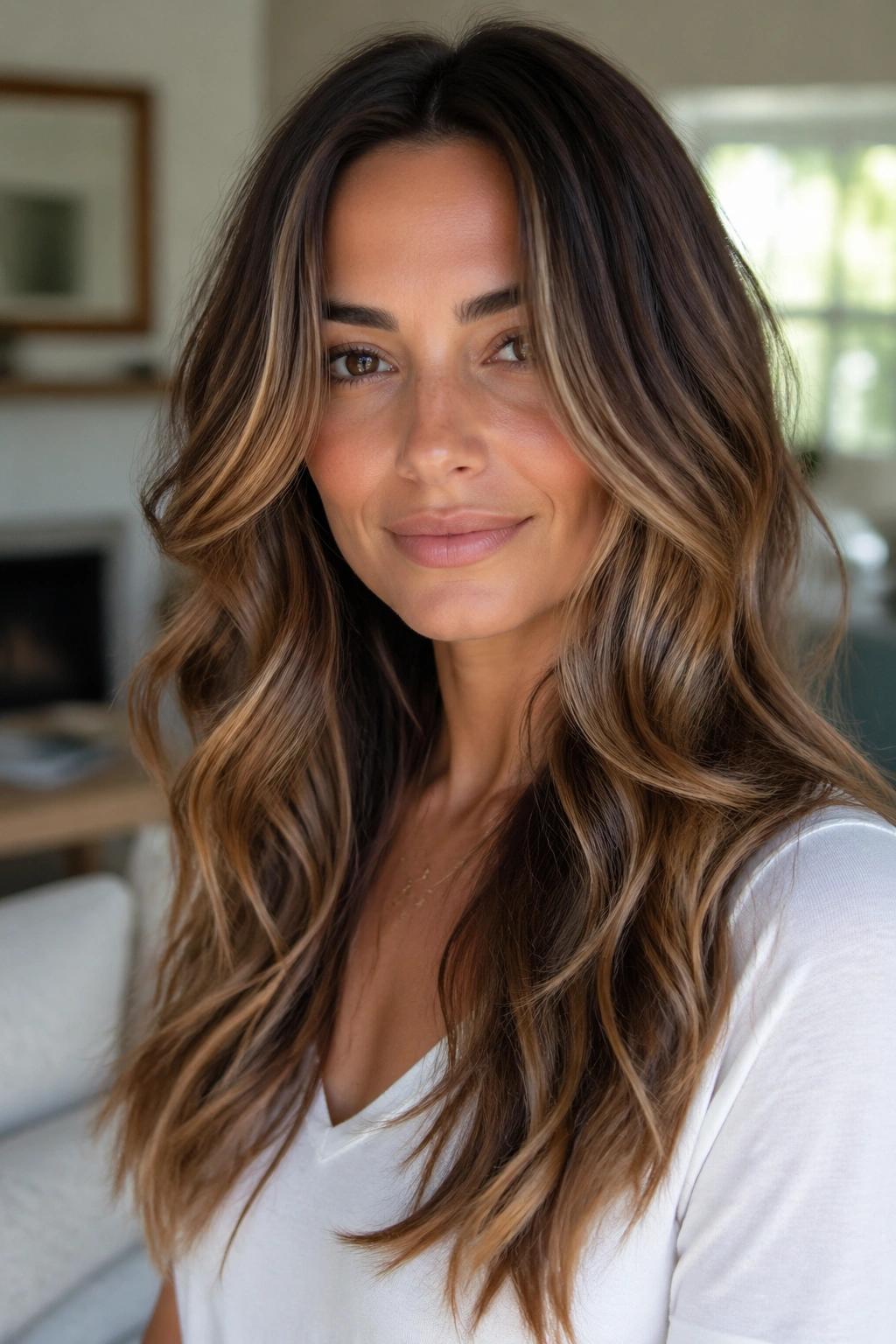
Picture long wavy hair that feels a little too heavy near the temples. Long layers fix that without stealing the length people love. On a heart-shaped face, they make the front pieces do the balancing job while the rest of the hair stays soft and flowing.
The best version starts with shorter front layers around the cheekbone or upper lip area, then lets the rest taper down toward the chest or below. That creates movement where the face needs it most. It also keeps the length from hanging like one flat curtain.
- Ask for layers that begin around the cheekbone, not at the crown.
- Keep the longest face-framing pieces near the jaw or collarbone.
- Curl the front pieces away from the face, then let the ends fall loose.
- Use a wide-barrel iron or a large brush for softer bends.
The shape is quiet, but it does real work. If you like long hair and do not want to give it up, this is one of the smartest ways to wear it.
5. Soft Shag With Wavy Fringe
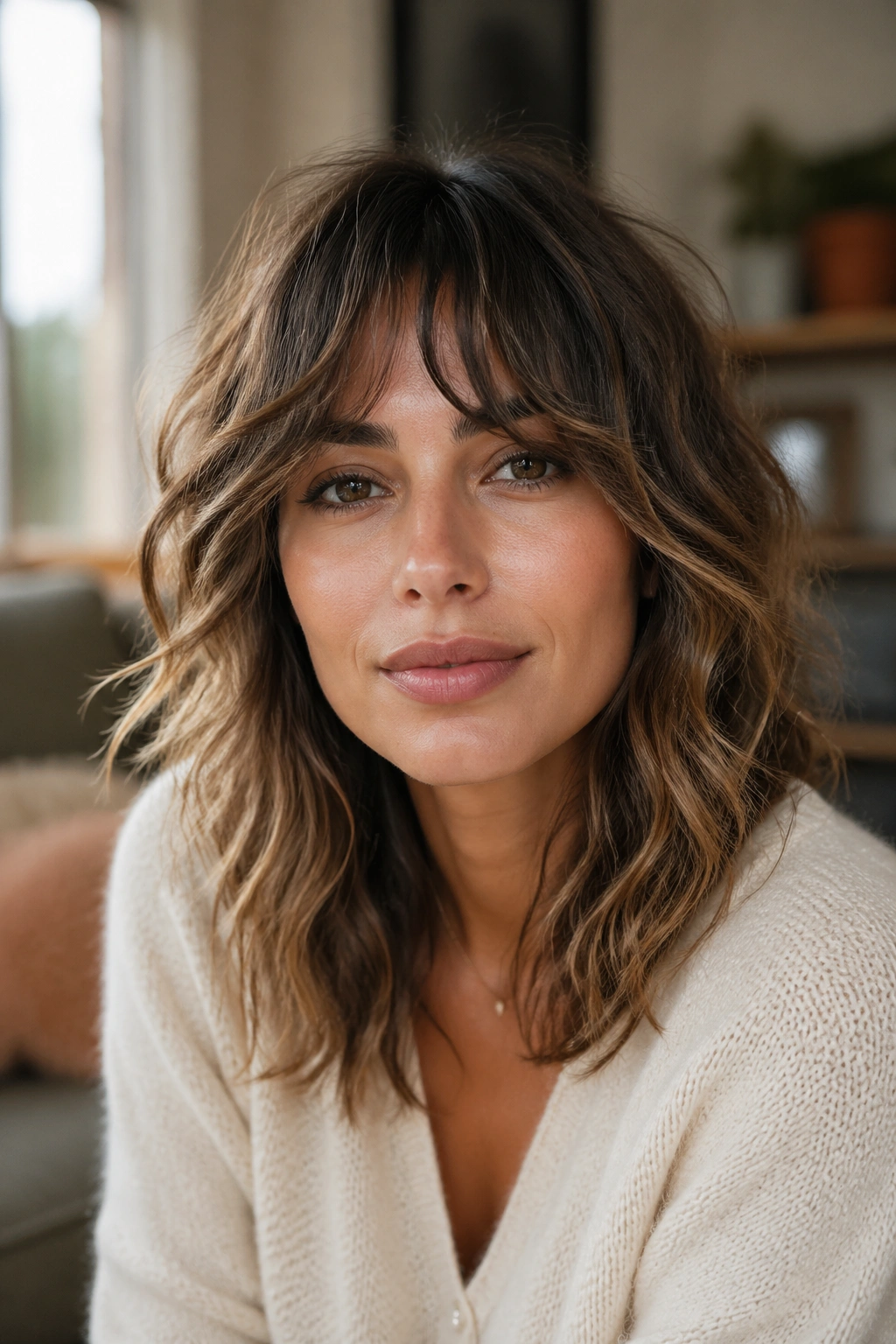
A soft shag is for the person who wants movement first and polish second. On a heart-shaped face, the shag’s choppy layers help take attention off a broad forehead while the fringe breaks up the upper part of the face in a gentler way than blunt bangs.
What I like here is the way the shape sits around the cheeks. The layers are not piled on top of the head, which is where a lot of wavy cuts go wrong on this face shape. Instead, the texture gets spread out through the mid-lengths and ends, so the lower half of the face gets more visual weight.
Air-drying works well with this cut. Scrunch in a light mousse, twist a few sections around your fingers, and leave some pieces imperfect. That little bit of mess makes the shag look lived-in rather than overworked.
It’s a good cut if your hair naturally leans wavy and you do not want to spend twenty minutes forcing it into shape. The fringe helps, but the layers are the real reason it works.
6. Textured Lob With a Tucked-Behind-Ear Side
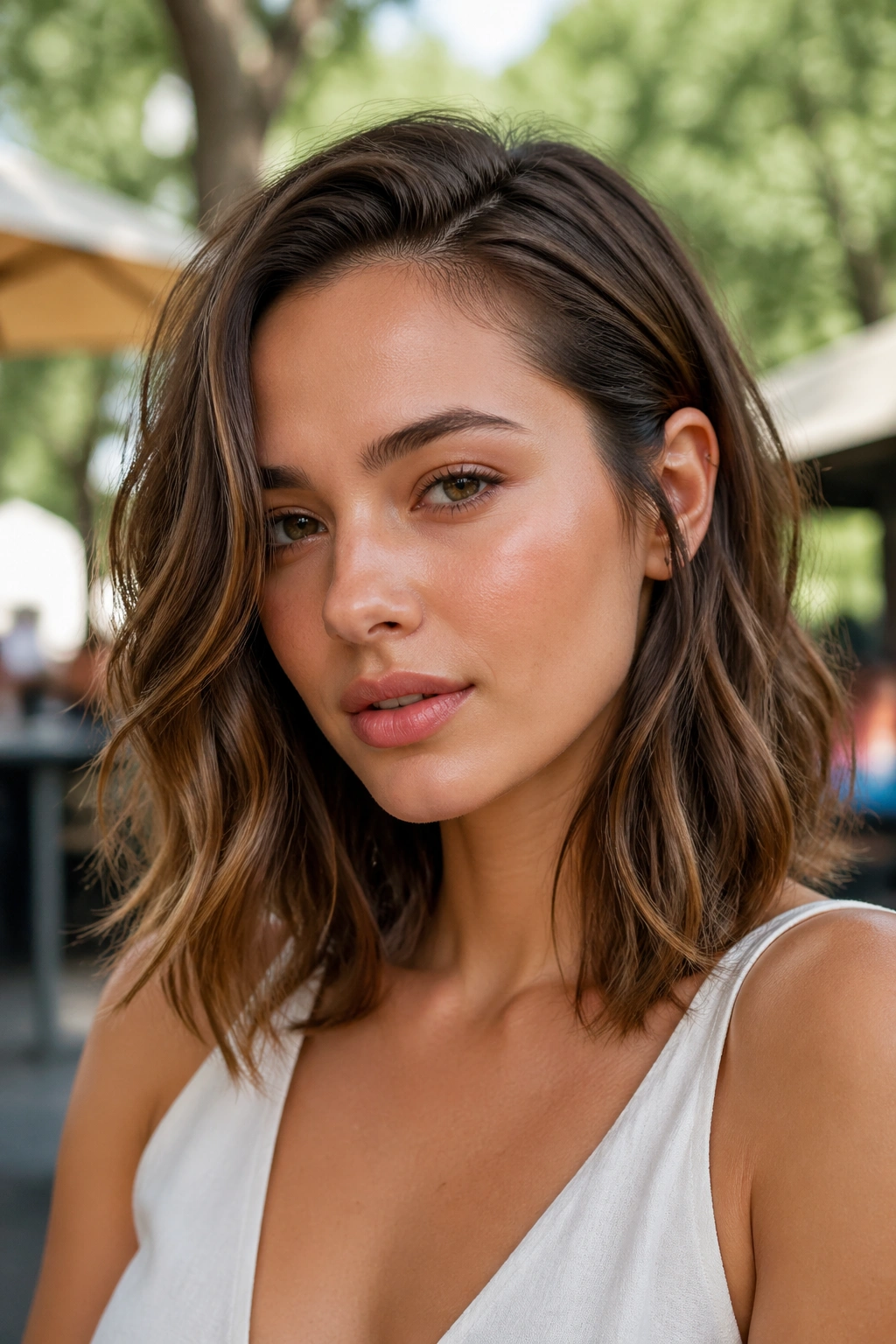
Compared with a blunt lob, a textured lob gives heart-shaped faces more room to breathe. The uneven wave pattern softens the edges, and tucking one side behind the ear opens up the face without exposing too much forehead. It’s a clean little trick, honestly.
The length should sit somewhere between the collarbone and the shoulders. Too short and it starts to puff around the jaw. Too long and you lose the nice, easy balance that makes a lob so useful.
This style is especially good when you want one side to feel neat and the other side to stay loose. That unevenness is what saves it from looking too symmetric. A heart-shaped face can handle that asymmetry better than people think, because it keeps the eye moving instead of locking it onto the widest part of the forehead.
If you wear glasses, this is one of my favorites. The tucked side makes room for the frame, and the textured lengths keep everything from feeling severe. Small detail. Big difference.
7. Half-Up Crown Twist With Loose Waves
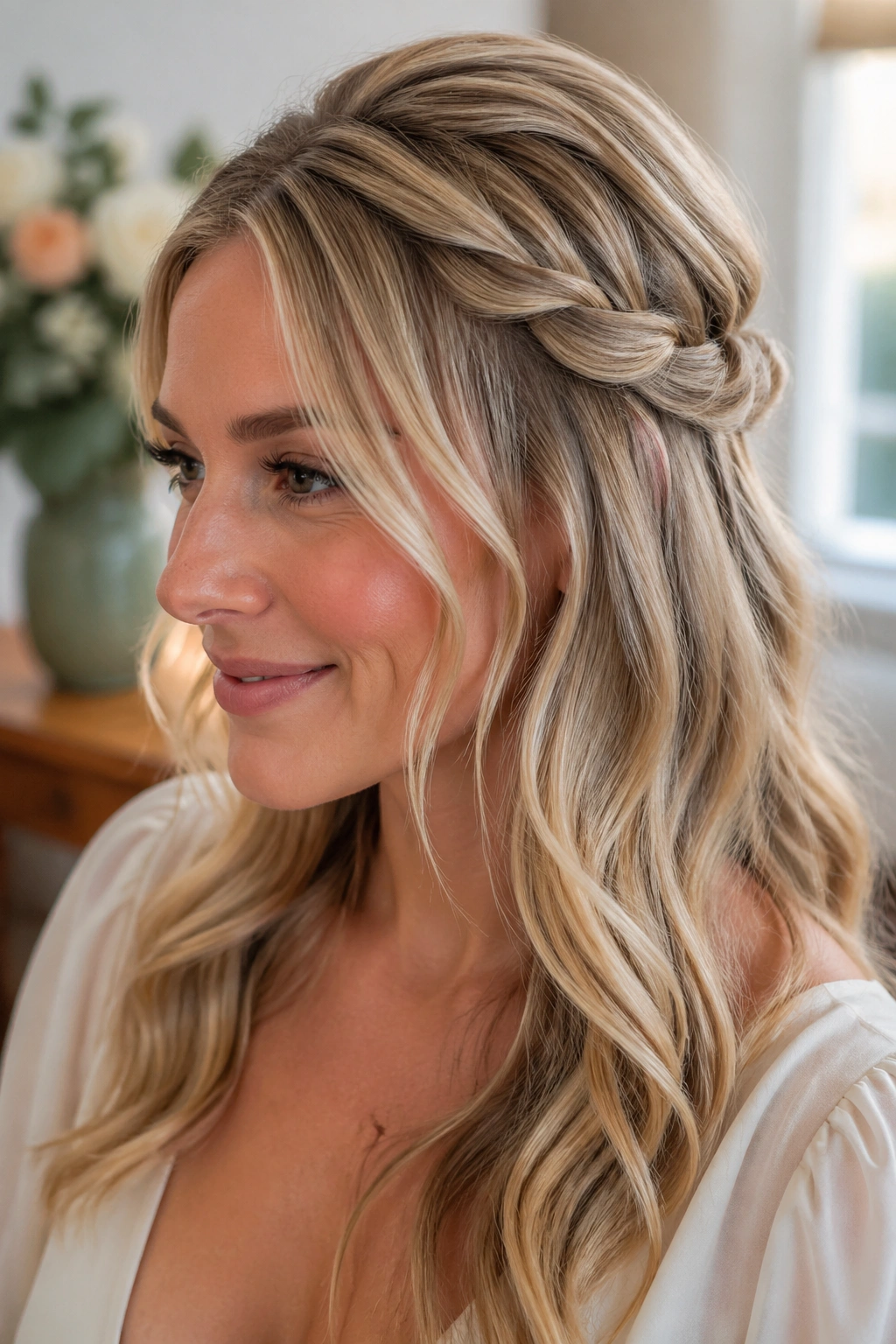
A half-up crown twist gives you lift without turning the whole style into a tall top-heavy look. That matters on heart-shaped faces. You want height, yes, but not so much that all the attention climbs straight to the forehead.
What Makes It Work
The twist should sit just at the crown, not at the very top of the head. Pulling hair from the temples too tightly can make the forehead feel wider. Leaving the front soft keeps the face open and the wave pattern relaxed.
- Take two small sections from above the ears.
- Twist them back loosely and pin them at the crown.
- Leave the front waves out around the cheeks.
- Use a claw clip or two hidden pins if you want less tension.
This look works for weddings, brunch, or any day when you want a bit of polish but do not want to sacrifice softness. The lower half of the hair should stay free and wavy. That’s the part that keeps the style flattering instead of fussy.
8. Sleek Roots and Wavy Mid-Length Ends
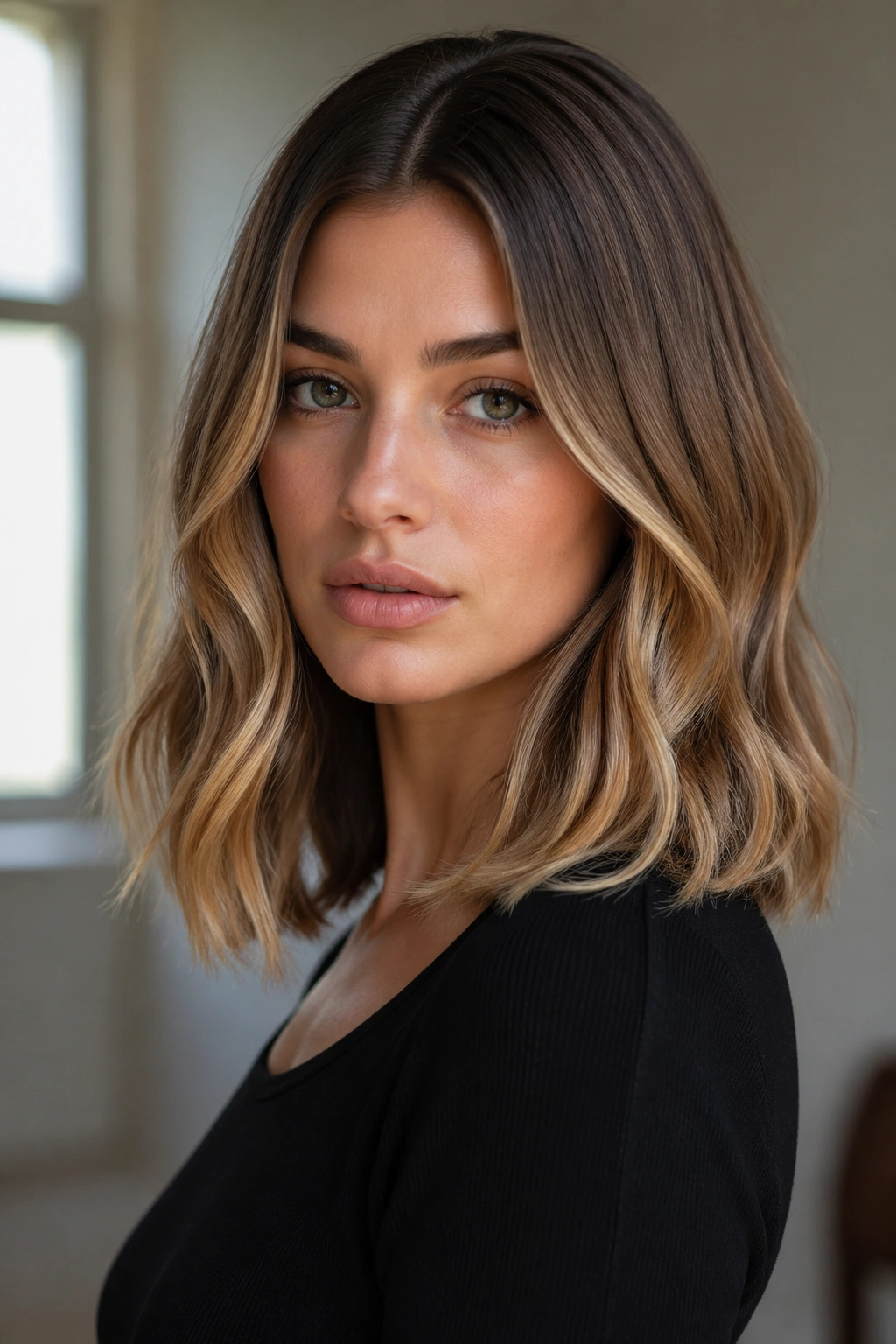
Sleek roots are underrated on heart-shaped faces. A smooth top keeps the forehead area calm, and the waves only start where they can help most — below the cheekbones, around the jaw, or lower. It gives the face a clean line at the top and a softer one underneath.
This is especially good if your natural wave pattern is inconsistent near the roots. Rather than fighting that texture, smooth the top with a paddle brush or a blow-dry brush, then add movement through the mid-lengths and ends. The contrast is the point. Flat roots and wavy ends create a cleaner shape than a style that is textured everywhere.
The look works well on shoulder-length hair or longer. If your hair is thick, it keeps the crown from ballooning. If your hair is fine, it gives the illusion of better structure.
And yes, it is a little more refined than some of the other styles here. But refined does not mean stiff. A couple of loose bends around the face are enough to keep it from feeling too severe.
9. Side-Swept Wavy Pixie Grow-Out
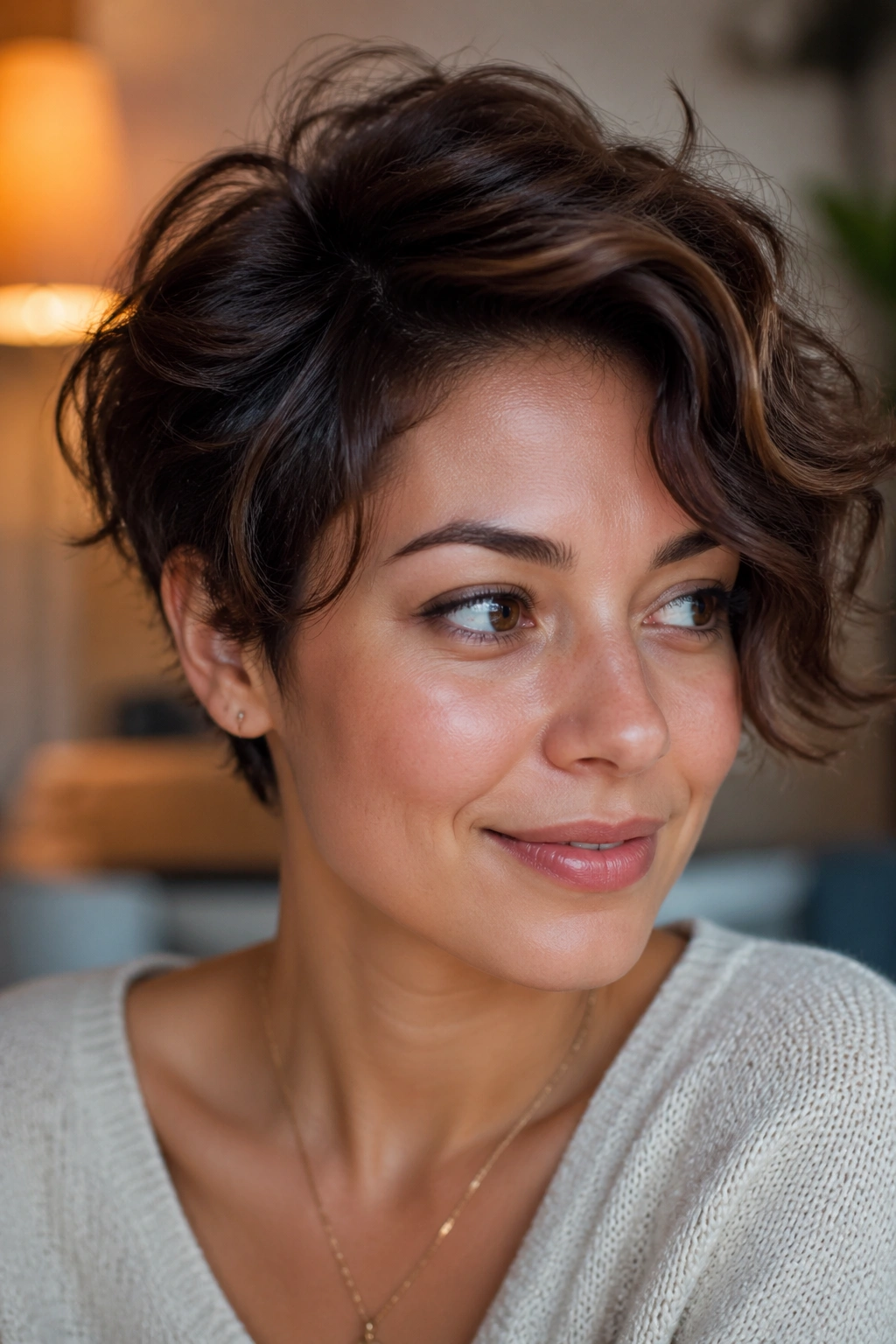
Can a pixie work on a heart-shaped face? Absolutely, if the cut keeps some length where it matters. A side-swept wavy pixie grow-out softens the forehead with a longer fringe and gives the temples a little breathing room. It is short, but not boxy.
How to Style It
The top should have enough length to bend over one side of the forehead. That keeps the widest part of the face from feeling too exposed. The sides can stay soft and close, while the top carries the movement.
Use a pea-sized amount of matte cream or light paste. Too much product turns short waves greasy fast, and that is a bad trade. Work it through damp hair, then push the fringe into place with your fingers.
This cut works best when the wave pattern is loose and a little piecey. Tight little curls can make the top feel crowded. Keep the edges airy. The result is playful, not precious.
10. Old-Hollywood Side-Part Waves
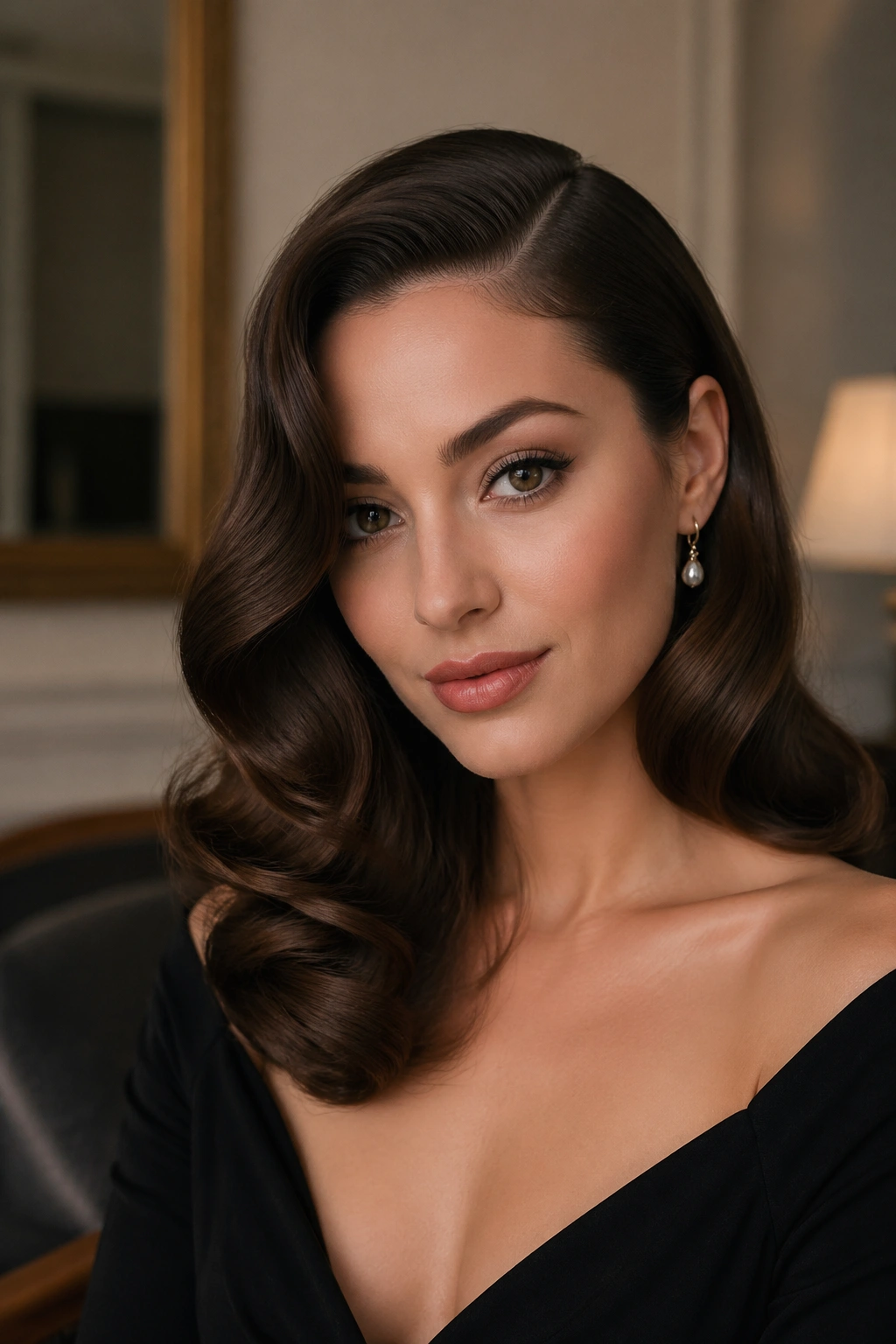
Old-Hollywood waves are gorgeous on heart-shaped faces because they build elegance without adding width where you do not want it. The deep side part and polished S-curve draw the eye down one side of the face, then let the lower wave line fill out the jaw and collarbone area.
The style is prettier when the curl is brushed out after it cools. That is where the shine and movement come from. Set the hair in sections, pin each wave briefly, then release and brush through gently. A light gloss spray helps, but don’t soak it. The shape should look smooth, not wet.
This is the kind of style that looks expensive even on a simple outfit. It also holds up well in formal settings because the waves have structure. One side can be tucked behind the ear or pinned low at the temple, which keeps the forehead from looking too dominant.
If you want a classic look with a little drama, this is a strong one. Not flashy. Just good.
11. Messy Wavy Ponytail With Crown Volume
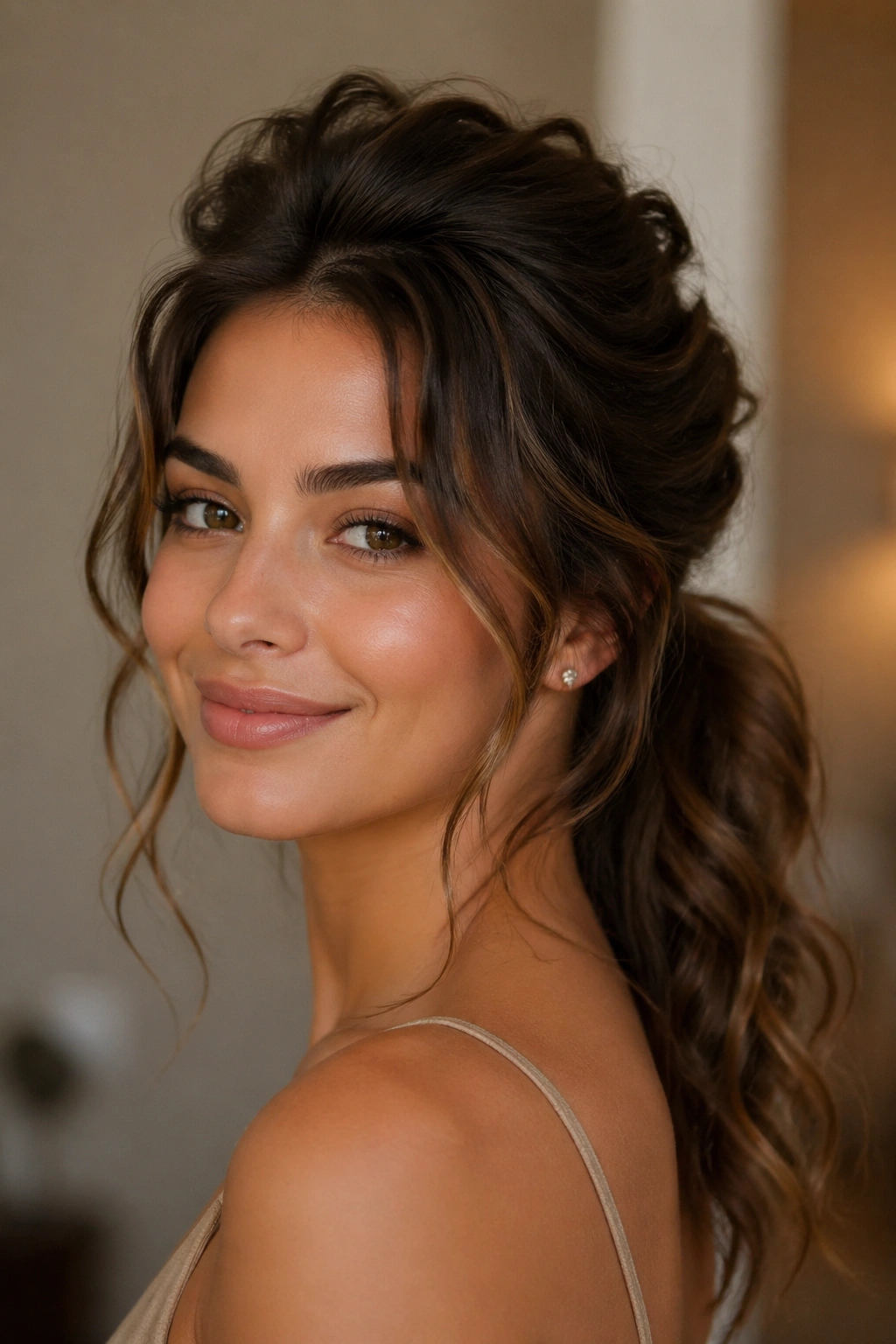
A wavy ponytail can work beautifully on a heart-shaped face if the crown stays soft and the pony sits low or mid-height. Pulling everything up too high exaggerates the top of the face, and that is the last thing you need. Keep the shape relaxed and let the waves do the talking.
The best version has a bit of lift at the crown, but not a bump. Just enough volume to avoid a flat top. Leave a few thin pieces around the temples and cheekbones so the face does not feel fully exposed. Those little strands matter more than people realize.
Wrap a strand of hair around the elastic if you want the ponytail to look finished. It takes thirty seconds and makes the whole style cleaner. The pony can be loose, brushed through, or left a little rough. All three work.
I like this one on second-day wavy hair. The texture already has grip, which means the ponytail holds better and the flyaways look intentional instead of messy in a bad way.
12. Wavy Wolf Cut
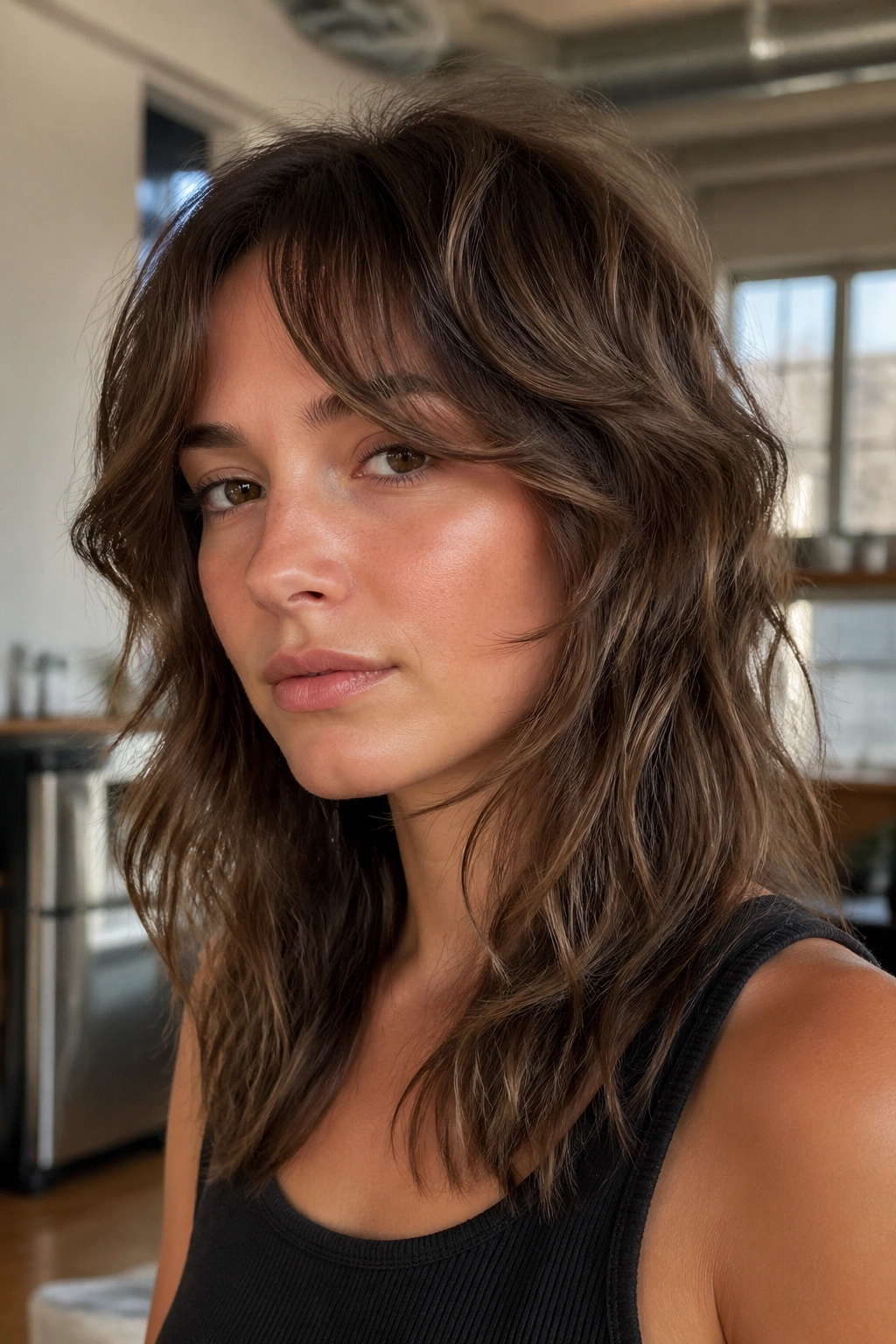
The wolf cut is the edgier cousin of the shag, and it can work on heart-shaped faces when it is cut with some restraint. The shortest layers should not sit too high on the head, or the style starts to widen the upper face. Keep the energy in the mid-lengths and ends.
What separates this cut from a softer shag is the shape through the back. It has a bit more bite, a little more swing, and a stronger contrast between the top and the lengths. That contrast can actually help a heart-shaped face because it moves attention away from the forehead and down toward the jaw and neck.
This is a good pick if you like a messier finish and do not mind a style with personality. It is not the neatest option, and that is part of the appeal. A wolf cut wants air, separation, and a little roughness at the ends.
If your hair is very fine, go easier on the layering. Too much removal at the sides will leave the face feeling wider than you expected. Shape matters here. More than people think.
13. Shoulder-Length Flip-Out Waves
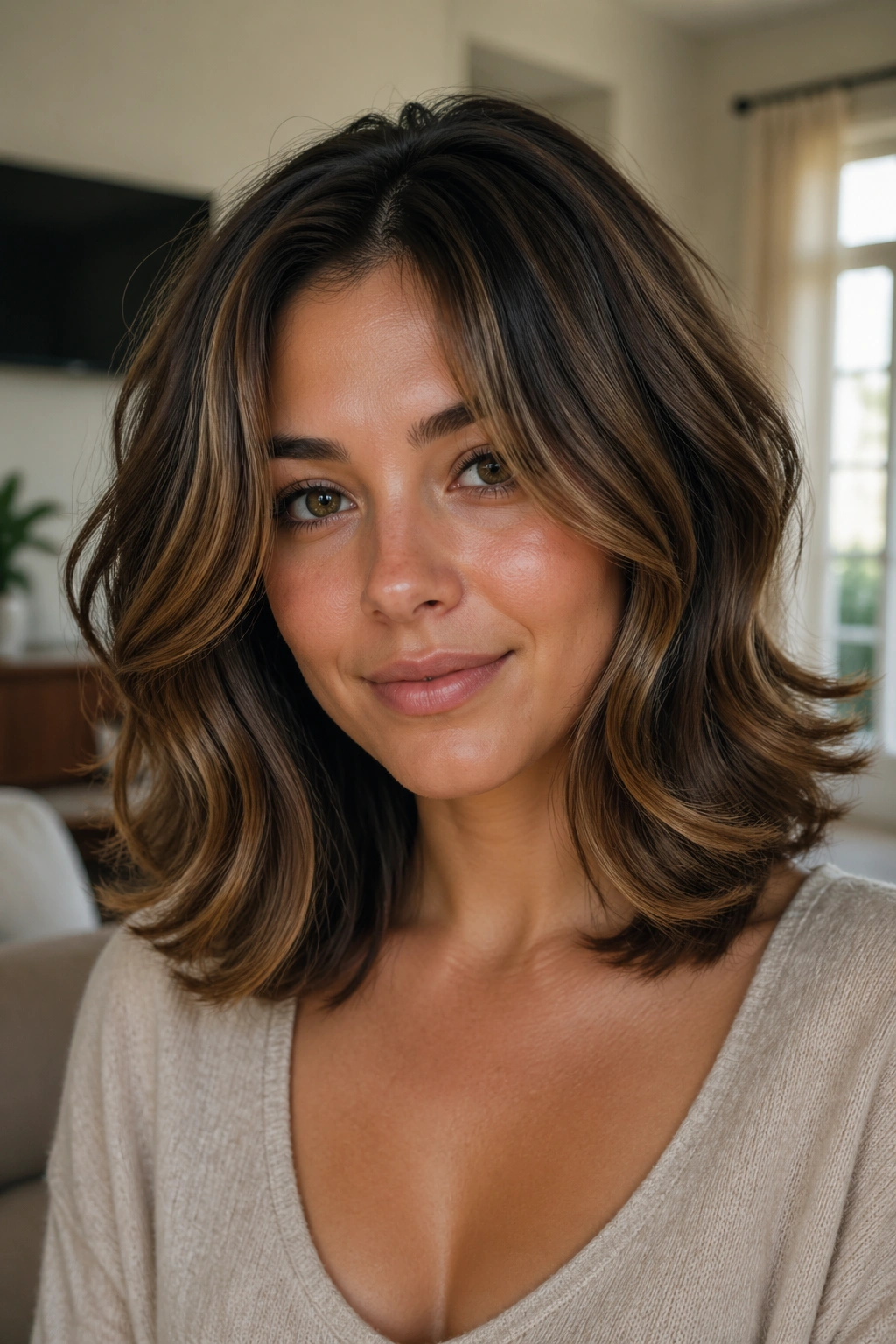
Shoulder-length flip-out waves are one of those styles that look cheerful without trying too hard. On a heart-shaped face, the outward bend at the ends adds a bit of width near the lower half of the face, which helps even out the narrower chin.
Why It Balances the Face
The flip should happen right around the shoulders or collarbone, not at the top of the cheek. That placement matters. When the bend sits lower, the eye gets drawn downward, and the whole face feels more even.
- Use a 1½-inch iron or a round brush for the ends.
- Flip the last 2 to 3 inches away from the face.
- Keep the roots soft so the top does not look bulky.
- Finish with a light cream, not a heavy oil.
This style has a little retro energy, but not in a costume-y way. It works on straight-wavy hair especially well because the ends can be trained easily. If your hair tends to collapse fast, clip the bends in place while they cool. That small step helps the shape last.
14. Waterfall Braid Into Loose Waves
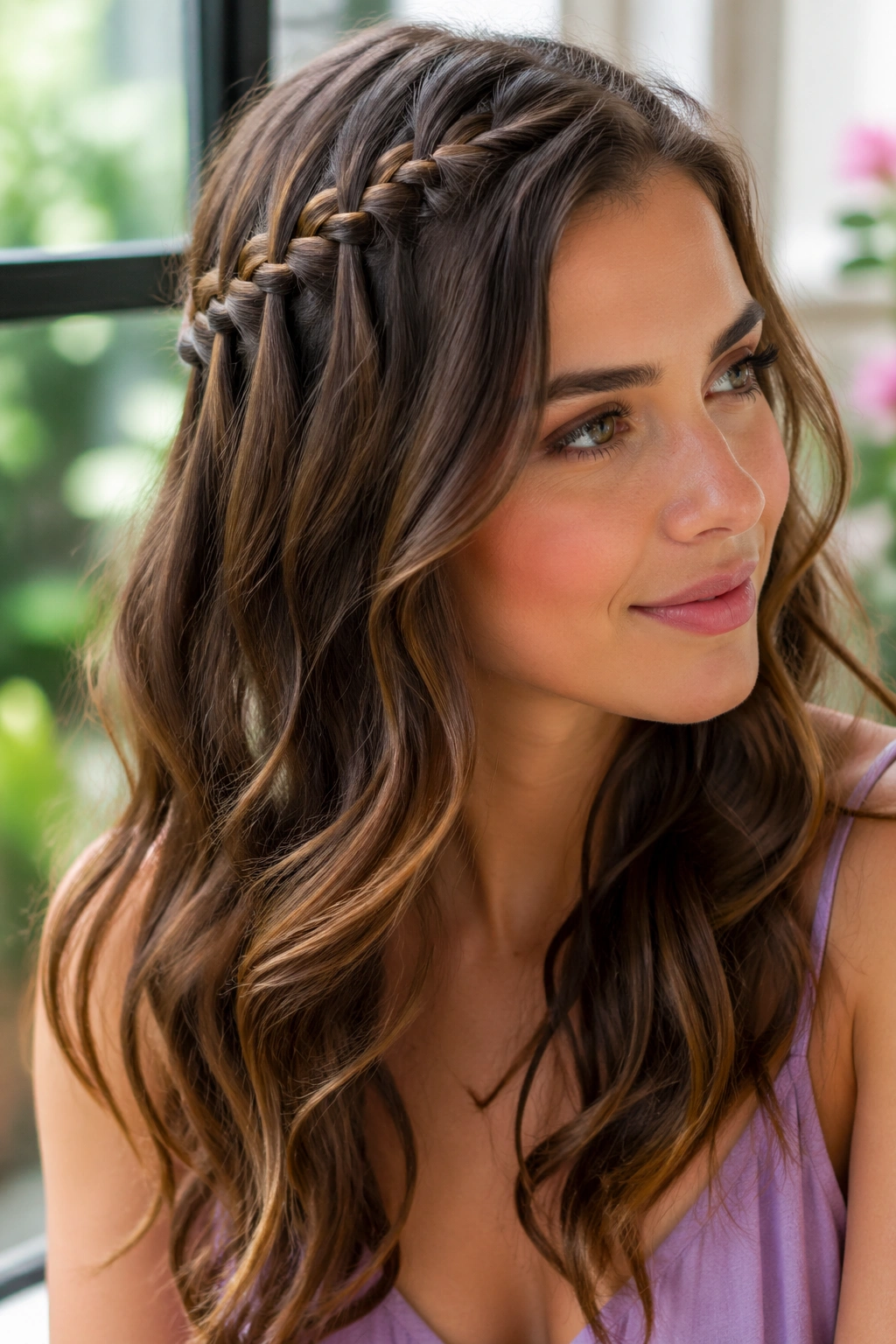
A waterfall braid gives a heart-shaped face a softer frame along the top and side while leaving the length loose and wavy. The braid starts around the temple, lets pieces drop through, and keeps the eye moving instead of locking onto the widest part of the forehead.
The style is useful on days when you want some control at the front but do not want to pin all the hair back. That is the catch with many half-up looks: they can pull too much attention upward. A waterfall braid solves that by staying light and low.
Wear the rest of the hair in loose waves, not tight curls. Soft bends around the shoulders and chest make the braid feel part of the hairstyle instead of sitting on top of it like an accessory.
It is also a good style for long events. The braid keeps the front tidy, and the loose lengths keep the look from feeling rigid. A few tiny face pieces around the chin help keep the shape flattering.
15. Boho Waves With Micro Bangs
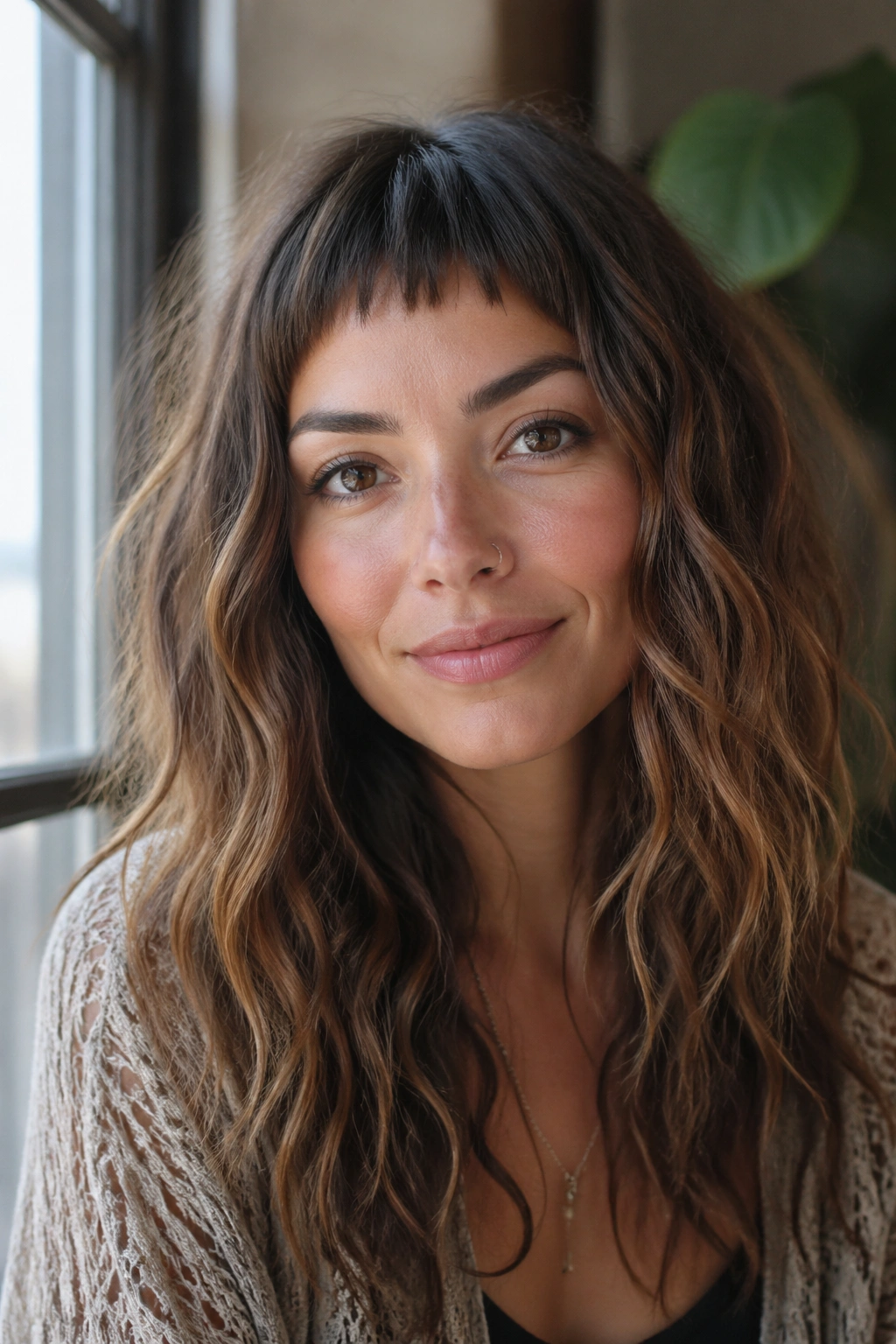
Micro bangs on a heart-shaped face are a bold move. They can look fantastic, but only when the waves around them stay loose and soft. If the fringe is blunt and the waves are tight, the whole look can feel sharp at the forehead, which is the opposite of what most heart shapes need.
How to Keep It from Feeling Severe
The fringe should be short enough to feel intentional, but piecey enough to let some forehead show through. That gap matters. It breaks up the width instead of boxing it in.
The waves should be very relaxed. Think loose bends, not ringlets. A softer texture around the jaw keeps the face from feeling top-heavy, which is easy to do with shorter bangs if you are not careful.
This style suits people who like contrast. If you want something sweet and neat, skip it. If you like a little edge and do not mind a look that gets noticed, it can be a strong choice. I would not call it the safest option, but it is far from random when it is cut and styled well.
16. Clipped-Back Temple Waves
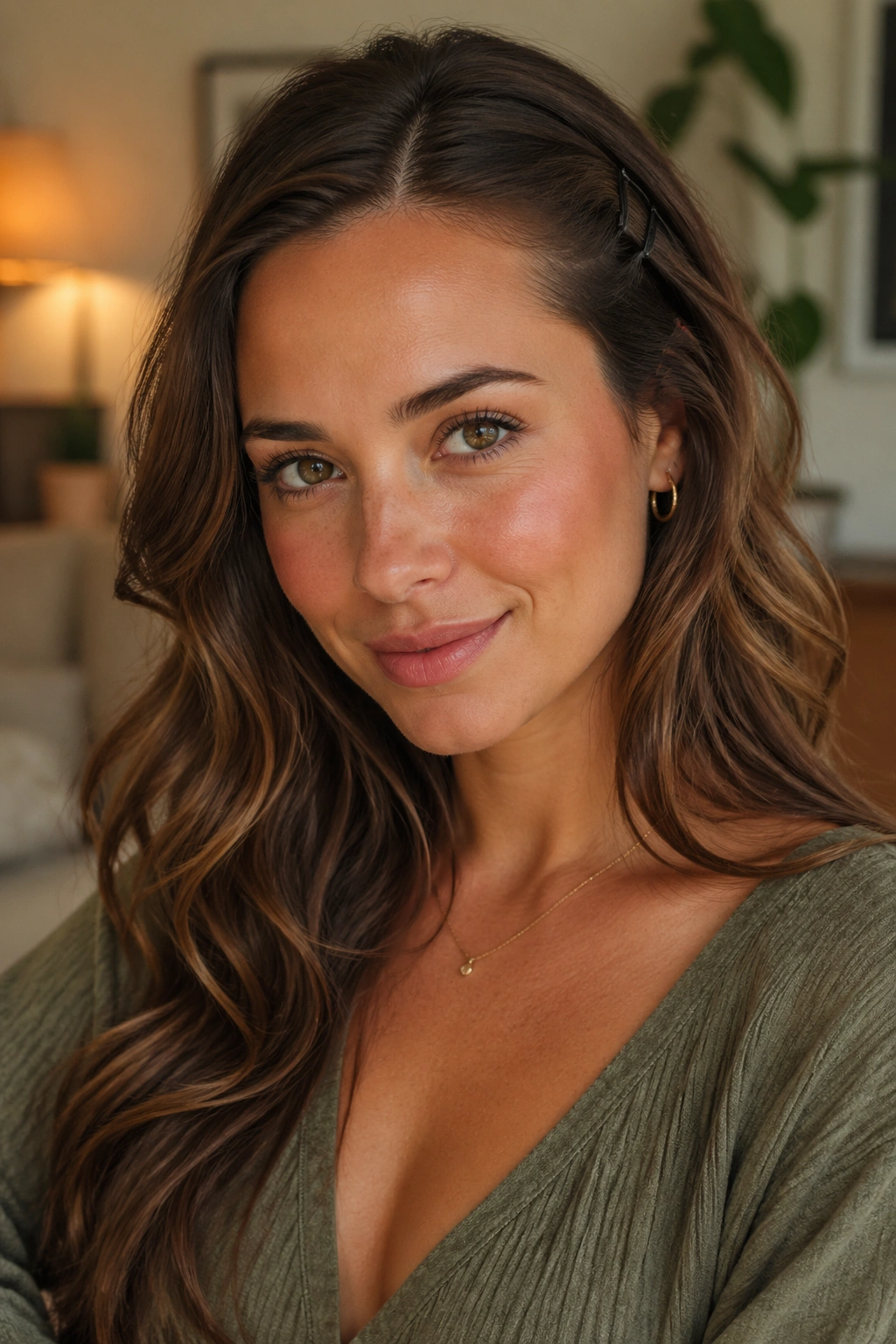
A couple of small clips at the temples can change a heart-shaped face fast. They pull some hair away from the widest part of the forehead, then leave the waves free through the lengths. It is tidy, but not stiff.
The best clips are small and flat — one to two inches long is plenty. Place them right above or just behind the temple line, not all the way up near the crown. If they sit too high, the style starts lifting the face too much. A deep side part helps here because it creates a bit of asymmetry before the clips even go in.
Quick Details That Matter
- Use two slim barrettes or one pair of small snap clips.
- Let the front sections stay loose around the cheekbone.
- Keep the lower waves soft and brushed out.
- Avoid oversized clips that sit wide across the temple.
This is a nice everyday fix on wavy hair that has grown out between washes. It also works on busy mornings when you want the face framed but not fully covered.
17. Cheekbone S-Waves
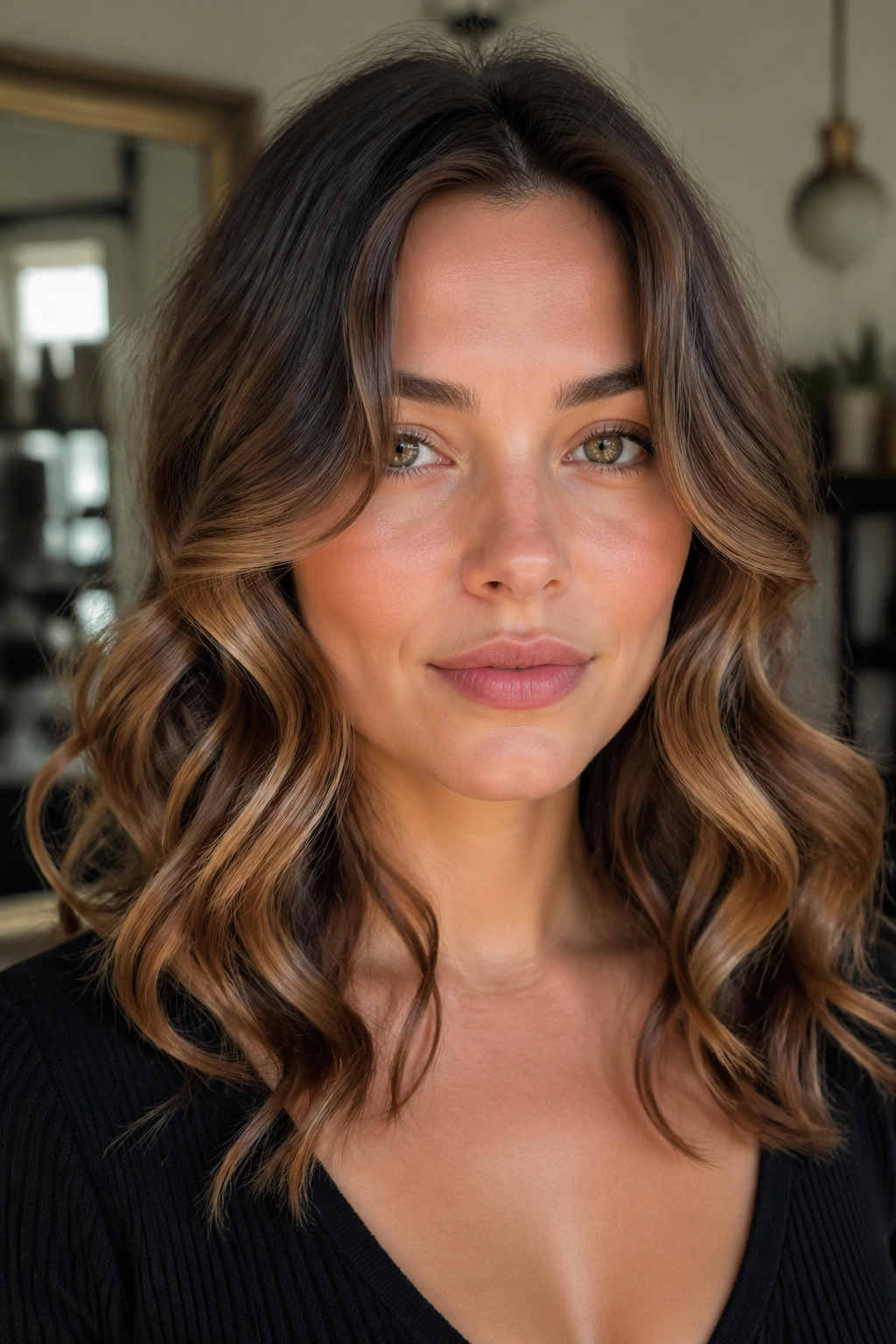
S-waves are smoother than beach waves and more shaped than loose bends. That middle ground is exactly why they suit heart-shaped faces. They hug the cheekbones, then curve toward the jaw, which gives the lower part of the face more presence.
The style takes a little more intention than a quick scrunch-and-go wave. Use a flat iron or a narrow curling iron to make the bends, and keep the sections small enough that the wave pattern stays defined. If the sections are too wide, the shape gets fuzzy and loses its line.
What I like here is the way the wave pattern sits close to the face. It does not flare out at the sides. That means you get softness without bulk. It is a clean look, but not a stiff one.
If your face has a strong forehead and sharper chin, this is one of the more flattering choices on the list. It adds curves exactly where they help most, and it does it without making the hair look overly styled.
18. Flipped-Out Wavy Bob
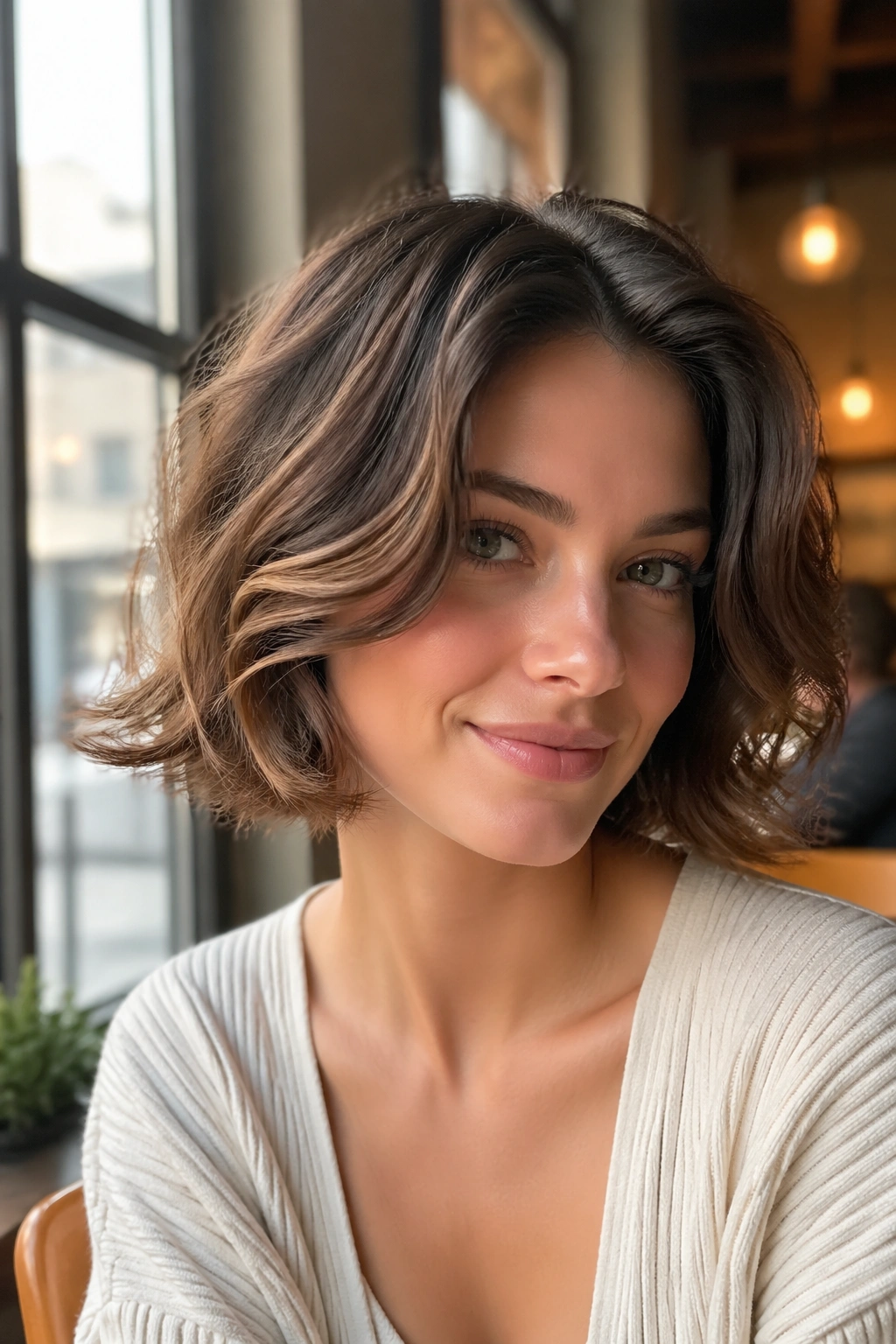
A flipped-out wavy bob has a little bit of attitude, and that suits a heart-shaped face better than people expect. The outward bend adds width where the chin narrows, while the bob length keeps everything close enough to the face to feel neat.
This is not the same as a rounded bob that curves inward all the way around. That can sometimes pull attention too tightly into the middle of the face. The flip-out version feels more open and airy. It gives the jawline a little more presence and keeps the lower half from disappearing.
The easiest way to style it is with a round brush or large iron at the ends only. Leave the upper waves loose. If the whole bob gets too structured, it starts to feel old-fashioned in the wrong way.
It’s a smart cut for people who want something short but not severe. There’s movement, shape, and enough edge to keep it interesting. No need to overdo it.
19. Half-Up Top Knot With Mermaid Waves
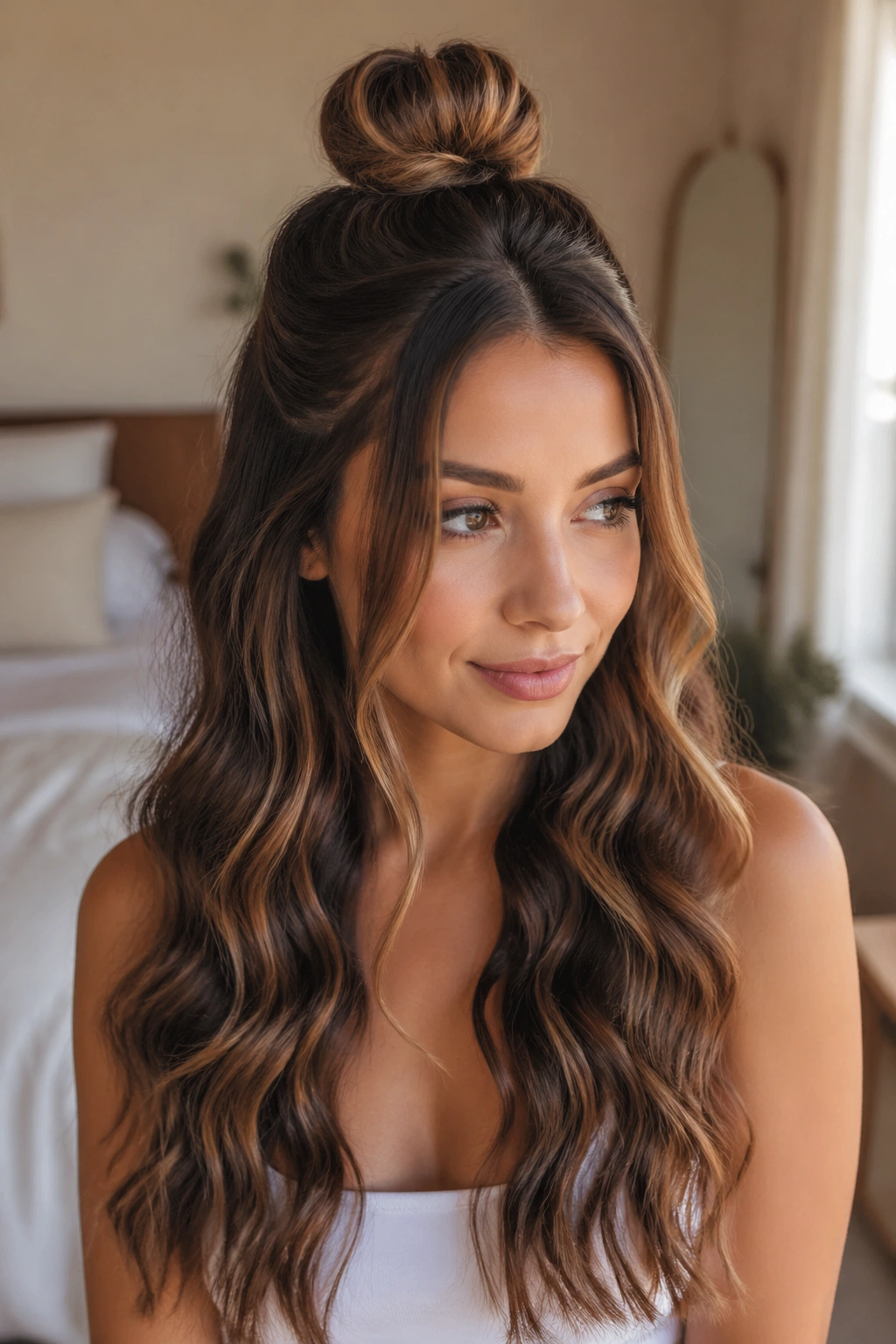
A half-up top knot can work on a heart-shaped face if the knot stays small and the waves stay big. That contrast is the whole point. The knot keeps the top light and playful, while the loose lower lengths add softness near the jaw and shoulders.
What Makes It Work
The knot should sit at the crown, but not so high that it adds height. Think compact and slightly messy. A huge knot pushes the focus upward and can make the forehead feel bigger than it is.
- Leave two front pieces out on each side.
- Keep the knot loose enough to show texture.
- Use long waves through the lower half.
- Secure with pins instead of yanking the hair tight.
This style is good when you want your hair off your face but still want the shape to stay soft. It also photographs nicely from the side because the waves create movement where the face narrows. A few face-framing pieces make the difference between “cute” and “why does this actually work so well?”
20. Low Bun With Wavy Tendrils
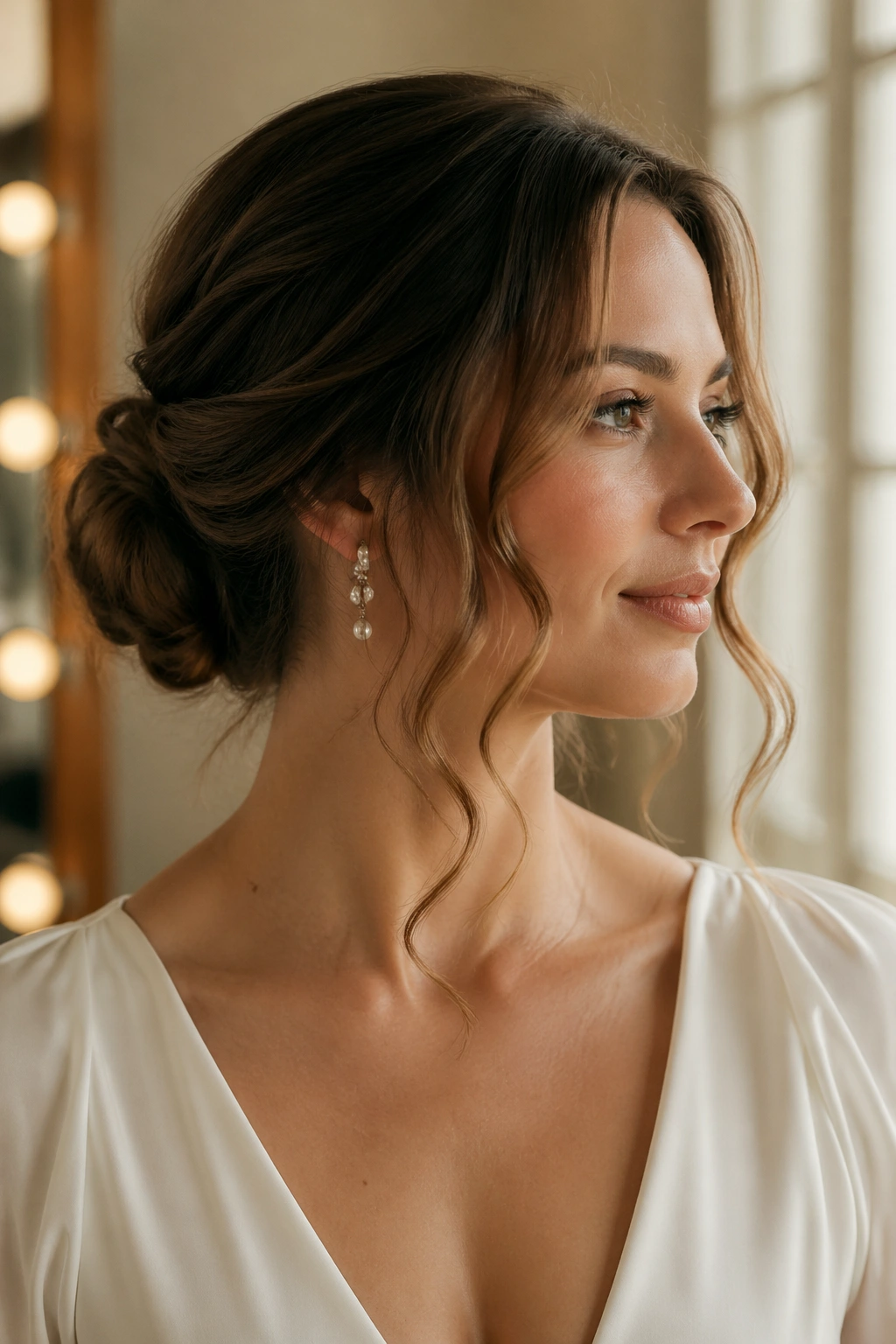
A low bun is one of the safest formal styles for heart-shaped faces, and I do mean safe in the best sense. It keeps all the volume low, which lets the forehead stay quiet while the jaw and neck get more attention. Add a few wavy tendrils, and the whole thing softens right away.
The bun should sit at the nape or just above it. Anything higher starts to pull the face upward. Keep it a little loose, not tight and glassy. A few bends around the temples and near the ears stop it from feeling severe.
This style is excellent for weddings, dinners, or days when you need your hair to stay put but still want softness. The tendrils should not be chunky. A couple of slim pieces are enough. If they are too thick, the style loses its clean shape.
There is a reason people keep coming back to low buns. They are practical, yes, but on a heart-shaped face they also do the face-balancing work quietly. No fuss. No drama.
21. Side-Parted Waves With Barrettes
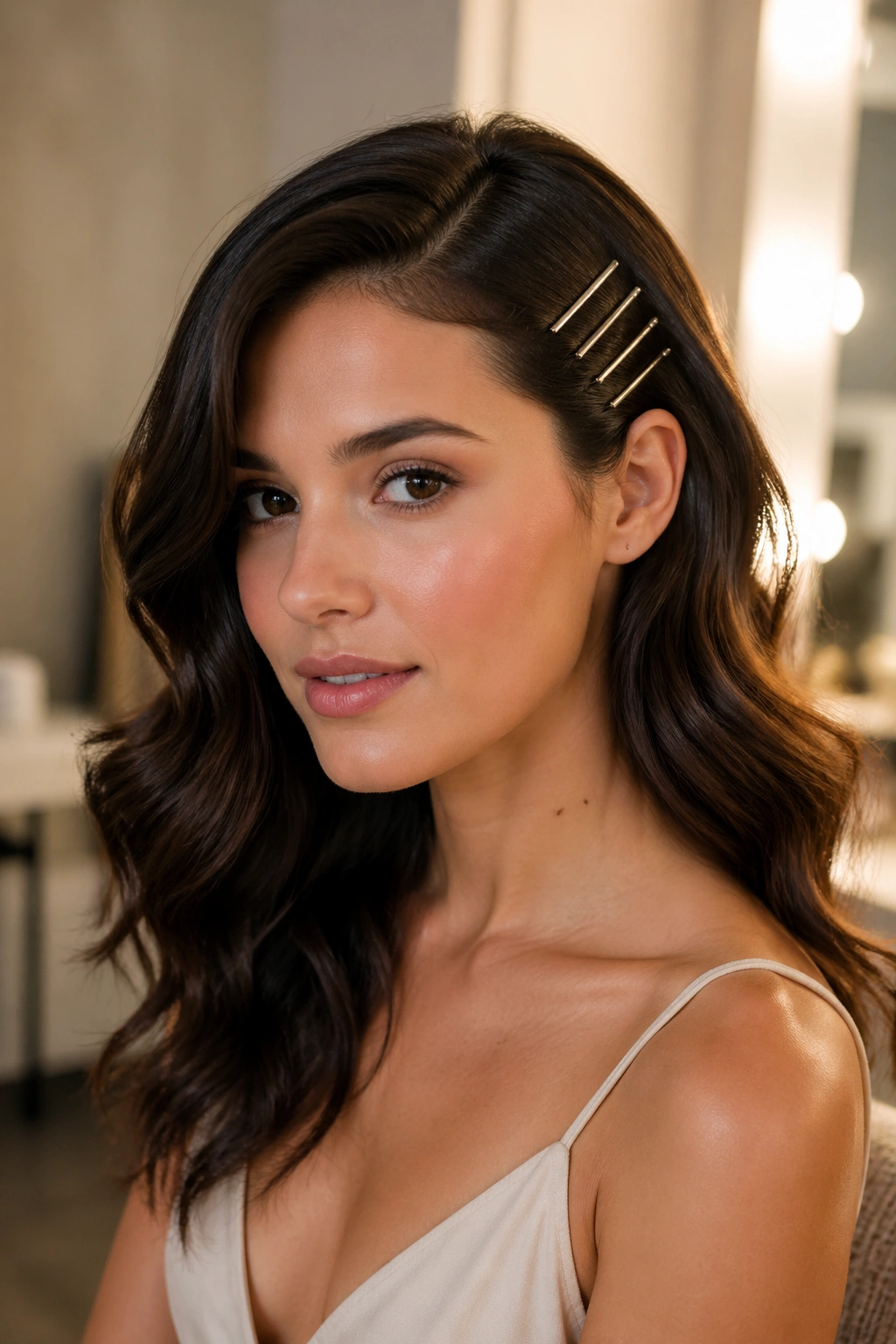
Why do barrettes work so well on heart-shaped faces? Because they help control the wider side of the forehead without dragging the whole style backward. The side part opens one side of the face, and the barrette keeps the other side from falling flat across the cheeks.
Use slim clips rather than chunky ones. Two or three small barrettes lined up near the temple look cleaner than one big barrette sitting heavy on the side. Place them just above the brow line or a little higher, and let the waves fall loose below.
The rest of the hair should stay soft and wavy. If the front is pinned too tight, the forehead becomes the focus again. That defeats the point. A heart-shaped face tends to look best when the upper area is guided, not smothered.
I like this style because it is easy to adjust. One clip changes the whole mood. Two clips make it more polished. Three can edge into playful territory. The base stays the same, which keeps the face shape doing the flattering work.
22. Air-Dried Natural Waves With Minimal Layers
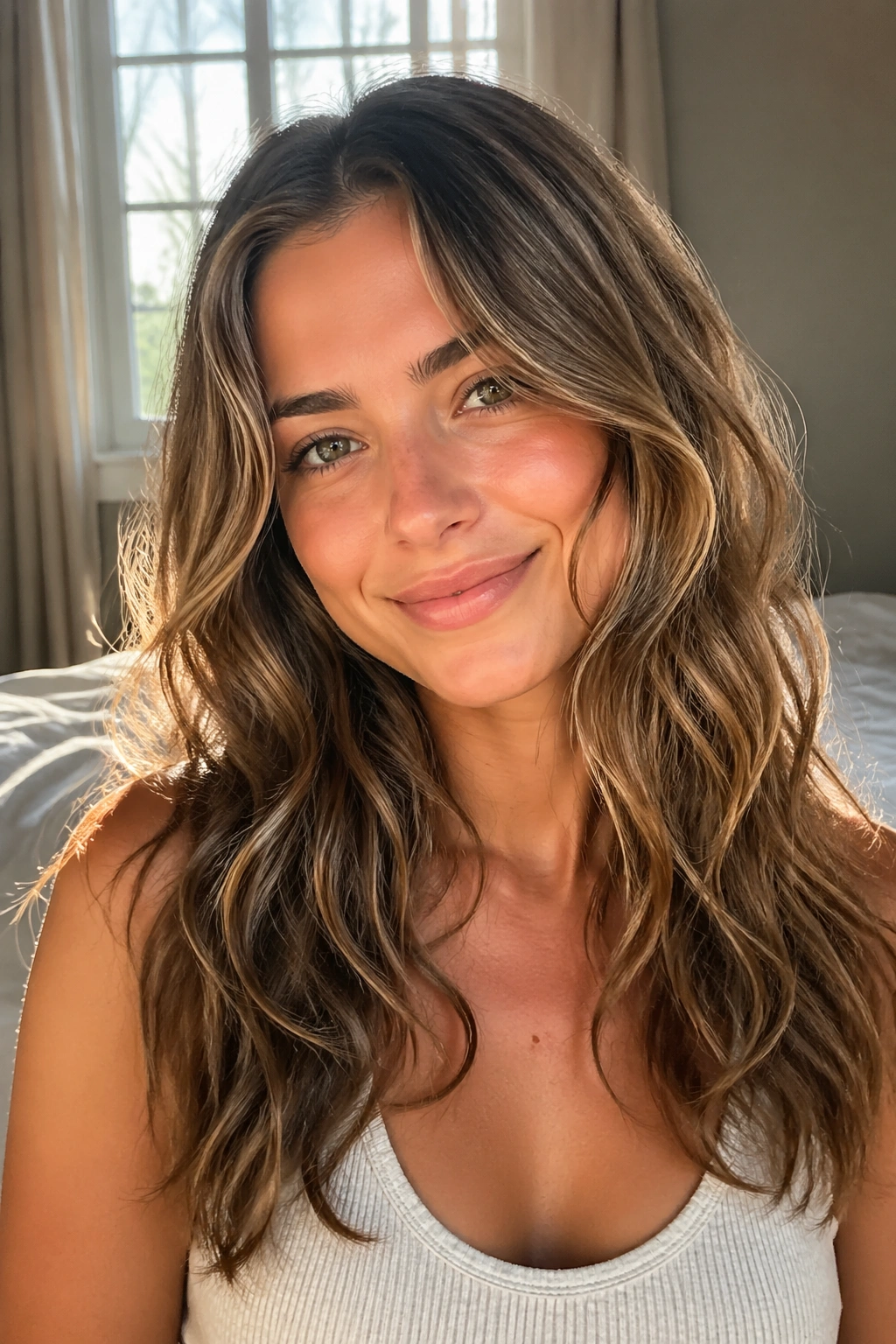
Some of the best wavy styles for heart-shaped faces are the least fussy ones. Air-dried natural waves with minimal layers keep the hair’s own movement intact while avoiding the puffiness that can happen when too much is cut out of the top and sides.
The cut matters more here than the styling. Ask for soft, long layers, or even very light internal shaping, instead of lots of short layers around the crown. That keeps the wave pattern from expanding where you do not want it. The ends can stay a little blunt so the lower half feels weighty.
Key Details to Watch
- Use a leave-in that keeps the wave clumped, not fluffy.
- Scrunch from the ears down.
- Let the front pieces dry in a forward direction.
- Avoid heavy layering at the temples.
This is a good choice for anyone who wants low maintenance hair that still looks considered. The face frame stays gentle, and the texture does the rest. Sometimes that’s enough.
23. Rounded Blowout Waves
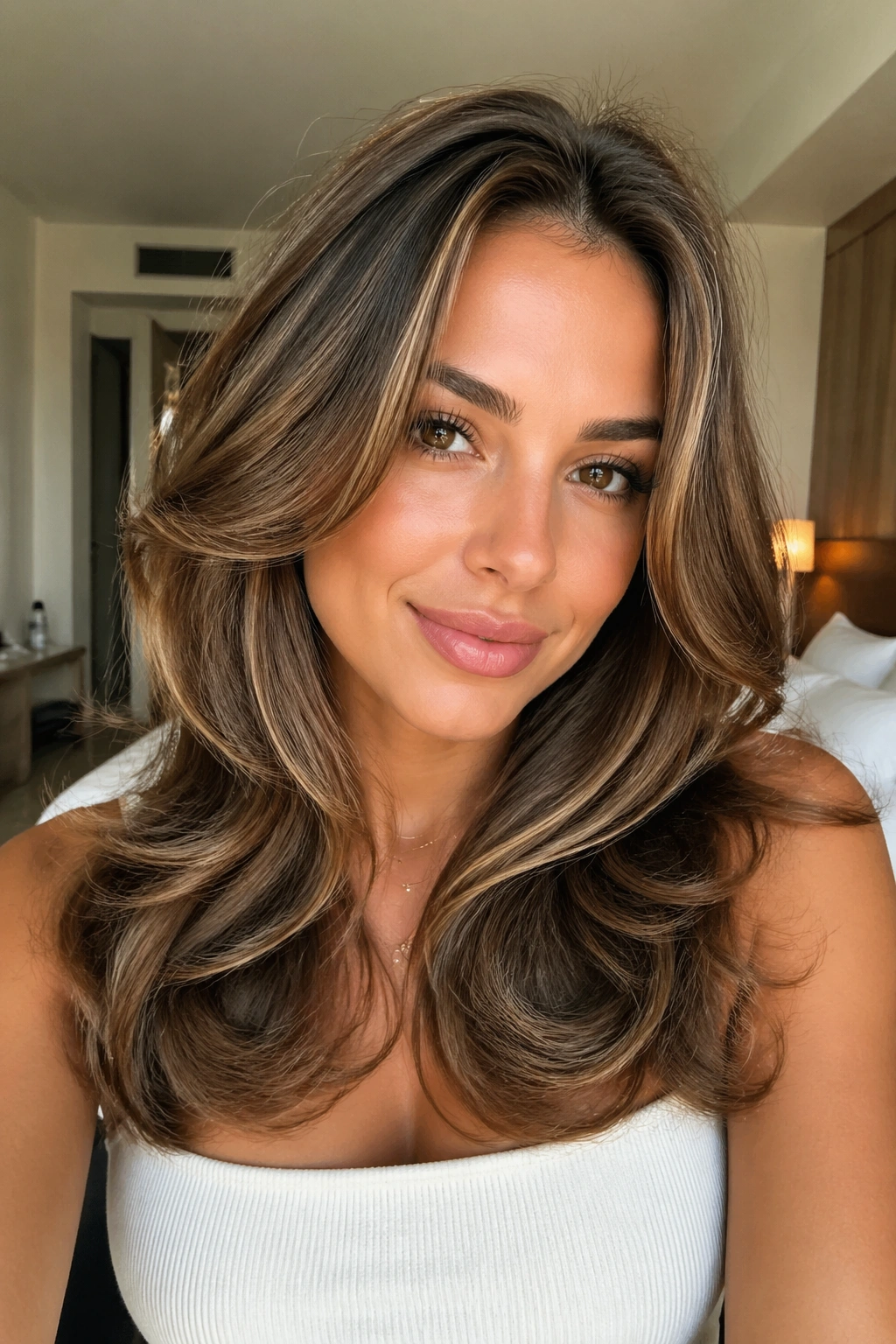
Rounded blowout waves give a heart-shaped face a softer outline because the hair curves inward near the shoulders and then bends back out. That rounded shape keeps the eye moving around the lower half of the face instead of camping out at the forehead.
The style has a little more polish than beach waves. Use a round brush, a large-barrel iron, or even hot rollers if you like that kind of set. The roots should lift enough to avoid flatness, but the ends should curve with a gentle bend rather than a hard flip.
What makes this flattering is the shape control. The hair frames the face in a kind way. Strong cheekbones look softer, and a narrow chin gets a little more support from the curve.
I’d reach for this when you want something neat but not stiff. It works for dinners, office days, and anything that needs a finished look without high drama. Shine serum on the mid-lengths helps, but keep it away from the roots.
24. Mid-Back Layers With a Bright Money Piece
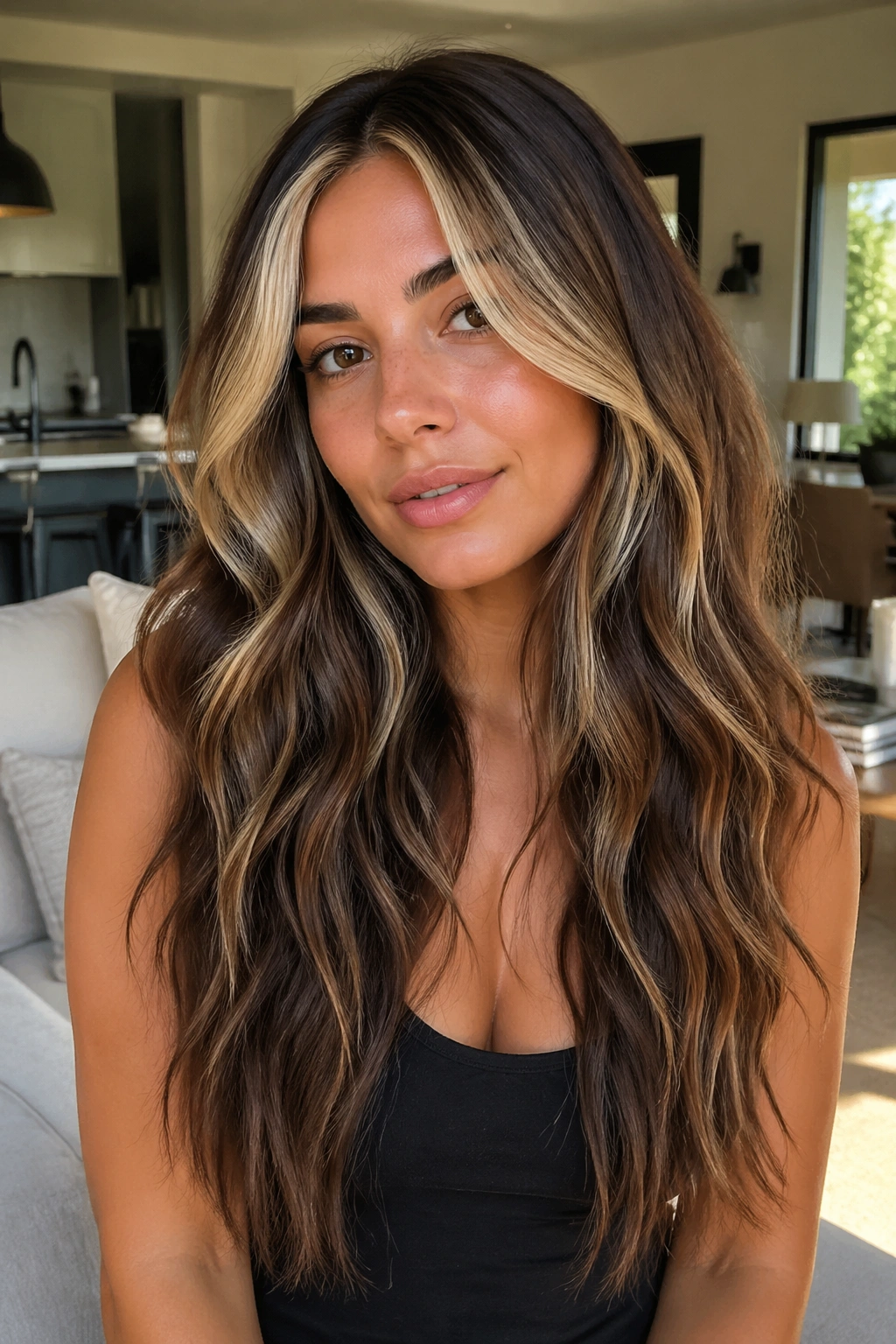
Long hair can weigh a heart-shaped face down if it hangs as one heavy sheet. Mid-back layers fix that by creating movement, and a brighter money piece at the front brings attention to the eyes instead of the widest part of the forehead. That combination is doing more than people think.
Compared with single-length long hair, this version feels lighter around the face. The front pieces can start around the cheekbone or lip line and flow into longer lengths at the back. That keeps the shape soft without making it flat.
The money piece does not need to be loud. A few lighter strands around the front can be enough to break up the upper face and keep the eye from getting stuck at the forehead. If you like subtle color, a soft face frame works better than a dramatic stripe.
This is a solid choice if you want long wavy hair and still want some structure. It gives you movement, brightness, and a bit of softness around the corners of the face. Hard to argue with that.
25. French Girl Waves With Soft Fringe
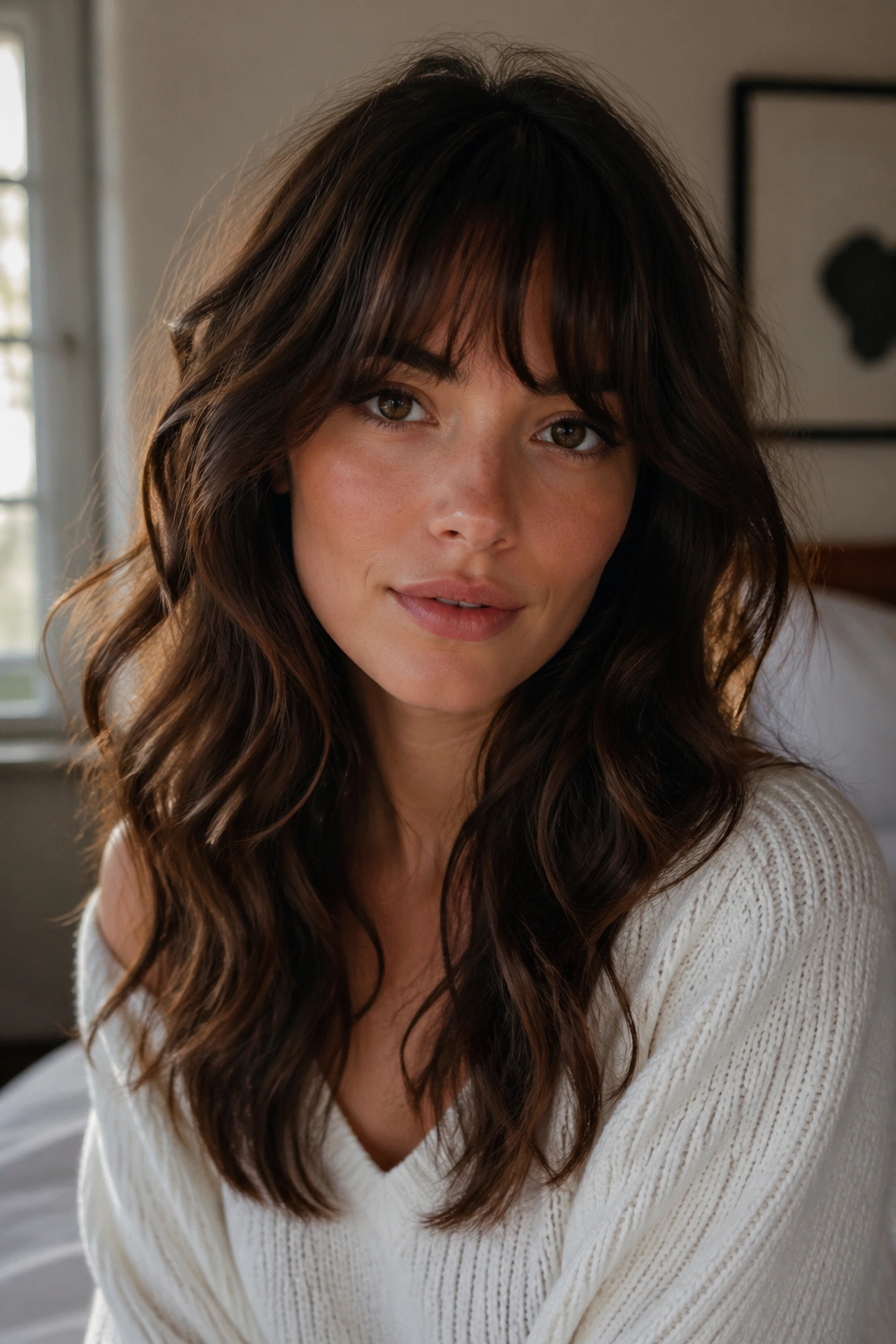
French girl waves are relaxed, loose, and a little imperfect, which is exactly why they suit a heart-shaped face. The soft fringe breaks up the forehead, and the waves sit close enough to the cheeks and jaw to keep the whole face feeling balanced.
Why It Flatters Heart Shapes
The fringe should be piecey, not blunt. It can skim the eyebrows or sit just below them, but it should never look like a hard line across the face. Soft edges are doing the work here.
- Keep the wave pattern loose and lived-in.
- Let the fringe separate a little at the center.
- Add movement around the cheekbones.
- Finish with a dry texture spray, not a stiff spray.
This style is for someone who wants softness more than perfection. It is especially nice on medium-length wavy hair because the shape falls naturally without needing much fuss. If the fringe is cut well, the rest of the style almost takes care of itself.
26. Asymmetrical Wavy Lob
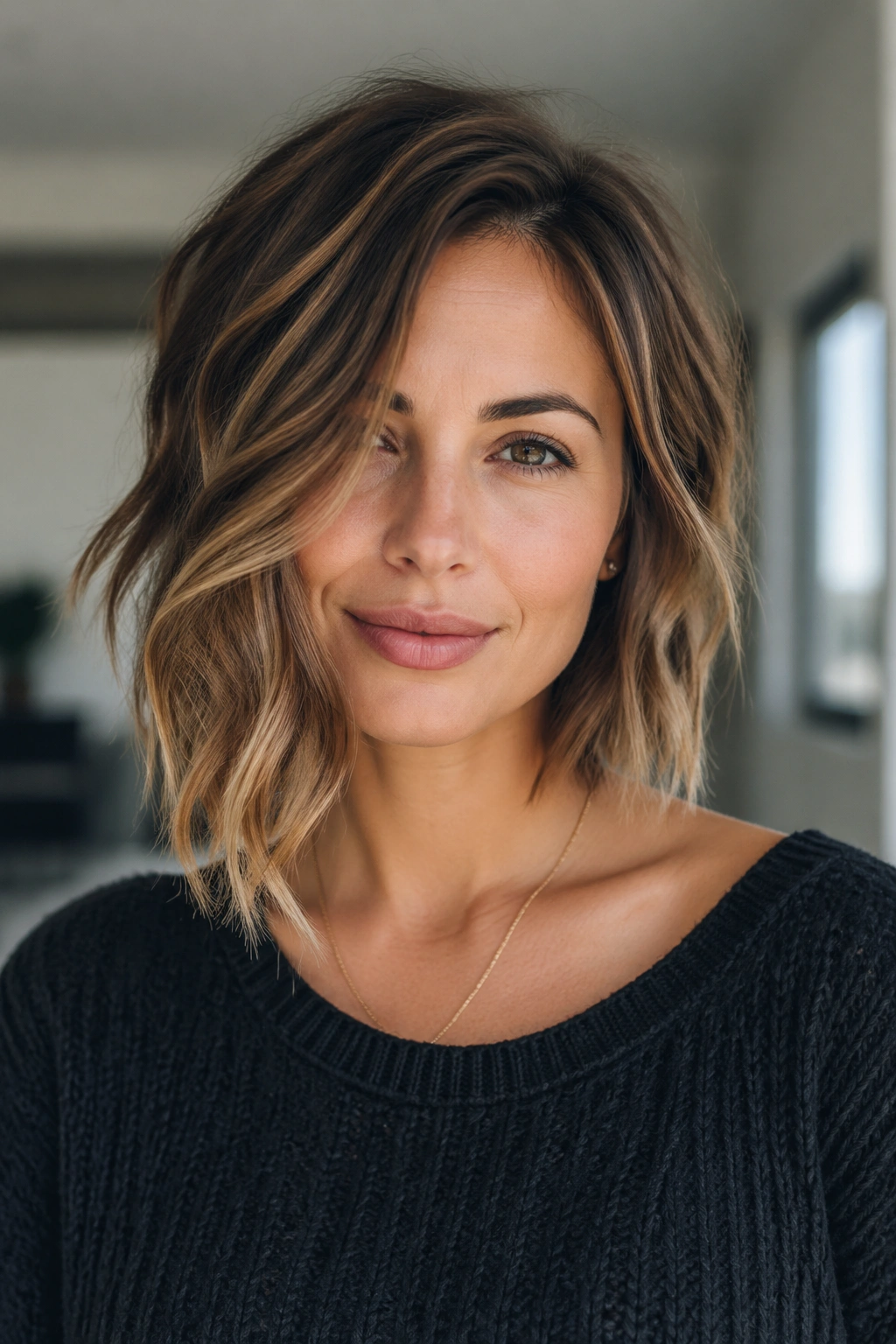
An asymmetrical lob is one of the sharpest ways to balance a heart-shaped face without making the look fussy. The slightly longer side adds weight where the chin narrows, and the off-center shape keeps the forehead from feeling too broad.
The difference between the two sides should be subtle. Half an inch to an inch is enough. Too much and it starts to look accidental rather than tailored. The waves help the asymmetry feel softer, which matters because a straight asymmetrical cut can read harsher on this face shape.
This is a nice pick if you want something modern without leaning into extreme contrast. It looks polished with a middle part pushed slightly off center, or with a deep side part for more drama. The waves should be loose enough to move, not so big that the cut disappears.
I like this style because it quietly changes the face shape without shouting about it. That’s the sweet spot.
27. Curly-Wavy Hybrid With Defined Ends
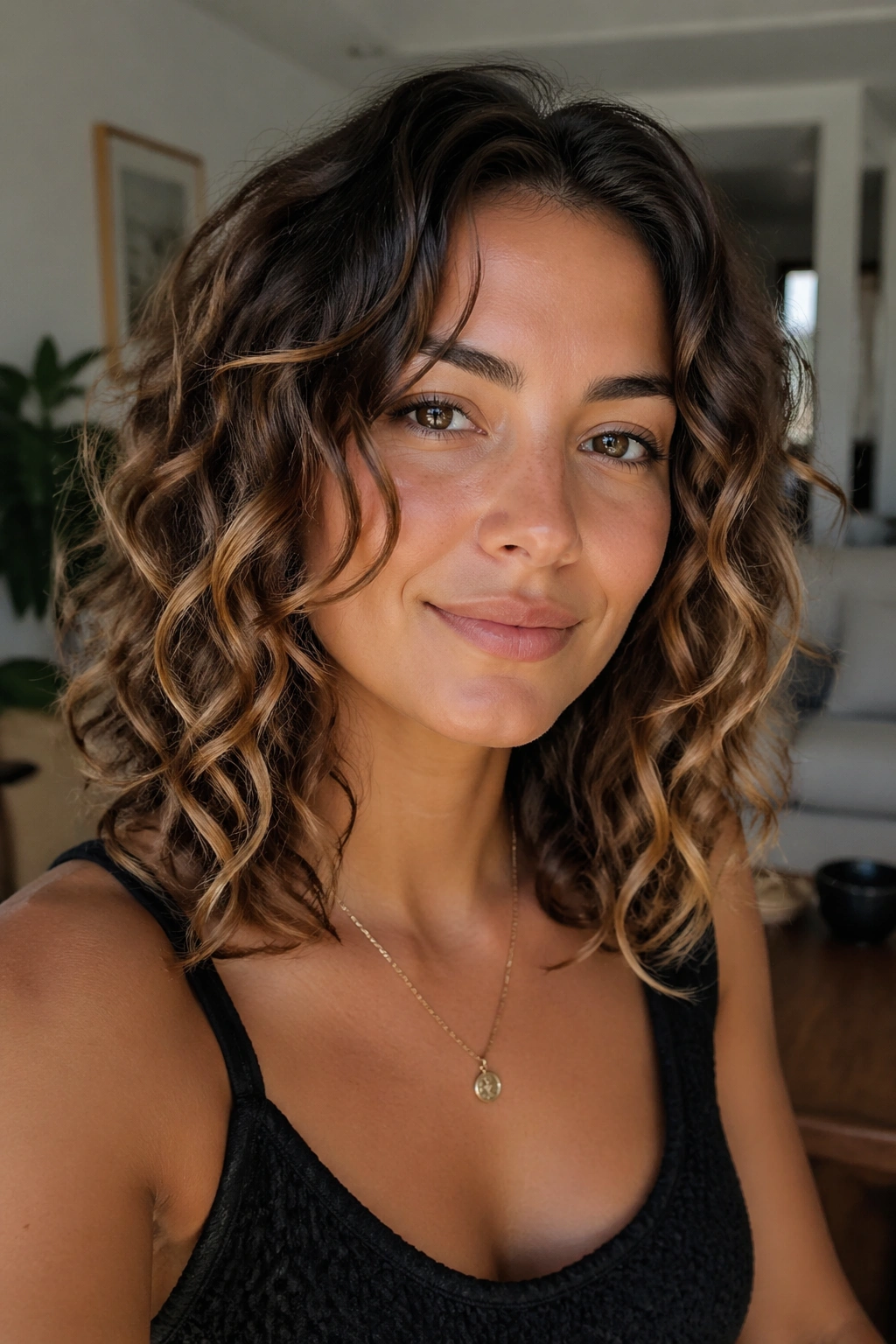
What do you do when your hair is halfway between wave and curl? You work with the pattern you have. A curly-wavy hybrid with defined ends can look fantastic on a heart-shaped face because it gives the lower half of the face more texture and presence without making the top too wide.
The trick is to keep the curls near the face a little looser and the ends more defined. That stops the silhouette from ballooning at the temples. Use a curl cream or light gel through damp hair, then scrunch and finger-coil a few front pieces if they need help staying shaped.
How to Style It
Let the roots dry without being disturbed too much. Once the hair is dry, separate only a few sections. Too much separating turns the whole thing frizzy.
The best thing about this style is that it does not fight the natural pattern. It works with the bend you already have. On a heart-shaped face, that ease matters because the face frame stays soft and the lower lengths can carry more texture.
28. Wrapped Headband Waves
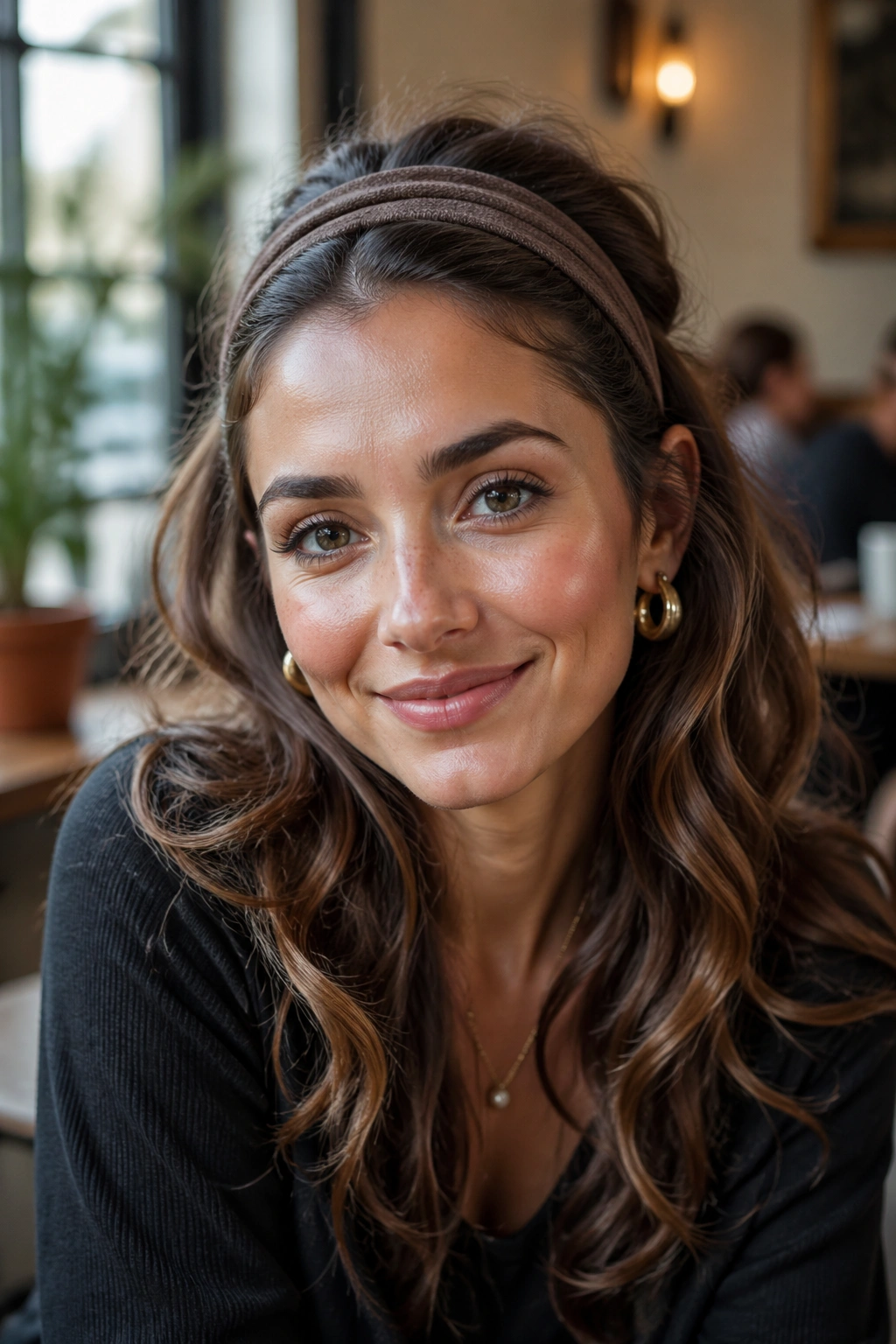
A wrapped headband can be a lifesaver on a heart-shaped face. It tames the hairline, keeps the top from looking too wide, and lets the waves fall freely below. On grow-out days, it’s one of the easiest ways to make wavy hair look planned.
The headband should sit close to the hairline, not pushed high onto the crown. That keeps the top half of the face calm. If you leave a few slim pieces out near the ears or temples, the style feels softer and less rigid.
A Few Details That Help
- Choose a headband with a moderate width, not a giant padded one.
- Keep the waves loose through the lengths.
- Let a couple of front pieces curve along the cheeks.
- Avoid pulling the hair back too tightly under the band.
This style works because it directs the eye downward. The face stays open, but the forehead area does not dominate. Small fix. Big payoff.
29. Low Side Ponytail With Wavy Length
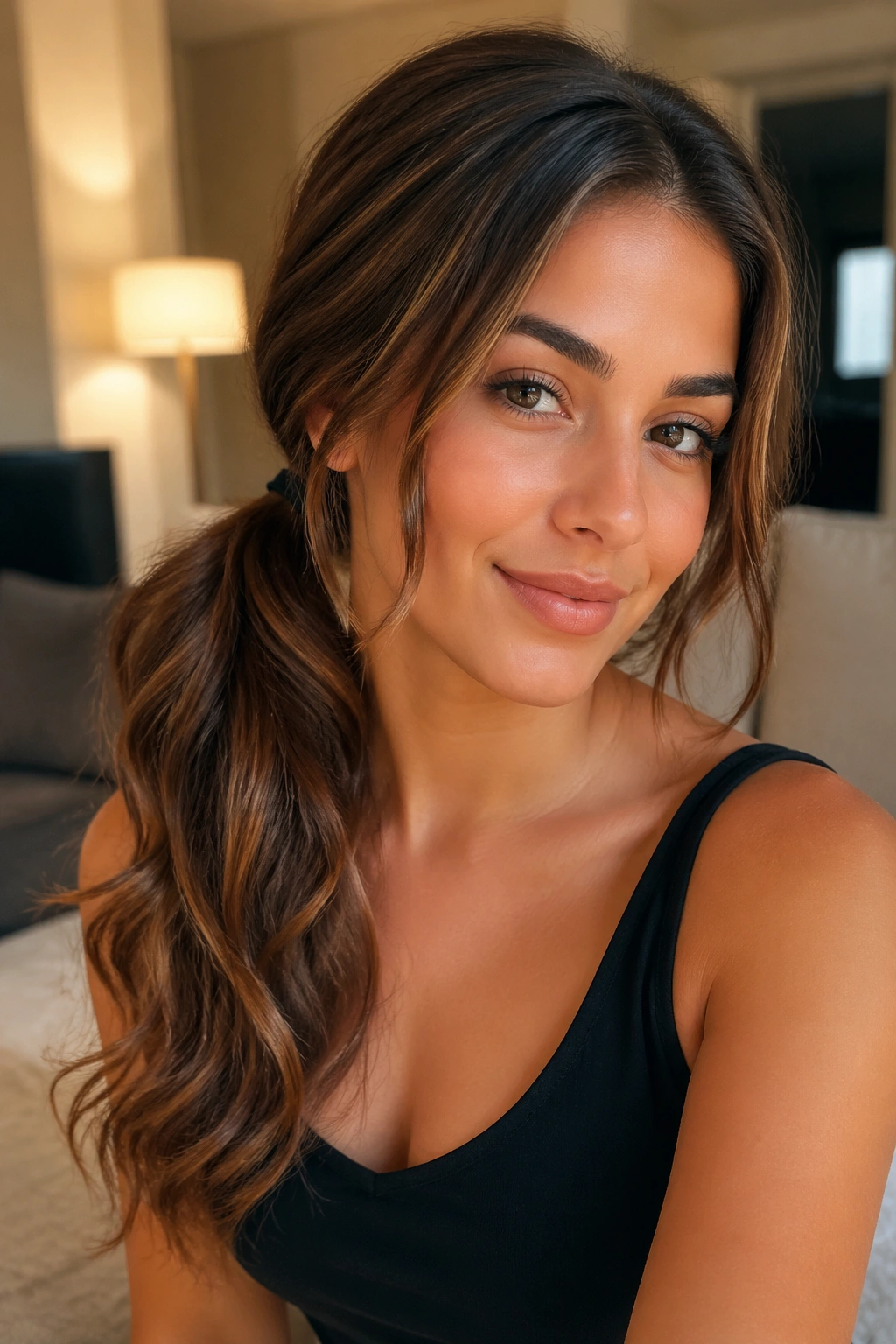
A low side ponytail is a quiet winner on heart-shaped faces because it shifts the weight to one side and keeps it low, close to the jaw and neck. That is where the balance happens. The face gets softness around the lower half without losing movement.
The pony should sit at the nape or just behind one ear, not up near the cheekbone. Leave a few loose waves around the front so the face does not feel fully pulled back. A side pony also works well when the waves are brushed through a little, since that keeps the pony from looking too tight or formal.
Wrap a small strand around the elastic if you want the finish to look cleaner. It takes almost no time, and the whole style reads as more deliberate. A heart-shaped face can handle this kind of asymmetry really well.
If you want a style that feels pretty but not precious, this is a strong choice. It has enough shape for everyday wear and enough softness for something dressier.
30. Softly Tousled Long Waves With Invisible Layers
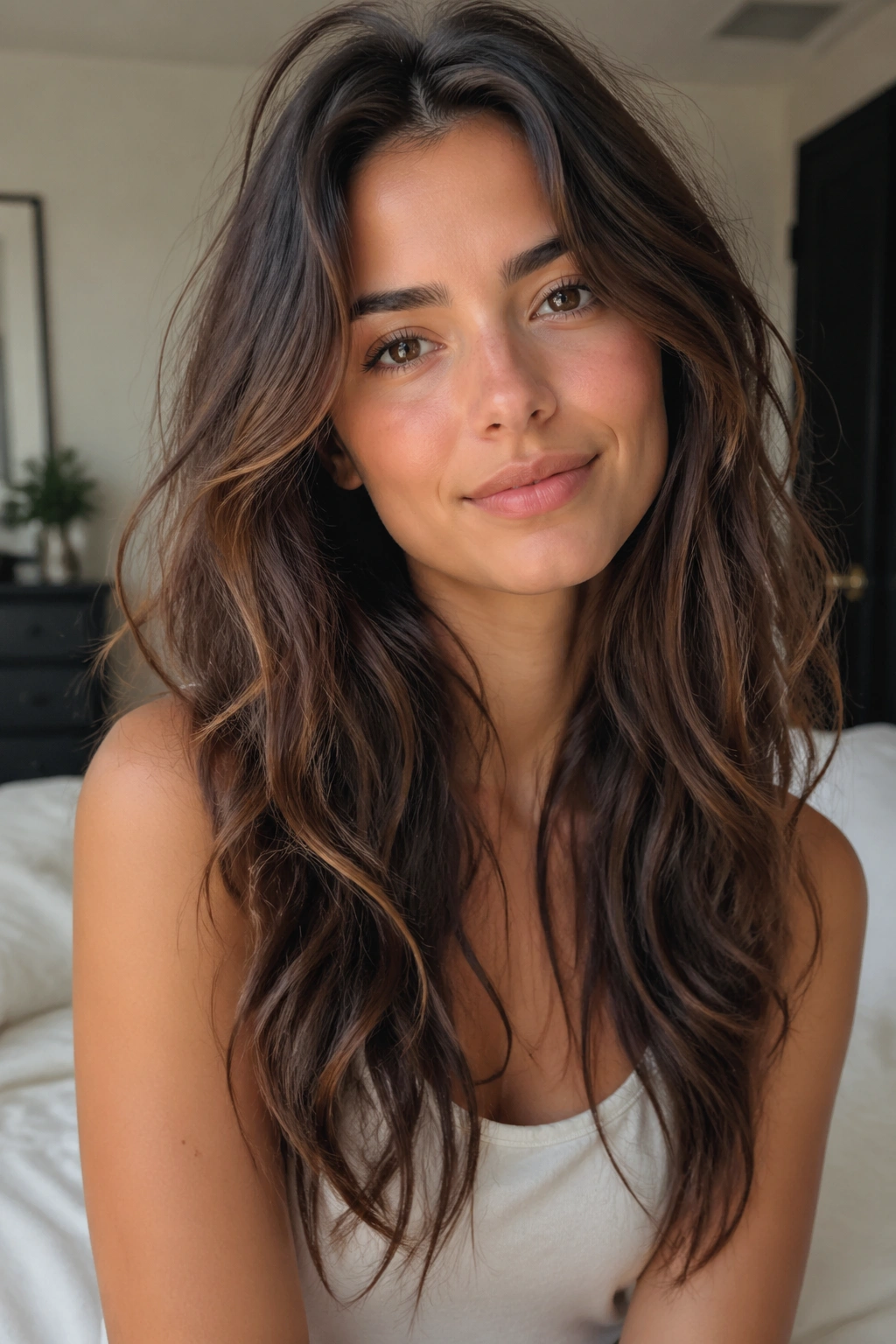
Softly tousled long waves are what I point people toward when they want one style that rarely argues with a heart-shaped face. The length keeps the lower half of the face from feeling too narrow, and invisible layers remove bulk without creating obvious steps in the cut.
That hidden layering matters. If the cut is too blunt, long wavy hair can drag the face down. If it is too choppy, the top can feel wide and the ends can look stringy. Invisible layers split the difference. You get movement, but the shape still feels full.
This style is also easy to live with. Air-dry it for a softer look, or use a large iron for loose bends that fall around the collarbone and chest. Keep the front pieces a little shorter so they frame the cheekbones instead of hanging straight past them.
If you only want one long wavy style to try on a heart-shaped face, this is the one I’d start with. It is soft, forgiving, and hard to mess up once the cut is right.