
Dance hairstyles for curly hair have one job: stay put when the music speeds up, the lights get hot, and your curls decide to do their own little improv routine. The style can be neat, soft, dramatic, or spare — I do not care much about the label — but if it slides out of place by the second eight-count, it fails the room.
Curly hair gives you a real advantage here. Texture, volume, and shape are already built in, which means you do not have to fake fullness with a lot of teasing or a mountain of spray. The trick is choosing a style that works with the curl pattern instead of flattening it into something stiff and dull. A clean part, a secure base, and a few well-placed pins usually matter more than a dozen fancy extras.
That balance is where a lot of people go wrong. A recital bun can get too tight and start to crack at the edges. A loose style can look lovely in the mirror and then lose its shape during warm-up. The sweet spot sits in the middle: secure enough for jumps, turns, and partner work, but soft enough that the curls still look like curls. Start with the first style that understands that assignment.
1. High Puff for Dance Hairstyles for Curly Hair
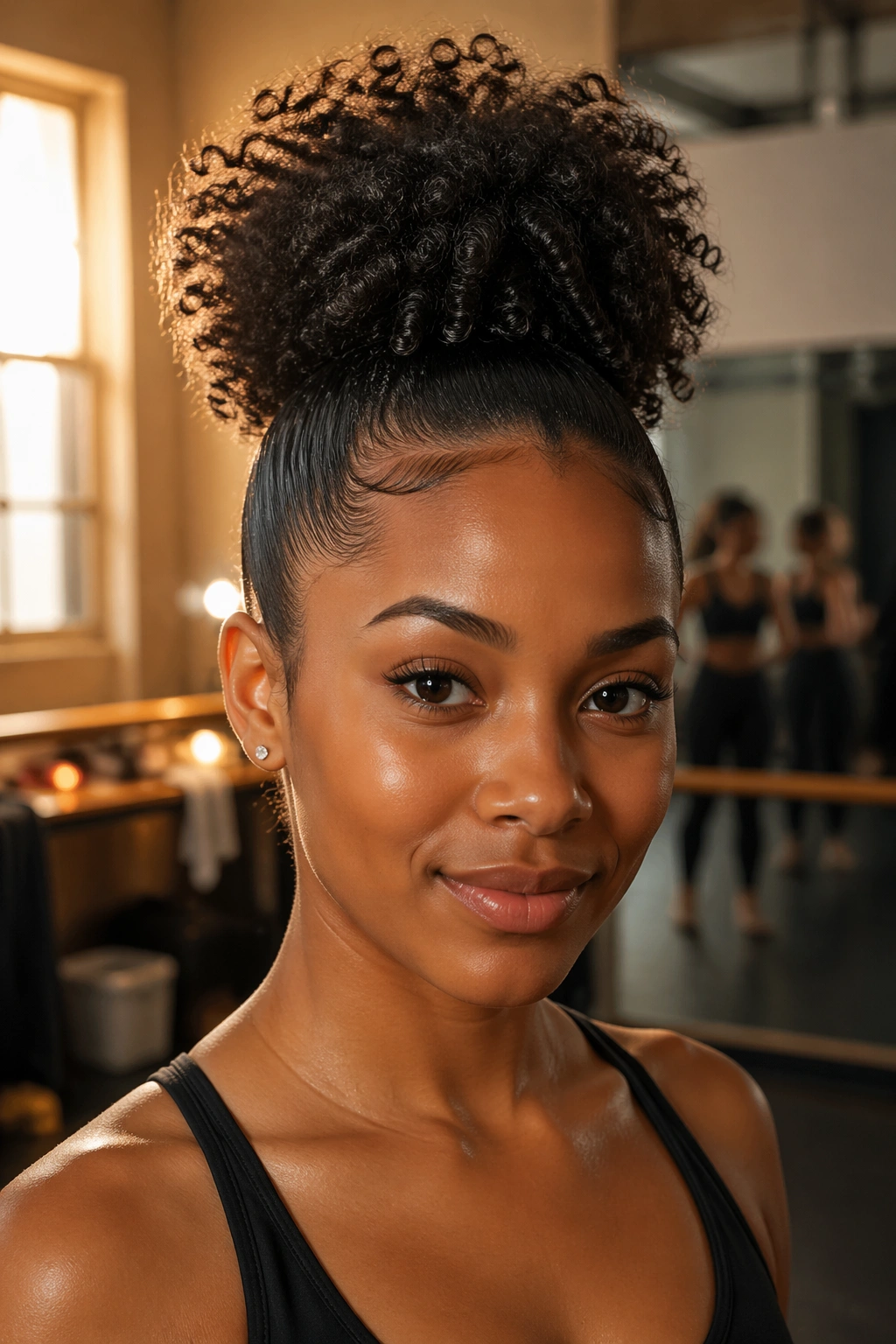
A high puff is the move when you want the face open, the neck clear, and the curls still visible from the back row. It is one of those dance hairstyles for curly hair that looks easy because it should look easy. The whole point is to lift the hair high, smooth the front, and let the texture do the rest.
Why it works so well on curls
Curly hair naturally creates shape at the crown, so the puff sits there without much fighting. That makes it a smart choice for rehearsals, quick changes, and performances where you do not want to spend twenty minutes chasing flyaways with a brush.
Use a soft bristle brush or a damp edge brush to smooth the hairline before you gather it. If the hair is thick, double up on the elastic. One band can stretch out fast; two usually hold better and keep the puff from sagging by the end of class.
- Mist the roots lightly with water or leave-in spray
- Smooth the front with gel or mousse, not heavy oil
- Gather hair at the highest point your scalp can handle comfortably
- Wrap the base with a satin scrunchie or a small curl for a clean finish
Tip: If the puff feels too wide, tighten the sides of the ponytail first. Do not yank the crown flat. That is where the style starts to look tired.
A high puff works especially well for hip-hop, modern, and upbeat recital pieces. It has movement. It also keeps sweat from sitting on the neck, which sounds small until you are three numbers into a show and glad you thought about it.
2. Double Dutch Braids into a Low Bun
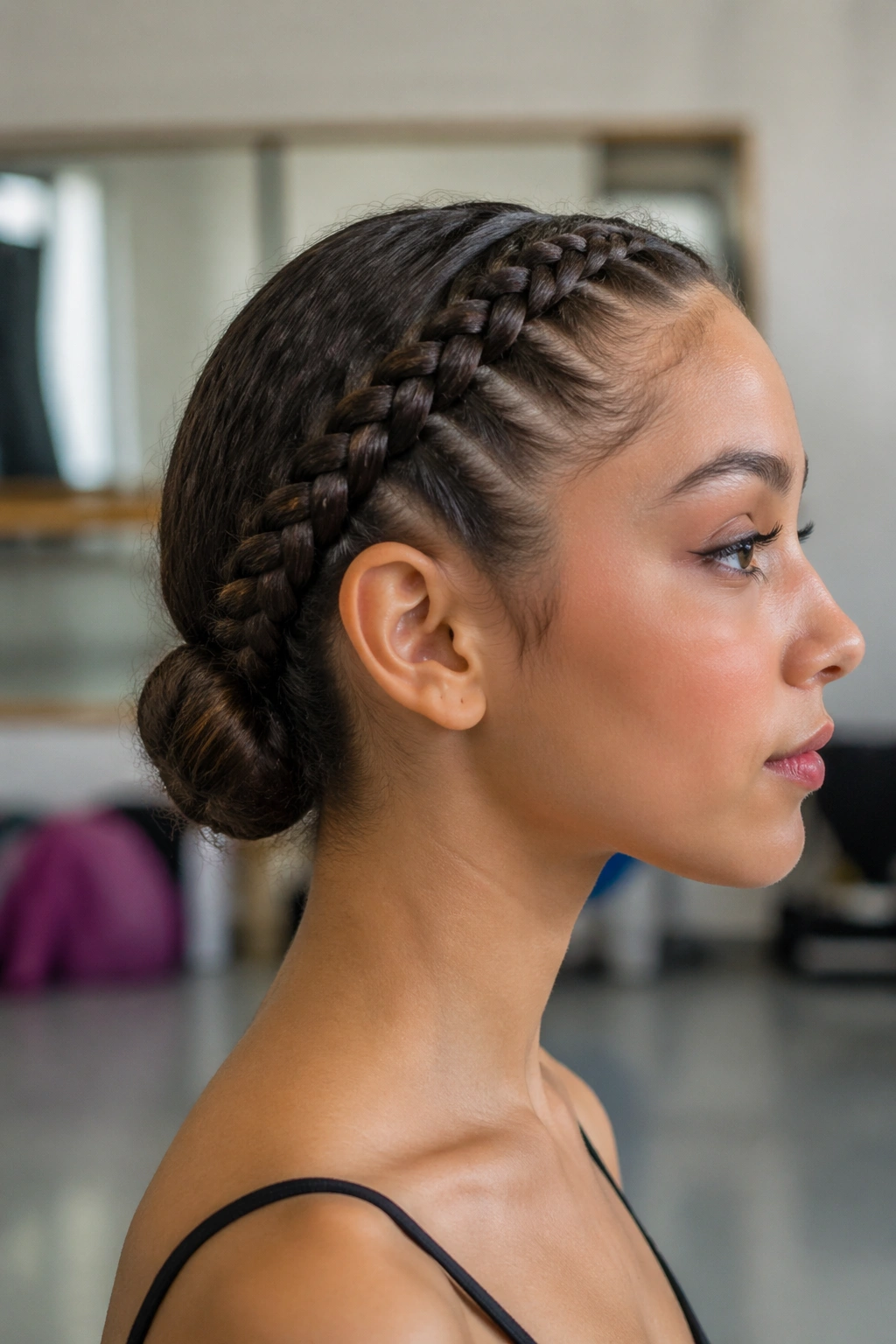
A tight front and a calm finish. That is the real appeal of this one. Double Dutch braids keep the hair close to the scalp, which means less slipping, less frizz at the hairline, and a lot less panic when the choreography gets fast.
How to keep the braid line clean
Start the braids just behind the front hairline and keep the sections small. Bigger sections make chunky braids, which can look lovely in the right style, but for dance you usually want a braid that lies flat and stays even. Work downward with firm tension, then join both braids at the nape into a bun.
The bun itself does not need to be huge. In fact, too much bulk at the back can make helmets, headpieces, and costume collars awkward. Twist the braid ends into a compact coil and pin them with U-pins or long bobby pins in a crisscross pattern.
- Use a fine-tooth comb to make the part sharp
- Add a small amount of gel at the roots before braiding
- Pull only until the braid feels secure, not painful
- Pin the bun low and close to the head
This style is a workhorse for ballet, jazz, and competitions. It also behaves well with thick curls that usually want to expand the second they are touched. If you have a lot of shrinkage, braid the hair when it is fully dry so the finished shape stays predictable.
And yes, the braid pattern matters. Messy Dutch braids can look cool on Instagram. On a stage, they can read as unfinished unless the rest of the look is deliberate.
3. Half-Up Crown Braid with Free Curls
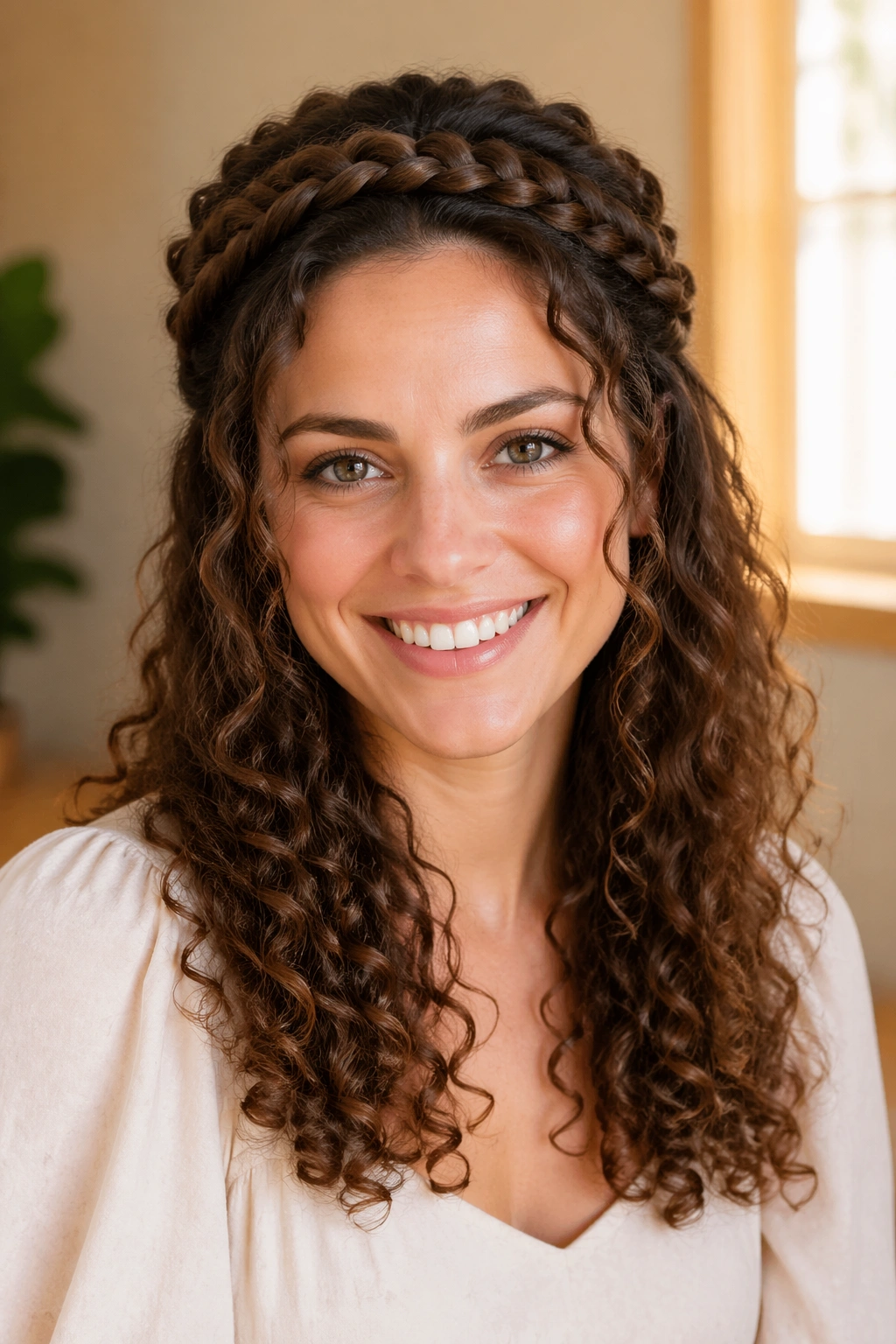
When you want the curls to stay visible, this is the sweet spot. A half-up crown braid gives you control around the face and top of the head, but it leaves the bottom half loose so the curl pattern still gets to show off during turns and leaps.
The braid usually starts near one temple, travels across the crown, and tucks behind the opposite ear. After that, the rest of the curls can hang free or be refreshed with a little water spray and curl cream. The style feels softer than a full updo, which is why it works so well for lyrical pieces, tap, and contemporary choreography.
Do not braid too far back. That is a common mistake. If the braid starts drifting toward the center of the head, the whole look loses its crown shape and starts to feel like a regular half-up style with extra steps. Keep the braid visible from the front.
A few small pins can make all the difference here. Slide them under the braid where it crosses the head, not on top where they will show. If the free curls are long, lift them lightly with your fingers after styling so they do not sit in one flat sheet.
This one has a nice bonus: it photographs well from the front and still moves when the dancer turns. That matters more than people think.
4. Pineapple Ponytail with a Wrapped Base
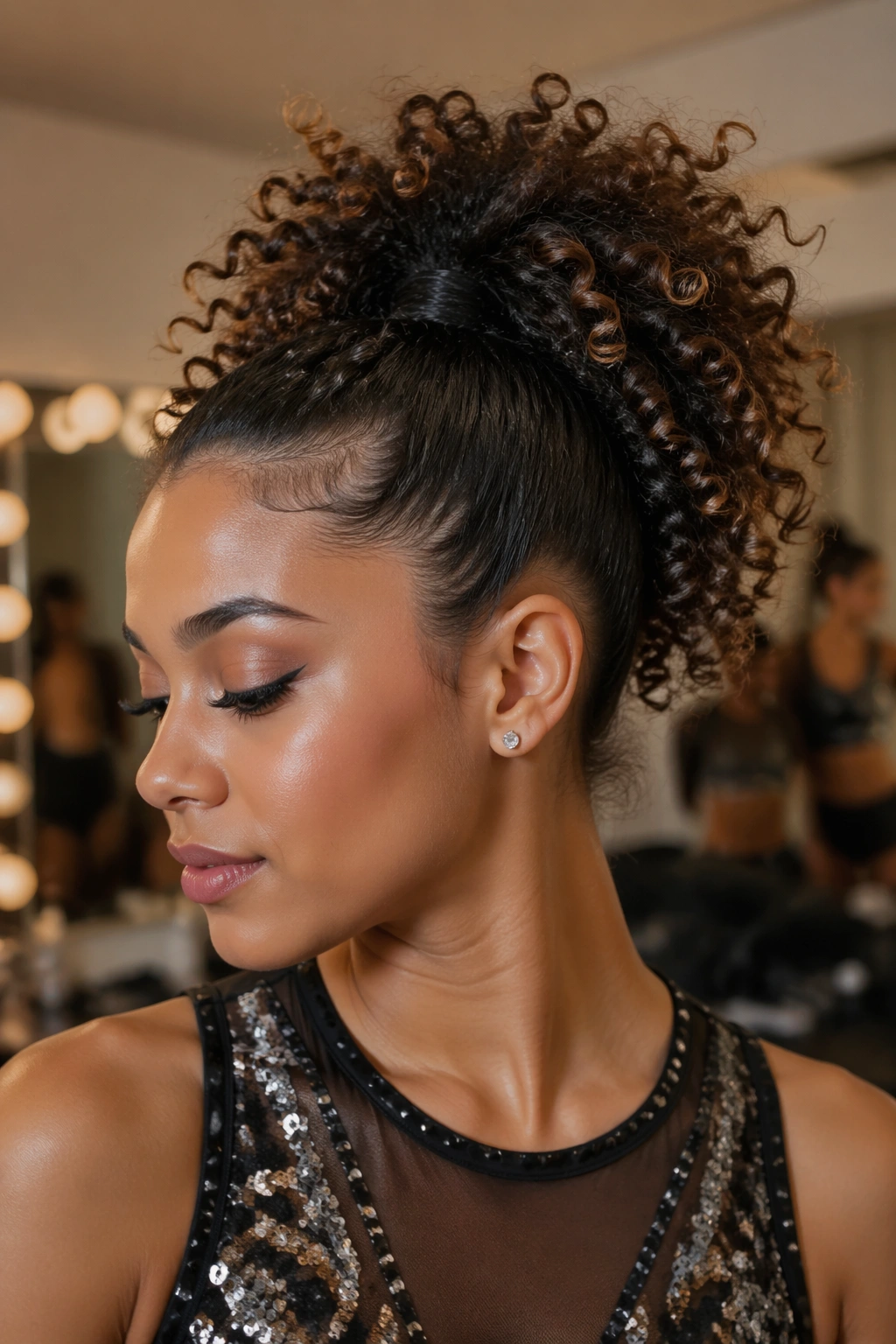
The pineapple ponytail is the quick-change favorite. It keeps curls high, protects the ends better than a low tie, and avoids that flattened look that can happen when curly hair spends too long pinned at the nape. For dance, it is especially useful when you need something fast but still tidy enough for a stage.
Start by gathering the hair at the crown or slightly above it. The tie should feel secure, but not so tight that the roots get pulled into a headache by halfway through rehearsal. Wrap a small section of hair around the elastic if you want a cleaner finish, or use a satin scrunchie and let the texture speak for itself.
Fast matters.
That sounds obvious, but this style earns its place because it takes very little time to reset between pieces. If curls are stretched from the day before, a quick mist of water and a little foam mousse can bring the shape back without making the roots greasy. A fine mist is enough. Soaking the hair is not.
A pineapple ponytail looks especially good on dancers with long, springy curls who want height without a full bun. It is less rigid than a recital updo, so it suits rehearsal days, hip-hop, and casual performance looks. If the hair is very heavy, pin two side sections backward before gathering the ponytail. That keeps the front from slipping while the back keeps its lift.
5. Low Twisted Chignon with Face Curls
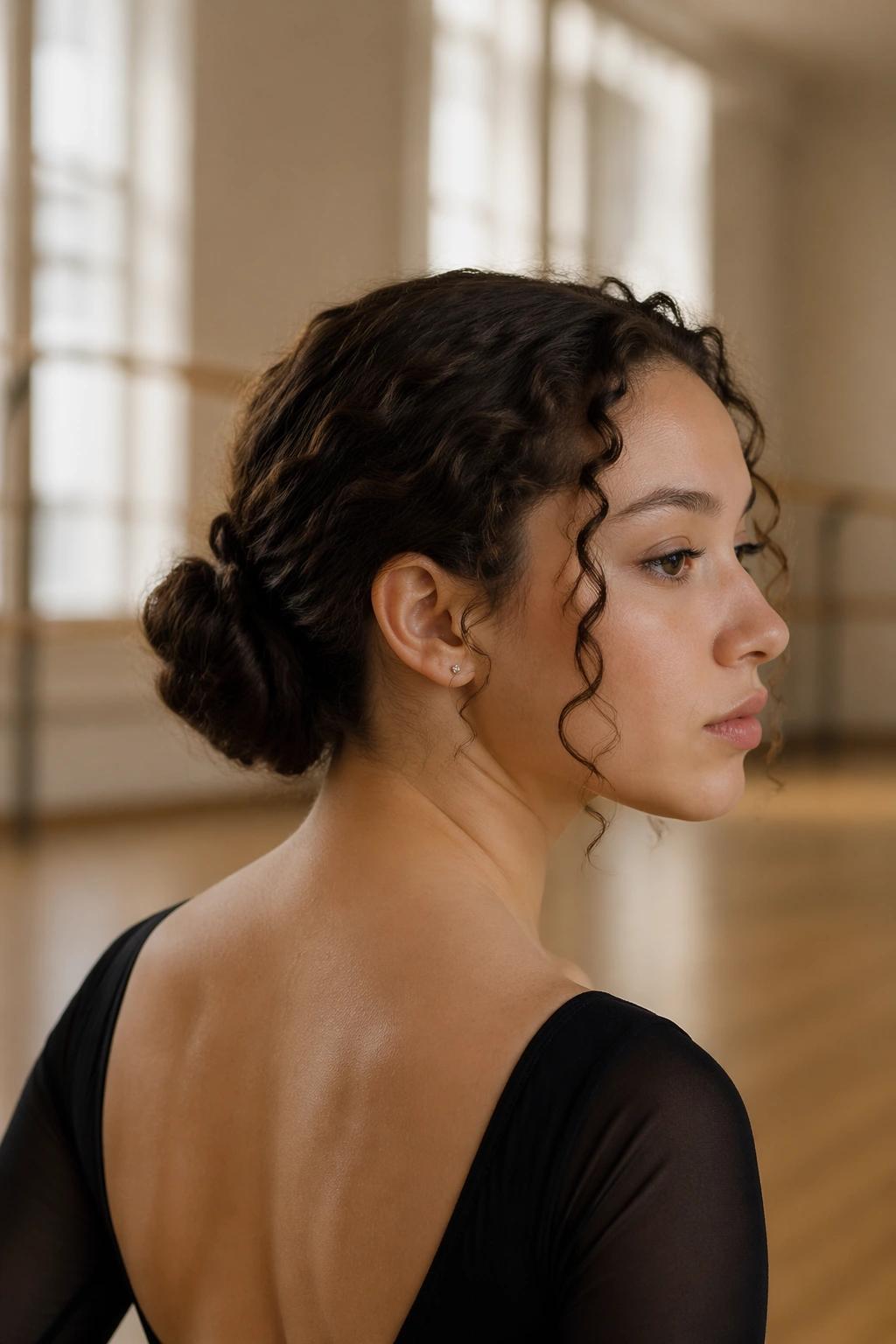
This is the style that quietly does the most work. A low twisted chignon gives you a polished shape at the nape, but it does not strip the curls of their texture the way a slick, overly tight bun sometimes can. It feels calm, graceful, and a little old-school in the best way.
Pinning pattern that actually holds
Split the ponytail into two sections, twist each one, then wrap the twists around each other into a flat coil. Pin the coil close to the nape with U-pins inserted from the edge toward the center so they catch more hair. If the hair is thick, use a second set of pins from the opposite direction to lock the shape in place.
Leave two thin curl pieces at the temples if the costume allows it. Those small tendrils soften the line around the face and keep the style from looking too severe. Just keep them narrow. A few loose spirals go a long way. Too many start to look accidental.
This chignon is a smart pick for ballet, formal recitals, and performances with high necklines or ornate collars. It sits neatly under a headpiece, which saves a lot of irritation. No one likes a bun that hits the back of a costume and starts loosening every time the dancer turns.
The only real downside is that it asks for good pinning. If the pins are lazy, the style slides. If they are placed with intent, it stays solid.
6. Space Buns on Curly Hair
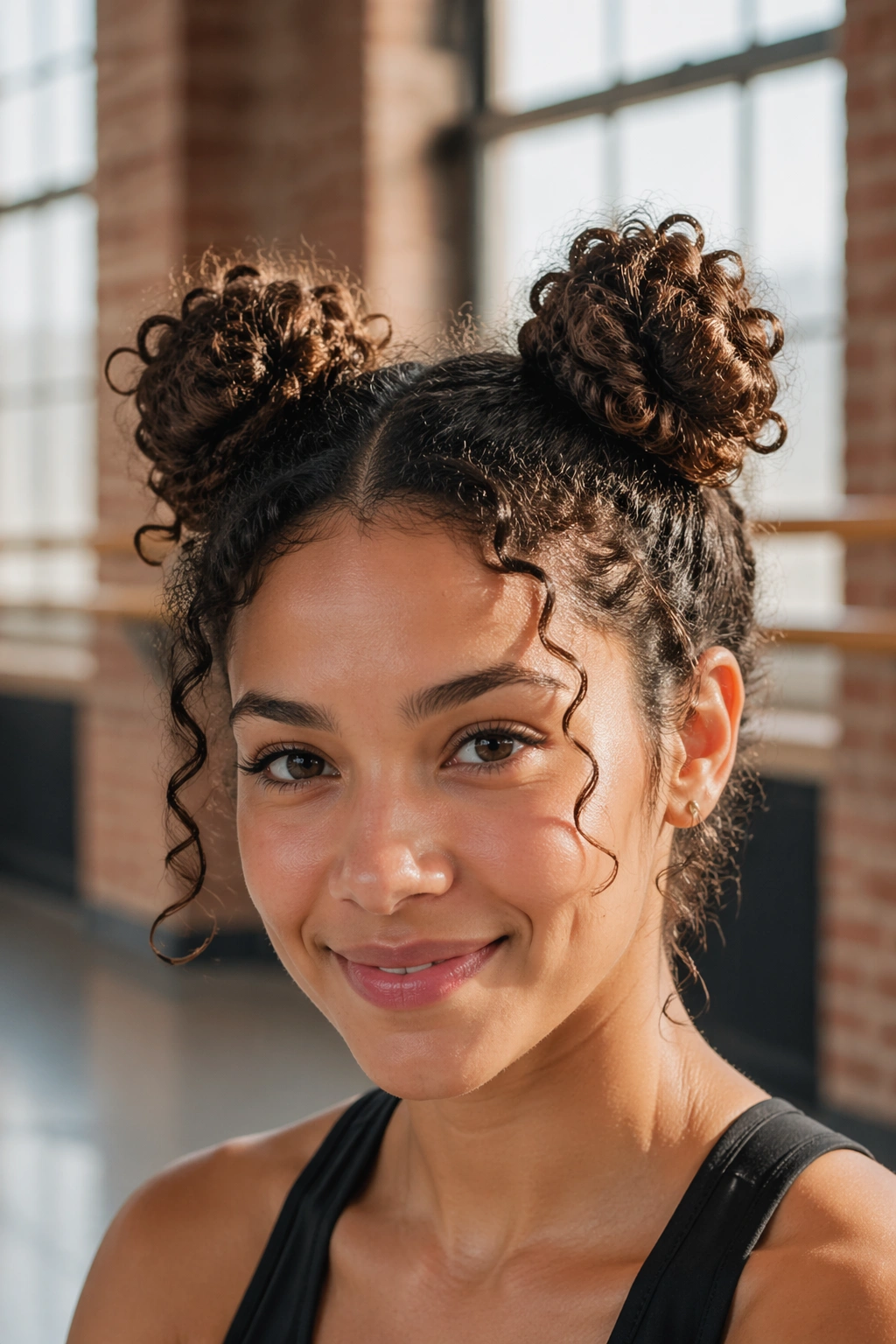
Space buns can look playful in a way that straight hair sometimes has to work harder to achieve. Curly texture gives the style body right away, so the buns feel full even before you fluff them. That makes them a strong choice for jazz, hip-hop, themed numbers, and younger dancers who need a style that can handle lots of movement.
Part the hair down the middle and secure each side into a high ponytail. From there, twist each ponytail into a bun and pin it down with several short bobby pins. If the hair is dense, split each ponytail first and make the bun in two layers. That keeps the buns from turning into one giant lump that sticks out oddly.
The trick is to keep the center part clean and even. A wobbly part throws off the whole look. Use the point of a comb to draw it straight, then smooth the roots with a little gel or styling cream before you start tying.
Space buns work nicely with curls left loose inside the buns, too. You do not need to slick every strand flat. In fact, a bit of texture makes the style feel more natural and less costume-y. If you want an extra secure base, braid each ponytail first and then wrap the braid into the bun. That tiny extra step saves a lot of unraveling later.
This is a style with personality. It should look fun, not fussy.
7. Braided Mohawk Puff for Curly Dance Hair
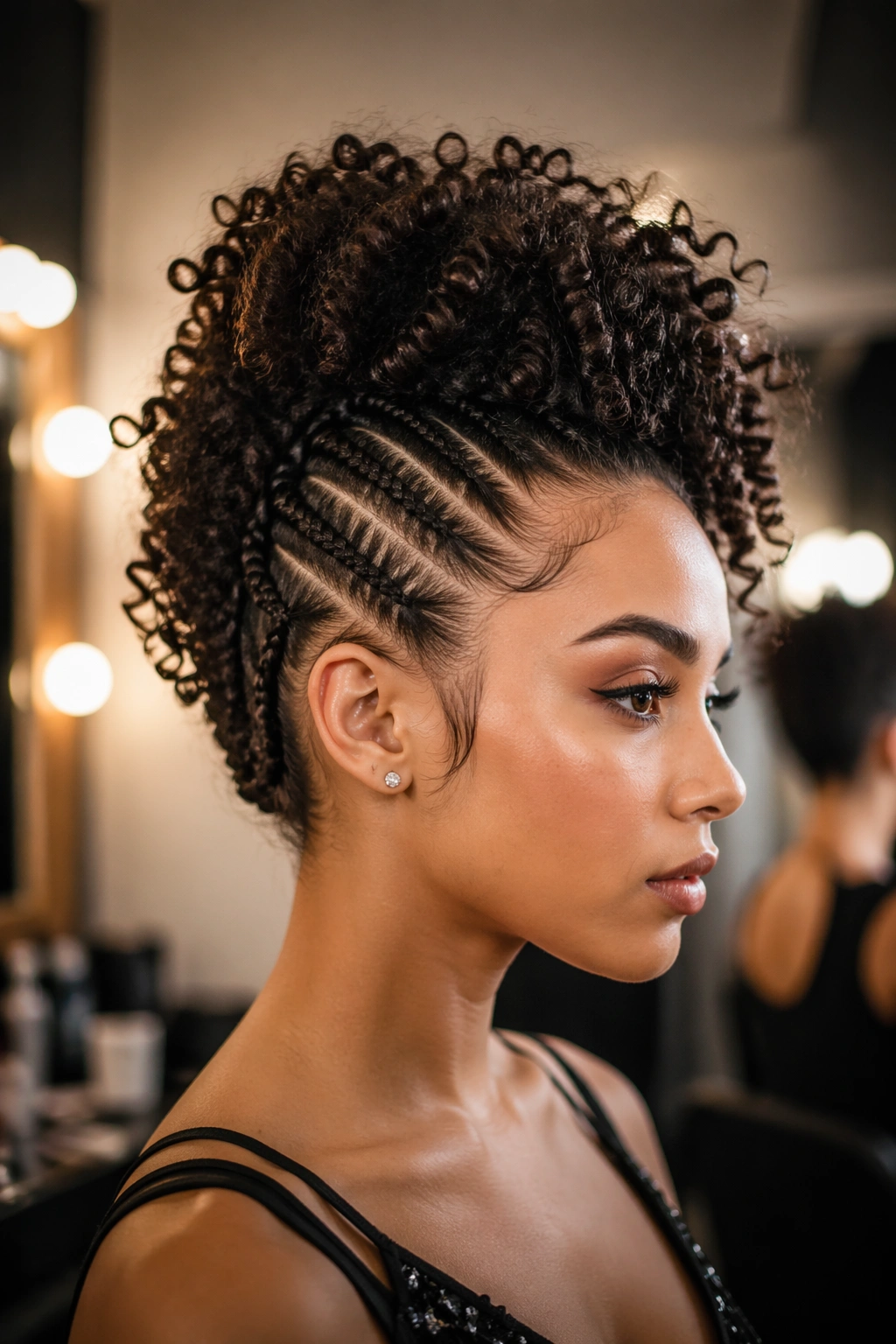
Need something that stays off the face and still looks sharp from the back row? The braided mohawk puff does that job better than most styles. It pulls the sides back tightly, leaves a strong line through the middle, and gives the curls a bold shape that does not disappear under stage lights.
What makes it different
Instead of one smooth ponytail, this look uses flat twists or cornrows on the sides to build a narrow center strip. That center section can stay in a puff, a twist-out, or a series of small gathered coils depending on hair length. The result is a style with height, direction, and a little attitude.
- Keep the side braids close to the scalp
- Use gel sparingly at the roots so the hair does not flake
- Pin the ends of each braid flat before shaping the center
- Secure the puff with two elastics if the hair is dense
The style works especially well for hip-hop and contemporary pieces because it reads clearly from every angle. It also handles floor work better than loose curls, since most of the hair is already anchored away from the face and neck. That said, it does need careful sectioning. If the side braids are uneven, the whole mohawk line starts to drift.
One practical note: a deep conditioner after the performance matters here. This style can be a little more manipulative on the sides, especially if you wear it often. Keep the braids snug, not aggressive.
8. Side-Swept Curly Ponytail with Hidden Pins
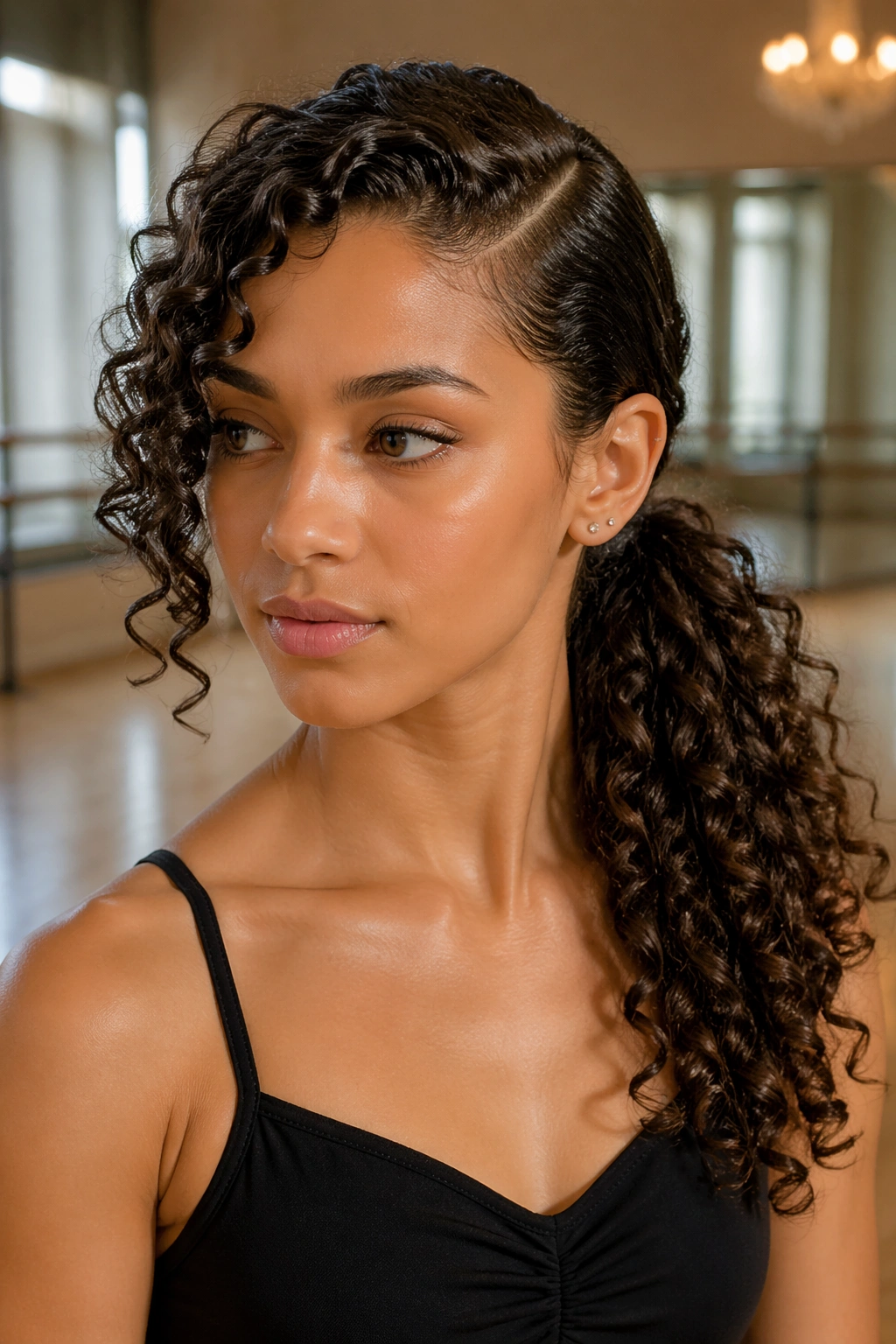
A side-swept ponytail brings drama without turning into a full updo. That is why it shows up so often in ballroom, contemporary, and lyrical choreography. The curls sweep over one shoulder, the face stays open on one side, and the whole style moves well when the dancer turns.
Start with a deep side part. Brush or finger-comb the hair toward the heavier side, then secure it low behind the opposite ear or just below the occipital bone. The exact placement depends on how long the curls are and where the costume sits. If you wear a lot of shoulder detail, keep the ponytail slightly lower so it does not fight the neckline.
Hidden pins are the real trick here. Cross two bobby pins under the top layer of curls where the hair meets the scalp. That gives the ponytail a better anchor and keeps it from slipping over one shoulder too soon. If the front layers want to fall forward, pin them under a thin curl so the pin disappears.
This style is not the neatest one on the list, and I mean that in a good way. It has motion. It lets the curl pattern stay visible. It also feels less rigid than a bun, which can be a relief on long rehearsal days when the costume itself already does half the work.
A side-swept ponytail is a smart choice when you want elegance without stiffness. Easy to wear. Hard to ignore.
9. Halo Braid into a Low Bun
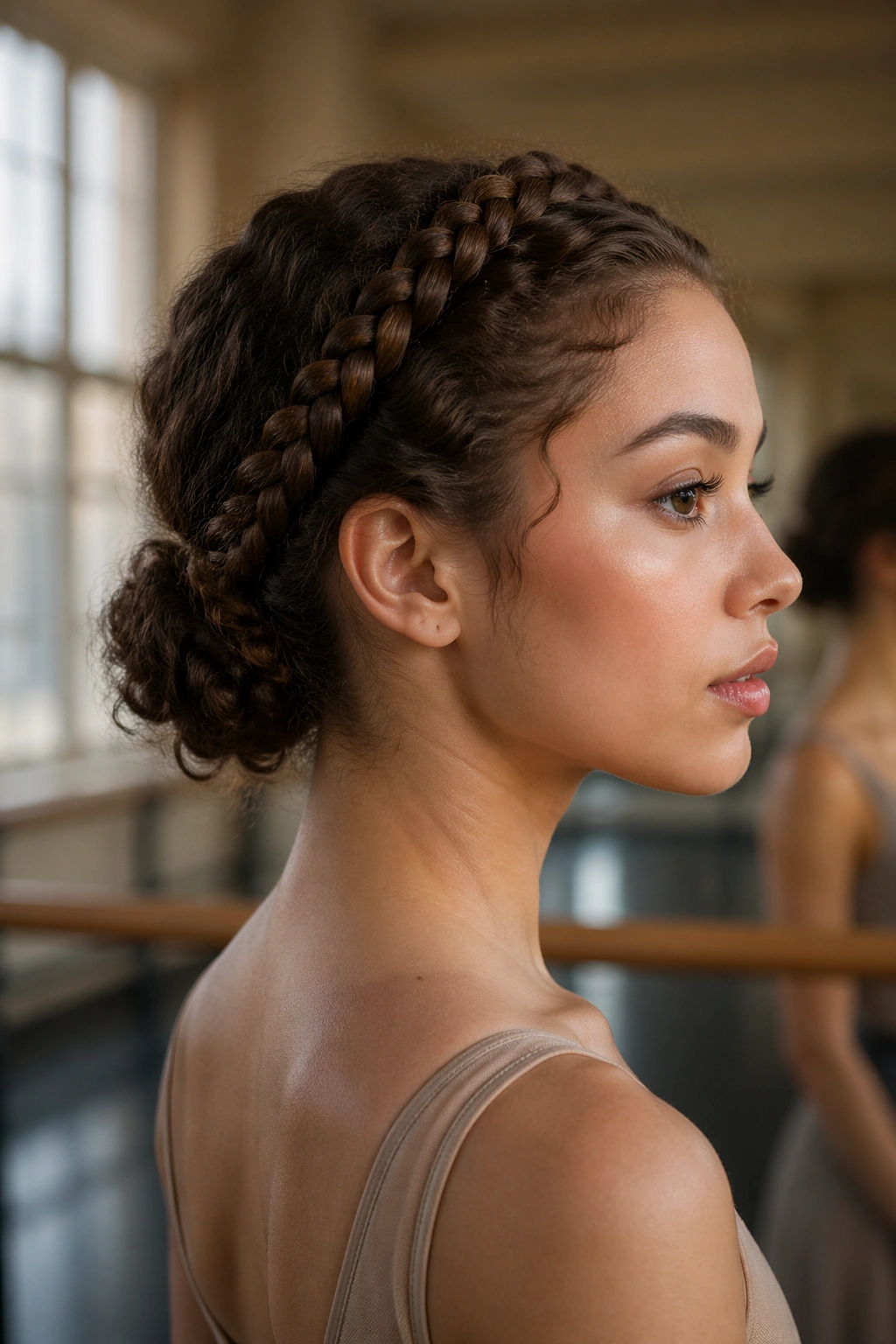
The halo braid is one of those styles that looks more complicated than it really is. Curly hair gives it natural fullness, which helps the braid read clearly from the audience even when the room is large and the lights are bright. If you need a dance hairstyle that keeps every strand contained, this one earns its place.
Unlike a single braid that ends at the nape, the halo wraps around the head and frames the face from both sides. That makes it feel cleaner around the hairline, especially if the curls are prone to frizz near the temples. Once the braid makes its way around, tuck the tail into a low bun and pin the bun close to the head.
Keep the braid segments a little loose. Tight, tiny braid sections can look neat in theory, but on curly hair they sometimes create a brittle line that breaks visually. A slightly fuller braid looks better and holds shape more naturally.
This style suits ballet, choral performances, and any recital where the costume leans formal. It also works for dancers who do not want to fuss with loose curls flying across the face during turns. If the hair is layered, a touch of styling cream at the roots helps the braid grip without turning sticky.
A halo braid is not quick if you are new to braiding. Still, once you get the hand placement right, it becomes one of the most dependable styles in the entire category.
10. Bubble Ponytail for Thick Curls
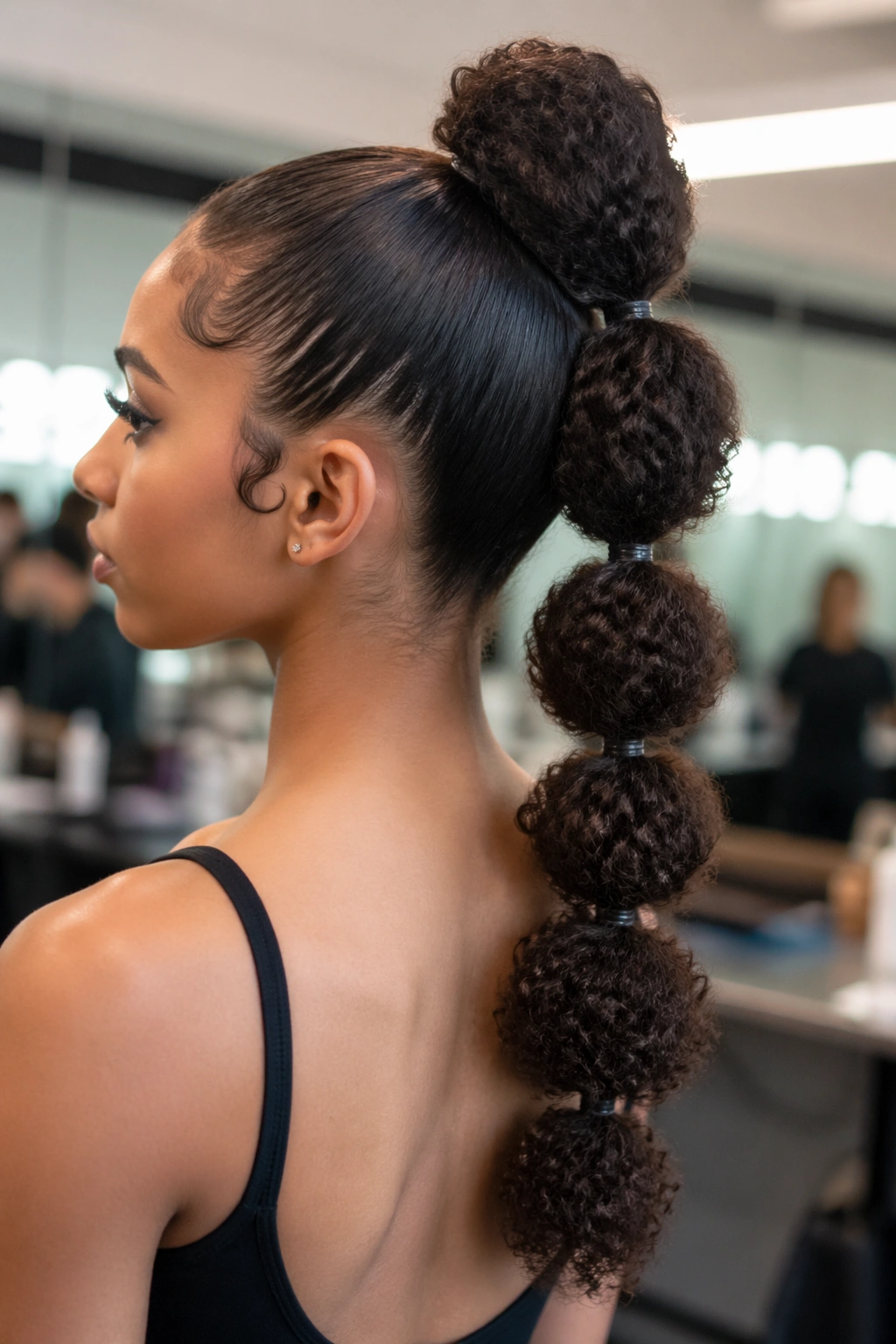
A bubble ponytail is pure fun, and on thick curls it can look far more intentional than a regular ponytail that just happened to get stretched out. The shape is playful, but it also keeps the hair segmented, which helps control bulk and motion during dance.
How to build the bubbles
Secure the hair into one ponytail first. Then place clear elastics every 2 to 3 inches down the length, depending on how long the hair is. Once the elastics are in place, gently tug each section outward to form the bubble. The pull should be light. You want shape, not frizz.
- Use small, snag-free elastics
- Leave the crown smooth before adding the first bubble
- Tug each section from the sides only
- Wrap a tiny curl around each elastic if you want a cleaner finish
This style suits medium to long hair and works especially well when a costume needs movement but not full release. It is also a nice option for kids’ dance pieces because the finished look is easy to read from the audience. Clear elastics help, but so does consistency. If one bubble is much larger than the next, the eye goes straight to the mismatch.
One thing people often get wrong is overfluffing. The bubbles should look rounded, not exploded. A little volume is enough. Too much pulling and the style loses the clean lines that make it work in the first place.
If your curls are dense, this can also be a good “keep it together” style for long rehearsals. It looks cheerful. It stays controlled. And it does not ask the hair to be something it is not.
11. Faux Hawk with Mini Braids
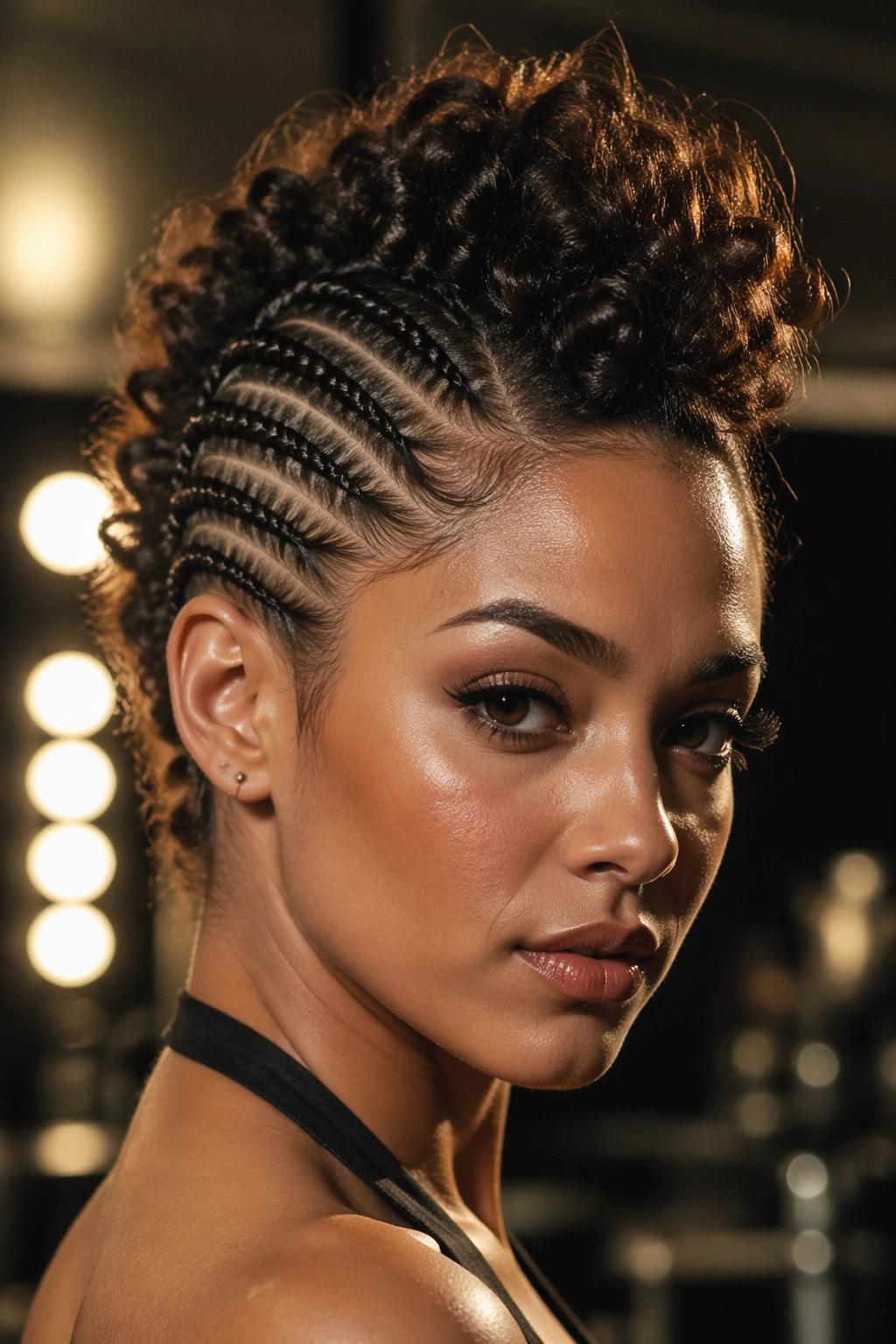
A faux hawk gives curly hair a strong shape without forcing it into a plain bun. The sides stay sleek or braided close to the scalp, while the center rises into a line of curls, twists, or pinned sections. It feels modern and a little bold, which is exactly why dancers reach for it in hip-hop and contemporary pieces.
The style can be built with two mini braids at the sides that feed toward the center, or with flat twists that create a cleaner frame. Once the sides are secured, gather the middle section into a series of puffed knots or a long central coil. The goal is height and direction. Not perfection.
A few curls can be left free at the front if the choreography calls for softness around the face. Just keep them narrow so they do not fall into the eyes during turns. That balance — sharp on the sides, textured in the middle — is what makes the style work.
This one is especially useful for shorter curly hair that does not want to sit neatly in a bun. The faux hawk turns the shape of the haircut into part of the design. It also plays well with performance makeup, headbands, and metallic clips if the costume needs extra detail.
Do not overstuff the center. If the middle gets too bulky, it stops reading as a faux hawk and starts looking like a tangled pile. A little control goes a long way here.
12. Deep Side-Part Curly Bun for Dance Hairstyles for Curly Hair
Some routines need a style that looks neat from a distance and still feels like curly hair up close. A deep side-part curly bun does that without turning the head into a helmet. It gives you a clean front line, a controlled bun at the back, and enough texture to keep the style from feeling flat.
A cleaner finish with real texture
Start with a sharp side part, then smooth the heavier side toward the nape with a brush and a thin layer of gel or cream. The lighter side can be tucked back with flat twists or a few hidden pins. Pull everything into a low bun, but keep the bun soft enough that the curls keep their shape. If the hair is long, twist the tail before wrapping it into the coil.
The deep part matters more than people expect. It creates a visible line that makes the style look deliberate, especially when the dancer turns her head under stage lighting. That line also helps the bun feel less plain. A center part bun can be lovely. A deep side part gives the same basic structure a little more character.
- Keep the side closer to the part smooth and close to the scalp
- Pin the bun flat, not bulky
- Tuck ends underneath so they do not poke out
- Use extra pins where the bun meets the head, not just around the outside
This is the style I would choose for a long rehearsal day that ends in a performance. It is formal enough for recital costumes, but not so rigid that it fights curly texture. And if you keep a few extra bobby pins in your bag, you will probably use them. Curly hair always asks for one more pin than you planned.
Some hairstyles are about drama. This one is about control, polish, and not spending the whole night fixing your hair between pieces.