



Long curly hairstyles for Black women work best when they respect the curl pattern instead of fighting it. That sounds obvious, but plenty of styles still get it wrong: they pull too tight at the roots, flatten the crown, or ask coils to behave like straight hair for the sake of length alone.
Length is only half the story. Shape matters more. A style can graze the waist and still look awkward if the front is bulky, the part is crooked, or the curls have no definition. On the other hand, a shoulder-skimming look can feel rich and full if the layers fall right and the roots stay neat.
Shrinkage changes everything, too. A style that looks short when dry can stretch into something much longer once it’s set, diffused, or installed with a little help. That’s why the best long curly hairstyles for Black women usually balance movement, moisture, and a shape that still looks good on day three.
1. A Center-Part Wash-and-Go With Clean, Defined Curls
A center part is one of those styles that looks simple until you see it done right. Then it looks expensive, even when it was just gel, a good leave-in, and patience.
The key is definition from root to end. You want the part straight down the middle, the curls clumped on purpose, and the crown laid flat enough that the length can do the talking. When the curls fall evenly on both sides, the whole style feels longer than it is.
Why the center part works
A middle part creates symmetry, and symmetry makes long curly hair look tidy instead of wide. That matters for Black hair, especially when the curl pattern has a lot of density at the roots. The style also lets the outer shape hang straight down, which gives you that length-boosting effect without touching a single flat iron.
- Apply leave-in on damp hair, not soaking-wet strands that drip product away.
- Use a gel with hold, then rake and smooth in small sections.
- Clip the part in place while your hair is still wet so it sets cleanly.
- Diffuse on low heat or air-dry without touching the curls too much.
Best for: curl patterns that already form decent clumps and hair that can hold a middle part without fighting it all day.
2. A Deep Side Part With Big, Sweeping Volume
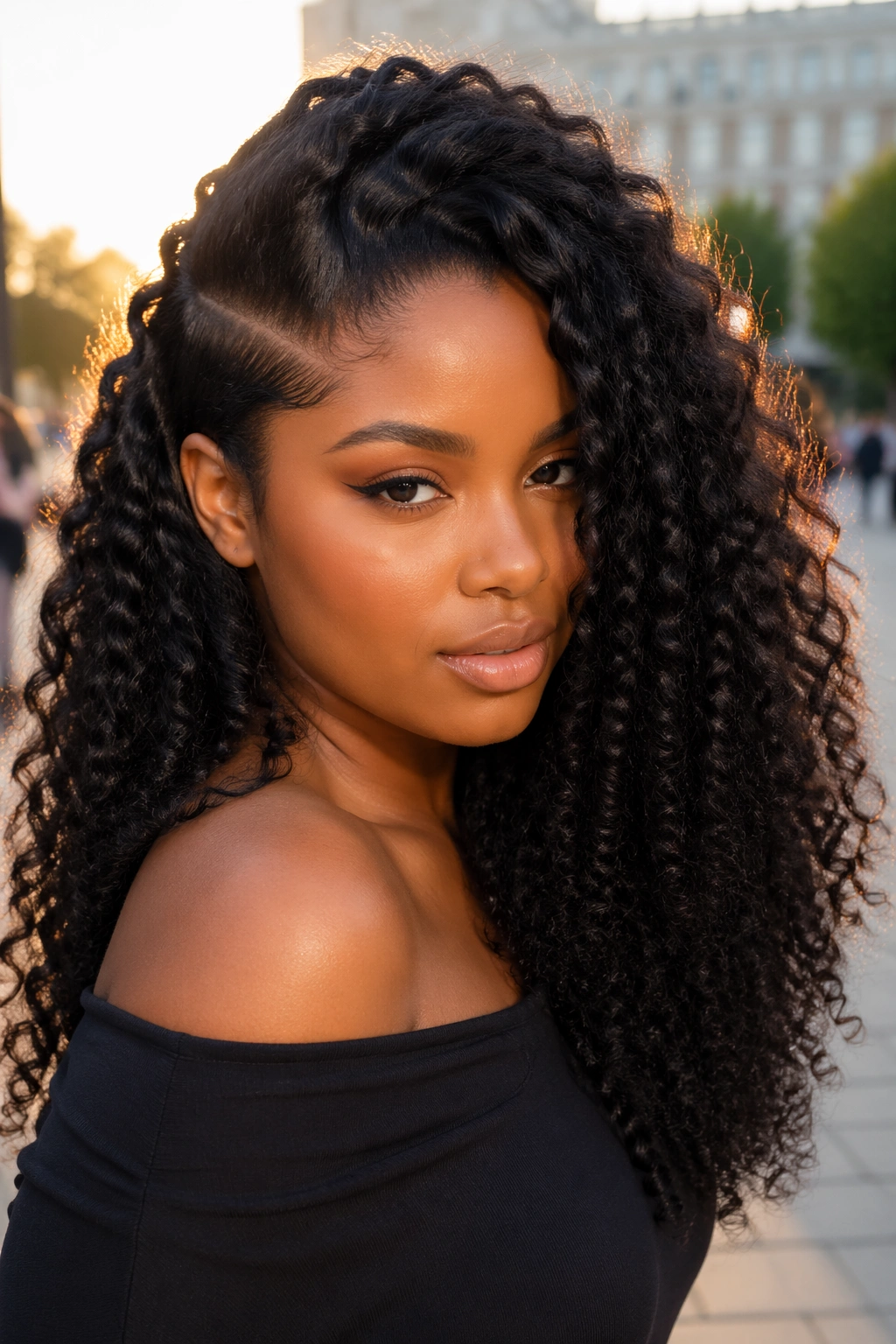
Why does a side part look so dramatic on long curls? Because it throws the weight to one side and lets the other side frame the face in a softer way.
This style is especially good if your hair has lots of density at the crown. A deep side part breaks up that bulk and gives the curls somewhere to fall. The result feels a little more polished than a center part, but still relaxed enough for everyday wear.
The trick is not making the part too shallow. If it sits only an inch off center, the style can look accidental. Push it over more—usually 3 to 4 inches from the middle is enough—and let the front section sweep across the forehead or cheekbone.
A side part also gives you room to play with curl size. Bigger curls around the part make the style feel lush, while tighter curls underneath keep the shape from puffing out too wide. If your hair tends to shrink hard, this is a smart choice because the side sweep still reads as long even when the curls tighten up a bit.
3. Half-Up, Half-Down Curls That Keep the Length Visible
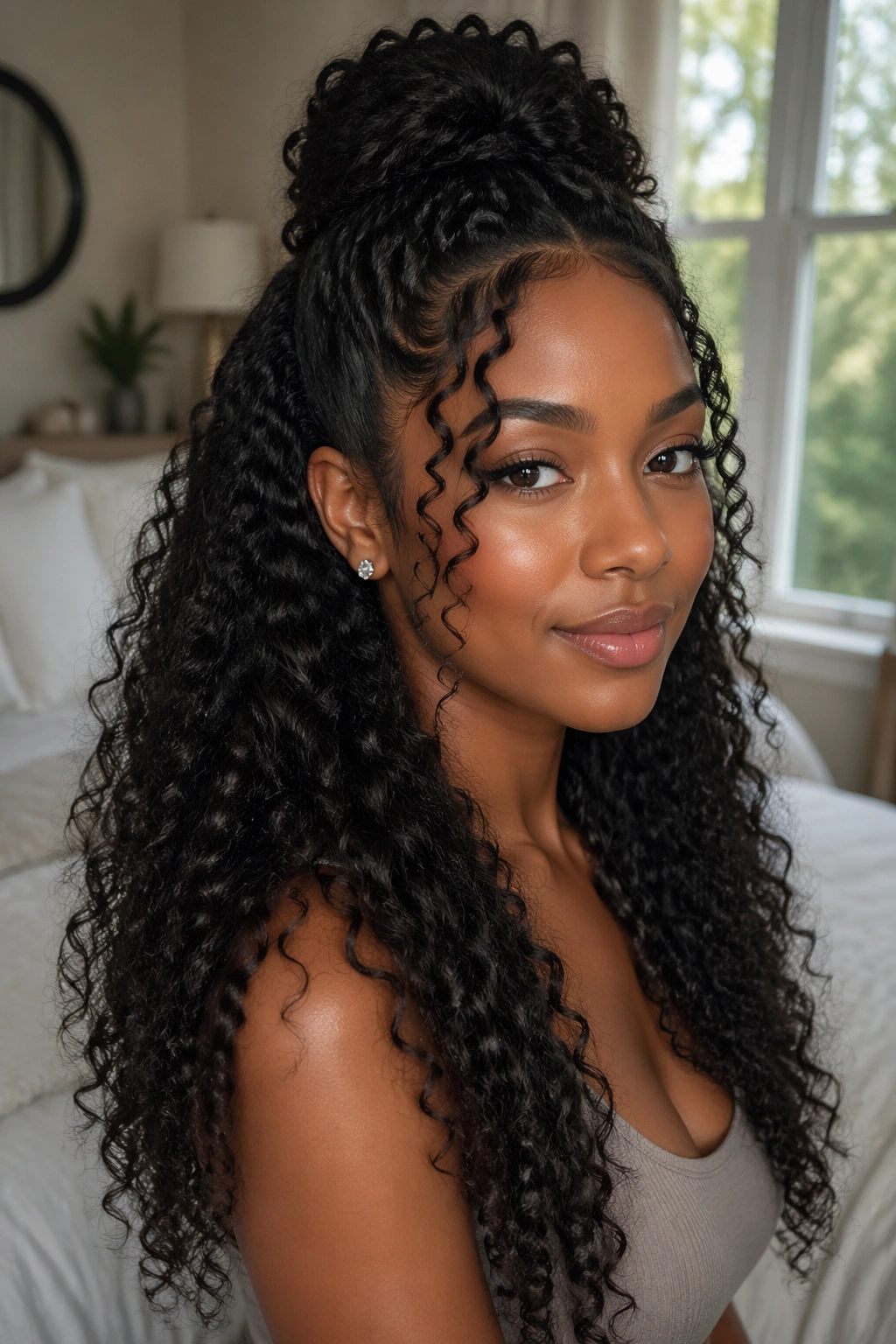
A half-up, half-down style is the easiest way to get volume at the crown and length through the ends without asking your hair to do too much. It solves a real problem: some long curly styles look heavy when everything hangs in one line.
Pull the top section back, leave the rest down, and suddenly the whole shape opens up. The face looks lifted. The length stays visible. And you get a little control over frizz at the top, which is where curls tend to do their own thing first.
How to keep it from looking flat
Use a small snag-free band or a wrapped ponytail holder at the top. Don’t yank the front tight unless you want that hard, scalp-gripping look. A softer lift is better, especially on textured hair, because it keeps the curl pattern from getting crushed.
If you want more drama, leave two small pieces out at the front. If you want a cleaner finish, smooth the top with a little gel and use a rat-tail comb to separate the section before tying it back.
This style works well with wash-and-go curls, twist-outs, and even extension hair. The only real mistake is making the top section too thin. Then the style loses balance and starts looking like an afterthought.
4. A Curly High Puff With Length Left Out
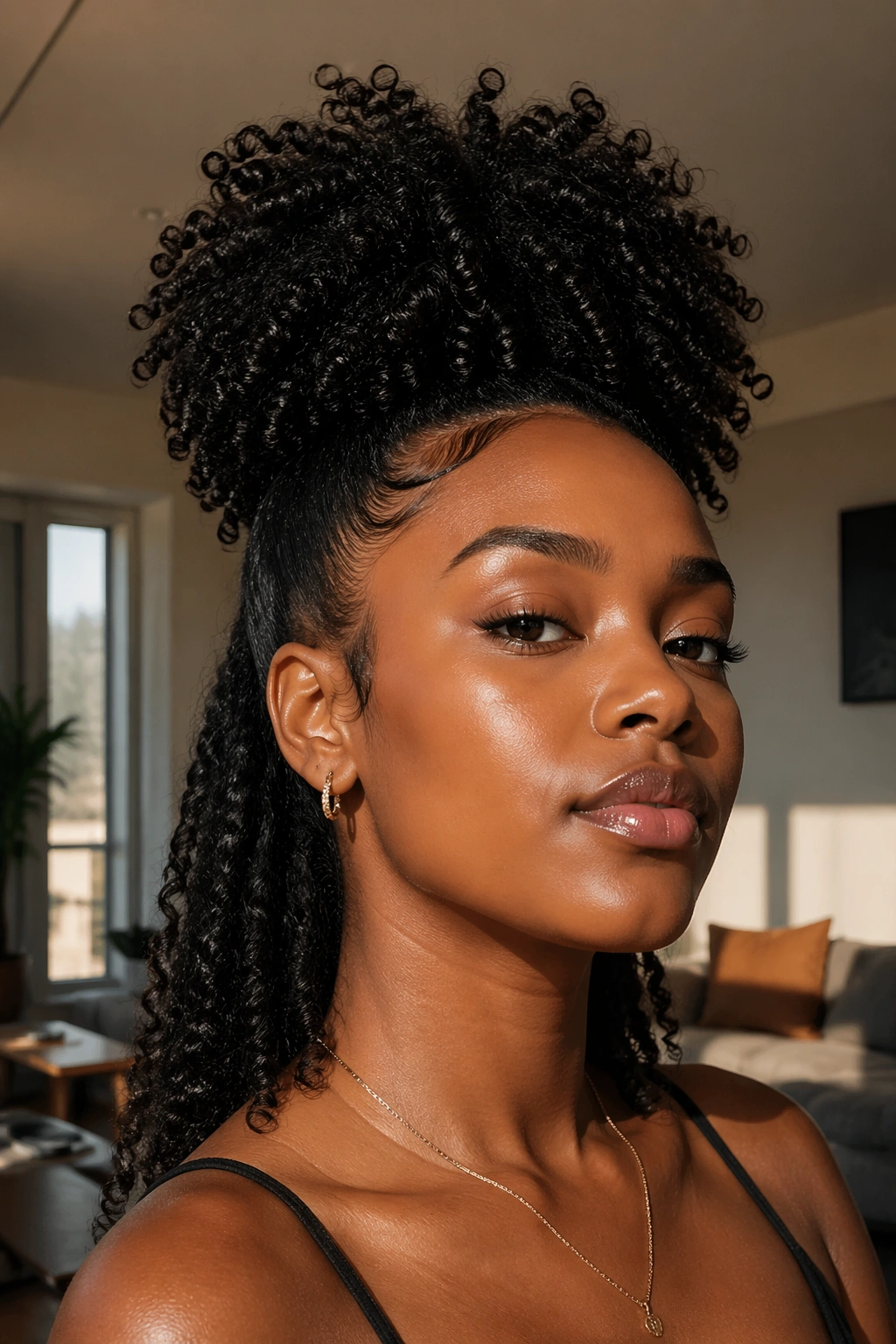
People underestimate the high puff because it sounds basic. It isn’t. Done well, it gives you height at the crown, stretched length in the back, and a clean outline around the face.
The style works best when the sides and back are smoothed just enough to create shape, not tension. If you pull too hard, the puff gets smaller and the scalp starts looking stressed. If you leave it too loose, the whole thing collapses by lunchtime. There’s a narrow middle ground, and that’s the sweet spot.
How to keep the puff from collapsing
- Stretch the hair first with banding, twists, or a light blow-dry on cool.
- Use a wide, soft band that won’t dig into the edges.
- Keep the puff high enough to show the length underneath.
- Fluff the crown with your fingers, not a brush, so you don’t break up the curl pattern.
A high puff looks especially good when the back is long and the front is shaped with a little edge control. It gives you that lifted, almost sculpted profile without hiding your natural texture. And yes, it can be worn casually. That’s part of the charm.
5. Layered Sew-In Curls That Move Instead of Sitting Heavy
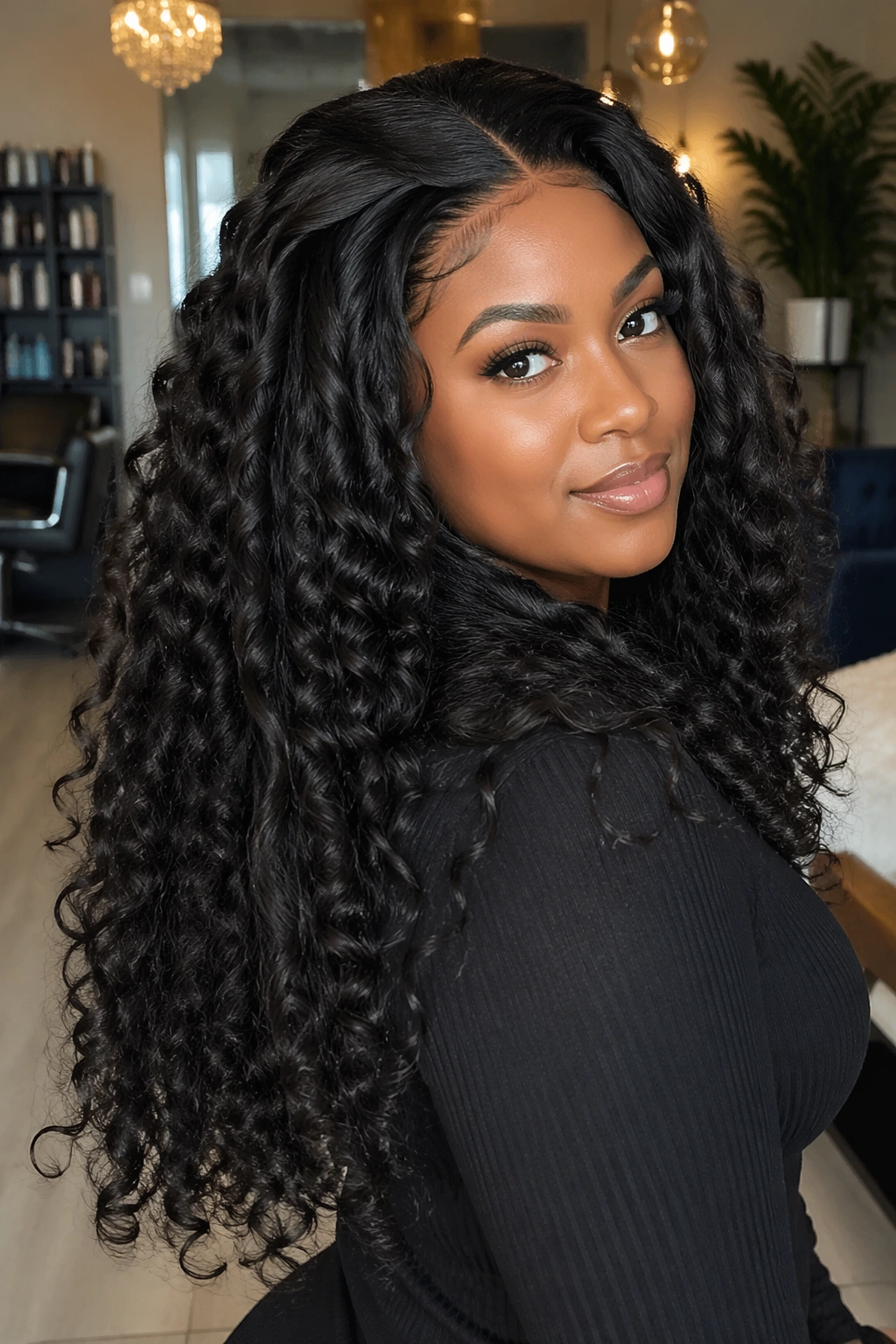
A curly sew-in can be gorgeous, but only if the layers are cut with some sense of movement. One-length installs tend to puff out in a blunt block, which is not the look most people want when they ask for long curls.
Layering changes the whole feel. The longest pieces keep the drama, while the shorter face-framing strands stop the style from looking like a curtain. If the stylist blends the leave-out carefully—or uses a closure that matches the curl pattern—the result can look soft without looking thin.
This is one of the better options if you want length with less daily styling. The curls stay in place, and your own hair gets a break underneath. It also helps if you like uniform texture from root to end, because good bundle hair can hold the same curl pattern for weeks with basic care.
The parting and perimeter matter. If the perimeter is left too exposed, the style can look patchy. If the install is too dense, it loses swing. A good curly sew-in should move when you turn your head. If it feels stiff, something went wrong.
6. Crochet Curls With Soft Edges and Light Movement
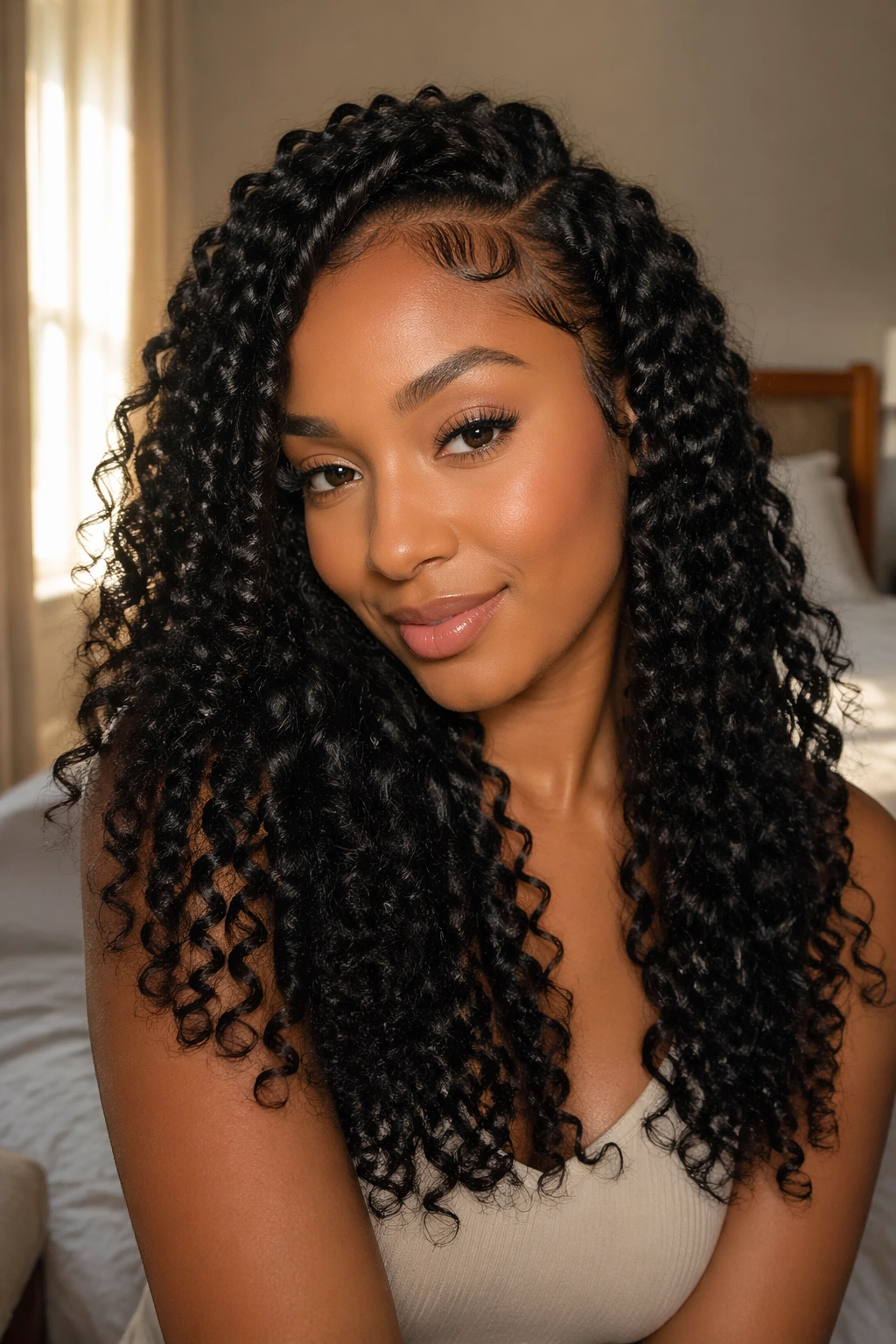
Crochet styles get dismissed too easily. A bad install can look bulky, sure. A good one can look like a full head of natural curls that just happen to have serious length.
The trick is in the parting and the density. If the braids underneath are too chunky, the finished style sits high and looks heavy. If the curls are attached too tightly, the scalp looks pulled. A calmer install with neat parts and careful spacing gives the hair room to drop.
Where the install lives and breathes
Crochet curls work best when the perimeter is left soft around the hairline and nape. That keeps the style from looking helmet-like. The curls themselves can be loose, spiral, or fluffy, depending on whether you want a softer shape or a more defined one.
A few practical things help:
- Choose curl hair with a believable strand thickness.
- Ask for the knots to be hidden where possible.
- Keep the front section lighter so the face opens up.
- Sleep with a satin bonnet or scarf so the curl ends don’t frizz out fast.
This style is good when you want length without spending forever styling your own hair each day. It’s also one of the better protective-style options if you’re trying to keep manipulation low.
7. A Long Twist-Out With Stretched Roots and Ropey Ends
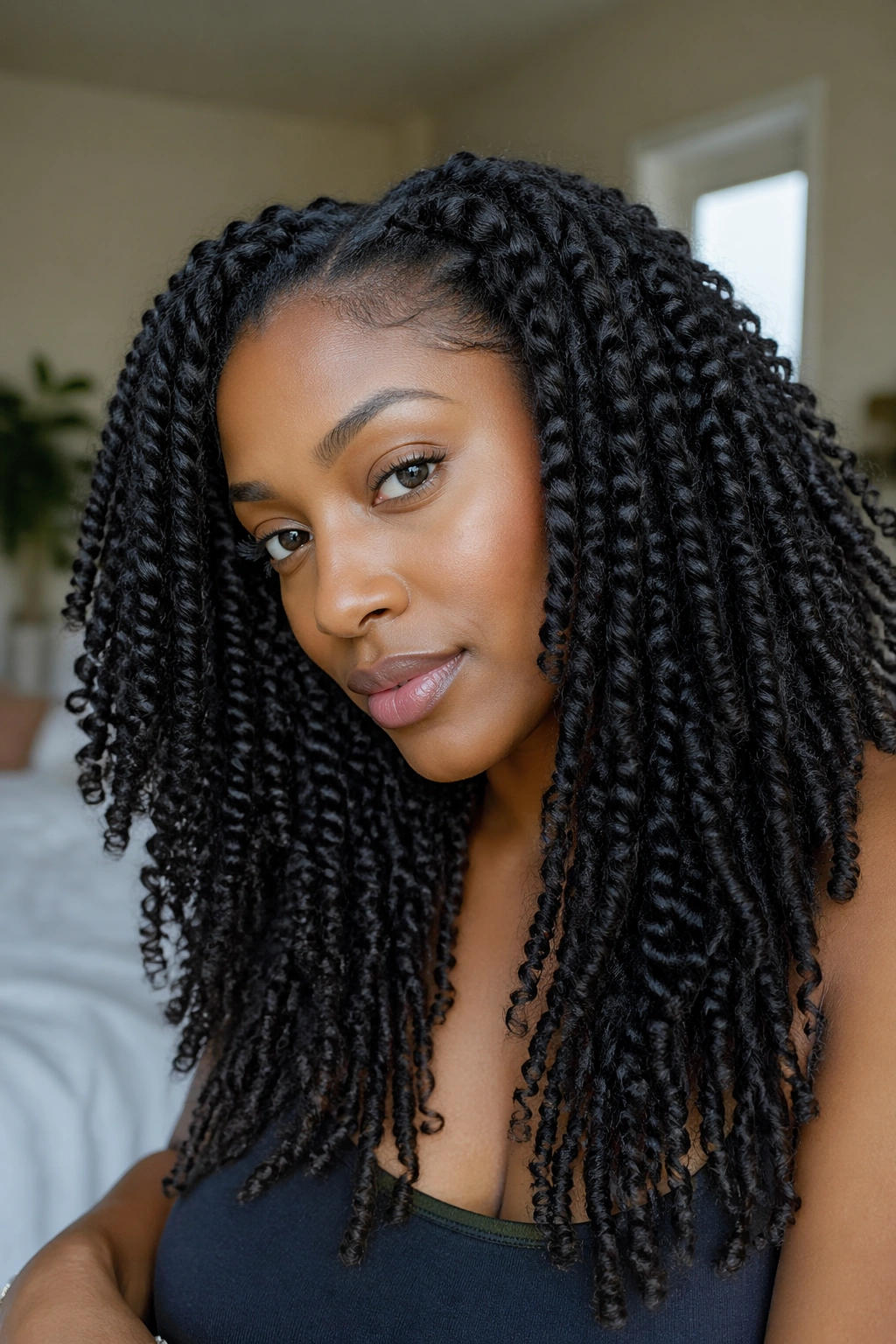
A twist-out on long hair can look huge, soft, and a little wild in the best way. The important part is not rushing the takedown. That’s where people lose the shape and end up with frizz that never settles.
You want the twists dry, fully dry, before unraveling. Not “mostly dry.” Fully dry. If the inside is still damp, the curl clumps will separate too fast and the style loses that ropey, stretched look that makes twist-outs so pretty on long lengths.
How to stretch a twist-out without killing the curl
Use medium sections, not tiny ones. Tiny twists can give you definition, but they also shrink more and take longer to dry. Medium twists give you length and a softer fall. A cream or butter-based styler can help, though too much product will make the roots sticky and weigh the style down.
Once the twists come out, separate them only a little at first. Then fluff the roots with your fingers or a pick. That keeps the style from turning into a halo of broken curls. If you want more length at the top, twist the roots in the direction you want them to fall before you set them.
This style has attitude. It moves when you move.
8. A Braid-Out That Gives You Thick, Stretched Texture
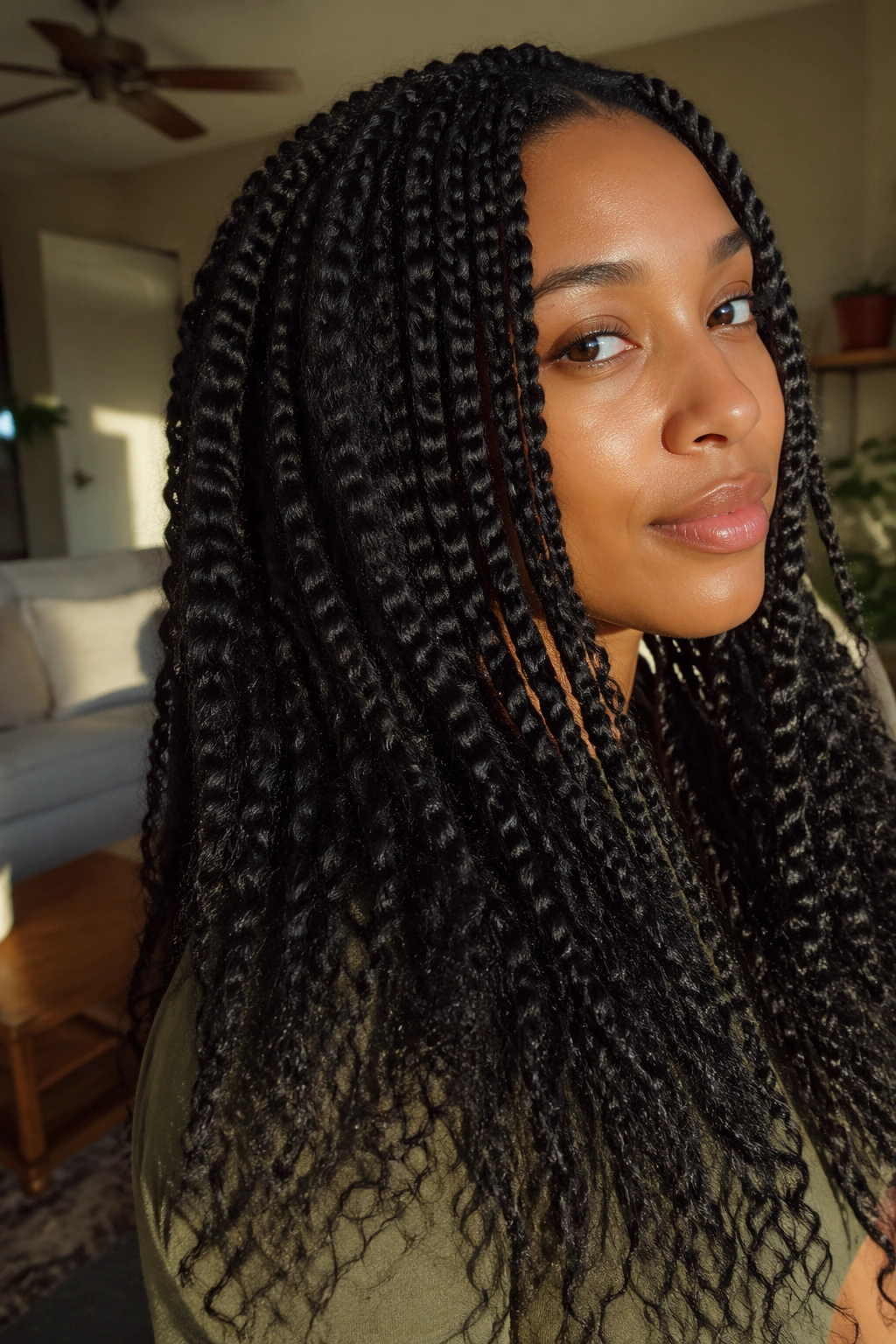
Braid-outs and twist-outs get lumped together, but they do not behave the same way. Braids usually stretch the hair more, which means the finished shape tends to look longer and more rope-like.
That extra stretch is useful if your hair shrinks a lot. It gives you definition with less puff, which can be a blessing when you want the length to stay visible from the front and sides. The texture also feels a bit more crimped and less springy than a twist-out, which some people prefer.
The size of the braids changes the whole mood. Bigger braids make the result looser and more dramatic. Smaller braids create tighter waves and more volume at the root. For long curly hairstyles for Black women, medium braids usually hit the sweet spot because they give shape without too much bulk.
Don’t unbraid too soon. That’s where a lot of braid-outs go sideways. If the interior is still even slightly damp, the style loses its structure fast. A tiny bit of oil on your fingertips while separating can help keep the finish smooth instead of fuzzy.
9. Flexi Rod Curls That Land in Clean Spirals
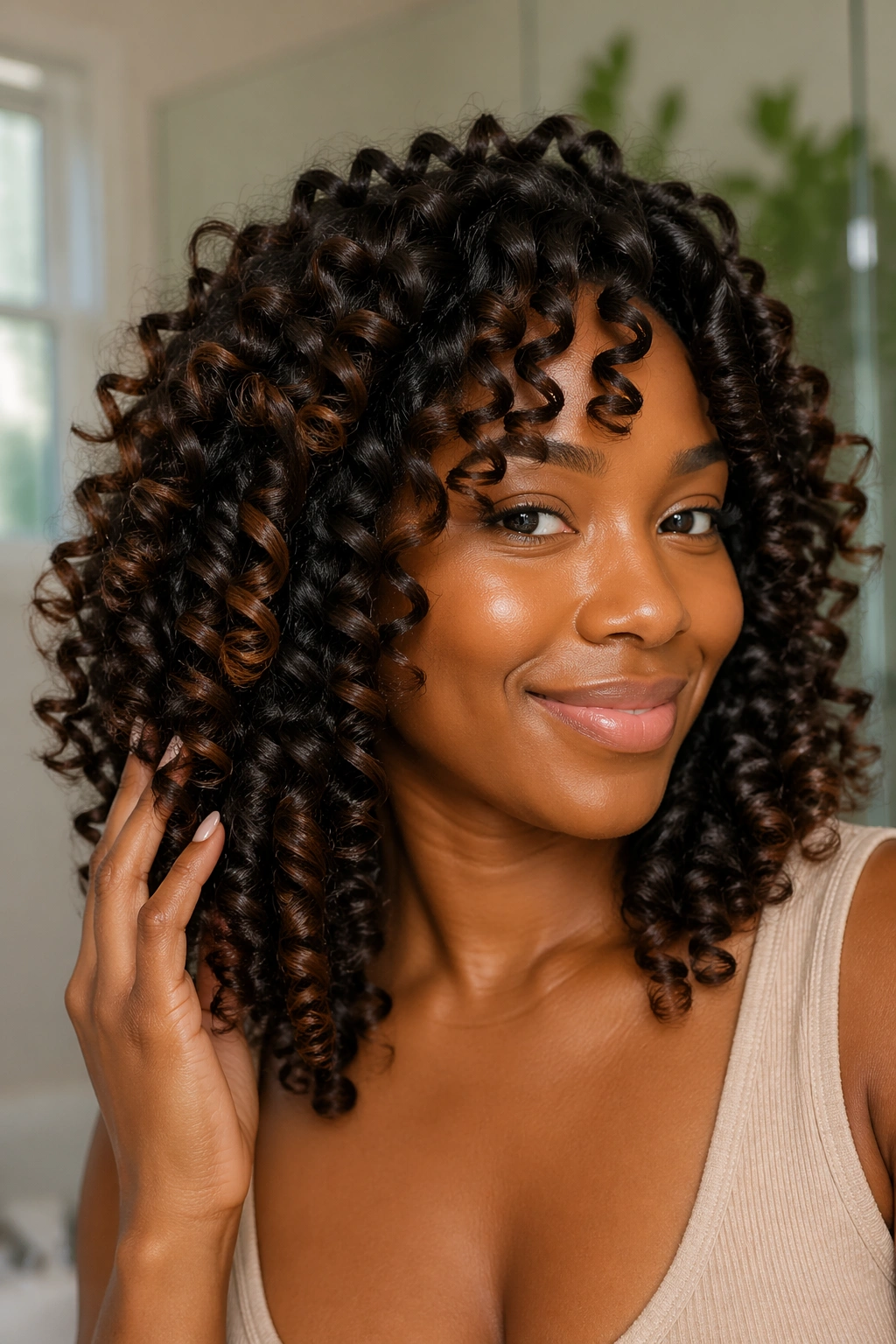
Flexi rods are one of the easiest ways to get long, springy curls without heat. The curl pattern they create has a clean spiral to it, which makes the finished style look sharper than a looser set.
Rod size matters more than most people admit. Small rods give you tighter ringlets and a lot of bounce. Larger rods give you longer, softer spirals that move more freely. If you want the style to read as long, go one size bigger than the tiniest rods you own.
Rod size changes the whole mood
A flexi rod set looks best when the sections are smooth before you wrap them. Any little bump in the strand can show up once the rod comes out. That’s why detangling and using a decent setting lotion or mousse matter. They help the curls dry in one shape instead of splitting apart.
- Wrap the hair evenly from ends to roots.
- Keep the ends tucked flat so they do not fray.
- Dry fully before removing the rods.
- Separate only after the hair feels cool and dry all the way through.
This style works well for special events, but it also holds up for everyday wear if you don’t mind a bit of upkeep at night. The curls can last several days when wrapped carefully.
10. Perm Rod Sets With Rounded Volume at the Crown
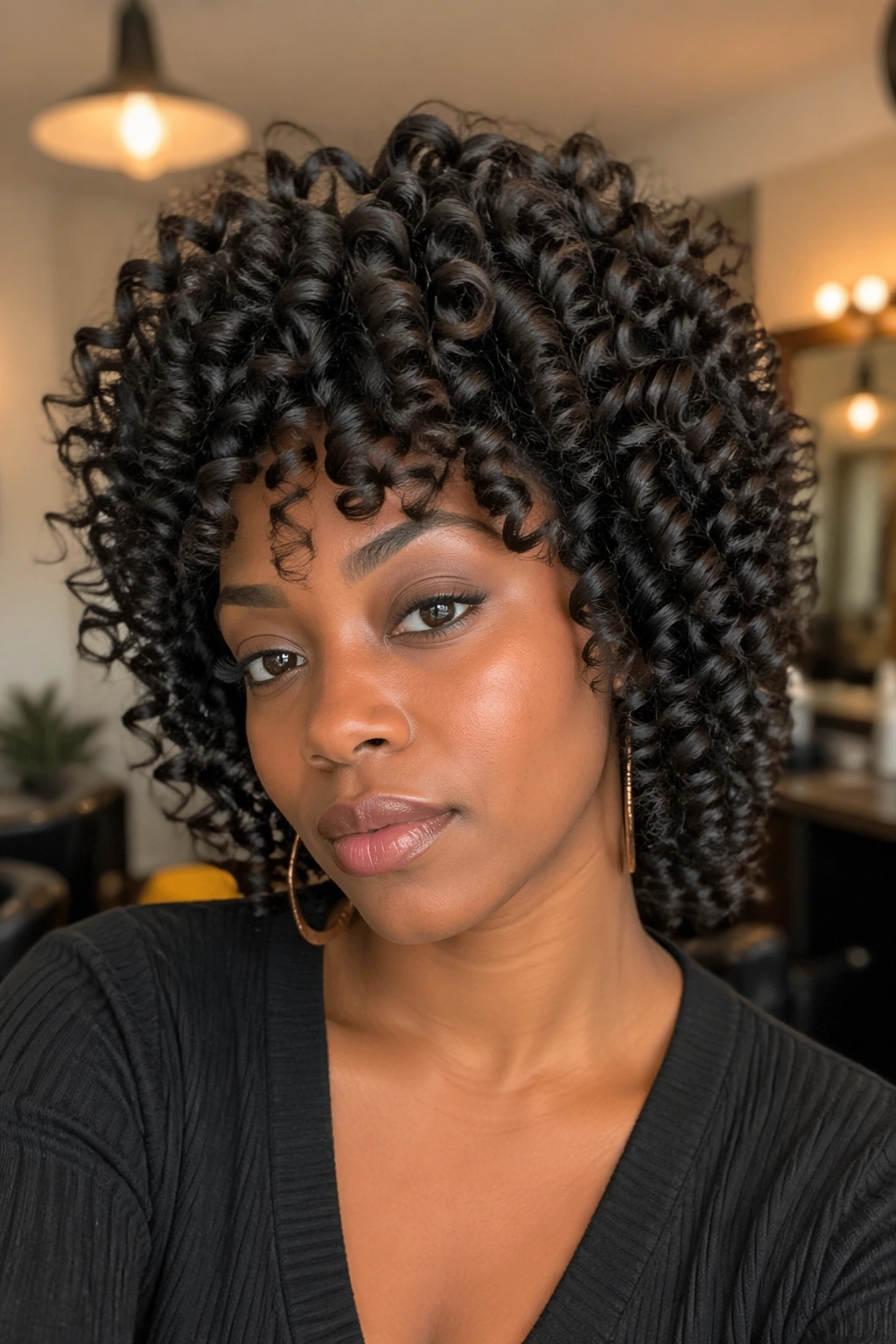
Perm rod sets are different from flexi rods in a way you can feel immediately. They usually create a more compact curl with a rounder finish, especially near the crown where the hair has a chance to stack up.
That roundness is useful if you want the style to look full from every angle. It gives the top section lift, while the ends stay neat and springy. On long hair, that means the shape can look bouncy without turning into a puffball.
The smaller the rod, the tighter the curl. That sounds obvious, but it changes the whole look on textured hair because tighter curls can actually make long layers appear denser. If your ends are dry or color-treated, perm rods can also hide a bit of unevenness better than styles that leave the ends hanging loose.
Drying time is the part nobody loves. It can take a while, especially on thick hair. Sitting under a hood dryer is not glamorous, but neither is taking out half-dry rods and losing the set. Patience pays here.
11. A Bantu Knot-Out With Soft Coil Shape
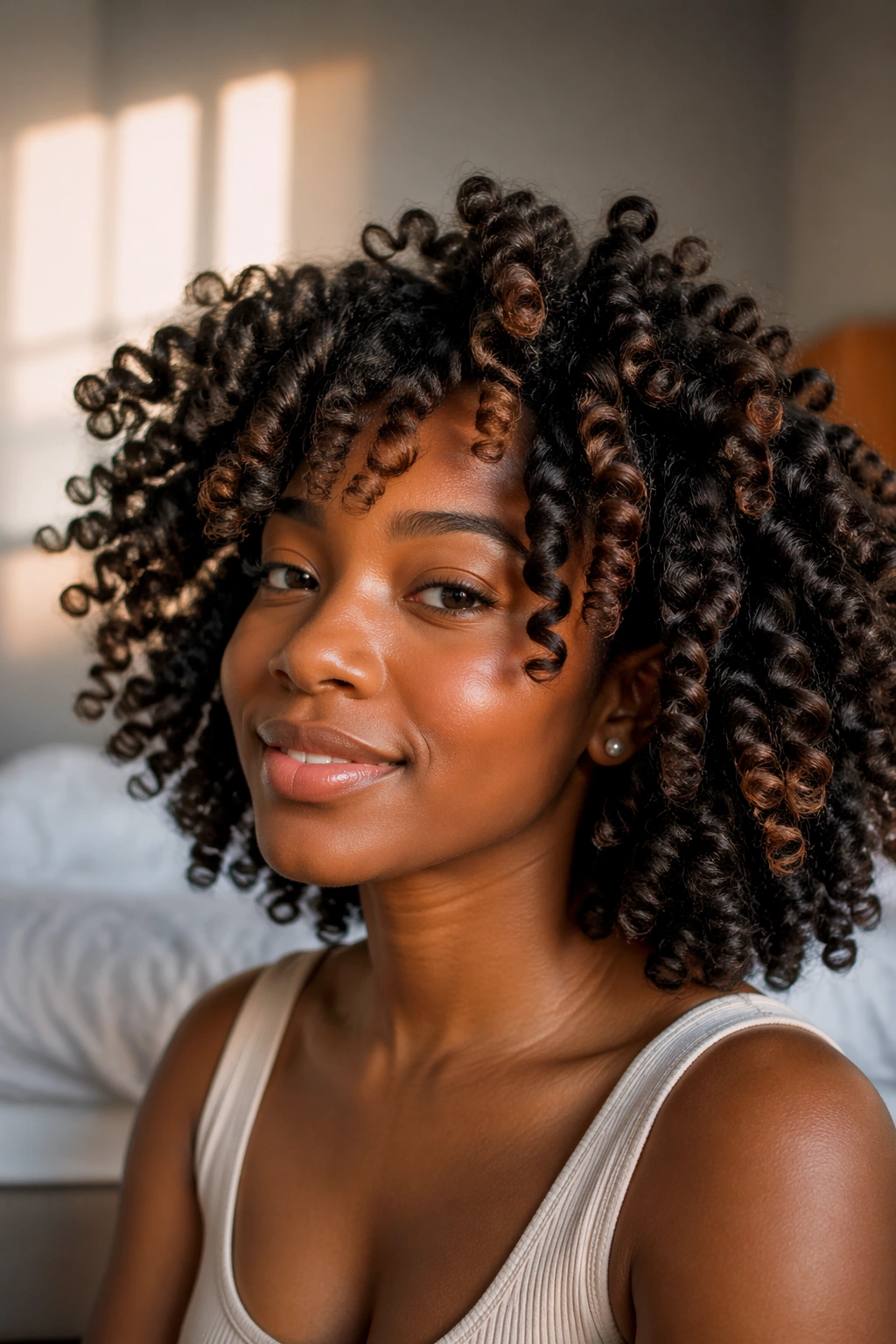
Bantu knot-outs are a little underrated because they can look almost too simple in the beginning. Small knots across the head do not look like much. Then you take them down and the texture opens into soft, coily waves that feel fuller than a twist-out.
The result depends on how neatly the sections are divided. Clean parts make the final curl pattern more even. Messy parts give you a less predictable shape, which can still be nice, just different. If you want long, defined curls, neat sections are worth the extra time.
The knot size matters too. Bigger knots create looser bends and more stretch. Smaller knots give a tighter, springier texture. On long hair, medium knots usually give the most balance because they keep some length while still making the style look rich.
This is a style that rewards dry time. If the knots are even a little damp, the coil pattern falls apart fast. Let them sit. Seriously. That part saves the whole look.
12. Goddess Braids Feeding Into Curly Length
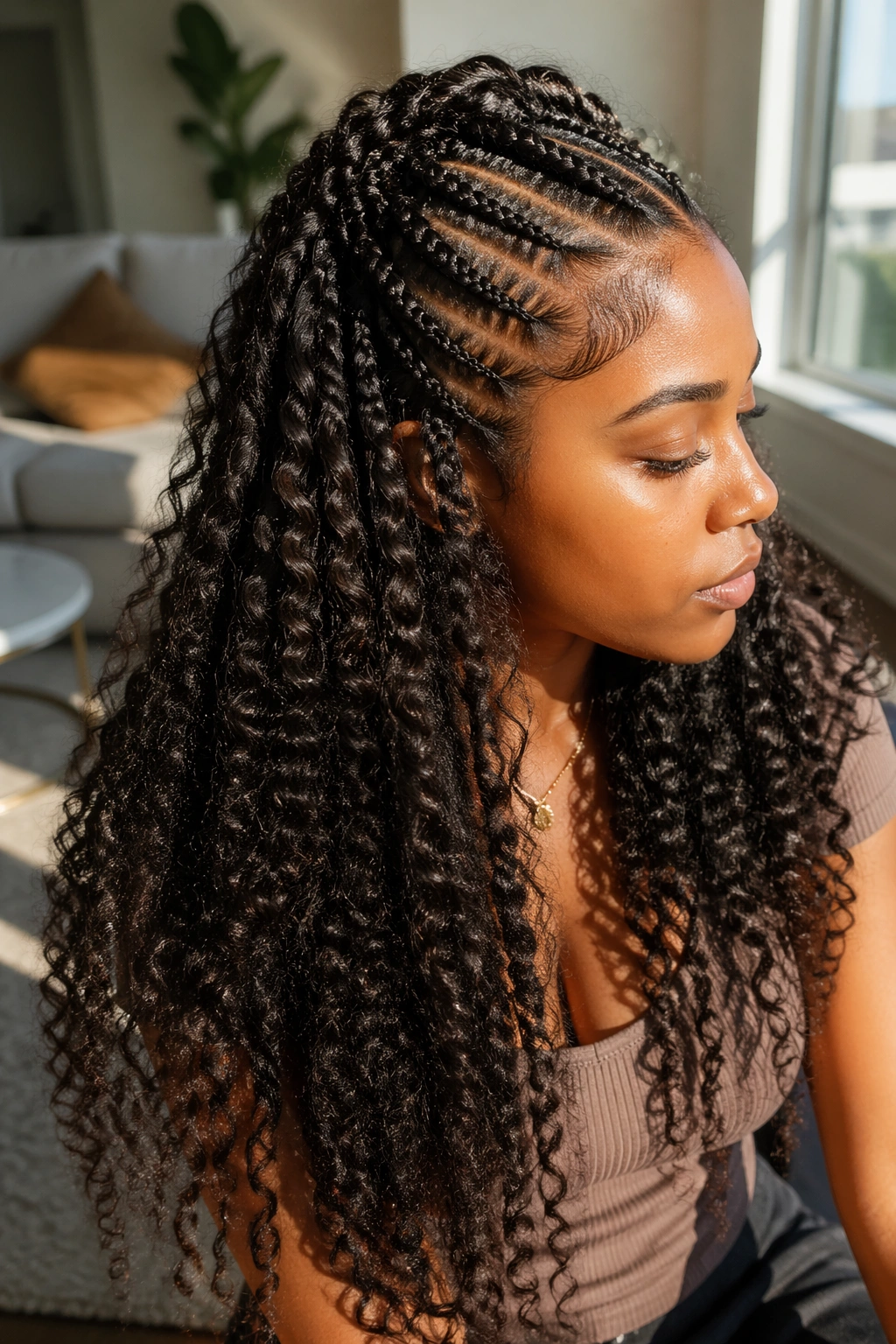
Goddess braids are a smart way to get structure at the top and movement at the bottom. The braids keep the roots neat, and the curly lengths bring the drama.
This style works especially well when the braids feed into loose curls, marley-textured ends, or curly extensions. The contrast is what makes it interesting. Tight at the scalp. Soft at the ends. That shape keeps the style from feeling heavy all the way through.
What to ask your braider for
- Braids that sit flat at the scalp without looking pinched.
- A parting pattern that leaves enough room for the curls to fall.
- Curly ends that match your hair’s density, not just its color.
- A finish around the hairline that stays clean but not harsh.
One thing I like about this style is how well it handles grow-out. Because the braid section is doing so much visual work, the style can stay neat longer than a loose curly set. It also gives you a break from daily detangling, which is no small thing when your hair is long and thick.
13. Faux Locs With Curly Ends for a Softer Finish
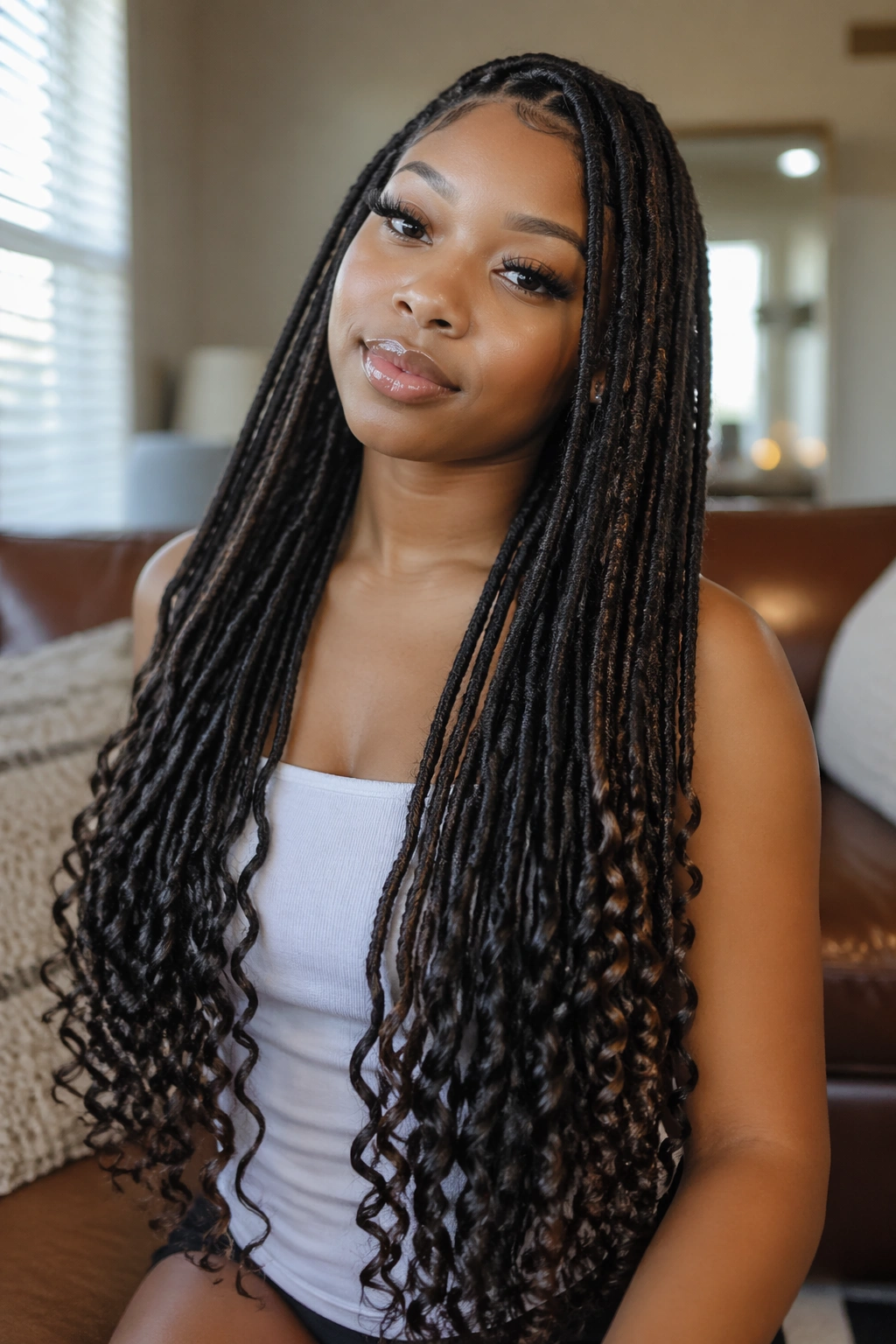
Faux locs with curly ends solve a common issue: classic loc styles can look too heavy at the bottom if every strand is sealed tight. Leaving the ends curly softens the whole look.
That contrast matters on Black hair because it keeps the face open and the length visible without making the style feel stiff. The loc section brings structure, while the curls add movement and a bit of lightness. It’s a stronger style choice than people give it credit for.
The length can be dramatic without being flat. Waist-length faux locs with curled ends move in a way that long straight locs don’t. They bounce. They turn. They don’t just hang there.
Maintenance is fairly simple, but the ends need care. Sleeping with the curls covered prevents frizz, and a light oil on the locs keeps them from drying out. If the curls get fuzzy, you can refresh them with a little warm water and setting foam, but don’t overdo it. Too much product makes the ends limp.
14. A Curly Ponytail With a Wrapped Base
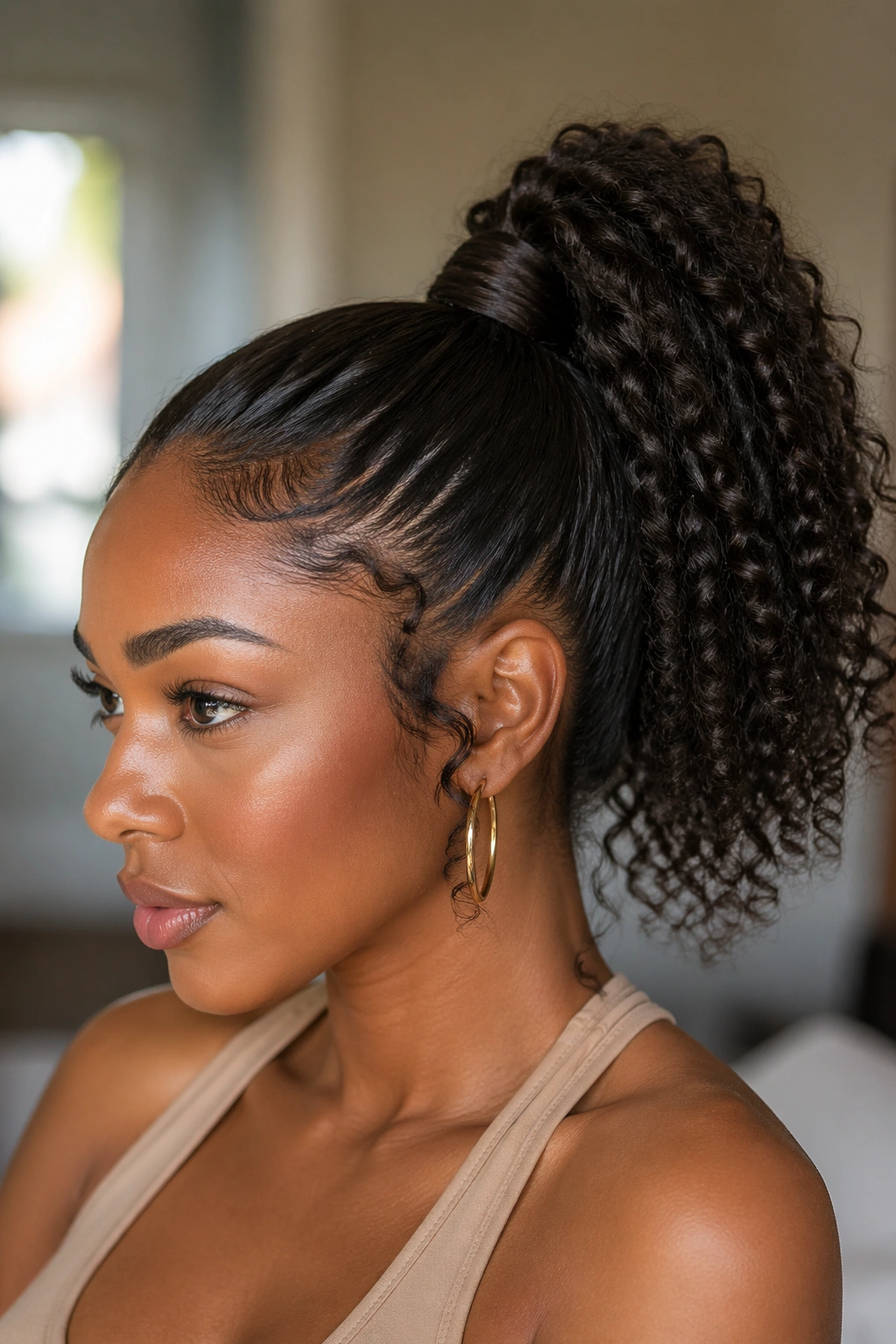
A curly ponytail is one of the easiest ways to make long hair look intentional in under ten minutes. The wrap at the base is what lifts it from everyday to polished.
The shape works because it shows off both the root area and the length. You get a clean crown, then a full cascade of curls dropping from the ponytail. If you’ve got long natural curls, a ponytail can put all that length in one place. If your hair is shorter, extensions can help without changing the overall idea.
A few details make a difference:
- Place the ponytail at mid-height if you want balance.
- Go higher if you want lift at the face and more swing.
- Wrap a small section of hair around the band for a cleaner finish.
- Leave two or three front pieces loose if you want softness around the cheekbones.
A ponytail can look boring when it’s pulled straight back. Once you add curl texture and a wrapped base, it stops feeling basic. It becomes a shape.
15. A Halo Braid With Curls Falling Down the Back
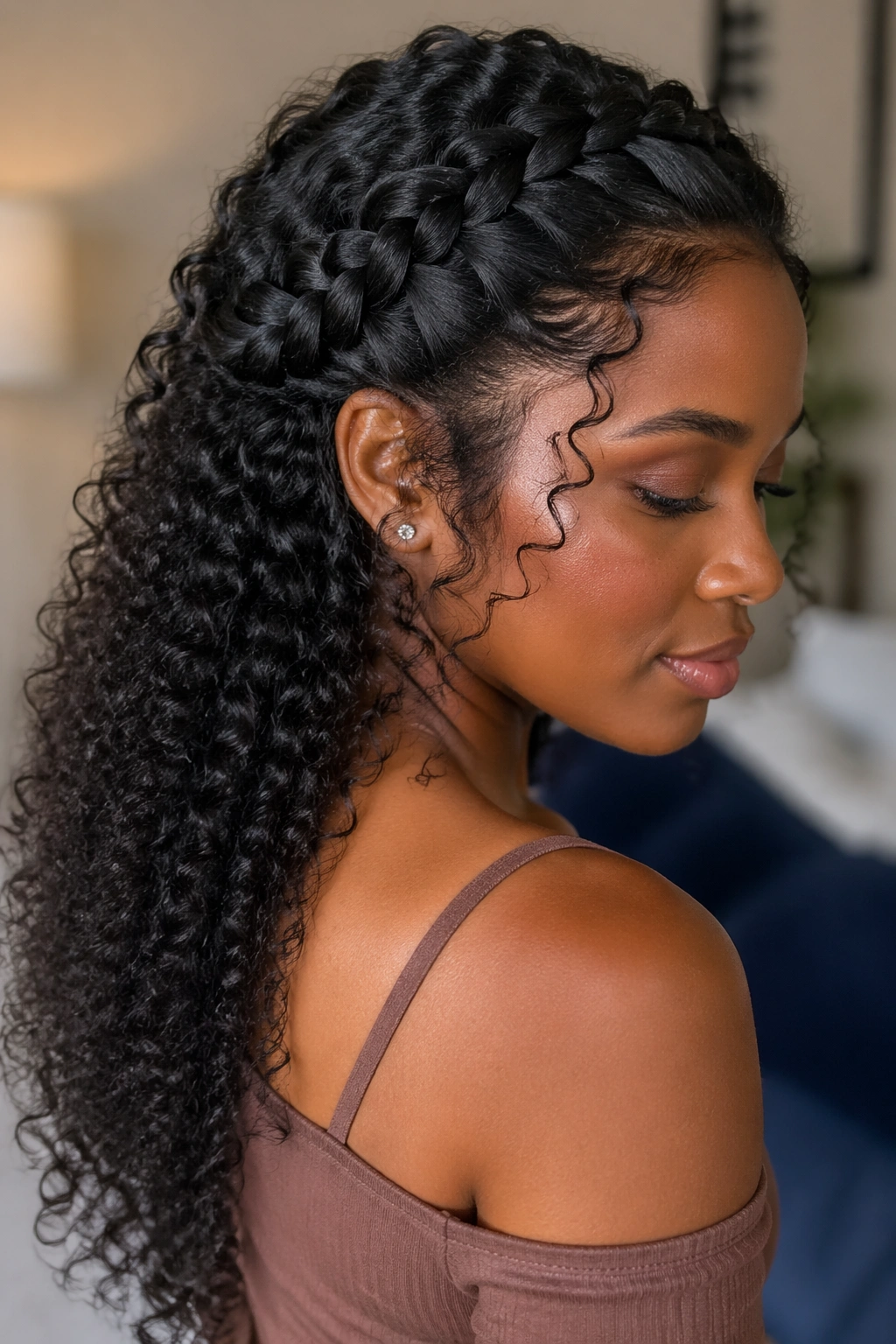
Can a braid look soft? Absolutely, if the crown braid is doing the framing and the curls are handling the rest.
A halo braid pulls the eye around the head first, then lets the long curls spill underneath. That contrast is what makes this style so good for formal events, dinners, or any day you want your hair to feel a little more finished than usual. The braid itself keeps the front tidy. The curls do the rest of the talking.
Where the braid should sit
The braid should hug the head, not sit on top like a thick rope. That means the section needs to be secured flat enough that it follows the hairline and sweeps around the crown. If it floats too high, the style loses the clean outline that makes it work.
The curls underneath can be your own hair or added hair. Either way, they should be brushed through lightly so the ends fall in long, soft pieces instead of clumping into one heavy block. That little bit of separation matters. It keeps the back from looking too dense.
This is one of those styles that looks graceful without being fussy. And yes, it photographs well, but more importantly, it wears well when you’re actually moving around.
16. Long Two-Strand Twists Worn Loose at the Ends
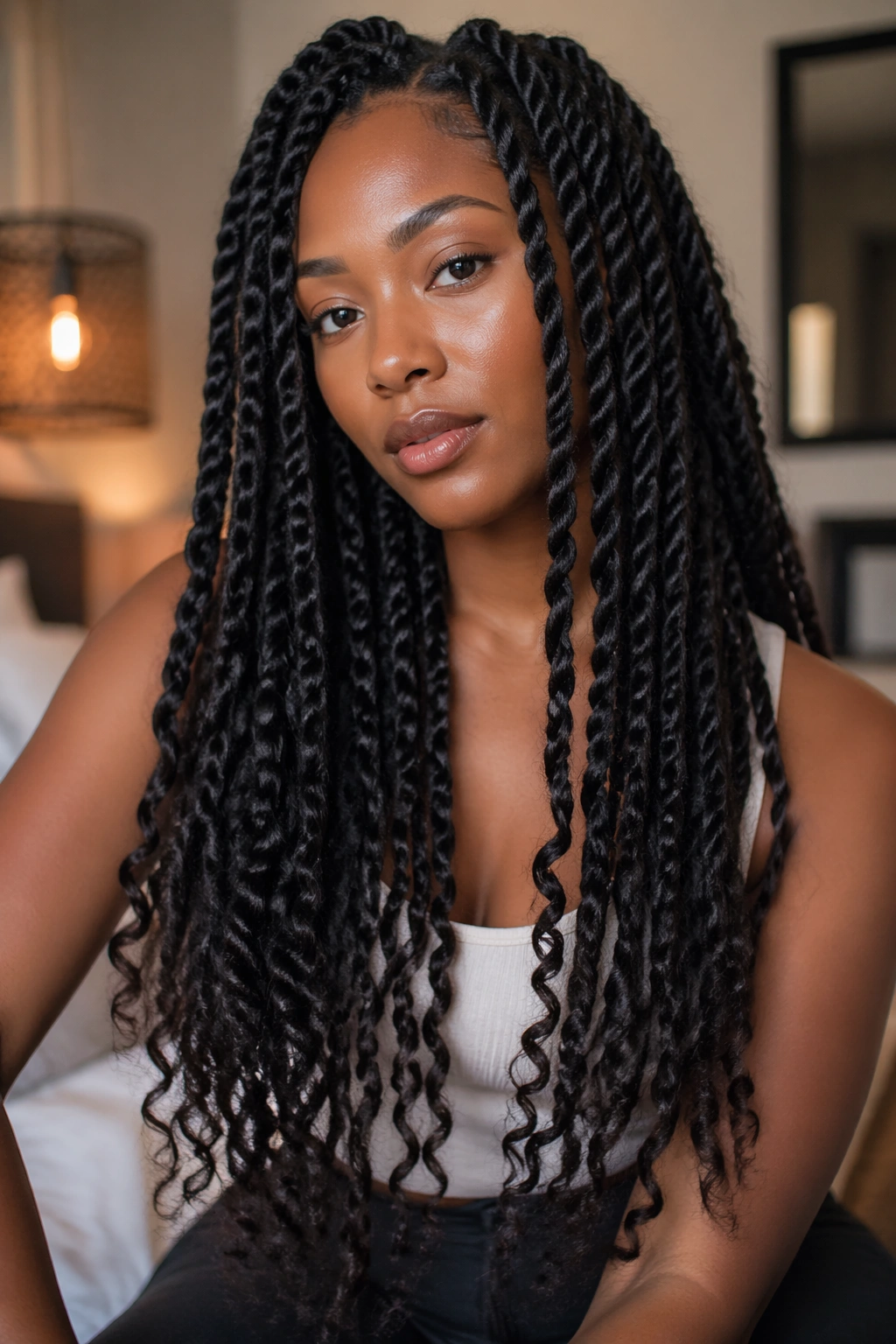
Long two-strand twists are a workhorse style. They can be worn as-is, unraveled into a twist-out, pinned up, or wrapped into a bun later. That flexibility makes them worth the time.
What keeps them from looking flat is section size. If the twists are too tiny, they can shrink hard and lose the long shape you wanted. If they’re too big, they can unravel at the ends and look unfinished. Medium twists tend to give the most balanced result on long curly hair.
This style is also kind to the hair itself. Less daily manipulation, fewer tangles, and a cleaner path to retaining length. That matters if your goal is not only style, but actual hair health over time.
A little cream or butter at the start helps the twist hold its shape. A little oil at the ends helps keep them from drying out and puffing too much. That said, don’t overload the hair. Twists should look soft, not greasy. There’s a difference, and it shows.
17. Wet-Look Defined Curls With Gel and Finger Coils
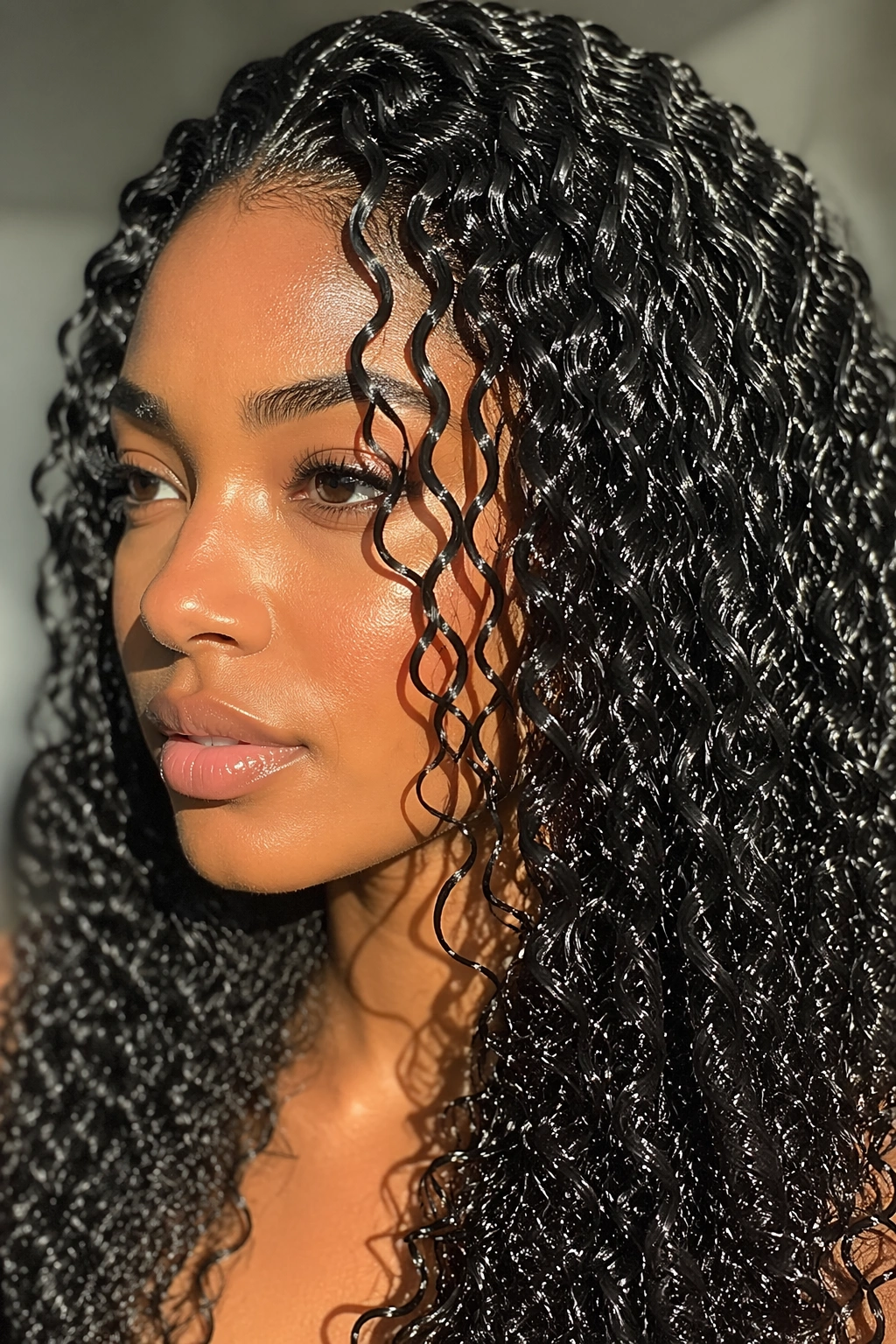
Wet-look curls can be gorgeous on long textured hair when the definition is strong and the shine is controlled, not slicked into a helmet. Think polished, not crunchy.
Finger coils help here, especially around the front. They create a neat curl pattern that stays visible longer than a loose rake-and-shake finish. On long hair, that means the style reads clearly even when the rest of the curls have a softer, looser bend.
The styling step is slow, no way around it. Small sections. A good amount of gel. A steady twist around the finger until the curl settles. If you rush, the coils separate too fast and lose that deliberate shape that makes the style work.
This look is best when the hair is healthy enough to take moisture and hold definition without frizzing immediately. It also pairs well with a sharp side part or clean middle part. The part gives the coils a frame, which keeps the whole style from looking too random.
18. Clip-In Curls That Add Length Without a Full Install
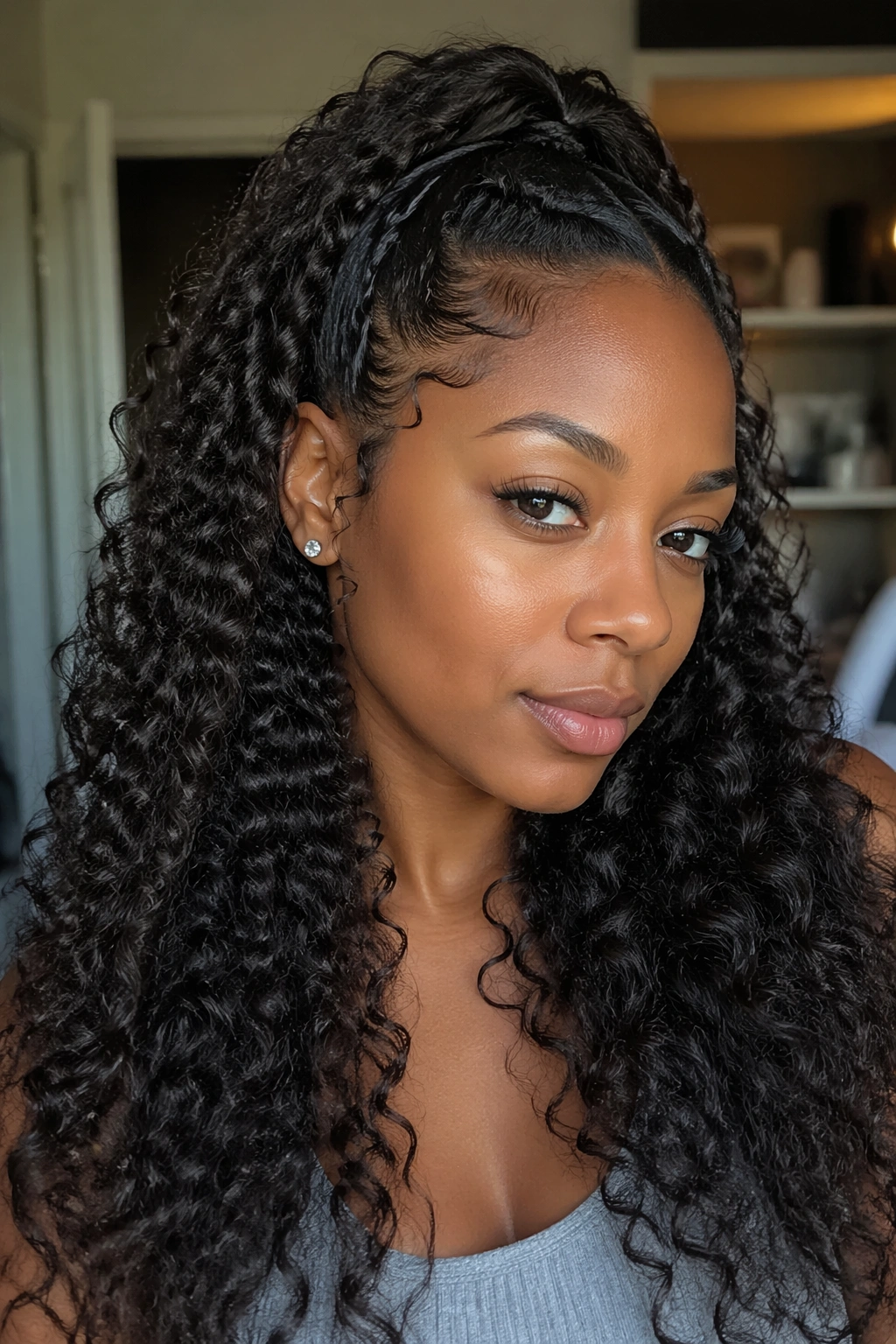
Clip-ins are the practical answer when you want extra length but don’t want a sew-in or crochet style. They let you keep more control over the shape, and they’re easy to remove when you’re done.
A good clip-in style depends on blending. The top section should hide the clips, and the curl pattern should match your own hair closely enough that the transition isn’t obvious. If the texture mismatch is too big, the style starts looking separated instead of full.
When clip-ins make more sense
- You want long curly hair for one day or one weekend, not several weeks.
- You like changing between a side part and a middle part.
- You need volume at the back without committing to an install.
- You prefer to keep more access to your scalp and natural hair.
The biggest mistake is adding too much hair too high up. That makes the clips visible and gives the style a shelf-like look. Place the wefts lower, layer them carefully, and leave enough of your own curls at the top to blend everything in.
Clip-ins are not the least bit glamorous behind the scenes. They’re practical. That’s why they work.
19. A Big Curly Updo With Face-Framing Tendrils
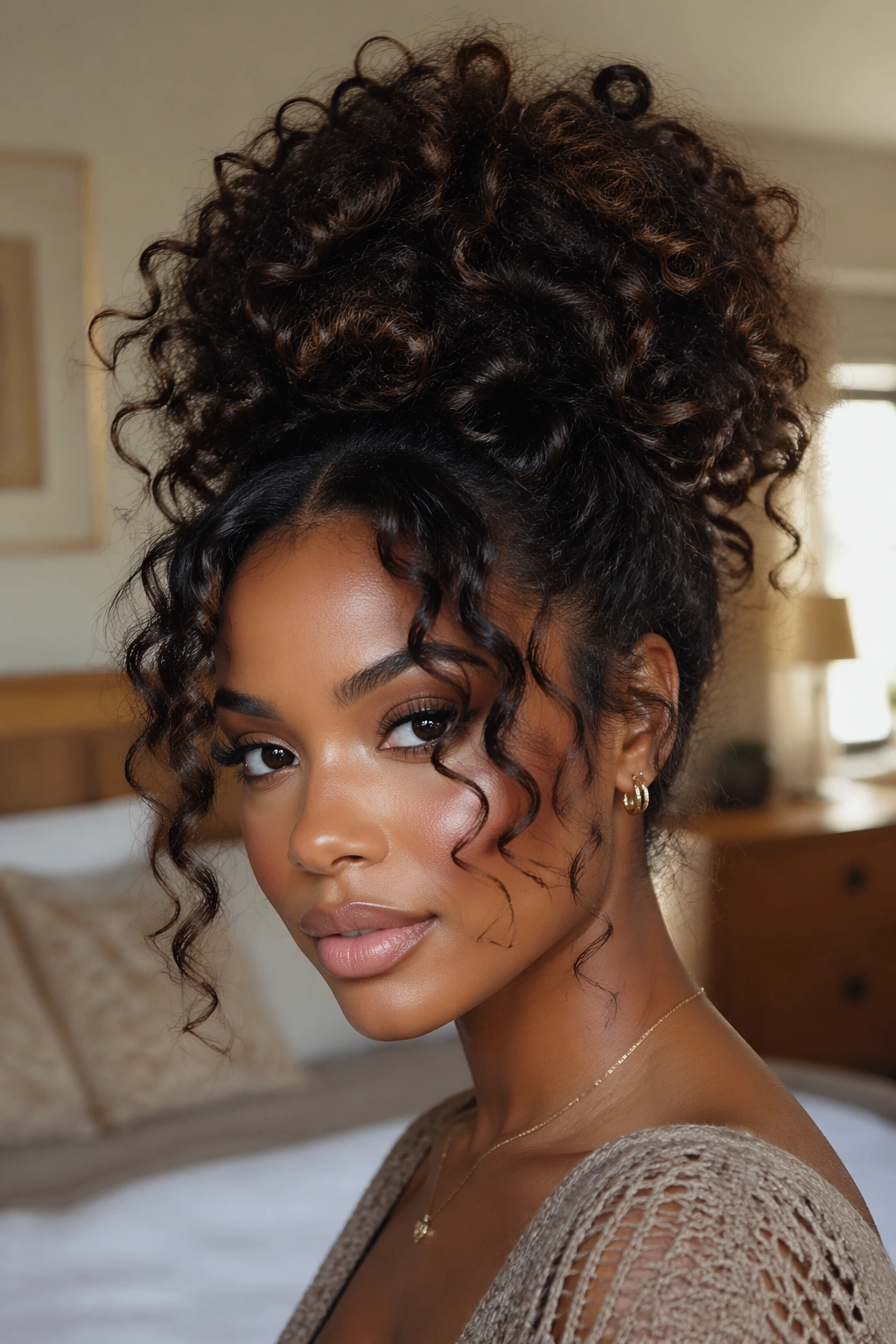
An updo does not have to mean hiding your length. In fact, with curly hair, a good updo often shows off more than it conceals.
Pull the curls upward and back, pin the bulk into a rounded shape, then leave a few tendrils loose around the face. That gives you height, softness, and a little movement where it counts. The tendrils matter more than people think. They keep the style from feeling too severe.
This is a strong option for long curly hairstyles for Black women because it lets the curls play two roles at once. Some of the hair does the elegant pinned-up part. Some of it softens the face. And if the back is full enough, the style still reads as long even when it’s gathered.
The pins should disappear into the curls, not fight them. Use enough hold to keep the shape, but not so much that the curls get crushed into strange angles. That balance is what makes a curly updo look finished instead of hurried.
20. A Waist-Grazing Side Sweep With Face-Framing Layers
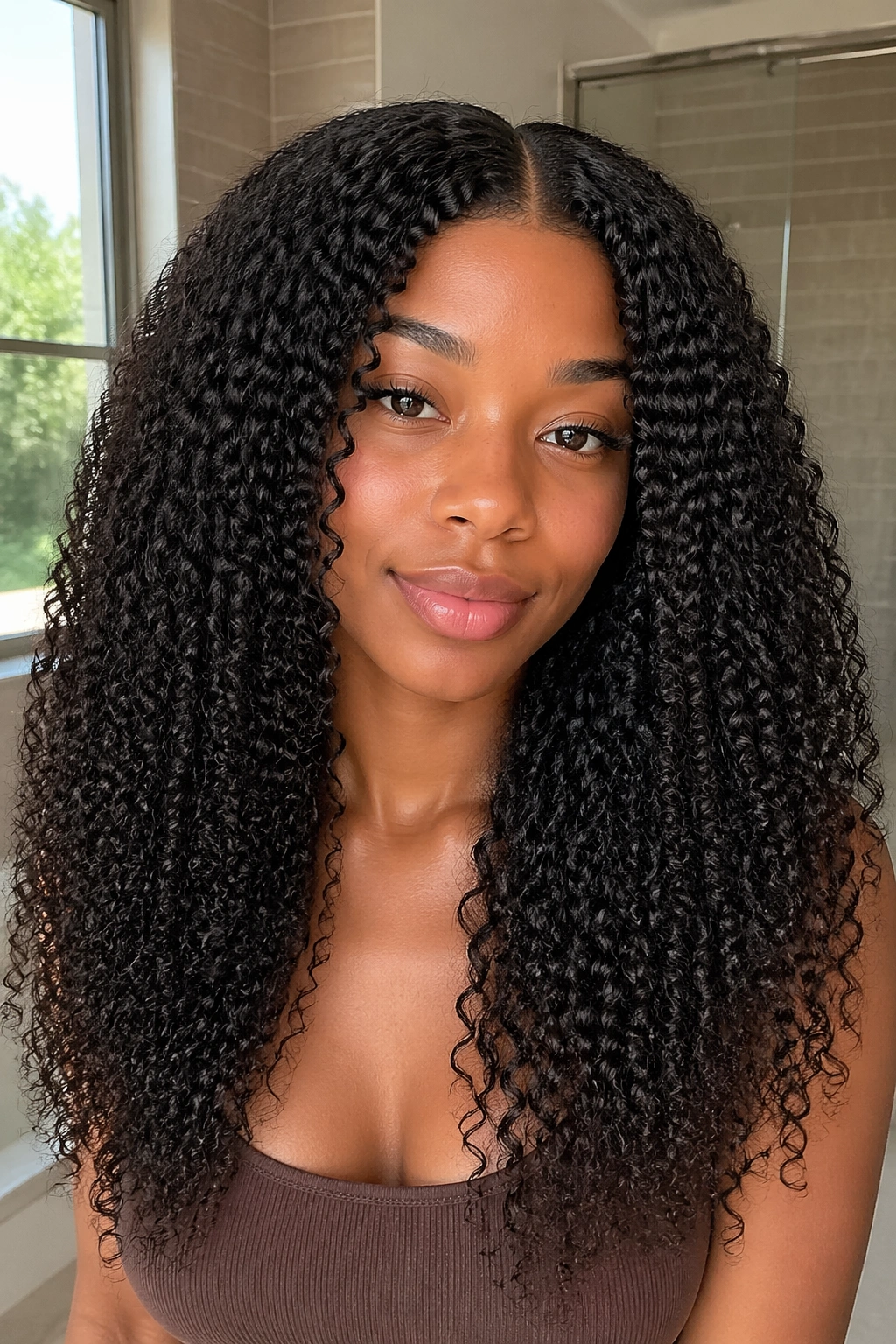
A side sweep is what I reach for when the goal is length first, drama second, and easy movement third. The hair falls over one shoulder, the layers show their shape, and the whole look feels long without trying to prove it.
This style is especially good on Black women with dense curls because the sweep keeps the volume controlled on one side while still letting the hair look full. It also works with natural curls, extensions, or a blend of both. The face-framing layers keep the front from disappearing into one heavy sheet of hair, which is a mistake I see a lot with long textured styles.
If you want the style to stay neat, pin the heavier side just behind the ear with a hidden bobby pin or a small decorative clip. If you want more softness, let the front curl fall forward a little and keep the part shallow. Either way, the shape should feel intentional.
Long curly hair looks best when it moves like it belongs there. A side sweep does that without much fuss, and that’s why it stays useful long after trendier shapes get tired.
Long curly hairstyles for Black women do not have to choose between length and character. The strongest styles give you both: shape at the crown, movement through the ends, and enough texture to keep the hair from looking flat or overworked.
If you’re deciding where to start, pick the style that matches your daily routine before you pick the one that looks biggest in a photo. That single choice saves a lot of regret later. A gorgeous curly style that you can’t maintain becomes a chore fast, and nobody needs that.
