



Curly hairstyles work best when they stop trying to behave like straight hair. That sounds obvious, but it’s the mistake behind so many bad cuts: too much weight left at the bottom, not enough shape through the crown, and bangs that sit in the wrong place once the curl shrinks up.
A good curl cut does a strange little magic trick. It can make thick hair look lighter without thinning it into fuzz. It can make fine curls look fuller without turning them into a helmet. And it can turn the dreaded triangle into something that actually moves when you walk.
The part people miss most often is this: curls don’t sit where they’re cut. They spring, bend, tuck, and bunch in their own way. That means the same haircut can look flat, wide, or totally lopsided depending on where the layers land and how the curl pattern behaves when it dries.
Some of the best-looking styles here are low effort. Some need a good diffuser, a few pins, and a little patience. A few need a stylist who knows how to cut curl by curl. All of them work because they respect the shape of the hair instead of forcing it into a straight-hair template.
1. Long, Layered Curls
Long layers are one of those curly hairstyles that keep showing up because they solve a real problem. Heavy curls can drag themselves down into a shape that looks flat at the top and puffy at the ends, and layers fix that without stealing the length people are trying to keep.
Why the shape works
The shortest layers should usually live high enough to create lift through the crown, but not so high that the hair starts to frizz into a halo. That’s the sweet spot. Longer layers keep the ends from turning into one thick curtain, while the upper pieces give the whole cut room to breathe.
Ask for the cut to be done dry if your stylist knows how to work that way. Wet curls can hide a lot of length and shrink in strange places once they dry. Dry cutting shows the real shape. It also makes it easier to avoid over-layering, which is where a lot of long curly cuts go wrong.
- Best for medium to thick curls that need movement
- Works well with center parts or soft off-center parts
- Needs a light cream plus gel, not a heavy stack of products
Tip: If your ends always look bulky, ask for the last two inches to be dusted and refined instead of chopped straight across.
Long, layered curls are easy to wear loose, easy to braid later, and still look decent on day two. That’s the part I like most. They age well between wash days, which is not something every curly cut can say.
2. Curly Shag
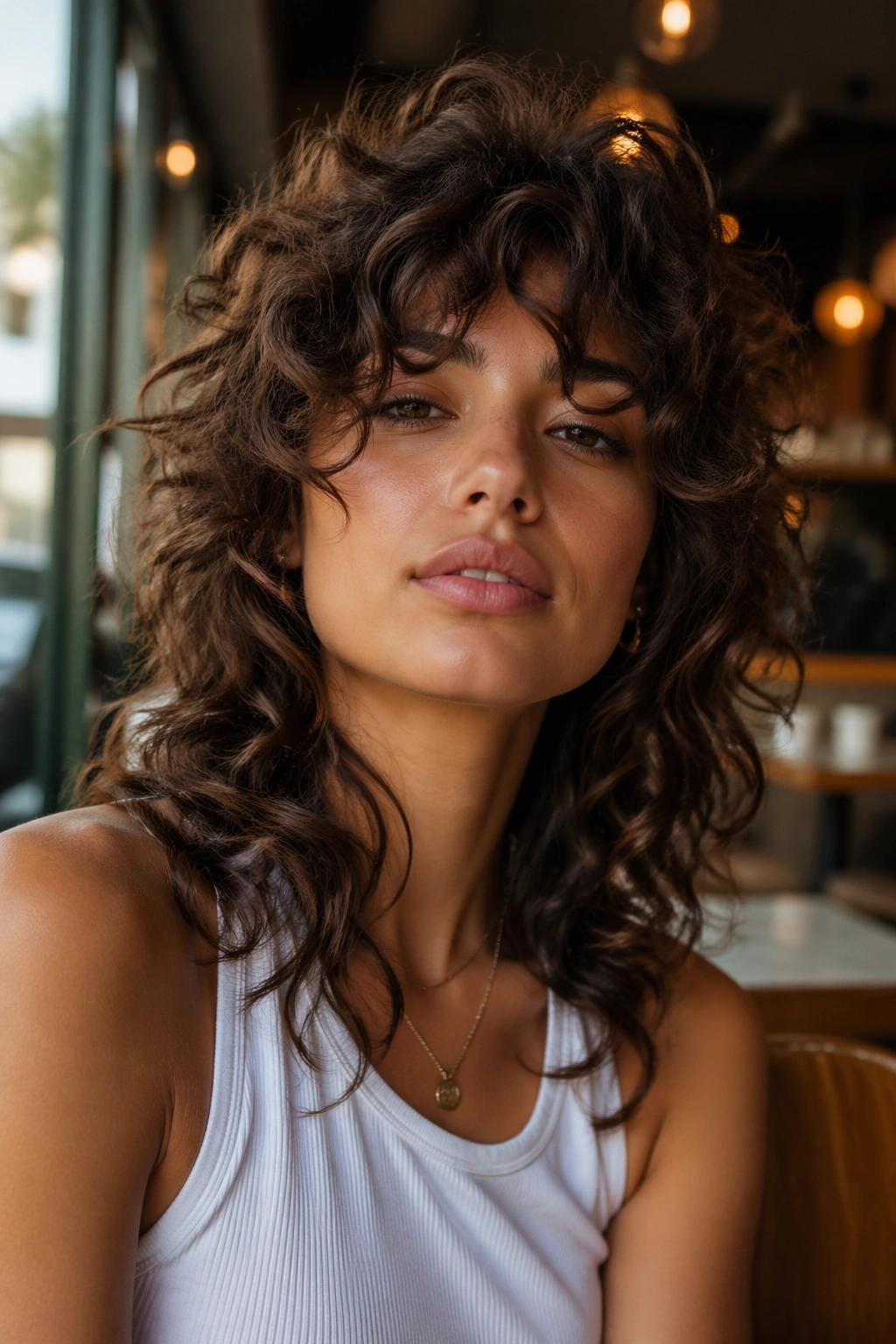
The curly shag is messy on purpose, and that’s exactly why it works. It takes all the things curls already want to do — lift, separate, bend, puff a little — and turns them into the point of the cut instead of a problem to fix.
That is a huge shift. A shag usually has shorter pieces around the crown, airy layers through the sides, and some kind of fringe or face frame that keeps the front from falling heavy. On curls, that combination creates a piecey shape that looks lived-in even when you spent only 10 minutes styling it.
What I like about a good shag is the lack of fuss. It doesn’t need a flat, polished finish to look intentional. In fact, too much smoothing can make it lose its edge. The cut wants a diffuser, a bit of scrunching, and maybe a touch of mousse at the roots if your hair tends to collapse.
People with medium-density curls tend to get a lot out of this one. Very fine curls can sometimes lose too much visual weight if the layers are too aggressive. Very dense curls can handle the chop better, especially if the stylist leaves enough length at the back to avoid a mushroom shape.
3. Curtain Bangs for Curls
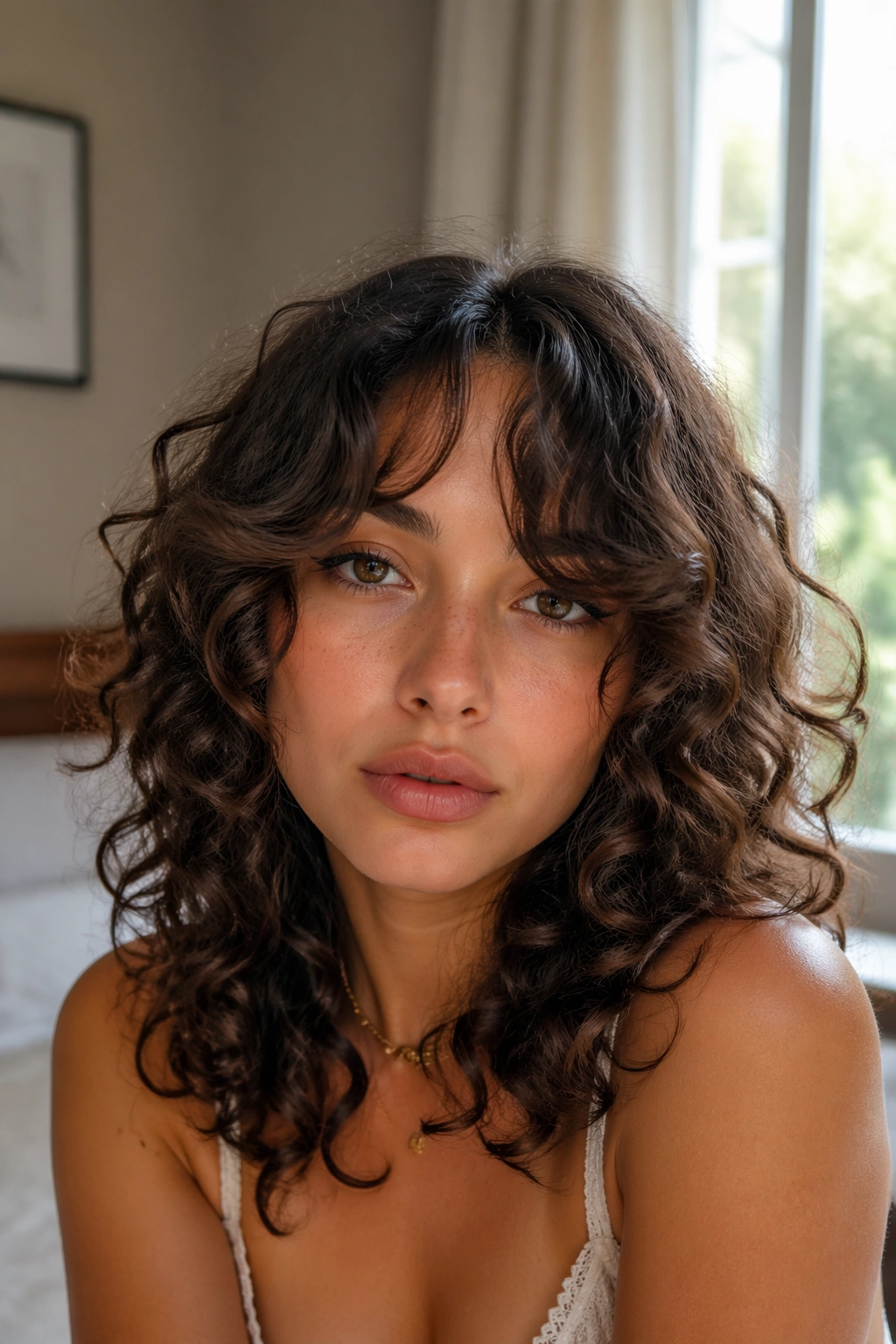
Can curls wear curtain bangs without turning into a face-framing disaster? Yes, if the bangs are cut with shrinkage in mind and styled with a little discipline.
Curtain bangs work because they open in the middle and bend away from the cheeks instead of dropping straight down like a blunt fringe. On curly hair, that soft split can be flattering in a way that full bangs often are not. It gives the face some shape without boxing it in.
How to keep the bend soft
The best version usually lands somewhere between the cheekbone and the jaw when stretched. That sounds long, and it is. Curls bounce up. A bang cut too short can end up in that awkward springy zone that sits above the brows and never quite settles.
- Ask for the bangs to be cut with the rest of the hair dry
- Use fingers, not a brush, to guide them into place
- Direct the front pieces outward while diffusing so the bend stays soft
- Skip heavy oils near the roots, or the bangs can separate in a greasy-looking way
This style is especially good if you like having something around your face but do not want the maintenance of a full curly fringe. It grows out gracefully, which matters more than people admit.
4. Chin-Length Curly Bob
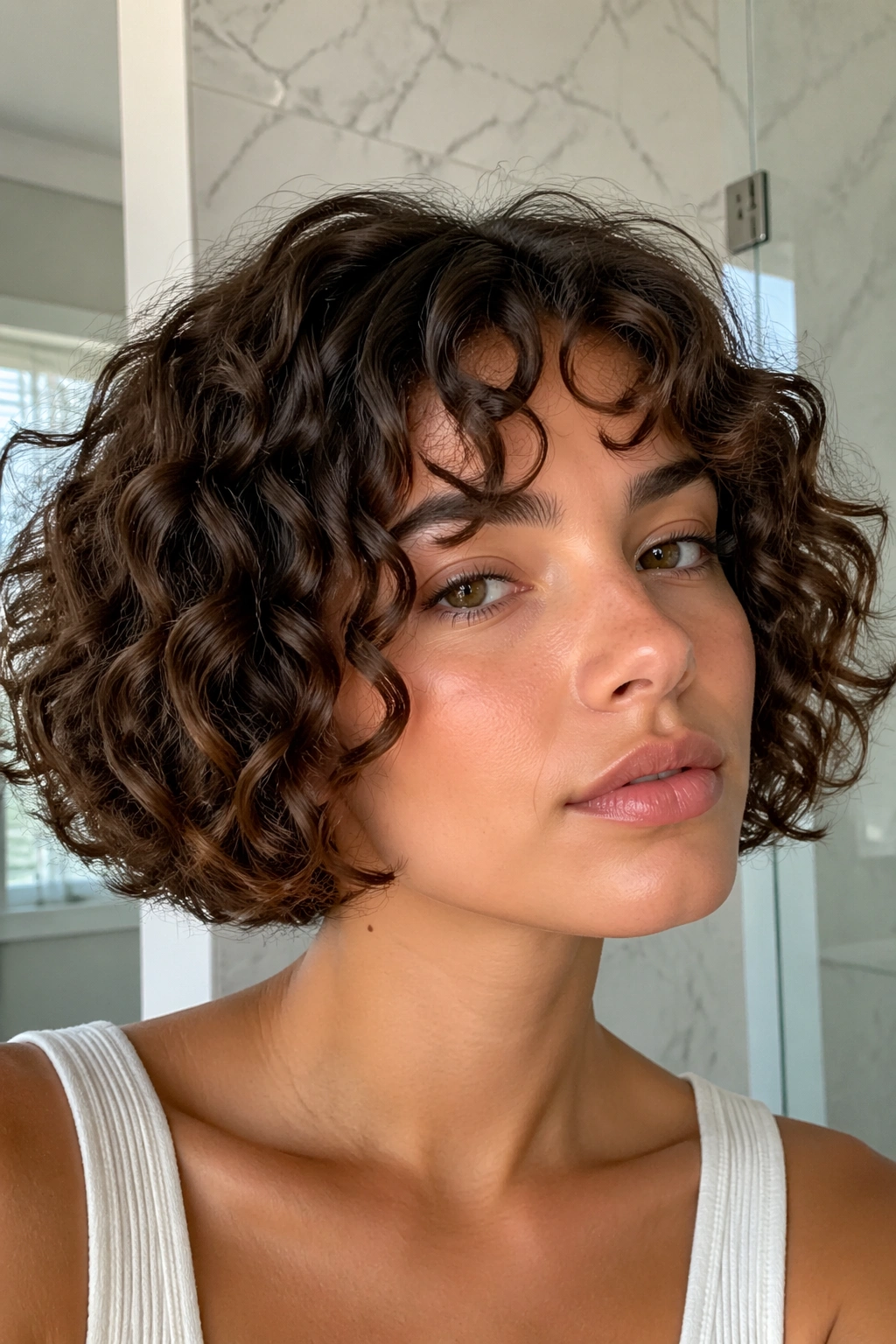
A chin-length curly bob is blunt in the best way. It gives the hair a clear line, and curls do a lot of the visual work for you after that.
This cut is especially nice on springy curl patterns because it creates a compact shape that doesn’t get lost under layers of length. The chin line also brings attention up toward the face, which can be useful if your hair tends to hide your jaw or feel heavy around the shoulders.
The catch is shrinkage. A chin-length bob on wet curls can dry several inches shorter, so a stylist who understands curly texture will usually leave a little extra room. That’s not hedging. It’s realism. Curls love to surprise people.
If you want the bob to look clean, keep the ends healthy and the shape tidy. A tiny bit of frizz is fine. A triangle at the sides is not. A diffuser on low heat helps, and so does clipping the roots at the crown while the hair dries to preserve height.
- Best for people who want a neat outline with movement
- Strong choice for loose ringlets and tighter spirals
- Needs trimming more often than a long layered cut
5. Rounded Afro
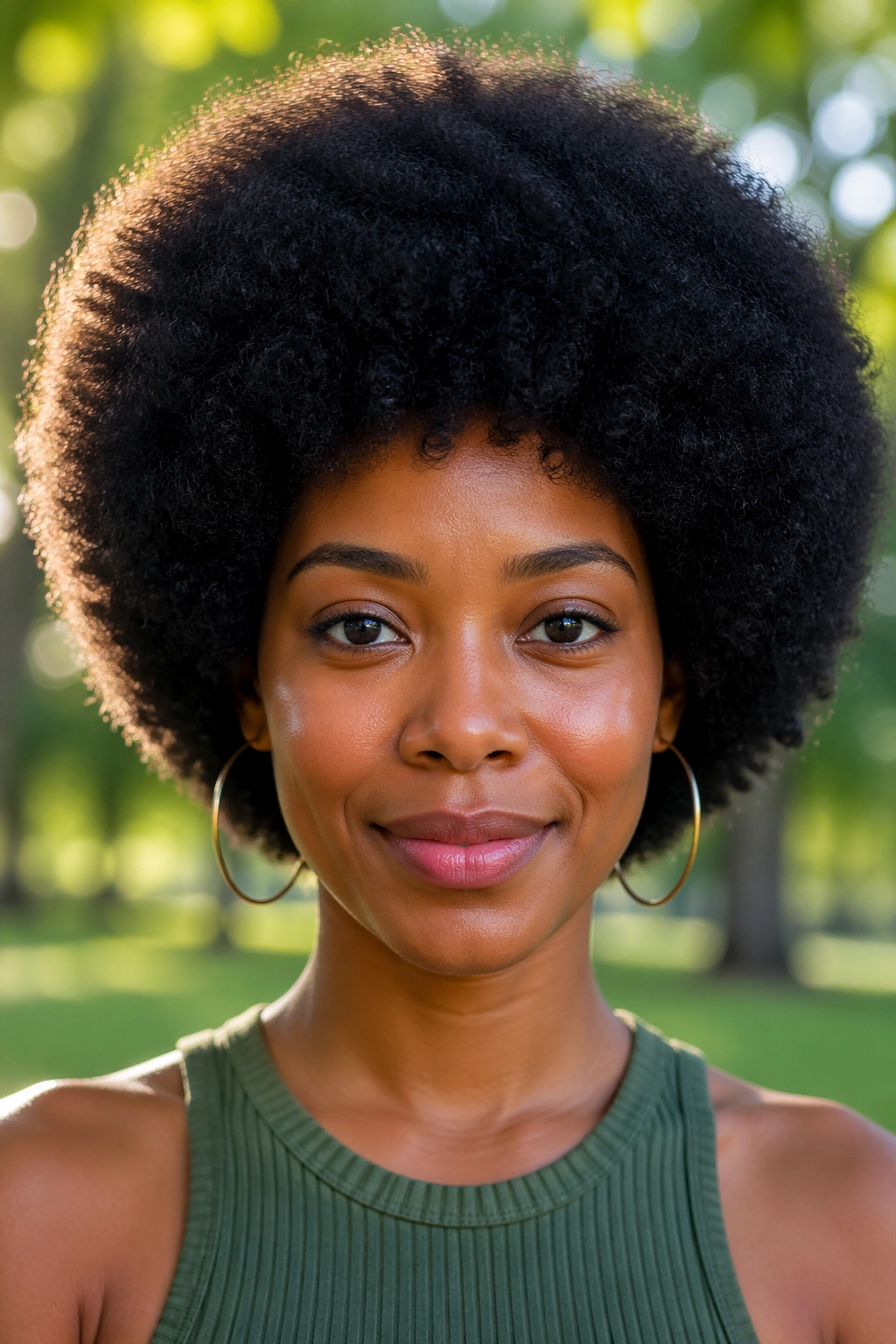
A rounded afro has a kind of quiet confidence that’s hard to fake. The silhouette is soft and full, but the edges are shaped enough to look deliberate instead of accidental.
The whole point of the style is balance. Volume should rise evenly around the head, not run wide at the cheeks or flatten at the crown. That rounded outline is what makes the cut feel polished. Without it, the shape can drift into a box or a triangle, and nobody wants that.
Moisture matters here. A dry afro can look dull and feel brittle, especially if the curl pattern is tight and compact. A leave-in conditioner, a cream with slip, and a little sealing oil at the ends help the shape stay plush without getting crunchy.
This cut looks best when the trim follows the head’s natural curve. That means the stylist should check the silhouette from the front, side, and back before calling it done. You can tell a lot by the back view.
One thing people forget: a good pick at the roots can make the shape look fuller without disturbing the curl definition along the outside layer. That tiny detail changes everything.
6. Wolf Cut for Curls
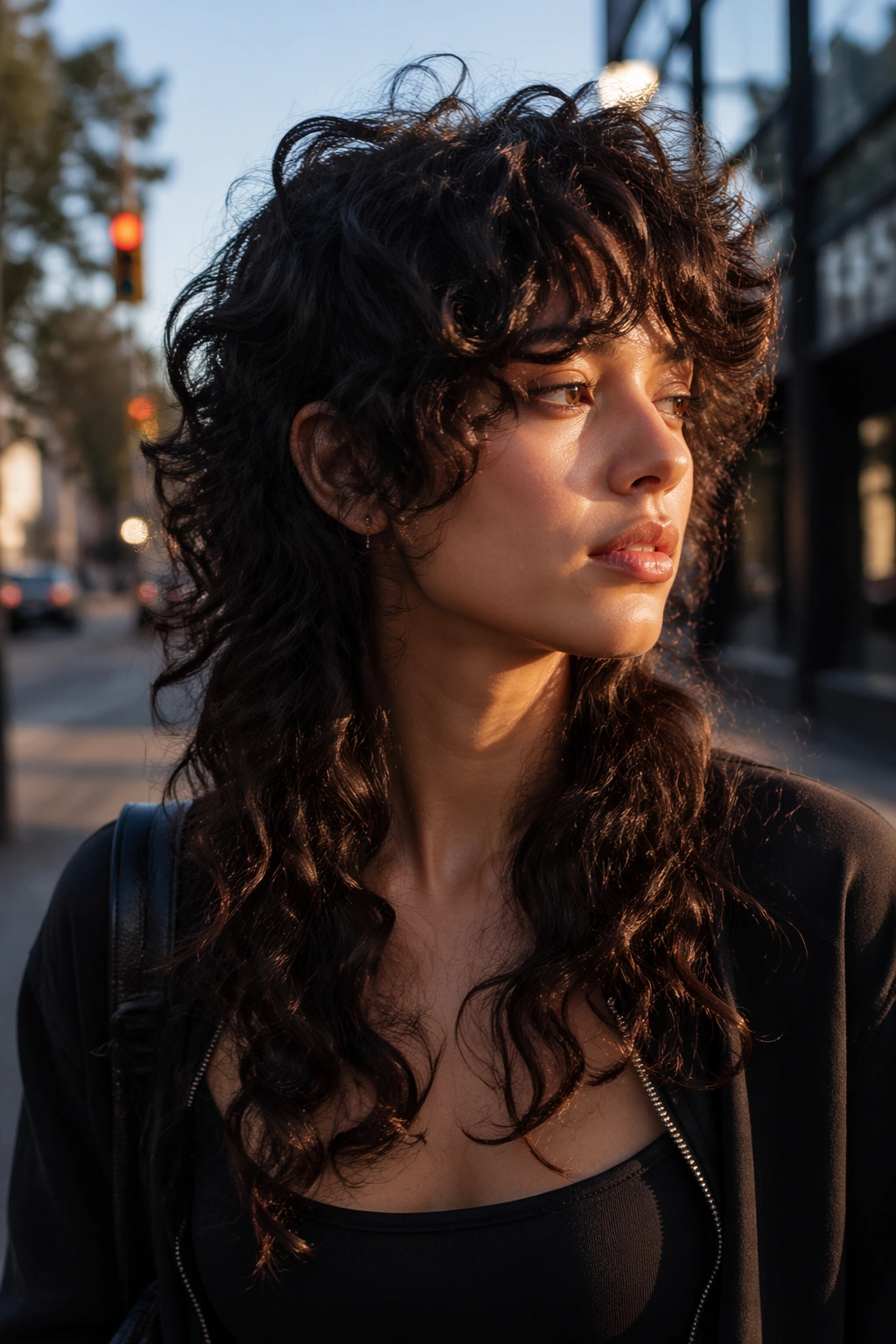
The wolf cut is the curly style for people who want edge without losing all softness. It borrows the choppy spirit of a shag, then pushes the contrast harder with shorter layers on top and longer, looser lengths beneath.
Why it feels different from a shag
A shag wants movement. A wolf cut wants attitude. The layers are usually more dramatic, and that sharper difference between the crown and the ends gives the style a bit of a wild silhouette. On curly hair, that can look fantastic if the density can support it.
Dense curls take well to this shape because the volume at the top keeps the haircut from collapsing. If your hair is finer, the same cut can look stringy unless the layers are handled gently. That’s the tradeoff.
A wolf cut works best when you do not mind a little unpredictability. Some curls will sit up higher than others. Some will kick out around the cheeks. Fine. That unevenness is part of the point.
- Best for medium to thick curls with decent density
- Nice for people who like a rockier outline
- Needs styling products that hold the top layers up without freezing them
If you want the look but not the maintenance, ask for a softer version with less dramatic disconnection. That keeps the spirit of the cut without making your morning routine annoying.
7. Curly Pixie Cut
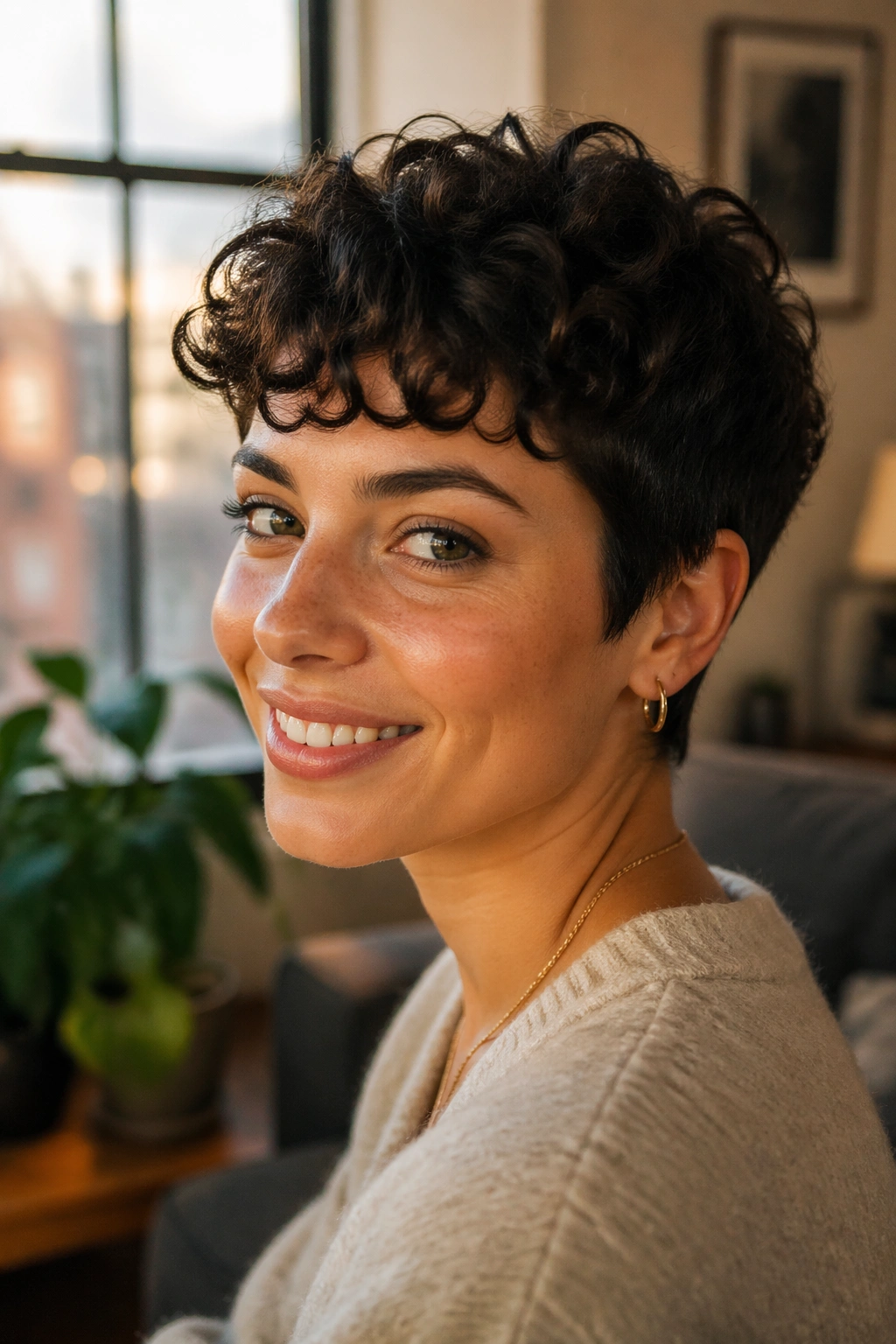
Short curls are not a compromise. A curly pixie can be one of the sharpest, most flattering cuts in the whole bunch.
The trick is keeping enough length on top for the curl pattern to show itself. If the top gets cut too short, the curl can collapse into a fuzzy texture with no shape. If the sides and back are neatly tapered, though, the top gets to do the interesting work.
Styling the top without overdoing it
A small amount of curl cream or light gel is usually enough. Too much product can make the top heavy, and short curls show that weight fast. A fingertip-sized amount is a good place to start, then add more only if the hair feels dry.
The nice thing about a pixie is how much face it shows. Eyebrows matter. Earrings matter. So does the line of the cheek and jaw. The haircut becomes part of the whole look instead of hiding behind the hair.
This one does need trims. Not every six months. More like every few weeks if you want the outline to stay clean. That’s the price of short hair, and it is worth saying out loud before anyone gets dreamy about it.
8. Shoulder-Length Lob
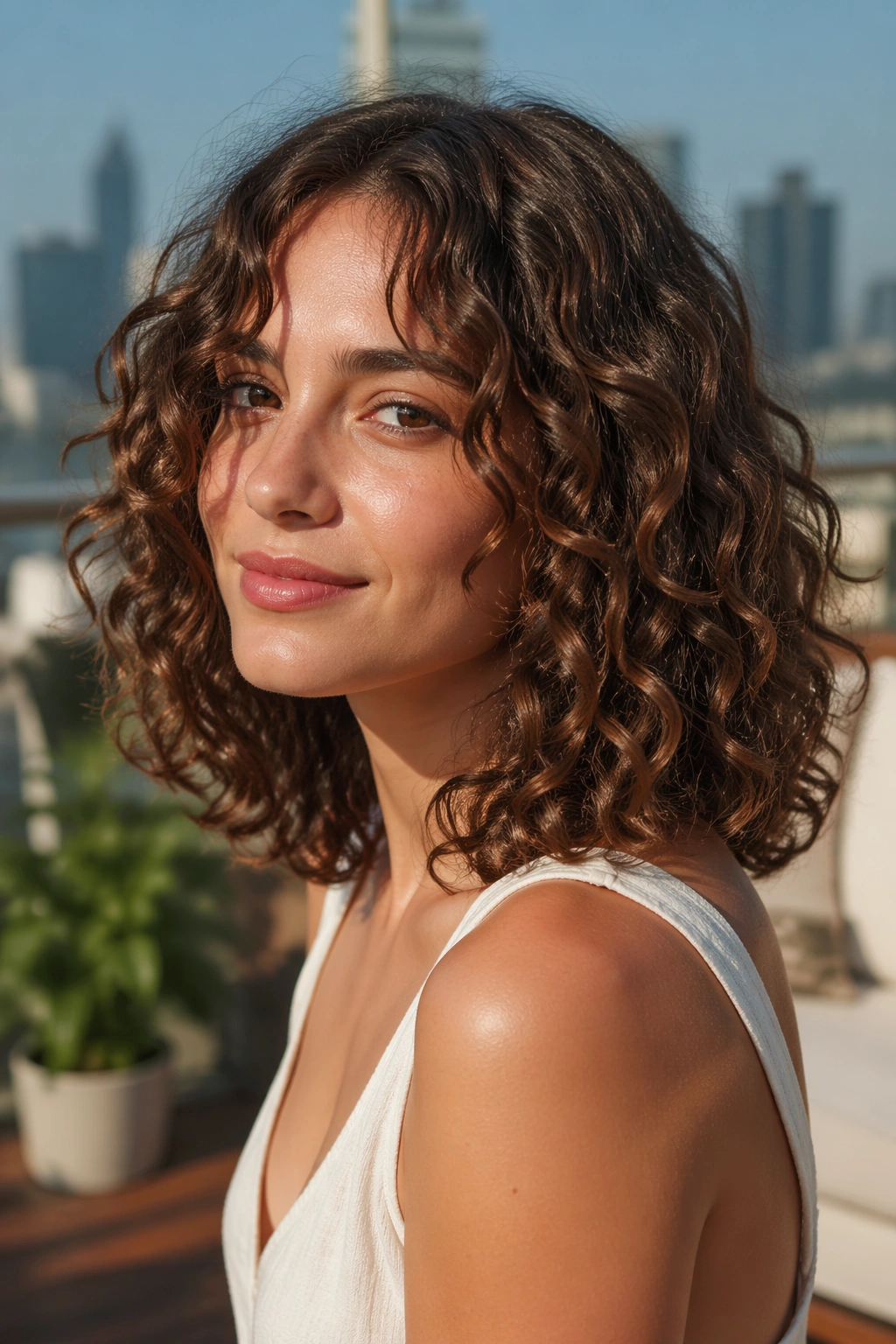
If you catch your hair under jacket collars or on purse straps all day, a shoulder-length lob might be the most useful curly hairstyle on this list.
It sits in a sweet spot. Long enough to feel like length, short enough to keep the curl pattern from getting dragged down by its own weight. That makes it a strong choice for people whose curls lose definition when they get too long.
The lob also behaves well with a center part, a soft side part, or a clipped-back front section. It’s flexible without looking like a placeholder. That matters. Some cuts only look good on hair day. This one can survive a normal life.
When it’s cut properly, the lob should skim the shoulders or land just above them, depending on shrinkage. If your hair is prone to fluffing at the ends, ask for subtle internal layers rather than a full layered chop. That keeps the silhouette smooth.
It’s the kind of haircut that works with little effort, which is partly why people keep coming back to it.
9. Face-Framing Layers
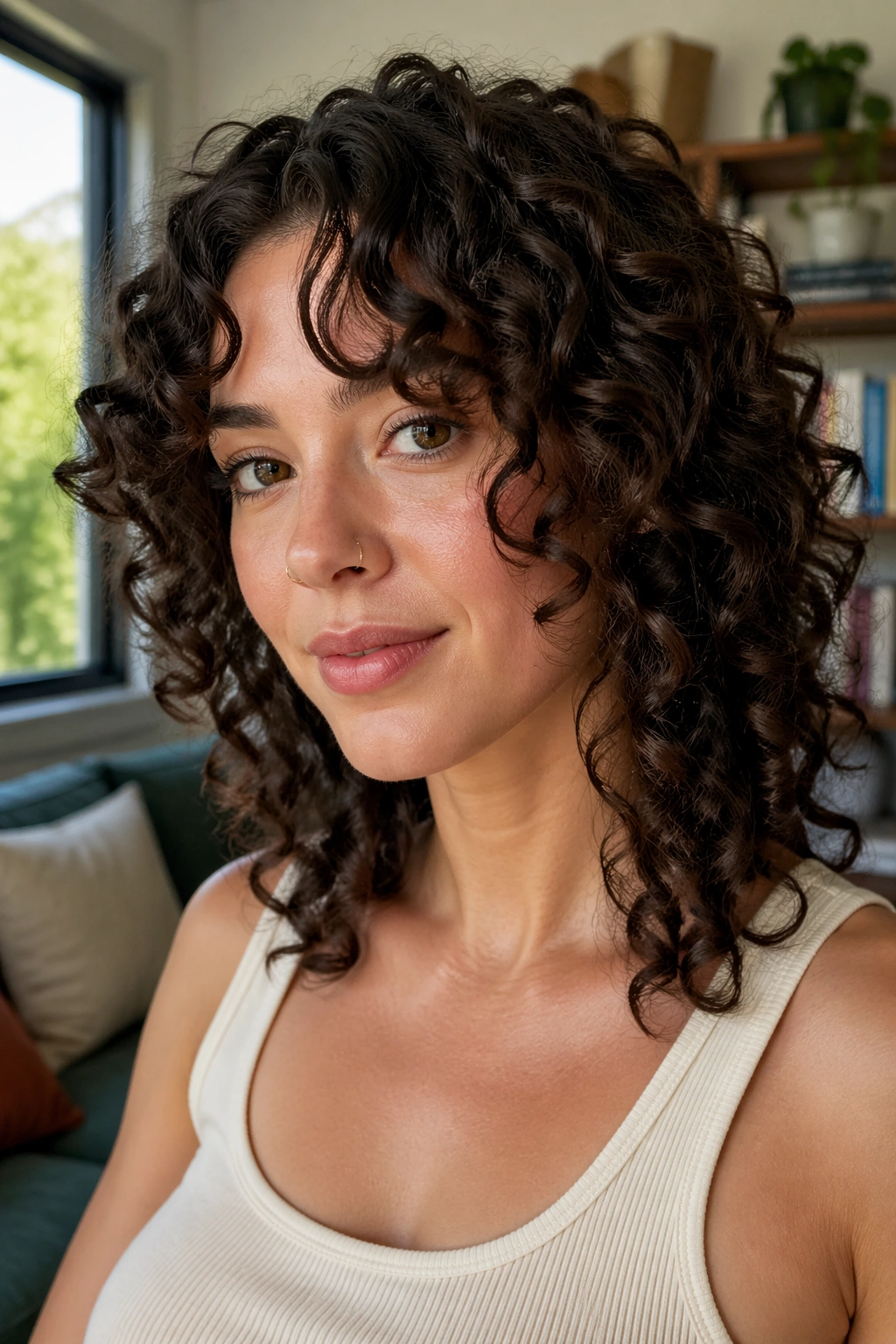
What if you do not want a full haircut change, only a small one that still makes your curls look fresh? Face-framing layers are the answer.
These are the pieces that start near the cheekbones, jaw, or chin and angle down into the rest of the length. On curly hair, that little bit of shaping can completely change how the front of the style sits. It draws attention upward and stops the sides from hanging like heavy drapes.
The best thing about face-framing layers is how low-risk they are. You can keep the overall length and still get a visible change. That makes them especially good for people growing out bangs, repairing a heavy shape, or testing whether they want more movement without losing inches everywhere.
A good stylist will cut these layers to work with the curl’s bounce, not against it. That usually means the front pieces are left a touch longer than you think they should be. Curl shrinkage has a way of correcting optimism.
If your hair feels “samey” but you do not want a dramatic chop, this is the move.
10. Pineapple Updo
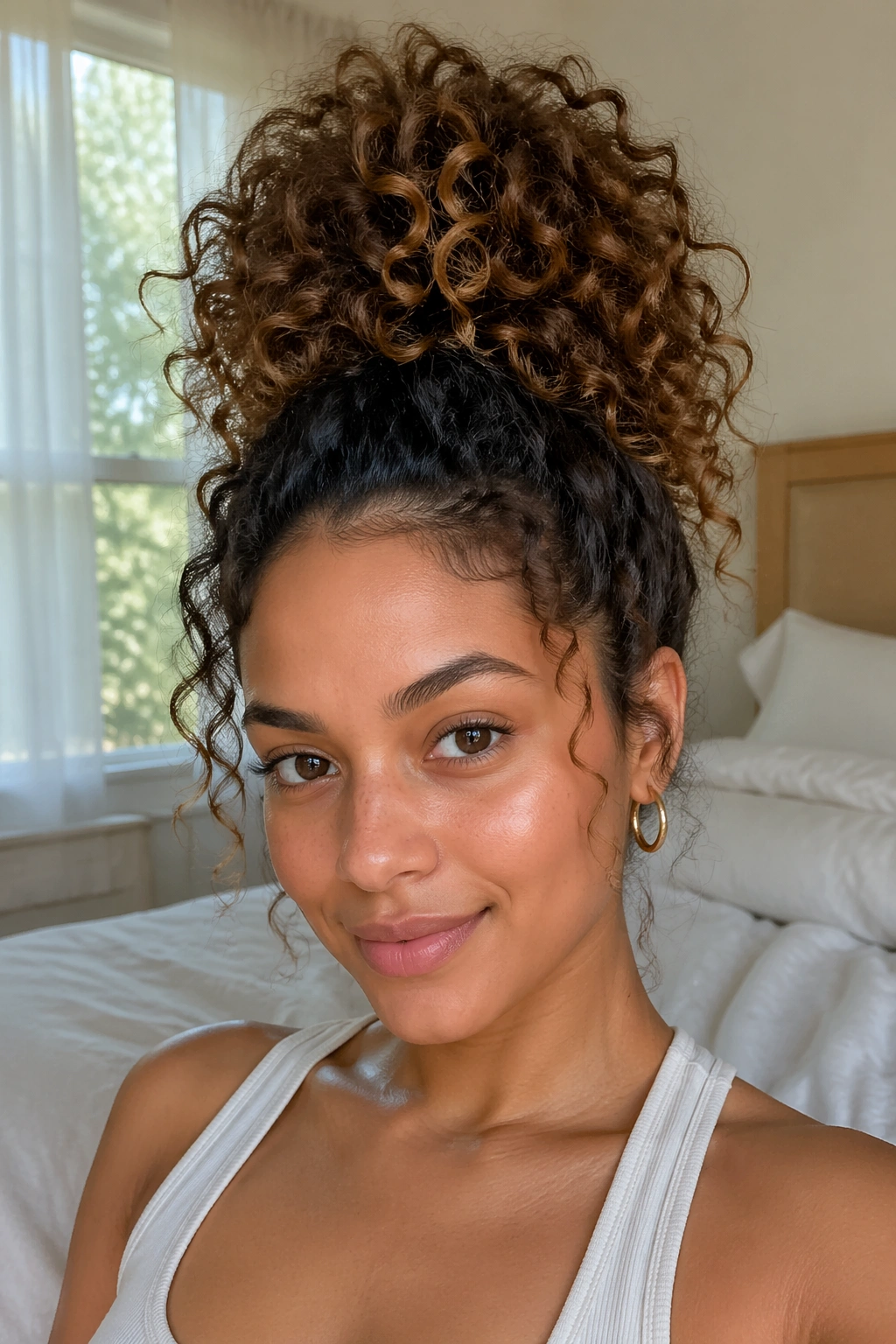
The pineapple is one of those curly hairstyles that looks casual but does a lot of work. It keeps curls lifted high on the head so they do not get crushed, rubbed flat, or bent into odd shapes overnight.
Why people keep using it
Because it works. A loose, high ponytail with a silk scrunchie or soft coil keeps the curl pattern protected while still showing off length and volume. It’s a sleep style, a gym style, a quick errand style, and sometimes a lazy Sunday style when you want your hair off your neck.
The high placement matters. If the pony sits too low, curls at the back get flattened. If it sits too tight, the crown gets tugged and the roots look rough. The sweet spot is high enough that the curls fall forward and pile softly instead of being squeezed.
- Use a satin or silk scrunchie to reduce crease marks
- Leave a few curls out at the hairline if you want softness
- Fluff the roots in the morning with your fingers, not a brush
It’s not fancy. That’s part of the charm. A good pineapple can make second-day curls look intentional instead of tired.
11. Half-Up, Half-Down Curls
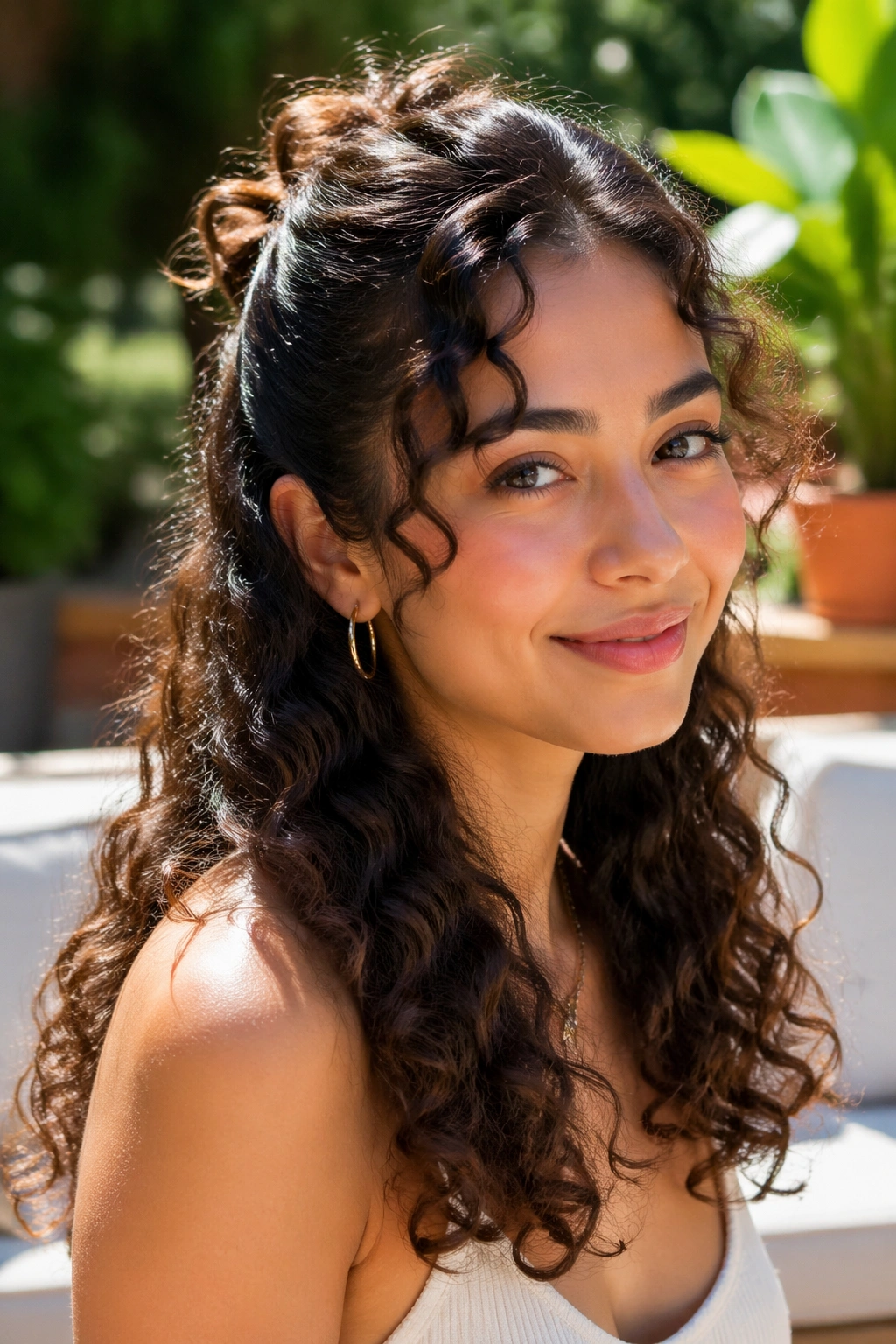
The half-up, half-down style survives because it solves two problems at once. You get the lift and control of an updo, and you still keep the shape and movement of the curls hanging down.
That balance makes it useful for almost everything: working from home, dinner, a casual event, or a day when the top layer is a little flatter than the rest and needs help. A small claw clip can do more than people expect here. So can a twisted top section pinned loosely at the back.
The key is not pulling the top section too tight. Curly hair looks better when the crown stays a little full. If you flatten the top all the way down, the whole style starts to feel stiff. A small lift at the roots keeps it alive.
This style also gives you a chance to show off earrings and face-framing pieces without dealing with all the hair at once. It feels easy, but it still reads as put together.
And that’s why it keeps winning.
12. Curly Bangs With Long Length
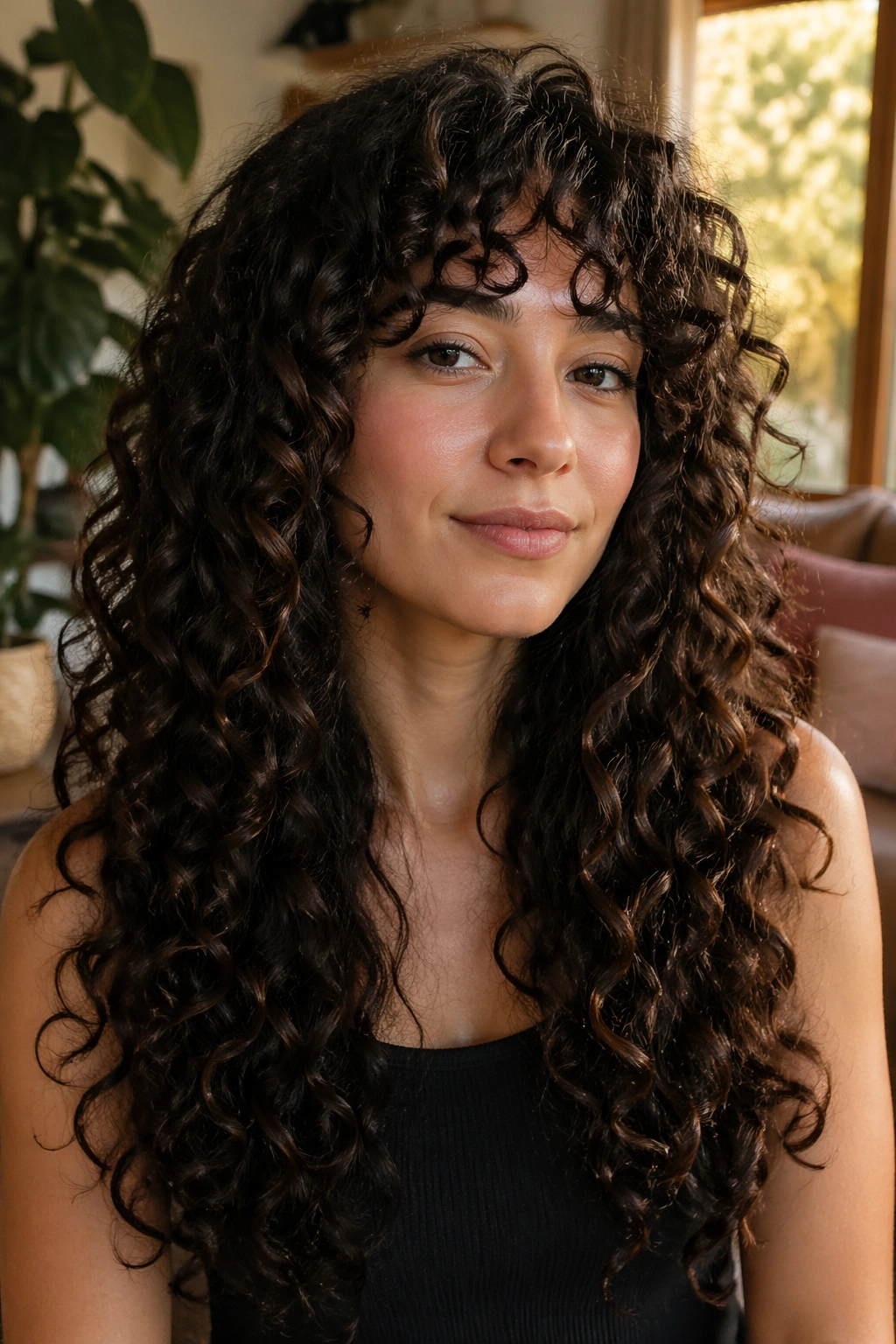
Curly bangs with long hair are bolder than curtain bangs and softer than a blunt fringe. They sit somewhere in the middle, which is exactly why they’ve become such a strong choice for people who want fringe without chopping off the rest of the length.
A fuller curly bang usually works best when the hair around it stays long enough to balance the front. If the bangs are too sparse, they can disappear into the rest of the curls. If they are too thick without enough side support, they can sit like a heavy curtain and close off the face.
The maintenance is real. You have to keep the bangs hydrated, finger-coil a few pieces if they split weirdly, and sometimes rewet just the front section after sleep. That sounds like a nuisance, and on some days it is. But the payoff is a face frame with actual personality.
What makes them different
They read as more fashion-forward than curtain bangs. They also work well on tighter curl patterns where the fringe can form a full, rounded shape on its own. If you want something that feels intentional and a little daring, this is the lane.
13. Tapered Cut
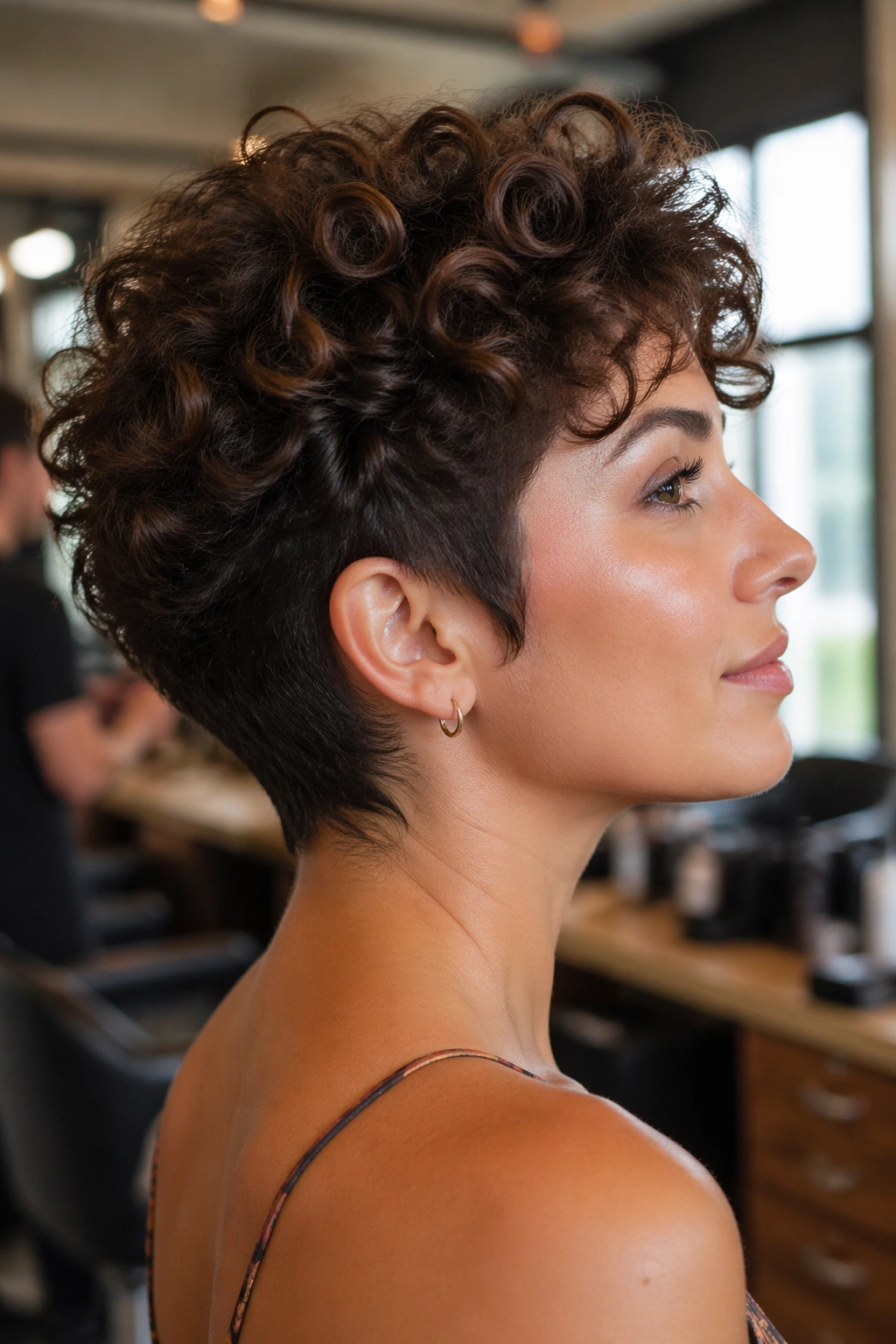
Three inches at the neck can change the whole silhouette. A tapered curly cut uses that idea well.
The back and sides are kept shorter while the top stays fuller, so the eye goes upward and the shape feels clean around the edges. On coils and tightly sprung curls, that can create a beautiful profile. It also keeps the nape from puffing into a bulky block, which is the thing many people hate about short curly hair.
Where the volume should live
The volume belongs where your face needs it most. Usually that means the top and crown. The sides can be close, but not shaved flat unless you want a much sharper look. A soft taper gives the shape room to breathe.
- Best for tight curls and coils
- Needs regular shaping around the neck and sides
- Works with creams, but often looks best with a light gel on the top layer
- Pairs well with earrings, bold glasses, and clean neckline lines
A tapered cut can look soft or sharp depending on how it’s finished. I prefer the softer version for most people. It grows out better, and it doesn’t turn into a maintenance headache the second it starts to lengthen.
14. Curl-by-Curl Dry Cut
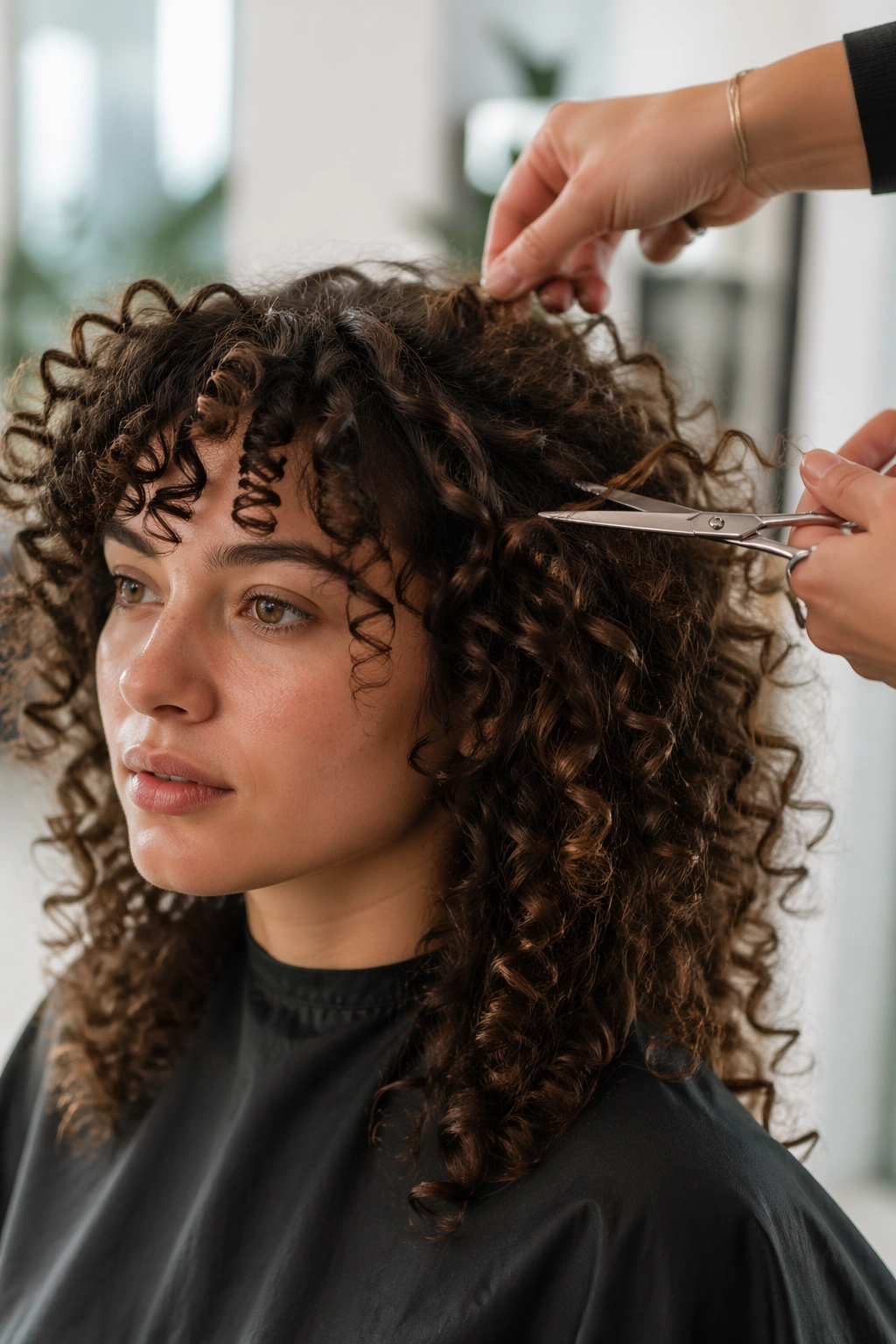
A curl-by-curl dry cut is not glamorous to explain, but it is one of the most useful ideas in curly hair. Each curl gets cut while dry, in its natural state, so the stylist can see how it really falls instead of guessing from stretched wet strands.
That matters because curly hair lies. Not maliciously. It just changes shape as it dries. A wet strand can look long and obedient, then spring up three inches later and ruin the plan. Dry cutting avoids a lot of that guessing.
The downside is patience. This is not the fastest haircut in the chair. It takes more time, and it takes a stylist who is actually comfortable reading curl patterns, not just claiming they are. Still, when it’s done well, the shape tends to grow out more cleanly.
This method is especially helpful if one side of your hair behaves differently from the other, or if your curl pattern changes from the front to the back. That kind of asymmetry is normal. Dry cutting handles it better than a blunt wet trim.
If your curls always seem to “wake up” differently after a salon visit, this is probably the reason they were cut the wrong way.
15. Side-Part Glam Curls
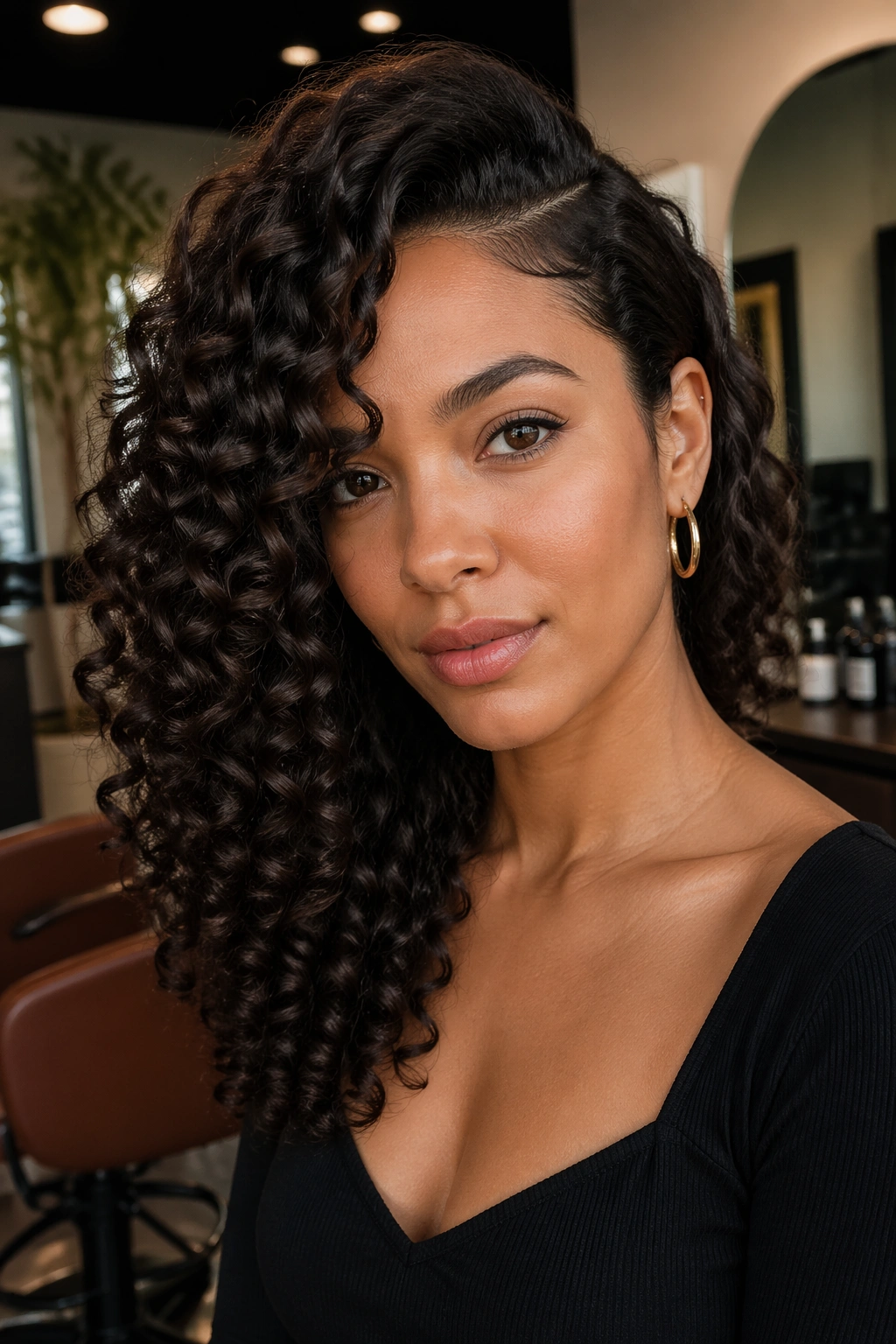
A side part changes more than people think. Shift the part a few inches, and the entire curl shape starts reading softer, taller, and a little more polished.
This style works especially well when one side is tucked behind the ear and the other side falls in a fuller sweep across the forehead and cheek. That asymmetry gives the hair some drama without needing extra length. It’s simple, but not plain.
How to get the sweep
Start the part while the hair is still damp so the curls settle in the right direction. Then encourage the top section with a little curl cream or mousse at the roots, and diffuse on low heat if you want the lift to hold. A couple of rooted clips can keep the front from collapsing while it dries.
Side-part curls are useful for events, photos, dinners, or any day you want your hair to look more finished than a middle part tends to. They also work well on second-day curls that need a reset but not a full wash.
The small detail that matters most is the tuck. One side behind the ear changes the whole balance. Tiny move. Big payoff.
16. Braided Crown on Curls
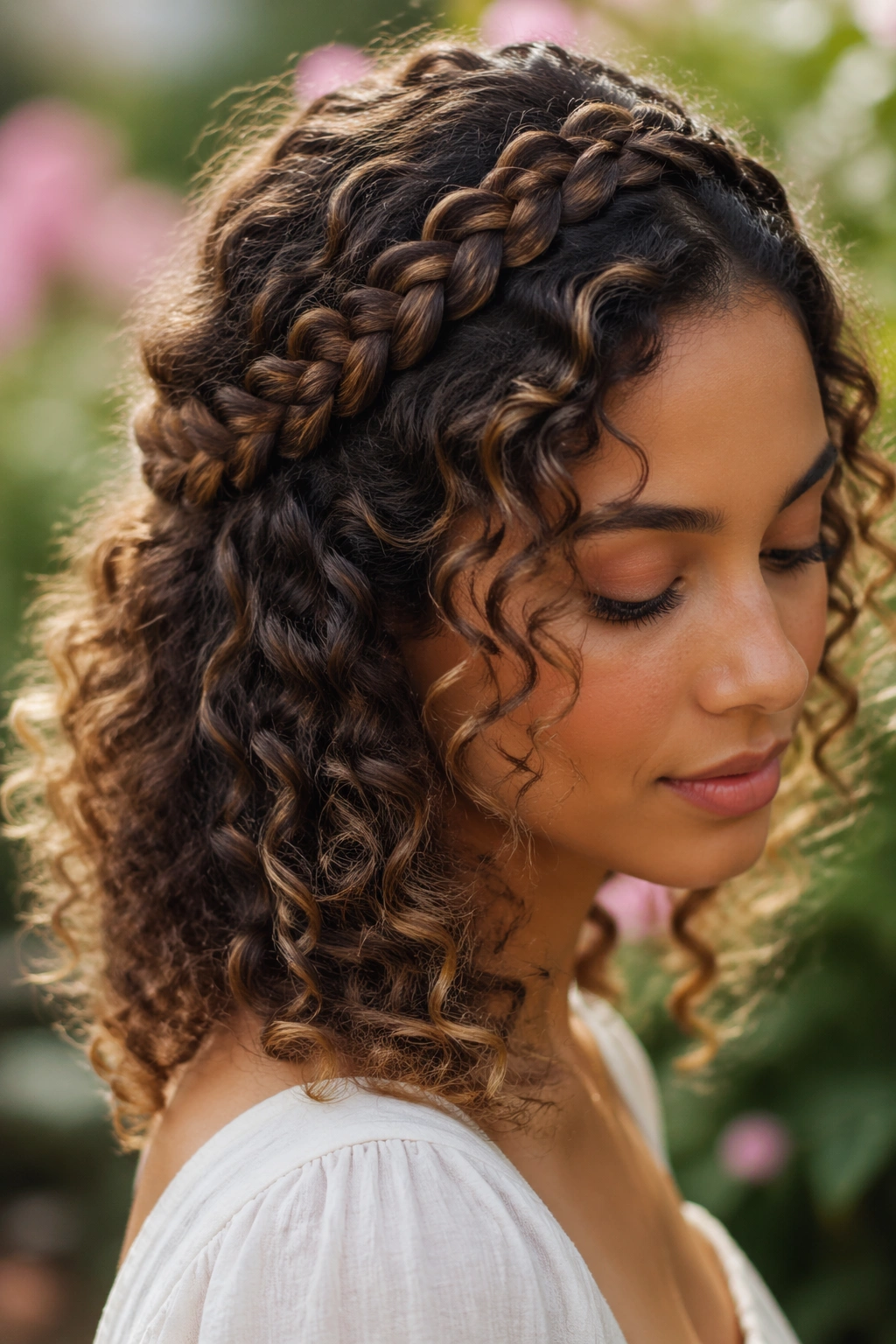
A braided crown gives curly hair structure without hiding the texture. That’s the appeal. You keep the curls visible, but you also get a framed shape around the head that feels neat and a little romantic without being fussy.
I like this style most on medium to long curls, especially when the front pieces need control and the rest of the length is still worth showing off. A loose braid along the hairline or two small braids wrapping back into the crown can keep the face open while the back stays curly.
The braid should not be tight. Tight braids on curly hair can leave the hairline flattened and the texture frayed at the edges. A little looseness makes the style look more natural and gives the curls around it space to keep their own shape.
Use a few hidden pins and a light mist of water if the braid starts to split while you work. That tiny bit of moisture helps the strands lie down without getting slick.
This one is especially good on days when your curls are a little uneven but still worth wearing out.
17. Messy Bun With Tendrils
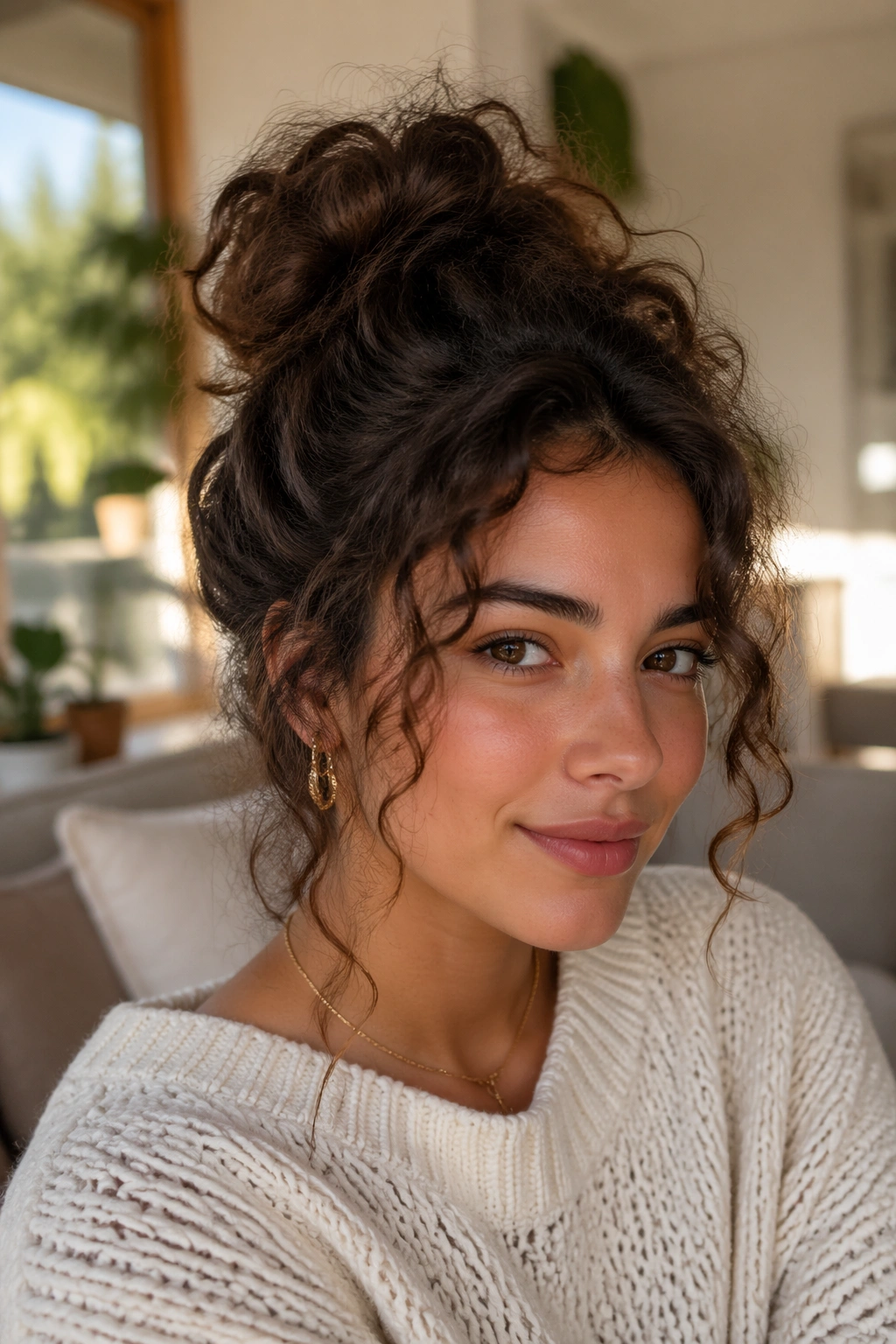
A messy bun on curly hair is only messy if you do it badly. Done well, it looks soft, lifted, and a little effortless — which is different from lazy, and better.
The trick is to keep the bun high enough to show the curl pattern at the ends and loose enough that the crown does not get flattened into a helmet. A few face-framing tendrils soften the whole thing. Without those pieces, the style can look severe.
Use a coil-friendly elastic or a soft scrunchie, then pin the bun in place so it doesn’t sag under the weight of the curls. One pin at the base is rarely enough. Two usually do the job. Maybe three if your hair is dense.
This style is a favorite for humid days because it keeps the hair controlled while still letting the curl texture show. You can also rough it up a little with your fingers after it’s set, which helps it look less like you tried too hard.
Messy buns are one of the few curly styles that improve when they are not perfect.
18. Defined Spiral Curls With Barrettes
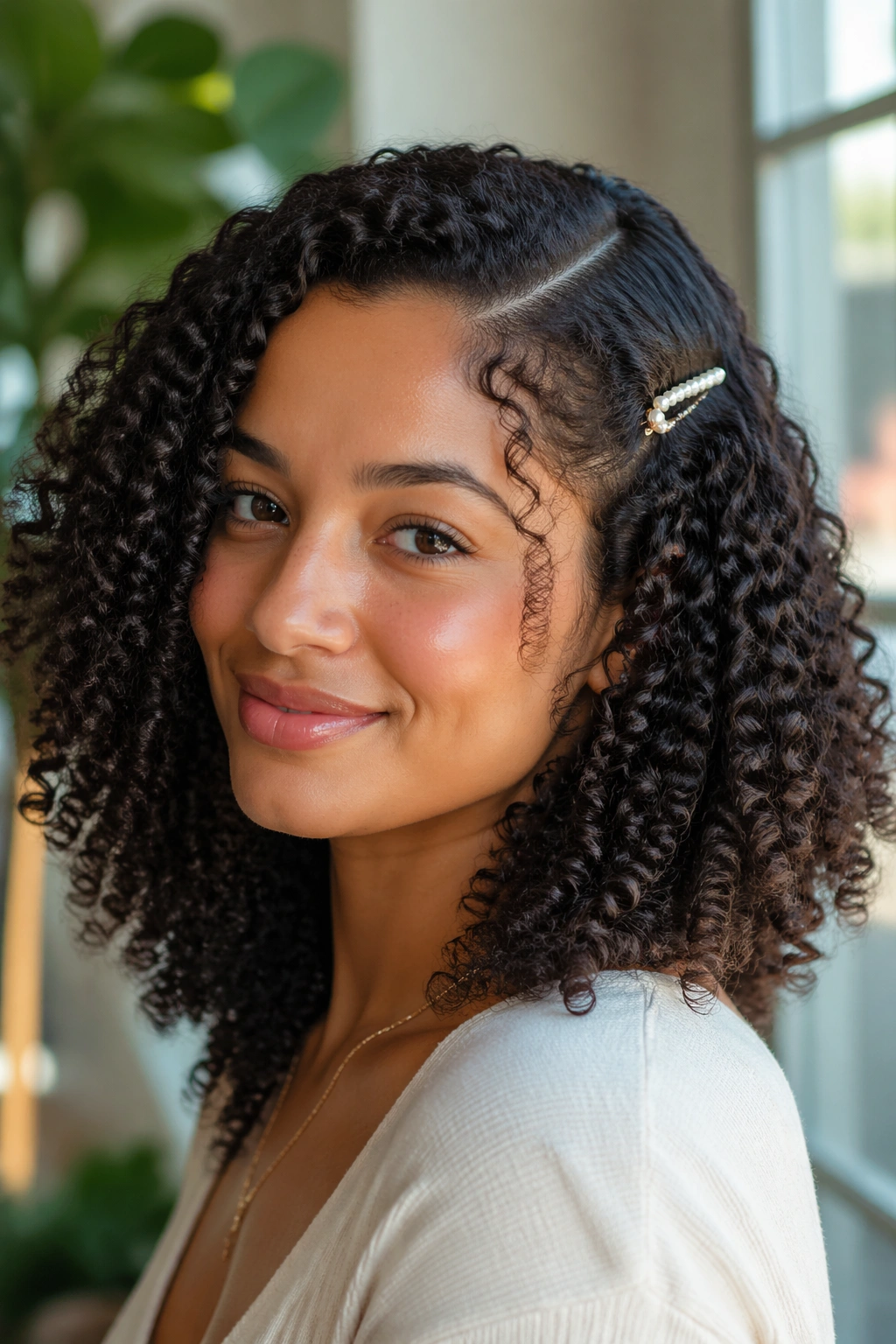
A single barrette can change the read of a whole curly style. That’s the fun part here.
Defined spiral curls look especially sharp when the curls are separated just enough to show their shape, then tucked with a clip or barrette near one temple. It gives the style a little structure and stops the front from dropping into the face. The accessory should support the curls, not fight them. A small metal clip or a tortoiseshell barrette usually works better than something huge and heavy.
What makes the style stand out
The curls themselves need to be defined first. A good gel cast, a careful scrunch, and enough drying time to avoid frizz are the backbone of the look. After that, the accessory acts like a frame.
- Works well on short and medium curly lengths
- Nice choice for day-two curls that need a lift
- Looks sharper with a side part or deep side part
- Best with one statement clip rather than three competing ones
This is one of those styles that feels simple until you try it without enough definition. Then it falls apart fast. The structure matters.
19. Wet-Look Curly Style
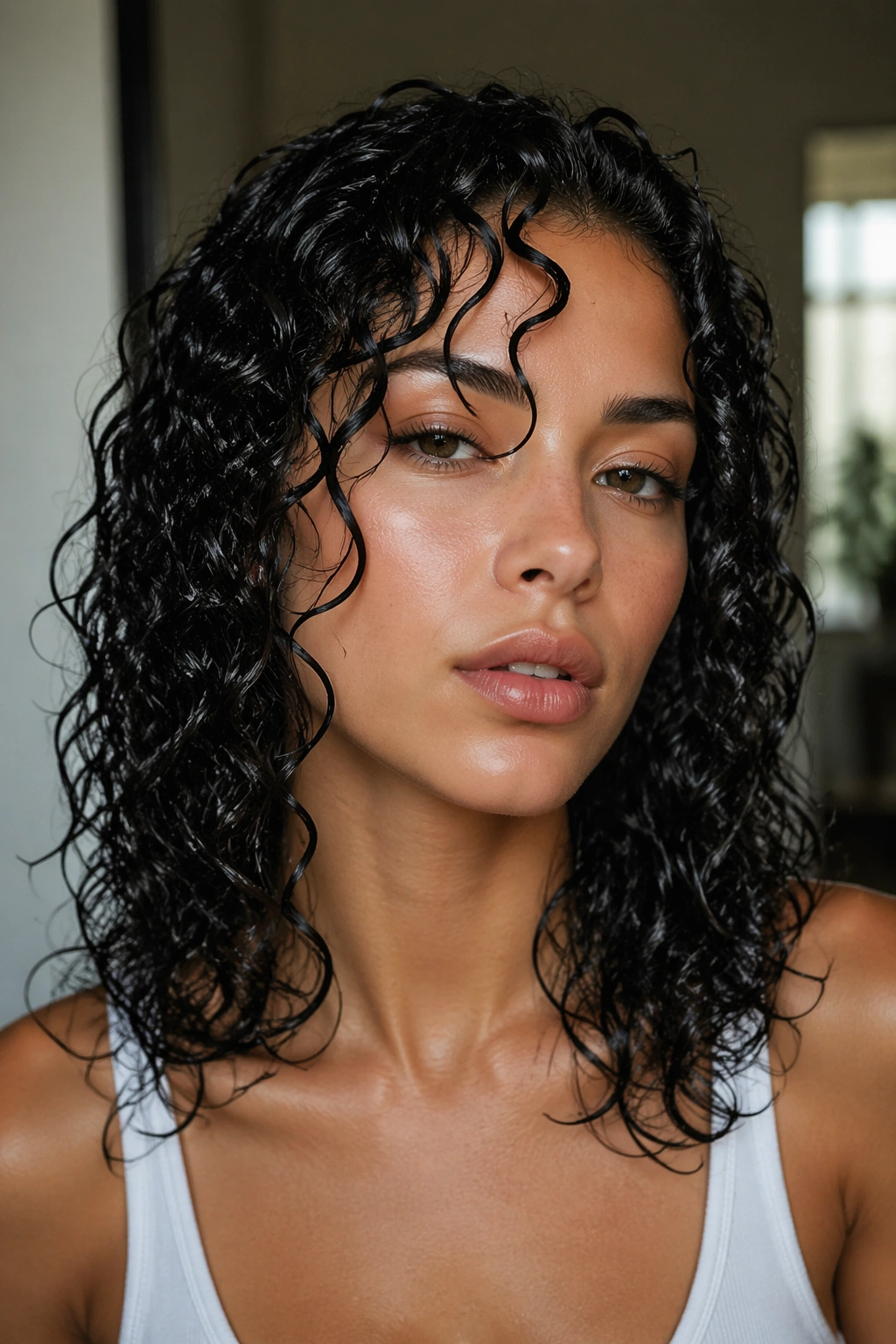
Wet-look curls are not the same thing as greasy curls. That distinction matters.
The style depends on shine, separation, and a little drama at the root. You load the hair with water, smooth in gel while the strands are still damp enough to move, and let the curls dry into that sleek, glossy finish. On the right texture, it looks sharp and modern. On the wrong product balance, it can get flaky or stiff fast.
The science behind the shine
Water is doing most of the work. The product is there to lock the shape in place. If the hair starts too dry, the gel sits on top instead of distributing evenly, and that’s where flakes and clumps show up. Soaking wet hair gives you a cleaner finish.
This style suits tighter curls and coils especially well because the pattern stays visible even when it’s coated. Looser curls can wear it too, but they need a lighter hand or the strands lose their bounce.
A little serum can go on the ends after the gel sets, but not much. Too much oil breaks the crispness and turns the whole thing limp.
It’s a look with attitude. That’s the point. If you want soft and fluffy, skip it. If you want sharp edges and shine, it delivers.
20. Two-Strand Twist-Out
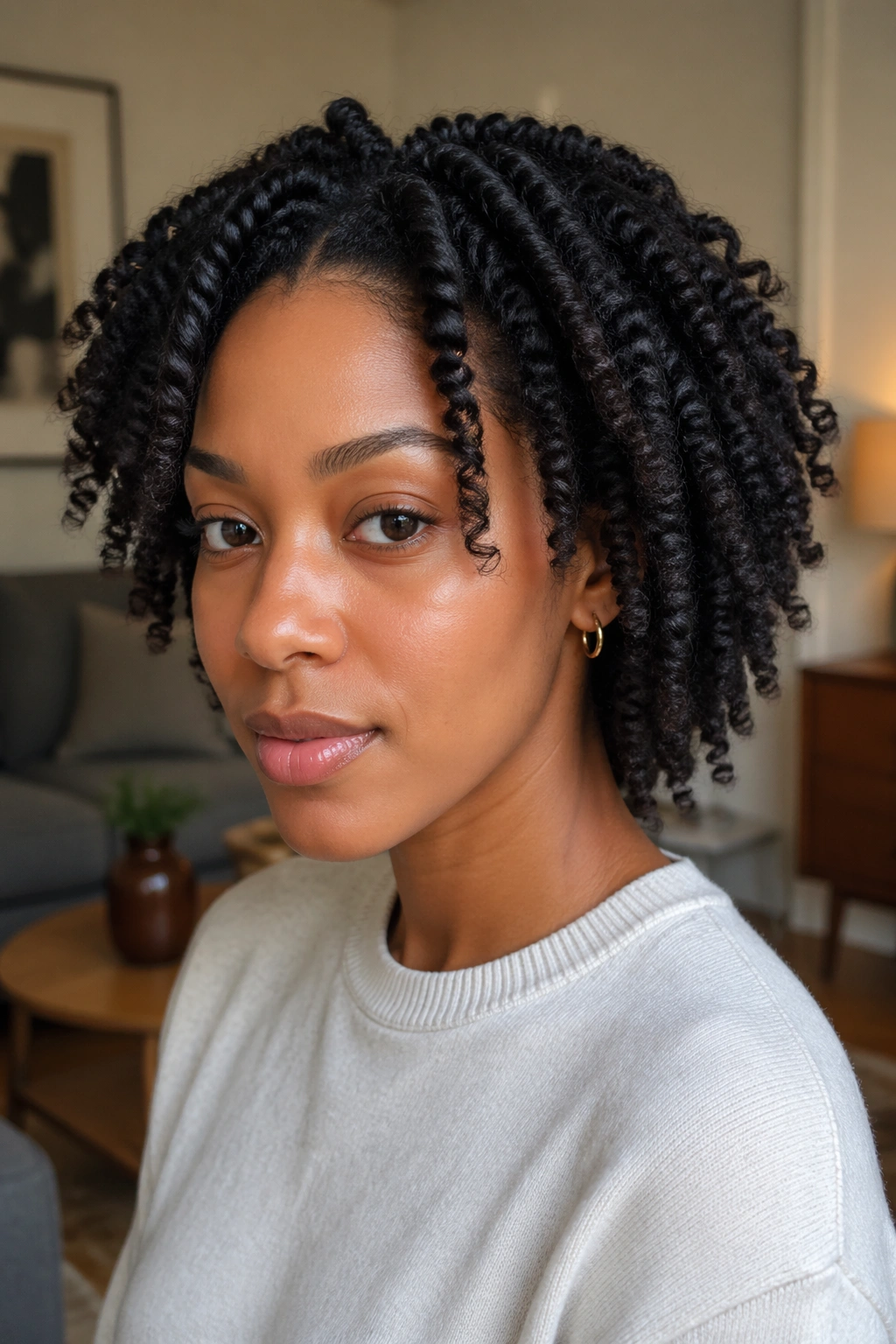
A good twist-out gives you definition, stretch, and a shape that feels fuller than a wash-and-go without looking stiff. That’s why it keeps hanging around in curly hair conversations.
The process matters as much as the finish. Damp hair gets split into sections, each section gets twisted in two strands, and the twists are left alone until they dry completely. That last part is where people get impatient and mess it up. If the hair isn’t dry all the way through, unraveling turns the pattern fuzzy.
Once the twists come out, use a little oil on your fingers and separate gently. Not aggressively. The goal is movement, not frizz on purpose. You can fluff the roots for more width, but don’t separate the ends too much or you lose the clean spiral pattern.
How to wear it well
A twist-out works on a lot of curl types, but it especially shines when you want stretched definition with some softness around the face. It can be dressed up, worn casual, or pinned back on one side.
It’s one of the better styles for people who want shape that lasts past the first day.
The Bottom Line
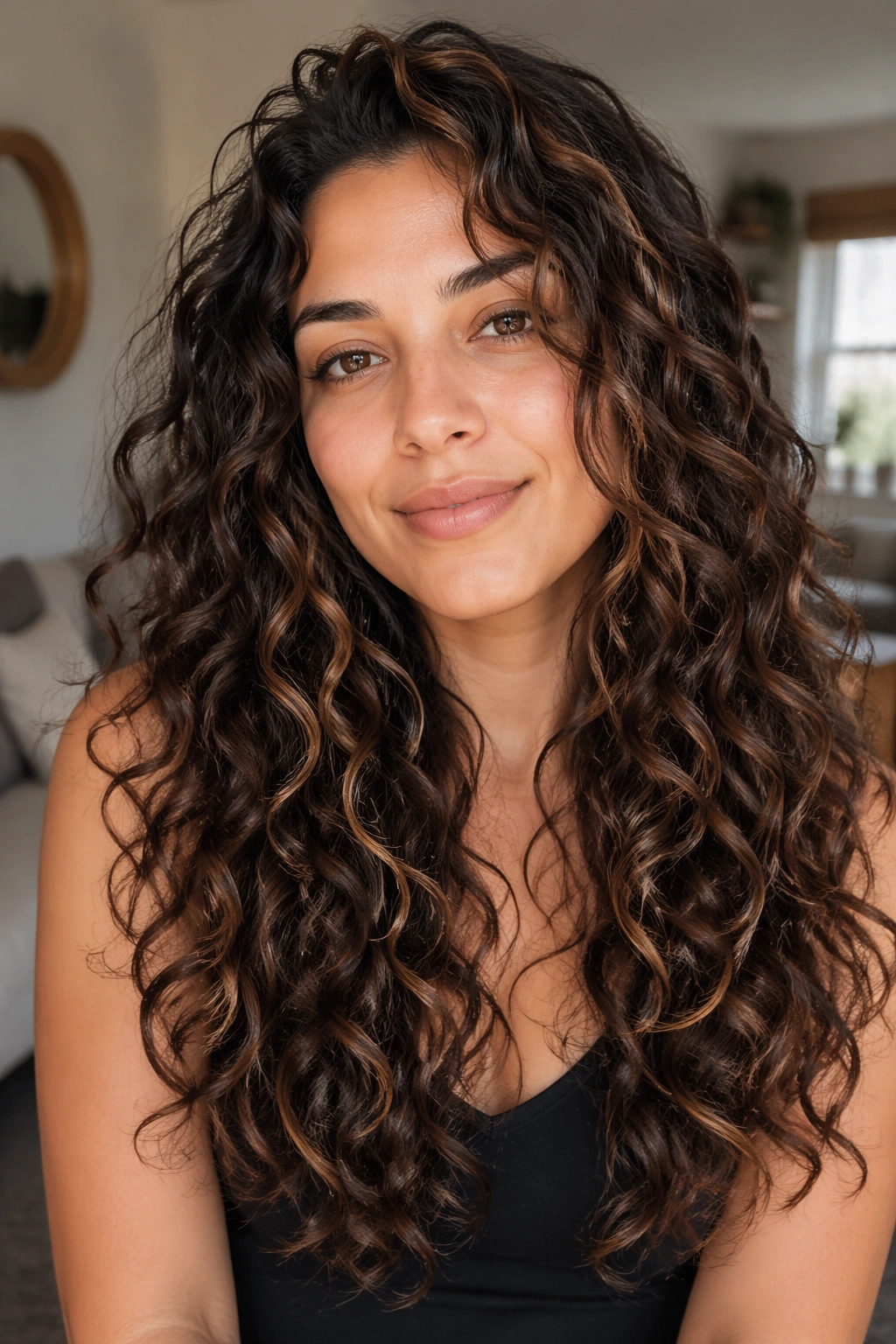
The curly styles that keep working are the ones that respect shrinkage, density, and the way curls actually sit once they dry. That sounds like a small thing. It isn’t. It’s the difference between hair that looks cut and hair that looks shaped.
If you are choosing between two looks, pick the one that gives the curls a clear outline and leaves enough room for movement. A good curly hairstyle does not force the pattern into place. It gives the pattern a better place to land.
And if your curls are stubborn, good. Mine would be too. The best styles usually come from working with that stubbornness instead of trying to flatten it out.
