



Flexi rod styles are one of the few ways to give natural curly hair shape, stretch, and definition without flattening the texture that makes curly hair interesting in the first place. A small rod can turn a dense coil into a tight spiral. A bigger rod can loosen the whole look into soft, rounded curls with movement. That difference sounds small on paper.
It isn’t.
Rod size, section size, and drying time change everything. If the hair is too wet, the rods slip and the curl falls flat at the root. If it’s too dry, the ends get fuzzy and the set looks rough before you even take the rods down. The sweet spot is damp hair that has enough slip to wrap cleanly but not so much water that it takes forever to dry.
Natural curly hair also has a built-in curveball: shrinkage. A style that touches your shoulders when the rods go in can spring up to your jawline after it sets. That is why flexi rod styles work best when you think about the finish first and the rod last. Shape matters. So does patience.
1. Tight Spiral Flexi Rod Set for Crisp Definition
Small rods do one job better than almost anything else: they make natural curly hair look deliberate. If you want ringlets that hold their shape and show off every bend in the strand, this is the set to reach for. It’s the style I’d pick when the goal is definition first and volume second.
Why the Tight Spiral Set Works
A 3/8-inch or 1/2-inch flexi rod gives the hair enough room to coil without stretching the pattern too far. That matters on tighter textures, where the curl can lose its shape fast if the rod is too big. The result is a dense spiral that looks neat, springy, and clean at the ends.
Use this set when your hair has medium to high density and you want the curls to read from across the room. It also does a nice job on shorter layers, because the small rod grabs every inch of length instead of letting the ends disappear. The only catch is drying time. Small rods hold a lot of moisture.
- Work with small sections, about 1/2 inch wide, so each curl wraps evenly.
- Apply a light leave-in and a foam or setting lotion, not a heavy cream.
- Dry fully under a hooded dryer or overnight with a satin scarf.
- Separate the curls only after they feel completely cool and dry.
Pro tip: wrap the first turn of hair on each rod a little snugger than the rest. That gives the root more control and keeps the curl from opening up too fast.
2. Jumbo Flexi Rod Curls with Soft Volume
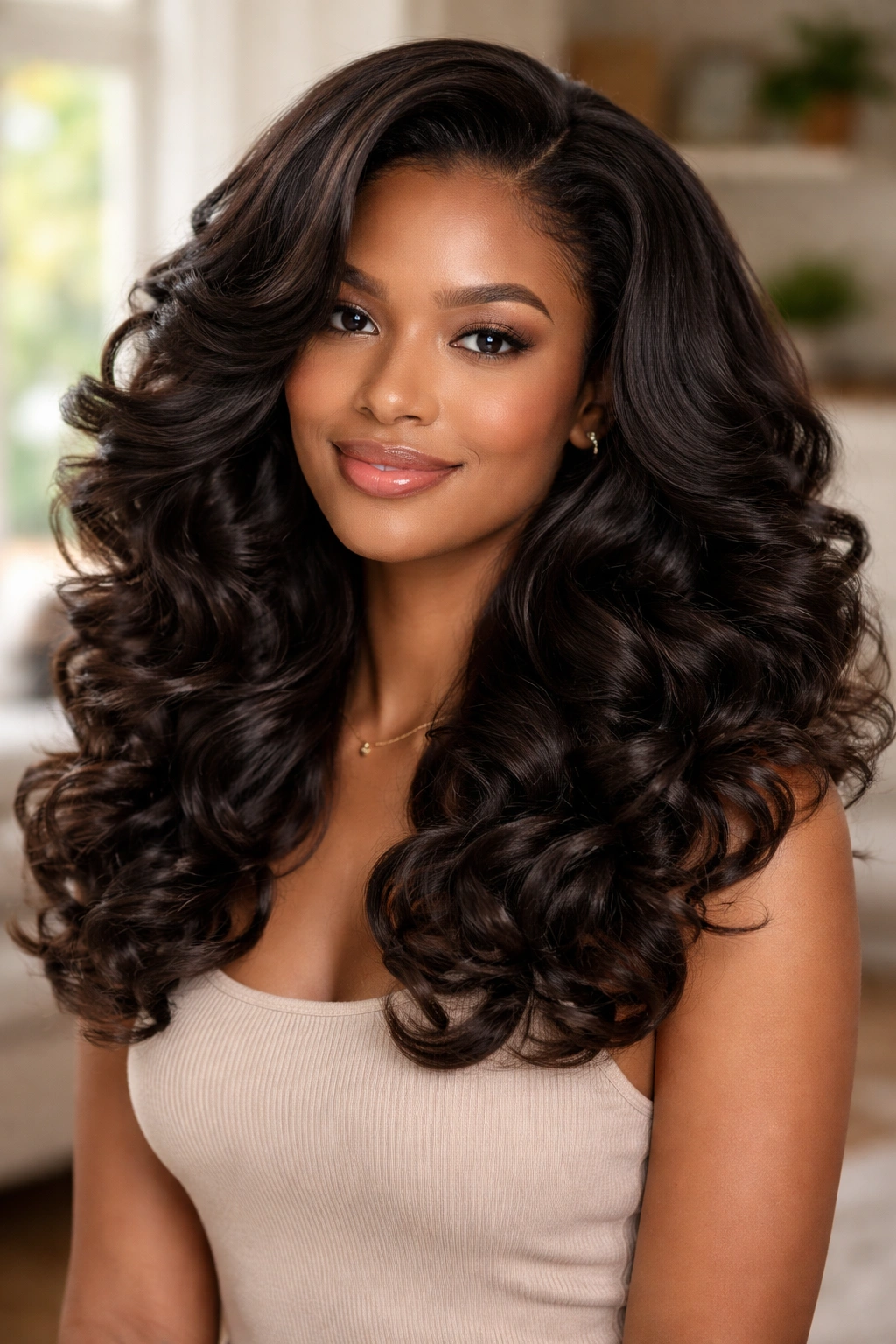
Bigger rods do not mean lazy styling. They mean a different finish, and on natural curly hair that finish can be gorgeous if you want fullness without tiny ringlets everywhere. A 7/8-inch or 1-inch rod gives you a looser curl with a rounder silhouette, which is perfect when you want hair that looks plush instead of tightly packed.
This style works especially well on longer curls that need a little stretch. The curls land with more swing, and the whole set tends to look softer around the face. There’s less of that “spring-loaded” coil effect and more of a blown-out curl shape. Think bouncy, not compact.
The trade-off is hold. Fine hair can lose the curl faster with jumbo rods, and very short hair may not wrap securely. But when the hair has enough length and density, the set looks expensive in the plainest sense of the word: full, polished, and easy to wear.
One thing I like about this style is how little fuss it needs after drying. A few drops of lightweight oil on the palms, one pass to separate, and you’re done. No need to break the curl apart to make it feel big; the rods already did that work.
3. Deep Side-Part Flexi Rod Curls That Frame the Face
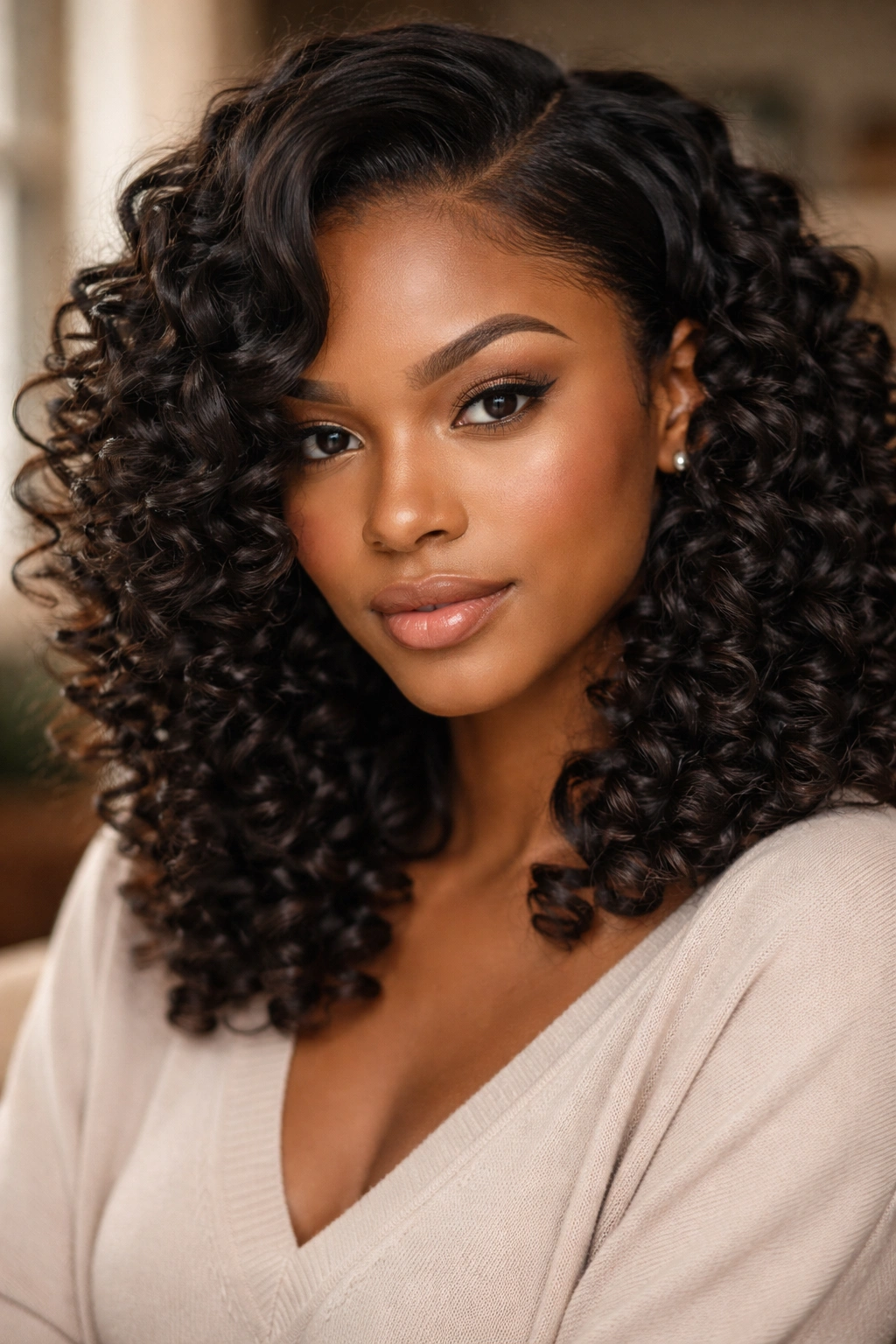
Why does a deep side part change the whole mood of a flexi rod set? Because the curl pattern stops reading as “all over volume” and starts reading as shape. The side that carries more hair gives you drama, while the lighter side opens up the face. It’s a small change, but it makes the style feel more styled and less uniform.
The part should be clean and committed. I like a line that starts near the arch of the eyebrow and travels back toward the crown, not a timid little slash that gets lost once the rods go in. Once the part is set, wrap the hair away from it so the curls fall in the direction you want. That extra attention at the front is what keeps the style from puffing out in every direction.
How to Place the Part
- Make the part on damp, detangled hair before you start sectioning.
- Use smaller rods near the part line so the face-framing curls stay neat.
- Direct the curls backward on the fuller side for a soft sweep.
- Let the lighter side sit closer to the cheekbone for balance.
This style is a smart move for round faces, broad foreheads, or anyone who wants the eyes drawn upward. It also works well when the roots need a little lift but the ends need structure. The part does the work. The rods just follow along.
4. Half-Up Flexi Rod Style with Curled Ends
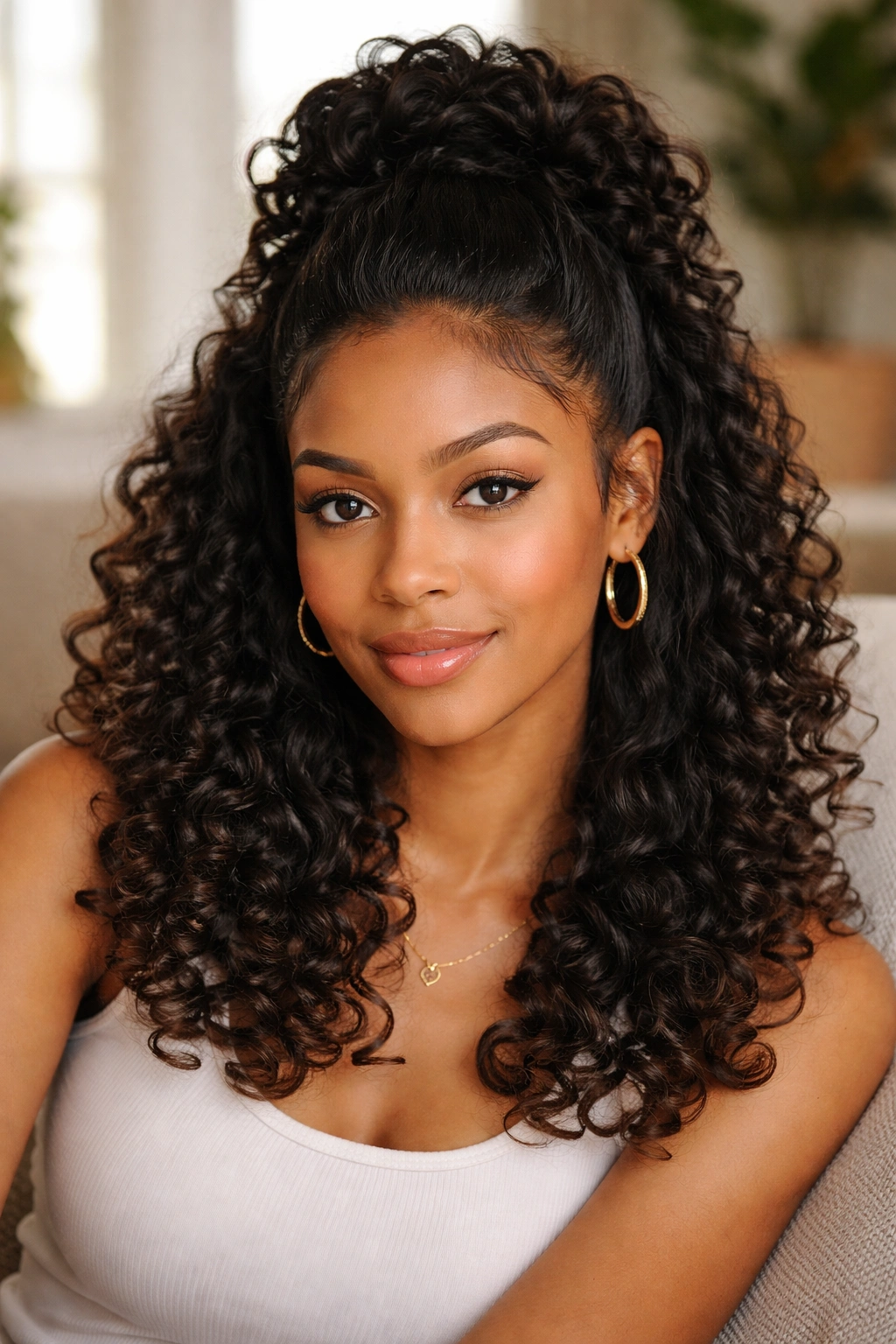
When the crown looks flat, the half-up flexi rod style fixes the problem fast. It gives you lift at the top, keeps the lower curls loose, and makes the whole head of hair look more intentional. I reach for this shape when the hair is thick enough to feel heavy, because pulling part of it up changes the balance immediately.
The trick is to treat the upper and lower sections differently. The top half should get tighter sectioning so the crown has control, while the lower half can take slightly larger wraps for softness. That contrast is what keeps the style from looking like two separate hairstyles stitched together.
The pulled-back section doesn’t need to be slicked flat unless that’s the look you want. A soft puff or clipped crown looks better on a lot of natural curl textures because it leaves some height. The lower curls then drop and move on their own, which keeps the style from feeling overworked.
- Section the hair from ear to ear to create the half-up split.
- Secure the top with a small claw clip or padded band, not a tight elastic.
- Set the lower curls on medium rods so they keep their bounce.
- Leave a few face pieces out if the hairline tends to get puffy.
Tip: this style looks best when the crown is dry before you pin it. Wet roots collapse faster than people expect.
5. Tapered Flexi Rod Set for Short Natural Curls
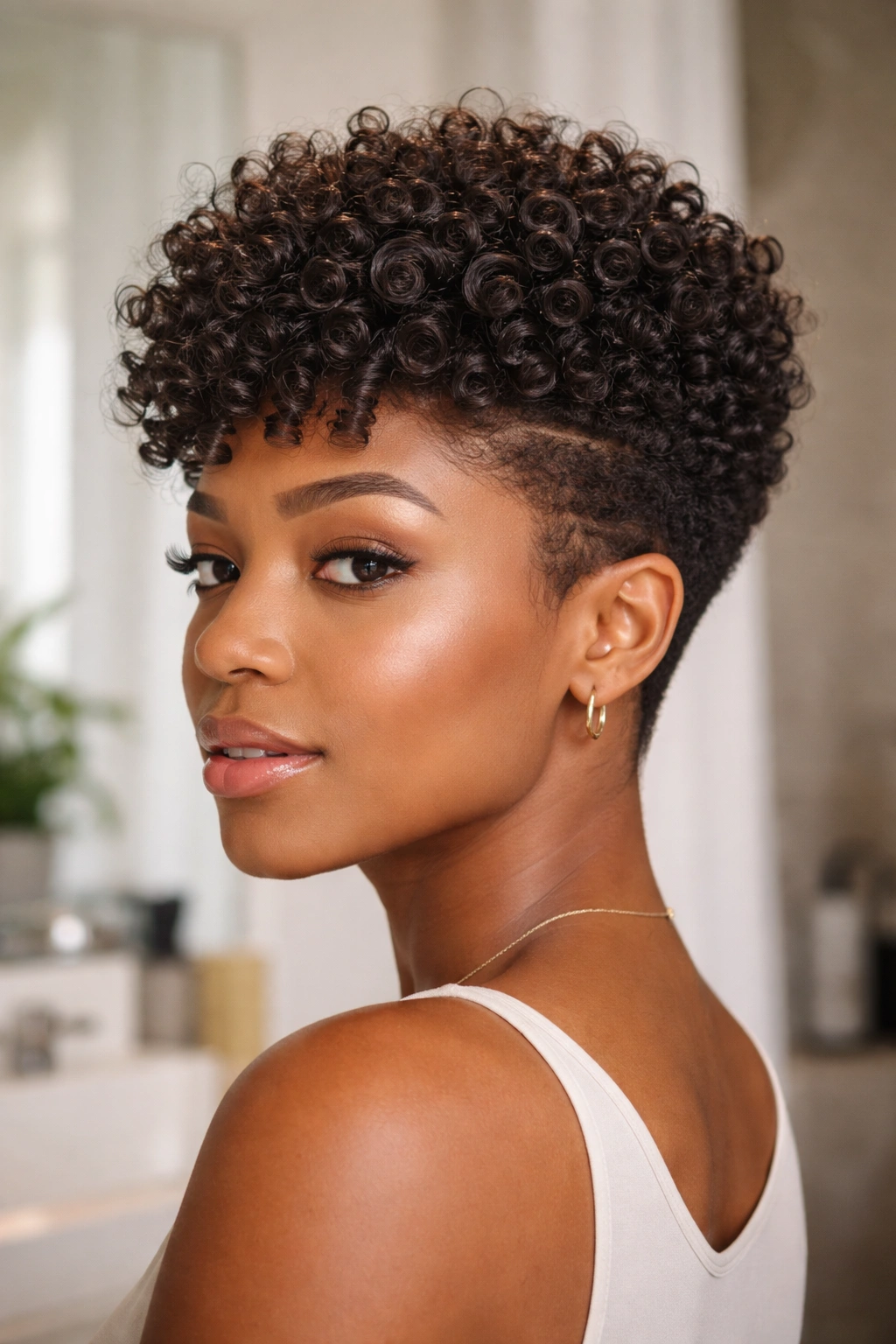
A tapered cut can make a flexi rod set look tailored instead of bulky. That’s the big advantage here. When the sides and nape are shorter, the curls on top get to be the star, and the shape of the haircut does part of the styling for you. Good layers matter. A lot.
Shorter hair around the edges usually needs smaller rods than the top, because the length is limited and the curl has less room to travel. The top can take a bit more freedom. I like this contrast because it keeps the style from looking like one giant helmet of curls. The silhouette stays clean.
One-sentence truth: the cut changes the curl story more than the rod does.
This style is ideal if you wear tapered natural hair, a short rounded afro, or a cut with longer curls on the crown. It can also rescue hair that has different lengths all over the head, since the rods let you control each zone separately. At the nape, keep the wraps snug and neat. Near the crown, allow a touch more lift so the shape doesn’t collapse toward the scalp.
The finish should feel sculpted, not stiff. If the curls are too separated at the end, they lose the clean tapered outline that makes this style work.
6. Shoulder-Length Stretch Flexi Rod Curls with Soft S-Bends
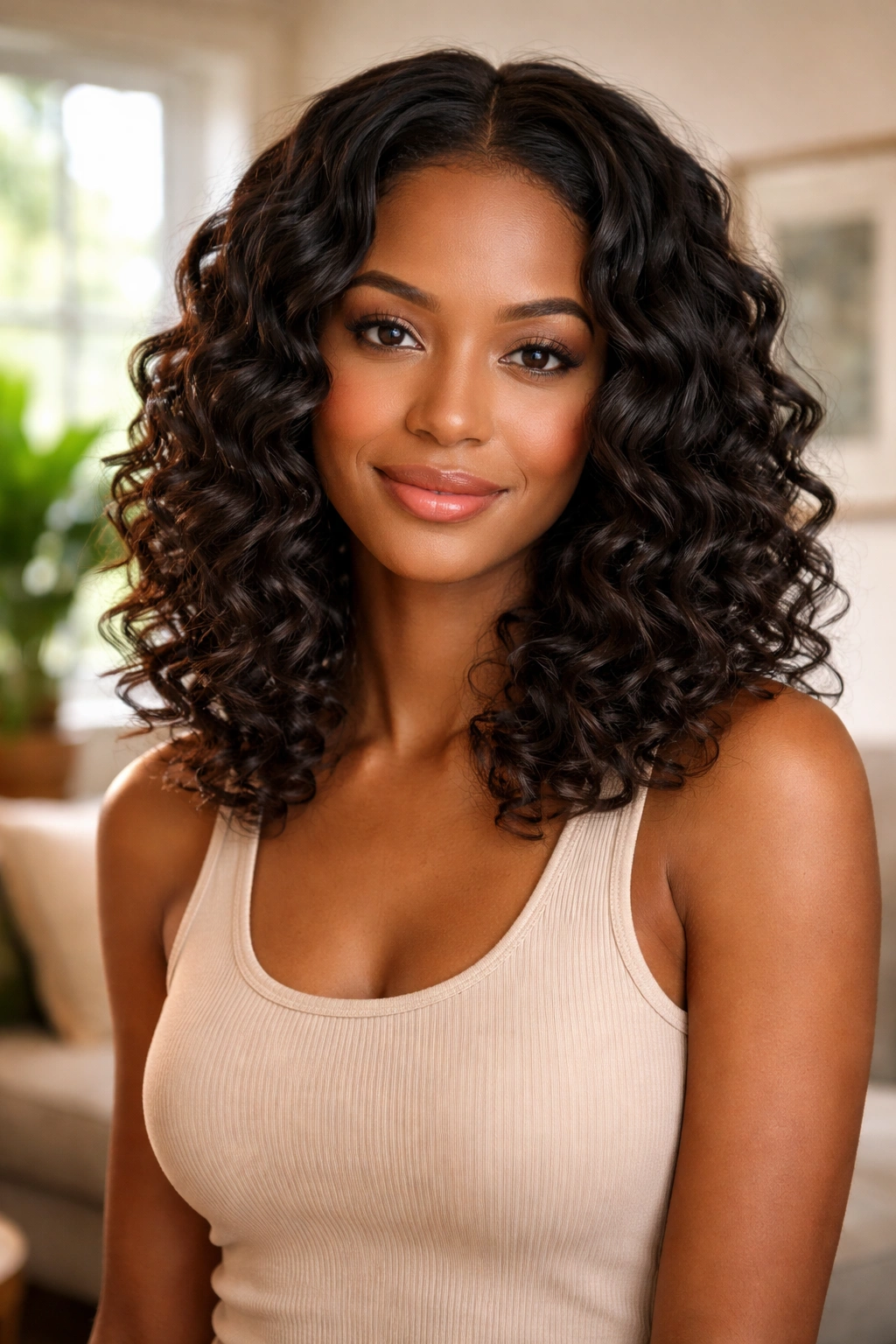
Unlike tight ringlets, this style keeps the length visible. That’s why it works so well on shoulder-length natural curly hair that shrinks hard and hides the shape of the cut. You still get curl definition, but the finished look reads as soft bends and spirals rather than tiny spring coils.
The best rod size here is usually in the middle range, around 1/2-inch to 7/8-inch, depending on how much stretch you want. Bigger rods make the ends drop more. Smaller rods give more curl memory. The middle ground is the safest bet when you want hair that looks full but not puffy.
This is also one of the easiest styles to wear with a side part or a center part. The curls fall in long arcs, so the shape does not depend on perfect symmetry. And that matters, because natural curly hair rarely behaves like a neat diagram.
A little lightweight mousse helps this style stay airy. Heavy creams can make the curl pattern collapse into clumps that dry unevenly. If your hair tends to frizz at the ends, wrap the last inch of each section with a touch more tension than the rest. That keeps the ends tucked instead of fuzzy.
7. Flexi Rod Bob with Rounded Volume
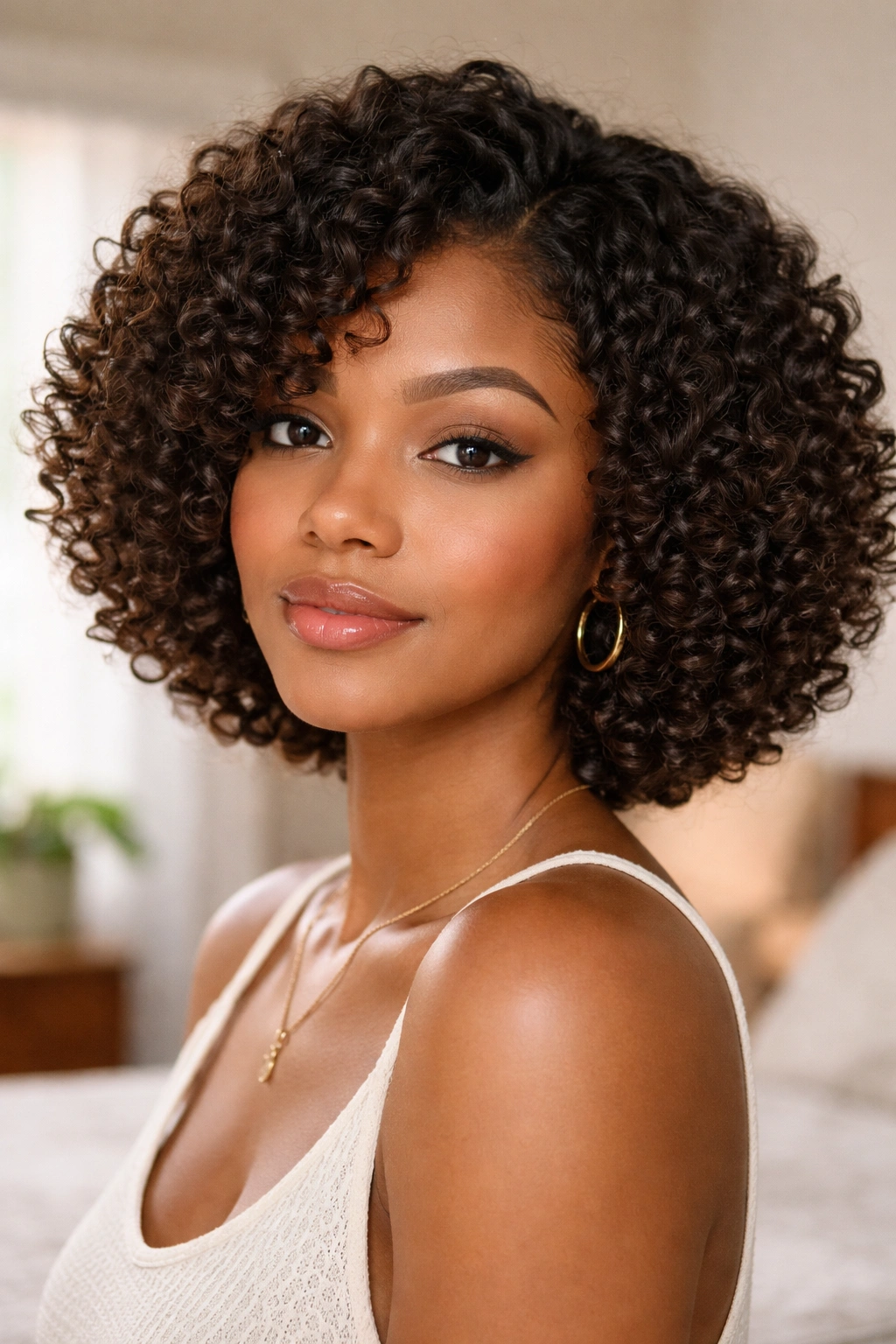
A bob and flexi rods get along. Very well. The haircut already has a shape, so the rods only need to reinforce it, not invent it from scratch. That makes this style one of the easiest ways to get a clean, rounded finish on natural curly hair that sits at chin length or just below it.
Which Rod Mix to Use
- Use 1/2-inch rods near the nape if the hair is short there.
- Move up to 7/8-inch rods around the crown for a softer roundness.
- Keep the front sections slightly longer if you want the bob to skim the jawline.
- Set the perimeter curls in the direction you want them to land, not all the same way.
Where the Volume Should Sit
The volume belongs in the middle and upper sections, not at the ends. That keeps the bob from looking bottom-heavy. If the roots are too puffy, mist them lightly with water and smooth them while the hair is still warm from drying. If the ends are too flat, they need a smaller rod, not more product.
This style suits people who want a polished shape without long hair hanging everywhere. It also works nicely on grown-out tapered cuts and layered bobs because the rod set tames the uneven lengths. The overall feel should be round, balanced, and a little playful. Not stiff. Not skimpy either.
8. Faux Hawk Flexi Rod Style for Bold Volume
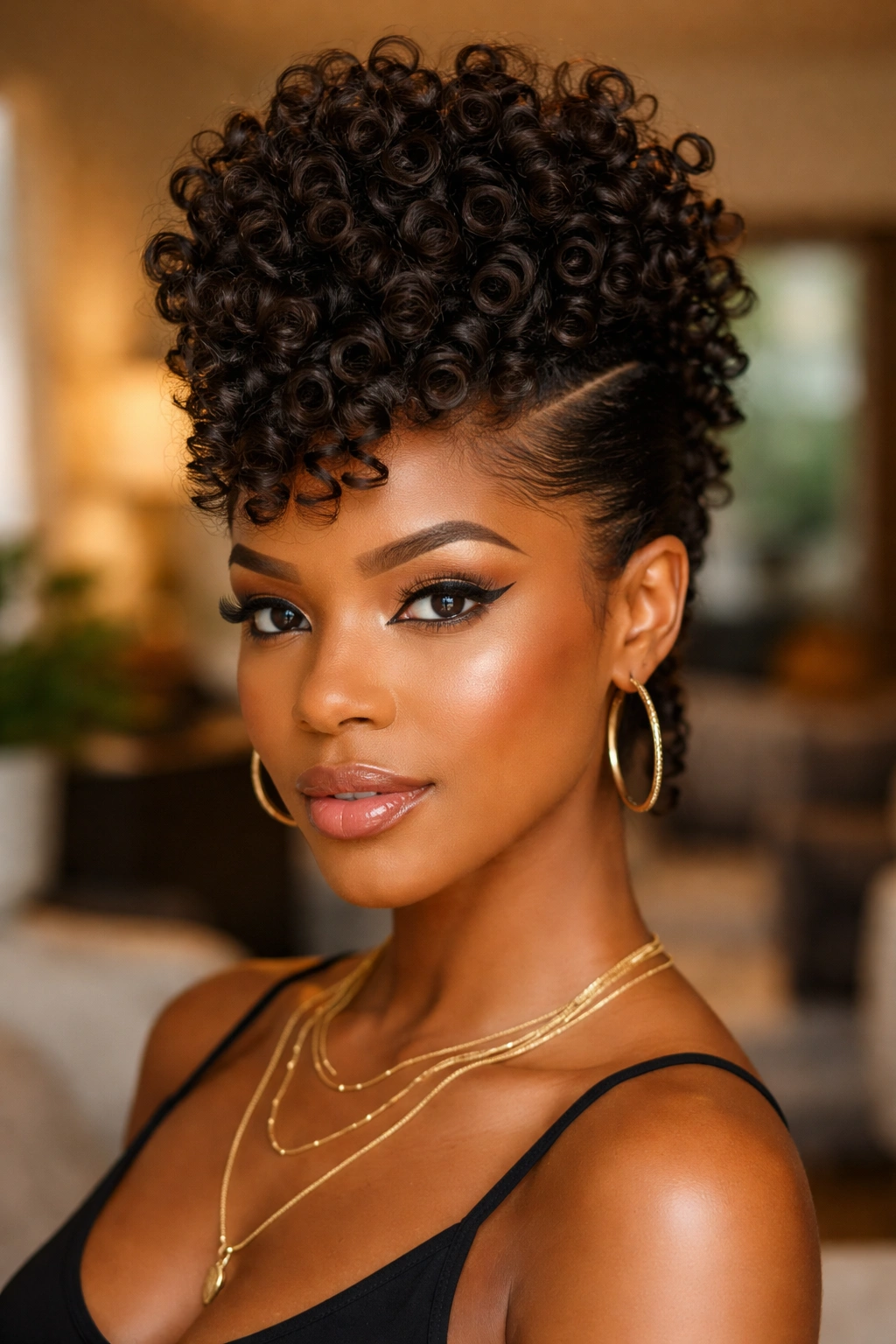
The faux hawk is the most dramatic flexi rod style on this list. It turns natural curly hair into a strip of lifted texture down the center of the head, with the sides pinned close enough to create contrast. If you like height, this is your lane.
The style works because it changes where the eye lands. Instead of spreading volume across the entire head, you concentrate the curls in one strong line from front to back. That middle ridge can be made with medium rods for a full look or smaller rods if you want a tighter finish. The sides stay sleek with gel, pins, or flat twists.
A little structure goes a long way here. If the sides are too loose, the style loses its shape fast. If the center is too packed with product, the curls look heavy instead of lifted. Keep the side panels neat and the top airy.
One-sentence reality check: this style depends on clean parting more than people think.
I like it for events, nights out, or any time you want the haircut to do something a little louder than usual. It also flatters strong cheekbones and long faces because the height adds interest at the crown. The whole thing looks better when the pins stay hidden and the curls stay soft.
9. Twist-and-Rod Hybrid for Longer Hold
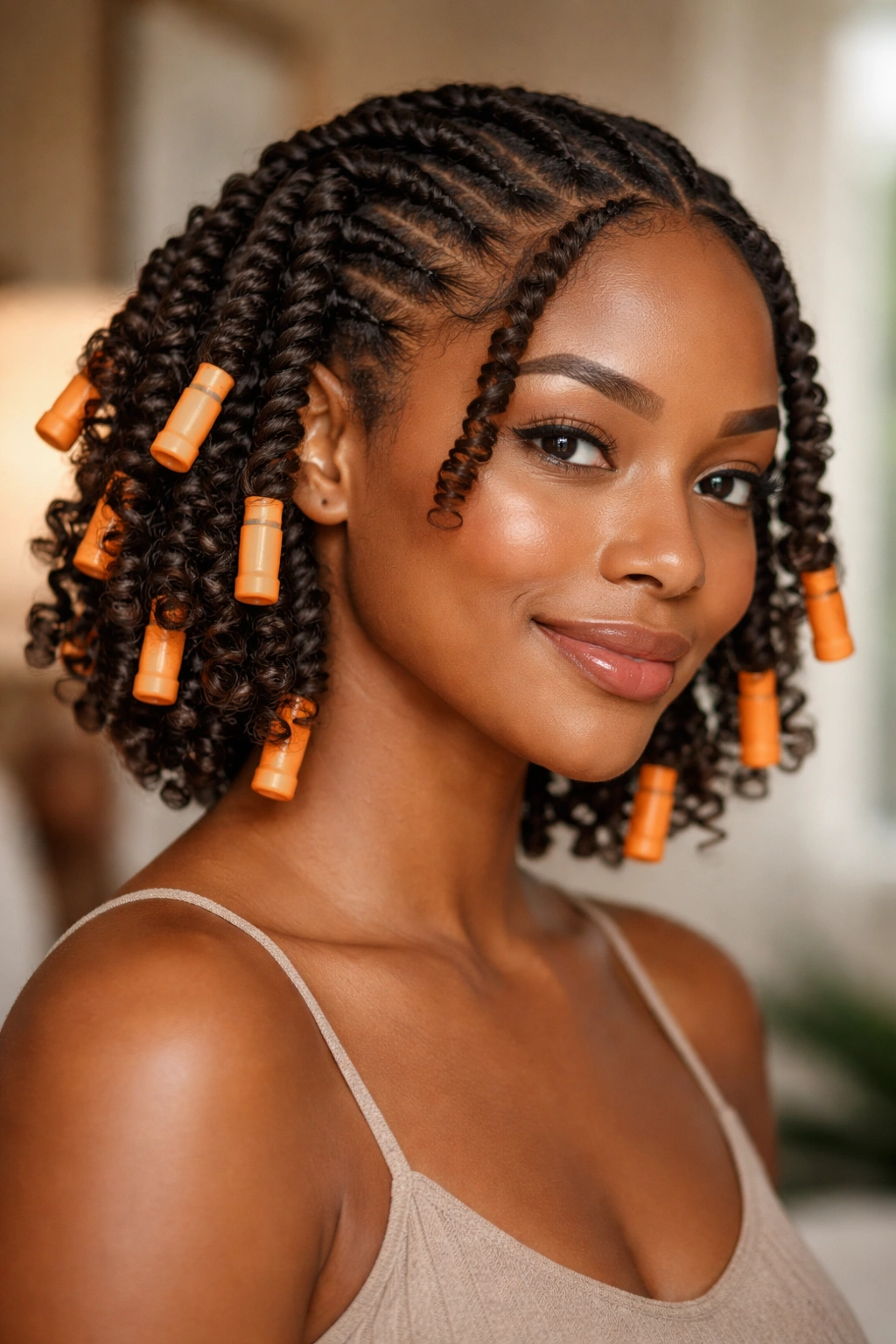
Why combine twists and flexi rods at all? Because natural curly hair sometimes needs a little extra control at the root before it can really show off at the ends. The hybrid gives you that. You twist the base so the hair stays organized, then wrap the ends around rods so the curl pattern finishes clean.
This style is especially handy for thick or high-density hair that tends to unravel on its own. The twist creates a stronger base, which helps the rod stay put and keeps the section from puffing up overnight. The rod then shapes the ends into a defined coil, so you get the best of both textures in one set.
How the Hybrid Holds Up
- Twist each section about 2 to 3 turns from the root.
- Wrap the remaining length around a medium rod.
- Keep the twists the same size so the finish looks even.
- Dry completely before separating, or the twist pattern will frizz at the bend.
This style is useful when you want longevity more than maximum volume. It tends to last a bit better under a satin bonnet and often survives a night of sleep with fewer crushed spots. The curls don’t have to be perfect to look good either, which is nice. Real hair has a way of refusing perfection anyway.
10. Crown-Volume Flexi Rod Style with a Side Sweep
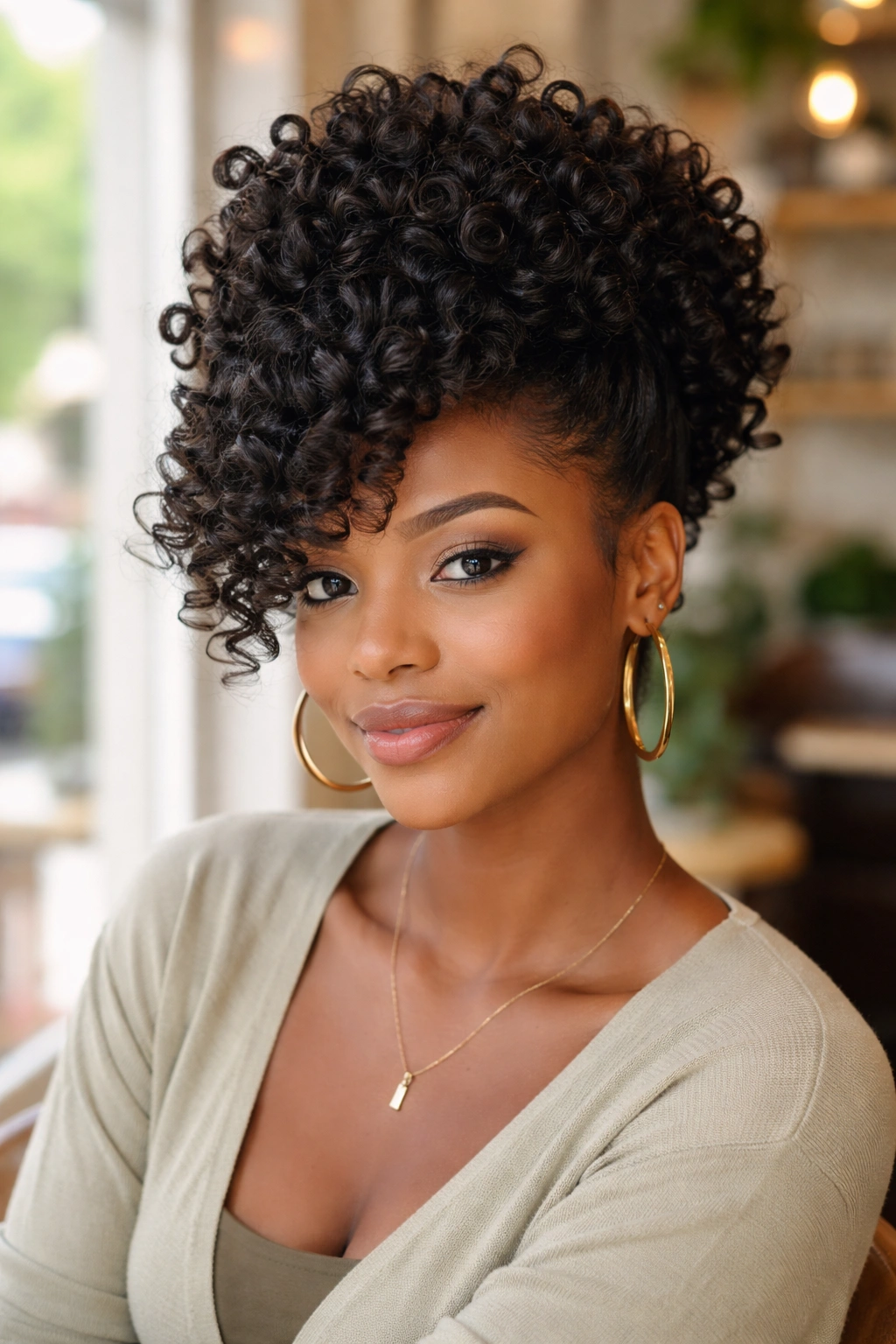
Flat roots can make even the nicest curl set feel sleepy. This style fixes that by building the volume where it counts most: the crown and front hairline. The curls sweep to one side, the roots stay lifted, and the whole head gets a taller shape without needing a hot tool.
I like this look on medium to long natural curly hair because the length helps the side sweep fall with more weight. The rods go mainly through the top and front sections, while the lower layers are left freer or set with larger rods. That keeps the hair from ballooning everywhere. The goal is height at the top and control underneath.
A few root clips during drying make a big difference. They hold the hair away from the scalp just enough to keep the crown from collapsing as it dries. Once the rods come out, you can direct the curls with your fingers and a touch of lightweight serum. Not too much. The style needs lift more than shine.
The face-framing side sweep gives this look a softer edge. Without it, the volume can feel boxy. With it, the style looks fuller and more deliberate. The shape is simple, but it has bite.
11. Short Pixie Flexi Rod Set with Defined Fringe
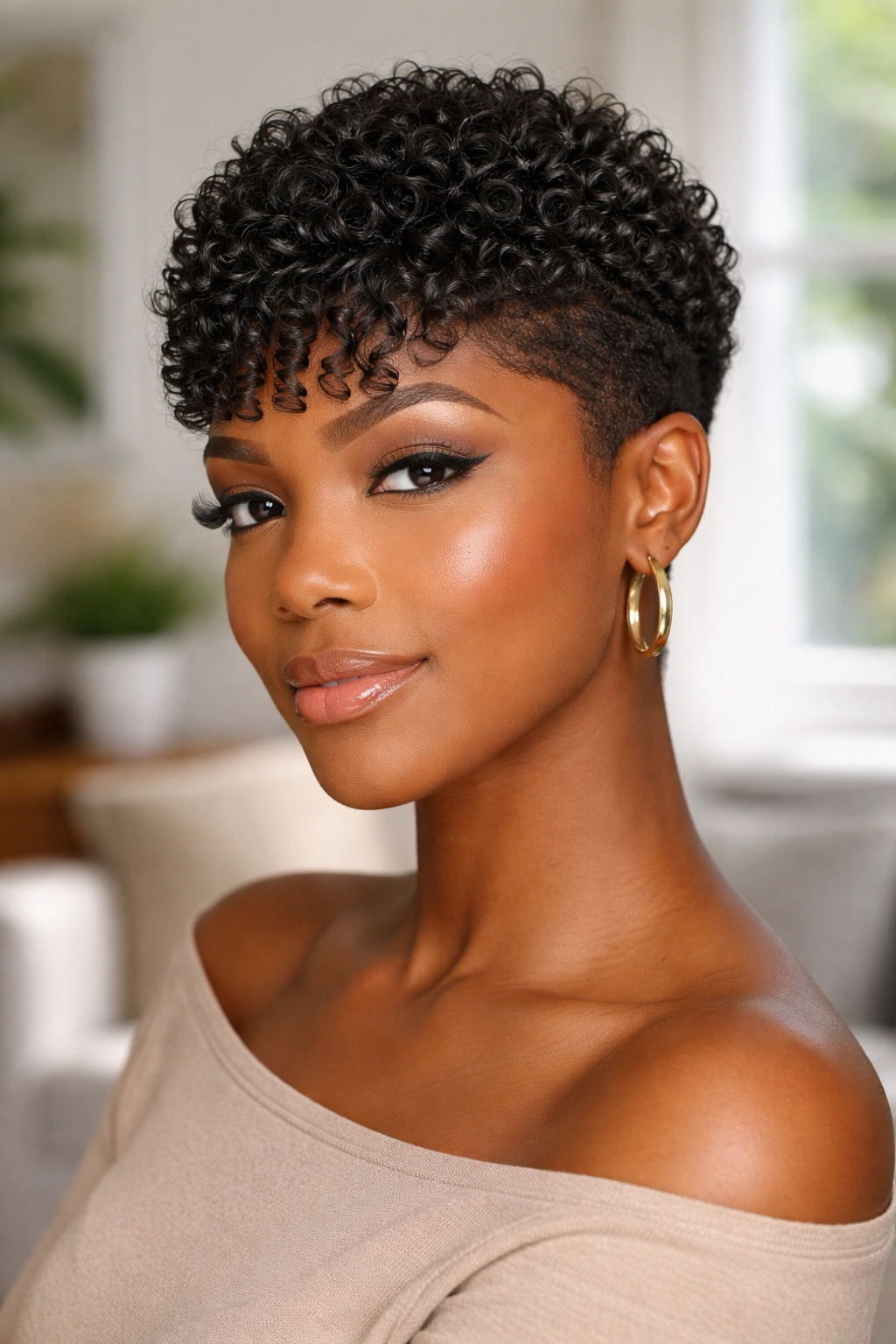
A short pixie rod set does not try to imitate long hair, and that is exactly why it works. On short natural curly hair, the rods turn a cropped cut into something crisp, textured, and clean around the edges. The fringe stays defined, the top gets movement, and the whole style feels fresh without losing the character of the cut.
This is one of those looks where precision matters more than volume. Tiny sections, careful parting, and small rods give the curls enough room to form without puffing the haircut out of shape. If the rods are too large, the style loses the sharp outline that makes a pixie so good in the first place.
What to Watch For
- Use 1/2-inch rods or smaller for the fringe and top.
- Keep the nape neat with fingertip smoothing or a little edge gel.
- Set the front curls forward if you want a soft bang effect.
- Let the sides stay close to the head so the cut keeps its shape.
This style suits anyone growing out a very short cut or trying to add texture to a fresh pixie. It also works when the goal is low fuss but still polished. The curls are small enough to feel tidy, yet they still move when you turn your head. That balance is what makes the style worth wearing.
12. Rod Set Updo with Curled Tendrils
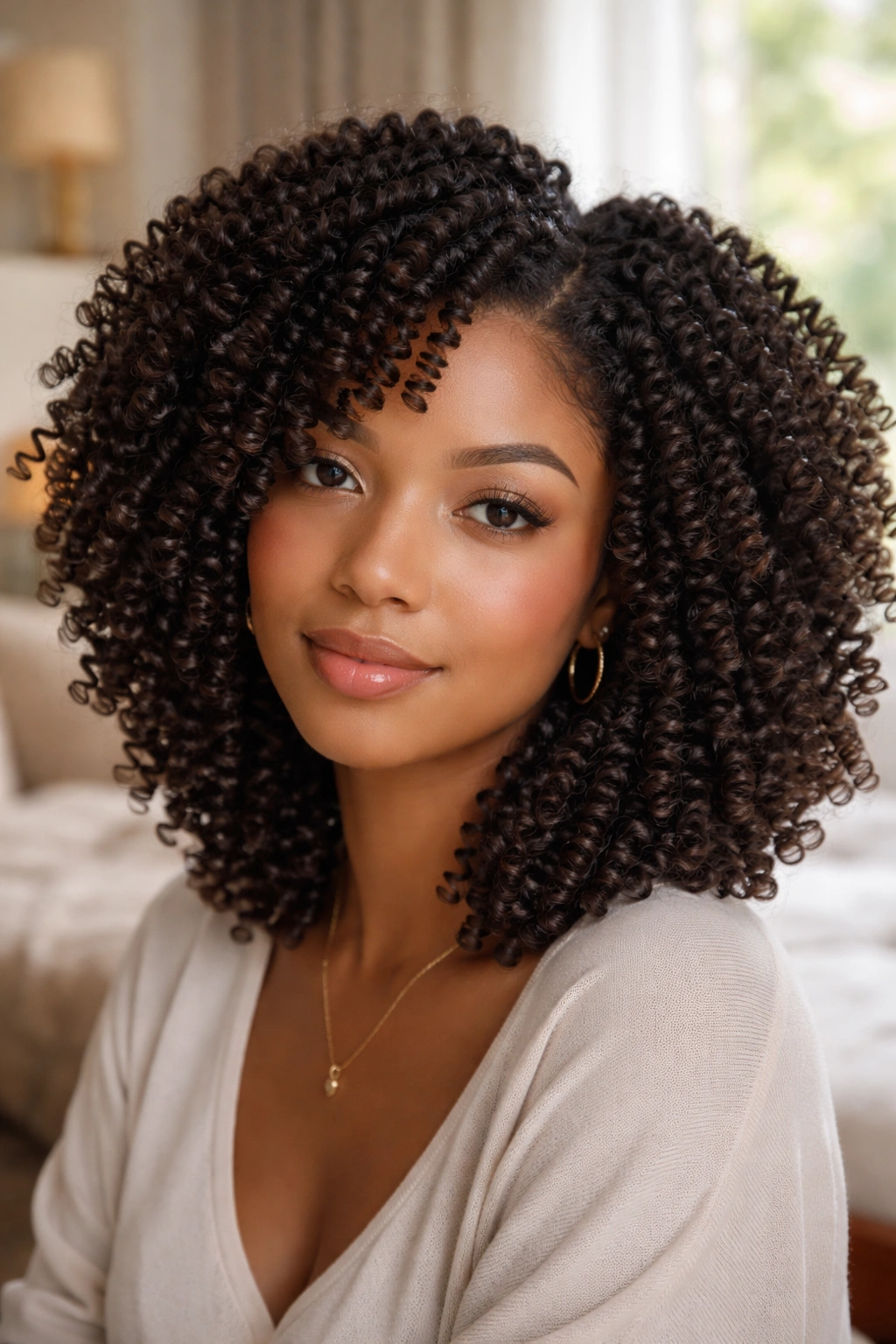
This is the flexi rod style I reach for when I want the hair pinned up but not stiff. The curls are set first, then gathered into a puff, chignon, or pinned roll, with a few tendrils left loose around the face and nape. It gives natural curly hair structure without making it look swallowed by pins.
The tendrils matter. A lot. They soften the updo and keep the style from looking too formal or too tight, especially if the hairline tends to frizz when everything is pulled back. I like medium rods for the loose pieces because they create curls with enough shape to hold their own against the updo.
The pinned section can be as smooth or as textured as you want, but the cleanest versions usually start with a rod set that dries fully before it’s gathered. If the curls are still warm, they flatten the moment you pin them. If they’re cool and dry, they hold their shape much longer.
This style works for weddings, dinners, interviews, and those rare days when you want your curls out of your face but still visible. It also saves a lot of natural curly hair from constant touching, which is one of the fastest ways to ruin a good set. Leave a curl near the temple. Leave one near the neck. That tiny bit of movement makes the whole look feel finished.
