

Butterfly clip styles for curly hair work best when you stop treating the clip like a tiny jaw clamp and start treating it like an anchor. Curls need room to spring, and the wrong placement steals that volume in a second.
A lot of people blame the clip when the real issue is the section. If the hair is grabbed too low, twisted too tight, or pressed flat against the scalp, the shape goes soft and sad by midday. If the section is loose, lifted, and placed where the clip can bite into dense hair, the style holds its line and still looks like curls, not a helmet.
That’s the part most tutorials skip. Curly hair changes the game because it has memory, width, and weight all at once. A butterfly clip that feels flimsy on straight hair can work just fine on coils, ringlets, and waves if you let the texture do some of the work.
The styles below are the ones I reach for when I want the clip to look like a decision, not an afterthought. Some are polished. Some are lazy in the best way. All of them give curls room to breathe.
The easiest place to start is the half-up twist.
1. Half-Up Twist with a Butterfly Clip for Curly Hair
This is the style that makes people relax. It lifts the front and crown, keeps the ends free, and gives curls a shape that feels neat without looking stiff.
Why it works
A half-up twist is friendly to almost every curl pattern because it uses your hair’s own fullness as part of the shape. You gather only the top third of the hair, twist it once or twice, and clip it where the twist feels secure but not crushed. That leaves the lower curls free to bounce, which is half the point.
The sweet spot is usually just above the back of the head, not right at the crown and not too low at the nape. Too high and the style can turn puffy in a way that fights the face. Too low and the clip loses its lift. A medium butterfly clip, around 2 to 2.5 inches wide, tends to hold better than a tiny decorative one.
A few details that matter
- Twist the section loosely so the curl pattern still shows.
- Clip sideways, not straight down, if your hair is dense.
- Leave a few front pieces out for softness.
- Use a stronger spring clip if your roots are fine but your ends are heavy.
Pro tip: Let the twist rest for ten seconds before clipping. That tiny pause helps the section settle, and the clip tends to grip better when the hair is not still sliding around.
2. Side-Swept Butterfly Clip Style for Curly Hair
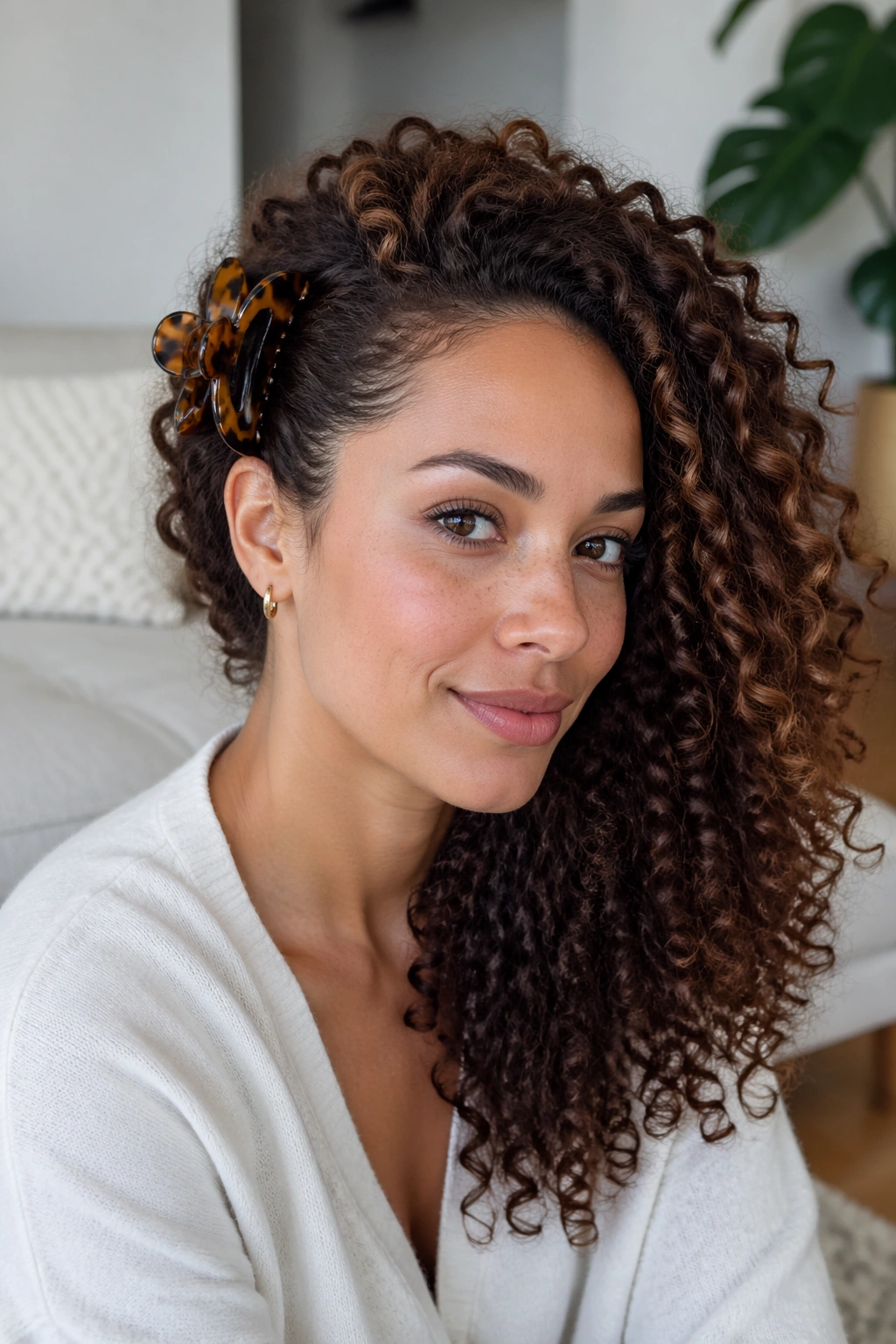
Why does this look so good on curls? Because the asymmetry gives the hair a shape without asking it to lie flat. One side stays full and loose, while the other side gets pulled back just enough to open the face.
The trick is placement. Don’t tuck the clip too close to the ear, where it can snag and flatten the curl closest to the jawline. Set it a little higher, near the temple or just above it, so the clipped section has room to fold back instead of getting squashed. A side part makes the whole thing feel deliberate, even when the actual styling takes less than five minutes.
I like this version for days when the curls are second-day and a little too wide at the sides. A side-swept clip pulls the shape inward in a controlled way, which is useful if your hair tends to balloon out around the cheeks. It also shows off earrings. That part matters more than people admit.
The best version leaves the rest of the hair loose and touchable. If you smooth everything back, you lose the point. Keep a little lift at the crown, let the ends keep their curl, and allow one or two face-framing spirals to fall where they want. That small bit of mess keeps the style from feeling overworked.
3. The Pineapple Lift with a Butterfly Clip
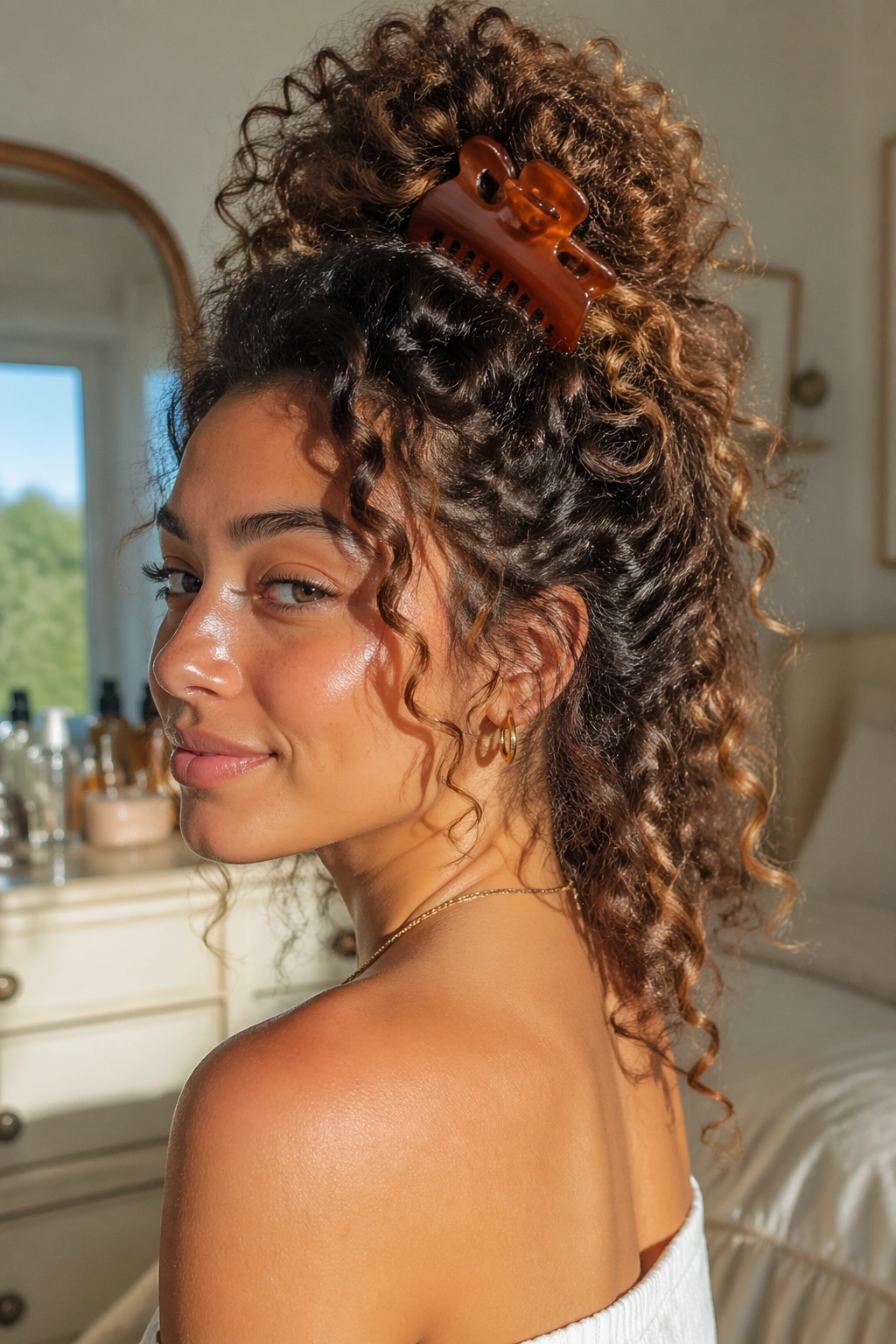
If your curls wake up with more volume than you know what to do with, this style makes that volume feel on purpose. It borrows the shape of a pineapple, but the clip gives it a cleaner hold and a little more control.
How to place it
Gather the hair high, but not tight, so the curls sit near the top of the head instead of stretched into a harsh ponytail. Fold or twist the section once, then clip it with the butterfly clip so the upper part stays lifted while the lower curls spill out. The shape should feel airy, not cinched.
This one loves thicker curls, especially if your hair has a strong spring at the roots. A larger clip — closer to 3 inches — usually handles the bulk better, and you want teeth that can bite into the density without sliding. Tiny clips tend to get swallowed by the hair and disappear.
The beauty of this style is that it works on hair that’s already a little wild. You do not need perfect curl clumps. You need height, a soft grip, and enough slack that the curls can move when you turn your head. That motion is what makes the style feel alive instead of frozen in place.
Nope, it should not look tight.
4. The Low Twist-and-Clip for Workdays
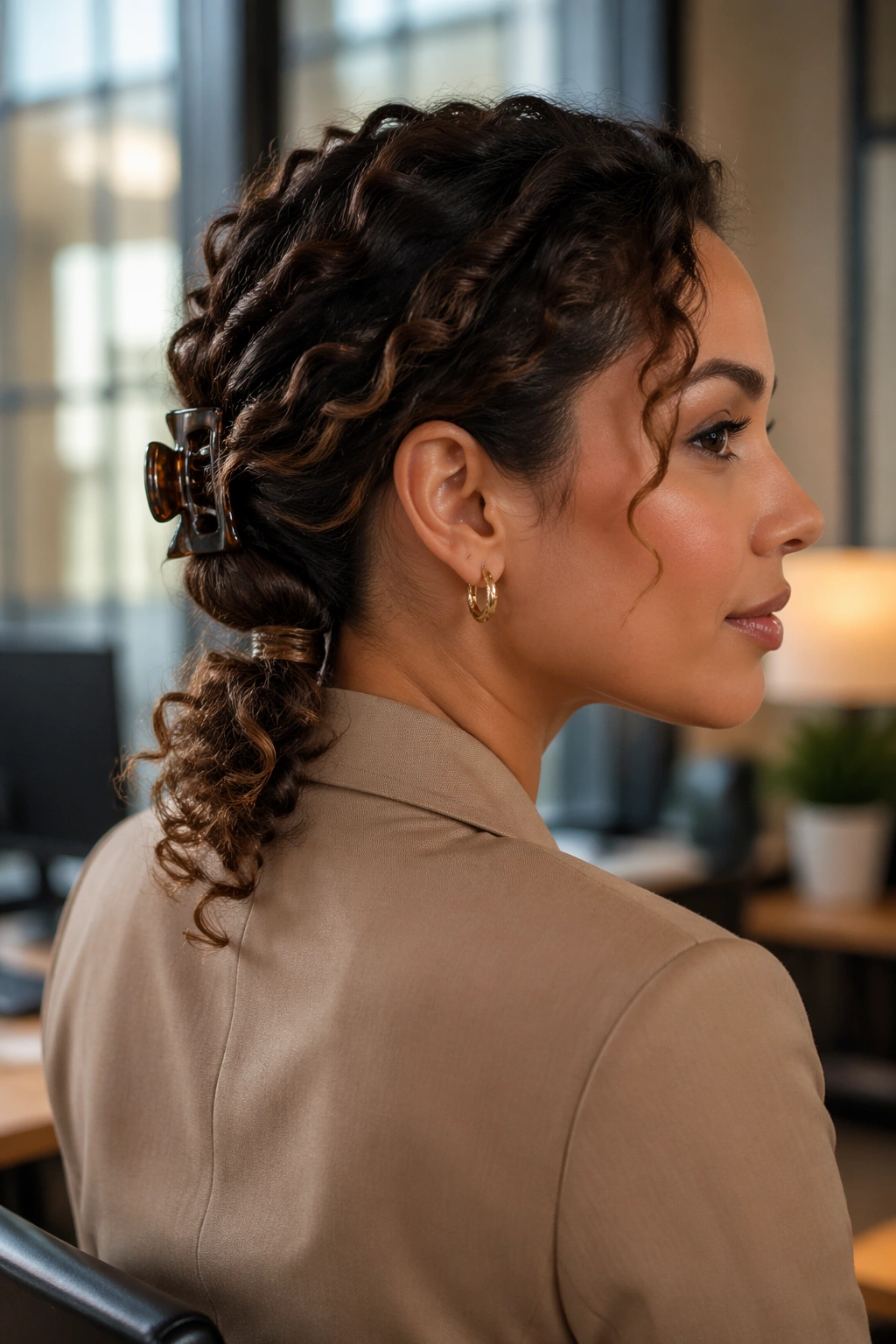
A low butterfly clip on curly hair is not boring. It’s just quieter.
A lot of people ignore this position because they want the clip to sit high and obvious, but the low twist has its own charm. It keeps the top smooth enough to wear under a blazer or coat collar, and it lets the curls at the bottom form a soft tail instead of a puffed-up mound. If you wear glasses, this placement is even better, because it keeps the sides from crowding your frames.
The move is simple: gather the hair at the back of the head, twist upward once, and secure it low enough that the clip sits just above the nape. Keep the twist loose. If you pull too hard, the style loses the curve that makes it interesting. A clip with a wider mouth and a strong spring works best here, because the section often includes the thickest part of the hair.
What to watch for
- Avoid pinning the clip directly into the nape; it can itch.
- Leave a small puff at the crown so the style doesn’t go flat.
- Let a few curls escape near the ears if your face needs softness.
- Use this when you want your hair off your shoulders without a full updo.
This is one of those styles that looks more polished than the effort suggests. Which, frankly, is the dream.
5. The Crown Sweep That Uses Two Clips
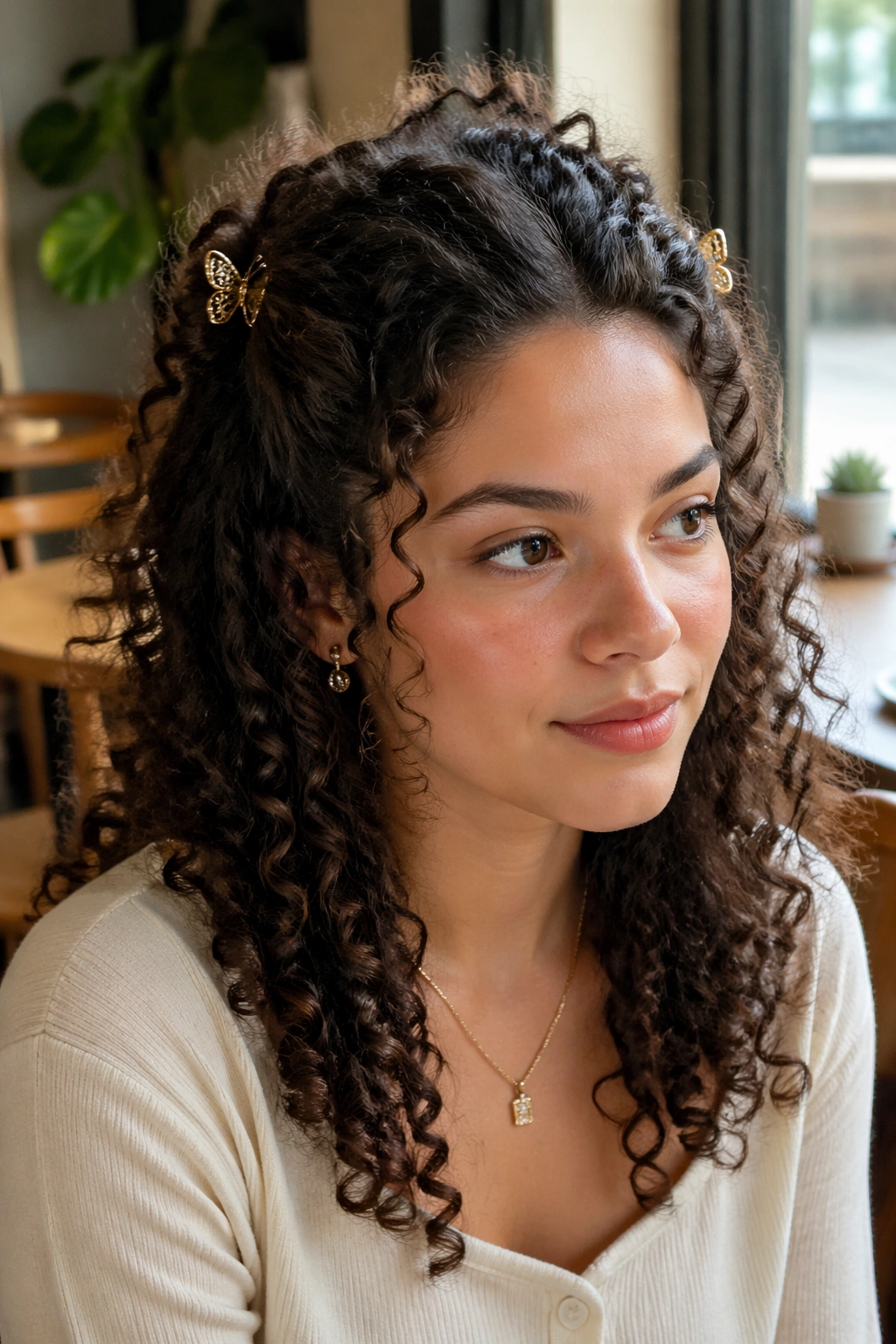
Two clips can do what one big clip cannot. They spread the tension, hold more hair, and let the crown keep its height without creating one bulky center lump.
Picture the top half of the hair swept backward in a broad arc. One butterfly clip catches the left side near the temple, and another mirrors it on the right. The middle stays lifted and loose, so the curls sit like a soft ridge across the top of the head. It’s a flattering shape for thick hair because it doesn’t force all the weight into one spot.
The spacing matters. Too close together and the clips fight each other. Too far apart and the sweep falls open. Aim for a span that follows the curve of your head, leaving enough room for the curls to sit naturally between the clips. If your hair is long, the back section can still fall freely down the middle.
This style is especially handy when the front layers are shorter than the rest. Those pieces tend to slip out of a single clip anyway, so splitting the hold into two points keeps the shape from unraveling. You can also use different colors if you like the look of visible clips. Black and tortoiseshell read more understated; pastel or clear resin feels lighter and playful.
A pair of clips can feel a little extra. That’s the appeal.
6. The Face-Framing Temple Clip
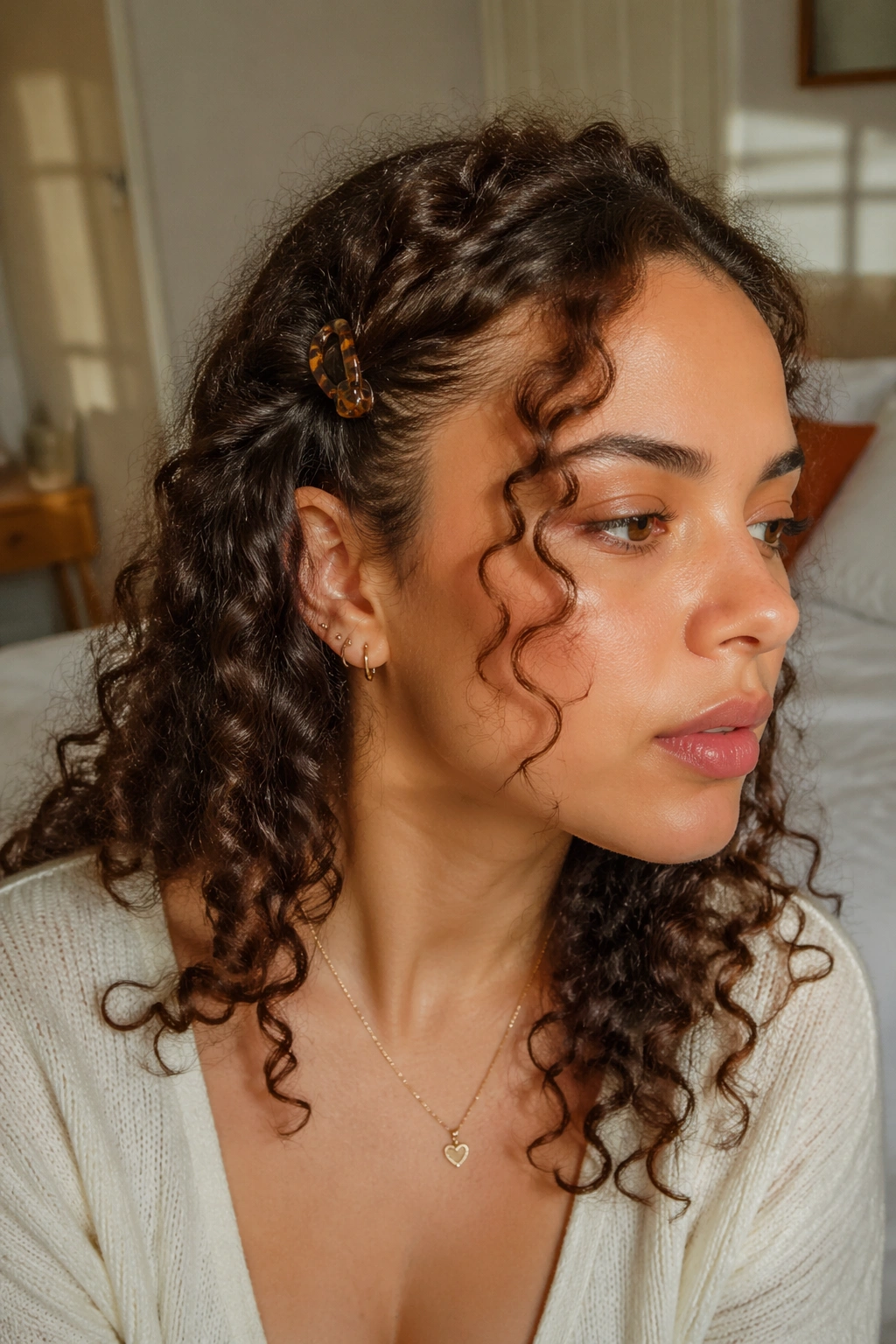
Small clip. Big payoff.
This is the one I reach for when the curls around my face are doing too much on one side and not enough on the other. You take a narrow front section, twist it back just a touch, and clip it at the temple so the ends still fall forward. The result is controlled, but not stiff. It gives the face room without forcing the entire front of the hair back.
The key is to clip only the upper half of the section. If you catch the whole curl bundle, you flatten the nice bend that makes curly hair look alive. Keep the clip near the root area and let the bottom of the section swing free. That little gap is what keeps the style from looking pinned to the skull.
This works especially well with layered cuts. The shorter pieces near the cheekbone stay visible, and the longer curls behind them keep their shape. It also plays nicely with side bangs or grown-out fringe, which can be annoying on their own and excellent when corralled by a tiny butterfly clip.
If you want the look to feel intentional, match the clip to one small detail elsewhere — earrings, a sweater trim, a lip color. Not because everything needs to coordinate. Because little things become louder when the hair is simple.
7. The Deep Side Part with a Hidden Clip
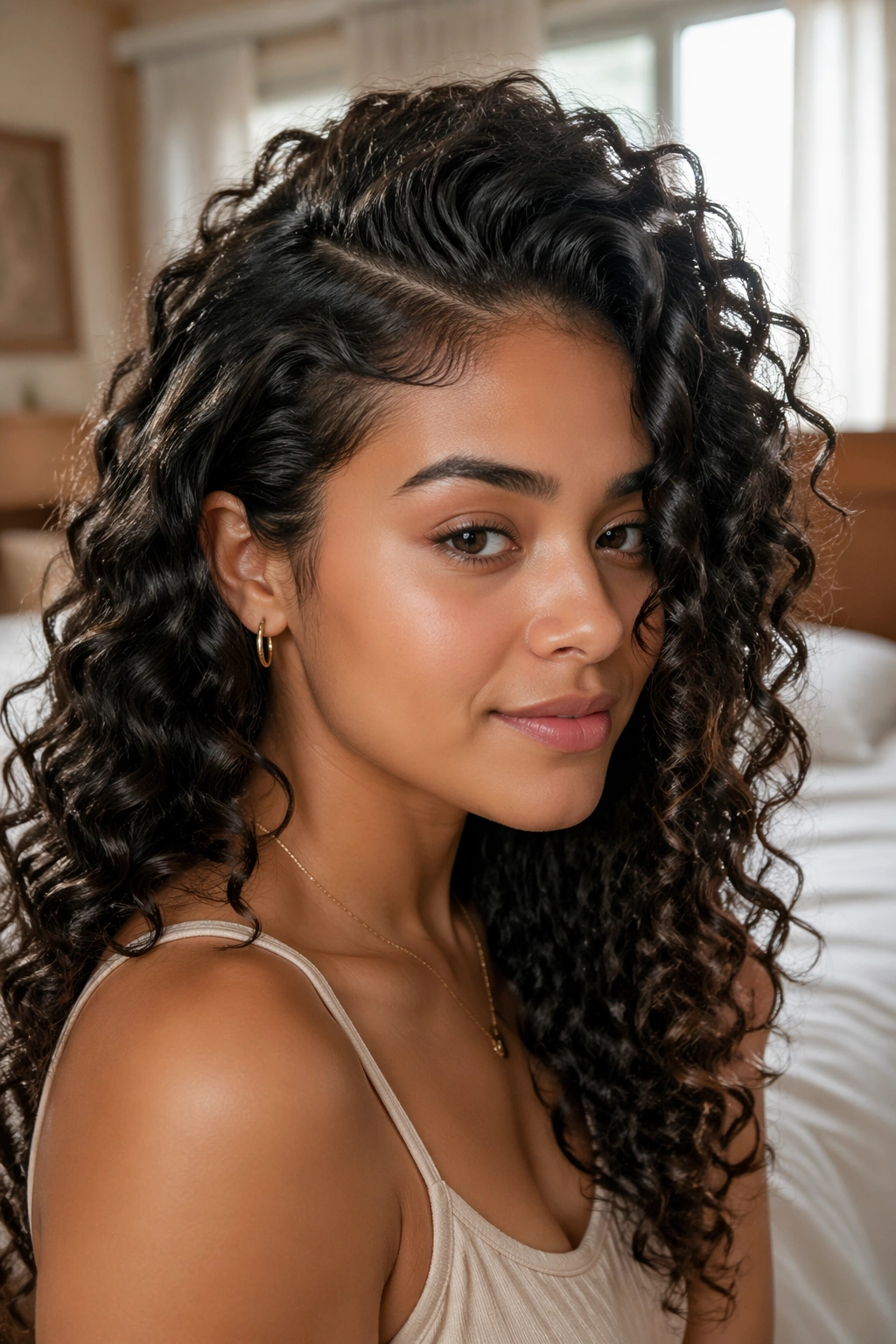
Three inches of parting can change the whole mood of curly hair.
A deep side part gives the crown instant lift on one side and a softer fall on the other, but a hidden butterfly clip keeps that shape from collapsing. The clip sits under the top layer near the back of the heavier side, so it anchors the hair without shouting for attention. You still get the sweep, but the clip itself disappears into the style.
This is the move for anyone who likes the clean look of a side part but hates when the heavier side droops by lunchtime. The hidden clip keeps the section lifted at the roots, which is useful if your curls are dense near the scalp and looser through the ends. It also works well when you want to tuck one side behind the ear without losing the lift.
Best when you want a little structure
- Use a clip with short, firm teeth.
- Place it under the top layer, not on the surface.
- Keep the part deep enough to create visible contrast.
- Let the looser side keep its full curl pattern.
The style reads as calm, even when the hair is doing a lot. That’s a nice trick to have.
8. The Half-Pony Wrapped Clip Style
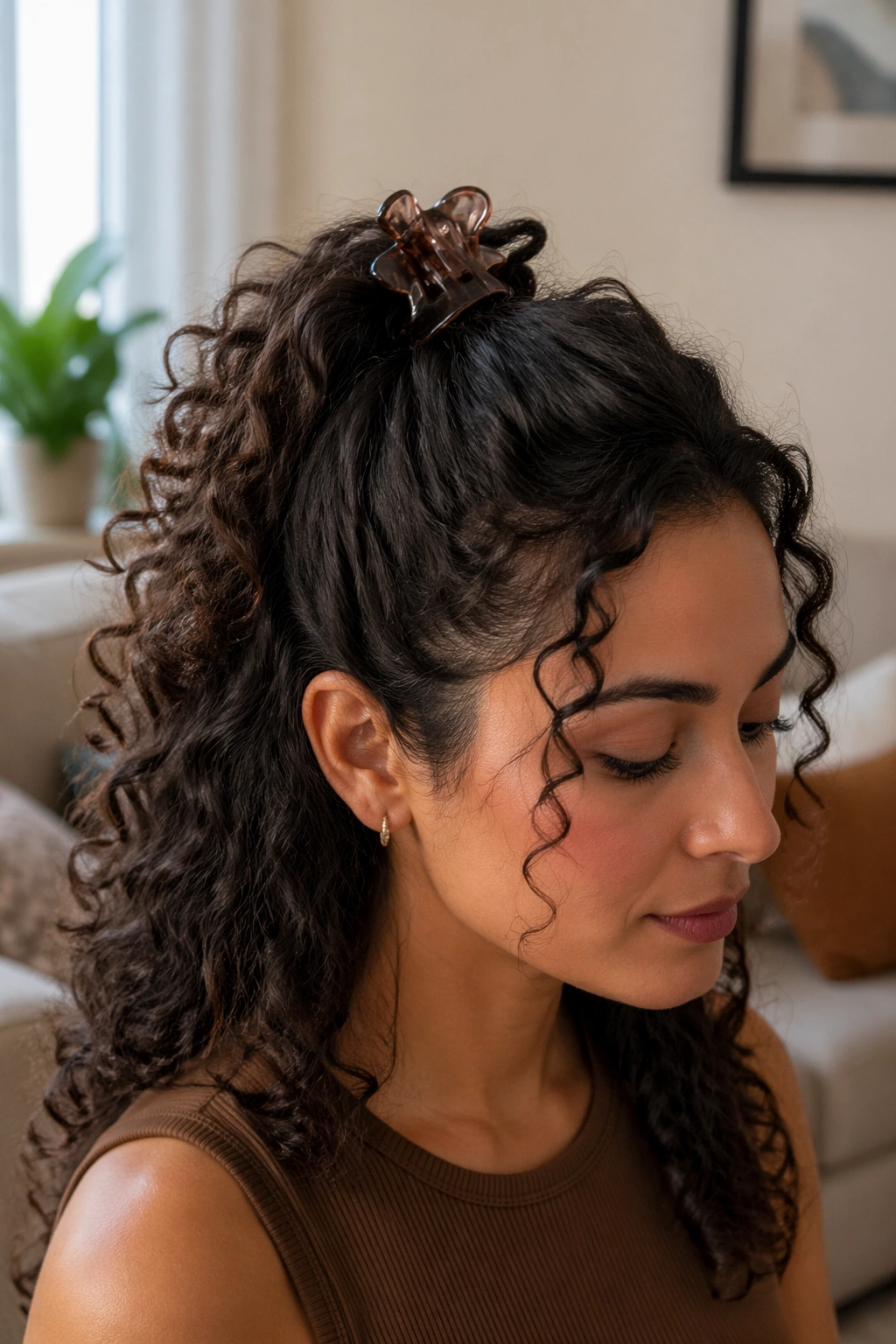
Can a butterfly clip replace a hair tie? Sometimes, yes.
This style sits between a half-up and a loose ponytail. You gather the top half of the curls, but instead of cinching them tight with elastic, you twist the section once, fold it back on itself, and clip it so the “pony” stays soft and airy. The ends still spill out, which keeps the shape from feeling too finished.
It’s a smart choice for medium-length curls because it gives lift without forcing the hair into a compact knot. If your curls puff when they’re compressed, this is the better option. The section stays looser, which means the ringlets keep their shape instead of turning into a fuzzy mass.
The clip size matters here. Too small, and the folded section bulges around it. Too large, and the whole thing slouches. Around 2.5 inches is usually the sweet spot for average density. If your hair is very thick, go bigger. If it’s fine but springy, go lighter and choose a clip with strong spring tension rather than a huge jaw.
This style looks especially good when the ends are defined. A curl cream or a light gel cast that has been scrunched out helps the bottom half fall in neat clumps. The top can stay relaxed. The contrast is what makes it work.
9. The French Twist Inspired Clip Roll
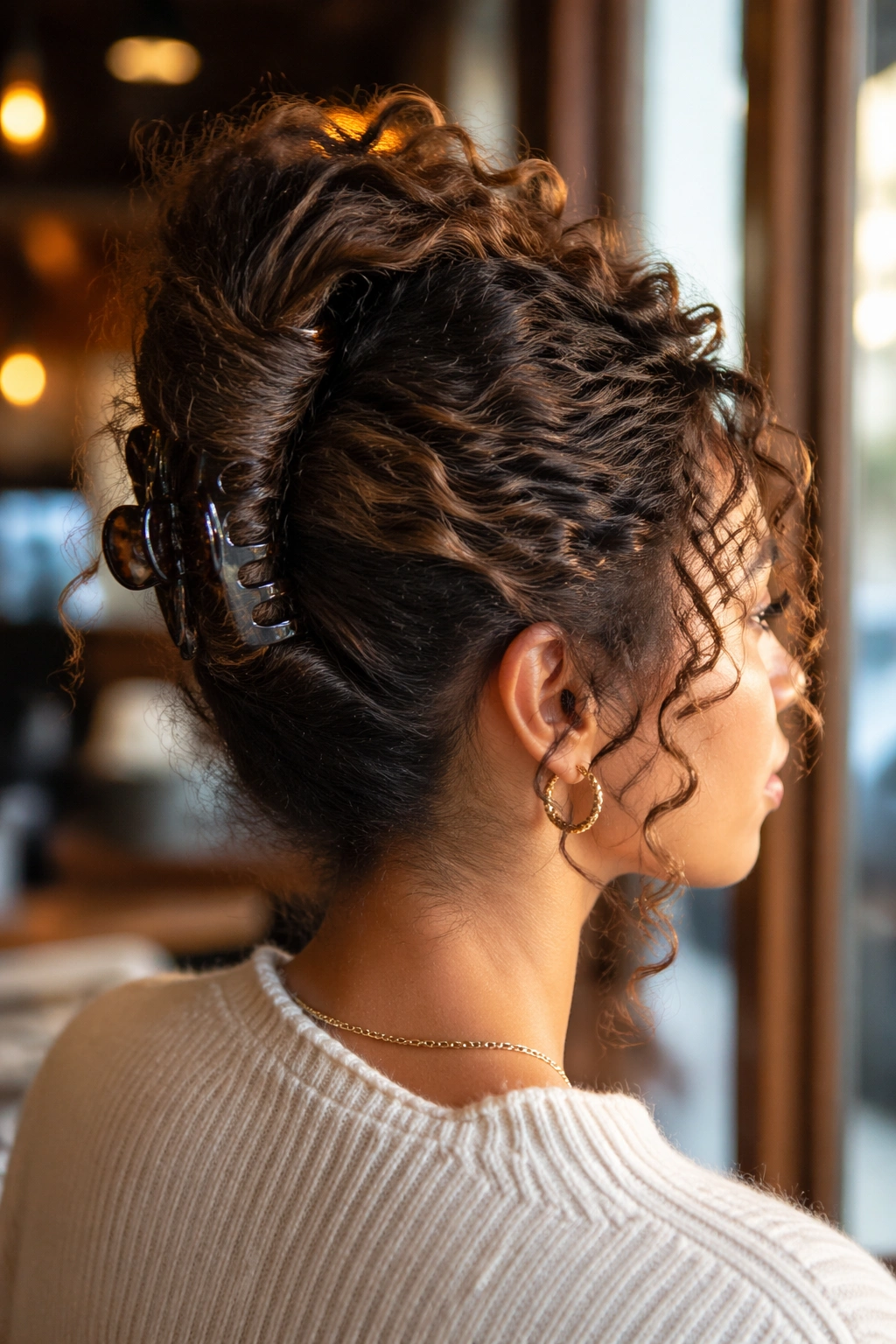
This one looks harder than it is.
A French twist inspired by a butterfly clip gives curly hair a dressed-up shape without needing pins everywhere. You sweep the hair upward, fold the length inward toward the center, and let the clip catch the roll from the back. On curls, the texture helps the twist stay full, which is a blessing. Straight hair often needs more help to look this substantial.
The trick is not to over-compress the roll. Curly hair wants space inside the twist, and if you press it flat, the style loses that soft, rounded shape. Leave the roll a little loose so the curl pattern still peeks through at the edges. A large butterfly clip with a strong hinge is usually the best choice because it needs to hold the folded mass at the center of the head.
This style can lean formal, but it does not have to. A few loose ringlets around the neckline keep it from feeling severe. If you want a cleaner look, tuck those pieces in. If you want it softer, let them escape. I prefer a little escape. Perfectly smooth twists can feel too stern on curly hair.
The one thing to avoid is placing the clip too low. It should support the roll high enough to keep the shape visible from the side. Otherwise the whole thing sags and starts looking like an unfinished bun.
10. The Stack of Mini Butterfly Clips
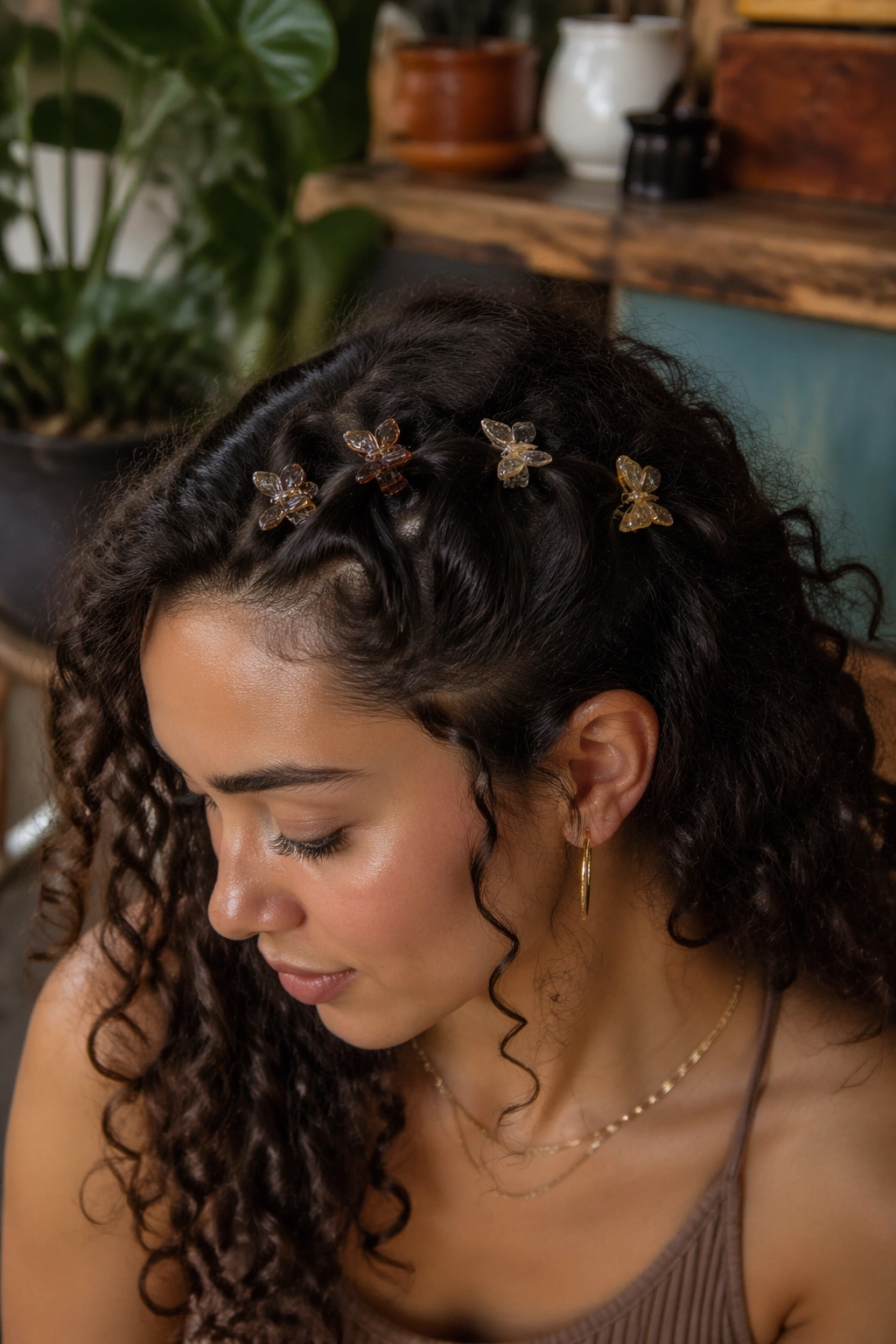
A single clip is tidy. A stack of mini butterfly clips is more interesting.
This style works especially well on curls because the hair already has plenty of movement. You use two, three, or even four small clips to hold tiny sections across the top or one side of the head, creating a scattered pattern instead of one big anchor. The result feels playful, but not childish if you keep the color palette simple.
Mini clips are best when your hair is too short for a big clip or too layered for one clip to hold cleanly. They can grab pieces that would slip out of a larger jaw, like short crown layers, face-framing curls, or the edges of a deep side part. Think of them as tiny checkpoints.
Good places to stack them
- Along one temple for a slanted row.
- On both sides of a center part for symmetry.
- Around a loose top section to break up bulk.
- Near the back of the head to keep short layers from escaping.
The catch is overdoing it. Too many clips can start to feel fussy, especially if they’re all the same size and color. Three usually reads cleaner than six. If your curls are already very full, the clips should add shape, not compete with it.
I like this style on days when the hair needs a little personality but no real effort.
11. The Half-Bun with a Butterfly Clip
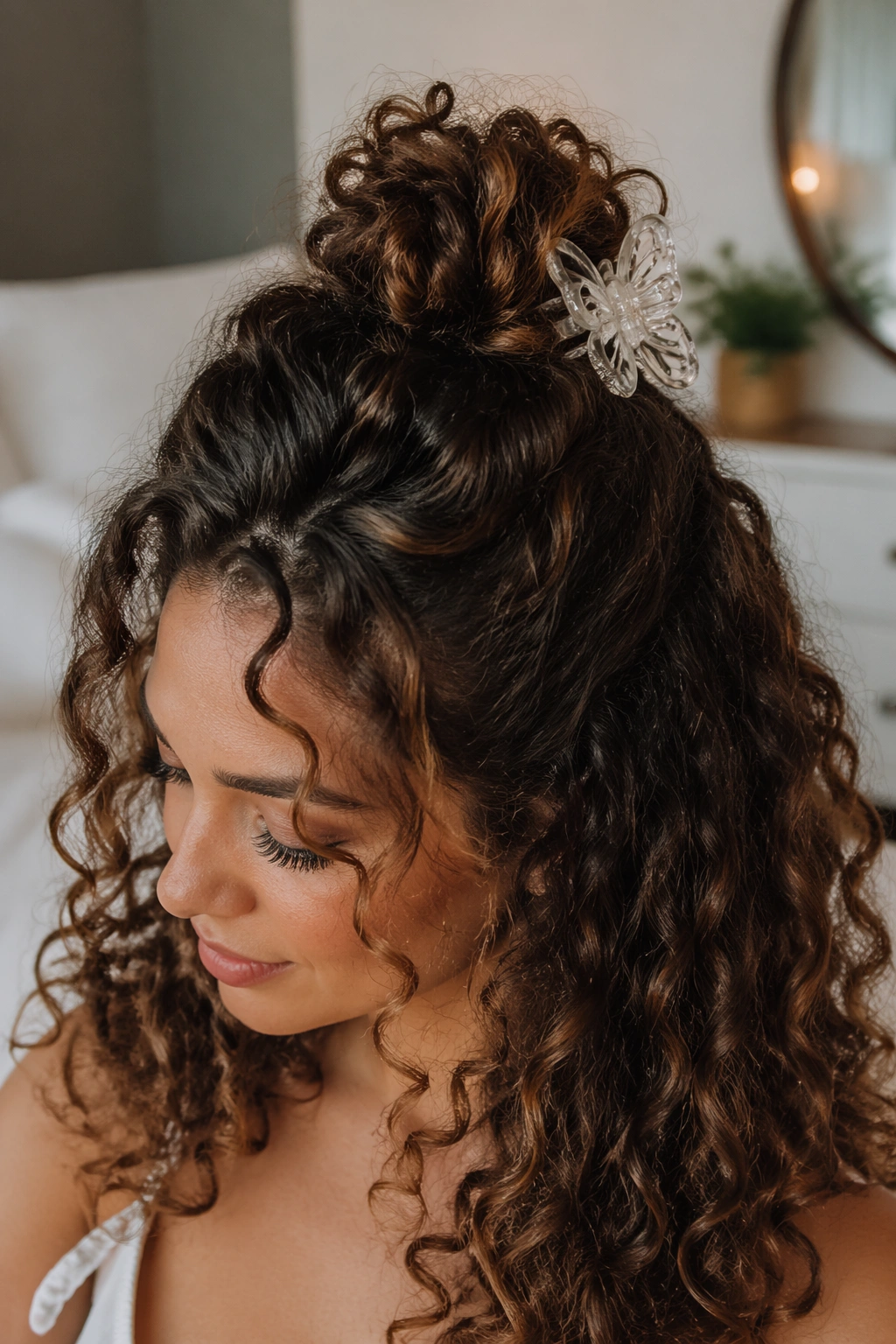
When the crown is flat but the ends are full, split the difference.
A half-bun with a butterfly clip gives you height at the top and freedom at the bottom, and on curly hair that balance matters. You gather the upper section into a loose bun shape — not a tight knot, just a soft fold of hair — and clamp it with the clip so the bun stays open and airy. The lower curls stay loose and visible, which keeps the whole thing from looking heavy.
This is a good style for long curls because it pulls the weight away from the face without hiding the length. It also works when the ends are a little frizzy or overly stretched, since the bun becomes the focal point and the rest of the hair can stay easy. If your hair is thick, use a larger clip with a wide mouth. If it’s medium density, a medium clip is enough.
The bun itself does not need to be perfect. In fact, the rougher shape often looks better because it blends with the natural volume of curly hair. Shape the hair with your hands first, twist the top half loosely, then clip it where the bun feels stable. If you clamp it too hard, the bun turns squat and loses its airy feel.
This style pairs well with a bold lip, big earrings, or a plain T-shirt. It doesn’t need much else.
12. The Loose Clipped Bun That Still Shows Curl Pattern
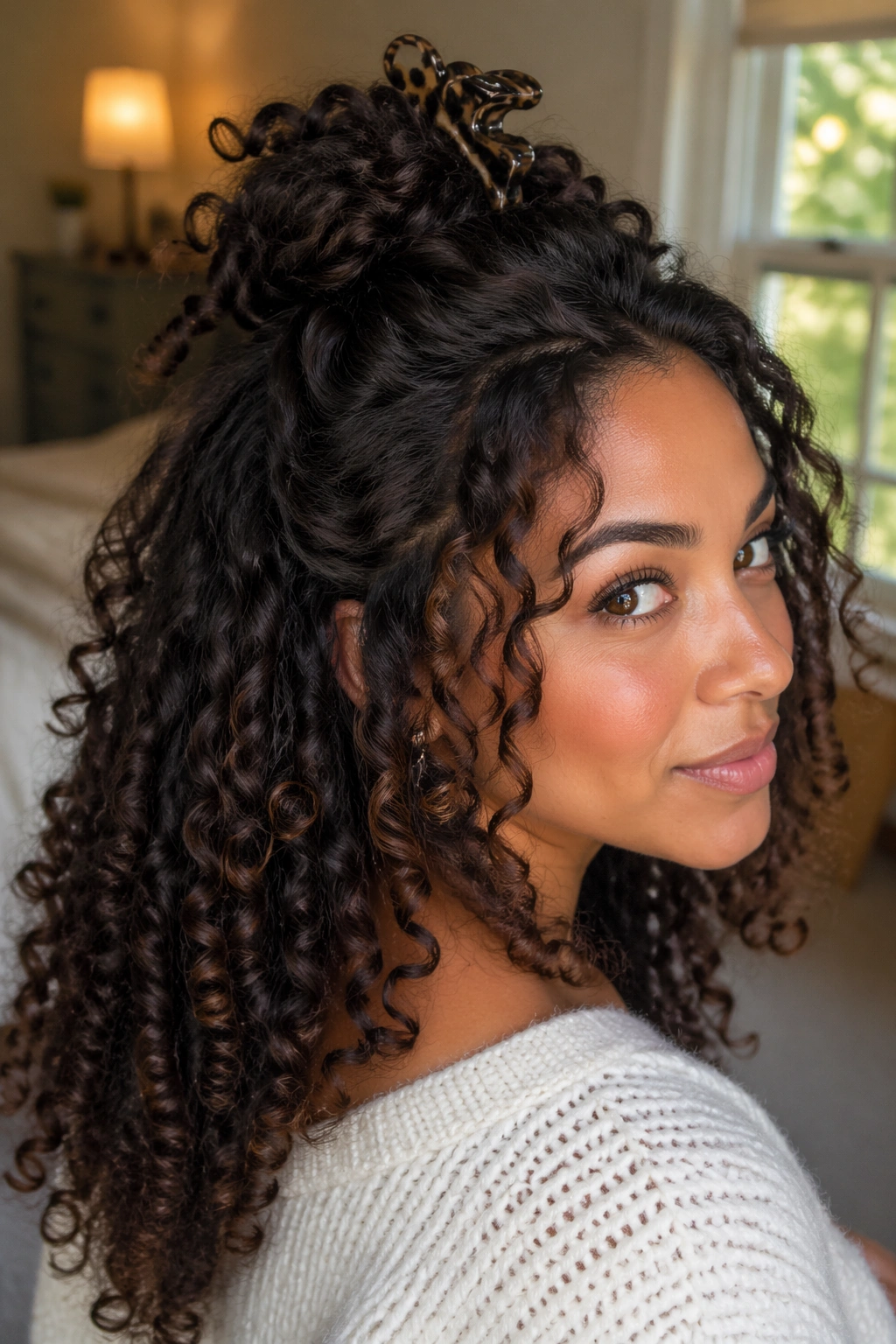
A good clipped bun should still look like curls, not a knot of fabric. That’s the line I keep coming back to with this style.
Take the hair low or mid-height, fold it into a loose bun, and let the butterfly clip catch the center of the roll while the ends and a few ringlets stay visible around the edges. The shape should feel casual but not sloppy. On curly hair, the texture gives the bun depth, so you can afford to leave a little edge softness without losing the structure.
This is the style I’d pick for errands, dinner, or any day when the hair needs to stay contained but still look like itself. A low bun can flatten curls fast if you crush it into the nape, so keep some lift at the root and let the curl pattern show through at the perimeter. Those little spirals around the neckline matter more than people think. They keep the style from looking like a hard shell.
If your curls are very dense, start with a twist before folding. If they’re looser, you can skip the twist and work straight into the bun shape. Either way, the clip should sit where it can bite into the thickest part of the fold. That gives you the most hold with the least pressure.
I like this one because it respects curly hair instead of fighting it. The bun stays soft, the clip stays visible, and the curls get to keep their own personality. That’s usually the whole point.