


When people think of medieval hair, the image usually defaults to a pristine, straight-haired damsel with a high conical hat or a perfectly smooth braid draped over a shoulder. It is a persistent myth, perpetuated by cinema and fantasy art, that historical beauty standards were universally obsessed with sleek, straight locks. That is simply not true. People with curly, coily, and textured hair have existed throughout history, and they navigated the practical, social, and aesthetic challenges of their times just as much as anyone else.
The medieval period was messy. It was rugged. And for those with curly hair, it was an era that actually favored texture in ways that modern, heat-styled conventions often overlook. While the era lacked modern leave-in conditioners and microfiber towels, the techniques used to manage hair were grounded in the reality of volume and grip. Curly hair offers a natural advantage when it comes to historical styling: it holds pins, braids, and headpieces better than almost any other hair type. You do not need to rely on slippery styling products or heavy pomades when your hair has its own built-in structure.
If you are looking to pull off a look that feels rooted in history but works with your natural curl pattern, you have to lean into that texture. Forget about trying to force your hair into the slick, flat styles seen in romanticized paintings. Instead, focus on the techniques that utilize the natural volume of your curls to create intricate, secure, and historically inspired silhouettes. Here are twelve ways to style your hair that honor the aesthetic of the past while making your natural curl pattern the star of the show.
1. The Classic Braided Crown
There is a reason this style has survived for centuries. It is the ultimate utility hairstyle. For curly hair, this is arguably the most secure way to manage your length while keeping it off your face and neck. Unlike straight hair, which can sometimes slide out of a crown braid if it isn’t anchored perfectly, curly hair acts like Velcro. The individual strands lock into one another, making the braid significantly easier to pin in place without needing a mountain of bobby pins.
Why It Works for Curls
The natural volume of curly hair means you do not need to pancake or “fluff” your braids to make them look thick. A standard three-strand braid on a tight curl pattern creates a substantial, rope-like effect immediately. You are starting with a solid foundation.
How to Style It
Start by parting your hair down the middle or slightly to one side. Begin a Dutch braid—where you cross the strands under rather than over—at the hairline, working your way around the crown of your head. As you incorporate hair from the sides, ensure you are pulling firmly but not tight enough to cause tension at the root. Once you reach the back, tuck the tail of the braid underneath the starting point and pin it aggressively. Use large, sturdy hairpins rather than tiny bobby pins; the size of the pins will better grip the thick texture of your curls. If you have shorter layers, don’t worry about them sticking out. In the medieval aesthetic, a few soft, wispy tendrils were considered feminine and natural. Let them be.
2. The Fillet and Pinned Curls
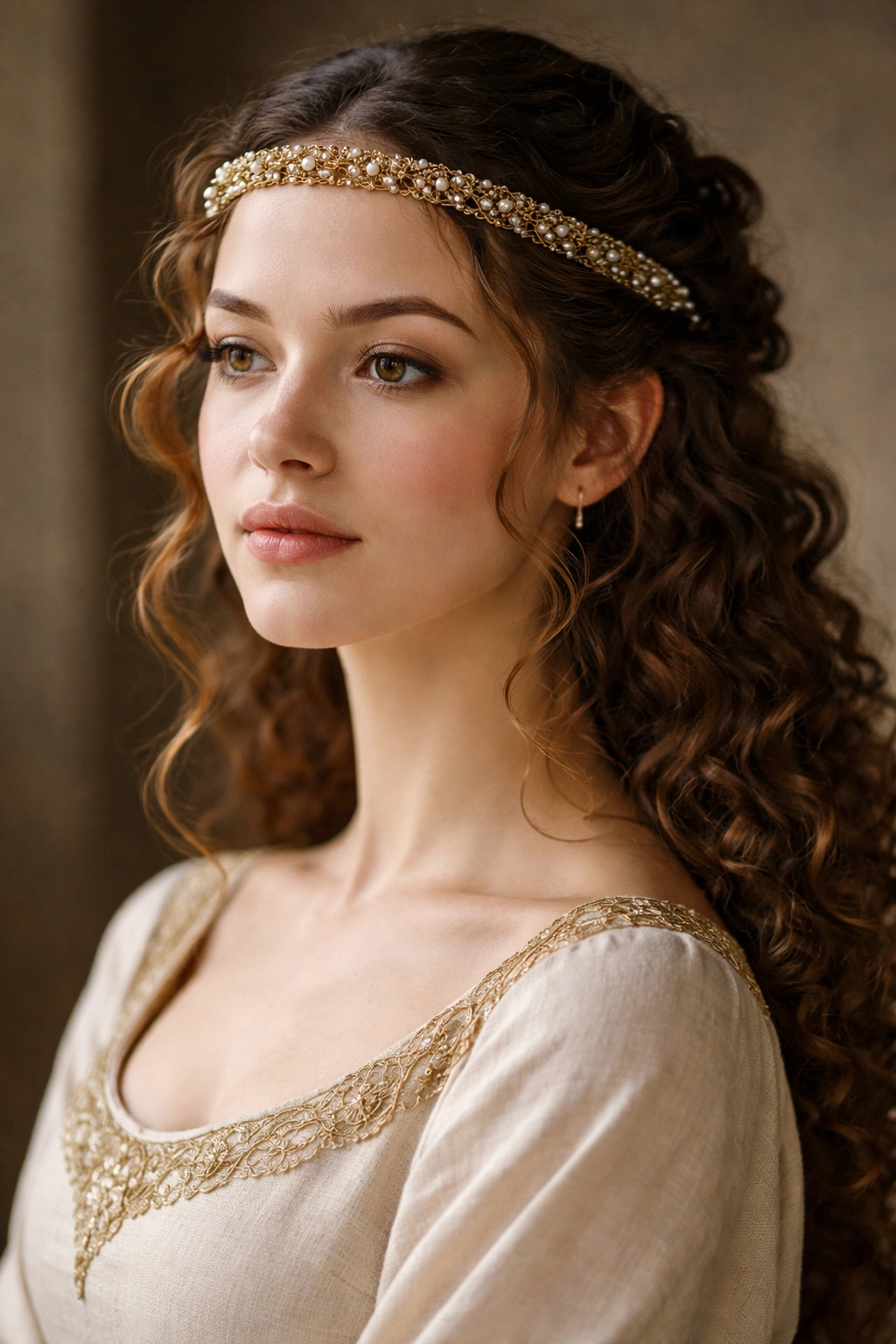
A “fillet” is essentially a decorative headband, often made of silk, linen, or velvet, that sits across the forehead. It was a staple in medieval fashion for a reason: it kept hair pulled back away from the face, which was crucial for anyone doing actual work—which, let’s be honest, was almost everyone. For curly hair, the fillet is a secret weapon. It flattens the roots just enough to keep things looking “neat” by historical standards while allowing the rest of your hair to expand into its natural volume.
The Mechanics of the Look
You want to position the fillet so it sits comfortably against your hairline. This creates a visual break between your forehead and the start of your hair. Instead of trying to smooth your curls back into a bun, use the headband as a boundary. You can pin the back of your hair into a series of small, loose twists or rolls beneath the fillet. The key here is to embrace the contrast between the secured, smooth-ish front and the wild, textured back.
Styling Tip for Retention
If you find that headbands tend to slide off your curls, do not use heavy styling gels to “glue” your hair down. Instead, use a bit of dry shampoo or a texturizing powder at the roots where the band will sit. This creates friction. If you are using a velvet ribbon, the fabric itself will usually grab onto the hair. Avoid silk or satin ribbons if you have very slippery, fine curls, as they will migrate north toward your hairline within minutes.
3. The Natural Unbound Mane
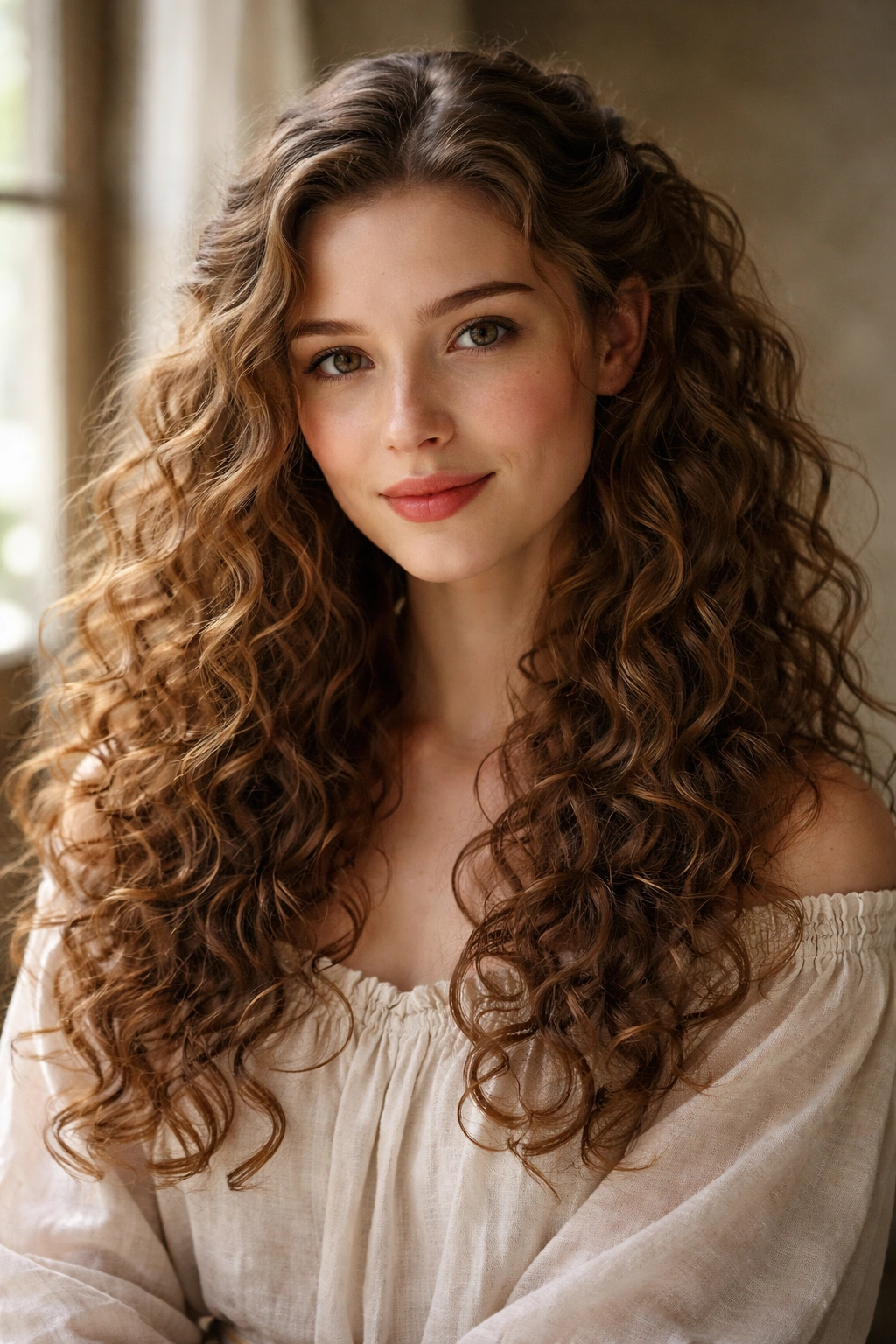
History is full of misconceptions, but one of the most glaring is that all medieval women kept their hair strictly braided or covered. While modesty was a societal expectation, the reality of daily life meant hair was often loose, especially for younger women or in private settings. If you have beautiful, healthy curls, this is the most authentic way to wear them. The “wild” look, as it was often described by chroniclers, wasn’t necessarily a bad thing; it was seen as a mark of youth and vitality.
Embracing the Volume
Don’t reach for a straightener. The goal here is definition without the “product crunch.” Use a leave-in conditioner that is moisturizing enough to prevent frizz but light enough to let your curls bounce. Apply it to soaking wet hair. This is the oldest trick in the book: locking in the moisture before the curl structure even has a chance to fray.
When to Keep It Loose
This style works best for casual, low-effort days. However, be aware of the “medieval practical” aspect. If you are doing anything physical—cooking, gardening, or walking through wind—you will want to secure the front sections. You can pull the two front sections of your hair back and secure them at the crown with a simple wooden pin or a thin piece of cord. This keeps the hair out of your eyes while leaving the rest of your texture free to catch the light.
4. The Ribbon-Woven Twin Braids
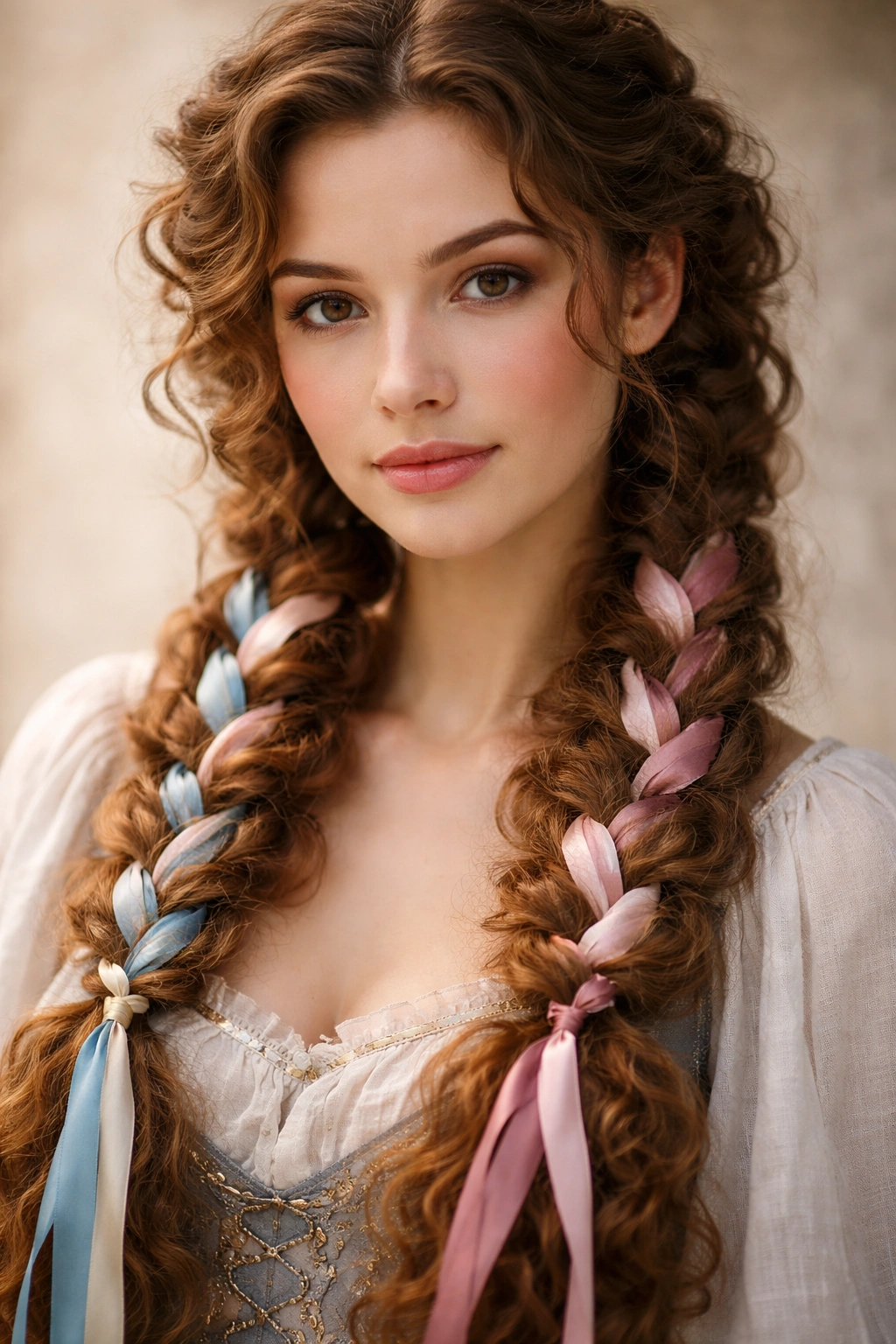
There is something undeniably striking about braids that incorporate ribbons or strips of fabric. This was a common way to add color and decoration to an otherwise plain outfit. For curly hair, ribbons serve a dual purpose: they act as a decorative element and a mechanical stabilizer. They help hold the braid together and prevent it from unraveling, which is a common issue with highly textured hair that has a tendency to spring back.
The Technique
Start with two pigtail braids. As you begin the braid, tie a long ribbon of silk or linen to the base of your hair section. This ribbon now becomes one of the three “strands” you are braiding with. As you cross the hair strands over the ribbon, the fabric creates a visual pattern that breaks up the mass of your curls. This is an excellent way to make your braids look like they have more “hair” in them than they actually do.
Choosing Your Fabric
Avoid synthetic polyester ribbons if you can. They are slippery and will not stay tied. Stick to cotton, linen, or real silk. These natural fibers have a slight grit to them that works in tandem with your hair’s natural texture. If you want to get really authentic, you can even use strips of wool, though that might be a bit itchy against your scalp for a full day of wear.
5. The Low, Looped Chignon
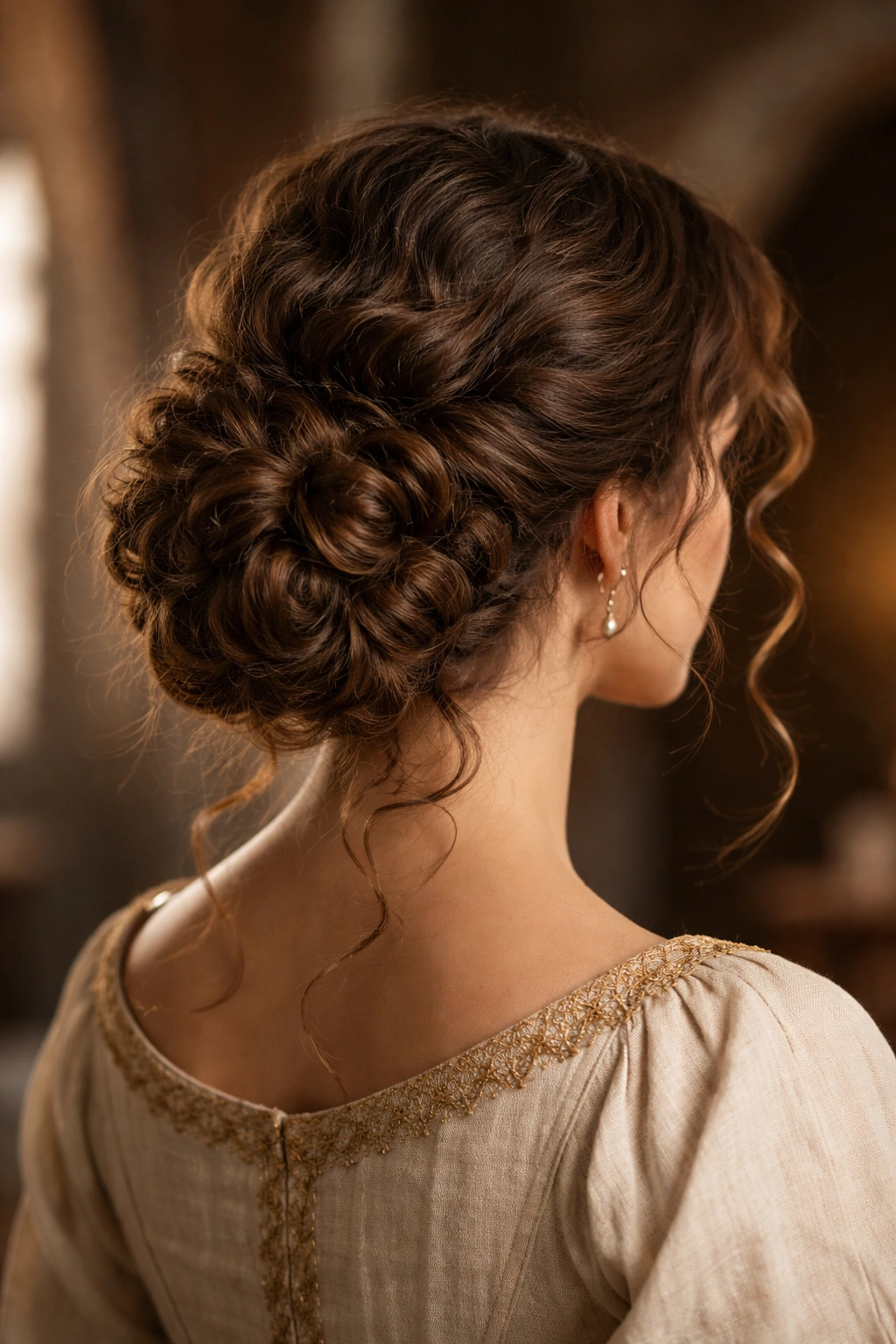
This style sits at the nape of the neck, making it perfect for those who want to keep hair off their collar. It is a sophisticated, understated look that works incredibly well with the density of curly hair. A low loop is essentially a bun that has been folded rather than twisted. Because curly hair has so much internal volume, you don’t need a hair donut or “filler” to make this bun look substantial.
Why This Style Succeeds
High buns can feel heavy and cause tension headaches, especially if you have a lot of hair. By anchoring the weight of your curls at the base of your skull, you distribute the gravity evenly. It is also a very flattering look that mimics the silhouettes seen in late medieval portraiture.
Execution
Gather your hair into a low ponytail. Do not secure it with an elastic yet. Instead, twist the ponytail loosely. As you loop it back toward the base of the ponytail, use a large, long hair stick or a pair of heavy-duty pins to secure the loop. The curly texture will naturally interlock with the other strands, creating a secure hold that feels like magic. If a few curls escape near the nape of your neck, leave them. It adds to the lived-in, period-accurate aesthetic.
6. The Braided Side-Tail
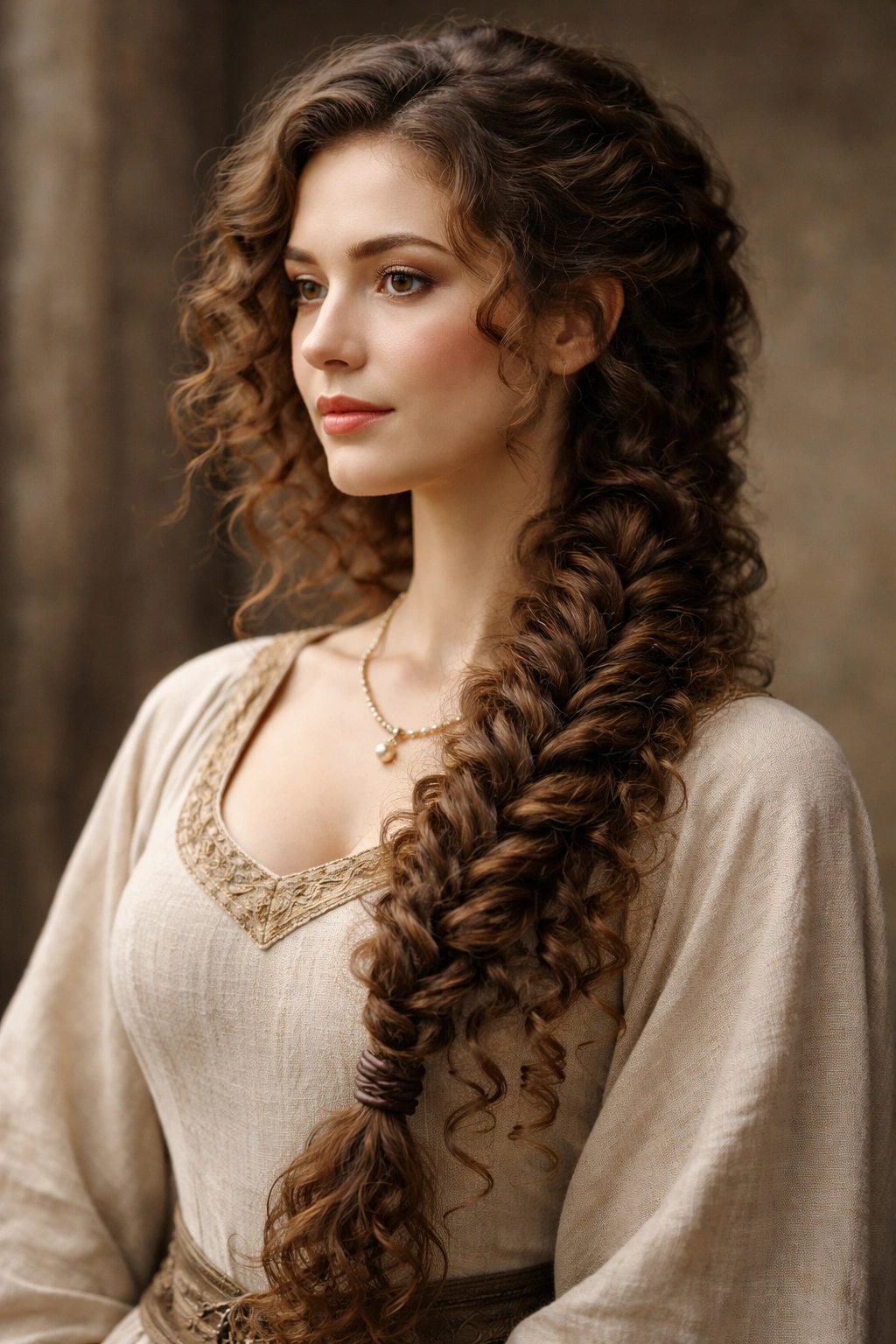
Asymmetry was a popular design element in the middle ages, from architecture to fashion. A side-swept braid is a fantastic way to showcase the length of your hair while keeping it manageable. For curly hair, a side-tail allows you to show off the curl pattern at the ends while the braided section creates a sleek transition.
Working with Asymmetry
Start by brushing your hair to one side. You can use a bit of styling cream to smooth the hair on the side where it is being gathered, but leave the texture on the side that will remain “open.” Begin a standard three-strand braid, but pull it slightly to the side as you go.
The Finishing Touch
Secure the end with a leather cord. Using a hair tie can look jarring against the rustic nature of this style. A simple piece of brown or black leather cord wrapped around the end of the braid feels much more “of the era.” Plus, it won’t break your hair or cause those annoying kinks that elastics do.
7. The Wimple-Friendly Curls
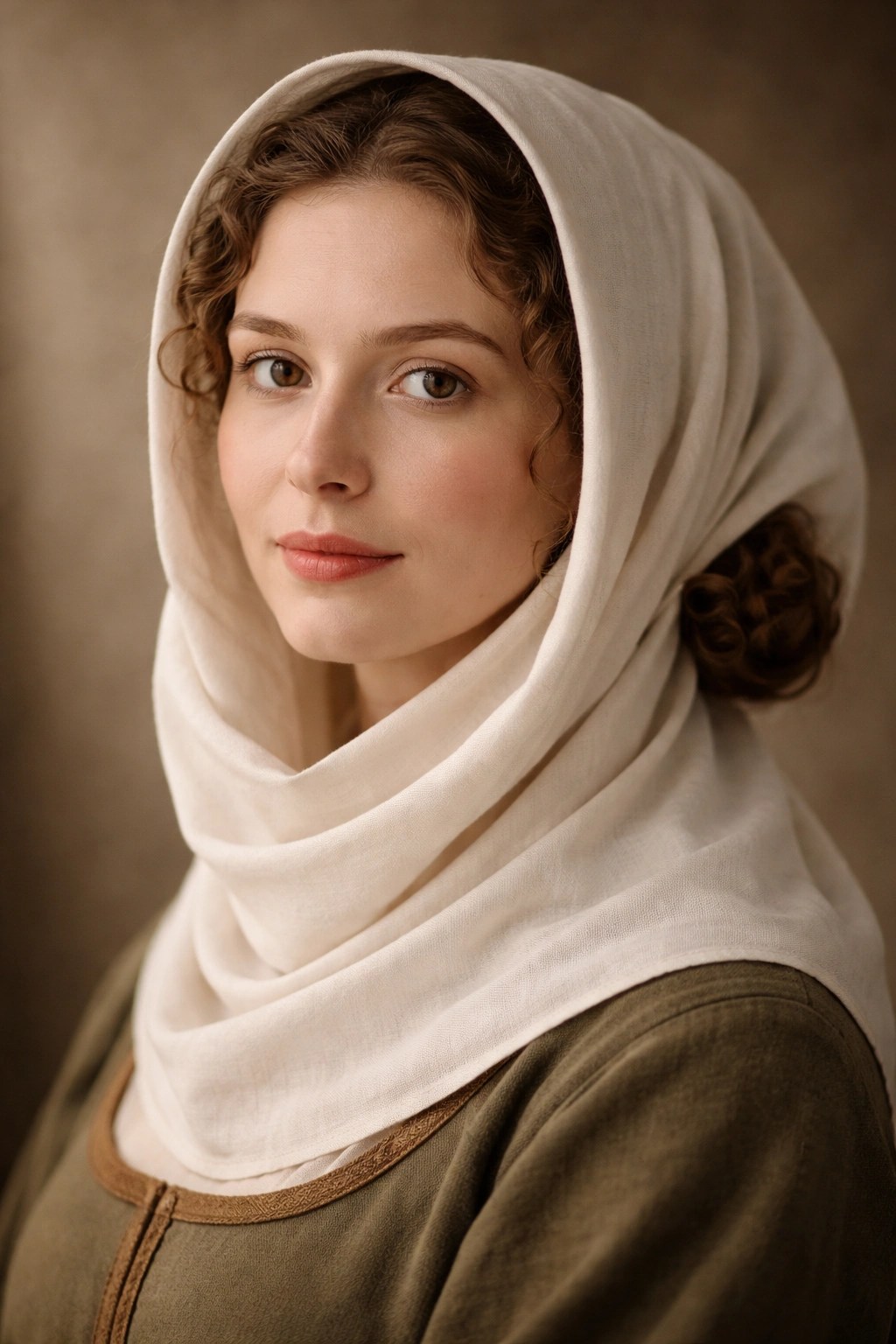
If you want the ultimate authentic look, the wimple is your best friend. A wimple is essentially a cloth covering that frames the face and covers the neck. While it is often associated with religious figures, it was actually a common, practical accessory for women of various statuses to protect hair from dust, wind, and the elements. For curly hair, this is the ultimate protective style.
The Protective Aspect
Because the wimple covers the hair, it creates a micro-climate of humidity. This is fantastic for curls. It keeps them from drying out or frizzing up in the wind. You can style your hair in a very simple, low bun, and then drape the linen or silk wimple over your head and around your chin.
Styling Under the Wimple
You don’t need to do anything complex with your hair underneath. A simple bun or even a loose, low ponytail is enough. Since nobody will see the hair itself, you can focus on making sure your hair is properly moisturized before you put the headpiece on. It’s like a deep-conditioning treatment that you get to wear in public.
8. The Pinned-Back Half-Up
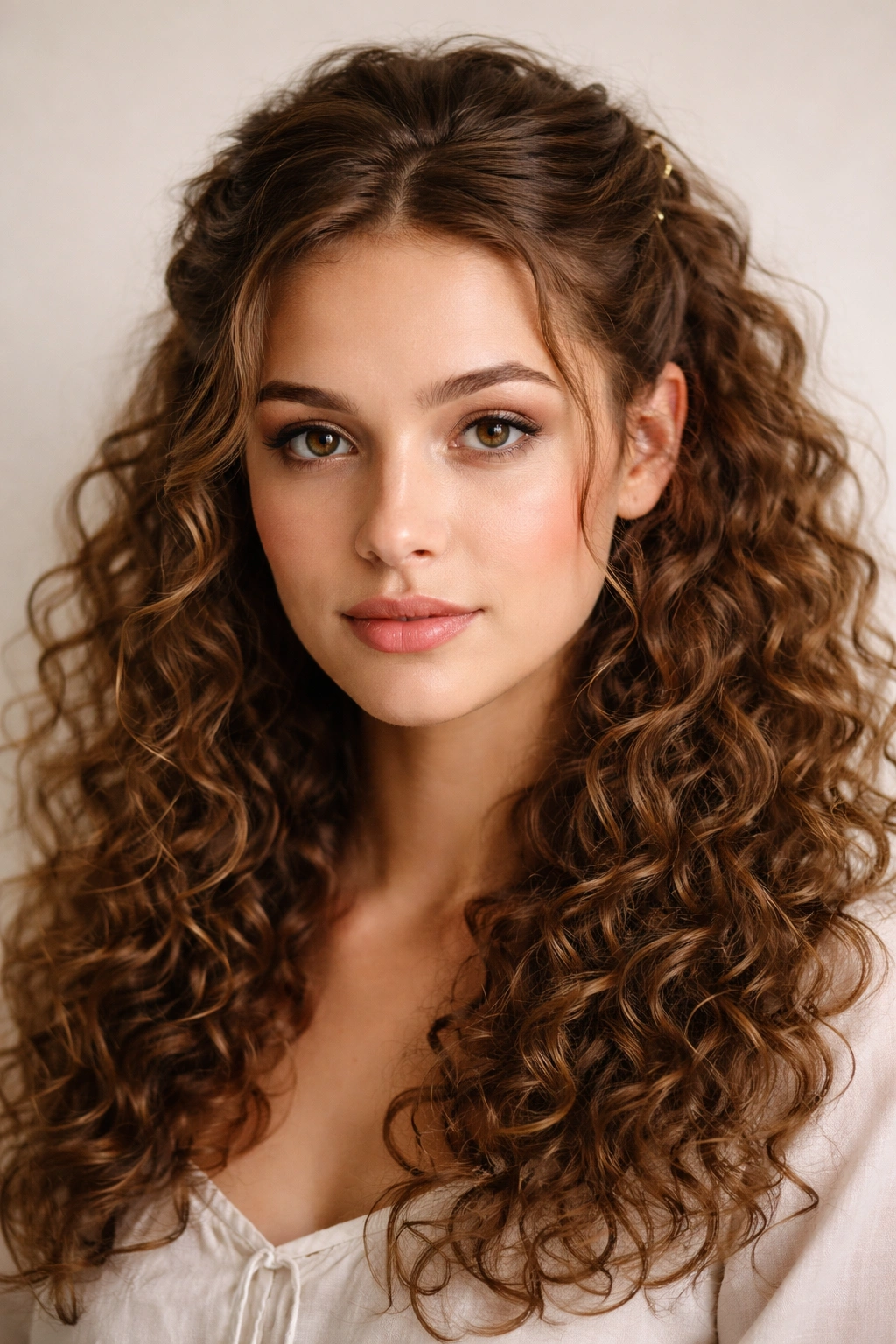
This is perhaps the most versatile style for everyday life. It keeps the hair out of your face, which is essential for any task involving your hands, but it lets you enjoy the full volume of your curls around your shoulders. In the medieval period, this was often achieved using small, simple metal pins or even thorns (though we definitely recommend sticking to modern hair-safe pins).
Creating the Section
Take the top third of your hair—the section starting from your temples and working back to the crown. Pull it back gently. Do not pull it so tight that you flatten your roots; you want to maintain that natural “lift” that curly hair provides.
Securing the Volume
Twist this section and pin it down at the back of your head. If your curls are tight, you can create a small, flat knot with the hair itself, pinning it into place so it looks like a decorative element rather than just a bunch of hair held by a pin. This style is deceptively simple, but it highlights the layers of your hair and gives the illusion of a more complex updo.
9. The Circular Side Buns
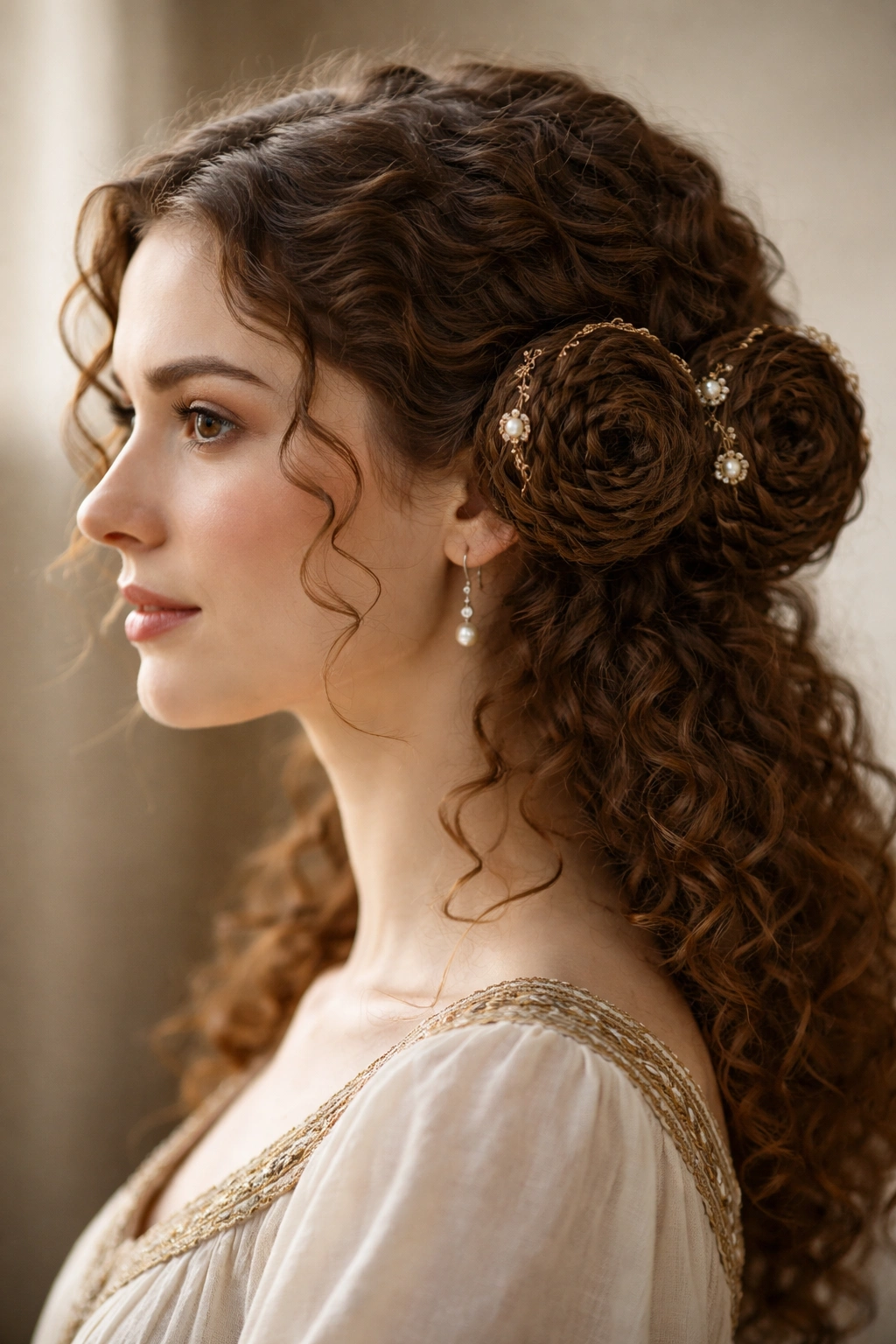
If you want a style that feels a bit more “fantasy medieval,” the circular side bun is the way to go. This involves splitting your hair into two sections, braiding or twisting them, and then coiling them into tight, flat circles against the side of the head, just above the ears. It is a bold look, but it is surprisingly practical because it keeps hair completely away from the face.
The Physics of the Coil
Curly hair is excellent for this style because it provides the necessary friction to hold the coils in place. If you have straight hair, you would need a massive amount of pins to keep these coils flat against your head. With curls, the hair strands grip each other.
Decorative Potential
This style is begging for accessories. In the middle ages, ribbons, pins, and even small jewelry were woven into these kinds of styles. You can thread a ribbon through the braids before you coil them, or you can stick a decorative hairpin into the center of each coil. It provides a very balanced, symmetrical aesthetic that looks great from both the front and the side.
10. The Gathered Tendrils
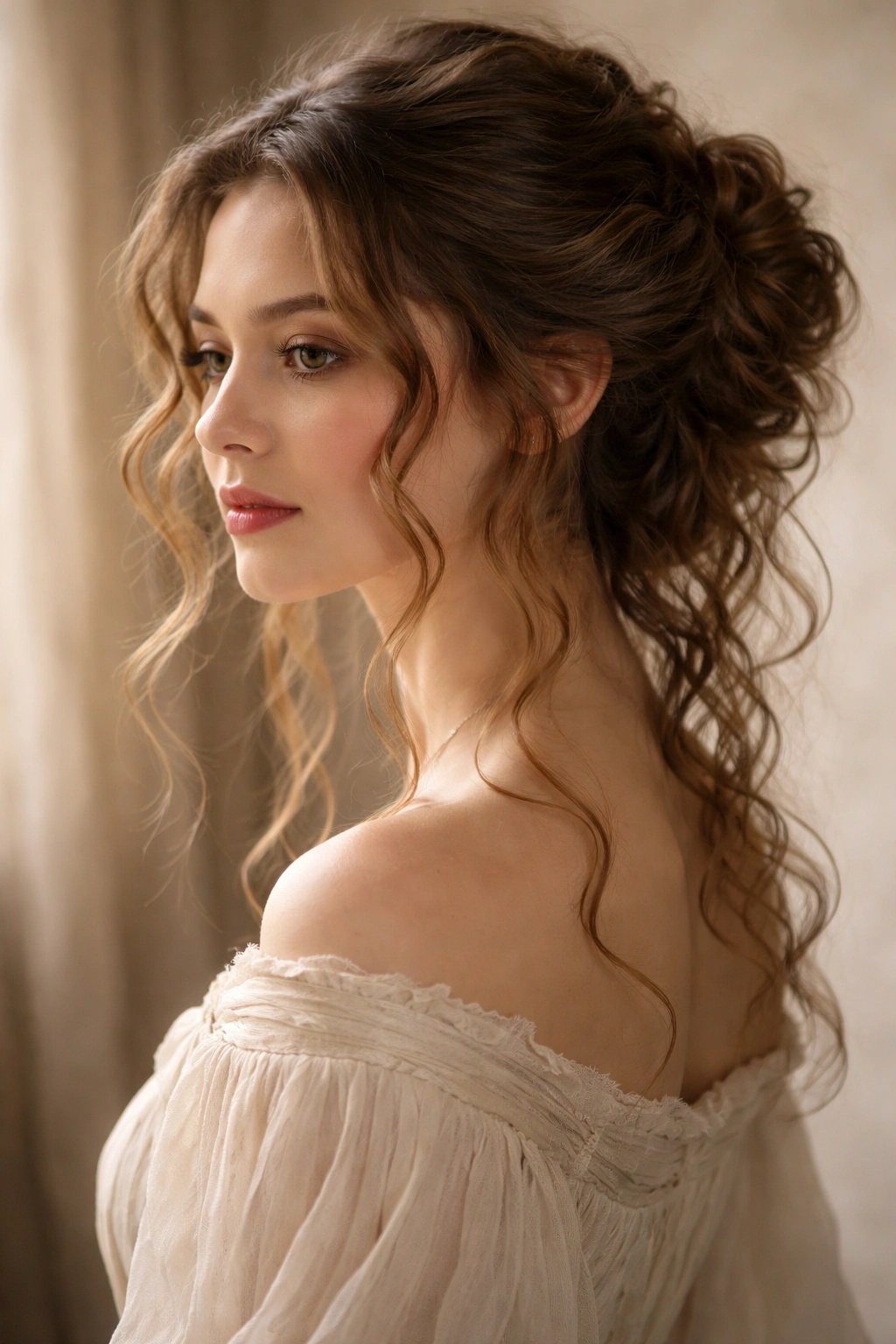
This style is about softening. It is for those days when you don’t want a harsh, pulled-back look. By allowing a few specific curls to frame your face while gathering the rest of your hair into a soft, loose knot at the back, you create a romantic, ethereal look. This mimics the “soft” style often depicted in medieval paintings, where the harshness of the medieval world was tempered by the delicate nature of personal grooming.
Selecting Your Tendrils
The key here is intentionality. Don’t just let random pieces of hair fall out. Use your fingers to separate two or three distinct, healthy curl clumps at the front of your face. Clip the rest of your hair back while you work on the main style so you don’t accidentally pull these pieces into the updo.
Softening the Updo
Gather the rest of your hair loosely. You don’t want a perfect, tight bun. You want a “gather.” Use a large claw clip or a set of decorative pins to hold the mass of hair at the back. It should look like it was thrown up quickly, yet it should be secure enough to last the day. The contrast between the tight, structured tendrils and the loose, messy back is what makes this style work.
11. The Wrapped Turban/Veil Style
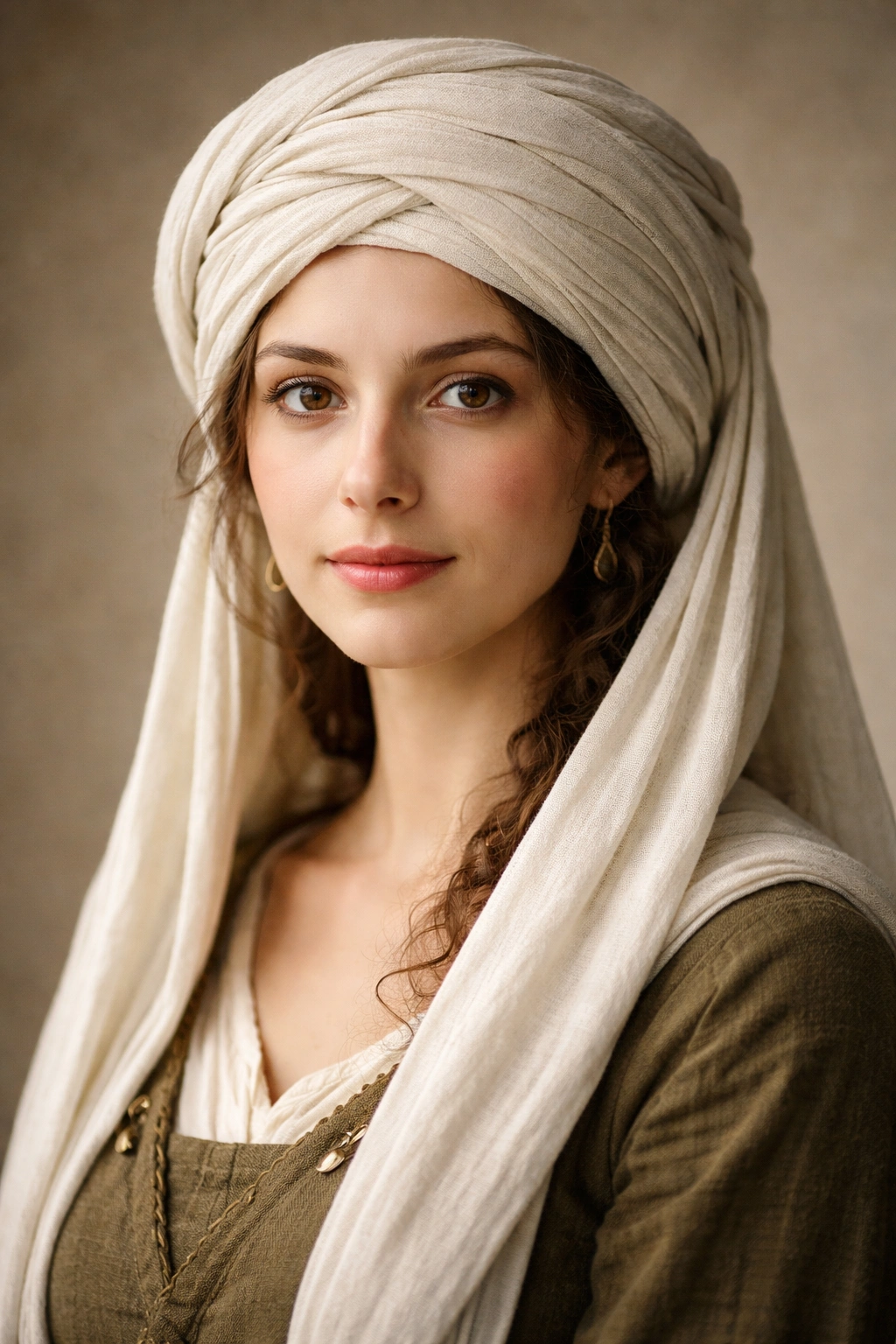
This is similar to the wimple but offers more variety in how you wrap it. A long piece of fabric—roughly two to three yards—can be wrapped around the head to create a turban-like structure. This was a common sight, especially for those involved in trade or travel, as it was a practical way to keep the head covered and the hair protected.
Fabric Choice
Use a lightweight cotton or linen. Heavier fabrics will be too hot and uncomfortable. Lay the fabric across the back of your neck, bring the ends to the front, cross them, and then bring them back around. You can tuck the ends into the wrap.
Why It’s Great for Curls
This style offers complete protection. It is essentially a head-wrap that acts as a shield against friction and tangles. If you are having a “bad curl day,” this is the best solution. It hides the frizz and allows you to go about your day without worrying about how your hair looks. You can leave a little bit of hair peeking out at the front or the back to show off your curl pattern, or hide it all away for a sleeker, more modest look.
12. The Structured Coil Updo
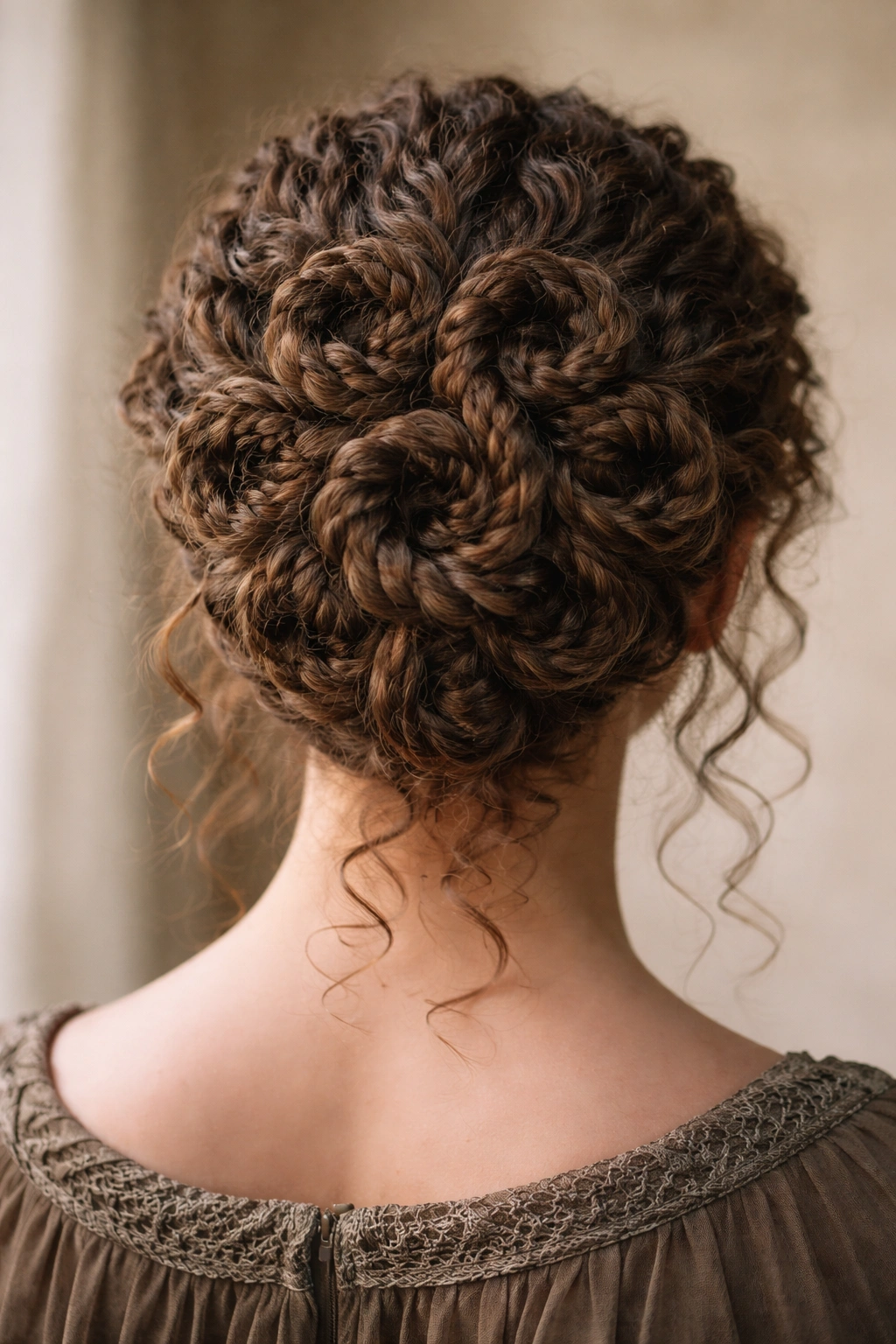
For those who have the patience and the dexterity, the structured coil updo is the pinnacle of medieval hairstyling complexity. This involves taking individual sections of your hair, twisting them, and pinning them one by one into a cohesive, circular shape on the back of the head. It is essentially a hand-crafted work of art.
The “Segment” Strategy
Do not try to do this all at once. Divide your hair into 6 to 8 segments. Twist each segment until it starts to coil on itself, then pin it to your scalp. By doing this in small sections, you create a beautiful, lattice-like pattern of coils on the back of your head.
The Role of Texture
This style is vastly easier for those with curly hair than for those with straight hair. Straight hair will uncoil the moment you let go of the tension. Curly hair, however, has a “memory.” Once you twist it and pin it, it tends to stay in that shape. You are essentially using the natural behavior of your hair to build the structure of the style. This is one of the few instances where having “frizzy” or “hard to manage” hair is actually a superpower, as it helps the coils mesh together into a solid, beautiful mass.
Final Thoughts
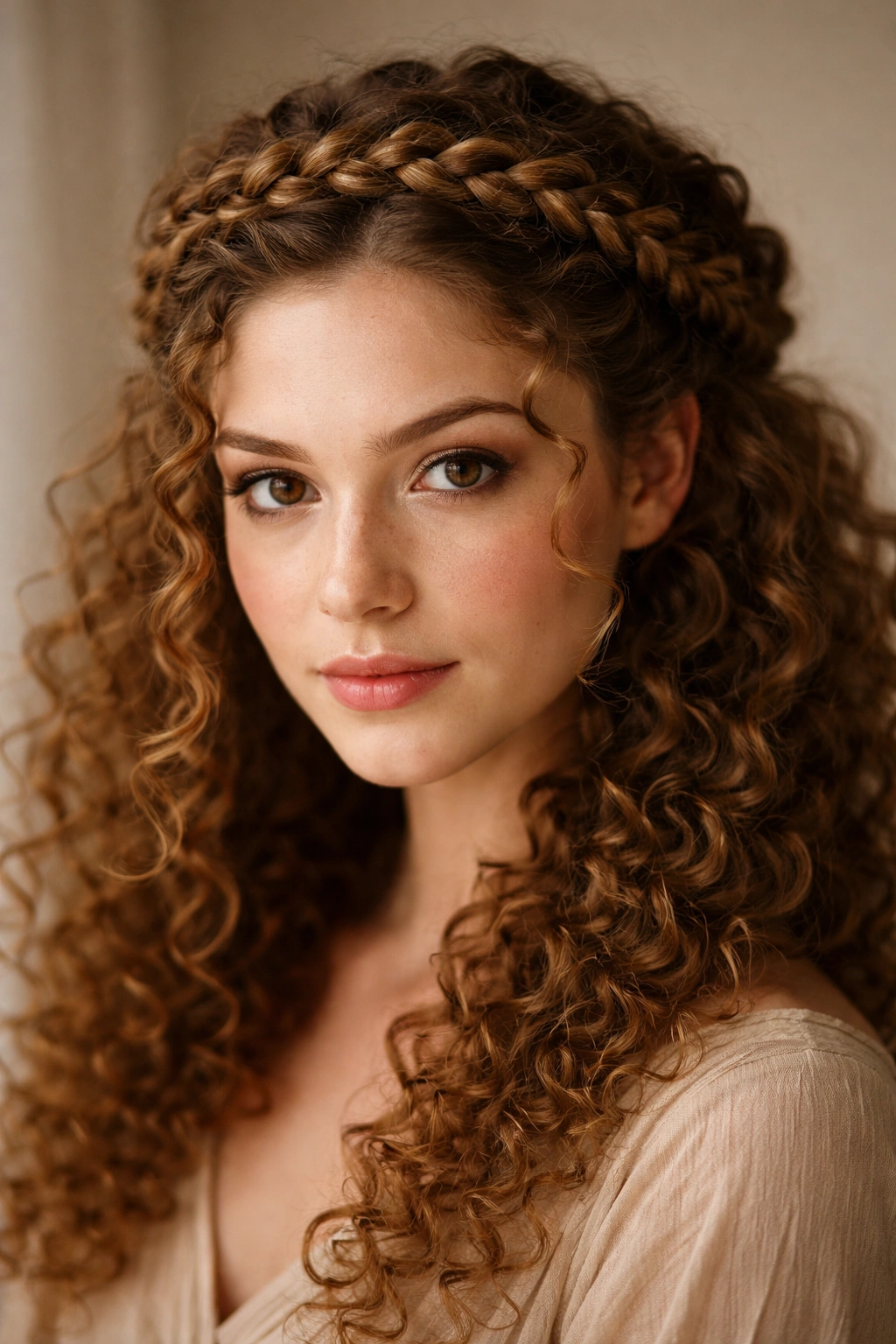
The history of hair is rarely as clean and straight as we imagine it to be. When we look back at the medieval period, we should see it not just as a time of rigid rules, but as an era where people with all hair types found clever, functional ways to manage their locks. Your curly hair is not an obstacle to achieving these styles; it is the secret ingredient.
Whether you are aiming for the security of a crown braid or the quiet, protective elegance of a wrapped turban, the principles remain the same: work with your texture, use fabric and pins to your advantage, and don’t be afraid of a little bit of volume. The medieval aesthetic was never about fighting your hair into submission; it was about honoring the form and finding ways to make it work for the life you are living. Treat your hair like the sturdy, beautiful, structural asset it is, and you will find that these styles aren’t just costumes—they are timeless ways to wear your natural hair.