



Curly hair has a way of making messy look deliberate. Straight hair usually needs a lot of coaxing to look lived-in; curls arrive with texture already built in, which is half the battle won. The trick is choosing a cut that respects the curl pattern instead of flattening it or chopping it so evenly that it turns boxy by lunchtime.
That is why messy short curly hairstyles work so well. They give curls room to move, room to shrink, and room to do that lovely imperfect thing where a few pieces go rogue and suddenly the whole style looks cooler. A good short curly cut is never about looking polished in a stiff way. It’s about shape, lift, and a little unpredictability.
Shrinkage changes everything.
A cut that looks chin-length when wet can land much higher once it dries, and that is exactly where people get surprised. The best versions of these styles are usually cut with the curls dry or partially dry, then refined so the ends sit where they should once the hair springs back. If you’ve ever ended up with a triangle, a mushroom, or a flat puff on top, you already know why the cut matters more than the product.
1. Messy Short Curly Pixie with Finger-Coiled Fringe
A curly pixie can look sharp or soft, and this version leans soft on purpose. Keep the sides close enough to open up the face, then leave enough length on top for the curls to bend instead of standing at attention. The fringe matters most here; if the front is too short, the whole thing can read as severe rather than messy.
Why it works
Finger-coiling just the front pieces gives this cut direction without making it look overworked. You do not need to coil every curl. Two or three coils around the hairline are enough to bring focus to the eyes and stop the front from puffing out in every direction.
A small amount of curl cream plus a light gel usually does the job. Work it through damp hair with your fingers, not a brush. Then coil the front sections, scrunch the crown once or twice, and let it dry with as little touching as possible. If you diffuse, use low heat and low airflow. High heat can blast the pattern apart, and pixies show every mistake.
Best of all, this style wears a little imperfection well. A few frizzy bits around the temples make it look easier, not worse. That’s the whole point.
2. Tousled Curly Bob with a Side Part
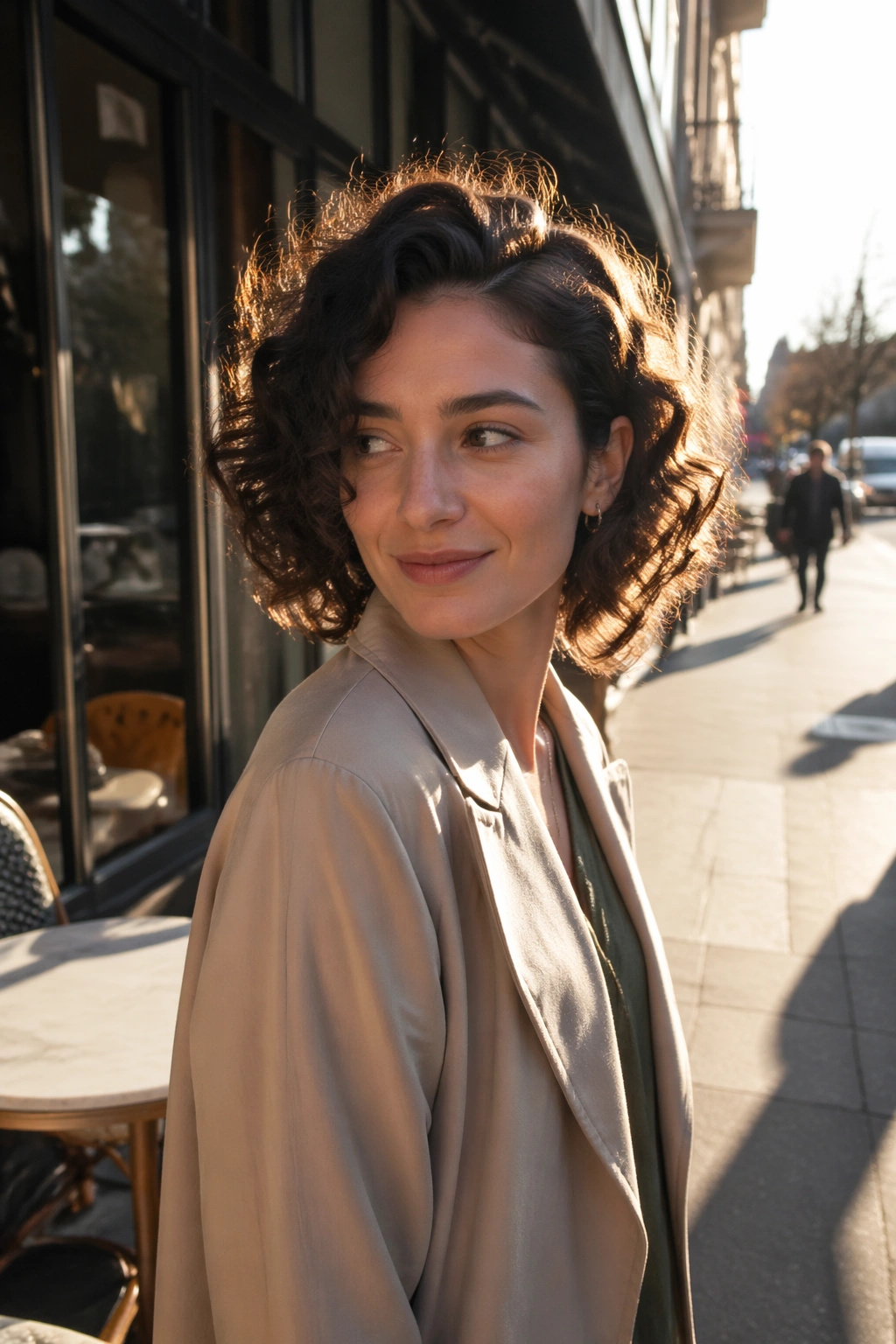
This is the short curly style I keep coming back to when someone wants volume without the haircut feeling precious. A side part gives curls a place to fall, and that alone stops the bob from puffing into a round helmet. The length usually lands somewhere between the jaw and the top of the neck, which is short enough to feel fresh but long enough to keep some swing.
What makes it work is the contrast. One side gets a little more lift, the other side gets a little more weight, and the hair stops trying to behave like a perfect sphere. It feels casual, but it still has shape.
Ask for internal layers rather than heavy exterior layers if your curls are dense. That keeps the ends from turning stringy while still removing bulk from the middle. If your hair is finer, a side part and a small amount of mousse at the roots can make the style feel much fuller than a center part ever will. I like this cut because it looks good even when the curls are not all cooperating. In fact, that tiny bit of disorder is what gives it life.
3. Rounded Curly Crop with Soft Layers
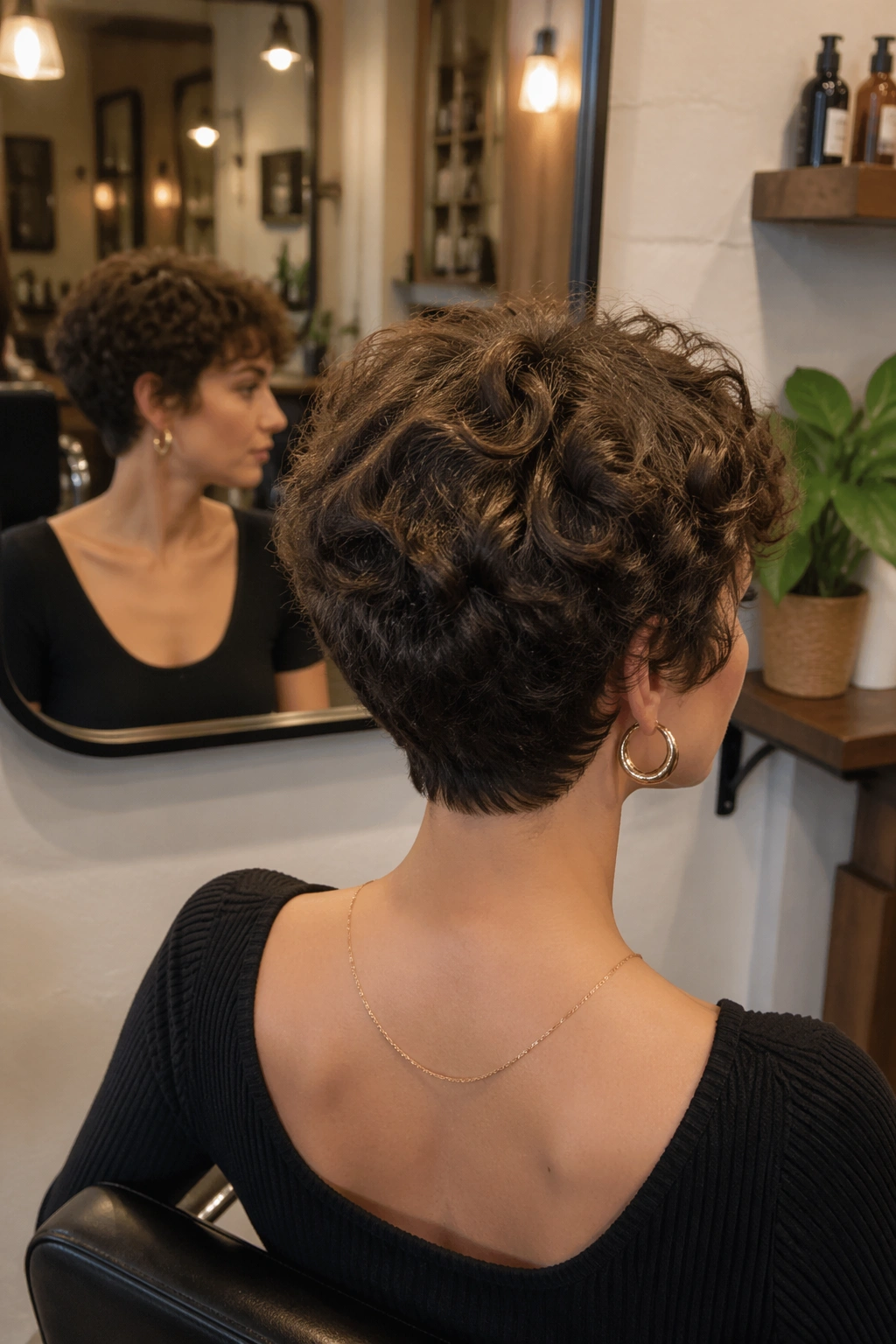
Why does a rounded crop look so good on curls? Because curls already want to build upward and outward. Give them a soft dome shape, and they suddenly look intentional instead of wide and awkward. This cut sits close to the head at the nape, opens up around the crown, and keeps enough length on top to show the curl pattern.
How to ask for it
Tell your stylist you want the sides and back kept neat, but not shaved into a hard line. Then ask for soft layers through the top so the curls stack without bulking up at the temples.
- Keep the crown a little longer than the sides so the shape reads rounded, not flat.
- Ask for dry cutting or curl-by-curl shaping if your curl pattern changes a lot when it dries.
- Use a dime-sized amount of mousse at the roots if your hair collapses easily.
- Avoid heavy butter-based creams on fine curls; they can make the crop sink instead of lift.
The nicest thing about this cut is how little daily effort it asks for. Scrunch, diffuse for a few minutes, and stop before it gets overhandled. Too much fuss ruins the point.
4. Shaggy Tapered Cut for Thick Curls
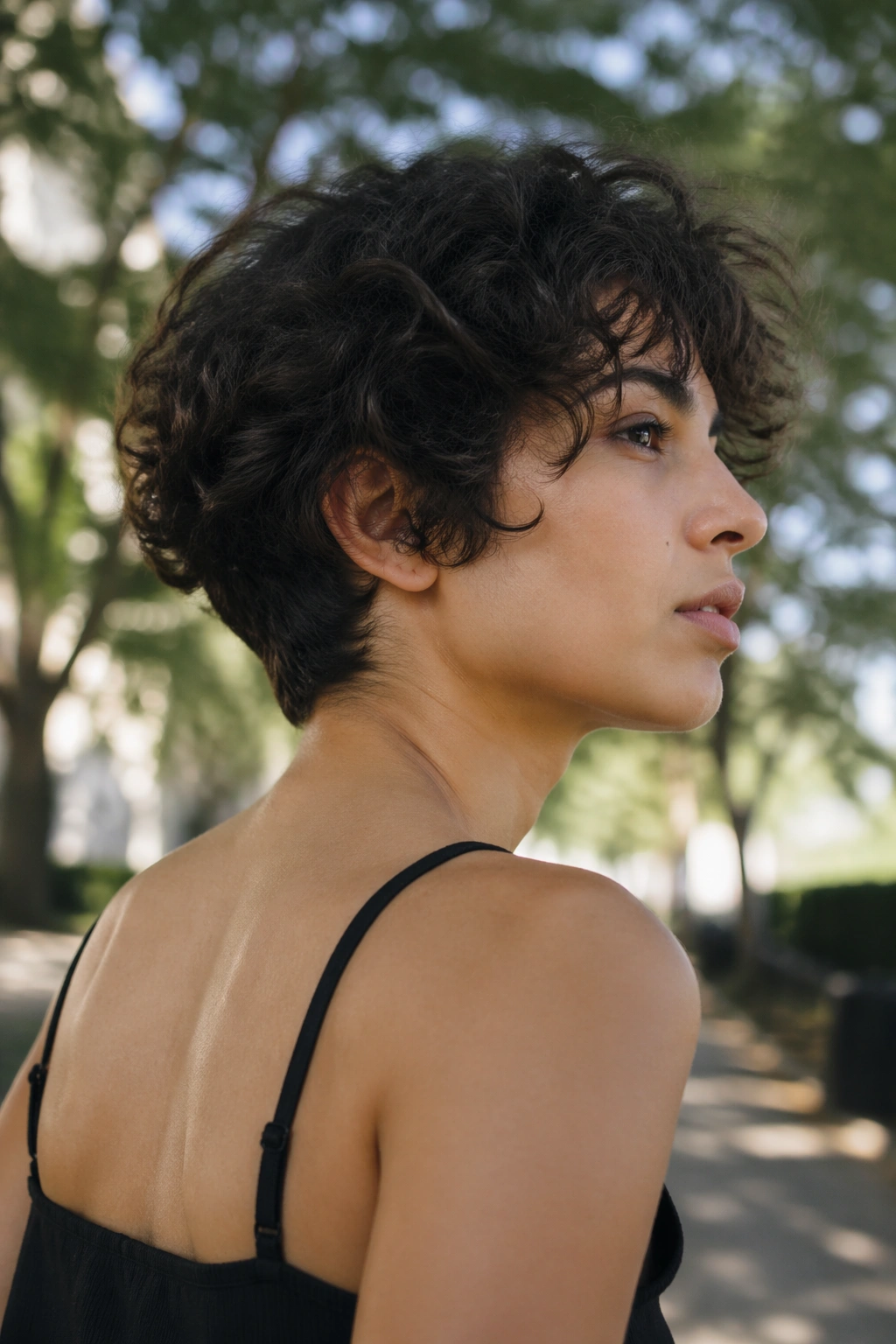
If your curls are dense and you always feel like the back of your head has too much going on, a shaggy tapered cut can be a relief. It keeps the neck cleaner, builds softness through the sides, and leaves enough length on top for the curls to fall in messy little layers. The taper stops the cut from feeling heavy. The shag keeps it from feeling too neat.
Think of this one as a cut that breathes. It gives your curls space around the ears and nape, which matters more than people think. Hair that stacks too heavily in the back loses movement fast.
A few things make this look work:
- Longer crown layers keep the top from flattening.
- A tapered nape prevents that bulky shelf at the back.
- A little frizz is welcome here; it softens the shape.
- A diffuser helps the layers separate instead of clumping into one block.
One warning: if your stylist over-thins the ends, the cut can start to look wispy in a bad way. You want air, not gaps. That difference matters. A good shag on curls should still feel full in the hand.
5. Curly French Bob with Airy Fringe
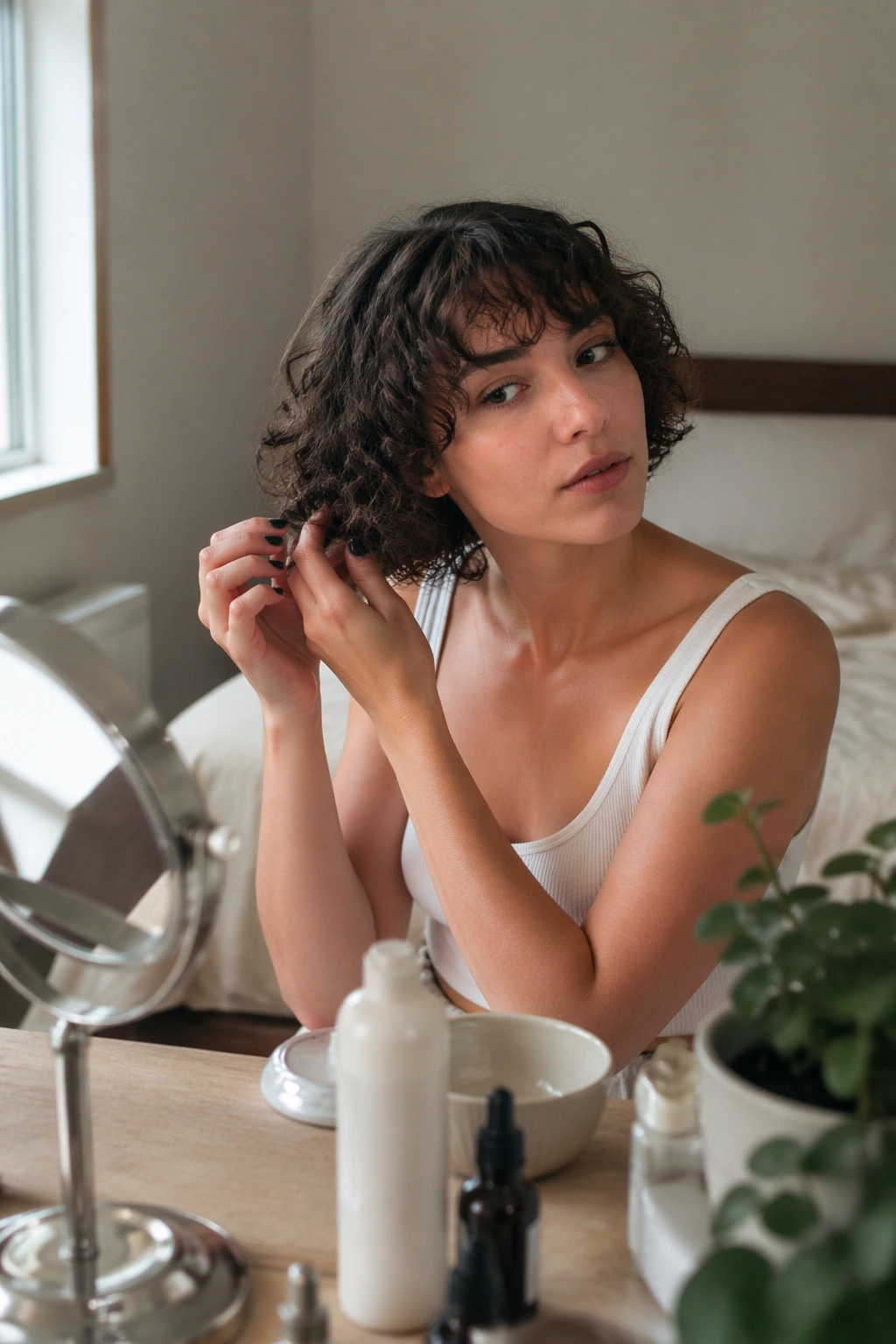
The curly French bob has that slightly undone feel that never looks like you tried too hard, which is probably why it keeps showing up in style circles. It usually lands around the chin, sometimes a touch higher, and it often comes with a soft fringe or face-framing pieces that fall just a little unevenly. On curls, that irregularity is a feature.
The key is length. Curly hair bounces up, so a bob that seems almost too long when wet usually lands in the right place once it dries. If you cut it too short, you lose the swing and end up with a puffed-up edge that sits farther from the face than you wanted.
This is a good cut if you like something feminine but not fussy. The fringe can be worn loose, split, or pinned to the side on days when it misbehaves. That flexibility is half the charm. A tiny bit of leave-in conditioner through the ends keeps the curl clumps from looking dry, but I would skip anything heavy on the roots. The shape is strongest when the top stays light and the lower curls can move.
6. Messy Curly Mullet for Short Hair
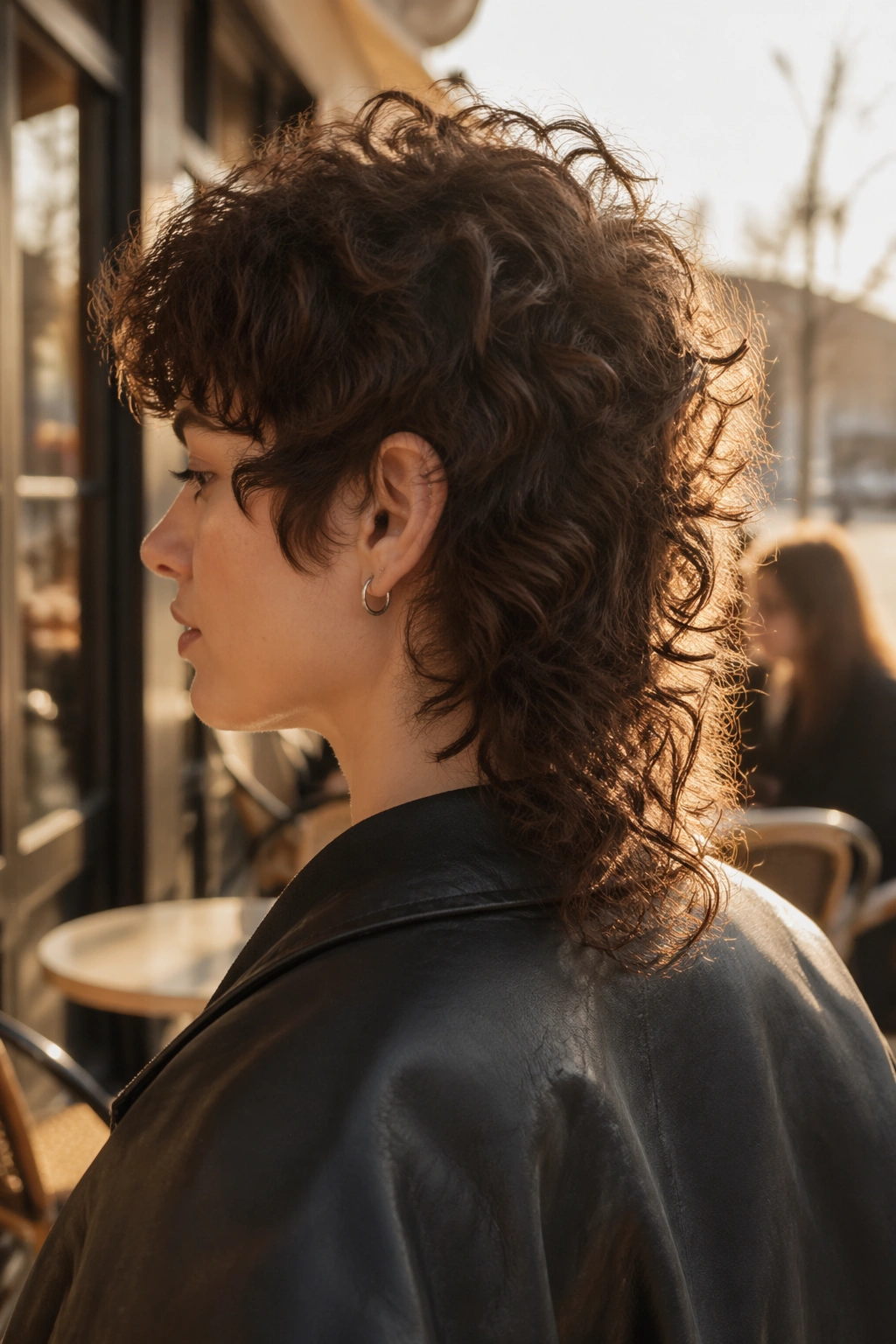
Unlike a classic pixie, the curly mullet keeps some length at the back, and that extra bit of tail changes the whole mood. The front stays short enough to keep the face open. The back hangs a little longer, which gives the style a sharp edge without making it look hard. On curls, the result is less “retro costume” and more “I know exactly what I’m doing.”
This cut works because curls naturally create a soft transition between lengths. A straight mullet can look abrupt if the blending is off by half an inch. Curly hair blurs those edges on its own, so the cut feels more organic.
It’s a smart choice if you like texture and movement and you do not mind a bit of personality. If you want a haircut that disappears into the background, this is not it. If you want people to notice the shape before they notice the styling, it’s brilliant. Keep the front and crown pieces defined with a small amount of cream, then use a diffuser only until the roots lift. The back should look loose, not polished. That contrast is the whole point.
7. Side-Swept Curly Undercut
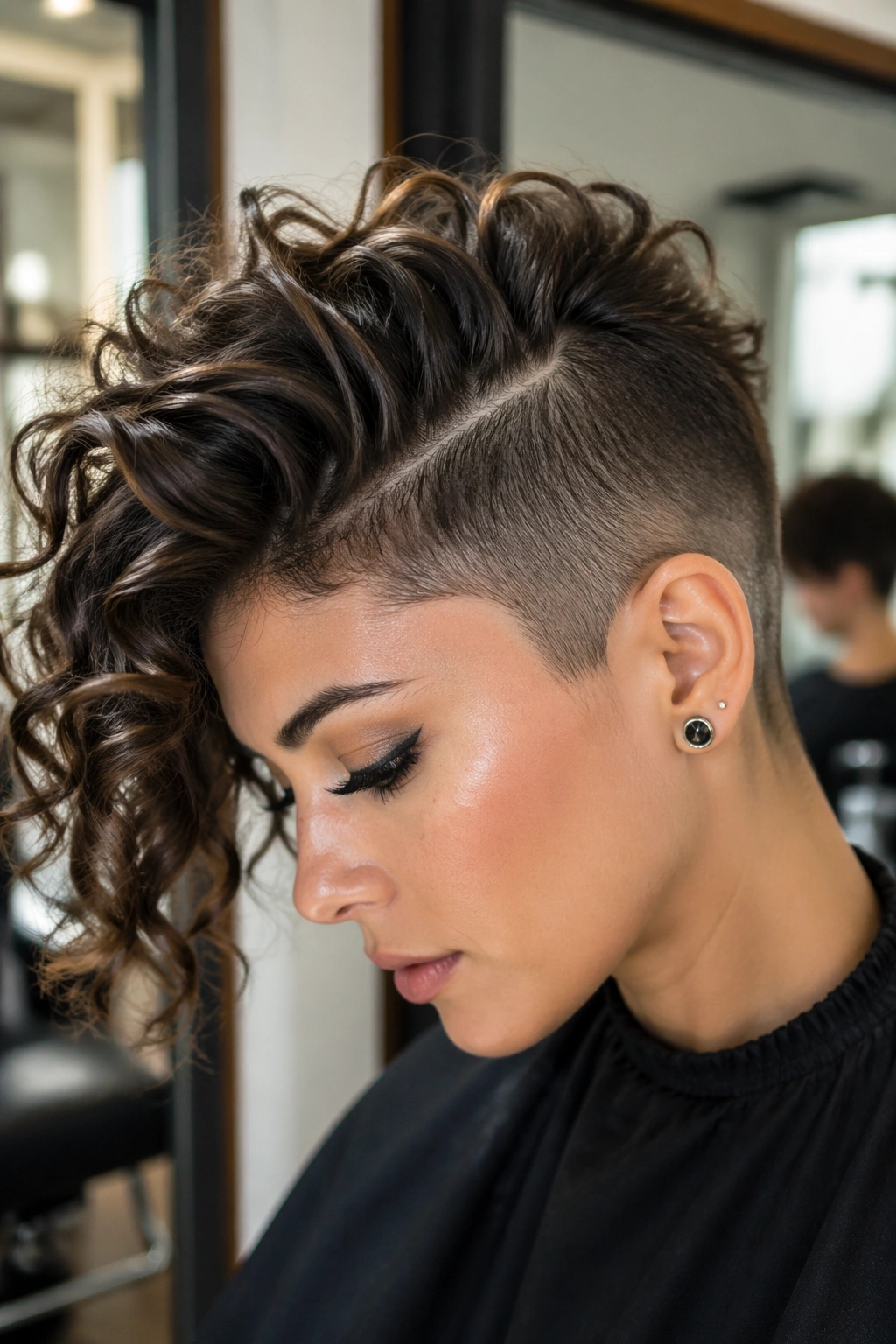
A side-swept undercut gives you a clean frame on one side and a full cloud of curls on the other. It sounds dramatic because it is. The undercut removes bulk where you do not want it, and the long top section can be swept over with just enough mess to keep the style from looking severe.
What makes it different
The shape is built on contrast. One side is short and tidy, the other side does the talking. That makes this cut especially good for thick curls that can get hot or heavy around the ears.
How to wear it
Start with damp hair and work in a lightweight curl cream from mid-length to ends. Then sweep the top diagonally across the head with your hands. A deep side part helps. If you want more separation, pinch a few curls apart once the hair is dry instead of combing them out.
A detail that matters: the shorter side needs regular cleanup, or the whole style loses its edge fast. I like this cut for anyone who wants something expressive but still easy to wear with glasses, earrings, or a strong brow line. It frames the face instead of hiding it, which is why it reads so well on short curls.
8. Wet-Look Curly Crop
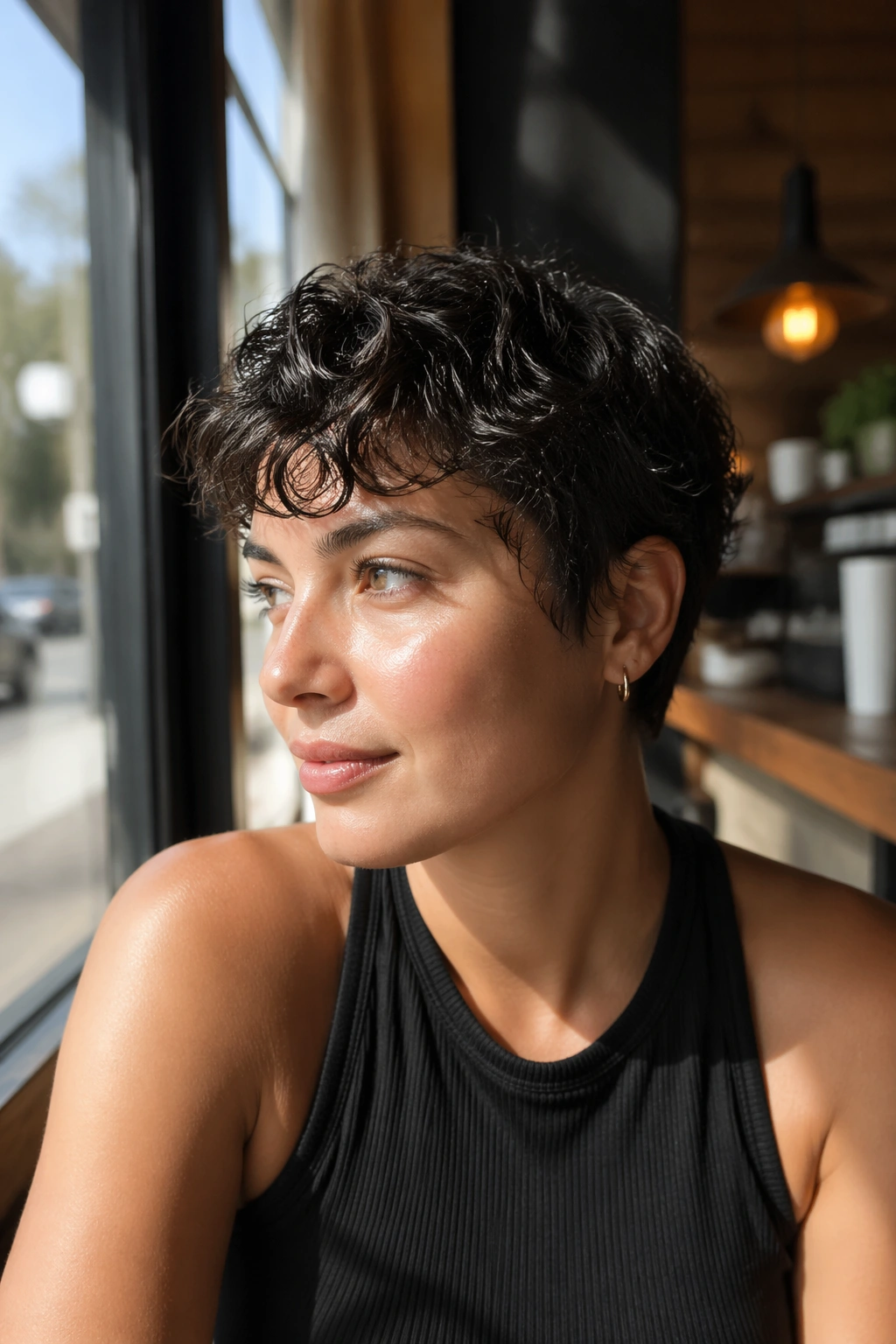
There’s a slick, glossy version of the curly crop that looks almost cool to the touch. The hair sits close, the curls are defined, and the surface has that damp shine you get when gel is applied to soaking-wet hair. It is a little dressier than the other styles here, but it still counts as messy because the ends can stay soft and irregular.
The feel matters. This style should look slightly slippery at the roots and a bit fluffier at the tips, not helmet-hard from front to back. If the whole thing dries into a stiff shell, too much product went on. That happens fast with curly hair, so use a light hand.
I usually recommend applying gel to very wet hair, then smoothing it down with your palms or a wide-tooth comb. After that, scrunch only the ends and stop. Let the cast form on its own. Once it is dry, you can break it gently with a drop of oil on your fingertips if you want less crunch. Do not keep touching it while it dries. That is how you get frizz everywhere and a style that never settles.
9. Taper Fade with Cloud Curls
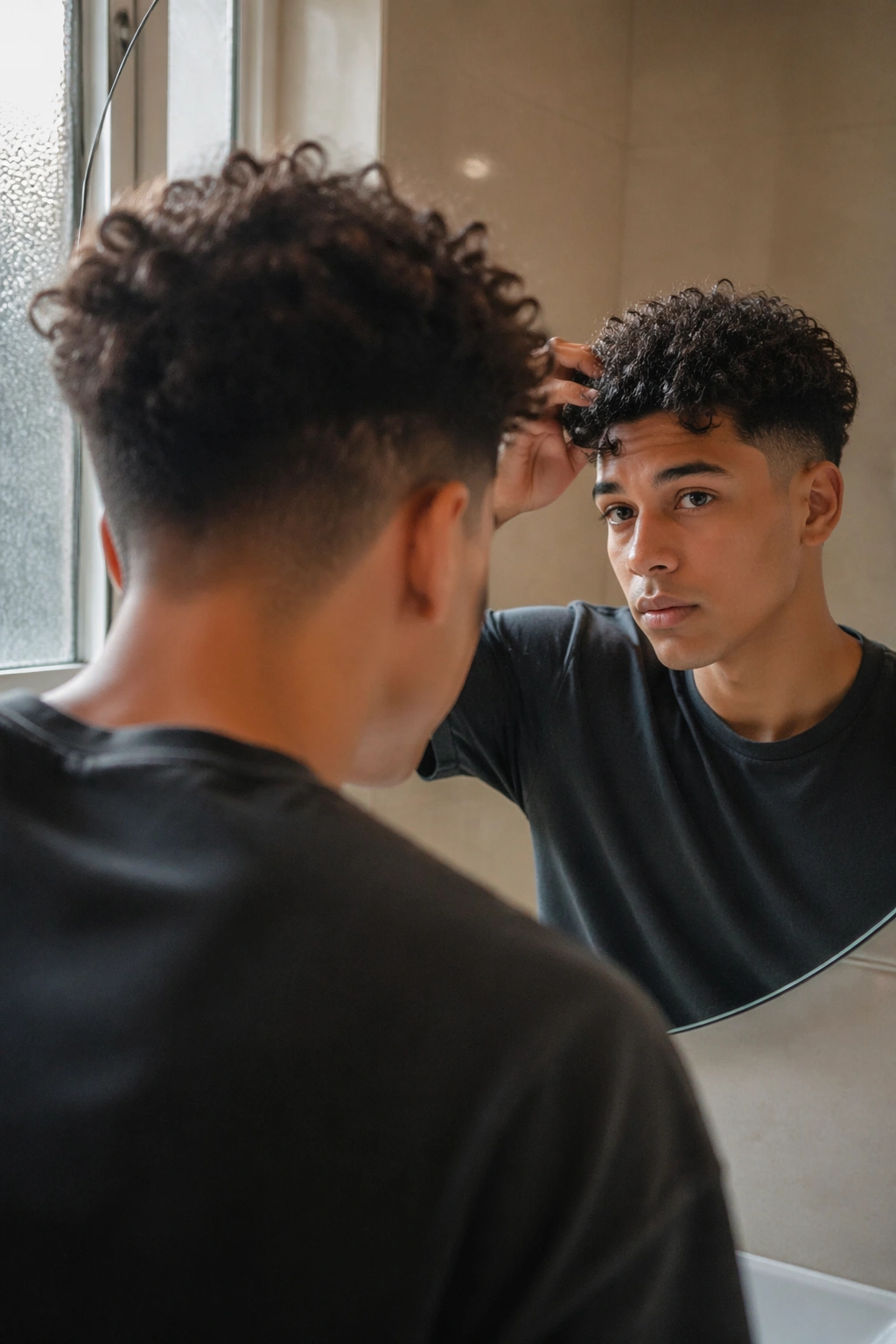
A clean taper fade does not fight messy curls. It frames them. That is the part people miss. When the sides are cut down tight and the top is left round and soft, the curls on top look bigger, lighter, and a lot more deliberate than they would if everything were the same length.
This is a strong option for dense curls and coils, especially if the sides puff out faster than you like. The fade keeps the silhouette tidy around the ears and neckline, while the top can stay fluffy and free. That balance is the reason the style works so well on short hair. You get shape without bulk.
Ask for the fade to be low or mid if you want a gentler transition. A high fade can look sharp, but it also changes the mood of the cut fast. On the top, leave enough length for the curls to separate naturally. A little mousse at the roots and a tiny bit of cream through the ends is usually enough. Anything heavier can drag the shape down. Clean sides, soft top. Simple, and that’s why it works.
10. Choppy Curly Pixie with Piecey Ends
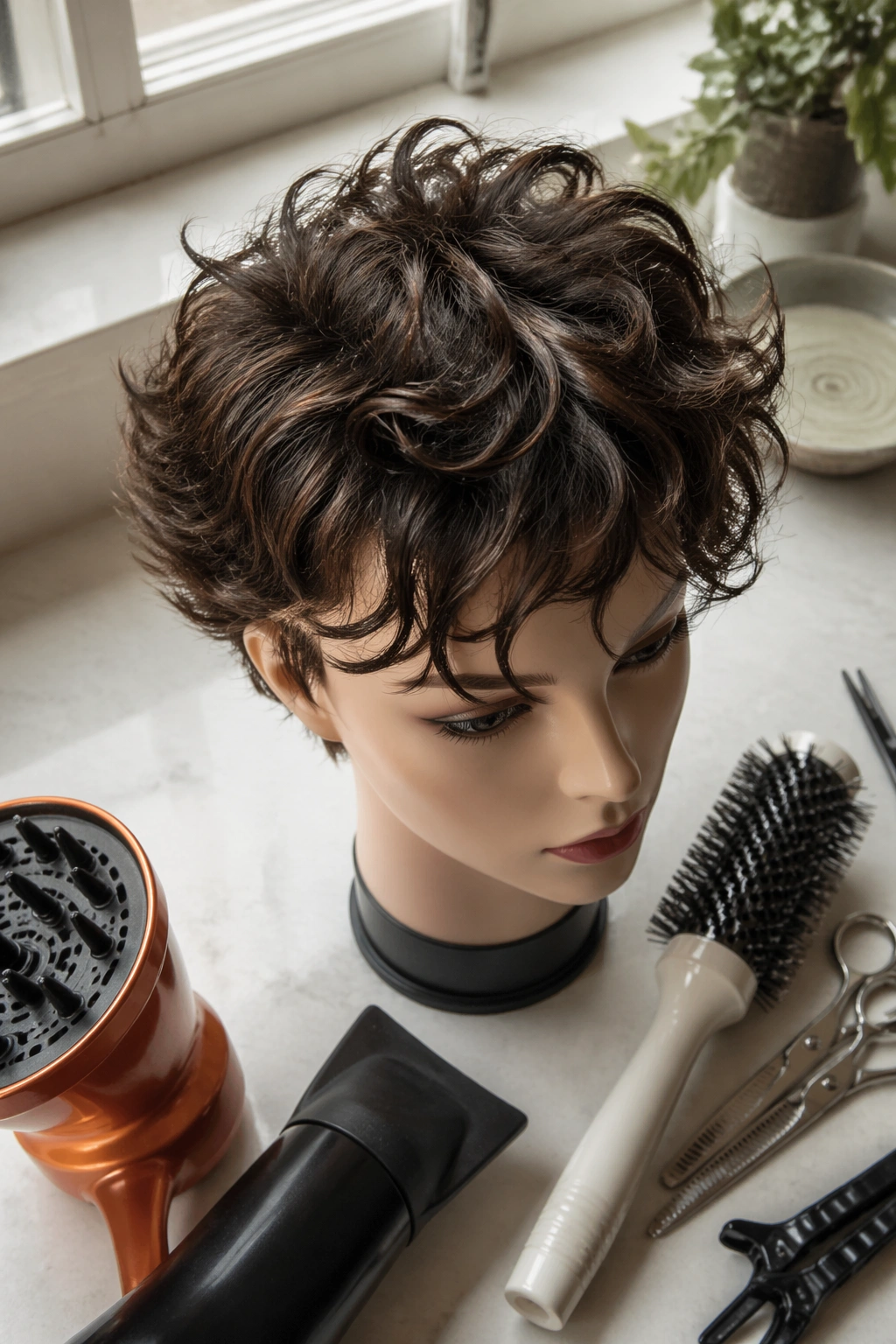
Think of this as the pixie for someone who likes a haircut with edge but does not want it to look frozen in place. The pieces are short, irregular, and airy, with enough variation that the curls break into separate little points instead of forming one smooth mound. It’s a cut that looks better with movement than with perfection.
That choppy finish usually comes from point cutting rather than blunt trimming. Point cutting means the stylist snips into the ends at a slight angle, which softens the line and lets the curls stack more lightly. For curly hair, that matters. A blunt edge can get thick fast, especially around the crown and temples.
Salon language worth using
- Ask for piecey texture through the top.
- Mention that you want the nape soft, not heavy.
- Say you’d like the fringe short enough to show the forehead, but not cropped into a hard line.
- If your curls are delicate, skip aggressive razoring.
This style is a favorite when you want a little grit in the shape. It looks good with a dab of matte paste at the ends or a bit of curl cream that encourages separation. Either way, the goal is the same: soft chaos, not chaos-chaos.
11. Soft Curly Bowl Cut
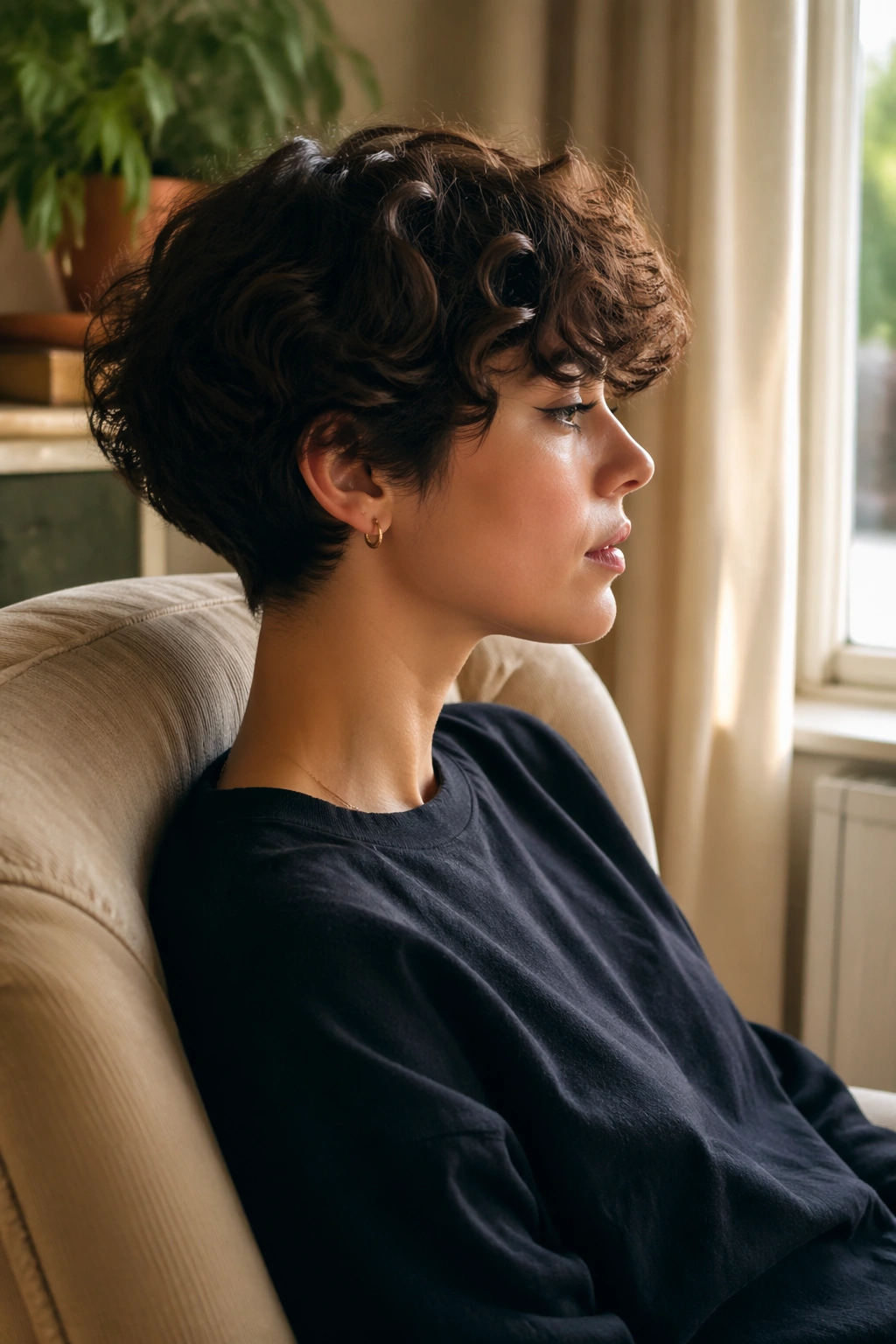
A bowl cut gets a bad reputation when it’s too blunt, too round, and too stiff. On curls, though, a softened bowl shape can look surprisingly good because the texture breaks up the hard edge that made the old version feel awkward. The right one keeps the perimeter curved, then adds enough interior texture so the hair does not sit like a perfect cap.
This is a smart cut for dense curls that need definition. It gives you a strong outline without stripping away all the fullness that makes curly hair interesting. The trick is keeping the line visible but not severe.
Ask for a rounded shape around the head, with the edges feathered and the crown slightly lighter. A tiny bit of layering inside the shape helps the curls sit on top of each other instead of forming a dense ring. That matters a lot. If the interior is too heavy, the style loses movement and starts to feel boxy.
I also like this cut on people who do not want to spend forever styling their hair. Scrunch in a small amount of cream, let the curls clump, and let the shape do the work. It is unfussy in the best way.
12. Curly Wolf Cut for Short Hair

A short curly wolf cut is what happens when a shag gets a little wilder in the top layers and a little softer at the back. The crown gets volume. The face-framing pieces come forward. The lower layers stay light enough to keep the whole thing from looking bulky. On curls, that mix can be excellent.
The reason it suits messy short curly hairstyles so well is simple: it never asks for symmetry. Curls already have their own rhythm, and this cut leans into that instead of trying to force a clean line everywhere. You end up with lift at the top, movement at the sides, and a shape that looks good when it’s a little disheveled.
There is a catch. If your hair is fine, too many short layers can make the ends look thin. If your curls are already dense, the wolf cut can get big fast if the top is over-cut. So the better version uses longer internal layers and keeps the crown airy without stripping too much weight. I like this cut with a diffuser and a medium-hold gel, nothing crunchy, nothing heavy. It should feel loose when you shake it out.
13. Asymmetrical Curly Bob with One Longer Side
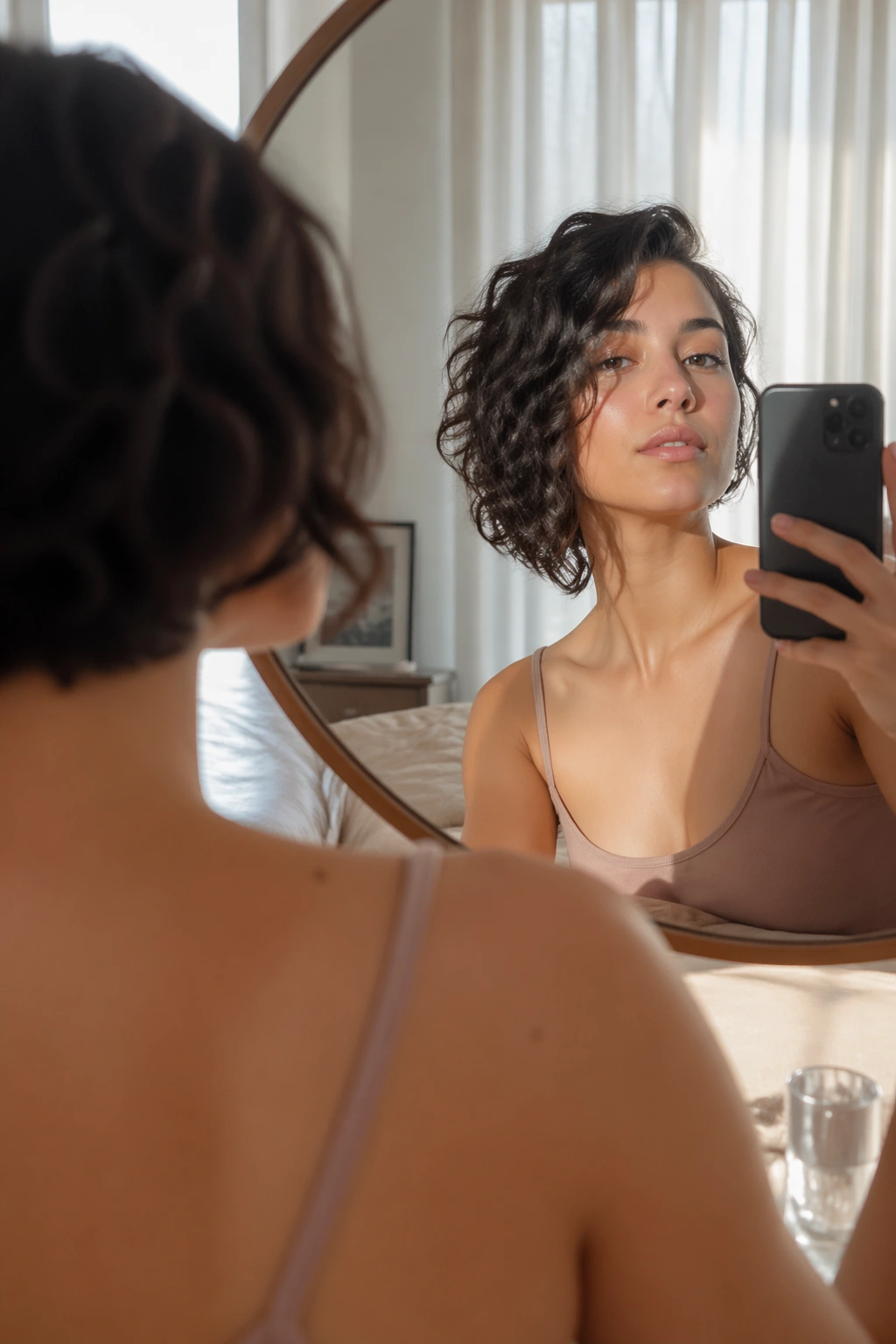
Why does an asymmetrical bob look so good on curls? Because curls already have built-in movement, and the uneven shape gives that movement somewhere to go. One side falls a little longer, the other side sits a touch higher, and the whole cut feels intentional without being rigid.
How to keep it deliberate
The difference between stylish and accidental is usually pretty small.
- Keep the longer side only about 1 to 2 inches below the shorter side.
- Use a side part that follows the longer side, not against it.
- Ask for a clean neckline so the shape does not get lost in the back.
- Style with a curl cream that defines, not one that weighs everything down.
This cut is a good fit if one side of your hair naturally falls flatter or if you want to draw attention to earrings, cheekbones, or a sharp jawline. The angle creates interest before the curl pattern even has a chance to show off. It also photographs well in the real world, which means it holds up from morning to evening without needing much rescue work.
If you hate symmetry on principle, you may love this one. It has attitude, but not a lot of maintenance drama.
14. Ear-Length Curly Crop with Tucked Sides
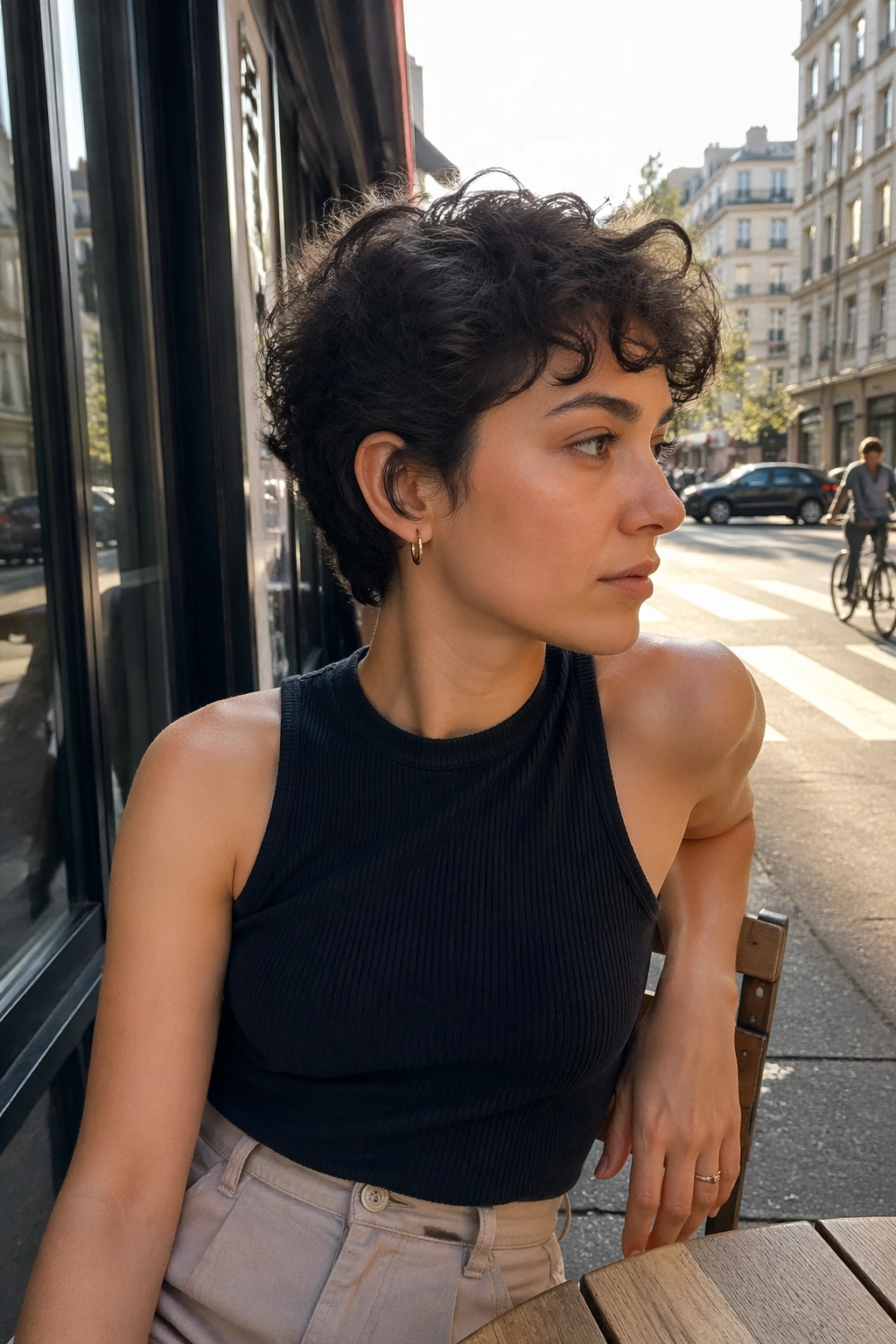
A crop that lands around the ears can feel unexpectedly flattering because it opens up the face and lets the curls frame, not crowd, the features. Unlike a fuller bob, this style keeps the silhouette tight around the temples and ears, which makes it useful if you wear glasses or if you dislike hair brushing your jaw all day.
The tucked sides are the detail that changes everything. When the hair is short enough to sit behind the ears but still long enough to spring forward a bit, you get that casual, lived-in shape without having to fight it. It looks especially good with a soft side part or a few curls left loose around the temples.
This is also one of the easier styles to maintain if your mornings are rushed. A little leave-in conditioner, a little gel at the front, and you’re done. No elaborate shaping. No endless diffusing.
One warning: if your curls grow fast at the temples, the style can lose its edge sooner than a bob would. That’s not a flaw so much as a fact of short hair. Keep the sides trimmed enough to preserve the tuck, and the cut stays sharp.
15. Mini Afro with Shaped Edges
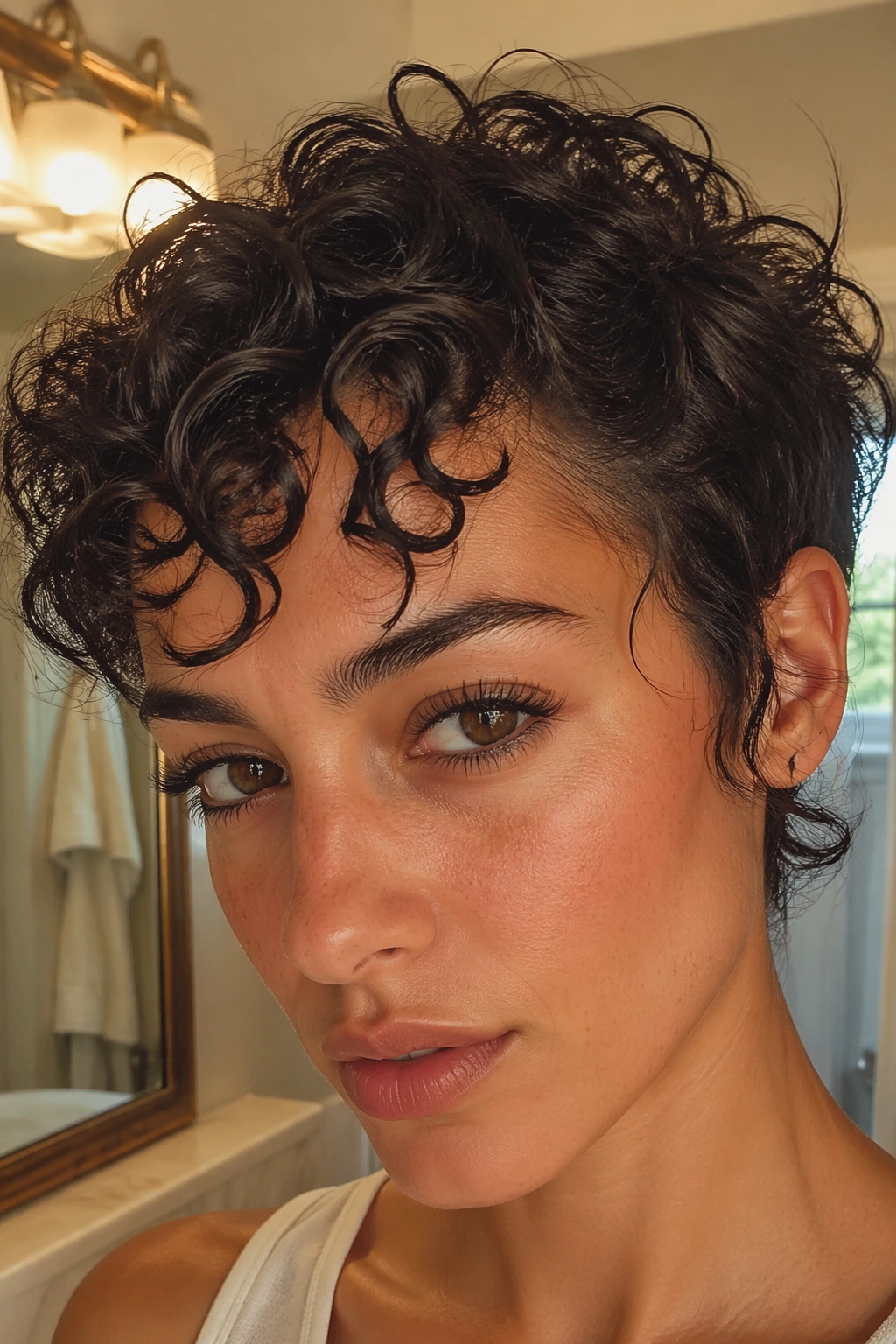
A mini afro might be the most forgiving of all the messy short curly hairstyles on this list. It doesn’t ask curls to lie down, smooth out, or pretend to be something else. It simply gives them a rounded shape, a little edge work, and enough breathing room to look full without getting out of hand.
The best version is shaped dry, because curls tell the truth when they are dry. Wet hair can hide bulk, but it also hides imbalance. A good shape here means the outline is neat while the interior still feels soft and touchable. You want the edges clean enough to frame the face, but not so lined-up that the haircut loses its natural texture.
I like this cut when someone wants low fuss and real curl presence. It works with coils, tight curls, and mixed textures that want to sit close to the head without being flattened. A small amount of leave-in conditioner, a bit of oil on the ends, and a pick at the roots is usually enough. Keep the pick to the base only. Pulling through the length can break up the shape and make it puff in odd places.
If you’re deciding between several styles, start here. It is honest, low-maintenance, and easier to grow out than most short cuts. More than anything, it lets the curl pattern be the point. That is often the smartest move.
