



A pearl clip that slides out of curls by lunchtime is worse than no clip at all. With pearl hair clips and pins for curly hair, the hardware matters more than the shine; if the clasp is weak, too narrow, or too slick, the accessory spends the day fighting your texture instead of sitting with it.
Curly hair asks for three things from a clip: grip, space, and a shape that respects volume. That’s the part a lot of pretty accessories miss. They look lovely in a tray, then act like tiny, expensive lies once they meet a twist, a coil, or a thick halo of curls.
Most people shop by pearl count. Backwards. The better question is what the piece needs to do: hold a side sweep, anchor a bun, keep fringe off the face, or add a little shine to a half-up style without crushing the curl pattern underneath. Once you sort that out, the right piece becomes obvious.
1. Pearl-Trim Alligator Clip
A pearl-trim alligator clip is the easiest place to start because it does real work without asking your curls to flatten themselves in the process. I like this style for half-up curly hairstyles, especially when the top section has enough lift that you want the accessory to sit on the outside of the shape instead of sinking into it.
Why It Stays Put
The alligator jaw gives you a firm bite, and that matters more than the pearl detail. A wide-mouth clip can grab a twisted section of curls, a smoothed crown section, or a small half-up ridge without needing a death grip. That means less snagging and fewer dent marks.
Look for a clip that has:
- A matte or lined inner jaw, which tends to slide less on coily or silky-finished hair
- A width of about 2.5 to 3.5 inches, so it can catch enough hair to matter
- Pearls mounted on a sturdy base, not glued onto a flimsy shell that bends when you open it
- Rounded teeth or a smooth edge, since sharp edges can pull at delicate curls
A little twist at the back helps a lot. So does placing the clip over hair that has been lightly gathered, not on a loose cloud of curls that needs more structure than one piece can give.
My favorite trick: clip it over a small twisted section first, then let the curls fan around it. You get shine on top and movement underneath.
2. Pearl Bobby Pin Pair
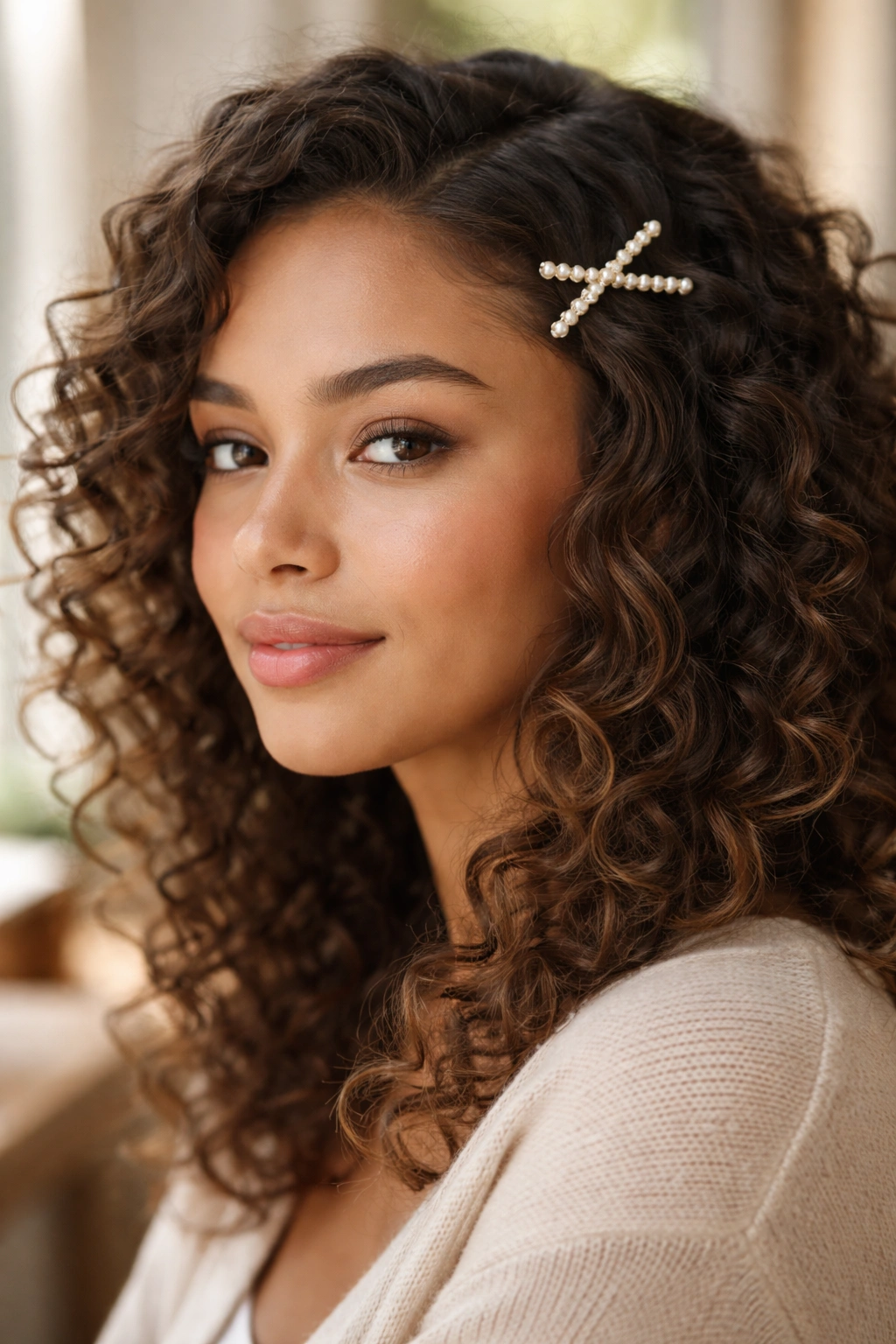
One pearl bobby pin will not hold a mountain of curls. That is fine. What it can do is clean up the face-framing pieces that keep falling into your eyes, and that makes it one of the most useful little accessories in the whole category.
The best pearl bobby pins for curly hair are the ones that feel plain from a distance and smart up close. They should have enough tension to stay in place, but not so much that they leave a line across the curl. I reach for these when I want a side part to look intentional or when the front pieces need a small anchor for a dinner, a workday, or a photoshoot where I do not want hair touching lipstick every five minutes.
Use them in pairs if your hair is dense. One pin can slide; two crossed into a loose X usually behave much better. Place the first pin with the ridged side against the scalp, then tuck the second pin just behind it. The pearls end up looking like a little detail, not a warning label.
They’re also good for asymmetry. Pin back one side and leave the other free. That contrast looks sharper on curls than on straighter hair, because the texture gives the style some natural drama. No need to overthink it.
3. Oversized Pearl Barrette
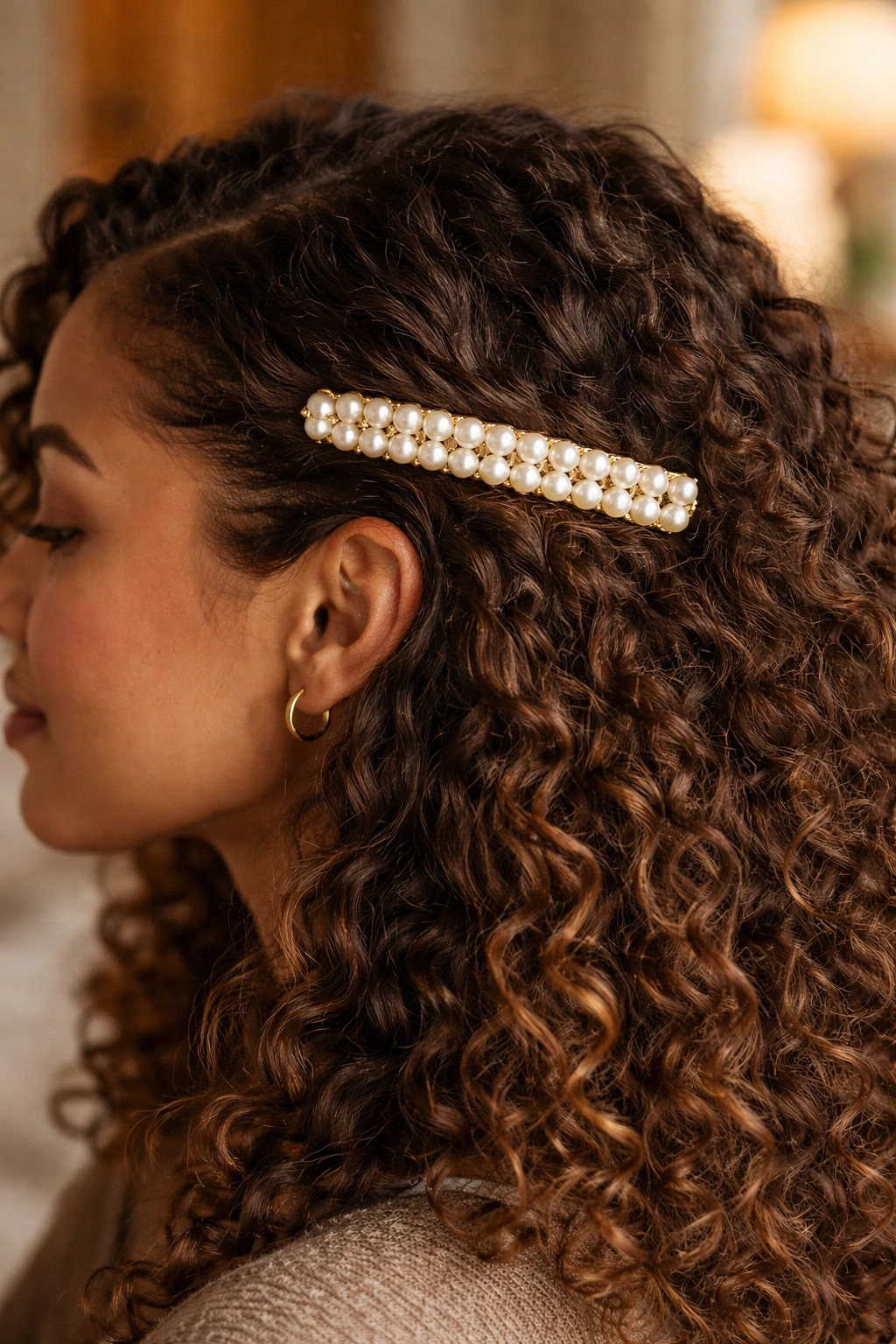
Why does an oversized pearl barrette look so good on curls? Because it gives the eye one clean line to follow. Curly hair already has movement built in, so a longer barrette can calm one side of the style without flattening the whole head.
The larger format matters. A tiny barrette can disappear into thick texture, but a longer one — around 3 to 4.5 inches — creates a visible shape that still feels easy. I like these on side-swept styles, half-up looks, and low sectioned twists where you want the accessory to sit flat against the head instead of hovering on top of the curls.
How to Place It
Start with a section that has a little control to it. Not poker-straight, not sprayed into a helmet. Just gathered enough that the barrette can grab cleanly. If the curls are especially springy, twist the section once before closing the clasp. That small move gives the barrette more purchase and keeps the ends from slipping free.
A few things help here:
- Clip the barrette slightly above the ear for a softer line
- Keep the pearl row on the outer edge so it reads as jewelry, not hardware
- Use it to hold back the front, not to force all your hair into submission
- Pair it with loose definition around the face so the style still feels like curls, not a stiff updo
This is one of those accessories that can look fussy if the clasp is cheap. If it opens loosely in your hand, skip it.
4. Pearl Snap Clips
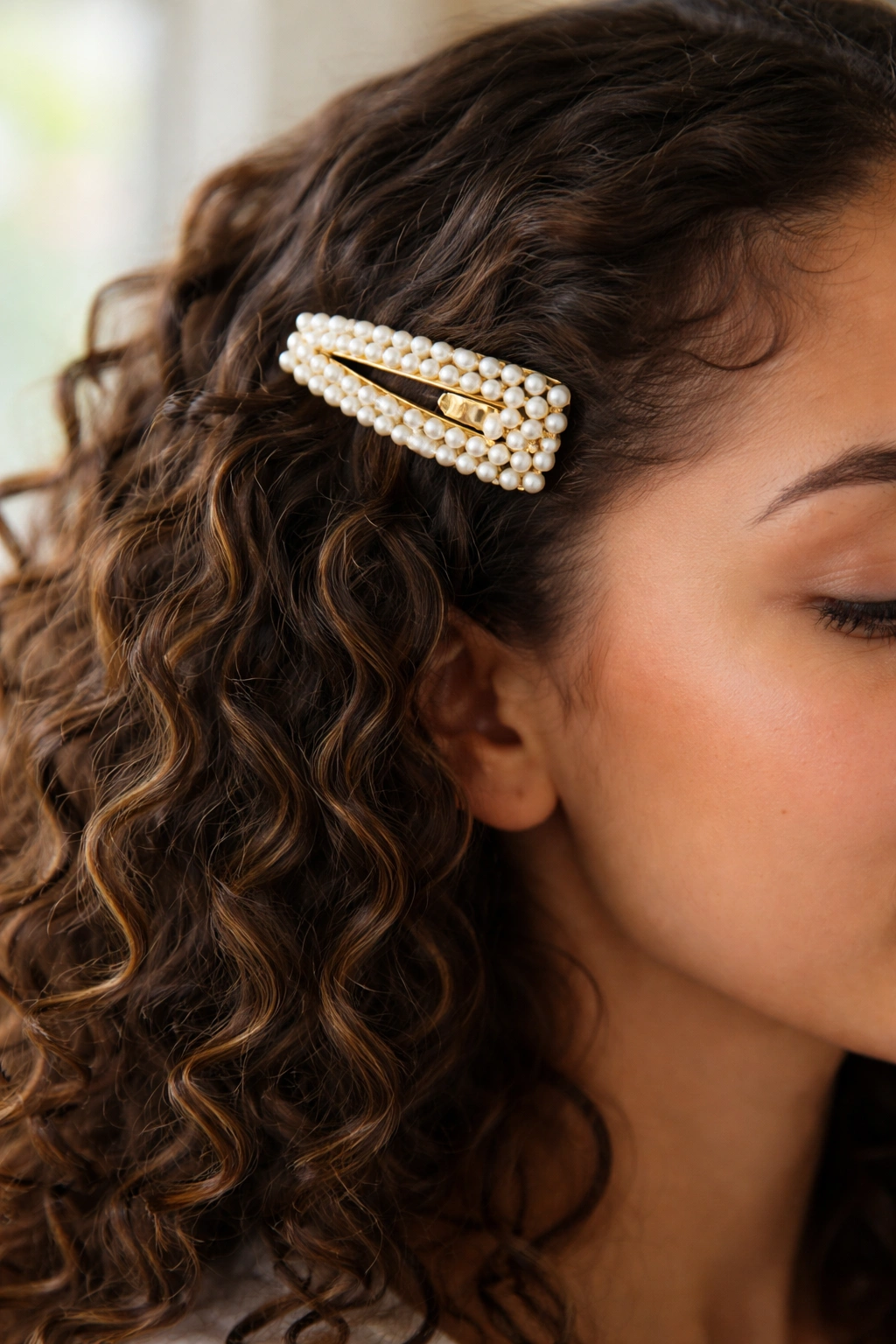
Pearl snap clips are the practical cousin in the group, which is probably why I keep coming back to them. They’re the clips you grab when you need to pin a curl cluster out of the way without creating a lot of drama about it.
I like them for refresh days. The front section of curly hair often needs a quick lift while the rest of the pattern stays loose, and snap clips do that job with almost no bulk. They’re especially handy for shorter curls, baby hairs, or the temple sections that refuse to stay where you want them.
What to Watch For
- Choose a snap clip with a firm metal spring, not a soft one that snaps open by accident
- Pick a base that’s long enough to cover the section, not just sit on top of it
- Look for pearls that are evenly set; lopsided placement can make the clip tilt
- If you have very dense hair, use two clips per side instead of fighting one tiny piece
These look nice in sets, too. Three small clips staggered along one side can keep a curly fringe pinned back in a way that feels playful rather than neat. That matters. Curly hair almost never looks best when it’s over-managed.
A snap clip is small, but that is the point. It lets the curl pattern stay the main event.
5. Pearl Claw Clip for Thick Curls
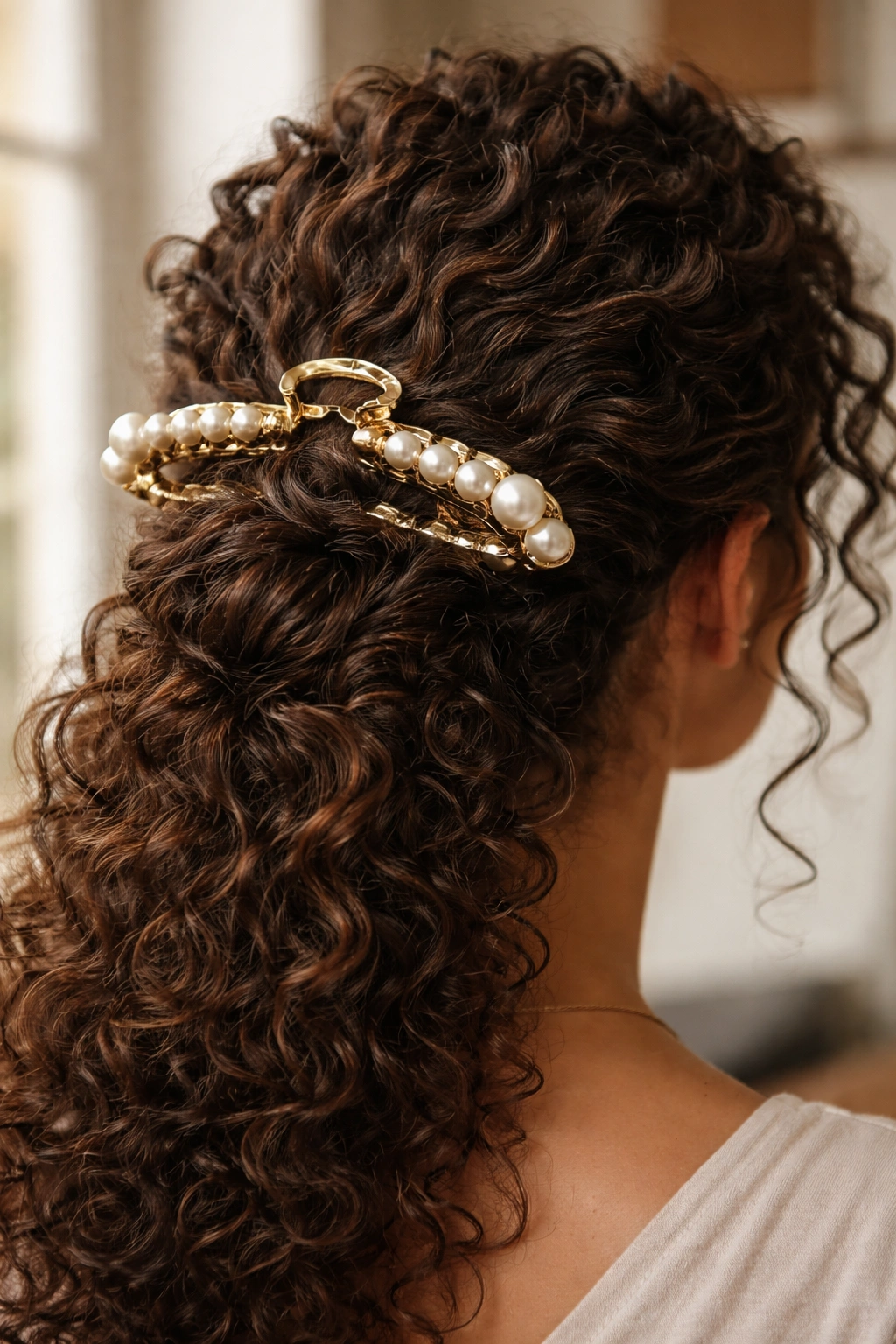
The pearl claw clip is the piece people reach for when they want an updo that looks relaxed but still finished. On thick curly hair, though, the shape matters a lot more than the decoration. A tiny claw clip with weak teeth will not survive a heavy bun. It will just pretend.
Go bigger than you think you need. For dense curls, a claw clip around 4 to 5 inches usually feels more honest than a petite one, because the jaws can open wide enough to catch the bulk. The pearl detail should sit on the outside, not crowd the hinge, so the clip can open and close without scraping the hair.
I like these for quick twists at the nape, French twists, and loose center buns where a few curls are left out around the face. The trick is to twist once, fold the length upward, and let the clip grab the fold and the base together. If the clip only catches the outer layer, it will slide. Fast.
The best ones have long inner teeth and a spring that feels firm when you open it. Not stiff. Firm. There’s a difference. Stiff clips can be a pain to use, while firm clips actually hold. If you have coilier textures, this is often the accessory that gives you the most control without making the style feel formal.
6. Pearl U-Pins for Low Buns
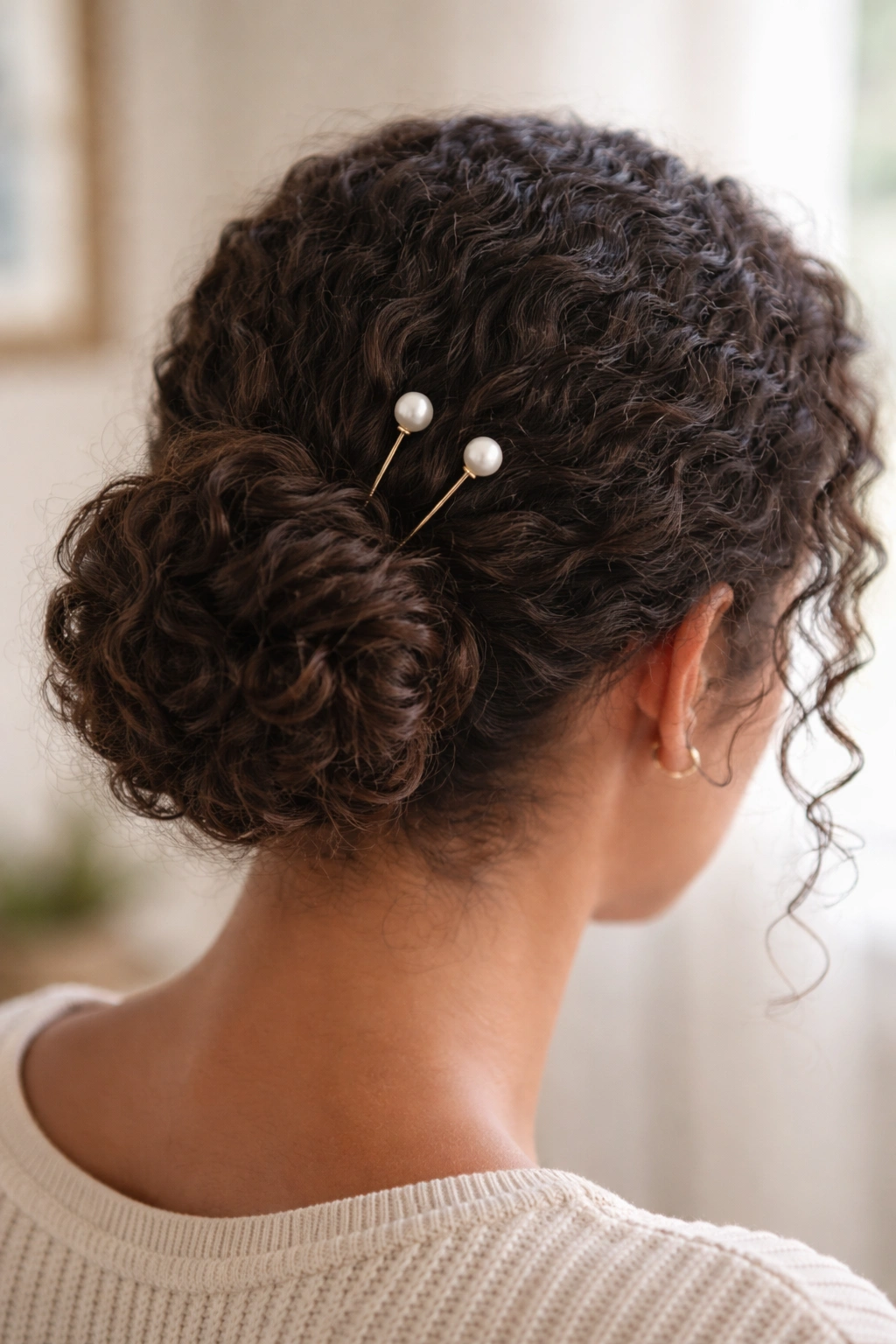
Unlike decorative pins that sit on top of the hairstyle, pearl U-pins disappear into the structure and quietly do the job. That makes them excellent for low buns, tucked twists, and soft chignons on curly hair, where you want support more than display.
They work because they anchor from two directions. One side of the pin enters the bun, then the curve of the U grabs a little section of hair as it comes back out. That creates tension without flattening the shape. When I’ve seen U-pins fail, it’s usually because the bun was too loose or the pin was inserted straight through like a straight bobby pin. That is not how these work.
For curly hair, a pair often behaves better than one. Use one pin from the top and one from the side, especially if the bun is built from a lot of hair. If your curls are thick, a longer U-pin with a pearl tip gives you both reach and a touch of shine near the surface.
Who They Suit
- Medium to long curls that can be gathered at the nape
- Low buns with texture left in the ends
- Styles that need support without a big visible clip
- Anyone who wants a cleaner look than a claw clip can give
They are subtle, but they are not boring. Subtle is often better on textured hair.
7. Pearl Hair Comb
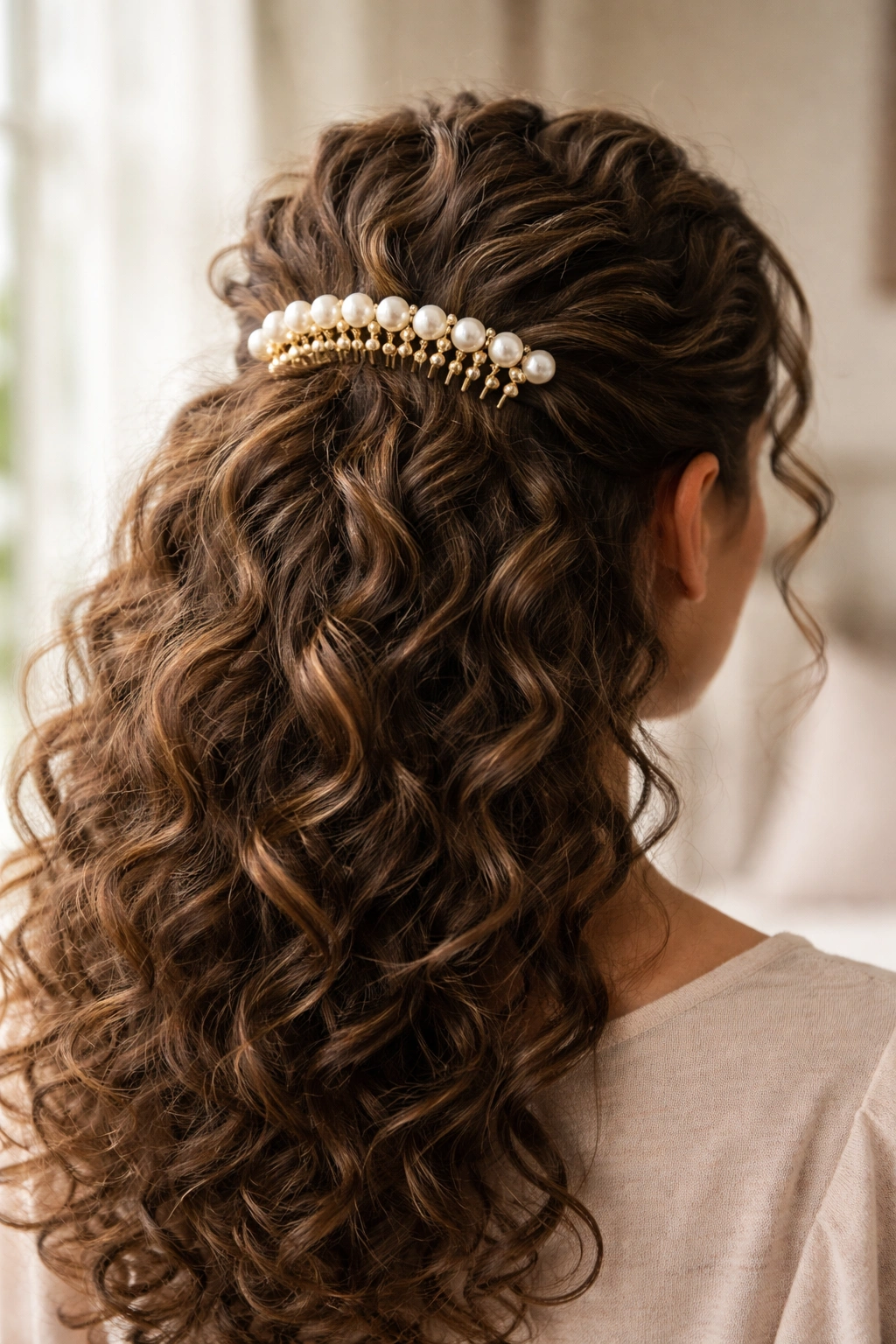
A pearl hair comb gives you height. That’s the whole magic trick. Where a clip clamps, a comb slides in and helps a style sit on top of the hair instead of squashing into it, which is why I like it for curly half-up looks and low formal twists.
The teeth matter more than the pearl row. If the comb teeth are too short or too close together, the piece may not hold in thick curls at all. If they’re too thin and bendy, they’ll drift through the hair and do nothing useful. A sturdy comb with a curved back usually behaves best, because it follows the shape of the head and gives the style some lift.
Best Placements on Curls
- Tuck it into a half-up crown for a soft, lifted look
- Slide it above a low bun to hold a decorative section in place
- Use it at the side of a twist when you want the curl pattern to stay loose elsewhere
- Place it into a slightly teased section if your roots are very smooth
A comb can look formal, but it doesn’t have to. On curly hair, it often reads as a small piece of structure rather than a big statement. That makes it useful for weddings, work events, or any day you want your hair to feel more finished without looking overworked.
8. French Barrette with Pearls
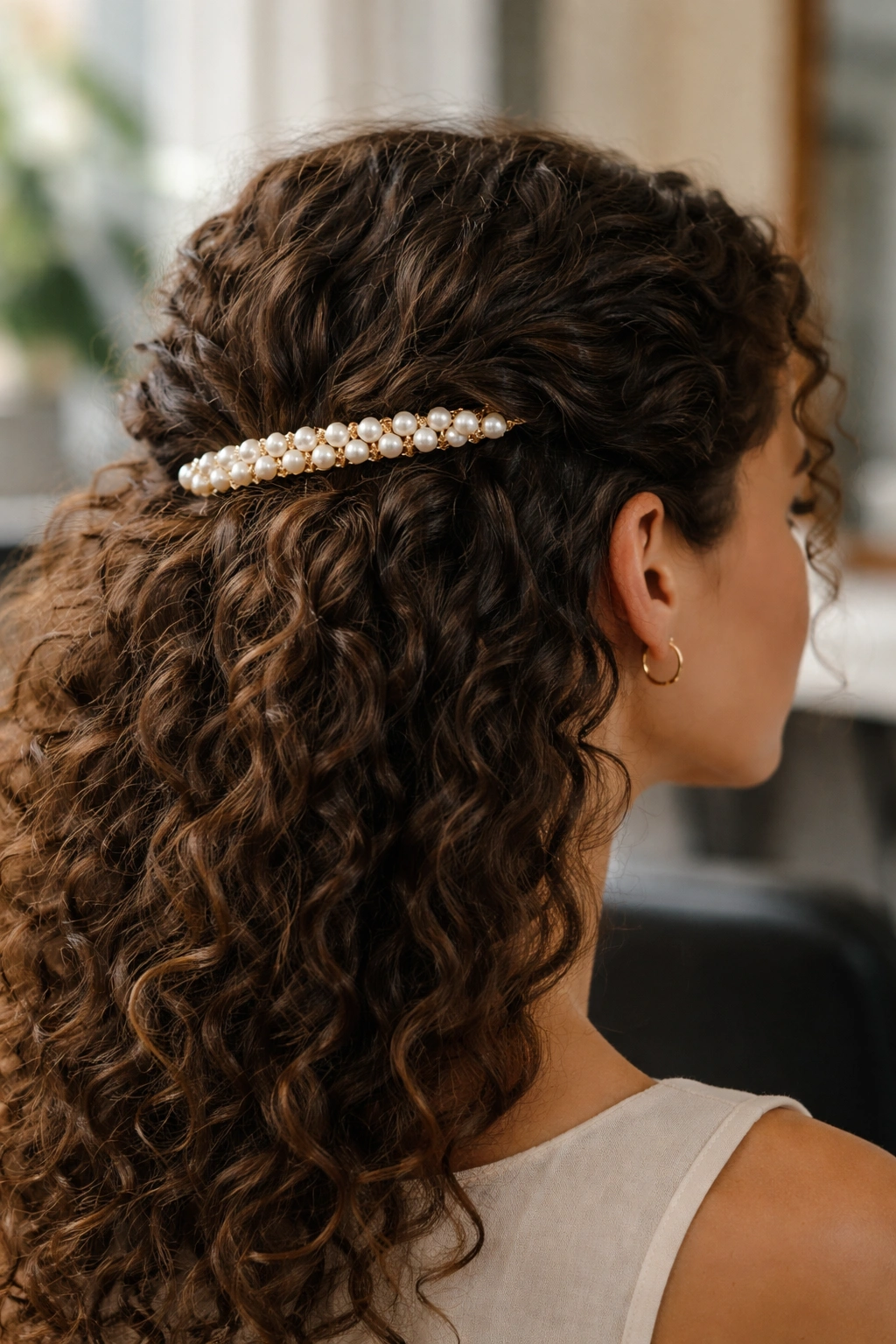
Can a French barrette handle thick curls? Yes — if the clasp is strong enough and the barrette is long enough to cover the section you want to hold. The flatter profile makes it useful when you want the accessory to sit closer to the head than a claw clip would.
That close fit is the appeal. A French barrette holds a twist, a side sweep, or a partial updo with less bulk at the back, which helps curly hair keep its shape. I especially like it on medium-density curls that need control but not a heavy clamp. If your hair is very thick, test the clasp before you buy. A weak spring on this style is a waste of money.
How to Test the Spring
Open and close the barrette a few times in your hand. It should feel smooth, not loose. Then look at the clasp line: it should sit flat and close evenly, with no wobble at one end. If the closure twists when you press it, it will probably behave the same way in your hair.
A French barrette also looks good when you leave some curl volume around it. Don’t slick everything down. Let the top section be a little airy, then clip the base. That contrast makes the pearls stand out without making the whole style feel stiff.
The shape is elegant, yes, but more useful than people give it credit for.
9. Mini Pearl Claw Clip Pair
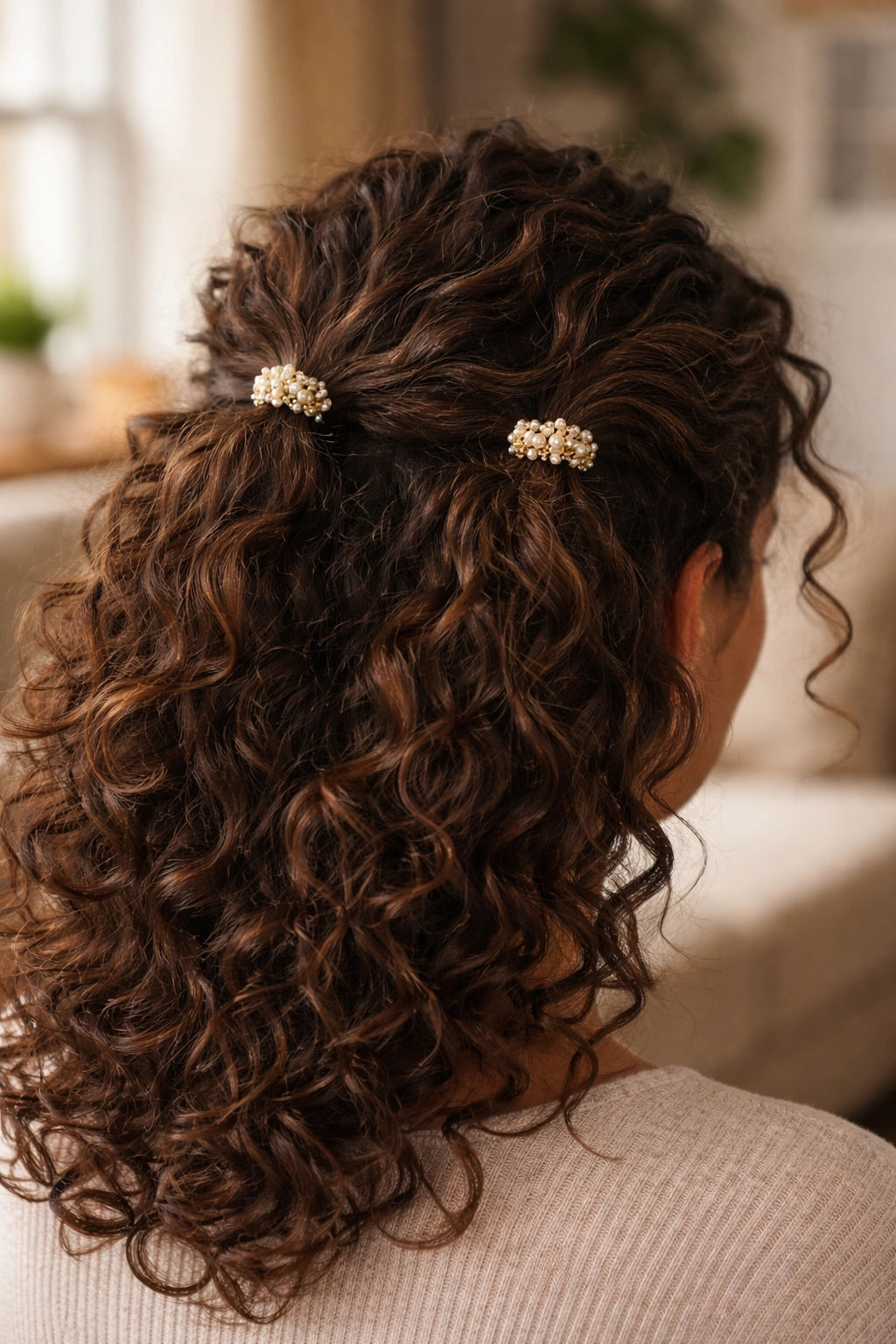
A single mini claw clip is cute. Two of them can solve a real styling problem.
That is why I like the mini pearl claw clip pair for curly hair that has uneven sections, layered cuts, or a front that never behaves the same way on both sides. Instead of forcing all the hair into one giant clip, you can split the job. One clip holds the right side, the other handles the left, and the curls keep their own shape in the middle.
This style works well on second- or third-day curls when the roots need a lift but the ends still look good. It also makes a nice casual half-up style for shorter curly cuts, because the small size sits neatly without overpowering the silhouette. If you have loose ringlets, the pair can create a nice staggered look. If your hair is dense, they’re more decorative than structural, so use them to hold small sections only.
I’d rather see two tiny clips used well than one oversized clip trying to do everything and failing. They’re light. They’re quick. And they give curly hair that slightly undone, lived-in look that never feels forced.
10. Pearl Hair Stick
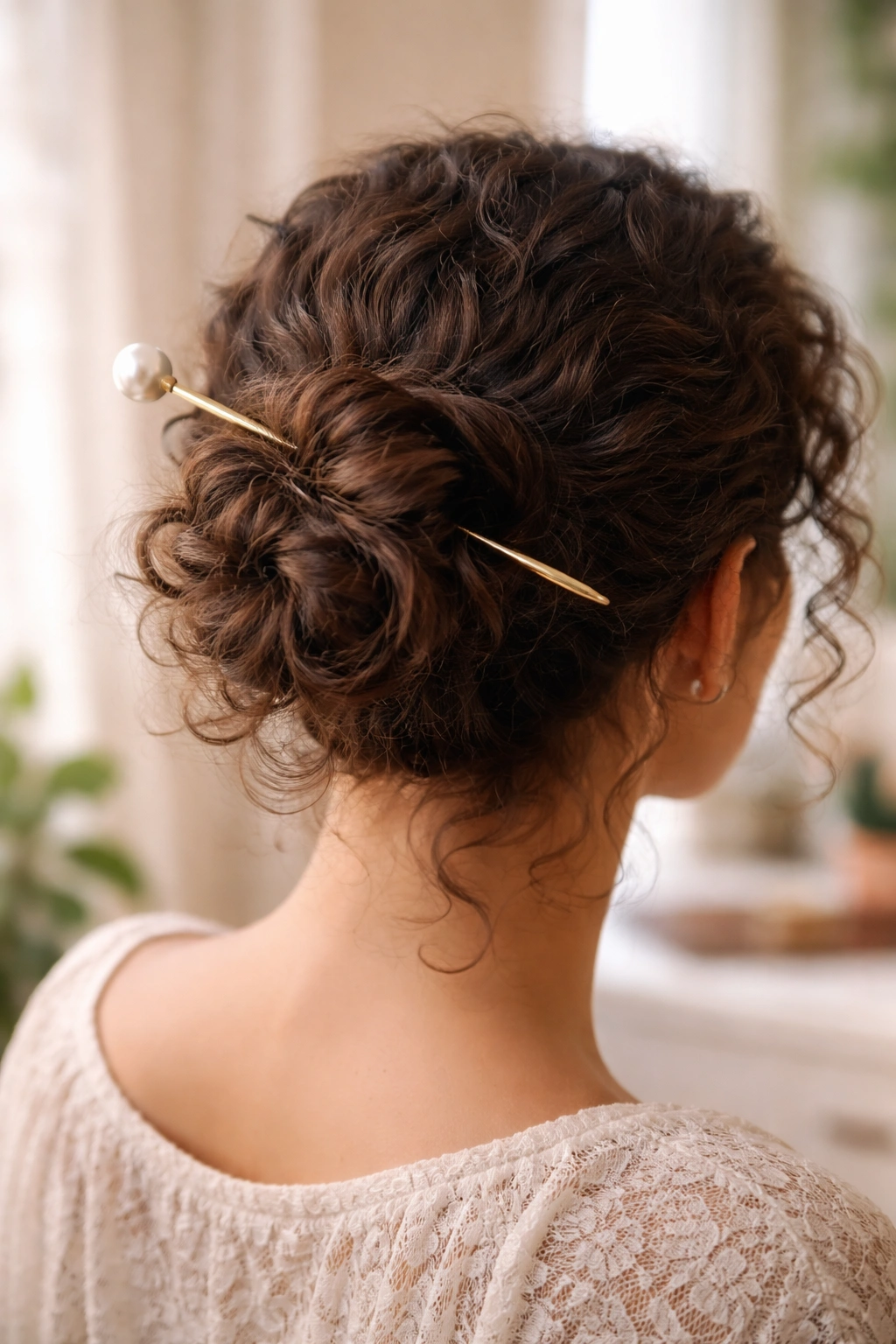
A pearl hair stick is the sort of accessory that looks more dramatic than it is. Once you learn the motion, it becomes a fast way to pin up curls in a low knot, a folded twist, or a wrapped bun with a little shine at the top.
The pearl tip gives the stick its visual point, but the real work comes from the length. For curly hair, a stick around 6 to 8 inches usually gives you enough reach to anchor through the bun and out the other side. Shorter sticks can fail because they never get through the full mass of hair. Too smooth, and they slide. Too thin, and they bend.
I like hair sticks for hair that has volume but not too much slipperiness at the roots. If your curls are freshly defined and a bit grippy, the stick has something to hold on to. If the hair is ultra-soft or silky, twist the section a little tighter before inserting it.
One quiet advantage: a pearl hair stick can make a simple bun feel finished without needing a second accessory. That matters on busy days. It’s fast, and fast is underrated.
11. Pearl Side-Clip Set
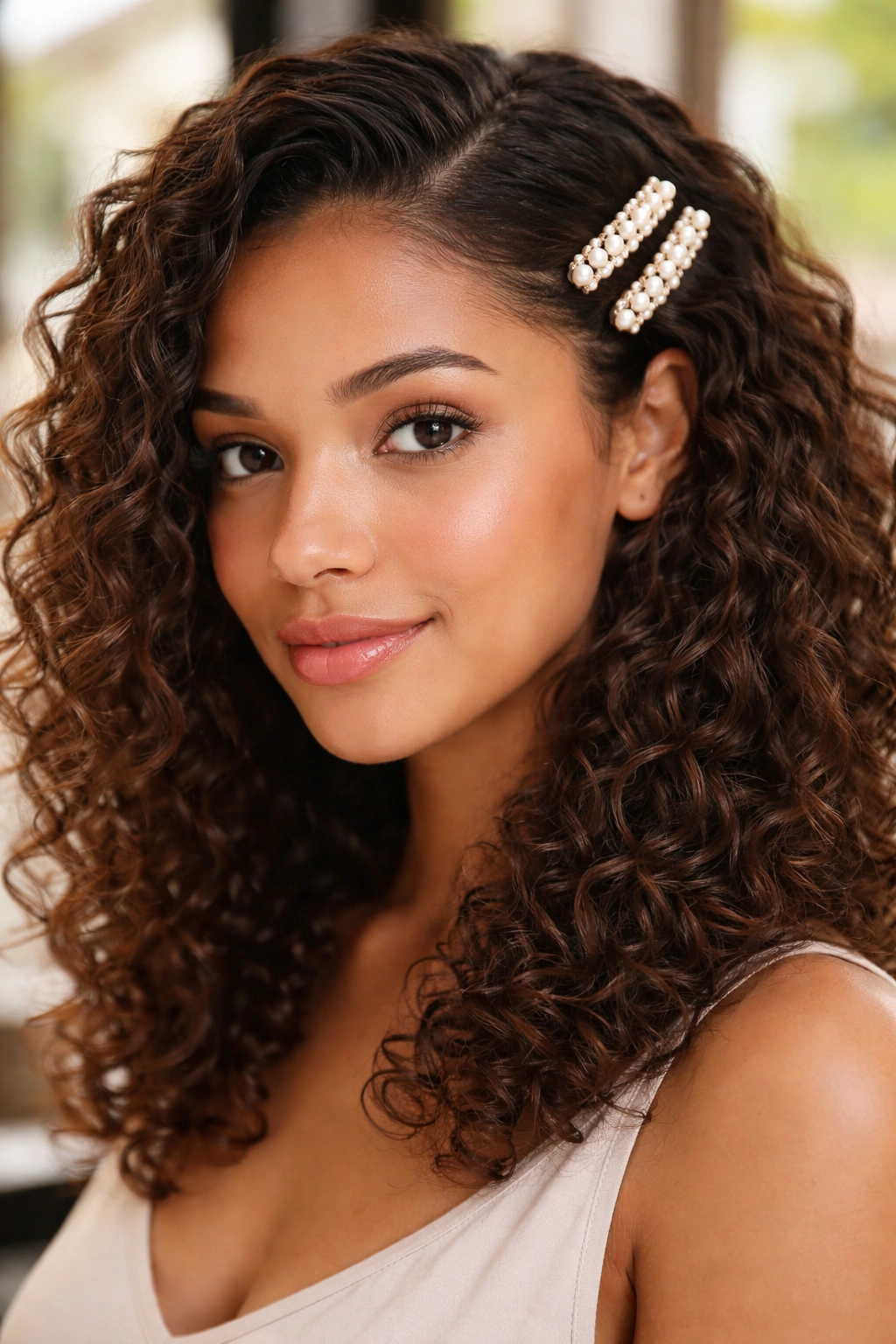
A pearl side-clip set does something a single statement piece cannot: it frames the face without stealing the whole show. On curly hair, that balance is useful because the texture already brings plenty of interest. You do not need to pile on.
I like side-clip pairs for deep side parts, soft curls brushed away from the face, and half-up looks where one side needs more control than the other. Two matching clips can create a little visual line along the temple and cheekbone, which draws attention upward without flattening the crown. That shape works especially well when the curls are loose around the ends and more controlled near the front.
The set can be symmetrical or slightly off-balance. Symmetry feels cleaner. Off-balance feels more relaxed. I use the second option more often, because curly hair rarely behaves in a perfectly mirrored way anyway. Let that be part of the charm.
What Makes a Good Set
- Two clips that are close in size, so one side doesn’t look heavier
- Pearl spacing that is consistent from clip to clip
- A clasp that can hold small face-framing sections without slipping
- A finish that doesn’t snag the curl pattern when you remove it
It’s a small detail, but it can change the whole expression of the hairstyle.
12. Pearl Pin Cluster
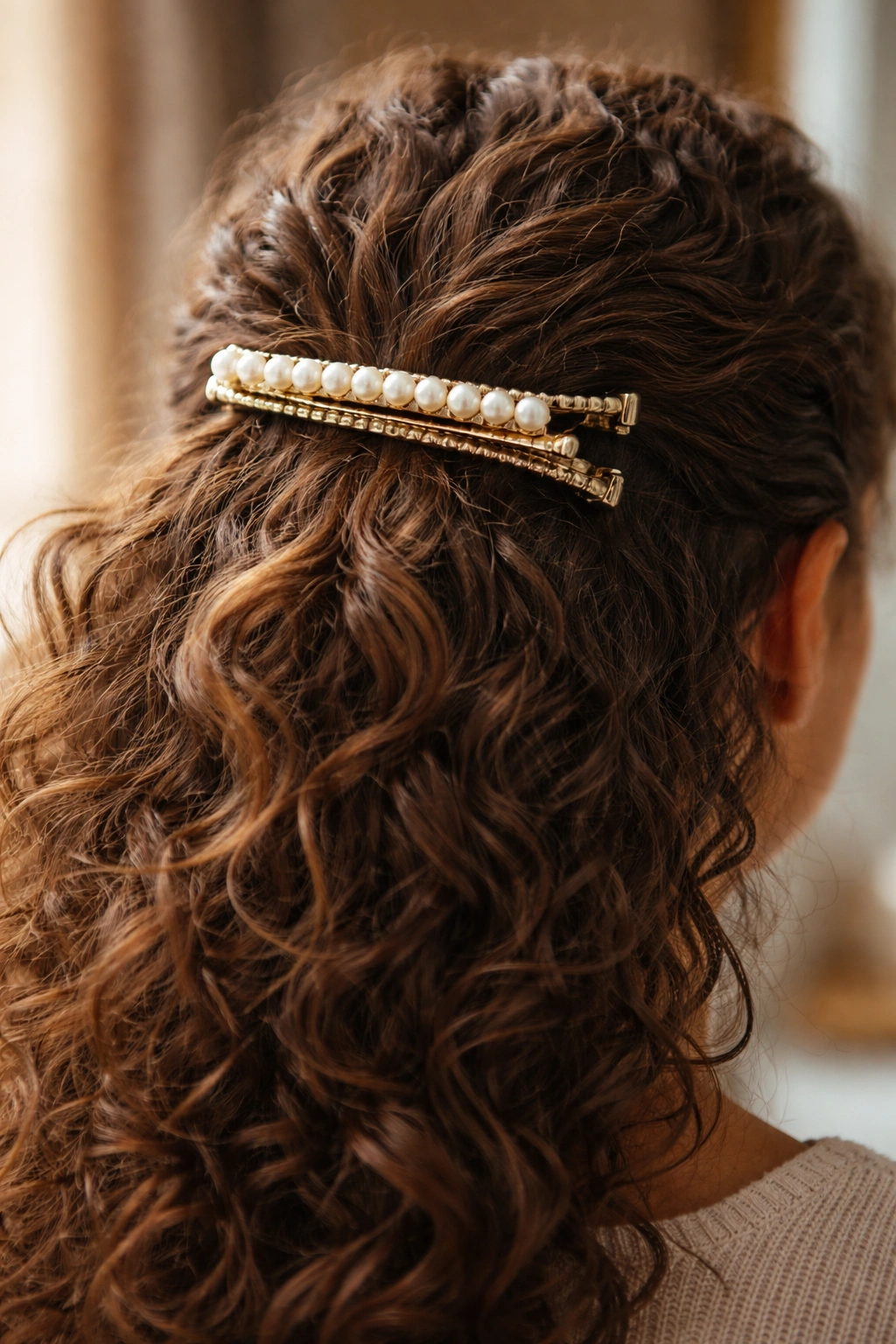
A pearl pin cluster is the most flexible piece in the bunch, and also the one that gets overlooked the fastest. It is not one clip trying to dominate the hairstyle. It’s a group of small pearl pins placed with intention, which makes it ideal for curly hair that needs both shape and decoration.
Think of it as building a little constellation in the hair. Three pins tucked into a twist, a braid end, or a pinned-back side section can hold better than one large decorative barrette, and the cluster gives you control over spacing. You can spread the pins out for a softer look or tighten them together for more sparkle at the same point.
How to Build the Cluster
- Start with one anchor pin at the center of the section
- Add a second pin slightly above or below it, depending on the curve of the hair
- Use a third pin only if the section is thick enough to support it
- Keep the pearls visible, but do not crowd them so tightly that the pattern looks heavy
This is the kind of accessory I’d use for a curly bun at a wedding, a side sweep for a formal dinner, or a half-up style that needs a little more interest than a single clip can give. It feels custom because it is. You place it where the curls need it, not where the packaging says it should go.
Pearl accessories can look delicate, but on curly hair the good ones are sturdy, a little bit clever, and built to hold their shape under pressure. That is the whole point.
