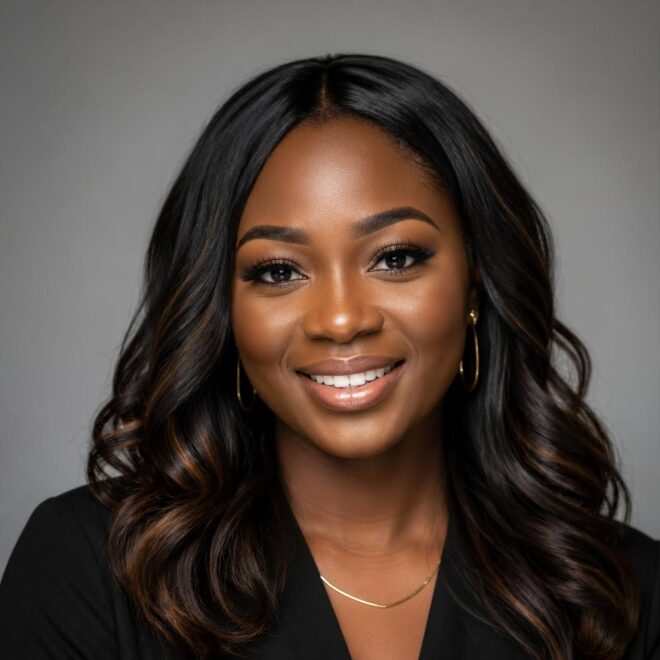


Double ponytails are one of those ponytail hairstyles that can look playful, sharp, or a little bit polished depending on where you place the part and how tight you pull the bases. That tiny shift changes everything. A low, neat pair reads calm and clean. A high pair feels sporty. Add ribbon, bubble sections, or loose face-framing pieces, and the whole mood changes again.
The best part is how little you need. A tail comb, two small elastics, maybe a brush, a dab of cream or gel, and a few bobby pins if your hair slips. That’s enough for most of these styles. If your hair is layered, fine, curly, thick, short, or somewhere in the messy middle, there’s a version here that still works without turning your bathroom into a crime scene.
I like double ponytails because they don’t ask for perfection. They only ask for placement. Put the bases an inch higher or lower, change the part from center to side, or twist the ends instead of leaving them straight, and the result starts to feel intentional instead of random. That matters, because a style this simple lives or dies on those small details.
Start with the cleanest versions first. Once you know where your hair wants to sit, the faster, looser, and more playful looks get easier.
1. Sleek Center-Part Double Ponytails
This is the clean baseline, the one that makes every other version easier to understand. A sharp center part and two ponytails placed just above the ears give you that neat, balanced look without much fuss. If your hair has any natural wave or cowlick, this style shows it immediately, so the prep matters.
Why it stays so neat
Use a tail comb to draw the part all the way back to the nape, then smooth each side with a brush before you secure it. If the hairline near your temples frizzes up, warm a pea-sized amount of styling cream between your palms and press it down instead of raking it through.
- Part from forehead to nape in one clean line.
- Set each ponytail at the same height, about 1 to 2 inches above the ear.
- Wrap a tiny strand of hair around each elastic if you want a cleaner finish.
Best tip: if your hair is fine, mist the mid-lengths with texturizing spray first. The style will grip better and slide around less.
2. Soft Low Double Ponytails
Low double ponytails are the easiest way to make pigtails feel grown-up. They sit near the nape, which keeps the shape gentle instead of bouncy and obvious. I reach for this version when I want the style to look deliberate but not severe.
Leave the part a little softer than you would for the sleek version. It does not need to be ruler-straight. A slightly off-center part or a small bit of lift at the crown keeps the style from looking flat, which is the mistake I see most often with low pigtails.
If your ends are blunt, bend them with a flat iron or leave them straight for a cleaner, more modern finish. If they’re layered, let a few shorter pieces fall out near the cheekbones. That softens the shape fast.
3. High Sporty Double Ponytails
Why do high double ponytails work so well on second-day hair? Because the height hides a lot. The hairline gets pulled up, the roots look fuller, and the ends get to swing around a little, which makes the style feel energetic instead of overworked.
Gather each side near the crown, but don’t drag them too far toward the center. Keep them slightly wide so the style doesn’t collapse into one big top knot shape. A little space between the bases keeps the double-ponytail look visible from the front and the side.
How to keep them from sagging
Use a firm elastic and secure each side twice if needed. If your hair is heavy, clip the top section for 30 seconds while you smooth the second side. That tiny pause helps the first ponytail stay where you put it.
Short version: high, tight, and quick. Simple.
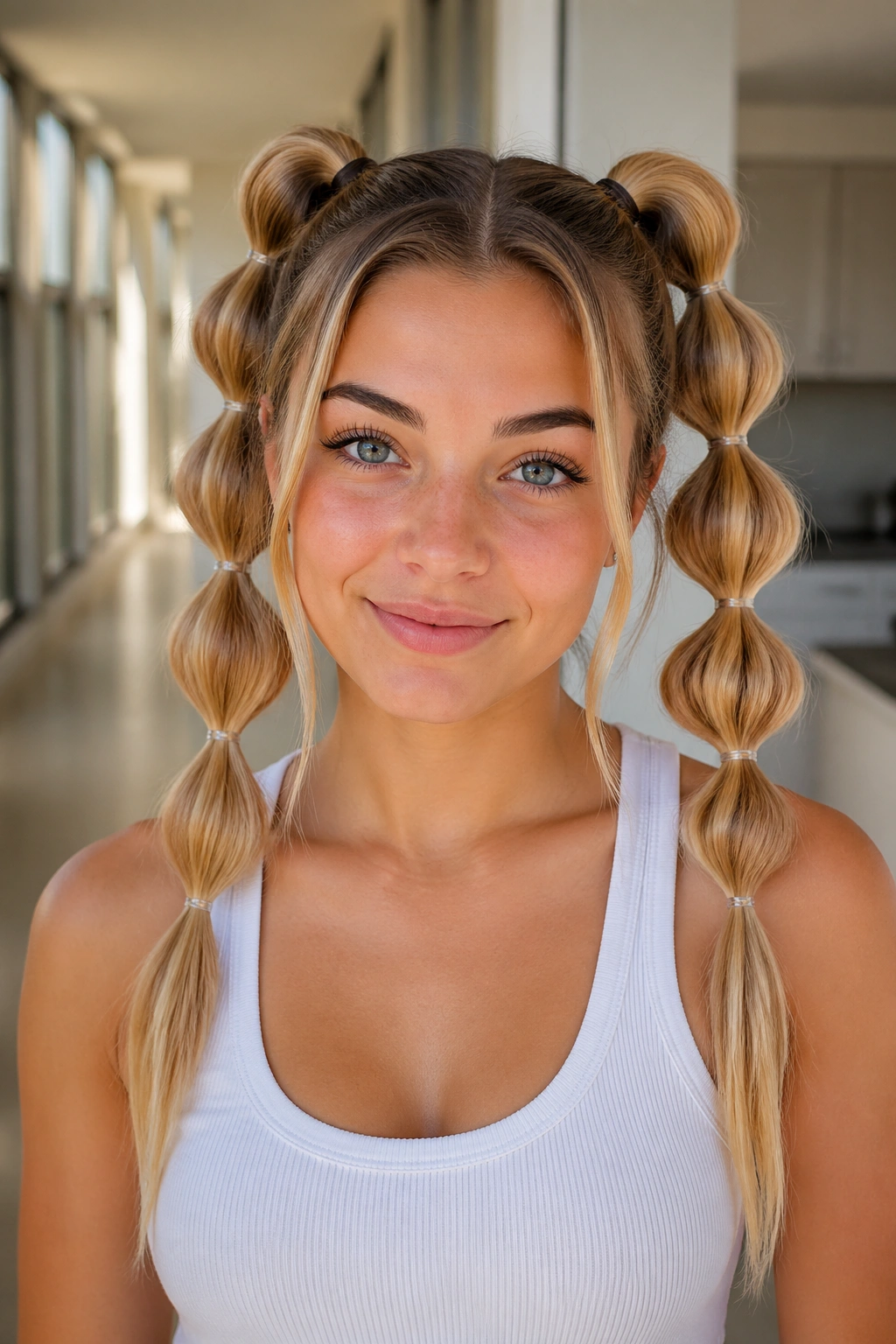
4. Bubble Double Ponytails
If plain ponytails feel flat by noon, bubble sections fix that fast. They add shape without asking for braiding skills, and the whole style reads playful in a way that still feels tidy enough for school, errands, or a casual dinner.
Tie each side into a regular ponytail first. Then add small clear elastics every 1 to 2 inches down the length, gently tugging each section outward so it rounds into a bubble. The trick is to pull evenly on both sides of each bubble. Yank too hard and the shape turns lumpy.
- Use 3 to 5 clear elastics per side, depending on length.
- Keep the spacing even so the bubbles look deliberate.
- Smooth the top with a brush before you start.
A small spray of hairspray on your hands helps tame flyaways without making the finish stiff.
5. Twisted Rope Double Ponytails
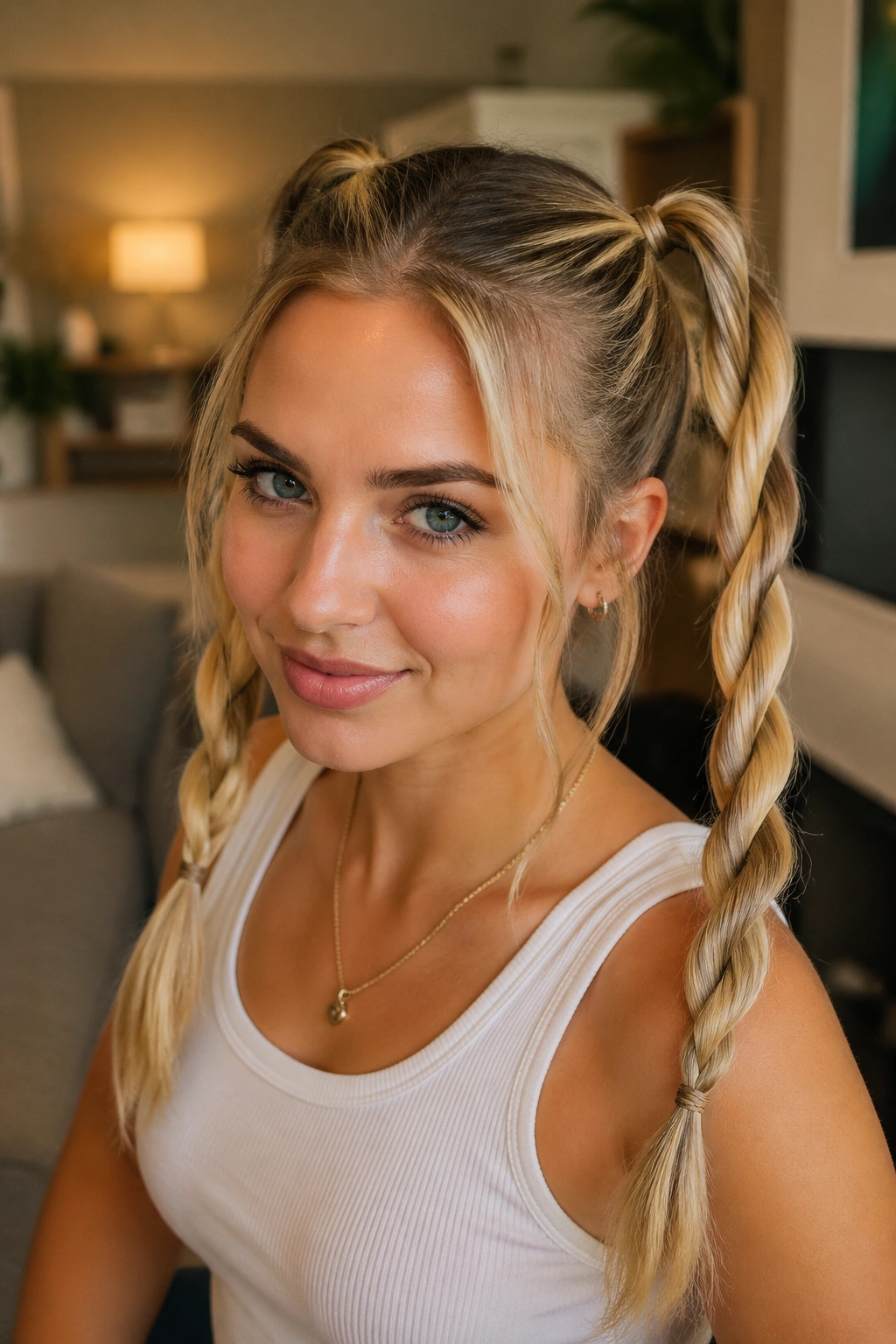
Twist-based ponytails are faster than braids and easier to fix when one side goes wrong. Divide each section into two pieces, twist them away from your face, then twist those two strands around each other. Secure the ends with a small elastic. That’s it.
This style is especially good when your hair is layered, because the twist keeps shorter pieces tucked in better than a loose braid does. It also looks a little more interesting than a basic pigtail without taking much longer. If your hair is very slippery, spray the lengths with dry shampoo first. That adds just enough grit for the rope twist to hold.
I like this one on medium-length hair most. Very short layers tend to spring loose. Very long hair can make the twists feel heavy, so keep the twist loose rather than trying to wind it tight.
6. Braided Double Ponytails
A simple three-strand braid changes the whole mood of double ponytails. They stop looking like a rushed backup plan and start looking like a style you meant to wear. That’s the appeal.
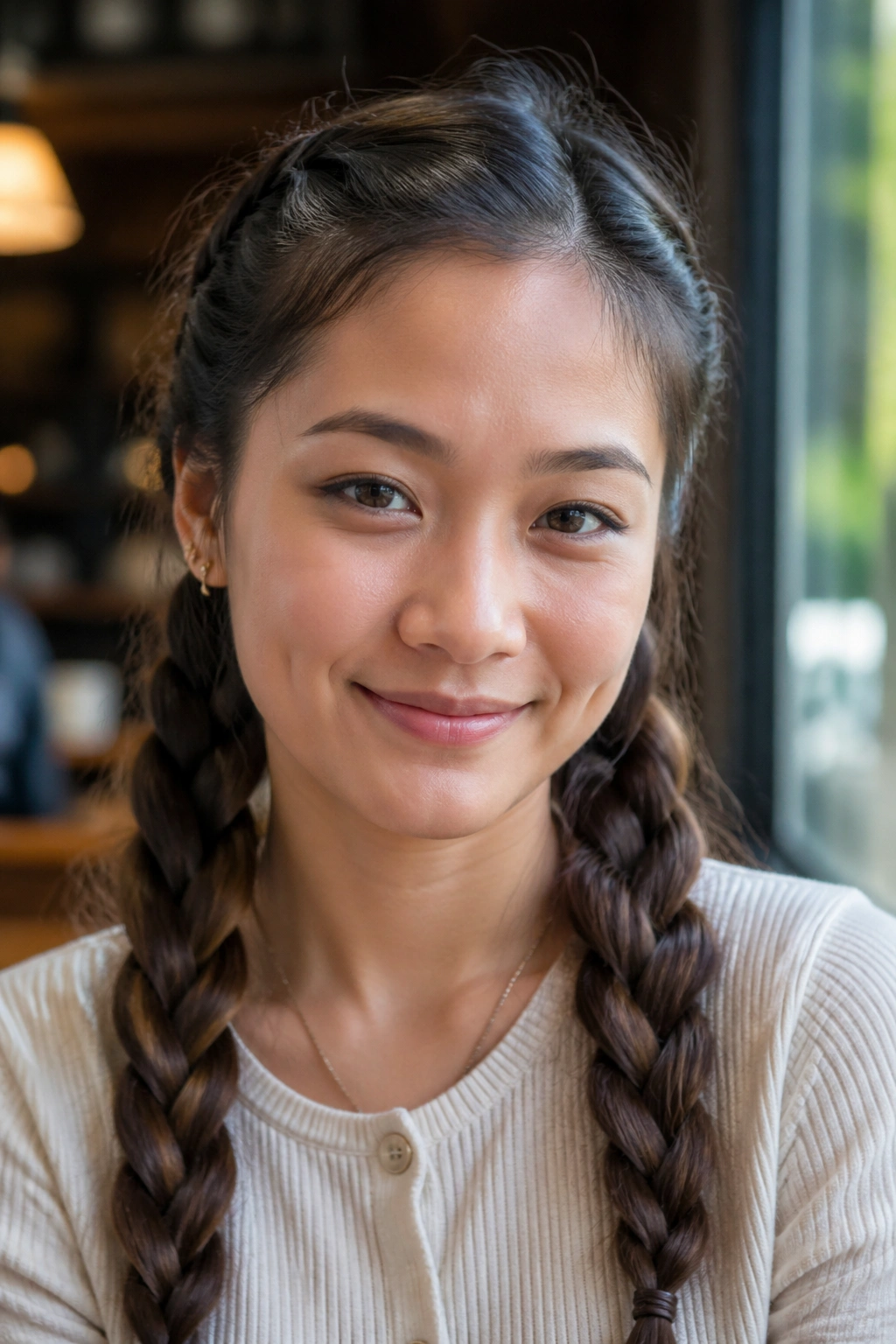
You can braid each side all the way down, or stop halfway and let the rest hang free. The halfway version is faster and softer, which makes it easier to wear every day. If your hair is thick, a loose braid looks better than a tight one. Tight braids can feel stiff and can puff out in weird places as the day goes on.
One small thing helps a lot: braid with your fingers, not a comb. It keeps the sections from getting too clean and awkward. A slightly relaxed braid tends to sit better in real life than it does in a mirror.
7. Half-Up Double Ponytails
Want the easiest way to keep hair off your face without committing to full pigtails? Pull only the top half into double ponytails and leave the bottom length loose. It gives you movement around the shoulders and keeps the crown looking lifted.
Best for soft volume
This version works well on wavy hair because the loose bottom half adds shape right away. Straight hair benefits too, especially if the top sections need a little control and the rest of the hair can stay down.
Keep the half-up ponytails small. If you gather too much hair, the style starts to sag and the loose section loses its nice contrast. Two neat bases at the back of the head usually look better than large side chunks pulled too far forward.
Use this when you want polish without hiding your length. That’s the whole trick.
8. Curled Double Ponytails
The ends do a lot of work here. Even a plain pair of ponytails looks softer once you add a bend or curl to the lengths. You do not need a full head of curls, either. Just the bottom half of each ponytail can change the feel.
A 1-inch curling iron gives a nice, easy bend, but a straightener works too if that’s what you already own. Wrap the hair away from the face for a more open look, or alternate directions if you want the ends to feel looser and less uniform. A little heat protectant is non-negotiable. Hair that’s already dry at the ends does not appreciate being cooked twice.
This style is especially forgiving if the ponytail bases are a little imperfect. Once the ends move, people notice the motion first.
9. Ribbon-Tied Double Ponytails
Ribbon can make basic ponytails look finished in ten seconds. That’s the part I like. You’re not changing the structure much; you’re just giving the elastics a cleaner face and adding a little color.
Tie each ponytail first, then knot a ribbon over the elastic and let the tails hang. Satin looks polished, cotton feels more casual, and velvet gives the style a slightly heavier, colder-weather feel. If your hair is very fine, choose a thinner ribbon so the bow does not overpower the ponytail base.
A good length is usually 12 to 18 inches per side, depending on how much tail you want hanging down. Keep the ribbon ends slightly uneven if you want it to feel less school-uniform and more lived-in.
10. Scarf-Wrapped Double Ponytails
A scarf does what a ribbon does, but with more pattern and a little more grip. Fold a square scarf into a strip, tie it around each base, and let the ends drape. It looks especially good if the scarf has a border or a print with some contrast.
This version is handy on days when the hair itself is not cooperating. The scarf hides a rough elastic and gives the style a finished edge. Just make sure the knot sits flat. If it turns bulky, the whole ponytail starts to tilt awkwardly to one side, and that’s annoying to fix once you’re already dressed.
I prefer this style with low or mid-height double ponytails. High ones can make the scarf tails bounce around too much.
11. Mini Double Ponytails for Short Hair
Short hair can still do double ponytails, and they do not have to look tiny in a sad way. If your hair brushes the shoulders or sits just above them, mini pigtails near the temples keep the style cute and balanced instead of stuffing too much hair into low bases.
What makes this version work
Keep the sections small and the placement high enough to show shape. If you pull too much hair into each side, the ponytails start to droop almost immediately. A clean side part or center part helps the look feel intentional.
- Place the bases just behind the top of the ear.
- Leave the ends slightly bent or clipped under if they stick out.
- Use small elastics that match your hair or disappear against it.
A tiny bit of pomade on the ends helps them stay put without making the whole head greasy.
12. Face-Framing Double Ponytails
Want the easiest way to soften pigtails? Leave out a few front pieces. That’s it. A pair of 1-inch tendrils near the temples can take the style from sporty to soft in seconds.
If your hair is straight, curl those pieces away from the face with a small iron. If it’s wavy, just let them fall naturally and maybe twist them once around your finger while they’re damp. That little bend is often enough. The main ponytails can stay sleek or loose; the face pieces do the heavy lifting here.
This is one of those ponytail hairstyles that works because it breaks the outline. The straight lines of the bases get a softer frame, and the whole thing feels less strict.
13. Crisscross Double Ponytails
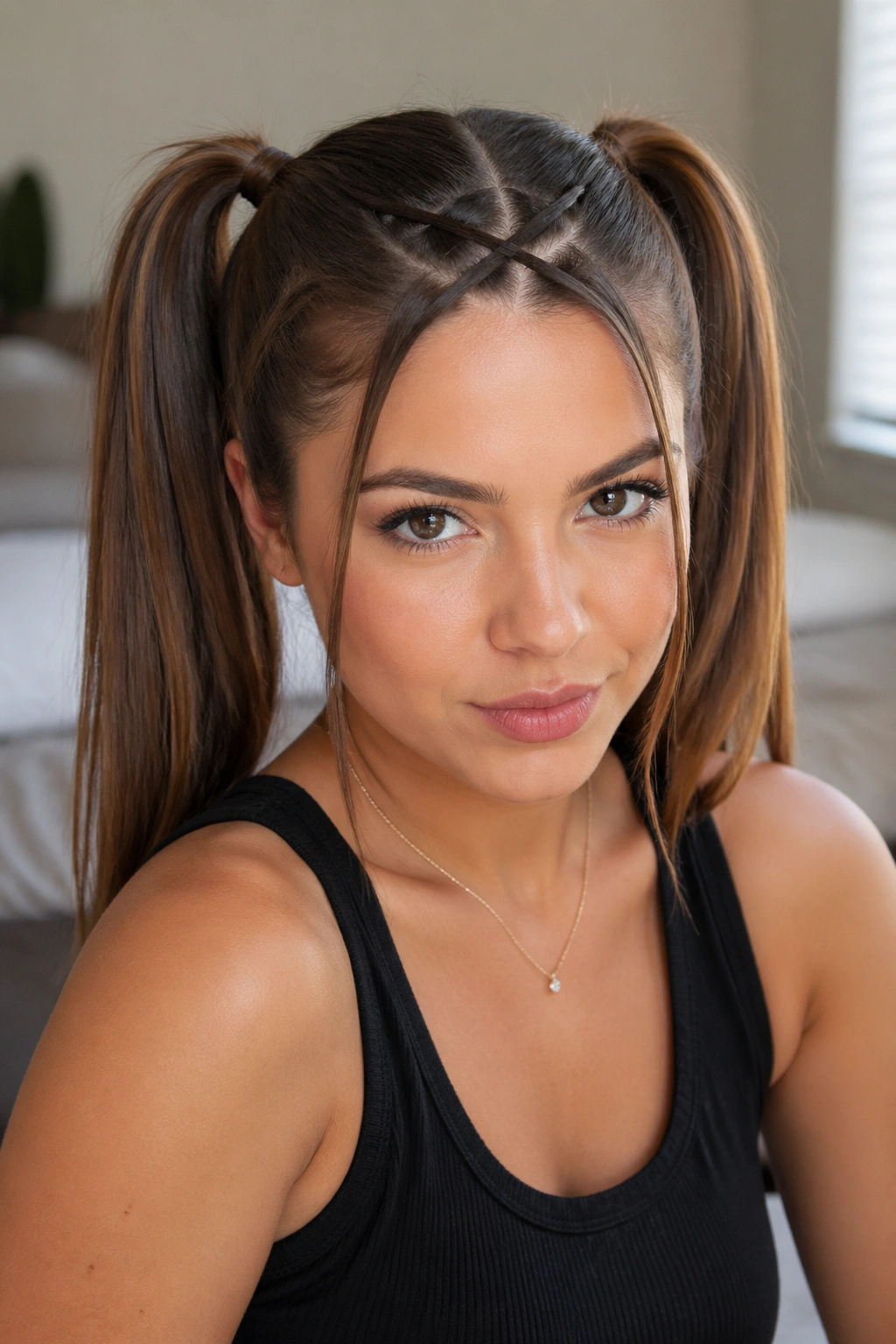
A crisscross front changes the silhouette without requiring a braid or a dozen pins. Take a small section from each side of the front hairline, cross them over the middle, and tuck them into the opposite ponytail base. It sounds fussier than it is.
The effect is clean and a little clever. You get the look of extra styling, but the actual process stays fast. If your hair has layers around the face, this trick also helps gather those pieces instead of letting them fall loose and wreck the shape.
Keep the crossed sections thin. Thick pieces make the front heavy, and then the style starts to feel like a helmet instead of a hairstyle.
14. Dutch Braid-to-Pony Double Ponytails
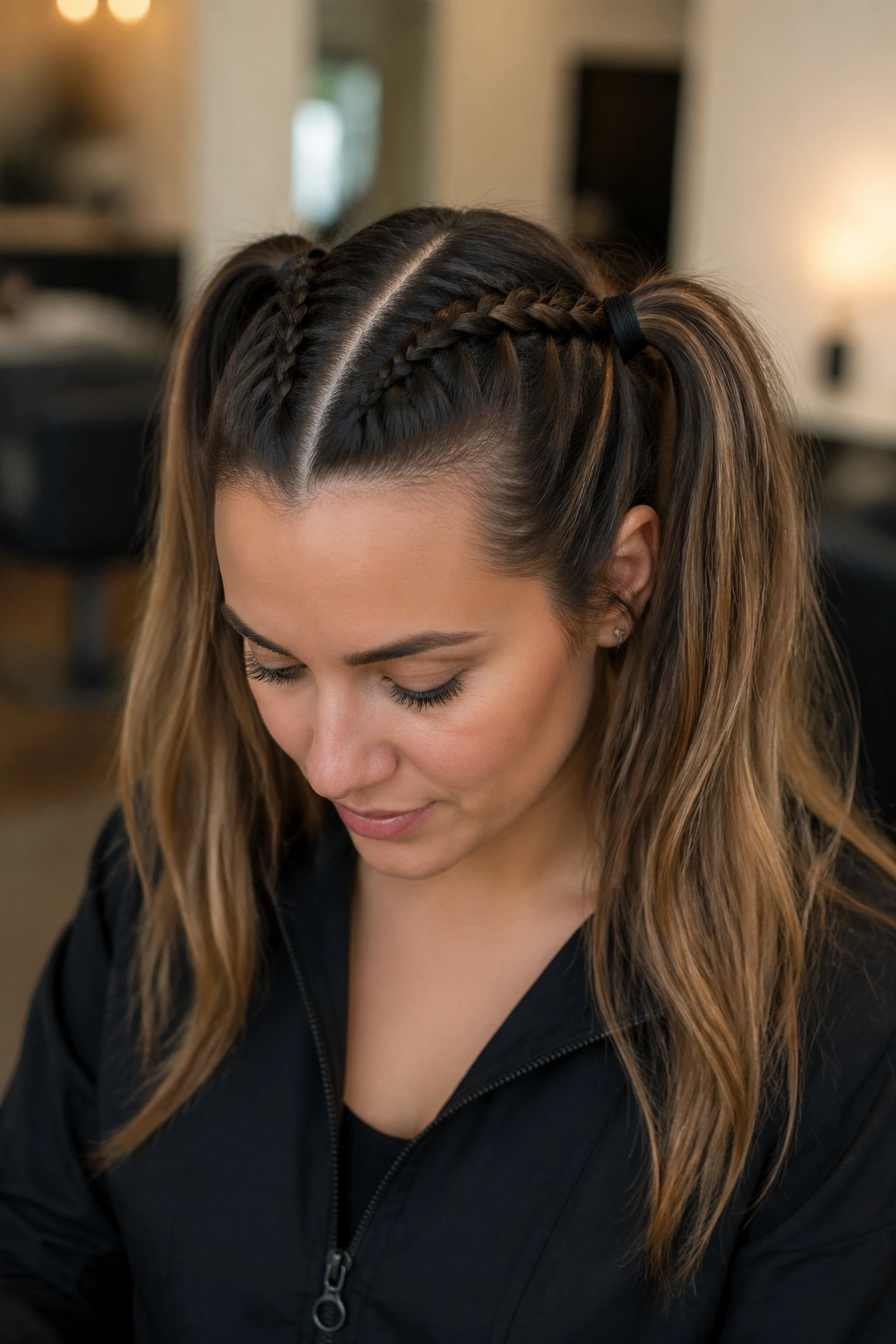
A tiny Dutch braid at the front gives the ponytails more lift at the scalp. Start near the hairline, braid just 2 to 3 passes back toward the ear, then gather the rest into a ponytail. Do the same on the other side.
Best for hair that slips
If your hair is very soft or freshly washed, the braid gives it a little structure before the elastic goes in. That helps a lot. Plain ponytails on silky hair can slide down fast, and nobody enjoys redoing them in the car.
You do not need to braid deeply. A short braid at the front is enough to add texture and keep the style from looking flat. Leave the rest of the hair loose in the ponytail if you want the finish to stay quick.
One small braid. Big payoff.
15. Sleek Low Double Ponytails
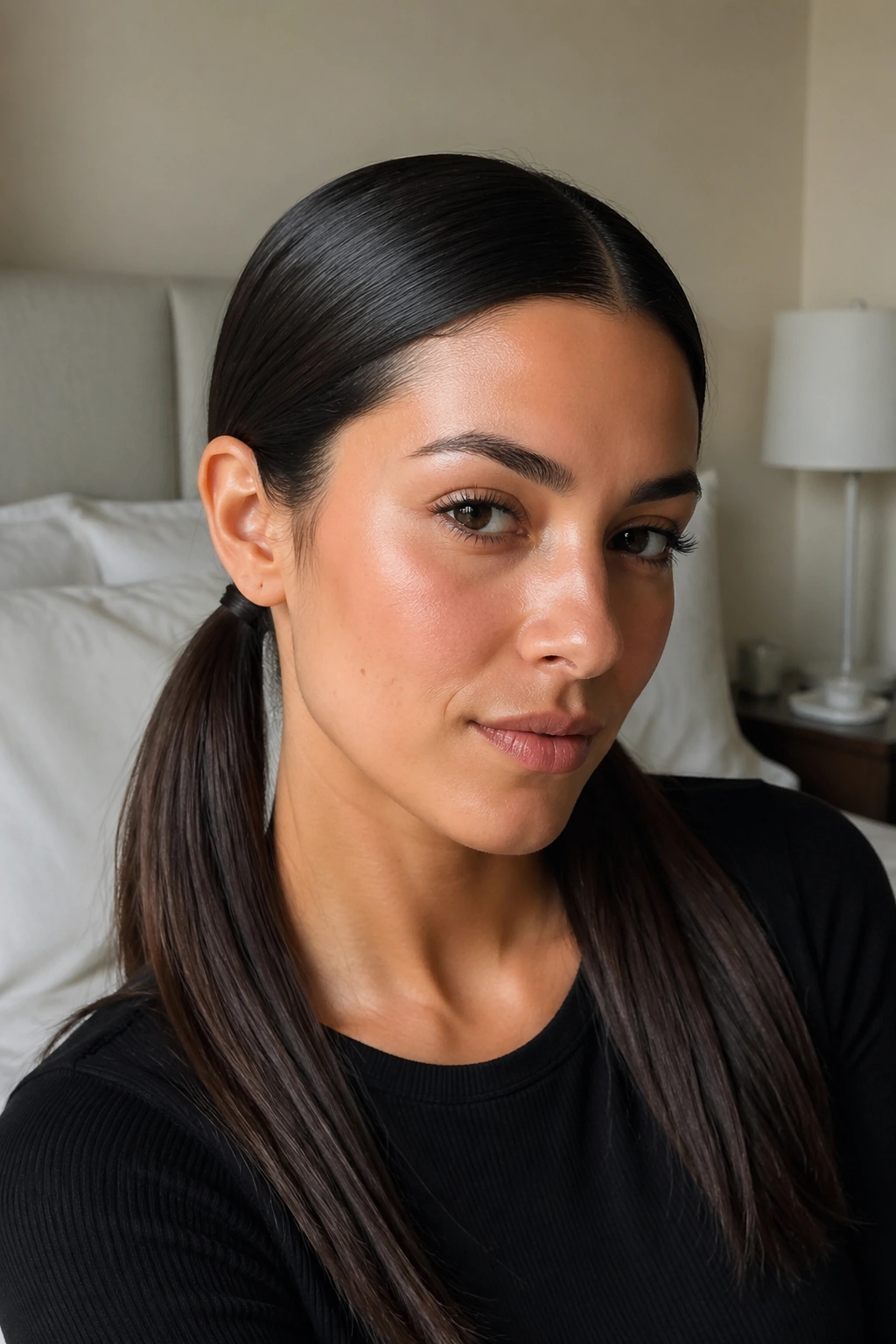
This is the version I reach for when the day needs to look controlled. The bases sit low, usually right at the nape, and the part stays clean from front to back. It feels calm. Almost severe, in a good way.
Use a brush and a little styling cream to smooth the roots before you gather each side. If you have baby hairs or short flyaways, press them down with a fine-tooth comb and a touch of gel. Don’t soak the hair. Too much product makes the style heavy fast.
The nice part about sleek low double ponytails is that they work with straight ends, curled ends, or tucked-under ends. They are a blank canvas, which is useful when your outfit is doing the talking.
16. Flipped-End Double Ponytails
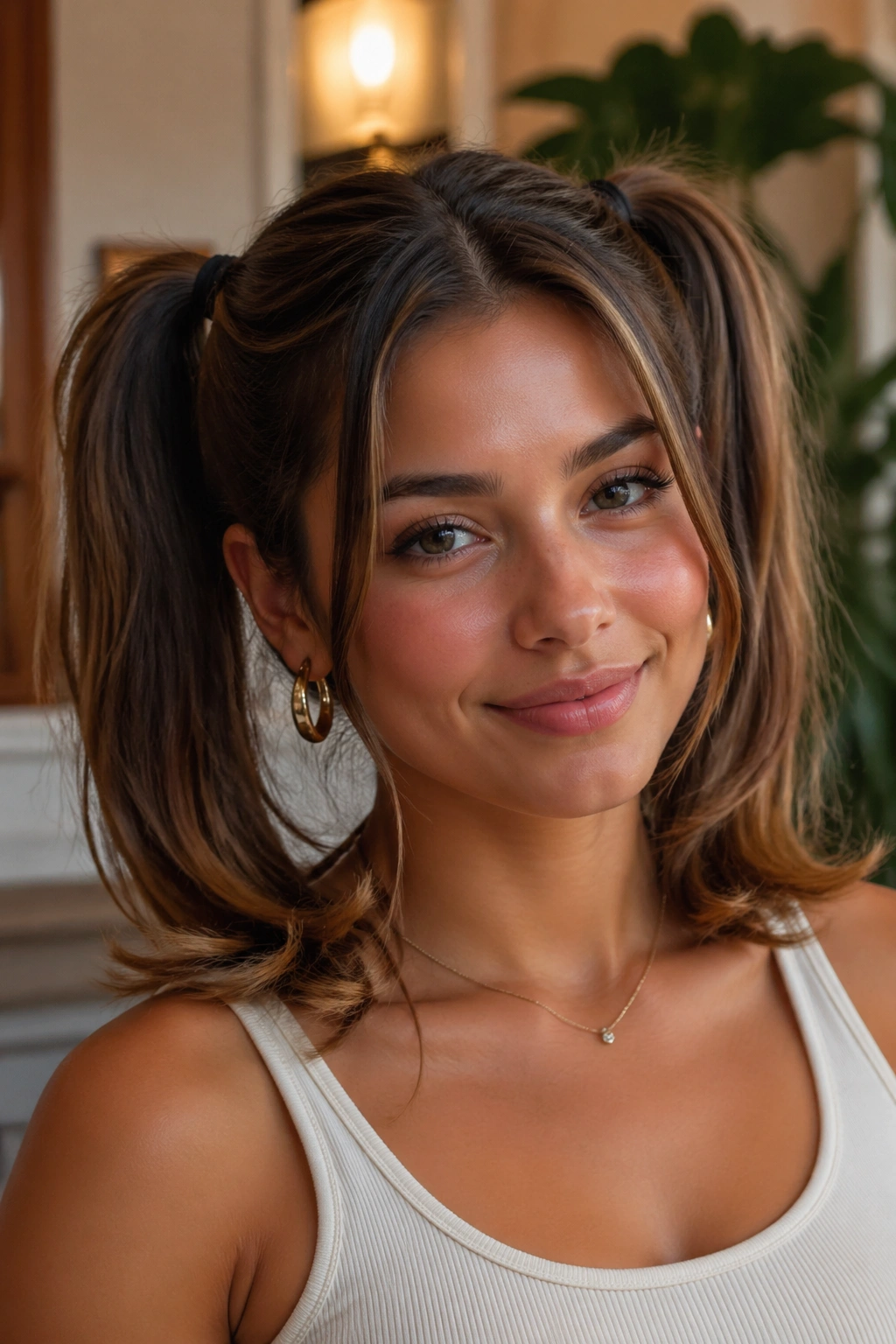
Flipped ends make ponytails feel lighter. Instead of letting the hair hang straight, bend the bottom inches outward with a flat iron or curl them under with a round brush. The difference is small, but it changes the whole outline.
This works especially well if your hair is shoulder length or slightly longer. The flip helps the ends sit away from the neck instead of clinging to it, and that can make the style feel cleaner in humid weather. If your ends are dry, use a tiny drop of serum after styling. Not before. Before can make the flip collapse.
A straight base with playful ends is a nice compromise. It reads neat without getting stiff.
17. Double Ponytails for Curly Hair
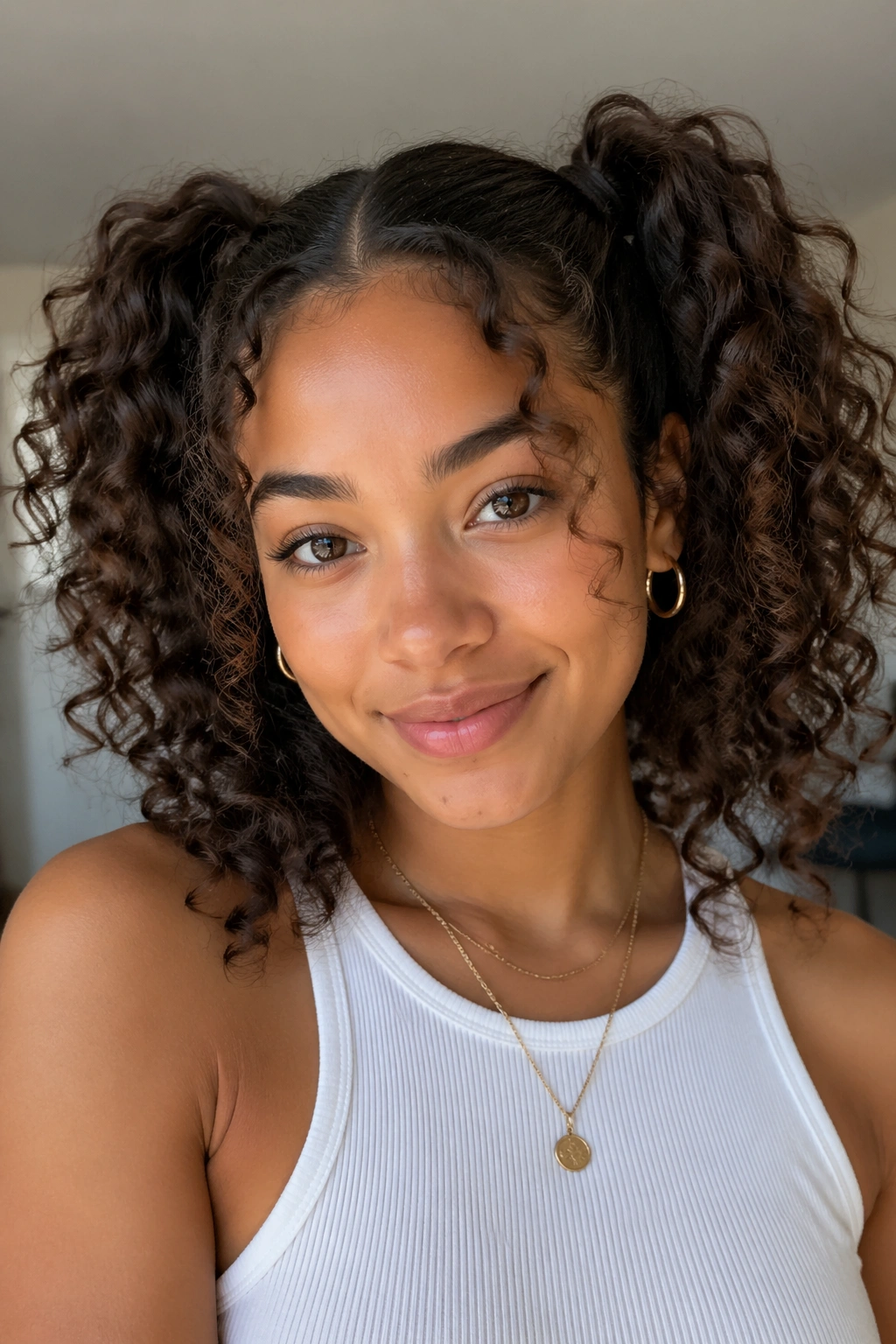
Curly hair does not need to be forced flat to look good in double ponytails. In fact, trying to smooth every curl usually makes the style worse. Let the texture do its own thing and focus on a clean part and secure bases.
Use a curl cream or leave-in conditioner to keep the shape soft, then gather the sides loosely so the curl pattern can still breathe. If you pull too tightly, the roots stretch and the curls lose their spring. That’s the opposite of what you want.
Let the volume stay. Curly double ponytails look best when they still look like curly hair. The style is enough on its own.
18. Messy Double Ponytails
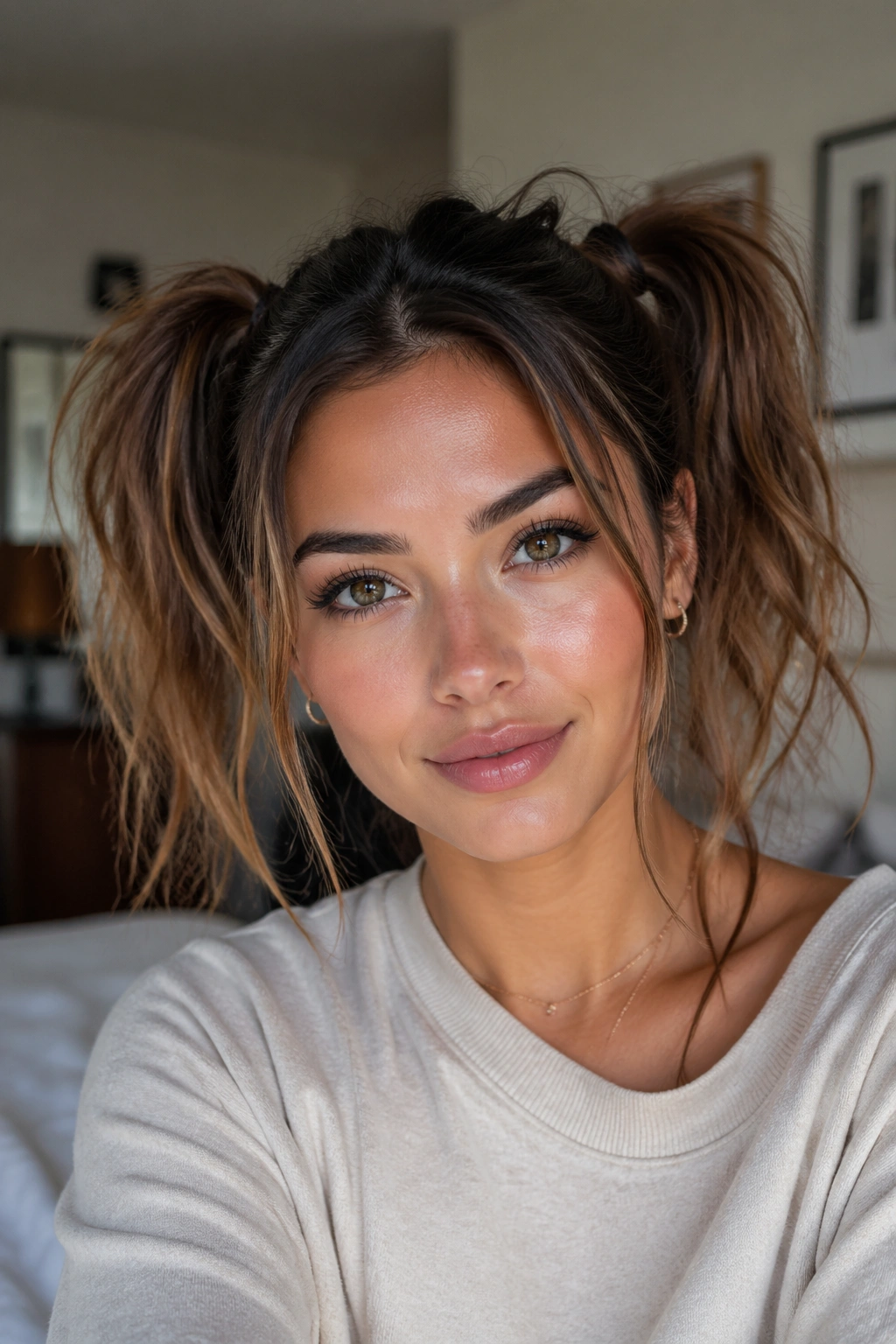
Bad hair day? Fine. Messy double ponytails are the easy answer when your hair needs to be handled, not perfected. Pull the sides back quickly, secure them, and then loosen the crown with your fingertips until it looks lived in.
A few things that help
- Use dry shampoo at the roots if they’re oily.
- Tug a few pieces loose near the ears.
- Twist the ponytail ends once or twice if you want a bit more shape.
This version works because it refuses to look overdone. The trick is not to make the mess even everywhere. Leave the crown softer, keep the bases a little cleaner, and let the lengths do whatever they want.
A tiny bit of texture spray makes the whole thing easier to hold.
19. Side-Part Double Ponytails
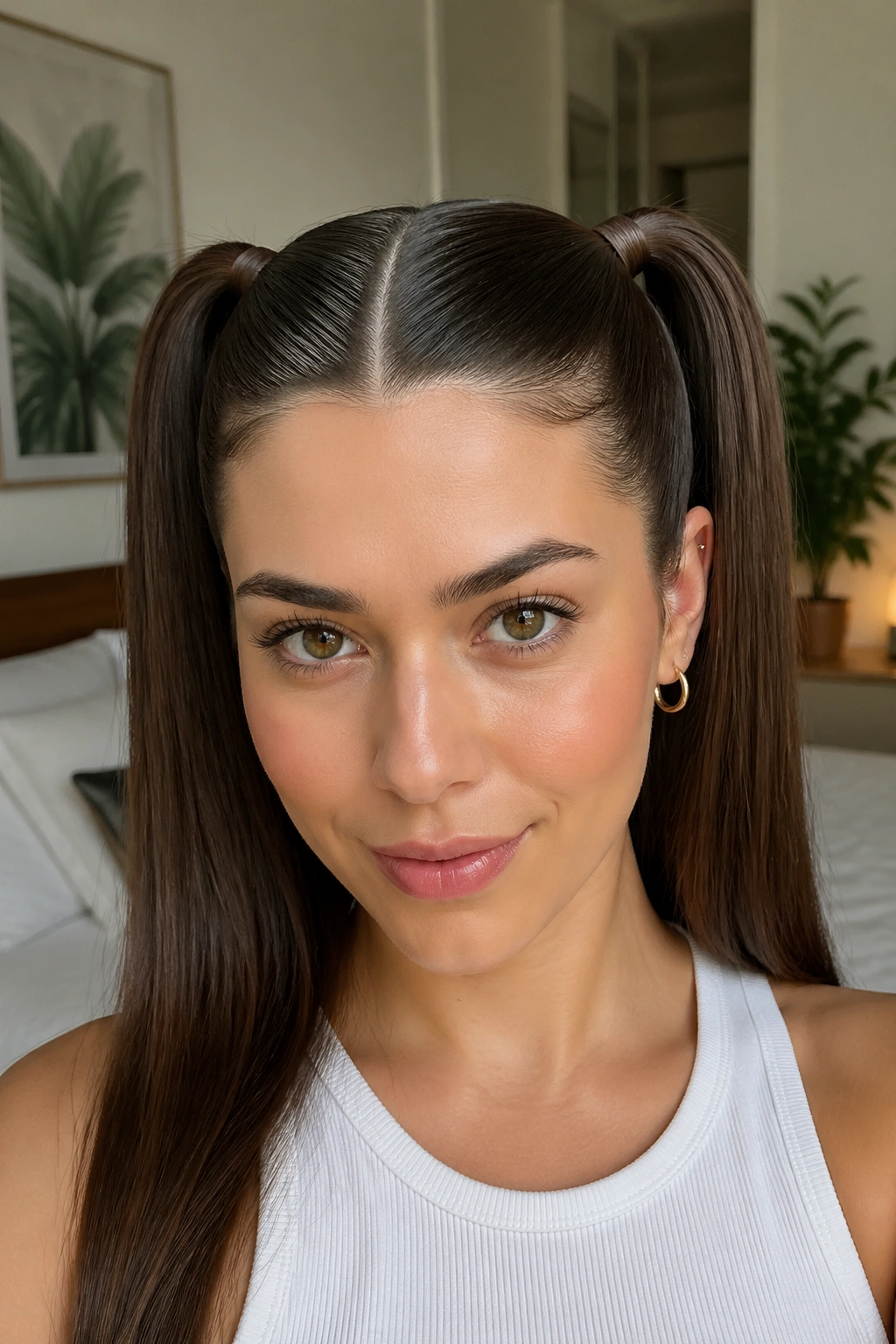
Center parts are safe. Side parts have more attitude. Shift the part a few inches off center and the style immediately feels less expected. One side gets a little more volume, and the face opens up in a different way.
Why the side part changes the mood
The asymmetry draws the eye across the face before it reaches the ponytails. That can be flattering on round or square face shapes, and it’s handy when one side of your hair naturally lies flatter than the other. Instead of fighting that, use it.
Keep the ponytail bases even if you want the style to stay neat, or offset them by half an inch if you want something softer and less matched. Either way, the part is doing the work.
20. Knotted Double Ponytails

A small knot can replace a boring elastic trick and still stay fast. Take a front section from each side, tie it into a simple knot close to the scalp, then secure the rest of the ponytail underneath or just behind it. It creates a bit of texture right where people look first.
This style is good when you want a little detail but don’t want braid fatigue. Braids can be lovely, sure, but sometimes you only have energy for a knot and a brush. That’s a real thing.
Keep the knots small and snug. If they’re loose, they slide and start to feel accidental. If they’re tight, they look deliberate. Tiny difference. Big effect.
21. Asymmetrical Double Ponytails
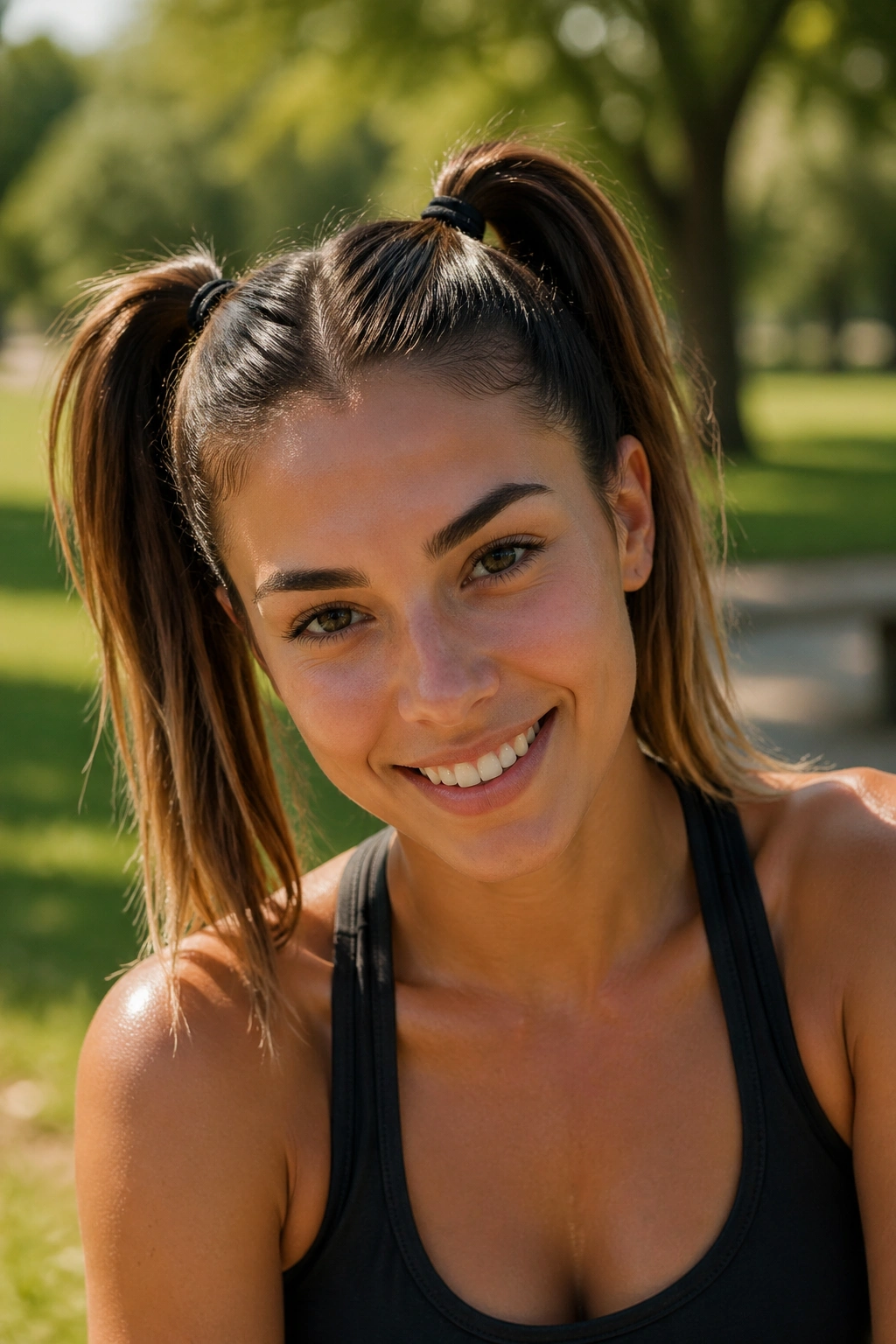
Not everything has to match perfectly. One ponytail can sit a little higher than the other, or one can be tighter while the second stays softer. Done on purpose, that slight imbalance feels modern rather than messy.
The key is to keep some part of the style consistent. Use the same elastic, the same texture, and the same end treatment on both sides. Then vary only the height or fullness. That way the look still feels designed, not like you got distracted halfway through.
I like this for hair that naturally falls heavier on one side. Instead of spending ten minutes forcing symmetry, you can let the natural shape stay and make it work for you.
22. Crown-Braided Double Ponytails
A tiny braid along the hairline gives double ponytails a little more architecture. Start near the temple, braid back a few inches, and feed that section into the ponytail base. Repeat on the other side.
Best for days when you want extra polish
This version looks more involved than it is. Even a short braid makes the front feel finished, and it keeps shorter face pieces from escaping all over the place. If your hair is thick, braid only the top layer so the front doesn’t get bulky.
- Start with a clean part.
- Braid 1 to 2 inches from each temple.
- Secure each side with a small elastic or pin before tying the main ponytail.
The result is tidy, but not stiff. That’s the sweet spot.
23. Wrapped-Base Double Ponytails
Wrapped bases make plain ponytails look better almost immediately. After you secure each side, take a thin strand from the ponytail, wrap it around the elastic, and pin it underneath with a bobby pin. It hides the elastic and makes the finish look cleaner.
This is one of those tiny details that gets noticed even when nobody can explain why. The ponytails feel a little more intentional, a little less like you stopped at the first step.
If your hair is layered and the wrap strand keeps slipping, choose a slightly thicker piece and smooth it with a drop of cream first. That gives it just enough control to stay put without looking glued down.
24. Mini Bubble Double Ponytails
Need a playful version that still looks neat? Mini bubbles are the answer. They work especially well on short to medium hair where a full bubble ponytail might feel too heavy or too long.
Use smaller elastics and place them closer together, about 1 inch apart. That tighter spacing keeps the bubbles round instead of stretched out. Pull each segment gently after you secure it. Gently matters here. If you tug too much, the bubbles start to look uneven and the whole thing loses that tidy shape.
What to watch for
- Keep the bubbles evenly sized.
- Don’t overcrowd the ends.
- Use clear elastics if you want the sections to stand out.
Cute, fast, done.
25. Double Ponytails with Loose Waves
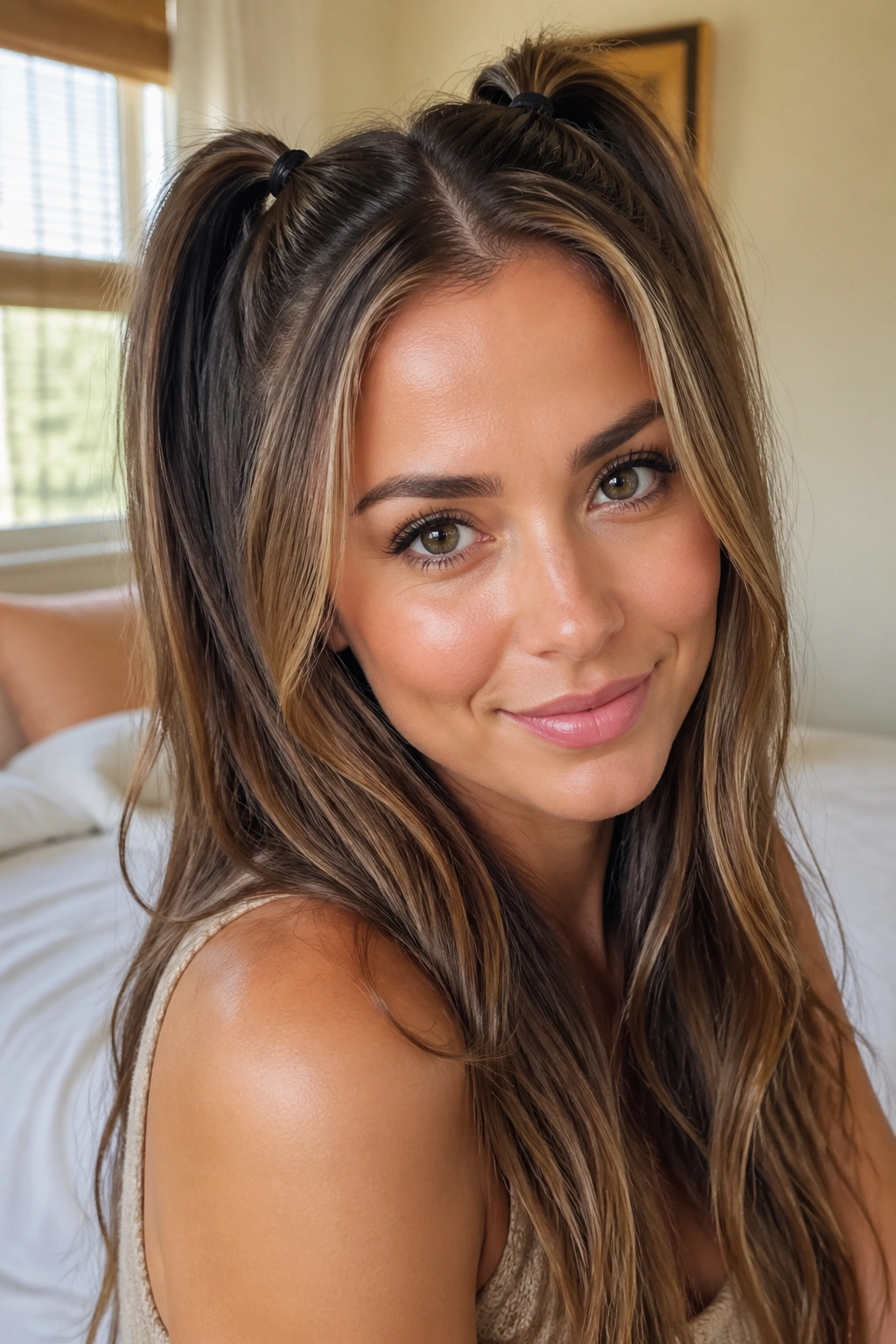
Loose waves soften the whole style. Instead of sharp ends, you get movement from the middle down, which makes the ponytails feel less stiff and more relaxed. A 1.25-inch curling iron works well, but so do overnight braids if you like to keep heat out of the picture.
This version is nice because it hides a lot of small flaws. The wave pattern distracts from imperfect parts and uneven ends, which can be a relief on mornings when your brush has already lost the argument. Don’t brush the waves all the way out. Just separate them with your fingers so they stay soft.
The result is casual, but not sloppy. That balance is hard to beat.
26. Sleek Front, Voluminous Ends
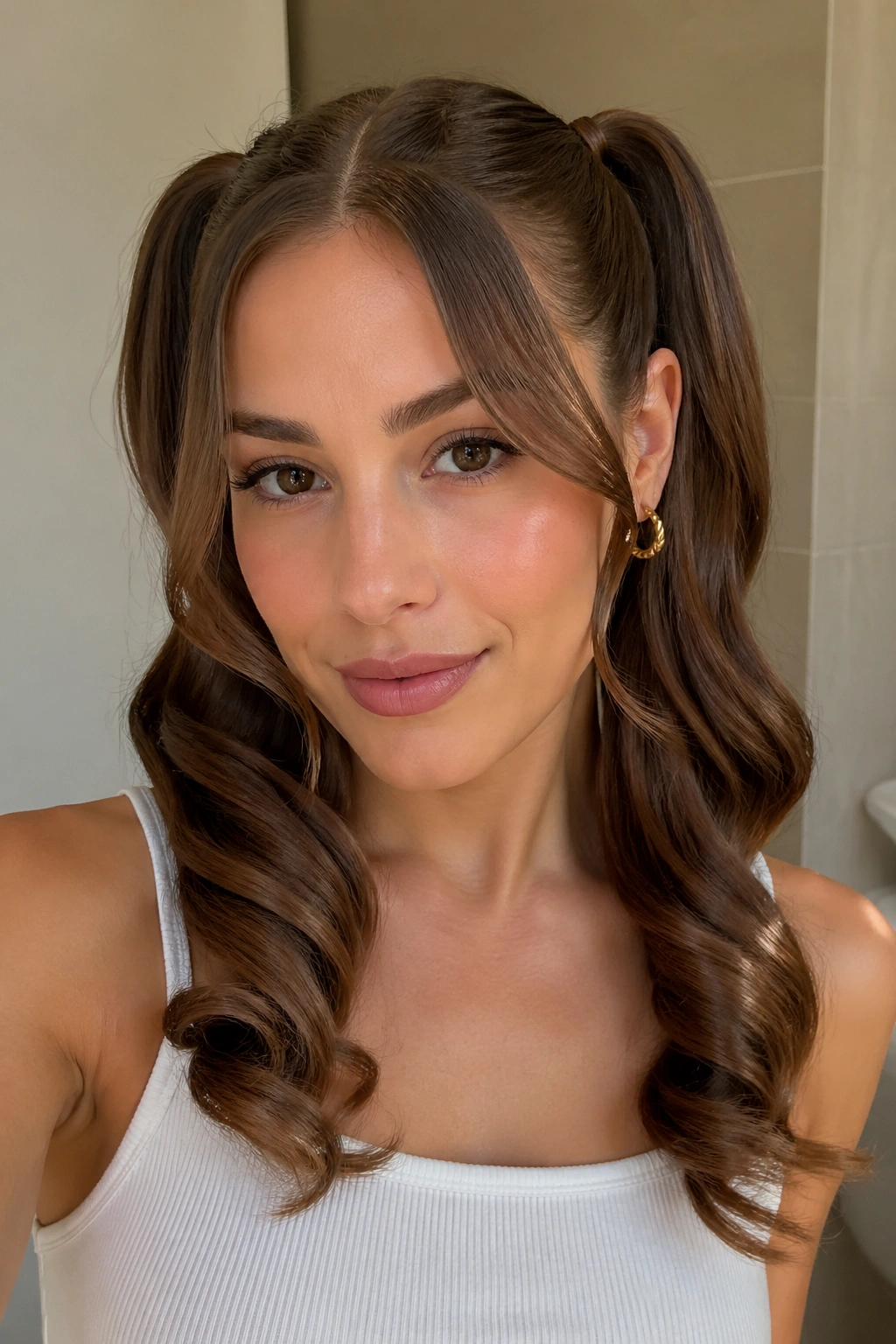
Flat roots and full ends make a good pair. Smooth the hair at the scalp with a brush and a small amount of gel, then add volume only to the ponytail lengths with a curling iron or a few bends from a straightener. The contrast does the work.
This style is especially useful if your crown gets puffy but your ends are fine, or if your hair is thick at the top and limp at the bottom. You can control the parts that need it most without trying to control the whole head. That saves time.
A quick tease at the ponytail base can help too, but keep it light. You want lift, not a ratty knot you’ll regret later.
27. Micro Double Ponytails
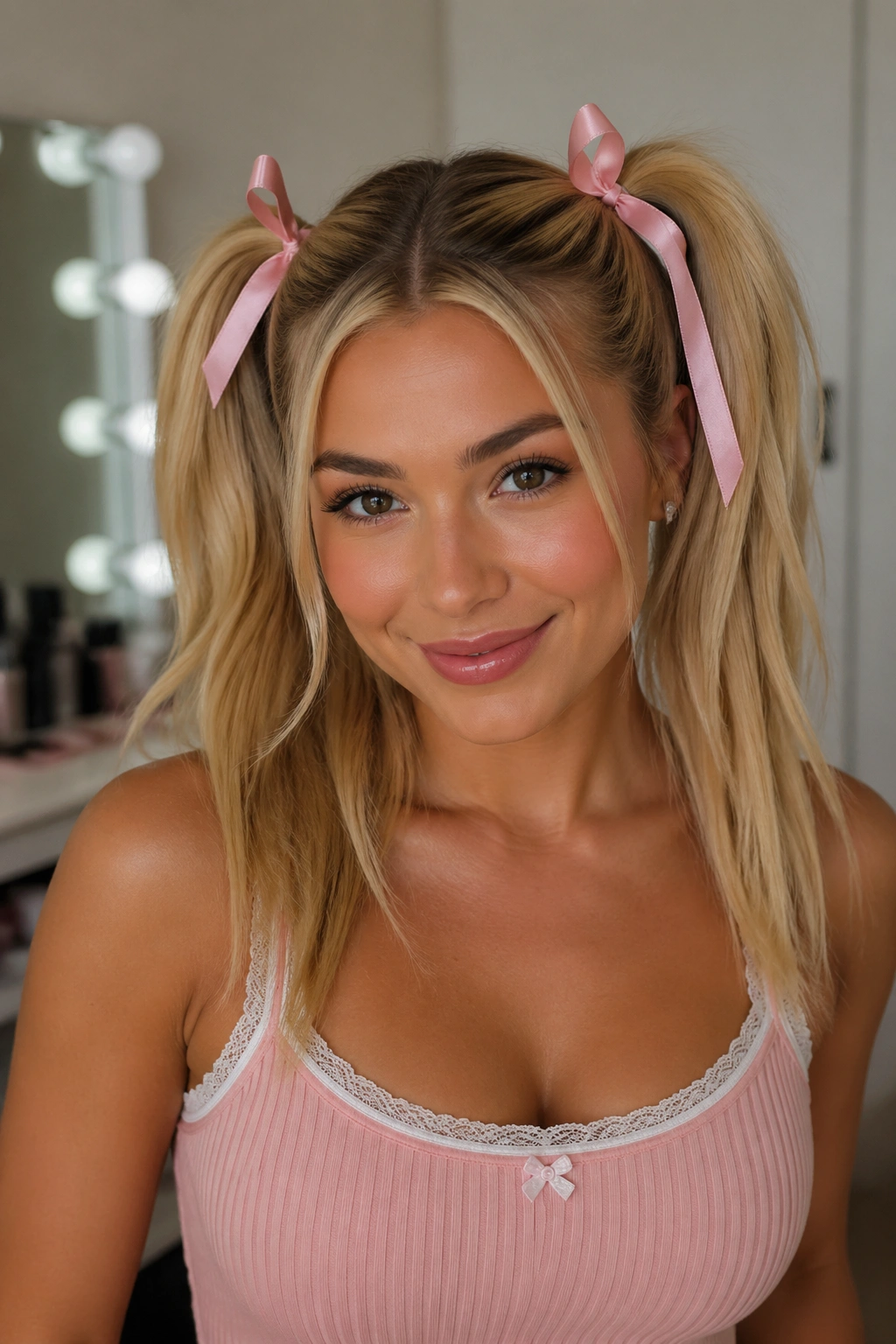
Micro double ponytails are tiny, cute, and a little bit unexpected. Place them near the temples or slightly behind them, and keep the sections small enough that they look like accent pieces instead of full pigtails.
This is a fun one for short hair, bangs that need taming, or days when you want a different shape without a lot of commitment. It also works well if you’re wearing makeup or statement earrings and want the hair to stay out of the way.
If your hair is very fine, add a touch of dry texture spray first. Small sections need grip, or they slide out before you’ve even left the house.
28. Braided-Ends Double Ponytails
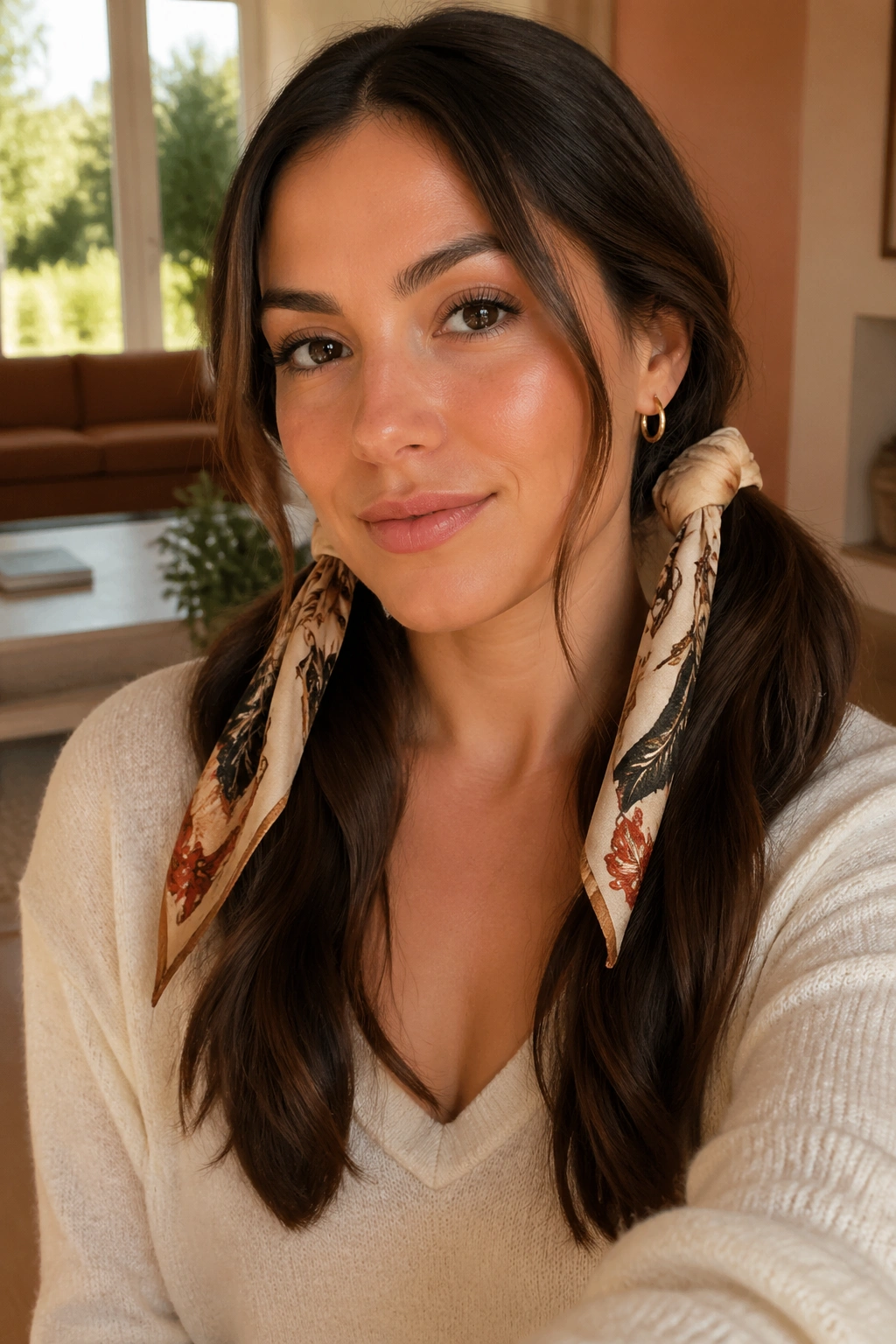
Braided ends give the ponytails a tighter, neater finish without making the whole style look formal. Tie each ponytail first, then braid just the last 2 to 4 inches and secure the tip with a tiny elastic.
That small detail helps if your hair is layered or if the ends tend to puff out. The braid keeps them together and makes the silhouette cleaner. It also helps with hair that wants to tangle, which is not exactly rare.
I like this version on medium-length hair most. Long hair can make the braids feel heavy, and very short hair may not have enough length for a neat finish. If yours is in the middle, this is a strong option.
29. Double Ponytails with Loose Side Pieces
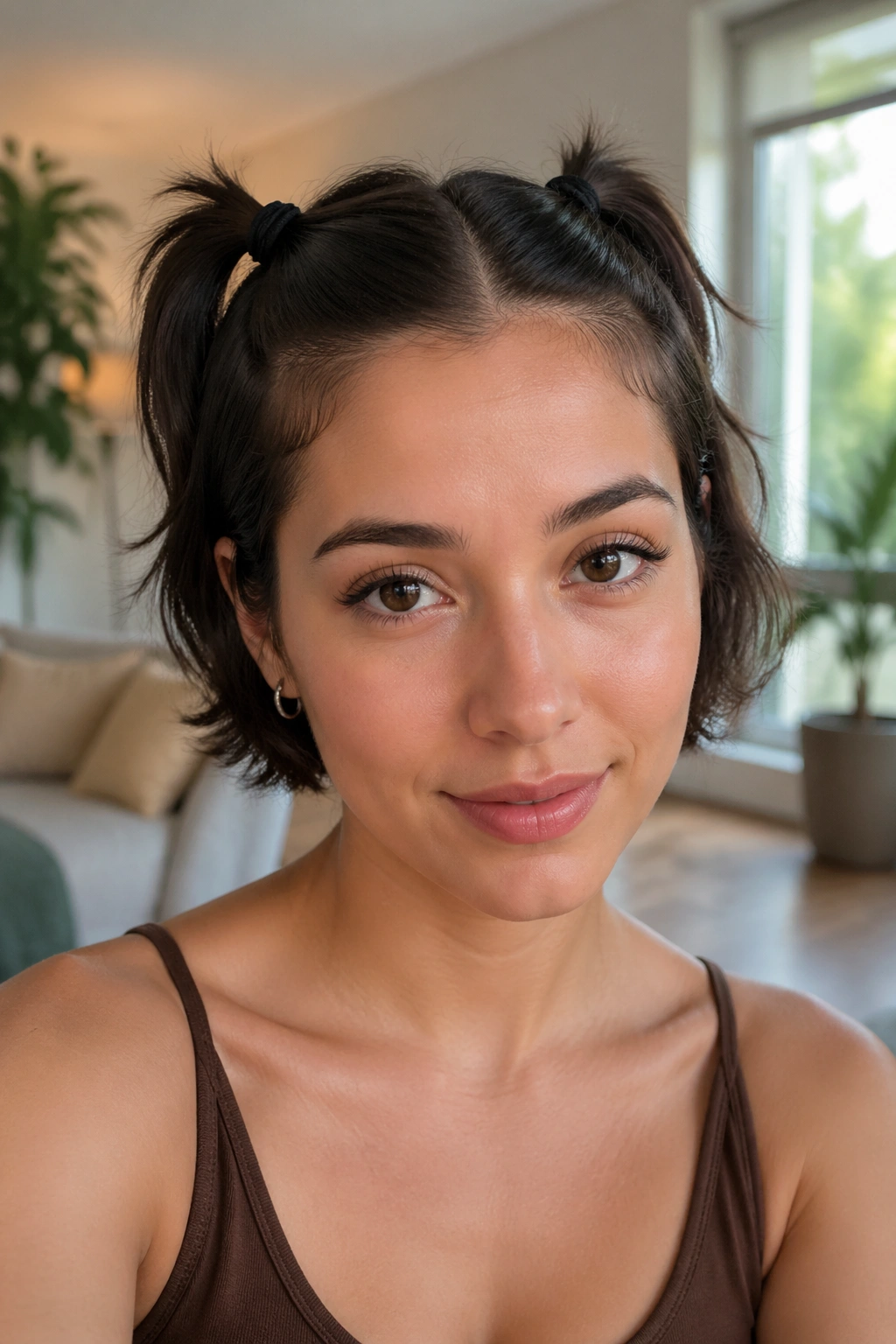
Want a version that feels softer around the face? Leave a few longer side pieces out and keep the ponytails low or mid-height. The loose pieces break up the outline and keep the style from looking too strict.
A quick way to place the pieces
Pull out the front sections before you secure the ponytails, not after. That makes the part cleaner and keeps the loose hair from getting yanked in awkward directions. Curl the pieces slightly if you want them to tuck into the jawline a little more.
This style works well for people who like pigtails but don’t love seeing every line of their face fully exposed. It softens the whole look without hiding the shape.
30. Five-Minute Cleanup Double Ponytails
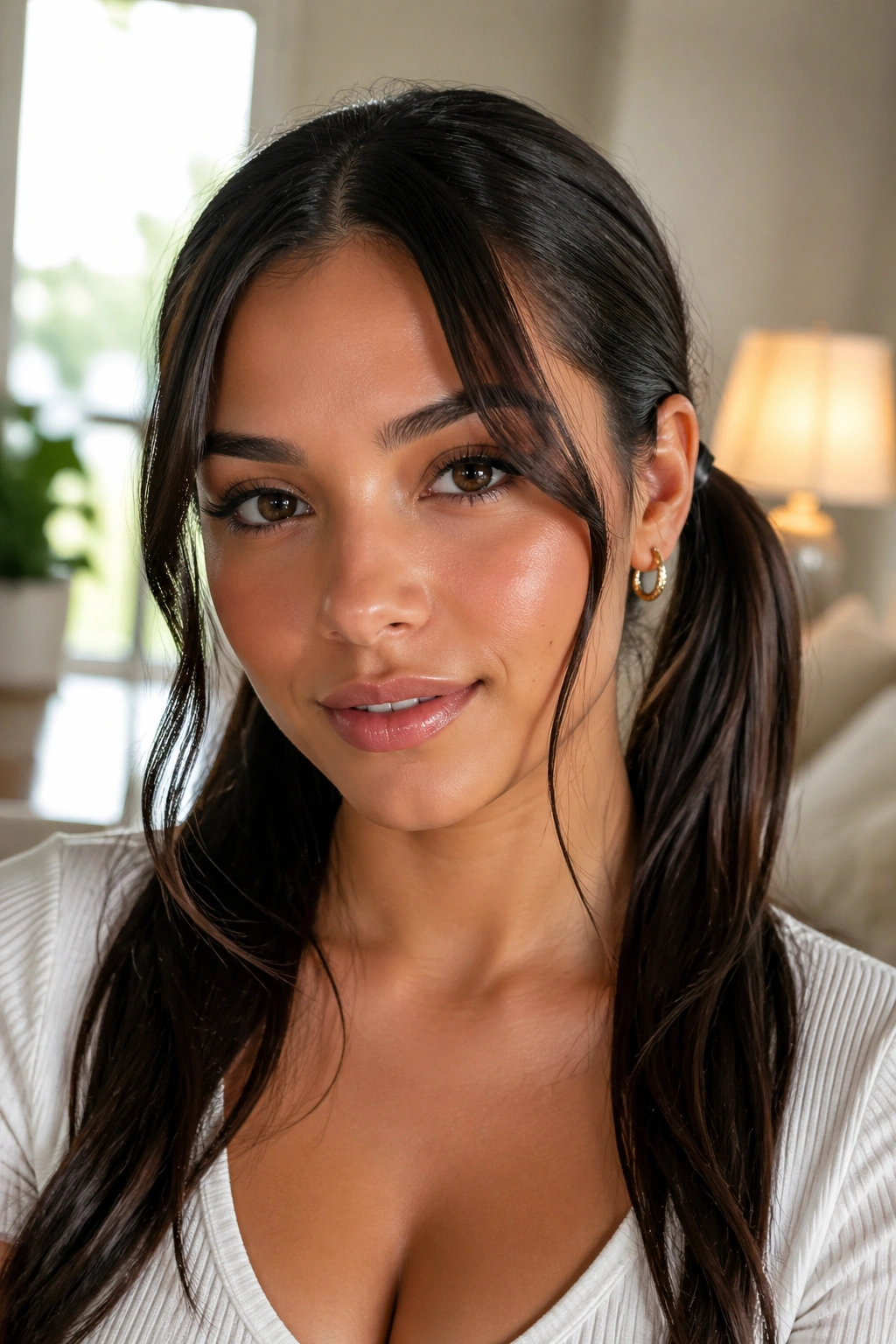
This is the one for mornings when you need your hair off your face and you do not have the patience for anything clever. Brush it, part it, secure each side, smooth the top, and move on. If the ends are uneven, leave them uneven. If a few pieces slip out, let them.
The point is not perfection. The point is to look pulled together fast. A low pair of ponytails with slightly loose bases and natural ends can feel cleaner than a style you keep fussing with for ten minutes. That’s the honest truth.
If you want one last tiny upgrade, wrap a strand around each elastic or add a touch of serum to the ends. Done. Out the door.