



Box braids with curly ends solve a problem that straight-ended braids can’t quite shake off: they can look a little too firm, a little too final. A few inches of loose curl at the bottom changes the mood fast. The braids still do the structure work, but the ends bring movement, softness, and that little bit of swing that makes the style feel alive.
The proportions matter more than people think. Too little curl and the style can look clipped off; too much and the loose hair starts tangling at the nape, especially if you wear jackets, scarves, or crossbody bags a lot. I like curl lengths that start around 2 to 4 inches below the braid ends on medium box braids, and a touch longer on jumbo braids because the braid itself already has a lot of visual weight.
There’s also a practical side to the look. Curly ends can soften a strong jawline, pull attention toward the shoulders, and hide a finish that isn’t perfectly even. They do ask for better night care, though. A satin bonnet, a loose braid or two before bed, and a light touch of mousse on the ends can keep the style from turning fuzzy too fast.
Some versions feel polished. Some feel playful. A few sit right in the middle, which is usually where the best hair lives anyway.
1. Classic Waist-Length Box Braids With Soft Spiral Ends
Classic waist-length braids are the version most people picture first, and there’s a reason they stay popular. The length gives the curls room to move, while the box parts keep the scalp pattern neat and easy to read. If you want box braids with curly ends that feel balanced rather than fussy, this is the cleanest place to start.
Why This Length Works
Waist length gives you enough braid to show shape before the curls begin, which is the whole trick. The braids lay with some weight, then the spiral ends break that line at the bottom so the style doesn’t feel heavy from top to bottom. That contrast is the whole point.
Best for:
- People who like long hair without constant styling
- Thick, medium, or dense hair that can support longer braids
- Anyone who wants curls that show even when the braid is pulled forward
- Braids worn loose most of the time
Ask for: braid ends that stop about 3 inches above the curl section, with spiral or wand-like curls instead of tiny tight ringlets.
My honest tip: keep the curl section softer than you think. If the loose hair is overstyled at the ends, it starts to fray sooner.
2. Knotless Boho Box Braids With Curly Ends
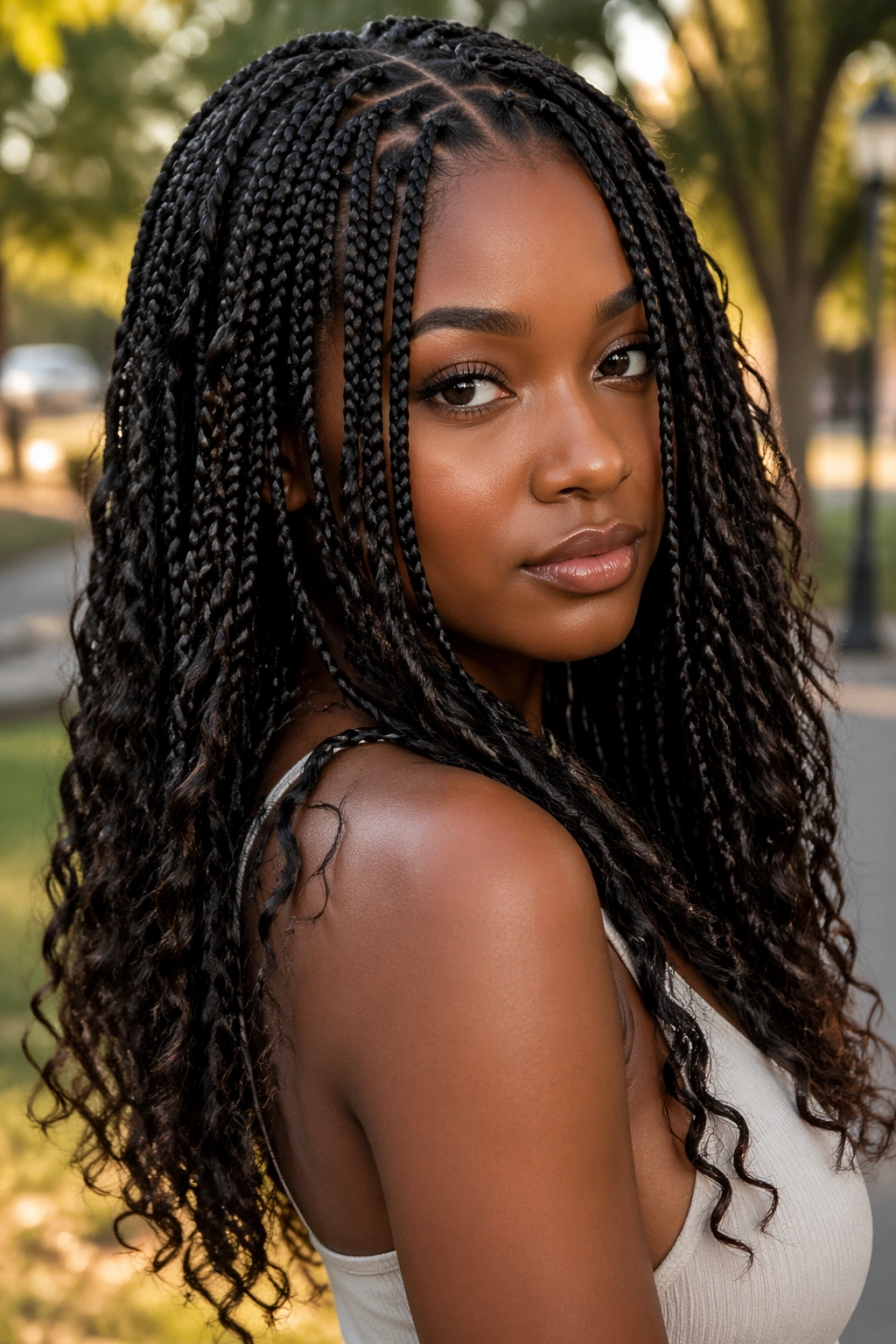
If you care about your hairline, this is the one to beat. Knotless braids start lighter at the scalp, and when you pair that base with curly ends, the whole style feels softer from the first glance. It’s a friendlier-looking braid, and that matters more than people admit.
The boho part comes from the little bits of loose texture tucked in here and there. Not everywhere. That’s the mistake. Too much loose hair turns the style into a frizz magnet. A few strategically placed curls at the ends, plus an occasional face-framing strand, keep it airy without making it messy.
I also like this version on medium-length hair because it moves well. Long knotless braids with curly ends can be gorgeous, but they need discipline. Skip the heavy accessories and let the braid pattern stay the star. The curls are the punctuation mark, not the whole sentence.
3. Shoulder-Grazing Box Braids With Curly Ends
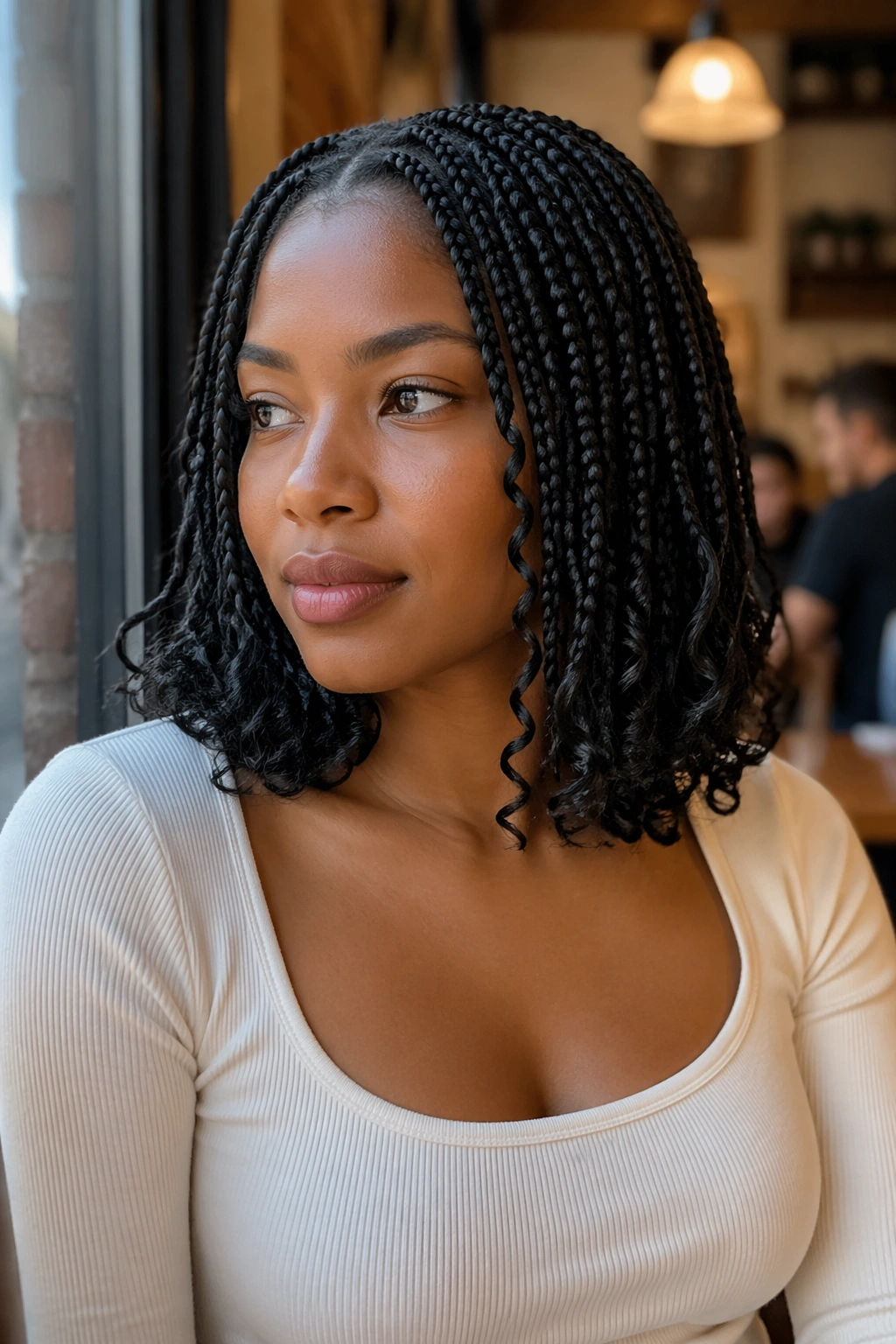
Want the softness of curls without a curtain of hair down your back? Shoulder-grazing braids are the sweet spot. They skim the collarbone, hit the shoulders with a little bounce, and make the curly ends feel intentional instead of extra.
How to Ask for It
Tell your braider you want the braid body to stop around the shoulder line, then add another 2 to 3 inches of curl below that. That small gap matters. If the curls start too high, the style can puff up around the face. If they start too low, you lose the whole point.
A shoulder-length cut also keeps the style light on the neck. That sounds boring until you wear long braids for a full day and realize how nice it is not to have them dragging across your coat collar.
This version works especially well if you like to tuck hair behind one ear, wear hoops, or show off your neckline. It’s neat. Not stiff. That’s a good thing.
4. Jumbo Box Braids With Defined Curly Tips
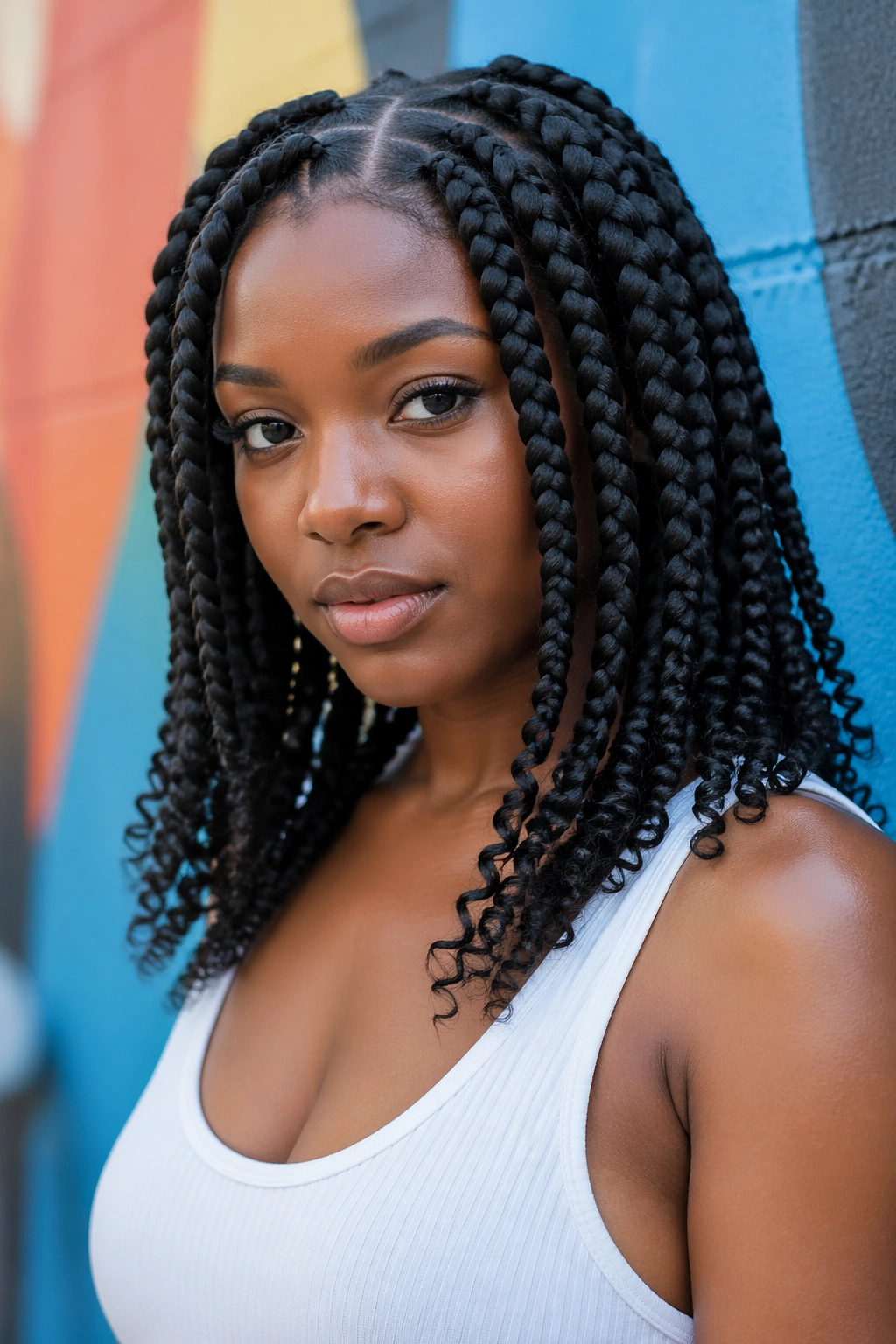
Jumbo braids with curly ends make a louder statement than the smaller versions, and I mean that in a good way. The braid pattern is bigger, the parts are easier to see, and the curl tips give the style a finish that feels deliberate instead of blunt. If you want your hair to read from across the room, this is the lane.
A lot of people make jumbo braids too long. That’s where the look starts to sag. Keep the braid body chunky, but let the curly ends stay light and springy so the weight doesn’t pull everything straight. You want a clean bend, not a droopy tail.
- Braid size: about 1 to 1.5 inches wide
- Curl length: 2 to 4 inches is usually enough
- Best hair vibe: thick hair, strong parting, simple outfits
- Watch for: curls that tangle if they’re left too long at the nape
My rule: the bigger the braid, the cleaner the curl should be.
5. Triangle-Part Box Braids With Curly Ends
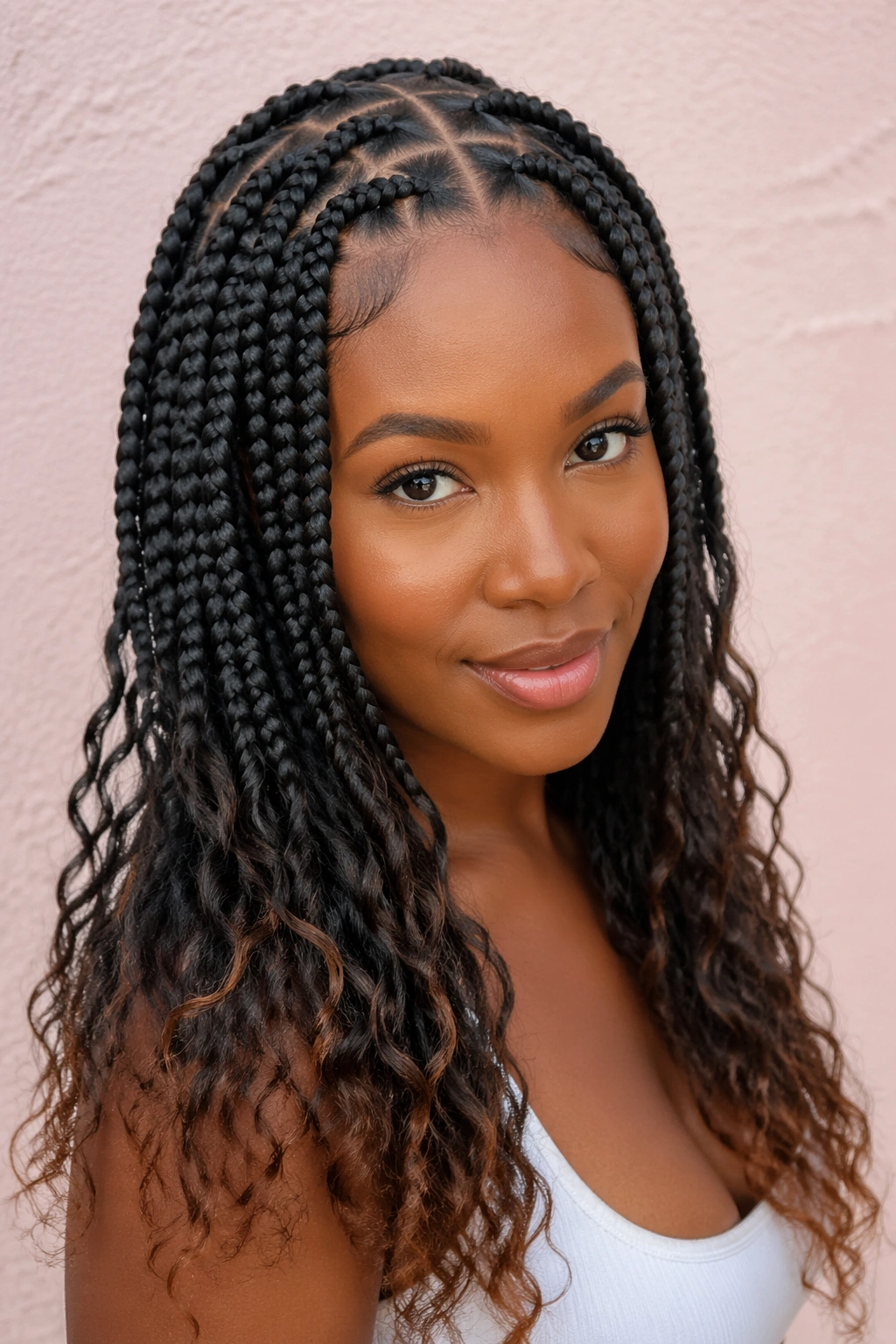
Triangle parts change the whole mood at the scalp. Instead of the usual square grid, you get little geometric points that make the base of the braid feel sharper and more graphic. Then the curly ends step in and soften all that structure. It’s a nice contrast. A little unexpected, too.
That sharp parting pattern looks especially good when the braids are medium-sized and the curls are kept loose rather than ultra-tight. Tight curls can fight the shape of the parting. Softer spirals let the triangle pattern stand out without making the ends look heavy.
One thing I like about this style is that it photographs from the top almost as well as it looks from the front. The scalp pattern does some of the visual work, so you don’t need huge length or a pile of accessories to make the style feel finished. The curls just close the loop.
6. Half-Up Half-Down Box Braids With Curly Ends
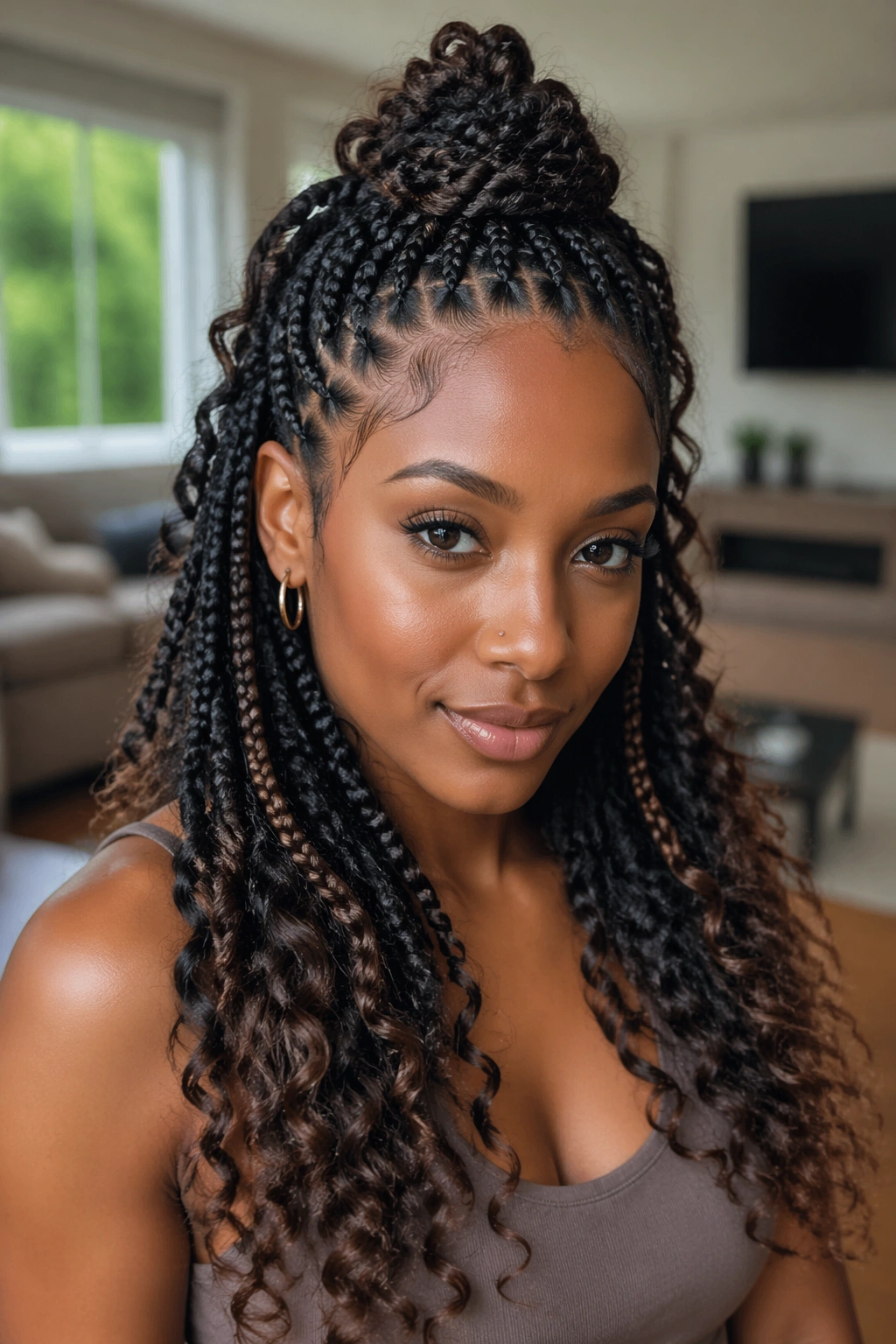
Unlike a full-down style, half-up half-down box braids give you two different moods at once. The crown sits pulled back and clean, while the loose braids and curls do the softer work underneath. If you want hair out of your face but still want movement, this is the practical answer.
The top section also gives you a place to show off parting or wrap detail. A small knot, a braided bun, or even a simple twist works well. The lower half should stay loose enough to let the curls swing a little, because that motion is what keeps the style from feeling too controlled.
I like this version for days when you want earrings to stay visible. The lifted top section opens the face, and the curly ends stop the rest of the style from looking too formal. It’s neat without feeling boxed in. Which, honestly, is hard to do.
7. Side-Swept Box Braids With Curly Ends
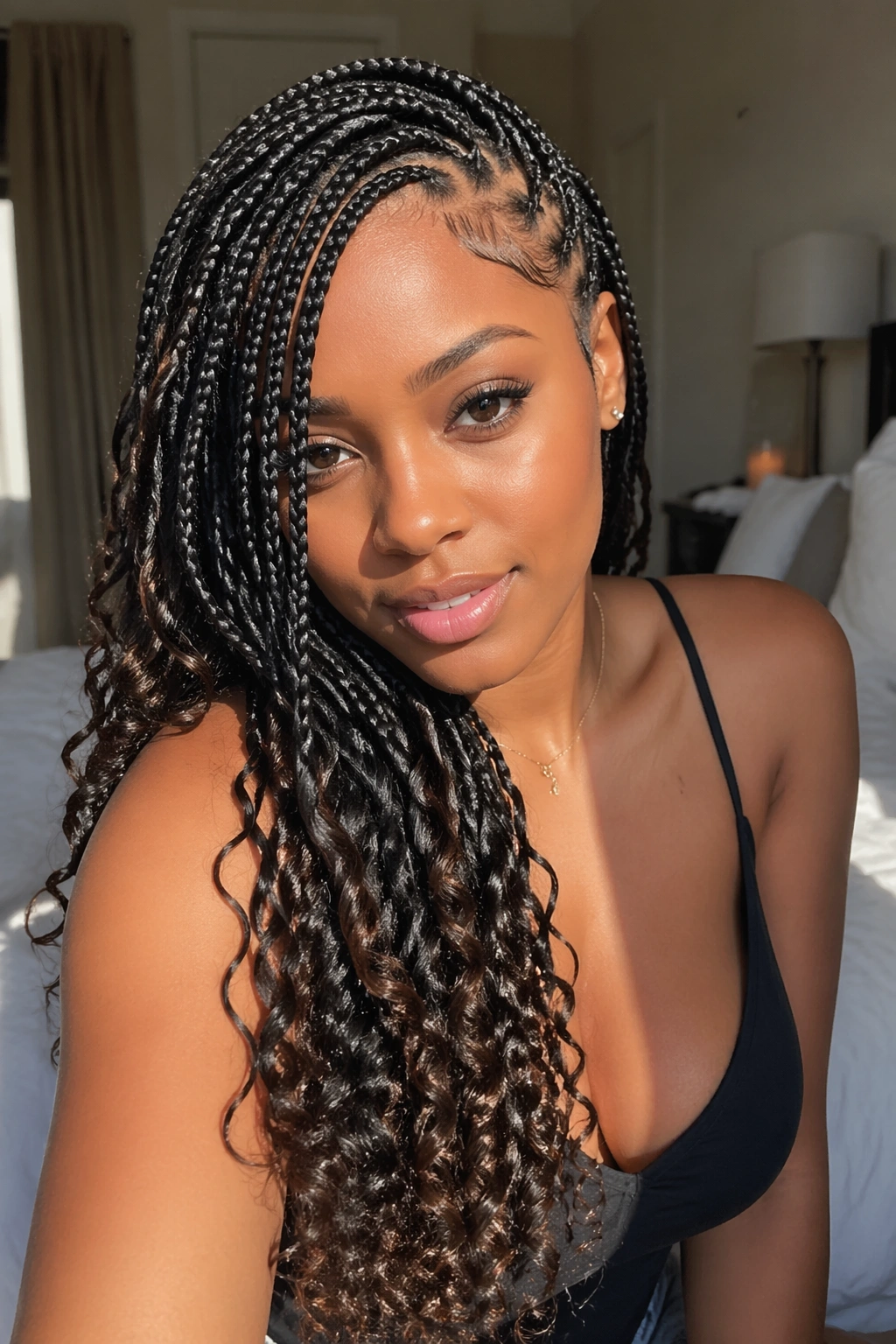
Why do side-swept braids flatter so many people? Because the shape changes where the eye lands. The heavy side creates a diagonal line across the face, and diagonals are kinder than straight center-heavy shapes for a lot of features. That’s not magic. It’s just good geometry.
Where the Weight Should Fall
Keep the part deep enough to matter, not so deep that the style starts slipping. Around 60 to 70 percent of the braids can fall to one side while the other side stays closer to the scalp. The curly ends then pool over one shoulder, which gives the look a little drama without needing anything extra.
This style works especially well with medium-to-long braids, because the curls have room to sit on the shoulder instead of flipping awkwardly. If your braids are shorter, the side sweep can still work, but the curls need to be soft enough to drape.
It’s a good choice when you want your face to look framed rather than covered. Small difference. Big effect.
8. Box Braids With Curly Ends and Beads
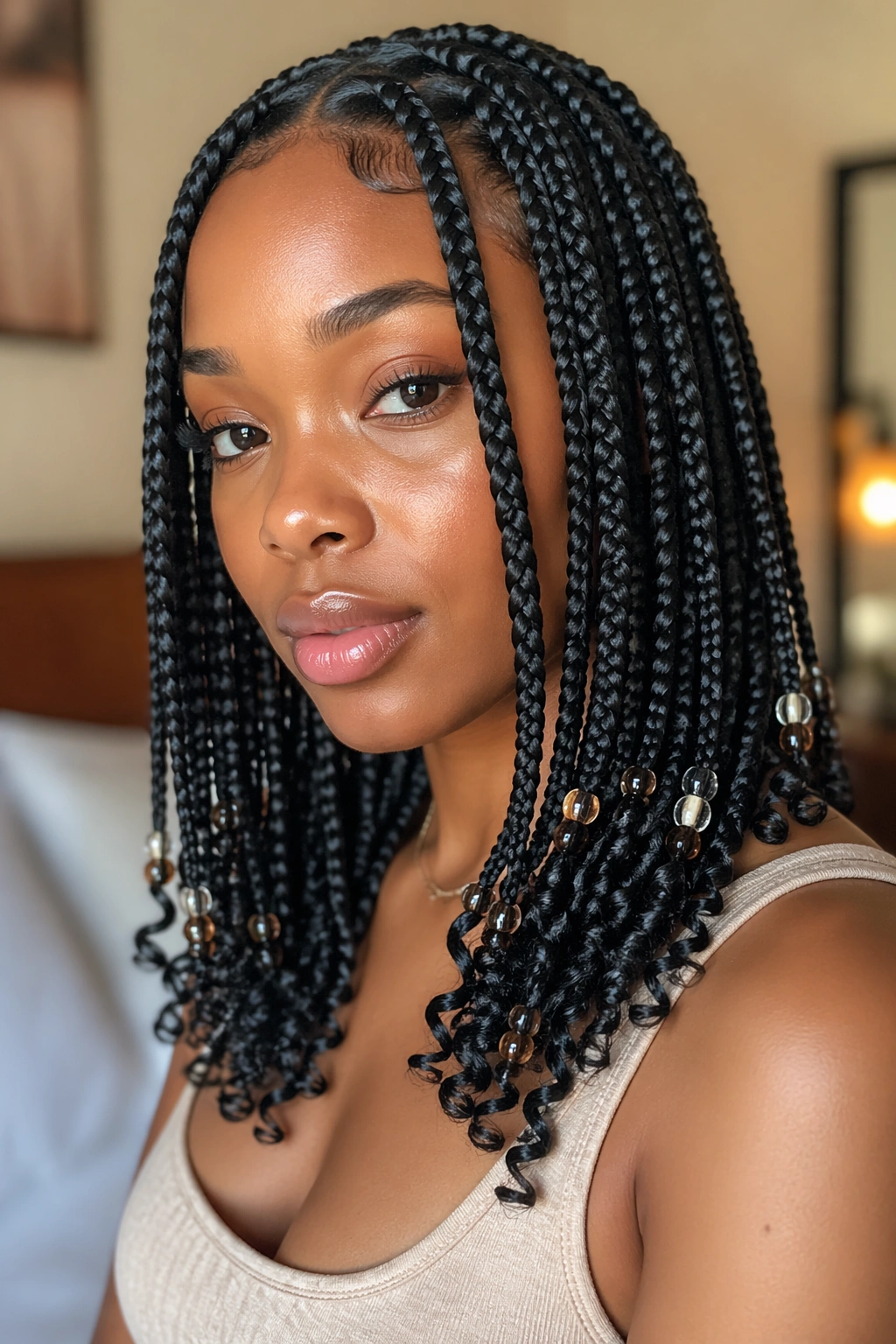
Beads change the mood fast. Add them to box braids with curly ends and the whole style shifts from soft to playful, sometimes even a little nostalgic. Wood beads feel earthy, clear acrylic beads feel sharper, and small metal accents can make the ends feel dressed up. Pick one direction. Mixing everything usually looks noisy.
The trick is placement. Too many beads near the curly tips and the ends start tangling around the hardware. I prefer a few beads at the end of some braids, not all of them, so the curls still have space to move. If every braid gets the same treatment, the style can feel heavy in a hurry.
Good bead choices:
- Lightweight wood for an easy, natural finish
- Acrylic for a brighter, cleaner look
- Small metal cuffs only if you want extra weight and shine
- Fewer beads near the nape to reduce snagging
Warning: if the beads are pinching the braid or catching on the curls, the setup is wrong.
9. Long Box Braids With Face-Framing Curls
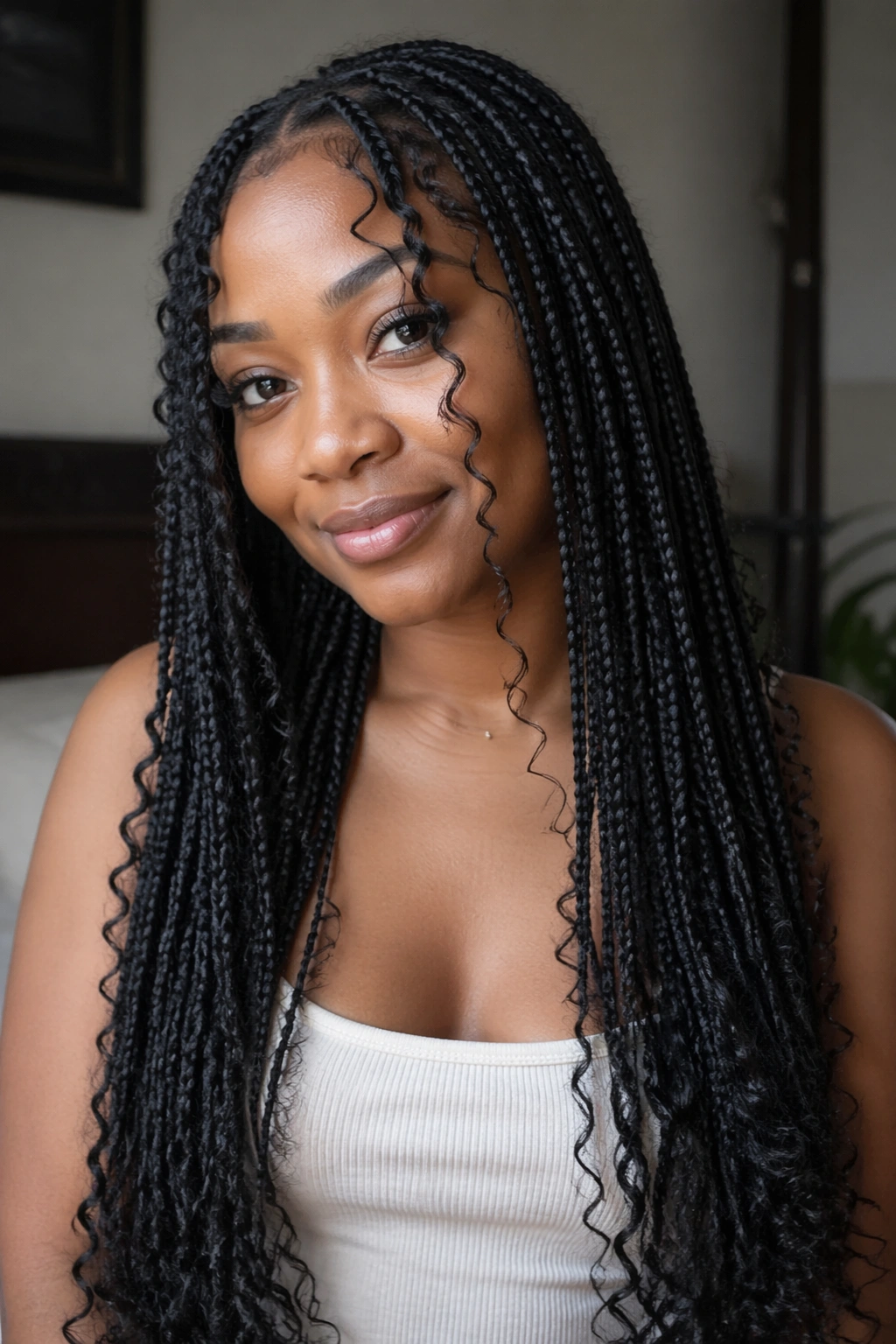
Sometimes long braids feel a little too uniform until you add a few intentional curls around the face. Not random flyaways. Intentional pieces. That difference matters. The face-framing curls soften the forehead, break up the length, and give the style a little more personality without making it busy.
A good face-framing setup usually means leaving one or two slim pieces looser near each temple, then letting the rest of the ends stay braided until the bottom. The curls should start low enough that they don’t fight the parting. If they start too high, the front can look shaggy. Nobody wants that.
- Keep the front curls slightly shorter than the back pieces
- Leave space at the temples so the face doesn’t feel crowded
- Ask for curls that bend, not tiny tight coils
- Use a light mousse on the front strands only
The result feels easy, not overdone. That’s the whole appeal.
10. Medium Box Braids With a Deep Side Part
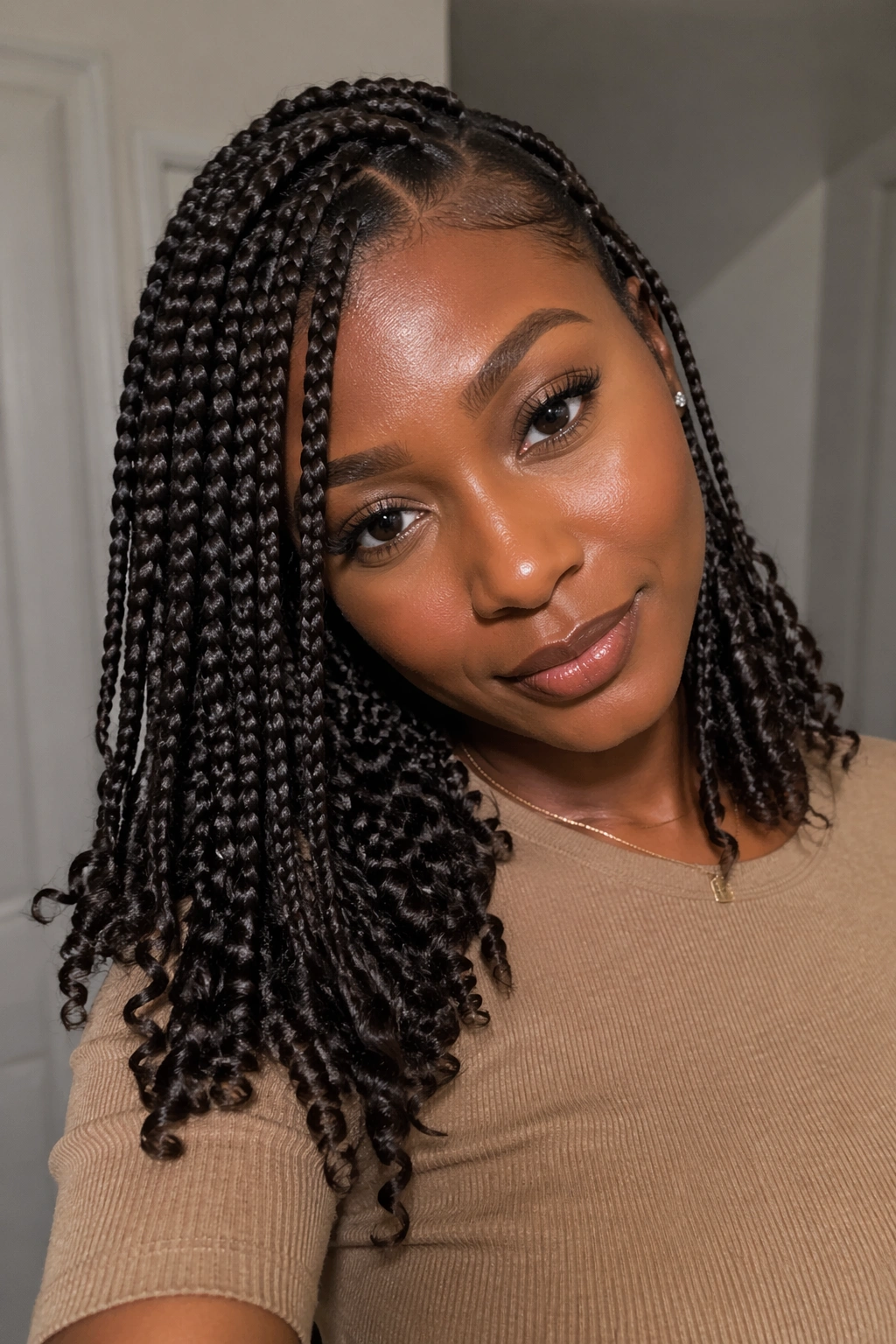
A deep side part changes the entire read of the style. The braids themselves can be almost identical to a middle-part version, but the asymmetry makes the curls feel more deliberate. It’s one of those small styling choices that carries more weight than anyone expects.
Why the Part Matters
A deep side part moves the visual balance away from the center of the head, which can soften a broad forehead or add shape to a face that feels too symmetrical. It also gives the curly ends a better landing spot. Instead of falling evenly on both sides, they cluster in a way that feels a little more styled, a little less predictable.
I like medium braids here because they hold the part shape without looking too thin. Small braids can work too, but the side part needs enough braid density to stay visible once the curls are added. Otherwise the style can look fuzzy at the crown.
The part itself should be clean and straight, not zigzagged unless you want that look on purpose. Sloppy parting ruins the effect fast. Clean base. Soft ends. That combination does a lot of work.
11. Colored Box Braids With Honey-Brown Curly Ends
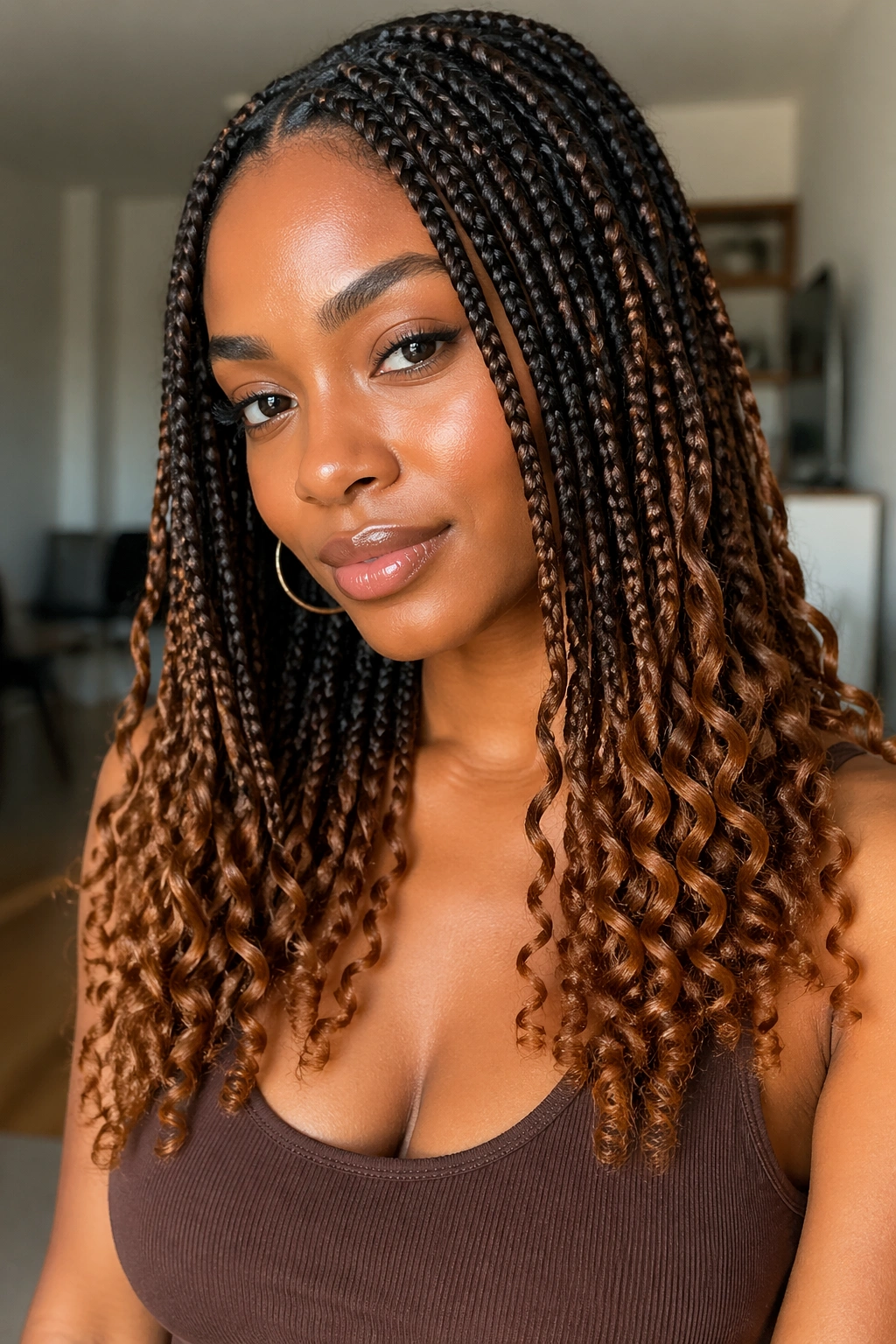
Color can do things braid texture alone can’t. Honey-brown or caramel-toned box braids with curly ends make the curl pattern easier to see, especially when the loose hair starts to twist and separate. Dark braids can still look lovely, but warmer shades show off the end texture faster.
I’m partial to this version when someone wants the style to feel lighter without changing the braid size. Auburn, chestnut, copper, and honey-brown all play nicely with curly ends because the loose hair reads as an intentional finish, not an afterthought. The color does some of the lifting.
What I would avoid is going too many shades lighter only at the curl section. That can look disconnected if the transition isn’t smooth. A gentle fade from deeper roots to lighter ends feels better and ages better too.
If you wear a lot of black, white, or denim, the warm tones stand out without much effort. Simple clothes. Strong hair. That’s a combination that rarely misses.
12. Layered Box Braids With Curly Ends
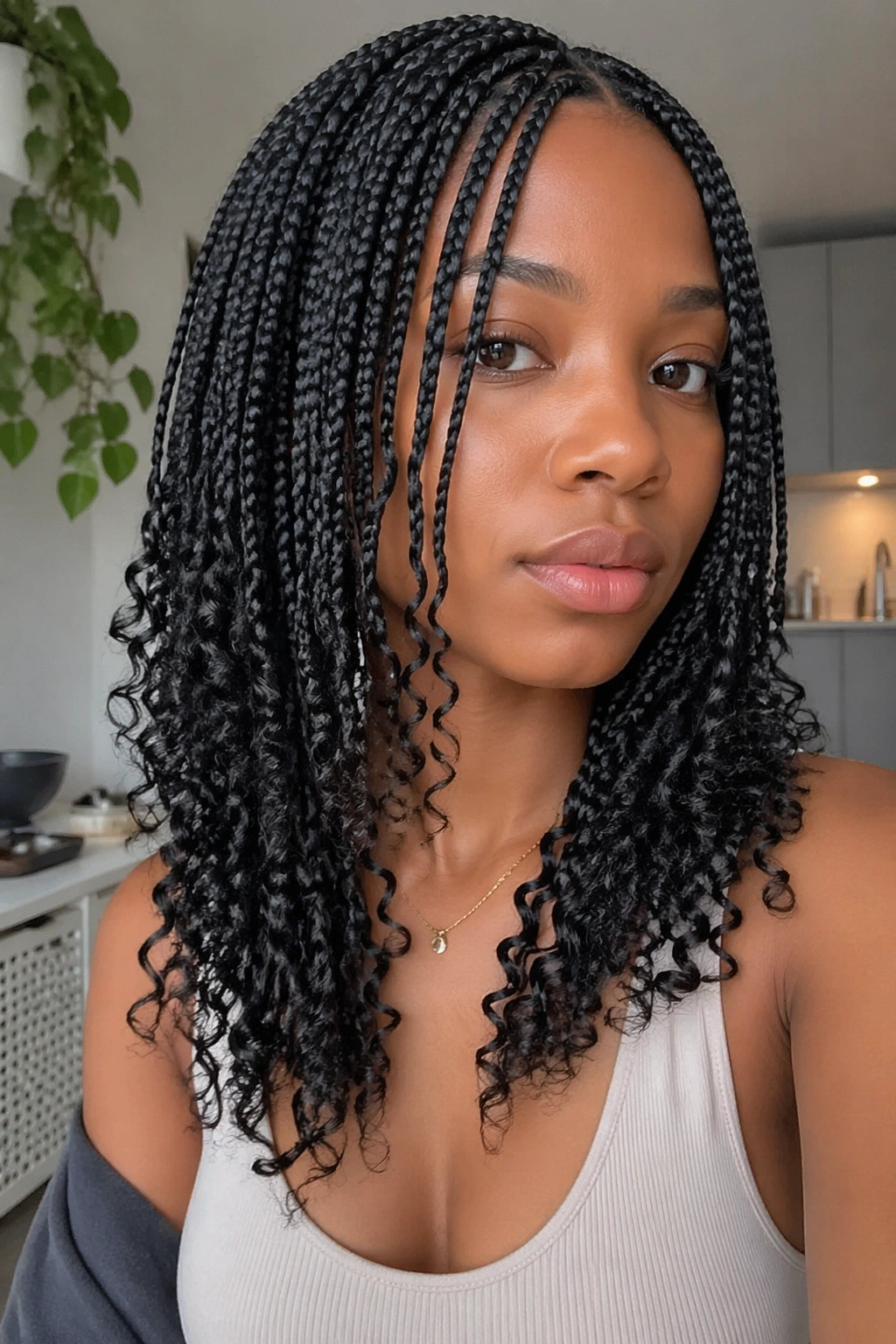
Where should the layers stop? That’s the question that decides whether the style feels polished or a little clumsy. Layered box braids with curly ends use different braid lengths to create shape through the body, then let the loose curls finish the outline. The shorter pieces sit in front, the longer ones fall behind, and the whole style gains movement without needing extra volume.
What the Layer Map Should Look Like
The front layers can stop around chin to chest level, depending on how much face framing you want. The back pieces usually go longer, sometimes past the ribcage, so the curl ends create a soft waterfall effect rather than a straight edge. If all the lengths hit the same point, the shape loses a lot of its interest.
This style is useful if your hair feels too heavy when everything is one length. The staggered cuts lift some of the visual weight off the bottom. The curls help even more because they break up the line where each layer ends.
It’s a smart choice for long braids that need movement, not just length. There’s a difference. A big one.
13. High Ponytail Box Braids With Curly Ends
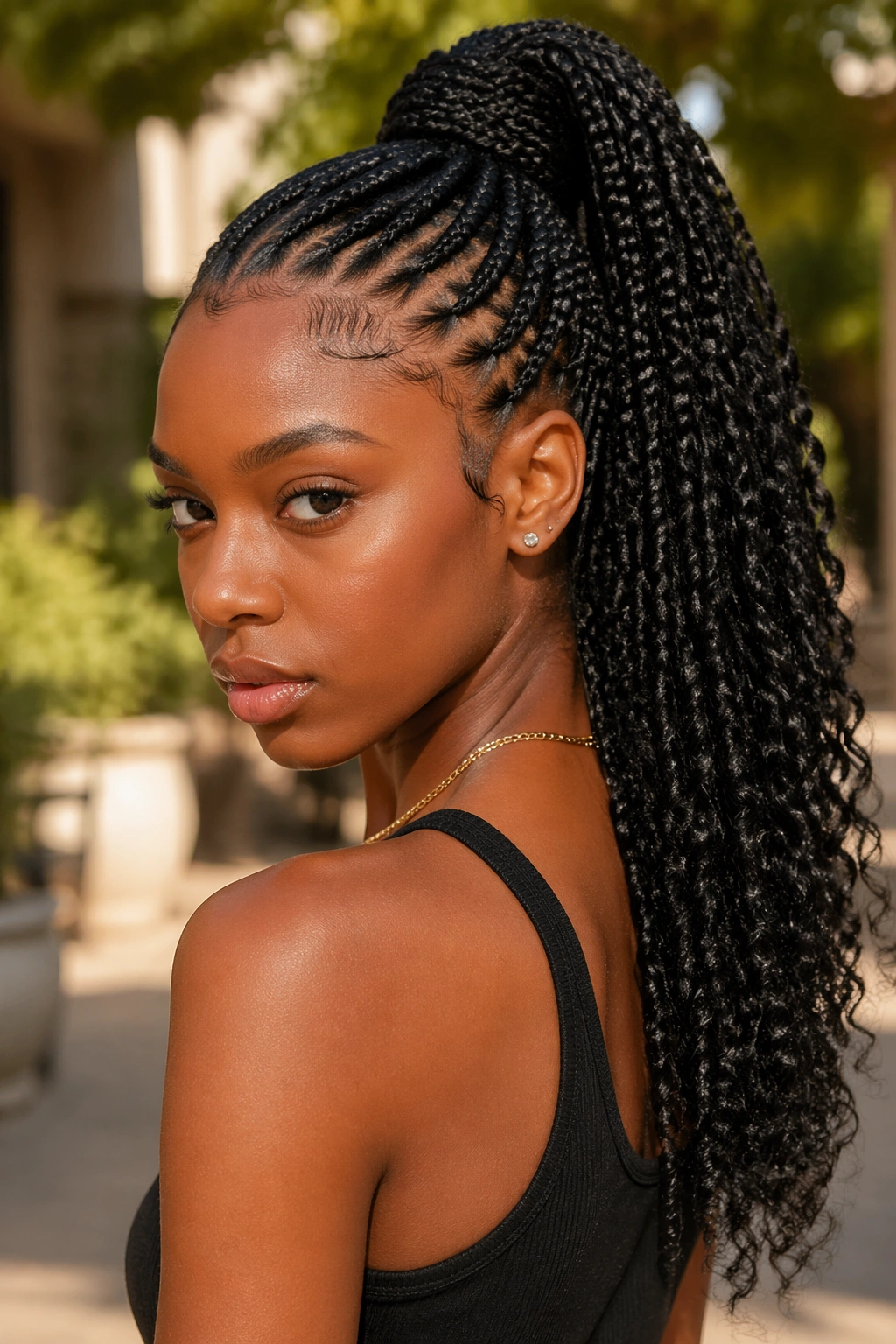
A high ponytail is the easiest way to make box braids with curly ends feel sharp. Pull the braids up, let the curls spill down the back, and the whole style suddenly has lift. The face opens up. The neckline looks longer. It’s a simple switch, but it changes the energy of the braids.
You do need a strong base for this one. A snag-free elastic, a wrapped braid around the ponytail holder, and a little edge control at the hairline can keep the style tidy without making it stiff. Don’t yank the ponytail so tight that your scalp starts complaining by lunchtime. That’s not style. That’s punishment.
- Use a firm elastic that won’t slide
- Wrap the base with one braid or a small section for a cleaner finish
- Keep the ponytail centered or slightly high on the crown
- Let the curly ends fall below the tie so they stay visible
If you want hair off your shoulders and still want the ends to show, this is a hard one to beat.
14. Fulani-Inspired Box Braids With Curly Ends
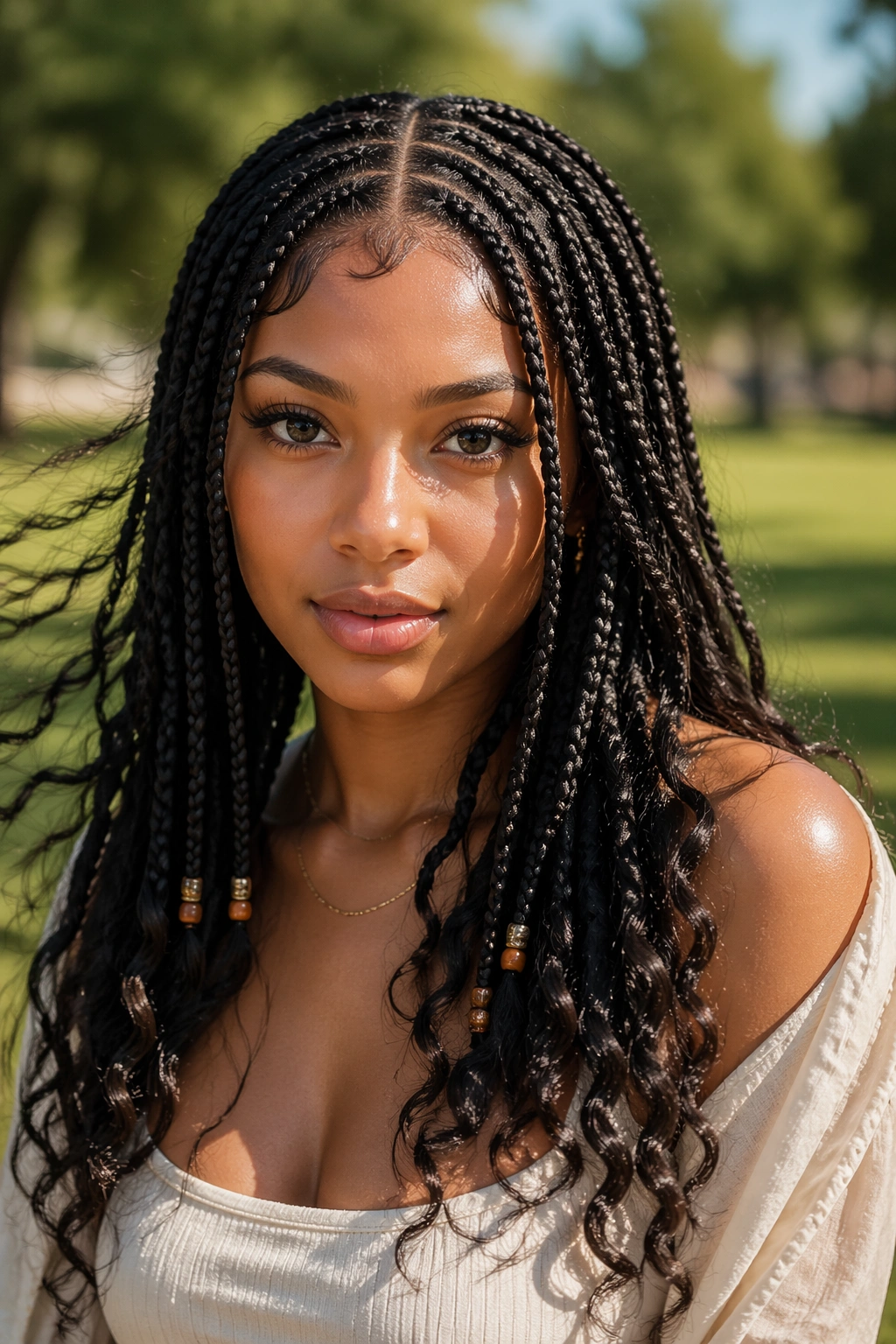
If you like pattern at the scalp and movement at the ends, Fulani-inspired braids with curly ends make a lot of sense. The side braids, center pieces, and occasional decorative details give the style a structured front, and the loose curls keep it from feeling too formal. It’s a strong shape. A good one.
The key is not to pile on every possible accent. One or two beads, a center braid, maybe a slim side braid that sweeps toward the temple — that’s usually enough. The curls at the bottom should stay visible, because they balance the sharper braid work up top.
Keep an eye on:
- Symmetry around the parting
- Thin accent braids that don’t crowd the main sections
- Curly ends that start low enough to stay soft
- Accessories that don’t snag the loose hair
This style feels especially clean when the scalp work is crisp and the curls are loose rather than tight. Pattern on top. Ease at the bottom. That’s the formula.
15. Small Box Braids With Loose Water-Wave Ends
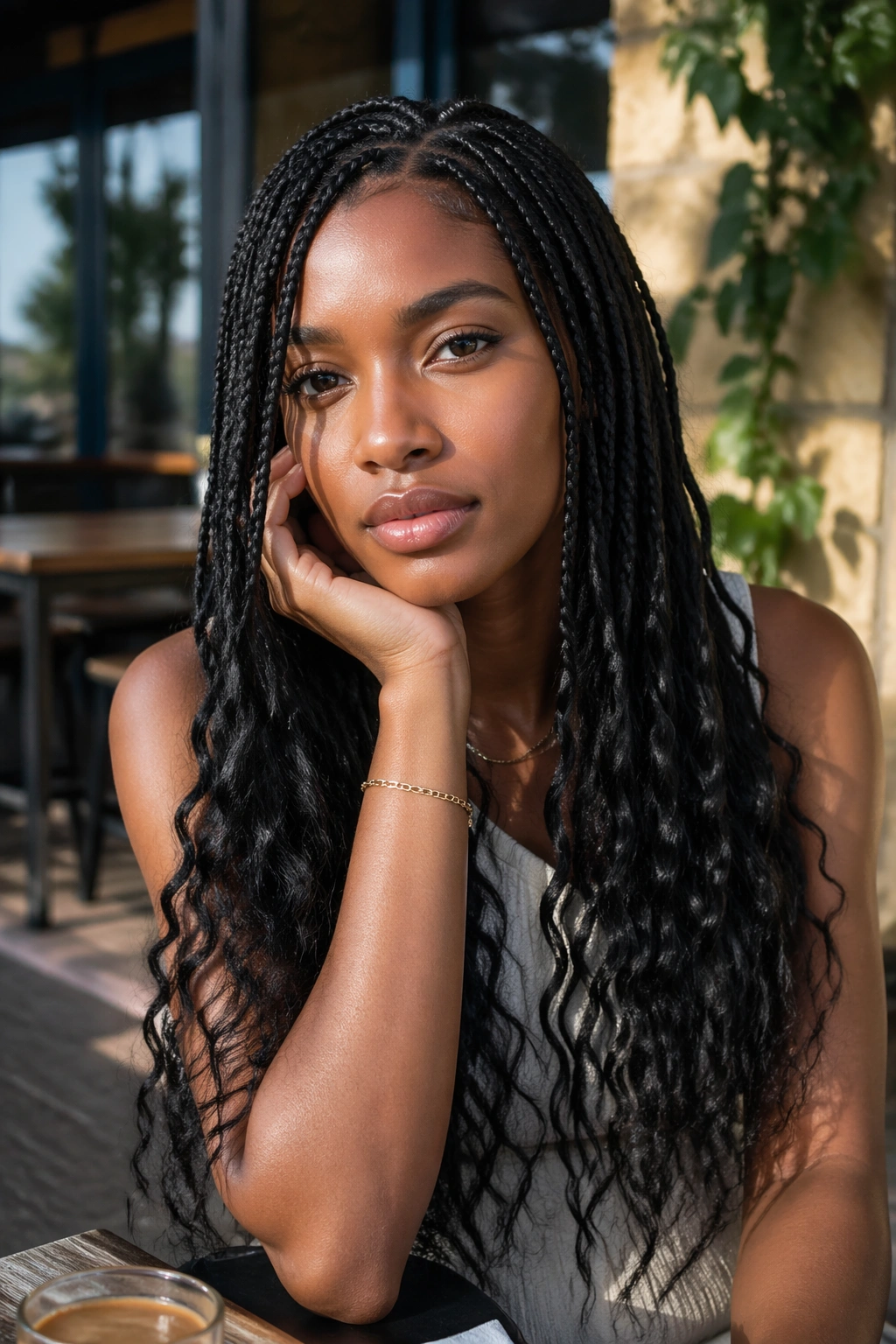
Small braids and loose water-wave ends have a very different personality from jumbo braids. The smaller braid size creates a denser, more textured base, and the curls at the bottom look fuller because there are more of them. It can feel a little more delicate. A little more lived-in too.
The trade-off is time. Small braids take longer to install, and they can be harder on the scalp if they’re pulled too tight. But if you want a style that holds its shape and gives the curls more room to read clearly, this is a solid choice. The water-wave texture helps because it doesn’t need to be perfectly separated to look good.
I like this version when the goal is movement without bulk. The curls don’t have to be huge. They just need to be present. The style can sit close to the head, then open up at the ends in a way that feels easy rather than loud.
16. Vacation-Ready Boho Box Braids With Curly Ends
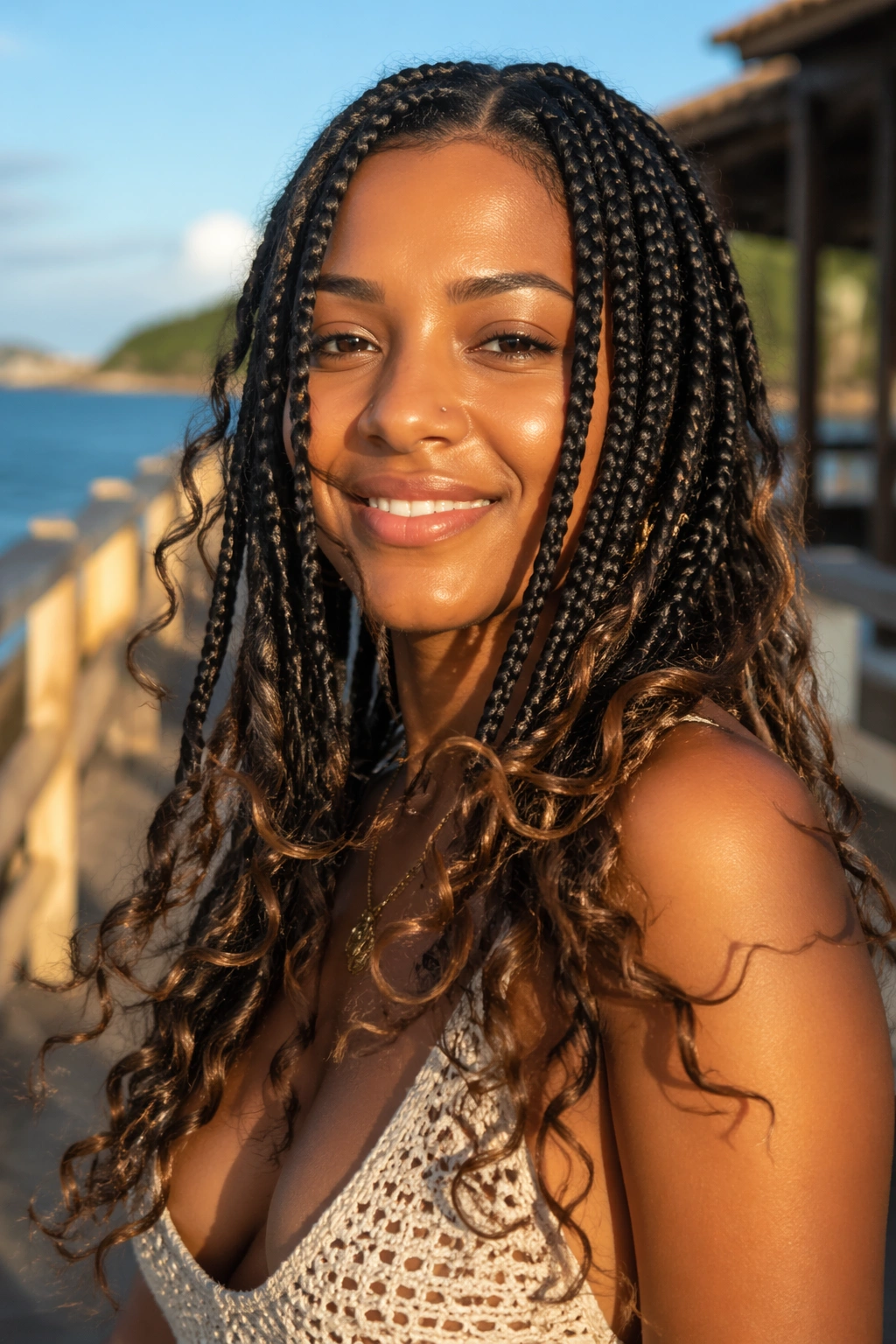
Unlike sleek, polished braids, the vacation-ready boho version gets better when it loosens up a little. A few flyaways? Fine. Curls separating? Fine too. That relaxed finish is part of the appeal, and it makes the style easier to live in when you’re carrying a tote, a scarf, and whatever else the day throws at you.
The braids themselves should still be tidy at the scalp. Boho does not mean sloppy. It means the loose pieces are placed on purpose, usually around the front and through the ends, where they can move without messing up the whole shape. I’d keep the braid size medium so the style has enough body to hold the curls without feeling overstuffed.
What Makes It Travel Well
A style like this handles clips, hats, and quick changes better than something ultra-precise. You can put it up, take it down, and still have the curls look like they belong there.
That flexibility is the real selling point.
17. Sleek Work-Friendly Box Braids With Curly Ends
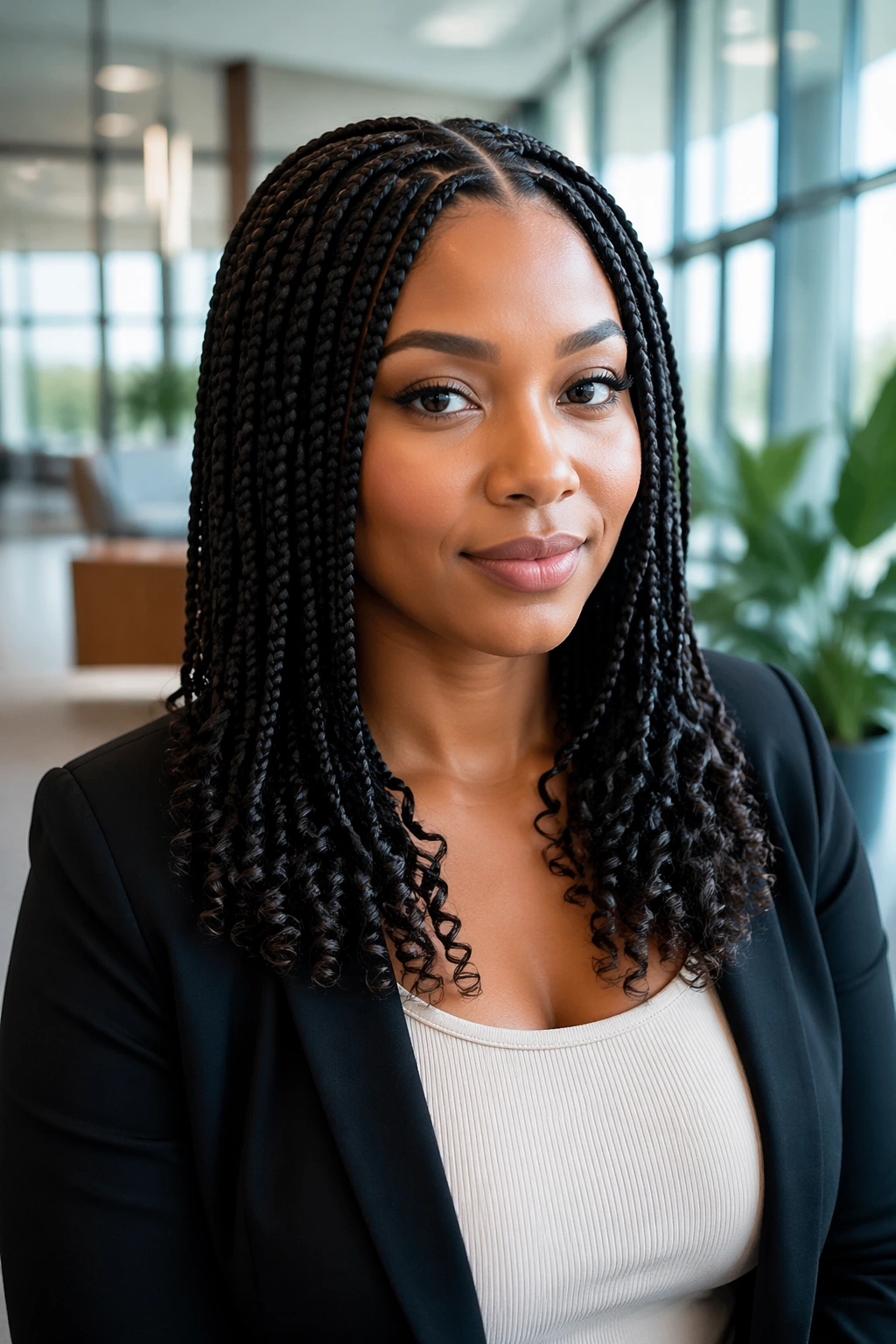
Need a style that reads neat at 9 a.m. and still looks good after a long day? Sleek work-friendly braids with curly ends do that better than most braided looks. The scalp stays clean, the parts stay tidy, and the curls give the style enough softness that it doesn’t feel severe.
How to Keep the Curls Quiet
Start with a medium braid size and keep the parting very straight. A middle part or a soft side part both work, but the rest of the styling should stay minimal. One wrap of hair around the base, one clean ponytail if you need it, and no heavy beads near the ends. That keeps the look controlled.
The curls themselves should be loose, not overcrimped. Think polished, not fluffy. A light mousse on the ends can help the loose hair keep its shape without turning sticky. And at night, wrapping the braids in a satin scarf is non-negotiable if you care about keeping the finish neat.
If your office or work setting leans conservative, this is the version that tends to fit in without flattening your style completely. Quiet, but not dull.
18. The Low-Maintenance Everyday Box Braids With Curly Ends
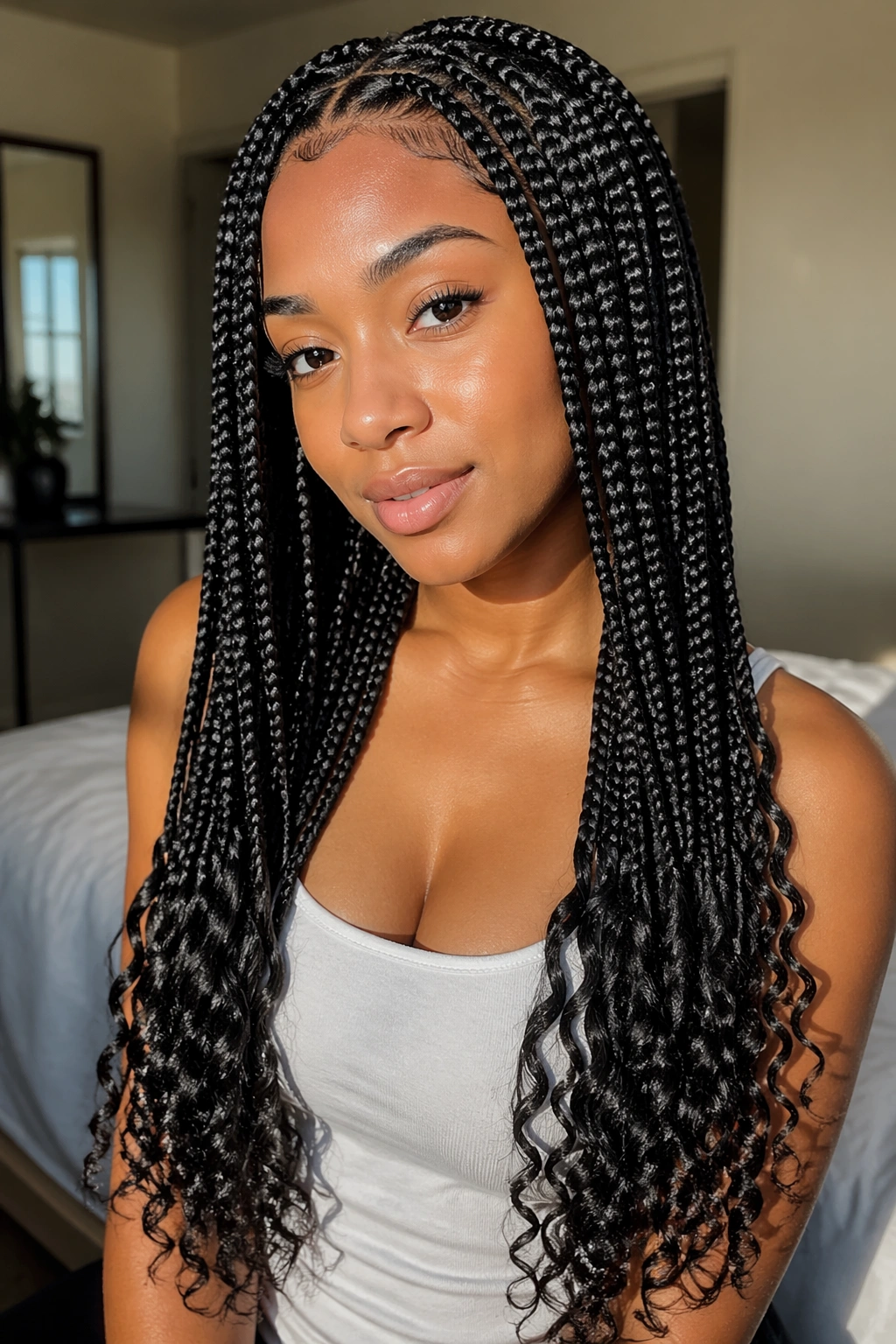
Some styles are for a plan. This one is for real life.
Low-maintenance box braids with curly ends work because they don’t ask for constant fuss. The braid length sits somewhere manageable, the curls stay soft enough to move, and the overall shape doesn’t depend on accessories, heat, or a perfect outfit. You can wear them with a hoodie, a blazer, gym clothes, or a dress you pulled off a hanger five minutes before leaving.
I like this version when the goal is staying put together without babysitting your hair. Medium length is usually the sweet spot, because very long braids can drag the curls down and very short ones can make the style lose that relaxed swing. Keep the ends loose enough to show texture, but not so loose that they start knotting on day one.
The real win here is versatility. You can wear them down, toss them into a low ponytail, or pin half of them back and still keep the curl pattern visible. If you want one braided style that doesn’t feel precious, this is the one I’d point to first.
And that’s the kind of hair that tends to get worn, not just admired.
