



Curls do the heavy lifting when the shape is right.
Give them a clean cut, a little hold, and a style that respects the way they spring, and they can carry an entire look on their own. That is the part people miss when they try to fight texture into submission. The best curly hairstyles do not flatten the hair into something else; they give it structure, lift, and enough room to move.
A style that turns heads usually has one thing in common: it looks like the curl pattern was understood, not corrected. A good side part can sharpen the face. A smart layer can keep a bob from puffing out at the cheeks. A high puff can look cleaner than long loose curls if the crown is placed well and the edges are kept neat. Small decisions. Big difference.
I keep coming back to shape, because shape is what people notice first. Not the label on the gel. Not the number of steps. Shape. If you want curls that get compliments from across a room, start there.
1. The Classic Defined Wash-and-Go
A defined wash-and-go is still the most honest curly style there is. It lets the texture speak first, which is exactly why it can look so striking when it’s done well. No fake fuss. No awkward overstyling. Just curls that clump, stretch, and dry into a clean silhouette.
Why It Works
The magic is in the way the curl families sit together. When you apply product on soaking-wet hair, the strands group into stronger clumps, and that makes the whole shape read as intentional instead of puffy. A light leave-in plus a gel with enough hold usually does more for this style than a drawer full of extra products.
A good wash-and-go also shows off your cut. If the layers are uneven or too heavy at the bottom, the result can look wide in the wrong places. If the shape is balanced, though, the curls fall with a nice roundness at the crown and movement at the ends.
- Work in small sections so the product lands evenly.
- Smooth the curl clumps with your fingers before scrunching.
- Use a microfiber towel or a cotton T-shirt if you need to remove water.
- Diffuse on low heat if you want more lift at the roots.
Do not touch the curls until they’re fully dry. That one habit saves more frizz than any fancy product ever will.
2. Side-Parted Volume Curls
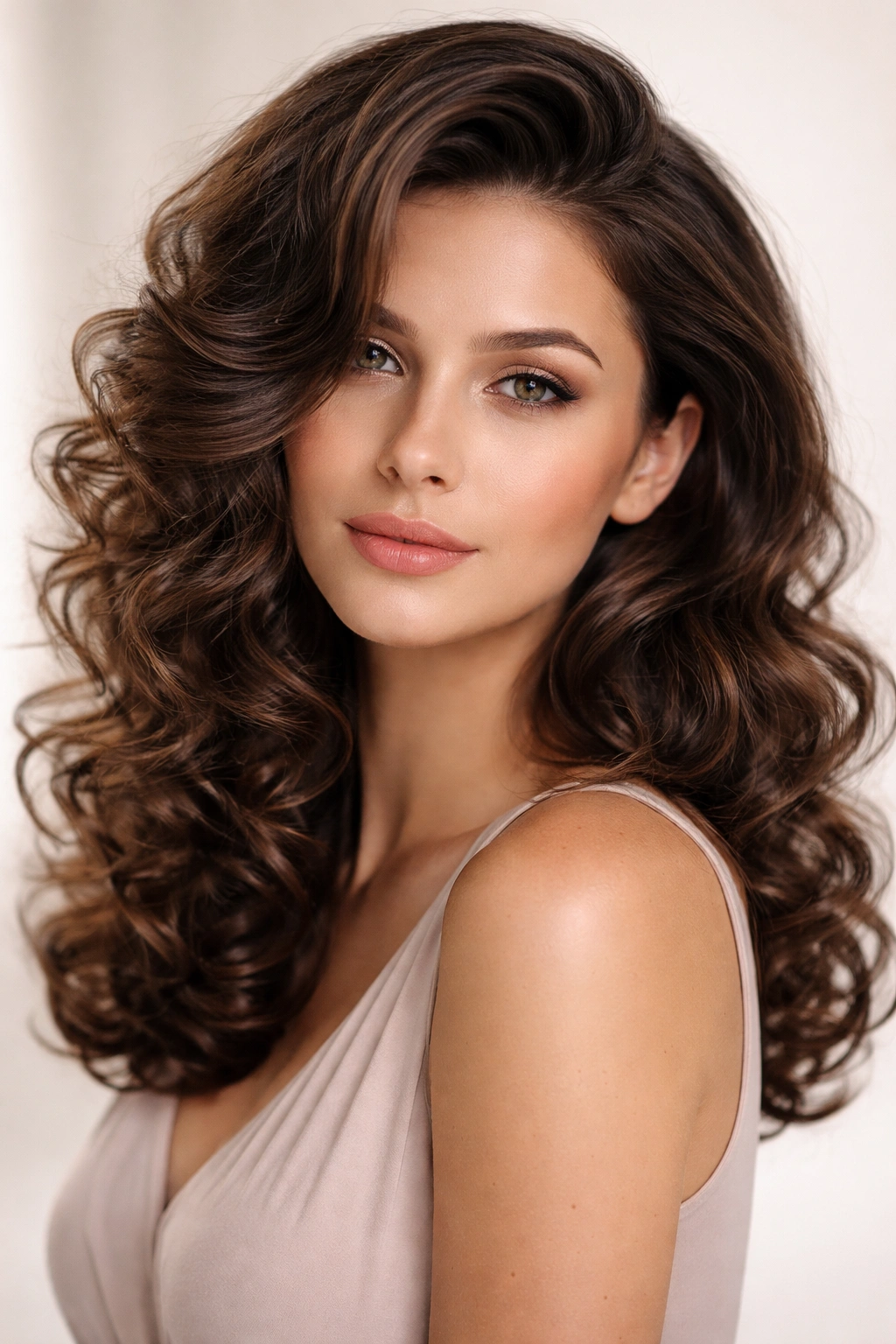
Why does a side part change so much? Because it shifts the weight of the hair, and hair with texture always reacts to weight. A deep part gives one side room to rise while the other side falls across the cheekbone, and that small asymmetry makes the face look more sculpted.
This is one of those curly hairstyles that feels understated until you see it in motion. The curls move in one direction, then break apart and bounce back. That little bit of shift is what catches the eye. It is especially good when your curls have a lot of body but not a lot of length, because the part creates the illusion of lift without asking for extra volume everywhere.
I like this style most when the roots are clipped while drying. A couple of root clips near the crown can keep the part from collapsing, and a diffuse setting on low heat helps the top stay airy. If you want the side with less hair to stay neat, tuck it behind the ear and let one or two curls fall loose.
The result is polished without feeling stiff. And that matters.
3. Curly Shag with Fringy Bangs
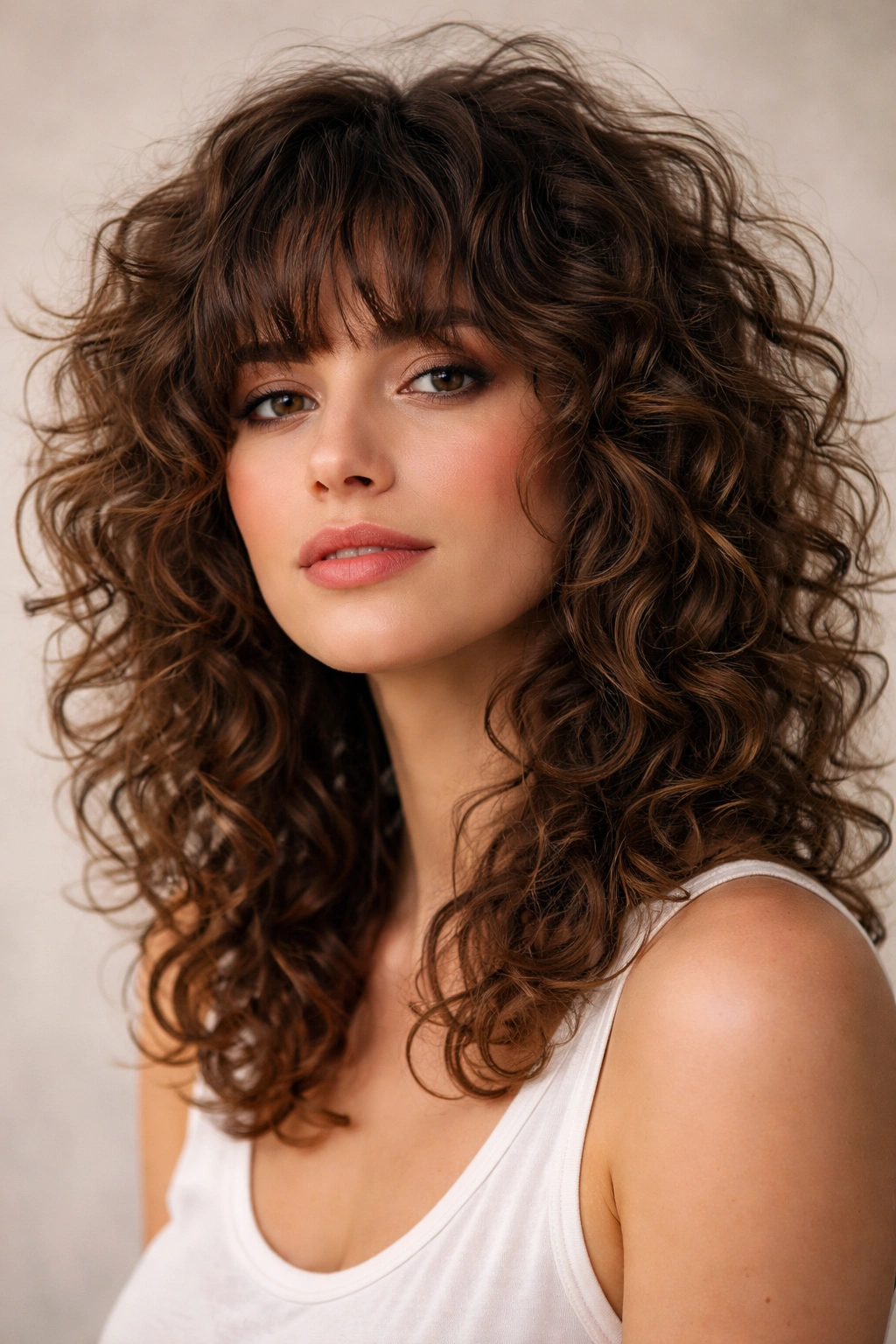
A curly shag is the haircut that says you understand your hair and you’re not apologizing for it. It has movement, edges, and a little attitude, which is exactly why it turns heads without trying too hard. The bangs soften the forehead, the layers keep the shape light, and the whole cut looks alive even on a quiet day.
Why It Feels So Good on Curly Hair
The shag works because it removes bulk in the places where curls tend to pile up. That usually means the crown, the sides, and the heavy bits around the jawline. Instead of one round cloud, you get separated layers that bounce. The fringe makes the style feel modern, but it also solves a practical problem: it gives curl volume a place to land without swallowing your face.
A curly shag is not a wash-and-forget cut, though. It needs shaping. Ask for internal layers, not random thinning. Random thinning is how you end up with frizz in the wrong spots and a shape that looks tired after one day.
- Best on medium to thick curls that can hold a layer.
- Looks especially good when the fringe is cut dry.
- Loves a lightweight cream more than a heavy butter.
- Gains a lot from a diffuser at the crown.
If you want easy drama, this is a strong bet. The cut does half the work before you even style it.
4. High Puff with Clean Edges
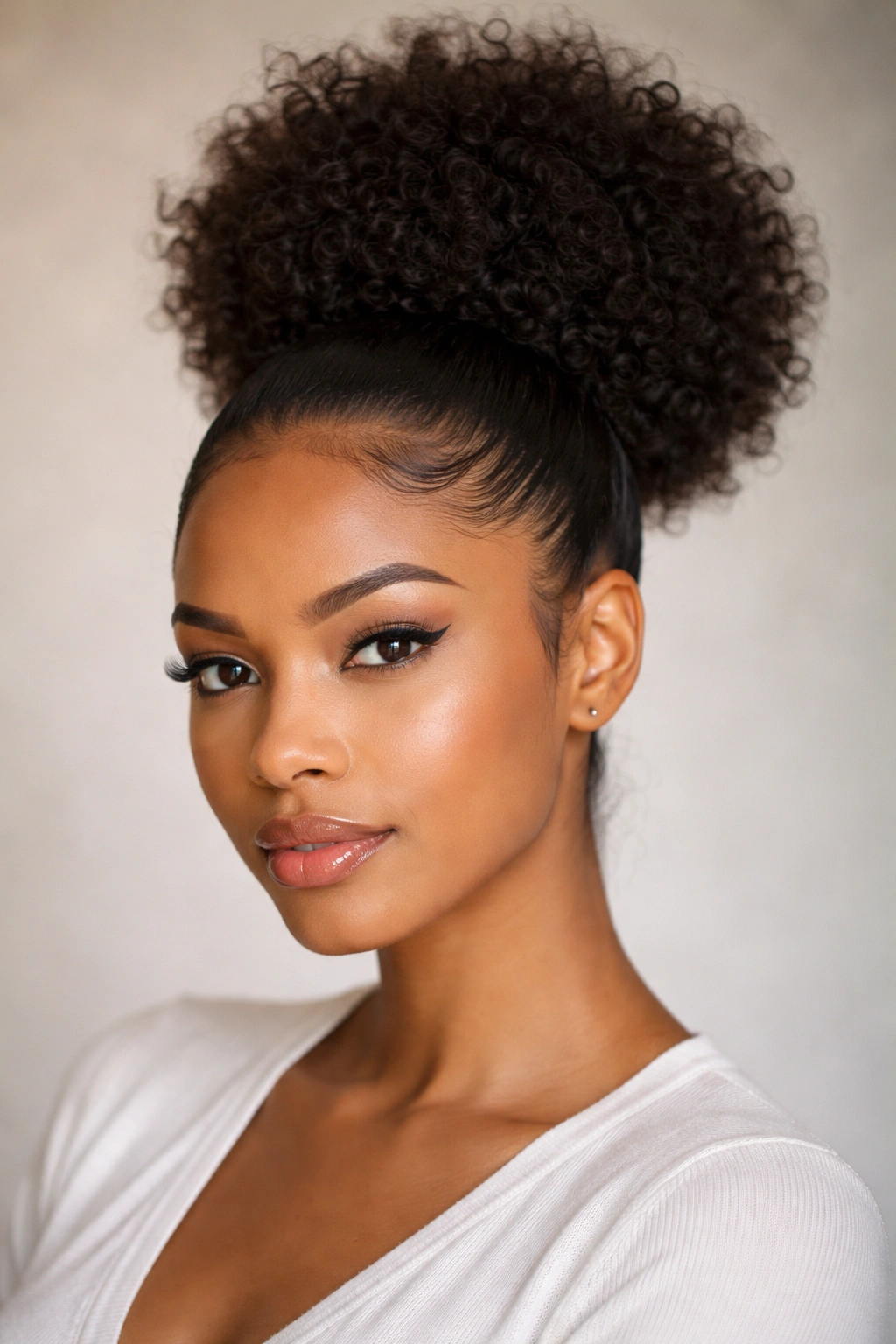
A high puff is one of the fastest ways to make curls look bold and polished at the same time. Pulling the hair up high gives the face more room, and the puff itself creates a nice dome of texture that feels lively instead of fussy. When the front is smoothed down and the edges are neat, the contrast does a lot of the heavy lifting.
This style works on stretched curls, second-day curls, and those in-between days when the roots are doing their own thing. The trick is not to yank everything too tight. A high puff should sit securely, yes, but it should still look soft around the hairline. A satin scrunchie or a stretchy band helps a lot here, because it holds without leaving a hard crease.
I also like the high puff for its honesty. It does not pretend the hair is longer than it is. It shows volume where the volume is strongest and gets the hair off the neck in a way that still looks finished. That is a rare combination.
A small brush, a touch of gel at the front, and five minutes can do a surprising amount.
5. Curly Bob with Soft Layers
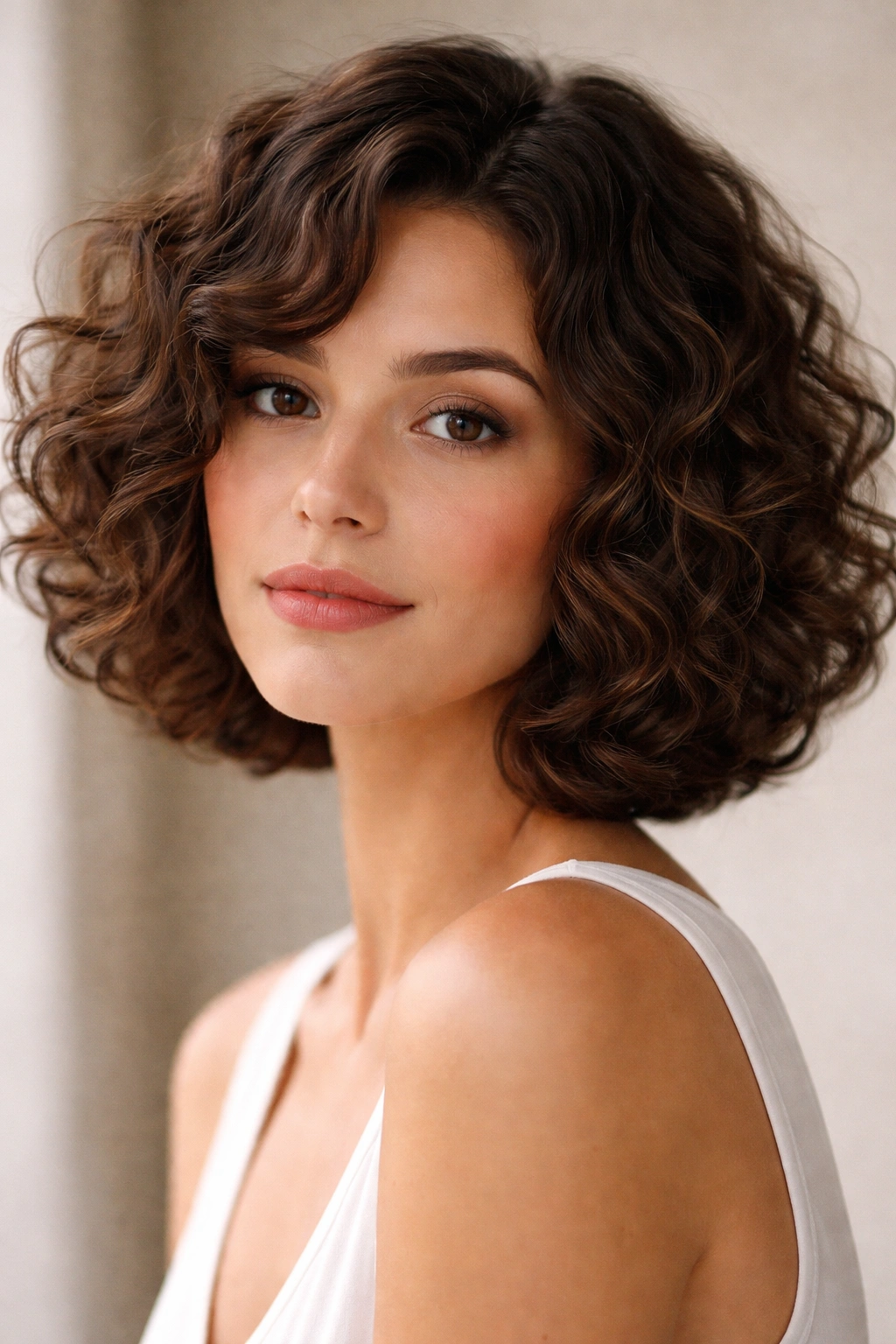
A curly bob is not a straight bob wearing texture as an accessory. It is its own animal. The shape depends on how the curls sit when they dry, how much weight is left at the ends, and whether the cut gives the curls room to stack without ballooning out.
The best curly bob usually hits somewhere between the chin and the collarbone, but the exact length matters less than the balance. Too blunt, and the bob can sit like a shelf. Too many short layers, and it may turn fuzzy before lunch. Soft layers are the sweet spot. They keep the bottom from dragging while still letting the curls keep their roundness.
I’m partial to this cut because it can look both sharp and relaxed. Wear it with a middle part for a cleaner line. Push it off to one side for a softer shape. Add a little root lift, and it suddenly has that “I meant this” energy that people notice.
If you ever want your curls to look expensive without actually using that word, a good bob is a smart place to start.
6. Half-Up Half-Down with Face-Framing Pieces
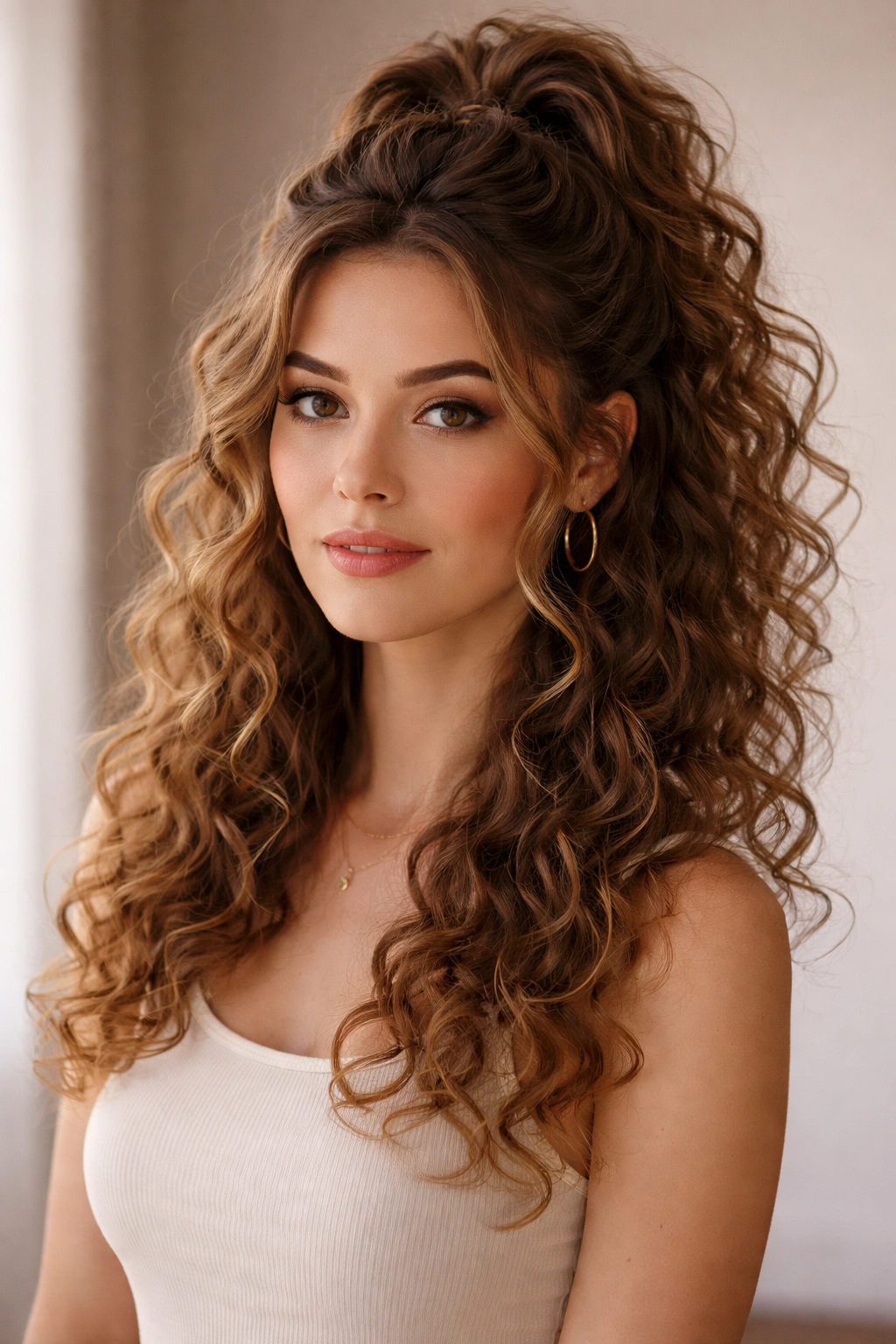
When you want your curls off your face but still want the length to show, the half-up half-down style is the easiest answer. It gives you structure at the top and softness underneath, which is a nice combination when curls are full and you do not want to lose that movement.
Keep the Crown Loose
The mistake most people make is pulling the top section too tight. That flattens the crown and makes the whole style look smaller. Leave a little lift near the roots. A claw clip, a small satin tie, or even two crossed bobby pins can hold the top without squeezing the life out of it.
Face-framing pieces matter here. Leave a curl or two out near the temples, and the whole style softens instantly. Those pieces catch light, move when you turn your head, and keep the half-up shape from looking too severe.
- Section from temple to temple, not too far back.
- Keep the top loose enough to puff a little.
- Wrap one small curl around the tie to hide it.
- Mist the loose length with water and a drop of leave-in if the ends need help.
It’s a simple style. That is the point.
7. Pineapple Puff for Long Curls
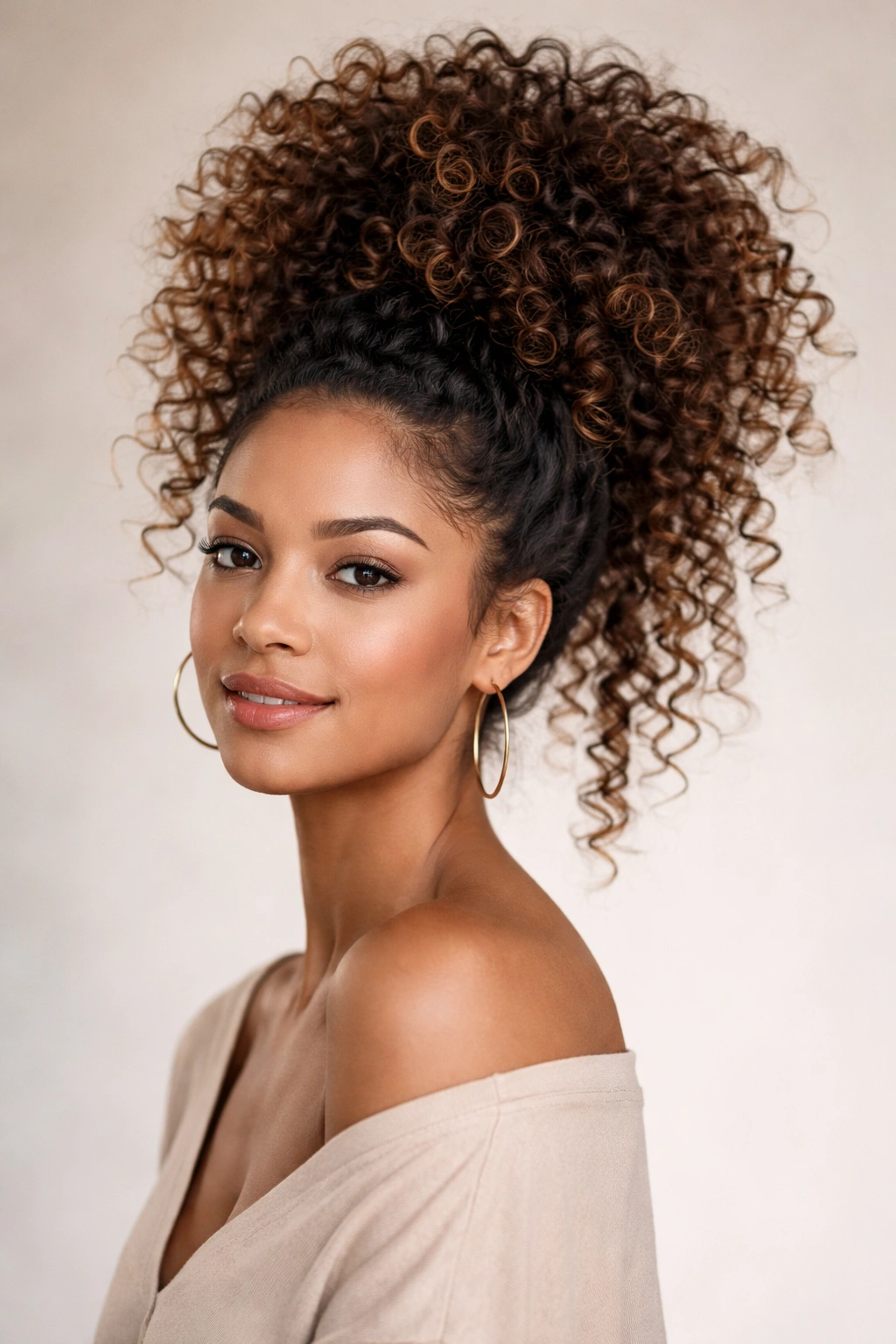
Long curls need a shape that keeps them from taking over your whole head. The pineapple puff does that better than most styles because it lifts the length upward and lets the curls spill out in a loose, tall shape. It keeps the face open and the bottom from getting crushed.
This is not only a sleep style, either. Worn on purpose, it can look playful and surprisingly clean. A soft, high ponytail on the crown, with the curls left free to fan out, gives you height without the tightness of a slick ponytail. If your curls are heavy, that lift can be a relief. If they are lighter, the puff looks airy and almost cloudlike.
I like this style most on hair that has some day-two texture. The curls have a little more grip, so they stay lifted instead of sliding flat. You can use a big satin scrunchie and let a few curls frame the front, or add a scarf tied around the base for a more dressed-up feel.
It’s practical. It’s flattering. And it saves you from fighting with all that length.
8. Tapered Cut with Short Sides
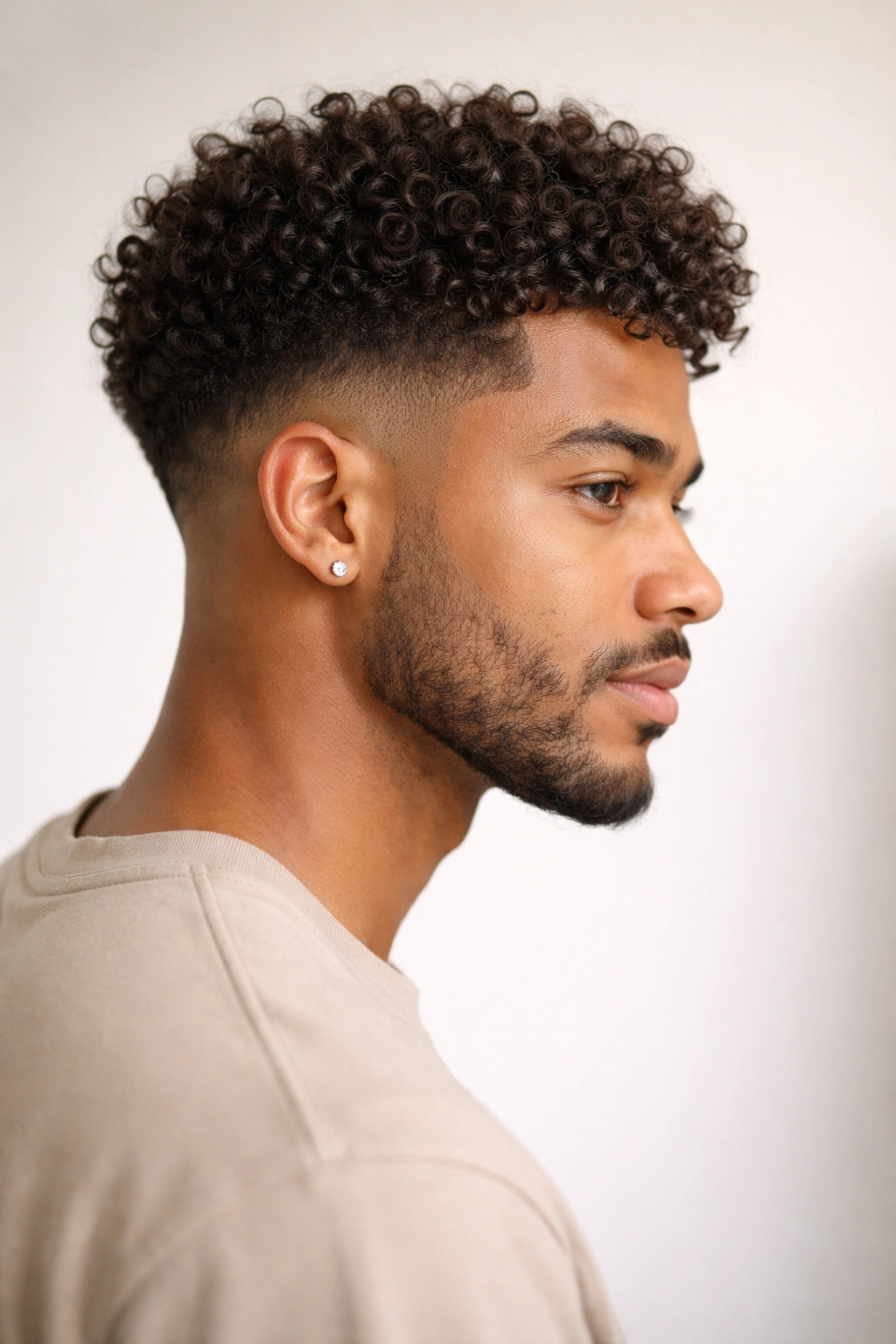
Short curls can look louder than long ones.
That sounds strange until you see a good tapered cut in person. The sides and back are cropped closer to the head, while the top keeps enough length to show off the curl pattern. That contrast makes the shape feel sharp. It also puts the focus where it belongs — on the texture itself.
A tapered cut is one of the smartest choices for dense curls or coils, because it removes bulk without making the head look boxy. The clean sides keep the outline neat, and the volume stays where it has room to breathe. On a strong curl pattern, that top section can rise in a way that feels almost sculptural.
Maintenance matters here. The shape depends on the clean line at the sides and nape, so it needs trims on a steady schedule. If the taper grows out too much, the cut loses its edge fast. A little shape-up goes a long way.
This is the style for someone who likes presence. Not noise. Presence.
9. Twist-Out Crown with a Deep Side Part
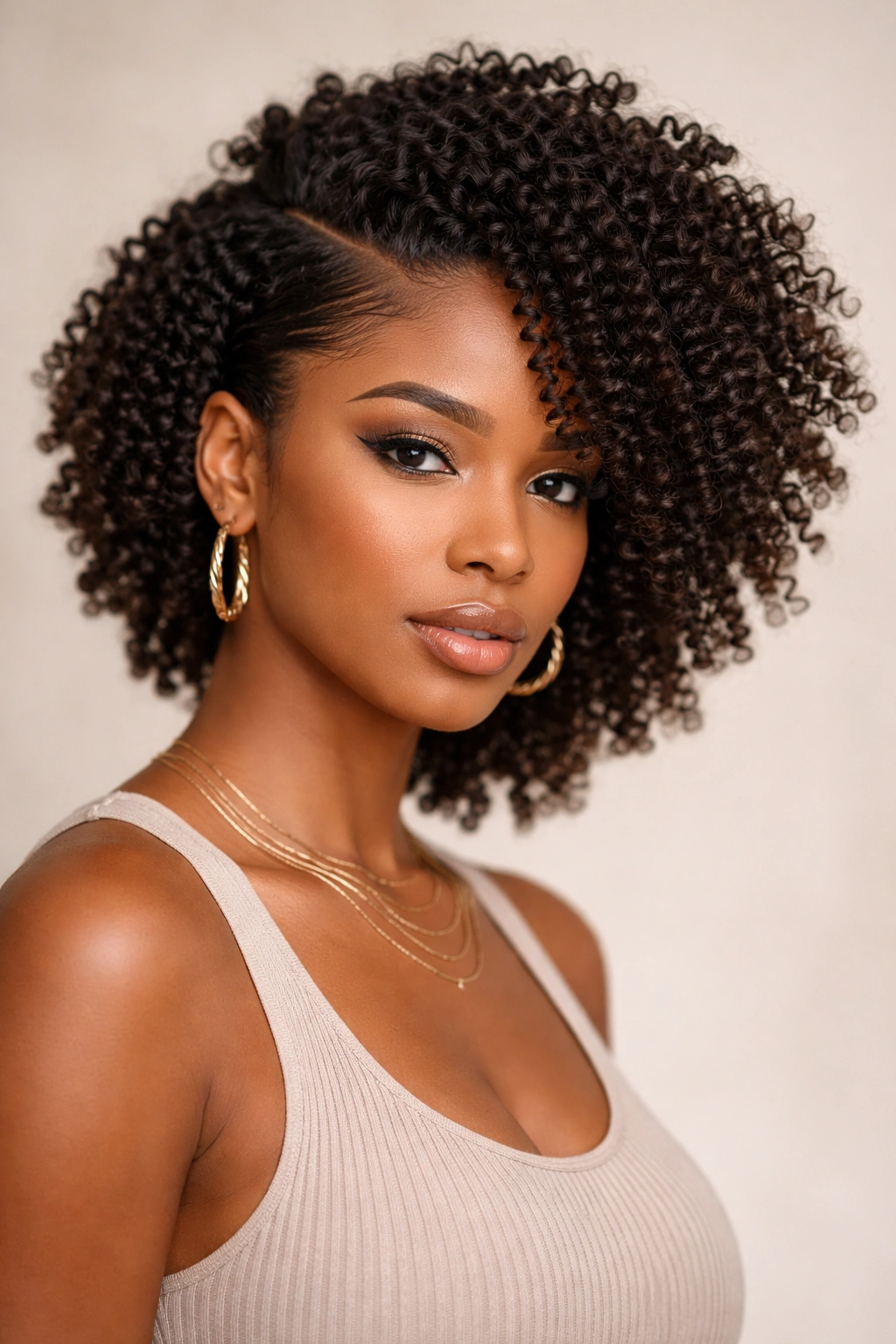
A twist-out can look soft, but with a deep side part it gets a sharper edge. That’s the version I usually prefer. The crown gains height on one side, the other side falls with more curve, and the result feels styled without looking overdone.
How to Keep the Shape Crisp
The setting process matters more than people think. Start on damp hair, not soaking wet hair, so the twists dry evenly. Use small or medium sections, depending on how tight you want the curl definition. Bigger sections give a fluffier result; smaller sections give more pattern. Either way, let the hair dry all the way through before you separate it. Half-dry twist-outs frizz fast.
A tiny bit of oil on your fingertips helps when you unravel. Too much, though, and the whole thing goes limp. That is the tradeoff nobody loves, but it’s real.
- Create a deep side part before twisting.
- Twist in the direction you want the hair to fall.
- Let the twists dry overnight or under a hooded dryer.
- Separate once, gently, and stop when the curls start to lose their clean edges.
This style gives a lot of payoff for the amount of control it asks for. That is why it keeps showing up on people who know what works.
10. Curly Ponytail with a Wrapped Base
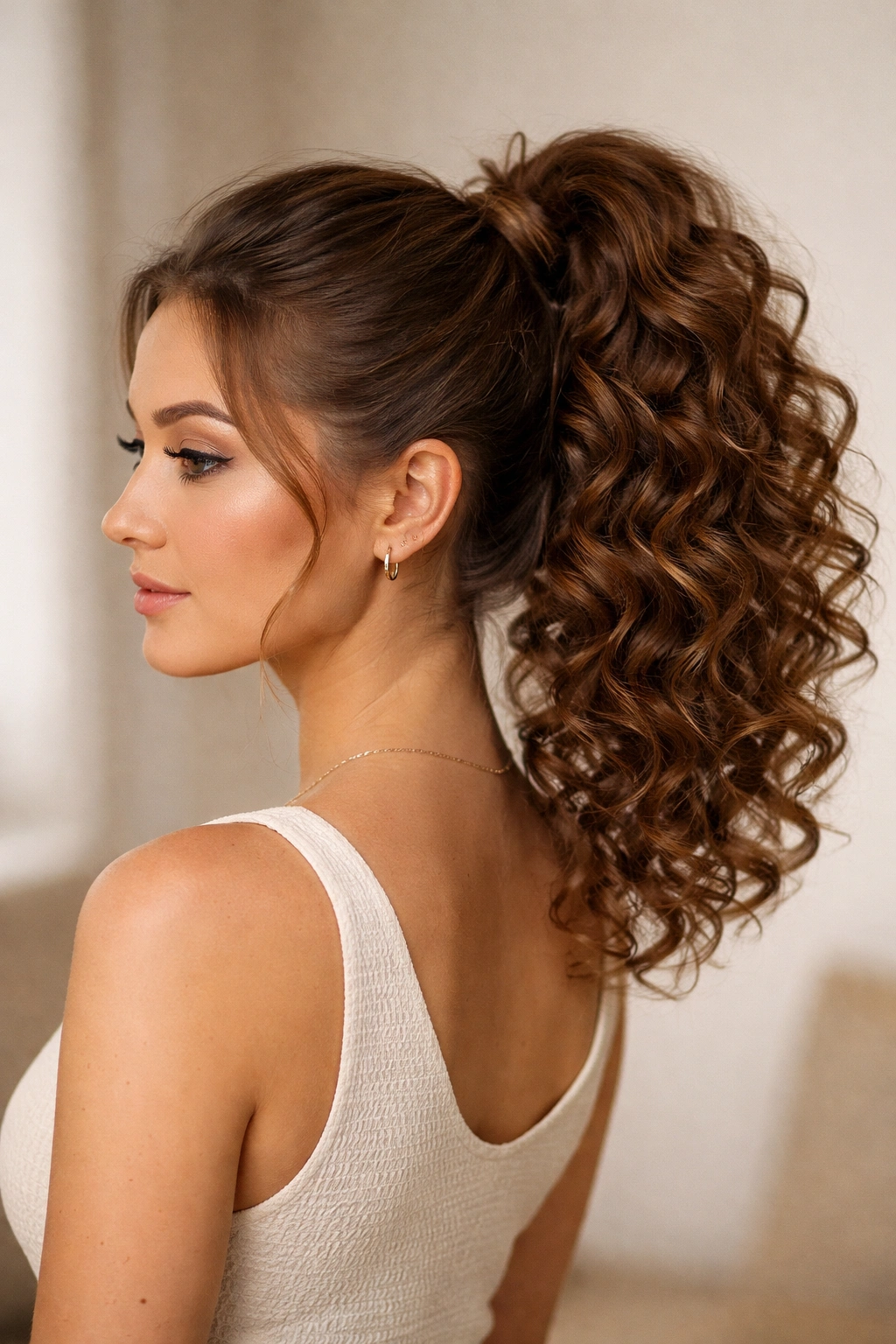
The ponytail gets a bad reputation because people rush it. They pull it up, skip the prep, and call it done. A good curly ponytail is a different story. It has lift at the crown, definition through the tail, and a wrapped base that makes the whole thing look finished instead of accidental.
A high ponytail gives energy. A low ponytail gives polish. Pick based on the mood you want. If your roots are smooth and the curls in the tail are defined, the style can feel clean enough for a dinner out and easy enough for a regular day. The wrapped base is the detail that changes everything. A small section of hair, wrapped around the elastic and pinned underneath, hides the band and gives the style a cleaner line.
What Makes It Look Finished
The top needs just enough control to sit flat without looking pasted down. A brush, a little gel, and a firm hold elastic are enough for most textures. After that, fluff the tail with your fingers instead of a comb. You want separation, not puff.
A curly ponytail is simple on purpose. Done well, it has a lot more presence than people expect.
11. Braided Front Accent with Loose Curls
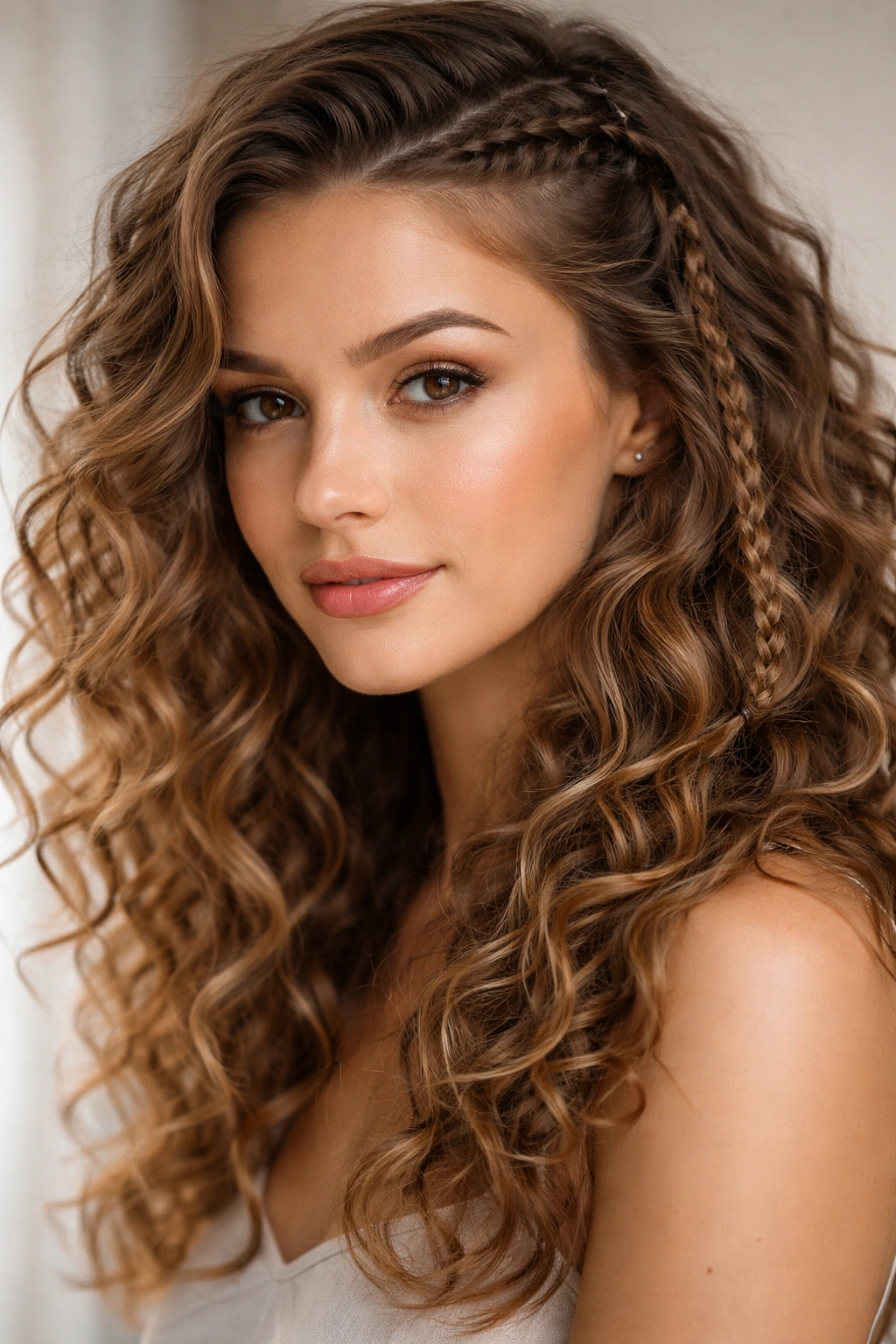
This is the easiest way to make loose curls look dressed up without turning them into a full updo. A small braid near the hairline, or two thin braids tucked along one side, adds structure right where the eye lands first. The rest of the curls stay down and full, which means you keep volume without losing shape.
Unlike a full braided style, this one does not lock the whole head into place. That is the appeal. The braid gives a little pattern and a little control at the front, while the curls behind it stay soft and free. It’s a smart move on days when the crown needs help but you don’t want to hide the texture.
I like this style with earrings, a simple neckline, or anything that leaves the sides of the face open. It creates a frame without much effort. If your curls frizz at the temples, the braid can also hide that problem in plain sight. Which, honestly, is sometimes the best kind of styling.
One small braid can shift the whole mood of the hair.
12. Space Buns on Defined Curls
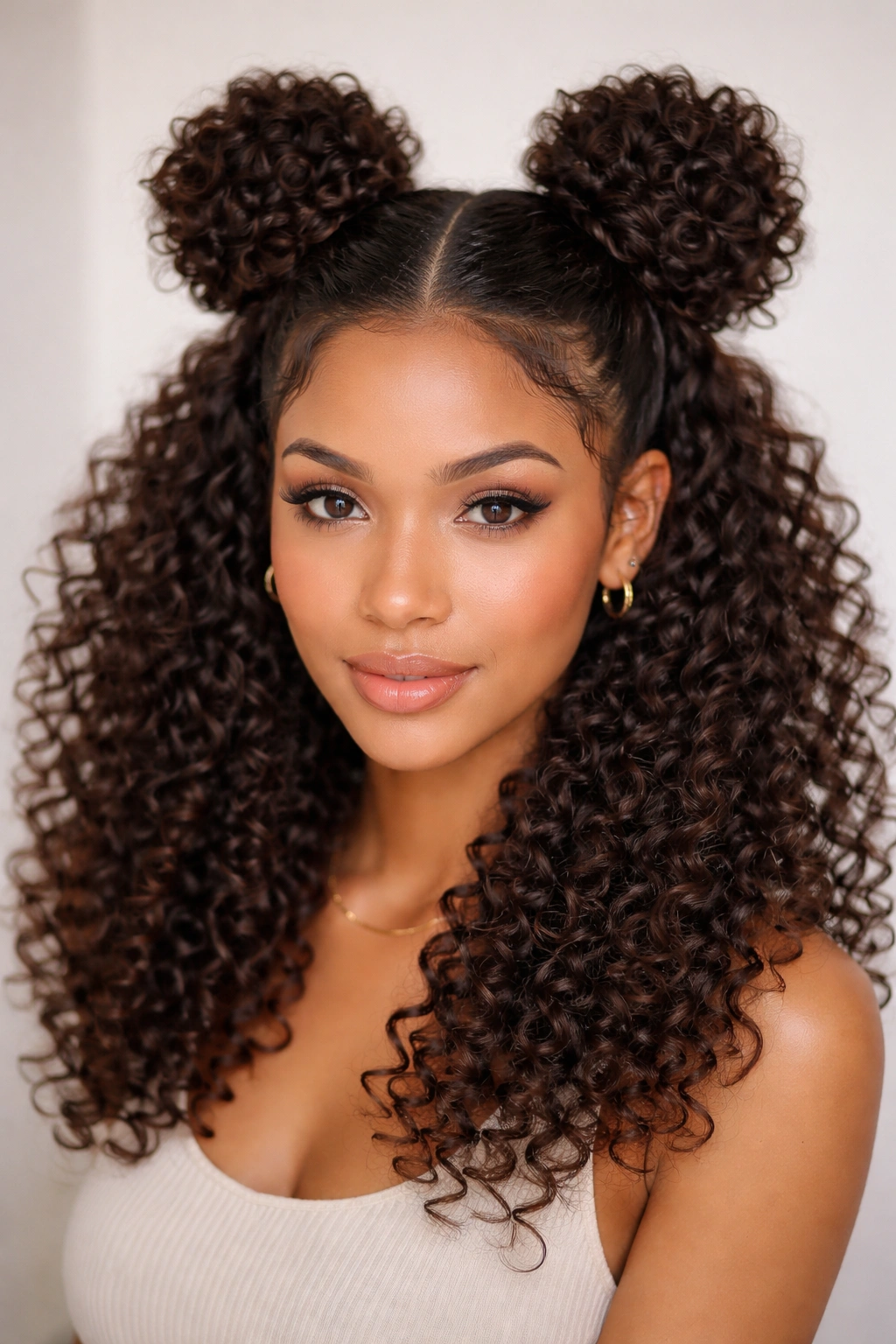
Why do space buns work so well on curly hair? Because the style gives you structure at the top and texture everywhere else. The buns sit high and playful, while the loose curls around them keep the look from feeling too neat. It is a nice balance.
The trick is size. Small buns can disappear into thick curls. Bigger buns usually read better, especially if your hair has a lot of density. You can leave the ends out for a messier look or tuck them in for a cleaner finish. Either way, keep the parting neat. A straight middle part or a slightly curved part makes the whole thing look more deliberate.
- Section the hair into two equal halves.
- Smooth the roots with a little gel or cream before twisting the buns.
- Pin the buns from underneath so the pins stay hidden.
- Leave a few curls free near the ears if you want softness.
This style is fun, but it is not sloppy when it’s done right. The shape is doing the work. That’s the difference.
13. Faux Hawk for Big Texture
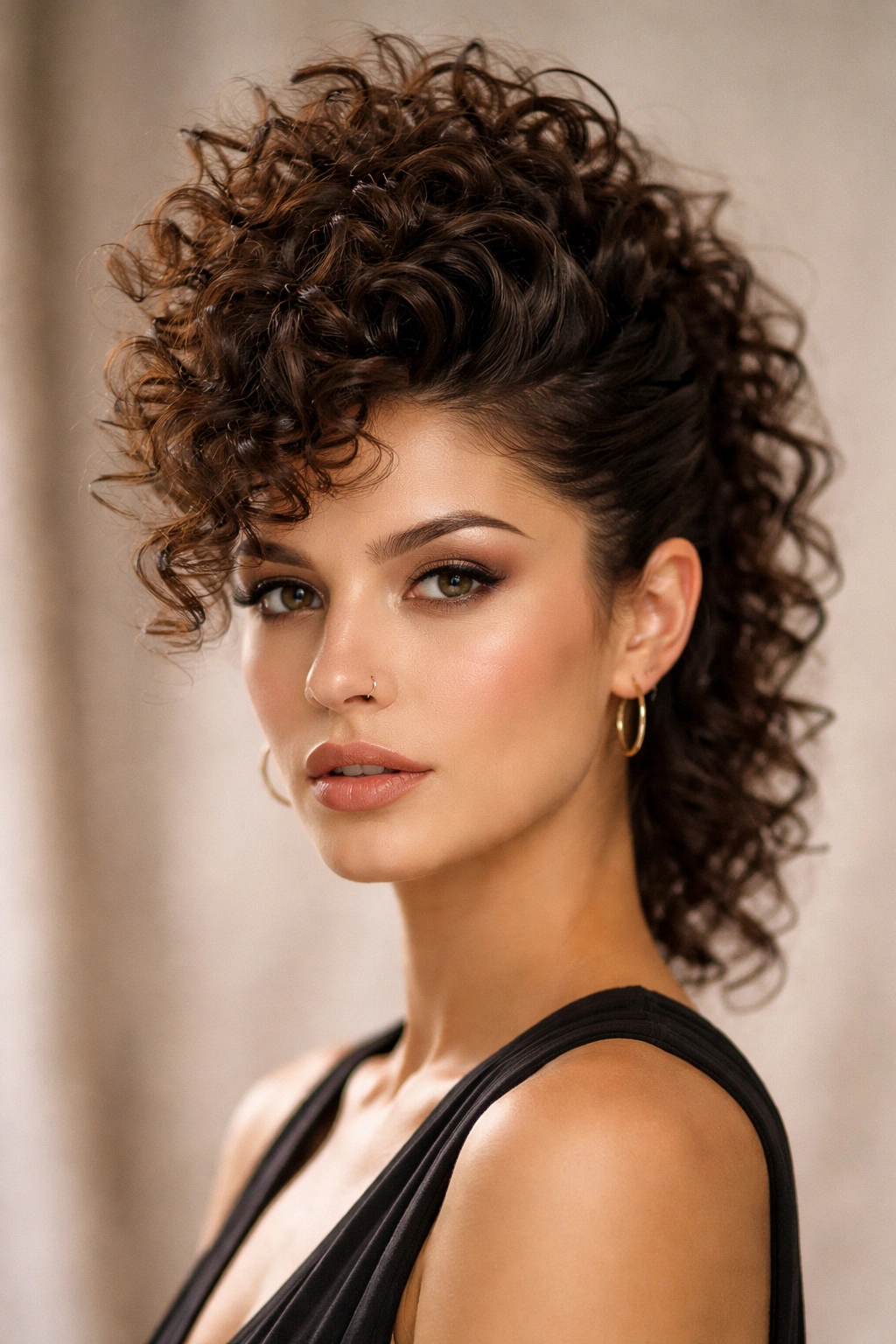
If you want drama, the faux hawk brings it fast.
It pulls the sides away from the face, leaves the center section full, and turns the natural height of curly hair into the whole point. On short curls, it feels edgy. On longer curls, it feels bold and a little theatrical in the best way. Either way, the shape is hard to ignore.
What Gives It Attitude
The side sections usually get pinned, braided, or tucked close to the head, while the middle stays lifted. That contrast creates the hawk shape. You do not need a mohawk cut to get the effect. A few well-placed bobby pins and some patience can do it.
This style looks best when the center section has definition. If the curls are too frizzy, the hawk loses its clean line and starts reading as vague volume. A styling cream or mousse helps, and a diffuser at the roots gives the middle ridge extra height.
It is a strong style for a night out, a performance, or any day you want your curls to take up space. They can. Let them.
14. Finger Coils with a Sculpted Shape
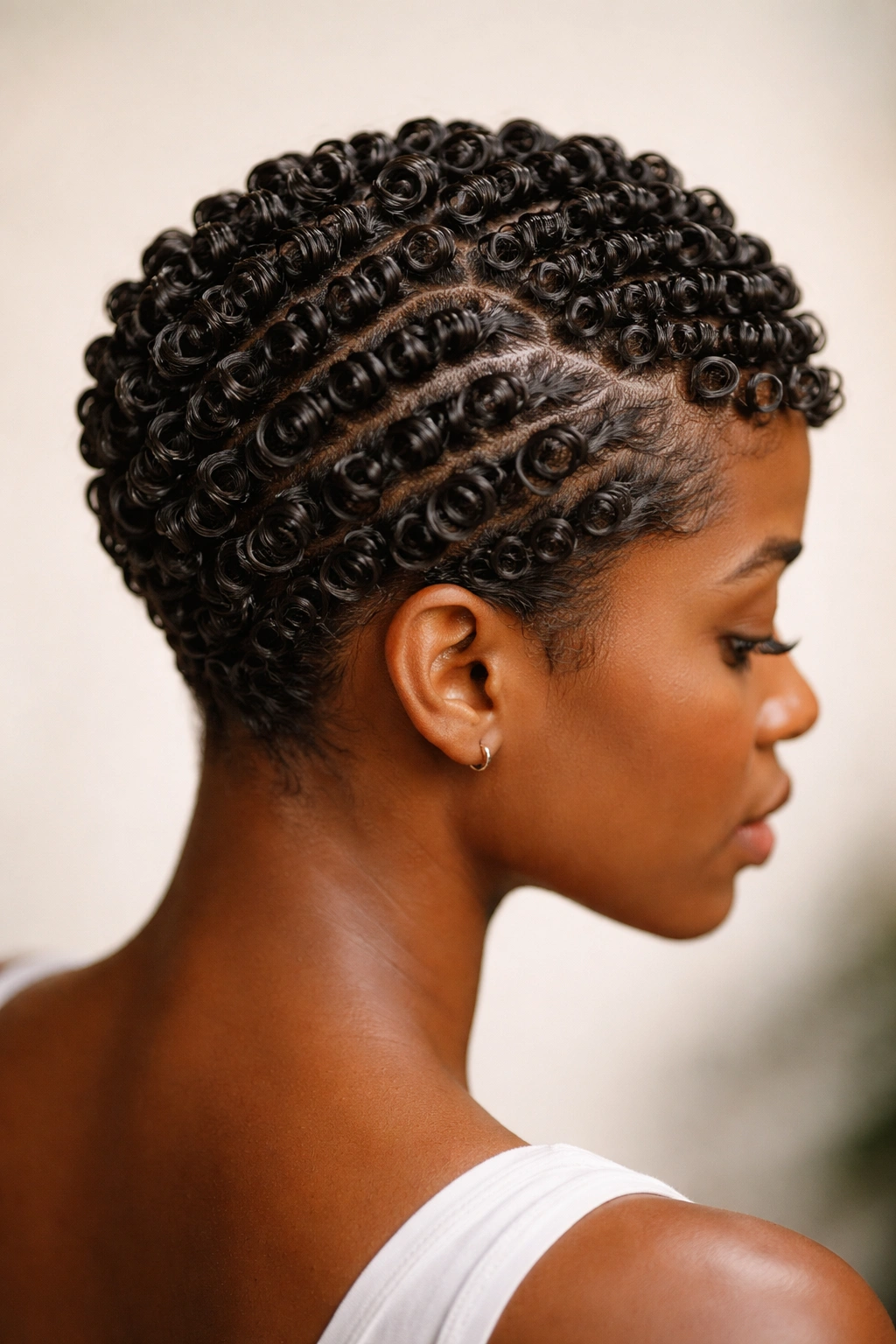
Finger coils are slow. They are also worth it.
Each coil gets its own little spiral, which means the final look has a level of definition that looser styles cannot match. The finish is neat, springy, and surprisingly durable when the coils are set well. This is one of the few curly styles that can look almost jewel-like from the right angle, because every curl has a clear end point and a clear shape.
The process takes patience. You work in small sections, apply a creamy styler or gel, and twirl the hair around your finger until it forms a coil from root to tip. The partings matter here. Clean partings make the style look deliberate. Ragged partings make it look rushed. That difference is easy to spot.
I like finger coils most on short to medium hair, though they can work on longer lengths too if you have the time. They also hold up well when you want a style that lasts longer than a single day. Once they set, they stay neat for a while, especially if you sleep on a satin pillowcase or wrap the hair at night.
No fluff. Just shape.
15. Halo Braid with a Curly Cascade
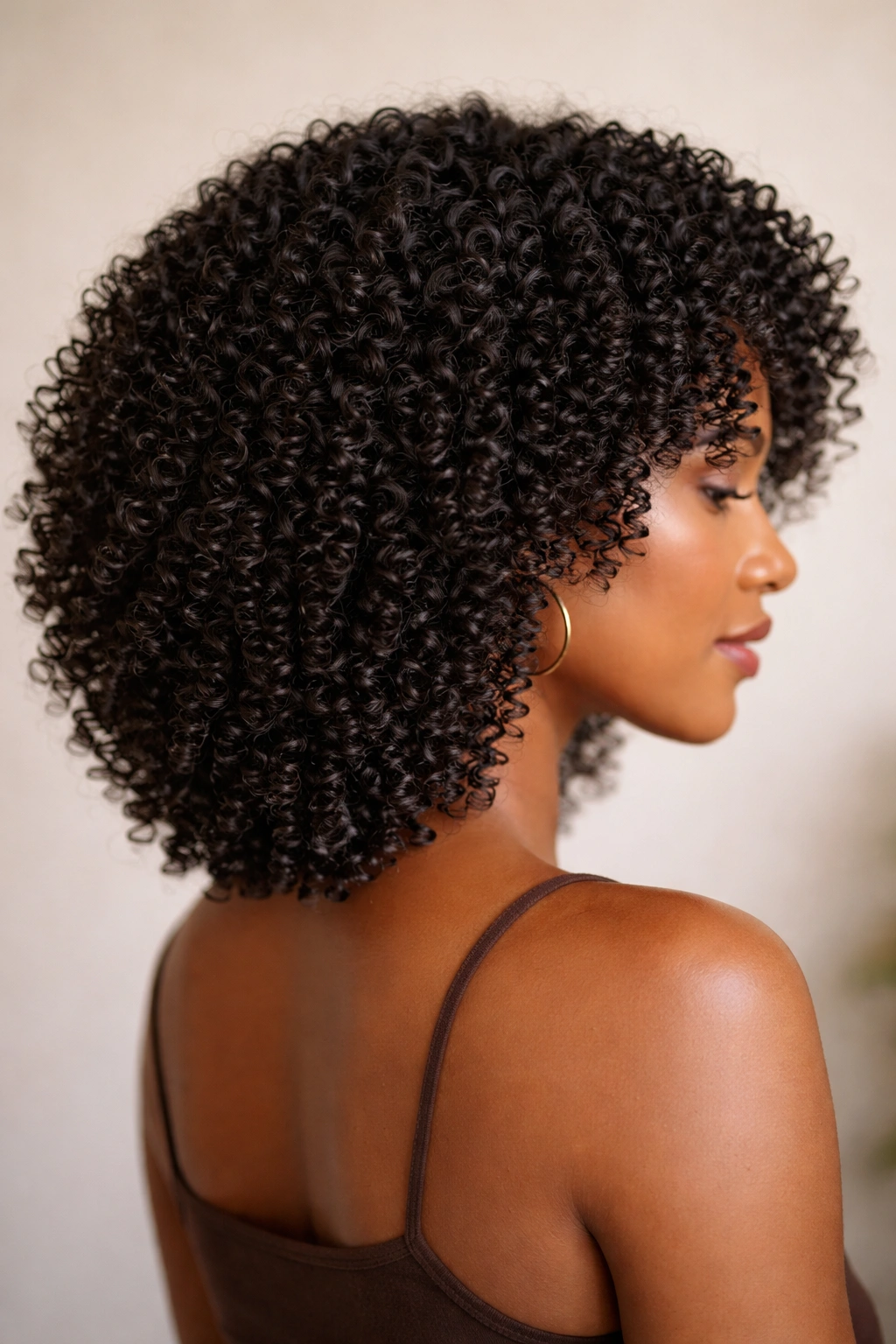
A halo braid gives curls a frame, not a cage.
That’s why it feels so pretty when it’s done well. The braid sits around the crown like a soft border, while the rest of the curls spill down the back or shoulders. You get the polish of an updo with the movement of loose hair, and the face stays open in a way that flatters almost everyone.
This style works especially well when you want the curls to look intentional without pulling all of them away. A braid that starts near one temple and curves around the hairline can hold the front in place, and the loose length keeps the style from looking severe. If the braid is too tight, it loses the softness. If it is too loose, it can slip. That middle ground matters.
I’d wear this to a wedding, a formal dinner, or any day when the hair needs to feel a little more dressed. It also solves the age-old problem of curls crowding the face without hiding the curl pattern people actually want to see.
A few loose tendrils near the ears help. So does a braid that keeps its shape without trying too hard. That contrast is why it stays memorable.
