



Short braids with curly ends solve a problem that longer braided styles sometimes create: too much weight, too much swing, and not enough shape around the face. When the braids stop at the jaw, chin, or collarbone and the ends are left soft and curly, the whole style feels lighter right away.
That mix of structure and movement is the reason people keep coming back to it. The braid gives you neatness and protection; the curl gives you lift, softness, and a little bit of personality at the ends instead of a hard stop.
The part I like most is how forgiving it can be. A clean braid pattern hides a bad hair day fast, but curly ends do a second job — they break up the blocky look that short braids can get when the ends are sealed too bluntly.
1. Knotless Bob Braids With Curly Ends
Knotless bob braids with curly ends are the cleanest place to start if you want the style to look light at the hairline and soft everywhere else. The braids sit flatter because there is no obvious knot at the base, and the bob length keeps the silhouette close to the neck instead of swinging around your shoulders.
Why the Root Looks Cleaner
The knotless part matters more than people expect. It removes that little lump at the base of each braid, which is a big deal if your hairline is sensitive or if you dislike the “helmet” look some braid sets can give.
A bob cut also keeps the style from feeling heavy. You get shape, but not drag. The curls at the ends finish the look with movement, so the whole thing reads polished instead of boxy.
- Ask for medium-thin braids if you want the curls to bounce instead of flop.
- Leave the last 2 to 3 inches free for a rod set or curl set.
- Keep the ends smaller than the braid body so the curl does not feel bulky.
- Use a light mousse at night to keep the curly ends from turning fuzzy.
My best tip: if your hairline is delicate, this is the style to ask for first. The flatter root and shorter length do a lot of the work for you.
2. Box Braids With Wand-Curled Ends
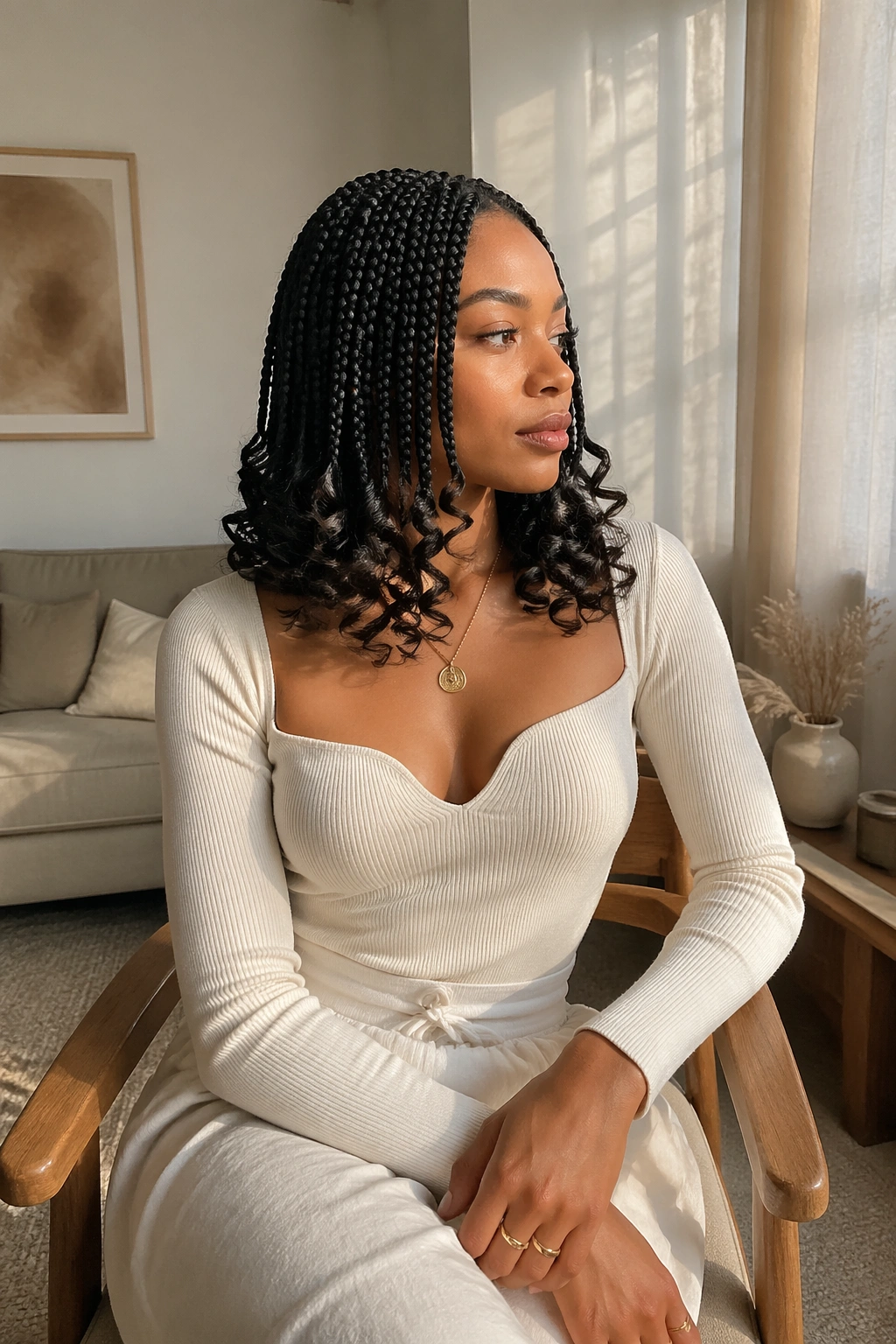
Box braids with wand-curled ends have a sharper, more finished look than blunt box braids, and I think that little difference changes the whole mood. The braid pattern stays classic, but the curly ends make the style feel softer around the jaw and collarbone.
The trick is to keep the braid size consistent from top to bottom and then switch the texture only at the ends. That contrast is what makes this style work. If the curls start too high, the style can look messy fast; if they start too low, the braids can feel stiff and unfinished.
Wand curls work well when you want the ends to look deliberate, not accidental. Wrap the final section of each braid around a curling wand or rod, hold the curl long enough to set, then let it cool before you touch it. If you separate the curls too early, they frizz out and lose that clean spiral shape.
I’d reach for this style when you want something that still feels familiar but has a little more movement than a standard box braid bob. It’s a small change. It makes a big visual difference.
3. Feed-In Cornrows With Curly Ponytail Ends
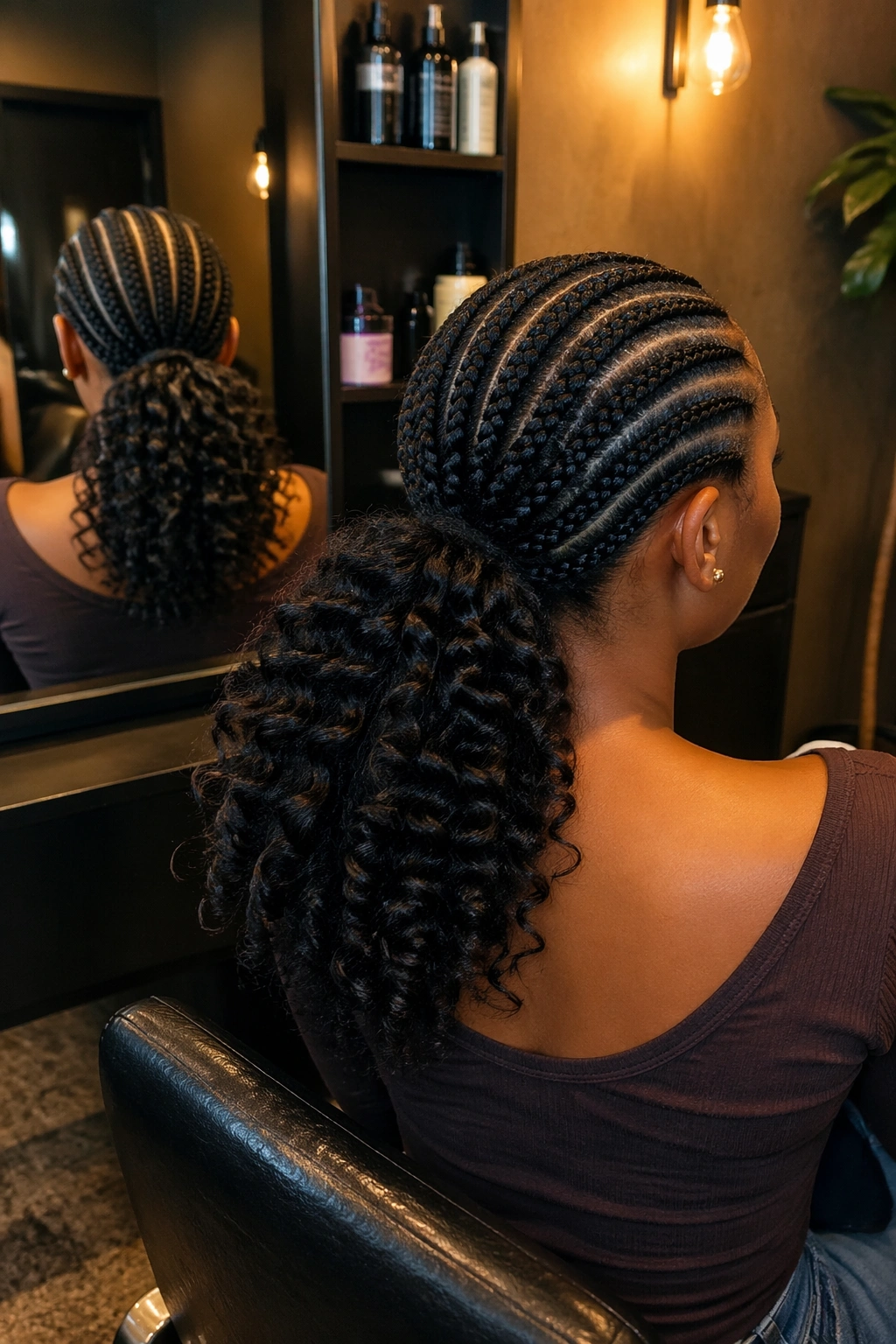
Why do feed-in cornrows with curly ponytail ends look so balanced? Because the scalp section stays tight and close, while the ponytail gives the style one soft, lifted finish. That contrast is what keeps the look from feeling severe.
Feed-in braids are built by gradually adding hair, so the braid line stays neat and slim near the roots. When those braids end in a puff of curls, the whole style looks intentional from the front and a little playful from the back. It’s a smart choice if you like a clean hairline but do not want your style to feel flat.
How to Style the Ponytail
The ponytail should sit high enough to show off the braid pattern, but not so high that it pulls at the crown. I usually like it at mid-head or a touch above, with the curls falling to the nape or brushing the shoulders.
A wrapped base — a small braid, a strand of extension hair, or a cuff — helps the style look finished. Then the curly ends do the rest. If you want the ponytail to stay fluffy, avoid over-brushing it. Finger separation is enough.
This is one of those looks that handles busy days well. It stays out of the face, but it still has enough texture to feel styled.
4. Boho Bob Braids With Loose Curly Strands
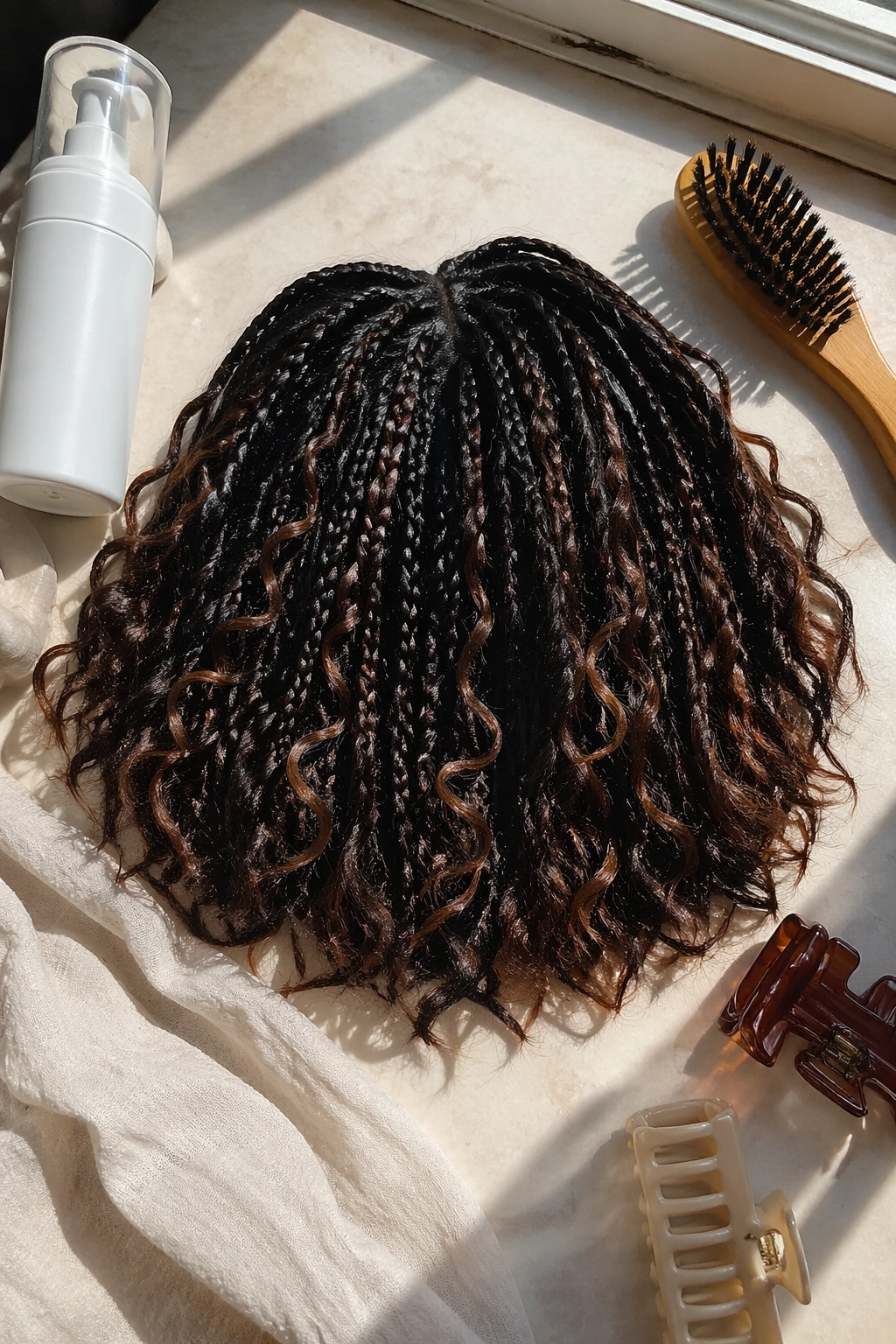
If you like hair that looks a little undone on purpose, boho bob braids with loose curly strands are hard to beat. The braid body gives the shape, but the free curls threaded through the style make the whole thing feel softer and less rigid.
This is the version I would point to if someone says they want short braids but worries the style will look too sharp. It won’t. The loose pieces interrupt the braid pattern in a good way, especially around the cheeks, temples, and ends.
What Makes It Different
- The curls are added throughout the braid set, not only at the tips.
- The bob length keeps the style close to the jawline and light on the neck.
- The loose pieces should be thin and wispy, not thick enough to hide the braids.
- A light mist of mousse helps the curls keep shape without turning crunchy.
There is a fine line here. Too many loose pieces and the style loses its braid identity. Too few, and it looks like a regular bob with a couple of curls hanging around it. The sweet spot is somewhere in the middle, where the braid pattern still reads clearly but the texture feels airy.
5. Lemonade Braids With Curly Tails
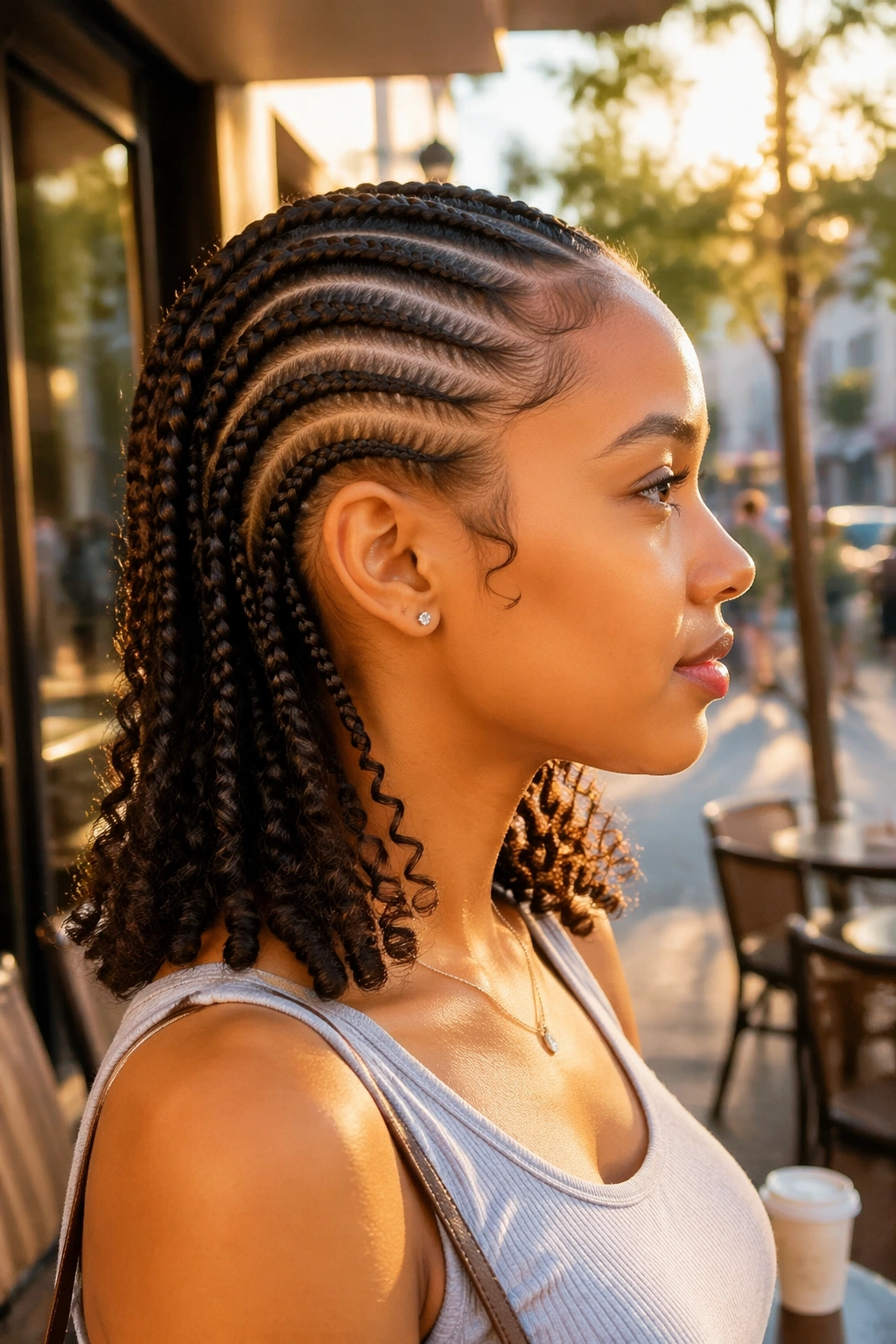
Lemonade braids with curly tails have a way of making short hair look longer without making it heavier. The side-swept parting draws the eye across the head, and the curly ends keep the look from stopping abruptly at the nape.
There’s a reason this style stays in rotation. The diagonal lines are flattering from almost every angle, and the curls at the ends soften the sharpness of the side pattern. That combination feels especially good if you like your braids to look neat but not too rigid.
The length matters here. A shoulder-grazing cut tends to work better than a tiny chin-length version, because the side sweep needs room to travel. If the braids are too short, the design can look crowded. If they’re too long, you lose the breezy feel that makes lemonade braids so appealing.
I also like this style for people who want a little drama without committing to a large, heavy braid set. It has a clean line, a soft finish, and enough movement to keep it from looking static. It is one of the easier styles to wear with hoop earrings, too, because the curls sit around them instead of fighting them.
6. Triangle-Part Braids With Springy Ends
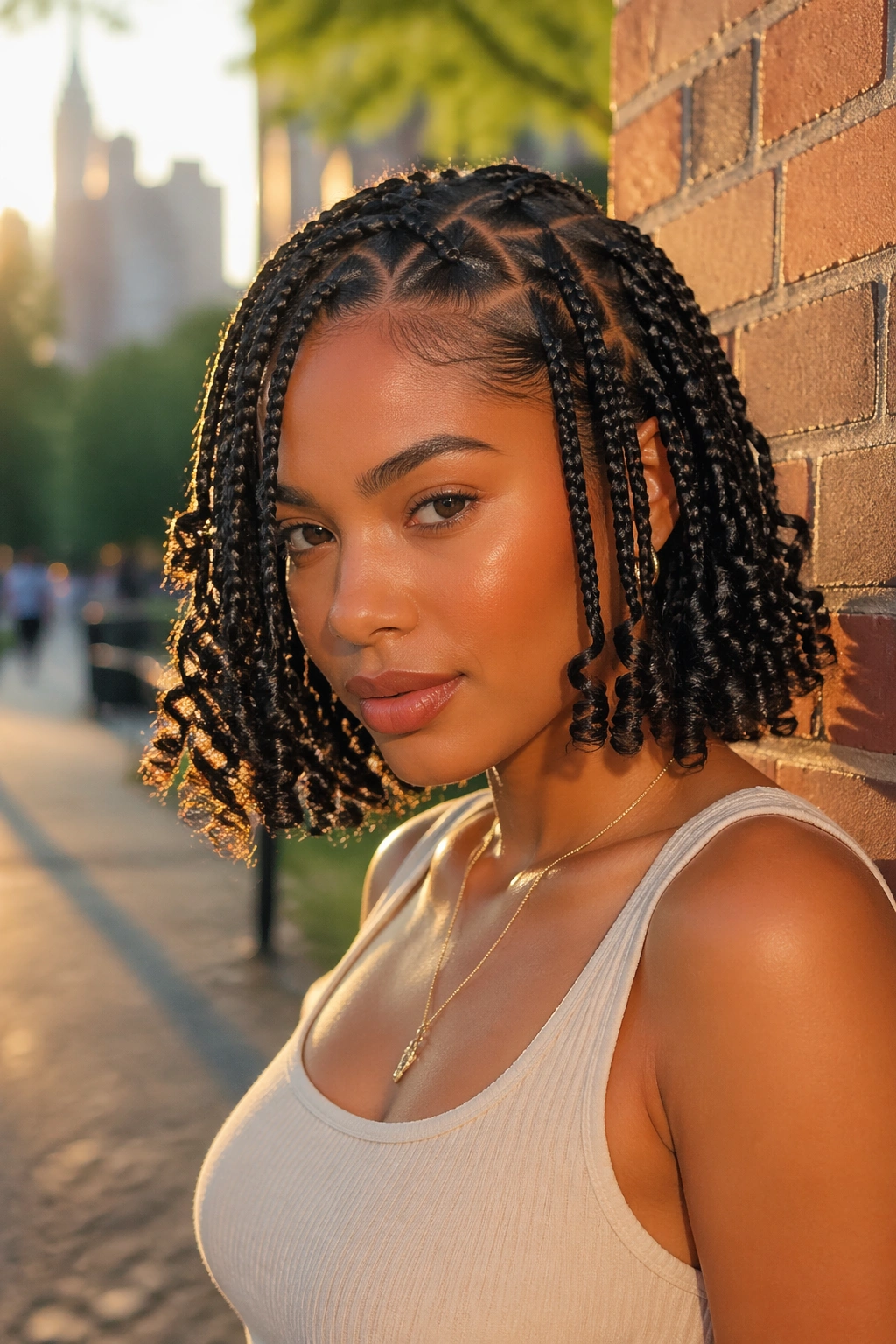
Triangle-part braids with springy ends look sharper than standard square parts, and that tiny shift changes the whole mood of the style. The parting itself becomes the detail, so the curly ends do not have to work as hard to make the hairstyle interesting.
Unlike square parts, triangle parts break up the scalp pattern in a way that feels a little more tailored. They catch the eye without needing extra accessories, and they can make a short set of braids look more designed, almost like the layout was mapped by hand. That matters when the braid length is short, because the parting becomes part of the silhouette.
This style suits people who want a braid set that feels neat but not predictable. It also works well if you prefer medium-size braids and do not want the curls at the ends to compete with a busy pattern. A simple springy curl at the bottom is enough.
If you ask for this look, be specific about the part size. Triangle parts that are too large can overwhelm short braids. Tiny triangles can look fussy. A medium triangle — clean, visible, and evenly spaced — usually lands in the right place.
7. Fulani Braids With Beads and Curly Ends
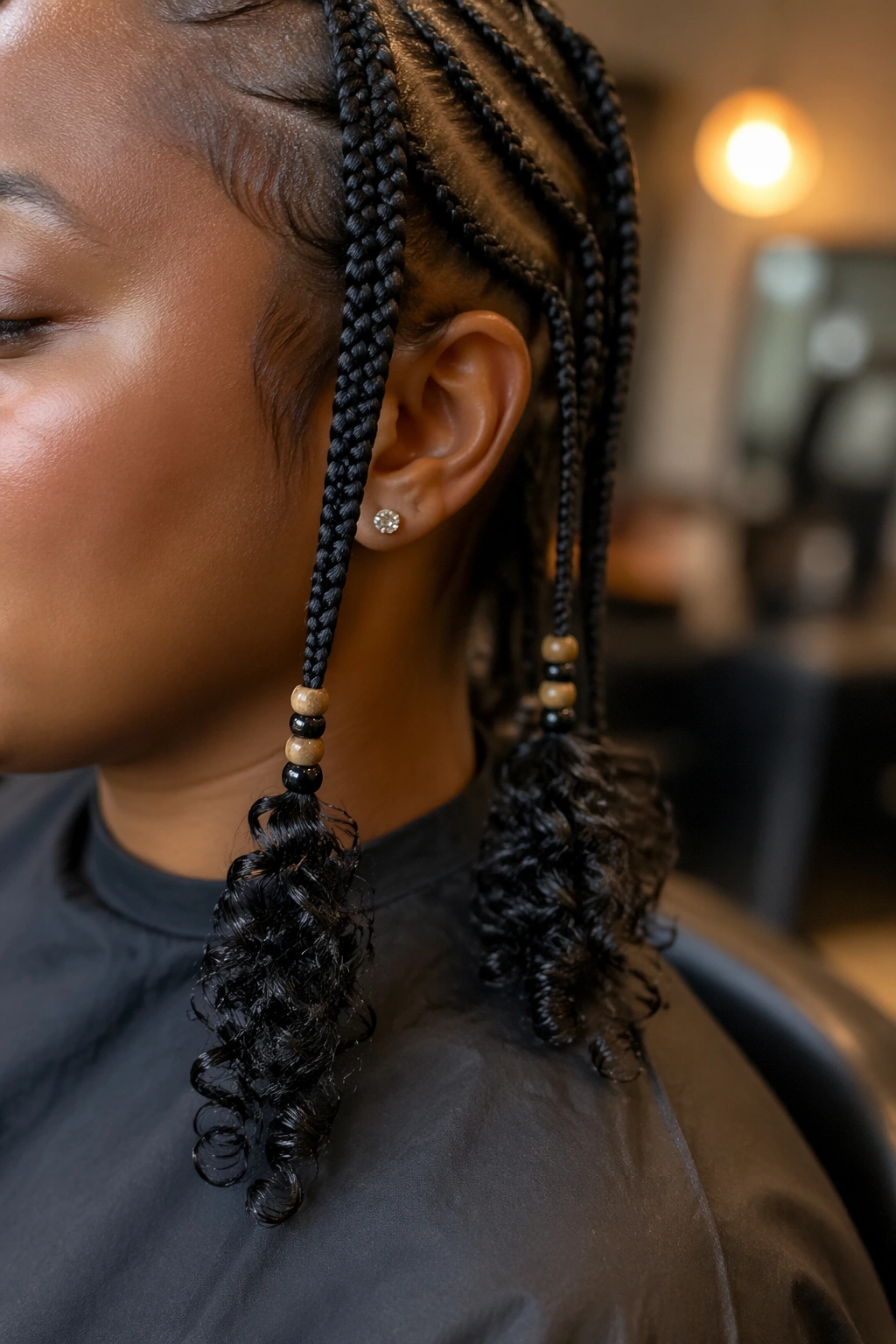
Fulani braids with beads and curly ends have a lot of personality, but they work best when the details are balanced. The braid pattern near the front often carries the visual weight, while the curly ends soften the back and keep the style from feeling stiff.
Braid Placement
A central braid with side braids gives the style its familiar Fulani shape. You can keep the braids close to the scalp and let the curly ends fall just below the ears or along the shoulders. That keeps the profile neat.
Bead Balance
Beads are useful, but they should not take over. A few well-placed beads near the ends or on the side braids is usually enough. Too many, and the style starts to clatter and feel heavy.
Keeping It Light
The curly ends help here more than people realize. They break up the hard line that beads can create, so the style ends on a soft note instead of a rigid one. If you want movement, choose lighter beads and let the curls stay loose.
I like this style for people who want braids with a little cultural richness and visible detail. It has structure, but it also has warmth. That is a good combination.
8. Stitch Braids Into a Curly Half-Up Style
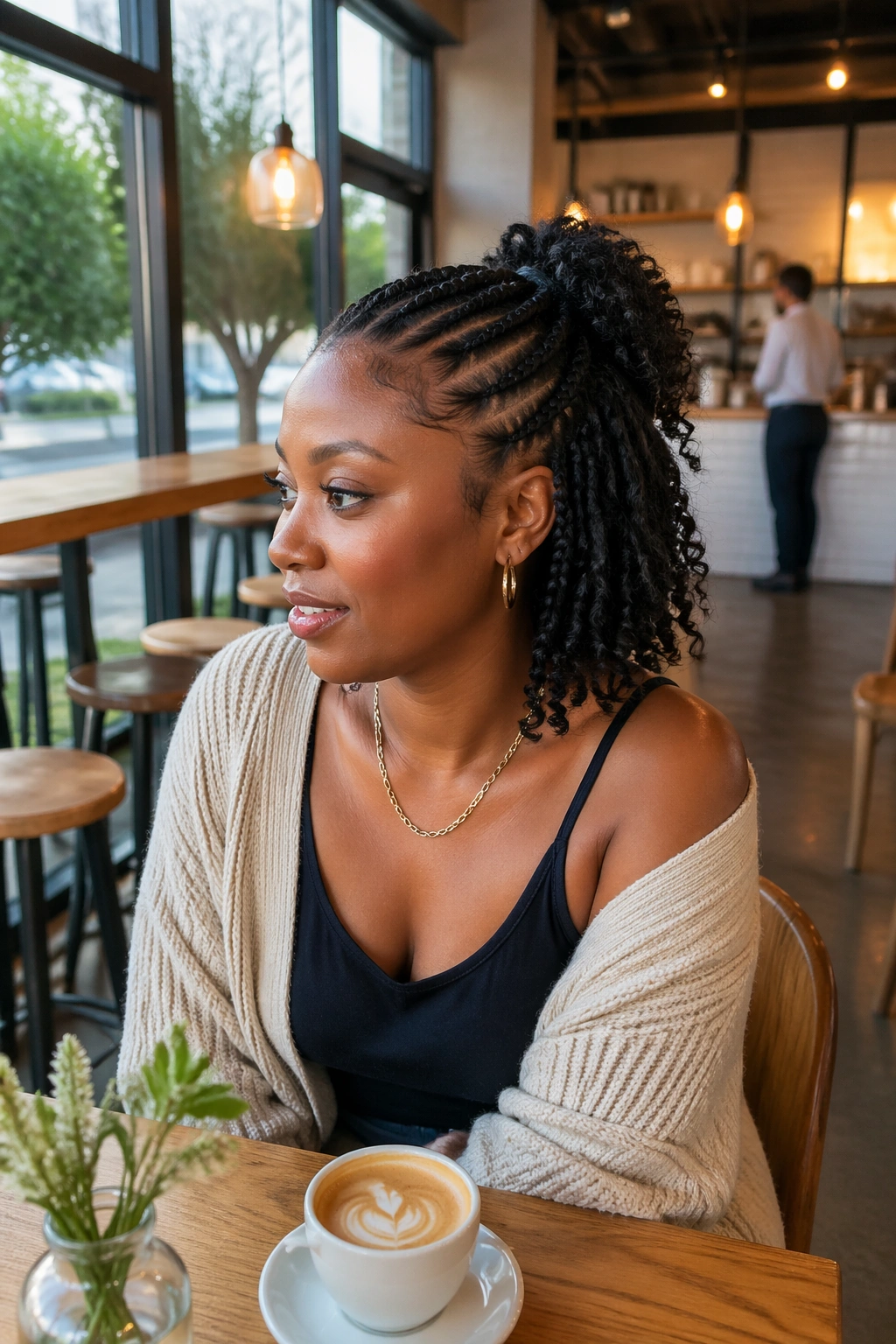
Stitch braids into a curly half-up style are for the person who likes precision. The stitch braid pattern draws crisp, clean lines across the scalp, and the half-up finish keeps the style from feeling too flat or too severe.
The half-up section is where the curly ends earn their keep. Instead of stopping the braids abruptly, you gather the top or middle section and let the curls spill out in the back. That contrast between control and softness gives the style a little lift.
If you want this look to hold, ask for the braids to be medium slim through the crown and slightly fuller through the half-up tail. That creates enough shape to support the curls without making the style top-heavy. A small elastic at the half-up point works better than a thick one, because bulky ties can eat into the line of the braids.
This is one of the better styles for nights out, events, or any day when you want your hair to look deliberate without being fussy. Clean at the top. Soft at the bottom. That formula works.
9. Short Goddess Braids With Soft Curly Pieces
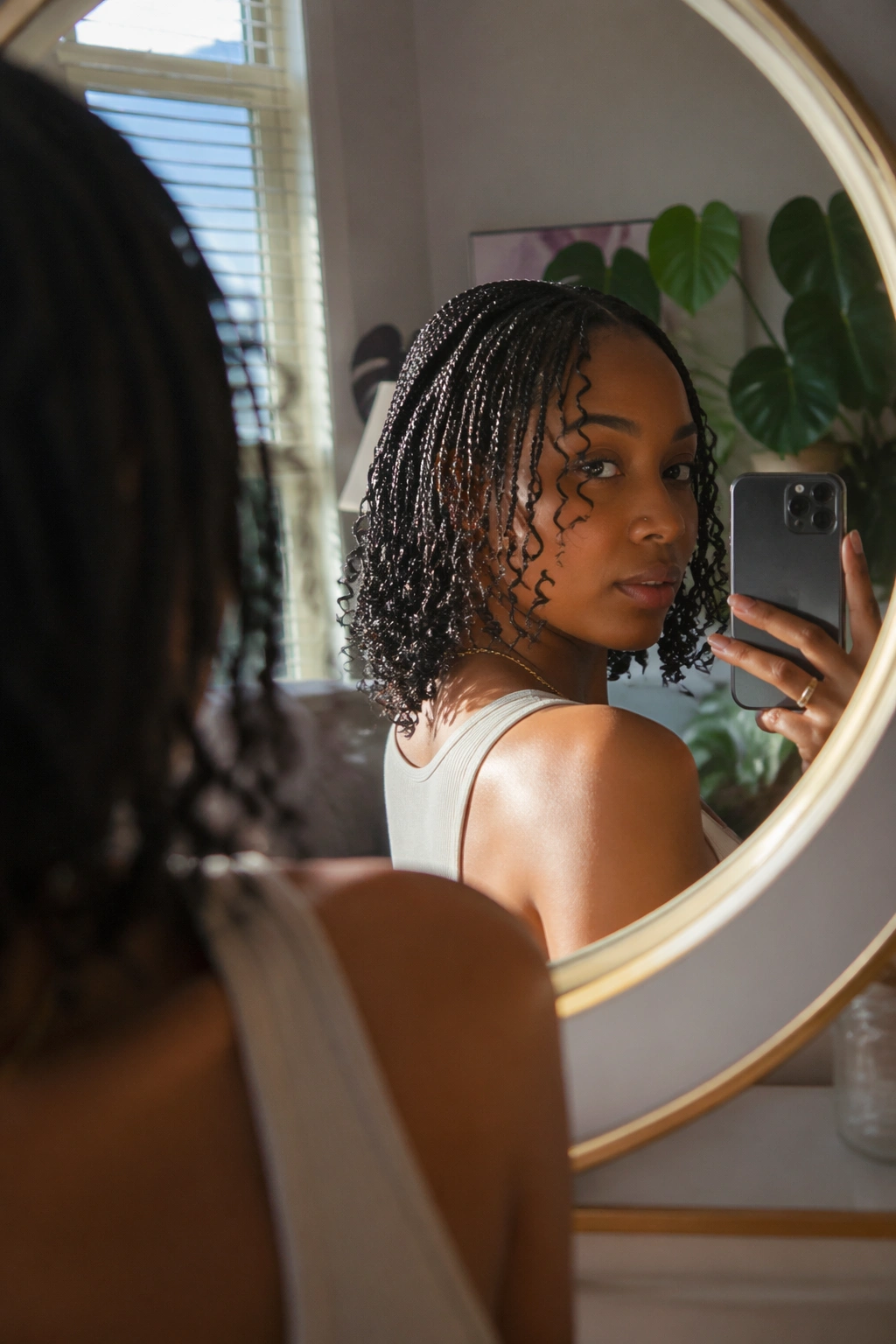
Why do goddess braids feel gentler than regular braids? The answer is the loose curly pieces. They interrupt the hard lines and give the style a softer edge, which matters a lot when the braid length is short.
Goddess braids are already a little more relaxed in spirit than tight, neat cornrows. Add curly pieces at the ends or between the braids, and the style starts to move instead of sitting still. That movement keeps the look from feeling too severe, especially around the temples and cheeks.
Where to Place the Curls
Place the curls where you want the eye to go. Near the front, they soften the face. At the back, they make the style feel fuller. Along the side, they add a bit of shape without crowding the braid pattern.
I would keep the curls light and spaced out. If every braid has a thick curly tail, the style can become too busy for short hair. One or two well-placed spiral pieces are often enough.
This style suits people who want something feminine without making the braids delicate or fussy. It is sturdy, but not harsh. That is the appeal.
10. Side-Swept Braids With Face-Framing Curls
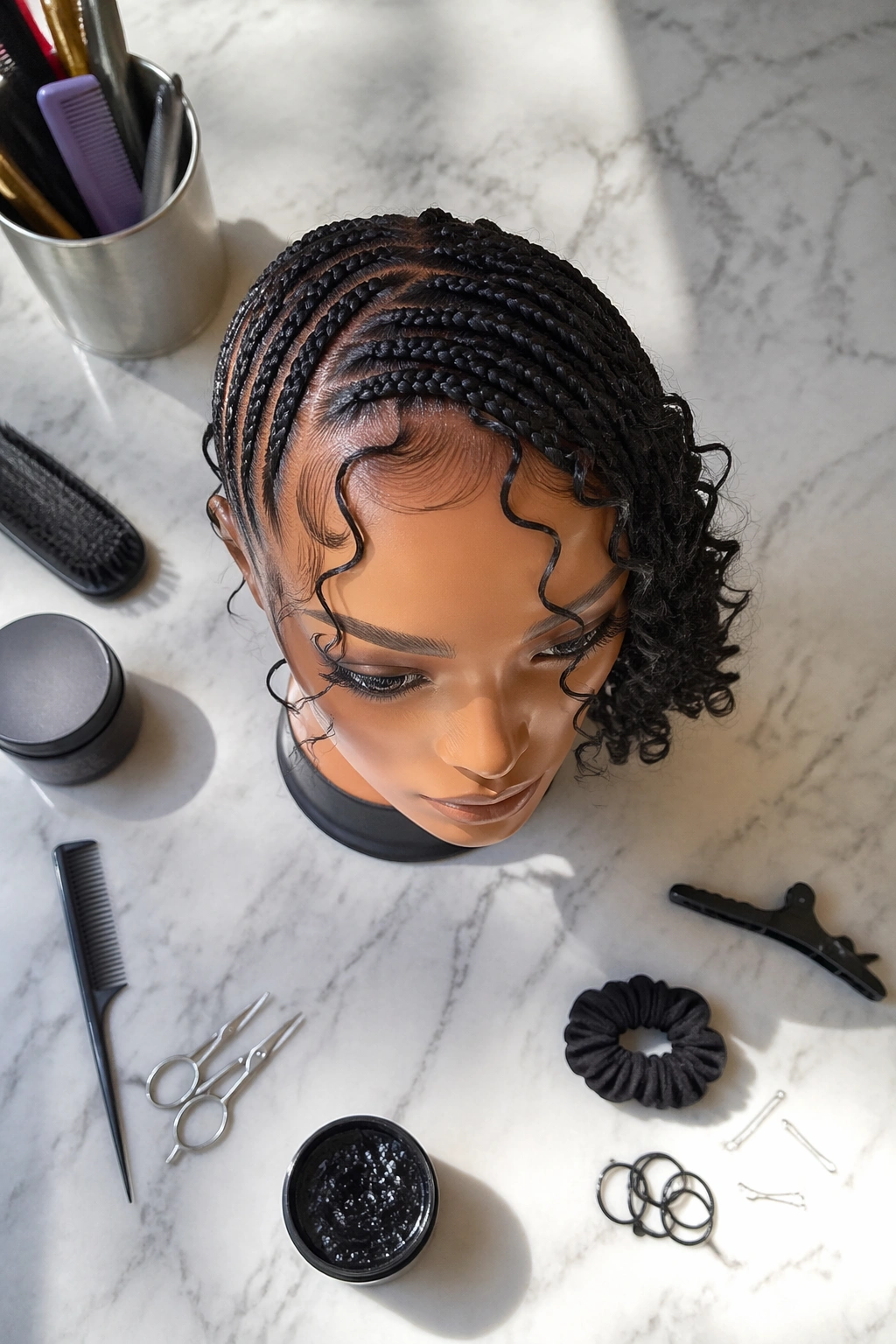
Picture a deep side part, braids swept across one side of the head, and a few loose curls brushing the cheekbone. That is the whole charm of side-swept braids with face-framing curls. They make short braids look a little more styled without asking for a complicated install.
The face-framing curls matter because they change the shape near the eyes and jaw. A straight braid line can feel heavy on short cuts, but a couple of curls near the front open everything up. You get structure where you need it and softness where the face needs breathing room.
This is one of the styles I’d pick for someone who wants short braids for an event but still wants to see movement in the mirror. The side sweep adds drama. The curls stop it from feeling too sharp.
A small detail makes a difference here: the front pieces should be left light enough to bend, not so thick that they stick straight out. If the front is too bulky, the whole style loses the easy sweep that makes it work.
11. Braided Mohawk With Curly Ends
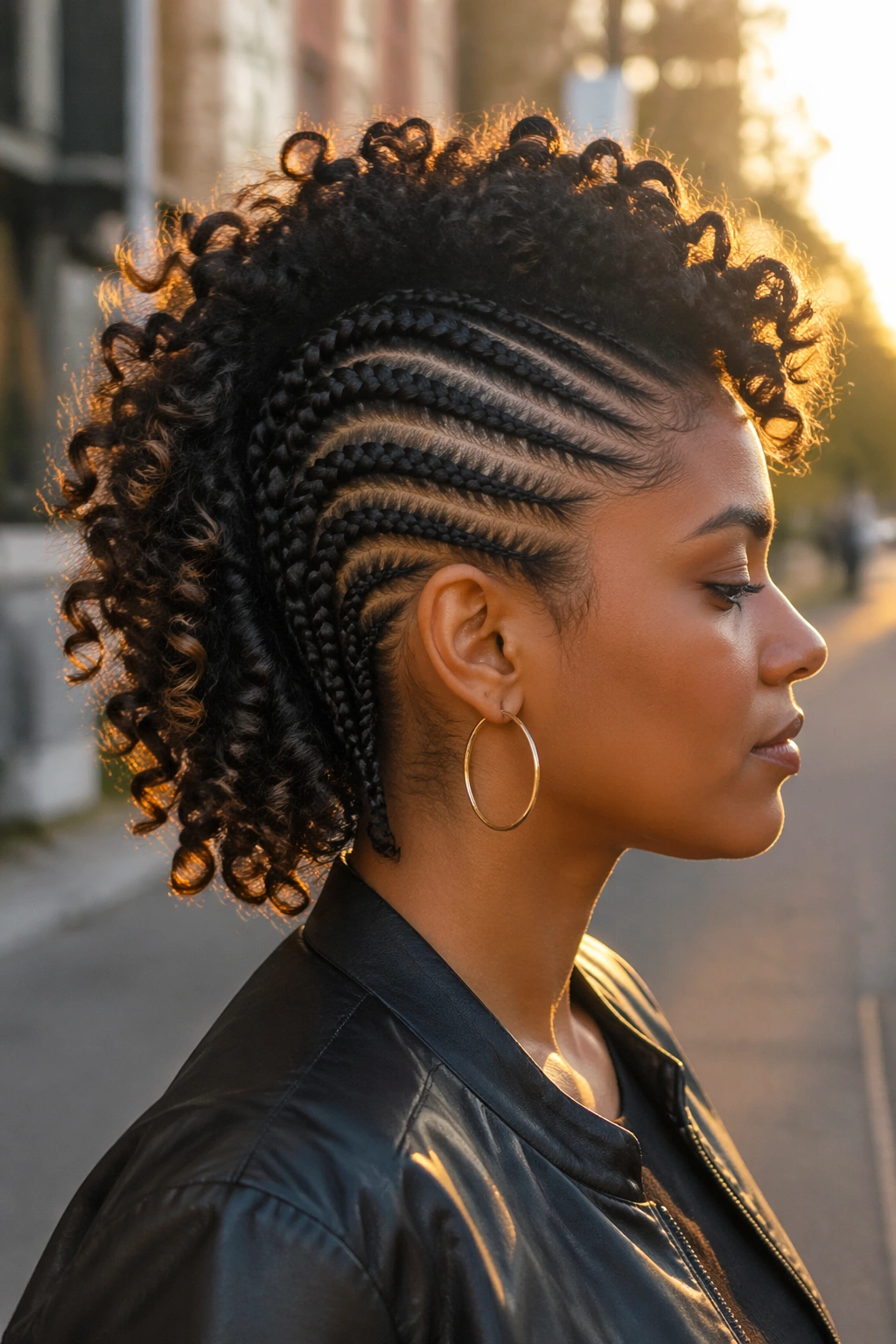
A braided mohawk does not have to scream. When the sides are braided tight and the center section ends in soft curls, the style reads polished first and edgy second.
That balance is what makes it useful. You get height through the middle, clean lines on the sides, and a curly finish that keeps the top from looking harsh. On short hair, that combination can be more flattering than a full-on braided updo because it leaves space around the face and neck.
The center strip is the part to watch. Too narrow, and the curls vanish into the profile. Too wide, and the style can feel bulky. A medium-width center panel tends to hold shape best, especially if the curls at the end are springy and defined.
I’d recommend this style if you like braid sets that look a little stronger, but you still want something wearable with a blazer, a hoop earring, or a plain T-shirt. It has attitude. It does not need extra noise.
12. Micro Braids With Tiny Curly Tips
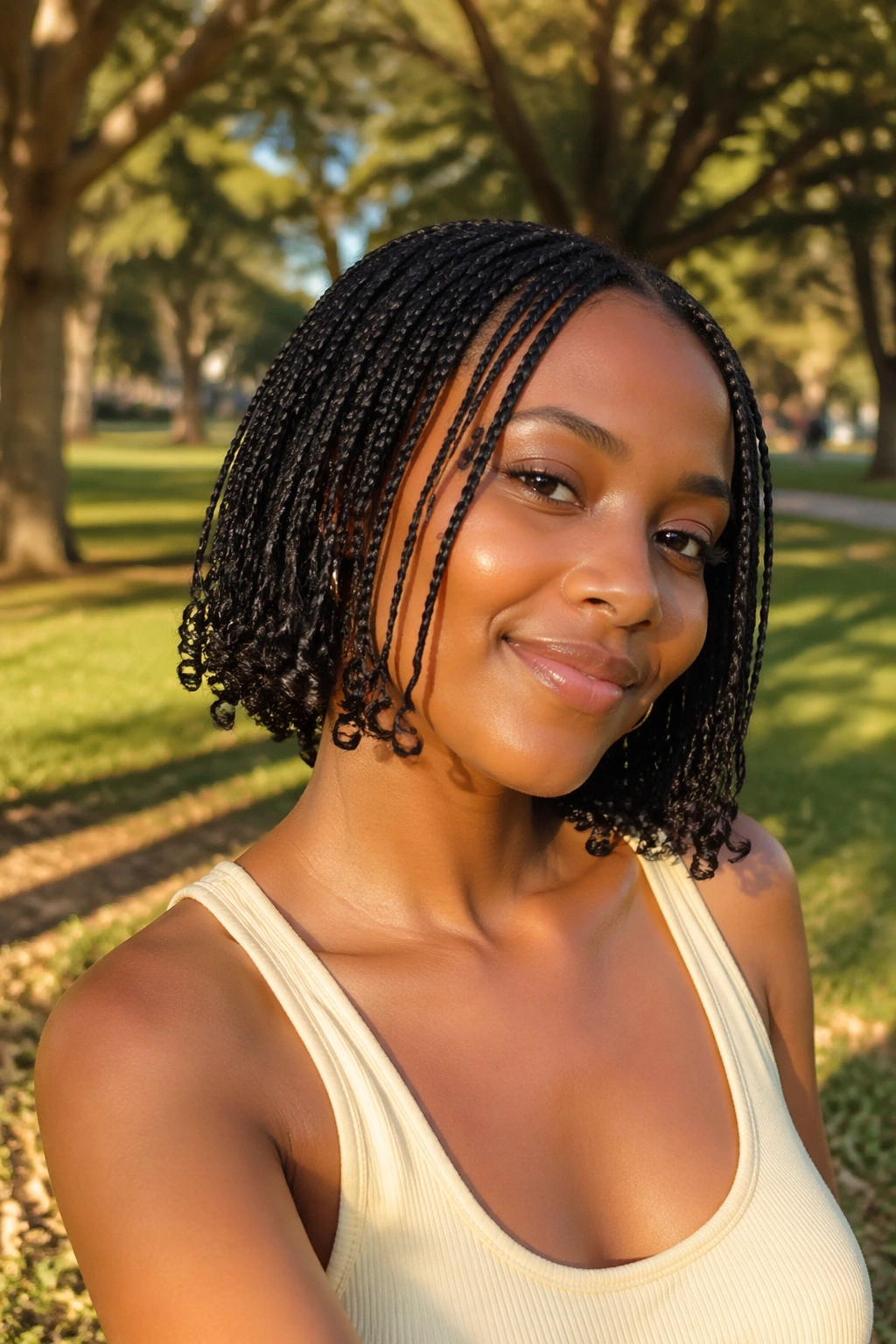
Micro braids with tiny curly tips are for patience. There is no way around that. The braid work takes time, and the payoff is a delicate finish that feels airy instead of heavy.
The curly tips matter because micro braids can look flat at the ends if they are sealed too tightly. Tiny curls fix that. They add a little bounce at the bottom, so the style doesn’t look like a curtain of strands hanging straight down. On a short cut, that makes the entire shape feel lighter.
There is also a practical side to this style. The smaller the braid, the more movement you get, but the more care you need at the roots. If the braids are installed too tightly, the style looks tidy for about five minutes and then starts to feel miserable. That is not worth it.
Micro braids with curly tips are a good fit when you want a detailed style that still reads soft. They are less bold than chunky braids, and the tiny curls keep them from feeling severe. It is a gentle finish for a very detailed pattern.
13. Layered Braided Bob With Mixed Curl Sizes
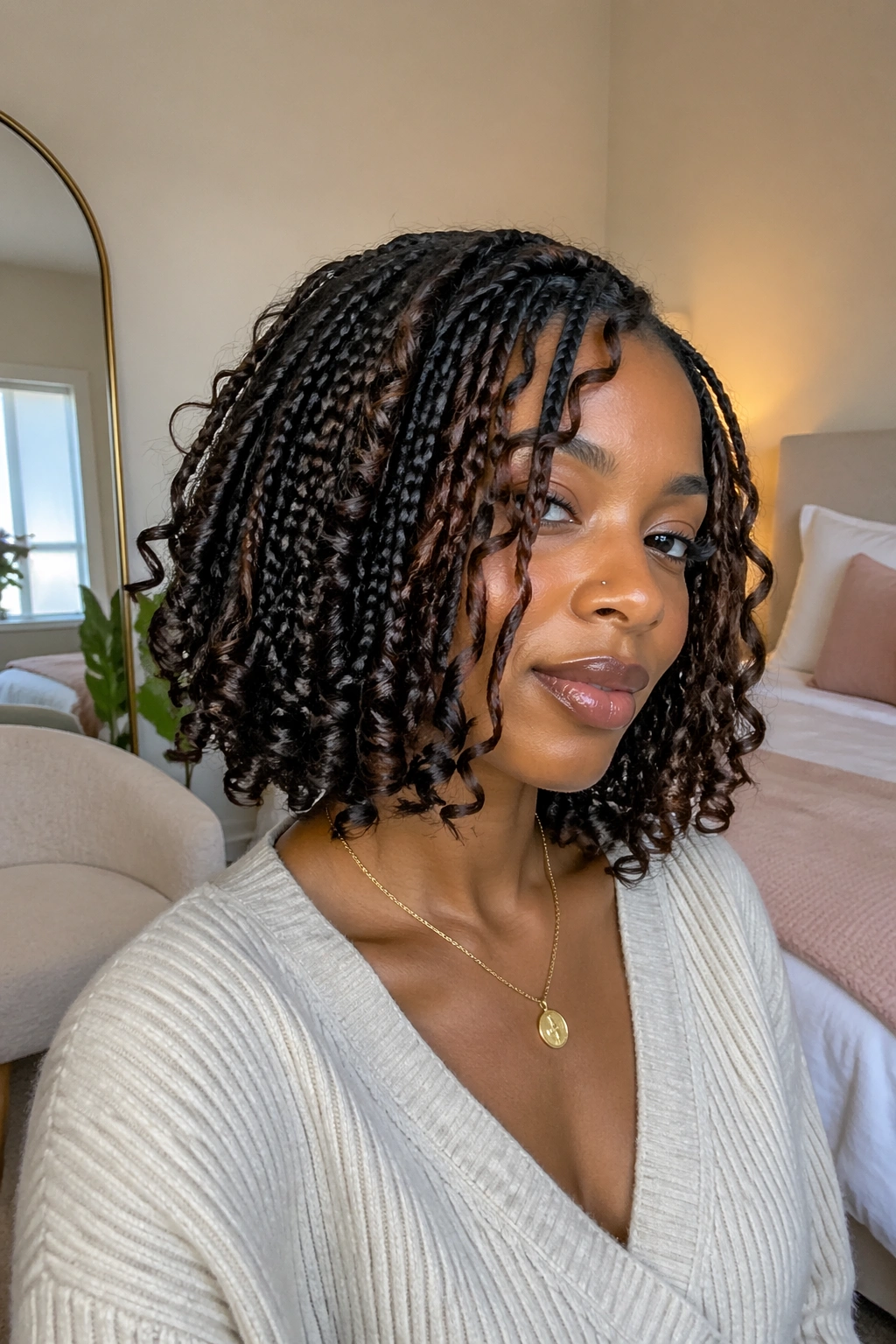
Mixed curl sizes make a layered braided bob feel more alive than one-size-fits-all spirals. That is the main reason I like this version. Short layers already create shape, and different curl sizes at the ends give each layer its own movement.
Why the Layers Matter
A layered bob should not look like one flat line. The shortest pieces need tighter curls, and the longer pieces can hold a looser bend. That subtle change keeps the style from looking too uniform.
What to Ask For
- Keep the top layer slightly shorter so the shape stacks nicely.
- Use two curl sizes instead of one if the bob has visible layers.
- Ask for the ends to be curled away from the face around the front pieces.
- Avoid making every curl identical; the style loses its depth fast.
This is one of the smartest options if you like the structure of a bob but want it to feel less stiff. The mixed curl pattern creates a little rhythm in the hair, and that rhythm is what makes layered styles look expensive without trying too hard.
14. Straight-Back Braids With Flipped-Out Curly Ends
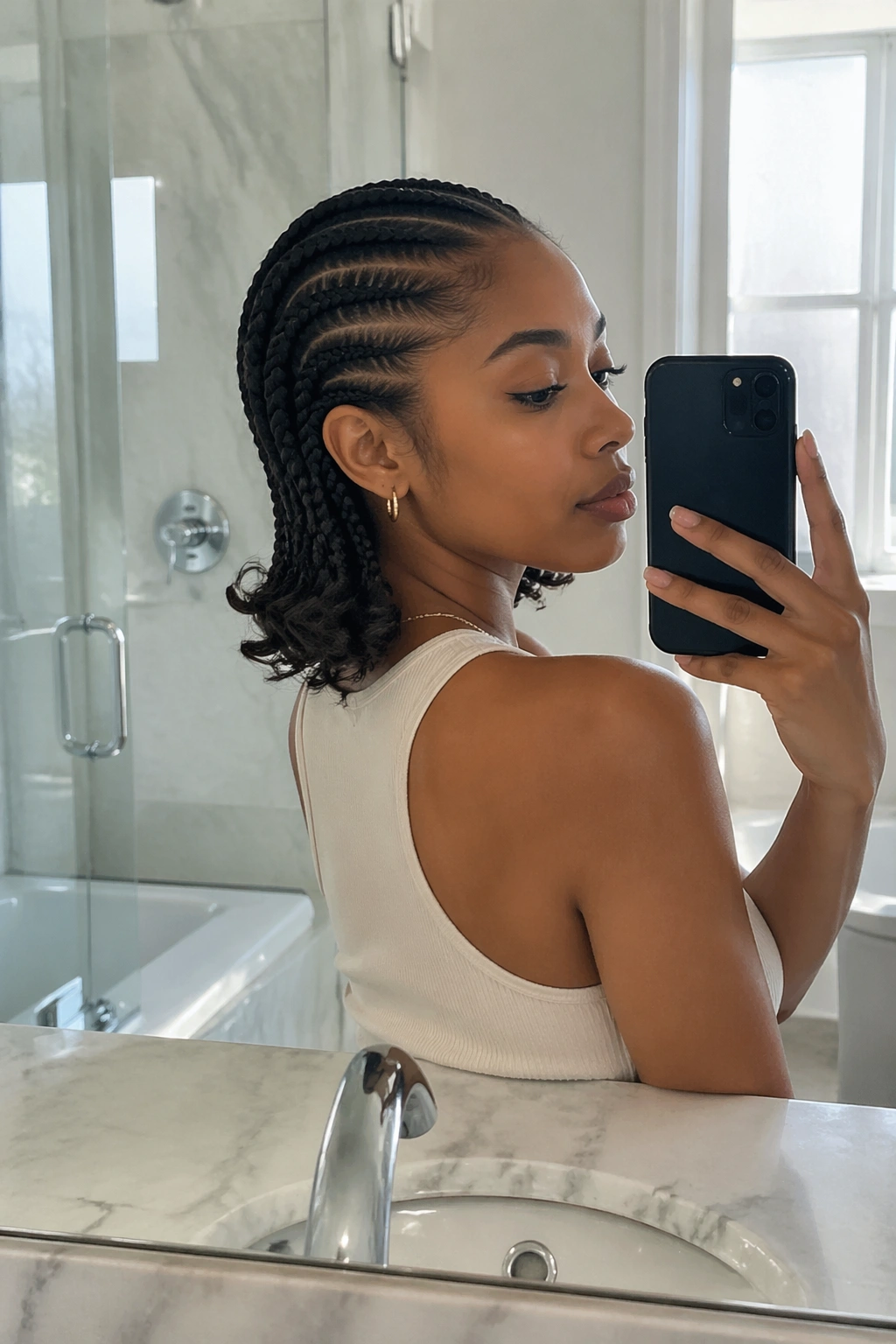
Straight-back braids with flipped-out curly ends are tidy, direct, and easy to wear. The braid pattern runs cleanly from the front to the back, which means the eye stays on the shape of the head, not on a lot of decoration.
What changes the style is the end treatment. Instead of sealing the braids bluntly, you leave the last bit free and let it curl outward. That flipped finish gives the hairstyle a little lift, almost like the ends are turning the corner instead of stopping short.
Parting Line
Keep the rows straight and even if you want this style to look crisp. A crooked part can break the whole effect, because the design depends on order.
End Shape
The curl should bend outward or under, not hang limp. A soft flip looks better on short braids because it adds motion without eating up length.
Daily Upkeep
A light wrap at night helps the ends stay shaped. If they flatten, a touch of mousse and a few minutes on a rod can bring them back. No need to overwork them.
This is a strong choice for people who want something practical. It is neat enough for work, soft enough for weekends, and easy to dress up with earrings or a lip color.
15. Crown Braids With Curly Back-Length Ends
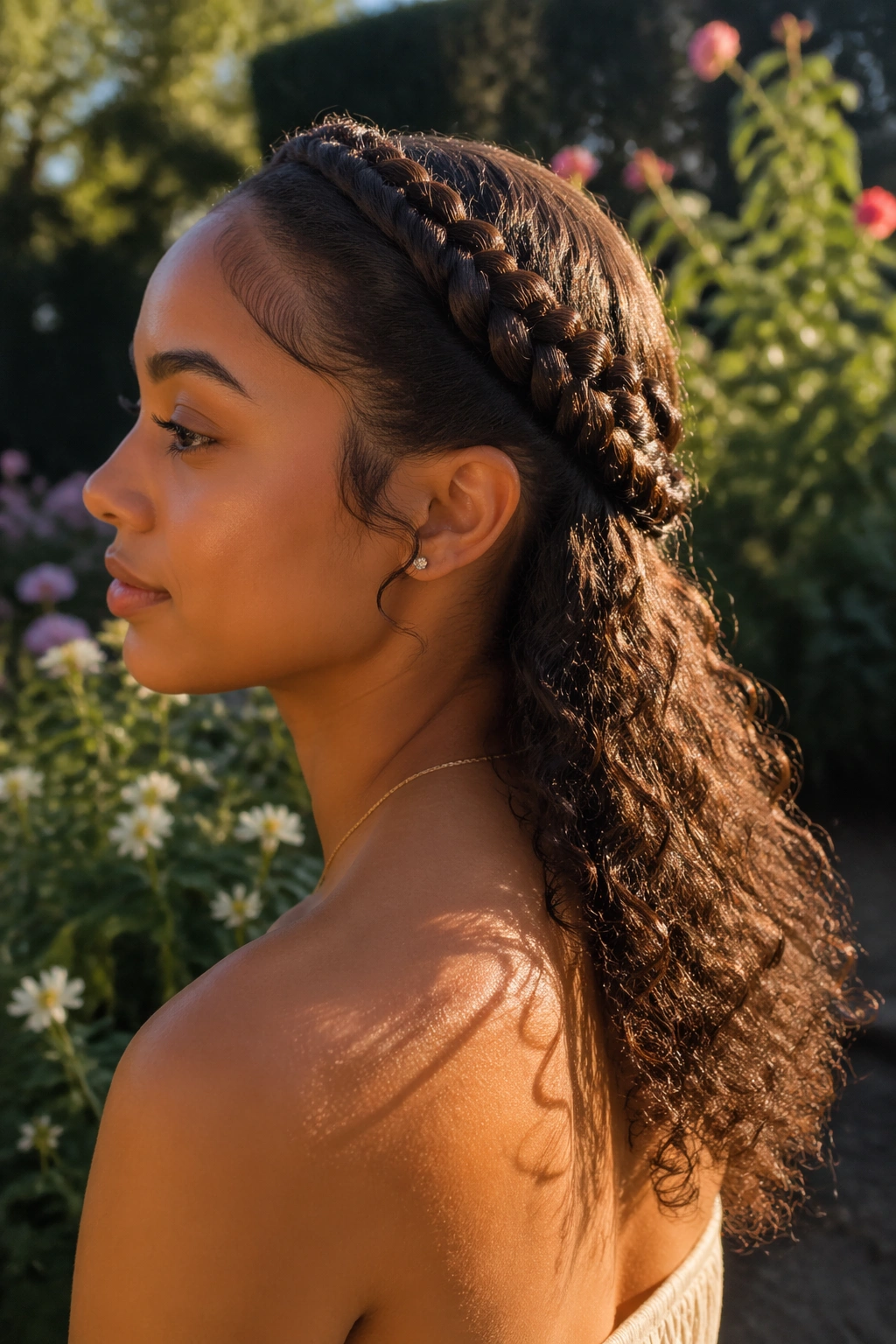
A crown braid with curly back-length ends feels calm at the front and soft at the back. The braid wraps around the hairline like a frame, while the curly ends gather the movement where it matters most.
That shape works because it clears the face. Your features stay open, your neck looks longer, and the curls at the back add enough interest that the style doesn’t flatten out. Short hair can struggle with volume at the crown, so this is a clever way to keep the top controlled and let the ends do the visual work.
Best Finishing Touches
A few small pins can keep the crown line tight if your hair is fine or slippery. A satin scarf at night helps the braids stay smooth, and a bit of mousse on the curls keeps the back from puffing up too fast.
This style is especially good when you want something that looks neat from the front and softer from behind. You get both angles covered. That is rare with short braids, and it’s part of why this version feels so useful.
Final Thoughts
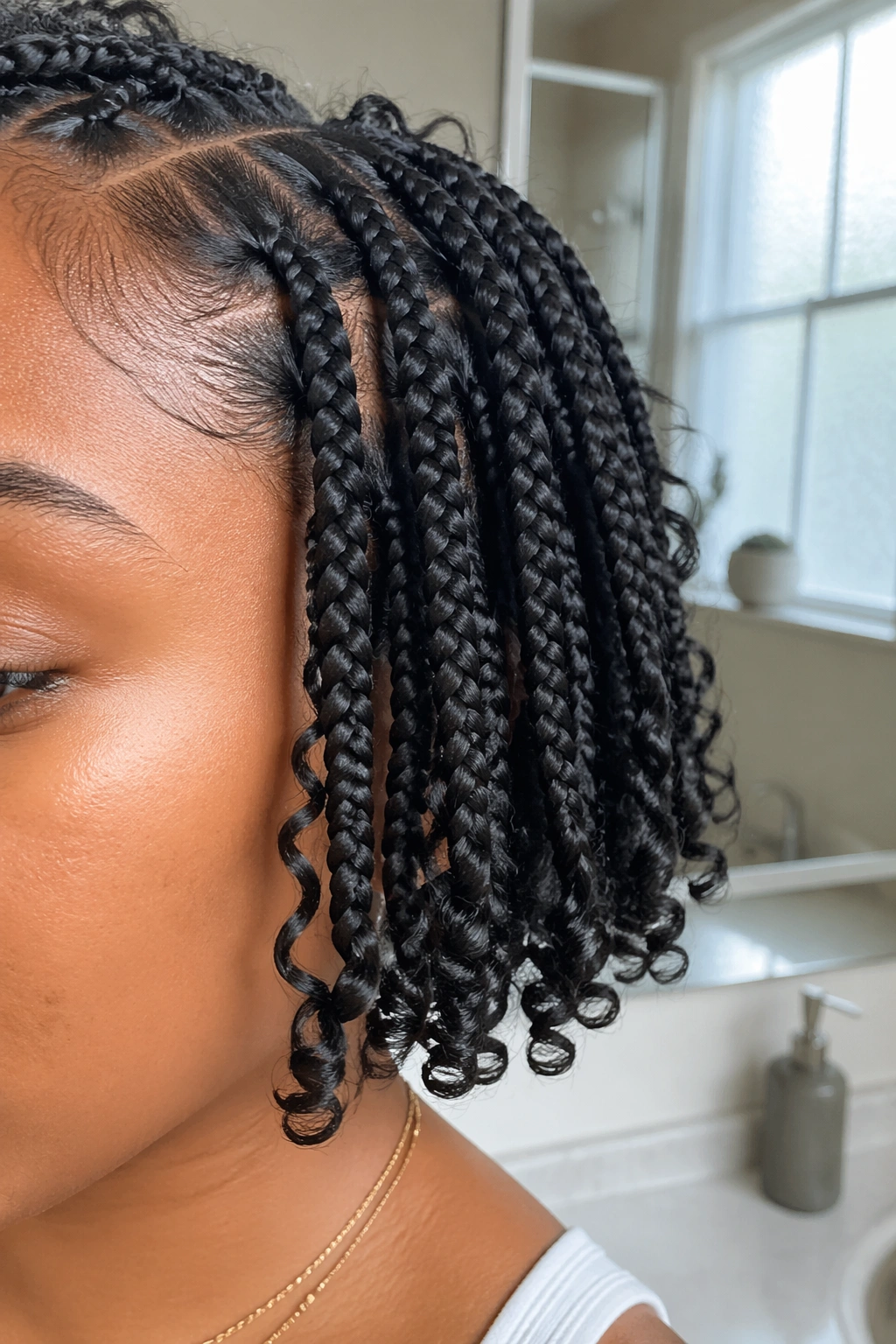
The best short braids with curly ends are the ones that respect balance. Tight roots, soft ends. Clean parting, enough curl to move. If one side of that equation takes over, the style starts to feel off.
I’d pay attention to two things before you sit in the chair: the braid size and the curl size. Tiny braids with huge curls can look disconnected. Big braids with tiny curls can look heavy. Match the two, and the style usually settles into place without much drama.
And if you are torn between options, start with the braid pattern you know you can live with for a couple of weeks, then choose the curl finish that fits your daily routine. That small bit of honesty saves a lot of regret later.
